Tag Archives: guy sajer

They Thanked Us Kindly: Reflections on Veteran’s Day 2015

481801_10151367001287059_1003164983_n1

Friends of Padre Steve’s World,

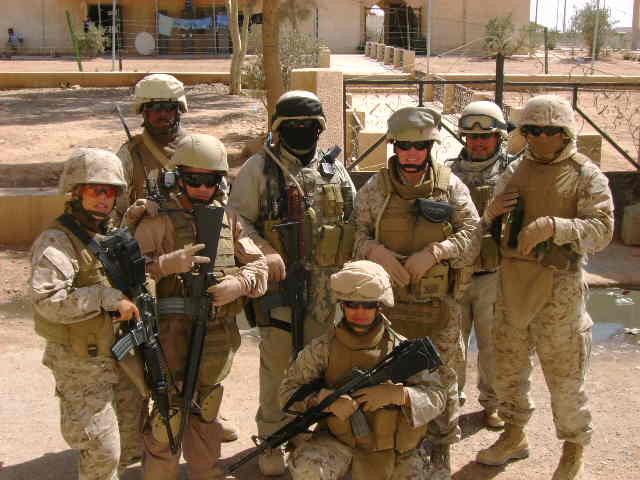
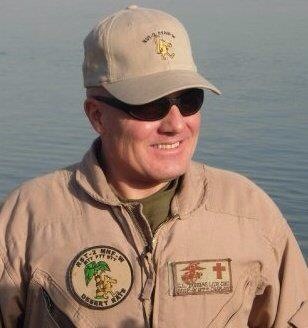
As a career military officer and veteran of the Iraq campaign as well as Operation Enduring Freedom I get very reflective around Veteran’s Day. For me it is a melancholy time. I remember those who have gone to war, those who did not come home, and those who came home, especially those who came home wounded in body, mind, or spirit; those who were forever changed by their experience of war.

One of my heroes is T.E. Lawrence, the immortal Lawrence of Arabia. After World War One ended and the politicians, diplomats, and business leaders betrayed those who served, as well as the people of many nations with a terrible peace, Lawrence wrote, “We were fond together because of the sweep of open places, the taste of wide winds, the sunlight, and the hopes in which we worked. The morning freshness of the world-to-be intoxicated us. We were wrought up with ideas inexpressible and vaporous, but to be fought for. We lived many lives in those whirling campaigns, never sparing ourselves: yet when we achieved and the new world dawned, the old men came out again and took our victory to remake in the likeness of the former world they knew. Youth could win, but had not learned to keep, and was pitiably weak against age. We stammered that we had worked for a new heaven and a new earth, and they thanked us kindly and made their peace.”

One hundred and one years ago, in November 1914, millions of soldiers were fighting in horrible conditions throughout Europe. From the English Channel to Serbia, Poland and Galicia; French, British, German, Austro-Hungarian, Serbian and Russian troops engaged each other in bloody and often pointless battles. Often commanded by old men who did not understand how the character of war had changed, millions were killed, wounded, maimed or died of disease.

After four years, with the Empires that were at the heart of the war’s outbreak collapsing one after the other there was an armistice. On the eleventh hour, of the eleventh day, of the eleventh month the shooting stopped and the front lines quieted. By then over 20 million people, soldiers and civilians alike had died. Millions more had been wounded, captured, seen their homes and lands devastated or been driven from there ancestral homelands, never to return.

The human cost of that war was horrific. Over 65 million soldiers were called up on all sides of the conflict, of which nearly 37.5 million became casualties, some 57.5% of all soldiers involved. Some countries saw the flower of their manhood, a generation decimated. Russia sustained over 9 million casualties of the 12 million men they committed to the war, a casualty rate of over 76%. The other Allied powers suffered as well.  France lost 6.4 million of 8.5 million, or 73%, Great Britain 3.1 million of nearly 9 million, 35%; Italy 2.2 million of 5.6 million, 39%. Their opponents, Germany, Austria-Hungary and the Ottoman Empire suffered greatly. Germany sustained 7.1 million casualties of 11 million men called up, or nearly 65%, Austria 7 million of 7.8 million, 90% and the Ottoman Empire 975,000 of 2.8 million or 34% of the soldiers that they sent to war.

It was supposed to be the War to end all War…but it wasn’t, it was the mother of countless wars.

It has been a century since that bleak November of 1914, and ninety-six years since the time where for a brief moment, people around the world, but especially in Europe dared to hope for a lasting and just peace. But that would not be the case…

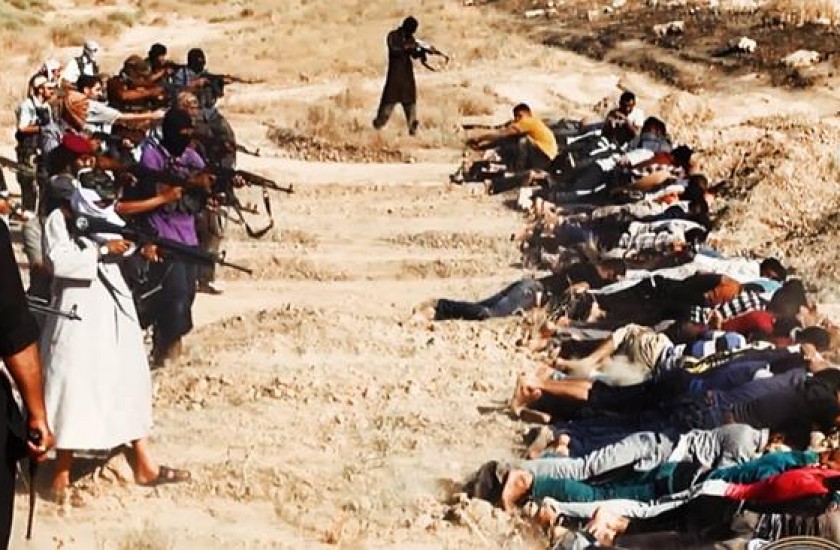
The victors imposed humiliating peace terms on the vanquished, be it the Germans on the Russians, or the Allies on Germany and her partners. The victors divided up nations, drew up borders without regard to historic, ethnic, tribal or religious sensibilities. But then, it was about the victors imposing themselves and their quest for domination, expanding colonial empires and controlling natural resources rather than seeking a just and lasting peace. The current war against the Islamic State is one of the wars spawned by the Sykes-Picot agreement which divided the Middle East between the French and the British at the end of the war. It was a war that keeps on giving.

Of course we have known the disastrous results of their hubris, a hubris still carried on by those who love and profit by war…war without end which continues seemingly with no end in sight.

I am a veteran of Iraq and Operation Enduring Freedom, as well as the Bosnia mission and the Cold War. My dad was a Vietnam veteran who enlisted during the Korean War. I serve because it is the right thing to do, not because I find war romantic or desirable. It is as General William Tecumseh Sherman said “Hell.” If called to go back to Iraq, where I left so much of my soul, I would go in a heartbeat.

This week as we do every year we will pay our homage to honor our veterans, especially in the United States, Great Britain, Canada and France. But sometimes it seems so hollow, for in all of our countries those that serve are a tiny minority of those eligible to serve, who are much of the time ignored or even scorned by those that feel that providing for them after they have served is too much of a burden on the wealthy who make their profits on the backs of these soldiers, sailors, marines and airmen.

I have walked about since returning from Iraq often in a fog, trying to comprehend how a country can be at war for so long, and there is such a gap between the few who serve and the vast majority for whom war is an abstract concept happening to someone else, in places far away, and whose experience of war is its glorification in video games. Personally I find that obscene, and feel that I live in a foreign world. Erich Maria Remarque wrote in All Quiet on the Western Front: 

“I imagined leave would be different from this. Indeed, it was different a year ago. It is I of course that have changed in the interval. There lies a gulf between that time and today. At that time I still knew nothing about the war, we had been only in quiet sectors. But now I see that I have been crushed without knowing it. I find I do not belong here any more, it is a foreign world.”

Similarly Guy Sajer wrote in his classic The Forgotten Soldier: 

“In the train, rolling through the sunny French countryside, my head knocked against the wooden back of the seat. Other people, who seemed to belong to a different world, were laughing. I couldn’t laugh and couldn’t forget.”

Major General Gouverneur Warren wrote to his wife two years after the American Civil War:

“I wish I did not dream that much. They make me sometimes dread to go to sleep. Scenes from the war, are so constantly recalled, with bitter feelings I wish to never experience again. Lies, vanity, treachery, and carnage.”

Sometimes I find it obscene that retailers and other corporations have turned this solemnity into another opportunity to profit. But then why should I expect different? Such profiteers have been around from the beginning of time, but then maybe I still am foolish enough to hope for something different. Please don’t get me wrong, I do appreciate the fact that some businesses attempt in at least some small way to thank veterans. I also know there are many businesses and business owners who do more than offer up tokens once a year, by putting their money where their mouth is to support returning veterans with decent jobs and career opportunities; but for too many others the day is just another day to increase profits while appearing to “support the troops.”

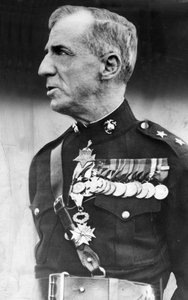
As Marine Corps legend and two-time Medal of Honor winner Major General Smedley Butler Wrote:

“What is the cost of war? what is the bill? “This bill renders a horrible accounting. Newly placed gravestones. Mangled bodies. Shattered minds. Broken hearts and homes. Economic instability. Depression and all of its attendant miseries. Back -breaking taxation for generations and generations. For a great many years as a soldier I had a suspicion that war was a racket; not only until I retired to civilian life did I fully realize it….”

But the marketers of war do not mind, almost Orwellian language is used to lessen its barbarity. Dave Grossman wrote in his book On Killing:

“Even the language of men at war is the full denial of the enormity of what they have done. Most solders do not “kill,” instead the enemy was knocked over, wasted, greased, taken out, and mopped up. The enemy is hosed, zapped, probed, and fired on. The enemy’s humanity is denied, and he becomes a strange beast called a Jap, Reb, Yank, dink, slant, or slope. Even the weapons of war receive benign names- Puff the Magic Dragon, Walleye, TOW, Fat Boy, Thin Man- and the killing weapon of the individual soldier becomes a piece or a hog, and a bullet becomes a round.”

There is even a cottage industry of war buffs, some of who are veterans seeking some kind of camaraderie after their service, but most of whom have little or know skin in the real game, and at no inconvenience to themselves. As far as the veterans I understand, but as for the others I can fully understand the words of Guy Sajer, who wrote:

“Too many people learn about war with no inconvenience to themselves. They read about Verdun or Stalingrad without comprehension, sitting in a comfortable armchair, with their feet beside the fire, preparing to go about their business the next day, as usual…One should read about war standing up, late at night, when one is tired, as I am writing about it now, at dawn, while my asthma attack wears off. And even now, in my sleepless exhaustion, how gentle and easy peace seems!”

It was to be the War to end all war” but I would venture that it was the war that birthed countless wars, worse tyrannies and genocides; That war, which we mark the end of today, is in a very real and tragic sense, the mother of the wars that have followed. Today, war threatens in so many places; the Middle East, Ukraine, Asia, and Africa. Terrorism has apparently returned with a vengeance. War without end, amen.

As so to my friends, my comrades and all that served I honor you, especially those that I served alongside. We are a band of brothers; no matter what the war profiteers do, no matter how minuscule our number as compared to those who do not know what we do, and those who never will.  We share a timeless bond and no one can take that away.

I close with the words of a German General from the television mini-series Band of Brothers which kind of sums up how I feel today. The American troops who have fought so long and hard are watching the general address his troops after their surrender. An American soldier of German-Jewish descent translates for his comrades the words spoken by the German commander, and it as if the German is speaking for each of them as well.

Men, it’s been a long war, it’s been a tough war. You’ve fought bravely, proudly for your country. You’re a special group. You’ve found in one another a bond that exists only in combat, among brothers. You’ve shared foxholes, held each other in dire moments. You’ve seen death and suffered together. I’m proud to have served with each and every one of you. You all deserve long and happy lives in peace.

In hopes of peace,

Padre Steve+
5 Comments

Filed under History, iraq,afghanistan, Military, Political Commentary, shipmates and veterans, Tour in Iraq, War on Terrorism

I Imagined that it Would be Different than This: Thoughts on Coming Home from War

Friends of Padre Steve’s World

Judy and I are now on our last full day in Germany and the Oktoberfest in Munich. Tomorrow evening we should be back in the good old USA. Since I am posting in advance as I do not plan on writing anything in Germany unless something really important happens, I am re-posting a modified version of an article that I first posted over a year ago.

For me it began in February 2008 when on the way back from Iraq the military charter aircraft bringing us home stopped in Ramstein Germany. After a few hour layover we re-boarded the aircraft but we were no longer alone, the rest of the aircraft had been filled with the families of soldiers and airmen stationed in Germany. Just days before most of us had been in Iraq or Afghanistan. The cries of children and the intrusion of these people, not bad people by any means on our return flight was shocking, it was like returning to a world that I no longer knew.

I think that coming home from war, especially for those damaged in some way, in mind, body or spirit is harder than being at war.

In that thought I am not alone. Erich Maria Remarque in his classic novel All Quiet on the Western Front wrote:

“I imagined leave would be different from this. Indeed, it was different a year ago. It is I of course that have changed in the interval. There lies a gulf between that time and today. At that time I still knew nothing about the war, we had been only in quiet sectors. But now I see that I have been crushed without knowing it. I find I do not belong here any more, it is a foreign world.”

Likewise, Guy Sajer a French-German from the Alsace and veteran of the Grossdeutschland Division on the Eastern Front in World War II noted at the end of his book The Forgotten Soldier: 

“In the train, rolling through the sunny French countryside, my head knocked against the wooden back of the seat. Other people, who seemed to belong to a different world, were laughing. I couldn’t laugh and couldn’t forget.”

I have been reminded of this several times in the past week. It began walking through a crowded Navy commissary on Saturday, in the few minutes in the store my anxiety level went up significantly. On Tuesday I learned of the death of Captain Tom Sitsch my last Commodore at EOD Group Two, who died by his own hand. His life had come apart. After a number of deployments to Iraq as the Commander EOD Mobile Unit 3 and of Task Force Troy he was afflicted with PTSD. Between June of 2008 and the end of 2009 he went from commanding an EOD Group to being forced to retire.  Today I had a long talk with a fairly young friend agonizing over continued medical treatments for terminal conditions he contracted in two tours in Iraq where he was awarded the Bronze Star twice.

I have a terrible insomnia, nightmares and night terrors due to PTSD. My memories of Iraq are still strong, and this week these conditions have been much worse. Sager wrote:

“Only happy people have nightmares, from overeating. For those who live a nightmare reality, sleep is a black hole, lost in time, like death.”

Nearly 20 years after returning from war, a survivor of the 1st Battalion 308th Infantry, the “Lost Battalion” of World War One, summed up the experience of so many men who come back from war:

“We just do not have the control we should have. I went through without a visible wound, but have spent many months in hospitals and dollars for medical treatment as a result of those terrible experiences.”

butler-medals1

Two time Medal of Honor winner Major General Smedley Butler toured Veterans hospitals following his retirement from the Marine Corps. He observed the soldiers who had been locked away. In his book War is a Racket:

“But the soldier pays the biggest part of this bill. If you don’t believe this, visit the American cemeteries on the battlefields abroad. Or visit  any of the veterans’ hospitals in the United States….I have visited eighteen government hospitals for veterans. In them are about 50,000 destroyed men- men who were the pick of the nation eighteen years ago. The very able chief surgeon at the government hospital in Milwaukee, where there are 3,800 of the living dead, told me that mortality among veterans is three times as great as among those who stayed home.”

Similarly Remarque wrote in All Quiet on the Western Front:

“A man cannot realize that above such shattered bodies there are still human faces in which life goes its daily round. And this is only one hospital, a single station; there are hundreds of thousands in Germany, hundreds of thousands in France, hundreds of thousands in Russia. How senseless is everything that can ever be written, done, or thought, when such things are possible. It must be all lies and of no account when the culture of a thousand years could not prevent this stream of blood being poured out, these torture chambers in their hundreds of thousands. A hospital alone shows what war is.”

Lt.ColonelCharlesWhiteWhittlesey

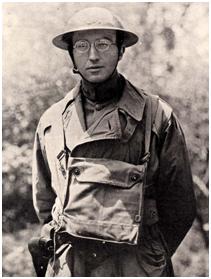
Lieutenant Colonel Charles Whittlesey

Sometimes even those who have been awarded our Nation’s highest award for valor succumb to the demons of war that they cannot shake, and never completely adjust to life at “home” which is no longer home. For them it is a different, a foreign world to use the words of Sager and Remarque. Lieutenant Colonel Charles Whittlesey won the Medal Medal of Honor as Commander of 1st Battalion 308th Infantry, the “Lost Battalion” in France. After the war he was different. He gave up his civilian law practice and served as head of the Red Cross in New York. In that role, and as the Colonel for his reserve unit, he spent his time visiting the wounded who were still suffering in hospitals. He also made the effort to attend the funerals of veterans who had died. The continued reminders of the war that he could not come home from left him a different man. He committed suicide on November 21st 1921not long after serving as a pallbearer for the Unknown Soldier when that man was interred at Arlington National Cemetery.

In his eulogy, Judge Charles L. Hibbard noted:

“He is sitting on the piazza of a cottage by the sea on a glorious late September day but a few weeks ago. . . He is looking straight out to sea, with naught but sea between him and that land where lie so many of his boys. The beating surf is but an echo, the warm, bright sunshine, the blue sky, the dancing waves, all combine to charm. But a single look at his face and one knows he is unconscious of this glory of Nature. Somewhere far down in the depths of his being or in imagination far off across the waters he lives again the days that are past. That unconscious look has all the marks of deep sorrow, brooding tragedy, unbearable memories. Weeks pass. The mainspring of life is wound tighter and tighter and then comes the burial of the Unknown Soldier. This draws the last measure of reserve and with it the realization that life had little now to offer. This quiet, reserved personality drew away as it were from its habitation of flesh, thought out the future, measured the coming years and came to a mature decision. You say, ‘He had so much to live for – family, friends, and all that makes life sweet.’ No, my friends, life’s span for him was measured those days in that distant forest. He had plumbed the depth of tragic suffering; he had heard the world’s applause; he had seen and touched the great realities of life; and what remained was of little consequence. He craved rest, peace and sweet forgetfulness. He thought it out quietly, serenely, confidently, minutely. He came to a decision not lightly or unadvisedly, and in the end did what he thought was best, and in the comfort of that thought we too must rest. ‘Wounded in action,’ aye, sorely wounded in heart and soul and now most truly ‘missing in action.’”

Psychologist and professor Dr. Ari Solomon analyzed the case of Colonel Whittlesey and noted:

“If I could interview Whittlesey as a psychologist today, I’d especially have in mind … the sharp discrepancy between the public role he was playing and his hidden agony, his constant re-exposure to reminders of the battle, his possible lack of intimate relations, and his felt need to hide his pain even from family and dearest friends.”

I wish I had the answer. I have some ideas that date back to antiquity in the ways that tribes, clans and city states brought their warriors home. The warriors were recognized, there were public rituals, sometimes religious but other times not. But the difference is that the warriors were welcomed home by a community and re-integrated into it. They were allowed to share their stories, many of which were preserved through oral traditions so long that they eventually were written down, even in a mythologized state.

But we do not do that. Our society is disconnected, distant and often cold. Likewise it is polarized in ways that it has not been since the years before our terrible Civil War. Our warriors return from war, often alone, coming home to families, friends and communities that they no longer know. They are misunderstood because the population at large does not share their experience. The picture painted of them in the media, even when it is sympathetic is often a caricature; distance and the frenetic pace of our society break the camaraderie with the friends that they served alongside. Remarque wrote, “We were all at once terribly alone; and alone we must see it through.”

If we wonder about the suicide epidemic among veterans we have to ask hard questions. Questions like why do so many combat veterans have substance abuse problems and why is it that approximately one in ten prisoners serving time are veterans? It cannot be simply that they are all bad eggs. Many were and are smart, talented, compassionate and brave, tested and tried in ways that our civilian society has no understanding for or clue about. In fact to get in the military most had to be a cut above their peers. We have to ask if we are bringing our veterans home from war in a way that works. Maybe even more importantly we have to ask ourselves if as a culture if we have forgotten how to care about each other. How do we care for the men and women who bear the burden of war, even while the vast majority of the population basks in the freedom and security provided by the soldier without the ability to empathize because they have never shared that experience.

For every Tom Sitsch, Charles Whittlesey or people like my friend, there are countless others suffering in silence as a result of war. We really have to ask hard questions and then decide to do something as individuals, communities and government to do something about it. If we don’t a generation will suffer in silence.

Peace

Padre Steve+
 

Leave a comment

Filed under History, leadership, Military, PTSD

Days Seem to Dawn: Reflections on 9-11-2001 & War

flight_175_photo

Friends of Padre Steve’s World,

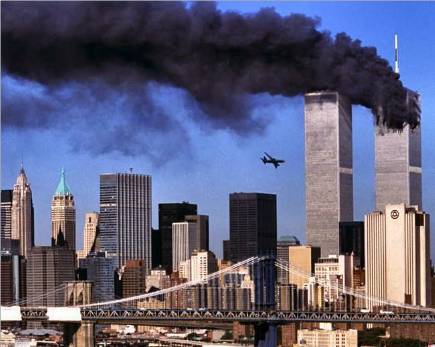
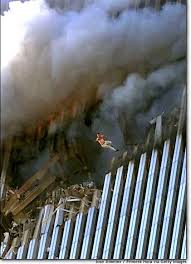
September 11th is a day that always makes me more introspective. It brings back so many memories, some that I wish I could forget; but I cannot get the images of that day out of my mind. The burning towers, the people jumping to their deaths to escape the flames, and the scenes of devastation. I knew one of the victims in the attack on the Pentagon, an Army Lieutenant Colonel, Karen Wagner who commanded a Medical training company at Fort Sam Houston where I was serving as the Brigade Adjutant in 1987 and 1988. She was a very nice person, very gracious and decent, admired by everyone who knew her; I was shocked to see her name on the casualty list after the attack.

The emotions that I feel on the anniversary of these terrorist attacks which claimed the lives of so many innocent people, and which devastated so many families, still haunts me, and my subsequent service, especially in Iraq has changed me. Years after he returned from his time in the Middle East, T.E. Lawrence; the immortal Lawrence of Arabia wrote to a friend, “You wonder what I am doing? Well, so do I, in truth. Days seem to dawn, suns to shine, evenings to follow, and then I sleep. What I have done, what I am doing, what I am going to do, puzzle and bewilder me. Have you ever been a leaf and fallen from your tree in autumn and been really puzzled about it? That’s the feeling.” I often feel that way.

Fourteen years ago I was getting ready to go to the French Creek Gym at Camp Le Jeune North Carolina where I was serving as the Chaplain of Headquarters Battalion 2nd Marine Division. I had been back from a deployment to Okinawa, Mainland Japan and Korea just two months before and was preparing to transfer to the USS Hue City, a guided missile cruiser stationed in Mayport, Florida.

At the time of the attack I had already been in the military for over 20 years and I had actually taken a reduction in rank to transfer from the Army, where I was a Major in the reserves, to the Navy to serve on active duty. In those previous 20 years I had served overseas during the Cold War along the Fulda Gap. I had been mobilized to support the Bosnia mission in 1996, and I had just missed being mobilized for Operation Desert Storm as my unit was awaiting its mobilization orders when the war ended. I had done other missions as well as the deployment to the Far East that returned from in July 2001; but nothing prepared me for that day. Like other career military officers I expected that we would be at war again and thought it might be back in the Middle East, and probably a result of some fool’s miscalculations; but like the American officers who were serving at the time of the Pearl Harbor attack, I never expected what happened that morning.

Tuesday, September 11th 2001 had started like so many days in my career. Routine office work, a couple of counseling cases and what I thought would be a good PT session. I was about to close out my computer browser when I saw a little headline on Yahoo News that a plane had crashed into the World Trade Center. I paid little attention and figured that a private plane, something like a Cessna piloted by an incompetent had inadvertently flown into the building.

9-11 jumpers

That delusion lasted about two minutes. I got in my car and the radio, tuned to an AM talk station had a host calling the play by play. He started screaming “oh my God another airliner flew into the other tower.” Seeking to see what was happening I went to the gym where there were many televisions. I got there and saw the towers burning, with stunned Marines and Sailors watching silently, some in tears. I went back out, drove to my office and got into uniform. After checking in with my colonel a made a quick trip to my house for my sea bags and some extra underwear, and personal hygiene items. When I got back the headquarters we went into a meeting, and the base went on lock down mode. The gates were closed and additional checkpoints, and roadblocks established on base. Marines in full battle-rattle patrolled the perimeter and along the waterfront. I did not leave the base until the night of the 15th when things began to settle down and we all went into contingency planning mode for any military response to the attacks.

My wife, who as waiting for a doctor’s appointment with a friend saw the attacks on live television and knew when the first plane struck she told her friend that it was terrorism. Her friend responded “that damned Saddam Hussein.” Like so many of us who initially thought this, my wife’s friend was wrong.

Those were tumultuous days, so much fear; so much paranoia; and so much bad information as to who committed the attacks and what was going to happen next.

boardingteam

boarding team

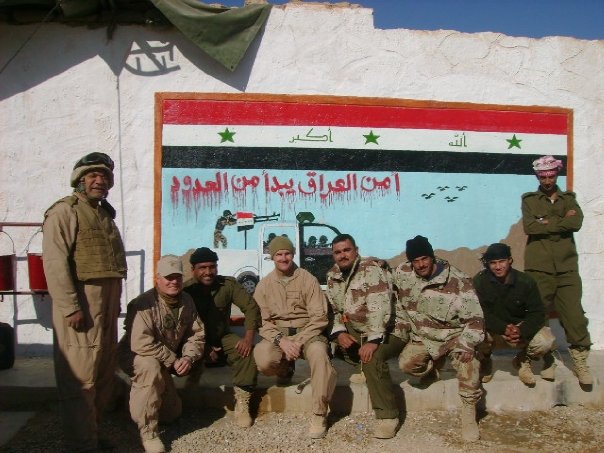
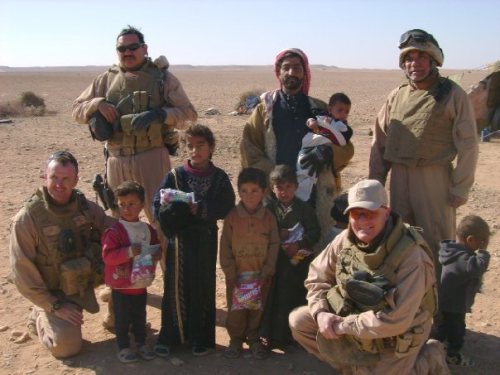
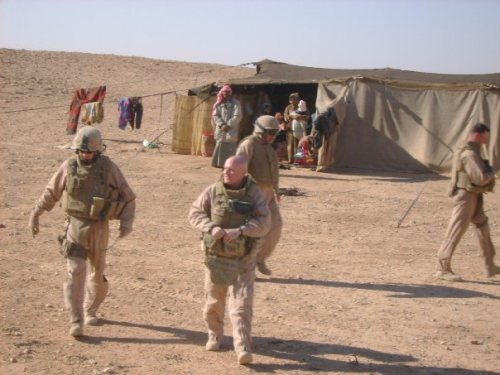
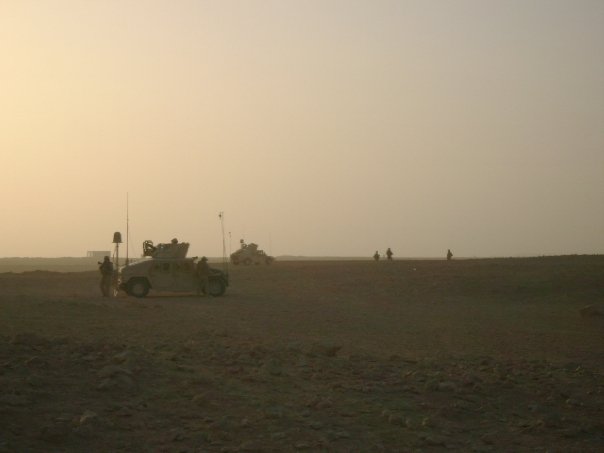
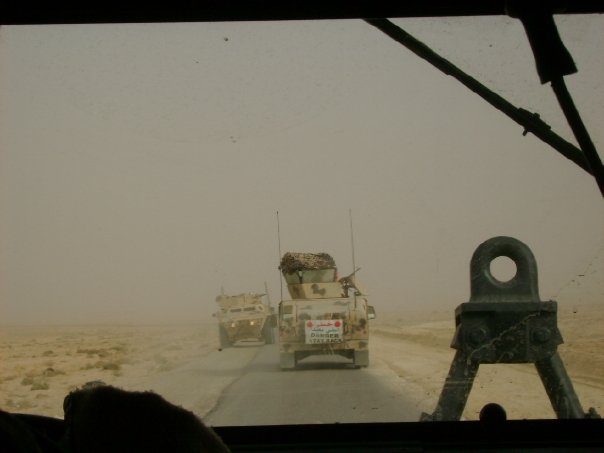
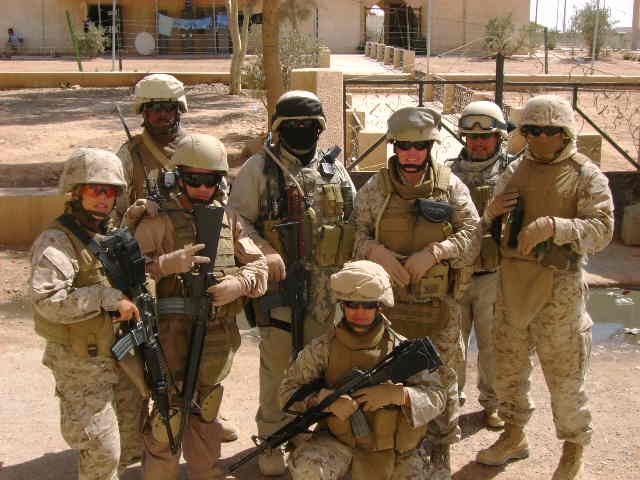
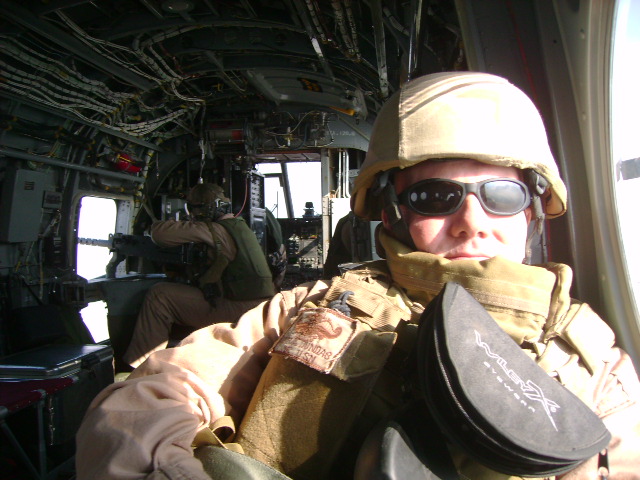
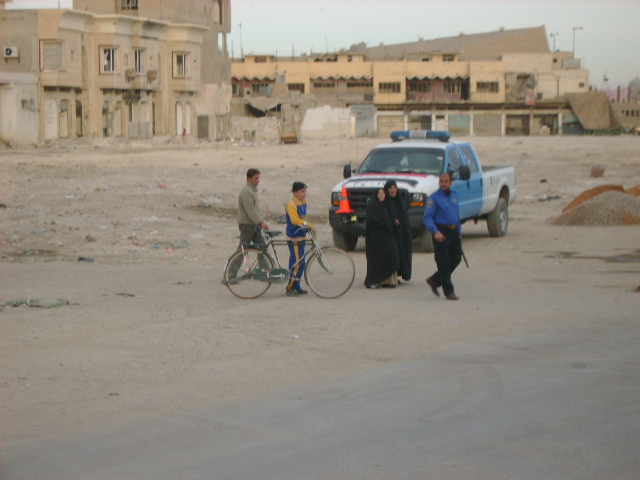
A few months later I deployed aboard Hue City to the Middle East where we supported the air operations in Afghanistan, anti-terrorist operations off the Horn of Africa and in Operation Southern Watch and the U.N. Oil Embargo against Iraq. I then did three years with Marine Security Forces, traveling around the world to support Marine Fleet Anti-Terrorism Security Team companies. For three years I was on the road one to three weeks a month traveling to the Middle East, Europe, the Pacific and many parts of the United States. Then I was promoted and transferred to Explosive Ordnance Disposal Group Two, from which I was deployed with my assistant to Iraq, where we served as members of the Iraq Assistance Group in all Al Anbar Province supporting small teams of Marine Corps, Army and Joint Force adviser teams to the Iraqi Army, Border troops, Port of Entry police, police and highway patrol.

lastmass2

iraq-bedouin1

iraq-2007

When I returned from Iraq I was a changed man and while proud of my service I am haunted by my experiences. One cannot go to war, see its devastation, see the wounded and dead, as well as the innocents traumatized by it. One cannot get shot at, or be in enclosed rooms, meeting with people that might be friends, or might be enemies, and while everyone else is armed, you are not.

War changed me, and my homecoming was more difficult than I could have imagined. I never felt so cut off from my country, my society, my church, or even other chaplains. My experience is not uncommon among those who have served in Iraq or Afghanistan, or for that matter those who have served in almost any modern war. Erich Maria Remarque in his classic All Quite on the Western Front wrote:

“I imagined leave would be different from this. Indeed, it was different a year ago. It is I of course that have changed in the interval. There lies a gulf between that time and today. At that time I still knew nothing about the war, we had been only in quiet sectors. But now I see that I have been crushed without knowing it. I find I do not belong here any more, it is a foreign world.”

That being said I would not trade my experience for anything. The experience of PTSD and other war related afflictions has been a blessing as well as a curse. They have changed my world view and made me much more emphatic to the suffering and afflictions of others, as well when they are abused, mistreated, terrorized and discriminated against. These experiences along with my training as a historian, theologian, and hospital chaplain clinician before and after my tour have given me a lot bigger perspective than I had before.

But I have to live with all of the memories. Guy Sajer wrote in his book The Forgotten Soldier, “Only happy people have nightmares, from overeating. For those who live a nightmare reality, sleep is a black hole, lost in time, like death.” General Gouverneur Warren, a hero of many Civil War battles including Gettysburg wrote to his wife after the war “I wish I did not dream so much. They make me sometimes to dread to go to sleep. Scenes from the war, are so constantly recalled, with bitter feelings I wish never to experience again. Lies, vanity, treachery, and carnage.”

As hard as this has been these are good things, and as I go on I wonder what will happen next. I do not think that the wars and conflicts which have followed in the wake of the 9-11 attacks will be over for years, maybe even decades. I pray for peace, but too many people, some even in this country seem to live for the bloodlust of war. One can only hope and as my Iraqi friends say, Inshallah, (إن شاء الله) God willing…

isis3-840x550

I wonder too, if the words of T.E. Lawrence reflecting on his service in the Arab Revolt are not as applicable to me and others who came back from Iraq, “We had been hopelessly labouring to plough waste lands; to make nationality grow in a place full of the certainty of God… Among the tribes our creed could be only like the desert grass – a beautiful swift seeming of spring; which, after a day’s heat, fell dusty.”  I have lost too many friends in these wars, including men who could not readjust to home, many like me. I have seen the men and women, broken in body, mind and spirit and I wonder if any of it was worth it, and if in some of our response, especially the invasion of Iraq has not made a bad situation even worse, and turned the war into a generational conflict.

As for me, I am now an old guy by military standards. In a couple of years I hope to retire with 36 years of service, knowing that those who I have worked with will be continuing to fight a war which seems to be without end.

481801_10151367001287059_1003164983_n

Today there will be many ceremonies and services to remember the victims of the attacks. I think that is fitting. President Obama has declared a day of prayer and remembrance which is also good. I will not attend the ceremonies because I still get too emotional, but I will be there in spirit, even though much of me is still in Iraq. 

I will quietly reflect at the office today as I get ready for our incoming class at the Staff College. Afterward I will go get a beer and dinner with Judy and our friends at Gordon Biersch after catching to remainder of the Norfolk Tides vs. Columbus Clippers International League playoff game which was postponed due to rain last night. I guess that is fitting to as it was baseball that helped begin the healing in Nee York in the days after the attack. 

Have a good day, and do not forget those whose lives were forever changed by those dastardly attacks and all that has transpired in the years since. Maybe things will get better… Inshallah, (إن شاء الله) God willing…

Peace

Padre Steve+
2 Comments

Filed under History, iraq,afghanistan, Military, PTSD

There Will be Nightmares: PTSD & Memories of War

Friends of Padre Steve’s World

I’m really very tired today so another short post. I haven’t slept well in several weeks, part of this of course was the worry I had regarding my wife Judy and her cancer diagnosis, surgery and recovery. As she has gotten better I have been dealing with stuff from my own closet of anxieties. Those who have been reading my articles here know that I deal with PTSD, Traumatic Brain Injury and moral injury from my time in Iraq, and my return home.

ramadi

Last year I went through a very difficult time dealing with the military mental health system that I never want to repeat again. I hope I don’t have to, but I may. My therapist who I have had since last summer took a new job thousands of miles away and now I am going to have to find another therapist. I am hoping the man I see for my medication management can get me referred to someone good, because I do not want to be thrust back into the system and take the luck of the draw. That scares me to death, and since I found out my therapist was leaving and that I will not see her again I have been trying to keep my anxiety under control and not to panic. Awake I do pretty well with this, but when I try to sleep, all my Iraq stuff, plus all the very real and bad experiences that I had with the military mental health system last year flood my psyche. The night terrors are back, the terrible dreams and fears. It is not fun waking up in the middle of the night in a state of terror. Last year, after dealing with a number of providers and administrators I was nearly suicidal. It took the intervention of a former commanding officer who had been recently selected for promotion to Admiral in the Medical Corps to get me listened to and to get me the help that I sought.

295_26912092058_3949_n

But I know that I am not alone, I will get the professional help that I still need and I do have some friends I can talk to about these issues. Likewise I know many combat who veterans deal with similar issues related to their service, as well what happened to them when they returned home from Iraq or Afghanistan. The return from war is often worse than actually being over there, few people really understand, unless they too have been there.

Guy Sajer wrote in his book The Forgotten Soldier, “Only happy people have nightmares, from overeating. For those who live a nightmare reality, sleep is a black hole, lost in time, like death.” General Gouverneur Warren, a hero of many Civil War battles including Gettysburg wrote to his wife after the war “I wish I did not dream so much. They make me sometimes to dread to go to sleep. Scenes from the war, are so constantly recalled, with bitter feelings I wish never to experience again. Lies, vanity, treachery, and carnage.”

n671902058_1153794_4301

I am a realist about this. I know that there is no magic wand which will make it all go away and I don’t expect any therapist, or even God to cure me. I can understand why Alexander Dumas in the Count of Monte Cristo wrote, “Moral wounds have this peculiarity – they may be hidden, but they never close; always painful, always ready to bleed when touched, they remain fresh and open in the heart.”

That is true and I know to some people that may sound like I have given up, especially because it runs counter to the snake oil salesmen who write self-help books which promise to heal you in whatever number of steps or exercises; especially the ones written by preachers. But that is not the case, despite everything I still have a love of life and lust for learning. Except that now I just have moved to a new level of understanding concerning my own dark places, and that pain that manifests at night as I try to sleep. Since nothing will take it away I need to live with it and realize that it won’t always be the first thing that I think about when I wake up in the morning. That my friends is the essence of hope. 

n671902058_1219154_8844

One of my favorite actors, James Spader, plays a character named Raymond Reddington on the television show The Blacklist. During one episode he told another character something quite profound, something that if we actually embrace it can be somewhat comforting. “There is nothing that can take the pain away. But eventually, you will find a way to live with it. There will be nightmares. And every day when you wake up, it will be the first thing you think about. Until one day, it’s the second.”

I think that is why I can continue and at the same time seek to be available to those who suffer similar afflictions, and thankfully, I do still have those opportunities and as the late Henri Nouwen wrote, “Ministry means the ongoing attempt to put one’s own search for God, with all the moments of pain and joy, despair and hope, at the disposal of those who want to join this search but do not know how.”

Anyway, have a nice night.

Peace

Padre Steve+

4 Comments

Filed under Loose thoughts and musings

Things that Go Bump in the Night Terrors of PTSD

IMG_0230

Bram Stoker wrote in Hamlet these immortal words in his novel Dracula:

“How blessed are some people, whose lives have no fears, no dreads; to whom sleep is a blessing that comes nightly, and brings nothing but sweet dreams.” 

I am getting ready to go to bed, hopefully a bit early tonight and hopefully without the terror of so many nights, but I dread to sleep. I can understand why the savior of Little Round Top, General Gouverneur Warren wrote his wife after the Civil War:

“I wish I did not dream that much. They make me sometimes dread to go to sleep. Scenes from the war, are so constantly recalled, with bitter feelings I wish to never experience again. Lies, vanity, treachery, and carnage.” 

Last night was difficult, the nightmares and night terrors were quite terrifying. Thus I almost dread bedtime tonight. Since the summer my dreams and nightmares have become much more vivid and often so terrifying that I either wake up or am woken up by Judy when she sees me becoming too physically active in them. I have when up several times either screaming or hitting the floor when I fall out of bed trying to attack something in my dream which is threatening me or Judy, or when I am fleeing a threat, usually as I hit the floor or the bookcase that doubled as my nightstand. Judy has woken me up a number of times, once when it appeared that I was shooting at someone. It must be thrilling for her. Of course Minnie our youngest Papillon decided that hanging on to mommy during such times is a good idea, while my unflappable Molly, my Papillon-Dachshund mix who helped get me through many nights after coming home from Iraq now simply looks up and goes back to sleep. Evidently she is used to me now, it is good that someone in our little household is able to not be too bothered by nightmares.

Last night I in a place where Judy and I had been trapped by enemy soldiers of some kind. I was unarmed and to allow Judy to escape up a hill I shut a gate to keep the enemy soldiers from pursuing us. As I struggled to lock the gate, I turned and saw that Judy had reached safety. I turned to join her but found that I could not get up the hill, I struggled and as I did the soldiers broke through the gate and began to shoot at me, I dove to avoid their bullets and was rudely awakened by my chin hitting the edge of the previously mentioned bookcase.

I slammed into it hard, so hard that my teeth cut my upper lip, and that my chin and jaw were swollen and in pain. I got up, walked into our master bathroom where my mouth was full of blood and my chin already swollen from the impact. Because of the hour I did not want to have Judy take me to the emergency room so I rinsed out my mouth, packed it with tissue to soak up the blood and lay back down until my normal time to wake up.

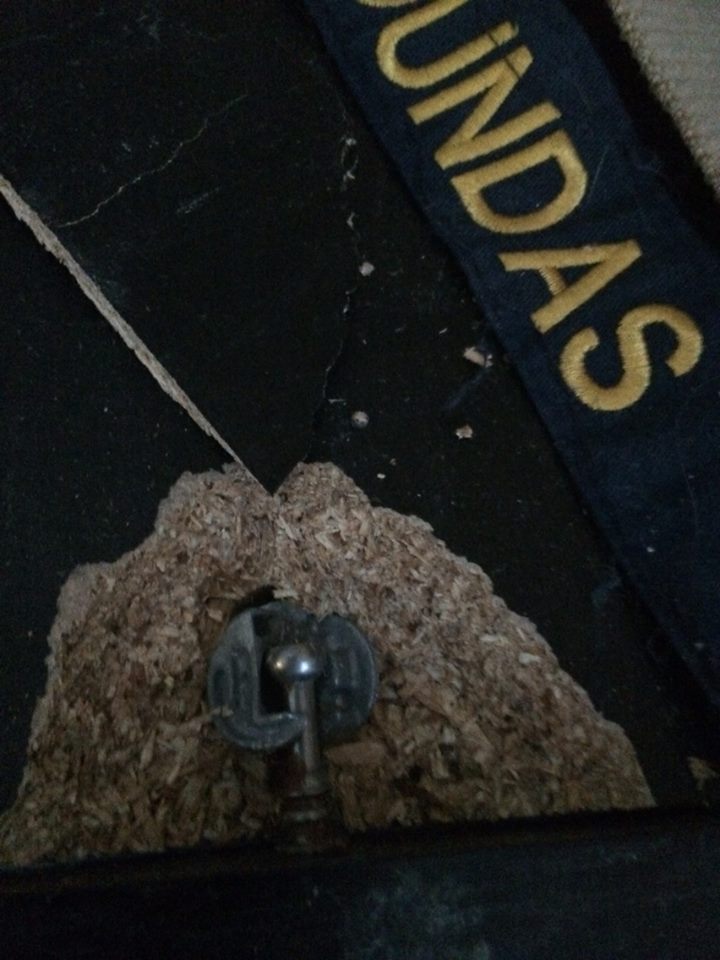
When boring came I got up, unpacked the very bloody tissue from my mouth and lips, showered and got ready for work. As I did so I noticed the damage to the bookcase, my jaw had shattered the pressed wood. I was shocked, evidently I have as hard of head as my dad accused me of as a child. I was surpassed, took a picture of he damage and went to work, where I reported what happened to my dean and went to our branch medical clinic. I spent most of the morning getting my head examined.

Though I hurt from the neck up, and was in a lot of pain nothing was broken so the doctor sent me home. The doctor said that though nothing was broken that I would be in pain for some time, and I am. He compared the impact to being in an auto accident. My neck is sore, the chin, jaw and mouth sore and I do have a pretty good headache.

When I see my new primary care doctor I will get scheduled for a sleep study.

Judy mentioned something that I didn’t think about either last night when this happened or while I was at the doctor. The fact is that had I not crushed the bookcase with my jaw I could have suffered a very severe injury, perhaps even a fractured skull.

I think that most of my current nightmares are triggered by reading about or seeing news reports about what is currently happening in Iraq where I left so much of my heart. But my dreams and nightmares are such surreal mixtures of fact, history, reality and imagination that it is sometime hard to tell where the dream ends and reality begins, or for that matter if there is much difference between the dream and reality, as Edward Allan Poe wrote:

I stand amid the roar
Of a surf-tormented shore,
And I hold within my hand
Grains of the golden sand-
How few! yet how they creep
Through my fingers to the deep,
While I weep- while I weep!
O God! can I not grasp
Them with a tighter clasp?
O God! can I not save
One from the pitiless wave?
Is all that we see or seem
But a dream within a dream?”

I make no pretense of saying that I can understand or interpret them. Last night may have been triggered by the F-18s from the USS George H.W. Bush flying in to the Naval Air Station following their return from deployment not far from where I work during the day. The noise of their jet engines took me back to Iraq.  When I was in Iraq, any time that I was going west or east and waiting on flights at Al Asad Air Base in Al Anbar, the Marine and Navy F-18s based there would keep me up all hours of the day and night as I tried to sleep in the tents that transients like me stayed. Of course those tents were only a couple hundred yards from the flight line, so sleep was rare and the noise got into my head.

I honestly do hope that my new therapist and medication manager can find the right combination of therapy and medications to manage this. It would be nice to be able to sleep without waking up in terror with dreams of war and of enemies, both real and imagined trying to kill me.

I have posted the photo of the broken bookcase here just to give you an idea of how hard I hit it with my chin. It shocked the hell out of me when I saw it. Yes that is the damaged that I caused, it is about three inches in size.

10423681_10152904072437059_4037095074761467544_n

So anyway, I am going to try to get some sleep. But as Guy Sajer, the author of the classic account of brutal combat wrote: “Only happy people have nightmares, from overeating. For those who live a nightmare reality, sleep is a black hole, lost in time, like death.” Since returning from Iraq, my nights have been nightmarish. I wish that I never had to sleep, for sleep is far worse than being awake, even awake in a combat zone. Like Gouverneur Warren, my dreams sometimes, in  fact most of the time cause me to dread going to sleep.

All that being said I do not want to lose my dreams, the good, the bad or even the terrifying. The somehow are a part of me, though I certainly would wish that they would not be so vivid that I end up physically bruised and sitting in an acute care clinic. That being said, I have to agree with Joseph Heller who wrote: “I want to keep my dreams, even bad ones, because without them, I might have nothing all night long.”

With that, I wish all of us peace and pleasant dreams, even in the midst of real life nightmares.

Padre Steve+

1 Comment

Filed under mental health, Military, PTSD, Tour in Iraq

Living the Nightmares: PTSD and Iraq Six Years Later

481801_10151367001287059_1003164983_n-1.jpg

“Only happy people have nightmares, from overeating. For those who live a nightmare reality, sleep is a black hole, lost in time, like death.”  Guy Sajer, The Forgotten Soldier

Last week I woke up screaming thanks to some nightmare brought to me in high definition by PTSD. It woke Judy and both of the dogs up and well, it wasn’t exactly pleasant. Unfortunately this happens more often than I would like it to. When I was stationed away from home in North Carolina it was only Molly my faithfully dog who was disturbed by this, now I wake up Judy and our younger Papillon Minnie, or Minnie Scule as is her full name.

This afternoon I read a story of a Marine veteran who lost his battle with PTSD, taking his own life. I see a lot of these stories and each one makes me wonder what s going on and gives me pause when I think just how bad I was doing not too long ago.

It is hard for me to believe that nearly six years after I returned from Iraq that I still have a lot of trouble sleeping, though less trouble than a couple of years ago and that my nightmares associated with war still return with more regularity than I would like. Likewise it is hard for me to believe how much my life is impacted by this. I still experience a fair amount of hyper-vigilance, crowds of people are difficult and the craziness of traffic on the local freeways causes me a fair amount of distress.

n671902058_1153829_4642

Despite that I am doing a lot better than I was even a year or so ago when I was still struggling a lot more than I am now and let’s say 4 years ago when there were times I wondered why I was still alive. Of course the time from 2008-2010 was probably the worst time of my life when it seemed that everything that I had believed in had melted away. I didn’t know if God existed, I felt abandoned by my former Church and even by many peers. The only thing that kept me going was a deep sense of call and vocation as a Priest and Chaplain, even though I was for all practical purposes an agnostic who was praying that maybe God still might exist.

Those who have been with me on this blog over the years know how central that struggle has been. I have written about it many times.

Though I am doing much better than I was I still have my times of doubt, times of fear and times of absolute panic. I do what I can to manage but once in a while something will trigger a response. The biggest problem still is sleep and vivid dreams and nightmares. Once I finish the course I am in I am going to get back into therapy a couple of times a month. Thankfully my new job after I complete the school will be more academic with a small chapel where I serve the Students of the Joint Forces Staff College.

Physically I am doing much better, in terms of overall health and physical fitness. I am playing softball again and my PT regimen is much better. Spiritually I can say that being active in having a Chapel where I celebrate Eucharist in a small setting has been good for me. Having to preach again from the lectionary readings is a good thing. Likewise getting a break from five years of hospital ministry, dealing with death, suffering and psychological issues is good. After Iraq I threw myself into the most difficult areas of hospital ministry, the critical care Intensive Care Units hoping that such work would help bring me out of my own issues. Unfortunately, it made it more difficult.

Being at home again is good. I just wish that my nightmares would not cause distress to the rest of my little family. However, it is nice when after they look at me like I am nuts one or both dogs come to me and help calm me down.

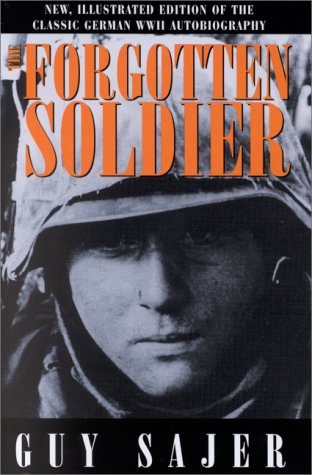
I quoted Guy Sajer, the author of the classic book The Forgotten Soldier. If anyone wants to understand something about what war does to a person and see PTSD in non-clinical terms I think it is possibly the best book to read.

Forgotten_Soldier

Since I have gone to war and experienced fear on a daily basis out in the hinterlands of Al Anbar Province with small groups of American Marines and Soldiers and Iraqi troops I understand a bit of what Sajer writes. My war was different, out with advisors on small Iraqi basis, traveling in dangerous areas far from any big American units, occasionally being shot at and seeing the devastation of war in that unfortunate country,  though my experience of war pales in comparison with what Sager describes.

That being said I do understand in ways that I never did before. Sajer makes a comment which I think is incredibly appropriate for those that read of war without having ever experienced it. too often is the case in the United States and Western Europe where very few ever put on a uniform and even fewer experience war. Sager wrote:

“Too many people learn about war with no inconvenience to themselves. They read about Verdun or Stalingrad without comprehension, sitting in a comfortable armchair, with their feet beside the fire, preparing to go about their business the next day, as usual.

One should really read such accounts under compulsion, in discomfort, considering oneself fortunate not to be describing the events in a letter home, writing from a hole in the mud. One should read about war in the worst circumstances, when everything is going badly, remembering that the torments of peace are trivial, and not worth any white hairs. Nothing is really serious in the tranquility of peace; only an idiot could be really disturbed by a question of salary. 

One should read about war standing up, late at night, when one is tired, as I am writing about it now, at dawn, while my asthma attack wears off. And even now, in my sleepless exhaustion, how gentle and easy peace seems!”

This weekend I will visit the Gettysburg Battlefield as part of a staff ride. I have been there a good number of times but not since I returned from Iraq. Thus in a sense it will take on new meaning, especially when I walk those hallowed fields of battle where so many died and so many more were maimed in our own terrible Civil War.

295_26911892058_4301_n

That being said I wonder if the solution to my nightmares is to go back to Iraq someday like so many WWII, Korea and Vietnam veterans have done to the places that they served. That has to remain in the future, but hopefully I will get the chance and maybe by then Iraq will at last be at peace.

Tonight I will attempt to sleep and hopefully what dreams I have, though they be high definition will at least not be nightmares that disturb Judy or the dogs.

Peace

Padre Steve+

2 Comments

Filed under civil war, faith, Military, ministry, Pastoral Care, PTSD

The “Comfortable” Experts and the Real Soldiers

“Too many people learn about war with no inconvenience to themselves. They read about Verdun or Stalingrad without comprehension, sitting in a comfortable armchair, with their feet beside the fire, preparing to go about their business the next day, as usual…One should read about war standing up, late at night, when one is tired, as I am writing about it now, at dawn, while my asthma attack wears off. And even now, in my sleepless exhaustion, how gentle and easy peace seems!” 

Guy Sajer “The Forgotten Soldier”

Currently well under one percent of Americans are serving in any branch of the military and of these not all have served with boots on the ground.  There is no shame for those that have not as land war is the prevue of the Army and Marines though a significant number of Sailors and some Air Force personnel have served alongside their Soldier and Marine comrades in arms.

Of those that serve there is not one who has not enlisted, reenlisted or renewed their Officer Oath of Office at least once since September 11th 2001.  There are those of us who have been in far longer but even we have made the commitment to continue in the service of our country knowing that anyone can be sent into harm’s way at any time.

Those that serve especially those that have served at the point of the spear in the remote badlands, or dangerous cities of Iraq and Afghanistan are a true minority group. We are a minority group composed of the best our nation has to offer. We represent every state and territory; we are citizens or in the case of many immigrants’ men and women seeking citizenship by risking their lives for a country that often despises their relatives based on their race, nationality or religion.  In fact this is not new; men have come to this country since our revolution from far countries because of the ideals that this nation represents.

This is a minority group composed of all races and whose families helped colonize this nation, came here in the following centuries and those that were here before the Europeans landed on this continent. We represent almost every religion and creed known to human kind. We come from cities, small towns, rural areas and island territories.  We are Democrats, Republicans, Libertarians and Independents.  We are Americans and we know war not from books, though many of us study military history, strategy and the lives of those great Soldiers, Sailors, Marines and Airmen that have gone before us. We know war because we have seen it. We have lost friends and seen others maimed or injured in mind, body or spirit. We have seen the wounded and the destruction which war inflicts on often innocent people who have the misfortune of living in a combat zone.

We do not make policy we carry out the orders of our national leaders and obey the laws passed by Congress. We are professionals.  We are not perfect but we serve.  In a sense we embody what the character of Colonel Joshua Chamberlain of the 20th Maine said at Gettysburg in Michael Shaara’s novel The Killer Angels and its film adaptation Gettysburg.

“This is a different kind of army. If you look at history you’ll see men fight for pay, or women, or some other kind of loot. They fight for land, or because a king makes them, or just because they like killing. But we’re here for something new. This has not happened much, in the history of the world: We are an army out to set other men free. America should be free ground, all of it, from here to the Pacific Ocean. No man has to bow, no man born to royalty. Here we judge you by what you do, not by who your father was. Here you can be something. Here is the place to build a home. But it’s not the land. There’s always more land. It’s the idea that we all have value, you and me. What we’re fighting for, in the end… we’re fighting for each other. Sorry. Didn’t mean to preach.” 

We serve at a time that our nation has been engaged in two very costly wars in terms of lives and treasure. We never thought that they would last as long as they have after all we were promised that and even told that the mission was “completed.” But the wars didn’t end and now our nation is involved in one, maybe two more in Libya and possibly Yemen.

We are told in spite of what we know from experience that the wars are going well and that we have turned a corner in Afghanistan even as the situation on the ground tells us otherwise.  We have the professional military experts in the think tanks telling us that the wars have to continue. Of course these men have never served in combat and what they know is gleaned from their interpretation of history and often dictated by their ideology and sometimes even worse by their connections to the defense industry, that which President and General of the Army Dwight D. Eisenhower so charmingly called “the military industrial complex.” Of course now we can and the media and elected officials who promote war to sustain their political power and enrich the powerful in their home districts.

Then there are those, especially the young that grow up with war as a series of video games and since very few meet the standards to serve in the military for a wide variety of reasons think that war is cool.  Look at the top selling games, almost all deal with virtual close combat, without any cost to those that play them.

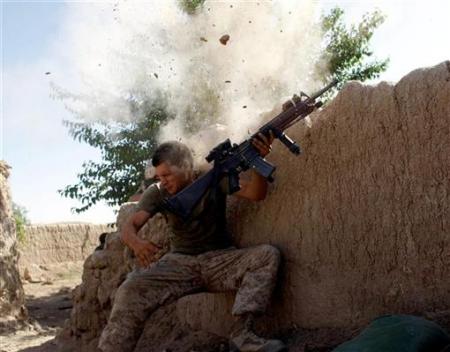
Marines in Afghanistan under attack

Such men and in some cases women need to learn about war in the uncomfortable manner described by Sajer, a Frenchman that served in the German Army on the Eastern Front because one of his parents was German.  The problem is that those that promote war as a business and those that sell war to kids via the entertainment industry really don’t care about the real human beings, the men and women who serve knowing that these wars are unlikely to end anytime soon.  Even more frightening are people of strong religious convictions who promote war in order to see their views, especially about the Middle East vindicated.

Such are the comfortable experts who debate in comfort and write with a detached certitude that they alone have the correct view of the world.  There is a good case to be made that such people be held accountable for the wars that they advocate and the lives lost because of their hubris.

Peace

Padre Steve+

4 Comments

Filed under Foreign Policy, History, iraq,afghanistan, middle east, Military, Political Commentary