Tag Archives: hans kung

Church, Faith, Tolerance and Reconcilliation

1622612_10152232336042059_727365308_n

“Sometimes I think it is my mission to bring faith to the faithless, and doubt to the faithful.” Paul Tillich

My friends, I write this because of something that happened to me a couple of days ago. It was an incident that upset me greatly because it ended up in the fracturing of a relationship by a friend who evidently could not tolerate where I was in my life as a priest and Christian. I discovered again the reality of what Dietrich Bonhoeffer wrote:

“Many people are looking for an ear that will listen. They do not find it among Christians, because these Christians are talking where they should be listening. But he who can no longer listen to his brother will soon be no longer listening to God, either; he will be doing nothing but prattle in the presence of God, too. This is the beginning of the death of the spiritual life, and in the end there will be nothing left but spiritual chatter and clerical condescension arrayed in pious words… never really speaking to others.”

My experience of the Church is profoundly influenced by my life in the nether world of the military culture. My world view is shaped by a blending of various Christian traditions, mutual support and collaboration among believers of often radically different points of view. Because of the love, care and mentoring of people from a blend of different traditions I came to know God and survived a tumultuous childhood with many moves.

As a historian I have been blessed to study church history from the early Church Fathers to the present. As I look to church history I find inspiration in many parts of the Christian tradition. In fact rather being threatened by them I have become appreciative of their distinctiveness. I think that there is a beauty in liturgy and stability in the councils and creeds of the Church. At the same time the prophetic voice of evangelical preaching shapes me, especially the message of freedom and tolerance embodied in the lives and sacrifice of men like John Leland, the American Baptist who helped pioneer the concept of Freedom of Religion established in the Constitution of the United States, of William Wilberforce who labored to end slavery in England and, Martin Luther King Jr. who led the Civil Rights movement.

Likewise that prophetic message of the faith is demonstrated in the ministry, writing and martyrdom of Dietrich Bonhoeffer and his contemporaries Martin Niemoller and Jesuit priest Father Rupert Meyer. All three resisted and preached against the evils of Nazism. In a more contemporary setting I am inspired by Bishop Desmond Tutu who helped topple apartheid in South Africa.

Women like Teresa of Avila and St Catherine show me that women have a legitimate place of ministry and leadership in the Church. I am convinced through my study of Church history, theology and a deep belief in the power of the Holy Spirit that women can and should serve as Priests and Bishops in the church.

My theology has shaped by the writings of Hans Kung, Yves Congar, Jurgen Moltmann, Andrew Greeley, and Henry Nouwen. I’ve been challenged by St Francis of Assissi, John Wesley and Martin Luther. I am especially inspired by Pope John XXIII whose vision brought about the Second Vatican Council and I am inspired by Pope Francis.

I pray that Christians can live in peace with one another and those who do not share our faith. I pray that we can find ways to overcome the often very legitimate hurts, grievances and divisions of our 2000 year history. At the same time I pray that we can repent from our own wrongs and work to heal the many wounds created by Christians who abused power, privilege and even those who oppressed others, waged war and killed in the name of Jesus.

I do not believe that neither triumphalism nor authoritarianism has a place in in a healthy understanding of the church and how we live. I am suspicious of any clergy who seek power in a church or political setting. I profoundly reject any argument that requires the subjection of one Church with its tradition to any other Church. In fact I think that the arrogance and intolerance of Christians to others is a large part of why people are leaving the church in droves and that the fastest growing “religious group” is the “nones” or those with no religious preference. Andrew Greeley said something that we should take to heart:

“People came into the Church in the Roman Empire because the Church was so good — Catholics were so good to one another, and they were so good to pagans, too. High-pressure evangelization strikes me as an attempt to deprive people of their freedom of choice.”

I grew up in and have lived my life in a very open and ecumenical environment. I have lost any trace denominational parochialism and competition that I might have had if I had become a pastor of a civilian parish instead of a chaplain. It is interesting that the pastor that first ordained me in the evangelical tradition and the bishop that ordained me as a priest both did so with the intent that I serve as a chaplain. Whether it was the recognition of a gifting for the work or the fact that they didn’t want me messing up their civilian operations by asking hard questions I will never know.

I believe that my environment and the men and women who have helped shape my life have been a stronger influence in the way I think about ecumenical relations and ministry than my actual theology or ecclesiology. Whether they were Catholics, Anglicans, Lutherans, Methodists, Presbyterians, Evangelicals or even those considered by many to be outside the faith including Jews, Moslems, Buddhists, Mormons and even complete non-believers all have contributed to my life and faith.

I have grown weary of refighting theological debates that have divided the church for a thousand years. Since what we know of theology including our Scriptures and Creeds are based on faith and not science I see no reason to continue to battle.

That doesn’t mean that I think we should put our brains in neutral but rather we must wrestle with how to integrate our faith with science, philosophy and reason, otherwise we will become irrelevant. In that sense I identify with Saint Anslem of Canterbury who wrote about a faith seeking understanding and Erasmus of Rotterdam who very well understood the importance of both faith and reason. In that sense I am very much at home with the Anglian triad of Scripture, Reason and Tradition when it comes to approaching faith.

I struggle with faith and belief. After Iraq I spent two years as a practical agnostic. As Andrew Greeley wrote: “Most priests, if they have any sense or any imagination, wonder if they truly believe all the things they preach. Like Jean-Claude they both believe and not believe at the same time.” Andrew Greeley “The Bishop and the Beggar Girl of St Germain”

I am an Old Catholic and believe that inter-communion does not require from either communion the acceptance of all doctrinal opinion, sacramental devotion, or liturgical practice characteristic of the other, but implies that each believes the other to hold all the essentials of the Christian faith. I like to think that I embody what the early Anglicans referred to as the via media and that somehow my life and ministry has been about building bridges at the intersections of faith with a wide diversity of people.

When I have tried to embrace traditionalism or choose to fight theological battles I have ended up tired, bitter and at enmity with other Christians. In a sense when I tried those paths I found that they didn’t work for me. I discovered that I was not being true to who God had created and guided my life, education and experience. I feel like T. E. Lawrence who wrote:

“The rare man who attains wisdom is, by the very clearness of his sight, a better guide in solving practical problems than those, more commonly the leaders of men, whose eyes are misted and minds warped by ambition for success….”

My favorite theological debates have been with other chaplains over pints of good beer in German Gasthausen or Irish pubs. Those were good times, we argued but we also laughed and always left as friends and brothers. I believe since we are human that none of us will ever fully comprehend all of God or his or her truth. I believe that the Holy Spirit, God’s gracious gift to her people will guide us into all Truth. For me my faith has become more about relationships and reconciliation than in being right.

As far as those who disagree with me that is their right, or your right if you disagree. I don’t expect agreement and I am okay with differences and even if I disagree with an individual or how another religious denominations polity, theology, beliefs or practices those are their rights. In fact I am sure that those that believe things that I don’t are at least as sincere as me and that those beliefs are important to them. I just ask that people don’t try to use them to force their faith or belief on others, be it in churches or by attempting to use the power of government to coerce others into their belief systems.

To my friend who broke contact with me when I refused to debate his argument that I should submit myself to his Church and tradition, the door is open for reconciliation.

Peace

Padre Steve+

2 Comments

Filed under christian life, faith, Religion

Distant Origen: The Danger of Doctrinal Certitude While Living in the Uncomfortable Middle

galaxy_universe-normal

“Man no longer lives in the beginning–he has lost the beginning. Now he finds he is in the middle, knowing neither the end nor the beginning, and yet knowing that he is in the middle, coming from the beginning and going towards the end. He sees that his life is determined by these two facets, of which he knows only that he does not know them”  Dietrich Bonhoeffer

There is an episode of Star Trek Voyager called Distant Origin where a scientist of a race in the Delta Quadrant believes that genetic evidence indicated that their race originated on Earth. His thesis is challenged the doctrine of his species and he was accused of “heresy against Doctrine” for positing something different than his people believed. He ends up being persecuted and punished for his beliefs.

Now I want to be diplomatic about this. I am not someone who simply is contrary to established doctrines, be they theological, scientific or even military theories. That being said I think it is only right to question our presuppositions, as Anselm of Canterbury did through faith seeking understanding.

That understanding as a Christian is based on the totality of the message of the Christian faith. Hans Kung said it well:
“Christians are confident that there is a living God and that in the future of this God will also maintain their believing community in life and in truth. Their confidence is based on the promise given with Jesus of Nazareth: he himself is the promise in which God’s fidelity to his people can be read.” 

What we have to admit is that our belief is rooted in our faith, faith which is given to us through the witness of very imperfect people influenced by their own culture, history and traditions. Even scripture does not make the claim to be inerrant, and the Bible cannot be understood like the Koran or other texts which make the claim to be the infallible compendium of faith delivered by an angel or dictated by God himself. It is a Divine-human collaboration so symbolic of the relationship that God has with his people, often confusing and contradictory yet inspiring.

themiddle

There is a certain sense of relationship between God and humanity within scripture and that relationship creates certain tensions between God and those people. The interesting thing is that Scripture is a collection of texts which record often in terrible honesty the lack of perfection of both the writers and their subjects. They likewise record the sometimes unpredictable and seemingly contradictory behavior of God toward humanity in the Old Testament. They bear witness to the weaknesses, limitations and lack of understanding of the people of God of the message of God but even in that those limitations and weaknesses that God is still faithful to humanity in the life death and resurrection of Jesus of Nazareth.

The real fact of the matter is that fixed doctrines are much more comfortable than difficult questions than honestly examining the contradictions that exist within Scripture, history and tradition. The fact is this makes many people uncomfortable and thus the retreat into the fortress of fixed and immutable doctrine found in the various incarnations of Fundamentalism.

The fact is the world is not a safe place, and our best knowledge is always being challenged by new discoveries many of which make people nervous and uncomfortable, especially people who need the safety of certitude. So in reaction the true believers become even more strident and sometimes, in the case of some forms of Islam and Hinduism violent.

Picard

Christianity cannot get away unscathed by such criticism. At various points in our history we have had individuals, churches and Church controlled governments persecute and kill those that have challenged their particular orthodoxy. Since Christian fundamentalists are human they like others have the capacity for violence if they feel threatened, or the cause is “holy” enough. Our history is full of sordid tales of the ignorance of some Christians masquerading as absolute truth and crushing any opposition. It is as Eric Hoffer wrote:

“A doctrine insulates the devout not only against the realities around them but also against their own selves. The fanatical believer is not conscious of his envy, malice, pettiness and dishonesty. There is a wall of words between his consciousness and his real self.”

This is the magnetic attraction of fundamentalism in all of its forms, not just Christian fundamentalism.  Yet for me there is a comfort in knowing that no matter how hard and fast we want to be certain of our doctrines, that God has the last say in the matter in the beginning and the end. We live in the uncomfortable middle but I have hope in the faith that God was in the beginning. Besides as Bonhoeffer well noted “A God who let us prove his existence would be an idol” 

But there some Christians who now faced with the eloquence of men like Neil DeGrasse Tyson and Bill Nye who make legitimate challenges respond in the most uncouth and ignorant manners. The sad thing is that their response reveals more about them and their uncertainty than it does the faith that they boldly proclaim.

Our doctrines, the way we interpret Scripture and the way we understand God are limited by our humanity and the fact that no matter how clever we think we are that our doctrines are expressions of faith. This is because we were not in the beginning as was God and we will not be at the end, at least in this state. We live in the uncomfortable middle, faith is not science, nor is it proof, that is why it is called faith, even in our scriptures.

We are to always seek clarity and understanding but know that it is possible that such understanding and the seeking of truth, be it spiritual, historical, scientific or ethical could well upset our doctrines, but not God himself. As Henri Nouwen wrote: “Theological formation is the gradual and often painful discovery of God’s incomprehensibility. You can be competent in many things, but you cannot be competent in God.” Is that not the point of the various interactions of Jesus with the religious leaders of his day? Men who knew that they knew the truth and even punished people who had been healed by Jesus such as the man born blind in the 9th Chapter of John’s Gospel.

vasily-surikov-christ-healing-the-man-born-blind

“You are that man’s disciple; we are disciples of Moses! We know that God spoke to Moses, but we do not know where this one is from.” The man answered and said to them, “This is what is so amazing, that you do not know where he is from, yet he opened my eyes. We know that God does not listen to sinners, but if one is devout and does his will, he listens to him. It is unheard of that anyone ever opened the eyes of a person born blind. If this man were not from God, he would not be able to do anything.” They answered and said to him, “You were born totally in sin, and are you trying to teach us?” Then they threw him out.”

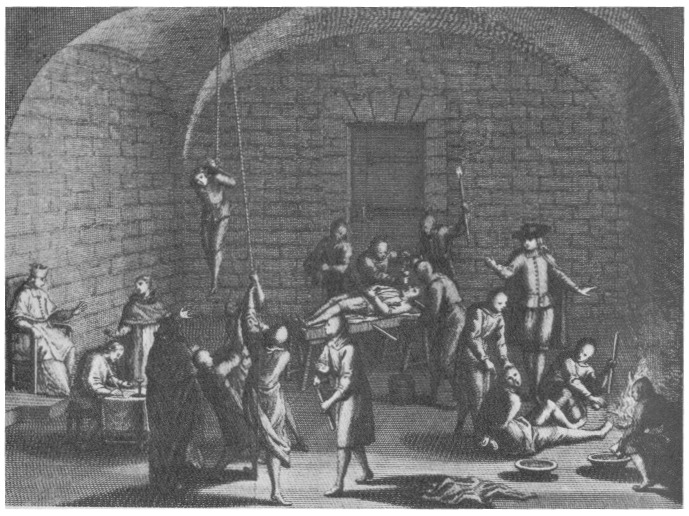
The interchange between the religious leaders and the man is not an indictment on Judaism, but rather on religious certitude in any time or place. The fact is that the Pharisees are no different than those who ran the Inquisition, or those who conducted Witch Trials or those who attempt to crush anyone who questions their immutable doctrine no matter what their religion. They were and are true believers.

In the episode of Star Trek the Next Generation called The Drumhead Captain Picard counsels Lieutenant Worf after their encounter with a special investigator who turned an investigation into a witch hunt on the Enterprise. Picard told Worf, who had initially been taken in by the investigator:

“But she, or someone like her, will always be with us, waiting for the right climate in which to flourish, spreading fear in the name of righteousness. Vigilance, Mister Worf – that is the price we have to continually pay.”

And that is true.

Peace

Padre Steve+

Leave a comment

Filed under faith, philosophy, Religion

The Excommunication of Martin Luther and the Journey of Padre Steve

BullExurgeDomine

Leo X’s Papal Bull Exsurge Domine

“We are not yet what we shall be, but we are growing toward it, the process is not yet finished, but it is going on…” Martin Luther

On the 3rd of January 1521 Pope Leo X issued his Papal Bull of Excommunication Decet Romanum Pontificem against Martin Luther. The excommunication followed Luther’s publication of his three masterful works published in 1520 To the Christian Nobility of the German Nation, On the Babylonian Captivity of the Church and On the Freedom of a Christian.

The excommunication was the second act of a three part drama. The first part began with Luther’s publication of the 95 Theses on October 31st 1517. That launched a series of actions by the Papacy in which various representatives were sent to bring Luther back into line. Failing this the last of the inquisitors, Johann Eck became Luther’s and other Reformer’s constant nemesis for the next 25 years.

In the summer of 1520 Eck brought back to Germany Leo X’s Papal Bull Exsurge Domine which attacked and condemned Luther’s writings, a prequel to the formal excommunication. Eck was not well received and Luther’s movement began to gain more traction especially among much of the nobility and among other theologians.

The message of the Bull was clear, Luther, his works and those who supported him or published his works were condemned. In part it read:

“…we likewise condemn, reprobate, and reject completely the books and all the writings and sermons of the said Martin, whether in Latin or any other language, containing the said errors or any one of them; and we wish them to be regarded as utterly condemned, reprobated, and rejected. We forbid each and every one of the faithful of either sex, in virtue of holy obedience and under the above penalties to be incurred automatically, to read, assert, preach, praise, print, publish, or defend them. … Indeed immediately after the publication of this letter these works, wherever they may be, shall be sought out carefully by the ordinaries and others [ecclesiastics and regulars], and under each and every one of the above penalties shall be burned publicly and solemnly in the presence of the clerics and people.” 

???????????????????????????????

Luther burning the Bull

Luther who received a copy in October of 1520 reacted in kind noting: “Since they have burned my books, I burn theirs. The canon law was included because it makes the pope a god on earth. So far I have merely fooled with this business of the pope.”

Neither the Bull dealt with the substance of Luther’s teachings, instead they were both heavy handed missives of Papal primacy and punishment on those that disobeyed. The Bull of excommunication read in part:

Nevertheless Martin himself—and it gives us grievous sorrow and perplexity to say this—the slave of a depraved mind, has scorned to revoke his errors within the prescribed interval and to send us word of such revocation, or to come to us himself; nay, like a stone of stumbling, he has feared not to write and preach worse things than before against us and this Holy See and the Catholic faith, and to lead others on to do the same.

He has now been declared a heretic; and so also others, whatever their authority and rank, who have cared nought of their own salvation but publicly and in all men’s eyes become followers of Martin’s pernicious and heretical sect, and given him openly and publicly their help, counsel and favour, encouraging him in their midst in his disobedience and obstinacy, or hindering the publication of our said missive: such men have incurred the punishments set out in that missive, and are to be treated rightfully as heretics and avoided by all faithful Christians, as the Apostle says (Titus iii. 10-11).

III. Our purpose is that such men should rightfully be ranked with Martin and other accursed heretics and excommunicates, and that even as they have ranged themselves with the obstinacy in sinning of the said Martin, they shall likewise share his punishments and his name, by bearing with them everywhere the title “Lutheran” and the punishments it incurs.

Our previous instructions were so clear and so effectively publicised and we shall adhere so strictly to our present decrees and declarations, that they will lack no proof, warning or citation.

Our decrees which follow are passed against Martin and others who follow him in the obstinacy of his depraved and damnable purpose, as also against those who defend and protect him with a military bodyguard, and do not fear to support him with their own resources or in any other way, and have and do presume to offer and afford help, counsel and favour toward him. All their names, surnames and rank—however lofty and dazzling their dignity may be—we wish to be taken as included in these decrees with the same effect as if they were individually listed and could be so listed in their publication, which must be furthered with an energy to match their contents.

On all these we decree the sentences of excommunication, of anathema, of our perpetual condemnation and interdict; of privation of dignities, honours and property on them and their descendants, and of declared unfitness for such possessions; of the confiscation of their goods and of the crime of treason; and these and the other sentences, censures and punishments which are inflicted by canon law on heretics and are set out in our aforesaid missive, we decree to have fallen on all these men to their damnation.”

It was an extraordinary and misguided document which failed to understand the significance of what was happening in the Church and in Europe. It was a document that echoes what every authoritarian structure does when challenged, it ignored the causes, it ignored the issues and simply condemned those involved. Instead of dialogue it chose retribution and destroyed the unity of the Western Church. Phillip Schaff, one of the great Church historians wrote about the Bull: “The bull of excommunication is the papal counter-manifesto to Luther’s Theses, and condemns in him the whole cause of the Protestant Reformation. Therein lies its historical significance. It was the last bull addressed to Latin Christendom as an undivided whole, and the first which was disobeyed by a large part of it.”

After his excommunication Luther appealed to Emperor Charles V who initially rejected it outright but reconsidered in light of the danger that the Empire faced if German states revolted. Charles invited Luther to the Diet promising him safe passage. The fact that Luther was able to appear at the council safely was in large part because of Elector Friedrich the Wise, his protector insisting that Luther not be imprisoned or outlawed without a hearing. Along the way Luther was greeted as a hero by townspeople, it was something like a victory parade.

20080102-luther

When the hearings began the Archbishop of Trier asked Luther if he would recant his writings. Luther asked for time to consider and at 4 PM the following day was called back to the Diet, where before the Emperor and the Princes of Germany he stood alone.

The Archbishop demanded: “Explain yourself now. Will you defend all your writings, or disavow some of them?” 

Luther provided a rather long answer regarding his writings, categorizing them and explaining them. Eventually the exasperated Archbishop asked: “Martin–answer candidly and without horns–do you or do you not repudiate your books and the errors which they contain?”

Luther then gave the answer in German rather than Latin, which has reverberated nearly half a millennium:

“Since then your sere Majesty and your Lordships seek a simple answer, I will give it in this manner, neither horned nor toothed. Unless I am convinced by the testimony of the Scriptures or by clear reason (for I do not trust either in the pope or in councils alone, since it is well known that they have often erred and contradicted themselves), I am bound by the Scriptures I have quoted and my conscience is captive to the Word of God. I cannot and I will not recant anything, since it is neither safe nor right to go against conscience. May God help me. Amen.”

Friedrich the Wise spirited Luther away in a staged “kidnapping” to the Wartburg Castle, allowing him to evade those that sought his life and to stabilize the Reformation in Germany.

I have always felt a closeness to Luther. He is one of my heroes. I recognize that he was neither perfect, nor do I agree with everything that he wrote or some of the things that he did. That being said, this very imperfect and often impetuous Monk, Priest and Professor is close to me. His “Theology of the Cross” makes more sense than others I have read, and his defense of the Eucharist was instrumental in my faith journey.

Luther, despite many in the Catholic Church who fight for him has not been “rehabilitated” nor the bans of excommunication removed. He has been called by some a “reluctant revolutionary.” I hope that Pope Francis will lift the excommunication despite the Roman tradition of not lifting such bans on those who have passed away.

Luther, like me was somewhat blunt, earthy and liked beer. In fact after Worms he wrote:

“I simply taught, preached, and wrote God’s Word; otherwise I did nothing.  And then, while I slept, or drank Wittenberg beer with my Philip [Melanchthon] and my Amsdorf [Nicholaus von], the Word so greatly weakened the papacy that never a prince or emperor did such damage to it.  I did nothing.  The Word did it all.” 

In seminary Luther, his writings and theology were instrumental in coming to a catholic understanding of the the Christian faith. Now that understanding was much more interpreted in light of the Second Vatican Council and more progressive theologians such as Hans Kung, Bernard Haring and Yves Congar, but it was still catholic and a clean break from my Evangelical Protestant background and education.

Likewise, when I was ordained as a Priest in a more conservative Anglo-Catholic denomination in the mid 1990s I never dreamed that I would face a time where my writings would mark me as a “heretic” in the eyes of some in that church. Nor did I think that I would be told that I was “too liberal” and needed to leave that church. Before that I had been censured and forbidden from writing because I was “too Catholic” by another bishop. Like Luther I assumed that what I wrote and said were readily apparent. Since I have written extensively about that situation and don’t feel the need to go into detail here.

1470237_10152110186432059_1784204366_n

In 1996 I led a series of tours of Luther’s reformation sites in Germany, including Wittenberg, Heidelberg and Worms. I posed for pictures outside the door of the Castle Church as well as at the site where Luther gave his “Here I stand” speech. I was so familiar with the locations in Wittenberg that I was asked if I had ever been to them before. I could only say that I had never been there in person, but had been there many times in my mind. When at each location I felt a tremendous closeness to a man who had influenced so much of my spiritual journey.

As Luther wrote:

“This life therefore is not righteousness, but growth in righteousness, not health, but healing, not being but becoming, not rest but exercise. We are not yet what we shall be, but we are growing toward it, the process is not yet finished, but it is going on, this is not the end, but it is the road. All does not yet gleam in glory, but all is being purified.” 

Peace

Padre Steve+

1 Comment

Filed under christian life, faith, History, Religion

The Uncomfortable Middle: The Challenge to the Certitude of Unprovable Doctrine

holy-saturday

“Man no longer lives in the beginning–he has lost the beginning. Now he finds he is in the middle, knowing neither the end nor the beginning, and yet knowing that he is in the middle, coming from the beginning and going towards the end. He sees that his life is determined by these two facets, of which he knows only that he does not know them”  Dietrich Bonhoeffer

I was watching an episode of Star Trek Voyager tonight, one called Distant Origin where a scientist of a race in the Delta Quadrant believes that genetic evidence indicated that their race originated on Earth. His thesis is challenged the doctrine of his species and he was accused of “heresy against Doctrine” for positing something different than his people believed. He ends up being persecuted and punished for his beliefs.

Now I want to be diplomatic about this. I am not someone who simply is a contrarian to established doctrines, be they theological, scientific or even military theories. That being said I think it is only right to question our presuppositions, as Anselm of Canterbury did through faith seeking understanding.

That understanding as a Christian is based on the totality of the message of the Christian faith. Hans Kung said it well:

“Christians are confident that there is a living God and that in the future of this God will also maintain their believing community in life and in truth. Their confidence is based on the promise given with Jesus of Nazareth: he himself is the promise in which God’s fidelity to his people can be read.” 

What we have to admit is that our belief is rooted in our faith, faith which is given to us through the witness of very imperfect people influenced by their own culture, history and traditions. Even scripture does not make the claim to be inerrant, and the Bible cannot be understood like the Koran or other texts which make the claim to be the infallible compendium of faith delivered by an angel or dictated by God himself. It is a Divine-human collaberation so symbolic of the relationship that God has with his people.

There is a certain sense of relationship between God and humanity within scripture and that relationship creates certain tensions between God and those people. The interesting thing is that Scripture is a collection of texts which record often in terrible honesty the lack of perfection of both the writers and their subjects. They likewise record the sometimes unpredictable and seemingly contradictory behavior of God toward humanity in the Old Testament. They bear witness to the weaknesses, limitations and lack of understanding of the people of God of the message of God but even in that those limitations and weaknesses that God is still faithful to humanity in the life death and resurrection of Jesus of Nazareth.

The real fact of the matter is that fixed doctrines are much more comfortable than difficult questions than honestly examining the contradictions that exist within Scripture, history and tradition. The fact is this makes many people uncomfortable and thus the retreat into the fortress of fixed and immutable doctrine. This is the magnetic attraction of funamentalism in all of its forms, not just Christian fundamentalism.  Yet for me there is a comfort in knowing that no matter how hard and fast we want to be certain of our doctrines, that God has the last say in the matter in the beginning and the end. We live in the uncomfortable middle but I have hope in the faith that God was in the beginning. Besides as Bonhoeffer well noted “A God who let us prove his existence would be an idol” 

Our doctrines, the way we interpret Scripture and the way we understand God are limited by our humanity and the fact that no matter how clever we think we are that our doctrines are expressions of faith. This is because we were not in the beginning as was God and we will not be at the end, at least in this state. We live in the uncomfortable middle.

We are to always seek clarity and understanding but know that it is possible that such understanding and the seeking of truth, be it spiritual, historical, scientific or ethical could well upset our doctrines, but not God himself. As Henri Nouwen wrote: “Theological formation is the gradual and often painful discovery of God’s incomprehensibility. You can be competent in many things, but you cannot be competent in God.”

Peace

Padre Steve+

1 Comment

Filed under christian life, faith, philosophy, Religion

Faith’s Journey: A Progressive Christian Navy Chaplain Looks at the Journey to Wholeness

400236_10151328400862059_541742014_n

June 27th 2013: After the events of this week including the Supreme Court decision declaring the Defense of Marriage Act unconstitutional I decided to re-publish an article that was one of the most important that I ever published. Not so much because of the what I think was so earth shattering regarding the content but because of what happened after its publication. At the point in time that I wrote it I was pushing the envelope with my former denomination, but figured that in light of all the controversies and schisms in that church at the time that whatever I wrote would not result in any problems. But I was wrong. I received a call the next day from my bishop telling me that I needed to find a new home because I was “too liberal.”

It was actually quite fascinating, I was able to gain a new church home which was much more progressive, welcoming and catholic, being of the Old Catholic tradition. For me that phone call was just a few months later deposed for attempting to create yet another schism in the church. I think it is even more interesting because some of my friends still in that church think that he used this article as a reason to get rid of me in order to keep me from exposing his scheme. I don’t know if that it the case or not, but my friends believe it to be a distinct possibility. That being said one of my long time priest friends revealed his plot to the other bishops and the bishop who forced me  was deposed. Irony is fascinating. Since that time my former church is regaining its footing and doing better and for my friends in it I am glad for even if I have differences in theology, faith or beliefs with people who I consider to be friends, they are still friends and I wish them well.  

So anyway, for those that are fairly new followers on this site here is the article that in a sense served as a declaration of independence and station on the road to wholeness and integrity. 

Peace, Padre Steve+

Faith Journeys: Why I am Still a Christian (Originally published 22 September 2010)

There are many times that I totally empathize with author Anne Rice in saying that she has left Christianity yet still has faith in Christ.  For Rice it was the lack of love shown by the institutional church for people that are marginalized and treated as if they were unredeemable by often well meaning Christians.

I know what it feels like to be marginalized after I came back from Iraq because many of my Christian friends seemed, at least in my view to be tied to the absolute hogwash that spews from talk radio hosts and allegedly “Christian” politicians.  I remember having some Christians question my patriotism and even my faith because I disagreed with them regarding certain aspects of the war, despite the fact that I had been on the ground in harm’s way serving with our advisors and Iraqis in Al Anbar province.  The fact that not a clergyman, civilian or military, took time to care for me when I was in a major PTSD meltdown and crisis of faith before I went to Naval Medical Center Portsmouth didn’t seem to matter because a political agenda was given primacy over the simple truths and hard demands of the Gospel.

Yesterday I wrote about Chaplains that experience a crisis of faith after coming home from a combat deployment.  For me there is nothing more symbolic of the lack of soul left in many Christians and Christian Churches in how they treat those that have served faithfully. Those Chaplains that have served  God, Church and Country and come back spiritually wondering what happened, not knowing what to believe and feeling abandoned by God and cast off by the Church and the military simply because we have a hard time with the so called “orthodoxy” of some Christians.

I went through a period after Iraq where feeling abandoned and isolated from those of a like faith that I was for all practical purposes an agnostic.  That was a really difficult time in my life and if you think that anything sucks try to be a Chaplain when you no longer know if God exists and the only person asking how you are doing with “the Big Guy” is your therapist. I can say without a doubt that it sucks like a Hoover and I know that I am not alone in my feelings.  I have met others whose experience is similar to mine but those that are struggling right now, caught between our faith and the feeling of being abandoned by God and his people because our experience of seeing the human suffering caused by war has shaken us.

Let’s talk about spiritual despair. Did you know that in the past couple of years that two Army Chaplains and one Navy Chaplain have committed suicide? These were men of faith who had served in peace and war at least one that had served at the Battle of Hue City as a Marine before becoming a Priest and Chaplain.  Another Army Chaplain that had served in Iraq as a minister of a conservative Charismatic and Evangelical Christian denomination became a Wiccan and was excoriated by Christians.  I don’t know his faith journey but I have to believe that part was his experience in Iraq and experience on his return. I don’t know about you but those are all signs of spiritual despair and feeling cut off from their faith community and even God, his or her self.

I am still a Christian. I believe in the God of Scripture, the Creeds and the Councils. At the same time that belief is not as rigid as it once was. I used to consider those that didn’t believe like I did in relation to Scripture, the Creeds and Councils not to be Christians.  I cannot say that now. I am much more to have the Grace and Mercy of God be my default position and let other things fall out where they may.  My practice of my faith has changed. When I came back from Iraq I attempted, as it were without success to keep my faith structure and practice the same as it was before I deployed to Iraq.  Within six months of Iraq I could no longer pray the Daily Office with any kind of faithfulness and by Lent 2009 give up the practice for Lent hoping to recover some authenticity to my faith. The authenticity has returned and after about a hear and a half I am seeking a way to reincorporate what had been a very important part of my daily practice of faith into my life without feeling like I am a phony in doing so.

I went through a period of absolute spiritual despair even leaving a Christmas Eve Mass in 2008 to walk home in the dark, alone, looking at the sky and asking God if he even existed.  A year later after my life had completely fallen apart I experienced what I call my “Christmas miracle” where I was called to our Emergency Room to provide the “last rites” to a retired Navy doctor and active Episcopalian when I was the duty Chaplain.  As I prayed the last prayer of commendation and removed my oil covered fingers from the man’s forehead he breathed his last. His wife told me that he was waiting to be anointed before he died.  The young doctor, a Psychology Resident doing his ER rotation who called me to the ER would die a couple of months later of natural causes in his living room not long after we had taken the “fat boy” program PT test together.

From that moment the paradigm shifted.  Faith began to return and I began to experience the presence of God again, not is the same was as before Iraq but one that was more relational, grace filled and informal.  I will likely begin praying the Daily Office again in the near future but I will approach it from a different point of view.  I will no longer use it simply to fulfill my priestly vows and obligations but rather as a way to re-experience and if need be re-imagine God.  Now before the heresy hunters think that I am re-imagining God is some unbiblical manner they are wrong. I want to re-imagine God as he has been revealed to his people both in Scripture, Tradition and in the life of his, or her people today.

moralssquad

How have I changed? I believe again. I am no longer an agnostic hoping and praying that God just might be there. My faith has become much more deeply rooted and grounded in the “Crucified God” and my faith in the “theology of the Cross.”  It is no longer connected to my politics and I refute any political ideology that attempts to use the Christian faith and the faith of well meaning Christians for purposes that Jesus himself would have condemned.  I don’t think Jesus was a big fan of his followers attempting to be the favorites of any political party or ideological system. In fact if I recall he really had pretty harsh words for his fellow Jews who were all wrapped around the axels with that kind of stuff. Jesus seems to befriend and hang around with those that are not connected to the religious, political or economic elites. In fact he seemed to reserve his harshest words for such people.  Jesus seemed to have a pretty good relationship with those marginalized and rejected by the religious folks of his day. He welcome sinners and tax collectors to his table and praised the faith of gentile Roman officers and stopped the super-religious folks from stoning an adulterous woman.

This is the Jesus that I follow and the Jesus that I believe is present in body, soul and spirit in the Eucharist.  I believe like Hans Kung and others that this table belongs to the baptized community of faith and not to an exclusive Priestly class who dictate who can come to the table.  It is not the exclusive property of any denomination or Church organization especially those that most loudly state this to be the case.

Now if saying this makes me a heretic then a heretic I will be. It is better to be a heretic in the eyes of Pharisees than to be one that denies justice to the persecuted people of God.  I guess that makes this moderate a liberal and to some an unbeliever.  Yet I believe in the God of Abraham, Isaac and Jacob. I believe in the Jesus that defied religious systems to offer the grace of God to the people that those systems rejected and the Jesus that was far more critical of “believers’ than those rejected as unbelievers.  I guess that is why I can accept women as ministers or even Priests, accept homosexuals as Christian brothers and sisters, and see Christ and the grace and love of God in people that are not “Christians” even the Muslims in Iraq that treated me with respect and even if they had an “Aryan” view of Jesus still showed a greater reverence for Jesus and the Blessed Virgin Mary than many that claim Jesus for themselves.

Why? You ask. Very simply I once was lost but now am found.  I thought that I knew it all before, now I know that I don’t know it all and that God is the God of surprises, just look in Scripture.  I doubt at times. I know that there are many answers that elude me and I cannot answer just by citing or using Scripture out of its historic, cultural and linguistic context.  I believe in the God that did not reject me when I didn’t know if he even existed.

Why am I still a Christian when I have so many problems with how many Christians practice the faith? Because I believe and not because will not I tow anyone’s party line be they liberals or conservatives. I believe in spite of my unbelief in a fellowship of those who as a result of war and trauma have trouble believing those that won’t race the cold realities of this life. I believe because many times it was those marginalized by others, especially those marginalized by the “faithful” showed me the love of God when the “faithful” for pure or impure motives, or even because they didn’t know what to do allowed me to sink into despair and isolation. So in the words of my favorite heretic Martin Luther I say “Here I stand, I can do no other. So help me God. Amen.”

Peace,

Padre Steve+

1 Comment

Filed under christian life, faith, Pastoral Care, philosophy, Religion

Papal Conclave Date Set: Cardinals Gather to Elect Pope on Tuesday

briefcase082way_custom-47172e04ff2ea7a1382b0fb66f11fe8f40539310-s6-c10

The 115 Cardinals present and eligible to vote for the Next Pope have  gathered including Roger the Dodger Cardinal Mahoney from Los Angeles. Mahoney, a man now banned by his successor from public ministry for his complicity in the cover up of numerous sexual crimes by his clergy will be one of those men meeting to elect Benedict XVI’s successor. The date was determined in the 8th pre-game meeting of the Cardinals and did not include the late Stan Musial, or the still living Tony LaRussa or Mark McGuire. I for one cannot imagine a meeting of Cardinals that does not include any of these men or even Bob Gibson or Rogers Hornsby.

creation

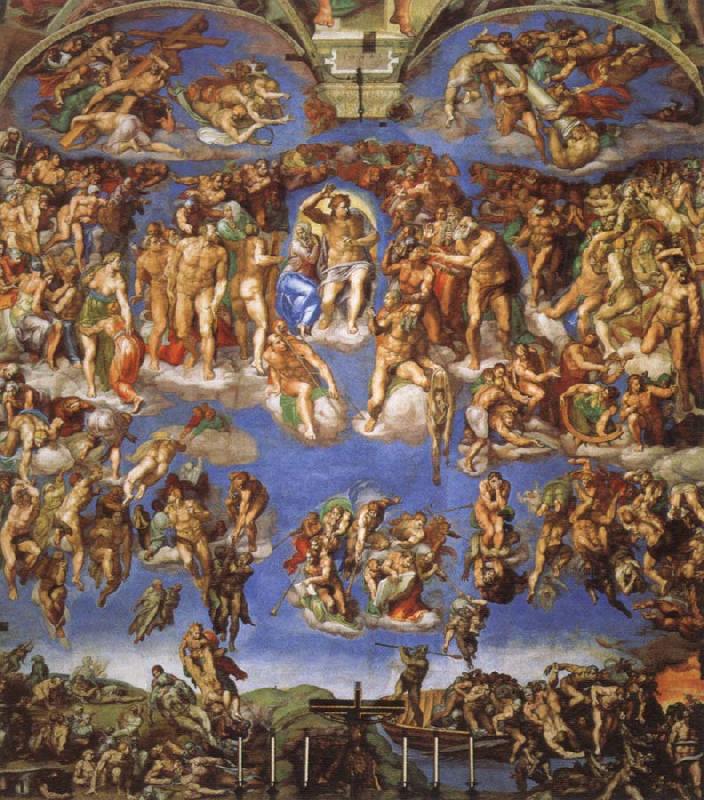
Politics of Papal elections are quite secretive. The process begins with a morning Mass called the “pro eligendo Romano Pontifice Mass.” Following this Mass and a luncheon with a no-host bar the Cardinals head over to the Sistine Chapel where under the hand of God painted on the ceiling by Michelangelo and the great fresco over the altar of the Last Judgement.

Michelangelo Buonarroti-876564

We do not know who will come out of the conclave as Pope. However the conclave, coming on the abdication of Benedict XVI and the Double Top Secret report ordered by Benedict, a report only to be seen by him and whoever comes out of the Conclave as the next Pope. It is believed by some including those that investigated the Vatileaks scandal that the contents were so disturbing that they led directly to Benedict’s resignation.

That aside, Papal elections, as well as the politics of the Curia are always shrouded in secrecy and often conspiracy theories. They make for great writing, especially in the fiction and mystery genre of literature. This undoubtably will be the case again in this election, especially due to the unusual circumstances surrounding this conclave.  I’ll bet that Dan Brown has a new novel brewing for Tom Hanks to make a movie right now.

collegeofcardinals

The scandals involving Catholic Prelates, Clergy and institutions around the world have rocked the Church to its foundations and for the most part the Church has not responded well. It is floundering and theologian Hans Kung notes that “behind the facade, the whole house is crumbling.”

When that magic number of 77 votes is reached and a new Pope is elected white smoke will rise from the chimney of the chapel. I think that the chimney is pretty unremarkable and needs to be replaced with something more Papal  with a bit more bling. After the smoke blows the new Pope will pick a name, I personally like “Bob” because it is kind of blue collar and easy to spell.  He will then get fitted for his new white cassock, of which three sizes will be available. Third World skinny, and White Guy Medium and Large, the Large actually being a 2X just in case the new Pope is not just a man of wisdom but substantial stature.

white_smoke_new_pope_1-1

I do pray for the Cardinals, as well as the Orioles as the conclave commences and the Orioles continue Spring Training games. I also pledge to pray for whoever is elected as the next Pope. Since I have no clue as to who this will be, with the possible exception of not Cardinal Mahoney that prayer is one of faith and trust in God to work through fallible men to select the Pope. This is something that matters to the 1.2 billion Roman Catholics worldwide and to non-Roman Catholics alike. I like Cardinal Timothy Dolan of New York because he is a baseball fan, but since he is an American I don’t expect him to get the job.

Thus while I approach this with a bit of humor and levity I also recognize how serious this is for both the Church and the world.

Peace

Padre Steve+

Leave a comment

Filed under News and current events, Religion

The Totality of Easter

“Easter is rightly understood only if the burden and strain of Good Friday are not forgotten.”  Hans Kung

The disciples of Jesus had abandoned him. It was a Roman Centurion that recognized at Jesus’ death It took a distant disciple, a man named Joseph of Arimathea to take responsibility for the body of Jesus as his close disciples fled the scene of his arrest, trial and crucifixion. It was women who first discovered his body missing and women who Jesus first revealed himself.

The disciples were traumatized. They had spent three years with Jesus and his death on Good Friday had to be shattering. They had lost their leader, teacher and friend. They were not exactly believing in the resurrection that first Easter and they met the initial reports with doubt. That is why Easter and the resurrection can only be rightly understood if we really appreciate the depths of despair felt by the disciples on that terrible Friday.

I think that is hard for most of us in the United States and Western Europe to comprehend. We are the product of 2000 years of Christendom.  We are the products of Imperial and triumphalist Christianity. Our understanding of persecution is minimal for the most part and we cannot comprehend the totality of the loss experienced by the disciples until we endure our own Good Friday experience of suffering, pain, loss and abandonment or as it is correctly understood as being Godforsaken.

Yet the disciples came to believe and proclaimed a message that put them at risk among their own people. That message would shake the world within a few generations. But the disciples really had no idea just how much things would change in such a short period of time. I’m sure that they could not imagine the Church being used as an instrument of partisan politics or for that matter dominating the politics of the Ancient Rome or the modern United States.  I’m sure that they could not imagine being political sycophants who gladly support those that oppress their brothers and sisters in less desirable nations or neighborhoods.

They understood the Gospel from the point of view of the downtrodden and powerless. The did not run multi-million dollar corporations or attempt to influence the affairs of the leaders of nations. That didn’t happen until after the persecution was over after Constantine.

The simplicity of the message of Jesus who so wonderfully summed up the Law into two commandments, love God and love your neighbor seems to be a quaint idea to our Western Imperial Church.  The message proclaimed by Jesus when he opened his public ministry (Luke 4:18-19) “The Spirit of the Lord is upon me, because he has anointed me to bring good news to the poor. He has sent me to proclaim release to the captives and recovery of sight to the blind, to let the oppressed go free, to proclaim the year of the Lord’s favor.”  seems hopelessly out of date for the Imperial Church, its pampered leaders and their rich and powerful benefactors.  It seems lost in the milieu of the cult of “Christian” celebrity, riches and political power which surrounds us.

German Pastor and Martyr Dietrich Bonhoeffer who saw the Church of his day fall into the cult of Hitler worship said:

“Christianity stands or falls with its revolutionary protest against violence, arbitrariness and pride of power and with its plea for the weak. Christians are doing too little to make these points clear rather than too much. Christendom adjusts itself far too easily to the worship of power. Christians should give more offense, shock the world far more, than they are doing now. Christian should take a stronger stand in favor of the weak rather than considering first the possible right of the strong.”

You see the message of Easter is not understood without Good Friday or the hopelessness experienced by the disciples that day, nor is it understood apart from the words and teaching of Jesus himself.

The Lord is Risen…

Peace

Padre Steve+

Leave a comment

Filed under christian life, faith, Religion

Martin Luther and My Theological Formation: An Old Catholic Priest talks about Luther’s Influence on his Life

The Luther Rose: When they stand under the Cross Christian Hearts turn to Roses

“Grace is given to heal the spiritually sick, not to decorate spiritual heroes.” Martin Luther

When a young Priest and Theology Professor at the University of  Wittenberg named Martin Luther posted the 95 Theses on the door of the Schlosskirche in Wittenberg it changed the course of Western as well as Church history.  He also changed mine.

Martin Luther was the first of a series of theologians that helped make me what I am now. When my Church History professor Dr. Doyle Young and Systematic Theology professor Dr. David Kirkpatrick introduced me to Luther’s writings and his “Theology of the Cross it was earth shaking.  It was his Theology of the Cross brought me to an incarnational understanding of the Christian faith because it is only through the Cross that we come to know God in a truly Christian sense of understanding.  For Luther the Cross was central to understanding the humanity’s relationship to the Trinity, and stands against Calvin whose understanding of God’s will and predestination from before time began tends minimize the Cross, for Calvin it is a mechanism but for Luther it is the most profound and personal revelation of God, Father Son and Holy Spirit. The incarnational and Trinitarian found in the Theology of the Cross also opened for me essential nature of the Eucharist to the Christian faith and which helping bring me to a catholic understanding of the faith.

The relational aspects of the Theology of the Cross were personalized in the Three Solas; Sola fides by faith alone, Sola Gratia by grace alone and Sola Scriptura by scripture alone. These became the hallmarks of the Reformation and without getting into the weeds to dissect all the ramifications for the Church and the world impact the way that many Christians practice and express their faith to the current day.

The Catholic in me tends to discount Sola Scriptura because Luther himself was such an imperfect practitioner of this. I find that the Anglican and Old Catholic triad of Scripture, Tradition and Reason is a more Biblical way of understanding what we can understand of God as well as in bearing witness of the self revelation of God in Christ in our world than is Sola Scriptura.

The Reformation which began when Luther posted his “theses” on the door of the Schlosskirche broke the hold of the Roman Catholic Church on Europe brought about many changes. It was the watershed moment when western church unity was fractured forever. As the years passed this increasingly fractured and diverse church in the west and helped end the primacy of the Church over the State.  The Reformation was also essential to the future Enlightenment as educational institutions, philosophers, historians and scientists gained the freedom to operate free from the all pervasive reach of the Church.

In the beginning when he walked up to the Schlosskirche to post his theses Luther intended nothing more than reforming and curtailing abuses in the Catholic Church and how the Church saw grace, faith and scripture.  Instead he changed the course of history in ways that most modern people, especially conservative Christians fail to comprehend today.  If they did they would not be embracing such heresy as the Dominion movement and it’s Seven MountainsTheology.

I did a lot of study on the Lutheran Reformation in and after seminary. In 1996 while stationed in Germany as a mobilized Army Reserve Chaplain had the privilege of organizing a series of Reformation tours to Wittenberg, Worms and Heidelberg.  We went to Wittenberg on Reformation day where we attended the Reformationstag service at the Schlosskirche.   I led a walking tour of the town that day.  One of the parishioners from the chapel asked me if I had been toWittenberg before because I seemed like I knew every place in the town.  I had to tell her that I had not been there in person but because of my study had imagined it so many times that I knew every place by heart.  When we went to Worms where Luther on trial before Charles V was told to recant his writings it as the same, except that in Worms the town hall where the Imperial Diet met was destroyed long ago.  However a stone in the pavement marks the spot where Luther concluding his defense before the Emperor Charles V and the assembled Princes and prelates with these immortal words:

“Unless I am convicted by scripture and plain reason – I do not accept the authority of the popes and councils, for they have contradicted each other – my conscience is captive to the Word of God. I cannot and I will not recant anything for to go against conscience is neither right nor safe. God help me. Amen.” It is legend that Luther said the words “Here I stand. I cannot do otherwise. God help me, Amen!”  These words were probably only added later by someone else to make the story more interesting as they do not appear in the council notes.  Not that Luther would have objected.  The film version is linked here:

http://www.youtube.com/watch?v=U0tk_EvWXQQ&feature=player_embedded

Likewise Luther’s debate with Swiss Reformer Ulrich Zwingli at the Marburgcolloquy regarding points of doctrine was significant for me. It was held that they might unify their separate reform movements. They agreed on all points except the Eucharist where Luther enunciated a very catholic understanding of the “Real Presence.”  Zwingli argued it to be a symbolic memorial though he conceded that it might have some spiritual component.   Luther would not budge and to each of Zwingli’s arguments pulled back the tablecloth to reveal the words “This is my body, this is my blood” which he had carved on the table.  They departed without achieving unity, something that has plagued Protestants to this day and when Zwingli was killed in battle when leading the militia from Zurich to fight the approaching Catholic Army.  When Luther heard about the Zwingli’s death he commented Zwingli drew his sword. Therefore he has received the reward that Christ spoke of, ‘All who take the sword will perish by the sword’ [Matt. 26:52]. If God has saved him, he has done so above and beyond the rule.” (Table Talk #1451) When I visitedMarburg with my friend Gottfried in 1997 I stood in the room where the men met and standing at that table I imagined Luther arguing with Zwingli.

Martin Luther helped begin the journey to the Priest that I am now. Others similar to Luther, the Catholic theologian and reformer in his own right Father Hans Kung who was able to do what Luther couldn’t do, make a case for Luther’s theology as part of catholic theology.  Lutheran theologian Jürgen Moltmann has brought Luther’s theology to the modern world and Dietrich Bonhoeffer who showed me an example of how to live out the incarnational message of theTheology of the Cross in a world gone mad.  Kung’s book On Being a Christian, Moltmann’s Theology of Hope and The Crucified God have being influential in my theological formation. Bonhoeffer’s contribution was how that theology is important in standing up to oppression in all forms, his writings including The Cost o Discipleship, Ethics Creation Fall and Temptation, Life Together and Letters and Papers from Prison.  All of these men helped me in my transition following seminary to a moderate Anglo-Catholic to an Old Catholic faith that places a high place to Scripture, Apostolic Tradition and Reason in interpreting and living out the faith.

Of course there are others that have influenced me, the early Church Fathers, Francis of Assisi, John Wesley, Karl Barth and Emil Brunner, Henri Nouwen, Father Andrew Greely  and Bernard Häring to name but a few.  But even so I have always had a special place in my heart for Luther even with all of his flaws which were many.  Luther was earthy, spoke his mind often in a direct and coarse way and had no problem with having fun or good beer.  I relate to him a lot and am in his debt because he helped me become who I am today.

Peace

Padre Steve+


2 Comments

Filed under christian life, faith, History, Religion

The Church Maintained in Love: Thoughts on Life a Year after Being Asked to Leave a Church

“There comes a time when one must take a position that is neither safe, nor politic, nor popular, but he must take it because his conscience tells him it is right….” Martin Luther

It has been a year since I was asked to leave my former church.  While I choose not to rehash the events of that time now I feel a need to reflect on where I am now as a Priest and Christian living in a tumultuous time in our nation and in the world.

In the past year I have rediscovered a passion for ministry especially to and speaking out for those that are marginalized by much of the church.  Since I understand to some degree what it is to have been marginalized by the church for voicing positions that as Luther said that are “neither safe, nor politic, nor popular” but because my conscience tells me that it is right.

I am still a Christian, even though some have questioned that, after I left that church some called me an “apostate.”  Yet I believe in the God of Scripture, the Creeds and the Councils. At the same time that belief is not as rigid as it once was. I used to consider those that didn’t believe like I did in relation to Scripture, the Creeds and Councils not to be Christians.  I cannot say that now. I am much more to have the Grace and Mercy of God be my default position and let other things fall out where they may.

As far as my daily spiritual life and relationships I am still sorting things out.  When I returned fromIraqI went through an intense time of spiritual despair during the depths of depression, anxiety, grief and abandonment related to my time inIraqand my battle with the injury of PTSD.  That period left me even wondering if God existed, for all practical purposes I was an agnostic.  While faith has returned there are still many things that I struggle with and as I wrestle with this I know that part of this has nothing to do with faith but to my basic personality and personality type. I am a Myers Briggs INTJ.  This means that I am basically logical, distant and more at home dealing with theory, imagining things as they could be and solving problems rather than “staying in the lines.”  It also means that I can appear cold or or standoffish even when I am not trying to do so. If you want to see a classic INTJ watch House MD.  Likewise I need much solitude and not always the most sociable person on the planet.  In the past year I have not moved much closer than I was last year to figuring how I do the spiritual disciplines and relationships. Last fall  I did try and liked the Celtic Daily Prayer when I tried it. Perhaps I should actually go out and buy a copy and really give it a try. So after a year I am searching for a spiritual method or practice that will work for me and I will probably seek out a qualified spiritual director to help me in this process.

But not all has been difficult.  My faith in some ways, especially the theological, ethical and philosophical aspects of it is much more connected to how I live.  These aspects of my faith also inform the way that I live and relate to this world. I am Catholic and I am happy to be a priest of the Apostolic Orthodox Catholic Church which an expression of the Old Catholic Church. I am most fortunate to be part of that small but loving church. My theological and philosophic ethos is much more ecumenical and democratic than it was in the past. I remember when I tended toward a more triumphant and monarchical view of church.

I believe that the Church is a community centered on Jesus and bound together by our baptism, One Lord, One Faith, One Baptism, One God and Father of All.  I believe in this community that there are many expressions of that faith.  We maintain the faith that comes passed to us in the Gospel “that God was in Christ, reconciling the world to himself, no longer counting people’s sins against them. And he gave us this wonderful message of reconciliation.” (2 Cor. 5:19 NLT).

The Jesus that I follow and that I believe in is present in body, soul and spirit in the Eucharist which is one of the most profound expressions of we are connected to the Trinity as individuals and as a faith community.  I believe like Hans Kung and others that this table belongs to the baptized community of faith and not to an exclusive Priestly class who dictate who can come to the table.  It is not the exclusive property of any denomination or Church organization especially those that most loudly state this to be the case.

Likewise as I have written before I do not like ecclesiastical bullies that use faith as a bludgeon to enforce their religious on others using the power of government to do so.  As such I have found much consolation and inspiration in the life and work of the German pastor, theologian and martyr Dietrich Bonhoeffer.  Bonhoeffer wrote:

“God loves human beings. God loves the world. Not an ideal human, but human beings as they are; not an ideal world, but the real world. What we find repulsive in their opposition to God, what we shrink back from with pain and hostility, namely, real human beings, the real world, this is for God the ground of unfathomable love.”

I guess I find comfort in that because I know that I am a flawed human being.  However I gain inspiration from this statement because it makes me remember that no matter how I feel about someone that God loves them. It reminds me that love of God extends to them even if I oppose or have no respect for them, or loathe their actions against the least the lost and the lonely, those on the margins of society. Since I have had plenty of opportunity to criticize such people in recent months I need to temper my opposition to what I find repulsive in their attitudes, behavior and actions against the weak, poor and powerless in society and remember that God loves them and desires their redemption as well.  It also allows me to hear friends when they point out that my criticisms of such people might be over the top. Those were things that got me thrown out of my former church a year ago, pretty amazing actually.

So it has been an interesting year but I am somewhat conflicted.  I look forward to what is ahead because I know that in spite of all the injustice, turmoil, hatred and division that exists in our nation and the world that there is a God who loves us as we are.  At the same time I  fear the things I see occurring here and around the world.  The thing that I fear the most is evil and injustice promoted under the guise of religion, be it Moslem, Christian or Jewish. The same is true of the practical atheism of economic Darwinism practiced by government, multi-national corporations and financial institutions.  Likewise the inhuman actions of those in any nation who use the power of government violence and oppression or the terrorism promoted by political and religious radicals regardless of their ideology worries me immensely.  Those things scare me but at the same time to motivate me to speak out as men like Bonhoeffer have done in the past regardless of where it leads.

Pray for me a sinner.

Peace

Padre Steve+
3 Comments

Filed under christian life, faith, Religion