Tag Archives: History

Celebrating an Achievement 


Friends of Padre Steve’s World,

Things have been very busy, I have been putting the finishing touches on the draft of what used to be the first chapter of my Gettysburg Staff Ride text. The chapter grew to be about 260 pages, far more than a chapter should be. For at least six months I have been planning on splitting it off into its own book, and yes it is a book; but I did not get around to it, instead I kept working on it. 

So about two weeks ago I made the decision to turn all this work into a book. So I spent my time the last two weeks, day and night, at work and at home working on getting it exactly the way I want it to be. I still need to go back and re-read it a number of times to catch mistakes that might have slipped through, as well as re-checking my sources, but when I finished it up this afternoon and sent the draft to m students I was elated. I will have some other people look at it to see if they think I need to do anything differently, but I am pretty sure that this is at least the 90% solution before seeking a publisher. 

One thing I had been stuck on was an appropriate title. For the longest time I was stuck with the rather boring Foundations of the First Modern War. It is accurate in some ways,nut it never really got me. But while working on turning this into a book was just how revolutionary the Civil War really was, and just how many times I had written about the revolutionary nature of the entire era, not just the war. So today I came up with the title: A Great War in a Revolutionary Age of Change. I think that it works as the text deals with change, military, political, social, economic, informational, and diplomatic. In fact if you want to understand who we are as Americans you have to understand the Civil War era. Of course this book is just a small part of understanding it, and I am indebted to so many historians who have worked to unravel, sorting fact from fiction, truth from myth. For so many of these men and women this has been a life’s work, and many of them have been accused of being “revisionists”  especially those who contradicted the myths of the Lost Cause and the Noble South  which were for two many decades the accepted “history”  of the Civil War era. Like them I have taken my share of heat from unrepentant secessionists and Lost Causers, and I don’t care so long as what I write is as truthful and unbiased as possible. 

Over the past couple of weeks I have taken the time to turn the massive chapter into a book. I was able to divide it up into an introduction and twelve chapters in which I try to connect the dots between the development of the Army and developments in society in the years before the war, during the war, and following the war during Reconstruction, Jim Crow, and the Civil Rights movement. I explore the continuum of history and war, war in an age of change, and the context of war. Then I move to talk about how war is more than fighting, and the development of American military culture and theory. Then I shift to technology how technology matters, building armies from scratch, the changing character of armies and society, looking at the effect of conscription on Northern and Southern society. Then I move to the social change regarding Emancipation and Black soldiers, and the beginnings of the Women’s Rights movement, before I move back to discussing how technology pioneered before and during the Civil War set the stage for many things we know today. Then I think I go on to discuss a topic that many people fail to remember, the importance of what happens when the fighting stops, before finishing up talking about the timeless importance of this era today, and how so often we fail to learn the lessons of war. 

Tomorrow I will begin taking my second chapter, another book in its own right and separate it from the bulk of the text that deals with the strategic situation at the beginning of 1863, the Gettysburg campaign, and the Battle of Gettysburg. My regular readers have seen much of this develop from a very embryonic form in 2012 to what it is becoming now, over 1100 pages of text. There is still more work to be done and I am totally motivated to push forward and complete the rest of this work before I move on to other things that I want to write about, some topics that I have written about on this site. 

But tonight is a time to rest and watch the MLB All-Star Game, one of my favorite mid-summer things to do, an event that takes me back to childhood when things were so much simpler. I’ll write about that tomorrow before I move on to other subjects. 

Have a great night,

Peace,

Padre Steve+

2 Comments

Filed under civil rights, civil war, History

A Name Change to Reflect Reality: Musings of a Progressive Realist in Wonderland


Friends of Padre Steve’s World,

The World is a bit different today than it was when I first began to blog here in 2009, and my world is also different. When I started writing here I named the site Padre Steve’s World: Musings of a Passionate Moderate. After the 2012 elections I decided that the title needed a change to reflect my still moderate, but ever growing liberal and progressive philosophy. Over the past year as I have watched friends as well as the country as a whole drift towards more ideological polarity, I realized that even as a progressive, and a passionate one at that that I was not an ideologue, nor have I ever been. 

A few weeks ago I was reading B.H. Liddell-Hart’s biography of General William Tecumseh Sherman and I was struck by the title of the chapter describing Sherman’s warnings to people in the South and the North of what secession and civil war would bring to the country. His predictions turned out to be more correct than almost anyone of his time, others such as Abraham Lincoln and Ulysses S. Grant would within the year begin to come to Sherman’s point of view, but many people and leaders in both the North and South were much too slow to comprehend his warning. The chapter was titled “A Realist in Wonderland.” As I reflected in it, and then looked back to the articles I have been writing about the rapidly changing political climate and polarization in the country that my views are much like Sherman, I am much more pragmatic than many people in the country. I do have my passionate beliefs, and yes though I am a liberal and progressive, I am still moderate. But my moderatation is better described as realism. I have a hard time being arguments from either side of the political and ideological spectrum that are not grounded in political, economic, social, technological, diplomatic, cultural, or military reality, as well as human nature. Likewise, I do not jump on the bandwagon of any movement without looking at it in context of what it will mean for all of us. 

Since I am a historian, a theologian with a fair amount of training in psychology and sociology, coupled with the fact  and I am a man who has spent over 90% of my adult life in the military and 86% of that time as an officer I am a consummate realist. 

Sadly, in today’s world, realism is not often practiced. Ideologues on all sides of the political spectrum fan passionate hatred of all that oppose them, even in minor details. Politicians of all stripes promise things that cannot be delivered because they are not based in political or economic realities, compromise and cooperation is shunned in favor of extreme positions than when examined seldom pass the muster of reality and their proponents seldom thing of the second, third, and fourth order effects of their policies if enacted. I think the recent Brexit is an example of that and what happens now will change the world. In some cases those changes may be good, in other realms bad, and some potentially disastrous. How those changes unfold, and what the consequences  will be, is dependent on all of us and who the political leaders that we elect deal with the issues, as well as the leaders of commerce and industry. 

In fact I would dare say that the United States today is as divided as it was in the mid to late 1850s and that our political parties are undergoing the same kind of disintegration as occurred to the Whigs and Democrats of that era, with new movements; some based on economics, some on the idea of emancipation and freedom, and some based on anti-immigrant racial and religious xenophobia arising. But I digress…

We can look to history to try to understand the nature of our situation, but what we become will be based on our human nature, and how we rise to the occasion. It will be a challenging time, and to get back to what I started with, I think that the change in the blog title is better descriptive of me and my views. 

Have a great day and I hope that you continue to enjoy what I post, learn from it, be challenged, and spread the word that there is a realist in wonderland.

Peace

Padre Steve+

1 Comment

Filed under leadership, philosophy, Political Commentary

Reading, Writing, and Brexit 


Friends of Padre Steve’s World,

Today I am posting a short thought since I have been very busy at work this week with a new class on deck at the Staff College, and continuing to do more research and writing on my Civil War and Gettysburg text. Within the context of my research and writing I am going to be posting some new material this weekend, but I have not decided if it will be in portions of the updated text or in short articles dealing with selected ideas and topics. 

Before those are posted I probably will be posting something on the results of the British referendum to remain in or leave the European Union. Since what happens in the United Kingdom and Europe matters a great deal to the United States and the world, in both economic and security matters it is important. Likewise, since I have a good number of friends in the U.K., as well as the fact that my ancestry is predominantly Irish, Scottish, and English I have a personal interest. 

While I can understand the reasons that many people, especially in England as opposed to Scotland and Northern Ireland are voting to leave the E.U., I do fear that a vote to leave the European Union could lead to the breakup of the United Kingdom, something that I think would be bad for all concerned, for as history shows, the breakup of nations, states, and political unions seldom brings about more liberty or stability. There are a few exceptions to this, but again, they are exceptions. But whatever the result of the referendum, it will be historic and it will not end the debate. 

So, I will finish my beer and get ready to go to bed. Until tomorrow, have a good night and a better day. 

Peace,

Padre Steve+

1 Comment

Filed under Foreign Policy, Gettysburg, Loose thoughts and musings, News and current events, Political Commentary

We Cannot Understand Our Time Without Understanding the Civil War Era

IronBrigade12021001

Friends of Padre Steve’s World,

I am traveling up to Gettysburg to lead a group of Army officers on a Staff Ride. It will be good. I will be doing my initially classes tonight at O’Rourke’s Irish Tavern in Gettysburg with these officers and then conducting the actual staff ride As such I am reposting a further edited section of my Gettysburg and Civil War text. This is the introduction section to what was my first chapter, which has grown so much that it will be its own book soon. I think that these words of introduction are important. I do hope that you enjoy.

Peace

Padre Steve+

Finite human beings find themselves bound by time and space, we live in the present, but not the present alone, but rather three worlds: one that is, one that was, and one that will be. Ernst Breisach wrote, “In theory we know these three worlds as separate concepts but we experience as inextricably linked and influencing each other in many ways. Every new and important discovery about the past changes how we think about the present and what we expect of the future; on the other hand every change in the conditions of the present and in the expectations of the future revises our perception of the past. In this complex context history is born ostensibly as reflection of the past; a reflection which is never isolated from the present and the future. History deals with human life as it “flows” through time.” [1]

Richard Evans wrote something in the preface to his book The Third Reich in History and Memory that those who study military history often forget. He noted: “Military history, as this volume shows, can be illuminating in itself, but also needs to be situated in a larger economic and cultural context. Wherever we look, at decision making at the top, or at the inventiveness and enterprise of second rank figures, wider contextual factors remained vital.” [2] Thus while this work is an examination of the Gettysburg campaign it is important to understand the various issues that were formative for the men who directed and fought the battle, as well as the vast continuum of often distant and seemingly events that come together at one time in the lives of the participants in any historic event.

One cannot understand the determination the determination of Robert E. Lee to maintain the offensive, the dogged persistence of Joshua Chamberlain or Strong Vincent to hold Little Round Top, what brought John Buford to McPherson’s Ridge, what motivated Daniel Sickles to move Third Corps to the Peach Orchard, and what motivated the men of Pickett’s division to advance to their death on Cemetery Ridge, without understanding the broader perspective of history, and how factors outside their direct military training and experience, such as culture, politics, economics, religion, sociology, ideology, life experience, and all of those factors shaped these men and their actions.

Likewise in order to understand the context of this battle, or for that matter any battle in any war, one has to understand the events, ever distant events which play a role in the battle. All too often those that delve into military history, or a particular battle see that as separate event, often disconnected from other historical events. But as historian Edward Steers Jr. correctly notes, history “does not exist in a series of isolated events like so many sound bites in a newscast. It is a continuum of seemingly unrelated and distant events that so often come together in one momentous collision of time.” [3] In the case of Gettysburg events like Lincoln’s publication of the Emancipation Proclamation, the failure of Confederate diplomacy to bring France or Great Britain into the war or at least to recognize the Confederacy, the failures of the Confederate armies in the West to maintain their hold on the Mississippi River, all play a crucial role in Robert E. Lee’s ill-advised decision to launch an invasion of Pennsylvania. Additionally, the loss of so many key leaders in the Army of Northern Virginia, especially that of Stonewall Jackson impacts how Lee manages the campaign, and shows up at numerous crucial points in the battle.

Another element that must be connected in order to understand the Battle of Gettysburg is the part that policy, strategy, war aims and operational doctrine played in the campaign of 1863 and how those influenced the decisions of participants before, during and after the campaign.

Finally, the Battle of Gettysburg cannot be looked at as a stand-alone event. What happens there as the Confederacy surges to and ebbs back from its “high water mark” influences the rest of the While the war would go on for nearly two more years, the Union victory at Gettysburg coupled with the victory of Grant at Vicksburg ensured that the Confederacy, no matter how hard it tried would not be able to gain its independence through military means.

Maybe even more importantly the story of Gettysburg is its influence today. The American Civil War was America’s greatest crisis. It was a crisis that that “has cast such a shadow over the relations between the North and the South that the nation’s identity and its subsequent history have been considerably influenced by it.” [4]

The Battle of Gettysburg itself is enshrined in American history and myth and is woven deeply into the story of the nation. In this narrative the Battle of Gettysburg is often different ways; in the North viewed as a victory that brings an end to the institution of slavery, and freedom for enslaved African Americans, and preserves the Union. In the South it is often part of the myth of the Noble Confederacy and the Lost Cause where the South was defeated by the Northern superiority in men and warmaking ability.

Yet in both cases, the truth is not so simple; in fact it is much more complex, and the truth is we are still in the process of learning from and interpreting the historical records of the events that led to the American Civil War, the war itself, and the aftermath. They are all connected and for that matter still influence Americans today more than any other era of our history. In fact James McPherson who is one of the nation’s preeminent scholars on the Civil War and Reconstruction wrote,

“I became convinced that I could not fully understand the issues of my own time unless I learned about their roots in the era of the Civil War: slavery and its abolition; the conflict between North and South; the struggle between state sovereignty and the federal government; the role of the government in social change and resistance to both government and social change. These issues are as salient and controversial today as they were in the 1960s, not to mention the 1860s.” [5]

The prolific American military historian Russel Weigley wrote of how the war, and in particular how the Battle of Gettysburg changed the American Republic.

“The Great Civil War gave birth to a new and different American Republic, whose nature is to be discovered less in the Declaration of Independence than in the Address Delivered at the Dedication of the National Cemetery at Gettysburg. The powerful new Republic shaped by the bayonets of the Union Army of the Civil War wears a badge less benign aspect than the older, original American Republic. But it also carries a larger potential to do good for “the proposition that all men are created equal” both at home and around the world.” [6]

Thus it is important for Americans to learn about the Battle of Gettysburg and the American Civil War, but not solely for its military significance, nor for clear cut answers or solutions. The fact is that “situations in history may resemble contemporary ones, but they are never exactly alike, and it is a foolish person who tries blindly to approach a purely historical solution to a contemporary problem. Wars resemble each other more than they resemble other human activities, but similarities can be exaggerated.” [7] As Michael Howard warned, “the differences brought about between one war and another by social or technological changes are immense, and an unintelligent study of military history which does not take into account these changes may quite easily be more dangerous than no study at all. Like the statesman, the soldier has to steer between the dangers of repeating the errors of the past because his is ignorant that they have been made, and of remaining bound by theories deduced from past history although changes in conditions have rendered these theories obsolete.” [8] The ideal that we reach for is to understand the Battle of Gettysburg and the American Civil War in context, which includes understanding what led to the war as well as the period of Reconstruction, and the post-Reconstruction era. In doing so we attempt to draw lessons from it without making the mistake of assuming that what we learn and know about them is immutable and thus not subject to change, for the past influences the present, even as the present and future will influence how we view and interpret the past.

Notes

[1] Breisach, Ernst, Historiography: Ancient, Mediaeval & Modern University of Chicago Press, Chicago and London 1983 and 1994 p.2

[2] Evans, Richard J. The Third Reich in History and Memory Oxford University Press, Oxford and New York 2015 p.ix

[3] Steers, Edward Jr. Blood on the Moon: The Assassination of Abraham Lincoln The University of Kentucky Press, Lexington 2001 p.5

[4] Perman, Michael and Murrell Taylor, Amy editors The Civil War and Reconstruction Documents and Essays Third Edition Wadsworth Cengage Learning Boston MA 2011 p.3

[5] McPherson, James The War that Forged a Nation: Why the Civil War Still Matters Oxford University Press, Oxford and New York 2015 p.4

[6] Weigley, Russell F. A Great Civil War: A Military and Political History 1861-1865 Indiana University Press, Bloomington and Indianapolis 2000 p.xviii

[7] Griess, Thomas E. A Perspective on Military History in A Guide to the Study and Use of Military History edited by John E. Jessup Jr. and Robert Coakley, Center for Military History, United States Army, 1982 p.33

[8] Howard, Michael. The Use and Abuse of Military History in Journal of the Royal United Service Institution 107 (1962):7


Leave a comment

Filed under civil war, Gettysburg, History, Military

The Context of History, Memory & War

16-2 Gettysburg Staff Ride, May 2016-37

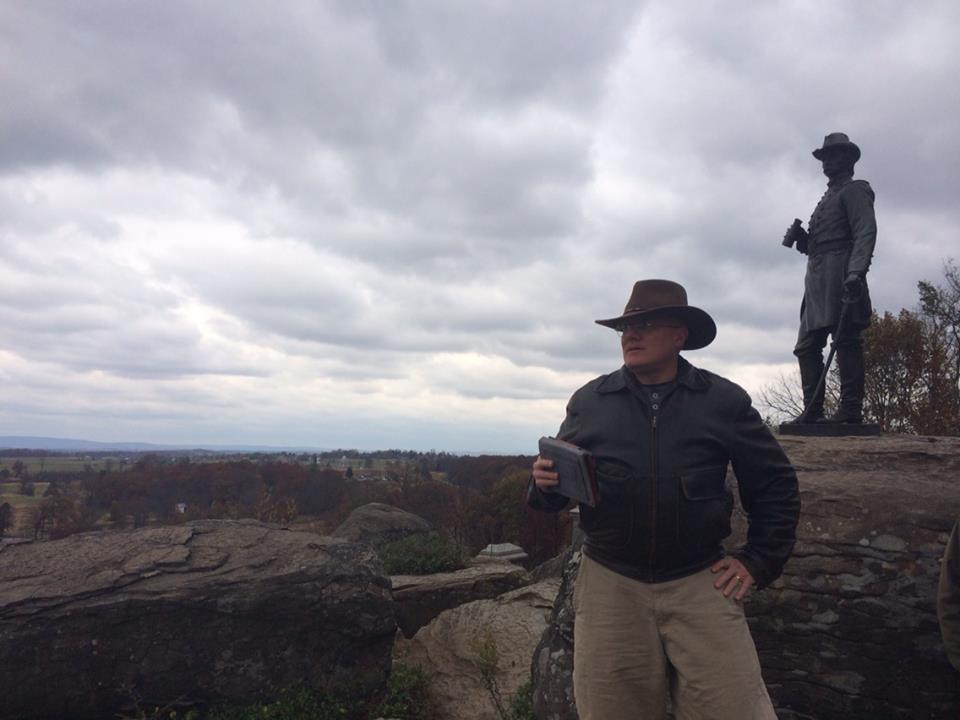
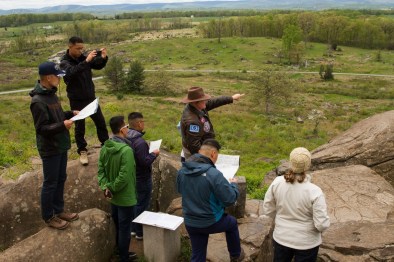
With my Students at Little Round Top

Friends of Padre Steve’s World,

As always I have been doing a lot of reading and of course that has led me to do some more revisions to my Civil War and Gettysburg text. I re-wrote the introduction to the first chapter in order to talk about the nature and role of history in understanding who we are as a people today. The section is part of a chapter that is now over 150 pages long and probably will become a book in its own right. Of course this section, and the rest of the chapter will likely be worked on some more in the coming months but I think that you will like it.

Peace,

Padre Steve+

“No one is so sure of his premises as the man who knows too little.” [1]

Barbara Tuchman

Finite human beings find themselves bound by time and space, we live in the present, but not the present alone, but rather three worlds: one that is, one that was, and one that will be. Ernst Breisach wrote, “In theory we know these three worlds as separate concepts but we experience as inextricably linked and influencing each other in many ways. Every new and important discovery about the past changes how we think about the present and what we expect of the future; on the other hand every change in the conditions of the present and in the expectations of the future revises our perception of the past. In this complex context history is born ostensibly as reflection of the past; a reflection which is never isolated from the present and the future. History deals with human life as it “flows” through time.” [2]

Richard Evans wrote something in the preface to his book The Third Reich in History and Memory that those who study military history often forget. He noted: “Military history, as this volume shows, can be illuminating in itself, but also needs to be situated in a larger economic and cultural context. Wherever we look, at decision making at the top, or at the inventiveness and enterprise of second rank figures, wider contextual factors remained vital.” [3] Thus while this work is an examination of the Gettysburg campaign it is important to understand the various issues that were formative for the men who directed and fought the battle, as well as the vast continuum of often distant and seemingly events that come together at one time in the lives of the participants in any historic event.

One cannot understand the determination the determination of Robert E. Lee to maintain the offensive, the dogged persistence of Joshua Chamberlain or Strong Vincent to hold Little Round Top, what brought John Buford to McPherson’s Ridge, what motivated Daniel Sickles to move Third Corps to the Peach Orchard, and what motivated the men of Pickett’s division to advance to their death on Cemetery Ridge, without understanding the broader perspective of history, as well as how culture, politics, economics, religion, sociology, ideology, experience, and  that shaped these men and their actions.

Likewise in order to understand the context of this battle, or for that matter any battle in any war, one has to understand the events, ever distant events which play a role in the battle. All too often those that delve into military history, or a particular battle see that as separate event, often disconnected from other historical events. But as historian Edward Steers Jr. correctly notes, history “does not exist in a series of isolated events like so many sound bites in a newscast. It is a continuum of seemingly unrelated and distant events that so often come together in one momentous collision of time.” [4] In the case of Gettysburg events like Lincoln’s publication of the Emancipation Proclamation, the failure of Confederate diplomacy to bring France or Great Britain into the war or at least to recognize the Confederacy, the failures of the Confederate armies in the West to maintain their hold on the Mississippi River, all play a crucial role in Robert E. Lee’s ill-advised decision to launch an invasion of Pennsylvania. Additionally, the loss of so many key leaders in the Army of Northern Virginia, especially that of Stonewall Jackson impacts how Lee manages the campaign, and shows up at numerous crucial points in the battle.

Another element that must be connected in order to understand the Battle of Gettysburg is the part that policy, strategy, war aims and operational doctrine played in the campaign of 1863 and how those influenced the decisions of participants before, during and after the campaign. Finally, the Battle of Gettysburg cannot be looked at as a stand-alone event. What happens there as the Confederacy surges to and ebbs back from its “high water mark” influences the rest of the While the war would go on for nearly two more years, the Union victory at Gettysburg coupled with the victory of Grant at Vicksburg ensured that the Confederacy, no matter how hard it tried would not be able to gain its independence through military means.

Maybe even more importantly the story of Gettysburg is its influence today. The American Civil War was America’s greatest crisis. It was a crisis that that “has cast such a shadow over the relations between the North and the South that the nation’s identity and its subsequent history have been considerably influenced by it.” [5]

The Battle of Gettysburg itself is enshrined in American history and myth and is woven deeply into the story of the nation. In this narrative the Battle of Gettysburg is often different ways; in the North viewed as a victory that brings an end to the institution of slavery, and freedom for enslaved African Americans, and preserves the Union. In the South it is often part of the myth of the Noble Confederacy and the Lost Cause where the South was defeated by the Northern superiority in men and war making ability.

Yet in both cases, the truth is not so simple; in fact it is much more complex, and the truth is we are still in the process of learning from and interpreting the historical records of the events that led to the American Civil War, the war itself, and the aftermath. They are all connected and for that matter still influence Americans today more than any other era of our history. In fact James McPherson who is one of the nation’s preeminent scholars on the Civil War and Reconstruction wrote,

“I became convinced that I could not fully understand the issues of my own time unless I learned about their roots in the era of the Civil War: slavery and its abolition; the conflict between North and South; the struggle between state sovereignty and the federal government; the role of the government in social change and resistance to both government and social change. These issues are as salient and controversial today as they were in the 1960s, not to mention the 1860s.” [6]

The prolific American military historian Russel Weigley wrote of how the war, and in particular how the Battle of Gettysburg changed the American Republic.

“The Great Civil War gave birth to a new and different American Republic, whose nature is to be discovered less in the Declaration of Independence than in the Address Delivered at the Dedication of the National Cemetery at Gettysburg. The powerful new Republic shaped by the bayonets of the Union Army of the Civil War wears a badge less benign aspect than the older, original American Republic. But it also carries a larger potential to do good for “the proposition that all men are created equal” both at home and around the world.” [7]

Thus it is important for Americans to learn about the Battle of Gettysburg and the American Civil War, but not solely for its military significance, nor for clear cut answers or solutions. The fact is that “situations in history may resemble contemporary ones, but they are never exactly alike, and it is a foolish person who tries blindly to approach a purely historical solution to a contemporary problem. Wars resemble each other more than they resemble other human activities, but similarities can be exaggerated.” [8]  As Michael Howard warned, “the differences brought about between one war and another by social or technological changes are immense, and an unintelligent study of military history which does not take into account these changes may quite easily be more dangerous than no study at all. Like the statesman, the soldier has to steer between the dangers of repeating the errors of the past because his is ignorant that they have been made, and of remaining bound by theories deduced from past history although changes in conditions have rendered these theories obsolete.” [9] The ideal that we reach for is to understand the Battle of Gettysburg and the American Civil War in context, which includes understanding what led to the war as well as the period of Reconstruction, and the post-Reconstruction era. In doing so we attempt to draw lessons from it without making the mistake of assuming that what we learn and know about them is immutable and thus not subject to change, for the past influences the present, even as the present and future will influence how we view and interpret the past.

Notes

[1] Tuchman, Barbara The March of Folly: From Troy to Vietnam Random House Publish Group, New York 2011 p.319

[2] Breisach, Ernst, Historiography: Ancient, Mediaeval & Modern University of Chicago Press, Chicago and London 1983 and 1994 p.2

[3] Evans, Richard J. The Third Reich in History and Memory Oxford University Press, Oxford and New York 2015 p.ix

[4] Steers, Edward Jr. Blood on the Moon: The Assassination of Abraham Lincoln The University of Kentucky Press, Lexington 2001 p.5

[5] Perman, Michael and Murrell Taylor, Amy editors The Civil War and Reconstruction Documents and Essays Third Edition Wadsworth Cengage Learning Boston MA 2011 p.3

[6] McPherson, James The War that Forged a Nation: Why the Civil War Still Matters Oxford University Press, Oxford and New York 2015 p.4

[7] Weigley, Russell F. A Great Civil War: A Military and Political History 1861-1865 Indiana University Press, Bloomington and Indianapolis 2000 p.xviii

[8] Griess, Thomas E. A Perspective on Military History in A Guide to the Study and Use of Military History edited by John E. Jessup Jr. and Robert Coakley, Center for Military History, United States Army, 1982 p.33

[9] Howard, Michael. The Use and Abuse of Military History  in Journal of the Royal United Service Institution 107 (1962):7

1 Comment

Filed under civil rights, civil war, Gettysburg, History

Read or Perish

CW-GettysburgDead

Friends of Padre Steve’s World

Just a short note today as I continue to read, reflect and do some research and writing on my Civil War and Gettysburg Staff Ride text, even as I get ready to lead another staff ride to Gettysburg this weekend.

Those that follow me and read my articles on this site on a regular basis know that I am a voracious reader, especially when it comes to history and biography. Frankly, I am amazed about all that we can learn just from the accounts of those that have already made the same mistakes that we are intent on making, because ultimately, there is nothing new under the sun. The fact that so many supposed strategists, thinkers, and policy makers are too ignorant to remember the past, ensures that the same mistakes will be made over and over again with more and more bodies filling the body bags of hubris.

I have been adding books that I have read over the past few months to my “read” list on my Facebook page, and there were a lot more than I remembered as I worked my way through my stack. If you add things to your Facebook page, movies, books, music or television shows, Facebook will provide lists of suggested titles that you can browse. This of course includes books, and not surprisingly to me, most of the books that were suggested were various forms of fiction or children’s books. There were a few literature classics among the suggestions and a host of Bible books. What I noticed was there were few books on history, philosophy, political science, world affairs or even theology listed.

I was troubled by this; not because I am against people reading fiction or children’s book by any means, but typically those books, with the exception of some of the children’s books are for entertainment, not learning. As entertainment they are fine, but since almost everything else in our culture is geared toward entertainment I wonder where people are being challenged to think critically, and not simply be sponges for the sound bites offered by the politicians, preachers and pundits who dominate so much of our airwaves and the internet.

Barbara Tuchman wrote, “Books are the carriers of civilization. Without books, history is silent, literature dumb, science crippled, thought and speculation at a standstill. Without books, the development of civilization would have been impossible. They are engines of change (as the poet said), windows on the world and lighthouses erected in the sea of time. They are companions, teachers, magicians, bankers of the treasures of the mind. Books are humanity in print.”

Sadly, many people in this country and around the world are sadly deficient in knowing any history at all, and much of what they do know is based on myth. This is dangerous, historian George Santayana wrote, “Those who cannot remember the past are condemned to repeat it.” But I think that Howard Zinn said it the best:

“History can come in handy. If you were born yesterday, with no knowledge of the past, you might easily accept whatever the government tells you. But knowing a bit of history–while it would not absolutely prove the government was lying in a given instance–might make you skeptical, lead you to ask questions, make it more likely that you would find out the truth.”

Have a great night,

Peace

Padre Steve+

2 Comments

Filed under History, leadership, philosophy

History is made by Feet of Clay

lawrence-3

Friends of Padre Steve’s World,

Character is a terrible thing to judge. Mostly because those doing the judging also suffer from flaws in their own character and truthfully I don’t think that any of us are exempt from doing this, at least sometimes. Dietrich Bonhoeffer noted: “Nothing that we despise in other men is inherently absent from ourselves.” I think is somewhat freeing to realize that, thus to grasp this is to be united with humanity, as well as loose ourselves from the shackles that would inhibit us from achieving what we are capable.

Yet somehow the temptation is for us to stand as judge, jury and character executioner on those that we find wanting. As a culture we like tearing down those that we at one time built up, in fact we have industries that exist in order to build up and then destroy people.

It is a rather perverse proclivity that we have as human beings, especially if we can find some kind of religious justification for it.

I think that is part of the complexity of the human condition. As a historian I find that the most exalted heroes, men and women of often-great courage both moral and physical, intellect, creativity, humanity and even compassion have feet of clay.

I find that I am attracted to those characters that find themselves off the beaten track; the visionaries often at odds with their superiors, institutions, and sometimes their faith and traditions. Men and women who discovered in themselves visions for what might be and pursued those visions, sometimes at the costs of their families, friends, and in quite a few cases their lives.

Throughout my studies I have been attracted to men as diverse as Peter the Apostle, Martin Luther, Thomas Aquinas, T.E. Lawrence, Dietrich Bonhoeffer, Erwin Rommel, Admiral Horatio Nelson, Abraham Lincoln, John F Kennedy, Dwight D Eisenhower, Franklin Roosevelt, Dr. Martin Luther King Jr., Jackie Robinson, Teresa of Avila, Golda Meir, Nelson Mandela, Vaclav Havel, and Emir Feisal Hussein of the Arab Revolt. All had flaws and the list could go on and on and on.

Some of these men and women, saints and sinners alike had fits of temper and violence, others sexual escapades, mistresses, affairs, greed, avarice, and a host of other unseemly characteristics.  Some of them stretched law and morality in their quest to achieve their goals. But all are considered great men and women.

They all had feet of clay, and who among us doesn’t have them? But them I think that I would rather have feet of clay than a heart of stone, an unchallenged mind, or a lack of courage to do the right thing even when it does not directly benefit me.

I love the cinema classic Lawrence of Arabia. Peter O’Toole plays Lawrence in a most remarkable manner, showing his brilliance, courage, diplomatic ability and understanding of the Arabs with whom he served. In the film, Jack Hawkins who played General Allenby, perhaps the best British General of the war looked at Lawrence’s dossier and said “Undisciplined… unpunctual… untidy. Knowledge of music… knowledge of literature… knowledge of… knowledge of… you’re an interesting man there’s no doubt about it.” 

There are many people, leaders and others that we encounter in life or that we study. Even the best of the best are flawed and there is no such thing as a Saint who never sinned. But we love destroying them and their memory when to our “surprise” when we find that their hagiographers built them into an idol.

I am a great believer in redemption and the weight of the whole of a person’s life. Thus I try to put the flaws, as they are called in perspective and their impact both positive and negative in history. Studying in this way gives me a greater perspective on what it is to be human and to place my own clay feet in appropriate perspective.

As Lawrence said, “Immorality, I know. Immortality, I cannot judge.”

Peace

Padre Steve+

Leave a comment

Filed under faith, History, leadership, philosophy

People, History, and Truth

gettysburgpickettscharge

Friends of Padre Steve’s World,

English historian and military theorist Colin Gray noted that “people matter most” when we deal with history, policy, or politics, but especially in the matter of war.

I think one of the sad things about history is that many authors, especially in military history, but other areas as well, seem to treat the participants as bit players in a series of events, rather than a prism from which to understand and view history.

I cannot tell you how many times I have had students, and even colleagues tell me that history is dry, boring and uninteresting to them. I will not condemn them, for certainly if it is that is case, it is not their fault, but rather those who write and teach history. If all history is, is arbitrary dates, lists of disconnected events and names of people, without any context to their lives, why should they care about it?

When I first began to study history I was much more concerned about events than people. However, over the past couple of years I have began to develop what I call my philosophy of history. That has come about through my study of the events leading to the American Civil War and in particular my study of the Battle of Gettysburg, but also in other historical events such as the Arab Revolt of 1917, and the French adventures in Indochina and Algeria.

In doing all of my research I have read a large number of books, articles and primary sources on these subjects and my personal library appears to be growing at an exponential rate. I have noticed that much of what I have read deals very little with the people involved, unless I am reading a biography, and even some of the biographies seem to be event heavy, and person light and sometimes it seems that the subjects of the biography are often one dimensional, and almost caricatures of who they really were. Some of the alleged biographies that I read would be better described as hagiography, to make the subjects appear saintlike, the type of writing used by religious writers to make saints a lot less human. There are others who go to the opposite extreme and do all they can to demonize their subject. In either case the method is less than honest, but for many people, profit and propaganda value mean more than truth. Of course either type of writing appeals to the masses who do not care about nuance, or for that matter truth.

But such is not history. Neither are “histories” which are designed to support a particular ideology, be it political, religious, or economic. Such works are not history, but propaganda. When I see people, in this country forbidding the teaching of history because it is not patriotic enough I want to scream. It is like I am watching the propagandists of Stalin’s Soviet Union, Hitler’s Third Reich, or any of many other nations that used ideology or religion to supress history that didn’t meet their definition of “patriotic.” But then I digress…

My gut feeling says that such artificial divisions between history and biography do a disservice to the reader. I take a tremendous pleasure in writing, and I like to try to communicate and interpret facts, which is indeed the vocation of the historian, in a manner that makes them interesting. What I am finding is that when telling the stories of events we must also tell the stories of the people who make these events.

Without such a connection there is little to interest most readers. People tend to be interested in people because there is a connection. The human being is still the human being, no matter what age, country, culture, religion that they belong to. I learned a lot of this from reading the works of Barbara Tuchman who in her writings about events, never forgot importance of people, and refused to turn them in to one dimensional caricatures.

In my writing now I attempt to bring the prism of the biography into the events that I write about.

I had a fellow faculty member note that he liked what I wrote about Gettysburg because it was more than just the events, it was the personal connection he felt to the people.

People matter because they have so many layers. I guess one of the things that makes my writing approach a bit different is that while I am a historian, I am also trained in philosophy, pastoral care and psychology, all of which deal with existential matters.In the next few days you will be seeing some of my Gettysburg work, and hopefully as you read it you will notice that I attempt to find that nuance in the various men, on both sides of the conflict, who are part of the story.

Image found that the complexities and contradictions of the subjects of history, the people help me understand the events more than anything. I think my epiphanies came in reading about the lives, as well at writings of men like T.E. Lawrence and Gouvereur Warren whose triumphs, struggles, weaknesses and injuries mirror my own. In learning about these men as people, in the context of what they accomplished helps me to understand their history and the era that they lived far more than simply recounting how they influenced a battle.

I find that the lives, beliefs, motivations, relationships, and experiences of people to be paramount to understanding events. People are complex, multi-layers and often contradictory. All of my heroes all have feet of clay, which in a sense makes their stories even richer, and the events that they helped bring about more fascinating, because then I gain a holistic perspective and develop an empathy for them. Even good and honorable people who find themselves due to race, religion, or nationality fighting for an evil cause, or evil people fighting for a good cause. If you are trapped by ideological or religious certitude that may confuse or even offend you, but it is a part of the human condition. That my friends is history.

Barbara Tuchman noted “that if the historian needs to submit himself to his or her material instead of trying to impose himself on his material, then the material will ultimately speak to him and supply the answers.”

This is very important, because when we do this we discover the answers to the why questions, especially the why questions that are so very uncomfortable, are necessary if we want to discover truth.

I know that I can find connections in the strengths as well as their weaknesses of people that I admire. Thus when I see ordinary people taking part in events, for good or for evil,I can say that given the same set of circumstances that that could be me. Context matters, nuance matters, people matter. If we do not understand that, history becomes nothing more than a set of manipulated facts, devoid of context that can be used to buttress the most evil intentions.

I do plan on developing these thoughts over the coming weeks and months, but for now it will suffice to say that when I write about history, that people matter. That is why I write.

Peace

Padre Steve+

5 Comments

Filed under History, philosophy

The Same Mistakes?

10570298_10152872503382059_5058681841617456899_n

Friends of Padre Steve’s World

I am wrapping up the year and reflecting on a number of things, thinking about how much history can teach us about our own time, should we just pay attention to it. I have been continuing to do research and work on my Gettysburg and Civil War text, and that continues to lead me to pure gold in the pursuit for truth, historical truth that is as relevant today as it was when it happened over a century and a half ago.

Sadly, the same issues that dominated America in the 1840s, 1850s, and 1860s and later following Reconstruction still dominate so much of our social, political and religious debate. Whether it is the voting franchise which many on the political right seek to restrict, the rights of women, blacks and other minorities, immigrants and the LGBT community, to any semblance of political, economic equality or social justice very little has changed. Not only that there are some political, media and religious leaders who argue for the unabashed imperialism of Manifest Destiny and American Exceptionalism.

As it was then, much of this can be laid squarely at the feet of Evangelical Protestant and other conservative Christian leaders. A century and a half ago men who claimed to be Christian leaders led the efforts to support slavery, discriminate against women, persecute gays and promote imperialistic policies that would have embarrassed the founders of the United States. After the defeat of the Confederacy most of the same people used the same theology to disenfranchise and discriminate against African Americans through Jim Crow laws, as well as discriminate against minorities, women and gays all the while claiming to be the victims of persecution.

Before the Civil War many Protestant ministers, intellectuals, and theologians, not only Southerners, but men like “Princeton’s venerable theologian Charles B. Hodge – supported the institution of slavery on biblical grounds, often dismissing abolitionists as liberal progressives who did not take the Bible seriously.”  This leaves a troubling question over those who claim to oppose other issues on supposedly Biblical grounds. Conservative Anglican theologian Alistair McGrath asks, “Might not the same mistakes be made all over again, this time over another issue?”

The question is will we learn from history or make the same mistakes all over again? That is something to ask ourselves as we leave 2015 behind and begin 2016, a year that promises to be tumultuous and eventful, but which the history of is yet to be written. That my friends is important, and why all of us must be engaged.

I thank all of those who subscribe to this site, as well as those who follow my writings through Twitter or Facebook. The fact that so many people are doing this humbles me, and to repeat what Yogi Berra said, “it’s not the heat, it’s the humility.”

Peace

Padre Steve+

Leave a comment

Filed under History, News and current events, philosophy

History is the Witness: The Worth of Human Life

Statue-of-Cicero-Stock-Photo-rome

Friends of Padre Steve’s World,

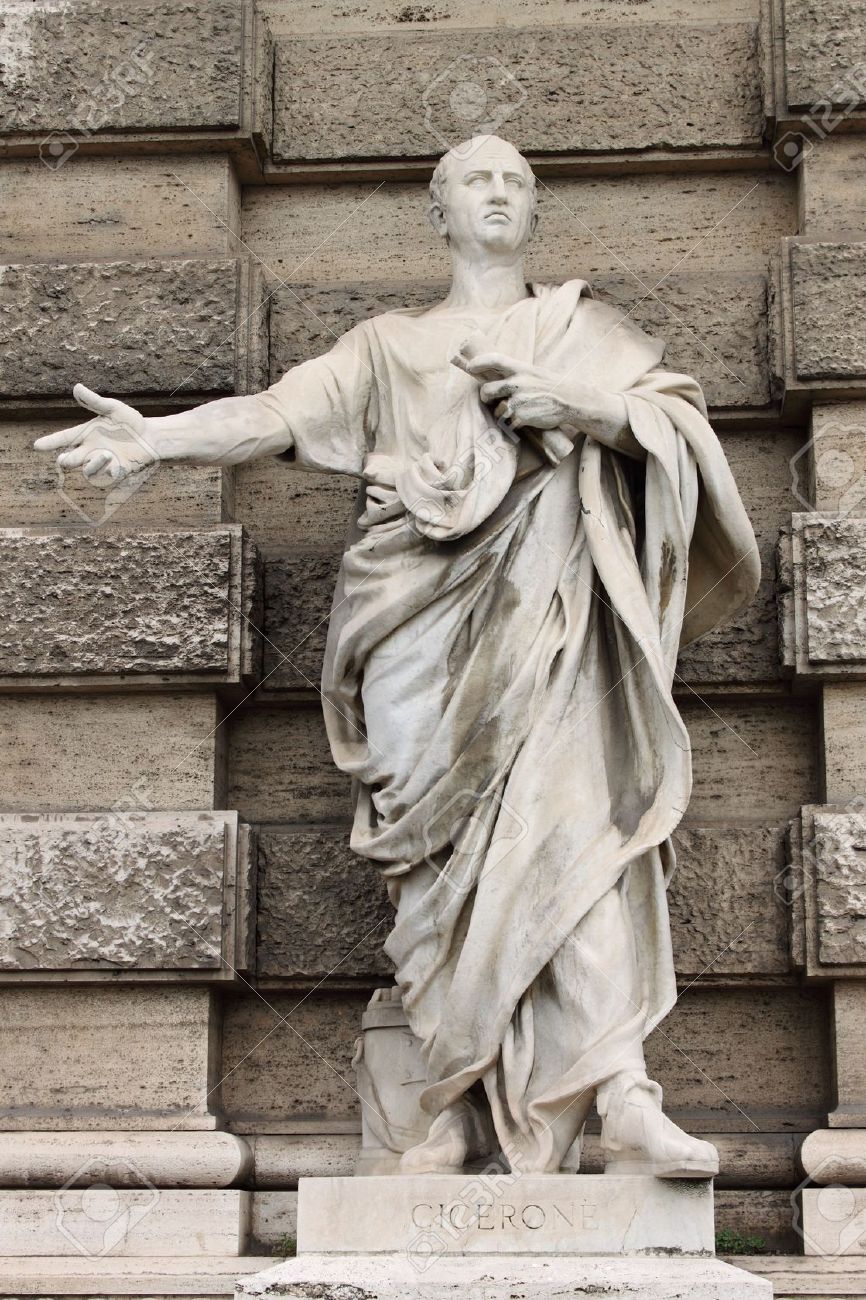
The great Roman philosopher and political theorist Marcus Tullius Cicero wrote, “History is the witness that testifies to the passing of time; it illumines reality, vitalizes memory, provides guidance in daily life and brings us tidings of antiquities.”

Those who follow my writings here on this site know that I am a historian and that much of what I write, even regarding current events, is framed by history and the stories of those who came before us. That is one of my driving passions, a passion for historical truth, and a passion to ensure that the past is not forgotten. Sadly, it seems that our society, and even our education system is disconnecting itself from history. We have pretty much stopped teaching history in schools, and often what is taught is myth. As such we have become a society that through its ignorance of the past is ever repeating the worst aspects of our history. As a whole we are ignorant of our past, and that ignorance is demonstrated by many of our political, business, journalism, educational, and military leaders on a daily basis.

Cicero wrote “To be ignorant of what occurred before you were born is to remain always a child. For what is the worth of human life, unless it is woven into the life of our ancestors by the records of history?”

Our lives must be woven together with those who came before us, without that sacred connection to the past, we endanger the future, and doom those who follow us. Cicero wrote,The life of the dead is placed in the memory of the living.” Thus, it is for us the living to remember and never forget those who have gone before.

That is why I write.

Peace

Padre Steve+

4 Comments

Filed under History, philosophy, Political Commentary