Tag Archives: ijn kaga

Departure to Infamy: The Kido Butai Sails for Pearl Harbor

Early in the morning on November 26th 1941 the ships of the Japanese Carrier Strike Force, the Kido Butai under the command of Vice Admiral Chuichi Nagumo weighed anchor from Tankan Bay in the northern Kurile Islands of Japan. The plan was top secret and very few Japanese officers knew of the target. Many officers presumed that war was immanent but most assumed the target would be the Philippines or other targets in Southeast Asia.

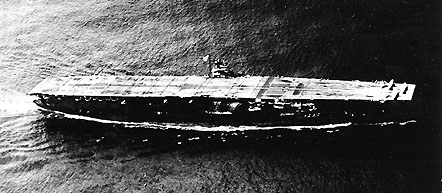
IJN Akagi

It was an attack that was designed to be pre-emptive in nature. The plan was to deal the United States Navy such a crushing blow that the Japanese could complete their Asian conquests before it could recover. It was a plan of great risk that doomed Japan to horror never before imagined when the United States dropped Atomic bombs on Hiroshima and Nagasaki less than four years later. By then the bulk of the Imperial Navy   would lay at the bottom of the Pacific and millions of people killed.

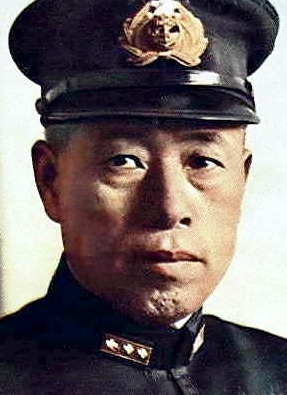
Admiral Isoruku Yamamoto 

The Japanese, even Admiral Yamamoto, the man behind the plan assumed that it entailed great risks. A simulation of the plan conducted in early September by the senior officers of the Combined Fleet and the Kido Butai calculated that two of Japan’s precious aircraft carriers could be lost in the operation. But despite the opposition and reservations of key officers, including the Kido Butai commander, Admiral Nagumo Yamamoto pressed forward.

Vice Admiral Chuichi Nagumo

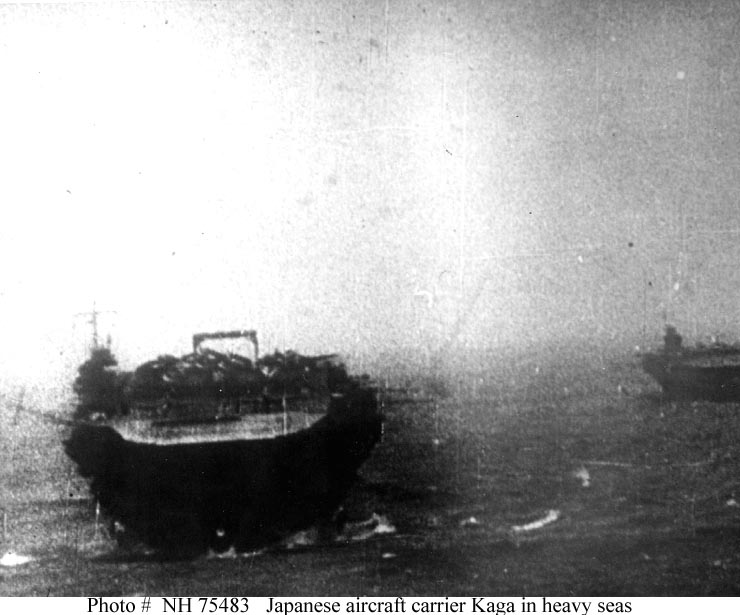
The Kido Butai was the most powerful carrier strike group assembled up to that time. Comprised of six aircraft carriers, the massive flagship Akagi, and the Kaga, the fast 18,000 ton Soryu and Hiryu and the most modern Shokaku and Zuikaku. The carrier embarked over 400 aircraft, of which over 350 were to be used in the two aerial assault waves. Most of the pilots and aircrew were experienced, many with combat experience in China. The carriers were escorted by the old but fast and modernized battleships Kirishima and Hiei, the new heavy cruisers Tone and Chikuma, the light cruiser Abukuma, the new Kagero Class destroyers, Urakaze, Isokaze, Tanikaze, Hamakaze, Kagero and Shiranuhi,the Asashio classdestroyers Arare and Kasumi.Two additional destroyers the Fubuki class Sazanami and Ushiowere assigned to neutralize the American base on Midway Island. The submarines I-19, I-21and I-23 and 8 oilers were assigned to the force. Five additional submarines the I-16, I-18, I-20, I-22 and I-24 each embarked a Type-A midget submarine.

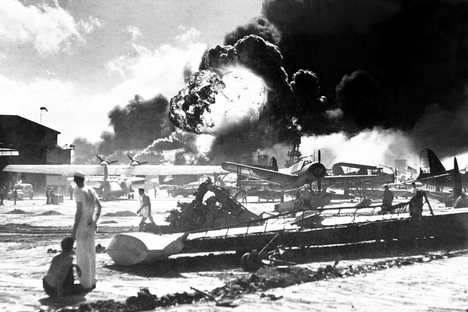
Pearl Harbor during the Attack

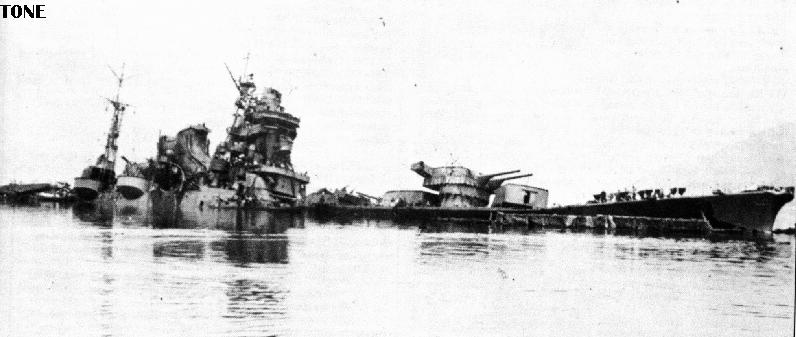
On December 7th the force delivered a devastating blow to the American Pacific Fleet at Pearl Harbor, however no American aircraft carriers were present. It would go on for the next several months on a rampage across the Pacific and Indian Oceans. However their success would be short lived. Within a year Akagi, Kaga, Soryu and Hiryu had been sunk at Midway by the carriers not present. Hiei and Kirishima were lost at the Naval Battle of Guadalcanal and over the course of the war every ship of the attack force was lost. Shokaku was torpedoed and sunk at the Battle of the Philippine Sea and Zuikaku, Chikuma and Abukuma were lost at Leyte Gulf, most of the destroyers and submarines were lost in various engagements. However three destroyers, Isokaze, Hamakaze and Kasumi accompanied the great Battleship Yamato on her suicide mission at Okinawa and were sunk on April 7th 1945. The heavy cruiser Tone was sunk at her moorings at Kure during air strikes by the US 3rd Fleet on July 24th 1945. All of the submarines were lost during the war, however I-19 sank the USS Wasp CV-7 and USS O’Brien DD-415 while damaging the USS North Carolina BB-55 on September 15th 1942 off Guadalcanal. Only the destroyer Ushio survived the war and was broken up for scrap in 1948.

IJN Zuikaku sinking at the Battle of Cape Engano (Leyte Gulf)

Among the leaders of the Japanese strike force, Admiral Yamamoto was killed on April 18th 1943 when his aircraft was shot down at Buin. Nagumo died at Saipan on July 6th 1944.  Most of the sailors who took part in the attack would be dead by the end of the war.

Few present at Tankan Bay on that fateful November morning could have expected the triumph and tragedy ahead. However Yamamoto was probably more of a realist than many in the Japanese government and military leadership when he told Prime Minister Fumimaro Konoe “In the first six to twelve months of a war with the United States and Great Britain I will run wild and win victory upon victory. But then, if the war continues after that, I have no expectation of success.” Yamamoto was eerily prophetic and those that counsel pre-emptive war need to never forget his words or the results of his decisions.

Peace

Padre Steve+

3 Comments

Filed under Loose thoughts and musings

Into the Valley of the Shadow of Death: The Death of the Torpedo Bombers at Midway

Half a league half a league,
Half a league onward,
All in the valley of Death
Rode the six hundred:
‘Forward, the Light Brigade!
Charge for the guns’ he said:
Into the valley of Death
Rode the six hundred.

Alfred, Lord Tennyson: The Charge of the Light Brigade

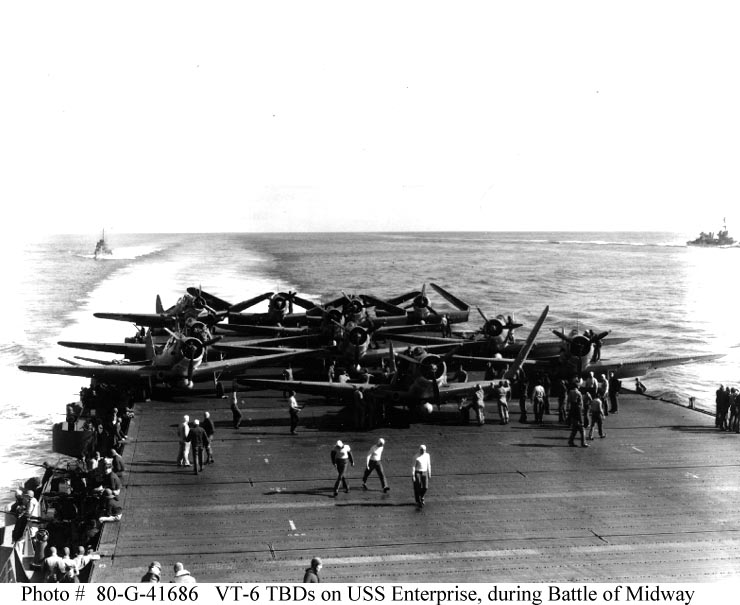
They were not six hundred and they were not mounted on horses but the Naval Aviators of Torpedo Squadrons 3, 6 and 8 and their aerial steeds 42 Douglas TBD Devastators and 6 TBF Avengers wrote a chapter of courage and sacrifice seldom equaled in the history of Naval Aviation. Commanded by veteran Naval Aviators, LCDR Lance “Lem” Massey, LCDR Eugene Lindsey and LCDR John Waldron the squadrons embarked aboard the carriers flew the obsolete TBD Devastators and the young pilots of the Midway based Torpedo 8 detachment under the command of LT Langdon Fieberling flew in the new TBF Avengers.

The TBD which first flew in 1935 entered service in 1937 and was possibly the most modern naval aircraft in the world when it entered service.  It was a revolutionary aircraft. It was the first monoplane widely used on carriers and was first all-metal naval aircraft.  It was the first naval aircraft with a totally enclosed cockpit, the first with hydraulic powered folding wings.  The TBD had crew of three and had a maximum speed of 206 miles an hour and carried a torpedo or up to 1500 pounds of bombs (3 x 500) or a 1000 pound bomb.  129 were built and served in all pre-war torpedo bombing squadrons based aboard the Lexington, Saratoga, Ranger, Yorktown, Enterprise and Hornet with a limited number embarked aboard Wasp.  The Devastator saw extensive service prior to the war which pushed many airframes to the end of their useful service life and by 1940 only about 100 were operational by the beginning of the war.  They were still in service in 1942 as their replacement the TBF Avenger was not available for service in large enough numbers to replace them before Midway.  The TBDs performed adequately against minor opposition at Coral Sea and in strikes against the Marshalls but the squadrons embarked on Yorktown (VT3), Enterprise (VT-6) and Hornet (VT-8) were annihilated at Midway with only 6 of 41 aircraft surviving their uncoordinated attacks against the Japanese Carrier Strike Force.  They were too slow, had poor maneuverability, insufficient armor and defensive armament.

The Torpedo squadrons attacked independently of each other between 0920 and 1030 on June 4th 1942. Only

The Japanese Combat Air Patrol ripped into the slow, cumbersome and under armed TBD Devastators as they came in low to launch their torpedoes.  Torpedo Eight from Hornet under the command of LCDR John C Waldron pressed the attack hard but all 15 of the Devastators were shot down.  Only Ensign George Gay’s aircraft was able to launch its torpedo before being shot down and Gay would be the sole survivor of the squadron to be picked up later by a PBY Catalina patrol plane.

Torpedo Six from the Enterprise under the command of LCDR Eugene Lindsey suffered heavy casualties losing 10 of 14 aircraft with Lindsey being one of the casualties.  The last group of Devastators to attack was Torpedo Three from the Yorktown under the command of LCDR Lem Massey losing 11 of 13 aircraft with Massey a casualty last being seen standing on the wing of his burning aircraft as it went down.  These aircraft were also decimated and Massey killed but they had drawn the Japanese Combat Air Patrol down to the deck leaving the task force exposed to the Dive Bombers of the Enterprise and Yorktown.  The six aircraft of the Torpedo Eight detachment from Midway under the command of LT Fieberling lost 5 of their 6 aircraft while pressing their attacks.  Only Ensign Bert Earnest and his aircraft survived the battle landing in a badly damaged state on Midway.  Four U.S. Army B-26 Marauder Medium Bombers were pressed into service as torpedo bombers of which 2 were lost.  No torpedo bomber scored a hit on the Japanese Task force even those torpedoes launched at close range failed to score and it is believe that this was in large part due to the poor performance of the Mark 13 aircraft torpedoes.

Despite the enormous losses of the torpedo squadrons their sacrifice was not in vain. Their attacks served to confuse the Japanese command and delay the rearmament of aircraft following the Japanese strikes on Midway. They also took the Japanese Combat Air Patrol down to sea level and opened the way for American Dive Bombers to strike the Japanese with impunity fatally damaging the Akagi, Kaga and Soryu in the space of 5 minutes.

After Midway the remaining TBDs were withdrawn from active service and no example survives today. The TBF became the most effective torpedo bomber of the war.

As we remember the brave men that fought at Midway it is imperative that we remember the brave aircrews of the torpedo squadrons that like the Light Brigade rode into the Valley of the Shadow of Death against the First Carrier Strike Force and Midway.

Peace

Padre Steve+

10 Comments

Filed under aircraft, History, Military, world war two in the pacific

An Invincible Fleet and a Flawed Plan: The Japanese at Midway

Note: This is the first of a series of articles coming over the next few days about the Battle of Midway, a major turning point of the Second World War.
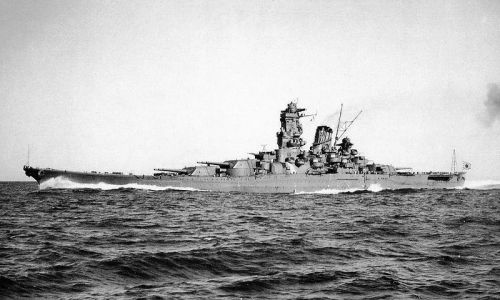
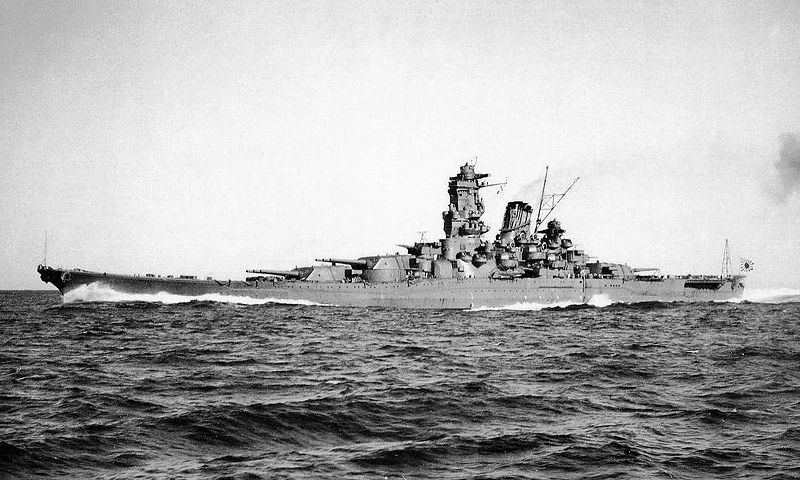
The Battleship Yamato, Flagship of the Combined Fleet and symbol of Japanese Naval Power

The Imperial Japanese Navy under the command of Admiral Isoruku Yamamoto had been humiliated. On April 18th 1942 16 B-25 bombers under the command of Colonel Jimmy Doolittle were launched from the deck of the USS Hornet and bombed Tokyo.  Though the physical damage was insignificant the psychological impact was massive on the Japanese military establishment. Yamamoto and his deputy Rear Admiral Matome Ugaki had explored the possibility of attacking Midway in the early months of 1942 as the Japanese armed forces competed with each other to determine an overall strategy for the war effort. The Army was insistent on a China strategy while the Navy preferred expansion in the Western, South and Central Pacific.  Yamamoto’s idea envisioned seizing Midway and using it as a forward base from which an invasion of Hawaii could be mounted as well as the bait to draw the carrier task forces of the U.S. Navy into battle and destroy them.
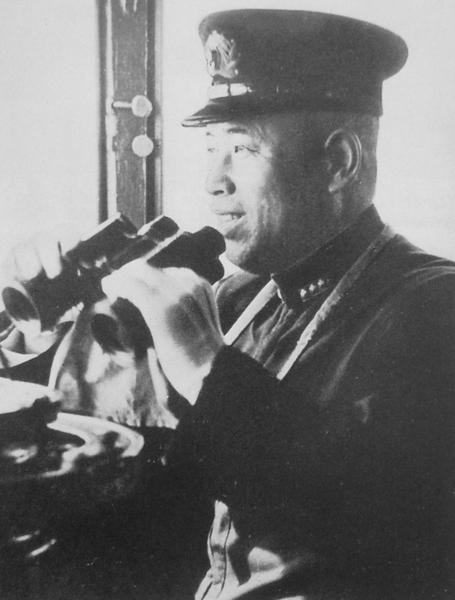
Admiral Isoruku Yamamoto, CinC Combined Fleet

The Japanese certainly had the forces to accomplish the mission outnumbering the U.S. Navy which had taken heavy losses at Pearl Harbor and in the Far East.  Following the Doolittle raid Yamamoto went ahead with the plan to invade Midway. The operation, named MI was coupled with an invasion of the islands of Attu and Kiska in the Aleutians which would form a picket line to prevent future attacks on the Japanese mainland. Fuchida
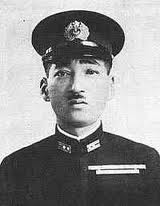
Yamamoto’s plan was not without its critics, the majority of the Staf of the First Air Fleet embarked on the First Carrier Striking Force was not in favor including the leader of the Pearl Harbor attack Commander Mitsuo Fuchida who considered it “grammar school strategy.”   Despite objections from them as well as his Fleet Operations Officer Yamamoto directed that the plan be implemented.  The plan was to have the First Carrier Striking Force attack Midway and reduce its defenses so that the Invasion Force could undertake the task of invading and occupying Midway.  Supporting these forces was the Main Body built around Battleship Division One included Yamamoto’s flagship the 72,000 ton behemoth Yamato.  Another strong force was assigned to the Aleutian operation. The task forces were spread out across the North Pacific and would not able to provide mutual support to each other in a timely manner.

Japanese Forces were organized in the following manner.

Main Body, Admiral Yamamoto

BatDiv 1, Admiral Yamamoto

BB Yamato (flagship, Yamato), Captain

BB Nagato (Nagato), Captain Hideo Yano

BB Mutsu (Nagato), Captain Teijiro Yamazumi

Carrier Group, Captain Kaoru Umetani

CVL Hosho (Hosho), Captain Umetani

Air Unit (8 bombers), Lieutenant Yoshiaki Irikiin

DD Yukaze (Minekaze), Lieutenant Commander Shizuka Kajimoto

Special Force, Captain Kaku Harada

Chiyoda (seaplane carrier, Chitose), Captain Harada

Nisshin (seaplane carrier, Nisshin), Captain Katsumi Komazawa

Screen (DesRon 3), RADM Shintaro Hashimoto

CL Sendai (flagship, Jintsu), Captain Nobue Morishita

DesDiv 11, Captain Kiichiro Shoji

DD Fubuki (Fubuki), Captain Shizuo Yamashita

DD Shirayuki (Fubuki), Captain Taro Sugahara

DD Hatsuyuki (Fubuki), Captain Lieutenant Commander Junnari Kamiura

DD Murakumo (Fubuki), Captain Commander Hideo Higashi

DesDiv 19, Captain Ranji Oe

DD Isonami (Fubuki), Commander Ryokichi Sugama

DD Uranami (Fubuki), Commander Tsutomu Hagio

DD Shikinami (Fubuki), Commander Akifumi Kawahashi

DD Ayanami (Fubuki), Commander Eiji Sakuma

1st Supply Unit, Captain Shigeyasu Nishioka

Naruto (Oiler), Captain Nishioka

Toei Maru (Oiler)

It was Yamamoto’s plan to use this force to polish off U.S. Forces that would only enter the fight after he had taken Midway. Despite the success of his carrier task forces at his heart Yamamoto was still a Battleship Sailor and believed that his battleships would be the deciding factor in the final destruction of the U.S. Navy forces in the Pacific.  This force could be augmented by the Aleutian Guard Force, detached from the Main Body under the command of Vice Admiral Shiru Takasu and was composed of the following fleet units:

GUARD (Aleutians Screening) FORCE, VADM Shiro Takasu in Hyuga

Chief of Staff, Rear Admiral Kengo Kobayashi

BatDiv 2

BB Hyuga (flagship, Hyuga), Captain Chiaki Matsuda

BB Ise (Hyuga), Captain Isamu Takeda

BB Fuso (Fuso), Captain Mitsuo Kinoshita

BB Yamashiro (Fuso), Captain Gunji Kogure

Screen, RADM Fukuji Kishi

CruDiv 9, Rear Admiral Kishi

CL Kitakami ( flagship, Kuma), Captain Saiji Norimitsu

CL Oi (Kuma), Captain Shigeru Narita

DesDiv 20, Captain Yuji Yamada

DD Asagiri (Fubuki), Commander Nisaburo Maekawa

DD Yugiri (Fubuki), Captain Masayoshi Motokura

DD Shirakumo (Fubuki), Commander Toyoji Hitomi

DD Amagiri (Fubuki), Captain Buichi Ashida

DesDiv 24, Captain Yasuji Hirai

DD Umikaze (Shiratsuyu), Commander Nagahide Sugitani

DD Yamakaze (Shiratsuyu), Commander Shuichi Hamanaka

DD Kawakaze (Shiratsuyu), Commander Kazuo Wakabayashi

DD Suzukaze (Shiratsuyu), Commander Kazuo Shibayama

DesDiv 27, Captain Matake Yoshimura

DD Ariake (Hatsuharu), Commander Shoichi Yoshida

DD Yugure (Hatsuharu), Commander Kiyoshi Kamo

DD Shigure (Shiratsuyu), Commander Noboru Seo

DD Shiratsuyu (Shiratsuyu), Lieutenant Commander Kimmatsu Hashimoto

2nd Supply Unit, Captain Matsuo Eguchi

San Clemente Maru (oiler), Captain Eguchi

Toa Maru (oiler)
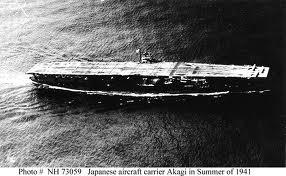
The force that was the true heart of the Japanese Navy in early 1942 was the First Carrier Striking Force which at Pearl Harbor and in the months following had run roughshod over all Allied opposition.  Initially composed of 6 flattops the force was reduced to four when the Shokaku was heavily damaged and Zuikaku’s air group decimated at the Battle of the Coral Sea on 8 May 1942.  Nevertheless it was still a formidable and experienced force in its own right.  Commanded by Vice Admiral Chuichi Nagumo it was composed of the following units:

FIRST CARRIER STRIKING FORCE (1st Air Fleet), VADM Chuichi Nagumo

Carrier Group, VADM Nagumo

CarDiv 1

CV Akagi  (flagship, Akagi) 21 Zero fighters, 21 dive bombers, 21 torpedo bombers

CV Kaga (Kaga) 21 Zero fighters, 21 dive bombers, 30 torpedo bombers

CarDiv 2 — RADM Tamon Yamaguchi

CV Hiryu (flagship, Hiryu) 21 Zero fighters, 21 dive bombers, 21 torpedo bombers

CV Soryu (Hiryu) 21 Zero fighters, 21 dive bombers, 21 torpedo bombers

Support Group — RADM Hiroaki Abe CruDiv 8

CA Tone (flagship, Tone)

CA Chikuma (Tone)

2nd Section, BatDiv 3 —

BB Haruna (Kongo)

BB Kirishima (Kongo)

Screen (DesRon 10) — RADM Susumu Kimura

CL Nagara (flagship, Nagara)

DesDiv 4 — 4 DDs

DesDiv 10 — 3 DDs

DesDiv 17 — 4 DDs

Supply Group — 5 oilers, 1 DD

The Invasion Force under the command of Vice Admiral Nobutake Kondo was a formidable surface strike group in its own right and was built around 2 Fast Battleships, 9 Heavy Cruisers and a light carrier.

MIDWAY INVASION FORCE, (2nd Fleet), VADM Nobutake Kondo

Invasion Force Main Body

CruDiv 4 (less 2nd section)

CA Atago (flagship, Takao),

CA Chokai (Takao)

CruDiv 5 (less 2nd section)

CA Myoko (Myoko)

CA Haguro (Myoko)

BatDiv 3 (less 2nd section) —

BB Kongo (Kongo)

BB Hiei (Kongo)

Screen (DesRon 4) — RADM Shoji Nishimura

CL Yura (flagship, Nagara)

DesDiv 2 — 4 DDs

DesDiv 9 — 3 DDs

Carrier Group Zuiho (CVL) — 12 Zero fighters, 12 torpedo bombers; 1 DD

Supply Group — 4 oilers, 1 repair ship

Close Support Group — VADM Takeo Kurita

CruDiv 7

CA Kumano (flagship, Mogami)

CA Suzuya (Mogami)

CA Mikuma (Mogami)

CA Mogami (Mogami)

DesDiv 8 — 2 DDs 1 oiler

Transport Group — RADM Raizo Tanaka

12 transports carrying troops

3 patrol boats carrying troops

1 oiler

Escort (DesRon 2) — RADM Tanaka

CL Jintsu (flagship, Jintsu)

DesDiv 15 — 2 DDs

DesDiv 16 — 4 DDs

DesDiv 18 — 4 DDs

Seaplane Tender Group — RADM Riutaro Fujita

Seaplane Tender Div 11

Chitose (CVS) — 16 fighter seaplanes, 4 scout planes

Kamikawa Maru (AV) — 8 fighter seaplanes, 4 scout planes

1 DD;

1 patrol boat carrying troops

Minesweeper Group

4 minesweepers

3 submarine chasers

1 supply ship

2 cargo ships

The Northern Force which was assigned to the invasion and occupation of Attu and Kiska was commanded by Vice Admiral Moshiru Hosogaya included the carriers Ryujo and Junyo which had they accompanied the First Carrier Striking Force might have given the Japanese the edge that they would have needed to recover when that force was destroyed on June 4th.  This force was composed of the following units:

NORTHERN (Aleutians) FORCE (5th Fleet) — VADM Moshiro Hosogaya

Northern Force Main Body

CA Nachi (flagship, Myoko)

Screen —

2 DDs

Supply Group —

2 oilers, 3 cargo ships

Second Carrier Striking Force — RADM Kakuji Kakuta

Carrier Group (CarDiv 4)

CVL Ryujo (flagship, Ryujo) — 16 Zero fighters, 21 torpedo bombers

CV Junyo (Junyo) — 24 Zero fighters, 21 torpedo bombers

Support Group (2nd section, CruDiv 4) —

CA Maya (Takao)

CA Takao (Takao)

Screen (DesDiv 7) —

3 DDs

1 oiler

Attu Invasion Force — RADM Sentaro Omori

CL Abukuma (flagship, Nagara)

DesDiv 21 —

4 DDs

1 minelayer

1 transport carrying troops

Kiska Invasion Force — Capt. Takeji Ono

CruDiv 21 —

CL Kiso

CL Tama 

AMC Asaka Maru (auxiliary cruiser)

Screen (DesDiv 6) —

3 DDs

2 transports carrying troops

Minesweeper Div. 13 —

3 minesweepers

Submarine Detachment — RADM Shigeaki Yamazaki

SubRon 1 — I-9 (flagship)

SubDiv 2 — 3 submarines

SubDiv 4 — 2 submarines

Note all Japanese Fleet information obtained online at http://www.microworks.net/pacific/orders_of_battle/midway_japan.htm

These forces were augmented by a submarine screening force and land based naval air forces stationed at Wake and Kwajalein.
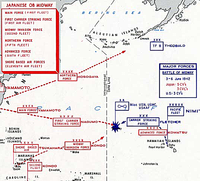
The plan was complicated and depended on the Americans reacting exactly as the plan anticipated them doing.  Yamamoto never expected that the Americans would be waiting for his forces and had knowledge of his plans due to the efforts of U.S. Navy code breakers under the direction of Commander Joseph Rochefort and the Fleet Intelligence Officer Captain Edwin Layton had broken the top secret Japanese Navy JN-25 Code.  Thus despite the massive amount of forces involved the plan was seriously flawed and left the advanced forces vulnerable to unexpected American moves.

Next: Calculated Risk: The American Forces and Strategy at Midway

6 Comments

Filed under History, Navy Ships, US Navy, world war two in the pacific

100 Years of Navy Aviation: Part One the Aircraft Carriers

Eugene Ely makes the first takeoff from USS Birmingham on November 14th 1910

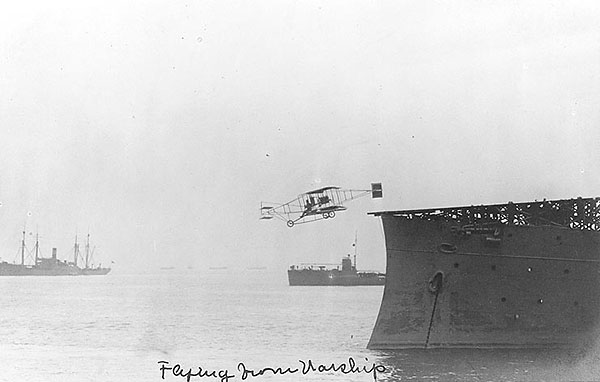
On a blustery November 14th in the year 1910 a young civilian pilot hailing from Williamsburg Iowa became the first man to fly an aircraft off the deck of a ship.  At the age of 24 and having taught himself to fly barely 7 months before Eugene Ely readied himself and his Curtis biplane aboard the Cruiser USS Birmingham anchored just south of Fort Monroe in Hampton Roads.  Ely was there because he was discovered by Navy Captain Washington Irving Chambers who had been tasked with exploring how aircraft might become part of Naval Operations. Chambers had no budget or authority for his seemingly thankless task but hearing that a German steamship might launch and aircraft from a ship hustled to find a way to stake a claim for the U.S. Navy to be the first in flight. Weather was bad that day as is so typical for Hampton Roads in November and between rain squalls Ely decided to launch even though Birmingham did not have steam up to get underway to assist the launch.  Ely gunned the engine and his biplane rumbled down the 57 foot ramp and as he left the deck the aircraft nosed down and actually make contact with the water splintering the propeller and forcing him to cut the flight short and land on Willoughby Spit about 2 ½ miles away not far from the southern entrance to the modern Hampton Roads Bridge Tunnel is.  Chambers would talk Ely into making the first landing on a Navy ship the Armored Cruiser USS Pennsylvania in San Francisco Bay on January 18th 1911.  Ely died in a crash at the Georgia State Fairgrounds on October 11th 1911.

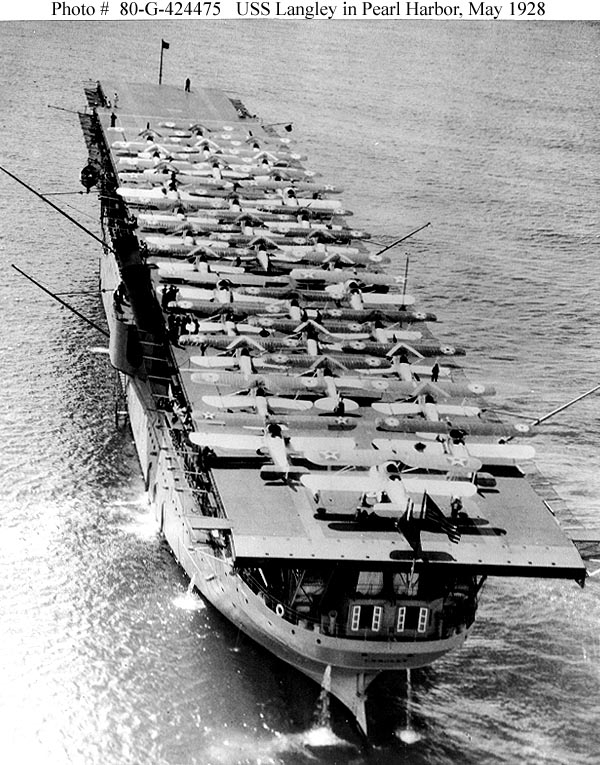
USS Langley CV-1

The Naval was slow to build upon the early achievements and the British and France would commission Aircraft Carriers well before the USS Langley CV-1 a converted Collier was commissioned.  After Langley the Navy commissioned the converted Battlecruisers USS Lexington CV-2 and USS Saratoga CV-3 in the mid 1920s.

USS Lexington CV-2 October 1941

The three ships formed the nucleus of the Navy’s embrace of aviation and the pilots that they trained and the experience gained would be the foundation of the Navy’s success in the Second World War.  They would be joined by the USS Ranger CV-4 the first U. S. Navy Carrier designed as such from the keel up in 1934.

USS Enterprise CV-6

In 1937 the Navy commissioned the first of its true Fleet Carriers the USS Yorktown CV-5 which was followed by the USS Enterprise CV-6 in 1938, the USS Wasp CV-7 an improved version of Ranger in was commissioned in 1940 and the USS Hornet CV-8 in 1941.   These ships would bear the brunt of US Navy operations in the first year of the war following the disaster at Pearl Harbor. Of these ships only the Enterprise and Saratoga would survive the first year of the war in the Pacific.  Langley now a Seaplane Carrier was sunk during the Battle of the Java Sea in February 1942. Lexington would go down at Coral Sea in May 1942.  Hornet would launch the Doolittle Raid against Japan on April 18th 1942.  Yorktown, Enterprise and Hornet would take on and defeat the Japanese Carrier Strike force and sink the Akagi, Kaga, Soryu and Hiryu at Midway to avenge Pearl Harbor. Yorktown was sunk in the battle but Midway stopped the Japanese advance in the Pacific.
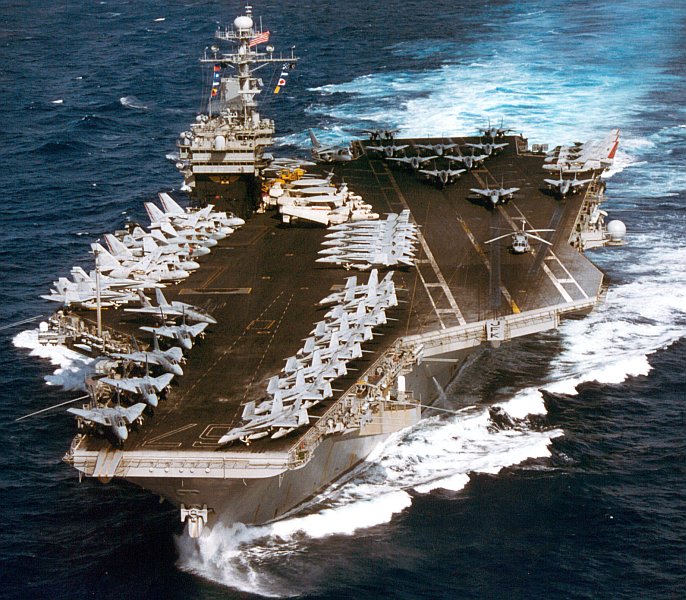
The U. S. went on the offensive in August invading Guadalcanal in the Solomons Islands. The Guadalcanal campaign and the numerous sea battles in the adjacent waterways would claim many American and Japanese ships. Wasp was sunk by a Japanese submarine on September 15th 1942 and Hornet was sunk at the Battle of Santa Cruz on 27 October 27th 1942.  Saratoga spent much of 1942 in the yards having been torpedoed twice leaving the often battered Enterprise as the sole U. S. Navy Carrier facing the Japanese until Saratoga was repaired and the first of the Essex Class Fleet Carriers and Independence Class Light Fleet Carriers entered service and arrived in the Pacific.

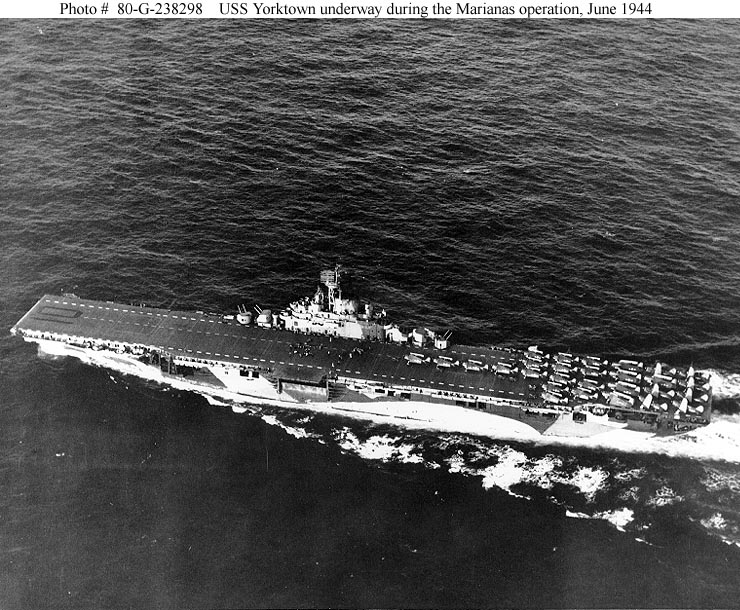
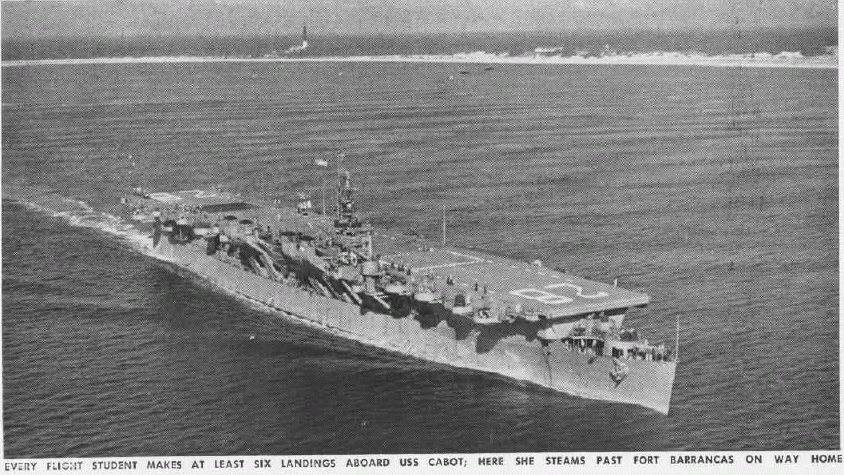
USS Yorktown CV-10 1944 a good example of the wartime Essex class ships  below USS Cabot CVL-28 an Independence Class Light Fleet Carrier


The Essex Class ships became the nucleus of the Fast Carrier Task Forces in the Pacific and with their smaller consorts of the Independence Class would dominate operations at sea from 1943 on.  The Essex class would eventually number 24 ships with several more canceled before completion becoming the most numerous of any class of Fleet Carriers produced by the U. S. Navy.  The Essex class would figure prominently in all offensive operations including the Battle of the Philippine Sea, Battle of Leyte Gulf, the campaigns at Iwo Jima and Okinawa and raids on the Japanese home islands.  In the process they and their air groups would be instrumental in sinking hundreds of Japanese ships including the Battleships Yamato and Musashi and destroying thousands of aircraft.  A number were heavily damaged by Kamikazes but none were lost with the epic story of the USS Franklin CV-13 and her survival after being hit by two bombs from a Japanese plane that slipped through the Combat Air Patrol. The resultant explosions and fires amongst her fueled and armed aircraft nearly sank her but for the heroic efforts of her crew including Chaplain Joseph O’Callahan who won the Medal of Honor caring for the wounded and dying and directing damage control teams. The ship lost 724 men killed and 265 wounded in the attack but survived though without power and dead in the water 50 miles off the Japanese coast.

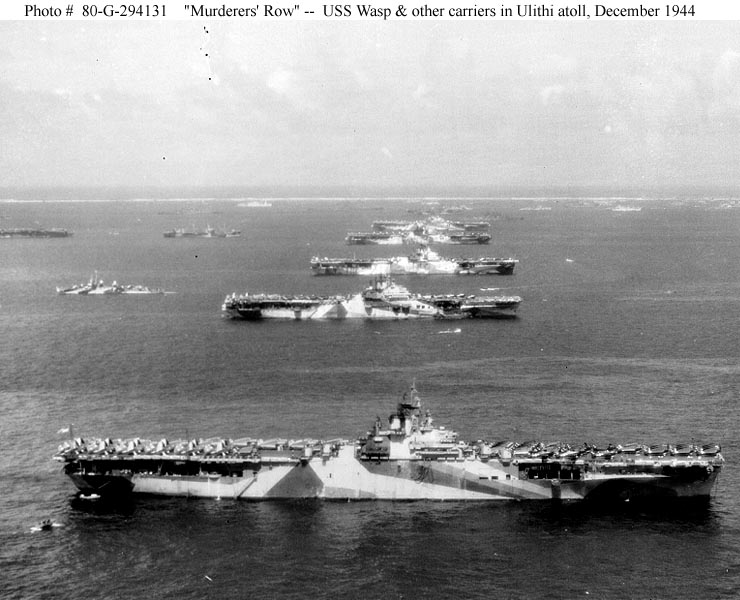
Murderers’ Row

The Essex class were iconic and the ships etched their names in naval history. The Essex, Yorktown, Hornet, Wasp, Hancock, Ticonderoga, Franklin, Bunker Hill, Intrepid, Lexington and the other ships of the class had legendary careers. These ships became known as “Murderers’ Row” for their expertise in killing off Japanese ships and aircraft.  Fittingly four of the ships, the Hornet, Yorktown, Lexington and Intrepid have found a second life as museum ships and Oriskany was sunk as an artificial reef off the coast of Florida where she is a favorite of recreational divers.

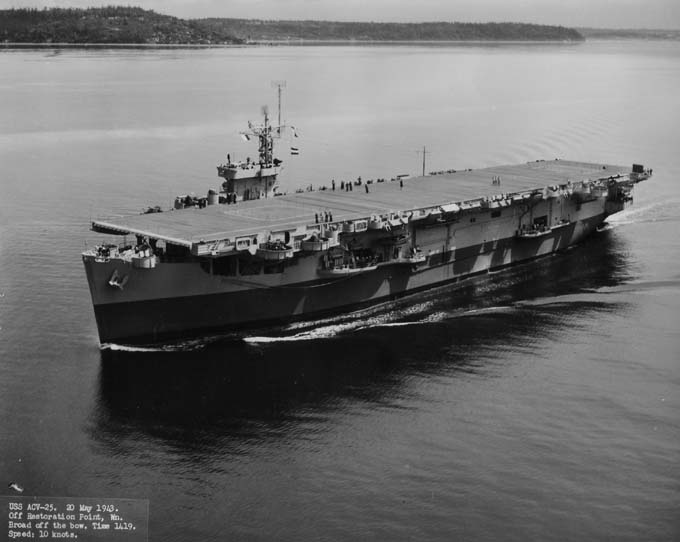
USS Croatan CVE-25 a Bogue Class Escort Carrier

During the war the Navy also built 118 Escort Carriers converted from merchant ships for use as convoy escorts, anti-submarine warfare and close air support for amphibious operations. 38 of these ships saw service in the British Royal Navy during the war.

USS Hancock CVA-19 in 1969 showing the extent of the modernizations that brought the Essex Class into the jet age

In the post World War II drawdown many carriers were decommissioned and the oldest, the Saratoga and Ranger disposed of.  The three ship Midway class entered service after the war and incorporated design improvements learned from combat operations in the war. As the Navy entered the jet era it was found that the existing carriers would need significant modernization to handle the new aircraft. Among the improvements made to the Midway and Essex class ships was the angled flight deck, steam catapults, hurricane bows and improved landing systems.  These improvements allowed these World War II era ships to remain front line carriers into Vietnam and in the case of the USS Midway and USS Coral Sea into the 1990s.

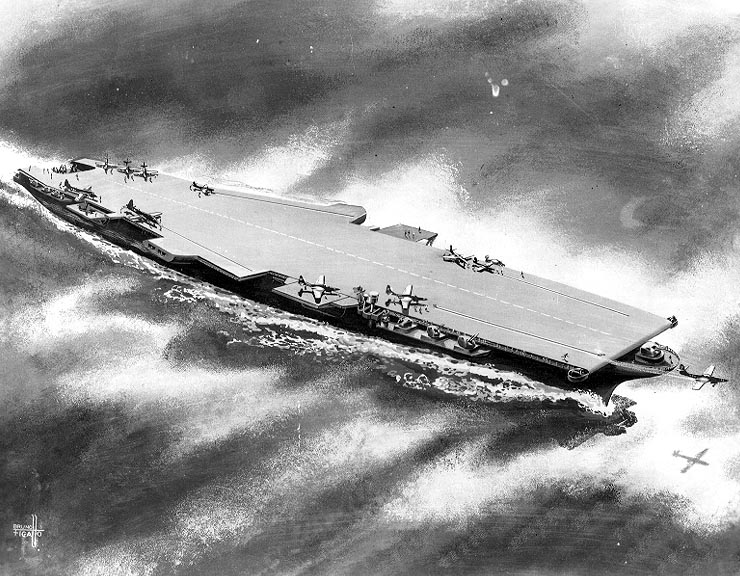
Artists’ conception of USS United States CVA-58 a victim of Truman Era Air Force politics

The Navy began its first super-carrier the USS United States in 1949 but the ship and class was cancelled by Secretary of Defense Louis A. Johnson, not a fan of the Navy or Marine Corps due to opposition by the Army and the newly founded Air Force.  The ship would have carried 12-18 nuclear capable bombers as well as 45-50 jet fighters and attack aircraft and been 1090 feet long and displaced 65,000 tons.  It would not be until after the Korean War that the Navy would begin construction of its first super-carriers.

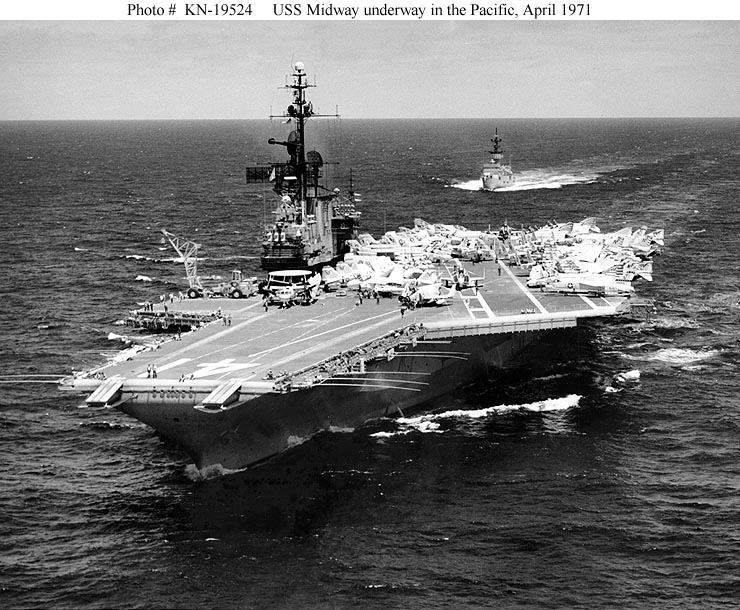
USS Midway CVA-41 in 1971

During the Korean War most of the Essex class ships were called back into service with 15 modified to conduct jet operations while others were converted to serve as ASW Carriers and Helicopter Carriers (LPH) to support Marine amphibious forces. Likewise the Midway’s were modernized as the Navy began to construct the four-ship Forrestal Class which were 1036 feet long and displaced 56,000 tons and designed to carry 100 aircraft. The four ships, Forrestal CVA-59, Saratoga CVA-60, Ranger CVA-61, and Independence CVA-62 would all serve into the early 1990s before being decommissioned. In the past few months Forrestal and Saratoga have begun the journey to be scrapped, sold for a penny each to scrapyards in Brownsville, Texas.

USS Ranger CVA-61

They were all heavily involved in the Vietnam War on Yankee and Dixie Station and both the Atlantic and Pacific during the Cold War. All four have been stricken from the Navy List and are awaiting disposal.  Forrestal was programmed as an artificial reef but she, like Saratoga which had been on donation hold was approved for scrapping. Ranger is still on donation hold and the USS Ranger Foundation is attempting to raise the money to save her. Independence which had been programmed as an artificial reef project was approved for scrapping in 2008.In the past few months Forrestal and Saratoga began the journey to be scrapped in 2014, sold for a penny each to scrapyards in Brownsville, Texas.

USS John F Kennedy CV-67 a modified Kitty Hawk class ship

These ships were followed by the Kitty Hawk class consisting of Kitty Hawk CVA-63, Constellation CVA-64, America CVA-66 and John F. Kennedy CVA-67 which were improved versions of the Forrestal Class with a 60,100 ton displacement and 1047 foot length with the ability to carry 100 aircraft. Kitty Hawk had the distinction of being the last fossil fuel carrier in active U. S. Navy service being decommissioned and placed in reserve in 2009. Her sister the Constellation CV was decommissioned in December 2003 and in 2008 was programmed to be scrapped in the next five years.  America was decommissioned in 1996 after not being given a Service Life Extension Program (SLEP) refit in the 1990s due to budget cuts.  America was involved in much of the Cold War, Gulf War and Vietnam including responding to the Israeli attack on the USS Liberty in 1967, the Intervention in Lebanon in 1983 and the conflict with Libya in the Gulf of Sidra in 1985.  She was sunk as a test bed to see how modern carriers would be affected by battle damage and to incorporate those lessons into future carrier design in May of 2005.  John F. Kennedy was originally planned to be a nuclear ship equipped with 4 A3W reactors.  This plan was shelved and she was completed as a fossil fuel ship. “Big John” served in Vietnam as well as throughout the Cold War and Gulf War and also engaged the Libyans in 1985.  She was placed in the Reserve Force in the 1990s to save money and also served as a training carrier.  Like America she did not receive the necessary maintenance and by 2002 she needed emergency repairs in order to deploy in support of Operation Enduring Freedom. Kennedy made three deployments in support of the War on Terror and decommissioned in 2007.  She was placed in donation hold and currently two groups are making progress to acquire her as a Museum ship. Like the Forrestal’s the Constellation’s served in Vietnam, the Cold War, Operation Desert Shield and Desert Storm and three continued their service into Operation Iraqi Freedom. Constellation began her journey to the scrapyard in August 2014.

USS Enterprise CVN-65

As the Navy continued to develop the capabilities of the aircraft carrier it commissioned the nuclear powered USS Enterprise CVAN-65.  The added capability of nuclear power enabled her to operate without dependence on fossil fuel which in addition to her range and speed allowed her to carry more aviation fuel and munitions than the fossil fuel ships.  Unique among the Nuclear Carriers she produces 280,000 SHP and is powered by 8 Westinghouse (A2W) Reactors driving geared turbines, 4 screws with a classified top speed in excess of 35 Knots and is the quickest carrier going from all stop to full speed. At 1101 feet long and 75,700 ton (93,000 Full Load) displacement she was larger than any other carrier. She served in Vietnam, the Cold War, the Gulf War and Operation Enduring and Operation Iraqi Freedom. She was and was decommissioned in 2013.

USS Theodore Roosevelt CVN-71 of the Nimitz class

The Nimitz Class of nuclear powered carriers is the most numerous class of capital ship in the U.S. Navy since the Essex Class.  Slightly smaller than Enterprise with a 1088 overall length and 91,000 full load displacement the Nimitz CVN-68 and her sister ships are the mainstay of the U. S. Navy carrier force.  These ships have been the symbols of American naval power for three decades and will continue to be for the foreseeable future.  Each of the ships has embodied successive improvements gained from the previous ships and the latest ships of the class the USS Ronald Reagan CVN-76 and USS George H. W. Bush CVN-77 incorporate technologies that were not known when Nimitz was on the drawing board. Thus whenever a ship is taken in for their Refueling and Complex Overhaul (RCOH) it is upgraded to the capabilities of the newest ship.  The class consists of the Nimitz, the USS Dwight D. Eisenhower CVN-69, USS Carl Vinson CVN-70, USS Theodore Roosevelt CVN-71, USS George Washington CVN-72, USS Abraham Lincoln CVN-73, USS John C. Stennis CVN-74, USS Harry Truman CVN-75 as well as the previously mentioned Reagan and Bush. They can carry 90% more fuel and 50% more ordnance than the Forrestal class. Carrying 90 or more aircraft they pack a mobile offensive punch that is not matched by any other surface ship.  The have served in every major military and many humanitarian missions since Nimitz was commissioned in 1974.

Artist conception of USS Gerald R Ford CVN-78

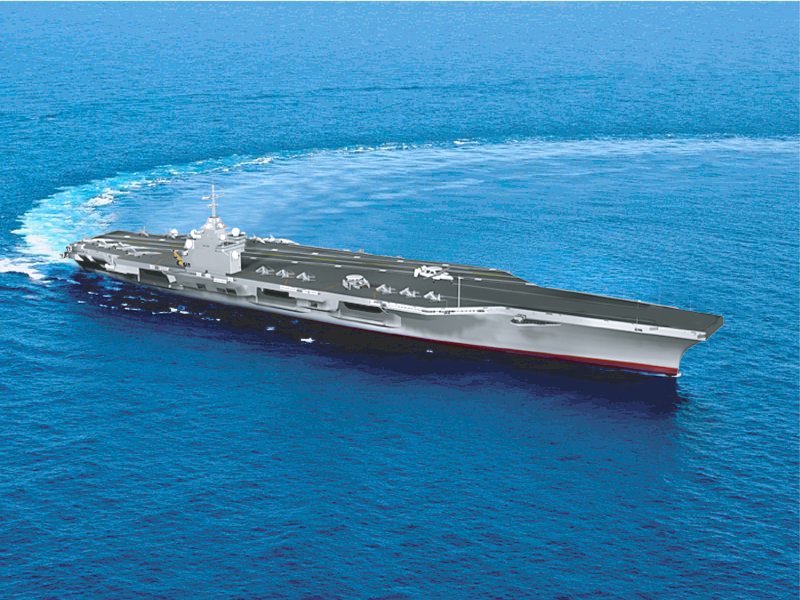
The Nimitz class will be joined by the USS Gerald R. Ford CVN-78.  The Ford is the first ship of an entirely new class. While approximately the same size as the Nimitz class at 1092 feet long and approximately 100,000 tons full load displacement the Ford class of which three are currently authorized and one under construction will feature many improvements over their predecessors. Among improvements are an advanced arresting gear, automation, which reduces crew requirements by several hundred from the Nimitz class carrier, the updated RIM-162 Evolved Sea Sparrow missile system, the AN/SPY-3 dual-band radar (DBR), as developed for Zumwalt class destroyers an Electromagnetic Aircraft Launch System (EMALS) in place of traditional steam catapults for launching aircraft, a new nuclear reactor design (the A1B reactor) for greater power generation, advanced stealth features to help reduce radar profile and the ability to operate the new F-35C Lightning II. If the class is built as programmed on a one ship every five year rate with the Ford commissioning in 2015 then 6 ships of the class will be in commission by 2040. The next two ships have been named, the John F Kennedy and Enterprise. 

Of course as with any military technology the future never is certain. In 1918 no one would have thought that the all-big gun Dreadnought Battleships would be eclipsed by the Aircraft Carrier in less than 25 years. While the Carriers have ruled the waves since Midway there are threats to them both military and financial.  Countries such as China while building their own carriers have are developing weapons such as guided ballistic missiles designed to destroy carriers.  As of now there is no defense against such a weapon if a carrier is within range. While China has not yet deployed the weapon it could be a game changer in the Western Pacific. Likewise there is the ever present threat posed by new and advanced submarines even those deployed by 2nd and 3rd world nations.  Finally there is the financial cost which could derail the procurement of more carriers in an era of austerity. The cost of the Ford is currently estimated to be $9 Billion Dollars which if stretched end to end would probably reach Vulcan where the Vulcans would come up with an answer to our current problems.

At the same time the carriers have defied those who predicted their demise since the Truman administration.  Currently no sea based platform has the multitude of capabilities of a carrier and its associated air wing and battle group and thus they should remain the Queens of the Sea for some time to come and the United States Navy which has led the world in their development and operation should continue to lead the way.

The next installment which will appear later this week will discuss the aircraft employed by the United States Navy not only those from carriers, but seaplanes, rotor-wing aircraft and lighter than air ships.

Peace

Padre Steve+

6 Comments

Filed under History, Military, Navy Ships

The Battle Fleet that Never Was: The USS Washington, the South Dakota Class and the Lexington Class Battle Cruisers

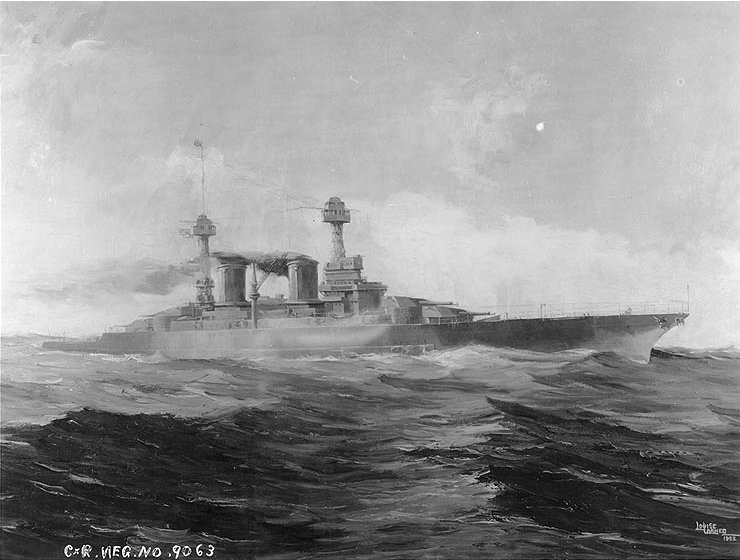
Artist depiction of the Lexington as Battle Cruiser

Note: This is the first of a series of articles on what might have happened if the Washington Naval Treaty had not been signed. This article is a look at the American fleet that never was, the following articles will be in the alternative history genre looking at a war breaking out in the Pacific in 1937.

Historians almost always muse on what might have been.  One of the most significant events of the years following the First World War was the Washington Naval Conference and Treaty. The treaty called by the President Harding and conducted under the auspices of the League of Nations was the first international disarmament conference and attended by none nations having interests in the Pacific. The major players in the conference from the naval power perspective were the British, Americans, Japanese, French and Italians.  Each nation had an agenda for the conference, for the United States it was to break the Anglo-Japanese naval accord and to limit the Japanese naval build up.  The British, exhausted and financially reeling from the effects of the First World War had a number of goals.  Though they had the largest navy and the most Dreadnaught type battleships and battle cruisers of any Navy many of its ships were obsolete or worn out from wartime service.  They had little capital to put into new ship construction, especially considering the vast resources of the United States which was already well into a vast naval buildup including ships that would be among the largest and most heavily armed in the world.  It was in the interest of Britain to limit the both the number, tonnage and armament of these ships.

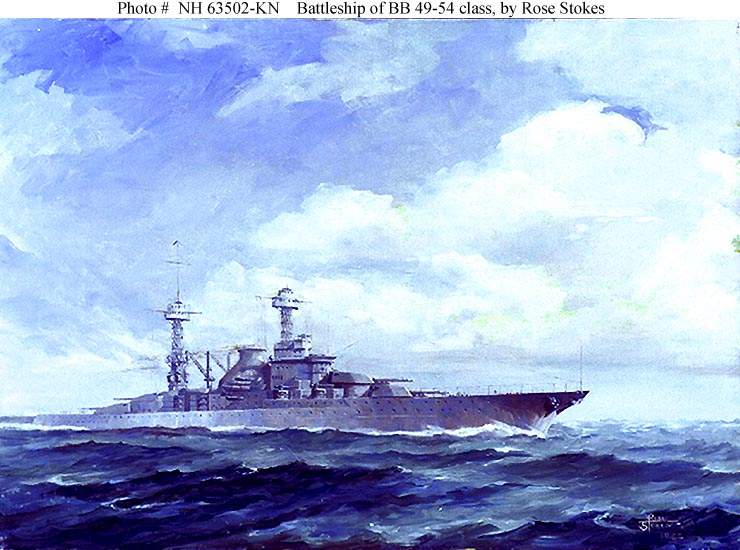
Artist impression of South Dakota Class

The treaty which was ratified in 1922 limited the United States and Great Britain to a maximum of 525,000 tons in their battle ship fleets and 125,000 tons in aircraft carriers.  The Japanese agreed to a limit of 315,000 tons and the French and Italians 175,000 tons each.  Tonnage for battleships was limited to a maximum of 35,000 tons with a limitation on guns size to 16 inches.  Since the bulk of the ships planned or being built by the US and Japan exceeded those limits they would be effected more than the British whose post war shipbuilding program had not begun in earnest. For the US this had a dramatic effect on its planned fleet, which if built would have become the dominant Navy of the 1920s and 1930s.  It is fascinating to think what might have happened if the treaty had not been signed and what the battle fleets of the various nations would have looked like in 1941 had war not come sooner.

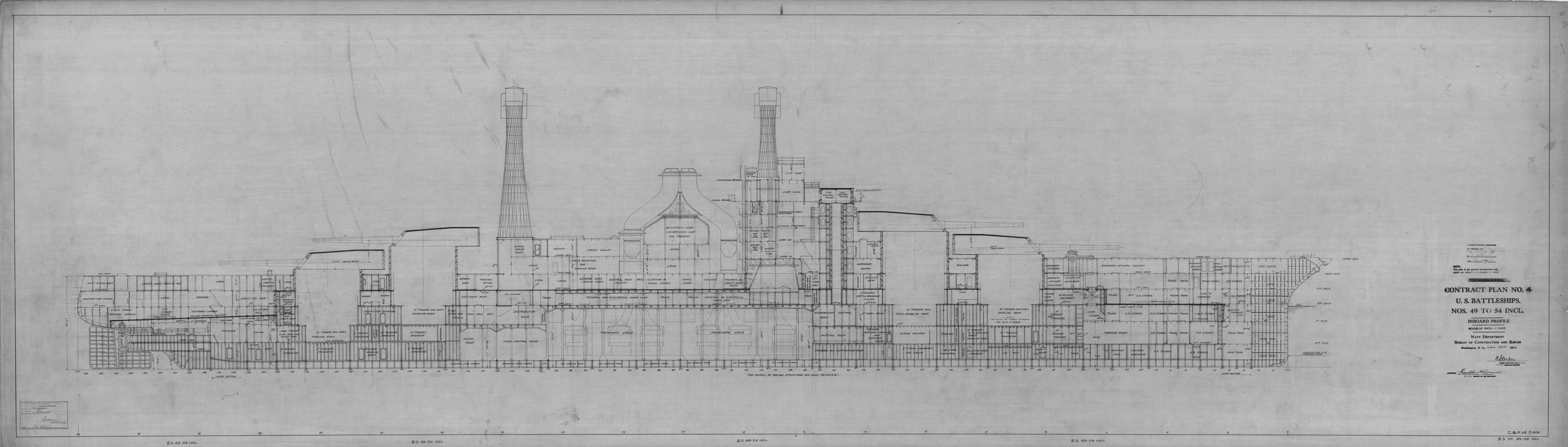
Plans for South Dakota Class

The American Navy went to war in 1941 with 18 battleships, the most modern of which were the new North Carolina and Washington and the rest averaging over 20 years old in 1941. The most modern of these ships were the Colorado class composed of the Colorado, Maryland and West Virginia each mounting eight 16”/50 guns.  The fourth ship of the class the Washington was sunk as a gunnery target when 75% complete under the terms of the Washington Naval Treaty.

The incomplete USS Washington sinking

However it was a battle force that could have been much larger and far more capable, a force that may not been regulated to convoy escort duties and shore bombardment but instead may have taken on the Imperial Navy on the high seas in battleship combat not seen since Jutland.  Yet this was not to be, the great fleet of super-battleships was never built and only two hulls completed the Lexington and Saratoga which instead of being completed as battle cruisers were completed as aircraft carriers.

Artist impression of South Dakota Class

The Americans had set out to build the largest, most modern and powerful battleships and battle cruisers afloat.  The Navy had already produced the Colorado class super-dreadnaughts which were equal to or superior to any battleships of their era.  The Navy planned for a class of six battle cruisers which would be superior to any similar ship afloat, the Lexington class and a class of six battleships, the South Dakota class mounting twelve 16”/50 guns in triple turrets.

Artist impression of South Dakota Class as they might have appeared in 1938

The two classes were leviathans and to counter them the British made plans for a four ship 48,000 ton class of battleships, the N3 project mounting nine 18” guns and a class of battle cruisers mounting nine 16” guns.  The ships of both classes were designed with their main battery mounted forward in order to save weight on armor.  Both classes were canceled with the signing of the treaty and none were laid down.  It is suggested by some that the G3 battle cruiser design was a ploy to get the United States to agree to the cancellation of its capital ship projects. The guns planned for the G3 class were mounted on the Nelson class battleships which complied with treaty limits.  Although powerful ships they suffered from engineering problems which often reduced their speed from what was designed.  Along with the HMS Hood, the sole ship completed of the four ship Admiral class the Nelson and Rodney were the most modern battleships in the Royal Navy until the King George V class entered service in 1941.  The Japanese planned for eight battleships and eight battle cruisers centered on the two existing Nagato class battleships and 4 Kongo class battle cruisers to be joined by the two ship 40,000 ton Tosa class battleships, the Tosa and the Kaga, of which Kaga was completed as an aircraft carrier. They were to be joined by the 4 improved Tosa class or Kii class fast battleships of 42,000 which were ordered but never laid down.  These were to be joined by the four ship Amagi class battle cruiser class.  Amagi was destroyed during the Tokyo earthquake of 1922 and scrapped and Akagi completed as an aircraft carrier.  All of the planned Japanese ships were to mount ten 16” guns in five twin turrets.

Lexington Class final design drawing

The American ships were to be powerful and based on main battery, protection and speed they would have acquitted themselves well had they been built.  The Japanese ships would have had a speed advantage over the South Dakota’s but this would have been offset by the gun power and protection of the latter.  The American Lexington class would have been faster than any of their competitors.

South Dakota Class Design Specifications
Displacement: 43,200 tons normal
Dimensions: 684 x 106 x 33 feet/208.5 x 32.3 x 10.1 meters
Propulsion: Turbo-electric, 12 285 boilers, 4 shafts, 50,000 shp, 23 knots
Crew: 1191
Armor: 8-13.5 inch belt, 3.5 inch deck, 4.5-13.5 inch barbettes, 5-18 inch turrets, 8-16 inch CT
Aviation: none
Armament: 4 triple 16″/50cal, 16 6″/53cal, 8 3″/50cal AA, 2 21 inch torpedo tubes (submerged)

The six ships in the Class, South Dakota, Indiana, Montana, North Carolina, Iowa and Massachusetts were all scrapped in accordance with the treaty when partially complete, the North Carolina being in the most advanced stage of construction, 37.8% when construction was halted.

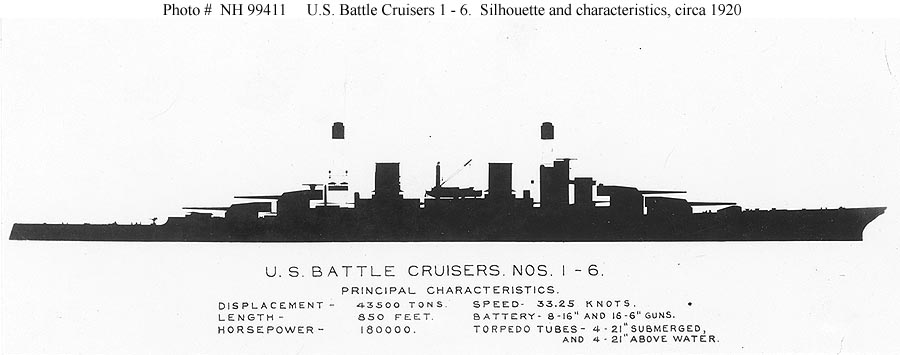
Lexington class Battle Cruiser Design Specifications

Displacement 43,500 Tons, Dimensions, 874′ (oa) x 105′ 5″ x 31′ (max).
Armament 8 x 16″/50 16 x 6″/53 4 x 3″8 x 21″ torpedo tubes
Machinery, 180,000 SHP; G.E. Geared Turbines with Electric Drive, 4 screws
Speed, 35 Knots, Crew 1500

The ships with the exception of the Lexington and Saratoga were scrapped incomplete.  All were to be named after famous warships or battles, and the Constellation, Constitution, Ranger and the United States were to be named after some of the most illustrious ships ever to serve in the US Navy.

If all of the ships, including the Washington of the Colorado class been completed the US Navy would have had eight battleships and six battle cruisers mounting 16 inch guns to compliment the nine battleships of the Nevada, Pennsylvania, New Mexico and California classes which all mounted 14 inch batteries.  The fleet would have been superior to either the Royal Navy or the Imperial Japanese Navy even with the ships planned by those navies.  Economically the United States was the only nation in the world capable of sustaining a naval arms race of this magnitude, the British economy and political will would have been unable to sustain it and the limited industrial capacity and dependence on the United States for raw materials and machine tools needed to construct their ships would have limited their ability to produce such a fleet. Without the conversion of the Lexington, Saratoga and their Japanese counterparts the Akagi and Kaga into aircraft carriers the development of the carrier would likely have gone slower and that type of ship may not have risen to the prominence that they gained during the Second World War.

8 Comments

Filed under History, Military, Navy Ships

The First Aircraft Carriers Part One: The First American Flattops- Langley, Lexington and Saratoga

saratoga aircraft approach for landingAircraft over Saratoga

Note: This is the first in a series on the early aircraft carriers.  Two others will follow on the British and Japanese carriers.  My dad was a Chief Petty Officer in Naval Aviation.  As such I grew up around Naval Air Stations, Squadrons and of course Aircraft Carriers.  My dad retired off of the USS Hancock CVA-19 in 1974.  I spent two weeks underway on USS Coral Sea CV-43 as a NJROTC Cadet in the summer of 1976.  It was an experience that I will never forget.  While on the Cruiser USS Hue City CG-66 we deployed with the USS John F Kennedy CV-67 for Operation Enduring Freedom.  There is something about the power and majesty of the modern carriers at the same time there is a sense of timelessness in the first aircraft carriers.  Three of the first four American ships were converted from other platforms.  As a kid, a young adult and even now I am fascinated by all things Navy, especially ships that made history.  Here is my look at the first American Aircraft Carriers.

The United States did not invent the aircraft carrier although Eugene Ely flew an aircraft onto and off of the Armored Cruiser USS Pennsylvania on January 18th 1911.  It was the British Royal Navy which first built and operated aircraft carriers beginning with the HMS Furious which had been converted from a light Battle Cruiser.  The Royal Navy would covert the sister ships of the Furious, the Glorious and Courageous as well as the auxiliary ship the Argus before building their first carrier that was designed from the keel up, the HMS Hermes.     With the British building carriers and the Japanese following suit the United States began a program of aircraft carrier production and operation unmatched in history.

uss langleyUSS Langley CV-1 The “Covered Wagon”

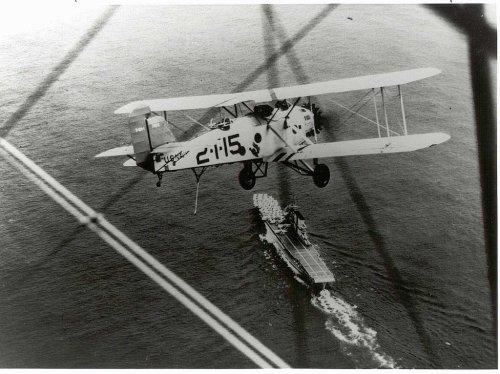
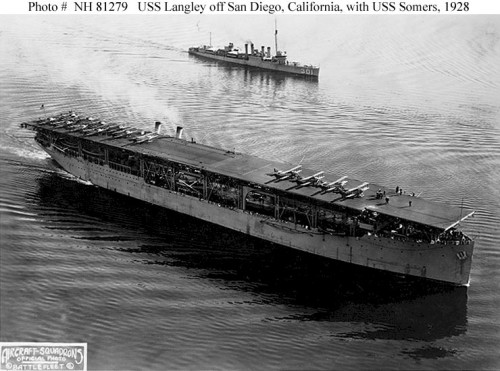
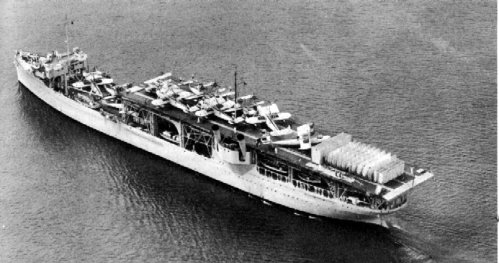
The first US carrier was the USS Langley, CV-1.  Langley was converted from the collier USS Jupiter beginning in July 1919.  She was commissioned as USS Langley CV-1 on 21 April 1920.  Displacing 15,150 tons fully loaded Langley embarked 34 aircraft and had a maximum speed of 15.5 knots.  Langley was primitive but groundbreaking.  She was the first carrier equipped with catapults and on 18 November 1922 achieved the first catapult takeoff by an aircraft.  She served as an invaluable training platform for Naval Aviators and helped provide the fleet with highly skilled flight crews that would operate from the USS Lexington and USS Saratoga.

langley as av-3Langley after conversion to AV-3

Nicknamed the “Covered Wagon” she served initially in the Atlantic until November of 1924 when she was transferred to the Pacific Battle Force.  She served as a carrier in the Pacific until 1936 when she was converted into a Seaplane Tender AV-3 and assigned to the Pacific in September 1939 based in Manila.  She was in the Philippines when the Japanese attacked and was sent south to Australia.  She was assigned to the ABDA forces defending the Netherlands East Indies and was sunk by her escorts after being bombed and disabled by Japanese aircraft while delivering fighter aircraft to Java with the loss of 16 sailors.

uss lexingtonUSS Lexington CV-2

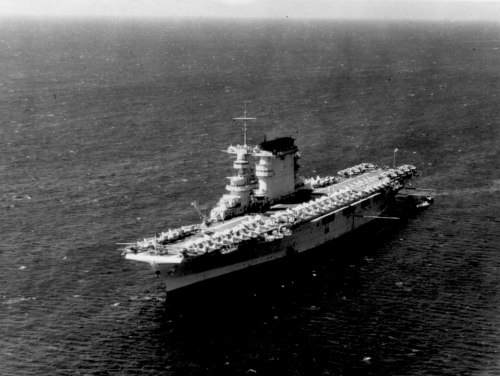
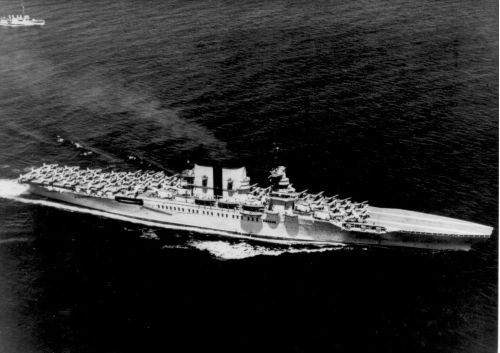
The second two American Aircraft Carriers were also conversions.  Unlike Langley the Lexington and Saratoga were converted from a new class of large and powerful battle cruisers whose construction had been canceled by the restrictions of the Washington Naval Treaty.  Commissioned on December 14th 1927 Lexington was 880 feet long and displaced 38,746 tons.  Saratoga was commissioned on November 16th of the same year and of similar dimensions and displacement.  Both of these ships could steam at 33.25+ knots and had a complement of 90 aircraft.  They were armed with eight 8” guns mounted in 4 turrets at the behest of more traditionally minded officers who felt that the armament might be needed for surface actions.

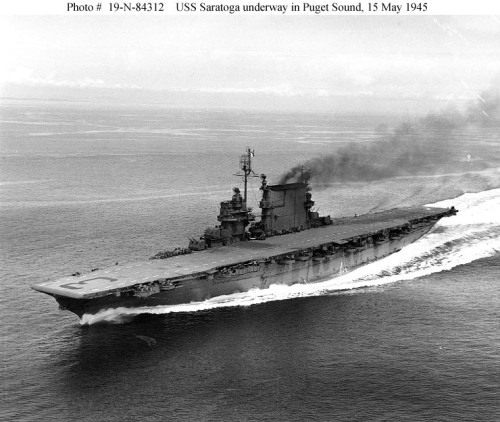
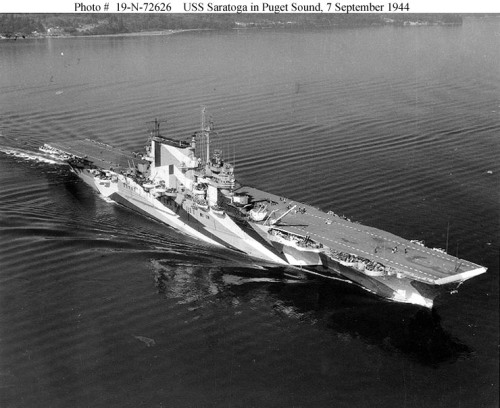
Saratoga underwayUSS Saratoga CV-3

They were the largest American carriers built until the Midway class appeared inin late 1945 and early 1946.  Of other nations pre-war carriers only the Japanese Navy’s Akagi and Kaga, converted from a battle cruiser and battle ship for the same reason as a the Lexington’s were comparable in size, air group capacity, protection and speed. Saratoga’s 8”battery would be replaced by twin 5” 38 caliber mounts in 1942.

lexington sinkingLexington Burning and Sinking

Both ships were used to help develop carrier doctrine and the concept of the carrier task force. Future leaders of Naval Aviation including Marc A. Mitscher trained aboard or flew from these ships.  Of particular note was that during Fleet Problem XIX in 1938 Saratoga launched a surprise air attack on Pearl Harbor from a point 100 miles off Oahu, setting a pattern that the Japanese copied in December 1941.

saratoga 1945Saratoga 1945

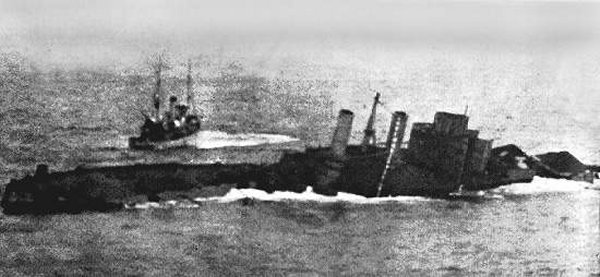
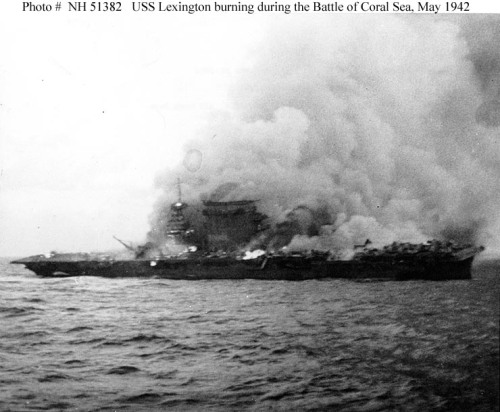
During World War II both helped hold the line after Pearl Harbor along with Enterprise, Yorktown and Hornet. Lexington was the flagship of TF-11 during as series of raids on Japanese outposts in the Solomons.  TF-11 joined Admiral Frank “Jack” Fletcher’s TF-17 at the Battle of Coral Sea, the first Naval Battle fought outside of eyesight of the respective forces. Lexington’s aircraft helped sink the Japanese light carrier Shoho on May 7th 1942 and heavily damage the fleet carrier Shokaku the following day. However aircraft from Shokaku and Zuikaku hit Lexington with two torpedoes and 3 bomb hits which her damage control parties seemed to have under control when vapors from ruptured aviation fuel lines were ignited resulting in a series of explosions which ignited uncontrollable fires. Her crew was evacuated by escorts and she was torpedoed by the destroyer USS Phelps.

Saratoga served throughout the war. She engaged in patrols after Pearl Harbor and while enroute to joining Enterprise was hit by a torpedo from the Japanese submarine I-16. After repairs she was rushed to Hawaii to join the American Task Forces at Midway but arrived in Hawaii the day after the battle.  Following this Saratoga operated in the Central Pacific in the first offensive at Guadalcanal.  She participated in the landings as the flagship of Admiral Fletcher and then at the Battle of Eastern Solomons sank the Japanese light carrier Ryujo and damaged the seaplane carrier Chitose.  Following this battle she was hit by a torpedo from the I-26. After repairs she again went to the Solomons joined by the light carrier USS Princeton.  On November 5th the two carriers conducted a brilliant strike on Japanese ships and aircraft facilities at Rabaul which were threatening the landings at Bougainville.
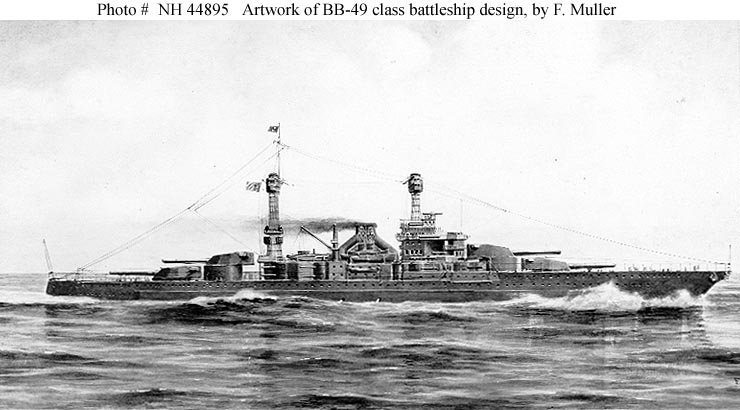
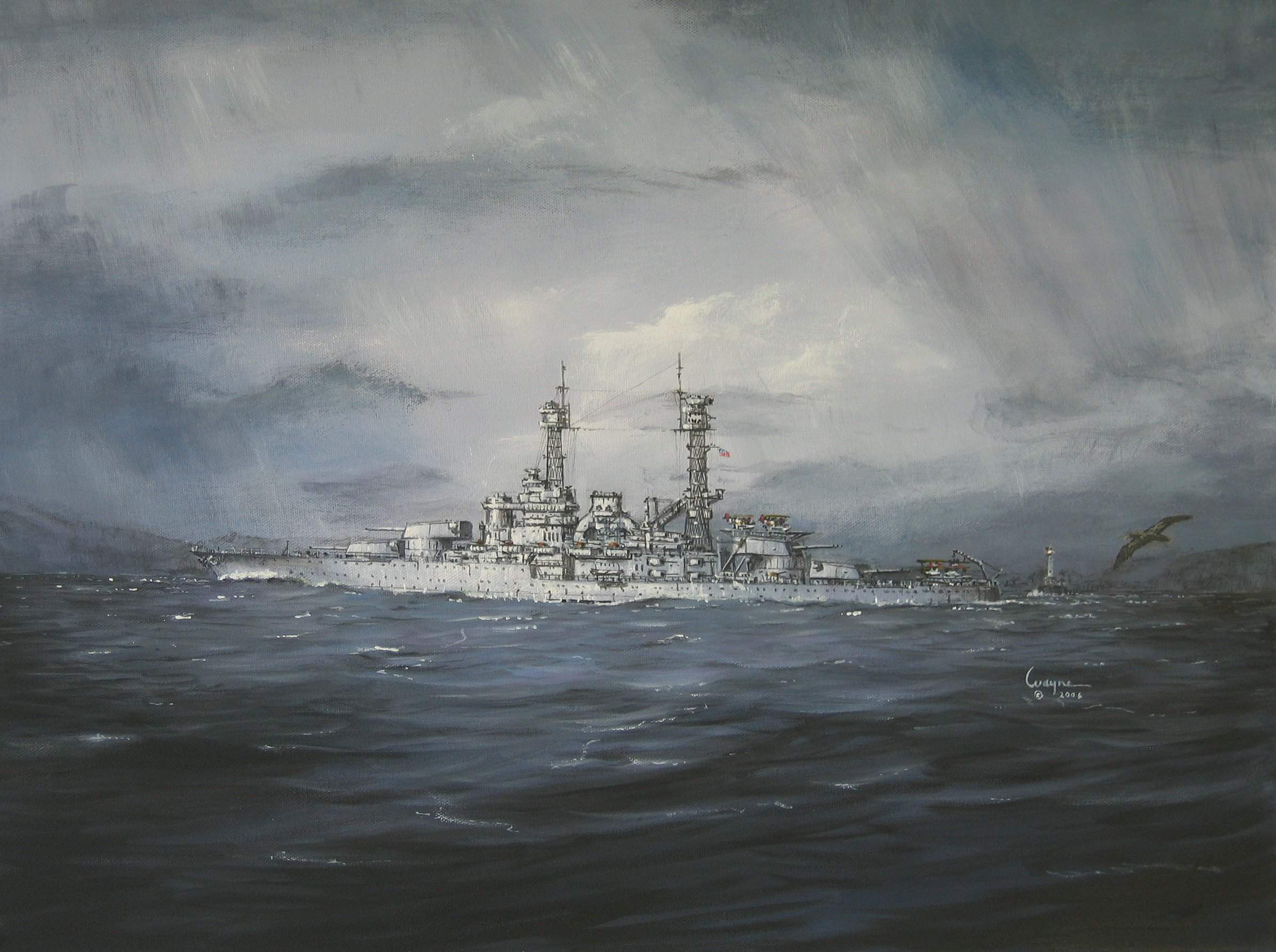
saratoga 1944Saratoga September 1943

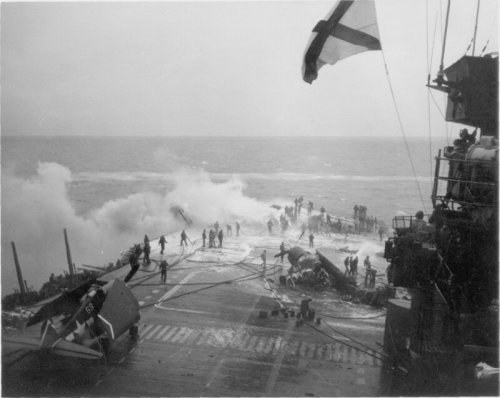
Following these operations Saratoga operated in the Gilberts and then with the British in the Indian Ocean.  She then was used as a training carrier for new pilots and aircrews at Pearl Harbor before being brought to Iwo Jima to operate night fighters against Kamikaze raids.  While conducting these operations she was attacked by Japanese aircraft in which 6 Japanese aircraft score 5 hits on her in 3 minutes.  Her forward flight deck was wrecked and she suffered great damage below decks and she lost 123 sailors.

saratoga kamikaze 2Saratoga burning after Kamikaze hits in 1945
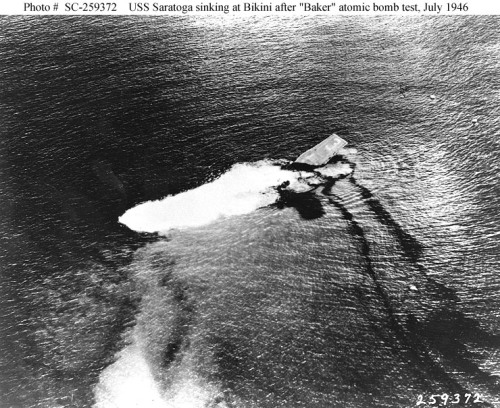
Following repairs she resumed training duties and after the defeat of Japan was involved in Operation Magic Carpet to bring Servicemen back from overseas.  Surplus to Navy needs at the end of the war Saratoga was sunk in Operation Crossroads at Bikini Atoll by an underwater atomic blast in the “Baker” bomb test a mere 500 yards from her position. She sank 7 hours later.

saratoga sinkingThe End of an Era- Saratoga goes down at Bikini

5 Comments

Filed under History, Navy Ships