Tag Archives: iraq assistance group

Moslem Allies and Friends

I posted a piece that I’m sure that some will find controversial yesterday.  Entitled “A Christian Defense of the Rights of Moslems in a Democracy (or Constitutional Republic) it dealt with comments and demands made by some that Moslems be removed from the military, security services and government positions simply because of religion or ethnicity.  You an see the post here:

https://padresteve.wordpress.com/2009/11/14/a-christian-defense-of-the-rights-of-moslems-and-others-in-a-democracy-or-constitutional-republic/

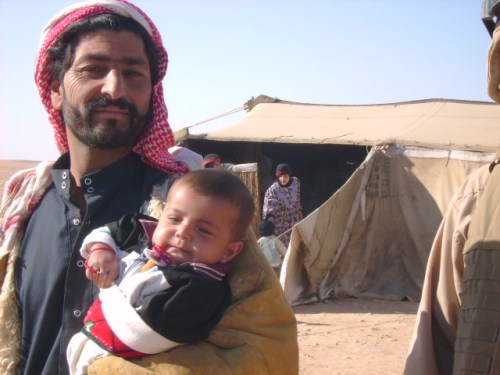
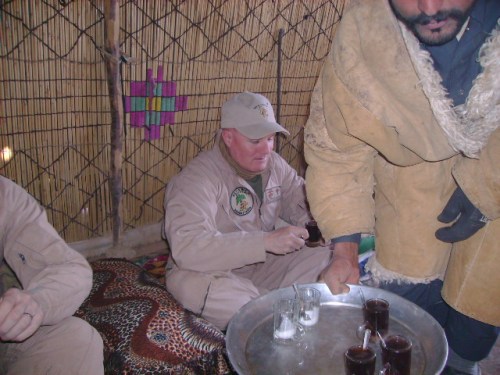
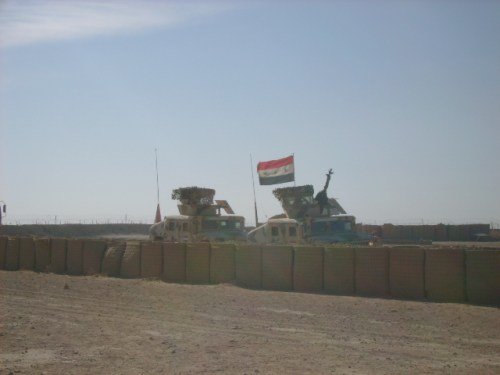
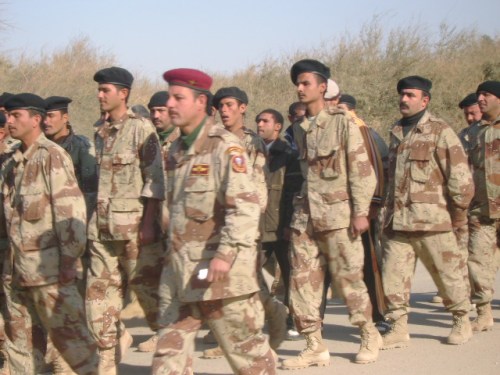
It generated some heated debate and I am sure that more will come. However I am just going to show a photo montage of the Iraqi military, US employed interpreters and former Iraqi officers helping the Iraqi government and US Forces.  The people of Iraq and much of the Middle East are not a monolithic bloc or extremists as many in this country are prone to believe.  Moslems fight every day against terrorists and are killed by the same kind of extremists who took down the Trade Center Towers and inspired Major Hasan in his shooting at Fort Hood.  They are friends and allies in the war against Moslem terrorists.  I post this article to put a human face on those that are often lumped together as the “enemy” simply because of their religion.

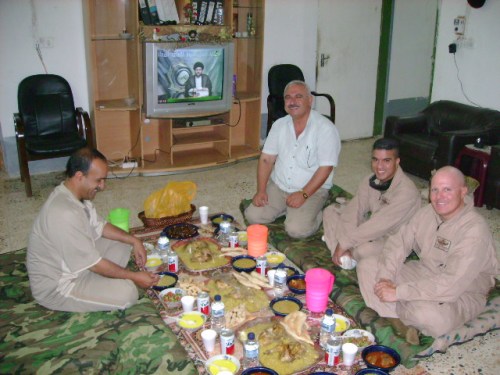
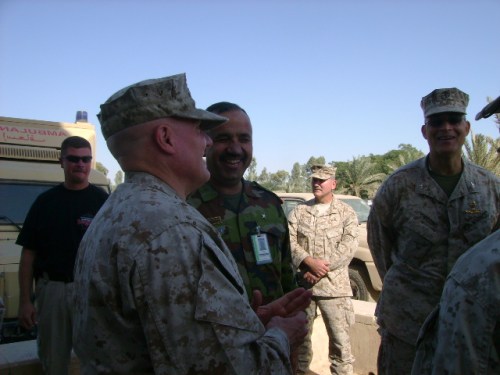
074Dinner with Brigadier General Sabah of 1st Brigade of 7th Iraqi Division in Ramadi. A professional soldier and Shia he sees himself as an Iraqi and ally of the US. The Last time we met in January 2008 in passing at the helo terminal in Ramadi he greeted me with a hug in front of his staff and many American soldiers and Marines calling me a friend.

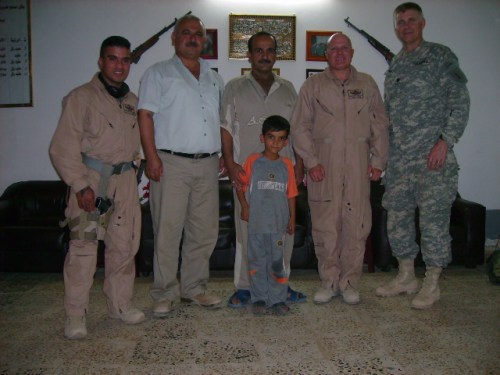
079Group Shot with General Sabah, his youngest son, our interpreter, the American Brigade Senior Adviser and my Assistant RP2 Lebron

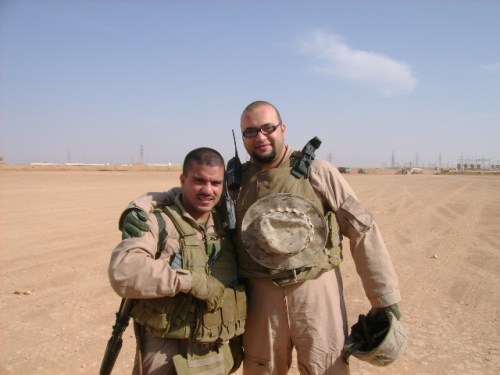
176RP2 Lebron with one of the “Terps” interpreters named “Shaun” originally from Palestine but a Green Bay Packer fan living in Minnesota

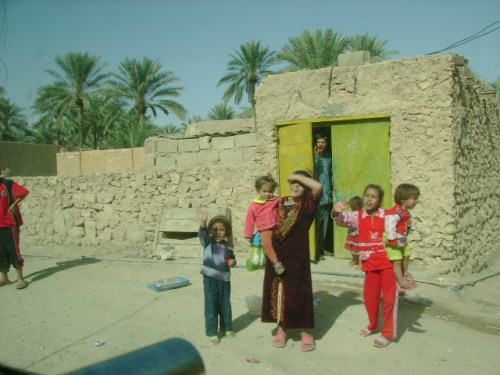
237Iraqi Children Greeting us in a town along the Euphrates

227Iraqi man in traditional garb happy to see us because Americans helped clean out the terrorists from his village

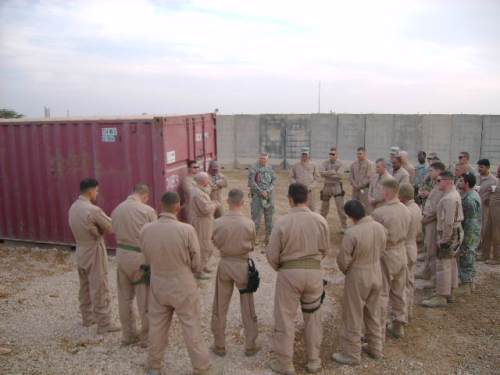
258With Iraqi Officers of 7th Division and Marine Advisers at the 2007 Marine Corps Birthday Cake Cutting at Camp Blue Diamond. Trained by the Marines the 7th and the 1st Iraqi Divisions helped turn the Tide in Al Anbar and the 1st went on to liberate Basra and then to Diyala Province

372Blessing Advisers of 7th Division as they prepared to go with Iraqis to guard a fuel convoy. Following this the Iraqis asked if I would bless them and their vehicles too, it seems they have some kind of Holy Water too and were willing to take the Christian kind as well.

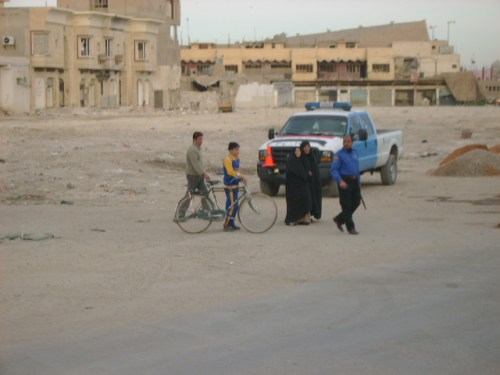
291A man with a Dangerous Job. Iraqi Policeman Escorting Civilians across Route Michigan in Ramadi. Shortly after we took small arms fire and Iraqi Police engaged the target

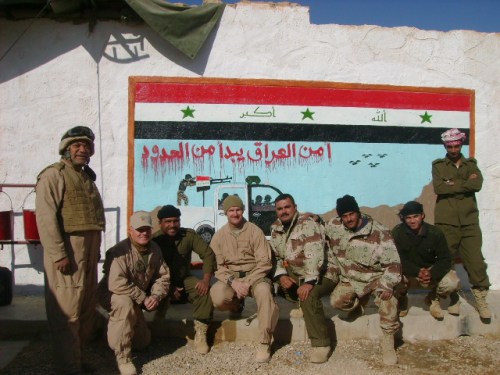
866With the Leaders of an Iraqi Border Force Company a kilometer from Syria, they like all the Iraqis we dealt with were hospitable offering us Ch’ai as well as food on our visit with the adviser team

880With a Bedouin Family near the Syrian border on Christmas Eve 2007

867Iraqi Border Troops at Border Fort Five near Syria

882Proud Bedouin Father and his son

883The Bedouin Father serves us Ch’ai and cakes

934Iraqi Troops of 7th Division coming back from Patrol on Christmas Day at COP North an isolated post near Syria. While we celebrated they worked and trained.

911One of the Iraqi vehicles in one of our convoy’s near Al Qaim pulling security for us to pass. Our convoys generally had about 3 American and 2-3 Iraqi trucks transiting dangerous areas with very few soldiers, nothing more than 240 series or .50 cal machine guns and far away from any big reinforcements should we have been hit

969New Iraqi Army Soldiers in Basic Training at Habbiniya. Imagine being far away from your family and know that they are in danger just because you serve in the Army

971Chaplains and our Assistants with General  Ali and his staff of the Training and Support Center at Habbinyah. He proudly showed us his well worn Arabic-English Bible. A Moslem he liked it because it had information not in the Koran

973Bakers at the Iraqi Army Bakery in Habbinyah the fresh bread is great

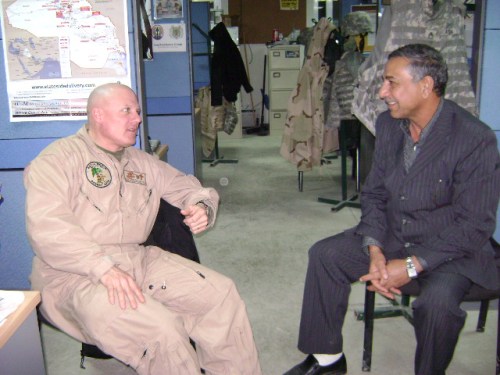
Dundas and FallahWith General Falah Hasan..driven from Iraq by Saddam under threat of death he returned from the United States to help rebuild the Iraqi Air Force and advise the Iraq Assistance Group.When asked what branch of Islam he said “My mother was Sunni, my father Shia I don’t know I am an Iraqi”

Of course I had many more interactions with the Iraqis than just these photos.  There was the G-3 Officer at 2nd Brigade of 7th Division who said that he wished that the Iraqis had Christian Priests to serve as Imams because he knew that they would care for the soldiers and families and were not compromised like many Sunni and Shia clergy.  The Iraqi military, Sunni and Shia distrusts most Moslem clergy because of their political militancy and divisiveness during the worst part of the civil war.  At one time they had Imams during the Saddam era but many commanders refused to appoint Imams.  Then there was the Iraqi Company commander at out in the west who tracked me down to meet the “American Imam and thank him” for serving our Marines and for praying for Iraq and its people. He also said to let people know that if something ever happened between the US and “Persia” that most Iraqis would support us. I could go on but needless to say there are millions of Moslems who fight along side of us as well as the American Moslems who serve in our ranks without being traitors like Major Hasan.   

Peace and blessings,

Padre Steve+


2 Comments

Filed under iraq,afghanistan, Tour in Iraq

The most dangerous assignment: 4 More Advisers Die In Afghanistan

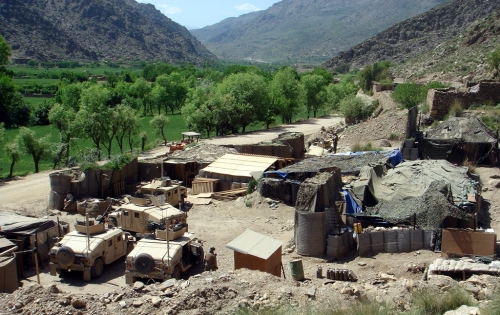
training team baseIsolated Embedded Training Team Base

Once know and relatively unglamorous group of American military men have suffered multiple casualties in a single engagement.  These men belong to are small units that do not have a lot of organic firepower.  They usually operate in remote areas far from immediate assistance if they get in trouble.  When one of these units suffers casualties, especially where they lose 3-5 men in one engagement they might have lost 20-25% of their unit.

On September 8th a team of these men was ambushed while on foot going to an Afghan with Afghan soldiers to meet tribal leaders with the intent of establishing a government presence in a hostile area.  In the ambush four were killed, three U.S. Marines and one U.S. Navy Hospital Corpsman attached to them.  On Tuesday the 8th Gunnery Sgt. Edwin W. Johnson Jr., 31, of Columbus, Ga., 1st Lt. Michael E. Johnson, 25, of Virginia Beach, Va., Staff Sgt. Aaron M. Kenefick, 30, of Roswell, Ga. and Petty Officer 3rd Class James R. Layton, 22, of Riverbank, Calif., were while working as trainers to Afghan soldiers on a mission to search for weapons and then meet village elders under an agreement to establish government authority there.  They were killed in “a complex attack according to a U.S. Military spokesman.  According to McClatchy news service who had a reporter that accompanied the mission, insurgents had set up positions in the village and in the mountains on both sides and apparently attacked as the men neared the village. 1st LT Johnson was wounded and while being attended Navy Hospital Corpsman Third Class James R. Layton when they both came under attack.  Both were killed.  Another Marine told the McClatchy reporter that they’d found the wrappings of bandages and other medical gear strewn around Layton and Johnson.  Eight Afghan troops and police and the Marine commander’s Afghan interpreter also died in the ambush and the subsequent battle that raged from dawn until 2 p.m. around the remote hamlet of Ganjgal in eastern Kunar province, close to the Pakistan border.
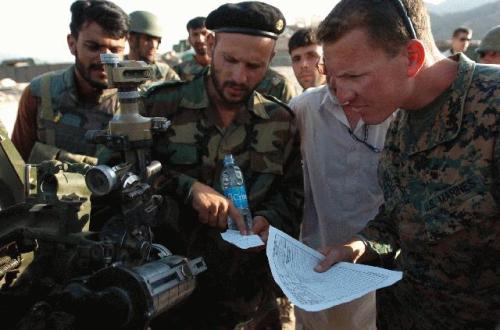
traiining team with afghan armyUSMC Advisers with Afghan Counterparts

The McClatchy reporter said: “We walked into a trap, a killing zone of relentless gunfire and rocket barrages from Afghan insurgents hidden in the mountainsides and in a fortress-like village where women and children were replenishing their ammunition.”  The reporter said that “U.S. commanders, citing new rules to avoid civilian casualties, rejected repeated calls to unleash artillery rounds at attackers dug into the slopes and tree lines — despite being told repeatedly that they weren’t near the village.”

The battle must have been intense.  I have been on foot patrols in areas crowded with Iraqis far away from significant support where if an insurgent group had attacked us we would have easily been overwhelmed. This is part of the world of the U.S. Military in the embedded training teams which work closely with Afghan and Iraqi soldiers.  I spent a lot of time with the advisers to Iraqi Army. Border and Port of Entry troops, Police and Highway Patrol spread across the entirety of Al Anbar Province.  These men and women are seldom thought of or mentioned by the press or even the military. . They come from all branches of the military and serve as advisers, trainers and mentors to these nations’ security forces.  The duty is dangerous.  The advisers, be they to the military, police, or civil administrations often work in the most isolated places in these countries and are stationed in small teams with the Iraqis and Afghans that they advise.  They are often far from the “big battalions” that have lots of firepower available and often operate out of larger and more secure bases with air support close at hand. Earlier in the year there were a number of incidents where advisers were killed by renegade soldiers or police, or by infiltrators posing as security personnel.  Two soldiers were working with an Iraqi unit in doing humanitarian work in a village when attacked and killed by someone who had infiltrated the Iraqi security forces.  . On March 27th Navy LT Florence Choe and LTJG Francis Toner IV were killed by an Afghan insurgent posing as an Afghan Army soldier. All of these events triggered anxiety in me as I remembered how many times I was incredibly exposed to danger conducting similar operations.

This incident was especially chilling as I read the reporter’s account of the ambush.  “Dashing from boulder to boulder, diving into trenches and ducking behind stone walls as the insurgents maneuvered to outflank us, we waited more than an hour for U.S. helicopters to arrive, despite earlier assurances that air cover would be five minutes away.”  According to the reporter Marine Maj. Kevin Williams” the commander of the team said: “We are pinned down. We are running low on ammo. We have no air. We’ve lost today, through his translator to his Afghan counterpart, responding to the latter’s repeated demands for helicopters.”  When I read this my mind flashed back to being in the middle of a massive crowd at the border crossing of Waleed on the Iraqi-Jordanian border.  There were about nine of us, of which only 8 were armed as I am not allowed by the U.S. interpretation of the law of war to carry a weapon.  There were thousands of Iraqis and others around us, very few border troops or port-of-entry police anywhere near us.  The port of entry had been the scene of numerous attempts to smuggle weapons, materials, and other supplies, drugs and to Iraq insurgents and Al Qaida.  Very few US troops were stationed there and many of these were dispatched off of the base at any given time.

The advisers are drawn from all services.  They are all Individual Augments that come from both the Active and Reserve components.  They do not deploy with their own units, which means that they go to war with people that they might have trained alongside getting ready for the mission, but otherwise have not served with.  When they come home they go back to their old assignments or new orders and are separated from the men and women that they served alongside for 7 to 15 months.  In other words they are isolated when they return home and go back to places where the majority of personnel, even those who have been “in country” have no earthly idea or appreciation of the conditions that they served in and dangers that they faced.  This happened to me when I returned and I went through an emotional collapse as the PTSD that I did not know I had kicked my ass.  Sights, smells, noises, crowds, airports and in fact almost everything but baseball diamonds caused me to melt down as they all brought the danger back to me. Don’t get me wrong, my tour in Iraq was the highlight of 27 plus years in the military, the part of which I am the most proud.

I have a special place for these men and women.  I served with them in Iraq’s Al Anbar Province as the first Navy Chaplain, and one of the first chaplains of any service to be assigned to cover these teams since Vietnam.  My assistant, RP2 Nelson Lebron and I deployed together from out unit.  I had prepared well.  I had been on the bubble to deploy for months.  My background in military history and past service with both the Army and Marines helped me. Likewise my military and civilian education helped me.  Shortly before we were notified of the deployment I went to the Jordanian Army Peace Operations Training Center course on Iraqi culture, religion and society.  I had served as a chaplain in the trauma department of one of the largest trauma centers in the country.  RP2 Lebron had deployed multiple times to Iraq, Beirut and Afghanistan where he was awarded the Defense Meritorious Service Medal (no small feat for an E-5).  He is also an incredibly gifted boxer, kick boxer and martial artist who has fought on Team USA and holds more title belts than I can count.  He most recently won the Arnold Schwarzenegger Classic. I had served with him before and he knew that his mission was to keep me safe.  I don’t want to sound arrogant, but the Chief of Staff of the Iraq Assistance Group said that we were “the best ministry team he had seen in 28 years in the Army.”

When we went to Al Anbar we were sent out with the Marines and Soldiers advising the 1st and 7th Iraqi Army Divisions, The Iraqi Police, Highway Patrol, the 2nd Border Forces Brigade and Port of Entry Police.  We operated in a area the size of the state of Oregon.  In some cases it would take us 2 days by air and convoy to reach isolated teams on the Syrian border.  When you travel by air in Iraq you are always at the mercy of the weather and aircraft availability. I had the rare privilege as a Lieutenant Commander to be able to arrange all of my own air transportation.  Most people, including people higher ranking than me had to depend on others to do this for them.  We worked with our advisers to get out to them.  We would be out 5-12 days at a time with anywhere from 4 to 7 days between missions.  In our 7 months we traveled over 4500 air miles and 1500 ground miles.  Almost all of our air travel was rotor wing. We flew in CH-46, CH-47 and MH-53s and the MV-22 Osprey.  Our convoys were usually not larger than 3 American HUMMVs and sometimes a few Iraqi vehicles.  Our biggest guns were .50 cal or M240B machine guns.
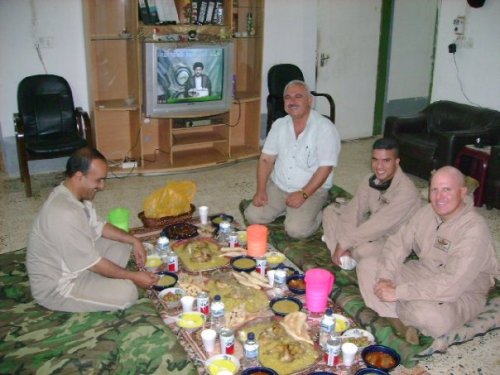
Dinner with Geneal SabahDinner with General Sabah in Ramadi

Many places we served were in places that had no large forces in position to help us if we got in trouble.  Even on the bases we were isolated.  Our teams were with the Iraqis in almost all cases.  We often ate in Iraqi chow halls and used Iraqi shower trailers.  Our advisers had us meeting their Iraqi counterparts.  We met and dined with Iraqi Generals, had ch’ai (tea) with small groups of Americans and Iraqis and got out with the Bedouins. We were in a number of particularly sensitive and dangerous situations with our advisers; one which I cannot go into great detail involved a senior advisor having to inform a new Iraqi Brigade Commander that a member of his staff was engaged in illegal activities and who had put out contracts to kill the American officer.  The bad Iraqi officer was confronted and relieved in a tense meeting where both Nelson and I were with that Colonel and two other advisors as they made the confrontation in the Iraq C.O.’s office, a confrontation that got quite heated until the Iraqi C.O. shut him up. At one point the cashiered officer appealed to the American “Imam” that he was a faithful Moslem, to whit the American Colonel and I asked him how a person who was living a good Moslem life could steal from his own countrymen and supply his county’s enemies with what they needed.
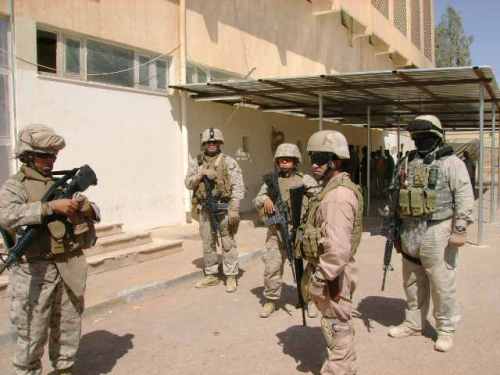
Waleed trip 006Team at Waleed on the “secure” side of the Port of Entry

It was an incredible, once in a lifetime tour serving with some of the greatest Americans and Iraqis around. Iraqi soldiers in with our convoys would ask me to bless their trucks with Holy Water like I was doing with the American trucks.  I came to admire many of the professional Iraqi officers that I came to know and pray for the people of Iraq, that God would grant them peace. They are wonderfully hospitable and gracious.  We were often treated to food and tea by Iraqi soldiers, and civilians.  After nearly 30 years of nearly continuous war, dictatorship and terrorism, they deserve peace and security.
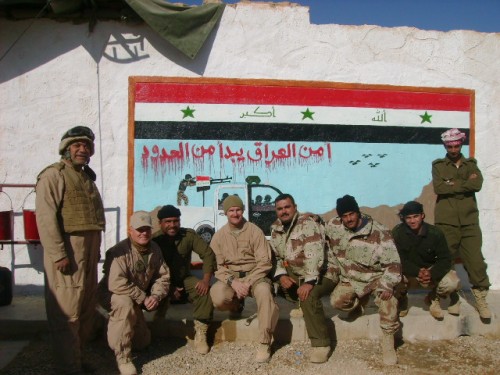
Me BTT CO and Iraqi LeadersAdvisers and Iraqi Border Troops near Syria

I had one Iraqi operations officer, a Sunni Muslim tell me that he wished that his Army had Christian priests because they would take care of his soldiers and had no political axe to grind. He said that the Army did not trust most Imams or Mullahs because they had compromised themselves during the civil war.  Another officer, a Shia Muslim came to me to thank me for being there to take care of our Marines.  He said that he, an Iraqi Shia Arab, hoped that if they had any problems from the Persians (Iranians), that we would help them.  These is little truth to what is floated that Iraqi and Iranian Shia like each other.  The memories of the past die hard in the Middle East.  When Persia ruled Iraq they treated the Arabs like dirt. Likewise the memories of the Iran-Iraq war are still alive.  Iraqi Arabs, Sunni, Shia and even Christian have little love for the “Persians.”  General Sabah of the 7th Division had us to his quarters for dinner. We had a wonderful and friendly discussion about similarities and differences in Christianity and Islam. We departed friends. The last time I saw him ws in the Ramadi heliport.  He saw me, ran up to me in from of his staff and Americans in the little terminal and gave me a bear hug, telling all that I was his friend. Another Iraqi General told me just before we left to come back as a tourist in 5 years because everything would be better.  I honestly think that he is right.  I hope to go back someday.  It would be a privilege to see my Iraqi friends again.
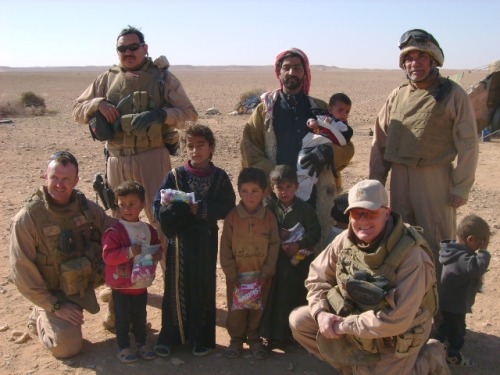
Me and BTT with Bedouin KidsWith a Bedouin Family

At the same time Afghanistan is a different animal. Iraq was not as easy of place for Al Qaida to work in and the Iraqis have a much more developed national identity which they trace back to the Babylonians and Chaldeans.  They also have adopted a lot of western ways.  Insurgents there once they had lost the confidence of the Iraqis lost traction.  In Afghanistan there is no real collective national identity and the form of Islam is much more severe than almost all Iraqi variants.  The Afghans insurgents have also due to the terrain; climate and inability of invaders to gain the confidence of the population have used the inability of invaders against them as they bring the population back under their control, sometimes quite peacefully.  The Taliban have secure bases on the Pakistani side of the border as did the North Vietnamese and they have the support of much of the population due to the unpopularity and corruption of the Afghan government.  The Taliban have begun to operate in larger better organized units and last year a battalion sized element attempted to overrun a small NATO base.  They did this with the Russians as well.  One troubling comment was reported about something overhead on the Taliban radio: “We will do to you what we did to the Russians,” the insurgent’s leader boasted over the radio, referring to the failure of Soviet troops to capture Ganjgal during the 1979-89 Soviet occupation.”  They also have outlasted or defeated a host of powerful empires.  The war in Afghanistan has much more in common with Vietnam than it does with Iraq. Counter Insurgency techniques learned in Iraq will be helpful but because of the terrain, climate and nature of the opposition will be tougher to execute and in order to have any chance of getting out of Afghanistan having accomplished the mission we will end of taking more casualties, especially in the teams of advisers.  Iraq was different, despite the problems and having to be rebuilt the Iraqi Army has a long history and tradition dating back to the Ottoman Empire, they led the way to westernizing Iraq and helping build an Iraqi identity, this is not the case in Afghanistan.  What happened to this team could easily happen to others and it looks to me like someone set them up to be hit, probably a Taliban sympathizer in the Afghan security forces or government. Afghanistan is much more treacherous than Iraq and in my view will be much more difficult.

What happened at Ganjgal is being investigated and in our area it is front page news as 1st Lt Johnson was from Virginia Beach.  The Taliban want to use events like this to break down the American home front and 8 years after the attacks of 9-11 2001 with that a fading memory they may well do this.  If they do Afghanistan will become Vietnam in the mountains.  We will be forced to withdraw and and the NATO alliance will be severely tested.  A defeat would have wide ranging consequences beginning in Afghanistan as it would fall back into the medieval world of Taliban rule, and would likely spread to Pakistan which which is already under severe strain.  This could threaten the Pakistani nuclear weapons.

Our advisers build bridges between peoples of different history and culture.  They are the unsung heroes of these wars and will likely never get credit for all that they have done.  Operating in isolation they are exposed to more danger that the average unit. They have my highest admiration and I hope that if you know one of these men or women that you will thank them.  I pray that they will all come home safe and be blessed with success.  I would certainly serve with them again at any time and in any place.

Please keep the families of the most recent casualties in your prayers. Peace, Steve+

1 Comment

Filed under iraq,afghanistan, Tour in Iraq

Going to War: Interlude in Fallujah Reunions, Redirection and a Stay at the Ramadan Inn

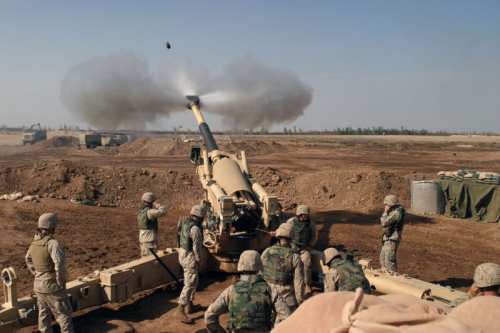
marine 155s in fallujahUSMC 155mm Howitzer firing on Insurgents at Fallujah in 2007
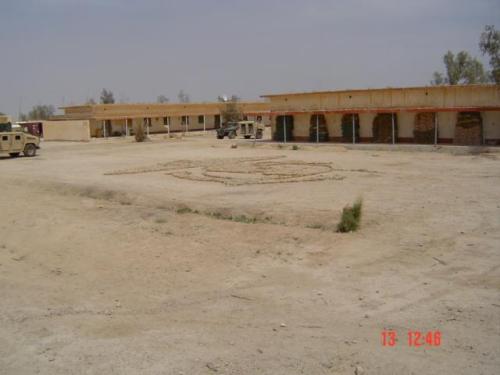
Note: This is the latest installment of my “Going to War” Series.  Other postings in this series are located in the Subjects section under “Tour In Iraq.” The series chronicles the tour of Religious Support Team-2 of the Iraq Assistance Group in MNF-West from July 2007-February 2008. We were the first Navy Chaplain and Assistant to work supporting advisers since the Vietnam War.

We woke up to the sound of more outgoing artillery fire.  The sun was shining outside as I look out my window at the sky above the California Barrier that protected our “suite” in the south wing of the Ramadan Inn.  Climbing out of the decrepit Iraqi bed with the fresh sheets I stumbled over my two tons of gear to look at the time while Nelson slept like a baby in his equally decrepit Iraqi bed.   My ever trusty alarm clock showed that it was about 0830, which meant we had gotten maybe 5 hours sleep and missed breakfast. Thankfully I had stockpiled a few pop-tarts and granola bars from the Camp Victory chow-hall the day before.   Opening the door and peering out into the hallway I saw it empty and walked across the hall to the head, shower and laundry room to do my morning business.   Despite being a Baath Party playground the suites at the Ramadan Inn were not furnished with their own toilet or shower, just a small sink and mirror.

ramadan innRamadan Inn

Though the Ramadan Inn had seen better days it was certainly, despite being the playground of Uday and Qusay Hussein it was not exactly a palace like those of their father Saddam.  It was somewhat reminiscent of an old and run down motel along Route 666.  The floor was a marble type tile and the sand painted concrete building with a flat roof.  I strolled over to the head in my PT-sleep clothes and was relieved to be able to relieve myself in a facility that had actual porcelain shitters which flushed using real water.  If you have been to Iraq or Afghanistan you know that this is not always the case.  The showers were passable being a more European design and the water was hot.  I guess even the cold water was hot in Fallujah with temps in the 120s.  Once I had gotten up I awakened Nelson, the sleeping beauty. He then went through his morning ritual to make himself presentable to the world.  Those who know nelson know that if he can he will take care of his personal hygiene.  I ate one of my Strawberry Filled frosted Pop Tarts washed done with water and when Nelson was ready we walked over to the Chaplain office.  It was like a maze to get there. We walked across the way a bit, took a right, made a left and went through the normal transient quarters area, took a right went up a block or two, took a left, made another left, wound our way past a decorative lake, took a right, went past a number of buildings before passing a final bank of green porta-johns finding the MEF- Forward Chaplain Office to our right.  The sun shone brightly and though not a long walk was relatively warm and by the time we got to the Chaplain Office I was sweating.

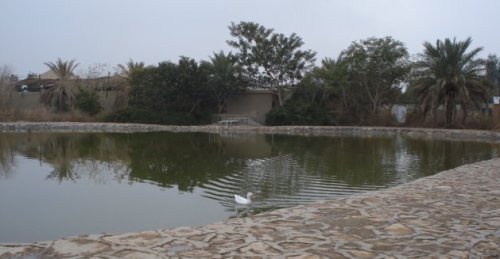
fallujah pondPond at Fallujah

The Chaplain office was like every other facility and was protected by California Barriers or Hesco’s. We were met by RP1 Roland and the Deputy MEF-FWD Chaplain CDR J.P. Hedges.  They were most hospitable and offered us water as well as coffee, which my caffeine deprived brain needed badly.  After introductions Nelson got together with RP1 Roland and I met with Chaplain Hedges doing the usual butt-sniffing that military professionals engage in when meeting someone for the first time.  This ritual usually consists of learning who our mutual friends are, where and with whom we had served in the Navy, where we went to school, something about our families and for Chaplains our faith tradition or denominational affiliation.  This is a customary act for chaplains as it is for other communities and specialties in the Navy.  On the positive side it is a way of making connection with each other and building relationships.  It is also a way or self preservation within the system as sometime there are people that do not have your best interests at heart. However for J.P. and I the meeting was very friendly. We d a lot of shared experiences in the types of duties we had done and we had mutual friends.  While we enjoyed conversation he began to introduce me to some of the things that had been going on in country the last few months.  After about 30 minutes Chaplain Mike Langston came in.  It was Mike who had worked with Peter Dissmore and the Corps Chaplain to bring us out to the west to cover the Marine and Army advisors in Al Anbar Province.

Mike had a couple of orders of business to take care of before he brought Nelson and I into his office and had our reunion. Nelson and I had both worked with Chaplain Langston.  It was good to see him again.  Nelson had worked for him in Afghanistan and I had been with him at 2nd Marine Division in 2000-2001.  He and Chaplain John Kaul arranged for me to take over Headquarters Battalion upon my return to work in a quasi-regimental billet with oversight of the independent battalions Religious Ministry Teams, though not the actual supervision of them. In addition to my regular duties counseling Marines, doing suicide interventions, conducting classes and supporting field exercises they used me, because of my experience to assist and evaluate chaplains who had been fired or relieved of their duties.  I got each one for 30-60 days to see if they could be recovered for further service or not.  In a sense this transformed me from a relief pitcher to a pitching coach.  Chaplain Langston was at a school when 9-11 occurred and during this time I was used as the Deputy Division Chaplain looking at readiness, training and potential deployment of our religious ministry teams with their units.  Both Nelson and I had experienced Chaplain Langston as a tough but fair chaplain.  What he did expect was that we would be out doing our job and keeping him or his office in the loop on our operations and issues facing us.  He did not attempt to micro-manage us.

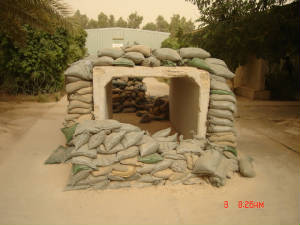
bunkers_everywhere.jpg.w300h225Bunkers to Protect Against Indirect Fire at Camp Fallujah

Mike Langston is a prior Marine Corps Infantry Officer who had been a been a Company Commander and battalion staff officer as well as instructor at “The Basic Course” which is the leveling field for all Marine Corps officers regardless of their commissioning source.  He played football in college and still has the physique of a defensive lineman.  He left active duty and went to seminary and when he was ordained and graduated from seminary entered the Navy Chaplain Corps. He had since risen to the pinnacle of a career for most chaplains having been promoted to Captain, the same as a Colonel for the other services and assigned as the 2nd Marine Division Chaplain.  He is a no-nonsense kind of guy and kind with a high level of energy and emotion.  He explained the current situation in the Province was, the locations of the various Marine Regimental Combat Teams (RCT-2 and RCT-6) as well as the one Army Brigade Combat Team, 3rd Brigade, 4th Infantry Division as well as the 1st Light Armor Reconnaissance Battalion and the MEF Aviation and logistics assets were located.  He then got down to the specifics of our mission which were pretty simple and suited to our personality as a ministry team. Basically he expected us to manage our own operations in the MEF area of operations. He expected that we coordinate our operations with the teams that we would support and keep his office informed of where we were going and what our general plan of operation was.  Since he had worked with both of us and we were both known and trusted quantities he gave us a tremendous amount of operational freedom to do our job.  His expectation was that we would be active and get out to the remotest places that we had training and assistance teams of advisors.  He told us about an Army team that had been based in Ramadi to do the job with the advisors.  He confirmed what Peter Dissmore had told us about this team.   They had never left the base in 4 months and basically hung out at the Ramadi main chapel. They managed to get their orders curtailed and left theater never once having contacted or visited any advisory teams.

ega fallujahMonument in the Traffic Circle at Camp Fallujah
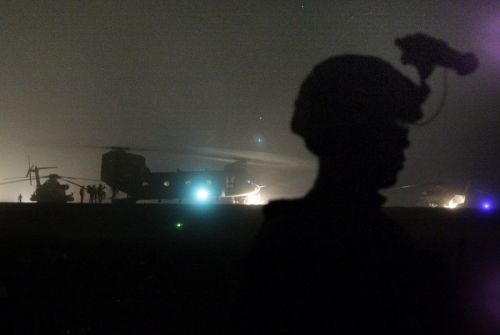
We were also told of a change to our projected base of operations.  Our original plan of operations had us working out of the former British and Iraqi base at Habbinyah the location of the headquarters of the 1st Iraqi Division and the Advisors assigned to it.  Instead the Colonel in charge of those teams made the call that he could not support the operations of a Chaplain from his location. He held firm on this and the plan was changed so that we would operate from Ta’Qaddum a large air and logistic  hub about equidistant between Fallujah and Ramadi.  Ta’Qaddum is adjacent to Habbinyah on the south side of the Euphrates. It sits atop an escarpment overlooking the town to the north and Lake Habbinyah in the South.  In 1941 it was the site of a siege when the Iraqi military launched a revolt against the British who occupied the country despite it being given independence at the end of World War One.  The British we besieged in Habbinyah and the Iraq forces had the high ground atop the escarpment.  Unfortunately for the Iraqis and fortunately for the British the British forces had support from the Royal Air Force and the Iraqis had no logistics ability to support their units atop the escarpment.  The Iraqi forces were pounded and eventually a relief force arrived from Jordon to break the siege.  At TQ as it is known by most Americans we would be housed and taken care of by the 2nd Marine Logistics Group Chaplain, Commander Pat McLaughlin and his team.  We were instructed to make coordination to plan work with the teams supporting the 7th Iraqi Division, the 2nd Border Brigade, Iraqi Highway Patrol and the Provincial Police forces while working to build a bridge to the teams of the 1st Iraqi Division. The change was momentarily upsetting but ultimately it opened the door to the entire province where if we had been co-located with the 1st Division we may not have gotten out of its operational area.

Following the briefing, he, J.P, RP1 Roland, Nelson and I went to lunch at one of the two major chow halls on the camp where I met up with an old friend.  The friend was Captain Luke Fabiunke with whom I had served for 2 years at Marine Security Forces Battalion.  Luke was our S-6 and the Communications officer at Security Forces.  He was always fun to hang out with and was very supportive of my work as a chaplain there.  Luke was in the G-3 Operations shop t the MEF and specifically was working with the section that dealt with the training and advisory teams in the province.  It was good to see him and he immediately upon learning our mission asked how he could help.  This hook up was one that paid off in spades in the next 6 months.  It is a lesson that Chaplains need to build relationships with other staff officers in order to be successful, not just in their current assignment but in many cases later in their careers when they need assistance the most.  For me it helped meet my mission of finding and making contact with advisory teams of all types as soon as we hit the ground rather than operating blindly trying to figure our way around the labyrinth that was the operational setting for these teams.  I think that I owe Luke a beer or two for his assistance.

Following lunch we got to work.  Helped by Chaplain Hedges and RP1 Roland we were issued flight suits and Nelson a couple of sets of Marine Pattern Camouflage uniforms and I was issued two elderly Panasonic Tough Book laptops. One was set up for regular unclassified traffic and the other for classified work dealing with intelligence reports, weather and planning and submitting air movement requests.  Despite being a highly technological military when one gets into a combat zone technology assets for oddball teams like ours are sometimes scarce.  In fact I understood from Peter back at IAG that most of the Army teams had to share assets with others just to communicate.  Chaplain Langston and his staff ensured that we had freedom to be able to do our job without having to inconvenience others to do it.  They laptops may have been elderly but they worked.  Chaplain Hedges taught me the ins and outs of planning and coordinating the air support from Marine, Army and Air Force aviation assets and helped get us set up to do this.  Once again we got what we needed to do our mission.

We spent another three days in Fallujah preparing for the mission and making coordination with staff sections and others that we might have to call upon.  We also had a number of reunions with others that both of us had served with. I met Major Andy Niebel and Lieutenant Colonel Dave Ottignon who I had served with a Second Combat Engineer Battalion. They were good friends then and are men for whom I have a tremendous amount of respect.  I also met a number of Chaplain with whom I had previously served or knew from other duty stations. One of these was LT Joe Buenviaje, who had been my RP at 1st Battalion 8th Marines when I had done my relief pitching job there.  Joe had cross-rated from being a Boiler Technician to the RP rating not long before I had met him.  We had qualified for the old FMF qualification together and I was able to help him begin his journey to be a Navy Chaplain.  I was also blessed and honored to baptize his children at Camp LeJuene.  Joe has a heart of gold and did well in Iraq.  He got out with his Marines a lot, once almost getting blown up by an explosive device which blew up a highway overpass where they had just been conducting services. With them was a Catholic priest who had likewise just celebrated Mass.  They were leaving the site when the explosion hit and following the attack helped to take care of the wounded.

Having a cross on your uniform in a chow hall can lead to interesting situations as well as ministry.  Some people will automatically avoid you when they see the cross as if faith and religion was some sort of communicable disease.  I admit that there are some religious people and groups across the faith continuum that I think are toxic so I understand this.  Likewise there are people have been used, abused or burned by religious leaders or groups and thus want nothing to do with organized or even disorganized religion.   There are other people who are afraid that if they say something wrong that the chaplain might come down on them.  There are still others who when they see that you are a chaplain ensure that they get together with you and some will even pray for you. Regardless of the situation I always try to be friendly to those around me in a chow hall despite my preference for my introversion.  In fact I will attempt to start up conversations with anyone around me if nothing else to let them know that I know that they are there and that they can talk with me.

Some of the people that we supped or dined with were Religious Programs specialists like Nelson….well actually not so much like Nelson.  Nelson is one of those one of a kind animals that the Deity Herself cracked the mold when he was out of the oven.  These young men and women had been in country various lengths of time and were having as happens in almost every case good or bad experiences working with their chaplain.  There are unfortunately a few bad apples that mistreat their RPs and give the rest of us a bad name. Likewise there are bad RPs in the force.  Some actually set new lows for military conduct and discipline and give a bad name to the good sailors in the rating.  I had one that stole from the offering in Okinawa, forged offering forms, leave papers and burned up a new pickup truck to try to get the insurance money. I had another who tested positive for cocaine upon arriving to my ship and yet another who pretty much stayed one step ahead of the law.  I guess it is human nature that we get such folks and unfortunately because there are people like this who serve as Chaplains and RPs there is kind of a guilt by association.  As such RPs question the RPs that they know  as to how their chaplains treat them and are often wary of a chaplain that they do not know.  Nelson assured them that I was “cool” and we had a couple of interesting meals together.

There were a number of times in Fallujah where young sailors or Marines approached me about spiritual issues, family problems or prayer requests. There were even some young men and women who were interesting in becoming chaplains.  It was neat to be able to be there in those moments where our lives intersected, maybe for the one and only time.

We spent our last day in Fallujah getting ready for our flight, another really late flight.  During the day we heard that an Army CH-47 Chinook had crashed at TQ killing the crew and that the cause was undetermined as to whether it was due to hostile fire or a mechanical problem.  Such incidents raise your pucker factor especially when you will be flying into the same place that they crashed.  With this in mind we picked up our laundry had some chow, made some final coordination, called and e-mailed our families, did some PT and settled in for the evening waiting for RP1 Roland to pick us up. While outgoing artillery boomed in the distance we sat back in our room at the Ramadan Inn and discussed our plans, as well as wondered out loud what was in store for us.

3 Comments

Filed under History, iraq,afghanistan, Military, Pastoral Care, Tour in Iraq

Going to War: It was Just a Rocket and a Night Flight to Fallujah

helos at nightTypical LZ at Night

That evening Nelson and I said farewell to our new friends at Iraq Assistance Group, went and got chow at the large Camp Victory chow hall.  What is interesting on some of the larger bases is just how well fed the troops are.  Of course there are those who are better fed than others who could use the “wide load” convoy signs hanging off of their asses.  The main chow hall at Victory has a number of serving lines and drink, salad and dessert islands.  It has the main serving line, a fast food short order line, a Mongolian BBQ line as well as variations of Giros, Indian food, pizza bar and of course soft serve as well as Baskin and Robbins Ice Cream.  Breakfast is another “feeder” with almost everything imaginable to eat.  I am not a big breakfast eater by and large so for me black coffee, hot or cold cereal and fruit was a normal breakfast.  After dinner we went and finished our packing and waited for our ride to take us to the Camp Liberty airfield.  Had I been stationed at Camp Victory I would have probably outgrown my uniforms as I look at food wrong and can add a pound.

We had a very late flight, about 0200.  Since you normally need to manifest for a flight two hours prior it means that you back up at least a hour before the manifest time.  This particular evening there was not much cooling going on and there was little illumination which meant in most places it was very dark. Especially in troop the billeting areas.  We dragged our gear to the entrance to the billeting area.  Nelson went back to his tent and I plopped my ass down on my bags.  About 2300 I heard and felt a rush over my head.  It was a rocket, probably a 107 mm rocket which is one of the most popular indirect fire weapon used by the insurgents or possibly a 122 mm rocket.  Both are former Soviet systems and not very accurate but still the fact that a rocket has buzzed me was disconcerting.  A few seconds later I heard an explosion.  I later heard the rocket had continued on and hit an uninhabited area of the camp.  Soon after it went over my head a very young looking soldier came running up to me in his PT gear with an M-16 at the ready.  He shouted “Sir, what was that?”  The young man appeared to be a bit scared to I simply quipped “Only a rocket son didn’t hit us.”  He seemed to relax just a bit and I said “You okay son?” the good thing about being as old as I am that you can get away with calling the young guys “son” because in most cases they I’m old enough to be their father.  I stay in game too much longer and the new kids could be grandchildren.  This young soldier said, “Well sir I’m on the quick reaction force and that sounded close.” In the background to the east machine gun and small arms fire could be heard.  A pair of gunships buzzed us going the general direction of the gunfire. Baghdad was definitely not a violence free school zone.  I replied to the young soldier. “Son, if I were you I’d report to where you need to go, better grab your helmet and flak.”  The young man looked at me in the dark, assuming I was a Marine officer since I was in my Marine Desert digital cammies, saluted and said “Yes sir” to which I replied “be safe soldier and God bless, keep up the good work.”  Once again he thanked me and hurried off into the night.

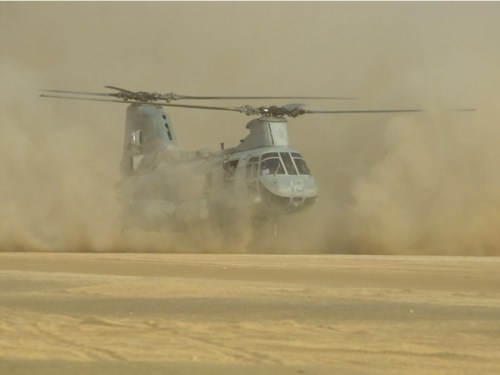
AIR_CH-46_Brownout_Landing_lgCH-46 Landing

A few minutes later, Nelson who has been in some pretty sporty situations in Afghanistan including once where he took out a knife wielding assailant at a checkpoint in Kabul with his fists, came up to me.  “Hey Chaps, did you hear that rocket? Sounded like a 107.”  I said to him, “Shit brother, it felt like it went right over my head. “  He responded quickly “Boss I think we’re in a war here.”  And I said “sounds like it partner, definitely sounds like it.”  Then he said “Chaps, you wouldn’t believe what I just saw.”  I said “Really, what?”  And he told me the story. “I was over looking for our boy when I needed to go to the head, so I opened one of the port-a johns and when I opened it saw this guy and girl having sex in it, like they didn’t have the door closed and you know how nasty those things are.”  I said “Partner you’ve got to be kidding me” and Nelson said “Chaps I wouldn’t do that to you, those people looked at me like I was stupid when I opened the door and I just said excuse me and closed the door. That place stank sir; I don’t know how they were doing it in there.”  I replied “Partner, I guess after a year of more here some folks will take whatever they can get.” “But, you’d think that they would find some dark spot rather that a port-a-john,” replied a thoroughly disgusted Nelson.  As I laughed at the misfortune of my little buddy, bodyguard and protector I simply said “There’s no accounting for taste my friend, no accounting for taste.”

We sat on our gear and waited, and waited.  The time when we should have been picked up went by and after about 15 minutes of chatter about not being picked up on time, Nelson said. “Boss you want e to go find our ride?”  I responded that I wanted him to as it was so dark that he might not know where to find us. A few vehicles had come and gone but none were our assigned wheels.  Finally after about 45 minutes our ride showed up, Nelson had found him on the other side of the compound in his truck listening to AFN radio.  He had come to the wrong side of the billeting area and was chastising me for not being there.  I said, “Sergeant, I said to meet us over here and I’ll be damned f we have to lug our gear a couple hundred yards to make you happy.”  I paused as he started to interrupt and then cut him off “Sergeant, don’t go there, you’re talking to a field grade officer who wasn’t always a chaplain, you went to the wrong place and you didn’t take the initiative to try to find us. We had to find you so don’t push your luck.”  He replied, almost dejectedly, “Yes sir” and I said, “consider this matter ended, get us to the airfield, we have a flight to catch.”  Nelson and I piled our gear into the back of the truck, got in and rode the airfield.

The Camp Liberty airfield, which deals exclusively in rotor wing aircraft, is one of the busiest heliports in the world.  Hundreds of flights go through it every day.  They are primarily Army, but a fair amount of Marine aircraft pass through as well.  We were flying Marine air tonight.  When we got to the heliport our chauffer had a difficult time finding a place to park.  Eventually we sort of double parked and Nelson and I and Nelson and I unloaded our gear with a bit of help from our chastened chauffer got up to the manifest desk where we were greeted by a civilian. He took our names and our mission number and then took out a marking pen and wrote it on the back of our hands.  I found that that at each place this was the primary way to identify who was getting off where or if you should even be on the aircraft. I found a seat and then because I couldn’t get comfortable walked outside for a while.  Nelson on the other hand, ground his gear, threw himself upon it pulled his cover over his eyes and took a power nap. He can sleep almost anywhere.

With about 10 minutes to go I woke up Nelson, and I find it amazing how he can wake back up the way he does.  When I take a nap I am useless for about 30 minutes after I wake up as my body tries to figure out what time it is. We both took turns guarding our gear as the other hit the head, once again a darkened port-a-john that stank to low hell.  When done we staged our gear near the lineup point.  Our mission was called and we lined up with about 30 others, a mixture of Marines, Sailors, contractors and a few soldiers.  We geared up, securing helmets, flaks, our packs as well as our massive EOD issue sea-bags.  Nelson helped me with mine as we got ready to walk, once was over my back and the second strapped across my chest, actually going from my chin to just above my knees.  Many of our fellow passengers had very little gear, and one fairly large contractor offered to help me with my gear.  I took him up on it about half of the 100 yards to where our bird had landed.

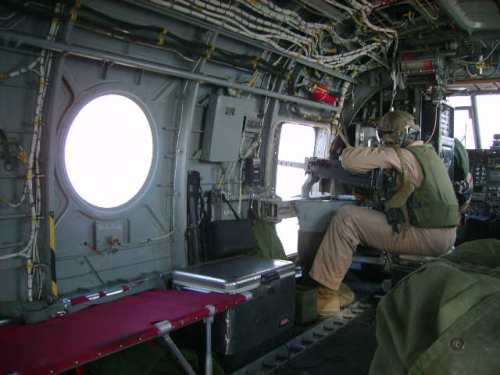
Watching our aircraft come in, a flight of 2 Marine CH-46s which date back to Vietnam service I was amazed at how surreal they looked coming in out of the night, their haze gray fuselages almost having a ghostly appearance as they set down.  Of course we had the bird that was farthest from the line up point and I was really glad for the help of this generous contractor.  As we loaded our bags onto the aircraft, stacking it in the center of the deck with everyone else’s gear, we each took one of the jump seats along the side and strapped ourselves in.  Sweat was pouring off of me and I felt totally winded, no amount of running, pull ups, pushups and crunches had prepared me to lug our heavy and ungainly gear around.  The dimly lit troop compartment was hot and I looked around the aircraft.  I noted the machine gunners in the front doors and the crewman in the back who took a seat with a 240 series machine gun mounted on a swivel.  It reminded me of the films I saw of the inside of World War Two B-17s, except that the flight suits were different.  The crew gave the let the pilots know that we were ready, and I wondered what we were heading into.  Nelson got my attention and gave me a “thumbs up” and I returned it as the lights went out that our flight lifted off.

1002CH-46 Door Gunner

Banking around to the left the 46 gained altitude and flew back across the camp as it did so I got my first view of Iraq after dark.  As we flew into the city of Baghdad there were lights and sometimes lit streets. In a few places I could see the flashing lights of emergency vehicles.  We soon began to descend into the city surrounded by tall buildings, mainly hotels and government buildings and I knew that we were in the “Green Zone.” We sat down on a small landing pad, the dim lights came back on and a couple of passengers got out of our bird which a couple of more boarded the flight. The scene from Camp Liberty was repeated and gear was off and on loaded, passengers boarded and debarked from the flight and the lights went off and the bird lifted off.  Gunners took their positions and chatted on their headsets obviously scanning for threats and assessing what was going on, or they could have been talking about the new video game one of them had bought at the exchange.

Banking left we gained altitude heading east, with Baghdad fading into the night the lights of the communities along the Euphrates came into view as we flew on toward Fallujah.  For me it was a fascinating experience, surreal and a bit of anxiety making but interesting as I thought of the history of the ancient civilizations who had settled here, the Assyrians, Babylonians and Persians and the fact that the faith of the Christian Church through Abraham and later the people of Israel began here with Abraham’s obedience to the Lord.

The flight only took about 16-18 minutes and we flew into Fallujah.  The bird sat down on a large tarmac and the crew motioned us to get up grab our gear and get off of the aircraft.  I was praying desperately that it would not be a long walk to the terminal from the helicopter pad.  As we hauled our gear off the 46 to get to the terminal I was about tapped out.  The 46 had landed about 100 yards from the terminal where our ride waited.  It might as well have been 100 miles.  I loaded one bag on my back and commenced to drag the other.  Nelson was ahead of me and realized that his old Padre was not doing well.  I was about halfway to the terminal when Nelson showed up with a Marine on a John Deere Gator. My gear was loaded aboard the Gator; I gave a hearty thank you to Nelson, the Marine and to the Deity Herself as I dragged my sorry ass to the terminal.

The Fallujah terminal like most terminals at heliports in Iraq was a plywood building constructed by the Seabees.  It was well lit inside, had air conditioning which I sucked up and a large refrigerator with bottled water stashed in it.  Once inside I took off my helmet as we checked in at the desk.  By now it was about 0245, I had been up since 0530 the previous day, done PT a Camp Victory, had a rocket fly directly above me and dragged 200 pounds of gear more places than I wanted to in 100 degree heat and I was a spent round.  War is a young man’s game and even though I am in good shape for someone my age, the key is that I am in good shape for someone my age, not a young guy.  Sweating profusely I found a liter bottle of water and downed it.  About that time a large African American 1st Class Petty Officer came in the door.  RP1 Donnie Roland was the LPO of the II MEF Forward Chaplain’s office and worked for Mike Langston.   Donnie, who is now a Chief is a guy that you definitely want on your side.  He hooked us up.  Normally personnel in a transient status in Fallujah are housed in tents with cots in varying degrees of disrepair.  Donnie got us rooms in the VIP quarters, nicknamed by the Marines the “Ramadan Inn.”  The place had once been the haunt of Uday and Qusay Hussein, Saddaam’s sons.  It had a pond in the center of the court yard and was reputedly a place where they would entertain senior members of the Ba’ath Party amid scenes of debauchery.  We were given a small room that had a desk and two small Iraqi beds, both of which had thin concave mattresses which had little support but were a definite step up from a cot.  Sheets, pillows and a blanket were included.  Our gear took up the majority of the room but it didn’t matter.  After a shower I crashed hard.  The bed might have been from a 5 star hotel, all that mattered at 0330 was that I could get to sleep.  RP1 Roland told us that Chaplain Langston said that we should get some sleep and come in when we could.  With outgoing artillery fire going off in the background I laid my worn out body down on the waiting mattress, I thought about the day and it came to me that the rocket that had went over my head could have killed me and a chill went down my tired spine.  Another salvo of artillery lashed out at the enemy, and my mind drifted back to the present.  I was now in Fallujah.  One more stop on the way to my war, Nelson was already asleep, I am amazed at his ability to go from 0-60 and 60-0 so fast.  More artillery fire boomed and as a former forward observer I found outgoing artillery fire to be comforting, amid it’s lullaby I went to sleep.

Leave a comment

Filed under History, iraq,afghanistan, Military, Tour in Iraq

Going to War: Baghdad, Briefings, Coordination and Connections

This is the 10th installment of my “Going to War” series which Chronicles my deployment with RP2 Nelson Lebron to Iraq in 2007-2008.  This installment deals with our time at Camp Victory in Baghdad as were prepared to go west. For other segments go to the “Tour in Iraq” link on the sidebar.

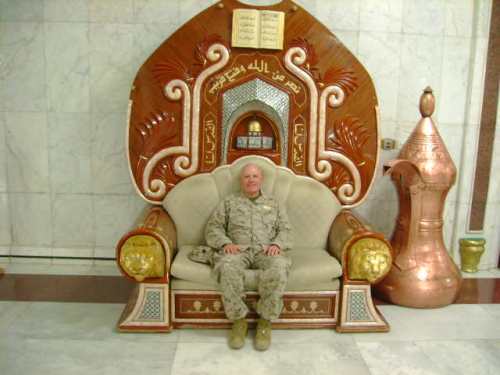
051Sitting on Saddam’s Throne

Following our arrival at Camp Victory Nelson and I continued to get our bearings. We went to the Iraq assistance Group where we checked in and began to meet the people who were going to be assisting us as we got ready to do our mission where we met with the Chaplain, Major Peter Dissmore, the Chief of staff, Colonel David Abramowitz and the Commanding General.  We received briefing and coordinating assistance from a number of the G-Shops in the IAG, the Chaplain and the Multi-National Corps Iraq Chaplain Office.

The visits with all were cordial and my long Army career as a Medical Service Corps Officer and Chaplain allowed me to have a edge in working with the Army because I knew the system, the language and the culture.  Now the IAG was run by the Army but was a joint command with Navy, Air Force and Marine staff in addition to the Army.  The IAG at least then was the coordinating office for the teams of Advisors and trainers working with the Iraqi Army, Border Forces and National Police.  Another command worked with the Provincial Police and other security forces throughout the country.

While we had an idea where we would be working before we deployed that we would work with the Marine and Army advisors in Multi-National Force West, we received the word that we would be going there.  MNF-West operates in Al Anbar Province which at that time was still a very dangerous place, although there were signs that things might be beginning to turn around.  It was funny as during our pre-deployment preparation and training took place almost everyone who heard that Nelson and I were going to Anbar expressed concern as the battle there had been very difficult since the U.S. led invasion.

The actual briefings and preparations did not take long, but the important part was building relationships that would assist us in our mission as it developed.  The two key people at IAG for our mission were Chaplain Dissmore and Colonel Abramowitz.  Chaplain Dissmore a chaplain of the Assemblies of God denomination, graduate of Princeton and ethics instructor at the Army Engineer school had been deployed like us as an individual augment as had Colonel Abramowitz.  We got along with both very well as we got details of the mission.  Colonel Abramowitz took a liking to us, especially Nelson, a fellow New Yorker.  Abramowitz is an Army Aviator and the son of an Army Infantry Colonel.  He is a big man, about 6′ 6′ or maybe taller and reminds me of a Jewish version of Patton.  When he found out that Nelson was a fighter and had multiple championship belts he had to “Google” him.  Nelson told him to “Google Nelson Lebron, kick boxer.”  When Colonel Abramowitz did he was amazed that Nelson was the real deal.  He became one of our strongest advocates in Baghdad.  We talked baseball of course the good Colonel being a Yankees fan. Another group of men who were invaluable to us were two former Iraqi Army and Air Force Generals who had fled the country during the reign of Saddaam after the the Gulf war.  Both helped us considerably as we gt to know more about the make up of the new Iraqi Army which after a couple of years had been purged of many of the opportunists and political hacks who had come in after it was re-established.  Many of the officers replacing the problem children were career military men, secular in outlook who had served since the Iran-Iraq war of the 1980s are well as in the First Gulf War.  These men wanted the chance to get the Iraqi Army back in shape as a fighting force, but faced opposition from certain political and religious groups in the country not to mention the insurgents who desired to undermine the effectiveness of this force from the beginning.

Almost immediately after meeting with the IAG staff we were on the phone with Navy Captain Mike Langston the Chaplain for MNF-W and II Marine Expeditionary Force Forward and his deputy Commander J. Hedges.  They were excited to have us coming to their area.  When Chaplain Dissmore informed them that they had the choice of a Navy team or an Army team they of course picked us.  This was also the intent of the IAG who realized that a Navy team would understand the more Marine oriented advisors and chain of command out west.  When Chaplain Langston heard that the team was composed of Nelson and me he expressed great pleasure as Nelson had served with him in Afghanistan and I had served with him at Second Marine Division.  As a result we had a great amount of trust placed in us because of prior service together as we were both known quantities.  Relationships matter in the military and this time they were a great help to us.

Dundas and FallahMeeting with General Falah

One of the things pointed out to us was that we were the first Navy team assigned to doing this type of mission since Vietnam.  Most of the Army teams doing the mission were reservists and according to the information that we were given were struggling.  A team that had been dispatched out west prior to us had been sent back early because of their ineffectiveness.  I had already known that we were the first Navy team to do this mission since Vietnam and had taken the time to read the histories of the chaplains who served in this “niche” role in that war.  Likewise being a history major and working on a second Masters in Military History I had been doing a lot of study on counter-insurgency and revolutionary warfare.  Not long prior to our deployment the Army and Marine Corps had issued a new manual on the subject.  When I read it I was surprised to find that I had already read many of the primary sources used in its compilation.  These are things that while not directly related o being a chaplain are things that help give a chaplain “street cred” and an ability to adapt to the culture and understand the language of the men that he serves with.  I did not stop being a Priest in this, but I knew where we fit and understood what the advisers on the MiTT  Military Transition teams, mission was and challenges that they faced.  This again put us ahead of the power curve going into the mission.  I do not think that any Religious Ministry or Army Unit Ministry Team has been as well prepared for this kind of mission than we were.

While at Camp Victory I met several old friends and acquaintances from Army and Navy service, as well as a Marine Corps Officer with who I had attended Command and Staff College.  One, LCDR Andy Wade who I had served with at 2nd MARDIV was completing a tour with the MNC-I Chaplain Office. Two of the Army Chaplains had been in my officer basic course and one, an Orthodox Priest was a friend from the Army Chaplain Officer basic course at Fort Monmouth NJ in 1990.  Peter Batkis was a newly commissioned 1LT when I went to the basic course and was the room mate of my good friend Fr Jim Bowman.  He was  now a Lieutenant Colonel and Chaplain for the 18th MP Brigade.  The other former classmate had been with an advisory team elsewhere in country and not had a good experience.  I was shocked to see how he had aged and how badly he wanted to get out of country.

While at Camp Victory we continued to get ourselves ready to go.  Our flight to Fallujah was arranged by the IAG staff and we began the process of waiting.  While waiting we were able to get some PT in and on the morning of the 8th of August (7 August in the States) while at breakfast I saw Barry Bonds hit home run #756 to break the record of Hank Aaron.  What I saw at Camp Victory amazed me.  The place was a veritable “little America” complete with the largest military exchange in country, about the size of a small Wal-Mart with a separate market for Iraqi vendors and, American fast food outlets housed in white trailers outside the exchange and a host of other exchange services found anywhere in the world, except to much of Al Anbar where we were heading.  It was kind of surreal, all of this Americana plunked down in there heart of Iraq, surrounded by blast walls and guarded with multiple check points. Parking lots were filled with a  mixture of tactical and non-tactical vehicles and every military person was armed. Helicopters overflew the area regularly, both transport aircraft and gunships, the gunships which flew what would have at one time been called a “Combat Air Patrol.” Additionally there was the ever present noise of small arms fire, distant explosions and sirens of various emergency and police vehicles.  The weather while 6-8 degrees cooler than Kuwait was still very hot and we were constantly picking up liter bottles of fresh water to stay hydrated.

Additionally we received the tour of the Al Faw Palace which was one of Saddaam Hussein’s major residences which had been taken over as the headquarters of Multi-National Force Iraq.  The palace was abuzz with the activity of the MNF-I staff.  In the lobby of the palace there is a throne given to Saddaam by Yasser Arafat in which almost everyone going through Camp Victory gets their photo taken in.

On our 4th day in country we got word that we would fly that night.  Nelson and I got ourselves packed, made final preparations and coordination with the IAG staff and waited.

Leave a comment

Filed under iraq,afghanistan, Military, Tour in Iraq

Going to War: Flying Into Baghdad and a Blast from the Past

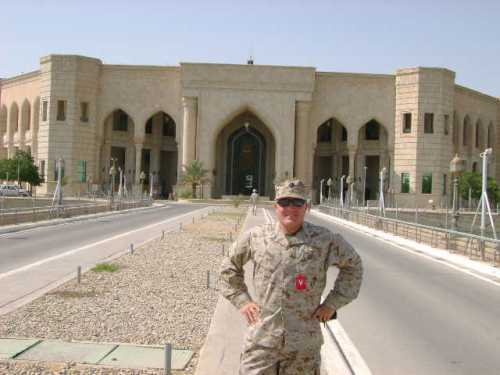
050Outside the Al Faw Palace, Camp Victory the HQ of US Forces and Former Haunt of Saddam Hussein, the Palace was Named after the Victory of the Iraqis over the Iranians on the Al Faw Peninsula toward the end of the Iran-Iraq War.  The Palace sits in the middle of a lake

We made the trip from Camp Virginia to the Ali Al Salim airbase to catch our flight to Baghdad.  As usual there was the seabag drag to the waiting baggage trucks, an accountability formation in the blazing sun and the shuffle, this time in full protective gear to our buses.  Riding in a foreign tour bus in full “battle rattle” is even more uncomfortable than the regular ride.  Packed tightly into the buses the air conditioning of which did little to help after coming in out of the heat, we took our places jammed into the bus and once again with armed personnel in the bus and convoy escorts as we pulled out of the high security entry control point at Camp Virginia and drove to Ali Al Salim.  The trip was uneventful and rather boring as there is not much to see between the two bases except sand and occasional nondescript buildings.

Ali Al Salim is a large Kuwaiti and American air base and logistics hub for air movement operations in the Arabian Gulf.  We arrived there and once again formed up, went through a staging area where were we were able to pick up some water from one of the ubiquitous pallets of bottled water and waited inside the terminal.  Some folks grounded their packs and used them as pillows or recliners, others found seats in the waiting area and others looked around to see how the Air Force lived.  A couple of TVs set to AFN played as we chatted, wandered or dozed.  It was not long before we were moved to yet another staging area and began to get our aircraft briefing and manifested for the flight.  Our group that had began the trip at Fort Jackson was a lot smaller now as the sailors who had gone on to the Horn of Africa, Afghanistan and those assigned to Kuwait were no longer with us.  As we trundled down the tarmac we were guided into position directly behind the aircraft.  We filed into a waiting C-17 Globemaster and sat down in airline style passenger seats which can be added or subtracted by in 10 passenger pallets as needed for the particular mission.  Additional permanent seats lined the bulkhead.  Our gear was loaded at the aft end of the aircraft as we took our seats.  We pretty much filled the seating which at maximum load is 134 passengers and we waited for the aircraft to load.  A loadmaster came through to check that we all were wearing our personal protective gear and had our seat belt fastened.  The C-17 unlike many military aircraft has at least an asthmatic air conditioning capability once the cargo door is closed.   Unfortunately when the door is open it is pretty much like whatever conditions are outside, in our case 130 degree heat with the exception that the sun was not beating down on our heads and that there was no air movement.  It was just a tad hot inside the aircraft.  Eventually the cargo ramp and door were closed and the aircraft prepared for takeoff.  With the door closed we began to feel a little bit of relief from the air conditioning.

For a large cargo aircraft the C-17 has a pretty smooth take off, the four Pratt and Whitney PW2040 engines producing 40,400 pounds of thrust each pushing the hug aircraft which is capable of transporting an M1A2 Abrams Main Battle Tank or 3 Bradley Fighting vehicles into the blue Kuwaiti sky.  In a few minutes the pilot announced that we had crossed into Iraqi Airspace and that it would take us about 45 minutes to arrive in Baghdad.  When the announcement was made there was an almost collective deep breath knowing that we were now going into the war, this was no longer in our future we were there.  I could feel the adrenalin being released into my body and can remember how quickly I became instantly aware of every noise or movement on the aircraft.

Arriving in the skies above Baghdad International Airport our aircraft circled and received permission to land.  Due to the possibility of enemy fire the approach to airports in Iraq is not like you would experience at a commercial airport in the United States, Europe or most other parts of the world.  Unlike most airports where there is a long and slow approach to the runway the descent is a steep spiral as the aircraft comes down from altitude to land.  If the airfield is under fire the aircraft will not land.  Once we were down we had been briefed to be able to move at a brisk pace in case the airfield came under fire, something that was happening on a relatively frequent basis in 2007.

The tail ramp and door opened as if they were a gigantic rearward facing mouth, or maybe like one of those weird fish that have teeth in their ass.  I think I remember some weird science show that talked about such a creature, if there isn’t one there should be.  As soon as the ass-backward maw opened a rush of hot air killed any semblance of what had been an almost bearable air conditioned compartment. Gear in hand we filed out of the aircraft heading for the ramp. Just for your information, it is easy to slip on these ramps; I came close to such an event but caught myself just in time so I didn’t go ass over tip down the ramp.  Nelson certainly would have made me pay for such a breach of protocol.  As we left the aircraft a ground crewman directed us out of the jet blast area and another led us to the terminal.  At the terminal we were greeted by Staff Sergeant Assi, the Chaplain assistant for the Iraq Assistance Group and an RP assigned to the Multi-National Corps Iraq Chaplain Office.  Sergeant Assi was a mobilized reservist  originally from Nigeria.  At least here our gear was palletized and was brought to a gear staging area.  Once it arrived we gathered a total of 4 EOD Issue super-seabags, two regular seabags, our packs, Nelson’s rifle case and my computer bag.  We were assisted by Sergeant Assi and the RP who helped load our stuff into the back of the white Chevy SUV that they were driving.  One thing about military vehicles in Iraq that are not tactical vehicles  is that there is a strong chance that they are the color white. The white paint contractor at GM must be making a killing on vehicles destined for the Middle East.  Once we were checked off the manifest as having a ride were able to depart walking out through rows of Califonia and Jersey barriers.

The ride was interesting as we wove our way around the ever present California and Jersey Barriers as well as “HESCO’s,” which are large wire and canvas containers standing anywhere from5 to 8 feet tall filled with dirt, rock and sand.  All of these are designed to minimze the effects of incoming ordnace by preventing the explosive force of them and teh associated shrapnel from spreading outward. We transitioned through a number of checkpoints where armed soldiers kept a wary eye out on our way to Camp Victory.  Victory which is the home of Multi-National Force and Multi-National Corps Iraq lies next to  Camp Liberty.  They are on the north side of Baghdad International Airport.  As we looked across the runway the only aircraft visible were military transports and contracted cargo carriers.  Unlike a major airport its size anywhere else in the world Baghdad did not have regularly scheduled airline service from any major carrier yet.   We wound our way around the compounds which blended together almost as one, much like the suburbs of the San Fernando Valley in Los Angeles.  Passing palaces and villas that ringed a lake in the center of the compound we continued on.  In the center of the lake connected by a causeway sat the massive Al Faw Palace, built by Saddam Hussein to commemorate Iraq’s victory in retaking the Al Faw Peninsula at the close of the Iran-Iraq War, a victory that resulted in Iran deciding to cut a peace deal with the Iraqis.  Despite a Shi’te majority in Iraq there is no love lost between Iraqis and Iranians.  Iraqi Arabs refer to the Iranians almost contemptuously as the Persians. This goes back centuries to the times when Persian occupied parts of Iraq and treated the Arabs badly.

We turned down an asphalt road which quickly became a packed clay and gravel road over which a tanker truck sprayed water to keep the dust down.  into a pulled up to a wooden building near a tent city where personnel coming in and out of theater were billeted at Camp Victory.  Row upon row of tents, each surrounded by a HESCO barriers were to our right. The ground was a mixture of hardened clay and rock which when driven over or walked upon emitted a cloud of dust which Sergeant Assi told us turned to a sticky goo which is almost impossible to get off of boot when it rains. Overhead helicopter gunships patrolled the skies occasionally flying quickly to the sounds of gunfire just off the base not far from where we were. In the background we could hear the sound of heavy machine guns and automatic weapons.  Not far from our billeting area sat a Navy Manned CWIS, or as we call tehm Sea Whiz.  This is a 20mm gatling gun which directed by radar is designed to shoot down incoming missiles or rockets. Nelson and I looked at each other and almost on cue he said, “Chaps I think there might be a war going on out there.”  I looked back and said, “Don’t you know it partner.”   The area to the east of the tent city was bordered by a line or shower trailers and heads, all protected by the large 15 foot high California barriers.  To the north of the tents lay a large Dining facility or as the Army calls them, a DFAC.  After getting signed in we drew an odd mixture of linen for our beds. I ended up with a couple of sheets, pillow cases and a multi-colored comforter. If I recall Nelson got some superhero on his blanket, which suits him fine as he is a big comic fan and can tell you more than you can imagine about all the different super-heroes. Instead of being together Nelson was assigned to a tent for NCOs and I ended up further away in a tent for field grade officers.

Once we had secured our stuff we met back together and walked to the DFAC for dinner.  This DFAC was not as large as it appeared as it had a large protective roof designed to keep mortar shells and rockets from impacting the building itself.  Two Ugandan soldiers working for security on the base checked our ID’s after which we washed our hands as we entered the building.

Upon entry we were almost overwhelmed by the amount of food present.  These DFAC’s were definitely feeders and the number of soldiers that should have been wearing wide-load signs across their asses was amazing.  But then who could blame them, many were on a second or third trip to Iraq of 12-15 months each. Maybe for the first time they were not in some isolated FOB with a poor quality of life, in a place which all things considered safe except for the occasional incoming rockets and mortars.  The quality of the food was better than in Kuwait as was the dinning area.

As I was finishing stuffing my gear underneath my bed a young Army Major came into the tent.  He looked at me and I looked at him as if we had met before and we greeted on another politely.  I saw his shoulder patch which identified him as a member of the Maryland Army National Guard.  We struck up a conversation and I asked to what unit he was assigned.  He replied  that he worked at the National Guard Bureau and had been attached to the Maryland unit as an operations officer for the deployment.  He remarked that I looked somewhat familiar and I asked if he had ever served in the Virginia National Guard.  He replied that he had and I asked what unit.  His response about floored me “1st Battalion 170th Infantry” located at Fort Belvoir, Virginia just south of D.C.  I told him that I too had been in the battalion and then he figured out where he knew me from.  With a look of near amazement on his face he replied “You were our Chaplain back in 1995!”   I patently acknowledged this fact  while he continued saying that he had been the TOW Anti-Tank Missile  Platoon Leader in our Headquarters Company. Our conversation meandered through old times at AP. Hill Virginia, talking about our careers, people that we knew and life in general.  After a couple of hours we both realized that we needed to take care of a few personal things to settle in for the night.  Eventually my old lieutenant fell asleep and I began what was to become a persistent pattern of insomnia which plagues me to this day.  Since I couldn’t get to sleep I walked through the darkness to the DFAC which had a late meal.  I was standing  in line amid a few Americans, some British soldiers and contractors when Nelson appeared beside me. He said “Hey boss, can’t you sleep?”  I said “nope” he said “me too, so I thought I would get some chow in this place.”  We had our meal together and when we were done picked our way through the darkness over the rough ground to our tents aided by our red lens flashlights.  After looking for about 5 minutes we found Nelson’s place and I headed off to my hooch only becoming disoriented once. Patently the Deity Herself must have kept me from tripping on a tent rope or some hole in the ground and I arrived back in my place at about 0145 and finally got to sleep.

Leave a comment

Filed under iraq,afghanistan, Military, Tour in Iraq