Tag Archives: iraq

Night Flight

in a 53Stuffed into a Crowded MH-53E in Iraq

I slept through most of my flight in the steerage section of my United Express CRJ-7 taking advantage of the open seat next to me to stretch out since in the last row the seat will not recline.  The flight from Norfolk to Chicago was uneventful, good weather all the way across ensured a good flight.

I still am not a fan of flying or crowded airports.  Thankfully due to the lateness of my flight I did  not have to deal with lots of people, I cruised through the security point manned by our local branch of the Federal Sicherheitsdienst.  I am very good at getting through these checkpoints quickly, the key is to go through the checkpoint as close to naked as you can get without causing yourself too much trouble and ensuring that anything unusual that could cause a Sicherheitsdienst officer to search your bags and do an body cavity search placed in your checked baggage.  I remember once after 9-11 when travelling through San Fransisco in uniform being nearly strip searched while obvious foreigners, to include those of the ethic group that had crashed into the twin towers go straight through. Thankfully as a  Kriegsmarine Officer my ausweiss gets me through our local checkpoint without too much trouble.

I slept through much of the flight, aided by the 2 pints of Sam Adams (Patriot, Brewer and Friend) Boston Lager that I had while waiting for my flight.  I do hope that the 2 pints of Goose Island Honker’s Ale that I am finishing off in Chicago has the same effect, beats the hell out of Xanax if you ask me.

I was awakened as the aircraft decelerated and began its descent into Chicago.  I looked out the window to my left and saw a panoply of lights in the distance with a dark void which happens to be Lake Michigan.  I have not flown commercial at night  in a long time and the last time I did took me over no major metro areas.  Seeing the lights I was instantly taken back to flying over Ramadi at night, which I did on a fairly frequent basis while in Iraq.  Usually those flights were uneventful except the one time when the Army MH-47 lifted off popped flares and the tail gunner started shooting at something on the ground. I was sitting just across from the tail gunner and knew that this was not a negligent discharge of a weapon.  The Army denied that anything happened on the flight when I asked about it two days later, but still, it was a bit sporty.

So flying at night, seeing the lights takes me back to Iraq.  I did feel some sense of anxiety that I had not felt earlier as we descended into the airport and when I got off the aircraft was able to start deescalating my stress level.  I find it interesting to see how almost “hard wired” that reposes to danger in combat situations can become.

It is time to finish my beer and start heading down the way to the boarding gate. About 2330 Pacific time I should be on the ground and with any luck by 0100 be safely at my parents home.

Peace, Padre Steve+


Leave a comment

Filed under Loose thoughts and musings

Fort Hood Update II: The Shooter is Alive

At a news conference LTG Cone the Commander of III Corps and Fort Hood revealed that the shooter suspected in the killing of 12 soldiers and wounding of 31 others is alive and in stable condition and not dead as initially reported.  Major Malik Nidal Hasan a  psychiatrist was supposedly upset that he had orders to deploy to Iraq.

nidal hasanMajor Malik Nidal Hasan the Killer of 12 Soldiers

Once again I was correct in my suppositions about the suspect.  I was telling the Abbess at dinner that I believed that he was an American citizen who went through a commissioning program at a major university before attending medical school. Major Hasan was a graduate of Virginia Tech and its Army ROTC program before attending the Uniformed Services University of Health Sciences.  He reportedly received a poor Officer Evaluation Report (OER) at Walter Reed before being assigned to Fort Hood.  There is speculation that the he viewed his deployment to Iraq as punishment.

If Major Hasan survives his wounds the truth may come out.  Thankfully he has not as yet taken his secrets to the grave. If there is a conspiracy or other possible terrorist involvement or even a psychiatric disorder we may find an answer to the carnage and terror that his actions have caused.  It is possible that he did this simply out of being pissed at the Army for his bad OER and deployment orders and taking it out on his fellow soldiers.  The worst scenario is if is a deliberate terrorist act committed by a man committed to a radical ideology.  That suggests if an officer is capable of such an act that others may be capable of the same.  If it is a case of a provider who has hit the wall in dealing with his patients trauma it is also frightening.  If it is a case of a man who is angry at the Army for real or perceived injustices it is another matter.  The only scenario that makes sense to me is in regard to the targets of his attack.  The choice of his fellow soldiers could be indicative of the terrorist motive.  The choice of victims could also be indicative of his motivations. There are reports that Major Hasan was strongly opposed to the wars in Iraq and Afghanistan and also made internet postings about suicide bombings. While this is still not yet confirmed if it is true than it it could indicate terrorist involvement apart from Major Hasan.

Please pray for the victims and their friends and families.

Peace,

Padre Steve+

Leave a comment

Filed under Military, PTSD, traumatic national events

I’m Leaving on a Jet Plane…Reflections on the Islands of Unhappy Travelers

The 80’s group Blondie had a hit called “Island of Lost Souls.”  I love that song; it is kind of quirky and fun.  However, there is a time when you run into a place where the song seems more true than not. Airports are one of those places, they tend to be some of the most angst and anger filled venues known to man, excepting of course Fed-Ex Field where Dan Snyder is doing his best to destroy the Redskins and drive off their fans. However, I digress as I couldn’t care a whit about the Redskins because they are a football team, though I have sympathy for the fans that have been banned from bringing signs into the stadium.  With that exception and maybe the U.S. Capitol building and the set of any Cable Television talk show where politics is being debated the airports have to be pretty close to the top of the hate and discontent list.

I had to travel to Florida in the spring for chaplain conference.  Since I came back from Iraq I do travel a lot less well than I used to and to make matters worse conferences of almost any kind at best come close to pushing me to the edge.  Sleep tends to be difficult for me, especially before I travel on commercial airlines and endure the hell of airports.  The night before I travel, I try to anticipate every contingency, going through my packing list and ensuring I have everything that I need. Then after I go to bed I get up an hour later to make sure that I indeed get everything. Once I am sure that I do I go back and check the multiple alarm clocks that I have set just to make sure I don’t miss my flight.  I know why I do this. Before Iraq I traveled a lot and got good at it.  However in Iraq a did a lot more of this and got into a routine of checking, double checking and even triple checking to make sure that I had everything that I needed.  Over there I knew that if I forgot something, even something simple that it would not be available the places that I was going or places that I might get marooned.  I have carried that experience back with me.  I pack and lay out all my clothes the night before I go to work.  I actually use the same pack that I carried on every mission in Iraq.  It is an excellent piece of gear, made by Blackhawk.

Anyway that day was a hellish travel day. The weather across the east coast was crappy.  My first flight was delayed an hour, my second flight as well. If that was not bad enough the good folks at Delta airlines failed to have people at gates and jet ways when gate changes happened, leaving people to miss flights and nearly miss vacation cruises.  On our connecting flight at Atlanta’s Harts-Jackson Field was delayed, in my case that was a good thing as had it been on time I would have missed it.  While in line waiting for the flight announcements were periodically made, each one either delivering a later flight time or excuse for the delay.  The excuses often were inconsistent.  I began to think that they were lying to us.  Now I’m not saying that an airline would lie, but it seemed to my little pea brain that the excuses conflicted and each new excuse contradicted the last pathetic excuse.  I hate bad liars.  Let’s face it, if you are going to lie be consistent and strive to make it believable, politicians, lawyers and TV evangelists are great at this.  Unfortunately the people lying to us were not very believable.  However it may have been that they actually believed what they were saying which would be as George Costanza once said: “It’s not a lie if you believe it.”

As I waited that day I surveyed my fellow disgruntled travelers.  I was deep into a PTSD induced ass kinking anxiety attack.  By the time this was going on time I had taken both of my extra meds as well as my 8 AM and 1230 PM doses of Samuel Adams Boston Lager.  Normally I’ll wait until dinner for a beer, but I knew that I needed a bit more on that trip.  I try not to self-medicate and over the past year have gotten a lot better in not doing this. However there as something about airports and airline travel that almost inevitably pushes my buttons and so I will do this to take the edge off and keep me somewhat sane until I can get to my destination and hide.

I went to a conference in Orlando in the summer of 2008 shortly after my PTSD diagnosis and that about put me over the edge. If you have PTSD the Gateway to the fricking “Happiest place in the world” is the portal to hell.  Thus only a few months after coming out of a combat zone I discovered that Orlando during the height of the summer pilgrimage to Wally World to see Randy Rodent and Doofey is not a fun experience.

Thanks be to God for her good care during this trip.  She ensured that my doctor had given good drugs and the airport pubs provided good beer not to mention a Chili Dog with mustard.  Thus by the middle of the afternoon I was doing far better than most of my fellow travelers.  It definitely sucked to be them.  It was then that the Blondie song came into my mind.  Atlanta’s airport was not the Island of Lost Souls but the Land of Unhappy Travelers.  I listened to some of the folks around me as they lamented their situation and it sounded like “Lemony Snickets: A Series of Unfortunate Events.” Atlanta had become the vortex of very disgruntled travelers who had missed flights, been bumped from flights or delayed endlessly.  If you don’t believe in the Catholic in the doctrine of Purgatory just try Atlanta on a day like that, which is about 362 days a year.  I looked around, and though barely holding on myself I was able to find some gallows humor in the midst of this agony.  I looked around the people around me and said “Ladies and gentlemen it is my distinct displeasure to welcome you to the land of unhappy travelers.”  I actually got a few laughs.  I then made a comment about the airline, which I had not flown in a couple of years, saying “I’m glad to see that some things stay the same, our airline still has same crappy service that they had a few years ago.”  As we started boarding we boarded by zones as some airlines do.  I personally prefer the first come or first signed in first seated way that Southwest does things, unfortunately the government contract was no longer with Southwest. As they announced “boarding zones one through five,” I commented, “Yep, you guys in zone 92 still have a while to wait.  On each flight we had bad weather, turbulence and on one flight the air condition did not start kicking in until we were getting ready to land.

When I got to my destination I heard stories even worse than mine, all focused around the vortex of doom that swirled around Atlanta.  The only place that I thought it could have gone worse was Washington Dulles, where my experiences have been nearly all bad. I survived but by the time I got to my hotel my ass was kicked. At the end of the day I had survived.  A few beers and a bit of wine with good fellowship with friends made things better.

Saturday I get to fly again and make my third trip to California to see my folks.  I am already making my list and getting mentally prepared for the trip.  I get to fly though Chicago O’Hare and on the way back LAX and O’Hare.  Thank the Deity Herself that Atlanta is not on the itinerary. I’ll do my best to at least find the humor as I pass through these islands of unhappy travelers, so pray for me a sinner.

Peace,

Padre Steve

Leave a comment

Filed under PTSD, travel

The World Series: Cliff Lee was Amazing and the Yankees come back, the Influenza Outbreak, a Visit Home, and Honors to the Fallen by the President

“The only thing that matters is what happens on the little hump out in the middle of the field.” Earl Weaver

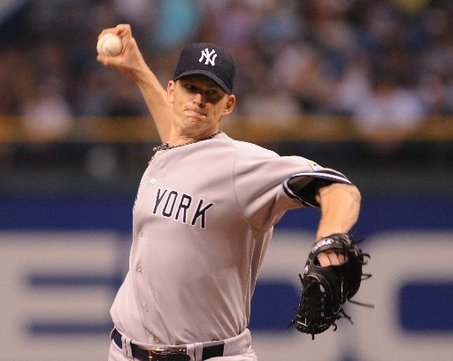
large_2aj-burnett415A. J. Burnett dominated the Phillies in Game 2

Last night we were treated to one of the best pitching performances in the history of the World Series.  Phillies start Cliff Lee who has had an incredible playoff run.  In four games he has pitched 33.1 innings, winning 3 games, two of which were complete games.  In those games he pitched 30 strikeouts and on 3 walks and only given up 2 earned runs.  His ERA through game one of the World Series is a minuscule 0.54.  Last night was a fantastic demonstration of pitching as Lee controlled the game from start to finish defeating his former teammate C.C. Sabathia who was good but not good enough giving up 2 solo home runs to Chase Utley before being pulled after the 7th.  One can compare his performance against the best hitting team in the Majors to the greats Sandy Koufax, Bob Gibson and Don Larson.  I remember seeing Gibson’s game back in 1968 on TV and I am forever amazed at his intensity as hit mowed down batter after batter.  On the other hand Lee was the epitome of the “just another day at work” that was so evidenced in his lackadaisical catch of a pop up to the pitcher’s mound and his quick behind the back grab of a pitch hit behind him.

Honestly I was surprised but not disappointed.  I do not have a dog in the fight so to speak since the Giants, Orioles, A’s or Angels are not in the series.  However I appreciate a great performance even when it cuts down my well thought out statistic based prediction. Lee was until last night a career 4-4 against the Yankees but had, again until last night a whopping 5.02 against them.  I predicted that it would be a close game but that I thought it would be Lee who gave up the key hits or have mistakes committed behind him which would in turn bring on the bullpen which the Yankees would demolish.  Instead it was 180 degrees out as Sabathia gave up the key hits and the Yankee bullpen melted down.  To top it off the Yankees were completely baffled and shut down by Lee almost being shut out save a Jimmy Rollins throw into the bullpen which allowed Derek Jeter to score the Yankees only run of the game with one out in the bottom of the 9th. I’m watching another pitcher’s duel tonight, at least through 7 innings between Pedro “I’m the most influential player to play in Yankee Stadium” and A.J. Burnett. Burnett dominated the Phillies big guns and Pedro has like Sabathia last night given up 2 solo home runs to Mark Teixeira and Hideki Matsui and was pulled with 2 on and no out in the bottom of the 7th.  Mariano Rivera came on to get a six out save and the Yankees won 3-1.  The amazing thing to me is the dominance of pitching so far.  The fact that Ryan Howard stuck out 4 times tonight and Alex Rodriguez 3 times last night shows just how dominant the pitchers have been. Both were having an amazing playoff run and at least the first two games have had their fires extinguished.

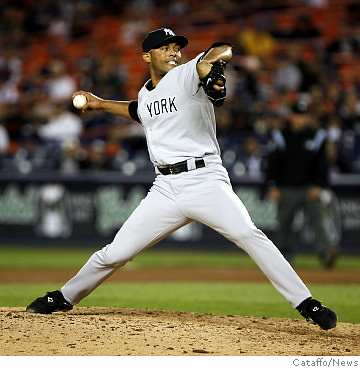
mariano-riveraMariano Rivera got a 6 out Save

The first two games give me some hope. I would prefer a 7 game series that is a well played drama filled classic for the ages.  That is my hope anyway as they are the best teams in baseball and it would be fitting for the series to live up to that status.

I just got over a bout with a stomach bug yesterday, on Monday I was doubled over in pain and the stuff lingered a couple of days.  Turns out that this is going around and a lot of folks are going down with it as well as Influenza A, B and H1N1, the Swine Flu.  I personally know several people who have been hammered by the Swine flu and am seeing a lot more influenza related cases in our ICU including a number of young people on ventilators.  A cursory look around the news shows a lot of kids getting sick and so far at least 100 schools being closed due to influenza outbreaks and it is only October.  Look for a long and difficult flu season. This may not be as bad as 1918 but anyone is a fool to make light of it or efforts to keep people from getting it.  I think such people are damned fools who jeopardize their lives as well as the lives of their families, friends and co-workers, from what I see in my little corner of the world this will not be fun.

Speaking of not fun I am going home to go assist my mom and brother with some of my dad’s affairs. He remains in the nursing home and continues his slow downward trend defying the doctors who said that he would be dead months ago.  The emotional cost on my mom, brother and to a lesser extent I because I don’t have to deal with this up close every day has been exacting. It is painful.  I received a e-mail from an old friend this week who described what his family went through as his dad wasted away in mind and body before their eyes.  I will be glad to see everyone and will spend as much time with dad as I can, hopefully I will have him with me for at least a few minutes.  I am not looking forward to having to go through belongings or some of the administrative or banking tasks that will need to be done.

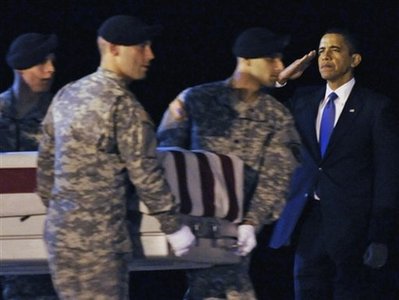
APTOPIX Obama Fallen SoldiersPresident Obama Honoring the Fallen at Dover

Late last night President Obama did something that earned my admiration.  I know some will see his action as cynical or opportunistic but as a career officer and Iraq Veteran who has served under five Presidents I saw it differently.  I think it is the first time that a President has greeted and rendered honors to the fallen at Dover in my career.  I could be wrong but I don’t think that any of the President’s that I have served under have ever met an aircraft bearing 18 fallen Americans.  He didn’t have to do it, but it is my opinion that any wartime leader who has not experienced the enormity of the loss of Americans that he has sent into combat has not fully assumed the mantle of leadership.  Part of that mantle is to be there in the times of suffering. One source close to the President told ABC News reporter Jake Tapper that  meeting with the families at Dover and seeing the return of the fallen was was “one of the most profound experiences of Mr. Obama’s young presidency.”

It was a sobering reminder of the extraordinary sacrifices that our young men and women in uniform are engaging in every single day, not only our troops but their families as well,” Obama said later Thursday, hours after his return to the White House. “The burden that both our troops and their families bear in any wartime situation is going to bear on how I see these conflicts, and it is something that I think about each and every day.”

I do appreciate all that President Bush did in visiting the wounded and caring for the families of the fallen, there is no disrespect intended by me toward the former President as he had to make many tough and often unpopular decisions during his presidency including the surge in Iraq that along with the Anbar Awakening that helped turn the course of events in that unfortunate land.  He took heavy criticism from the Left and parts of the Right for that decision as well as scaling back efforts in Afghanistan. I do hope and pray that the President’s decision, whatever it ends up being will bear success and help the security of the region and peace to Afghanistan and I certainly do not want him to be like Lyndon Johnson in Vietnam and commit us deeper into to a war without counting the cost ahead of time.  That is a tall order, but for the sake of our troops is something that we should be able to pray will happen.  To quote one commentator: “No matter what your political views are or your position on the wars, we should never forget those making the ultimate sacrifice.”  Thank you Mr. President for remembering these men,  Ten men were lost in the crash of an MH-47, 7 Army Soldiers and 3 DEA agents and 8 soldiers killed when an IED destroyed their Stryker Light Armored Vehicle.  I close with their names:

Killed:

1st Battalion, 17th Infantry Regiment, 5th Stryker Brigade Combat Team, 2nd Infantry Division, Fort Lewis, Washington

Staff Sgt. Luis M. Gonzalez, 27, of South Ozone Park, N.Y.

Sgt. Fernando Delarosa, 24, of Alamo, Texas.

Sgt. Dale R. Griffin, 29, of Terre Haute, Ind.

Sgt. Issac B. Jackson, 27, of Plattsburg, Mo.

Sgt. Patrick O. Williamson, 24, of Broussard, La.

Spc. Jared D. Stanker, 22, of Evergreen Park, Ill.

Pfc. Christopher I. Walz, 25, of Vancouver, Wash.

From the 3rd Battalion, 160th Special Operations Regiment (Airborne), Hunter Army Airfield, Georgia

Chief Warrant Officer Michael P. Montgomery, 36, of Savannah, Ga.

Chief Warrant Officer Niall Lyons, 40, of Spokane, Wash.

Staff Sgt. Shawn H. McNabb, 24, of Terrell, Texas.

Sgt. Josue E. Hernandez Chavez, 23, of Reno, Nev.

Sgt. Nikolas A. Mueller, 26, of Little Chute, Wisc.

From the 3rd Battalion, 7th Special Forces Group (Airborne), Fort Bragg, North Carolina

Sgt. 1st Class David E. Metzger, of San Diego Ca

Staff Sgt. Keith R. Bishop, 28, of Medford, N.Y.

From the Drug Enforcement Agency

Special Agent Forrest N. Leamon, Woodbridge Va.

Special Agent Chad L. Michael, Quantico Va

Special Agent Michael E. Weston, Washington DC

Rest eternal grant to them, O Lord; and let light perpetual shine upon them

May their souls, and the souls of all the departed, through the mercy of God, rest in peace.  Amen

american-flag-2a

Leave a comment

Filed under Loose thoughts and musings

Going to War: Life at TQ, Chuck Norris Visits and Mass Casualties

While we prepared for our first mission we adjusted to what life was like on a large airbase and logistics hub. Ta Qaddum is one of the larger Iraq Air Force bases from Saddam’s time but has a history going back to the old Royal Air Force base at Habbinyah which is just down the hill.  In 1941 the Iraqi Army laid siege to the British forces in Habbinyah from the escarpment that overlooks the town from what is now the northern edge of TQ.  One only has to imagine the feelings of the Iraqi soldiers short on supply and exposed to air attack on the escarpment while waiting for German intervention only to be driven off by the British when their relief force arrived from Jordan.

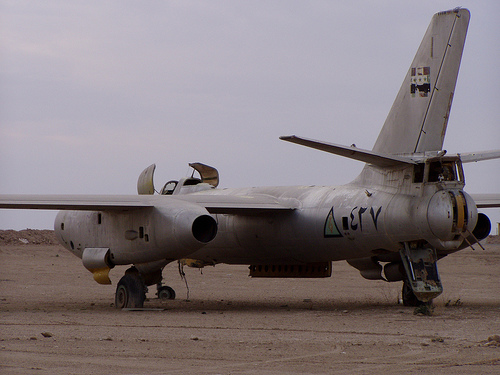
iraqi bomber at tqWrecked Iraqi Bomber at TQ

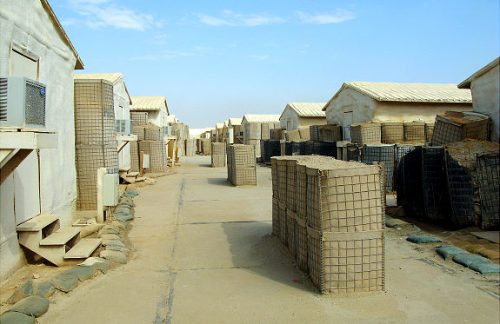
The Iraqi legacy on the base looms in some of the infrastructure as well as the hulks of Soviet made Iraqi Air Force bomber and fighter aircraft near the edge of the airfield.  When I was there in 2007-2008 the base was under the command of the 2nd Marine Logistics Group or 2nd MLG.  The MLG is a command and control headquarters for logistics support units of the 2nd Marine Expeditionary Force.  It is tailored to support the Ground Combat Element, the 2nd Marine Division and the Air Combat Element, the 2nd Marine Air Wing and attached units.  Its function is similar to an Army Corps Support Command or whatever the Army calls them now.  TQ was also the home of several helicopter squadrons Marine and Army as well as a local defense force at the time made up of the 1st Battalion 11th Marines from Camp Pendleton. 1/11 was an artillery battalion but was being primarily used as a security and convoy protection force.  Other units including Navy Seabees and Army logistics units operated from TQ.  A Marine Infantry Battalion was stationed in Habbinyah while elements of a Marine Expeditionary Unit (MEU) were operating in the area as part of the surge.

The base is about mid-range on the amenity scale for troop comfort. At the time we were there the only non-DFAC/ Chow Hall was the Green Beans Coffee trailer as opposed to places like Al Asad and Camp Victory which had a multiplicity of fast food places for the troops.  The Marines are tougher on communication security than the Army and many websites which troops could use on other bases were unavailable unless one went to the Iraqi internet café or the MWR computer and phone center.  The Iraqi run shop had the fastest internet on the base but you had to contend with huge amounts of second hand smoke and pay a nominal charge to use it.  The MWR facility often had broken machines, had a waiting list to use them and the connections were very poor with pages slower to load that the old dial up days.  On the plus side TQ did have a relatively decent Marine Corps exchange, not as big as Al Asad or Camp Victory, but one of the larger exchanges in Iraq and second only to Al Asad in the West.  Most places including Ramadi had pretty small and not well stocked exchanges.  TQ had nice fitness center facilities which I used a lot being coached by Nelson.

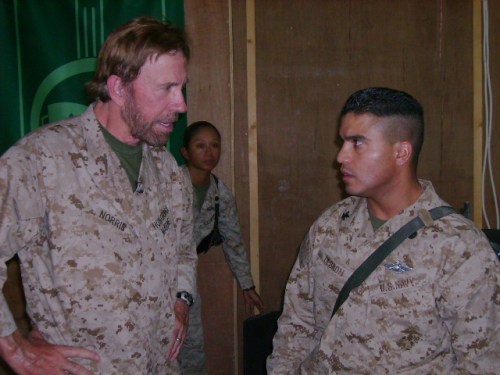
060Chaplains and RPs with Chuck Norris

The base MWR worked with the USO and other agencies to bring sports stars or celebrities to the base.  Just before we left on our first mission Chuck Norris came through.  Chuck was made an “Honorary Marine” a few years back and has made it his task to try to meet every Marine deployed in Iraq and Afghanistan, shaking the hand of each one he met.  The chapel was the host facility for the visit which last about 2 hours in which Chuck pressed the flesh and had his picture taken with probably close to 5000 Marines and other personnel, maybe more.  The Chaplains were drafted to be the photographers and I lost count of how many different types of digital cameras that I took pictures with.  Chuck enjoyed the heck out of Nelson and was impressed with his fighting resume.  I think that Nelson got more face time with Chuck than anyone on the base and he deserved it.  Chuck was accompanied by Chaplain Langston and RP1 Roland our friend from Fallujah.  After they were done he had to get on the waiting helo and fly out to his next stop.

058Chuck and Nelson

The chow halls, of which there were two, were large and usually had a pretty good menu.  I especially came to like the Indian nights where Indian specialties were served.  Since many of the cooks employed by Gulf Catering who had the contract were Indian, Pakistani, Bangladeshi or from Ceylon so it generally was pretty good unless they had to scrounge for suitable ingredients.  I like the curry chicken, but occasionally it was made with chicken nuggets when the real chicken was in short supply.  It almost reminded me of the Spam Lamb in the TV series M*A*S*H or the great quote out of the movie Meatballs: “Attention. Here’s an update on tonight’s dinner. It was veal. I repeat, veal. The winner of tonight’s mystery meat contest is Jeffrey Corbin who guessed “some kind of beef.”   I think that there were a number of times when I really wondered what the meat was.  They usually had a pretty good salad bar unless resupply convoys were interrupted and fresh vegetables had run out.  There were a number of times where the pickins were slim and Nelson and I had to get creative.  Breakfast was usually good with a good choice of food choices, some even healthy.  The workers were great, always friendly despite working 12 hour days 6 days a week for $300 a month.  Many had signed up through agencies which cost them $4000 so the first year that many worked was for nothing.  It was in my opinion a case of a KBR/ Halliburton subcontractor using them in effect as indentured servants and pretty well damned close to slaves, all legal by the US Government.  I thought that it was pretty immoral and certainly a case of a company contracted by the government reducing labor costs on the back of some of the poorest people in the world. Back at the end of the Cold War the military downsized and eliminated most of the Army and Marine mess specialists which paved the way for the contracting industry, led by the former Secretary of Defense and his Halliburton team to begin their massive contracting operations with the Bosnia deployments back in 1995.  They were limited to their own compound far away from anything and were always the last to eat.  They were polite and really tried to accommodate sometimes rude and condescending Americans, the local management did the best they could to give them good accommodations but were limited by their parent company.  Many of the workers were Roman Catholic or Anglican Christians  and Fr Jose had a great ministry that he took on to support them by going to their camp a couple of times a week to celebrate Mass.  His masses were packed and what a source of life and the love of God he was to so many people at TQ, Americans and non-Americans alike.

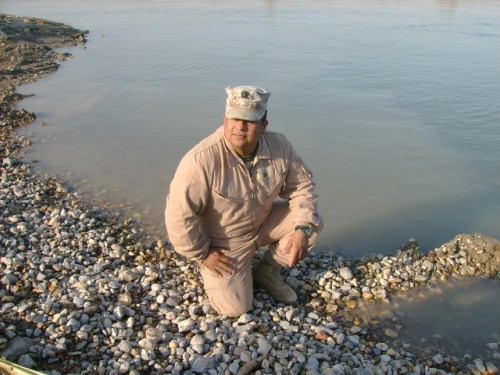
988Fr Jose on the bank of the Euphrates at Habbinyah

About a week after we got to TQ Marines from the battalion in Habbinyah were hit in an IED complex ambush while on patrol.  A couple of vehicles were hit, Jose was across the base celebrating Mass and Pat was in Fallujah.  A chaplain was needed in the Shock Surgical Trauma Unit or SSTP.  Wounded were being brought in, the platoon had been hit hard, 14 wounded and a couple killed.  I figured that since I was a pretty experienced trauma and critical care chaplain who had dealt with over 500 deaths, many traumatic with bullet wounds, burns and the host of other types of trauma, and tended to probably twice that many who did not die that I could handle this.  When I got to the SSTP I was greeted by a couple of nurses and docs and briefed as to what was going on.  Within a few minutes the casualties were beginning to roll in as the UH-60 Dust-off MEDIVAC helicopters landed and teams went out to meet them.  Some were ambulatory, or walking wounded bandaged with lacerations and burns on their faces and upper bodies, other were brought in on stretchers and ushered into the treatment beds in the area outside the OR.  It was like a scene out of M*A*S*H as the well honed surgical teams, surgeons, anesthetists, nurses and corpsmen went to work.  I now work with a number of these fine people. I was able to make my way about to the wounded Marines, praying with some, holding hands as and with a couple performing the sacrament of healing, or the anointing of the sick.  As I listen to Marines, prayed with them or anointed them there was a tremendous sense that this was different than what I did at Parkland or Cabell-Huntington.  These young men wore the same uniform that I wore, served the same country that I served and travelled the same roads that I would soon be on.  As each was assessed and moved off to surgery, prepared for further evacuation or treated and sent to a ward I noticed the little things about each of them.  The wounds, the torn uniforms, the burns and even the tattoos, these were our guys, they weren’t gang bangers or criminals but young Americans fighting a brutal war against a enemy that had terrorized Iraqis and found devastating ways to kill Americans.  Some of the Marines asked if they would be okay, others asked about friends and in those moments I learned what it was to care and be with men traumatized by the violence and brutality of war against an enemy that would not fight by our rules, much as the North Vietnamese and Viet Cong refused to fight our war.  The enemy was clever and determined and his weapons were deadly.

Stars and Stripes sstpTQ Surgical During Mass Casualty Event (Stars and Stripes Photo)

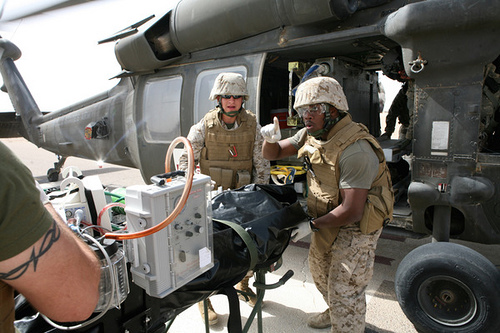
The teams did their work quickly and soon the event in the ER was done as the Marines were moved off to OR, the ward or further evacuation. I spent some time talking with unit Corpsmen and less wounded Marines and learned about the attack. They were in a convoy heading back to Habbinyah when the there was an enemy contact ahead of them.  As they moved forward to engage a primary and secondary IED hit the convoy heavily damaging two trucks with an ensuing firefight.  The Marines fought off their attackers, the wounded were treated and security set up as Dust-off came in to evacuate the wounded.  I thought back to my days as a Medical Service Corps Officer in the Army and remembered my friends who had elected to apply for flight school to become Dust-off pilots.  I remembered learning to call in MEDIVAC missions and some of the Army MSC aviators that I knew; some had flown in Vietnam, being a Dustoff pilot can be a sporty occupation.  They fly an unarmed bird into hot landing zones and get badly wounded troops to medical facilities in 100 degree plus weather without killing them enroute, those guys are good. As the crowd dissipated I spend so time with some of the staff.  Eventually with night having fallen I began the walk back to my office in the Chapel.  I looked up at the night sky, in the darkness a another UH-60 sat down to pick up others being evacuated on to Baghdad or Balad.  I looked up at the sky and saw more stars than I had seen at any time since I was at sea on the USS HUE CITY.  It was amazing; it looked like you could almost walk across them from horizon to horizon. When I got to my office I checked on my our mission status, I had submitted our first Air Support Request earlier in the day, of course it had not moved yet, but at least it gave me something to do.  I checked my unclassified e-mail and knew that there was nothing that I could share with anyone so I looked at baseball scores, checked a couple of news sites and headed off to my “can.”

medivacPackaging a Casualty for Further Evacuation on the TQ Surgical Pad

That night I did not sleep well, the images of the wounded Marines were burned into my mind; I could see their faces, their wounds and their tattoos.  I prayed the office of Compline from the Book of Common Prayer using Psalm 91 and the prayer “Be our light in the darkness, O Lord, and in your great mercy defend us from all perils and dangers of this night; for the love of your only Son, our Savior Jesus Christ.  Amen.” I took some comfort in this, walked out again into the night to see illumination rounds in the vicinity of Habbinyah and the distant sound of automatic weapons fire.   For once my insomnia was not related to jet lag or exhausting night flights, it was instead a realization that what happened to these Marines could well happen to me as I we launched later in the week.

The next morning another eight or ten Marines from the same company came in, this time I went to the SSTP with Jose and we did a tag team match, we tried to determine religious affiliation of the wounded Marines with him taking the Roman Catholics to provide sacramental needs and me taking the rest.  Once again the images were vivid; these Marines were on a mission to recover the damaged vehicles and were hit by IEDs on their way back to base.  This time one Marine was killed.  I walked to the graves registration and mortuary affairs team with the battalion surgeon and a corpsman who were to identify the body.  I listened to their frustration and heartache as they described what they had been through the past two days.  The company had taken over 20 casualties including 3 dead.  A high percentage of casualties for a unit that probably numbered about 120 men.  Once again I walked back, this time in the hot mid-morning sun with Jose to the Chapel.  We talked for a while about the past two days, he knew the battalion that had been hit well as he supported them as well.  The surgeon was one of his parishioners.  After we went our separate ways I did my morning prayer and settled in to study more about where we were going.  Nelson and I got PT later in the evening and I spent a restless night in my “can” playing computer Maj-Jong and Chess on my laptop deep into the morning.  Once again I spent time walking in the dark looking at the vast sea of stars above me.

3 Comments

Filed under iraq,afghanistan, Military, Tour in Iraq

Lessons for the Afghan War: The Effects of Counterinsurgency Warfare on the French Army in Indo-China and Algeria and the United States Military in Vietnam

Note: This is an article that I wrote for a class a year ago which has been updated in order to show the lessons of history that can be useful in the current wars in Iraq and Afghanistan.
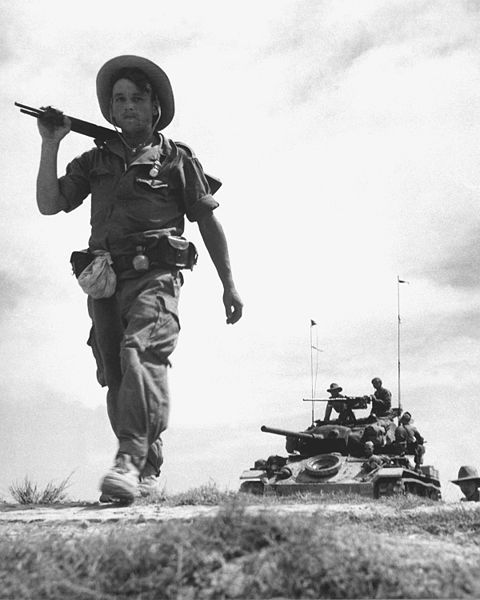
legion indo-china

French Foreign Legionnaires in Indo-China

The effects of the wars Indo-China, Algeria and Vietnam on the French and American military organizations internally and in relationship to their nations piqued my interest in 2005. The wars in Iraq and Afghanistan forced me to start asking the question of what short and long term effect that these wars might have on the U.S. military.  As such I wondered what historical precedent that there was for the question. My interest was furthered by my deployment with Marine and Army advisors to Iraqi Army and Security forces in 2007-2008.  My search led to the French experiences in Indo-China and Algeria and the American experience in Vietnam.  Recently with the Iraq war winding down and ongoing war in Afghanistan which has gone from apparent victory to mounting concern that the effort could fail as the Taliban and Al Qaida have regained momentum amid widespread corruption by the Afghan government and weakness of NATO forces.

Thesis

The counterinsurgency campaigns conducted by the French and American militaries in Vietnam and Algeria had deep and long lasting effects on them.  The effects included developments in organization and tactics, relationship of the military to the government and people, and sociological changes.  The effects were tumultuous and often corrosive.  The French Army in Algeria revolted against the government. The US Army, scarred by Vietnam went through a crisis of leadership and confidence which eventually resulted in end of the draft and formation the all volunteer military.  The effects of the Iraq and Afghanistan wars are yet unknown but could result in similar situations to the militaries and governments involved,

Historiography

legion algeriaForeign Legion in Algeria

There is a wealth of data regarding these wars. There are several types of materials. The accounts of soldiers, diplomats and reporters who experienced these events contained in memoirs and diaries. The best include David Hackworth’s About Face and Steel My Soldiers Hearts; and General Harold Moore’s We Were Soldiers Once… and Young. French works include Jules Roy’s The Battle of Dien Bien Phu and General Paul Aussaresses’ The Battle of the Casbah. There are innumerable popular accounts written by NCOs and junior officers.  These accounts may contain a wealth of information, but are limited by a number of factors. First, the authors, veterans of the wars, only saw part of the overall picture and first-hand experience in war can skew a writer’s objectivity. Those who have been through the trauma of war interpret war through their own experience.  Physical and psychological wounds can have a major impact on the interpretation of these writers as can their experience and political ideology. Finally few of these writers are trained historians. Despite this they can be a valuable resource for the historian.

Another source is found in the official histories written by the military forces involved in the wars. Often these incorporate unit histories and individual narratives and analyze specific battles and the wider campaigns, but do little in regard to broader conditions that affected operations.  While a good source, many are not as critical of their institutions as they should be.

Histories by trained historians and journalists provide another view. The most insightful of the journalist accounts include Bernard Fall’ Street Without Joy and The Siege of Dien Bien Phu: Hell in a Very Small Place. A limitation of all of these is that they are often heavily influenced by the political and societal events. This means that earlier accounts are more likely to be reactive and judgmental versus critical and balanced. Later accounts have the benefit of access to the opposing side and documents not available to earlier writers.  Alistair Horn in A Savage War of Peace provides one of the most informative and balanced accounts of the war in Algeria. Martin Winslow does the same regarding Dien Bien Phu in The Last Valley.

Another source is the writings of participants who critically examine their participation in the wars.  Many of these, French and American provide insights into the minds of leaders who are reflective and critically examine what happened to their military institutions in these wars. The best of these is French Colonel David Galula whose books Pacification in Algeria 1956-1958 and Counterinsurgency Warfare: Theory and Practice provide first-hand accounts of the subject combined with critical reflection. Galula’s works have been important to John Nagl, General David Petreus and others who helped write the U.S. Army and Marine Corps Counterinsurgency manual. Andrew Krepinevich in The Army and Vietnam provides a critical analysis of the U.S. Army in Vietnam.  Other sources, both online and print, such as RAND, provide excellent analysis of selected topics within the scope of this essay, especially COIN.
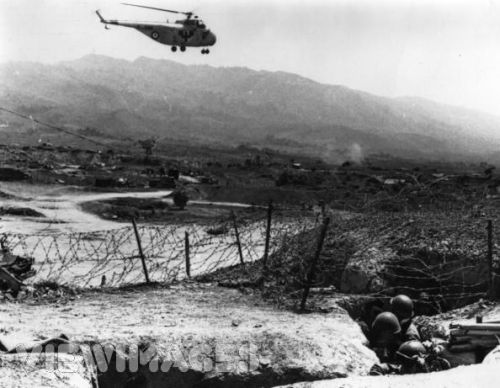
Dien Bien Phu 1French at Dien Bien Phu

The ability to dispassionately and critically examine and evaluate these sources over a period of several years was and integrate them with my own experience has been a critical to me.  It has changed the way that I look at sources, and caused me to be much more aware of bias, the limitations of sources and the need to have a multiplicity of sources and points of view and to be suspicious of contemporary reports and accounts of the war in Afghanistan regardless of the source.

Analysis of the Issue
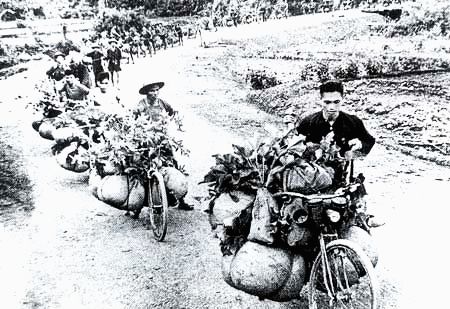
viet minh supplyViet Minh Supply Columns were Never Stopped by French Air power or Artillery

The conflicts in French Indo-China, Algeria and Vietnam had major effects on the French and American military institutions. These effects can be classified in a number of ways. First, the manner in which each military waged war, including tactics employed and use and development of weapons systems was changed.  The use of airpower, especially helicopters and use of riverine forces provided an added dimension of battlefield mobility but did not bring victory. As John Shy and Thomas Collier noted regarding the French in Indo-China: “French mobility and firepower could take them almost anywhere in Vietnam, but they could not stay, and could show only wasted resources and time for their efforts.”[1]

Joint_operation_with_ARVN_112-1Joint US and ARVN Operation

The use of intelligence and psychological warfare, including the use of torture became common practice in both the French and American armies.  The wars had an effect on the institutional culture of these armed services; neither completely embraced the idea of counterinsurgency and for the most part fought conventionally. Galula notes how the “legacy of conventional thinking” slowed the implementation of proper counterinsurgency tactics even after most commanders learned that “the population was the objective.”[2] Krepinevich notes that “any changes that might have come about through the service’s experience in Vietnam were effectively short-circuited by Army goals and policies.”[3] Finally the wars had a chilling effect on the relationship between the both militaries and the state, veterans from each nation often felt betrayed or disconnected from their country and people.  Unfortunately instances of all of these have occurred or can be seen in the current wars in Iraq and Afghanistan.
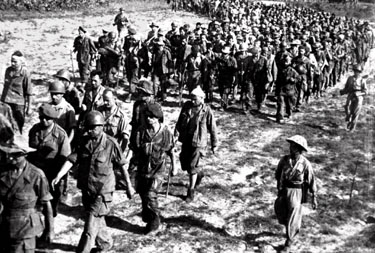
VIETNAM DIEN BIEN PHUFrench Prisoners after Dien Bien Phu: Many Survivors Would be Fighting in Algeria within Two Years

The French Army had the misfortune of fighting two major insurgencies back to back.  The French military was handicapped even before it went into these wars. The Army came out of World War II defeated by the Germans, divided by loyalties to Vichy or one of the Free French factions. They were humiliated by the Japanese in Indo-China, while in Algeria France’s crushing defeat was devastating.  “Muslim minds, particularly sensitive to prestige and baraka, the humiliation made a deep impression.”[4] French society was as divided as the Army; the economy in shambles, the government weak and divided.  The Viet-Minh had prepared well making use of time and training to get ready for war.  “Once full-scale hostilities broke out, the French, for budgetary and political reasons could not immediately make the large scale effort to contain the rebellion in the confines of small-scale warfare.”[5]

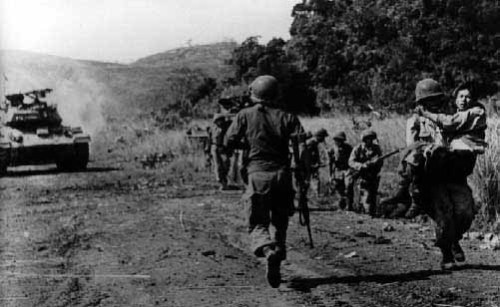
In both Indo-China and Algeria the French attempted to fight the budding insurgencies in a conventional manner.  This was particularly disastrous in Indo-China when on a number of occasions battalion and regimental combat team sized elements were annihilated by Viet-Minh regulars.  Between October 1st and 17th 1950 every French garrison along the Chinese border was over-run.  The French lost over 6000 troops and enough equipment to outfit “a whole additional Viet-Minh division.” It was their worst colonial defeat since Montcalm at Quebec.[6] In Algeria when the fight began in earnest France’s “ponderous ponderous N.A.T.O forces found themselves at an impossible disadvantage,”[7] unable to have any influence off the main roads.
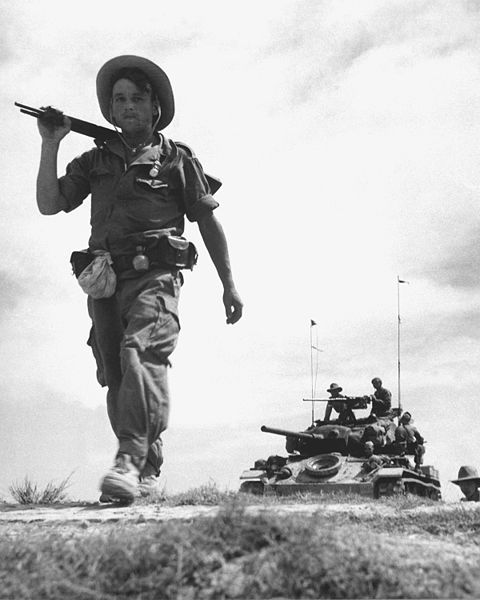
french troops indochinaFrench Troops and Tanks in Indo-China: Road Bound Forces were often Defeated by Viet- Minh Forces

In Vietnam the French did not absorb the lessons of fighting a well established insurgent force. French forces hoped to draw the Viet-Minh main forces into battles of attrition where their superior firepower could be brought to bear. Such was the case at Na San in December 1952 where the French established an “Air ground base” deep in Viet-Minh territory to draw Giap’s forces into open battle.  This worked, but just barely. General Giap, short of artillery and not planning on a long battle frittered away his troops in mass charges.  However, the French, because of Na Son assumed they had found the key to victory. In their embrace of the “air ground base concept, French staff officers were following an intellectual tradition that had long been prone to seduction by elegant theories.”[8] The result was the disaster at Dien Bien Phu the following year.  The destruction of the elite Group-mobile 100 near Pleiku in 1954 was the coup de grace. In Indo-China the French made limited use of helicopters, used paratroops widely, and developed riverine forces. One thing they were critically short of was significant tactical air support.[9]

The most inventive French creation in Indochina was the GCMA/GMI forces composed of mountain tribesmen led by French NCOs and Junior Officers.  They were designed to provide “permanent guerilla groups rooted in remote areas” to harass and interdict Viet-Minh forces.[10] Trinquier noted that at the time of the Dien Bien Phu defeat that these forces had reached over 20,000 trained and equipped maquis in the Upper Region of Tonkin and Laos. These forces achieved their greatest success retaking Lao Cai and Lai Chau May 1954 as Dien Bien Phu fell.[11] Trinquier stated that “the sudden cessation of hostilities prevented us from exploiting our opportunities in depth.”[12] The GMI units and their French leaders were abandoned fighting on for years after the defeat. One account noted a French NCO two years after the defeat cursing an aircraft patrolling the border “for not dropping them ammunition so they could die like men.”[13] In the end the French left Indo-China and Giap remarked to Jules Roy in 1963 “If you were defeated, you were defeated by yourselves.”[14]

Algeria was different being part of Metropolitan France; there the French had support of European settlers, the pieds-noir. Many French soldiers had come directly from Indo-China. There French made better adaptations to local conditions, and realized that they had to win the population and isolate the insurgents from it and outside support. As Galula said, victory is the destruction of the insurgent’s political and military structures, plus “the permanent isolation from the population, not forced upon the population, but by and with the population.”[15] The lessons learned by the French in both Algerian and Indo-China were lost upon the Americans.

4CavVnM48US Heavy Forces including Armor had Little Utility in Many Parts of Vietnam

The United States military, especially the Army approached the Vietnam War with a conventional mindset, referred to as the “Army concept.” [16] It not only approached the war in this manner, but it trained and organized the South Vietnamese forces, ARVN into the American model. Americans re-organized ARVN into divisions “based upon the U.S. divisional force structure.”[17] Due to the imposition of an American template and organizational structure upon it, ARVN was not structured appropriately for the threat that it faced.”[18] The results were as to be expected. Large numbers of American troops poured in taking the lead against the North Vietnamese and Viet Cong . The American method of counterinsurgency was costly.  It was “almost a purely military approach”[19] which ignored political and social realities on the ground. Instead of focusing on protecting the Vietnamese people and denying the Communists a safe haven the Army in particular believed that massive firepower was the best means to be“utilized by the Army to achieve the desired end of the attrition strategy-the body count.”[20] In the end the American defeat was a “failure of understanding and imagination.”[21] The one shining success was the Marine Corps experimentation with “Combined Action Program” platoons which lived in the villages with militia for long periods of time. This program produced great results “in eliminating local guerillas”[22] but was killed by the Army.
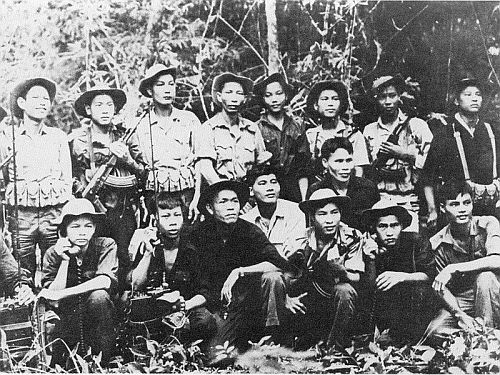
NlfmainforceNVA Main Forces

These wars tore the heart out French and American armies. For the French the defeats inflicted a terrible toll.  In Indo-China many French career soldiers felt that the government’s “lack of interest in the fate of both thousands of missing French prisoners and loyal North Vietnamese…as dishonorable.”[23] Divisions arose between those who served and those who remained in France or Germany and created bitter enmity between soldiers.  France would endure a military coup which involved many who had fought in Vietnam and Algeria. Having militarily won that war, were turned into what Jean Lartenguy called The Centurions had been turned into liars.”[24] They were forced to abandon those who they had fought for and following the mutiny, tried, imprisoned, exiled or disgraced. Colonial troops who remained loyal to France were left without homes in their “independent” nations.  They saw Dien Bien Phu as the defining moment. “They responded with that terrible cry of pain which pretends to free a man from his sworn duty, and promises such chaos to come: ‘Nous sommes trahis!’-‘We are betrayed.’”[25]
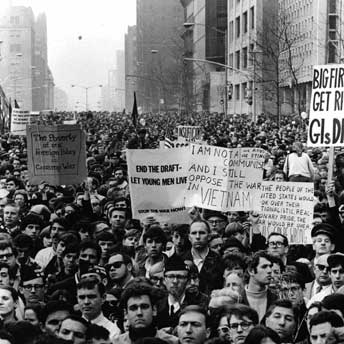
war protestUS Veterans of Vietnam Would Return to a Deeply Divided Country that turned its Back on Them for Years

The U.S. Army left Vietnam and returned to a country deeply divided by the war.  Vietnam veterans remained ostracized by the society until the 1980s.  As Harold Moore recounts “in our time battles were forgotten, our sacrifices were discounted, and both our sanity and suitability for life in polite American society were publically questioned.”[26] The Army endured a massive reorganization that resulted in the formation of the All-Volunteer force, which would redeem itself and emerge from the ashes in the Gulf War. The Americans would not learn the lessons of revolutionary warfare and counterinsurgency until forced to do so in Iraq in 2004-2007. These lessons however were not applied to Afghanistan and the Taliban which seemed to have been defeated have regained the initiative, policy is being debated amid discord in the west and there are reports of American and NATO forces becoming discouraged by the course of the war and concern that their efforts will be in vain. This is a dangerous situation to be in and if we learn from anything from our own history as well as that of foreign military forces in Afghanistan we need to be very careful in implementing strategy to get whatever we do right.

training team baseTraining Team Base in Afghanistan: Some of these Bases Have proven Vulnerable to Well Planned and Coordinated Taliban Attacks

Conclusion

The effects of these wars on the French and American military establishments were long lasting and often tragic. The acceptance of torture as a means to an end sullied even the hardest French officers. Men like Galula and Marcel Bigeard refused to countenance it, while others like Paul Aussaresses never recanted.  Americans would repeat the tactic at Abu Ghraib rallying the Iraqis against them and nearly losing the war because of it.

For the Americans, the effects of Vietnam continued at home. Race riots tore at the force while drug addictions and criminal activities were rampant.  Many incompetent leaders who had “ticket punched” their careers kept their jobs and highly successful leaders who became whistle blowers like Hackworth were scorned by the Army institution.  The years following Vietnam were a severe test of the US Military and took years for the military to recover.  Likewise It took years before either the French or American veterans again felt a part of their countries.  They ended up going to war, and when it was over; feeling abandoned, their deepest bonds were to their comrades who had fought by their side.

What are the lessons to be learned from these campaigns as well as from the various accounts?  Andrew Krepinevich prophetically noted that the failure to learn the lessons of Vietnam “represents a very dangerous mixture that in the end may see the Army again attempting to fight a conventional war against a very unconventional opponent.”[27] Obviously, there are lessons to be learned, especially in understanding the nature of revolutionary war as well as the culture and history of our opponents. The U.S. has made some improvement in this regard but there is still much to be learned, especially since after the war the Army was “erecting barriers to avoid fighting another Vietnam War.”[28] From these wars we learn that nations and incompetent governments who mismanage wars can alienate themselves from the soldiers that they send to fight, with serious consequences.  As far as historiography we learn that certain historical fallacies are evident when one reads the accounts critically and recognize the bias and limitations of the various sources.


[1] Shy, John and Collier, Thomas W. “Revolutionary War” in Makers of Modern Strategy from Machiavelli to the Nuclear Age,” Peter Paret editor. Princeton University Press, Princeton N.J. 1986  p.849

[2] Galula, David. Counterinsurgency in Algeria: 1956-1958. RAND Corporation, Santa Monica, CA. 2006. First published by RAND in 1963. p.244

[3] Krepinevich, Andrew F. “The Army and Vietnam,” The Johns Hopkins University Press, Baltimore and London, 1986 p.213

[4] Horn, Alistair. “A Savage War of Peace: Algeria 1954-1962,” a New York Review Book published by the New York Review of Books, New York, 1977, 1987, 1996, and 2006 p 41

[5] Fall, Bernard B. “Street Without Joy: The French Debacle in Indochina.” Stackpole Books, Mechanicsburg PA, 2005, originally published by Stackpole Publications 1961 p.27

[6] Ibid. p.33

[7] Horn. p.100.

[8] Windrow, Martin. “The Last Valley: Dien Bien Phu and the French Defeat in Vietnam,” Da Capo Press, Novato, CA 2006, originally published by Weidenfeld and Nicholson, London 2004 p.63

[9] Fall, Bernard B. “The Siege of Dien Bien Phu: Hell in a Very Small Place.” Da Capo Press, New York an unabridged reprint of the 1st Edition reprinted in arrangement with Harper and Row Publishers, New York. 1967 pp. 456-457  Fall discusses in depth the lack of French Air support and the antecedents that led to the shortage following World War II.

[10] Pottier, Philippe(2005)’Articles: GCMA/GMI: A French Experience in Counterinsurgency during the French Indochina War’, Small Wars & Insurgencies,16:2,125 — 146 http://dx.doi.org/10.1080/09592310500079874

[11] Simpson, Howard K. “Dien Bien Phu: The Epic Battle America Forgot,” Potomac Books Inc. Washington DC 2005, originally published by Brassey’s Inc. 1994 pp. 170-171

[12] Trinquier, Roger. “Modern Warfare: A French View of Counterinsurgency,” translated from the French by Daniel Lee with an Introduction by Bernard B. Fall. Praeger Security International, Westport CT and London. 1964 and 2006. Originally published under the title “La Guerre Moderne” by Editions Table Ronde. p.87

[13] Windrow. p.652.

[14] Roy, Jules. “The Battle of Dien Bien Phu” Carrol and Graf Publishers, New York 1984. Translated from the French by Robert Baldrick. English translation copyright 1965 by Harper and Row Publishers, New York. p.xxx

[15] Galula, David. “Counterinsurgency Warfare: Theory and Practice.” Praeger Security International, Westport CT 1964 and 2006 p. 54

[16] Krepinevich. p.213

[17] Ibid. p.24

[18] Nagl, John A. “Learning to East Soup with a Knife: Counterinsurgency Lessons from Malaya and Vietnam,” University of Chicago Press, Chicago and London, 2005 p.138

[19] Shy. p.856

[20] Krepinevich. p.202

[21] Spector, Ronald H. “After Tet: The Bloodiest Year in Vietnam,” Vintage Press, a division of Random House, New York, 1993 p.314

[22] Millett, Allan R. and Maslowski, Peter. “For the Common Defense: A Military History of the United States of America.” The Free Press, a division of Macmillian, Inc. New York, 1984 p.555

[23] Windrow. p.655

[24] Ibid. p.657

[25] Ibid.

[26] Moore, Harold G and Galloway, Joseph L. “We were Soldiers Once…and Young: Ia Drang: The Battle that Changed Vietnam,” Harper Collins Publishers, New York NY 1992  p. xx


[27] Krepinevich. p.275

[28] Ibid. p.274

1 Comment

Filed under History, iraq,afghanistan, Military, vietnam

MLB League Championship Series so Far, I will wear Short Pants until the World Series is Over and Learning that I am a “Wounded Healer”

So far things appear to be working out the way that I thought that they would in the MLC League Championship Series between the Phillies and Dodgers. I predicted that the teams would split at Chavez Ravine and go back to Philly knotted.  The Phillies took game one and looked like they had game two in the bag with Pedro Martinez shutting the Dodgers out through seven giving up only two hits.  Then the Phillies problematic bullpen took over in the eighth and it went down from there with the Dodgers coming back to win.

The ALCS has been played at the new Yankee Stadium amid the din of a Nor’easter.  The Yankees took game one 4-1 as the Angels quite literally “froze” in the cold and damp weather.  Game two played in even worse conditions has been influenced by the weather and was a superb pitcher’s duel.  The game went into extra innings tied at two and though the Angels went ahead in the top of the 11th as the rain started coming down harder only to have Alex Rodriguez come up big again for the Yankees in the bottom of the 11th with a home run to tie the game.  The game went to the bottom of the 13th when with one out the Yankees scored on a throwing error to win the game 4-3.  It was an amazing game that I could not pull myself away from but will write more about later.

On another note, the weather here in Hampton Roads has been miserable as we also have had some of the residue of the Nor’easter with cold rain, fog and drizzle that has not let up.  Amid this positively crappy weather I am maintaining my vow to wear short pants as long as I can with the exceptions being my uniform and going to church.  This means that I am bundling up from the belt up while keeping my legs bare.  I have never done this before which means either I’m nuts or I’m nuts, but nonetheless I am in this until the World Series is over at the minimum.  Since with the exception of church, work and one social event where shorts were unacceptable I have not worn long pants since sometime in April.  Tonight I had a Norfolk Tides jacket and sweatshirt on.  We’ll see how this goes…

I have the duty this weekend and have been in and out of the hospital a number of times.  One of the visits called to mind just how much I am like the people I serve and what it means to have to ask the same questions about God, faith and what it is to be human and a Christian. What got me tonight was a gentleman struggling with his faith, much as I have after returning from Iraq and battling PTSD and other nagging injuries.  Having him ask the same questions that I have wrestled with and having him ask me directly what I thought.  I have learned that I don’t have to “fake it” and try to give the man some textbook answer of how he needed to believe more, read his Bible more, go to church more, pray more or harder.  Instead I was able to be honest that I have wrestled with the same question but somehow the words of the 23rd Psalm speak to me.  “Even though I walk through the valley of the shadow of death, I will fear no evil for you are with me.”  The Psalm is very reassuring for me as it is so honest.  Reality is that we do walk through the valley of the shadow of death.  In fact it is a difficult and pain filled world.  That I will fear no evil means that evil is in fact very real but in the middle of this there is an understanding that God is still with us.  It is an understanding that even when life is more like Good Friday than Easter, that God as far away as he may seem is still there.  Maybe that is actually the miracle that most people need, the miracle to know that no matter how bad things suck, and I do use the word “suck” because that is how it is sometimes, especially when there is no “miracle” to be had otherwise.  When I told the man that I had spent the past 18 months wrestling with those questions he opened up and we had a wonderful discussion and prayer.   I am totally okay with this somehow God uses me in my weakness more than when I had all the answers.

Tonight I discovered that  Bishop John Holloway, the medically retired former Ordinary of the Charismatic Episcopal Church Diocese of the Mid-South and one of the early leaders of the Church, his wife Elaine and two youngest children have to leave their home in Thomaston Georgia.  They moved there as a missionary bishop giving up pension and medical from the Methodist Church to follow God’s call into the CEC.  The home is being foreclosed on after the church, which has no pension or insurance plan in most dioceses for clergy and had provided a great deal of money to help pay off debts in the past has had to reduce the money they were providing by half and now according it the Holloways’ son Jared to nothing.  Their home is being foreclosed on and they have to be out by December 1st and if you want to read more go to his blog: http://jzholloway.wordpress.com/  If there is a question as to how the CEC currently handles finaces go to www.cechome.com where the budgets and expenses of every diocese are posted.  There had been great problems in the past in the finacial management of the CEC largely done by people no longer associated with the church, including some former bishops.  I think this is getting better under Archbishop Bates unfotunately the residue and distaste of that era is still out there.

I really don’t know what to think about that except that I did talk to a CEC Bishop about it and hear that there are other parts to the story.  That aside, when the CEC was formed and one of the things that drew me to it was that the CEC was to would be more personal and relational than churches where the bishops did not really know their clergy. I think that is still the ideal in the Church but what Jared is reporting and what I hear from Elaine on Facebook gives me some cause for concern because it deals with a bishop who can no longer function and is completely disabled. Additionally Elaine is a cancer survivor who has exeeded her life expectancy with the disease.  Obiviously things are not good for them and I have to trust that the situation will be resolved in a spirit of love and reconcilliation and that ultimately the Holloways will be taken care of by the church and God’s people.  I cannot say anything else because I do not know anything else, but to say how this grieves me as Bishop Holloway was and I’m sure, even in his greatly de-habilitated and totally dependent state is a gracious and giving man.  I always felt comfortable and safe around him.  He ordained my friend Father Stu King back in 2001.  Stu has left the CEC having been accepted into Seminary and in now working to become a Roman Catholic Priest.  I’m sure that Bishop John would approve and give his blessing.  Please keep the Holloways in your prayers. I have no idea if there is anything that can be done to help them, if there is Jared may know or one could contact the Mid South Diocese of the CEC.

I also found that a friend, the sister of our dear friend Dr Helen Linkey who taught at Marshall University who battled breast cancer for two years before succumbing to it in 2005 has found a lump in her breast. She is going in for a biopsy which is expected to find cancer. Maryellen occasionally comments on my website and her news was included in her comment to my post from last night at https://padresteve.wordpress.com/2009/10/16/war-remembrance-and-healing-a-chaplain-officer-and-historian-makes-his-way-home/

Please keep Maryellen in your prayers also. Anyway, it is time for me to try to get to sleep.

Peace,

Padre Steve+

Leave a comment

Filed under Baseball, healthcare, Pastoral Care, philosophy, PTSD

War, Remembrance and Healing: A Chaplain, Officer and Historian Makes His Way Home

The first version of this post was written in the spring of 2008 when I was doing a lot of soul searching and reflecting after Iraq. It was originally run in my church’s online news service.  I post it now with some updates that have been brought about by new ways that I am rediscovering God and because of the current situation in Afghanistan which has become worse in the past year. As I read news releases about casualties and attacks on NATO forces and Afghan civilians, especially those in small outposts or serving as advisers and trainers I am reminded of my time in Iraq.  Please don’t forget those who serve in Iraq and Afghanistan, or those who have served in prior wars. Especially keep in your prayers and help assist those who have returned injured in mind, body or spirit and those who made the supreme sacrifice.

874Leaving a Bedouin Camp 1 mile from Syria
I have been doing a lot of reflecting on ministry and history over the past since returning from Iraq. Since I’ve been back about a year and a half I can say that I have changed as a result of my service there.  Change can be scary but in my case it has been both necessary and probably good.  Ministry, theology and history have been part of my life for many years; they have taken on a new dimension after serving in Iraq. When I first wrote this piece not long after returning I was in pretty bad shape but in the months since I have been attempting to integrate my theological and academic disciplines with my military, life and faith experience since my return. I’m not done yet by any means, but things are getting better, not quite like Chief Inspector Dreyfus in The Pink Panther Strikes Again “Every day in every way I’m getting better and better…Kill Clouseau!” but a slowly getting better with some occasional bumps in the road.

One of the things that I have wrestled with is my faith, and returning from war changes a man.  Before I went to Iraq I thought that I had things pretty much together.  When I came home and fell apart it also affected my faith, doing little things became difficult and the effects were exaggerated by my isolation.  In a sense it was my Saint John of the Cross Dark night of the Soul experience.  I felt that God had abandoned me, people would come to me with their crisis of faith and I had to dig deep to stay with them, but in doing so I became acutely aware of the fact that I shared this with them. I couldn’t hide behind my collar or the cross on my uniform as the crisis was an interruption which drove me out of my comfort zone and forced me to deal with the world that the people I minister among deal with every day.

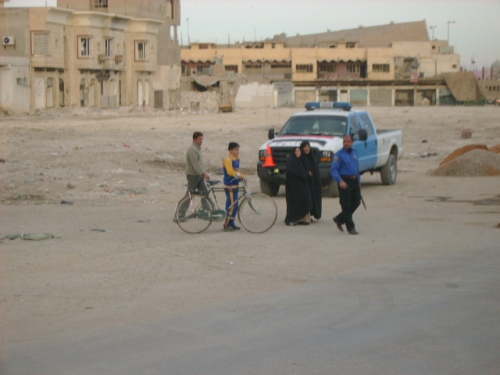
291Iraqi Police in Ramadi Escorting Civilians Across the War Zone of Route Michigan

There are those who believe that all forms of ministry are basically the same and that lessons learned are universally applicable and that somehow all ministries are proclamation oriented.  Unfortunately that is not the case and one of the places that this is true is the Military Chaplain ministry.  This mibnistry is much different than parish or para-church ministries and even different than other institutional ministries such as Police, Fire, Industrial or civilian health care chaplaincy.   It is different in that it is more incarnation versus proclamation. We not only minster to our people but we live among them.  We live the experience of those that we serve, especially in the uncertainly of war and deployments.  Chaplains live in a world where we are fully military officers and fully ministers of our own church or faith tradition. As a chaplain I never lose my calling of being a priest, but I am a priest in uniform, a military professional and go where our nations send me to serve the Sailors, Marines, Soldiers and Airmen who I live among be that overseas, or in the States.

142Always a Priest Eucharist with Advisers in the Far West of Al Anbar

There is always a tension in the military chaplain ministry. This is  especially true when the wars that we are sent to are unpopular at home and seem to drag on without the benefit of a nice clear victory such as VE or VJ Day in World War II or the homecoming after Desert Shield and Desert Storm. There are those that oppose the military chaplaincy on theological or philosophic grounds, usually some manner of absolutist understanding of ministry, church-state relations or social justice considerations.  My purpose is here not to defend military chaplain institutions against such criticism but rather to share the world and tension that military chaplains live in when our nation is engaged in unpopular which some consider unjust or illegal wars.

training team baseIsolated Base Camp for Advisers in Afghanistan

A lot of people have no “ethical” or “moral” qualms about wars that are easy to pigeonhole as just wars, especially if we win quickly and easily.  It is my belief that when things go well and we have easy victories that it is easy for religious people, especially more conservative Christians to give the credit to the Lord for the “victory.”  Unfortunately such “Credit” is given without them ever understanding or sometimes even caring about the human cost of war.   Likewise it is easy for others to give the credit to superior strategy, weaponry or tactics to the point of denying the possibility that God’s involvement.  Conversely and maybe even perversely I have heard some say that God has blessed the use of weapons or tactics that violate principles of fighting a “just war” especially that of proportionality. Such is the case in almost every war and Americans since World War Two have loved the technology of war seeing it as a way to easy and “bloodless” victory. In such an environment ministry can take on an almost “cheer-leading” dimension. It is hard to get around it, because it is a heady experience to be on a winning Army in a popular cause but I do think that many chaplains have a less “cheerleading” approach than many in conservative churches. The challenge for chaplains in such an environment is to keep our ministry of reconciliation in focus. To do so we must care for the least, the lost and the lonely and never forget the victims of war, especially the innocent and the vanquished, as well as our own wounded, killed and their families.

237Iraqi Kids in Al Anbar Province, a couple of months before they could not venture outside because of insurgent attacks, children are never winners in war

We are now seeing the conflict in Iraq winding down and what until this year had been “the good war” in Afghanistan go bad and support for it decline.  Strategy is being debated as how to best “win” the war in Afghanistan even as the United States withdraws from Iraq. The task of chaplains in the current war, and similar wars fought by other nations is different and really doesn’t allow for them to indulge themselves in “cheerleading.” In fact chaplains can themselves through isolation, lack of experience and fear can become more reflective and less “cheerleader” oriented the longer the war goes on without sign of appreciable progress, much less victory.  They feel the onslaught of their soldiers doubts, fears as well as the loss of friends and the chapel congregation through being killed or wounded in action. This  can take a terrible toll even for the most resilient of chaplain. In these wars, sometimes called counter-insurgency operations, revolutionary wars, guerilla wars or peace keeping operations, there is no easily discernible victory. These types of wars can drag on and on, sometimes with no end in sight. Since they are fought by volunteers and professionals, much of the population acts as if there is no war since it does often not affect them, while others oppose the war, all of which can affect the chaplain.

dien_bien_phu paras landingFrench Paratroops Landing at Dien Bien Phu

Chaplains volunteer to go with and place themselves in harms way to care for God’s people in the combat zone or far away from home. While they do this there are supporters of war as well as detractors who have no earthly clue about war or life in the military other then what they see in the media or experienced in peacetime or the cold war. Some supporters often seem more interested in political points of victory for their particular political party than for the welfare of those that are sent to fight the wars. This has been the case in about every war fought by the US since World War II. It is not a new phenomenon. Only the cast members change with the particular war.

legion indo-chinaForeign Legion Troops in Indochina

In order to somehow make sense of going on we cannot simply think of what is politically expedient for either those who support or want to expand the war, or others who want it ended now, both of which have consequences many of which are bad.  I think that we have to look at history and not just to American history to find answers, not simply answers to how to win or end the war but answers to the consequences that either course of action posits. Thus I think that we can find parallels in other militaries. I think particularly of the French professional soldiers, the paratroops, Colonials (Marines) and Foreign Legion who bore the brunt of the fighting in Indo-China. These men, not all of who were French were placed in a difficult situation by their government and alienated from their own people. In particular I think of the Chaplains, all Catholic priests save one Protestant, at the Battle of Dien Bien Phu, the epic defeat of the French forces that sealed the end of their rule in Vietnam. The Chaplains there went in with the Legion and Paras. They endured all that their soldiers went through while ministering the Sacraments and helping to alleviate the suffering of the wounded and dying. Their service is mentioned in nearly every account of the battle. During the campaign which lasted 6 months from November 1953 to May 1954 these men observed most of the major feasts from Advent through the first few weeks of Easter with their soldiers in what one author called “Hell in a Very Small Place.”

french troops indochinaFrench Troops on the March in Indochina

One author describes Easter 1954: “In all Christendom, in Hanoi Cathedral as in the churches of Europe the first hallelujahs were being sung. At Dienbeinphu, where the men went to confession and communion in little groups, Chaplain Trinquant, who was celebrating Mass in a shelter near the hospital, uttered that cry of liturgical joy with a heart steeped in sadness; it was not victory that was approaching but death.” A battalion commander went to another priest and told him “we are heading toward disaster.” (The Battle of Dienbeinphu, Jules Roy, Carroll and Graf Publishers, New York, 1984 p.239) This can be a terrible burden for the Padre who cares for such men.  Ministry in such places is truly an incarnational experience because there is no place to hide and the chaplain is as vulnerable as his flock.  It is the ministry that places us “in the valley of the shadow of death” where as the Psalmist says we are “to fear no evil for you are with us.” It is the ministry of Good Friday where to all appearances seems that God has abandoned the field and evil has won.

VIETNAM DIEN BIEN PHUFrench Surrender at Dien Bien Phu

Of course one can find examples in American military history such as Bataan, Corregidor, and certain battles of the Korean War to understand that our ministry can bear fruit even in tragic defeat. At Khe Sahn in our Vietnam War we almost experienced a defeat on the order of Dien Bien Phu. It was the tenacity of the Marines and tremendous air-support that kept our forces from being overrun.

legion algeriaLegionaries in Algeria, many French Troops Went from one War in Indochina to another in Algeria only to have the De Gaulle Government throw the Military Victory Away and Cause a Crisis
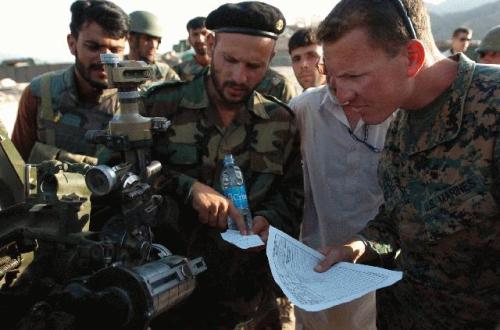
You probably wonder where I am going with this, back when I first drafted this year and a half ago I wondered too. But here is where I think I am going. We live in difficult of times at home and in Afghanistan.  It home we are mired in an economic crisis clouded by deep political division.  In Afghanistan we are engaged in a hard fight where units we are taking casualties and the mission is being debated.  Sometimes to those deployed and those who returned that their sacrifice is not fully appreciated by a nation absorbed with its own issues.  This of course is not universally true as there a people of all political viewpoints who care for the welfare and attempt to ensure that those who serve are not abandoned as those men who served in Vietnam.  I think that part of the feeling comes from the presentation of the war by the media which tends to focus only on the negative outcomes and not positive things that our soldiers accomplish. That can be discouraging to the men and women on the ground.  One of the most difficult things for me upon my return was to see the bitterness a division in the American people and political establishments and becoming quite depressed about it.   I stopped watching the perpetual news cycle and listening to talk radio.  The hatred, ignorance and crassness of it all was disheartening and I refuse to take any part in something that is so hate filled, power driven and unredemptive.

traiining team with afghan armyUSMC Training Team With Afghan Troops

For the French the events and sacrifices of their soldiers during Easter 1954 was page five news in a nation that was more focused on the coming summer. This is very similar to our circumstances today because it often seems that own people are more concerned about economic considerations and the latest in entertainment news than what is going on in Iraq or Afghanistan. The French soldiers in Indo-china were professionals and volunteers, much like our own troops today. Their institutional culture and experience of war was not truly appreciated by their own people.  Nor was it fully appreciated by their government which sent them into a war against an opponent that would sacrifice anything and take as many years as needed to secure their aim.  At the same time their own countrymen were unwilling to make the sacrifices needed to win and in fact had already given up their cause as lost. The sacrifice of French soldiers would be lost on their own people and their experience ignored by the United States when we sent major combat formations to Vietnam in the 1960s. In a way the French professional soldiers of that era have as well as British colonial troops before them have more in common with our force than the citizen soldier heroes of the “Greatest Generation.” Most of the “Greatest Generation” was citizen soldiers who did their service in an epic war and then went home to build a better country as civilians. We are now a professional military fighting unpopular wars and that makes our service just a bit different than those who went before us.  I related to the French troops who fought in Indochina and Algeria as well as our own Vietnam Vets than I do to others.  These is a kinship among us that goes beyond nationality, politics or age.

This is the world in which military chaplains’ minister.  It is a world of volunteers who serve with the highest ideals, men and women who enlist knowing that they will be deployed and quite likely end up in a combat zone. We go where we are sent, even when it is unpopular. It is here that we make our mark; it is here that we serve our Soldiers, Sailors, Marines and Airmen. Our duty is to bring God’s grace, mercy and reconciliation to men and women, and their families who may not see it anywhere else. It is a ministry of reconciliation by the means of incarnation. Many times those outside the military do not understand this. It is a different world full of contradictions and ambiguity.  Such situations even impact the families of those who serve.

When my dad was serving in Vietnam in 1972 I had a Sunday school teacher tell me that he was a “Baby Killer.” It was a Catholic Priest and Navy Chaplain who showed me and my family the love of God when others didn’t. As the country builds to the 2010 mid-term Congressional elections I anticipate that people from all parts of the political spectrum will offer criticism or support to our troops or the war in order to bolster their election chances which do not always coincide with what is in the best interest of the troops or the mission. Chaplains cannot be concerned about the politics nor even the policy as our duty is to be there as Priests, Ministers, Rabbis and Imams for those that we serve. We cannot afford to allow ourselves to be discouraged in caring for our men and women and their families because of all the strife in the body politic.  In addition we must continue on because most churches and other religious communities, even those supportive of our troops really don’t understand the nature of our service or the culture that we represent. We live in a culture where the military professional is in a distinct minority group upholding values of honor, courage, sacrifice and duty which may be foreign or archaic to many Americans, or for those countries with troops and chaplains in Afghanistan or Iraq. We are called to that ministry in victory and if it happens someday, defeat. In such circumstances we must always remain faithful to God as well as to those that we serve.

For those interested in the French campaign in Indo-China it has much to teach us. Good books on the subject include The Last Valley by Martin Windrow, Hell in a Very Small Place by Bernard Fall; The Battle of Dienbeinphu by Jules Roy; and The Battle of Dien Bien Phu- The Battle America Forgot by Howard Simpson. For a history of the whole campaign, read Street Without Joy by Bernard Fall. I always find Fall’s work poignant, he served as a member of the French Resistance in the Second World War and soldier later and then became a journalist covering the Nurnberg Trials and both the French and American wars in Vietnam and was killed by what was then known as a “booby-trap” while covering a platoon of U.S. Marines.

There is a picture that has become quite meaningful to me called the Madonna of Stalingrad. It was drawn by a German chaplain-physician named Kurt Reuber at Stalingrad at Christmas 1942 during that siege. He drew it for the wounded in his field aid station, for most of whom it would be their last Christmas. The priest would die in Soviet captivity and the picture was given to one of the last officers to be evacuated from the doomed garrison. It was drawn on the back of a Soviet map and now hangs in the Kaiser Wilhelm Memorial Church in Berlin where it is displayed with the Cross of Nails from Coventry Cathedral as a symbol of reconciliation. I have had it with me since before I went to Iraq. The words around it say: “Christmas in the Cauldron 1942, Fortress Stalingrad, Light, Life, Love.” I am always touched by it, and it is symbolic of God’s care even in the midst of the worst of war’s suffering and tragedy.

Madonna of StalingradMadonna of Stalingrad

So as you can see I have done a lot of reflecting over the past year and a half. It has been a spiritual journey, an intellectual and academic journey and a personal journey of slowly healing and recovery.  I have gone through some changes in the process which have not been easy, but certainly have deepened my faith even as I struggled and made me much more appreciative of life, love and peace.

I write in order to wrestle with what I have mentioned here, and I try to write something every night. I can full agree with Father Henri Nouwen in his book Beyond the Mirror as to the purpose that writing serves me in my journey.

“These many interruptions calling me ‘beyond’ compelled me to write. First of all, simply because writing seemed to be the only way for me not to lose heart to in the frightening and often devastating interruptions and to hold onto my innermost self while moving from known to unknown places. Writing helped me to remain somewhat focused amid the turmoil and discern the small guiding voice of God’s Spirit in the midst of the cacophony of distracting voices.  But there is a second motivation. Somehow I believed that writing was the one way tom let something of lasting value emerge from the pains and fears of my little, quickly passing life.  Each time life required me to take a new step into unknown spiritual territory, I felt a deep, inner urge to tell my story to others- perhaps as a need for companionship but maybe, too, out of an awareness that my deepest vocation is to be a witness of the glimpses of God I have been allowed to catch.”

pub2Slowly Getting Better

I am healing though it has been at times painful, but faith is returning and I can say that though it has not been easy it has been worth it.  I do hope that what little I do in my work and in my writing will be of help to those who struggle and those who recognize their own need for reconciliation, healing who need to hope again no matter who they are and what their circumstance.

Peace,

Padre Steve+

2 Comments

Filed under Loose thoughts and musings

Unequal Allies: Lessons from The German’s and Their Allies on the Eastern Front for Today

patton with french tankPatton with French Renault F1 Tank in WWI

One of the problems that any coalition of unequal partners as is the case in Afghanistan is the role of the lesser partners, their capabilities and limitations imposed on them by their own governments.  When NATO joined the US led effort in Afghanistan a number of NATO allies contributed troops to the effort.  The same was true of the “coalition of the willing” in Iraq.  While obviously the US appreciated and continues to appreciate the efforts of its allies in both theaters the unique problems associated with coalition warfare are often not appreciated until the strengths and weaknesses of each junior partner in the coalition are shown to include the effect of each nation’s choice of units sent, logistics capability and rules of engagement.  Thus when some Americans are critical of the contribution of some allies, or the limitations imposed by their governments they should remember that in the First World War the United States was dependant on France and Britain for the majority of the Artillery, all of the tanks and aircraft as well as instructors and training facilities for the rapidly recruited American Expeditionary Force.

RickenbackerUS Ace Eddie Rickenbacker with French Supplied Nieuport 28
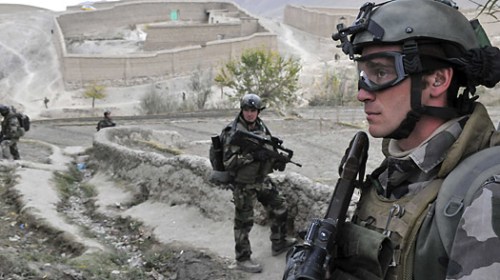
Every nation works within its own national interests and domestic political situation as well as its military capabilities. Unfortunately many people do not look at history to see how a coalition of a major power allied with a number of minor powers each with their own limitations as well as motivations for entering the war execute that war after the initial plan is foiled.  This is something that has happened in Afghanistan after the initial success disappeared with the corrupt and ineffective Afghan government, the resurgent Taliban and the resiliency of Al Qaida in their bases in the remote border areas of Afghanistan and Pakistan.

nato_france_a_0403French Troops in Afghanistan: The French, British and Canadians have the most Robust Rules of Engagement of Non US NATO Forces (Time Magazine Photo)
One of the best places to find such an example is the German relationship with their allies on the Eastern Front.  The question of the German dominated European Axis alliance in the Second World War is one of the more neglected subjects of World War Two II. In most accounts of the war, the relationship of the Germans to their coalition is minimal.  This includes the works of B.H. Liddell-Hart, Williamson Murray, Chester Wilmot and David M Glantz.   Italy usually receives some attention in the context of the campaign in North Africa and Mediterranean.  Hungary, Romania and Finland receive scant attention from anyone except as to how their armies were overrun during the Stalingrad campaign. Popular German memoirs provide little substantive help. Field Marshal Albert Kesselring’s memoirs and Erwin Rommel’s papers give some views of the Italian efforts in North Africa and the Mediterranean and Erich Manstein gives a limited amount of attention to the Italians, Finns, Hungarians and Rumanians in Russia.

Finland-HitlerConflicting War Aims: Hitler with Finland’s Field Marshal Von Mannerheim
In his essay The Dysfunctional Coalition Robert Di Nardo examines the relationship of Germany to her allies on the Eastern Front where the Germans due to their own limitations were forced into a coalition war with weak allies of uncertain reliability. This is a subject that Di Nardo expanded on in his book Germany and the Axis Powers: from Coalition to Collapse (University of Kansas Press, 2005).  Di Nardo believes that there are important lessons to be learned from the failure of Germany and its coalition. Unfortunately we in the west are more often than not content to judge coalitions by the success of the Allies in the Second World War.  Di Nardo’s work on the subject is something that the United States must learn from as it works with coalitions whose members have significant military weaknesses often magnified by the domestic political climates in their own country. The situation, especially in Afghanistan places he United States in a similar position to Germany in relation to the current wars on terror and campaigns in Iraq and Afghanistan.

m 13-40 tankItalian M 13-40 tanks were the mainstays of Italian Armored Units, Slow, Undergunned and Poorly Armored they were No Match for Soviet T-34s

Di Nardo asserts “the way in which Germany conducted coalition warfare was reflective of the manner in which Hitler and the German military looked at the world, as well as the war in general.”  Germany often displayed a haughtiness toward its allies and even knowing their weaknesses was both unable and often unwilling to do much to strengthen them for the fight against the Soviet Union.  Di Nardo believes that the German attitudes were “a significant factor that contributed to the ultimate defeat of Nazi Germany.” (p.712)  In the essay Di Nardo notes the few successes of the coalition. In particular he looks at the German work with Rumanian air defense around the Ploesti oil refineries and the German-Finnish Winter Warfare School.  Apart from these instances he characterizes Axis coalition warfare on the eastern front as “poor” with “failures at every level.” (p.713)

italian troops stalino

Di Nardo analyzes the problems with language barriers, the wide differences of modernity of the armies and levels of technology and training of the coalition partners many of which are common to the war in Afghanistan. Germany’s failure to become the “arsenal of Fascism” which the United States became “the Arsenal of Democracy” for its allies hindered the Germans in their relationship to their poorly equipped allies.  Likewise, the lack of understanding of all the partners regarding the “relationship between national objectives, strategy and the morale of soldiers of officers and soldiers alike”(p.713) was a major obstacle.

finnish at gun

Di Nardo provides a good description of the German liaison detachments allotted to the coalition armies.  These teams functioned as advisors to their allies as well as liaisons between the German army and the allies. These teams dealt with language, tactical communications weaknesses and often displayed the generally haughty attitude that the Germans displayed to their partners. There is an excellent illustration of this in dealing with the failure of XLVIII Panzer Corps at Stalingrad when the German Liaison to the Romanian 1st Panzer Division was wounded.  At the operational and strategic levels Di Nardo describes the German policies and attitudes toward their allies as “imperialist.” (p.718)

He examines the wide gap in transportation capabilities of the various armies and the failure of the Germans to better provide for the needs of their partners in contrast to the United States assistance to her allies.   Germany provided obsolete captured Czech and French weapons and vehicles to her allies.  They refused to supply the Romanians and Hungary with the plans to build German tank and aircraft in Romanian and Hungarian industrial concerns capable of their manufacture. (pp.718-719) Di Nardo notes how this lack of modern equipment impacted the allies operations against the Red Army and their defeat at the hands of the Soviets.  Although Di Nardo alludes to how even elite German formations had substandard equipment he does not explain principle reason for this.   This was due to the fact that the Germans did not go to a “total war” footing in regard to industrial production until Albert Speer took over as Armaments Minister in 1943.

spanish blue divsion

The number of troops contributed by the German Allies was substantial. Hungary began Barbarossa with two corps, including its Mobile Corps and in 1942 supplied their 2nd Army which was composed of 1 Armored and 9 Infantry Divisions. 2nd Army was crushed by the Soviet offensive against Stalingrad. The Italians began with an expeditionary corps of 2 Semi-Motorized and 1 Light Infantry Divisions. In early 1943 they added 4 Infantry and 3 Alpine Divisions and a number of other smaller formations. This force became the 8th Army. It fought well during the advance toward Stalingrad but spread out over a wide front with little armored or air support was decimated by the Soviet offense against the city.  The remnants were no longer battle worthy and were evacuated to Italy.  Most of the Finnish Army was engaged in the war but after September 1939 made no major offensive contribution to the war. In 1944 following a major Soviet offensive which forced them to withdraw from the territory that they had captured in 1941 the Finnish government sued for peace. The Russians occupied a number of border provinces and islands and Finland was obliged to expel German Forces.  This resulted in the “Lapland War” between the Finns and the Germans with the Germans adopting a scorched earth policy as they withdrew from the country. The quality of the Finnish forces was generally higher than that of Germany’s other Allies.

romanian r35Obsolete French Built Romanian R-35 Light Tank
The Romanians contributed 19 divisions organized into 3 Armies to Barbarossa. They were limited by their equipment and logistics. The 3rd and 4th Romanian Armies were shattered at Stalingrad forcing a major reorganization as they continued the war.  In August 1944 with the Soviets pressing their border King Michael led a coup to overthrow the Fascist dictatorship of Antonescu. The Germans elected to fight and the Romanians changed sides and joined the Russian advance to the end of the war with their 1st Army taking part in the Prague offensive. Another contributor of troops was Franco’s Spain although it was a neutral country. Spain provided a division of volunteers which became the famous “Spanish Blue Division” or the 250th Infantry Division. It was outfitted as a German unit and received additional training from the Germans before it went into action. The division fought near Leningrad and was engaged in many tough fights.  A Spanish “Blue” Fighter squadron allotted to and equipped by the Luftwaffe also distinguished itself. In October 1943 Spain under allied pressure withdrew the division from the front although many soldiers volunteered to remain and fight on as smaller units attached to German formations. One volunteer company became part of the 11th SS Panzergrenadier Division Nordland at Berlin.  One thing that probably was a factor in the Spanish effectiveness as well as commitment to to German cause was their genuine loathing of the Soviets following the Spanish Civil War.

The final part of Di Nardo’s essay deals with the strategic goals and conflicts among the Axis coalition which were never worked out.  Examples of this include how the Finns never signed a formal alliance with Germany and how their national strategy did not allow them to deeper into the Soviet Union instead settling on recovering territory lost to the Soviets in 1939 with a few minor gains.  There was also the problem that the Romanians and Hungarians distrusted each other so much that they could not work together over their own territorial disputes.  The Italians joined the campaign late and their 8th Army participated in the German advance toward Stalingrad protecting the German flank.  While the Italians provided their own equipment including armor and aircraft they and their weapons were woefully suited for the war that they faced on the Eastern Front.  Di Nardo finishes his essay noting morale problems in the Hungarian, Italian and Romanian armies, the lack of understanding and general lack of motivation for the campaign.

Romanian_Me109-px800Romanian ME-109 E4, The Romanian Air Force Was One of the Axis Success Stories
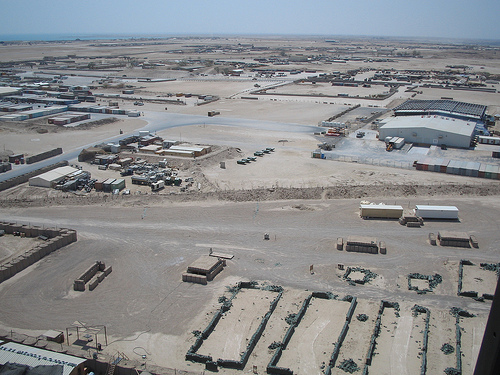
This article is well sourced. Di Nardo uses histories, archival sources, operational orders and analysis by the various armies as well as interviews with participants. Of particular note is that he goes to sources of the coalition partners and not just German sources.  This allows him to be far more nuanced and detailed in his discussion as opposed to others who simply ignore the contributions of the Axis partners.  His footnotes provide added detail and provide and lend support to his arguments.

The importance of this essay is twofold.  First it provides a look at the relationship of German to her coalition partners on the Eastern Front.  This is important from a historic standpoint simply because it is such a neglected topic in most histories of the period and gives added depth to the reasons for Germany’s defeat.  One has to ask the “what if questions” in regard to had the Germans better treated, equipped and recognized their allies’ contributions to the war effort.

The second and probably more important for Afghanistan is that it provides lessons to any nation which has to engage in coalition warfare.  In particular it has lessons for the United States which has found itself as the senior and vastly superior partner in a war which has multiple coalition partners in several theaters of operations.  Each coalition partner has certain military strengths and weaknesses in relationship to the United States, national interests, geo-political and economic relationships with competitors to the United States and internal political realities which impact their cooperation in the war.  As such the United States cannot allow itself to be cast in the role of a haughty imperialistic senior partner as did Germany.  The US instead must cultivate an attitude of assistance, respect and trust among its partners to assure their full cooperation and assistance in relation to U.S. goals in the war. This is particularly important now was it appears that the Afghan war is reaching a point where the deteriorating situation on the ground could invite the early withdraw of allies and necessitate either the addition of more US troops or a strategic withdraw which would be for all intents and purposes a defeat for the US and NATO. The consequences would not be good and while the Taliban may be able to be contained they undoubtedly would invite Al Qaida back and provide them with a sanctuary just as Pakistan has stepped up its efforts on the border.

Leave a comment

Filed under History, iraq,afghanistan, world war two in europe

Going to War: Building Blocks for Success at TQ

Note: This is the latest chapter of my “Going to War” series which documents my deployment with RP2 Nelson Lebron to serve as the Religious Support Team for all advisors in Al Anbar Province.  Previous posts of this series are located in the “Tour in Iraq” link in the topics section on the left hand column of the website.  If you have friends or family who are serving in Iraq or Afghanistan and a little bit of an idea of what they might be experiencing or might have experienced feel free to read and share.  Peace and Blessings, Steve+

tq vew from airTQ: The Chow Hall is on the Right

It was about 0400 when I got to sleep after our flight to TQ.  About 0900 I woke up with the sun shining through the small holes in the metal shade over the window of my can.  I was still pretty groggy when I got up, went and got another shower just to try to wake up.  Even at 0900 it was close to 100 degrees and the sun beat down on me as I walked the 100-150 yards to the shower trailers in my PT gear.  After waking up and getting myself together I knocked on Nelson’s door and woke him up.  Nelson looked pretty beat as well and after this I walked over to the only non-military food outlet the “Green Beans Coffee” trailer and got me some coffee before I walked over to the Chapel.  The Green Bean is interesting; a couple of guys from California started with one store in Saudi Arabia and now is located around the world with U.S. Forces.  They have a program to buy a cup of Joe for a Joe.”  The company website is here: http://www.greenbeanscoffee.com/ now I have to admit I never got a free cup but it was good coffee.

I kind of surveyed the area.  My “can” was located not far from the chapel, the gym and MWR facilities.  A bit down the way a hundred and fifty yards or so was the Marine Corps exchange which though not bad was often like shopping in East Germany, long lines and limited quantities of merchandise.  If you needed something and waited to buy it there was a strong likelihood that the exchange would not have it on your next trip.  About 400 years past the exchange was the main chow hall which was pretty large and covered with a canopy designed to cause high explosive shells from rockets or mortars to burst before they could penetrate the roof of the actual facility.  The chow hall was staffed by contractors, mostly workers from the Indian subcontinent of Sri Lanka and like other areas inside the perimeter guarded by a contracted Ugandan security force.

I walked over to the Chapel and was met by RP1 who introduced me to Fr Jose Bautista Rojas, the Group Catholic Chaplain and the Apostle of TQ.  Jose and I instantly hit it off.  He is out of Los Angeles and really has a good way with people.  On his first tour and first deployment he was having a huge impact around the base.  His support and prayers would be greatly appreciated by me and by Judy in the coming months.  Not long afterward, Chaplain Pat McLaughlin came in after a meeting.  Pat was a fairly newly promoted Commander who was the 2nd Marine Logistics Group Chaplain and was on his second one year tour in Iraq.  He had previously served as the Chaplain at Camp David.  He immediately gave us his full support and put his staff to work helping us get settled and to link us up with all the support staff that we would need to conduct operations. Without this our tour would have never have had the success that we had.

05_Flatbed_1 - NOVEMBERSouthwest Asia Huts or SWA Huts at TQ I stayed in one of these at the end of my tour
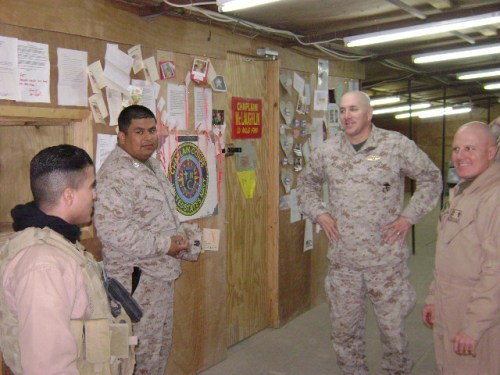
TQ was a major air and logistics hub perfectly suited to operate from to support advisers around the entirety of the province.  We had access to rotor and fixed wing aviation assets, excellent telephone and internet, secure and non-secure access, a place to call home and excellent support.  This is critical when you are operating independently and supporting multiple organizations.   Other Army Chaplain teams had gone into areas where they were given little or no support by the Army teams that they supported.  Unfortunately from a chaplain perspective the talk that I heard had more to do with the Army Chaplains than the units that they supported.  Part of the problem was that most of the Army teams were reservists with minimal training or preparation for a mission type that they were never taught about in chaplain School.   I know of a Navy Chaplain with Marine experience who had no significant problems when he was placed with an Army division level team in Mosel. There were probably a number of reasons for this, and to be charitable I will chalk it up to lack of experience, but lack of support was something that we never had to face.

Lebron, Bautista, McLaughlin, Dundas 2A Great Team: Nelson, Jose, Pat and Me…Pat and Jose helped us tremendously

Within days we had our “operations center” set up in an office in the back of the Plywood Parish chapel. The office had a somewhat auspicious history having taken a hit by a rocket or mortar earlier in the year, a shot that had also made a mess of the drums and other musical instruments of the chapel praise team.  The chapel was kind of a ramshackle affair but had some interesting touches mostly donated by the military personnel to include doors which had been made with care and donated.  Part of getting it together was having phone and internet cables run to the office.  The communications people made this happen quickly and they also got our elderly computers set up and loaded with all that we would need to operate on the secure and non-secure side the house.  I think that we were one of the few ministry teams lower than Regiment or BCT level to have the communications suite that we had been provided.  Likewise the G-3 Air section at the MLG headquarters gave us tremendous support and quickly got us the ability to plan and submit our own air mission requests.

The information that Luke Fabiunke had provided me back at Fallujah now became a gold mine to begin operations.  It was an amazing amount of information, not all current but the situation with adviser teams was always fluid and subject to change based on operational considerations.  There were phone numbers, secure and no secure e-mail contacts for key leaders.  Once we had our communications up the communication began with teams across the province and our calendar was rapidly filled.  The only “glunk” that we had in this was with the senior adviser for one of the Military Training Teams in our local area.  Though his staff and subordinate unit team chiefs were happy for our arrival he for all intents and purposes froze us out of his area.  That did not keep me from continuing to build relationships with some of his people which paid dividends later.  I think that sometimes some chaplains are intimidated by people who rebuff their honest and well meaning efforts to provide support.  I don’t work that way and will constantly work whatever angle I need to in order to get the mission done.  In order not to burn bridges I usually use a slow and patient approach to continually work to build relationships with those in charge of the units that I serve.  It really is an indirect approach.  If I can’t get in one place I put it on the back burner without burning the bridge.  I then work with all the other teams that I can and get out among people.  As we did this “back doors” to ministry opened with teams where we had been locked out of before as they contacted us to get support.  So I did not give up on these local teams but reached out to the furthest reaches of the province with the teams of the 7th Iraqi Division and the 2nd Border Brigade with its Border units and Port of Entry teams.  The senior advisers of these units, Colonel Cottrell and Lieutenant Colonel Bien gave me absolute freedom to coordinate with their teams and opened doors that were never shut.

As we prepared for our mission the first few days were days of acclimatization to the base and to finally recover from the long road in.  One of the first things that we noticed was the pall cast over the mood of the camp by the crash of the Army CH-47 the day of our arrival.  The chapel was being rigged by the staff for the memorial service for the five Army aviators, all of who were significantly younger than me.  The Army was in charge of the service so except for the set up of the chapel and other miscellaneous administrative support.  It is a sobering thing to come into your base of operations and see the set up for five men who died in service of their country.  To look at their pictures and to read their biographies was humbling; one was on his last enlistment before retirement others at different points of their careers, all left behind families, friends and their fellow soldiers who did not know if the bird went  down to mechanical failure or hostile action.   This was in no small way lost on me as we would fly many missions with the men and women of this Army squadron.

Nelson and I worked hard that first day and thereafter to get set up for our first missions.  While I worked the big picture parts of the mission he took care of the little thinks that ensured our success.  Working with Pat, Jose and RP1 he became a key part of the team whenever we were not traveling.

That evening we went to dinner at the chow hall and took in some PT.  Following that I went back to my can where I continued to unpack and make the place somewhere that I could relax.  Though still exceptionally tired from the trip I had a difficult time getting to sleep between my own anxiety the din of UH-60 Army Medivac choppers coming in and out of the LZ for the Shock, Surgery and Trauma Platoon.  Not able to sleep I walked out of my can where I saw the sky light up to our north near Habbinyah with illumination rounds while outgoing artillery sent rounds somewhere into the night and small arms fire could be heard nearby.  A number of Marine and Navy officers gathered near me as we watched the display and talked among ourselves as we wondered what was going on.  Eventually I would get to sleep, but it was very late, that night I found the Office of Compline to be of great comfort, especially this collect.

“Be our light in the darkness, O Lord, and in your great mercy defend us from all perils and dangers of this night; for the love of your only Son, our Savior Jesus Christ.  Amen.”

2 Comments

Filed under iraq,afghanistan, Military, Tour in Iraq