Tag Archives: jesus christ

The Totality of Easter

“Easter is rightly understood only if the burden and strain of Good Friday are not forgotten.”  Hans Kung

The disciples of Jesus had abandoned him. It was a Roman Centurion that recognized at Jesus’ death It took a distant disciple, a man named Joseph of Arimathea to take responsibility for the body of Jesus as his close disciples fled the scene of his arrest, trial and crucifixion. It was women who first discovered his body missing and women who Jesus first revealed himself.

The disciples were traumatized. They had spent three years with Jesus and his death on Good Friday had to be shattering. They had lost their leader, teacher and friend. They were not exactly believing in the resurrection that first Easter and they met the initial reports with doubt. That is why Easter and the resurrection can only be rightly understood if we really appreciate the depths of despair felt by the disciples on that terrible Friday.

I think that is hard for most of us in the United States and Western Europe to comprehend. We are the product of 2000 years of Christendom.  We are the products of Imperial and triumphalist Christianity. Our understanding of persecution is minimal for the most part and we cannot comprehend the totality of the loss experienced by the disciples until we endure our own Good Friday experience of suffering, pain, loss and abandonment or as it is correctly understood as being Godforsaken.

Yet the disciples came to believe and proclaimed a message that put them at risk among their own people. That message would shake the world within a few generations. But the disciples really had no idea just how much things would change in such a short period of time. I’m sure that they could not imagine the Church being used as an instrument of partisan politics or for that matter dominating the politics of the Ancient Rome or the modern United States.  I’m sure that they could not imagine being political sycophants who gladly support those that oppress their brothers and sisters in less desirable nations or neighborhoods.

They understood the Gospel from the point of view of the downtrodden and powerless. The did not run multi-million dollar corporations or attempt to influence the affairs of the leaders of nations. That didn’t happen until after the persecution was over after Constantine.

The simplicity of the message of Jesus who so wonderfully summed up the Law into two commandments, love God and love your neighbor seems to be a quaint idea to our Western Imperial Church.  The message proclaimed by Jesus when he opened his public ministry (Luke 4:18-19) “The Spirit of the Lord is upon me, because he has anointed me to bring good news to the poor. He has sent me to proclaim release to the captives and recovery of sight to the blind, to let the oppressed go free, to proclaim the year of the Lord’s favor.”  seems hopelessly out of date for the Imperial Church, its pampered leaders and their rich and powerful benefactors.  It seems lost in the milieu of the cult of “Christian” celebrity, riches and political power which surrounds us.

German Pastor and Martyr Dietrich Bonhoeffer who saw the Church of his day fall into the cult of Hitler worship said:

“Christianity stands or falls with its revolutionary protest against violence, arbitrariness and pride of power and with its plea for the weak. Christians are doing too little to make these points clear rather than too much. Christendom adjusts itself far too easily to the worship of power. Christians should give more offense, shock the world far more, than they are doing now. Christian should take a stronger stand in favor of the weak rather than considering first the possible right of the strong.”

You see the message of Easter is not understood without Good Friday or the hopelessness experienced by the disciples that day, nor is it understood apart from the words and teaching of Jesus himself.

The Lord is Risen…

Peace

Padre Steve+

Leave a comment

Filed under christian life, faith, Religion

The Paradox of the Passion: Reflections on Palm or Passion Sunday

I celebrated a quiet Palm Sunday liturgy this morning.  As I read the scriptures, especially the Passion Narrative of Mark the Evangelist I was moved in a way that I have not been for some time and found that my time of prayer following the readings and the recitation of the Creed was perhaps more impassioned on account of all the suffering and injustice that I see in the world.  As such I wondered what to write and thought about the story of Longinus the Centurion who was according to tradition the Centurion at the foot of the Cross of the day of the crucifixion.  I went back through a number of articles that I wrote last year about what I imagined a soldier and officer of his time might imagine in such a situation and I will repost those articles on Good Friday, Holy Saturday and Easter. However today I decided to go back into my archives and repost with a few modification a more theological reflection on this Sunday which marks the beginning of Holy Week for Christians around the world. 

“Although we praise our common Lord for all kinds of reasons, we praise and glorify him above all for the cross. Paul passes over everything else that Christ did for our advantage and consolation and dwells incessantly on the cross. The proof of God’s love for us, he says, is that Christ died for us while we were yet sinners. Then in the following sentence he gives us the highest ground for hope: If, when we were alienated from God, we were reconciled to him by the death of his Son, how much more, now that we are reconciled, shall we be saved by his life!” John Chrysostom (AD 347-407)

“God speaking to Luther: “Discipleship is not limited to what you can comprehend—it must transcend all comprehension. … Not to know where you are going is the true knowledge. My comprehension transcends yours. Thus Abraham went forth from His father… not knowing whither he went. … Behold, that is the way of the cross. You cannot find it yourself, so you must let me lead you as though you were a blind man. Wherefore it is not you, no man… but I myself, who instruct you by my Word and Spirit in the way you should go. Not the work which you choose, not the suffering you devise, but the road which is clean contrary to all you choose or contrive or desire—that is the road you must take. To that I call you and in that you must be my disciple.” Dietrich Bonhoeffer the Cost of Discipleship

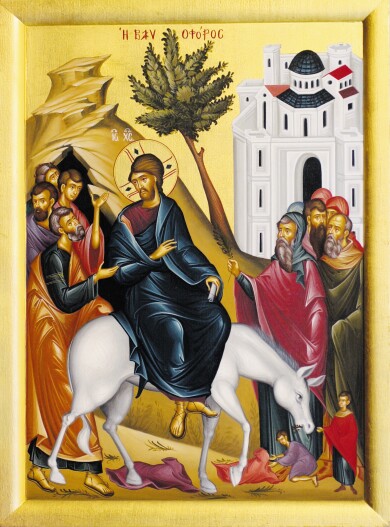
Palm or Passion Sunday always is a day that invokes mixed emotions in me. It is the last Sunday of the Lenten Season and in modern times has become a juxtaposition of two events, the Triumphant Entry of Jesus into Jerusalem where he according to all four Gospels was greeted by crowds of people who lined the street with palms as Jesus riding on a donkey processed from Bethany and Bethphage where he had been staying with Lazarus into Jerusalem and the narrative of the Passion.  As such it is a roller coaster ride in our experience of walking with Jesus in the most difficult times.

This particular occasion is the Sunday where the disciples of Jesus are confronted with the reality that our earthy expectations of him do not meet the reality of his condensation to walk among us fully Divine yet fully Human but one too well acquainted with suffering, rejection and shame.  He shatters our expectations that he will bless any particular political or social ideology that we allow to take pre-eminence over him, even those that invoke his name. Thus our liturgy brings us to this strange day where in a sense we are confronted with celebrating the entrance of the King and in the next breath cursing him and betraying him to those who torture and crucify him.

In the Roman Catholic and Anglican liturgy the observance is divided between the Liturgy of the Palms which takes place outside the Church Nave either outside the church building or in the Narthex in cold or inclement weather.  After an opening collect and reading of the Gospel passage from one of the synoptic Gospels, which one depends on which of the three year liturgical readings that the church is in. Following the reading of the Gospel the congregation led by choir, acolytes and clergy process into the church reciting the words of Psalm 118: 18-29 or singing a hymn such as “All Glory Laud and Honor.”  Once the congregation is in the church the Liturgy of the Word continues and when the Passion Gospel is read and specific roles may be assigned to members of the congregation, while the congregation remains seated through the first part of the Passion the congregation stands at the verse where “Golgotha” is mentioned and remains standing.

The liturgy takes the congregation on an emotional and spiritual roller coaster.  As the congregation begins outside the following is read:

When Jesus had come near Bethphage and Bethany, at the place called the Mount of Olives, he sent two of the disciples, saying, “Go into the village ahead of you, and as you enter it you will find tied there a colt that has never been ridden. Untie it and bring it here. If anyone asks you, ‘Why are you untying it?’ just say this, ‘The Lord needs it.’” So those who were sent departed and found it as he had told them. As they were untying the colt, its owners asked them, “Why are you untying the colt?” They said, “The Lord needs it.” Then they brought it to Jesus; and after throwing their cloaks on the colt, they set Jesus on it. As he rode along, people kept spreading their cloaks on the road. As he was now approaching the path down from the Mount of Olives, the whole multitude of the disciples began to praise God joyfully with a loud voice for all the deeds of power that they had seen, saying,

“Blessed is the king who comes in the name of the Lord!

Peace in heaven, and glory in the highest heaven!”

Some of the Pharisees in the crowd said to him, “Teacher, order your disciples to stop.” He answered, “I tell you, if these were silent, the stones would shout out.” Luke 19:29-40

It is hard when you read this passage and be caught in the reenactment of this procession not to feel the excitement that must have accompanied that procession.  It has the feeling of a victory parade but this road ends in a manner that those present, those seeking an earthly king and Messiah who would drive our the Roman oppressor and restore the kingdom to Israel would not expect with some of them perhaps playing a role in the drama that would take place later in the week.  I particularly like the hymn “All Glory Laud and Honor.”

All glory, laud and honor,
To Thee, Redeemer, King,
To Whom the lips of children
Made sweet hosannas ring.

Thou art the King of Israel,
Thou David’s royal Son,
Who in the Lord’s Name comest,
The King and Blessèd One.
Refrain

The company of angels
Are praising Thee on High,
And mortal men and all things
Created make reply.
Refrain

The people of the Hebrews
With palms before Thee went;
Our prayer and praise and anthems
Before Thee we present.
Refrain

To Thee, before Thy passion,
They sang their hymns of praise;
To Thee, now high exalted,
Our melody we raise.
Refrain

Thou didst accept their praises;
Accept the prayers we bring,
Who in all good delightest,
Thou good and gracious King.

During the Liturgy of the Word one of the following is read, either Isaiah 45:21-25 or Isaiah 52:13-53:12, the second being the Song of the Suffering Servant.  The Psalm is Psalm 22 where the Psalmist foretells Jesus’ anguished cry from the Cross; “My God, my God, why have you forsaken me? and are so far from my cry and from the words of my distress?”And then we have the New Testament reading Philippians 2: 5-11, the hymn to Christ is read:

Let the same mind be in you that was in Christ Jesus, who, though he was in the form of God, did not regard equality with God as something to be exploited, but emptied himself, taking the form of a slave, being born in human likeness. And being found in human form, he humbled himself and became obedient to the point of death– even death on a cross. Therefore God also highly exalted him and gave him the name that is above every name, so that at the name of Jesus every knee should bend, in heaven and on earth and under the earth, and every tongue should confess that Jesus Christ is Lord, to the glory of God the Father.”
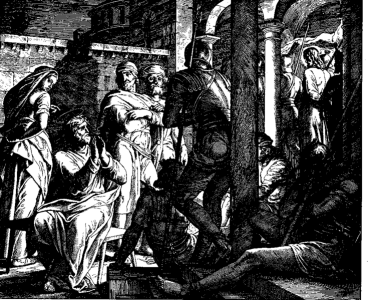
This year the Passion Narrative is that of Mark (14:1-15:47) but I find the passage in Luke 22:39-71 and 23:1-49 (50-56) to be more dramatic.  The three parts of Luke’s narrative that stand out in this narrative for me are Peter’s denial of Jesus, the interaction of Jesus with those crucified with him and that of the Centurion:

“Then they seized him and led him away, bringing him into the high priest’s house. But Peter was following at a distance. When they had kindled a fire in the middle of the courtyard and sat down together, Peter sat among them. Then a servant-girl, seeing him in the firelight, stared at him and said, “This man also was with him.” But he denied it, saying, “Woman, I do not know him.” A little later someone else, on seeing him, said, “You also are one of them.” But Peter said, “Man, I am not!” Then about an hour later still another kept insisting, “Surely this man also was with him; for he is a Galilean.” But Peter said, “Man, I do not know what you are talking about!” At that moment, while he was still speaking, the cock crowed. The Lord turned and looked at Peter. Then Peter remembered the word of the Lord, how he had said to him, “Before the cock crows today, you will deny me three times.” And he went out and wept bitterly.”

Peter’s denial is in large part because he has had his illusions about Jesus shattered and the fact that he had not understood the message up to that point.  As Bonhoeffer says “Jesus is a rejected Messiah. His rejection robs the passion of its halo of glory. It must be a passion without honor. Suffering and rejection sum up the whole cross of Jesus. To die on the cross means to die despised and rejected of men. Suffering and rejection are laid upon Jesus as a divine necessity, and every attempt to prevent it is the work of the devil, especially when it comes from his own disciples; for it is in fact an attempt to prevent Christ from being Christ.”

Likewise Jesus interaction with the condemned thieves that were crucified with him:

“One of the criminals who were hanged there kept deriding him and saying, “Are you not the Messiah? Save yourself and us!” But the other rebuked him, saying, “Do you not fear God, since you are under the same sentence of condemnation? And we indeed have been condemned justly, for we are getting what we deserve for our deeds, but this man has done nothing wrong.” Then he said, “Jesus, remember me when you come into your kingdom.” He replied, “Truly I tell you, today you will be with me in Paradise.”

Mark (15:25-32) records that interaction in this manner:

“It was nine o’clock in the morning when they crucified him. The inscription of the charge against him read, “The King of the Jews.” And with him they crucified two bandits, one on his right and one on his left. Those who passed by derided him, shaking their heads and saying, “Aha! You who would destroy the temple and build it in three days, save yourself, and come down from the cross!” In the same way the chief priests, along with the scribes, were also mocking him among themselves and saying, “He saved others; he cannot save himself. Let the Messiah, the King of Israel, come down from the cross now, so that we may see and believe.” Those who were crucified with him also taunted him.”

The final passage from this narrative that strikes me is the moment of Jesus’ death on the Cross:

“It was now about noon, and darkness came over the whole land until three in the afternoon, while the sun’s light failed; and the curtain of the temple was torn in two. Then Jesus, crying with a loud voice, said, “Father, into your hands I commend my spirit.” Having said this, he breathed his last. When the centurion saw what had taken place, he praised God and said, “Certainly this man was innocent.” And when all the crowds who had gathered there for this spectacle saw what had taken place, they returned home, beating their breasts. But all his acquaintances, including the women who had followed him from Galilee, stood at a distance, watching these things.”

Mark records that event in Mark 15: 33-39. In Mark’s account the reaction of the Centurion (15:39) to the death of Jesus is even more salient than the account of Luke.

“When it was noon, darkness came over the whole land until three in the afternoon. At three o’clock Jesus cried out with a loud voice, “Eloi, Eloi, lema sabachthani?” which means, “My God, my God, why have you forsaken me?” When some of the bystanders heard it, they said, “Listen, he is calling for Elijah.” And someone ran, filled a sponge with sour wine, put it on a stick, and gave it to him to drink, saying, “Wait, let us see whether Elijah will come to take him down.” Then Jesus gave a loud cry and breathed his last. And the curtain of the temple was torn in two, from top to bottom. Now when the centurion, who stood facing him, saw that in this way he breathed his last, he said, “Truly this man was God’s Son!”

The darkness of this is event is perplexing to those who want to find God in some place where he is untouched by human suffering to them the Cross is folly for what kind of God would submit himself to such ignominy but as Martin Luther wrote “He who does not know Christ does not know God hidden in suffering. Therefore, he prefers works to suffering, glory to the cross, strength to weakness, wisdom to folly. For they hate the cross and suffering and love works and the glory of works. Thus they call the good of the cross, evil and the evil of a deed, good. God can only be found in suffering and the cross.” It is in the contradiction of this week that we come to know God, not a God who seeks not the righteous or the powerful, those who seek the power of an earthy kingdom backed by an ideology of power which tramples the weak, but rather those who will simply walk in the footsteps of Jesus the Christ who rules by serving the least, the lost and the lonely.

The liturgy of this day be from any of the Passion narratives takes us to the heart of the Gospel as we led by the writers through the triumph of the entrance into Jerusalem, to the betrayal of Jesus by Judas, the abandonment of him by the disciples and the denial of Peter.  As the writers lead us through his trial, conviction, scourging and trek to Golgotha we see the gamut of human emotions and reactions to Jesus and we know that we can be there as well in any of the characters simply because we are human and capable of compassion or betrayal.  As Jesus is on the Cross it is not the religious or upstanding that remain with him.  He is left with his mother, the other Mary and John the beloved.  He is shown compassion by a thief and recognized as the Son of God by the Roman Centurion, a gentile serving an empire oppressing the people of Israel and whose governor had pronounced the sentence of death upon him.  In this liturgy we have been taken from the heights of exhilaration in the triumphant entry to the depths of despair felt by his disciples that Friday afternoon. It is in this time that we realize how right Dietrich Bonhoeffer is when he writes “God loves human beings. God loves the world. Not an ideal human, but human beings as they are; not an ideal world, but the real world. What we find repulsive in their opposition to God, what we shrink back from with pain and hostility, namely, real human beings, the real world, this is for God the ground of unfathomable love.”

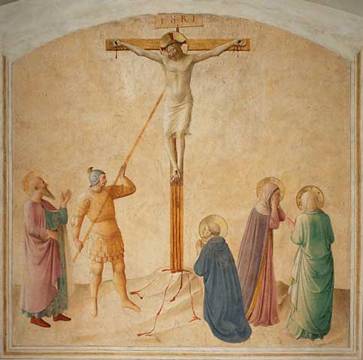
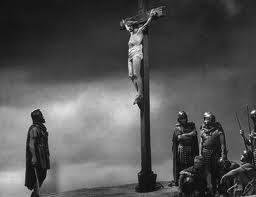
It is the Centurion for which I have the greatest affinity in this story. He is a soldier and in the words of so many soldiers who have obey orders carried out the sentence upon Christ by crucifying him and then as the life ebbs out of Christ’s crucified body exclaims “surely this was a good man” or in other accounts “surely this was the Son of God.” That is the cry of a man who knows that he has executed an unjust sentence, the reaction of a true penitent, the reaction of a man who comes to realize even before many of Jesus’ closest followers understood.  According to tradition the Centurion was named Longinus who left the service of the Imperial Legion, was baptized by the Apostles and was martyred under the orders of Pontius Pilate by soldiers of the unit that he had once commanded.

It is important for the Church not to lose this identification.  The Church is not to become enmeshed and co-opted by those who attempt to use the Gospel to promote ideologies foreign to it as is the temptation in times of crisis.  As Jürgen Moltmann notes:

“In Christianity the cross is the test of everything which deserves to be called Christian… The Christian life of theologians, churches and human beings is faced more than ever today with a double crisis: the crisis of relevance and the crisis of identity. These two crises are complementary. The more theology and the church attempt to become relevant to the problems of the present day, the more deeply they are drawn into the crisis of their own Christian identity….Christian identity can be understood only as an act of identification with the crucified Christ, to the extent to which one has accepted that in him God has identified himself with the godless and those abandoned by God, to whom one belongs oneself.” The Crucified God [pgs. 7, 19]

Nor is our task is not to attempt to invent “crosses” for ourselves in acts of pseudo-martyrdom but simply to be faithful in loving Jesus and our neighbor as Bonhoeffer noted “Must the Christian go around looking for a cross to bear, seeking to suffer? Opportunities for bearing crosses will occur along life’s way and all that is required is the willingness to act when the time comes. The needs of the neighbor, especially those of the weak and downtrodden, the victimized and the persecuted, the ill and the lonely, will become abundantly evident.” The mark of the Christian is not to blindly give his life for a cause or be consumed by the false “messiah’s” promoted by politicians, pundits and even preachers captivated by the lust for power and glory.

As we walk through the mystery of Holy Week together let us renew our faith in the Crucified One and not be conformed to those things that seek to turn us from the way of discipleship and the way of the Cross.

Peace

Padre Steve+

Leave a comment

Filed under christian life, film, Religion

They didn’t Pray Enough: Pat Robertson’s latest “Patwah”

“If enough people were praying, [God] would intervene. You could pray, Jesus stilled the storm, you could still storms.” Pat Robertson on the 700 Club

“But I tell you, love your enemies and pray for those who persecute you, 45 that you may be children of your Father in heaven. He causes his sun to rise on the evil and the good, and sends rain on the righteous and the unrighteous.” Jesus (Matthew 5:44-45)

Well Pat Robertson the Grand Mullah of Virginia Beach has again come up with new a Patwah declaring today that the people across the Ohio and Tennessee Valleys who were devastated by unseasonable tornadoes and storms this week could have avoid them “if they had prayed more.”

Of course such statements are nothing new from the Tidewater’s favorite Taliban and certainly to be expected.  Some it seems that no matter what the question that Mullah Pat needs to have an answer direct from God on high. He was responding to a question from one of his viewers about why “God would cause” such disasters and instead of doing the thing that Jesus did when asked a similar question about why Jewish insurgents had died fighting the Romans that Jesus mentioned the 18 people killed at the tower of Siloam.  Jesus basically asked his questioners if the 18 people killed at the tower of Siloam were worse sinners than anyone else in Jerusalem, the answer of course was “well duh, stuff happens.” Even in the New testament it was understood that the “rain falls on the just and the unjust.” But today it seems that the people like Pat have to find an answer that they can attribute to God to bust the chops of people that they think really need to be whacked.

I’m sorry but such theological insanity coming from a “Christian” is a shame and comparable to the Fatwahs issued by extremist Muslim preachers in Afghanistan, Iran and other locations. The only difference is that Pat is claiming that he is getting his word from Jesus and the Holy Spirit.

Sorry Pat but the 39 people killed and thousands injured or displaced by these storms deserve better from a “Christian” preacher who has indulged himself upon their generous financial contributions for the last 40 years.  Heck, these were not even people that live in Blue States, these storms hit the Red State Republican heartland and some swing states.  If those states are not safe from God’s wrath then who is? But then if prayer could have kept these things from happening does that mean that the people killed, injured or rendered homeless were somehow at odds with God?

Well if you ask Jesus probably not.  However if you hold Jesus in less esteem than Pat then maybe so.  Now I do believe that God answers prayer and sometimes in most unusual and seemingly miraculous ways. However it seems that sometimes stuff happens, even to good people.  I guess that is why we need folks like Mullah Pat to guide our way…but then maybe we don’t need him to do this.

Peace

Padre Steve+

Leave a comment

Filed under christian life, faith, Political Commentary, Religion

Advent and Incarnation: Merry Christmas!

“It might be easy to run away to a monastery, away from the commercialization, the hectic hustle, the demanding family responsibilities of Christmas-time. Then we would have a holy Christmas. But we would forget the lesson of the Incarnation, of the enfleshing of God—the lesson that we who are followers of Jesus do not run from the secular; rather we try to transform it. It is our mission to make holy the secular aspects of Christmas just as the early Christians baptized the Christmas tree. And we do this by being holy people—kind, patient, generous, loving, laughing people—no matter how maddening is the Christmas rush…” Andrew Greeley

I really do love the seasons of Advent and Christmas.  This year it has been so busy that Advent has gone by way too fast. Advent which begins four Sundays before Christmas is the season of preparation, it is the season for the Christian of the promise of Christ, his coming in the flesh or “Incarnation” being born of Mary and also his coming at the consummation when as the Creed says “He shall come again….”

Advent is a time which has pretty much been stomped all over by the religion of commercialism and its high holy day of Black Friday which falls the Friday before Advent begins.  However it is really important if one wants to comprehend the full religious significance of Christmas.  It helps the Christian place Christmas in its appropriate context, not as “Jesus’ Birthday party” where we wear a little button that says “Happy Birthday Jesus” but that day where God became human as Paul wrote so eloquently:

“But when the fullness of time had come, God sent his Son, born of a woman, born under the law, in order to redeem those who were under the law, so that we might receive adoption as children. And because you are children, God has sent the Spirit of his Son into our hearts, crying, “Abba! Father!” So you are no longer a slave but a child, and if a child then also an heir, through God.” (Gal. 4:4-7) 

In the fullness of time…Advent helps point us to that time when God humbled himself to become a human being.  It is the time where in an ideal world we would slow down just a bit and begin to prepare ourselves for his coming. However our culture often with the blessing of Christians and the Church has eliminated that time of reflection.  It is a time where God not only makes us his children but his brothers and sisters and I think even more importantly friends.

Advent as a season is a period of patient expectation, a season of hope in the midst of despair. It is the message that God still cares and that what we wait for is not far off, the nativity of Emmanuel, God with us which is expressed so well in my favorite hymn of the season O Come O Come Emmanuel 

Oh, come, oh, come, Emmanuel,
And ransom captive Israel,
That mourns in lonely exile here
Until the Son of God appear.
Rejoice! Rejoice! Emmanuel
Shall come to you, O Israel!

The Irish singer Enya has a wonderful version of this song which I have placed the link here:  http://www.youtube.com/watch?v=DPHh3nMMu-I&feature=share

German pastor, theologian and martyr Dietrich Bonhoeffer wrote from prison in 1943

that “A prison cell like this is a good analogy for Advent: one waits, hopes, does this or that—ultimately negligible things—the door is locked and can only be opened from the outside.”

This year has been like brutal prison for many people and nations in the world. Wars, natural disasters, economic problems and political instability have caused much suffering.  Man’s inhumanity to man has been demonstrated time and time again by terrorists, criminals and repressive governments.  Our lack of control over nature as was shown in Fukishima Japan when a massive Earthquake and Tsunami destroyed cities and a nuclear power plant killing thousands.  At the same time we have seen the best people rising to meet disaster and persecution, poverty and unrest with courage, faith and mercy motivated by love in the face of death.  In spite of all, love still triumphs.

The Advent season which is now drawing to an end leads us to the hope of the God who chooses to be with us.  Tomorrow evening we celebrate when “the Word was made flesh and we beheld his glory.” It is a time when the world is reminded even in the most secular ways that God choses to be with us in the babe born in a dingy stable in a town that few cared about.  In that humble beginning God draws near to us and his creation.

It is a time to rejoice for Jesus the Christ is born.

Merry Christmas,

Padre Steve+

1 Comment

Filed under christian life, faith, Religion

Faith and Doubt: A Reflection on Christmas

“God weeps with us so that we may one day laugh with him.” Jürgen Moltmann

There was a time in my life that faith in God, for me the Christian God, Father, Son and Holy Spirit was something that I pretty much took for granted until I had my own crisis of faith when I returned from Iraq in 2008.  It was that crisis where for all practical purposes I was an agnostic trying to believe while feeling abandoned by God and many of his people.  That crisis has etched a permanent scar in my soul which has led to some fairly major changes in my life but even more so forced me to actually enter what Saint John of the Cross called the “Dark Night of the Soul.”  Not that that is in any way a bad thing as difficult as it is.

I will not tell of how my great spiritual disciplines helped me get through this as they did not. I found it hard to pray or believe in anything for nearly two years as I struggled with abandonment. I felt that God, the Church and the Navy had abandoned me.  I was losing my battle with PTSD during that time, depressed, anxious and despairing I threw myself into my work among the critically ill ICU patients and those that cared for them.  Christmas Eve of 2008 was spent in despair as I wandered through the darkness on a cold night after leaving Mass because I could not get through it.

Though I found a community and camaraderie among those that I worked with and tried to provide spiritual care for my own condition grew worse, so much so that my clinical duties had to be curtailed in September of 2009.  I still stood the overnight duty and filled in for others as needed but for a number of months I had no ward assignments.  On one of the on call nights not long before Christmas I received a call to the ER where I was called to give the last rites to a retired Navy Medical Doctor who was a true Saint, faithful to God, his Church and the community where for years he had dedicated much of his practice to the poorest members of the community to include prisoners in the Portsmouth City Jail. He breathed his last as I prayed this prayer following the anointing of the sick:

Depart, O Christian soul, out of this world;

In the Name of God the Father Almighty who created you;

In the Name of Jesus Christ who redeemed you;

In the Name of the Holy Spirit who sanctifies you.

May your rest be this day in peace,

and your dwelling place in the Paradise of God.

Something happened that night and by Christmas Eve I realized that something was happening to me. As I wrote in Padre Steve’s Christmas Miracle on Christmas Eve of 2009 following an incredibly busy day full of life and death situations and ministry which amazed me:

“Mid afternoon I was walking down the hall and I experienced a wave of emotion flood over me, and unlike the majority of emotions that I have felt in the past couple of years this was different.  It was a feeling of grace and I guess the presence of God.  I went up and talked with Elmer the shrink about what I was feeling and the experience was awesome, I was in tears as I shared, not the tears of sadness, but of grace.  I am beginning to re-experience the grace of God, something that has been so long absent that I did not expect it, at least right now.  I didn’t do anything differently; I certainly was not working extra hard to pray more, get more spiritual or pack my brain full of Bible verses.  I was too far gone to do those things.  It was all I could do many mornings just to get out of bed and come to work.”

Since that time I have continued to recover faith and belief. I cannot say that it is the same kind of faith that I had before Iraq. No this was different, it was faith born of the terrible emptiness and pain of abandonment and despair, a faith that is not content with easy answers and not afraid to ask questions.  It is a faith in Jesus Christ, the crucified one who’s image we see hanging from the crucifix and adorning icons of the Crucifixion. It is as Jürgen Moltmann wrote in The Crucified God:

“The Symbol of the Crucifix in church points to the God who was crucified not between two candles on an altar, but between two thieves in the place of the skull, where the outcasts belong, outside the gates of the city. It is a symbol which therefore leads out of the church and out of religious longing in to the fellowship of the oppressed and abandoned. On the other hand, it is a symbol which calls the oppressed and godless into the church and through the church into the fellowship of the crucified God”

My Philosophy of Religion Professor in seminary, Dr. Yandall Woodfin told us in class that until we had “dealt with the reality of suffering and death we were not doing Christian theology.” At the time the words were offensive to me, but by the time I had graduated and also done a year of Clinical Pastoral Education they became a part of my experience, but even then that did not prepare me for the darkness that I lived in from February of 2008 until that Christmas Eve of 2009.  I would say that in addition to grappling with suffering and death that one has to add the abandonment of the outcast to the equation.

It is from this perspective that I will look at an ancient document that for many Christians is their Baptismal statement of faith or Creed.  ‘Credo in unum Deum’ “I Believe in God” is no longer for me simply a theological proposition which I both ascent to and defend, but rather an experience of God born out of pain, despair, anxiety, doubt, unbelief and abandonment finding almost no Christians willing to walk through the darkness with me, including clergy. It was if I was radioactive, many people had “answers” but none understood the questions and until my therapist Dr. Elmer Maggard asked me “how I was with the big guy?” and Commodore Tom Sitsch asked me “Where does a Chaplain go for help?”

When I finally collapsed in the summer of 2008 and met with Dr. Maggard I made a conscious decision that I would not hide what I was going through because I felt that if someone didn’t speak out then others like me wouldn’t seek help. In the nearly three years since I returned from Iraq I have encountered many people, men and women, current and former military personnel and families of veterans who came to me either in person or through this website.  Included were military chaplains also experiencing life and faith crisis. Most said that I was the first Chaplain or minister that they had met or read who said that he struggled with faith, belief and didn’t know if God existed.  In each of those encounters there was a glimmer of hope for me and I think for them, for the first time we had people that we could be open with.  Co-workers and others said that I was “real” and I certainly do not boast of that because it was painful to try to be transparent with people while in the depths of doubt and despair while hoping that somehow God would touch them with some measure of grace when I found it hard to believe.  I guess it was the fact that I was willing to walk, sometimes in unusual circumstances and locations with them even if it meant facing my own pain and doubt. I was learning something about being what Henri Nouwen called a wounded healer.  Nouwen wrote:

“Nobody escapes being wounded. We all are wounded people, whether physically, emotionally, mentally, or spiritually. The main question is not “How can we hide our wounds?” so we don’t have to be embarrassed, but “How can we put our woundedness in the service of others?” When our wounds cease to be a source of shame, and become a source of healing, we have become wounded healers.”

In the past year I have still had my times of struggle but have also found others that have gone through similar times.  People like me that have experienced the terrible effects of a crisis of faith that leads a person into despair of even to the point of life itself and all that is good. I am fortunate. I was talking with my Bishop recently in regard to the struggle that I have had in recovering the disciplines of the spiritual life. Thankfully she does understand and was encouraging. I guess that is why now when I have more compassion for someone when they tell me that they “lost their faith” especially those that have been changed by their experience of war or other trauma. I don’t necessarily have all the answers for them because I am quite obviously still figuring it out myself. However as I found sometimes it is not the person with the answers but simply the person that takes time to listen and care that is more important to a person when they struggle, especially for those that before the traumatic event had been strong believers.

I’ll write a bit more about Christmas and faith but not tonight.

Peace

Padre Steve+

3 Comments

Filed under christian life, faith, Pastoral Care, Religion

The Advent of Early Onset Holiday Commercialization Syndrome 2011

I hate to sound like a Grinch or Scrooge type of killjoy but here on November 20th I am bothered by an attack of Early Onset Holiday Commercialization Syndrome (EOHCS). EOHCS is not yet recognized as a Disorder in the DSM IV I have to wing it here but I think that the average person probably realizes that this condition is epidemic in our society.  Since I tend to avoid malls and the big retail outlets in general I can usually avoid attacks of EOHCS mostly by ignoring the incessant “Christmas” or holiday commercials of which car commercials seem to be the most offensive this year.  However I do  have to go out in public sometimes and on those occasions must do all that I can to stay sane as EOHCS seems to come earlier than it ever did.

I had to go get groceries this afternoon and went to a “Wal-Mart Super Center” in Morehead City because they carry a particular brand of pita bread that I cannot get at any of the grocery stores in my local area.  Now I expect that when I go to any retailer after Labor Day to find Christmas specials and an encroachment of Christmas paraphernalia and gifts with each passing week.  That is a given in our consumer driven society and whether I like it or not it is a fact of life and I am not going to change it.  However I just wanted groceries and not the full on Christmas press.  Now to be sure I only go to Wal-Mart when necessary because frankly the place sets off almost every alarm in my post PTSD mind and body.  When I go my goal is to get in and out as soon as possible and avoid any crowds, congested areas and noise.  Thus I will usually go late at night as if I were a stealth commando, but today I needed to go early to get it done.

Of course the store was littered with pre-Black Friday specials and had aisles of candies, cakes, toys, and trimmings. I felt like the Grinch walking through Whoville without the sweet ambiance of that cartoon town.  As I went made my foray into the store, knowing exactly what I needed and where to find it I was assaulted by and overwhelmed with the sound of Christmas music which was louder and more obnoxious than usual. I think the most annoying of the songs I heard today was “Rocking around the Christmas Tree” sung by Brenda Lee which seems to repeated about every 15 minutes during the holiday season.  I find her voice particularly grating and about as soothing as Pee Wee Herman scratching his nails scratching on a chalkboard when I am out shopping.  Now this song is simply annoying but when I hear songs that are meant for worship of the Lord being used as a means to condition us to buy things I get offended.  Thus when I hear “Silent Night” sandwiched between advertisements on November 20th in a store I want to scream, not that there is anything wrong with that; the screaming that is.

Now I like Christmas music, so long as it is actually somewhat close to Christmas even even the non-religious songs of which Grandma Got Run over By a Reindeer is my all time favorite, but I digress.  Since liturgically speaking it isn’t even Advent yet I find such a bombardment of secular and sacred Christmas songs while grocery shopping to be offensive to my somewhat liturgically correct sensibilities.  That may seem harsh but the musical assault at Wal-Mart only increased my desire to finish shopping and get the hell out of the store as fast as my cart would carry my food.  It did not induce me to hang around to see if I wanted to spend extra money on stuff that I probably don’t need.

And we wonder while there is little sense of the Holy in our society.  The fact is that somehow we have allowed our culture to devolve to the point that we utilize actions and holidays meant to point us in the direction of the Holy and use them to satisfy our most base desires. The Holy is subordinated to the profit margins of retailers who make their money satiating our desires for the newest and greatest stuff that we can get our hands on.

I am not against people getting nice things at all or giving gifts in abundance to their loved ones or even for themselves.  I like nice stuff too and I love the celebration of Christmas in its spiritual as well as cultural derivatives.  I like Christmas trees and decorations and the festiveness of Christmas especially with friends enjoying each other and a good glass of hot Gluhwein.

I guess I think that when we turn Christmas into a months long pursuit of profits and stuff that it really cheapens and degrades the holiday, even for people that are not Christians. Really, Black Friday is the real holy day in our consumer society and what gets more push back, a store being open briefly on Christmas or Black Friday sales encroaching on Thanksgiving?

Even allegedly “Christian” retailers take advantage of the holiday even selling trinkets that say “Jesus is the Reason for the Season” or “What Would Jesus Do?” at a healthy profit.  Again I am not against people making a profit from their labors people should be compensated well for work well done. But the fact that most Jesus junk like almost everything else is now made in China or Third World countries by workers that are all but slaves doesn’t seem to enter into the equation for jesus is the reason for the season“Christian” retailers and even ministries; just as it doesn’t for everyone else seeking to make a profit off the baby born in the manger.

How sad that as a culture we have reduced the celebration of God humbly entering into the human experience to a celebration of crass economic Darwinism much more in tune with Ayn Rand than Jesus.  Paul writes in Philippians though he was in the form of God, did not regard equality with God as something to be exploited, but emptied himself, taking the form of a slave, being born in human likeness….” Somehow that concept seems lost in our culture.

Oh well, what can I say?  Maybe I am a Grinch after all or maybe I can get counseling for Early Onset Holiday Commercialization Syndrome.

Peace

Padre Steve+

1 Comment

Filed under christian life, economics and financial policy, faith

A Day for All Saints even those at the Mendoza Line

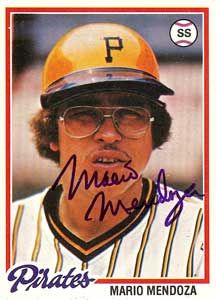
Mario Mendoza (above) and St Rita of Cassia the Patron Saint of Baseball

Today is the Feast of All Saints.  This is one of my favorite Feasts in the Liturgical year and one that is  The feast is celebrated in both the Eastern Orthodox and Western Churches such as the Roman Catholic Church, the Anglican Communion, certain Lutheran Churches, as well as some Wesleyans and Methodist. The feast is celebrated on the First Sunday after Pentecost in the East and on November 1st in the West.  In the Eastern expression it is celebrated in honor of all the Saints, known and unknown while in the West, Particularly the Roman Catholic Church it is dedicated to the Saints who have attained the beatific vision of heaven, kind of like being inducted into the Baseball Hall of Fame instead of just being a great baseball player.

As a baseball fan I believe that the Orthodox position which honor saints known and unknown is the more accurate of the two because just like baseball some of the most wonderful Saints get to the Hall of Fame.  Even so the sentiments that I have about this feast are unaffected by any such minor differences, the remembrance of those that have gone before me is much greater than any nuance of theology.  After all what would baseball be without Mario Mendoza?* and where would Baseball be without its Patron Saint, St.Rita of Cassia?

But I digress…

When we celebrate All Saints it is the life of the people of God that we celebrate; the small and the great, the pious, the brilliant, the heroic and the chaste among them and us.  Yes we celebrate those faithful yet fallible and all too human people the litter the calendar of saints and those that never got on anyone’s calendar.  While some may have been models of piety many were not going right back to Saint Peter himself.  The men and women that we call Saints were human and despite the efforts of hagiographers to portray them as something more than that they remain human.  They had virtues and vices.   They were sometimes cranky, ill humored and dour and jealous of coworkers and sometimes even petty.  But those are the facts and they demonstrate the great love of God toward his people.

St Paul set the standard for the persecution of Christians prior to his conversion and sometimes had rocky relationships with his co-workers as both Barnabas and Timothy could attest.  St Peter denied Jesus not one, not two but three times and enjoyed some pork with some Gentiles until he got caught earning Paul’s well deserved scorn.  St Jerome who translated the Bible into Latin was a rather ill-tempered man and St Thomas Aquinas whose theological brilliance is echoed today in the official teachings of the Roman Catholic Church was to put it mildly rather well fed, so much so that legend has it that he had a semi-circle cut at his place in the dinning room table to allow him to be closer to his food.  St Ignatius of Loyola the founder of the Jesuits was hauled before the Inquisition several times, while St Francis in his early life was a playboy soldier.  Mary Magdalene is believed to have been a woman of ill repute and St Augustine, the Father of Western Theology was such a sexual reprobate before his conversion that he made sure that everyone after him, even the married ones have to feel bad about having sex unless it is or the purpose of procreation with the expressed written intent of Major League Baseball and the Los Angeles Dodgers.

My point is not to mock piety or those that do good works or give their lives for the faith, God and their fellow people.  In fact I celebrate those that do such works of heroism, charity and self sacrifice because they inspire me to do better.  I admire them because of their humanness and not because the Church for reasons noble or base chose to elevate their stories above others that never made the official calendar of Saints. In fact the vast majority of those considered by others to be Saints would be embarrassed at such attention being called to them and if they read some of the works that were given the “official” seal of the Church would probably blush in embarrassment.

I am inspired by them because of how the grace and love of God was shown through their lives, actions and even their imperfections.  When I see and read of their lives I know that there is hope because of Christ for someone like me.  I don’t ever hope to match the piety, holiness and genuine goodness of the vast majority of the saints.  I know that they are in the Hall of Fame I am on the Mendoza Line mostly still lucky to be on the team.

We know some of these men and women through history.  But for the most part the Saints are those whose memories that are known only to God and the lives of the men, women and children that they touched in ways ordinary and extraordinary.  I think that we all know a few precious Saints that touched our lives. The beautiful thing is that though they are no longer with us in the flesh they still intercede in heaven for us.

That is the wonder of All Saints Day, that God in Christ who reconciled the world to himself didn’t hold their sins against them.  Such is proof of the amazing grace of God in that while we were yet sinners, Christ died for us. Even more amazing is that God somehow uses all of us warts an all to touch others with his love.   Even guys like me that that are lucky to make the Mendoza Line.

Saint Rita pray for us.

Peace

Padre Steve+

*Mario Mendoza is the namesake of the “Mendoza line” which is a batting average of .200 below which you are likely not going to playing baseball in the Major Leagues for very long. http://www.stltoday.com/sports/baseball/professional/article_cff05af5-032e-5a29-b5a8-ecc9216b0c02.html

1 Comment

Filed under Baseball, christian life, faith

Yes God Really does Love the Real World

“God loves human beings. God loves the world. Not an ideal human, but human beings as they are; not an ideal world, but the real world. What we find repulsive in their opposition to God, what we shrink back from with pain and hostility, namely, real human beings, the real world, this is for God the ground of unfathomable love.” — Dietrich Bonhoeffer

I think one of the greatest joys that I have as a Priest is when people tell me that they like me because I am “real.”  It’s not so much that they think I am a great preacher, which I am not or that I have all the answers especially because my answer to many questions that I am asked is “I don’t know.”  In fact what those that like me say what they like about me is that I am approachable and care enough to give them the time of day and listen to them.

My psychological and spiritual collapse following my tour in Iraq caused me to see why who live in the real world appreciate pastors, Priests or Rabbis that are real.  There were very few people, especially ministers that in the years following my return that I felt that cared about me enough to share what I was going through with them.  In fact I found that many were not interested or simply did not want to deal with a “bruised reed.”  I think that when a minister, Priest or Rabbi expresses doubt or is in crisis be it a long term physical illness that will not be healed, a deep depression that causes them despair or a spiritual crisis that causes them to question their faith that the tendency among most ministers is to run away as if they were radioactive or that it was catching.

In fact I have heard this for years as friends or pastors that I met in their crisis expressed the pain of being ostracized by other ministers or their denominations or local churches.  Likewise I have also all too often seen churches and pastors ignore or ostracize people simply because they are not easily “fixed” or those that are considered “problems” because they ask uncomfortable questions or point out inconsistency or injustice in the church.  Then there are the times where the Church mistreats, abuses and uses people without any real care for them as people treating them as numbers or even more crass “tithing units.” Finally there are the times that the Church covers up the crimes of its ministers against the weak including sexual abuse and pedophilia and when found out blames the victims or protect the criminals from the justice of the state using Canon Law to subvert the justice system.  Such actions are not unique to the Roman Catholic Church that most often stands accused but can be found in almost any church or denomination.

I think a lot of this is simply that many of us clergy types become so invested in “defending” what we believe that we forget that the call of Jesus is to care for those that are the least, the lost and the lonely. Without getting preachy it seems to me that Jesus preferred to be with such people and often castigated the clergy of his day for doing exactly what we do.  The whole “woe to you Scribes and Pharisees…” passage should send chills up any minister’s spine because we are often no different than them.

Likewise when we refuse serve people that come to us because of denominational differences or because they are not Christians or someone of our faith tradition and then refuse to help them find someone that can we do a disservice to them and to God.  Since have served nearly my entire time in ministry in some form of the chaplaincy I deal with this often. I represent a small religious tradition which is Catholic but not Roman and very ecumenical, thus I am in a distinct minority.  I know man who serves as a Priest in a small communion that has many similar beliefs to my church who told me that he loved being his denomination because when he was a Chaplain “he did not have to worship with Protestants or give them communion.”

One of the men that serve as a model for me is the late German Redemptorist Priest Bernard Häring. Häring was drafted as a medic by the German Wehrmacht at the beginning of the Second World War and taken out of the parish.  In his service as a medic he never forgot that he was a priest and performed his duties as a priest to non-Catholics in his units even celebrating the Eucharist with them.  He also took the time to serve and care for civilians, Poles, Ukrainians, Russians and French in the areas that he served.  One story that he told was when he told his Protestant Soldiers that their official pastor would be coming for service that they told him “There really is no reason to make any changes for us because you are ‘one of us.’” (Bernard Häring “Priesthood Imperiled: A Critical Examination of Ministry in the Catholic Church” Triumph Books Ligouri, MO 1996 p.9)  Häring was transparent about exactly what he was, a Roman Catholic Priest whether he dealt with Protestant or Orthodox Christians and because he was “one of us” they accepted him and made him their pastor even without becoming Catholic themselves. A Polish parish that he served as a prisoner of war sought to make him their pastor following the war despite him being a member of the Army that brutally subjugated their country.  After the war he continued with that same spirit and I have sought to emulate that spirit in my Priestly ministry.

I definitely am not perfect but I try to listen and care for those in my charge regardless of their faith or lack thereof.  I just hope that in my imperfect attempts to care that people see that God loves them. My trust is in the simple message that “in Christ God was reconciling the world to himself, not counting their trespasses against them, and entrusting the message of reconciliation to us.”

As Bonhoeffer said “God loves the real world.”

Peace

Padre Steve+

2 Comments

Filed under christian life, faith, Pastoral Care, philosophy

The Long Good Friday: The Story of Longinus the Centurion

It was another ignominious day in the life of Longinus the Centurion. Posted to the troubled outpost of Judea he commanded a unit composed of locally recruited troops mostly Samaritans and some Syrians. How he wished that he commanded elite troops of the Italian Cohort or any of the European Legions stationed in nearby Syria.  Normally he and his men were posted to the Roman capital of Judea Caesarea on the Mediterranean coast of Judea, though his troops were not elite the location was not bad so far as amenities, especially for Judea.

However, today’s mission was another distasteful assignment away from Caesarea back to the always troublesome city of Jerusalem.  Since the Jewish Passover was coming and with it thousands of Jewish pilgrims from around the world were in the city and in there was always the potential for trouble. Longinus had heard around the headquarters that tensions in Jerusalem were increasing due to the presence of some itinerant preacher from up in Galilee which according to the agents and spies in the city allegedly had healed the sick, raised the dead and restored sight to the blind. Evidently he had even stirred things up on a previous visit by chasing money changers out of the Temple. Longinus had to admire that, this Jesus was pretty ballsy. Since the worldly and seasoned Longinus didn’t think much of religious zealots, Jewish or otherwise he could only chuckle when thinking of some bumpkin raising hell in the Temple and pissing off the religious elite.

He led his unit as part of the mixed Cohort which provided security for the Imperial Legate, Pontius Pilate. He remembered a previous mission where Pilate had posted the Imperial Standards with the Image of Caesar as God outside the Fortress Antonia very close to the Jewish Temple caused a riot and Pilate had the Standards returned to Caesarea under heavy escort the next day.  This time there was a rebel named Barabbas who had been causing no end of trouble and Pilate had sentenced him to death.  But then the Jewish High Council brought Pilate another case, the case of this itinerant preacher, Jesus of Nazareth. It seemed to Longinus and the other Centurions present that the case was a simple religious disagreement that the Romans should not get involved in. However Pilate took the case fearful of the threat to his job if he allowed another “king” to live.  Yet Pilate had found this Jesus innocent but caved to the pressure of the mob, even ignoring the pleas of his wife Claudia to spare the preacher.  Pilate was a typical politician and cut a deal which allowed King Herod, the Sanhedrin and himself to meet the demands of their various constituencies or in the case of Pilate his boss to end this Jesus of Nazareth problem once and for all.

On the day before the Passover one of the preacher’s own men turned him in to the Council for the paltry sum of 30 pieces of silver. That alone proved to Longinus that this Jesus was no threat to anyone. The Temple Police brought Jesus to the Sanhedrin which condemned him to death, but since they were not authorized by the Roman administration to carry out the death sentence they took the case to Pilate. Longinus saw Pilate use every trick that he could to make the decision the responsibility of someone else and if Longinus had been Pilate he would have told those religious types to pound sand and get the hell out of his headquarters, but he was a soldier not a politician with greater aspirations like the legate.

Instead Pilate complicated his life and those of his fellow Roman officers in charge of their local troops. One Centurion had the duty of supervision the torture of this Jesus. The troops were brutal, Samaritans and Syrians they hated the Jews and torturing a Jew for any offense was just too much fun, but for the Roman officers it was unseemly and lacked the honor of a true battle against other soldiers. After the brutal scourging with a barbed whip those soldiers placed a rough hewn “crown” of thorns on the unfortunate man’s head and robed him in purple to mock his claims to be a “king.” Longinus felt that the whole exercise was a cruel joke but the order had been given and by Roman law had to be carried out. After the scouring Pilate tried one last time to get out of killing this man offering to spare him for the life of Barabbas, a man who was a legitimate terrorist threat to the Empire’s interests in Judea. Instead the weak willed Pilate caved and spared the life of the terrorist for a man who couldn’t even control his own people. It was sad what was done in the name of the Emperor.

When final sentence was pronounced Longinus was assigned to the crucifixion detail.  Normally with such inflamed passions he would have assigned much of his unit to the task of the execution and related security measures. However it seemed that the usually surly population had little interest in stopping this execution of one of their own. With that in mind Longinus took just four soldiers with him to conduct the execution, security did not seem to be a problem. After a rather tumultuous parade through Jerusalem where the condemned man was heckled and abused they arrived at a hill just outside of the city called Golgotha, the place of the Skull. Longinus felt that the place was grotesque but it did work for the execution. Any visitor to the city would see the condemned man as well as two common thieves who were being executed at the same time.

His men performed the execution in the prescribed manner and he allowed the men to divide the condemned man’s clothing among them. For three hours the men along with a number of observers those that were obviously mourning the scene including a woman that appeared to be the itinerant preacher’s mother and a young man who he might be one of his followers. They were balanced out by a group of hecklers who mocked the condemned men, especially the preacher. Even one of the common thieves joined in the heckling. Yet in spite of this the preacher responded with grace and love to those who mocked him in his dying hours offering forgiveness to his men and promising eternal life to one of the condemned men who hung on either side of him.  The only real trouble came when some of the Council members noticed that the placard above the preacher said “The King of the Jews.” They immediately send men to Pilate to change the wording but Pilate finally told them to pack sand saying “I have written what I have written.” Longinus kept his silence when he heard this he and the other Centurions arrived back in Caesarea and had a chance to share drinks and a meal in a local pub.

It was an unusual day, the skies grew black as noon approached and the preacher made a number of chilling statements from his place on the cross the most poignant being where he cried out “my God my God why have you forsaken me?” That struck Longinus, this man was not really guilty of anything in Roman Law but was being killed and Longinus was part of the process.  A tear came to his eye when the preacher cried out “it is finished” and died.  Without thinking he called out to his men and to those remaining at the site “truly this man was the Son of God” drawing the ire of those cheering the execution and the bewilderment of those that appeared to be there to support this man. So when a runner came from Pilate came to order the deaths be speeded up to accommodate the religious traditions of the Jews he was relieved. His men broke the legs of the men on either side of the preacher but when they came to the limp body of the preacher they found that he was dead. Just to ensure that this was the case he had a soldier drive a spear into the side of the man. Blood and water flowed from the wound. The man was dead and the job was complete. Another Centurion came with a detail of soldiers to remove the bodies and to ensure the security of the preacher’s tomb, yet another concession to the religious people.

Longinus was glad that the day was done. He cast a glance at a number of women and one young man that remained. They obviously were his friends and the older women might have even been the preacher’s mother. He shook his head marched his troops back into the city and reported that the mission was complete when he reached Fortress Antonia.  He felt hollow inside and hoped beyond hope that time could be altered to allow him to save the many before it ever got to this point.

Arriving at Antonia he joined a number of fellow officers and as they chatted about the day he felt his anger and frustration rise. That preacher didn’t deserve to die and it was too bad that he could not be restored to life. But the Centurion in change of the Tomb Guard detail reported that the body had disappeared from the tomb. Longinus was tired. He hoped that it might be true. He asked the bartender for another drink and wondered just what was going on in this hellhole called Judea and he thought again “truly this man was the Son of God.”

Peace

Padre Steve+

Note: Longinus is the name attributed to the Centurion at the Cross during the crucifixion by early church tradition. Likewise this is true of Claudia the wife of Pilate. This story is simply my versions of what might have happened that fateful Friday when a Centurion named Longinus became an actor in a play that he could not imagine.

5 Comments

Filed under faith, History, Religion

Deadly Chatter: The Danger of Talking and not Listening

“Christians, especially ministers, so often think they must always contribute something when they are in the company of others, that this is the one service they have to render. They forget that listening can be a greater service than speaking.” Dietrich Bonhoeffer

I am a man of words sometimes many but mostly in writing but when I am in the company of others, unless I know them well or feel an exceptional need to add to a conversation I tend not to say much. In fact many times what I contribute is nothing more than something funny or witty to break tension or point out irony, speaking of which I need to do my Summer White uniform shirt in the next couple of days because we have an inspection next week but I digress.

Since I happen to be a minister I often get to experience the incessant droning and chatter of many Christians especially ministers who seem to believe that God would have them pounce on every opportunity to prattle on feeling that they must contribute something even if they have nothing to say.  Since I have on occasion been guilty of this myself I must always remember to take the Lincoln Log out of my eye before I go pointing out the Sequoia in someone else’s eye.  But we Christians and especially those of the ministerial type can really be a pain in the ass about this and I speak from experience on both the giving and receiving end of this proposition. What I fin amazing is for some ministers, especially the really popular ones on television or the mega-mart, I mean mega-church variety can take a small section of the Bible, usually the most insignificant ones like The Prayer of Jabez and turn them into a series of sermons each lasting nearly an hour complete with the DVD and the book, or series of books on the subject.

I remember a pastor of a mega-church that would begin sermon series on various topics and never complete them. He had one that was on “mission, vision and passion” which died somewhere around the eighth week of hour-long sermons into the mission section.  The sad thing is I can’t even remember what his primary Scriptural texts for this. Likewise I have endured many other sermon series to nowhere by various pastors or simply been held hostage by pastors that won’t shut up even when they know that they are beating a dead horse.  As for me I try to spend no more than 15 minutes on a sermon and usually shoot for about 12 minutes and focus on one thing either from the Gospel lesson or tying that lesson in with either the Old Testament or Epistle reading.  I just hope that in that time I don’t put anyone to sleep and that somehow by the miraculous work of the Holy Spirit that at least someone in the congregation takes a nugget from the message and that it is helpful.

Judy helped me in this when I was the Base Chaplain at Fort Indiantown Gap Pennsylvania.  The congregation had an unwritten rule that the service would begin promptly at 1100 and end promptly at 1200.  Judy and I know some American Sign Language since she went to California State University at Northridge because of her rather significant hearing loss and as any boyfriend who was passionately in love and lust would do I followed her.  As a result I became fairly well versed in sign language though I have lost most of that capability over time.  However she was good to let me know during a sermon how much time that I had before I had to be done and if I waxed too poetically she would let me know that I was boring something that I should have figured out by the sleeping members of the congregation.  But what the heck, none of them were sitting on a window ceil. No harm no foul.

I have found in the ministry of Priest and Chaplain that more often than not people don’t really want me to pontificate about everything that I know and would much rather that I take the time to listen to them. I actually try hard to notice the words as well as the inflection and the non-verbal aspects of communication when I spend time with people because it is all a part of listening.  I don’t always do it well and many times I have to catch myself before I interject a comment, idea or suggestion that might not be what the person needs at all in order to ensure the sanctity of the moment.  I know that when I am not doing well, which I spent the better part of the past three years not doing after my return from Iraq that the last thing that I want is someone who spouts “answers” and pushes their agenda without ever taking the time to care for or listen to what I am actually saying.  I think that I am not alone in this.

Bonhoeffer made this amazingly succinct comment about just what I am saying here and he does it far better than I could have done. “Many people are looking for an ear that will listen. They do not find it among Christians, because these Christians are talking where they should be listening.”  Therein lays the danger for both the person seeking someone that will listen to them as well as the one with all the answers.    The danger is that when we are in constant transmission mode we not only fail to listen or to really hear the other but also become deaf to the still small voice of God. Bonhoeffer noted this danger saying “he who can no longer listen to his brother will soon be no longer listening to God either; he will be doing nothing but prattle in the presence of God too.”  I figured due to the wisdom of my long-suffering wife Judy that God stopped taking theology lessons from me a long time ago, if indeed the Deity Herself ever took them from me. Of course back in my younger days I knew everything but since I have learned that I really know very little but I am definitely sure that I prattle in the presence of God as much as anyone else, and that is reality. Taking the time in the Daily Office and Scripture is something that I struggled with on my return from Iraq when I even struggled with the existence of God.  I am aware of this and I am trying to take some time every day to “be still and know.”

Unfortunately our media and information obsessed culture beats us senseless throwing more information, much of which is useless, deceptive or destructive in terms of content that it dulls our senses to the reality of others around us and keeps us from listening and seeing those who cry out for someone that will just take the time to listen even if they cannot “fix” the problem. You see in much of Christianity we suffer the same ailment of the culture around us in that we would rather “fix” someone than care for them. You see care takes loving nurture and patience especially the latter. Fixing is a “fire and forget” kind of thing, the kind of thing that “miracle workers” do for a living even if they are miracles faux no miracles at all. However the real act of care by a minister appropriately called “pastoral care” or the spiritual care of souls by a lay person takes time and involves a relationship and that requires listening when the answers are not apparent.  It is standing near the cross and not abandoning Jesus in the crisis something that nearing Good Friday we should remember with fear and trembling. I’m no fool when it comes to knowing my limitations especially when it comes to something like survival and I would have probably much more like Peter who went into hiding after denying Jesus than John on that day when the sky turned black.

You see to care involves love and as the Apostle Paul so aptly described love and what it is not in 1 Corinthians 13: “If I speak in the tongues of mortals and of angels, but do not have love, I am a noisy gong or a clanging cymbal. And if I have prophetic powers, and understand all mysteries and all knowledge, and if I have all faith, so as to remove mountains, but do not have love, I am nothing.”

Paul got it, even though he put a young man to sleep when preaching. The man fell out a window and died but thankfully the Holy Spirit wrought a miracle and raised the young man from the dead as he does so many weeks for so many of the faithful who suffer injury when passing out in the middle of a tedious sermon.  Maybe Paul wrote the epistle after that incident.

But simply to preach with no end is one thing but to fail to care or fail to really listen is worse.  Providing “answers” without understanding the question and to impatiently wait our opportunity to jump in and push our agenda no matter how noble or even “Biblical” it is is not faith nor is it Christian, insofar as Jesus would have understood it to be.

I remember an associate pastor of a mega-church that we attended in the late 1980s as I was getting ready to begin seminary. This pastor who was very charismatic and a wonderful preacher could not be bothered to care for or listen to the questions and struggles of a budding seminarian.  He would cross his arms and tap his foot to signal that his time was better spent doing anything other than listening to someone else. I had another senior pastor at a different mega-church who was one of my ordaining pastors back in my Evangelical Protestant days who told the congregation that someone asked him how sick that he would have to be for him to visit them in hospital he said “you don’t want to be that sick.” Of course he told the story during a sermon so the clear message was “if you are sick don’t expect a visit and don’t even bother calling me.”

Unfortunately this attitude has been all too common throughout the history of the Church and today it almost seems epidemic among pampered pastors who appear to be more intent on their personal gain than on caring for the flock that God has given them. Likewise it is all too common in church life. To  again quote from Bonhoeffer “This is the beginning of the death of the spiritual life, and in the end there is nothing left but spiritual chatter and clerical condescension arrayed in pious words. One who cannot listen long and patiently will presently be talking beside the point and be never really speaking to others, albeit he be not conscious of it. Anyone who thinks that his time is too valuable to spend keeping quiet will eventually have no time for God and his brother, but only for himself and for his own follies.”

This is a much bigger danger to Christians and the Christian faith than many if not most active clergy and laity alike across the denominational spectrum imagine.  The fact is if people don’t believe that we care about them and fail to show them the unconditional love that God shows us instead seeking to provide fixes that gel with our agenda then we will lose a generation. Perhaps we are already well on the way to this and it will be our fault.

Peace

Padre Steve+

1 Comment

Filed under christian life, faith, Pastoral Care, philosophy, Religion