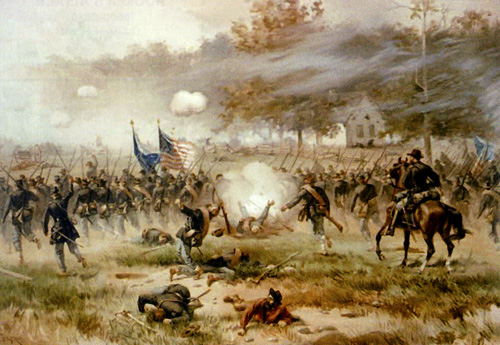
“Of all the days on all the fields where American soldiers have fought, the most terrible by almost any measure was September 17, 1862. The battle waged on that date, close by Antietam Creek at Sharpsburg in western Maryland, took a human toll never exceeded on any other single day in the nation’s history. So intense and sustained was the violence, a man recalled, that for a moment in his mind’s eye the very landscape around him turned red.” Stephen W Sears
“I have heard of ‘the dead lying in heaps’, but never saw it till this battle. Whole ranks fell together.” Captain Emory Upton, 2nd U.S. Artillery, at Antietam

“We were in the very maelstrom of the battle. Men were falling every moment. The horrible noise was incessant and almost deafening. Except that my mind was absorbed in my duties, I do not know how I could have endured the strain.” Lt. Frederick L. Hitchcock, 132nd Pennsylvania, at Bloody Lane, Sept. 17, 1862
To the west of Frederick Maryland a small town named Sharpsburg sits on the west side of a creek. Named Antietam the creek’s headwaters are in Franklin County Pennsylvania and it meanders south where just to the south of Sharpsburg it empties into the Potomac River.
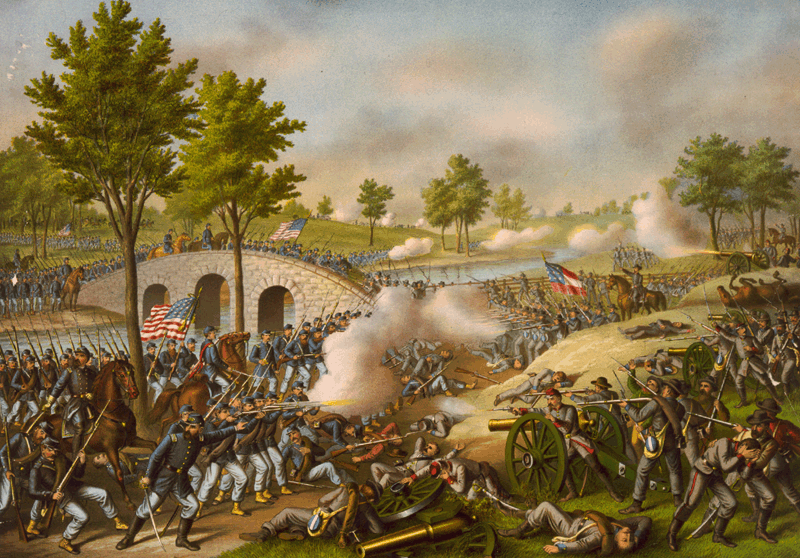
It is a peaceful place, rolling hills and agricultural country with some well preserved stone arch bridges, including one just outside of Sharpsburg. It is hard to believe that 150 years ago the town and the creek were the scene of the bloodiest single day of battle in American history.
On that indian summer day of 1862 the Confederate Army of Northern Virginia, General Robert E Lee, commanding made a stand against the much larger Union Army of the Potomac, Major General George B. McClellan, commanding.
Lee had invaded Maryland following a string of successes in Northern Virginia during that summer of 1862, defeating McClellan outside of Richmond in the Seven Days, and in a campaign of maneuver bested a newly formed Army, the Union Army of Virginia commanded by Major General John Pope defeating it at the Second Battle of Bull Run between 28-30 August 1862. With Northern Virginia’s crops and livestock depleted and his opponents in crisis Lee moved his army north into Maryland. The decision was driven partly by the need to provision his army, but also had the hope of drawing Maryland away from the Union mistakenly believing that public sentiment in that state was pro-Confederate. If the people of Maryland rose up to support Lee it would be disastrous to the Union and endanger the capital itself. A final consideration was the hope that a Confederate victory on Northern soil would bring about the foreign recognition and possibly the intervention of Great Britain on the side of the Confederacy.
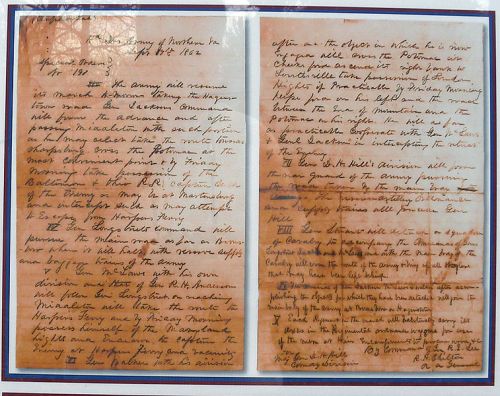
The Lost Order
Lee crossed the Potomac on September 3rd and sent his Second Corps west with some elements seizing the Union armory in Harper’s Ferry, others to secure the Baltimore and Ohio Railroad at Martinsburg the rest of the Army was in the area of Frederick. He was pursued by the very cautious McClellan at the head of the Army of the Potomac.
On September 9th Lee issued General Order 191, the infamous “lost order” which a copy of which was found by Union soldiers wrapped around three cigars at a campground recently occupied by Lee’s rear guard element, the division of D.H. Hill on September 13th. The order detailed the disposition of Lee’s army and McClellan seized the opportunity. On the 14th the Army of the Potomac attacked part of Lee’s army at the Battle of South Mountain. The Union won that battle forcing the outnumbered Confederate forces to withdraw, though the delay allowed Lee to concentrate more of his army at Sharpsburg on the 15th.
Although he outnumbered Lee McClellan believed the reports of the Pinkerton Detective Agency which provided intelligence to the army. Those estimates which credited Lee with more than 100,000 troops. He delayed his attack until he had drawn up his full army on the on the 17th.
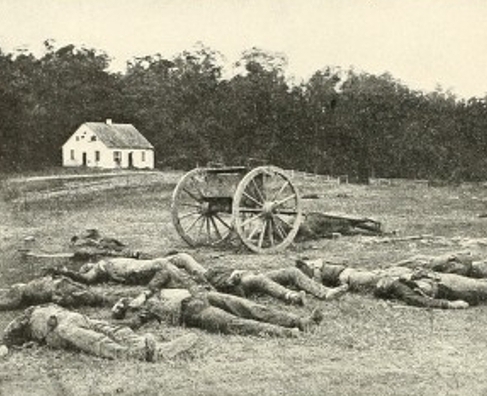
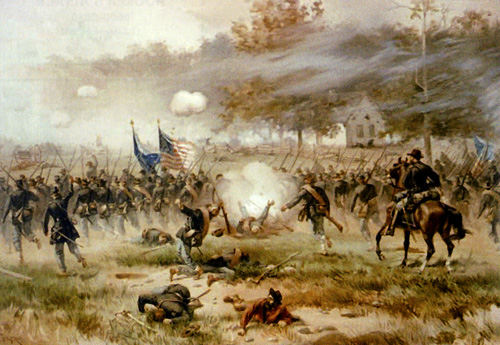
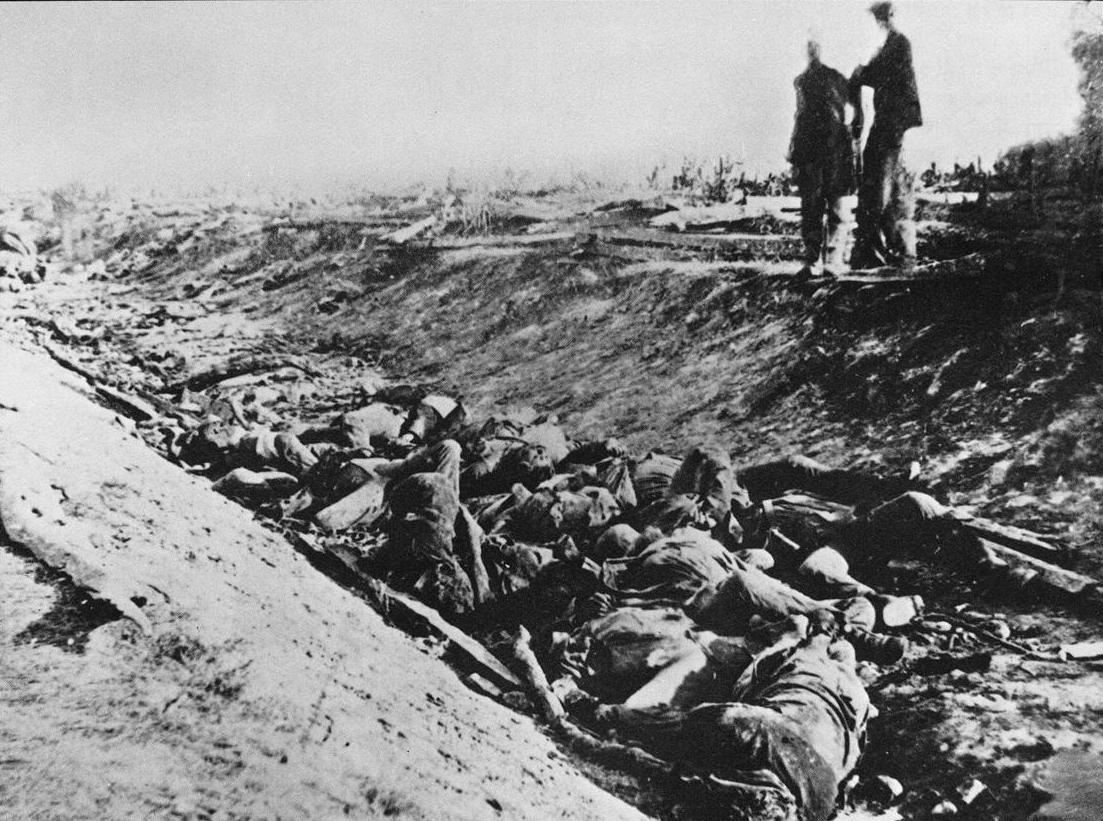
When he did attack on the 17th his attacks were uncoordinated and though he came close to decisive breakthrough Lee’s army desperately clung to its positions. The action began to the north of the town in the morning and both sides showed incredible ferocity at the Cornfield, where in the space of about three hours nearly 8000 soldiers were killed or wounded. The fighting shifted to the center of the line opposite the town by mid-day. Amid the destructive storm of artillery the armies fought around the Dunker Church and a sunken lane now known as “Bloody Lane.” In the confines of that 800 yard stretch of road over 5000 soldiers were killed or wounded in the course of about four hours. The Union forces broke the Confederate line but reinforcements were not sent and when the the division commander, Major General Israel Richardson was mortally wounded the attack lost its verve and the Confederates under Lieutenant General James Longstreet were able to restore the line.

The south remained quiet as McClellan ordered Major General Ambrose Burnside’s IX Corps to hold off on attacking. Burnside did not receive his orders to attack until 1000. He finally attacked across the south bridge, now known as Burnside’s Bridge in the afternoon. It was another tough fight and Burnside, after several attempts move to the south to flank Confederate forces in the late afternoon with the intention of cutting Lee from off his only escape route. The Confederates were in a desperate condition. It was at this point, about 3 PM when the division of Major General A.P. Hill arrived and immediately counterattacked breaking up Burnside’s attack. Burnside requested reinforcements from McClellan who refused saying that he had none available. This was not the case, McClellan had two full corps of infantry uncommitted to the battle but still believing that he was outnumbered and that Lee was attempting to trap him.
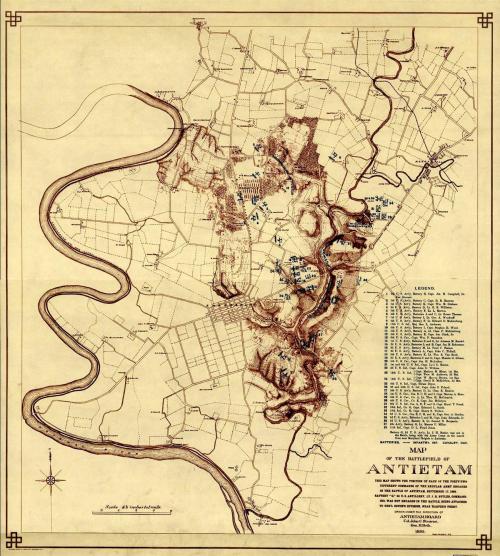
The actioned ended by 530 PM with both sides rested and reorganized for action the next day. Lee prepared to defend but no Union attack was offered on the 18th. An informal truce was observed to allow the evacuation of the wounded and Lee began his withdraw across the Potomac into Virginia that night. Despite being goaded by Lincoln to pursue McClellan did not and the Union lost the opportunity to destroy Lee’s army n Union territory.
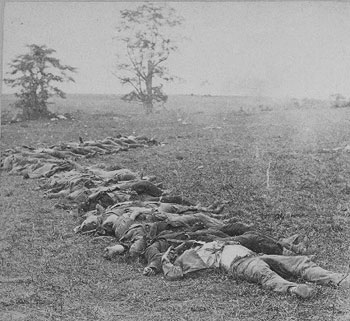
Casualty estimates vary but according to Stephen W Sears in his book Landscape Turned Red that the Army of the Potomac lost 2108 dead, 9540 wounded and 753 missing. He states the best estimate of Confederate casualties are 1546 dead, 7752 wounded and 1018 missing. Most of the missing were likely killed and buried in mass graves or discovered and buried by civilians after the battle. In the space of 12 hours 22719 Americans were killed or wounded. It was the bloodiest single day in American military history.
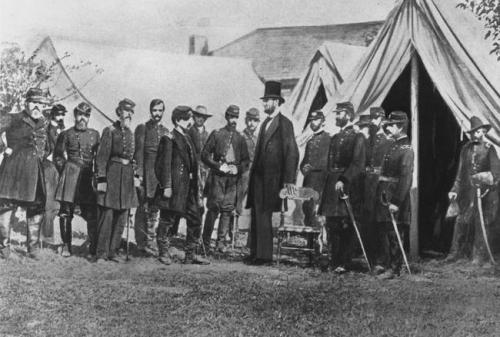
Though the battle was inconclusive in that Lee’s army survived but had to break off its offensive it had more influence than expected. President Lincoln issued the Emancipation Proclamation on September 22nd and though it did not take effect until January 1st 1863 it marked a turning point in the war.
McClellan failed to take up the offensive in the next tow months and Lincoln relieved him of command giving the Army of the Potomac to Burnside who goaded by Lincoln took the army into battle at Fredericksburg where it met with defeat.
I have been to the battlefield a number of times, once as part of a “staff ride” with the Marine battalion that I was assigned in May of 2000. Each time I go I take the time to ponder the great losses endured by both armies and the individual courage of the soldiers involved. Some of the units that I served with in the Army National Guard in Texas and Virginia trace their lineage and honors to regiments that fought at Antietam and I have felt a connection to the battle because of that. It is hard to imagine the amount of death and carnage taking place in such a placid location in such a short amount of time.
It is something to ponder when some Americans openly suggest another civil war if their party does not win the election.
Peace
Padre Steve+





 The Inglorius Padre Steve's World