Tag Archives: middle east

Miscellaneous Thoughts on a Friday

IMG_1915

Friends, I am tired. It has been a busy week and I am going to try to rest some over the weekend as well as spend some quality time with my wife Judy.

Part of the issue with my tiredness is that I haven’t been the same since my experience over the last month or so dealing with the military mental health system. I won’t bore you with details since I have already written a lot on it, including the fact that I got some resolution, but frankly I didn’t realize just how fragile that I was still was. I had no idea that trying to get help would be so emotionally punishing. Truthfully, I have not had a good night sleep since the initial conflict with the physician and the system. The nightmares, terrors and restlessness are all back. Hopefully in a few weeks or months things will settle out again.

On the positive side I was provided new hearing aids which are quite remarkable in their capabilities and are already helping me to understand speech better. For those that don’t know I hear noise just great. I have almost no loss of that ability. However, since Iraq I suffer unending tinnitus and my speech discrimination, a neurological function is in the third percentile, meaning that 97% of people understand speech better than me. So I am grateful for the hearing aids, as Judy, who was becoming ever more frustrated with me not understanding her or others. The ironic thing is that she has been severely hard of hearing her whole life and has a 77% hearing loss, but she usually understands speech better than me. a funny thing did happen yesterday. I was asked by a Charismatic Christian about praying from my hearing. While I appreciate that and I am touched by such sincere desires to help, it would be a shame if the government wasted over 5,000 on the hearing aids that are working so well.

Likewise, it looks like I have been invited to speak at the Military Officers Association of America conference in Washington DC in September on the topic of being a care giver to those suffering from PTSD while suffering from it myself. That should be interesting. In a way it is something that I hope to do on a regular basis once I retire from the military.

I have been writing a lot about Gettysburg and each thing that I write helps bring me a better understanding of the battle, but also the people, as well as the culture and philosophic ideas that had such an influence on those times. So you can expect that as I write new material and revise old material that I will share them with you here.

Finally as to current events. I am troubled by the events in Ferguson Missouri, especially many of the surprisingly racist reactions by “white America.” Since I wrote about that recently as well, I won’t go back into it.

The situation in Iraq with the rise of ISIS and its “Caliphate” has me greatly concerned. This is not a normal terrorist organization, it is Al Qaeda on steroids. The Secretary of Defense, Chuck Hegel, sounded a clear warning in the wake of the public execution of  American photo journalist James Foley and threats to bring their war to the United States and the west. I do not think that Secretary Hegel, a very circumspect man would make such an announcement if there was no real threat. The problem is that back in 2003 the Bush Administration sewed the wind in Iraq and left a very fragile and unstable state, whose leaders failed their people, and now we are reaping the whirlwind. We want peace, I know I think I speak for everyone, but the rise of ISIS with its apocalyptic vision, vast financial resources, international reach and success on the battlefields of Syria and Iraq is drawing radicalized Moslems to it’s black banner around the world. Because of this I expect that we are in for a long hard fight, and that our new opponent will cause us grave damage.

That being said, I fear for civil liberties in the wake of any attack, and I especially fear that, if something bad happens in the United States, that we will react not just against the culprits; but innocent, loyal and patriotic Americans of Moslem or Arab descent or because they look like the bad guys, or because they share the Islamic religion. Since I know a good number of such people I worry. We can be quite a xenophobic people when aroused, and our quite often “yellow journalism” and jingoistic politicians and preachers stir the cauldron of hatred to the point of paranoid insanity. Our history is colored by such xenophobia.

Finally, the news that the Russians may be attacking in the Ukraine is seriously bad news, which we all, Americans and Europeans need to wake up to.

So I close this Friday sharing my sense of foreboding even while I hope and pray for peace and justice.

Peace and have a wonderful weekend.

Padre Steve+


Leave a comment

Filed under faith, Loose thoughts and musings, middle east, News and current events, PTSD

Spendin’ the Nighttime Reminiscing: Padre Steve Remembers the Music of the 1970s and Early 1980s

me-and-judy-dorm

I don’t know about you but the music that I really enjoy is the music that was popular when I was in Junior High, High School and College.  For me that period spanned the years 1971-1983.

richardnixon-flickrcommons1

It was a turbulent era. The Vietnam War was ending and Nixon was resigning due to the Watergate break in cover-up despite going to China and establishing the beginning of detente with the Soviet Union.  Assassination attempts on political leaders, successful and unsuccessful, were common. Two attempts were made on Gerald Ford.  Prime Minister Aldo Moro of Italy and President Anwar Sadat of Egypt victim fell to terrorists while President  Ronald Reagan and Pope John Paul II were felled by bullets which did not prove fatal.

gas-lines

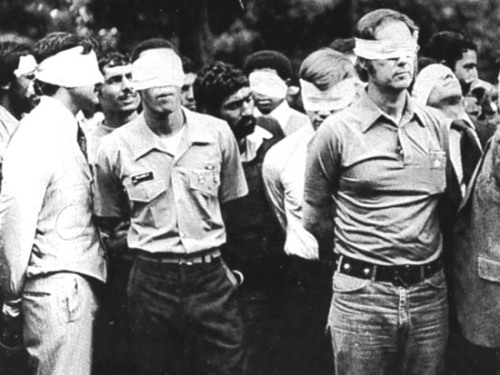
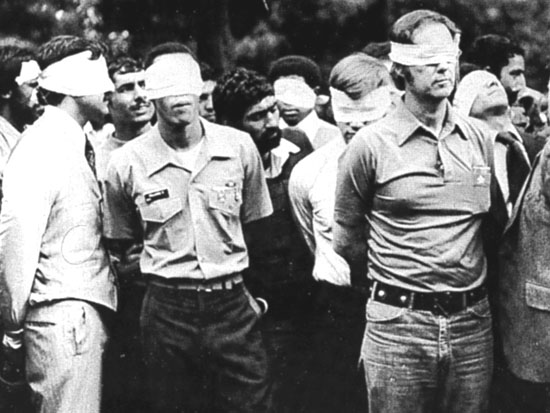
The Cold War was tense despite the beginning of detente and signing of Nuclear Weapons treaties between the United States and the Soviet Union. The Middle East was in turmoil even as Egypt and Israel hammered out a peace treaty withe the help of US President Jimmy Carter. In Iran a revolution swept the Shah of Iran out of power bringing the Ayatollah Khomeini into power.  The seizure of the US Embassy and the 444 day hostage crisis punctuated by a failed rescue attempt demoralized the United States. In October 1983 247 Marines were killed in a terror bombing of their barracks at the Beirut International Airport.

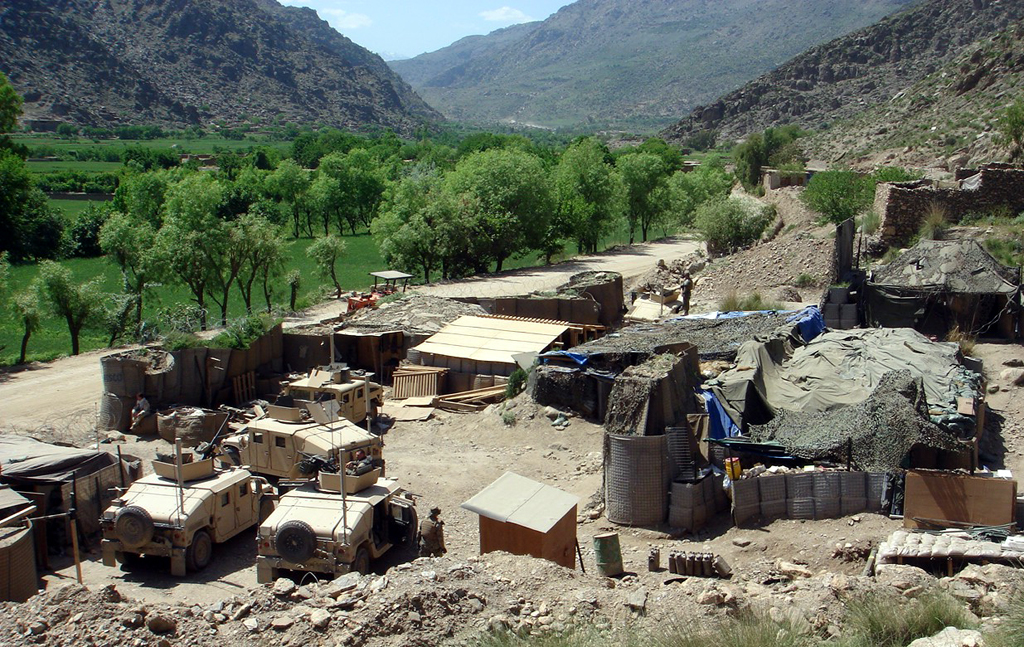
Mortar_attack_on_Shigal_Tarna_garrison,_Kunar_Province,_87

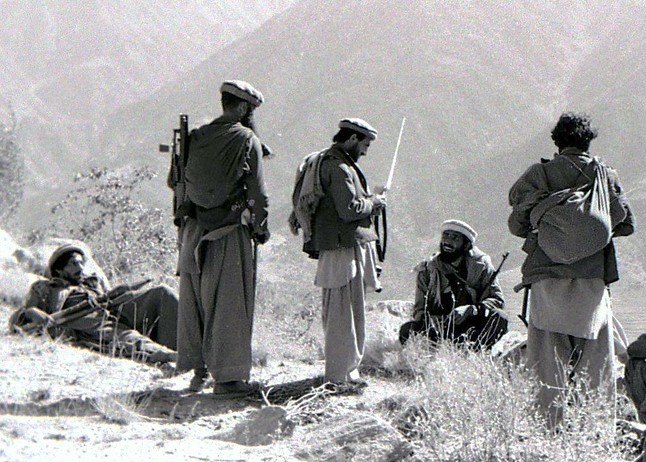
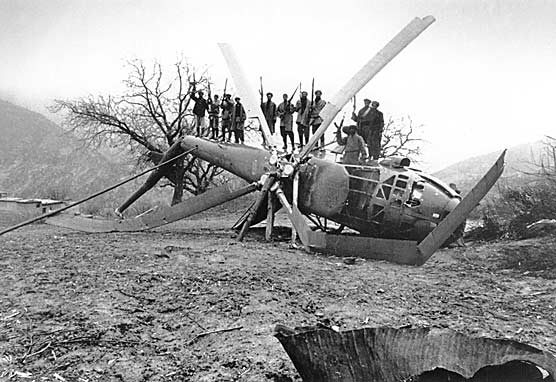
The Soviets invaded Afghanistan which would become their Vietnam, as part of the Cold War this lead to US involvement with Mujahideen. The US support with the Mujahideen was a fateful alliance that brought the Taliban to prominence and introduced the world to Osama Bin Laden. The Cubans were fighting in Angola while the Anti-Apartheid movement struggled with its leader Nelson Mandela languishing in a South African prison.

70s-iranian-hostages

High profile terrorist attacks became common. The Palestinian terrorist group Black September killed Israeli athletes at the 1972 Munich Olympics. European terrorist organizations including the Red Brigades, the Red Army Faction and Bader Meinhof gang, the Irish Republican Army and the American Weather Underground provided a constant string of terrorist attacks even as Middle Eastern terrorist groups highjacked airliners in daring fashion, matched at times by equally rescues by Israeli and German anti-terrorist units.

The American and the world economies were in a state of recession much of the era. There was a major recession, the American auto industry needed bailouts, inflation was running in double digits as was the unemployment rate. The dollar was weak and OPEC wreaked havoc on world oil markets with embargoes in 1973 and 1979.

Casey Kasem AT40 Ad

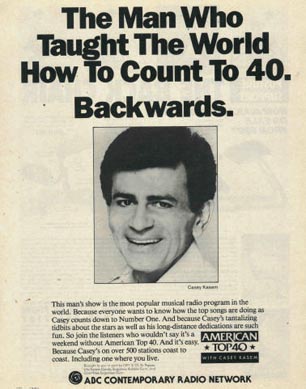
However it was music in the 1970s and early 1980s that provided a diversion for many people looking for respite from all the bad news that echoed around the airwaves and in the newspapers.  Thankfully there wasn’t a 24 hour cable news cycle yet otherwise people would have probably been jumping off of buildings.  It was the heyday of AM Top 40 type stations and the beginning of rock oriented FM music stations. Kasey Kasem gave voice to the hits with American Top 40. As for me I had countless 45s and LPs of my favorite groups and artists.

628x471-8

I listened  Doctor Donald D Rose of KFRC in San Francisco and my car, a 1966 Buick LeSabre 400 had a retro-fitted 8-Track tape player and speakers.

Great groups and artists ruled the pop and rock airwaves and the era produced some of the best rock, pop, R&B, soul, country-rock, disco and new-wave music ever done. It really was an amazing era both in quality and diversity of music .

It was not “message music” like much 60’s music but focused on entertainment.  Power groups like Journey, Starship, REO Speedwagon and Boston made power ballads, while AC/DC and KISS shocked and entertained at the same time.  Groups like the Blondie, the Eagles, Chicago, Paul McCartney and Wings, Abba and the Commodores dominated the pop charts while individual artists such as Olivia Newton-John, Elton John, Carly Simon, John Denver, Lionel Ritchie, Barry Manilow and others satisfied the more mainstream pop crown.  Disco enjoyed a brief heyday with the popularity of Saturday Night Fever and the Bee Gees.  R&B enjoyed a renaissance due to the unlikely duo of the Blues Brothers who helped re-launch the careers of Aretha Franklin, Johnny Lee Hooker, Cab Calloway and a host of others. Country crossovers became big with Kenny Rogers, Dolly Parton and Glenn Campbell leading the way.  As the 80’s came along new groups and styles were introduced including New Wave and Rap. It was music that helped us through those times.

I listen to that music all the time and remember those turbulent days well. It certainly wasn’t the fact that things were great in the world. That being said despite bad news there was still some sense of that things would work out okay.  Music helped provide part of that sense of hope. It was an escape and the music of that time is still with us. Many of those those groups haven’t gone away and people look back with fondness to the music of the era even as the artists age and pass away.

Here are some of my favorites with links to the videos, they are in no particular order nor are the representative of all the groups that I have in my library of CDs and DVDs, but I enjoy the heck out of them.  Have fun and enjoy.

Peace,

Padre Steve+

Little River Band “Reminiscing” http://www.youtube.com/watch?v=CZ_3G4xqSDQ

olivia-if-not-for-you-a

Olivia Newton-John “Magic”

http://www.youtube.com/watch?v=r7WPwH8Rd6g

and “I Honestly Love You”

http://www.youtube.com/watch?v=6zGLSnZGZts 

commodores

The Commodores “Sail On” 

http://www.youtube.com/watch?v=zg-ivWxy5KE

the-eagles-hotel-california

The Eagles “Hotel California” 

http://www.youtube.com/watch?v=mnkJcjBCG88

ac-dc

AC/DC “You Shook Me All Night Long”

http://www.youtube.com/watch?v=Lo2qQmj0_h4

KISS “I Was Made for Loving You” 

http://www.youtube.com/watch?v=q7fxN3g5sLw

Kenny Rogers and Dolly Parton: Islands in the Stream http://www.youtube.com/watch?v=recWNQddJeE&feature=related

Rupert Holmes: Escape (The Pina Colada Song) http://www.youtube.com/watch?v=DaOXWJKsX-U

donna2

Donna Summer: Last Dance http://www.youtube.com/watch?v=7cPIT_T3mYU

Roberta Flack: The First Time Ever I Saw Your Face http://www.youtube.com/watch?v=r9jmusgMgro&feature=related

bee-gees1

Bee Gees “How Deep is You Love

http://www.youtube.com/watch?v=XpqqjU7u5Yc

Dr Hook “Cover of the Rolling Stone” 

http://www.youtube.com/watch?v=fJu6Up9w2Hc

John Denver: Take Me Home Country Roads http://www.youtube.com/watch?v=ukUL_I14GPw

Three Dog Night, Joy to the World http://www.dailymotion.com/video/x2x3af_three-dog-night-joy-to-the-world_people

the-carpenters

The Carpenters “Rainy Days and Mondays” http://www.youtube.com/watch?v=dPmbT5XC-q0

Paul McCartney and Wings  “Band on the Run http://www.youtube.com/watch?v=7Qx2jEfBsqY

The Trammps “Disco Inferno” http://www.youtube.com/watch?v=A_sY2rjxq6M

rod_stewart

Rod Stewart “Tonight’s the Night”

http://www.dailymotion.com/video/x1p96h_rod-stewarttonights-the-nightgonna_music

abba

Abba “The Winner Takes it All” http://www.youtube.com/watch?v=92cwKCU8Z5c

and “Waterloo” 

http://www.youtube.com/watch?v=Sj_9CiNkkn4

Elvis Presley: Suspicious Minds

 http://www.youtube.com/watch?v=SBmAPYkPeYU

elton_john_70s

Elton John “Goodbye Yellow Brick Road” 

http://www.youtube.com/watch?v=9kMVdazvII4 

Journey “Don’t Stop Believing” 

http://www.youtube.com/watch?v=VcjzHMhBtf0

Albert Hammond: It Never Rains in Southern California http://www.youtube.com/watch?v=-pyC7WnvLT4

queen

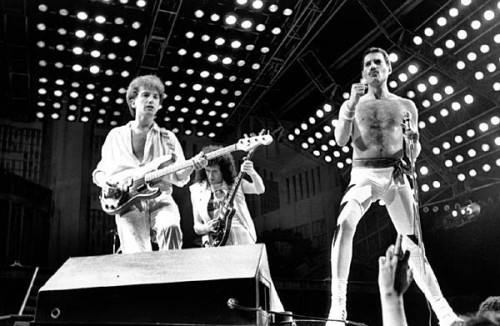
Queen: Bohemian Rhapsody http://www.youtube.com/watch?v=fJ9rUzIMcZQ

blondie

Blondie “Heart of Glass” 

http://www.youtube.com/watch?v=WGU_4-5RaxU

Neil Diamond: Sweet Caroline

 http://www.youtube.com/watch?v=1vhFnTjia_I

Boz Skaggs “Lido Shuffle” http://www.youtube.com/watch?v=DIu0jQ5TaRQ&feature=PlayList&p=8201408B8B6E42C8&index=2

Katrina and the Waves “Walking on Sunshine” http://www.youtube.com/watch?v=iPUmE-tne5U

Billy Joel “Piano Man” http://www.youtube.com/watch?v=gxEPV4kolz0

barry-manilow

Barry Manilow “Mandy” http://www.youtube.com/watch?v=AM7SQzq3yHQ

Heart: Crazy on You

 http://www.youtube.com/watch?v=4gpNqB4dnT4&feature=related

villagepeople

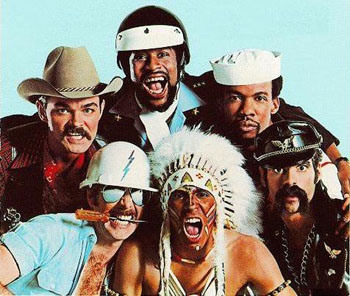
Village People: YMCA

 http://www.youtube.com/watch?v=CS9OO0S5w2k

Fleetwood Mac “Don’t Stop Thinking About Tomorrow”

http://www.youtube.com/watch?v=a8arvEzHsA8

laurabranigan1990

Laura Branigan “Gloria”

http://www.youtube.com/watch?v=1tVutw8rjFk

Carly Simon “You’re So Vain”

http://www.youtube.com/watch?v=mQZmCJUSC6g

Chicago “Saturday in the Park”

http://www.youtube.com/watch?v=nWxA3e9f6rY

linda_ronstadt_usa_11

Linda Ronstadt “When Will I Be Loved”

http://www.youtube.com/watch?v=OmE7tTzJkbU

Foghat “Third Time Lucky”

http://www.youtube.com/watch?v=Fj1O2KtH4kE

The Captain and Tennille “Do that to Me One More Time”

http://www.youtube.com/watch?v=KNHcgk5bf7o&feature=related

kingdingeling_blues_brothers_most

Finally, the Blues Brothers “Everybody Needs Somebody”

http://www.mojvideo.com/video-the-blues-brothers-everybody-needs-somebody-to-love/ac0b631b54ff095fd5c0

2 Comments

Filed under History, music

The Guns of September: Beginnings, Endings and Beginnings

tumblr_mcwtrr8DcW1rpl538o1_500

“Do not try to do too much with your own hands. Better the Arabs do it tolerably than that you do it perfectly. It is their war, and you are to help them, not to win it for them. Actually, also, under the very odd conditions of Arabia, your practical work will not be as good as, perhaps, you think it is.”  T. E. Lawrence

In September 1939 Adolf Hitler led his Nazi regime into the bloodiest war in human history. In September 1945 that war ended when representatives of Germany’s ally Imperial Japan signed the instruments of surrender on the deck of the Battleship USS Missouri in Tokyo Bay. In those 5 years  over 60 million people died and the world changed.

Twenty five years before Hitler ordered the Wehrmacht into Poland the former leaders of the imperial dynasties of Europe as well as France  had led their world into the abyss of the First World War. In that war close to 37 million people, both military and civilian died.

EVN-385_Japanese-surrender-aboard-USS-Missouri_1945

In both conflicts leaders schemed to ensure that their nations would come out on top and the human costs were simply counted as immaterial so long as the overall goals of conquest and domination were achieved.

Since the Second World War ended the world has not become a safer place. In fact because the United Nations which was in essence created to prevent war and mitigate its effects has been so politicized where just five nations on the Security Council hold the key to it being able to act forcibly to stop genocide and the used of weapons of mass destruction. More often than not at least one of those five nations, the United States, Russia, China, Britain and France have ensured that whichever despot they they support is protected from any action by the world body through the use of their veto in the UN Security Council.

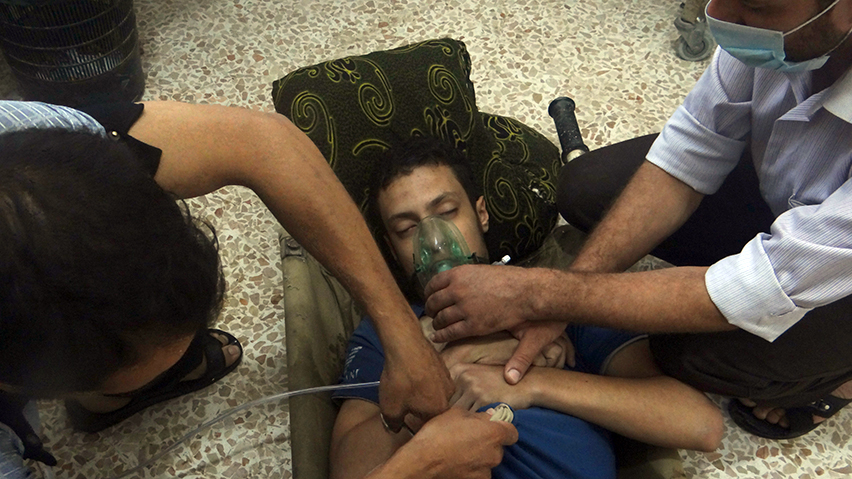
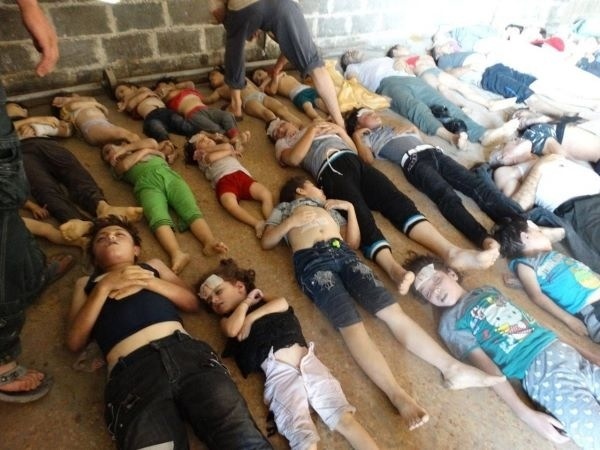
No we stand at the precipice of war again. This time in Syria. The United States, France and a number of other countries have concluded that the regime of Bashir Assad has employed the nerve agent Sarin against its own people in their bloody civil war.  This is disputed by the Russians as well as the Syrians but backed up by the Israelis and Saudi Arabians.

hi-syria-gas-rtx12sc9

As for the United States leading any strike on Syria to either degrade or weaken the Assad regime’s ability to use chemical weapons or any other weapons of mass destruction that they might have it finds itself on the horns of a dilemma. If it does nothing then the Assad regime can claim hat it forced the United States to back down and continue to slaughter its own people. If the United States attacks there is some chance of the strikes having some effect on the Syria ability to make war on their own people but opens the possibility of a wider and more bloody conflict, a conflict that may solve nothing but actually make matters worse.

The United State is also hindered on the world stage and at home by the Iraq debacle brought on by the Bush Administration. Despite the fact that less than one percent of the population has served in the military since the attacks of 9-11-2001 and even fewer have served in combat zones the political leaders, talking heads, pundits, preachers and media in general referrer to the country as “war weary.” The retired former Chief prosecutor at Guantanamo Bay made the comment on Twitter that they must be tired of shopping since so few have actually served. If there is war weariness it is in the military which has been in continuous action since 9-11-2001 and if we want to be honest almost ever since the First Gulf War with stops in the Balkans and Somalia along the way. I have been in the military 32 years and I have lost count of the number of places that we have deployed forces to and the amount of time that I have spent away from home. I think I have been away from my wife 10 of the last 17 years due to deployments and assignments that took me away from home. But I digress…

The fact of the matter that there are a number of layers to the situation in Syria that all need to be addressed but will not be. Instead they will be spun by those in favor or those opposed to war and mostly for for a very fleeting political advantage. An advantage only as good as today’s polls.

saddam0978

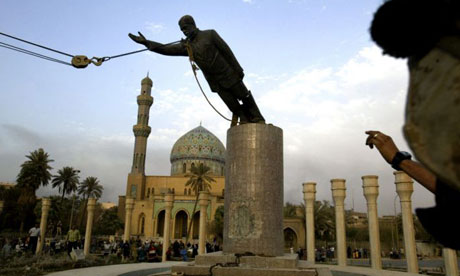
In the past couple of days the Obama Administration has been taking its case for action against Syria to the American people and Congress and also to other nations. The reasons for intervention have been primarily moral as well as citing the precedent of international law regarding chemical weapons. Real politic has not played much of a role, at least yet but it should.

The reality is that the Obama Administration as well as the UN, the Arab League, NATO, the EU and other nations with an interest in what happens in Syria have to deal with the moral and ethical level of the arguments for or against intervention. They also have to look at the legal justification which depending on which part of international law you examine could be used to argue for or against the legality of intervention. Finally there is the real politic of the situation, not only the chances of a successful intervention but the consequences of action versus inaction, action versus delay in the hopes of finding another solution and the results of whatever course of action is taken. After all, there are always results and even the most well intended and executed plans result in unintended consequences.

As I have said a number of times I think that President Obama is damned no matter what he decides to do and that this war no matter what we do in the next week will most likely spill over the borders of Syria into adjoining countries. That is already happening in the form of refugees going into Turkey, Jordan and Iraq, further instability in Lebanon and occasional skirmishes along the Syria and Lebanon borders with Israel. The question is not “if” but rather when and how the military conflict and sectarian violence spreads to other countries surrounding Syria. That has t be weighed with the consequences of and consideration of the “branches and sequels” to any intervention or non-intervention strategy employed by the United States and whatever allies choose to go along for the ride.

Syria03_GQ_07Dec12_getty_b_642x390

I am not in favor of war. That being said I do not know if there is a way to avoid it yet still enforce the norms of moral behavior in terms of the use of chemical, biological or even nuclear weapons.

There are times that I wonder about those who believe that they can orchestrate policy that only benefits their country or political-economic interests. The fact is that the “war genie” is out of the bottle and where the situation in Syria ends is anybody’s best guess. What we do have to remember is that those rebelling against the Assad regime are not doing so for our benefit or for that matter any other nation’s benefit. What T. E. Lawrence said of the Arabs who revolted against the Ottoman Empire in the First World War is as true now as it was then:

“The Arabs rebelled against the Turks during the war not because the Turk Government was notably bad, but because they wanted independence. They did not risk their lives in battle to change masters, to become British subjects or French citizens, but to win a show of their own.”

There are nations and groups attempting to use this for their own interests and ultimately it will blow back on them. The region is perched on the abyss of war, possibly without end. What happens now will be less decided by what happens in Washington or the capitals or Europe or the United Nations but with the people actually fighting the war, their active supporters and their proxies.

As far as the United States political scene if a single leader votes for or against war based purely on their individual or political party’s gain in either the 2014 or 2016 elections or to undermine the current President a pox on them. I want an honest debate about the real world consequences, ethical, legal, moral, economic, military and geopolitical of any intervention or non-intervention in Syria. We owe it to the Syrians, those people in the region as well as our own people, especially those who will certainly bear the burden of whatever war ensues.

Honestly, we really need to think this through before so much as one missile is launched.

Peace

Padre Steve+

Leave a comment

Filed under Foreign Policy, History, middle east, national security

Syria: The History and the Really Hard Questions for All of Us

20130831-164635.jpg

Today President Obama called on the U.S. Congress to take up and debate an authorization for the use of military force in Syria. From any moral viewpoint his words on the use of chemical weapons by the Syrian government his words were correct. Likewise his calling to account of the international community, 98% of whom are signatories to treaties outlawing the use of these weapons against anyone to support this action was correct. The fact that he also demanded that Congress come into session and do its job was correct.

In spite of all of that the use of military force to attempt to force a change in the way that the government of Bashir Assad is problematic and fraught with danger. The chances of escalation and the involvement of other nations and non-state actors are great and even a “successful” operation could lead to subsequent events detrimental to the United States, the West, the region and even to Syria and its people.

A big part of this is due to the complexity of Syria itself and its history. Syria is a complicated mosaic of cultures, peoples and religions often at odds with one another. The fact that the Assad regime has remained in power is because of its brutality and willingness to play off the various factions against each other. The Assad family is of the minority Alawite sect of Shi’a Moslems from the western region of the country. One needs to read T. E. Lawrence’s 1915 report on Syria to get a glimpse of the complexity of Syria and to understand that one has to proceed carefully when dealing with any faction. http://www.telstudies.org/writings/works/articles_essays/1915_syria_the_raw_material.shtml

20130831-171258.jpg

The fact is that the best chance for a stable Syria disappeared in 1920 when the French, emulating the British in Mesopotamia (Iraq) overthrew the government of Emir Faisal Hussein. Lawrence wrote a powerful essay about this http://www.telstudies.org/writings/works/articles_essays/1920_france_britain_and_the_arabs.shtml and when one examines the actions of the British and the French in Syria and Iraq one has to look at history. The British were willing to support the U.S. invasion of Iraq because of history, the same is true of why the French are willing to stand with the United States in Syria. The Germans for their own part frustrated by imperial ambitions in the Middle East in the First World War and a failed attempt to support an Iraqi uprising against the British in 1941 have no interest in a war that might bring disorder and terrorism among the many Moslems that reside in their country. The Turks of course have no love for the Arabs and once counted Syria as a valuable part of the Ottoman Empire. Disorder in Syria is dangerous to them but ultimately they could benefit since they have been shouldering much of the humanitarian burden.

The Jordanian royal family has no love for Syria being the descendants of Faisal Hussein while the Israelis see Syria as a mortal enemy. Lebanon which was carved out of Syria after the First World War is hopelessly divided and with Hezbollah, the erstwhile ally of Iran in de-facto control of the country in danger of becoming a front in the ongoing Syrian Civil War. Iran being the close ally of Syria has great opportunity to expand its power and should a military strike occur might become directly involved although the more likely scenario is that they would allow their Hezbollah allies to shoulder the burden of strikes against Israel and United States or other Western interests in the region. One cannot leave out the Russians who are behaving much as the Tsarist Regime did regarding the region in the First World War when they signed on to the Sykes-Picot agreement.

If the United States does nothing Assad wins. He shows that he and anyone like him who conduct themselves outside the norms of international law and human rights can get away it it. If we intervene it might strengthen his grip, likewise if our strikes were successful enough to weaken his grip and allow the rebels to take power the results could be even worse since the Al Qaeda ally Al Nursa is the strongest and most militarily effective part of the rebel forces.

In a sense the Obama administration is damned if it does, damned if it doesn’t and damned if it does no matter what the outcome. It sucks for him because he is the President and it is his job he will get the blame. This despite the fact that his freedom of action in large part is undermined by the actions of the Bush Administration in the Iraq lead up and invasion. There are always results in foreign policy decisions. The invasion of Iraq has harmed our interests in more ways than its architects ever imagined, it was a foreign policy disaster of the first order that impacts everything that we do today in the Middle East.

That is why before a single cruise missile is launched the United States Congress must debate the action and go all in or stay out. The fact is that if we do this, and I hope, we don’t we have to do it right. We have to understand the consequences and do what we can under our system of government to debate the issue, look at the ramifications, not just in the region but to our own economy and national power.

If we do it the Sequester has to be repealed in all parts, you cannot wage war on the cheap and expect a military that is worn out by 12 years of war to keep taking on more war without funding it. The Tea Party Republicans who are attempting to hold the government hostage through the Sequester and a possible government shutdown cannot have it both ways. It is irresponsible of them to continue this madness until we can get out of Afghanistan and avoid involvement in Syria or other conflicts.

20130831-175304.jpg

That my friends is the hard truth about Syria. So before you get too caught up in the opening of the College and NFL football seasons forgetting that a dangerous world exists take some time to ponder and if you have the civic decency to write your Congressman and Senator on the subject. Pro or con tell them what you think and demand accountability. If you don’t do that don’t blame President Obama for what happens because you have failed your country as citizens.

Sorry I guess that might hurt. But we didn’t do that in Iraq. Today the 4486 dead American military personnel as well as all the other dead and wounded, American, Allied and Iraqi alike and those like me afflicted with chronic PTSD demand that you do it now. It is a moral responsibility of the first order of much greater importance than your fantasy football league.

Peace

Padre Steve+

Leave a comment

Filed under Foreign Policy, History, middle east, Military, Political Commentary

Padre Steve’s 2013 Down and Dirty Primer on the Muddle East

Free Syrian Army soldiers in Idlib

“When you are up to your arse in alligators it is hard to remember that your mission is to drain the swamp.” Old British Colonial Saying

Note: This is an update to my 2011 Primer on the Muddle East

During the dark days of World War Two when Field Marshal Erwin Rommel was making fools of a series of British commanders in North Africa people including senior British military and government leaders sometimes referred to the theater of operations as “the Muddle East.” Some things never seem to change. The Muddle East today is quite frankly speaking in a real muddled state if there ever was one with world leaders and regional leaders muddling about as if they were the New York Mets.

A large part of the muddle goes back to the fall of the Ottoman Empire at the close of the First World War when the victorious Allied Powers redrew the map of the Middle East and made alliances with various local tribal sheiks who many times were crowned king over other tribes who didn’t necessarily want them as king. This along with heavy handed European military actions such as the British using poison gas dropped from aircraft in Iraq and a real lack of effort to better the lives of the newly “liberated” peoples of the region was just the start. Add to the cesspool a bunch of oil presided over by major oil companies, the anti-colonial movements that flourished in the years after World War Two when the French, British and Italians had to divest themselves of their Middle Eastern holdings. The French had to fight a real war in Algeria but finally withdrew leaving Algeria’s new rulers to goof up the country and oppress their people for decades to come.  In the coming years many of these newly independent nations found that life still sucked so in a number of countries military officers overthrew the despised monarchs promising reforms but oppressing their people while blaming all their problems on the Israelis.  They got their asses kicked by the Israelis in a series of wars which did a number of things that made the Middle East Muddle even worse.

First it ensured that Palestinian Arabs ended up under Israeli rule and were used with great aplomb by the Middle Eastern despots to prop up support for their regimes while doing nothing to help the Palestinians other than to put them in camps in Lebanon.  Even when the Egyptians made a peace deal with Israel most of the Arab World ostracized them.  Then in 1979 the Shah of Iran was sent packing by a bunch of Mullahs and in 1981 Saddam Hussein’s Iraq attacked Iran in one of the bloodier wars of the late 20th Century which finally ended in 1988. Of course the United States was pissed at the Mullahs so Saddam became our favorite Arab despot for a while.  Add to the mix the Soviet Union and the United States arming their favorite Arab dictators who were given carte blanche to continue oppressing their people so long as it didn’t interfere with their support of either party or the oil supply. Finally the Soviets went Tango Uniform in 1989 not long after being forced out of Afghanistan by the U.S. supplied, Pakistani supported and Saudi Arabian fundamentalist financed Mujahideen.

With the Soviets “Tango Uniform” and the Warsaw Pact nations trying to get into NATO the United States was now the uncontested Numero Uno country in the world Saddam presumed upon his late supporters and invaded Kuwait, albeit after thinking that the U.S. Ambassador to Iraq said that we wouldn’t mind.

Well he was wrong we did mind and got a lot of countries from NATO and including a bunch of Arab countries like Egypt, Syria and Saudi Arabia to get on board on a mission to get Saddam’s troops out of Kuwait. It was a kick ass mission and since the United Nations didn’t authorize removing Saddam and because President George H.W. Bush was smart enough to not to drive on Baghdad to kick him out preferring the despot we knew to a quagmire Saddam was left in power.

So we stationed ground and air forces around the Gulf to keep Saddam and Iran in check and even put them in Saudi Arabia which a large number of radicals such as Osama Bin Laden equated to letting the Devil play in Allah’s Holy Sandbox.  So Osama went and set up a base with the Medieval bunch of Pashtun known as the Taliban in Afghanistan stirred up a bunch of shit killing Americans and blowing up stuff including the World Trade Center in 1993, the Khobar Towers barracks complex in 1996, the USS Cole in 2000 and then 2001 another attack on the World Trade Center which took down the towers with hijacked aircraft and also struck the Pentagon triggered an American response against Bin Laden and his Taliban hosts.  The United States then invaded in Iraq in 2003 and succeeded in taking out Saddam but also succeeded in alienating a good many Iraqis who greeted us with open arms because we goofed up the occupation and pissed a lot of them off by dissolving the Army, Police and Civil Service and letting thugs and opportunists take over. Unfortunately since we didn’t go in with enough troops to secure all the Iraqi bases, their weapons depots and actually take control of surrendering Iraqi units these newly unemployed and dishonored people launched an insurgency bolstered by Al Qaeda and other foreign fighters even as Sunni and Shi’a Moslems began to settle scores with each other. Insurgency and civil war, two great tastes that go great together, but what the heck right?

Of course it took years to get control of the situation on the ground and thankfully the United States forces in Iraq were helped when the Sunni Moslems in Al Anbar Province realized that these foreign fighters were a worse enemy than the United States and switched sides. This turned the tables in Iraq and the insurgency was brought under control and an elected government managed to start to get their stuff together and allow us to begin withdrawing from Iraq. Of course the focus on Iraq gave the Taliban a chance to regroup as the Afghani Government proved itself corrupt, incompetent and not to give a shit about the Afghani people. So the Taliban who had been hated made a comeback and made our lives much harder so that now almost 10 years into the fight we are having a really hard time.  Well enough about us there was plenty more going on in the Muddle East besides the Iraq and Afghanistan wars.

Let’s see….there was the law of unintended consequences in that by taking Saddam Down and weakening Iraq we took away Iran’s natural enemy and the key to the balance of power in the region. Iran was strengthened and began a nuclear program that everyone with half a brain knows in intended for military use and expanded its influence in Lebanon where the Iranian backed Hezbollah took power.  Now Hezbollah which actually has an experienced military force and probably owns 40,000 or so rockets and missiles a good number of which can hit deep in Israel seems to be ready for war especially because they fought the Israelis to a stalemate in 2008, the first time an Arab military ever did that. Not only did they take on the Israelis but they are also helping Syrian dictator Bashir Assad turn the tide against the polyglot Syrian rebel forces which are being assisted by Sunni foreign fighters from all over the Middle East and the ever present Al Qaida presence.

Then was the effect that the wars in those countries made things harder for us in many other friendly Arab nations.  Of course there is the problem of a nuclear armed Pakistan which is about as stable as a Japanese nuclear reactor after getting hit by a tsunami and plays both sides of the street in the war on terror.  The Palestinians and Israelis continued their love affair and since Fatah which ran Palestinian Authority was so corrupt and gooned up a more militant group, Hamas took power in the Gaza strip. Hamas is a pretty bloodthirsty lot too but not the same level of threat as Hezbollah to the Israelis.  Of course the Israelis have done little to help the situation by their often heavy handed treatment of Palestinians and Israeli Arabs.

The witches’ cauldron of the Muddle East is getting even more muddled on a daily basis as young Arabs throughout the Muddle East are rising up against their despotic rulers and it doesn’t seem that any are safe, those allied with the United States and the West as well as those that have been a thorn in the side of the United States and the West. It just seems that despots and tyrants are no longer in vogue. The uprisings began in Iran after a disputed election where reformers were cheated of power and the revolt crushed by the Revolutionary Guard and other thugs of the Iranian regime. However with the election of “moderate” whatever that means cleric Hasan Rowhani as President hopes are that Iran, despite the machinations of many other clerics and the Revolutionary Guard might be brought to the negotiating table. That being said Iran is reportedly sending about 4000 troops to go help Assad in Syria so go figure.

Elsewhere in the Middle East things continue to boil. In December 2010 the people of Tunisia rose up and overthrew their President for Life Ben Ali in a peaceful uprising followed shortly after by the Egyptians who tossed out long term President and U.S. ally Hosni Mubarak. In Tunisia a “moderate Islamist” regime has been attempting to maintain control of radicals and keep some semblance of balance in that country while in Egypt the Islamic Brotherhood was able to get majorities elected in the Parliament and elect Mohammed Morsi as President. Needless to say both countries are still in turmoil.

In Iraq the Sunni Shi’a divide is as wide as ever and that country is threatening to become engulfed in yet another civil war as sectarian violence increases and the Kurds make more moves toward independence.

2013-05-31T115012Z_01_IST12_RTRIDSP_3_TURKEY-PROTESTS

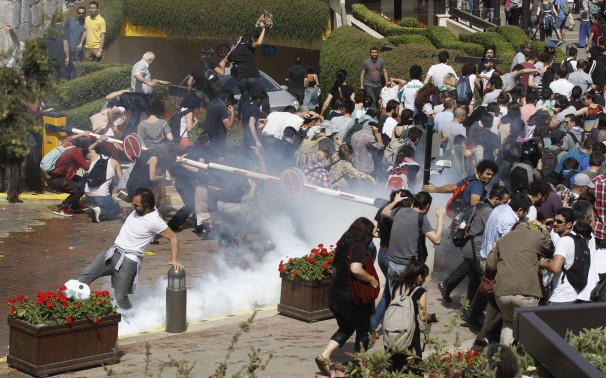
Turkey, the heart of the old Ottoman Empire is now beginning to erupt as secularist elements in the society are protesting the policies of Islamist President Recep Tayyip Erdoğan leading to repeated clashes over the past two weeks between protestors and police.

054

Afghanistan though technically not part of the Middle East continues to be a problem for US and NATO consuming intelligence, economic diplomatic and military resources that could be put to play with better effect elsewhere.  What T.E. Lawrence said of the British occupation of a restive Mesopotamia  in 1920:

“We realise the burden the army in Mesopotamia is to the Imperial Exchequer, but we do not see as clearly the burden it is to Mesopotamia. It has to be fed, and all its animals have to be fed. The fighting forces are now eighty-three thousand strong, but the ration strength is three hundred thousand. There are three labourers to every soldier, to supply and serve him.” ‘France, Britain, and the Arabs’ by Col. T. E. Lawrence The Observer, 8 August 1920

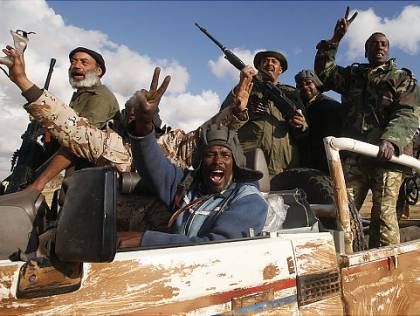
In Libya the Arab Spring claimed the long time pain in the ass Moammar Gaddafi. That conflict center of the action in 2011 until Gaddafi was overthrown and murdered. Since then Libya has remained in turmoil despite elections, militias run amok and the US Ambassador Chris Stevens was killed in an attack on the US Consulate and CIA base in Benghazi on September 11th 2012.

Yemen and Bahrain, Algeria, and Jordan have or are experiencing demonstrations which look to be revolts in the making and even Saudi Arabia is trying to head off a potential popular uprising.

However the real problem now, the problem that threatens to send the region into a regional war is the revolt in Syria which began with peaceful protests by reformers against the Assad regime. However the hard line response of that regime to the protests spawned a civil war which now threatens to overflow the borders of Syria. France, Britain and the US have stated that they believe that there is evidence that the Syria government has used chemical weapons, in particular Sarin nerve agents against the rebels. The conflict has claimed the lives of an estimated 80,000 people with hundreds of thousands more now living as refugees.

The conflict in Syria epitomizes one of the greatest challenges in the Middle East that many in the West are just beginning to recognize, the Sunni Shi’a divide. That divide is becoming more serious with every passing day as Iran continues to lead and assist Shi’a elements in predominantly Sunni Arab countries, as well as in Iraq where the Arab Shi’a are in the majority. The conflict in Syria is predominantly Sunni versus Shi’a though in that patchwork nation of Sunni, Shi’a, Alawite Shi’a tribe of the Assad clan, various Christian and Druse groups. Lebanon which borders Syria is as divided as its larger neighbor and Hezbollah holds tremendous power in that country.

Yes my friends this is a mess and almost everybody that is anybody in the military and economic power houses of the world doesn’t have their handprints all over at least some part of this mess. All of these own some of the blame for what is going on, both the rulers of the nations in the region as well as world powers who all try to influence the nations and peoples for their own diplomatic, intelligence, military or economic gain. Almost no one is unsoiled by their involvement in the Muddle East over the past 90 years or so and so in a way all of great world powers, as well as the despots who ran these countries are to blame.

images-46

The region is more volatile than at any time in recent history and events there could easily ignite a regional war with worldwide implications.  That is why the region has been called the Muddle East for decades.  We all hope and pray for the best and that somehow all of this that the promise of a peaceful and democratic “Arab Spring” will become a reality, but there are better than even odds that things get way worse before they get better. There are just too many wild cards in this deck and the swamp is full of hungry alligators.

With the announcement this week that the US would provide military aid and training to the Syrian rebels and that US forces will remain in Jordan even as US and NATO Patriot missile batteries stand ready in Turkey there is a really good chance that the conflict in Syria will not stay in Syria.

Of course there is always the wild card if what Israel may do in what it perceives to be its security interests against outward foes such as Iran and Syria but also inside its borders and occupied territories, especially if it is attacked or provoked by Iran, Hezbollah or Hamas.

May God help us all and bring about peaceful change, or as my Iraqi friends simply say “Inshallah, God willing.”

Peace

Padre Steve+

Leave a comment

Filed under History, iraq,afghanistan, middle east, Military, national security

November 4th 1979: The Beginning of the Iranian Hostage Crisis and a New World

Tonight Judy and I went and saw the movie Argo. I saw it the day it opened here but Judy had not seen it. When the movie began with the storming of the U.S. Embassy in Teheran on November 4th 1979 I looked at Judy and said, “it is the anniversary.” It is hard to believe that 33 years ago was when that event happened. At the time Judy and I were still in the early stages of our courtship and it was then that I decided that I would enter the military.

I enlisted in the Army National Guard and entered Army ROTC after the hostages were released. I had been accepted into the Air Force ROTC program in early 1980 but waited a year and did the Army because I needed the money provided by a summer job that could not be made up in a 4 week Air Force Summer camp before the school year began in 1980. Such is life when you didn’t get any academic scholarships and chose to attend college in a high cost of living area.

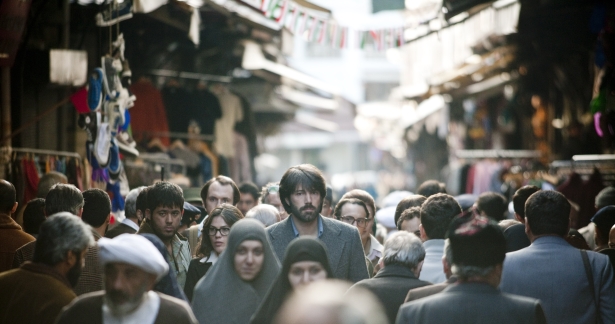
The hostage crisis was an event that changed my life and watching the film Argo was a very emotional experience the first time that I saw it and brought tears to my eyes again tonight. It was so well done and having travelled in much of the Middle East and been surrounded by crushing crowds in Bazaars, thankfully without being accosted for taking pictures and going through various Middle Eastern nation airport security checkpoints, as well as numerous other countries in Europe and Asia I could feel a bit of the anxiety rise in me as the film showed the American fugitives from the embassy as they went through the motions of being Canadians. There have been a number of times when traveling alone on official Navy business to countries after 9-11 that I relied on my skills in German to pass a German when accosted in public for being an American in a foreign country rife with anti-American sentiments.  Thank God for bad grammar and a Bavarian accent.

So now 33 years later I am still in the military and the United States and Iran are still mortal enemies and if some politicians, pundits and preachers have their way will be at war with each other, for some the sooner the better.  I personally don’t understand the mentality of people that have never, or will ever serve in the military who preach a Gospel of war, of pre-emptive war under the guise of “protecting America.” Having seen the effects of the war-mongers that preach “pre-emptive” war in Iraq, both on the people of that unfortunate country and our own troops I cannot fathom yet another pre-emptive war. But there are plenty of politicians, pundits and preachers, the Unholy Trinity of war and pestilence who seek such a war with Iran. Of course should Iran ever attack us that is another matter, but to launch another war after we destroyed the military potential and power of Iran’s natural and traditional enemy Iraq which kept the Iranians at bay is altogether one of the most stupid ideas ever dreamed about, especially when the American military is stretched thin with close to 70,000 troops exposed to disaster in Afghanistan if supply lines are cut and Iran becomes more actively involved.

In January 1980 Jimmy Carter gave final approval to CIA operative Bob Mendez’s operation to bring those 6 Americans out of Iran. Since the publicity could have caused harm or death to the other American hostages held by the Iranians Carter gave the credit to the Canadians. He ordered a military operation to free those hostages which ended in disaster and would go on to lose his re-election to Ronald Reagan in 1980. Back then I did not appreciate anything that Jimmy Carter did but I have to respect the fact that he was willing not to claim credit for something that could have helped his re-election campaign in order to protect the lives of Americans.

Afghanistan is something else that hasn’t changed that much. In December 1979 the Soviets invaded that country and the United States would supply and support the Afghan Mujahideen. Some of these became the nucleus of the Taliban who along with their Arab “foreign fighter” allies under Osama Bin Laden became Al Qaeda. The Reagan administration began a program in 1985 to trade arms to Iran for American hostages with monetary proceeds being used to fund Nicaraguan rebels which resulted in the Iran-Contra affair. Both of funding of the Mujahideen and the Iran-Contra affair have come to cause the United States much grief in both the Middle East and Central and South America.

Both were short term expedient operations conducted without long term though to the results of both for American prestige as well as foreign policy, politics, economics and military operations since.

Hindsight is not a bad thing, but foresight is much better. Perhaps we can learn not to repeat the follies of those that helped create the world that we now live.

Peace

Padre Steve+

1 Comment

Filed under film, History, movies, News and current events

The Gathering Storm: Shades of 1914 as War Threatens in the Middle East

Israeli Navy Dolphin Class Submarine

“The world tells Israel ‘Wait, there’s still time.’ And I say, ‘Wait for what? Wait until when?’” Benjamin Netanyahu 

The question is not if but when. The tensions between Iran and Israel continue to boil over even as the rest of the Middle East begins to melt down.

Last week on the 11th anniversary of the September 11th attacks Al Qaeda backed forces attack the US Consulate in Benghazi Libya killing Ambassador Christopher Stevens and three others. Militants in Egypt laid siege to the US Embassy while newly elected Egyptian President and Moslem Brotherhood leader Mohammed Morsi dithered torn between his party ideology and the pragmatic reality of the dependency of Egypt on the United States for military and economic assistance. Throughout the region from Tunisia to Indonesia protests, some marked by violence broke out at United States and other Western nations diplomatic outposts.

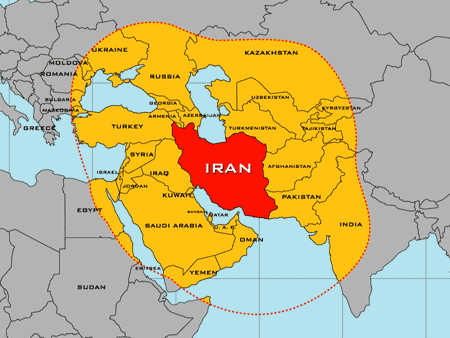
Shahab III Missile Ranges

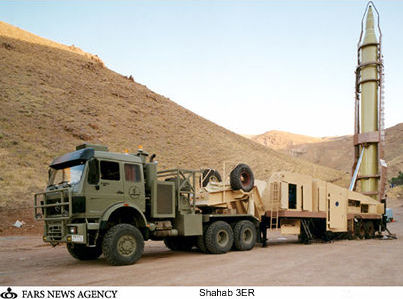
The Iranians and their Hezbollah allies have repeatedly threatened Israel with destruction and have improved their missile forces significantly ever the past number of years even without nuclear weapons. Prime Minister Benjamin Netanyahu is demanding the United States and the west set “Red Lines” regarding the Iranian nuclear program that would trigger an automatic attack on Iran by the United States.

Like the First World War the tensions, provocations and rhetoric increase even as military forces mobilize and gather in the region. Iran is preparing for massive military exercises involving land, air defense and ballistic missile units from the Iranian military and Revolutionary Guards to begin in October.  Iran admitted this weekend that forces from their Revolutionary Guards are currently operating in Syria placing them in position to directly engage Israeli forces in the event of conflict.

By October the United States will have three Carrier Strike Groups, the USS Enterprise, USS Dwight D. Eisenhower and USS John C Stennis and an Expeditionary Strike Group with an embarked Marine Expeditionary Unit in the region. Additionally warships from more than 25 countries are gathering for exercises designed to counter any blockade of the strategic Straits of Hormuz by Iran. Other ships, including the French Aircraft Carrier Charles DeGaulle battle group and the British HMS Illustrious  “Response Task Forces Group” are in the Eastern Mediterranean and could be in the region within a week. US Navy submarines, both attack and ballistic missile are never far from a threatened area. US Air Force  Fighter Squadrons have been reinforced and it is certain that strategic air force units of B-2, B-52 and B-1 bombers are certainly deployed where they can respond as needed. The build up by all sides is unprecedented.

The countries of the region are on hair trigger alert. Any act, intentional or unintentional by any party could trigger a war that would most certainly bring great destruction to the region but would likely sink the global economy and spread around the world through acts of terror and revolutionary violence.

Numerous reports and Israel government official statements indicate that Israel is ready, to strike Iran, if need be alone to prevent what they believe is an existential threat to Israel. While some believe that any Israeli attack on Iran would be precision strikes aimed at Iran’s nuclear program and ballistic missiles sites. However, most experts believe that an Israeli strike would at best set back the Iranian nuclear weapons program a couple of years and trigger a regional war with very unpredictable outcomes. If the Israeli strike is conventional in nature the Iranians will strike back against Israel, as well as US targets in the region. The US would certainly respond but any war would affect the region and the world economy as oil prices would rise exponentially.

With that in mind it is possible that the Israelis fearing the existential threat of Iranian nukes might use their nuclear forces in a first strike role.

Most experts believe that the Israelis would only use nuclear weapons in a retaliatory “second strike” capacity. The reasoning is that the first use of nuclear weapons by Israel would be against their national interests. That is logical but history is replete with times that nations have acted in ways contrary to logic because the action is deemed “necessary.” It is the same logic that said that the Germans would not violate Belgian neutrality in 1914 knowing that such an action would trigger British intervention on the side of France and Russia. It was believed by most that “the Germans are dangerous but they are not maniacs….” The Germans faced war on more than one front and felt that they had to deliver a swift blow to knock France out of the war in order to defeat Russia. It was a risk that they were willing to take and one which helped lose them the war and set about a series of events that made the 20th Century the bloodiest in human history.

In the current situation many in Israeli leadership may view the use of nuclear weapons to stop an existential threat as a legitimate use of the weapons. Israel does face real threats and those threats are increasing as Iran increases in strength and no longer has traditional rival Iraq to worry about. Likewise the instability of Egypt and the anti-Israeli animus of the Moslem Brotherhood which now leads Egypt has increased the real and perceived threat from that country. An Egypt openly hostile to Israel armed to the teeth with advanced American weapons is a dagger pointed at the heart of Israel. Israel’s leaders may be willing to suffer international condemnation in order eliminate what they consider an existential Iranian threat to ensure their survival and ability to defend against Egypt as well as conventional and unconventional Hizbollah forces operating out of Lebanon and those of Hamas in Gaza.

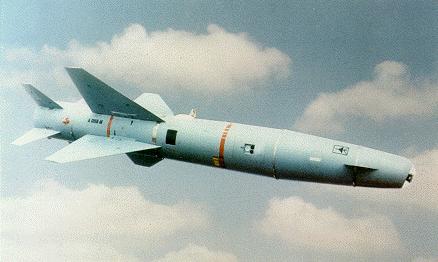
If they were to use nuclear weapons the primary delivery system in such a strike would most likely be Dolphin Class submarines armed with nuclear capable Popeye cruise missiles. These missiles have a 1500 km range and while the missiles could be used in a conventional strike their utility would be limited to precision strikes against unfortified headquarters buildings housing Iranian leadership, or command and control facilities. The numbers of Popeye missiles the Dolphins carry is limited since the majority of Iranian nuclear sites are hardened facilities or deep underground their use against them in a conventional manner would be a waste.

The threat to United States and NATO forces in Afghanistan is great if a broader war erupts. US and NATO forces, already fighting an increasing Taliban insurgency are for all practical purposes surrounded if a war spreads and Pakistan shuts down the southern supply route. Even this week Taliban insurgents scored a victory successfully attacking the strongly fortified joint US Marine and British base Camp Leatherneck-Camp Bastion destroying 6 AV-8B Harrier jets on the ground, damaging more aircraft, valuable hangers and support facilities while killing 2 Marines. A war with Iran would threaten to turn Afghanistan into a trap for nearly 100,000 US and NATO coalition troops.

It could as Barbara Tuchman said of the the Germans of 1914 that the Israelis have “staked everything on decisive battle in the image of Hannibal….” but that the ghost of Hannibal might have reminded the Germans and the Israelis that though Hannibal and “Carthage won at Cannae, Rome won the war.” In mid May and early June of 1914 even before the assassination of Franz Ferdinand Field Marshal Von Molkte and others felt that the scales were tipping against them. He told his Austrian counterpart Field Marshal Conrad Von Hotzendorf that “from now on ‘any adjournment will have the effect of diminishing our chances of success.’” On June 1st Von Molkte said to Baron Eckhardstein,“We are ready, and the sooner the better for us.”

The storm clouds of war are thickening and darkness hovers as the storm gathers. In 1914 the politicians, diplomats and soldiers that realized war would be disastrous were a minority in their respective governments and their warnings went unheeded. In 1914 “war pressed against every frontier. Suddenly dismayed, governments struggled and twisted to fend it off. It was no use….” As the sun set and the lamps of London were lit on August 4th 1914 Sir Edward Grey said to a friend “The lamps are going out all over Europe; we shall not see them lit again in our lifetime.” It is as if we are watching the same drama play out in the Middle East now.

Peace

Padre Steve+


3 Comments

Filed under Foreign Policy, middle east, Military, national security, News and current events

Remember and Pray: Lessons from 9-11-2001 Today

9-11 Memorial Ceremony (US Navy Photo)

Today many of us took the time to remember the events of September 11th 2001. Some were large ceremonies and others small, while many just took the time to remember the lives of those lost, to reflect and pray. Many talked about what they remembered and where they were that fateful day and others remembered the event silently, the pain still too great to express.

The events of 9-11-2001 are now 11 years past yet danger still looms. American military and diplomatic personnel, Federal agents of various police and security agencies, contractors and American Non-Governmental Organizations (NGOs) serve in harms way exposed to violence and terror. The Middle East is ablaze in violence between competing Islamic groups, the Sunni-Shia Moslem divide becomes greater with every day as Syria, Iraq and Lebanon become more violent. The conflict threatens adjoining nations including Israel, Jordan and Turkey. Israel and Iran edge closer to war and extremists do all that they can to incite others to violence by their acts. Today Egyptian Islamic extremists stormed the US Embassy in Cairo and ripped down our flag allegedly in response to a film being produced by an American extremist the Koran burning “pastor” Terry Jones which they believe is blasphemous.

Pundits, politicians and preachers, that Unholy Trinity that seems to find life in the death and misery of others stoke the fires of hate, among the “faithful” of their religions and nationalities. The truth be known I get angry every time these extremists act or do things the are done with the sole intent of bringing harm to others while advancing their dark agendas.  I get tired of those that from places of safety and security provoke violence and urge wars that they know others will have to fight and without any cost to themselves. They make their pronouncements all claiming that God, however they define him is on their side. That is blasphemy, no matter which God you believe in.

The world is a very dangerous place. It is not only a time for vigilance and military preparedness, it is a time for reflection, prayer and peace making.

God of the ages, before your eyes all empires rise and fall yet you are changeless. Be near us in this age of terror and in these moments of remembrance. Uphold those who work and watch and wait and weep and love. By your Spirit give rise in us to broad sympathy for all the peoples of your earth. Strengthen us to comfort those who mourn and work in large ways and small for those things that make for peace. Bless the people and leaders of this nation and all nations so that warfare, like slavery before it, may become only a historic memory. We pray in the strong name of the Prince of Peace. Amen. (From the September 11th Litany published by the National Council of Churches)

Peace

Padre Steve+

1 Comment

Filed under christian life, faith, national security, News and current events

Padre Steve’s Arab Spring Articles: Tahir Square to Sirte

It is hard to believe that Moammar Gaddafi is dead and that the people of Libya have thrown off the shackles of his tyrannical dictatorship which caused them and the world so much grief.  These are links and brief descriptions of the articles of this series.  There have been revolts across the Middle East as oppressed people have risen up peacefully against their repressive governments only to be met with force. Egypt, Yemen, Bahrain, Libya and now Syria, each is rooted in history and each is different. Taken together they are inspiring others around the world.  I have not written much on Yemen or Syria but expect in the coming weeks and months there will be plenty of opportunities to look at the history, culture and unique aspects of these revolts and their potential impact in the region and around the world.  It is my belief that they are helping usher in a new age of revolution with results that will be as dramatic and important as the fall of Empires at the close of the First World War.  Looking at each article you can see how my thought process has evolved as the situation has developed.

Also a page update. I have updated the Middle East Page found in the top menu.

Peace

Padre Steve+

Walk Like an Egyptian: The Egyptian Revolution and the Radicalization of the Middle East Published31 January 2011. An analysis of the probability of the radicalization of the Middle East as revolution spreads.

The Beginning of Chaos in Egypt: Watching and Waiting as the Situation Deteriorates Published2 February 2011 as the situation began to deteriorate in Egypt as Mubarak loyalists attacked protesters in Tahir Squar.

Egypt: As Mysterious as the Sphinx and as Dangerous as a Cobra….What Next? Posted11 February 2011.  A continuation of my observations of  the revolution in Egypt prior to the fall of Hosni Mubarak.

Danger in the Arabian Gulf: The Fires of Protest Spread to Bahrain Posted18 February 2011. The article deals with the protests in Bahrain and my experiences and observations having traveled there many times.

Damned if you do…Damned if you Don’t: The Middle East Protests and U.S. Foreign Policy Posted 19 February 2011. An examination of the difficulties facing U.S. Foreign policy officials in light of the recent spread of revolution in the Arab World.

To the Shores of Tripoli: The Flames of Revolution Spread to Libya as Gaddafi Fights Back Posted February 21st as the protests in Libya provoked a response from dictator Moammar Gaddafi. Saif Al Islam Gaddafi said We will take up arms… we will fight to the last bullet… We will destroy seditious elements. If everybody is armed, it is civil war, we will kill each other.”

Göttdammerung in Libya: Shades of Hitler as Gaddafi Promises to Die as a Martyr Published 22 February 2011 Moammar Gaddafi promises “I am a fighter, a revolutionary from tents … I will die as a martyr at the end… I have not yet ordered the use of force, not yet ordered one bullet to be fired … when i do, everything will burn.”   Moammar Gaddafi accurately predicts his death.

The Guns of March Published 9 March 2011. “War is the unfolding of miscalculations” Barbara Tuchman Libya in the context of the broader Middle East and US Military capabilities.

Gaddafi Taunts the West and Kills his People: Our inaction speaks so loud he can’t hear a Word that we are Saying  Published 11 March 2011.  The cost of inaction and the risks of making threats that you do not back up with force.  When I wrote this I believed that if nothing was done that Gaddafi or terrorist organizations like Al Qaeda and others could turn this revolt into a regional war.

Strike on Libya: The Unknown outcome of Operation Odyssey Dawn Published20 March 2011. The beginning of the NATO air campaign in Libya.

Damned if you do and Damned if you Don’t: The Allied Intervention in Libya Published March 21st 2011.  War is the province of chance. In no other sphere of human activity must such a margin be left for this intruder. It increases the uncertainty of every circumstance and deranges the course of events.”- Karl von Clausewitz The opportunities and peril associated with the NATO intervention in Libya.

Gaddafi’s Götterdämmerung: The End in Tripoli Published 21 August 2011.  The fall of  Tripoli, the Libyan Rebels drive out Gaddafi.

The Promise and Peril of Revolutionary Times: A Warning From History  Published 18 October 2011. Putting revolutions around the world in context.

Gaddafi is Dead so what happens Now? Published 20 October 2011. The death of Moammar Gaddafi and questions of what comes next.

Why the Libyans were able to Overthrow Gaddafi and what We can learn from It: A Lesson from the work of T E Lawrence  Published 21 October 2011 What NATO and theUnited States did right inLibya and a look at Middle East History.

2 Comments

Filed under Foreign Policy, History, middle east, Military

Why History Matters: The Disastrous Effects of Long Insurgency Campaigns on the Nations that Wage them and the Armies that Fight Them

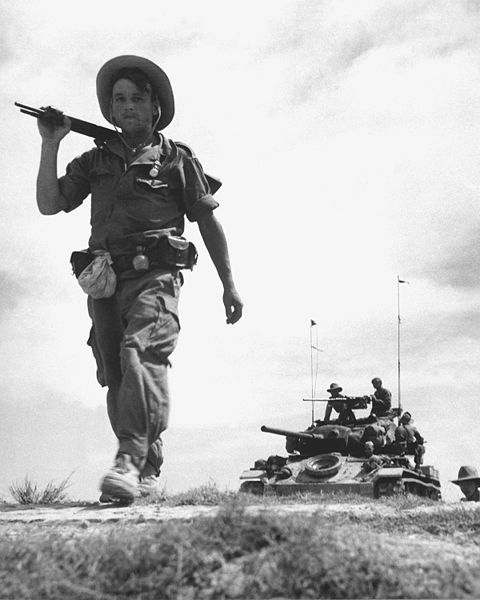
French Mobile Group in Indochina

“Any future defense secretary who advises the president to again send a big American land army into Asia or into the Middle East or Africa should ‘have his head examined,’ as General [Douglas] MacArthur so delicately put it.” Secretary of Defense Robert Gates

The effects of the wars Indo-China, Algeria and Vietnam on the French and American military organizations internally and in relationship to their nations piqued my interest in 2005. The wars in Iraq and Afghanistan forced me to start asking the question of what short and long term effect that these wars might have on the U.S. military. As such I wondered what historical precedent that there was for the question. My interest was furthered by my deployment with Marine and Army advisors to Iraqi Army and Security forces in 2007-2008. My search led to the French experiences in Indo-China and Algeria and the American experience in Vietnam. Recently with the Iraq war winding down and ongoing war in Afghanistan which has gone from apparent victory to mounting concern that we are losing the war in Afghanistan as Taliban and Al Qaida have regained momentum amid widespread corruption by the Afghan government and weakness of NATO forces.
The counterinsurgency campaigns conducted by the French and American militaries in Vietnam and Algeria had deep and long lasting effects on them as did the Soviet war in Afghanistan. The effects included developments in organization and tactics, relationship of the military to the government and people, and sociological changes. The effects were tumultuous and often corrosive. The French Army in Algeria revolted against the government. The US Army, scarred by Vietnam went through a crisis of leadership and confidence which eventually resulted in end of the draft and formation the all volunteer military. The Soviet not only lost their war but they saw their country collapse and the military with it. The effects of the Iraq and Afghanistan wars are yet unknown but could result in similar situations to the militaries and governments involved.
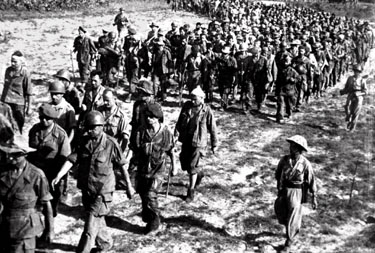
French Surrender at Dien Bien Phu

There is a wealth of data regarding these wars. There are several types of materials. The accounts of soldiers, diplomats and reporters who experienced these events contained in memoirs and diaries. The best include David Hackworth’s About Face and Steel My Soldiers Hearts; and General Harold Moore’s We Were Soldiers Once… and Young. French works include Jules Roy’s The Battle of Dien Bien Phu and General Paul Aussaresses’ The Battle of the Casbah. There are innumerable popular accounts written by NCOs and junior officers. These accounts may contain a wealth of information, but are limited by a number of factors. First, the authors, veterans of the wars, only saw part of the overall picture and first-hand experience in war can skew a writer’s objectivity. Those who have been through the trauma of war interpret war through their own experience. Physical and psychological wounds can have a major impact on the interpretation of these writers as can their experience and political ideology. Finally few of these writers are trained historians. Despite this they can be a valuable resource for the historian.

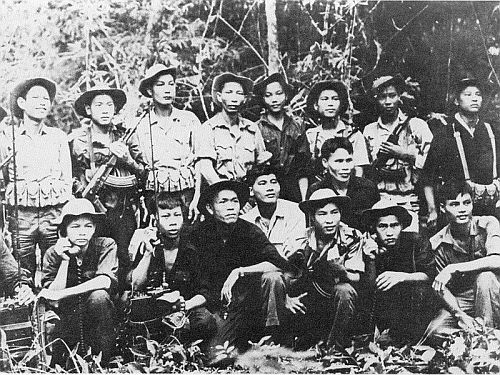
Viet Minh Main Force Soldiers

Another source is found in the official histories written by the military forces involved in the wars. Often these incorporate unit histories and individual narratives and analyze specific battles and the wider campaigns, but do little in regard to broader conditions that affected operations. While a good source, many are not as critical of their institutions as they should be.

Histories by trained historians and journalists provide another view. The most insightful of the journalist accounts include Bernard Fall’ Street Without Joy and The Siege of Dien Bien Phu: Hell in a Very Small Place. A limitation of all of these is that they are often heavily influenced by the political and societal events. This means that earlier accounts are more likely to be reactive and judgmental versus critical and balanced. Later accounts have the benefit of access to the opposing side and documents not available to earlier writers. Alistair Horn in A Savage War of Peace provides one of the most informative and balanced accounts of the war in Algeria. Martin Winslow does the same regarding Dien Bien Phu in The Last Valley.
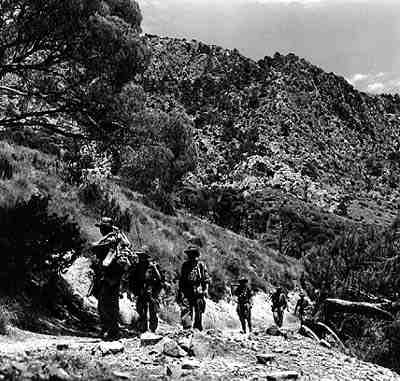
Foreign Legion in Algeria

Another source is the writings of participants who critically examine their participation in the wars. Many of these, French and American provide insights into the minds of leaders who are reflective and critically examine what happened to their military institutions in these wars. The best of these is French Colonel David Galula whose books Pacification in Algeria 1956-1958 and Counterinsurgency Warfare: Theory and Practice provide first-hand accounts of the subject combined with critical reflection. Galula’s works have been important to John Nagl, General David Petreus and others who helped write the U.S. Army and Marine Corps Counterinsurgency manual. Andrew Krepinevich in The Army and Vietnam provides a critical analysis of the U.S. Army in Vietnam. Other sources, both online and print, such as RAND, provide excellent analysis of selected topics within the scope of this essay, especially COIN.

Battles in the Streets of Algiers

The ability to dispassionately and critically examine and evaluate these sources over a period of several years was and integrate them with my own experience has been a critical to me. It has changed the way that I look at sources, and caused me to be much more aware of bias, the limitations of sources and the need to have a multiplicity of sources and points of view and to be suspicious of contemporary reports and accounts of the war in Afghanistan regardless of the source.

The conflicts in French Indo-China, Algeria and Vietnam had major effects on the French and American military institutions. These effects can be classified in a number of ways. First, the manner in which each military waged war, including tactics employed and use and development of weapons systems was changed. The use of airpower, especially helicopters and use of riverine forces provided an added dimension of battlefield mobility but did not bring victory. As John Shy and Thomas Collier noted regarding the French in Indo-China: “French mobility and firepower could take them almost anywhere in Vietnam, but they could not stay, and could show only wasted resources and time for their efforts.”[1]

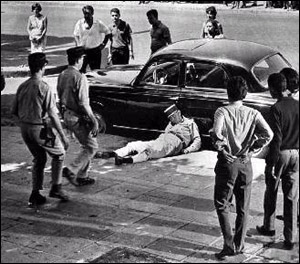
Assassination and Terrorism in Algiers

The use of intelligence and psychological warfare, including the use of torture became common practice in both the French and American armies. The wars had an effect on the institutional culture of these armed services; neither completely embraced the idea of counterinsurgency and for the most part fought conventionally. Galula notes how the “legacy of conventional thinking” slowed the implementation of proper counterinsurgency tactics even after most commanders learned that “the population was the objective.”[2] Krepinevich notes that “any changes that might have come about through the service’s experience in Vietnam were effectively short-circuited by Army goals and policies.”[3] Finally the wars had a chilling effect on the relationship between the both militaries and the state, veterans from each nation often felt betrayed or disconnected from their country and people. Unfortunately instances of all of these have occurred or can be seen in the current wars in Iraq and Afghanistan.

US Army in Vietnam

The French Army had the misfortune of fighting two major insurgencies back to back. The French military was handicapped even before it went into these wars. The Army came out of World War II defeated by the Germans, divided by loyalties to Vichy or one of the Free French factions. They were humiliated by the Japanese in Indo-China, while in Algeria France’s crushing defeat was devastating. “Muslim minds, particularly sensitive to prestige and baraka, the humiliation made a deep impression.”[4] French society was as divided as the Army; the economy in shambles, the government weak and divided. The Viet-Minh had prepared well making use of time and training to get ready for war. “Once full-scale hostilities broke out, the French, for budgetary and political reasons could not immediately make the large scale effort to contain the rebellion in the confines of small-scale warfare.”[5]

Paras of the 1st Colonial Parachute Regiment jump in Algeria

In both Indo-China and Algeria the French attempted to fight the budding insurgencies in a conventional manner. This was particularly disastrous in Indo-China when on a number of occasions battalion and regimental combat team sized elements were annihilated by Viet-Minh regulars. Between October 1st and 17th 1950 every French garrison along the Chinese border was over-run. The French lost over 6000 troops and enough equipment to outfit “a whole additional Viet-Minh division.” It was their worst colonial defeat since Montcalm at Quebec.[6] In Algeria when the fight began in earnest France’s “ponderous ponderous N.A.T.O forces found themselves at an impossible disadvantage,”[7] unable to have any influence off the main roads.

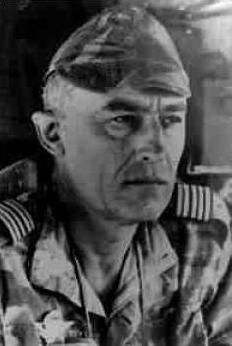
Marcel Bigard: One of the most effective French commanders in Indochina and Algeria

In Vietnam the French did not absorb the lessons of fighting a well established insurgent force. French forces hoped to draw the Viet-Minh main forces into battles of attrition where their superior firepower could be brought to bear. Such was the case at Na San in December 1952 where the French established an “Air ground base” deep in Viet-Minh territory to draw Giap’s forces into open battle. This worked, but just barely. General Giap, short of artillery and not planning on a long battle frittered away his troops in mass charges. However, the French, because of Na Son assumed they had found the key to victory. In their embrace of the “air ground base concept, French staff officers were following an intellectual tradition that had long been prone to seduction by elegant theories.”[8] The result was the disaster at Dien Bien Phu the following year. The destruction of the elite Group-mobile 100 near Pleiku in 1954 was the coup de grace. In Indo-China the French made limited use of helicopters, used paratroops widely, and developed riverine forces. One thing they were critically short of was significant tactical air support.[9]

Roger Trinquier helped develop tactics in Indochina which helped turn the tide in Algeria, until the French Government ended the war leaving their soldiers to feel betrayed

The most inventive French creation in Indochina was the GCMA/GMI forces composed of mountain tribesmen led by French NCOs and Junior Officers. They were designed to provide “permanent guerilla groups rooted in remote areas” to harass and interdict Viet-Minh forces.[10] Trinquier noted that at the time of the Dien Bien Phu defeat that these forces had reached over 20,000 trained and equipped maquis in the Upper Region of Tonkin and Laos. These forces achieved their greatest success retaking Lao Cai and Lai Chau May 1954 as Dien Bien Phu fell.[11] Trinquier stated that “the sudden cessation of hostilities prevented us from exploiting our opportunities in depth.”[12] The GMI units and their French leaders were abandoned fighting on for years after the defeat. One account noted a French NCO two years after the defeat cursing an aircraft patrolling the border “for not dropping them ammunition so they could die like men.”[13] In the end the French left Indo-China and Giap remarked to Jules Roy in 1963 “If you were defeated, you were defeated by yourselves.”[14]
Algeria was different being part of Metropolitan France; there the French had support of European settlers, the pieds-noir. Many French soldiers had come directly from Indo-China. There French made better adaptations to local conditions, and realized that they had to win the population and isolate the insurgents from it and outside support. As Galula said, victory is the destruction of the insurgent’s political and military structures, plus “the permanent isolation from the population, not forced upon the population, but by and with the population.”[15] The lessons learned by the French in both Algerian and Indo-China were lost upon the Americans.

US Armored Cavalry in Vietnam

The United States military, especially the Army approached the Vietnam War with a conventional mindset, referred to as the “Army concept.” [16] It not only approached the war in this manner, but it trained and organized the South Vietnamese forces, ARVN into the American model. Americans re-organized ARVN into divisions “based upon the U.S. divisional force structure.”[17] Due to the imposition of an American template and organizational structure upon it, ARVN was not structured appropriately for the threat that it faced.”[18] The results were as to be expected. Large numbers of American troops poured in taking the lead against the North Vietnamese and Viet Cong . The American method of counterinsurgency was costly. It was “almost a purely military approach”[19] which ignored political and social realities on the ground. Instead of focusing on protecting the Vietnamese people and denying the Communists a safe haven the Army in particular believed that massive firepower was the best means to be “utilized by the Army to achieve the desired end of the attrition strategy-the body count.”[20] In the end the American defeat was a “failure of understanding and imagination.”[21] The one shining success was the Marine Corps experimentation with “Combined Action Program” platoons which lived in the villages with militia for long periods of time. This program produced great results “in eliminating local guerillas”[22] but was killed by the Army.
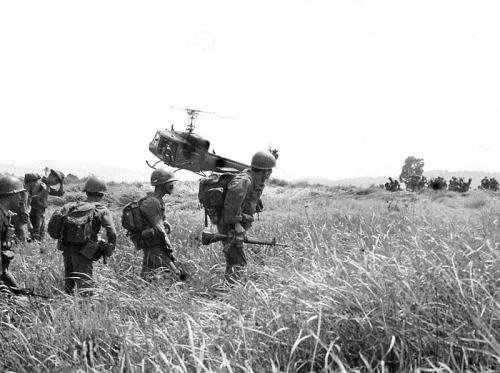
US and ARVN Soldiers in Joint Operation

These wars tore the heart out French and American armies. For the French the defeats inflicted a terrible toll. In Indo-China many French career soldiers felt that the government’s “lack of interest in the fate of both thousands of missing French prisoners and loyal North Vietnamese…as dishonorable.”[23] Divisions arose between those who served and those who remained in France or Germany and created bitter enmity between soldiers. France would endure a military coup which involved many who had fought in Vietnam and Algeria. Having militarily won that war, were turned into what Jean Lartenguy called The Centurions had been turned into liars.”[24] They were forced to abandon those who they had fought for and following the mutiny, tried, imprisoned, exiled or disgraced. Colonial troops who remained loyal to France were left without homes in their “independent” nations. They saw Dien Bien Phu as the defining moment. “They responded with that terrible cry of pain which pretends to free a man from his sworn duty, and promises such chaos to come: ‘Nous sommes trahis!’-‘We are betrayed.’”[25]
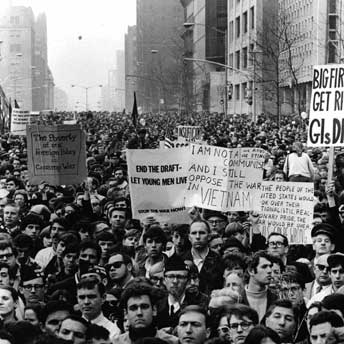
War Protests in the United States 

The U.S. Army left Vietnam and returned to a country deeply divided by the war. Vietnam veterans remained ostracized by the society until the 1980s. As Harold Moore recounts “in our time battles were forgotten, our sacrifices were discounted, and both our sanity and suitability for life in polite American society were publically questioned.” [26] The Army endured a massive reorganization that resulted in the formation of the All-Volunteer force, which would redeem itself and emerge from the ashes in the Gulf War.
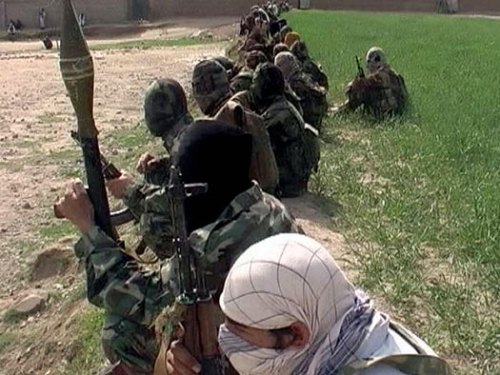
Taliban in Afghanistan

The Americans would not learn the lessons of revolutionary warfare and counterinsurgency until forced to do so in Iraq in 2004-2007. These lessons however were not applied to Afghanistan and the Taliban which seemed to have been defeated have regained the initiative, policy is being debated amid discord in the west and there are reports of American and NATO forces becoming discouraged by the course of the war and concern that their efforts will be in vain. This is a dangerous situation to be in and if we learn from anything from our own history as well as that of foreign military forces in Afghanistan we need to be very careful in implementing strategy to get whatever we do right.

US Advisers with Afghanistan National Army Troops

The greatest success of the war was finally killing the leader of Al Qaeda, Osama Bin Laden at his Pakistani hide-out. That did not occur in Afghanistan and was the result of smart work by the CIA and other American intelligence services and the superb conduct of the mission by Navy SEAL Team Six. It was not the product of our costly counter-insurgency and nation building campaign in Afghanistan. There are many professional think tank “experts” that now urge continuing the Afghan mission indefinitely despite its massive cost and questionable strategic value. The costs of the war which are over 2 billion dollars a week are staggering with little to be shown from the hundreds of billions already spent in Afghanistan, much of which is spent on projects where corrupt Afghan government officials and tribal leaders are the only ones to benefit. Likewise the long term health of the military is imperiled. The money that should go to modernizing the force and replacing equipment worn out by war as well as the enormous costs in lives and the continuing care needed by military personnel wounding in body, mind and spirit remaining on active duty and those in the Veteran’s Administration system are imperiled.

Remote Training Team Base in Afghanistan

The effects of the wars in French Indochina, Algeria and Vietnam on the French and American military establishments were long lasting and often tragic. The acceptance of torture as a means to an end sullied even the hardest French officers. Men like Galula and Marcel Bigeard refused to countenance it, while others like Paul Aussaresses never recanted. Americans would repeat the tactic at Abu Ghraib rallying the Iraqis against them and nearly losing the war because of it.
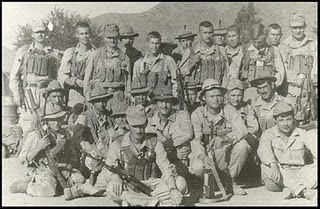
Soviet Paratroops in Afghanistan

For the Americans, the effects of Vietnam continued at home. Race riots tore at the force while drug addictions and criminal activities were rampant. Many incompetent leaders who had “ticket punched” their careers kept their jobs and highly successful leaders who became whistle blowers like Hackworth were scorned by the Army institution. The years following Vietnam were a severe test of the US Military and took years for the military to recover. Likewise it took years before either the French or American veterans again felt a part of their countries. They ended up going to war, and when it was over; feeling abandoned, their deepest bonds were to their comrades who had fought by their side.
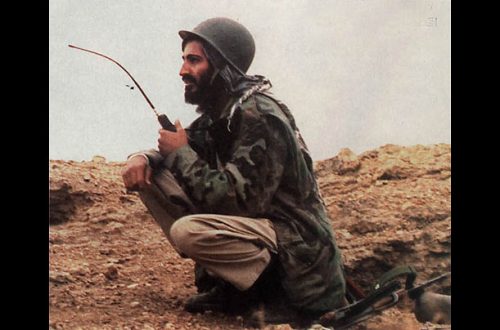
Osama Bin Laden leading Mujaheddin in 1984 

If this is not enough we have the experiences of the Soviet Union, the British Empire and others that have attempted to rule Afghanistan as plumb lines to gauge our effectiveness. Others have tried and failed miserably at this. The Soviets learned the hard way and found that Afghanistan was one of the major reasons for the collapse of the Soviet Union. Reading the history of Soviet operations in Afghanistan is frighteningly like reading the history of our campaign.
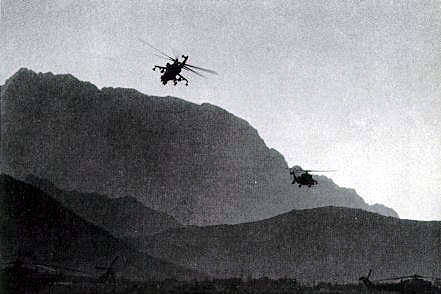
Two Soviet Mi-24 “Hind” attack helicopters flying in an Afghan Valley

The Soviets invaded Afghanistan in 1979 they used their 40th Army which initially was composed of “two motorized rifle divisions, an airborne division, an air assault brigade and separate motorized rifle regiments.”[27] These forces totaled about 52,000 troops and were “considered sufficient to guarantee the viability of Afghanistan.”[28] The 40th Army was a standard Cold War Soviet Combined Arms Army designed for high tempo conventional operations. It was not designed for nor trained in counterinsurgency operations or what the Soviets and Russians class as “anti-guerilla operations.” It was poorly suited to mountain and dessert combat and at the beginning “not only had no practical skills in the conduct of counter-guerilla warfare, they also did not have a single well-developed theoretical manual, regulation or tactical guideline for fighting such a war.”[29]

Downed Soviet Mi-4 “Hound” with Mujaheddin 

The Soviets did not expect to be involved in combat operations and the Afghan population reacted to their presence with resistance which spread across the country both against their own government which they viewed as a puppet of the Soviets but also against the Soviet Forces. As time went on the Soviets attempted to use raids and large scale operations to attempt to bring Mujahidin forces to battle, however the insurgents were very skillful and the Soviets attempted to increase the training of their forces as well as their numbers. By 1986 the numbers on the ground had increased to 108,000 personnel in four divisions, five separate brigades, four separate regiments and six separate battalions.[30] In the nearly 10 years of operations over a half million Soviet soldiers and support personnel served in Afghanistan. Tours for enlisted personnel who were primarily conscripts served 12-18 months in country and officers 2 years. Few returned for subsequent tours meaning that the 40th Army had few personnel very familiar with the country, its people and the challenges faced by Soviet forces. According to official sources the 40th Army suffered 13,833 killed in action or died of wounds, 49,985 wounded and 311 missing in action a figured of 1 in 8 Soviet Soldiers being casualties. 14.3 percent of the casualties were officers.[31] Of course the official figure is doubted many believing the number killed in action or died of wounds to be closer to 26,000.[32]
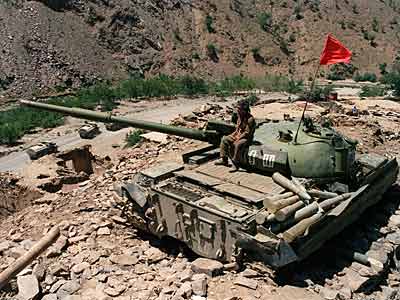
Soviet T-62 Tank guarding a convoy in a mountain pass

Like their American and French counterparts the Soviet veterans have experienced the unhealed wounds of war and a country that does not understand their experiences. The stigma of war wounds and PTSD haunt many Soviet veterans and were compounded by the collapse of the Soviet Union and Warsaw Pact in 1989. They returned home, lost their country and were by and large abandoned by their countrymen. A good number of these men and women travel to one of 5 centers across the country where according to one of the veterans come to for “social and psychological help.” He said that “The best thing about this place is that it provides us with a chance to share our Afghan memories with comrades who understand what we are talking about.” That camaraderie of being able to share their experiences with others that understand is helping some to return to something akin to “normal” life. They are joined by the soldiers that have experienced similar things in Chechnya. Russian veterans of the Afghan War are still so closely linked to it that they refer to themselves as “Afghans.”

Soviet Mi-8 “Hip” Helicopters in Afghanistan preparing for a mission

The Soviet Forces supported the Army of the Democratic Republic of Afghanistan which numbered at their peak on average between 120,000-150,000 soldiers.[33] The Afghan forces, then as now were at the mercy of tribal, familial and communist party affiliations. Over 70 percent of the DRA was conscripted, desertions averaged 1,500 to 2,000 soldiers a month and units were usually optimistically 25-40 percent under their TO&E strength.[34]Limitations on training and leadership meant that typically DRA units could not conduct large scale missions without Soviet help. As such most of the fighting was done by Soviet formations.
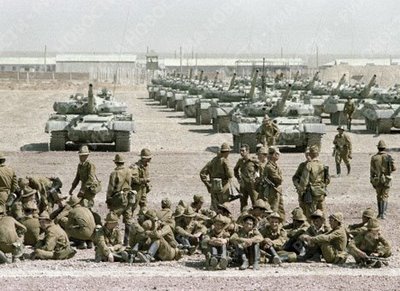
Soviet Troops preparing to leave Afghanistan

Many of these problems have plagued the United States and ISAF throughout the first 9 years of the current Afghan War. As former Afghanistan Commander General Stanley McChrystal noted in his assessment “ISAF is a conventional force that is poorly configured for COIN, inexperienced in local languages and culture, and struggling with the challenges inherent to coalition warfare. These intrinsic disadvantages are exacerbated by our current culture and how we operate.”[35]

We should have learned. A retired Red Army Colonel who served in Afghanistan from 1986-1988 who learned the Dari language in order to negotiate with the Afghan Mujahedeen warned what will happen when the Americans and NATO leave the country and the mistake that we made in entering Afghanistan. Frants Klinsevich now a member of the Russian Parliament comment to reporters at a wreath laying ceremony at a veteran’s convention that “they (NATO and the United States) are 100 percent repeating the same mistake we made by entering into a war in that country” and that “As soon as the Americans and Europeans leave, the Taliban will crack down on everything.” Klinsevich noted that he understood the American desire to tame Afghanistan but that “the problem of radical Islam will not be solved there, its violence cannot be solved. It is simply unsolvable.” He said that he wished that the United States had consulted the Russians about Afghanistan saying “they should have invited Russian specialists, involved Russia, really studied how they could use Russia. But unfortunately Americans think they know everything.” The former Russian commander understands far more that the majority of American policy makers on this subject. [36]

The fact is that we are hamstrung by the ongoing wars which limit our ability to respond to rapidly changing situations. We are in a similar situation to the Germans in 1942 and 1943 overcommitted, overstretched and lacking true strategic depth to respond to unanticipated situations as are now occurring across the Middle East. In 1942 and 1943 the Germans were always just short of the forces that would have turned the tide. Like the Germans our economy is laboring on the verge of collapse and we have to honestly answer the question “What is the strategic value in continuing to wage war in Afghanistan in the way that we are doing?”

What are the lessons to be learned from these campaigns as well as from the various accounts? Andrew Krepinevich prophetically noted that the failure to learn the lessons of Vietnam “represents a very dangerous mixture that in the end may see the Army again attempting to fight a conventional war against a very unconventional opponent.”[37] Obviously, there are lessons to be learned, especially in understanding the nature of revolutionary war as well as the culture and history of our opponents. The U.S. has made some improvement in this regard but there is still much to be learned, especially since after the war the Army was “erecting barriers to avoid fighting another Vietnam War.”[38] From these wars we learn that nations and incompetent governments who mismanage wars can alienate themselves from the soldiers that they send to fight, with serious consequences. As far as historiography we learn that certain historical fallacies are evident when one reads the accounts critically and recognize the bias and limitations of the various sources.

The fact is that we have learned little about such wars and are paying a terrible price for it. The debate now is should we continue the war as it is with minor withdraws of troops or begin a rapid exit in order to preserve and rebuild our force and to reduce the cost of these operations. But that debate and decision are well above my pay grade. But then maybe we need to remember what Field Marshall Gerd Von Rundstedt told his staff in September of 1944 when asked how to recover from the disastrous collapse of the German front following the Allied breakout from Normandy and dash across France. “Make peace you fools.” http://www.youtube.com/watch?v=ch56NAL1C-I

Peace
Padre Steve+
________________________________________
[1] Shy, John and Collier, Thomas W. “Revolutionary War” in Makers of Modern Strategy from Machiavelli to the Nuclear Age,” Peter Paret editor. Princeton University Press, Princeton N.J. 1986 p.849
[2] Galula, David. Counterinsurgency in Algeria: 1956-1958. RAND Corporation, Santa Monica, CA. 2006. First published by RAND in 1963. p.244
[3] Krepinevich, Andrew F. “The Army and Vietnam,” The Johns Hopkins University Press, Baltimore and London, 1986 p.213
[4] Horn, Alistair. “A Savage War of Peace: Algeria 1954-1962,” a New York Review Book published by the New York Review of Books, New York, 1977, 1987, 1996, and 2006 p 41
[5] Fall, Bernard B. “Street Without Joy: The French Debacle in Indochina.”Stackpole Books, Mechanicsburg PA, 2005, originally published by Stackpole Publications 1961 p.27
[6] Ibid. p.33
[7] Horn. p.100.
[8] Windrow, Martin. “The Last Valley: Dien Bien Phu and the French Defeat in Vietnam,” Da Capo Press, Novato, CA 2006, originally published by Weidenfeld and Nicholson, London 2004 p.63
[9] Fall, Bernard B. “The Siege of Dien Bien Phu: Hell in a Very Small Place.” Da Capo Press, New York an unabridged reprint of the 1st Edition reprinted in arrangement with Harper and Row Publishers, New York. 1967 pp. 456-457 Fall discusses in depth the lack of French Air support and the antecedents that led to the shortage following World War II.
[10] Pottier, Philippe(2005)’Articles: GCMA/GMI: A French Experience in Counterinsurgency during the French Indochina War’, Small Wars & Insurgencies,16:2,125 — 146http://dx.doi.org/10.1080/09592310500079874
[11] Simpson, Howard K. “Dien Bien Phu: The Epic Battle America Forgot,”Potomac Books Inc. Washington DC 2005, originally published by Brassey’s Inc. 1994 pp. 170-171
[12] Trinquier, Roger. “Modern Warfare: A French View of Counterinsurgency,” translated from the French by Daniel Lee with an Introduction by Bernard B. Fall. Praeger Security International, Westport CT and London. 1964 and 2006. Originally published under the title “La Guerre Moderne” by Editions Table Ronde. p.87
[13] Windrow. p.652.
[14] Roy, Jules. “The Battle of Dien Bien Phu” Carrol and Graf Publishers, New York 1984. Translated from the French by Robert Baldrick. English translation copyright 1965 by Harper and Row Publishers, New York. p.xxx
[15] Galula, David. “Counterinsurgency Warfare: Theory and Practice.”Praeger Security International, Westport CT 1964 and 2006 p. 54
[16] Krepinevich. p.213
[17] Ibid. p.24
[18] Nagl, John A. “Learning to East Soup with a Knife: Counterinsurgency Lessons from Malaya and Vietnam,” University of Chicago Press, Chicago and London, 2005 p.138
[19] Shy. p.856
[20] Krepinevich. p.202
[21] Spector, Ronald H. “After Tet: The Bloodiest Year in Vietnam,” Vintage Press, a division of Random House, New York, 1993 p.314
[22] Millett, Allan R. and Maslowski, Peter. “For the Common Defense: A Military History of the United States of America.” The Free Press, a division of Macmillian, Inc. New York, 1984 p.555
[23] Windrow. p.655
[24] Ibid. p.657
[25] Ibid.
[26] Moore, Harold G and Galloway, Joseph L. “We were Soldiers Once…and Young: Ia Drang: The Battle that Changed Vietnam,” Harper Collins Publishers, New York NY 1992 p. xx
[27] The Russian General Staff. The Soviet Afghan War: How a Superpower Fought and Lost” translated and edited by Lester A. Grau and Michael A. Gress, University Press of Kansas, Lawrence KS 2002 p.17.
[28] Ibid. p.18
[29] Ibid. p.43
[30] Ibid. p.28
[31] Ibid. p.309
[32] Ibid. p.xix
[33] Ibid. p.48
[34] Ibid. pp.48-51
[35] McChrystal, Stanley. “Commander’s Initial Assessment Commander International Security Assistance Force Afghanistan” dated 30 August 2009 pp. 1-2
[36] “Russian veteran warns of Afghan violence.” Reuters 16 May 2011. Edited by Paul Tait and Daniel Magnowski obtained 11 June 2011 at http://www.trust.org/alertnet/news/interview-russian-veteran-warns-of-unsolvable-afghan-violence/
[37] Krepinevich. p.275
[38] Ibid. p.274

3 Comments

Filed under Foreign Policy, History, iraq,afghanistan, middle east, Military, Political Commentary, vietnam, world war two in europe