Later this week we will be flying to Germany for what has seemingly become an annual pilgrimage. While there we will be seeing friends as well as enjoying the Oktoberfest in Munich, seeing historical places, and exploring towns where Judy’s ancestors came from in the Rheinland-Pfalz, Baden-Württemberg, and the Alsace in France.
While in Munich I plan to again visit Dachau and the Sophie Scholl museum at Munich University and hopefully a number of other sites. I have a ticket for a soccer match between Bayern-München and Augsburg at Allianz area.
Outside of Munich it looks like we will visit the Flossenbürg and Buchenwald Concentration Camps Southwest of Berlin. We will stay in Wittenberg where Martin Luther began the Protestant Reformation, and the Wartburg Castle in Eisenach where Luther was hidden after his defense and excommunication before the Imperial Diet at Worms. In his ten months of hiding he translated the New Testament from Greek into German.
We will visit friends in Berlin. It will be our first visit to the city since November of 1986, before the fall of the Berlin Wall. It will be interesting to see the redone Reichstag, walk under the Brandenburger Tor, as well as see the the Berlin Monument to the Holocaust, the Kaiser Wilhelm Memorial Church, the Bendlerstrasse Museum to the German anti-Nazi resistance, the Berlin Holocaust Memorial, and the Wannsee House.
From Berlin we will stay with friends near Karlsruhe one the Rhein River near the French Border for a few days before returning to Munich for our flight home.
I’ll be writing and posting about those things and more in the coming weeks, but for now I will wish you a good night.
Seventy-five years ago today a young German woman stepped up the the guillotine at Munich’s Stadelheim Prison. She had been tried and convicted of treason for distributing a series of anti-Nazi leaflets by the Nazi Volksgericht or “People’s Court” under the direction of the notorious Judge Roland Freisler who gained further infamy in his show trials of those suspected of participating in or supporting the July 20th Bomb Plot against Hitler.
The woman was Sophie Scholl, a student at the University of Munich she was just 22 years old. Her story and the story of the resistance group that she was at the center of is remarkable for the moral clarity that she and her friends displayed in an era where most people were willing to look the other way, if not unreservedly served Hitler’s Third Reich.
The story of Sophie and the White Rose is a remarkable story because stories like this are often buried by the propaganda machines of totalitarian regimes; but the shock of what these young people did was so great that the Nazi propaganda machine had to publicly confront it with the goal of instilling such fear that no one else’s would dare repeat it. What politicians, generals, and others could not do to shake the Nazi regime a handful of university students accomplished.
There are a number of monuments scattered around Munich to the White Rose movement, but the most remarkable is the monument in front of the university where they studied and where they distributed their leaflets. Facsimiles of their publications and letters are part of the pavement, looking as if they have been dropped on the ground for someone to pick up.
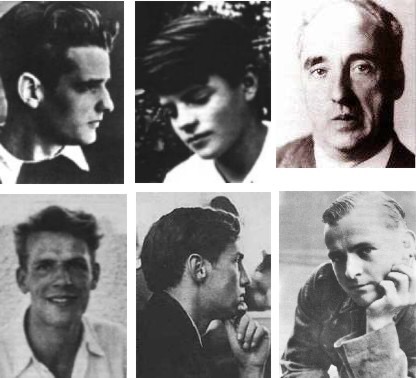
Scholl, as well as her friends were students, some who in the course of their time of study who had been drafted into the Wehrmacht as medics, serving on the Russian front before returning to the University. There were five of them, Sophie, Willi Graf, Alexander Schmorrel, Hans Scholl, and Christoph Probst, plus one of their professors, Professor Dr. Kurt Huber who began a resistance cell that focused on telling the truth about the crimes of the Nazi regime, and the lies of Hitler.
Telling the truth in a dictatorship is dangerous and although Sophie and her companions could have remained silent they had consciences that were guided by reason and human rights, as well as by their Christian faith, a faith which remained despite their aversion to the institutional church for its complicity with the Nazis. As she stood before Freisler and the Volksgericht she was recorded as saying:
“Somebody, after all, had to make a start. What we wrote and said is also believed by many others. They just don’t dare express themselves as we did.”
Too many people lacked the courage to speak as Sophie did in her day as all too many do today. It is far easier to take the path of least resistance. Laurence Rees in his history of Auschwitz wrote:
“…human behavior is fragile and unpredictable and often at the mercy of the situation. Every individual still, of course, has a choice as to how to behave, it’s just that for many people the situation is the key determinate in that choice.”
Sophie and her circle of friends in the White Rose chose how courageous people behave in such abominable conditions. They published a series of six leaflets which they printed themselves and distributed around the university, the city, and to like minded people in a number of other cities. They asked those who got them to make as many copies as they could and distribute them. They were in the process of drafting a seventh when Scholl was spotted distributing them at the university by a maintenance man who was a member of the Nazi Party. She and her friends were arrested on February 21st 1943 by the notorious Nazi People’s Court under the direction of Roland Freisler on the 22nd, and executed by beheading at Munich’s Stadelheim Prison on the 23rd.
The members of the White Rose were bold and defiant in the face of evil, of course those that have that kind of courage usually have short life expectancies in a totalitarian state, but they did not back down. Their pamphlets and graffiti criticizing Hitler garnered the attention of the Gestapo and when they were caught they were brutally tortured, but none backed down.
Their criticisms of Hitler and his Third Reich were hard hitting. Since all of the students had spent much of their childhood teenage years in Nazi organizations which were designed to make loyal little Nazis, their resistance came as a shock to many. All were children who could have easily due to their family background taken the easy road, but chose the more honorable and dangerous road.
Their pamphlets are striking, and each focused on a different part or aspect of the Nazi regime. In their first leaflet they wrote:
“Nothing is so unworthy of a civilized nation as allowing itself to be governed without opposition by an irresponsible clique that has yielded to base instinct.” They urged their readers “Therefore every individual, conscious of his responsibility as a member of Christian and Western civilization, must defend himself as best he can at this late hour, he must work against the scourges of mankind, against fascism and any similar system of totalitarianism.” And to “Offer passive resistance – resistance – wherever you may be, forestall the spread of this atheistic war machine before it is too late, before the last cities, like Cologne, have been reduced to rubble, and before the nation’s last young man has given his blood on some battlefield for the hubris of a sub-human. Do not forget that every people deserves the regime it is willing to endure!”
Such was their beginning, but they went on to attack the Nazi, leaders, the Nazi system, and especially the silence of their countrymen over the extermination of the Jews and Polish intellectuals. They asked in the second leaflet:
“Why do German people behave so apathetically in the face of all these abominable crimes, crimes so unworthy of the human race? Hardly anyone thinks about that. It is accepted as fact and put out of mind. The German people slumber on in their dull, stupid sleep and encourage these fascist criminals; they give them the opportunity to carry on their depredations; and of course they do so…. For through his apathetic behavior he gives these evil men the opportunity to act as they do; he tolerates this “government” which has taken upon itself such an infinitely great burden of guilt; indeed, he himself is to blame for the fact that it came about at all! Each man wants to be exonerated of a guilt of this kind, each one continues on his way with the most placid, the calmest conscience. But he cannot be exonerated; he is guilty, guilty, guilty!”
In each of the letters they asked their readers to offer some form of resistance to Hitler and the Nazi State but urged passive resistance, but in the third missive they went into more detail, including something that anyone who thinks that they are loyal to their country need to appreciate:
“The meaning and the goal of passive resistance is to topple National Socialism, and in this struggle we must not recoil from any course, any action, whatever its nature. At all points we must oppose National Socialism, wherever it is open to attack. We must soon bring this monster of a state to an end. A victory of fascist Germany in this war would have immeasurable, frightful consequences. The military victory over Bolshevism dare not become the primary concern of the Germans. The defeat of the Nazis must unconditionally be the first order of business… And now every convinced opponent of National Socialism must ask himself how he can fight against the present “state” in the most effective way, how he can strike it the most telling blows. Through passive resistance, without a doubt…”
Eventually their tracts became more biting, and in fourth the metaphysical linking Hitler to Satan and Anti-Christ.
They wrote:
“Every word that comes from Hitler’s mouth is a lie. When he says peace, he means war, and when he blasphemously uses the name of the Almighty, he means the power of evil, the fallen angel, Satan. His mouth is the foul-smelling maw of Hell, and his might is at bottom accursed…. I ask you, you as a Christian wrestling for the preservation of your greatest treasure, whether you hesitate, whether you incline toward intrigue, calculation, or procrastination in the hope that someone else will raise his arm in your defence? Has God not given you the strength, the will to fight? We must attack evil where it is strongest, and it is strongest in the power of Hitler.”
In the fifth leaflet they spoke of where the Nazi war effort would end and the responsibility of not only Hitler but the German people for it:
“It has become a mathematical certainty that Hitler is leading the German people into the abyss. Hitler cannot win the war; he can only prolong it. The guilt of Hitler and his minions goes beyond all measure. Retribution comes closer and closer. But what are the German people doing? They will not see and will not listen. Blindly they follow their seducers into ruin. Victory at any price! is inscribed on their banner. “I will fight to the last man,” says Hitler-but in the meantime the war has already been lost…. Do not believe that Germany’s welfare is linked to the victory of national Socialism for good or ill. A criminal regime cannot achieve a German victory. Separate yourselves in time from everything connected with National Socialism. In the aftermath a terrible but just judgment will be meted out to those who stayed in hiding, who were cowardly and hesitant.”
In the aftermath of the disaster at Stalingrad they published their sixth and last issue before being caught. In it they urged Germans to fight against the Nazi Party and regime, and confronted the way that since its inception Hitler and the Party corrupted the meaning of honor and freedom:
“Freedom and honor! For ten long years Hitler and his coadjutor have manhandled, squeezed, twisted, and debased these two splendid German words to the point of nausea, as only dilettantes can, casting the highest values of a nation before swine. They have sufficiently demonstrated in the ten years of destruction of all material and intellectual freedom, of all moral substance among the German people, what they understand by freedom and honor. The frightful bloodbath has opened the eyes of even the stupidest German – it is a slaughter which they arranged in the name of “freedom and honor of the German nation” throughout Europe, and which they daily start anew.”
Just over two weeks later they were caught and in Freisler’s People’s Court convicted and executed. During their trial, if it can be called that, Freisler and others expressed their shock that young Germans could commit treason. Sophie had no problem confronting her accusers:
Her last words before going to the guillotine were unapologetic: “How can we expect righteousness to prevail when there is hardly anyone willing to give himself up individually to a righteous cause? Such a fine, sunny day, and I have to go, but what does my death matter, if through us, thousands of people are awakened and stirred to action?” On the back of the order condemning her to death she wrote the word Freedom.
There are leaders in many nations today intent on destroying freedom and in many places the people and the country’d institutions fall in behind them, usually by painting pictures of threats so imminent that people willingly trade real freedom for a false security. It is a dangerous world and all of us must be alert to changes in society and question what comes out of the mouths of leaders, and even more so their true believer followers.
Sophie Scholl and her companions understood the risk, but they got their message heard at the highest level of government, and most were killed. But their example of courage and belief in freedom and human rights is still stronger that they mightiest despot, and unlike their mighty yet evil rulers, they are the ones that Germany remembers.
I think that there is a lesson for us as well, and I think that it is a lesson that many of our young people will understand better than their elders. That my friends gives me hope for the future.
Just a short post before turning in for the night and getting ready to drive from Munich to see old German friends in the area north of Wiesbaden, in the German state of Hessen where we spent much of my first tour in Germany from January 1984 to the end of December 1986. My friend has battled prostate Cancer for a few years and told me that his doctor has given him bad news. I can only imagine that it has spread, so this part of our visit may be more somber than usual.
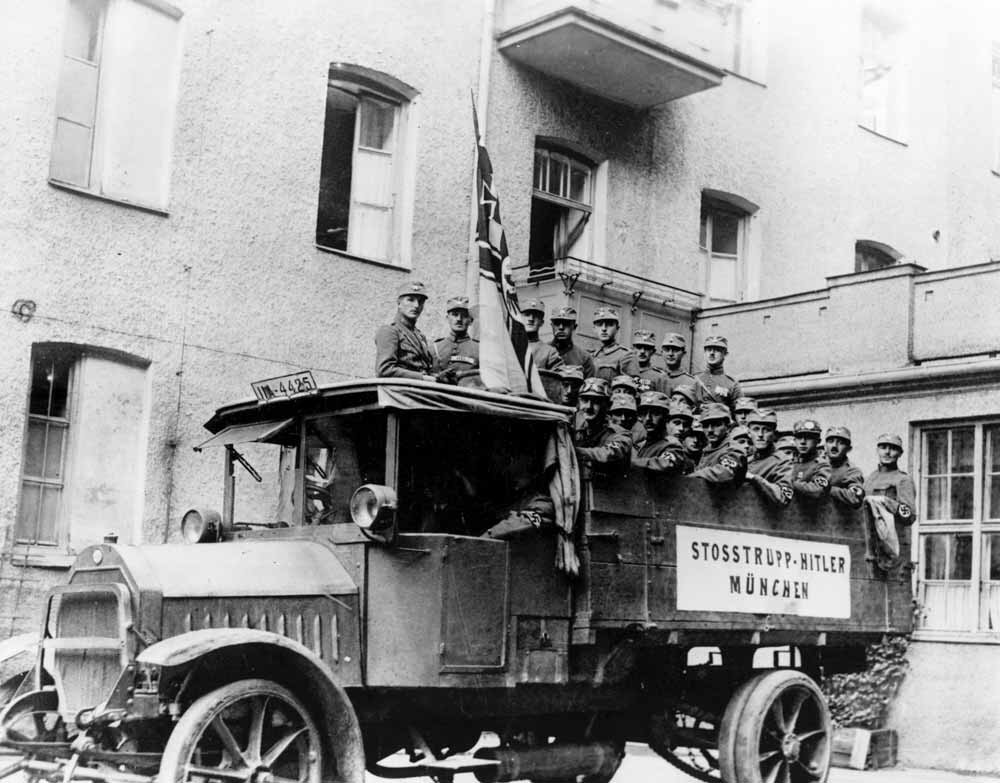
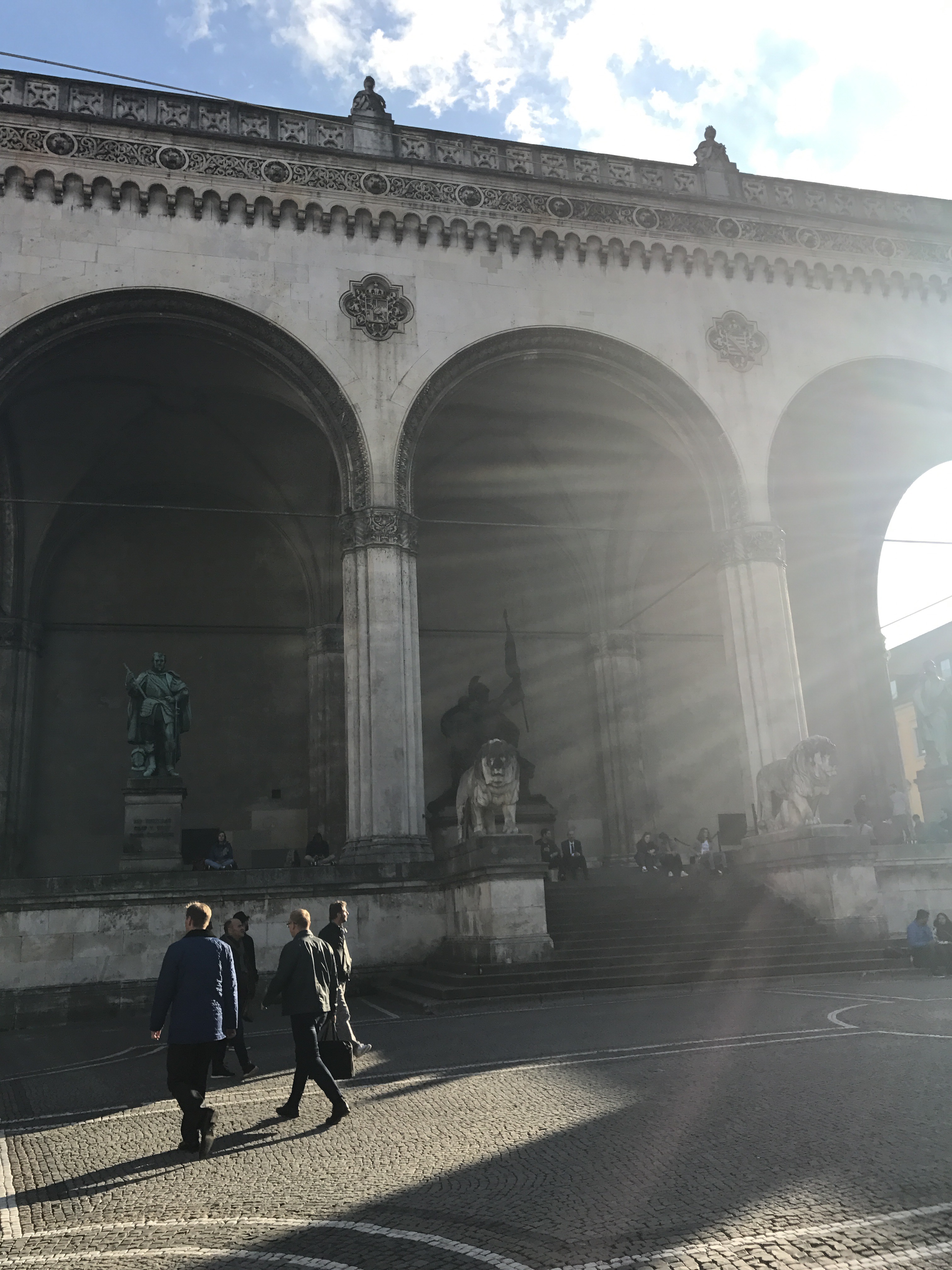
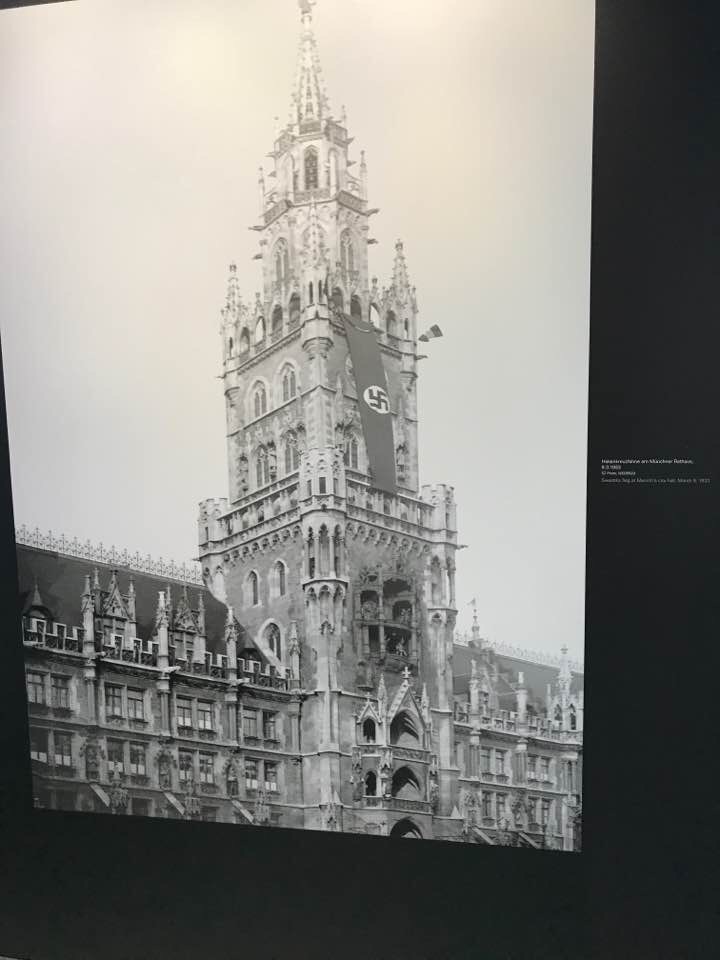
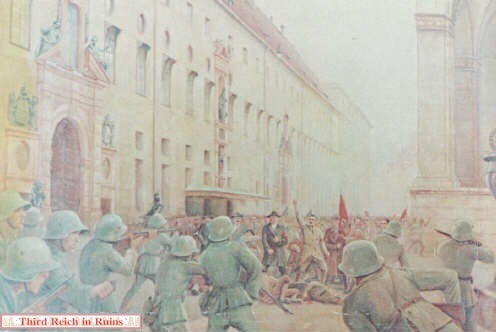
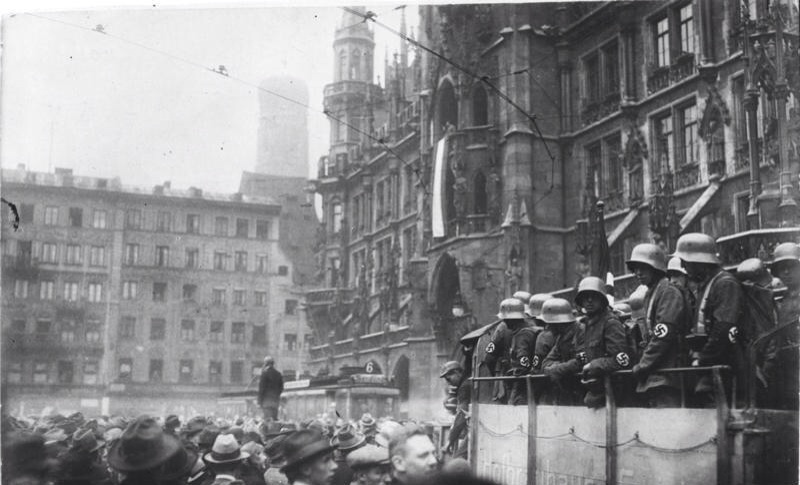
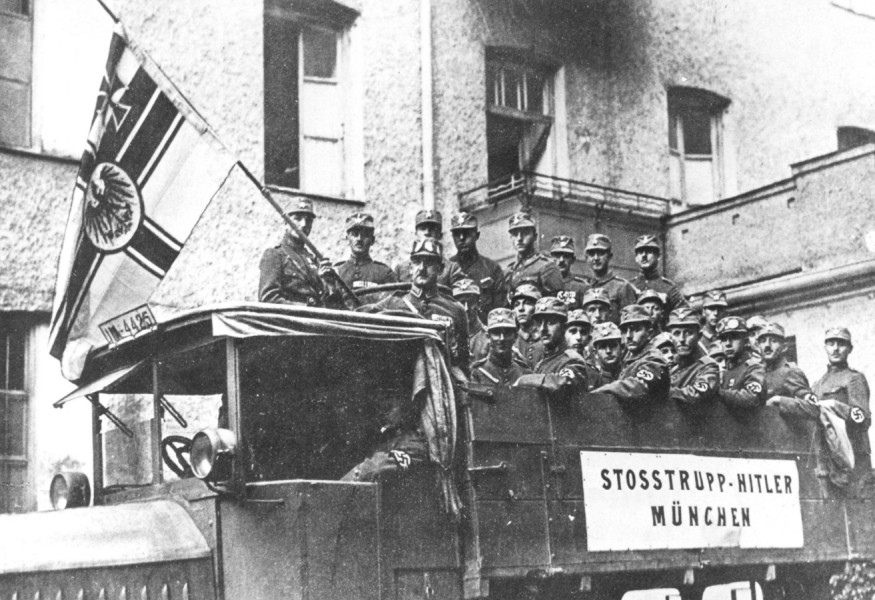
Today was a good day, we slept late, had a last dinner at our favorite restaurant here where one of the women Judy has become friends with sat us at the Stamtisch which is a table reserved for customers that are regulars. Today we shared it with a number of older German men, all locals and had a nice talk. Afterward Judy went back to the hotel while I went went walking. Today I left the S-Bahn at Rosenheimer Platz, which put me near where the Burgerbraukeller once stood. That place, where Hitler and the early Nazis gathered to overthrow the Weimar Republic on November 9th 1923 was the beginning point of what is now known as the Bier Hall Putsch. Hitler and his storm troopers marched from there, across the Ludwigsbrucke, through the Isar Tor, to Marienplatz and the Rathaus, and from there turning North up Theatnerstrasse, to Residenzestrasse to the Odeonsplatz where they were met by a contingent of well armed police. The Nazis began a fight when the police refused to give way and were repulsed with casualties. Hitler was uninjured but was arrested, tried, and convicted for his role in the putsch, serving a minimal sentence of nine months in prison, free to receive visitors and write his book Mein Kampf.
It is always weird for me when I go to these places, to think that not even one hundred years ago that Hitler and his followers attempted to overthrow the German government right where I was walking. Of course Hitler changed his tactics to get enough of the vote so that President Paul von Hindenburg was persuaded to appoint him Chancellor, and of course the rest is history.
This was the second of two days where I walked and visited places that are important in history so that we do not forget. Yesterday I went to the National Socialist Documentation Center near the Konigsplatz. This is a great place to go for anyone serious about studying the Nazi era. Like all museums in Germany it pulls no punches about the country’s Nazi past and just how evil it was while also confronting the same threats from similar people today.
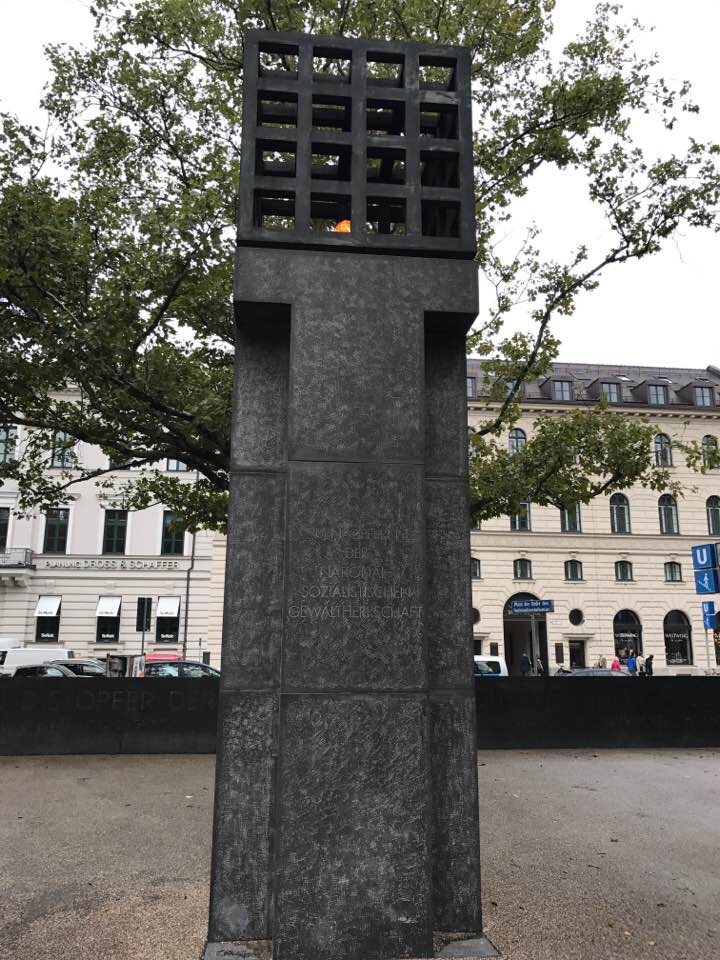
I wish that I could have spent several days there doing nothing but studying and reading original documents and records from the era. The center is build where Hitler and the Nazis made their headquarters in Munich in the years before the seizure of power, the Brown House. Around it the Nazis either occupied or built other buildings to house various party offices, including the SA and SS. I walked around that quarter of the city, and also went to the Monument to the Victims of National Socialism, which are commemorated by an eternal flame. I only wish that more Americans could take this in and then apply the lessons to our own genocide of the Native American tribes, American Slavery, and America medical experiments in Eugenics, Medical sterilization, and infectious diseases which involved human subjects, mostly African Americans. If we did we might have fewer memorials to the perpetrators of these crimes and more things about remembering the crimes and the victims, rather than hundreds of monuments dedicated to the mythologized and sanitized past in which we remember the perpetrators as military heroes or great Americans, even those that rebelled against the United States in a war that cost about three quarters of a million lives.
But anyway. The hour is late, and yes I have more to write about my time in Munich, including a this evening at the Neil Diamond 50th Anniversary Tour Concert at the Olympia Halle, but tomorrow is a travel day.
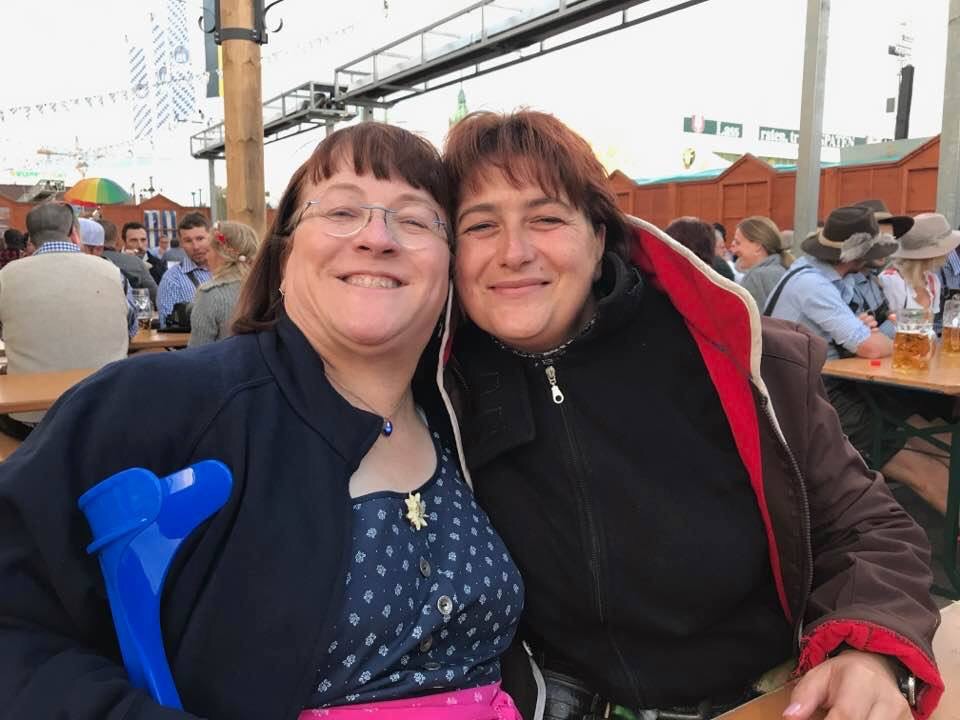
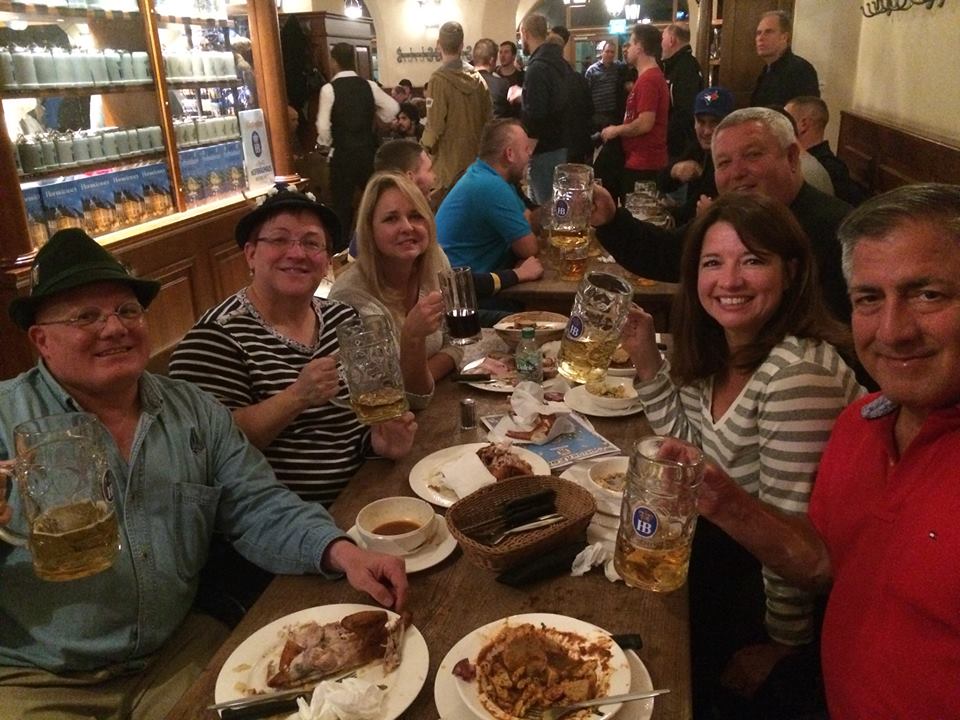
Judy with one of the barmaids that she has gotten to know the last four years at Oktoberfest
Friends of Padre Steve’s World,
Mark Twain once wrote: “Travel is fatal to prejudice, bigotry, and narrow-mindedness, and many of our people need it sorely on these accounts. Broad, wholesome, charitable views of men and things cannot be acquired by vegetating in one little corner of the earth all one’s lifetime.”
We are in traveling in Germany for the Oktoberfest, to see friends, and for me to visit some historic sites. I have to admit that I do love traveling. If I had unlimited time and money or was paid to travel I could easily imagine spending at least six month of every year away from home, preferably with Judy and our Papillons, all who travel well.
For me travel is an adventure and it always has been. When I was a child and my father was in the Navy I was crushed when he retired because there would be no more moving to new places. Even as a child I was infected with a wanderlust that I have never tried to treat. Even when I go to a familiar place I try to find new places to go, especially to when history was made. This week was no exception, and yes there will be more before this trip is over.
Judy and I also like meeting people who come from different places than us. At Oktoberfest this is easy because in addition to the Germans, there are people from around the world. For us those are some of the most interesting and pleasant experiences because we didn’t even try to script them, and in some cases, both at the Fest and a local restaurant near our hotel, there are people who now know us and give us friendly greetings. Of course it does help that we speak German, but even without that simple acts of kindness, friendliness, respect, and thankfulness go a long way to make the experience great.
I think that traveling as much as we have has been very influential in how we see and relate to the world and why we just shake our heads when we see people who have never been out of the bubble of home declare themselves experts about people they have never met and places they have seen. The prejudice, bigotry, and narrow-mindedness of some people bolstered by their ignorance saddens me because I know that a simple change of perspective is often all that is needed to open people’s eyes and minds to a bigger and better world. Of course travel is not a magic wand, there are some people whose prejudices, bigotry, and narrow-mindedness is only reinforced by traveling.
But Judy and I are not tourists. We want to experience where we are. Tourism focuses on seeing sites or doing certain activities will traveling, and that is okay to an extent, but it is more important and richer to discover what makes a people and a place what it is, to experience hospitality, and to extend a hand of friendship. Henry Miller wrote, “One’s destination is never a place, but a new way of seeing things.”
When you travel, especially to a foreign county it is somewhat humbling, not that there is anything wrong with that. You discover that things that were simple at home are either more difficult or different, and it doesn’t hurt to learn both how and why the locals do things. Learning those things has helped us back at home, because we talk much of what we learn with us because we found that it works. We love the mass transportation system, we like the smaller stores, and I like being able to do a lot of walking because the cities and towns are designed for it, unlike much of the United States.
There is a saying here in Bavaria, or as it is called here, Bayern, that “Im Bayern geht die uhren anders,” or in Bavaria the time goes differently. This is because even their fellow Germans often find the ways of Bavarians perplexing.
But anyway, that is all for today, it’s almost one in the morning here and we need to get up a bit earlier than we did today when my lack of sleep cause of the six hour time difference between here and now finally caught up with me.
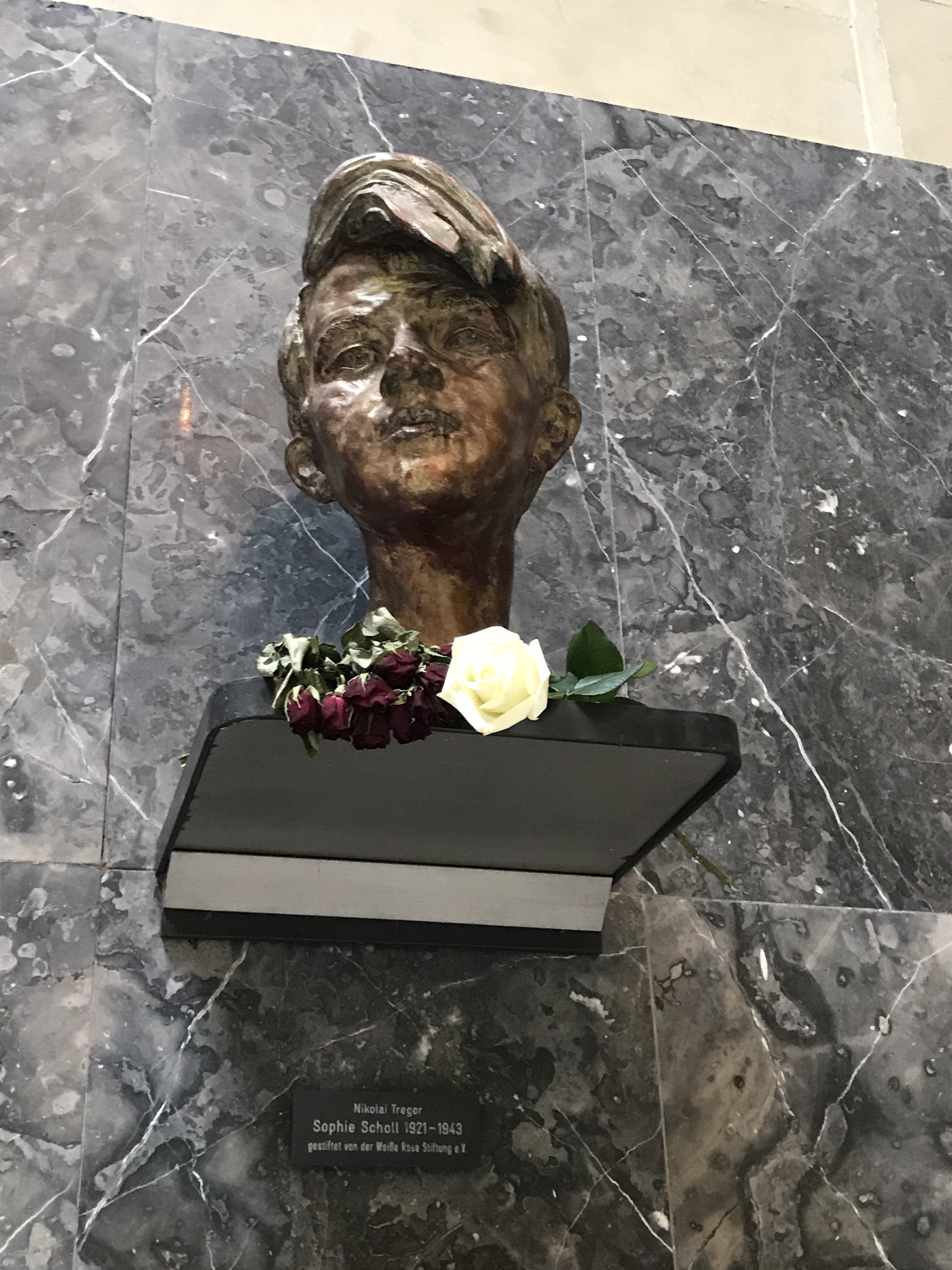
Just a few short thought for today following up on my article yesterday about my visit to Dachau. Today I had the chance to visit one of the memorials and a museum dedicated to the remembrance of Sophie Scholl and the members of the White Rose resistance group. The group was built around Scholl and a number of other students from the University in Munich during 1942 and 1943. I have written about them before but this was the first time that I was able to visit the location where much of their work was centered.
Theirs is a remarkable story because stories like this are often buried by the propaganda machines of totalitarian regimes, but the shock of what these young people did was so great that the Nazi propaganda machine had to publicly confront it with the goal of instilling such fear that no one else’s would dare repeat it. There are a number of monuments scattered around Munich to the White Rose movement, but the most remarkable is the monument in front of the university where they studied and where they distributed their leaflets, facsimiles of their publications and letters are part of the pavement, as if they have been dropped on the ground for someone to pick up.
Scholl, as well as her friends were students, some who in the course of their time of study who had been drafted into the Wehrmacht as medics, serving on the Russian front before returning to the University. There were five of them, Scholl, Willi Graf, Alexander Schmorrel, Hans Scholl, and Christoph Probst, plus one of their professors, Professor Dr. Kurt Huber who began a resistance cell that focused on telling the truth about the crimes of the Nazi regime, and the lies of Hitler. Telling the truth in a dictatorship is dangerous and although Scholl and her companions could have remained silent they had consciences that were guided by reason and human rights, as well as by their Christian faith, a faith which remained despite their aversion to the institutional church for its complicity with the Nazis.
They published a series of six leaflets which they printed themselves and distributed around the university, the city, and to like minded people in a number of other cities. They asked those who got them to make as many copies as they could and distribute them. They were in the process of drafting a seventh when Scholl was spotted distributing them at the university by a maintenance man who was a member of the Nazi Party. She and her friends were arrested on February 21st 1943 by the notorious Nazi People’s Court under the direction of Roland Freisler on the 22nd, and executed by beheading at Munich’s Stadelheim Prison on the 23rd.
The members of the White Rose were bold and defiant in the face of evil, of course those that have that kind of courage usually have short life expectancies in a totalitarian state, but they did not back down. Their pamphlets and graffiti criticizing Hitler garnered the attention of the Gestapo and when they were caught they were brutally tortured, but none backed down.
Their criticisms of Hitler and his Third Reich were hard hitting. Since all of the students had spent much of their childhood teenage years in Nazi organizations which were designed to make loyal little Nazis, their resistance came as a shock to many. All were children who could have easily due to their family background taken the easy road, but chose the more honorable and dangerous road.
Their pamphlets are striking, and each focused on a different part or aspect of the Nazi regime. In their first leaflet they wrote:
“Nothing is so unworthy of a civilized nation as allowing itself to be governed without opposition by an irresponsible clique that has yielded to base instinct.” They urged their readers “Therefore every individual, conscious of his responsibility as a member of Christian and Western civilization, must defend himself as best he can at this late hour, he must work against the scourges of mankind, against fascism and any similar system of totalitarianism.” And to “Offer passive resistance – resistance – wherever you may be, forestall the spread of this atheistic war machine before it is too late, before the last cities, like Cologne, have been reduced to rubble, and before the nation’s last young man has given his blood on some battlefield for the hubris of a sub-human. Do not forget that every people deserves the regime it is willing to endure!”
Such was their beginning, but they went on to attack the Nazi, leaders, the Nazi system, and especially the silence of their countrymen over the extermination of the Jews and Polish intellectuals. They asked in the second leaflet:
“Why do German people behave so apathetically in the face of all these abominable crimes, crimes so unworthy of the human race? Hardly anyone thinks about that. It is accepted as fact and put out of mind. The German people slumber on in their dull, stupid sleep and encourage these fascist criminals; they give them the opportunity to carry on their depredations; and of course they do so…. For through his apathetic behavior he gives these evil men the opportunity to act as they do; he tolerates this “government” which has taken upon itself such an infinitely great burden of guilt; indeed, he himself is to blame for the fact that it came about at all! Each man wants to be exonerated of a guilt of this kind, each one continues on his way with the most placid, the calmest conscience. But he cannot be exonerated; he is guilty, guilty, guilty!”
In each of the letters they asked their readers to offer some form of resistance to Hitler and the Nazi State but urged passive resistance, but in the third missive they went into more detail, including something that anyone who thinks that they are loyal to their country need to appreciate:
“The meaning and the goal of passive resistance is to topple National Socialism, and in this struggle we must not recoil from any course, any action, whatever its nature. At all points we must oppose National Socialism, wherever it is open to attack. We must soon bring this monster of a state to an end. A victory of fascist Germany in this war would have immeasurable, frightful consequences. The military victory over Bolshevism dare not become the primary concern of the Germans. The defeat of the Nazis must unconditionally be the first order of business… And now every convinced opponent of National Socialism must ask himself how he can fight against the present “state” in the most effective way, how he can strike it the most telling blows. Through passive resistance, without a doubt…”
Eventually their tracts became more biting, and in fourth the metaphysical linking Hitler to Satan and Anti-Christ.
They wrote:
“Every word that comes from Hitler’s mouth is a lie. When he says peace, he means war, and when he blasphemously uses the name of the Almighty, he means the power of evil, the fallen angel, Satan. His mouth is the foul-smelling maw of Hell, and his might is at bottom accursed…. I ask you, you as a Christian wrestling for the preservation of your greatest treasure, whether you hesitate, whether you incline toward intrigue, calculation, or procrastination in the hope that someone else will raise his arm in your defence? Has God not given you the strength, the will to fight? We must attack evil where it is strongest, and it is strongest in the power of Hitler.”
In the fifth leaflet they spoke of where the Nazi war effort would end and the responsibility of not only Hitler but the German people for it:
“It has become a mathematical certainty that Hitler is leading the German people into the abyss. Hitler cannot win the war; he can only prolong it. The guilt of Hitler and his minions goes beyond all measure. Retribution comes closer and closer. But what are the German people doing? They will not see and will not listen. Blindly they follow their seducers into ruin. Victory at any price! is inscribed on their banner. “I will fight to the last man,” says Hitler-but in the meantime the war has already been lost…. Do not believe that Germany’s welfare is linked to the victory of national Socialism for good or ill. A criminal regime cannot achieve a German victory. Separate yourselves in time from everything connected with National Socialism. In the aftermath a terrible but just judgment will be meted out to those who stayed in hiding, who were cowardly and hesitant.”
In the aftermath of the disaster at Stalingrad they published their sixth and last issue before being caught. In it they urged Germans to fight against the Nazi Party and regime, and confronted the way that since its inception Hitler and the Party corrupted the meaning of honor and freedom:
“Freedom and honor! For ten long years Hitler and his coadjutor have manhandled, squeezed, twisted, and debased these two splendid German words to the point of nausea, as only dilettantes can, casting the highest values of a nation before swine. They have sufficiently demonstrated in the ten years of destruction of all material and intellectual freedom, of all moral substance among the German people, what they understand by freedom and honor. The frightful bloodbath has opened the eyes of even the stupidest German – it is a slaughter which they arranged in the name of “freedom and honor of the German nation” throughout Europe, and which they daily start anew.”
Just over two weeks later they were caught and in Freisler’s People’s Court convicted and executed. During their trial, if it can be called that, Freisler and others expressed their shock that young Germans could commit treason. Sophie had no problem confronting her accusers:
Her last words before going to the guillotine were unapologetic: “How can we expect righteousness to prevail when there is hardly anyone willing to give himself up individually to a righteous cause? Such a fine, sunny day, and I have to go, but what does my death matter, if through us, thousands of people are awakened and stirred to action?” On the back of the order condemning her to death she wrote the word Freedom.
There are leaders in many nations today intent on destroying freedom and in many places the people and the country’d institutions fall in behind them, usually by painting pictures of threats so imminent that people willingly trade real freedom for a false security. It is a dangerous world and all of us must be alert to changes in society and question what comes out of the mouths of leaders, and even more so their true believer followers.
Sophie Scholl and her companions understood the risk, but they got their message heard at the highest level of government, and most were killed. But their example of courage and belief in freedom and human rights is still stronger that they mightiest despot, and unlike their mighty yet evil rulers they are the ones that Germany remembers. I think that is a lesson for us as well. I’ll write about that another time.
Today we fly to Germany for the Oktoberfest in Munich and to see old friends who live in the state of Hessen, not far from Wiesbaden and Limburg in the Taunus Mountains.
This our fourth trip in as many years to Munich for Oktoberfest, and ever since the first trip we have tried to see and experience different things besides the Fest. As a historian who has spent much of my life researching and writing about Germany from unification until the end of the Second World War, I can always find something to see and do and still have time for some revelry and great beer. Last year we got to Salzburg Austria, Nuremberg where we went to the Nuremberg Trial museum and the actual courtroom where those trials occurred. We visited the Dachau Concentration Camp, as well at the Deutsches Museum, which is similar to the different parts of the Smithsonian.
Last year we had great weather, this year it looks like the weather won’t be so great. The first four or five days temperatures will be in the 50s for highs, 40s for lows with a lot of rain in the forecast, you win some and you lose some but we will enjoy ourselves. Heck, we’ll even see Neil Diamond’s 50th anniversary tour concert while in Munich. I have some plans for things I want to see both around Munich and near where our friends live, and on the way up to our friends we’ll get a chance to see the town where at least part of Judy’s mother’s family was from. While in Munich I went to see the memorial to Sophie School and the other anti-Nazis of the White Rose circle, and while with our friends visit the memorial to the victims of the Nazi T-4 Euthanasia program at Hadamar. Depending on what time we have and the weather I have some other things I would like to se as well.
But anyway. I will keep posting while we are away, so until tomorrow,
We returned from a week in Munich with a side trip to Nuremberg last night. The week was the best real vacation we have had in our lives to date. We finally took seriously the idea that a vacation should not be about wearing ourselves out. I remembered a quote from a book I read in seminary by Leland Ryken who noted “worship our work, work at our play, and play at our worship,” and I decided to pay attention to our own misadventures in vacationing as well as a bit of humor.
Just before we got married we saw a screening at the Warner Brothers studio of the original National Lampoon’s Vacation movie. As the movie worked to its climax Chevy Chase who played the well intentioned yet inept father who after one disaster after another on the way to Wally World blew up at his family screaming “This is no longer a vacation. It’s a quest. A quest for fun. You’re gonna have fun, I’m gonna have fun… We’re all gonna have so much fucking fun we’re gonna need plastic surgery to remove our goddamn smiles!… I must be crazy. I’m on a pilgrimage to see a moose. Praise Marty Moose! Holy shit!”
Unfortunately that is often how I approached vacation and for that matter rest and relaxation period. The last three years we have gone to Munich for the Oktoberfest and to see other things. The first year we were with a group of friends but the schedule was intense, and while we had fun we were exhausted within a few days. Last year we planned for two trips outside of Munich but while we were there we realized that we needed to take some time off and rest, so while we took a day trip to Salzburg, Austria, we eliminated a planned trip to Nuremberg. While I was disappointed it made the trip a lot less stressful.
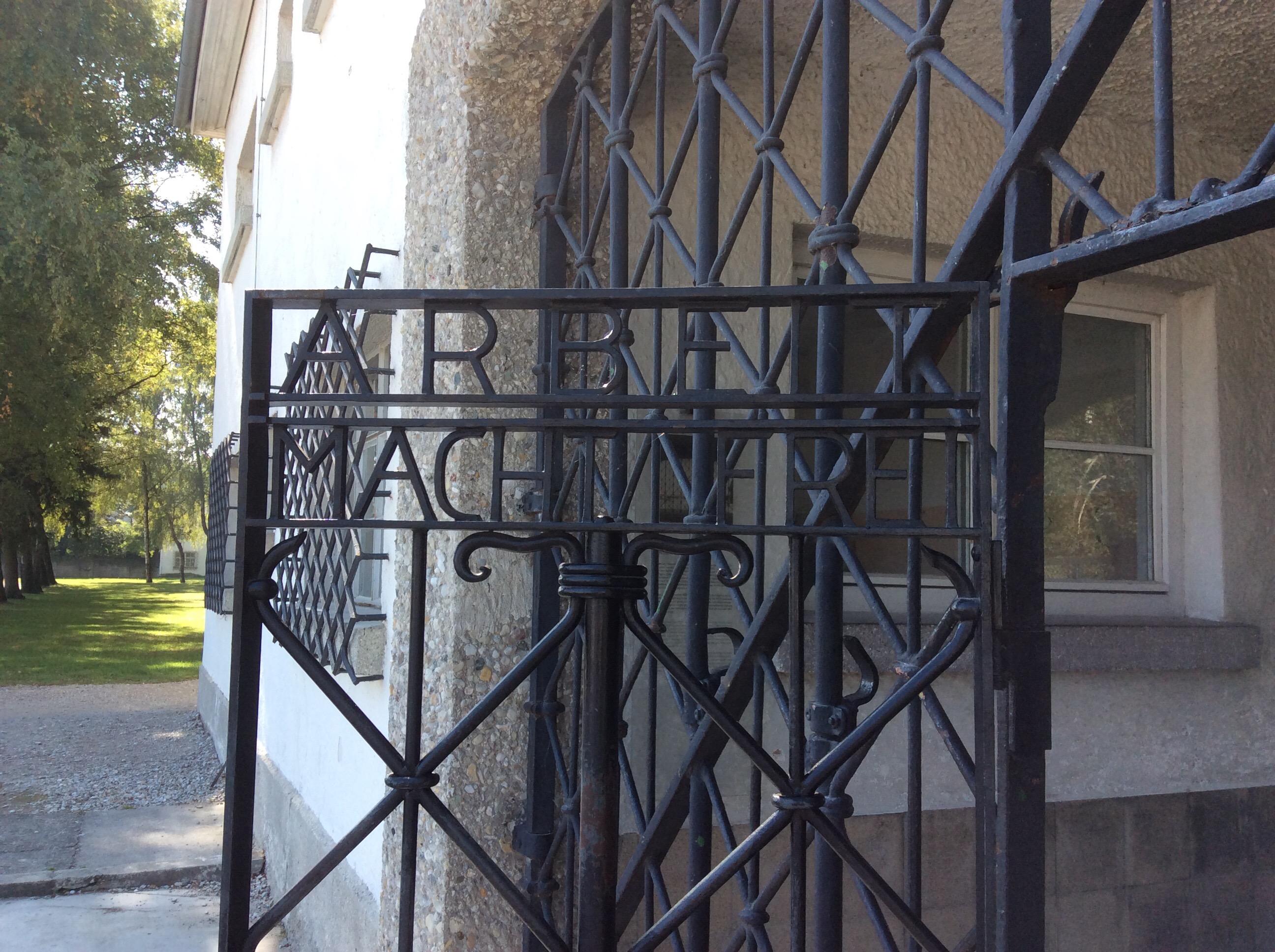
This year we determined that we would pace ourselves. Knowing that we could not check in to our hotel until the afternoon of our arrival in Munich we visited the Dachau Concentration Camp which is not far from the Munich Airport. We made our trip to Nuremberg on Monday to see the Nuremberg Palace of Justice, War Crimes Trial Museum and courtroom. We got up at a normal hour, had breakfast and drove the two hours to Nuremberg. We had a good visit to the museum and courtroom and the walked around part of the old city, did a bit of shopping and lunch. Then we drove back to Munich, stopped at a clothing store that we used to frequent when we lived in Germany and made a trip to the Oktoberfest.
The rest of the week we took our time. We visited museums like the Deutsches Museum, a science and technology museum, and the Bavarian State Museum, and then we would walk around town, spend time at sidewalk cafes just to talk and take in the surroundings, do some shopping and the go back to the hotel to rest before going to dinner at a local restaurant and then go back to the fest. On Thursday we met a German friend at her house just outside of Munich, taking a S-Bahn train to get there before we went back to the hotel, had dinner at a local restaurant before taking the subway back to the fest for a short visit. On Friday we rested and packed before we walked around the local area and spent some time at the sidewalk patio of the restaurant we had been eating at while waiting for our friends to get back from their expedition to a brewery on the outskirts of Munich to celebrate Judy’s birthday.
Yesterday we came home, stayed up until about 11:00 PM and then slept late in order snap back into the time zone. Of course yesterday was a long day, getting up about 7:00 AM, having breakfast, checking out of the hotel, returning our rental car, getting to our flight and making the trip. Since we arrived at our house about 8:00 PM our time the travel process which included two flights took about nineteen hours and by the time we went to bed we had been up close to twenty-two hours. But when you make a transcontinental trip that is part of the deal.
During the week we were on four flights lasting about 18 hours, not including layovers and checking in or getting through passport control and customs. We drove about 300 miles in Germany and used a lot of the public transportation, U-Bahn and S-Bahn trains to get around Munich proper. I walked about 50 miles during the trip, Judy a bit less. We ate as healthy as we could, took smaller meals, didn’t do a lot of snacking or junk food, and of course since it was Oktoberfest we had a lot of beer.
The trip was amazing and as I said up front it was the best, most relaxing, stress-free, and refreshing vacation we have had up to this point of our lives.
This is another one of my pre-posted articles for while we are traveling in Munich.
I have spent a total of about four years of my life in Germany. I enjoy the country and the people and I love traveling here because for me it is relaxing. When I have a car I enjoy driving on the Autobahn, and I find the mass transportation more than effective and convenient but a great way to travel.
I am a historian who for many years specialized in the study of the latter years of the Kaiser Reich, the German revolution and civil war, the Weimar Republic and the Nazi period. I always find visiting Munich intellectually stimulating. Munich is a very interesting and sometimes contradictory city, rich in culture, music, art, literature and scientific-technological achievements. Likewise it has always been a more cosmopolitan center of a very conservative state, especially religiously conservative as Bavaria is the heart of Catholic Germany. Thus there has always been a tension in the city, between the local more religious conservatives and business leaders and the more secular and progressive inhabitants, and the immigrants from Eastern Europe, especially more traditional and conservative Orthodox Jews.
This tension continues today with the large numbers of foreigners that live and work in the city. Many are Turkish guest workers and their descendants that have been in Germany almost half a century. But many are new immigrants from the Middle East and Africa, some who have embraced German life in a secular state, but many who have not and stand out in the crowd. In particular I think of the number of Moslems who retain their traditional dress and ways, which in many ways is reminiscent of the Eastern European Orthodox Jews, who likewise stood out as they attempted to maintain their cultural and religious identity.
Munich is the capital city of Bavaria, or as it is known here, Bayern. It was ruled for centuries by the Wittelsbach dynasty, which included “Mad King Louis” who built the amazing Neuschwanstein and Linderhof castles. That dynasty, with the rest of the German royalty was overthrown at the end of the First World War. It was replaced for about three months by what was known as the Bavarian Soviet led by Kurt Eisner, an “independent socialist.” Eisner could not hold power and resigned in February 1919 and on the way to his resignation he was assassinated by a right wing extremist who held the views of the racist Thule Society. Eisner was replaced by a Majority Socialist leader who could not form a government and then by an Independent Socialist and Communist government. This government was both inept and brutal, it took hostages from the elite of the city as well as conservative reactionaries and had them executed. This brought a response from Berlin which sent a force of 30,000 Weimar Government employed Freikorps troops, including many Bavarians from rural areas, under the command of Ritter Von Epp to crush the Munich Soviet. After hard fighting against the Communist troops Epp’s men crushed the opposition and executed hundreds of the Communists and Independent Socialist fighter and leaders.
The city was still rife with revolutionary and reactionary elements and in 1919 a new political party was established. This party became the National Socialist Workers Party of Germany, or the NSDAP. Adolf Hitler joined the party and quickly became its head. He along with General Erich Ludendorff led a coup, or “putsch” against the government on the 8th and 9th of November 1923. The putsch originated at the NDSAP headquarters and Hitler led about 2000 armed members of the party to the Burgerbrau Keller beer hall where the Gustav Von Kahr, who had been appointed with dictatorial powers due to the unrest, was making a speech.
Hitler took Kahr and other members of the government hostage and declared a revolution and enjoined those present to “join in this grave eleventh hour for our German Fatherland.” While many present were turned by his speech, the revolt did not gain momentum and in desperation Hitler ordered a march to overthrow the government. At Odeonsplatz at the bridge over the Isar River near the Feldherrenhalle his group of nearly 2000 followers including future Nazi Leaders Hermann Goering and Rudolf Hess were confronted by about 100 Bavarian police, and defeated. Hitler was arrested and tried, spent nine months in prison during which he wrote Mein Kampf. The Burgerbraukeller and the Feldherrenhalle became Nazi shrines which after Hitler’s takeover became places where Hitler would return yearly to mark his failed putsch.
All of these events took place in a small area of the Munich city center. Sadly most people who come to Munich are aware of the events that occurred here, and many fail to realize how easily a city know for so many cultural and scientific achievements can become the locus of evil for a man like Adolf Hitler.
While I love Munich my love is tempered by how many events which still affect us today occurred here just eight to ninety years ago. To use a German expression, that amount of in the sense of history is merely an “augenblick” or “blink of an eye”. It is hard to believe that so much has happen here, and just how few people understand just how easily such events can happen again.
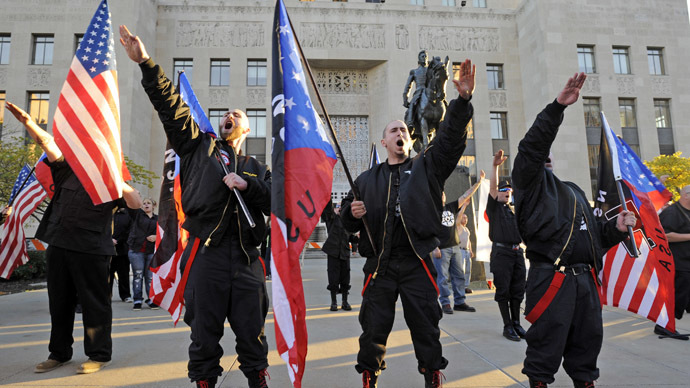
When I look at my own country I see parallels between some of the more deplorable of Donald Trump’s supporters, the White Supremacists, Neo-Nazis, Racists, and members of the so-called “Alt-Right” which is nothing more than a cover for its member’s Nazi ideology with the people that followed Hitler to the Burgerbraukeller. The hatred that they express towards liberals, racial minorities, immigrants and Moslems is so similar to the words of those precursors to the Nazi party rule in Germany that it is frightening. Comforting myths are substituted for history. Race, ideology and xenophobic nationalism, often clothed in the language of tradition “Christian” beliefs are used to demonize those who are different. Sadly too I see some of my fellow progressives inflamed with such a hatred of conservatives that they cannot see the dangers inherent in such polarization. As a historian, I find the parallels disturbing.
But despite that we are here to have fun, and that I am. After all, I choose to believe in the power of acceptance, tolerance and inclusiveness. Those are found in the words that are imprinted on the modern German Army belt buckles and in the German National anthem “eingekeit, recht und freiheit” or “unity, Justice and freedom.” Those words are also implicit in our own Declaration of Independence which states that “all men are created equal.” Thus for me, not believe that good can overcome evil is central to who I am.
This is the first of a series of short posts reflecting about our trip to Munich, Salzburg and the Oktoberfest.
We are back from Oktoberfest and starting to catch up on life back at home. The trip was wonderful Judy and I had a great visiting meeting and talking with a wide variety of people, from Munich locals, to Swiss, French, English, and other visitors to the Oktoberfest including American expats, and many others.
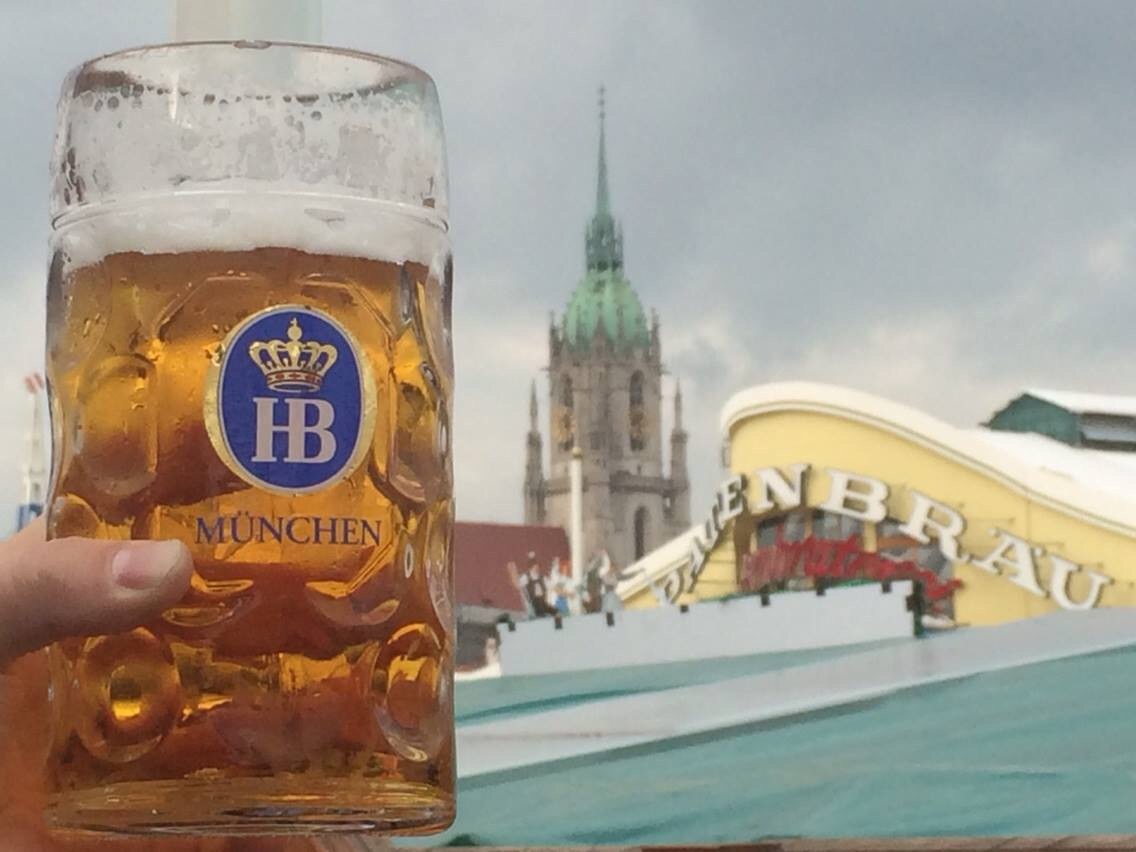
What we liked was that it was hard not to get a chance to talk and spend time with people, sitting in one of the Bier Gardens of the Hofbrauhaus tent at the Theriesienwiese grounds, the Hofbrauhaus itself, other restaurants, sidewalk cafes or the hotel bar. I have to say that the ease with which you can mix with and get to know people; the ability to talk about life, culture, and even current events without someone looking for an angle to exploit is in start contrast to so much of what we see in the States.
One of the interesting things is how the Germans, even those who live in big cities understand the concept of community. The Germans take life and work seriously, but unlike many, if not most of us, they know when business stops and fun, family and community begin. When people leave work they leave work, and even the business culture, in which stores are not open 24 hours or on Sundays provide Germans the opportunity to spend good amounts of time with family, their neighbors and friends as they meet for dinner or drinks at the local Gasthaus or inn on a regular basis. Likewise communities sponsor sports teams, and a wide array of other clubs that draw them together, everything from Rotary, to veterans associations, bands and choirs, hunting and shooting clubs and many more. Many of these groups sponsor events in which the entire community can partake.
The concept in all of this is that of Gemütlichkeit, a German word that basically describes a situation of where a cheerful mood, peace of mind and social acceptance are joined with the connotation of being unhurried in a cozy atmosphere. It also is understood in relationship to holidays where public festivities in the form of music, food, and drink help promote a sense of community. In this there is a sense that someone is part of something bigger than himself or herself where they are connected with being accepted by others while enriching the community.
Unfortunately for many Americans this is not the case. Unless one belongs to an organization such a various types of lodges, local sports fan clubs, or a local pub or bar where “everyone knows you name” there are precious few places one can experience this type of community. Churches like to claim that they are places of fellowship, but in my adult experience I have to say that most churches neither foster community nor are they places where one can go to be accepted. They are often the most cliquish, unfriendly, uninviting, and judgmental places around, and this is across the board. This cliquish and uninviting spirit covered in a veneer of spirituality and forced friendliness knows no denominational or theological boundaries, but I digress….
Judy and are lucky, we have a sense of community with friends who span the breadth of society; most of those who we know from the place where everyone knows our name, the Gordon Biersch Brewery Restaurant bar in Virginia Beach.
The Germans for all of their serious nature and sometimes-brusque manner of getting around do know how to draw the line between work, and play and in the process build community. Their cities and towns are designed to keep a community connection, including many parks; excellent public transportation systems, sidewalk cafes, local corner grocery stores and bakeries, as well as family run businesses that have not been destroyed by the huge box-stores like Wal-Mart. They are places that you get to know people, where life is lived, and community experienced.
Part of this is the difference in culture and how over the years our American culture has become detached from this sort of community. In many ways we have become increasing individualistic through the proliferation of suburbia, massive box-stores, and all that goes with it, including the abandonment of cities, and small poor rural communities. Even our churches, across the denominational spectrum have embraced the community destroying box-store religion of the mega-churches. The fact is we don’t know our neighbors and that leads to a culture that devalues people, destroys community and actually being on more social problems including crime.
Without community we fall back into our basest survival instincts; we see people in regard to what they can do for us. People simply become nothing more than commodities that we discard when they are no longer useful. We adopt the modern American business model as our model for relationships; and when we do this, we devalue friendship; we become paranoid, distrustful, isolated and ultimately come to despise our neighbors.
Anyway, speaking of this Judy and I will need to see some of our friends this afternoon and just enjoy that gift of friendship.
Wishing you all today that sense of Gemütlichkeit,
“Beer is proof that God loves us and wants us to be happy.” Benjamin Franklin
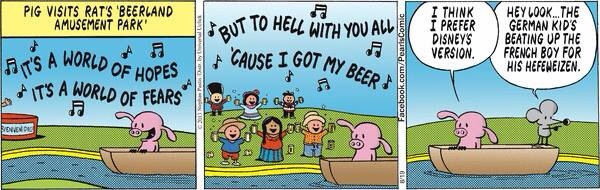
One of my favorite comic strips is Stephan Pastis’ Pearls Before Swine. A few months ago one of the main characters appropriately named Rat, since he is a rat, decides to open his own amusement park called Beer Land. The series of strips is amazingly brilliant, especially to true beer drinkers. I think the strip from that series that I most enjoyed was this one, because of the way Pastis linked a ride at the strip to the syrupy Disney ride It’s a Small World.
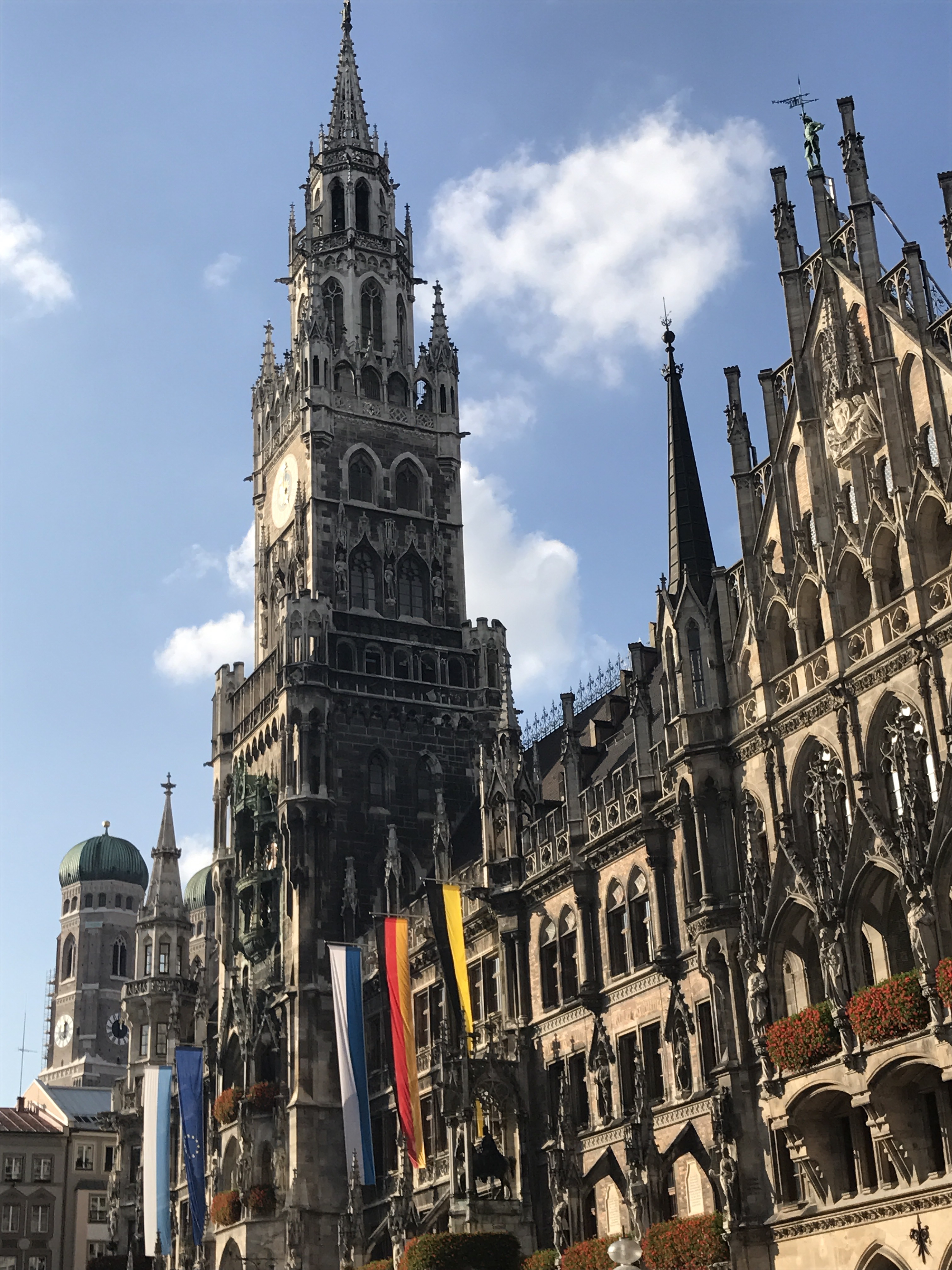
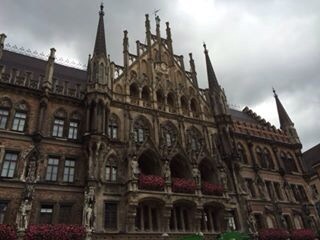
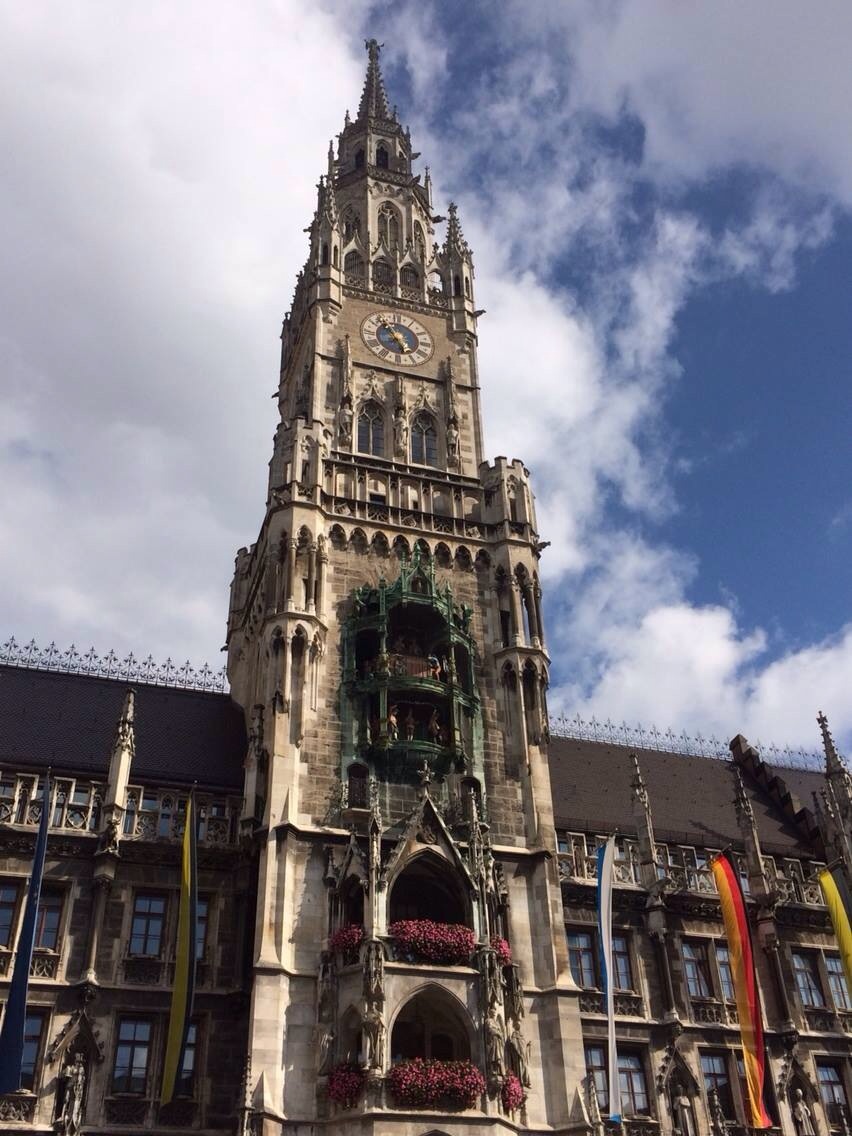
Today we did a bit of a road trip and took the U-Bahn from Munich to a small town on the outskirts of the city called Erding, for a visit and tour of the Erdinger Weisbier brewery, the largest brewer of wheat beers in the world. Before heading to Erding we had taken a short visit to the historic Marianplatz where we were able to see the famous Glockenspiel at the old city hall, or Rathaus.
Now Judy has incurred a couple of injuries to her knee, ankle, and a couple of years ago had to her Achilles’ tendon repaired. As such sometimes a lot of walking causes her a lot, I mean a lot of pain. We tried to go out some yesterday but after a few minutes at Marianplatz but she was in such pain so we went back to our hotel until later in the evening when we went to dinner with our friends.
This morning she was in less pain but she knew if she didn’t get some European style crutches that she would not do well and possible be confined to the hotel for must of our remaining time here. For those that don’t know, European or as they are referred to in the United States Canadian crutches are far superior to the type most of us know and loath so much. They provide the user much more mobility and less pain to the armpits and shoulders because you do not swing from them.
So while she hung out with our friends I googled where to find the crutches in Munich. The word for crutches is krucken and they are sold at stores that specialize in equipment for those recovering from injuries as well as those with various physical disabilities called a Saniatshaus. The closest of these was about two miles away, so with google maps to guide me I set off. I walk pretty fast so it didn’t take that long to get there and when I did after the normal greetings with the lady at the counter I asked for a pair of crutches, which she showed me and allowed me to even pick the color. They cost about 34 Euros, which isn’t too bad, and for that quality I would have payed more in the U.S, had I gotten them at home. I made my way back by hailing a taxi to save time. Had a nice conversation about Munich, beer and the Oktoberfest with the driver and he delivered me back just city meters from where Judy and some of our friends had gathered. Since we were waiting on some of the rest of our group we had a beer at an outdoor cafe across from the Rathause where we saw the Glockenspiel do its thing when the clock stuck eleven.
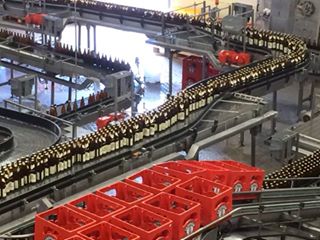
Once all of us were gathered we boarded the U-Bahn to Erding a trip of about 45 minutes. Once in Erding we caught a city bus to the Erdinger brewery. We got our tickets for the tours and bought a couple of items in the gift shop and then went on the tour. The tour took about an hour and a half and was amazing.
I was impressed with how well a large brewery can make great beer using only the natural ingredients of hops, barley or wheat malt and water. There are no added sugars, food colorings known to be carcinogenic, Bisphenal A (BPA); cheap filler grains such as rice and corn as well as high fructose corn syrup, dextrose, and mono sodium glutamate, and even propylene glycol (a component of anti-freeze) are found in many mass produced American beers. This is because of the observance of the strict Bavarian or German beer purity law the Reinheitsgebot which stipulates what are acceptable ingredients in beer. Frankly the difference in taste is amazing as well as the effects, especially the morning after. But I digress….
As I mentioned the tour was informative and enjoyable. At the end of the tour, which cost 12 Euros per person we were provided freshly baked Bavarian pretzels, two large Bavarian Weiswurst, which are a mildly spiced and finely textured pork sausage and three half liter glasses of whichever of the eight styles of Weisbier that Erdinger brews.
It truly was a visit to Beer Land and I am sorry to say that at each stage of the tour I kept thinking about that comic, but no, I didn’t see the German kid beat up the French kid for his Hefeweizen.
So Since this a religious pilgrimage, I will close with a quote from one of my favorite rebellious theologians, the eminent Doctor Martin Luther:
“Whoever drinks beer, he is quick to sleep; whoever sleeps long does not sin; whoever does not sin enters heaven! Thus let us drink beer!”
Friends of Padre Steve's World
I welcome comments, even those which disagree with my positions and articles. I have done this for years, but recently I have been worn out by some people.
I have just a couple of rules for comments. First, be respectful of me and other commentators. If you are polite and respectful' even if I disagree with you your comment will be posted and I will respond accordingly.
That being said I will not allow people to hijack the comment section to push their religious or ideological views. Unless the comment deals with the meat of the article, don't expect me to allow you to preach, especially if you are a racist, anti-Semetic, or are a homophobe.
Nor will I allow spam comments. Most of those are automatically blocked by Wordpress but some do get through, and deal with them accordingly.
Peace
Padre Steve+









 The Inglorius Padre Steve's World