
Inter Arma Enim Silent Leges, in time of war the law stands silent…
James Madison wrote that “A popular government, without popular information, or the means of acquiring it, is but a prologue to a farce or a tragedy; or, perhaps both.”
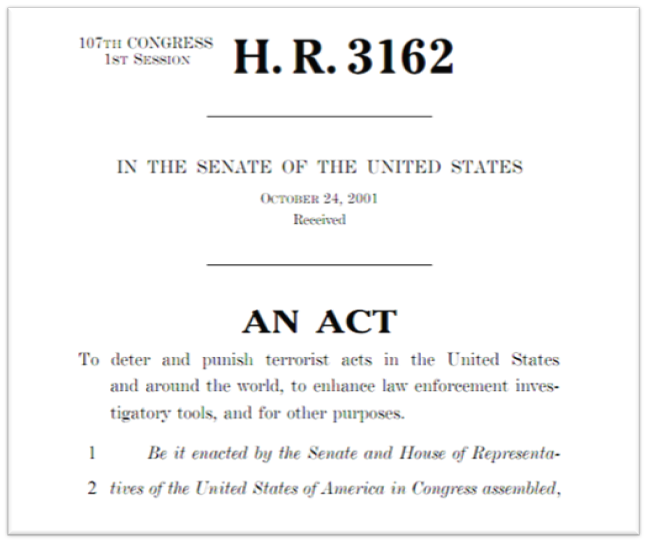
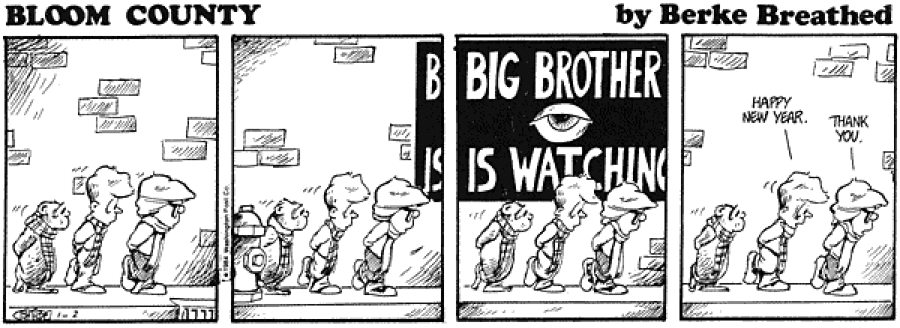
After September 11th 2001 the National Security State went into overdrive with the passage of the so called Patriot Act. That act opened the floodgates for an ever expanding national security state.
I have a lot of apprehension when I read the reports about the activities of the National Security Agency, other intelligence and police agencies at all levels of government and the pervasive erosion of civil rights. The national security state and the seeming all pervasive security and surveillance apparatus which demolishes any sense of privacy, especially the protections enunciated in the Fourth Amendment and to some extent the First Amendment. Of course the use of similar methods by the private sector, often in conduction with government agencies is another concern, but that needs to wait for another day.
I also understand from history and empirical evidence that many others, many from unfriendly countries do not share those apprehensions. Many of these competitors are willing to use whatever openness that we have as a society against us, using similar technology and methods used by our intelligence, police, governmental and private sector. It makes for an ethical, legal and even constitutional conundrum. I know that I am not comfortable with this, and perhaps maybe none of us should be.
It is very easy on one hand in light of history, our Constitution and democratic process to condemn the NSA, the FISA courts and other lawfully constituted agencies and those that drafted the laws over the decades that allow the activities which they now conduct. The same can be said of foreign intelligence agencies which all engage in similar activities including the British GCHQ, the German Bundesnachrichtendienst and so many others including the Chinese and Russians.
Likewise it is equally easy in light of history, current events and national security concerns for people to jump to the other side of the fence and not only defend the activities of the NSA and agencies like it, and to demonize those that protest or expose such activities.
When I see the talking heads on cable news shows defending or condemning such activities and not agonizing over the complexity and issues involved I get worried. Because there are legitimate concerns voiced by critics as well as defenders. But since we live in an era of soundbites, gotcha and half-truths being portrayed as all truth I find it helpful to use either historical examples, literature or fiction, and even science fiction to wrestle with the fundamental truths. So I find looking at such issues through the prism of Star Trek sometimes more interesting and provocative than simply doing the whole moralizing pundit thing.
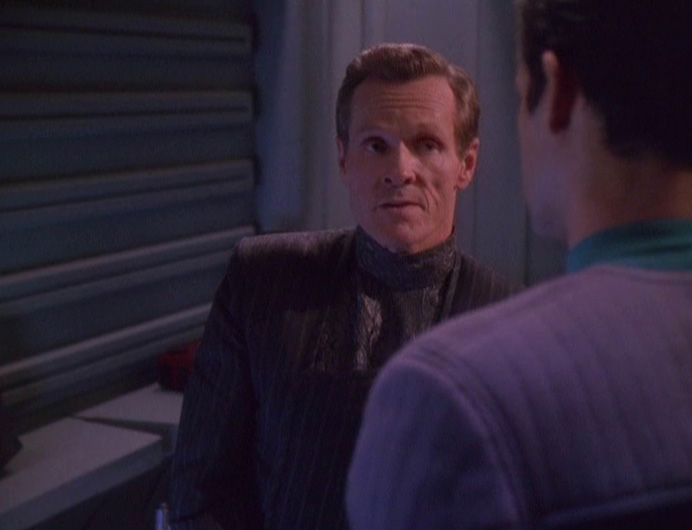
There was an episode of Star Trek Deep Space Nine that aired well before the events of 9-11-2001, and the subsequent Global War on Terror, that I find fascinating. The episode deals with a secretive agency in Starfleet operating in the gray areas between the laws and ideals of the Federation and the threats that the Federation faces. Even when the Federation is a peace, Section 31, as it is called is engaged in activities against historic or potential enemies. In a way it is somewhat like the NSA or the Defense Intelligence Agency.
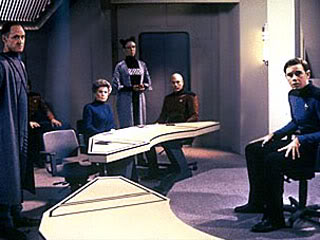
At the beginning of the Deep Space Nine Episode Inter Arma Enim Silent Leges the head of Section 31, a man only known as Sloan comes back Doctor Julia Bashir to involve him in an clandestine operation. An operation to on the Romulans who at this point are a Federation ally against the Dominion.
Sloan makes his approach and Bashir, who expresses his reservations:
BASHIR: You want me to spy on an ally.
SLOAN: To evaluate an ally. And a temporary ally at that. I say that because when the war is over, the following will happen in short order. The Dominion will be forced back to the Gamma Quadrant, the Cardassian Empire will be occupied, the Klingon Empire will spend the next ten years recovering from the war and won’t pose a serious threat to anyone. That leaves two powers to vie for control of the quadrant, the Federation and the Romulans.
BASHIR: This war isn’t over and you’re already planning for the next.
SLOAN: Well put. I hope your report is equally succinct.
BASHIR: How many times do I have to tell you, Sloan? I don’t work for you.
SLOAN: You will. It’s in your nature. You are a man who loves secrets. Medical, personal, fictional. I am a man of secrets. You want to know what I know, and the only way to do that is to accept the assignment.
I find the exchange both illuminating and riveting. The fact is that in the situation we face today the arguments of both sides should make us very uncomfortable.
Whether we like it or not or not, the incredibly rapid technical and communication advances of the past couple of decades have primed us for our present conundrum of liberty and privacy or security. That technology, as wonderful as it is has enabled a generation to grow up in a virtual world in many ways detached from the moral and ethical balances between individual rights and liberties as well responsibility to community.
All the wonderful gadgets that we employ in everyday life, make it easy for enemies and “friends” to do things that were unimaginable to people other than science fiction writers even twenty to thirty years ago. Likewise they were certainly beyond the wildest imaginations of any of the founders who drafted Constitution.
The reality is, the things that make are lives so easy are also the things that have the potential to remove the very liberties that we treasure, either by our enemies using them, or those that defend us.
The truth is, that throughout history, even our own there have been operatives within the government in charge of secrets, as well as spies. In the Inter Arma Enim Silent Leges episode we see an operation that is full of duplicity and moral ambiguity all committed in the name of security. I won’t go into the details because it is too full of twists, and turns, you can read the plot of the episode at Memory Alpha.org http://en.memory-alpha.org/wiki/Inter_Arma_Enim_Silent_Leges_%28episode%29
There is an exchange between Dr. Bashir and Admiral Ross of Starfleet command which is very enlightening because it practically mirrors how many on both the civil liberties and the national security side of the current controversy feel about the War on Terror.
BASHIR: You don’t see anything wrong with what happened, do you.
ROSS: I don’t like it. But I’ve spent the last year and a half of my life ordering young men and young women to die. I like that even less.
BASHIR: That’s a glib answer and a cheap way to avoid the fact that you’ve trampled on the very thing that those men and women are out there dying to protect! Does that not mean anything to you?
ROSS: Inter arma enim silent leges.
BASHIR: In time of war, the law falls silent. Cicero. So is that what we have become? A twenty fourth century Rome driven by nothing more than the certainty that Caesar can do no wrong!
ROSS: This conversation never happened.
In light of the controversy of today regarding the NSA, FISA Courts, government secrecy and intelligence gathering information on its own citizens, as well as allies, friends and and enemies we face a growing tide of reporters and others seeking to reveal those secrets. Back in 1989 ethicist Sissela Bok wrote something very important in her book Secrets: Moral Choice in Public and Private Life:
“…as government secrecy expands, more public officials become privy to classified information and are faced with the choice of whether or not to leak … growing secrecy likewise causes reporters to press harder from the outside to uncover what is hidden. And then in a vicious circle, the increased revelations give government leaders further reasons to press for still more secrecy.”
As we wade through the continuing controversy surrounding these issues we will see people do exactly what Bok said. These are the exact arguments are being made by the people and officials directly involved in such activities, as well as former elected and appointed officials, and members of the press.
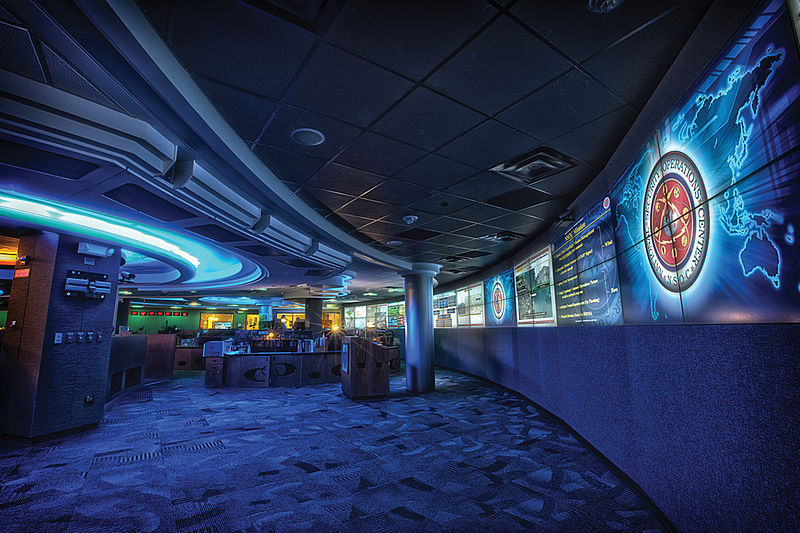
The interesting thing to me is that very few of the people or agencies, past and present, Republican and Democrat involved have clean hands. It is amazing to see former champions of civil liberties defend the NSA actions and those that empowered the NSA in the Patriot Act now condemn it. I find it both fascinating and frightening.
At the end of the Inter Arma Enim Silent Leges episode the mysterious Sloan pops back in on Doctor Bashir who is in his quarters, asleep and depressed by what he experienced during the operation on Romulus and with Admiral Ross.
SLOAN: Good evening.
BASHIR: Are you expecting applause? Have you come to take a bow?
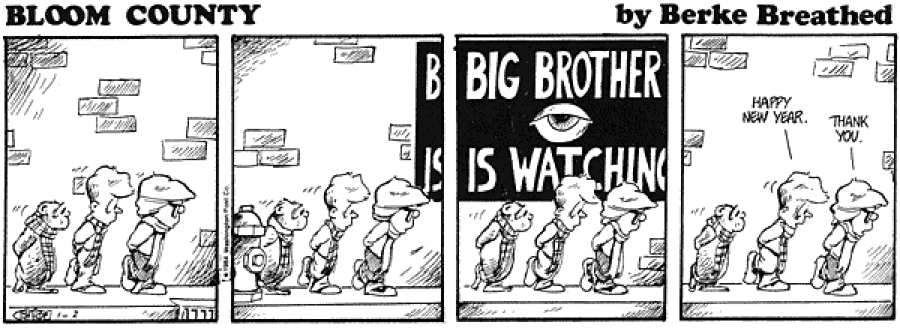
SLOAN: I just wanted to say thank you.
BASHIR: For what? Allowing you to manipulate me so completely?
SLOAN: For being a decent human being. That’s why we selected you in the first place, Doctor. We needed somebody who wanted to play the game, but who would only go so far. When the time came, you stood your ground. You did the right thing. You reached out to an enemy, you told her the truth, you tried to stop a murder. The Federation needs men like you, Doctor. Men of conscience, men of principle, men who can sleep at night. You’re also the reason Section Thirty one exists. Someone has to protect men like you from a universe that doesn’t share your sense of right and wrong.
BASHIR: Should I feel sorry for you? Should I be weeping over the burden you’re forced to carry in order to protect the rest of us?
SLOAN: It is an honor to know you, Doctor. Goodnight.
We live in this kind of world and maybe it is good to sometimes step back and look at issues using a different prism. I really don’t have the answers. I am a civil libertarian who places a high value on the openness of a government to its people. I also know that there are those that have no regard for such openness or, to quote Sloan don’t “share your sense of right and wrong.”
Maybe that is not a good answer. I really don’t know. All I know is that as uncomfortable as this all is that those on both sides of the issue have valid points and concerns. It is a debate that needs to happen if we are able to balance that a society needs to balance individual rights and responsibility to the community; openness and secrecy; civil liberties and national security.
But that being said. it is a debate that needs to happen, even if it makes us uncomfortable. I for one think that it is better that we be uncomfortable when looking at such an important debate than to be prisoners of our certitude.
Peace
Padre Steve+


 The Inglorius Padre Steve's World
The Dangers of the Expanding National Security State: The Drumhead
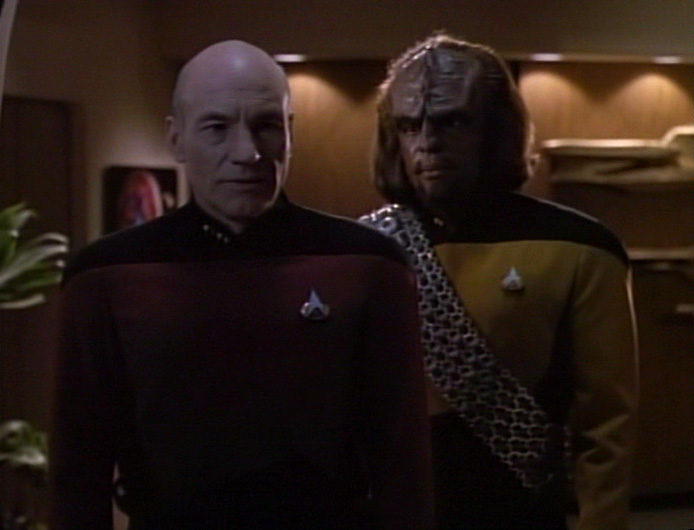
Lieutenant Worf: “Sir, the Federation does have enemies. We must seek them out.”
Captain Jean-Luc Picard: “Oh, yes. That’s how it starts. But the road from legitimate suspicion to rampant paranoia is very much shorter than we think. Something is wrong here, Mister Worf. I don’t like what we have become.”
Back in 1991 when I was still in seminary I spent every Saturday evening glued to my television set to watch Star Trek the Next Generation. Even today I enjoy watching the human drama that Gene Roddenberry and his cohorts created on the small screen. Of all the Star Trek series my favorites are TNG and Deep Space Nine. Those series often touched on very pertinent social, political, medical, and technological and dare I say national security issues. In fact I have used some Deep Space Nine episodes in my previous posts about the NSA leak situation and the War on Terrorism.
One of the most chilling episodes regarding national security and potential terrorism or sabotage is called “The Drumhead.” In light of the the ever expanding National Security State and the ability of governments, private industry and even individuals to use technology to gather information on almost anyone and to abuse that power, The Drumhead is an episode that remains as relevant today, perhaps even more so, than when it first aired in 1991.
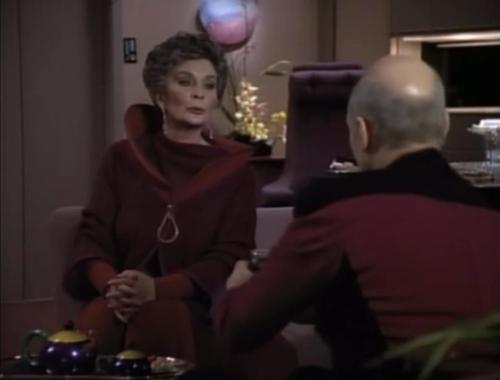
The episode is about an investigation that takes place on the Enterprise following an explosion in its engineering spaces. Suspicion centers on a Klingon exchange officer. However, the investigator, the retired Starfleet Judge Advocate General, Nora Satie and her Betazed assistant soon casts a wide net which eventually brings charges against a crew member and eventually Captain Picard.
At first Admiral Satie’s investigation seems reasonable. After all the Federation faced danger from the Romulans, who were always trying to use Klingons unhappy with the Federsation-Klingon peace treaty, to further their interests. The initial situation raised the possibility that the Enterprise, was sabotaged and that the Klingons or others might be involved. Thus as Sati began her investigation she was welcomed by the Captain as well as the Security Chief, Lieutenant Worf, the only Klingon serving as a Starfleet officer. Satie, assisted by Enterprise security officers then discovered how the Klingon scientist smuggled classified information off the Enterprise.
The Chief Engineer of the Enterprise, Lieutenant Commander LeForge determined in his investigation that the explosion thought to be “sabotage” was caused by a flaw in a recently replaced dilithium chamber. Although she was convinced that the Klingon was not the saboteur Satie believed that another saboteur was aboard the Enterprise. Satie and her assistant uncovered a piece of information that a crewman lied about his family background on his enlistment contract. They then used it to connect the crewman to to the Klingon spy by supplying false information about the explosion in an attempt to get the crewman to admit guilt.
As the investigation widened Picard discussed it with Lieutenant Worf. I find this dialogue to be quite relevant to today thirteen years into the war on terror and about the same amount of time since the Patriot Act was passed.
Lieutenant Worf: “Sir, the Federation does have enemies. We must seek them out.”
Captain Jean-Luc Picard: “Oh, yes. That’s how it starts. But the road from legitimate suspicion to rampant paranoia is very much shorter than we think. Something is wrong here, Mister Worf. I don’t like what we have become.”
When Picard objected to the grilling of the crewman, Admiral Satie and her chief assistant began an investigation of Picard. As she informed him that he was now a subject of the investigation, the normally calm Picard erupted, telling Sati; “Admiral! What you’re doing here is unethical; it’s immoral. I’ll fight it.” Admiral Sati then laid down the gauntlet, and told Picard, “Do what you must, Captain. And so will I.”
Admiral Satie called on the Director of Starfleet Security, Admiral Henry, to watch her interrogate Picard who she had by now labeled a traitor.
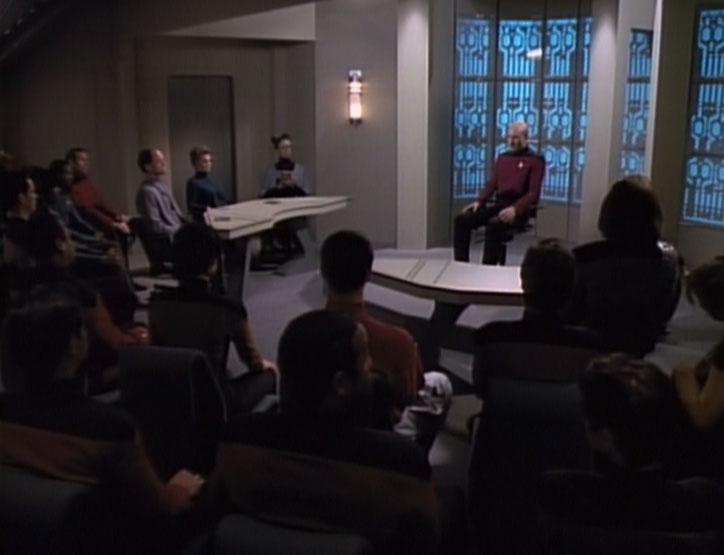
Picard forced to testify at an open hearing where Sati began to attack him. However, the tables are turned during Picard’s testimony. The dialogue is riveting as Sati attempts to use anything that she can to prove Picard a traitor the the Federation.
Admiral Satie: Tell me, Captain, have you completely recovered from your experience with the Borg?
Captain Jean-Luc Picard: Yes, I have completely recovered.
Admiral Satie: It must have been awful for you… actually becoming one of them. Being forced to use your vast knowledge of Starfleet operations to aid the Borg. Just how many of our ships were lost? Thirty-nine? And a loss of life, I believe, measured at nearly 11,000. One wonders how you can sleep at night, having caused so much destruction. I question your actions, Captain; I question your choices, I question your loyalty!
Capt. Picard: You know there are some words I’ve known since I was a schoolboy: “With the first link, the chain is forged. The first speech censured, the first thought forbidden, the first freedom denied, chains us all irrevocably.” Those words were uttered by Judge Aaron Satie, as wisdom and warning. The first time any man’s freedom is trodden on, we’re all damaged. I fear that today…
Admiral Satie: [stands up in anger and interrupts Picard] How dare you! You who consort with Romulans, invoke my father’s name to support your traitorous arguments! It is an offense to everything I hold dear! And to hear those words used to subvert the United Federation of Planets. My father was a great man! His name stands for integrity and principle. You dirty his name when you speak it! He loved the Federation. But you, Captain, corrupt it. You undermine our very way of life. I will expose you for what you are. I’ve brought down bigger men than you, Picard! [Admiral Henry gets up and leaves the room]
With Sati obviously unhinged, Admiral Henry ends the investigation and sends Admiral Satie home.
Of course this is fiction but the mindset and attitude of Admiral Satie seems to have been embraced by some in our government and security agencies, including the TSA and the NSA. But the talk is out there, former Senator and Secretary of Defense William J. Cohen said: “Terrorism is escalating to the point that Americans soon may have to choose between civil liberties and more intrusive means of protection.”
Well the choice has been made and I don’t think that there is any going back despite the posturing of politicians on both sides of the political divide. The fact is that polls show that the majority of Americans are willing to sacrifice freedoms for security.
Sati had become so consumed with “defending liberty” that she was willing to trample the rights of anyone that she suspected of disloyalty to the Federation.
Sati’s questioning of Picard by is fascinating and thought provoking, because there are people that think and act just her fictional character. People who believe, that they too are defending “freedom.”
Frederick Douglass once said: “Find out just what the people will submit to and you have found out the exact amount of injustice and wrong which will be imposed upon them; and these will continue until they are resisted with either words or blows, or with both. The limits of tyrants are prescribed by the endurance of those whom they oppress.”
The balance has to be found in this effort; right now the pendulum is so far to the security side that it seems freedom is no longer even a concern at least for the vast majority of the population and our political leadership, and not just the Executive Branch, the Congress seems to love making new laws that further limit freedom, local governments have militarized their police forces and the courts don’t seem to mind. Unless we undertake a real debate in the issue it is very likely that it will fade away and the national security state that we have become will grow even stronger with the inevitable loss of even more civil liberties.
One only has to look at what politicians on both sides of the political chasm have said about “protecting the homeland” to realize that this is only the beginning and that if we do not have a spirited public debate that we risk our Constitutional liberties under the 4th Amendment as well as potentially the 1st Amendment. Prosecuting actual wrongdoers is one thing, but prominent legislators on important committees dealing with national security suggest prosecuting reporters for doing their job, something that would be a crushing blow to freedom of speech and freedom of the press. The fact that some suggest this shows how just how close we are to surrendering even more freedom in the name of security.
The last scene of The Drumhead is enlightening. Lieutenant Worf, who had so eagerly embraced the investigation, goes to Picard to let him know that Admiral Satie and Admiral Henry have left the Enterprise. Worf is apologetic about his rather overzealous role in the investigation. He tells Picard about Sati: “after yesterday, people will not be so ready to trust her.” Picard replies “Maybe. But she, or someone like her, will always be with us, waiting for the right climate in which to flourish, spreading fear in the name of righteousness. Vigilance, Mister Worf – that is the price we have to continually pay.”
Eternal vigilance in the face of both terrors from abroad and self imposed tyranny designed to protect us from the terrorists. Yes James Madison, was absolutely right when he said “The means of defense against foreign danger historically have become the instruments of tyranny at home.” However I fear that those that warn of such dangers will themselves be labeled the enemy.
Henry Steele Commager said “Men in authority will always think that criticism of their policies is dangerous. They will always equate their policies with patriotism, and find criticism subversive.” This, my friends is the reality that we live in and the danger that we face.
Peace
Padre Steve+
Share this:
Leave a comment
Filed under civil rights, ethics, laws and legislation, national security, political commentary
Tagged as 1st ammendment, 4th amendment, 9-11 2001, admiral satie, attack on benghazi us consulate, Boston marathon bombing, captain jean luc picard, civil liberties, frederick douglass, global war on terrorism, henry steele commager, james madison, lcdr leforge, lieutenant worf, national security state, nsa leaks, Patriot Act of 2001, representativ peter king, star trek the next generation, the drumhead, tsa