Tag Archives: nato

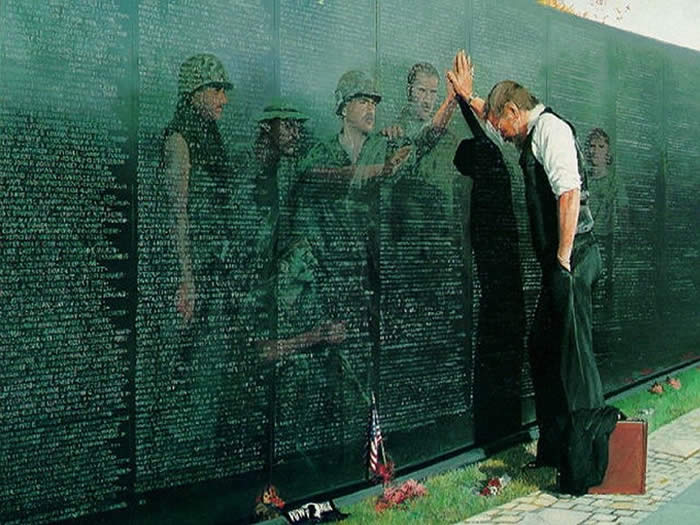
Memorial Day 2011: Counting the Cost of War and Remembering its Brotherhood

“We few, we happy few, we band of brothers; for he to-day that sheds his blood with me shall be my brother…” William Shakespeare “Henry V”

“Heroism is latent in every human soul – However humble or unknown, they (the veterans) have renounced what are accounted pleasures and cheerfully undertaken all the self-denials – privations, toils, dangers, sufferings, sicknesses, mutilations, life-” Joshua Lawrence Chamberlain

Monday is Memorial Day, the ninth that we have observed during our current series of wars which officially began on September 11th 2001.  One could argue that they had begun sooner with attacks on U.S. Forces and installations overseas and even the attempted truck bombing of the World Trade Center in 1993.  But we really did not go to war until that fateful Tuesday in September 2001.  As we come to Memorial Day I am a bit melancholy as the war continues, force reductions loom, threats abound and I observe my first Memorial Day without my father, a retired Navy Chief Petty Officer who served in Vietnam who died of complications of Alzheimer’s Disease in June 2010.

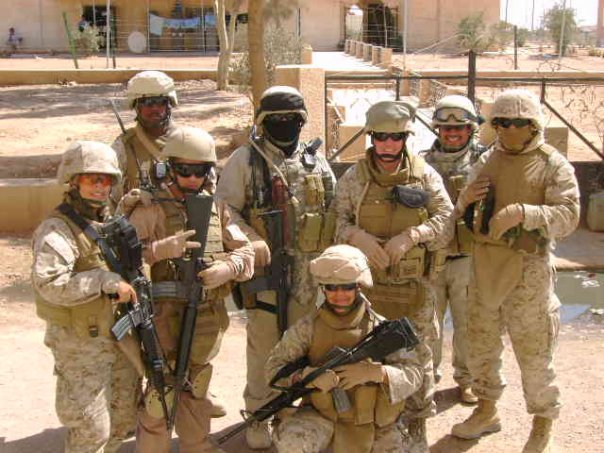
Iraq Military Training Team in West Al Anbar

We did go to war but it was not like wars past where we relied on a true national effort to win the wars. The wars have been fought by a force profession force of Active and Reserve Component Soldiers, Sailors, Marines, Airmen and Coastguardsmen that hovers a bit above a half a percent of the total population. Of those eligible for service most do not meet the entrance requirements for military service meaning that the prosecution of the war has been the task of a miniscule portion of the population.  Shortly after the 9-11 attacks President George Bush urged Americans to do their civic duty “go shopping” to get the economy moving.  As a career military officer I was aghast at his words. While he praised the military at every turn and increased military budgets, much of which went to defense contactors the actual heavy lifting was and continues to be done by men and women who volunteer to keep going back.  While the military fights the war Wall Street does business in a manner that is good for it and the vast majority of Americans are totally immersed in self-entertainment, the latest video gaming system or imbibing on a constant diet of “reality TV.”  Others on both sides of the political spectrum elect to shred their political opponents to itty bitty sheds and maneuver to gain political advantage and power without really caring what is happing to the country despite their proclamations of doing what is right for America.  In regard to the troops most of the political classes only seem to care when it affects their state, district or party.
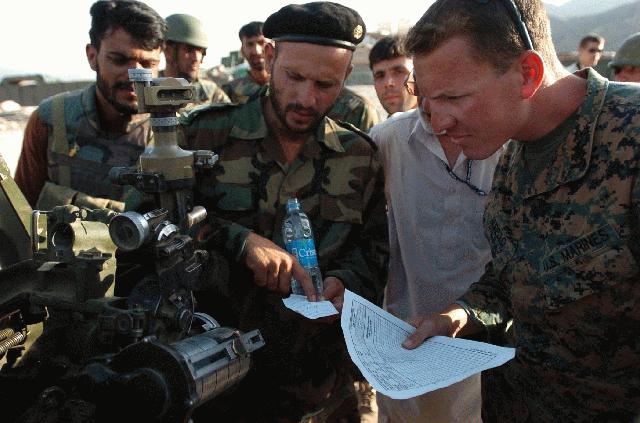
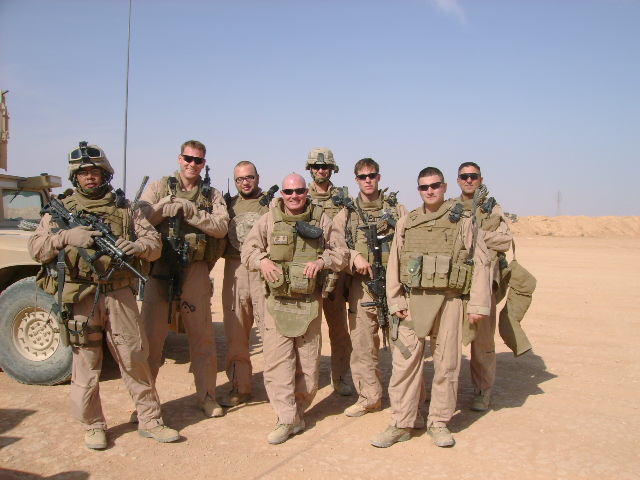
Advisors in Afghanistan 

This Thursday 9 more Americans were killed in Afghanistan, eight in an IED blast while on a mission to root the Taliban out of a suspected strongpoint and another in a helicopter crash.  In Afghanistan we have lost 1514 military personnel killed in action or died of wounds. Another 11191 have been wounded. Additionally or NATO Allies have lost 889 military personnel listed as killed or died of wounds. In Iraq 4454 U.S troops have been killed and another 32227 troops have been wounded.  Additionally 318 Coalition troops have been killed in Iraq.  None of these figures include the high number of personnel with PTSD, mild to moderate TBI or other psychological and spiritual wounds.  5968 Americans have been listed as killed or died of wounds in Iraq and Afghanistan while another 43,418 have been officially listed as wounded.

Memorial Day is a day to remember the fallen.  It is a day to reflect on the sacrifice of those that have died in the service of our country.  Originally established as Decoration Day and its roots stretch back to the Civil War.  Other nations have similar remembrances for their war dead.  Unfortunately because our military is such a small part of our population and now concentrated into a few major bases often out of sight and out of mind of most Americans the observance has become a kick off to the summer for most Americans who are blissfully unaware of the real costs of war.  In a way I can’t really fault them because when the war began with an attack on our shores our President did not call the nation to make sacrifices to win the war he told people to go shopping while “the few” would take the war to the enemy and avenge the devastation of September 11th 2001.  It turned the vast majority of the country into cheerleaders or bystanders.  History shows time after time that nations that wage war this way seldom achieve their goals.

As Clausewitz so aptly observed that war the nature or the “remarkable trinity of war” violent emotion, chance and rational policy which are balanced with the social trinity of the people, the commander and the army and the government (or in the case of non-nation state actors tribal, social or revolutionary leaders) necessitates that the people have to be part of the equation if one is to successfully conduct a war.  While it is possible to win short wars without much support of the people any long conflict necessitates that the people be engaged as much as the military and the government policy makers, especially in a democracy. Vietnam was a classic example of the social trinity gone bad. Policy makers failed to set goals for the prosecution of the war, military leaders attempted to fight the war with operational theories and forces that were not adapted to the type of war being fought and ignored the lessons of history regarding the type of war and eventually the people turned on the policy makers and the military as the war ground on with no apparent victory in sight.  The same can be seen in the current conflict in Afghanistan with the government pushing a policy that seems to have little strategic benefit or chance of success.  A military that can inflict punishing losses on the Taliban without destroying them or due to limited resources hold onto areas that they drove the enemy and a public that is divided between cheerleaders, critics and bystanders.  Few of the latter have any personal stake in the war other than bearing some of the financial cost and having to it occasionally referred to in the news cycle.  Our “trinity” is dysfunctional and will be our undoing despite the heroic efforts of those who give their “last full measure” on the battlefields of Afghanistan, Iraq and now Libya.

While we can discuss ways bring functionality back to our social trinity and the “remarkable trinity” or essence of war we must understand that our enemies, even non state actors often have a much more congruent view of war than we do and how to connect their strategic goals, military strategy and leverage the energy of the people against the United States and our Western allies.  They do not have our military power and wherever we meet them on the battlefield where we can employ our tactical superiority in weapons and training we have success but we have been unable to translate battlefield success into victory because we do not understand the nature of the conflict, the heart and will of our enemy and are dysfunctional in our own social, military, policy and political understanding of this war and how to win it.

What does this mean to those that have given their “last full measure” and those “happy few” that bear the burden of prosecuting the war? It means that their sacrifices may not be enough and will like the veterans of Vietnam come home without victory despite never losing a battle.  After Vietnam the force was cut back, military personnel who gave all they had on the battlefield were turned out of the service and even officers reverted to enlisted status to remain in the Army and Marine Corps.  Today even as the war rages cuts are being made to the force and those cuts will only get bigger as time goes on. Like Vietnam we already have a substantial number of veterans suffering from wounds physical, psychological and spiritual unable to get adequate care or assistance from an overburdened, underfunded, under staffed and often dysfunctional or even worse uncaring Department of Veterans Affairs facilities. Others that have served most of their careers at war and are approaching retirement are seeing the benefits that they earned with their flesh and blood and the long sacrifice of themselves and their families being termed “a rich entitlement program” targeted for reductions in pensions and medical care.  People that make these decisions if they served in the military at all often served only in peacetime or in times of short military conflicts and thus really do not understand the terrible cost and burdens placed on those that serve and continue to serve in this “war without end.”

Since Monday is Memorial Day and I simply ask that people take a few minutes and reflect on sacrifices of those that served in this war, wars past or those that continue to volunteer and serve in harm’s way far from home in a cause that the government does not understand and the public no longer supports.  Yes people treat military personnel better than in times past, there is little hostility to the military but at the same time has little social connection to or understanding of, thus we are a small brotherhood forged by a war that most of our fellow citizens can comprehend.
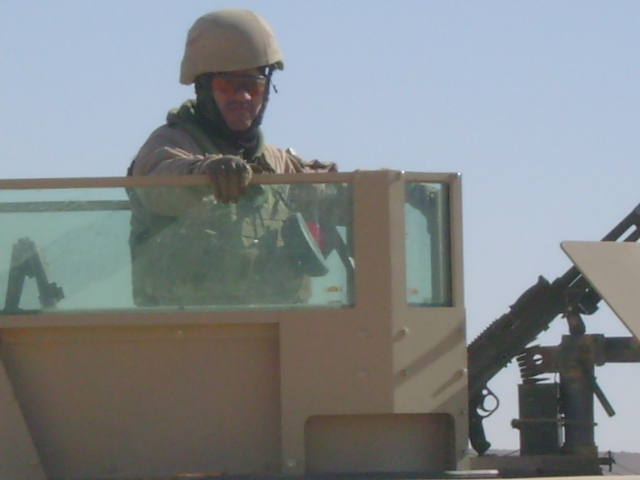
One of my Brothers: RP2 Nelson Lebron in Iraq

As for all who served we are part of a Band of Brothers.  As William Shakespeare so well wrote in Henry V:

WESTMORELAND. O that we now had here
But one ten thousand of those men in England
That do no work to-day!

KING. What’s he that wishes so?
My cousin Westmoreland? No, my fair cousin;
If we are mark’d to die, we are enow
To do our country loss; and if to live,
The fewer men, the greater share of honour.
God’s will! I pray thee, wish not one man more.
By Jove, I am not covetous for gold,
Nor care I who doth feed upon my cost;
It yearns me not if men my garments wear;
Such outward things dwell not in my desires.
But if it be a sin to covet honour,
I am the most offending soul alive.
No, faith, my coz, wish not a man from England.
God’s peace! I would not lose so great an honour
As one man more methinks would share from me
For the best hope I have. O, do not wish one more!
Rather proclaim it, Westmoreland, through my host,
That he which hath no stomach to this fight,
Let him depart; his passport shall be made,
And crowns for convoy put into his purse;
We would not die in that man’s company
That fears his fellowship to die with us.
This day is call’d the feast of Crispian.
He that outlives this day, and comes safe home,
Will stand a tip-toe when this day is nam’d,
And rouse him at the name of Crispian.
He that shall live this day, and see old age,
Will yearly on the vigil feast his neighbours,
And say ‘To-morrow is Saint Crispian.’
Then will he strip his sleeve and show his scars,
And say ‘These wounds I had on Crispian’s day.’
Old men forget; yet all shall be forgot,
But he’ll remember, with advantages,
What feats he did that day. Then shall our names,
Familiar in his mouth as household words-
Harry the King, Bedford and Exeter,
Warwick and Talbot, Salisbury and Gloucester-
Be in their flowing cups freshly rememb’red.
This story shall the good man teach his son;
And Crispin Crispian shall ne’er go by,
From this day to the ending of the world,
But we in it shall be remembered-
We few, we happy few, we band of brothers;
For he to-day that sheds his blood with me
Shall be my brother; be he ne’er so vile,
This day shall gentle his condition;
And gentlemen in England now-a-bed
Shall think themselves accurs’d they were not here,
And hold their manhoods cheap whiles any speaks
That fought with us upon Saint Crispin’s day.

Kenneth Branagh Henry V: http://www.youtube.com/watch?v=A-yZNMWFqvM

At the same time I cannot count the number of men and women that have come to me and expressed their regret at never having served when they had the chance. By and large they are wonderful people that live with this regret. In a sense they know well the last part of the Henry V speech “And gentlemen in England now-a-bed shall think themselves accurs’d they were not here, and hold their manhoods cheap whiles any speaks that fought with us upon Saint Crispin’s day.” For such men and women I can bear no hostility because the regrets that they live with are more than I would want to live with. When spending time with people living in regret I simply to do what they do in an honorable manner, take care of their families and support the troops in any way that they can.
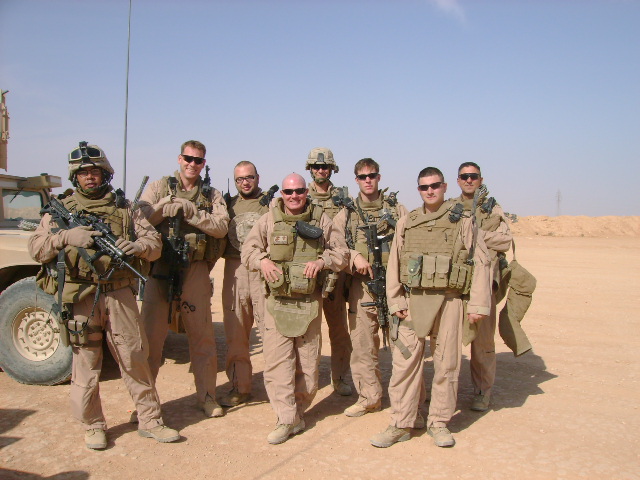
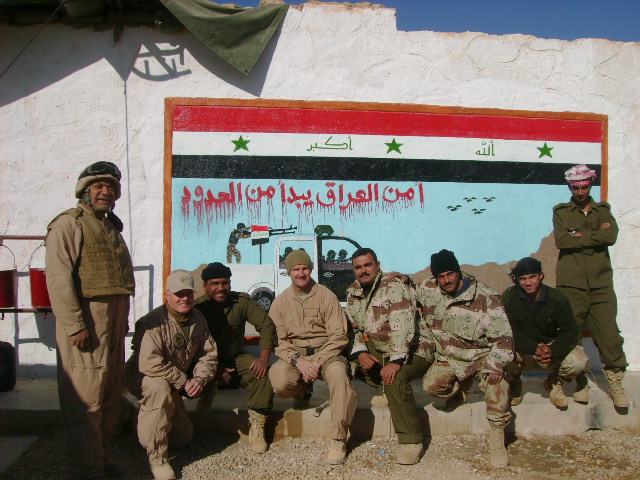
One of my Band of Brothers MTT with 3rd Battalion 3rd Brigade 7th Iraqi Division

As for me I continue to serve affected by war in ways that I never imagined when I enlisted nearly 30 years ago. All those who have served, past present and future are my brothers and sisters and it matters not their social status, race, religion or politics as Shakespeare noted  “For he to-day that sheds his blood with me Shall be my brother; be he ne’er so vile, this day shall gentle his condition….”

Guy Sager wrote in his book The Forgotten Soldier” about his return home from war, society and that brotherhood, something that many who have served in Vietnam, Iraq and Afghanistan can share:

“In the train, rolling through the sunny French countryside, my head knocked against the wooden back of the seat. Other people, who seemed to belong to a different world, were laughing. I couldn’t laugh and couldn’t forget.

I had looked everywhere for Hals, but hadn’t been able to find him. He filled my thoughts, and only my acquired ability to hide my feelings kept me from weeping. He was attached to me by all the terrible memories of the war, which still rang in my ears. He was my only friend in this hostile world, the man who had so often carried my load when my strength was failing, I would never be able to forget him, or the experiences we had shared, or our fellow soldiers, whose lives would always be linked to mine.”

Most of us that have served in combat zones have memories like that and like the people in the train most people don’t understand.  One thing that I do know is that I am part of a brotherhood that extends from time in memoriam to the consummation of time when war will be no more, death will be swallowed up in victory and every tear will be wiped from our eyes.

Peace

Padre Steve+

3 Comments

Filed under History, iraq,afghanistan, Loose thoughts and musings, Military, national security, PTSD, shipmates and veterans

A Quiet Remembrance: The Fall of Dien Bien Phu May 7th 1954

French Prisoners

On May 7th in Hanoi a small remembrance was held to mark the fall of Dien Bien Phu and honor the victor, 101 year old General Vo Nguyen Giap at his home.  It was one of the few remembrances held anywhere marking that battle which was one of the watersheds of the 20th Century. A half a world away in Houston Texas a small group of French veterans, expatriates and historians laid a wreath at the Vietnam War Memorial.  In Paris an ever shrinking number of French survivors gather each year on May 7th at 1815 hours for a religious service at the Church of Saint Louis des Invalides to remember the dead and missing of the French Expeditionary Corps lost in Indochina.  This battle is nearly forgotten by time even though it and the war that it symbolized is probably the one that we need to learn from before Afghanistan becomes our Indochina.

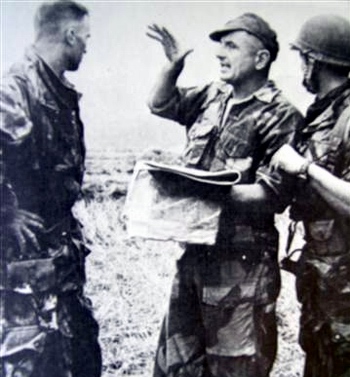
French Major Marcel Bigeard at Dien Bien Phu. A revered leader he died in 2010

On May 8th 1954 the last of the French garrison of Dien Bien Phu surrendered to the Viet Minh following the surrender of the main garrison the previous day.  It was the end of the ill-fated Operation Castor in which the French had planned to lure the Viet Minh Regulars into open battle and use superior firepower to decimate them.  The strategy which had been used once on a smaller scale the previous year at Na Son would prove to be the Göttdammerung of French colonial rule in Indochina.

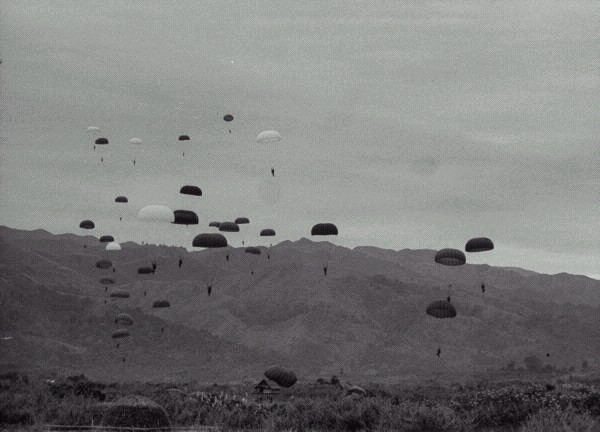
French Paras landing at Dien Bien Phu

The French had thought they had come up with a template based on Na Son in how to engage and destroy the Viet Minh which had in the years between 1945 and 1954 had turned an insurgent force into a strong Army capable of taking on large French forces.  As a result the French decided that they would attempt to draw Giap’s Army into open combat where their superiority in heavy weaponry and in the air could be used to destroy the Viet Minh. The plan was called the “Air-land base.”  It involved having strong forces in a defensible position deep behind enemy lines supplied by air.  At Na Son the plan worked as the French were on high ground and had superiority in artillery and air forces.  They were also were blessed by General Giap using human wave assaults which made the Viet Minh troops fodder for the French defenders.  Even still Na Son was a near run thing for the French and had almost no effect on Viet Minh operations elsewhere in Indochina while tying down a almost a full division of troops and a large portion of French air power. They inflicted heavy losses on the Viet Minh but did not destroy them.

The French command assumed that they had found a way to defeat the Viet Minh.  They decided to repeat the strategy used at Na-Son at the remote the remote town of Dien Bien Phu near the Laotian border.  The French desired to use Dien Bien Phu as a base from which they could conduct offensive operations against the Viet Minh and to draw Giap’s forces into a conventional fight that they thought they could win.  Unfortunately the French chose badly. Dien Bien Phu lay in a marshy valley surrounded by mountains which were covered in dense nearly impassible jungle.  It was a poor location to conduct offensive operations from and a worse place to defend.

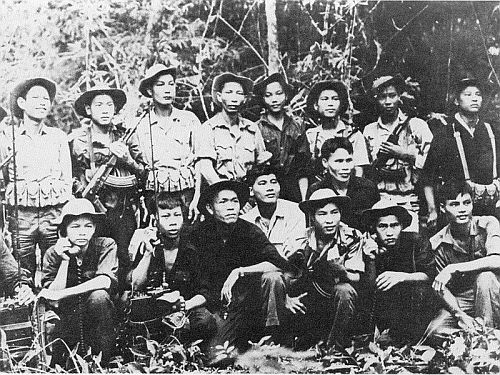
Viet Minh Main Force Regulars

The French elected to go light on artillery and due to the terrain it had to be deployed in nearly open conditions with neither cover not concealment.  Unlike Na Son the Dien Bien Phu air head was at the far end of the range of French aircraft, especially relatively weak tactical air assets.  French logistics needs were far greater than the French Air Force and American contractors could supply.  The French strong points in the valley were exposed and not mutually supporting and as such Giap and the Viet Minh were able to close with and attack each strong point in time overwhelming each after valiant French resistance.  The terrain was so poor that French units were incapable of any meaningful offensive operations against the Viet Minh.  As such they could only dig in and wait for battle.  Even so many positions were not adequately fortified and the artillery was exposed. The French garrison was a good force.  It was comprised of airborne units, the Foreign Legion, Colonial Paratroops (Marines), North Africans from Tunisia and Algeria as well as Vietnamese troops.  Many of the officers including Lieutenant Colonel Langlais and Major Bigeard commander of the 6th Colonial Parachute Battalion were among the best leaders in the French Army. Others who served in Indo-China including David Galula and Jacques Trinquier would write books which would help Americans in Iraq.  Unfortunately the French High Command badly underestimated the capabilities and wherewithal of the Giap and his divisions.

Giap rapidly concentrated his forces and built excellent logistics support.  He placed his artillery in well concealed and fortified positions which could use direct fire on French positions. Giap also had more and heavier artillery than the French believed him to have.  Additionally he brought in a large number of anti-aircraft batteries whose positions enabled the Viet Minh to take a heavy toll among French Aircraft.  Giap also did not throw his men away in human assaults.  Instead he used his Sappers (combat engineers) to build protective trenches leading up to the very wire of French defensive positions.  In time these trenches came to resemble a spider web.

Without belaboring this post the French fought hard as did the Viet Minh.  Many French positions were overwhelmed by accurate artillery and well planned attacks.  The French hoped for U.S. air intervention, even the possibility of using nuclear weapons against the Viet Minh.  They were turned down.  Relief forces were unable to get through.  The garrison died, despite the bravery of the Paratroops and Legionaries.  The French garrison was let down by their high command and their government and lost the battle due to inadequate logistics and air power.  The survivors endured a forced march of nearly 400 miles by foot to POW camps in which many died.  Many were subjected to torture and group discipline.  Few French caved to the Viet Minh interrogations but some would come away with the belief that one had to use such means to fight the revolutionaries.  French and their Algerian comrades would apply these lessons against each other within a year of their release.  French soldiers and officers were shipped from Indo-China to Algeria to wage another protracted counterinsurgency.  Militarily they had all but won the war when their government pulled out. French troops, especially the Legionaries and Paratroops felt betrayed by their nation, much like many Vietnam Vets felt about the United States government after that war.  I find today that both our government and people are caring for our returning troops in a far better manner than the past.  Even still the veterans of Iraq and Afghanistan share almost a spiritual link to our American and French brothers in arms who fought at Dien Bien Phu, the Street Without Joy and places like Khe Sanh, Hue City, the Ia Drang and the Mekong.

The lessons of the French at Dien Bien Phu and in Indo-China were not learned by the United States as it entered Vietnam.  In fact the US Army made a conscious effort to ignore the advice of those that they called “losers.”  It was an arrogance for which we paid dearly in that war.

Despite our efforts in Afghanistan and the valiant sacrifices of our Marines and Soldiers we seem to have difficulty learning the lessons of the Vietnam Wars.  Old habits die hard, counterinsurgency done right isn’t sexy and there are no easy formulas to make it work.  What works in one country may not work in another as we are found when we tried to emulate our counterinsurgency success in Iraq in Afghanistan.  Despite a lot of institutional resistance from traditionally minded Army officers we were able to apply the lessons of counterinsurgency in Iraq and work with Iraqis to make that country more secure than it was before we took this type of warfare seriously.  Despite its continued problems Iraq is doing better and will likely do well in the long run as it recovers from the damage caused by the war.  They have known civilization since antiquity and are a proud people.  Someday I hope to take up the invitation of Iraqi friends to go back as they say as a tourist.

I am concerned about Afghanistan, despite the killing of Osama Bin Laden in neighboring Pakistan because it seems that the Taliban spring offensive is off to a good start.  U.S. and NATO Forces in Khandehar and Helmand Province have been placed on a higher alert and confined to their bases following a major assault on the Afghan provincial government installations in Khandehar.  The Taliban and other Afghan insurgents are only concerned with Afghanistan and even though Bin Laden is dead the deepening rift between the United States and Pakistan will likely ensure that they will enjoy military, personnel, financial support from many in Pakistan including the Intelligence agency in the remote and ungovernable northwest territories of that country which are a safe haven much like Communist China was for the Viet Minh.

Will there be a situation where an isolated NATO garrison is overrun by Taliban forces as French forces were in Indochina?  An isolated outpost was nearly overrun at Wanat in July of 2008 and at two isolated outposts near the Pakistani border in October 2009.  One would hope not, but we cannot underestimate the Afghans and their ability to adapt to NATO tactics and weapons.   Their predecessors successfully drove out the Soviets, the British, the Persians and the Greeks.  Dien Bien Phu is a warning from history not to leave troops in places where their exposure leaves them vulnerable.

But even more Dien Bien Phu serves to remind us that in such wars it is not always the highly trained and organized Western forces that win.  These are local wars and once the momentum shifts to the insurgent they are difficult to turn around.  In a sense the French were trying to do what we are trying to do now in taking the fight to the enemy.  It turned out badly for them and it could turn out badly for us.  I hope that we don’t forget.

Peace

Padre Steve+

2 Comments

Filed under History, iraq,afghanistan, Military, vietnam

Adjusting Strategy to Reality

Taliban Fighters

“The core goal of the U.S. strategy in the Afghanistan and Pakistan theater remains to disrupt, dismantle, and eventually defeat al-Qa’ida in the region and to prevent its return to either country…” US Strategy in Afghanistan for 2011

“The aim of war should be the defeat of the enemy.  But what constitutes defeat?  The conquest of his whole territory is not always necessary, and total occupation of his territory may not be enough.” Carl Von Clausewitz

Strategic goals cannot remain fixed on geographic objectives which have lost their strategic importance because it is no longer the enemy’s center of gravity. On September 11th 2011 the Taliban ruled Afghanistan which harbored Osama Bin Laden’s Al Qaeda terrorist organization became the central front in the new “War on Terrorism.”  For about a year Afghanistan remained the central focus of United States efforts against Al Qaeda until President Bush and his administration changed the primary effort to the invasion of Iraq and the overthrow of the Saddam Hussein regime.

The effect of switching the American strategic focus from Afghanistan where we were making headway despite the limited resources provided to Iraq was a mistake of epic proportions that only became evident when Iraq did not go the way that the Bush administration led by Vice President Dick Cheney. Secretary of Defense Donald Rumsfeld and Paul Bremer the head of the Coalition Provision Authority planned.  Instead of a quick withdraw a series of mistakes and miscalculations turned the majority of the Iraqi people who had welcomed US Forces with open arms against us and an insurgency which claimed over 4000 American military personnel deaths and over 30,000 wounded became our primary focus.  We are still trying to figure out how to end our involvement in that country hoping that Iraq will not sink into another civil war.

Contrary to expectations Iraq became a front which consumed U.S. Forces and limited strategic flexibility in other regions of the world including Afghanistan.  In that country the indigenous Taliban which had been driven from power in 2001 began a gradual and deliberate return to political and military viability which was finally noticed by the United States in 2008 and 2009.  The Taliban were supported by the Pakistani Taliban, elements of the Bin Laden organization and in many cases duplicitous elements within the Pakistani military and intelligence services which were using the situation to support their own strategic goals of gaining influence in Afghanistan while strengthening their position against their perceived mortal enemy India.  Throughout the war the Pakistanis acted in their own interest while placating American demands to do more against the Taliban and Al Qaeda operating in Pakistan proper.

The Obama administration attempted to regain the initiative with a “surge” of 30,000 additional troops which raised the overall commitment of the United States to a force of over 100,000 troops assisted by NATO Allies and the corrupt, ill-trained and often Taliban Afghan Army and Police.  The surge was controversial and marked with controversy was the US Commander General Stanley McCrystal was relieved of command after an article in the Rolling Stone magazine which made it appear that he held the Obama administration in contempt. Since McCrystal recently returned to the Administration in a civilian capacity one wonders if the administration discovered that the article was meant to discredit McCrystal. McCrystal was relieved by his superior CENTCOM Commander General David Petreaus who had helped devise the strategy which in conjunction with the Anbar Awakening turned the tide against Al Qaeda and indigenous Iraqi insurgents in 2007-2008.  It achieved some success but even the United States recognizes that whatever success has been wrought is fragile and could easily be erased.

Unfortunately while the United States and its Allies continue to reinforce the campaign in Afghanistan their efforts are often undercut by the corrupt and duplicitous regime of Mohammed Karzai as well as our supposed Pakistani allies.  The Karzai regime hunkered down in Kabul has little influence outside the Presidential Palace except in its dealing in the Opium trade which helps finance the Taliban. The Pakistanis have over the 10 year duration of the war failed to maintain the security on their side of the border and often have clandestinely supported the Taliban and according to some may have given sanctuary to Al Qaeda.  The most recent setback came today when the Pakistani Chief of the General Staff General Ashfaq Parvez Kayani and Chief of Intelligence Ahmed Shuja Pasha issued a demand for the US to stop Predator Drone strikes in the border regions, cut Special Forces and CIA Staff and give the Pakistani Intelligence Service, the ISI visibility on CIA operations.  This has been long in the works but came to a head with the arrest of a CIA contractor under the suspicion of murdering two Pakistanis.  The incident created quite a rift in US and Pakistani relations in part brought about by internal Pakistani politics.  Of course the ISI has long been a source of aid to the Taliban so the United States has good reason not to trust the ISI with information that could endanger American lives.

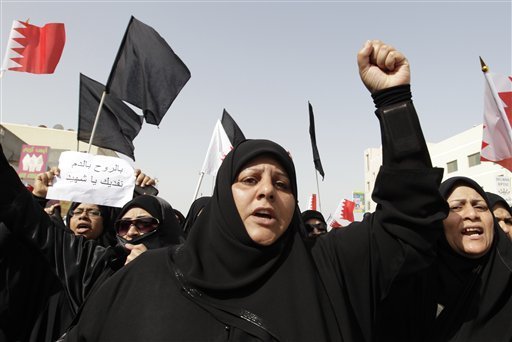
Protests in Bahrain: The Arabian Peninsula as the new Center of Gravity

The fact is without full Pakistani cooperation and substantial Afghani political reform to end corruption and provide real security to Afghani people there is no way to set conditions for a US withdraw that would leave Afghanistan a less dangerous place for its own people and for US and Western security interests. After all no one wants another 9-11 attack.  The US plans to begin withdrawing forces this year but the mission has been extended to at least 2014 at a cost of 119.4 billion dollars per year at the estimated 2011 rate and has increased exponentially since the US involvement began in 2001. The cost of the Afghanistan war in human, material and economic terms has imperiled other strategic priorities and limits the flexibility of the United States in other more vital regions.

Afghanistan is now an expensive sideshow in a larger war where the strategic center of gravity has shifted decisively to the Arabian Peninsula, North Africa and the Eastern Mediterranean where Al Qaeda seeks to use democratic revolts against autocratic despots to further its own ends. The key countries are Yemen, Saudi Arabia, Bahrain and Egypt with Lebanon, Syria, Jordan and the Israeli-Palestinian conflict boiling over.  While all of these crises grow on what seem to be a daily basis the United States and its Allies are mired in Afghanistan reinforcing failure.  Our troops on the ground have not lost a battle but like our brothers in Vietnam could “lose” the war.

This is the point where political and military leaders have to count the cost of the operation and weigh them against our actual strategic interests. The fact is if we withdrew the bulk of our ground combat forces and shifted to a lower footprint special operations and CIA campaign with a goal of ensuring that Al Qaeda cannot operate in Afghanistan with impunity as they did before 9-11 that we would likely be no worse off than we are now and have a greater amount of strategic flexibility to deal with other crises, political, military and humanitarian around the world.

The real crux of the issue is that Afghanistan is much like Stalingrad to the Germans in 1942. It has become a psychological more than a military campaign. We have invested so much in it that we do not believe that we can withdraw even though a scaled back presence would do much to improve our overall strategic situation.  Hitler denuded more important areas to attempt to capture Stalingrad and lost everything. Yes Al Qaeda used Afghanistan as its base to attack us in 2001 but they have moved on and Al Qaeda in Yemen and the Arabian Peninsula is a far greater strategic danger simply because of the oil supplies and strategic waterways in the area.

We simply need to look at all components of national strategy and decide where to concentrate.  Sometimes a strategic withdraw is necessary and actually vital to recover the initiative and set the stage for long term success. In Afghanistan this is not an admission of defeat but rather an acknowledgement that the central focus of the war and our strategic interests are elsewhere.  Our enemies would love to have us continue the campaign in Afghanistan in its current form, they know that our commitment drains our military, imperils our overall strategy and bleeds us dry economically all the while providing propaganda grist for them in their war against us.

However despite the cost the political situation in the United States keeps President Obama invested in Afghanistan. If he withdraws his opponents will say that he lost the war. Unfortunately the war in Afghanistan was ceded to the Taliban in 2003 when we decided that Iraq was more important. Now we reap the terrible consequences of that decision.  Now we have to decide how to make something positive out of this unenviable strategic position. But as Napoleon Bonaparte said “In order to govern, the question is not to follow out a more or less valid theory but to build with whatever materials are at hand. The inevitable must be accepted and turned to advantage.”

Peace

Padre Steve+


2 Comments

Filed under Loose thoughts and musings

Damned if you do and Damned if you Don’t: The Allied Intervention in Libya

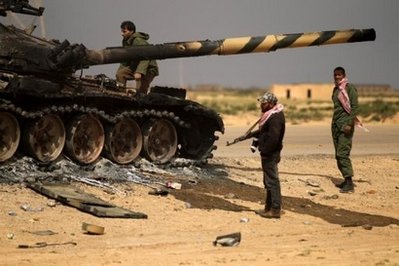
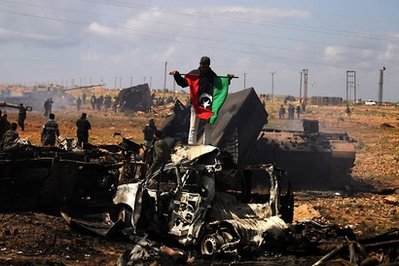
Libyan Rebels gather around a destroyed T-72 outside Benghazi

War is the unfolding of miscalculations.
Barbara Tuchman

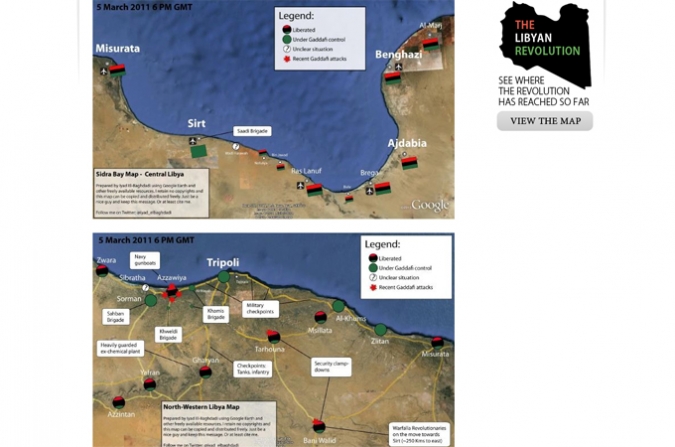
Back on the 9th of March I wrote this closing line to an article entitled The Guns of March where I discussed the developing situation in Libya and the really terrible options that world and regional leaders had in response to Muammar Gaddafi’s criminal actions against his own people. I concluded that article with this statement.

There are many possibilities for the situation in Libya to get worse and potentially engulf the region in a war that no one wants or really is prepared for.

We can only see what develops but there are no good options only options of bad or worse. Will the region like Europe in 1914 be engulfed in war where there are no winners or will somehow the situation be resolved before it can get that far?”

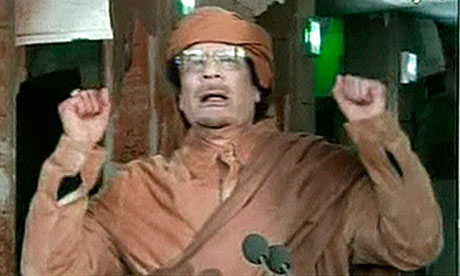
It is obvious to all that the region stands a very good chance of becoming engulfed in a regional war unless the rebels drive Gaddafi from power, Gaddafi steps down on his own or he is killed or captured. Gaddafi has promised a “long war” against the “colonial and crusader” enemy.

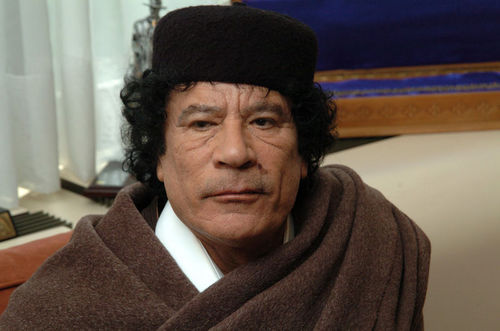
Gaddafi Defiant

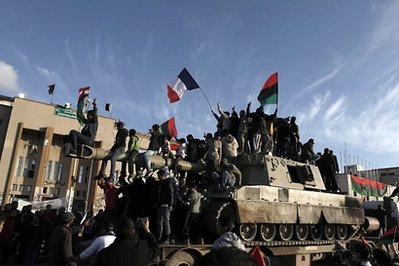
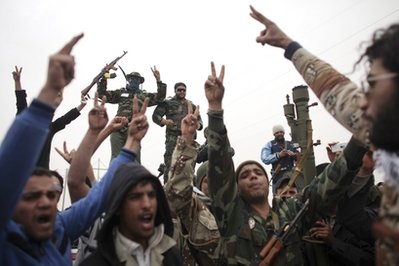
In the days since I wrote the referenced article the Arab League spoke up in support of establishing a no-fly zone and the United Nations Security Council voted for member nations to enforce a no-fly zone and take “all necessary measures” in order to stop Gaddafi’s forces attacks on other Libyans. By the time the Security Council acted Gaddafi’s forces had retaken many rebel held cities inflicting great slaughter on civilians and were on the outskirts of the rebel capital Benghazi with Gaddafi threatening to send his forces “house to house” to kill the opposition and promising to show no mercy.  Within a day French and British aircraft were flying missions and striking the spearhead of Gaddafi’s forces outside of Benghazi and United States Navy ships were launching Tomahawk Cruise Missiles at the Libyan air defense system. They were joined by aircraft from the U.S. Navy, Marine Corps and Air Force as well as Canada, Spain, Italy, Belgium, Norway, Denmark and Qatar.  Gaddafi’s forces were decimated outside of Benghazi and forced to retreat and a renewed rebel force, this time acting more like a military organization began a pursuit which has reached Ajdabiya.  In the west Gaddafi’s forces continue to attack the towns of Misrata and Zintan and according to observers and medical personnel inflicting heavy casualties on civilians.

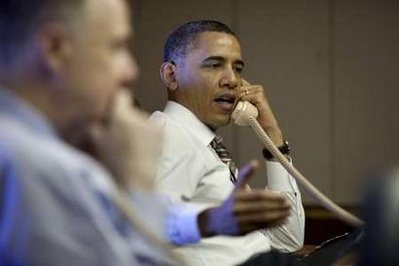
President Obama in a briefing

Around the world there is much criticism of the operation as well as support. In the United States representatives as diverse as Ron Paul and Dennis Kucinich are raising concerns on the Constitutional issues of the intervention in that President Obama did not secure the approval of Congress prior to sending American forces into battle. Kucinich even calls it an impeachable offense.  Likewise a diverse assembly of politicians, former military and executive branch officials including those with experience at the State Department, the United Nations, NATO and the Middle East are voicing their concerns about the fact that the end state of the operation is not defined and about the possibility of mission creep. The administration has not helped matters in sending a number of messages over the past few days of a desired end state. It is obvious that President Obama did not want this fight nor did he want it to appear that we were again leading an attack on an Arab nation.  His hesitancy has led to some conservatives attacking his lack of decisiveness even as other conservatives criticize his decision to join the military operations. Secretary of Defense Robert Gates has been outspoken in his opposition to becoming involved in another war and seems to want U.S. involvement to decrease sooner rather than later.

Rebels with damaged 152mm Self Propelled Howitzer

The situation is still evolving by the hour and one thing is clear. The outcome is very unclear and the repercussions across the region are also uncertain. One problem is the apparent discontinuity in U.S. and Western policy to various despotic Arab regimes, supporting the overthrow of Hosni Mubarak in Egypt, a military operation against Gaddafi in Libya and very muted and lukewarm support to popular political movements in Bahrain and Yemen. The Bahraini demonstrations have been put down with the help of Saudi forces but in Yemen numerous influential military officers have taken their units to support the Yemeni protestors. Of course the situation in all of these nations is different with the exception of the fact that all are ruled by long term undemocratic and repressive regimes of varying degree. Likewise actors in each country are different as are the geo-political interests of the United States.

A friend of mine pointed out to me that we are not viewed as “the good guys” in much of the Arab World as much as we see ourselves as such. I think that is true to a large extent because of foreign policy choices of the past century in regard to the Arab World as well as the past decade of war in Iraq and Afghanistan where even today photos taken by a rogue Army unit of soldiers posing with the mutilated and dead bodies enemies of the enemy further degrade opinion in the region against us.  But we are also the hope of many of those in Tunisia, Egypt, Libya and other nations and in those places and others popular uprisings have called out to us for political support and in the case of the Libyans military protection.

Parallels of 1989 in the fall of the Soviet Empire in Eastern Europe are drawn by the optimistic observers of what has been called the “Arab Spring.” However as much as I would like to believe that this is the case I think the miscalculations of 1914 are more readily apparent. There is nothing simple about what is going on and it seems to me that the region is sinking into a war with very unpredictable and grave consequences. Those consequences will probably with us for a generation was were the unanticipated outcomes of the First World War. Of course one of those outcomes was the breakup of the Ottoman Empire and the arbitrary redrawing of boundaries and selection of leaders in the newly created Arab nations and emirates by the victorious Allies. That is something that we are dealing with even as I finish this article.

As I wrote in another article I believe that acting to prevent the slaughter of Libyans by Gaddafi was the right thing to do.  Unfortunately as most observers know the people of Libya will not be safe unless Gaddafi leaves power. I think by backing Gaddafi into a corner early, even before he began his offensive against what were peaceful protestors and not giving him a face saving way out that we may have brought about a war that no one wanted and has few possible good endings. We are damned if we do and damned if we don’t.

Peace

Padre Steve+

3 Comments

Filed under Foreign Policy, History, middle east, Military, national security

Strike on Libya: The Unknown outcome of Operation Odyssey Dawn

Libyan Rebels among tanks and vehicles destroyed by coalition air strikes outside Benghazi (AFP photo)

“No plan survives contact with the enemy.” Field Marshal Helmuth Von Molkte the Elder

“War is the province of chance. In no other sphere of human activity must such a margin be left for this intruder. It increases the uncertainty of every circumstance and deranges the course of events.”
– Karl von Clausewitz

Under the authority of a United Nations Security Council resolution the military forces of a number of NATO nations began air and missile strikes against Libyan air defenses command a control facilities and ground forces.  While the United States and British Royal Navies lobbed salvoes of Tomahawk cruise missiles aircraft from France, Britain, the United States launched the initial air strikes. They have been joined by or soon will be joined by aircraft from Italy, Spain, Denmark, Norway, Canada and Qatar, the first Arab nation to participate. A number of other Arab countries may join the force as operations move from air strikes to the enforcement of the no-fly zone itself. The French Navy has deployed the nuclear aircraft carrier Charles de Gaulle from Toulon and it will join the naval forces in conducting air strikes and enforce the no-fly zone.

Air strikes have significantly degraded Libya’s air defenses and blasted Libyan forces arrayed against the rebel stronghold of Benghazi. The attacks on the ground forces stopped the Libyan attack in its tracks and the rebels have returned to the advance after appearing to be on the verge of a last stand against Gaddafi’s forces. In the past few days Gaddafi and his son Saif Al Islam Gaddafi have said that they would destroy the revolt and show “no mercy” in doing so. It is my belief that Libyan military officers and forces which have been “on the fence” will join the revolt in short order as the rebel forces renew their advance to the west as their loyalty to the regime is tenuous at best.

The strikes though extensive seem to have avoided doing to the Libyan people what was done to the Iraqi people and not targeted power plants or other infrastructure needed by the Libyan people. In other words NATO is trying to make sure that the Libyan people do not suffer for Gaddafi’s crimes. Gaddafi is trying to play up the attack as an attack against Libya by the “Crusader or Colonial enemy.”

Gaddafi has said that he will wage a “long war” and that he would arm a “million civilians” as loyalists gathered in his compound to act as a human shield to protect Gaddafi.  Gaddafi is known for his propaganda and his ruthlessness so we have to believe that he will at least attempt to resist but arming a million civilians is likely beyond his logistical capabilities while under heavy bombardment. The United States and NATO have said that they have not targeted Gaddafi but of course as everyone knows no one would object if Gaddafi happened to be in the neighborhood of a military target.

As the operation is in its early stages it is unknown how it will turn out. Morally and under the United Nations charter it is the right thing to do as Gaddafi was killing civilians and on the verge of killing many more and making the humanitarian crisis even worse. Unfortunately when any military operation is undertaken the consequences are and outcomes are never pre-determined. One hopes that the strikes will keep Gaddafi from killing more of his own people and causing greater chaos in the region. One also hopes that it will encourage the pro-democracy and secular movements that began in Iran but was crushed but which has taken root in Tunisia and Egypt to continue to spread across the Middle East. One hopes that other Arab nations will help Libya recover from Gaddafi and do what is right for the Libyans and for their own people. One also hopes that the strikes will level the playing field enough for the rebels to overthrow Gaddafi and bring him to justice.  So analysts in the Middle East believe that this will be the case. Al Jazeera reports that “Faysal Itani, deputy head of Middle East and North Africa forecasting at Exclusive Analysis tells Reuters that Gaddafi’s use of heavy weaponry against civilians has narrows his options considerably. He says: The doors are really shut for negotiation …  We think Gaddafi will be killed, or commit suicide or simply run away. It’s over.”

Of course one never knows. Gaddafi has stated that he has issued a cease fire but witnesses in Misrata which has been under heavy attack for the past week state that Gaddafi’s forces are still waging a campaign against civilians in that city. Likewise as Nicholas Burns a former United States Undersecretary of State notes that “one of the gambles that Britain, France and the United States, and indeed the Arab League, have taken is not having an agreement on what the mission is. Is the coalition trying to protect civilians in harm’s way, or in essence trying to overthrow Gaddafi? The coalition has intervened in a civil war on behalf of one of the protagonists. They have got to straighten out exactly what they are trying to accomplish.”

That is a big question mark. The real danger in this kind of unscripted intervention is the unforeseen consequences of each action taken. Even an action undertaken with the noblest of reasons can run afoul of unforeseen and undesirable outcomes. Thus only time will tell and we can only hope that freedom comes to Libya and that the bloodshed will end, hopefully with the Gaddafi regime thrown upon the ash heap of history by the Libyan people.

The die has been cast….

Peace

Padre Steve+


2 Comments

Filed under Foreign Policy, History, middle east, Military

Gaddafi Taunts the West and Kills his People: Our inaction speaks so loud he can’t hear a Word that we are Saying

Back when I was a sophomore in high school I played my one and one season of organized tackle football. I wasn’t very good and after seven weeks of not getting to play in a game, the last of which was a blowout where everyone got into the game but me I went to the coaches’ office in a rage. I confronted Coach Duke Pasquini demanding to know why I didn’t get in the game and he simply said “I can’t hear you.” So I complained louder and he repeated what he had said. That angered me so I was screaming and he finally said “your actions speak so loud I can’t hear a word you are saying.” I was dumbfounded as he told me that the reason that I wasn’t playing was that I my words didn’t match my play during practice.  It wasn’t until I took my anger out on the practice field and pushed harder than I ever thought possible that I got to play. Coach Pasquini taught me a valuable lesson with a lot of application for Western Leaders including President Obama.

That lesson is not to make pronouncements that you are not willing to back up with force. Unfortunately over the past two weeks statements by Western leaders as well as their actions of freezing assets and investigating the Gaddafi’s for war crime charges has emboldened the rebels and hardened the resolve of Gaddafi and his family.  In a nearly euphoric advance the rebels advanced to areas that they could not control if Gaddafi offered real resistance. Likewise when Gaddafi realized that the West was divided and unlikely to take action be it a no-fly zone or any assistance to the rebels he began an offensive that has devastated cities that the rebels had controlled and caused grievous casualties to civilians.  Gaddafi’s son Saif al Islam Gaddafi promised that the regime was coming after the rebels even the eastern part of the country using ground forces and air power.  He knows that he has a free hand until NATO and the Arab League or African Union decide to act even without a UN mandate as NATO did in Bosnia and Kosovo or the United States did in Iraq. He is openly taunting the United States, NATO and the international community and reveling in it. He has called our bluff.

The tide has turned against the rebels and in a war of attrition they cannot win unless the Libyan military switches sides, which does not seem likely in the light of international dithering.  The Libyan military after a period of wavering and defections appear to have fallen in line with Gaddafi even if they despise him.  Since that is the case Gaddafi now has the upper hand and unless Western Leaders, including President Obama back up their words the rebellion will be crushed a humanitarian catastrophe unleashed and a brutal dictator validated.

Now it is true that the United States above all nations must act with prudence because of our Iraq and Afghanistan adventures which have made the Administration shy away from any more military actions in the Muslim World. In fact we are overcommitted everywhere and there is a good reason militarily and politically not to go in.  That reason is simply that many radicals in the Islamic World will use it against us in a propaganda campaign and that is exactly how Gaddafi is already portraying the situation. Of course an air campaign which would begin with a no-fly zone should one be authorized would likely end up in bombing Libyan air defense installations and bring about what Gaddafi rightly calls a war. As a result the administration has for now decided not to act and to wait for the Europeans and the United Nations to take the lead. That inaction has emboldened Gaddafi and that inaction will turn Libya into a more important conflict than we ever wanted it to be.

If we do nothing after making a big show of calling Gaddafi a war criminal, freezing his assets and boldly stating that he has to go and the revolt fails then we will be seen by the same people that would condemn military action as weak.  This result would embolden tyrants and give our real enemies, Al Qaeda and Iran new life. Al Qaeda had been frozen out of the revolutions to this point but when those dying for freedom realize that we are all talk they will turn to the radical side to overthrow despotic regimes and when those regimes fall those that take power will not be our friends.

While doing something is fraught with peril the cost of inaction is worse and we could lose every Arab Ally that we have had for decades in a very short time. It will mean astronomical oil prices and collapse economies already weakened by the world wide banking and real estate crises. Israel will then be in the middle of a potential regional war because anti-western zealots will certainly carry their crusade against the Jewish state. There will be no more cold peace between the Arabs and Israel.

At least in the absence of US or NATO action French President Nicholas Sarkozy has recognized the provisional rebel government and is setting up an embassy in Benghazi and suggesting air strikes. British Prime Minister David Cameron is also pushing for action. The possibility is that some parts of the international community will take action but that is not certain. There are reports that the Libyan Provisional council is in clandestine talks with the United States.  If so that would be a start.

The reality is that this situation will not end well no matter what course of action is taken. The fact is that no matter which course the situation in Libya takes is that it is likely to spiral into a regional war with terrible consequences for everyone.  Americans will feel the pain of this in a big way when the oil prices go through the roof and the economy tanks.

Yes, our actions speak so loud that Gaddafi and the world can’t hear a word that we are saying.

God help us.

Peace

Padre Steve+
 

2 Comments

Filed under Foreign Policy, middle east, Military, national security

The Guns of March

“War is the unfolding of miscalculations” Barbara Tuchman

Libya Revolt (Al Jazeera)

In 1914 an assassination in Bosnia-Herzegovina led to the First World War. In 2011 a civil war in Libya may lead to the destabilization of an entire region and to a regional conflict. A few weeks ago many thought that Libya would take the same course as Egypt and Tunisia. That was before Muammar Gaddafi began to launch an organized campaign of slaughter against his own people using members of his clan as well as African, Arab and Eastern European mercenaries.  Now we wonder what will happen as many actors try to discern courses of action praying that their calculations are correct.

Defecting Libyan Soldiers with protesters (AFP Photo)

If we look at the players we see the Gaddafi clan and its allies who include mercenaries from Africa, other Middle Eastern nations and Eastern Europe battling in a life or death struggle with a disparate and not yet very organized revolutionary movement which has taken many key cities in Libya. Gaddafi’s forces have become quite brutal in their response even as Gaddafi denies attacking his own people and appear in some places to be gaining the upper hand. The rebels have a limited amount of arms and ammunition and few heavy weapons but have given a good account of themselves against Gaddafi’s forces.

The USS Enterprise CVN-65

The United States is really too heavily committed to do much and even if NATO and or the UN agree to establish a no-fly zone over Libya it is doubtful if it will do much to much good on the ground against Gaddafi’s mercenary army and party thugs.  President Obama has asked Saudi Arabia to help arm the rebels and the Saudis and the Gulf Cooperation Council states have asked the United States and NATO to establish a no fly zone to at least protect the rebels from Gaddafi’s helicopter gunships and attack aircraft. Gaddafi has stated that such a no-fly zone would be an act of war.

The words of Western leaders to include President Obama, British Prime Minister David Cameron and France’s Nicholas Sarkozy announcing that Gaddafi has to step down has hardened Gaddafi’s resolve and have whether we want it or not signaled that we are about to engage in another war. Military forces from NATO including the USS Enterprise Carrier Battle Group are being moved to positions that they can either enforce a no-fly zone or assist in humanitarian operations.

While the West debates what to do the fighting continues and Gaddafi’s military unhindered by anyone continues its attacks others in the region seek to gain from the Chaos. Syria has been supporting the Gaddafi regime and it is likely that Iran is seeking to gain more influence in Arab countries that have been hostile to it.  The presence of the two Iranian warships in the Eastern Mediterranean added to the tensions but those ships have now returned to the Red Sea after passing through the Suez Canal after exercises with the Syrians.

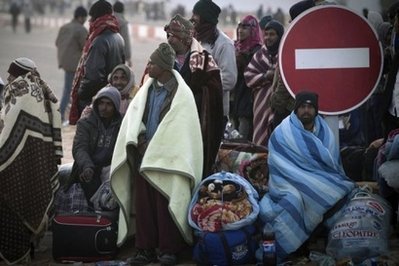
Refugee Crisis (AP Photo)

The fact is that this is a chaotic and ever changing situation. NATO will meet on Thursday to discuss possible courses of action.  Adding to the crisis is the specter of NATO’s abysmally slow response to the Bosnia crisis as well as the United Nation’s, American and European response to the Rwandan genocide. Since the ongoing battle in Libya to include Gaddafi’s slaughter of his own people and the massive refugee crisis on Libya’s borders is televised like the previous crises is in Bosnia and Rwanda Western Leaders are caught in a bind. They can turn a blind eye and chose to let the rebels die on the vine attempting to overthrow Gaddafi and be accused of ignoring crimes against humanity as were their predecessors during the Bosnian and Rwandan events.

There are many possibilities for the situation in Libya to get worse and potentially engulf the region in a war that no one wants or really is prepared for.

We can only see what develops but there are no good options only options of bad or worse. Will the region like Europe in 1914 be engulfed in war where there are no winners or will somehow the situation be resolved before it can get that far? Those are very real questions.

Peace

Padre Steve+


5 Comments

Filed under Foreign Policy, History, middle east, Military, national security

Fighting a World Wide Insurgency: The Problem Fighting Revolutionary Terrorists and Insurgents- Part One

Taliban Insurgents

“Warfare is now an interlocking system of actions political, economic, psychological; military that aims at the overthrow of the established authority in a country and its replacement by another regime.  To achieve this end, the aggressor tries to exploit the internal tensions of the country attacked ideological, social, religious, economic, any conflict liable to have a profound influence on the population to be conquered.” Roger Trinquier Modern Warfare

The United State and our allies have been at war with Islamic terrorists as well as nationally based insurgencies for over nine years.  The war that we are fighting is not like the Second World War where we fought a conventional war against enemies that were defined by national, political and geographic boundaries.  That war as well as the First World War and most recently the 1991 Gulf War but rather is a global insurgency in which we are pitted against a number of sometimes disparate groups One of the things that seems to be misunderstood by much of the media as well as the public

Muslim terrorist groups they use some tenants of Islam, mostly from the Wahabi school that emerged on the Arabian Peninsula in the late 1700s to justify what they do. Hezbollah and the Iranian Revolutionary Guard use the Islam taught by the school of the Ayatollah to do the same.

However that being said there are a sizable number of Muslims worldwide that oppose the terrorists and their brands of Islam but still can be offended and driven to the other side by Americans doing just what pastor Jones got started. The radicals take this and use it as propaganda against us.

The fact is that it is all about using propaganda effectively and not giving the terrorists the grist they need to use against us. The terrorist or the insurgent has no need to tell the truth and usually will not and will twist any “truth” to his own end. This is true in every revolutionary war, which is what all of these groups are waging. They are fighting to turn all of Islam and anyone else they can against us. This is the case since the beginning of time and not limited to Muslims.

We as Americans have been pretty lousy at this except when we were the revolutionaries. It is a fact, not just with the Muslims but all revolutionaries that since they are on the weak side of the military equation that they use propaganda, especially what any of our people do to radicalize people on the fence against us. Jones and others played into their hands and by doing so jeopardize the mission and endanger our troops. The fact is that we neither have the resources or people to allow this to become a war against all of Islam. Thus we have to exploit natural divisions and cultural divides in the Moslem world to isolate and neutralize the radicals of Al Qaeda, Hamas, the Taliban, Hezbollah and the Iranian Revolutionary Guard.

It may seem on the surface to be politically correct appeasement but a true strategic purpose is served. The counter-insurgent cannot do what the insurgent can as they will lose the propaganda war and with it the broader war. We are fighting a world-wide revolutionary war against Moslem fundamentalist extremists that want us to make it a war against all of Islam. If that were to be the case we would have to go to a total war footing, ignore our own economy renew the draft and prepare for a war that in the long run we cannot win and will leave us as broken as Germany after WWII.

The problem with Islam as that for the most part much of Islam especially in the Middle East still lives in the 14th century with fancy technology. They did not have the Renaissance, Reformation or the enlightenment thus the appeal of the fundamentalist sects and radical Islam. That makes our job hard and that of Bin Laden easy as their world-view  promotes a black and white understanding of the world which makes recruitment of youthful idealists easy especially when the conflict is framed as against “Crusaders” or “Imperialists” opposed to Islam.

The war that we are engaged in is not conventional and we do not have a good record in recent times of fighting this kind of war. We lost in Vietnam because we ignored this. We won all the battles and lost the war. Despite what some pundits believe this is not like WWII and no new incarnation of George Patton will win it.

As I said we are engaged in a revolutionary war which is different than other types of war. In revolutionary wars the revolutionary no matter what his cause is able to use propaganda to influence opinion, usually of people that they are trying to bring to their side. Our founders were very good in portraying the British as violent and brutal occupiers. We used British excess especially in Boston and in the South against them very well. The Jihadists are promoting a revolutionary cause, that cause being the overthrow of established governments in the Middle East and bringing about a radical and fundamental brand of Islamic rule. This happened in Iran and after 30 years the young people are beginning to revolt against the Ayatollahs. It is also revolutionary because they are actively promoting the overthrow of established states and have a goal of establishing their brand of Islam over the entire world. The use revolutionary techniques and strategies used successfully by other revolutionaries attempting to control the populations where they operate through both terror and by discrediting unpopular or corrupt governments.

One of the problems that we in the United States have in understanding Al Qaida and other Islamic groups that rely on terrorism as their primary means of conducting warfare is the nature of the terrorist himself.  Roger Trinquier who observed and fought against such groups in the 1940s and 1950s wrote one of the fundamental books on this type of warfare.  Trinquier said something that will undoubtedly be taken wrong by some readers of this essay but if one understands the nature of Revolutionary war has been true going back for centuries and is not confined to militant Islamic Fundamentalism.   Trinquier observed that “the terrorist should not be considered an ordinary criminal.  Actually he fights within the framework of his organization, without personal interest, for a cause he considers noble and for a respectable ideal, the same as soldiers in the armies confronting him.”

One can see how this is demonstrated in history in such disparate groups as the Israeli Irgun fighters who used terrorist tactics from 1931 until the founding of the state of Israel in 1948 against the British occupiers, the Irish Republican Army.  This is even part of the American experience in the post Civil War South of the Reconstruction era.  Then many Southern whites organized into guerrilla terrorist units such as the Klan in Tennessee, the Red Shirts in South Carolina, the Knights of the White Camellia in Louisiana, the Young Men’s Democratic Club in Florida in order to attack anyone associated with Reconstruction. Their targets included newly free blacks, carpetbaggers, Scalawags, teachers from the North, Freedmen Bureau officials, northern troops, and Republicans.  If you read their writings or even query their current day descendants you will find that none believed that they were criminals and their actions, while unacceptable to many were justified.  One does not have to agree that the terrorists cause is right to acknowledge that terrorists believe this to be true.  Thus in fighting the terrorist organizations one has to employ a wide variety of tactics to protect the populations targeted by terrorists to include police, limited military involvement, the use of propaganda, and “soft” methods to provide aid to these populations and isolate the terrorists from them.

The current batch of Jihadists are actually fairly disparate and not necessarily allies as we found out in Iraq where Al Qaeda and the foreign fighters turned the population of Al Anbar Province against them and brought that Sunni population to our side. They also have sometimes conflicting goals or limit their cause to local areas. The Sunni and the Shi’a have a hard time working together so while this is a global revolution it is not monolithic. Thus if we are smart we can exploit natural divisions in these groups. To do so we have to play smart in how we fight them recognizing that the “soft” approach often is better as the French found out too late in Vietnam but did well with in Algeria. See books by David Galula “Counterinsurgency in Algeria 1956-1954” “Counterinsurgency Warfare”, Roger Trinquier’s “Modern Warfare” as well as the book by Alister Horne “A Savage War of Peace” all are excellent reads. Bernard Fall’s book “Street Without Joy” is a good study of how this happened in French Indochina. The US Counterinsurgency Manual is available online or in bookstores as is “Learning to Eat Soup with a Knife” by John Nagl, a major writer of US Counterinsurgency doctrine.

US Advisors with Afghan Army Officers

In a world-wide insurgency even actions which seem logical to Americans at home can be detrimental to US Forces and political goals in Afghanistan, Pakistan, and Iraq and throughout the Muslim world. I’m not a fan of the Mosque near the World Trade Center even though it is the equivalent of 6 normal city blocks away and not visible from the site. Many Americans if not an outright majority oppose this building project yet the builders don’t seem to understand the raw wounds that the project has opened for many Americans. I’m sure for them that much of it is a business, they are developers in New York City and the land was available. Yet the project can quite rightly be seen as insensitive because of what it means to the victims.

At the same time politicians and protesters by naming it the “Ground Zero Mosque” has raised its propaganda value exponentially, that is why Hamas and Hezbollah have also raised the ante in their talk about it. Thus what was an annoyance and hurtful to the victims has become a propaganda victory for the terrorists. In a sense we have let our collective outrage play into the terrorist’s hands. When he pastor of a small church in Florida threatened to burn a large number of copies of the Koran he helped ignite a firestorm of protest in many parts of the Islamic world especially in the epicenter of our current struggle in Afghanistan and neighboring Pakistan.

We are at war with the warlike highly militant strains of Islam and trying to keep the more Western leaning peaceful variants on the sidelines or enlist them to our side. This is a hard path for our leaders to walk as President Bush found out and President Obama is finding out is that most Americans don’t see it that way.  To many Americans all of Islam is the enemy and nothing can change that and the heated passion of our population often plays into the hands of our enemies.  Thus both Presidents’ comments about Islam have usually fallen on deaf ears and both have been excoriated for straddling this fence.

Anyway as you gather I have spent a considerable amount of time studying this type of warfare. I admit that this is pretty unusual for a chaplain, but I also have a Masters degree in Military History as well as the Marine Corps Command and Staff College. When I was in Iraq I knew more than many Marine and Army officers about fighting this type of war. Kind of weird I know but what can I say?

One of the most famous and successful practitioners of Counterinsurgency Warfare was French Colonel David Galula.  Galula in a sense is the “voice crying in the wilderness” of counterinsurgency doctrine and his methods have been used with some measure of success during the “Surge” in Iraq and the “Anbar Awakening” which turned the tide of the Iraqi insurgency.  Galula commented about terrorist tactics, tactics that have not changed in either Iraq or Afghanistan:

“The rebels realized that they could achieve the greatest psychological effect on the French and on world opinion at the cheapest price by stepping up terrorism in the main cities, notably in Algiers, which served as headquarters to most French and foreign correspondents and thus acted as a natural amplifier. A grenade or a bomb in a café there would produce far more noise than an obscure ambush against French soldiers in the Ouarsenis Mountains.” Galula “Counterinsurgency in Algeria”

One of the most frustrating aspects for military and police personnel fighting insurgencies that employ terrorist tactics is that quite often superior forces cannot finish off the insurgents. Galula provides an answer to this question.

“Our forces were vastly superior to the rebels. Then why couldn’t we finish with them quickly? Because they managed to mobilize the population through terror and persuasion . . . It was therefore imperative that we isolate the rebels from the population and that we gain the support of the population.  This implied that under no circumstances could we afford to antagonize the population even if we had to take risks for ourselves in sparing it.”

This is a lesson that we have not always learned as incidents such as the Abu Ghraib torture and most recently a series of targeted killings of Afghan civilians by a squad of Army Soldiers in Afghanistan in which they allegedly planned the killings in advance and kept body parts of their victims.  Unfortunately atrocities like this as was demonstrated at Mei Lai in Vietnam do little to the enemy and everything to turn the populations that we are trying to protect and world opinion against us. It also provides grist for the terrorist propaganda purposes and aids him in recruiting more insurgents to his cause.

Galula recognized the quandary that commanders of police and military units involved in counterinsurgency operations face when dealing with populations where terrorists operate. Galula was a realist about this and noted “If we distinguish between people and rebels, then we have a chance. One cannot catch a fly with vinegar. My rules are this: outwardly treat every civilian as a friend; inwardly you must consider him as a rebel ally until you have positive proof to the contrary.” This may seem contradictory but the concept was used by Ronald Reagan during the Cold War using the term “trust but verify” in relationship to the Soviet Union and arms control.

David Kilcullen an Australian Army Lieutenant Colonel and counterinsurgency expert and advisor to General David Petreus noted

Colonel Dennis Drew writing in 1988 understood the linkage of all parts of insurgency and how well an insurgency represents the essence of the thought of Prussian theorist Carl von Clausewitz: “Although theorists consider insurgent warfare to be anti-Clausewitzian, such warfare is the very embodiment of the Prussian master’s most famous dictum. Insurgency represents the total integration of political and military factors, but with political factors always in complete domination.” (INSURGENCY AND COUNTERINSURGENCY American Military Dilemmas and Doctrinal Proposals- Air University Press Maxwell Air Force Base, Alabama 1988)

Thus attempting to fight an insurgency and terrorist groups thinking that one can defeat them in the style of world War Two, as is so often espoused by pundits and amateur military theorists that crowd the airwaves and cyber space is foolish and only leads to the defeat of the counter-insurgent and the loss of the population targeted by the insurgent. The wars in Afghanistan and Iraq are not conventional wars and the political outweighs the military in every respect.  As Drew noted:

“Although the military aspect of the struggle may ebb and flow, the source of insurgent strength–a covert political infrastructure–remains constant. This infrastructure, the bitter fruit resulting from the perceived political and economic inequities sown much earlier, is the most important ingredient in the insurgent recipe for success. The political infrastructure performs at least six major functions vital to the survival, growth, and eventual success of the insurgency: (1) intelligence gathering and transmission; (2) provision of supplies and financial resources; (13) recruitment; (4) political expansion and penetration; (5) sabotage, terrorism, and intimidation; and (6) establishment of a shadow government.”

This is exactly what has happened in Afghanistan and why we have such difficulty in fighting the insurgency.

One of the most common tactics that the United States has attempted in attacking the insurgents is the strategy of decapitation. In this the U.S. has attempted to kill the leaders at the top echelons of the insurgency with limited success. Even when we kill off a senior Al Qaida or Taliban leader others rapidly take their place with little affect in their operations against us. Galula recognized the fallacy of this approach in Algeria when the French government succeeded in capturing five top leaders of the Algerian rebellion. “Then, five top leaders of the rebellion, including Ben Bella, had been neatly caught during a flight from Rabat to Tunis. Their capture, I admit, had little effect on the direction of the rebellion, because the movement was too loosely organized to crumble under such a blow.” The lesson here is that should we ever succeed in capturing or killing Osama Bin Laden or Mullah Omar that this will not lead to victory unless we are able to protect the population of Afghanistan.

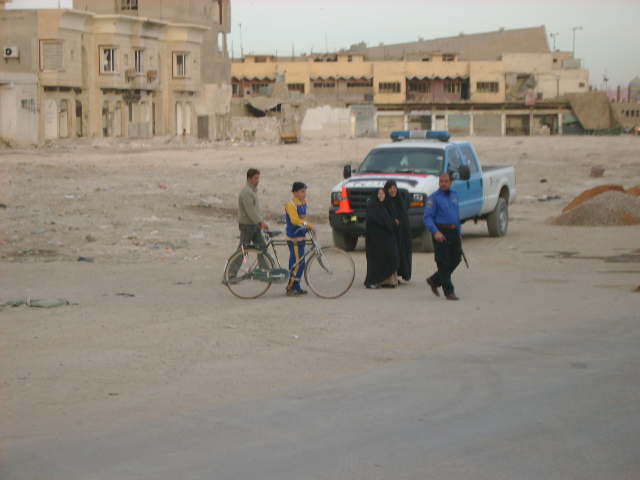
Protecting the population Iraqi Police and Civilians in Ramadi

To do this the population must come to our side because they know that we will stay the course and that we can be counted on to help them.  This cannot just be the military aspect of protecting them against the terrorists as well as economic and political reforms that is consistent with their traditional way of life which is not necessarily consistent with Western political and social traditions or practices. In fact the difficulty for the United States and NATO in Afghanistan is the political struggle on the home front where as Drew states:

“American military dilemma concerns time, public support, and image. Time is the ally of the insurgent; the longer an insurgent survives, the stronger its chances of growing. Meanwhile, as time drags on, the American military position is weakened by declining support, impatience, and war weariness at home, particularly if there is no perceived progress in the struggle. Maintaining public support is clearly a responsibility of the political side of the equation and involves factors far beyond the battlefield–although military progress is a key ingredient. The connection between the duration of the struggle and public support is the image of the insurgency presented to the American body politic.”

To be continued….

Peace

Padre Steve+
1 Comment

Filed under counterinsurency in afghanistan, History, iraq,afghanistan, Military, national security, Political Commentary

Goodbyes and Prayers: Sending Friends off to War

My little war within the war, Christmas with the Bedouin

Yesterday I was honored to be at a pre-deployment ceremony for a number of my shipmates from Portsmouth Naval Medical Center about half of I know fairly well.  There were physicians, nurses and hospital corpsmen in the group, some going to Afghanistan with the Marines, NATO or the Army while others were going to Guantanamo Bay or Djibouti, the country rejected by both Eritrea and Ethiopia. I already have seen a good number of friends and colleagues from our Medical Center deploy and in some cases return and I know of one corpsman that came back wounded while serving with the Marines in Afghanistan.

COP South

I have done many of these send offs since coming to Portsmouth but I think that today I knew a higher percentage of the personnel deploying than normally is the case.  At these ceremonies it is customary for the chaplain to pray for our shipmates as well as their family members.  This deployment comes in the midst of monthly casualties reaching their highest point in the war and shortly after two US Navy sailors being killed when for whatever reason they left their base in Kabul in an up armored Toyota Land Cruiser and proceeded to drive alone to one of the most dangerous areas of the country.  With that in mind the safety of our shipmates is something that I and those that serve are ever mindful of when we send our people to deploy.  Yesterday I spent more time with the deploying sailors before and following the ceremony because so many were friends or close colleagues. The goodbyes from me this time were different as I will not be at Portsmouth when my friends return. My assignment as the Command Chaplain at Naval Hospital Camp LeJuene means that I won’t be there but I will continue to keep them in my prayers and stay in contact with as many as I can through e-mail or Facebook.  At LeJuene I will meet old friends from Portsmouth as well as from my Marine tours.  I will also get to deal with a lot more Marines and Sailors dealing with physical as well as psychological injuries resulting from their time in harm’s way in either Iraq or Afghanistan or in many cases both countries.

Pause for possible IED

It has been three years since I deployed to Iraq, in fact three years to the day yesterday that I arrived in Kuwait to complete final training before going into country.  When I was over in Iraq I was blessed my many expressions of support of many people, churches, schools and veterans groups.  At the same time I did not sense the overwhelming support of the people for our troops and that included many members of the political establishment that seemed more interested in using the war to advance their political objectives and unfortunately that was truly a bi-partisan endeavor.  Since we are an all volunteer force it seems to me that the only people really paying attention are people with sons, daughters, mothers or fathers or other family members or friends in harm’s way.  For others supporting the troops is little more than a bumper sticker affirmation, which I appreciate as at least most people aren’t damning us as so many did in Vietnam, a war that my dad served in and which as a Navy dependant experienced in the way that military families were treated by the protest set.

On Syrian Border with Iraqi Border Troops

Today I saw an article about an Army Lieutenant one Christopher Babcock http://gen-reading.blogspot.com/ at a tiny base in Afghanistan.  I often felt this way when in Iraq, especially those times that I came back into the large base that I operated from and saw various news channels on AFN including Fox News, CNN, and MSNBC.  Much of what I saw coming out of the mouths of reporters or politicians, showed me just how out of touch and how little our leaders on both sides of the political divide, the media and the American public understood this war.

Convoy in Ramadi shortly before we took fire

My war experience was different. The places I went were the places most people never heard of or will ever hear about.  My assistant and I travelled thousands of miles in fixed and rotor wing aircraft as well as in many tiny poorly armed convoys in the badlands of Al Anbar Province to the small Iraqi bases where our advisors to the Iraqi Army and security forces worked.  In the assignment I got to know a decent number of Iraqi officers and even spoke to the first class of female Iraqi Police officers in training at Ramadi.  I believed then and now that Iraq will do well in the long run.  Back in 2007 very few people believed that, but having gotten to know many fine Iraqis I know that they will repair their country and move on with life. They have been at war in some way shape or form since 1980 and are war weary and most want to move on to live in peace and raise their children.

Guests of Major General Sabah of 7th Iraqi Division

I do not believe this to be the case in Afghanistan. History tells me that we will have no better outcome than the Soviets.  We lost our opportunity when we let up on the pressure in Afghanistan to concentrate on Iraq. The Taliban were able to rebuild and regain control of much of the country between the Iraq invasion and 2010.  I honestly don’t know if we as a nation have the wherewithal to win this war or the resources to do so.  Many outstanding Soldiers, Sailors, Marines and Airmen as well as personnel from the CIA perform heroic work on a daily basis but they do not have the numbers or resources to fight a successful counter-insurgency campaign when the Afghan people by and large hate the Karzai regime and cast their lot with the Taliban despite their miserable life under that brutal, medieval fundamentalist Islamic regime.

But we go on with each service sacrificing needed equipment and personnel to fund the war. Even now the Navy is going to be cut maybe up to 25,000 sailors without any mission decrease. Likewise there will be no let up of the use of Navy personnel as Individual Augments to Marine, Army or NATO forces in the Middle East and in other locations.  As it is the force seems to be stretched beyond belief with many sailors not only deploying in traditional at seas, Fleet Marine Force, Seabee or Special Operations billets but when they are supposedly on the downhill side in a shore billet are pulled to serve as an Individual Augment.   The Army and the Marines are worn down by constant deployments with no end in sight.  There are no new drafts of personnel, end strength is limited and the same people go back time and time again.  If I was told I needed to head to Afghanistan I would because that is where many of my friends are and as a Priest and Chaplain I could do no other, but I would go with no illusions about the mission, the risk or the likely outcome of the war. It would be the place to care for God’s people serving in harm’s way.

Brotherhood of War

While this is going on there is the ever present threat of war on the Korean Peninsula or with Iran. A war in either location would open yet another front in a worldwide conflict, when we are already stretched to the breaking point elsewhere.  Any conflict in those areas could generate more casualties in a short period of time than all the personnel that we have lost in Iraq or Afghanistan.

Goodbyes and prayers… I am sure that there will be more of both in my future.  I just ask my readers to keep their head in the game when it comes to the wars that we are in.  Don’t leave the troops on a bumper sticker but keep them in your hearts and prayers and serve them through your actions.

Peace

Padre Steve+

Leave a comment

Filed under counterinsurency in afghanistan, iraq,afghanistan, Military, shipmates and veterans, US Navy

Memorial Day Weekend 2010: We Happy Few, We Band of Brothers

On May 27th 2010 the US Military experienced the loss of its 1000th KIA in Afghanistan. The young man killed was Corporal Jacob C Leicht of Kerrville Texas.  Corporal Leicht was assigned to 1st Light Armor Reconnaissance Battalion, 1st Marine Division Camp Pendleton California. Corporal Leicht had previously served in Iraq where he had been badly wounded by an Improvised Explosive Device (IED) that hit the HUMMV that he was traveling in.  Pulled to safety by his Iraqi interpreter Leicht spent the two years recovering from those injuries engaged in a letter and phone call campaign to get back into the fight with his fellow Marines.  He was killed when he stepped on a land mine during that desperately sought after second tour. His younger brother Jesse Leicht who just 10 days ago enlisted in the Marines said “He said he always wanted to die for his country and be remembered, he didn’t want to die having a heart attack or just being an old man. He wanted to die for something.”  Please keep his family and his fellow Marines in your prayers this Memorial Day.

Last year I was very melancholy during Memorial Day and stories of young Marines, Soldiers and Sailors killed in the line of duty usually cause me to reflect on the sacrifice that the young men and women who volunteer to serve our country make on a daily basis while most of the country goes about its business often oblivious to the wars being waged by our sons, daughters, brothers and sisters and mothers and fathers in Afghanistan, Iraq and other lesser known fronts in this war.  Last year I was still very much in the midst of my PTSD crash and struggling with depression and faith.  At the same time I was still remembering all of the veterans who made a difference in my life.  That was covered in the posts Memorial Day 2009- Thoughts and Musings and Remembering the Veterans in My Life…Memorial Day 2009.

As we approach Memorial Day 2010 we must remember that while the war in Iraq is drawing down that the war in Afghanistan is heating up even as U.S. and NATO forces prepare to engage the Taliban in their spiritual home of Khandehar.  Likewise there is are rising tensions on the Korean peninsula where the Heavy Combat Brigade and Air Combat Brigade of the 2nd Infantry Division are based in support of Republic of Korea and UN forces in Korea backed up by Marines of the 3rd Marine Division and 3rd Marine Expeditionary Force in Okinawa and Hawaii that are not currently in Afghanistan. At sea U.S. Navy forces patrol strategic choke points including the Straits of Hormuz where an ascendant Iran continues to build up for forces that could threaten the Freedom of the seas.

How am I different this year? To answer the question I can only say that I have regained some measure of faith and community that had been absent in my life after I returned from Iraq.  This has made a lot of difference however it in no way takes the place of remembering those men and women that I have served with in harm’s way as well as the veterans who made an impact in my life and still do today.

Memorial Day, initially known as Decoration Day is a somber holiday in its truest sense however it is as Paul Reikoff of the Iraq Afghanistan Veterans Association notes is “One Country, Two Holidays.” http://www.huffingtonpost.com/paul-rieckhoff/memorial-day-one-holiday_b_592398.html For those that have served in war going back to our WWII veterans but also those of the not so popular wars, Korea, Vietnam and the current conflicts in Iraq and Afghanistan who have lost friends and sacrificed spending months and even years in combat zones and the work-ups and exercises that part and parcel to deployment.  There are the wounded in body, mind and spirit and those whose physical injuries who have killed them in previous wars but now live in tortured bodies somewhere in between life and death.  Likewise there are those whose injuries are invisible, the injuries of PTSD, TBI and other psychiatric or psychological disorders related to their time in combat.  I spent almost two years in PTSD hell and though I am making a good recovery now still am reminded of the fear, anxiety, depression, hopelessness, loneliness and an existential crisis of faith that came with my return.  I know too many Marines, Soldiers and Sailors that suffer much more than I have whose struggles pass unnoticed by most of society.  I am now working with our Substance Abuse Rehabilitation Program and it is hard to see the young men and women that are in the program whose problems either came in part from their combat experience or their experience upon returning home.  Likewise we are now receiving more of our combat wounded at the medical center and thus I am reminded of the sacrifices made by veterans every day.  For those who work to help these young men and women and in many cases have served alongside them in the combat zones it is a continual reminder of the cost of war.

For those of us that have served, not just in the current conflict but our brothers and sisters that served in previous wars, especially Vietnam and Korea there is one Memorial Day.  While we do attempt to do some things with families and friends the holiday is one of sober reflection as we count the cost of war in human terms, both in our lives as well as our families, the soldiers of our Allies that serve alongside of us and the populations of lands devastated by war.

But then there is another country.  A country consumed with materialism and for whom “heroes” are reality television “stars,” actors and actresses and sports figures.  There are those who while they profess to “support the troops” are the first to want to replace military personnel with contractors such as Halliburton and the company formerly known as “Blackwater” with often disastrous results. Political operatives and lobbyists support paying astronomical sums to corporations that often embarrass the country and make the  job in the military harder in Iraq and Afghanistan having done things that alienate those populations.  Then there is the cost for services delivered and the often terrible way that these corporations treat their employees, especially the third country nationals with working hours and living conditions that would be punishable he in the United States, but also Americans who gain employment but serve driving trucks or other hazardous duties that they have little combat training to do and receive little if the are wounded in action nor for their families if they are killed or disabled. That is part of the “other country.” About 1.8 million Americans have served in Iraq or Afghanistan less than 6/10ths of 1 percent. Unlike World War II where the war was truly a national effort this war is waged by a small minority of the population.

I do not have any problems with people enjoying a holiday but hope and pray that Americans will take at least a few minutes to pay their respects to the Veterans of wars past and present the honored dead as well as the living.  Say a prayer, visit a military or veteran cemetery, and pay a visit on a living vet or the family of one of those killed. Donate to reputable veteran organizations or charities and maybe take a vet out for a bite to eat or buy them a cup of coffee, Coke or a beer.  Don’t let the day pass by simply looking at the faded yellow ribbon “I support the troops” on your car but take a few minutes to thank and remember those that have served our country regardless of race, creed or color and pray that the fallen will rest in peace and the living will recover from all wounds.

Unfortunately for the country the President will not be at the wreath laying ceremony at Arlington Cemetery this year. Unlike some who are vehemently criticizing him I can only say that I am disappointed that the Commander-in-Chief will not be present because of what I feel is the tremendous symbolic importance of his presence at the event when we are at war. At the same time the President’s absence in emblematic of how much of the country “celebrates” Memorial Day.  Unfortunately as the number of men and women who have served our nation in time of war goes down in proportion to the population at large the day will become less significant to many, a curiosity that is quaint and nice but does not impact their lives.  I do not mean this in a bad way or with any malice; it is simply a statement of fact as for most the military and the war is not an everyday part of their lives. I think that the Previous President while understanding the significance of this day did not help the nation when after the September 11th attacks did not marshal the energy of the nation for a war which his administration readily acknowledged would be a “long war” but instead told people to “go shopping” to pump up the economy.  I think that was an act that has limited the personal effect of the human cost of these wars to a very limited segment of the population.

At the same time I as well as most veterans do appreciate the fact that we in the military are treated well by our countrymen even if they do not truly understand what we go through.  I for one am thankful to people who go out of their way to thank us in public places, those that take on hateful groups like the crowd at West Baptist Church that protests outside of military funerals and bases invoking God’s wrath on us.  Likewise there are the volunteers who meet returning servicemen and women at airports as the come home from war, the sports that honor the military before games or as in the case of most of Major and Minor League Baseball in the 7th inning stretch.  At the Church of Baseball, Harbor Park Parish in Norfolk they display the photos of servicemen and women currently serving overseas.  The Raley’s grocery store near my parents’ home in Stockton California has a display of hundreds of 8 x 10 photos of military personnel in the front of their store and a wide range of people and groups try to find ways to help.  This in is stark contrast to the treatment of our brothers and sisters who served in Vietnam and the attitudes and treatment of military personnel on college campuses that lingered far into the 1980s.  Thankfully the vast majority of Americans are appreciative of what we do.  At the same time most are not personally effected and as such will simply see Memorial Day as a three day weekend that kicks off the summer vacation season hardly pausing to think of the cost that has been born to ensure that Americans and people around the world have the opportunity to live in freedom.

Band of Brothers, Above Me and RP2 Nelson Lebron, below Foot Patrol Al Waleed Iraq

This weekend I pause to remember the veterans in my life, my father who remains in a nursing facility with dementia brought about by Alzheimer’s disease, men like my NJROTC instructors Senior Chief John Yarro and Buff Rambo who taught me in our FIST or Fire Support Team, SFC Harry Zilkan and CSM John Butler from my UCLA Army ROTC program and SFC Harry Ball my Drill Instructor in ROTC Advanced Camp. All were Vietnam Vets.  Then there were 1SG Jim Koenig of 557th Medical Company who was my 1st Sergeant when I was a new Lieutenant in Germany and Colonel Donald A Johnson the Commander of the 68th Medical Group and his successor Colonel Jim Truscott a high decorated Medevac or “Dustoff” helicopter pilot.  I cannot forget Chaplain (LTC) Rich Whaley a company commander in Vietnam who saved my ass as an aspiring Chaplain at the Chaplain School in 1990 and 1992.

Then there were the WWII and Vietnam Vets in my Chapel at Fort Indiantown Gap PA. USAF Major General Frank Smoker a B-17 pilot, Colonel Walt Swank who served at Normandy and SSG Henry Boyd one of the 101st Airborne Troopers epitomized by “Band of Brothers.” There were the Vietnam Vets in the congregation, Colonel Ray Hawthorne an artillery officer who served several tours in country including an advisor tour.  Charlie Kosko a helicopter pilot and Major Scotty Jenkes who served as a USAF pilot flying close air support in Vietnam.  Then there was Colonel Tom Allmon the Garrison Commander who served in the Gulf War as well as Iraq.

My life more recently has been impacted by others.  My friends of the veterans of the Battle of Hue City including General Peter Pace, Barney Barnes, Tony “Limey Cartilage” Sergeant Major Thomas and so many others have become close over the years, especially after I did my time in Iraq. They and all the Vietnam vets, including the guys from the Vietnam Veterans of America like Ray and Charlie who used man the beer stand behind the plate at Harbor Park until health issues kept them from continuing all mean a lot to me.  Likewise my friends at Marine Security Forces Colonel Mike Paulovich and Sergeant Major Kim Davis both Iraq Vets mean more than almost any people in the world.  We traveled the globe together visiting our Marines.  Both of these men are heroes to me as well as friends.

There are those that I served with at Navy EOD Group II that performed amazing feats in Iraq and Afghanistan and retired Command Master Chief Bill “Two Feathers” Tyrell an EOD tech that I came to know well working family issues and PTSD issues for our EOD sailors.  Bill was a tremendous help as I struggled with PTSD.  Likewise there are my shipmates and friends from the USS HUE CITY that I served with deployed to the Northern Arabian Gulf and Horn of Africa in 2002 including the men of the boarding team that I served as an advisor to on 75 boarding missions aboard impounded Iraqi Oil Smugglers.  Then there are the men that I served with in Iraq especially my assistant and body guard RP2 Nelson Lebron who is getting ready for his 10th deployment this time another trip to Afghanistan.  There are my friends that served in various locations with the Iraqi security forces that I was able to travel to, serve alongside and serve as a chaplain in remote areas of Iraq with the Iraqis. In my current assignment I have had many friends and colleagues deploy to Iraq and Afghanistan in some very “hot” zones caring for our wounded as well as local nationals and allied soldiers.  This is not stopping anytime soon.

These are my brothers and sisters and I remember all of them with fondness.  My thoughts are much the same as Henry V at Agincourt as depicted in Shakespeare’s Henry V:

What’s he that wishes so?
My cousin Westmoreland? No, my fair cousin;
If we are mark’d to die, we are enow
To do our country loss; and if to live,
The fewer men, the greater share of honour.
God’s will! I pray thee, wish not one man more.
By Jove, I am not covetous for gold,
Nor care I who doth feed upon my cost;
It yearns me not if men my garments wear;
Such outward things dwell not in my desires.
But if it be a sin to covet honour,
I am the most offending soul alive.
No, faith, my coz, wish not a man from England.
God’s peace! I would not lose so great an honour
As one man more methinks would share from me
For the best hope I have. O, do not wish one more!
Rather proclaim it, Westmoreland, through my host,
That he which hath no stomach to this fight,
Let him depart; his passport shall be made,
And crowns for convoy put into his purse;
We would not die in that man’s company
That fears his fellowship to die with us.
This day is call’d the feast of Crispian.
He that outlives this day, and comes safe home,
Will stand a tip-toe when this day is nam’d,
And rouse him at the name of Crispian.
He that shall live this day, and see old age,
Will yearly on the vigil feast his neighbours,
And say ‘To-morrow is Saint Crispian.’
Then will he strip his sleeve and show his scars,
And say ‘These wounds I had on Crispian’s day.’
Old men forget; yet all shall be forgot,
But he’ll remember, with advantages,
What feats he did that day. Then shall our names,
Familiar in his mouth as household words-
Harry the King, Bedford and Exeter,
Warwick and Talbot, Salisbury and Gloucester-
Be in their flowing cups freshly rememb’red.
This story shall the good man teach his son;
And Crispin Crispian shall ne’er go by,
From this day to the ending of the world,
But we in it shall be remembered-
We few, we happy few, we band of brothers;
For he to-day that sheds his blood with me
Shall be my brother; be he ne’er so vile,
This day shall gentle his condition;
And gentlemen in England now-a-bed
Shall think themselves accurs’d they were not here,
And hold their manhoods cheap whiles any speaks
That fought with us upon Saint Crispin’s day.

See the Kenneth Branagh’s rendition here: http://www.youtube.com/watch?v=NA3gOST4Pc8&feature=player_embedded

With crucial battles ahead in Afghanistan against the Taliban, the storm clouds of war gathering over Korea and the threat of terrorism and attacks around the world and at home it is indeed a dangerous world that our Soldiers, Sailors, Marines, Airmen and Coastguardsmen serve in.  Never before in our country have so many owed so much to so few.   Unfortunately there are those of us, men and women that have served our country from before Pearl Harbor to the present who who struggle and will spend this day alone and uncared for in isolation, anonymous to nearly everyone. Please, if you see such a man or woman do not let the opportunity pass to thank them and if need be do something to encourage or thank them for their service. Please remember and thank a Veteran this weekend and if somehow the spirit moves you to do more and you are capable of serving and join this new “Band of Brothers” please see a recruiter.  It is a noble profession that we, we happy few are proud to serve despite the cost.

Peace

Padre Steve+
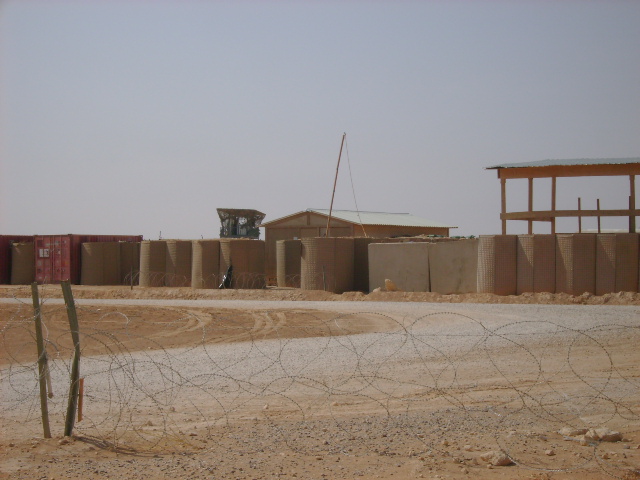
3 Comments

Filed under iraq,afghanistan, Military, PTSD, shipmates and veterans