Tag Archives: nazi germany

A Physically Painful Thursday Night in DC: Dinner with a Classmate and watching Our Government Implode

I took this picture and then….

I have spent most of the day in some bad physical pain. Last night while walking around the National Mall taking pictures I hurt myself.  I was walking from the Washington Monument toward the World War Two Memorial looking at the Lincoln Memorial and trying to figure out a good camera angle.  I wanted good pictures so instead of walking down either of the sidewalks that line the Mall I wanted to stay in the center which meant walking “cross country” so to speak in the dark.

I was sizing up the shot of the Lincoln Memorial while walking forward and I turned briefly to look back to see if I had a good shot of the Washington Monument and the Capitol Dome.  As I made this slight turn I found that there was nothing under my right foot and I went crashing down onto a sidewalk about three feet below.  I landed on the side of my right leg with the main impact seeming to be at the place where the fibula and tibia come together just below the knee.  I felt a sharp pain but got up and limped back to GWU while getting shots of the WWII Memorial, the Korean andVietnamand Lincoln Memorials.  I got back to my room in a substantial amount of pain and it took forever to get comfortable enough to get to sleep.  When I got up all I could do was hold onto walls as I made my way across the room and put my leg up on the coffee table in the living area.  Eventually I made my way over to the conference site where thankfully I was able to keep my leg up most of the day.

When the conference was over I changed clothes to meet my friend Pat, a Marine Lieutenant Colonel who I attended the Marine Corps Command and Staff College with and met up with inIraqin 2007.  We met at Fado’s an Irish Pub where I had a very tasty Shepherd’s Pie and several pints of Kilkenny Ale which I have not had since traveling in the Mediterranean and the Gulf.  On the way there I rode the DC Metro and was very careful to not put any extra pressure on my leg than was absolutely necessary until I got caught in a crosswalk and had to try to run across to beat the light.  I am in good physical shape and I figured since I could walk I could probably still run.  I was wrong. The first time my right foot hit the ground a shock wave went through my leg with the area that I had injured erupting in pain bad enough to bring tears to my eyes.

After dinner I left the Metro station near GWU and stepped off what I thought was a short one step which were actually two steps again landing on my already throbbing leg.  I managed to get to my room where after a couple of Aleve tablets the edge is starting to come off of the pain.  Tomorrow I will check out of my room and the conference and about 900-930 AM will hit the road out of town.  I am in enough pain that as soon as I get into Virginia Beach I will stop at the Navy Clinic at Joint Base Little Creek or the Naval Medical Center to get my leg checked out.

I was very glad to get together with Pat and to enjoy the fellowship.  There is something about the shared military experience including war that binds people together.  It was as if we had seen each other yesterday, but then we chat often on Facebook and comment a lot on “The New Adventures of Doctrine Man!”

While we were talking another stake was placed in the talks to raise the nation’s debt ceiling. I believe that the nation is now being held hostage by a minority of people on the political right and left who have decided it is better for them to destroy the economy of the nation and livelihood of the vast majority of Americans to gain a short term political advantage in the 2012 elections.

This is not the first time this national suicide pact has happened.  It is now so late and the sides so far apart with such great enmity between them that even if in the now unlikely event a debt ceiling deal is reached the damage is done. Our national credit rating will be downgraded and although the nation will survive life will become exponentially more difficult for most Americans and the chaos will spread around the globe.

Back in the late 1920s the radical left and radical right in the German Weimar Republic represented by the German Communist Party on the Left and Hitler’s National Socialist Party of Germany on the Right sabotaged the more moderate politicians of the Center Party and the Socialist Party of Germany.  When Wall Street Crashed and the World entered the “Great Depression” the parties of the Left and Right became even more polarized leading President Paul Von Hindenburg to appoint Hitler to form a government.

Of course the rest as we historians are prone to say is history. The short sighted policies and actions of the German political parties after the collapse of the Empire eventually brought about the Nazi dictatorship.  If our political leaders continue down this path we can expect that the already fragile economy will take a terrible hit.  We can expect that many people in the United Statesand around the World will suffer the economic effects of the actions of these so called leaders.  As things get worse the extremists in both major political parties aided and abetted by those that think that they can gain by this tragedy will fight it out until one or the other beats the other party into submission.

This will not be good and I expect that the pain of what our political leaders inflict on us will be far greater than the physical pain that I feel now. God help us all.

Peace

Padre Steve+

2 Comments

Filed under History, philosophy, Political Commentary, shipmates and veterans

The Clear and Present Danger of Unrepentant Ideologues

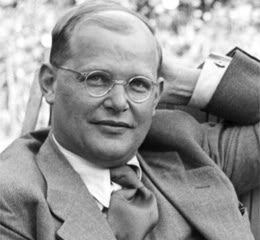
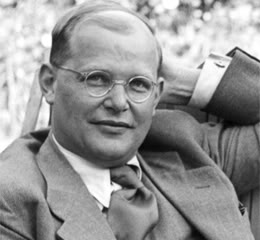
Dietrich Bonhoeffer

“The followers of Christ have been called to peace. . . . And they must not only have peace but also make it. And to that end they renounce all violence and tumult. In the cause of Christ nothing is to be gained by such methods. . . . His disciples keep the peace by choosing to endure suffering themselves rather than inflict it on others. They maintain fellowship where others would break it off. They renounce hatred and wrong. In so doing they over-come evil with good, and establish the peace of God in the midst of a world of war and hate.” Dietrich Bonhoeffer

“We reject the false doctrine, as though the Church were permitted to abandon the form of its message and order to its own pleasure or to changes in prevailing ideological and political convictions.”The Barmen Declaration Article Three.

I have become amazed at the penchant for many Christians to sublimate the Gospel to their political ideology.  This is not a new phenomena at all, in fact since the Christian faith was legalized by the Emperor Constantine and made the State religion of the Roman Empire Christians have often done this with a great deal of gusto. There is a terrible tendency for Christians to turn the Gospel on its head by using it to justify their political, social and even military goals.  Frankly as a Priest and a historian I find this troubling especially when I see Christians all around me doing this not only blessing the leaders they support but many taking the lead in the often vile and hateful campaigns against those that they and their political benefactors oppose all while claiming to be “Biblical.”

We are now in what the Liturgical year is called Ordinary time.  It is a time of focus on the Christian life and our relationships with family, neighbors, other Christians and those that come across our paths, especially aliens, prisoners, the poor, the disenfranchised and those persecuted by the powerful regardless of their social class, race, citizenship or religious or political affiliation. In fact the term “Ordinary time” is often interpreted to mean less important than the rest of the liturgical year.  However such an interpretation is dismissive of the importance of the season which lasts from Pentecost until the Sunday before Advent, Christ the King.  In fact Ordinary time actually focuses on the “doing” aspects of the Christian life.

Unfortunately for some it will be a time of misplaced activity, not activity centered on prayer, good works and giving voice to the least, the lost and the lonely even as we renew our faith in the Crucified One. Instead for many, especially in the preliminary stages of a Presidential election cycle the focus in not this at all but rather in transitory political, social and ideological agendas advanced by people with no other goal than seeing the triumph of their ideology which often has little to do with the Gospel.

Hermann Maas

Herman Maas was another Evangelical Pastor.  Unlike Niemöller, Maas was a active participant in the ecumenical movement, built bridges to the Jewish community and defended the rights of Jews as German citizens.  He received a fair amount of criticism for his attendance of Reichspräsident Friedrich Ebert’s funeral.  Ebert was both a Socialist and avowed atheist.  Maas too was active in the Pfarrernotbund and the Confessing church, and unlike Niemöller maintained his opposition to anti-Semitism and the Nazi policies against the Jews. He would help draft the Barmen declaration.  He too would be imprisoned and survive the war.  Maas was the first non-Jewish German to be officially invited to the newly formed state of Israel in 1950. In July 1964 Yad Vashem recognized the Maas as one of the Righteous Among the Nations.

Ideologues love times of crisis and turmoil because they are able to turn them to their advantage and co-opt people of faith by appearing to be their worldly saviors from their “ungodly” opponents.  Even the most faithful Christians can be lured in and deceived by such “saviors.”  Martin Niemöller a leader in the German Evangelical church noted how he was taken in by Hitler.

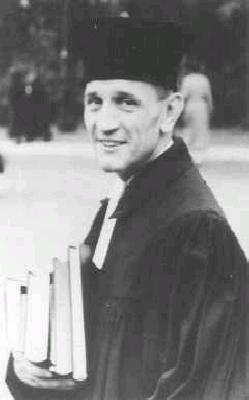
 Martin Niemöller

“I hated the growing atheistic movement, which was fostered and promoted by the Social Democrats and the Communists. Their hostility toward the Church made me pin my hopes on Hitler for a while. I am paying for that mistake now; and not me alone, but thousands of other persons like me.”

Like Niemöller well meaning Christians have been seduced into the false promises of ideologues of various persuasions that have no real interest in the Gospel but political or economic power be they conservative or liberal, capitalist or socialist. In fact one of the most heinous genocides of the late 20th Century was carried out by the good Christians of Rwanda’s Hutu and Tutsi tribes days after they worshiped together to celebrate Easter.  In many cases church leaders were complicit in mass murder.

The seductiveness of these ideologies appeals to the passion and emotion of people stoking the fires of fear with the fuel of hatred.  This is often true regardless of people’s political or religious persuasions when become enamored with ideology and reinterpret life, faith and relationships to fit the ideology.  When this happens to Christians this can lead to twisting Scripture and Tradition to fit the ideology much as did the theologians, pastors and lay people in German churches in the late 1920s and 1930s.

When two powerful ideologies collide as did Communism and National Socialism in Germany, Socialism and Gaullism is France or contemporary Liberalism and Conservatism in the United States the conflict often spills out and over into Churches and other religious institutions.  Well meaning people sublimate their faith beneath the ideology and political ethos that they most agree with and ideology overrides faith.  As fear and hatred is stoked the leaders of religious institutions and individuals within them conform their faith not to Christ crucified but to ideologies which are antithetical to the Gospel.

It really does not matter if the ideology is “liberal” or “conservative” because ultimately these poisonous ideologies now defended by pastors and theologians and “baptized” with Scripture are often set against the Gospel and seek to use the Church, Christians and others simply as pawns to sacrifice in their quest for total unadulterated political, social or economic power.

In our contemporary American culture the loudest and most prominent voices are the political ideologues of the right and the left who inhabit talk radio and the various cable television news networks.  Far too often well meaning Christians and others assume everything being spoken from lips of pundits, politicians and politically compromised preachers, the unholy Trinity is compatible with the faith.  However just because Rush Limbaugh, Sean Hannity, Glenn Beck, Michael Savage, Keith Olberman, Chris Matthews or any other commentator on the airwaves claims that they are speaking for Christians does not mean that they are even when we agree with them. Likewise political party leaders and Presidential candidates who echo our passions and feed our fears about the other party does not mean that what they say is Christian or compatible with the Christian faith even and especially when those individuals claim the mantle of being a “Christian” leader.

The adoption and blessing of the often perverted theological ideas of media personalities, talking heads and politicians by individual Christians, Church leaders and denominations can only result in their enslavement by the individuals and organizations to which they give their blessing.  The ideologues will readily support social or policy goals of the religious groups but only to gain their vote and those that think otherwise are sincerely deluded.

This is proven by history and experience.  One only has to look at how German Christians of various traditions were seduced by the promises of Hitler and the Nazis. Germans had from November 1918 seen their society ripped apart by military defeat, economic humiliation, internal revolution and societal change which threatened the values that they held dear.  In reaction to Nazi promises many sold themselves and their country to the devil. This type of thing has happened in other countries but is most glaringly seen in the transition from the WeimarRepublicto the Nazi era.

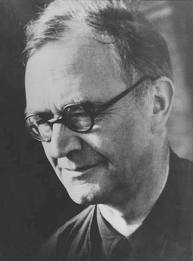
Karl Barth

Swiss-German theologian Karl Barth was an outspoken opponent of the Nazis. He lectured about how ideology can become its own idol and the purveyors of ideology can themselves make it an idol from which they cannot separate themselves and to which they become willing accomplices.  Their ideology becomes an absolute from which no deviation is allowed, even when deviation from them is more in line with the Gospel.  As Barth so poignantly stated:

“[Ideology] comes about as [one] thinks he can and should ascribe to the presuppositions and sketches he has achieved by his remarkable ability, not just a provisional and transitory but a permanent normativity, not just one that is relative but one that is absolute, not just one that is human but one that is quasi-divine.  His hypotheses become for him theses behind which he no longer ventures to go back with seeking, questioning, and researching.  He thinks that they can be thought and formulated definitively as thoughts that are not merely useful but instrinsically true and therefore binding.  His ideal becomes an idol.  He thinks that he knows only unshakable principles and among them a basic principle in relation to which he must coordinate and develop them as a whole, combining them all, and with them his perceptions and concepts, into a system, making of his ideas an ideology.  Here again the reins slip out of his hands.  This creature of his, the ideology, seems to be so wonderfully glorious and exerts on him such a fascination that he thinks he should move and think and act more and more within its framework and under its direction, since salvation can be achieved only through the works of its law.  This ideology becomes the object of his reflection, the backbone and norm of his disposition, the guiding star of his action.  All his calculations, exertions, and efforts are now predestined by it.  They roll towards its further confirmation and triumph like balls on a steep slope.  Man’s whole loyalty is loyalty to the line demanded by it.  He thinks that he possesses it, but in truth it already possesses him.  In relation to it he is no longer the free man who thought he had found it in its glory and should help to put it on the throne.  He now ventures to ask and answer only within its schema.  He must now orient himself to it.  He must represent it as its more or less authentic witness and go to work as its great or small priest and prophet. At root he no longer has anything of his own to say.  He can only mouth the piece dictated to him as intelligibly as he can, and perhaps like a mere parrot.  His own face threatens already to disappear behind the mask that he must wear as its representative.  He already measures and evaluates others only from the standpoint of whether they are supporters of this ideology, or whether they might become such, or whether they might at least be useful to it even without their consent, or whether they must be fought as its enemies. Its glory has already become for him the solution not only to the personal problem of his own life but to each and all of the problems of the world.” ~ Karl Barth, The Christian Life: Church Dogmatics IV/4, Lecture Fragments, 225.

Barth saw good people surrender their faith to a hateful and destructive ideology. It is imperative during this season of Ordinary time that we should not take this danger lightly. This season is a time to acknowledge our need for the grace and mercy of God and find forgiveness for ourselves while extending the same grace, love and mercy shown to us to our neighbor, even the neighbor who does not agree with the ideologues that we prefer.

Our challenge in a time of turmoil and conflict is not to be seduced by the shameless appeals of ideologues but to return to faith in the God who comes to us, suffers for and with us and in himself provides the promise of redemption and the forgiveness of sins.

Dietrich Bonhoeffer said in a sermon on Second Corinthians 2:9:

“Christianity stands or falls with its revolutionary protest against violence, arbitrariness and pride of power and with its plea for the weak. Christians are doing too little to make these points clear rather than too much. Christendom adjusts itself far too easily to the worship of power. Christians should give more offense, shock the world far more, than they are doing now. Christian should take a stronger stand in favor of the weak rather than considering first the possible right of the strong.”

Unfortunately it seems that many of those leading the “Christian” parties of theUnited Stateshave forgotten that even those that proclaim their faith the loudest.

Peace

Padre Steve+

3 Comments

Filed under christian life, faith, History, philosophy, Political Commentary, Religion

Taking the Wrong Train

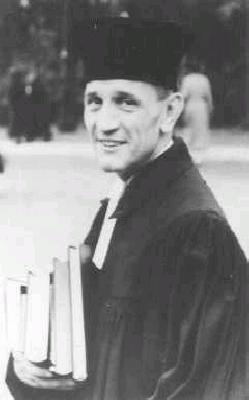
Martin Niemöller

“If you board the wrong train, it is no use running along the corridor in the other direction.” Dietrich Bonhoeffer

Martin Niemöller was a war hero.  He had served on U-Boats during the First World War and commanded a U-Boat in 1918 sinking a number of ships.  After the war he resigned his commission in the Navy in opposition to the Weimar Republic and briefly was a commander in a local Freikorps unit. His book Vom U-Boot zur Kanzel (From U-boat to Pulpit) traced his journey from the Navy to the pastorate. He became a Pastor and as a Christian opposed what he believed to be the evils of Godless Communism and Socialism.  This placed him in the very conservative camp in the years of the Weimar Republic and he rose in the ranks of the United Evangelical Church of the Old Prussian Union.  Active in conservative politics, Niemöller initially support the appointment of Adolf Hitler as Chancellor.  After the war he said:

“I hated the growing atheistic movement, which was fostered and promoted by the Social Democrats and the Communists. Their hostility toward the Church made me pin my hopes on Hitler for a while. I am paying for that mistake now; and not me alone, but thousands of other persons like me.”

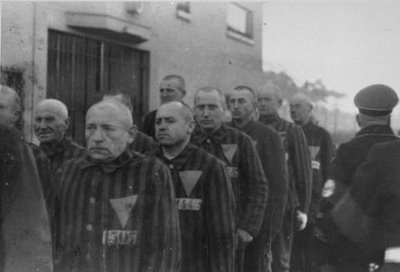
However, he quickly soured on Hitler due to his insistence on the state taking precedence over the Church.  Niemöller was typical of many Germans of his era and harbored ant-Semitic sentiments that he only completely abandoned his anti-Semitic views until after he was imprisoned.  He would spend 8 years as a prisoner of the Nazis a period hat he said changed him including his views about Jews, Communists and Socialists.  Niemöller was one of the founding members of the Pfarrernotbund (Pastor’s Emergency Federation) and later theConfessingChurch. He was tried and imprisoned in concentration camps due to his now outspoken criticism of the Hitler regime.

Herman Maas was another Evangelical Pastor.  Unlike Niemöller, Maaswas a active participant in the ecumenical movement, built bridges to the Jewish community and defended the rights of Jews as German citizens.  He received a fair amount of criticism for his attendance of Reichspräsident Friedrich Ebert’s funeral.  Ebert was both a Socialist and avowed atheist.  Maastoo was active in the Pfarrernotbund and the Confessing church, and unlike Niemöller maintained his opposition to anti-Semitism and the Nazi policies against the Jews. He would help draft the Barmen declaration.  He too would be imprisoned and survive the war.  Maaswas the first non-Jewish German to be officially invited to the newly formed state of Israelin 1950. In July 1964 Yad Vashem recognized the Maasas one of the Righteous Among the Nations.

Dietrich Bonhoeffer

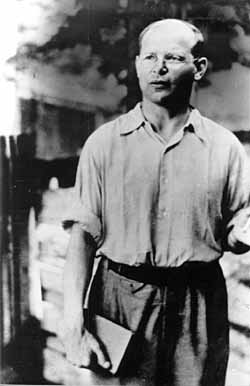
Dietrich Bonhoeffer a young Pastor and theologian would also step up to oppose the Nazis and offer support for the Jews.  He helped draft the Bethel Confession which among other things rejected “every attempt to establish a visible theocracy on earth by the church as a infraction in the order of secular authority. This makes the gospel into a law. The church cannot protect or sustain life on earth. This remains the office of secular authority.”  He also helped draft the Barmen declaration which opposed and condemned Nazi Christianity.  Bonhoeffer would eventually along with members of his family take an active role in the anti-Nazi resistance as a double agent for Admiral Canaris’ Abwehr.  For this he would be executed after his final sermon in the concentration camp at Flossenburg just a month prior to the end of the war.

Another opponent of the Nazis in the Confessing Church was Swiss-German theologian Karl Barth.  Barth went into exile as a Swiss citizen but remained active in the criticism of the Nazi regime.

Bishop Galen of Münster and others including Father Rupert Meyer inMunichwho opposed Hitler in the early 1920s would also oppose the Nazi policies toward the Church and the Jews.  They would also end up in concentrations camps with some dying at the hands of the Nazis.

All these men took risks to defend the Jews who were religious minority group that had been traditionally discriminated against inGermany.  They opposed the Nazi policies which were widely supported by much of the German populace making them unpopular in their own churches as among the traditionally conservative supporters of the Evangelical and Catholic Churches.  The Jews were not simply discriminated against as a racial or religious group but also identified with the political left, especially the Social Democrats, Independent Socialists, Communists and the Spartacists. Since the Independent Socialists, Communists and Spartacists were all involved in attempts to create a Soviet state during the early tumultuous years ofWeimarand been involved in many acts of violence against traditional German institutions and the state, they were viewed by Hitler and others as part of the Bolshevik-Jewish threat toGermany.  Karl Liebnicht and Rosa Luxembourg were among the high profile leaders of this movement inGermanyand both were Jewish.  The fact that many in the leadership of the Bolshevik movement in theSoviet Unionwere Jewish added fuel to the fire that the Nazis stoked inGermany.  Hitler and the Nazis played on the historic, but muted prejudice against German Jews who in many cases were more secular and German than religious and had assimilated well inGermany.  Hitler’s rhetoric as well as that of other Nazis and Nazi publications helped identify the Jews as part of the “Stab in the back” myth that was commonly used by the German right to explain the defeat in the First World War.  Thus they were painted as a political and social threat to Germany.

When Hitler took power persecution of the Jews began in earnest.  Jews were along with Communists, Trade Unions and Socialists enemies of the state.  They were banned from the military, civil service and other government employment, professional associations and forced to wear a gold Star of David on their clothing.  Their property was seized, many were abused by SA men acting as deputized auxiliary police and many times their businesses, Synagogues and homes were vandalized, burned or seized by the state.  Many would be forced to flee in order not to be sent to ghettos and concentration camps.  Even those leaving only escaped with the minimum of their possessions as the Nazi regime extorted anything of value from them as they leftGermany.  This was all done because Hitler and those like him portrayed the Jews as not only an inferior race, but enemies of the state and the German people.

Today we face a similar movement in conservative circles in the United States.  This time it is not the Jews but Moslems who are the targets of the xenophobic rage by many influential members of the “conservative” media including Rush Limbaugh, Sean Hannity and numerous others.  Their popularity in voicing support for “Christian morale values” such as being against abortion has ingratiated them with conservative Christians.  It is so bad that that many “conservative” Christians cannot differentiate between their vitriolic and un-Christian rage against Moslems, Gays and Lesbians, trade unionists, Democrats or anyone else portrayed by the big media talkers and the Gospel.

It is if they have become an appendage to Republican or “conservative” politicians rather than a Christian church.  It is not uncommon to see Christians on the web or on the call in talk radio programs identify lock stock and barrel with Limbaugh and others identifying the crass materialism and social Darwinism of “pure” Capitalism and the anti-Christian policy of pre-emptive war.   That may seem harsh, but many of these people in the “Conservative Bible project” seek to re-translate the Bible into their own political, social and economic policies even seeking to change or minimize any Scripture that might be equated with the “Social Gospel.”  Unfortunately many Christians and others have jumped in on the anti-Moslem and anti-immigrant crusades launched by those on the far right.

There are those on the far right that advocate eliminating all Moslems from the military, government, security intelligence and police forces and even universities as did Timothy Rollins of “The American Partisan.”

“this can best be done by enacting the Great Muslim Purge from our military and other national security apparatuses. These people need to be removed from every security post, even to be completely removed from all levels of government employment, be it federal, state, county, city or other municipality. This applies especially to universities….”

Glenn Beck made this comment about a people reacting against Moslems:

“When things—when people become hungry, when people see that their way of life is on the edge of being over, they will put razor wire up and just based on the way you look or just based on your religion, they will round you up. Is that wrong? Oh my gosh, it is Nazi, World War II wrong, but society has proved it time and time again: It will happen.”

Doug Giles a seminary educated columnist for Townhall.com a leading conservative opinion site made this comment

“Please note: If Christ wasn’t cool with irrigating irate Islamicists for facts, I must admit, I would still have to green light our boys getting data from enemy combatants 007 style. Stick a fire hose up their tailpipe and turn it on full blast. I don’t care. I’m not as holy as most of you super saints or as evolved as some of you progressive atheists purport to be. Security beats spirituality in this scenario, as far as I’m concerned.”

Similar threats are made against non-European immigrants especially those from Mexico or Latin America.  I have a friend; a Navy Officer who served a year in Iraq that was confronted by a member of the “Minutemen” inTexasto show his Green Card and threatened simply because he is Mexican.   Others especially conservative Christians suggest criminalizing homosexuality, jailing homosexuals and even deporting them.

This is so similar to the Nuremberg Laws and the Aryan Paragraph issued by the Nazis that it is scary.  Likewise the threats to American Moslems of placing them “behind razor wire” as we did to American Japanese citizens in World War II are chilling.  I wonder how Christians would react if an atheist or someone on the political left suggested all conservative Christians or members of pro-Life groups be imprisoned for the actions of Christians or pro-Life movement members like Scott Roeder or Eric Rudolph who killed to stop abortion or Fred Phelps and his Westboro Baptist Church?

This new found militancy has swept up the “Christian right” and others since 9-11 and has reached proportions that I could never have imagined. After my tour in Iraq I realized that much of what these people were saying was not Christian at all and when taken to their logical conclusion would be a police state in which anyone who opposed them would be persecuted.  I question the motivations of the leaders of the movement but believe that most of the Christian conservatives have been caught up in the anger and the emotion of the times versus being true believers in what these men say.  That being said, you don’t have to be a true believer to be a willing accomplice in actions that first are not Christian and second trample on the Constitutional rights of American citizens.

I could keep citing examples but if someone can show me where this is condoned in the Gospels I would like to know.  The fact is that Christians are to place God first and defend the rights of others, even non-believers.  This is found not only in Scripture but runs through the Christian tradition across the denominational spectrum.

What the good people who suggesting these “collective guilt” actions against American Moslems do is dangerous, not just for Moslems and other minorities but ultimately for them.  American and English law is based on legal precedence.  Once something has been determined to be legal, or constitutional it is considered by the law to be settled law.  This is a point made by Chief Justice Roberts regarding Roe v. Wade at his confirmation hearings.  If Christians want to use the law against Moslems or for that matter any other minority be it religious or political they tread on very dangerous ground.  Not only do they make a mockery of the Gospel command to love our neighbors, care for the foreigners among us and to be a witness to non-Christians support policies or laws that if enacted could and very well would be used against them by their opponents.

Law is all about precedent and if such laws were enacted and upheld by the courts they would be settled law that could be used against anyone.   What these dear brothers and sisters fail to realize is that such laws can be turned against them if the state should ever decided based on the statements of actions of some that the Christian community is a threat to state security of the public welfare.  With the actions of some radical Christians who have committed murder and violence against political, social and religious opponents it would not be hard for the government to label whole churches as enemies of the state.  The law is a two edged sword and those who want to use it to have the state enforce their religious, social, ideological or political beliefs on others need to remember what comes around goes around.

The Confessing church understood this and many were imprisoned, exiled or killed for this belief.  The founding fathers of this country understood this too, that is why there is the Constitution protection of Religion in the First Amendment.  This was put in because Virginia Baptists who had been persecuted by Anglicans lobbied James Madison for the amendment in the Bill of Rights threatening to withdraw their support for his candidacy if he did not.  Niemöller would discover the depths of his earlier folly in prison telling one interviewer after the war:

“I find myself wondering about that too. I wonder about it as much as I regret it. Still, it is true that Hitler betrayed me. I had an audience with him, as a representative of the Protestant Church, shortly before he became Chancellor, in 1932. Hitler promised me on his word of honor, to protect the Church, and not to issue any anti-Church laws. He also agreed not to allow pogroms against the Jews, assuring me as follows: ‘There will be restrictions against the Jews, but there will be no ghettos, no pogroms, in Germany. I really believed given the widespread anti-Semitism in Germany, at that time—that Jews should avoid aspiring to Government positions or seats in the Reichstag. There were many Jews, especially among the Zionists, who took a similar stand. Hitler’s assurance satisfied me at the time. On the other hand, I hated the growing atheistic movement, which was fostered and promoted by the Social Democrats and the Communists. Their hostility toward the Church made me pin my hopes on Hitler for a while. I am paying for that mistake now; and not me alone, but thousands of other persons like me.”

It is easy for well meaning people Niemöller to be bought with promises of support by politicians and media types who speak the words they want to hear in difficult times.  So today I suggest the formation of an ecumenical Pastor’s Emergency League which will not be bought by the empty and godless promises of hate mongers on the right or the left.  Such a group of men and women spanning the breadth of the Christian tradition and others that see the danger of extremism of all types is becoming necessary.  Such a step is becoming necessary due to the militancy of the Christian right as well as the militancy of atheist groups who lobby against all public religious expression by any religion.  Such a League would respect the various creeds and statements of faith of each member’s denomination.  The movement o the right has set a dangerous course fraught with perils that they do not comprehend. Just allow those that they believe are oppressing or persecuting them now to be empowered with the precedent of laws discriminating against specific religious groups against the Christians that supported them in the first place.  It will be a bitter poison indeed when that happens to them later if American Moslems were to be targets by such laws.

We have entered a dangerous phase of American history.  These movements have the potential not only to oppress law-abiding and patriotic American Moslems and to crush the religious freedoms of all in this county. Suggesting that American citizens, including those who serve the county in the military or government of entire religious, ethnic, political or religious affiliation, sexual preference be jailed, banned from office or fired is totalitarian and dare I say Nazi like.

Niemöller would say it well in this poem:

First they came for the communists, and I did not speak out—because I was not a communist;
Then they came for the socialists, and I did not speak out—because I was not a socialist;
Then they came for the trade unionists, and I did not speak out—because I was not a trade unionist;
Then they came for the Jews, and I did not speak out—because I was not a Jew;
Then they came for me—and there was no one left to speak out for me.

Peace,

Padre Steve+

2 Comments

Filed under christian life, faith, History, philosophy, Political Commentary, Religion

The Stab in the Back: How Historical Myths, Lies and Propaganda Destroy Nations

The Stab in the Back

There are many times in history where leaders of nations and peoples embrace myths about their history even when historical, biographical and archeological evidence points to an entirely different record.  Myths are powerful in the way that they inspire and motivate people. They can provide a cultural continuity as a people celebrates the key events and people that shaped their past, even if they are not entirely true.  At the same time myths can be dangerous when they cause leaders and people to make bad choices and actually become destructive. Such was the case inGermanyfollowing the First World War.

While today I am writing about Germany it is important to know that historical myths can become powerful and terribly destructive forces when unleashed in troubled times. This is in fact a lot of what we are seeing in the American body politic at this time as the most extreme views on the political right and left now define the major parties in this country. Some of these myths are no more than appeals to patriotism and times that Americans assume had to be better than they are now. Others are defined by ideology and still others by lies, deceit and hatred directed upon those that the purveyors of such use to demonize and dehumanize those that oppose their agendas.  The scary part that I see as a historian, military officer and Priest is that what is happening now especially on the extreme political right could lead us as a nation down paths that others have gone down before, paths that only lead to destruction. The really scary part is that many people who are in no way extreme often fall for the lies of extremists on both sides of the political spectrum and suffer later for their complicity in allowing extremists to run roughshod.

After the war the belief that the German Army was not defeated but was betrayed by the German people, especially those of the political left.  Like all myths there was an element of truth in the “stab in the back” myth, there were revolts against the Monarchy of Kaiser Wilhelm II and even mutiny on elements of the German High Seas Fleet and Army units stationed in Germany. However the crisis had been brought about by General Ludendorff who until the last month of the war refused to tell the truth about the gravity of Germany’s position to those in the German government.  So when everything came crashing down in late October and early November 1918 the debacle came as a surprise to most Germans.  The myth arose because the truth had not been told by Ludendorff who was arguably the most powerful figure in Germanyfrom 1916-1918.  In the looming crisis which included Ludendorff’s collapse and relief, General Wilhelm Groener presented the facts to the Kaiser and insisted on his abdication.  The Republic that was proclaimed on the 9th of November was saddled with the defeat and endured revolution, civil war and threats from the extreme left and right.  When it signed the Treaty of Versailles it accepted the sole responsibility of  Germany for the war and its damages. Ordered to dismantle its military, cede territory that had not been lost in battle and pay massive reparations the legend of the “stab in the back” gained widespread acceptance in Germany.

Hitler always believed that the defeat of Germany in the First World War was due to the efforts of internal enemies of the German Reich on the home front and not due to battlefield losses or the entry of the United States.  This was a fundamental belief for him and was expressed in his writings, speeches and actions.  The internal enemies of Germany for Hitler included the Jews, as well as the Socialists and Communists who he believed were at the heart of the collapse on the home front.  Gerhard Weinberg believes that the effect of this misguided belief on Hitler’s actions has “generally been ignored” by historians. (Germany, Hitler and World War II p. 196)

Hitler believed that those people and groups that perpetrated the “stab in the back” were “beguiled by the by the promises of President Wilson” (World in the Balance p.92) in his 14 Points.  Thus for him Americans were in part responsible for undermining the German home front, something that he would not allow to happen again.  In fact Hitler characterization of Wilson’s effect on the German people in speaking about South Tyrol.  It is representative of his belief about not only the loss of that region but the war: “South Tyrol was lost by those who, from within Germany, caused attrition at the front, and by the contamination of German thinking with the sham declarations of Woodrow Wilson.” (Hitler’s Second Book p.221)

While others will note Hitler’s lack of respect for the potential power of the United States, no other author that I am familiar with links Hitler’s actions and the reaction of the German political, military and diplomatic elites to the entry of the United States into the war to the underlying belief in the “stab in the back.”   Likewise Hitler had little regard for the military abilities or potential of the United States. Albert Speer notes that Hitler believed “the Americans had not played a very prominent role in the war of 1914-1918,” and that “they would certainly not withstand a great trial by fire, for their fighting qualities were low.” (Inside the Third Reich: Memoirs by Albert Speer p.121)

Hitler not only dismissed the capabilities of the Americans but also emphasized the distance that they were from Germanyand saw no reason to fear the United Stateswhen “he anticipated major victories on the Eastern Front.” (Germany Hitler and World War II p.92)   Hitler’s attitude was reflected by the majority of the military high command and high Nazi officials. Ribbentrop believed that the Americans would be unable to wage war if it broke out “as they would never get their armies across the Atlantic.” (History of the German General Staff, Walter Goerlitz, p.408).  General Walter Warlimont notes the “ecstasy of rejoicing” found at Hitler’s headquarters after Pearl Harbor and the fact that the he and Jodl at OKW caught by surprise by Hitler’s declaration of war. (Inside Hitler’s Headquarters 1939-1945 pp.207-209) Kenneth Macksey notes Warlimont’s comments about Hitler’s beliefs; that Hitler “tended to dismiss American fighting qualities and industrial capability,” and that he “regarded anyone who tried to show him such information [about growing American strength] as defeatist.” (Why the Germans Lose at War, Kenneth Macksey, p.153.)

Others like Field Marshal Erwin Rommel record the disregard of senior Nazis toward American capabilities in weaponry.  Quoting Goering who when Rommel discussed 40mm anti-aircraft guns on aircraft that were devastating his armored forces Goering replied “That’s impossible. The Americans only know how to make razor blades.” (The Rommel Papers edited by B.H. Liddell-Hart p.295) Rommel was one of the few German commanders who recognized the folly of Hitler’s  declaration of war on the United States noting that “By declaring war on America, we had brought the entire American industrial potential into the service of Allied war production. We in Africa knew all about the quality of its achievements.” (The Rommel Papers p.296)

When one also takes into account the general disrespect of the German military for the fighting qualities of American soldiers though often with good reason (see Russell Weigley’s books Eisenhower’s Lieutenants and The American Way of War) one sees how the myth impacted German thought.  This is evidenced by the disparaging comments of the pre-war German military attaché to the United States; General Boeticher, on the American military, national character and capability. (See World in the Balance pp. 61-62)

The overall negative view held by many Germans in regard to the military and industrial power and potential of theUnited Statesreinforced other parts of the myth. Such false beliefs served to bolster belief in the stab-in-the back theory as certainly the Americans could not have played any important role in the German defeat saveWilson’s alleged demoralization of the German population.  This was true not only of Hitler, but by most of his retinue and the military, diplomatic and industrial leadership of the Reich. Hitler’s ultimate belief shaped by the stab-in-the back and reinforced by his racial views which held theUnited Statesto be an inferior mongrel people. This led him to disregard the impact that theUnited Statescould have in the war and ultimately influenced his decision to declare war on theUnited States, a decision that would be a key factor in the ultimate defeat of Germany.

The myths popularized by the extreme political right in Germany after the First World War led to a greater tragedy for the world when Hitler’s Nazi Party used myths, lies and distortion to demonize, marginalize and ultimately murder large segments of its own population and bring destruction to all of Europe.

Myth can have positive value, but myth which becomes toxic can and often does lead to tragic consequences. All societies have some degree of myth in relationship to their history including the United States. The myths are not all the same, various subgroups within the society create their own myth surrounding historic events.  It is the duty of historians, philosophers, ethicists, moral theologians and others in the society to ensure that myth does not override reality to the point that it moves policy both domestic and foreign in a manner that is ultimately detrimental to the nation.

The lesson of history demonstrated by myths surrounding the German defeat and role of the United States in that defeat shows just how myth can drive a nation to irrational, evil and ultimately tragic actions not only for that nation and its people, but for the world.  One can only hope that the American political leadership as well as media will be wiser than the leaders of Germany in the last few years of the Weimar Republic.  One has to be very careful when allowing overheated rhetoric and the use of myths, lies and distortion by political figures, pundits and even preachers no matter what political extreme they belong and just how much we may agree with their politics.

Peace,

Padre Steve+

4 Comments

Filed under History, leadership, Military, philosophy, Political Commentary, world war two in europe

Living in the Bizzaro Post Osama Bin Laden World: Another Denny Crane Moment for Padre Steve

Note to readers: Another of my Denny Crane moments which seem to be coming more likely, must be the Mad Cow

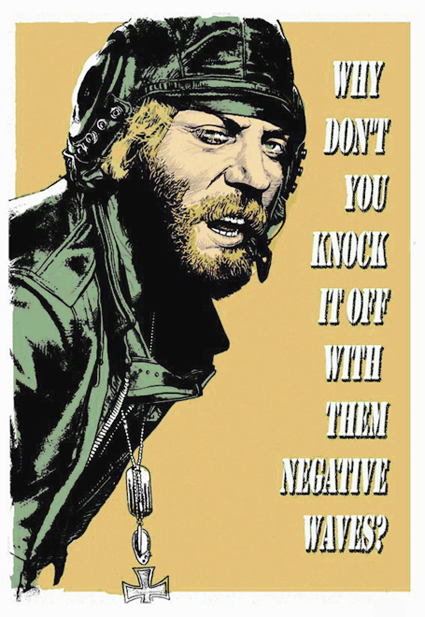
“Why don’t you knock it off with them negative waves? Why don’t you dig how beautiful it is out here? Why don’t you say something righteous and hopeful for a change?” Oddball -Kelly’s Heroes

I love that quote and everyone in this country needs to see the truth of it.

I think that I have stepped into the Bizzaro World.  For the first time in a nearly ten year old war we get a real victory. Will killed the SOB who started it by killing thousands of our people. We do it the old fashioned mano on mano, look him in the eyes way and had Navy SEALS double tap him. We minimize the collateral damage by not plastering the place with bombs killing lots of other people. The President and the National Security team kept the plan a secret for months with no leaks that could have jeopardized Bin Laden’s elimination.  Likewise the uncompromised raid secured major intelligence bonanza including laptops, hard drives, cell phones and documents that probably have more raw and up to date intelligence from the source than we ever have had which likely lead to major victories against Bin Laden’s fellow Al Qaeda leaders and their organization, finances and maybe even their contacts with other nations intelligence services.  Such information will make it a far easier task to take the Al Qaeda organization apart at the seams. This is a victory that combined with pro-democracy revolutions across the Arab World could very well make the Middle East and the world a far safer place. There are dangers out there but this is something to celebrate so why can’t we be happy? I know that some people are but as a nation we are not a happy bunch.

We have been through two terribly long was that have cost of thousands of dead and tens of thousands wounded.  The military aspects of the wars alone have cost the nation well over a trillion dollars not counting the other economic costs. The 9-11 attacks created a massive wound on the American psyche which has been aggravated by our losses in the wars and the failure to kill or capture Bin Laden. We have given up a significant number of civil liberties in the name of security.  The collective impact of these events compounded by the embarrassment of Abu Ghraib and the “Afghanistan “Kill Team” episodes the escapades of contractors like Blackwater and Kellogg Brown and Root- Halliburton have stained our conscience. Coupled with our massive economic problems and poisoned political climate these wars and losses have beaten us down.

Rather than be happy that we finally got one in the “win column” we have become so used to losing that we have forgotten that it is okay to win once in a while.  Instead of thanking God that Osama Bin Laden is bottom feeder food in the Arabian Sea and is now rehearsing for the 2011 South Park “Christmas Time in Hell” musical joining Saddam Hussein and Hitler as they use their asbestos water skis on the Lake of Fire we are all glum or pissed off. Some are wringing their hands because Bin Laden was unarmed and didn’t have a lot of security around him and that in the heat of the moment the SEALS double tapped his sorry ass.  What the hell? Did they want a firefight that would have gotten a bunch of SEALS killed? Was it fair that he was unarmed but reaching for a gun when we capped his ass? But then was it fair to the 3000 people killed in the Twin Towers when Bin Laden directed the attack on those unarmed people?

Then there are people questioning the legality of the action. Sorry Bin Laden was a man that never stopped plotting the deaths of innocent people to the end of his days. While it might have been interesting to put him on trial you can be assured that some would have provided millions if not billions of dollars for his defense and that the proceedings would have dragged on at least a decade and that his allies would have gained inspiration from his incarceration just as they will his death.  Those who question the fact that a SEAL shot him when he was unarmed does not understand the inherent danger in the action and split second decision making that went into that courageous man’s decision to kill Bin Laden.  Legally Bin Laden as a terrorist was accorded no protections under the Geneva Conventions.

Then there are the Christian objectors, those on the left that say he should have been captured and put on trial.  Some Evangelicals that really don’t care that he was killed but don’t think that Christians should be happy about it or rejoice in his death.  But I remember some of these same people smugly saying that the 9-11 attacks were “God’s judgment on the United States.”  I’m sorry but many supposedly conservative Christians are schizophrenic on being pro life. Kill the unborn it’s murder. Kill a man convicted in a state court in the United States on the basis of circumstantial evidence is okay, especially if you are from Texas where I think it’s popularity is slightly below football and NASCAR.  Have a terrorist kill 3000 of your countrymen, well God must be pissed at us but kill the man responsible for those deaths and be happy he’s dead?  Nope can’t do that we should be sad that he died without knowing the Lord. Yes it is a sad that anyone would die without knowing the Lord but this man had no desire to convert to Christianity or anything else. He was convinced of his rightness and he made no move to surrender to U.S. or Saudi authorities for nearly 20 years and still didn’t in his final moments.  He made his bed beneath the sea.  I personally think this is simply people that need to be morally superior to others spouting their opinions rather than people that are inconsistent in their application of their faith and ethics to a wide variety of issues.

Now the politicians are making political hay over this.  Some Liberals are pissed that Obama actually had the balls to order the strike.  Some Conservatives are pissed that Obama succeeded in doing something that Bush couldn’t do and that he didn’t give Bush any credit. But it serves me well that Bush never gave Clinton any credit for keeping the pressure on Saddam Hussein and keeping him from really building up his forces after the Gulf War using no-fly zones, the UN oil embargo/blockade of Iraq and selective military strikes to keep Saddam in check.  So this is all politics as usual and once again it is detrimental to the county and makes light of the sacrifices of all that have fallen in these wars and the bravery of the SEALS that killed Bin Laden.

This really is a Bizzaro world.  When Hitler died this country got happy and that happiness spanned the political, philosophical and religious divides in the country. We celebrated Hitler’s death and the destruction of his murderous regime.  Back then we actually understood the importance of such events and didn’t wring our hands and shed faux tears when evil men perished.  But now after nearly 10 years of war and thousands of causalities we get the perfidious bastard that started this and our collective jock straps and panties are in a wad. I don’t get it. The reason that we went to war is dead and we have information that probably will decimate what is left of his network and we can’t be happy.  This is bizarre and I wish that people would stop with all the negative waves.

Peace

Padre Steve+

8 Comments

Filed under faith, Foreign Policy, History, iraq,afghanistan, middle east, Military, national security, philosophy, Political Commentary

The Current American Crisis and Drawing Comparisons from the End of the Imperial Germany

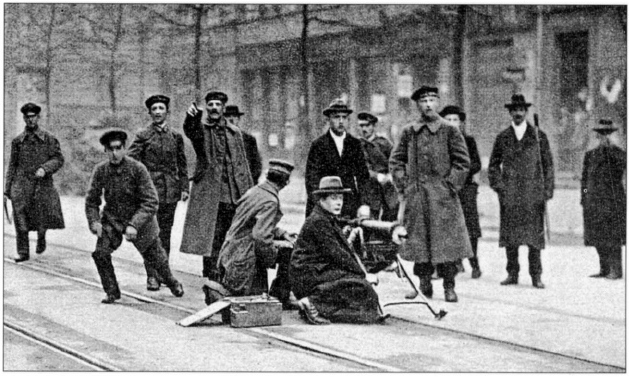
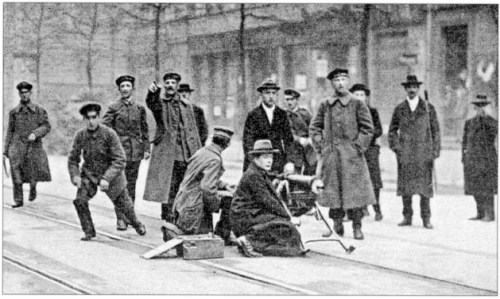
Revolution: Members of the Spartacists Bund in Berlin

Introduction

There are times when great nations face catastrophe. It is something that has befallen every world power at one time or another. Therefore it should not be a surprise if the United States despite the claims of those supporting American Exceptionalism succumbs to some great crisis which fundamentally changes it.  While I do not proclaim the end of the United States it does appear that we are experiencing events which have the potential of reducing our status as a great power and plunge the nation into political and economic chaos.  Some including California Governor Jerry Brown have compared the current state of the country to the division of the country in the American Civil War.

Likewise since there are some leaders of the loud and influential Tea Party movement who openly talk about revolution it is important to know what can happen if there is a political or economic collapse that leads to revolution at home while troops are still in combat. All of this happened in Germany in 1918.  In our current time such a possibility is higher than at any time in American History. Thus I feel we are in a potentially perilous time where long standing institutions are in crisis even while wars rage around the world.

However I do not, for all the vitriol spent believe that our current crisis is comparable to the Civil War except the absolute contempt that the opposing sides hold each other. The Civil War was a war which pitted region against region and our divisions know few geographic boundaries and even the “Red State versus Blue State” divide is deceiving.  It is my belief that what we are experiencing is much more similar to the crisis faced by Imperial Germany at the end of the First World War.  Then Germany was about to concede the loss of the war despite having known enormous battlefield success that lasted until the summer of 1918 when the tide of the war turned irreversibly against them as Allies collapsed and pulled out of the war was coupled with battlefield defeats, economic ruin and massive political and social unrest. The result of the collapse of Imperial Germany was a civil war and the foundation of the ill-fated Weimar Republic which eventually succumbed to the extremism and dictatorship of Adolf Hitler and his National Socialist Party of Germany, the Nazis.

The German Revolution of 1919 and civil war is important for those who study highly developed states when they enter a period of social and political upheaval usually following military defeat that causes the society to question or even overthrow the established order.  The end of Imperial Germany and the establishment of the Weimar Republic on November 9th 1918 is a prime example.   This paper concerns the first years of the Republic, and the dependency of the Majority Socialist leadership to the General Staff and their use of Freikorps to quell revolutionary chaos and avert the establishment of a Soviet State.

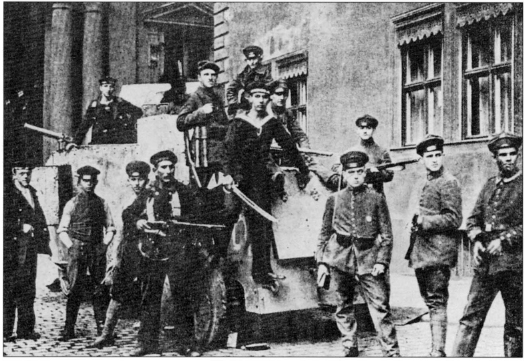
Members of the Leftist “People’s Naval Division” occupied the government quarter and terrorized Berlin

This study begins with the establishment of the Republic and concludes with the Kapp Putsch.  This is an era that is seldom referenced by political or military leaders in western states and historians themselves are often divided in their interpretation of the subject.  The study of this period is vital to those who study politically polarized societies which are either war weary or have suffered the shock of military defeat coupled with a government which is blamed for the events.  Thus, it is important to study the relationship of the military to the government and in particular the military’s relationship to politicians who have little connection to or affinity for the military, its traditions and culture and the often adversarial relationship of these politicians to military leadership which often sees them as adversaries.  The period also shows how actions of those who in their antipathy to the military create a climate where the military loathes the civilian leadership and the government.  The results of such conditions can endanger the society as a whole and ultimately usher in periods of great tragedy.  This occurred in Weimar Germany with the result that the military in the later years of the Republic neither the military nor the Majority Socialists could not work together against the Nazi takeover of the state.  However, the first years of the relationship set the tone and foredoomed the Republic.

The Complexity of the Situation

General Wilhelm Groener convinced Kaiser Wilhelm II to abdicate and helped forge an alliance between the Majority Socialists and the Army to head off a Soviet style Revolution

The history of Weimar, particularly that of the military and Freikorps in their relationship to the Republic is complex.  Not only is the relationship between the military and government complex, but the Freikorps themselves, their organization, leadership and political affiliation were not monolithic as is sometimes maintained,[i] nor were the Freikorps the direct ancestors of the Nazi SS/SA organizations despite often similar ideology,[ii] nor can they dismissed by saying that they were composed of “former soldiers and officers ill-disposed to return to civilian life.”[iii] The Freikorps’ association with the Army and Republic is more complex than some historians assert.  Despite the right wing leanings of many of units and fighters and future association of some to the Nazis, the blanket claim that the Freikorps were forerunners of the Nazi movement is not supportable.[iv]

It is true that without Freikorps support in Munich, along with support of the Thule Society, business leaders and others “that the transition of the DAP into the Hitler party could not have taken place.”[v] It is also true that elements of the Freikorps branded too revolutionary and unruly for service in the Army continued as secret societies and affiliated themselves with various right-wing political groups.[vi] Likewise a case can be made that the fierceness of many Freikorps veterans, younger leaders of the Army helped lay the foundation for the brutality of both the Army and Waffen SS as they prosecuted the Second World War.[vii] Yet simply because certain aspects of a subject are true does not make for a broader “truth.”  Heinz Höhne argues the reverse of what some have written in regard to the relationship of the Freikorps and Reichswehr to the Nazis, that in fact the Nazis did not issue from the Freikorps, but rather that many former members of the Freikorps, Imperial Army or the Reichswehr were attracted to the Nazis, particularly to the SS by its “philosophy of “hardness” and its attitude of bellicosity per se, basically unconnected with ideology.”[viii] Others historians state similar views especially those that study the relationship of the Reichswehr leadership to the Freikorps.  Thus the thesis of this paper is that the historiography like the period itself is complex; that the composition, leadership and motivations of the Freikorps were not monolithic, nor were they beloved by the Reichswehr, nor were they the “trailblazers” for the Nazi movement.  The focus of this paper is on the relationship of the Reichswehr and the Freikorps to the Republic to the Kapp Putsch and the dangers of a relationship built on necessity without mutual trust.  Such a relationship is dangerous and can lead to unintended consequences.   This paper will explore the first years of the Weimar Republic and specifically look at several key events that were pivotal in the relationship between the Army and Freikorps and the Majority Socialists.

The Supporting Literature

The literature covering this period includes both well written academic histories and popular works which attempt to present a particular view. Additionally there are biographical works which shed some light on the subject. The Reichswehr and the German Republic 1919-1926 by Harold Gordon Jr. is perhaps the best study of the Freikorps and their relationship to the state and the army.  Gordon’s work is exceptional in documenting the numbers, types, political affiliation, action and ultimate disposition of the Freikorps.  The History of the German General Staff by Walter Goerlitz; The Nemesis of Power: The German Army in Politics 1918-1945 by John Wheeler-Bennett, The Reichswehr and Politics 1918-1933 by F.L. Carsten and The Politics of the Prussian Army: 1640-1945 by Gordon A. Craig are all extremely valuable in exploring the relationship between the military and the Republic.  The best of the general histories of the period, which focus on the National Socialist state are The German Dictatorship by Karl Dietrich Bracher, and Richard Evans’ The Coming of the Third Reich. Richard Watt’s The Kings Depart is one of the best for telling the story of the fall of the Empire and the revolution in Germany.  Watt’s account is well written and documented work and touches on other factors affecting the new republic including Versailles and Allied political actions. The final chapter of Holger Herwig’s The First World War: Germany and Austria-Hungary 1914-1918 gives a good account of the Army’s role in the end of the Empire and beginning of the Republic.  Andreas Dorpalen’s Hindenburg and the Weimar Republic adds an interesting dimension of Hindenburg’s role in the republic’s formation and negotiations between Groener, Noske and Ebert. Steven Ozments’ A Mighty Fortress is superficial in its treatment of the period.  Nigel Jones’ Birth of the Nazis: How the Freikorps Blazed a Trail for Hitler is an interesting and somewhat entertaining but not very well documented tending to “broad brush” in a sensational way the Freikorps having none of the detail or nuance of Gordon, Craig, or Carsten on the Freikorps, nor the depth of Goerlitz or Wheeler-Bennett on the Republic’s relationship with the Army, or the attitude of the Reichswehr leadership to the Freikorps.  William Shirer’s The Rise and Fall of the Third Reich, Gerald Reitlinger’s The SS: Alibi of a Nation 1922-1945 and Heinz Höhne’s The Order of the Death’s Head all add some information which details early Nazi involvement in the period, but are less useful to this early period most of their work focuses on later events.  Of other works, Kenneth Macksey’s Why the Germans Lose at War has an insightful but short chapter dealing with this period and Wolfram Wette’s The Wehrmacht: History, Myth, Reality offers an interesting and at times provocative look at anti-Semitism in the German military in the years following the First World War.  Carlos Caballero Jurado’s The German Freikorps 1918-1923 is a short but very detailed study of those organizations and their actions.  B.H. Liddell-Hart who has a small chapter on General Hans Von Seeckt in The German Generals Talk which though it does not deal with the events in this paper make for interesting commentary on later actions of former Reichswehr officers who served the Nazi state.

A number of biographies touch on actions of German Officers who played key roles in World War Two.[ix] Most auto-biographies gloss over the Weimar period; however Admiral Erich Reader’s memoir Grand Admiral offers the insight of a naval officer with some direct observation of the revolution and the Kapp Putsch.  General Heinz Guderian in Panzer Leader omits his service in the Baltic “Iron Division.”  Field Marshal Albert Kesselring’s memoirs has a brief section covering the period, but one comment is typical attitude toward of many officers throughout its existence:

“My cup of bitterness was full when I saw my devoted work rewarded by a warrant for my arrest for an alleged putsch against the socialist-influenced command of my III Bavarian Army Corps. Notwithstanding the degrading episodes during my imprisonment after 1945, I do not hesitate to describe this as the most humiliating moment of my life.”[x]

One thing that has to be noted about all the memoirs is that each of the writers was writing after the German Defeat and their imprisonment. Many times their words mask other actions and attitudes that are  not mentioned, thus while an important source one also has to have some suspicions when using them even the unintentional errors that come from time as well as the human tendency to have a somewhat selective memory.

Analysis
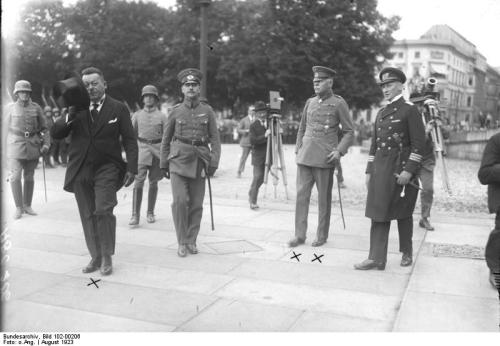
President Friedrich Ebert and his military commanders including General Hans Von Seeckt (2nd from right)

This paper will first examine the formation of the Freikorps by the Army and the Ebert government in response to uprisings by armed groups of leftists and the effectiveness of the Freikorps in putting down the various uprisings.   We will then address the relationship of the Army with the Majority Socialists and then move on to the crisis engendered by the Kapp Putsch.

The relationship of the Republic to the Army was born in the moment of crisis of the abdication of Kaiser Wilhelm II and the armistice discussions with the Allies.  Beset by revolts in key naval bases and mutinies aboard ships of the High Seas Fleet and unrelenting Allied pressure on the German armies in the west the situation continued to deteriorate as the “red flag was flying in all the principle cities, soldiers behind the front were electing soldiers councils Russian fashion.”[xi] Revolutionary and defeatist propaganda spread by the radical left wing of the Independent Socialists and Spartacus League spread through the country and even affected combat units,[xii] while the “Majority Socialists had found out that the militant factions of the Independents had secretly armed themselves out of funds supplied by the Soviet ambassador and adopted the slogan “all or nothing.””[xiii] The situation had deteriorated so badly that Karl Liebknecht, leader of the Spartacus League “was announcing the establishment of a Soviet regime from the steps of the Imperial Palace.”[xiv]

Under these dire conditions, General Wilhelm Groener who had succeeded General Ludendorff as Quartermaster General called an emergency meeting of fifty “of his most senior army commanders.”[xv] In response to his question of whether the troops would follow the Kaiser and oppose the revolts only one answered in the affirmative, and eight responded that “there was no hope of using regular Army units to quell unrest at home.”[xvi] On November 9th Groener went to the Kaiser on behalf of the Supreme Command and in response to a suggestion that the Kaiser lead the Army back and suppress the revolts boldly stated “The Army will march home in peace and under its leaders and commanding generals, but not under the command of Your Majesty, for it stands no longer behind Your Majesty.”[xvii] The Emperor abdicated fleeing to Holland and Friedrich Ebert leader of the Majority Socialists was named Chancellor on November 9th and upon hearing the news, Philipp Scheidemann, without consulting Ebert announced that Ebert was Chancellor and “Long live the great German Republic!”[xviii] The mobs were not placated by the announcement and far left organizations with the Independents “had no intention of letting the revolution stop there.”[xix] In the streets of Berlin soldiers sold their weapons and vehicles officers were attacked by crowds on the streets and whenever “crowds found an Army officer; they tore off his epaulettes and medals.”[xx] Everywhere mutual recrimination was in the air, soldiers “blamed revolutionaries for the betrayal and stab-in-the back while revolutionaries blamed officers for all the costs and losses of the war.”[xxi]

Groener called Ebert promising the Army’s support of the new government in return for the government’s assistance to the Army in the maintenance of discipline and supply.[xxii] He also drafted a letter signed by Hindenburg pledging the Army’s loyalty and telling him that “the destiny of the German people is in your hands….”[xxiii]One source notes: “Thus, in half a dozen sentences over a telephone line a pact was concluded between a defeated army and a tottering semi-revolutionary regime; a pact destined to save both parties from the extreme elements of revolution but, as a result of which the Weimar Republic was doomed at birth.”[xxiv]

The High Command was able to bring the Army home in good order following the armistice but upon arriving most units “melted away like snow under a summer sun,”[xxv] those which remained were often shells of their former selves beset by soldier’s councils and leftist revolutionaries.  To support the government the High Command issued a directive stating that it “put itself as the disposal of the present government led by Ebert without any reservation.”[xxvi] Yet in December delegates of the National Assembly continued to sow resentment in the military by military discipline be placed in the hands of soldiers’ councils, that all badges of rank be removed with all decorations of insignia and honor.[xxvii] Reaction was heated,[xxviii] but despite this Groener, Colonel Walter Reinhardt, the Prussian Minister of War and the Republic’s Defense Minister, Gustav Noske endeavored to find forces to combat the growing revolution and rebellious military units.  The choice was not hard, the Army was of no use, so called “democratic forces” were in most cases both unreliable and ineffective, while only the Freikorps “provided suitable material for the immediate creation of an efficient, combat-ready army.”[xxix] Thus the Freikorps became the instrument of necessity to ensure that the government was not swept away by a Soviet style revolution.

Gustav Noske and General Von Luttwitz. Luttwitz would lead the Reichswehr and Freikorps units that participated in the Kapp Putsch

Gustav Noske, of the Majority Socialist party “saw himself as a patriot, a man of action…who had no time for theories…and was one of the few Socialists that the Supreme Command trusted.”[xxx] He had already distinguished himself by helping to bring under control the sailors revolts in Kiel by forming a loyal “Naval Brigade”[xxxi] and he  “realized that the government must have a dependable military force behind it if it was to survive and rule Germany” and the “old Officer Corps must be the backbone of any such force.”[xxxii] The Army had melted away and units of the workers and soldiers councils were poorly trained, organized and led “”fought against the government as often as for it” and “were of little practical value to either the government or the rebels.”[xxxiii] In the chaos of a Spartacus, now called the German Communist Party uprising and vacuum of political leadership of January 1st 1919 agreed to become defense minister stating “Someone must be the bloodhound, I won’t shirk the responsibility!”[xxxiv]
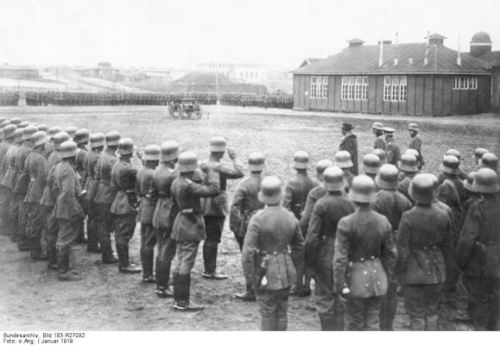
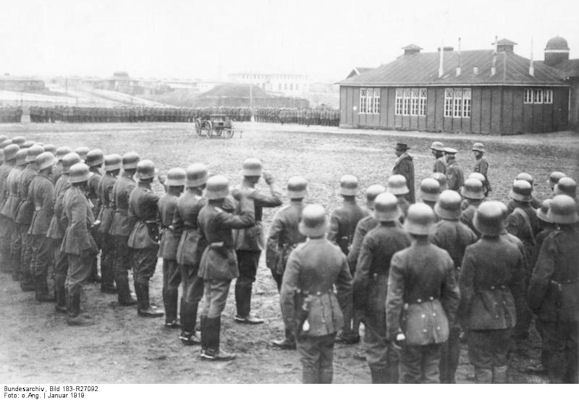
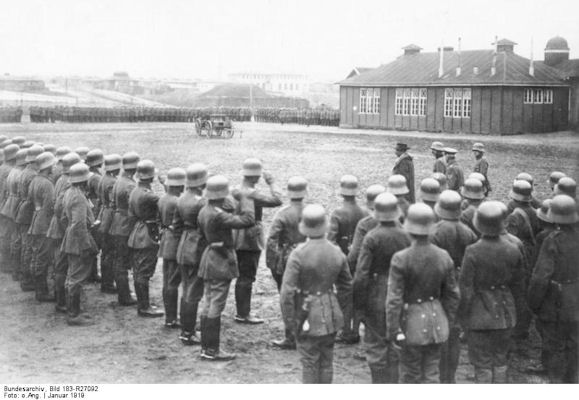
Noske reviewing Freikorps Hulsen. Many of the Freikorps were composed of professional soldiers and brought into the Reichswehr

Noske helped by the High Command helped organize volunteer units led by officers and NCOs composed of reliable veterans.  Freikorps varied in size from divisions to companies and were led by Generals down to Sergeants and even a Private First Class.  Their greatest success was in early 1919 when the Republic was beset by “Red” revolutions in many major cities.  Without the use of the Freikorps by the government it is unlikely that the Republic would have survived.[xxxv] On January 4th Ebert and Noske reviewed the troops of General Maercker’s Freiwillege Landesjaegerkorps and Maercker informed them that every volunteer had pledged loyalty to the government, seeing the discipline and order Noske told Ebert “Don’t worry. Everything going to turn out all right now.”[xxxvi] On January 5th 1919 mobs attacked the Chancellery and the officers of the Socialist Vörwarts newspaper and Noske led the Freikorps[xxxvii] to regain control of the city[xxxviii] and crush the revolt during which “Karl Liebknecht and Rosa Luxemburg were lynched by the officers of the Guards Cavalry Rifle Division.”[xxxix] In March after a period of uneasy calm the Freikorps, now reinforced by the 2nd Naval Brigade, or Ehrhardt Brigade[xl] were called upon to put down the revolt of the “People’s Naval Division.”[xli] Making liberal use of heavy weapons including tanks the Freikorps inflicted heavy losses on the leftists with over 1500 dead and 12,000 wounded in the uprising.[xlii] Other revolts were crushed and the Freikorps reached their zenith in Württemberg where Freikorps led by Lieutenant Hahn, a Social Democrat put down leftist revolts[xliii] and in Bavaria where Independents and Communists had taken the city with their “Bavarian Red Army which numbered nearly 25,000 men[xliv] on April 7th. After failed attempts by the Socialist government to retake Munich, they asked for Berlin’s help.  Violence and massacres of citizens by the various leftist groups inflamed the Freikorps, including the Ehrhardt Brigade and the revolt was crushed by May 2nd.[xlv] Dorpalen calls the Freikorps ruthlessness “completely unwarranted in view of the weakness of the opposing forces” and noted though they broke the leftist powers they deepened the nations’ cleavages”[xlvi] while Macksey writes that “where Freikorps’ brutality stained the pages of history there was invariably a forgoing or simultaneous record of excess by their sworn opponents.”[xlvii]
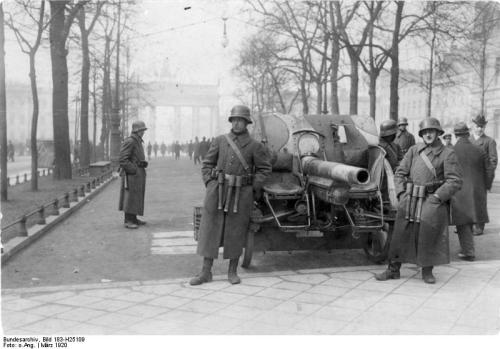
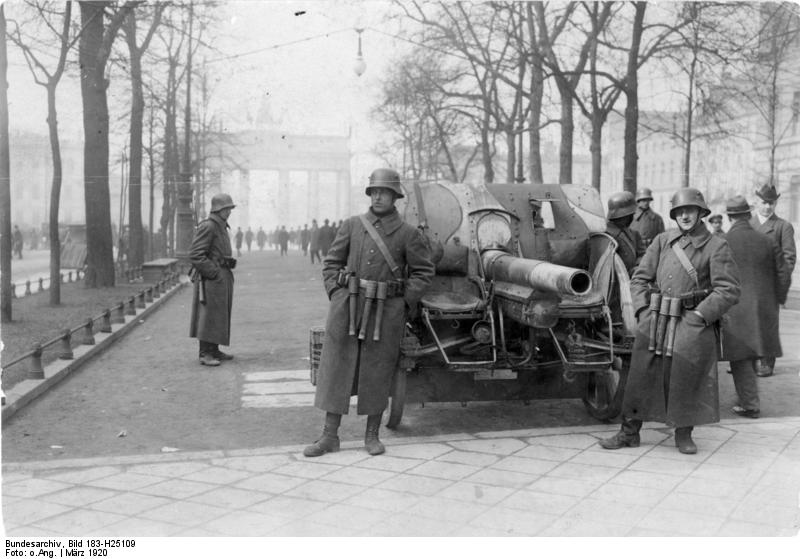
The Erhardt Brigade in Berlin during the Kapp Putsch

The Provisional Reichswehr was established on March 6th 1919 and the High Command began to assemble it from the Freikorps, remaining Army units and Republican defense forces.  Some Freikorps were brought into the new Army in total, but the tumult had not yet ceased.  There was a great distrust between many in the Army, the remaining Freikorps and the Socialists.  The crisis was precipitated by the signing of the Treaty of Versailles, Noske and others threatened resignation over the war guilt clauses, but Groener warned that if the treaty was rejected the Army could not win against the Allies if hostilities were renewed.[xlviii] The treaty imposed harsh limitations on the German Army which many bitterly resented, however, Seeckt, the Chief of Staff of the Army felt that it was “more important to keep the Army in being and preserve the possibility of a military resurrection.”[xlix] Yet the government had lost the support of the Officer Corps and many looked to General Walther von Lüttwitz, the Reichswehr’s senior commander for leadership.[l]

Korvettenkapitan (Lieutenant Commander) Erhardt commander of the 2nd Naval Brigade whose announced demobilization triggered the Kapp Putsch. Erhardt would have to flee after the Nazi takeover. Even revolutionaries become victims as revolutions end

Other right-wing groups and individuals made plans to overthrow the government.  They favored revolt against the government, but “their political aims were hazy.”[li] Seeckt and Reinhardt felt it necessary to demobilize Freikorps who’s ill-discipline and political radicalism was a “danger to the consolidation desired by the army command.”[lii] This movement climaxed with the alliance of Lüttwitz to Wolfgang Kapp and was triggered by the orders disbanding the 2nd and 3rd Naval Brigades in compliance with Versailles and due to their radical views.[liii] In spite of the opposition of his chief of staff Von Lüttwitz began planning a coup to save Germany.[liv] The conspirators showed “little regard for coordination of effort and a quite amazing ability to work at cross purposes.”[lv] On March 12th without consulting Kapp, Lüttwitz and Ehrhardt launched the Putsch and Ehrhardt’s brigade in full battle dress entered Berlin. At this point the Reichswehr command froze; officers refused to condone the putsch but at the same time refused to support Noske and Reinhardt who demanded armed opposition,[lvi] while Navy officers openly supported it.[lvii] Seeckt declared that “Troops do not fire upon troops!” and “When at occurs, then the true catastrophe, which was avoided with so much difficulty on November 9, 1918 will really occur.”[lviii] The coup died amid massive strike by workers and lack of popular support but the damage was done.  Noske resigned, many officers in were discredited[lix] and dismissed including Lüttwitz and Admiral Von Trotha, who openly supported the coup,[lx] though Raeder says that Von Trotha and the Navy staff only” thought of anything of complete loyalty to the government.”[lxi] The relationship which had endured the dire days of the Republic was ended.  The Reichswehr would emerge a lean and highly trained organization and remain a power broker in the Republic but the animosity between the Army and the Socialists that they could not stand together against the Nazis despite a mutual interest in doing so.[lxii]

Conclusion

The end of Weimar and the beginning of a nightmare

The period was a critical and complex and should be studied by anyone living in a state with a powerful military tradition and institutions in crisis.  Unlike popular notions, the Freikorps were diverse and not the seed-bed of the Nazi movement and though many former members would become Nazis.  Several, including Ehrhardt narrowly escaped death at Nazi hands.[lxiii] Freikorps were viewed by Army leadership as an expedient force that could not remain in the service once the Army was functional.

Key lessons include that the military cannot become a “state within a state,” and that both military and civilian leaders must seek to bridge any gulf that separates them in times of crisis.  In Weimar both the military and the Socialists thoroughly distrusted one another with the result that they eventually, despite early success[lxiv] worked against each other in later years.  Actions by both Socialists and the military ultimately subverted the Republic and ensured its demise and Seeckt’s policy of separation from politics “tended toward a renunciation of the soldier’s potential restraining influence on adventurous statesmen.”[lxv] Such is the fateful lesson for today.


[i] Jones, Nigel. The Birth of the Nazis: How the Freikorps Blazed a Trail for Hitler. Constable and Robinson Ltd. London, U.K. 1987 and 2004.  This is Jones assertion and he attempts to make the tie using careers of some individuals who served both in Freikorps and either in the Nazi Party or Military and attitudes common in many Freikorps with similar attitudes found in the Nazi movement.  The 2004 edition of his work includes an introduction by Michael Burleigh echoing his sentiments.

[ii] Evans, Richard J. The Coming of the Third Reich. Penguin Group. London, U.K. and New York, NY. 2003. pp.227-229.  Evans discusses the fact that the Nazis did have a number of Freikorps veterans but at no point makes the connection that the Freikorps are a direct ancestor.

[iii] Ozment, Steven. A Mighty Fortress: A New History of the German People. Harper-Collins Publishers, New York, NY 2004 p.246

[iv] Gordon, Harold J. Jr. The Reichswehr and the German Republic 1919-1926. Princeton University Press, Princeton NJ 1957.  Gordon’s work is perhaps the most detailed study involving the Freikorps and the Reichswehr. He is exceptional in discussing the relationship of both with the various political parties including the Nazis.  He refutes this assertion throughout the book.

[v] Bracher, Karl Dietrich. The German Dictatorship. Translated by Jean Steinberg. Praeger Publications, New York, NY 1970. Originally published as Die Deutsche Diktatur: Enstehung, Struktur, Folgen des Nationalsozialismus. Verlag Kiepenheuer & Witsch, Koln und Berlin. 1969. p.101

[vi] Wheeler-Bennett, John W. The Nemesis of Power: The German Army in Politics 1918-1945. St. Martin’s Press, New York, NY 1954 pp. 91-92

[vii] Shepherd, Ben. War in the Wild East: The German Army and Soviet Partisans. Harvard University Press, Cambridge, MA and London, U.K. 2004. p.28

[viii] Höhne, Heinz. The Order of the Death’s Head: The Story of Hitler’s SS. The Penguin Group, London U.K. and New York, NY 1969. Translated by Richard Barry. Originally Published as Der Ordnung unter dem Totenkopf. Verlag der Spiegel, Hamburg, 1966. p.54.

[ix] These include Macksey’s biographies of Kesselring and Guderian , Richard Giziowski’s The Enigma of General Blaskowitz. Peter Padfield’s Dönitz: the Last Führer, David Fraser’s biography of Field Marshal Rommel Knight’s Cross, Messenger’s work on Von Rundsedt, The Last Prussian, and Höhne’s Canaris: Hitler’s Master Spy all provide brief but interesting views of the actions and attitudes of these officers during the revolution and during the  Weimar period.

[x] Kesselring, Albrecht. The Memoirs of Field Marshal Kesselring with a new introduction by Kenneth Macksey. Greenhill Books, London UK. 1997. Translated from the German by William Kimber Ltd. Originally published as Soldat bis zum letzen Tag. Athenaum, Bonn, Germany 1953 pp.18-19

[xi] Goerlitz, Walter. History of the German General Staff 1657-1945. Translated by Brian Battershaw. Westview Press. Boulder CO and London. 1985 Originally published as Der Deutsche Generalstab, Verlag der Fankfurter Hefte, Frankfurt am Main.  First U.S. publication in 1953 by Preager Publishers. p.200

[xii] Gordon, Harold Jr. The Reichswehr and the German Republic 1919-1926. Princeton University Press, Princeton, NJ 1957 pp.4-5 Gordon recounts the story of an entire replacement train revolting when it reached the front which had to be disarmed by a shock battalion.

[xiii] Watt, Richard M.  The Kings Depart: The Tragedy of Germany: Versailles and the German Revolution. Simon and Schuster, New York, NY 1968. p.186

[xiv] Wheeler-Bennett, John W. The Nemesis of Power: The German Army in Politics 1918-1945. St. Martin’s Press, New York, NY 1954. p.18

[xv] Herwig, Holger H. The First World War: Germany and Austria Hungary 1914-1918. Arnold Press a member of the Hodder-Headline Group, London, UK and New York NY 1997 p.445

[xvi] Ibid. Herwig. p.445

[xvii] Carsten, F.L. The Reichswehr and Politics 1918-1933. Oxford University Press, Oxford, UK 1966 p.6.  It is noted by a number of author’s that Groener did this, to maintain the unity of Germany and prevent its division.

[xviii] Ibid. Watt. p.196  Watt notes Ebert’s reaction as being enraged as the proclamation of the Republic technically “invalidated the existing constitution; Germany was now technically without a government.” (p.197)

[xix] Ibid. Watt. p.197

[xx] Ibid. Watt. p.197

[xxi]Giziowski, Richard. The Enigma of General Blaskowitz Hippocrene Books Inc. New York NY, 1997. p.65

[xxii] Craig, Gordon A. The Politics of the Prussian Army 1640-1945. Oxford University Press, Oxford, UK 1955 pp.347-348.  Craig gives an interesting account noting the Groener’s call to Ebert shows recognition of the legitimacy of the new government and notes that the offer was somewhat conditional.

[xxiii] Dorpalen, Andreas. Hindenburg and the Weimar Republic. Princeton University Press, Princeton, NJ. 1964 p.26

[xxiv] Ibid. Wheeler-Bennett. p.21

[xxv] Ibid. Gordon. p.15

[xxvi] Ibid. Carsten. p.11. This was of critical importance as Carsten later notes that the Army realized that the government could not survive without its support.  Groener was perhaps the officer who most recognized the situation and endeavored to ensure that “the best and the strongest element of the old Prussia, was saved for the new Germany, in spite of the revolution.” (p.12)

[xxvii] Ibid. Carsten. p.18 Carsten produces the bulk of the English translation of these points and notes that the anti-military feeling had become widespread.

[xxviii] Ibid. Giziowski. p.66  Giziowski recounts the speech of Hermann Goering in response to the announcement. This shows how such treatment can breed anger and resentment in a military that feels it has been betrayed after serving its country in a long and difficult war: For four long years we officers did our duty and risked all for the Fatherland. Now we have come home, and how do they treat us? The spit on us and deprive us of what we gloried in wearing. I will tell you that the people are not to blame for such conduct. The people were are comrades…for four long years.  No, the ones who have stirred up the people, who have stabbed this glorious army in the back…. I ask everyone here tonight to cherish a hatred, a deep and abiding hatred, for these swine who have outraged the German people and our traditions.  The day is coming when we will drive them out of our Germany.”

[xxix] Ibid. Gordon. p.15

[xxx] Ibid. Watt. p.168

[xxxi] Ibid. Gordon. pp. 19 and 24.  This was the 1st Marine Brigade, or Brigade Von Roden of which elements would later serve in under the command of other Freikorps such as the Guards Calvary Rifle Division.

[xxxii] Ibid. Gordon. p.14

[xxxiii] Ibid. Gordon. p.18

[xxxiv] Ibid. Watt. p.239

[xxxv] Ibid. Gordon. p.426

[xxxvi] Ibid. Watt. p.247

[xxxvii] Thee forces included the Landesjaegerkorps and Guards Cavalry Rifle division.

[xxxviii] Ibid. Gordon. p.30

[xxxix] Ibid. Wheeler-Bennett. p.36

[xl] This was one of two additional Naval Brigades formed by Noske after the success of Naval Brigade Von Roden.  It was one of the most combat effective but unfortunately violent and radical of the Freikorps, it would as we will see be a key unit in the Kapp Putsch but would not be absorbed into the Reichswehr.

[xli] This unit was not a Navy unit at all but was composed of many who were criminals and other rabble. See Gordon, Carsten and Watt.

[xlii] Jurado, Carlos Caballero. The German Freikorps 1918-23. Illustrated by Ramiro Bujeiro. Osprey Publishing, Oxford, UK 2001 p.12

[xliii] Ibid. Gordon. p.42  His units were known as Security Companies.

[xliv] Ibid. Jurado. p.13

[xlv] Ibid. Gordon. pp.47-49. An estimated 550 people including 200 innocent bystanders were killed in the fighting.

[xlvi] Ibid. Dorpalen. p.29

[xlvii] Macksey, Kenneth. Guderian: Creator of the Blitzkrieg. Stein and Day Publishing, New York, NY 1975 p.45

[xlviii] Ibid. Wheeler-Bennett. pp.57-59

[xlix] Ibid. Goerlitz. p.216

[l] Ibid. Wheeler-Bennett. p.61

[li] Ibid. Carsten. p.74

[lii] Ibid. Carsten. pp.74-75

[liii] Ibid. Carsten. p.76  Another consideration is that Noske, Reinhardt and Seeckt all were seeking to retire Lüttwitz.

[liv] Ibid. Gordon. p.97

[lv] Ibid. Craig. p.376

[lvi] Ibid. Carsten. pp.78-79

[lvii] Höhne, Heinz. Canaris: Hitler’s Master Spy. Cooper Square Press, New York, NY 1979 and 1999. Translated from the German by J. Maxwell Brownjohn, Originally published in Germany by C. Bertelsmann Verlag Gmbh, München. 1976. p. 78.  Canaris also had been suspected of complicity in the murders of Rosa Luxemburg and Karl Liebknecht but was acquitted. (pp.56-71)

[lviii] Ibid. Gordon. pp.114-115

[lix] Among them Maercker who had been such a strong supporter of the Republic in the early days.

[lx] Ibid. Carsten. p.98

[lxi] Raeder, Erich. Grand Admiral. Translated from the German by Henry W. Drexell. United States Naval Institute, Annapolis MD, 1960. Da Capo Press edition published 2001. p.111. This is interesting as almost all histories implicate the Navy High Command of either some complicity or at least agreement with the Putsch participants.

[lxii] The final part in the drama would come when General Kurt Von Schleicher became the last Chancellor before Hitler.  Schleicher had assisted Groener and Noske in the early days of the Republic and often attempted to use the Army’s influence in politics. He was fatally short sighted and was a victim of the SS “night of Long Knives” which was directed against the SA.

[lxiii] Ibid. Jones. p.266  Others such as Gerhard Rossbach had similar experiences.  Korvettenkapitän Löwenfeld of the 3rd Naval Brigade became an Admiral, Wilhelm Canaris , who was implicated in the Kapp Putsch but kept his career would later head the Abwehr and die in a concentration camp.

[lxiv] Ibid. Gordon. p.426  Gordon has a good discussion of this topic in his conclusion.

65 Liddell-Hart, B.H. The German Generals Talk. Published 1948 B.H. Liddell-Hart, Quill Publications, New York, NY. 1979. p.18 Liddell-Hart’s analysis of the results of the Reichswehr’s disconnection from the larger society and political process is remarkable due to current trends in the American military which like the Reichswehr has become somewhat more conservative and disconnected from society, exceptionally technically proficient but not adept in politics or grand-strategy.


Works Cited


Bracher, Karl Dietrich. The German Dictatorship: The Origins, Structure and Effects of National Socialism. Translated from the German by Jean Steinberg with an introduction by Peter Gay.  Praeger Publishers, New York, NY. 1970 Originally published in Germany as Die deutsche Diktator: Entstehung, Struktur, Folgen den Nationalsozialismus by Verlag Kiepenheuer und Witsch. Koln und Berlin.


Carsten, F.L. The Reichswehr and Politics 1918-1933. Oxford University Press, Oxford, UK 1966


Craig, Gordon A. The Politics of the Prussian Army 1640-1945. Oxford University Press, Oxford, UK 1955


Dorpalen, Andreas. Hindenburg and the Weimar Republic. Princeton University Press, Princeton, NJ. 1964


Evans, Richard J. The Coming of the Third Reich. Penguin Books, New York, NY and London, UK. 2003


Giziowski, Richard. The Enigma of General Blaskowitz Hippocrene Books Inc. New York NY, 1997


Goerlitz, Walter. History of the German General Staff 1657-1945. Translated by Brian Battershaw. Westview Press. Boulder CO and London. 1985 Originally published as Der Deutsche Generalstab, Verlag der Fankfurter Hefte, Frankfurt am Main.  First U.S. publication in 1953 by Preager Publishers


Gordon, Harold Jr. The Reichswehr and the German Republic 1919-1926. Princeton University Press, Princeton, NJ 1957


Guderian, Heinz. Panzer Leader. (abridged) Translated from the German by Constantine Fitzgibbon, Ballantine Books, New York 1957


Herwig, Holger H. The First World War: Germany and Austria Hungary 1914-1918. Arnold Press a member of the Hodder-Headline Group, London, UK and New York NY 1997


Höhne, Heinz. Canaris: Hitler’s Master Spy. Cooper Square Press, New York, NY 1979 and 1999. Translated from the German by J. Maxwell Brownjohn, Originally published in Germany by C. Bertelsmann Verlag Gmbh, München. 1976.


Höhne, Heinz. The Order of the Death’s Head: The Story of Hitler’s SS. The Penguin Group, London U.K. and New York, NY 1969. Translated by Richard Barry. Originally Published as Der Ordnung unter dem Totenkopf. Verlag der Spiegel, Hamburg, 1966.


Jones, Nigel. The Birth of the Nazis: How the Freikorps Blazed the Way for Hitler. Constable and Robinson Ltd. London, UK 1987


Jurado, Carlos Caballero. The German Freikorps 1918-23. Illustrated by Ramiro Bujeiro. Osprey Publishing, Oxford, UK 2001


Kesselring, Albrecht. The Memoirs of Field Marshal Kesselring with a new introduction by Kenneth Macksey. Greenhill Books, London UK. 1997. Translated from the German by William Kimber Ltd. Originally published as Soldat bis zum letzen Tag. Athenaum, Bonn, Germany 1953.


Liddell-Hart, B.H. The German Generals Talk. Published 1948 B.H. Liddell-Hart, Quill Publications, New York, NY. 1979


Macksey, Kenneth. Guderian: Creator of the Blitzkrieg. Stein and Day Publishing, New York, NY 1975


Macksey, Kenneth. Kesselring: The German Master Strategist of the Second World War. Greenhill Books, London, UK 2000.


Ozment, Steven. A Mighty Fortress: A New History of the German People. Harper-Collins Publishers, New York, NY 2004


Shepherd, Ben. War in the Wild East: The German Army and Soviet Partisans. Harvard University Press, Cambridge, MA and London, U.K. 2004


Wheeler-Bennett, John W. The Nemesis of Power: The German Army in Politics 1918-1945. St. Martin’s Press, New York, NY 1954


Watt, Richard M.  The Kings Depart: The Tragedy of Germany: Versailles and the German Revolution. Simon and Schuster, New York, NY 1968


Wette, Wolfram. The Wehrmacht: History, Myth, Reality. Harvard University Press, Cambridge, MA and London, UK  2006. Translated from the German by Deborah Lucas Schneider. Originally published as Die Wehrmacht: Feindbilder, Vernichtungskrieg, Legenden. S. Fischer Verlag Gmbh, Frankfurt am Main, Germany 2002



1 Comment

Filed under History, Military, national security, Political Commentary

In Memoriam: Professor Helmut Haeussler the Most influential Teacher in my Life

I received an e-mail from the History Department of California State University at Northridge this week that a memorial service is to be held for Professor Helmut Haeussler. Dr. Haeussler was my primary professor in the department during my undergraduate years at the school as well as one year of graduate work before I was commissioned as an Army Second Lieutenant and reported for active duty in 1983.

I studied under Dr. Haeussler for three years taking courses such as German History, World War II and the Holocaust followed by an extensive number of independent study courses where I concentrated on Germany from the end of the First World War until the fall of the Third Reich. In this my primary focus was the Weimar Republic and the relationship of the German Army to the Government and the various political parties.

Dr. Haeussler was unique. He was born in Germany in 1922 during the turmoil of the early Weimar Republic and his family immigrated to the United States in the early 1930s. He was attending the University of Wisconsin when the Second World War broke out and served as an intelligence analyst and interpreter with the 82nd Airborne Division and as an interrogator at the Nuremburg trials. After leaving the Army he continued his education eventually graduating with a Ph.D. from in History from the University of Wisconsin.  He joined the faculty at Northridge in 1963 and he retired in 2005, having taught many courses in German History, Modern European History, World War II, the Holocaust, Anti-Semitism, and Military History.  He also taught at California Lutheran College on occasion. He was a tremendous teacher and for our class on the Holocaust he had a survivor of Auschwitz named Mel Mermelstein who challenged Holocuast deniers in court and won. Mermelstein’s fight was dramatized in the television movie called Never Forget in which he was played by Leonard Nimoy.  Dr. Haeussler, a Lutheran from Germany and veteran of the United States Army was a man who did not want the crimes of the Nazis to be forgotten and the dangers of a divided society which has lost its sense of identity.

He wrote a book on the life of General Wilhelm Groener who was a key figure in the formation and preservation of the Weimar Republic from forces on the Left and Right in its fragile early years. Along with the Majority Socialist President Friedrich Ebert and Defense Minister Gustav Noske he forged an alliance between the very conservative Army Officer Corps and the Socialist Government which endured until Ebert’s untimely death in 1925.

Dr. Haeussler spent many hours with me recommending research resources and writers, looking over my work and challenging my conclusions at many points. I still have all of the books from his classes as well as books that he recommended. When I went on to a second Masters Degree, this one in Military History and the work that I did under him paid dividends in those studies. I appreciate what Dr. Haeussler taught me and how he pushed me to constantly pursue learning. Readers of this site can find much of his influence in my writings on Weimar and the Nazi era and application for the present day, especially as our society becomes increasingly divided and the government as ineffective and the Weimar Government after the death of Ebert.

Dr. Haeussler’s passing is also a watershed. He was the last faculty member at Northridge who had served in the Second World War. This is yet another reminder to us of the members of that generation who are passing away at an ever increasing rate.

The information on the memorial is below. I am simply pasting it from the e-mail that I received.

The History Department will hold a reception on Sunday, March 27, at 2 P.M. in the Whitsett Room, Sierra Hall 451.  Emeritus Professor Michael Meyer, a long-time friend and colleague, will bring his violin and play German songs that Helmut would have liked. Faculty, friends, and former students of Professor Haeussler are cordially invited to attend and share their memories. Refreshments will be served.  Please call the History Department, 818-677-3566, so that we may plan accordingly. Parking will be available in the lots west of Sierra Hall.  Visitors must stop at the parking kiosk on Prairie Street, just east of Darby, to obtain a permit.

I wish that I could attend the memorial and spend time with those that worked alongside him and fellow students. I was privileged to have a professor who has continued to influence my learning almost 30 years after my last class with him. I wish that every student would have such a teacher at some point in their life.

Peace

Padre Steve+


7 Comments

Filed under History, remembering friends, world war two in europe

A Lack of Wisdom in a Sea of Facts

Dietrich Bonhoeffer

“To understand reality is not the same as to know about outward events. It is to perceive the essential nature of things. The best-informed man is not necessarily the wisest. Indeed there is a danger that precisely in the multiplicity of his knowledge he will lose sight of what is essential. But on the other hand, knowledge of an apparently trivial detail quite often makes it possible to see into the depths of things. And so the wise man will seek to acquire the best possible knowledge about events, but always without becoming dependent upon this knowledge. To recognize the significant in the factual is wisdom.” — Dietrich Bonhoeffer

Cyberspace and the airwaves in the United States are awash with “facts” about the current crisis that seems to have enveloped the world.  They are also awash in those that in an almost Gnostic manner act as if they or a group that they are part of have discovered the key to understanding the “facts” that surround the crisis. The pseudo-Gnostic “experts” be they pundits, preachers or politicians, the unholy Trinity of the information age come in all political, religious and philosophic persuasions and are entrenched in every aspect of life in a more pervasive and invasive manner than in any previous generation.

The sheer mass of information now at the fingertips of anyone who has a computer or smart phone has made everyone an expert in their own mind. However the simple knowledge of facts or even some level of understanding of them does not necessarily mean that such opinion, even that of the most popular of the unholy Trinity of pundits, preachers and politicians qualifies as wisdom.  In fact much of the so called analysis and presentation of the “facts” regardless of their political, social or religious orientation actually occurs in liberal or conservative echo chambers where the “facts” are crafted into sound bites designed to stir up and even enrage supporters in order to gain or maintain power. However the sound bites which are allegedly “factual” are beaten into us in some cases by men who ask us to give them “three hours a day every day” do not necessarily mean that those that spout them are wise, be they popular pundits, persuasive preachers or powerful politicians.

Now I know that this may offend those that bow at the altar of these personalities, but knowledge as important as it is does not equal wisdom even it comes from people with good ratings, great attendance or high poll numbers. The problem as Bonhoeffer put it so well is not that facts are not important but rather the significance of the facts to the time, place and situation.   We have become dependent men and women who make their living packaging the truth in such a way that it looks like they alone of the key to get past the Archons that ensnare us and keep us from understanding the truth.

The scary part is that much of the pervasive distrust and hatred that comes from all sides in the poisoned political pond of the American body politic is not due to an absence of information or lack of facts, but rather the intentional perversion of them for partisan gain by people that should know better.  As a Christian that which scares me most is when I see fellow Christians on the cutting edge of such actions even using the Christian faith and Scriptures to justify themselves. I think it is because that we have lost our way instead of being consumed by the love of God we have been consumed by the need to be in control, or be at the table of those in power.  We have allowed others to define our faith in such a way that it is hardly recognizable as anything Christian and that applies to all parties.

I have given up on having any answer to the madness that has overtaken the United States of America except to look back at history.  I think that Bonhoeffer had it right. He saw the evil of such unbridled passions in Germany in the 1930s and 1940s.  Germany was deeply divided and in political, social and economic crisis the same as we are in now.

I pray that we will not head down that path.

As Bonhoeffer said:

“Unless we have the courage to fight for a revival of wholesome reserve between man and man, we shall perish in an anarchy of human values… . Socially it means the renunciation of all place-hunting, a break with the cult of the “star,” an open eye both upwards and downwards, especially in the choice of one’s more intimate friends, and pleasure in private life as well as courage to enter public life. Culturally it means a return from the newspaper and the radio to the book, from feverish activity to unhurried leisure, from dispersion to concentration, from sensationalism to reflection, from virtuosity to art, from snobbery to modesty, from extravagance to moderation.”

I pray and hope against hope that we will find a way to step back from the Abyss.

Peace

Padre Steve+

5 Comments

Filed under christian life, philosophy, Political Commentary, Religion

The Coming of Orwell’s 1984 27 Years Late….So Much for Timing

Yes my friends is finally 1984, well the Orwellian kind. I remember the first 1984, back in the good old days of the Cold War and all that.  But that 1984 was more of a number and not very Orwellian. It is funny I read the novel 1984 on my way to my first assignment in Germany in January 1984 and found it rather chilling.  However back then it was still rather futuristic despite being written back in 1948.  Orwell’s vision of surveillance and the manipulation of language didn’t seem as threatening back in 1984 because the technology wasn’t there yet but now it is.

There has been a proliferation of low cost high resolution video surveillance technology which continues to evolve at an exponential rate with corresponding advances in facial, voice and even emotional sensing technology that can have positive outcomes but in the wrong hands, particularly in the hands of terrorists but even worse governments, especially those that sacrifice freedom in the name of security. Since no government or political system is immune to corruption or without actors who are only there for their personal power or advancement of their political, social or even religious ideology these technologies are fraught with danger.  They are a double edged sword with great promise for individuals and societies which can be quickly turned to the service of evil.  An example is high resolution cameras linked to artificial-intelligence software analyzed the images to recognize faces, gestures and patterns of group behavior. There is the Mind’s Eye program being developed for the military which seeks to develop in machines a capability that exists only in animals: visual intelligence. Emotional sensing software is being experimented by some movie studios to judge the emotional reaction of audiences to films and face recognition software is used by Google’s Picasa, Yahoo’s FLICKR and others for file sharing and organizing. Google has also developed Googles which lets a person snap a photograph with a smartphone which then sets off an Internet search of whatever was taken.  Google has refused to put facial recognition software on the phone despite user’s requests. Google realized that since smartphones can be used to take pictures of people’s faces and retrieve all kinds of personal information such as their name, occupation, address and workplace without their knowledge.

September 11th 2001 brought the nation to the realization that terrorism could occur in the United States.  Now people in many other countries have dealt with terrorism of various kinds for years but for Americans it was something that happened to other people far away, or Americans serving, working or living overseas.  When I was a young Army Officer we lived under the daily threat of the Red Army Faction and Baader-Meinhoff terrorists groups in Germany very narrowly avoiding being in the blast zone at the Frankfurt Army Post Exchange on November 25th 1985 when a bomb was detonated injuring 34 Americans. We turned around about 15 minutes before the blast because Judy felt ill; otherwise we would have been right in the zone. I remember getting the call from my Colonel that my Ambulance Company was on alert after this.  We know what it is like to have your vehicle inspected every day going into the base and being questioned by German Police when reporting a terrorist sighting.  So for us this was old hand, but September 11th tore at the soul of the American nation and I dare say that we haven’t been the same since.

We passed the Patriot Act and created new security agencies such the TSA and we greatly expanded the surveillance capabilities at home and abroad of American Intelligence and Police agencies as well as that of the military.  Now I am not knocking all the things that the U.S. Government has done to try to prevent another 9-11 or worse. At the same time every new expansion of security and surveillance there is a corresponding loss of liberty and with each new law or Presidential Executive order or Directive regarding security and intelligence gathering a little more freedom is given up and a greater possibility that the very laws and measures being implemented to “protect” the populace will be used against it in the future.

Those that design the technologies which make the implementation of these laws possible are increasing in the capabilities of their innovations on an exponential basis often with the explicit help and support of the government in particular Federal and State Police agencies, intelligence agencies and the military.  Data mining, aerial surveillance drones both armed and unarmed, the ever present surveillance cameras which seem to populate every public place. Add to the power of individuals using the latest smartphones to do their own spying on people and the technology which has so much promise to do good can and at some point probably will be turned against the people.

This will happen for sure after the next major terrorist attack and it matters not if there is a Democratic or Republican administration in charge.  Security would be the rational and those that dissent will be dealt with in one way or another.  One only has to look back at the Nazi and Soviet regimes to see how governments with far less technology were able to subjugate their people and oppress dissenters to see how easy this can happen. In the name of security and economic stability the Germans, a sizable percentage of that had little regard for the Nazis or Hitler let Hitler enact laws that gave him absolute power.

That is my concern. I like technology and love the benefits that the advances in it provide, but I am certainly aware that the technology that I so enjoy is a two edged sword which in the wrong hand can, is and will be used against the citizens of the countries that come to rely on it and draconian security laws and police procedures.

I am very security conscious. Having lived under the threat of terrorism on a daily basis in the 1980s and having served under constant threat in the far reaches of Al Anbar Province never knowing if Al Qaeda had infiltrated the Iraqi Police or Army units that I was among I fully understand the threat. At the same time I am fully cognizant of the proclivity of men in power to promote a culture of fear in which citizens willingly surrender freedom for security and in the process descend into the abyss.

Peace

Padre Steve+

1 Comment

Filed under History, Military, national security, philosophy, Political Commentary

The War to End All Wars….and a Peace to end all Peace

It was the War to end all war

On the 11th hour of the 11th day of the 11th month the guns fell silent across Western Europe and the war which had killed 16 million soldiers, sailors and civilians and wounded another 21 million more came to an end. It had begun as a conflict in the Balkans which rapidly drew in all of Europe’s major powers.  The central focus of the war was the Western Front where the armies of Germany battled those of Britain, France, Belgium and later the United States.  Battles with names such as the Marne, Passchendaele, the Somme, Verdun, Ypres, Chateau Thierry, Belleau Wood, Vimy Ridge, Cambrai, the Aisne, represented the pinnacle of killing as soldiers battled in the mud of massive trench systems and Generals sacrificing thousands of men in a day for the gain of a few hundred yards of territory throwing them against mountains of barbed wire, landmines, well emplaced machine gun nests and mortars. Massed batteries of artillery tore men to shreds leaving many men so pulverized that they would ever be identified.  Poison gas both choking agents and the long lasting mustard gas added to the hell that was the war in the West.

During the war the war Imperial Russia had fallen to a Communist revolt and surrendered, the Austro-Hungarian Empire fell in October of 1918 and even the Allies had faced near calamity on the home front. In 1917 the French Army mutinied after years of futility with only Marshal Petain the hero of Verdun able to quell it.

The men who drafted the Peace to end all Peace: Clemenceau, Wilson, Lloyd George

Kaiser Wilhelm II had abdicated his throne on November 9th amid a revolution at home which tore the country apart.  The new German Government accepted an armistice in the belief that the Allies would honor President Woodrow Wilson’s 14 Points.  Instead they were subjected to humiliation and starvation as the Allies refused to end their blockade of Germany until the Peace Treaty was signed. Hundreds of thousands more Germans died as a result of starvation and disease as their cities were wracked by violence as order collapsed.  It was the Socialist government which had inherited the country that had to fight the Communists in the streets allying themselves with the Army High Command to form Freikorps from units and individual soldiers under commanders willing to fight.

Soviet style revolution in Germany 1918-1919

In France at the Palace of Versailles the Allies led by the British and French brushed aside Wilson’s attempt at a just peace and placed draconian sanctions on the new German Republic which had no choice but to accept the surrender terms dictated by the Treaty of Versailles. The Army was to be reduced to 100,000 men with no heavy weapons, the Navy to a token force of obsolete ships, the air force disbanded.  Massive war reparations were imposed which were impossible for the Germans to fulfill and which were only paid off this year.  The final ignominy was the fact that the Germans were forced to bear the sole responsibility for the war. The German economy collapsed in the aftermath, France occupied key German industrial areas in the Saar and Ruhr and the nation fell into more disorder as the Deutschmark lost all of its value as hyperinflation made the money worthless.

Freikorps helped restore order when the Army dissolved

Eventually order returned to Germany with a brief period of relative prosperity which lasted until the world-wide Great Depression which through Germany back into chaos. Government after government was formed and dissolved and the last Chancellors of the Republic were forced to rule under the emergency conditions of Article 48 of the Weimar Constitution.  Eventually extremists on the left and the right brought further chaos as the eventually leading President Hindenburg to appoint the Leader of the National Socialist German Workers Party (Nationalsozialistische Deutsche Arbeiterpartei) or NSDAP as Chancellor.  We know the rest of the story. A World War that killed far more than the first 22-25 million military and 62-78 million civilians, a war of extermination on the Eastern Front, the Holocaust, and fearful weapons which ushered in the Atomic and Nuclear age.  Europe was shattered, Britain’s wealth drained and empire unsustainable, France divided and impoverished and other nations in political or economic crisis with the Soviets controlling Eastern Europe behind an Iron Curtain.

Cold War

In Europe and Asia a “Cold War” between the Soviet Communists and the West took the place of the previous war.  The United States would fight wars in Korea and Vietnam while the Soviets would rule with an iron fist in Eastern Europe and at the height of the Cold War invaded Afghanistan.  The wars in Vietnam and Afghanistan caused crisis in both the United States and the Soviet Union and Afghanistan helped mark the end of Soviet power and the end of the Soviet Union.

Around the world colonial empires fell through either revolts of colonized people or the abdication of empire by nations exhausted and economically broken by war. The many of the newly free “nations” were artificial and as a result experienced their own civil, tribal and religious conflicts the effects of which are still felt.  The end of the Cold war brought more change and for a time there was a period of American superiority but wars engulfed the Middle East as Iraq attacked its neighbors and was defeated in the Gulf War.  However the effects of that war were felt as Moslem extremists took power in Afghanistan and others including the Yemeni born Saudi Osama Bin Laden began a campaign of terror to drive the United States out of the Middle East that culminated in the attacks of September 11th 2001 and now the war that seems to have no end.

And it was the War to end all war and a peace that ended all hope of peace….God help us as it is unlikely that this war will end anytime soon for us or our allies even if we withdraw from Afghanistan.  Our enemies are too beholden to their ideology to stop their attacks until they win or are destroyed, the war will continue and God only knows how many soldiers and civilians will die in the coming years over 90 years after the War to end all War ended and the Peace to end all Peace began.

Peace

Padre Steve+


1 Comment

Filed under Foreign Policy, History, iraq,afghanistan, Military, national security, Political Commentary, world war two in europe