Tag Archives: operation desert storm

The Anomaly of Operation Desert Storm and Its Consequences Today

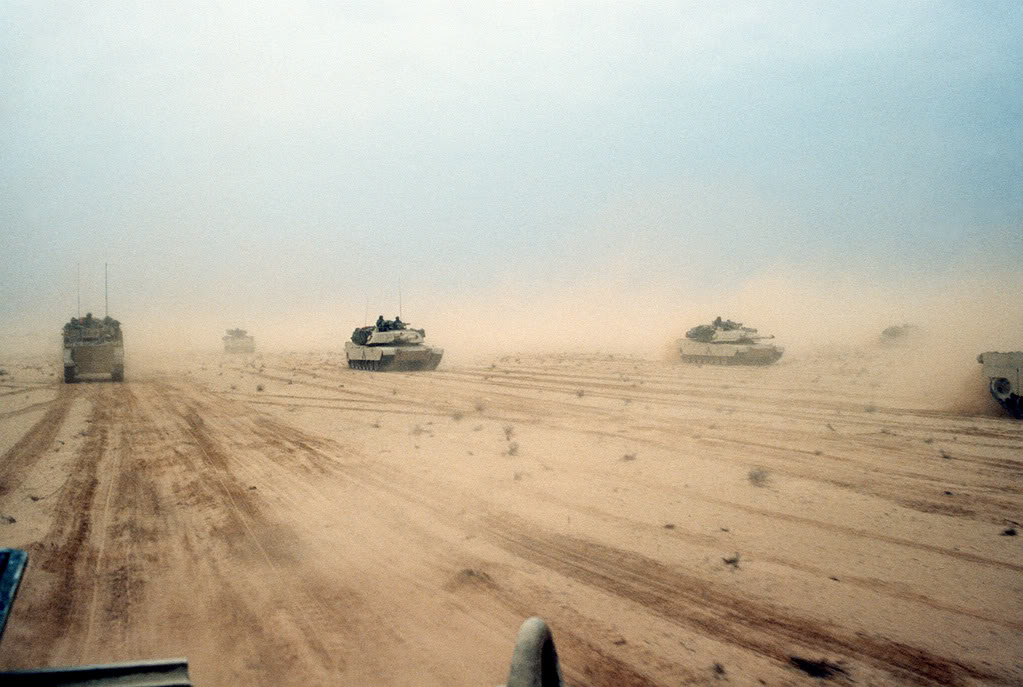
Armor Advancing During Operation Desert Storm

There are few occasions in history where an army is given exactly the scenario to which its organization, training and doctrine coalesce against an opponent that uses the template of organization and training that it has been designed to defeat.  Operation Desert Storm, the liberation of Kuwait by the United States and its coalition from Saddam Hussein’s Iraqi Army and Republican Guard was such a war. The operation was built up in the popular media to the extent that it created a false image of the cost of war and belief that wars can be won “one the cheap” because of superior technology and organization.  That belief was shattered during the Iraq insurgency which began in earnest following the occupation of Iraq following the defeat of Saddam in 2003 by a significantly smaller US force than was used to liberate Kuwait twelve years before.

Architects of Desert Storm

The superior performance of the Army in the Gulf War did not turn out to be the template of how future wars would be fought.  In the following years the US military has become embroiled in conflicts where opponents use inexpensive and often crude off the shelf technology to counter conventional US superiority in firepower and organization.

During the First Gulf War the Army was aided in that the doctrine that it developed to fight a war in Europe against the Warsaw Pact, the Airland Battle was “perhaps best suited to armored warfare in the open desert.”[i] Of course during Desert Storm this was exactly the setting that the Army would be called on to fight.  Unlike Vietnam where the Army attempted to fight an unconventional war with conventional tactics the Army had the chance to fight exactly the battle that it had trained for, against an enemy trained in the tactics and using the equipment of its former Soviet adversary.

The Army enjoyed the advantages of having “reached a high level of training and technological proficiency”[ii] against the Soviet threat. The fact that the Soviet Union and Warsaw Pact had melted down unexpectedly in 1989 and 1990 and removed any conventional threat in Europe which allowed the Army to concentrate massive amount of forces including the VII Corps from Germany to the Middle East was nothing short of incredible.  Additionally the Army had the advantages of superior weaponry and the fortuitous timing of the war before the effects of the post-Cold War drawdown were realized.

For the Army the “1980s were a golden age of military thought and debate,”[iii] and the Airland Battle concept “was greeted with enthusiasm throughout the Army.” Terms such as initiative, agility, synchronization and depth….soon became part of every officer’s vernacular.”[iv] Colonel Harry Summers who had written a critical history of the Vietnam War noted that FM 100-5, the Army’s primary manual of operations, was the “operational blueprint for Operation Desert Storm.”[v] That blueprint had a well trained and disciplined force schooled in the conduct of the Airland Battle concept enunciated in FM-100-5. David Halberstam noted that Operation Desert Storm was fought by a “professional army-a very professional army.”[vi] Seldom in the history of warfare was any army trained and equipped to fight the exact battle for which it found itself.

The Highway of Death

The foundation of doctrine, training, technology and organization laid in the 1980s was solid.  The Army was not only effective in the Gulf War, it was overwhelming.  This is not to say that the Army did not encounter problems.  It did, some which against a better trained and equipped force might have negatively impacts its operations. However the problems encountered did not keep it from dominating the battlefield.

The US rapidly deployed a blocking force of paratroops and Marines following the Iraqi invasion of Kuwait at the end of August.  While few in number they served as a deterrent that Saddam did not test. There was great concern that had Saddam pushed into Saudi Arabia when forces were small and lightly equipped that he might have succeeded in capturing the northeaster Saudi oil fields and production facilities.  The military leadership continually reinforced these forces first to a substantial defensive force and then with the addition of more forces a significant offensive force.  Thus when the decision was made to liberate Kuwait under the United Nations resolution the forces were there and ready.

When the war began advances in Joint warfare and C3 was evident in the effectiveness of the operations.[vii] Particular successes included the movement of VII and XVIII Airborne Corps into the desert to outflank the Iraqis in Kuwait[viii] and every actual engagement between Iraqi and American forces.  Of note was the performance of Major General Barry McCafferey’s 24th Mechanized Division,[ix] and the 2nd Armored Cavalry Regiment at 73 Easting against the Republican Guard’s Talwahkana Division.[x] Likewise the action of 2nd Brigade 1st Armored Division against the Guard’s Adnan Division at Madinah Ridge[xi] displayed the effectiveness and lethality of the Airland Battle and joint warfare concepts developed in the 1980s.

There were weaknesses and these included various aspects of command and control and fratricide[xii] brought about by the fast pace of operations and the fog of war. Likewise conflicts between General Schwartzkopf and some of his Army commanders, notably Generals Franks[xiii] and Yeosock hindered operations.  This occurred most notably in the failure to destroy the Republican Guard prior to the cessation of hostilities. This was partially was due to political considerations and faulty intelligence but was operational decision of Schwartzkopf to halt McCafferty’s  24th Mechanized Division before it could finish off Republican Guard units facing it or letting Franks complete his double encirclement of the Guard or encircle the key southern Iraqi city of  Basrah.[xiv]
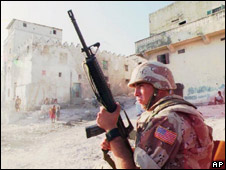
The New Face of War Somalia

Iraq

Rwanda Genocide

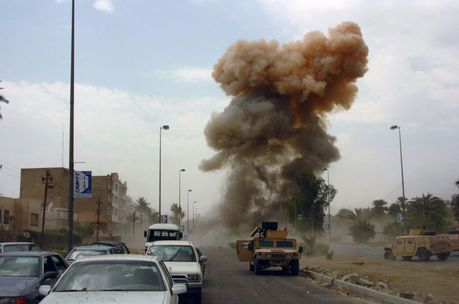
Deadly Large Shaped Charge IED

Afghanistan: Brits in Action Against Taliban Fighters

Despite the successes of Operation Desert Storm the planners failed to anticipate the end state of what would happen when hostilities had ceased.  The conditions of the cessation of hostilities were the chief contention of many against the end to the ground war at the 100 hour point. Some argue that the early end of hostilities allowed the victory to be less than it could have been.  Some even today argue that the offensive should have gone forward with the goal of overthrowing Saddam, however despite its success the Army was not prepared for an occupation nor would have the coalition supporting the US have survived an invasion and occupation of Iraq.  The actual mistakes were not in the stopping of the war, but rather the faulty conditions of the cease fire which enabled Saddam to recover the internal control of Iraq and put down attempts to revolt especially around Basra in the Shia south.  Rick Atkinson in his book Crusade notes that there were “errors would be made in establishing conditions of the ceasefire…but stopping the war was no mistake.”[xv]

While the debate about Operation Desert Storm still persists nearly 20 years after the fact the more important lesson was not learned.  That lesson was that Operation Desert Storm was not the new face of war, but rather an anomaly.  It was a war that was the swan song of the Cold War where the doctrine, technology, organization and trained to and practiced were inflicted on a less well trained and equipped version of the force that they were designed to defeat, forces which were badly deployed and already isolated by airpower even prior to the ground war. Once the ground war started the Iraqi forces in Kuwait and southern Iraq had little chance against the massive US and coalition force arrayed against it short of preemptively using the chemical and biological weapons of which Iraq had an ample supply.  It did not employ these weapons for a number of reasons, but without them Iraqi forces exposed in the open desert with no air support and cut off from much of their supply by constant air attacks were easily defeated.

In the past 20 years the United States and the west have only once been able to reprise the type of war displayed during Operation Desert Storm.  That was in the initial 2003 invasion of Iraq.  While the forces deployed were successful in defeating the Iraqi military and overthrowing Saddam Hussein they were insufficient to secure the country especially after the decision to disestablish all Iraqi police and military forces which might have assisted US forces in securing the country.  Perhaps planners forgot that German military police, police and civil servants were employed by the western allies in the period immediately after the war even during the period of “de-Nazification.”

Instead of a litany of Desert Storm like scenarios US forces as well as those of NATO and UN allies have had to deal with terrorism, insurgencies, revolutionary wars, tribal wars of genocide and wars waged by religious extremists. Despite more than a decade in dealing with these types of war, many in the military and political establishment as well as the media and public opinion believed that Desert Storm was the model for future wars. As such after the brief period of euphoria which occurred after the initial phase of Operation Iraqi Freedom the grim reality of war has stared Americans and others in the west in the face.  While the military has performed well, it has had to adjust and learn lessons about war that it wanted to avoid during and after Vietnam.  Those were the lessons of counterinsurgency, unglamorous and unexciting they were the lessons buried after Vietnam which were ignored until it was nearly too late in Iraq and possibly now too late in Afghanistan.  Desert Storm was an anomaly and one does not base the future of war on the swan song of the last war.


[i] Atkinson, Rick. Crusade: The Untold Story of the Persian Gulf War, Houghton Mifflin Company, Boston and New York 1993. p.253

[ii] Gordon, Michael R. and Trainor, Bernard E. The Generals’ War, Back Bay Books, Little Brown and Company, Boston and New York 1995. p.467

[iii] Peters, Ralph. Fighting for the Future: Will America Triumph. Stackpole Books, Mechanicsburg , PA p.xi

[iv] Ibid. Atkinson.

[v] Summers Harry G. On Strategy II: A Critical Analysis of the Gulf War, Dell Publishing a Division of Bantam Doubleday Dell Publishing Group, New York NY 1992. p.159

[vi] Halberstam, David. War in a Time of Peace: Bush, Clinton and the Generals, A Touchstone Book published by Simon and Schuster, New York 2001. p.153.  Gordon and Trainor note that the “never in the history of the Republic has a more competent and more professional military been fielded.

[vii] See Summers pp. 243-245.  Summers is very complimentary of the advances in the Joint aspects of command and control that impacted the campaign.  He notes several points at the strategic and operational levels which are complimentary of individuals including comparing General Colin Powell to General George Marshall. Gordon and Trainor writing a few years later are more critical of the “jointness” of the Americans including valid criticism of the air campaign, fire support coordination, and differences in doctrine between Marines and Army and the way the VII Corps and XVIII Corps operated based on the way that they trained and organized. Pp.471-473

[viii] Atkinson pp.309-310.  Atkinson discusses the fact that American commanders involved had seldom maneuvered units of battalion or brigade size prior to this operation.

[ix] The 24th made a great advance to the Euphrates but as Atkinson notes that it had “encountered no enemy resistance at all.” p.406

[x] See Atkinson pp. 441-448

[xi] See Atkinson pp.466-467.  In a 40minute fight the M1A1s destroyed 60 T-72s and dozens of APCs at a cost of one American KIA.  Atkinson notes that this battle like the action at 73 Easting “was waged with tactical acumen and devastating firepower….”

[xii] Ibid Atkinson pp.315-316.  Atkinson notes that there were 28 incidents with 35 killed and 72 wounded.

[xiii] Ibid. pp.405-407.  Schwartzkopf felt that Franks was not aggressive enough and that VII Corps was “sluggish” and “ceding the initiative to the Republican Guard.”  Schwatzkopf even threatened Yeosock that he would fire Franks.

[xiv] Ibid. Atkinson p.476

[xv] Ibid. p.477

Bibliography

Atkinson, Rick. Crusade: The Untold Story of the Persian Gulf War, Houghton Mifflin Company, Boston and New York 1993

Gordon, Michael R. and Trainor, Bernard E. The Generals’ War, Back Bay Books, Little Brown and Company, Boston and New York 1995

Halberstam, David. War in a Time of Peace: Bush, Clinton and the Generals, A Touchstone Book published by Simon and Schuster, New York 2001

Ralph. Fighting for the Future: Will America Triumph. Stackpole Books, Mechanicsburg , PA

Summers Harry G. On Strategy II: A Critical Analysis of the Gulf War, Dell Publishing a Division of Bantam Doubleday Dell Publishing Group, New York NY 1992.

8 Comments

Filed under Foreign Policy, History, iraq,afghanistan, Military, national security

War, Remembrance and Healing: A Chaplain, Officer and Historian Makes His Way Home

The first version of this post was written in the spring of 2008 when I was doing a lot of soul searching and reflecting after Iraq. It was originally run in my church’s online news service.  I post it now with some updates that have been brought about by new ways that I am rediscovering God and because of the current situation in Afghanistan which has become worse in the past year. As I read news releases about casualties and attacks on NATO forces and Afghan civilians, especially those in small outposts or serving as advisers and trainers I am reminded of my time in Iraq.  Please don’t forget those who serve in Iraq and Afghanistan, or those who have served in prior wars. Especially keep in your prayers and help assist those who have returned injured in mind, body or spirit and those who made the supreme sacrifice.

874Leaving a Bedouin Camp 1 mile from Syria
I have been doing a lot of reflecting on ministry and history over the past since returning from Iraq. Since I’ve been back about a year and a half I can say that I have changed as a result of my service there.  Change can be scary but in my case it has been both necessary and probably good.  Ministry, theology and history have been part of my life for many years; they have taken on a new dimension after serving in Iraq. When I first wrote this piece not long after returning I was in pretty bad shape but in the months since I have been attempting to integrate my theological and academic disciplines with my military, life and faith experience since my return. I’m not done yet by any means, but things are getting better, not quite like Chief Inspector Dreyfus in The Pink Panther Strikes Again “Every day in every way I’m getting better and better…Kill Clouseau!” but a slowly getting better with some occasional bumps in the road.

One of the things that I have wrestled with is my faith, and returning from war changes a man.  Before I went to Iraq I thought that I had things pretty much together.  When I came home and fell apart it also affected my faith, doing little things became difficult and the effects were exaggerated by my isolation.  In a sense it was my Saint John of the Cross Dark night of the Soul experience.  I felt that God had abandoned me, people would come to me with their crisis of faith and I had to dig deep to stay with them, but in doing so I became acutely aware of the fact that I shared this with them. I couldn’t hide behind my collar or the cross on my uniform as the crisis was an interruption which drove me out of my comfort zone and forced me to deal with the world that the people I minister among deal with every day.

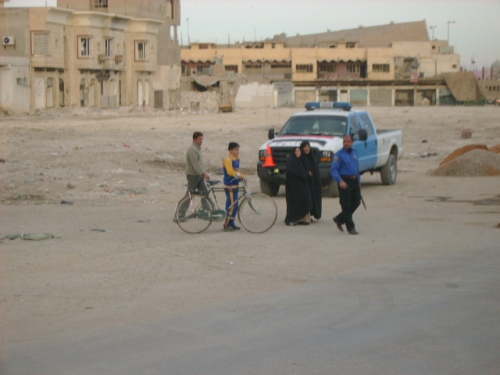
291Iraqi Police in Ramadi Escorting Civilians Across the War Zone of Route Michigan

There are those who believe that all forms of ministry are basically the same and that lessons learned are universally applicable and that somehow all ministries are proclamation oriented.  Unfortunately that is not the case and one of the places that this is true is the Military Chaplain ministry.  This mibnistry is much different than parish or para-church ministries and even different than other institutional ministries such as Police, Fire, Industrial or civilian health care chaplaincy.   It is different in that it is more incarnation versus proclamation. We not only minster to our people but we live among them.  We live the experience of those that we serve, especially in the uncertainly of war and deployments.  Chaplains live in a world where we are fully military officers and fully ministers of our own church or faith tradition. As a chaplain I never lose my calling of being a priest, but I am a priest in uniform, a military professional and go where our nations send me to serve the Sailors, Marines, Soldiers and Airmen who I live among be that overseas, or in the States.

142Always a Priest Eucharist with Advisers in the Far West of Al Anbar

There is always a tension in the military chaplain ministry. This is  especially true when the wars that we are sent to are unpopular at home and seem to drag on without the benefit of a nice clear victory such as VE or VJ Day in World War II or the homecoming after Desert Shield and Desert Storm. There are those that oppose the military chaplaincy on theological or philosophic grounds, usually some manner of absolutist understanding of ministry, church-state relations or social justice considerations.  My purpose is here not to defend military chaplain institutions against such criticism but rather to share the world and tension that military chaplains live in when our nation is engaged in unpopular which some consider unjust or illegal wars.

training team baseIsolated Base Camp for Advisers in Afghanistan

A lot of people have no “ethical” or “moral” qualms about wars that are easy to pigeonhole as just wars, especially if we win quickly and easily.  It is my belief that when things go well and we have easy victories that it is easy for religious people, especially more conservative Christians to give the credit to the Lord for the “victory.”  Unfortunately such “Credit” is given without them ever understanding or sometimes even caring about the human cost of war.   Likewise it is easy for others to give the credit to superior strategy, weaponry or tactics to the point of denying the possibility that God’s involvement.  Conversely and maybe even perversely I have heard some say that God has blessed the use of weapons or tactics that violate principles of fighting a “just war” especially that of proportionality. Such is the case in almost every war and Americans since World War Two have loved the technology of war seeing it as a way to easy and “bloodless” victory. In such an environment ministry can take on an almost “cheer-leading” dimension. It is hard to get around it, because it is a heady experience to be on a winning Army in a popular cause but I do think that many chaplains have a less “cheerleading” approach than many in conservative churches. The challenge for chaplains in such an environment is to keep our ministry of reconciliation in focus. To do so we must care for the least, the lost and the lonely and never forget the victims of war, especially the innocent and the vanquished, as well as our own wounded, killed and their families.

237Iraqi Kids in Al Anbar Province, a couple of months before they could not venture outside because of insurgent attacks, children are never winners in war

We are now seeing the conflict in Iraq winding down and what until this year had been “the good war” in Afghanistan go bad and support for it decline.  Strategy is being debated as how to best “win” the war in Afghanistan even as the United States withdraws from Iraq. The task of chaplains in the current war, and similar wars fought by other nations is different and really doesn’t allow for them to indulge themselves in “cheerleading.” In fact chaplains can themselves through isolation, lack of experience and fear can become more reflective and less “cheerleader” oriented the longer the war goes on without sign of appreciable progress, much less victory.  They feel the onslaught of their soldiers doubts, fears as well as the loss of friends and the chapel congregation through being killed or wounded in action. This  can take a terrible toll even for the most resilient of chaplain. In these wars, sometimes called counter-insurgency operations, revolutionary wars, guerilla wars or peace keeping operations, there is no easily discernible victory. These types of wars can drag on and on, sometimes with no end in sight. Since they are fought by volunteers and professionals, much of the population acts as if there is no war since it does often not affect them, while others oppose the war, all of which can affect the chaplain.

dien_bien_phu paras landingFrench Paratroops Landing at Dien Bien Phu

Chaplains volunteer to go with and place themselves in harms way to care for God’s people in the combat zone or far away from home. While they do this there are supporters of war as well as detractors who have no earthly clue about war or life in the military other then what they see in the media or experienced in peacetime or the cold war. Some supporters often seem more interested in political points of victory for their particular political party than for the welfare of those that are sent to fight the wars. This has been the case in about every war fought by the US since World War II. It is not a new phenomenon. Only the cast members change with the particular war.

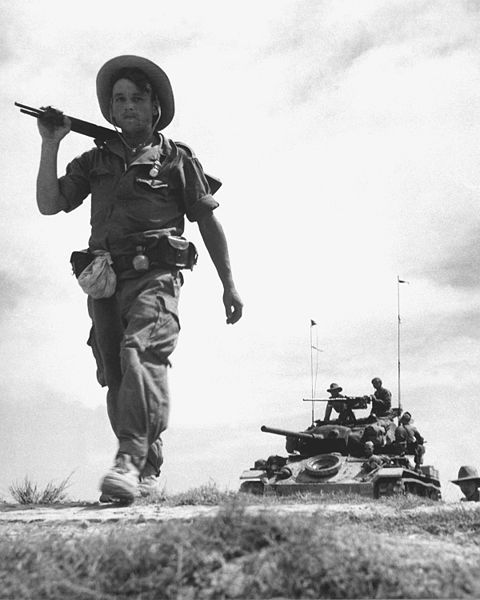
legion indo-chinaForeign Legion Troops in Indochina

In order to somehow make sense of going on we cannot simply think of what is politically expedient for either those who support or want to expand the war, or others who want it ended now, both of which have consequences many of which are bad.  I think that we have to look at history and not just to American history to find answers, not simply answers to how to win or end the war but answers to the consequences that either course of action posits. Thus I think that we can find parallels in other militaries. I think particularly of the French professional soldiers, the paratroops, Colonials (Marines) and Foreign Legion who bore the brunt of the fighting in Indo-China. These men, not all of who were French were placed in a difficult situation by their government and alienated from their own people. In particular I think of the Chaplains, all Catholic priests save one Protestant, at the Battle of Dien Bien Phu, the epic defeat of the French forces that sealed the end of their rule in Vietnam. The Chaplains there went in with the Legion and Paras. They endured all that their soldiers went through while ministering the Sacraments and helping to alleviate the suffering of the wounded and dying. Their service is mentioned in nearly every account of the battle. During the campaign which lasted 6 months from November 1953 to May 1954 these men observed most of the major feasts from Advent through the first few weeks of Easter with their soldiers in what one author called “Hell in a Very Small Place.”

french troops indochinaFrench Troops on the March in Indochina

One author describes Easter 1954: “In all Christendom, in Hanoi Cathedral as in the churches of Europe the first hallelujahs were being sung. At Dienbeinphu, where the men went to confession and communion in little groups, Chaplain Trinquant, who was celebrating Mass in a shelter near the hospital, uttered that cry of liturgical joy with a heart steeped in sadness; it was not victory that was approaching but death.” A battalion commander went to another priest and told him “we are heading toward disaster.” (The Battle of Dienbeinphu, Jules Roy, Carroll and Graf Publishers, New York, 1984 p.239) This can be a terrible burden for the Padre who cares for such men.  Ministry in such places is truly an incarnational experience because there is no place to hide and the chaplain is as vulnerable as his flock.  It is the ministry that places us “in the valley of the shadow of death” where as the Psalmist says we are “to fear no evil for you are with us.” It is the ministry of Good Friday where to all appearances seems that God has abandoned the field and evil has won.

VIETNAM DIEN BIEN PHUFrench Surrender at Dien Bien Phu

Of course one can find examples in American military history such as Bataan, Corregidor, and certain battles of the Korean War to understand that our ministry can bear fruit even in tragic defeat. At Khe Sahn in our Vietnam War we almost experienced a defeat on the order of Dien Bien Phu. It was the tenacity of the Marines and tremendous air-support that kept our forces from being overrun.

legion algeriaLegionaries in Algeria, many French Troops Went from one War in Indochina to another in Algeria only to have the De Gaulle Government throw the Military Victory Away and Cause a Crisis
You probably wonder where I am going with this, back when I first drafted this year and a half ago I wondered too. But here is where I think I am going. We live in difficult of times at home and in Afghanistan.  It home we are mired in an economic crisis clouded by deep political division.  In Afghanistan we are engaged in a hard fight where units we are taking casualties and the mission is being debated.  Sometimes to those deployed and those who returned that their sacrifice is not fully appreciated by a nation absorbed with its own issues.  This of course is not universally true as there a people of all political viewpoints who care for the welfare and attempt to ensure that those who serve are not abandoned as those men who served in Vietnam.  I think that part of the feeling comes from the presentation of the war by the media which tends to focus only on the negative outcomes and not positive things that our soldiers accomplish. That can be discouraging to the men and women on the ground.  One of the most difficult things for me upon my return was to see the bitterness a division in the American people and political establishments and becoming quite depressed about it.   I stopped watching the perpetual news cycle and listening to talk radio.  The hatred, ignorance and crassness of it all was disheartening and I refuse to take any part in something that is so hate filled, power driven and unredemptive.

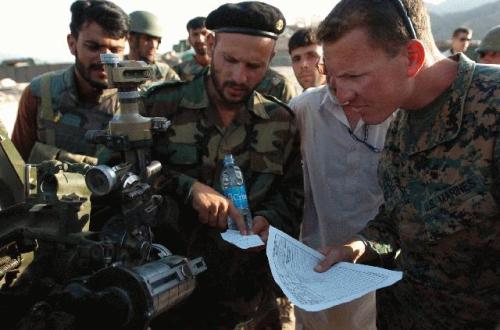
traiining team with afghan armyUSMC Training Team With Afghan Troops

For the French the events and sacrifices of their soldiers during Easter 1954 was page five news in a nation that was more focused on the coming summer. This is very similar to our circumstances today because it often seems that own people are more concerned about economic considerations and the latest in entertainment news than what is going on in Iraq or Afghanistan. The French soldiers in Indo-china were professionals and volunteers, much like our own troops today. Their institutional culture and experience of war was not truly appreciated by their own people.  Nor was it fully appreciated by their government which sent them into a war against an opponent that would sacrifice anything and take as many years as needed to secure their aim.  At the same time their own countrymen were unwilling to make the sacrifices needed to win and in fact had already given up their cause as lost. The sacrifice of French soldiers would be lost on their own people and their experience ignored by the United States when we sent major combat formations to Vietnam in the 1960s. In a way the French professional soldiers of that era have as well as British colonial troops before them have more in common with our force than the citizen soldier heroes of the “Greatest Generation.” Most of the “Greatest Generation” was citizen soldiers who did their service in an epic war and then went home to build a better country as civilians. We are now a professional military fighting unpopular wars and that makes our service just a bit different than those who went before us.  I related to the French troops who fought in Indochina and Algeria as well as our own Vietnam Vets than I do to others.  These is a kinship among us that goes beyond nationality, politics or age.

This is the world in which military chaplains’ minister.  It is a world of volunteers who serve with the highest ideals, men and women who enlist knowing that they will be deployed and quite likely end up in a combat zone. We go where we are sent, even when it is unpopular. It is here that we make our mark; it is here that we serve our Soldiers, Sailors, Marines and Airmen. Our duty is to bring God’s grace, mercy and reconciliation to men and women, and their families who may not see it anywhere else. It is a ministry of reconciliation by the means of incarnation. Many times those outside the military do not understand this. It is a different world full of contradictions and ambiguity.  Such situations even impact the families of those who serve.

When my dad was serving in Vietnam in 1972 I had a Sunday school teacher tell me that he was a “Baby Killer.” It was a Catholic Priest and Navy Chaplain who showed me and my family the love of God when others didn’t. As the country builds to the 2010 mid-term Congressional elections I anticipate that people from all parts of the political spectrum will offer criticism or support to our troops or the war in order to bolster their election chances which do not always coincide with what is in the best interest of the troops or the mission. Chaplains cannot be concerned about the politics nor even the policy as our duty is to be there as Priests, Ministers, Rabbis and Imams for those that we serve. We cannot afford to allow ourselves to be discouraged in caring for our men and women and their families because of all the strife in the body politic.  In addition we must continue on because most churches and other religious communities, even those supportive of our troops really don’t understand the nature of our service or the culture that we represent. We live in a culture where the military professional is in a distinct minority group upholding values of honor, courage, sacrifice and duty which may be foreign or archaic to many Americans, or for those countries with troops and chaplains in Afghanistan or Iraq. We are called to that ministry in victory and if it happens someday, defeat. In such circumstances we must always remain faithful to God as well as to those that we serve.

For those interested in the French campaign in Indo-China it has much to teach us. Good books on the subject include The Last Valley by Martin Windrow, Hell in a Very Small Place by Bernard Fall; The Battle of Dienbeinphu by Jules Roy; and The Battle of Dien Bien Phu- The Battle America Forgot by Howard Simpson. For a history of the whole campaign, read Street Without Joy by Bernard Fall. I always find Fall’s work poignant, he served as a member of the French Resistance in the Second World War and soldier later and then became a journalist covering the Nurnberg Trials and both the French and American wars in Vietnam and was killed by what was then known as a “booby-trap” while covering a platoon of U.S. Marines.

There is a picture that has become quite meaningful to me called the Madonna of Stalingrad. It was drawn by a German chaplain-physician named Kurt Reuber at Stalingrad at Christmas 1942 during that siege. He drew it for the wounded in his field aid station, for most of whom it would be their last Christmas. The priest would die in Soviet captivity and the picture was given to one of the last officers to be evacuated from the doomed garrison. It was drawn on the back of a Soviet map and now hangs in the Kaiser Wilhelm Memorial Church in Berlin where it is displayed with the Cross of Nails from Coventry Cathedral as a symbol of reconciliation. I have had it with me since before I went to Iraq. The words around it say: “Christmas in the Cauldron 1942, Fortress Stalingrad, Light, Life, Love.” I am always touched by it, and it is symbolic of God’s care even in the midst of the worst of war’s suffering and tragedy.

Madonna of StalingradMadonna of Stalingrad

So as you can see I have done a lot of reflecting over the past year and a half. It has been a spiritual journey, an intellectual and academic journey and a personal journey of slowly healing and recovery.  I have gone through some changes in the process which have not been easy, but certainly have deepened my faith even as I struggled and made me much more appreciative of life, love and peace.

I write in order to wrestle with what I have mentioned here, and I try to write something every night. I can full agree with Father Henri Nouwen in his book Beyond the Mirror as to the purpose that writing serves me in my journey.

“These many interruptions calling me ‘beyond’ compelled me to write. First of all, simply because writing seemed to be the only way for me not to lose heart to in the frightening and often devastating interruptions and to hold onto my innermost self while moving from known to unknown places. Writing helped me to remain somewhat focused amid the turmoil and discern the small guiding voice of God’s Spirit in the midst of the cacophony of distracting voices.  But there is a second motivation. Somehow I believed that writing was the one way tom let something of lasting value emerge from the pains and fears of my little, quickly passing life.  Each time life required me to take a new step into unknown spiritual territory, I felt a deep, inner urge to tell my story to others- perhaps as a need for companionship but maybe, too, out of an awareness that my deepest vocation is to be a witness of the glimpses of God I have been allowed to catch.”

pub2Slowly Getting Better

I am healing though it has been at times painful, but faith is returning and I can say that though it has not been easy it has been worth it.  I do hope that what little I do in my work and in my writing will be of help to those who struggle and those who recognize their own need for reconciliation, healing who need to hope again no matter who they are and what their circumstance.

Peace,

Padre Steve+

2 Comments

Filed under Loose thoughts and musings

Memorial Day 2009- Thoughts and Musings

I am again at the Medical Center on duty, but this not a bad thing.   Before I begin my post I want to direct you to the post of the Abbess of the Abbey Normal and her thoughts on this Memorial Day.  Her post is linked here: http://abbeynormalabbess.wordpress.com/2009/05/25/memorial-day-musings/

I Have also posted several links in this article. Peace, Steve+

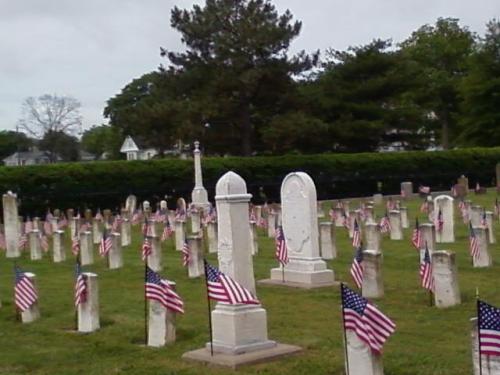
ports hosp cemetary 2Conaway Cemetery Portsmouth Naval Medical Center

I have been thinking a lot about the significance of Memorial Day the past week.  I think about it more now than I used to.  Now I have always thought a lot of it and observed it the best that I could.  Yet having now been “boots on the ground” in Iraq travelling about the battlefield to take care of the spiritual needs of American Marines and Soldiers serving as advisers with the Iraqi Army, Police and Border forces it has more meaning.  I am now a combat veteran.  Last year I joined the VFW.  I came back from the war different, PTSD kind of goons you up sometimes.  I spent most of the past 15 months dealing with this, not sleeping and being in chronic pain.  I’m now doing much better.  In part this is due to the support I have at home and a work and the fact that I am no longer isolated.  Being on staff at our Naval Medical Center has been good for me and I do not resent being the Duty Chaplain on this Memorial Day.  I have far too many wonderful people I work with here to think anything like that.  It is an honor to serve here with such fine people, Physicians, Nurses, Chaplains and other medical and support staff.

ports hospt cemetary 1Another View Conaway Cemetery

Today has been really good no matter how the night goes.  I participated in the annual Memorial Day observance at the historic Naval Cemetery on our grounds.  It is but a mere two acres of land and dates to 1838 when it was established to allow the remains of those who died far from their homes repose. It has Navy Sailors, Marines and their families.  It also holds the remains of Sailors from Great Britain, Russia, Germany, Japan and Brazil who died in the Norfolk area.  Additionally the remains of Sailors of the Confederate States Navy are buried here.  The service was organized by the Local Chapters of the Fleet Reserve Association, supported by the local Boy Scout troops and attended by veterans, active duty members and dignitaries from the City of Portsmouth City Council and a State Senator.   It was a simple yet moving ceremony which involved a wreath-laying as well as Amazing Grace played on the Bagpipes and Taps.  Our Color Guard presented the colors and our Commanding Officer, Rear Admiral Kiser was the guest speaker.  Local news services were on hand to televise it, just as they televised others services throughout the region.  One of these was on the Battleship USS Wisconsin which is the centerpiece of the local maritime museum at Norfolk’s Nauticus venue.

Our hospital is interesting.  It dates to 1826 and is the first Naval and for that matter military hospital in our country.  The motto here is First and Finest. Building One is the original hospital.  It has a glass dome which at one time lighted the operating theater.   It now is our command building with other administrative offices.  The hospital has served in peace and war and was instrumental in the 1850s in caring for the victims of the Yellow Fever epidemic.  It is now a teaching hospital and multi-faceted medical center with a national reputation.

The time at the service was neat as I mixed with our veterans of World War Two, Korea, Vietnam, Desert Storm and the current wars.  Many proudly displayed their medals, ribbons and badges.  When the National Anthem was played these men and women saluted as smartly as when they were on active duty.  Many are involved with local veterans groups and some are volunteers at our hospital taking time to care for the needs of our patients and families.  Among the dignitaries was Councilman Charles Whitehurst who is a member of the small historically black Episcopal Church where I worship.  Mr. Whitehurst enlisted in the Marines in 1955 and rose through the enlisted ranks to Sergeant, was appointed as a Warrant Officer and the Commissioned as an Officer.  He retired as a Major after Vietnam.   Afterward Admiral Kiser was the Grand Marshal of the Portsmouth Memorial Day Parade, which is the oldest and longest running in the nation.   A link to a local station’s coverage of this event is here: http://www.wvec.com/video/index.html?nvid=364992&shu=1

I was able to catch a glimpse of President Obama’s wreath laying at Arlington National Cemetery where in in short and solemn remarks he noted: “Why in an age when so many have acted only in pursuit of narrowest self-interest have the soldiers, sailors, airmen and Marines of this generation volunteered all that they have on behalf of others,” he said. “Why have they been willing to bear the heaviest burden?”

“Whatever it is, they felt some tug. They answered a call. They said ‘I’ll go.’ That is why they are the best of America,” Obama said. “That is what separates them from those who have not served in uniform, their extraordinary willingness to risk their lives for people they never met.”

I think that his remarks were perfect and honored those who serve now and those have gone before us.

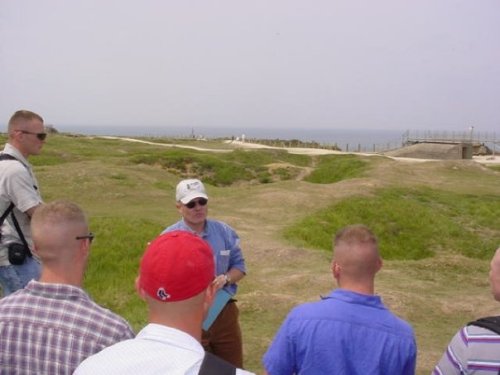
The last service of this type that I attended was at the US Cemetery at Belleau Wood, France. It is the site of the battle in which the Marines in their first battle of World War One turned back the assault of the German Army which was advancing on Paris and launched a counter-attack.  I was with Marines of the Marine Security Forces who were conducting a joint memorial service with French Marines.  The next day I visited Normandy with the Marines and taught classes to them on the battle, looking at it from the German perspective.  The day prior to the service I taught parts of the “staff-ride” of the battlefield discussing various aspects of World War one tactics, weaponry and equipment.

me at normandyWith Marines at Normandy

This is also most likely the last Memorial Day that my father will be alive.  He served as a Navy Chief Petty Officer and retired in 1974.  In 1972 he served “boots on the ground” at the city of An Loc which was surrounded for 80 days by the North Vietnamese Army.  He was my inspiration to serve in the military.  There are many veterans of World War Two, Korea and Vietnam who like him are in the twilight of their lives.  I do pray that all will be remembered this Memorial Day.  I was able to be with him the week before last.  I expect it will be the last time that I see him.

McCains Special BaseballTed Williams as USMC Aviator

One interesting thing that I want to mention before I close was the effort that many professional ball players made back in World Wars One, Two and Korea.  Some of the top players of all time gave up some of their prime playing years to serve.  Christy Matthewson served in the Army in France during World War One. He was gassed and developed Tuberculosis and died at the age of 45 in 1925 never playing again.  Yogi Berra served as a Navy Gunners Mate at D-Day.  Ted Williams served in both WWII and Korea as a Marine Corps fighter pilot.  He lost nearly 5 seasons to his service. One who studies statistics in baseball might want to extrapolate the numbers that Williams might have had if he had played on instead of serving.  Hank Greenberg the first Jewish Major League superstar was drafted in 1940 and released just before Pearl Harbor when Congress voted to send men over 28 home. He then re-enlisted, was commissioned and served in the China-Burma-India Theater.  Joe Dimaggio enlisted in the Army Air Force and served 2 ½ years from 1943-1945. Bob Feller volunteered for the Navy on December 8th 1941 and spent 4 seasons on the USS Alabama as a gun captain. Pee Wee Reese served in the Navy in the Pacific while Jackie Robinson served as an Army Officer and Larry Doby served in the Navy before breaking the color barrier to play Major League baseball.  Whitey Ford, Willie Mays, Eddie Matthews and Ernie Banks were all called up for Korea along with Williams.  Roy Gleason of the Dodgers was the last player to earn the Purple Heart as an Army Sergeant in Vietnam. Of course the world has changed.  We have an all volunteer military no current Major League players, or for that matter NBA, NFL or NHL players serve in the military but many donate time and money to support military members and their families including Giant’s pitcher Barry Zito and Orioles pitcher Jamie Walker.  Working with USAA these men have founded a non-profit group called “Strikeouts for Troops.  A link to that organization is here:  http://video.yahoo.com/watch/3462236/9644105

Pat Tillman a defensive back for the Arizona Cardinals enlisted after 9-11 and was killed during a “friendly fire” incident while serving as an Army Ranger in Afghanistan.  He has been the only NFL, MLB, NHL or NBA player to volunteer for active duty in the current war.

Here are a few links to some baseball and veteran stories:

Link to video of Baseball Hall of Fame Player Monte Irvin talking about his service in World War Two: http://www.youtube.com/watch?v=OKERxyAbg1w and link to Indians and A’s player Lou Brissie’s WWII experience: http://www.youtube.com/watch?v=SFwAXNR9q-k Jerry Coleman on his Marine Corps time as a dive bomber pilot: http://www.youtube.com/watch?v=wUlBgBxaWoY

Bob Feller’s, Buck O’Neal and Phil Rizzuto’s WWII memories:  http://video.search.yahoo.com/video/play?p=bob+feller+american+veterans+&n=21&ei=utf-8&js=1&fr=yfp-t-105&tnr=20&vid=0001463818096 and here: http://www.youtube.com/watch?v=CRyILkx_c2U

Link to Rick Monday’s saving the flag at Dodger Stadium in April 1976:  http://www.youtube.com/watch?v=IrV8QPQAhxo&feature=related

goldstar

Let us remember our veterans, especially those who gave the last full measure to serve our country. Support the Honor and Remember flag campaign as well as the “Blue Star” and “Gold Star” families whose loved ones currently serve or have died on active duty in this time of war.

Peace, Steve+

1 Comment

Filed under Baseball, History, iraq,afghanistan, Military, PTSD, vietnam