

Major General Patrick Cleburne C.S.A.
“When the prophet, a complacent fat man,
Arrived at the mountain-top
He cried: “Woe to my knowledge!
I intended to see good white lands
And bad black lands—
But the scene is gray.”
Stephen Crane
Friends of Padre Steve’s World,
If you read my work you know how much I condemn the cause of the Confederacy and the institution of slavery. I also make no bones about the continued use of the symbols of the Confederacy by some who do not use them simply to honor the memory of dead soldiers but rather to further inflame political and racial divides. As a descendant of slave owners and Confederate officers I do understand the tension. THe family patriarch on my paternal side was an unreconstructed Rebel. He was a slave owner who served as a Lieutenant in the Confederate cavalry during the war and refused to sign the loyalty oath to the United States. For this he lost his lands and plantation. There are some who sincerely desire to honor their ancestors, and I think that is honorable, but to stand by an indefensible cause as my ancestors did is another matter to me.
I agree with historian George Santayana who wrote “Loyalty to our ancestors does not include loyalty to their mistakes.” I think we have to be able to deal with that, and I do not only mean for the descendants of slave owners and Confederates. Certainly the descendants of those in the North who cooperated with, enabled and profited from slavery, and then the entire movement to reenslaved freed blacks by other means after the war have nothing to be proud of in this regard. I readily admit that many political, industrial and religious leaders in the North were little better than many Southern leaders (see my articles Accomplices to Tyranny: The North & Reconstruction and Corporate Slavery & the Black Codes ). Both of these articles highlight how Northerners, especially politicians from both political parties and industrialists who took in those injustices committed against blacks. The same people on both sides of the Mason-Dixon Line dis similar things to poor whites who they referred to as “White Trash” as well as Native Americans, women later other immigrants like the Chinese. As we get closer to Labor Day I am going to spend some time on how American workers of all races were treated during that time, but not today.
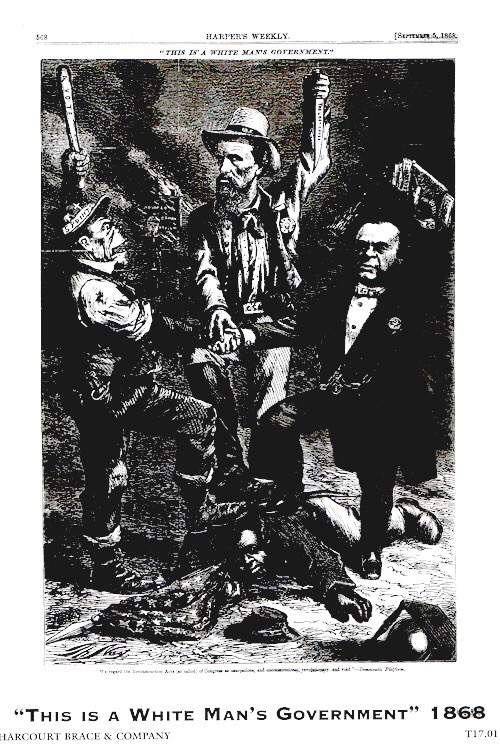
Instead I want to talk about shades of gray. As my regular readers know I believe that people are the most important part of history, and that people are seldom fully good or fully evil. In fact most people, saints and sinners alike live lives of some shade of gray. Thus I believe that good people can sometimes support evil causes and otherwise evil people can end up on the right side of history by supporting a good cause. We have other people that we treat as icons who had dark places in their lives, and did things that were not honorable; history is full of them. The problem is that we like to look at people as totally good or totally evil, it’s easier that way.
That is the case when we look at men who fought for the Confederacy and the Union during the Civil War, and since I have spent a lot of time hammering the cause that Confederate soldiers fought to defend, even those who opposed secession and slavery; it is only right that I spend some time talking about the shades of Confederate Gray. To do this we have to be able to put aside the notion that every Confederate was a racist or White Supremacist.
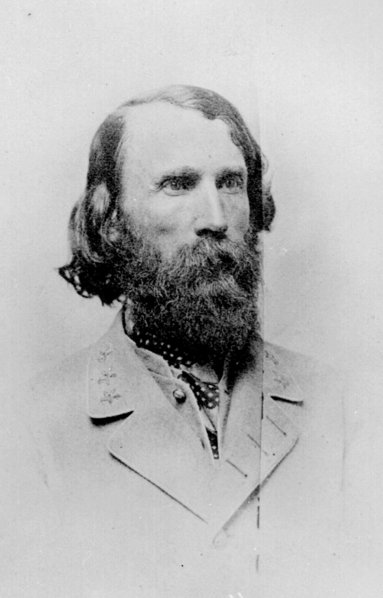
Lieutenant General A.P. Hill
Those who fought for the Confederacy spanned the spectrum of belief and often fought for reasons other than slavery and some of their stories are tragic. Lieutenant General A.P. Hill opposed slavery before the war and opposed secession but because his state and his family seceded he went south. In 1850 he was on leave from the army and learned of a lynching in his home town of Lynchburg, he wrote “Shame, shame upon you all, good citizens…Virginia must crawl unless you vindicate good order or discipline and hang every son of a bitch connected with this outrage.” Hill was incredibly brave and led his troops honorably throughout the war. Sadly he died in action just days before the end of the war at Petersburg and his widow took no part in any commemorations of the Lost Cause after the war.
Brigadier General Lewis Armistead who led Pickett’s troops to the High Water mark at the Battle of Gettysburg is another tragic figure. He was a widower who lived a life of much sorrow and loneliness and the army was his life; his best friends were in the army. His very best friend, Winfield Scott Hancock and his wife Almira remained with the Union, their parting in California at the beginning of the war is heartrending, and it was Hancock’s troops who inflicted the mortal wound on him.
Major General Patrick Cleburne, called the “Stonewall Jackson of the West” is another. He was an Irish immigrant to Arkansas. He had no slaves, opposed the institution and fought because the people he lived among were his friends. He was the first Confederate to broach the subject of emancipating the slaves, and for this he was ostracized, and not promoted to Lieutenant General and command of a Corps. He died in action at the Battle of Franklin in 1864.
There are others, Lieutenant General James Longstreet who was probably the best corps commander on either side during the war, quickly reconciled, became a Republican and served in various capacities in government after the war. For this, as well as needing a scapegoat for the loss at Gettysburg Longstreet was treated as a modern Judas Iscariot by many in the South, especially among the proponents of the Lost Cause. Major General William “Little Billy” Mahone was another like Longstreet who joined the Republican Party and suffered a fair amount of criticism for his stance.
Another more interesting personality was Colonel John S. Mosby, the legendary “Gray Ghost” of Virginia whose “Raiders” caused Union forces much difficulty throughout the war. Mosby is interesting, he did not support slavery, was not a proponent of secession but felt that it was his duty to fight for his state. This was not unusual because in that era most people in all parts of the country, felt much more loyalty to their own state, or even city or county than they did to the national government. He and his troops served honorably and after the war too he supported reconciliation, he became a Republican and a friend and supporter of Ulysses Grant. He was not ashamed of his service and stated after the war, “I am not ashamed of having fought on the side of slavery—a soldier fights for his country—right or wrong—he is not responsible for the political merits of the course he fights in” and that “The South was my country. But he also condemned those in the South who denied that slavery was the cause of the war. All this made him anathema and he had to live the rest of his life outside the south or serving in various overseas diplomatic postings.
There were other shades of gray among Confederates, some like Lieutenant General Jubal Early who was not a slave owner and vehemently opposed secession in the Virginia legislature until the state seceded. When it did he joined the Confederate forces and became one of the fiercest supporters of Confederate independence who ever lived. In fact Early, though pardoned by President Andrew Johnson, never reconciled with the United States and became the leading proponent of the history of the Lost Cause. Early’s Corps Commander Lieutenant General Richard Ewell was more circumspect, he owned and admitted the mistakes he made during the war as a commander, and he fully reconciled to the United States. Before he died Ewell “insisted that nothing disrespectful to the United States Government be inscribed upon his tomb.”
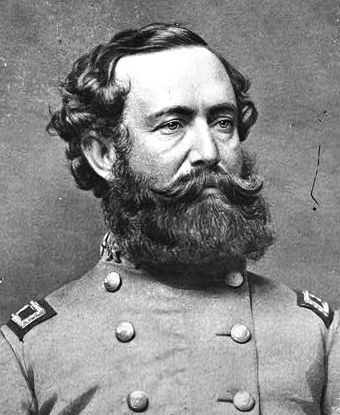
Lieutenant General Wade Hampton
Lieutenant General Wade Hampton of South Carolina was one of the richest men in the South if not the country when war came. He supported secession, owned hundreds of slaves, but for a slave owner he was relatively decent in the way he treated his slaves. He fought through the war and returned home to nothing. He became involved in politics, remained very much a White Supremacist, but that being said built bridges to African American political and religious leaders when he ran for governor, even as the terrorist bands of the Red Shirts did all they could to ensure that blacks were harassed, disenfranchised and even killed to keep them from voting. To the surprise of the militants Hampton adopted a moderate course, kept blacks in his cabinet and in state offices, kept a regiment of African American militia in Charleston and opposed the black codes and Jim Crow. For this he was run out office. When he died his last words were “God bless my people, black and white.”
One the other hand there were men like Lieutenant General Nathan Bedford Forrest who helped found the Ku Klux Klan, and even led some of the early violence against blacks, and purchased black prisoners for use on his plantation after the war. However, he evolved on the issue, and left the Klan in 1869 and in 1875 two years before his death began to promote racial harmony. He spoke about that to a group of African Americans, where he received a bouquet of flowers from a black women he was condemned throughout the South. An article in the Charlotte Observer noted “We have infinitely more respect for Longstreet, who fraternizes with negro men on public occasions, with the pay for the treason to his race in his pocket, than with Forrest and Pillow, who equalize with the negro women, with only ‘futures’ in payment.”
There were many Confederate Soldiers who fought and died because they did believe in White Supremacy and hated the North, that too is a fact, and many of those who lived carried on that hate until they died.

There were others who never reconciled and who rewrote history to minimize the importance of slavery and White Supremacy to the Confederate cause, these included Jefferson Davis, his Vice President Alexander Stephens, and Brigadier General Henry Benning of Georgia. All had spearheaded the drive for secession, spoken and wrote forcefully for not only preserving but expanding slavery Stephens said quite clearly in 1861 what the Confederacy was founded upon in his Cornerstone Speech “Our new Government is founded upon exactly the opposite idea; its foundations are laid, its cornerstone rests, upon the great truth that the negro is not equal to the white man; that slavery, subordination to the superior race, is his natural and normal condition.” However, after the war all of them sought to distance themselves from this and change the narrative to Constitutional, economic and political reasons.
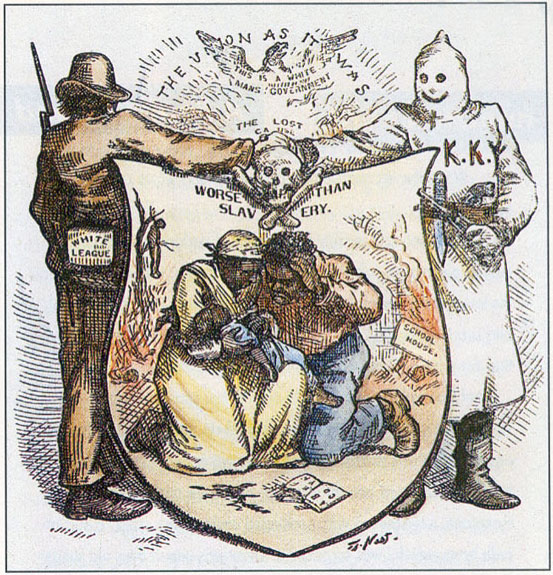
There were also many Confederate soldiers for whom the war never ended and they did continue it by other means, either as members of any of the various terrorist groups such as the Klan, the Red Shirts, the White League, the White Liners, or any of the related groups who terrorized and killed blacks and their white supporters, be they Northern “Carpetbaggers” or Southern “Scalawags.”
I could go on longer or in more detail on any of these men and probably could write a book about any of them, but I wanted to show that even when a cause is wrong, that we cannot condemn people as groups, and we also have to take into account people’s evolution on issues. The evolution of Wade Hampton and Nathan Bedford Forrest was far different than that of Jubal Early and others who supported the Lost Cause. I wish my family patriarch had been more like Mosby, Hampton, Hill, Ewell, Cleburne, or even Forrest rather than Jubal Early and others who never reconciled and in some cases continued to use violence to oppress others.
Shades of gray. In history you can’t live with them and you can’t live without them.
Peace
Padre Steve+

 The Inglorius Padre Steve's World