Tag Archives: t e lawrence

The Feet of Clay of the Best and Brightest

lawrence-3

General Allenby: [leafing through Lawrence’s dossier] “Undisciplined… unpunctual… untidy. Knowledge of music… knowledge of literature… knowledge of… knowledge of… you’re an interesting man there’s no doubt about it.” 

Character is a terrible thing to judge. Mostly because those doing the judging also suffer from flaws in their own character and truthfully I don’t think that any of us are exempt from doing this at least sometimes. Dietrich Bonhoeffer noted: “Nothing that we despise in other men is inherently absent from ourselves.” I think is is somewhat freeing to realize that.

Yet somehow the temptation is for us to stand as judge, jury and character executioner on those that we find wanting. As a culture we like tearing down those that we at one time built up, in fact we have industries that exist in order to build up and then destroy people.

It is a rather perverse proclivity that we have as human beings, especially if we can find some kind of religious justification for it.

I think that is part of the complexity of the human condition. As a historian I find that the most exalted heroes, men and women of often great courage both moral and physical, intellect, creativity, humanity and even compassion have feet of clay.

I find that I am attracted to those characters who find themselves off the beaten track. Visionaries often at odds with their superiors, institutions, and sometimes their faith and traditions. Men and women who discovered in themselves visions for what might be and pursued those visions, sometimes at the costs of their families, friends, and in quite a few cases their lives.

Throughout my studies I have been attracted to men as diverse as Peter the Apostle, Martin Luther, Thomas Aquinas, T.E. Lawrence, Dietrich Bonhoeffer, Erwin Rommel, Admiral Horatio Nelson, Abraham Lincoln, John F Kennedy, Dwight D Eisenhower, Franklin Roosevelt, Dr Martin Luther King Jr, Jackie Robinson, Teresa of Avila, Nelson Mandela, Vaclav Havel and Emir Feisal Hussein of the Arab Revolt. All had flaws and the list could go on and on and on.

Some of these men and women, saints and sinners alike had fits of temper and violence, others sexual escapades, mistresses, affairs, greed, avarice, and a host of other unseemly characteristics.  Some of them stretched law and morality in their quest to achieve their goals. But all are considered great men and women.

Feet of clay. Who doesn’t have them? But them I think that I would rather have feet of clay than a heart of stone, an an unchallenged mind, or a lack of courage to do the right thing even when it does not directly benefit me.

I love the cinema classic Lawrence of Arabia. Peter O’Toole plays Lawrence in a most remarkable manner, showing his brilliance, courage, diplomatic ability and understanding of the Arabs with whom he served.

There are many people, leaders and others that we encounter in life or that we study. Even the best of the best are flawed and there is no such thing as a Saint who never sinned. But we love destroying them and their memory when to our “surprise” when we find that their hagiographers built them into an idol.

I am a great believer in redemption and the weight of the whole of a person’s life. Thus I try to put the flaws as they are called in perspective and their impact both positive and negative in history. Studying in this way gives me a greater perspective on what it is to be human and to place my own clay feet in appropriate perspective.

As Lawrence said: “Immorality, I know. Immortality, I cannot judge.”

Peace

Padre Steve+

Leave a comment

Filed under film, History, philosophy

Hell is Where they will Reside: The Expanding War Against ISIL

image.adapt.960.high

“This war differs from other wars, in this particular: We are not fighting armies but a hostile people, and must make old and young, rich and poor, feel the hard hand of war.” William Tecumseh Sherman

Note: Please know, I have been to war, I have seen its devastation and heartache and I came back changed from the experience. I hate it. I served in Iraq with the Iraqis in support of our advisors to them. For me the war is personal, I left a huge part of my soul in that unfortunate nation. 


That being said, despite being a progressive who hates war, I am also a realist. I am not one that finds any romance or glory in war, but I know that sometimes it becomes unavoidable. In the past few months I have written about the nature of war, the kind of war we are now engaged in with ISIL and some of the ethical and moral compromises that could easily be made in such a war.

Likewise I realize that we as Americans must take responsibility for the mess that the Bush administrated created in Iraq. We cannot hope to have any peace with justice, nor succeed in the current war against the Islamic State, unless we are honest about the lies that were told to get us into Iraq, and the horrible policy decisions after we succeeded in toppling Saddam Hussein that brought about the collapse of order, the insurgency and the Iraqi Civil War that brought Al Qaeda into Iraq, a country that they had not previously been welcome. 

Thus what I write here is a continuation of those thoughts and I encourage you to look at those articles which can be found at the following links on this page: 
Iraq, ISIS and Al Qaeda: Sowing the Wind…

Iraq 2014: A Disaster Long in the Making

9-11-2014 War Without End…

The Islamic State and the New, Old Nature of War

War is Cruelty, and You Cannot Refine it… The War Against ISIL

Prepare for a Long and Brutal Ideological War Against the Islamic State

Can you Live With It? The Moral Costs of the War Against the Islamic State

Iraq and the Middle East 2013: Lessons from T. E. Lawrence

ISIL: A Generational Problem in Which the Enemy Gets a Vote

Inshallah Iraq (إن شاء الله) Maybe Someday things will be Better

isis3-840x550

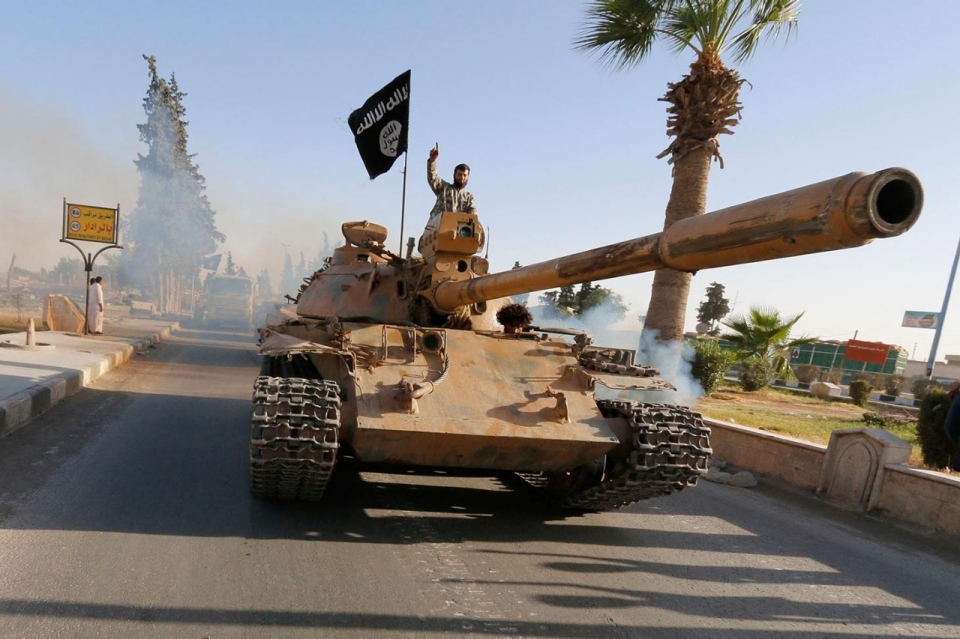
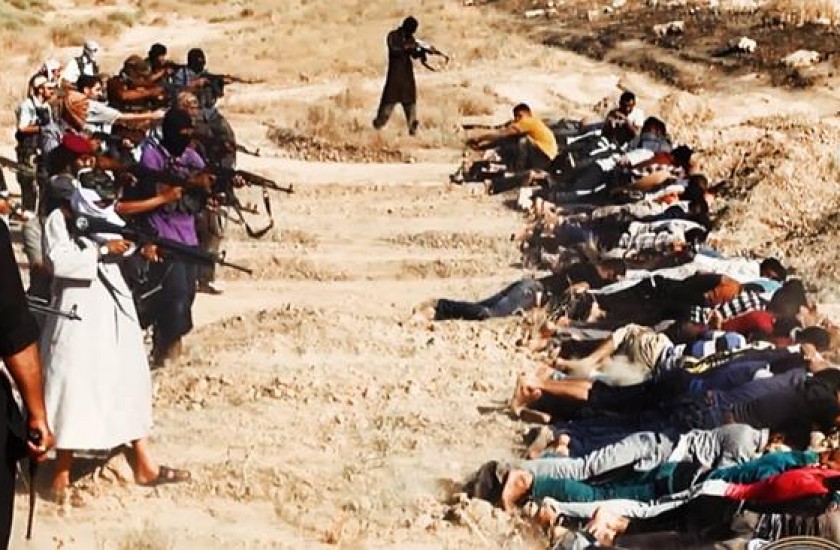
The American war against the Islamic State is entering a more sustained mode. Air strikes are occurring daily, thousands of advisors have arrived, backed by Army aviation assets to protect American interests at Baghdad International Airport and the U.S. Embassy complex, and the Chairman of the Joint Chiefs of Staff has again alluded to the possibly of American ground troops engaging ISIL at the side of Iraqi troops.

Whether most of want to admit it or not, and the latter is more descriptive of the vast bulk of Americans, we are at war.  It is a war which we have been fighting  for over thirteen years now. President Obama had hoped that our involvement in Iraq was at and end that that the Iraqis could handle their own affairs. But the hope was misplaced, and now this war has been extended indefinitely by the actions of the Islamic State and the announced intentions of President Obama to fight it. It will become much worse than people want to believe that it will, regardless of whether it is a long or a short war, and even a “short” war will likely extend into the next Presidential administration.

us-fa-18-meask

Americans have grown up for the past twenty years with hi-tech wars that with a few exceptions of terrorism inflicted on American civilians have been waged by a comparatively small professional military; a military that at any given time over the last 20 years has comprised less than one percent of the American population. As such war is a spectator sport for most Americans, we watch it on television, or on You Tube videos on the internet, but it is a distant thing, happening to others that doesn’t touch us too deeply because most of us think that we have no skin in the game. In fact people that bet on baseball have more skin in the game than most Americans do in the current war, but that will probably change.
ISIS-MAP

Since I have written much about that military at its sacrifices in the war that began on September 11th 2001 I am not going to belabor that today. Instead I am going to go back to the nature of war, even wars that may be fought in self-defense and with just cause. It was General William Tecumseh Sherman who wrote:

“You cannot qualify war in harsher terms than I will. War is cruelty, and you cannot refine it; and those who brought war into our country deserve all the curses and maledictions a people can pour out…”

Chris Hedges wrote: “Violence is a disease, a disease that corrupts all who use it regardless of the cause,” and as Clausewitz noted of war’s nature, that it is: “a paradoxical trinity-composed of primordial violence, hatred and enmity…”

We try to use language to soften war; to make it more palatable, but to do so is an Orwellian charade that is deceptive and destructive to the soul. Dave Grossman, the army infantry officer who has spent his post military life writing about the psychology of war and killing wrote:

“Even the language of men at war is the full denial of the enormity of what they have done. Most solders do not “kill,” instead the enemy was knocked over, wasted, greased, taken out, and mopped up. The enemy is hosed, zapped, probed, and fired on. The enemy’s humanity is denied, and he becomes a strange beast called a Jap, Reb, Yank, dink, slant, or slope. Even the weapons of war receive benign names- Puff the Magic Dragon, Walleye, TOW, Fat Boy, Thin Man- and the killing weapon of the individual soldier becomes a piece or a hog, and a bullet becomes a round.”

Likewise Thucydides wrote:

“Words had to change their ordinary meaning and to take that which was now given them. Reckless audacity came to be considered the courage of a loyal supporter; prudent hesitation, specious cowardice; moderation was held to be a cloak for unmanliness; ability to see all sides of a question incapacity to act on any….”

Such language gives those who have never been to war but cannot live without it to bring it on, but as Sherman noted: “It is only those who have neither fired a shot nor heard the shrieks and groans of the wounded who cry aloud for blood, more vengeance, more desolation. War is hell.”

President Obama in his address to the nation, and the world on the eve of September 11th talked of a war against the Islamic State, using far more diplomatic, restrained and less warlike language than did Vice President Biden who said:

“As a nation we are united and when people harm Americans we don’t retreat, we don’t forget. We take care of those who are grieving and when that’s finished, they should know we will follow them to the gates of hell until they are brought to justice because hell is where they will reside. Hell is where they will reside.”

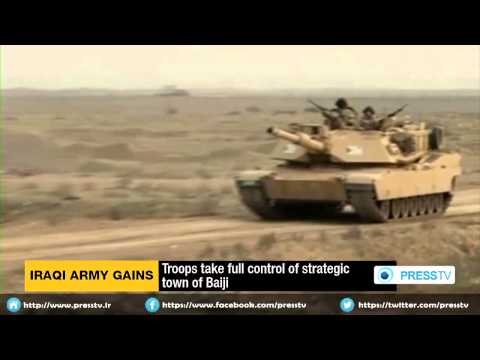
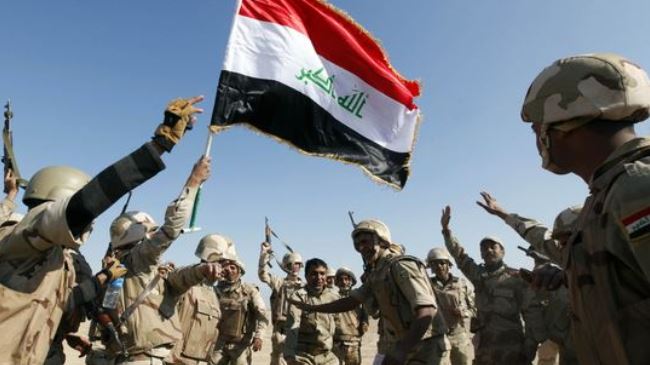
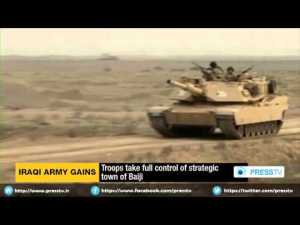
I commend the President for his humanity and desire to fight the Islamic State with a matter of restraint, and though our efforts have been limited to air strikes and reengaging with the Iraqi military to retrain it for the fight, it does appear that at least in Iraq the policy is showing signs of working. ISIL troops are having a hard time moving about the battlefield and their more conventional units are taking a beating from the air, while Iraqi and Kurdish forces are slowly beginning to have more success, the Iraqi military having just relieved the beleaguered garrison of the massive Baiji oil refinery complex.
Iraqarmybaiji

This in a sense is part of ISIL’s conundrum, they desire to conquer territory and subjugate people. To do that they need to be able to use conventional military tactics and equipment, not simply using terrorist strikes and the element of surprise to overwhelm unsuspecting or demoralized Iraqi security forces. It is possible that they are now overextend and have reached what Clausewitz termed their “culminating point.” We will have to see if that is the case, and only time will tell.

air strike footage

U.S. Air Strike on ISIL Position 

However, American restraint, particularly with a hawkish, newly elected Republican Congress, of whom many new members are highly militant Christians who will have no compunction in killing Moslems, be they good Moslems or terrorist thugs like ISIL or Al Qaeda; will last as long as the Islamic State is unable or unwilling to strike at American civilians in the American homeland, American interests in a country that is not in the war zone, or an American ship or military installation at home or abroad.

But once that happens, and it will eventually happen, the recent attacks in Canada serving as a foretaste of what will happen here, the pretense of restraint will drop, and what Vice Biden President said will become our goal, even if we do not officially say it. But once those restraints are passed, the war will get really messy. Ethicist and philosopher Michael Walzer wrote in his book Just and Unjust Wars:

“We don’t call war hell because it is fought without restraint. It is more nearly right to say that, when certain restraints are passed, the hellishness of war drives us to break with every remaining restraint in order to win. Here is the ultimate tyranny: those who resist aggression are forced to imitate, and perhaps even to exceed, the brutality of the aggressor.”

The problem with this war is that it has lasted so long already, if we consider American involvement in Iraq as going back to 2003. Long wars such as these are detrimental to the nations and peoples that fight them, as Sun Tzu wrote: “There is no instance of a nation benefitting from prolonged warfare.”

As such the longer we drag this war against the Islamic State and other similar groups out, the longer the war continues, the crueler it will become, the more damage it will do to our civil liberties, our economy, and even more importantly to the spirit of our nation. One can only look at the Patriot Act and related measures undertaken in the name of national security after 9-11-2001 and recall the words of President John F. Kennedy who said in respect to the epidemic of loyalty oaths and restrictions on civil liberties enacted in the 1950s:

“We have also seen a sharpening and refinement of abusive power. The legislative investigation, designed and often exercised for the achievement of high ends, has too frequently been used by the Nation and the States as a means for effecting the disgrace and degradation of private persons. Unscrupulous demagogues have used the power to investigate as tyrants of an earlier day used the bill of attainder.

The architects of fear have converted a wholesome law against conspiracy into an instrument for making association a crime. Pretending to fear government they have asked government to outlaw private protest. They glorify “togetherness” when it is theirs, and call it conspiracy when it is that of others.”

Thus the place that we now find ourselves is not good. On one hand by using restraint the war goes on and on, war without end, but if we embrace Sherman’s realism and admit that “War is cruelty. There’s no use trying to reform it. The crueler it is, the sooner it will be over” is that we will imitate or exceed the brutality of the Islamic State. Either way, we lose something of ourselves. But as Abraham Lincoln said “There’s no honorable way to kill, no gentle way to destroy. There is nothing good in war. Except its ending.”

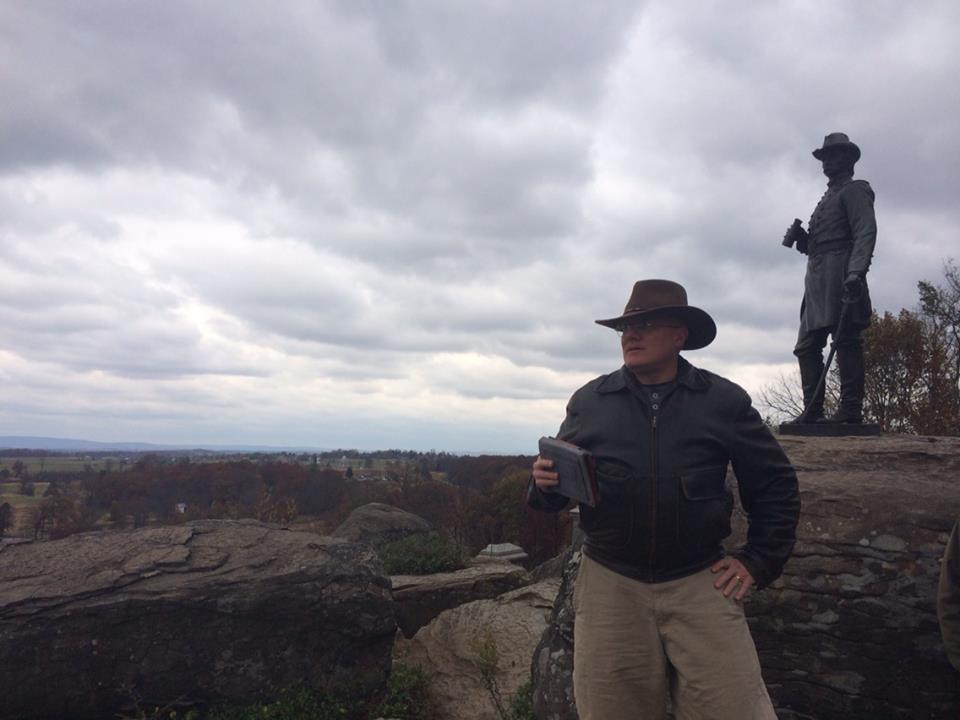
The young Union hero of Little Round Top at the Battle of Gettysburg, Colonel Strong Vincent wrote his wife about how he believed the Union had to defeat the Confederacy. His words were much like Sherman’s and in dealing with ISIL I would hope that the American, Iraqi and coalition forces will take them to heart in combating ISIL: Vincent wrote:

“We must fight them more vindictively, or we shall be foiled at every step.  We must desolate the country as we pass through it, and not leave a trace of a doubtful friend or foe behind us; make them believe that we are in earnest, terribly in earnest…” 
d41be44594

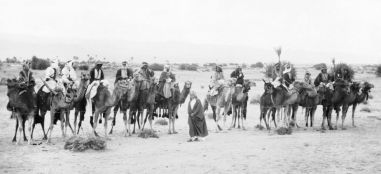
Lawrence with Bedouin after capturing Aqaba 

That is an uncomfortable thought and philosophy, it goes against the grain, it seems terribly brutal; but it is the only philosophy of war that the leaders and jihadists of the Islamic State understand. We may not yet understand it, but I think that in time we and the Iraqis will. However, the lead cannot be taken by us or even if we are “successful” in defeating ISIL, another group will be back and doing the same things; just as ISIL filled the vacuum left by the collapse of Al Qaeda Iraq in 2008.
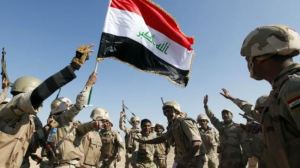
IRAQ_-_1115_-_Stato_islamico

Iraqi Soldiers after retaking Baiji

That is a danger that T.E. Lawrence advised his fellow British officers serving with the Bedouin during the Arab Revolt in 1917 and 1918. It is advice that we need to remember as we assist the Iraqis and Kurds in their fight. That is why this must be an Iraqi and Kurdish fight. When and if the Iraqis and Kurds embrace this philosophy of total war against ISIL, if they are willing to fight ISIL vindictively and desolate every ISIL stronghold, will they bring peace to their country. We can aid them in thee fight, but we cannot win this for them. Lawrence wrote:

“Do not try to do too much with your own hands. Better the Arabs do it tolerably than that you do it perfectly. It is their war, and you are to help them, not to win it for them. Actually, also, under the very odd conditions of Arabia, your practical work will not be as good as, perhaps, you think it is.”
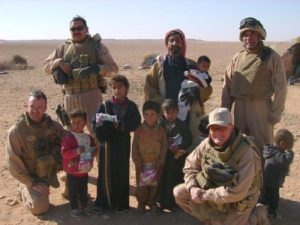
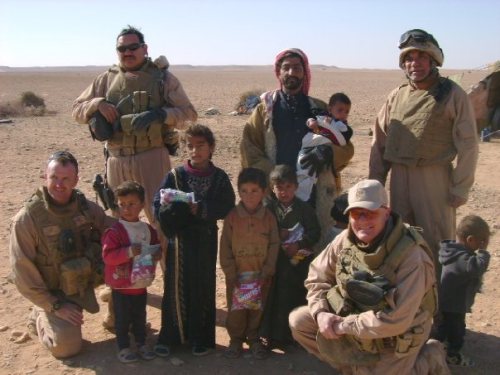
bettertimes

The Author with Bedouin on Syrian Border December 2007

My hope is that somehow, when this is war is done that there will be peace and reconciliation. I would like to see this in my lifetime, but it may take another generation or two that we will finally be able to establish peace by making those who are our enemies our friends. I hope for such a day, because I know that Chris Hedges is all too correct about the corrupting and devastating effect of violence on all that rely on it to achieve their goals and Sun Tzu’s wisdom in noting that prolonged warfare benefits anyone. As Major General Smedley Butler wrote:

“What is the cost of war? what is the bill? This bill renders a horrible accounting. Newly placed gravestones. Mangled bodies. Shattered minds. Broken hearts and homes. Economic instability. Depression and all of its attendant miseries. Back -breaking taxation for generations and generations.”

If you ask me I do not think that we or the people of Iraq can keep adding to that bill.

Peace

Padre Steve+

1 Comment

Filed under ethics, History, iraq,afghanistan, Military, News and current events

Epiphanies and Struggles at 2000

10570298_10152872503382059_5058681841617456899_n

I posted an article last night about three Union heroes of the Battle of Little Round Top in the Civil War; Colonel Strong Vincent, Colonel Joshua Lawrence Chamberlain and Colonel Patrick “Paddy” O’Rorke. That was the 1999th article that I have posted here, this is number 2000.

I have wondered for weeks what I was going to write about on such an auspicious occasion, and I thought of a lot. However, recent events have brought me to an emphany based on my own experiences to be sure, but also through the study of the post Civil War life of Joshua Chamberlain and Gouverneur Warren as well as the British leader of the Arab Revolt in the First World War, T.E. Lawrence.

The frailties and struggles of these men with life after war in relation to their calling, chosen vocations and family lives have stuck a chord in me that the mere study of them as iconic military leaders had never done. Well over a century after their death of Chamberlain, the lives and words of these men have spoken to me in ways that few things, including the words of scripture and the lives of the great saints have ever done,

I am currently re-writing another article about on another Union hero of that battle, Brigadier General Gouverneur Warren. I expect that after I complete that and get some edits from my wife Judy that it should be posted Sunday or Monday.

I find it fascinating and even ironic how much I learn from the lives of these men, especially the two men who serviced to battle to both great glory and heartache.

If you are a regular reader of this site you probably have picked up how much that I relate to complex, contradictory and often troubled historical figures. My world is a world of various shades of gray. My heroes are usually flawed men, men of great brilliance and intelligence who may on some occasions rise to greatness and other times struggle in the most basic elements of life.

I have written many times and shared my struggles with faith, belief in God, acceptance, meaning and depression. These are things that honestly I did not struggle with, or that I could have imagined before I returned from Iraq. If you had told me in early 2007 that I would struggle with these things I would have told you just how wrong that you were.

I cannot do that now. Although I have been very successful in life as well as my military and academic career I often feel like a complete failure. I struggle to believe that I am not, especially in regard to my service in the Chaplain Corps, an organization that since my return from Iraq I have felt disconnected from and in some cases rejected by. Now I do have to own that as my own issue. In my more recent interactions with some senior Chaplains I have found that my perception may not be true of how I am viewed may not be true.

Alexander Dumas wrote in his literary classic The Count of Monte Cristo:

“Moral wounds have this peculiarity – they may be hidden, but they never close; always painful, always ready to bleed when touched, they remain fresh and open in the heart.”

That kind of got thrown in my face when the contractors preparing the annual Navy Chaplain Corps professional development training conference contacted me. They plan on using my story from the DOD Real Warriors website as a “discussion starter during the training event. The irony is that I told a number of people recently that I felt like the “poster child” for PTSD that no one wants to admit exists. Now it looks like I might be the poster child that everyone sees. The irony is too rich.

bedouin

I understand from a senior Chaplain who attended the validation of the project, that it was perceived in a very positive manner by the senior leaders of the Chaplain Corps present. My friend whose judgment I trust was surprised by how I perceived that I have been seen by senior leaders. Truthfully my feelings are quite negative and I admit based on how depressed that I have been that those feelings might not be correct.

I am humbled, but kind of embarrassed as you can imagine for a number of reasons, first that I could be wrong about my perception. That is the easier conundrum. The second is that though I have tried to be transparent in sharing my experience on this website as well as in person the fact is that in every case where others picked up and ran with my story, it was on their initiative, not mine. All of those events,including the Real Warriors video and story were scary, because I had to “drop my shields” so to speak and let others tell and interpret my story. Honestly if I was to become famous for anything I would prefer it to be my writing about history, ethics, and of course Gettysburg.

As I told the people for the contracting team I am happy to help in any way that I can so long as those who hear my story are inspired, or even guilted into ensuring those in the Chaplain Corps and those that we serve are cared for and do not experience the hell of what I went through when I returned from Iraq feeling so rejected, abandoned and uncared for by my peers and superiors. So even though the prospect of my story being shared among a community that I have little trust of, I am willing to allow them to use it, so long as it helps ensure that others do not experience what I did on their return from war.

My wife Judy told me that I need to stop my negative self talk, which I probably should try to do but find it hard to do. However,I guess from my clinical experience that I should know better. However, being chronically depressed for years while suffering from PTSD does skew one’s perspective on life and reality. It also can effect how they believe that they are perceived by others, usually in ways that correspond to their own beliefs.

For me I often feel as T.E. Lawrence wrote after he had left the Royal,Air Force where he had served for twelve years under an assumed name following his voluntary exit from the world stage. Lawrence wrote:

“You wonder what I am doing? Well, so do I, in truth. Days seem to dawn, suns to shine, evenings to follow, and then I sleep. What I have done, what I am doing, what I am going to do, puzzle and bewilder me. Have you ever been a leaf and fallen from your tree in autumn and been really puzzled about it? That’s the feeling.”

I do understand what Lawrence meant by this, but I understand what Judy says too. When she says tells me to stop the negative self talk, I know what she says to be true, That being said many times I have a hard time believing it or acting upon it. Of course Judy is quite correct, despite how I feel I am capable of being logical and analytical. That was something that I was always good at doing, thus in spite of myself she has me trapped.

It is somewhat fascinating to me that coming up on seven years after I left Iraq, a country that I would gladly go back to again to help my Iraqi friends that I still seem to be emotionally stuck at the place that I returned. The quote by Captain Picard that I led this article with is an excellent place to end tonight.

Honestly I just want to work my way through this, but I struggle. Since I now seem to be rambling I will close for the night.

Thank you as always for taking the time to include my writings into your life. All of our time is limited and the fact that many of you chose to spend time reading what I write means a great deal to me.

So until tomorrow,

Peace

Padre Steve+

Leave a comment

Filed under Loose thoughts and musings, Military, ministry, PTSD

They Thanked us Kindly and Made Their Peace: Veteran’s Day 2014

481801_10151367001287059_1003164983_n

“We were fond together because of the sweep of open places, the taste of wide winds, the sunlight, and the hopes in which we worked. The morning freshness of the world-to-be intoxicated us. We were wrought up with ideas inexpressible and vaporous, but to be fought for. We lived many lives in those whirling campaigns, never sparing ourselves: yet when we achieved and the new world dawned, the old men came out again and took our victory to remake in the likeness of the former world they knew. Youth could win, but had not learned to keep, and was pitiably weak against age. We stammered that we had worked for a new heaven and a new earth, and they thanked us kindly and made their peace.”

T.E. Lawrence

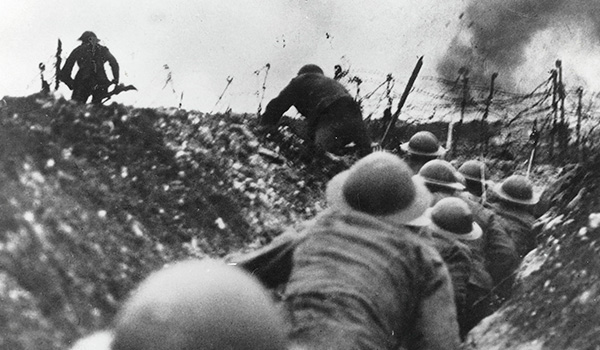
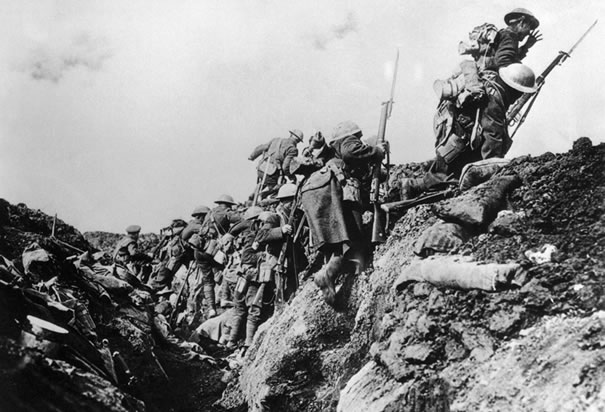
In November 1914 millions of soldiers were fighting in horrible conditions throughout Europe. From the English Channel to Serbia, Poland and Galicia; French, British, German, Austro-Hungarian, Serbian and Russian troops engaged each other in bloody and often pointless battles. Often commanded by old men who did not understand how the character of war had changed, millions were killed, wounded, maimed or died of disease.

After four years, with the Empires that were at the heart of the war’s outbreak collapsing one after the other there was an armistice. On the eleventh  hour, of the eleventh day, of the eleventh month the shooting stopped and the front lines quieted. By then over 20 million people, soldiers and civilians alike had died. Millions more had been wounded, captured, seen their homes and lands devastated or been driven from there ancestral homelands, never to return.

The human cost of that war was horrific. Over 65 million soldiers were called up on all sides of the conflict, of which nearly 37.5 million became casualties, some 57.5% of all soldiers involved. Some countries saw the flower of their manhood, a generation decimated. Russia sustained over 9 million casualties of the 12 million men they committed to the war, a casualty rate of over 76%. The other Allied powers suffered as well.  France lost 6.4 million of 8.5 million, or 73%, Great Britain 3.1 million of nearly 9 million, 35%; Italy 2.2 million of 5.6 million, 39%. Their opponents, Germany, Austria-Hungary and the Ottoman Empire suffered greatly. Germany sustained 7.1 million casualties of 11 million men called up, or nearly 65%, Austria 7 million of 7.8 million, 90% and the Ottoman Empire 975,000 of 2.8 million or 34% of the soldiers that they sent to war.

It was supposed to be the War to end all War…but it wasn’t, it was the mother of countless wars.

pic_giant_021814_SM_Lessons-of-World-War-1

It has been a century since that bleak November of 1914, and ninety-six years since the time where for a brief moment, people around the world, but especially in Europe dared to hope for a lasting and just peace. But that would not be the case…

The victors imposed humiliating peace terms on the vanquished, be it the Germans on the Russians, or the Allies on Germany and her partners. The victors divided up nations, drew up borders without regard to historic, ethnic, tribal or religious sensibilities. But then, it was about the victors imposing themselves and their quest for domination, expanding colonial empires and controlling natural resources rather than seeking a just and lasting peace. The current war against the Islamic State is one of the wars spawned by the Sykes-Picot agreement which divided the Middle East between the French and the British at the end of the war. It was a war that keeps on giving.

Of course we have known the disastrous results of their hubris, a hubris still carried on by those who love and profit by war…war without end which continues seemingly with no end in sight.

I am a veteran of Iraq and Operation Enduring Freedom, as well as the Bosnia mission and the Cold War. My dad was a Vietnam veteran who enlisted during the Korean War. I serve because it is the right thing to do, not because I find war romantic or desirable. It is as General William Tecumseh Sherman said “Hell.” If called to go back to Iraq, where I left so much of my soul, I would in a heartbeat.

canadian-soldiers-going-over-trench

Today we pay our day of homage to our honor veterans, especially in the United States, Great Britain, Canada and France. But sometimes it seems so hollow, for in all of our countries those that serve are a tiny minority of those eligible to serve, who are much of the time ignored or even scorned by those that feel that providing for them after they have served is too much of a burden on the wealthy who make their profits on the backs of these soldiers, sailors, marines and airmen.

I have walked about since returning from Iraq often in a fog, trying to comprehend how a country can be at war for so long, and there is such a gap between the few who serve and the vast majority for whom war is an abstract concept happening to someone else, in places far away, and whose experience of war is its glorification in video games. Personally I find that obscene, and feel that I live in a foreign world. Erich Maria Remarque wrote in All Quiet on the Western Front: 

“I imagined leave would be different from this. Indeed, it was different a year ago. It is I of course that have changed in the interval. There lies a gulf between that time and today. At that time I still knew nothing about the war, we had been only in quiet sectors. But now I see that I have been crushed without knowing it. I find I do not belong here any more, it is a foreign world.”

Similarly Guy Sager wrote in his classic The Forgotten Soldier: 

“In the train, rolling through the sunny French countryside, my head knocked against the wooden back of the seat. Other people, who seemed to belong to a different world, were laughing. I couldn’t laugh and couldn’t forget.”

Major General Gouverneur Warren wrote to his wife two years after the American Civil War:

“I wish I did not dream that much. They make me sometimes dread to go to sleep. Scenes from the war, are so constantly recalled, with bitter feelings I wish to never experience again. Lies, vanity, treachery, and carnage.”

Sometimes I find it obscene that retailers and other corporations have turned this solemnity into another opportunity to profit. But then why should I expect different? Such profiteers have been around from the beginning of time, but then maybe I still am foolish enough to hope for something different. Please don’t get me wrong, I do appreciate the fact that some businesses attempt in at least some small way to thank veterans. I also know there are many businesses and business owners who do more than offer up tokens once a year, by putting their money where their mouth is to support returning veterans with decent jobs and career opportunities; but for too many others the day is just another day to increase profits while appearing to “support the troops.”

As Marine Corps legend and two time Medal of Honor winner Major General Smedley Butler Wrote:

“What is the cost of war? what is the bill? “This bill renders a horrible accounting. Newly placed gravestones. Mangled bodies. Shattered minds. Broken hearts and homes. Economic instability. Depression and all of its attendant miseries. Back -breaking taxation for generations and generations. For a great many years as a soldier I had a suspicion that war was a racket; not only until I retired to civilian life did I fully realize it….”

But the marketers of war do not mind, almost Orwellian language is used to lessen its barbarity. Dave Grossman wrote in his book On Killing:

“Even the language of men at war is the full denial of the enormity of what they have done. Most solders do not “kill,” instead the enemy was knocked over, wasted, greased, taken out, and mopped up. The enemy is hosed, zapped, probed, and fired on. The enemy’s humanity is denied, and he becomes a strange beast called a Jap, Reb, Yank, dink, slant, or slope. Even the weapons of war receive benign names- Puff the Magic Dragon, Walleye, TOW, Fat Boy, Thin Man- and the killing weapon of the individual soldier becomes a piece or a hog, and a bullet becomes a round.”

There is even a cottage industry of war buffs, some of who are veterans seeking some kind of camaraderie after their service, but most of whom have little or know skin in the real game, and at no inconvenience to themselves. As far as the veterans I understand, but as for the others I can fully understand the words of Guy Sager, who wrote:

“Too many people learn about war with no inconvenience to themselves. They read about Verdun or Stalingrad without comprehension, sitting in a comfortable armchair, with their feet beside the fire, preparing to go about their business the next day, as usual…One should read about war standing up, late at night, when one is tired, as I am writing about it now, at dawn, while my asthma attack wears off. And even now, in my sleepless exhaustion, how gentle and easy peace seems!”

dscn0064

It was to be the War to end all war” but I would venture that it was the war that birthed countless wars, worse tyrannies and genocides; That war, which we mark the end of today, is in a very real and tragic sense, the mother of the wars that have followed. War without end…Amen.

As so to my friends, my comrades and all that served I honor you, especially those that I served alongside. We are a band of brothers, no matter what the war profiteers do, no matter how minuscule our number as compared to those who do not know what we do, and those who never will.  We share a timeless bond and no-one can take that away.

n671902058_1153829_4642-2

I close with the words of a German General from the television mini-series Band of Brothers which kind of sums up how I feel today. The American troops who have fought so long and hard are watching the general address his troops after their surrender. An American soldier of German-Jewish descent translates for his comrades the words spoken by the German commander, and it as if the German is speaking for each of them as well.

Men, it’s been a long war, it’s been a tough war. You’ve fought bravely, proudly for your country. You’re a special group. You’ve found in one another a bond that exists only in combat, among brothers. You’ve shared foxholes, held each other in dire moments. You’ve seen death and suffered together. I’m proud to have served with each and every one of you. You all deserve long and happy lives in peace.

In hopes of peace,

Padre Steve+

Leave a comment

Filed under History, Military, News and current events, philosophy, Political Commentary, shipmates and veterans, world war one

ISIL: A Generational Problem in Which the Enemy Gets a Vote

295_26912117058_5652_n

I have been writing much in recent days about the war that we are now in against the Islamic State, or ISIL.  Today Secretary of defense Hegel and Chairman of the Joint Chiefs of Staff General Martin Dempsey briefed the Senate Armed Services Committee about the developing strategy to defeat ISIL. They both echoed what I have been writing, that this is not going to be a short and easy war. It was the kind of briefing that Secretary Rumsfeld, Paul Wolfowitz and others should have given Congress before launching the Iraq war in 2003.

Unlike Rumsfeld and others who plainly concocted a fairy tale about the character, length and cost of the war which they and their propagandists in the media deceived the American public into supporting that war, this was a briefing conducted by realists who did not paint beautiful picture of just how easy it will be to win this war, and how it really won’t be over until it’s over. Retired Marine Corps General James Mattis very wisely said: “No war is over until the enemy says it’s over. We may think it over, we may declare it over, but in fact, the enemy gets a vote.”

In fact the aftermath of that 2003 invasion opened a Pandora’s box of chaos, and opened the door to what T.E. Lawrence warned about in 1919: “A Wahabi-like Moslem edition of Bolshevism is possible, and would harm us almost as much in Mesopotamia as in Persia…” ISIL is exactly that, a fulfillment of Lawrence’s warning.

Unfortunately no one really likes realists, they rain on people’s ideological parades and no one likes to have their parade rained on. Both men recognize that after the past thirteen years of war, as well as the massive upheaval spawned in the region in large part because of it, and the many other crises  that the American military and our NATO allies are having to confront, that American military and diplomatic options are less than optimal and as General Mattis said the enemy gets a vote. As Winston Churchill said:

“Never, never, never believe any war will be smooth and easy, or that anyone who embarks on the strange voyage can measure the tides and hurricanes he will encounter. The statesman who yields to war fever must realize that once the signal is given, he is no longer the master of policy but the slave of unforeseeable and uncontrollable events…. Always remember, however sure you are that you could easily win, that there would not be a war if the other man did not think he also had a chance.”

General Dempsey cautioned the Senators that this was not going to be a short or easy effort. He noted as any realist would : “It’s a generational problem, and we should expect that our enemies will adapt their tactics as we adjust our approach.” 

They outlined a number of elements of the strategy to include the continued air campaign, coordination with the Iraqis, the advisory mission and the diplomatic efforts being made to build an alliance, as well as to build up “moderate” Syrian rebel forces that are functioning under some kind of “moderate” authority, whatever that is, and if there is such a thing in Syria I hope we find it.

The fact is there is nothing easy about any of these options, even the advisory piece is fraught with danger and the potential of being expanded into a ground combat operation. President Obama has promised not to enter into a ground war, but remember the enemy, as well as the other participants in war get a vote. General Dempsey acknowledged this when he told the committee: “If we reach the point where I believe our advisors should accompany Iraqi troops on attacks against specific ISIL targets, I’ll recommend that to the president.” Yes, the decision to commit troops in a ground combat role is ultimately that of the President as Commander in Chief, but the Congress and the American people need to be part of the decision making process and get a vote. If Congress fails to weigh in on this, and either vote for committing troops, or putting limitations on military action, they will have failed in one of their chief constitutional duties.

General Dempsey also noted the nature of the air campaign that is being conducted and which will be conducted in Syria, saying: “we will be prepared to strike ISIL targets in Syria that degrade ISIL’s capabilities. This won’t look like a ‘shock and awe’ campaign because that is simply not how ISIL is organized, but it will be a persistent and a sustainable campaign.” Part of this is due to ISIL as General Dempsey said, but also as he later noted the growing mismatch between policy ends and the means available to deal with them including the will of Congress to provide those means. Dempsey warned of the danger if the “will to provide means does not match the will to pursue ends,”  a time bomb that the austerity minded Congress foisted on the nation through sequestration in 2012. 

Dempsey was cautiously optimistic in his assessment:

“Given a coalition of capable, willing regional and international partners, I believe we can destroy ISIL in Iraq, restore the Iraq-Syria border and disrupt ISIL in Syria…ISIL will ultimately be defeated when their cloak of religious legitimacy is stripped away and the populations on which they have imposed themselves reject them. Our actions are intended to move in that direction.”

General Dempsey recognized that American military power alone cannot solve this situation and that ultimately if ISIL is to be defeated and destroyed, those people that they have conquered need to rise up and reject them. I think that is possible, but it may take years of suffering and oppression at the hands of ISIL for those people to rise up against them. The Sunni did it in Anbar in 2006-2009 to help turn around the Iraq campaign, but they did so on the basis that their rights would be respected and that they would have a real voice in the Shi’ite dominated Iraqi government. Instead they were tossed aside by the Maliki government making them far more apprehensive and unwilling to go all in on defeating ISIL as they did its predecessor.  The Sunni attitude is much like that of the Arabs who rebelled against the Turks, of whom T. E. Lawrence wrote:

“The Arabs rebelled against the Turks during the war not because the Turk Government was notably bad, but because they wanted independence. They did not risk their lives in battle to change masters, to become British subjects or French citizens, but to win a show of their own.”

This is the reality and it is not pretty. Reality sucks, but as Mark Twain said

“Reality can be beaten with enough imagination.”

Peace

Padre Steve+

1 Comment

Filed under Foreign Policy, History, iraq,afghanistan, middle east, Military, national security, Political Commentary, War on Terrorism

9-11-2014 War Without End…

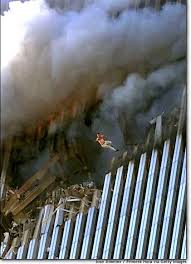
9-11 jumpers

“We have not reached the limit of our military commitments…” T.E. Lawrence (Mesopotamia 22 August 1920 in the Sunday Times)

Thirteen years after the Al Qaeda attacks on the World Trade Center and Pentagon in which nearly 3000 Americans were killed and the American response against Al Qaeda and its Taliban hosts in Afghanistan a month later we enter a new phase of war against old and familiar as well as new and frighteningly brutal enemies.

Of course the war was extended to Iraq by the Bush Administration, pursuing the goal of toppling Saddam Hussein and his non-existent weapons of mass destruction. That extension of the war, which so reminds me of what T.E. Lawrence wrote about the British adventure in Mesopotamia in 1920 has led to the creation of a much more ruthless and capable enemy than Al Qaeda ever was and strengthened our old adversary Iran in ways that it could not have done itself. Lawrence wrote of the British effort:

“The people of England have been led in Mesopotamia into a trap from which it will be hard to escape with dignity and honour. They have been tricked into it by a steady withholding of information. The Bagdad communiqués are belated, insincere, incomplete. Things have been far worse than we have been told, our administration more bloody and inefficient than the public knows. It is a disgrace to our imperial record, and may soon be too inflamed for any ordinary cure. We are to-day not far from a disaster.”

Like the Bush administration the British reasons for going into Mesopotamia were cloaked in the words of liberation and protection, only from the Turks, not Saddam. Lawrence noted in words that are hauntingly familiar to those that paid attention to the American war in Iraq:

“Yet our published policy has not changed, and does not need changing. It is that there has been a deplorable contrast between our profession and our practice. We said we went to Mesopotamia to defeat Turkey. We said we stayed to deliver the Arabs from the oppression of the Turkish Government, and to make available for the world its resources of corn and oil. We spent nearly a million men and nearly a thousand million of money to these ends. This year we are spending ninety-two thousand men and fifty millions of money on the same objects.”

Perhaps the most poignant and relevant note on the ill thought out Bush decision to invade Iraq in 2003 was by Thucydides who wrote:

“Think, too, of the great part that is played by the unpredictable in war: think of it now, before you are actually committed to war. The longer a war lasts, the more things tend to depend on accidents. Neither you nor we can see into them: we have to abide their outcome in the dark. And when people are entering upon a war they do things the wrong way round. Action comes first, and it is only when they have already suffered that they begin to think.”

Last night President Obama announced his intention to fight the brutal and extreme fighters of the Islamic State, or ISIL by building a broad coalition spearheaded by American airpower and intelligence agencies. Of course the President’s announcement was met with cries of not being enough by some on the political right, and with equal vehemence by opponents on the political left who feel that he has displayed cowardice in the face of “9/11 fear mongering” and the implementation of a policy of “perpetual war.” Of course the answer is more complex than anyone wants to admit, the critics on both sides are right in some things and wrong in some things, and the fact is there are no good answers.

Sadly because of what we and the British and others have done in Iraq and Syria the President is left with few options, mainly those that are bad, and those that are worse. So now, as the President, with a fair amount of judiciousness and caution commits the country to continue and maybe even expand the war that began thirteen years ago, it is time to remember those burning towers, the flailing bodies of our fellow Americans and others falling to their deaths to escape the surety of death in those flames and those who have perished in Iraq and Afghanistan; not just Americans, but coalition partners and the people of those lands who had no say in what Osama Bin Laden and Al Qaeda did or what Saddam did or didn’t do; and who went from the oppression of Saddam or the Taliban, to unending civil, tribal and religious wars, in which they were caught in the middle, the Iraqis in a war that was devised by President Bush and his advisors.

There are always results and today we are dealing with the results of at least a century of incredibly short sighted decisions of Western as well as Arab leaders which have blighted the Middle East and caused immense suffering to the peoples of the region. Now because of those decisions there exists a terrorist organization which is rapidly becoming a state in the areas of Iraq and Syria that it occupies. Islamic scholar Reza Aslan described the Islamic State on CNN Monday:

“Number one, you do have to respond militarily to ISIS soldiers and fighters. These guys are fighting a war of the imagination, a war that they think is happening between the forces of good and evil. There is no negotiation. There’s no diplomacy. There’s nothing to talk about with these guys. They have to be destroyed.”

Sadly, Aslan is right in his analysis of the Islamic State. Because of that fact, on this thirteenth anniversary of the 9-11-2001 attacks we and the already suffering people of the region will see war continue without end. One wonders how many generations it will last and what the cost on lives and treasure will be.

481801_10151367001287059_1003164983_n

Peace

Padre Steve+

1 Comment

Filed under History, iraq,afghanistan, middle east, national security, News and current events

The Opportunity to Act Upon a Dream

400236_10151328400862059_541742014_n

“All men dream: but not equally. Those who dream by night in the dusty recesses of their minds wake up in the day to find it was vanity, but the dreamers of the day are dangerous men, for they may act their dreams with open eyes, to make it possible.” T E Lawrence

This week I will be part of a panel discussion entitled “Paths for Achieving Readiness Tomorrow” at the Military Officer’s Association of America “Warrior Family Symposium” in Washington DC. The opportunity came about through the Department of Defense’s Real Warriors campaign which I have been working with since 2011 when they did a video feature on my struggle with PTSD. The panel will be moderated by WUSA Channel 9’s news anchor Derek McGinty and will include a number of mental health care providers or program directors; I will be the only chaplain speaking at the symposium. The panel will discuss available and developing programs designed to provide insight, skills and assistance for veterans, service members, their children and families – to aid them through handling reintegration, combat/operational stress, and mental health concerns; and provide them and the community, the understanding of the art of being present.

I am a bit nervous about presenting despite having been very open and transparent about my struggles with PTSD since beginning this website back in 2009. That is not so much because I don’t know my material, or what to say, but rather because I am an introvert and find writing to be less stressful than talking about my experiences in front of a big group of people. Part of this is also related by my need for safety as I am often very anxious in big groups of people that I don’t know, and because I have so much emotional investment in the subject of getting those who deal with the trauma of war and their families the help that they need.

After some of my experiences in attempting to get help myself in the military mental health care system, some of which have been more damaging than helpful, especially recently I know how scary attempting to get help can be. Likewise, I fully understand the profound stigma that many military members, especially those of more senior ranks who have invested their lives in military service, feel when they admit to dealing with these issues.

While the military has attempted to get rid of the stigma of seeking mental health treatment, even for PTSD the fact of the matter is that the stigma still exists. A very senior enlisted leader in an elite community told me following the suicide of a true naval hero who suffered from untreated PTSD and probably TBI as well who we both served with: “it’s hard when they say if you have issues and they are known that you can still have a successful career, but you will never be promoted or selected to a critical position, again.” The ironic thing was that the leader that committed suicide asked me when he took command of the unit I was in “where does a chaplain go to get help?” He obviously knew the reality of the stigma, even for chaplains. Sadly, I have to confess that as a Chaplain, Priest and clergyman there is a huge stigma to being a broken or flawed clergyperson, especially in the institutions of the church and chaplaincy. We clergy tend to take better care of our other parishioners than we do of each other and most clergy, be they in parish work, denominational structures or institutional ministry report a sense of isolation and lack of care from men and women who should be their colleagues.

I did not expect this invitation and I do hope and pray that what I say will be of help to the attendees and to those that struggle with PTSD, TBI, Moral Injury and other combat trauma or stress related issues. I dream that when I retire from the Navy, whenever that happens to be that I will be able to be an advocate and spokesman for those who suffer from these injuries. Maybe this opportunity will provide me a network of sorts to prepare for that dream.

As T.E. Lawrence said that dreamers that dream with their eyes open are dangerous, because they may act with open eyes to make those dreams possible, and I am one who does that. I have ideas and experiences that I think can be of help to others walking this path and their families. Likewise, I have a passion for trying to get people the help they need and even more importantly provide a safe place where they know that they can be honest. Admiral James Stavridis said: “overall, I think that’s an obligation to share your ideas.”

My experience is a bit more diverse than your average clergyman, mental health provider or military member. I combine my theological, philosophical, ethical and pastoral care insights, with being a caregiver to those that suffer, while struggling with the effects of PTSD, sometimes more effectively than other times. All of this is tempered by the realism that comes from 33 year military career and my academic training as a historian; both of which enable me to place these things in a broader context.

So anyway I will follow up with something tomorrow night and hopefully report out on my experience at the symposium on Thursday, as I expect to be on the road late Wednesday night returning from D.C.

I do appreciate your thoughts and prayers.

Peace

Padre Steve+
4 Comments

Filed under mental health, Military, PTSD

The Islamic State and the New, Old Nature of War

bilad ash shaam

I am a realist when it comes to human nature and the reality of the evil that human beings can do. I have been to war, and personally I can think of nothing worse than more war. For me war is part of the reality that I live with, and which I am reminded of every time I try to sleep. That being said, a new war is gaining in intensity and threatening to blow away what is left of the old world order.

For most modern Americans and others living in the West, war is an often abstract concept regulated to small bodies of professionals fighting actions far away, of which we only catch occasional glimpses of on television or the internet. For most Americans and others in the West, modern war has become a spectator sport, and one far less interesting to most than either American or European football matches.

We in the West have been protected from the savage nature of war for the better part of six decades, with the sole possible exception being Vietnam, when the press had nearly unfettered access to the battlefields and the troops fighting the war. That war was a staple of the six o’clock news on a daily basis for a decade, bringing the war home in almost real time, and that coverage as well as the large numbers of Americans killed and wounded coming home from the war triggered a public backlash against it that helped bring the American involvement to an end.

The government and the military changed the way that war has been covered since, now reporters are vetted and closely supervised, even when they are imbedded with the troops. When the war in Iraq began to go bad, even the return of those killed in action was largely off limits. During the Iraq War many news programs took on the character of cheerleaders as Saddam was toppled. The media only slowly adjusted to the reverses brought about by the failed strategy of the Bush administration in Iraq as the falsehoods that brought about the invasion were revealed and the Iraq Civil War and insurgency spread like wildfire.

As such most people, including political, business, media elites, and even military theorists fail to understand the essential and unchanging, character, nature and complexity of war. As British theorist Colon S. Gray so bluntly points out: “Some confused theorists would have us believe that war can change its nature. Let us stamp on such nonsense immediately. War is organized violence threatened or waged for political purposes.” 1 If we fail to understand that we cannot understand the ongoing wars, to include that being waged by the Islamic State, or Caliphate in Iraq and Syria.

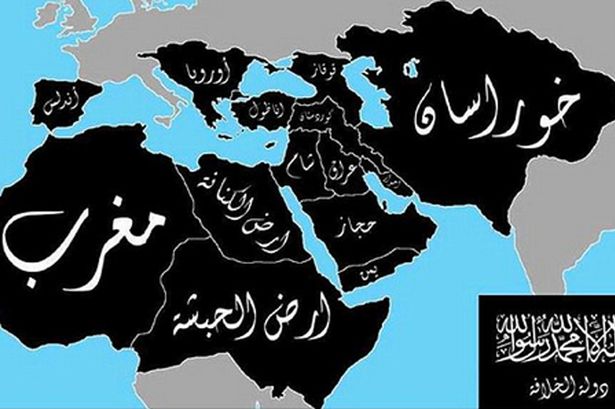
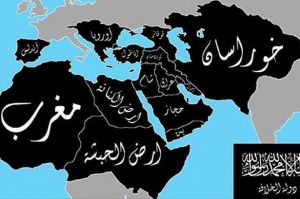
This war that the Islamic State is waging is bigger than most of us understand or want to believe. It is not simply about toppling the Assad regime, nor even taking Baghdad, or even about gaining control of the oil of the Middle East, though each is a goal for the Islamic State.

The larger and much more ambitious goal of the ISIS leadership; that of toppling the Saudi monarchy, which ISIS feels is corrupt and heretical, and the occupation of Mecca, Medina and ultimately Jerusalem, the three most holy sites in Islam. The Puritanical and violent Wahhabi Islam practiced by ISIS rightly understands as so many other Wahhabi fundamentalists have throughout the years; that the possession of these sites, especially Mecca and Medina, give them both legitimacy and standing as the preeminent Islamic government in the World.

The House of Saud allied itself with the founder of Wahhabi Islam in the 1700s, but it was not until the 1920s when the British Indian Office backed the Saudi against the other tribes of the Arabian Peninsula that Wahhabi Islam had a stable base to reach out and touch the rest of the world. As the Saudis became more affluent and connected to the world through oil and the global economy some leading Saudis have tried to moderate their Wahhabi beliefs, modernize the Kingdom, even allowing women a few rights, and to accommodate more progressive beliefs. In the 1970s this brought about the assassination of King Faisal in March 1975 and the seizure of the holy sites of Mecca by extremists in November of 1979. That, coupled with their military alliance with the United States after the Gulf War brought about more opposition from the more radical Wahhabi including Osama Bin Laden whose Al Qaeda network spawned ISIS.

ISIS has found its greatest success in exploiting failures of many of the despotic and totalitarian leaders of Arab states, divisions in Islam, foreign influences and the seemingly hopeless plight of Arabs to overcome poverty and oppression in those countries to advance their cause and promote their ideology. Their brand of Islam which teaches that almost anything is an idol enables them to destroy historical sites, cemeteries, houses of worship and archeological treasures belonging to Christians, Jews, Buddhists and even to other Moslems.

Terrorism and terrorist groups have not generally been non-state actors in the world wide political drama, however, that being said, even non-state actors have strategic, ideological and political goals to which their violence is directed. The unique nature of ISIS is that what most of us assumed to be yet another non-state terrorist group is becoming an embryonic state with its own economic assets, media arm coupled with defined military and political-religious goals, both against other Moslems and the West. Is is morphing before our very eyes from a non-state entity to a hybrid entity with character traits of a non-state and a state actor, especially as it takes control of more and more territory in the Tigris-Euphrates basin of Syria and Iraq.

The message of ISIS to all, including other Moslems, is to convert to their understanding of Islam or die. It is the same kind of message that other religious extremists at the helm of governments have used for millennia, sadly including many Christians.

The fact that the Islamic State is aspiring to become not just a non-state actor, but to place itself as a dominant power on the world stage makes it different. It has the capability of operating in the open where it physically controls cities or regions, as well as in the shadows in countries viewed by them as the enemy. It will most likely adapt its tactics as the situation dictates. Against weaker, or politically unstable neighbors, it will use more conventional means and asymmetrical warfare. However, against enemies who have the power to strike them from afar such as the United States, they will use the asymmetrical means of various types of terrorism; traditional bombings, kidnappings, hijackings and assassinations, the use of any kind of WMD that they can obtain and even cyber-terrorism to attack financial institutions or critical infrastructure.

The war that the Islamic State is preparing for is a throwback to the heady days of Moslem conquest from the 7th to the 15th Centuries. But unlike those days where early Moslems were interested in such things as classical Greek learning, the preservation of historic sites or advances scientific or mathematical learning, the Islamic State is bent on destroying all vestiges of other peoples, groups or religions. Because their absolutist and apocalyptic beliefs allow no compromise, they can and will ruthlessly pursue their religious, ideological and political goals using terror as a tool.

We in the West have not faced something like this in a very long time. War is not just a military and political endeavor, “it is social and cultural… and must reflect the characteristics f the communities that wage it.” 2 The leaders of the Islamic State understand this fact all too well, that is a major reason why they are attracting new Jihadists around the world. However, we in the United States in Europe are on the whole, so detached from such matters that we do not understand the savage nature of war, or the motivations groups like the Islamic State. To us they are barbarous and a throwback to times where our ancestors waged wars of religion and ideology to conquer, convert and enslave unbelievers.

There are many politicians that seem to believe that the Islamic State can be crushed quickly by US and allied forces. However, history shows that such religious-political-ideological movements do not die easily, even when mercilessly attacked by superior military forces.

Those that think a series of surgical strikes by aircraft, cruise missiles or drones; or attacks by Special Forces will eliminate ISIS as a threat do not understand the nature of that beast. We have become enamored of the technology that we use to make war, and we often forget the preeminence of the human dimension. Technology changes rapidly, the nature of the people that employ it seldom changes.

The West must, for human rights and freedom and not for imperialist, economic or even the mission of spreading democracy, we must be prepared for a long and difficult war that will be waged in the most brutal of manners by all sides. We must realize that there will be a terrible cost such a war, economic and human to be sure, people will die and economies will suffer, but worse there will be a cost to our individual and corporate psyche.  This war will eventually have a profound effect on all  us.

We must realize as Helmuth Von Molkte told Kaiser Wilhelm II in 1906 that the next war “will be a national war which will not be settled by a decisive battle but by a long wearisome struggle with a country that will not be overcome until its whole national force is broken, and a war which will utterly exhaust our own people, even if we are victorious.” Von Molkte’s tragic mistake was that he did nothing to “follow through the logic of his prophecy” 3 and allowed his country to enter a war that it was not prepared to wage, and which caused its collapse.

Ultimately, despite our protestations this war, which has already started will become a war without mercy to use the words of John Dower. The West will be slow to move, and half measures will provoke more attacks and a further spread of the Islamic State. Alliances will have to be made with nations that we may despise, but who are also threatened by the Islamic State. Such is nothing new, the United States and Great Britain allied themselves with the Soviet Union to defeat Hitler.

However, when ISIS successfully attacks a major European or American city causing great loss of life, which they very probably will do, the gloves will finally come off. Then the only words to describe how the West will wage the war will be those of William Tecumseh Sherman who said: “You cannot qualify war in harsher terms than than I will. War is cruelty, and you cannot refine it and those who brought war into our country deserve all the curses and maledictions a people can pour out….” 4 The Islamic State is sowing the wind, and they will reap the whirlwind.

We must look to history, our own as well as Islamic and Arab to understand the new era we are entering, for in truth, despite all the technological advances and changes in strategy and tactics, the fact is that as Colin Gray writes “what changes about war and warfare, although it can be very obvious and can even seem dramatic, is actually overmatched by the eternal features of war’s nature.” 5

T.E. Lawrence wrote a memorandum to the British Foreign Office warning of what we are seeing today: “A Wahabi-like Moslem edition of Bolshevism is possible, and would harm us almost as much in Mesopotamia as in Persia…” T.E. Lawrence, Memorandum to Foreign Office 15 September 1919

Well, that vision is upon us, and with that I will close for today.

Peace

Padre Steve+
4 Comments

Filed under History, history, iraq,afghanistan, middle east, national security, News and current events, philosophy

No Shutting Up Until it is Fixed: Veteran and Military Mental Health Care

tom-clancy-look-2

“If a policy is wrongheaded feckless and corrupt I take it personally and consider it a moral obligation to sound off and not shut up until it’s fixed.” Col David Hackworth

Over the past couple of weeks I discovered just how mentally and emotionally fragile I still am. As those that follow my writings here know I wrote a couple of articles recently about the treatment that I was receiving at the local Naval Medical Center, and my perceptions of that command. Those, as well as the e-mails to my provider, which were then shared by the person in charge of fixing the problem with the Medical Center Executive Officer without my permission, (I think there is another violation of my HIPPA rights there as well)  were very difficult to write.

They were extremely painful because of the emotions that were unleashed, especially because I thought of doing something that scared me to death. I considered, very briefly in my pain, anger and my sense that the system had betrayed me and for that matter all of us seeking help; the possibility of committing suicide, in a very public and dramatic way. It scared the hell out of me that I developed a perfectly executable plan to do it, a plan that for a moment would have drawn attention to the issue, but at the same time would have traumatized many others.

Of course I do not think I would ever do it. The death of Robin Williams by suicide yesterday shattered me, and no matter how bad things are I wouldn’t want my death to cause distress to anyone. Frankly, I love life too much, and God knows that one more dead body won’t change how the military or the Veteran Administration medical systems treat people in crisis.

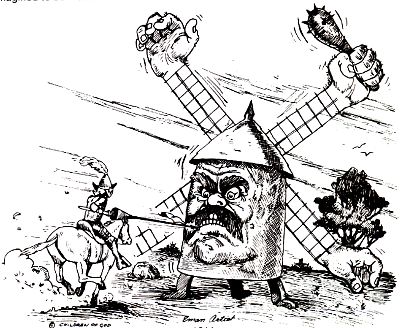
However a living person, especially a pain in the ass like me, that won’t stop speaking out just might make a difference. That might take a while to do, but I will do it until war, and the indifference of soulless bureaucracies are  no more. That may be unreasonable, unrealistic and unattainable but it is a windmill worth tilting at.

But I fully understand that people in a moment of madness and despair, would make the choice to end their life, and see as it as a perfectly logical and rational act. I have known senior chaplain colleagues and former commanders who have chosen suicide, and I am sure that none of them thought that they would ever make that choice, until they actually did it. Please don’t worry about me. I am not going to kill myself, the thought scares me too much. Honestly I would rather live to a ripe old age and be a thorn in the side of the system to get veterans the care that they deserve, and the care that this country owes them than to be yet another statistic whose death is swept under the rug as quickly as the system can do it. Unfortunately, that is the reality; any bureaucratic system, military, government or the private sector will go on with as little inconvenience and reflection as is required once the body is disposed of properly.

Just a few months ago I was talking about simple teaching history, religion and ethics at local junior colleges and for profit universities “for the beer money” as I joked with friends. I told people that my desire when I retire was to be like LT Weinberg in the classic movie A Few Good Men and “have absolutely no responsibility here.” The fact is that I am tired and I don’t want to be in charge of anything when I retire, either in the military, civilian or church world. What T.E. Lawrence wrote to a friend shortly before his death in 1935 resonates with me:

“You wonder what I am doing? Well, so do I, in truth. Days seem to dawn, suns to shine, evenings to follow, and then I sleep. What I have done, what I am doing, what I am going to do, puzzle and bewilder me. Have you ever been a leaf and fallen from your tree in autumn and been really puzzled about it? That’s the feeling.”

That being said, I want whatever amount of time left on this earth, and hopefully it is a very, very long time, is to make a difference in the lives of the men and women who have served in the military and who come home broken, in mind, body and spirit. I can think of no other option or higher calling at this point. To that end I have been referred to a therapist in the system, but not at the Naval Medical Center. The therapist was highly recommended by a chaplain friend who has also went through some very difficult times, even in trying to get help for himself. Thankfully, the person who I talked to a week ago agreed to the referral. So I will get help for me, something that I need and go into with a positive attitude based on my friend’s recommendation.

Now those who have never walked the dark path of long lasting, abiding clinical depression or other mental illness may not understand what I am talking about, but those that have walked this terrible path know it all too well. The feeling that no one cares and that you are alone is a major factor in the despair that overwhelms people, and acts as a trigger to suicide.  Unfortunately far too many military personnel and veterans reach that point. The numbers are staggering. No wonder that Major General Smedley Butler wrote about the cost of war, or the “bill” as he calls it: “This bill renders a horrible accounting. Newly placed gravestones. Mangled bodies. Shattered minds. Broken hearts and homes. Economic instability. Depression and all its attendant miseries. Back-breaking taxation for generations and generations…”

There are a number of ways that I could do this. I could go to work for the VA as a Chaplain, or I could go get a degree in counseling and do therapy or any number of other venues. But I think I would be limited by having to serve in ossified bureaucracies if I was to do any of those things.

Thus I am probably going to venture into the world of social activism, working with veterans organizations, political leaders and the media to draw attention to what is happening to veterans that seek care. Veterans like me who perceive that the system doesn’t really care about them, many individual providers may care deeply and deliver wonderful care, but the system itself is soulless and seems often to be clueless. Likewise I will work to expose the war profiteers who seek to cut back medical and mental health care for veterans even more and actively lobby the military, and Congress to enact those cuts. Personally I feel that is immoral and unjust and that it needs to be confronted and exposed.

I wish I could say that things were any better in the civilian mental health system, but they are not. My wife has battled and suffered from severe depression almost all of her life, and over the past 20 years what is paid for by insurance companies for people in crisis has shrunk to a pathetic “system” whereby a person that is hospitalized remains in hospital 2-5 days until they assure they providers that they will not kill themselves. There is no continuity of care, there is little or no therapy or medication management, it is simply warehousing. I’d like to take that on too, but I have to start somewhere, so I’ll start with where I am.

quioxte

I am a dreamer, and I don’t mind tilting at windmills. Lawrence wrote: “All men dream: but not equally. Those who dream by night in the dusty recesses of their minds wake up in the day to find it was vanity, but the dreamers of the day are dangerous men, for they may act their dreams with open eyes, to make it possible.”

I am a dangerous dreamer because as Lawrence noted I will act on my dreams with open eyes. I may not be able to do a lot while I am still on active duty, but when I retire I will be very dangerous because I know far too much and I won’t be afraid to speak out. My heroes include men like Major General Smedley Butler and Colonel David Hackworth and I have no inhibitions at following in their footsteps. I am very determined, persistent and I can be a total ass. When I determine to do something I don’t quit.

As Colonel Hackworth, who I had the honor of corresponding with in the years before he died said: “If a policy is wrongheaded feckless and corrupt I take it personally and consider it a moral obligation to sound off and not shut up until it’s fixed.” The way we are treating our veterans is just that and I won’t shut my mouth until the day that I die, which Lord willing won’t be anytime soon.

Pray for me, I do need it.

Peace

Padre Steve+


3 Comments

Filed under healthcare, leadership, mental health, Military

Inshallah Iraq (إن شاء الله) Maybe Someday things will be Better

Whenever I read about Iraq I am reminded of how much of my life has been intertwined with that country and people. As I have said on more than one occasion I left my heart in Al Anbar. Back in 2007 and 2008 things were different there. Sunni’s and Shia were at least in the Iraqi military working with Sunni tribesman cooperated with American forces to destroy or drive out the forces of Al Qaida Iraq.

dinner-w-bg-sabah1

Now the group that formed out of AQI, the Islamic State of Iraq and the Levant ISIL has driven Iraqi government forces from the area. Because of Iraqi Prime Minister Nouri Al Maliki’s determination to exclude and marginalize he Sunnis of Al Anbar who were so important in stabilizing that region after the departure of U.S. Forces that Maliki pushed for those tribes are not resisting ISIL/ISIS or in some cases allying themselves with that group, if only to drive out Maliki, who they, as well as many Shia Iraqis despise.

399202_10151366970802059_725286976_n-2

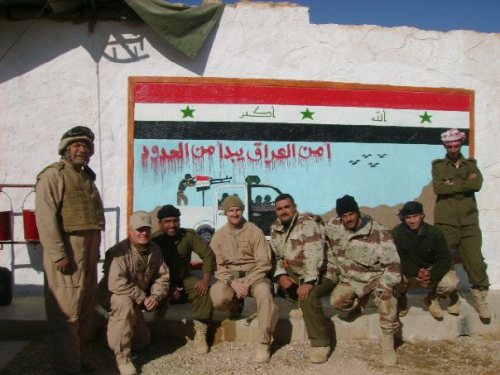
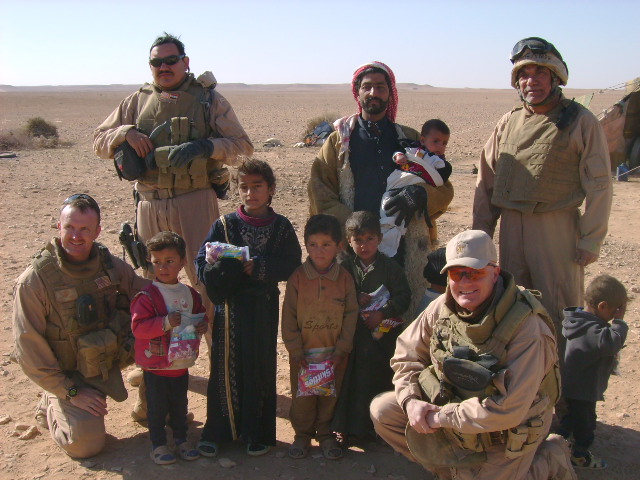
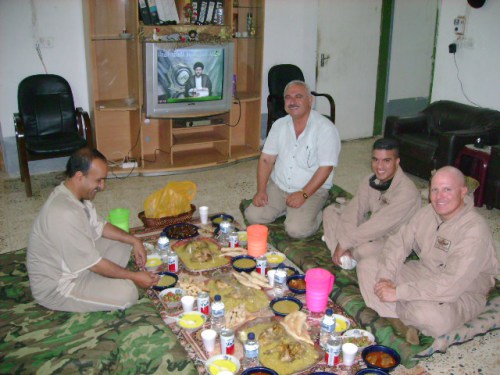
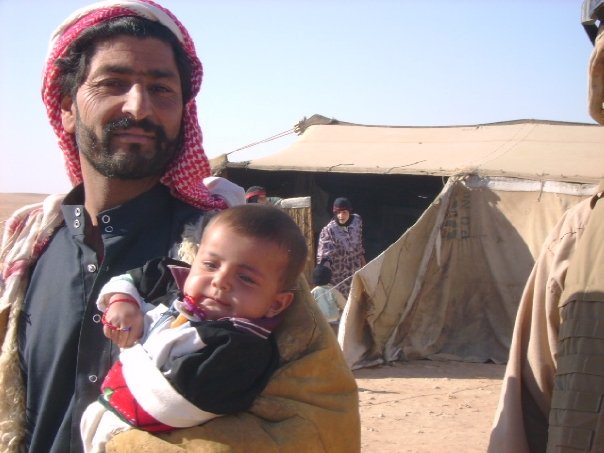
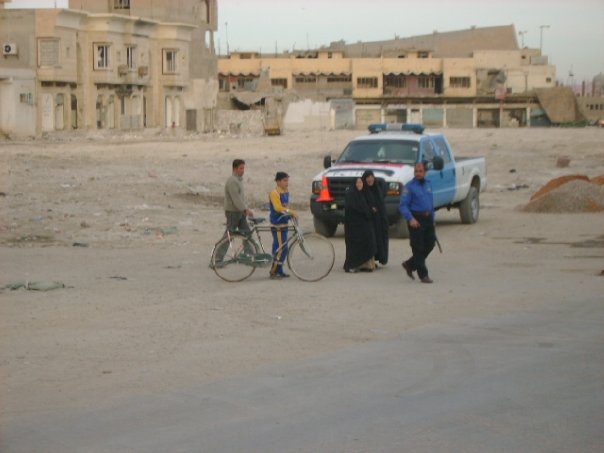
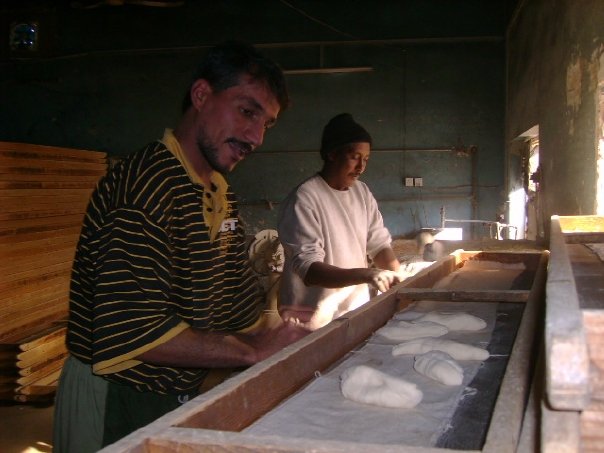
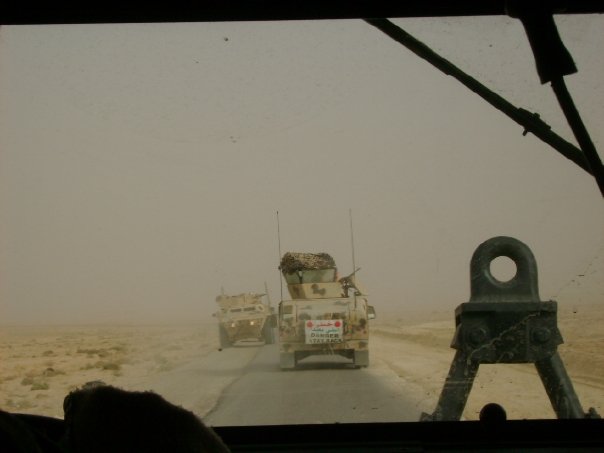
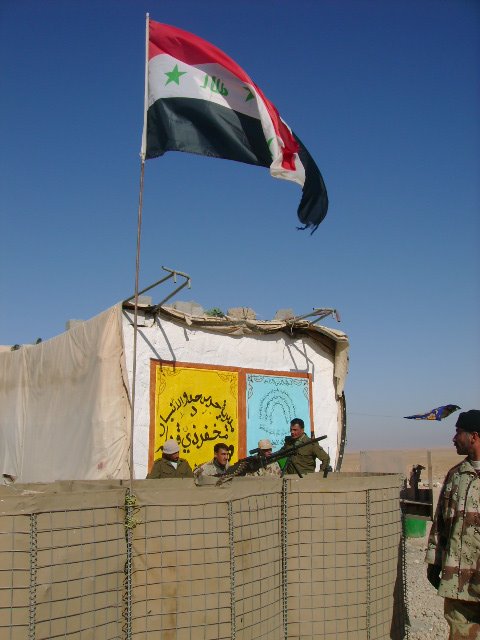
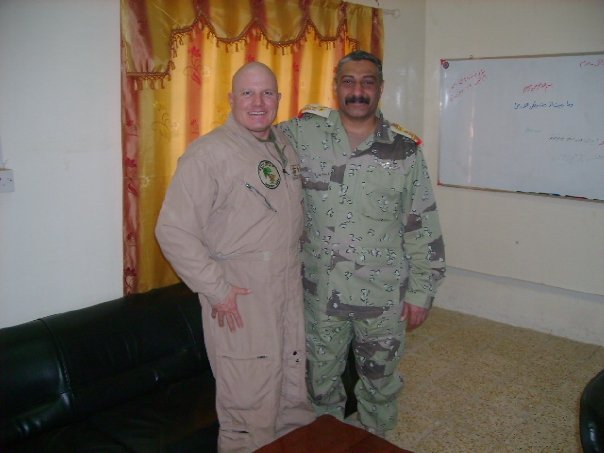
When I was there I traveled the whole province from Fallujah to the border of Syria and Jordan. With our advisors I was treated with great respect and hospitality by officers of the Iraqi Army, Border forces and civilians of all Iraqi religious sects. General Sabah of the 7th Division who hosted me to dinner and met with me a number of times, General Ali of the Habbinyah base who as we shared Chai tea showed me his well worn Arabic-English Bible which he said he loved because it contained things not in the Koran. He told me that he hoped in 5-10 years that I would be able to come to Iraq as his guest. There was the Iraqi operations officer of 2nd Brigade of 7th Division who told me after dinner that he “wished that the Iraqi Army had Christian priests” because they would take care of the soldiers and families no matter what their religion, and the Army company commander at COP South who told me that Iraqis would gladly defend Iraq against the hated Persians if Iran ever attacked. Then there was the first class of female Iraqi Police recruits, who were putting their lives and their family’s safety in danger by volunteering to serve in Ramadi, I was able to spend time with that group of brave women. Of course there were the common soldiers who when they saw me blessing American HUMMVs with Holy Water before a convoy asked me to do the same for them. Then there were the Bedouin who invited us into their tents and homes and treated us to Chia, coffee, dates and other food.

533506_10151366982462059_34997654_n

1930252_26911927058_5336_n

I did see the Sunni Shia division when a Shia staff officer, the Logistics chief of the 2nd Border Brigade at Al Waleed, and a crony of Maliki was accused of selling coalition fuel to insurgents in Al Anbar. I was with our senior advisor and the new Iraqi brigade commander, a Sunni who had served in the old army who had been sent to rid the brigade of those like the logistics officer fired the man. The meeting was one of the most tense I have ever been in, it was like a meeting with a crime family, where weapons were locked and loaded and fingers on the trigger because even the Iraqi commander did not know who was friend or foe. The disgraced logistics officer on finding out I was a Priest tried to curry my favor during the meeting, quite strange and very scary. I still have nightmares and flashbacks about that meeting.

295_26912057058_2651_n-2

1930252_26912037058_1677_n

You see for me the current conflict is quite personal, I have known too many good and decent Iraqis who in many respects are not that much different than your average American. However they have had to bear the domination of the Persian, the Turk, the British and the Americans. Have a king appointed for them by a foreign power, borders drawn to fit British and French interests, been ruled by the dictator Saddam Hussein who most admit now was better than Maliki because he was an equal opportunity oppressor determined to maintain a unified Iraqi state. They have also endured over thirty years of war or wartime conditions, including a civil war and now a war that has a good chance of destroying any hope of an unified Iraqi state. For them violence, disruption and for many being refugees or exiles has become a way of life.

262_29132382058_5961_n-2

305907_10151366984087059_87121005_n

The Iraqis that I know were some of the most kind and hospitable people that I have ever met in my travels around the world. I grieve for what is happening to them and their once proud country. The towns, cities and bases that I served at have almost all been taken over by ISIL/ISIS and their allies. Fallujah, Ta’quadum, Habbinyah, Ramadi, Hit, Haditha, Al Rutba, Rawah, Al Qaim, Al Waleed, Al Turbial and so many others. Syrian and Iranian warplanes are attacking Iraqi towns and cities, including places I have spent time.

n671902058_1153794_4301

532404_10151366971792059_960792196_n

When I left Iraq in 2008 I had hopes that the country might survive, as did many of the Iraqis that I met. I hoped one day to go back and travel to the places that I served, and maybe had the opportunity to see the gracious people that I love again. Maybe in 15 or 20 years there might, God willing be an opportunity. I hope and pray that those I know who were so good to me are safe. Until then I can only pray and hope that for them things will one day be better.

1930252_26911977058_8055_n

When I think of the Iraq war and its costs I am reminded of the words of Major General Smedley Butler in his book War is a Racket: “What is the cost of war?…this bill renders a horrible accounting. Newly placed gravestones. Mangled bodies. Shattered minds. Broken hearts and homes. Economic instability. Depression and all of its attendant miseries. Back -breaking taxation for generations and generations. For a great many years as a soldier I had a suspicion that war was a racket; not only until I retired to civilian life did I fully realize it….”

481801_10151367001287059_1003164983_n-1.jpg

For the Iraqis and us the cost will be with us for at least a generation. But I do always hope and pray that things will be better.

Inshallah (إن شاء الله)

Padre Steve+
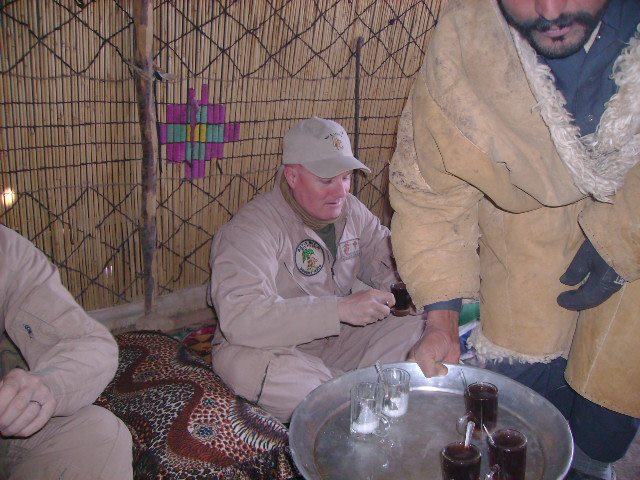
3 Comments

Filed under History, iraq,afghanistan, News and current events