Tag Archives: tq

Going to War: The First Mission Flying West in a C-130

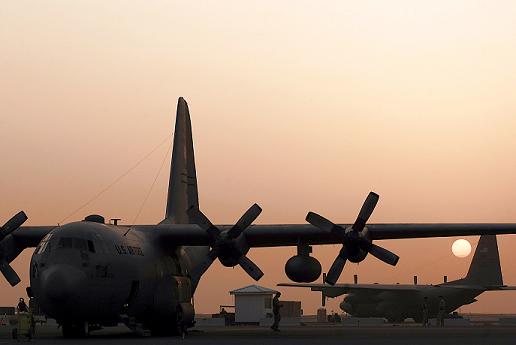
Workhorses: C-130s at an US Base in Iraq

This is another installment of my “Going to War” Series that I began last year.  In the Fall I had to take a break from posting anything more due to issues that I was having dealing with the effects of PTSD. I started this article in the spring but again put it on hold.  I have reached the point that I can again write about this. I will post follow up articles about our operations and experiences supporting our Marine Corps, Army and Joint Service advisor teams in Al Anbar province. The previous posts as well as others dealing with Iraq are filed in the “Tour in Iraq” link on the home page. The direct link to these articles is here: https://padresteve.wordpress.com/category/tour-in-iraq/

Nelson and I continued to prepare in the days leading up to our first mission to the Border Port of Entry at Waleed on the Syrian border with a planned follow on to the teams of the 3rd Brigade, 7th Iraqi Division at Al Qaim about a hundred miles to the north .  Waleed is about 350 miles west of TQ and 70 miles from the nearest FOB with any substantial American presence known as Korean Village or simply KV. We were in constant communication with the team that we to visit via VOIP and SVOIP telephone and secure and non-secure e-mail. The commander of the Border teams, which included Border and Port of Entry adviser teams was Lieutenant Colonel Bien.  Our mission in getting out to the furthest point west was to meet up with an incoming and an outgoing Port of Entry team and see what we could do to get out to other posts along the border.

Nothing in Iraq is easy.  The get out to Waleed we had to make a two day trip from TQ, through Al Asad out to Waleed.  Our flight out was a day flight on an Air Force C-130 to Al Asad.  Our contacts in the G3-Air at 2nd MLG were good in helping me figure out the Air Force flight request which was different than the normal Marine Air Support Request.  For this mission I had to submit two Air Force and three Marine Air Support requests.    Simply submitting a request does not guarantee a flight. Flights are based on precedence dictated by the overall mission.  Religious support was pretty high on the list but there was no telling that your flight would go until you had your approval message and even then things could change.  The actual missions were not known until about midnight the night prior to the flight. So if you were a frequent flyer it meant no sleep the night before a mission as you waited to see if you were approved.  This was my first time actually having to do this for real so I sat at my secure laptop in my office in the back of the TQ plywood Cathedral waiting for the flight list to be posted on the MLG G3 Air Secure Website.  Finally about 0100 the list popped and our first flight was on in.  It was a mid day flight which meant that we needed to be at the passenger terminal about 0930.  This entailed getting our ride from the Chapel to the terminal by 0900.

I told Nelson who was checking his e-mail on a computer in the RP office that it was a go and then headed off to my can to prepare.  Since most of my gear for the 10 day trip was already packed I tried to actually get ready to sleep.  I quickly found that simply being tired because I was up late was not enough to help me go to sleep.  I was really tired but the adrenaline was coursing through my body making it impossible to sleep.  I prayed the office of Compline and then played computer Ma-Jong until at least 0300 before I could finally pass out.  I was up early to shower and get breakfast before lugging my gear over to the chapel.  The weather as usual was about 100 degrees by the time I got back from the chow hall; I gathered my gear and went to the chapel.  I took my back pack, my laptop and a flight bag. I would learn on this mission that I would need to pack lighter the next time around, but live and learn.

The first leg of our trip was on an Air Force C-130 from TQ to Al Asad which we shared with a large number of previously unknown friends from every branch of service in the US military as well as various civilians and contractors.  All of us had our personal protective equipment as well as our bags. The bags that we did not want to lug were placed on pallets and transported with a large fork lift to the aircraft.  When you make one of these trips you are accounted for a good number of times before ever getting on the aircraft.  This first mission was still in the heat of the Iraqi summer and thus the temperature inside and outside of the aircraft was stifling.  We staged off the tarmac in the sun for a final role call and then in two lines who guided out to our aircraft which had just landed.  As we were trudging out to the aircraft two lines of assorted passengers primarily Soldiers and Marines passed us mid way to the aircraft.  As we neared the aircraft the propeller blast blew the hot air into our faces and I thanked God for the high speed Wiley-X ballistic sunglasses that I had been issued by EOD.  Entering into the aircraft we had to step up onto the cargo ramp and then took our seat in the narrow canvas mesh jump seats that lined both the side of the aircraft and the center.  The rear of the aircraft including the cargo ramp was used for several pallets of cargo including the bags that we elected not to carry.  Sitting in the aircraft and waiting for the pallets to be loaded I thought back to my early career as an Army Officer where I became an air-load planner and embarked my soldiers on six C-130s during Winter REFORGER 1985.  Back then instead of the 130 degree heat of Iraq we faced the coldest winter in 40 years in Europe in which the Rhine froze over.  Although the use of computers has become routine in load plans the principles are the same as they were 25 years ago and everything on the aircraft needs to be properly balanced to ensure the stability and safety of the aircraft and that weight limits are not exceeded.  As the sweat poured off of me I took off my helmet and downed part of the one liter bottle of water that I carried onto the aircraft and threw some on my face, though warm it was refreshing and I reattached my helmet as the aircrew came through the cabin giving a final safety brief.

As the last of the cargo pallets were loaded about the aircraft the cargo ramp was raised, the entire time that the aircraft was on the ground was under 15 minutes, it is amazing what the Marine and Air Force ground crews and cargo handlers can accomplish.  With the ramp raised the aircraft’s air conditioning began to take effect and though not the coolest air conditioning it was better than what we had up to that point. The aircraft began to roll and move down the taxiway and when it reached the end of the taxiway it made a fast turn and began its take off.  Since there was a real and present danger of possible missile or gun attacks on low flying aircraft the C-130 made a steep lift off and banked right over Lake Habbinyah and continued its ascent until it reached its cruise altitude.  The C-130, like any cargo aircraft is extremely loud and because of this hearing protection is worn by passengers and crew and conversation is nearly impossible.

The flight from TQ to Al Asad is only about 30 to 45 minutes depending on the route taken so most of the passengers took the opportunity to grab a bit of sleep or read.  Nelson and I sat together on the starboard side of the aircraft not far from the palletized cargo.  Nelson who can sleep almost anywhere on a moment’s notice was out quickly; and although I was tired I could do little more than close my eyes and try to clear my mind.  When we neared Al Asad the aircraft banking nearly perpendicular to the ground made a steep and fast approach.  As we landed I could see other aircraft on the ground including F-18’s, various transports and rotor wing aircraft.  The C-130 taxied to a spot on the tarmac where the ramp was dropped and we were instructed to exit the aircraft and led to the rear of the aircraft about 50 yards and then led between it and another aircraft to a group of tiny Japanese made Nissan and Mitsubishi buses in which we were loaded until every seat was full including the in aisle jump seats.  Packed into the bus like sardines and smelling almost as bad we sucked in the stench, which was somewhat like a European elevator in the 1980s.
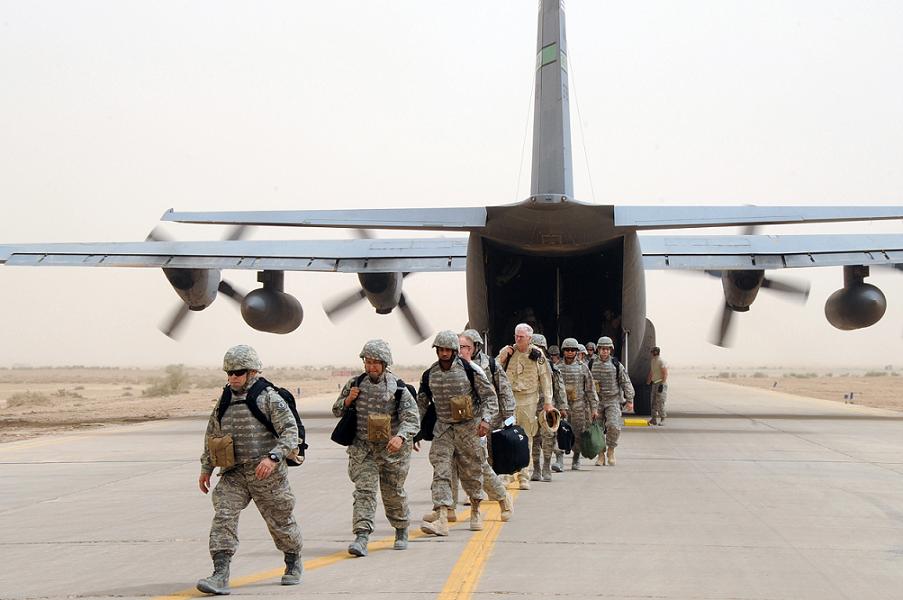
Passengers disembark from a C-130 at Al Asad

After a short ride to the terminal we picked up our gear which had been delivered on the pallets by forklifts.  Another muster was taken and after all personnel were accounted for those of us waiting on follow on flights checked in at the terminal.  After being accounted for we got our temporary billeting in large tents about a hundred yards from the terminal.  The tents were large and poorly lit with plywood floors and several air conditioners built into the sides of the tent.  The bunks were in very poor condition, many broken and even more with dirty worn out mattresses sagging in the middle.  Nelson and I looked at each other and Nelson made some comments about the accommodations and we each found a bunk grounded our gear and settled in for a bit in order to clean up before trying to go get some chow.

Next: Air Travel In Al Anbar: the California Line.

Leave a comment

Filed under iraq,afghanistan, Military, Tour in Iraq

Padre Steve’s Thanksgiving Thoughts

The Abbess: “Steve would you pray for the food?”

Padre Steve: “Dear Lord we pray for this turkey and all of it’s relatives on this Thanksgiving. We ask you to comfort them in their sorrow and give them your peace. Amen.”   Padre Steve’s Thanksgiving prayer from 1992.  I think the last time that we hosted a Thanksgiving dinner.

I am on duty tonight, pretty tired and I have been pretty busy this evening.  Hopefully things will settle down and no one will take any turns for the worse that will cause them or their families to have to mourn on this Thanksgiving 2009.  We have several in pretty bad shape as well as some I know not in hospital who are in pretty dire straits.

But since things have settled down a little I do need on this Thanksgiving Eve pause to give thanks for all of the blessings that I have been given.  I also need to give thanks for  wife who has had to suffer all of my rough edges, refusal to completely grow up, my wanderlust, dreams as well as my obsession with work, academics and yea verily, even baseball.

I am grateful for so many things but most of all the Abbess of the Abby Normal.  This dear soul has put up with me yea these 26 years of marriage and the 31 years that we have known each other.  She has had to deal with a husband who has devoted himself to a military career and vocation as a Priest that has spanned 28 years of that time.  She has endured separations too many to count and a decent number of deployments, unaccompanied tours and temporary duty out of the areas that we have lived.  In the 20 or so months that I have been back from Iraq she has also had to deal with my struggle with PTSD and all the trimmings that go with it.  Likewise she has had to see me grieve my dad, who though still alive only exists in body and does not know me anymore. I am truly thankful for the wife that I am blessed to have.

I think I have tried this dear woman’s patience quite often in our marriage, of course I do not think that she has forgotten the 1992 “Prayer for the Food.”  It is dangerous sometimes to ask me to pray because I might just take you literally, as I did the Abbess back in 1992 who slipped up and instead of asking me to “ask a blessing on the meal” “say grace” or simply “give thanks” but rather asked me to “pray for the food.” Something that I did, and I think that the prayer was actually longer as I remember making eye contact with her during the prayer as she glared daggers at me as the guests either giggled or listened in stunned silence. This will surprise no one who really knows me well.  Tonight as I made my rounds in our cardiac care unit I noticed one of the newer high-tech CPR dummies looking bored in the training/ conference room.  I had to remedy the situation.  Taking the obviously bored and neglected dummy I set him in a high-backed office chair facing the television which happened to be on.  I so arranged him so that a person coming in the room would see the back of the head, which happens to be bald like mine as it was looking at the TV.

Bob the CPR Dummy Watching TV

A person entering from the hallway into the unit would see the profile for the dummy.  This one is kind of cool as it has a shirt and the facial features are more realistic than the old style.  I did let the charge nurse know so he could get a laugh out of anyone who does a double take as they enter the unit bleary eyed at two or three in the morning.  I mentioned my misdeeds to my buddies Cinda and Jennifer over in the PICU who both got a laugh out of it.

Bob Chilling Out

I think the greatest honor that I had on a Thanksgiving  was in 2007 serving in Iraq. I got  a chance to serve the troops and workers in the chow hall at TQ after coming back that afternoon from an aborted mission to Waleed on the Syrian border when our air support mission was cancelled when a host of Congressmen, Senators and dignitaries decided that they needed to visit Iraq leaving us and quite a few others marooned at Al Asad’s air terminal for 4 days as they flew about Iraq in our aircraft.  Thankfully when I knew that we could not get anywhere the west and that we had to return to TQ so we could prepare for our next mission later in the week I got us on a C-130 back to TQ which delivered us home in time for me to help serve at the dinner that night.  I was in charge of the Mac n’ Cheese and the Sweet potatoes.  So since Mac n’  Cheese was not in my typical Thanksgiving dinner growing up I figured that I had to sell it.  So with that in mind as each person came up to where I was I would say “Get your Mac n’ Cheese, an American Classic….8 of 10 customers agree that this is the best Mac n’ Cheese in Iraq.”  The servers from the Gulf Catering Company who were to my right and left, both from the Indian subcontinent somewhere had very limited English but were laughing as I served people and even called people over to my serving station from across the room. When the workers got a chance to come up and eat knowing that they were mainly vegetarians  I would say, “step right up, get your Mac n’ Cheese an American delicacy making American kids fat for years.” I don’t know if they bought the shtick but they did come back for more and most were smiling.

This year because of my duty schedule as well as my comprehensive exams the Abbess has done most of the work, even the turkey which is usually my job. When I go home I will help her with what I can since she has worked hard to get ready for this.  After all, we haven’t hosted one of these since 1992 so I’d better help.

Anyway, it is late and with any luck the Deity Herself will grant me a night’s sleep with no 2 AM pages.

Peace and Happy Thanksgiving to you and yours.  Please pray for my fellow Sailors, Marines, Soldiers and Airmen who serve in harm’s way, those who suffer the wounds of war in any form and those in need in the USA as well as around the world.  Despite all of our countries issues we still have so much to be thankful for to live in such a country.

Happy Thanksgiving!

I know that I am grateful and thankful for all the blessings that God has given me and all the people who have been there for me.  God bless you again.  Happy Thanksgiving!

Peace,

Padre Steve+

3 Comments

Filed under iraq,afghanistan, Loose thoughts and musings, marriage and relationships

Going to War: Building Blocks for Success at TQ

Note: This is the latest chapter of my “Going to War” series which documents my deployment with RP2 Nelson Lebron to serve as the Religious Support Team for all advisors in Al Anbar Province.  Previous posts of this series are located in the “Tour in Iraq” link in the topics section on the left hand column of the website.  If you have friends or family who are serving in Iraq or Afghanistan and a little bit of an idea of what they might be experiencing or might have experienced feel free to read and share.  Peace and Blessings, Steve+

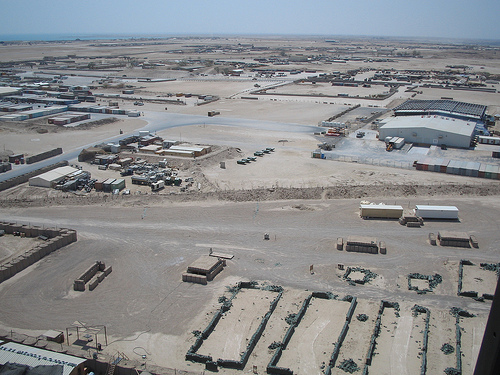
tq vew from airTQ: The Chow Hall is on the Right

It was about 0400 when I got to sleep after our flight to TQ.  About 0900 I woke up with the sun shining through the small holes in the metal shade over the window of my can.  I was still pretty groggy when I got up, went and got another shower just to try to wake up.  Even at 0900 it was close to 100 degrees and the sun beat down on me as I walked the 100-150 yards to the shower trailers in my PT gear.  After waking up and getting myself together I knocked on Nelson’s door and woke him up.  Nelson looked pretty beat as well and after this I walked over to the only non-military food outlet the “Green Beans Coffee” trailer and got me some coffee before I walked over to the Chapel.  The Green Bean is interesting; a couple of guys from California started with one store in Saudi Arabia and now is located around the world with U.S. Forces.  They have a program to buy a cup of Joe for a Joe.”  The company website is here: http://www.greenbeanscoffee.com/ now I have to admit I never got a free cup but it was good coffee.

I kind of surveyed the area.  My “can” was located not far from the chapel, the gym and MWR facilities.  A bit down the way a hundred and fifty yards or so was the Marine Corps exchange which though not bad was often like shopping in East Germany, long lines and limited quantities of merchandise.  If you needed something and waited to buy it there was a strong likelihood that the exchange would not have it on your next trip.  About 400 years past the exchange was the main chow hall which was pretty large and covered with a canopy designed to cause high explosive shells from rockets or mortars to burst before they could penetrate the roof of the actual facility.  The chow hall was staffed by contractors, mostly workers from the Indian subcontinent of Sri Lanka and like other areas inside the perimeter guarded by a contracted Ugandan security force.

I walked over to the Chapel and was met by RP1 who introduced me to Fr Jose Bautista Rojas, the Group Catholic Chaplain and the Apostle of TQ.  Jose and I instantly hit it off.  He is out of Los Angeles and really has a good way with people.  On his first tour and first deployment he was having a huge impact around the base.  His support and prayers would be greatly appreciated by me and by Judy in the coming months.  Not long afterward, Chaplain Pat McLaughlin came in after a meeting.  Pat was a fairly newly promoted Commander who was the 2nd Marine Logistics Group Chaplain and was on his second one year tour in Iraq.  He had previously served as the Chaplain at Camp David.  He immediately gave us his full support and put his staff to work helping us get settled and to link us up with all the support staff that we would need to conduct operations. Without this our tour would have never have had the success that we had.

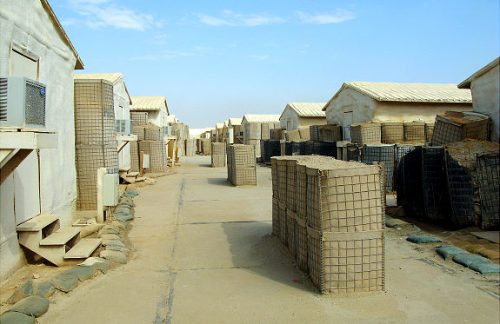
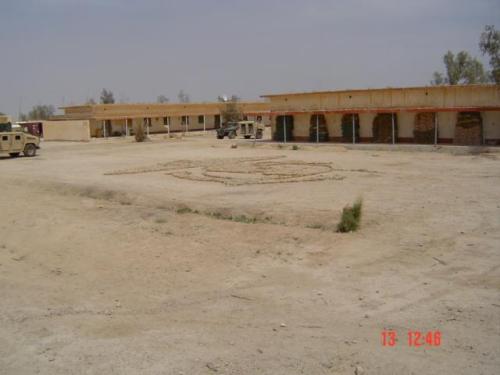
05_Flatbed_1 - NOVEMBERSouthwest Asia Huts or SWA Huts at TQ I stayed in one of these at the end of my tour
TQ was a major air and logistics hub perfectly suited to operate from to support advisers around the entirety of the province.  We had access to rotor and fixed wing aviation assets, excellent telephone and internet, secure and non-secure access, a place to call home and excellent support.  This is critical when you are operating independently and supporting multiple organizations.   Other Army Chaplain teams had gone into areas where they were given little or no support by the Army teams that they supported.  Unfortunately from a chaplain perspective the talk that I heard had more to do with the Army Chaplains than the units that they supported.  Part of the problem was that most of the Army teams were reservists with minimal training or preparation for a mission type that they were never taught about in chaplain School.   I know of a Navy Chaplain with Marine experience who had no significant problems when he was placed with an Army division level team in Mosel. There were probably a number of reasons for this, and to be charitable I will chalk it up to lack of experience, but lack of support was something that we never had to face.

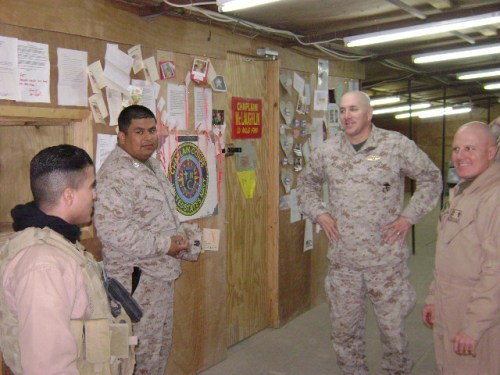
Lebron, Bautista, McLaughlin, Dundas 2A Great Team: Nelson, Jose, Pat and Me…Pat and Jose helped us tremendously
Within days we had our “operations center” set up in an office in the back of the Plywood Parish chapel. The office had a somewhat auspicious history having taken a hit by a rocket or mortar earlier in the year, a shot that had also made a mess of the drums and other musical instruments of the chapel praise team.  The chapel was kind of a ramshackle affair but had some interesting touches mostly donated by the military personnel to include doors which had been made with care and donated.  Part of getting it together was having phone and internet cables run to the office.  The communications people made this happen quickly and they also got our elderly computers set up and loaded with all that we would need to operate on the secure and non-secure side the house.  I think that we were one of the few ministry teams lower than Regiment or BCT level to have the communications suite that we had been provided.  Likewise the G-3 Air section at the MLG headquarters gave us tremendous support and quickly got us the ability to plan and submit our own air mission requests.

The information that Luke Fabiunke had provided me back at Fallujah now became a gold mine to begin operations.  It was an amazing amount of information, not all current but the situation with adviser teams was always fluid and subject to change based on operational considerations.  There were phone numbers, secure and no secure e-mail contacts for key leaders.  Once we had our communications up the communication began with teams across the province and our calendar was rapidly filled.  The only “glunk” that we had in this was with the senior adviser for one of the Military Training Teams in our local area.  Though his staff and subordinate unit team chiefs were happy for our arrival he for all intents and purposes froze us out of his area.  That did not keep me from continuing to build relationships with some of his people which paid dividends later.  I think that sometimes some chaplains are intimidated by people who rebuff their honest and well meaning efforts to provide support.  I don’t work that way and will constantly work whatever angle I need to in order to get the mission done.  In order not to burn bridges I usually use a slow and patient approach to continually work to build relationships with those in charge of the units that I serve.  It really is an indirect approach.  If I can’t get in one place I put it on the back burner without burning the bridge.  I then work with all the other teams that I can and get out among people.  As we did this “back doors” to ministry opened with teams where we had been locked out of before as they contacted us to get support.  So I did not give up on these local teams but reached out to the furthest reaches of the province with the teams of the 7th Iraqi Division and the 2nd Border Brigade with its Border units and Port of Entry teams.  The senior advisers of these units, Colonel Cottrell and Lieutenant Colonel Bien gave me absolute freedom to coordinate with their teams and opened doors that were never shut.

As we prepared for our mission the first few days were days of acclimatization to the base and to finally recover from the long road in.  One of the first things that we noticed was the pall cast over the mood of the camp by the crash of the Army CH-47 the day of our arrival.  The chapel was being rigged by the staff for the memorial service for the five Army aviators, all of who were significantly younger than me.  The Army was in charge of the service so except for the set up of the chapel and other miscellaneous administrative support.  It is a sobering thing to come into your base of operations and see the set up for five men who died in service of their country.  To look at their pictures and to read their biographies was humbling; one was on his last enlistment before retirement others at different points of their careers, all left behind families, friends and their fellow soldiers who did not know if the bird went  down to mechanical failure or hostile action.   This was in no small way lost on me as we would fly many missions with the men and women of this Army squadron.

Nelson and I worked hard that first day and thereafter to get set up for our first missions.  While I worked the big picture parts of the mission he took care of the little thinks that ensured our success.  Working with Pat, Jose and RP1 he became a key part of the team whenever we were not traveling.

That evening we went to dinner at the chow hall and took in some PT.  Following that I went back to my can where I continued to unpack and make the place somewhere that I could relax.  Though still exceptionally tired from the trip I had a difficult time getting to sleep between my own anxiety the din of UH-60 Army Medivac choppers coming in and out of the LZ for the Shock, Surgery and Trauma Platoon.  Not able to sleep I walked out of my can where I saw the sky light up to our north near Habbinyah with illumination rounds while outgoing artillery sent rounds somewhere into the night and small arms fire could be heard nearby.  A number of Marine and Navy officers gathered near me as we watched the display and talked among ourselves as we wondered what was going on.  Eventually I would get to sleep, but it was very late, that night I found the Office of Compline to be of great comfort, especially this collect.

“Be our light in the darkness, O Lord, and in your great mercy defend us from all perils and dangers of this night; for the love of your only Son, our Savior Jesus Christ.  Amen.”

2 Comments

Filed under iraq,afghanistan, Military, Tour in Iraq

Going to War: Tripping into Ta Qaddum

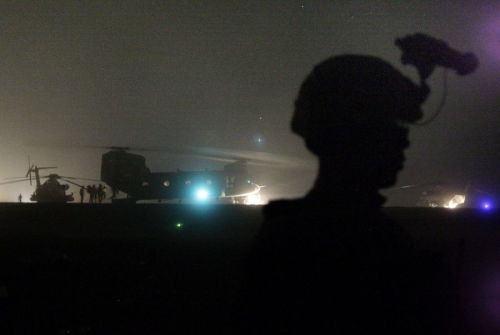
helos at nightCH-53s and CH-47s

Our interlude in Fallujah over we waited in a tent outside the helicopter terminal operations building after RP1 Roland dropped us off.  Roland was good and helped hook us up with some of the Marines to get the Gator to put our ton of gear on to get it out to the helicopter.  I looked around and noted that both here and a Camp Victory most passengers had a significant amount less gear than us of course all had deployed with units and not as individuals thus the load that had to pack on their person was not exorbitant.  I thought of all we had been issued as individuals and the fact that I did not take everything that they wanted me to take and thought crap…what is wrong with this picture?  Of course whining about it does no good and if my lot was to suffer dragging all of this around then I would try to do so in good humor.  I pondered this and began to think of the movie Kelly’s Heroes and how the character played by Don Rickles Staff Sergeant “Crapgame.” I kind of chuckled as I thought of how he complained to “Kelly” played by Clint Eastwood and  Master Sergeant “Big Joe” played by Telly Savalis when after their vehicles were destroyed by American aircraft when saddled with a .30 caliber machine gun and its associated ammunition.

I looked in one tent which was full and eventually found another we a couple of open seats for us.  I sat my ass down on the wooden bench grounded the gear that I had with me, a back pack, and two briefcases now with 3 computers. My Mass kit was packed in my rucksack and all of my personal gear that could be placed on my flak vest was there including two knives…I was not allowed to pack a weapon but figured that these were simply to keep my fingernails clean and shave when I had nothing else to shave with.  Nelson of course was loaded for bear, dual armed he had an M-16A2 and a Beretta 9mm pistol and packed a significant amount of loaded clips of 5.56 and 9mm rounds in his ammo pouch. He sported two K-Bar fighting knives.  He also had his “game face on, the same look of determination that he sports when he fights.  Having an assistant who actually could kill someone to protect me was comforting.  There are some that I have met in both the Army and Navy that would have been as capable as Barney Fife if they were in a combat zone.  Of course Nelson and I knowing that we would be out in isolated areas with small teams of Americans had worked out a deal.  If were got into a bad situation he would toss me the 9 mil and we would defend ourselves and the people on our team figuring that since I was a chaplain that if I was captured that I would be used for propaganda purposes and executed on TV.  The plan was that if this happened that he would get credit for anything that I hit and no one would ever know that I did it.  I would not be like a few chaplains in the 2003 invasion of Iraq who carried and fought and then put it on their web sites, I figured that if this happened I would go to confession and ask for forgiveness rather than having to explain to Judy why I was dead.

The time passed slowly though it was only a couple of hours it felt like forever.  The tent was stuffy with a good number of people in it, Nelson found a corner and threw his gear down laid down comfortable.  I was a bit on the hyper-aroused side of life despite being tired so I got up and took a walk outside in moonlight.  The night air though still pretty warm felt better than that of the tent, as sweat dripped down my face I took a drink out of the liter bottle of water that I had pulled out of a cooler in the tent.  The airfield was busy, pairs of helicopters, 46’s, 53’s, and Army MH-60s and CH-47s landed and took off staying just long enough to disgorge their passengers and cargo and then pick up their next load before lifting off.  I watched in fascination as Marines and other passengers were led by ground crew staff to and from the aircraft, their shadowy figures blending into the illumination provided by the moon.  A couple of AH-1 attack choppers sat down for a few minutes and then took off.  I wondered if they would find targets or be called to respond to attacks on Marines or Soldiers in the area.  As I walked back to the tent I heard the boom of our artillery in the distance.

After a while they called for our flight.  We gathered up the gear that we had and Nelson got with the Marines to make sure that we were on the same flight as the “gator” was taking our gear to.  When we flew our “ticket” to get on a flight was the two letter code for our destination with the number of the flight such as 26 or 54 or whatever the mission or route number was.  In our case it was “TQ” and the number was either 54 or 56 which was from HMH 463 flying CH-53-Ds out of Al Asad.  Their flights were known as Kahuna followed by the number.  This was written on our left hand with a black marker.  As passengers we staged by our flight by young Marines with flashlights shaded by red cones.  We got in a line with about 30 other passengers, Marines, Sailors, Soldiers and civilians and moved out for the 53 which had just landed coming in from the east.  The companion bird was forward of ours.  The Gator move alongside of us and reached the helicopter just before we did.  Amid the din of the rotor blades and engines the Marine on the Gator got off and called out “Is the Chaplain that this gear belongs to here.”  I called out that I was and Nelson and I moved to the Gator and began the off load of four “super sized” suitcase shaped canvas sea bags and two flight bags. To get an idea how big our bags were you have to think of something about a third bigger than the biggest suitcases that you can buy only soft sided with no wheels.  No they did have straps that you could try to carry them with, but they were not the greatest.  Also note that we had a full deployment worth of gear in those bags and were expected to lug them across Iraq and you can see that this was a less than fun evolution and why I thought of Staff Sergeant Crapgame.  We dragged our gear aboard the aircraft moving toward the center of the bird placing it on the deck under the rotor blades where we took our places in jump seats and strapped ourselves in.  I felt something warm dripping on me and looked up, it was hydraulic fluid coming from the transmission of the bird which was located above me.  There is an old joke among those who fly in Marine Corps helicopters:  “How do you know when a Marine Helicopter is low on hydraulic fluid?  When it stops leaking.” I thought of the joke but this time it wasn’t funny.  I’ve never been a big fan of rotary wing flight and the fact that I was exhausted, sweaty and sitting in a cramped hot, leaky, dark and heavily loaded helicopter in a combat zone made the experience less than fun.

It was about 0200 when we lifted off into the night on what we understood to be a short flight to TQ.  Admittedly it was, if you only count the flight time from Fallujah to TQ itself.  As we flew in I could see the sprawling airbase below but we flew off to what looked like the other side of the airfield.  As we flew in I thought of the Army bird that had gone down earlier in the day.  I wondered what had caused it to crash and my pucker factor went up just a bit higher as I wiped more hydraulic fluid from my face.

When we landed we told to exit the bird without our gear.  We released ourselves from our seats and stumbled over our gear and that of the rest of the passengers that was in the middle of the deck.  We exited out the rear of the aircraft down the ramp into the rotor wash.  Turning left we moved off about 70 yards from the fifty-three and looked around.  A few crew members and ground crew personnel moved in and out of the bird.  At first I wondered if we had been moved off to refuel but there was no fuel in view.  We waited for about 25 minutes in the dark as Marines moved in and out of the fifty-three.  Finally a crew member came over to us, and motioned us to follow him back into the aircraft.  Once again we negotiated the gear and found our seats.  Once we were back in the fifty-three lifted off and flew a short distance across the airfield where were instructed to exit the bird with our gear.  For most of the passengers this was a fairly easy evolution, for us it was not so easy.  We had to take one bag at a time down the ramp and get each a decent distance from the bird before returning for the others.  We got our gear off the bird and found that the rest of the passengers were already being herded the 200-300 yard hike to the paved area near the terminal.  Nelson and I each packed one of the large bags on our back and began to pull the other bags behind us as another group of Marines walked out to the fifty-three.  Eventually about a third of the way to the terminal a Marine on the ground crew came and asked if we needed assistance.  I replied that it would be appreciated.  He instructed us to wait where we were and about three minutes later a forklift with a large plywood box on the forks.  The Marine who had asked if we needed help instructed us to place the gear in the box and proceed in the direction of the terminal with another member of the ground crew.  As the birds lifted off behind us we set off for the terminal area.  When we got there we had to wait again.  A Marine collected our ID cards and walked in the building telling us to remain where we were.

About this time, our gear on the ground again with us there with our helmets off and sweat pouring down our faces a female petty officer came up to us.  It was the 2nd Marline Logistics Group senior RP.  Nelson knew her from Afghanistan so our welcome was pleasant.  The RP had a Chevy SUV in front of the terminal.  The Marine came back with our ID cards, I grabbed a bottle of water and the three of us began to move the gear to the truck which was about 50 years away via the closed route through the terminal. After loading the gear she drove us about 10 minutes to the other side of the base where the billeting area was.  She got the truck as close as she could and once again we lugged the gear about 100 yards to our new homes which were called “cans.”  These are like a storage container with a window and linoleum floors.  Unlike some of the places I had been recently this also had a small wall unit air conditioner that worked.  It was now about 0315 and I stank to low hell.  I dug through my bags, found my shower gear and towel and got a shower.  Finally about 45 days after we detached from EOD with stops in Norfolk, Fort Jackson, Kuwait, Baghdad and Fallujah we could get to work.  On my return to my new home I did the office of Compline from the Book of Common Prayer, laid down on the bed and passed out.

Leave a comment

Filed under History, iraq,afghanistan, Military, Tour in Iraq

Going to War: Interlude in Fallujah Reunions, Redirection and a Stay at the Ramadan Inn

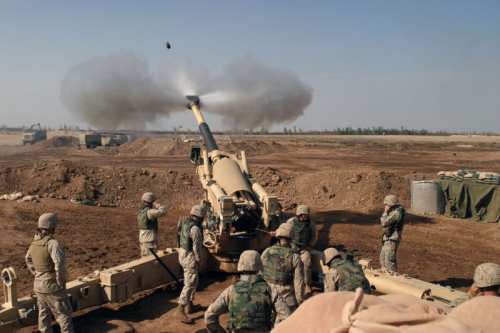
marine 155s in fallujahUSMC 155mm Howitzer firing on Insurgents at Fallujah in 2007
Note: This is the latest installment of my “Going to War” Series.  Other postings in this series are located in the Subjects section under “Tour In Iraq.” The series chronicles the tour of Religious Support Team-2 of the Iraq Assistance Group in MNF-West from July 2007-February 2008. We were the first Navy Chaplain and Assistant to work supporting advisers since the Vietnam War.

We woke up to the sound of more outgoing artillery fire.  The sun was shining outside as I look out my window at the sky above the California Barrier that protected our “suite” in the south wing of the Ramadan Inn.  Climbing out of the decrepit Iraqi bed with the fresh sheets I stumbled over my two tons of gear to look at the time while Nelson slept like a baby in his equally decrepit Iraqi bed.   My ever trusty alarm clock showed that it was about 0830, which meant we had gotten maybe 5 hours sleep and missed breakfast. Thankfully I had stockpiled a few pop-tarts and granola bars from the Camp Victory chow-hall the day before.   Opening the door and peering out into the hallway I saw it empty and walked across the hall to the head, shower and laundry room to do my morning business.   Despite being a Baath Party playground the suites at the Ramadan Inn were not furnished with their own toilet or shower, just a small sink and mirror.

ramadan innRamadan Inn

Though the Ramadan Inn had seen better days it was certainly, despite being the playground of Uday and Qusay Hussein it was not exactly a palace like those of their father Saddam.  It was somewhat reminiscent of an old and run down motel along Route 666.  The floor was a marble type tile and the sand painted concrete building with a flat roof.  I strolled over to the head in my PT-sleep clothes and was relieved to be able to relieve myself in a facility that had actual porcelain shitters which flushed using real water.  If you have been to Iraq or Afghanistan you know that this is not always the case.  The showers were passable being a more European design and the water was hot.  I guess even the cold water was hot in Fallujah with temps in the 120s.  Once I had gotten up I awakened Nelson, the sleeping beauty. He then went through his morning ritual to make himself presentable to the world.  Those who know nelson know that if he can he will take care of his personal hygiene.  I ate one of my Strawberry Filled frosted Pop Tarts washed done with water and when Nelson was ready we walked over to the Chaplain office.  It was like a maze to get there. We walked across the way a bit, took a right, made a left and went through the normal transient quarters area, took a right went up a block or two, took a left, made another left, wound our way past a decorative lake, took a right, went past a number of buildings before passing a final bank of green porta-johns finding the MEF- Forward Chaplain Office to our right.  The sun shone brightly and though not a long walk was relatively warm and by the time we got to the Chaplain Office I was sweating.

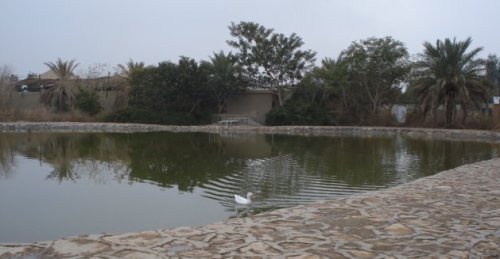
fallujah pondPond at Fallujah

The Chaplain office was like every other facility and was protected by California Barriers or Hesco’s. We were met by RP1 Roland and the Deputy MEF-FWD Chaplain CDR J.P. Hedges.  They were most hospitable and offered us water as well as coffee, which my caffeine deprived brain needed badly.  After introductions Nelson got together with RP1 Roland and I met with Chaplain Hedges doing the usual butt-sniffing that military professionals engage in when meeting someone for the first time.  This ritual usually consists of learning who our mutual friends are, where and with whom we had served in the Navy, where we went to school, something about our families and for Chaplains our faith tradition or denominational affiliation.  This is a customary act for chaplains as it is for other communities and specialties in the Navy.  On the positive side it is a way of making connection with each other and building relationships.  It is also a way or self preservation within the system as sometime there are people that do not have your best interests at heart. However for J.P. and I the meeting was very friendly. We d a lot of shared experiences in the types of duties we had done and we had mutual friends.  While we enjoyed conversation he began to introduce me to some of the things that had been going on in country the last few months.  After about 30 minutes Chaplain Mike Langston came in.  It was Mike who had worked with Peter Dissmore and the Corps Chaplain to bring us out to the west to cover the Marine and Army advisors in Al Anbar Province.

Mike had a couple of orders of business to take care of before he brought Nelson and I into his office and had our reunion. Nelson and I had both worked with Chaplain Langston.  It was good to see him again.  Nelson had worked for him in Afghanistan and I had been with him at 2nd Marine Division in 2000-2001.  He and Chaplain John Kaul arranged for me to take over Headquarters Battalion upon my return to work in a quasi-regimental billet with oversight of the independent battalions Religious Ministry Teams, though not the actual supervision of them. In addition to my regular duties counseling Marines, doing suicide interventions, conducting classes and supporting field exercises they used me, because of my experience to assist and evaluate chaplains who had been fired or relieved of their duties.  I got each one for 30-60 days to see if they could be recovered for further service or not.  In a sense this transformed me from a relief pitcher to a pitching coach.  Chaplain Langston was at a school when 9-11 occurred and during this time I was used as the Deputy Division Chaplain looking at readiness, training and potential deployment of our religious ministry teams with their units.  Both Nelson and I had experienced Chaplain Langston as a tough but fair chaplain.  What he did expect was that we would be out doing our job and keeping him or his office in the loop on our operations and issues facing us.  He did not attempt to micro-manage us.

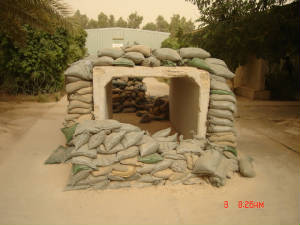
bunkers_everywhere.jpg.w300h225Bunkers to Protect Against Indirect Fire at Camp Fallujah

Mike Langston is a prior Marine Corps Infantry Officer who had been a been a Company Commander and battalion staff officer as well as instructor at “The Basic Course” which is the leveling field for all Marine Corps officers regardless of their commissioning source.  He played football in college and still has the physique of a defensive lineman.  He left active duty and went to seminary and when he was ordained and graduated from seminary entered the Navy Chaplain Corps. He had since risen to the pinnacle of a career for most chaplains having been promoted to Captain, the same as a Colonel for the other services and assigned as the 2nd Marine Division Chaplain.  He is a no-nonsense kind of guy and kind with a high level of energy and emotion.  He explained the current situation in the Province was, the locations of the various Marine Regimental Combat Teams (RCT-2 and RCT-6) as well as the one Army Brigade Combat Team, 3rd Brigade, 4th Infantry Division as well as the 1st Light Armor Reconnaissance Battalion and the MEF Aviation and logistics assets were located.  He then got down to the specifics of our mission which were pretty simple and suited to our personality as a ministry team. Basically he expected us to manage our own operations in the MEF area of operations. He expected that we coordinate our operations with the teams that we would support and keep his office informed of where we were going and what our general plan of operation was.  Since he had worked with both of us and we were both known and trusted quantities he gave us a tremendous amount of operational freedom to do our job.  His expectation was that we would be active and get out to the remotest places that we had training and assistance teams of advisors.  He told us about an Army team that had been based in Ramadi to do the job with the advisors.  He confirmed what Peter Dissmore had told us about this team.   They had never left the base in 4 months and basically hung out at the Ramadi main chapel. They managed to get their orders curtailed and left theater never once having contacted or visited any advisory teams.

ega fallujahMonument in the Traffic Circle at Camp Fallujah

We were also told of a change to our projected base of operations.  Our original plan of operations had us working out of the former British and Iraqi base at Habbinyah the location of the headquarters of the 1st Iraqi Division and the Advisors assigned to it.  Instead the Colonel in charge of those teams made the call that he could not support the operations of a Chaplain from his location. He held firm on this and the plan was changed so that we would operate from Ta’Qaddum a large air and logistic  hub about equidistant between Fallujah and Ramadi.  Ta’Qaddum is adjacent to Habbinyah on the south side of the Euphrates. It sits atop an escarpment overlooking the town to the north and Lake Habbinyah in the South.  In 1941 it was the site of a siege when the Iraqi military launched a revolt against the British who occupied the country despite it being given independence at the end of World War One.  The British we besieged in Habbinyah and the Iraq forces had the high ground atop the escarpment.  Unfortunately for the Iraqis and fortunately for the British the British forces had support from the Royal Air Force and the Iraqis had no logistics ability to support their units atop the escarpment.  The Iraqi forces were pounded and eventually a relief force arrived from Jordon to break the siege.  At TQ as it is known by most Americans we would be housed and taken care of by the 2nd Marine Logistics Group Chaplain, Commander Pat McLaughlin and his team.  We were instructed to make coordination to plan work with the teams supporting the 7th Iraqi Division, the 2nd Border Brigade, Iraqi Highway Patrol and the Provincial Police forces while working to build a bridge to the teams of the 1st Iraqi Division. The change was momentarily upsetting but ultimately it opened the door to the entire province where if we had been co-located with the 1st Division we may not have gotten out of its operational area.

Following the briefing, he, J.P, RP1 Roland, Nelson and I went to lunch at one of the two major chow halls on the camp where I met up with an old friend.  The friend was Captain Luke Fabiunke with whom I had served for 2 years at Marine Security Forces Battalion.  Luke was our S-6 and the Communications officer at Security Forces.  He was always fun to hang out with and was very supportive of my work as a chaplain there.  Luke was in the G-3 Operations shop t the MEF and specifically was working with the section that dealt with the training and advisory teams in the province.  It was good to see him and he immediately upon learning our mission asked how he could help.  This hook up was one that paid off in spades in the next 6 months.  It is a lesson that Chaplains need to build relationships with other staff officers in order to be successful, not just in their current assignment but in many cases later in their careers when they need assistance the most.  For me it helped meet my mission of finding and making contact with advisory teams of all types as soon as we hit the ground rather than operating blindly trying to figure our way around the labyrinth that was the operational setting for these teams.  I think that I owe Luke a beer or two for his assistance.

Following lunch we got to work.  Helped by Chaplain Hedges and RP1 Roland we were issued flight suits and Nelson a couple of sets of Marine Pattern Camouflage uniforms and I was issued two elderly Panasonic Tough Book laptops. One was set up for regular unclassified traffic and the other for classified work dealing with intelligence reports, weather and planning and submitting air movement requests.  Despite being a highly technological military when one gets into a combat zone technology assets for oddball teams like ours are sometimes scarce.  In fact I understood from Peter back at IAG that most of the Army teams had to share assets with others just to communicate.  Chaplain Langston and his staff ensured that we had freedom to be able to do our job without having to inconvenience others to do it.  They laptops may have been elderly but they worked.  Chaplain Hedges taught me the ins and outs of planning and coordinating the air support from Marine, Army and Air Force aviation assets and helped get us set up to do this.  Once again we got what we needed to do our mission.

We spent another three days in Fallujah preparing for the mission and making coordination with staff sections and others that we might have to call upon.  We also had a number of reunions with others that both of us had served with. I met Major Andy Niebel and Lieutenant Colonel Dave Ottignon who I had served with a Second Combat Engineer Battalion. They were good friends then and are men for whom I have a tremendous amount of respect.  I also met a number of Chaplain with whom I had previously served or knew from other duty stations. One of these was LT Joe Buenviaje, who had been my RP at 1st Battalion 8th Marines when I had done my relief pitching job there.  Joe had cross-rated from being a Boiler Technician to the RP rating not long before I had met him.  We had qualified for the old FMF qualification together and I was able to help him begin his journey to be a Navy Chaplain.  I was also blessed and honored to baptize his children at Camp LeJuene.  Joe has a heart of gold and did well in Iraq.  He got out with his Marines a lot, once almost getting blown up by an explosive device which blew up a highway overpass where they had just been conducting services. With them was a Catholic priest who had likewise just celebrated Mass.  They were leaving the site when the explosion hit and following the attack helped to take care of the wounded.

Having a cross on your uniform in a chow hall can lead to interesting situations as well as ministry.  Some people will automatically avoid you when they see the cross as if faith and religion was some sort of communicable disease.  I admit that there are some religious people and groups across the faith continuum that I think are toxic so I understand this.  Likewise there are people have been used, abused or burned by religious leaders or groups and thus want nothing to do with organized or even disorganized religion.   There are other people who are afraid that if they say something wrong that the chaplain might come down on them.  There are still others who when they see that you are a chaplain ensure that they get together with you and some will even pray for you. Regardless of the situation I always try to be friendly to those around me in a chow hall despite my preference for my introversion.  In fact I will attempt to start up conversations with anyone around me if nothing else to let them know that I know that they are there and that they can talk with me.

Some of the people that we supped or dined with were Religious Programs specialists like Nelson….well actually not so much like Nelson.  Nelson is one of those one of a kind animals that the Deity Herself cracked the mold when he was out of the oven.  These young men and women had been in country various lengths of time and were having as happens in almost every case good or bad experiences working with their chaplain.  There are unfortunately a few bad apples that mistreat their RPs and give the rest of us a bad name. Likewise there are bad RPs in the force.  Some actually set new lows for military conduct and discipline and give a bad name to the good sailors in the rating.  I had one that stole from the offering in Okinawa, forged offering forms, leave papers and burned up a new pickup truck to try to get the insurance money. I had another who tested positive for cocaine upon arriving to my ship and yet another who pretty much stayed one step ahead of the law.  I guess it is human nature that we get such folks and unfortunately because there are people like this who serve as Chaplains and RPs there is kind of a guilt by association.  As such RPs question the RPs that they know  as to how their chaplains treat them and are often wary of a chaplain that they do not know.  Nelson assured them that I was “cool” and we had a couple of interesting meals together.

There were a number of times in Fallujah where young sailors or Marines approached me about spiritual issues, family problems or prayer requests. There were even some young men and women who were interesting in becoming chaplains.  It was neat to be able to be there in those moments where our lives intersected, maybe for the one and only time.

We spent our last day in Fallujah getting ready for our flight, another really late flight.  During the day we heard that an Army CH-47 Chinook had crashed at TQ killing the crew and that the cause was undetermined as to whether it was due to hostile fire or a mechanical problem.  Such incidents raise your pucker factor especially when you will be flying into the same place that they crashed.  With this in mind we picked up our laundry had some chow, made some final coordination, called and e-mailed our families, did some PT and settled in for the evening waiting for RP1 Roland to pick us up. While outgoing artillery boomed in the distance we sat back in our room at the Ramadan Inn and discussed our plans, as well as wondered out loud what was in store for us.

3 Comments

Filed under History, iraq,afghanistan, Military, Pastoral Care, Tour in Iraq