Tag Archives: US Marine Corps

Damned if you do and Damned if you Don’t: The Allied Intervention in Libya

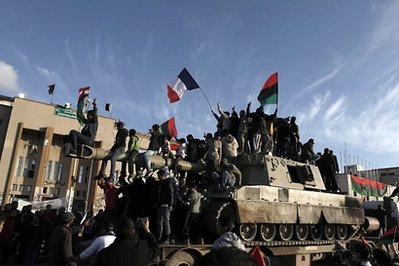
Libyan Rebels gather around a destroyed T-72 outside Benghazi

War is the unfolding of miscalculations.
Barbara Tuchman

Back on the 9th of March I wrote this closing line to an article entitled The Guns of March where I discussed the developing situation in Libya and the really terrible options that world and regional leaders had in response to Muammar Gaddafi’s criminal actions against his own people. I concluded that article with this statement.

There are many possibilities for the situation in Libya to get worse and potentially engulf the region in a war that no one wants or really is prepared for.

We can only see what develops but there are no good options only options of bad or worse. Will the region like Europe in 1914 be engulfed in war where there are no winners or will somehow the situation be resolved before it can get that far?”

It is obvious to all that the region stands a very good chance of becoming engulfed in a regional war unless the rebels drive Gaddafi from power, Gaddafi steps down on his own or he is killed or captured. Gaddafi has promised a “long war” against the “colonial and crusader” enemy.

Gaddafi Defiant

In the days since I wrote the referenced article the Arab League spoke up in support of establishing a no-fly zone and the United Nations Security Council voted for member nations to enforce a no-fly zone and take “all necessary measures” in order to stop Gaddafi’s forces attacks on other Libyans. By the time the Security Council acted Gaddafi’s forces had retaken many rebel held cities inflicting great slaughter on civilians and were on the outskirts of the rebel capital Benghazi with Gaddafi threatening to send his forces “house to house” to kill the opposition and promising to show no mercy.  Within a day French and British aircraft were flying missions and striking the spearhead of Gaddafi’s forces outside of Benghazi and United States Navy ships were launching Tomahawk Cruise Missiles at the Libyan air defense system. They were joined by aircraft from the U.S. Navy, Marine Corps and Air Force as well as Canada, Spain, Italy, Belgium, Norway, Denmark and Qatar.  Gaddafi’s forces were decimated outside of Benghazi and forced to retreat and a renewed rebel force, this time acting more like a military organization began a pursuit which has reached Ajdabiya.  In the west Gaddafi’s forces continue to attack the towns of Misrata and Zintan and according to observers and medical personnel inflicting heavy casualties on civilians.

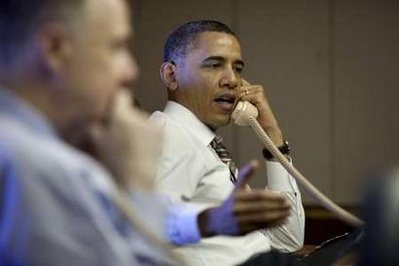
President Obama in a briefing

Around the world there is much criticism of the operation as well as support. In the United States representatives as diverse as Ron Paul and Dennis Kucinich are raising concerns on the Constitutional issues of the intervention in that President Obama did not secure the approval of Congress prior to sending American forces into battle. Kucinich even calls it an impeachable offense.  Likewise a diverse assembly of politicians, former military and executive branch officials including those with experience at the State Department, the United Nations, NATO and the Middle East are voicing their concerns about the fact that the end state of the operation is not defined and about the possibility of mission creep. The administration has not helped matters in sending a number of messages over the past few days of a desired end state. It is obvious that President Obama did not want this fight nor did he want it to appear that we were again leading an attack on an Arab nation.  His hesitancy has led to some conservatives attacking his lack of decisiveness even as other conservatives criticize his decision to join the military operations. Secretary of Defense Robert Gates has been outspoken in his opposition to becoming involved in another war and seems to want U.S. involvement to decrease sooner rather than later.

Rebels with damaged 152mm Self Propelled Howitzer

The situation is still evolving by the hour and one thing is clear. The outcome is very unclear and the repercussions across the region are also uncertain. One problem is the apparent discontinuity in U.S. and Western policy to various despotic Arab regimes, supporting the overthrow of Hosni Mubarak in Egypt, a military operation against Gaddafi in Libya and very muted and lukewarm support to popular political movements in Bahrain and Yemen. The Bahraini demonstrations have been put down with the help of Saudi forces but in Yemen numerous influential military officers have taken their units to support the Yemeni protestors. Of course the situation in all of these nations is different with the exception of the fact that all are ruled by long term undemocratic and repressive regimes of varying degree. Likewise actors in each country are different as are the geo-political interests of the United States.

A friend of mine pointed out to me that we are not viewed as “the good guys” in much of the Arab World as much as we see ourselves as such. I think that is true to a large extent because of foreign policy choices of the past century in regard to the Arab World as well as the past decade of war in Iraq and Afghanistan where even today photos taken by a rogue Army unit of soldiers posing with the mutilated and dead bodies enemies of the enemy further degrade opinion in the region against us.  But we are also the hope of many of those in Tunisia, Egypt, Libya and other nations and in those places and others popular uprisings have called out to us for political support and in the case of the Libyans military protection.

Parallels of 1989 in the fall of the Soviet Empire in Eastern Europe are drawn by the optimistic observers of what has been called the “Arab Spring.” However as much as I would like to believe that this is the case I think the miscalculations of 1914 are more readily apparent. There is nothing simple about what is going on and it seems to me that the region is sinking into a war with very unpredictable and grave consequences. Those consequences will probably with us for a generation was were the unanticipated outcomes of the First World War. Of course one of those outcomes was the breakup of the Ottoman Empire and the arbitrary redrawing of boundaries and selection of leaders in the newly created Arab nations and emirates by the victorious Allies. That is something that we are dealing with even as I finish this article.

As I wrote in another article I believe that acting to prevent the slaughter of Libyans by Gaddafi was the right thing to do.  Unfortunately as most observers know the people of Libya will not be safe unless Gaddafi leaves power. I think by backing Gaddafi into a corner early, even before he began his offensive against what were peaceful protestors and not giving him a face saving way out that we may have brought about a war that no one wanted and has few possible good endings. We are damned if we do and damned if we don’t.

Peace

Padre Steve+

3 Comments

Filed under Foreign Policy, History, middle east, Military, national security

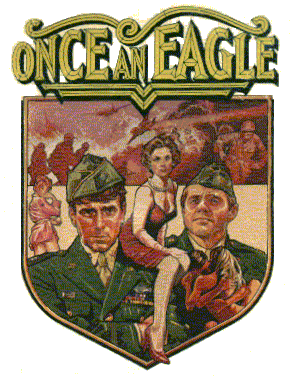
Once an Eagle: A Classic Novel of Military Life

“This classic novel of soldiers and soldiering ranks with Red Badge of Courage and All Quite on the Western Front as time-tested epics of war and warriors.”— John W. Vessey, Jr., Gen., US Army (Ret.)

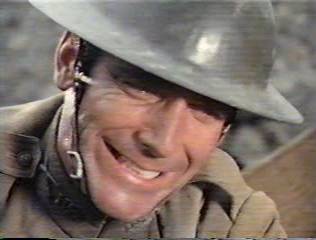
Sam Damon (Sam Elliot) cries over a fallen friend

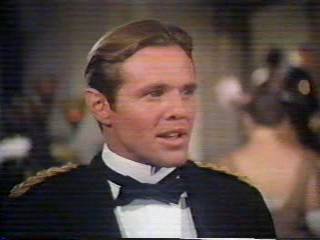
Tonight I started watching the NBC television mini-series adaptation of Anton Myrer’s classic novel of war military life and love Once an Eagle on DVD. I had been hoping to find the series on video or DVD for years and it was released again last year. I was introduced to the book through the series which I saw in High School when it came out in 1976. Back then I never missed an episode. I found the story which weaves the life of a soldier who rises from the ranks named Sam Damon who is played by Sam Elliott and a self-serving careerist named Courtney Massengale to be compelling then and caused me to get the book and read it back in High School and I found it even more compelling than the series.

Coutney Massengale (Cliff Potts)

Years later while deployed to Okinawa I saw a few episodes on AFN and purchased another copy which I took to Iraq with me in 2007. Reading the book there made even more of an impact on me.  I guess it was something about getting shot at and being out in locations with small groups of Americans and our Iraqis with the big battalions far away that made it more poignant. I was pleased to find it this week on DVD at the Camp LeJeune Marine Corps Exchange.

I guess for me the hook is that ever since I was a small child I dreamed of all things military and knew that I would probably spend a major part of my life in the military I was attracted to the story. Since I grew up in a Navy family and lived up and down the West Coast and the Philippines it was in my blood. Part of this was being surrounded by the Navy as well as the Marines. I remember seeing the movie The Green Berets when I was in second grade and listening to the Ballad of the Green Berets on the radio. A couple of my friends and I got sent to the principal’s office because we decided to play war a bit long at recess and didn’t go back to class. If there was something military on television I was going to watch it and I remember films like Patton, The Battle of the Bulge, Kelly’s Heroes, The Dirty Dozen, The Desert Fox, M*A*S*H, The Sands of Iwo Jima and tons of others. I built hundreds of model tanks and armored vehicles, ships and aircraft and lived for the day that I could join.

The idealistic and altruistic character of Sam Damon struck a chord in me. The Character of Sam Damon is man who worked his way up from the ranks and not afraid to speak his mind who is able to lead men in the worst situations and accomplish the mission. He cares for his troops but knows his job and knows that men, even friends die in war. At the same time he does not recklessly throw his men’s lives away and they believe that he will get them through. The book takes Damon along with his wife “Tommy” who is not a big fan of the Army despite being an Army Brat and the daughter of a General through their sometimes tumultuous marriage as they are stationed in many places both the glamorous and the not so glamorous in the United States and overseas. It follows Damon’s career from the days before World War One thorough the Great War, the doldrums of the 1920s and 1930s, World War Two, Korea and as a special envoy retired from the Army in a fictionalized Vietnam.  It also traces his relationship with the ambition driven Courtney Massengale.  To avoid spoilers I won’t go into detail but the two characters are in a sense stereotypical of the best and the worst types of men that populate the Officer Corps of the Army, but in a broader sense any military institution.

Tommy Damon (Darlene Carr)

The book is very real in its descriptions of combat as Myrer was an enlisted Marine who was wounded during the invasion of Guam and his descriptions of military life including the hardships endured by military families and while the novel is set in an earlier time where military personnel and their families did not have the communication abilities as we do now, but even with such niceties deployments and family separations, especially those where the military member deploys to a combat zone take a terrible toll on military families.

The novel is very pertinent for those of us in the military because it makes us ask the hard questions of what we will do to further our career and the cost of such a life on our families. I am coming up on 30 years service including about 10 years in the reserves and have made many deployments and my wife has had to endure many separations including my current geographic bachelor tour. Thankfully I am close enough to see her most weekends but we are apart more than we are together.  It is funny that knowing what I knew from my life as a Navy Brat and from books like Once an Eagle that I chose such a life. It is in a sense a calling for me. I know that I’ll never be an Admiral nor do I want to be it is enough to have the privilege to continue to serve when most or all of my contemporaries from my early days in the military have long since left the service or retired. I thank God for that privilege as well as a wife who when she was looking forward to me retiring from the Army Reserve saw me decide to join the Navy to go back on active duty following a mobilization tour where I lost my civilian job, without asking her first. She has endured years of me being gone.  Someday I’ll lay it down but not yet as I still feel that sacred call and thankfully despite the hardship she still loves me but is not unaware of my shortcomings.

In spite of this I am a realist when it comes to the institution of the military. It is not perfect. We have our Sam Damon’s and Courtney Massengale’s but most including me fall somewhere in between these polar opposites to one degree or another. I think that is why men or women who are too idealistic sometimes struggle when their leaders don’t measure up to those ideals.  I remember who my idealism was shattered.  After that I have endeavored to do the best as a Line Officer, Priest and Chaplain knowing that that I won’t always get it right but also knowing that I will try to always uphold the best ideals of the Navy and the military.

The book is required reading in many advanced military schools and is on the Army and the Marine Corps required reading lists.  There is much to learn from it and a lot of wisdom on its pages.  When I finish the mini-series I will read the book again. I recommend it highly.

Peace

Padre Steve+

4 Comments

Filed under books and literature, leadership, marriage and relationships, Military, movies

Christmas at the Front 1776-2010

Note: I wrote most of this on Christmas but didn’t finish it until a bit after 1AM on the 26th.

Today as on so many Christmas Days in days gone by military personnel serve on the front lines in wars far away from home and sometimes not far from their homes. Today American and NATO troops engage a resourceful and determined enemy in Afghanistan. To the west Americans support our Iraqi allies in their continued battle to end terrorism in that country while in many corners of the globe others stand watch on land, at sea and in the air. Unfortunately wars continue and until the end of time as we know it there will likely be war without end.

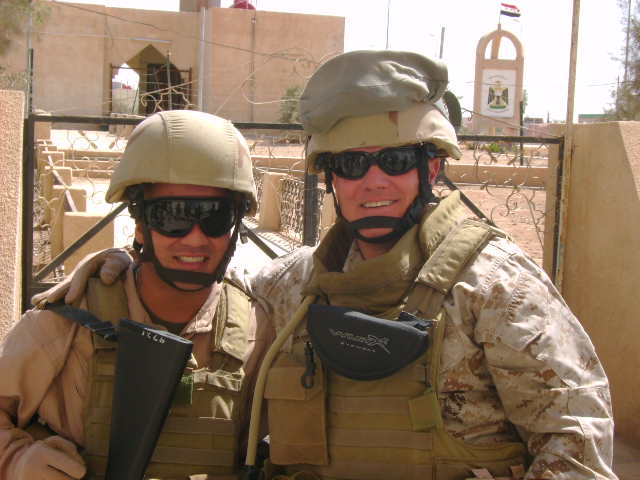
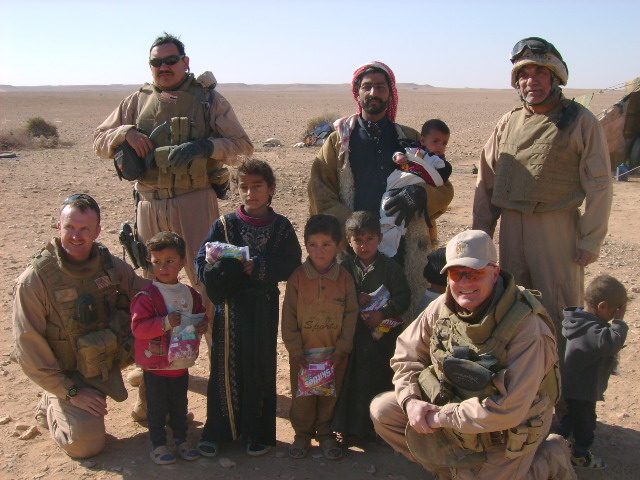
I have done my time in Iraq at Christmas on the Syrian-Iraqi Border with our Marine advisors and their Iraqis.  Since returning home have thought often of those that remain in harm’s way as well as those soldiers, sailors, Marines and airmen, American and from other nations that have spent Christmas on the front lines. Some of these events are absolutely serious while others display some of the “light” moments that occur even in the most terrible of manmade tragedies.

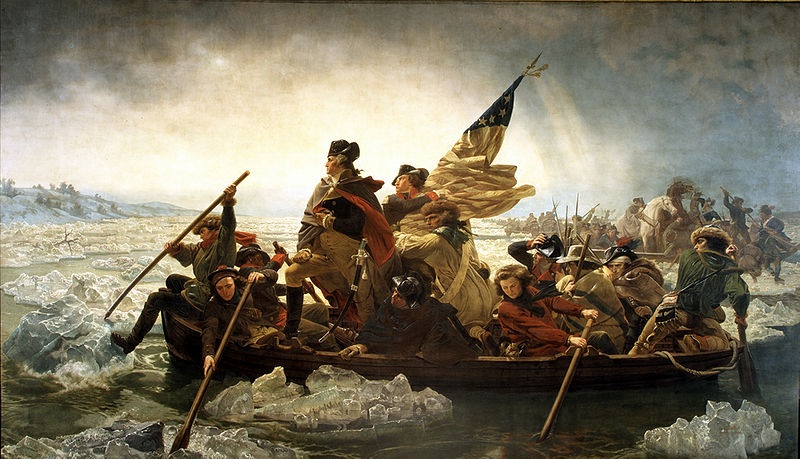
In American history we can look back to 1776, of course we could go back further but 1776 just sounds better. On Christmas of 1776 George Washington took his Continental Army across the Delaware to attack the British garrison at Trenton. Actually it was a bunch of hung over Hessians who after Christmas dinner on the 24th failed to post a guard but it was an American victory. In 1777 Washington and his Army had a rather miserable Christmas at Valley Forge where they spent the winter freezing their asses off and getting drilled into a proper military force by Baron Von Steuben.

While not a battle in the true sense of the word the Cadets at West Point wrote their own Christmas legend in the Eggnog Riot of 1826 when the Cadets in a bit of holiday revelry had a bit too much Eggnog and a fair amount of Whiskey and behaved in a manner frowned upon by the Academy administration. Needless to say that many of the Cadets spent the Christmas chapel services in a hung over state with a fair number eventually being tossed from the Academy for their trouble.

In 1837 the U.S. Army was defeated at the Battle of Lake Okeechobee by the Seminole Nation, not a Merry Christmas at all.  In 1862 the Army of the Potomac and Army of Northern Virginia faced each other across the Rappahannock River after the Battle of Fredericksburg while to the south in Hilton Head South Carolina 40,000 people watched Union troops play baseball some uttering the cry of many later baseball fans “Damn Yankees.” In 1864 the Army of the Potomac and Army of Northern Virginia faced each other again in the miserable trenches of Petersburg while General William Tecumseh Sherman enjoyed Christmas in Savannah Georgia after cutting a swath of destruction from Atlanta to the sea. He presents the city to Lincoln who simply says “nice, but I really wanted Richmond.”

Napoleon had something to celebrate on December 25th 1801 after surviving an assassination attempt on Christmas Eve and 1809 he was celebrating his divorce from Empress Josephine which had occurred on the 21st.

Meanwhile in Europe the 1914 “Christmas Truce” began between British and German troops and threatened to undo all the hard work of those that made the First World War possible.  Thereafter the High Commands of both sides ensured that such frivolity never happened again.

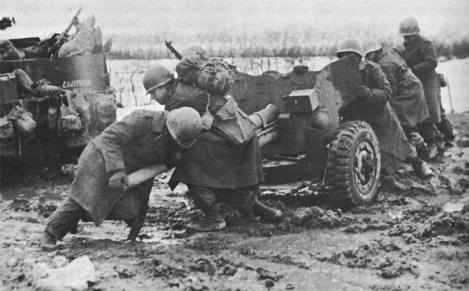
U.S. Soldiers and Anti-Tank Gun at the Battle of the Bulge

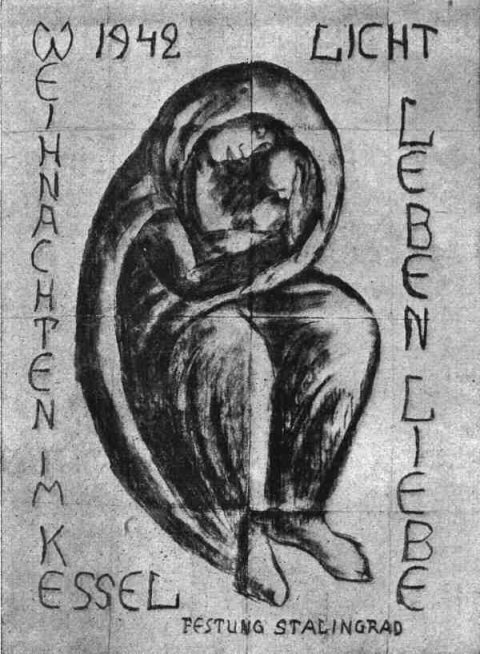
World War II brought much suffering in 1941 after Pearl Harbor the Japanese forced the surrender of Hong Kong and its British garrison while two days later the Soviets launched their counterattack at Moscow against Hitler’s Wehrmacht and the British were retaking Benghazi from the Afrika Corps.  A year later the Americans were clearing Guadalcanal of the Japanese and the Red Army was engaged in a climactic battle against the encircled German 6th Army at Stalingrad. At Stalingrad a German Physician named Kurt Reuber who is also a Lutheran minister draws “The Madonna of Stalingrad.”

The drawing which was taken out of Stalingrad by one of the last German officers to be evacuated now hangs in the Kaiser Wilhelm Memorial Church in Berlin. Reuber would draw another in 1943 while in a Soviet POW camp in which he would die in less than a month after that Christmas. Reuber wrote:

“I wondered for a long while what I should paint, and in the end I decided on a Madonna, or mother and child. I have turned my hole in the frozen mud into a studio. The space is too small for me to be able to see the picture properly, so I climb on to a stool and look down at it from above, to get the perspective right. Everything is repeatedly knocked over, and my pencils vanish into the mud. There is nothing to lean my big picture of the Madonna against, except a sloping, home-made table past which I can just manage to squeeze. There are no proper materials and I have used a Russian map for paper. But I wish I could tell you how absorbed I have been painting my Madonna, and how much it means to me.”
“The picture looks like this: the mother’s head and the child’s lean toward each other, and a large cloak enfolds them both. It is intended to symbolize ‘security’ and ‘mother love.’ I remembered the words of St.John: light, life, and love. What more can I add? I wanted to suggest these three things in the homely and common vision of a mother with her child and the security that they represent.”

In 1943 the Marines were battling the Japanese at New Britain while the Red Army was involved in its winter offensive against the Wehrmacht. In 1944 the Russians were advancing in Hungary, the Americans were engaged in a desperate battle with the Germans in the Ardennes with the German 2nd Panzer Division running out of gas 4 miles from the Meuse River and were destroyed by the American 2nd Armored Division. In the Pacific McArthur’s forces were battling the Japanese in the Philippines.

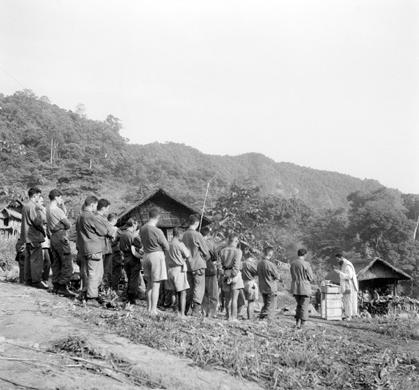
French Chaplain and Soldiers in Indochina

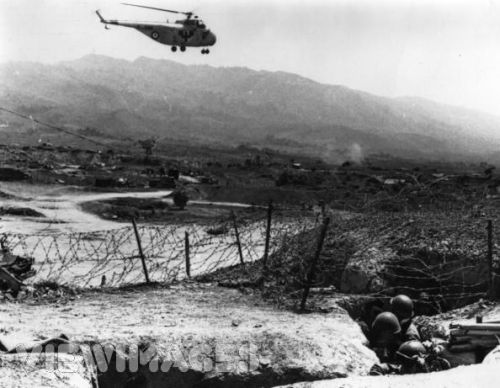
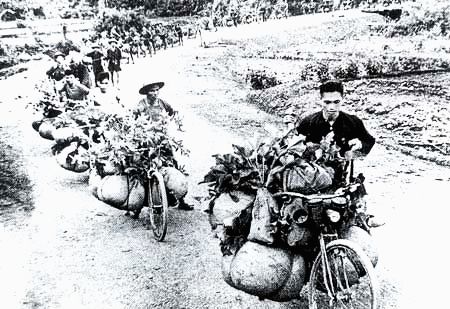
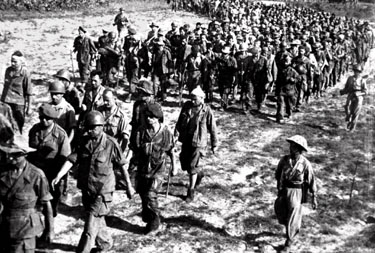
In the years following the Second World War Christmas was celebrated even while armies continued to engage in combat to the death. Christmas of 1950 was celebrated in Korea as the last American forces were withdrawn from the North following the Chinese intervention which the 1st Marine Division chewed up numerous Red Chinese divisions while fighting its way out of the Chosin Reservoir.  In the following years a stalemate along the front brought no end to the war and In French Indo-China the French garrison of Dien Bien Phu celebrated Christmas in primitive fashion unaware that General Giap was already marshalling his forces to cut them off and then destroy them shortly after Easter of 1954.   In 1964 the U.S. commits to the war in Vietnam and for the next 9 years American Soldiers, Marines, Sailors and Airmen will battle the North Vietnamese and Viet Cong with Marines fighting the North at Khe Sanh during Christmas of 1967.

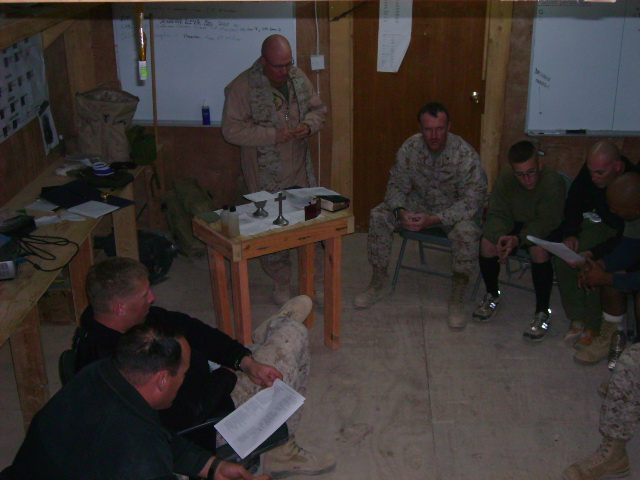
Christmas on the Syrian Border with USMC Advisors

In the years after Vietnam American troops would spend Christmas in the Desert of Saudi Arabia preparing for Operation Desert Storm in 1990, in Somalia the following year and in the Balkans. After September 11th 2001 U.S. Forces spent their first of at least 10 Christmas’s in Afghanistan and in 2003 begin the first for at least 8 Christmas’s in Iraq.

Today Americans serve around the world far away from home fighting the war against Al Qaeda and its confederates and some will die even on this most Holy of Days while for others it will be their last Christmas.

Please keep them and all who serve now as well as those that served in the past, those that remain and those that have died in your prayers.

Peace

Padre Steve+


1 Comment

Filed under faith, History, Military

Veterans Day 2010: Counting the Cost of War

“It is well that war is so terrible, or we should get too fond of it.” General Robert E. Lee

Veterans Day had become a rather somber occasion for me over the past decade and since returning from Iraq in 2008 has taken on added personal significance.  I have noticed that I have become much more reflective about the sacrifices made by our military and the terrible coasts of war on our Soldiers, Marines, Sailors, Airmen and their families in this age of the all volunteer military.  The military which has about 2,225,000 members including the Reserves and National Guard is just 0.7% of the total population, the lowest percentage of military personnel compared to total population during any war in our history.  As a result this force has borne the brunt of a war that no politicians or bureaucrats figured would last half as long as it has.  As a result the “few” have been asked to do more for longer than and military that this nation has ever fielded during a war.

Thus for me Veterans Day has become a rather somber and reflective occasion as I ponder all the sacrifices made by our military and their families. In Afghanistan the U.S. Military has lost 1378 killed and our allies another 825.  In Iraq 4427 U.S. Military personnel have died along with 318 allied soldiers, not including the Iraqi military losses.  For each of the killed there are about 8 more wounded a total of over 38,000 wounded.  Of course the wounded numbers do not include 170,000+ cases of hearing damage; 130,000+ cases of mild traumatic brain injuries; and 200,000+ cases of serious mental health problems, over 30,000 serious disease cases, including a disfiguring, parasitic disease called Leishmaniasis, which results from bites of sand flies; thousands of cases of respiratory disease linked to exposure to toxic burn pit smoke and hundreds of suicides.  Then there are the injuries related to road and aviation accidents not in direct combat.  In my recent assignments in Iraq and Naval Medical facilities I have seen the human cost of the war.  I have friends who suffer as the result of Traumatic Brain Injury, PTSD and Pulmonary diseases as well as those that have been wounded as the result enemy action.  I have a dear friend with a rare and irreversible pulmonary condition from two tours in Iraq. He is 41 his lungs are those of a 70 year old man.  My best friend, a senior Naval Officer is still suffering from the effects of TBI and PTSD incurred while serving with the Marines in Al Anbar Province.

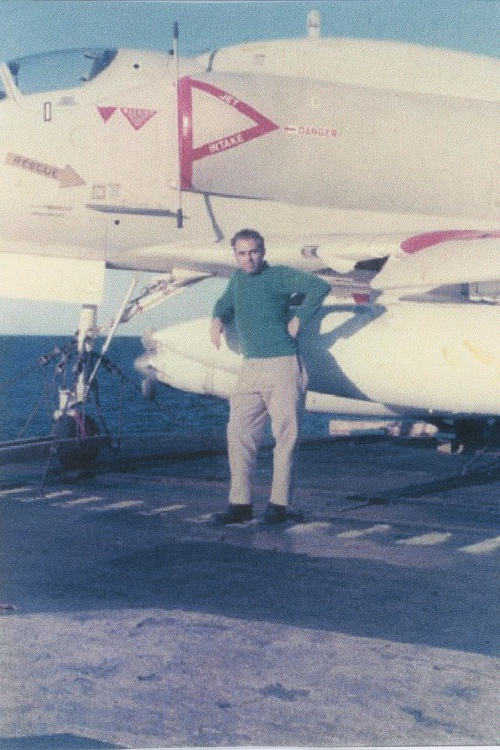
My Dad Aviation Storekeeper Chief Carl Dundas aboard USS Hancock CVA-19 off Vietnam circa 1971-72

A year ago on Veterans Day I was at with my parents in Stockton California to visit my mom and my dad who was then in a nursing facility due to the ravages of Alzheimer’s disease.  It was a terrible visit conflict with my mother due to witches’ brew of my PTSD and grief for my dad and my mother’s struggles with my dad’s condition and her own physical condition.  I visited my dad every day when in two and unfortunately he did not know who I was, Alzheimer’s had robbed him of everything that made him my dad.  He died on June 23rd of this year a day after I found out that I had been selected for promotion to Commander.  My dad was a retired Navy Chief Petty Officer who served in Vietnam on a beach detachment manning an emergency airfield in the besieged city of An Loc in 1972.  He never talked about that tour or what happened there except to tell me that he saw the Communists executing civilians in the city from his observation point.  He came home a changed man.  Thankfully he is now out of his suffering and our family is beginning to find its way back from the abyss of his illness.

I have served for over 29 years in the Army and the Navy and have witnessed many things and been blessed to have my life enriched by many veterans.  Unfortunately many of these brave men have since passed away, some having lived many years and others that have died far too young as a result of service connected injuries.

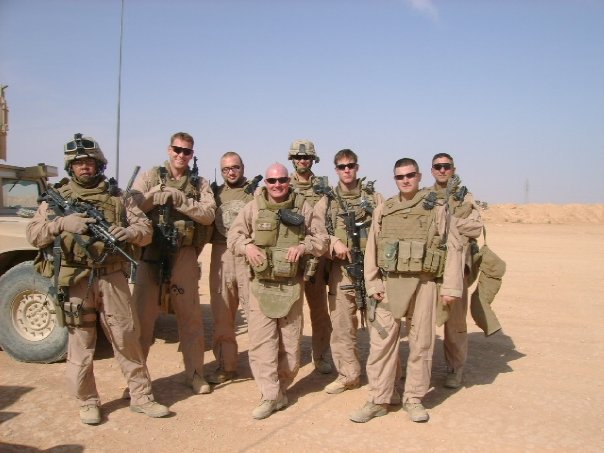
With advisors to the 3rd Bn, 3rd Brigade 7th Iraq Division COP South 2008

In my current work I see many young men that wear the Purple Heart for being wounded in combat. I see those that need assistance to walk, amputees, men with obvious scars from burns and others suffering blindness from their injuries. Our hospital’s Medical Board sees 40-60 Marines and Sailors a day, quite a few of whom that will be medically retired due to their injuries.  There are also those that have died by their own hand suffering from psychological and spiritual injuries too deep to fathom, we had one of our own Corpsman suicide last week.

The cost of war is terrible, as General William Tecumseh Sherman so eloquently put it: “War is Hell.”

Despite this our brave men and women that serve in all branches of the military as well as those that have gone before us in the 235 year history of our military have shouldered the load, for most of that history depending on volunteers who often served in obscurity often derided by their fellow Americans who believed that the military was a place to go if you could not be successful in the civilian world. The pay was low, the duty arduous and benefits few. In the Civil War, the World Wars and up until 1974 the professionals were augmented by draftees who outnumbered the professionals by a huge margin.  Since 1974 the force has been an all volunteer force.

Health and Comfort Board Team USS Hue City, Northern Arabian Gulf May 2002

Regardless of whether our Veterans were draftees or volunteers they have served this country well and on the whole to use the current Navy description are “A Global Force for Good.” The countries liberated from oppressors and helped in humanitarian operations by American Soldiers, Sailors, Marines and Airmen are many and varied.  They have represented the spectrum of our society and represent the best the country has to offer.  Unfortunately they have not always been honored by some of their our countrymen and women and sometimes the children and grandchildren of the peoples that they liberated from Nazi, Fascist or Communist oppressors who often use the wrongdoing of a few military personnel or the decisions or actions of American politicians or businessmen to label American military personnel as criminals.

Unfortunately since the military is such a small part of our population and concentrated in a few large bases it is invisible to most Americans as they live their daily lives. Often in isolated from the bulk of America such as Killeen Texas home of the U.S. III Corps and Jacksonville North Carolina the home of the 2nd Marine Expeditionary Force and Second Marine Division are quintessential military towns but neither are near major population centers and thus the sacrifice of these Soldiers, Marines and Sailors goes unnoticed by most of the nation.  In a sense the human cost of the war falls inordinately upon these military communities where there are few strangers.

In spite of this the current men and women of the American Military train, deploy, fight and return every day as they have since the 9-11-2001 attacks, many if not most have made multiple combat tours.  I have been pleased to see more support of the military in the media, especially sports media and leagues.  Many businesses are taking time to offer things of value to servicemen and women and those businesses should be commended and patronized.  I was touched by many stories that I saw about our veterans on ESPN over the past few days.  http://www.espnmediazone3.com/us/2010/11/espn%E2%80%99s-weeklong-salute-to-veterans-day/

Many of our Reserve component personnel give up civilian employment and chances for promotion to serve in the military, particularly when they are mobilized for service. When they return home most return to towns and cities that have little of the support afforded to active duty members when they return.  I pray that our political leaders in the future will exercise discernment and wisdom before committing us to another war. Otto Von Bismarck said: “Anyone who has ever looked into the glazed eyes of a soldier dying on the battlefield will think hard before starting a war.” Unfortunately the current members of the House, Senate and Executive branch have little connection to the military as very few have served and I wonder if any really comprehend this maxim.  In the 111th Congress 120 members had some form of military service.  The number of veterans in the 111th Congress reflects the trend of a steady decline in the number of Members who have served in the military. For example, there were 298 veterans (240 Representatives, 58 Senators) in the 96th Congress (1979-1981); and 398 veterans (329Representatives, 69 Senators) in the 91st Congress (1969-1971).  Those who have served a full military career are far fewer; the number of congressmen with military careers will remain relatively constant for the 112th Congress. In the Senate there will be one (as compared with two in 2006 and one in 2008) and in the House there will be eight (as compared with four in 2006 and six in 2008).  Some of these Congressional Veterans have been vilified by some broadcasters and pundits of the extreme right wing media most of whom who have never served in the military.  On the positive side nine members of the new Congress will have served in the current wars which hopefully will help promote the sacrifice of our current Veterans and help with programs that will help returning Veterans.

I have seen the cost of war up close and personal in Iraq and back here in the States. I suffer some the afflictions described as a result of my service and see the young men and women many of whom were not yet born when I enlisted in the Army, or when I was commissioned as an Army Officer, when I was a Company Commander or when I was a senior Captain in the Army. These young men and women are heroes.

Please take a moment to thank a Veteran.  If you have time volunteers are always welcome at organizations such as the USO and American Red Cross working with our troops, join or support organizations which promote the causes of Veterans including the Iraq Afghanistan Veteran’s Association www.iava.org the Veterans of Foreign Wars http://www.vfw.org/, American Legion http://www.legion.org/ , Marine Corps League http://www.mcleague.org/, the Fleet Reserve Association http://www.fra.org/, the Association of the U.S. Army http://www.ausa.org and the Disabled American Veterans http://www.dav.org/. There are also many charitable organizations that provide assistance to Veterans and their families’ one of the best being the Fisher House Foundation http://www.fisherhouse.org/ which provides comfortable and free lodging to the families of wounded, injured or sick military personnel on bases adjacent to military hospitals. I found these ten ways that you can help on Yahoo.com:

1. At 11 a.m., observe a moment of silence for those who’ve fought and died while in service to the country

2. Display an American flag

3. Attend a Veterans Day parade

4. Thank a vet for his/her service

5. Send a letter to troops through the U.S. Department of Defense Website

6. Work in a homeless shelter or soup kitchen

7. Visit a veteran’s grave or pick up trash at a veterans cemetery

8. Visit with the family of a veteran who’s serving overseas

9. Visit with a wounded vet at a local VA facility

10. Donate to the USO, the American Legion, Veterans of Foreign Wars USA or other organizations that honor and assist vets

Keep us all in your prayers and please when Veterans Day is past do not forget those of us that serve and our families, especially those men and women serving in harm’s way.  To my friends and comrades I echo the words of the German commander to his troops in captivity at the end of the Band of Brother’s mini-series:

“Men, it’s been a long war, it’s been a tough war. You’ve fought bravely, proudly for your country. You’re a special group. You’ve found in one another a bond that exists only in combat, among brothers. You’ve shared foxholes, held each other in dire moments. You’ve seen death and suffered together. I’m proud to have served with each and every one of you. You all deserve long and happy lives in peace.”

Peace

Padre Steve+

3 Comments

Filed under iraq,afghanistan, Military, PTSD, shipmates and veterans

Happy 235th Birthday Marines!

In 1775 a committee of the Continental Congress met at Philadelphia’s Tun Tavern to draft a resolution calling for two battalions of Marines able to fight for independence at sea and on shore.  The resolution was approved on November 10, 1775, officially forming the Continental Marines. The first order of business was to appoint Samuel Nicholas as the Commandant of the newly formed Marines. Robert Mullan the owner and proprietor of the said Tun Tavern became Nicholson’s first captain and recruiter. They began gathering support and were ready for action by early 1776.  They served throughout the War for Independence and like the Navy they were disbanded in April 1783 and reconstituted as the Marine Corps in 1798. The served on the ships of the Navy in the Quasi-war with France, against the Barbary Pirates where a small group of 8 Marines and 500 Arabs under Lieutenant Presley O’Bannon made a march of 500 miles across the Libyan Desert to lay siege Tripoli but only reached Derna. The action is immortalized in the Marine Hymn as well as the design of the Marine Officer’s “Mameluke” Sword. They served in the War of 1812, the Seminole Wars and in the Mexican-American War where in the storming of the on Chapultepec Palace they continued to build and enduring legacy. In the months leading up to the Civil War they played a key role at home and abroad.  In October 1859 Colonel Robert E. Lee led Marines from the Marine Barracks Washington DC to capture John Brown and his followers who had captured the Federal Armory at Harper’s Ferry.

The Corps would serve through the Civil War and on into the age of American Expansion serving in the Spanish American War in the Philippines, Puerto Rico and Cuba where they seized Guantanamo Bay at the battle of Cuzco Wells.  The would serve in China and be a key component of the international force that defended foreign diplomats during the Boxer Revolt as well as the international force that would relieve the diplomatic compound in Peking (Beijing).  In World War One the Marines stopped the German advance at Chateau Thierry and cemented their reputation as an elite fighting force at Belleau Wood where legend has it that the Germans nicknamed them Teufelhunden or Devil Dogs, a name that they Marines have appropriated with great aplomb.

During the inter-war years the Marines were quite active in the Caribbean and Asia and also developed amphibious tactics and doctrine that would be put to use in the Pacific Campaign.  During the war the Marines served in all theaters but won enduring fame at Wake Island, Guadalcanal, Tarawa, Iwo Jima, Okinawa and numerous other battles in the Pacific war. Marine Aviators flew in some the most desperate actions in the war to support the Navy and amphibious operations ashore.

After the war the Truman Administration sought to eliminate the Marine Corps but the Corps was saved by the efforts of Americans across the country and Marine supporters in Congress.  That was a good thing because the Marines were instrumental in keeping the North Koreans from overrunning the South during the Korean War on the Pusan Perimeter, turned the tide at Inchon and helped decimate Communist Chinese forces at the Chosin Reservoir.  After Korea the Marines would serve around the World in the Caribbean and Lebanon and in Vietnam where at Da Nang Keh Sanh, Hue City, Con Thien fighting the North Vietnamese and their Viet Cong allies.  The Marines took the initiative to implement innovative counter insurgency measures such as the Combined Action Platoons which enjoyed tremendous success until they were shut down by the Army high command.  These lessons would serve the Marines well in the new millennium during the Anbar Awakening in Iraq which changed the course of that insurgency and war.

The Marines would again be involved around the World after Vietnam serving in the Cold War, in Lebanon and the First Gulf War which was followed by actions in Somalia, the Balkans and Haiti. After the attacks of September 11th 2001 the Marines were among the first into Afghanistan helping to drive the Taliban from power. In the Iraq Campaign the Marines had a leading role both in the invasion and in the campaign in Al Anbar Province.  After theirwithdraw from Iraq the Marines became a central player in Afghanistan where today they are engaged around Khandehar and in Helmand Province.

The Marines are elite among world military organizations and continue to “fight our nations battles on the air and land and sea.” The Corps under General John LeJeune institutionalized the celebration of the Marine Corps Birthday and their establishment at Tun Tavern. General LeJeune issued this order which is still read at every Marine Corps Birthday Ball or observance:

MARINE CORPS ORDER No. 47 (Series 1921)
HEADQUARTERS
U.S. MARINE CORPS Washington, November 1, 1921

The following will be read to the command on the 10th of November, 1921, and hereafter on the 10th of November of every year. Should the order not be received by the 10th of November, 1921, it will be read upon receipt.

On November 10, 1775, a Corps of Marines was created by a resolution of Continental Congress. Since that date many thousand men have borne the name “Marine”. In memory of them it is fitting that we who are Marines should commemorate the birthday of our corps by calling to mind the glories of its long and illustrious history.

The record of our corps is one which will bear comparison with that of the most famous military organizations in the world’s history. During 90 of the 146 years of its existence the Marine Corps has been in action against the Nation’s foes. From the Battle of Trenton to the Argonne, Marines have won foremost honors in war, and in the long eras of tranquility at home, generation after generation of Marines have grown gray in war in both hemispheres and in every corner of the seven seas, that our country and its citizens might enjoy peace and security.

In every battle and skirmish since the birth of our corps, Marines have acquitted themselves with the greatest distinction, winning new honors on each occasion until the term “Marine” has come to signify all that is highest in military efficiency and soldierly virtue.

This high name of distinction and soldierly repute we who are Marines today have received from those who preceded us in the corps. With it we have also received from them the eternal spirit which has animated our corps from generation to generation and has been the distinguishing mark of the Marines in every age. So long as that spirit continues to flourish Marines will be found equal to every emergency in the future as they have been in the past, and the men of our Nation will regard us as worthy successors to the long line of illustrious men who have served as “Soldiers of the Sea” since the founding of the Corps.

JOHN A. LEJEUNE,
Major General
Commandant

I have had the privilege of serving with the Marines in peace and war and the most memorable Marine Corps Birthday celebrations for me were in Ramadi with the Marine advisors to the Iraqi 7th Division and with the Marine Security Force Company at Guantanamo Bay Cuba. The highlight of my career was serving with the Marines in Iraq and I wear my Iraq Campaign Medal with pride.  The Marines have helped my professional development as an office through the Amphibious Warfare Course, Command and Staff College and the Fleet Marine Force Officer Qualification. I count my Marines as some of my most enduring friends.

Happy Birthday Marines. Thank you for all you do.

Peace

Padre Steve+


Leave a comment

Filed under History, iraq,afghanistan, Military

The Pacific Part Three: Tarawa Paving the Way to Peleliu, Iwo Jima and Okinawa

Introduction to Part Three

While the First Marine Division slogged its way through the hell of the New Britain campaign the battle for the Pacific’s primary focus became the Central Pacific which was a far different sort of war than had been fought in  the South Pacific including the Guadalcanal and New Britain campaigns.  Instead of the steaming nearly impenetrable jungles and muck of the Solomons battles shifted to small heavily fortified and defended atolls and islands garrisoned by elite Imperial Naval infantry or veteran Imperial Army units.  The battle of Tarawa in the Gilbert islands was the first step in pushing across the Central Pacific and eventually on to the Japanese home islands.

Tarawa was the combat test bed of many of the weapons and tactics that would be featured in the key battles of the drive across the Central Pacific.  Weapons and tactics that would be applied by the First Marine Division at Peleliu and Okinawa.  Tarawa was a battle that shocked the American public. On this island which was  barely one square mile of coral and sand the Marines of the Second Marine Division suffered over 1000 dead and 2300 wounded while annihilating the Japanese garrison of over 4000 troops.  The carnage of Tarawa would be seen again at Peleliu where the First Marine Division as depicted in the series “The Pacific” fought a no-quarter battle against a determined and well prepared enemy.

This is the story of that battle.

The Decision: Operation Galvanic

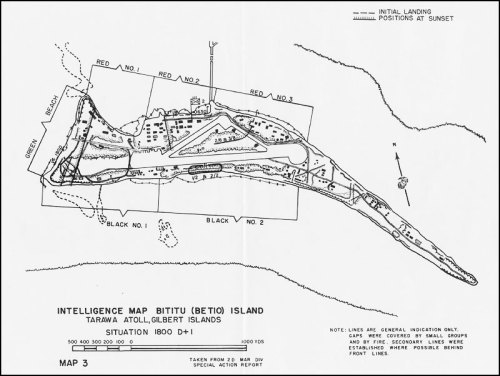
The Target: Betio Island at Tarawa Atoll

Following Guadalcanal and the shift of significant naval forces from the Solomons the focus of the US shifted to the thrust across the Central Pacific.  Unlike the Solomons which were initially a Navy and Marine Corps Operation and shifted to the Army under MacArthur as the campaign shifted to Borneo, despite the participation of the 1st Marine Division in the New Britain campaign the operations here would be an almost total Navy and Marine Corps operation.Operation Galvanic, the first offensive operation in the Central Pacific, came about as a result of the Joint U.S. Strategic Committee decision in April 1943 to favor an advance in the Central Pacific while maintaining the offensive in the South Pacific.[i] The driving force behind this strategy was Admiral King who fought for the plan and “insisted that any campaign should focus on the destruction of Japan’s overseas resources, which meant an offensive directed only toward the Western Pacific sea lanes.”[ii] The Joint Chiefs believed that a simultaneous attack by Nimitz in the Central Pacific and MacArthur in the South Pacific would “keep the Japanese guessing.”[iii] The decision was presented to the British at the TRIDENT meetings in May 1943 and though the British resisted the American plans a compromise was reached allowing the Americans to “simultaneously…maintain and extend unremitting pressure against Japan….”[iv]

The decision to begin operations in the Central Pacific meant that MacArthur’s priority in logistics and personnel would be reduced in order to launch the Central Pacific operation.  MacArthur protested, to no avail and the Joint Chief’s stood firm in their decision that the Central Pacific operation “would make it easier to isolate Japan from her domain in the south.”[v] MacArthur was allowed to continue OPERATION CARTWHEEL while Nimitz seized the Marshall and Caroline islands.[vi] Nimitz’s staff began preparations and decided on a conservative course to capture the Gilberts first before taking the more heavily defended Marshalls.[vii] This was in part due to the “need to minimize the risks to his untried amphibious forces against such heavily fortified enemy bases out of reach of air cover.”[viii]

Several factors were considered by Nimitz and his planners considerations in this choice.  Nimitz did not have enough troops to capture all of the vital heavily defended locations in the Marshalls without dividing his forces.[ix] Additionally the Gilbert operation could be supported by land based bombers.[x] A final consideration was the Joint Chief’s decision to allow MacArthur to retain control of 1st Marine Division which Nimitz had hoped would be available for operations in the Central Pacific.[xi] CINCPAC did a thorough photo reconnaissance of the Gilbert’s convinced the Joint Chiefs that Tarawa and Makin needed to be taken to provide air bases for the assault on the Marshalls.  Finally the order forGalvanic was issued on 20 July 1943 with its execution planned for November 1943.[xii]

Japanese Preparations
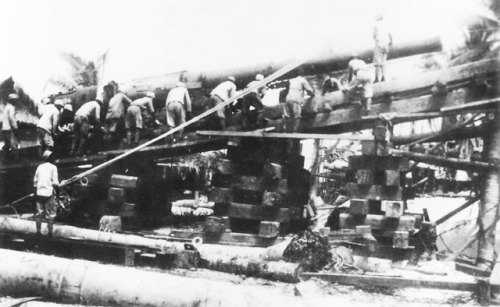
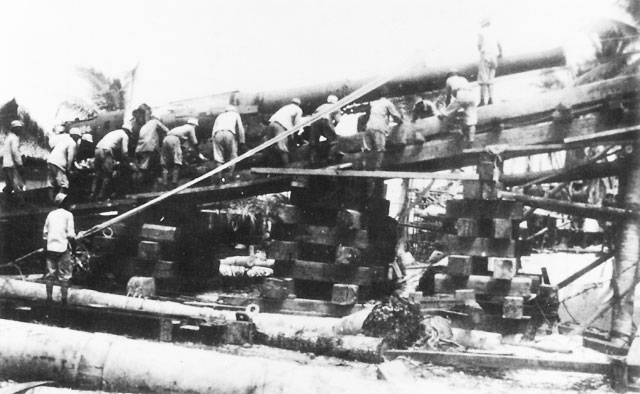
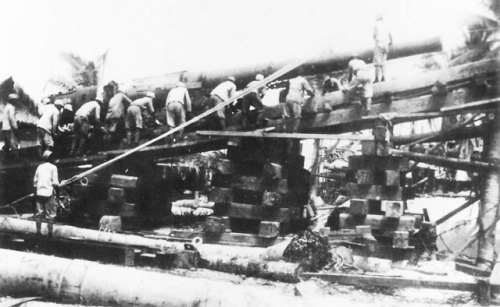
Japanese emplacing 8″ Naval Gun on Tarawa

The Japanese did little to prepare against potential American offensive operations against the Gilbert’s until Makin Island was raided by elements of 2ndRaider Battalion in August 1942.  The Makin raid shook the Japanese and at which time they reinforced Makin and occupied Betio.[xiii] The Japanese occupied Betio with the Yokosuka 6th Special Landing Force, essentially Naval Infantry or Marines[xiv] and the 111th Construction Battalion on 15 September 1942, over nine months after they attacked Pearl Harbor.[xv] These forces were commanded by Admiral Tomanari, who at once began to fortify Betio. Recognizing his need for more troops  Tomanari asked Tokyo for reinforcements.  The reinforcements came in the form of Commander Sugai’s 7th Sasebo Special Naval Landing Force, which landed on 14 March.[xvi]Commander Sugai’s troops were the Rikusentai, the best of the Japanese Navy’s land forces.

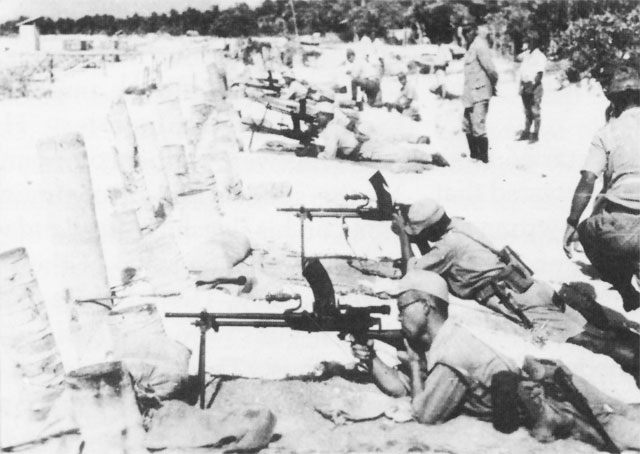
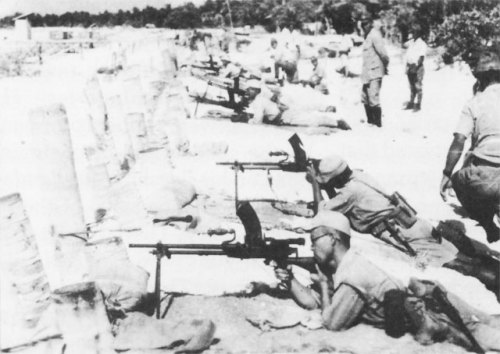
Japanese Naval Infantry conducting live fire exercise on Tarawa

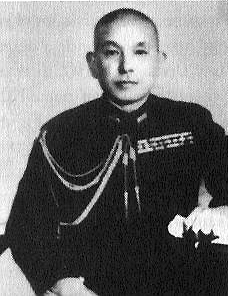
The fortification of Betio proceeded slowly until the arrival of Rear Admiral Shibasaki, who relieved Tomanari who returned to Japan.[xvii] Shibasaki, a tough veteran of service at sea and ashore including 19 months as aRikusentai[xviii] officer in China was chosen by Admiral Koga to instill a better fighting spirit on the island.  The Imperial General Headquarters “New Operations Plan” ordered the outer defensive islands, such as Tarawa, to “hold up any American advance while an inner line of fortresses was constructed….”[xix]

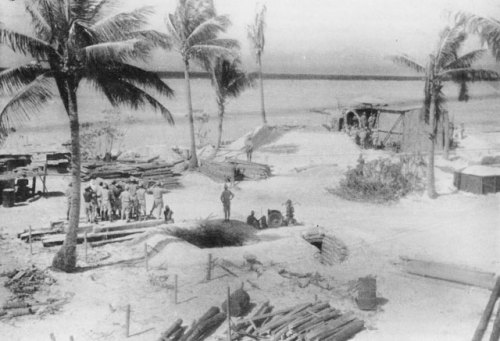
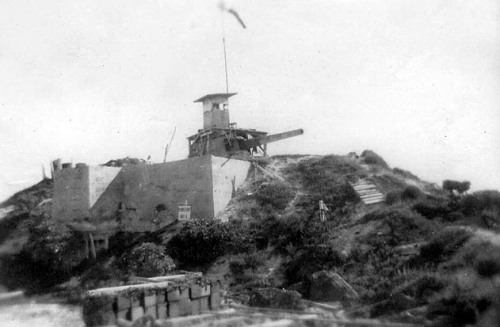
Fortified 8″ gun position on Tarawa

Shibasaki drove the garrison hard, inspiring them to “extraordinary heights of labor that resulted in Betio’s superb defenses.”[xx]Betio mounted four 8” Naval guns[xxi], four 14 cm guns, four dual mount 5.5” dual purpose guns[xxii] six 80 mm anti-boat guns, eight 75 mm dual purpose guns, ten 75 mm mountain guns, six 70 mm guns and nine 37 mm anti-tank guns, numerous machine guns and light AA guns and 14 light tanks.[xxiii] These weapons were mounted in well camouflaged armored or reinforced pillboxes.[xxiv] In accordance with the directives of the high command Shibasaki ordered his troops “to defend to the last man all vital areas and destroy the enemy at the waters’ edge.”[xxv]

Admiral Shibasaki boasted that it would take a million men a thousand years to take Betio

The Japanese records note that Shibasaki “immediately began to strengthen morale and carried out advanced training, and as a result…the garrison remarkably enhanced its fighting capability and they were full of confidence.”[xxvi] Even the service troops were thoroughly trained to fight from their superb defensive positions.[xxvii]Shibasaki reportedly told his men that it would take a million men a thousand years to take Betio.

Japanese conducting gunnery exercise prior to the invasion

American Preparations

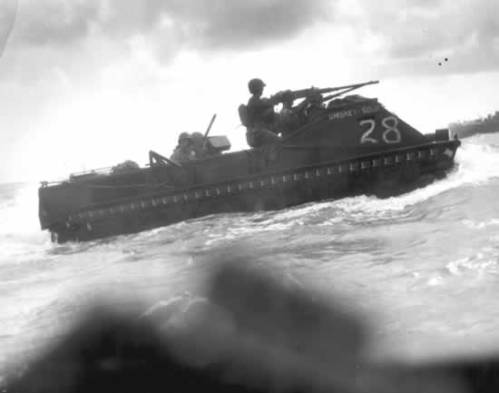
The LVT- Landing Vehicle Tracked or the Amtrack

Nimitz organized his forces into three major commands, the 5th Fleet, commanded by Admiral Raymond Spruance, the 5th Amphibious Force under Admiral Richmond “Kelly” Turner and the V Amphibious Corps under Major General Holland “Howlin’ Mad” Smith, USMC.[xxviii] The 2nd Marine Division which would make the assault at Tarawa was commanded by Major General Julian Smith. The force that sustained in this operation and subsequent amphibious operations was the Service Force Pacific Fleet.[xxix] This was a collection of ships whose mission it was to sustain the fleet in mobile operations,[xxx] which greatly “increased the range and power of the Navy in amphibious operations.”[xxxi] The planned assault called for the Army’s 27thDivision take Makin and the veteran 2nd Marine Division which had been blooded at Guadalcanal to take Tarawa supported by the carriers and battleships of 5th Fleet.

Tarawa marked the first use of dedicated amphibious ships such as theUSS Ashland LSD-1

This was the first application of new amphibious tactics developed for the Pacific war.[xxxii] Air and sea bombardment would precede the actual assault. The Marines would be transported ashore in a new vehicle called an LVT (Landing Vehicle Tracked) and other amphibious ships and craft including the LSD (Landing Ship Dock), LCM (Landing Craft Mechanized) and LCVP (Landing Craft Vehicle Personnel).  The LVTs were absolutely vital, nicknamed “Amtracks” or “Amphtracks” they were essentially a tracked amphibious personnel carrier. They were developed from a commercial vehicle used by U.S. Forrest Service Rangers in the Florida Everglades and were capable of crossing coral reefs that would cause other craft to go aground.  The early LVTs had retrofitted armor and mounted a .50 cal. machine gun.  At Tarawa the Marines deployed 75 LVT-1s[xxxiii] and 50 LVT-2s. 93 LVTs would be part of the first wave of the Marine assault.[xxxiv] The LVTs were transported to Tarawa aboard LSTs (Landing Ship Tanks.)  Other innovations included the assignment of Naval Gunfire Support teams to the Marine Regiments and some battalions,[xxxv] and the first use of the M4 Sherman tank by the Marines.[xxxvi] Tarawa was a proving ground for the tactics and equipment which would be improved on and used in every subsequent amphibious operation in the Pacific.  Tarawa would also mark the last major use of rubber landing craft by the Marine Corps in an opposed landing.[xxxvii]
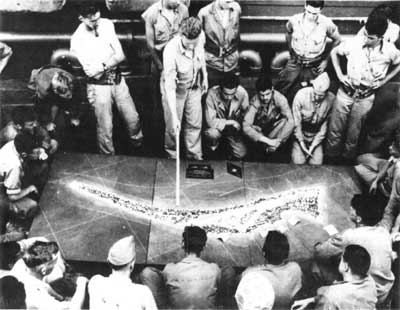
Shipboard Briefing

There were limitations to American preparations. First the size of the force meant that it could not be assembled in one place for rehearsals or to train as a team.[xxxviii] A second problem for the Americans was the assumption that high and low tides would be sufficient to get their landing craft across the reef in spite of warnings to the contrary.[xxxix] Likewise the Americans failed to completely anticipate the scope to which the Japanese had fortified the island. This was despite good intelligence that they had done so. In particular aerial photos taken by the air force and ULTRA intercepts provided good information on the Japanese units on the island and the layout of the defenses.[xl]Additionally some equipment shortages were not remedied. The Marine Bazooka’s did not arrive, and neither the 6th or 8th Marines had made an actual amphibious assault.  At Guadalcanal they made an administrative landing and few field-grade officers remained from the 2nd Marine Regiment who had landed at Tulagi.[xli] They were far from “amphibious experts” that they would become.[xlii] However, they made up for their lack of experience by their cohesiveness, high morale and esprit, being well armed and equipped, in top physical condition and knowing the basic tools of their trade: “weapons proficiency and field firing, close combat techniques, fire and maneuver, tactical leadership, fire discipline.”[xliii]

The most critical aspect of the operation was to get across the reef onto the island.  There were few good landing sites and it was decided to make the landings from inside the atoll’s lagoon onto the Betio’s north shore.  This decision meant that transports embarking the Marines would unload outside of the lagoon and that the landing craft would have to make a 10 mile trip.[xliv]There was only one entrance into the lagoon and it was not deep enough for heavy ships to enter.[xlv]This meant that heavy ships such as battleships and cruisers would not be able to have direct fire on the Japanese positions best situated to disrupt the Marines.

The execution of the plan involved land based bomber strikes beginning on D minus 7. Carrier aircraft would begin their operations on D minus 2.  Cruisers and destroyers joined the cacophony of destruction on D minus 1 and the battleships on D Day itself.[xlvi] On D-Day itself Navy planned to bombard the island with 3,000 tons of shells in 2 ½ hours.[xlvii] The Navy was confident in the bombardment plans. Rear Admiral Kingman commanding the fire support group declared “We will not neutralize; we will not destroy; we will obliterate the defenses on Betio!”[xlviii] Four battalions of Marines would land in the first wave, the three battalions of the 2nd Marines and 2nd Battalion 8th Marines all commanded by Colonel David Shoup. Colonel Shoup who would win the Medal of Honor on Betio and later became the Commandant of the Marine Corps assumed command of 2nd Marines when its Regimental commander fell ill on the journey to Efate.[xlix] The division reserve was the remaining 8th Marine Regiment battalions. The 6th Marine Regiment served as the corps reserve.[l]The assault units would be reinforced by tanks and the 1st and 2nd Battalions 18th Marine Regiment, the division’s combat engineers.

Invasion: Day One

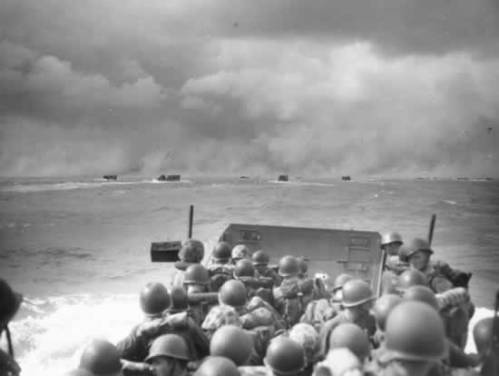
Landing craft going ashore at Tarawa

The naval gunfire bombardment commenced at 0542 on 20 November, and the assault waves began their trek to the beaches.  The transports were out of range of Japanese guns but ththat ensured boats would have to make a 10 mile trip.[li]At this point things began to go wrong.

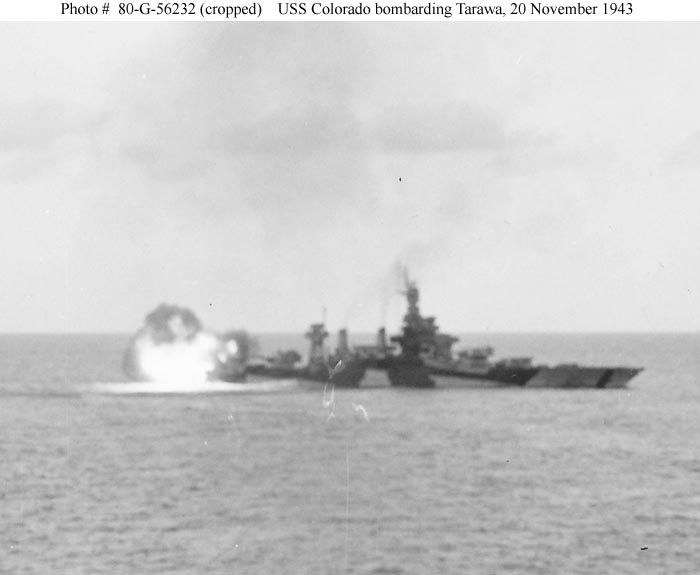
USS Colorado at Tarawa

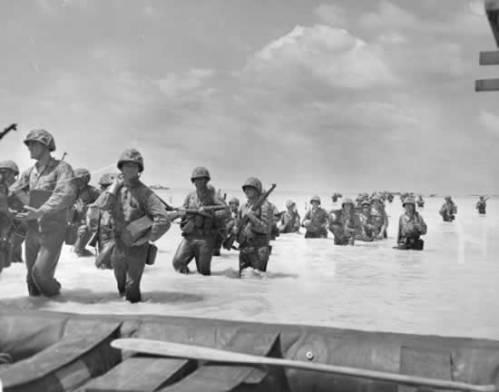
The Navy had “badly miscalculated the amount of softening-up that could be done in two and a half daylight hours bombardment.” Although major coast defense guns were silenced not enough damage was done to the Japanese defenses.[lii] The Japanese helped the Marines by firing their larger guns at warships, identifying their positions to Navy gunners.[liii] The bombardment lifted to allow an attack by carrier based aircraft. However the aircraft were late to arrive and the ships did not resume fire, allowing the Japanese to emerge and re-train their weapons.[liv] Likewise the destroyers Ringgold and Dashiell inside the lagoon had to cease fire, knowing the Japanese gunners along the shore were still active.[lv] Some believe that an extra half hour of direct fire from the destroyers would have saved many lives.[lvi] The LVTs in the first three waves were delayed by heavy chop and did not make landfall until 0913 throwing off the landing schedule.[lvii] The expect and planned for rise in tides did not materialize and they remained unpredictably low for the first 48 hours. No landing boats could cross the reef and the Marines were forced to wade ashore from 600 to 1000 yards.[lviii]
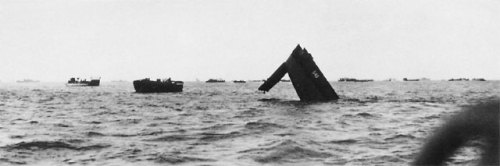
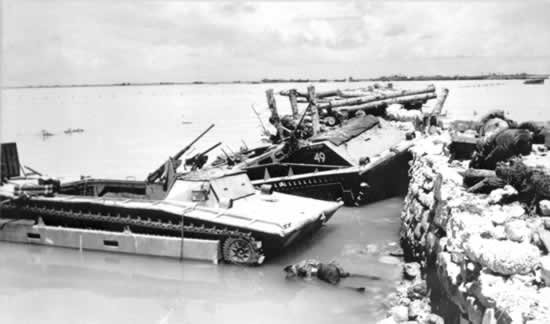
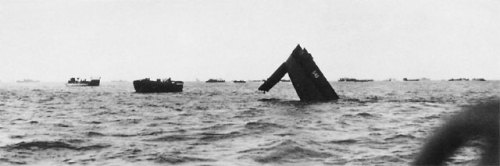
LCM sinking at Tarawa

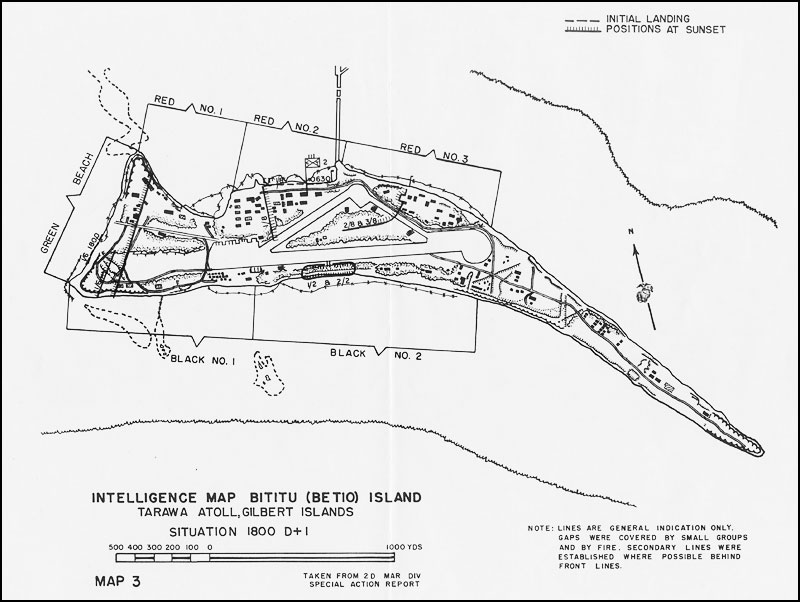
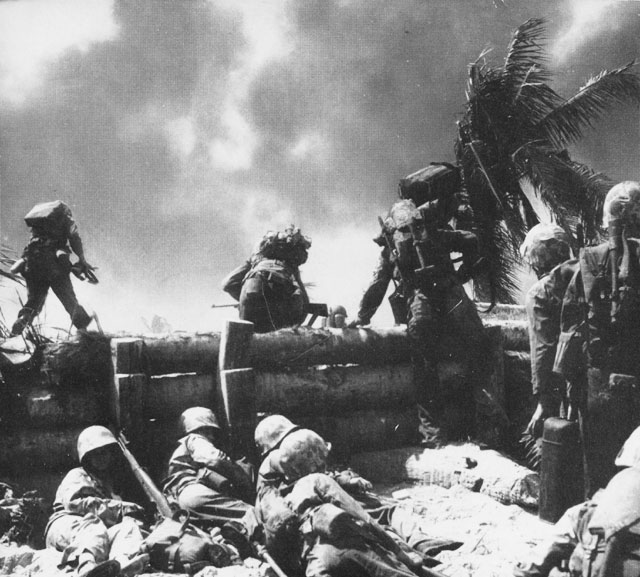
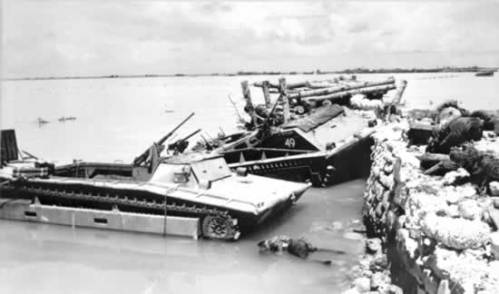
Shoup’s Marines landed on three beaches.  Red one and two lay to the west of a 500 yard long pier and Red three lay to the east.  3/2 landed on Red-1, 2/2 on Red-2, 2/8 on Red-3, elements of 1/18 and the scout snipers on the pier, with 1/2 in reserve to land behind the battalion making the best progress.[lix] As soon as the Amtracks hit the reef the Japanese began firing.  Every “working weapon along the north and west shorelines….blazed forth in fierce, interlocking fields of fire.”[lx] As they watched the Amtracks craw over the reef that Japanese knew they were in for a tough fight, one of Warrant Officer Ota’s men exclaimed “Heavens! The God of Death has come!”[lxi] The Marines of 3/2 on Red-1 received enfilade fire from Japanese guns emplaced in a U around the beach.  Before the Marines landed they began to take causalities, Amtracks were hit in the lagoon and most that were not sunk or destroyed were unfit for further use.[lxii] The 2000 Marines who landed in the first hour were badly disorganized, the commanding officer’s of 2/2 and the Amtracks were killed, 3/2’s commander was isolated on the reef and only 2/8’s commander was with his troops. 2/8 was the only battalion being to reach the shore relatively intact.[lxiii] 3/2 was down to 65% of its strength and K/3/2 had taken over 50% casualties.[lxiv] The Marines in the fourth to sixth waves were struggling to wade ashore from the reef. Landing craft “ran aground or milled about helplessly outside the reef, which was swept by crossfire from behind the beaches and from a grounded hulk northwest of the pier.”[lxv] Most of the tanks were put out of action either through accurate fire by Japanese guns or by sinking in deep areas of the lagoon, the Tank battalion commander was blown out of his Amtrack, wounded and survived 24 hours by clinging to a pile of dead bodies to keep from drowning.[lxvi]
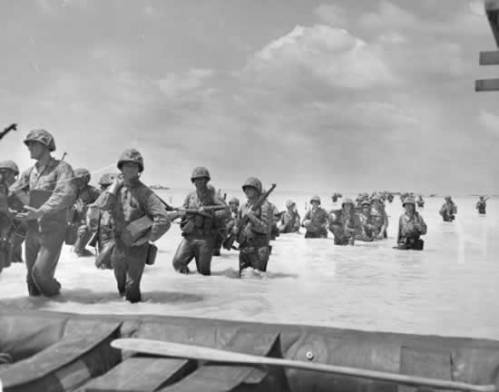
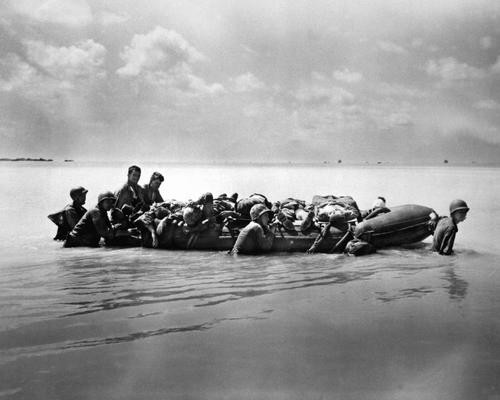
Marines wading ashore at Tarawa, since many landing craft could not cross the reef many waded hundreds of yards under constant Japanese fire

Shoup himself landed at Red-2 and began directing operations on the beach.  He knew that he had to get more troops ashore to exploit the minimal gains his Marines had made.  The news from Red-1 and Two was bad; he decided to bring 1/2 in at Red-2 thought that 3/8 should go in at Red-3.[lxvii]
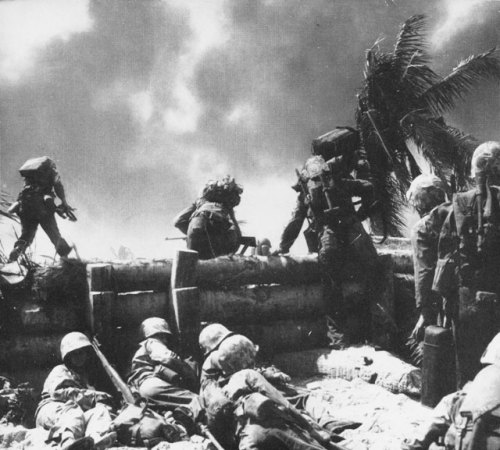
Marines attempting to advance from behind sea wall

At 1018 General Julian Smith ordered the 8th Marines to dispatch 3/8 to Red-3.[lxviii] 3/8 had to make their way across 700 yards through the water to get to the beach.  It was a slaughter, only 30 percent of the first wave got ashore, in the second less and the third “were practically wiped out.”[lxix]

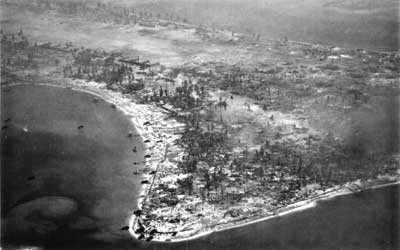
Aerial view of Tarawa on D-Day

As his Marines struggled ashore those who had gotten ashore engaged the Japanese at point blank range.  Lt. Hawkins of the 2nd Marine Scout and Sniper platoon and 5 of his men engaged the Japanese on the pier in vicious hand to hand fighting,[lxx] Sergeant Bordelon of the Engineers on Red-2 though grievously wounded knocked out four gun positions, some by lobbing dynamite charges into them and galvanizing survivors into action, finally being killed while taking on a Japanese position alone.  He would be awarded the Medal of Honor.[lxxi]
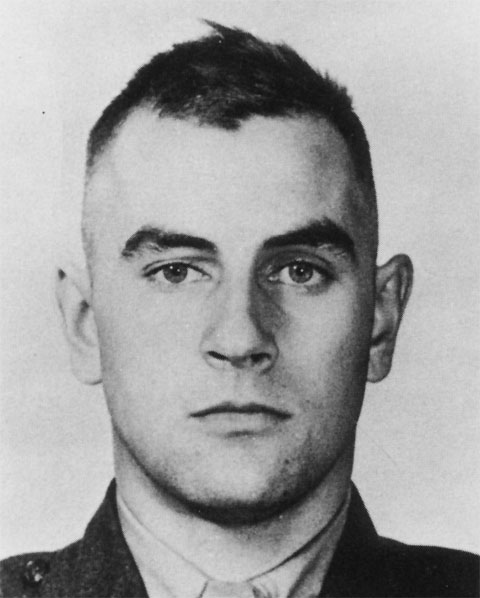
SSGT William Bordelon a Combat Engineer won the Medal of honor posthumously at Tarawa

By afternoon Julian Smith realized that he needed more troops, his last battalion, 1/8 waited to go ashore.[lxxii] Smith asked for the 6th Marines and had Admiral Hill send a message to Admiral Turner stating “Issue in doubt. I concur.” This sent a chill through the listening Naval Staff.[lxxiii] Ashore Shoup brought howitzers from 1st Battalion 10th Marines on surviving Amtracks to the eastern edge of Red-2 near the pier,[lxxiv] which landed in the early evening.[lxxv] He sent Lieutenant Colonel Carlson to make a personal report to General Smith that he would hold his beachhead no matter what happened. Shoup ordered his Catholic Chaplain to lay out a cemetery and begin burying the dead who were already decomposing in the tropical heat.[lxxvi] As this transpired 2/8 got two 37mm anti-tank guns into position to drive off Japanese tanks approaching the beachhead.[lxxvii] The Division Band assisted corpsmen in bringing back wounded Marines.[lxxviii]

Close Combat on Tarawa

The rest of the day the Marines continued to eke out a beachhead; Shoup’s Marines on Red-2 and Red-3 managed to advance about halfway across the island, 3/2 and elements 1/2 and 2/2 was isolated and Major Ryan of Lima Company pulled them back to meet an expected Japanese counter-attack.[lxxix] The Marines had taken over 1500 casualties of 5000 men landed the first day.[lxxx] There is no evidence that Shoup considered withdraw that night.[lxxxi] No counterattack occurred due to Japanese command and control problems, Admiral Shibasaki and his staff were killed while shifting headquarters during the afternoon,[lxxxii] and their communications were in shambles.

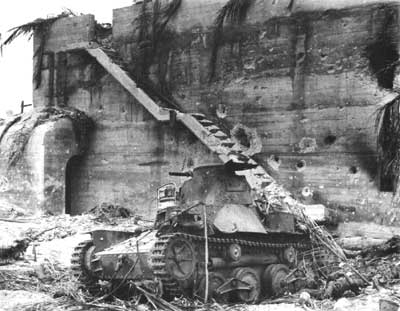
Admiral Shibasaki’s HQ and a knocked out light tank

A counterattack would have been disastrous in their condition,[lxxxiii] yet they assembled over 1000 men to oppose the Marines on day two.[lxxxiv] Had Shibasaki lived and communications survived a counterattack might have had ramifications far beyond Tarawa.[lxxxv]

Day Two: D+1
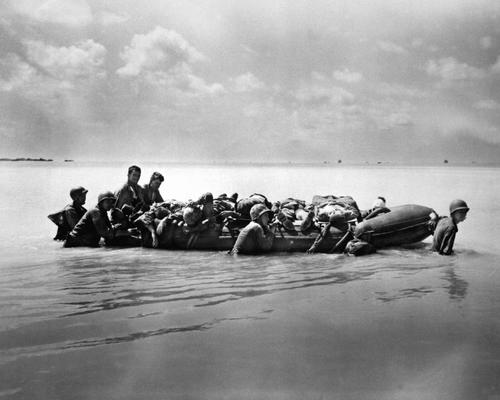
Wounded Marines at Tarawa being moved on rubber raft

The second day began with 1/8 landing on Red-2 and the 6th Marines began to land on Green Beach at the far western tip of Betio.  1/8’s landing turned into a bloodbath, the tide fell even lower than the previous day and as they hit the reef and waded ashore drifted into some of the heaviest Japanese defenses. Japanese guns, including the dual 5.5” guns took direct aim at the boats, and Marines ashore watched helplessly, and correspondent Robert Sherrod noted: “This is worse, far worse than it was yesterday.”[lxxxvi] Only half of 1/8 reached the beach with none of their heavy weapons or equipment.  Shoup ordered the remnants of the battalion into line on his western flank in preparation for an advance inland.[lxxxvii] During five hours of landings on day two, the “Marine casualties reached a higher rate than that sustained on the first morning.”[lxxxviii]
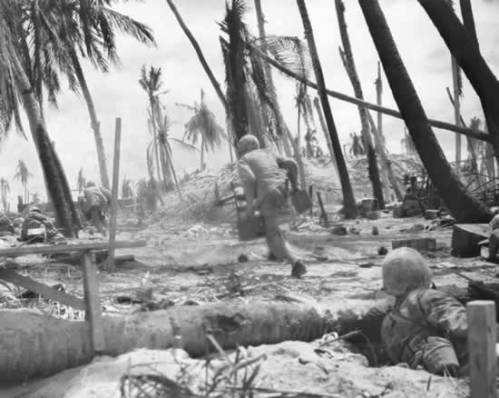
Marines advancing

Meanwhile, Shoup ordered Ryan’s “orphans” to make an attack down the right flank of the Japanese positions on Green beach and the “ultimate American victory at Betio evolved from the attack during one intense hour the second morning.”[lxxxix] Taking every available Marine, two surviving Shermans and some mortars, Ryan gathered his force and coordinated Naval Gunfire support.  The area contained a number of heavy guns including two of the 8” mounts.  A destroyer blanked the Japanese positions with 5” shells and fire from her light AA guns.[xc] Attacking behind the beach, Ryan’s Marines isolated and destroyed everyone and everything that looked hostile.[xci] Against minimal opposition Ryan’s Marines quickly seized the gun positions and the western end of the airfield.  Within an hour his Marines occupied the entire western side of Betio up to a 200 yard depth by 1200 and he radioed to let Shoup know the good news and that he intended to advance east against the airfield.[xcii] The attack allowed the Marines to be able to land intact battalions with supporting arms for the first time battle.[xciii]

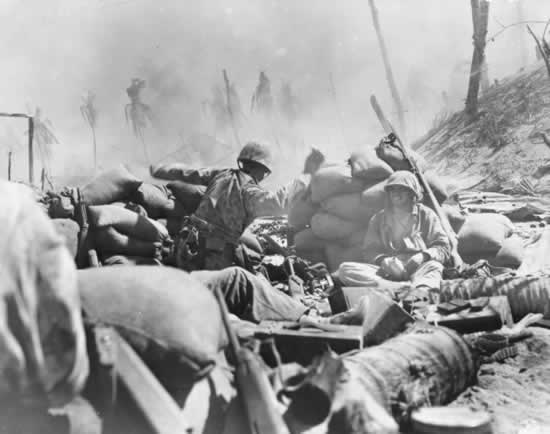
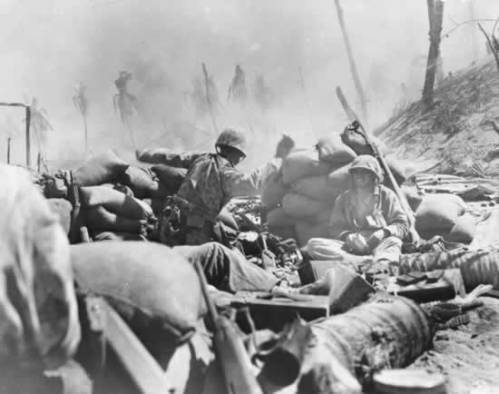
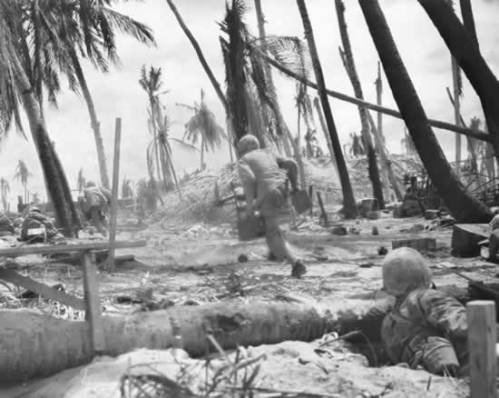
Marines in action at Tarawa

To the east behind Red-2 and Red-3 The 8th Marines and survivors of 1/2 and 2/2 attacked against fierce Japanese opposition near Shibasaki’s former command bunker and two other large bunkers which were mutually supporting.  The attack by the 2nd Marine survivors eventually succeeded in getting completely across the south side of the island.[xciv] During the attack Lt. Hawkins of the Scout Snipers was mortally wounded.  He too would win the Medal of Honor.  The attack cut the island in two but the Japanese launched a counterattack on the Marine positions which was beaten back.[xcv]
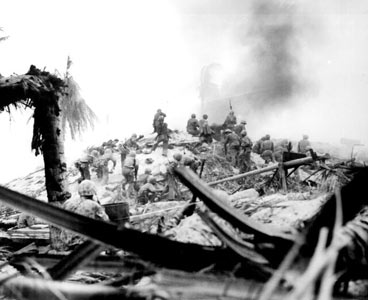
Marines moving inland against tough resistance

The 8thMarines faced a more difficult task going against what was now the heart of the Japanese defense, as its defenders had been reinforced by Lt. Minami and his third company of the 7th Special Naval Landing Force.  Vicious fighting ensued and by nightfall “the Marines had little to show for their heavy losses,[xcvi] but they did make significant inroads against the Japanese to warrant optimism for D+2.[xcvii] By evening the Marines on Red-1 and Red-2 had consolidated their beachhead so that reinforcements were landing, including jeeps, artillery and heavy equipment, and other Marines noted that Japanese defenders were beginning to commit suicide and they began to feel that Japanese morale had broken.  By late afternoon Shoup transmitted the message: “Casualties many. Percentage of dead unknown. Combat efficiency-We are winning.”[xcviii] By late afternoon Major Jones’ 1/6 landed on Green beach in their rubber boats, reinforcing Ryan’s orphans, it was the first of the 7 battalions landed to get ashore intact and the two officers coordinated their units for a night defense and an early attack the next morning.[xcix] 2/6 cleared the nearby island of Bairiki allowing 2/10 to land its howitzers on the island.  This in effect cut off any line of retreat for the defenders of Betio.[c] Colonel Edson came ashore during the evening to relieve Shoup[ci], who remained ashore to help coordinate the next day’s attack.  Again there were no coordinated Japanese counterattacks, the only senior officer, Sugai was isolated in the pocket between the Red and Green beaches and no senior officer could coordinate any attacks.[cii]

Day Three and Four: D+2 and D+3
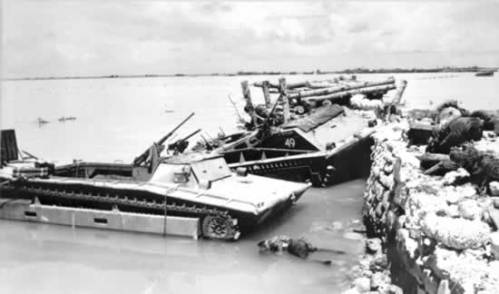
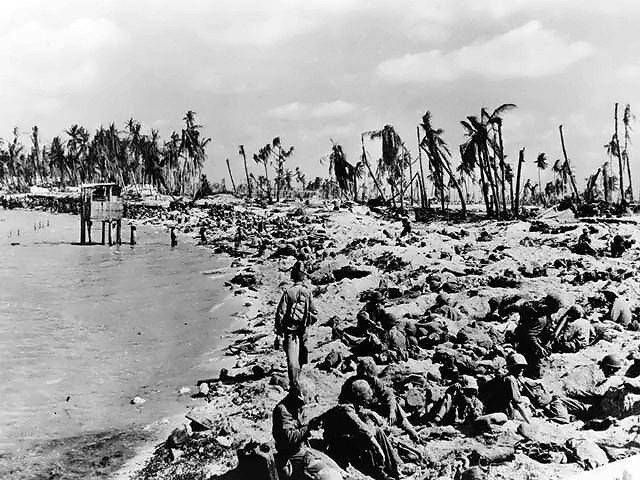
Wrecked LVTs and dead bodies

Day three began with attacks against Japanese strong points and the arrival of more reinforcements including 3/6 which landed on Green beach and three light tank platoons which landed on Red-2.[ciii] The Marines attacked off of Green beach sweeping east to join the 2nd Marines who had cut the island in two the day before.  The 8th Marines continued to attack the heavily fortified bunker complex eventually taking these heavily fortified and defended positions.  During the assault Lt Sandy Bonnyman of 1/18 won the Medal of Honor for leading the assault on these positions.[civ] Fighting remained fierce throughout the day and General Smith arrived to take command on shore.  The Marines attacked supported by tanks, artillery and naval gunfire.

Tarawa beach after the fight

By the evening they were established at the east end of the airfield.  The Japanese launched a series of Banzai charges which beginning about 1930 hours and ending about 0400 when the Marines annihilated the last attack with the assistance of artillery.[cv]The attack, which could have succeeded the first or early the second day, now aided the Marines by sacrificing strength that might have been used to exact a higher price for the tail of the island.[cvi] The next morning the Marines pushed forward and eliminated the last Japanese defenders and by 1200 Betio was secured.  Of about 5000 defenders only 17 Japanese and some Korean laborers were taken prisoner.[cvii] The Marines lost over 1000 killed and 2300 wounded.[cviii]

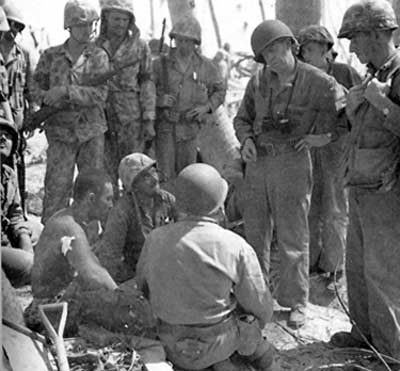
One of the few Japanese prisoners being interrogated

Epilogue

The Marines paid a heavy price for Betio, but it was not to be a useless sacrifice, though it was a source of great controversy especially among politicians.[cix]Spector wonders if waiting for better tides or a full moon would have saved lives.[cx] Holland Smith later argued that Tarawa should have been bypassed, but Nimitz’s biographer Potter notes “if the lessons of the amphibious assault had not been learned at Tarawa, they would have to be learned elsewhere, probably at greater cost.”[cxi]The lessons learned alone aided all future amphibious operations in the Central Pacific and elsewhere.  Timing and coordination of naval gunfire support, air strikes and combat loading of transports were all refined in future operations. Large numbers of armored and up-gunned Amtracks would be part of every future operation.[cxii] Intelligence was emphasized and replicas of the Japanese fortifications were built and tested to determine the best way of destroying them.[cxiii] The Marines shocked the public by releasing photos and films of the carnage on Tarawa to awaken them to the challenges ahead.[cxiv]

Today the battle is remembered annually by the 2nd Marine Division at Camp LeJeune, an ever shrinking number of veterans of the battle attend the ceremonies.  Samuel Eliot Morison put it best: “All honor, then, to the fighting heart of the United States Marine. Let the battle for that small stretch of coral sand called Betio of Tarawa be remembered as terrible indeed, but glorious, and the seedbed for victory in 1945.”[cxv]

Appendix: Leaders on Tarawa
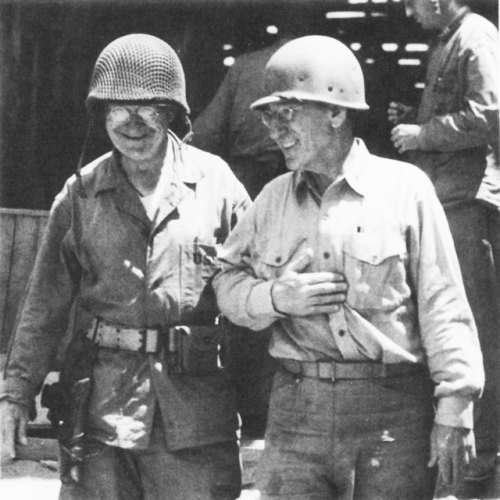
General H.M. Smith and General Julian Smith at Tarawa

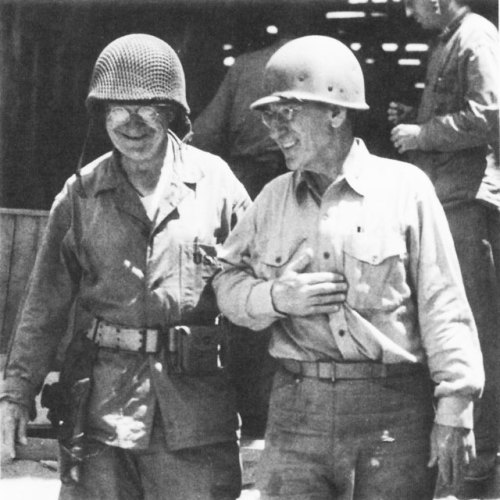
General Holland M. “Howling Mad” Smith USMC: (1882-1967) Lieutenant General Holland M. Smith command V Amphibious Corps during the Gilberts operation.  Prior to the war he had worked extensively on amphibious warfare doctrine for both the Marine Corps and Navy. Unlike many senior officers Smith was not a Academy graduate having matriculated from the Alabama Polytechnic Institute (now Auburn University) in 1903 and law school in 1903.  Smith served as Adjutant of the 4th Marine Brigade in the First World War and served in Panama and the Dominican Republic in addition to other Marine tours afloat and ashore.  He served well and had many key assignments between the wars culminating in as the Assistant Commandant of the Marine Corps.  Subsequent to the Gilbert campaign he served as Commanding General of the Fleet Marine Force, Pacific and later commanded the Marines at Iwo Jima.  He retired in 1946.

Major General Julian Smith USMC: (1885-1975) Major General Julian Smith served as Commanding General 2nd Marine Division at Tarawa.  He graduated from the University of Delaware and was commissioned as a Second Lieutenant in 1909.  He served in Haiti, Santo Domingo and the Vera Cruz expedition. During the First World War he served as an instructor in the Marine Officer training camps at Quantico. After the war he served in Cuba, Nicaragua and various command and staff posts including the Army Command and General Staff College.  He commanded 5th Marines in 1938 and in 1942 was promoted the Major General serving as director of Fleet Marine Force Schools, New River, NC.  He took command of 2nd Marine Division in May 1943 and served there until April 1944 when he became Commanding General, Expeditionary Troops, Third Fleet and in December 1944 took command of the Military Department of the Pacific.  He retired in 1946.

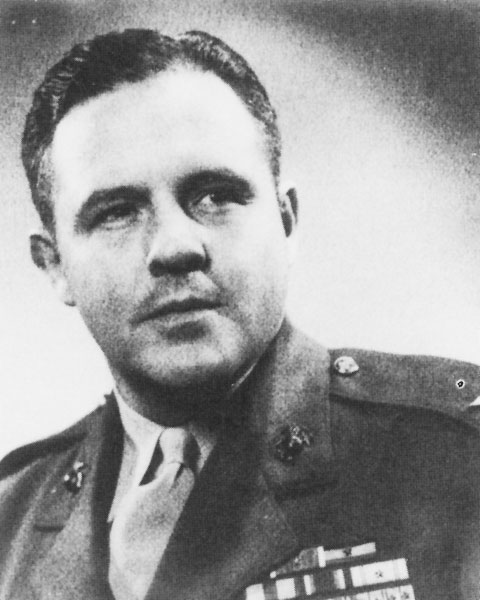
Colonel David Shoup of the 6th Marines won the Medal of Honor at Tarawa and would rise to become the Commandant of the Marine Corps

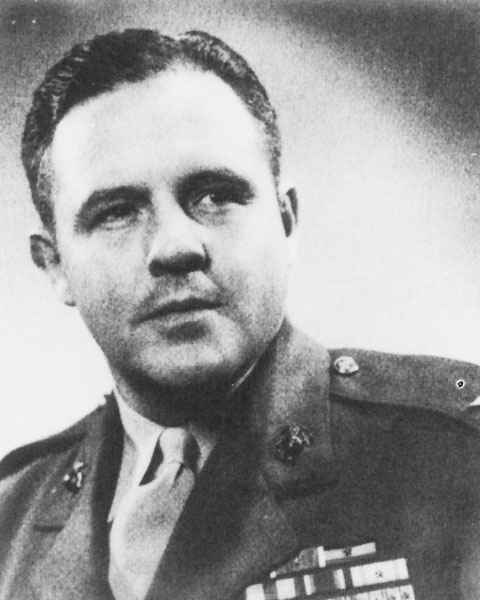
Colonel David Shoup USMC: (1904-1983) Colonel David Shoup commanded the 2nd Marines at Tarawa, being appointed as commander when its commander fell ill.  Shoup won the Congressional Medal of Honor for his actions on Tarawa.  A 1926 graduate of DePauw University, Shoup was commissioned a Second Lieutenant through the ROTC program that year.  He served in various assignments to include service in China, at sea on the battleship Maryland and Marine Barracks Puget Sound Navy Yard. He joined the staff of 6th Marines in October 1940 and assumed command of 2/6 in February 1942.  He was assigned as the Assistant Operations Officer for 2nd Marine Division in July 1942 and promoted the Lieutenant Colonel.   He went with the Division to New Zealand where he became the G-3 and from which he was fleeted up to command 2ndMarines at Tarawa.  After Tarawa he served as the Division Chief of Staff at Saipan and Tinian.  After the war Shoup continued to be assigned in key billets at the Pentagon and as commanding General, 1st Marine Division and then the Third Marine Division.  He became Chief of Staff, HQMC in 1958 and was appointed as the 22nd Commandant of the Marine Corps by President Eisenhower, a post that he retained until his retirement in 1963.

Admiral Tomanari Sachiro IJN: (1887-?) Commander of Tarawa garrison until relieved by Rear Admiral Shibasaki.   Graduate Naval Academy 1910, initially a communications officer he held various commands including Heavy Cruiser Haguro and Battleship Kirishima and two smaller ships.  Assigned to Tarawa in February 1943 he helped design and supervised the initial construction of Tarawa Defenses until relieved by Admiral Shibasaki on 20 July1943.  He returned to Japan and served the remainder of the war on Navy Division of Imperial General Headquarters.  Tomonari survived the war though nothing is mentioned as to his postwar fate.
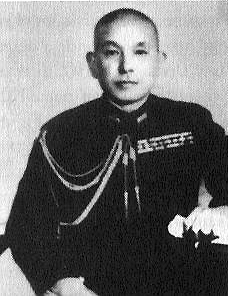
Rear Admiral Shibasaki Keiji IJN: (1894-1943) Commanded Tarawa Garrison until his death during the battle.  He graduated from the Naval Academy in 1915 and he was a skilled navigator and instructor.  Prior to the war he had served afloat and ashore and ashore and had commanded a ship and naval station and served as a naval attaché to a member of the Imperial Family.  Among his assignments was 19 month combat tour with the special Naval Landing Forces in China, where he served as Chief of Staff of Shanghai Special Naval Landing Force.  Shibasaki’s leadership helped the garrison improve their defensive capabilities and combat skills as he inspired them to great heights and executed an intense training program. He was killed in the battle.

A Personal Note

I have not been to Tarawa but feel that I know it well.  I served in Second Marine Division from April 1999 through December 2001.  Due to my prior service experience I was used to fill gaps where chaplains were needed and ended up serving in four different battalions.  I served in 2nd Combat Engineer Battalion, the descendant of 1/18, the combat engineers.  We had a WWII Bulldozer outside our command post named after Sergeant Bordelon, the Medal of Honor Citations for Bordelon and Boonyman were prominently displayed.  I also served in 1/8 and 3/8.  I knew the accounts of the slaughter of these Marines as they attempted to land but as I re-read the accounts I was moved by their courage under fire.  The CPs of these battalions are also adorned with citations of their heroes lost at Tarawa.  Veterans would visit our units during Tarawa Days at Camp LeJeune, worn by the battle and the years they always made an impression. There is almost a mystical connection between the Second Marine Division and the Marines of Tarawa; it was a crucible that defined the division, whose motto is the same as the Army Infantry School. “Follow Me!”

Semper Fidelis,

Padre Steve

[i] Spector, Ronald H. Eagle Against the Sun: The American War with Japan.  The Free Press, New York, NY 1985. p.253

[ii] Murray, Williamson and Millett, Allan R. A War to Be Won: Fighting the Second World War, The Belknap Press of Harvard University Press, Cambridge, MA 2000. p.338

[iii] Ibid. Spector. p.253

[iv] Ibid. p.255 The conference also set a date for the invasion of France.

[v] Toland, John. The Rising Sun: The Decline and Fall of the Japanese Empire, 1936-1945. Random House, Inc. New York, NY 1970. p.468

[vi] Ibid. Spector. p.255

[vii] Costello, John. The Pacific War 1941-1945. Quill Publishing, New York, NY 1982. p.430

[viii] Ibid.

[ix] Potter, E.B. Nimitz. Naval Institute Press, Annapolis, MD, 1976, Third Printing with Revisions 1979. p.243. Nimitz’s forces would have had to seize 5 major Japanese bases and his staff was not sure that the Pacific carrier force would be strong or experienced enough to provide the necessary air cover for the operation.

[x] Ibid.

[xi] Ibid. pp.243-245

[xii] Morison, Samuel Elliott. The Two Ocean War: A Short History of the United States Navy in the Second World War. Little Brown and Company, Boston and Toronto, 1963. p.296.

[xiii] Hammell, Eric and Lane, John E. Bloody Tarawa: The 2nd Marine Division, November 20-23, 1943. The Zenith Press, St. Paul MN 2006.  Text copyright 1998 Eric Hammell and John E. Lane. p.4

[xiv] See Alexander, Joseph H. Utmost Savagery: The Three Days of Tarawa.Ivy Books, published by Ballantine Books, New York, NY. 1995. pp. 39-40.  This unit became the Third Special Base Unit on its deployment and was joined by the 111th Construction Battalion.

[xv] Ibid. Hammell. p.4

[xvi] See Alexander pp.39-40. This unit was basically a reinforced infantry battalion with 3 rifle companies, a weapons battery, anti-aircraft battery, a light tank company and support units numbering about1600 men.

[xvii] Ibid. Alexander. p.43

[xviii] Alexander p.27 The Rikusentai was the Japanese equivalent of Marines, who numbered about 50,000 men.  The officers attended Army schools and qualified enlisted men attended additional Army specialist training.

[xix] Ibid. Costello. p.431

[xx] Ibid. Hammell. p.22

[xxi] See Alexander p.77. While most writers say that these guns were brought from Singapore, Alexander notes that British writer William H Bartsch submitted proof (serial numbers) that the guns were sold by Vickers to Japan in 1905 as a legitimate business transaction.

[xxii] These are the same guns (127mm) mounted as the secondary armament of Nachi and Takao Class Heavy Cruisers and later mounted on light cruisers to replace the main battery with a more effective anti-aircraft armament.

[xxiii] Ibid. Hammell. p.22

[xxiv] Hammell notes that many of these bunkers and pillboxes were so well concealed that they could not be seen.

[xxv] Ibid. Toland. p.469.

[xxvi] Ibid. Alexander. p.43.

[xxvii] Ibid. Hammell. p.28

[xxviii] Ibid. Morison. p.297

[xxix] Ibid. Costello. p.429

[xxx] At this point the force could provide everything except major permanent repairs to warships.

[xxxi] Liddell-Hart, B.H.  History of the Second World War. G.P. Putnam’s Sons, New York, NY 1970. p.511

[xxxii] Ibid. Costello. p.431

[xxxiii] The older LVT-1s had boiler plate armor added as a field modification and were given a heavy machine gun. Prior to this they were unarmored and had two light machine guns.

[xxxiv] Ibid. Morison. p.303

[xxxv] Hammell includes a by name list of these officers in Appendix B.  Of note for today, each MEUSOC (Marine Expeditionary Unit, Special Operations Capable) has an assigned Naval Gunfire Support Team.

[xxxvi] Ibid. Alexander. pp. 61-62.  The Shermans had to be transported aboard pre-loaded LCM-3s carried in the well decks of the LSDs.

[xxxvii] Ibid. Alexander. pp.58-59

[xxxviii] Ibid. Morison. p.297.  As a sidebar discussion it should be noted that Galvanic helped provide the model for the organization of all further Marine Corps amphibious doctrine now known by the acronym PERMA; Planning, Embarkation, Rehearsal, Movement and Assault, which describes the 5 phases of a amphibious assault.

[xxxix] Ibid. Hammell details the intricacies of the particular tides seen at Tarawa and the knowledge that the Marines had from the former Resident Commissioner of the Island, Major Frank Holland who warned the division staff that he knew that there would not be enough water over the reef to get landing craft across it. (pp.18-20)

[xl] Ibid. Alexander. pp.75-77

[xli] Ibid. Alexander. pp.67-68.

[xlii] Ibid. p.70

[xliii] Ibid. p.71

[xliv] Ibid. Morison. p.302

[xlv] Ibid. Hammell. p.16

[xlvi] Johnston, Richard W. Follow Me! The Story of the Second Marine Division in world War II.  Copyright 1948 by the Second Marine Division History Board and published by Random House Publishers, New York, NY 1948. p.106

[xlvii] Ibid. Liddell-Hart. p.511  Johnson says 2,700 tons. (p.106)

[xlviii] Ibid. Johnston. p.106

[xlix] Ibid. Hammell. p.17

[l] Ibid.

[li] Ibid.. Hammell. 46-47

[lii] Ibid. Morison. p.303

[liii] Ibid. Alexander. p.113.  Alexander notes that the Japanese would have been better served by using these guns on the stalled out landing craft.

[liv] Ibid. Hammell. p.47.

[lv] Ibid. Hammell. p.58

[lvi] Ibid.

[lvii] Ibid. Morison. p.303

[lviii] Ibid. Alexander. p.79

[lix] Ibid. Hammell. p.17

[lx] Ibid. Alexander. p.121

[lxi] Wukovits, John. One Square Mile of Hell: The Battle for Tarawa. NAL Caliber, published by New American Library, a division of Penguin Group USA, New York NY, 2006. p.112

[lxii] Ibid. Johnston. p.116

[lxiii] Ibid.

[lxiv] Ibid. Wukovits. P.119  Other companies suffered as grievously, K/3/2 was not alone in its suffering.

[lxv] Ibid. Spector. pp.263-264

[lxvi] Ibid. Alexander. pp.136-138

[lxvii] Ibid. Hammell. p.90

[lxviii] Ibid. p.95

[lxix] Ibid. Spector. p.264

[lxx] Ibid. Wukovits. p.114

[lxxi] Ibid. Alexander. pp.139-140

[lxxii] 1/8 did not arrive on the beach due to botched communications until D plus 1.

[lxxiii] Ibid. p.150  The last time this signal had been sent it was by Major Devereaux at Wake Isalnd

[lxxiv] Ibid. p.151

[lxxv] Ibid. Johnston. p.132

[lxxvi] Ibid. Hammell. p.112

[lxxvii] Ibid. p.130

[lxxviii] Ibid. Johnston. p.122

[lxxix] Ibid. Johnston. p.122

[lxxx] Ibid. Costello. p.436

[lxxxi] Ibid. Alexander. p.163

[lxxxii] Ibid. Alexander. pp.157-158  Hammell notes that Shibasaski was most likely killed by fire from Ringgold or Dashiell.

[lxxxiii] Ibid. Hammell.pp.139-140

[lxxxiv] Ibid. Alexander. p.162

[lxxxv] Ibid.  Wukovits. p.176. Wukovits notes how this could have affected the planning for the Normandy invasion.

[lxxxvi] Ibid. Alexander. p.173

[lxxxvii] Ibid. Hammell. p.160

[lxxxviii] Ibid. Costello. p.437

[lxxxix] Ibid. Alexander. p.170

[xc] Ibid. Hammell. p.163

[xci] Ibid. Hammell. p.166

[xcii] Ibid. Wukovits. p.178

[xciii] Ibid. Alexander. p.170 Ryan would be awarded the Navy Cross for his efforts.

[xciv] Ibid. Hammell. p.172

[xcv] Ibid. Alexander. p.179

[xcvi] Ibid. Alexander. p.181

[xcvii] Ibid. Hammell. p.178

[xcviii] Ibid.. Wukovits. p.194

[xcix] Ibid. Hammell. p.202

[c] Ibid. Hammell. p.212

[ci] Shoup would be awarded the Medal of Honor and eventually go on to be the Commandant of the Marine Corps.

[cii] Ibid. Alexander. pp.191-192

[ciii] Ibid. Johnston. p.134  2 platoons landed on Red-2 and one on Green Beach.

[civ] Ibid. Alexander. pp.202-205

[cv] Ibid. Johnston. pp.145-146

[cvi] Ibid. Johnston. p.147

[cvii] Ibid. Toland. p.470

[cviii] Ibid. Murray and Millett. p.345

[cix] Ibid. Liddell-Hart. p.511

[cx] Ibid. Spector. p.266

[cxi] Ibid. Potter. P.264

[cxii] Ibid. Murray and Millett. p.347  The Amtrack in improved forms has been part of the Marines ever since. The current model serves in a traditional amphibious role as well as a Armored Personnel Carrier for Marines involved in ground combat operations ashore.

[cxiii] Ibid. Costello. p.439. The method found to work best was long range plunging fire by heavy guns found on battleships and heavy cruisers.

[cxiv] Ibid. Murray and Millett. p.346

[cxv] Ibid. Morison. p.306

Bibilography

Alexander, Joseph H. Utmost Savagery: The Three Days of Tarawa. Ivy Books, published by Ballantine Books, New York, NY. 1995.

Costello, John. The Pacific War 1941-1945. Quill Publishing, New York, NY 1982

Morison, Samuel Elliott. The Two Ocean War: A Short History of the United States Navy in the Second World War. Little Brown and Company, Boston and Toronto, 1963

Hammell, Eric and Lane, John E. Bloody Tarawa: The 2nd Marine Division, November 20-23, 1943. The Zenith Press, St. Paul MN 2006.

Johnston, Richard W. Follow Me! The Story of the Second Marine Division in world War II.  Copyright 1948 by the Second Marine Division History Board and published by Random House Publishers, New York, NY 1948

Murray, Williamson and Millett, Allan R. A War to Be Won: Fighting the Second World War, The Belknap Press of Harvard University Press, Cambridge, MA 2000

Potter, E.B. Nimitz. Naval Institute Press, Annapolis, MD, 1976, Third Printing with Revisions 1979

Spector, Ronald H. Eagle Against the Sun: The American War with Japan.  The Free Press, New York, NY 1985 Toland, John. The Rising Sun: The Decline and Fall of the Japanese Empire, 1936-1945. Random House, Inc. New York, NY 1970

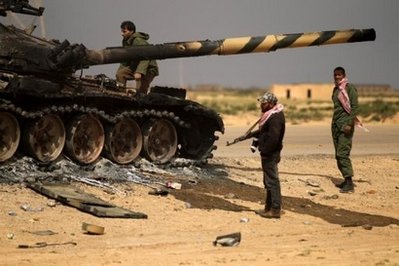
4 Comments

Filed under History, Military, world war two in the pacific

Mission Accomplished in Al Anbar: The Marines Turn Over the Mission to the Iraqis

Religious Support Team 2 MNF-W the Desert Rats at Al Waleed August 2007

There was a time not very long ago that names like Al Anbar, Fallujah and Ramadi were synonymous with futility and humiliation.  But that was before a long time ago in a galaxy far far away. In late 2007 the Marines and our Iraqi Allies aided in large part by the “Anbar Awakening” where the Sunni in the province realized that Al Qaida Iraq’s motives were not in the best interest of the people gained the upper hand in a very short time.  The success was heralded as part of the “surge” but was in large part due to the effort made by the Marines to be seen as something other than occupiers but allies in a fight against foreigners that would brutally kill Iraqis to achieve their goals.

Iraqi Children Happy to see us near Baghdadi

I arrived in Al Anbar in August of 2007 and spent my tour as the Chaplain to the Marine, Army and other advisers in the province which at the time of my arrival were still very much in play.  Within days of arriving at our base of operations I took part in a number of mass casualty situations at the Shock Surgery Trauma center at Ta Qaddum where I prayed for, anointed and looked after Marines wounded when their vehicles were destroyed by improvised explosive devices during combat missions.  My tour was the highlighter of my military career.  In my tour with the advisors as well as the Iraqis of the 1st and 7th Iraqi Army divisions, Second Border Brigade and Iraqi Police, Highway Patrol and even a reconstruction team or two.

Allies: Colonel Cottrell and General Murthi of the 7th Iraqi Division at the Marine Corps Birthday 10 November 2007

During my time there I was privileged to serve with great Marines, Soldiers and even a number of Navy, Air Force, US Border Patrol and Customs personnel and contractors working with the Iraqis.  The Iraqis in many cases were valiant men who while serving against the insurgency and Al Qaida knew that their families were in danger from retaliation as were their own lives.

Friendship: Dinner with General Sabah

While Marines and Army forces took the battle to the insurgents the Iraqi Sunni Muslims in Al Anbar suddenly turned on the insurgents and Al Qaida Iraq.  Soon Iraqi civilians who had been either hostile or neutral towards the Marines and their own Iraqi Army and Police units turned on the Al Qaida and their allies.  Suddenly violence began to subside; Iraqi civilians began to report insurgents, weapons caches and IEDs.

Near COP South waiting to clear suspected IED

By the time that I left Iraq in February 2008 the situation in the province was such that the 1st Iraqi Division was able to be dispatched to Basra and Diyala where they in conjunction they would take the lead in driving the insurgents from these regions. Just before I left an Iraqi General, General Ali in Habbinya told me that I should come back in 5 years as a tourist because everything would be alright. Another Iraqi officer told me that if anything ever happened between us and “the Persians” that the Iraqis would be on our side.  I knew when I left that Iraq would be okay in the long run and I still believe that to be true.

Me with General Ali January 2008

Thursday the Sergeant Major of what used to be Multinational Force West or MNF-West announced the Marines of II Marine Expeditionary Force (Forward) would be conducting a transfer of authority for the American mission to the 1st Armored Division of the US Army as part of the US drawdown in Iraq without a relief in place.   For most people in the United States this will be an event of little significance Iraq is now despite the continued presence of US forces has been forgotten by most.

With Advisers and Leaders of a Company of the Iraqi 2nd Border Brigade

Concern is now focused on US military actions in Afghanistan and the humanitarian relief operations in Haiti.  However, it was in Iraq that an insurgency was defeated, the first time since the British defeated the Malayan insurgency sponsored by Chinese Communists, and the French had militarily defeated the Algerian insurgency before the French government under DeGaulle surrendered the hard fought success of the Paras and Legionnaires betraying them even as he looked after what he viewed as the future of France.

With Bedouin Family and Advsiers near Syria

In the summer of 2007 Iraq was viewed as a lost cause by much of the American body-politic, politicians of both parties and the media.  Now it is becoming a functional state, in large part due to the sacrifices of US Military personnel and the Iraqi Army and security forces.  U.S. Forces are disengaging and exiting the country. While it is likely that and advisory and support mission will remain as the Iraqis continue to rebuild and their Army and security forces continue to expand their capabilities.  The Iraqis recently showed their metal by facing down an Iranian incursion into Iraqi territory on a strategic oil field.

The text of the Sergeant Major’s message describing the transfer is posted below:

From: Carpenter SgtMaj Kiplyn (USF-W SGTMAJ)

Sent: Thursday, January 21, 2010 15:55

Subject: FAREWELL OF THE MARINES FROM IRAQ

UNCLASSIFIED

Please pass on,

SgtsMaj, MGySgts, CMDCMs, Marines and Sailors, Saturday, 23 January at 1100 will mark the end of the Marines in Iraq as an organization.  II MEF (fwd) will conduct a Transfer of Authority Ceremony with the First Armored Division without a Relief in Place from any incoming unit. USF-W (formally MNF-W) will merge with USD-C (formally MND-Baghdad) and will cease to exist.

After 6 years, over 850 Marines and Sailors killed in combat and another 8800 wounded we have completed our mission.  At our peak, we had almost 26,000 Marines and Sailors on deck, close to 200 aircraft, over 380,000 pieces of ground equipment, and were averaging close to 2000 significant events a month.  We have added a whole new generation of Heros; and names like Al Nasiriyah, Fallujah and Ramadi will be added to our History books.

Words can’t begin to explain the magnitude of effort and sacrifice our Marines and Sailors have gone through to help the Iraqi people.  Each year since the initial invasion, Marines and Sailors from all over the Corps have been a part of the revolving I MEF (fwd) and II MEF (Fwd) Commands.  Each year has been different with its own sets of unique challenges and each successive year, the incoming organization has built upon the successes of the outgoing organization.

This year was no different, we didn’t have anywhere near the level of fighting that previous MEFs have done.  However, we did conduct many operations, maintained security, continue to professionalize the Iraqi Security Forces, develop good governance and economics, assisted with the continued establishment of the Rule of Law and oversaw the peaceful transition of the provincial government.  We also had one unique mission that we can call our own. That was to finally bring the Marine Corps home. Over the past year, we have simultaneously conducted the responsible drawdown of 24,000 Personnel, over 34 COPs and FOBs, including Baharia, Rawah, and TQ and sent six years worth of equipment out of theater.

For those of you who served with me this year, thank you.  It was long and difficult at times, with our own set of challenges, but we did it.

It has been an honor to serve with you.

For those of you who have left your boot prints over here at least once during the last six years; thanks to you too. You set the stage for us to finish the job.  It has been costly, it has been challenging, it has taken a while with quite a few dark days. But, in the end, it was worth it.

All Marines and Sailors, including those who remained stateside have contributed to the overall success of the Marines and Sailors in Iraq and; all of us have known someone who didn’t make it back alive or has permanent injuries. It is up to us to ensure that those who follow never forgot their sacrifice or what we did here.

Collectively, we have added another illustrious chapter to the successful story of our Marine Corps.  One that all of us can be proud of.

Semper Fidelis,

K. Carpenter

Sergeant Major

United States Force – West, Iraq

(Previously Multi National Force – West) II Marine Expeditionary Force (Fwd)

21 January 2010

UNCLASSIFIED

Iraqi Recruits going through Basic Training

I am proud today to have been part of a mission that appears to have ended in success, at least in Al Anbar Province.  Semper Fidelis to the Marine Corps and the Sailors, Soldiers and Airmen who served alongside of us in Al Anbar as well as the Iraqi Army and security forces who despite the odds set the stage for the Iraqis and US Forces in the rest of the country to begin to re-establish order and normalcy to a country that has known little but war, dictatorship and tragedy over the past 40 years. I look forward to going back to Iraq someday and maybe visit some of those Iraqis that I was privileged to serve alongside.  May God bless all those who served honorably in Iraq and the Iraqi Army, security forces and the people of Iraq.

Peace,

Padre Steve+

Leave a comment

Filed under History, iraq,afghanistan, Military

One Square Mile of Hell: The Invasion of Tarawa

On November 20th 2009 the Marine Corps and especially the 2nd Marine Division will mark the 66th anniversary of the amphibious assault on the Tarawa Atoll and the island of Betio.  It was fought at a great cost but would yield lessons that would be invaluable in future amphibious operations. The veterans of the landing are fewer every day. Please take time to remember their sacrifice that they made and Marines continue to make in Afghanistan and Iraq. I have served with the 1st and 3rd Battalions, 8th Marine Regiment the 2nd Combat Engineer Battalion and HQ Battalion 2nd Marine Division.  I have had the honor to meet some of the surviving Tarawa Veterans so this is not only history for me, but a way to pay tribute to the Marines who served at Tarawa and all Marines since. Especially those Marines that I served with at 2nd Marine Division, Marine Security Forces and the Marine Advisers to the Iraqi 7th and 1st Divisions, 2nd Border Brigade, Port of Entry Police, Police and Highway Patrol in Al Anbar Province. Semper Fidelis, Padre Steve+

The Decision: Operation Galvanic

USMC-M-Tarawa-3The Target: Betio Island at Tarawa Atoll

Following Guadalcanal and the shift of significant naval forces from the Solomons the focus of the US shifted to the thrust across the Central Pacific.  Unlike the Solomons which were initially a Navy and Marine Corps Operation and shifted to the Army under MacArthur as the campaign shifted to Borneo, the operations here would be an almost total Navy and Marine Corps operation. Operation Galvanic, the first offensive operation in the Central Pacific, came about as a result of the Joint U.S. Strategic Committee decision in April 1943 to favor an advance in the Central Pacific while maintaining the offensive in the South Pacific.[i] The driving force behind this strategy was Admiral King who fought for the plan and “insisted that any campaign should focus on the destruction of Japan’s overseas resources, which meant an offensive directed only toward the Western Pacific sea lanes.”[ii] The Joint Chiefs believed that a simultaneous attack by Nimitz in the Central Pacific and MacArthur in the South Pacific would “keep the Japanese guessing.”[iii] The decision was presented to the British at the TRIDENT meetings in May 1943 and though the British resisted the American plans a compromise was reached allowing the Americans to “simultaneously…maintain and extend unremitting pressure against Japan….”[iv]

japanese emplacing gunJapanese Emplacing 8″ Vickers Gun

The decision to begin operations in the Central Pacific meant that MacArthur’s priority in logistics and personnel would be reduced in order to launch the Central Pacific operation.  MacArthur protested, to no avail and the Joint Chief’s stood firm in their decision that the Central Pacific operation “would make it easier to isolate Japan from her domain in the south.”[v] MacArthur was allowed to continue OPERATION CARTWHEEL while Nimitz seized the Marshall and Caroline islands.[vi] Nimitz’s staff began preparations and decided on a conservative course to capture the Gilberts first before taking the more heavily defended Marshalls.[vii] This was in part due to the “need to minimize the risks to his untried amphibious forces against such heavily fortified enemy bases out of reach of air cover.”[viii]

japanese conducting firing exerciseJapanese conducting Live Fire Range prior to the Assault

Several factors were considered by Nimitz and his planners considerations in this choice.  Nimitz did not have enough troops to capture all of the vital heavily defended locations in the Marshalls without dividing his forces.[ix] Additionally the Gilbert operation could be supported by land based bombers.[x] A final consideration was the Joint Chief’s decision to allow MacArthur to retain control of 1st Marine Division which Nimitz had hoped would be available for operations in the Central Pacific.[xi] CINCPAC did a thorough photo reconnaissance of the Gilbert’s convinced the Joint Chiefs that Tarawa and Makin needed to be taken to provide air bases for the assault on the Marshalls.  Finally the order for Galvanic was issued on 20 July 1943 with its execution planned for November 1943.[xii]

Japanese Preparations

shibasakiAdmiral Shibasaki boasted that it would take a million men a thousand years to take Betio

The Japanese did little to prepare against potential American offensive operations against the Gilbert’s until Makin Island was raided by elements of 2nd Raider Battalion in August 1942.  The Makin raid shook the Japanese and at which time they reinforced Makin and occupied Betio.[xiii] The Japanese occupied Betio with the Yokosuka 6th Special Landing Force, essentially Naval Infantry or Marines[xiv] and the 111th Construction Battalion on 15 September 1942, over nine months after they attacked Pearl Harbor.[xv] These forces were commanded by Admiral Tomanari, who at once began to fortify Betio. Recognizing his need for more troops  Tomanari asked Tokyo for reinforcements.  The reinforcements came in the form of Commander Sugai’s 7th Sasebo Special Naval Landing Force, which landed on 14 March.[xvi] Commander Sugai’s troops were the Rikusentai, the best of the Japanese Navy’s land forces.

USMC-M-Tarawa-p6Japanese Conducting Gunnery Exercises

The fortification of Betio proceeded slowly until the arrival of Rear Admiral Shibasaki, who relieved Tomanari who returned to Japan.[xvii] Shibasaki, a tough veteran of service at sea and ashore including 19 months as a Rikusentai[xviii] officer in China was chosen by Admiral Koga to instill a better fighting spirit on the island.  The Imperial General Headquarters “New Operations Plan” ordered the outer defensive islands, such as Tarawa, to “hold up any American advance while an inner line of fortresses was constructed….”[xix] Shibasaki drove the garrison hard, inspiring them to “extraordinary heights of labor that resulted in Betio’s superb defenses.”[xx] Betio mounted four 8” Naval guns[xxi], four 14 cm guns, four dual mount 5.5” dual purpose guns[xxii] six 80 mm anti-boat guns, eight 75 mm dual purpose guns, ten 75 mm mountain guns, six 70 mm guns and nine 37 mm anti-tank guns, numerous machine guns and light AA guns and 14 light tanks.[xxiii] These weapons were mounted in well camouflaged armored or reinforced pillboxes.[xxiv] In accordance with the directives of the high command Shibasaki ordered his troops “to defend to the last man all vital areas and destroy the enemy at the waters’ edge.”[xxv] The Japanese records note that Shibasaki “immediately began to strengthen morale and carried out advanced training, and as a result…the garrison remarkably enhanced its fighting capability and they were full of confidence.”[xxvi] Even the service troops were thoroughly trained to fight from their superb defensive positions.[xxvii] Shibasaki reportedly told his men that it would take a million men a thousand years to take Betio.

American Preparations

lvtLVT

Nimitz organized his forces into three major commands, the 5th Fleet, commanded by Admiral Raymond Spruance, the 5th Amphibious Force under Admiral Richmond “Kelly” Turner and the V Amphibious Corps under Major General Holland “Howlin’ Mad” Smith, USMC.[xxviii] The 2nd Marine Division which would make the assault at Tarawa was commanded by Major General Julian Smith. The force that sustained in this operation and subsequent amphibious operations was the Service Force Pacific Fleet.[xxix] This was a collection of ships whose mission it was to sustain the fleet in mobile operations,[xxx] which greatly “increased the range and power of the Navy in amphibious operations.”[xxxi] The planned assault called for the Army’s 27th Division take Makin and the veteran 2nd Marine Division which had been blooded at Guadalcanal to take Tarawa supported by the carriers and battleships of 5th Fleet.

This was the first application of new amphibious tactics developed for the Pacific war.[xxxii] Air and sea bombardment would precede the actual assault. The Marines would be transported ashore in a new vehicle called an LVT (Landing Vehicle Tracked) and other amphibious ships and craft including the LSD (Landing Ship Dock), LCM (Landing Craft Mechanized) and LCVP (Landing Craft Vehicle Personnel).  The LVTs were absolutely vital, nicknamed “Amtracks” or “Amphtracks” they were essentially a tracked amphibious personnel carrier. They were developed from a commercial vehicle used by U.S. Forrest Service Rangers in the Florida Everglades and were capable of crossing coral reefs that would cause other craft to go aground.  The early LVTs had retrofitted armor and mounted a .50 cal. machine gun.  At Tarawa the Marines deployed 75 LVT-1s[xxxiii] and 50 LVT-2s. 93 LVTs would be part of the first wave of the Marine assault.[xxxiv] The LVTs were transported to Tarawa aboard LSTs (Landing Ship Tanks.)  Other innovations included the assignment of Naval Gunfire Support teams to the Marine Regiments and some battalions,[xxxv] and the first use of the M4 Sherman tank by the Marines.[xxxvi] Tarawa was a proving ground for the tactics and equipment which would be improved on and used in every subsequent amphibious operation in the Pacific.  Tarawa would also mark the last major use of rubber landing craft by the Marine Corps in an opposed landing.[xxxvii]

There were limitations to American preparations. First the size of the force meant that it could not be assembled in one place for rehearsals or to train as a team.[xxxviii] A second problem for the Americans was the assumption that high and low tides would be sufficient to get their landing craft across the reef in spite of warnings to the contrary.[xxxix] Likewise the Americans failed to completely anticipate the scope to which the Japanese had fortified the island. This was despite good intelligence that they had done so. In particular aerial photos taken by the air force and ULTRA intercepts provided good information on the Japanese units on the island and the layout of the defenses.[xl] Additionally some equipment shortages were not remedied. The Marine Bazooka’s did not arrive, and neither the 6th or 8th Marines had made an actual amphibious assault.  At Guadalcanal they made an administrative landing and few field-grade officers remained from the 2nd Marine Regiment who had landed at Tulagi.[xli] They were far from “amphibious experts” that they would become.[xlii] However, they made up for their lack of experience by their cohesiveness, high morale and esprit, being well armed and equipped, in top physical condition and knowing the basic tools of their trade: “weapons proficiency and field firing, close combat techniques, fire and maneuver, tactical leadership, fire discipline.”[xliii]

tarawa 8 inch gun8 Inch Gun Emplacement

The most critical aspect of the operation was to get across the reef onto the island.  There were few good landing sites and it was decided to make the landings from inside the atoll’s lagoon onto the Betio’s north shore.  This decision meant that transports embarking the Marines would unload outside of the lagoon and that the landing craft would have to make a 10 mile trip.[xliv] There was only one entrance into the lagoon and it was not deep enough for heavy ships to enter.[xlv]This meant that heavy ships such as battleships and cruisers would not be able to have direct fire on the Japanese positions best situated to disrupt the Marines.

The execution of the plan involved land based bomber strikes beginning on D minus 7. Carrier aircraft would begin their operations on D minus 2.  Cruisers and destroyers joined the cacophony of destruction on D minus 1 and the battleships on D Day itself.[xlvi] On D-Day itself Navy planned to bombard the island with 3,000 tons of shells in 2 ½ hours.[xlvii] The Navy was confident in the bombardment plans. Rear Admiral Kingman commanding the fire support group declared “We will not neutralize; we will not destroy; we will obliterate the defenses on Betio!”[xlviii] Four battalions of Marines would land in the first wave, the three battalions of the 2nd Marines and 2nd Battalion 8th Marines all commanded by Colonel David Shoup. Colonel Shoup who would win the Medal of Honor on Betio and later became the Commandant of the Marine Corps assumed command of 2nd Marines when its Regimental commander fell ill on the journey to Efate.[xlix] The division reserve was the remaining 8th Marine Regiment battalions. The 6th Marine Regiment served as the corps reserve.[l] The assault units would be reinforced by tanks and the 1st and 2nd Battalions 18th Marine Regiment, the division’s combat engineers.

Invasion: Day One

landing craft going to beachGoing Ashore

The naval gunfire bombardment commenced at 0542 on 20 November, and the assault waves began their trek to the beaches.  The transports were out of range of Japanese guns but ththat ensured boats would have to make a 10 mile trip.[li] At this point things began to go wrong.

lcm sinking at tarawaNavy LCT Sinking after Being Hit By Japanese Fire

The Navy had “badly miscalculated the amount of softening-up that could be done in two and a half daylight hours bombardment.” Although major coast defense guns were silenced not enough damage was done to the Japanese defenses.[lii] The Japanese helped the Marines by firing their larger guns at warships, identifying their positions to Navy gunners.[liii] The bombardment lifted to allow an attack by carrier based aircraft. However the aircraft were late to arrive and the ships did not resume fire, allowing the Japanese to emerge and re-train their weapons.[liv] Likewise the destroyers Ringgold and Dashiell inside the lagoon had to cease fire, knowing the Japanese gunners along the shore were still active.[lv] Some believe that an extra half hour of direct fire from the destroyers would have saved many lives.[lvi] The LVTs in the first three waves were delayed by heavy chop and did not make landfall until 0913 throwing off the landing schedule.[lvii] The expect and planned for rise in tides did not materialize and they remained unpredictably low for the first 48 hours. No landing boats could cross the reef and the Marines were forced to wade ashore from 600 to 1000 yards.[lviii]

marines wade ashore at tarawaMarines Wading Ashore

Shoup’s Marines landed on three beaches.  Red one and two lay to the west of a 500 yard long pier and Red three lay to the east.  3/2 landed on Red-1, 2/2 on Red-2, 2/8 on Red-3, elements of 1/18 and the scout snipers on the pier, with 1/2 in reserve to land behind the battalion making the best progress.[lix] As soon as the Amtracks hit the reef the Japanese began firing.  Every “working weapon along the north and west shorelines….blazed forth in fierce, interlocking fields of fire.”[lx] As they watched the Amtracks craw over the reef that Japanese knew they were in for a tough fight, one of Warrant Officer Ota’s men exclaimed “Heavens! The God of Death has come!”[lxi] The Marines of 3/2 on Red-1 received enfilade fire from Japanese guns emplaced in a U around the beach.  Before the Marines landed they began to take causalities, Amtracks were hit in the lagoon and most that were not sunk or destroyed were unfit for further use.[lxii] The 2000 Marines who landed in the first hour were badly disorganized, the commanding officer’s of 2/2 and the Amtracks were killed, 3/2’s commander was isolated on the reef and only 2/8’s commander was with his troops. 2/8 was the only battalion being to reach the shore relatively intact.[lxiii] 3/2 was down to 65% of its strength and K/3/2 had taken over 50% casualties.[lxiv] The Marines in the fourth to sixth waves were struggling to wade ashore from the reef. Landing craft “ran aground or milled about helplessly outside the reef, which was swept by crossfire from behind the beaches and from a grounded hulk northwest of the pier.”[lxv] Most of the tanks were put out of action either through accurate fire by Japanese guns or by sinking in deep areas of the lagoon, the Tank battalion commander was blown out of his Amtrack, wounded and survived 24 hours by clinging to a pile of dead bodies to keep from drowning.[lxvi]

Col_Shoup_on_TarawaColonel Shoup Directing Operations on Tarawa

Shoup himself landed at Red-2 and began directing operations on the beach.  He knew that he had to get more troops ashore to exploit the minimal gains his Marines had made.  The news from Red-1 and Two was bad; he decided to bring 1/2 in at Red-2 thought that 3/8 should go in at Red-3.[lxvii] At 1018 General Julian Smith ordered the 8th Marines to dispatch 3/8 to Red-3.[lxviii] 3/8 had to make their way across 700 yards through the water to get to the beach.  It was a slaughter, only 30 percent of the first wave got ashore, in the second less and the third “were practically wiped out.”[lxix]

taraw close combatClose Combat on Betio

As his Marines struggled ashore those who had gotten ashore engaged the Japanese at point blank range.  Lt. Hawkins of the 2nd Marine Scout and Sniper platoon and 5 of his men engaged the Japanese on the pier in vicious hand to hand fighting,[lxx] Sergeant Bordelon of the Engineers on Red-2 though grievously wounded knocked out four gun positions, some by lobbing dynamite charges into them and galvanizing survivors into action, finally being killed while taking on a Japanese position alone.  He would be awarded the Medal of Honor.[lxxi]

HD-SN-99-02572Wounded Marines Being Evacuated by Rubber Raft

By afternoon Julian Smith realized that he needed more troops, his last battalion, 1/8 waited to go ashore.[lxxii] Smith asked for the 6th Marines and had Admiral Hill send a message to Admiral Turner stating “Issue in doubt. I concur.” This sent a chill through the listening Naval Staff.[lxxiii] Ashore Shoup brought howitzers from 1st Battalion 10th Marines on surviving Amtracks to the eastern edge of Red-2 near the pier,[lxxiv] which landed in the early evening.[lxxv] He sent Lieutenant Colonel Carlson to make a personal report to General Smith that he would hold his beachhead no matter what happened. Shoup ordered his Catholic Chaplain to lay out a cemetery and begin burying the dead who were already decomposing in the tropical heat.[lxxvi] As this transpired 2/8 got two 37mm anti-tank guns into position to drive off Japanese tanks approaching the beachhead.[lxxvii] The Division Band assisted corpsmen in bringing back wounded Marines.[lxxviii] The rest of the day the Marines continued to eke out a beachhead; Shoup’s Marines on Red-2 and Red-3 managed to advance about halfway across the island, 3/2 and elements 1/2 and 2/2 was isolated and Major Ryan of Lima Company pulled them back to meet an expected Japanese counter-attack.[lxxix] The Marines had taken over 1500 casualties of 5000 men landed the first day.[lxxx] There is no evidence that Shoup considered withdraw that night.[lxxxi] No counterattack occurred due to Japanese command and control problems, Admiral Shibasaki and his staff were killed while shifting headquarters during the afternoon,[lxxxii] and their communications were in shambles. A counterattack would have been disastrous in their condition,[lxxxiii] yet they assembled over 1000 men to oppose the Marines on day two.[lxxxiv] Had Shibasaki lived and communications survived a counterattack might have had ramifications far beyond Tarawa.[lxxxv]

Day Two: D+1

marines advancingMarines Advancing

The second day began with 1/8 landing on Red-2 and the 6th Marines began to land on Green Beach at the far western tip of Betio.  1/8’s landing turned into a bloodbath, the tide fell even lower than the previous day and as they hit the reef and waded ashore drifted into some of the heaviest Japanese defenses. Japanese guns, including the dual 5.5” guns took direct aim at the boats, and Marines ashore watched helplessly, and correspondent Robert Sherrod noted: “This is worse, far worse than it was yesterday.”[lxxxvi] Only half of 1/8 reached the beach with none of their heavy weapons or equipment.  Shoup ordered the remnants of the battalion into line on his western flank in preparation for an advance inland.[lxxxvii] During five hours of landings on day two, the “Marine casualties reached a higher rate than that sustained on the first morning.”[lxxxviii]

Meanwhile, Shoup ordered Ryan’s “orphans” to make an attack down the right flank of the Japanese positions on Green beach and the “ultimate American victory at Betio evolved from the attack during one intense hour the second morning.”[lxxxix] Taking every available Marine, two surviving Shermans and some mortars, Ryan gathered his force and coordinated Naval Gunfire support.  The area contained a number of heavy guns including two of the 8” mounts.  A destroyer blanked the Japanese positions with 5” shells and fire from her light AA guns.[xc] Attacking behind the beach, Ryan’s Marines isolated and destroyed everyone and everything that looked hostile.[xci] Against minimal opposition Ryan’s Marines quickly seized the gun positions and the western end of the airfield.  Within an hour his Marines occupied the entire western side of Betio up to a 200 yard depth by 1200 and he radioed to let Shoup know the good news and that he intended to advance east against the airfield.[xcii] The attack allowed the Marines to be able to land intact battalions with supporting arms for the first time battle.[xciii]

To the east behind Red-2 and Red-3 The 8th Marines and survivors of 1/2 and 2/2 attacked against fierce Japanese opposition near Shibasaki’s former command bunker and two other large bunkers which were mutually supporting.  The attack by the 2nd Marine survivors eventually succeeded in getting completely across the south side of the island.[xciv] During the attack Lt. Hawkins of the Scout Snipers was mortally wounded.  He too would win the Medal of Honor.  The attack cut the island in two but the Japanese launched a counterattack on the Marine positions which was beaten back.[xcv] The 8th Marines faced a more difficult task going against what was now the heart of the Japanese defense, as its defenders had been reinforced by Lt. Minami and his third company of the 7th Special Naval Landing Force.  Vicious fighting ensued and by nightfall “the Marines had little to show for their heavy losses,[xcvi] but they did make significant inroads against the Japanese to warrant optimism for D+2.[xcvii] By evening the Marines on Red-1 and Red-2 had consolidated their beachhead so that reinforcements were landing, including jeeps, artillery and heavy equipment, and other Marines noted that Japanese defenders were beginning to commit suicide and they began to feel that Japanese morale had broken.  By late afternoon Shoup transmitted the message: “Casualties many. Percentage of dead unknown. Combat efficiency-We are winning.”[xcviii] By late afternoon Major Jones’ 1/6 landed on Green beach in their rubber boats, reinforcing Ryan’s orphans, it was the first of the 7 battalions landed to get ashore intact and the two officers coordinated their units for a night defense and an early attack the next morning.[xcix] 2/6 cleared the nearby island of Bairiki allowing 2/10 to land its howitzers on the island.  This in effect cut off any line of retreat for the defenders of Betio.[c] Colonel Edson came ashore during the evening to relieve Shoup[ci], who remained ashore to help coordinate the next day’s attack.  Again there were no coordinated Japanese counterattacks, the only senior officer, Sugai was isolated in the pocket between the Red and Green beaches and no senior officer could coordinate any attacks.[cii]

Day Three and Four: D+2 and D+3

tarawa wreckageWrecked LVY’s and Bodies on the Beach: The Marines Released Photos to Get the Public to Understand the Cost of the Battle

Day three began with attacks against Japanese strong points and the arrival of more reinforcements including 3/6 which landed on Green beach and three light tank platoons which landed on Red-2.[ciii] The Marines attacked off of Green beach sweeping east to join the 2nd Marines who had cut the island in two the day before.  The 8th Marines continued to attack the heavily fortified bunker complex eventually taking these heavily fortified and defended positions.  During the assault Lt Sandy Bonnyman of 1/18 won the Medal of Honor for leading the assault on these positions.[civ] Fighting remained fierce throughout the day and General Smith arrived to take command on shore.  The Marines attacked supported by tanks, artillery and naval gunfire.  By the evening they were established at the east end of the airfield.  The Japanese launched a series of Banzai charges which beginning about 1930 hours and ending about 0400 when the Marines annihilated the last attack with the assistance of artillery.[cv] The attack, which could have succeeded the first or early the second day, now aided the Marines by sacrificing strength that might have been used to exact a higher price for the tail of the island.[cvi] The next morning the Marines pushed forward and eliminated the last Japanese defenders and by 1200 Betio was secured.  Of about 5000 defenders only 17 Japanese and some Korean laborers were taken prisoner.[cvii] The Marines lost over 1000 killed and 2300 wounded.[cviii]

Tarawa prisonerOne of the 17 Japanese Who Survived the Battle being Interrogated by Marines, only one Chief Warrant Officer Ota was an Officer

Epilogue

The Marines paid a heavy price for Betio, but it was not to be a useless sacrifice, though it was a source of great controversy especially among politicians.[cix] Spector wonders if waiting for better tides or a full moon would have saved lives.[cx] Holland Smith later argued that Tarawa should have been bypassed, but Nimitz’s biographer Potter notes “if the lessons of the amphibious assault had not been learned at Tarawa, they would have to be learned elsewhere, probably at greater cost.”[cxi]The lessons learned alone aided all future amphibious operations in the Central Pacific and elsewhere.  Timing and coordination of naval gunfire support, air strikes and combat loading of transports were all refined in future operations. Large numbers of armored and up-gunned Amtracks would be part of every future operation.[cxii] Intelligence was emphasized and replicas of the Japanese fortifications were built and tested to determine the best way of destroying them.[cxiii] The Marines shocked the public by releasing photos and films of the carnage on Tarawa to awaken them to the challenges ahead.[cxiv]

Today the battle is remembered annually by the 2nd Marine Division at Camp LeJeune, an ever shrinking number of veterans of the battle attend the ceremonies.  Samuel Eliot Morison put it best: “All honor, then, to the fighting heart of the United States Marine. Let the battle for that small stretch of coral sand called Betio of Tarawa be remembered as terrible indeed, but glorious, and the seedbed for victory in 1945.”[cxv]

Appendix: Leaders on Tarawa

smith and smith at tarawaLieutenant General Holland Smith and Major General Julian Smith on Betio

General Holland M. “Howling Mad” Smith USMC: (1882-1967) Lieutenant General Holland M. Smith command V Amphibious Corps during the Gilberts operation.  Prior to the war he had worked extensively on amphibious warfare doctrine for both the Marine Corps and Navy. Unlike many senior officers Smith was not a Academy graduate having matriculated from the Alabama Polytechnic Institute (now Auburn University) in 1903 and law school in 1903.  Smith served as Adjutant of the 4th Marine Brigade in the First World War and served in Panama and the Dominican Republic in addition to other Marine tours afloat and ashore.  He served well and had many key assignments between the wars culminating in as the Assistant Commandant of the Marine Corps.  Subsequent to the Gilbert campaign he served as Commanding General of the Fleet Marine Force, Pacific and later commanded the Marines at Iwo Jima.  He retired in 1946.

Major General Julian Smith USMC: (1885-1975) Major General Julian Smith served as Commanding General 2nd Marine Division at Tarawa.  He graduated from the University of Delaware and was commissioned as a Second Lieutenant in 1909.  He served in Haiti, Santo Domingo and the Vera Cruz expedition. During the First World War he served as an instructor in the Marine Officer training camps at Quantico. After the war he served in Cuba, Nicaragua and various command and staff posts including the Army Command and General Staff College.  He commanded 5th Marines in 1938 and in 1942 was promoted the Major General serving as director of Fleet Marine Force Schools, New River, NC.  He took command of 2nd Marine Division in May 1943 and served there until April 1944 when he became Commanding General, Expeditionary Troops, Third Fleet and in December 1944 took command of the Military Department of the Pacific.  He retired in 1946.

shoupColonel Shoup After the Battle

Colonel David Shoup USMC: (1904-1983) Colonel David Shoup commanded the 2nd Marines at Tarawa, being appointed as commander when its commander fell ill.  Shoup won the Congressional Medal of Honor for his actions on Tarawa.  A 1926 graduate of DePauw University, Shoup was commissioned a Second Lieutenant through the ROTC program that year.  He served in various assignments to include service in China, at sea on the battleship Maryland and Marine Barracks Puget Sound Navy Yard. He joined the staff of 6th Marines in October 1940 and assumed command of 2/6 in February 1942.  He was assigned as the Assistant Operations Officer for 2nd Marine Division in July 1942 and promoted the Lieutenant Colonel.   He went with the Division to New Zealand where he became the G-3 and from which he was fleeted up to command 2nd Marines at Tarawa.  After Tarawa he served as the Division Chief of Staff at Saipan and Tinian.  After the war Shoup continued to be assigned in key billets at the Pentagon and as commanding General, 1st Marine Division and then the Third Marine Division.  He became Chief of Staff, HQMC in 1958 and was appointed as the 22nd Commandant of the Marine Corps by President Eisenhower, a post that he retained until his retirement in 1963.

Admiral Tomanari Sachiro IJN: (1887-?) Commander of Tarawa garrison until relieved by Rear Admiral Shibasaki.   Graduate Naval Academy 1910, initially a communications officer he held various commands including Heavy Cruiser Haguro and Battleship Kirishima and two smaller ships.  Assigned to Tarawa in February 1943 he helped design and supervised the initial construction of Tarawa Defenses until relieved by Admiral Shibasaki on 20 July1943.  He returned to Japan and served the remainder of the war on Navy Division of Imperial General Headquarters.  Tomonari survived the war though nothing is mentioned as to his postwar fate.

Rear Admiral Shibasaki Keiji IJN: (1894-1943) Commanded Tarawa Garrison until his death during the battle.  He graduated from the Naval Academy in 1915 and he was a skilled navigator and instructor.  Prior to the war he had served afloat and ashore and ashore and had commanded a ship and naval station and served as a naval attaché to a member of the Imperial Family.  Among his assignments was 19 month combat tour with the special Naval Landing Forces in China, where he served as Chief of Staff of Shanghai Special Naval Landing Force.  Shibasaki’s leadership helped the garrison improve their defensive capabilities and combat skills as he inspired them to great heights and executed an intense training program. He was killed in the battle.

A Personal Note

I have not been to Tarawa but feel that I know it well.  I served in Second Marine Division from April 1999 through December 2001.  Due to my prior service experience I was used to fill gaps where chaplains were needed and ended up serving in four different battalions.  I served in 2nd Combat Engineer Battalion, the descendant of 1/18, the combat engineers.  We had a WWII Bulldozer outside our command post named after Sergeant Bordelon, the Medal of Honor Citations for Bordelon and Boonyman were prominently displayed.  I also served in 1/8 and 3/8.  I knew the accounts of the slaughter of these Marines as they attempted to land but as I re-read the accounts I was moved by their courage under fire.  The CPs of these battalions are also adorned with citations of their heroes lost at Tarawa.  Veterans would visit our units during Tarawa Days at Camp LeJeune, worn by the battle and the years they always made an impression. There is almost a mystical connection between the Second Marine Division and the Marines of Tarawa; it was a crucible that defined the division, whose motto is the same as the Army Infantry School. “Follow Me!”

Semper Fidelis,

Padre Steve


[i] Spector, Ronald H. Eagle Against the Sun: The American War with Japan.  The Free Press, New York, NY 1985. p.253


[ii] Murray, Williamson and Millett, Allan R. A War to Be Won: Fighting the Second World War, The Belknap Press of Harvard University Press, Cambridge, MA 2000. p.338

[iii] Ibid. Spector. p.253

[iv] Ibid. p.255 The conference also set a date for the invasion of France.

[v] Toland, John. The Rising Sun: The Decline and Fall of the Japanese Empire, 1936-1945. Random House, Inc. New York, NY 1970. p.468

[vi] Ibid. Spector. p.255

[vii] Costello, John. The Pacific War 1941-1945. Quill Publishing, New York, NY 1982. p.430

[viii] Ibid.

[ix] Potter, E.B. Nimitz. Naval Institute Press, Annapolis, MD, 1976, Third Printing with Revisions 1979. p.243. Nimitz’s forces would have had to seize 5 major Japanese bases and his staff was not sure that the Pacific carrier force would be strong or experienced enough to provide the necessary air cover for the operation.

[x] Ibid.

[xi] Ibid. pp.243-245

[xii] Morison, Samuel Elliott. The Two Ocean War: A Short History of the United States Navy in the Second World War. Little Brown and Company, Boston and Toronto, 1963. p.296.

[xiii] Hammell, Eric and Lane, John E. Bloody Tarawa: The 2nd Marine Division, November 20-23, 1943. The Zenith Press, St. Paul MN 2006.  Text copyright 1998 Eric Hammell and John E. Lane. p.4

[xiv] See Alexander, Joseph H. Utmost Savagery: The Three Days of Tarawa. Ivy Books, published by Ballantine Books, New York, NY. 1995. pp. 39-40.  This unit became the Third Special Base Unit on its deployment and was joined by the 111th Construction Battalion.

[xv] Ibid. Hammell. p.4

[xvi] See Alexander pp.39-40. This unit was basically a reinforced infantry battalion with 3 rifle companies, a weapons battery, anti-aircraft battery, a light tank company and support units numbering about1600 men.

[xvii] Ibid. Alexander. p.43

[xviii] Alexander p.27 The Rikusentai was the Japanese equivalent of Marines, who numbered about 50,000 men.  The officers attended Army schools and qualified enlisted men attended additional Army specialist training.

[xix] Ibid. Costello. p.431

[xx] Ibid. Hammell. p.22

[xxi] See Alexander p.77. While most writers say that these guns were brought from Singapore, Alexander notes that British writer William H Bartsch submitted proof (serial numbers) that the guns were sold by Vickers to Japan in 1905 as a legitimate business transaction.

[xxii] These are the same guns (127mm) mounted as the secondary armament of Nachi and Takao Class Heavy Cruisers and later mounted on light cruisers to replace the main battery with a more effective anti-aircraft armament.

[xxiii] Ibid. Hammell. p.22

[xxiv] Hammell notes that many of these bunkers and pillboxes were so well concealed that they could not be seen.

[xxv] Ibid. Toland. p.469.

[xxvi] Ibid. Alexander. p.43.

[xxvii] Ibid. Hammell. p.28

[xxviii] Ibid. Morison. p.297

[xxix] Ibid. Costello. p.429

[xxx] At this point the force could provide everything except major permanent repairs to warships.

[xxxi] Liddell-Hart, B.H.  History of the Second World War. G.P. Putnam’s Sons, New York, NY 1970. p.511

[xxxii] Ibid. Costello. p.431

[xxxiii] The older LVT-1s had boiler plate armor added as a field modification and were given a heavy machine gun. Prior to this they were unarmored and had two light machine guns.

[xxxiv] Ibid. Morison. p.303

[xxxv] Hammell includes a by name list of these officers in Appendix B.  Of note for today, each MEUSOC (Marine Expeditionary Unit, Special Operations Capable) has an assigned Naval Gunfire Support Team.

[xxxvi] Ibid. Alexander. pp. 61-62.  The Shermans had to be transported aboard pre-loaded LCM-3s carried in the well decks of the LSDs.

[xxxvii] Ibid. Alexander. pp.58-59

[xxxviii] Ibid. Morison. p.297.  As a sidebar discussion it should be noted that Galvanic helped provide the model for the organization of all further Marine Corps amphibious doctrine now known by the acronym PERMA; Planning, Embarkation, Rehearsal, Movement and Assault, which describes the 5 phases of a amphibious assault.

[xxxix] Ibid. Hammell details the intricacies of the particular tides seen at Tarawa and the knowledge that the Marines had from the former Resident Commissioner of the Island, Major Frank Holland who warned the division staff that he knew that there would not be enough water over the reef to get landing craft across it. (pp.18-20)

[xl] Ibid. Alexander. pp.75-77

[xli] Ibid. Alexander. pp.67-68.

[xlii] Ibid. p.70

[xliii] Ibid. p.71

[xliv] Ibid. Morison. p.302

[xlv] Ibid. Hammell. p.16

[xlvi] Johnston, Richard W. Follow Me! The Story of the Second Marine Division in world War II.  Copyright 1948 by the Second Marine Division History Board and published by Random House Publishers, New York, NY 1948. p.106

[xlvii] Ibid. Liddell-Hart. p.511  Johnson says 2,700 tons. (p.106)

[xlviii] Ibid. Johnston. p.106

[xlix] Ibid. Hammell. p.17

[l] Ibid.

[li] Ibid.. Hammell. 46-47

[lii] Ibid. Morison. p.303

[liii] Ibid. Alexander. p.113.  Alexander notes that the Japanese would have been better served by using these guns on the stalled out landing craft.

[liv] Ibid. Hammell. p.47.

[lv] Ibid. Hammell. p.58

[lvi] Ibid.

[lvii] Ibid. Morison. p.303

[lviii] Ibid. Alexander. p.79

[lix] Ibid. Hammell. p.17

[lx] Ibid. Alexander. p.121

[lxi] Wukovits, John. One Square Mile of Hell: The Battle for Tarawa. NAL Caliber, published by New American Library, a division of Penguin Group USA, New York NY, 2006. p.112

[lxii] Ibid. Johnston. p.116

[lxiii] Ibid.

[lxiv] Ibid. Wukovits. P.119  Other companies suffered as grievously, K/3/2 was not alone in its suffering.

[lxv] Ibid. Spector. pp.263-264

[lxvi] Ibid. Alexander. pp.136-138

[lxvii] Ibid. Hammell. p.90

[lxviii] Ibid. p.95

[lxix] Ibid. Spector. p.264

[lxx] Ibid. Wukovits. p.114

[lxxi] Ibid. Alexander. pp.139-140

[lxxii] 1/8 did not arrive on the beach due to botched communications until D plus 1.

[lxxiii] Ibid. p.150  The last time this signal had been sent it was by Major Devereaux at Wake Isalnd

[lxxiv] Ibid. p.151

[lxxv] Ibid. Johnston. p.132

[lxxvi] Ibid. Hammell. p.112

[lxxvii] Ibid. p.130

[lxxviii] Ibid. Johnston. p.122

[lxxix] Ibid. Johnston. p.122

[lxxx] Ibid. Costello. p.436

[lxxxi] Ibid. Alexander. p.163

[lxxxii] Ibid. Alexander. pp.157-158  Hammell notes that Shibasaski was most likely killed by fire from Ringgold or Dashiell.

[lxxxiii] Ibid. Hammell.pp.139-140

[lxxxiv] Ibid. Alexander. p.162

[lxxxv] Ibid.  Wukovits. p.176. Wukovits notes how this could have affected the planning for the Normandy invasion.

[lxxxvi] Ibid. Alexander. p.173

[lxxxvii] Ibid. Hammell. p.160

[lxxxviii] Ibid. Costello. p.437

[lxxxix] Ibid. Alexander. p.170

[xc] Ibid. Hammell. p.163

[xci] Ibid. Hammell. p.166

[xcii] Ibid. Wukovits. p.178

[xciii] Ibid. Alexander. p.170 Ryan would be awarded the Navy Cross for his efforts.

[xciv] Ibid. Hammell. p.172

[xcv] Ibid. Alexander. p.179

[xcvi] Ibid. Alexander. p.181

[xcvii] Ibid. Hammell. p.178

[xcviii] Ibid.. Wukovits. p.194

[xcix] Ibid. Hammell. p.202

[c] Ibid. Hammell. p.212

[ci] Shoup would be awarded the Medal of Honor and eventually go on to be the Commandant of the Marine Corps.

[cii] Ibid. Alexander. pp.191-192

[ciii] Ibid. Johnston. p.134  2 platoons landed on Red-2 and one on Green Beach.

[civ] Ibid. Alexander. pp.202-205

[cv] Ibid. Johnston. pp.145-146

[cvi] Ibid. Johnston. p.147

[cvii] Ibid. Toland. p.470

[cviii] Ibid. Murray and Millett. p.345

[cix] Ibid. Liddell-Hart. p.511

[cx] Ibid. Spector. p.266

[cxi] Ibid. Potter. P.264

[cxii] Ibid. Murray and Millett. p.347  The Amtrack in improved forms has been part of the Marines ever since. The current model serves in a traditional amphibious role as well as a Armored Personnel Carrier for Marines involved in ground combat operations ashore.

[cxiii] Ibid. Costello. p.439. The method found to work best was long range plunging fire by heavy guns found on battleships and heavy cruisers.

[cxiv] Ibid. Murray and Millett. p.346

[cxv] Ibid. Morison. p.306

Bibilography

Alexander, Joseph H. Utmost Savagery: The Three Days of Tarawa. Ivy Books, published by Ballantine Books, New York, NY. 1995.

Costello, John. The Pacific War 1941-1945. Quill Publishing, New York, NY 1982

Morison, Samuel Elliott. The Two Ocean War: A Short History of the United States Navy in the Second World War. Little Brown and Company, Boston and Toronto, 1963

Hammell, Eric and Lane, John E. Bloody Tarawa: The 2nd Marine Division, November 20-23, 1943. The Zenith Press, St. Paul MN 2006.

Johnston, Richard W. Follow Me! The Story of the Second Marine Division in world War II.  Copyright 1948 by the Second Marine Division History Board and published by Random House Publishers, New York, NY 1948

Murray, Williamson and Millett, Allan R. A War to Be Won: Fighting the Second World War, The Belknap Press of Harvard University Press, Cambridge, MA 2000

Potter, E.B. Nimitz. Naval Institute Press, Annapolis, MD, 1976, Third Printing with Revisions 1979

Spector, Ronald H. Eagle Against the Sun: The American War with Japan.  The Free Press, New York, NY 1985 Toland, John. The Rising Sun: The Decline and Fall of the Japanese Empire, 1936-1945. Random House, Inc. New York, NY 1970
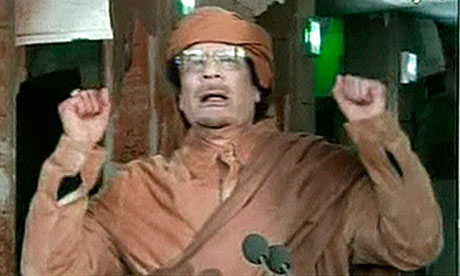
6 Comments

Filed under History, Military, world war two in the pacific
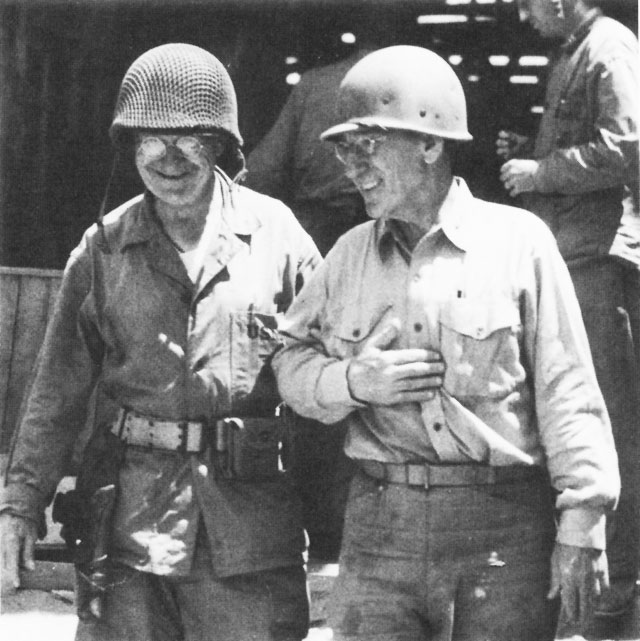
Going to War: Life at TQ, Chuck Norris Visits and Mass Casualties

While we prepared for our first mission we adjusted to what life was like on a large airbase and logistics hub. Ta Qaddum is one of the larger Iraq Air Force bases from Saddam’s time but has a history going back to the old Royal Air Force base at Habbinyah which is just down the hill.  In 1941 the Iraqi Army laid siege to the British forces in Habbinyah from the escarpment that overlooks the town from what is now the northern edge of TQ.  One only has to imagine the feelings of the Iraqi soldiers short on supply and exposed to air attack on the escarpment while waiting for German intervention only to be driven off by the British when their relief force arrived from Jordan.

iraqi bomber at tqWrecked Iraqi Bomber at TQ

The Iraqi legacy on the base looms in some of the infrastructure as well as the hulks of Soviet made Iraqi Air Force bomber and fighter aircraft near the edge of the airfield.  When I was there in 2007-2008 the base was under the command of the 2nd Marine Logistics Group or 2nd MLG.  The MLG is a command and control headquarters for logistics support units of the 2nd Marine Expeditionary Force.  It is tailored to support the Ground Combat Element, the 2nd Marine Division and the Air Combat Element, the 2nd Marine Air Wing and attached units.  Its function is similar to an Army Corps Support Command or whatever the Army calls them now.  TQ was also the home of several helicopter squadrons Marine and Army as well as a local defense force at the time made up of the 1st Battalion 11th Marines from Camp Pendleton. 1/11 was an artillery battalion but was being primarily used as a security and convoy protection force.  Other units including Navy Seabees and Army logistics units operated from TQ.  A Marine Infantry Battalion was stationed in Habbinyah while elements of a Marine Expeditionary Unit (MEU) were operating in the area as part of the surge.

The base is about mid-range on the amenity scale for troop comfort. At the time we were there the only non-DFAC/ Chow Hall was the Green Beans Coffee trailer as opposed to places like Al Asad and Camp Victory which had a multiplicity of fast food places for the troops.  The Marines are tougher on communication security than the Army and many websites which troops could use on other bases were unavailable unless one went to the Iraqi internet café or the MWR computer and phone center.  The Iraqi run shop had the fastest internet on the base but you had to contend with huge amounts of second hand smoke and pay a nominal charge to use it.  The MWR facility often had broken machines, had a waiting list to use them and the connections were very poor with pages slower to load that the old dial up days.  On the plus side TQ did have a relatively decent Marine Corps exchange, not as big as Al Asad or Camp Victory, but one of the larger exchanges in Iraq and second only to Al Asad in the West.  Most places including Ramadi had pretty small and not well stocked exchanges.  TQ had nice fitness center facilities which I used a lot being coached by Nelson.

060Chaplains and RPs with Chuck Norris

The base MWR worked with the USO and other agencies to bring sports stars or celebrities to the base.  Just before we left on our first mission Chuck Norris came through.  Chuck was made an “Honorary Marine” a few years back and has made it his task to try to meet every Marine deployed in Iraq and Afghanistan, shaking the hand of each one he met.  The chapel was the host facility for the visit which last about 2 hours in which Chuck pressed the flesh and had his picture taken with probably close to 5000 Marines and other personnel, maybe more.  The Chaplains were drafted to be the photographers and I lost count of how many different types of digital cameras that I took pictures with.  Chuck enjoyed the heck out of Nelson and was impressed with his fighting resume.  I think that Nelson got more face time with Chuck than anyone on the base and he deserved it.  Chuck was accompanied by Chaplain Langston and RP1 Roland our friend from Fallujah.  After they were done he had to get on the waiting helo and fly out to his next stop.

058Chuck and Nelson

The chow halls, of which there were two, were large and usually had a pretty good menu.  I especially came to like the Indian nights where Indian specialties were served.  Since many of the cooks employed by Gulf Catering who had the contract were Indian, Pakistani, Bangladeshi or from Ceylon so it generally was pretty good unless they had to scrounge for suitable ingredients.  I like the curry chicken, but occasionally it was made with chicken nuggets when the real chicken was in short supply.  It almost reminded me of the Spam Lamb in the TV series M*A*S*H or the great quote out of the movie Meatballs: “Attention. Here’s an update on tonight’s dinner. It was veal. I repeat, veal. The winner of tonight’s mystery meat contest is Jeffrey Corbin who guessed “some kind of beef.”   I think that there were a number of times when I really wondered what the meat was.  They usually had a pretty good salad bar unless resupply convoys were interrupted and fresh vegetables had run out.  There were a number of times where the pickins were slim and Nelson and I had to get creative.  Breakfast was usually good with a good choice of food choices, some even healthy.  The workers were great, always friendly despite working 12 hour days 6 days a week for $300 a month.  Many had signed up through agencies which cost them $4000 so the first year that many worked was for nothing.  It was in my opinion a case of a KBR/ Halliburton subcontractor using them in effect as indentured servants and pretty well damned close to slaves, all legal by the US Government.  I thought that it was pretty immoral and certainly a case of a company contracted by the government reducing labor costs on the back of some of the poorest people in the world. Back at the end of the Cold War the military downsized and eliminated most of the Army and Marine mess specialists which paved the way for the contracting industry, led by the former Secretary of Defense and his Halliburton team to begin their massive contracting operations with the Bosnia deployments back in 1995.  They were limited to their own compound far away from anything and were always the last to eat.  They were polite and really tried to accommodate sometimes rude and condescending Americans, the local management did the best they could to give them good accommodations but were limited by their parent company.  Many of the workers were Roman Catholic or Anglican Christians  and Fr Jose had a great ministry that he took on to support them by going to their camp a couple of times a week to celebrate Mass.  His masses were packed and what a source of life and the love of God he was to so many people at TQ, Americans and non-Americans alike.

988Fr Jose on the bank of the Euphrates at Habbinyah

About a week after we got to TQ Marines from the battalion in Habbinyah were hit in an IED complex ambush while on patrol.  A couple of vehicles were hit, Jose was across the base celebrating Mass and Pat was in Fallujah.  A chaplain was needed in the Shock Surgical Trauma Unit or SSTP.  Wounded were being brought in, the platoon had been hit hard, 14 wounded and a couple killed.  I figured that since I was a pretty experienced trauma and critical care chaplain who had dealt with over 500 deaths, many traumatic with bullet wounds, burns and the host of other types of trauma, and tended to probably twice that many who did not die that I could handle this.  When I got to the SSTP I was greeted by a couple of nurses and docs and briefed as to what was going on.  Within a few minutes the casualties were beginning to roll in as the UH-60 Dust-off MEDIVAC helicopters landed and teams went out to meet them.  Some were ambulatory, or walking wounded bandaged with lacerations and burns on their faces and upper bodies, other were brought in on stretchers and ushered into the treatment beds in the area outside the OR.  It was like a scene out of M*A*S*H as the well honed surgical teams, surgeons, anesthetists, nurses and corpsmen went to work.  I now work with a number of these fine people. I was able to make my way about to the wounded Marines, praying with some, holding hands as and with a couple performing the sacrament of healing, or the anointing of the sick.  As I listen to Marines, prayed with them or anointed them there was a tremendous sense that this was different than what I did at Parkland or Cabell-Huntington.  These young men wore the same uniform that I wore, served the same country that I served and travelled the same roads that I would soon be on.  As each was assessed and moved off to surgery, prepared for further evacuation or treated and sent to a ward I noticed the little things about each of them.  The wounds, the torn uniforms, the burns and even the tattoos, these were our guys, they weren’t gang bangers or criminals but young Americans fighting a brutal war against a enemy that had terrorized Iraqis and found devastating ways to kill Americans.  Some of the Marines asked if they would be okay, others asked about friends and in those moments I learned what it was to care and be with men traumatized by the violence and brutality of war against an enemy that would not fight by our rules, much as the North Vietnamese and Viet Cong refused to fight our war.  The enemy was clever and determined and his weapons were deadly.

Stars and Stripes sstpTQ Surgical During Mass Casualty Event (Stars and Stripes Photo)
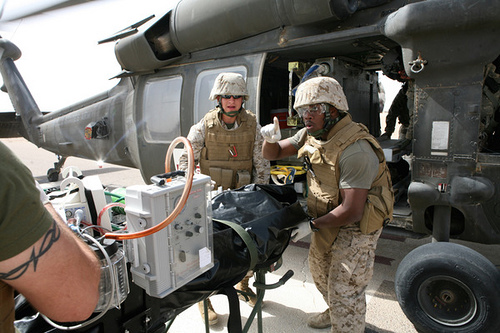
The teams did their work quickly and soon the event in the ER was done as the Marines were moved off to OR, the ward or further evacuation. I spent some time talking with unit Corpsmen and less wounded Marines and learned about the attack. They were in a convoy heading back to Habbinyah when the there was an enemy contact ahead of them.  As they moved forward to engage a primary and secondary IED hit the convoy heavily damaging two trucks with an ensuing firefight.  The Marines fought off their attackers, the wounded were treated and security set up as Dust-off came in to evacuate the wounded.  I thought back to my days as a Medical Service Corps Officer in the Army and remembered my friends who had elected to apply for flight school to become Dust-off pilots.  I remembered learning to call in MEDIVAC missions and some of the Army MSC aviators that I knew; some had flown in Vietnam, being a Dustoff pilot can be a sporty occupation.  They fly an unarmed bird into hot landing zones and get badly wounded troops to medical facilities in 100 degree plus weather without killing them enroute, those guys are good. As the crowd dissipated I spend so time with some of the staff.  Eventually with night having fallen I began the walk back to my office in the Chapel.  I looked up at the night sky, in the darkness a another UH-60 sat down to pick up others being evacuated on to Baghdad or Balad.  I looked up at the sky and saw more stars than I had seen at any time since I was at sea on the USS HUE CITY.  It was amazing; it looked like you could almost walk across them from horizon to horizon. When I got to my office I checked on my our mission status, I had submitted our first Air Support Request earlier in the day, of course it had not moved yet, but at least it gave me something to do.  I checked my unclassified e-mail and knew that there was nothing that I could share with anyone so I looked at baseball scores, checked a couple of news sites and headed off to my “can.”

medivacPackaging a Casualty for Further Evacuation on the TQ Surgical Pad
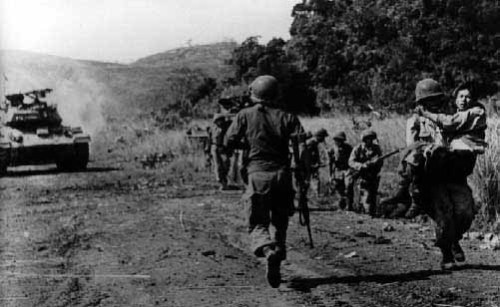
That night I did not sleep well, the images of the wounded Marines were burned into my mind; I could see their faces, their wounds and their tattoos.  I prayed the office of Compline from the Book of Common Prayer using Psalm 91 and the prayer “Be our light in the darkness, O Lord, and in your great mercy defend us from all perils and dangers of this night; for the love of your only Son, our Savior Jesus Christ.  Amen.” I took some comfort in this, walked out again into the night to see illumination rounds in the vicinity of Habbinyah and the distant sound of automatic weapons fire.   For once my insomnia was not related to jet lag or exhausting night flights, it was instead a realization that what happened to these Marines could well happen to me as I we launched later in the week.

The next morning another eight or ten Marines from the same company came in, this time I went to the SSTP with Jose and we did a tag team match, we tried to determine religious affiliation of the wounded Marines with him taking the Roman Catholics to provide sacramental needs and me taking the rest.  Once again the images were vivid; these Marines were on a mission to recover the damaged vehicles and were hit by IEDs on their way back to base.  This time one Marine was killed.  I walked to the graves registration and mortuary affairs team with the battalion surgeon and a corpsman who were to identify the body.  I listened to their frustration and heartache as they described what they had been through the past two days.  The company had taken over 20 casualties including 3 dead.  A high percentage of casualties for a unit that probably numbered about 120 men.  Once again I walked back, this time in the hot mid-morning sun with Jose to the Chapel.  We talked for a while about the past two days, he knew the battalion that had been hit well as he supported them as well.  The surgeon was one of his parishioners.  After we went our separate ways I did my morning prayer and settled in to study more about where we were going.  Nelson and I got PT later in the evening and I spent a restless night in my “can” playing computer Maj-Jong and Chess on my laptop deep into the morning.  Once again I spent time walking in the dark looking at the vast sea of stars above me.

3 Comments

Filed under iraq,afghanistan, Military, Tour in Iraq

Lessons for the Afghan War: The Effects of Counterinsurgency Warfare on the French Army in Indo-China and Algeria and the United States Military in Vietnam

Note: This is an article that I wrote for a class a year ago which has been updated in order to show the lessons of history that can be useful in the current wars in Iraq and Afghanistan.

legion indo-china

French Foreign Legionnaires in Indo-China

The effects of the wars Indo-China, Algeria and Vietnam on the French and American military organizations internally and in relationship to their nations piqued my interest in 2005. The wars in Iraq and Afghanistan forced me to start asking the question of what short and long term effect that these wars might have on the U.S. military.  As such I wondered what historical precedent that there was for the question. My interest was furthered by my deployment with Marine and Army advisors to Iraqi Army and Security forces in 2007-2008.  My search led to the French experiences in Indo-China and Algeria and the American experience in Vietnam.  Recently with the Iraq war winding down and ongoing war in Afghanistan which has gone from apparent victory to mounting concern that the effort could fail as the Taliban and Al Qaida have regained momentum amid widespread corruption by the Afghan government and weakness of NATO forces.

Thesis

The counterinsurgency campaigns conducted by the French and American militaries in Vietnam and Algeria had deep and long lasting effects on them.  The effects included developments in organization and tactics, relationship of the military to the government and people, and sociological changes.  The effects were tumultuous and often corrosive.  The French Army in Algeria revolted against the government. The US Army, scarred by Vietnam went through a crisis of leadership and confidence which eventually resulted in end of the draft and formation the all volunteer military.  The effects of the Iraq and Afghanistan wars are yet unknown but could result in similar situations to the militaries and governments involved,

Historiography

legion algeriaForeign Legion in Algeria

There is a wealth of data regarding these wars. There are several types of materials. The accounts of soldiers, diplomats and reporters who experienced these events contained in memoirs and diaries. The best include David Hackworth’s About Face and Steel My Soldiers Hearts; and General Harold Moore’s We Were Soldiers Once… and Young. French works include Jules Roy’s The Battle of Dien Bien Phu and General Paul Aussaresses’ The Battle of the Casbah. There are innumerable popular accounts written by NCOs and junior officers.  These accounts may contain a wealth of information, but are limited by a number of factors. First, the authors, veterans of the wars, only saw part of the overall picture and first-hand experience in war can skew a writer’s objectivity. Those who have been through the trauma of war interpret war through their own experience.  Physical and psychological wounds can have a major impact on the interpretation of these writers as can their experience and political ideology. Finally few of these writers are trained historians. Despite this they can be a valuable resource for the historian.

Another source is found in the official histories written by the military forces involved in the wars. Often these incorporate unit histories and individual narratives and analyze specific battles and the wider campaigns, but do little in regard to broader conditions that affected operations.  While a good source, many are not as critical of their institutions as they should be.

Histories by trained historians and journalists provide another view. The most insightful of the journalist accounts include Bernard Fall’ Street Without Joy and The Siege of Dien Bien Phu: Hell in a Very Small Place. A limitation of all of these is that they are often heavily influenced by the political and societal events. This means that earlier accounts are more likely to be reactive and judgmental versus critical and balanced. Later accounts have the benefit of access to the opposing side and documents not available to earlier writers.  Alistair Horn in A Savage War of Peace provides one of the most informative and balanced accounts of the war in Algeria. Martin Winslow does the same regarding Dien Bien Phu in The Last Valley.

Another source is the writings of participants who critically examine their participation in the wars.  Many of these, French and American provide insights into the minds of leaders who are reflective and critically examine what happened to their military institutions in these wars. The best of these is French Colonel David Galula whose books Pacification in Algeria 1956-1958 and Counterinsurgency Warfare: Theory and Practice provide first-hand accounts of the subject combined with critical reflection. Galula’s works have been important to John Nagl, General David Petreus and others who helped write the U.S. Army and Marine Corps Counterinsurgency manual. Andrew Krepinevich in The Army and Vietnam provides a critical analysis of the U.S. Army in Vietnam.  Other sources, both online and print, such as RAND, provide excellent analysis of selected topics within the scope of this essay, especially COIN.

Dien Bien Phu 1French at Dien Bien Phu

The ability to dispassionately and critically examine and evaluate these sources over a period of several years was and integrate them with my own experience has been a critical to me.  It has changed the way that I look at sources, and caused me to be much more aware of bias, the limitations of sources and the need to have a multiplicity of sources and points of view and to be suspicious of contemporary reports and accounts of the war in Afghanistan regardless of the source.

Analysis of the Issue

viet minh supplyViet Minh Supply Columns were Never Stopped by French Air power or Artillery

The conflicts in French Indo-China, Algeria and Vietnam had major effects on the French and American military institutions. These effects can be classified in a number of ways. First, the manner in which each military waged war, including tactics employed and use and development of weapons systems was changed.  The use of airpower, especially helicopters and use of riverine forces provided an added dimension of battlefield mobility but did not bring victory. As John Shy and Thomas Collier noted regarding the French in Indo-China: “French mobility and firepower could take them almost anywhere in Vietnam, but they could not stay, and could show only wasted resources and time for their efforts.”[1]

Joint_operation_with_ARVN_112-1Joint US and ARVN Operation

The use of intelligence and psychological warfare, including the use of torture became common practice in both the French and American armies.  The wars had an effect on the institutional culture of these armed services; neither completely embraced the idea of counterinsurgency and for the most part fought conventionally. Galula notes how the “legacy of conventional thinking” slowed the implementation of proper counterinsurgency tactics even after most commanders learned that “the population was the objective.”[2] Krepinevich notes that “any changes that might have come about through the service’s experience in Vietnam were effectively short-circuited by Army goals and policies.”[3] Finally the wars had a chilling effect on the relationship between the both militaries and the state, veterans from each nation often felt betrayed or disconnected from their country and people.  Unfortunately instances of all of these have occurred or can be seen in the current wars in Iraq and Afghanistan.

VIETNAM DIEN BIEN PHUFrench Prisoners after Dien Bien Phu: Many Survivors Would be Fighting in Algeria within Two Years
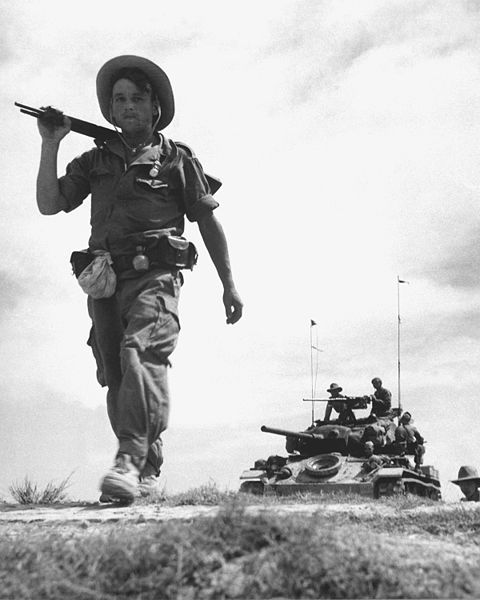
The French Army had the misfortune of fighting two major insurgencies back to back.  The French military was handicapped even before it went into these wars. The Army came out of World War II defeated by the Germans, divided by loyalties to Vichy or one of the Free French factions. They were humiliated by the Japanese in Indo-China, while in Algeria France’s crushing defeat was devastating.  “Muslim minds, particularly sensitive to prestige and baraka, the humiliation made a deep impression.”[4] French society was as divided as the Army; the economy in shambles, the government weak and divided.  The Viet-Minh had prepared well making use of time and training to get ready for war.  “Once full-scale hostilities broke out, the French, for budgetary and political reasons could not immediately make the large scale effort to contain the rebellion in the confines of small-scale warfare.”[5]

In both Indo-China and Algeria the French attempted to fight the budding insurgencies in a conventional manner.  This was particularly disastrous in Indo-China when on a number of occasions battalion and regimental combat team sized elements were annihilated by Viet-Minh regulars.  Between October 1st and 17th 1950 every French garrison along the Chinese border was over-run.  The French lost over 6000 troops and enough equipment to outfit “a whole additional Viet-Minh division.” It was their worst colonial defeat since Montcalm at Quebec.[6] In Algeria when the fight began in earnest France’s “ponderous ponderous N.A.T.O forces found themselves at an impossible disadvantage,”[7] unable to have any influence off the main roads.

french troops indochinaFrench Troops and Tanks in Indo-China: Road Bound Forces were often Defeated by Viet- Minh Forces

In Vietnam the French did not absorb the lessons of fighting a well established insurgent force. French forces hoped to draw the Viet-Minh main forces into battles of attrition where their superior firepower could be brought to bear. Such was the case at Na San in December 1952 where the French established an “Air ground base” deep in Viet-Minh territory to draw Giap’s forces into open battle.  This worked, but just barely. General Giap, short of artillery and not planning on a long battle frittered away his troops in mass charges.  However, the French, because of Na Son assumed they had found the key to victory. In their embrace of the “air ground base concept, French staff officers were following an intellectual tradition that had long been prone to seduction by elegant theories.”[8] The result was the disaster at Dien Bien Phu the following year.  The destruction of the elite Group-mobile 100 near Pleiku in 1954 was the coup de grace. In Indo-China the French made limited use of helicopters, used paratroops widely, and developed riverine forces. One thing they were critically short of was significant tactical air support.[9]

The most inventive French creation in Indochina was the GCMA/GMI forces composed of mountain tribesmen led by French NCOs and Junior Officers.  They were designed to provide “permanent guerilla groups rooted in remote areas” to harass and interdict Viet-Minh forces.[10] Trinquier noted that at the time of the Dien Bien Phu defeat that these forces had reached over 20,000 trained and equipped maquis in the Upper Region of Tonkin and Laos. These forces achieved their greatest success retaking Lao Cai and Lai Chau May 1954 as Dien Bien Phu fell.[11] Trinquier stated that “the sudden cessation of hostilities prevented us from exploiting our opportunities in depth.”[12] The GMI units and their French leaders were abandoned fighting on for years after the defeat. One account noted a French NCO two years after the defeat cursing an aircraft patrolling the border “for not dropping them ammunition so they could die like men.”[13] In the end the French left Indo-China and Giap remarked to Jules Roy in 1963 “If you were defeated, you were defeated by yourselves.”[14]

Algeria was different being part of Metropolitan France; there the French had support of European settlers, the pieds-noir. Many French soldiers had come directly from Indo-China. There French made better adaptations to local conditions, and realized that they had to win the population and isolate the insurgents from it and outside support. As Galula said, victory is the destruction of the insurgent’s political and military structures, plus “the permanent isolation from the population, not forced upon the population, but by and with the population.”[15] The lessons learned by the French in both Algerian and Indo-China were lost upon the Americans.

4CavVnM48US Heavy Forces including Armor had Little Utility in Many Parts of Vietnam
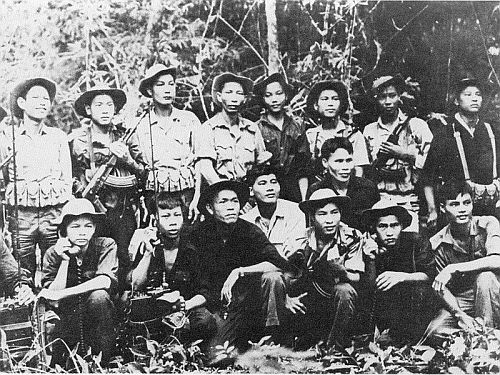
The United States military, especially the Army approached the Vietnam War with a conventional mindset, referred to as the “Army concept.” [16] It not only approached the war in this manner, but it trained and organized the South Vietnamese forces, ARVN into the American model. Americans re-organized ARVN into divisions “based upon the U.S. divisional force structure.”[17] Due to the imposition of an American template and organizational structure upon it, ARVN was not structured appropriately for the threat that it faced.”[18] The results were as to be expected. Large numbers of American troops poured in taking the lead against the North Vietnamese and Viet Cong . The American method of counterinsurgency was costly.  It was “almost a purely military approach”[19] which ignored political and social realities on the ground. Instead of focusing on protecting the Vietnamese people and denying the Communists a safe haven the Army in particular believed that massive firepower was the best means to be“utilized by the Army to achieve the desired end of the attrition strategy-the body count.”[20] In the end the American defeat was a “failure of understanding and imagination.”[21] The one shining success was the Marine Corps experimentation with “Combined Action Program” platoons which lived in the villages with militia for long periods of time. This program produced great results “in eliminating local guerillas”[22] but was killed by the Army.

NlfmainforceNVA Main Forces

These wars tore the heart out French and American armies. For the French the defeats inflicted a terrible toll.  In Indo-China many French career soldiers felt that the government’s “lack of interest in the fate of both thousands of missing French prisoners and loyal North Vietnamese…as dishonorable.”[23] Divisions arose between those who served and those who remained in France or Germany and created bitter enmity between soldiers.  France would endure a military coup which involved many who had fought in Vietnam and Algeria. Having militarily won that war, were turned into what Jean Lartenguy called The Centurions had been turned into liars.”[24] They were forced to abandon those who they had fought for and following the mutiny, tried, imprisoned, exiled or disgraced. Colonial troops who remained loyal to France were left without homes in their “independent” nations.  They saw Dien Bien Phu as the defining moment. “They responded with that terrible cry of pain which pretends to free a man from his sworn duty, and promises such chaos to come: ‘Nous sommes trahis!’-‘We are betrayed.’”[25]

war protestUS Veterans of Vietnam Would Return to a Deeply Divided Country that turned its Back on Them for Years

The U.S. Army left Vietnam and returned to a country deeply divided by the war.  Vietnam veterans remained ostracized by the society until the 1980s.  As Harold Moore recounts “in our time battles were forgotten, our sacrifices were discounted, and both our sanity and suitability for life in polite American society were publically questioned.”[26] The Army endured a massive reorganization that resulted in the formation of the All-Volunteer force, which would redeem itself and emerge from the ashes in the Gulf War. The Americans would not learn the lessons of revolutionary warfare and counterinsurgency until forced to do so in Iraq in 2004-2007. These lessons however were not applied to Afghanistan and the Taliban which seemed to have been defeated have regained the initiative, policy is being debated amid discord in the west and there are reports of American and NATO forces becoming discouraged by the course of the war and concern that their efforts will be in vain. This is a dangerous situation to be in and if we learn from anything from our own history as well as that of foreign military forces in Afghanistan we need to be very careful in implementing strategy to get whatever we do right.

training team baseTraining Team Base in Afghanistan: Some of these Bases Have proven Vulnerable to Well Planned and Coordinated Taliban Attacks

Conclusion

The effects of these wars on the French and American military establishments were long lasting and often tragic. The acceptance of torture as a means to an end sullied even the hardest French officers. Men like Galula and Marcel Bigeard refused to countenance it, while others like Paul Aussaresses never recanted.  Americans would repeat the tactic at Abu Ghraib rallying the Iraqis against them and nearly losing the war because of it.

For the Americans, the effects of Vietnam continued at home. Race riots tore at the force while drug addictions and criminal activities were rampant.  Many incompetent leaders who had “ticket punched” their careers kept their jobs and highly successful leaders who became whistle blowers like Hackworth were scorned by the Army institution.  The years following Vietnam were a severe test of the US Military and took years for the military to recover.  Likewise It took years before either the French or American veterans again felt a part of their countries.  They ended up going to war, and when it was over; feeling abandoned, their deepest bonds were to their comrades who had fought by their side.

What are the lessons to be learned from these campaigns as well as from the various accounts?  Andrew Krepinevich prophetically noted that the failure to learn the lessons of Vietnam “represents a very dangerous mixture that in the end may see the Army again attempting to fight a conventional war against a very unconventional opponent.”[27] Obviously, there are lessons to be learned, especially in understanding the nature of revolutionary war as well as the culture and history of our opponents. The U.S. has made some improvement in this regard but there is still much to be learned, especially since after the war the Army was “erecting barriers to avoid fighting another Vietnam War.”[28] From these wars we learn that nations and incompetent governments who mismanage wars can alienate themselves from the soldiers that they send to fight, with serious consequences.  As far as historiography we learn that certain historical fallacies are evident when one reads the accounts critically and recognize the bias and limitations of the various sources.


[1] Shy, John and Collier, Thomas W. “Revolutionary War” in Makers of Modern Strategy from Machiavelli to the Nuclear Age,” Peter Paret editor. Princeton University Press, Princeton N.J. 1986  p.849

[2] Galula, David. Counterinsurgency in Algeria: 1956-1958. RAND Corporation, Santa Monica, CA. 2006. First published by RAND in 1963. p.244

[3] Krepinevich, Andrew F. “The Army and Vietnam,” The Johns Hopkins University Press, Baltimore and London, 1986 p.213

[4] Horn, Alistair. “A Savage War of Peace: Algeria 1954-1962,” a New York Review Book published by the New York Review of Books, New York, 1977, 1987, 1996, and 2006 p 41

[5] Fall, Bernard B. “Street Without Joy: The French Debacle in Indochina.” Stackpole Books, Mechanicsburg PA, 2005, originally published by Stackpole Publications 1961 p.27

[6] Ibid. p.33

[7] Horn. p.100.

[8] Windrow, Martin. “The Last Valley: Dien Bien Phu and the French Defeat in Vietnam,” Da Capo Press, Novato, CA 2006, originally published by Weidenfeld and Nicholson, London 2004 p.63

[9] Fall, Bernard B. “The Siege of Dien Bien Phu: Hell in a Very Small Place.” Da Capo Press, New York an unabridged reprint of the 1st Edition reprinted in arrangement with Harper and Row Publishers, New York. 1967 pp. 456-457  Fall discusses in depth the lack of French Air support and the antecedents that led to the shortage following World War II.

[10] Pottier, Philippe(2005)’Articles: GCMA/GMI: A French Experience in Counterinsurgency during the French Indochina War’, Small Wars & Insurgencies,16:2,125 — 146 http://dx.doi.org/10.1080/09592310500079874

[11] Simpson, Howard K. “Dien Bien Phu: The Epic Battle America Forgot,” Potomac Books Inc. Washington DC 2005, originally published by Brassey’s Inc. 1994 pp. 170-171

[12] Trinquier, Roger. “Modern Warfare: A French View of Counterinsurgency,” translated from the French by Daniel Lee with an Introduction by Bernard B. Fall. Praeger Security International, Westport CT and London. 1964 and 2006. Originally published under the title “La Guerre Moderne” by Editions Table Ronde. p.87

[13] Windrow. p.652.

[14] Roy, Jules. “The Battle of Dien Bien Phu” Carrol and Graf Publishers, New York 1984. Translated from the French by Robert Baldrick. English translation copyright 1965 by Harper and Row Publishers, New York. p.xxx

[15] Galula, David. “Counterinsurgency Warfare: Theory and Practice.” Praeger Security International, Westport CT 1964 and 2006 p. 54

[16] Krepinevich. p.213

[17] Ibid. p.24

[18] Nagl, John A. “Learning to East Soup with a Knife: Counterinsurgency Lessons from Malaya and Vietnam,” University of Chicago Press, Chicago and London, 2005 p.138

[19] Shy. p.856

[20] Krepinevich. p.202

[21] Spector, Ronald H. “After Tet: The Bloodiest Year in Vietnam,” Vintage Press, a division of Random House, New York, 1993 p.314

[22] Millett, Allan R. and Maslowski, Peter. “For the Common Defense: A Military History of the United States of America.” The Free Press, a division of Macmillian, Inc. New York, 1984 p.555

[23] Windrow. p.655

[24] Ibid. p.657

[25] Ibid.

[26] Moore, Harold G and Galloway, Joseph L. “We were Soldiers Once…and Young: Ia Drang: The Battle that Changed Vietnam,” Harper Collins Publishers, New York NY 1992  p. xx


[27] Krepinevich. p.275

[28] Ibid. p.274

1 Comment

Filed under History, iraq,afghanistan, Military, vietnam