Tag Archives: world war ii

In Harm’s Way They Went…

Friends of Padre Steve’s World,

It has been a busy day as we finished the major part of decorating our home for the Advent and Christmas seasons. I think that this year is the first year that we have everything ready before the first Sunday of Advent and that even means getting all the boxes that our decorations came in back up to the attic. When we finished we went out to our favorite local German restaurant, The Bier Garden over in Portsmouth.

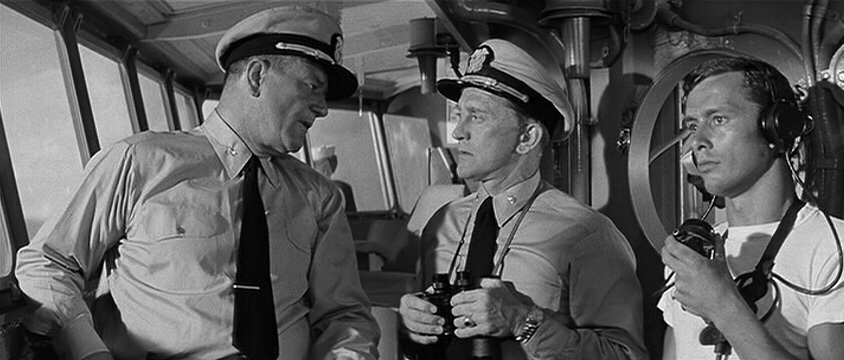
Since we are coming up on the seventy-sixth anniversary of the Japanese attack on Pearl Harbor and it seems that the United States may again become involved in a truly major and destructive war the likes that we have not seen since the Second World I decided to put on the classic film In Harm’s Way, directed by Otto Preminger and starring John Wayne and an all star cast. It is an unusual film because it deals with very fallible people who can be heroes and scoundrels who have miserable failings. It deals with families, strong ones and broken ones, and it also deals with a topic that is all too current, sexual harassment and rape.

Of course it is set during the Second World War and deals with the Navy in the Pacific during the early part of the war and though it is fictional it represents real battles around the Solomons. Those battles were often bloody. During the first engagement of the Naval Battle of Guadalcanal a U.S. task force slugged it out at close range with a Japanese Force which had the mission of knocking out the Marine airbase on the island the Navy lost two cruisers and four destroyers and of thirteen ships engaged only one remained undamaged. To give an idea how brutal it was, both admirals embarked on the U.S. force were killed in the action.

The tag line for the movie is one that I really like because it kind of tells it like it is when a nation, not just a volunteer professional military goes to war: “In harm’s way they went. The men. The women. The lovers for a night. The lovers for keeps. The strong. The weak. They went, as they were…in Harm’sway.”

I have made two wartime deployments, one on a cruiser and one in Iraq’s Al Anbar Province. I have seen men and women, and families who have gone to war and come home, sometimes rather worse for the wear. I still have nightmares and night terrors from Iraq, but I have written about that before. PTSD is a bitch.

But anyway, as I ponder what is going on in our country and the world I realize that things are probably going to get much worse before they get better. I expect that many unsuspecting people will find themselves in harm’s way sooner rather than later, and like the Americans of 1941, complacent though the world was already at war, will come face to face with a rude awakening that will determine who we are and what we will be for at least a generation. The closing credits of the film are dramatic moving from waves braking upon a beach, to stormy seas, to the explosions of war culminating in the blast of a hydrogen bomb, before going back to a calm sea.

https://youtu.be/_OGVzjqoJ0Q

W.H. Auden wrote:

Defenceless under the night

Our world in stupor lies;

Yet, dotted everywhere,

Ironic points of light

Flash out wherever the Just

Exchange their messages:

May I, composed like them

Of Eros and of dust,

Beleaguered by the same

Negation and despair,

Show an affirming flame.

Until,tomorrow,

Peace,

Padre Steve+

2 Comments

Filed under film, History, Military, Political Commentary, world war two in the pacific

Dunkirk: A Symphony of War in Three Parts


Friends of Padre Steve’s World,

Last night Judy and I went to see the movie Dunkirk. It was different from any war movie that I have ever seen and that was a good thing. It was a work of art that brought the terrible truth of war, of defeat, and of human courage and suffering together in a symphony. Director Christopher Nolan managed to blend three separate timelines to tie together the action on the ground, at sea, and in the air. 

There was not a lot of dialogue but what there was blended well with the images and the score. The fact that the film was primarily shot in IMAX and 70mm instead of digital and used real ships and aircraft instead of massed amounts of digitally created military hardware added to the realism, as the musical score written by Hans Zimmer wrapped itself around you with the ticking of a watch ever present. 

If you have ever been to war or served at sea and been shot at, the movie captured the worst fears of a soldier, sailor, or airman at war; a soldier being trapped on a beach under fire and waiting for rescue; a sailor struggling to escape a sinking ship, or an airman wondering if you have enough fuel to complete the mission and make it home. It also captured the feeling of being delivered from danger, and how that feeling can change in the blink of an eye to terror and despair. 

I liked the way that Nolan and Hans Zimmer who wrote the musical score gave something we often overlook in life, the matter of time to the forefront. The ticking of the watch and the blending of an hour in the air, a day at sea, and a week on the land reminded me of how important time is, especially when you are at war. I remember traveling in Iraq by air and ground and just how different each felt in manner of time. Likewise, how different the concept of time felt being on a larger ship or a small boat in a hostile area. 

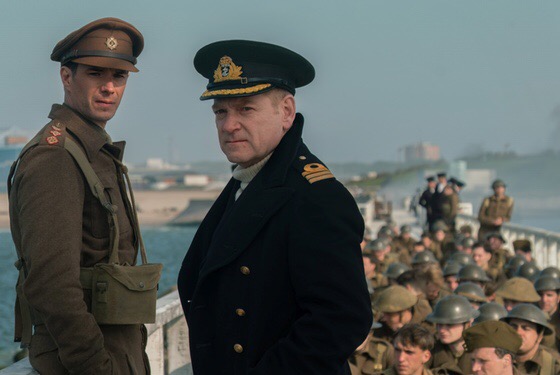
Dunkirk was a different way to look at war, and maybe because so few people in the United States or Western Europe have experienced war that is a good thing. I honestly think that a film like this, which did not focus on the Generals, Admirals, or political leaders, but rather common soldiers, sailors, and airmen, was a good thing. As far as characters in the film I found that Kenneth Branagh’s character, a Royal Navy Commander directing the evacuation of soldiers from the harbor mole, followed by Tom Hardy who played a Royal Air Force Spitfire pilot, and Mark Rylance who played a civilian mariner to be the most compelling characters. 

Anyway, it is a film that I believe deserves much praise because it focused on the men who fight the war, and what they feel when under fire, rather than trying to wrap the narrative in a neat package with a happy ending. Dunkirk was a miracle that kept a disaster from ending the war. It was not a military victory, it was a nation pulling together to stave off utter defeat, and it allowed Britain to remain in the war and hold off the Nazis in the west until the United States entered the war after Pearl Harbor. 

If you want to read a good book about Dunkirk that will not take too much time I recommend Walter Lord’s Miracle at Dunkirk, and for a broader perspective on the 1940 campaign in France, I recommend Alistair Horne’s classic To Lose a Battle, France 1940, and William Shirer’s The Collapse of the Third Republic, an Inquiry into the Fall of France 1940. 

So until tomorrow,

Peace

Padre Steve+

6 Comments

Filed under film, History, Military, movies, world war two in europe

What Does it take to Become a War Criminal? 


Friends of Padre Steve’s World,

Over the past few days I have been writing about the German invasion of the Soviet Union and the fact that senior leaders of the Wehrmacht actively cooperated with the crimes of the Nazi regime against the Jews, Soviet prisoners of war, and Soviet citizens. I have pointed out that Hitler’s ideology of the racial superiority of his Aryan Master Race and the corresponding view that the Jews and Slavs were untermenschen or subhuman justified the most extreme measures that the Nazis used to kill millions of innocent people through extermination, ethnic cleansing, and extermination. 

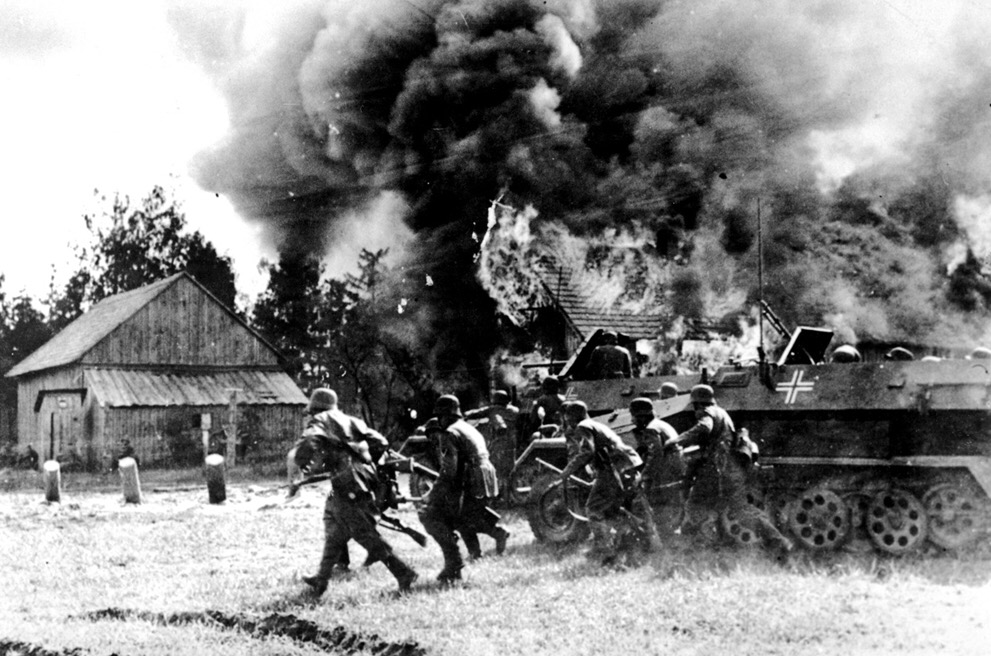
There was a common myth after the Second World War that the regular German Army, the Wehrmacht, fought an honorable and clean war while the criminal actions of war crimes and genocide were the fault of Hitler, the Nazi Party, and the SS. It was a comforting myth because it allowed a great number of men who agreed with Hitler’s policies, and often assisted in them to maintain a fiction of honor and respectability. While for the most part the German Army in the West fought according to international norms of conduct, it was a different matter on the Easter Front, where following Hitler’s lead the Wehrmacht from its senior officers in down was often at the tip of the spear in enforcing Hitler’s racial and ideological war. 


                                                                                       Field Marshal Wilhelm Keitel 

This came form the top. In addition to the Commissar order, also known as the Criminal Order, Field Marshal Keitel offered this directive to units fighting on the Easter Front:

“In view of the vast size of the conquered territories in the East, the forces available for establishing security in these areas will be sufficient only if instead of punishing resistance by sentencing the guilty in a court of law, the occupying forces spread such terror as is likely, by its mere existence, to crush every will to resist amongst the population.

The commanders concerned, together with all available troops, should be made responsible for maintaining peace within their areas. The commanders must find the means of keeping order within their areas, not by demanding more security forces, but by applying suitable drastic measures.”

                                                                                  Field Marshal Walter Von Reichenau 

Field Marshal Walter Reichenau issued what is something’s known as the Severity Order to his 6th Army which was part of Field Marshal Gerd Von Rundstedt’s Army Group South. Von Rundstedt, who was not a Nazi and who maintained his reputation after the war expressed his “complete agreement” with it and urged other subordinates to issue similar orders. 

“The most important objective of this campaign against the Jewish-Bolshevik system is the complete destruction of its sources of power and the extermination of the Asiatic influence in European civilization. … In this eastern theatre, the soldier is not only a man fighting in accordance with the rules of the art of war, but also the ruthless standard bearer of a national conception. … For this reason the soldier must learn fully to appreciate the necessity for the severe but just retribution that must be meted out to the subhuman species of Jewry…” 

An order was issued by General Erich Von Manstein’s Eleventh Army in November 1941 which stated in part:

“Jewry constitutes the middleman between the enemy in the rear and the remainder of the Red Armed Forces which is still fighting, and the Red leadership. More strongly than in Europe it holds all the key positions in the political leadership and administration, controls commerce and trades, and further forms the nucleus for all unrest and possible uprisings.

The Jewish-Bolshevist system must be exterminated once and for all. Never again must it encroach upon our European living space.

The German soldier has therefore not only the task of crushing the military potential of this system. He comes also as the bearer of a racial concept and as the avenger of all the cruelties’ which have been perpetrated on him and on the German people…

The food situation at home makes it essential that the troops should as far as possible be fed off the land and that furthermore the largest possible stocks should be placed at the disposal of the homeland. Particularly in enemy cities a large part of the population will have to go hungry. Nevertheless nothing which the homeland has sacrificed itself to contribute may, out of a misguided sense of humanity, be given to prisoners or to the population unless they are in the service of the German Wehrmacht.

The soldier must appreciate the necessity for the harsh punishment of Jewry, the spiritual bearer of the Bolshevist terror. This is also necessary in order to nip in the bud all uprisings which are mostly plotted by Jews…

Manstein claimed that he did not remember the order at his trial and that he sought to ensure that his troops did not engage in conduct not fitting of the honor of soldiers. He included the following in the order: “Severest action to be taken: against despotism and self-seeking; against lawlessness and lack of discipline; against every transgression of the honor of a soldier.”

In his defense at Nuremberg Manstien attempted to mitigate the damning words of the order. He explained that “I do want to point out to you that if it says here that the system must be exterminated, then that is extermination of the Bolshevik system, but not the extermination of human beings.” Despite Manstein’s clarification of what he meant in the order it would be hard for soldiers and commanders receiving the order as written could hardly have been expect not to interpret it literally. Likewise his order mentions the intentional starvation of Soviet citizens and harsh invectives against the Jews. 

Like Von Rundstedt, Manstein too would be rehabilitated and for the most part his complicity in Hitler’s racial and ideological war forgotten. 


There are many other examples of German Army commanders at various levels issuing orders similar to Von Reichenau and Von Manstein as well as accounts of Wehrmacht units cooperating with the Einsatzgruppen in various mass extermination actions against the Jews, including the action at Babi Yar. In many cases the cooperation was quite close as evidenced by the report of the commander of Einsatzgruppe C to Berlin on November 3rd 1941:

In a great number of cases, it happened that the support of the Einsatzkommandos was requested by the fighting troops. Advance detachments of the Einsatzgruppe also participated in every large military action. They entered newly captured localities side by side with the fighting troops. Thus, in all cases, the utmost support was given. For example, in this connection, it is worth mentioning the participation in the capture of Zhitomir, where the first tanks entering the city were immediately followed by three cars of Einsatzkommando 4a.

As a result of the successful work of the Einsatzgruppe, the Security Police is also held in high regard, in particular by the HQ of the German Army. The liaison officers stationed in Army HQ are loyally briefed of all military operations, and, besides, they receive the utmost cooperation. The Commander of the 6th Army, Generalfeldmarschall von Richenau, has repeatedly praised the work of the Einsatzkommandos and, accordingly, supported the interests of the SD with his staff.

It is true that in some cases individual Wehrmacht officers refused to cooperate with the Einsatzgruppen in their operational areas, but without the cooperation of the Wehrmacht the extermination campaigns against the Jews and other Soviet citizens could not have been successful. 

                                                                                                 The Rape of Nanking 

One has to ask what it takes for otherwise ordinary and law abiding people to carry out crimes of such magnitude. I do believe that the answer is found in the racial ideology that posits certain races as being less than human. The examples of such belief in action litter human history and are not limited to the Germans of the Nazi era. The disturbing thing as that the men who perpetrated the Nazi crimes against humanity and genocide were not unique. The actions of the Japanese army in China, Korea, and Southeast Asia to include the Rape of Nanking and their Unit 731; the American genocide committed against the Native American tribes and the enslavement of Blacks; the extermination of the Herero in German Southwest Africa, the Rwandan genocide, the mass killings of Bosnians by Bosnian Serbs,  the Armenian genocide committed by the Turks, and far too many more examples show this to be the case. 

I think one of our problems is that we want to believe that evil is simply done be evil people. That is why when we see a Hitler, Stalin, Pol Pot, or the monsters of the so-called Islamic State, we are often strangely comforted. This is often because we can point to a single person with a wicked ideology and say “they are evil,” all the while forgetting that they are, or were, like us, also human. 


There is a scene in the movie Nuremberg in which an American psychologist named Gustave Gilbert questions the commandant of Auschwitz. When he asks the commandant if he felt guilty for the extermination of the Jews in his camp the commandant said “does a rat catcher feel guilty for killing rats.” Thereafter Gilbert confronts Herman Goering pointedly asking the number two Nazi “A rat catcher catching rats”. Is that the kind of thinking it takes to carry out state sanctioned mass murder? Not just blind obedience but also a belief that your victims are not human?” 

Goering replies: Let me ask you this. What was Hiroshima? Was it not your medical experiment? Would Americans have dropped bombs as easily on Germany as it did upon Japan killing as many civilians as possible? I think not. To an American sensibility, a Caucasian child is considerably more human than a Japanese child…. 

What about the negro officers in your own army? Are they not allowed to command troops in combat? Can they sit on the same buses as the whites? The segregation laws in your country and the anti Semitic laws in mine, are they not a difference of degree? 

The tragic thing is that while Gilbert was certainly correct in his question to Goering, Goering was also right. For all that is good about America there is a persistent strain of this kind of thinking which deems other people, especially non-white people as inferior racially, culturally, and intellectually. Over the decades we like to think that we have become better but the underlying attitudes are still present today, sometimes in plain view, but often just under our veneer of civility and good manners, but what maintains that civility is quite fragile. In his history of Auschwitz British historian Laurence Rees wrote:

“human behavior is fragile and unpredictable and often at the mercy of the situation. Every individual still, of course, has a choice as to how to behave, it’s just that for many people the situation is the key determinate in that choice.” The German military officers who took part in the campaign in the East were terrifyingly normal. They were raised in an advanced society, highly cultured, well educated, and raised in the cradle of Protestantism. Yet many of them became willing participants in crimes of their nation that are unimaginable. But the fact is that the character of nations can be as fragile as that if individuals. As Americans we like to think that we are different but our history often belies this, even our military history and this is part of our conundrum. 

Aleksandr Solzhenitsyn wrote of the struggle:

 “If only it were all so simple! If only there were evil people somewhere insidiously committing evil deeds, and it were necessary only to separate them from the rest of us and destroy them. But the line dividing good and evil cuts through the heart of every human being. And who is willing to destroy a piece of his own heart?”

When I taught ethics at the Joint Forces Staff College I challenged my students to deal with these kinds of questions. They are not easy and they require that we look into the darkest reaches of our hearts to see what we will do when we are confronted with choices to obey orders that go against the values of the institution but may reflect the more troubling aspects of our culture. Some of these men and women I am sure understood and will not break under pressure, but I am not so sure about others, and I worry about them in the crisis. The fact is we are only as good as we are in the crisis. Historian Timothy Snyder wrote something that we should not discount when asking the question about how ordinary men become war criminals:

“The European history of the twentieth century shows us that societies can break, democracies can fall, ethics can collapse, and ordinary men can find themselves standing over death pits with guns in their hands. It would serve us well today to understand why.”

This is something that we most ponder because it would not take much in our present day where the old ethnic race hatreds, religious hatreds, and resurgent nationalism are again raising their head not only in our own country, but around the world. I will address this in the recent American context next week. So until tomorrow, when I publish something more personal and unrelated to this subject.

Peace

Padre Steve+

1 Comment

Filed under ethics, History, holocaust, Military, movies, world war two in europe

The Devil’s Details: Hitler’s Criminal Orders and his Obedient Generals


Friends of Padre Steve’s World,

Yesterday I posted a short article, well by my standards, dealing with the criminal nature of Nazi Germany’s invasion of the Soviet Union. The words of Hitler are damning, but even worse are the words and actions of the Generals who should have known better.

Hitler’s war against the Soviet Union was something that he had dreamed of long before he took power. I wrote about it in Mein Kampf and spoke about it many times. He wrote: “The fight against Jewish world Bolshevism requires a clear attitude toward Soviet Russia. You cannot drive out the Devil with Beelzebub.” He intended that those who served him would carry out his orders implicitly without regard to traditional morality, ethics, or law. His war against the Soviet Union was unlike any in history.

Richard Evans notes that Mein Kampf clearly enunciated that “Hitler considered racial conflict…the essence of history, and the Jews to be the sworn enemy of the German race ….” And that the “Jews were now linked indissolubly in Hitler’s mind with “Bolshevism” and “Marxism.” When Hitler became the dictator of Germany “his ideology and strategy became the ends and means of German foreign policy.” His aims were clear, Hitler remarked to Czech Foreign Minister Chvalkovsky on 21 January 1939: “We are going to destroy the Jews.” It was clear that Hitler understood his own role in this effort noting to General Gotthard Heinrici that “he was the first man since Charlemagne to hold unlimited power in his own hand. He did not hold this power in vain, he said, but would know how to use it in the struggle for Germany…”


Hitler’s “ideological and grandiose objectives, expressed in racial and semi-mystical terms, made the war absolute.” Field Marshal Keitel noted a speech in March 1941 where Hitler talked about the inevitability of conflict between “diametrically opposed ideologies” and that the “war was a fight for survival and that they dispense with their outdated and traditional ideas about chivalry and the generally accepted rules of warfare.” General Franz Halder, Chief of the OKH wrote in his War Dairy for that meeting: “Annihilating verdict on Bolshevism…the leaders must demand of themselves the sacrifice of understanding their scruples.”

Based on the concepts of Lebensraum (living space) and race, the German approach to war would combine “racism and political ideology” for the purpose of the “conquest of new living space in the east and its ruthless Germanization.” Hitler explained that the “struggle for the hegemony of the world will be decided in favor of Europe by the possession of the Russian space.” Territories conquered in the East by the Wehrmacht would be “Reich protectorates…and that these areas were to be deprived of anything in the nature of a Slav intelligentsia.”

This goal was manifest in the “Criminal Order” issued by OKW which stated that the war was “more than mere armed conflict; it is a collision between two different ideologies…The Bolshevist-Jewish intelligentsia must be eliminated….” The Slavic inhabitants of the conquered eastern lands would be killed or allowed to starve. This was directly tied in to the economic considerations of the Reich, which gave Germans priority in distribution of food, even that from the conquered lands. The Slavs, being untermenschen or sub-human in Nazi parlance, were simply excess mouths to feed and thus expendable. Starvation was a population control measure that supplemented other forms of annihilation, and it was cheaper than bullets. As Fest notes in Russia Hitler was “seeking nothing but “final solutions.” Despite the numerous post-war justifications and evasions of responsibility by various Wehrmacht generals; many of who found employment working for the Americans and British in the years following the war, the “Wehrmacht and army fell into line with Hitler because there was “a substantial measure of agreement of “ideological questions.”

Ideology was key to Hitler’s worldview and fundamental to understanding his actions in the war. However twisted Hitler’s ideological formulations were, he found men who willingly carried them out beyond the true believers of the Nazi faithful. They were embraced by much of the Army and Police, who would execute the campaigns in Poland and Russia in conjunction with the Einsatzgrüppen and Nazi party organizations.  In these organizations he found allies with pre-existing cultural, political and doctrinal understandings which allowed them to be willing participants in Hitler’s grand scheme of eastern conquest.


The lesson for today is that no tyrant bent on conquest or terror at home can do so without compliant members of the police, the military, the civil service, and the judiciary. As Timothy Snyder wrote: “If lawyers had followed the norm of no execution without trial, if doctors had accepted the rule of no surgery without consent, if businessmen had endorsed the prohibition of slavery, if bureaucrats had refused to handle paperwork involving murder, then the Nazi regime would have been much harder pressed to carry out the atrocities by which we remember it.” The German Generals also had their chances to stop the Hitler, but they became the men who made his conquests and genocide possible by carrying out his orders.

Until tomorrow,

Peace

Padre Steve+

3 Comments

Filed under ethics, History, leadership, Military, Political Commentary, world war two in europe

“Theirs is the Highest and Purest Democracy…” The Sermon of Rabbi Roland Gittelsohn at Iwo Jima

39GittelsonIwoJima2

Friends of Padre Steve’s World,

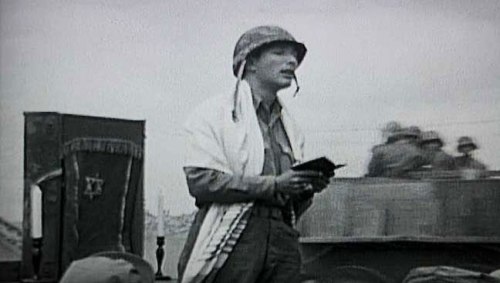
I have been serving in the military for almost 36 years between the Army and the Navy, and I have been a chaplain for almost 25 of those years. Over six of those years as a Navy Chaplain were spent serving with the Marine Corps. Rabbi Roland Gittelson volunteered to serve as a Navy Chaplain in the Second World War and like many Navy Chaplains he was assigned to serve with the Marines. He was the first Rabbi to serve with the Marines.

He went ashore with the 5th Marine Division at Iwo Jima. The battle was one of the most brutal ever fought by the Marines. In the month long battle for the 8.1 square mile island the Marines and Navy suffered nearly 7,000 men killed and 19,000 wounded. Over 18,000 of the island’s Japanese defenders died. On March 21st 1945 the Rabbi was one of the Chaplains to dedicate the cemetery for the fallen. The prejudice was such that many of his Christian colleagues wanted nothing to do with him and nothing to do with any service that he conducted. Though the division Chaplain had wanted him to conduct the main service to commemorate all of the fallen: Protestant, Catholic, Jewish, White, Black, and Mexican because no one else would conduct an ecumenical service, but both realized that the push back would be too much, so Gittelsohn conducted the Jewish service, expecting little to come of it except for the spiritual impact that it might have on his Jewish Marines, but unbeknownst to him a few Protestant Chaplains watched the service and then distributed it throughout the division and back to home.

Rabbi Gittelsohn’s message is one of the most remarkable that I have heard or read by any Chaplain and is very similar to the message of Abraham Lincoln’s Gettysburg Address. It is a message that needs to be heard today. That is why I am posting it here.

Have a great weekend,

Peace

Padre Steve+

This is perhaps the grimmest and surely the holiest task we have faced since D-day. Here before us lie the bodies of comrades and friends. Men who until yesterday or last week laughed with us, joked with us, trained with us. Men who were on the same ships with us and went over the sides with us, as we prepared to hit the beaches of this island. Men who fought with us and feared with us. Somewhere in this plot of ground there may lie the man who could have discovered the cure for cancer. Under one of these Christian crosses, or beneath a Jewish Star of David, there may rest now a man who was destined to be a great prophet—to find the way, perhaps, for all to live in plenty, with poverty and hardship for none. Now they lie here silently in this sacred soil, and we gather to consecrate this earth in their memory.

It is not easy to do so. Some of us have buried our closest friends here. We saw these men killed before our very eyes. Any one of us might have died in their places. Indeed, some of us are alive and breathing at this very moment only because men who lie here beneath us had the courage and strength to give their lives for ours. To speak in memory of such men as these is not easy. Of them, too, can it be said with utter truth: “The world will little note nor long remember what we say here. It can never forget what they did here.”

No, our poor power of speech can add nothing to what these men and the other dead of our division who are not here have already done. All that we can even hope to do is follow their example. To show the same selfless courage in peace that they did in war. To swear that, by the grace of God and the stubborn strength and power of human will, their sons and ours shall never suffer these pains again. These men have done their job well. They have paid the ghastly price of freedom. If that freedom be once again lost, as it was after the last war, the unforgivable blame will be ours, not theirs. So it is the living who are here to be dedicated and consecrated.

We dedicate ourselves, first, to live together in peace the way they fought and are buried in war. Here lie men who loved America because their ancestors, generations ago, helped in her founding, and other men who loved her with equal passion because they themselves or their own fathers escaped from oppression to her blessed shores. Here lie officers and men, Negroes and whites, rich men and poor—together. Here are Protestants, Catholics, and Jews—together. Here no man prefers another because of his faith or despises him because of his color. Here there are no quotas of how many from each group are admitted or allowed. Among these men there is no discrimination. No prejudice. No hatred. Theirs is the highest and purest democracy.

Any man among us the living who fails to understand that will thereby betray those who lie here dead. Whoever of us lifts his hand in hate against a brother, or thinks himself superior to those who happen to be in the minority, makes of this ceremony and of the bloody sacrifice it commemorates, an empty, hollow mockery. To this, them, as our solemn, sacred duty, do we the living now dedicate ourselves: to the right of Protestants, Catholics and Jews, of white men and Negroes alike, to enjoy the democracy for which all of them have here paid the price.

To one thing more do we consecrate ourselves in memory of those who sleep beneath these crosses and stars. We shall not foolishly suppose, as did the last generation of America’s fighting men, that victory on the battlefield will automatically guarantee the triumph of democracy at home. This war, with all its frightful heartache and suffering, is but the beginning of our generation’s struggle for democracy. When the last battle has been won, there will be those at home, as there were last time, who will want us to turn our backs in selfish isolation on the rest of organized humanity, and thus to sabotage the very peace for which we fight. We promise you who lie here; we will not do that! We will join hands with Britain, China, Russia—in peace, even as we have in war, to build the kind of world for which you died.

When the last shot has been fired, there will still be those whose eyes are turned backward not forward, who will be satisfied with those wide extremes of poverty and wealth in which the seeds of another war can breed. We promise you, our departed comrades: this, too, we will not permit. This war has been fought by the common man; its fruits of peace must be enjoyed by the common man! We promise, by all that is sacred and holy, that your sons, the sons of miners and millers, the sons of farmers and workers, will inherit from your death the right to a living that is decent and secure.

When the final cross has been placed in the last cemetery, once again there will be those to whom profit is more important than peace, who will insist with the voice of sweet reasonableness and appeasement that it is better to trade with the enemies of mankind than, by crushing them, to lose their profit. To you who sleep here silently, we give our promise: we will not listen! We will not forget that some of you were burnt with oil that came from American wells, that many of you were killed by shells fashioned from American steel. We promise that when once again men seek profit at your expense, we shall remember how you looked when we placed you reverently, lovingly, in the ground.

This do we memorialize those who, having ceased living with us, now live within us. Thus do we consecrate ourselves, the living, to carry on the struggle they began. Too much blood has gone into this soil for us to let it lie barren. Too much pain and heartache have fertilized the earth on which we stand. We here solemnly swear: this shall not be in vain! Out of this, and from the suffering and sorrow of those who mourn this, will come—we promise—the birth of a new freedom for the sons of men everywhere.

Amen.

4 Comments

Filed under faith, History, Loose thoughts and musings, Military, world war two in the pacific

What Can You Do for Your Country? Thoughts on the Passing of the Greatest Generation and an Unending War

tumblr_lahyzakLSB1qbjz0go1_500

Marine Colonel Francis I. Fenton, kneeling prays at the foot of his son’s grave on Okinawa 1945

Friends of Padre Steve’s World,

Tom Brokaw wrote:

“At the end of the twentieth century the contributions of this generation would be in bold print in any review of this turbulent and earth-altering time. It may be historically premature to judge the greatness of a whole generation, but indisputably, there are common traits that cannot be denied. It is a generation that, by and large, made no demands of homage from those who followed and prospered economically, politically, and culturally because of its sacrifices. It is a generation of towering achievement and modest demeanor, a legacy of their formative years when they were participants in and witness to sacrifices of the highest order. They know how many of the best of their generation didn’t make it to their early twenties, how many brilliant scientists, teachers, spiritual and business leaders, politicians and artists were lost in the ravages of the greatest war the world has seen.”

I was born in 1960 and thankfully for whatever reason I developed a love of history and heritage. I began reading history books as early as second and third grade. The American Heritage Publishing Company had a Junior Library series that I could not get enough of awhile another publisher (it may have also been American Heritage) had a series of biographies which drew me into the lives of many famous people. From 3rd grade on I spent every spare moment at school in the library, even frequently cutting geometry class in 10th grade to explore the history reference books that I could not check out and take home.

I think that anyone that knew me then could probably associate me with a big stack of books that I lugged to and from class and back and forth from home to school. The ironic thing is that as I pack for work or to come home every day my back pack from my tour in Iraq is filled with the books that I am reading or using for research. Maybe it is not ironic, maybe it is the fact that some things never change. For me the quest for knowledge and historical, philosophical, or scientific truth is something that I cannot get enough of, nor be content to think that I know everything on any given subject.

This little introduction takes me into today’s subject. For those that don’t know we are coming up on the anniversaries of two of the most amazing historical events of the past 100 years next week. They are the battles of Midway, June 4th through June 6th 1942 and the invasion of France, or D-Day, June 6th 1944.
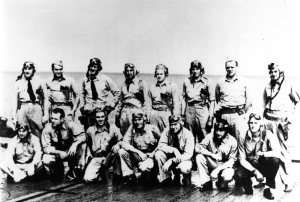
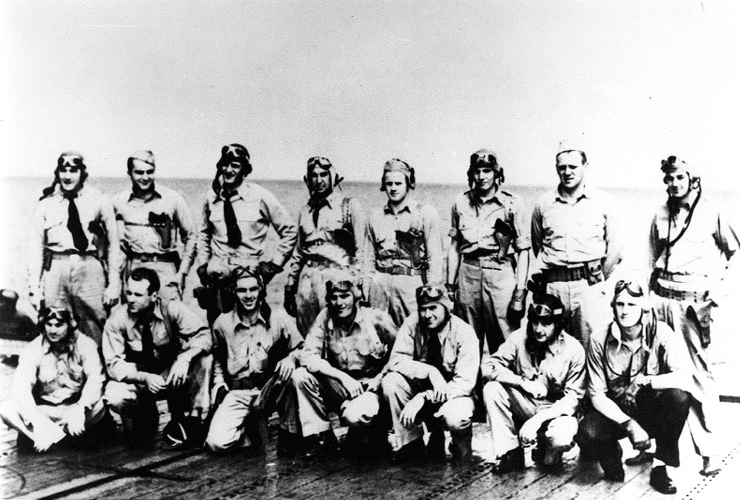
The Pilots of Torpedo Eight, only one Survived

I have always been amazed by the men who faced the Japanese at Midway, a battle that by any reasonable means should have resulted in a Japanese victory as well as them men that stormed the beaches at Normandy just two years later. When I first started reading about these battles many of the veterans were still alive, many not much older than I am today. However today not many are left, and the few that remain generally served as junior officers or enlisted personnel, none in high command.

Both battles are remarkable because an American or Allied loss could have changed the course of history. If the United States Navy been defeated at Midway it could have brought about a Japanese victory, or more likely made the ultimate American victory much more costly and taken far longer to achieve. If the Allies had been repulsed at Normandy it could have split the allied coalition or given the Germans the chance to renew their fight against the Soviet Union and possibly change history.

Thus when I look at these two events, battles that for most are now ancient history I am in awe of the men who fought them. They are not academic exercises for me, but as someone who has served at sea and on land in war I feel camaraderie with these men.

I remember reading Cornelius Ryan’s classic book “The Longest Day” and seeing the movie of the same name in grade school, and reading Walter Lord’s classic on Midway “Incredible Victory” when I was in 7th grade. Both are excellent books which have stood the test of time and though I have read and done much more research and writing on both battles I still keep a copy of each book and probably re-read each every few years and consult them for any new projects. Likewise have been fortunate enough to meet some of the men who served in both of these battles, and even in my time as an Army chaplain be with them in their declining years. Men like Frank Smoker and Henry Boyd, both Normandy vets who have since passed away mean much to me.
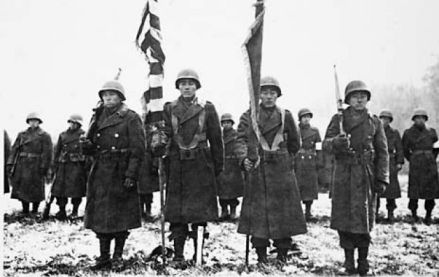
The 442nd Regimental Combat Team

Today when I see a World War Two veteran, no matter where I encounter them, I make sure that I thank them for their service. They are part of an amazing generation of Americans who bequeathed those of us who live today so much, both during the war and after the war. Many millions served in the military, while many more served in war industries. All contributed to war bond drives, victory gardens and yes even increased taxes and decreased civil liberties to win the war.

The fact that Japanese Americans served in the most highly decorated Army units of the war despite their families being incarcerated in American versions of concentration camps is a testimony to sacrifice.

Likewise the efforts of African Americans who went to war despite being second class citizens and discriminated against under the Jim Crow Laws, which even Nazis like Hermann Goering recognized were only different from the Nazi anti-Semitic laws and persecution in manner of degree.
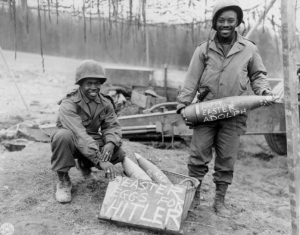
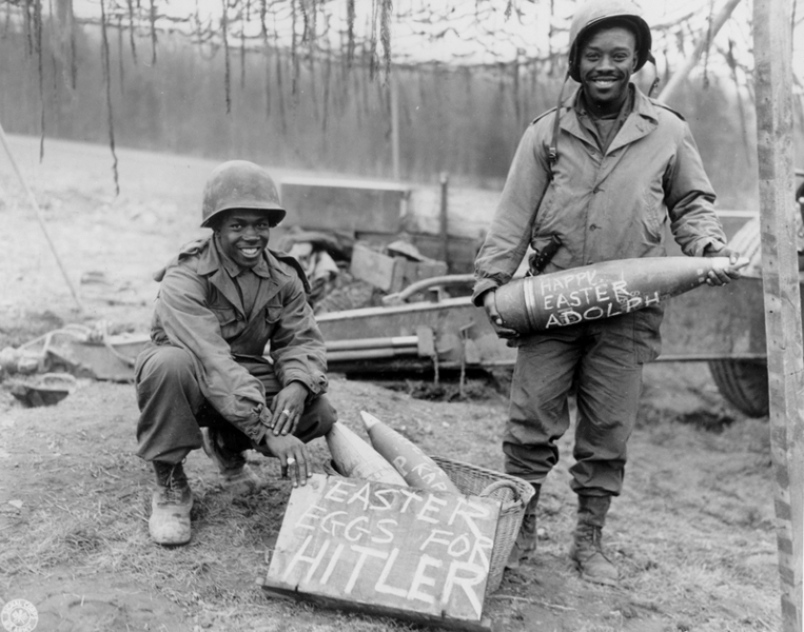
African American Artillerymen in France 1944

That was an amazing and unique generation of Citizen Soldiers. With few exceptions they were not the professional career soldiers, sailors, marines and airmen who serve today. Most would not have considered themselves “warriors.” They were there to do a job, win a war and go home. It was part of who they were as Americans.

How many today would do any of those things? Today we have well under one percent of the population who have served in the wars of the past 16 years, fewer who have served in combat or in a combat zone. Likewise the population in general and in particular the bankers, businesses, lobbyists and defense contractors are not asked to sacrifice anything, instead when the country was attacked the President and others decried the fact that war might prevent people from doing business, shopping or living a normal life. For God’s sake, were at war and that attitude would have been incomprehensible to those of the Greatest Generation who for the most part either went to war, or supported the war effort with their work and other contributions. For them patriotism was not a bumper sticker.

Rachel Maddow said it well in her book Drift: The Unmooring of American Military Power:

“When civilians are not asked to pay any price, it’s easy to be at war – not just to intervene in a foreign land in the first place, but to keep on fighting there. The justifications for staying at war don’t have to be particularly rational or cogently argued when so few Americans are making the sacrifice that it takes to stay.”
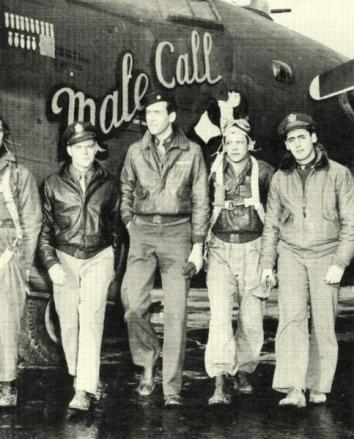
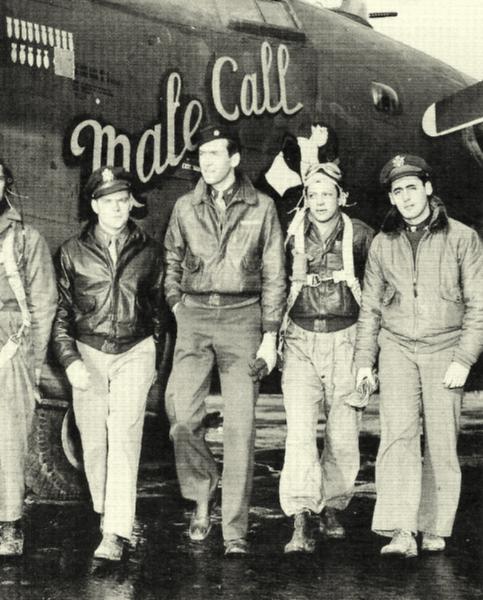
Jimmy Stewart and his Bomber Crew

Because of the sacrifice of people of the Greatest Generation I am grateful for them. I believe that we can learn so much from them. Even A-List Hollywood stars and professional sport heroes left their careers to serve their country. Clarke Gable, Audie Murphy, Glenn Miller, Jimmy Stewart, Bob Feller, Ted Williams, and Joe DiMaggio; just to name a few sacrificed major portions of their careers to serve. With the exception of Pat Tillman who died in a friendly fire incident in Afghanistan which was covered up by the Army and Bush administration, how many of the 1%, the A-List, or professional athletes can you name that have sacrificed their fortunes to serve in the front lines? I can’t name any others, but in the Second World War even the 1% had skin in the game so to speak, the Kennedy’s, Roosevelt’s and the Bush’s to name just a few.

I think that is why I am in awe of those of the Greatest Generation and why as the anniversaries of Midway and D-Day approach I am extra thoughtful, quite reflective and very thankful for those who through their sacrifice made so much of what we have today possible. What bothers me today is how few, especially of those who either advocate for war, lobby for it or profit from it no matter what their political, economic or religious persuasion is, offers to serve or pay for the cost of war.
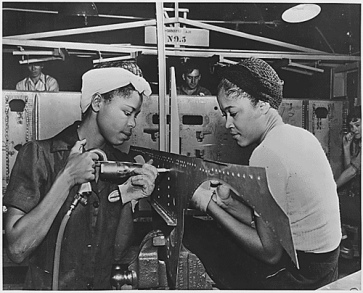
Today those costs are borne by a tiny minority of Americans, military professionals of the all-volunteer military, both active duty and reserve who have endured deployment after deployment as the bulk of the nation stood by, mostly cheering them on. Of course as one who had his father serve in Vietnam and entered the military not long after had to endure the jeers of Americans, cheers are nice. They are much better than being called a “Nazi” for wearing your uniform to class. However, sometimes I think that many that cheer us on are able to do so because vicarious patriotism is easy. Vicarious patriotism anything, someone else serves, and someone else dies while they “support the troops” without actually doing anything.

Now please don’t get me wrong. There are a lot of good people who have never served in the military and who do care. There are men and women who take action to support the troops, both those serving and the veterans, including those disabled in some way by war. For them I am grateful, they donate time, money and personal effort to care, and I do not care if they are conservatives or liberals, Republicans, Democrats or Independents, religious or atheist. They are Americans who are doing something. Likewise I do not disparage those who take the time to learn the issues that the nation faces and the domestic policies that impact the country and in a healthy body politic it doesn’t mean that we have to completely agree with each other to be patriots. Such an understanding would have been unthinkable to our founders much less most of the Greatest Generation. Veteran’s issues are important but national security also involves so much more, everything from the infrastructure that the Greatest Generation had the vision and wherewithal to build to the environment.

I have been to Normandy as well as other World War II battlefields in Europe and the Pacific. I can only agree with Tom Brokaw who wrote: “there on the beaches of Normandy I began to reflect on the wonders of these ordinary people whose lives were laced with the markings of greatness.”

So, when you read anything I write or re-publish during the next couple of weeks, be it about D-Day, Midway or even Gettysburg, please read what I write though those lenses. It is not that I am bitter. I have chosen my life in the military, but I wonder why so few of us bear the burden. It is a question that every citizen must ask themselves and their political representatives.
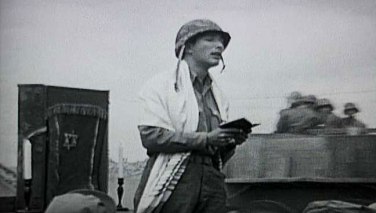
Rabbi Roland Gittlesohn, a Navy Chaplain serving with the Marines, recalled Lincoln’s Gettysburg Address when gave a eulogy at the dedication of a cemetery on Iwo Jima that puts it all in perspective.

“Here lie men who loved America because their ancestors generations ago helped in her founding, and other men who loved her with equal passion because they themselves or their own fathers escaped from oppression to her blessed shores.

Here lie officers and men, Negroes and whites, rich men and poor . . .together. Here are Protestants, Catholics and Jews together. Here no man prefers another because of his faith or despises him because of his color. Here there are no quotas of how many men of each group are admitted or allowed. Among these men there is no discrimination. No prejudices. No hatred. Theirs is the highest and purest democracy.

Whosoever of us lifts his hand in hate against a brother, or who thinks himself superior to those who happen to be in the minority, makes of this ceremony and the bloody sacrifice it commemorates, an empty, hollow mockery. To this, then, as our solemn duty, sacred duty do we the living now dedicate ourselves: to the right of Protestants, Catholics and Jews, of white men and Negroes alike, to enjoy the democracy for which all of them have here paid the price.

We here solemnly swear that this shall not be in vain. Out of this and from the suffering and sorrow of those who mourn this will come, we promise, the birth of a new freedom for the sons of men everywhere.”

Since the last members of the Greatest Generation are passing away at an ever increasing rate and few will remain among us; I will ask you to ask yourself the question posed by the World War II veteran and hero John F Kennedy: “Ask not what your country can do for you; ask what you can do for your country.”

Peace

Padre Steve+

4 Comments

Filed under History, iraq,afghanistan, Military, national security, Political Commentary, World War II at Sea, world war two in europe, world war two in the pacific

Remembering the Four Freedom’s Speech

Friends of Padre Steve’s World,

https://www.youtube.com/watch?v=Y3b82Qp7TX8

On January 6th 1941 President Franklin Delano Roosevelt delivered his State of the Union Message to Congress and the nation. I spent the time to both both read it and listen to it the other day. It is a profoundly moving speech, not without controversy of course, but one which we need to hear again. It is a speech that like the Declaration of Independence, Lincoln’s  Gettysburg Address, and Dr. Martin Luther King Jr.’s I have a Dream speech calls us to higher ideals, ideals that we often come up short in living up to, but ideals worth living for and to endeavor to attain in our lifetime.


When Roosevelt spoke the nation was in the midst of crisis. The United States was still recovering from the Great Depression. War threatened as Hitler’s Nazi German legions had overrun all of Western Europe and much much of North Africa. German U-Boats and surface ships were prowling the North Atlantic. Britain stood alone between Germany’s complete domination of Europe. Even the Soviet Union, a mortal enemy of Fascism had concluded a concordat with Hitler to divide Eastern Europe. Though no one yet knew it, Hitler was already planning to break his accord with Stalin and invade the Soviet Union.

In it Roosevelt made a comment that we should remember in light of the knowledge that Russia interfered in our election, and has been working tirelessly to split us from our allies and directly working against our efforts to fight ISIS, and the efforts of our soldiers in Afghanistan. He noted:

“I suppose that every realist knows that the democratic way of life is at this moment being directly assailed in every part of the world — assailed either by arms or by secret spreading of poisonous propaganda by those who seek to destroy unity and promote discord in nations that are still at peace.”

Roosevelt’s speech, which largely focused on the threat of Nazi Germany, also supported Britain and the exiled governments of nations conquered by Hitler.  As he outlined preparations to defend the United States, Roosevelt also called on Congress to pass Lend Lease to help those fighting the dictators, as well as increased opportunity at home. In response to the emerging threats and the unwillingness of some, including a strong pro-Germany lobby headed by prominent senators, American aviation hero Charles Lindberg, and and big business, Roosevelt challenged Americans to face up to them. He noted:

“As a nation we may take pride in the fact that we are soft-hearted; but we cannot afford to be soft-headed.  We must always be wary of those who with sounding brass and a tinkling cymbal preach the “ism” of appeasement.  We must especially beware of that small group of selfish men who would clip the wings of the American eagle in order to feather their own nests.”

On the domestic front Roosevelt reiterated the message of the New Deal, for even with war looming he did not want to see Americans lost in the exchange and he linked freedom abroad to the same at home. He noted:

“As men do not live by bread alone, they do not fight by armaments alone. Those who man our defenses and those behind them who build our defenses must have the stamina and the courage which come from unshakable belief in the manner of life which they are defending. The mighty action that we are calling for cannot be based on a disregard of all the things worth fighting for.”

He continued:

“Certainly this is no time for any of us to stop thinking about the social and economic problems which are the root cause of the social revolution which is today a supreme factor in the world. For there is nothing mysterious about the foundations of a healthy and strong democracy.

The basic things expected by our people of their political and economic systems are simple. They are:

Equality of opportunity for youth and for others.

Jobs for those who can work.

Security for those who need it.

The ending of special privilege for the few.

The preservation of civil liberties for all.

The enjoyment — The enjoyment of the fruits of scientific progress in a wider and constantly rising standard of living.

These are the simple, the basic things that must never be lost sight of in the turmoil and unbelievable complexity of our modern world. The inner and abiding strength of our economic and political systems is dependent upon the degree to which they fulfill these expectations.”

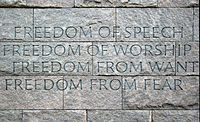
But the real heart of the message, applicable to all people everywhere Roosevelt enunciated a number of principles that are a beacon to all people. Firmly grounded in words of the Declaration of Independence and the Gettysburg Address they are called the Four Freedoms. Those freedoms are an ideal, in fact they certainly were not practiced well then by Americans, nor now, but they are worth working to: Roosevelt said:

“In the future days, which we seek to make secure, we look forward to a world founded upon four essential human freedoms.

The first is freedom of speech and expression—everywhere in the world.

The second is freedom of every person to worship God in his own way—everywhere in the world.

The third is freedom from want—which, translated into world terms, means economic understandings which will secure to every nation a healthy peacetime life for its inhabitants—everywhere in the world.

The fourth is freedom from fear—which, translated into world terms, means a world-wide reduction of armaments to such a point and in such a thorough fashion that no nation will be in a position to commit an act of physical aggression against any neighbor—anywhere in the world.

That is no vision of a distant millennium. It is a definite basis for a kind of world attainable in our own time and generation. That kind of world is the very antithesis of the so-called new order of tyranny which the dictators seek to create with the crash of a bomb.”

The speech was important, and now as it did then it calls Americans to higher purposes, to higher ideals, and it recognizes that we have never fully measured up to our own words. At the time it was spoken, Jim Crow was still the law of the land, Mexican Americans were often treated as poorly as blacks, Native Americans had few rights; and barely a year later Japanese Americans would be taken from the homes, lose their business and be sent to detention camps for the duration of the war after Pearl Harbor, simply because they were of Japanese descent. But those abiding principles are things that we should never lose sight of, and always strive to realize.

Today the four freedoms that Roosevelt enunciated are under threat around the world and in the United States too. We live in an age of uncertainty, turbulence, division, inequity, as well as deeply ingrained cynicism. Unscrupulous authoritarian politicians are using that uncertainty and fear to roll back the very liberties that democratic institutions are founded on.

As a result, as a man who promised during his campaign to roll back the rights of many people it is important not to forget this speech. The same is true as state and local politicians set out to not only roll back the rights of some, but to enable religious people to discriminate against other citizens.

It is also important because the government of Russia led efforts to attack the country by influencing the election, and for years has been committing aggression against American allies and working against American and allied efforts around the world. Yet the the incoming administration is not only welcoming it, but attacking and trying to discredit the American intelligence officials who say that it happened, and condemning senators and congressmen of its own party who want to further investigate those attacks by Russia and impose sanctions.  

So I think that it is important to reflect on these events, and then turn to speeches like Roosevelt’s in order for us to strive for a higher purpose, not to lose hope, and give in to fear that would enable our freedoms and the freedoms of any citizen to be curtailed.

If you can please that the time to listen to it or read it at the following link: http://www.americanrhetoric.com/speeches/fdrthefourfreedoms.htm

Peace,

Padre Steve+

Leave a comment

Filed under civil rights, Foreign Policy, History, leadership, national security, News and current events, Political Commentary

Honesty and Leadership: The Example of Field Marshal William Slim

Field Marshal William Joseph Slim, 1st Viscount Slim, KG, GCB, GCMG, GCVO, GBE, DSO, MC (6 August 1891 - 14 December 1970).   Photo possibly taken in Burma where in March 1942 he was given command of 1st Burma Corps (or BurCorps) which was being attacked by the Japanese.  He was a British military commander and the 13th Governor-General of Australia. He fought in both World War I and World War II and was wounded in action three times during his career.  ©TopFoto

Field Marshal William Slim

“Leadership is of the spirit, compounded of personality and vision.”

Friends of Padre Steve’s World,

I have been thinking about leadership and moral courage lately and came to remember a British general from the Second World War whose example of both is all to often forgotten even in military circles. I hope you enjoy.

Peace

Padre Steve+
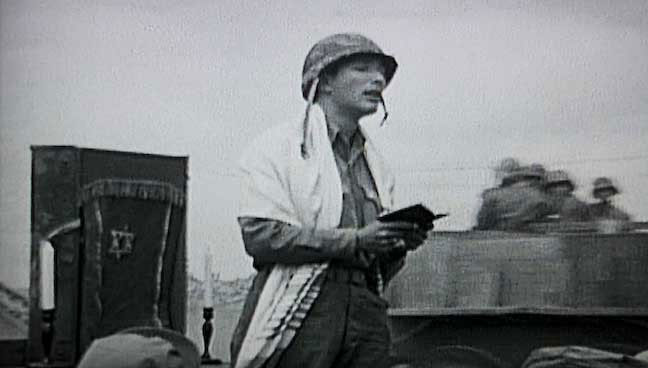
Field Marshal William Slim was one of the most brilliant commanders of the Second World War. He gets little press and there are not a lot of books written about him. Slim was one of those unique officers who served on the periphery of the British Empire as an office in the British Indian Army. He was a clerk in a factory who attended the University of Birmingham and commissioned as a reserve officer through its reserve officer training course; he did not attend Sandhurst, the British equivalent of the U.S. Military Academy.

Slim was commissioned in 1914 and assigned to the Indian Army. He served at Gallipoli and Mesopotamia in the First World War and was wounded three times. At Gallipoli Slim saw the immense waste of human life which led him in his future commands never to sacrifice his men in senseless operations. Between the wars he served in India with the Gurkhas and also spent a significant time as a student and an instructor. His career between the was was marked by slow promotion, but eventually he was promoted to Lieutenant Colonel and given command of a battalion at the age of 46. One of his students remembered:

“We had a most able and later highly distinguished batch of instructors and we were all of the opinion that Slim was one of the best. He tackled every subject in a down-to-earth manner and presented it in a simple, straightforward language. He also had the knack of making any lecture interesting by introducing enough of the personal side and by including a sufficient degree of humour. In the Mess he was always natural, affable and tremendously interesting on all kinds of subjects other than military. I don’t think I have ever learned more from anybody.”

However, during the war a man who many would have considered an outlier rose from battalion to brigade and then Division command and became a general through wartime promotions all the while remaining a Colonel on the regular list as he served in the British campaign against the Italians in the Sudan and the invasion of Iraq.

When Britain’s fortunes were at war were at their lowest point, and British forces were collapsing against the relentless Japanese advance in Burma Slim was called upon to stem the tide. He was assigned to command the Burma Corps which eventually became the British 14th Army. The army was sometimes better known as the “Forgotten Army.” He took command and had to conduct a 900 mile withdraw under desperate conditions. His Army was emaciated, poorly equipped and beaten, but his leadership during that retreat saved his army and kept their spirit alive.

But it was his indomitable leadership that turned the Army around, stopped the Japanese advance and then conducted an amazing campaign to drive the Japanese out of Burma. But unlike many commanders, Slim was honest about his own mistakes and shortcomings. In recounting one battle he noted:

“Like so many generals whose plans have gone wrong I could find plenty of excuses but only one reason–myself….”

Slim has some of the most brilliant insights into leadership and I am just going to throw out one here.

“Morale is a state of mind. It is that intangible force which will move a whole group of men to give their last ounce to achieve something, without counting the cost to themselves; that makes them feel they are part of something greater than themselves. If they are to feel that, their morale must, if it is to endure–and the essence of morale is that it should endure–have certain foundations. These foundations are spiritual, intellectual, and material, and that is the order of their importance. Spiritual first, because only spiritual foundations can stand real strain. Next intellectual, because men are swayed by reason as well as feeling. Material last–important, but last–because the very highest kinds of morale are often met when material conditions are lowest.”

This is something that is really important and something that I think that we have lost all sense of in the West and why we struggle against insurgents who are inferior to us in every military aspect. We focus on the material first, technology has become our God, and it is our answer to everything. Likewise we often fail to emphasize the intellectual aspects of the military profession, the need to keep an open mind, to carefully examine doctrine and if it is not working to change it. Sadly, we all to often emphasize formulas, templates or abstract principles that that are hard to apply in the real world.

Likewise we often adhere to doctrines that do not apply to the wars that we are currently engaged, or which might break out. Instead policy makers and strategists often try make the reality fit our templates rather than taking the time to really learn, and much of what we have to learn is not related to tactics or technology. With all our technological marvels we have also lost much of the sense of personal leadership where senior leaders actually know their soldiers.

Slim understood the reality of these leadership principles because he took the time to know his soldiers. Because of the, his troops, in spite of the incredible hardships that they faced, knew that Slim understood them and would not sacrifice them needlessly. Slim trained his men hard in the tactics that would be needed to drive the Japanese from Burma and his leadership would pay off. His ability to hold leaders accountable for the welfare of their soldiers and his ability to relate to all kinds of soldiers made him one of the most unique and successful commanders of the war.

After the war Slim retired from active duty, but in 1948 Slim was called out of retirement by Prime Minister Clement Atlee to replace Field Marshal Bernard Montgomery as the Chief of the Imperial General Staff. He was the first officer from the Indian Army to hold that position, and indeed a rare feat for a man who began his career as a factory clerk.

Peace

Padre Steve+

1 Comment

Filed under History, leadership, Military, world war one, world war two in the pacific

The Four Freedoms

FDR_Memorial_wall

Friends of Padre Steve’s World,

On January 6th 1941 President Franklin Delano Roosevelt delivered his State of the Union Message to Congress and the nation. I spent the time to both both read it and listen to it the other day. It is a profoundly moving speech, not without controversy of course, but one which we need to hear again. It is a speech that like the Declaration of Independence, Lincoln’s  Gettysburg Address, and Dr. Martin Luther King Jr.’s I have a Dream speech calls us to higher ideals, ideals that we often come up short in living up to, but ideals worth living for.

https://www.youtube.com/watch?v=VQU6bFbjIC8

When Roosevelt spoke the nation was in the midst of crisis. It was still recovering from the Great Depression, war threatened as Hitler’s Nazi German legions had overrun all of Western Europe, much of North Africa, and German U-Boats and surface ships were prowling the North Atlantic. Britain stood alone between Germany’s complete domination of Europe. Even the Soviet Union, a mortal enemy of Fascism had concluded a concordat with Hitler to divide Eastern Europe. Though no one yet knew it, Hitler was already planning to break his accord with Stalin and invade the Soviet Union.

In the speech, which was largely focus on the threat of Nazi Germany, support of Britain and the exiled governments of nations conquered by Hitler, and preparations to defend the United States, Roosevelt called on Congress to pass Lend Lease to help those fighting the dictators, as well as increased opportunity at home. In response to the emerging threats and the unwillingness of some, including big business to face up to them. He noted:

“As a nation we may take pride in the fact that we are soft-hearted; but we cannot afford to be soft-headed.  We must always be wary of those who with sounding brass and a tinkling cymbal preach the “ism” of appeasement.  We must especially beware of that small group of selfish men who would clip the wings of the American eagle in order to feather their own nests.”

On the domestic front Roosevelt reiterated the message of the New Deal, for even with war looming he did not want to see Americans lost in the exchange and he linked freedom abroad to the same at home. He noted:

“As men do not live by bread alone, they do not fight by armaments alone. Those who man our defenses and those behind them who build our defenses must have the stamina and the courage which come from unshakable belief in the manner of life which they are defending. The mighty action that we are calling for cannot be based on a disregard of all the things worth fighting for.”

He continued:

“Certainly this is no time for any of us to stop thinking about the social and economic problems which are the root cause of the social revolution which is today a supreme factor in the world. For there is nothing mysterious about the foundations of a healthy and strong democracy.

The basic things expected by our people of their political and economic systems are simple. They are:

Equality of opportunity for youth and for others.

Jobs for those who can work.

Security for those who need it.

The ending of special privilege for the few.

The preservation of civil liberties for all.

The enjoyment — The enjoyment of the fruits of scientific progress in a wider and constantly rising standard of living.

These are the simple, the basic things that must never be lost sight of in the turmoil and unbelievable complexity of our modern world. The inner and abiding strength of our economic and political systems is dependent upon the degree to which they fulfill these expectations.”

But the real heart of the message, applicable to all people everywhere Roosevelt enunciated a number of principles that are a beacon to all people. Firmly grounded in words of the Declaration of Independence and the Gettysburg Address they are called the Four Freedoms. Those freedoms are an ideal, in fact they certainly were not practiced well then by Americans, nor now, but they are worth working to: Roosevelt said:

“In the future days, which we seek to make secure, we look forward to a world founded upon four essential human freedoms.

The first is freedom of speech and expression—everywhere in the world.

The second is freedom of every person to worship God in his own way—everywhere in the world.

The third is freedom from want—which, translated into world terms, means economic understandings which will secure to every nation a healthy peacetime life for its inhabitants—everywhere in the world.

The fourth is freedom from fear—which, translated into world terms, means a world-wide reduction of armaments to such a point and in such a thorough fashion that no nation will be in a position to commit an act of physical aggression against any neighbor—anywhere in the world.

That is no vision of a distant millennium. It is a definite basis for a kind of world attainable in our own time and generation. That kind of world is the very antithesis of the so-called new order of tyranny which the dictators seek to create with the crash of a bomb.”

The speech was important, and now as it did then it calls Americans to higher purposes, to higher ideals, and it recognizes that we have never fully measured up to our own words. At the time it was spoken, Jim Crow was still the law of the land, Mexican Americans were often treated as poorly as blacks, Native Americans had few rights; and barely a year later Japanese Americans would be taken from the homes, lose their business and be sent to detention camps for the duration of the war after Pearl Harbor, simply because they were of Japanese descent. But those abiding principles are things that we should never lose sight of, and always strive to realize.

In an age of uncertainty, turbulence, division, inequity, and deeply ingrained cynicism like ours, it is time to reflect on them, to strive for a higher purpose, and not to lose hope or give in to fear.

Peace,

Padre Steve+

3 Comments

Filed under History, philosophy, Political Commentary

The Memorial Day Order

memorial-day-traditions_1399868491

“It is rather for us to be here dedicated to the great task remaining before us — that from these honored dead we take increased devotion to that cause for which they gave the last full measure of devotion — that we here highly resolve that these dead shall not have died in vain — that this nation, under God, shall have a new birth of freedom — and that government of the people, by the people, for the people, shall not perish from the earth.” Abraham Lincoln the Gettysburg Address 

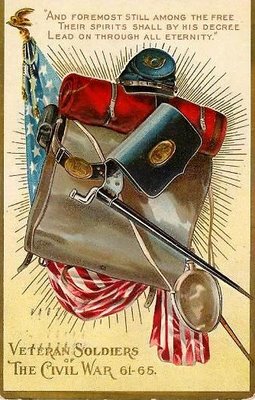
As we contemplate the importance of Memorial Day and remember the men and women who gave their lives for this country it is important to remember why we do this. Memorial Day grew out of local observances following the Civil War, a war that claimed the lives of over 620,000 American Soldiers from the Union and the Confederacy. New demographic studies by historians estimate the losses at closer to 750,000. Hundreds of thousands of other people had they lives shattered by the war, killed, wounded, maimed, crippled, shattered in mind and spirit, the country in many places devastated by war’s destruction. Using the 620,000 number that would have meant that 2.5% of the population of the country died in the war. People needed to make sense of the losses.

To put this in perspective, if the same number of Americans were to die today in a way the total would be over seven million people. Seven million my friends. War reached into every home in some way, and sadly or perhaps thankfully we have no concept of such losses today.

logan_engraving

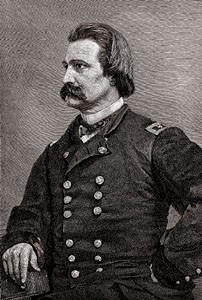
In 1868, Major General John Logan who had been an excellent corps commander during the war was serving as the Commander of the nation’s first true Veterans organization, the Grand Army of the Republic which gave those veterans a place of refuge in a country that was leaving them behind and forgetting their sacrifice in the name of westward expansion and a growing economy. Let’s face it, money has almost always been more important to Americans than the troops who sacrificed their lives for the nation, but I digress…

Anyway General Logan issued this order on May 5th 1868:

HEADQUARTERS GRAND ARMY OF THE REPUBLIC, General Orders No.11, WASHINGTON, D.C., May 5, 1868

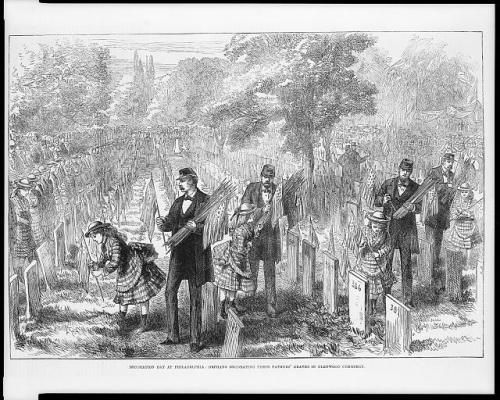
I. The 30th day of May, 1868, is designated for the purpose of strewing with flowers or otherwise decorating the graves of comrades who died in defense of their country during the late rebellion, and whose bodies now lie in almost every city, village, and hamlet church-yard in the land. In this observance no form of ceremony is prescribed, but posts and comrades will in their own way arrange such fitting services and testimonials of respect as circumstances may permit.

We are organized, comrades, as our regulations tell us, for the purpose among other things, “of preserving and strengthening those kind and fraternal feelings which have bound together the soldiers, sailors, and marines who united to suppress the late rebellion.” What can aid more to assure this result than cherishing tenderly the memory of our heroic dead, who made their breasts a barricade between our country and its foes? Their soldier lives were the reveille of freedom to a race in chains, and their deaths the tattoo of rebellious tyranny in arms. We should guard their graves with sacred vigilance. All that the consecrated wealth and taste of the nation can add to their adornment and security is but a fitting tribute to the memory of her slain defenders. Let no wanton foot tread rudely on such hallowed grounds. Let pleasant paths invite the coming and going of reverent visitors and fond mourners. Let no vandalism of avarice or neglect, no ravages of time testify to the present or to the coming generations that we have forgotten as a people the cost of a free and undivided republic.

If our eyes grow dull, other hands slack, and other hearts cold in the solemn trust, ours shall keep it well as long as the light and warmth of life remain to us.

Let us, then, at the time appointed gather around their sacred remains and garland the passionless mounds above them with the choicest flowers of spring-time; let us raise above them the dear old flag they saved from dishonor; let us in this solemn presence renew our pledges to aid and assist those whom they have left among us a sacred charge upon a nation’s gratitude, the soldier’s and sailor’s widow and orphan.

II. It is the purpose of the Commander-in-Chief to inaugurate this observance with the hope that it will be kept up from year to year, while a survivor of the war remains to honor the memory of his departed comrades. He earnestly desires the public press to lend its friendly aid in bringing to the notice of comrades in all parts of the country in time for simultaneous compliance therewith.

III. Department commanders will use efforts to make this order effective.

By order of

JOHN A. LOGAN,
Commander-in-Chief

N.P. CHIPMAN,
Adjutant General

Official:
WM. T. COLLINS, A.A.G.

decoration-day1

General Logan’s order is remarkable in its frankness and the understanding of the war in the immediate context of its conclusion. In 1868 the day would be observed at 183 cemeteries in 27 States and the following year over 300 cemeteries. Michigan was the first state to make the day a holiday and by 1890 all states in the North had made it so. In the South there were similar observances but the meaning attributed to the events and the sacrifices of the Soldiers of both sides was interpreted quite differently. In the North the Veterans overwhelmingly saw themselves as the saviors of the Union and the liberators of the Slaves. In South it was about the sacrifices of Confederate soldiers in what became known as the “Lost Cause.” But in both regions and all states, the surviving Soldiers, family members and communities honored their dead.

1-oliver-wendell-holmes-jr-1841-1935-everett

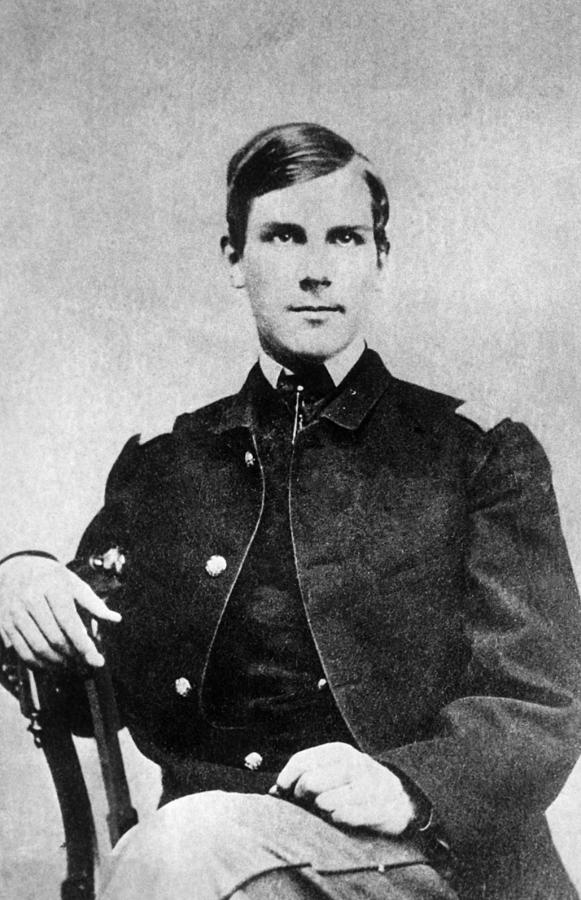
In 1884 Oliver Wendell Holmes Jr. and Frederick Douglass both spoke about the meaning of the sacrifice made by so many.

Holmes, a veteran of the war who had been wounded at Antietam ended his Decoration Day 1884 speech:

“But grief is not the end of all…Our dead brothers still live for us, and bid us think of life, not death, — of life to which in their youth they lent the passion and glory of the spring. As I listen, the great chorus of life and joy begins again, and amid the awful orchestra of seen and unseen powers and destinies of good and evil our trumpets sound once more a note of daring, hope, and will.”

Douglass.JPG

Douglass, the former slave and abolitionist who lobbied Lincoln for emancipation and to give Blacks the chance to serve their country had two of his sons serve in the war spoke these wars:

“Dark and sad will be the hour to this nation when it forgets to pay grateful homage to its greatest benefactors. The offering we bring to-day is due alike to the patriot soldiers dead and their noble comrades who still live; for, whether living or dead, whether in time or eternity, the loyal soldiers who imperiled all for country and freedom are one and inseparable.”

It is important for the country not to forget those who served and the cost of those who have given the last full measure of devotion to duty and those who still carry the scars of war on their bodies and in their minds and spirits. I am one of the latter and I have known too many of the former.  Maybe that is why am so distrustful of those who advocate for war but have no skin in the game.

An Alsatian-German Soldier named Guy Sager wrote in his book The Forgotten Soldier: 

“Too many people learn about war with no inconvenience to themselves. They read about Verdun or Stalingrad without comprehension, sitting in a comfortable armchair, with their feet beside the fire, preparing to go about their business the next day, as usual…One should read about war standing up, late at night, when one is tired, as I am writing about it now, at dawn, while my asthma attack wears off. And even now, in my sleepless exhaustion, how gentle and easy peace seems!”

I agree with him and pray that those who direct the course of this nation will take the words of General Logan, Oliver Wendell Holmes Jr., Frederick Douglass and Guy Sager to heart before they embark on war, and when they remember those that have served.

May we never forget.

Peace

Padre Steve+
 

6 Comments

Filed under civil war, Gettysburg, History, iraq,afghanistan, Military, Political Commentary