Monthly Archives: November 2010

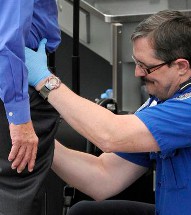
Fly the Friendly Skies….The TSA Way

Well, I used to be a frequent flier because of my military assignments.  Back in those days I became quite good at making sure that I presented as little trouble to TSA screeners as possible.  I planned and organized every part of my trip to make sure that the screening process would be quick and painless to all involved. Everything I did was done to make things easy for the TSA screeners because I figured that they had a thankless task dealing with irate travelers already pissed off about long lines, baggage fees, flight delays and generally being treated like chattel every step of the way. On rare occasion something would occur that caused me to get pulled aside, maybe it was my field communion set, my oil stock or some other religious item.  These were generally minor inconveniences that were resolved quickly and in a usually friendly manner.
However on one occasion I was subjected to the most humiliating public humiliation of my life. I was travelling in my Khaki uniform.  Of course I had me rank and ribbons on and my USS Hue City belt buckle.  Where I live we have a very large military population that frequents our airport with many having to fly in uniform.  Thus the screeners tend to be respectful of military personnel in uniform.  One day back in 2003 well before the current “Say Cheese” and “Grope on Sight” order went out.  I took everything out of my pockets, took of my shoes and presented myself for inspection. Of course as I went through the scanner my shiny big belt buckle, shiny rank and multi-colored stack of ribbons set of the scanner.  I was ushered aside and told to remove everything and even told to unzip my trousers.  The agent in full view of hundreds of people then went through a hard pat down that included my “junk.” Meanwhile people who were obviously foreign and wearing clothing that could hide a truck bomb walked by without getting groped.  I was stunned, embarrassed and shocked. I had just completed a combat deployment and this idiot was treating me like a criminal.  When I got home I wrote a letter to the head of the TSA requesting an apology. I got no reply.  This soured me on the TSA even before the new draconian rules went into force.
You see I am a patriot, I want to see terrorists killed off like vermin and I don’t want to see another American or anyone else harmed. However it seems to me in their haste to look like they are doing something in the name of “security” that the Department of Homeland Security is willing to trample over the rights of self respecting, law abiding citizens using methods that the Gestapo would have had wet dreams thinking about. Back in 2001 civil libertarians warned of the dangers inherent in the cleverly named “Patriot Act.”  We are now seeing how an agency created by that act is willing to abuse citizens, and yes groping qualifies as abuse especially in the absence of probable cause.  But wait, probable cause is given when a person refuses to go through a high powered x-ray machine that looks through their clothing to expose their nakedness to TSA employees who in some cases have laughed and made fun of their subjects and some of which have found their way to the internet.

I have seen videos of TSA agents patting down tiny children and watched in horror when the traumatized children were crying.  I’m sorry that is as close to legal sexual abuse of a child as you can get.  But then to keep us secure it’s okay for the TSA to do things that would get a teacher, pastor, scoutmaster or anyone else thrown in jail and forever listed as a sexual predator.
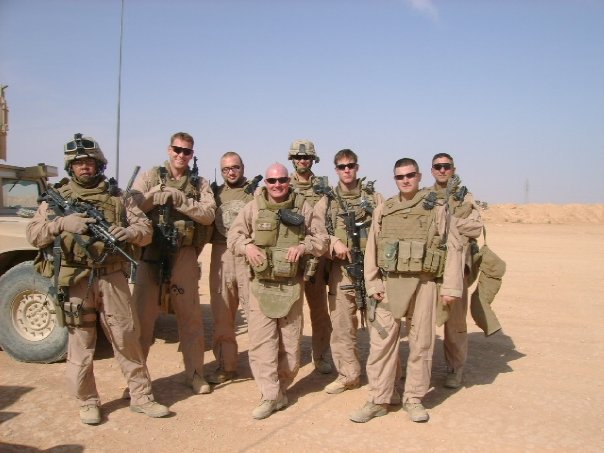
When I came back from Iraq and was going in my Marine Corps pattern camouflaged uniform after an arduous return which culminated in an 18 hour flight from Kuwait to the States I was welcomed home to an airport on the East Coast. Customs agents were kind and we had a small group of really nice people welcoming us home.  As I ran to the connecting flight accompanied by my trusty assistant Nelson Lebron we got to the TSA screening checkpoint with minutes to spare.  We got our gear through the machine and then it was time for us.  I had to remove my shirt, my belt buckle and my boots and run to the aircraft gate with my boots untied because they were getting ready to close the gate.  At least the screeners were not rude but even still, for crying out loud, we just came home from Iraq.  Is there something wrong with this picture?  Have we lost our minds?  Welcome home from TSA.

Now if you ask me I think that the complaints of people are entirely justified. On the absence of being able to bring home Osama Bin Laden’s head on a platter we now assume that everyone is a terrorist and those that complain must be sympathizers. Well I tell you what, as someone who has seen the ravages of what terrorists can do dating back to the 1980s when the Red Brigades terrorized Americans, NATO allies and Germans bombing and killing.  However even the thorough Germans never subjected their citizens to this type of humiliation.  I think that they learned something from the Third Reich, something that we seem to have forgotten. The “Greatest Generation” went to war to defeat Nazi tyranny and free Europe from the evil of a police state.  Now it seems that our own TSA deems that we the people are the enemy.  I figured that out in 2003 and again in 2008.

I think now with the abuses being heaped upon Americans that people are finally taking notice.

Until things change let’s all just sit back and enjoy the groping, enjoy the friendly skies.  Your papers please.

Peace

Padre Steve+

2 Comments

Filed under national security, state government agencies, travel

PT and Bumping into Old Friends at Camp Swampy and Getting Carded at Applebee’s

The Main Gate at Camp Swampy

One nickname that Camp LeJeune North Carolina bears is “Camp Swampy.” This is because of the marsh like conditions of some of the base, the normally abundant rainfall and the propensity of said rainfall to accumulate wherever it falls. It is somewhat like the Tidewater, a polite name for “swamp” is in Virginia, only with more rain and in the spring and summer the humidity, mosquitoes and other vermin that love the conditions.  However, because it is a Marine Corps base one can find people doing PT at any time of the day or night in a variety of forms.  Of course the Marines at Camp LeJeune PT in any weather and Chaplains assigned here, even those with the Navy are kind of expected to do the same. Of course each Chaplain does so within his or her physical constraints. Despite being 50 years old I am still in pretty good shape and have the psychological need to try to keep up with people 20 to 30 years my junior so when I do my PT I am serious about it.  In fact when I was stationed with Navy EOD I did so well on the physical readiness test that an EOD tech asked my assistant Nelson Lebron “what kind of ‘roids is the Chaplain on?”  I found this funny since I don’t do this but I can tell you at the age of 50 and being subject to all sorts of minor bumps, dings and nagging injuries I can understand why some professional athletes would use substances such as HGH, but like the rest of the Navy-Marine Corps team I survive on “Vitamin M” or as it is commonly known to laypersons as 800 mg Motrin.

My normal or abnormal regimen is to do what I call “distance interval training.” Interval training usually entails combining some kind of cardio with exercises that work various muscle groups interspersed throughout. I first did interval type training in high school football practice, back then we called them “grass drills” where we ran in place and whenever the coach blew his whistle we would drop for pushups, sit-ups, flutter kicks or any other exercise that could put us on the ground.  I saw a variation with the Marines early in my Navy career that entailed sprinting and then dropping for whatever kind of punishment the leader determined.  Back then I preferred to run long distances up to 20 miles in training for half-marathons and marathons.

However a series of nagging overuse injuries took me down to 5-8 miles a run before I went to Iraq. In Iraq I picked up a few more injuries and it took me a while to recover so after I was assigned to Naval Medical Center Portsmouth I built my runs back up to 3-5 miles but I didn’t find that this was working for me anymore. So I went back to something that I hadn’t done since high school, interval training but I didn’t want to give up running.  I devised a plan that works for me and what I need it to accomplish.  I am now adding the P90X fitness program to fit in on alternate days.

Now I run about 3 miles but every 100-200 yards I drop for a set of 15-25 pushups get up and then do one of 5 different sets of abdominal exercises, 15-30 regular crunches, 40 oblique’s, 15-20 crunches with legs up at a 90 degree angle, 60-100 bicycle crunches and 50-100 flutter kicks with sets of pushups between each of them.

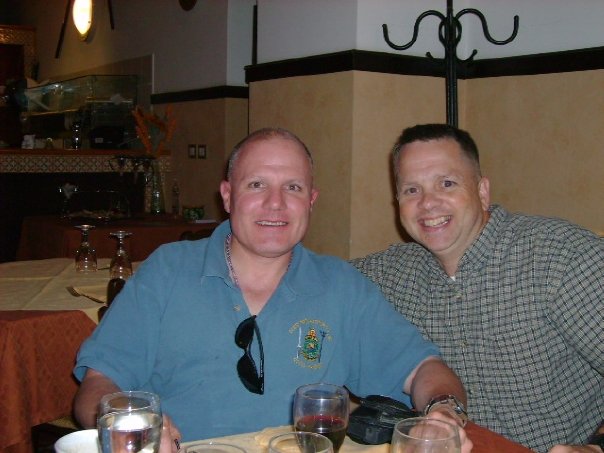
With Paul Rumery in Sicily, he has the hair

It has taken me a while to get settled at Camp LeJeune and begin to plan safe routes to run this and I am just getting back into the groove. Today I went out at lunch amid threatening rain. About a third of the way into the workout the rain came down and I continued to run, the rain was actually quite refreshing and by the two third point of the run I was soaked, my orange Baltimore Orioles t-shirt and gray running shorts must have weighed 5-6 pounds.  As I got up from a set of crunches I wiped off my sunglasses, no I didn’t need them I just like to look cool and as I wiped them off on my previously mentioned soaked Orioles t-shirt I started to run and a car pulled alongside where I was running, the window rolled down and I heard a familiar voice, LCDR Paul Rumery, the Chaplain who had relieved me on USS Hue City in 2003 and who had taken me to dinner the last time I was in Sicily with EOD called out “Hey Steve wild man I knew that it had to be you!” I pulled up and went over to the car, we had a brief talk. Paul had a brand new Chaplain with him who he told that I was a “wild man.” Paul let me know that he didn’t know that I was aboard Camp LeJeune and said that we needed to get together.  It was good to see him and I hope that we do get together soon. I picked up the run again and took it back in to the hospital where my now squishy running shoes and waterlogged clothing dripped of my mud stained body. A Marine Staff Sergeant came up to me and said that I had leaves on the back of my head. I laughed, said “I’m not surprised” and commented “if it ain’t raining we ain’t training.” The Staff Sergeant asked about my workout and was suitably impressed. I then ran into a Corpsman who had been assigned with me at 3rd Battalion 8th Marines back in 2000-2001.  He and I talked for a while. It’s funny what a small world it is when you are stationed in a place like Camp LeJeune.

After work I stopped by the local Applebee’s for a beer and a burger and I was carded by the server. I thanked the server who told me that they and to card anyone that looked under 30 and when he saw my ID and age he was surprised. I must say that since there are so many Marines and Sailors here it is not uncommon to be carded and since I don’t dress my age I can see why I get carded. I must say that it appeals to my vanity.  I guess part of this must be due to good genes as well. Whatever it is I will take it.

Tomorrow I will drive up to Virginia as I have a specialty appointment and assessment to figure out what might be causing my auditory processing disorder.  I haven’t understood speech well since returning from Iraq and the additional Tinnitus is at times deafening.  Hopefully they will figure it out and find something that will make it better.

So anyway, until tomorrow….

Peace

Padre Steve+


2 Comments

Filed under Military, sports and life

Wings of Gold: U. S. Navy Carrier Aircraft 1935-1941

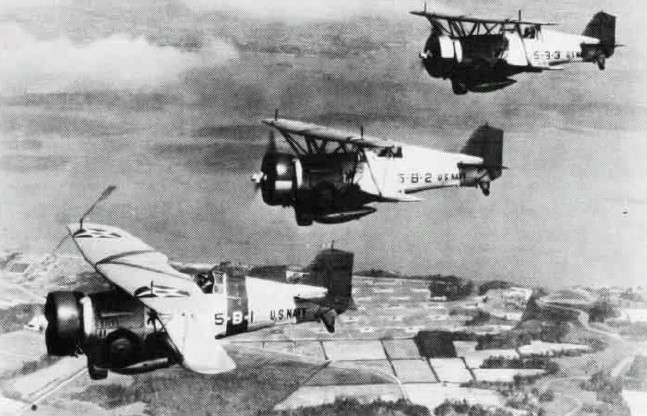
Curtiss BF2C Goshawks (US Navy Photo)

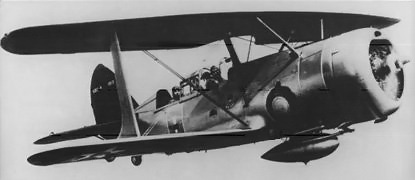
As the United States Navy built up its Carrier Force in the mid to late 1930s it continued to develop aircraft specifically designed to operate from aircraft carriers.  It continued its development of fighter, dive bomber and torpedo bomber aircraft.  In 1935 the Navy was operating the Grumman FF-1 biplane fighter which it had began using in 1933 and the Curtiss F11C and BF2C Goshawk. The Curtiss aircraft were built in fighter and bomber variants and while initial aircraft had an open cockpit and fixed landing gear later aircraft had an enclosed cockpit and retractable landing gear. They had top speed of 157 miles an hour and due to limited success and were retired from service by 1939.  The Goshawk was operated against the Japanese by Nationalist China and also served in a number of air forces including Thailand where they were used against the French and Japanese.

Grumman FF-1 (US Navy Photo)

The Grumman FF-1 was a two-seater that had a enclosed cockpit with retractable landing gear and a top speed of 201 miles an hour.  The FF-1 was faster than any naval aircraft of its era, a follow-on variant designated the SF-1 followed and 120 aircraft were built. Most of the operational aircraft served aboard the USS Lexington CV-2 in a fighter and scouting role. The FF-1 and SF-1 were withdrawn from first line service and placed with the reserve as well as being used in aviation training commands. The aircraft was manufactured under license by the Canadian Car and Foundry Company and served in the Canadian Air Force until 1942 as the Goblin and 40 of the Canadian aircraft were used by the Spanish Republican forces in the Spanish Civil War.

Grumman F2F-1 (US Navy Photo)

The FF-1/SF-1 was followed by the Grumman F2F a single-seat model with improved speed and maneuverability over is predecessors.  54 F2F’s were ordered in 1934 with the production models being delivered between April and August 1935.  The aircraft were armed with 2 .30 machine guns mounted above the cowl and had a top speed of 231 miles an hour and maximum range of 985 miles.  The aircraft would remain in service until they were replaced in 1939 with the Grumman F3F. However they remained in service as utility and training aircraft until retired from service toward the end of 1940.

Grumman F3F (US Navy Photo)

The Grumman F3F followed the F2F with 157 production models. It was more aerodynamic and had a more powerful engine that the F2F which enabled it to achieve a top speed of 264 miles an hour.  It was operated by seven Navy and Marine Corps Squadrons and entered service in 1936 and would serve aboard carriers until replaced in late 1941. It continued with 117 aircraft being stationed at naval air stations and used for training until 1943.

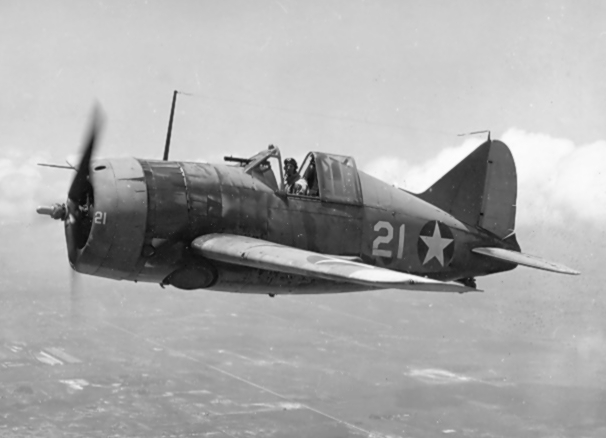
F2A Brewster Buffalo (U.S. Navy Photo)

The first monoplane fighter developed and placed in service by the Navy was the F2A Brewster Buffalo. The Buffalo served with Navy and Marine Corps squadrons and was purchased by Great Britain for service in the Royal Australian and Royal New Zealand Air Forces which received 202 Buffalos. They would also serve with the Royal Navy. The Royal Netherlands Air Force received 144 most of which served in the East Indies. The final nation to receive the Buffalo was Finland which received 44 aircraft.  Buffalo was underpowered and the addition of armor and added fuel capacity further diminished the speed and performance of the aircraft.  The Navy placed its Buffalo’s in advanced training squadrons in early 1942 and one of the two Marine Corps squadrons (VMF-221) operated it at the Battle of Midway where they endured fearful losses at the hands of Japanese Zero fighters.

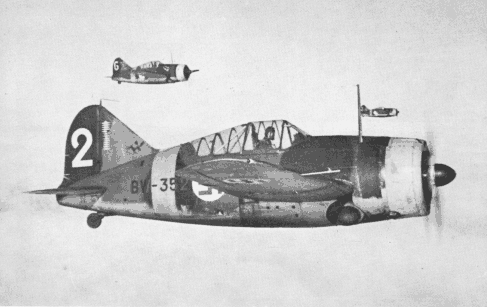
Brewster Buffalo 239s of the Finnish Air Force

Despite the lack of success in U. S. service the Buffalo performed in a heroic manner for the Finns destroying over 500 Soviet and German aircraft and producing 36 Buffalo Aces.  The highest scorer was Captain Hans W. Wind with 39 of 75 victories flying a Buffalo.  British Commonwealth and Dutch aircraft did not fare as well as the Finns as the tropical climate degraded the aircraft considerably.

Martin T4M over Lexington or Saratoga (US Navy Photo)

The Navy also developed aircraft for bombing missions as well as that could launch aerial torpedoes. The first aircraft built were dual purpose in that they could be used in level bombing and torpedo missions. In 1935 the primary aircraft of this type was the Martin T4M which had entered service in 1928 and replaced the Douglas DT and Martin T4M aircraft.  The T4M was a biplane with a crew of three that had a maximum speed of 114 miles an hour (I have driven much fast than this on the German Autobahn but I digress) and it could carry a torpedo or bombs.  155 were purchased by the Navy and the Marine Corps between 1928 and 1931.  They were operated from the Lexington and Saratoga until 1938 as no replacement aircraft offered enough improvements for the Navy to purchase and were instrumental in the development and demonstration of the capabilities of naval air power.  They were finally replaced by the Douglas TBD Devastator.

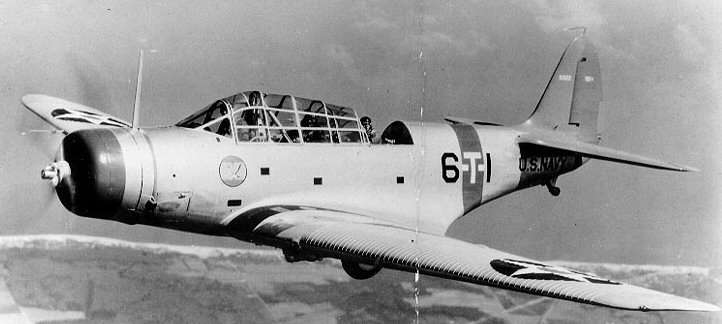
TBD Devastator (US Navy Photo)

The TBD which first flew in 1935 entered service in 1937 and at the time was possibly the most modern naval aircraft in the world and was a revolutionary aircraft. It was the first monoplane widely used on carriers and was first all-metal naval aircraft.  It was the first naval aircraft with a totally enclosed cockpit, the first with hydraulic powered folding wings.  The TBD had crew of three and had a maximum speed of 206 miles an hour and carried a torpedo or up to 1500 pounds of bombs (3 x 500) or a 1000 pound bomb.  129 were built and served in all pre-war torpedo bombing squadrons based aboard the Lexington, Saratoga, Ranger, Yorktown, Enterprise and Hornet with a limited number embarked aboard Wasp.  The Devastator saw extensive service prior to the war which pushed many airframes to the end of their useful service life and by 1940 only about 100 were operational.  They were still in service in 1942 as their replacement the TBF Avenger was not ready for service.  They performed adequately against minor opposition at Coral Sea and in strikes against the Marshalls but the squadrons embarked on Yorktown (VT3), Enterprise (VT-6) and Hornet (VT-8) were annihilated at Midway with only 6 of 41 surviving their uncoordinated attacks against the Japanese Carrier Strike Force.  They were too slow, had poor maneuverability, insufficient armor and defensive armament.  Only a few were able to launch their torpedoes as the Japanese Combat Air Patrol tore through them. Their sacrifice was not in vain as the Dive Bombers arrived facing no opposition and sank three of the four Japanese carriers getting the fourth later in the day. After Midway the remaining aircraft were withdrawn from active service in the Pacific. The Ranger’s VT-4 operated them until September 1942and Wasp’s VT-7 operated them in the Atlantic until she was transferred to the Pacific in July 1942.   By 1944 all remaining aircraft had been scrapped.

Vought SBU Corsair

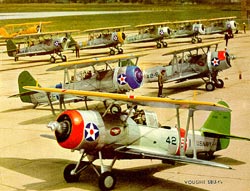
In the mid 1930s the Navy began to develop Scout and Dive Bombers for use in carrier scouting (VS) and bombing (VT) squadrons.  The first of these aircraft types were biplanes.  The Grumman SF-1 was used in a scouting and bombing role and was joined by the Vought SBU Corsair in 1935 and by 1937 both were being replaced by the Curtiss SBC Helldiver, a biplane with a 234 mile an hour maximum speed, retractable landing gear, enclosed cockpit which could carry a 1000 bomb.

Curtis SBC Helldiver

However the era of the biplane was drawing to a close and the Helldiver would be relegated to training squadrons based in Florida.  Although they had a brief service career they were instrumental in develop dive bombing tactics at which the U.S. Navy excelled and which were copied by the German Luftwaffe with the Junkers JU-87 Stuka and the Japanese with the Aichi 99 Val naval dive bomber.  50 aircraft were transferred to the French and served aboard the carrier Bearn but due to the French surrender in June of 1940 saw no action and spent the war rotting in Martinique.

Vought SB2U Vindicator

The Helldiver’s were joined by the first monoplane dive bomber in U.S. service the Vought SBU2 Vindicator in 1937. The Vindicator was used by the Navy and the Marine Corps serving aboard the Lexington, Saratoga, Ranger and Wasp. They would remain in service until September 1942. The Marine aircraft equipped two squadrons VMSB 131 and VMSB-241, VMSB 241 suffered heavy casualties at Midway as the aircraft were underpowered and were limited to glide bombing missions.  After they were taken out of the operational squadrons the Vindicator served as a training aircraft until retired in 1945.   A French Naval Air Squadron was equipped with the Vindicator but they served ashore against the German invasion.  Most were lost to enemy action.  The Douglas SBD Dauntless was introduced in 1940 and 1941 but I will cover that aircraft in the World War II aircraft article that will follow this in a week or two.

These aircraft helped pave the way to aircraft that would be the mainstays of the Navy in the Second World War, aircraft with names such as Dauntless, Helldiver, Avenger, Hellcat and Corsair.  Naval aviation earned its “wings of gold” in these early years wings that continue to shine in the 21st Century.

Peace

Padre Steve+

9 Comments

Filed under aircraft, Military, US Navy, world war two in the pacific

Norfolk Tides 2010: The Season in Review

“It breaks your heart. It is designed to break your heart. The game begins in the spring, when everything else begins again, and it blossoms in the summer, filling the afternoons and evenings, and then as soon as the chill rains come, it stops and leaves you to face the fall alone.” A. Bartlett Giamatti

Now that the World Series is over it is time for my annual Norfolk Tides photo essay.  This time of year is kind of sad for me because baseball is over until the Spring and one of my refuges from the storms of life goes away for a time. Baseball has its own liturgical cycle beginning with Spring Training moving to Opening Day, the All-Star Game, the Pennant Race, the Post Season and the World Series.

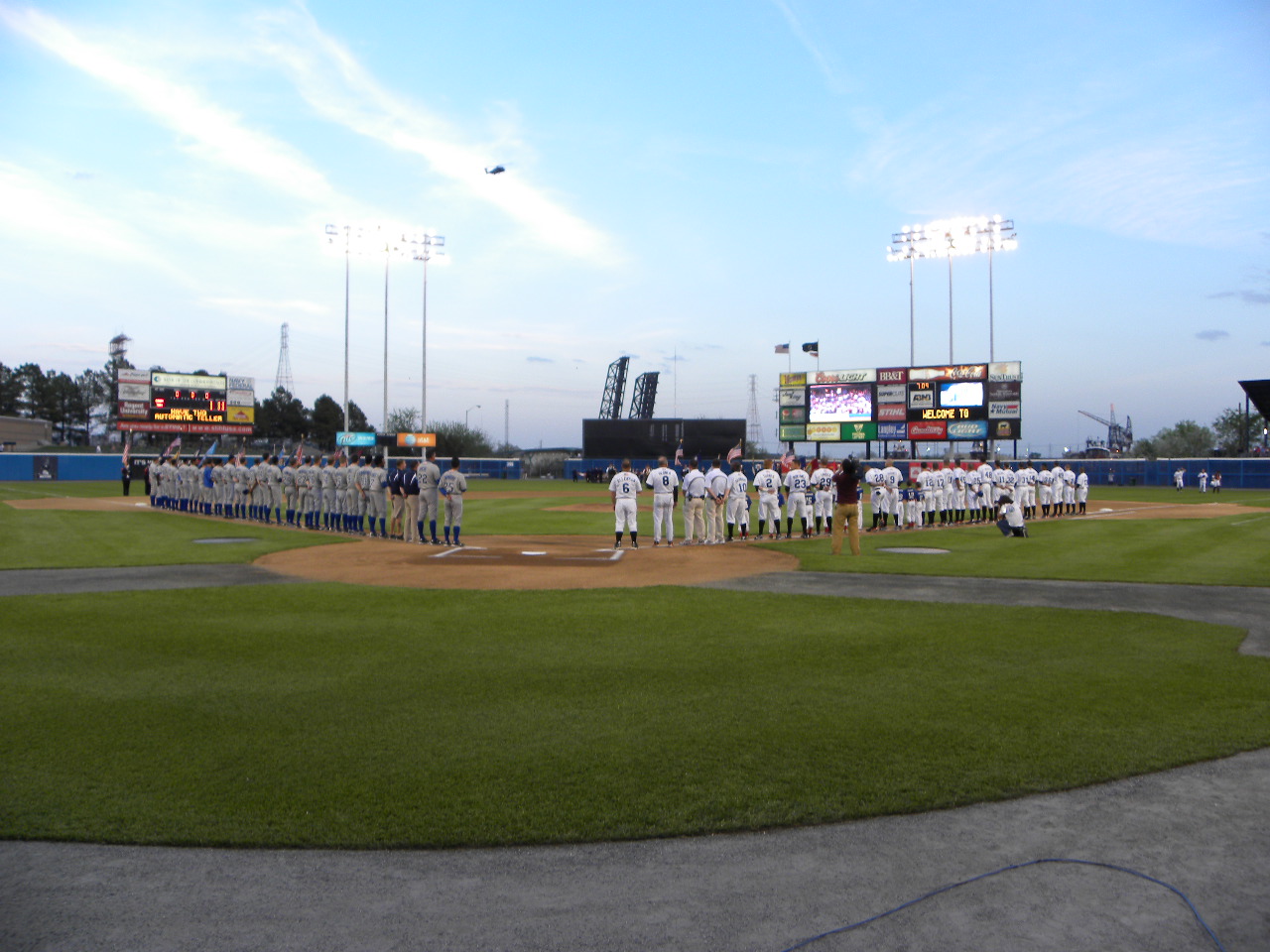
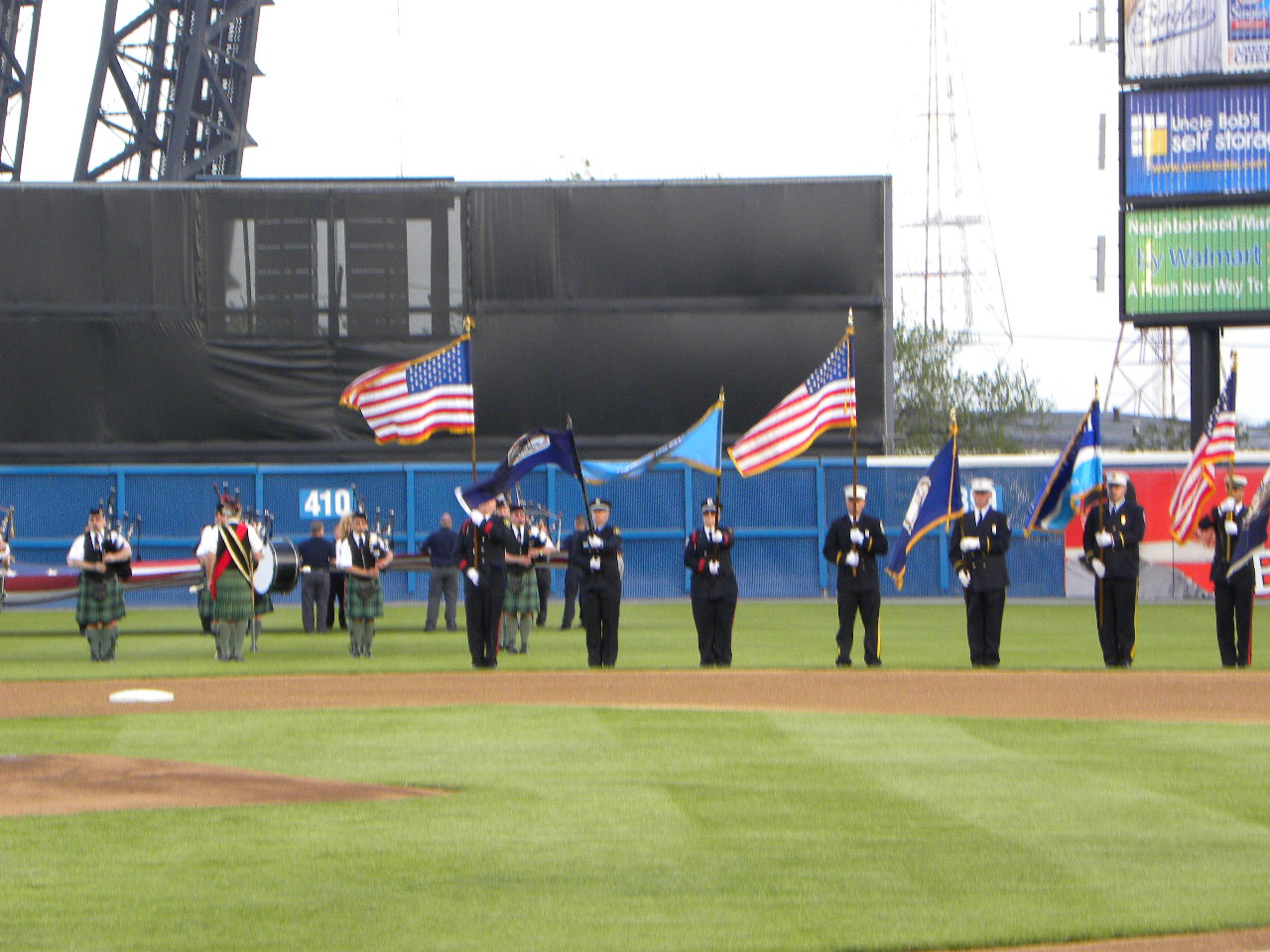
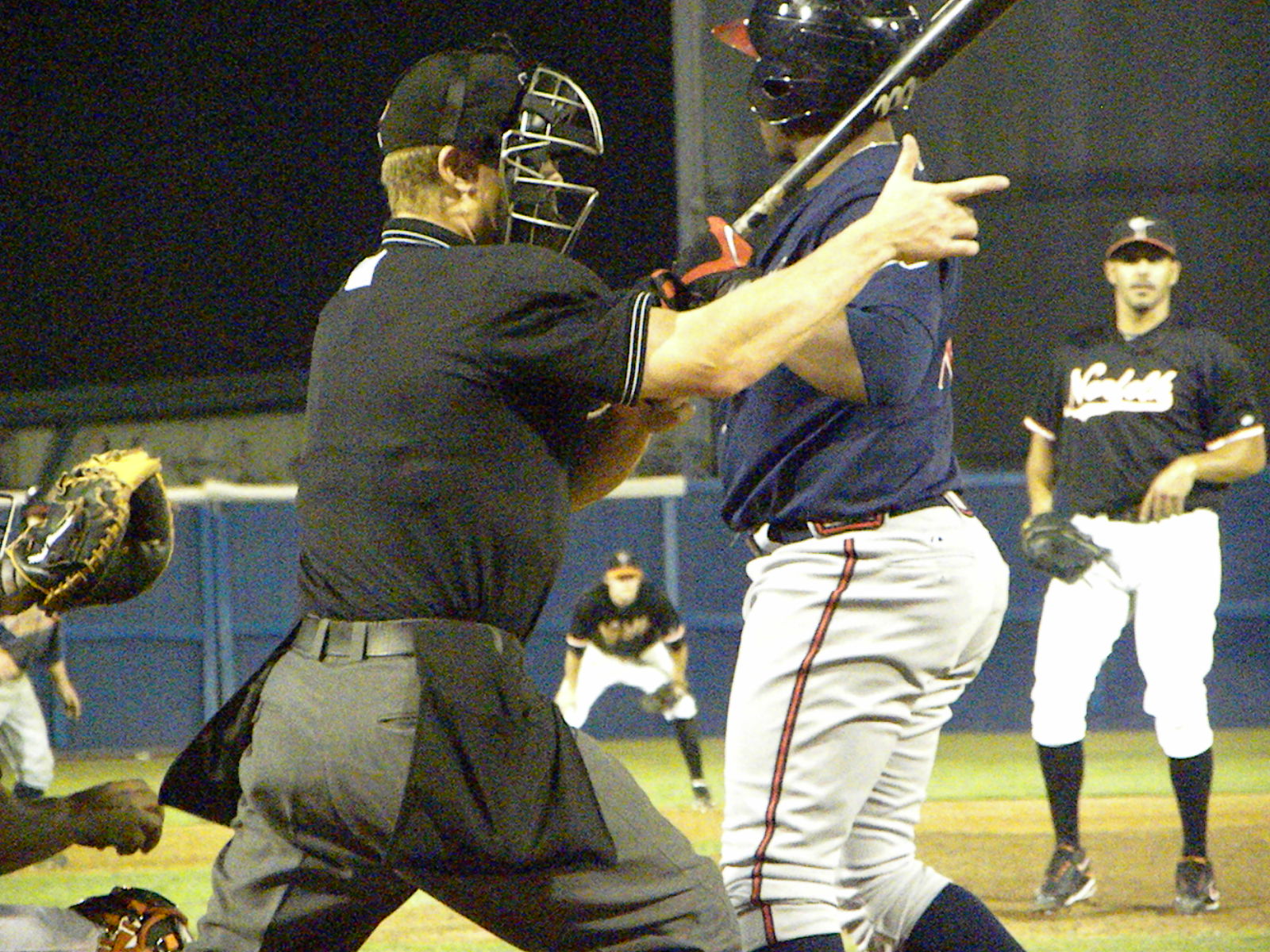
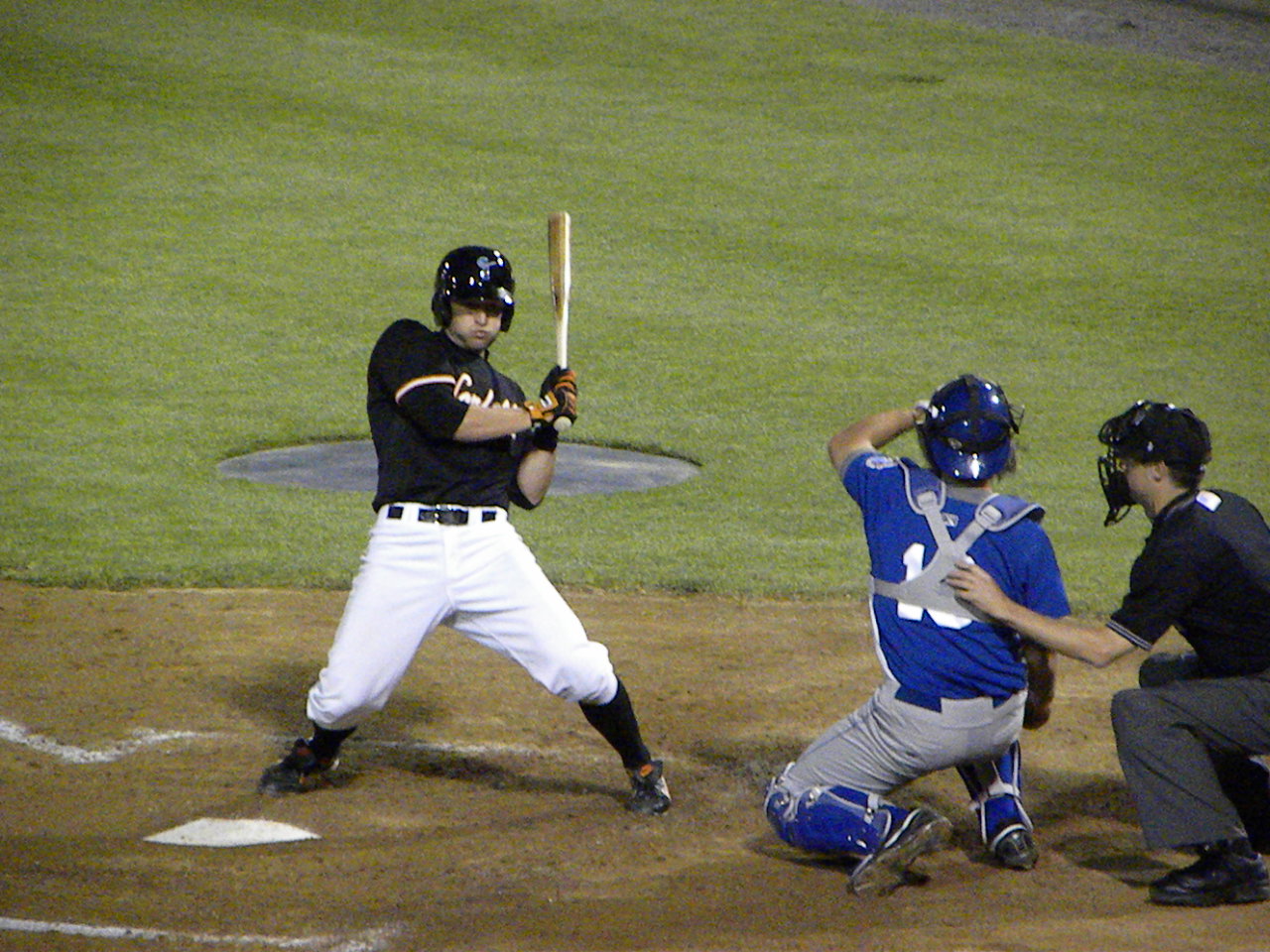
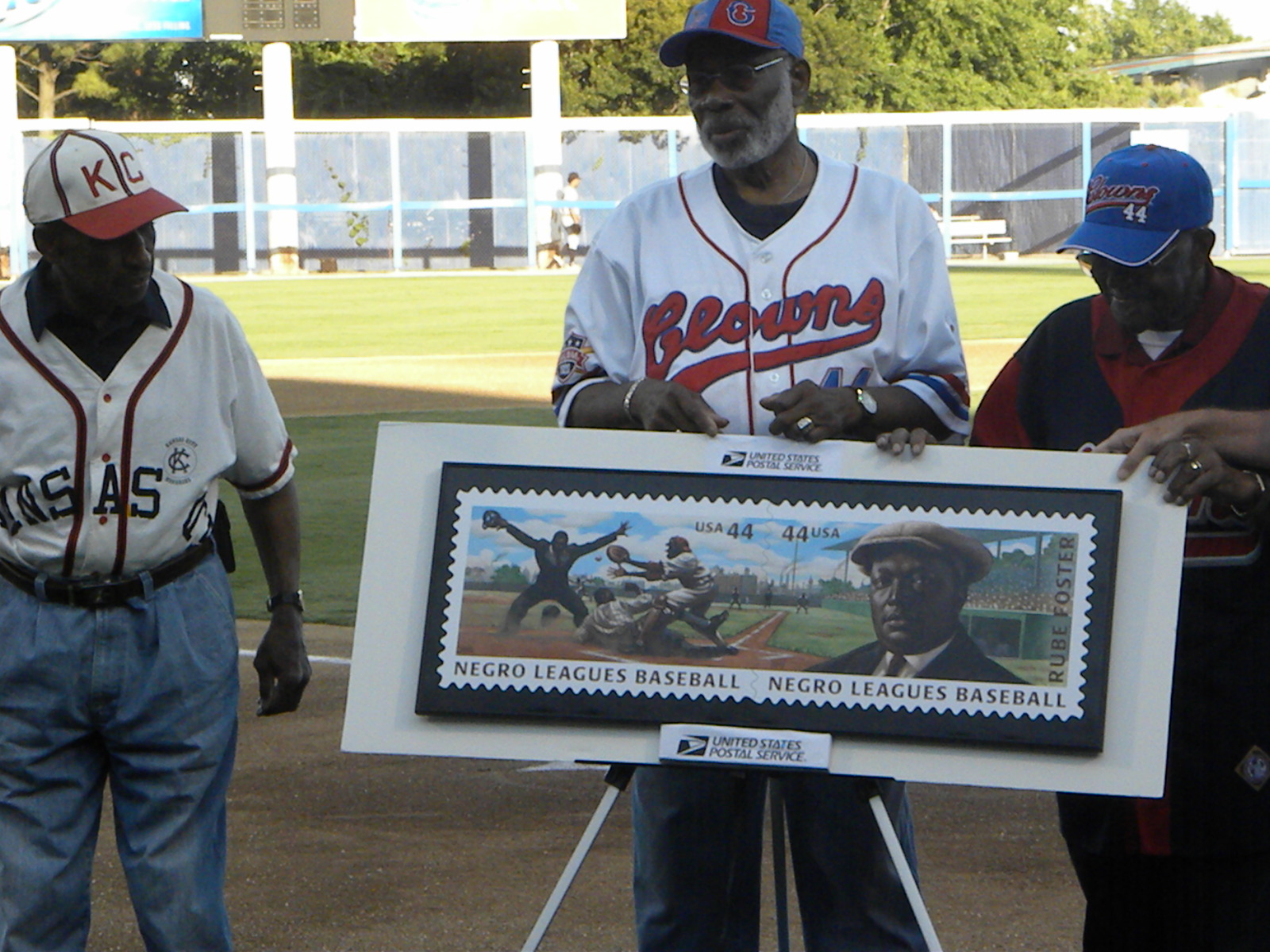
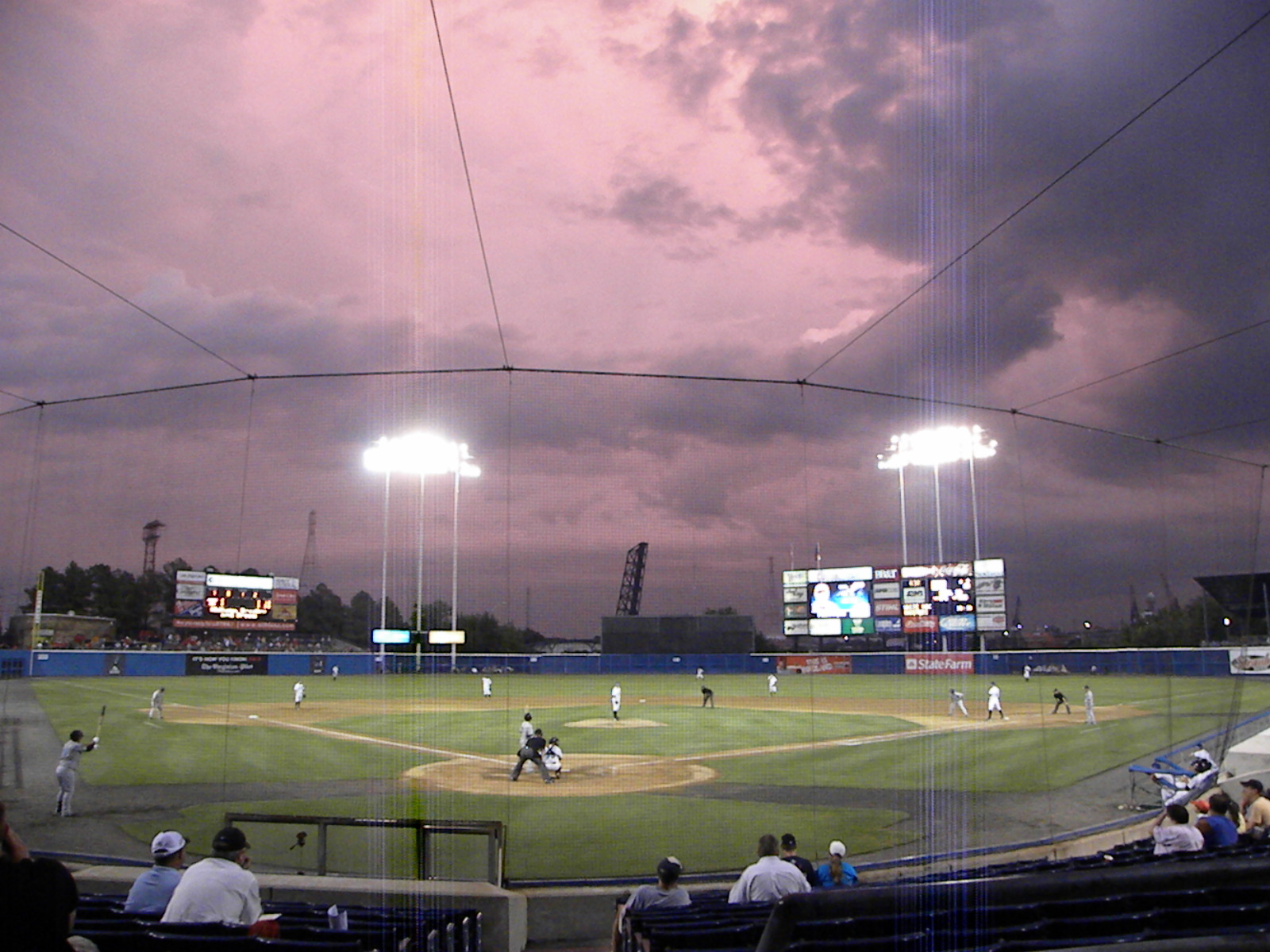
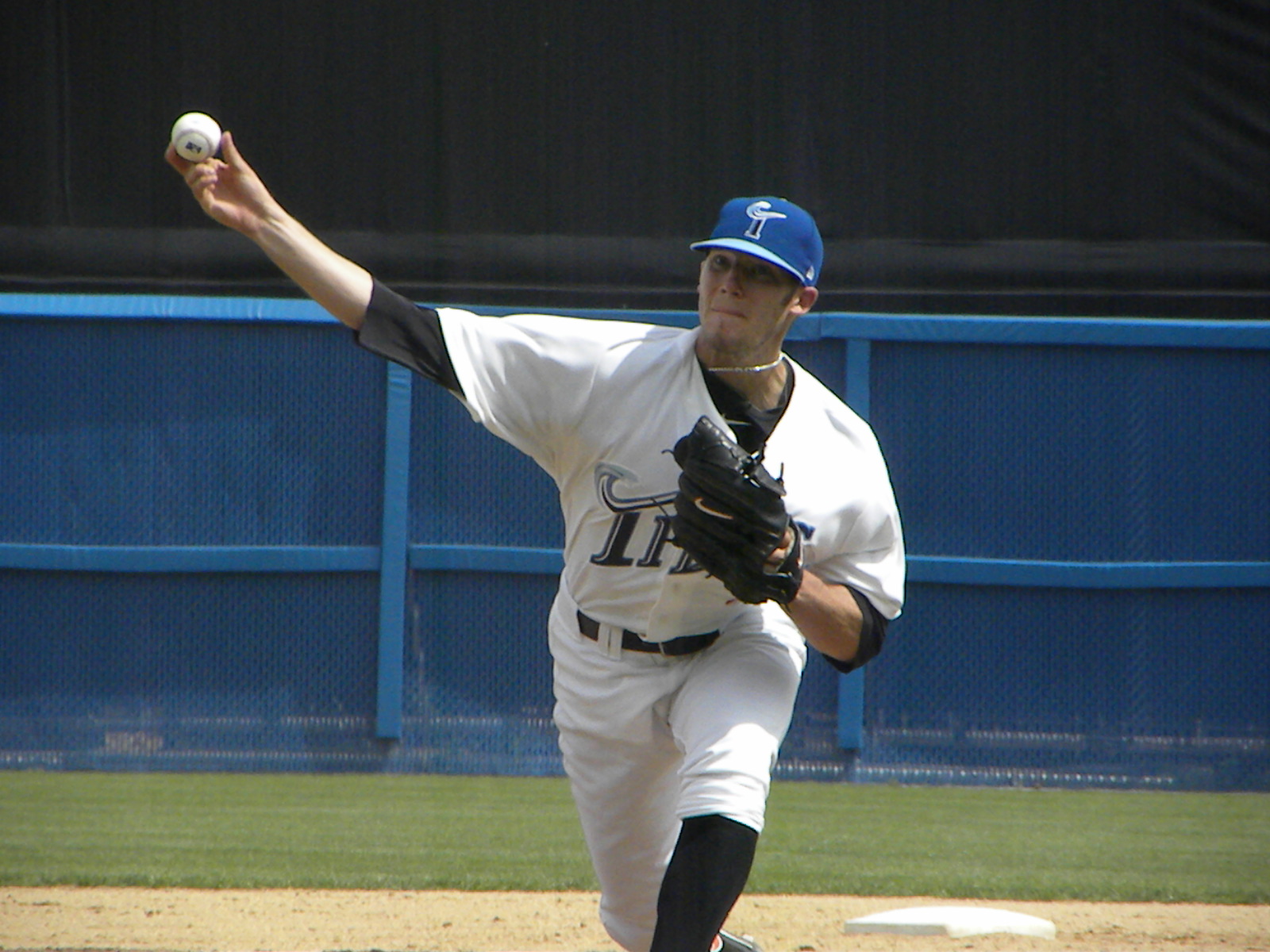
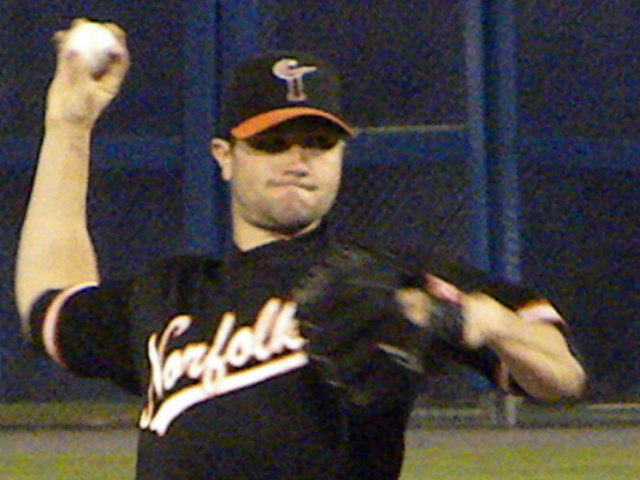
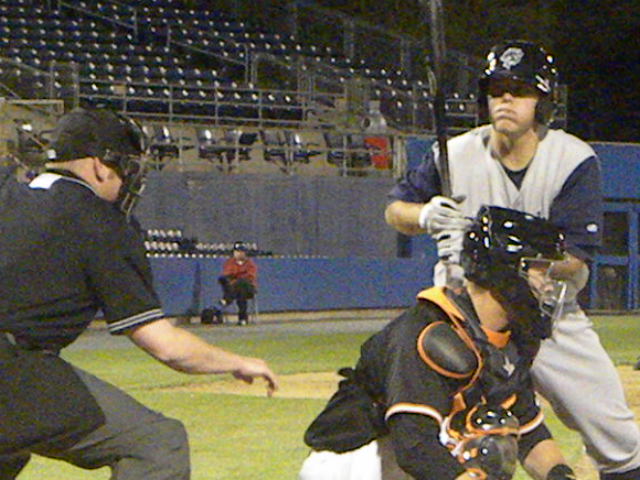
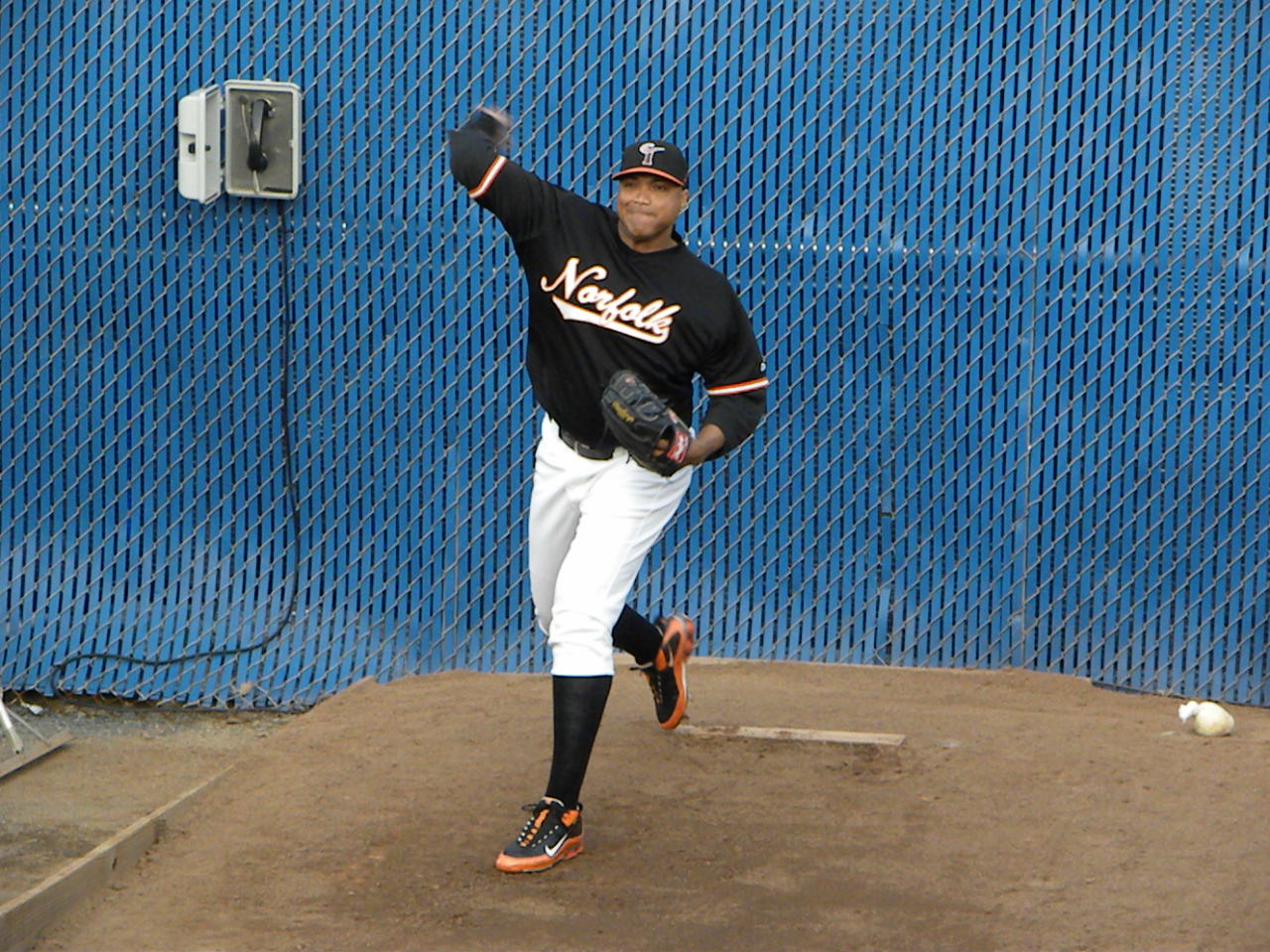
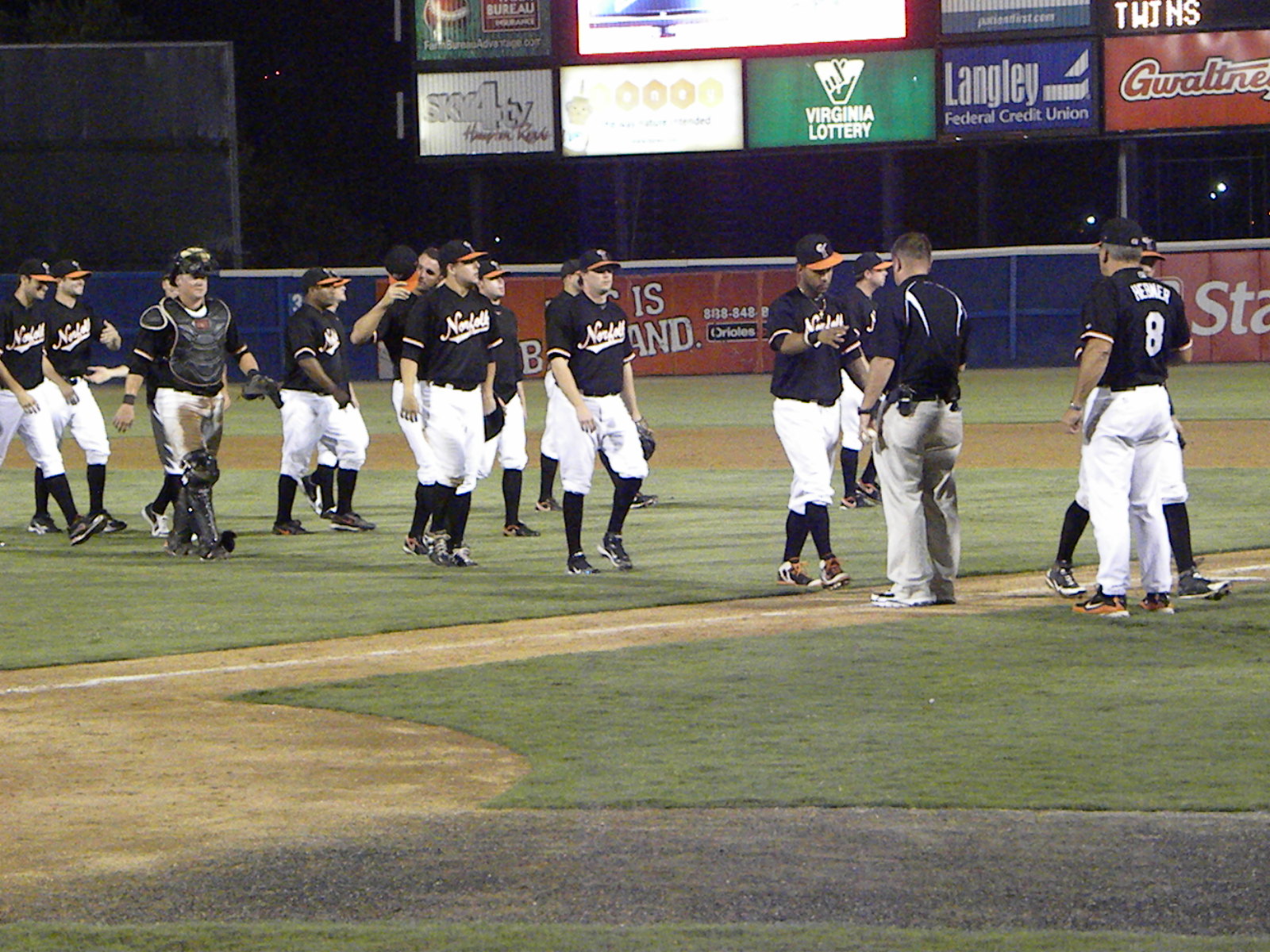
The season began at Harbor Park with the Home Opener in early April and closed on the Road.  From my vantage point in Section 102 I had the opportunity to watch some great baseball, get some great pictures and become friends with some great people.  These photos chronicle the 2010 season at the Church of Baseball, Harbor Park Parish and is dedicated to the players and management of the Norfolk Tides.

Opening Day

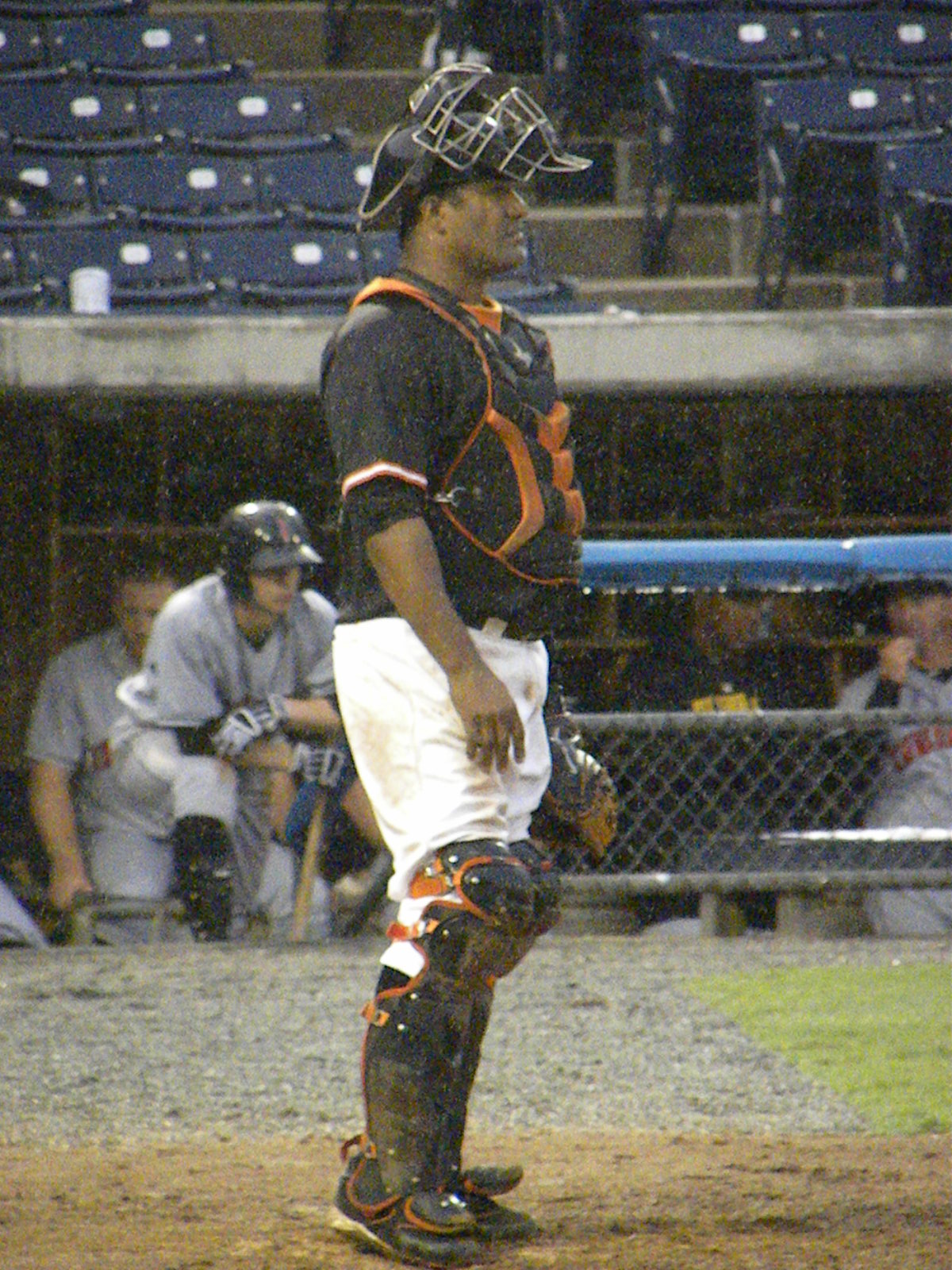
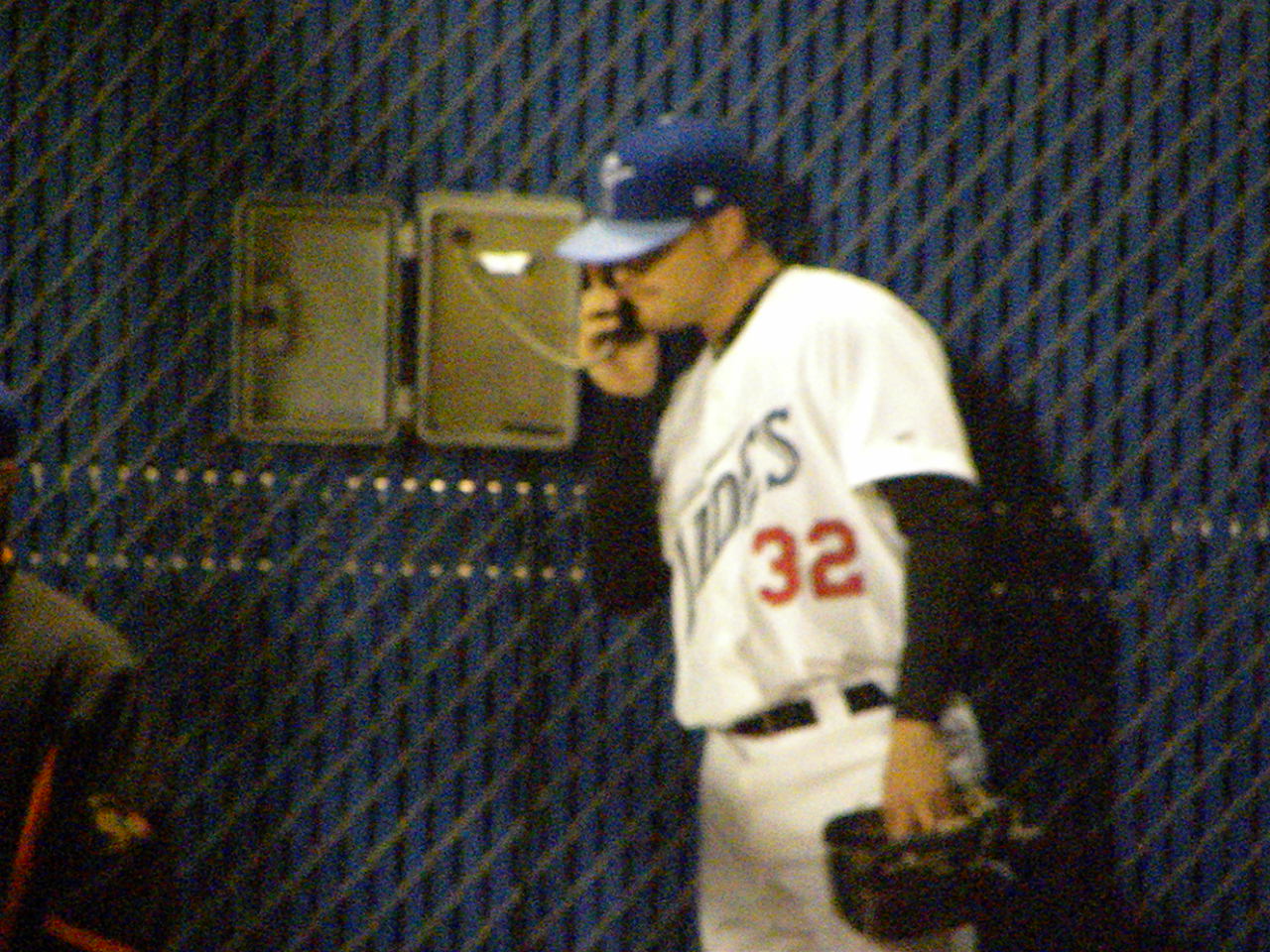
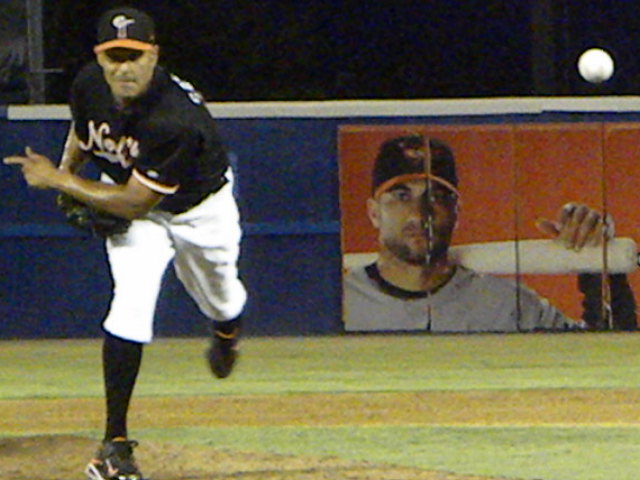
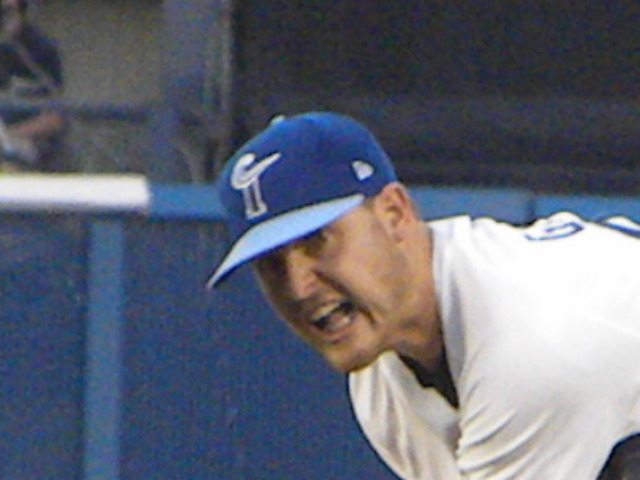
Left-hander Troy Patton had a rough start but finished strong and ended up in Baltimore

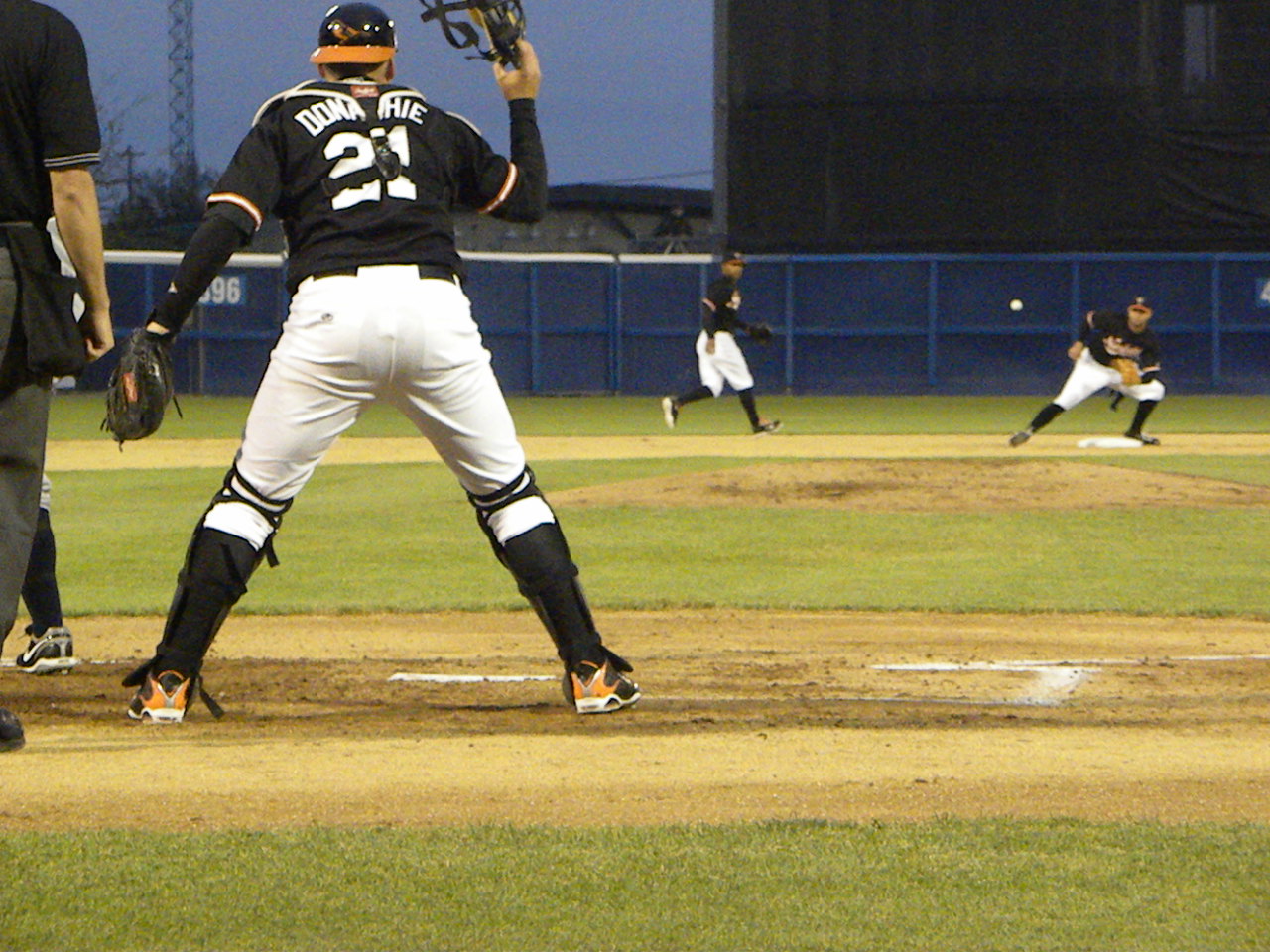
Adam Donachie with kids from a “Field of Dreams team”

Robert Andino hammers a double down the left field line

Twilight at Harbor Park

Jake Arrieta comes into field a bunt

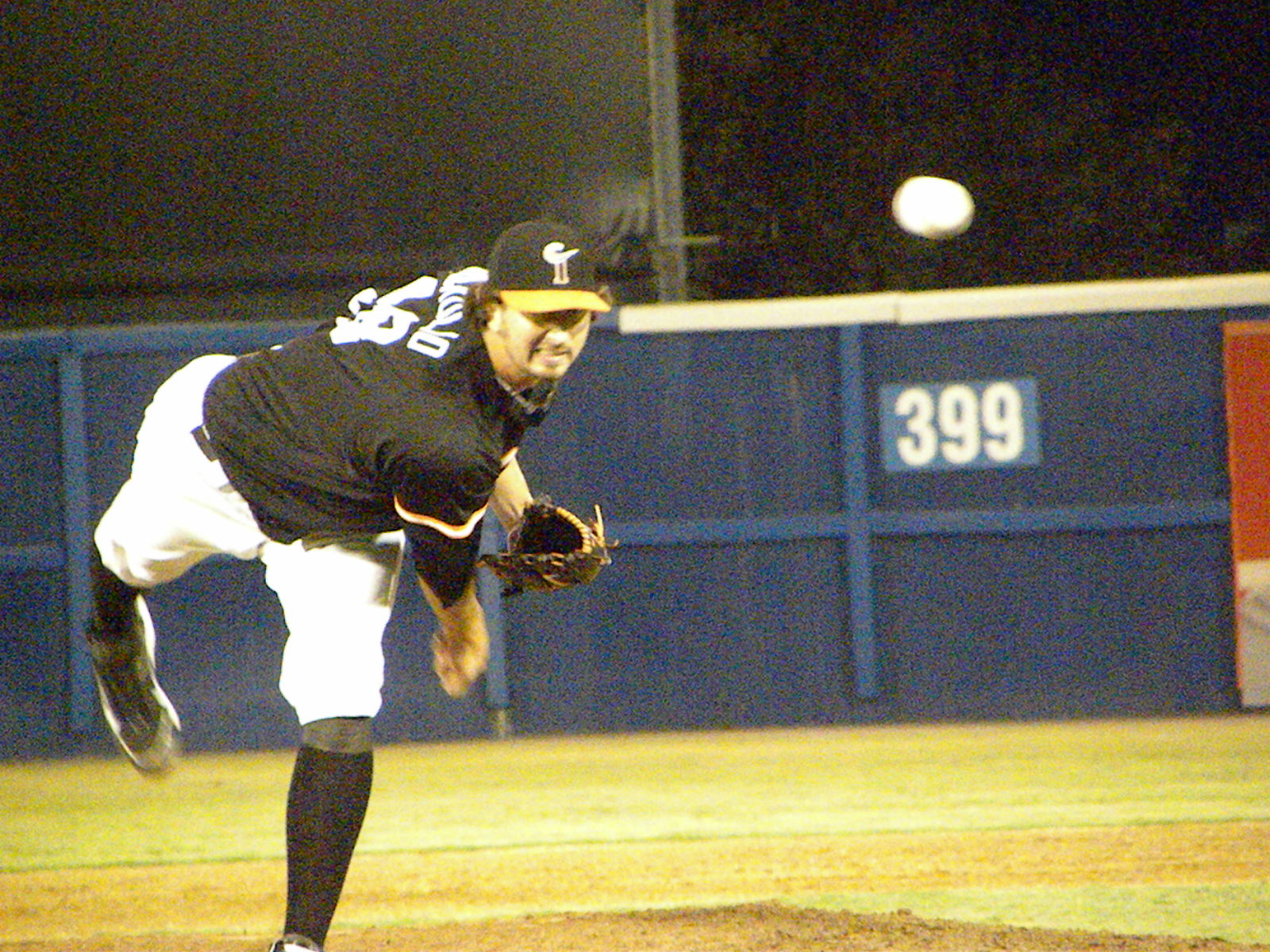
Strike three! Alberto Castillo strikes out a member of the Toledo Mudhens

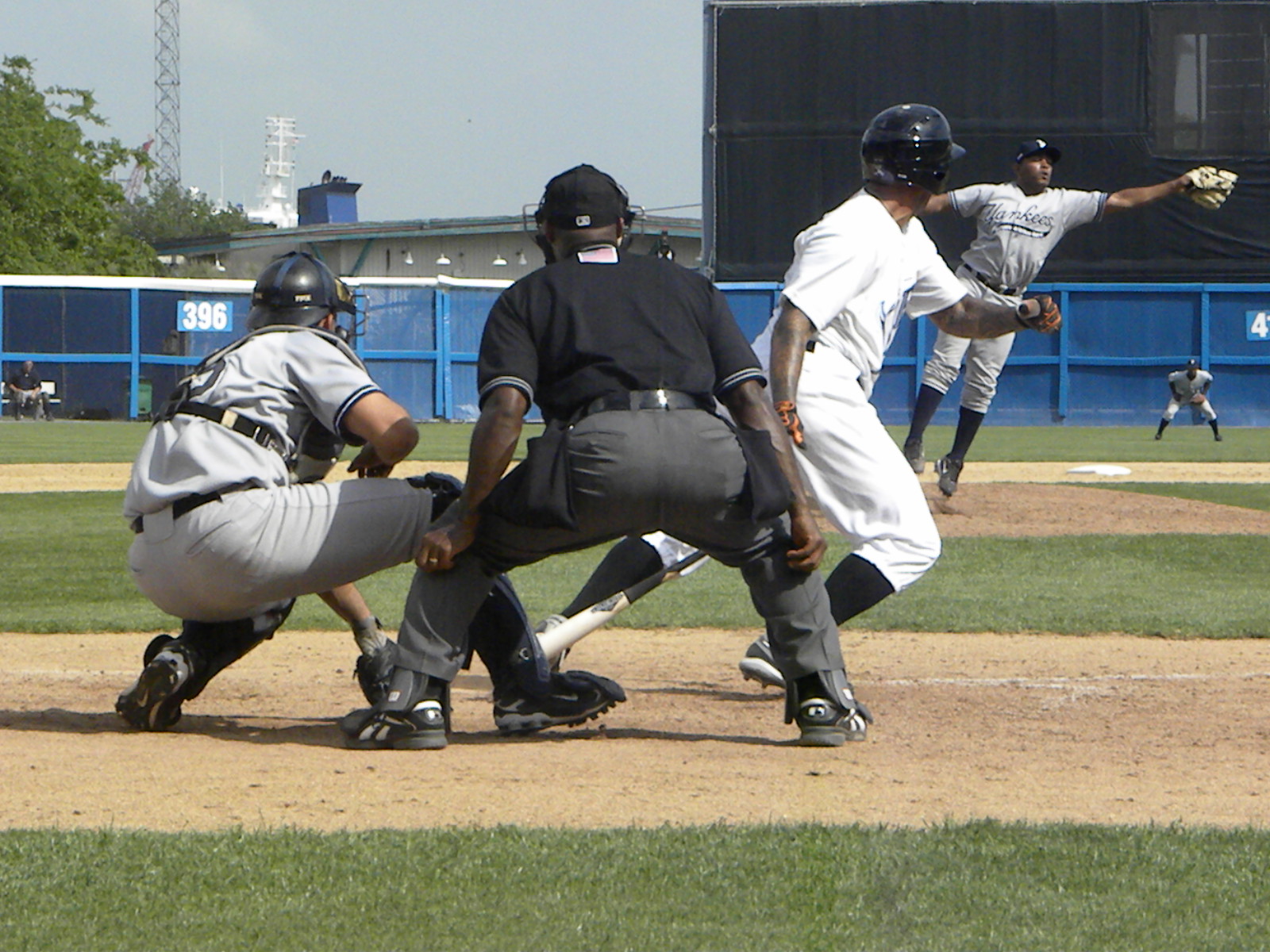
Close call…Steve Lerud gets a brush back against the Durham Bulls

Saluting the Negro Leagues

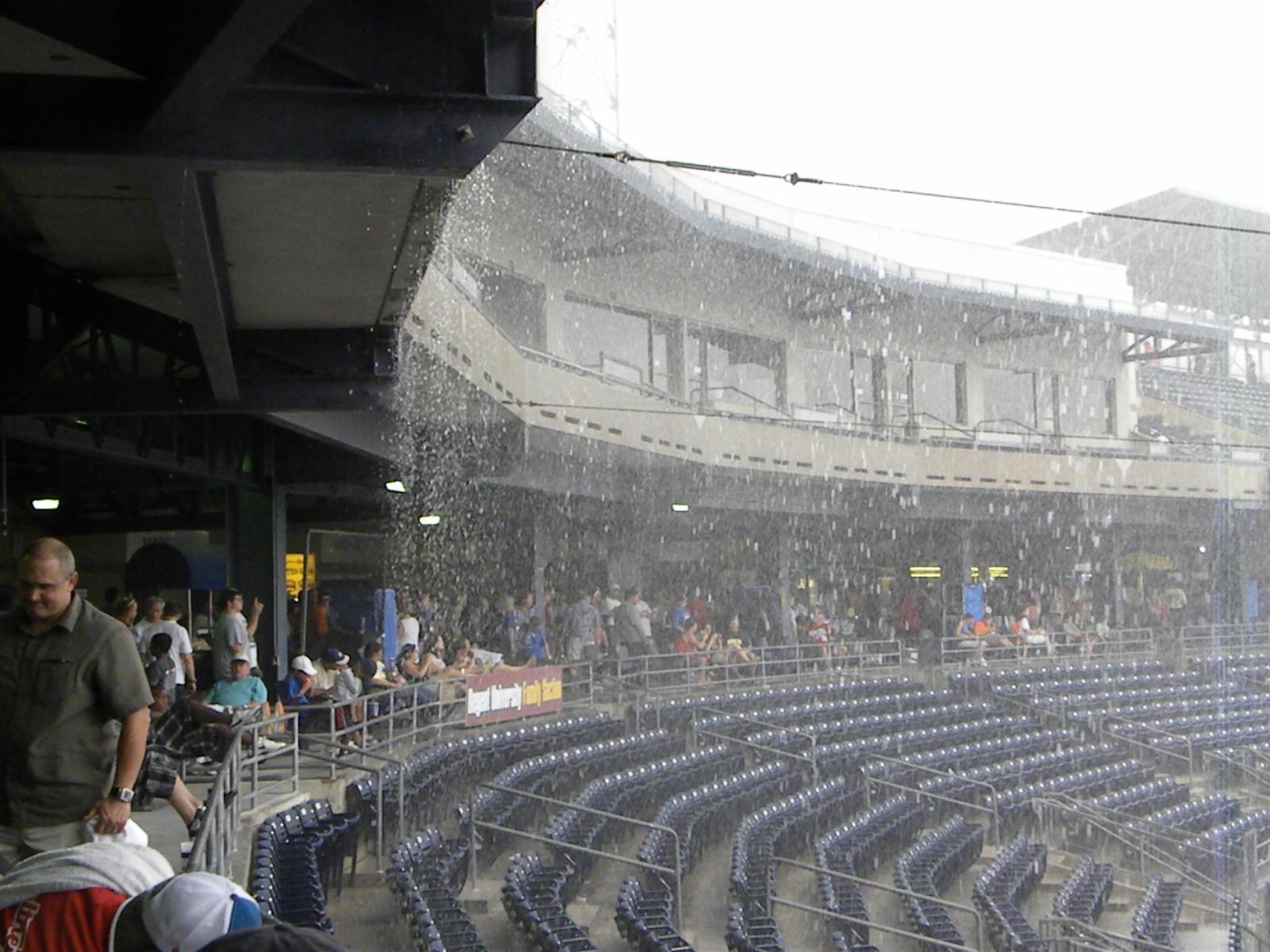
Muddy Warrior: Michel Hernandez during a rainy game. By the way the Tides had no home rain outs in 2010

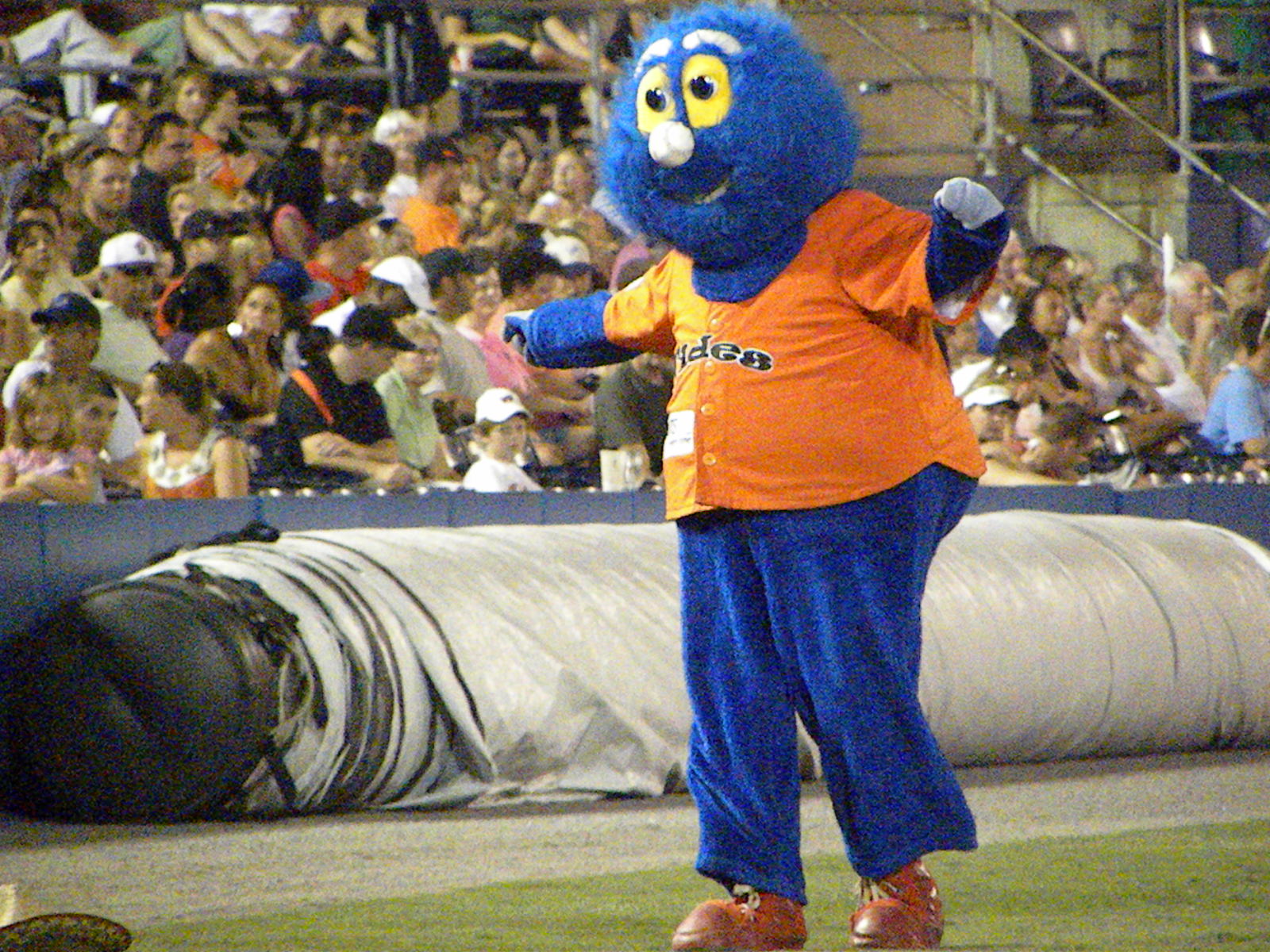
The Mascot: Rip Tide

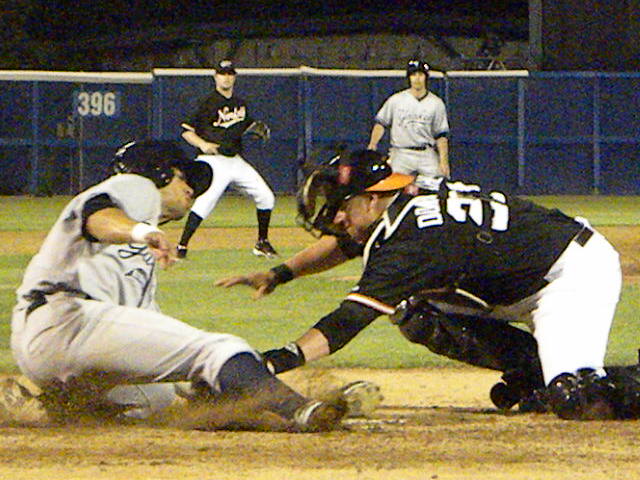
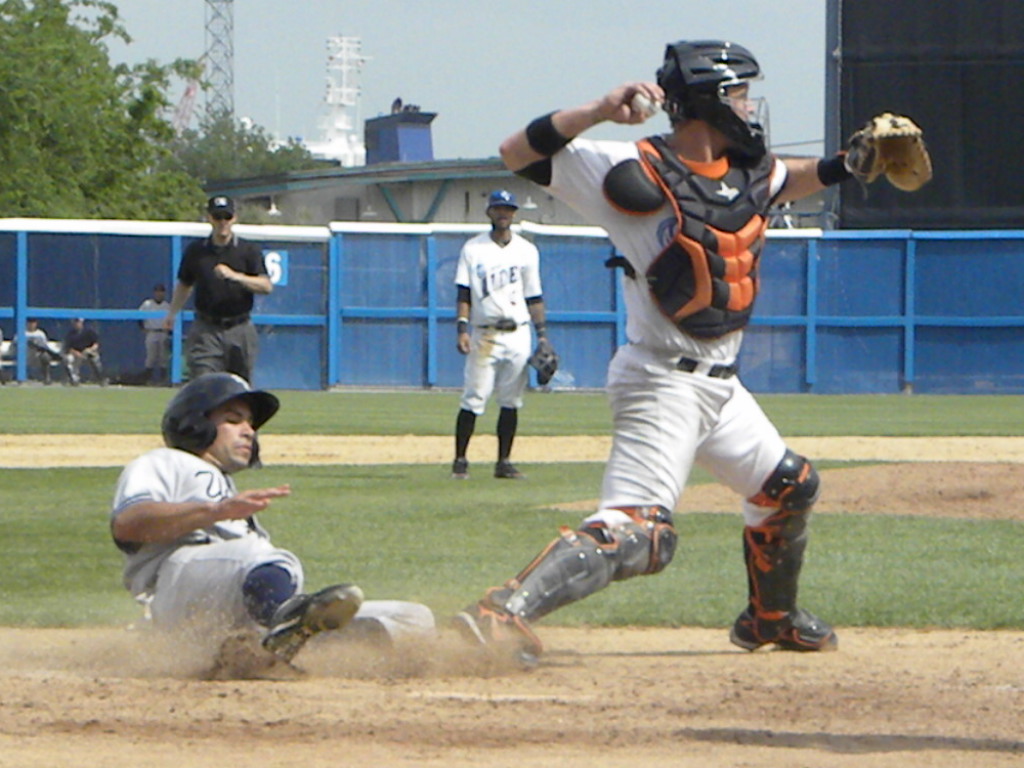
Adam Donachie tags a runner out at home

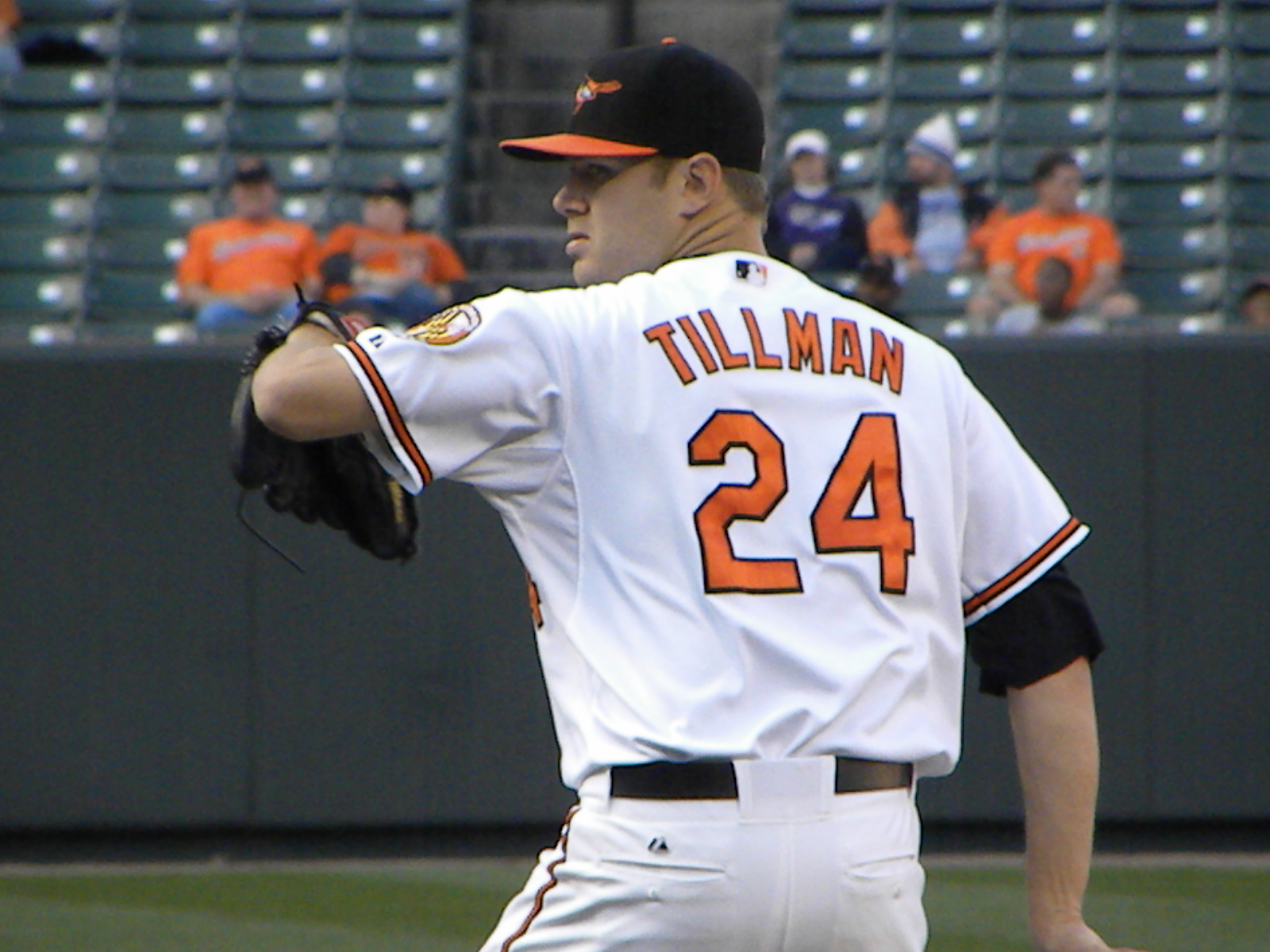
Chris Tillman had a great year with the Tides including a no-hitter against the Gwinnett Braves and a one-hitter

Andy Mitchell’s flowing submarine delivery continued in 2010 although he struggled at times. He was the go-to man in middle relief for much of the season and saved many bullpen arms.

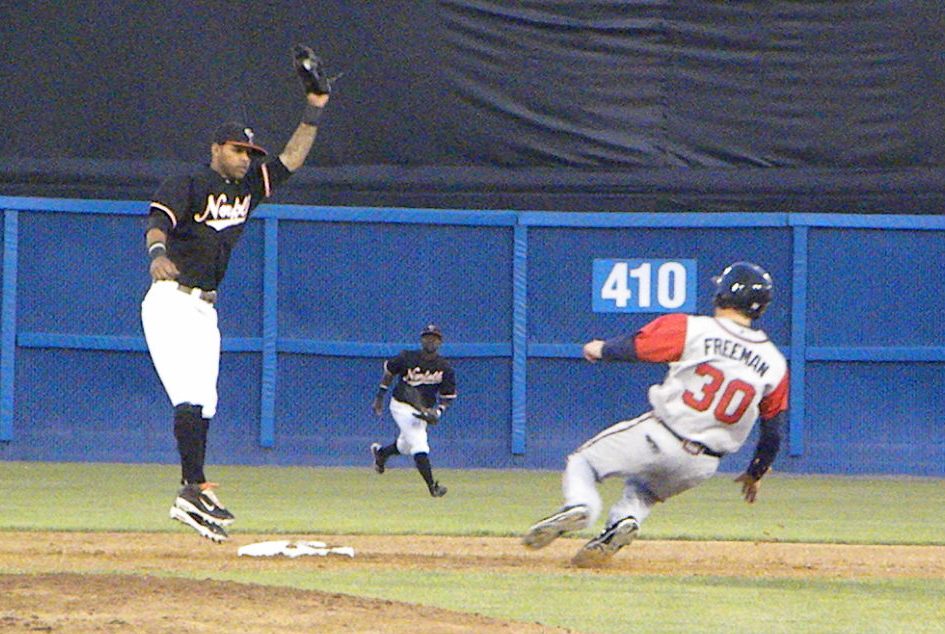
Close play at 2nd

Adam Donachie guns down a runner at second

Jake Arrieta jams Gwinnett’s Joe Thurston

Call to the Bullpen: Chris George picks up the call

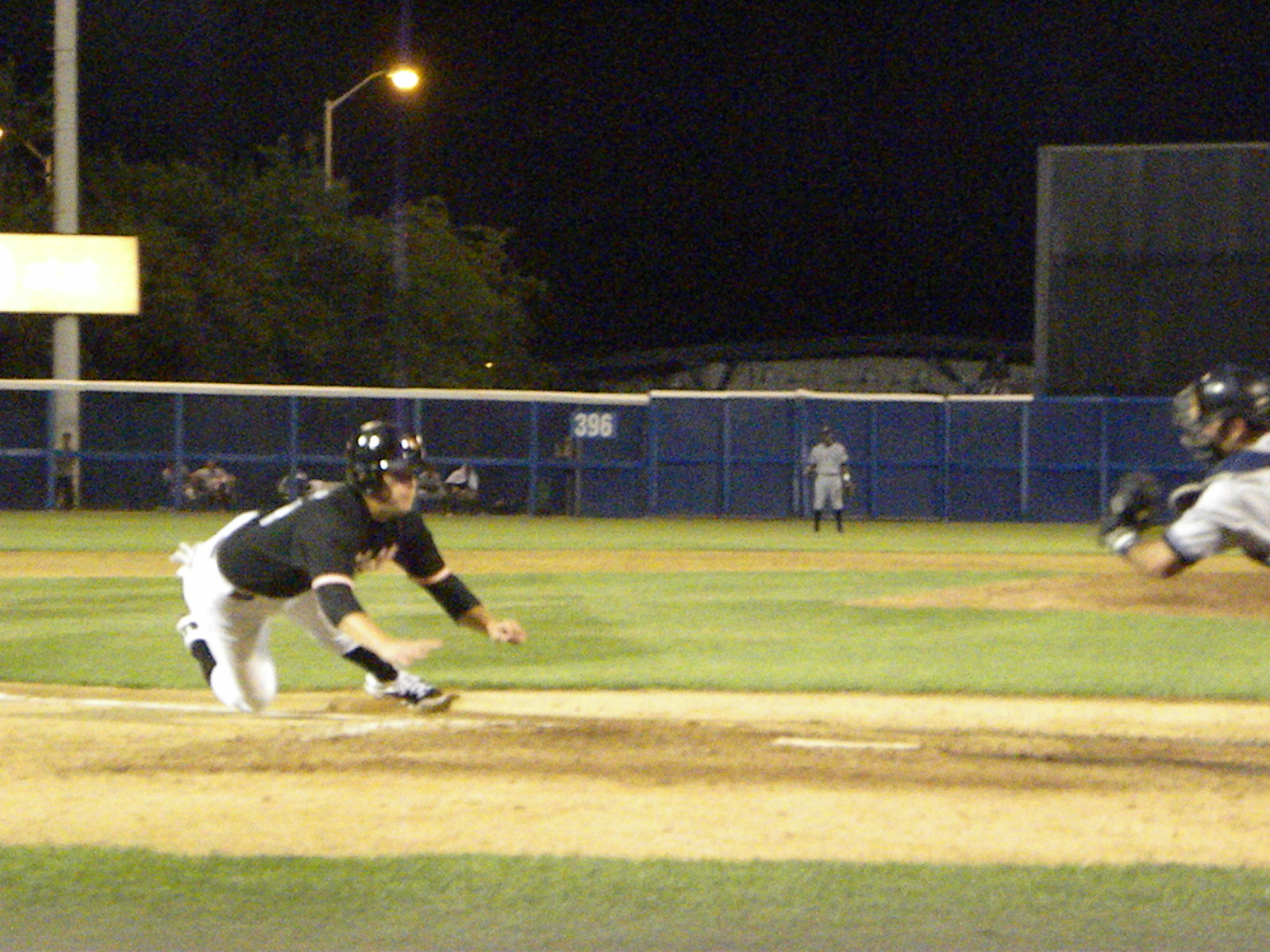
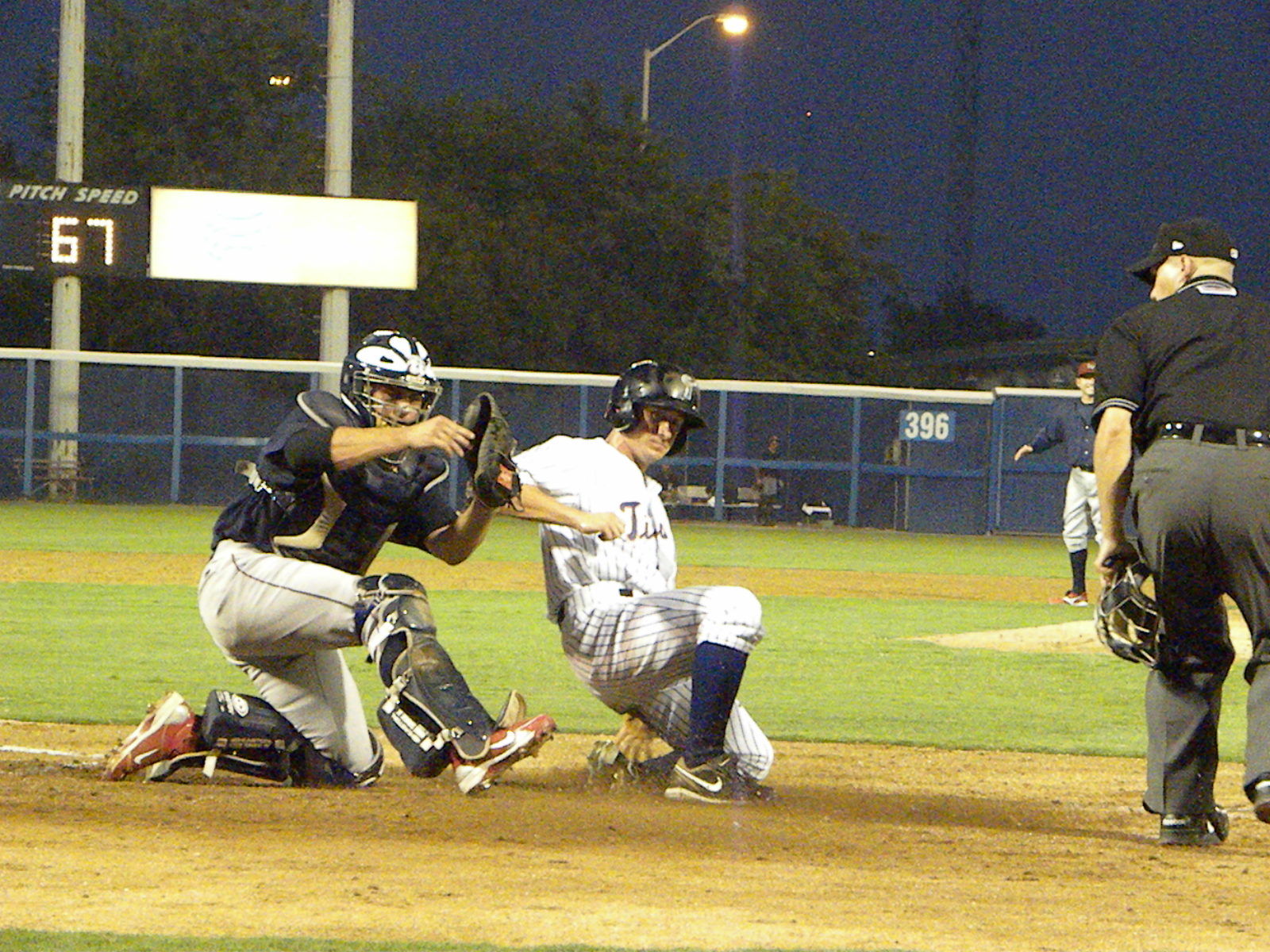
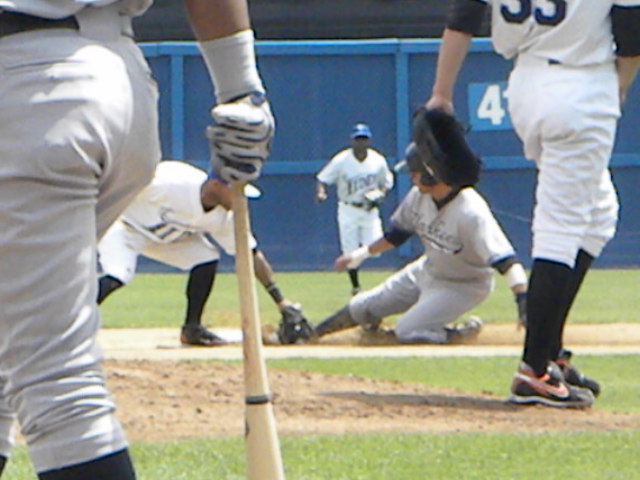
Blake Davis slides head first into home

Mike Gonzalez making a rehab appearance with the Tides before going back up to Baltimore

Robert Andino goes high to keep a throw from the plate from going into center field

Paco Figueroa slides into home

Michael Aubrey slams one of his 22 home runs

Blake Davis slides into home

Elliott the Usher give his opinion on a call

Alberto Castillo played the setup man for much of the season

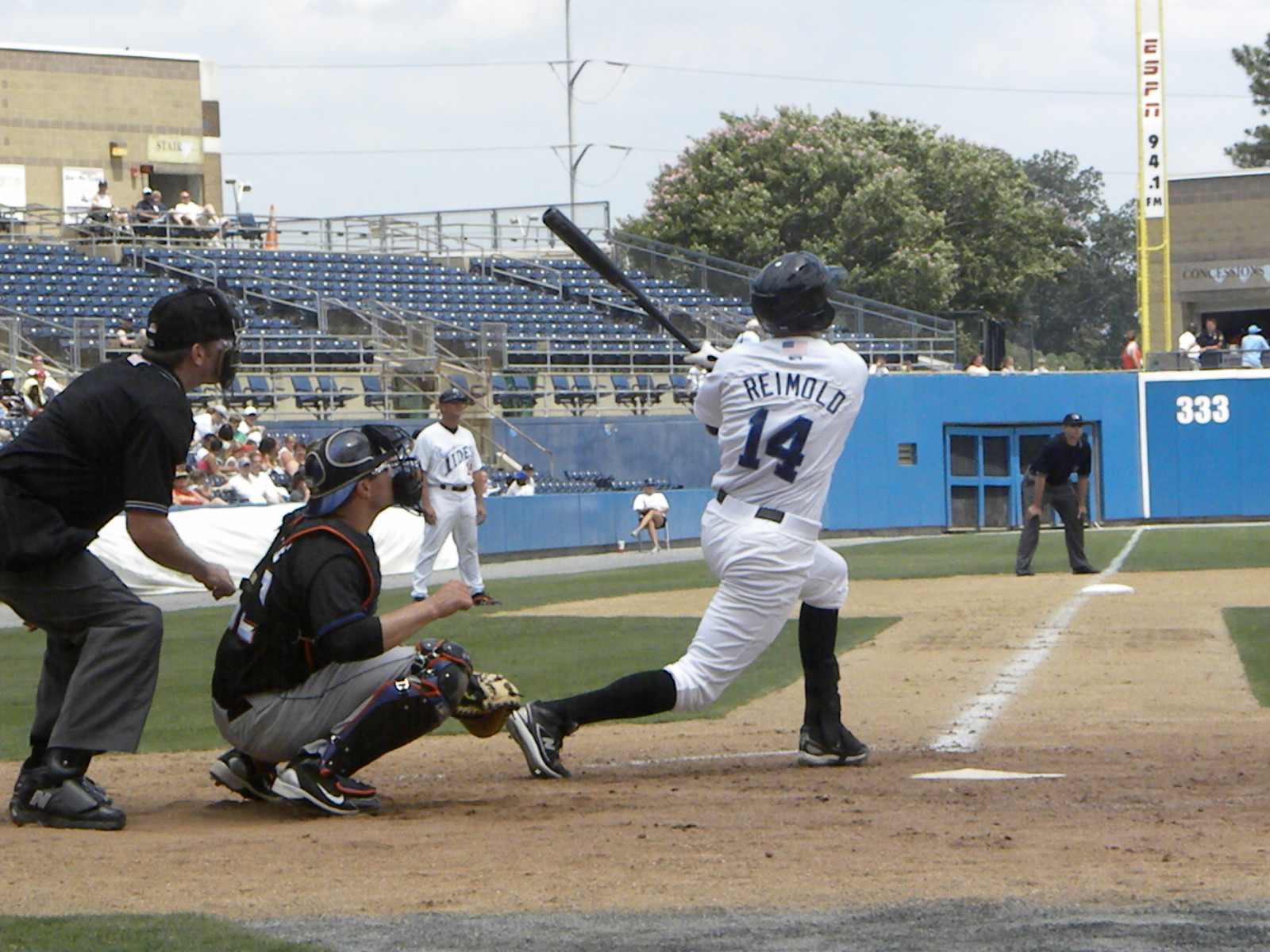
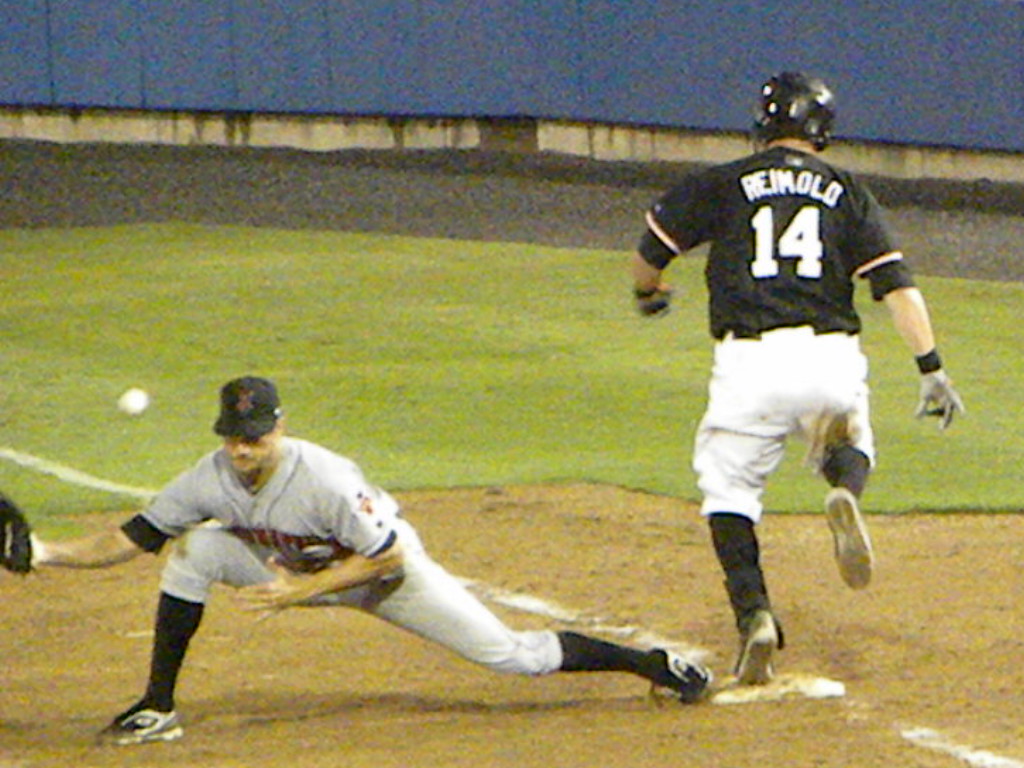
Nolan Reimold hits a home-run during a season marked with by early struggles and steady recovery of his 2009 Rookie season in Baltimore

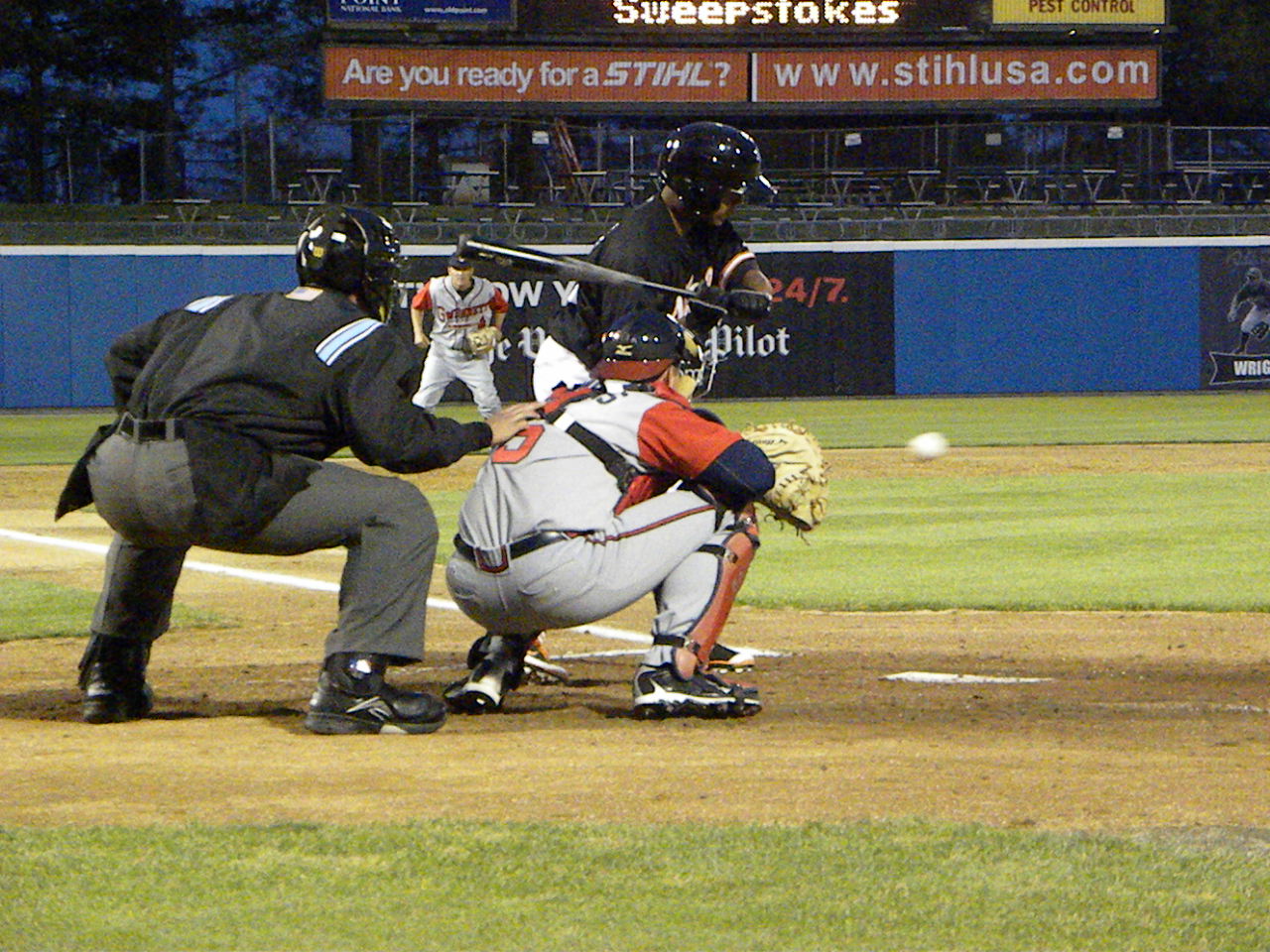
Joey Gathright dodges a pitch

Brandon Snyder played a solid first base and became a solid hitter as the season went on

Nolan Reimold and Rhyne Hughes wait for a pitching change

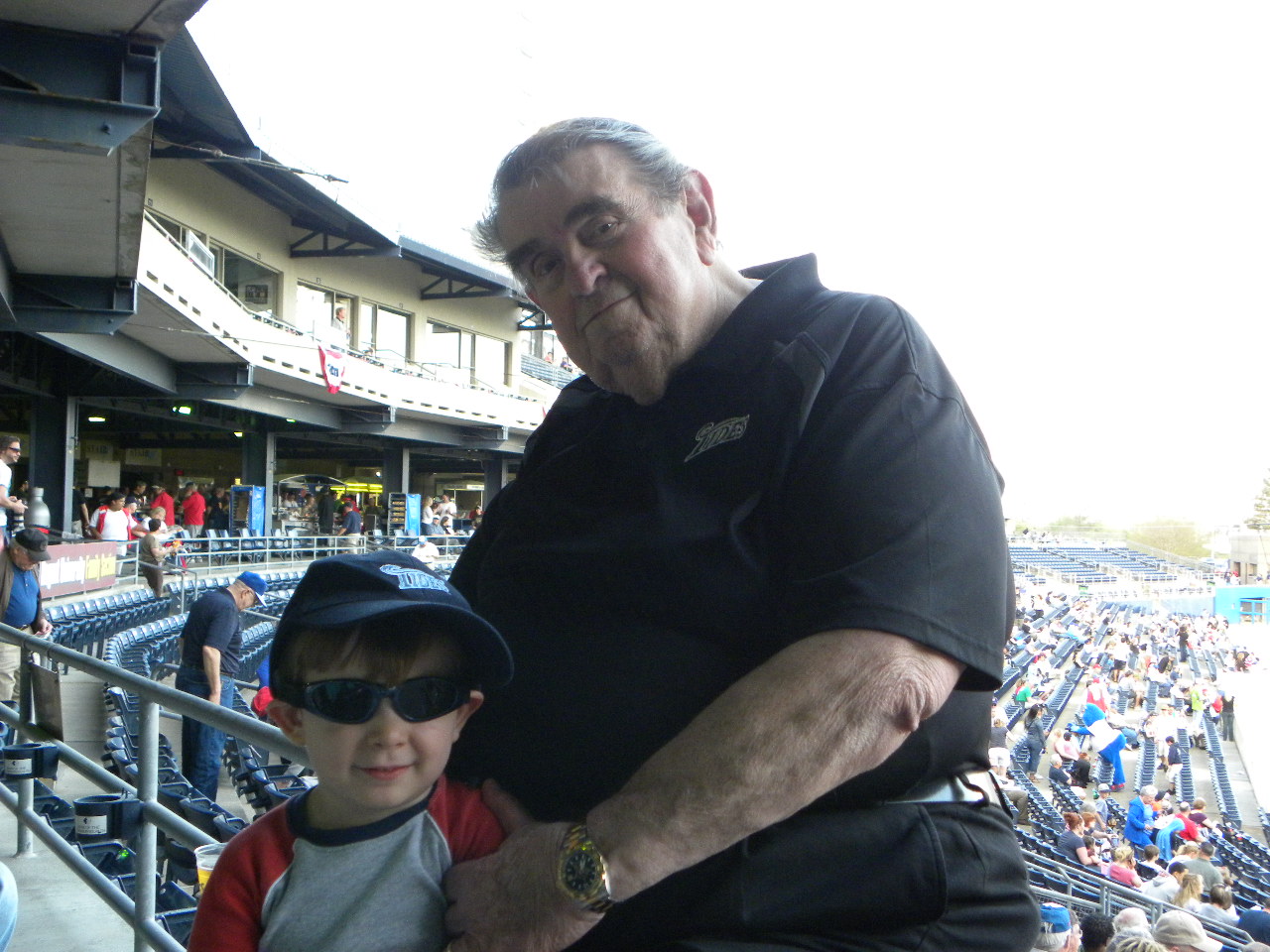
General Manager Dave Rosenfield

Steve Lerud makes the throw to first after making the force at at home

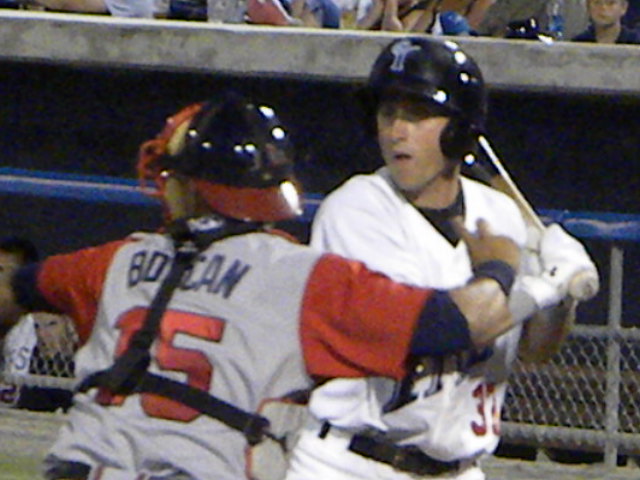
Matt Angle gets out of the way of Gwinnett catcher J. C. Boscan

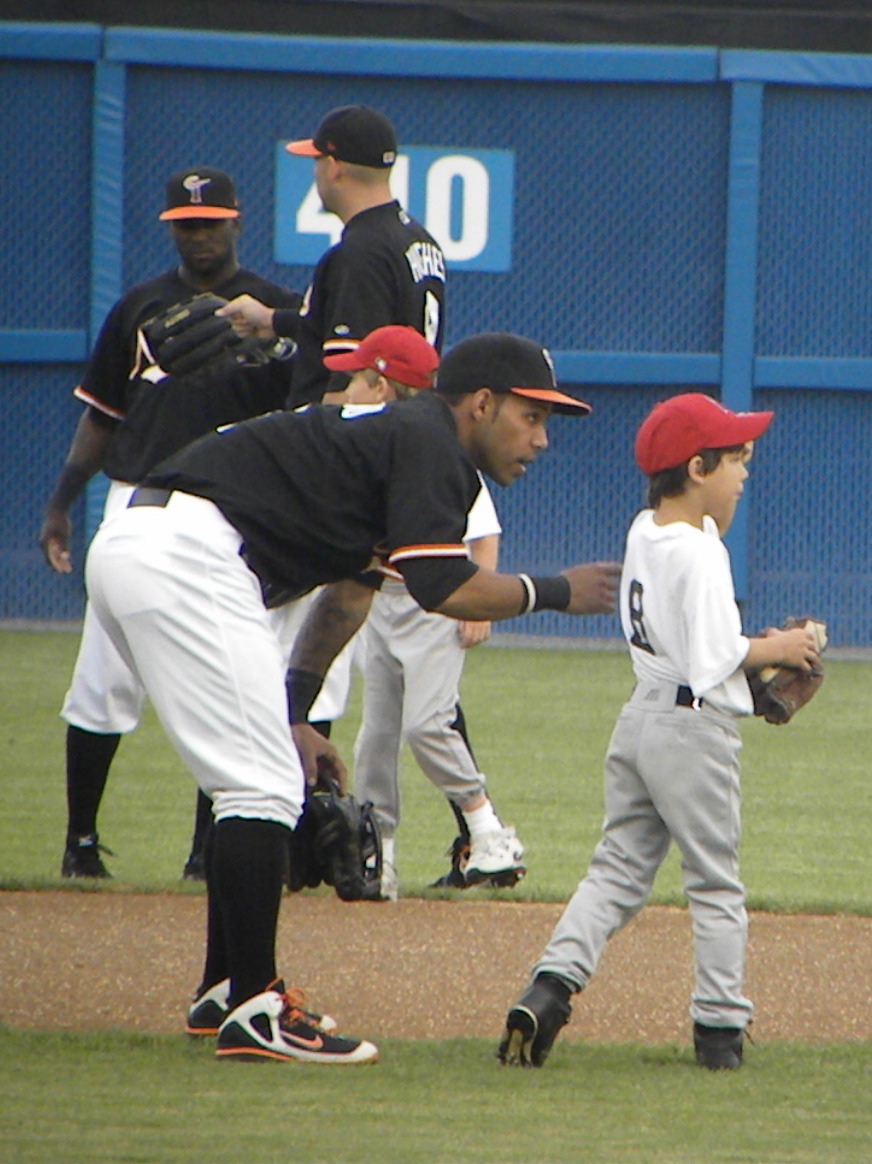
Robert Andino and a member of a “Field of Dreams” team

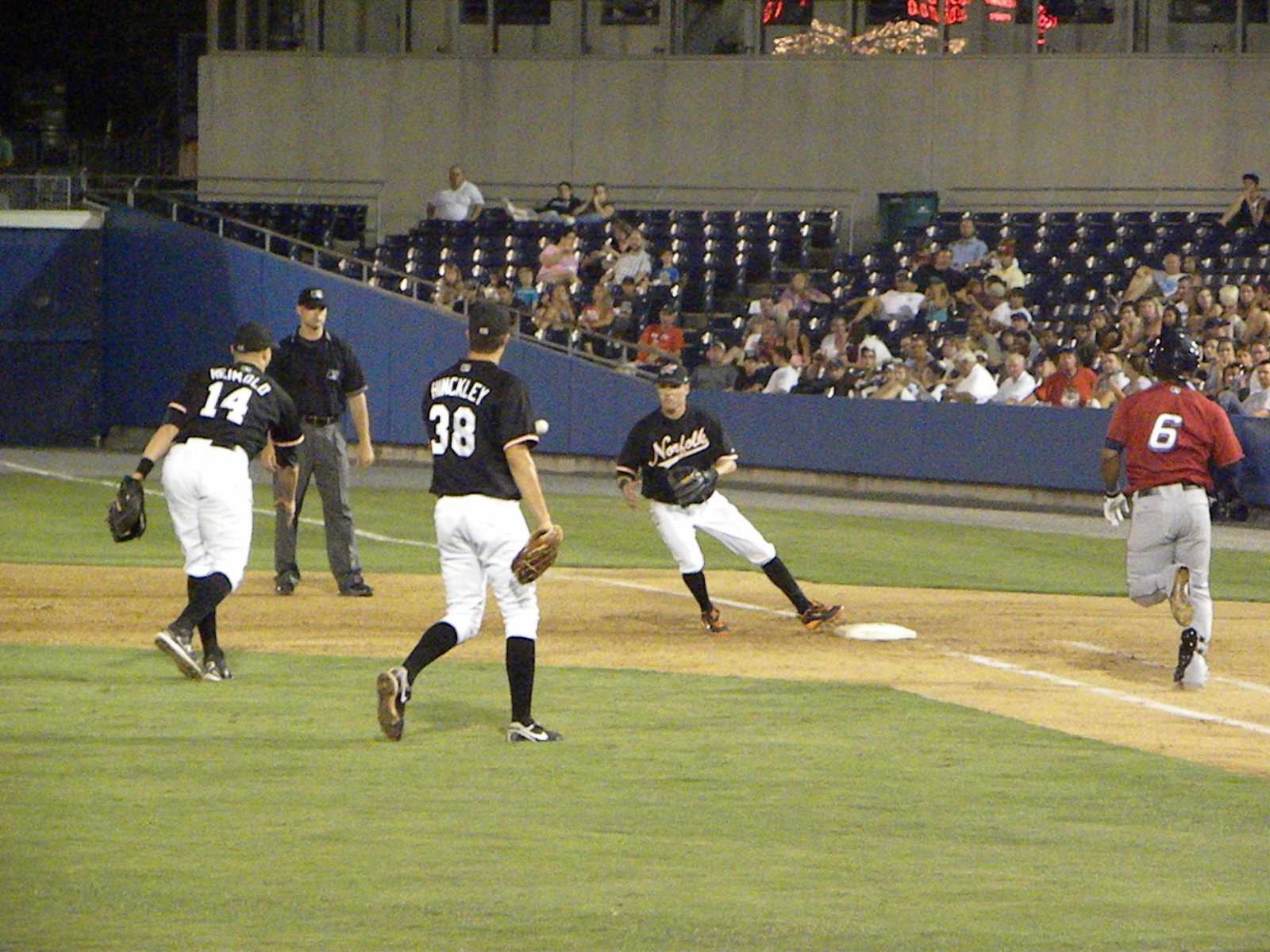
Nolan Reimold tosses to Paco Figueroa for the out with pitcher Mike Hinckley looking on

Jim Miller was moved from being a 2009 AAA All-star closer to various places in the bullpen

Before the storm

Chris George moved from the bullpen to a starting slot

Rhyne Hughes looks on incredulously after a bad call

Celebrating a walk off win

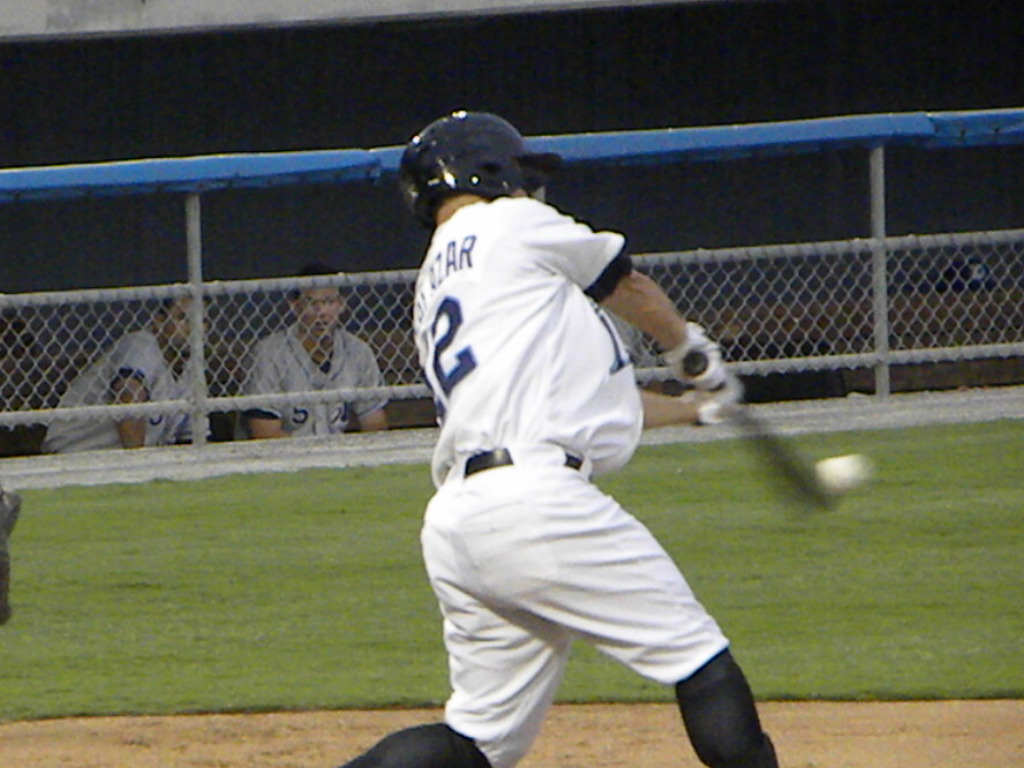
Jeff Salazar drives a pitch into right field

Regina blows a kiss at the home plate umpire

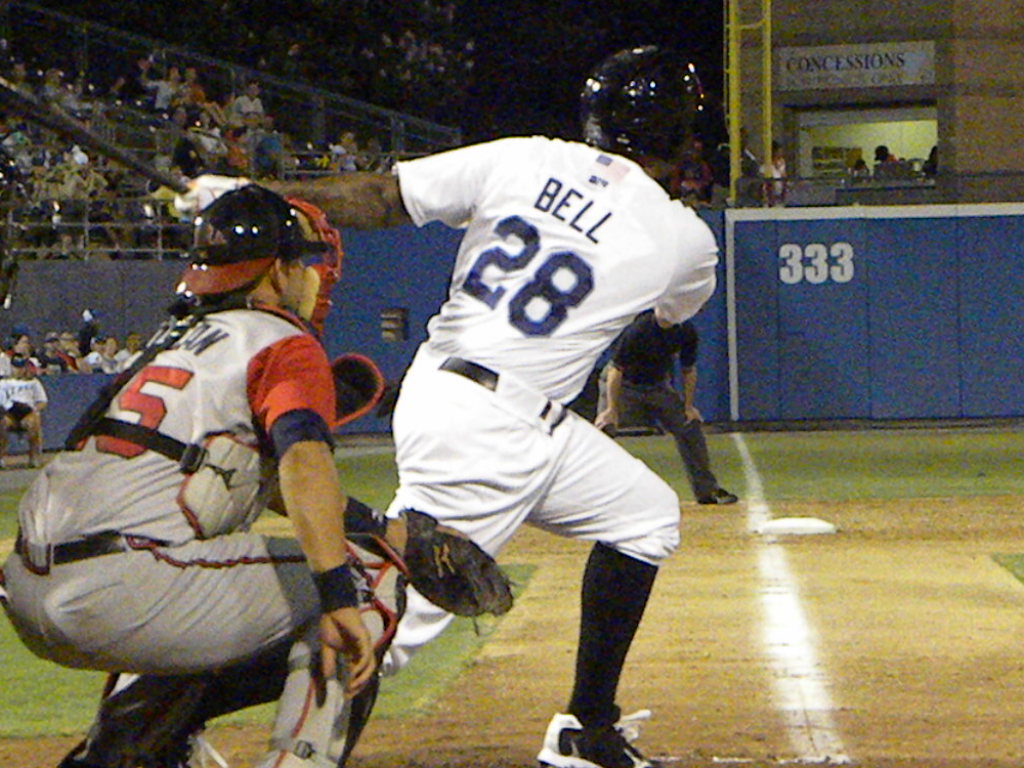
Josh Bell worked his way up to Baltimore where he took the 3rd base job

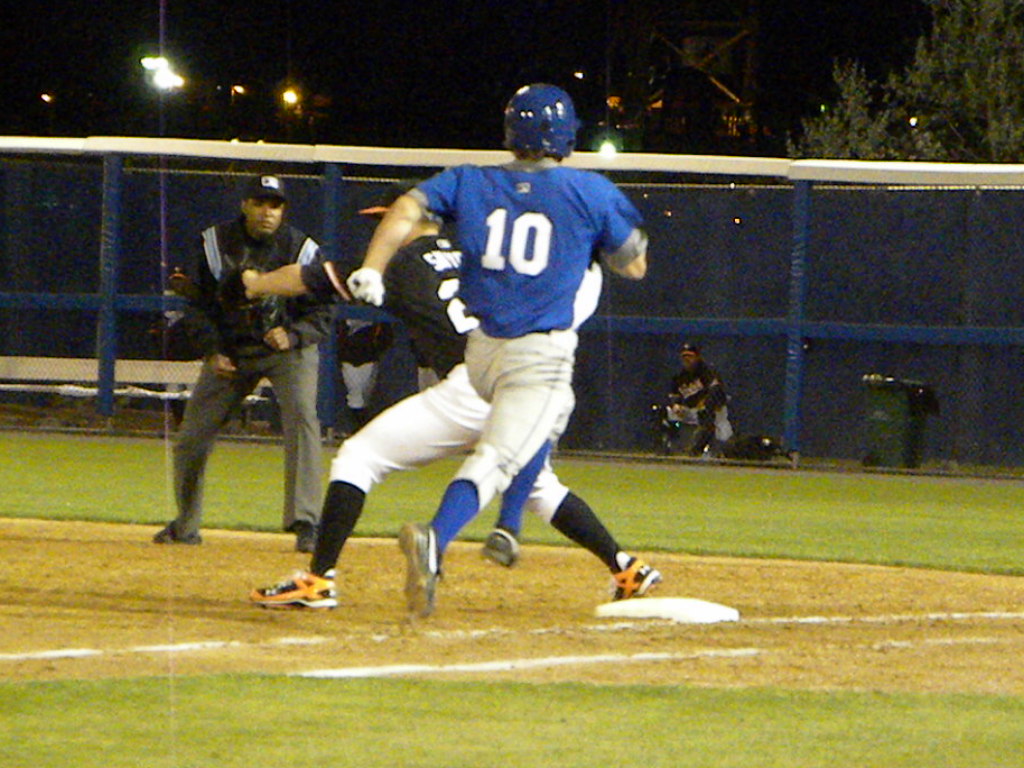
Brandon Snyder makes the putout at first

Zach Britton moved up from Bowie mid-season did very well and may be a mid-season call up to Baltimore in 2011

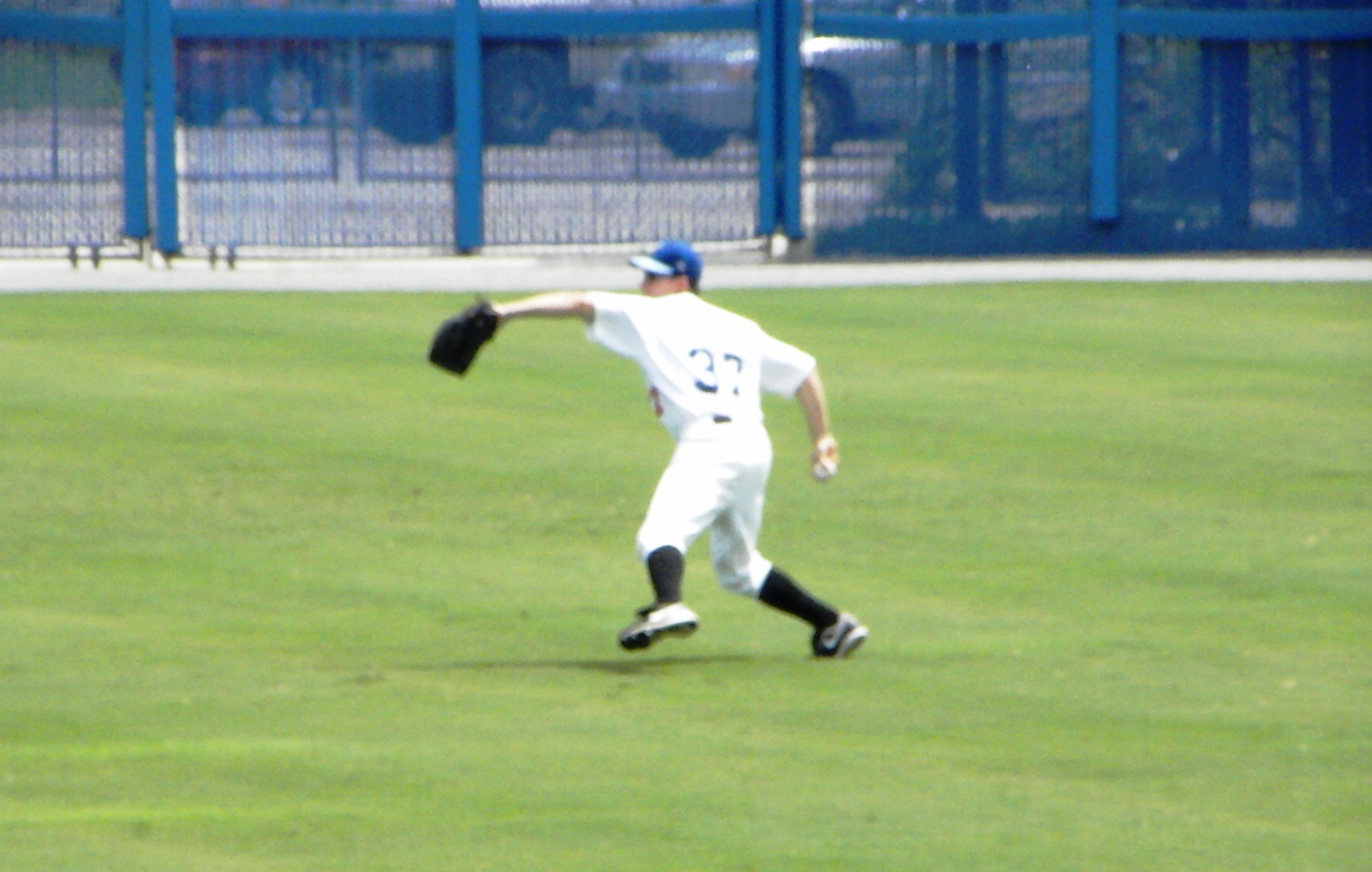
Matt Angle makes the throw in from right field

Safe at home on throwback night

Josh Bell singles past a Scranton Wilkes-Barre Yankees pitcher

The bullpen waits for the call

Jim Hoey fires a strike

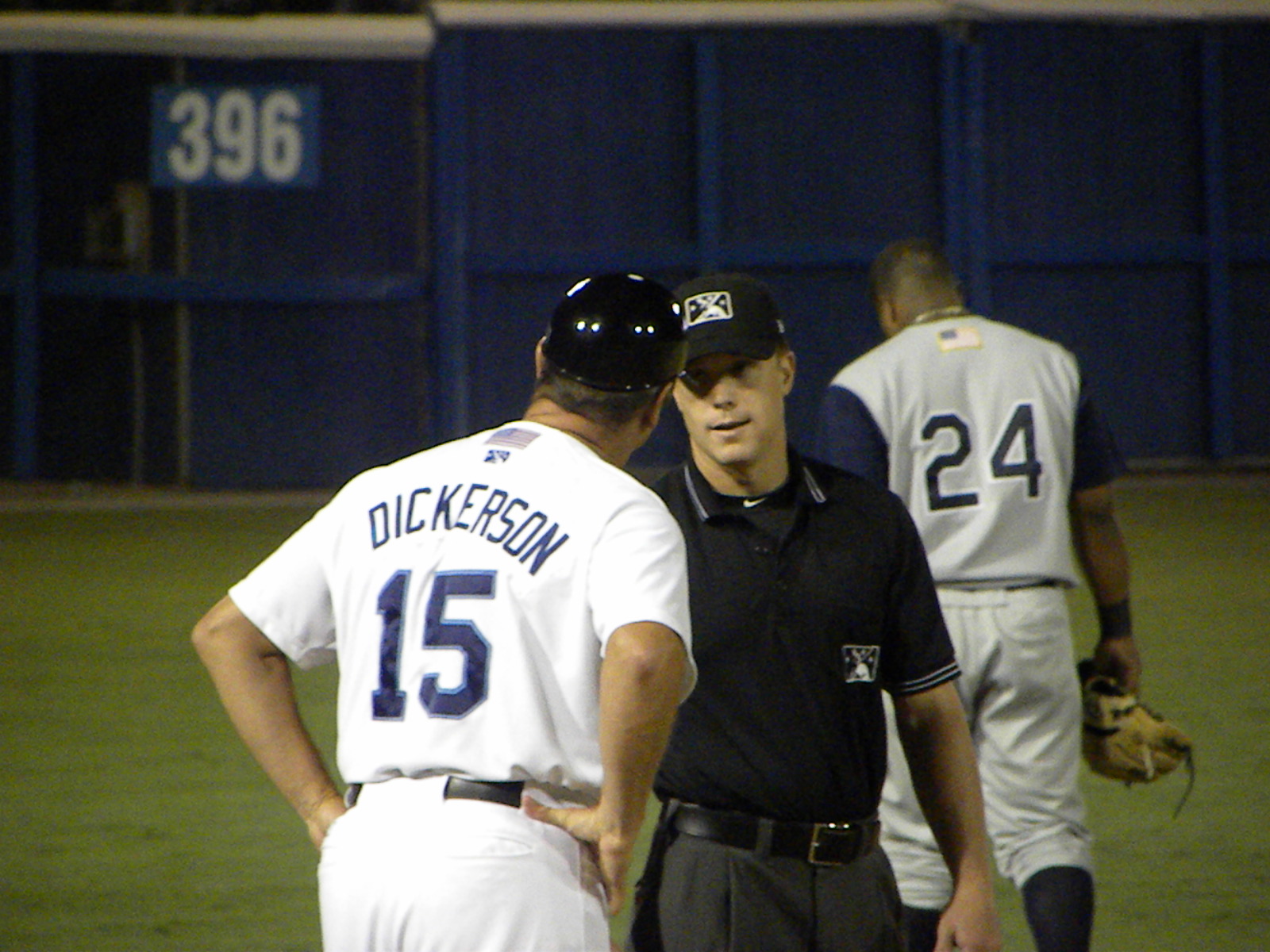
Bobby Dickerson has a few words with an umpire

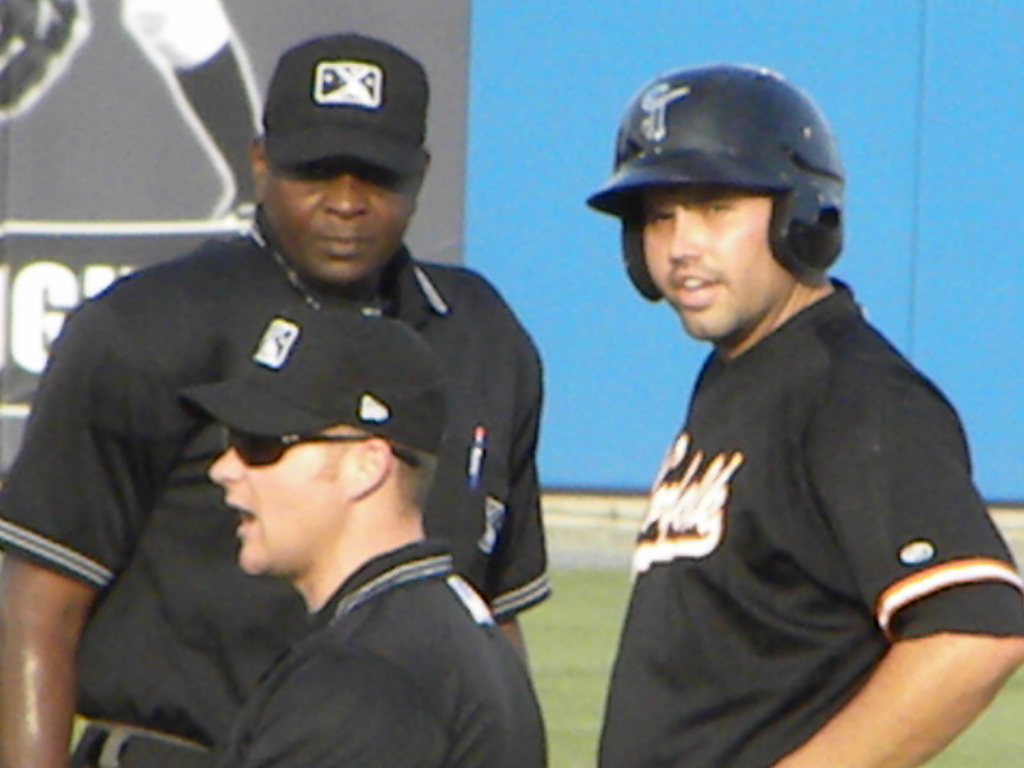
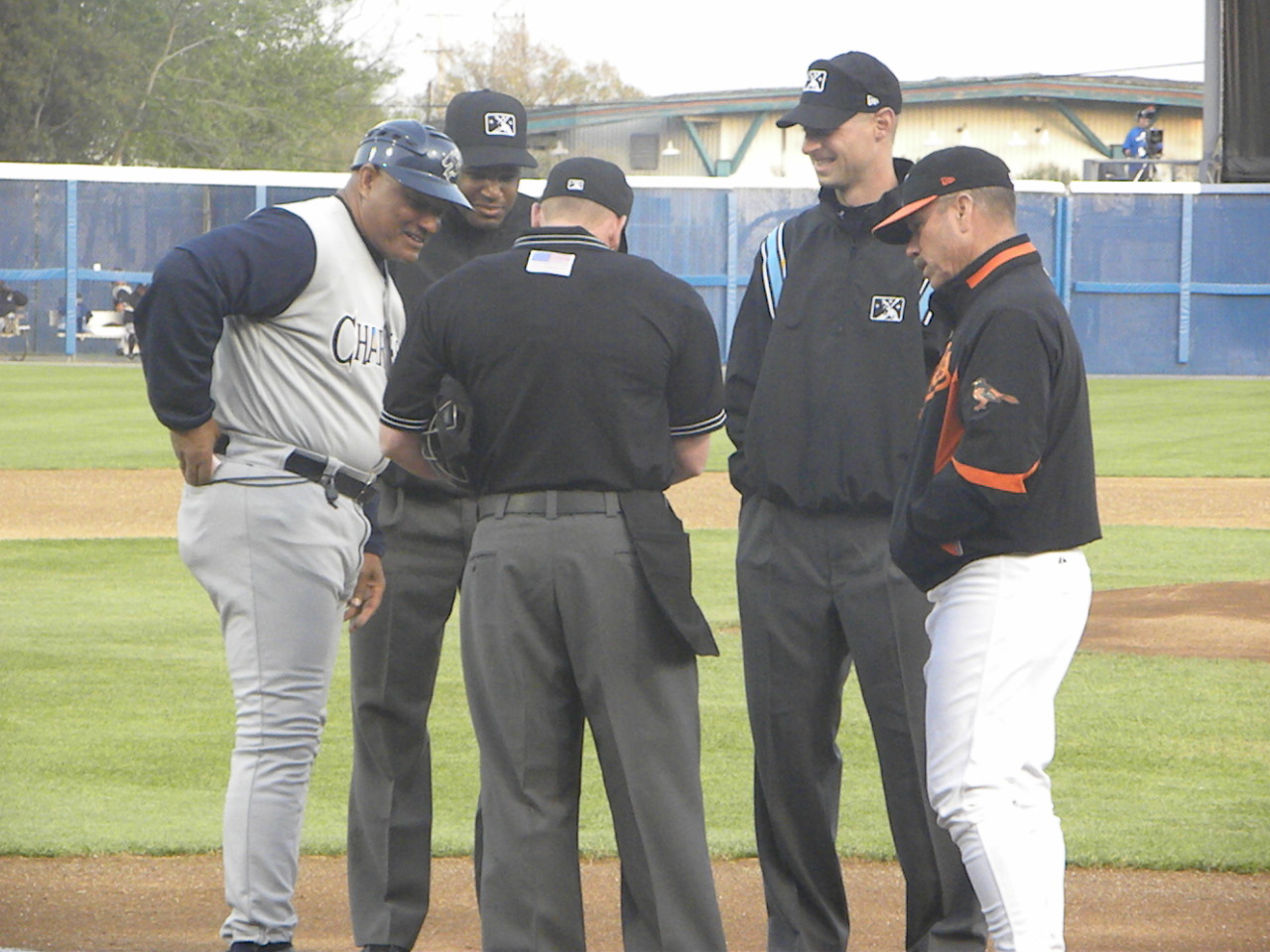
Chris Chambliss and Gary Allenson meet with the umpiring crew before a game

Call third strike

Come backer a visiting pitcher dodges a line drive

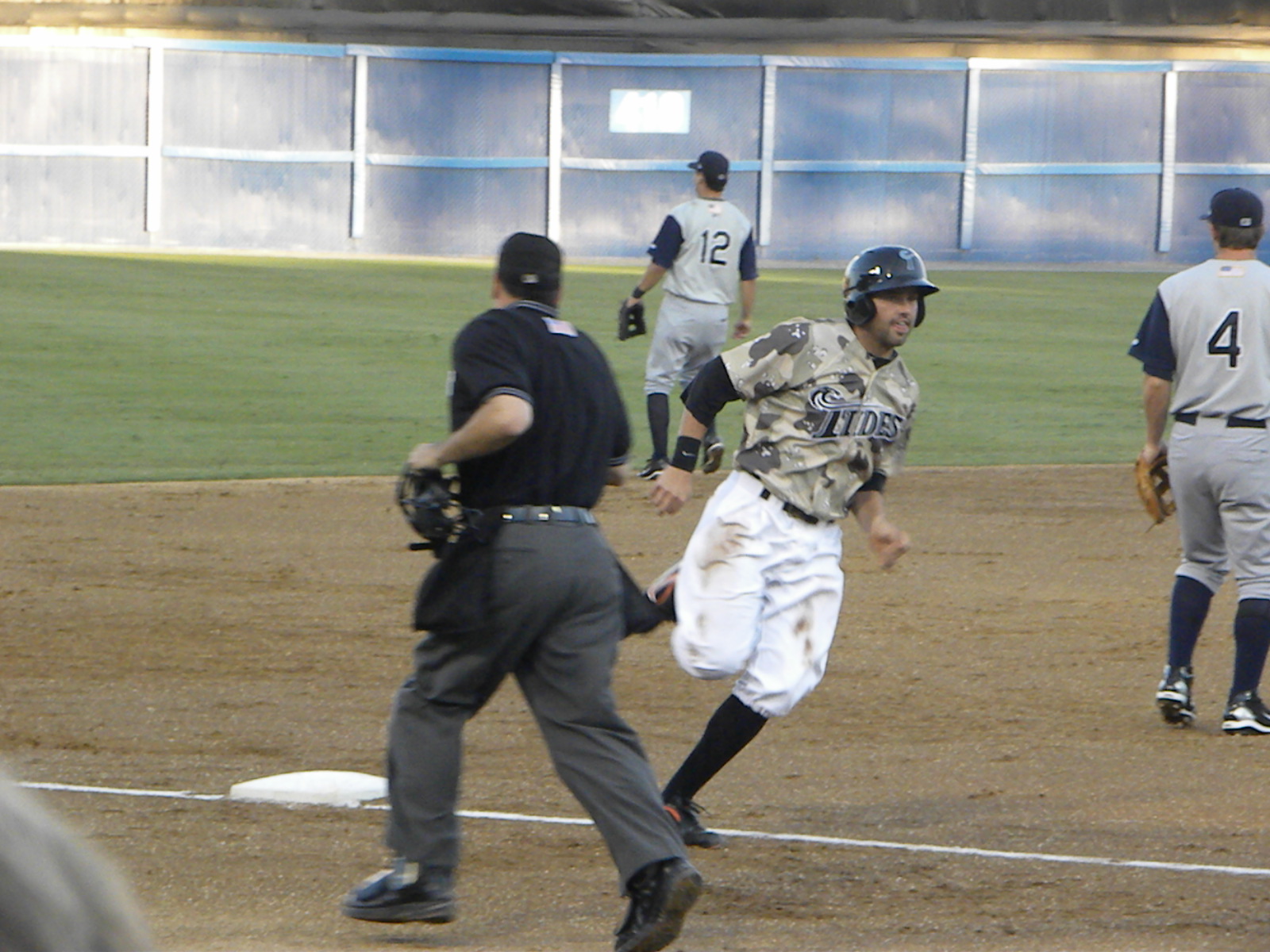
Rhyne Hughes rounds third

And the rain comes down

After the rain: The grounds crew hustles to dry out the field

Jeff Salazar chase down a fly ball

The Church of Baseball, Harbor Park Parish at night

Brandon Erbe struggled much of the year until an injury put him on the DL for the rest of the season

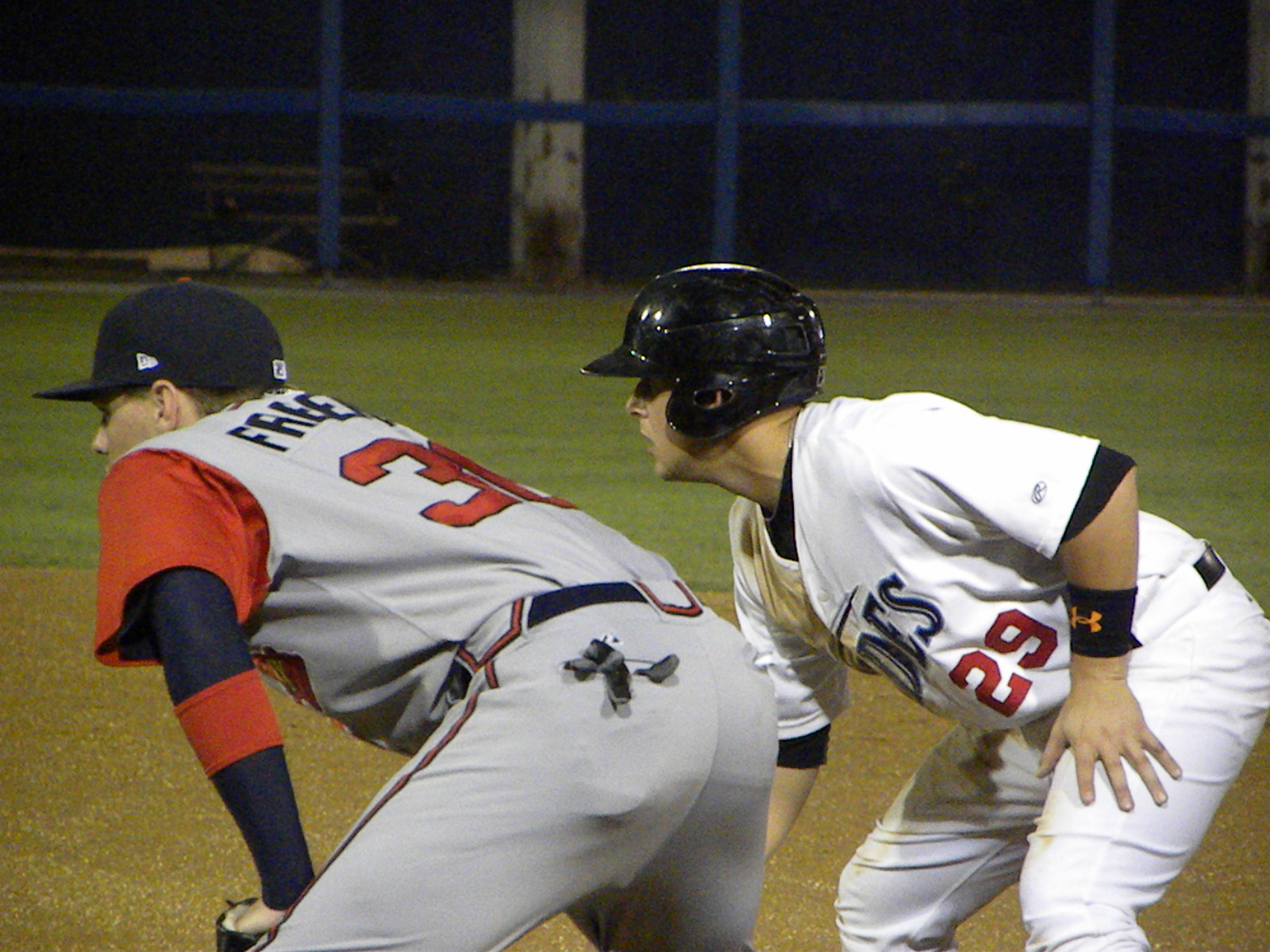
Brandon Snyder takes a lead at first against Gwinnett

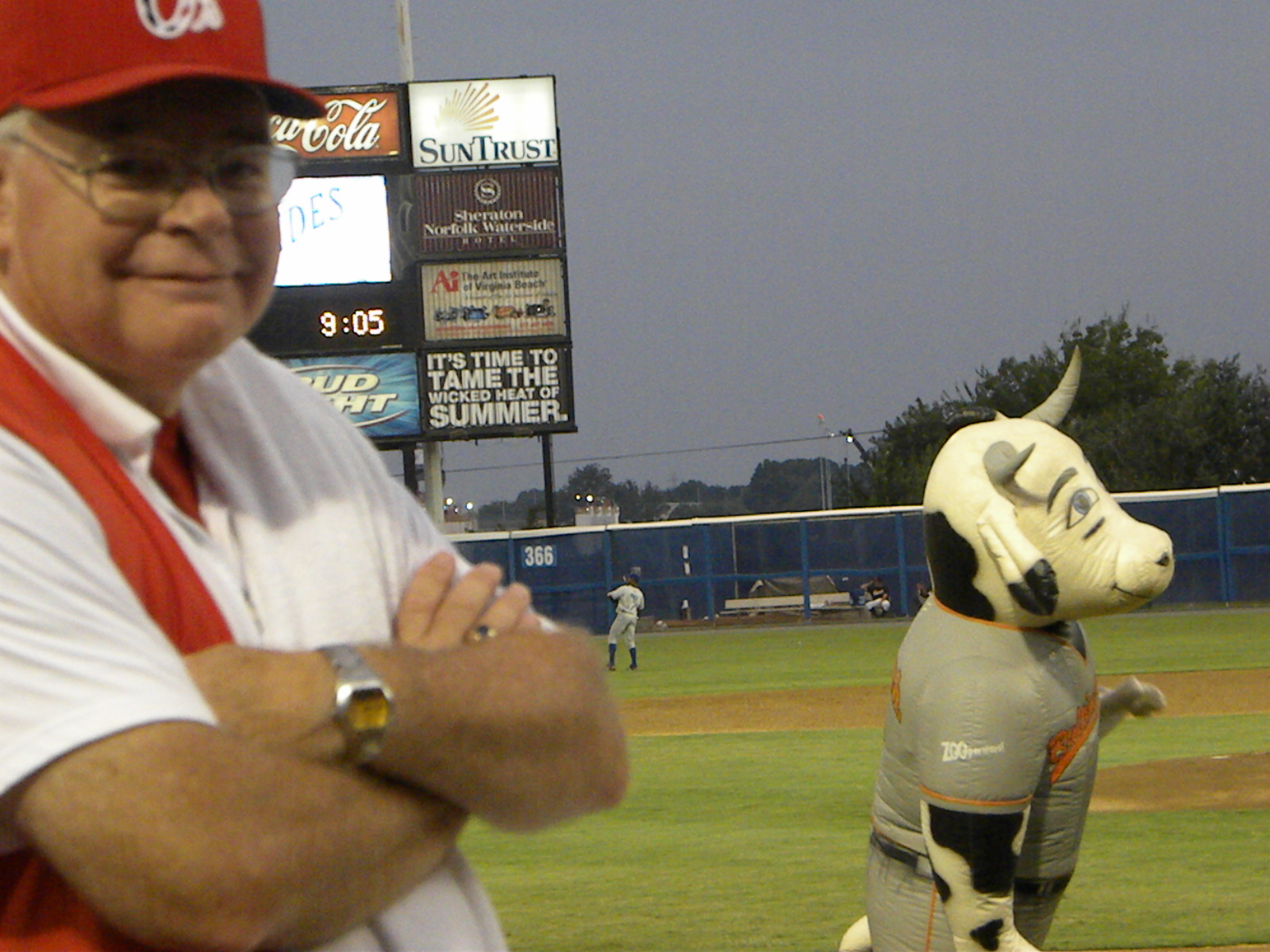
Art the Usher with Cow Ripken  in the background

Robert Andino tags out a member of the Scranton Wilkes-Barre Yankees

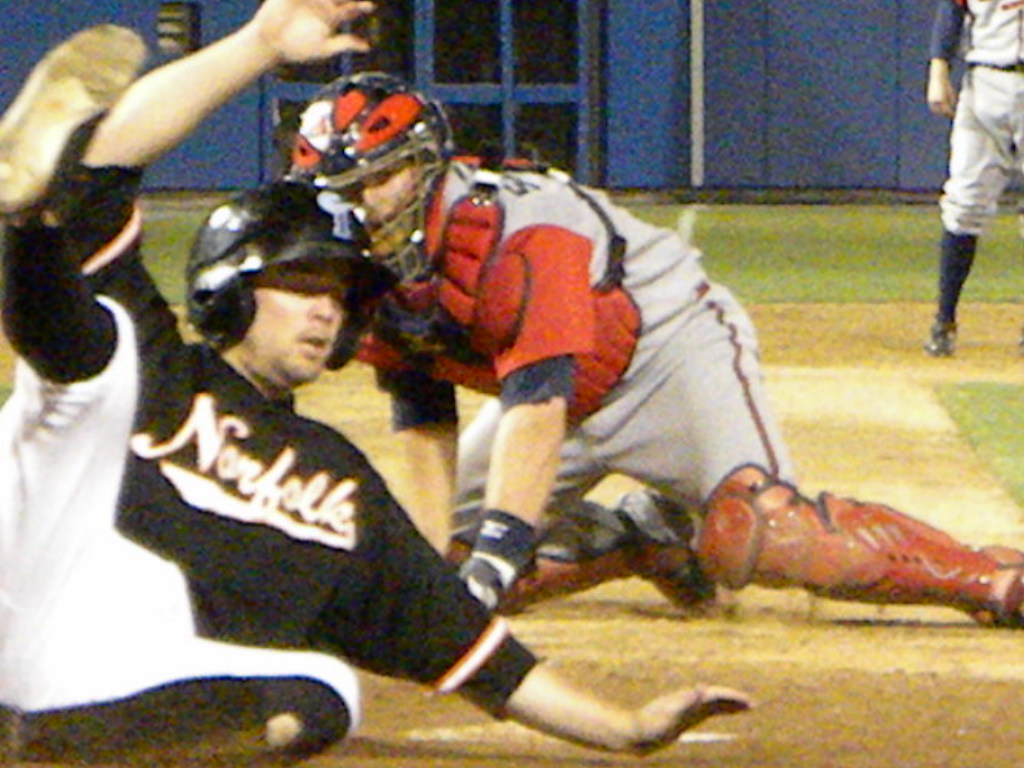
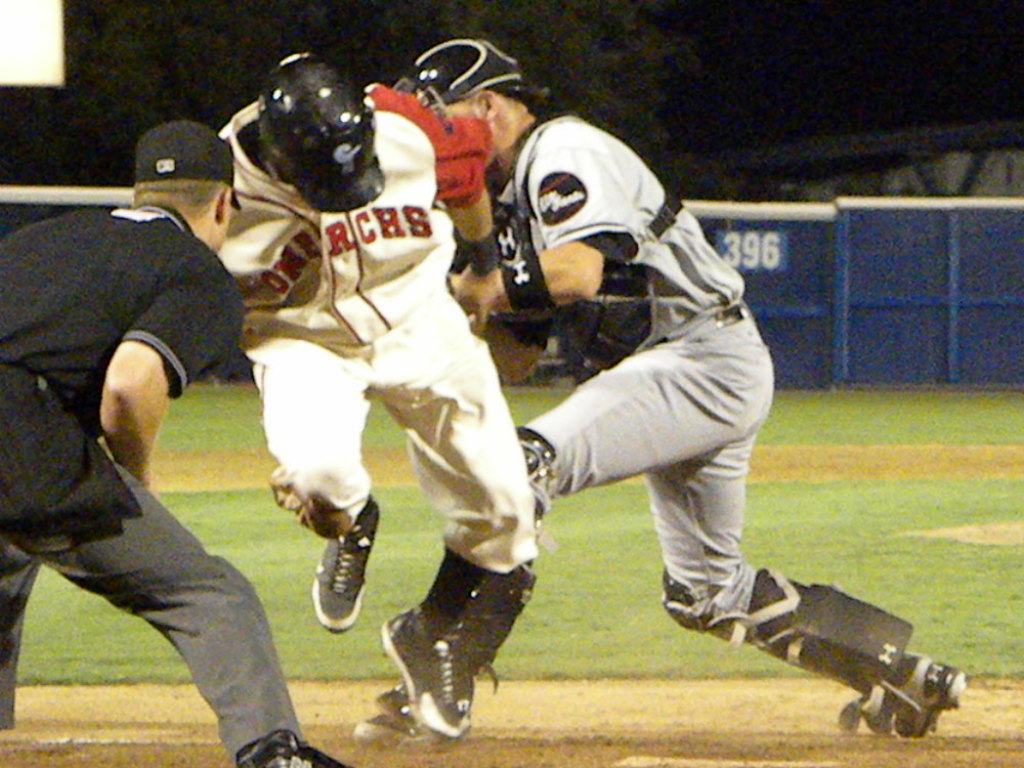
Paco Figueroa tagged out trying to crash through an opposing catcher

Marine Night

Jonathan Tucker takes a strike

Jonathan Tucker safe at home

Armando Gabino was a solid spot starter and reliever. He went 7-0 in games that he started

Another shot of Andy Mitchell the Tides winningest pitcher in franchise history. He declared free agency at the end of the season

Nolan Reimold beats out a ground ball at first base

Michael Aubrey and Paco Figueroa shift as an opposing hitter hits a ground ball

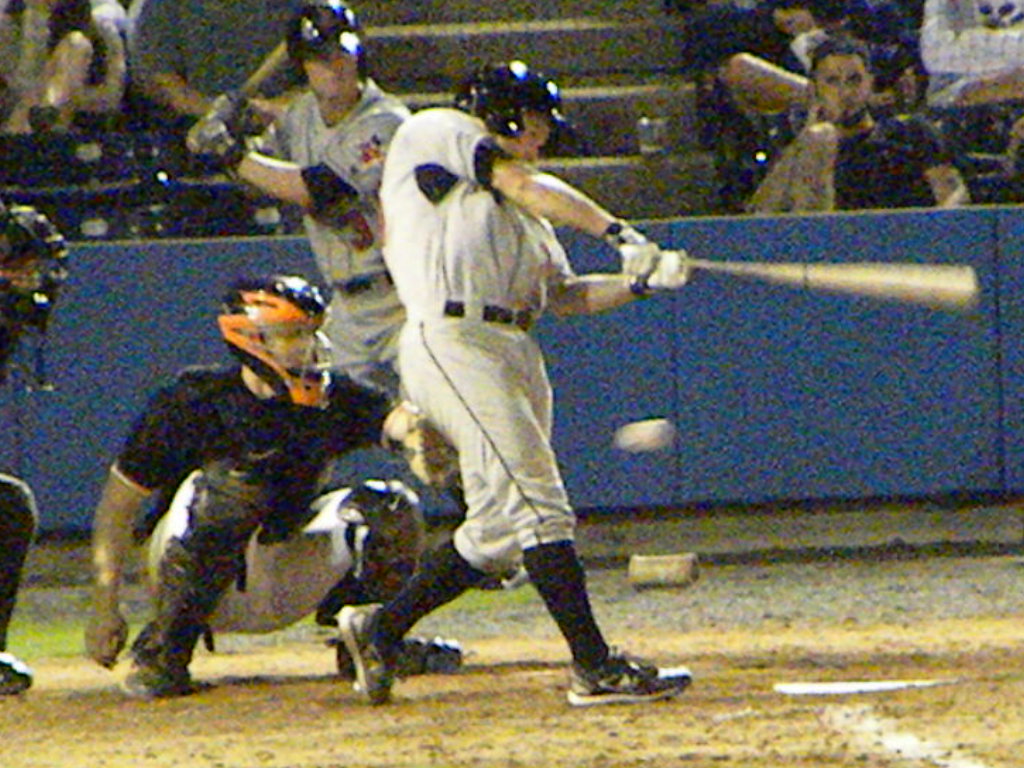
An opposing batter swings over a pitch

Dennis Sarfate led the Tides in saves and had an outstanding year, he is now a free agent

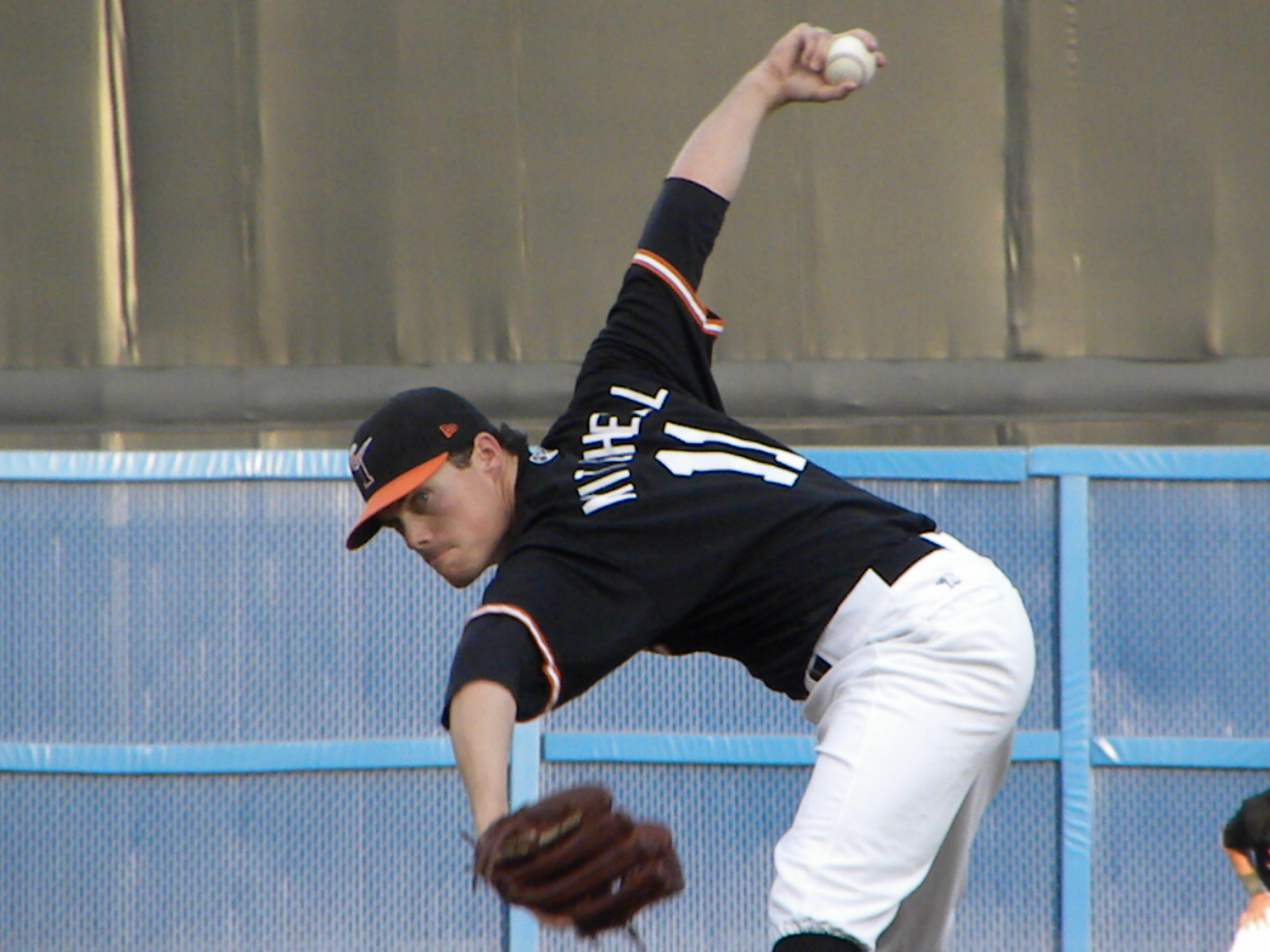
Kam Mickolio fires a strike

Harbor Park at dusk

A member of the Charlotte Knights looks on after a called strike

Jeff Salazar greets a runner at home

A season draws to an end

Rip Tide loses again in a race around the bases

Alfredo Simon warms up in the bullpen. Simon went from starter with the Tides to sometimes closer with the Orioles

The season at home comes to an end

Chris Tillman pitches a win against the Detroit Tigers on October 3rd at Camden Yards

And so the season ended and this team will go different ways, many players that I consider friends will move on and others up.  New prospects will come up and some of the team will be back. To my friends and all the 2010 Norfolk Tides have a great off season and my best to you and your families.

Peace

Padre Steve+

1 Comment

Filed under Baseball, Batlimore Orioles, norfolk tides, Photo Montages

The War to End All Wars….and a Peace to end all Peace

It was the War to end all war

On the 11th hour of the 11th day of the 11th month the guns fell silent across Western Europe and the war which had killed 16 million soldiers, sailors and civilians and wounded another 21 million more came to an end. It had begun as a conflict in the Balkans which rapidly drew in all of Europe’s major powers.  The central focus of the war was the Western Front where the armies of Germany battled those of Britain, France, Belgium and later the United States.  Battles with names such as the Marne, Passchendaele, the Somme, Verdun, Ypres, Chateau Thierry, Belleau Wood, Vimy Ridge, Cambrai, the Aisne, represented the pinnacle of killing as soldiers battled in the mud of massive trench systems and Generals sacrificing thousands of men in a day for the gain of a few hundred yards of territory throwing them against mountains of barbed wire, landmines, well emplaced machine gun nests and mortars. Massed batteries of artillery tore men to shreds leaving many men so pulverized that they would ever be identified.  Poison gas both choking agents and the long lasting mustard gas added to the hell that was the war in the West.

During the war the war Imperial Russia had fallen to a Communist revolt and surrendered, the Austro-Hungarian Empire fell in October of 1918 and even the Allies had faced near calamity on the home front. In 1917 the French Army mutinied after years of futility with only Marshal Petain the hero of Verdun able to quell it.

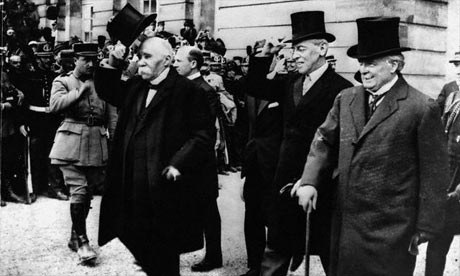
The men who drafted the Peace to end all Peace: Clemenceau, Wilson, Lloyd George

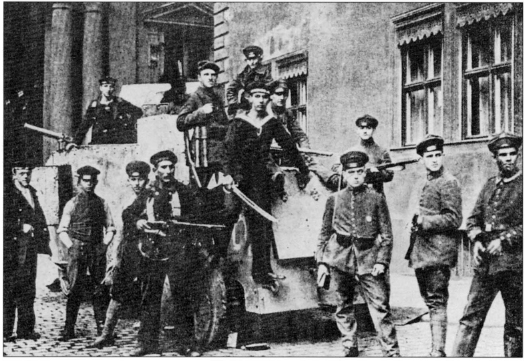
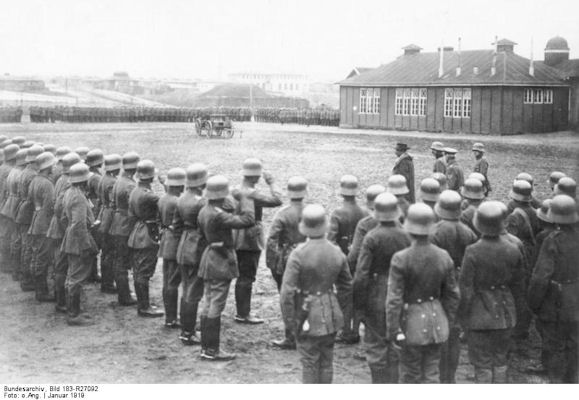
Kaiser Wilhelm II had abdicated his throne on November 9th amid a revolution at home which tore the country apart.  The new German Government accepted an armistice in the belief that the Allies would honor President Woodrow Wilson’s 14 Points.  Instead they were subjected to humiliation and starvation as the Allies refused to end their blockade of Germany until the Peace Treaty was signed. Hundreds of thousands more Germans died as a result of starvation and disease as their cities were wracked by violence as order collapsed.  It was the Socialist government which had inherited the country that had to fight the Communists in the streets allying themselves with the Army High Command to form Freikorps from units and individual soldiers under commanders willing to fight.

Soviet style revolution in Germany 1918-1919

In France at the Palace of Versailles the Allies led by the British and French brushed aside Wilson’s attempt at a just peace and placed draconian sanctions on the new German Republic which had no choice but to accept the surrender terms dictated by the Treaty of Versailles. The Army was to be reduced to 100,000 men with no heavy weapons, the Navy to a token force of obsolete ships, the air force disbanded.  Massive war reparations were imposed which were impossible for the Germans to fulfill and which were only paid off this year.  The final ignominy was the fact that the Germans were forced to bear the sole responsibility for the war. The German economy collapsed in the aftermath, France occupied key German industrial areas in the Saar and Ruhr and the nation fell into more disorder as the Deutschmark lost all of its value as hyperinflation made the money worthless.

Freikorps helped restore order when the Army dissolved

Eventually order returned to Germany with a brief period of relative prosperity which lasted until the world-wide Great Depression which through Germany back into chaos. Government after government was formed and dissolved and the last Chancellors of the Republic were forced to rule under the emergency conditions of Article 48 of the Weimar Constitution.  Eventually extremists on the left and the right brought further chaos as the eventually leading President Hindenburg to appoint the Leader of the National Socialist German Workers Party (Nationalsozialistische Deutsche Arbeiterpartei) or NSDAP as Chancellor.  We know the rest of the story. A World War that killed far more than the first 22-25 million military and 62-78 million civilians, a war of extermination on the Eastern Front, the Holocaust, and fearful weapons which ushered in the Atomic and Nuclear age.  Europe was shattered, Britain’s wealth drained and empire unsustainable, France divided and impoverished and other nations in political or economic crisis with the Soviets controlling Eastern Europe behind an Iron Curtain.

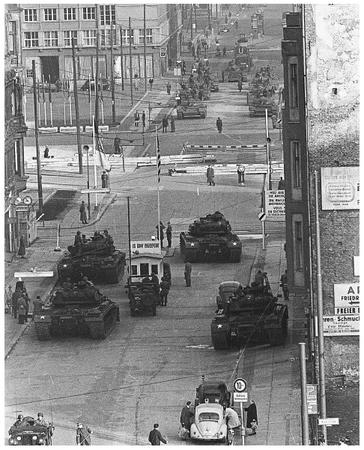
Cold War

In Europe and Asia a “Cold War” between the Soviet Communists and the West took the place of the previous war.  The United States would fight wars in Korea and Vietnam while the Soviets would rule with an iron fist in Eastern Europe and at the height of the Cold War invaded Afghanistan.  The wars in Vietnam and Afghanistan caused crisis in both the United States and the Soviet Union and Afghanistan helped mark the end of Soviet power and the end of the Soviet Union.

Around the world colonial empires fell through either revolts of colonized people or the abdication of empire by nations exhausted and economically broken by war. The many of the newly free “nations” were artificial and as a result experienced their own civil, tribal and religious conflicts the effects of which are still felt.  The end of the Cold war brought more change and for a time there was a period of American superiority but wars engulfed the Middle East as Iraq attacked its neighbors and was defeated in the Gulf War.  However the effects of that war were felt as Moslem extremists took power in Afghanistan and others including the Yemeni born Saudi Osama Bin Laden began a campaign of terror to drive the United States out of the Middle East that culminated in the attacks of September 11th 2001 and now the war that seems to have no end.

And it was the War to end all war and a peace that ended all hope of peace….God help us as it is unlikely that this war will end anytime soon for us or our allies even if we withdraw from Afghanistan.  Our enemies are too beholden to their ideology to stop their attacks until they win or are destroyed, the war will continue and God only knows how many soldiers and civilians will die in the coming years over 90 years after the War to end all War ended and the Peace to end all Peace began.

Peace

Padre Steve+


1 Comment

Filed under Foreign Policy, History, iraq,afghanistan, Military, national security, Political Commentary, world war two in europe

Veterans Day 2010: Counting the Cost of War

“It is well that war is so terrible, or we should get too fond of it.” General Robert E. Lee

Veterans Day had become a rather somber occasion for me over the past decade and since returning from Iraq in 2008 has taken on added personal significance.  I have noticed that I have become much more reflective about the sacrifices made by our military and the terrible coasts of war on our Soldiers, Marines, Sailors, Airmen and their families in this age of the all volunteer military.  The military which has about 2,225,000 members including the Reserves and National Guard is just 0.7% of the total population, the lowest percentage of military personnel compared to total population during any war in our history.  As a result this force has borne the brunt of a war that no politicians or bureaucrats figured would last half as long as it has.  As a result the “few” have been asked to do more for longer than and military that this nation has ever fielded during a war.

Thus for me Veterans Day has become a rather somber and reflective occasion as I ponder all the sacrifices made by our military and their families. In Afghanistan the U.S. Military has lost 1378 killed and our allies another 825.  In Iraq 4427 U.S. Military personnel have died along with 318 allied soldiers, not including the Iraqi military losses.  For each of the killed there are about 8 more wounded a total of over 38,000 wounded.  Of course the wounded numbers do not include 170,000+ cases of hearing damage; 130,000+ cases of mild traumatic brain injuries; and 200,000+ cases of serious mental health problems, over 30,000 serious disease cases, including a disfiguring, parasitic disease called Leishmaniasis, which results from bites of sand flies; thousands of cases of respiratory disease linked to exposure to toxic burn pit smoke and hundreds of suicides.  Then there are the injuries related to road and aviation accidents not in direct combat.  In my recent assignments in Iraq and Naval Medical facilities I have seen the human cost of the war.  I have friends who suffer as the result of Traumatic Brain Injury, PTSD and Pulmonary diseases as well as those that have been wounded as the result enemy action.  I have a dear friend with a rare and irreversible pulmonary condition from two tours in Iraq. He is 41 his lungs are those of a 70 year old man.  My best friend, a senior Naval Officer is still suffering from the effects of TBI and PTSD incurred while serving with the Marines in Al Anbar Province.

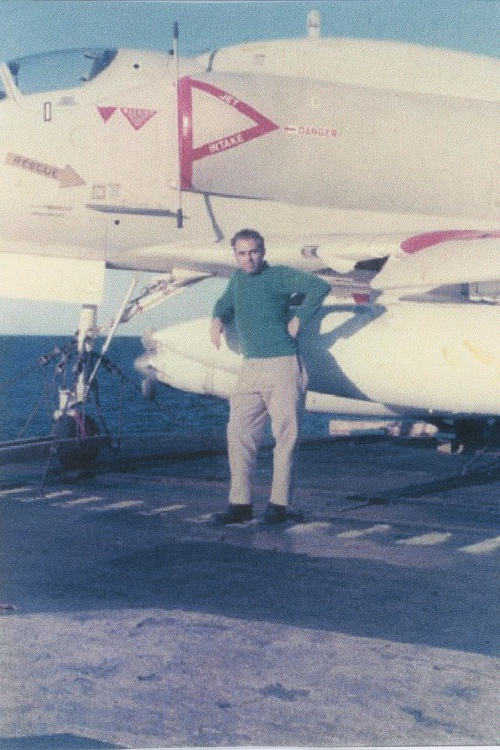
My Dad Aviation Storekeeper Chief Carl Dundas aboard USS Hancock CVA-19 off Vietnam circa 1971-72

A year ago on Veterans Day I was at with my parents in Stockton California to visit my mom and my dad who was then in a nursing facility due to the ravages of Alzheimer’s disease.  It was a terrible visit conflict with my mother due to witches’ brew of my PTSD and grief for my dad and my mother’s struggles with my dad’s condition and her own physical condition.  I visited my dad every day when in two and unfortunately he did not know who I was, Alzheimer’s had robbed him of everything that made him my dad.  He died on June 23rd of this year a day after I found out that I had been selected for promotion to Commander.  My dad was a retired Navy Chief Petty Officer who served in Vietnam on a beach detachment manning an emergency airfield in the besieged city of An Loc in 1972.  He never talked about that tour or what happened there except to tell me that he saw the Communists executing civilians in the city from his observation point.  He came home a changed man.  Thankfully he is now out of his suffering and our family is beginning to find its way back from the abyss of his illness.

I have served for over 29 years in the Army and the Navy and have witnessed many things and been blessed to have my life enriched by many veterans.  Unfortunately many of these brave men have since passed away, some having lived many years and others that have died far too young as a result of service connected injuries.

With advisors to the 3rd Bn, 3rd Brigade 7th Iraq Division COP South 2008

In my current work I see many young men that wear the Purple Heart for being wounded in combat. I see those that need assistance to walk, amputees, men with obvious scars from burns and others suffering blindness from their injuries. Our hospital’s Medical Board sees 40-60 Marines and Sailors a day, quite a few of whom that will be medically retired due to their injuries.  There are also those that have died by their own hand suffering from psychological and spiritual injuries too deep to fathom, we had one of our own Corpsman suicide last week.

The cost of war is terrible, as General William Tecumseh Sherman so eloquently put it: “War is Hell.”

Despite this our brave men and women that serve in all branches of the military as well as those that have gone before us in the 235 year history of our military have shouldered the load, for most of that history depending on volunteers who often served in obscurity often derided by their fellow Americans who believed that the military was a place to go if you could not be successful in the civilian world. The pay was low, the duty arduous and benefits few. In the Civil War, the World Wars and up until 1974 the professionals were augmented by draftees who outnumbered the professionals by a huge margin.  Since 1974 the force has been an all volunteer force.

Health and Comfort Board Team USS Hue City, Northern Arabian Gulf May 2002

Regardless of whether our Veterans were draftees or volunteers they have served this country well and on the whole to use the current Navy description are “A Global Force for Good.” The countries liberated from oppressors and helped in humanitarian operations by American Soldiers, Sailors, Marines and Airmen are many and varied.  They have represented the spectrum of our society and represent the best the country has to offer.  Unfortunately they have not always been honored by some of their our countrymen and women and sometimes the children and grandchildren of the peoples that they liberated from Nazi, Fascist or Communist oppressors who often use the wrongdoing of a few military personnel or the decisions or actions of American politicians or businessmen to label American military personnel as criminals.

Unfortunately since the military is such a small part of our population and concentrated in a few large bases it is invisible to most Americans as they live their daily lives. Often in isolated from the bulk of America such as Killeen Texas home of the U.S. III Corps and Jacksonville North Carolina the home of the 2nd Marine Expeditionary Force and Second Marine Division are quintessential military towns but neither are near major population centers and thus the sacrifice of these Soldiers, Marines and Sailors goes unnoticed by most of the nation.  In a sense the human cost of the war falls inordinately upon these military communities where there are few strangers.

In spite of this the current men and women of the American Military train, deploy, fight and return every day as they have since the 9-11-2001 attacks, many if not most have made multiple combat tours.  I have been pleased to see more support of the military in the media, especially sports media and leagues.  Many businesses are taking time to offer things of value to servicemen and women and those businesses should be commended and patronized.  I was touched by many stories that I saw about our veterans on ESPN over the past few days.  http://www.espnmediazone3.com/us/2010/11/espn%E2%80%99s-weeklong-salute-to-veterans-day/

Many of our Reserve component personnel give up civilian employment and chances for promotion to serve in the military, particularly when they are mobilized for service. When they return home most return to towns and cities that have little of the support afforded to active duty members when they return.  I pray that our political leaders in the future will exercise discernment and wisdom before committing us to another war. Otto Von Bismarck said: “Anyone who has ever looked into the glazed eyes of a soldier dying on the battlefield will think hard before starting a war.” Unfortunately the current members of the House, Senate and Executive branch have little connection to the military as very few have served and I wonder if any really comprehend this maxim.  In the 111th Congress 120 members had some form of military service.  The number of veterans in the 111th Congress reflects the trend of a steady decline in the number of Members who have served in the military. For example, there were 298 veterans (240 Representatives, 58 Senators) in the 96th Congress (1979-1981); and 398 veterans (329Representatives, 69 Senators) in the 91st Congress (1969-1971).  Those who have served a full military career are far fewer; the number of congressmen with military careers will remain relatively constant for the 112th Congress. In the Senate there will be one (as compared with two in 2006 and one in 2008) and in the House there will be eight (as compared with four in 2006 and six in 2008).  Some of these Congressional Veterans have been vilified by some broadcasters and pundits of the extreme right wing media most of whom who have never served in the military.  On the positive side nine members of the new Congress will have served in the current wars which hopefully will help promote the sacrifice of our current Veterans and help with programs that will help returning Veterans.

I have seen the cost of war up close and personal in Iraq and back here in the States. I suffer some the afflictions described as a result of my service and see the young men and women many of whom were not yet born when I enlisted in the Army, or when I was commissioned as an Army Officer, when I was a Company Commander or when I was a senior Captain in the Army. These young men and women are heroes.

Please take a moment to thank a Veteran.  If you have time volunteers are always welcome at organizations such as the USO and American Red Cross working with our troops, join or support organizations which promote the causes of Veterans including the Iraq Afghanistan Veteran’s Association www.iava.org the Veterans of Foreign Wars http://www.vfw.org/, American Legion http://www.legion.org/ , Marine Corps League http://www.mcleague.org/, the Fleet Reserve Association http://www.fra.org/, the Association of the U.S. Army http://www.ausa.org and the Disabled American Veterans http://www.dav.org/. There are also many charitable organizations that provide assistance to Veterans and their families’ one of the best being the Fisher House Foundation http://www.fisherhouse.org/ which provides comfortable and free lodging to the families of wounded, injured or sick military personnel on bases adjacent to military hospitals. I found these ten ways that you can help on Yahoo.com:

1. At 11 a.m., observe a moment of silence for those who’ve fought and died while in service to the country

2. Display an American flag

3. Attend a Veterans Day parade

4. Thank a vet for his/her service

5. Send a letter to troops through the U.S. Department of Defense Website

6. Work in a homeless shelter or soup kitchen

7. Visit a veteran’s grave or pick up trash at a veterans cemetery

8. Visit with the family of a veteran who’s serving overseas

9. Visit with a wounded vet at a local VA facility

10. Donate to the USO, the American Legion, Veterans of Foreign Wars USA or other organizations that honor and assist vets

Keep us all in your prayers and please when Veterans Day is past do not forget those of us that serve and our families, especially those men and women serving in harm’s way.  To my friends and comrades I echo the words of the German commander to his troops in captivity at the end of the Band of Brother’s mini-series:

“Men, it’s been a long war, it’s been a tough war. You’ve fought bravely, proudly for your country. You’re a special group. You’ve found in one another a bond that exists only in combat, among brothers. You’ve shared foxholes, held each other in dire moments. You’ve seen death and suffered together. I’m proud to have served with each and every one of you. You all deserve long and happy lives in peace.”

Peace

Padre Steve+

3 Comments

Filed under iraq,afghanistan, Military, PTSD, shipmates and veterans

Happy 235th Birthday Marines!

In 1775 a committee of the Continental Congress met at Philadelphia’s Tun Tavern to draft a resolution calling for two battalions of Marines able to fight for independence at sea and on shore.  The resolution was approved on November 10, 1775, officially forming the Continental Marines. The first order of business was to appoint Samuel Nicholas as the Commandant of the newly formed Marines. Robert Mullan the owner and proprietor of the said Tun Tavern became Nicholson’s first captain and recruiter. They began gathering support and were ready for action by early 1776.  They served throughout the War for Independence and like the Navy they were disbanded in April 1783 and reconstituted as the Marine Corps in 1798. The served on the ships of the Navy in the Quasi-war with France, against the Barbary Pirates where a small group of 8 Marines and 500 Arabs under Lieutenant Presley O’Bannon made a march of 500 miles across the Libyan Desert to lay siege Tripoli but only reached Derna. The action is immortalized in the Marine Hymn as well as the design of the Marine Officer’s “Mameluke” Sword. They served in the War of 1812, the Seminole Wars and in the Mexican-American War where in the storming of the on Chapultepec Palace they continued to build and enduring legacy. In the months leading up to the Civil War they played a key role at home and abroad.  In October 1859 Colonel Robert E. Lee led Marines from the Marine Barracks Washington DC to capture John Brown and his followers who had captured the Federal Armory at Harper’s Ferry.

The Corps would serve through the Civil War and on into the age of American Expansion serving in the Spanish American War in the Philippines, Puerto Rico and Cuba where they seized Guantanamo Bay at the battle of Cuzco Wells.  The would serve in China and be a key component of the international force that defended foreign diplomats during the Boxer Revolt as well as the international force that would relieve the diplomatic compound in Peking (Beijing).  In World War One the Marines stopped the German advance at Chateau Thierry and cemented their reputation as an elite fighting force at Belleau Wood where legend has it that the Germans nicknamed them Teufelhunden or Devil Dogs, a name that they Marines have appropriated with great aplomb.

During the inter-war years the Marines were quite active in the Caribbean and Asia and also developed amphibious tactics and doctrine that would be put to use in the Pacific Campaign.  During the war the Marines served in all theaters but won enduring fame at Wake Island, Guadalcanal, Tarawa, Iwo Jima, Okinawa and numerous other battles in the Pacific war. Marine Aviators flew in some the most desperate actions in the war to support the Navy and amphibious operations ashore.

After the war the Truman Administration sought to eliminate the Marine Corps but the Corps was saved by the efforts of Americans across the country and Marine supporters in Congress.  That was a good thing because the Marines were instrumental in keeping the North Koreans from overrunning the South during the Korean War on the Pusan Perimeter, turned the tide at Inchon and helped decimate Communist Chinese forces at the Chosin Reservoir.  After Korea the Marines would serve around the World in the Caribbean and Lebanon and in Vietnam where at Da Nang Keh Sanh, Hue City, Con Thien fighting the North Vietnamese and their Viet Cong allies.  The Marines took the initiative to implement innovative counter insurgency measures such as the Combined Action Platoons which enjoyed tremendous success until they were shut down by the Army high command.  These lessons would serve the Marines well in the new millennium during the Anbar Awakening in Iraq which changed the course of that insurgency and war.

The Marines would again be involved around the World after Vietnam serving in the Cold War, in Lebanon and the First Gulf War which was followed by actions in Somalia, the Balkans and Haiti. After the attacks of September 11th 2001 the Marines were among the first into Afghanistan helping to drive the Taliban from power. In the Iraq Campaign the Marines had a leading role both in the invasion and in the campaign in Al Anbar Province.  After theirwithdraw from Iraq the Marines became a central player in Afghanistan where today they are engaged around Khandehar and in Helmand Province.

The Marines are elite among world military organizations and continue to “fight our nations battles on the air and land and sea.” The Corps under General John LeJeune institutionalized the celebration of the Marine Corps Birthday and their establishment at Tun Tavern. General LeJeune issued this order which is still read at every Marine Corps Birthday Ball or observance:

MARINE CORPS ORDER No. 47 (Series 1921)
HEADQUARTERS
U.S. MARINE CORPS Washington, November 1, 1921

The following will be read to the command on the 10th of November, 1921, and hereafter on the 10th of November of every year. Should the order not be received by the 10th of November, 1921, it will be read upon receipt.

On November 10, 1775, a Corps of Marines was created by a resolution of Continental Congress. Since that date many thousand men have borne the name “Marine”. In memory of them it is fitting that we who are Marines should commemorate the birthday of our corps by calling to mind the glories of its long and illustrious history.

The record of our corps is one which will bear comparison with that of the most famous military organizations in the world’s history. During 90 of the 146 years of its existence the Marine Corps has been in action against the Nation’s foes. From the Battle of Trenton to the Argonne, Marines have won foremost honors in war, and in the long eras of tranquility at home, generation after generation of Marines have grown gray in war in both hemispheres and in every corner of the seven seas, that our country and its citizens might enjoy peace and security.

In every battle and skirmish since the birth of our corps, Marines have acquitted themselves with the greatest distinction, winning new honors on each occasion until the term “Marine” has come to signify all that is highest in military efficiency and soldierly virtue.

This high name of distinction and soldierly repute we who are Marines today have received from those who preceded us in the corps. With it we have also received from them the eternal spirit which has animated our corps from generation to generation and has been the distinguishing mark of the Marines in every age. So long as that spirit continues to flourish Marines will be found equal to every emergency in the future as they have been in the past, and the men of our Nation will regard us as worthy successors to the long line of illustrious men who have served as “Soldiers of the Sea” since the founding of the Corps.

JOHN A. LEJEUNE,
Major General
Commandant

I have had the privilege of serving with the Marines in peace and war and the most memorable Marine Corps Birthday celebrations for me were in Ramadi with the Marine advisors to the Iraqi 7th Division and with the Marine Security Force Company at Guantanamo Bay Cuba. The highlight of my career was serving with the Marines in Iraq and I wear my Iraq Campaign Medal with pride.  The Marines have helped my professional development as an office through the Amphibious Warfare Course, Command and Staff College and the Fleet Marine Force Officer Qualification. I count my Marines as some of my most enduring friends.

Happy Birthday Marines. Thank you for all you do.

Peace

Padre Steve+


Leave a comment

Filed under History, iraq,afghanistan, Military

How Bad Can “America’s Team” Get? The Dallas Cowboy Season Collapses and Wade Phillips is Fired

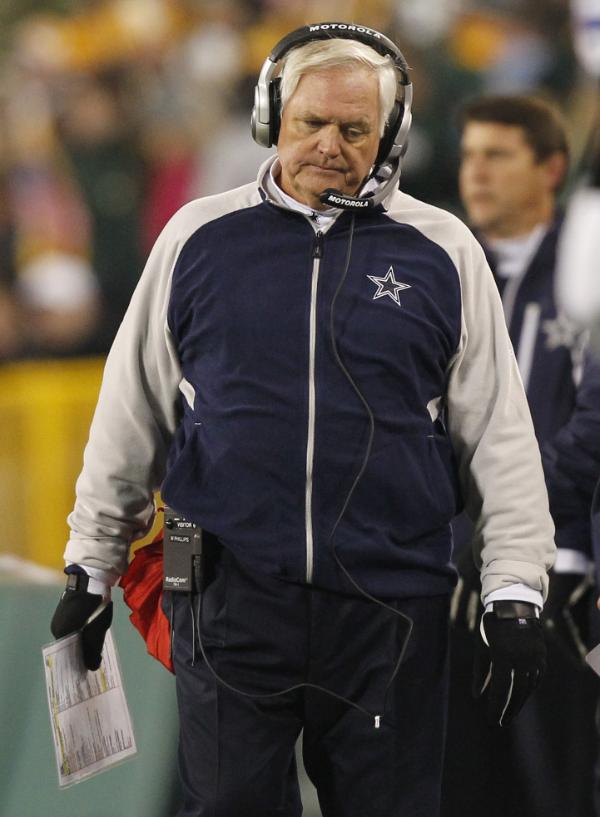
Wade Phillips in Defeat (NFL.com photo)

Let’s get this straight. I am not a Dallas Cowboys fan. In fact I just find football mildly interesting and I pretty much will watch it to keep from watching the talking heads on the cable news channels, home shopping networks, televangelists or the latest episode of Law and Order Special Victims Unit Bucharest. However my favorite team was playing last night, actually my favorite team of the week, the Green Bay Packers who happened to be playing the Dallas Cowboys.

After having been subjected to the Cowboys up close and personal for 7 years in the Dallas Fort Worth area and having to suffer “America’s Team” about everywhere I go I spare no effort to root against them, even when they played the Red Army Team of Warsaw Pact back in the Cold War.  Call me un-American but I think that any team that really believes that it is “America’s Team” is pretty arrogant and deserves to lose just for the principle of it.

Now please know that this is nothing personal against any former Cowboys players, one of my friends from High School played on their Super Bowl teams in the 1990s.  Roger Staubach, Troy Aikman and Emmitt Smith are all pretty cool and seem like generally nice people, so it is nothing personal against any Cowboys greats or even most of their fans including many that I know who are good people that pay their taxes, go to church and adore their kids except when they want something on Sunday afternoon that conflicts with the game.  In fact my only issue with these wonderful people is their choice of football team. The team that was the first to make an away jersey its home jersey stretching the overdone western cliché “the good guys in the white hats” just a bit too far.

For years the Cowboys have labored under the illusion that they are a good football team.  Now it is true that until this year under their now deposed Head Coach Wade Phillips won a lot of games but tended to choke in the playoffs having one just one playoff game this millennium or something like that.  This year playing in the Temple of Doom or as it is better known the New Cowboys Stadium and Arcade they really believed that this was their year. They were going to be the first team to ever play and win the Super Bowl in their home stadium….well that was the hype.  Unfortunately they forgot that they had to play 16 regular season games to get there. Now since a team usually needs to win 10-11 games to get a spot in the playoffs and the Cowboys had 11 last year I think that they really believed that all they had to do was show up and other teams would say “My God we’re playing America’s Team, we can’t win!” and then go back to their hotel rooms to get drunk and eat pork rinds while the Cowboys celebrated another well deserved win.

The mantra in Dallas was that the Cowboys were a great team, loaded with talent and potential destined for greatness like those that went before them. Even when they started losing they kept repeating this like if they just said it enough that it would be true. Each week they went out on the field and had their ass handed to them often by teams that were supposedly lesser quality and each week the mantra was repeated.

A Cowboys’ Fan in Green Bay (AP Photo/Morry Gash)

The only problem was that the other teams tended to show up and play good football and America’s Team failed to play good fundamental football. As my sophomore football line coach said “it’s the little things that count.”  The Cowboys stopped playing good fundamentals on day one and by Sunday night when they were annihilated by the Packers they were just going through the motions. Guys were quitting on plays, failing to make blocks and getting called for incredibly dumb penalties. It was an embarrassment that professional football players were performing in this manner. Heck if the Army went to war that way we would have our ass handed to us in about 5 minutes by the Moldavian Army, even faster by Serbania or any of those other “Anians.”  The Cowboys have been so bad the past few weeks that I think a College team from a less than elite conference could have beaten them.

The illusion crashed hard last night at the Packers pounded the Cowboys 45-7 and it wasn’t even that close.  I watched the Cowboys players and they had quit. Wade Phillips looked like Napoleon at Waterloo except he couldn’t run away in a carriage as his Army dissolved. Now don’t get me wrong I think that as a head coach that Phillips was way overrated but appeared to be a nice guy.  Everyone says that his players really liked him but if you ask me the way that they played they looked like they loathed him. It was like they were intentionally letting him down. If they liked him so much they picked one hell of a way to demonstrate their loyalty to him.

Last night I watched the Wade Phillips press conference. You hate to see a nice guy look like he did. He looked like he had lost his last best friend and his dog had run away with the couple next door. He was a beaten and depressed man. He had lost his ability to command and had to be fired by Cowboys Dictator and Cheerleader in Chief Jerry Jones.  When Jones was interviewed last night he said what everyone knew, that the Cowboys had more than one problem and that not just a few changes would be made. The first change came today when Phillips was given his walking papers and Offensive Coordinator Jason Garrett was named the Interim Head Coach.

One hopes that for the integrity of the game that the Cowboys players and organization will get their act together. They are cheating their fans as well as the NFL and doing nothing for themselves. The first step to getting better is to admit that you suck and Jerry Jones basically said that last night and today. If the Cowboys are lucky and they pull themselves together they might eke out a couple of more wins but they will have to go through some really good teams to get them.  I really don’t think that much can be down with this bunch of Cowboys, even when the Cowboys went 1-15 in the first year of the Jones-Johnson years they didn’t stop trying and even though they were a bad team they played with heart and character. This team shows none of that. I may not be a Cowboys fan but this team is dishonoring the Cowboy’s legacy and tradition.  If Jones is smart he will dump half of these guys some even before the off season. The Cowboys’ culture which has been built on hype and ghosts of the past has to change.  I think that Jones now gets to point as he said:

“I think there are a lot of people here that certainly are going to suffer and suffer the consequences, I’m talking within the team, players, coaches. They’ve got careers, and this is certainly a setback. I know firsthand what it is to have high expectations. I think that unquestionably our expectations were thinking we were something we weren’t. … But again, we have so many things that we need to correct and address as this game so vividly exposed and previous games have. So I’ve got a lot of work to do, a lot of decisions to make, and it’s not just one, two, three or four. There are several decisions. I think everybody in this country would agree there’s a lot wrong with this team. We’ve got to address them and certainly I’m the one to address them.”

Of course as the GM Jones needs to should some of the blame as he helped pick the players and the coaches. He also because of his cheer leading helped promote a culture of hype.  He will need to get a strong coach and let him coach to make the Cowboys a winner again.  I think that he gets it. In his post firing press conference admitted that he had “been in denial” for a number of games prior to this.

It will be interesting to some to see what happens in the coming weeks and months. Real Cowboy haters will love it and Cowboys fans will have to wear bags over their heads just to get through the games. Like them or loathe them the Cowboys need to get better for the good of the game.

Peace

Padre Steve+


Leave a comment

Filed under football, sports and life

100 Years of Navy Aviation: Part One the Aircraft Carriers

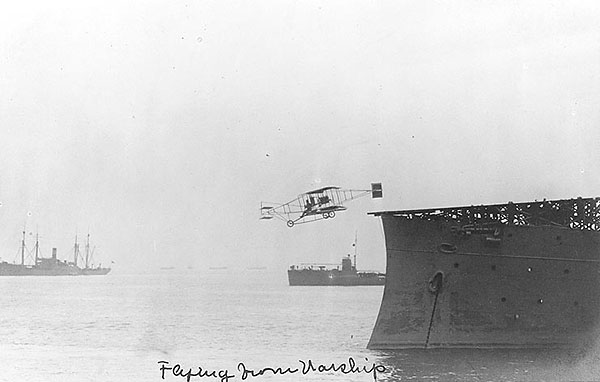
Eugene Ely makes the first takeoff from USS Birmingham on November 14th 1910

On a blustery November 14th in the year 1910 a young civilian pilot hailing from Williamsburg Iowa became the first man to fly an aircraft off the deck of a ship.  At the age of 24 and having taught himself to fly barely 7 months before Eugene Ely readied himself and his Curtis biplane aboard the Cruiser USS Birmingham anchored just south of Fort Monroe in Hampton Roads.  Ely was there because he was discovered by Navy Captain Washington Irving Chambers who had been tasked with exploring how aircraft might become part of Naval Operations. Chambers had no budget or authority for his seemingly thankless task but hearing that a German steamship might launch and aircraft from a ship hustled to find a way to stake a claim for the U.S. Navy to be the first in flight. Weather was bad that day as is so typical for Hampton Roads in November and between rain squalls Ely decided to launch even though Birmingham did not have steam up to get underway to assist the launch.  Ely gunned the engine and his biplane rumbled down the 57 foot ramp and as he left the deck the aircraft nosed down and actually make contact with the water splintering the propeller and forcing him to cut the flight short and land on Willoughby Spit about 2 ½ miles away not far from the southern entrance to the modern Hampton Roads Bridge Tunnel is.  Chambers would talk Ely into making the first landing on a Navy ship the Armored Cruiser USS Pennsylvania in San Francisco Bay on January 18th 1911.  Ely died in a crash at the Georgia State Fairgrounds on October 11th 1911.

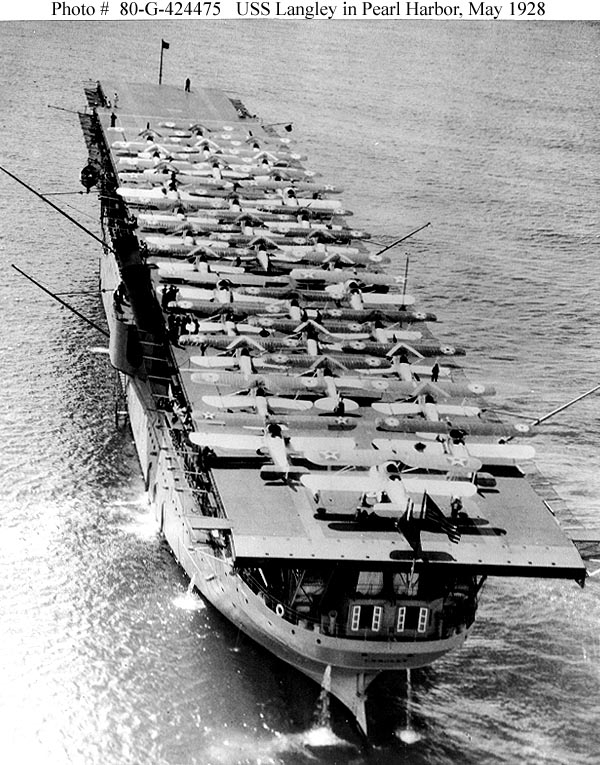
USS Langley CV-1

The Naval was slow to build upon the early achievements and the British and France would commission Aircraft Carriers well before the USS Langley CV-1 a converted Collier was commissioned.  After Langley the Navy commissioned the converted Battlecruisers USS Lexington CV-2 and USS Saratoga CV-3 in the mid 1920s.

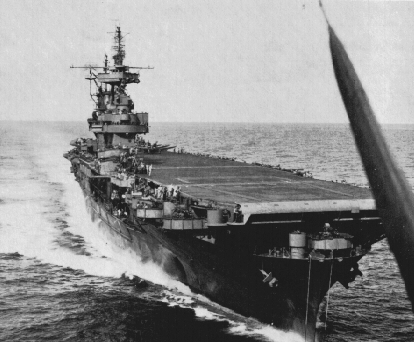
USS Lexington CV-2 October 1941

The three ships formed the nucleus of the Navy’s embrace of aviation and the pilots that they trained and the experience gained would be the foundation of the Navy’s success in the Second World War.  They would be joined by the USS Ranger CV-4 the first U. S. Navy Carrier designed as such from the keel up in 1934.

USS Enterprise CV-6

In 1937 the Navy commissioned the first of its true Fleet Carriers the USS Yorktown CV-5 which was followed by the USS Enterprise CV-6 in 1938, the USS Wasp CV-7 an improved version of Ranger in was commissioned in 1940 and the USS Hornet CV-8 in 1941.   These ships would bear the brunt of US Navy operations in the first year of the war following the disaster at Pearl Harbor. Of these ships only the Enterprise and Saratoga would survive the first year of the war in the Pacific.  Langley now a Seaplane Carrier was sunk during the Battle of the Java Sea in February 1942. Lexington would go down at Coral Sea in May 1942.  Hornet would launch the Doolittle Raid against Japan on April 18th 1942.  Yorktown, Enterprise and Hornet would take on and defeat the Japanese Carrier Strike force and sink the Akagi, Kaga, Soryu and Hiryu at Midway to avenge Pearl Harbor. Yorktown was sunk in the battle but Midway stopped the Japanese advance in the Pacific.

The U. S. went on the offensive in August invading Guadalcanal in the Solomons Islands. The Guadalcanal campaign and the numerous sea battles in the adjacent waterways would claim many American and Japanese ships. Wasp was sunk by a Japanese submarine on September 15th 1942 and Hornet was sunk at the Battle of Santa Cruz on 27 October 27th 1942.  Saratoga spent much of 1942 in the yards having been torpedoed twice leaving the often battered Enterprise as the sole U. S. Navy Carrier facing the Japanese until Saratoga was repaired and the first of the Essex Class Fleet Carriers and Independence Class Light Fleet Carriers entered service and arrived in the Pacific.

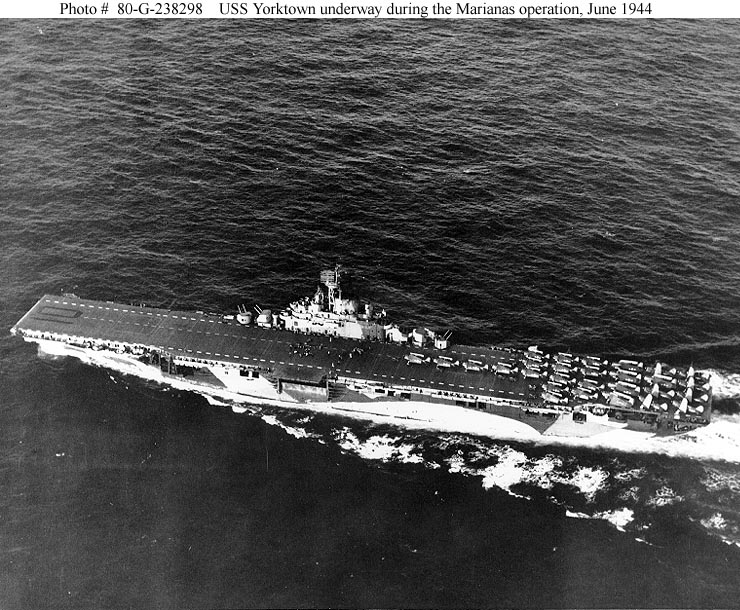
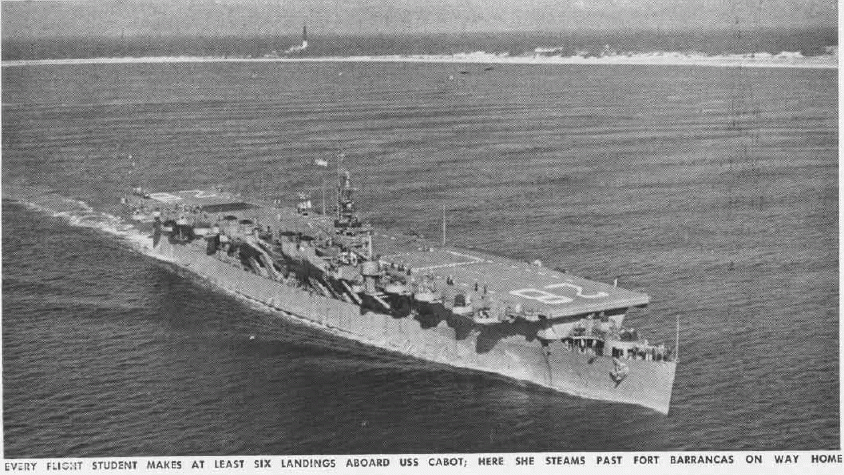
USS Yorktown CV-10 1944 a good example of the wartime Essex class ships  below USS Cabot CVL-28 an Independence Class Light Fleet Carrier


The Essex Class ships became the nucleus of the Fast Carrier Task Forces in the Pacific and with their smaller consorts of the Independence Class would dominate operations at sea from 1943 on.  The Essex class would eventually number 24 ships with several more canceled before completion becoming the most numerous of any class of Fleet Carriers produced by the U. S. Navy.  The Essex class would figure prominently in all offensive operations including the Battle of the Philippine Sea, Battle of Leyte Gulf, the campaigns at Iwo Jima and Okinawa and raids on the Japanese home islands.  In the process they and their air groups would be instrumental in sinking hundreds of Japanese ships including the Battleships Yamato and Musashi and destroying thousands of aircraft.  A number were heavily damaged by Kamikazes but none were lost with the epic story of the USS Franklin CV-13 and her survival after being hit by two bombs from a Japanese plane that slipped through the Combat Air Patrol. The resultant explosions and fires amongst her fueled and armed aircraft nearly sank her but for the heroic efforts of her crew including Chaplain Joseph O’Callahan who won the Medal of Honor caring for the wounded and dying and directing damage control teams. The ship lost 724 men killed and 265 wounded in the attack but survived though without power and dead in the water 50 miles off the Japanese coast.

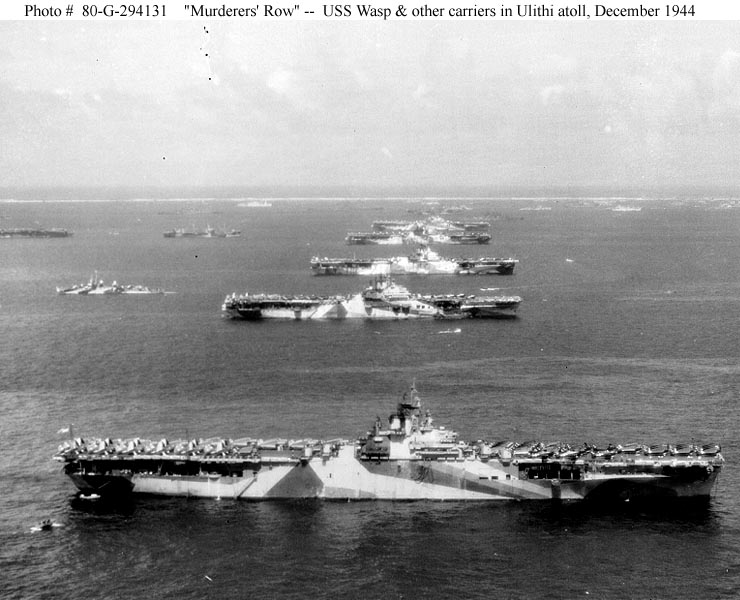
Murderers’ Row

The Essex class were iconic and the ships etched their names in naval history. The Essex, Yorktown, Hornet, Wasp, Hancock, Ticonderoga, Franklin, Bunker Hill, Intrepid, Lexington and the other ships of the class had legendary careers. These ships became known as “Murderers’ Row” for their expertise in killing off Japanese ships and aircraft.  Fittingly four of the ships, the Hornet, Yorktown, Lexington and Intrepid have found a second life as museum ships and Oriskany was sunk as an artificial reef off the coast of Florida where she is a favorite of recreational divers.

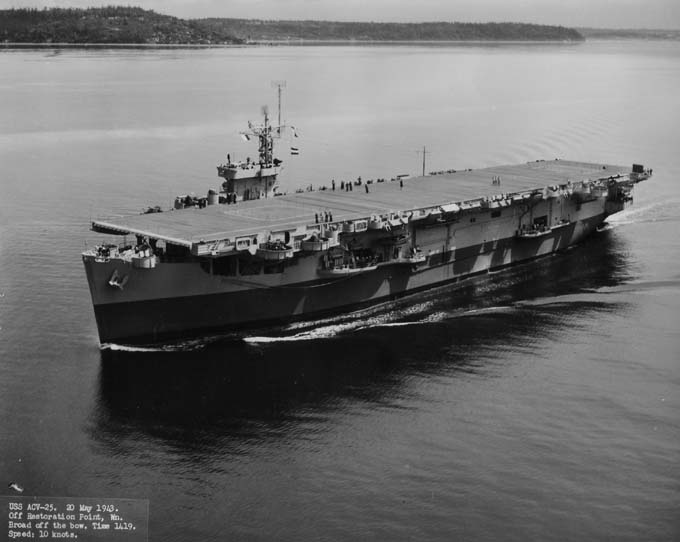
USS Croatan CVE-25 a Bogue Class Escort Carrier

During the war the Navy also built 118 Escort Carriers converted from merchant ships for use as convoy escorts, anti-submarine warfare and close air support for amphibious operations. 38 of these ships saw service in the British Royal Navy during the war.

USS Hancock CVA-19 in 1969 showing the extent of the modernizations that brought the Essex Class into the jet age

In the post World War II drawdown many carriers were decommissioned and the oldest, the Saratoga and Ranger disposed of.  The three ship Midway class entered service after the war and incorporated design improvements learned from combat operations in the war. As the Navy entered the jet era it was found that the existing carriers would need significant modernization to handle the new aircraft. Among the improvements made to the Midway and Essex class ships was the angled flight deck, steam catapults, hurricane bows and improved landing systems.  These improvements allowed these World War II era ships to remain front line carriers into Vietnam and in the case of the USS Midway and USS Coral Sea into the 1990s.

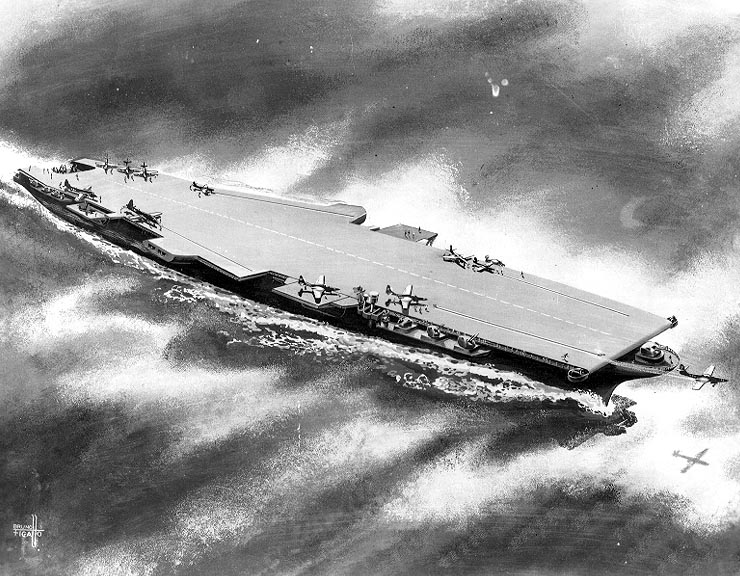
Artists’ conception of USS United States CVA-58 a victim of Truman Era Air Force politics

The Navy began its first super-carrier the USS United States in 1949 but the ship and class was cancelled by Secretary of Defense Louis A. Johnson, not a fan of the Navy or Marine Corps due to opposition by the Army and the newly founded Air Force.  The ship would have carried 12-18 nuclear capable bombers as well as 45-50 jet fighters and attack aircraft and been 1090 feet long and displaced 65,000 tons.  It would not be until after the Korean War that the Navy would begin construction of its first super-carriers.

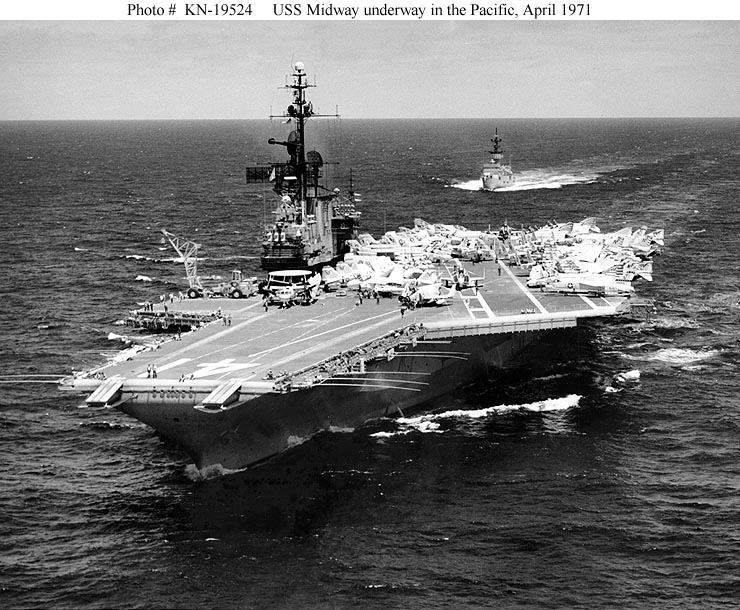
USS Midway CVA-41 in 1971

During the Korean War most of the Essex class ships were called back into service with 15 modified to conduct jet operations while others were converted to serve as ASW Carriers and Helicopter Carriers (LPH) to support Marine amphibious forces. Likewise the Midway’s were modernized as the Navy began to construct the four-ship Forrestal Class which were 1036 feet long and displaced 56,000 tons and designed to carry 100 aircraft. The four ships, Forrestal CVA-59, Saratoga CVA-60, Ranger CVA-61, and Independence CVA-62 would all serve into the early 1990s before being decommissioned. In the past few months Forrestal and Saratoga have begun the journey to be scrapped, sold for a penny each to scrapyards in Brownsville, Texas.

USS Ranger CVA-61

They were all heavily involved in the Vietnam War on Yankee and Dixie Station and both the Atlantic and Pacific during the Cold War. All four have been stricken from the Navy List and are awaiting disposal.  Forrestal was programmed as an artificial reef but she, like Saratoga which had been on donation hold was approved for scrapping. Ranger is still on donation hold and the USS Ranger Foundation is attempting to raise the money to save her. Independence which had been programmed as an artificial reef project was approved for scrapping in 2008.In the past few months Forrestal and Saratoga began the journey to be scrapped in 2014, sold for a penny each to scrapyards in Brownsville, Texas.

USS John F Kennedy CV-67 a modified Kitty Hawk class ship

These ships were followed by the Kitty Hawk class consisting of Kitty Hawk CVA-63, Constellation CVA-64, America CVA-66 and John F. Kennedy CVA-67 which were improved versions of the Forrestal Class with a 60,100 ton displacement and 1047 foot length with the ability to carry 100 aircraft. Kitty Hawk had the distinction of being the last fossil fuel carrier in active U. S. Navy service being decommissioned and placed in reserve in 2009. Her sister the Constellation CV was decommissioned in December 2003 and in 2008 was programmed to be scrapped in the next five years.  America was decommissioned in 1996 after not being given a Service Life Extension Program (SLEP) refit in the 1990s due to budget cuts.  America was involved in much of the Cold War, Gulf War and Vietnam including responding to the Israeli attack on the USS Liberty in 1967, the Intervention in Lebanon in 1983 and the conflict with Libya in the Gulf of Sidra in 1985.  She was sunk as a test bed to see how modern carriers would be affected by battle damage and to incorporate those lessons into future carrier design in May of 2005.  John F. Kennedy was originally planned to be a nuclear ship equipped with 4 A3W reactors.  This plan was shelved and she was completed as a fossil fuel ship. “Big John” served in Vietnam as well as throughout the Cold War and Gulf War and also engaged the Libyans in 1985.  She was placed in the Reserve Force in the 1990s to save money and also served as a training carrier.  Like America she did not receive the necessary maintenance and by 2002 she needed emergency repairs in order to deploy in support of Operation Enduring Freedom. Kennedy made three deployments in support of the War on Terror and decommissioned in 2007.  She was placed in donation hold and currently two groups are making progress to acquire her as a Museum ship. Like the Forrestal’s the Constellation’s served in Vietnam, the Cold War, Operation Desert Shield and Desert Storm and three continued their service into Operation Iraqi Freedom. Constellation began her journey to the scrapyard in August 2014.

USS Enterprise CVN-65

As the Navy continued to develop the capabilities of the aircraft carrier it commissioned the nuclear powered USS Enterprise CVAN-65.  The added capability of nuclear power enabled her to operate without dependence on fossil fuel which in addition to her range and speed allowed her to carry more aviation fuel and munitions than the fossil fuel ships.  Unique among the Nuclear Carriers she produces 280,000 SHP and is powered by 8 Westinghouse (A2W) Reactors driving geared turbines, 4 screws with a classified top speed in excess of 35 Knots and is the quickest carrier going from all stop to full speed. At 1101 feet long and 75,700 ton (93,000 Full Load) displacement she was larger than any other carrier. She served in Vietnam, the Cold War, the Gulf War and Operation Enduring and Operation Iraqi Freedom. She was and was decommissioned in 2013.

USS Theodore Roosevelt CVN-71 of the Nimitz class

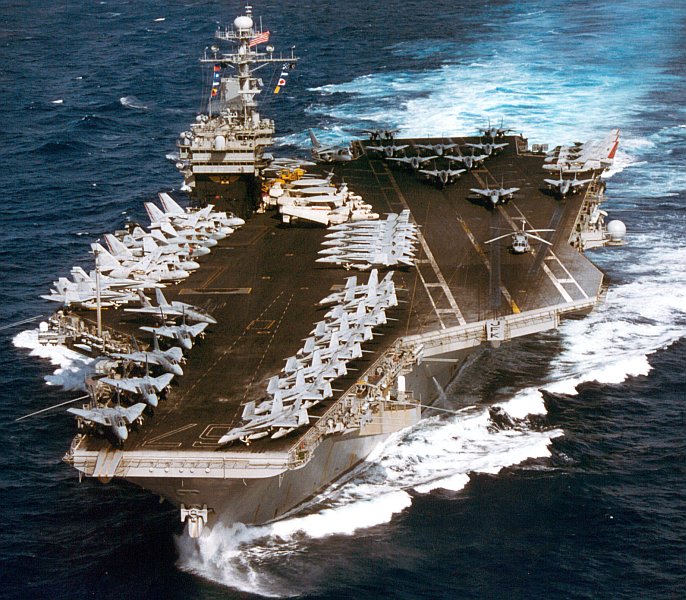
The Nimitz Class of nuclear powered carriers is the most numerous class of capital ship in the U.S. Navy since the Essex Class.  Slightly smaller than Enterprise with a 1088 overall length and 91,000 full load displacement the Nimitz CVN-68 and her sister ships are the mainstay of the U. S. Navy carrier force.  These ships have been the symbols of American naval power for three decades and will continue to be for the foreseeable future.  Each of the ships has embodied successive improvements gained from the previous ships and the latest ships of the class the USS Ronald Reagan CVN-76 and USS George H. W. Bush CVN-77 incorporate technologies that were not known when Nimitz was on the drawing board. Thus whenever a ship is taken in for their Refueling and Complex Overhaul (RCOH) it is upgraded to the capabilities of the newest ship.  The class consists of the Nimitz, the USS Dwight D. Eisenhower CVN-69, USS Carl Vinson CVN-70, USS Theodore Roosevelt CVN-71, USS George Washington CVN-72, USS Abraham Lincoln CVN-73, USS John C. Stennis CVN-74, USS Harry Truman CVN-75 as well as the previously mentioned Reagan and Bush. They can carry 90% more fuel and 50% more ordnance than the Forrestal class. Carrying 90 or more aircraft they pack a mobile offensive punch that is not matched by any other surface ship.  The have served in every major military and many humanitarian missions since Nimitz was commissioned in 1974.

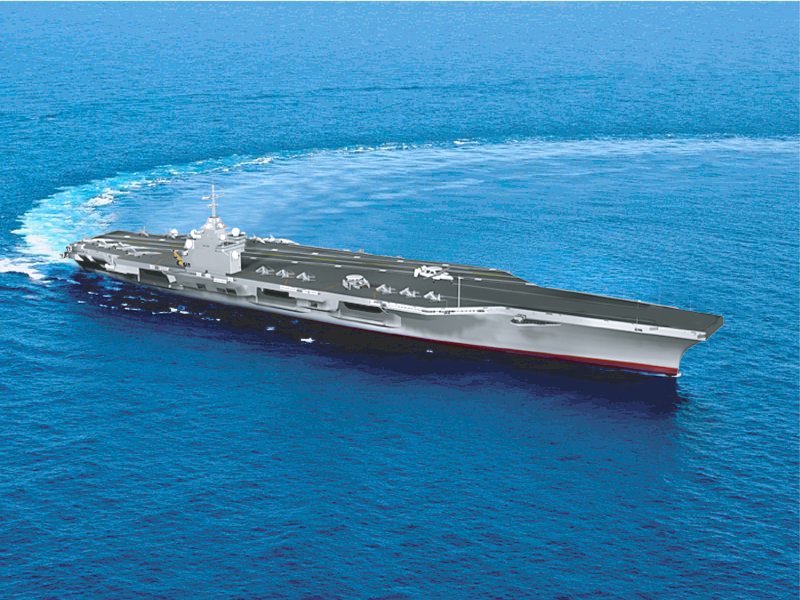
Artist conception of USS Gerald R Ford CVN-78

The Nimitz class will be joined by the USS Gerald R. Ford CVN-78.  The Ford is the first ship of an entirely new class. While approximately the same size as the Nimitz class at 1092 feet long and approximately 100,000 tons full load displacement the Ford class of which three are currently authorized and one under construction will feature many improvements over their predecessors. Among improvements are an advanced arresting gear, automation, which reduces crew requirements by several hundred from the Nimitz class carrier, the updated RIM-162 Evolved Sea Sparrow missile system, the AN/SPY-3 dual-band radar (DBR), as developed for Zumwalt class destroyers an Electromagnetic Aircraft Launch System (EMALS) in place of traditional steam catapults for launching aircraft, a new nuclear reactor design (the A1B reactor) for greater power generation, advanced stealth features to help reduce radar profile and the ability to operate the new F-35C Lightning II. If the class is built as programmed on a one ship every five year rate with the Ford commissioning in 2015 then 6 ships of the class will be in commission by 2040. The next two ships have been named, the John F Kennedy and Enterprise. 

Of course as with any military technology the future never is certain. In 1918 no one would have thought that the all-big gun Dreadnought Battleships would be eclipsed by the Aircraft Carrier in less than 25 years. While the Carriers have ruled the waves since Midway there are threats to them both military and financial.  Countries such as China while building their own carriers have are developing weapons such as guided ballistic missiles designed to destroy carriers.  As of now there is no defense against such a weapon if a carrier is within range. While China has not yet deployed the weapon it could be a game changer in the Western Pacific. Likewise there is the ever present threat posed by new and advanced submarines even those deployed by 2nd and 3rd world nations.  Finally there is the financial cost which could derail the procurement of more carriers in an era of austerity. The cost of the Ford is currently estimated to be $9 Billion Dollars which if stretched end to end would probably reach Vulcan where the Vulcans would come up with an answer to our current problems.

At the same time the carriers have defied those who predicted their demise since the Truman administration.  Currently no sea based platform has the multitude of capabilities of a carrier and its associated air wing and battle group and thus they should remain the Queens of the Sea for some time to come and the United States Navy which has led the world in their development and operation should continue to lead the way.

The next installment which will appear later this week will discuss the aircraft employed by the United States Navy not only those from carriers, but seaplanes, rotor-wing aircraft and lighter than air ships.

Peace

Padre Steve+

6 Comments

Filed under History, Military, Navy Ships

Fall Back? Why can’t we do this Every Week?

I love this time of year when we get an extra hour to stay up late instead of getting an extra hour of sleep. I wonder sometimes why we couldn’t do this every week. Of course I know that this will never happen but I cannot think of too many disadvantages because eventually everyone benefits. Yes I admit that that there are some hurdles to get over but just imagine having 52 extra hours to goof off a year.  I would actually give us over two extra days; sure for some parts of the year it would be dark at high noon but who cares?  Eventually everyone would, regardless of their job get a chance to enjoy daylight even if it is midnight when they do it. What a deal, who could be against it?

Perhaps if we did it right we could actually rip a hole in the fabric of space and time and in doing so provide better economic opportunity.  Maybe we could make contact with life forms from the Delta Quadrant that would buy our stuff or maybe even make contact with ourselves in an alternate universe.  It would be like Star Trek.

I mean let’s look at the practical things that that could happen.  The people that work the night shift could actually enjoy daytime, lots of football and baseball games could be played in the daytime rather than under the lights and those that work during the day could actually enjoy some daylight when they go home. I know that I could use an extra hour every week. I don’t know about you but I can.

However it will never go through our political and economic leaders would never go for it despite the obvious advantages to interstellar and trans-dimensional commerce.  There is also the fact that by rolling back the clock 52 hours a year those that would deny us those hours actually harm their economic well being. Besides it would add a couple of months or so to everyone before they could get Social Security benefits, what a way to help balance the budget.  Helps business, helps the government and gives us all an extra hour a week. The hell with the spring forward crap, I want to go back every week.

Yet alas, this will not happen as I said there are far too many people and organizations in power that will not let it happen.  But maybe, just maybe with the Tea Party in charge of the House of Representatives people will start thinking outside of the box; of course they will have to overcome resistance in the stodgy Senate as well as the embedded lack of inertia in most departments of the Executive Branch and the certain legal challenges by the trial lawyers and opposition of paid lobbyists.  But then why would they even want to bother with something as silly as this when their top priority is finding a way to throw the President out of office?

Maybe we can compromise; maybe we can go with Dave Barry’s idea of a concept called “Weekday Morning Time, whereby at 7 a.m. every weekday we go into a space- launch-style “hold” for two to three hours, during which it just remains 7 a.m.”  According to Barry “this way we could all wake up via a civilized gradual process of stretching and belching and scratching, and it would still be only 7 a.m. when we were ready to actually emerge from bed.”  Heck if I can’t get the extra hour of sleep I’d take this any day of the week.

Until then however I just have to thank whoever invented the “fall back” idea and enjoy either the extra sleep or time to goof off unless you have to work tonight.

Peace,

Padre Steve+


Leave a comment

Filed under Just for fun, Loose thoughts and musings