Monthly Archives: August 2014

Winston Churchill, Turkey and the High Cost of Two Dreadnoughts

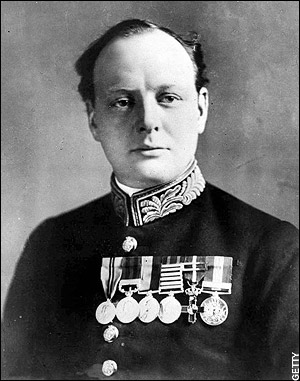
churchill1914

One of the more interesting and overlooked factors in the days leading up to the First World War, which had significant ramifications in the Middle East involved Winston Churchill. Churchill was serving as First Lord of the Admiralty and made a decision which ensured the Ottoman Empire would be pushed into an alliance with Germany.

For many years Britain had been the chief supplier of ships for the Ottoman Navy. In fact in the years leading up to World War One the Ottomans had purchased over 40 ships from Great Britain and on August 2nd 1914 was expecting to take delivery of two, extremely modern Dreadnoughts, the Sultan Osman I and the Reshadieh. The Sultan Osman was armed with fourteen 12” guns, the Reshadieh with ten 13” guns, making them the equal or superior to most battleships afloat. The Turkish Government had paid over 4 billion Pounds for the ships and made the final payment on August 2nd shortly before the Turkish Captain and 500 crew members were to come aboard for a ceremony formally handing over the ship to the Turkish Navy.
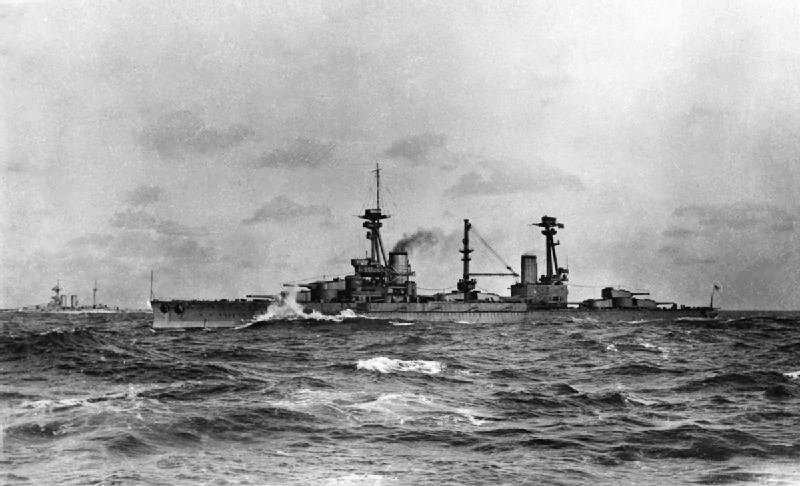
HMS_Agincourt_1915

HMS Agincourt 

Much of the money the Turks used to pay for the ships came from the donations of ordinary Turkish citizens. Money came from taverns, from cafes, schools, Mosques and markets. Those that donated were awarded a commemorative medal, the ships were the pride of Turkey and the empire. The nation awaited the delivery of the ships which would ensure the superiority of the Turkish Navy against its traditional foe, Russia.

HMS_Erin

HMS Erin

As War approached Churchill began to prepare, keeping many of his plans and actions even from the government. Less than an hour before the ceremony Churchill ordered the ships seized and and the Royal Navy kept the Turkish Captain and crew locked aboard a nearby transport. The Turkish Captain later wrote:

“… We paid the last installment (700.000 Turkish liras). The manufacturer and we agreed on that the ships would be hand over on 2 August 1914. Nevertheless, after we made our payment and half an hour before the ceremony, the British declared that they have requisitioned the ships… Although we have protested, nobody paid attention.”

Churchill had gained two modern Dreadnoughts for the Royal Navy, and the British shipyards kept the money, the Turks were never compensated for the loss. The ships were renamed HMS Agincourt and HMS Erin. Both served throughout the war and at the Battle of Jutland, and bother were scrapped in the early 1920s due to the restrictions of the Washington Naval Treaty.

SMS_Goeben-ptbow3

SMS Goeben

But in the process whereby the British gained the ships, ensured that Turkey would ally itself with Germany. The positive effects were mitigated by the Germans providing the very modern dreadnought type  Molkte Class Battlecruiser Goeben and Light Cruiser Breslau to the Turks, giving them the edge over the Russians. Breslau was mined and sunk in 1918 but Goeben served in the Turkish Navy as the Yavuz Sultan Selim until she was decommissioned in 1954, and scrapped in 1973.

Likewise, Churchill’s decision meant that when Turkey entered the war that the strategically important Bosporus strait which was Russia’s only year round access to foreign shipping was closed, keeping Britain and France from being able to supply their Russian ally. The ill-fated Gallipoli campaign, launched by Churchill was the attempt to break the Turkish stranglehold, and the costly failure of that operation helped ensure the defeat of Russia and the overthrow of the Czar..

In the long term it had affects that we are still feeling the today. The entry or Turkey into the war and the subsequent collapse of the Ottoman Empire was the catalyst for the arbitrary borders drawn by the allies across the Middle East.

Had Turkey remained neutral throughout the war, or even sided with the allies the course of history might be far different. We don’t know, but the Ottoman Empire might have endured or it might have peacefully morphed into something different.

Churchill’s decision turned out to be one of the more important, and less known events before the war broke out, and certainly we still feel the ramifications today. Actions have consequences, and sometimes what seems expedient to give a tactical edge, sometimes has far reaching strategic consequences. Consequences that sometimes linger for generations.

Peace

Padre Steve+
4 Comments

Filed under History, history, middle east, Military, world war one

The Beginning of the Never Ending End: August 1914

wwimobilization

“An event of great agony is bearable only in the belief that it will bring about a better world. When it does not, as in the aftermath of another vast calamity in 1914-18, disillusion is deep and moves on to self-doubt and self-disgust.” Barbara Tuchman

On August 1st 1914 the armies of Europe were mobilizing for war. The last feeble efforts at diplomacy were failing as leaders, and diplomats sought a way out of the situation that their policies had brought about. They had allowed the military instrument to drive policy, rather than for policy to dictate how the military should be employed as an instrument of national strategy. As such they became prisoners to their military mobilization plans, all of which depended on speed in order to gain advantage over their adversaries.

The nations and militaries of Europe were devoted to the “cult of the offensive” by which they would crush their enemy’s armies in a quick campaign. In Germany there was the modified Schlieffen Plan that was about to be executed by the army commanded by Von Molkte the younger in which Germany would violate the neutrality of Belgium in order to invade France, risking war with England in the process. In France, the offense was also the rule of the day, Plan 17 dictated an advance to recapture the Alsace and drive into the heart of Germany. Russia had “Plan 19” nicknamed by some “the Russian Steamroller,” while Austria-Hungary, the chief protagonist of the War dithered with plans to attack Serbia and defend against Russia, which her military commander Conrad von Hotzendorf neither shared with his German allies, or the politicians leading his country to war.

The numbers of troops were massive, the Germans mobilizing nearly four million troops in less than two weeks, the Austrians three point three million, the French over three million and the Russians nearly five million. Serbia, Belgium and Great Britain were mobilizing as well, but the numbers of soldiers that they mobilized were a fraction the size of the major land powers. Soon other nations would become involved, the Ottoman Empire on the side of Austria and Germany, Italy on the side of England and France. Bulgaria and Romania would become involved as well as far away Japan, which saw the opportunity to expand its empire and influence at the expense of Germany.

No leaders had planned for a long war; they did not believe such a war could last. “One constant among the elements of 1914—as of any era—was the disposition of everyone on all sides not to prepare for the harder alternative, not to act upon what they suspected to be true.”

But they were wrong and in the opening weeks and months of the war, every army lost massive numbers of troops ensuring that victory would not come quickly or cheaply. Between August and December 1914 the Germans had sustained about 800,000 casualties, the French about the same, the Austrians close to a million, the Russians at least 500,000 and the tiny British expeditionary force took about 87,000 casualties of the 110,000 troops deployed to France.

The war dragged on until November 1918. An armistice was signed; a peace treaty made, territory divided but the war never really ended, and in a way continues today in the Middle East, Africa and Eastern Europe. The “War to end all War” really never ended, it continues today in some many places. It really was a war without end.

Of course in August 1914 the leaders of Europe gambled everything on a roll of the dice. The decisions that they made were made deliberately and with forethought, but the logic of those leaders was fatally flawed, and the implications of their flawed decision making process are still haunting us today. Unfortunately it doesn’t look like the politicians, pundits and preachers, that “Trinity of Evil” that find glory and profit in war have learned anything. Like Conrad von Hotzendorf many leaders today believe that “the essence of politics lies in the use of the means called “war.” As Barbara Tuchman said “Learning from experience is a faculty almost never practiced”

Peace

Padre Steve+

1 Comment

Filed under Foreign Policy, History, leadership, Military, Political Commentary
