Monthly Archives: May 2016

“I Knew What I was Fighting For” Black Soldiers in the Civil War

Friends of Padre Steve’s World,

Today I am posting yet another major revision to the opening chapter to my Civil War and Gettysburg text. It is the follow up section to yesterday’s article on the Emancipation Proclamation and deals with the service of African American men in the U.S. Army. This was a major step in the long road to equality for African Americans, a task that is not fully complete, but has also benefited many other Americans of different races as well as women and LGBTQ people. I hope that you enjoy the read, but more importantly appreciate what those men went through to blaze a trail for freedom.

Peace,

Padre Steve+

African-American-Soldiers-in-Civil-War-Hero-H

From Slavery to Soldiering

But as the war continued on, consuming vast numbers of lives the attitude of Lincoln and his administration began to change. After a year and a half of war, Lincoln and the closest members of his cabinet were beginning to understand that the “North could not win the war without mobilizing all of its resources and striking against Southern resources used to sustain the Confederate war effort.” [1] Slave labor was essential to the Confederate war effort, not only did slaves still work the plantations, they were impressed into service in war industries as well as in the Confederate Army.

Lieutenant Colonel Arthur Freemantle, a British observer who was with Lee’s army at Gettysburg noted, “in the rear of each regiment were from twenty to thirty negro slaves.” [2] The fact is that the slaves who accompanied the army remained slaves, they were not the mythical thousands of black soldiers who rallied to the Confederate cause, nor were they employees. “Tens of thousands of slaves accompanied their owners to army camps as servants or were impressed into service to construct fortifications and do other work for the Confederate army.” [3] This fact attested to by Colonel William Allan, one of Stonewall Jackson’s staff members who wrote “there were no employees in the Confederate army.” [4] slaves served in a number of capacities to free up white soldiers for combat duties, “from driving wagons to unloading trains and other conveyances. In hospitals they could perform work as nurses and laborers to ease the burdens of patients.” [5] An English-born artilleryman in Lee’s army wrote in 1863 that “in our whole army there must be at least thirty thousand colored servants….” [6] When Lee marched to Gettysburg he did so with somewhere between ten and thirty-thousand slaves in support roles and during the advance into Virginia Confederate troops rounded up and re-enslaved as many blacks as they could, including Freedmen.

Lincoln’s Secretary of War, Edwin Stanton; who was a passionate believer in the justice of emancipation, was one of the first to grasp the importance of slave labor to the Confederate armies and how emancipation was of decided military necessity. Stanton, “Instantly grasped the military value of the proclamation. Having spent more time than any of his colleagues contemplating the logistical problems facing the army, he understood the tremendous advantage to be gained if the massive workforce of slaves could be transferred from the Confederacy to the Union.” [7]

Lincoln emphasized the “military necessity” of emancipation and “justified the step as a “fit and necessary war measure for suppressing the rebellion.” [8] The process of emancipation now became not only a moral crusade, but now became a key part of national strategy, not just in a military means, but politically, economically and diplomatically as Lincoln “also calculated that making slavery a target of the war would counteract the rising clamor in Britain for recognition of the Confederacy.”  [9]

Lincoln wrote to his future Vice President, Andrew Johnson, then the military governor of occupied Tennessee that “The colored population is the great available and yet unavailed of, force for restoration of the Union.” [10] The idea of simply mollifying the border states was dropped and policy changed that of “depriving the Confederacy of slave labor. Mobilizing that manpower for the Union – as soldiers as well as laborers – was a natural corollary.” [11] Reflecting President Lincoln’s and Stanton’s argument for the military necessity of emancipation, General Henry Halleck wrote to Ulysses Grant that:

“the character of the war has very much changed within the past year. There is now no possibility of reconciliation with the rebels… We must conquer the rebels or be conquered by them….Every slave withdrawn from the enemy is the equivalent of a white man put hors de combat.” [12]

Grant concurred with the decision. Grant wrote to in a letter to Lincoln after the assault on Battery Wagner by the 54th Massachusetts, “by arming the negro we have added a powerful ally. They will make good soldiers and taking them from the enemy weakens him in the same proportion as it strengthens us.” [13] William Tecumseh Sherman was supportive but also noted some facts that some radical abolitionists did not understand. He noted in his correspondence that, “The first step in the liberation of the Negro from bondage will be to get him and his family to a place of safety… then to afford him the means of providing for his family,… then gradually use a proportion – greater and greater each year – as sailors and soldiers.” [14] Lincoln wrote after the Emancipation Proclamation that “the emancipation policy, and the use of colored troops, constitute the heaviest blow yet dealt to the rebellion.” [15] The change was a watershed in both American history as well as the future of the U.S. Military services.

In conjunction with the Emancipation Proclamation Secretary of War Stanton “authorized General Rufus Saxton to “arm, uniform, equip, and receive into the service of the United States such number of volunteers of African descent as you may deem expedient, not exceeding 5,000, and [you] may detail officers to instruct them in military drill, discipline, and duty, and to command them.”  [16] The initial regiments of African Americans were formed by Union commanders in liberated areas of Louisiana and South Carolina, and most were composed of newly freed slaves. Others like the 54th Massachusetts were raised from free black men in the north. Stanton’s authorization was followed by the Enrollment Act passed by Congress in March of 1863 which established the draft also allowed blacks to serve. By March Stanton was working with state governors to establish more black regiments. The units became known as United States Colored Troops, or U.S.C.T. and were commanded by white officers and organized into the infantry, cavalry and, artillery regiments organized on the model of white regiments. The U.S.C.T. “grew to include seven regiments of cavalry, more than a dozen of artillery, and well over one hundred of infantry.” [17]

Some Union soldiers and officers initially opposed enlisting blacks at all, and some “charged   that making soldiers of blacks would be a threat to white supremacy, and hundreds of Billy Yanks wrote home that they would no serve alongside blacks.” [18]  But most common soldiers accepted emancipation, especially those who had served in the South and seen the misery that many salves endured, one Illinois soldier, stationed who served in the Western Theater of war wrote, “the necessity of emancipation is forced upon us by the inevitable events of the war… and the only road out of this war is by blows aimed at the heart of the Rebellion…. If slavery should be left undisturbed the war would be protracted until the loss of life and national bankruptcy would make peace desirable on any terms.” [19] Even so racial prejudice in the Union ranks never went away and sometimes was accompanied by violence. It remained a part and parcel of life in and outside of the army, even though many Union soldiers would come to praise the soldierly accomplishments and bravery of African American Soldiers. An officer who had refused a commission to serve with a U.S.C.T. regiment watched as black troops attacked the defenses of Richmond in September 1864:

“The darkies rushed across the open space fronting the work, under a fire which caused them loss, into the abattis… down into the ditch with ladders, up and over the parapet with flying flags, and down among, and on top of, the astonished enemy, who left in utmost haste…. Then and there I decided that ‘the black man could fight’ for his freedom, and that I had made a mistake in not commanding them.” [20]

“Once the Lincoln administration broke the color barrier of the army, blacks stepped forward in large numbers. Service in the army offered to blacks the opportunity to strike a decisive blow for freedom….” [21] Emancipation allowed for the formation of regiments of United States Colored Troops (USCT), mustered directly into Federal service, which in numbers soon dwarfed the few state raised Black Regiments.  However, it was the inspiration provided by those first state raised regiments, the heroic accounts of those units reported in Northern newspapers, as well as the unprovoked violence directed against Blacks in the 1863 draft riots that helped to provoke “many northerners into a backlash against the consequences of violent racism.” [22]

Despite the hurdles and prejudices that blacks faced even in the North, many African Americans urged others to enlist, self-help mattered more than self-preservation. Henry Gooding, an black sergeant from Massachusetts wrote the editor of the New Bedford Mercury urging fellow blacks to enlist despite the dangers, “As one of the race, I beseech you not to trust a fancied security, laying in your minds, that our condition will be bettered because slavery must die…[If we] allow that slavery will die without the aid of our race to kill it – language cannot depict the indignity, the scorn, and perhaps the violence that will be heaped upon us.” [23]

The valor of the state regiments, as well as the USCT units that managed to get into action was remarkable, especially in regard to the amount of discrimination levied at them by some northerners, and the very real threat of death that they faced if captured by Confederates. In response to the Emancipation Proclamation and to the formation of African American regiments the Confederate Congress passed

In May of 1863 Major General Nathaniel Banks dared to send the First and Third Regiments of “Louisiana Native Home Guard regiments on a series of attacks on Confederate positions at Port Hudson, Louisiana” [24] where they received their baptism of fire. They suffered heavy losses and “of the 1080 men in the ranks, 271 were hit, or one out of every four.” [25] Banks said of them in his after action report: “They answered every expectation…In many respects their conduct was heroic…The severe test to which they were subjected, and the determined manner in which they encountered the enemy, leave upon my mind no doubt of their ultimate success.” [26]
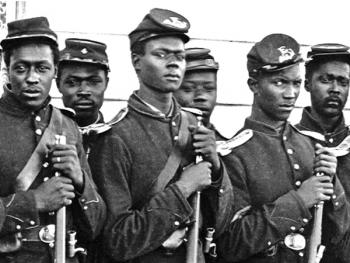
USCT UNit

Men of the 4th Regiment of U.S. Colored Troops

But the most famous African American volunteer regiment was the 54th Massachusetts, commanded by Colonel Robert Gould Shaw, the “North’s showcase black regiment.” [27] Raised in Boston and officered by many men who were the sons of Boston’s blue blood abolitionist elite, the regiment was authorized in March 1863. Since there was still opposition to the formation of units made up of African Americans, Massachusetts Governor John Andrew authorized the formation of the 54th under the command of white officers, a practice that with few exceptions, became standard in the U.S. military until President Truman desegregated the armed forces in 1948. Governor Andrew was determined to ensure that the officers of the 54th were men of “firm antislavery principles…superior to a vulgar contempt for color.” [28]
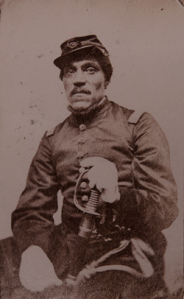
8512218

Lieutenant Stephen Swails

The 54th Massachusetts first saw action in early June 1863 and at Shaw’s urging were sent into battle against the Confederate positions at Fort Wagner on July 18th 1863. Leading the attack the 54th lost nearly half its men, “including Colonel Shaw with a bullet through his heart. Black soldiers gained Wagner’s parapet and held it for an hour before falling back.” [29] Though they tried to hold on they were pushed back after a stubborn fight to secure a breach in the fort’s defenses. “Sergeant William H Carney staggered back from the fort with wounds in his chest and right arm, but with the regiment’s Stars and Stripes securely in his grasp. “The old flag never touched the ground, boys,” Carney gasped as he collapsed at the first field hospital he could find.” [30] Shaw was buried with his men by the Confederates and when Union commanders asked for the return of his body were told “We have buried him with his niggers,” Shaw’s father quelled a northern effort to recover his son’s body with these words: We hold that a soldier’s most appropriate burial-place is on the field where he has fallen.” [31] As with so many frontal attacks on prepared positions throughout the war, valor alone could not overcome a well dug in enemy. “Negro troops proved that they could stop bullets and shell fragments as good as white men, but that was about all.” [32]

Despite the setback, the regiment went on to further actions where it continued to distinguish itself. The Northern press, particularly abolitionist newspapers brought about a change in the way that many Americans in the North, civilians as well as soldiers, saw blacks. The Atlantic Monthly noted, “Through the cannon smoke of that dark night, the manhood of the colored race shines before many eyes that would not see.”  [33]

Frederick Douglass, who had two sons serving in the 54th Massachusetts, understood the importance of African Americans taking up arms against those that had enslaved them in order to win their freedom:

“Once let a black man get upon his person the brass letters U.S… let him get an eagle on his button, and a musket on his shoulder and bullets in his pockets, and there is no power on earth which can deny he has won the right to citizenship in the United States.” [34]

Other African American units less famous than the illustrious 54th Massachusetts distinguished themselves in action against Confederate forces. Two regiments of newly recruited blacks were encamped at Milliken’s Bend Louisiana when a Confederate brigade attempting to relieve the Vicksburg garrison attacked them. The troops were untrained and ill-armed but held on against a determined enemy:

 “Untrained and armed with old muskets, most of the black troops nevertheless fought desperately. With the aid of two gunboats they finally drove off the enemy. For raw troops, wrote Grant, the freedmen “behaved well.” Assistant Secretary of War Dana, still with Grant’s army, spoke with more enthusiasm. “The bravery of the blacks,” he declared, “completely revolutionized the sentiment in the army with regard to the employment of negro troops. I heard prominent officers who had formerly in private had sneered at the idea of negroes fighting express after that as heartily in favor of it.” [35]

The actions of the black units at Milliken’s bend attracted the attention and commendation of Ulysses Grant, who wrote in his cover letter to the after action report, “In this battle most of the troops engaged were Africans, who had little experience in the use of fire-arms. Their conduct is said, however, to have been most gallant, and I doubt not but with good officers that they will make good troops.” [36] They also garnered the attention of the press. Harper’s published an illustrated account of the battle with a “double-page woodcut of the action place a black color bearer in the foreground, flanked by comrades fighting hand-to-hand with Confederates. A brief article called it a “the sharp fight at Milliken’s bend where a small body of black troops with a few whites were attacked by a large force of rebels.” [37] In the South the result was chilling and shocked whites, one woman wrote “It is hard to believe that Southern soldiers – and Texans at that – have been whipped by a mongrel crew of white and black Yankees…. There must be some mistake.” While another woman in Louisiana confided in her diary, “It is terrible to think of such a battle as this, white men and freemen fighting with their slaves, and to be killed by such a hand, the very soul revolts from it, O, may this be the last.” [38]

By the end of the war over 179,000 African American Soldiers, commanded by 7,000 white officers served in the Union armies. For a number of reasons most of these units were confined to rear area duties or working with logistics and transportation operations. The policies to regulate USCT regiments to supporting tasks in non-combat roles “frustrated many African American soldiers who wanted a chance to prove themselves in battle.” [39]  Many of the soldiers and their white officers argued to be let into the fight as they felt that “only by proving themselves in combat could blacks overcome stereotypes of inferiority and prove their “manhood.” [40] Even so in many places in the army the USCT and state regiments made up of blacks were scorned:

“A young officer who left his place in a white regiment to become colonel of a colored regiment was frankly told by a staff officer that “we don’t want any nigger soldiers in the Army of the Potomac,” and his general took him aside to say: “I’m sorry to have you leave my command, and am still more sorry that you are going to serve with Negroes. I think that it is a disgrace to the army to make soldiers of them.” The general added that he felt this way because he was sure that colored soldiers just would not fight.”  [41]

The general of course, was wrong.  In the engagements where USCT units were allowed to fight, they did so with varying success most often attributable to the direction of their senior officers. When given the chance they almost always fought well, even when badly commanded. This was true as well when they were thrown into hopeless situations. One such instance was when Ferrero’s Division, comprised of colored troops were thrown into the Battle of the Crater at Petersburg when “that battle lost beyond all recall.” [42] The troops advanced in good order singing as they went, while their commander, General Ferrero took cover in a dugout and started drinking; but the Confederate defenders had been reinforced and “Unsupported, subjected to a galling fire from batteries on the flanks, and from infantry fire in front and partly on the flank,” a witness write, “they broke up in disorder and fell back into the crater.” [43] Pressed into the carnage of the crater where white troops from the three divisions already savaged by the fighting had taken cover, the “black troops fought with desperation, uncertain of their fate if captured.” [44] In the battle Ferrero’s division lost 1327 of the approximately 4000 men who made the attack. [45]

Major General Benjamin Butler railed to his wife in a letter against those who questioned the courage of African American soldiers seeing the gallantry of black troops assaulting the defenses of Petersburg in September 1864: The man who says that the negro will not fight is a coward….His soul is blacker than then dead faces of these dead negroes, upturned to heaven in solemn protest against him and his prejudices.” [46]

The response of the Confederate government to Emancipation and African Americans serving as soldiers was immediate and uncompromisingly harsh. Davis approved of the summary executions of black prisoners carried out in South Carolina in November 1862, and a month later “on Christmas Eve, Davis issued a general order requiring all former slaves and their officers captured in arms to be delivered up to state officials for trial.” [47] Davis warned that “the army would consider black soldiers as “slaves captured in arms,” and therefore subject to execution.” [48] While the Confederacy never formally carried out the edict, there were numerous occasions where Confederate commanders and soldiers massacred captured African American soldiers.

The response of the Lincoln administration to send a note to Davis and threaten reprisals against Confederate troops if black soldiers suffered harm. It “was largely the threat of Union reprisals that thereafter gave African-American soldiers a modicum of humane treatment.” [49]

When captured by Confederates, black soldiers and their white officers received no quarter from many Confederate opponents. General Edmund Kirby Smith who held overall command of Confederate forces west of the Mississippi instructed General Richard Taylor to simply execute black soldiers and their white officers: “I hope…that your subordinates who may have been in command of capturing parties may have recognized the propriety of giving no quarter to armed negroes and their officers. In this way we may be relieved from a disagreeable dilemma.” [50] This was not only a local policy, but echoed at the highest levels of the Confederate government. In 1862 the Confederate government issued an order that threatened white officers commanding blacks: “any commissioned officer employed in the drilling, organizing or instructing slaves with their view to armed service in this war…as outlaws” would be “held in close confinement for execution as a felon.” [51] After the assault of the 54th Massachusetts at Fort Wagner a Georgia soldier “reported with satisfaction that the prisoners were “literally shot down while on their knees begging for quarter and mercy.” [52]

HD_NgroWarFL640116p264cz.preview

On April 12th 1864 at Fort Pillow, troops under the command of General Nathan Bedford Forrest massacred the bulk of over 231 Union most of them black as they tried to surrender. While it is fairly clear that Forrest did not order the massacre and even attempted to stop it, it was clear that he had lost control of his troops. Forrest’s soldiers fought with the fury of men possessed by hatred of an enemy that they considered ‘a lesser race’ and slaughtered the Union troops as they either tried to surrender or flee; but while Forrest did not order the massacre, he certainly was not displeased with the result. Ulysses Grant wrote that:

“These troops fought bravely, but were overpowered I will leave Forrest in his dispatches to tell what he did with them.

“The river was dyed,” he says, “with the blood of the slaughtered for up to 200 years. The approximate loss was upward of five hundred killed; but few of the officers escaped. My loss was about twenty killed. It is hoped that these facts will demonstrate to the Northern people that negro soldiers cannot cope with Southerners.” Subsequently Forrest made a report in which he left out the part that shocks humanity to read.”  [53]

The bulk of the killing was directed at the black soldiers of the 6th U.S. Colored Heavy Artillery, which composed over a third of the garrison. “Of the 262 Negro members of the garrison, only 58 – just over 20 percent – were marched away as prisoners; while of the 295 whites, 168 – just under sixty percent were taken.”  [54] A white survivor of the 13th West Tennessee Cavalry, a Union unit at the fort wrote:

We all threw down our arms and gave tokens of surrender, asking for quarter…but no quarter was given….I saw 4 white men and at least 25 negroes shot while begging for mercy….These were all soldiers. There were also 2 negro women and 3 little children standing within 25 steps of me, when a rebel stepped up to them and said, “Yes, God damn you, you thought you were free, did you?” and shot them all. They all fell but one child, when he knocked it in the head with the breech of his gun.” [55]

A Confederate Sergeant who was at Fort Pillow wrote home a week after the massacre: “the poor deluded negroes would run up to our men, fall upon their knees and with uplifted hands scream for mercy, but were ordered to their feet and shot down.” [56]

African American soldiers proved themselves during the war and their efforts paved the way for Lincoln and others to begin considering the full equality of blacks as citizens. If they could fight and die for the country, how could they be denied the right to votes, be elected to office, serve on juries or go to public schools? Under political pressure to end the war during the stalemate before Petersburg and Atlanta in the summer of 1864, Lincoln reacted angrily to Copperheads as well as wavering Republicans on the issue of emancipation:

“But no human power can subdue this rebellion without using the Emancipation lever as I have done.” More than 100,000 black soldiers were fighting for the Union and their efforts were crucial to northern victory. They would not continue fighting if they thought the North intended to betray them….If they stake their lives for us they must be prompted by the strongest motive…the promise of freedom. And the promise being made, must be kept…There have been men who proposed to me to return to slavery the black warriors. “I should be damned in time & in eternity for so doing. The world shall know that I will keep my faith to friends & enemies, come what will.”  [57]

The importance of African Americans cannot be minimized, without them the war could have dragged on much longer or even ended in stalemate, which would have been a Confederate victory. Lincoln wrote about their importance in 1864:

“Any different policy in regard to the colored man, deprives us of his help, and this is more than we can bear. We can not spare the hundred and forty or hundred and fifty thousand now serving us as soldiers, seamen, and laborers. This is not a question of sentiment or taste, but one of physical force which may be measured and estimated as horse-power and Steam-power are measured and estimated. Keep it and you save the Union. Throw it away, and the Union goes with it.” [58]

Despite this, even in the North during and after the war, blacks, including former soldiers faced discrimination, sometimes that of the white men that they served alongside, but more often from those who did not support the war effort. Lincoln noted after the war:

“there will there will be some black men who can remember that, with silent tongue, the clenched teeth, the steady eye, the well poised bayonet, they have helped  mankind on to this great consummation; while, I fear, there will be some white ones, unable to forget that, with malignant heart, and deceitful speech, they have strove to hinder it.” [59]

Those rights would be fought for another century and what began in 1863 with the brave service and sacrifice of these African American soldiers began a process of increased civil rights that is still going on today. It would not be until after the war that some blacks were commissioned as officers in the Army. When Governor John Andrew, the man who had raised the 54th Massachusetts attempted to:

“issue a state commission to Sergeant Stephen Swails of the 54th…the Bureau of Colored Troops obstinately refused to issue Swails a discharge from his sergeant’s rank, and Swails promotion was held up until after the end of the war. “How can we hope for success to our arms or God’s blessing,” raged the white colonel of the 54th, Edward Hallowell, “while we as a people are so blind to justice?” [60]

The families of the free blacks who volunteered also suffered, especially those who still had families enslaved in Confederate occupied areas or Union States which still allowed slavery. One women in Missouri wrote her husband begging him to come home “I have had nothing but trouble since you left….They abuse me because you went & say they will not take care of our children & do nothing but quarrel with me all the time and beat me scandalously the day before yesterday.”  [61]

pride_over_prejudice-reeves-b-of-nashville

However, the Emancipation Proclamation transformed the war, and even jaded White Union soldiers who had been against emancipation and who were deeply prejudiced against blacks began to change their outlook as the armies marched into the South and saw the horrors of slavery. Russell Weigley wrote that Union soldiers:

“confronting the scarred bodies and crippled souls of African Americans as they marched into the South experienced a strong motivation to become anti-slavery men…Men do not need to play a role long, furthermore, until the role grows to seem natural and customary to them. That of liberators was sufficiently fulfilling to their pride that soldiers found themselves growing more accustomed to it all the more readily.” [62]

But even more importantly for the cause of liberty, the sight of regiments of free African Americans, marching “through the slave states wearing the uniform of the U.S. Army and carrying rifles on their shoulders was perhaps the most revolutionary event of a war turned into revolution.” [63]

At peak one in eight Union troops were African American, and Black troops made an immense contribution to the Union victory. “Black troops fought on 41 major battlefields and in 449 minor engagements. Sixteen soldiers and seven sailors received Medals of Honor for valor. 37,000 blacks in army uniform gave their lives and untold sailors did, too.” [64]

Of the African American soldiers who faced the Confederates in combat, “deep pride was their compensation. Two black patients in an army hospital began a conversation. One of them looked at the stump of an arm he had once had and remarked: “Oh I should like to have it, but I don’t begrudge it.” His ward mate, minus a leg, replied: “Well, ‘twas [lost] in a glorious cause, and if I’d lost my life I should have been satisfied. I knew what I was fighting for.” [65]

After the war many of the African American soldiers became leaders in the African American community and no less than 130 held elected office including the U.S. Congress and various state legislatures. Sadly the nation has forgotten the efforts of the Free Black Soldiers and Sailors who fought for freedom, but even so the “contribution of black soldiers to Union victory remained a point of pride in black communities. “They say,” an Alabama planter reported in 1867, “the Yankees never could have whipped the South without the aid of the Negroes.” Well into the twentieth century, black families throughout the United States would recall with pride that their fathers and grandfathers had fought for freedom.” [66]

Notes

[1] Ibid. McPherson Drawn With the Sword: Reflections on the American Civil War p.101

[2] Ibid. Guelzo Gettysburg: The Last Invasion p.160

[3] Foner, Eric Forever Free: The Story of Emancipation and Reconstruction Vintage Books a Division of Random House, New York 2005 p.45

[4] Ibid. Guelzo Gettysburg: The Last Invasion p.160

[5] Ibid. Glatthaar General Lee’s Army from Victory to Collapse p.313

[6] Ibid. Guelzo Gettysburg: The Last Invasion p.160

[7] Ibid. Goodwin Team of Rivals p.465

[8] Egnal, Marc Clash of Extremes: The Economic Origins of the Civil War Hill and Wang a division of Farrar, Straus and Giroux New York 2009 p.318

[9] Ibid. Foner Forever Free p.48

[10] Ibid. McPherson Tried by War p.159

[11] Ibid. McPherson Drawn With the Sword p.159

[12] McPherson, James M. Abraham Lincoln and the Second American Revolution Oxford University Press, New York and Oxford 1991 p.35

[13] Ibid. Guelzo Fateful Lighteningp.381

[14] Dobak, William Freedom by the Sword: The U.S. Colored Troops, 1862-1867 Skyhorse Publishing, New York 2013 p.10

[15] Ibid. McPherson Abraham Lincoln and the Second American Revolution p.35

[16] Ibid. Robertson Soldiers Blue and Gray p.31

[17] Ibid. Dobak Freedom by the Sword: The U.S. Colored Troops, 1862-1867 p.11

[18] Ibid. Robertson Soldiers Blue and Gray p.31

[19] Ibid. Gallagher, Gary W. The Union War Harvard University Press, Cambridge MA and London 2011 p.103

[20] Ibid. Robertson Soldiers Blue and Gray p.34

[21] Glatthaar, Joseph T. Black Glory: The African American Role in Union Victory in Why the Confederacy Lost edited by Gabor S. Boritt Oxford University Press, Oxford and New York 1992

[22] Ibid. McPherson. The Battle Cry of Freedom p.686

[23] Ibid. Goldfield America Aflame p.282

[24] Ibid. Guelzo Fateful Lightening p.379

[25] Ibid. Foote The Civil War, A Narrative Volume Two p.398

[26] Ibid. Guelzo Fateful Lightening p.379

[27] Ibid. McPherson. The Battle Cry of Freedom p.686

[28] Ibid. McPherson Drawn With the Sword p.101

[29] Ibid. McPherson. The Battle Cry of Freedom p.686

[30] Ibid. Guelzo Fateful Lightening pp. 380-381

[31] Ibid. McPherson. The Battle Cry of Freedom pp.686-687

[32] Ibid. Foote, The Civil War, A Narrative Volume Two p.697

[33] Ibid. McPherson. The Battle Cry of Freedom p.686

[34] Ibid. Guelzo Fateful Lightening p. 381

[35] Ibid. McPherson. The Battle Cry of Freedom p.634

[36] Trudeau, Noah Andre, Like Men of War: Black Troops in the Civil War 1862-1865 Little, Brown and Company, Boston, New York and London, 1998 p.58

[37] Ibid. Gallagher The Union War p.97

[38] Ibid. Trudeau Like Men of War: Black Troops in the Civil War 1862-1865 p.59

[39] Ibid. Gallagher The Union War p.92

[40] Ibid. McPherson Drawn With the Sword p.89 p.

[41] Catton, Bruce. A Stillness at Appomattox Doubleday and Company Garden City, New York 1953 p.227

[42] Ibid. Catton A Stillness at Appomattox p.249

[43] Foote, Shelby, The Civil War, A Narrative. Volume Three Red River to Appomattox Random House, New York 1974 p.537

[44] Wert, Jeffry D. The Sword of Lincoln: The Army of the Potomac Simon and Schuster, New York and London 2005 pp.384-385

[45] Ibid. Foote The Civil War, A Narrative Volume Three p.537

[46] Ibid. Robertson Soldiers Blue and Gray p.34

[47] Ibid. McPherson Battle Cry of Freedom p.566

[48] Ibid. Goldfield America Aflame p. 280

[49] Ibid. Weigley A Great Civil War p.188

[50] Ibid. Guelzo Fateful Lightening p. 377

[51] Ibid. Guelzo Fateful Lightening p. 377

[52] Ibid. Goldfield America Aflame p.281

[53] Grant, Ulysses S. Preparing for the Campaigns of ’64 in Battles and Leaders of the Civil War Volume IV, Retreat With Honor Edited by Robert Underwood Johnson and Clarence Clough Buel Castle, Secaucus NJ pp.107-108

[54] Ibid.  Foote The Civil War, A Narrative Volume Three p.111

[55] Ibid. Guelzo Fateful Lightening p. 378

[56] Ibid. Foote The Civil War, A Narrative Volume Three p.112

[57] Ibid. McPherson Abraham Lincoln and the Second American Revolution p.89

[58] Ibid. Glatthaar Black Glory: The African American Role in Union Victory p.138

[59] Ibid. McPherson The War that Forged a Nation p. 113

[60] Ibid. Guelzo Fateful Lightening p. 376

[61] Ibid. Goldfield America Aflame p.282

[62] Ibid. Weigley A Great Civil War p.192

[63] Ibid. Weigley A Great Civil War p.191

[64] Gallagher, Gary, Engle, Stephen, Krick, Robert K. and Glatthaar editors The American Civil War: The Mighty Scourge of War Osprey Publishing, Oxford UK 2003 p.296

[65] Ibid. Robertson Soldiers Blue and Gray p.36

[66] Ibid. Foner Forever Free p.55
1 Comment

Filed under civil rights, civil war, History, Military

Forever Free: The Emancipation Proclamation

c91f46b3ce5943b9e213e3cd306c6348_f3094

Friends of Padre Steve’s World,

Today I have another revised section of the chapter of my Civil War and Gettysburg that I posted yesterday. This one deals with the subject of the Emancipation Proclamation, and it’s importance as the first step to the long process of bringing equality to African Americans. I’m sure that like everything that I will continue to revise the section too, but I hope that you find the complicated political dynamics of the story both interesting and enlightening. I think tomorrow I will post the following section which deals with the process of recruiting newly free African Americans into the military, a process that has led to unlimited opportunities  for Blacks in the military.

Have a great day,

Peace

Padre Steve+

Early Emancipation Efforts and the U.S. Military

The Civil War brought about another change to warfare in America. This was a societal and political change that has shaped American military history, culture and life ever since. The Emancipation Proclamation gave African Americans, both Freedmen and recently freed slaves the opportunity to serve in the Union Army. The change of policy instituted by Lincoln was revolutionary as well as controversial and it had strategic implications for the war effort. There were many doubters in the north whose attitudes towards African Americans were not much different than Southerners, especially among the Copperheads.

Prior to the Emancipation some Union commanders in occupied Confederate territory “had unofficially recruited black soldiers in Kansas and in occupied portions of South Carolina and Louisiana in 1862. But the administration had not sanctioned these activities.” [1] The issue for Lincoln in 1861 and 1862 was the necessity of keeping the Border-Slave Sates of Kentucky, Missouri and Maryland, which had not seceded from the Union. Lincoln repudiated the orders of General John Fremont, in Missouri, and his friend General David Hunter, who commanded the Department of the South regarding emancipation, not because he was in complete disagreement, but because he felt that the officers had overstepped their authority.

Salmon Chase and other strong abolitionists opposed Lincoln vehemently for this, but it would not be long until Lincoln made the decision for emancipation. This was first accomplished by the Emancipation Proclamation, a military order that only applied to the states that had seceded. However, Lincoln would follow this by pushing for a constitutional amendment to end slavery.   The latter occurred when Congress passed the Thirteenth Amendment was passed in January 1865. This amendment abolished slavery in the United States.

However, Lincoln did support the efforts of General Benjamin Butler. Butler commanded the Federal forces at Fort Monroe in Hampton Roads. Butler had been a former pro-slavery Democrat who learned that the Confederates were using slaves to construct fortifications and to support their army on the Peninsula. In May 1862 twenty-three slaves escaped to his lines and their owner, a Confederate Colonel, “demanded the return of his property under the Fugitive Slave Law! With as deadpan expression as possible (given his cocked eye), Butler informed him that since Virginia claimed to have left the Union, the Fugitive Slave Law no longer applied.” [2] Butler then declared that since the escaped slaves had worked for the Confederate Army that they were “contraband of war – enemy property subject to seizure.” [3] It was a solid argument, since Southerners themselves referred to African American slaves as property was subject to seizure. Lincoln and Secretary of War Cameron approved of Butler’s action and “eventually, the Congress passed a confiscation law ending the rights of masters over fugitive slaves used to support Confederate troops.” [4]


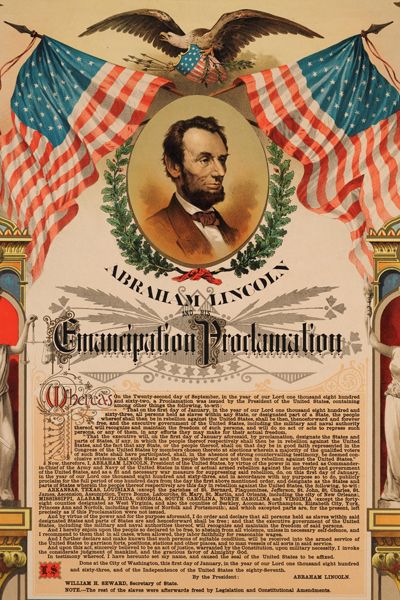
The Emancipation Proclamation

Lincoln understood that these might hurt him with the abolitionist wing of the Republican Party as well as with free blacks. But he also understood the overall strategic situation for the Union, and how if the Border States seceded that there would be no chance of ending the rebellion or for that matter of emancipation in any form. While Lincoln was certainly sympathetic to the cause of these commanders, including his friend David Hunter, he insisted that such decisions were not within the authority of local commanders, but that any such proclamations had to come from him, as Commander-in-Chief. He told Treasure Secretary Salmon Chase, who supported the measures of Hunter and Fremont, “No commanding general shall do such a thing, upon my responsibility, without consulting me.” [5]

Yet, Lincoln’s decision to reverse and repudiate the decisions of local commanders infuriated some in his cabinet and in the Congress, as well as the press, both white abolitionist and African-American owned, the “editor of the Anglo-African was quick to condemn Lincoln’s repudiation of Fremont, “which hurls back into the hell of slavery the thousands in Missouri rightfully set free by the proclamation of Gen. Fremont.” [6] After suppressing Hunter’s emancipation order, “Lincoln was censured by the editor of a black San Francisco newspaper. Said the Pacific Appeal, “We fear the Administration is pursuing a course detrimental to the best interests of the country, and encouraging the Rebels in their efforts to overthrow the Union, and perpetuate slavery.” [7]

But Lincoln remained firm in his conviction due to the need to ensure the cooperation of the Border States the continued loyalty of which were absolutely vital to winning the war, without which no meaningful emancipation would be possible.

Lincoln had already decided upon emancipation in the spring of 1862. What brought this about was the realization that to “win a war over an enemy fighting for and sustained by slavery, the North must strike at slavery.” [8] It was an important realization, and Lincoln decided to commit his administration and the nation to a major change in national strategy that went far beyond the battlefields. It was a political as well as a military decision that would activate “the dynamism of the Northern antislavery majority that elected him and mobilize the potential of black manpower by issuing a proclamation of freedom for slaves in Southern states.” [9] Thus “in July 1862, Lincoln began working on a document of some importance that he kept from even those closest to him: a presidential declaration emancipating the slaves in Confederate territory.” [10]  The proclamation went farther than anything even the radical in Congress had proposed and ended with the trumpet flare,

“…as a fit and necessary military measure for effecting this object, I, as Commander-in-Chief of the Army and Navy of the United States, do so order and declare that on the first day of January in the year of our Lord one thousand, eight hundred and sixty-three, all persons held as slaves within any state or states, wherein the constitutional authority of the United States shall then be practically recognized, submitted to, and maintained, shall then, thenceforward, and forever, be free.” [11]

The slaves were not to be free for the duration of the war as a wartime contingency and then returned to slavery, but instead were to be “forever free.” Though it initially freed very few slaves, it stood “as an affirmation of the objectives for which Union forces fought to save their country. It brought the full faith of the U.S. Government to secure the right of all Americans to be free.” [12] With the signing of the proclamation Union troops became an emancipating army. From January first 1863 on “wherever the Union Army advanced, black slaves became not contrabands in some ambiguous world between slavery and liberty, but free people. The victories of the North became undoubtable victories for freedom.” [13]

However, following the defeat of McClellan on the Peninsula he decided to postpone announcing it, Secretary of State Seward recommended against it until “until you can give it to the country supported by military success.” Otherwise the world might view it as an incitement for slave insurrections, “as the last measure of an exhausted government, a cry for help…our last shriek, on the retreat.” [14] The wisdom of Seward’s advice was profound, and Lincoln noted, “The wisdom of the view of the Secretary of State struck me with great force…. It was an aspect of the case that, in all my thought on the subject, I had entirely overlooked.” [15] Thus the President put off the announcement until the repulse of Robert E. Lee’s invasion of the North after the Battle of Antietam.

McClellan, true to form opposed any such policy of emancipation. When Lincoln visited him after his withdraw from the Peninsula, the defeated but still arrogant General handed Lincoln a memorandum on what McClellan viewed as the “proper conduct of the war.” McClellan advised Lincoln that the war “should not be a war looking to the subjugation of any State in any event…but against armed forces and political organizations. Neither confiscation of property, political executions of persons, the territorial organization of States, or the forcible abolition of slavery should be contemplated for a moment.” [16]

Lincoln was not seeking advice from his recalcitrant commander and put the letter in his pocket and simply told McClellan, “All right.” Interestingly enough just a few months earlier Lincoln would have agreed with McClellan’s views on the conduct of the war. However, with the passage of time and the realization that the Confederacy was fully committed to its independence as well as the continuance and even the expansion of slavery had come to the view that fighting a limited war with limited aims was foolish, he told members of his cabinet that “Decisive and extensive measures must be adopted.” Likewise he told Secretary of the Navy Gideon Welles that the emancipation of African Americans was “a military necessity, absolutely necessary to the preservation of the Union. We must free the slaves or be ourselves subdued. The slaves [are] undeniably an element of strength to those who have their service, and we must decide whether that element should be with us or against us…. We [want] the army to strike more vigorous blows. The administration must set the example and strike at the heart of the rebellion.”  [17]

He told a Unionist Democrat a few days after McClellan offered his unsolicited advice about delaying any talk of emancipation that the war could not be fought:

“with elder-stalk squirts, charged with rose water….This government cannot much longer play a game in which it stakes all, and its enemies stake nothing. Those enemies must understand that they cannot experiment for ten years trying to destroy this government, and if they fail still come back into the Union unhurt.” [18]

Notes

[1] McPherson, James M. Tried by War: Abraham Lincoln as Commander in Chief Penguin Books, New York and London 2008

[2] Ibid. McPherson Tried by War p.58

[3] Ibid. McPherson Tried by War p.58

[4] Ibid. Goodwin Team of Rivals p.369

[5] Ibid. Goodwin Team of Rivals p.435

[6] Trudeau, Noah Andre Like Men of War: Black Troops in the Civil War 1862-1865 Little, Brown, and Company Boston, New York, and London 1998 p.16

[7] Ibid. Trudeau Like Men of War p.16

[8] Ibid. McPherson The War that Forged a Nation: Why the Civil War Still Matters p.131

[9] Ibid. McPherson The War that Forged a Nation: Why the Civil War Still Matters p.131

[10] Ibid. Trudeau Like Men of War p.17

[11] Brewster, Todd. Lincoln’s Gamble: The Tumultuous Six Months That Gave America the Emancipation Proclamation and Changed the Course of the Civil War Scribner, a division of Simon and Schuster New York 2014 pp.73-74

[12] Goldfield, David. America Aflame: How the Civil War Created a Nation Bloomsbury Press, New York 2011 p.245

[13] Ibid. Weigley A Great Civil War  p.192

[14] Ibid. McPherson Tried by War p.109

[15] McGovern, George Abraham Lincoln Times Books, Henry Holt and Company, New York 2009 p.72

[16] Ibid. Foote, The Civil War, A Narrative Volume Two p.531

[17] Ibid. McPherson The War that Forged a Nation: Why the Civil War Still Matters pp.131-132

[18] Ibid. McPherson. The Battle Cry of Freedom p.503

Leave a comment

Filed under civil rights, civil war, History

The Context of History, Memory & War

16-2 Gettysburg Staff Ride, May 2016-37

With my Students at Little Round Top

Friends of Padre Steve’s World,

As always I have been doing a lot of reading and of course that has led me to do some more revisions to my Civil War and Gettysburg text. I re-wrote the introduction to the first chapter in order to talk about the nature and role of history in understanding who we are as a people today. The section is part of a chapter that is now over 150 pages long and probably will become a book in its own right. Of course this section, and the rest of the chapter will likely be worked on some more in the coming months but I think that you will like it.

Peace,

Padre Steve+

“No one is so sure of his premises as the man who knows too little.” [1]

Barbara Tuchman

Finite human beings find themselves bound by time and space, we live in the present, but not the present alone, but rather three worlds: one that is, one that was, and one that will be. Ernst Breisach wrote, “In theory we know these three worlds as separate concepts but we experience as inextricably linked and influencing each other in many ways. Every new and important discovery about the past changes how we think about the present and what we expect of the future; on the other hand every change in the conditions of the present and in the expectations of the future revises our perception of the past. In this complex context history is born ostensibly as reflection of the past; a reflection which is never isolated from the present and the future. History deals with human life as it “flows” through time.” [2]

Richard Evans wrote something in the preface to his book The Third Reich in History and Memory that those who study military history often forget. He noted: “Military history, as this volume shows, can be illuminating in itself, but also needs to be situated in a larger economic and cultural context. Wherever we look, at decision making at the top, or at the inventiveness and enterprise of second rank figures, wider contextual factors remained vital.” [3] Thus while this work is an examination of the Gettysburg campaign it is important to understand the various issues that were formative for the men who directed and fought the battle, as well as the vast continuum of often distant and seemingly events that come together at one time in the lives of the participants in any historic event.

One cannot understand the determination the determination of Robert E. Lee to maintain the offensive, the dogged persistence of Joshua Chamberlain or Strong Vincent to hold Little Round Top, what brought John Buford to McPherson’s Ridge, what motivated Daniel Sickles to move Third Corps to the Peach Orchard, and what motivated the men of Pickett’s division to advance to their death on Cemetery Ridge, without understanding the broader perspective of history, as well as how culture, politics, economics, religion, sociology, ideology, experience, and  that shaped these men and their actions.

Likewise in order to understand the context of this battle, or for that matter any battle in any war, one has to understand the events, ever distant events which play a role in the battle. All too often those that delve into military history, or a particular battle see that as separate event, often disconnected from other historical events. But as historian Edward Steers Jr. correctly notes, history “does not exist in a series of isolated events like so many sound bites in a newscast. It is a continuum of seemingly unrelated and distant events that so often come together in one momentous collision of time.” [4] In the case of Gettysburg events like Lincoln’s publication of the Emancipation Proclamation, the failure of Confederate diplomacy to bring France or Great Britain into the war or at least to recognize the Confederacy, the failures of the Confederate armies in the West to maintain their hold on the Mississippi River, all play a crucial role in Robert E. Lee’s ill-advised decision to launch an invasion of Pennsylvania. Additionally, the loss of so many key leaders in the Army of Northern Virginia, especially that of Stonewall Jackson impacts how Lee manages the campaign, and shows up at numerous crucial points in the battle.

Another element that must be connected in order to understand the Battle of Gettysburg is the part that policy, strategy, war aims and operational doctrine played in the campaign of 1863 and how those influenced the decisions of participants before, during and after the campaign. Finally, the Battle of Gettysburg cannot be looked at as a stand-alone event. What happens there as the Confederacy surges to and ebbs back from its “high water mark” influences the rest of the While the war would go on for nearly two more years, the Union victory at Gettysburg coupled with the victory of Grant at Vicksburg ensured that the Confederacy, no matter how hard it tried would not be able to gain its independence through military means.

Maybe even more importantly the story of Gettysburg is its influence today. The American Civil War was America’s greatest crisis. It was a crisis that that “has cast such a shadow over the relations between the North and the South that the nation’s identity and its subsequent history have been considerably influenced by it.” [5]

The Battle of Gettysburg itself is enshrined in American history and myth and is woven deeply into the story of the nation. In this narrative the Battle of Gettysburg is often different ways; in the North viewed as a victory that brings an end to the institution of slavery, and freedom for enslaved African Americans, and preserves the Union. In the South it is often part of the myth of the Noble Confederacy and the Lost Cause where the South was defeated by the Northern superiority in men and war making ability.

Yet in both cases, the truth is not so simple; in fact it is much more complex, and the truth is we are still in the process of learning from and interpreting the historical records of the events that led to the American Civil War, the war itself, and the aftermath. They are all connected and for that matter still influence Americans today more than any other era of our history. In fact James McPherson who is one of the nation’s preeminent scholars on the Civil War and Reconstruction wrote,

“I became convinced that I could not fully understand the issues of my own time unless I learned about their roots in the era of the Civil War: slavery and its abolition; the conflict between North and South; the struggle between state sovereignty and the federal government; the role of the government in social change and resistance to both government and social change. These issues are as salient and controversial today as they were in the 1960s, not to mention the 1860s.” [6]

The prolific American military historian Russel Weigley wrote of how the war, and in particular how the Battle of Gettysburg changed the American Republic.

“The Great Civil War gave birth to a new and different American Republic, whose nature is to be discovered less in the Declaration of Independence than in the Address Delivered at the Dedication of the National Cemetery at Gettysburg. The powerful new Republic shaped by the bayonets of the Union Army of the Civil War wears a badge less benign aspect than the older, original American Republic. But it also carries a larger potential to do good for “the proposition that all men are created equal” both at home and around the world.” [7]

Thus it is important for Americans to learn about the Battle of Gettysburg and the American Civil War, but not solely for its military significance, nor for clear cut answers or solutions. The fact is that “situations in history may resemble contemporary ones, but they are never exactly alike, and it is a foolish person who tries blindly to approach a purely historical solution to a contemporary problem. Wars resemble each other more than they resemble other human activities, but similarities can be exaggerated.” [8]  As Michael Howard warned, “the differences brought about between one war and another by social or technological changes are immense, and an unintelligent study of military history which does not take into account these changes may quite easily be more dangerous than no study at all. Like the statesman, the soldier has to steer between the dangers of repeating the errors of the past because his is ignorant that they have been made, and of remaining bound by theories deduced from past history although changes in conditions have rendered these theories obsolete.” [9] The ideal that we reach for is to understand the Battle of Gettysburg and the American Civil War in context, which includes understanding what led to the war as well as the period of Reconstruction, and the post-Reconstruction era. In doing so we attempt to draw lessons from it without making the mistake of assuming that what we learn and know about them is immutable and thus not subject to change, for the past influences the present, even as the present and future will influence how we view and interpret the past.

Notes

[1] Tuchman, Barbara The March of Folly: From Troy to Vietnam Random House Publish Group, New York 2011 p.319

[2] Breisach, Ernst, Historiography: Ancient, Mediaeval & Modern University of Chicago Press, Chicago and London 1983 and 1994 p.2

[3] Evans, Richard J. The Third Reich in History and Memory Oxford University Press, Oxford and New York 2015 p.ix

[4] Steers, Edward Jr. Blood on the Moon: The Assassination of Abraham Lincoln The University of Kentucky Press, Lexington 2001 p.5

[5] Perman, Michael and Murrell Taylor, Amy editors The Civil War and Reconstruction Documents and Essays Third Edition Wadsworth Cengage Learning Boston MA 2011 p.3

[6] McPherson, James The War that Forged a Nation: Why the Civil War Still Matters Oxford University Press, Oxford and New York 2015 p.4

[7] Weigley, Russell F. A Great Civil War: A Military and Political History 1861-1865 Indiana University Press, Bloomington and Indianapolis 2000 p.xviii

[8] Griess, Thomas E. A Perspective on Military History in A Guide to the Study and Use of Military History edited by John E. Jessup Jr. and Robert Coakley, Center for Military History, United States Army, 1982 p.33

[9] Howard, Michael. The Use and Abuse of Military History  in Journal of the Royal United Service Institution 107 (1962):7

1 Comment

Filed under civil rights, civil war, Gettysburg, History

The Creepiest: Bates Motel


Friends of Padre Steve’s World,

Just a short post today. Monday night Judy and I watched the season finale of Bates Motel on A&E. Now for people that follow the show and missed the latest episodes I promise not to give away any spoilers, at the same time I cannot stay silent about what a well written and acted show this is. In fact, I think the writers and actors are absolutely brilliant. 

For those that have never seen the show you need to take yourself back to Alfred Hitchcock’s classic film Psycho. If you have never seen Psycho I pity you, it was one of the most brilliant films of all time, but I digress…

Bates Motel is an incredible prequel to Psycho which starred the late Anthony Perkins as Norman Bates. In the past four season we have gotten to see the relationship that Norman who is played by the fantastic young English actor Freddie Highmore, and his mother, Norma Bates, played by Vera Farmiga. The combination of superb actors who are believable in the roles that they play and the excellent writing that keeps views on edge week after week. Watching the young Norman devolve from an innocent yet disturbed teen to a psychopath over the last four season was amazing. To watch his mother ignore and deny Norman’s descent into the abyss of acute and murderous psychosis is equally amazing. 

Let me be truthful, I did not see the first season until I got the series on Blu-Ray. It was my wife Judy who started watching the show when I was stationed at Camp LeJeune. When I came home for my birthday in 2013 I found our bathroom decorated in Psycho-Bates Motel motif. When she showed me I about died laughing. 


That being said, and without giving any spoilers away, Bates Motel is a masterful prequel to the original Hitchcock masterpiece. Unfortunately those of us that follow the show will have to wait between six to eight months for season five. But then sometimes good things have to wait. 

Oh well, what can I say? 

Peace

Padre Steve+ 

Leave a comment

Filed under televsion

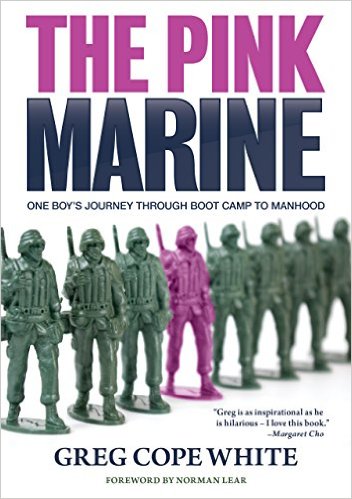
Overcoming: A Review of and Reflection on “The Pink Marine”

Pink Marine Cover

Friends of Padre Steve’s World,

I sometimes have the opportunity to review various books, but it has been a while since I have done one. That being said I read a lot and probably do more book reviews, however, much of my reading is comprised of histories that a lot of other people just are not that interested in, and since I am not doing these reviews for an historical or political science journal, I see no point in writing reviews of them here.

But once in a while I read a book that jumps out at me as something that I really feel the need to review. One of those is Greg Cope White’s The Pink Marine.

Greg served as a closeted Gay man for six years in the Marine Corps, leaving with the rank of Sergeant before the era of don’t ask don’t tell, but the book is not so much about that, although the threat of being found out and being court-martialed or discharged with a less than honorable discharge was always present.

But as I said, the book is about far more than that. This is not a story of a man talking about being persecuted, it is a book about overcoming obstacles and self-doubts to accomplish something worthwhile. For Greg this was becoming a United States Marine, something that he is still very much proud of being.

You do not have to be Gay to enjoy, appreciate, and be inspired by this book. It an outstanding read for anyone who wants to understand the importance of learning to overcome and succeed.

The book deals with life, and how Greg’s life, upbringing, a lifelong friendship, all came together during the crucible of Marine Boot Camp. This is a story of triumph in the face of self-doubt and adversity, a story of friendship, loyalty, and bonding that those who have not gone through Boot Camp, or other forms of rigorous initial entry training in the military, training which challenges you to reach beyond your limits and overcome all of the obstacles thrown in your path.

Greg’s story is a common story for many men and women, straight and gay alike who have volunteered to serve in the military, not knowing quite what to expect, and then be broken down, and built back up, not just as individuals but as a group. When Greg tells the stories of Boot Camp, the work of the Drill Instructors, and his story of conquering his own doubts and weaknesses I could relate.

While I am not Gay, I have served in the military some 35 years, 17 1/2 years in the Army, and about the same in the Navy, with about six of my Navy years serving with the Fleet Marine Force. I still remember the breaking process of my Army ROTC Advanced Camp at Fort Lewis Washington in the summer of 1982 when an Army Special Forces and Ranger, Vietnam combat veteran by the name of Sergeant First Class Harry Ball broke me down and built me back up. I have written about that before, and it has stayed with me. Greg’s very vivid description of his Marine Corps Drill Instructors, also Vietnam vets, made me feel like I was there again. Such training can be both traumatic and humorous and Greg tells it better than most.

Likewise, Greg’s retelling of his work to master the Marine Physical Fitness Test, (PFT) made me recall my transition from the Army to the Navy, serving with the Second Marine Division at Camp LeJeune North Carolina. Though I was about to turn forty, the Marines made me want to do more than settle for Navy standards or my former Army standards, I wanted to meet theirs. When I read his account of nearly maxing that test, it brought me back to when I passed the Marine PFT with a Class One score on my 40th birthday in March 2000, and completing a timed forced march in full combat gear at the end of a grueling field exercise. Though I am a Navy officer I proudly wear the Fleet Marine Force Qualification pin, it establishes a link with Marines that cannot be broken.

I heartily recommend Greg’s book to anyone, especially those that need some inspiration to begin to believe in themselves, and that they can accomplish things that they thought were unattainable. It is a story of what it takes to become a Marine, total commitment and the qualities of courage, honor, loyalty, and professionalism. That is what you get in this book.

Greg’s book should also be read by those who oppose Gays serving in the military. I would hope that reading it would help lessen their prejudice and enlighten them that Gays and Lesbians, like anyone else can serve our Nation honorably, with the highest distinction.

I found Greg’s story tremendously inspiring, even at the age of 56 and now passed over for Captain, happily getting ready for my final tour of duty before I retire.

The Pink Marine can be found in most bookstores as well as on Amazon.com which has it on their Kindle format. Greg is an author, television writer, and is the host of the Cooking Channel’s food and travel show Unique Sweets, writes for the Huffington Post, and has his own blog over called EAT.GREG.EAT at www.eatgregeat.com

Have a great day.

Peace,

Padre Steve+

4 Comments

Filed under History, leadership, LGBT issues, Military

Women in the Civil War: Spies, Nurses and Transgender Soldiers

women-civil-war-sarah-edmonds-frank-thompson-631

Friends of Padre Steve’s World,

This is the follow-up to yesterday’s article on the early women’s rights movement. It deals with how women served in the Civil War. While women were not allowed to be soldiers, many disguised themselves and lived as men in order to do so, in effect living as transgender men. Others served as spies or nurses. All were pioneers, and though women are now beginning to reach the highest ranks of the U.S. Military, and being allowed to serve in military specialties previously limited to men, there is still much political and cultural opposition to them doing so. 

As before this is a section from my Civil War and Gettysburg text. I do hope that you find it interesting. 

Peace

Padre Steve+

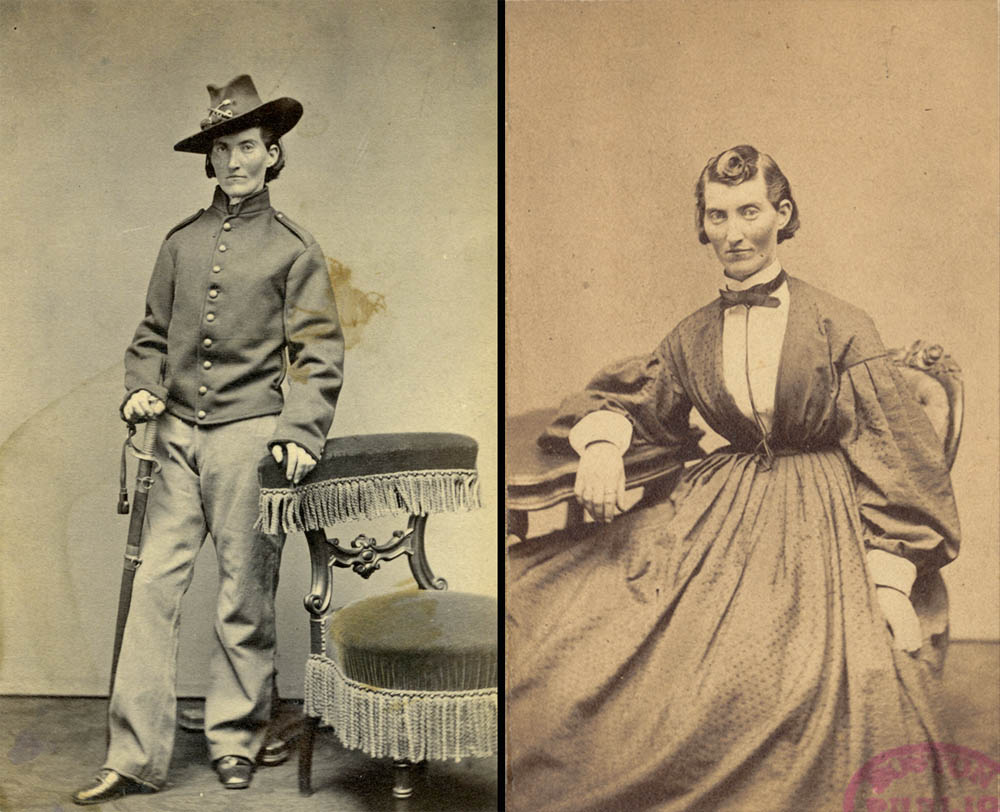
Of course when the Civil War broke out the logical end of this train of though was that should women be allowed to serve in the military. Legally and socially it was not possible for women to serve in the military in 1861, but this did not stop women in the Union or the Confederacy from doing so. Quite a few women on both sides of the conflict chaffed about not being allowed to fight for their countries, their families and their causes, and despite official prohibitions that kept women from serving in any capacity but nursing, a good number of women found their way to go to war. While men in the North and South “were expected to enlist, any woman actively participating in the Civil War was an oddity if not a renegade.” [1] In some cases this involved hundreds of women taking male identities in order to fulfill their desires to serve their countries.

The motives of these women varied. In some cases women wanted gain the economic privileges of full citizenship, and for others the glory reserved to only to men. In our modern parlance those that took male identities would be considered transvestites or possibly transgender, but for them “transvestitism was a private rebellion against public conventions. By taking a male social identity, they secured for themselves male power and independence, as well as full status as citizens of their nation. In essence the Civil War was an opportunity for hundreds of women to escape the confines of their sex.” [2]

civilwar-07-patient1

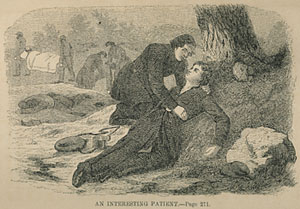
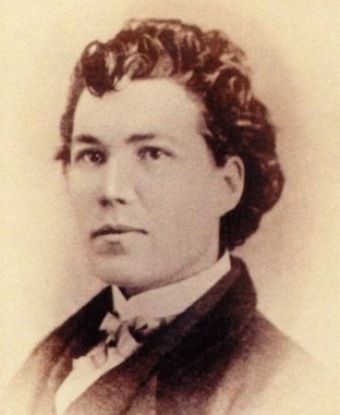
During the war hundreds of women went to war, taking on the identity of men. They enlisted under male names and pretended to be men. Unless they were discovered to be women, or unless they confessed to their wartime service either during or after the war, most women managed to serve without being caught. Sadly, most of their service records were lost. In 1861 Private Franklin Thompson “enlisted in Company F of the 2nd Michigan Infantry…unknown to comrades, Thompson actually was Sarah Emma Edmonds.” [3] Edmonds served in the illustrious Iron Brigade until the disaster at Fredericksburg. Well known for her courage as Franklin Thompson, Edmonds participated in some of the bloodiest combats of the war. At Antietam she was caring for the wounded when she came upon a soldier who had been wounded in the neck. That soldier informed Edmonds that she was dying and after a surgeon came by and confirmed what the soldier said the dying soldier told Edmonds:

“I am not what I seem, but I am female. I enlisted from the purest motives, and I have remained undiscovered and unsuspected. I have neither father, mother nor sister. My only brother was killed today. I closed his eyes about an hour before I was wounded….I am Christian, and have maintained the Christian character ever since I entered the army. I have performed the duties of a soldier faithfully, and am willing to die for the cause of truth and freedom….I wish you to bury me with your own hands, that none may know after my death that I am other than my appearance indicates.” [4]

That unknown woman was not alone, at least nine women, eight Union and one Confederate, fought at Antietam and of those five were casualties. Five women, two Federal and three Confederate took part at Gettysburg. All three Confederate women at Gettysburg were either killed or wounded, or captured, including two women who took part in Pickett’s Charge. [5]

Edmonds_inline

Sarah Edmonds aka Franklin Thompson

Sarah Edmonds published a book Nurse and Spy in the Union Army while recovering from malaria in 1863. The book, which was published the following year, sold 175,000 copies, the proceeds that she donated to care for sick and wounded Union veterans. After the war, Edmonds attended Oberlin College, married, had three of her own children and adopted two more. She “became a member of the Grand Army of the Potomac, the organization for Union veterans of the Civil War. She applied for, and received, a military pension, and upon her death in 1898 was buried with full military honors.” [6] She was the only women admitted to the Grand Army of the Republic.

Clayton-Francis-L

Frances Clayton

Another of the women to serve was Frances Louisa Clayton. Fighting for the Union as a member of the Minnesota State Militia Cavalry and 2nd Minnesota Battery, serving under the command of Ulysses S. Grant she was wounded at Fort Donelson. Like many other women soldiers, Clayton mastered the art of behaving as a man. She “became “a capital swordsman,” but also commanded attention with her “masculine stride in walking” and “her erect and soldierly carriage.” [7] After the war she promoted her service in a book.

Albert-Cashier

However, most women were more discreet during and after the war regarding their true sexuality. Private Albert Cashier hid his sexuality identity for his entire term of service. He enlisted in August 1862 as a member of the 95th Illinois. Cashier was born in Ireland as a woman, Jennie Hodgers. He fought in forty battles and was discharged with the regiment in August 1865. At Vicksburg he was briefly captured by the Confederates while conducting a reconnaissance “but managed to escape by seizing a gun from one of her guards, knocking him down, and outrunning others. Comrades recalled Private Cashier climbing to the top of their fieldworks to taut the enemy into showing themselves.” [8]

After the war “Albert” returned home and lived as a “farmer and handyman and served as a caretaker in his church. He never married.” In 1890 he applied for and received a military pension and in 1911 the now elderly “man” was struck by a car and suffered a broken leg. The doctor threating him discovered that Albert was not a man, but a woman. But the doctor kept his confidentiality and without revealing “Albert’s” secret had the Union veteran admitted to the local Soldier’s and Sailors’ Home at Quincy, Illinois.” [9] A few years later the elderly “man” began to exhibit erratic behavior and was “committed to a public mental hospital and the word was out.” [10] With her story now sensational front page news and “old comrades in arms came to her defense.” [11] Her comrades had never known that “Albert” was a man during or after the war, while the news was a surprise to them they came to her defense. To combat some of the sensationalism in the media Albert’s fellow soldiers testified “to Albert’s bravery in combat and public good works in later life. Albert/Jennie died at Watertown State Hospital in 1915 at age seventy-one. The local post of the Grand Army of the Republic arranged for her burial. Her headstone reads: “Albert D.J. Cashier, Company G, 95th Illinois Infantry.” [12]

Wartime records are sketchy but as a minimum it is believed that “between 250 and 400 women disguised as men found their way into either the Federal or Confederate armies.” [13] Women known to have served had a “combined casualty rate of 44 percent” including the fact that “eleven percent of women soldiers died in the military.” [14] Some of those women are now well known but many others are lost to history. Most women tried to keep their sexual identities secret, even to the point of their death on the battlefield. Most of the women who served in the armies returned home to resume relatively normal lives after the war.

Other women would serve as spies for both sides, often rendering valuable assistance to their countries. The women who served as spies often took their lives into their hands; however, they often provided vital information to the Union or Confederate officers that they served. Pauline Cushman “parlayed her acting talents into a series of elaborate ruses that allowed her to pry information out of admiring and complaisant Confederate officers; Belle Boyd used an equal measure of talent in as a northern Virginia coquette to elide the same kind of information out of Federal officers.[15]

Even those women who were successful often suffered for their service during and after the war as they learned “that few people completely trusted or respected a spy, not even a “friend.” [16] Many, especially Southern women who spied for the Union were ostracized and persecuted in their communities after the war, and found little support from Northern politicians. Rebecca Wright, a young Quaker schoolteacher in Winchester, Virginia provided information that “enabled him to defeat General Early’s forces” in the Valley of 1864. She lost her job, and her former friends and neighbors boycotted her family’s businesses. Rejected for a pension, Sheridan helped Wright obtain “an appointment in a government office, remaining there for the rest of her days.” [17] Elizabeth Van Lew was a lifelong resident of Richmond and daughter of a wealthy businessman. She helped Union prisoners escape from Richmond’s notorious Libby prison and when Grant besieged Petersburg, Miss Van Lew “supplied him with a steady stream of information” [18]

01302012_harriet-tubman2-library-of-congress-600

Harriet Tubman

“African American women were generally dismissed as militarily harmless, a miscalculation that Harriet Tubman…used to immense advantage. Tubman, who had escaped from slavery in Maryland twenty years before the war and who had amassed considerable experience venturing into the south to guide runaways to the North undertook spying expeditions for the Federal troops on the South Carolina Sea Islands.” [19] The incredibly brave woman served throughout the war accompanying Union forces and securing vital information even as she worked to set other slaves free. Tubman’s “spying activities included convincing slaves to trust the Union invaders,” [20] many of whom would join the ranks of the newly raised regiments of U.S. Colored Troops.

dix

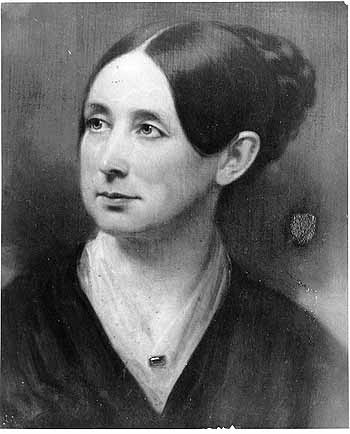
Dorothea Dix

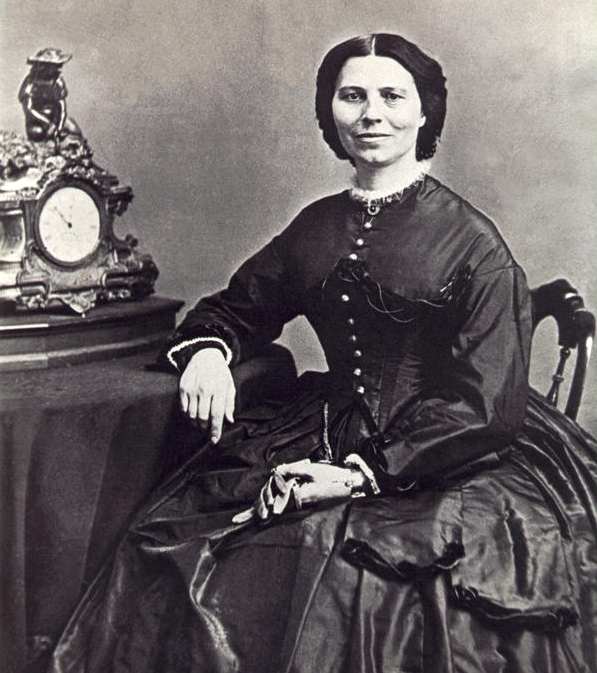
Other women served in various roles caring for the wounded. In the North, “Dorothea Dix organized the Union’s army nurses for four years without pay; Mary Livermore headed the Union’s Sanitary Commission, inspecting army camps and hospitals….Scores of others like Clara Barton, volunteered to be nurses.” [21] All of these women did remarkable service, mostly as volunteers, and many witnessed the carnage of battle close up as the cared for the wounded and the dying which often created ethic concerns for the women nurses:

“Clara Barton described her crisis of conscience when a young man on the verge of death mistook her for his sister May. Unable to bring herself actually to address him as “brother,” she nonetheless kissed his forehead so that, as she explained, “the act had done the falsehood the lips refused to speak.” [22]

Clarabartonwcbbrady

Clara Barton

Of the women that served in the ranks, some were discovered, and many remained protected by their fellow soldiers. Quite a few received promotions and even served as NCOs or junior officers. With women now serving in combat or combat support roles in the U.S. Military since Operation Desert Storm in 1991, the stigma and scandal that these cross-dressing women soldiers of the Civil War has faded and as scholars and the public both “continue probing cultural notions of gender and identity, the reemerging evidence that women historically and successfully engaged in combat has met with less intellectual resistance and has taken on new cultural significance.” [23] As the United States military services examine the issues surrounding further moves to integrate the combat arms we also should attempt to more closely examine the service of the brave and often forgotten women who served on both sides of the Civil War.

Notes

[1] Silvey, Anita I’ll Pass for Your Comrade Clarion Books, New York 2008 p.9

[2] Ibid. Blanton and Cook They Fought Like Demons p.5

[3] Ibid. Lowry The Stories the Soldiers Wouldn’t Tell p.119

[4] Ibid. Silvey I’ll Pass for Your Comrade p.68

[5] Ibid. Blanton and Cook They Fought Like Demons pp. 15-16

[6] Ibid. Silvey I’ll Pass for Your Comrade p.90

[7] Ibid. Blanton and Cook They Fought Like Demons p.58

[8] Ibid. Blanton and Cook They Fought Like Demons pp. 16-17

[9] Ibid. Lowry The Stories the Soldiers Wouldn’t Tell p.121

[10] Ibid. Lowry The Stories the Soldiers Wouldn’t Tell p.121

[11] Ibid. Silvey I’ll Pass for Your Comrade p.90

[12] Ibid. Lowry The Stories the Soldiers Wouldn’t Tell p.121

[13] Ibid. Guelzo Fateful Lightening p.394

[14] Ibid. Blanton and Cook They Fought Like Demons pp.206-207

[15] ibid. Guelzo Fateful Lightening p.395

[16] Ibid. Massey Women in the Civil War p.87

[17] Ibid. Massey Women in the Civil War pp. 103-104

[18] Ibid. Massey Women in the Civil War p.102

[19] Ibid. Guelzo Fateful Lightening p.394

[20] Sizer, Lyde Cullen Acting Her Part: Narratives of Union Women Spies in Divided Houses: Gender and the Civil War Oxford University Press, New York and Oxford 1992 p.130

[21] Ibid. Silvey I’ll Pass for Your Comrade p.10

[22] Faust, Drew Gilpin, This Republic of Suffering: Death and the American Civil War Vintage Books, a division of Random House, New York 2008 p.12

[23] Ibid. Blanton and Cook They Fought Like Demons p.204

Leave a comment

Filed under civil rights, civil war, History, Military, Political Commentary

Equality: The Early Women’s Rights Movement

senecafalls-womanspeaking

The Seneca Convention

Friends of Padre Steve’s World,

The issue of Women’s Rights is still in the forefront of political debate in the United States. Women’s rights have been slow to progress despite the passage of the 19th Amendment which gave women the right to vote in 1920. The defeat of the Equal Rights Amendment in 1982 gave added ammunition to conservative opponents of Women’s rights to fight them.

Though women have long been in the workplace in many cases there is a large gap in pay for men and women doing the same jobs and having the same qualifications, likewise, the number of women in senior positions in the private sector and in government is still dwarfed by the numbers of men. The are numerous disparities in how men and women are treated in society, and in many cases and in many parts of conservative society, especially churches, women are still considered less than equal to men. In light of the fact that we will likely have a woman running as the Democratic Party nominee for President the issue is even more pronounced, and Hilary Clinton, whether one likes her or not, and regardless of her policies, or previous record as a Senator or Secretary of State, is held to a higher standard of scrutiny than men in those position.

But this is nothing new, and in light of this I have decided to re-post a sightly edited portion of the chapter in my Civil War and Gettysburg text that deals with the early Women’s Rights movement. I hope that you find it insightful.

Peace

Padre Steve+

Another development, which in large part is related to the abolition movement, was the campaign for women’s rights. The Civil War was also revolutionary because it was instrumental in propelling women into positions in American society that they had never before been allowed. The war Some of this was because many women decided to like those who campaigned for the end of slavery and the rights of African Americans to turn the world upside down. The war allowed the women who served, “in uniform or not, war permitted these women to experiment with a series of role reversals in gender,” [1] and in some cases gender and race. These experiments are the beginning of women’s’ equality and to women serving in the military.

In much of the country and in particular the South, women’s rights were the same as granted in English Common Law. Common law held to the more archaic understanding of the Christian Church that women were the property of their husbands, especially in cases of infidelity including during the trial of Dan Sickles for killing Barton Key.

Southern culture and law ensured that women had even few rights than the women in the North who were making some gains in the workplace and in various professions such as teaching and nursing. This was in large part due to the understanding that the “household was a spatial unit, defined by the property to which the owner not only held legal title over, but over which he exercised exclusive rights.” [2] As such Southern men had nearly unlimited rights and power over what occurred on his property, for “in societies in which landed property comprised the chief means of subsistence…legal title to the land had historically incorporated claims over the persons and labor of those who were dependents on it.” [3]

Thus for Southern men the stakes of ensuring slavery’s continuation and expansion were high, the culture of the South ante-bellum South was deeply patriarchal and “The possibility that the black man might be empowered like any other was such a threat to the southern social hierarchy that some white southerners were inclined to fear not only for their position as slaveowners but for the entire basis of their claim to patriarchal power. They feared for their power not only over their slaves but over their women as well.[4]

William Lloyd Garrison and the leaders of the abolitionist movement came into contact with two southern women who had converted to the abolitionist cause; South Carolina cotton heiresses, Sarah and Angelina Grimke. The two women were passionate as well as eloquent and became popular lecturers on the abolitionist speaking circuit. Angelina Grimke was a powerful speaker and linked abolition and women’s rights:

“We cannot push Abolitionism forward with all our might until we take up the stumbling block out of the road…. If we surrender the right to speak in public this year, we must surrender the right to petition next year, and the right to write the year after, and so on. What then can the woman do for the slave, when she herself is under the feet of man and shamed into silence?” [5]

The Grimke sisters and other women like them brought Garrison and others in the abolitionist movement into contact with the early leaders of the new women’s rights movement. The leaders of the movement, Elizabeth Cady Stanton, Abby Kelley, and Lydia Maria Child were outspoken in their belief that “a campaign to emancipate slaves could not avert its eyes from the need to emancipate American women from social conventions and legal restraints that prevented them, like the slave, from owning property and voting, and kept them altogether subservient to the interests of white males.” [6]

The principals involved in the abolitionist and the women’s movements, those of freedom, emancipation and equality eventually forged a bond between them, and have provided inspiration to others in their quest for political and social equality. For William Lloyd Garrison “the woman question clearly demonstrated how the logic of reform united all good causes and carried them to new ground. If in their endeavors to break the chains of slavery women discovered, as Abby Kelley put it, that “we were manacled ourselves,” the abolitionist principle required a defense of equal rights without regard to race or sex.” [7]

However, women found that their rights were not considered as important by the political leadership fighting for the rights of black men. Few in Congress “responded sympathetically to feminists’ demands. Reconstruction they insisted, was the “Negro’s hour.” [8] Though the economic situation of women began to improve, especially through women being admitted to the Civil Service. Likewise women began to have more educational opportunities in the post-war years. Women’s suffrage was not included in the Fifteenth Amendment, which caused a split between women’s groups and their long-time abolitionist allies who told them “If put on the same level and urged in the same connection, neither will soon be accomplished.” [9]  Even so in some territories women were granted the right to vote in territorial elections, “women were given the vote in Wyoming Territory in 1869. However, Wyoming’s admission as a state twenty years later came only after a heated debate on the women’s suffrage article in the state constitution.” [10]

Elizabeth Cady Stanton

In the 1800s women in the United States were bound by English common law. Women had no claim to property, wages, or even their children. Single women had few rights while married women had even fewer as:

“marriage very nearly meant the legal annihilation of a woman…once a woman was married all property and property rights were transferred to her husband, and she was permitted to own nothing in her own name. Married women could not make contracts, could not sue, could not buy or sell, except over their husband’s signatures.” [11]

A married woman’s position was as close to being a slave as could be, and only the plight of black female slaves was worse, for they were simply chattel. The few free black women mainly stayed unmarried “in order to maintain what few property rights they were entitled to.” [12] As they also did over blacks, white men ruled over women in all spheres of life. While the eventual emancipation of blacks provided more rights for black men, those did not help many black women as Sojourner Truth, a pioneering African-American abolitionist who spent forty-years as a slave said toward the end of her long life:

“There is a great stir about colored men getting their rights, but not one word about colored women; and if colored men get their rights, and not colored women theirs, you see colored men will be master over the women, and it will be just as bad as it was before. So I am for keeping the thing going while things are still stirring because if we wait till it is still, it will take a great while to get it going again….I suppose I am the only colored woman that goes on to speak for the rights of the colored women. I want to keep the thing stirring, now that the ice is cracked…” [13]

Elizabeth Cady Stanton was among the most vocal of women’s rights advocates. She believed that a woman’s place in the home was ultimately destructive and “reflected her subordinate position in society and confined her to domestic duties that served to “destroy her confidence in her own powers, lessen her self respect, and to make her willing to lead a dependent and abject life.” [14] Stanton noted how the condition of women of her day was “more fully identified with the slave than man possibly can be… For while the man is born to do whatever he can, for the woman and the negro the is no such privilege.” [15] It was a key observation and something even today, a state that some politicians, pundits and preachers would like to return women.

Since nearly all of the most “outspoken feminists had been schooled in abolitionist movement” they were “suspect in the South, where society was conservative, patriarchal, and insistence that ladies live in a kind of earthly limbo.” [16] Such women posed a threat to the pillars of Southern society. Since the South was now fighting tooth and nail against the abolitionist movement, anything closely connected with that movement, including the women who advocated abolition and women’s rights were shunned and their message rejected and inflammatory and revolutionary. It was not until the crisis caused by the Civil war that Southern women began to seize “the opportunity to lay claim to an increased reciprocity in gender relations.” [17]

But even with the abolition movement there was opposition the women’s rights, the 1839 meeting of the American Anti-Slavery Society witnessed a debate over including women in the membership. Conservative Evangelicals recoiled in disgust, and when the convention voted to allow women into the membership Lewis Tappan “got up a starchy “protest” which condemned the “repugnant” admission of women as an ‘expression of local and sectarian feelings…well suited to the unnecessary reproach and embarrassment to the cause of the enslaved as [it] is at variance with the general usage and sentiments of this and other nations.” [18] In May of 1840 the American Anti-Slavery Society split among religious lines when leading evangelicals led by the Tappan brothers withdrew from it.

But that neither stopped Garrison from working with women, nor kept Frederick Douglass from embracing them as part of the abolitionist movement. From this rather inauspicious beginning, the women’s rights movement began to infiltrate society, especially in the field of education. In 1848 at Seneca New York there was a convention that launched the modern women’s rights movement. Led by Stanton and Elizabeth Mott the delegates published a “Declaration of Sentiments, modeled on the Declaration of Independence, proclaimed “that all men and women are created equal” and deserved their “inalienable rights” include the right to elective franchise.” [19] The declaration was bold and its denunciation of the place of women in society to be considered revolutionary in character. Part read:

“He has never permitted her to exercise her inalienable right to elective franchise. He has compelled her to submit to laws, in the formation of which she had no voice. He has withheld from her rights which are given to the most ignorant and degraded men – both natives and foreigners… He has made her, if married, in the eye of the law, civilly dead. He has taken from her all right to property, even to the wages that she earns…. After depriving her of all her rights as a married woman, if single, and the owner of property, he has taxed her to support a government which recognizes her only when her property can be made profitable to it. He has monopolized nearly all the profitable employments, and from those she is permitted to follow she receives but a scanty remuneration. He closes against her all the avenues to wealth and distinction which he considers honorable to himself. As a teacher of theology, medicine of the law, she is not known… He has created a false public sentiment by giving the world a different code of morals for men and women, by which moral delinquencies which exclude women from society, are not only tolerated, but deemed of little account in man. He has usurped the prerogative of Jehovah alone, claiming his right to assign for her a sphere of action, when that belongs to her conscience and to her God. He has endeavored, in every way that he could, to destroy her confidence in her own powers, lessen her self-respect, and to make her willing to lead an abject and dependent life.” [20]

The declaration also stated, in words which inflamed many men that: “the history of mankind is a history of repeated injuries and usurpations on the part of man toward woman, having in direct object of an absolute tyranny over her.” [21] In the years following this meeting women took up an even more important place in the abolitionist movement, Abby Kelly Foster returned to head the work and recruited many talented women agents including Sallie Holley, Lucy Stone and Susan B. Anthony who “often made five or six appearances a week” in various abolitionist meetings and in 1850-1851 they were joined by the “black evangelist Sojourner Truth, whom Garrison had met and the Northampton colony in 1843 and for whom he had printed an autobiographical narrative.” [22] These women contributed greatly to the abolitionist cause and would in the years to come be among those who continued to fight not only for the rights of blacks, but the rights of women.

The new women’s rights groups continued to work hand in hand with the abolitionist groups but also began a campaign for the rights of women. In the mid-1850s primarily focused on “obtaining state laws guaranteeing women’s right to control their property and wages, to be legal guardians of their children, and to be paid salaries commensurate with their labors, while a few women advocated for more liberal divorce laws so that they could rid themselves of alcoholic, insane, criminal, or brutal husbands.” [23] These efforts secured some modest gains and by 1861 most states had granted women some type of property rights or had changed their laws to follow the community property principle.

While the movement made modest progress regarding property rights for women in some states, they made little progress in terms of elective franchise and better wages and working conditions. During the ante-bellum period, women who lobbied for such rights were met with open opposition and scorn. The press “frequently denounced and ridiculed the “strong-minded women…” [24] Despite such attitudes women did make some significant advancements, particularly in lay aspects of the church, such as Bible societies, moral reform organizations, as well as the abolition and temperance movements, which had gained prominence during the Second Great Awakening.

During the ante-bellum period women made great progress in education. By 1850 the United States was the only country where “girls went to elementary school and achieved literacy in virtually the same proportion as boys.” [25] Likewise a few women entered higher education, particularly at women’s seminaries, which were for all practical purposes boarding schools that produced teachers and writers, as well as the Oberlin College, which was founded by Christian abolitionists and welcomed students of both genders as well as of any racial minority. During the three decades prior to the war women made some specific gains, but more important “was the development to their talents for organization, cooperation, leadership, and self expression. It was a time of beginnings and not fulfillment, a time when most women realized and accepted the fact that they lived in a man’s world, a time when a few dedicated but belligerent visionaries were frustrated in their attempt to remake the social order “overnight.” [26]

However, the war would help bring about many more opportunities for women. In 1850 a follow on conference to the Seneca conference, the National Women’s Rights Convention denied the right of anyone to dictate what women could do with their lives:

“The right of any portion of the species to decide for another portion, of any individual to decide for another Individual what is not their “proper sphere”; that the proper sphere for all human beings is the largest and highest to which they are able to attain; what this is, can not be ascertained without complete Liberty of choice; women therefore, ought to choose for herself what sphere she will fill, what education she will seek, and what employment she will follow, and will not be bound to accept, in submission, the rights, the education, and the place which man thinks proper to allow her.” [27]

Notes

[1] Ibid. Guelzo Fateful Lightening p.395

[2] McCurry, Stephanie The Politics of Yeoman Households in South Carolina in Divided Houses: Gender and the Civil War Oxford University Press, Oxford and New York 1992 p.23

[3] Ibid. McCurry The Politics of Yeoman Households in South Carolina p.23

[4] Whites, Leeann The Civil War as a Crisis in Gender in Major Problems in the Civil War and Reconstruction, 3rd Edition Edited by Michael Perlman and Murrell Taylor Wadsworth Centage Learning, Boston 2011 p.16

[5] Ibid. Zinn The Other Civil War p.121

[6] Ibid. Guelzo Fateful Lightening pp.49-50

[7] Mayer, Henry All on Fire: William Lloyd Garrison and the Abolition of Slavery W.W. Norton and Company, New York and London 1998 p.265

[8] Ibid. Foner Forever Free p.124

[9] Ibid. Foner Forever Free p.125

[10] Massey, Mary Elizabeth, Women in the Civil War University of Nebraska Press, Lincoln NE 1966 p. 358

[11] Ibid. Guelzo Fateful Lightening p.391

[12] Ibid. Guelzo Fateful Lightening p.391

[13] Ibid. Zinn The Other Civil War pp.53-54

[14] Ibid. Goldfield America Aflame p.74

[15] Ibid. Guelzo Fateful Lightening p.50

[16] Ibid. Massey Women in the Civil War p. 19

[17] Ibid. Whites The Civil War as a Crisis in Gender p.21

[18] Ibid. Mayer All on Fire p.267

[19] Ibid. McPherson Battle Cry of Freedom p.36

[20] Blanton, DeAnne and Cook, Lauren M. They Fought Like Demons: Women Soldiers in the Civil War Vintage a books, a Division of Random House New York 2002 pp.3-4

[21] Ibid. Guelzo Fateful Lightening p.392

[22] Ibid. Mayer All on Fire p.424

[23] Ibid. Massey Women in the Civil War p.21

[24] Ibid. Massey Women in the Civil War pp.21-22

[25] Ibid. McPherson The Battle Cry of Freedom p.36

[26] Ibid. Massey Women in the Civil War p.23

[27] Ibid. Guelzo Fateful Lightening p.392.

1 Comment

Filed under civil rights, History, laws and legislation, leadership, News and current events, Political Commentary

Freedom’s Pilot: Robert Smalls Fight for Freedom


Friends of Padre Steve’s World,

There are some people and events that are important but get swept up in broader historic events. One such story is that of Robert Smalls, a slave in Charleston South Carolina. Smalls was hired out to work with the money going to his master. He worked in a number of jobs, but as a teenager fell in love with the sea. He went to work as a slave worker on the city’s waterfront where he started as a common dockworker, became a rigger, a sailmaker, and finally a wheelman, which basically was a ship’s pilot, since slaves were not permitted that title. Even so his abilities and knowledge of Charleston harbor well well known and respected by ship owners. 


When South Carolina seceded and the Confederacy went to war, Smalls was assigned as wheelman of the CSS Planter, a small and lightly armed transport. On the night of May 12th and 13th of 1862, Smalls took advantage of all three white officer’s absence ashore, by putting into effect an escape plan he had worked out with the other slave crew members of Planter. Smalls and seven other slaves got the ship underway, with Smalls donning the captain’s uniform and a straw hat similar to the captain’s. In the darkness the ruse was perfect, no Confederades ashore suspected anything as Planter stopped to pick up the escaped slaves family members at another wharf before Smalls sailed out past the range of the Confederate shore battery guns to surrender to the USS Onward. Smalls present the U.S. Navy with the ship, her cargo, which included four artillery pieces intended for a Confederate fort in the harbor, but more importantly a Confederate code book and charts showing the location of deadly undersea mines and torpedoes that had been laid in the harbor. 

Smalls quickly became a hero. Congress voted him and his crew the prize money for the ship, and he met with Secretary of War Stanton to argue the case that blacks should be allowed to serve. Smalls’ story helped convince Lincoln of allowing African Americans to serve in the United Staes forces. Smalls served as a civilian pilot working for the Navy and and the Army, serving in numerous battles. He was the pilot for the experimental ironclad USS Keokuk when that ship was heavily damaged by over 90 hits at Charleston. He was responsible for getting the ship safely out of range of the  Confederate batteries before she sank, thus saving many crew members. 

He then was reassigned to the USS Planter, now assigned to the Army. The ship got caught in a crossfire between the Union and Confederate forces and Planter’s captain ordered the ship to surrender. Smalls objected, knowing that any African American caught serving Union forces would not be treated as prisoners of war, but either returned to slavery or executed by order of the Confederate Congress. Smalls took command of the vessel and steered her out of harm’s way. He was appointed Captain of the ship and was present for the ceremonial raising of the American flag over Fort Sumter in April 1865. Smalls was the first African American to command a ship in the service of the U.S. Military.

After the war Smalls got an education and when the 14th Amendment was passed ran for office, serving in the South Carolina legislature and as a member of Congress. He fought against changes to the 1895 South Carolina Constituion that disenfhchised African Americans and codified the Jim Crow laws which had be upheld by the Supreme Court in Plessy v. Ferguson. 

In 1889 Smalls was appointed U.S. Collector of Customs in Beaufort and served in that office until 1911. He also was director of a black owner railroad, and helped publish the black owners Beaufort Standard newspaper. He died in 1915 at the age of 75. 

Small’s courage and his fight for freedom, as well as others who did so should not be forgotten. 

Peace,

Padre Steve+ 

Leave a comment

Filed under civil rights, civil war, History, leadership, Military

War What is it Good For? Sometimes Something: The Context of War

cropped-the_storming_of_ft_wagner-lithograph_by_kurz_and_allison_1890a.jpg

Friends of Padre Steve’s World,

Today something different. Yesterday I did a post about the Gettysburg Address and the importance of the proposition that of democracy that all men are created equal. It is a radical proposition that since the writing of the Declaration of Independence, the Emancipation Proclamation, the Gettysburg Address, the Thirteenth, Fourteenth, Fifteenth and Nineteenth Amendments, the Voting Rights Act of 1964 and Civil Rights Act of 1965, as well as Supreme Court decisions in Brown v. Board of Education and Obergfell v. Hodges, has grown in or country to encompass civil rights for African Americans and other racial minorities, Women, and Gays. But those liberties had to be fought for, and would most likely never happened had not Abraham Lincoln and others in the North understood that neither liberty or Union could survive if the South succeeded. In fact, all of us owe our continued freedom to that understanding and the necessity of total war to achieve it.

However, yesterday I had a Twitter troll snipe at me, this time a left-wing troll who claimed to be a “liberal progressive.” However, his remarks were so ignorant of history and reality that I am sure the the had no clue how his words betrayed his alleged beliefs. So in a few words I told him that he was basically ignorant and blocked him. Most of the time when this happens to me it comes from supposed “conservatives,” or “white nationalists” of various flavors, to include the KKK and Neo-Nazi types. But the fact that this came from a self-proclaimed “liberal and progressive” proves that ignorance is not confined to any ideology. That is a sad commentary on our time.

So what I am posting today is an updated and slightly edited portion of the first chapter of my Civil War and Gettysburg text. The entire chapter is close to 150 pages and is probably going to become a book in its own right, but I think it is important for my readers to understand, that sometimes liberty only comes with great sacrifice and the complete defeat of those who want to deny it. That does not matter if it was the Confederacy, Nazi Germany, or even the so-called Islamic State.

As a man who came back changed by war I can only say that I hate it. That being said, though I am a progressive and liberal, I am a realist and understand that as evil as war is, that surrendering liberty to those who believe in “liberty for the few, and slavery for all others.” 

The section of the book may seem a bit wonkish, but it is important. I understand that some of my readers will disagree, but one cannot escape reality.

So anyway, that being said I wish you a good day.

Peace,

Padre Steve+

Richard Evans wrote something in the preface to his book The Third Reich in History and Memory that those who study military history often forget. He noted: “Military history, as this volume shows, can be illuminating in itself, but also needs to be situated in a larger economic and cultural context. Wherever we look, at decision making at the top, or at the inventiveness and enterprise of second rank figures, wider contextual factors remained vital.” [1] Thus while this work is an examination of the Gettysburg campaign it is important to understand the various issues that were formative for the men who directed and fought the battle. One cannot understand the determination the determination of Robert E. Lee to maintain the offensive, the dogged persistence of Joshua Chamberlain or Strong Vincent to hold Little Round Top, what brought John Buford to McPherson’s Ridge, what motivated Daniel Sickles to move Third Corps to the Peach Orchard, and what motivated the men of Pickett’s division to advance to their death on Cemetery Ridge, without understanding the broader perspective of culture, politics, economics, religion, sociology, and ideology that shaped these men.

The American Civil War was the first modern war. It was a watershed event in an era, which introduced changes in new types of weapons, more lethal versions of older weapons, tactics, army organization, logistics, intelligence and communications. Though the war did not change the essential nature of war, which Clausewitz says is “is an act of violence to compel our opponent to fulfill our will” [2] it expanded the parameters of war and re-introduced the concept of “total war” to the world and “because its aim was all embracing, the war was to be absolute in character.” [3] In a sense it was a true revolution in military affairs.

The Civil War was truly a revolution in military affairs. The war changed the character of war, as it had been known for centuries, since the Peace of Westphalia and the end of the Thirty Years War. In the American Civil War, the character of war changed from a limited war waged between opposing armies into a war that at times bordered on Clausewitz’s understanding of absolute or total war. This conflict was waged between two people who shared much in common but were divided by an ideology which encompassed politics, economics, society, law, and even religion.

The war was revolutionary in other ways, and brought about a host of social, philosophical, economic, and political changes which continue to impact the lives of people in the United States and around the world even today. Some of these, especially those regarding the abolition of slavery and emancipation, as well as the beginnings of the Women’s Rights movement have had a ripple effect in matters of political and social equality for other previously disenfranchised groups of citizens. One writer noted in regard to the social impacts that “The Civil War uprooted institutions, transformed our politics, influenced social relationships of half a continent, and wrought changes that echo down the generations.” [4] Mark Twain wrote in 1873 that the war “uprooted institutions that were centuries old, changed the politics of a people …and wrought so profoundly upon the national character that cannot be measured short of two or three generations.” [5]

In a sense, when Abraham Lincoln proclaimed “a new birth of freedom” in his Gettysburg address it served as a watershed moment in American history because it brought to the forefront the understanding of Jefferson and the other signers of the Declaration of Independence that all men are created equal. That statement, flowing from the Declaration was key to Lincoln’s understanding of human rights and dignity, and from it came the Emancipation Proclamation and the Thirteenth Amendment, which abolished slavery. Those would be followed by the Republican Congresses’ passage of the Fourteenth Amendment, which overturned the Dred Scott Decision, which denied all citizenship to blacks across the country, and by Ulysses S. Grant’s Fifteenth Amendment, which gave African American men to right to vote. That is the human and political context by which we have to understand the American Civil War.

Thus it is important to study the Gettysburg campaign in the context of the Civil War because the campaign of 1863 in the east cannot be divorced from what was happening in the west at Vicksburg, nor the Union blockade, nor the diplomatic, economic and informational aspects of the war. Likewise the Gettysburg campaign cannot be separated from its relationship to the broader understanding of the nature and character of war. To do this one must examine the connection between them and policies made by political leaders; to include the relationship of political to military leaders, diplomats, the leaders of business and industry and not to be forgotten, the press and the people. Likewise we must understand the various contexts of war, to include the social, political, ideological and even the religious components of war, how they impacted Civil War leaders and why civilian policy makers and military leaders must understand them today.

While the essential nature of war remains constant, wars and the manner in which they are fought have changed in their character throughout history, and this distinction matters not only for military professionals, but also policy makers. The changing character of war was something that military leaders as well as policy makers struggled with during the American Civil War much as today’s military leaders and policy makers seek to understand the character of warfare today. British military theorist Colin Gray writes “Since the character of every war is unique in the details of its contexts (political, social-cultural, economic, technological, military strategic, geographical, and historical), the policymaker most probably will struggle of the warfare that is unleashed.” [6] That was not just an issue for Abraham Lincoln and Jefferson Davis, both of whom struggled with the nature of the war which had been unleashed, but it is one for our present political leaders, who as civilian politicians are “likely to be challenged by a deficient grasp of both the nature of war as well as its contemporary context-specific character.” [7]

In addition to being the first modern war, or maybe I should say, the first war of the Industrial Age, the Civil War prefigured the idea of total war written about by Clausewitz that occurred in the World Wars of the Twentieth Century. The war combined a massive number of technological advances, which both preceded and occurred during it, in which the philosophical nature of the Industrial Revolution came to the fore.

Likewise, the enmity of the two sides for one another had been fostered by a half century of relentless and violent propaganda that ushered from the mouths of politicians, the press and even from the pulpit brought the element of hatred to the fore of the conflict. A Confederate Captain wrote his wife to teach his children “a bitter and unrelenting hatred of the Yankee race” that had “invaded our country and devastated it…[and] murdered our best citizens…. If any luckless Yank should unfortunately come my way he need not petition for mercy. If he does I will give him lead.” A soldier from a Wisconsin regiment wrote to his fiancée after the assault on Resaca, Georgia that his unit had captured twenty-three Confederates and “or boys asked if they remembered Fort Pillow and killed them all. Where there is no officer with us, we take no prisoners…. We want revenge for our brother soldiers and will have it…. Some of the [rebels] say they will fight as long as there is one of them left. We tell them that is what we want. We want to kill them all off and cleanse the country.” [8]

As such there were many times the American Civil War came close to Clausewitz’s understanding of absolute war in its in character, and it prefigured the great ideological wars of the twentieth century. J.F.C. Fuller noted “for the first time in modern history the aim of war became not only the destruction of the enemy’s armed forces, but also of their foundations- his entire political, social and economic order.” [9] It was the first war where at least some of the commanders, especially Ulysses S. Grant and William Tecumseh Sherman were men of the Industrial Age, in their thought and in the way that they waged war, in strategy, tactics even more importantly, psychologically. Fuller wrote:

“Spiritually and morally they belonged to the age of the Industrial Revolution. Their guiding principle was that of the machine which was fashioning them, namely, efficiency. And as efficiency is governed by a single end- that every means is justified- no moral or spiritual conceptions of traditional behavior must stand in its way.” [10]

Both men realized in early 1864 that “the South was indeed a nation in arms and that the common European practice of having standing armies engaged each other in set-piece battles to determine the outcome of a war was not enough to win this struggle.” [11] Though neither man was a student of Clausewitz, their method of waging war was in agreement with the Prussian who wrote that “the fighting forces must be destroyed; that is, they must be put in such a position that they can no longer carry on the fight” but also that “the animosity and the reciprocal effects of hostile elements, cannot be considered to have ended so long as the enemy’s will has not been broken.” [12]

William Tecumseh Sherman told the mayor of Atlanta after ordering the civilian population expelled that “we are not only fighting hostile armies, but a hostile people, and must make the old and young, the rich and poor, feel the hard hand of war.” [13] Sherman was one of the first American military leaders to understand that a civil war could not be waged according to the limited war doctrines most American officers had been taught. He not only “carried on war against the enemy’s resources more extensively and systematically than anyone else had done, but he developed also a deliberate strategy of terror directed against the enemy’s minds.” [14] While some might find this troubling, the fact remains that it was Sherman’s Southern sweep of all that lay before him that broke the back of the Confederacy.

vincent

Strong Vincent

But Sherman and Grant were not alone in understanding the problem of fighting a limited war against the Confederacy. In the fall of 1862 a twenty-five year volunteer Colonel serving with McClellan’s army in Virginia who would be instrumental in throwing back Hood’s assault on Little Round Top, and die leading the defense of that edifice, by the name of Strong Vincent, understood what had to happen if the Union were to overcome the rebellion of the Confederacy.

“We must fight them more vindictively, or we shall be foiled at every step.  We must desolate the country as we pass through it, and not leave a trace of a doubtful friend or foe behind us; make them believe that we are in earnest, terribly in earnest; that to break this band in twain is monstrous and impossible; that the life of every man, yea, of every weak woman or child in the entire South, is of no value whatever compared with the integrity of the Union.” [15]

To most modern Americans who have no experience of war other than seeing it as a video spectator, the words of Vincent and Sherman seem monstrous and even inhuman. However, those who persist in such thinking fail to understand the nature and context of war. While some wars may be fought in a limited manner, others, especially ones driven by militant and uncompromising ideologies, often backed by fanatical religious beliefs cannot be limited, and those that fight such wars must, to paraphrase the words of Strong Vincent, “must fight them more vindictively, or be foiled at every step.” It would have been interesting to see what Vincent might have achieved had he not been cut down by Confederate bullets on Little Round Top.

Abraham Lincoln came to embrace the eternal nature of war as well as the change in the character of the war over time. Lincoln had gone to war for the preservation of the Union, and initially pursued the war in a limited way, seeking to defeat Confederate armies in the field while sparing the people of the Confederacy from total destruction.

But in his quest to preserve the Union, something that for him was almost spiritual in nature, as is evidenced by the language he used in both of his inaugural addresses and the Gettysburg Address, he found that Confederacy would only return to the Union if conquered, and he became convinced that the South’s peculiar institution, that of slavery, must be destroyed in the process. Thus, instead of a war to simply re-unite the Union and let bygones be bygones, Lincoln changed the narrative of the war when he signed the Emancipation Proclamation. When this happened the war not only became a war to restore the Union, but the a war for the liberation of enslaved African Americans, After January 1st 1863 when the Emancipation Proclamation went into effect, Lincoln “told an official of the Interior Department, “the character of the war will be changed. It will be one of subjugation…The [old] South is to be destroyed and replaced by new propositions and ideas.” [16] That too was a modern understanding of war.

Of course, the revolution in military affairs that characterized the Civil War took time, but it was the political and military leaders of the North who better adapted themselves and their nation to the kind of war that was being fought. “Lincoln’s remarkable abilities gave him a wide edge over Davis as a war leader, while in Grant and Sherman the North acquired commanders with a concept of total war and the determination to make it succeed.” [17]

At the beginning of the war the leaders and populace of both sides still held a misguided and unrealistic romantic idea of war. Most people in the North and the South held on to the belief that the war would be over in a few months and that would be settled by a few decisive battles and that casualties would be comparatively light. This included most politicians as well as many military officers on both sides. There were some naysayers who believed that the war would be long and costly, like the venerable and rather corpulent General Winfield Scott, but politicians and the press mocked Scott and other doubters who even suggested that the war would be long, hard, and bloody. Of course those who predicted a short, easy, and relatively bloodless war were the ones proven wrong, though it would take the leaders and the people of both sides over a year to understand. When it was done the American Civil War became the bloodiest war ever waged by Americans, and it was against other Americans.

Notes

[1] Evans, Richard J. The Third Reich in History and Memory Oxford University Press, Oxford and New York 2015 p.ix

[2] Clausewitz, Carl von. On War Indexed edition, edited and translated by Michael Howard and Peter Paret, Princeton University Press, Princeton NJ 1976 p.75

[3] Fuller, J.F.C. The Conduct of War 1789-1961 Da Capo Press, New York 1992. Originally published by Rutgers University Press, New Brunswick N.J p.99

[4] Lowry, Thomas P. The Stories the Soldiers Wouldn’t Tell: Sex in the Civil War Stackpole Books, Mechanicsburg PA 1994 p.176

[5] McPherson, James The War that Forged a Nation: Why the Civil War Still Matters Oxford University Press, Oxford and New York 2015 p.48

[6] Gray, Colin S. Fighting Talk: Forty Maxims on War, Peace, and Strategy Potomac Book, Dulles VA 2009 p.36

[7] Ibid. Gray Fighting Talk p.36

[8] Ibid. McPherson The War that Forged a Nation pp.49-50

[9] Fuller, J.F.C. A Military History of the Modern World, Volume Three: From the Seven Days Battle, 1862, to the Battle of Leyte Gulf, 1944 Minerva Press 1956 p.88

[10] Ibid. Fuller A Military History of the Modern World, Volume Three p.88

[11] Flood, Charles Bracelen, Grant and Sherman: The Friendship that Won the War, Harper Perennial, New York 2005 p.238

[12] Ibid. Clausewitz p.90

[13] McPherson, James. The Battle Cry of Freedom: The Civil War Era Oxford University Press, Oxford and New York 1988 p.809

[14] Weigley, Russell F. The American Way of War: A History of United States Military History and Policy University of Indiana Press, Bloomington IN, 1973 p.149

[15] Nevins, James H. and Styple, William B. What Death More Glorious: A Biography of General Strong Vincent Belle Grove Publishing Company, Kearney NJ 1997 p.57

[16] Ibid. McPherson The Battle Cry of Freedom p.558

[17] Ibid. McPherson The Battle Cry of Freedom p.857

Leave a comment

Filed under civil rights, civil war, ethics, History, Military, Political Commentary

Gettysburg and the Importance of Democracy

gburg address

Friends of Padre Steve’s World,

If you followed my writings over the past week you knew that I was again in Gettysburg leading my students on our Gettysburg Staff Ride.

This event was interesting as I was accompanied by five South Korean officers, all of whom were outstanding students, interested in learning, who also were able to glean the material and make application to today, not only in a military setting, but socially and politically. It was a joy to spend time with them each night over dinner and continue to discuss elements of the Civil War and the Battle of Gettysburg and hear them discuss social, political, diplomatic, and military connections between then and now, as well as the tensions that exist in their own country.

I wish that more Americans were able to do that, instead all too often we, no matter what our political or ideological position, choose to believe myth presented as history and biography.

Today I am not going to explore the issue of myth being presented and believed as history, as I have written about it relatively recently. Instead I want to remind my readers of the continued importance of Lincoln’s Gettysburg Address.

As always I end the Staff Ride at the Soldier’s Cemetery on Cemetery Hill and close with a talk about the human cost of war, and the importance of the Gettysburg Address today. I actually think that this event, which commemorated the soldiers who fought an died for a proposition, magnifies the importance of that victory, even as it marked the beginning of a universalizing the concept of liberty, a concept at the time which was still pretty much limited to White men.

In a time where many are wearied by the foibles and follies of our politicians, even wondering about our form of government can survive Lincoln’s words matter. Dr. Allen Guelzo, Professor of Civil War Studies at Gettysburg College wrote in the New York Times:

“The genius of the address thus lay not in its language or in its brevity (virtues though these were), but in the new birth it gave to those who had become discouraged and wearied by democracy’s follies, and in the reminder that democracy’s survival rested ultimately in the hands of citizens who saw something in democracy worth dying for. We could use that reminder again today.” [1]

Dr. Guelzo is quite correct. With the rise of Donald Trump and the frustration of so many people, on both the political right and left, many people in this country and around the world are having grave doubts about our democracy. I wonder myself, but I am an optimist. I do believe that we will recover because for the life of me I see no nation anywhere else with our resiliency and ability to overcome the stupidity of politicians, pundits and preachers.

Lincoln was sick when he delivered the address having what was mostly likely a mild form of Smallpox when he gave the address. Thus the tenor, simplicity and philosophical depth of the address are even more remarkable. It is a speech given in the manner of Winston Churchill’s “Blood sweat toil and tears” address to Parliament upon being appoint Prime Minister in 1940. Likewise it echoes the Transcendentalist understanding of the Declaration of Independence as a “test for all other things.”

Many in the United States and Europe did not agree and argued that no nation found on such principles could long survive. The more reactionary European subscribers of Romanticism ridiculed the “idea that a nation could be founded on a proposition….and they were not reluctant to point to the Civil War as proof that attempting to build a government around something as bloodless and logical as a proposition was futile.” [2]

But Lincoln disagreed. He believed that the “sacrifices of Gettysburg, Shiloh, Murfreesboro, Chancellorsville, and a hundred other places demonstrated otherwise, that men would die rather than to lose hold of that proposition. Reflecting on that dedication, the living should themselves experience a new birth of freedom, a determination – and he drove his point home with a deliberate evocation of the great Whig orator Daniel Webster – “that government of the people, by the people, for the people, shall not perish from the earth.” [3]

The Unitarian pastor and leading Transcendentalist Theodore Parker wrote:

“Our national ideal out-travels our experience, and all experience. We began our national career by setting all history at defiance – for that said, “A republic on a large scale cannot exist.” Our progress since that has shown that we were right in refusing to be limited by the past. The practical ideas of the nation are transcendent, not empirical. Human history could not justify the Declaration of Independence and its large statements of the new idea: the nation went beyond human history and appealed to human nature.” [4]

Likewise Lincoln’s address echoes the thought of George Bancroft who wrote of the Declaration:

“The bill of rights which it promulgates is of rights that are older than human institutions, and spring from the eternal justice…. The heart of Jefferson in writing the Declaration, and of Congress in adopting it, beat for all humanity; the assertion of right was made for the entire world of mankind and all coming generations, without any exceptions whatsoever.” [5]

Parker’s words also prefigured an idea that Lincoln used in his address, that being: The American Revolution, with American history since, is an attempt to prove by experience this transcendental proposition, to organize the transcendental idea of politics. The ideal demands for its organization a democracy – a government of all, for all, and by all…” [6]

So I ask that you take the time to reflect on the words of this remarkable speech, and in spite of all the cynicism take the time to read it again and imagine why it is still so important.

Four score and seven years ago our fathers brought forth on this continent, a new nation, conceived in Liberty, and dedicated to the proposition that all men are created equal.

Now we are engaged in a great civil war, testing whether that nation, or any nation so conceived and so dedicated, can long endure. We are met on a great battle-field of that war. We have come to dedicate a portion of that field, as a final resting place for those who here gave their lives that that nation might live. It is altogether fitting and proper that we should do this.

But, in a larger sense, we cannot dedicate — we can not consecrate — we can not hallow — this ground. The brave men, living and dead, who struggled here, have consecrated it, far above our poor power to add or detract. The world will little note, nor long remember what we say here, but it can never forget what they did here. It is for us the living, rather, to be dedicated here to the unfinished work which they who fought here have thus far so nobly advanced. It is rather for us to be here dedicated to the great task remaining before us — that from these honored dead we take increased devotion to that cause for which they gave the last full measure of devotion — that we here highly resolve that these dead shall not have died in vain — that this nation, under God, shall have a new birth of freedom — and that government of the people, by the people, for the people, shall not perish from the earth.[7]

Peace,

Padre Steve+

Notes

[1] Guelzo, Allen C. Lincoln’s Sound Bite: Have Faith in Democracy New York Time Opinionator, November 17th 2013 retrieved from http://opinionator.blogs.nytimes.com/2013/11/17/lincolns-sound-bite-have-faith-in-democracy/?_php=true&_type=blogs&_r=0 July 18th 2014

[2] Ibid. Guelzo. Fateful Lightening p.409

[3] Ibid. Guelzo. Fateful Lightening p.408

[4] Ibid. Wills. Lincoln at Gettysburg p.110

[5] Ibid. Wills. Lincoln at Gettysburg p.105

[6] Ibid. Wills. Lincoln at Gettysburg p.105

[7] Lincoln, Abraham The Gettysburg Address the Bliss Copy retrieved from http://www.abrahamlincolnonline.org/lincoln/speeches/gettysburg.htm

Leave a comment

Filed under civil rights, civil war, History, Political Commentary