Yearly Archives: 2016

From Limited War to a People’s War

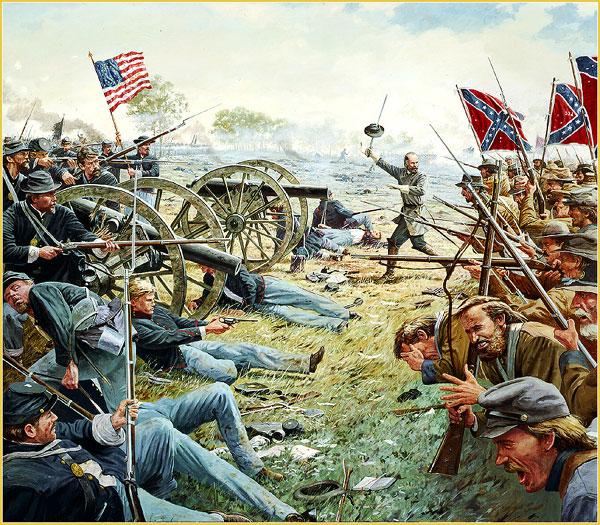
Gettysburg_General_Armistead_Picketts_Charge_small

Friends of Padre Steve’s World

Here is another reworked section of my Civil War and Gettysburg text. It deals with how the how the American Civil War changed from being a limited war to a people’s war, driven by a mutual hatred and hostility. It was the first war which came close to approximating Clausewitz’s definition of total war, and though it was ignored by world military leaders as an aberration over for fifty years, it prefigured the Wold Wars, as well as the civil wars of the 20th Century. It demonstrates that once the genie of war is out of the bottle, and the passionate hatreds of peoples are unleashed, that policy will will adjust itself. Most wars can and should be averted if leaders work to control the fear and passions of their people and not as so often the case stoke the fires of those fears and passions into an uncontrollable rage directed against the intended target. This is especially true in civil wars which are often waged with a ruthlessness unseat in most wars conducted by nation states against other nation states, unless those wars are driven by religion, ideology, or ethnic hatred.

So I hope that you find this interesting and informative.

Peace,

Padre Steve+

The Beginning: Limited War

At the beginning of the war President Lincoln attempted a strategy of conciliation in order to attempt to coax seceding states back into the Union and by conciliation to keep those considering seceding from doing so. However, Lincoln’s attempts were met with outright rejection, before, during, and after the secession crisis. He spoke directly to the Southern states in his First Inaugural Address, saying “We are not enemies, but friends,” [1] only to be accused of deliberately lying to the South by pledging to maintain control of Federal installations and forts in the South, like Fort Sumter which was now surrounded by massed batteries of Confederate artillery and demands that it surrender. Jefferson Davis wrote, “The Lincoln Administration deliberately lied to us, baiting us with false promises and pacific pledges all the while it was planning for war. Never in history has a government behaved with such malicious deceit and bad faith.” [2]

When the troops of South Carolina opened fire on Fort Sumter the die was cast, and Lincoln chose the path of war in order to restore the Union, “not because he wanted to, but because the South forced his hand.” [3] His proclamation calling for troops to suppress the rebellion described the kind of war that he foresaw, “the utmost care will be observed… to avoid any devastation, any destruction of, or interference with, property, or any disturbance of peaceful citizens in any part of the country.” [4]

Though he pursued the option of war to restore the Union, Lincoln initially adopted a soft-war strategy in which Confederate armies were the target. This was in large part due to the efforts of Secretary of State Henry Seward and General-in-Chief Winfield Scott. Though he adopted a strategy that required the North to conquest the South, initially he did so with the expectation that after battlefield defeats the Confederates would eventually return to the Union. It was a limited war strategy, “based on an assumption that a majority of the southern people were loyal to the Union and that eleven states had been swept into secession by the passions of the moment.” [5] In fact it was hardly a military strategy at all, “but more of a police action to quell a rather large riot.” [6]

After the defeat at First Bull Run, Congress passed a resolution defining Union war aims. It is notable in terms of how soft and its deference to the feelings of Southerners. Introduced by Senator John J. Crittenden of Kentucky, a key border that that had not seceded but had declared its neutrality, the resolution stated:

“Resolved by the House of Representatives of the Congress of the United States, That the present deplorable civil war has been forced upon us by the disunionists of the Southern States now in revolt against the constitutional Government and in arms around the capital; that in this national emergency Congress, banishing all feelings of mere passion or resentment, will recollect only its duty to the whole country; that this war is not waged upon our part in any spirit of oppression, nor for any purpose of conquest or subjugation, nor purpose of overthrowing or interfering with the rights and institutions of those States, but to defend and maintain the supremacy of the Constitution and to preserve the Union, with all the dignity, equality, and rights of the several States unimpaired; and that as soon as these objects are accomplished that the war ought to cease.” [7]

It was an incredibly weak statement of war aims based on the notion that most Southerners were actually Unionists and would come back to the Union. The feeling was increased by some early victories, particularly those of McClellan to secure West Virginia, and Grant and Flag Officer Foote in by the west in their capture of Forts Henry and Donaldson. For a brief time these victories seemed to confirm the validity of such an approach.

scott7d

Winfield Scott

But the issue was not just with the politicians. Many early Union commanders raised in the niceties of Jominian limited war, and sometimes restrained by their religious upbringings were averse to taking casualties. Winfield Scott believed that only a thin line separated war from murder, and before Bull Run the elderly general noted, “No Christian nation… can be justified in waging war in such a way as shall destroy five hundred and one lives, when the object of the war can be attained at the cost of five hundred. Every man killed beyond the number absolutely required is murdered.” [8] George McClellan was also casualty averse, he told his soldiers that he would watch over them “as a parent over his children…. It shall be my care, as it ever has been, to gain success with the least possible loss…” [9] But McClellan’s “fixation with avoiding casualties, revealed a deep sensitivity of nature admirable in most of life’s pursuits but crippling in war. Battle evokes the cruelest probing of the general in command: young men will die and be maimed, win or lose; and the hard choice must be made when opportunity offers, which may (or may not) save many more lives in the long run than will be lost in a day.” [10] Even George Gordon Meade who would command the Army of the Potomac during Gettysburg, which was the bloodiest battle of the war, and who under Grant would be involved in other costly battles “believed that to ensure minimal losses on both sides, the North should prosecute the war “like an afflicted parent who is compelled to chastise his erring child, and who performs the duty with a sad heart.” [11] The lack of resolve of many overly cautious generals, especially in the east to fight a hard war against the Confederates would lead to several bungled opportunities to destroy the Army of Northern Virginia, outside the gates of Richmond, at Antietam, and during the pursuit from Gettysburg.

But after series of defeats in the East in 1862 at the hands of a revitalized Confederate Army of Northern Virginia under the command of General Robert E. Lee served notice on Lincoln that the war would be more difficult than previously imagined, and that a hard war strategy was needed.

The Link Between War and Statecraft
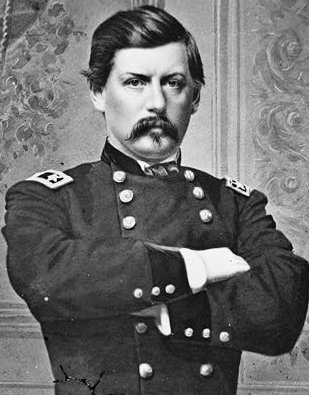
qf-mcclellan

George McClellan

The strategies and operational methods employed by commanders such as Robert E. Lee, Stonewall Jackson, and George McClellan embraces the tenants of Henri Jomini, the French military theorist and exponent of limited war, McClellan in his fixation with geographic places, Lee and Jackson in their love of the offensive. Each “failed to grasp the vital relationship between war and statecraft…. They might win victories – Lee won a series of spectacular ones – but they lacked the vision to win a mighty struggle between two societies.” [12] McClellan, told Lincoln “Woe to the general…who trusts in modern inventions, and neglects the principles of strategy.” But modern inventions, the railroad and the rifle, had conspired with mass citizen armies, themselves reflecting the ideologies of democratic society, to undermine the principles he espoused.” [13] McClellan, who had so deeply imbibed of the theories of Jomini, could not see that war had changed and the principles of Jomini could not win the war against the Confederacy, but others in the North would begin to see this.

But public sentiment in the North was beginning to shift, while there were still a good number of politicians willing to either let the South go its own way or to allow it to return with little substantive change, others were beginning to realize that the people of the South were serious about secession and were irreconcilable in their view that the break between them and the North was final. The New York Times which represented the views of moderate Republicans including Lincoln editorialized, “The country is tired of trifling…. We have been afraid of wounding rebel feelings, afraid of injuring rebel property, afraid of using, or under any circumstance, of freeing rebel slaves. Some of our Generals have fought the rebels – if fighting be it called – with their kid gloves on…” [14]

Lincoln was the political leader who first understood the connection, but militarily it was not until the “emergence of Grant and Sherman did Civil War military leadership break free of Jominian shackles to anticipate modern warfare.” [15] British military historian and theorist J.F.C. Fuller likened the change in the war to be a “return to barbarism,” and noted that “the more stubborn and indecisive became the fighting, and the more the outcome of the war was prolonged, the intenser grew the hatred, until frustration awakened a spirit of vengeance in the hearts of the Federals against the entire population of the South.” [16] Of course the hatred of the Confederacy came late as compared to much of the early nearly pathological and religious hatred of the Union by the radical secessionist, fire-eaters in Southern states even before the war began Thus, compared to the South, the hatred came slow, but when it boiled over the people of the South felt the pain of war as much as their armies did in the field.
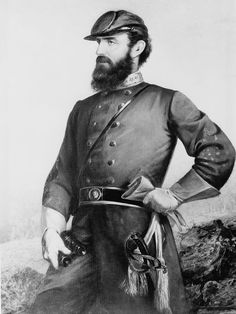
617290f829d510d794c5b03c613e5c26

Stonewall Jackson 

From Limited War to a People’s War

While those who planned for a limited war like Winfield Scott and his Anaconda plan failed to understand the changing character of war, it did provide “both an education for Lincoln, and a firm foundation for the Union’s strategic thinking.” [17] The hard experience of war would point others in the same direction, including both Ulysses S. Grant and William Tecumseh Sherman, and it would be these men who along with Lincoln provided developed a grand strategy that would defeat the Confederacy. It was a strategy which was in line with the political goals of the North, and which marshalled the might of the Union military, diplomatic, economic, industrial and informational strengths, against the Confederacy.

In the South one of the few proponents of this new type of warfare was a former Regular Army officer and professor at the Virginia Military Institute, General Thomas “Stonewall” Jackson. In May of 1861 he moved across the Potomac to occupy the heights that surrounded Harper’s Ferry. Chastised by Lee, then serving as Jefferson Davis’s military adviser, Jackson proposed a strategy of invading the North and “burning Baltimore and Philadelphia and making Northerners understand on a visceral level what the war was going to cost them.” Likewise, he explained to Virginia Governor John Letcher a “black flag” strategy in which meant all Union prisoners of war would be summarily executed. [18]

Later Jackson had the chance to expound on his strategy to another general and suggested that he be given an army to cross the Potomac to “cut of the communications with Washington, force the Federal government to abandon the capital… destroy industrial establishments wherever we found them, break up the lines of interior intercourse, close the coal mines, seize and if necessary, destroy the manufactories of Philadelphia and of other large cities within our reach…. Subsist mainly on the country we traverse, and making unrelenting war amidst their home, force the people of the North to understand what it will cost them to hold the South in the Union at the bayonet’s point.” [19]

The fact that his plan was unrealistic based on the South’s actual military situation and capabilities, as well as opposed by Jefferson Davis as well as Robert E. Lee, takes nothing away from its similarity to the strategy later developed by Grant and Sherman. The problem was as Jefferson Davis wrote in July 1862, “The time and place for invasion has been a question not of will but power,” and then proceeded to recount a conversation with an unnamed Brigadier General the previous fall that appears whose plans did not match the reality of the number of troops available for such an operation. [20] From this meeting Davis got “the not altogether inaccurate idea that Jackson was an offense crazed fanatic.” [21] However, it shows that the desire to take the war to the enemy citizenry was not confined to the North and had the South had the military means that it many have attempted a similar strategy to that later employed by Grant and Sherman.

Grant, who had scored impressive victories at Forts Donaldson and Henry changed his view on how the war should be pursued after being roughly handled in the near disaster at Shiloh. After that battle, Grant gave up on the idea of limited war. He now believed that it was necessary to seize or destroy any property or resources that could be used to sustain the Confederate war effort. Before the Confederate counteroffensive at Shiloh Grant had said that he had been “carful to “protect the property of the citizens whose territory was invaded;” and afterwards his policy became to “consume everything that could be used to support or supply armies.” [22]
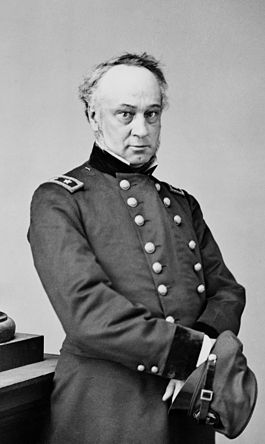
Henry_Halleck_by_Scholten,_c1865

Henry Wager Halleck

Henry Wager Halleck, who had long been a proponent of Jominian limited war in late 1862 under the influence of Francis Lieber. When Halleck heard complaints that General Horatio G. Wright was pursuing too soft of policy toward rebels in Kentucky, Halleck did not intervene, but offered strong advice to Wright. “Domestic traitors, who seek the overthrow of our Government, are not entitled to its protection and should be made to feel its power…. Make them suffer in their persons and property for their crimes and the suffering they have caused to others…. Let them feel that you have an iron hand; that you know how to apply it when necessary. Don’t be influenced by old political grannies.” [23]

Halleck also backed up Grant in August 1862 when Grant was beginning to pursue the hard war policy in the west by ordering Grant to “Take up all active [rebel] sympathizers… and hold them as prisoners or put them beyond our lines. Handle that class without gloves, and take their property for public use…. It is time that they should begin to feel the presence of the war.” [24]

As the war went on it became apparent to many people in the North, and in the armies on the front lines that harder measures were required, especially with the escalation of guerilla attacks behind Union lines, as well as the involvement of Southern civilians in attacking Union troops in occupied areas of the South. “Senator John Sherman wrote his brother William of a growing sentiment “that we must treat these Rebels as bitter enemies to be subdued – conquered – by confiscation – by the employment of their slaves – by terror – energy – audacity – rather than by conciliation.” [25]
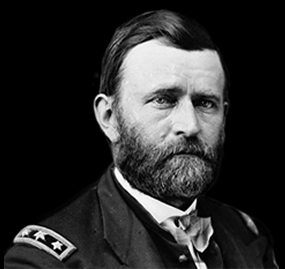
grant 1

Ulysses S. Grant

By early 1863 Grant was fully on board with the policy of the Union government, especially emancipation, and the need for the war to be carried through to a conclusion that would completely subjugate the Confederacy. He wrote to one of his generals, “Rebellion has assumed that shape now that it can only be terminated by the complete subjugation of the South or the overthrow of the Government. It is our duty, therefore, to use every means to weaken the enemy, by destroying their means of subsistence, withdrawing their means of cultivating their fields, and in every other way possible.” [26]  Some Union military commanders other than Grant became early exponents of a hard and brutal war, among them was Major General John Pope, who as commander of the Army of Virginia issued a “series of orders authorizing his officers to seize Confederate property without compensation, to execute captive guerillas who had fired on Union troops, and to expel from occupied territory any civilians who had sheltered guerillas or who had refused to take an oath of allegiance to the United States.” [27] Jackson, who himself had once proposed the “black flag” strategy against the North and its soldiers “considered Pope’s orders “cruel and utterly barbarous.” [28]

Henry Halleck wrote to Grant in April 1863 that “the character of the war has changed very much…. There is now no possible hope of reconciliation with the rebels. The Union party in the South is virtually destroyed. There can be no peace but that which is forced upon it.” In May he wrote another general in Memphis, “We must live upon the enemy’s country as much as possible, and destroy his supplies. This is cruel warfare, but the enemy has brought it on himself by his own conduct.” [29]

As late as 1862 there were some in the North, especially in the Democratic Party fought against any move toward a harder war strategy. One of these was Major General George McClellan who in a brazen attempt to be named General-in-Chief after his failed Peninsular campaign attempted to school President Lincoln in the ways of politics and strategy.

“The time has come when the Government must determine upon a civil and military policy, covering the whole ground of our national trouble…. This rebellion has assumed the character of a war: as such it must be regarded; and should be conducted upon the highest principles known to Christian Civilization. It should not be a War looking to the subjugation of the people of any state, in any event. It should not be, at all, a War upon the population; but against armed forces and political organizations. Neither a confiscation of property, political executions of person, territorial organization of states or forcible abolition of slavery should be contemplated for a moment.” [30]

Lincoln read McClellan’s letter in his presence and refused to comment upon it. One historian described Lincoln’s reaction to McClellan’s suggestion, “That policy had been pursued for over a year and Lincoln was convinced that it had failed. He was ready to move on.” [31]  Instead of complying with McClellan’s demands Lincoln infuriated McClellan by naming Henry Halleck as General-in-Chief, calling for more troops, and deciding on a strategy in which emancipation would play a key role. Since the leaders of the Confederacy to its dying day refused to countenance emancipation, these decisions would change the character of the war from a limited war to bring about political reunion to a war that would drastically change American politics, economics, and society.

While the nature of war remained unchanged, the American Civil war dramatically changed the character of war, as it had been known for centuries, since the Peace of Westphalia, and the end of the Thirty Years War. In the American Civil War the character of war changed from the emphasis of the limited wars of the 18th Century and the Napoleonic era where opposing armies dueled each other into a war that encompassed the entire population. The changes challenged a generation of military officers who had grown up with Jomini’s principles of war and his emphasis on limited war including McClellan and Lee, but Grant, who had never read Jomini and denied the validity of general principles of war that were valid in all times wrote, “There are no fixed laws of war which are not subject to the conditions of the country, the climate and the habits of the people. The laws of successful war in one generation would ensure the defeat in another.” [32]

The leading catalyst that convinced Lincoln and other Northern leaders of the need to abandon the strategy of limited war was the fact that the Confederates had “blurred the distinction between combatants and noncombatants in the parts of the Confederacy and border states occupied by Union forces. The crops and livestock of Southern civilians were feeding and clothing Confederate armies. Their slaves were the principle labor force in the Confederate War economy. Thousands of Southern civilians became guerillas who roamed behind Union lines destroying supplies and ambushing unarmed as well as armed Unionists.” [33]

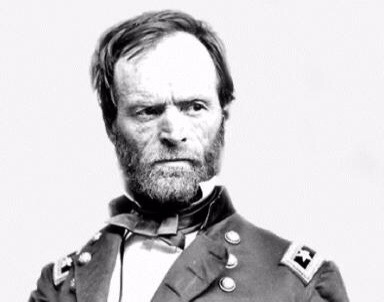
The Union reaction to the Confederate actions would portent a change in the war. And soon, the war bordered on Clausewitz’s definition of absolute or total war, especially in Sherman’s march through Georgia and the Carolinas, and in the actions of Confederate irregulars who used terror against Unionist civilians. The actions of irregular Confederate forces to attack his troops and supply lines caused Sherman, who earlier in the war had taken a conciliatory attitude to Southern civilians, to change his views. They had blurred the lines between combatants and non-combatants, he noted that the Union army must act “on the proper rule that all in the South are enemies of all in the North….. The whole country is full of guerilla bands…. The entire South, man woman, and child, is against us, armed and determined.” [34]

Notes

[1] Weigley, Russell F. The American Way of War: A History of United States Military History and Policy University of Indiana Press, Bloomington IN, 1973 p.133

[2] Davis, Jefferson in Oates, Stephen B. The Approaching Fury: Voices of the Storm 1820-1861 University of Nebraska Press. Lincoln and London, 1997 p.413

[3] Stoker, Donald The Grand Design: Strategy and the U.S. Civil War Oxford University Press, Oxford and New York 2010 p.18

[4] Ibid. Weigley The American Way of War: A History of United States Military History and Policy p.133

[5] Ibid. McPherson Abraham Lincoln and the Second American Revolution p.75

[6] Ibid. McPherson Abraham Lincoln and the Second American Revolution p.75

[7] U.S. Congress The Crittenden Resolution of July 22, 1861 in The Civil War and Reconstruction: A Documentary Collection edited by William E. Gienapp, W.W. Norton and Company, New York and London 2001 p.117

[8] Faust, Drew Gilpin, This Republic of Suffering: Death and the American Civil War Vintage Books, a division of Random House, New York 2008 p.34

[9] Sears, Stephen W. To the Gates of Richmond: The Peninsula Campaign Houghton Mifflin Company, Boston and New York, 1992 p.21

[10] Sears, Stephen W. Landscape Turned Red: The Battle of Antietam Houghton-Mifflin Company, Boston and New York 1983 p.32

[11] Ibid. Faust This Republic of Suffering: Death and the American Civil War p.34

[12] Gallagher, Gary W. “Upon Their Success Hang Momentous Interests”: Generals in Why the Confederacy Lost edited by Gabor S. Boritt, Oxford University Press, New York and Oxford 1992 p.86

[13] Strachan, Hew European Armies and the Conduct of War George Allen and Unwin Publishers, Ltd. London 1983 p.73

[14] McPherson, James M. Tried by War: Abraham Lincoln as Commander in Chief Penguin Books, New York and London 2008 p.105

[15] Ibid. Gallagher “Upon Their Success Hang Momentous Interests” p.86

[16] Fuller, J.F.C. A Military History of the Modern World, Volume Three: From the Seven Days Battle, 1862,  to the Battle of Leyte Gulf, 1944  Minerva Press 1956 p.107

[17] Ibid. Stoker The Grand Design: Strategy and the U.S. Civil War p.411

[18] Gwynne, Samuel C. Rebel Yell: The Violence, Passion, and Redemption of Stonewall Jackson Scribner, a Division of Simon and Schuster New York 2014 p.45

[19] Ibid. Gwynne Rebel Yell: The Violence, Passion, and Redemption of Stonewall Jackson p.173

[20] Davis, Jefferson, Letter to John Forsyth July 18th 1862 in Major Problems in American Military History edited by John Whiteclay Chambers II and G. Kurt Piehler, Houghton-Mifflin and Company, Boston and New York 1999 pp.159-160

[21] Ibid. Gwynne Rebel Yell: The Violence, Passion, and Redemption of Stonewall Jackson p.172

[22] McPherson, James M. Drawn With the Sword: Reflections on the American Civil War Oxford University Press, Oxford and New York 1996 p.76

[23] Marszalek, John F. Commander of All of Lincoln’s Armies: A Life of General Henry W. Halleck The Belknap Press of Harvard University Press, Cambridge MA and London 2004 p.168

[24] Ibid. McPherson  Drawn With the Sword: Reflections on the American Civil War p.79

[25] Ibid. McPherson Tried by War: Abraham Lincoln as Commander in Chief p.103

[26] Catton, Bruce. Grant Moves South Castle Books, New York, 2000, originally published by Little Brown and Company, New York 1960 p.402

[27] Ibid. McPherson Drawn With the Sword: Reflections on the American Civil War p.79

[28] Ibid. Gwynne Rebel Yell: The Violence, Passion, and Redemption of Stonewall Jackson p.396

[29] Ambrose, Stephen E. Halleck: Lincoln’s Chief of Staff Louisiana State University Press, Baton Rouge and London 1960 and 1992  p.119

[30] McClellan, George B. Letter to Abraham Lincoln July 7, 1862 in Perman, Michael and Murrell Taylor, Amy editors Major Problems in the Civil War and Reconstruction: Documents and Essays Third Edition Wadsworth Cengage Learning Boston MA 2011 p.140

[31] Gallagher, Gary W. The 1862 Richmond Campaign as a Watershed in Major Problems in the Civil War and Reconstruction: Documents and Essays Third Edition Wadsworth Cengage Learning Boston MA 2011 p.157

[32] Ibid. Strachan European Armies and the Conduct of War p.73

[33] Ibid. McPherson The War that Forged a Nation: Why the Civil War Still Matters p.35

[34] Ibid. McPherson Drawn With the Sword: Reflections on the American Civil War p.81
Leave a comment

Filed under civil war, History, Military

33 Years of Marriage: Finding that One Special Person You Want to Annoy the Rest of Your Life


Friends of Padre Steve’s World,

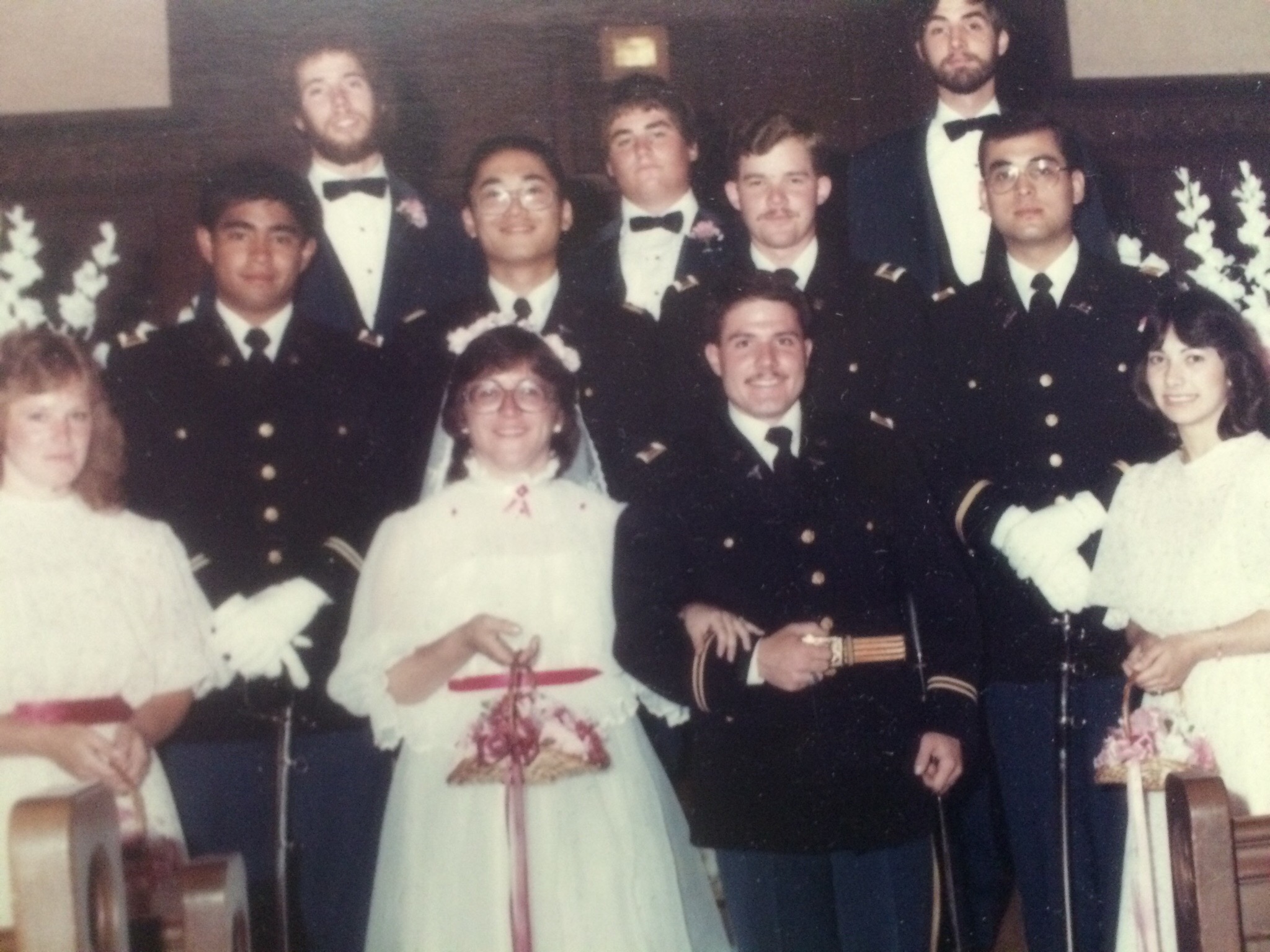
Mark Twain, a wise man if there ever was such, wrote “After all these years, I see that I was mistaken about Eve in the beginning; it is better to live outside the Garden with her than inside it without her.” Truthfully I think that he was absolutely correct.

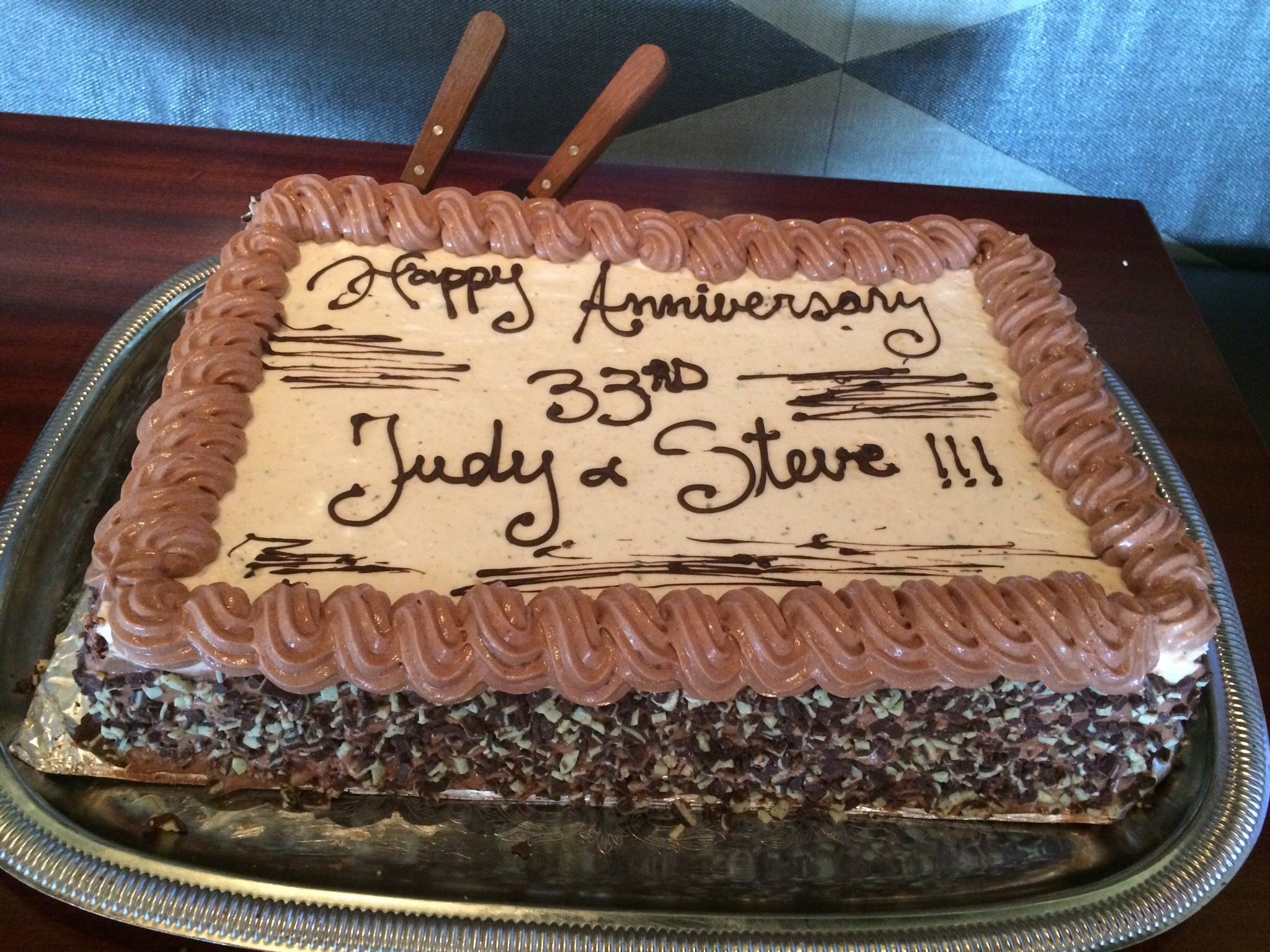
Yesterday, Judy and I celebrated our thirty-third wedding anniversary with many friends at our local version of the Cheers bar, the Gordon Biersch brewery restaurant in Virginia Beach. It was a wonderful time and I cannot have imagined a better way to spend it than with the people who came out, as well as those who wanted to but were unable to attend.


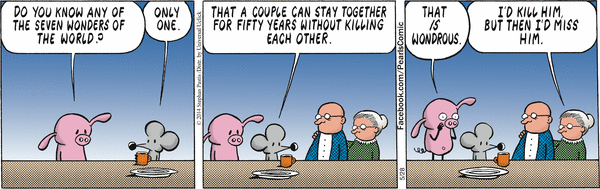
But it really is hard to imagine that we have been married thirty-three years, and that we have known each other for close to thirty-eight years. It is really amazing to think that this has been the case, I for one never really expected to fall in love but I did, in spite of my less than idealistic realism and the fact that I can be such a pain in the ass, as Judy can well attest. I think that the comedienne, Rita Rudner said it quite well, “I love being married. It’s so great to find that one special person you want to annoy for the rest of you life,”  or as I like to put it, live to love, love to annoy. Truthfully, I am surprised at times that Judy has not found reason to kill me off, in fact there are a number of times that I am sure that any jury would have ruled my murder justifiable homicide, but I digress…

pb140528

The fact is that in our thirty-three years of marriage we have weathered some incredibly difficult times that many good people in loving marriages do not survive. Marriage is a difficult thing, yes it is about love, but even more than that it it about friendship, and a commitment to make things work. Marriage is a bit like politics and diplomacy, it involves compromise and commitment in order to ensure that war does not break out. Love is certainly a part, and forgiveness, an absolute necessity, but it really does come down to friendship. As Mark Twain noted, “Love seems the swiftest, but it is the slowest of all growths. No man or woman really knows what perfect love is until they have been married a quarter of a century.” It took us nearly a third of a century, but in spite of all, I think that we have found it.

Have a great day,

Peace,

Padre Steve+

3 Comments

Filed under marriage and relationships

A Name Change to Reflect Reality: Musings of a Progressive Realist in Wonderland


Friends of Padre Steve’s World,

The World is a bit different today than it was when I first began to blog here in 2009, and my world is also different. When I started writing here I named the site Padre Steve’s World: Musings of a Passionate Moderate. After the 2012 elections I decided that the title needed a change to reflect my still moderate, but ever growing liberal and progressive philosophy. Over the past year as I have watched friends as well as the country as a whole drift towards more ideological polarity, I realized that even as a progressive, and a passionate one at that that I was not an ideologue, nor have I ever been. 

A few weeks ago I was reading B.H. Liddell-Hart’s biography of General William Tecumseh Sherman and I was struck by the title of the chapter describing Sherman’s warnings to people in the South and the North of what secession and civil war would bring to the country. His predictions turned out to be more correct than almost anyone of his time, others such as Abraham Lincoln and Ulysses S. Grant would within the year begin to come to Sherman’s point of view, but many people and leaders in both the North and South were much too slow to comprehend his warning. The chapter was titled “A Realist in Wonderland.” As I reflected in it, and then looked back to the articles I have been writing about the rapidly changing political climate and polarization in the country that my views are much like Sherman, I am much more pragmatic than many people in the country. I do have my passionate beliefs, and yes though I am a liberal and progressive, I am still moderate. But my moderatation is better described as realism. I have a hard time being arguments from either side of the political and ideological spectrum that are not grounded in political, economic, social, technological, diplomatic, cultural, or military reality, as well as human nature. Likewise, I do not jump on the bandwagon of any movement without looking at it in context of what it will mean for all of us. 

Since I am a historian, a theologian with a fair amount of training in psychology and sociology, coupled with the fact  and I am a man who has spent over 90% of my adult life in the military and 86% of that time as an officer I am a consummate realist. 

Sadly, in today’s world, realism is not often practiced. Ideologues on all sides of the political spectrum fan passionate hatred of all that oppose them, even in minor details. Politicians of all stripes promise things that cannot be delivered because they are not based in political or economic realities, compromise and cooperation is shunned in favor of extreme positions than when examined seldom pass the muster of reality and their proponents seldom thing of the second, third, and fourth order effects of their policies if enacted. I think the recent Brexit is an example of that and what happens now will change the world. In some cases those changes may be good, in other realms bad, and some potentially disastrous. How those changes unfold, and what the consequences  will be, is dependent on all of us and who the political leaders that we elect deal with the issues, as well as the leaders of commerce and industry. 

In fact I would dare say that the United States today is as divided as it was in the mid to late 1850s and that our political parties are undergoing the same kind of disintegration as occurred to the Whigs and Democrats of that era, with new movements; some based on economics, some on the idea of emancipation and freedom, and some based on anti-immigrant racial and religious xenophobia arising. But I digress…

We can look to history to try to understand the nature of our situation, but what we become will be based on our human nature, and how we rise to the occasion. It will be a challenging time, and to get back to what I started with, I think that the change in the blog title is better descriptive of me and my views. 

Have a great day and I hope that you continue to enjoy what I post, learn from it, be challenged, and spread the word that there is a realist in wonderland.

Peace

Padre Steve+

1 Comment

Filed under leadership, philosophy, Political Commentary

The Realm of Hatred

atlanta destruction

Friends of Padre Steve’s World

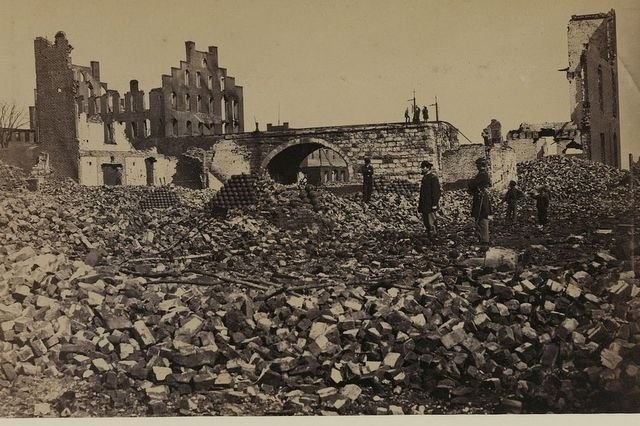
This is an uncomfortable article because it deals with an aspect of life that most of us do not want to deal with, that is the fact that no matter how hard that we try that human beings are capable of some of the most heinous crimes imaginable. That being said, war, no matter how undesirable is not an autonomous military action that can be separated from passions of the people involved. Clausewitz wrote about the connection between the people, the army, and the government. This article is a portion of a further researched and re-written article that I posted here a few months back. However, that being said, it is based on the simple reality that war and conflict is based in the realm of hatred. We may find reasons to try to justify this, but the fact is that war and conflict falls in the realm of hatred. I guess that Clausewitz really never goes out of style. On Monday I will post another article from this text on a similar topic from my text. 

Have a great day,

Peace,

Padre Steve+

Likewise, the enmity of the two sides for one another had been fostered by a half century of relentless and violent propaganda that ushered from the mouths of politicians, the press, and even from the pulpit brought the element of hatred to the fore of the conflict; as Clausewitz correctly observed, “Even the most civilized of peoples, in short, can be filled with passionate hatred for each other.” [1]

As the war went on the feelings of animosity and hatred often boiled over and were reflected in the words and sometimes the actions of the soldiers. A Confederate Captain wrote his wife to teach his children “a bitter and unrelenting hatred of the Yankee race” that had “invaded our country and devastated it… [and] murdered our best citizens…. If any luckless Yank should unfortunately come my way he need not petition for mercy. If he does I will give him lead.” A well off wife of a plantation owner in Georgia reflected, “I wonder if the Northern people still cling to the delusion that such a thing as our being united with them is possible. So far from it I am inclined to believe that each passing day widens the gulf between [us]. Each man we lose but serves to render more intense our hatred of the Yankee…” [2]

During Lee’s invasion of Pennsylvania in 1863, ordinary Southerners, encouraged by the victories at Fredericksburg and Chancellorsville allowed confidence, to mix with arrogance and hatred, even among the deeply religious. “Because extermination is the watchword of our enemies,” one Georgia Baptist editor rationalized, “Mercy ceases to be a virtue in a contest with devils.” Instead, the government should adopt “those extreme measures of retaliation which shall put fear into the hearts of the Yankee soldiery and demoralize the invading armies.” [3]

A soldier from a Wisconsin regiment wrote to his fiancée after the assault on Resaca, Georgia that his unit had captured twenty-three Confederates and “or boys asked if they remembered Fort Pillow and killed them all. Where there is no officer with us, we take no prisoners…. We want revenge for our brother soldiers and will have it…. Some of the [rebels] say they will fight as long as there is one of them left. We tell them that is what we want. We want to kill them all off and cleanse the country.” [4]

While this was hatred was not universal and many times the combatants behaved with great chivalry on the battlefield, and Northern and Southern veterans led efforts at reconciliation after the war; such hatred was something that had not been a part of the American military experience.  The deep rooted enmity, especially in the South, would remain a constant over the next one hundred years. “White southerners who retained Confederate loyalties against Federal soldiers and northerners in general…. Confederates defiantly refused to forgive enemies who had inflicted such pain on their society.” [5] Likewise, many Union veterans felt that in their sacrifices to defeat the Confederacy and end slavery would be forgotten as time slipped by and the memory of the war subsided.

This very real hatred meant that there were many times when the American Civil War came close to Clausewitz’s understanding of absolute war in its in character, and it prefigured the great ideological wars of the twentieth century. J.F.C. Fuller noted “for the first time in modern history the aim of war became not only the destruction of the enemy’s armed forces, but also of their foundations- his entire political, social and economic order.” [6] It was the first war where at least some of the commanders, especially Ulysses S. Grant and William Tecumseh Sherman were men of the Industrial Age, in their thought and in the way that they waged war, in strategy, tactics even more importantly, psychologically. Fuller wrote:

“Spiritually and morally they belonged to the age of the Industrial Revolution. Their guiding principle was that of the machine which was fashioning them, namely, efficiency. And as efficiency is governed by a single end- that every means is justified- no moral or spiritual conceptions of traditional behavior must stand in its way.” [7] After he left Atlanta, many towns were treated leniently, even Savannah where a significant number of influential people desired peace, and Sherman, in a politically astute move attempted to nurture division in the population of the Confederacy.

President Lincoln, as well as Grant and Sherman realized in early 1864 that “the South was indeed a nation in arms and that the common European practice of having standing armies engaged each other in set-piece battles to determine the outcome of a war was not enough to win this struggle.” [8] Though neither man was a student of Clausewitz, their method of waging war was in agreement with the Prussian who wrote that “the fighting forces must be destroyed; that is, they must be put in such a position that they can no longer carry on the fight” but also that “the animosity and the reciprocal effects of hostile elements, cannot be considered to have ended so long as the enemy’s will has not been broken.”  [9]

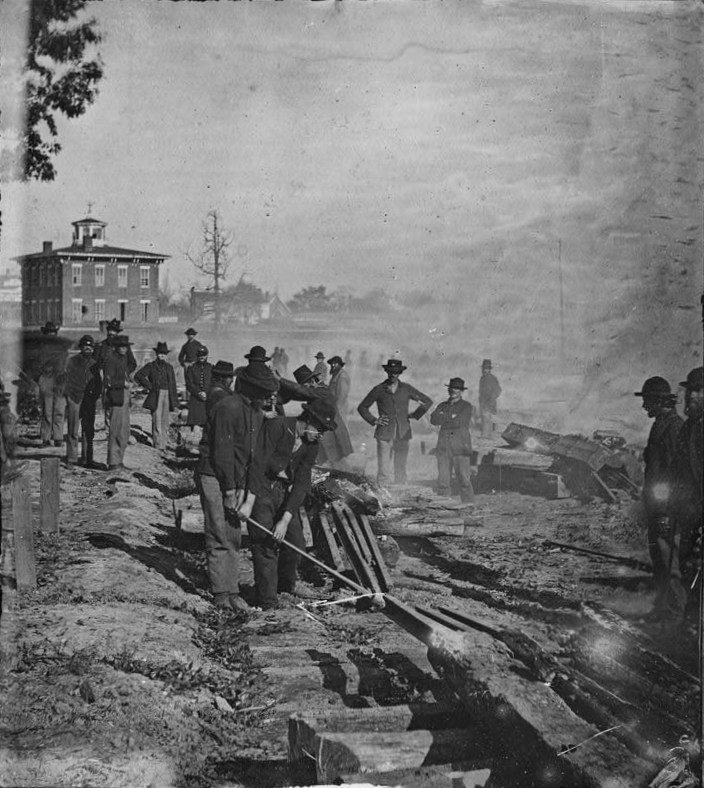
Sherman told the mayor of Atlanta after ordering the civilian population expelled that “we are not only fighting hostile armies, but a hostile people, and must make the old and young, the rich and poor, feel the hard hand of war.” [10] Sherman was one of the first American military leaders to understand that a civil war could not be waged according to the limited war doctrines most American officers had been taught. He not only “carried on war against the enemy’s resources more extensively and systematically than anyone else had done, but he developed also a deliberate strategy of terror directed against the enemy’s minds.” [11] While some might find this troubling, especially those who attempt to rationalize “war because they find difficulty accepting the elemental forces at its centre.” [12] But the fact remains that it was Sherman’s Southern sweep of all that lay before him that broke the back of the Confederacy.

In August 1864 Ulysses Grant, tired of the Confederates using the Shenandoah Valley as a route to launch attacks into the North, and understanding it to be the breadbasket of Virginia dispatched Major General Philip Sheridan to defeat the Confederate forces there, and to render it incapable of further supplying the Confederate war effort. He instructed Sheridan,

“In pushing up the Shenandoah Valley… it is desirable that nothing should be left to invite the enemy to return. Take all provisions, forage, and stock wanted for the use of your command; as such as cannot be consumed, destroy. It is not desirable that the buildings should be destroyed; they should rather be protected; but the people should be informed that so long as an army can subsist among them recurrences of these raids must be expected, and we are determined to stop them at all hazards.” [13]

Sherman_railroad_destroy_noborder

Grant ordered Sheridan “to give the enemy no rest…. Do all the damage to railroads and crops you can. Carry off stock of all descriptions, and negroes, so as to prevent further planting. If the war is to last another year, we want the Shenandoah Valley to remain a barren waste.” [14] Sheridan complied, and on October 2nd reported that “he had destroyed over 2000 barns filled with wheat , hay, and farming implements; over 70 mills filled with flour and wheat; have driven in front of the army over 4000 head of stock, and have killed or issued to the troops not less than 3000 sheep…. Tomorrow I will continue the destruction…” [15] Sheridan himself was unapologetic and noted something that has been true in almost every modern war. He wrote, “Death is popularly considered the maximum punishment in war, but it is not; reduction to poverty brings prayers for peace more surely and more quickly than does destruction in human life.” [16] A Union reporter wrote, “The completeness of the devastation is awful. Hundreds of nearly starving people are going north. Our trains are crowed with them. They line the wayside. Hundreds more are coming.” [17]

The effect of Sheridan’s rampage was soon felt across Virginia and the Carolinas, shortages of all kinds arose on the Confederate home front and soldiers began to question where the war could be won, and for the first time desertion became a major problem for Lee’s army as soldiers elected to go home to do what they could to help their families.

But Sherman and Grant were not alone in understanding the problem of fighting a limited war against the Confederacy. In the fall of 1862 a twenty-five year volunteer officer, Colonel Strong Vincent serving with McClellan’s army in Virginia understood what had to happen if the Union were to overcome the rebellion of the Confederacy. Vincent who would be instrumental in throwing back Hood’s assault on Little Round Top, and die leading the defense of that edifice, wrote to his wife about the need for harder measures.

“We must fight them more vindictively, or we shall be foiled at every step.  We must desolate the country as we pass through it, and not leave a trace of a doubtful friend or foe behind us; make them believe that we are in earnest, terribly in earnest; that to break this band in twain is monstrous and impossible; that the life of every man, yea, of every weak woman or child in the entire South, is of no value whatever compared with the integrity of the Union.” [18]

Abraham Lincoln came to embrace the eternal nature of war as well as the change in the character of the war over time. Lincoln had gone to war for the preservation of the Union, something that for him was almost spiritual in nature, as is evidenced by the language he used in both of his inaugural addresses and the Gettysburg Address. Instead of a war to re-unite the Union with the Emancipation Proclamation the war became a war for the liberation of enslaved African Americans, After January 1st 1863 when the Emancipation Proclamation went into effect, Lincoln “told an official of the Interior Department, “the character of the war will be changed. It will be one of subjugation…The [old] South is to be destroyed and replaced by new propositions and ideas.” [19] That too was a modern understanding of war.

Of course, the revolution in military affairs that characterized the Civil War took time, but it was the political and military leaders of the North who better adapted themselves and their nation to the kind of war that was being fought. “Lincoln’s remarkable abilities gave him a wide edge over Davis as a war leader, while in Grant and Sherman the North acquired commanders with a concept of total war and the determination to make it succeed.” [20]

At the beginning of the war the leaders and populace of both sides still held a romantic idea of war. The belief that the war would be over in a few months and that would be settled by a few decisive battles was held by most, including many military officers on both sides. There were some naysayers like the venerable and rather corpulent General Winfield Scott, but politicians and the press mocked Scott and those who even suggested that the war would be long, hard, and bloody. Of course those who predicted a short, easy, and relatively bloodless war who were proven wrong, and the war became the bloodiest war ever waged by Americans, and it was against other Americans.

Notes

[1] Ibid. Clausewitz On War p.76

[2] Thomas, Ella Gertrude. The Journal of Ella Gertrude Thomas in The Civil War and Reconstruction: A Documentary Collection edited by William E. Gienapp, W.W. Norton and Company, New York and London, 2001 p.211

[3] Rable, George C. God’s Almost Chosen Peoples: A Religious History of the American Civil War University of North Carolina Press, Chapel Hill 2010 p.264

[4] Ibid. McPherson The War that Forged a Nation pp.49-50

[5] Gallagher, Gary W. The Confederate War: How Popular Will, Nationalism and Military Strategy Could not Stave Off Defeat Harvard University Press, Cambridge MA and London 1999 p.34

[6] Ibid. Fuller A Military History of the Modern World, Volume Three: p.88

[7] Ibid. Fuller  A Military History of the Modern World, Volume Three p.88

[8] Flood, Charles Bracelen, Grant and Sherman: The Friendship that Won the War, Harper Perennial, New York 2005 p.238

[9] Ibid. Clausewitz On War  p.90

[10] Ibid. McPherson The Battle Cry of Freedom: The Civil War Era  p.809

[11] Ibid. Weigley  The American Way of War: A History of United States Military History and Policy  p.149

[12] Ibid. Strachan European Armies and the Conduct of War p.3

[13] A Great Civil War: A Military and Political History 1861-1865 p.371

[14] Ibid. Stoker The Grand Design: Strategy and the U.S. Civil War p.385

[15] Foote, Shelby, The Civil War, A Narrative. Volume Three Red River to Appomattox Random House, New York 1974 p.563

[16] Ibid. Goldfield America Aflame: How the Civil War Created a Nation pp.340-341

[17] Ibid. Foote The Civil War, A Narrative. Volume Three Red River to Appomattox p.564

[18]Nevins, James H. and Styple, William B. What death More Glorious: A Biography of General Strong Vincent Belle Grove Publishing Company, Kearney NJ 1997 p.57

[19] Ibid. McPherson The Battle Cry of Freedom p.558

[20] Ibid. McPherson The Battle Cry of Freedom p.857

5 Comments

Filed under civil war, History, Military

Brexit Stage Right: Unintended Consequences Matter


Friends of Padre Steve’s World,

Today we woke up to a different world, a world that will not resemble what we have grown up with, and that may usher in more inequity and violence than we could ever imagine. Yesterday, the people of Great Britian voted to leave the European Union. Now to many Americans that may not seem like a big deal, but it is, the unintended consequences of a vote based on very real grievances will most likely beget unimaginable conflicts and turmoil that will effect the entire world. I do not say that lightly. 

Total major economic markets crashed on the news of Brexit, the British Pound Sterling collapsed, and if it were not for the intervention of major banking and currency houses, the collapse may have been worse. Billions of worth of Dollars, Pounds, Euros, and other currency’s values were erased within hours. These losses are not just paper, they are the investments of many people, including men and women who have invested their savings in various retirement programs tied to the stock markets and financial markets, and sadly those initial losses may be the least incurred by people, especially by the mostly English (as opposed to Scottish and Northern Irish) citizens of the United Kingdom who voted to leave the European Union intended. 

As I mentioned last night, I can understand why so many working class Englishmen voted to leave the E.U. In fact, I have never been a big fan of the E.U., but that being said, despite its flaws which I think are legion, I believe that Europe and the world, including the United States are now better with it than without it. We so often forget that the international alliances of the Eurpoean Union, and the North Atlantic Treaty Organizations have done for stability and peace in Europe. People too often forget the disastrous great World Wars of the Twentieth Century, the genociadal regime of Hitler, and the Soviet Communists which led to its creation in the early 1950s. The European Union may need substantive reform, and even to restrict some of its bereaucratic initiatives, but on the whole it has been a force for good. With the exception of the breakup of the former Yugoslavia and the subsequent wars in the Balkans, the European continent has been free of war since 1945. In light of that I would have counseled the people who voted to leave to instead have worked inside the system to reform it, but just as in the United States, people tend to be more motivated by fear than by reason when it comes to government. 

Sadly, there will be unintended consequence, the first of which on the economic front are already being felt, the U.S. Dow Jones lost over 600 points today, the largest loss in over four years. Other stock markets and financials are continuing to fall in value. In the hours following the vote to “leave” the E.U., there is the very real threat that the United Kingdom may collapse as the people of Scotland as well as possibly Northern Ireland, and Gibraltar begin preparations to leave the U.K. If that happens it will have major economic and security effects in the U.K. Much of British industry, including shipbuilding, petroleum and other  energy are concentrated in those parts of the U.K., as is the major British Trident submarine base and nuclear weapons facility at Faslane Scotland. The United Kingdom is not just England. If Scotland leaves the U.K., and if Northern Ireland follows suit it will be disastrous to the very working people in England who voted to leave the E.U., both in terms of economics and national security. The truth is that the world’s economic and security interests are much more interconnected and dependent than most people who follow the dictates of “my country first,” or “my interests first” fail to understand. 

Believe me, I get the anger, I get the frustration that is found in the United States among the supporters or Donald Trump and Bernie Sanders, and the British citizens who voted to leave the E.U. I do not condemn them, at the same time I would politely disagree with the way to solve the problem. In the aftermath of Brexit, anti-European Union parties in France, and the Netherlands are threatening to do what they can to break up the E.U. Likewise, there are other movements in Europe which after having taken the financial resources of the E.U., are willing to quit it regardless of the economic and security consequences. Unfortunately, to paraphrase the words of one of my readers for the U.K., that they may have opened Pandora’s Box in voting for this.

But another consequence will be felt by the ethnic and religious minorities whose ancestors fought for these nations when they were colonial empires; Indians, Asians, Arabs, North Africans, and sub-Saharan Africans who fought and often died for the British, Dutch, French, and Belgian colonial empires in wars that did little to benefit them. The abject racism that has been displayed by some people of the Brexit movement, as well as the right wing movements in the Netherlands, France, Belgium, Germany, Poland, Hungary, and other nations is frightening to comprehend. The fact that race and religious hatred can emerge from the ashes of the Holocaust is hard to imagine, and the sad thing is that those who propagate race and religious hatred against Muslims, Hindus, and others would do the same to the Jews, if there were enough left in Europe to make it worthwhile. 

Unfortunently, the real terrorists that those in the Brexit movement and other right-wing European movements fear are those whose world view is their mirror image, radical ideologues that are unwilling to compromise with or accept those  who are different from them; not those who have tried to adapt and assimilate in a world where they are still, after generations of work and sacrifice for their former colonial masters are still not welcome. Sadly, that has resulted in some of these people embracing the cause of groups like the Islamic State and Al Qaida. 

Since I am neither the Prophet, nor the Son of the Prophet, I cannot say what will finally happen in the near future, but I know that last night was a watershed and that the world that we have known for decades, and that the people of the United Kingdom have known for over two centuries will never be the same again. In light of history, that is not a good thing. 

I know that most of the people who votes to leave the European Union meant well, but sometimes the best of intentions lead to consequences which are more terrible than what the people thought they were intending. That is another fact that history demonstrates. 

Have a good night. 

Peace

Padre Steve+

Leave a comment

Filed under Foreign Policy, History, News and current events

Reading, Writing, and Brexit 


Friends of Padre Steve’s World,

Today I am posting a short thought since I have been very busy at work this week with a new class on deck at the Staff College, and continuing to do more research and writing on my Civil War and Gettysburg text. Within the context of my research and writing I am going to be posting some new material this weekend, but I have not decided if it will be in portions of the updated text or in short articles dealing with selected ideas and topics. 

Before those are posted I probably will be posting something on the results of the British referendum to remain in or leave the European Union. Since what happens in the United Kingdom and Europe matters a great deal to the United States and the world, in both economic and security matters it is important. Likewise, since I have a good number of friends in the U.K., as well as the fact that my ancestry is predominantly Irish, Scottish, and English I have a personal interest. 

While I can understand the reasons that many people, especially in England as opposed to Scotland and Northern Ireland are voting to leave the E.U., I do fear that a vote to leave the European Union could lead to the breakup of the United Kingdom, something that I think would be bad for all concerned, for as history shows, the breakup of nations, states, and political unions seldom brings about more liberty or stability. There are a few exceptions to this, but again, they are exceptions. But whatever the result of the referendum, it will be historic and it will not end the debate. 

So, I will finish my beer and get ready to go to bed. Until tomorrow, have a good night and a better day. 

Peace,

Padre Steve+

1 Comment

Filed under Foreign Policy, Gettysburg, Loose thoughts and musings, News and current events, Political Commentary

Nothing Serious Tonight


Friends of Padre Steve’s World,

For once nothing serious, not that I have not been doing some very serious writing and research on my Civil War and Gettysburg texts. But tonight we had a tapping party at the place that is my version of the Cheers  bar. Our great brewer, Adam Gurtshaw put a Session IPA and a really nice Belgian Wit on tap. It was a nice eating, drinking, and music experience.

The theme of the tapping party was super heroes, so I wore my Madison Bumgarner 2012 World Series jersey. That man is more of a super-hero than anyone wearing tights, three World Seria titles, a WS MVP, and a no-hitter, and in addition to pitching he can hit with power. Top that Clayton Kershaw. 

But then as Benjamin Franklin allegedly said, “Beer is proof that God loves us and wants us to be happy.”

Have a great night,

Peace

Padre Steve+

Leave a comment

Filed under beer, Just for fun, Loose thoughts and musings

More Musings of a Realist in Wonderland


Friends of Padre Steve’s World,

I have just a short thought for the day and plan on writing more again tomorrow and in the coming days. In the days before I travelled to Gettysburg and today I have continued to immerse myself in reading, study, reflection, and writing. Of course this is in addition to normal life and work, so it is a premeditated pursuit of knowledge, as well as truth, which never leaves me disappointed. 

I have been continuing to work on the first couple of chapters of my Gettysburg and Civil War text and I am now convinced that these two chapters, comprising close to 350 pages of text will have to become one or two books as I begin to edited them, and find a publisher. That will leave over 700 pages dealing with the Gettysburg campaign and the battle itself, and that section will also continue to grow. 

But as I do this I am reminded that indeed I am a “Realist in Wonderland.”  I am reminded how, despite how successful the campaigns of the American military have when fighting opponents that behave the way we expect them to at the operational level; my study and observations are like so many others that since the Second World War show me that we win battles but don’t win many wars. 

Actually there is no mystery to this. The simple fact is that the United States does not have a coherent national strategy, what Clausewitz called policy, and as such, our military force used almost exclusively used as a hammer to fulfill policy objectives when when we have so many other non-military tools in our strategic arsenal. 

I was reminded of this as I was revising the first chapter my Gettysburg text which is nearly 200 pages be a book in its own right. As I continue to research the connection between strategy in the American Civil War I read the works of other military historians and theorists I see just how much that disconnected from any rational political policy that war cannot be justified. This is what Clausewitz said nearly 200 years ago, and which, Abraham Lincoln, William Tecumseh Sherman, and Ulyesses S. Grant demonstrated in the Civil War. 

Those men connected national strategy to military strategy and the operational art, while the Confederates never were able to develop a national strategy that matched their military, economic, and diplomatic capabilities. As such, even the Confederacy’s  best general, Robert E. Lee, who was one of the most prolific commanders at the operational level of war, who like so many other great military leaders, and our own military leaders of the past 30 years, 70 if you go back to Korea, never was able to translate operational success to actually winning a war.

 Clausewitz understood this all too well, the act of war is not an autonomous event, and unless it is connected to rational policy it is madness. 

Pretty soon I will post something from that text revision, but I am not ready to just yet, what I am working on is difficult, because my first instinct is always to pursue conciliation with are enemies and try to limit the destructiveness of war.  But the fact is that the more that I study history, the more I am convinced, as repulsive as it may sound, that the nature of war never changes and that if we continue to attempt to abide by rules of behavior that our enemies do not follow, all of the death, carnage, and devastation of the wars that we have been fighting for over a decade and a half will have been for nothing. To paraphrase British historian Hew Strachan, if the facts to not support theory, you do not suppress facts, but change the theory in light of the facts. Sadly, every American political administration, Republican and Democrat, since the end of the Cold War, as well as the Congress has ignored this basic truth when committing this nation to war. In light of history, that is inexcusable. The fact is that we need leaders like Lincoln, Grant, and Sherman and not like Jeffeeson Davis and Robert E. Lee if we are to ever emerge from this war without end without destroying our nation in the process, and handing its destiny over to the likes of Donald Trump or supposedly Christian religious zealots. 

As unpolitcally correct as this may sound, especially coming from a man who is a liberal and progressive, I have to admit that as Sherman said, “War is cruelty. There is no use trying to reform it. The crueler it is, the sooner it will be over.”  If there was a way way to undo this timeline and go back before 9-11 which brought a measure of fear and vulnerability to the people of the United States as we have ever experienced, and the misbegotten Bush Adminstration invasion of Iraq, the terrible effects of which are still with us and not going away, I would do so. But real life is not science fiction, and we cannot alter the timeline. We can only deal with it the best that we can. 

At this point I do not know how I will post these things. I might post sections of the text or I might write something that flows out of them. Whatever I do, you will see it here first. 

We have to do better. 

Until tomorrow,

Peace,

Padre Steve+ 

1 Comment

Filed under civil war, History, Military, News and current events, Political Commentary

To be Dedicated to the Task Remaining: Gettysburg and the 33rd Anniversary of My Commissioned Service

staffride

Friends of Padre Steve’s World,

I spent the 33rd anniversary of being a commissioned officer in the United States Military leading the last portion of a Staff Ride at Gettysburg with the officers, Command Sergeant Major and First Sergeants of the Army Recruiting Battalion based in Cleveland Ohio. In fact today was the portion dealing with Pickett’s Charge and Lincoln’s Gettysburg Address. It was a fitting thing to be doing today.

Thirty-three years ago I was commissioned as a Second Lieutenant in the United States Army at UCLA. I spent 17 1/2 years in the service, including some National Guard enlisted service before I was released by the Army Reserve to enter the active duty Navy.

commissioning

Commissioning Ceremony at UCLA

I am not going to talk about the long strange trip that my life has been since I was commissioned as I have done that before a number of times. Today I think was fitting because I talked about the defeat of the Confederate invasion that was meant to permanently rip the country that I serve now apart. And frankly, as a commissioned officer I have no doubt that the defeat of the Confederacy and all that it stood for was absolutely necessary for the proposition in the Declaration of Independence that “we hold these truths to be self evident, that all men are created equal….” 

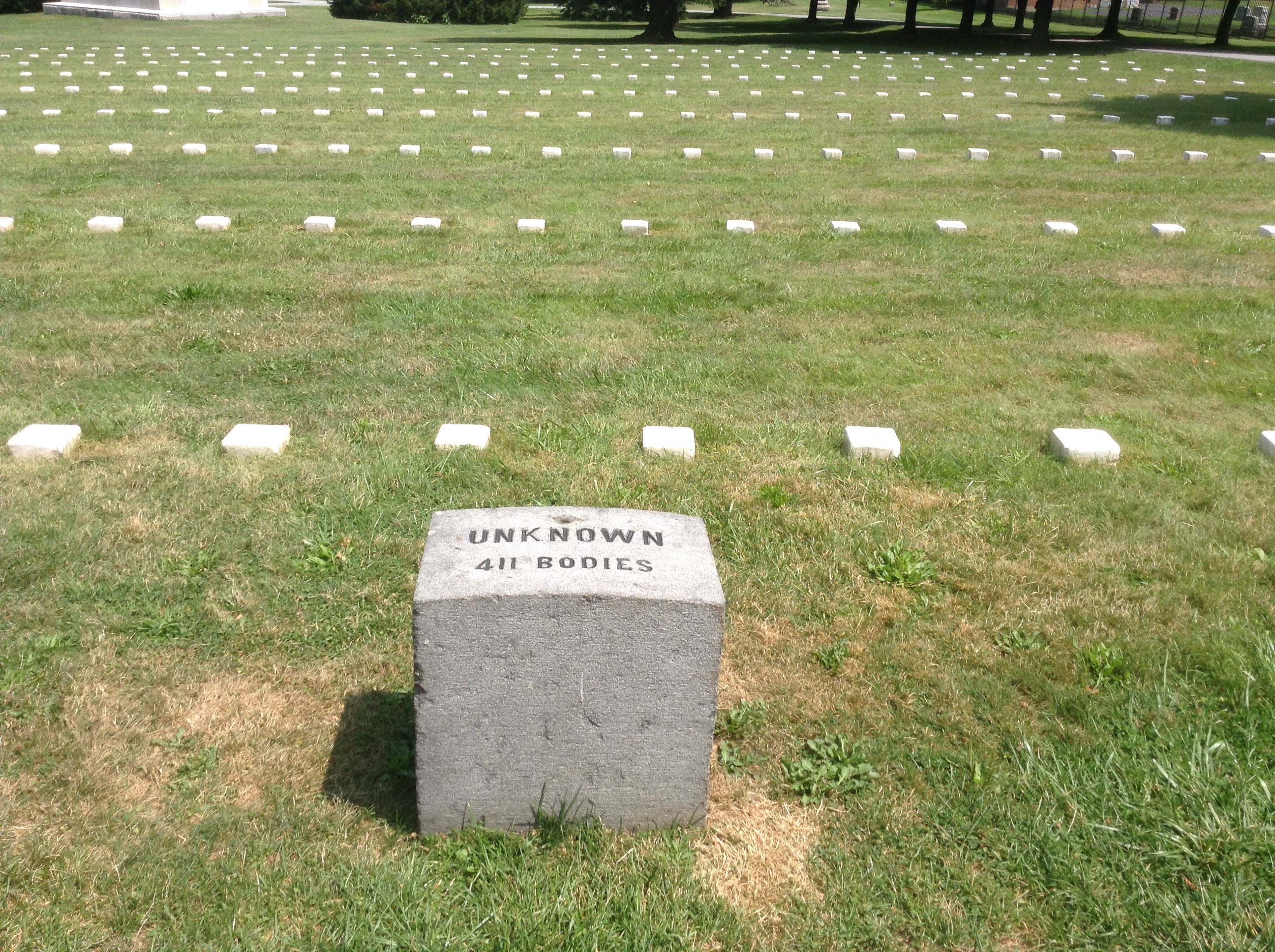
These were words which Abraham Lincoln began to universalize beginning with the Emancipation Proclamation which were echoed in his Gettysburg Address. I always finish the Staff Ride at the Soldier’s Cemetery and conclude by reading Lincoln’s “brief remarks.” For me they are the proposition, the spirit that guides the United States, and Lincoln’s words at Gettysburg, that It is for us the living rather to be dedicated here to the unfinished work which they who fought here have thus far so nobly advanced. “It is rather for us to be here dedicated to the great task remaining before us–that from these honored dead we take increased devotion to that cause for which they gave the last full measure of devotion–that we here highly resolve that these dead shall not have died in vain, that this nation under God shall have a new birth of freedom, and that government of the people, by the people, for the people shall not perish from the earth.”

Those words for the basis of so much that has happened since Gettysburg; the 13th Amendment which abolished slavery, the 14th Amendment which overturned the travesty of the Dred Scott Decision and and the Fugitive Slave Act by ensuring that anyone born in this county is a citizen with full citizenship rights, and the 15th Amendment which gave Blacks the Right to vote. Those were the beginning, and the 14th Amendment was the most important, for it was the first Constitutional Amendment which extended rights to peoples formerly enslaved, and formed the basis for, and legal precedent for further extensions of civil rights. They were followed by the 19th Amendment which gave women the right to vote, the American Indian Citizenship Act of 1924, and the repeal of the Chinese Exclusion Act of 1943, continued them. Laws meant purely to discriminate against the rights of African Americans and other minorities were overthrown by Supreme Court decisions such and Brown v. Board of Education in 1954, which overturned the “separate but equal” Jim Crow laws which had been upheld by the Plessy v. Ferguson decision of 1894. These were joined by the Voting Rights Act of 1964, and the Civil Rights Act of 1965, the revocation of laws which banned homosexuals from serving in the military, and most recently the Obergfell v. Hodges decision that allowed LGBTQ people to marry and receive the same rights as heterosexual couples anywhere in the country.

Of course there is still so much to be done. People whose political ideology is rooted in the same limits on freedom as were the foundation of the Confederacy still fight basic civil rights for people that they despise at every opportunity.

The oath that I swore when I was commissioned thirty-three years ago, and which I have repeated with every promotion, and when I transferred to the Navy in 1999 states that “I will support and defend the Constitution of the United States against all enemies, foreign and domestic; that I will bear true faith and allegiance to the same; that I take this obligation freely, without any mental reservation or purpose of evasion; and that I will well and faithfully discharge the duties of the office on which I am about to enter.”

img_0471

I take that seriously, and every time I go to Gettysburg I have the importance of that reaffirmed as I walk the battlefield and stand in the Soldier’s Cemetery, and ponder what those men who stood in the path of Robert E. Lee’s Army of Northern Virginia fought for, and which I have both fought for and swear to maintain, against all enemies, foreign and domestic. My task is also to continue to labor for and be dedicated to the task remaining; that from the honored dead who lay at Gettysburg and so many other places, that I take increased devotion to that cause for which they gave the last full measure of devotion–that I here highly resolve that these dead shall not have died in vain, that this nation under God shall have a new birth of freedom, and that government of the people, by the people, for the people shall not perish from the earth.”

For me those words are personal, and that my friends is why I continue to serve, and why what was done and said at Gettysburg means so much to me.

Until tomorrow,

Peace

Padre Steve+

Leave a comment

Filed under civil rights, civil war, Gettysburg, History, Military, Political Commentary

Teaching at Gettysburg 


Friends of Padre Steve’s World

I spent last night eating, drinking, and teaching at Gettysburg in preparation for he Staff Ride which begins this morning. My audience is the senior staff of an U.S. Army recruiting battalion based out of Ohio. 

It was an interesting setting to teach, sitting on the patio with absolutely beautiful weather, enjoying good food and beer and then getting to teach. They are a different type of audience than the men and women that I teach at the Staff College, and with the exception of the battalion commander who is a graduate of our program, the officers are younger and junior to my students and we also have senior non-commissioned officers, the Command Sergeant Major and the First Sergeants. they are whoever, all very smart, articulate and represent the best of America. All have served in combat or in combat theaters, and all have met with the frustration of not achieving anything like victory. 

I find this very important, because the vast majority of military personnel, including officers attend the level of education that I get to teach at the staff college, and for me to be able to do this with such a group helps create an interest, not just in a particular battle, but the important link between national strategy, military strategy, and the operational art. One thing that I spent a good amount of time on last night in the prepetory lecture was just that. The biggest reason the the North won the Civil War and that the South lost was that in the North under Lincoln, that military operations were linked with the policy of the government after the Emancipation Proclamation; whereas in the South there never was a coherent national strategy, and even great operational level commanders like Robert E. Lee were unable to translate battlefield success into victory. 

As Clausewitz emphasized, war is an instrument of policy, and if it does not serve policy, or if policy makers fail to develop and enunciate a true national strategy, military efforts will ultimately fail. This has been a hallmark of post Col War American thinking. Ideology and buzzwords are not policy, nor are they strategy, and the military is only one component of national power, and unlike diplomacy, economic power, and information, it is a blunt instrument, and if military efforts cannot be translated into the political object and bring about a positive political effect, no amount of battlefield brilliance will bring about success. Policy makers and soldiers must remain in constant dialogue in order to ensure that the link between strategy and policy is strong. This was something that Lincoln, as well as his military subordinates Ulysses Grant and William Tecumseh Sherman learned, and practiced during the war, and it was something that Lincoln’s successor, Andrew Johnson failed to understand after the war, thus forieting all that had been won on the battlefields. Thus as English historian and military theorist Colon Gray notes that “war is about peace” and “more pointedly, that the making of peace is likely to be more difficult than the waging of war. It is a common, and somewhat understandable, error to assume that if one takes care of the fighting in an efficient manner, and the enemy is duly humbled, somehow that the subsequent peace will all but take care of itself.”  I guess that is one reason that I find the American Civil War and the subsequent Reconstruction period to be so pertinent today for but policy makers and military leaders. But I digress…

Even so this promises to be a great weekend, and even more interesting, I will be conducting the final part of which includes walking the ground of Pickett’s Charge, and spending time at the Soldier’s Cemetery where Abraham Lincoln delivered the Gettysburg Addess on Sunday, the 33rd anniversary of my being commissioned as an Army officer in 1983. Since then I have served in peace and war in both the Army and the Navy. In fact I have been in the Navy now almost as long as I served in the Army, almost 17 1/2 years. 

Anyway, I hope to post anther reflection tomorrow, though it may be later in the evening when I actually get it done. 

Until then, have a great day.

Peace,

Padre Steve+

Leave a comment

Filed under civil war, Gettysburg, leadership, Military