Monthly Archives: June 2018

“In High Spirits and Full of Confidence” The Eve of Disaster at Midway

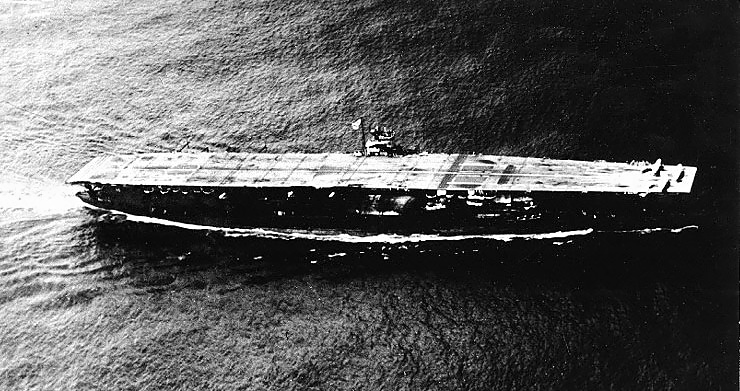
Japanese_aircraft_carrier_Akagi_01

The Flagship IJN Akagi

Friends of Padre Steve’s World,

On the night of June 3rd 1942 the Japanese First Carrier Strike Force under the command of Vice Admiral Chuichi Nagumo sailed east toward the tiny Midway Atoll. Midway was the target of an operation designed by Admiral Isoroku Yamamoto to draw out the remnants of the United States Pacific Fleet, destroy them and set the conditions for Japanese victory and the subsequent dominance of the Pacific by the Empire of Japan. It was to be the battle that ended the war. Yamamoto believed that the Japanese had no chance if the war dragged on and that the only chance of victory, it had to be quick and decisive, it had to destroy the aircraft carriers that were the remnant of American seapower in the Pacific, and it had to happen before the industrial might of the United States was fully mobilized. Yet Yamamoto was so confident of victory now that he believed that “the American fleet was a beaten, demoralized outfit that would need to be coaxed to its annihilation.” 

For six months the Japanese Navy and Army had experienced nothing but victory. Nagumo’s carriers had crushed the U.S. Pacific Fleet at Pearl Harbor. Land based Japanese bombers sank the British battleships HMS Prince of Wales and Repulse near Singapore, while another Japanese fleet destroyed a combined American, British, Dutch, and Australia fleet in the Java Sea. Nagumo’s carriers raided British bases and sank British ships in the Indian Ocean, and devastated shipping in the Australian port of Darwin. Other Japanese land, air, and naval forces conquered Hong Kong, Singapore, the Dutch East Indies, Guam, Wake Island, and the Philippines. Yet victory would not be assured until the U.S. Pacific Fleet had been destroyed.

To do that Yamamoto and his staff began to plan a massive operation against the American base on Midway Atoll, just 1100 miles from Pearl Harbor. His plan was to force the remaining American naval forces into a decisive battle in which they would be destroyed by overwhelming Japanese naval and air assets. However his plan was in conflict with plans of the Army and the Naval General Staff. Some wanted to attack westward against India with the goal of linking up with Rommel’s Afrika Korps in the Middle East. Others preferred land offensives against China, or trying to cut maritime supply line from the United States to Australia by striking Samoa and the Fiji Islands.

In the end no agreement was reached and in April 1942 the Japanese were surprised and embarrassed by bombing of Tokyo by Colonel Jimmy Doolittle’s B-25 bombers which had taken off from the USS Hornet. The raid had caused very little damage but Yamamoto was humiliated and pushed for the operation which despite opposition was approved by Japanese leaders.

There were problems in the plan the chief of which was that the Japanese Fleet was divided and deployed in such a way that should there be trouble the main force under Yamamoto could not support the carrier strike force under Nagumo. Evidence and intelligence reports were ignored, the logistics of the operation minimized, recommendations that the carrier force be refitted and new air crews brought fully up to the high standards of December 1941 were disregarded. Further evidence that suggested that aircrews were not tactically proficient based on observed bombing and torpedo exercises similarly ignored. A war game conducted by the Combined Fleet Staff predicted the loss of two carriers but Yamamoto’s Chief of Staff, Admiral Ugaki revered the call of the umpire and  refloated one from the dead carriers by erasing the hits scored by those playing the American side. It was symptomatic of the “victory disease” that would cloud and distort all that the Japanese did between April and June.

Even so the operation continued forward and doubters put aside those doubts mostly due to a profound disrespect of the United States Navy. Admiral Nagumo had seen many of the risks involved in the plan and in the beginning considered it an “impossible and pointless operation.” But that was before the Doolittle Raid on Tokyo, and Nagumo fell in line as Yamamoto successfully lobbied for the operation. Other leaders of the strike on Pearl Harbor including Commander Mitsuo Fuchida could not see the value in attacking Midway.
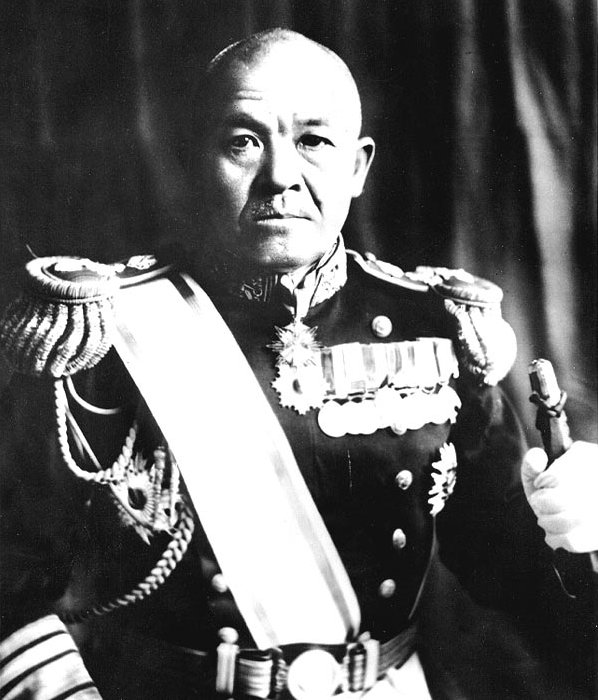
Chuichi_Nagumo

Vice Admiral Chuichi Nagumo

As the First Carrier strike force closed within 300 miles of Midway on the night of June 3rd 1942 Nagumo and his staff prepared for the battle that they and many others believed would be the decisive battle. Aircraft received their final preparations, bombs were loaded and as night faded into early morning air crew arose, ate their breakfast and went to their aircraft.

The ships had been observing radio silence since they departed their bases and anchorages in Japan the previous week. Honed to a fine edge the crews of the ships and the veteran aircrews anticipated victory.

The crews of the ships of the task force and the air groups embarked on the great aircraft carriers Akagi, Kaga, Soryu and Hiryu as well as their escorts were confident. They had since the war began known nothing but victory. They had devastated the Pacific Fleet at Pearl Harbor and roamed far and wide raiding allied targets and sinking allied shipping across the Pacific and deep into the Indian Ocean. Commander Magotaro Koga of the destroyer Nowaki wrote in his diary “Our hearts burn with the conviction of sure victory.”

However, Nagumo and his sailors had no idea that most of what they knew about their American opponents was wrong, just as Yamamoto had no idea that American code breakers had broken the Japanese Naval codes and determined that the Japanese were going to attack Midway.
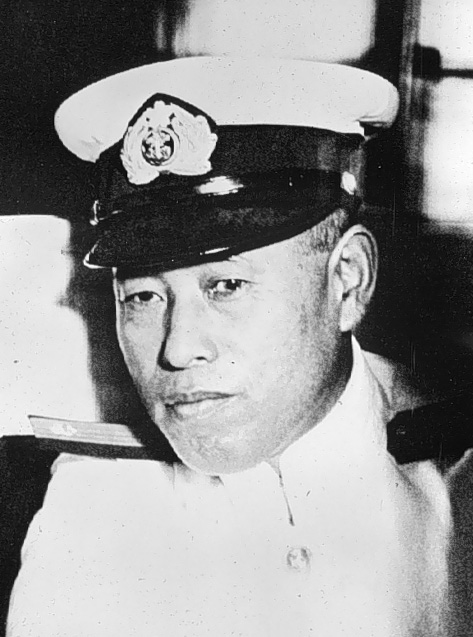
893594c746

Admiral Isoroku Yamamoto 

The Japanese were confident that the Americans could field no more than two operational carriers. However, the Yorktown, which the Japanese believed had been sunk at Coral Sea had been repaired, She was fully operational the air group from the damaged USS Saratoga replaced her air group and Yorktown with Task Force 17 rushed to join the EnterpriseHornet and Task Force 16 northeast of Midway.

An operation designed to get aerial surveillance of US Fleet dispositions at Pearl Harbor had been cancelled because the atoll at French Frigate Shoals that the Japanese flying boats would operate from was occupied by a small US force. Likewise the line of Japanese submarines arrived on station a day late, after the US carrier task forces had passed by. Those aboard the First Carrier Strike Force, including Nagumo or his senior commanders and staff had no idea that the Americans not only knew of their approach but were already deployed in anticipation of their strike.

Within a day all of the Japanese carriers would be sunk or sinking. Thousands of Japanese sailors would be dead and the vaunted air groups which had wreaked havoc on the Allies would be decimated, every aircraft lost and the majority of pilots and aircrew dead. It would be a most unexpected and devastating defeat stolen out of the hands of what appeared to be certain victory.

In the next couple of days I will write some articles on Midway and republish older articles on this site. The fact of the matter is that like Yamamoto and the Japanese that many military leaders, including those of the United States make assumptions about campaigns and battles that turn out to be wrong. Wars are often expected to be short, decisive and glorious but many times end up long, indecisive and agonizing. History has shown that to be the case for the United States in every fight it has been engaged since the Second World War, even when we win every pitched battle.

I think that there is a lesson to be learned from the Japanese who sailed into the night on June 3rd 1942 and saw the sunrise of June 4th. There is no battle, campaign or war that goes according to plan. Thousands of Japanese sailors and airmen went to bed on the night of the 3rd expecting that the following night, or within the next few days they would be celebrating a decisive victory. Thousands of them would be dead by the night of the 4th of June and the ambitions of the Empire of Japan to defeat the United States Navy and end the war would be dealt a decisive defeat from which they would never recover.

IJN_Akagi_World_War_II_Aircraft_Carrier_hit_by_Douglas_SBD_Dauntless_Dive_Bomber_at_Midway-1

The Japanese had known nothing but victory and on the night of June 3rd 1942 they expected nothing more than a glorious victory. However the wisdom of the Romans was proved right yet again,“Sic transit Gloria mundi,” (“Thus passes the glory of the world”,) or as it is more commonly paraphrased “all glory is fleeting.”

Peace

Padre Steve+

3 Comments

Filed under History, leadership, Military, World War II at Sea, world war two in the pacific

Anniversaries of Watershed Events: Midway, D-Day, and the Assassination of Robert F Kennedy


D-Day, June 6th 1944

Friends of Padre Steve’s World,

I am posting a small thought to begin the weekend. For those that do not know, the next several days are full of the anniversaries many events

On June 3rd 1940, the British finished the evacuation of the British Expeditionary Force and some French forces from Europe at Dunkirk, though defeated, the British action preserved the British Army and kept Britain in the war.


Midway 

From June 4th through June 6th 1942 a small American fleet defeated a much larger, more experienced and better equipped fleet at the Battle of Midway. The battle did not end the war, but it ensured that Japan never could win the war against the United States in the Pacific. It was a turning point. It has rightly been called an “Incredible Victory” as all the elements that make war what it is, the element of chance, the element of friction, and the  element of surprise all broke the American way. The Japanese leaders, and for that matter many if not the vast majority of their soldiers and sailors were full of hubris, believing themselves invincible they were decisively defeated.

Two Years later on June 6th 1944, Allied forces landed on the Normandy Peninsula of France to begin their long awaited attack on Nazi occupied Europe. The invasion, code named Operation Overlord did not end the war, but coupled with the Soviet offensive against the German Army Group Center which began just two weeks later, Operation Bagration, it was the beginning of the end for Hitler’s Germany.

Twenty-six years earlier U.S. Marines and Army soldiers turned back the Germans at the Battle of Belleau Wood near Chateau-Thierry France. The effort blocked a German drive on Paris, giving the Allies the time to begin a counter-offensive that would end the war.


Senator Robert F. Kennedy lays Mortally Wounded after being shot by Sirhan Sirhan 

But in addition to the battles other important events shook the world, in 1919 the Congress passed the 19th Amendment, which when ratified gave women the right to vote. In 1968, Senator Robert F. Kennedy was gunned down by the assassin Sirhan Sirhan in Los Angeles after winning the Democratic Party primary. He would have been the odds on favorite to defeat Republican Richard Nixon in the general election. On June 8th 1789 James Madison introduced twelve amendments to the U. S. Constitution, of which ten were ratified by the states to become known as the Bill of Rights. On June 8th 1967, the USS Liberty, a surveillance ship, was attacked by Israeli ships and aircraft during the Six Day Warthe attack resulted in the death of 34 American sailors and the wounding of 171 more.

Of course there are numerous other events that took place at different times on these days, some which were very important, and others which are interesting but less important in terms of their historical impact. I’ll be writing about some of these events in the coming days.

Have a great day,

Peace

Padre Steve+

1 Comment

Filed under History, Military, World War II at Sea, world war two in europe, world war two in the pacific

Eichmann, and the Ever Present Reality of Endlösung

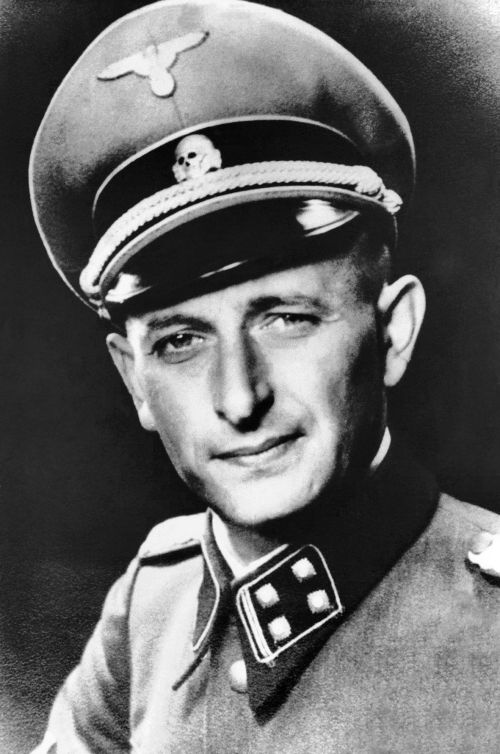
Eichmann1

Friends of Padre Steve’s World,

On June 1st 1962 Adolf Eichmann was hanged in Israel for his crimes of mass murder and genocide. His appearance in the court where he portrayed himself as a functionary and bureaucrat who was repulsed by bloodshed and only following orders. So convincing was his act that Hannah Arendt wrote of him:

“The trouble with Eichmann was precisely that so many were like him, and that the many were neither perverted nor sadistic, that they were, and still are, terribly and terrifyingly normal. From the viewpoint of our legal institutions and of our moral standards of judgment, this normality was much more terrifying than all the atrocities put together, for it implied — as had been said at Nuremberg over and over again by the defendants and their counsels — that this new type of criminal, who is in actual fact hostis generis humani, commits his crimes under circumstances that make it well-nigh impossible for him to know or to feel that he is doing wrong.”

Unfortunately there are people such as Arendt described, but Eichmann was not one of them. She wrote her commentary having only attended parts of the trial, but what she saw convinced her that Eichmann was ordinary and normal. She was convinced by his appearance and presentation at the trial that he was not the man who ran roughshod over Jews as well as German officials in order to execute the Final Solution. That phrase, “the banality of evil” has often been used to provide an alibi for men and women who wholeheartedly participated in the extermination of the Jews and others deemed to be less than human regardless of whether they were desk bound bureaucrats in Berlin, managers of the extermination camps, or the members of the Einsatzgruppen, the Ordungspolizei, or the Wehrmacht who systematically exterminated millions of people up close and personal.

Eichamnn was a true believer in the Nazi system and its desire to exterminate the Jews from the earth and he enjoyed what he did. He not only acted on orders but he anticipated them, as he told William Sassen in an interview while living undercover in Argentina in the 1950s:

“If we would have killed 10.3 million Jews, then I would be satisfied and would say, good, we annihilated an enemy. … I wasn’t only issued orders, in this case I’d have been a moron, but I rather anticipated, I was an idealist.”

Eichmann began his career by persecuting the Jews of Vienna but following the Wansee Conference he was entrusted by Reinhard Heydrich with overseeing the mechanics of implementing the Final Solution. He was only an SS Lieutenant Colonel but he wielded his power with such effect that he could ensure that Nazi functionaries senior to him did his bidding in regard to the Jews, He told Sassen:

“They knew me wherever I went. Through the press, the name Eichmann had emerged as a symbol…. In any case, the word Jew … was irreversibly linked with the word Eichmann. Much more power … was attributed to me than I actually had.”

Eichmann summed up the attitude of many when he said regarding his work to deport hundreds of thousands of Hungarian Jews to Auschwitz in in just a few weeks during the fall of 1944, “Whether they were bank directors or mental cases, the people who were loaded on those trains meant nothing to me.” Speaking to Willem Sassen in 1957 Eichmann reveled in that accomplishment, “It was an achievement that was never matched before or since.” Eichmann also enjoyed leading his victims on, pretending that he might listen, and they might change his mind. Eichmann was proud of what he did. He told his staff, “I will leap into my grave laughing because the feeling that I have five million human beings on my conscience is for me a source of extraordinary satisfaction.”

His greatest accomplishment of genocide was in Hungary between March and May of 1944 when he orchestrated the “evacuation” of 437,000 Jews to Auschwitz, of which nearly 400,000 were exterminated in that camps massive gas chambers. His greatest regret was that Himmler and others, realizing that the war was lost were now trying to find ways to deal with the Allies using the Jews as bargaining chips. They put an end to his campaign leaving half of Hungary’s Jews alive, something that he detested to the end of his life for his superiors had taken away his reason for being.

Eichmann twisted language in a perverse manner to both glorify and justify his inhumanity. Bettina Stangneth, wrote in her book Eichmann Before Jerusalem:

“The language becomes entirely perverted where Eichmann turns metaphors on their heads, talking about expulsion and murder using gentle images of life. An institution for forced emigration was his “first child,” where he was able to “be creative in my work.” All the individual acts of robbery and expulsion that took place in Austria were committed to “provide [the country] with injections of Jewish solutions.” Even exterminations and deportations were “born”. This was why he felt so superfluous in Budapest, when he was forced to stop deporting people to Auschwitz: “As far as I know, I couldn’t have done anything fruitful anymore” … In Eichmann’s language, he didn’t send people to the death camps; the camps were “fed with material”.

Adolf Eichmann went to his death unrepentant and there is nothing to be mourned on this anniversary of his death, other than the fact that there are people who are much like him today. That is the terrifying reality. Some may be those faceless bureaucrats, but too many others would easily become killers. As Timothy Snyder noted:

“The European history of the twentieth century shows us that societies can break, democracies can fall, ethics can collapse, and ordinary men can find themselves standing over death pits with guns in their hands. It would serve us well today to understand why.”

Christopher Browning wrote in his book Ordinary Men: Reserve Police Battalion 101 and the Holocaust in Poland:

“I fear that we live in a world in which war and racism are ubiquitous, in which the powers of government mobilization and legitimization are powerful and increasing, in which a sense of personal responsibility is increasingly attenuated by specialization and bureaucratization, and in which the peer group exerts tremendous pressures on behavior and sets moral norms. In such a world, I fear, modern governments that wish to commit mass murder will seldom fail in their efforts for being unable to induce “ordinary men” to become their “willing executioners.”

In such a world it is all too important that we never forget, especially now when we could be watching it begin all over again. Eichmann may be dead but he lives on and we must always remain vigilant, or the specter of the Holocaust will rise again, quite possibly in countries that are considered civilized and freedom loving, like the United States.

Never forget,

Peace

Padre Steve+

1 Comment

Filed under ethics, History, holocaust, News and current events, Political Commentary, war crimes, world war two in europe