Author Archives: padresteve

padresteve's avatar

About padresteve

I'm a Navy Chaplain and Old Catholic Priest

Thoughts on the Bowe Bergdahl Controversy

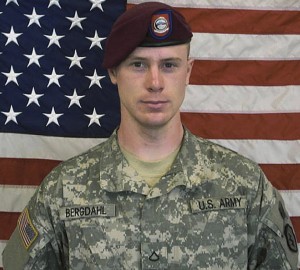
bergdahl-300x270Sgt Bowe Bergdahl as a Private First Class

The case of Sergeant Bowe Bergdahl troubles me on a number of levels. Over the past few weeks, I like the majority of Americans have been subjected to the incessant media blitz regarding Bergdahl. As someone who has served in combat in very isolated areas of Iraq I have conflicting opinions. One is about his actions that led to him being held captive by the Taliban. The fact is that no matter what the reason he left his base he put himself and his comrades in danger. The second is that we don’t know all the facts and his return is being used by the very people who pressed hardest for it as a political issue. Finally, I am concerned for the safety of Bergdahl and his family which in the course of the mostly right wing media blitz attacks probably are in some kind of danger, especially due to the vehemence that the campaign has been waged.

While I am glad that have him back and that he is safe I am of two minds on what needs to happen.

First Bergdahl needs all the medical and psychological care he can get and once he is deemed fit to question about the incident and his captivity then that needs to happen.

Second a new 15-6 investigation needs to be started by the Army. Should that investigation provide evidence that Bergdahl deserted or collaborated with the enemy or committed treason, Court Martial proceedings should be initiated, beginning with the Article 32 hearing, the equivalent of a Grand Jury determine there is sufficient merit to bring him to trial than a trial should take place and if convicted Bergdahl should be sentenced accordingly. If there is a conviction then if need be the judge and jury should take into account whatever happened to Bergdahl at the hands of the Taliban during sentencing.

Since I have given many sentences during Article 15 hearings as a company commander, assisted in the investigation of criminal cases as a personnel officer, sent soldiers to General Court Martial proceedings and testified for both the prosecution and defense in different court-martial and administrative hearings I do have some sense of justice. I am not blind.

All of that being said, my career military opinion being taken into consideration, the fact is, no matter what has been presented in the media, we don’t know the whole story. Please know I am not defending Bergdahl here, but there is something called due process, which he is not getting in the media, especially the politically motivated vultures at Foc News.

This is unfortunate and is a terrible example of “yellow journalism.” Marcus Luttrell, the “Lone Survivor” of the SEALS says that Bergdahl no matter what the outcome is “branded for life.” Luttrell is no “bleeding heart.” He knows life and death and combat, and he lost friends fighting the Taliban.

The initial 15-6 investigation was never completed because the investigating officer did not have access to Bergdahl. As far of the men from his unit who blame Bergdahl for every death that their unit experienced after his disappearance, that is understandable. It is a reasonable reaction of men who feel that they and their comrades may have been betrayed. It is something that has occurred throughout military history as soldiers seek to find an answer to battlefield misfortune and the loss of friends. One only has to look at the “Lost Cause” in the historical myth of the American South and the Civil War to see that even normal, rational and decent people can assign blame to others for defeat or the loss of friends.

This issue is important for we do know that the unit took casualties after Bergdahl disappeared, but it doesn’t look like any died actually looking for him, in fact some were killed inside their combat outposts. It does not appear that there is a direct connection between Bergdahl’s disappearance and the loss of six other American soldiers. The province where this happned was one of the most hotly contested areas of Afghanistan, when the Taliban, including the Haqqani network poured fighters into the area even before Bergdahl and his unit arrived at their combat outpost. However, that being said, if I lost friends after a soldier disappeared I might want to find a causal link between the situations.

Unfortunately, for years Congress, especially the Republicans castigating Obama now hammered him to do “all he could to secure the release of Bergdahl.” I guarantee that if President Bush, or a President McCain or Romney secured the release with the same process there would be no backlash right now. Any of them would be hailed as heroes who secured the life of an American soldier by the partisans attack President Obama.

As far the “released” Taliban, they in custody in Qatar and you can bet that the CIA is monitoring every breath they take. They were not set free, they are in Qatari custody and the government of Qatar does not want to screw this up. They want to increase their international status and influence outside of the oil markets. However, despite claims the claims of some that these five men are “the worst of the worst” the fact is they only killed Americans after we invaded their country and toppled the government and military that they were a part. Yes, they were bad guys, even potential war criminals when it came to killing Shi’ite Afghans, but they were not Al Qaeda, and President Bush released over 500 like them before he left office.The proper course wold have been to send those of killing their own people to the International Criminal Court in the Hague, and treat those accused of purely military crimes against Americans as Prisoners of War, especially those who were acting in  official capacities in the military of Afghanistan.

Retired Marine Corps General Mattis, and former Commander of the US Central Command said that the exchange of those Taliban for Bergdahl was actually beneficial to the United States forces in Afghanistan. Mattis told the Military Times http://www.militarytimes.com/article/20140609/NEWS/306090040/Mattis-Bergdahl-release-makes-Taliban-vulnerable  that: “We no longer have that concern that they have this pawn they can then play against us,…. So there‘s also a military vulnerability that the Haqqanis now face, that Taliban now faces because they no longer hold one of our U.S. soldiers in captivity. So, there’s also a freedom to operate against them that perhaps we didn’t fully enjoy so long as they held Bowe as a prisoner.” 

Mattis is absolutely right. We no longer have to worry about the Taliban using him for propaganda purposes, or staging a public execution of him to try to embarrass us. Likewise we no longer have to endanger others trying to find him and this gives us room to more forcefully response against them as we depart the country.

As far as Bergdahl’s situation, the Army needs to conduct a new investigation, if it appears that he did desert or collaborate with the enemy he should be put on trial and if found guilty be appropriately punished.

But from my perspective there are a lot of other big questions, including what was going on in his unit in the weeks before he disappeared, which from a leadership perspective are really troubling to me as a military professional. His unit was troubled, it had a bad reputation and some of what are alleged against its members is that some members might have engaged in war crimes against Afghan civilians. I suspect that some of Bergdahl’s accusers could be covering up their own incompetence and possible crimes and using him as a scapegoat, and even if Bergdahl is guilty of what they accuse him of that behavior is inexcusable.

To add to his accusers conundrum is that all of those that have come forward to condemn Bergdahl have done so on behest of Republican political operatives, including former Bush administration staffers. Ironically, one of Bergdahl’s most forceful accusers was discharged from the army with an “Other Than Honorable” discharge. That says something about his potential creditability.

The late Michael Hastings wrote in a 2010 report in the Rolling Stone about that unit. Hastings’ article is insightful because it shows the extent of the problems going one and provides reasons why Bergdahl might have left his post. That article is linked here: http://www.rollingstone.com/…/americas-last-prisoner-of…  Now I do not believe that anything excuses desertion in war, but what if there were other extenuating factors? If his accusers are to be believed, as some say that Bergdahl to be showing indications of mental instability or possible indications that he was about to defect they should have either taken action to get him treatment or to ensure that he could not do so. They did not do this. To me their allegations are factors that good leaders would have noticed and taken precautions to prevent. Believe me, had any competent leader been in charge of that platoon this wouldn’t have happened.

Again none of what I say here excuses desertion or collaboration with the enemy. If Bergdahl did either and is convicted them he should spend as much time in prison as convicted criminal and retired Lieutenant Colonel Oliver North did for his actions of lying to Congress and being involved in a weapons exchange with the government of Iran for the release of American hostages in Lebanon. North wrote of President Reagan’s knowledge of that crime saying: “Ronald Reagan knew of and approved a great deal of what went on with both the Iranian initiative and private efforts on behalf of the contras and he received regular, detailed briefings on both…I have no doubt that he was told about the use of residuals for the Contras, and that he approved it. Enthusiastically.”

Since North has been one of Bergdahl and President Obama’s most viscous attackers, that would be just. But wait… North didn’t spend a day in jail because his conviction was overturned with the help of those “Anti-American Commies” from the ACLU. Mind you this was not because he wasn’t guilty, but because jury members might have been influenced by North’s televised but immunized and highly incriminating testimony before Congress. Another person raising hell is Senator John McCain, who along with the other US POWs in Vietnam was exchanged for Viet Cong and North Vietnamese POWs at the end of that war. Likewise, after his release McCain was accused of aiding the enemy, including some of the same people that now attack Bergdahl.  That too is ironic.

I love the irony and I am disgusted by the actions of those that seek to destroy Bergdahl before the facts are fully known and before he has a chance to defend himself. But then maybe due process of law is only applicable if you are a “conservative” accused of treason and aiding and supporting avowed enemies.

But all this being said, there is much more to know. So before we go destroying the life of an American soldier who was held for 5 years by the Taliban, as well as his family, let us get the facts right and not use them as a political bludgeon against the President for purely political reasons. Please don’t tell me that Obama broke the law because he didn’t give warning to Congress regarding the release into the custody of Qatar of the Taliban prisoners who were exchanged for Bergdahl, that was done in 2012.

All of this troubles me, and it should trouble any person that cares about due process of law and the rights of the accused in court. What has been happening in the media, particularly on Fox News in relation to Bergdahl is nothing short of scandalous and politics at its very worst. The precedent being set is terrible and those “conservatives” that attack Bergdahl and Obama should realize that what they do sets precedent and probably will be used against them and their heroes in the future.

I want justice, including for the men who might have died because Bergdahl went missing. If he actually deserted, committed treason and collaborated with the enemy he needs to be punished. But that has to happen through the process of law and not through character assassination and political posturing in the media.

The proper course right now is to get the facts straight, ensure that Bergdahl gets whatever assistance that he needs to recover, stop the political posturing and seek true justice. If we cannot do that we have disgraced ourselves as a people and as a nation far more than a guilty Bowe Bergdahl ever could.

Of course what I say will make very few happy, but it is a proper response because it weighs the best knowledge of the facts, with the actions of Bergdahl and responsibility for the lives lost. It is something that I believe is important, the qualities of truth, justice and mercy. Unfortunately, that message will probably go unheeded.

Peace

Padre Steve+

2 Comments

Filed under iraq,afghanistan, News and current events, Political Commentary

D-Day at 70 Years and Forever: Courage, Sacrifice and Reconciliation…

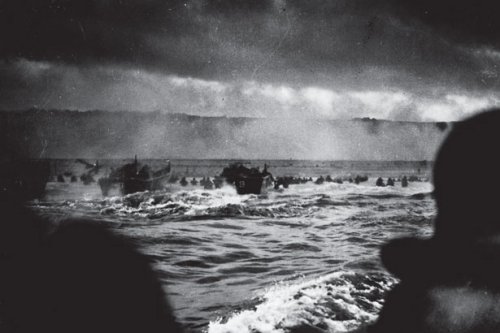
d-day-opener1Omaha Beach

“We are on this Earth for only a moment in time.  And fewer of us have parents and grandparents to tell us about what the veterans of D-Day did here 70 years ago.  As I was landing on Marine One, I told my staff, I don’t think there’s a time where I miss my grandfather more, where I’d be more happy to have him here, than this day.  So we have to tell their stories for them.  We have to do our best to uphold in our own lives the values that they were prepared to die for.  We have to honor those who carry forward that legacy, recognizing that people cannot live in freedom unless free people are prepared to die for it.” President Barack Obama at the 70th Anniversary of the D-Day Landings, June 6th 2014

Seventy years ago the liberation of France began on the beaches of Normandy.  Soldiers from 6 Allied Infantry and 3 Airborne Divisions supported by an Armada of over 5000 ships and landing craft and several thousand aircraft braved weather, heavy seas and in places fierce German resistance to gain the foothold on beaches named Omaha, Utah, Gold, Sword and Juno.  Over the next seven weeks the Allied soldiers advanced yard by yard through the hedgerows and villages of Normandy against ferocious German resistance before they were able to break out of the lodgement area and begin the drive across France.

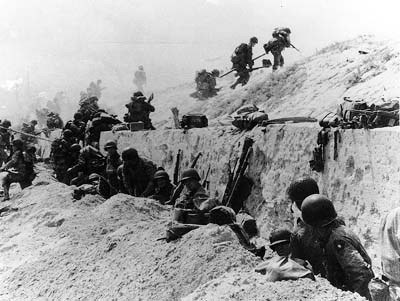
dday371

The fighting was bloody, most American, British and Canadian infantry battalions and regiments suffered nearly 100% casualty rates in Normandy.  Replacements were fed in at a cyclic rate to make up the losses even as fresh divisions flowed ashore, but the losses were terrible.  By the time the landings took place, the British having been at war for nearly five years were bled out.  They had little left to replace their losses.  From Normandy on the British were losing combat power at a rate that they could not make up.

For the Americans there was another problem.  The US High command decided to limit the Army to 90 Divisions.  Many of these were committed to the Pacific and Mediterranean theaters.   Likewise, American Infantry units were generally made up of the lowest caliber of recruits, led often by the poorest officers, the best went to either the Air Corps or technical branches of the Army.

Now this is not to criticize veterans, but it is a factor in the campaign.  Most US Infantry Divisions with the exceptions of those previously blooded in North Africa and Sicily often performed badly in action.  Some, after being manhandled by the Germans had their leadership replaced and became excellent combat units.  However, every new division that arrived in France after D-Day always got the worst of their initial engagement against German forces.

While performance suffered there was another problem for the Americans.  With the limitation in number of divisions, they stopped building infantry divisions, upon whom the bulk of the campaign depended. Thus they had little in the way of trained infantry replacements to make up heavy losses in Normandy.  By late 1944 during the Battle of the Bulge the American infantry crisis was so bad that 30,000 Air Corps candidates were trained as infantry and soldiers support units such as Ant-Aircraft battalions were used to bolster infantry units.

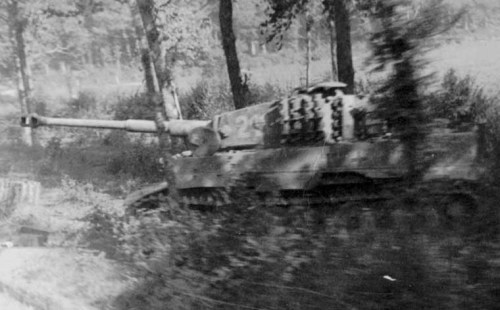
tiger2falaise16hh1

Had the Germans been able to hold out and had they not been bled white by the Red Army on the Easter Front, had they not lost the nearly their entire Army Group Center in the Red Army offensive of 1944 it is conceivable that the British and American offensive in the West would have ground to a halt for lank of infantry in 1945.  In spite of this there was no lack of individual courage among the troops engaged; the courage and sacrifice of all who fought there should not be forgotten.

caen_ruins1The Ruins of Caen

The human toll among the combatants both Allied and German, as well as the local populace was especially traumatic.  While the American, Canadian and British people are keen to remember the sacrifices made by our soldiers we often forget the toll among the French civilian population of Normandy as well as the German soldiers, mostly conscripts, sacrificed by the Nazi regime.  Normandy suffered more than any part of France during the liberation.  In the months leading up to D-Day Allied Air Forces unleashed hell on Normandy to attempt to lessen potential German resistance.  The Allied Naval bombardment added to the carnage ashore and once the campaign began the combined fires of both Allied and German forces devastated the region.  Whole cites such as Caen were destroyed by Allied Air forces and an estimated 30,000 French civilians were killed during the Normandy campaign, 3000 on D-Day alone.  I think it can be said that the blood of the civilians of Normandy was shed for the freedom of all of France.

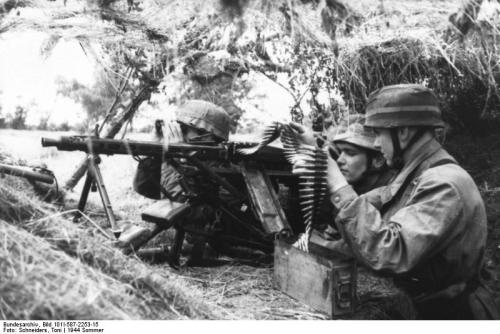
Normandie, Fallschirmjäger mit MG 42

The campaign in Normandy was one of the most viciously contested in western military history.  German forces, especially Paratroops of the 2nd, 3rd, 5th and 6th Fallschirmjager Divisions, German Army Panzer Divisions such as the 2nd, 21st, 116th and Panzer Lehr and those of the Waffen-SS, especially the 1st, 2nd and 12th SS Panzer Divisions held the line against ever increasing Allied forces.  As they sacrificed themselves Hitler refused to commit more forces to Normandy and insisted that his Army contest every meter of ground.  He forbade his commanders to withdraw to more defensible positions along the Seine.

Hitler’s decisions actually shortened the campaign.  Whatever the crimes of the Hitler Regime and Nazism, which were among the most heinous in history, one can never question the valor, courage and sacrifice of ordinary German soldiers.  For those Americans who lump all Germans who fought in World War II with the evil of the Nazi regime, please do not forget this fact:  There are those today, even in this country that make the same charge against Americans who have fought in Iraq and those at home and abroad who have labeled the US as an aggressor nation.  When you judge others, know that the same standard will be applied to you someday. It is as Justice Robert Jackson who served as the Chief Prosecutor at the Nuremberg War Crimes Tribunal wrote:

“If certain acts of violation of treaties are crimes, they are crimes whether the United States does them or whether Germany does them, and we are not prepared to lay down a rule of criminal conduct against others which we would not be willing to have invoked against us.”

Normandy was a near run thing for the Allies.  First the weather almost delayed it by 2 to 4 weeks.  Had that happened the Germans might have been even better prepared to meet the invasion.  Likewise, the Red Army’s devastating offensive which annihilated Army Group Center in June kept the Germans from transferring additional forces from the Russian Front to Normandy.  On D-Day itself there were a number of times where Lady Luck, or maybe the Deity Herself, saved the Allies from disaster.

Any person who has seen Saving Private Ryan, The Longest Day or Band of Brothers knows a little bit about how close Overlord came to failure.  Allied Airborne units were dispersed throughout the region after they drooped.  Many units were not fully operational for more than a day as they sought to organize themselves and gather their troops.  At Omaha Beach the Americans had not counted on the presence of the first rate German 352nd Infantry Division.  This division, despite being pounded by naval and air forces almost cause General Bradley to withdraw from Omaha.  At Utah the soldiers of the 4th Infantry division escaped a similar mauling by landing on the wrong beach.  Had they landed at the planned beaches they would have ran into the same kind of resistance from well dug in German forces.  At Gold Juno and Sword British forces benefited from confusion in the German command which kept the 21st Panzer Division from descending on the British forces and quite possibly splitting the British zones.

The Allies benefited from the absence of Field Marshall Erwin Rommel, Commander of Army Group B who because of the ad weather assumed no invasion was possible and traveled to German to celebrate his wife’s birthday.  Finally, and perhaps most important they benefited by Hitler’s refusal to immediately commit forces, including his Panzer reserve to defeat the invasion at the beachhead.

For those who fought in Normandy and those civilians who lived through it the memories are still vivid. Many suffer the effects of PTSD, grief and other wounds, physical, emotional and spiritual.  When one is exposed to the danger and destruction of war, the smell of death, the sight of burned out cities, vehicles and the suffering of the wounded and dying, it makes for a lifetime of often painful memories.

For some of the German, British and American veterans, the struggle in Normandy has given way to long lasting friendships.  Many of those who fought against the Allied onslaught became fast friends after the war. Those who fought against each other were soon allies as part of NATO and soldiers of nations which were once bitter enemies serve together in harm’s way in Afghanistan.  The generation that fought at Normandy is rapidly passing away, their numbers ever dwindling they remain a witness to courage, sacrifice and reconciliation.

In the end it is reconciliation and healing that matters. Some scars of war never pass away; some memories are far too painful to release.  Yet we strive to reconcile.  In 2002 while deployed at sea for Operation Enduring Freedom I was an advisor to a boarding team from my ship.  It was our job to make sure that impounded ships which were breaking the UN embargo on Iraq were not in danger of sinking, and that their crews had food, water and medical care.  Since many of these ships remained at anchor for 2-4 weeks in the heat of the Arabian Gulf, this was important.

The delays imposed by UN rules sometimes meant that the sailors of these ships grew resentful.  It was my job to spend time with the Master’s of these ships to keep things calm and work out any issues that arose.  On one of these ships I met an Iraqi merchant skipper.  The man was well traveled, educated in the U.K. in the 1960s and in his career a frequent visitor to the US. In 1990 he was the senior captain of the Kuwaiti shipping line.  Then Saddam Hussein invaded Kuwait.  As a result of this when Kuwait was liberated he lost his job.  His nation was an international pariah.  Since his life was the sea he took up the only job possible to support his family, what he knew best, captaining ships.  He was most apologetic for the trouble that he and others like him caused us.  We shared much during those visits.   One of his daughters was in medical school and other children in university.  He longed for the day when Iraq would be free.  On our last talk before his ship was released he remarked to me “I hope one day we will meet again.  Maybe someday like the American, British and German soldiers after the war, we can meet in a pub, share a drink and be friends.” 

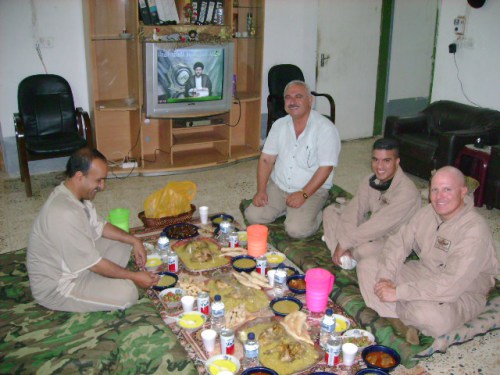
dinner-w-bg-sabah1Me with Iraqi General Sabah in his Quarters in Ramadi 2007

I too pray for that, especially after my tour in Al Anbar five years after I encountered that Iraqi Merchant Captain.  Maybe someday we will. I thought of him almost every day that I was in Iraq. I only hope that he and his family have survived the war, the continuing violence in Iraq and are doing well. There is hardly a day that goes by that I do not think of this man or the Iraqis that I had the honor of serving alongside in Al Anbar in 2007 and 2008.

President Obama remarked in Normandy last week about the veterans of the 9-11 Generation of service members, of which I and so many others like me are part:

“And this generation — this 9/11 Generation of service members — they, too, felt something.  They answered some call; they said “I will go.”  They, too, chose to serve a cause that’s greater than self — many even after they knew they’d be sent into harm’s way.  And for more than a decade, they have endured tour after tour.”

God bless all those who fought at Normandy and give your peace to all who have served since then. Be with our troops as they serve in Afghanistan. Heal the wounds of war and bring your peace to the nations. Amen

Peace, Steve+

1 Comment

Filed under History, iraq,afghanistan, Military, News and current events, world war two in europe

Sadness on Pentecost: Remembering South Side United Methodist Church

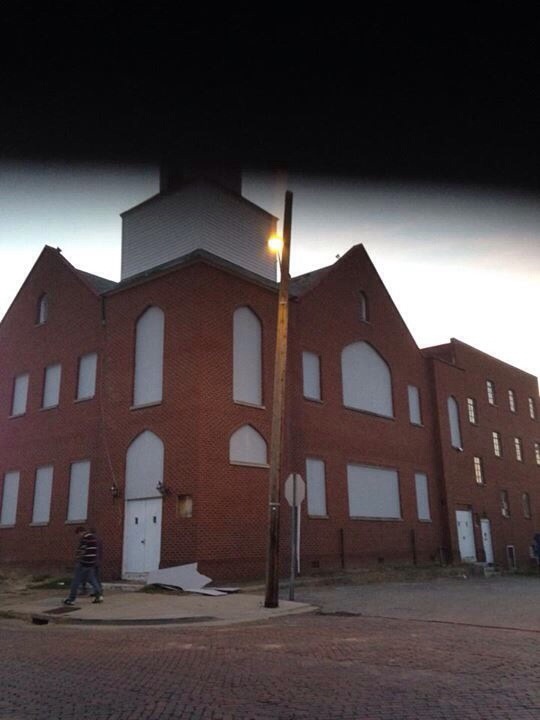
20140608-114815-42495389.jpg

It is Pentecost Sunday and I am a bit sad. Yesterday the process of demolishing the building that was South Side United Methodist Church in Huntington West Virginia began. The building has been boarded up since 2008 when the congregation merged with two others and became Community of Grace UMC. Not that there was anything wrong in that move, as South Side was no longer sustainable as an independent congregation. Thankfully the new congregation is doing well, and many of the former members of South Side are vital members of it, including my cousin Paula who serves as the music director. She has carried on South Side’s wonderful music tradition with the new congregation.

That being said for me, seeing the pictures of the building in its final days brought a sense of sadness. It was in a sense a part of my and my family’s spiritual heritage for close to 80 years. My grandparents on both sides of the family were members there dating back to the 1930s, my parents were married there and my uncle Charles who went on to become a Methodist minister had much of his spiritual formation there. My grandparents funeral services were all conducted there by Pastor Mike Chapman in the 1990s and 2001.

I was baptized there in 1960 when my parents took leave and traveled home to have that done. I got my first Bibles there, a children’s KJV and then my first adult bible, a Revised Standard Version which had a section in the back that traced the history of the ancient empires that existed during the time of ancient Israel and the early Church. When I returned to West Virginia in 1995 South Side, though not of my denomination, or my wife Judy became a center of our life.

We have so many memories attached to that building, which in its heyday was the home of a thriving congregation, and boasted one of the most beautiful sanctuaries in the city. The stained glass windows were amazing and thankfully I understand that they were saved. The sad thing is that so few modern church buildings provide so little in their aesthetics and design to inspire us, they are utilitarian and devoid of the touches that help draw people into the mystery that is God and faith. Those windows always gave me a sense of wonder as a child and as an adult, they provided comfort and inspiration. I am somewhat sad that so many people will be deprived of this sense of wonder as church becomes ever more detached from art and beauty.

However the church was a victim of demographics. The Fairfield area it was in went down and much of the area became business or hospital oriented, and the residential neighborhood became poor and crime ridden. As the economy of the city shrank as heavy industry was outsourced, many people who went there moved to the suburbs or had to relocate completely to find work. In a sense the loss of South Side is synonymous with the decline of the city.

So anyway, that is what I am feeling today. At least I am getting the chance to go to a ball game this afternoon with our. Norfolk Tides booster club, the Tidewatchers, to see the Baltimore Orioles take on the Oakland Athletics. I love both teams so it should be good.

Peace and blessings,

Padre Steve +

20140608-121218-43938739.jpg

2 Comments

Filed under christian life, Loose thoughts and musings

Gettysburg Day Two: The Complex Character of Gouverneur Warren and Little Round Top

gkwarren

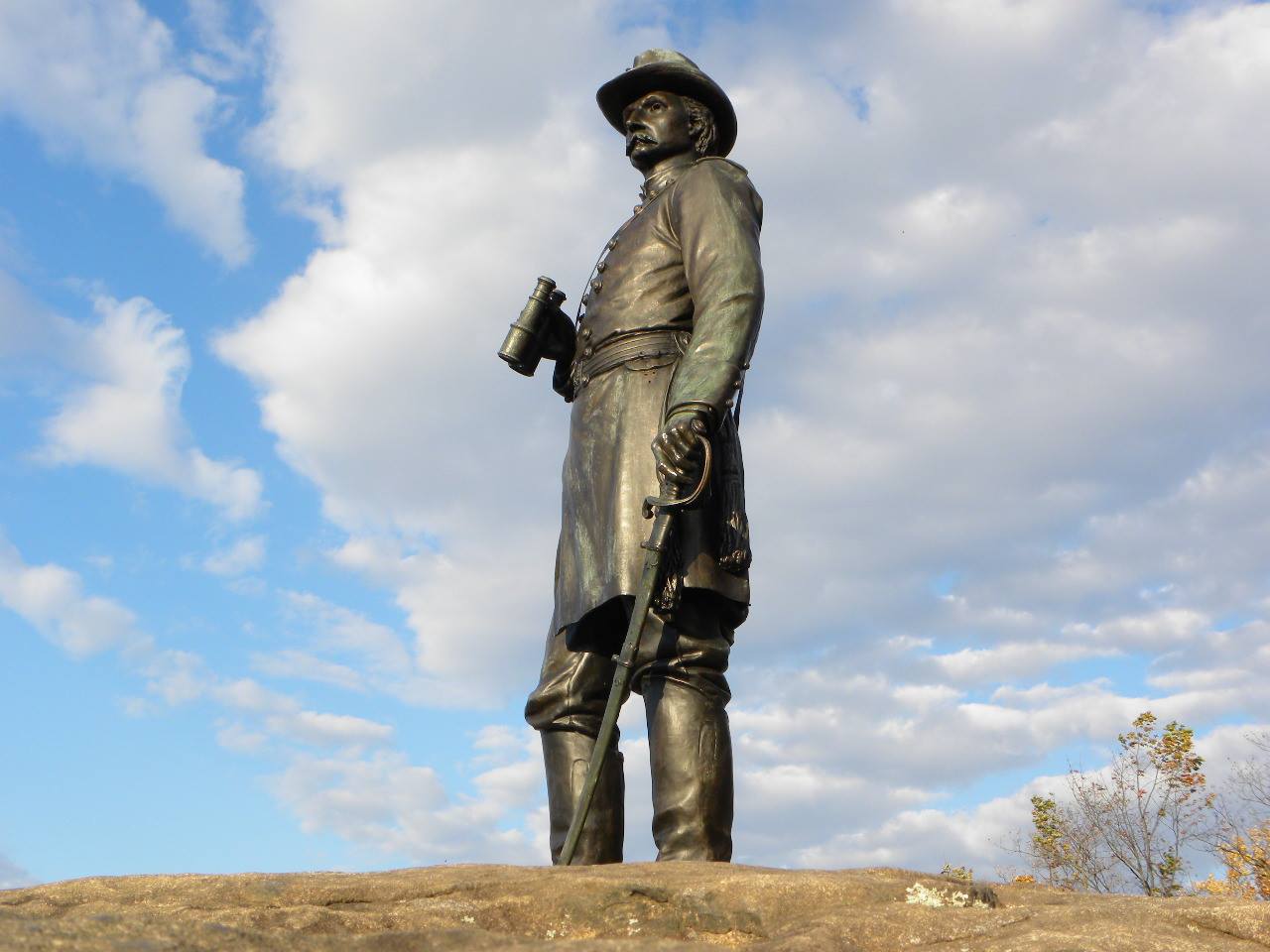
Brigadier General Gouverneur Warren

Throughout this study we have been looking at how leaders at various levels in conduct of campaigns as well as battles make decisions. Likewise we examine the lives and character of those leaders as it applies to their actions at critical points of a battle. In this chapter we will examine three officers whose lives, character and actions at Gettysburg, specifically at Little Round Top exemplify two of the Chairman of the Joint Chiefs of Staff Desired Leader Attributes, “to anticipate and adapt to surprise and uncertainty” and the principle of Mission Command, to “operate on intent through trust, empowerment and understanding.” It is from those perspectives that we will look at this part of the battle, but we would be amiss if we did not address the nearly mythical status to which this action has risen.

The actions of three men at the Battle of Little Round Top; Brigadier General Gouverneur Warren, the Chief Engineer of the Army of the Potomac, Colonel Strong Vincent, commanding Third Brigade, First Division, V Corps and Colonel Joshua Lawrence Chamberlain, commanding the 20th Maine Infantry Regiment of Vincent’s brigade are very important to the outcome of the battle, but also for what they teach us about leadership and the profession of arms. This chapter focuses on Warren, in particular with his work with the Commander of the Army of the Potomac, George Meade and his actions to secure Little Round Top on July 2nd 1863, the next will deal with Chamberlain and Vincent.

The battle at Little Round Top is an iconic part of American History and in particular for the Army, a key element of how leadership has been studied. It has achieved nearly mythical status due to the actions of Colonel Joshua Chamberlain which have been told many times in history, fiction and in film, particularly Michael Shaara’s classic historical novel The Killer Angels and its film adaptation Gettysburg. While these accounts are certainly inspiring and allow us to experience the emotion and near spiritual quality of what Chamberlain writes, there is much more to learn.

That near spiritual quality and mythic status that we accord Gettysburg is important, for in large part it is why we come to the battlefield, and why we study. Chamberlain said it well many years after Gettysburg at the dedication of the Maine Monuments:

“In great deeds, something abides. On great fields, something stays. Forms change and pass; bodies disappear; but spirits linger, to consecrate ground for the vision-place of souls… generations that know us not and that we know not of, heart-drawn to see where and by whom great things were suffered and done for them, shall come to this deathless field, to ponder and dream; and lo! the shadow of a mighty presence shall wrap them in its bosom, and the power of the vision pass into their souls.” [1]

So as we endeavor to look at the actions of these leaders on that fateful day it is important to recognize that we cannot totally separate those actions that helped decide the battle from the mythos that surrounds the story. [2] Likewise, it important to acknowledge that we cannot separate their character and the totality of military leaders lives from their actions on a particular battlefield. Unlike Chamberlain Warren does not engender myth, and that is why he is often overlooked by many casual students and observers of the Battle of Gettysburg.

For the purposes of this study it is important to note that Warren was not a commander during this action, he was, like most senior officers today, a staff officer. Many times students of military history and theory are inclined to dismiss the contributions of staff officers because they do not have the overall responsibility of a battle, or the glamour of the limelight of the commanders that they serve under. However, for military professionals, especially those serving on senior staffs who prepare campaign plans, contingency plans and crisis plans the study of officers like Warren is essential.

The Federal Army at Gettysburg, like its Confederate opponent had a wide variety of officers serving in its ranks. Many of its senior officers were graduates of West Point. Many had served together in Mexico and in the various campaigns against Native American tribes. Those who stayed in the Army during the long “peace” between the Mexican War and the outbreak of the Civil War endured the monotony, boredom and often miserable conditions of isolated army posts, long family separations, as well as low pay, slow promotion and often low social status.[3] In light of such conditions, many resigned their commissions to undertake various professional, business or academic pursuits; in fact Samuel Huntington noted that in the years before the Civil War that “West Point produced more railroad presidents than generals.” [4] However, on the outbreak of the war returned to service whether in the service of the Union, or the Confederate States.

When the war began the Army underwent a massive expansion, which it met through and the call of up militia and raising new units from the various states. In the expansion many officers were appointed who had no prior military service, or if they did it was performed years or even decades before the war. Some of these men were simply patriots who rallied to the flag, others due to a sense of righteousness about their cause, while others were political opportunists or appointees. In the north this was a particular problem as “professional officers were pushed aside and passed over in the Union, the higher commissions going, in the first stages of the war at least to officers called back into service or directly appointed from civilian life, many of them “political” appointees.” [5]

At times the lack of experience, training and sometimes the poor character of these men was tragic. However, many of these men performed as well or better than some of their regular army counterparts at various levels of command. At the same time a good number of Regular Army officers were allowed to assist states in the formation and training of these new units, one of whom was Gouverneur Warren. Gettysburg would provide opportunity for the best and worst of all of these types of officers to succeed or fail. In this chapter we will look at one of the regular officers and two of the volunteer whose lives intersected on July 2nd 1863.

Brigadier General Gouverneur Warren was typical of the many professional officers of the old army. An 1850 graduate of West Point, Warren was a bright student who had absorbed the teachings of his professor, Dennis Hart Mahan as the core of his own military thought, both in his senior year in college and through reinforcement as a faculty member. [6] Warren was commissioned as a Brevet Second Lieutenant and because of his high standing in his class was assigned to Corps of Topographical Engineers. He spent his first seven years in a number of assignments which took him throughout much of the country.

Warren’s work involved exploring and mapping for various enterprises including the project to help tame the Mississippi River, and the exploration of the Great Plains and Black Hills where he developed a sympathy for the various Sioux tribes he encountered noting on completion of his mission in 1858, writing that He had never heard a Sioux chief express an opinion in regard to what was due them in which I do not concur and that many of them view the extinction of their race as an inevitable result of the operation of present causes, and do so with all the feelings of despair with which we should contemplate the extinction of our nationality. [7] Following his years in the west he returned as faculty to West Point where he as an Assistant Professor, shared mathematics instructional duties with Oliver O. Howard and resumed his relationship with his former professor Mahan. [8]

On the outbreak of war Warren was granted leave from his duties at West Point to serve as Lieutenant Colonel of Volunteers in the 5th New York Infantry Regiment, also known as Duryee’s Zouaves. Where Duryee was appointed as a Brigadier General, Warren became its Colonel, serving with it during the Peninsula campaign where he was eventually given command of a provisional brigade and promoted to Brigadier General, serving as a Brigade Commander in at Second Manassas, Antietam and Fredericksburg.

At Chancellorsville he was pulled from his brigade duties by Hooker who employed him with good effect to assist his engineering staff, first with mapping and then building the fortifications that stopped the ferocious Confederate storm on the second day of battle. [9] In less than 48 hours Warren’s troops threw up five miles of the most formidable entrenchments yet constructed under battlefield conditions. [10] Edward Alexander, Longstreet’s artillery officer noted that when the Confederates came upon the fortifications after Hooker’s withdraw that “they were amazed at the strength and completeness of the enemys fortifications. [11] Following the battle Warren was appointed as Chief Engineer of the Army of the Potomac on May 12th 1863 by Hooker. When Hooker was relieved of command and was replaced by Meade on June 28th 1863, he was kept in that position by his fellow engineer Meade rather than being promoted to a division or being assigned as Meade’s Chief of Staff. As this turned out it was a wise choice.

Warren along with Major General Winfield Scott Hancock arrived at Cemetery Hill on the night of July 1st. As Meade organized his defenses he not only depended on his advice about the ground, but “consulted him constantly at headquarters or sent him off on matters of highest importance.” [12] Meade respected Warren and had offered Warren the chance to serve as his Chief of Staff, a position that Warren, like Seth Williams, the Adjutant General declined that offer indicating that he had too much work in their departments to take on the burdens of a new job. [13] Lee appreciated Warren’s calm, absorbed, and earnest manner, his professional skill and sound judgment.[14] These qualities would serve both men and the army well on July 2nd.

When Sickles moved III Corps forward during the afternoon without permission moved his Corps forming a vulnerable salient at the Peach Orchard leaving the southern flank in the air, Meade was aghast. Warren who from his reconnaissance of the previous day and the morning knew the position better than anyone recognized that something was badly awry on Sickles Third Corps front matters there were not all straight. [15] He had sent an officer to discover to investigate Sickles’ front and that officer reported that the section of Cemetery Ridge assigned to III Corps was not occupied. [16]

Meade and Warren discussed the situation and realized that III Corps “could hardly be said to be in position” [17] and knowing VI Corps was now close at hand order V Corps, at the time his only reserve into the position vacated by Sickles. They went forward and seeing the empty spaces Warren told Meade “here is where our line should be” to which Meade replied: “It’s too late now.” [18] Warren, whose familiarity with the whole of the battlefield gave him concern about Sickles’ corps dispositions suggest that Meade send him to the Federal left, “to examine the condition of affairs.” [19]

Meade concurred with his Engineer and in dispatching him he also gave Warren the authority to take charge as needed saying “I wish you would ride over there and if anything serious is going on, attend to it.” [20] Again Meade’s choice of Warren for the task demonstrated the trust that is essential in command. The two officers worked together seamlessly and as Coddington described their relationship that day: “Meade chose him to act as his alter ego in crucial moments of the battle, and Warren rendered services for which Meade and the country were to be eternally grateful.” [21] Warren would not see Meade again “until the attack had spent its force.” [22]

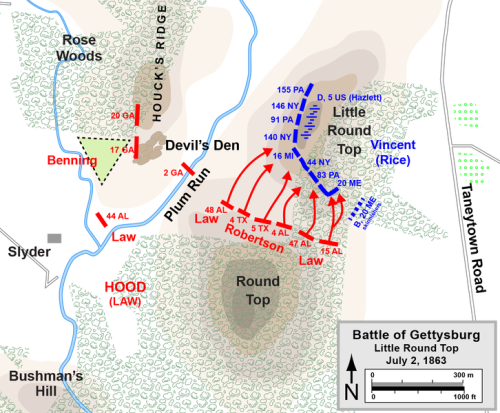
little round top map

Hunt noted that “The duty could not have been in better hands.” [23] When Warren arrived on Little Round Top he found it unoccupied save for a few signal corps soldiers. Warren immediately recognized the tactical value of Little Round Top and noted that it was “the key of the whole position.” [24] Warren saw that the Confederates were massing not more than a mile away and that there were no troops on the hill to stop them. He believed that an area “of woods on the near side of the Emmitsburg Road as “an excellent place for the enemy to form out of sight” [25] which was exactly what Major General John Bell Hood’s division was doing, as Henry Hunt noted “The enemy at the time lay concealed, awaiting signal for the assault…” [26] To test his suspicions Warren sent a messenger to Captain James Smith’s 4th New York artillery battery on Devil’s Den to fire a single shot into the woods. Warren described the situation:

“As the shot went whistling through the air the sound of it reached the enemy’s troops and caused every one to look in the direction of it. This motion revealed to me the glistening gun-barrels and bayonets of the enemy’s line of battle, already formed and far outflanking the position of any of our troops; so that the line of his advance from the right to Little Round Top was unopposed. I have been particular in telling this, as the discovery was intensely thrilling to my feelings, and almost appalling.” [27]

warren lrt

Upon confirming his fears Warren resorted to ruse and action. He order the “signalmen to keep up their wigwag activity, simply as a pretense of alertness, whether they had any real signals to transmit or not…” [28] He also sent messengers to Meade, Sickles and Sykes, the commander of V Corps asking Meade to “Send at least a division to me” [29] instructing the messenger, Lieutenant Randall Mackenzie to tell Meade “that we would at once have to occupy that place very strongly.” [30] Sickles refused on account of how badly stretched his lines were, however George Sykes of V Corps responded sending Captain William Jay to find Barnes commander of his 1st Division. The messenger could not find Barnes, but instead came across the commander of the division’s 3rd Brigade Colonel Strong Vincent. Vincent knew that Barnes was self-medicating his “pre-battle anxieties out of a black commissary quart bottle” and was already “hollow from skull to boots” and demanded “What are your orders? Give me your orders.” [31] Upon learning that Sykes wanted a brigade to proceed to Little Round Top Vincent responded immediately to take the initiative and ordered his four regiments up Little Round Top without waiting for permission. Vincent told Sykes messenger “I will take the responsibility myself of taking my brigade there.” [32]

Meade’s choice of Warren was demonstrated in how Warren continued to act with alacrity and decisiveness throughout the afternoon. “As the Union line began to crumble on Little Round Top, Warren, vested with the authority of Meade’s chief representative, emerged as the right man at the right place at the right time.” [33] Warren did not stop with sending messengers, but seeing the danger building he noted that the northwest face of the hill was still unoccupied and open to attack. Warren forgot “all about a general’s dignity” he “sprinted down the east slope of the hill like a rabbit.” [34] There he found Brigadier General Stephen Weed’s brigade which he had previously commanded. Since he did not see Weed, but he found Colonel Patrick O’Rorke of the 140th New York and ordered him to follow him up the hill, saying “Paddy…give me a regiment.” [35] When O’Rorke said that Weed expected him to be following him Warren took the responsibility telling O’Rorke “Bring them up on the double quick, and don’t stop for aligning. I’ll take responsibility.” [36] O’Rorke followed with his gallant regiment with the rest of the brigade under Weed following. Warren’s actions were fortuitous as the 140th New York and Lieutenant Charles Hazlett’s battery of the 5th Artillery arrived at the crest just in time to repulse the advancing Confederates. In the fight the brigade would take fearful casualties and by the end of the battle, Weed, O’Rorke and Hazlett would all be dead, but with Vincent’s brigade they held on and saved the Union line.[37]

Warren continued to urge on the Federal troops despite being wounded, in the words of a reporter who observed him in “a most gallant and heroic manner, riding with utmost confidence over fields swept by the enemy’s fire, seemingly everywhere present, directing, aiding, and cheering the troops.” [38] Once he was assured that Little Round Top was secure he proceeded to rejoin Meade “near the center of the battlefield where another crisis was at hand.” [39]

Warren distinguished as a Corps commander until he ran afoul of the fiery General Phillip Sheridan in 1865. Sheridan relieved Warren of command of V Corps following the Battle of Five Forks where Sheridan believed that Warren’s Corps had moved too slowly in the attack. The relief was brutal and ruined his career. Warren was a professional soldier and took the relief hard. Unfortunately as a topographic engineer he was an outsider to many in the army and not fully appreciated by Grant or Sheridan who in their haste at Five Forks destroyed his career.

After the war Warren resigned his commission as a Major General of Volunteers and returned to his permanent rank as a Major of Engineers. He served another 17 years doing engineeringduty and was promoted to Lieutenant Colonel in 1879, but his past always haunted him, even his sleep. He wrote his wife while supervising a major bridge construction project over the Mississippi River in 1867: “I wish I did not dream so much. They make me sometimes to dread to go to sleep. Scenes from the war, are so constantly recalled, with bitter feelings I wish never to experience again. Lies, vanity, treachery, and carnage.” [40]

He sought a Court of Inquiry to exonerate himself but this was refused until President Grant left office. The Court eventually exonerated him but he died three months before the results were published. Embittered he directed that he be buried in civilian clothes and without military honors. His funeral was attended by his friends Winfield Scott Hancock and Samuel Crawford, his oldest army friend and mentor Andrew Humphreys was called away before the service due to the sudden illness of his son. [41] The Washington Post noted that Warren “had gone “where neither the malevolence nor the justice of this world can reach him. He had enough of the former; and denial of the latter not only embittered his closing months of his life, but undoubtedly hastened his end.” [42]

Warren’s actions on that hot and muggy July 2nd exemplified the leadership qualities that we as an institution strive for, and from a leadership perspective demonstrate how the Chairman’s Desired Leader Attributes and the principles of Mission Command: “the ability to operate on intent through trust, empowerment and understanding” should work in a relationship between seniors and subordinates. But his life also serves to remind us of the ethics of our profession. Loomis Langdon, who served as the official recorder for the board of inquiry wrote of Warren:

“I had never met General Warren till he came before his Court of Inquiry…I learned to value his good opinion – and while I admired him for his great patience, his wonderful energy, habit of concentration, his vast learning and untiring application, I loved him for his tenderness, gentleness and charity, even to those whom he believed had combined to do him a cruel wrong; and I admired him for his nobleness of character and his courage and unselfish patriotism.” [43]

It is easy for military professionals to become totally focused in our profession, especially the details of planning and process to forget the humanity of those that we serve alongside. Warren is one of those complex figures who are not easy to categorize. His biographer Jordan wrote that:

“Warren was a man with fine intellect, widely read, and of keen sensibilities. He was also an excellent engineer, mapmaker, and scientist. He was a soldier who cared much for the safety and welfare of the men under him, and he was sickened by the appalling carnage of the war in which he took such a prominent part. He was arrogant and proud, and he hesitated hardly at all in putting down those of his colleagues he regarded as inferiors. His mind’s eye took in much beyond what was his immediate concern, but this gift worked against him in the hierarchical realm of military life. Warren was prone to long sieges of depression, and he himself agreed that others found him morose and unsmiling…” [44]

Warren

In reading military history is far too easy to isolate and analyze a commander’s actions in battle and ignore the rest of their lives. I think that this does a great disservice to the men themselves. In time of war gives up something of themselves and sometimes even heroes like Gouverneur Warren are destroyed by the actions of institutions that they serve.

Notes

[1] Chamberlain, Joshua Lawrence. Chamberlain’s Address at the dedication of the Maine Monuments at Gettysburg, October 3rd 1888 retrieved from http://www.joshualawrencechamberlain.com/maineatgettysburg.php 4 June 2014

[2] Note: My use of the terms myth, mythology or mythos should not be considered negative, and the use of the terms does not mean that there is not some degree of fact or truth in them. The definitions of the term mythos are important to understanding my use of the term here, first it denotes a traditional or recurrent narrative theme or plot structure of a story, and secondly a set of beliefs or assumptions about something. (See the Oxford American Dictionary.)

[3] Taylor, John M. Duty Faithfully Performed: Robert E Lee and His CriticsBrassey’s, Dulles VA 1999 pp.37-38.

[4] Huntington, Samuel P. The Soldier and the State: The Theory and Politics of Civil-Military Relations The Belknap Press of Harvard University Press, Cambridge MA and London 1957 p.199

[5] Ibid. Huntington. The Soldier and the State: The Theory and Politics of Civil-Military Relations p.213

[6] Jordan, David M. Happiness is Not My Companion: The Life of G.K. Warren Indiana University Press, Bloomington Indiana 2001 p.6

[7] Ibid. Jordan Happiness is Not My Companion: The Life of G.K. Warren p.30

[8] Ibid. Jordan Happiness is Not My Companion: The Life of G.K. Warren p.33

[9] Sears, Stephen W. ChancellorsvilleHoughton Mifflin Co. Boston and New York 1996 p.372

[10] Hagerman, Edward. The American Civil War and the Origins of Modern Warfare. Midland Book Editions, Indiana University Press. Bloomington IN. 1992 p.91

[11] Alexander, Edward Porter Military Memoirs of a Confederate: A Critical Narrative 1907 republished 2013 by Pickle Partners Publishing, Amazon Kindle Edition location 7007

[12] Coddington, Edwin B. The Gettysburg Campaign: A Study in Command, A Touchstone Book, Simon and Schuster New York, 1968 p.332

[13] Sears, Stephen W. Gettysburg. Houghton Mifflin Co. Boston and New York 2003 pp.129-130

[14] Ibid. Coddington, The Gettysburg Campaign: A Study in Command, p.332

[15] Ibid. Sears Gettysburg p.262

[16] Tredeau, Noah Andre. Gettysburg: A Testing of Courage, Harper Collins Publishers, New York 2002 p.319

[17] Ibid. Tredeau. Gettysburg: A Testing of Courage, p.319

[18] Ibid. Tredeau. Gettysburg: A Testing of Courage, p.320

[19] Ibid. Jordan Happiness is Not My Companion: The Life of G.K. Warren p.90

[20] Ibid. Tredeau. Gettysburg: A Testing of Courage, p.320

[21] Ibid. Coddington, The Gettysburg Campaign: A Study in Command, p.388

[22] Guelzo, Allen C. Gettysburg: The Last Invasion Vintage Books a Division of Random House, New York 2013 p.260

[23] Hunt, Henry. The Second Day at Gettysburg in Battles and Leaders of the Civil War Volume III, The Tide Shifts. Edited by Robert Underwood Johnson and Clarence Clough Buel Castle, Secaucus NJ p. 307

[24] Ibid. Jordan Happiness is Not My Companion: The Life of G.K. Warren p.92

[25] Ibid. Jordan Happiness is Not My Companion: The Life of G.K. Warren p.92

[26] Ibid. Hunt The Second Day at Gettysburg in Battles and Leaders of the Civil War Volume III, The Tide Shifts. p. 307

[27] Pfanz, Harry F. Gettysburg: The Second Day. University of North Carolina Press, Chapel Hill 1987 p.206

[28] Foote, Shelby, The Civil War, A Narrative. Volume Two Fredericksburg to Meridian Random House, New York 1963 p.503

[29] Ibid. Jordan Happiness is Not My Companion: The Life of G.K. Warren p.92

[30] Ibid. Guelzo Gettysburg: The Last Invasion Vintage p.261

[31] Ibid. Guelzo Gettysburg: The Last Invasion Vintage p.262

[32] Longacre, Edward Joshua Chamberlain: The Soldier and the Man Combined Publishing Conshohocken PA 1999 p.127

[33] Ibid. Coddington, The Gettysburg Campaign: A Study in Command, p.395

[34] Swanberg, W.A. Sickles the IncredibleStan Clark Military Books, Gettysburg PA 1957 p.214

[35] Ibid. Jordan Happiness is Not My Companion: The Life of G.K. Warren p.93

[36] Ibid. Foote The Civil War, A Narrative. Volume Two Fredericksburg to Meridian p.504

[37] Ibid. Jordan Happiness is Not My Companion: The Life of G.K. Warren pp. 93-94

[38] Ibid. Coddington, The Gettysburg Campaign: A Study in Command, p.388

[39] Ibid. Coddington, The Gettysburg Campaign: A Study in Command, p.396

[40] Ibid. Jordan Happiness is Not My Companion: The Life of G.K. Warren p.249

[41] Ibid. Jordan Happiness is Not My Companion: The Life of G.K. Warren p.309

[42] Ibid. Jordan Happiness is Not My Companion: The Life of G.K. Warren p.308

[43] Ibid. Jordan Happiness is Not My Companion: The Life of G.K. Warren p.309

[44] Ibid. Jordan Happiness is Not My Companion: The Life of G.K. Warren preface pp.x-xi

3 Comments

Filed under civil war, History, leadership, Military

Ever Wished That Calvin and Hobbes Creator Bill Watterson Would Return to the Comics Page? Well, He Just Did.

Friends of Padre Steve’s World,
I seldom reblog another person’s post but this is truly newsworthy. Stephan Pastis, the author of Pearls Before Swine has actually encountered the legendary Bigfoot of the cartoon world, the reclusive retired creator of Calvin and Hobbes, Bill Watterson. Even better the collaborated on three strips this week. I should have realized it when there was an attack from Mars in one strip, but Pastis tells how this came about in his blog. Congratulations to Stephan on a job well done!
Peace
Padre Steve+

Leave a comment

Filed under Loose thoughts and musings

“They fight to liberate” Remembering the Men of D-Day at 70 Years

It is hard to believe now as we look at the serene beaches of Normandy that seventy years ago they were places of desperate combat in which hundreds of thousands of Allied and German soldiers, sailors, airmen and marine-commandos battled in a contest that helped free Europe of Nazi tyranny and changed the course of history.

Then they were young, most in their twenties, but some in their teens or thirties as well as a smattering of senior leaders or old career soldiers in their 40s and 50s. When I first began to read about and study the battle a good number were still alive, most about the same age as I am now. Today, their ranks thinning they are passing into history. When the 80th anniversary is celebrated, the few that remain will all be about 100 years old, and even now, the youngest of these men are nearing 90 years old.

On June 6th 1944 the Allies invaded German controlled France on the beaches of Normandy. By that evening the Allied Expeditionary Force had landed six infantry divisions on five invasion beaches and the bulk of three airborne divisions on the approaches to those beaches. Near 175,000 Allied Soldiers, Sailors, Airmen and Marine Commandos were involved in the attack and nearly 10,000 would listed be as killed, wounded or missing by the end of the day, over half on Omaha Beach.

General Dwight D. Eisenhower sent them forward with this message:

You are about to embark upon the Great Crusade, toward which we have striven these many months. The eyes of the world are upon you. The hopes and prayers of liberty-loving people everywhere march with you.  In company with our brave Allies and brothers-in-arms on other Fronts, you will bring about the destruction of the German war machine, the elimination of Nazi tyranny over the oppressed peoples of Europe, and security for ourselves in a free world….

d-day-order

The names of the invasion beaches and the units involved have been immortalized in history, in film and literature. The American 101st Airborne “Screaming Eagles,” the “All American” 82nd Airborne Division and British 6th Airborne Division “Red Devils” made the largest night airborne drop and battled Germans, the elements as the struggled to reorganize on the heels of widely scattered drops.  The Americans battled the German 91st Airlanding Division and the crack 6th Parachute Regiment, while the British faced men of the 716th “Static” Infantry Division and battle groups of the nearby 21st Panzer Division.

On Sword Beach men of the 3rd British Division and 27th Armoured Brigade teamed with the 1st Special Services Brigade composed of Army and Royal Marine Commandos made the assault, to their right on Juno Beach the Canadians of the 3rd Canadian Division, 2nd Canadian Armoured Brigade and two Royal Marine Commandos (battalions) while to their right on the middle invasion beach, God Beach the British 50th (Northumbrian) Infantry Division and 8th Armoured Brigade went ashore with elements of the British 79th Armoured Division and the 47th Royal Marine Commando.

british commandos d-day

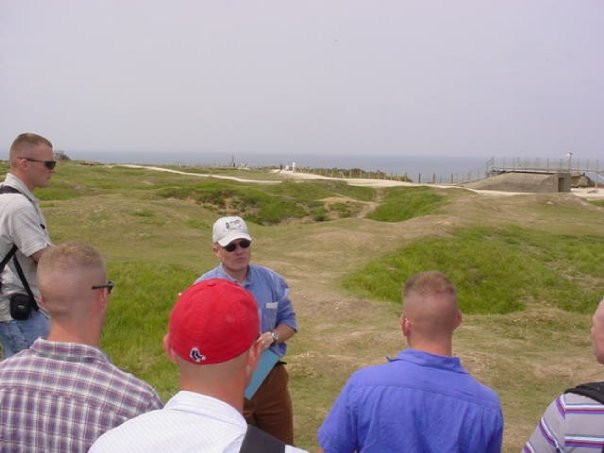
To the right of the British landed the American V Corps on Omaha Beach, the 1st Infantry Division, the famous “Big Red One” and the 29th “Blue and Gray” Infantry Division of the Virginia and Maryland National Guard. They would fight the most seasoned Germans on the beaches that day, the hardened combat veterans of the 352nd Infantry Division.  The battle of Omaha was nearly a disaster and a one point General Omar Bradley contemplated withdraw from the beach.  The American troops, including the men of the 2nd Ranger Battalion who scaled the cliffs of Point du Hoc to protect the beach from enfilade fire from German artillery mounted on the point, yet the German guns had not yet been emplaced and the Rangers fought a bitter battle against strong German resistance on that rugged mount.  On the far right the American VII Corps led by the 4th Infantry Division assaulted Utah Beach; fortunately the Americans landed away from their planned point of assault and faced little resistance. Had they landed in the correct location they might fared as their neighbors on Omaha Beach.

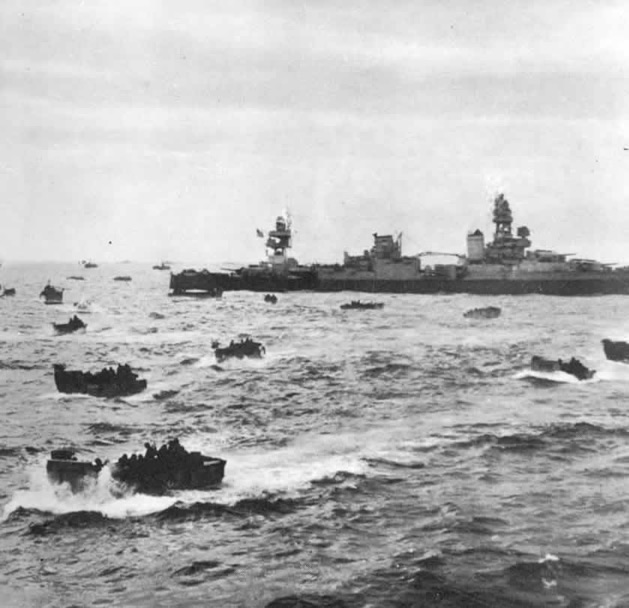
Offshore the venerable battleships HMS Warspite and HMS Ramillies and the USS Texas, USS Nevada and USS Arkansas provided fire support to the beaches aided by the Free Naval Forces of France, the Netherlands, Poland and Norway.  The French forces included the cruisers Montcalm and Georges Leygues.

Names such has St Mere-Eglise and Pegasus Bridge, the Merville Battery, Point du Hoc and Bloody Omaha remain etched in the minds of the dwindling number of surviving veterans as well as historians, military personnel and others that take the time to remember the sacrifices of these men.

imagesCAVKIRWX

The Men came from all parts of the United States and the British Commonwealth. Additionally personnel from France and other countries occupied by Nazi Germany were represented in the land, air and naval forces involved.  For the French, humiliated by their defeat in 1940 and divided by the Vichy and Free French divide were determined, despite their small numbers to liberate their homeland.

imagesCAD1R273

They were opposed by four German Divisions, a Luftwaffe Fallschirmjaeger regiment and elements of the 21st Panzer Division.  The Germans with nothing in the way of air support and no significant naval forces were on their own. Hitler had refused Rommel’s request to deploy Panzer divisions near the beaches and was not awakened when word came of the invasion.  German soldiers fought with considerable valor and would do so throughout the Normandy campaign, even if they fought for a regime that was evil at its core.

american cemetery

As the battle continued President Franklin Delano Roosevelt addressed the nation and asked all Americans to join him in this prayer:

My Fellow Americans:

Last night, when I spoke with you about the fall of Rome, I knew at that moment that troops of the United States and our Allies were crossing the Channel in another and greater operation. It has come to pass with success thus far.

And so, in this poignant hour, I ask you to join with me in prayer:

Almighty God: Our sons, pride of our nation, this day have set upon a mighty endeavor, a struggle to preserve our Republic, our religion, and our civilization, and to set free a suffering humanity.

Lead them straight and true; give strength to their arms, stoutness to their hearts, steadfastness in their faith.

They will need Thy blessings. Their road will be long and hard. For the enemy is strong. He may hurl back our forces. Success may not come with rushing speed, but we shall return again and again; and we know that by Thy grace, and by the righteousness of our cause, our sons will triumph.

They will be sore tried, by night and by day, without rest — until the victory is won. The darkness will be rent by noise and flame. Men’s souls will be shaken with the violences of war.

For these men are lately drawn from the ways of peace. They fight not for the lust of conquest. They fight to end conquest. They fight to liberate. They fight to let justice arise, and tolerance and goodwill among all Thy people. They yearn but for the end of battle, for their return to the haven of home.

Some will never return. Embrace these, Father, and receive them, Thy heroic servants, into Thy kingdom.

And for us at home — fathers, mothers, children, wives, sisters, and brothers of brave men overseas, whose thoughts and prayers are ever with them — help us, Almighty God, to rededicate ourselves in renewed faith in Thee in this hour of great sacrifice.

Many people have urged that I call the nation into a single day of special prayer. But because the road is long and the desire is great, I ask that our people devote themselves in a continuance of prayer. As we rise to each new day, and again when each day is spent, let words of prayer be on our lips, invoking Thy help to our efforts.

Give us strength, too — strength in our daily tasks, to redouble the contributions we make in the physical and the material support of our armed forces.

And let our hearts be stout, to wait out the long travail, to bear sorrows that may come, to impart our courage unto our sons wheresoever they may be.

And, O Lord, give us faith. Give us faith in Thee; faith in our sons; faith in each other; faith in our united crusade. Let not the keenness of our spirit ever be dulled. Let not the impacts of temporary events, of temporal matters of but fleeting moment — let not these deter us in our unconquerable purpose.

With Thy blessing, we shall prevail over the unholy forces of our enemy. Help us to conquer the apostles of greed and racial arrogances. Lead us to the saving of our country, and with our sister nations into a world unity that will spell a sure peace — a peace invulnerable to the schemings of unworthy men. And a peace that will let all of men live in freedom, reaping the just rewards of their honest toil.

Thy will be done, Almighty God.

imagesCA7UVUXS

Today we remember them. On the 40th anniversary of the invasion President Ronald Reagan eulogized those who fought and died for the freedom of the world:

Today, in their memory, and for all who fought here, we celebrate the triumph of democracy.  We reaffirm the unity of democratic people who fought a war and then joined with the vanquished in a firm resolve to keep the peace.

From a terrible war we learned that unity made us invincible; now, in peace, that same unity makes us secure.  We sought to bring all freedom-loving nations together in a community dedicated to the defense and preservation of our sacred values.  Our alliance, forged in the crucible of war, tempered and shaped by the realities of the post-war world, has succeeded.  In Europe, the threat has been contained, the peace has been kept.

Today, the living here assembled:  officials, veterans, area citizens, pay tribute to what was achieved here 40 years ago.  This land is secure.  We are free.  These things are worth fighting and dying for.

imagesCA580JS0

His words are powerful reminders of what was accomplished on that fateful day, June 6th 1944. I hope and pray that as we remember that day and those brave men that we will never forget.

Peace

Padre Steve+

3 Comments

Filed under History, Military, world war two in europe

Preparing for D-Day

Friends of Padre Steve’s World
Tomorrow is the 70th anniversary of Operation Overlord, the Normandy Landings, or as we know them simply as “D-Day.” In honor of the men who planned and executed that operation I am reposting this article dealing with the preparation that went into that operation. Have a wonderful evening and please don’t forget what had to happen to defeat the tyranny of Naziism.
Peace,
Padre Steve+

padresteve's avatarThe Inglorius Padre Steve's World

The planning for the Normandy invasion began in earnest after the QUADRANT conference in Quebec in August 1943 and its timetable was established at the Tehran conference where Stalin sided with the Americans on the need for an invasion of France in the spring of 1944.[i] Prior to this there had been some planning by both the British and Americans for the eventual invasion initially named ROUNDUP including a large scale raid at Dieppe in 1942 which ended in disaster but which provided needed experience in what not to do in an amphibious assault on a heavily defended beach.   Dieppe also darkened the mood of the Allies, the British in particular to the success of such operations, bringing to mind the failed Gallipoli campaign of 1915 as well as the opposed landings at Salerno and the USMC experience at Tarawa.[ii] Despite this the Americans led by General Marshall…

View original post 2,293 more words

Leave a comment

Filed under Loose thoughts and musings

The Valiant Sacrifice of the Torpedo Bombers: VT3, VT-6 and VT-8 at Midway

tbd-devastator1


Half a league half a league,
Half a league onward,
All in the valley of Death
Rode the six hundred:
‘Forward, the Light Brigade!
Charge for the guns’ he said:
Into the valley of Death
Rode the six hundred.

Alfred, Lord Tennyson: The Charge of the Light Brigade

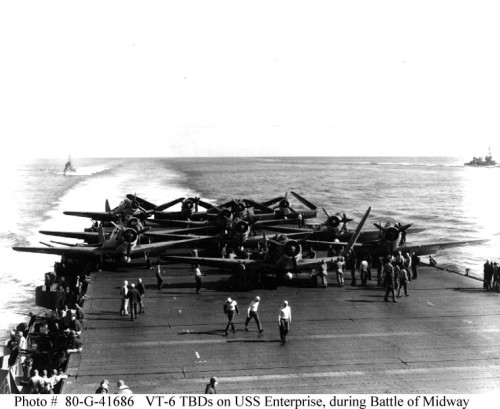
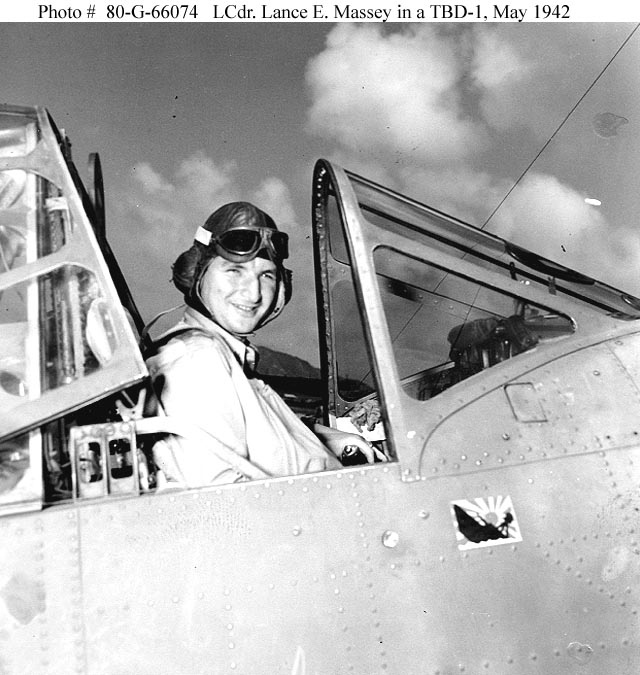
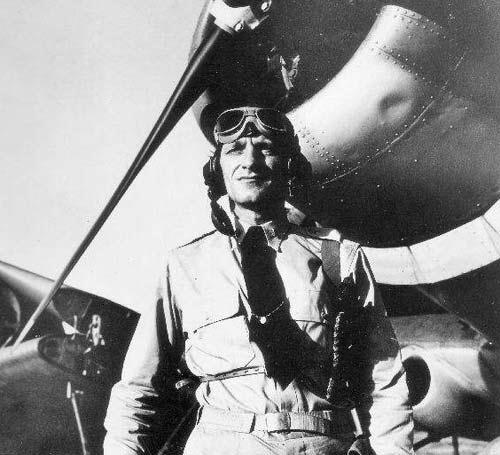
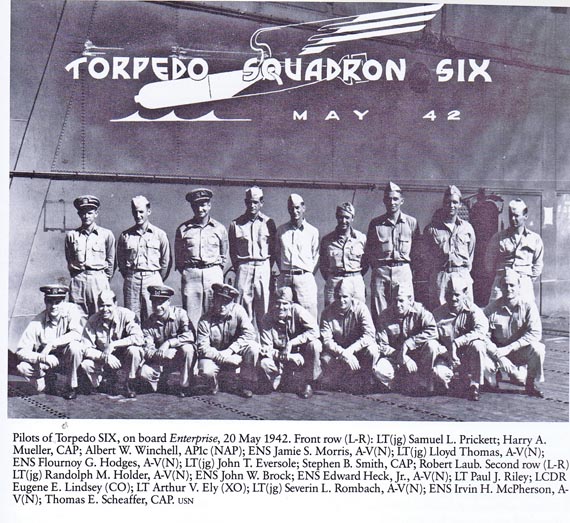
They were not six hundred and they were not mounted on horses but the Naval Aviators of Torpedo Squadrons 3, 6 and 8 and their aerial steeds 42 Douglas TBD Devastators and 6 TBF Avengers wrote a chapter of courage and sacrifice seldom equaled in the history of Naval Aviation. Commanded by veteran Naval Aviators, LCDR Lance “Lem” Massey, LCDR Eugene Lindsey and LCDR John Waldron the squadrons embarked aboard the carriers flew the obsolete TBD Devastators and the young pilots of the Midway based Torpedo 8 detachment under the command of LT Langdon Fieberling flew in the new TBF Avengers.


eneterprise-vt-6-midway1

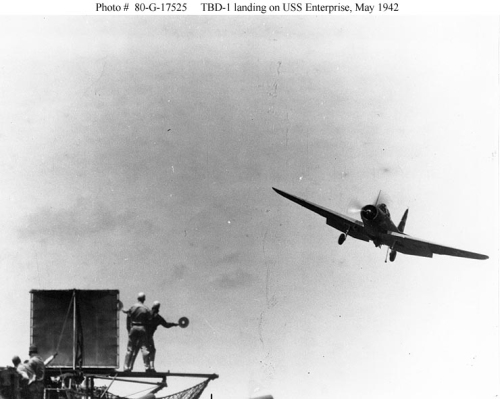
The TBD which first flew in 1935 entered service in 1937 and was possibly the most modern naval aircraft in the world when it entered service.  It was a revolutionary aircraft. It was the first monoplane widely used on carriers and was first all-metal naval aircraft.  It was the first naval aircraft with a totally enclosed cockpit, the first with hydraulic powered folding wings.  The TBD had crew of three and had a maximum speed of 206 miles an hour and carried a torpedo or up to 1500 pounds of bombs (3 x 500) or a 1000 pound bomb.

g66074


LCDR Lem Massey C.O. of Torpedo 3

129 TBDs were built and served in all pre-war torpedo bombing squadrons based aboard the Lexington, Saratoga, Ranger, Yorktown, Enterprise and Hornet with a limited number embarked aboard Wasp.  The Devastator saw extensive service prior to the war which pushed many airframes to the end of their useful service life and by 1940 only about 100 were operational by the beginning of the war, and now were for all purposes obsolete antiques.


They were still in service in 1942 as their replacement the TBF Avenger was not available for service in large enough numbers to replace them before Midway.  The TBDs performed adequately against minor opposition at Coral Sea and in strikes against the Marshalls but the squadrons embarked on Yorktown (VT3), Enterprise (VT-6) and Hornet (VT-8) were annihilated at Midway with only 6 of 41 aircraft surviving their uncoordinated attacks against the Japanese Carrier Strike Force.  They were too slow, had poor maneuverability, insufficient armor and defensive armament.

enterprise-tbd-landing1


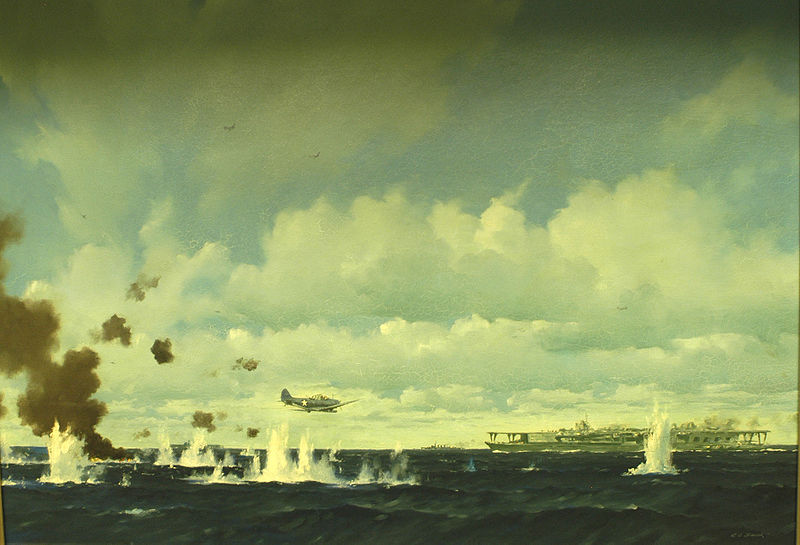
The Torpedo squadrons attacked independently of each other between 0920 and 1030 on June 4th 1942.  Lacking coordination and with inadequate escort, the lumbering aircraft were easy prey for the modern Japanese A6M Zeroes.

The Japanese Combat Air Patrol ripped into the slow, cumbersome and under armed TBD Devastators as they came in low to launch their torpedoes.  Torpedo Eight from Hornet under the command of LCDR John C Waldron pressed the attack hard but all 15 of the Devastators were shot down.  Only Ensign George Gay’s aircraft was able to launch its torpedo before being shot down and Gay would be the sole survivor of the squadron to be picked up later by a PBY Catalina patrol plane.

Page500_163_6

LCDR John Waldron C.O

Torpedo Six from the Enterprise under the command of LCDR Eugene Lindsey suffered heavy casualties losing 10 of 14 aircraft with Lindsey being one of the casualties.  The last group of Devastators to attack was Torpedo Three from the Yorktown under the command of LCDR Lem Massey losing 11 of 13 aircraft with Massey a casualty last being seen standing on the wing of his burning aircraft as it went down.

VT-6

These aircraft were also decimated and Massey killed but they had drawn the Japanese Combat Air Patrol down to the deck leaving the task force exposed to the Dive Bombers of the Enterprise and Yorktown.  The six aircraft of the Torpedo Eight detachment from Midway under the command of LT Fieberling lost 5 of their 6 aircraft while pressing their attacks.  Only Ensign Bert Earnest and his aircraft survived the battle landing in a badly damaged state on Midway.  Four U.S. Army B-26 Marauder Medium Bombers were pressed into service as torpedo bombers of which 2 were lost.  No torpedo bomber scored a hit on the Japanese Task force even those torpedoes launched at close range failed to score and it is believe that this was in large part due to the poor performance of the Mark 13 aircraft torpedoes.

yorktown-devastators1


Despite the enormous losses of the torpedo squadrons their sacrifice was not in vain. Their attacks served to confuse the Japanese command and delay the rearmament of aircraft following the Japanese strikes on Midway. They also took the Japanese Combat Air Patrol down to sea level and opened the way for American Dive Bombers to strike the Japanese with impunity fatally damaging the Akagi, Kaga and Soryu in the space of 5 minutes.

After Midway the remaining TBDs were withdrawn from active service and no example survives today. The TBF became the most effective torpedo bomber of the war.

800px-tbd_attacking_at_midway_painting-1

As we remember the brave men that fought at Midway it is imperative that we remember the brave aircrews of the torpedo squadrons that like the Light Brigade rode into the Valley of the Shadow of Death against the First Carrier Strike Force and Midway.

Peace

Padre Steve+


13 Comments

Filed under History, world war two in the pacific

Gettysburg Day One: Lee’s Vague Discretionary Orders and Lack of Control

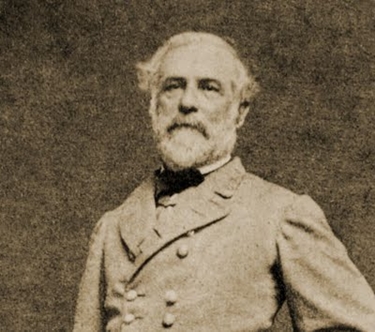
Lee1

Discretionary orders are important to the success of commanders who desire that their subordinates have the necessary freedom to exploit opportunities within the broader operational context. They are a key element of what we now define as Mission Command and thus expressed clearly in the Chairman of the Joint Chiefs of Staff Desired Leader Attributes the ability to operate on intent through trust, empowerment and understanding. In this chapter we will look at how Lee conducted war and how his decision process and communications, particularly the use of discretionary orders influenced the outcome of the battle and how important the issuance of clear orders is to a successful campaign.

To be effective such orders need to be clear and concise and they must be employed in a manner that are within the capabilities of one’s subordinate commanders to both understand them and carry them out. Thus a commander must always be ready to adjust his method when his command goes through a major turnover of personnel. After the loss of Jackson at Chancellorsville and the subsequent reorganization of the Army of Northern Virginia, Lee continued to operate as if nothing had changed, despite his own recognition that the army suffered from a want of qualified senior officers.

Robert E. Lee habitually issued discretionary orders with varying degrees of effectiveness. With Jackson, a man of ruthless battlefield instincts Lee was able to do this, even when Lee’s intent was less than clear, but even with Jackson such orders occasionally went awry as was the case during the Seven Days. Lee’s aide Walter Taylor noted that Jackson “took the suggestion of General Lee into immediate consideration, and proceeded to carry it into effect.” [1] This was not to be the case with those that followed Jackson, something that Lee failed to adjust to that would doom his army at Gettysburg.

Part of this is attributable to Lee’s distaste for administrative routine. Taylor noted how Lee’s “correspondence…was constantly a source of worry to him. He did not enjoy writing; indeed he wrote with labor, and nothing seemed to tax his amiability as the necessity for writing a lengthy official communication.” [2] But more importantly in the matter of communicating orders and following up, much of the issue came down to Lee’s near fatalistic understanding of faith and life in regard to the providence of God. For Lee victory and defeat came down to God’s will, as he wrote his wife after his ill-fated 1861 campaign in western Virginia “But the Ruler of the Universe willed otherwise and sent a storm to discontent a well laid plan and to destroy my hopes.” [3] But for Lee, the concept of “duty” became a secular manifestation of his religion.” [4]

J. F. C. Fuller attributes much of the manner in how Lee conducted battle to this sense of duty as well as belief in providence. Fuller notes that it “controlled the whole of his generalship.” [5] Lee explained his concept of command to the Prussian observer, Captain Justus Scheibert:

“You must know our circumstances, and see in battle that my leading would do more harm than good. It would be a bad thing if I could not then rely on my brigade and divisional commanders. I plan and work with all my might to bring my troops to the right place at the right time; with that I have done my duty. As soon as I order the troops forward into battle, I lay the fate of my army in the hands of God.” [6]

That firm belief in providence and the hand of God was evident in Lee’s comments to Major General Isaac Trimble as the army advanced into Pennsylvania. “We have again outmaneuvered the enemy, who even now does not know where we are or what our designs are. Our whole army will be in Pennsylvania day after tomorrow, leaving the enemy far behind and obliged to follow by forced marches. I hope with these advantages to accomplish some single result and to end the war, if Providence favors us.” [7]

Fuller is one of the harshest critics of Lee bluntly notes that “this lack of appreciation that administration is the foundation for strategy; this lack of interest in routine, and his abhorrence to exert his authority…” [8] were key factors in many of his army’s problems, from command and control, discipline and the material and logistics aspects of war. Likewise his absolute reliance on his subordinates to carry out his orders, and unwillingness to interfere once the battle was joined was a major factor in his failure at Gettysburg, where Russell Weigley noted in a rather kind and subdued way that “Lee…was sometimes served less than well by his corps, division and brigade commanders.” [9]

Throughout the Gettysburg campaign Lee issued vague orders that his subordinates either failed to understand or willingly interpret in a manner that Lee did not intend. Lee’s biographer Michael Korda notes that “the phrase if practicable…led to many unfortunate consequences, since it provided subordinate commanders a kind of escape clause, allowing them to argue after the event that what they had been order to do was not, in their view “practicable.” [10]

From the time that Robert E Lee learned that the Army of the Potomac had crossed the Potomac into Maryland on June 28th, he attempted to adjust his campaign plan and concentrate his army in preparation for battle. At that point his army was scattered and he did not want to provoke an engagement until he could concentrate his forces. Stuart’s cavalry, the absence of which was a matter of great consternation to Lee was chief among his concerns. Lee had hoped that Hooker would pursue him north, but finding the information out from Longsteet’s spy Harrison disturbed Lee greatly. [11]

Lee expected to know about Hooker’s movements from Stuart. However, Stuart was nowhere to be found; operating nearly fifty miles away separated from Lee’s main body much of the Army of the Potomac. Lee’s aide Walter Taylor wrote: “No tidings had been received from or of our cavalry under General Stuart since crossing the river; and General Lee was consequently without accurate of the movements or position of the main Federal Army.” [12] However, while Stuart certainly can be blamed for taking his best cavalry off on a ride around the Federal army, he acted in accordance with how he interpreted Lee’s orders, as Douglas Southall Freeman wrote: “What was possible was permissible. That, as Stuart saw it, was the substance of his orders.” [13]

This was especially true after Stuart had been surprised at Brandy Station by the Federal cavalry and pilloried in the Confederate press, the Richmond Sentinel saying Stuart had been “outgeneraled” and the Richmond Whig predicting that “We shall not be surprised if the gallant Stuart does not, before many days, make the enemy repent sorely the temerity that led them to undertake this bold and insulting feat….” [14] Lee’s orders provided just enough ambiguity and wiggle room for the wounded Stuart to do precisely what he did.

Lee’s orders gave Stuart the options of moving back to screen the army or passing around the Federal army, leaving the decision to Stuart’s discretion. “You will, however, be able to judge whether you can pass around their army without hindrance, doing them all the damage you can…” [15] Major Henry McClellan, Stuart’s aide recorded that he also received a “lengthy communication from General Lee…” which “discussed at considerable length the plan of passing around the enemy’s rear….” [16] Stuart in his official report wrote: “The commanding General wrote me, authorizing this move if I deemed it practical.” [17]

That being said Lee was clear enough that he expected Stuart to “lose no time in placing his command on the right of our column as soon as he should perceive the enemy moving northward.” [18] Though Stuart had detected Hancock’s II Corps moving north near Manassas he elected to make his movement around the Federal Army. Stuart’s biographer Burke Davis noted that Stuart “sought no advice on the all-important detour of June twenty-sixth, which changed his direct. He did not so much consult his brigadiers as he swung his column southward to pass around the enemy.” [19] Though Lee at a number of points during lead up to Gettysburg signaled his frustration with Stuart’s absence and its effect on his abilities, he failed to draw the appropriate conclusions that a prudent commander, operating deep in enemy territory would assume from the lack of contact. Lee should have assumed that Stuart was because of his move “become temporarily incommunicado” but instead, “inferred from Stuart’s silence that Hooker had not crossed the Potomac.” [20]

Lee’s vague order was the first in a series of command and control issues that plagued him during the campaign and combined with Stuart’s vanity and need to redeem his reputation, Lee’s ill use of the cavalry he did have under his control were all contributing factors leading to the disastrous encounter at Gettysburg, but there was more to come.

Now that Lee knew that the Army of the Potomac had crossed into Maryland and was now under the command of George Meade he began to take action to reassemble his widely scattered army in the vicinity of Chambersburg and Cashtown. A.P. Hill’s Third Corps was already near Cashtown, and Longstreet’s First Corps was on its way up. The most important issue Lee had was to get Ewell’s Second Corps, then near Carlisle preparing to attack Harrisburg, back in contact with the rest of the Army.

Lee sent two sets of orders to Ewell on the night of the 28th, after getting Harrison’s intelligence, but they did not reach Ewell until the morning of the 29th. The first orders were for Ewell to move to Chambersburg, and the second, to concentrate at Heidlersburg where he could either continue to Cashtown or turn south to Gettysburg. [21] The intent was good, Lee appears to have desired to minimize congestion on the turnpike in order to more rapidly assemble his army, however the orders caused much discontent at the Second Corps headquarters and “made Old Bald Head most unhappy.” [22] Many of his soldiers with Harrisburg in plain sight were likewise upset the “disappointment and chagrin were extreme” [23] while a soldier in “Maryland Steuart’s brigade recalled the “ill-concealed dissatisfaction” of the men, who “found the movement to be as they supposed “one of retreat.” [24] A staff officer noted that Ewell was “quite testy and hard to please” at the news and “became disappointed, and had everyone flying around.” [25]

Despite his displeasure Ewell did move promptly to comply with Lee’s orders “Lee had not communicated any particular sense of crisis to the case, and the Second Corps’ march proceeded at the usual pace.” [26] Likewise the fact that there were two orders caused several problems that would manifest themselves on July 1st all of which would affect the outcome of the battle.

The first regarded the movement of Second Corps. On receipt of the first order to proceed to Chambersburg Ewell promptly started Allegany Johnson’s division as well as the Second Corps Wagon Train and two battalions of its Corps Artillery Reserve down the turnpike. [27] When they arrived near Cashtown on the first they would become entangled with Anderson’s division of Hill’s Third Corps, slowing that unit’s attempt to move to battle. This massive traffic jam also delayed two of Longstreet’s divisions which were moving to link up with Hill’s Corps. [28]

Ewell was able to direct Rodes and Early’s divisions toward Heildlersburg, but the vagueness of Lee’s changing the objective of the march “to Cashtown or Gettysburg and leaving it up to the commander to choose between the two” [29]caused Ewell problems. Had Johnson’s division and the rest of the corps been available early on the afternoon of July 1st at Heildlersburg with Rodes and Early’s divisions it might have completely changed the outcome of the battle. Ewell had been very successful under Jackson, whose orders “were precise and positive” where Lee had not only revered the course of Ewell’s advance on Harrisburg back to Chambersburg, but then modified with the order to proceed to either Cashtown or Gettysburg. [30]

Lee’s order again contained a discretionary clause, to advance to Cashtown or Gettysburg “as circumstances dictate.” [31] Ewell was upset not knowing what “circumstances” Lee had in mind.” [32] On the night of the 30th he discussed the order with Rodes and Early as well as Major General Isaac Trimble, and complained of the order’s “indefinite phraseology” and made the comment “Why can’t a commanding General have someone on his staff who can write an intelligible order.” [33] Ewell’s acerbic comment could easily be applied to many of Lee’s orders issued during the next few days, but in spite of it Ewell did handle his “first discretionary order very well indeed” [34] as he issued his movement orders for July 1st in a manner that would allow his divisions to move on either location should the situation dictate.

As Ewell attempted to comply with Lee’s orders on the 29th and 30th to rejoin the army his other two corps were resting. Third Corps under A.P. Hill was at and around Cashtown west of Gettysburg. On the 30th Hill allowed Harry Heth to advance Johnston Pettigrew’s brigade to Gettysburg. When Pettigrew discovered Buford’s cavalry division there he withdrew and reported to incident to Hill and Heth who refused to believe it. Hill did pass on that news to Lee and alerted Lee that “that he intended to march there in the morning” but the “announcement seemed not to have disturbed the commanding general, since he expected to move his headquarters only as far as Cashtown the next day.[35] This lack of reaction was to have enormous consequences for Lee.

On the morning of July 1st, Hill ordered Harry Heth to advance his division to Gettysburg without the benefit of cavalry support or reconnaissance and backing them up with Pender’s division. As they advanced the leading brigades under Brigadier General James Archer and Joseph Davis met Federal forces. Heth became embroiled in a fight with Buford’s cavalry, which developed into a fight with Reynolds’s I Corps, a fight that resulted in Heth’s division being mauled and helping to bring a general engagement. That engagement drew in Ewell’s corps as well before Lee knew what was happening.

Lee had a number of chances to prevent the meeting engagement that developed on July 1st 1863. Lee noted in his after action report that “It had not been intended to deliver a general battle so far from our base unless attacked…” [36] but there are no records of him giving such instructions prior to the battle. There are no reports indicating that he urged caution on his commanders not to bring on a general engagement before July 1st, when the battle was already underway, nor are there records of any warning orders to his corps commanders upon learning of the presence of the Federal army north of the Potomac.

In the end of the day it was Lee’s “laxness with respect to reconnaissance and his lack of control of Hill’s movements caused him to stumble into battle.[37] The battle began without him knowing it; his subordinate commanders committed nearly half of his army into battle before he issued an order, Lee wrote “A battle had, therefore, become in a measure unavoidable….” [38] But such is not the case.
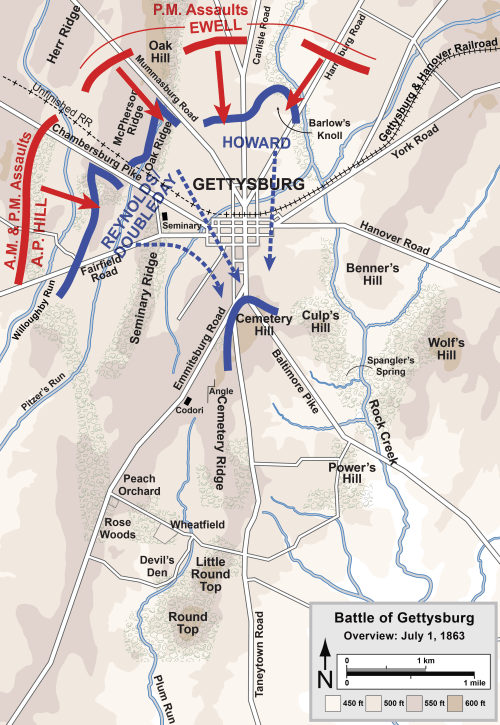
(Gburg day one)

Lee arrived early enough in the battle to make his influence known. He was told of Ewell’s movements by Major G. Campbell Brown of Ewell’s staff and instructed Brown in very strong terms to tell Ewell “that a general engagement was to be avoided until the arrival of the rest of the army.” [39] Ewell, did not get that message until after his forces were heavily committed noting in his report “that By the time this message reached me….It was too late to avoid an engagement without abandoning the position already taken up.” [40]

Lee was not happy that battle had been joined by Heth and Taylor observed that “on arriving at the scene of the battle, General Lee ascertained that the enemy’s infantry and artillery were present in considerable force” [41] and when Lee arrived on Herr Ridge, Heth asked permission to renew his attack when Rodes entered the fight. Lee’s initial response was negative “No, I am not prepared to bring on a general engagement today. Longstreet is not up.” [42]

After observing the battle for a time it became evident that Ewell’s corps was also heavily engaged and Lee began to change his mind. Heth reported that the Federal troops in front of him were withdrawing and Lee sensed an opportunity to strike a blow that might bring the climactic victory that he sought. Lee analyzed the situation and with Heth back at his division Heth wrote that “very soon an aide came to me with the orders to attack.” [43]

The order was given in the heat of the moment, and Lee always aggressive responded, but it was a bad decision. “It committed him to a major confrontation on this ground…without sufficient troops on hand and without knowledge of the whereabouts of the rest of the Federal army,” [44] and Lee knew this. He told Anderson at Cashtown not long before- meeting Heth: “I am in ignorance of what we have in front of us here. It may be the whole Federal army, or it may be only a detachment. If it is the whole Federal force we must fight a battle here.” But he was worried, telling Anderson “If we do not gain a victory, those defiles and gorges which we passed through this morning will shelter us from disaster.” [45]

Despite the success that his soldiers we now enjoying as they drove the I Corps and XI Corps back through the town Lee gave yet another vague order. This one to Ewell, who having already committed his corps to battle in the full knowledge that Lee did not desire a general engagement was confronted with another discretionary order, Lee said “General Ewell was…instructed to carry the hill occupied by the enemy, if he found it practicable, but to avoid a general engagement until the arrival of the other divisions of the army.” [46]

The Army of Northern Virginia came very close to sweeping Federal forces from the field on July 1st in spite of Lee’s lack of planning and clear commanders’ intent. But close was not enough. His forces which were committed in a piecemeal manner were unable to follow up their initial success. The situation faced by Ewell in Gettysburg was chaotic; his units were badly disorganized, and burdened by thousands of prisoners on the confided streets of the town. Rodes’ division had sustained frightful losses and he had no assurance of support from Hill. [47] Rodes’ after battle report supported Ewell’s decision. He wrote that before “the completion of his defeat before the town the enemy had begun to establish a line of battle on the heights back of the town, and by the time my line was in condition to renew the attack, he displayed quite a formidable line of infantry and artillery immediately in my front, extending smartly to my right, and as far as I could see to my left in front of Early.”[48]

Lee’s orders to Ewell, to take the high ground “if practicable” were correctly interpreted by Ewell despite his critics; he nature of the terrain, the number and condition of the troops that he had available for an attack, and the nature of the orders given by Lee late in the day was strong factors for Ewell to not attack. [49] Coddington noted that these problems “upset Ewell, for he was faced with the prospect of organizing a new attack with tired men even while he felt constrained by Lee’s injunction not to open a full-fledged battle. No wonder he was uncertain!” [50]The fact that Lee was not far away and did not issue a “peremptory order to Ewell” to attack also has to be noted. [51] If Lee had sensed that Ewell was not going to attack and really wanted him to he could have issued a direct order which Ewell, would have surely obeyed. “Lee realized that Ewell was not Jackson…and should have modified his method of command accordingly.” [52]

That evening Lee rode to Ewell’s headquarters and met with Ewell, Early and Rodes. “No reference was made to the possibility of an attack that evening on Cemetery Hill.” The question was put to them about what to do the next day. Lee asked “Can’t you with your corps attack on this flank tomorrow?” Jubal Early answered for Ewell saying “flatly that he did not believe an attack should be made from Gettysburg against Cemetery Hill the next day.” [53] Early added, “even if such an action were to succeed… it would be at a very great cost.” [54] Lee suggested to Ewell and his commanders that Second Corps around to the right along Seminary Ridge “where it might be better put to use, and twice he gave in to Ewell’s pleadings to remain where he was.” [55] This was yet another mistake that would haunt Lee during the rest of the battle, but the “notion of imposing his will on a subordinate was simply too alien to Lee’s nature for him to even to admit as a possibility.” [56] Fuller wrote “it was Lee’s inexhaustible tact that ruined his army.” [57]

Whether Lee intended to engage the Army of the Potomac at Gettysburg so early in the campaign is debated. His multiple and contradictory strategic aims left his commanders acting much on their own. Lee’s lack of clear commander’s intent to his subordinate commanders created confusion on the battlefield. They also paved the way to many controversies in the years following the war as Southerners sought to explain the failure of the Lost Cause, for which Lee could not be blamed.

Much of the controversy comes from Lee’s own correspondence which indicates that he might have not fully understood his own intentions. Some correspondence indicates that Lee desired to avoid a general engagement as long as possible while other accounts indicate that he wanted an early and decisive engagement. The controversy was stoked after the war by Lee’s supporters, particular his aides Taylor and Marshall and generals Early, Gordon and Trimble. Men like Longstreet and were castigated by Lee’s defenders for suggesting that Lee made mistakes on the battlefield.

The vagueness of Lee’s instructions to his commanders led to many mistakes and much confusion during the battle. Many of these men were occupying command positions under him for the first time and were unfamiliar with his command style. Where Stonewall Jackson might have understood Lee’s intent, even where Lee issued vague or contradictory orders, many others including Hill and Ewell did not. Lee did not change his command style to accommodate his new commanders.

That lack of flexibility and inability to clearly communicate Lee’s intent to his commanders and failure to exercise control over them proved fatal to his aims in the campaign. Stephen Sears’ scathing analysis of Lee’s command at Gettysburg perhaps says it the best. In the final analysis, it was Robert E. Lee’s inability to manage his generals that went to the heart of the failed campaign.” [58]

The vagueness of Lee’s intent was demonstrated throughout the campaign and was made worse by the fog of war. Day one ended with a significant tactical victory for Lee’s army but without a decisive result which would be compounded into a strategic defeat by Lee’s subsequent decisions on the 2nd and 3rd of July.

Notes:

[1] Taylor, Walter. General Lee: His campaigns in Virginia 1861-1865 With Personal Reminiscences University of Nebraska Press, Lincoln Nebraska and London, 1994 previously published 1906 p.45

[2] Ibid. Taylor General Lee: His campaigns in Virginia 1861-1865 With Personal Reminiscences p.25

[3] Lee, Robert Edward. Recollections and Letters of General Robert E Lee A Public Domain book, Amazon Kindle edition location 548

[4] Taylor, John M. Duty Faithfully Performed: Robert E Lee and His CriticsBrassey’s, Dulles VA 1999 p.35


[5] Fuller, J.F.C. Grant and Lee: A Study in Personality and Generalship, Indiana University Press, Bloomington IN 1957 p.112

[6] Korda, Michael. Clouds of Glory: The Life and Legend of Robert E. Lee Harper Collins Publishers, New York 2014 p.348

[7]Tucker, Glenn. High Tide at Gettysburg, The Bobbs Merrill Co. Indianapolis Indiana 1958 p.24

[8] Ibid. Fuller Grant and Lee: A Study in Personality and Generalship p.125

[9] Weigley, Russell F. The American Way of War: A History of United States Military History and Policy University of Indiana Press, Bloomington IN, 1973 p.116

[10] Ibid. Korda, Michael. Clouds of Glory: The Life and Legend of Robert E. Lee p.446

[11] Sears, Stephen W. Gettysburg. Houghton Mifflin Co. Boston and New York 2003 p. 139

[12] Taylor, Walter Four Years with General Lee Original published 1877. Heraklion Press Kindle Edition 2013 location 1199

[13] Freeman, Douglas Southall, Lee’s Lieutenant’s a Study in Command, One volume abridgement by Stephen W Sears, Scribner, New York 1998 pp.554-555

[14] Ibid. Freeman Lee’s Lieutenant’s a Study in Command, p.552

[15] Nolan, Alan T. R. E. Lee and July 1 at Gettysburg in the First Day at Gettysburg edited by Gallagher, Gary W. Kent State University Press, Kent Ohio 1992 p.16

[16] McClellan, Henry Brainerd The Life and Campaigns of Major General J.E.B. Stuart Commander of the Cavalry of the Army of Northern Virginia 1885. Digital edition copyright 2011 Strait Gate Publications, Charlotte NC location 6123 unfortunately this letter cannot be verified as no copy exists, McClellan presuming that it was destroyed sometime during the march.

[17] Dowdy, Clifford. Lee and His Men at Gettysburg: The Death of a Nation Skyhorse Publishing, New York 1986, originally published as Death of a Nation Knopf, New York 1958 p.60

[18] Lee, Robert E. Reports of Robert E Lee, C.S. Army, Commanding Army of Northern Virginia Campaign Report Dated January 20th 1864. Amazon Kindle Edition location 503

[19] Davis, Burke JEB Stuart: The Last Cavalier Random House, New York 1957 p. 325

[20] Coddington, Edwin B. The Gettysburg Campaign: A Study in Command, A Touchstone Book, Simon and Schuster New York, 1968 p.183

[21] Ibid. Coddington The Gettysburg Campaign: A Study in Command p.189

[22] Ibid. Sears Gettysburg p. 134

[23] Tredeau, Noah Andre. Gettysburg: A Testing of Courage, Harper Collins Publishers, New York 2002 p.124

[24] Ibid. Sears Gettysburg p. 134

[25] Ibid. Tredeau, Gettysburg: A Testing of Courage, p.124

[26] Ibid. Sears Gettysburg p. 134

[27] Ibid. Coddington The Gettysburg Campaign: A Study in Command pp.189-190

[28] Ibid. Dowdy Lee and His Men at Gettysburg: The Death of a Nation p.99

[29] Foote, Shelby, The Civil War, A Narrative. Volume Two Fredericksburg to Meridian Random House, New York 1963 p. 464

[30] Ibid. Foote The Civil War, A Narrative. Volume Two Fredericksburg to Meridian p.464

[31] Pfanz Harry W. Gettysburg: The First Day University of North Carolina Press, Chapel Hill and London 2001 p.148

[32] Ibid. Coddington The Gettysburg Campaign: A Study in Command p.192

[33] Ibid. Pfanz Gettysburg: The First Day p.149

[34] Ibid. Sears Gettysburg p. 160

[35] Ibid. Coddington The Gettysburg Campaign: A Study in Command p.264

[36] Ibid. Lee Reports of Robert E Lee, C.S. Army, Commanding Army of Northern Virginia Campaign Report Dated January 20th 1864 location 552

[37]Ibid. Nolan R. E. Lee and July 1 at Gettysburg p.24

[38] Ibid. Lee Reports of Robert E Lee, C.S. Army, Commanding Army of Northern Virginia Campaign Report Dated January 20th 1864 location 552

[39] Ibid. Pfanz Gettysburg: The First Day p.150

[40] Ibid. NolanR. E. Lee and July 1 at Gettysburg p.22

[41] Ibid. Taylor General Lee: His campaigns in Virginia 1861-1865 With Personal Reminiscences p.188

[42] Ibid. Foote The Civil War, A Narrative. Volume Two Fredericksburg to Meridian p.475

[43] Ibid. Sears Gettysburg p. 203

[44] Ibid. NolanR. E. Lee and July 1 at Gettysburg p.24

[45] Ibid. Foote The Civil War, A Narrative. Volume Two Fredericksburg to Meridian p.474

[46] Freeman, Douglas Southall, Lee’s Lieutenant’s a Study in Command, One volume abridgement by Stephen W Sears, Scribner, New York 1998 p.571

[47] Gallagher, Gary. Confederate Corps Leadership on the First Day at Gettysburg: A.P. Hill and Richard S. Ewell in a Difficult Debut in The First Day at Gettysburg edited by Gallagher, Gary W. Kent State University Press, Kent Ohio 1992 pp.54-55

[48] Ibid. Nolan p.26

[49] Ibid. NolanR. E. Lee and July 1 at Gettysburg in the First Day at Gettysburg p.28

[50] Ibid. Coddington The Gettysburg Campaign: A Study in Command p.319

[51] Ibid. NolanR. E. Lee and July 1 at Gettysburg in the First Day at Gettysburg p.28

[52] Ibid Gallagher Confederate Corps Leadership on the First Day at Gettysburg p.56

[53] Ibid. Freeman Lee’s Lieutenant’s a Study in Command p.572

[54] Ibid. Tredeau, Gettysburg: A Testing of Courage, p.261

[55] Sears, Stephen W. Gettysburg. Houghton Mifflin Co. Boston and New York p.504

[56] Ibid. Tredeau, Gettysburg: A Testing of Courage, p.262

[57] Ibid. Fuller Grant and Lee: A Study in Personality and Generalship p.119

[58]Sears, Stephen W. Gettysburg. Houghton Mifflin Co. Boston and New York p.504

3 Comments

Filed under civil war, History, leadership, Military

An Introduction to D-Day and the Normandy Campaign

Friends of Padre Steve’s World
Sorry but another re-run I mentioned that we are coming up on the anniversaries of both the Battle of Midway and the D-Day landings. Since I am continuing to do some other reading and research on my Gettysburg tome I have decided to re-post this rather lengthy article. Since I have done a couple of Midway posts this be at least the first of a few D-Day posts in the coming days.
Have a great evening,
Peace
Padre Steve+

padresteve's avatarThe Inglorius Padre Steve's World

The author with Marines at Point du Hoc, Normandy in 2004

Every year about this time I try to write about D-Day. Last year I posted several articles as I had in 2009 as well.  This year I spent more time on the Battle of Midway writing three articles. Today I have been on the road much of the day and as I drove back to my Island Hermitage I began to think about what I wanted to do this year. When I have decided to do is to re-post a short research paper that I did for one of my Master’s degree courses tonight and follow it with some articles over the week on specific aspects and personalities of the campaign.  What I hope is that people that are not familiar with the campaign as well as those that are can use this as a portal to other resources…

View original post 7,314 more words

Leave a comment

Filed under Loose thoughts and musings