Category Archives: Baseball

The Unappreciated Hero of Gettysburg

Friends of Padre Steve’s World

I am up at Gettysburg with my students today, so I am posting the final excerpt from the chapter of my Gettysburg text that I have been posting throughout the week. This section wraps up that chapter and discusses the treatment that Abner Doubleday received from George Meade and the subsequent myth surrounding Doubleday and the invention of baseball. The irony about Doubleday is that he is best remembered for a game that he did not invent, and his most heroic performance is forgotten and dismissed. I hope you enjoy.

Peace

Padre Steve+

GettysburgIdols

Abner Doubleday’s Best Performance and Disgraceful Treatment

On the other hand Abner Doubleday proved himself as a capable commander who was able to provide effective leadership during a crisis situation. Although he is one of the most under-appreciated Union commanders at Gettysburg he “ably rose to the occasion, as did divisional commanders James Wadsworth and John Robinson.” [1] Though his abilities were suspect, especially by George Meade and Colonel Wainwright, the Corps artillery commander Doubleday managed to hold off superior Confederate forces, and even inflicted a significant defeat on the divisions of Harry Heth and Robert Rodes. During the fighting against ever increasing numbers of Confederates, First Corps inflicted massive casualties on their opponents. “Seven of the ten Southern brigades incurred casualties from 35 to 50 percent, and the total for all brigades came to an estimated 6,300 officers and men, or about 40 percent of their strength.” [2] Doubleday’s troops held on long enough to support the left flank of Eleventh Corps as it was being assaulted by Early’s division.

When Winfield Scott Hancock arrived on Meade’s behest to take command at Gettysburg Oliver Howard informed him that First Corps “had given way at first contact” [3] implicitly blaming Doubleday for the collapse of the Federal line. Hancock delivered the report in a note to Meade which said “Howard says that Doubleday’s command gave way” [4] This false report fixed in Meade’s mind that his doubts about Doubleday’s ability were correct. To Doubleday’s amazement Meade then cancelled his order appointing Doubleday to command First Corps and ordered John Newton, a division commander, far junior to Doubleday in Sedgwick’s Sixth Corps to replace Doubleday. A badly disappointed Doubleday resumed command of his division. In large part Meade’s appointment of Newton over Doubleday was also political. Doubleday’s fellow abolitionist division commander in First Corps, James Wadsworth said that “Meade’s “animosity” toward Doubleday rested in a “past political difference.” [5] Doubleday, the abolitionist Republican was not acceptable to Meade, the conservative Unionist Democrat and ally of Gorge McClellan. The fact that Newton “was not regarded as daring or brilliant” [6] and was regarded by many as a “pet” of Meade, did not matter. Meade’s volcanic temper and temptation to allow politics to cloud his military judgement meant that “Newton was the only other major general he could trust politically.” [7] When Doubleday formally protested to Meade he was dismissed from Army of the Potomac.

He left the Army of the Potomac never held a field command during the war, however, he was brevetted in the Regular Army to both brigadier and major general. Doubleday served in administrative capacities in Washington D.C. until the end of the war and testified against Meade during the politically charged hearings of the Committee on the conduct of the War. Doubleday remained bitter toward Meade and he “was never reconciled to Meade’s relieving him as acting commander of First Corps in Favor of Maj. Gene. John Newton, who was his junior in rank and the reproach that it implied.” [8] After the war Doubleday reverted to his rank as a Colonel in the Regular Army and was made Colonel of the 35th U.S. Infantry in San Francisco. From 1871 until his retirement in 1873 Doubleday commanded the African American “Buffalo Soldier” 24th Infantry Regiment in Texas. He died in New York on January 25th 1893, and was buried in Arlington National Cemetery. Among the members of the honor guard at his funeral in New York was a man named Abraham Mills who would play a major role in Doubleday’s future fame.

Baseball_article_large

A Myth and Legend Greater than Gettysburg: Abner Doubleday and Baseball

Interestingly enough Doubleday, who was unappreciated as a general became linked forever to the game known as America’s national pastime and to Cooperstown New York, the home of Baseball’s Hall of Fame. As such he is probably better known to most Americans, particularly baseball fans than any Union general who fought at Gettysburg.

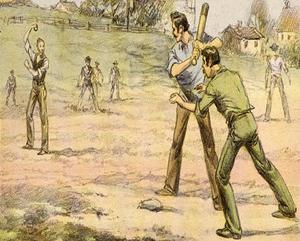
Like the Civil War, Baseball too is filled with myths which connect it to our culture, and one “is the myth that Abner Doubleday invented the sport one fine day in 1839 at the farmer Phinney’s pasture at Cooperstown.” [9] It was early American baseball star Albert G. Spaulding who linked the creation of baseball to the Civil War and in particular to Abner Doubleday by way of an apocryphal story of one of Doubleday’s childhood friends, years after Doubleday’s death. In 1907, Spaulding worked with Abraham G. Mills the fourth President of the National League, the same man who had served in Doubleday’s funeral honor guard to conclude that “that the first scheme for playing it, according to the best evidence obtained to date, was devised at Cooperstown New York, in 1839.” [10] But this is simply myth and the under-appreciated hero of the first day of battle at Gettysburg is much better known for something that he did not do.

The ironies of history and myth are fascinating. Interestingly Mills paid homage to Doubleday noting, “in the years to come, in the view of hundreds of thousands of people who are devoted to baseball, Abner Doubleday’s fame will rest evenly, if not quite so much that he was its inventor…as upon his brilliant and distinguished career as an officer in the Federal Army.” [11]

Notes

[1] Ibid. Sears Gettysburg p.245

[2] Ibid. Coddington, The Gettysburg Campaign: A Study in Command, p.307

[3] Ibid. Wert The Sword of Lincoln p.294

[4] Ibid. Guelzo Gettysburg: The Last Invasion p.224

[5] Ibid. Wert The Sword of Lincoln p.294

[6] Ibid. Cleaves Meade of Gettysburg p.143

[7] Ibid. Guelzo Gettysburg: The Last Invasion p.224

[8] Ibid. Pfanz Gettysburg: The First Day p.355

[9] Will, George F Men at Work: The Craft of Baseball Harper Collins Publishers, New York 1990 p.294

[10] Kirsch, George B. Baseball in Blue and Gray: The National Pastime in the Civil War Princeton University Press, Princeton and Oxford, 2003 p.xiii

[11] Ibid.. Kirsch Baseball in Blue and Gray p.xii

Leave a comment

Filed under Baseball, civil war, Gettysburg, History, leadership, Military

Mama Bear, Contraceptives & the Cubs

maxresdefault

Friends of Padre Steve’s World,

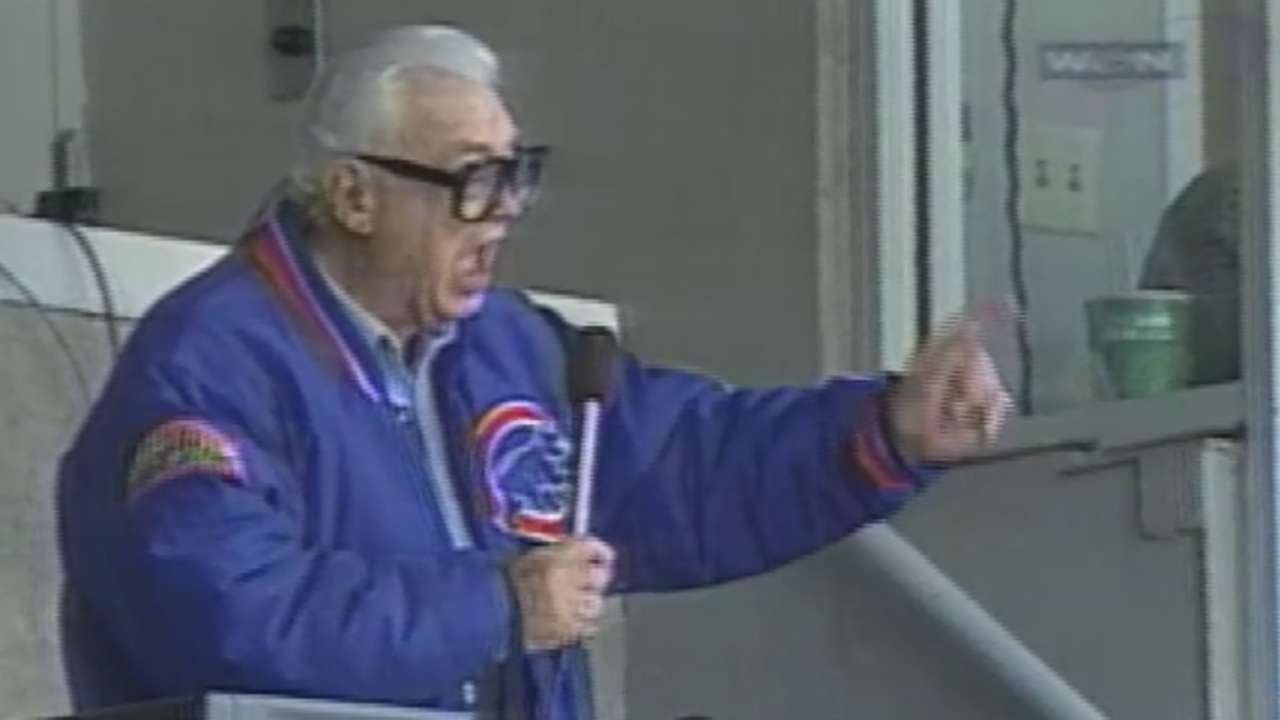
The late, great, Chicago Cubs broadcaster, Harry Caray, made a darkly humorous comment that once again seems to have come true. Caray said, “What does a mama bear on the pill have in common with the World Series? No cubs.”

The Chicago Cubs under the direction of former Tampa Bay Rays skipper Joe Maddon had a great season. They reached the playoffs as a Wild Card team, and knocked out the St. Louis Cardinals in the National League Division series.

I kind of hoped that they would have won the World Series this year, even though I believe that should the Cubs ever win the World Series that Jesus will return. I am a big fan of Cubs starter Jake Arietta who I know from his time in the Orioles organization and time in Norfolk, and I do have a soft spot for the Cubs. In fact about six years ago I wrote, “it all comes down to baseball, just as everything else in life. My belief is that when the Chicago Cubs win the World’s Series that we’d better start looking to the East, and pronto.” Since the “amazin’ Mets” beat the Cubs in the National League Championship Series I will have to assume that the perousia (the Greek word for the second coming) will again be delayed, at least until next year.

  
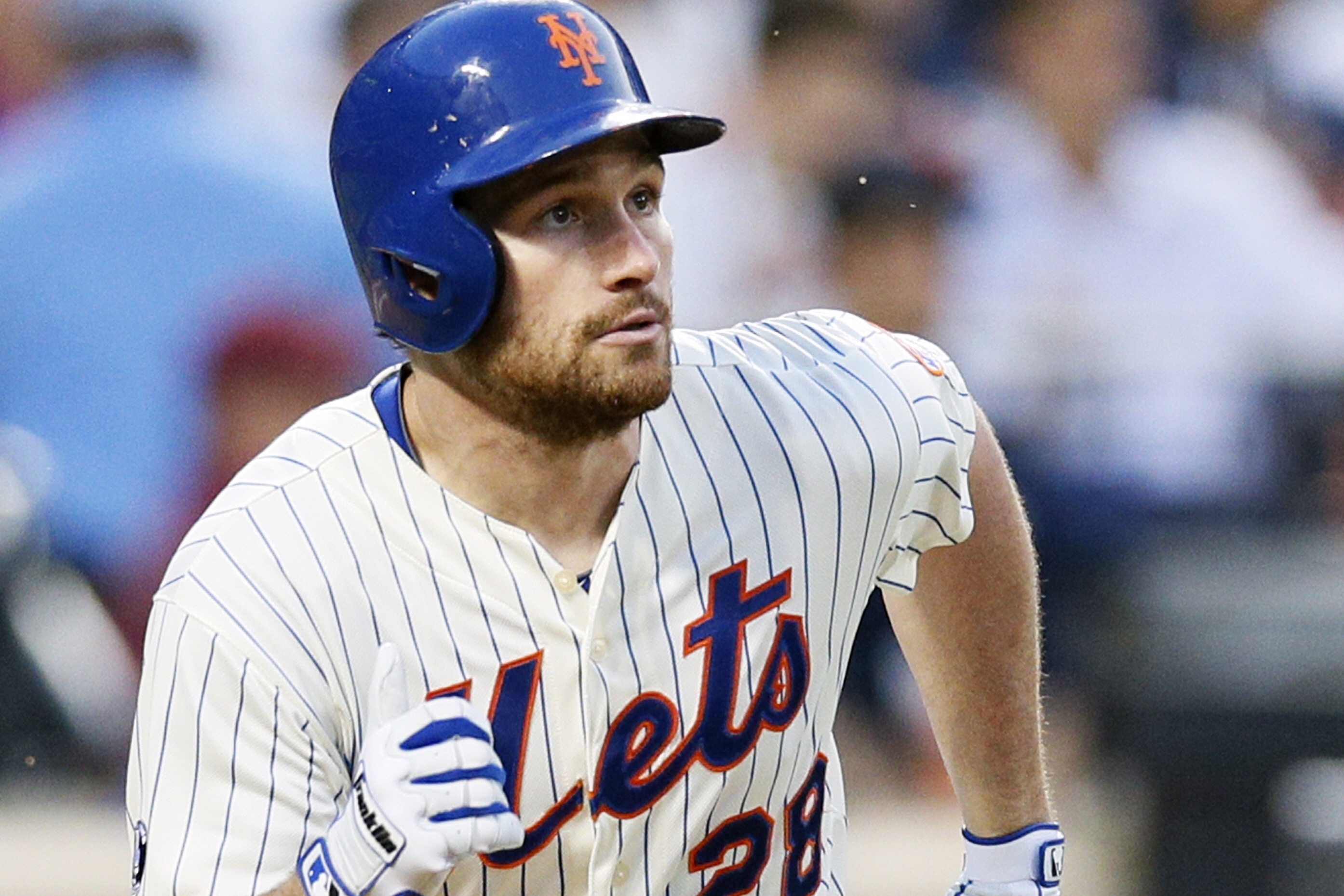
The Mets swept the Cubbies in large part due to the hitting of Daniel Murphy who hit his sixth consecutive home run, breaking a playoff record.  It looks like the Mets will now play the winner of the Kansas City Royals and Toronto Blue Jays American League Championship Series, which the Royals now lead three games to two with the series going back to Kansas City on Friday.

  
So, until we know something else, here is to the Mets, who made my season by defeating the evil Los Angeles Dodgers in their National League Division Series last week. As a diehard San Francisco Giants fan I have to salute the Mets, who have been amazing this year. As for the Cubbies, there is always next year. They have nothing to be ashamed of this season; they are a young team, they made the playoffs and beat the only team to win 100 games. It is not the World Series, but it is not bad.

Peace

Padre Steve+

Leave a comment

Filed under Baseball

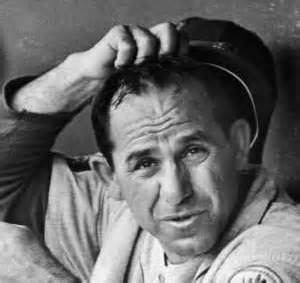
Rest in Peace Yogi

image

You can observe a lot just by watching…

Friends of Padre Steve’s World

When turned on my iPhone this morning in Munich I learned of the death of the great Yogi Berra. Truthfully it is hard for me to believe that Yogi has passed away, somehow, I never imagined the day that the world would be without this wonderful, yet humble and self depreciating great.

I saw hi once in person at an old timers game at Anaheim Stadium back in 1970. There were a lot of greats at that game including Joltin Joe DiMaggio and Mickey Mantle. Too bad when I was ten years old I didn’t think to get their autographs, and of course that was well before kids had the ability to take selfies without killing their candy budget on film and development.

Yogi Berra has always been an inspiration to me, especially in the way that he made the English language far more entertaining than it really is.

I can’t post much tonight as I have to get up early for a day trip with Judy to Nuremberg, but even so I could not go without saying something about Yogi. After all, it ain’t over until it’s over.

Until my next non-pre-scheduled post…

Peace

Padre Steve+

Leave a comment

Filed under Baseball, History

Midsummer Dreaming: The MLB All-Star Game

espn_a_prosets_600

“Baseball is an allegorical play about America, a poetic, complex, and subtle play of courage, fear, good luck, mistakes, patience about fate, and sober self-esteem.”  Saul Steinberg

Friends of Padre Steve’s World,

Those that have followed my writing on this site for any length of time know that perhaps more than any other thing on earth that the game of Baseball is an important part of my life and spirituality.

Baseball, unlike most sports is very much a game with a calendar that is almost liturgical in its makeup. It is also a game where those who “have gone before” are as much a part of the present as a part of history. It is a game that people like me ascribe an almost mystical or religious significance.

I have grown up with baseball. My dad ingrained it in me, my mom came to my little league games when my dad was in Vietnam and even my paternal grandmother had a baseball game on whenever one was on.

me-and-lefty-phillips

The author with California Angels” Manager Lefty Phillips in 1970

I like to say that God speaks to me through Baseball, and I do think that I am right about this, much more so than Scripture which I never know if I am interpreting correctly, especially because so many learned people tell me that I’m a heretic. So I guess I have to let God speak to me in other ways, like Baseball.

The All Star Game is part of my “Church Calendar.” it is a moment in the summer where the game and I pause. I pause to reflect on life and remember so many things about the specific All Star Games, my dad and life.

All Star games in any sport are problematic. Most have no meaning. The NFL Pro-Bowl is such bad football that it has almost no relationship to the game as it is played every Sunday. The NBA and NHL games are better, but again because of the nature of those games little resemble their regular season or playoff games. Added to this as that none of those games have any bearing on what happens in the sport where the Baseball All Star Game matters, it determines home field advantage in the World Series.

I fell in love with the All Star Game in 1970, the game that Pete Rose ended in extra innings when he ran over Cleveland Indians catcher Ray Fosse to win the game for the National League. Likewise I remember the 1999 All Star Game at Fenway Park when Ted Williams was honored and the All-Century Team was named. I found it interesting that Pete Rose, arguably the best hitter in the history of the game who was banned from baseball for life by A Bartlett Giamatti for betting on the game was included on that team. I agreed with the selection then and in light of the fact that so many other men of sometimes questionable morals and character are in the Hall of Fame think that the ban on Rose should be lifted and that he be voted into the Hall of Fame.

The All Star Game is a celebration of the game, its history and players, not just the ones playing in the current year. I am interested in this game in some ways because I have seen quite a few players at some level of their minor league careers in the South Atlantic, Carolina, Southern, Eastern, International or Pacific Coast Leagues. For me it is really cool to see men that I watched when they were in the minors now playing in the All Star Game. For those that don’t follow the minor leagues it provides a certain amount of perspective because most players in the minors never make the majors and even many of those who do don’t stay there. It is a hard life and for most the money is not that great, thus I do not begrudge the salaries that they make when they get to the majors. It takes a tremendous amount of talent, hard work, determination and sometimes luck to make it in the majors, to stay there and to become an All Star. Those that do it consistently year after year are amazing.

I appreciate their work, because in my calling and career as a Priest, Chaplain and military officer I am a journeyman. I’ve been around a long time, in a sense been up and down in the majors and minors in a number of different positions. I have had some good seasons so to speak, but I have also had plenty of bad ones and spent a lot of time in the military and church versions of the minor leagues. I think it gives me a manner of perspective when appreciating the hard work and excellence needed to be an All Star. If I was ever to be honored in such a way I would have to say something like John Kruk said back in 1993 when he was elected to the All Star Team “It’s amazing that fans want to see me play. What is our society coming to?”

Tonight’s game will be played at the Great American Ballpark in Cincinnati, the home of the Cincinnati Reds. The game will mark the return of the Baseball’s all-time hit leader, Pete Rose to such festivities. Rose’s on the field accomplishments are clouded by the fact that he bet on baseball as a manager, and new allegations that he may have did so as a player as well.

In spite of that nothing can take away from Rose’s on field accomplishments and as with all of history baseball has myths and legends that need to be scrutinized but at the end of the day have to be acknowledged. This is true for Pete Rose as much as it is for any historical figure, including Abner Doubleday who was unappreciated as a general but became linked forever to the game known as America’s national pastime and to Cooperstown New York, the home of Baseball’s Hall of Fame. As such Doubleday is probably better known to most Americans, particularly baseball fans than any Union general who fought at Gettysburg.

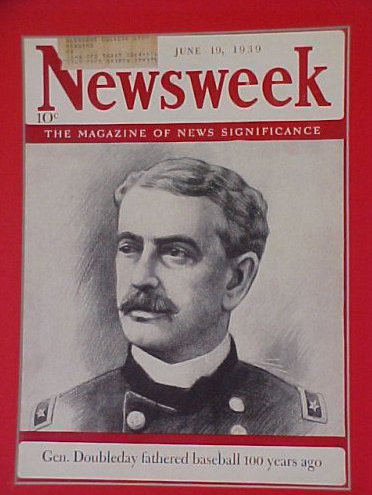
fw-baseball-doubleday

Abner Doubleday

Like the Civil War, Baseball too is filled with myths which connect it to our culture, and one “is the myth that Abner Doubleday invented the sport one fine day in 1839 at the farmer Phinney’s pasture at Cooperstown.”  It was early American baseball star Albert G. Spaulding who linked the creation of baseball to the Civil War and in particular to Abner Doubleday by way of an apocryphal story of one of Doubleday’s childhood friends, years after Doubleday’s death.

In 1907, Spaulding worked with Abraham G. Mills the fourth President of the National League, the same man who had served in Doubleday’s funeral honor guard to conclude that “that the first scheme for playing it, according to the best evidence obtained to date, was devised at Cooperstown New York, in 1839.” 2625 But this is simply myth and the underappreciated hero of the first day of battle at Gettysburg is much better known for something that he did not do.

The ironies of history and myth are fascinating. Interestingly enough Abraham Mills paid homage to Doubleday noting, “in the years to come, in the view of hundreds of thousands of people who are devoted to baseball, Abner Doubleday’s fame will rest evenly, if not quite so much that he was its inventor…as upon his brilliant and distinguished career as an officer in the Federal Army.”

History, myth, scoundrels and baseball. What else can be said about this wonderful game which is so much a part of American lore?

Have a great night,

Peace

Padre Steve+

1 Comment

Filed under Baseball

Memories of Molly & Thanks to Friends


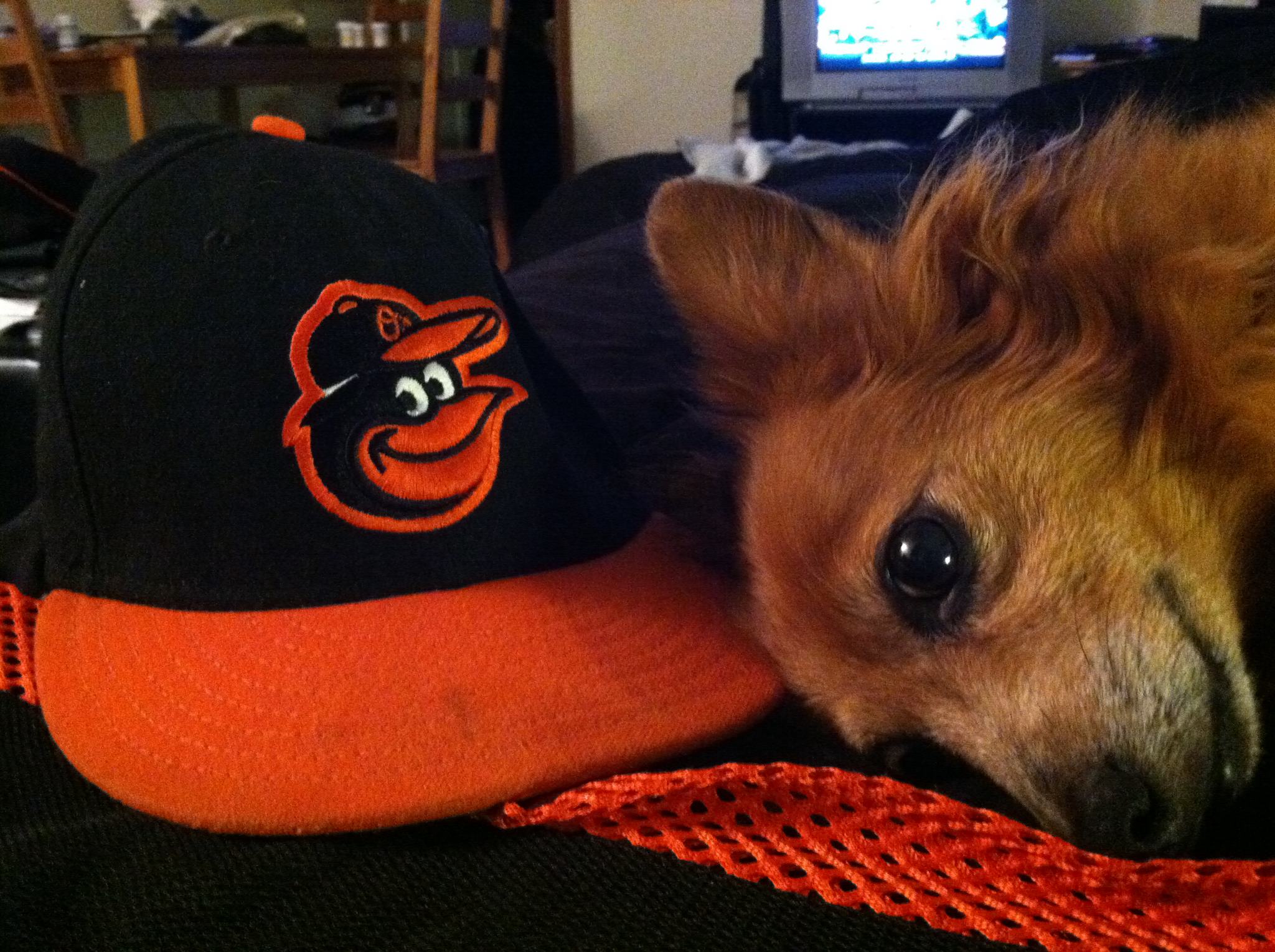
molly and orioles hat

Dean Koontz wrote:

“No matter how close we are to another person, few human relationships are as free from strife, disagreement, and frustration as is the relationship you have with a good dog. Few human beings give of themselves to another as a dog gives of itself. I also suspect that we cherish dogs because their unblemished souls make us wish – consciously or unconsciously – that we were as innocent as they are, and make us yearn for a place where innocence is universal and where the meanness, the betrayals, and the cruelties of this world are unknown.”  

As most of you know from what I posted yesterday we had to have Molly Fur, the wonderful dog who saved my life after Iraq put down at the age of fourteen. I knew her loss would hit me hard, however I have always tried to conduct myself in such situations as would Mr. Spock on Star Trek, or Commander Data in Star Trek the Next Generation before he got the emotion chip implanted. That being said I knew that I would cry, however, little did I expect that every time I turned around that I be crying.

Honestly I feel a lot like Robert De Niro playing the mobster Paul Viti in the movie Analyze This, where he tells his shrink played by Billy Crystal: “The other day, I was watching a commercial with a kid playing with a couple of puppies, I cried for forty five minutes! You slap a pair of tits on me, I’m a woman!” But I digress…

Molly meant more to me than almost anything in life. I am convinced that had she not come to live with me when I was stationed in Camp Lejeune away from Judy, that I would have succumbed to despair and found a way to die without making it look like suicide. I probably would have driven off the bridge to Emerald Isle or driven into the trees lining one of the state highways on the way to or from work.

However, having Molly there kept me from this because I wondered what the effect would have been on Molly. Stanley Coren wrote:“The greatest fear dogs know is the fear that you will not come back when you go out the door without them.”  I couldn’t do that to her, she loved me too much and would not have understood.

Having Molly with me in North Carolina gave me someone to come home to, and her cheerfulness and devotion kept me going through some of the darkest times of my life. Just having her waiting for me when I came home made all the difference and today for the first time I came home from work and Molly was not there to great me. It really hit me again, that she was gone .

mollybag

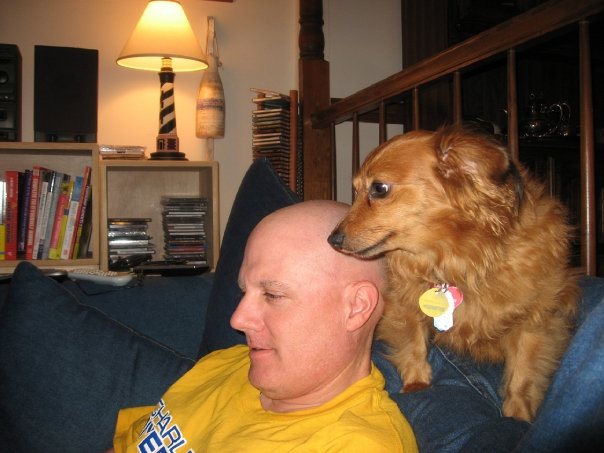
Molly was so irresistibly funny, sweet and beautiful and she lived her whole life that way, caring for Judy as much as she cared for me. Molly would sit with me on a huge bean bag chair and watch baseball, sometimes she would be looking at the television so intently I thought she had to be watching the games at least as much as she was comforting me, especially during the 2012 season when the San Francisco Giants won their second World Series title. She hardly left my side during those games.

mollgrin

Thankfully, Molly never developed the taste for beer that our now Senior Dog on Deck, Minnie has, otherwise I would have probably had to pour her out of the beanbag to chase the deer around the house.

Over the past couple of days Judy and I have been showed such care and love by family and friends, in person as well as on Facebook. Likewise I have received so many kind words and thoughts from people who follow me here or on Twitter.

I know that sometimes social media can be poisonous and filled with vitriol. However, that being said such is not always the case. There are a lot of wonderful people out there on Twitter, Facebook and in the blogosphere.  The kindness shown by people people that I have never met in person who follow me on this site and Twitter has been amazing.

editormolly

I think Molly will always be with Me

Your kindness  reduces me to tears, just like Paul Viti, and just like is happening to me right now as I wipe the tears from my eyes. But those tears are not tears of sadness. They are tears of appreciation and thanksgiving, to Molly who saved my life, and for all who have taken just a few moments of time to offer a word of kindness. Those words have enabled me to remember all those times that Molly made my life better, helped keep me alive, and in the process probably made me a better person in spite of myself.

Thank you all so much.

Blessings, Love and Peace

Padre Steve+

4 Comments

Filed under Baseball, beer, dogs, movies

A Stillness in Baltimore

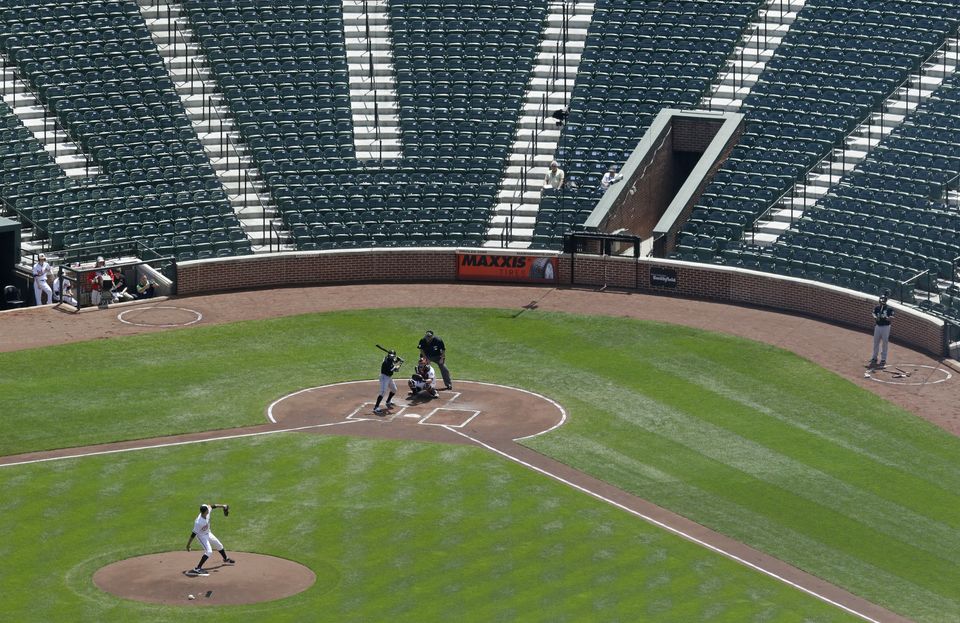
no fans

Yesterday the Baltimore Orioles defeated the Chicago White Sox by a score of 8-2 at Baltimore’s Camden Yards “Oriole Park.” Normally an afternoon game in April would pass nearly unnoticed except for the fans of the teams involved and those who just love the game. But this game was remarkable, for the first time in over 140 years of Major League Baseball, no fans were in attendance. The ballpark stood empty as the teams played a game that is probably more associated with the connection that fans feel towards players and teams than any other sport. Home runs were hit and the only sound was the crack of the bat sound of the ball landing in the stands. Players could hear the raidio and television announcers as they gave their play by play and the pitchers in the bullpens could hear every word spoken by the outfielders. It was surreal and somewhat symbolic. 

But the silence and emptiness at Oriole Park was emblematic of the plight of the people who live in the decaying inner cities of America, and a clarion call for us as a nation to address the root causes of what happened in Baltimore, what happened in Ferguson and what will happen in other cities if we do not take action to deal with the root causes.

The reason for this was the rioting and violence that followed in the wake of the death of Freddie Gray, a young African-American who had been arrested, and severely injured while in police custody and not given immediate or adequate medical attention for a spinal injury from which he subsequently died. What was Freddie Gray’s crime? He ran from the police, as far as I know he was engaged in no criminal activity and from what I understand, running from the police is not a crime.

As always there are conflicting accounts of the incident and the official State Police report has not been completed, and will probably not be made immediately available leaving his grieving family to wonder what happened and to suspicions of another cover-up. But the key thing is that we do not yet know what happened. In order to be fair I want am placing a link to the press conference of the Baltimore Mayor and Police regarding the arrest and the timeline of what happened to Freddie Gray in the police van:

http://www.baltimoresun.com/news/maryland/crime/blog/bs-md-ci-freddie-gray-arrest-documents-20150420-story.html

riots

The riots caused much property damage and many people were injured and arrested. The Baltimore Police and the Mayor were overwhelmed and allowed the rioting to get out of hand before requesting that the National Guard assist. President Obama called those who rioted and looted calling them “a handful of people taking advantage of the situation for their own purposes,” who should “be treated as criminals.” The President also said “We have seen too many instances of what appears to be police officers interacting with individuals, primarily African-American, often poor, in ways that raise troubling questions,” and noted that “This has been a slow-rolling crisis. This has been going on for a long time. This is not new, and we shouldn’t pretend that it’s new.” He sought balance though and expressed a measure of sympathy for police who have to “do the dirty work of containing the problems that arise” in broken urban communities where fathers are absent, drugs dominate and education, jobs and opportunities are nonexistent.

President Obama has been criticized by those who think he has not done enough to address the numerous accounts of police violence, and those on the political right like Senator Cruz who blame him for “inflaming racial tensions.” Frankly President Obama’s plight reminds me much of the tensions that Abraham Lincoln had to deal with in dealing with the various political factions in the North during the Civil War. The issues are not the same, but the political climate is quite similar. Lincoln was somehow able to navigate through the various crisis including some that involved his closest advisors and even political allies.

American conservatives today, especially those on the “Religious Right” are quick to blame the problems on the disintegration of the family unit, there may be some truth in this but is certainly not at the heart of the problem, otherwise all the white kids from broken families would be out doing the same thing.

But the difference is that many, if not most of those white kids, even those from broken families have educational, economic and social advantages that kids in the inner city ghettos, be they African American, Mexican American or Hispanic, or any other racial or ethnic minority trapped in the hellholes of the inner cities; hellholes that were not created by them but by decades of neglect and intentional political and social policies that served to marginalize Blacks and other minorities, leaving them without hope. As such I think there is a measure of racism in the argument of American conservatives in attributing the riots to the collapse of the family unit in Black communities, which they cannot admit, but secretly harbor.

This has been going on since the 1960s at least and there are historical examples of other Americans trapped in similar situations who resorted to rioting as well, notably the 1863 New York Draft Riots which mainly involved the poor Irish immigrants who were shouldering much of the burden of the war and were trapped in similar social and economic conditions in the Irish ghettos of New York. Those riots cost many lives and because the New York Police could not control them Federal troops, fresh from their victory at Gettysburg were sent to New York to restore order.

The simplistic “answers” of the conservative pundits, politicians and preachers who seek to blame this on the demise of the family unit are wrong. As I mentioned the issue is not broken families, it is the lack of opportunity that we as a white dominated society have sentenced those who inhabit our inner cities to, a lack of opportunity that has bred a culture of despair, a culture where hope is absent and dreams die, and after seeing incident after incident of what looks like police brutality and the seeming abuse of power by white dominated police forces, people are taking matters into their own hands and are venting years of pent up anger and frustration.

freddie gray

Back in 1967 Dr. Martin Luther King Jr. spoke about the rioting and violence that were occurring in his day. They are words that we need to heed today, because things really haven’t changed that much for those who are trapped in the inner cities. He said:

“Urban riots must now be recognized as durable social phenomena. They may be deplored, but they are there and should be understood. Urban riots are a special form of violence. They are not insurrections. The rioters are not seeking to seize territory or to attain control of institutions. They are mainly intended to shock the white community. They are a distorted form of social protest. The looting which is their principal feature serves many functions. It enables the most enraged and deprived Negro to take hold of consumer goods with the ease the white man does by using his purse. Often the Negro does not even want what he takes; he wants the experience of taking. But most of all, alienated from society and knowing that this society cherishes property above people, he is shocking it by abusing property rights. There are thus elements of emotional catharsis in the violent act. This may explain why most cities in which riots have occurred have not had a repetition, even though the causative conditions remain. It is also noteworthy that the amount of physical harm done to white people other than police is infinitesimal and in Detroit whites and Negroes looted in unity.

A profound judgment of today’s riots was expressed by Victor Hugo a century ago. He said, ‘If a soul is left in the darkness, sins will be committed. The guilty one is not he who commits the sin, but he who causes the darkness.’

The policymakers of the white society have caused the darkness; they create discrimination; they structured slums; and they perpetuate unemployment, ignorance and poverty. It is incontestable and deplorable that Negroes have committed crimes; but they are derivative crimes. They are born of the greater crimes of the white society. When we ask Negroes to abide by the law, let us also demand that the white man abide by law in the ghettos. Day-in and day-out he violates welfare laws to deprive the poor of their meager allotments; he flagrantly violates building codes and regulations; his police make a mockery of law; and he violates laws on equal employment and education and the provisions for civic services. The slums are the handiwork of a vicious system of the white society; Negroes live in them but do not make them any more than a prisoner makes a prison. Let us say boldly that if the violations of law by the white man in the slums over the years were calculated and compared with the law-breaking of a few days of riots, the hardened criminal would be the white man. These are often difficult things to say but I have come to see more and more that it is necessary to utter the truth in order to deal with the great problems that we face in our society.”

We as a society, as Americans need to deal with this. We cannot go on as a society if we fail to address the legitimate claims of those trapped by our neglect, our social policies, and our economic policies which have doomed millions of Americans to live without hope.

I pray that somehow something good will come out of this and that the silence at Camden Yards will echo across this nation and open our eyes to see our collective responsibility to address these issues, something that our political, social and business leaders seem so want to do. If we do not, what does that say about us as a nation?

Peace

Padre Steve+

1 Comment

Filed under Baseball, civil rights, News and current events, Political Commentary

He Made Us a Better Nation: Jackie Robinson

robinson200-ffbfd794408772ed56c5418c8f637c6b552e5c70-s6-c30

He led America by example. He reminded our people of what was right and he reminded them of what was wrong. I think it can be safely said today that Jackie Robinson made the United States a better nation.” – American League President Gene Budig

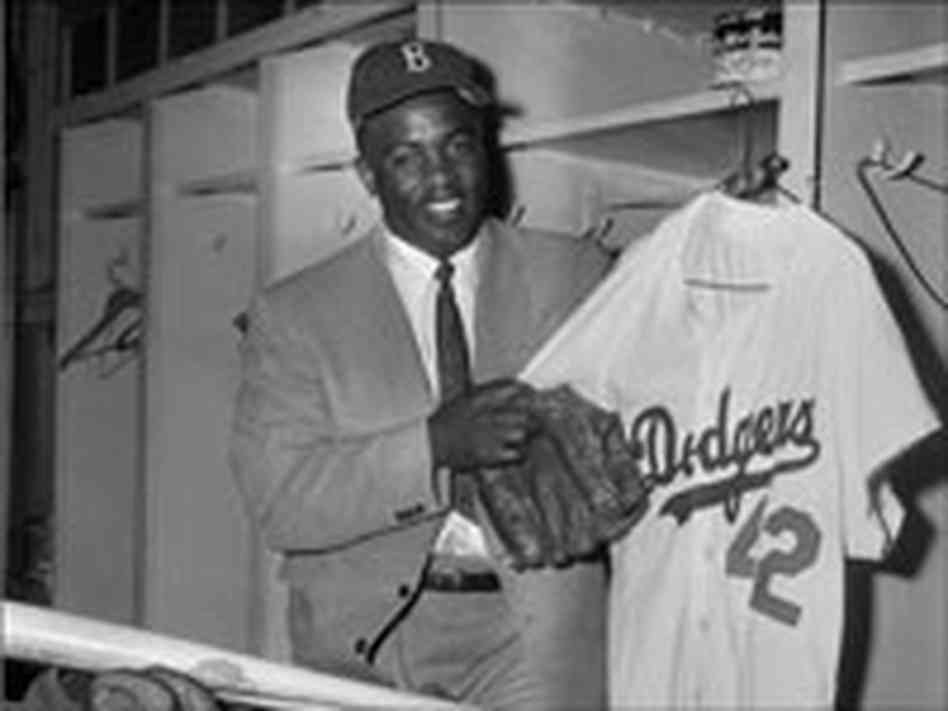
April 15th 2015 was the 68th anniversary of Jackie Robinson’s first game in the Major Leagues with the Brooklyn Dodgers.  Jim Crow was very alive and well when Jackie stepped onto the field that day and no matter how much we want to distance ourselves from those days there are still some in this country who want to go back to that kind of society. Robinson’s first game with the Dodgers came a full year before President Truman integrated the military, a move which infuriated many in the South.  Likewise it occurred a full seven years before the Supreme Court ruled school segregation unconstitutional in the Brown vs Board of Education decision.  It came a full 17 years before Congress passed the Voters Rights Act in 1964.

When Jackie Robinson stepped onto the field it was a watershed moment in Civil Rights for African Americans and paved the way for a change in American society that has continued since his Major League debut. Blacks had struggled for years against Jim Crow laws, discrimination in voting rights and even simple human decencies like where they could use a rest room, sit on a bus or what hotel they could stay in.

In baseball many white fans were upset that blacks were allowed to see Robinson in stadiums that they would not have been allowed in before.  Players from other teams heckled Robinson, he received hate mail, people sent made death threats, he was spiked and spit on.  But Jackie Robinson kept his pledge to Dodgers owner Branch Rickey not to lash out at his tormentors, as Rickey told him that he needed a man “with enough guts not to strike back.”

Jackie Robinson played the game with passion and even anger.  He took the advice of Hank Greenberg who as a Jew suffered continual racial epithets throughout his career “the best ways to combat slurs from the opposing dugout is to beat them on the field.” He would be honored as Rookie of the Year in 1947. He was a MVP and played in six World Series and six All Star Games.  He had a career .311 batting average, .409 on base percentage and .474 Slugging percentage. He was elected to Baseball’s Hall of Fame in 1962.

Today Jackie Robinson’s feat is history, but it should not be forgotten.  He was a pioneer who made it possible for others to move forward.  He would be followed by players like Roy Campinella, Satchel Paige, Don Larson, Larry Dobie and   Willie Mays.  His breakthrough had an effect not just on baseball but on society.

Jackie Robinson would have an effect on my life.  In 1975 the Stockton Unified School District voted to desegregate.  I was in the 9th grade and preparing for high school.  As the school board wrestled with the decision anger boiled throughout the town, especially in the more affluent areas.  Vicious letters were sent to the school board and to the Stockton Record by parents as well as other opponents of the move.  Threats of violence and predictions failure were commonplace.  In the summer of 1975 those who went out for the football team, both the sophomore and varsity squads began to practice.  Black, White, Mexican and Asian, we bonded as a team, the Edison Vikings.  By the time the first buses pulled up to the bus stops throughout town on the first day of school, the sense of foreboding ended.  Students of all races discovered common interests and goals.  New friends became guests in each others homes, and all of us became “Soul Vikes.”

30 years later the Class of 1978, the first class to be desegregated from start to finish graduated from Edison held a reunion.  Our class always had a special feel about it.  Looking back we too were pioneers, like Jackie Robinson we were far ahead of our time.  When I look at my friends on Facebook from Edison I see the same faces that I played ball, rode the bus and went to class with.   Things have changed.  Even 30 years ago none of us imagined a African American President, we believed in each other and we saw potential, but I don’t think that anyone believed that we would see this in our day.

I think that Jackie Robinson prepared the way for other pioneers of Civil Rights including Dr. Martin Luther King.  Today, 68 years later Jackie Robinson looms large not only in baseball, but for the impact of his life and actions on America.

His number “42” is now retired from baseball. The last player to wear it was Mariano Rivera of the Yankees. Rivera had been granted an exemption to wear it until he retired. At least the last Major League ball player to honor the number was a class act who will certainly be in the Hall of Fame.

Robinson said something that still resonates with me: “Life is not a spectator sport. If you’re going to spend your whole life in the grandstand just watching what goes on, in my opinion you’re wasting your life.” It is something that I take into account every day of my life.

May we not forget and always forge ahead in the constant struggle for civil rights and equality, even as many in our nation sink back into the old ways of apathy, and the toleration of injustice and inequity, even seeking to reverse the hard gotten gains that we all have been blessed to see.

So here’s to you Jackie Robinson. Thank you and all the other pioneers.

Peace,

Padre Steve+

1 Comment

Filed under Baseball, civil rights, Political Commentary, sports and life

My Favorite Baseball Films


his cheery holiness

I love all things baseball as my regular readers can tell you. In fact God speaks to me through baseball, even baseball movies when I cannot get to a ball park.  Of course as most readers know I am also a big fan of comedy and when baseball and comedy get together it is like beer and pizza, two great tastes that go great together.  Yeah, you were thinking I would say peanut butter cups, what a waste of calories, but I digress.

I love baseball movies, comedies for sure but also serious films.  Here are my favorite baseball movies in no particular order, although I’m sure that the order I place them has some subconscious meaning or maybe it doesn’t.  But whatever, these are some of my favorite baseball movies with a few reasons why I like them.
Bull-Durham-mv04

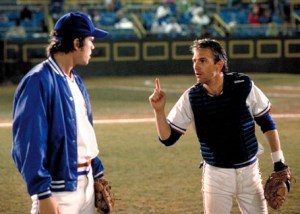
Bull Durham

Ebby Calvin LaLoosh: How come you don’t like me?

Crash Davis: Because you don’t respect yourself, which is your problem. But you don’t respect the game, and that’s my problem. You got a gift.

I guess my favorite baseball movie of all time has to be Bull Durham starring Kevin Costner, Susan Sarandon and Tim Robbins. Set in the Single-A Carolina League the film is about a journeyman minor league Catcher named Crash Davis played by Kevin Costner. Davis is a journeyman but was playing in Triple A at the beginning of the season and is sent down to Durham to help a top prospect pitcher named Ebby Calvin LaLoosh get ready for the major leagues.

In the process Davis meets Annie Savoy (Susan Sarandon) a part time junior college English instructor and baseball guru that hooks up with a player on the team for 142 games.  The movie is a great sports and life movie as it deals with transitions. For Davis it is the transition from active ball player to life and love after baseball, for LaLoosh who goes from minor league prospect to the majors and Annie Savoy who falls for a man for more than a season.  For the past ten years or so I have identified with Crash Davis, the journeyman who ends up mentoring young players.  In fact I recommend this movie to young chaplains that seek out my counsel simply because many are wild like “Nuke” LaLoosh and simply need a blunt and honest veteran at the end of his career to bring them along.

One of my favorite scenes in this movie is when Crash gets throw out of a game. It reminds me of when I got thrown out of the Army Chaplain Officer Advanced Course in October 1992.

But also I have spent a lot of evenings watching games in the quaint ballparks of the Carolina League. The movie shows the closeness of these teams, players, fans and communities that is had to match elsewhere. So when I watch this movie it takes me back to good times that I had in places like Kinston, North Carolina with friends and people I will never forget.
major_league1

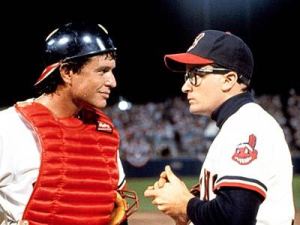
Major League

“Jesus, I like him very much, but he no help with curveball.” Pedro Cerrano

The film Major League is another of my favorites. Set in Cleveland in the late 1980s the film as about a perpetually losing team with a new owner who wants to move the historic franchise from Cleveland to Miami.  Her instruction to the team’s General Manager is to lose enough games to ensure that so few fans will come that she can legally move the team.

This is a team of misfits is put together from veterans who have seen their best times, overpaid free agents that don’t perform and unknown rookies.  Like Bull Durham there is the veteran but somewhat washed up catcher, this time Jake Taylor played by Tom Berenger who is the glue that holds the team together. The team includes a Cuban defector who can’t hit a curve ball named Pedro Cerrano played by Dennis Haysbert, an underperforming veteran Third Baseman named Roger Dorn, played by Corbin Bernsen and two rookies; outfielder Willie Mays Hays played by Wesley Snipes and pitcher Ricky Vaughn played by Charlie Sheen.

During the season the team has everything taken from them by owner Rachel Phelps played by Margaret Whitton as they embark on a journey from cellar dwellers to American League East Champions.  Once again I relate to the veteran catcher but I also have an affinity for the rebellious rookie Ricky “Wild Thing” Vaughn.
for-love-of-the-game-costne

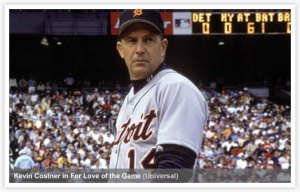
For Love of the Game

“And you know Steve you get the feeling that Billy Chapel isn’t pitching against left handers, he isn’t pitching against pinch hitters, he isn’t pitching against the Yankees. He’s pitching against time. He’s pitching against the future, against age, and even when you think about his career, against ending. And tonight I think he might be able to use that aching old arm one more time to push the sun back up in the sky and give us one more day of summer.” Vin Scully playing himself in For the Love of the Game

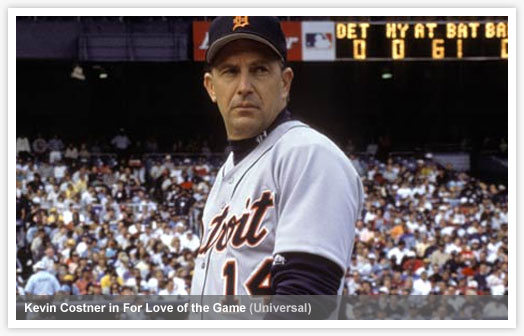
For Love of the Game is a movie about life.  The film is based on the Michael Shaara novel The Perfect Game. This is a film about a pitcher  named Billy Chapel played by Kevin Costner who is facing the end of his career.

Chapel has been with the team 19 years and has seen good times and bad, pitched in the World Series and suffered a grievous injury to his pitching hand in the off season. He is a man who has struggled with love yet forged lasting friendships with teammates, even those now on other teams.  The movie is set at Yankee Stadium with Chapel pitching in a meaningless game for the cellar dweller Tigers against the playoff bound New York Yankees.

The game revolves around Chapel and his relationships with his catcher, Gus Sinski (John C. Reilly), his lover Jane Aubrey (Kelly Preston), her daughter Heather (Gina Malone), former teammate and current Yankee Davis Birch and the team owner Gary Wheeler (Brian Cox) who is in the process of selling the team. The new owners are looking to deal Chapel to another team, likely the San Francisco Giants when the season is over and Chapel has to decide if he is going to be traded or retire.

With all of this swirling in his mind Billy Chapel pitches a perfect game and with every pitch the audience is introduced to the people and events that shaped his life.  One of the most poignant moments is toward the end of the game when the pain of his injured hand is killing him and his is tired that his catcher Gus pays a visit to the mount and says:

the boys are all here for ya, we’ll back you up, we’ll be there, cause, Billy, we don’t stink right now. We’re the best team in baseball, right now, right this minute, because of you. You’re the reason. We’re not gonna screw that up, we’re gonna be awesome for you right now. Just throw.” http://www.youtube.com/watch?v=WLrqdqBfqcw&feature=related

The team which had nothing to play for finds its heart and soul backing up their pitcher making great plays and getting the all critical hits.  I relate to Billy Chapel a lot because of my long career with all of its ups and downs.  The game is a microcosm of life and tells a story through baseball that runs deeper than the game itself. It is about life, family, friendship, love, commitment, good times and bad.  I cannot watch this movie without being moved to tears. Of course having Vin Scully call the game as if it were a real game makes it all the better.
natural-by-robertedwardauctionsdotcom

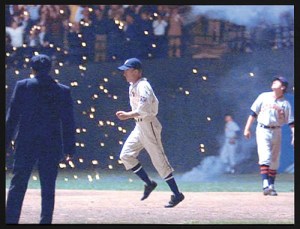
The Natural

Iris Gaines: You know, I believe we have two lives.

Roy Hobbs: How… what do you mean?

Iris Gaines: The life we learn with and the life we live with after that.

The Natural was adapted from the 1952 novel by the same name by Bernard Malamud.  In the film Robert Redford plays Roy Hobbs a hot prospect that is badly wounded by a female admirer who shoots him.  After years away from the game he returns to the game as an old rookie.

The novel is a tragedy while the movie was changed to make Hobbs triumph over adversity.  Hobbs has to battle his past, the press and his age and the ever present affects of his injury as he plays a game that he loves all the while kindling a relationship with Iris Gaines played by Glenn Close.  After a remarkable season Hobbs is sidelined by after effects of the shooting and the press publicizing his chequered past.

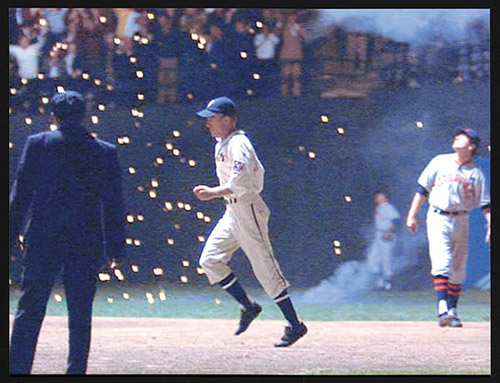
Hobbs leaves his sick-bed to play in the game that will decide the pennant. He comes to bat with 2 on and 2 out in the bottom of the 9th inning bleeding from his side due to the injury. Hobbs crushes a pitch that goes just foul and breaks his bat which had been carved from the wood of a tree struck by lightning. He asks his batboy for a bat saying “Pick me out a winner Bobby” and goes back to the batter’s box.  As the catcher attempts to exploit Hobbs injury call for an inside fastball which Hobbs takes yard into the lights causing them to explode as he rounds the bases as the Knights win the pennant.

The book ends differently and is kind of depressing. I like the film better.

James-Earl-Jones-Field-of-Dreams

Field of Dreams

“The one constant through all the years, Ray, has been baseball. America has rolled by like an army of steamrollers. It has been erased like a blackboard, rebuilt and erased again. But baseball has marked the time. This field, this game: it’s a part of our past, Ray. It reminds of us of all that once was good and it could be again. Oh… people will come Ray. People will most definitely come.” Terrance Mann (James Earl Jones)

“You know we just don’t recognize the most significant moments of our lives while they’re happening. Back then I thought, well, there’ll be other days. I didn’t realize that that was the only day.” Dr. Archibald “Moonlight” Graham (Burt Lancaster)

The last film that I will discuss in this post is Field of Dreams. This is one of the three films that I call the Kevin Costner Baseball trilogy and like For the Love of the Game was adapted from a novel, in this case Shoeless Joe by W. P. Kinsella.

The film is a baseball fantasy about a novice farmer named Ray Kinsella (Costner) the son of a baseball player who during the 1960s walks away from his father and baseball. While in his fields he hears a voice saying “If you build it, he will come.” He has a vision of a baseball field and plows under some of his crops to construct a field.

Nothing happens at first but the next summer “Shoeless Joe Jackson” (Ray Liotta) shows up and after meeting Ray brings with him the seven other players from the 1919 Chicago White Sox implicated in the “Black Sox” scandal and banned from baseball.

The film is shows a search for redemption as Kinsella who tries to make sense of the voice and the ball players.  Eventually goes to Boston to find 1960s author and activist Terrance Mann (based on J. D. Salinger) played by James Earl Jones after he hears the voice say “ease his pain.” He meets with the reclusive and somewhat unfriendly Mann and it does not go well.

Ray Kinsella: [being rushed out of Mann’s loft] You’ve changed – you know that?

Terence Mann: Yes – I suppose I have! How about this: “Peace, love, dope”? Now get the hell out of here!

He finally gets Mann to go with him to a Red Sox game but even that does not go well. Ray thinks that he has wasted his time when Mann stops him and the pair drives to Chisholm Minnesota to find a former ballplayer named Archibald “Moonlight Graham.” They discover Graham, the beloved town doctor died 16 years before.  As Kinsella walks the street he finds himself transported back in time and meets the old Doctor Graham.  He cannot get Graham to come with them but on the road back home he and Mann pick up a young hitch hiker looking to play baseball, named Archie Graham. They arrive back home and while the players who have grown in number they find that his farm is being foreclosed on be foreclosed on by a group of businessmen and bankers headed up by his brother in law.

FOD ray and john

During the argument between Ray and his brother in law the daughter fall off the small set of bleachers and appears to be severely injured.  Young Archie Graham walks off the field, becomes old doctor Graham and saves the girl’s life. The brother in law is transformed by what happened and sees the ballplayers for the first time.

He stops the action against his Ray who after thinking Ray was crazy finally sees the magic of this diamond as Archie Graham becomes the elderly Doctor Moonlight Graham and saves the Kinsella’s daughter’s life after she fell from the bleachers.   Mann gets to go with Shoeless Joe and the others into the mystical cornfield and a young ballplayer, Ray’s father John Kinsella is introduced. Ray recognizes him introduces him to his family without identifying him as his father or admitting that he is his son. The classic exchange between the two explains the essence of the film.

John Kinsella: Is this heaven?

Ray Kinsella: It’s Iowa.

John Kinsella: Iowa? I could have sworn this was heaven. [John starts to walk away]

Ray Kinsella: Is there a heaven?

John Kinsella: Oh yeah. It’s the place where dreams come true. [Ray looks around, seeing his wife playing with their daughter on the porch]

Ray Kinsella: Maybe this is heaven

The two end up “having a catch” as the lights of cars wind across the Iowa farmlands heading to this little ball field.  The movie has a special place in my heart because of the father-son relationship. When my dad returned from Vietnam I had emotionally moved away from him and baseball. I kept an interest in the game but for a number of years it was not a passion.  The exchange between Ray Kinsella and Terrance Mann still gets me, now later in life my dad and I reconnected as father and son and I came back to baseball.

Ray Kinsella: By the time I was ten, playing baseball got to be like eating vegetables or taking out the garbage. So when I was 14, I started to refuse. Could you believe that? An American boy refusing to play catch with his father.

Terence Mann: Why 14?

Ray Kinsella: That’s when I read “The Boat Rocker” by Terence Mann.

Terence Mann: [rolling his eyes] Oh, God.

Ray Kinsella: Never played catch with him again.

Terence Mann: You see? That’s the sort of crap people are always trying to lay on me. It’s not my fault you wouldn’t play catch with your father.

In 2004 while going to a reunion of my Continental Singers tour in Kansas City Judy and I made a few stops watching minor league games in Louisville and Cedar Rapids before making a trip  to Dyersville Iowa. Dyersville is the place where the Field of Dreams was filmed and where the you can still play ball on that magical diamond. Judy indulged me by playing catch with me on that diamond. It is true that if you build it he will come…I did.

I could go on about other baseball movies as there are many more but these above the others are the ones that I find a special connection with. I think I may write about some of the philosophy and faith that I draw from these films over the coming season.

Peace

Padre Steve+

4 Comments

Filed under Baseball, film, movies

The Desegregation of Baseball and Its Importance Today

robinson-dodgers

John Jorgensen, Pee Wee Reese, Ed Stanky and Jackie Robinson on opening day 1947

“Jackie, we’ve got no army. There’s virtually nobody on our side. No owners, no umpires, very few newspapermen. And I’m afraid that many fans will be hostile. We’ll be in a tough position. We can win only if we can convince the world that I’m doing this because you’re a great ballplayer, a fine gentleman.” Branch Rickey to Jackie Robinson 

My friends, in just a few days pitchers and catchers report for the 2015 Baseball Spring Training and it is time to reflect again on how Branch Rickey’s signing of Jackie Robinson helped advance the Civil Rights of Blacks in the United States. What Rickey did was a watershed, and though it took time for every team in the Major Leagues to integrate, the last being the Boston Red Sox in 1959, a dozen years after Jackie Robinson broke the color barrier.

Branch Rickey shook the foundations of America when he signed Jackie Robinson to a Major League deal in 1947, a year before President Truman desegregated the military and years before Jim Crow laws were overturned in many states.

Robinson and the early pioneers of the game did a service to the nation. They helped many white Americans see that Blacks were not only their equals as human beings, and as it was note about Ernie Banks and others that soon “little white boys wanted to grow up and be Ernie Banks.” 

robinson2-popup

Charles Thomas 

But for Rickey the crusade to integrate baseball began long before 1947. In 1903, Rickey, then a coach for the Ohio Wesleyan University baseball team had to console his star player, Charles Thomas when a hotel in South Bend Indiana refused him a room because he was black. Rickey found Thomas sobbing  rubbing his hands and repeating “Black skin. Black skin. If only I could make them white.” Rickey attempted to console his friend saying “Come on, Tommy, snap out of it, buck up! We’ll lick this one day, but we can’t if you feel sorry for yourself.”

Branch-Rickey

The Young Branch Rickey

Thomas, encouraged by Rickey was remembered by one alumnus who saw a game that Thomas played in noted that “the only unpleasant feature of the game was the coarse slurs cast at Mr. Thomas, the catcher.” However, the writer noted something else about Thomas that caught his eye: “But through it all, he showed himself far more the gentleman than his insolent tormentors though their skin is white.”

Baseball like most of America was not a place for the Black man. Rickey, a devout Christian later remarked “I vowed that I would always do whatever I could to see that other Americans did not have to face the bitter humiliation that was heaped upon Charles Thomas.”

In April 1947 Rickey, now the owner of the Brooklyn Dodgers had one African-American ballplayer at the Dodgers’ Spring Training site in Daytona Beach Florida. The South was still a hotbed of racial prejudice, Jim Crow was the law of the land and Blacks had no place in White Man’s baseball. That player was Jackie Robinson.

Jackie Robinson Shaking Branch Rickey's Hand

Jackie Robinson and Branch Rickey

The Dodgers had been coming to Florida for years. Rickey moved the Dodgers from Jacksonville to Daytona Beach in 1947 after Jacksonville had refused to alter its segregation laws to allow an exhibition game between the Dodgers International League affiliate the Montreal Royals, for whom Robinson starred.

That was the year that Rickey signed Robinson to a minor league contract with the Royals.  When Rickey called up Robinson 6 days prior to the 1947 season, it was  Robinson broke the color barrier for the Dodgers and Major League Baseball. However it would take another 12 years before all Major League teams had a black player on their roster.

It is hard to imagine now that even after Jackie Robinson had broken the color barrier that other teams did not immediately sign black players. However Rickey and Robinson broke the color barrier a year before Harry Truman had integrated the Armed Forces and seven years before the Supreme Court ruled the segregation of public schools illegal. But how could that be a surprise? The country was still rampant with unbridled racism. Outside of a few Blacks in the military and baseball most African Americans had few rights. In the North racism regulated most blacks to ghettos, while in the South, Jim Crow laws and public lynchings of progressive or outspoken Blacks.

But Jackie Robison and Branch Rickey helped bring about change, and soon other teams were following suit.

images-24

Larry Doby (above) and Satchel Paige signed by the Indians

pic1

The Cleveland Indians under their legendary owner Bill Veeck were not far behind the Dodgers in integrating their team. They signed Larry Doby on July 5th 1947. Doby would go on to the Hall of Fame and was a key player on the 1948 Indian team which won the 1948 World Series, the last that the storied franchise has won to this date.

Hank THOMPSON - LENNOX PEARSON BOHEMIA ARCHIVE

Hank Thompson and Roy Campanella

roy-campanella-ap2

The St. Louis Browns signed Third Baseman Hank Thompson 12 days after the Indians signed Doby. But Thompson, Robinson and Doby would be the only Blacks to play in that inaugural season of integration. They would be joined by others in 1948 including the immortal catcher Roy Campanella who signed with the Dodgers and the venerable Negro League pitcher, Satchel Paige who was signed by the Indians.

monte_irvin

Monte Irvin (Above) and Willie Mays

WillieMays

It was not until 1949 when the New York Giants became the next team to integrate. They brought up Monte Irvin and Hank Thompson who they had acquired from the Browns. In 1951 these men would be joined by a young, rookie Willie Mays to become the first all African-American outfield in the Major Leagues. Both Mays and Irvin would enter the Hall of Fame and both are still a key part of the Giants’ story. Despite their age have continued to be active in with the Giants and Major League Baseball.

images-25

Samuel “the Jet” Jethroe

The Boston Braves were the next to desegregate calling up Samuel “the Jet” Jethroe to play Center Field. Jethroe was named the National League Rookie of the Year in 1950.

mlb_a_MinnieMinoso_cmg_600

Minnie Minoso

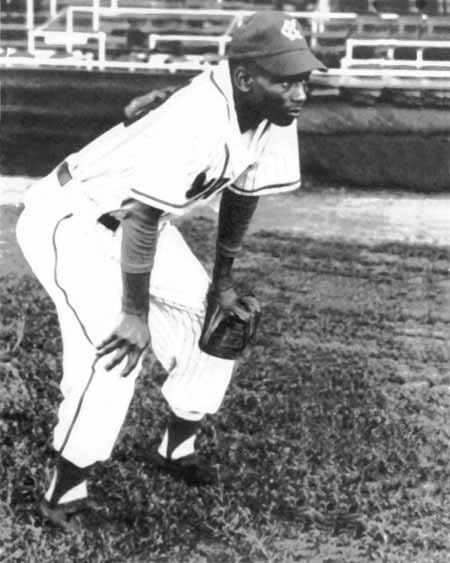
In 1951 the Chicago White Sox signed Cuban born Minnie Minoso who had played for Cleveland in 1949 and 1951 before signing with the White Sox. Minoso would be elected to 9 All-Star teams and win 3 Golden Gloves.

BANKS-ERNIE

Ernie Banks (above) and Bob Trice

Bob_Trice1953

The Chicago Cubs and Philadelphia Athletics integrated at the end of the 1953 season. The Cubs signed Shortstop Ernie Banks who would go on to be a 14 time All-Star, 2 time National League MVP and be elected to the Hall of Fame in 1977 on the first ballot. The Athletics called up pitcher Bob Trice from their Ottawa Farm team where he had won 21 games. Trice only pitched in 27 Major League games over the course of three seasons with the Athletics.

6RI1

Curt Roberts

Four teams integrated in 1954. The Pittsburgh Pirates acquired Second Baseman Curt Roberts from Denver of the Western League as part of a minor league deal. He would play 171 games in the Majors.  He was sent to the Columbus Jets of the International League in 1956 and though he played in both the Athletics and Yankees farm systems but never again reached the Majors.

1954_alston_tom

Tom Alston

The St. Louis Cardinals, the team that had threatened to not play against the Dodgers and Jackie Robinson in 1947 traded for First Baseman Tom Alston of the Pacific Coast League San Diego Padres. Alston would only play in 91 Major League games with his career hindered by bouts with depression and anxiety.

100005

Nino Escalara (above) and Chuck Harmon

Chuck_Harmon

The Cincinnati Reds brought up Puerto Rican born First Baseman Nino Escalera and Third Baseman Chuck Harmon. Harmon had played in the Negro Leagues and had been a Professional Basketball player in the American Basketball League. Harmon who was almost 30 when called up played just 4 years in the Majors. Both he and Escalera would go on to be Major League scouts. Escalera is considered one of the best First Baseman from Puerto Rico and was elected to the Puerto Rican Baseball Hall of Fame. Harmon’s first game was recognized by the Reds in 2004 and a plaque hangs in his honor.

Carlos-Paula

The Washington Senators called up Cuban born Center Fielder Carlos Paula from their Charlotte Hornets’ farm team in September 1954. Paula played through the 1956 season with the Senators and his contract was sold to the Sacramento Salons of the Pacific Coast League. He hit .271 in 157 plate appearances with 9 home runs and 60 RBIs. He died at the age of 55 in Miami.

elston-howard

Elston Howard

In April 1955 the New York Yankees finally integrated 8 years after the Dodgers and 6 years after the Giants. They signed Catcher/Left Fielder Elston Howard from their International League affiliate where he had been the League MVP in 1954. Howard would play 13 years in the Majors with the Yankees and later the Red Sox retiring in 1968. He would be a 12-time All Star and 6-time World Series Champion as a player and later as a coach for the Yankees. He died of heart disease in 1980.  His number #32 was retired by the Yankees in 1984.

58 kennedy, john f

The Philadelphia Phillies purchased the contract of Shortstop John Kennedy from the Kansas City Monarchs of the Negro League at the end of the 1956 season. Kennedy played in just 5 games in April and May of 1957.

osvaldo4_195

 Ozzie Virgil Sr.

In 1958 the Detroit Tigers obtained Dominican born Utility Player Ozzie Virgil Sr. who had played with the Giants in 1955 and 1956. Virgil would play 9 seasons in the Majors with the Giants, Tigers, Athletics and Pirates and retire from the Giants in 1969. He later coached for 19 years in the Majors with the Giants, Expos, Padres and Mariners.

Pumpsie_Green_1962_Topps

The last team to integrate was the Boston Red Sox who signed Infielder Pumpsie Green. Green made his debut on 21 July 1959 during his three years with the Red Sox was primarily used as a pinch runner. He played his final season with the New York Mets in 1963. He was honored by the Red Sox in 2009 on the 50th anniversary of breaking the Red Sox color barrier.

little-rock-stop-the-race-mixing

voter-registration-mississippi-1960-L-umRewg

luther-king

It took 12 years for all the teams of the Major Leagues to integrate, part of the long struggle of African Americans to achieve equality not just in baseball but in all areas of public life.  These men, few in number paved the way for African Americans in baseball and were part of the inspiration of the Civil Rights Movement itself.  They should be remembered by baseball fans, and all Americans everywhere for their sacrifices and sheer determination to overcome the obstacles and hatreds that they faced. It would not be until August of 1963 that Martin Luther King Jr. would give his I Have a Dream speech and 1964 that African Americans received equal voting rights.

robbyii

Spring training for the 2015 season is about to begin in Florida and Arizona, in what are called the Grapefruit and Cactus Leagues. It is hard to believe that only 68 years ago that only one team and one owner dared to break the color barrier that was, then, and often today is still a part of American life.

However in those 68 years despite opposition and lingering prejudice African Americans in baseball led the way in the Civil Rights Movement and are in large part responsible for many of the breakthroughs in race relations and the advancement of not only African Americans, but so many others.

We can thank men like Charles Thomas, Jackie Robinson and Branch Rickey for this and pray that we who remain, Black and White, Asian, and Latin American, as well as all others who make up our great nation will never relinquish the gains that have been won at such a great cost.

obamafirstpitch

President Obama throwing out the First Pitch for the Washington Nationals

Today we have a Black President who has the same kind of racial epitaphs thrown at him every day by whites who as they did to Charles Thomas, Jackie Robinson and so many other pioneers, Frankly such behavior can only be called what is it, unrepentant, unabashed, and evil racism. The fact is that such people don’t think that any Black man should hold such high an office, just as they did not think that Blacks should be allowed to play integrated baseball. It is anathema to them, and that is why their unabashed hatred for Obama runs so deep. They may disagree with his policies, but I guarantee if Obama was white, their opposition to him would be far more civil and respectful. But because he is half-black, and has a funny name they hate him with a passion, a passion that scares me, because words  and hateful beliefs can easily become actions.

Racism still exists, but one day thanks to the efforts of the early ball-players as well as pioneers like President Obama, and the undying commitment of decent Americans to accept people regardless of race, ethnicity, gender, religion, or even sexual orientation, we will see a new birth of freedom.

Peace

Padre Steve+

Leave a comment

Filed under Baseball, civil rights, History, political commentary

Let’s Play Two: Rest in Peace Ernie Banks

ErnieBanksCartoon_iru49ivi_jhcbt1pt

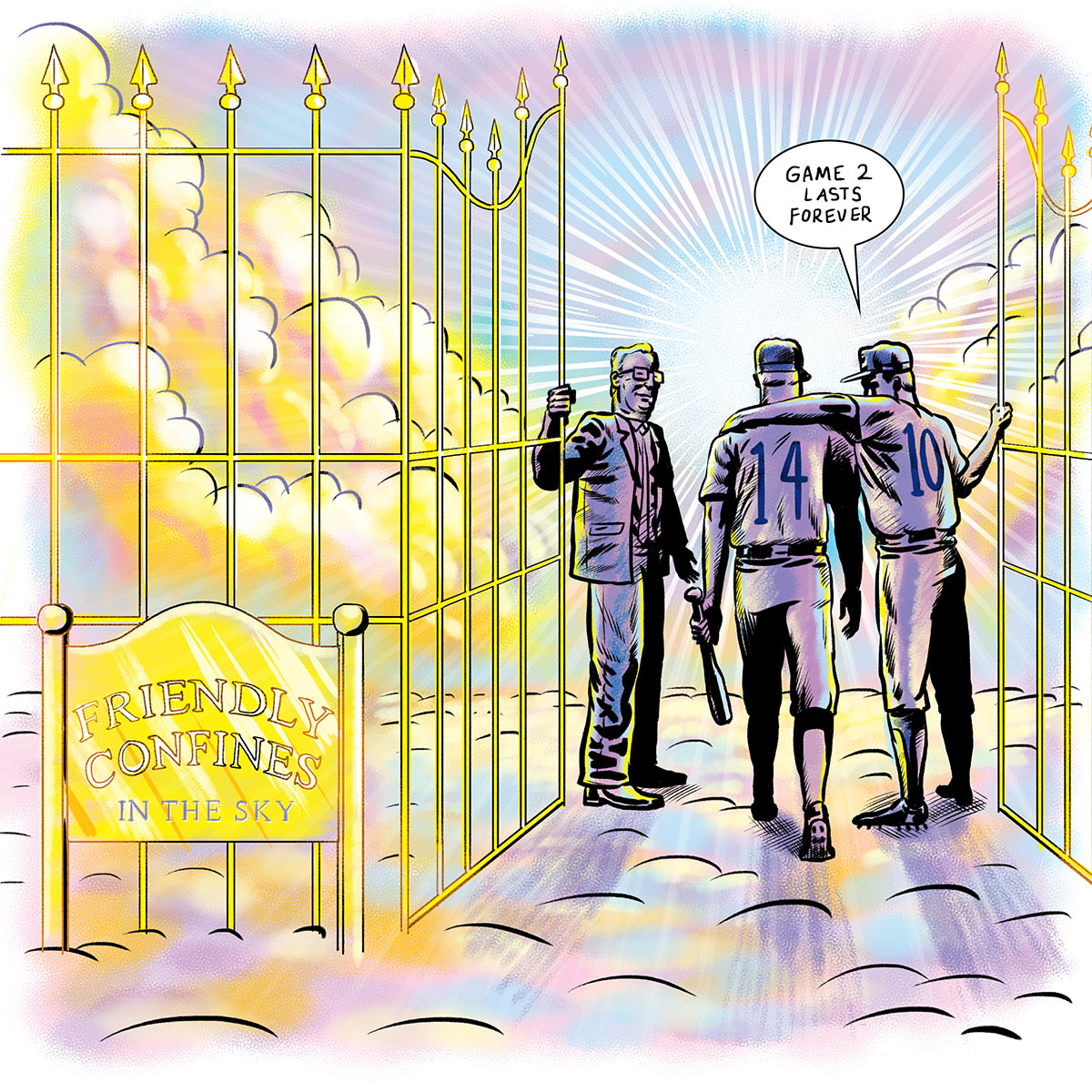
Banks being welcomed into Heaven by Harry Carey and Ron Santo 

“It’s a beautiful day for a ballgame… Let’s play two!” Ernie Banks

We lost yet another pioneer of baseball and civil rights, Ernie Banks, the first African American to play for the Chicago Cubs passed away at the age of 83.

ernie-banks

Banks was the quintessential “Happy Warrior.” His positive and upbeat view of life and baseball made him the most popular player in Cubs history and earned him the nicknames “Mr. Cub” and “Mr. Sunshine.” His happiness was legendary. His team mate and fellow Cubs’ great, Billy Williams was asked if Banks was really as happy as he appeared and Williams said:

“I always say, ‘That was Ernie. He was that way every day.’ He’s the most positive guy I ever met. He loved playing the game. Maybe it came from playing in the Negro Leagues, where they had so much fun with the game. I just know that Ernie loved being at the ballpark. He was as genuine as they get.”

He began playing ball in high school in Dallas, Texas, but it was softball as his school did not have a baseball team. He ended up being signed by Cool Papa Bell and played for the legendary Negro League Kansas City Monarchs, a time that was interrupted by two years of service in the Army. He returned to Kansas City and was scouted by the Cubs who brought him to the team in September 1953. I knew one of his teammates from the Monarchs, Carl Long who passed away just a week and a half ago. Like Banks, Long was an amazingly upbeat and positive man, beloved by his adopted one town of Kinston North Carolina.

ernie-banks-kansas-city-monarchs

Banks with Kansas City

When he came into professional baseball prejudice was still a big factor, even unconscious racism can be seen in the scouting report in the line of “nationality.” It lists Banks, not as simply “American,” but “Negro American.” The fact is that the Cubs were not the last to sign an African American, that dubious distinction went to the Boston Red Sox, who owner Tom Yawkey who refused to integrate the team until 1959, twelve years after Brooklyn brought up Jackie Robinson and six years after Banks reported to the Cubs.

B8FxdiaCUAAt9iV

Ernie Banks’ Scouting Report 

Race mattered. Banks grew up in Dallas Texas, then a hotbed of racial hatred, segregation and discrimination. He played in the Negro Leagues, and he served his country in an era when though Truman had desegregated the military, prejudice was still rife. But he overcame by his joy, between his attitude, the love that he spread to people, many little white boys, steeped in the prejudice of their parents, society and upbringing wanted to be Ernie Banks. He helped show white America that we could be one.

Yes, there is still far too much racism and prejudice in this country, but men like Ernie Bank, Willie Mays, Satchel Paige, Carl Long and so many others helped a lot of young boys learn just how wrong the racial attitudes and prejudice they had been taught was wrong, and should not be part of America.

Banks hit 512 home runs in a Major League Baseball career that lasted from 1953 until his retirement in 1971. The fourteen time All-Star was the first National League player to win the Most Valuable Player award consecutively when he did it in 1958 and 1959. He played 717 consecutive games at shortstop before a knee injury forced him to move to first base. He held the record for most home runs in a season as a short stop for decades, hitting 30 or more in six seasons at the position. His 277 home runs as a shortstop were the most for any player at the position until Cal Ripken passed him. Ripken retired with 345 playing at the position.

Despite his accomplishments he is one of the greats who never played in the post-season, or the World Series, which was his dream. But despite that he never lost his enthusiasm for the game. The story of how he got his legendary tag line “Let’s play two” is fascinating. He told the Houston Chronicle’s Richard Dean:

“It was about 105 degrees in Chicago, and that’s a time when everybody gets tired. I came into the clubhouse and everybody was sitting around and I said, ‘Beautiful day. Let’s play two!’ And everybody looked at me like I was crazy. There were a couple of writers around and they wrote that and it stayed with me.”

Banks was inducted into the Baseball Hall of Fame in 1977. He was awarded the Presidential Medal of Freedom by President Obama, a fellow Chicagoan, in 2013.

barack-obama-ernie-banks

But he was a man of wisdom as well. He once said something that probably all of us, including me at times, can learn from: “You must try to generate happiness within yourself. If you aren’t happy in one place, chances are you won’t be happy anyplace.”

With that I wish you a wonderful Sunday.

Peace

Padre Steve+
Leave a comment

Filed under Baseball, civil rights, News and current events