Category Archives: christian life

Belief and Unbelief

198177_10151361204842059_1890411795_n

“Whether your faith is that there is a God or that there is not a God, if you don’t have any doubts you are either kidding yourself or you are asleep.” Frederick Buechner

I have always found that the story of the man who asks Jesus to heal his daughter in Mark 9:24 to resonate with me. The man cries out to Jesus “I believe, help my unbelief.”This has been part of my faith journey for decades. I think that it is one of the truest declarations of faith ever recorded. I know many people, believers of different faiths and unbelievers alike who believe with unrequited certitude. They outwardly proclaim what they believe as absolute and those who do mot believe like them are to be pitied or maybe even despised. While many will make that kind of proclamation I wonder how many believe with the certitude of their public statements be they a “believer” or an unbeliever.

Saint Anselm of Canterbury wrote “Faith seeks understanding. I do not seek to understand that I may believe, but I believe to understand.”

I confess that as much as I believe that I often doubt. Not that I doubt God, but rather that I doubt humanity’s capacity to truly understand the infinite possibilities of God or of human existence. I actually think that means that I believe in a pretty infinite kind of God. For me I have taken Anselm’s understanding of faith as any of us who profess to believe in God or something else as the closest thing to truth we will know in this present life. Our lives, our existence is shrouded in understanding that is at best “seen through a mirror darkly” in the words of Paul the Apostle.

Dietrich Bonhoeffer wrote “Man no longer lives in the beginning -he has lost the beginning. Now he finds himself in the middle, knowing neither the end or the beginning, and yet knowing that he is in the middle, coming from the beginning and going toward the end. He sees that his life is determined by these two facets, of which he knows only that he does not know them.

I love what some refer to as the Anglican Triad of belief, that the Christian faith is interpreted through Scripture, Tradition and Reason. But I also think that we as Christians also need to interpret it through our experience and humbly acknowledge that we do live in that “uncomfortable middle” neither knowing the beginning or the end.

This makes many if not most people uncomfortable. We want certainty. We want to be in control. However many no longer believe in themselves, much less a God that they cannot see and substitute an absolute belief in an “orthodoxy” of some movement, be it religious, philosophical, political or scientific and cling to it with unbridled fanaticism. That spirit is the genus of every mass movement and often the root of great evil. One only has to look at history to understand the truth of this.

Eric Hoffer wrote that “Even the sober desire for progress is sustained by faith- faith in the intrinsic goodness of human nature and the omnipotence of science. It is a defiant and blasphemous faith, not unlike that held by the men who set out to build “a city and a tower, whose top may reach into heaven” and who believed that “nothing will be restrained to them, which they imagined to do.”

Faith is important but regardless of what we put our faith in, God, humanity, science or materialism we have to own the limitations of our faith simply because of our existence in this uncomfortable middle. For me this limitation means that I believe in order to understand. My faith seeks understanding but understands that in this life I will not understand even the remotest amount of the vastness of creation, the spiritual aspects of life or even why there is the designated hitter rule, bats made of anything other than wood or artificial turf on a baseball diamond. But I digress…

My faith as it is as a Christian is in Jesus the Christ. It is stated in the Creeds and testified to in Scripture, tradition and history, but even those accounts are incomplete, John the Apostle says as much at the end of his Gospel as does Paul in Corinthians. Thus I believe that if Christians believe that we must honestly acknowledge the limitations that we have in understanding even what we claim to believe. We have to believe that there is in light of this limitation that we do not know “all truth” or even that we fully understand the limited amount that we actually can study or observe, or for that matter that we even correctly interpret those strongly held beliefs, be they religious, political, scientific or philosophical. That goes for the Christian, any other religious person, as well as the Pagan or the Atheist. Harry Callahan once said “a man’s got to know his limitations.”

Such a life does not lend itself to triumphalism of any kind, but rather in humility. Real faith in whatever we determine is truth is also is best demonstrated in our doubts and the honesty to admit our limitations. There is a prayer from Kenya that I found many years ago which says from the cowardice that dare not face new truth, from the laziness that is contented with half truth, from the arrogance that thinks it knows all truth, good Lord deliver us.

Peace

Padre Steve+

1 Comment

Filed under christian life, faith, philosophy, Religion

Musings on Easter Night: Holy Week Happenings, Busted Brackets a Radical Pope and Opening Night

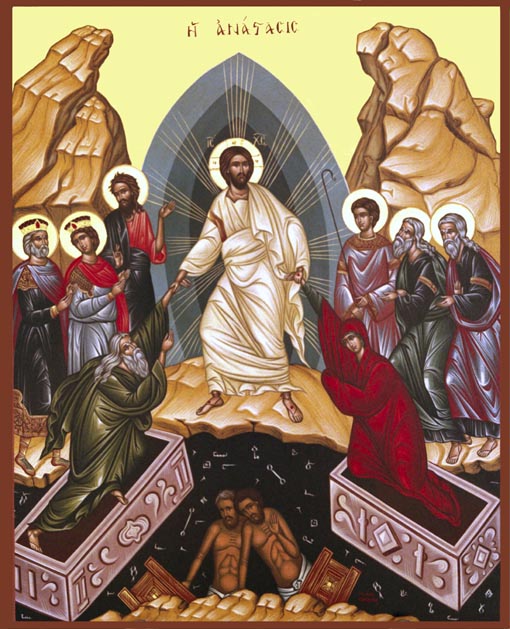
resurrection

The liturgy proclaims “Alleluia! The Lord is Risen. He is risen indeed! Alleluia!” It is the triumph song of life conquering death in the Suffering, death and resurrection of Jesus the Christ.

This week I have done about all that I could to avoid political, legal and even religious controversies. Lord knows there are enough of those that i get involved in but I really wanted to focus more on Jesus, my wife Judy and our friends. So I have stayed away from becoming too deeply involved in the heated debates and topics of the past week limiting myself to skimming the news, reading as little commentary as possible and making almost no editorial comments of my own. That was hard but I digress…

IMG_0643-726257

Instead I have spent most of my time reading to the Gospel accounts of the Passion narrative and historical accounts and descriptions of the time, culture and political conditions that Jesus was crucified in Jerusalem. I began Holy Week hoping to complete the first two parts of a historical fiction trilogy built around the Roman Centurion that tradition calls Longinus. According to tradition was the man who placed his spear in the side of Jesus and who exclaimed “surely this man was the son of God” as Jesus died on the cross. You can find the links to the first two parts of the Trilogy below.

Part One: A Centurion in Jerusalem 

A Centurion’s Sunday in Jerusalem: The Story of Longinus

The Story of Longinus the Centurion: A Meeting of Friends

The Story of Longinus the Centurion: A Visit to Death Row

Duplicity in Jerusalem: An Official Visit and 30 Pieces of Silver

Part Two: An Unenviable Mission

The Long Good Friday of Longinus the Centurion

The Morning After a Most Unsettling Crucifixion: The Story of Longinus the Centurion

New Troubles: A Missing Body an Empty Tomb and Sleeping Soldiers The Story of Longinus the Centurion

In fact I did not spend time in church this week. Usually i will spend large parts of Holy Week engaged in attending or performing different services, Masses or times of prayer. However, I have been on the road a lot the past couple of years. Judy and I have spent too much time apart. Apart from personal meditations and prayers on Holy Thursday and Good Friday the only thing that we did was to have me celebrate an Easter Sunday Eucharist together at home. We could have spent a lot of the limited time that I was home in church, and as much as I love the people at the small Episcopal parish that I attend when home I needed the time with Judy more. Being stationed over 200 miles from home for the past two and a half years does help help one realize what is important. Next year I will be in charge of a chapel and then I will be fully engaged in Holy Week activities, this year however, we needed to be together. Some might find fault in this but if they do they can pound sand, of course in Christian love.

The week was interesting because Wednesday was my birthday and Judy made arrangements to have friends go with us to a local German restaurant. I really enjoyed being with Judy and our friends and that time was well spent. Once again, something that I have come to be thankful for and to make sure that I spend time to do now is to make time for friends and family.

minute-maid-park-getty

Speaking of baseball I found it fitting and quite symbolic that Opening Night 2013 fell on Easter Sunday. If you ask me this should always be the case but it would involve having all of Christianity having to change their calendars to fit and that will not happen. If Pope Francis hailed from the Dominican Republic there might be a chance, but we need to wait to get a Pope from the Dominican Republic.

gty-164815601-4_3_r536_c534

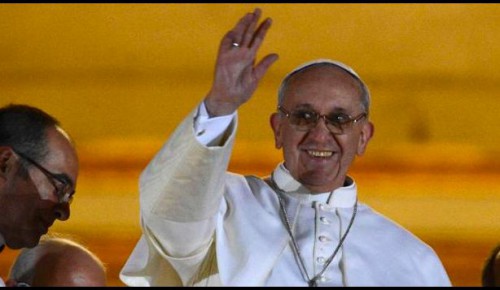
Speaking of Pope Francis it appears that he is really starting to rattle some guided cages at the Vatican and among Church Traditionalists, and if you ask me not a moment too soon. He turned a lot of heads with his common touch over the first couple of weeks of his Papacy but it was his actions on Holy Thursday that set heads spinning a la Linda Blair in The Exorcist.

For the first time a Pope washed the feet of women, one of them being a Moslem. I do pray for this Pope and I worry about him because some of the most violent people are religious types. Some of the more traditional mindset don’t take change well. Some, even among Christians resort to violence when a church or religious leader is going outside what they believe is “orthodox” even if it has little to do with their actual orthodoxy.

Well now it is the time that I need to get ready for work in the morning. While I am doing this I will continue to watch the Texas Ranger’s play their new American League Central neighbors the Houston Astros.

Until tomorrow,

Peace, Happy Easter and Happy Opening Night after all “the only church that truly feeds the soul day in, day out, is the Church of Baseball.” 

Padre Steve+

Leave a comment

Filed under Baseball, christian life, faith, News and current events

New Troubles: A Missing Body an Empty Tomb and Sleeping Soldiers The Story of Longinus the Centurion

PictJesusResBelll

This is the third chapter of the redone second part of a trilogy that I have been writing about the Roman Centurion known as Longinus who was at the cross when Jesus was crucified. I have tried to weave other characters from the Gospel narratives, including the Centurion whose “beloved servant” was healed by Jesus an account mentioned in both Matthew and Luke, where the Greek word for servant “pais” is only found in these accounts and is different from the word commonly used in the New Testament “doulos.” The difference leads to some interesting and potentially powerful understandings about the people that Jesus interacted during his earthly ministry.

The links the to preceding chapters are shown below. I will be doing a final section to the trilogy dealing with what I imagine happened later to the men in the narrative. The reason I am doing this is because I believe that many Christians cannot imagine what it must have felt like to be the Roman occupiers of Judea in a time where they were hated and deep divisions, religious, cultural and political complicated the lives of Roman officers like the Centurion known as Longinus.”

Part One: A Centurion in Jerusalem 

A Centurion’s Sunday in Jerusalem: The Story of Longinus

The Story of Longinus the Centurion: A Meeting of Friends

The Story of Longinus the Centurion: A Visit to Death Row

Duplicity in Jerusalem: An Official Visit and 30 Pieces of Silver

Part Two: An Unenviable Mission

The Long Good Friday of Longinus the Centurion

The Morning After a Most Unsettling Crucifixion: The Story of Longinus the Centurion

I do hope that you enjoy the series and that it and the Gospel narratives challenge you whether you are a Christian or not. I know from my time in Iraq serving with our advisors to the Iraqi forces that what the Roman officers dealt with was more difficult than any of us could imagine, unless you have been a soldier or officer of an occupying power.

Peace and Happy Easter…He is Risen!

Padre Steve+

The pounding on his door awakened Longinus before he expected on this day after the Jewish Passover. He was hoping perhaps beyond hope that the worst was over and that in a few days he could take his soldiers back to the confines of Caesarea and away from the troubled city of Jerusalem. He was tired of this duty and longed for service with a real Legion with real Roman soldiers. He wiped the sleep from his eyes and went to the door of his quarters in Fortress Antonia. He opened the door to find his Optimo, or second in command Decius, with a look of near panic on his face.

He asked the young officer to come into his quarters and take a seat at his table. They like the other officers had seen events that they could barely explain. some of those events had troubled Longinus in a manner in which he was not accustomed.

Longinus took a wineskin and poured the contents into two cups. He asked Decius what was so urgent and frightening that he had to be at his quarters well before the duty day began. The young man took off his helmet to reveal a crop of blondish brown hair common to the Tyrol in the northern part of Italy and told an almost unbelievable story. He explained that there was trouble at the tomb of the itinerant preacher named Jesus.

The two guards from their unit who had relieved the previous watch at the tomb had evidently fallen asleep and there had been a break in. They claimed that they had been overcome when some kind of angelic being who had descended in front of them and some of the women who had been at the execution site previously. The story seemed preposterous but Longinus could not believe that they had fallen asleep on duty either as such could be punished by a death sentence. Adding to the confusion was a report that two of the preacher’s “disciples” had reportedly entered the tomb and claimed that the body was gone as had some of the women that had been there at the crucifixion. It was unbelievable but yet in light of the strangeness of the man and his execution. Longinus had Decius bring the two soldiers to him along with the Sergeant of the Guard to explain what had happened.

RubensResurrection

The two soldiers, one a Samaritan and the other a Greek had good reputations in the unit. Neither had given him cause for concern and the terrified expression on their faces as they explained what happened gave Longinus reason to believe them. Yes it was possible that they were lying but Longinus believed their story. He threatened them and promised a light punishment if they only told the truth, but despite this they stuck with this outrageous story.

Longinus was not much of a believer in miracles angels or any sort of magic hocus pocus purveyed by seers, magicians or fortune tellers. that being the case here he was believing this outlandish story because to disbelieve would mean that there was a serious breakdown of discipline by two outstanding soldiers. He had some soldiers that he wouldn’t believe for an Athenian minute if they told him such a tale but he believed these men. The terror on their face as they told the story led Longinus to believe that they had to be telling the truth as improbable as it was.

Longinus again thought of his words as the darkness enfolded the city and the earth quaked preacher hung dying on the cross on that evil hill two day before.

Longinus went to Pilate’s headquarters when he and the other Centurions, including his friend Flavius were participants in a meeting with the High Priest and his representatives and two of Herod’s people.

The meeting reminded him of a meeting of criminals. The High Priest and his representatives were livid and Herod’s henchmen voiced their displeasure regarding the lapse of the Roman soldiers that allowed this to happen. Longinus spoke for his men and said that as improbable as it was that he believed their story. That only made the non-Romans angrier; he almost thought that they were engaging Pilate in some histrionic episode in order to force Pilate to do their bidding. They insisted that Longinus’ soldiers had to have fallen asleep and or that they had conspired with the preacher’s followers to remove the body from the tomb. This angered Longinus to the point that he interrupted their ranting to defend his men’s honor. Pilate finally ordered Longinus and the High Priest to be silent. He asked the non-Romans to step outside while he conferred with Longinus and the other Centurions.

Pilate explained his dilemma. He was afraid that if he sent the High Priest away by supporting his soldiers that there would be a revolt in the streets. He had seen the tumult on the streets by the supporters of the High Priest when he tried to release the “King of the Jews” and felt that this would be worse for security. He advised the Centurions that while he had no reason to doubt them or their men that he had to placate the High Priest and Herod in order to avoid chaos, chaos that could lose him his job if he wasn’t careful. Likewise he did not feel that he had the manpower in the city to handle a full-fledged revolt and that he would have to call for reinforcements from the Legions based in Syria, something that he was loathe to do as this would get back to the Emperor.

Longinus thought back to the day of the execution. Pilate had agreed to place a guard at the tomb at the urging of the High Council. Longinus had argued against placing any soldiers at the tomb as he felt that since the “King of the Jews” them man that he had called the “son of God” was dead that Rome’s obligation was over. The whole thing reeked of politics.

Longinus was overruled by Pilate who explained that Roman soldiers needed to guard the tomb because the High Priest who Longinus detested as much as Pilate insisted that Jesus’ followers would attempt to steal the body and claim that he had been raised from the dead to lead a revolt against the Council and eventually Rome itself.

Added to the Judean witches’ cauldron was the presence of Herod Antipas, the corpulent and corrupt “King” of Judea. If Longinus detested Pilate and Caiaphas he hated Herod and all that he stood for, it made him wonder why Roman lives and treasure were spent to solve the problems of this God-forsaken land which he believed would still be trouble two millennia from now if the world lasted that long. Longinus believed that as long as Rome allowed the High Council and Herod to rule the region by proxy that the troubles would never end. He believed that it was only a matter of time before these people, led by the Zealots would revolt as they had against the Seleucids nearly 200 years before. He knew if that happened that Rome would crush the revolt and not leave as much as a house standing. He hated this occupation and all that it stood for, especially when he saw a good man, an innocent man killed for no good reason other than the politics of it all. It sickened him.

When he was done explaining his decision to Longinus and the other Centurions Pilate now called the quite irate non-Romans back into the proceedings. He told the High Priest and Herod’s men that he would disciple the soldiers involved and he would assist them in finding just what parties removed the body from the tomb. In the mean time he would suppress any stories coming from the soldiers about this supposed “resurrection.”

The High Priest and Herod’s men agreed that this would suffice and thanked Pilate for his time and effort. Longinus and the other Centurions quietly seethed as this took place. When the non-Roman parties had left Pilate ensured the officers that no action would be taken against the men and that he would not actively assist the Jews in trying to find the perpetrators of the event. He then let the officer know that they would remain in Jerusalem for another week to allow the multitude of pilgrims to leave the city and then they would return to Caesarea. Longinus thought and for a brief moment admired Pilate’s duplicity. Pilate the consummate politician had again found a way to defuse the situation. As much as he despised the deal it was better than trying to deal with a full fledged rebellion with so few troops available in Jerusalem.

Longinus left with the others and met Decius and Flavius and stepped into the court of the fortress. He was very unhappy with the deal that Pilate made with the High Priest and Herod. He felt that he had dishonored his soldiers and the unit for the sake of political expediency. He felt ashamed of the Empire for what Pilate had done in cooperating with these people from beginning to end during this affair. He would not forget.

Empty-Tomb-Picture-07

That night he felt compelled to walk to the empty tomb with Flavius. In the darkness they looked into the sepulcher aided by a lantern. They saw the grave cloths where they remained; the large stone was rolled away and the seal that had been placed on it was broken. They looked for any evidence to suggest that the soldiers had fallen asleep but could not find any. Nor did either see how anyone could have stolen the body and gotten very far without being seen by anyone. Convinced by what they saw they set down in the tomb.

They sat silently and wondered. Finally Longinus asked Flavius. “You believe in this Jewish God, what do you think?”

Flavius sat for a moment staring silently ahead at the stone wall of the tomb. Finally he spoke “My friend, I believed something was different about the Galilean when he healed my servant, even though I’m sure that he knew that my servant was more than a servant to me.”

Longinus thought for a moment. “Friday morning I would have told you that the man was a simple but probably misunderstood Jew. Tonight I do not know.” He paused. “Perhaps he is the son of God, or whatever I said on that hill.”

“I believe that he is some kind of God my friend, one who may change all of our lives.” Replied Flavius.

“My friend, I really do not know what to believe anymore. Let’s get out of here and get back to Antonia, at least we can drink there.”

Longinus looked at ground where the body had been placed. In the dim light he noticed what appeared to be some thorns. He reached down and picked up the crown of thorns that had been on the Galilean’s head.

Flavius looked at him and said “the crown, how fitting that it was left here.”

“Somehow fitting. Maybe we should take it? Who knows maybe it will be worth something someday?” Responded Longinus.

“Maybe so my friend, maybe so. But maybe you should keep it to remind you of him.”

“No you take it. I have the Galilean’s blood on my spear. That is enough a reminder for me.” Longinus handed the crown of thorns to Flavius and they walked into the night out of the tomb, their path lit by their lamp.

They walked back to the fortress when both men went to the tavern in Officer’s Mess and had the barkeep pour them each an ale. He drank quite a few before the evening was out, Flavius leaving before him. he remained alone for hours and then went to his quarters where he lay down exhausted and perplexed by the events of the past few days.

1 Comment

Filed under christian life, faith, History, Political Commentary, Religion

Doing the Gospel: “Beyond the Possible” by Cecil Williams and Janice Mirikitani A TLC Book Tour Review

l

Beyond the Possible, 50 Years of Creating Radical Change at a Community Called Glide, Cecil Williams and Janice Mirikitani Harper One Books, New  York 2013 

“You never know when the Spirit will knock at your door…” 

I seldom read books by American pastors of any denomination. I have gotten over the cult of celebrity associated with most of our most esteemed preachers. Likewise, when I read a story about a church, be it a local church or denomination I am generally filled with skepticism and wonder when I am going get hit on for a financial contribution or political favor. I guess that I have seen the light in regard to how many church leaders run their business. Or maybe I am just a bit cynical having spent many years in the Mega-Church world and worked for a nationally recognized and now very politically active “evangelist” about 20 years ago.

When I received the note from the good people at TLC Book Tours to do a review on this book I almost turned it down but then thought well “what the hell? If I think it’s bullshit I can rip it apart.”

However I cannot do that, even after reading it. I had remembered the name of Cecil Williams from growing up east of San Francisco in the 1970s. At the time I thought Williams a bit too radical and not “Christian” enough. Of course I knew little of him or of Glide only what I saw on television news reports, many of which were not always the most complimentary of him. Since I knew little of Glide that impression was what I had for many years. However, over the years I would occasionally see Pastor Williams on different interviews and was impressed with him and what I heard. I didn’t necessarily always agree but he was impressive, not the liberal monster I thought him to be.

Of course the book is a memoir of Williams and his wife Janice Mirikitani and how their lives intersected with a dying church in the heart of San Francisco’s Tenderloin district, a place ridden with drugs, crime and poverty. It was a place that most of the church members had departed from. It was a church, like so many that had seen better days. It was a church like the one that I was baptized in as a baby which as the neighborhood that it was located slid into poverty and change in ethnic composition saw the majority of its membership move away. Eventually, that Methodist church died and was closed. It was a fate that Glide Memorial Methodist Church was heading to when the last 35 members welcomed their new pastor, Cecil Williams in 1963. It was a moment of change. It was a moment when a fresh breeze blew through the church.

The book chronicles the stories of Williams, the son of a church janitor and his wife in Jim Crow San Angelo Texas and his early life under those laws. It tells of his struggles as a pioneer African American student at SMU’s Perkin’s Seminary and his part in the Civil Rights movement of the late 1950s and early 1960s, including time in a Birmingham jail.

It also tells the story of a young Japanese American woman, Janice Miritikani who with her family had endured the pain and humiliation of being incarcerated after the attack on Pearl Harbor simply because they were Japanese. It is her story as well, a story that was not only about the prejudice that she experienced the dehumanizing experience of rape and incest covered up by family and cultural pressures, the story of a woman who prayed for God’s presence and struggled as God remained silent.

It is a story of love, faith hope, purpose and the endless possibilities that exist when one sees that which is considered “beyond the possible.” It is a book that tells of struggle of a community which many people did not consider redeemable. It is the story of a church and of people, not just Williams and Miritikani but the people who in turbulent times launched a church that has become a bastion of living the Social Gospel, speaking prophetically to those in power and working for the benefit of the least, the lost and the lonely.

Glide, the community is a place of acceptance and love, a place which serves and empowers those without power, without a voice. Providing care to the homeless, the jobless, the needy, the HIV infected and those suffering from AIDS, those battling drug and alcohol abuse, those rejected for their lifestyles and a host of others. The Glide foundation, which Williams has headed since his “official” retirement from the church is one of the top philanthropic organizations in the nation.

Now there are some that would not agree with Williams and the message of Glide. It is a church that welcomes people of all walks of life and faith. It is a church with a door open to all, even those who would come to the church intentionally to cause trouble as did a number of White Supremacists attired in  White Power, Neo-Nazi and Neo-Confederate images, who ended up staying when their hate was met by love. It is a church where the rich and the poor worship together in a service called a “celebration.”

Glide is a strange animal. It is a by all definitions a politically and socially active Mega-Church with about 11,000 members. Those that know me well and read this site regularly know that I am not a fan of most Mega-Churches. To me most, regardless of their theological or political views seem to exist for themselves.  However, Glide is a place that thanks to Williams, Miritikani and those that over the past 50 years have sacrificed to build reaches out to redeem the community where it resides and does not exist for itself. It may not speak the same language as the contemporary Evangelical Mega-Churches but it is reaching those who quite often would be unwelcome in those churches. It is the embodiment of the love of God, an incarnation of the love of Jesus to those that would be, and were in fact the same kind of people that Jesus himself went to in his earthly ministry.

This book is inspirational to read for anyone who has a heart for those disenfranchised and uncared for by the church or the world. I found it hard to put down. The message “you never know when the Spirit will knock at your door” was real to me as I read this book during the Season of Lent. Indeed it is possible for God and the people of God to go Beyond the Possible.

tlc-tour-host

I highly recommend it to anyone and plan to visit Glide the next time that I go to San Francisco and hope that should I be involved in parish ministry after my Navy career is over that I can emulate the spirit and love that I saw described in this book.

Peace

Padre Steve+

3 Comments

Filed under christian life, faith, leadership, Pastoral Care, Religion

The Toxic Faith of “Americananity” and its Antidote

seven-mountains

“The notion of a Christian commonwealth should be exploded forever. … Government should protect every man in thinking and speaking freely, and see that one does not abuse another. The liberty I contend for is more than toleration. The very idea of toleration is despicable; it supposes that some have a pre-eminence above the rest to grant indulgence, whereas all should be equally free, Jews, Turks, Pagans and Christians.” John Leland 

There is a form of religion and indeed the “Christian” faith that is toxic and if not treated leads to the spiritual and sometimes the physical and emotional death of the infected person.

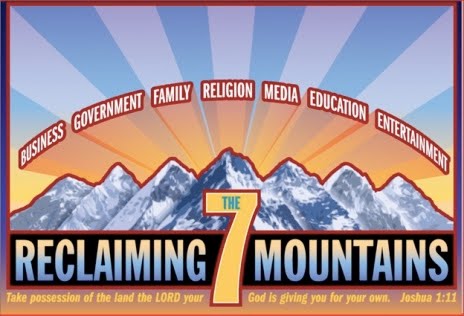
There is a nationalized version of this faith which in this country with respect to the Christian tradition I will call “Americananity.” It is a bastardized version of the Christian faith overlaid with the thin veneer of a bastardized version of American history. Its purveyors are quite popular in the world of “conservative” American Evangelicalism and Catholicism.  Supreme Court Justice Robert Jackson wrote “[I]n our country are evangelists and zealots of many different political, economic and religious persuasions whose fanatical conviction is that all thought is divinely classified into two kinds — that which is their own and that which is false and dangerous.”

Pat Robertson, evangelist and founder of the Christian Broadcasting Network is an example of what Leland and Jackson warned us about. Robertson said on his program that “You say you’re supposed to be nice to the Episcopalians and the Presbyterians and the Methodists and this, that, and the other thing. Nonsense, I don’t have to be nice to the spirit of the Antichrist.” — Pat Robertson, The 700 Club, January 14, 1991. The late David Chilton was another. He wrote: “We believe that institutionally Christianity should be the official religion of the country, that its laws should be specifically Christian”

It is quite fascinating when you look at it. This faith is a combination of a selective reading of American history, Christian teaching and Biblical interpretation which mixes and matches a wide variety of mutually conflicting and contradictory traditions. This Toxic Americananity is based on a reading of American and Western History which negates, marginalizes or willingly distorts the views or contributions of those who were not Christian or who like Baptists, John Leland and Roger Williams due to their own experiences of religious persecution refused to buy into any form of state sanctioned religion.

I find it interesting that Conservative Icon and champion of limited government Barry Goldwater had great reservations about those that sought to establish the superiority of any religion. Goldwater said on the Senate floor: “The religious factions that are growing throughout our land are not using their religious clout with wisdom. They are trying to force government leaders into following their position 100 percent.”

The leaders of this new and quasi “Christian faith” are many and include some of the most popular religious leaders in the United States such as Pat Robertson, the pseudo-historian David Barton, James Robison, Gary North, Bryan Fischer, James Dobson, Gary Bauer Phyllis Schafley and a host of others. For them the Gospel has been equated with government legislation of “Christian” values which conveniently are defined by them and their political allies often in complete contradiction to the Gospel and to nearly 2000 years of Christian experience. North, one of the most eloquent expositors of the Dominionist movement wrote:

“The long-term goal of Christians in politics should be to gain exclusive control over the franchise. Those who refuse to submit publicly to the eternal sanctions of God by submitting to His Church’s public marks of the covenant–baptism and holy communion–must be denied citizenship, just as they were in ancient Israel.”

That is quite a statement and those who think that they can co-opt people like North, Robertson or others are quite mistaken. Goldwater realized this. What is fascinating to me is to watch these men and women advocate religious and political positions in regard to Church-State relations that completely opposite of what early American Christian and non-Christian civil libertarians imagined when our country was founded. Positions that quite often are at odds with even the historical tenants of their own faith. Their only claim to innocence can be because not a one of them have any training in history and often are even worse when it comes to their understanding of the Christian tradition, which did not begin in and will not end in the United States.

In this confused and often hateful “faith’ we see men and women who hate centralized government but extol a centralized religion. I was talking with a friend who is adamantly opposed to a powerful Federal Government but extols the perfection of the centralized bureaucracy of his Roman Catholic Faith. He could not see the contradiction. I watch others who extol an almost Libertarian understanding of the government and the Constitution who supposedly in their religious tradition are from the “Free Church” who advocate the supremacy of the Church over the State and in doing so their particular and limited understanding of Church over that of the Church Universal.

In this confused and contradictory setting there are Catholics espousing political views that are in direct opposition to the understanding of government supported by the Magisterium of the Church. There are Evangelical and Charismatic Protestants that mix and match the untenable and contradictory beliefs of Dominionism and Millennialism which involve on one hand the takeover of earthly power by the Church and the ushering in of the Kingdom of God and the understanding that earthly power is ultimately under the dominion of Satan and must be overcome by the Second Coming of Christ.

Leland wrote:

“These establishments metamorphose the church into a creature, and religion into a principle of state, which has a natural tendency to make men conclude that Bible religion is nothing but a trick of state.”
leland-1

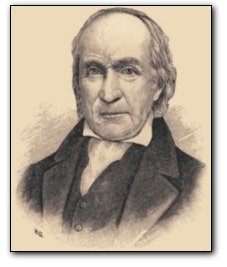
John Leland

Leland was one of the most important persons in regards to the relationship of the Christian Churches to the American Government. He was a champion of the religious liberty enshrined in the Bill of Rights and helped influence both James Madison and Thomas Jefferson. He noted in 1791:

“Is conformity of sentiments in matters of religion essential to the happiness of civil government? Not at all. Government has no more to do with the religious opinions of men than it has with the principles of mathematics. Let every man speak freely without fear–maintain the principles that he believes–worship according to his own faith, either one God, three Gods, no God, or twenty Gods; and let government protect him in so doing, i.e., see that he meets with no personal abuse or loss of property for his religious opinions. Instead of discouraging him with proscriptions, fines, confiscation or death, let him be encouraged, as a free man, to bring forth his arguments and maintain his points with all boldness; then if his doctrine is false it will be confuted, and if it is true (though ever so novel) let others credit it. When every man has this liberty what can he wish for more? A liberal man asks for nothing more of government.” John Leland, “Right of Conscience Inalienable, and Therefore, Religious Opinions Not Cognizable By The Law”

When the adherents of a faith, any faith, but especially the Christian faith enlist the government to enforce their understanding of faith they introduce a toxicity that is eventually fatal when consumed and acted on.

I think that much of what we are witnessing today is much more the product of fear mongering preachers that see opportunity in their political alliances and that are willing to reduce the Gospel to a number of “Christian values” in order to achieve a political end; even if that end is ultimately destructive to the Church and to the Gospel.

The message of the Apostle Paul to the Church in Corinth was this: “All this is from God, who reconciled us to himself through Christ, and has given us the ministry of reconciliation; that is, in Christ God was reconciling the world to himself, not counting their trespasses against them, and entrusting the message of reconciliation to us.” (2 Cor 5:18-19 NRSV) 

The early church thrived when it had no early power. It thrived when it was persecuted and when the Roman government openly supported almost every religion but it. However, once it became powerful and worldly it became ensnared in affairs far from that simple message of reconciliation.

It was in this country that the various sects of the Christian faith had the opportunity to make a new start, unencumbered by the trappings of power. But instead, like those that came before us we have all too often been seduced by the toxin of power. John Leland understood this and fought to ensure that all people of faith were free and unencumbered by state supported religion. He wrote:

“The liberty I contend for is more than toleration. The very idea of toleration is despicable; it supposes that some have a pre-eminence above the rest to grant indulgence; whereas all should be equally free, Jews, Turks [Muslims], Pagans and Christians. Test oaths and established creeds should be avoided as the worst of evils.”

Leland’s friend James Madison wrote to Edward Everett toward the end of his life:

“The settled opinion here is, that religion is essentially distinct from civil Government, and exempt from its cognizance; that a connection between them is injurious to both; that there are causes in the human breast which ensure the perpetuity of religion without the aid of the law; that rival sects, with equal rights, exercise mutual censorships in favor of good morals; that if new sects arise with absurd opinions or over-heated imaginations, the proper remedies lie in time, forbearance, and example; that a legal establishment of religion without a toleration could not be thought of, and with a toleration, is no security for and animosity; and, finally, that these opinions are supported by experience, which has shewn that every relaxation of the alliance between law and religion, from the partial example of Holland to the consummation in Pennsylvania, Delaware, New Jersey, &c., has been found as safe in practice as it is sound in theory. Prior to the Revolution, the Episcopal Church was established by law in this State. On the Declaration of Independence it was left, with all other sects, to a self-support. And no doubt exists that there is much more of religion among us now than there ever was before the change, and particularly in the sect which enjoyed the legal patronage. This proves rather more than that the law is not necessary to the support of religion” (Letter to Edward Everett, Montpellier, March 18, 1823).

That is the antidote to the toxic faith of what I now call “Americanity.” It stands against any idea of a state sanction or religion or a religion that like in Saudi Arabia or Iran controls the state. It stands in opposition to the beliefs of so many “Christian” religious leaders work to  ensure that they control the powers of government. Attempts that try to proclaim their superiority above even the ultimate message of the Gospel which proclaims “for God so loved the world….” 

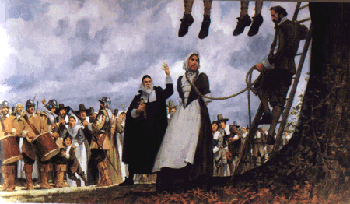
By the way there are always results. The Puritans who many extoll were some of the most intolerant of dissenters of any group that has every held the reigns of power over the state and religion ever known in this country. Their victims included Quakers as well as American Indian converts to Christianity. The picture below of the Puritans hanging Quakers in the Massachusetts Bay Colony should give pause to anyone who thinks that such actions are not possible today should any religion gain control of political power.

dyer-hanging

Peace

Padre Steve+

PS. I do not expect some people to agree with me. It is a free country and I am not God, the Pope or Bill O’Reilly and thus quite fallible. While I welcome opposing viewpoints and comments I do expect them to be civil and respectful and done in a spirit of dialogue. Those that are not civil, respectful or which simply attempt to beat me down or which are sermons will not be approved and I will not answer them. It gets really old and I have learned that in some cases no matter how hard I try to respect the beliefs of others are treat others as I would want to be treated that some people just love to destroy everything and everyone in their path. I don’t have time for that and having allowed people to do it on this site in the past I won’t do it again. If you are that kind of person feel free to start your own website and attack my viewpoints on it and not here. After all it is a free country and you have that right. I promise not to come on your site and attack you. Like I said, I don’t have time for that kind of stuff. 

7 Comments

Filed under christian life, faith, History, laws and legislation, News and current events, Religion

Sequester, Lent and Hope

198177_10151361204842059_1890411795_n

“As lousy as things are now, tomorrow they will be somebody’s good old days.” Gerald Barzan

Sequester is here and with it the era of mutual assured destruction by our political, economic and media elites continues in an unabated form.

At the same time sequester occurs during the season of Lent when Christians are called on to make voluntary sacrifices of things that are important to them in the forms of fasting and abstinence. Lent is a season of penitence which hopefully builds in the heart of the believer a new love for God and neighbor, a season that changes a person from a “me first” attitude to an attitude of thanksgiving, gratitude and service to those in distress. That being said, the season of Lent should be a season of hope.

However it is difficult at times to be hopeful when all around there is bad news. We seem to be living the ancient Chinese curse that says “May you live in interesting times.” The times are certainly interesting with lots going on of historic significance that may years from now be remembered as one of those tumultuous times where the world changed before our eyes.

History of course is replete with such times, the rise and fall of ancient empires, the age of exploration, the Reformation, the French and American Revolutions, the Napoleonic era, the American Civil War, the Industrial Revolution, the First and Second World War with the Great Depression sandwich, the 1960’s, the post Cold War era and the post-911 era just for a start.

I could go back further in history for other epochal periods, but I think that the reason that today’s crisis seem so much more dire is that we are both the beneficiaries and the victims of the instantaneous communication revolution in which common people have real time access to events that are impacting their lives.  This causes many a great deal of anxiety both real and imagined, anxiety which usually finds expression in a desire for the good old days as well as seeks solace and security from those who feverishly exploit that anxiety.  It does not matter if the security comes from religion, political ideology and matters neither if it comes from the left or the right so long as the call resonates with them they will follow it. They will faithfully follow even as the purveyors of the message drive up their worry and anxiety that they no longer can actually enjoy life or be thankful because they are so consumed with how “lousy” things are or “evil” their opponents are.

Thus even during the season of Lent it is hard for many people to grasp the meaning of it when all around them appears to be falling apart and in chaos.

It is in times like these that one has to take a deep breath, look around at all that they have to be thankful for and just really examine of the nostalgia that they feel for “better times” is that or an escape from an unpleasant present and fear of the future if the other side wins.

The fact is that we have seen such times before and somehow made it through.  I hear from friends and relatives who lived through the Great Depression and World War II that those were good times in spite of everything happening, much of which is present today but somehow things are worse now.  Even I fall into the trap about somehow thinking that the times that I grew up in were somehow better than the present, this may be true for music but overall things were not that good for a lot of people but somehow we made it through them.  Lent is a time to step back from the brink, take stock and renew our life with God and our neighbor.

When I returned from Iraq back in February 2008 I soon discovered that the bombardment of bad news and über-partisan political battles took its toll on me.  I was neither as resilient as I thought that I was nor as consumed by the need to continue to ratchet up rhetoric on one side or the other as the more extreme elements on the right or left were doing.  PTSD or not I realized that the purveyors of the 24/7 bad news cycle were driving people with legitimate ideological differences to extremes that I had never seen, but which I recognized from history have a lot of precedent and can lead to making things even worse.  One only has to look at Weimar Germany to realize how things can go so very wrong when extremes on both sides of the ideological spectrums squeeze out those in the middle or chance at mutually beneficial solutions and that was in the days before type of information overload that is the bedrock of the political and ideological landscape of today.

I am not attacking those who get caught up in this but I do question the politicians, pundits, “news-networks” and talk show hosts who continue to ratchet up rhetoric to the point that many feel that the only alternative is some kind of “revolution.”  Again those that call for “radical change” or revolt against those who are in favor of that kind of change are both calling for revolution when revolutionary talk reaches a point where one side or the other does not see a way to resolve things in a civil manner then the those alternatives slip away and the only recourse is violence.

It is not the fault of one side or the other as those that stoke this talk are found on both sides of the American as well as other nations political and ideological spectrum testify to daily.  In the United States we also have a long history of apocalyptic thought which presents the lousy state of current events in any generation as something that will certainly bring the end of life as we know it or the return of the Lord, the Great Tribulation or whatever you chalk it up to. There are those on both the religious and secular side of the spectrum who have apocalyptic visions related to their world view.  For some reason we Americans do the apocalyptic quite well whether we believe in God or not.

The thing that has been most on my mind this Lent, as it has been the past several years has been the idea of being reconciled both to God and to one another.  Lent is a season of self examination, repentance and forgiveness.  The call to “be reconciled to one another” is a never ending command and applies across the variety and spectrum of life.

cross-ash-wednesday

Lent reminds us that that “we are dust and to dust we shall return” but that we are also all made in the image of the God who created us, redeems us and sanctifies us who calls us to himself and reminds us that mercy triumphs over judgment and “not be conformed to this world, but be transformed by the renewing of your minds, so that you may discern what is the will of God—what is good and acceptable and perfect.” I am afraid that in times like these even the best intentioned of people can find themselves pulled into the orbit of those that in less stressful or trying times that they would never be involved with.

The German martyr Dietrich Bonhoeffer once wrote: “Our enemies are those who harbor hostility against us, not those against whom we cherish hostility… As a Christian I am called to treat my enemy as a brother and to meet hostility with love. My behavior is thus determined not by the way others treat me, but by the treatment I receive from Jesus.”

I know for some that call themselves “Christians” this message is lost. However, I believe that it is not because they are consciously rejecting the message of the Gospel but because that have become so deeply involved in whatever cause they endorese that they have lost the ability at least temporarily to see the good that may rest in their opponents and their ideas.

As Bonhoeffer also wrote “Judging others makes us blind, whereas love is illuminating. By judging others, we blind ourselves to our own evil and to the grace which others are just as entitled to as ourselves.”  Now of course Bonhoeffer knew the evil that was the Nazis and eventually gave his life by supporting the German resistance to Hitler.  Loving our enemies does not absolve us from public responsibility but in ensuring that we do not ensnare ourselves in ideology that restricts our ability to love them as Christ has commanded.

I think in the past few years that I have gained a new perspective on life that has changed the way that I look at the world.  I know that things are not good right now and that there are a lot of things to be legitimately concerned. That said I know too that somehow our country as well as much of humanity have weathered worse and like Barzan said that for some these will be the good old days someday.

That thought helps me to live in the present knowing that the future is not yet written and known only to God who in his grace condescends to love us and desires that we better love him and one another and not be conformed to any ideology that would prevent that. Sequestration and political division aside I do pray that we will both see better days as well as be reconciled to God and to one another.

It is in times like this that I think of Bonhoeffer’s words:

“God loves human beings. God loves the world. Not an ideal human, but human beings as they are; not an ideal world, but the real world. What we find repulsive in their opposition to God, what we shrink back from with pain and hostility, namely, real human beings, the real world, this is for God the ground of unfathomable love.”

That is my Lenten prayer.

Peace,

Padre Steve+

1 Comment

Filed under christian life, faith, History, News and current events, Political Commentary

If I Wasn’t Already a Christian I Wouldn’t Be

blm121011

In the movie Major League, the Cuban ballplayer Pedro Cerrano commented to a Christian teammate “I like Jesus very much, but he no help with curve ball.”

I like Jesus a lot. In fact I believe in Jesus and am completely orthodox in the basics of the historic Christian faith. Now I did go through a crisis of faith when I returned from Iraq that left me for all intents and purposes an agnostic struggling to believe. When faith returned in the Emergency Room at Portsmouth Naval Medical Center to this day I believe that it was a miracle.

However, since that evening in December 2009 I have found that despite Jesus, that some American Christians can be among the most hateful, intolerant, narrow minded and vicious people on the planet. In light of the very real fact that people are fleeing the Church in ever increasing number and that the fastest growing segment of the religious population in the United States is “the Nones” or those that have no religious preference you would think that Church leaders and for that matter those that call themselves Christian would take a bit of time to reflect on what is going on.

The great evangelist Dwight L Moody once said “Out of 100 men, one will read the Bible, the other 99 will read the Christian.” I do believe that is true. The earliest Christians, men and women that followed Jesus when there was no earthly benefit to doing so attracted people to their faith and their Savior because their lives exemplified love, care and humanity quite unlike many of their persecutors. William Blake, the 18th Century English poet would say “The glory of Christianity is to conquer by forgiveness.”

However I have to say that if I was to be looking for Jesus by the recent experiences that I have had with people that call themselves “Christians” I would never consider becoming a Christian. Now I am a Christian and I do not plan on leaving the faith but I have to agree with Mahatma Gandhi that “I like your Christ, I do not like your Christians. Your Christians are so unlike your Christ.”

This yesterday I received an e-mail from a woman upset with an article I wrote about the death of the Reverend David Wilkerson a couple of years ago. I was polite and even apologetic but in two subsequent e-mails she persisted and finally sent me an e-mail stating: “You are an arrogant pompous hypocrite a classic wolf in sheep’s clothing. Call yourself Padre tells it all. Now get thee behind me Satan. In Jesus name.”

I have for the most part stopped taking such attacks personally. Yes there are some times that they hurt or anger me, but in light of them I can understand why so many people hold Christianity, the Church and Christians in such low esteem. This particular person was so ignorant about what she was talking about and me that I could hardly take her comments seriously or be hurt by them. What scares me is how widespread this type of attitude is in some church communities and the effects that it has on so many people and our society as a whole. In light of this and so many other interactions I have had with “Christians” that I am tempted to agree with Mark Twain who said: “If Christ were here there is one thing he would not be—a Christian.” Since I have written about these encounters many times I will not go into detail here other than to say that they make me tired and simply restate that if I wasn’t already a Christian I wouldn’t be.

The late Oscar Romero, the martyred Archbishop of El Salvador wrote: “I don’t want to be an anti, against anybody. I simply want to be the builder of a great affirmation: the affirmation of God,who loves us and who wants to save us.”

That is the kind of Christian that I want to be. I will strive to love people and tell the truth, and if need be confront injustice against any of God’s people. Hopefully in doing so I will be a witness that helps call people back to the love of God shown in Christ.

Peace

Padre Steve+

4 Comments

Filed under christian life, faith

Ash Wednesday and the Beginning of a Radical and Happy Lent

barmherzigkeit

“Accustom yourself continually to make many acts of love, for they enkindle and melt the soul.”  Teresa of Avila 

Well my friends today is Ash Wednesday and the beginning of the season of Lent. Lent is, for those unfamiliar with the custom is a penitential season in the days leading up to Easter in which Christians, through prayer, fasting and abstinence seek to prepare themselves for Holy Week and Easter. It really is a time of great value if its observance is not done simply out of legalism or even the need to show ones personal holiness as somehow more important than the relationships that one has with both God and one’s neighbor.

If you have read my articles on this site dealing with Ash Wednesday and Lent you will note that Lent is a season that I have struggled with throughout my life, even my life as a Priest. I did not grow up in the catholic tradition, Roman, Orthodox or Anglican. I came to a catholic understanding of faith in a Southern Baptist Seminary and my journey took years and when I finally came over to the “catholic” side of the line in 1995 and 1996 I attempted for a number of years to be more individualistically pious in my observance of the Lenten season and tradition than others.

That did not work well. Instead of finding a depth of meaning and transformation Lent became a burden. I observed it and did my best but without much joy. When I returned from Iraq in 2008, my faith shaken, and emotionally broken my Lenten observance was so painful that mid-way through it I abandoned it. The following year I declared that I was not going to do Lent in the way that I had done in the past, but even in this I struggled. That was not unexpected because by then I was for all intents and purposes an agnostic struggling to believe and praying that God might be real. The only thing that kept me going at times was the belief that my vocation as a Priest mattered, no matter how I felt.

The past few years Lent has been a struggle. I have worked to make it both meaningful and joyful. When I think of the irony that I was attempting to work to experience God’s grace I can now laugh.

This year Lent started out differently. Over the past number of months my life, including my spirituality has been coming back into focus and much more free and integrated than it was in the past.

Today I was part of our hospital Chapel ecumenical Ash Wednesday service. Our small chapel was full, with more people standing than sitting. Working with my two colleagues, a Southern Baptist Pastoral Counselor and an American Baptist Chaplain we served those who came, Catholics and various expressions of Protestants. My colleagues did most of the work for the service. I simply approved their work and though about what I was going to say and do as the primary celebrant during the service.

Our Old Testament reading out of Isaiah Chapter 58 actually set the tone for me because it has been something that has been zinging my spirit ever since my seminary days and early days as a Priest. In the passage Isaiah was speaking to a very religious people who seemed to take great pride in their external demonstrations of righteousness but whose hearts were far from God and the people that God had placed around them. Isaiah wrote:

Is not this the fast that I choose: to loose the bonds of injustice, to undo the thongs of the yoke, to let the oppressed go free, and to break every yoke?
Is it not to share your bread with the hungry, and bring the homeless poor into your house; when you see the naked, to cover them, and not to hide yourself from your own kin?
Then your light shall break forth like the dawn, and your healing shall spring up quickly;
your vindicator shall go before you, the glory of the LORD shall be your rear guard.
Then you shall call, and the LORD will answer; you shall cry for help, and he will say, Here I am.

Likewise Jesus warned his disciples about the dangers of religious hypocrisy in the Gospel reading which was from Matthew Chapter Six. “Beware of practicing your piety before others in order to be seen by them; for then you have no reward from your Father in heaven.” He then went on to warn them about how to pray and how to fast. In each case he was very much against public displays that would serve to show off an individual’s religious superiority. Instead he talked about prayer being in secret and fasting that did not attract the attention of others. That is actually quite a revolutionary idea if you take a look at the practices of many who call themselves Christian, or for that matter religious people of any religion.

Jesus seemed to “get off” so to speak in confounding the severely religious people of his day. He hung out with, care for, fed, healed and loved people that the people who were more concerned with outward religious displays actually despised. I think that Jesus actually understood the real meaning of Lent than we do. Yes, Jesus prayed, he fasted, actually for 40 days in the wilderness once and was tempted by the Devil who offered food, protection from harm if he jumped off the pinnacle of the Temple and even the whole world, if Jesus would only worship him. Of course Jesus withstood the temptation, but it was real and if we actually take the humanity of Jesus seriously it was a real temptation that actually threatened to destroy the eternal relationship that Jesus had with the Father and the Holy Spirit.

So there is a value in spiritual disciplines of prayer and fasting, but they are not the be all and end all of the Christian faith. Instead, they are important but unless they actually are part of a change in our hearts that turns them from us to God and maybe even more importantly the real people that we meet, especially the least, the lost and the lonely.

However according to the Barna Group, which surveys Christians and their attitudes it seems that American Christians don’t seem to get the message. Barna commented:

“The vast majority of (secularists) don’t need to hear the Good News. They have been exposed to Christianity in an astonishing number of ways, and that’s exactly why they’re rejecting it. They react negatively to our ‘swagger’, how we go about things, and the sense of self-importance we project.” They quote one outsider as saying: “Most people I meet assume that Christian means very conservative, entrenched in their thinking, antigay, antichoice, angry, violent, illogical, empire builders; they want to convert everyone, and they generally cannot live peacefully with anyone who doesn’t believe what they believe.”

Over the past few years I have gotten to the point that I have a hard time simply giving money to causes, ministries and churches but really have a hard time passing up the homeless, the hurting and the despondent people that I see every day.

I just wonder what it would be if people that call themselves Christians would during Lent, instead of giving up chocolate or going meatless on certain days would instead do something kind for a person that can do nothing for them, especially people who may or may not be Christians. I’m sorry but that seemed to be what Jesus did more often than not.

Can you imagine what the practical result of over one billion Christians doing one act of kindness a day to someone that can’t pay them back, that they don’t know, that may even to them seem to be of a class, religion or lifestyle that they do not approve? What if instead of giving billions of dollars to the money pits of self indulgent Christian ministries and churches they simply paid someone’s rent, bought a meal, or a tank of gas for someone in need, took someone to the doctor, or helped someone find a job?  What if instead of giving up something that for practical purposes is meaningless for 40 days, like our favorite food or drink seek out opportunities to do something as simple as walking up to the homeless person on the side of the road who has the “please help” sign and look them in the eye, ask them what they need and then do something to help them?

And let me preach. When we were down and out and losing almost every earthly possession we had when I was in seminary there were regular people who did those practical acts of kindness and mercy that helped us through terrible times. People bought us gas, let us borrow or gave us cars, paid for doctors visits, food and even tuition.  Of course I was working my ass off in two or more jobs at any given time, going to school full time and serving in the National Guard as we attempted to recover from the debacle we had experienced while still moving forward. Thus I approach this with a great deal of gratitude and empathy.

I think that this is a radical idea. Not original by any means, but certainly radical.

normal_LaughingJesus

And then there is one other thing, what we do should be done with a happy heart, not with a gloomy one. Saint Teresa of Avila once said “God save us from gloomy saints!”

Have a happy Lent.

Peace

Padre Steve+

Leave a comment

Filed under christian life, faith, Religion

The Triumph of Ray Lewis: God’s Work and Glory or Typical Christian Spin?

2013-01-10-ray-lewis-lead-4_3_r536_c534

“To the family: If you knew, if you really knew the way God works, he don’t use people who commits anything like that for his glory. No way. It’s the total opposite.” Ray Lewis to CBS Sports before Super Bowl

After the Baltimore Ravens won the Super bowl in 2000 Ray Lewis, their Pro-Bowl Linebacker and MVP of Super Bowl XXXV and two of his friends were involved in a fight after a post-super bowl party. The fight turned out to be an ugly affair and when it was done two men lay dead, the blood of one in Lewis’s limo. The suit Lewis was wearing during the party was never found. Lewis ended up taking a plea bargain in which Lewis plead guilty to a misdemeanor count of obstruction of justice in exchange for his testimony against his companions and the dropping of double homicide charges.

Since that time Lewis has distinguished himself on the football field, won many accolades and done much charity and community work. He has been active in church and worked for the benefit of many people. For all of those things he should be commended. He is beloved in Baltimore, not merely because he has brought football glory to the city but because of those acts of charity and community involvement.

At the same time his silence about the murders, in which he is one of three men living to know the truth about what happened on that night is troubling. Even more so when I saw his interview before the Super Bowl as well as other comments made back in 2006 to Sports Illustrated in The Gospel According to Ray http://sportsillustrated.cnn.com/vault/article/magazine/MAG1108943/1/index.htm as his image rehabilitation efforts had propelled him back into the favor of fans and the league.

Do I believe that people can change? Yes. Do I believe that God loves and forgives sinners? By all means. Do I value Ray Lewis as a football legend, man of great civic charity and even faith? Yes. Do I have questions that are unanswered about the unsolved murders and Lewis’s involvement in them? Yes.

In assessing Lewis and his legacy I agree with Boomer Esiason who at the end of the interview this Sunday commended to Sterling Sharpe, the man who conducted the interview: “It’s a complex legacy that we’re talking about here…Because he was involved in a double murder.  And I’m not so sure that he gave us all the answer that we were looking for.  He knows what went on there.  And he can obviously just come out and say it.  He doesn’t want to say it.  He paid off the families.  I get all that.  That’s fine.  But that doesn’t take away from who he is as a football player.  And I appreciate you going down there and asking him that direct question.  I’m not so sure I buy the answer.”

However, for me the questions are even deeper than Lewis’s individual guilt, innocence and involvement in the murders. That is a big issue of its own but I see a bigger issue and that deals with Christians who are willing to bury the murders because Lewis has found God, been successful on the field and done many wonderful things for his community and the disenfranchised in it.

The problem that I see is not new. It is a problem that has been the bane of American Evangelical Christianity for at least a generation. That problem is the “Prosperity Gospel” which puts a premium on earthly success as a measure of the blessing of God on an individual, business, church or organization. In fact, that message basically has been used and abused by a multitude of preachers who have committed crimes against God and man, adultery, murder, greed, avarice, lies. You name it a prosperity preacher has done it and found a way to excuse their sin based on God’s “blessing” of their ministry and earthly success.

The sad thing it is not just preachers, nor is it limited to the “prosperity” crowd. The banal covering up of crimes in order to protect legacies of preachers, churches or popular “Christian leaders” is epidemic in the life of American churches. The incidents are so many that they have become numbing. One only has to look across the denominational spectrum to see the terrible effects ranging from the Roman Catholic sexual abuse scandals to unseemly behaviors by church leaders in other denominations to see the rot that has been covered with a veneer of righteousness and deception which cloaks their misdeeds under the vail of temporal power, opulence, political influence and material success.

In his interview Lewis made the comment that “if you really knew the way God works, he don’t use people who commits anything like that for his glory.” Actually Lewis is wrong on this. According to scripture God used many unseemly men for his glory, but the key for those that are honored in scripture is that they acknowledged their sins and sought forgiveness.

I think that the most notable of these was King David, a man who killed the husband of a woman that he was conducting an adulterous affair to cover up her pregnancy. David tried to cover it up but was uncovered by the a prophet named Nathan. David repented and Psalm 51 documents that repentance. However endured an awful price from his sin. The baby died and his son led a rebellion against him. He was forbidden from building the Temple, despite scripture’s proclamation that David was “a man after God’s own heart.”

My issue with what has gone on with Ray Lewis is the fact that the records for his court settlements and pleas are sealed as are the records of his out of court cash settlement with the family of one of the dead men. The truth is known by Lewis and is being covered up by him even while he proclaims his own victimhood, in the 2006 Sports Illustrated article that being booed and criticized was like being “crucified.”

But that is par for the course in modern American Christianity. If Ray Lewis’s actions  were an anomaly it might be more remarkable, but they have become all too common, even the now disgraced former Cardinal Archbishop of Los Angeles Roger Mahoney is spinning his cover ups of the sexual abuse scandals and claiming victimhood for himself following his suspension from public ministry. No wonder people are fleeing the Church in droves and that the fastest growing segment of the religious belief are “the nones” or those with no religious preference.

The involvement in and cover up of what happened do not take away from Ray Lewis’s remarkable on field accomplishments. He is one of the most gifted and accomplished football players who ever played the game. However, when it is all said and done is that all life is about and is that all that Lewis or any of us want as our legacy?

Peace

Padre Steve+

Leave a comment

Filed under christian life, faith, football, News and current events, Religion