Category Archives: faith

A Great Day for Liberty for All

Mini-Stonewall

Friends of Padre Steve’s World

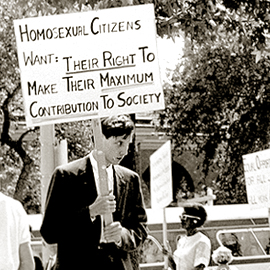
Today is a good day for freedom. It has been to long coming. The Supreme Court, citing the Fourteenth Amendment ruled in favor of Marriage Equality for Gays Lesbians and others in the LGBTQ community in the case of Obergfell v. Hodges. I am quite happy for my Gay and Lesbian friends  for this.

As historian and who has and continues to study the American Civil War, especially the fight for the abolition of slavery, the emancipation of African Americans and the extension of the the full benefits of citizenship and liberty.

As early as 1854 Lincoln posed the idea that the Declaration of Independence was the standard maxim of free society …constantly spreading and deepening its influence,” ultimately applicable “to peoples of all colors everywhere.” 

The understanding that the liberties enunciated in the Declaration extend to first to African-Americans was made part of the Constitution in the Thirteenth, Fourteenth and Fifteenth Amendments to the Constitution. The precedent of Fourteenth Amendment has been used to grant Suffrage to Women, to end Jim Crow laws, Black Codes and Separate but Equal laws. Today it was correctly used to ensure that all people have the freedom to marry.

The ruling was about liberty, it was about equality, it was about due process, and today the Court’s majority noted:

The history of marriage as a union between two persons of the opposite sex marks the beginning of these cases. To the respond- ents, it would demean a timeless institution if marriage were extend- ed to same-sex couples. But the petitioners, far from seeking to devalue marriage, seek it for themselves because of their respect—and need—for its privileges and responsibilities, as illustrated by the petitioners’ own experiences.

The history of marriage is one of both continuity and change.

Changes, such as the decline of arranged marriages and the abandonment of the law of coverture, have worked deep transformations in the structure of marriage, affecting aspects of marriage once viewed as essential. These new insights have strengthened, not weakened, the institution. Changed understandings of marriage are characteristic of a Nation where new dimensions of freedom become apparent to new generations.

They also added:

The fundamental liberties protected by the Fourteenth Amendment’s Due Process Clause extend to certain personal choices central to individual dignity and autonomy, including intimate choic- es defining personal identity and beliefs.

Most of the opposition to Gay marriage and for that matter to all Gay Rights has been from conservative Christians. Sadly it was conservative Christians who have been in the forefront of denying liberty to people in the country since the beginning of the abolition movement in the 1830s. They labeled fellow evangelicals in the abolition movement as “atheists, infidels, communists, free-lovers, Bible-haters, and anti-Christian levelers.” 

This was not limited to Southern  conservative Christians.

The fact that so many Protestant ministers, intellectuals, and theologians, not only Southerners, but men like “Princeton’s venerable theologian Charles B. Hodge – supported the institution of slavery on biblical grounds, often dismissing abolitionists as liberal progressives who did not take the Bible seriously” leaves a troubling question over those who claim to oppose issues on supposedly Biblical grounds. Such men in the North spoke out for it “in order to protect and promote interests concomitant to slavery, namely biblical traditionalism, and social and theological authority.” [1] The Northern clerical defenders of slavery perceived the spread of abolitionist preaching as a threat, not just to slavery “but also to the very principle of social and ecclesiastical hierarchy.” [2]Alistair McGrath asks a very important question for modern Christians who might be tempted to support a position for the same reasons today, “Might not the same mistakes be made all over again, this time over another issue?” [3]

Throughout American history conservative Christians have often espoused a concept of limited liberty, liberty for the few and the powerful. This happened as I have noted during the fight against emancipation, but also Women’s Suffrage and the various Jim Crow laws and rights for other groups. This is happening again today with anti-Gay Christians attacking the ruling and like those who fought abolition proclaiming in apocalyptic language that Christians will be persecuted and that God will judge the United States for allowing Gays to marry.

However, the fact is that very little will change in the country, most people will move along. Christian conservatives will not be persecuted, religious liberties will not be violated they will be enhanced as churches who allow Gays to marry will be able to extend this rite of their churches to their parishioners and others.

Today, despite the cries of many on the American Religious Right liberty has been protected. as Lincoln said: the declaration’s promise of equality was “a beacon to guide” not only “the whole race of man then living” but “their children and their children’s children, and the countless myriads of generations who should inhabit the earth in other ages.” [4]

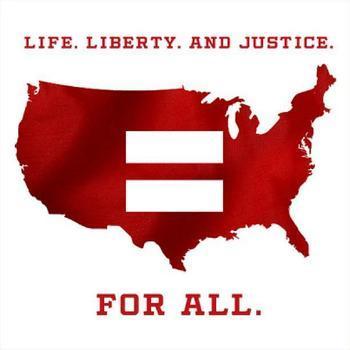
Marriage-Equality-104371316011_xlarge

I am happy for my Gay friends who have labored for this for so long enduring hatred, violence and social, political, religious and economic discrimination for so many years.

Have a great night,

Peace

Padre Steve+

[1] Ibid. Daly When Slavery Was Called Freedom p.38

[2] Ibid. Varon Disunion! P.108

[3] Ibid. McGrath Christianity’s Dangerous Idea p.324

[4] Ibid. Goodwin Team of Rivals p. 203

3 Comments

Filed under civil rights, ethics, faith, History, laws and legislation, LGBT issues, News and current events, Political Commentary, Religion

The Bible on Our Side: Southern Religious Support of Slavery

Friends of Padre Steve’s World,

This week I have been relating religion to civil rights through the lens of the slavery, abolition, and the ante-bellum United States and today I will continue that with another section of my Civil War and Gettysburg Staff Ride text. It comes from the same chapter as my past few posts dealing with the role of religion and ideology in the period and its effect on the antagonists before, during and after the war. 

It is a lens through which we can view other topics that divide us today including the continuing battle against racism, Women’s rights and Gay rights. The fact is that we cannot isolate these issues from the understanding that the defense of liberty for all safeguards liberty for all. Sadly, there are a substantial number of Christians in the United States who do not believe that and through the legislative process seek to limit, role back, or completely deny rights to groups that they despise, especially Gays, but also women, and racial and religious minorities. We cannot get around that fact. It is happening with new instances occurring almost every week, and much of these laws are being passed due to the “sincerely held religious beliefs” of Christians to deny other people’s rights based on their interpretation of Biblical texts.

The words of the current politicians, preachers and pundits who fight to limit the rights of others is strikingly similar to those who defended slavery and attacked those who fought against it.   

This is not new, it has happened many times in our history, but the most notorious and injurious to American society was the defense of the institution of Slavery by American Christians, particularly those in the South. This article discusses that defense of slavery which arose in response to the tiny, but vocal number of Christians who helped lead the abolition movement.

Have a great day,

Peace

Padre Steve+

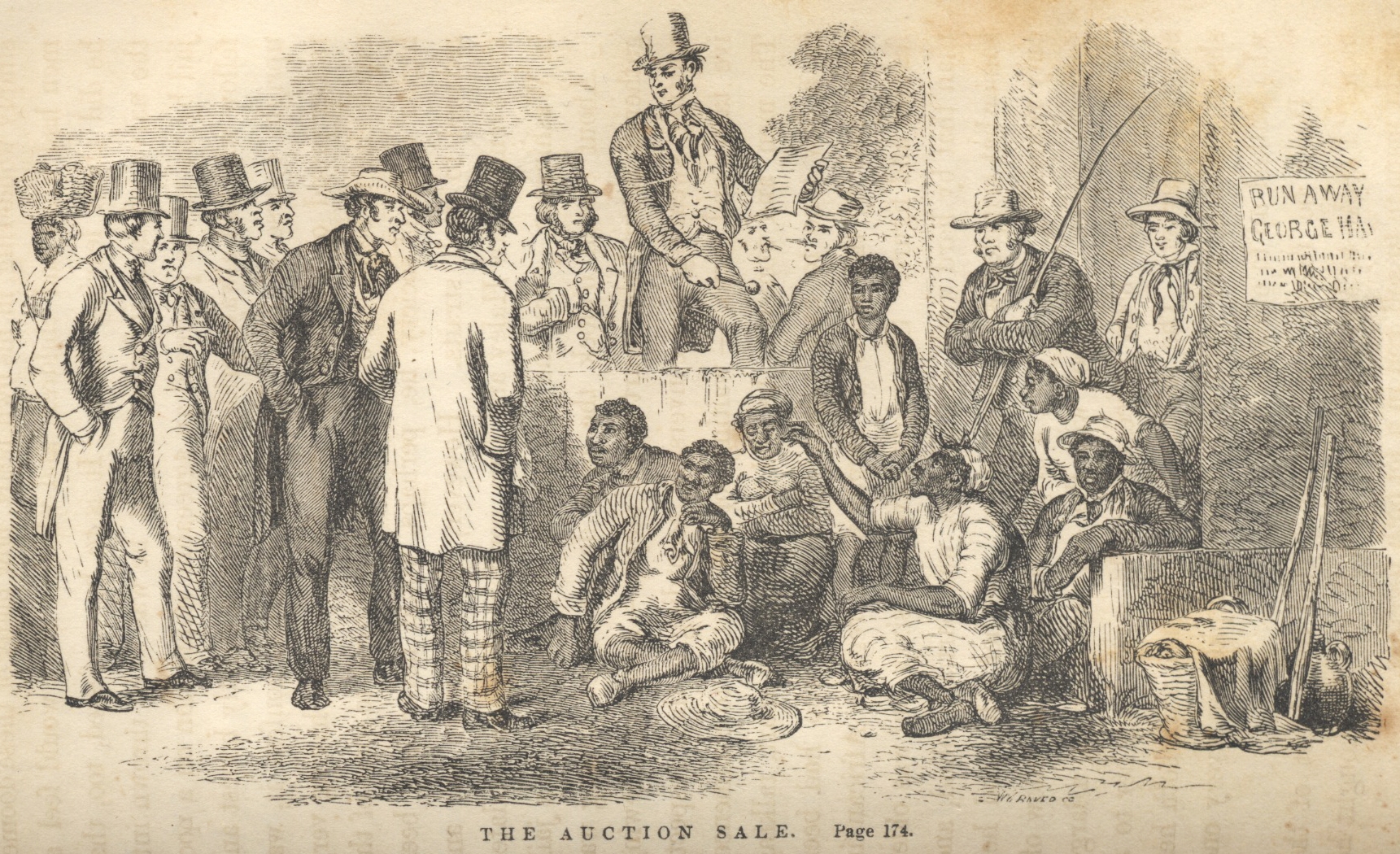
OTCauction

Southern Religious Support of Slavery

“we must go before the nation with the Bible as the text and ‘Thus saith the Lord’ as the answer….we know that on the Bible argument the abolition party will be driven to reveal their true infidel tendencies. The Bible being bound to stand on our side…” Reverend Robert Lewis Dabney on defending slavery and condemning its critics

In light of the threat posed to slavery by the emerging abolitionist movement, slaveholders were forced to shift their defense of slavery away from it being simply a necessary evil to a positive good. The institution of slavery became “in both secular and religious discourse, the central component of the mission God had designed for the South.” [1] Like in the North where theology was at the heart of many abolitionist arguments, in the South theology was used to enshrine and defend the institution of slavery. British Evangelical-Anglican theologian Alister McGrath notes how “the arguments used by the pro-slavery lobby represent a fascinating illustration and condemnation of how the Bible may be used to support a notion by reading the text within a rigid interpretive framework that forces predetermined conclusions to the text.” [2]

Southern religion was a key component of something bigger than itself and played a role in the development of an ideology much more entrenched in the Southern culture than the abolitionist cause did in the North. This was in large part due to the same Second Great Awakening that brought abolitionism to the fore in the North. “Between 1801 when he Great Revival swept the region and 1831 when the slavery debate began, southern evangelicals achieved cultural dominance in the region. Looking back over the first thirty years of the century, they concluded that God had converted and blessed their region.” [3] The Southern ideology which enshrined slavery as a key component of all areas of life was a complete worldview, a system of values, culture, religion and economics, or to use the more modern German term “Weltanschauung.” The Confederate worldview was the Cause. As Emory Thomas wrote in his book The Confederate Nation:

“it was the result of the secular transubstantiation in which the common elements of Southern life became sanctified in the Southern mind. The South’s ideological cause was more than the sum of its parts, more than the material circumstances and conditions from which it sprang. In the Confederate South the cause was ultimately an affair of the viscera….Questions about the Southern way of life became moral questions, and compromises of Southern life style would become concession of virtue and righteousness.” [4]

Despite the dissent of some, the “dominant position in the South was strongly pro-slavery, and the Bible was used to defend this entrenched position.” [5] This was tied to a strongly Calvinistic theology which saw slavery in context with the spread of the evangelical Protestant faith that had swept through the South as slavery spread. For many, if not most Southern ministers “the very spread of evangelical religion and slave labor in the South was a sign of God’s divine favor. Ministers did not focus on defending slavery in the abstract but rather championed Christian slaveholding as it was practiced in the American South. Though conceding that some forms of slavery might be evil, Southern slavery was not.” [6]

The former Governor of South Carolina, John Henry Hammond, led the religiously based counter argument to the abolitionists. Hammond’s arguments included biblical justification of blacks being biologically inferior to whites and slavery being supported in the Old Testament where the “Hebrews often practiced slavery” and in the New testament where “Christ never denounced servitude.” [7] Hammond warned:

“Without white masters’ paternalistic protection, biologically inferior blacks, loving sleep above all and “sensual excitements of all kinds when awake” would first snooze, then wander, then plunder, then murder, then be exterminated and reenslaved.” [8]

Others in the South, including politicians, pundits and preachers were preaching “that slavery was an institution sanction by God, and that even blacks profited from it, for they had been snatched out of pagan and uncivilized Africa and been given the advantages of the gospel.” [9] The basic understanding was that slavery existed because “God had providential purposes for slavery.” [10]

At the heart of the pro-slavery theological arguments was in the conviction of most Southern preachers of human sinfulness. “Many Southern clergymen found divine sanction for racial subordination in the “truth” that blacks were cursed as “Sons of Ham” and justified bondage by citing Biblical examples.” [11] But simply citing scripture to justify the reality of a system of which they reaped the benefit, is just part of the story. The real issue was far greater than that. The theology that justified slavery also, in the minds of many Christians in the north justified what they considered “the hedonistic aspects of the Southern life style.” [12] This was something that abolitionist preachers continually emphasized, criticizing the greed, sloth and lust inherent in the culture of slavery and plantation life, and was an accusation of which Southern slaveholders, especially evangelicals took umbrage, for in their understanding good men could own slaves. Their defense was rooted in their theology. The hyper-individualistic language of Southern evangelicalism gave “new life to the claim that good men could hold slaves. Slaveholding was a traditional mark of success, and a moral defense of slavery was implicit wherever Americans who considered themselves good Christians held slaves.” [13] The hedonism and fundamentalism that existed in the Southern soul, was the “same conservative faith which inspired John Brown to violence in an attempt to abolish slavery…” [14]

Slave owners frequently expressed hostility to independent black churches and conducted violence against them, and “attacks on clandestine prayer meetings were not arbitrary. They reflected the assumption (as one Mississippi slave put it) “that when colored people were praying [by themselves] it was against them.” [15] But some Southern blacks accepted the basic tenets of slave owner-planter sponsored Christianity. Frederick Douglass later wrote “many good, religious colored people who were under the delusion that God required them to submit to slavery and wear their chains with weakness and humility.” [16]

The political and cultural rift began to affect entire church denominations. The heart of the matter went directly to theology, in this case the interpretation of the Bible in American churches. The American Protestant and Evangelical understanding was rooted in the key theological principle of the Protestant Reformation, that of Sola Scripura, which became an intellectual trap for northerners and southerners of various theological stripes. Southerners believed that they held a “special fidelity to the Bible and relations with God. Southerners thought abolitionists either did not understand the Bible or did not know God’s will, and suspected them of perverting both.” [17]The problem was then, as it is now that:

“Americans favored a commonsense understanding of the Bible that ripped passages out of context and applied them to all people at all times. Sola scriptura both set and limited terms for discussing slavery and gave apologists for the institution great advantages. The patriarchs of the Old Testament had owned slaves, Mosaic Law upheld slavery, Jesus had not condemned slavery, and the apostles had advised slaves to obey their masters – these points summed up and closed the case for many southerners and no small number of northerners.” [18]

In the early decades of the nineteenth century there existed a certain confusion and ambivalence to slavery in most denominations. The Presbyterians exemplified this when in 1818 the “General Assembly of the Presbyterian Church, while opposing slavery against the law of God, also went on record as opposing abolition, and deposed a minister for advocating abolition.” [19] There were arguments by some American Christians including some Catholics, Lutherans, Episcopalians and others to offer alternative ways to “interpreting and applying scripture to the slavery question, but none were convincing or influential enough to force debate” [20] out of the hands of literalists.

However the real schisms between the Northern and Southern branches of the major denominations which began to emerge in the mid to late 1830s continued to grow with the actual breakups of the major denominations coming in the 1840s. The first denomination to split were the Methodists. This occurred in 1844 when “the Methodist General Conference condemned the bishop of Georgia for holding slaves, the church split and the following year saw the birth of the Methodist Episcopal Church.” [21] Not all Methodists in the South agreed with this split and a few Methodist abolitionists in the South “broke away from mainline Methodism to form the Free Methodist Church.” [22]

The Baptists were next, when the Foreign Mission Board “refused to commission a candidate who had been recommended by the Georgia Baptist Convention, on the ground that he owned slaves” [23] resulting in the formation of the Southern Baptist Convention. The Baptist split is interesting because until the early 1800s there existed a fairly strong anti-slavery movement in states such as Kentucky, while in 1790 the General Committee of Virginia “adopted a statement calling slavery “a violent deprivation of the rights of nature, and inconsistent with a republican government; and therefore [we] recommend it to our brethren to make use of every legal measure, to extirpate the horrid evil from the land.” [24]

However, in many parts of the Deep South there existed no such sentiment and in South Carolina, noted Baptist preachers including “Richard Furman, Peter Bainbridge, and Edmund Botsford were among the larger slaveholders.” [25] Furman wrote a defense of slavery in 1822 where he made the argument that “the right of holding slaves is clearly established in the Holy Scriptures by precept and example.” [26] After a number of slave uprisings, including the Nat Turner Revolt in Virginia, pro-slavery voices “tended to silence any remaining antislavery voices in the South.” [27]

These voices grew more ever more strident and in 1835 the Charleston Association “adopted a militant defense of slavery, sternly chastising abolitionists as “mistaken philanthropists, and denuded and mischievous fanatics.” [28] Those who met in Augusta Georgia to found the new Southern Baptist Convention indicated that “the division was “painful” but necessary because” our brethren have pressed upon every inch of our privileges and our sacred rights.” [29] Since the Baptist split was brought about by the refusal of the Triennial Convention to appoint slaveholders as foreign missionaries the new convention emphasized the theological nature of their decision:

“Our objects, then, are the extension of the Messiah’s kingdom, and the glory of God. Not disunion with any of his people; not the upholding of any form of civil rights; but God’s glory, and Messiah’s increasing reign; in the promotion of which, we find no necessity for relinquishing any of our civil rights. We will never interfere with what is Caesar’s. We will not compromit what is God’s.” [30]

Of course, to the Baptists who met at Augusta, “what was Caesar’s” was obviously the institution of slavery.

The last denomination to officially split was the Presbyterians in 1861 who, “reflecting the division of the nation, the Southern presbyteries withdrew from the Presbyterian Church and founded their own denomination.” [31] The split in the Presbyterian Church had been obvious for years despite their outward unity. Some Southern pastors and theologians were at the forefront of battling their northern counterparts for the theological high ground that defined just whose side God was on. James Henley Thornwell presented the conflict between northern evangelical abolitionists and southern evangelical defenders of slavery in Manichean terms. He believed that abolitionists attacked religion itself.

“The “parties in the conflict are not merely abolitionists and slaveholders,…They are atheists, socialists, communists, red republicans, Jacobins, on one side, and friends of order and regulated freedom on the other. In one word, the world is the battle ground – Christianity and Atheism as the combatants; and the progress of humanity at stake.” [32]

Robert Lewis Dabney, a southern Presbyterian pastor who later served as Chief of Staff to Stonewall Jackson in the Valley Campaign and at Seven Pines and who remained a defender of slavery long after the war was over wrote that:

“we must go before the nation with the Bible as the text and ‘Thus saith the Lord’ as the answer….we know that on the Bible argument the abolition party will be driven to reveal their true infidel tendencies. The Bible being bound to stand on our side, they have to come out and array themselves against the Bible. And then the whole body of sincere believers at the North will have to array themselves, though unwillingly, on our side. They will prefer the Bible to abolitionism.” [33]

Southern churches and church leaders were among the most enthusiastic voices for disunion and secession. They labeled their Northern critics, even fellow evangelicals in the abolition movement as “atheists, infidels, communists, free-lovers, Bible-haters, and anti-Christian levelers.” [34] The preachers who had called for separation from their own national denominations years before the war now “summoned their congregations to leave the foul Union and then to cleanse their world.” [35] Thomas R.R. Cobb, a Georgia lawyer, an outspoken advocate of slavery and secession who was killed at the Battle of Fredericksburg, wrote proudly that Secession “has been accomplished mainly by the churches.” [36]

The Reverend William Leacock of Christ Church, New Orleans declared in his Thanksgiving sermon:

“Our enemies…have “defamed” our characters, “lacerated” our feelings, “invaded “our rights, “stolen” our property, and let “murderers…loose upon us, stimulated by weak or designing or infidel preachers. With “the deepest and blackest malice,” they have “proscribed” us “as unworthy members… of the society of men and accursed before God.” Unless we sink to “craven” beginning that they “not disturb us,…nothing is now left us but secession.” [37]

The fact that so many Protestant ministers, intellectuals, and theologians, not only Southerners, but men like “Princeton’s venerable theologian Charles B. Hodge – supported the institution of slavery on biblical grounds, often dismissing abolitionists as liberal progressives who did not take the Bible seriously” leaves a troubling question over those who claim to oppose issues on supposedly Biblical grounds. Such men in the North spoke out for it “in order to protect and promote interests concomitant to slavery, namely biblical traditionalism, and social and theological authority.” [38] The Northern clerical defenders of slavery perceived the spread of abolitionist preaching as a threat, not just to slavery “but also to the very principle of social and ecclesiastical hierarchy.” [39] Alistair McGrath asks a very important question for modern Christians who might be tempted to support a position for the same reasons today, “Might not the same mistakes be made all over again, this time over another issue?” [40]

Notes

[1] Gallagher, Gary W. The Confederate War: How Popular Will, Nationalism and Military Strategy Could not Stave Off Defeat Harvard University Press, Cambridge MA and London 1999 p.67

[2] Ibid. McGrath Christianity’s Dangerous Idea p.324

[3] Ibid. Daly When Slavery Was Called Freedom p.69

[4] Thomas, Emory The Confederate Nation 1861-1865 Harper Perennial, New York and London 1979 p.4

[5] Ibid. McGrath Christianity’s Dangerous Idea p.324

[6] Ibid. Varon Disunion! p.109

[7] Ibid. Freehling The Road to Disunion Volume One p.29

[8] Ibid. Freehling The Road to Disunion Volume One p.29

[9] Gonzalez, Justo L. The History of Christianity Volume 2: The Reformation to the Present Day Harper and Row Publishers San Francisco 1985 p.251

[10] Ibid. Daly When Slavery Was Called Freedom p.54

[11] Ibid. Thomas The Confederate Nation p.22

[12] Ibid. Thomas The Confederate Nation p.22

[13] Ibid. Daly When Slavery Was Called Freedom p.30

[14] Ibid. Thomas The Confederate Nation p.22

[15] Ibid. Levine Half Slave and Half Free p.116

[16] Ibid. Levine Half Slave and Half Free p.116

[17] Ibid. Daly When Slavery Was Called Freedom p.60

[18] Ibid. Rable God’s Almost Chosen Peoples p.14

[19] Ibid. Gonzalez The History of Christianity Volume 2 p.251

[20] Ibid. Rable God’s Almost Chosen Peoples p.14

[21] Ibid. Gonzalez The History of Christianity Volume 2 p.251

[22] Ibid. McGrath Christianity’s Dangerous Idea p.324

[23] Ibid. Gonzalez The History of Christianity Volume 2 p.251

[24] Ibid. McBeth The Baptist Heritage p.383

[25] Ibid. McBeth The Baptist Heritage p.384

[26] Ibid. McBeth The Baptist Heritage p.384

[27] Ibid. McBeth The Baptist Heritage p.384

[28] Ibid. McBeth The Baptist Heritage p.384

[29] Shurden, Walter B Not a Silent People: The Controversies that Have Shaped Southern Baptists Broadman Press, Nashville TN 1972 p.58

[30] Ibid. Shurden Not a Silent People p.58

[31] Ibid. Gonzalez The History of Christianity Volume 2 p.251

[32] Ibid. Rable God’s Almost Chosen Peoples p.13

[33] Ibid. Rable God’s Almost Chosen Peoples p.14

[34] Ibid. Daly When Slavery Was Called Freedom p.97

[35] Freehling, William. The Road to Disunion Volume II: Secessionists Triumphant 1854-1861 Oxford University Press, Oxford and New York 2007 p.460

[36] Ibid. Rable God’s Almost Chosen Peoples p.39

[37] Ibid. Freehling The Road to Disunion Volume II p.462

[38] Ibid. Daly When Slavery Was Called Freedom p.38

[39] Ibid. Varon Disunion! P.108

[40] Ibid. McGrath Christianity’s Dangerous Idea p.324

2 Comments

Filed under christian life, civil rights, civil war, faith, History, LGBT issues, News and current events, Political Commentary

Christian Abolitionists: The Spirit of the Gospel

Friends of Padre Steve’s World

The past few days I have written a number of articles dealing with how Southern Christians used faith to justify slavery. I have also written about how many American Christians since the 1840s have used the concept of Manifest Destiny to justify many actions that have no support in the teachings of Jesus or the early church and to promote the concept of American exceptionalism which basically asserts that the United States occupies a place in history like that of Israel in the Old Testament. Much of this has come out of my Civil War and Gettysburg Staff Ride text. 

AS such I have been critical of Christians. However, today I am posting another section of the same chapter dealing with religion, ideology and the Civil War, this time one that is more positive on the Christian influence and participation in the abolitionist movement. The Christian abolitionists were condemned throughout Southern churches and liberals, communists, jacobins and heretics. They were also condemned by many Northern churchmen who saw them as upsetting the divine order. For decades they fought an uphill battle until Abraham Lincoln was able to pull together the disparate parts of the Republican party, including the abolitionists to give them a voice that eventually would help bring Lincoln to issue the Emancipation Proclamation and push through the 13th Amendment which banned slavery in the United States. 

It is important to remember that such men and women gave voice to those who many of the “Christian” brothers enslaved and exploited. Likewise, it is important to remember Christians and other people of faith who labor for justice, peace and care for the least, the lost and the lonely in our world. 

Peace

Padre Steve+

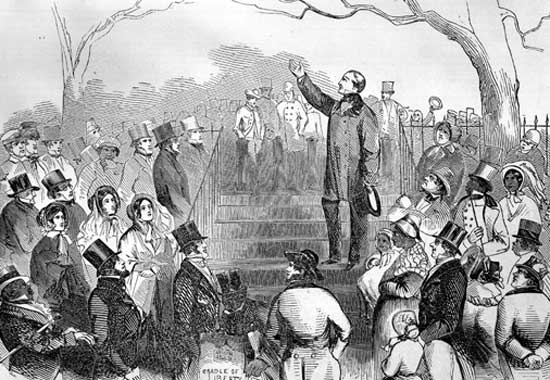
70787-004-784C0452

Christians and Abolitionism in the North

In the North a strident abolitionist movement took root and with each failed compromise, with each new infringement on the rights of northern free-states by the Congress, Courts and the Executive branch to appease southern slaveholders the movement gained added support. The movement developed during the 1830s in New England as a fringe movement among the more liberal elites. One wing of the movement “arose from evangelical ranks and framed its critique of bound labor in religious terms.” [1] The polarization emerged as Northern states abolished slavery as increasing numbers of influential “former slave owners such as Benjamin Franklin changed their views on the matter.” [2]

Many in the movement were inspired by the preaching of revivalist preacher Charles Finney who “demanded a religious conversion with a political potential more radical than the preacher first intended.” [3] Finney and other preachers were instrumental in the Second Great Awakening “which rekindled religious fervor in much of the nation, saw new pressure for abolition.” [4] In fact the “most important child of the Awakening, however, was the abolitionist movement, which in the 1830s took on new life, placed the slavery issue squarely on the national agenda, and for the next quarter century aroused and mobilized people in the cause of emancipation.” [5]

The evangelical proponents of abolition understood this in the concept of “free will.” They believed and pointed out repeatedly that slavery “denied one group of human beings the freedom of action necessary to free will – and therefore moral responsibility for their behavior. Meanwhile, it assigned to other human beings a degree of temporal power that virtually guaranteed their moral corruption. Both master and slave were thus trapped in a relationship that inevitably led both down the path of sin and depravity” [6]
4.0.4

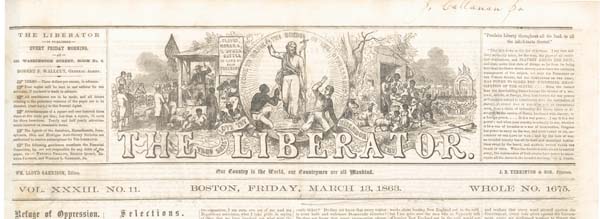
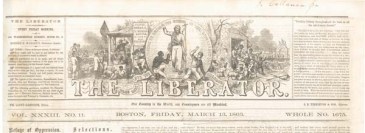
Finney’s preaching was emboldened and expanded by the American Anti-Slavery Society founded by William Lloyd Garrison “which launched a campaign to change minds, North and South, with three initiatives, public speeches, mass mailings and petitions.” [7] Many of the speakers were seminary students and graduates of Lane Seminary in Cincinnati, who became known as “the Seventy” who received training and then “fanned out across the North campaigning in New England, Pennsylvania, New York, Ohio, Indiana and Michigan[8] where many received hostile receptions, and encountered violence. Garrison used his newspaper, The Liberator to “pledge an all-out attack on U.S. slavery.” [9] Many of the articles in the Liberator, as in many other religiously based abolitionist publications “based their call for the immediate abolition of slavery on their belief that it was a sin.” [10] Likewise other churches such as the Presbyterians founded new educational institutions such as “Oberlin College in Ohio” which “was founded as an abolitionist institution” [11]

Theodore Parker, a Unitarian pastor and leading Transcendentalist thinker enunciated a very important theological-political analogy for many in the religious wing of the abolitionist movement which concentrated less on using chapter and verse but appealing to “the spirit of the Gospel,” [12] in as Parker’s analogy: as Jesus is to the Bible, so is the Declaration to the Constitution:

“By Christianity, I mean that form of religion which consists of piety – the love of God, and morality – the keeping of His laws. That Christianity is not the Christianity of the Christian church, nor of any sect. It is the ideal religion which the human race has been groping for….By Democracy, I mean government over all the people, by all the people and for the sake of all….This is not a democracy of the parties, but it is an ideal government, the reign of righteousness, the kingdom of justice, which all noble hearts long for, and labor to produce, the ideal whereunto mankind slowly draws near.” [13]

The early abolitionists who saw the issue framed in terms of their religious faith declared slavery a sin against God and man that demanded immediate action.” [14] For them the issue was a matter of faith and belief in which compromise of any kind, including the gradual elimination of slavery or any other halfway measures were unacceptable. “William Lloyd Garrison and his fellow abolitionists believed the nation faced a clear choice between damnation and salvation,” [15] a cry that can be heard in much of today’s political debate regarding a number of social issues with religious components including abortion, gay rights and immigration. Harrison wrote that “Our program of immediate emancipation and assimilation, I maintained, was the only panacea, the only Christian solution, to an unbearable program.” [16] The abolitionists identified:

“their cause with the cause of freedom, and with the interests of large and relatively unorganized special groups such as laborers and immigrants, the abolitionists considered themselves to be, and convinced many others that they were, the sole remaining protectors of civil rights.” [17]

The arguments were frequently and eloquently rooted in profoundly religious terms common to evangelical Christianity and the Second Great Awakening. One of the leading historians of the era, Henry Wilson of Massachusetts, a Radical Republican and Abolitionist who served as a United States Senator and Vice President in Ulysses Grant’s second administration provides a good example of this. He wrote in his post war history of the events leading to the war explaining basic understanding of the religiously minded abolitionists during the period:

“God’s Holy Word declares that man was doomed to eat his bread in the sweat of his face. History and tradition teach that the indolent, the crafty, and the strong, unmindful of human rights, have ever sought to evade this Divine decree by filching their bread from the constrained and unpaid toil of others…

American slavery reduced man, created in the Divine image, to property….It made him a beast of burden in the field of toil, an outcast in social life, a cipher in courts of law, and a pariah in the house of God. To claim for himself, or to use himself for his own benefit or benefit of wife and child, was deemed a crime. His master could dispose of his person at will, and of everything acquired by his enforced and unrequited toil.

This complete subversion of the natural rights of millions…constituted a system antagonistic to the doctrines of reason and the monitions of conscience, and developed and gratified the most intense spirit of personal pride, a love of class distinctions, and the lust of dominion. Hence a commanding power, ever sensitive, jealous, proscriptive, dominating, and aggressive, which was recognized and fitly characterized as the Slave Power…” [18]

The religious abolitionists took aim at the Southern churches and church leaders who they believed only buttressed slavery but “had become pawns of wealthy slaveholders and southern theologians apologists for oppression.” [19] As the abolitionist movement spread through Northern churches, especially those with ties to the evangelicalism of the Great Awakenings, and for “Evangelical northerners, the belief in individual spiritual and personal rights and personal religious activism made such involvement necessary.” [20]

For Baptists the issue created a deep polarization with northern Baptists mobilizing around abolitionist principles which came out of their association with English Baptists who had been at the forefront of the abolitionist movement in England where the Reverend William Knibb, who also led the fight to end slavery in Jamaica “became an impassioned defender of the human rights of blacks….his flamboyant speeches aroused the people against slavery.” [21] The Baptist Union in England sent a lengthy letter to the Baptist Triennial Convention in the United States on December 31st 1833 in which they condemned “the slave system…as a sin to be abandoned, and not an evil to be mitigated,” and in which they urged all American Baptists to do all in their power to “effect its speedy overthrow.” [22]

In 1835 two English Baptists, Francis Cox and James Hoby, who were active in that nation’s abolitionist movement with William Wilberforce came to the United States “to urge Baptists to abandon slavery. This visit and subsequent correspondence tended to polarize Baptists.” [23] In the north their visit encouraged faith based activism in abolitionist groups. In 1849 the American Baptist Anti-Slavery Convention was formed in New York and launched a polemic attack on the institution of slavery and called southern Baptists to repent in the strongest terms. They urged that the mission agencies be cleansed from “any taint of slavery…and condemned slavery in militant terms.” They called on Southern Baptists to “confess before heaven and earth the sinfulness of holding slaves; admit it to be not only a misfortune, but a crime…” and it warned that “if Baptists in the South ignored such warnings and persisted in the practice of slavery, “we cannot and dare not recognize you as consistent brethren in Christ.” [24] Such divisions we not limited to Baptists and as the decade moved on rose to crisis proportions in every evangelical denomination, provoking Kentucky Senator Henry Clay to wonder: “If our religious men cannot live together in peace, what can be expected of us politicians, very few of whom profess to be governed by the great principles of love?” [25]

The abolition movement aimed to not only stop the spread of slavery but to abolish it. The concept of totally abolishing slavery was something that even many northerners who exposed its expansion were either indifferent or opposed to. For such people the abolitions of slavery only became an issue for many after the passage of the Fugitive Slave Act of 1850. So long as slavery was regulated to the South, most northerners showed little concern. In fact many northerners profited by slavery, or otherwise reaped its benefits. However, their involvement with slavery was indirect. While they may have worn clothes made of cotton harvested by slaves, while the profits of corporations that benefited from all aspects of the Southern slave economy paid the wages of northern workers and shareholders, few thought of the moral issues until they were forced to participate or saw the laws of their states overthrown by Congress.

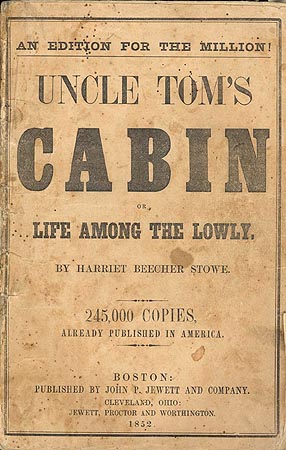
Uncle Tom’s Cabin and the Popularization of Abolitionism in the North
cover22

It was only after this act that the abolitionist movement began to gain traction among people in the North. Angelina Grimke Weld confronted the indifference of people in the North in regard to slavery in her book American Slavery as it Is in 1838. The book was a harsh criticism of Northern hypocrisy and indifference and sought to confront its readers that to “deny man’s capacity to for cruelty is to betray a shameful ignorance of human history and, in particular, of America’s past.” [26] Noting the Salem Witch Trials, the persecution of Quakers and Baptists, the transatlantic salve trade and even violent attacks on Northern abolitionists in northern cities the book sold over 100,000 copies.

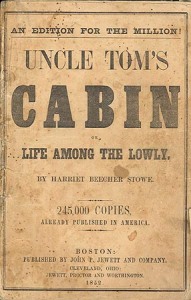
The abolitionist movement was given a large boost by the huge popularity of Harriet Beecher Stowe’s 1852 novel Uncle Tom’s Cabin, “a vivid, highly imaginative, best-selling, and altogether damning indictment of slavery” [27]

Stowe was a well-educated writer, the daughter of the President of Lane Seminary, Lyman Beecher and wife of Calvin Ellis Stowe, a professor at the seminary. She and her family were deeply involved in the abolitionist movement and supported the Underground Railroad, even taking fugitive slaves into her home. These activities and her association with escaped slaves made a profound impact on her. She received a letter from her sister who was distraught over the passage of the Fugitive Slave Law. He sister challenged Stowe to write: “How, Hattie, if I could use a pen as you can, I would write something that would make this whole nation feel what an accursed thing slavery is.” [28]

One communion Sunday she:

“sat at the communion table of Brunswick’s First Parish Church, a vision began playing before my eyes that left me in tears. I saw an old slave clad in rags, a gentle, Christian man like the slave I had read about in American Slavery as It Is. A cruel white man, a man with a hardened fist, was flogging the old slave. Now a cruel master ordered two other slaves two other slaves to finish the task. As they laid on the whips, the old black man prayed for God to forgive them.

After church I rushed home in a trance and wrote down what I had seen. Since Calvin was away, I read the sketch to my ten- and twelve-year-old sons. They wept too, and one cried, “Oh! Mamma, slavery is the most cursed thing in the world!” I named the old slave Uncle Tom and his evil tormenter Simon Legree. Having recorded the climax of my story, I then commenced at the beginning….” [29]

Many of Stowe’s characters were fiction versions of people that she actually knew or had heard about and the power of her writing made the work a major success in the United States and in Britain. The abolitionist movement gained steam and power through it and the play that issued from it. The publication of the book and its success “raised a counter indignation among Southerners because they thought Mrs. Stowe’s portrait untrue and because the North was so willing to believe it.” [30]

But despite the furor of many southerners, the book gained in popularity and influenced a generation of northerners, creating a stereotype of Southern slaveholders, causing people “to think more deeply and more personally about the implications of slavery for family, society and Christianity.” [31] The book drew many people previously ambivalent to the writings of the abolitionists and who did not normally read the accounts of escaped slaves. The vivid images in Stowe’s book “were irredeemably hostile: from now on the Southern stereotype was something akin to Simon Legree.” [32] But those images transformed the issue in the minds of many in the north as they “touched on all these chords of feeling, faith, and experience….The genius of Uncle Tom’s Cabin was that it made the personal universal, and it made the personal political as well. For millions of readers, blacks became people.” [33] One northern reader said, “what truth could not accomplish, fiction did” [34] as it “put a face on slavery, and a soul on black people.” [35]

The book had a transatlantic impact, over a half million women in Great Britain “signed a massive petition advocating emancipation in the United States; this, in turn, encouraged American women to step up their petitioning.” [36] The book ended up touching the conscience of many Americans and it caused many to “think more deeply and more personally about implications of slavery for family, society, and Christianity.” [37]

George Fitzhugh, a defender of benevolent paternalistic slavery noted Stowe’s book “was “right” concerning the “bitter treatment of slaves….Law, Religion, and Public Opinion should be invoked to punish and correct those abuses….” [38] However, such thoughts could not be spoken too openly for fear of other slaveholders who “could not calmly debate internal correction…while outside agitators advertised their supposed monstrosities.” [39] The inability to debate the issue internally made the visceral response in the South to Uncle Tom’s Cabin look petty and impotent. Despite the fact that Stowe steered clear of the more radical abolitionist groups and shied away from the nascent women’s rights movement Stowe was denounced by Southerners as a threat to the established order, they saw “her as the embodiment of radicalism, as an emissary of both abolitionism and women’s rights.” [40]

Notes 

[1] Ibid. Levine Half Slave and Half Free p.93

[2] McGrath, Alister Christianity’s Dangerous Idea: The Protestant Revolution A History from the Sixteenth Century to the Twenty-First Harper Collins Publishers, New York 2007 p.324

[3] Ibid. Freehling The Road to Disunion Volume One p.289

[4] Ibid. McGrath Christianity’s Dangerous Idea p.324

[5] Huntington, Samuel P. Who Are We? America’s Great Debate The Free Press, Simon and Schuster Europe, London 2004 p.77

[6] Ibid. Levine Half Slave and Half Free p.93

[7] Ibid. Egnal Clash of Extremes:pp.125-126

[8] Ibid. Egnal Clash of Extremes p.125

[9] Ibid. Freehling The Road to Disunion Volume One p.12

[10] Ibid. Deyle The Domestic Slave Trade p.57

[11] Ibid. McGrath Christianity’s Dangerous Idea p.324

[12] Ibid. Rable God’s Almost Chosen Peoples p.14

[13] Wills, Garry Lincoln at Gettysburg: The Words that Remade America Simon and Schuster Paperbacks, New York 1992

[14] Ibid. Rable God’s Almost Chosen Peoples p.13

[15] Ibid. Rable God’s Almost Chosen Peoples p.13

[16] Oates, Stephen B. Editor The Approaching Fury: Voices of the Storm, 1820-1861 University of Nebraska Press, Lincoln and London 1997 p.36

[17] Stampp, Kenneth M. editor The Causes of the Civil War 3rd Revised Edition A Touchstone Book published by Simon and Schuster, New York and London 1991 p.23

[18] Ibid. Stampp The Causes of the Civil War p.29

[19] Ibid. Rable God’s Almost Chosen Peoples p.13

[20] Ibid. Goldfield America Aflame p.35

[21] McBeth, H. Leon The Baptist Heritage Broadman Press, Nashville TN 1987 p.301

[22] Ibid. McBeth The Baptist Heritage p.301

[23] Ibid. McBeth The Baptist Heritage p.384

[24] Ibid. McBeth The Baptist Heritage pp.384-385

[25] Ibid. Goldfield America Aflame p.35

[26] Varon, Elizabeth R. Disunion! The Coming of the American Civil War 1789-1858 University of North Carolina Press, Chapel Hill NC 2008 p.140

[27] Ibid. Catton Two Roads to Sumter p.94

[28] Ibid. Goldfield America Aflame p.75

[29] Ibid. Oates The Approaching Fury p.120

[30] Ibid. Catton Two Roads to Sumter p.94

[31] Ibid. Goldfield America Aflame p.83

[32] Ibid. Catton Two Roads to Sumter p.94

[33] Ibid. Goldfield America Aflame p.79

[34] Ibid. Goldfield America Aflame p.79

[35] Ibid. Goldfield America Aflame p.83

[36] Ibid. Varon Disunion! p.245

[37] Ibid. Goldfield America Aflame p.83

[38] Ibid. Freehling The Road to Disunion Volume One p.48

[39] Ibid. Freehling The Road to Disunion Volume One p.49

[40] Ibid. Varon Disunion! p.245

2 Comments

Filed under christian life, civil rights, civil war, faith, History, Political Commentary

God’s Not Quite Chosen People: The Confederate Union of Church and State

Friends of Padre Steve’s World

Unlike many areas of study, history never goes out of date. While I do not think that history necessarily repeats itself, I do believe that essentially humans never real change. Yes we sometimes do get better, but we often instead of rising to our best, we repeat the errors of those who have gone before us. 

This is especially true in he arenas of politics and religion, especially when societies decide to merge the two. I have written about this good number of times citing contemporary and historical examples, but today I am pulling out yet another section of the chapter of my Civil War and Gettysburg Staff Ride text dealing with how the Southern Confederacy for all practical purposes merged church and state during the Civil War. Now it did not become a full fledged theocracy, but I have no doubt that it would have had the Confederacy succeeded in its quest to become independent. The philosophical and religious thought that undergirded so much of what the Confederacy stood for almost demanded this.

And so today when we look at the fracturing of religion along political and ideological lines political resurgence of the Christian Right in the Republican Party we see many of the themes of the Confederacy being recast and broadcast as what it is to be authentically American and even more dangerously, that only Christians can be real Americans. That it what almost all the current field of Republican candidates cow-tow to the most extreme leaders and spokesmen of the Christian Right, some of whom are openly neo-Confederate in their beliefs and have ties to neo-Confederate and White Supremacist organizations.  

Since those supposedly Christian leaders seek to use their influence to force their religion on others, this subject remains very important. 

Have a great day.

Peace

Padre Steve+

lee-jackson-in-prayer

Perhaps more than anything, the denominational splits helped prepare the Southern people as well as clergy for secession and war. They set precedent by which Southerners left established national organizations. When secession came, “the majority of young Protestant preachers were already primed by their respective church traditions to regard the possibilities of political separation from the United States without undue anxiety.” [1]

One of the most powerful ideological tools since the days of the ancients has been the linkage of religion to the state. While religion has always been a driving force in American life since the days of the Puritans in the Massachusetts Bay Colony, especially in the belief about the destiny of the nation as God’s “Chosen People,” it was in the South where the old Puritan beliefs took firm root in culture, society, politics and the ideology which justified slavery and became indelibly linked to Southern nationalism. “Confederate independence, explained a Methodist tract quoting Puritan John Winthrop, was intended to enable the South, “like a city set on a hill’ [to] fulfill her God given mission to exalt in civilization and Christianity the nations of the earth.” [2]

Religion and the churches “supplied the overarching framework for southern nationalism. As Confederates cast themselves as God’s chosen people.” [3] the defense of slavery was a major part of their mission. A group of 154 clergymen calling themselves “The Clergy of the South” “warned the world’s Christians that the North was perpetuating a plot of “interference with the plans of Divine Providence.” [4] A Tennessee pastor bluntly stated in 1861 that “In all contests between nations God espouses the cause of the Righteous and makes it his own….The institution of slavery according to the Bible is right. Therefore in the contest between the North and the South, He will espouse the cause of the South and make it his own.” [5]

The effect of such discourse on leaders as well as individuals was to unify the struggle as something that linked the nation to God, and God’s purposes to the nation identifying both as being the instruments of God’s Will and Divine Providence:

“Sacred and secular history, like religion and politics, had become all but indistinguishable… The analogy between the Confederacy and the chosen Hebrew nation was invoked so often as to be transformed into a figure of everyday speech. Like the United States before it, the Confederacy became a redeemer nation, the new Israel.” [6]

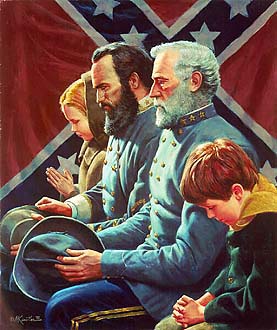
This theology also motivated men like the convinced hard line Calvinist-Presbyterian, General Stonewall Jackson on the battlefield. Jackson’s brutal, Old Testament understanding of the war caused him to murmur: “No quarter to the violators of our homes and firesides,” and when someone deplored the necessity of destroying so many brave men, he exclaimed: “No, shoot them all, I do not wish them to be brave.” [7]

In effect: “Slavery became in secular and religious discourse, the central component of the mission God had designed for the South….The Confederates were fighting a just war not only because they were, in the traditional framework of just war theory, defending themselves against invasion, they were struggling to carry out God’s designs for a heathen race.” [8]

From “the beginning of the war southern churches of all sorts with few exceptions promoted the cause militant” [9] and supported war efforts. The early military victories of Robert E. Lee’s Army of Northern Virginia and the victories of Stonewall Jackson in the Shenandoah Valley   were celebrated as “providential validations of the cause that could not fail…” Texas Methodist minister William Seat wrote: “Never surely since the Wars of God’s ancient people has there been such a remarkable and uniform success against tremendous odds. The explanation is found in the fact that the Lord goes forth to fight against the coercion by foes of his particular people. Thus it has been and thus it will be to the end of the War.” [10]

This brought about a intertwining of church and state authority, a veritable understanding of theocracy as “The need for the southern people to acknowledge God’s authority was bound up with a legitimation of the authority of clerical and civil rulers. Christian humility became identified with social and political deference to both God and Jefferson Davis.” [11]

Jefferson Davis and other leaders helped bolster this belief:

“In his repeated calls for God’s aid and in his declaration of national days of fasting, humiliation, and prayer on nine occasions throughout the war, Jefferson Davis similarly acknowledged the need for a larger scope of legitimization. Nationhood had to be tied to higher ends. The South, it seemed, could not just be politically independent; it wanted to believe it was divinely chosen.” [12]

Davis’s actions likewise bolstered his support and the support for the war among the clergy. A clergyman urged his congregation that the people of the South needed to relearn “the virtue of reverence- and the lesson of respecting, obeying, and honoring authority, for authority’s sake.” [13]

Confederate clergymen not only were spokesmen and supporters of slavery, secession and independence, but many also shed their clerical robes and put on Confederate Gray as soldiers, officers and even generals fighting for the Confederacy. Bishop Leonidas Polk, the Episcopal Bishop of Louisiana, who had been a classmate of Jefferson Davis at West Point was commissioned as a Major General and appointed to command the troops in the Mississippi Valley. Polk did not resign his ecclesiastical office, and “Northerners expressed horror at such sacrilege, but Southerners were delighted with this transfer from the Army of the Lord.” [14] Lee’s chief of Artillery Brigadier General Nelson Pendleton was also an academy graduate and an Episcopal Priest. By its donations of “everything from pew cushions to brass bells, Southern churches gave direct material aid to the cause. Among all the institutions in Southern life, perhaps the church most faithfully served the Confederate Army and nation.” [15] Southern ministers “not only proclaimed the glory of their role in creating the war but also but also went off to battle with the military in an attempt to add to their glory.” [16]

Sadly, the denominational rifts persisted until well into the twentieth century. The Presbyterians and Methodists both eventually reunited but the Baptists did not, and eventually “regional isolation, war bitterness, and differing emphasis in theology created chasms by the end of the century which leaders of an earlier generation could not have contemplated.” [17] The Southern Baptist Convention is now the largest Protestant denomination in the United States and many of its preachers are active in often divisive conservative social and political causes. The denomination that it split from, the American Baptist Convention, though much smaller remains a diverse collection of conservative and progressive local churches. Some of these are still in the forefront of the modern civil rights movement, including voting rights, women’s rights and LGBT issues, all of which find some degree of opposition in the Southern Baptist Convention.

But the religious dimensions were far bigger than denominational disagreements about slavery; religion became one of the bedrocks of Confederate nationalism. The Great Seal of the Confederacy had as its motto the Latin words Deo Vindice which can be translated “With God as our Champion” or “Under God [Our] Vindicator.” The issue was bigger than independence itself; it was intensely theological. Secession “became an act of purification, a separation from the pollutions of decaying northern society, that “monstrous mass of moral disease,” as the Mobile Evening News so vividly described it.” [18]

The arguments found their way into the textbooks used in schools throughout the Confederacy. “The First Reader, For Southern Schools assured its young pupils that “God wills that some men should be slaves, and some masters.” For older children, Mrs. Miranda Moore’s best-selling Geographic Reader included a detailed proslavery history of the United States that explained how northerners had gone “mad” on the subject of abolitionism.” [19] The seeds of future ideological battles were being planted in the hearts of white southern children by radically religious ideologues, just as they are today in the Madrassas of the Middle East.

While the various theological and ideological debates played out and fueled the fires of passion that brought about the war, they also provided great motivation to their advocates. This was true especially to Confederates during the war, that their cause was righteous. While this fueled the passion of the true believers, other very real world decisions and events in terms of politics, law and lawlessness, further inflamed passions.

Notes

[1] Brinsfield, John W. et. al. Editor, Faith in the Fight: Civil War Chaplains Stackpole Books, Mechanicsburg PA 2003 p.67

[2] Ibid. Faust The Creation of Confederate Nationalism p.27

[3] Ibid. Gallagher The Confederate War pp.66-67

[4] Ibid. Daly When Slavery Was Called Freedom p.145

[5] Ibid. Daly When Slavery Was Called Freedom p.138

[6] Ibid. Faust The Creation of Confederate Nationalism p.29

[7] Fuller, J.F.C. Grant and Lee: A Study in Personality and Generalship, Indiana University Press, Bloomington IN 1957

[8] Ibid. Faust, The Creation of Confederate Nationalism: Ideology and Identity in the Civil War South p.60

[9] Ibid. Thomas The Confederate Nation 1861-1865 pp.245-246

[10] Ibid. Daly When Slavery Was Called Freedom pp.145 and 147

[11] Ibid. Faust The Creation of Confederate Nationalism p.26

[12] Ibid. Faust The Creation of Confederate Nationalism p.33

[13] Ibid. Faust The Creation of Confederate Nationalism p.32

[14] Foote, Shelby, The Civil War, A Narrative. Volume One: Fort Sumter to Perryville Random House, New York 1963 1958 p.87

[15] Ibid. Thomas The Confederate Nation p.246

[16] Ibid. Daly When Slavery Was Called Freedom p.142

[17] Ibid. McBeth The Baptist Heritage pp.392-393

[18] Ibid. Faust The Creation of Confederate Nationalism p.30

[19] Ibid. Faust The Creation of Confederate Nationalism p.62


9 Comments

Filed under civil rights, civil war, faith, History, Political Commentary

Fiery Trials: Emancipation & Equality Today

c91f46b3ce5943b9e213e3cd306c6348_f3094

Friends of Padre Steve’s World

Just a coupled of thoughts on this Sunday night. Like yesterday I have been spending a lot of time on my Civil War-Gettysburg Staff Ride text. I have been working on re-writing the chapter on ideology and religion as they related to the causes of the war, its conduct and its aftermath. One thing that caught my attention was something that I think is profoundly important today.

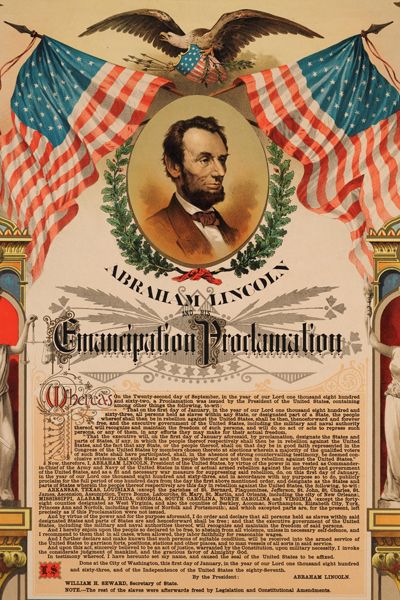
In December of 1862 as he spoke to Congress prior to the the signing of the Emancipation Proclamation Lincoln spoke these profound words:

“Fellow citizens, we cannot escape history….This fiery trial through which we pass, will light us down, in honor or dishonor, to the latest generation….In giving freedom to the slave, we assure freedom to the free – honorable alike in what we give, and what we preserve.”

His words in giving freedom to the slave, we assure freedom to the free are part of an understanding of freedom, especially Lincoln’s radical understanding that the Declaration of Independence actually meant what it said that “all men are created equal.” For Lincoln this meant African Americans, inlacing those that labored as slaves. Lincoln understood the Declaration in its most broad understanding, he saw it as a universal liberty. As early as 1854 Lincoln posed the idea that the Declaration of Independence was the standard maxim of free society …constantly spreading and deepening its influence,” ultimately applicable “to peoples of all colors everywhere.”

Today there are a lot of people, especially the loudly political preachers, pundits and politicians of the Christian right and their allies who are committed to rolling back the rights of blacks, but also of women, and to prevent Gays, Lesbians and others of the LGBTQ community from having any rights commensurate with their status as citizens. In many states we have seen the protections of the Voter’s Rights Act being eroded as state legislatures enact laws to restrict voting rights and make it more difficult for people to exercise their right to vote. State legislatures are enacting laws that allow people to discriminate against others based on “a sincerely held religious belief” and while those laws are targeted against Gays they are in many cases written so broadly that they will protect just about any form of discrimination based on religion, even by public officials in the conduct of their duties as happened in  North Carolina last week. 

That is why what Lincoln said as he was preparing to sign the Emancipation Proclamation matters today. When we give freedom to people, we protect the freedom of everyone, but that my friends is not how many people in the so-called Christian Right see it. For them it is their freedom to discriminate in God’s name, because they like the anointed lords of the Southern Aristocracy believe that it is God’s will for them to do this. Sounding like a Southern planter, preacher or politician of the 1850s the founder of the movement known and Christian Dominionism R.J. Rushdooney wrote: “One faith, one law and one standard of justice did not mean democracy. The heresy of democracy has since then worked havoc in church and state . . . Christianity and democracy are inevitably enemies.”

British Evangelical-Anglican theologian Alister McGrath notes how “the arguments used by the pro-slavery lobby represent a fascinating illustration and condemnation of how the Bible may be used to support a notion by reading the text within a rigid interpretive framework that forces predetermined conclusions to the text.”

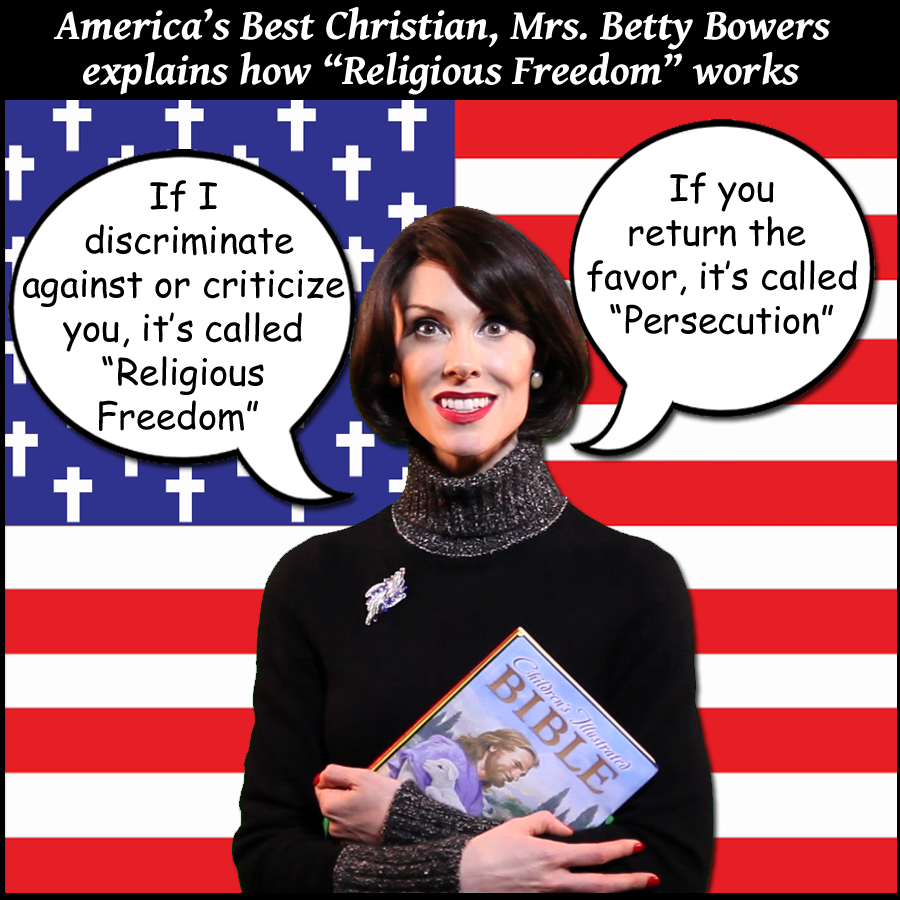
That my friends are what we are dealing with today. There is a party of Christians who have tremendous political power who are using it for the most nefarious of purposes, using the law and the police power of the state to deny rights to others while preserving their own while claiming to be the victims of persecution, just as did Southern slaveholders in the 1830s to 1861.

So, that is all for the night. I expect to put out something related to this topic again tomorrow, perhaps a full section of the chapter on religion and ideology from my text.

Peace

Padre Steve+

Leave a comment

Filed under civil rights, civil war, faith, History, laws and legislation, LGBT issues, News and current events, Political Commentary

The Duggars & the Danger of Absolutism

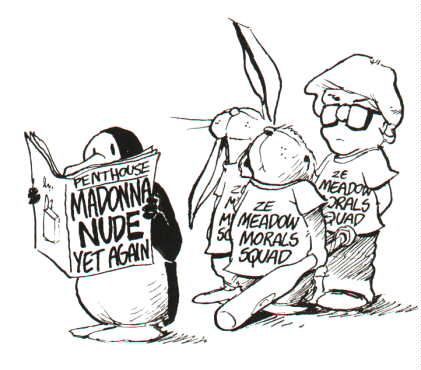
orange-BloomCounty-morals

“Religion carries two sorts of people in two entirely opposite directions: the mild and gentle people it carries towards mercy and justice; the persecuting people it carries into fiendish sadistic cruelty…” Alfred North Whitehead 

Friends of Padre Steve’s World,

Yesterday I wrote about my thoughts on the situation regarding the Duggar family and how I saw the incident as demonstrating the moral implosion of the Christian Right. As I wrote about it I began to think about the religious world of the Christian Right that I spent much of my life in before I returned shattered from my experiences serving in Iraq. For me the war was a watershed in my life and in my faith.

Those who follow my writings know how much I struggle with faith and doubt on a daily basis. I believe, but as the man told Jesus when he asked Jesus to heal his child “I believe, help my unbelief.” I no longer believe in the “absolute truths” that I once believed. Of course to some this makes me a heretic or worse. That being said, I have faith in a God I cannot see. I have faith in a God who clothes himself in human weakness and allows himself to be killed as a state criminal.

That being said I see many of my fellow Christians, not to mention those of other faiths who attempt to use their interpretation of what they believe are absolute truths and attempt to impose them on others. Using their houses of worship they indoctrinate believers into believing the “truth” including the judgment on non-believers. The Duggars and their stalwart supporters are prime examples of this. As I said yesterday, if the Duggars were simply minding their own business and raising their family according to their beliefs the story, while revolting and disgusting in its moral tenor would not have become a political issue. However, because the Duggars have used their fame to insert themselves and their ideology into the political arena where they routinely appear at the side of presidential candidates, influential congressmen and senators, governors and as keynote speakers at quasi-religious political events where they rail against liberals, gays, Moslems and others it has become precisely that.

But then I kind of understand the amount of indoctrination that it takes for people like the Duggars and their supporters to get where they are. I went to churches for much of my adult life where right wing politics was part and parcel of everything that these churches taught. The “voters guides” put out by the Christiian Coalition were not only distributed before, during and after worship services, but they were required reading. Pseudo-historians came and sold their wares about America’s Christian Heritage to people who devoured them. I remember going through mandatory classes for clergy in my previous denomination which were entitled “The Government of God” and utilized Robert Bork’s book Slouching Towards Gomorrah: Modern Liberalism and American Decline as its primary text. Obviously the class had little to do with faith, but was a tool by which we were indoctrinated to believe by the political-religious ideology of our church leaders. There were several more texts, which basically echoed Bork’s thought, but they were taught in a manner is if they were as important as the often contradictory Biblical tests or the writings of the church Fathers, the great saints, Scholastics or Protestant Reformers. It was an exercise in political indoctrination based on religious ideology. At the time I had no idea that what the church leaders were appealing to was nothing more than a variation on the Christian Dominionism ideology. 

Such ideology is incredibly dangerous because when people in power take it to heart and act upon it, all pretense of fairness, justice and integrity is lost. Those who are simply different are persecuted, those who do not tow a particular party or religious line are suspect, and the innocent are presumed guilty. It has happened throughout human history in every corner of the world, and it still goes on today especially in the religious and cultural world that the Duggars are a part. Their “faith” if you can call it that is built on the absolute certitude that they are right and thus even if they do wrong it is not as bad because they are standing for God.

This type of religious and moral absolutism is terrifying when it reaches its fruition, and so I ended up rejecting that view of faith and life after coming home from Iraq. For publicly voicing my disagreement on a number of issues retaliated to those matters I was asked to leave that denomination in 2010.

I believe again, but my doubts are real. But even more I have a belief in justice, and I believe that that justice itself cannot be built on absolutes. As Captain Jean Luc Picard (Patrick Stewart) noted in the Star Trek the Next Generation episode Justice: 

“I don’t know how to communicate this, or even if it is possible. But the question of justice has concerned me greatly of late. And I say to any creature who may be listening, there can be no justice so long as laws are absolute. Even life itself is an exercise in exceptions.”

I have found that as Picard said, “that life itself is an exercise in exceptions.”  We all make them, and the Bible and the history of the church is full of them. So I have a hard time with those who claim an absolute certitude in beliefs that are built on faith and treat them as fact, despite the fact that they are not provable. Dietrich Bonhoeffer noted the problem well when he talked of this problem and described the dilemma of so many believers:

“Man no longer lives in the beginning–he has lost the beginning. Now he finds he is in the middle, knowing neither the end nor the beginning, and yet knowing that he is in the middle, coming from the beginning and going towards the end. He sees that his life is determined by these two facets, of which he knows only that he does not know them”

Even so the Duggars and their supporters, like many believers of all faiths wrap themselves in the certitude of their faith. They espouse doctrines that at best are humanity’s best attempts to describe a God that is infinitely bigger and more complex than they believe. The contest then becomes not about God himself, but the manner that the human being who interprets God espouses as incontrovertible doctrine. Eric Hoffer wrote:

“A doctrine insulates the devout not only against the realities around them but also against their own selves. The fanatical believer is not conscious of his envy, malice, pettiness and dishonesty. There is a wall of words between his consciousness and his real self.”

That certitude and the belief that we absolutely know the mind of a God who claims that we cannot know is the height of arrogance and it ensures that when we speak in terms of absolutes that we do not understand God, nor do we believe in justice, because as Captain Picard so wisely noted “life itself is an exercise in exceptions.” Even the most devout of believers make exceptions, simply because they are human and can’t avoid it, unless they are sociopaths.

Henri Nouwen wrote something very profound that all who claim to know God’s absolute will or truth need to consider. Nouwen wrote: “Theological formation is the gradual and often painful discovery of God’s incomprehensibility. You can be competent in many things, but you cannot be competent in God.”

The fact is that no one can be competent in God, and that those who claim to are either hopelessly deluded by their ignorance, or worse, are evil men masquerading as good. Those who pro port to know absolutes and want to use the Bible or any other religious text as some sort of rule book that they alone can interpret need to ask themselves this question, posed by Commander Riker to Captain Picard when he talked about absolutes and life: “When has justice ever been as simple as a rulebook?” 

Sadly too many people the Duggars apply their own misconceptions and prejudices to their scriptures and use them as a weapon of temporal and divine judgement on all who they oppose. However, as history, life and even our scriptures testify, that none of us can absolutely claim to know the absolutes of God. As Captain Picard noted “life itself is an exercise in exceptions.” 

Thus our human justice, as feeble as it often is must take this into account: It takes true wisdom to know when and how to make these exceptions, wisdom based on reason, grace and mercy. Justice, is to apply the law in fairness and equity, knowing that even our best attempts can be misguided and if based on emotion, hatred, racism or vengeance all clothed in the language of righteousness can be more evil than any evil it is supposed to correct.

Does it matter if we are doing it the sake of law and order, or for love of country, or to defend the faith; if at the heart of it what we call justice, or moral absolutes is nothing more than the implementation of an agenda to crush the powerless under our heel and promote even more injustice? If we lean toward the view that we are implementing the absolute law and will of God then we had better be sure, as Nouwen so well noted we can be competent in many things, but we cannot, as much as we deceive ourselves, be competent in God.

But we see it all too often, religious people and others misusing faith to condemn those they do not understand or with whom they disagree. This is why the Duggar controversy is important. As Patrick Stewart playing Captain Jean Luc Picard noted in the Start Trek Next Generation episode The Drumhead:

“We think we’ve come so far. Torture of heretics, burning of witches it’s all ancient history. Then – before you can blink an eye – suddenly it threatens to start all over again.”

Peace

Padre Steve+

8 Comments

Filed under christian life, faith, News and current events, Political Commentary

Duggared: The Moral Implosion of the Christian Right

There was a time when child molestation was considered a sin by conservative Christians and there was a time when multiple criminal acts of a sexual nature committed against children would have been condemned by anyone even claiming to be a Christian. Of course that that didn’t mean that such acts did not happen, but at least in public Christian leaders condemned the criminal acts that we used to call mortal sin, even if they offered the offender a chance at repentance and reconciliation.

But that was before the days of “culture war” proclaimed by Pat Buchanan and the Christian “jihad” to use the terms of Roman Catholic theologian Peter Kreeft, a convert from Evangelical Protestant Calvinism to the Catholic faith in his book Ecumenical Jihad. For Buchanan, Kreeft and others like them defending the indefensible is the norm if it supports the dominance of Christians over their non-Christian neighbors. Kreeft’s whole thesis follows the premise that the “liberal elites” are attacking the very basis of Christian civilization, as such the “culture war” and “fanaticism” perfectly acceptable. While Kreeft does not openly endorse violence as a response, his thesis does not necessarily condemn it. The reason for this is that  Kreeft promotes the idea of a militant Church that is linked to the state and has the power to punish and persecute its enemies.  Of course this is a page that Kreeft borrows from radical Islam and by doing so he does’t seem to mind throwing out the teachings of Jesus. Instead Kreeft, Buchannan and many others, especially Christians who follow “Dominionist” theology return to the model of the imperial church in which believers have all right to rule over unbelievers because God wants it that way.

Interestingly enough the Duggars have been out there preaching the same message, which is why I had to mention it.

As a person who cut his teeth during the heady early days of the Christian Right’s march to power I am astounded to see the moral implosion of what properties to call itself “conservative Christianity” in the United States. This implosion has been on full display in the situation involving the Duggar family, a fundamentalist Christian family who due to their ability to breed like rabbits have enjoyed a near cult like status with the Christian Right, complete with reality television show, book deals and political influence with many of the 2016 Republican Presidential contenders.

Now let me be clear. I have nothing against large families, people sharing their faith, or even endorsing political candidates.  As for the Duggars as I do not know them. I only know them by their carefully crafted media image which is in the process of coming apart. That being said, what is going on here is a disaster for people who actually value the Christian faith and do9 what they can to share the love of Jesus in word and in deed with their neighbors. It is a disaster for the Christian culture that the Duggars supposedly defend.

The story has all of the elements, except murder, that make a great crime novel: admitted sexual crimes of the family’s oldest son Josh, who admits to molesting, not one, not two, not three, but four of his sisters and, at least one other girl, some of them while they were asleep. The story features a father and mother who covered up the crime and refused to get their son any real mental health treatment, and a police Department that did nothing about the situation even after they were notified. To add some spice it features a host of politicians, pundits and preachers, which remind one of the townspeople in he classic film Inherit the Wind.  Interestingly enough almost all of these people boast of their Christian moral superiority and routinely condemn other people’s supposed sexual sins, especially Gays.  Not only do they do this, they throw all of their political and moral capital into ensuring that Gays and Lesbians do not have the same rights as they have.

Since the story broke the political hacks of the Christian Right have been working overtime to spin the story as “Christian persecution” by the supposedly “Left Wing media.” Presidential Candidate Mike Huckabee, a Southern Baptist preacher was among the first to defend the Duggars and make this claim. But he has to do this, the Duggars are among his most influential supporters.  The pictures Huckabee smiling with Josh Duggar all over the internet in the wake of Huckabee’s candidacy announcement make for great copy if the scandal goes away. If not they are a liability. But the Huckster isn’t alone in defending the Duggars. Supposedly conservative “Christian” pundits, politicians and preachers have been coming out of the woodwork, not to condemn the crimes which are admitted to and documented, but to attack those who throw the bullshit flag on the Duggars.

This my friends is an important distinction, because if the Duggars were some poor family with no money or influence the Christian Right would never defend them. However, the Duggars are not some poor family that is just out there minding its own business, who had a child commit sexual crimes. They are a family that has used its fame and fortune to mercilessly attack anyone who disagrees with their cultish view of the Christian faith. Of course this is almost always on display at political rallies and meetings where they incessantly condemn the Gays and fight against marriage equity, where quite often it was the perpetrator of the crimes in the Duggar family, Josh, who was leading the charge. After their sins and crimes came to light the parents had the nerve to trot out two of their daughters to defend Josh and say that it was minor molestation. When I saw that I realized that this family has no regard for real Christian morality or faith. Sadly they will stoop to anything to protect their franchise and keep the money coming in. But why should we be surprised at any of this. Eric Hoffer wrote, “A doctrine insulates the devout not only against the realities around them but also against their own selves. The fanatical believer is not conscious of his envy, malice, pettiness and dishonesty. There is a wall of words between his consciousness and his real self.” 

Though their television show has been cancelled they are getting a lot of air time as the Fox News Network does all that it can to defend them. Likewise the Duggar family’s “image crisis” is being managed by Mike Huckabee’s long time adviser Chad Gallagher of Legacy Consulting.

But even then, a few Fox commentators, Greg Gutfield and Geraldo Rivera took the time to go off the reservation and condemned the Duggars. Gutfeld dared to ask what the Duggars defenders would be saying if the Duggars were not Christians, while Rivera asked viewers to take religion out of the equation and ask what they would think of any family that allowed such crimes to happen and then to cover them up. Note that Gutfeld and Rivera are not Christians. Rivera is Jewish, and and Gutfeld, a former Catholic altar boy is an “Agnostic Atheist,” thus, unlike many of the Fox hosts, neither has a need to defend “Christianity” by defending criminals.  I think that this gives them a bit more objectivity in the matter, despite the fact that they work for Fox.

While the fight the Christian Right is waging involves the Duggars, who they are desperately trying to rehabilitate, it is bigger than that. The the political leaders of the Christian Right are waging an ideological war on all comers, something that Pope Francis recently condemned. The Pope said:

“In ideologies there is not Jesus: in his tenderness, his love, his meekness. And ideologies are rigid, always. Of every sign: rigid. And when a Christian becomes a disciple of the ideology, he has lost the faith: he is no longer a disciple of Jesus, he is a disciple of this attitude of thought… For this reason Jesus said to them: ‘You have taken away the key of knowledge.’ The knowledge of Jesus is transformed into an ideological and also moralistic knowledge, because these close the door with many requirements. The faith becomes ideology and ideology frightens, ideology chases away the people, distances, distances the people and distances of the Church of the people. But it is a serious illness, this of ideological Christians. It is an illness, but it is not new, eh?”

Pope Francis nails the issue. The more that these supposedly Christian leaders do to defend the indefensible behaviors of their own people and the more that they do to attempt to use the police power of the state to enforce their beliefs on others, the more people they will drive away from the faith. Most people tend to like what they see in Jesus, even non-believers often admire his teachings, but they do not like the leaders of the Christian Right and are fleeing the churches in astronomical numbers.

So, these leaders can keep Duggering around with their Jihad, making a mockery of faith, of friendship and inciting hatred in the name of God while defending actions for which there is no defense. I have to wonder where it will stop.

The Duggars and their supporters are sowing the wind, and in doing so they will reap the whirlwind and they are blind to what they are doing.

So that is all for today,

Peace

Padre Steve+

6 Comments

Filed under christian life, faith, News and current events, Political Commentary

Saturday Night Special: Deny Liberty to God’s Enemies

BrkS9zWIgAEUS3L

Friends of Padre Steve’s World

I am so worn out by some that call themselves Christians who seem to me to do their damnedest to ensure that anyone that they deem to be an enemy of God has no rights. This is an older post that I am simply throwing up again with a few edits because I just want to because for me the subject never gets old, especially when almost every single one of the Republican party’s clown car of potential presidential candidates for 2016 use their supposed “Christian” faith as a bludgeon against anyone who would dare criticize them and stand up for those that truthfully they, in their heart of hearts hate, Gays, women, Moslems, progressives, liberals and even little old me. For me this is not a matter of partisan politics at all, but it is a matter of my Christian faith and my belief in the principles of those who founded our country who opposed any form of state entanglement in religion. But I digress…

On to the article…

Peace

Padre Steve+ 

“We think we’ve come so far. Torture of heretics, burning of witches it’s all ancient history. Then – before you can blink an eye – suddenly it threatens to start all over again.” Captain Jean Luc Picard, Star Trek the Next Generation “The Drumhead”

I expect that this article and subject might make some people uncomfortable but it is something that I need to return to yet again. I fear what is happening to our country, and the agenda of the politically motivated Christian Right and its leaders, especially those who are using what is known as Seven Mountains or Dominionist theology to implement laws at local and state level. These laws damage the fabric of society and encourage discrimination in order to solidify the political power of a minority of conservative Christians.

It is interesting that conservative icon Barry Goldwater both warned us and opposed the these people. Goldwater said:

“Mark my word, if and when these preachers get control of the [Republican] party, and they’re sure trying to do so, it’s going to be a terrible damn problem. Frankly, these people frighten me. Politics and governing demand compromise. But these Christians believe they are acting in the name of God, so they can’t and won’t compromise. I know, I’ve tried to deal with them.” November, 1994, in John Dean, Conservatives Without Conscience.

Decades before Goldwater,  Supreme Court Justice Robert Jackson who prosecuted the major Nazi War Criminals at Nuremberg issued a similar warning:

“[I]n our country are evangelists and zealots of many different political, economic and religious persuasions whose fanatical conviction is that all thought is divinely classified into two kinds — that which is their own and that which is false and dangerous.” — Justice Robert H Jackson, American Communications Assn. v. Douds, 339 US 382, 438; 70 SCt. 674, 704 (1950)

Thus, like Goldwater and Jackson before me, I get very frustrated and tired of the way many leaders of the American Religious Right, that political animal that only thinks of itself, have worked so fervently to poison any sense of unity and community that we might have as Americans regardless of our religious faith, or lack of faith. Back in the 1940’s through the 1970’s that was unity was referred to as “American Civil Religion.” Robert Bellah defined it “at best” as a “genuine apprehension on universal and religious reality as seen in, or as one could almost say, as revealed through the experience of the American people.” (Huntington, Samuel P. Who are We? America’s Great Debate p.103) While I do have a lot of issues with the concept of American Civil Religion, and h0w it has been used to justify some pretty horrible actions undertaken by leaders of this country, as well as some harmful myths as to our system of government and God’s blessing of our actions, even the immoral ones, it did provide some positives in regard to how Americans of different faiths treated each other with respect in the public square. As Huntington noted: “America’s civil religion provides a religious blessing to what Americans feel they have in common.” (Huntington p.104)

In the decades since the United States has undergone a seismic transformation in terms of religious makeup, and while those faith traditions who dominated the religious history of our first two hundred years are still dominant in many ways, they are in decline, especially in terms of the fastest growing segment of the population, those who identify themselves as The Nones those with no religious preference. In response the more conservative and politically minded Christians of the Christian Right have launched a culture war to ensure their dominance in all areas of society. Known as Christian Dominionism, Reconstructionism, or the Seven Mountains theology it is a blatant attempt to legislate a particular type of Christianity as the law of the land. As Gary North, an adviser to Ron and Rand Paul as well as other conservative Christian political leaders wrote:

“We must use the doctrine of religious liberty to gain independence for Christian schools until we train up a generation of people who know that there is no religious neutrality, no neutral law, no neutral education, and no neutral civil government. Then they will get busy in constructing a Bible-based social, political and religious order which finally denies the religious liberty of the enemies of God.”

You can see the influence of this theology in many of the state legislatures of what are called Red States where laws specifically intended to solidify conservative Christian dominance of government which allow for legal discrimination against others, by public officials and private businesses are becoming law. Likewise, such legislatures pass laws which crush the ability of local communities to pass non-discrimination ordinances against gays. This has happened in both Arkansas and West Virginia and similar proposals are being put forth in other states.

One of the leading proponents of this theology is Dr. C. Peter Wagner who wrote a number of influential books on evangelism used in many conservative evangelical seminaries and churches. Wagner is credited with beginning what is called the New Apostolic Reformation and taught at Fuller Seminary until his retirement from teaching in 2001. Wagner has written:

“Our theological bedrock is what has been known as Dominion Theology. This means that our divine mandate is to do whatever is necessary, by the power of the Holy Spirit, to retake the dominion of God’s creation which Adam forfeited to Satan in the Garden of Eden. It is nothing less than seeing God’s kingdom coming and His will being done here on earth as it is in heaven.” Letter dated 31 May 2007

I am a Christian, albeit one with many doubts and concerns. I am a Priest and I am a Navy Chaplain, I have grown up and seen this transformation of our society, especially over the last twenty years as a chaplain in both the Army and the Navy, I have concerns in the trends I see but mostly I am concerned about this radical theology that has helped turn faith into a war zone and is destroying the fabric of American life. In fact if you wonder why so many of these “Christians” are doing their best to disenfranchise voters and supporting policies that have turned this country from a republic that functioned on the basis of democracy, to an oligarchy controlled by a few one only has to look to the words of the original Dominionist, the father in law of Gary North, R.J. Rushdooney:

“One faith, one law and one standard of justice did not mean democracy. The heresy of democracy has since then worked havoc in church and state . . . Christianity and democracy are inevitably enemies.” (R.J. Rushdoony, The Institutes of Biblical Law p.100)

That being said, with all the change in the composition of the population of this country I really don’t fear that change. But for the most part I fear these politically minded Christians who are bent on imposing their form of Christianity on the people of this country. There are many reasons for this. Some are more general in the way I see Christians treat others; their own wounded as well as non-believers, the political machinations of pastors and “Christian” special interest groups masquerading as ministries. Wagner once said:

“See, the problem is, is that Satan has had too much of his way in our society because he has a government! And the only way to overthrow a government is with a government. It won’t happen otherwise.”

This is radical, for it is the basis of theocracy. Franklin Graham, son of Billy used words of fear to motivate his base saying at the Liberty Counsel Awakening Conference “But we’re going to lose everything if we don’t win in this next election – and we only have this next election, I think for our voice to be heard.” I think that it is pathetic that Graham has to resort to such fear and loathing in order to galvanize people to fight against the rights of others not to be discriminated against.

These groups have turned the Chaplain Corps into a political football. I once found the chaplain ministry to be the epitome of how ministers of various denominations or religions should be able to work together for the benefit of others. Some of the Chaplains that I served with from across the denominational and religious spectrum helped ingrain a respect and care for others that I would never had received working in a civilian parish. While I can do this with some chaplains even today they are few and far between. The highly politicized environment is destroying the effectiveness and community of the Chaplain Corps. As a result I plan on retiring without seeking a promotion to Captain, which I would be eligible for the promotion boards in 2016. While I may help other priests and ministers in their parishes I have no desire to work in any other form of chaplaincy when I retire.

I have been worn down by all of this and sadly the controversies are now unavoidable. As a result I have experienced a lot of pain, heartache and rejection at the hand of many Christians, some of whom I had counted as close friends, and many of whom are pastors, priests or chaplains. To experience rejection or being shamed by people that you thought were friends is very hard, especially when that at one time you trusted them implicitly to care for you. However to be rejected by those that you trusted “in the name of God, ” or rather because you violated supposedly “correct” doctrinal beliefs about God is frightening.

It seems to me that with many Christians and churches that the “unconditional” love of God that they proclaim not really unconditional. It is totally conditional on believing what they believe or behaving in the way they think that you should.

For those that do not know me or my story I am a career military officer with over 30 years of service between the Army and Navy. I have been a chaplain since 1992 and served in the National Guard, Army Reserve, Active Duty Army and the Navy. I am a trained hospital chaplain; I have a great academic background. I went to Iraq in 2007 and came home with a terrible case of severe chronic PTSD. I still suffer from some anxiety, depression and plenty of insomnia. I find mental health care hard to get in my new assignment and I realize how woefully unprepared that our medical system, military, VA and civilian is to care for that vast numbers of veterans like me.

After Iraq I suffered a collapse of my faith and for close to two years was a practical agnostic. Only my deep sense of call and vocation kept me going and there were times that I wondered if I would be better off dead.

When faith returned through what I call my Christmas miracle it was different. I totally relate to author Anne Rice who said:

“My faith in Christ is central to my life. My conversion from a pessimistic atheist lost in a world I didn’t understand, to an optimistic believer in a universe created and sustained by a loving God is crucial to me. But following Christ does not mean following His followers. Christ is infinitely more important than Christianity and always will be, no matter what Christianity is, has been, or might become.”

I have always questioned a lot that is taught by the church, but after my crisis of faith I really began to see through the bullshit. I began to not only question things my former church taught, but openly stated my convictions about how we treat others as Christians, the equality of people in general and tolerance for those different than us including gays and Moslems who for some Christians are rather low on the scale of those that God might love. As such I openly support the LGBT community, American Moslems and Arabs in general, as well as those who adhere to other non-Christian religions, are agnostic, or even atheist when they are attacked in the media, or by supposedly Christian politicians, preachers and pundits.

After Iraq I was sickened by the crass politicization of conservative American Christianity and many of its leaders. Men and women who advocate war without end, be it real wars against “enemies” of American, or promote a culture war even against other Christians that they do not like or agree with. Of course this is all done in “Jesus name.”

Likewise I question the opulence and materialism of the church. I question the nearly cult like focus and near worship accorded to the Pastor-CEOs of the mega-churches and the television preachers and teachers. I wonder in amazement about how many of these leaders live like royalty and have devoted followers who despite repeated scandals treat them as the voice of God.

Along with the that I question the preference of many American Christian leaders for the rich and their disdain for the poor, the alien and the outcasts among us. This actually comes from baptizing capitalism and objectivist philosophy as Christian and leaving the Gospel behind.

All of that got me thrown out of a church that I had served 14 years a priest and chaplain back in 2010. I thought I had a lot of friends in that church. I still have some that keep in contact with me but after my dismissal most abandoned me. That hurts worse than anything.

In fact when I came home from Iraq in crisis and falling apart the first person who asked about how I was doing with God was not clergy. It was my first shrink. I was asked by a commanding officer after Iraq “where does a chaplain go for help?” I told him “not to other chaplains.” The sad thing is that man who did care about me suffered untreated terrible PTSD and Traumatic Brain Injury and committed suicide in January 2014.

I have had a few experiences the past few weeks that have opened that wound again and reminded me of why I am afraid of many that call themselves Christians. I have shared some of those so I will not belabor them here.

Dietrich Bonhoeffer said:

“Many people are looking for an ear that will listen. They do not find it among Christians, because these Christians are talking where they should be listening.”

That being said I am thankful that I have a number of friends, including a good number of Christians from various backgrounds and some chaplains who have stood by me even if they disagree with my theology, politics or favorite baseball team.

That being said with the exception of such people who have been with me through thick and thin I am mostly terrified of being around conservative Christians.

Church in most cases is a frightening place for me, and the sad fact is that if I were not already a Christian there is little in American Christianity that would ever cause me to be interested in Jesus. I can totally understand why churches are hemorrhaging members, especially young people whose religious preference is “none,” for I too am in some sense an outcast.

I would like to think that we have come so far in our understanding of people, and of civil rights. But as Jean Luc Picard said, it is threatening to happen again.

Pray for me a sinner,

Peace

Padre Steve+

3 Comments

Filed under christian life, civil rights, faith, History, News and current events, Political Commentary

Friends, Puppies & Laughter: the Cure for the Celtic Funk 


Friends of Padre Steve’s World

Last week really sucked and I do want to thank those of you who have been so kind to offer words of encouragement on the site or on other social media platforms. Last night was a contuation of the funk. I did not sleep well, had very strange dreams and nightmares and when I got up this morning I was in a deeper funk than I was anytime during the past week. So I just want to say thank you for the love, concern, support and prayers. 

For those that don’t know my family background, we are mostly Scotish, Irish and English with a little bit of French Hugenot and a smidgen of Scandnavian mixed in. Thus I am predominately of Celtic stock which can take a melancholy mood and make it worse, the only fixes for such a foul temper is some irreverent humor and beer. The humor I have enjoyed and I will enjoy the beer in not too long. 

Without reciting the litany of all the events that happened last week, including some that we will still have to face that could make last week look good, I have to say that I am in a far better state of mind that I was just a few hours ago. There are three things for this. First are the friends, many who have known me for years who have offered uncouragement and did not preach at me. Likewise there are my friends that I am getting to know who follow and comment on what I write here, as well as those on Twitter. It would take so much time to mention everyone who has been so kind and I fear that I would leave someone out. But you all know who you are and I have responded individually to all of you. God bless you and thank you. 


That being said last week I felt like my life was a bad country and western song and kind of reminded me of the opening scene of the movie “Stripes” starring Bill Murray. After losing his job, his car, his girlfriend and having dropped his pizza on the ground he simply said “and then depression set in.” I have been so depressed this past week, and I am sure that when I see her next that my shrink will note in my chart that I am officially suffering from clinical depression. But my friends I digress…

Today started out as crappy as any of the past week. I got in to work early, checked my e-mail and then went down to my empty chapel having locked my keys in my office. I had to get security to get the master key to let me in so I could open up the chapel for the throngs of people who do not show up. Then I had to get an external hard drive to take to the Apple Store as my old MacBook Pro went crazy and crapped out on me yesterday. I can either spend big bucks to have it repaired or pay a couple of hundred buck more for the new and improved model. 


I got to the mall where the Apple Store is located and found out that it did not open until eleven a.m. I mean that they don’t even unlock the doors until eleven. So I am standing in Barnes and Noble, which by the way is open wondering just why the hell I can’t walk the mall even if no stores are open. So in frustration I go to the Starbucks inside Barnes and Noble to get a cup of coffee. In front of me is a couple who looked far older than me though I am sure they were probably about my age. The difference is that they were dressed like grown ups, something that to Judy’s consternation I am incapable of doing. This couple were either on their way to or on their way from church and the wife was agonizing over what type of tea to purchase, maybe it was for a gift or for their own consumption by the woman was deeply serious about what would be a key decision in life. 

So the girl behind the counter, the barista, I think that is what we call them now asks me what I would like. 

I responded with my standard line, “plain black coffee.” When she asked if I wanted her to leave room for creame or sugar I responded “no I drink it dark and bitter like my life.” That was more true than usual this morning, usually I mean it as a joke, but today I was quite serious. When I said it the church lady looked up from her quest for the perfect tea and almost in shock said “you poor man.” Somehow that cheered me up a bit. I attempted to assuage her obviously genuine concern by giving her a big smile and a wink. gave her a big smile and wink. 

I sat down and had my dark and bitter coffee and as I did so my Facebook and Twtter friends were offering words of encouragement. Finally the mall open its doors and I was able to go to the Apple Store and drop off the external hard drive to get all my data from the old computer. 

When I got home I was treated by Minnie and Izzy. There is nothing like the greeting of sweet puppies to melt one’s heart and to cheer one up. That was nice. Of course Judy and I were able to talk about the week, reflect on Molly and our concerns about what she might face. We had some good laughs and then I saw a quote that made me laugh harder than I have all week. It is from Stephen King.

“When his life was ruined, his family killed, his farm destroyed, Job knelt down on the ground and yelled up to the heavens, ‘Why God? Why me?’ And the thundering voice of God answered ‘There’s just something about you that pisses me off.’

I about hurt myself laughing and now I feel so much better. I’m sure I will quote it the next time Job is in the lectionary readings for a Sunday. Perhaps a tiny bit of blasphemy is the best medicine after all. 


Have a great Sunday, and thank you for everything.

Peace

Padre Steve+ 


1 Comment

Filed under dogs, faith, ministry

Friday Interuptions 

 
Friends of Padre Steve’s World

Interruptions are the spice of life. Carl Von Clausewitz talked about war being “the province of chance” and of course that can be a metaphor for life.  Shit happens and even the best laid plans of mice and men get way layer and mangled. Old dead Carl wrote that “chance makes everything more uncertain and interferes with the whole course of events” and that my friends has been my week so far. 

Of course as you know we lost our oldest and best furry child Molly on Monday which hit us hard. There is something else which I cannot say much about right now that is a source of concern for us, and then this morning as I wow working away we lost power at the staff college when a transformer blew. That interrupted work on my latest Gettysburg chapter revision and has forced a retirement ceremony for my friend Commander Lisa Rose to be moved outside. 

Lisa’s retirement ceremony will be special. Lisa is a great nurse who I worked with at Naval Medical Center Portsmouth back in 2008-2010. Back then while I was struggling with faith and life while working 80 to 100 hours a week, mostly in the ICU, Lisa who was Nurse Manager for our Inpatient Oncology Unit would put her arm around me and tell me to go home. Lisa is a tremendous Christian who lives her faith in a real and powerful way. She had to live most of her military life wondering if someone was going to try to get her kicked out of the Navy during the days of Don’t Ask Don’t Tell edict, something that gave a modicum of protection for Gay and Lesbian service members but did not protect them from the witch hunts of those who hate them. As such Lisa was not able to have her wife Karen attend functions that most of us consider routine for families to attend. Today was special because not only is Lisa a friend, but like the rest of us her wife was finally able to be honored like other military spouses who devote so much of their lives to their spouse’s careers. That meant a lot to me and it is an honor to be a part of her ceremony. I’m sure I will shed some tears today. 

After the ceremony I will likely be heading home for the day, unless power comes back. We have already dismissed our students and because to much of what we do is dependent on technology there is almost nothing I can do. 

Since I was bored I got on Facebook and tweaked some preachy preacher’s post on a friend’s page, sending him into a theological rage which has given me much ammo for a future blog post. The guy got so spun up so I tweaked him more and he just didn’t get the irony, or the humor of what I was doing. But sadly that is the base line for religious extremists of any persuasion. They cannot deal with history, humanity, or life, so they spend their lives building theological fortresses that make in impossible for the undesirables to enter and from which the cast aspersions and condemnation on all that disagree with them. But I digress…

So, that said it is time to get suited up and get ready for the ceremony and probably an early beer. As we know, beer is good, and as Oscar Wilde said “work is the curse of the drinking classes.” 

Let the games begin.

Peace

Padre Steve+

3 Comments

Filed under faith, History, Just for fun, Military, Religion