Category Archives: Foreign Policy

Thoughts on the Iranian “Deal”

Iran nuclear talks

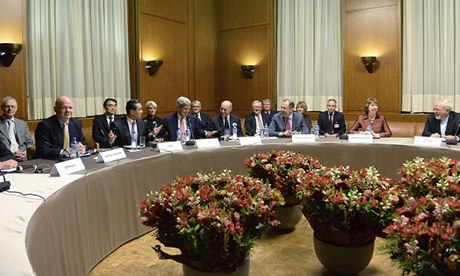
Yesterday negotiators from the United States, Britain, France, Germany, Russia and China finished hammering out a tentative deal with Iran regarding that nation’s nuclear program.

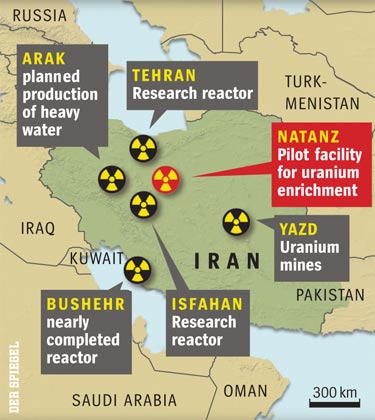
There are a lot of opinions about the deal, some positive, some definitely negative and quite a few like mine a wait and see attitude. Now I am hopeful that the deal is a positive first step in assuring that Iran does not build a nuclear weapon. In fact I pray that it does.
iran-nuclear-facilities

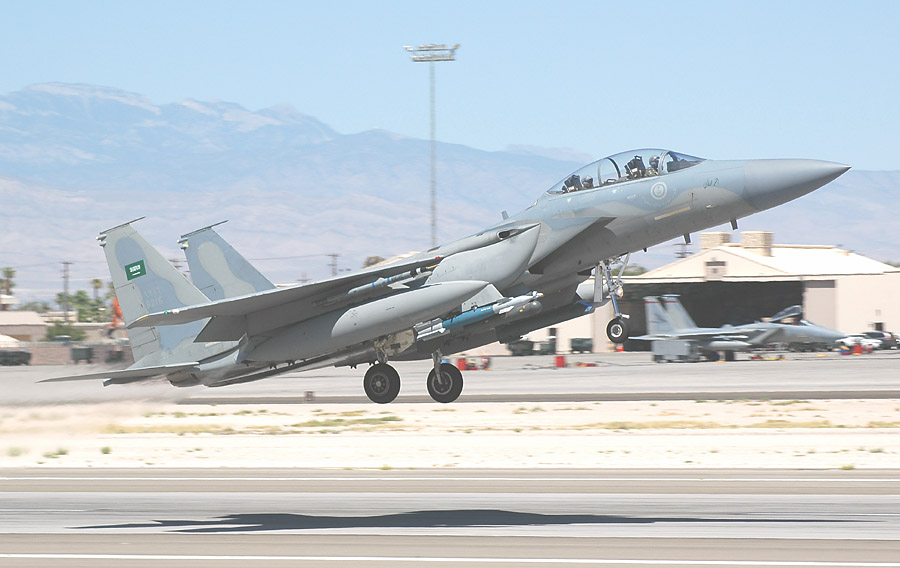
The fact is that we have to try, even if some allies for their own reasons disagree. The Israelis are understandably concerned, especially since the last President of Iran, most of the Mullahs that actually run that country and the Revolutionary Guard have expressed their belief that Israel should not exist. Thus for the Israelis this can be seen as an existential matter. If Iran were to get operational nuclear weapons and use them against Israel that state would suffer greatly. Likewise the Saudis are distrustful of the Iranians, but for different reasons. For the Saudis this is the great conflict between Sunni Islam and Shia Islam, a conflict that appears to be gaining steam in Syria, Iraq, Bahrain and Lebanon. It is  conflict that has the potential to be the Islamic equivalent of the Thirty Years war, that great bloodletting between Catholic and Protestant Europe. Iran and the Saudis are the leaders of the respective factions of Islam, they are mortal enemies.
iran_AP111222017357_620x350

We have to be cognizant of both the Israeli and Saudi concerns. They are legitimate and because they are allies we must take them into account. That being said the most important security needs to be addressed by the United States are those of the United States. Sometimes those are not always the same of allies, even allies like Israel and Saudi Arabia. That is something that has to be weighed in this case.

iran-nuclear-program

The cold fact of the matter is that for many years we in the United States have become accustomed to resorting to military force first and neglecting the other aspects of national and international power that could be brought to bear to in achieving our national security and foreign policy goals. Those other aspects include economic power, information and diplomacy which unfortunately have been neglected. Presidents and our Congress have, even in spite of the misgivings of military leaders pursued the military option first.

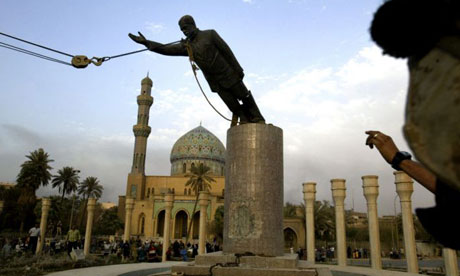
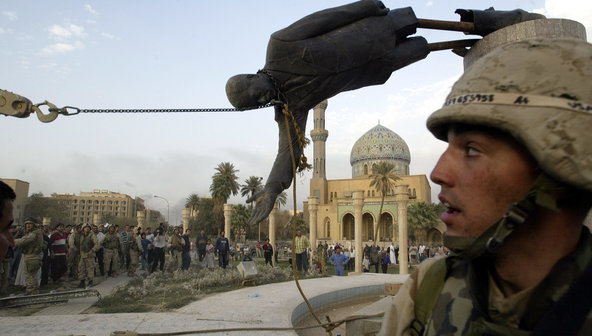
After the attacks of September 11th 2001 the Bush Administration with the authorization of Congress pursued an almost single minded military solution to those attacks. That response was not only against the Al Qaeda terrorists but against their Afghan Taliban hosts and Saddam Hussein’s Iraq.
07rdv-saddam-statue-iraq-anniversary-tmagArticle

Those campaigns have worn our military down. The resources spent in those countries, the lives lost, the money spent and the wear and tear on equipment have harmed our national security. But even above that in terms of strategy we eliminated the one natural enemy of Iran which helped hold them in check. We invaded Iraq and left it in a condition that it could no longer be the western bulwark against Iran. We turned down Iranian offers of help after September 11th and in doing so lost opportunities which might have led us and Iran down a different path. Instead President Bush declared Iran and Iraq both parts of an “Axis of Evil.”

IRAN-DEFENCE-MISSILES

It was a declaration that the Iranians rightly understood as a declaration of war. Legally it may not have been, but the stated strategy enunciated by men like John Bolton and those we call the “Neocons” inside the Bush Administration and in associated think tanks could only be understood by the Iranians in that light. That end state envisioned by Bolton then and even now was regime change in not only Iraq, but also Iran. We have to ask ourselves this question: If another nation did this to us, how would we respond? I dare say that we, like the Iranians would dig in our heels and seek to develop military capacities that could defeat them, or if not defeat them make their “success” so costly that our enemies would not press us.
pirhayati20130312213337917

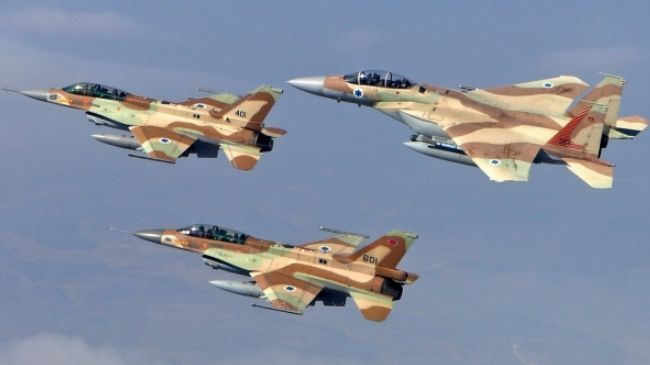
Now because of those choices we are faced with a situation where Iran is estimated to be reasonably close to developing a nuclear weapon capacity. It is something that if it happens will result in a nuclear arms race in the Middle East. The Israelis already have that capability and the Saudis are reportedly pursuing that capability. Thus it cannot be allowed to happen.
f15s-9216-92sqd-rsaf

That being said there are ways to ensure that does not happen. One advocated by those opposed to the deal is a hard line approach including pre-emptive military strikes against Iran, which not only would bring about a regional war but at best delay Iran a few years in procuring nuclear weapons.

The other is the course that has been pursued by the Obama Administration over the course of the past few years. That is the use of economic sanctions and diplomacy. As I said at the beginning this has not been our default policy over the past 12 years. But it is necessary. We are not in a good position to add yet another war, a war with world wide security and economic implications to our plate.

The fact is that due to the wars of the past 12 years as well as budget cuts including the sequestration cuts we are not in a good position to wage another war. We are stretched thin. Readiness thanks to sequestration is declining. The Chief of Staff of the Army stated that only two combat brigades are immediately deployable for combat operations. Could we launch another military campaign? Yes we could. But war, if we believe Clausewitz war is an extension of politics and policy. But we have to ask if would it achieve our overall policy goals? That I am not sure.  Clausewitz wrote: “No one starts a war–or rather, no one in his sense ought to do so–without first being clear in his mind what he intends to achieve by the war and how he intends to conduct it.”

In fact even if we delivered punishing strikes to Iran the costs could be great, and not just the economic costs.  Our campaign would have to be an air campaign to destroy hardened targets many of which we do not know the exact locations. Our record in such air campaigns is mixed. We spent over 70 days pounding Serbia with little to show for it in actual damage to their military. Likewise Iran is not Iraq, our targets will not be exposed in the open desert. Additionally Iranian A2/D2 (Anti-Access/Area Denial) capabilities pose great risks for US and Allied Warships as well as bases in the Arabian Gulf. If an Iranian Kilo Class submarine were to sink an American Aircraft Carrier it would not be a tactical setback, it would be a major loss of American strategic capability not just in the Middle East but world wide.
revolutionary-guards-and-khamenei

Likewise as I mentioned before we took out the one natural opponent of Iran when we overthrew Saddam Hussein. In doing so we destroyed every bit of infrastructure, military power and civil government structures that any new Iraqi government would need to maintain any sense of a balance of power in the Arabian Gulf.

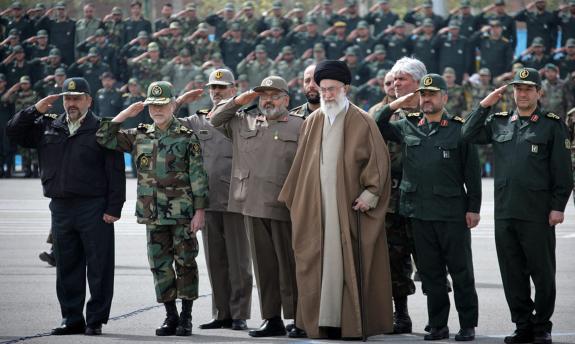
All that being said do I trust the Iranians? I cannot say that I do. I am a realist. I enlisted in 1981 in large part because of the Iranian takeover of the American Embassy and the hostage crisis. They remain a dictatorial regime which persecutes religious minorities including Christians. They restrict their people from open access to the internet and persecute political opponents. The Revolutionary Guards Corps, the most powerful organization in Iran has actively worked to destabilize other countries in the region. Their influence is great especially in regards to Lebanon’s Hezbollah which has launched missile campaigns against Israel and been active on the side of Syria dictator Bashir Assad in that country’s brutal civil war.

However the path of diplomacy must be given a reasonable chance to succeed. In the early 1970s President Nixon started a process of detente with the Soviet Union and Communist China. It was not embraced by hawks. President Ford, Carter and Reagan continued those policies to one degree or another with the final result being the fall of the Berlin Wall, collapse of the Warsaw Pact and overthrow of Communism.

This deal is a start. It is not perfect at all. I see issues in it. but it is based on the politics and art of the possible. It has the potential to be a game changer in a region wracked by war and revolution, a region led for the most part by despots in which terrorists often operate freely. I don’t know if it will work, but I hope it does.

Peace

Padre Steve+

Leave a comment

Filed under Foreign Policy, History, iraq,afghanistan, middle east, Military, News and current events

The Real Conflict: Ethics and American Values Versus Realpolitik

Syria03_GQ_07Dec12_getty_b_642x390

“A country that demands moral perfection in its foreign policy will achieve neither perfection nor security” Henry Kissinger

There are a times in a nation’s life that its leaders are confronted with situations that present conflicts between a nation’s values and realpolitik.

The fact is that there are “tribes” in foreign policy and national security debates. Some are the idealists, others pragmatists and some realists. There are gradients between the levels and sometimes depending on the situation an idealist might gravitate toward pragmatism or even realpolitik and visa versa. Sometimes it is a matter of politics, sometimes ideology and sometimes even  and no leader of no political is immune from these tensions.

The situation in Syria is one of those times where the conflicting agendas of the different foreign policy tribes conflict and where no matter what happens in Syria the conflicts between the tribes will remain and perhaps even grow more pronounced. The fact is that I often can find myself on several sides of the same argument. It might be the PTSD “Mad Cow” is causing these conflicts but it could also be that there are good arguments to be made on all sides of the argument. What is ultimately the right course or the wrong course is actually hard to say.

If we argue for the idealist position, which would argue that American values of stopping human rights violations and the use of chemical weapons, something prohibited under the Hague convention and the more recent Chemical Weapons Convention of 1992 against the realpolitik of what are the actual National Security interests of the United States, the vital interests which involve the survival of the nation itself, major interests which could impact national security or tertiary interests which might have some importance but do not threaten the survival of the nation, even of they are terrible crimes against humanity.

Whether one likes it or not these are legitimate ethical and policy conflicts. On one hand there is the position that the United States has taken following World War Two and the Nuremberg trials as well as its participation in the International Criminal Courts has a moral obligation to confront the use of chemical weapons even if other nations or international bodies stand aside. On the other hand the argument that what happens in Syria is not in the vital interests of the United States and that the United States should not take military action to stop the use of those weapons. The fact is that those that advocate military action in Syria be they politicians, pundits, preachers or profiteers need to remember the words of Carl Von Clausewitz that “No one starts a war – or rather, no one in his senses ought to do so – without first being clear in his mind what he intends to achieve by that war and how he intends to conduct it.” I really don’t think that we have thought this through as a nation.

Of course these two positions are not exclusive. There are also ranges of action which span the full spectrum of action between the either or situation that most Americans seem to find themselves caught between. The fact is that the National Security Strategy of the United States is not based on military might alone, no matter how much it has been used as the first choice by American leaders. The reality is that military force is only one element, and perhaps the weakest element of the elements of national security police known as the “DIME.” That is the Diplomatic, the Informational, the Military and the Economic power of the nation. What we seem to have forgotten is that the other elements of the DIME other than the gut level military response have value and are perhaps even more important.

I think that a large part of this conundrum is found in the reflexive use of military force as the preferred means of action since the attacks of September 11th 2001. On that day the United States was attacked by the terrorist attacks of Al Qaeda militants and while the victims of those attacks were overwhelmingly American the citizens of over 60 other nations we killed in the attacks.

Those attacks demonstrated the vulnerabilities of this nation. When one looks at our actual national security policy it is clear that those vulnerabilities are not always fixed by military action in other countries. In fact they sometimes can become even more glaring as resources required for Homeland Defense and economic recovery are spent on military operations of dubious strategic value and which at times undermine efforts to build trust with other nations, build coalitions based on shared values and to undercut the efforts of extremists using diplomacy, information and economic power.

What we have to answer now is how we address a situation in Syria that is both a violation of international law but which military force alone cannot solve. Of course there is a conflict between our ideals and what are vital national security concerns. I would suggest that the real threat of military action can be a part of the answer if it helps the United States and the world make the case through diplomacy, information and economic pressure not only to stop the slaughter but to hold those responsible for it accountable in International Criminal Courts for the commission of war crimes. At the same time the reality is that the United States and the world cannot allow an Al Qaeda dominated organization such as the Al Nursa Front gain control of Syria.

The fact is that despite how clear cut we want things to be as Americans that much of what happens in the world takes place in a world of more than 50 shades of gray. Unfortunately American conservatives and liberals alike prefer to see foreign policy in the “either or” world of using pure military force or doing nothing, neither of which of themselves are the answer. The full continuum of national and international power must be brought to bear in these kind of situations, recognizing that not everyone shares our values or has the same strategic interests.

It may not be comfortable for anyone but it is reality. How we navigate it is key, maintaining our values while ensuring that our nation survives. If military action is decided on one has to remember what Clausewitz said: “The political object is the goal, war is the means of reaching it, and the means can never be considered in isolation from their purposes.”

To make a decision without understanding this or as we did in Iraq ignoring it is to risk disaster. Such are the stakes. I personally would rather see more negotiation in the hopes that the Syrian chemical and biological weapons are secured and those responsible for using them, be they Assad, his government or even the rebels attempting to frame the Syrians and deceive the United States against the Syrian people are brought to justice.

This is a messy business and not for the faint of heart. Lives of thousands of people in Syria, the region and potentially around the world are at stake and a military strike that fails to accomplish the political object would be worse than none at all.

Peace

Padre Steve+

4 Comments

Filed under Foreign Policy, History, middle east, Military, national security, News and current events

Injustice in Syria and the Impotence of the World

syria-unleashes-massive-gas-chemical-attack-on-damascus

“There may be times when we are powerless to prevent injustice, but there must never be a time when we fail to protest.”  Ellie Wiesel 

I do not think that any surgical strike against Syrian military forces and chemical weapons facilities by a handful of US Navy ships and submarines will stop the unrelenting bloodbath that is the Syrian Civil War. It would be nice if it would but realistically it will not.

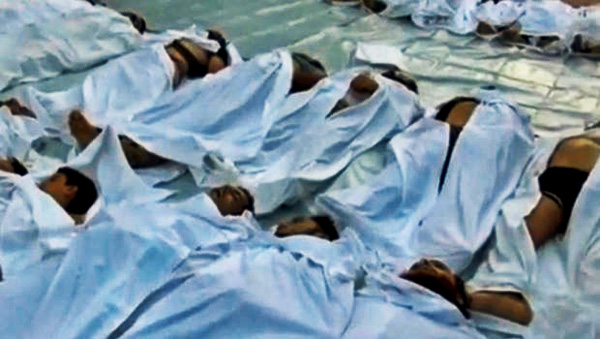
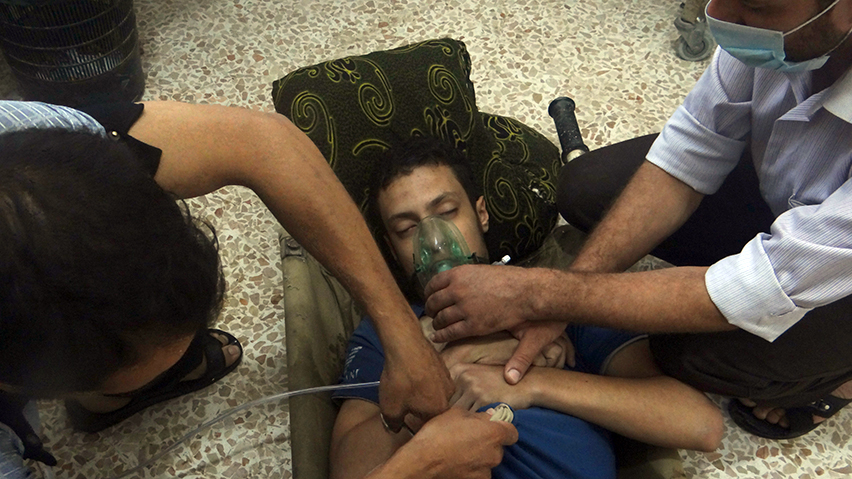
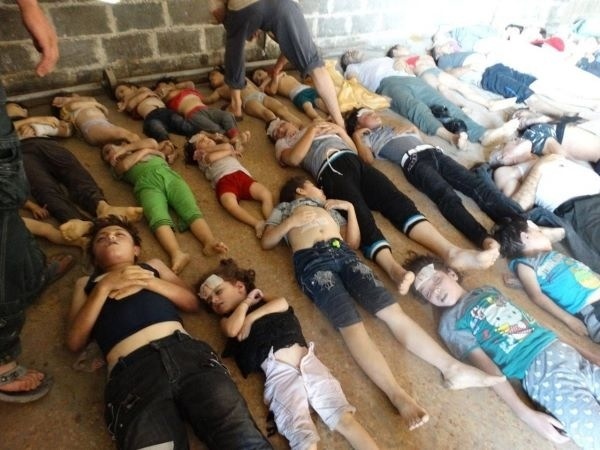
What is going on in that country fits every definition of war crimes and crimes against humanity as defined by Nuremberg, the Hague and Geneva Conventions, the Geneva protocols of 1925 which Syria is a signatory to specifically state that “the use in war of asphyxiating, poisonous or other gases, and of all analogous liquids, materials or devices, has been justly condemned by the general opinion of the civilized world.” This message was strengthened in the Chemical Weapons Convention of 1992, a document that 98% of the nations of the world are signatories to, although Syria  is not one of them.

There are strong moral and legal arguments to be made for intervention in Syria. Unfortunately morality and legal arguments against crimes against humanity seem to have very little weight in the world. But then they never have. It is only when nations decide that the threat extends beyond the deaths of unfortunate people that they really could not care less who lived or died, but directly threaten the economic and security interests of the great powers then the vast majority of people and nations would rather not get involved.

This is especially true after the American led coalition invaded Iraq on the basis of the threat of Weapons of Mass Destruction. The intelligence about the threat has been widely discredited, Iraq remains devastated, Iran empowered and the United States military hamstrung by 12 years of war. The Iraq War and its aftermath, the casualties, the costs and the loss of credibility of the United States as a result of it haunt the actions of the Obama Administration and will haunt future presidencies. As Harry Callahan noted “there are always results.” 

As Barbara Tuchman so well put it: “An event of great agony is bearable only in the belief that it will bring about a better world. When it does not, as in the aftermath of another vast calamity in 1914-18, disillusion is deep and moves on to self-doubt and self-disgust.” 

That was the result of the Iraq war. Though the vast majority of Americans had no direct link to the war that was fought by a small minority of military personnel the effects linger. Our politicians, pundits and preachers talk about us being “war weary” but that really can only be applied to the tiny number of men and women who have served in Iraq or Afghanistan and in numerous other places that no one knows or cares about. I think that people are less war weary than they are apathetic to anything that they do not believe directly effects them.

Bertold Brecht wrote:

“The first time it was reported that our friends were being butchered there was a cry of horror. Then a hundred were butchered. But when a thousand were butchered and there was no end to the butchery, a blanket of silence spread. 

When evil-doing comes like falling rain, nobody calls out “stop!”

When crimes begin to pile up they become invisible. When sufferings become unendurable the cries are no longer heard. The cries, too, fall like rain in summer.”

That being said the consequences of a military action that not only does not destroy the Assad regime’s military capacity to kill innocents could make matters even worse than they are now, a thought that is hard to imagine. Likewise the possibilities of the action going awry  and the situation escalating and even expanding outside the borders of Syria bringing are quite high.

The arguments against intervention as far as military consequences and the low probabilities of success of surgical strikes is a strong argument for non-intervention. Realistically unless there is the participation of major military forces from many nations back by the UN, the Arab League and NATO with boots on the ground to find, secure and destroy the chemical weapons a military strike may achieve a modicum of success but most likely fail in its ultimate goal. The result would be that the situation would continue to escalate and a broader intervention ensue.

I am not happy with the way this has played out. The moral thing would have been for the UN Security Council take strong action against the Syrian regime and the world join in. However that will not happen, too many nations see this as an opportunity to advance their own agendas in the region using both the Syrian government and the rebel forces, some of which are allied with the Al Qaida organization. Some of the Syrian Rebels are as bad as Assad when it comes to indiscriminate killing of innocents and the commission of war crimes.

This week there will be votes in the Senate and House of Representatives regarding a Senate resolution for limited military action against the Assad regime requested by the Obama White House. The political posturing of many opponents as well as supporters of intervention has been nothing but shameful. In many cases it is not about actual foreign policy but on politics dictated by gerrymandered districts and the politics of mutual assured destruction. There is a good chance that the resolutions will not pass and one or both houses of Congress. However there is a strong chance that even without Congressional approval that the Obama administration will most likely attempt to do the morally right thing with inadequate means.

I am torn on this. I do think that as Secretary of State John Kerry said this week that we are at a “Munich moment.” The consequences of inaction and limited action alike are potentially disastrous. The hope of many for the Arab Spring has turned into a nightmare. The question is how bad the nightmare will get.

Honestly I cannot say what is I think should be done. I can make the case for intervention based on moral, legal and ethical grounds and I can make the case against based on realpolitik.

All that being said, for the sake of humanity echo the words of Ellie Wiesel“For the dead and the living, we must bear witness.”

Peace

Padre Steve+

2 Comments

Filed under ethics, Foreign Policy, History, national security

The Guns of September: Beginnings, Endings and Beginnings

tumblr_mcwtrr8DcW1rpl538o1_500

“Do not try to do too much with your own hands. Better the Arabs do it tolerably than that you do it perfectly. It is their war, and you are to help them, not to win it for them. Actually, also, under the very odd conditions of Arabia, your practical work will not be as good as, perhaps, you think it is.”  T. E. Lawrence

In September 1939 Adolf Hitler led his Nazi regime into the bloodiest war in human history. In September 1945 that war ended when representatives of Germany’s ally Imperial Japan signed the instruments of surrender on the deck of the Battleship USS Missouri in Tokyo Bay. In those 5 years  over 60 million people died and the world changed.

Twenty five years before Hitler ordered the Wehrmacht into Poland the former leaders of the imperial dynasties of Europe as well as France  had led their world into the abyss of the First World War. In that war close to 37 million people, both military and civilian died.

EVN-385_Japanese-surrender-aboard-USS-Missouri_1945

In both conflicts leaders schemed to ensure that their nations would come out on top and the human costs were simply counted as immaterial so long as the overall goals of conquest and domination were achieved.

Since the Second World War ended the world has not become a safer place. In fact because the United Nations which was in essence created to prevent war and mitigate its effects has been so politicized where just five nations on the Security Council hold the key to it being able to act forcibly to stop genocide and the used of weapons of mass destruction. More often than not at least one of those five nations, the United States, Russia, China, Britain and France have ensured that whichever despot they they support is protected from any action by the world body through the use of their veto in the UN Security Council.

No we stand at the precipice of war again. This time in Syria. The United States, France and a number of other countries have concluded that the regime of Bashir Assad has employed the nerve agent Sarin against its own people in their bloody civil war.  This is disputed by the Russians as well as the Syrians but backed up by the Israelis and Saudi Arabians.

hi-syria-gas-rtx12sc9

As for the United States leading any strike on Syria to either degrade or weaken the Assad regime’s ability to use chemical weapons or any other weapons of mass destruction that they might have it finds itself on the horns of a dilemma. If it does nothing then the Assad regime can claim hat it forced the United States to back down and continue to slaughter its own people. If the United States attacks there is some chance of the strikes having some effect on the Syria ability to make war on their own people but opens the possibility of a wider and more bloody conflict, a conflict that may solve nothing but actually make matters worse.

The United State is also hindered on the world stage and at home by the Iraq debacle brought on by the Bush Administration. Despite the fact that less than one percent of the population has served in the military since the attacks of 9-11-2001 and even fewer have served in combat zones the political leaders, talking heads, pundits, preachers and media in general referrer to the country as “war weary.” The retired former Chief prosecutor at Guantanamo Bay made the comment on Twitter that they must be tired of shopping since so few have actually served. If there is war weariness it is in the military which has been in continuous action since 9-11-2001 and if we want to be honest almost ever since the First Gulf War with stops in the Balkans and Somalia along the way. I have been in the military 32 years and I have lost count of the number of places that we have deployed forces to and the amount of time that I have spent away from home. I think I have been away from my wife 10 of the last 17 years due to deployments and assignments that took me away from home. But I digress…

The fact of the matter that there are a number of layers to the situation in Syria that all need to be addressed but will not be. Instead they will be spun by those in favor or those opposed to war and mostly for for a very fleeting political advantage. An advantage only as good as today’s polls.

saddam0978

In the past couple of days the Obama Administration has been taking its case for action against Syria to the American people and Congress and also to other nations. The reasons for intervention have been primarily moral as well as citing the precedent of international law regarding chemical weapons. Real politic has not played much of a role, at least yet but it should.

The reality is that the Obama Administration as well as the UN, the Arab League, NATO, the EU and other nations with an interest in what happens in Syria have to deal with the moral and ethical level of the arguments for or against intervention. They also have to look at the legal justification which depending on which part of international law you examine could be used to argue for or against the legality of intervention. Finally there is the real politic of the situation, not only the chances of a successful intervention but the consequences of action versus inaction, action versus delay in the hopes of finding another solution and the results of whatever course of action is taken. After all, there are always results and even the most well intended and executed plans result in unintended consequences.

As I have said a number of times I think that President Obama is damned no matter what he decides to do and that this war no matter what we do in the next week will most likely spill over the borders of Syria into adjoining countries. That is already happening in the form of refugees going into Turkey, Jordan and Iraq, further instability in Lebanon and occasional skirmishes along the Syria and Lebanon borders with Israel. The question is not “if” but rather when and how the military conflict and sectarian violence spreads to other countries surrounding Syria. That has t be weighed with the consequences of and consideration of the “branches and sequels” to any intervention or non-intervention strategy employed by the United States and whatever allies choose to go along for the ride.

Syria03_GQ_07Dec12_getty_b_642x390

I am not in favor of war. That being said I do not know if there is a way to avoid it yet still enforce the norms of moral behavior in terms of the use of chemical, biological or even nuclear weapons.

There are times that I wonder about those who believe that they can orchestrate policy that only benefits their country or political-economic interests. The fact is that the “war genie” is out of the bottle and where the situation in Syria ends is anybody’s best guess. What we do have to remember is that those rebelling against the Assad regime are not doing so for our benefit or for that matter any other nation’s benefit. What T. E. Lawrence said of the Arabs who revolted against the Ottoman Empire in the First World War is as true now as it was then:

“The Arabs rebelled against the Turks during the war not because the Turk Government was notably bad, but because they wanted independence. They did not risk their lives in battle to change masters, to become British subjects or French citizens, but to win a show of their own.”

There are nations and groups attempting to use this for their own interests and ultimately it will blow back on them. The region is perched on the abyss of war, possibly without end. What happens now will be less decided by what happens in Washington or the capitals or Europe or the United Nations but with the people actually fighting the war, their active supporters and their proxies.

As far as the United States political scene if a single leader votes for or against war based purely on their individual or political party’s gain in either the 2014 or 2016 elections or to undermine the current President a pox on them. I want an honest debate about the real world consequences, ethical, legal, moral, economic, military and geopolitical of any intervention or non-intervention in Syria. We owe it to the Syrians, those people in the region as well as our own people, especially those who will certainly bear the burden of whatever war ensues.

Honestly, we really need to think this through before so much as one missile is launched.

Peace

Padre Steve+

Leave a comment

Filed under Foreign Policy, History, middle east, national security

Syria: The History and the Really Hard Questions for All of Us

20130831-164635.jpg

Today President Obama called on the U.S. Congress to take up and debate an authorization for the use of military force in Syria. From any moral viewpoint his words on the use of chemical weapons by the Syrian government his words were correct. Likewise his calling to account of the international community, 98% of whom are signatories to treaties outlawing the use of these weapons against anyone to support this action was correct. The fact that he also demanded that Congress come into session and do its job was correct.

In spite of all of that the use of military force to attempt to force a change in the way that the government of Bashir Assad is problematic and fraught with danger. The chances of escalation and the involvement of other nations and non-state actors are great and even a “successful” operation could lead to subsequent events detrimental to the United States, the West, the region and even to Syria and its people.

A big part of this is due to the complexity of Syria itself and its history. Syria is a complicated mosaic of cultures, peoples and religions often at odds with one another. The fact that the Assad regime has remained in power is because of its brutality and willingness to play off the various factions against each other. The Assad family is of the minority Alawite sect of Shi’a Moslems from the western region of the country. One needs to read T. E. Lawrence’s 1915 report on Syria to get a glimpse of the complexity of Syria and to understand that one has to proceed carefully when dealing with any faction. http://www.telstudies.org/writings/works/articles_essays/1915_syria_the_raw_material.shtml

20130831-171258.jpg

The fact is that the best chance for a stable Syria disappeared in 1920 when the French, emulating the British in Mesopotamia (Iraq) overthrew the government of Emir Faisal Hussein. Lawrence wrote a powerful essay about this http://www.telstudies.org/writings/works/articles_essays/1920_france_britain_and_the_arabs.shtml and when one examines the actions of the British and the French in Syria and Iraq one has to look at history. The British were willing to support the U.S. invasion of Iraq because of history, the same is true of why the French are willing to stand with the United States in Syria. The Germans for their own part frustrated by imperial ambitions in the Middle East in the First World War and a failed attempt to support an Iraqi uprising against the British in 1941 have no interest in a war that might bring disorder and terrorism among the many Moslems that reside in their country. The Turks of course have no love for the Arabs and once counted Syria as a valuable part of the Ottoman Empire. Disorder in Syria is dangerous to them but ultimately they could benefit since they have been shouldering much of the humanitarian burden.

The Jordanian royal family has no love for Syria being the descendants of Faisal Hussein while the Israelis see Syria as a mortal enemy. Lebanon which was carved out of Syria after the First World War is hopelessly divided and with Hezbollah, the erstwhile ally of Iran in de-facto control of the country in danger of becoming a front in the ongoing Syrian Civil War. Iran being the close ally of Syria has great opportunity to expand its power and should a military strike occur might become directly involved although the more likely scenario is that they would allow their Hezbollah allies to shoulder the burden of strikes against Israel and United States or other Western interests in the region. One cannot leave out the Russians who are behaving much as the Tsarist Regime did regarding the region in the First World War when they signed on to the Sykes-Picot agreement.

If the United States does nothing Assad wins. He shows that he and anyone like him who conduct themselves outside the norms of international law and human rights can get away it it. If we intervene it might strengthen his grip, likewise if our strikes were successful enough to weaken his grip and allow the rebels to take power the results could be even worse since the Al Qaeda ally Al Nursa is the strongest and most militarily effective part of the rebel forces.

In a sense the Obama administration is damned if it does, damned if it doesn’t and damned if it does no matter what the outcome. It sucks for him because he is the President and it is his job he will get the blame. This despite the fact that his freedom of action in large part is undermined by the actions of the Bush Administration in the Iraq lead up and invasion. There are always results in foreign policy decisions. The invasion of Iraq has harmed our interests in more ways than its architects ever imagined, it was a foreign policy disaster of the first order that impacts everything that we do today in the Middle East.

That is why before a single cruise missile is launched the United States Congress must debate the action and go all in or stay out. The fact is that if we do this, and I hope, we don’t we have to do it right. We have to understand the consequences and do what we can under our system of government to debate the issue, look at the ramifications, not just in the region but to our own economy and national power.

If we do it the Sequester has to be repealed in all parts, you cannot wage war on the cheap and expect a military that is worn out by 12 years of war to keep taking on more war without funding it. The Tea Party Republicans who are attempting to hold the government hostage through the Sequester and a possible government shutdown cannot have it both ways. It is irresponsible of them to continue this madness until we can get out of Afghanistan and avoid involvement in Syria or other conflicts.

20130831-175304.jpg

That my friends is the hard truth about Syria. So before you get too caught up in the opening of the College and NFL football seasons forgetting that a dangerous world exists take some time to ponder and if you have the civic decency to write your Congressman and Senator on the subject. Pro or con tell them what you think and demand accountability. If you don’t do that don’t blame President Obama for what happens because you have failed your country as citizens.

Sorry I guess that might hurt. But we didn’t do that in Iraq. Today the 4486 dead American military personnel as well as all the other dead and wounded, American, Allied and Iraqi alike and those like me afflicted with chronic PTSD demand that you do it now. It is a moral responsibility of the first order of much greater importance than your fantasy football league.

Peace

Padre Steve+

Leave a comment

Filed under Foreign Policy, History, middle east, Military, Political Commentary

The Coming Egyptian Civil War: Disaster Beckons

Cairo protesters

History has a strange way of playing itself out in the lives of individuals, nations and peoples. I wish that I was wrong bit as I look at the situation in Egypt today I see a situation which is as fluid as the shifting sands of the desert and as dangerous as the legendary Biblical plagues of the time of Moses.

When the dictatorship of Hosni Mubarak was overthrow by the military in 2011 it was hoped by many that Egypt would defy he odds of history, not Islamic or Egyptian history, but human history in that a revolution of a people without their own history of freedom and representative democracy seldom in its initial stages produces freedom and representative democracy.

images-49

In Europe alone Britain, France, Spain, Germany and Russia have endured bloody civil wars following the overthrow of autocratic regimes. Likewise the same is true of the history of South America, Africa, Asia and the Middle East the history of most successful oppressed peoples who do not have practical experience in democratic government tend to fight things out and even endure more oppressive governments before eventually, often at great cost to themselves and their neighbors achieve peaceful, stable and representative democratic rule.

egypt-coup-morsi-3_2609447b

Egypt has great potential, many of its people have exactly in temperament, education and wisdom what is needed to become a leading democracy in the region. That being said there are many obstacles to this. First is the longstanding tension between the radical Islamists of the Moslem Brotherhood, secularist military leaders, Social Democrats and others. Second the underlying religious and social tensions between rival Islamic denominations as well as Coptic Christians with generations of internecine bloodshed being played against one another by outside powers, the Ottoman Turks, the French, the British and even to a lesser extent the Soviets and Americans.

571825-Abdel_Fattah_alSisiAFP-1372840335-993-640x480

The fact is that Egypt as much as I do not want it to admit is that I believe that there is little that can save Egypt from a bloody civil war with unknown outcomes. The only thing that is sure is that thousands, possibly hundreds of thousands of Egyptians will die before the end of it and that Egypt’s instability will exponentially increase the violence and instability of the region.

egypt-morsi_2608190b

I think the best outcome is that a coalition of Social Democrats and militarists will cobble together enough of a government to stabilize the situation, but it will not be without much bloodshed. It will likely be like the early days of Weimar Germany when an unlikely coalition of military leaders and Social Democrats fought a Civil War against the extreme Soviet style Communists and then resisted Right wing extremist putsch attempts. Unfortunately that democracy died as the economies of the world melted down and the cost of reparations levied by Allied Powers at Versailles and radicals of the extreme Right and Left eventually leaving Hitler in power. It took another World War to eventually end that tyranny.

Muslim-Brotherhood-Clash-Getty

I guess that a best prospect is pretty much as bad as the worst prospect.

The ouster of the Moslem Brotherhood’s elected President Mohammed Morsi by the Egyptian military follow the protests of the vast majority of the Egyptian electorate is as much of a bad thing as it is a good thing. Morsi was to be sure democratically elected but he governed as an autocrat with increasing dictatorial tendencies. The reaction of the people and the Army was a natural reaction, as one Egyptian boy put it we did not overthrow a dictatorship to replace it with a dictatorial theocracy.  In effect both sides killed the democratic process, Morsi and the Moslem Brotherhood for the sake of Islamic religious power, the military for the sake of their place in society, stability and control and the protestors and democrats the sake of democracy and freedom.

EGYPT-POLITICS-UNREST-ARMY

The situation is much like the days following the the Army High Command’s forced abdication of Kaiser Wilhelm II, when in the face of a Communist revolution the German military establishment represented by Field Marshal Paul Von Hindenburg wrote to the new Socialist Chancellor Friedrich Ebert:

“I am convinced that only the following measures can help us overcome the present difficulties: 

  1. Summoning of the National Assembly in the course of December.
  2. Until then, or until the decision of the National Assembly can be carried out, conduct of the administration solely by the government and legitimate administrative organs. 
  3. So as to fulfill the justified wishes of the working class… qualified people of working class origin should be attached to the administrative authorities in an advisory capacity….
  4. The security service must be solely in the hands of the legal police organs and of the armed forces.
  5. Safeguarding of the orders of government by a reliable police force and, after the restoration of discipline, by the army.   

   In your hands lies the fate of the German nation. It will depend on your decision whether the German nation will rise once more. I am persuaded, and with me the whole army, to support you without any reservation…” (Letter from Field Marshal Hindenburg, likely written by General Groener to Chancellor Ebert December 8th 1918. In The Reichswehr and Politics 1918-1933 by F.L. Carsten, Oxford University Press, London 1966 pp.13-14)

The unfortunate thing is that no one will be happy until they achieve their goals and that will probably not only mean bloodshed, but a full scale civil war. No matter what the talking heads and experts say this has little chance of ending well. Centuries of injustice, dictatorship, colonialism, religious intolerance and economic inequities argue against other eventualities.

n_50238_4

The fact of the matter is that whether or not advocates of democracy like it at the present time no elected government in Egypt can survive without the support of the military. Like Weimar Germany, the fate of Egypt’s democracy will in large part lie in the hands of a military that at its heart is not democratic. It is a conundrum that we would rather not see, but it is reality.

All that being said there is always hope that things can turn out differently and we had better hope, for the people of Egypt, the region and the world that it does, because an Egyptian Civil War now will be disastrous.

Peace

Padre Steve+
1 Comment

Filed under Foreign Policy, History, middle east, national security

The Terrible Costs of Not Learning the Lessons of War: Vietnam, Iraq Afghanistan

481801_10151367001287059_1003164983_nIn 1986 a Army Major working at the Office of the Secretary of Defense wrote a book that was a history of the US Army in the Vietnam War, and as it turns out to be a work of military prophecy. The young officer, Andrew Krepinevich wrote his book, The Army in Vietnam: 

“In the absence of a national security structural framework that address the interdepartmental obligations associated with FID operations, and considering the lack of incentives for organizational change within the Army, it is presumptuous for the political leadership to believe that the Army (or the military) alone will develop the capability to successfully execute U.S. security policy in Third World countries threatened by insurgency. This being the case, America’s Vietnam experience takes on a new and tragic light. For in spite of its anguish in Vietnam, the Army has learned little of value. Yet the nation’s policy makers have endorsed the service’s misconceptions derived from the war while contemplating an increased role in Third World low-intensity conflicts. This represents a very dangerous mixture that in the end may see the Army again attempting to fight a conventional war against a very unconventional enemy.” (The Army in Vietnam, Andrew F Krepinevich Jr., The Johns Hopkins University Press, Baltimore and London, 1986. p.275)

Krepinevich retired from the Army in the 1990s as a Lieutenant Colonel and has been busy in the world of think tanks and national security policy. Unlike his book, which is probably one of the best accounts of the Vietnam War and as I said before a book that is somewhat prophetic his later work has not been as well received. He has his critics. But despite that criticism once cannot deny the accuracy of his predictions concerning the Army’s subsequent operations in low intensity, or counter-insurgency campaigns beginning in Somalia and encompassing the wars in Iraq and Afghanistan.

If Krepinevich had been alone in his criticism, or his book not been widely read one might excuse policy makers of the 1990s and 2000s who sent the Army and the military into counterinsurgency campaigns involving massive numbers of troops and the commitment of blood and treasure that had practically no value to the national security of the United States. Instead thousands of American and Allied lives were sacrificed, tens of thousands wounded and one nation, Iraq that had nothing to do with the attacks of 9-11-2001 left devastated and crippled empowering Iran the sworn enemy of the United States no regional rival.

n671902058_1153793_4043

One cannot say that the Iraq war was worth the lives and treasure spent to cover the lies and hubris of the Bush Administration. Nor can one say that the effort to change the tribal structure of the fiercely independent Afghan peoples after driving Al Qaeda from that “Graveyard of Empires” been worth the expenditure of so many American lives and treasure. In fact the wars in Iraq and Afghanistan damaged the United States in more ways than their proponents could every admit. The military, now drained by years of war is hamstrung and will be hard pressed to meet legitimate threats to our national security around the world because of the vast amounts of blood and treasure expended in these wars.

In 1920 T.E. Lawrence wrote about the follies of the British government in Mesopotamia, what is now Iraq. His words could have been written about the Bush Administrations 2003 war in Iraq. Lawrence wrote in a letter to the Sunday Times:

The people of England have been led in Mesopotamia into a trap from which it will be hard to escape with dignity and honour. They have been tricked into it by a steady withholding of information. The Bagdad communiqués are belated, insincere, incomplete. Things have been far worse than we have been told, our administration more bloody and inefficient than the public knows. It is a disgrace to our imperial record, and may soon be too inflamed for any ordinary cure. We are to-day not far from a disaster.”

Krepinevech, like Lawrence before him was right, but he was not the only one. in 1993 Ronald H Spector in his book wrote:

“Americans dislike problems without solutions. Almost from the beginning of the U.S. involvement in Vietnam they have attempted to find “lessons” in the war. The controversy about the appropriate lessons to be learned continues with the same vigor and lack of coherence as the debates about the war itself.

Lessons are controversial and fleeting but lessons long. The memories of 1968 have remained and served to influence attitudes and expectations well into the 1990s. The ghosts of Vietnam haunted all sides of the recent deliberations about the Gulf War. In the wake of that war, President Bush hastened to announce that “we have kicked the Vietnam syndrome.” 

Doubtless many Americans would like to agree. It is easier to think of the Vietnam War as a strange aberration, a departure from the “normal” kind of war, like World War II and the recent war in the Gulf, where the course of military operations were purposeful and understandable and the results relatively clear cut. Yet the Vietnam War may be less of an aberration than an example of a more common and older type of warfare, reaching back before the Thirty Years’ War and including World War I. A type of warfare in which a decision is long delayed, the purposes of the fighting become unclear, the casualties mount, and the conflict acquires a momentum of its own. In a world which had recently been made safe for conventional, regional and ethnic wars, Vietnam rather than World War II may be the pattern of the future.” (After Tet: The Bloodiest Year in Vietnam, Ronald H Spector Vintage Books, a division of Random House, New York 1993 pp. 315-316

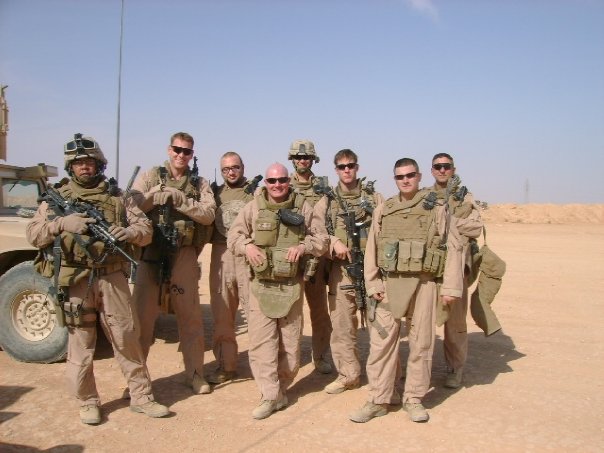
After serving in Iraq with the advisors to the Iraqi 7th and 1st Divisions and 2nd Border Brigade in 2007-2008 and seeing the results of the great misadventure brought upon our nation and Iraq by the Bush administration I cannot help but recognize how disastrous the wars unleashed after 9-11-2001 have been. I have lost friends and comrades in them, I see the human costs in our Navy hospitals every day. I have told too many If they had actually accomplished something it would be another matter. But the human, economic, strategic and even more importantly the moral costs have been so disastrous to our nation to make the loss of the Twin Towers and the victims of 9-11-2001 pale in significance.

sch0-017

The sad thing is that these wars have gone on so long that many of the young Marines and Soldiers fighting them have no understanding of why they deploy and deploy to Iraq and then Afghanistan, and they are far more knowledgeable than the population at large, many of whom are untouched by the personal costs of the war. We as Americans love to say “we support the troops” but most don’t even know one. For the most part big bases from where our troops train and deploy are far from where most Americans live and might as well be on a different planet. We are invisible to most of the country, except when they see a color guard at a sporting event or bump into one of us in uniform at an airport.

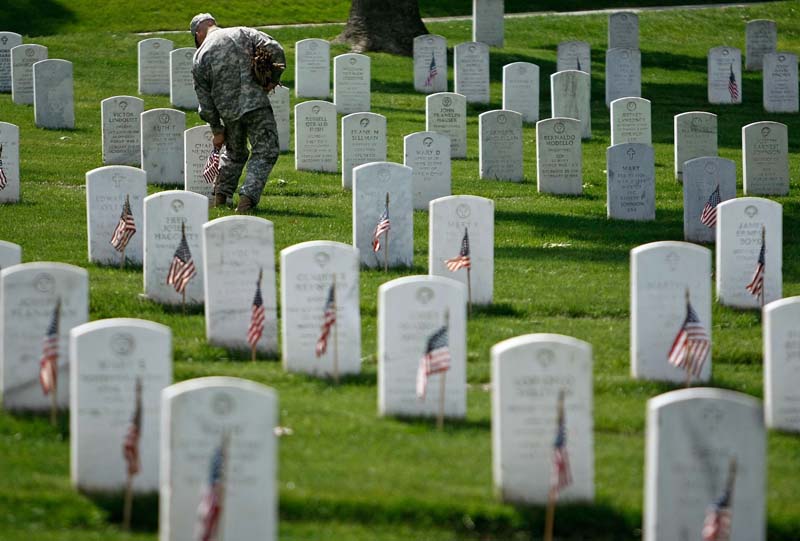
3rd Infantry Places American Flags At The Graves Of U.S. Soldiers

As a result the sacrifices that the under 1% of the population that serve in the military and fight these wars are really not understood, or fully appreciated. I don’t think that this is so much the fault of the people. but rather the product of the post Vietnam era and the “Peace Dividend” of the post Cold War era when the military was reduced, the draft ended and bases in major populations centers closed.

I have written about the effects of these kinds of wars before, not just Iraq or Afghanistan. You can see some of that writing the following articles on this site. They are not comprehensive but they do tell some of the tale of where we have been since 9-11-2001. 

The Anomaly of Operation Desert Storm and Its Consequences Today

Why History Matters: The Disastrous Effects of Long Insurgency Campaigns on the Nations that Wage them and the Armies that Fight Them 

Irrelevant Incidents and Un-winnable Wars: Thoughts on Returning from War 5 Years Later

 349: Active Duty Military Suicides Hit New High in 2012

The Fallacy of “Complete” Victory and the Seeds of Perpetual War and the Way to Peace

Thoughts on Choosing a President and the Results of Not Getting it Right: Lieutenant General Harold Moore at West Point

War is a Racket: Remembering Major General Smedley Butler USMC and Why He Matters

Armed Forces Day 2012: The Disconnection of the Military and Society and the Terrible Result

Failing to Learn from History: The Lesson of the First Anglo-Afghan War and Questions about the US-NATO Campaign

The War that Cannot Be Won: Afghanistan 2012

The 9-11 Generation: The Few

The “Comfortable” Experts and the Real Soldiers

Adjusting Strategy to Reality

No Illusions: The Cost of the Long War and its Potential impact on the United States

The sad thing is that we don’t learn from history. Krepinevech, Spector and Lawrence could have written what they wrote yesterday. Instead they all wrote many years before the 9-11 attacks and our military response to them. As a historian, a career officer and a chaplain I cannot help but think of the terrible costs of such wars and how they do not do anything to make us more secure. The fact is that we do not learn from history much to our detriment despite the great human, spiritual, moral and economic effects of such wars.

300px-Battle_of_Ia_Drang_Valley-1

What is the cost of war? what is the bill? Major General Smedley Butler wrote: “This bill renders a horrible accounting. Newly placed gravestones. Mangled bodies. Shattered minds. Broken hearts and homes. Economic instability. Depression and all of its attendant miseries. Back -breaking taxation for generations and generations. For a great many years as a soldier I had a suspicion that war was a racket; not only until I retired to civilian life did I fully realize it….”

Peace

Padre Steve+

Leave a comment

Filed under Foreign Policy, History, iraq,afghanistan, Military, national security, News and current events

North Korea on the Brink: “We’re in Deep Doo-Doo”

20130410-130508.jpg

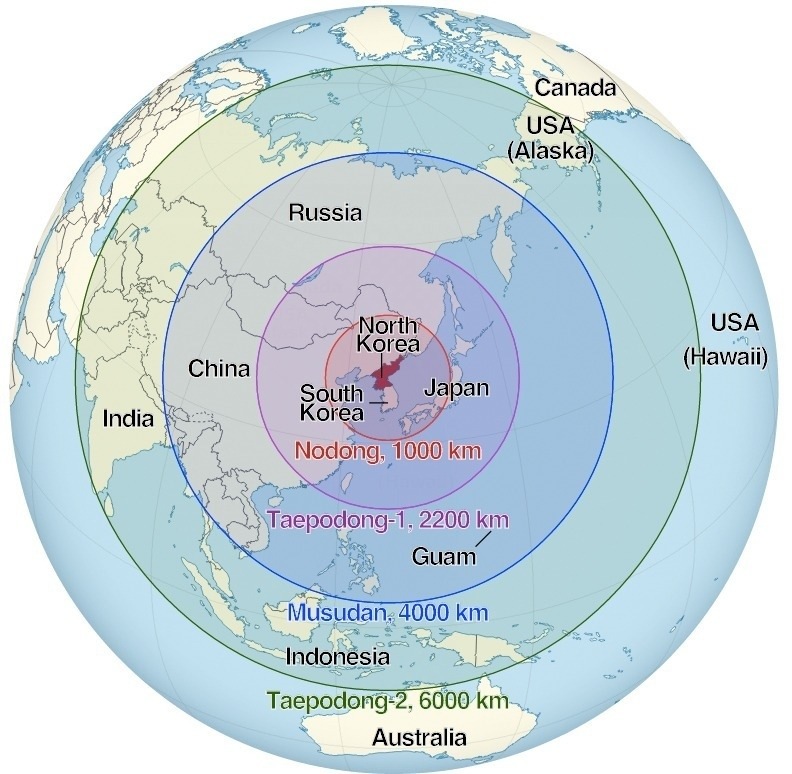
US and South Korean officials believe that North Korea is on the brink of firing multiple Musudun intermediate range ballistic missiles. The Musudun is an untested weapon that is believed to have a 3500 kilometer range which would put US bases in Japan, Okinawa and Guam in range. US and South Korean intelligence services also note that a number of other mobile missile launchers been moved about the country.

This comes on the heels of a number of unprecedented escalations by Kim Jong Un and North Korean military leaders. In the past few days the North has closed the last remaining joint project with the South, the Kaesong joint industrial zone sending tremors through the South Korean business and banking industries. They also warned foreign diplomats in Pyongyang that it could not guarantee their safety and warned foreigners to leave South Korea. Those warnings followed nuclear tests, the firing of a long range missile and threats of a nuclear attack on the United States.

20130410-130621.jpg

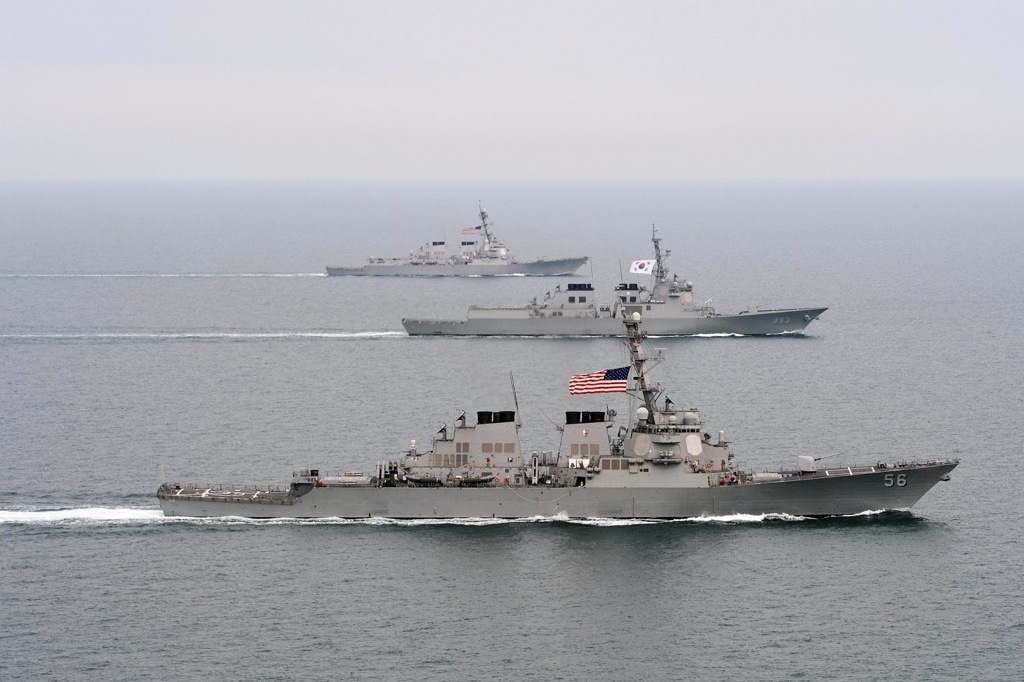
Admiral Samuel Locklear, Commander of US Pacific Command said today that he “couldn’t recall a time of greater tension in the region since the end of the Korean War.” The US and South Koreans now believe that unlike past missile tests that the North could launch without warning. In preparation for any contingency US, South Korean and Japanese Aegis Guided Missile Destroyers have been deployed,the US has deployed THADD ballistic missile defense systems to Guam and the Japanese have deployed Patriot anti-missile defense batteries in Tokyo.

Both the Chinese Communists and Russians have sent warnings to the North about their displeasure with its provocations and escalation.

To add an additional measure of seriousness to a potentially grave situation former US Vice President Dick Cheney told a group of Republican lawmakers that “we are in deep Doo-Doo.” Since Cheney is very knowledgable about Doo-Doo and its consequences we have to take this serious situation even more seriously.

20130410-131123.jpg

But seriously, despite Dick Cheney’s levity we are facing a potentially volatile situation which through a miscalculation by any side could lead to a general war. Since we know little about the inner workings of the post-Kim Jong Il led North Korea, and even less about the current leader Kim Jong Un it is hard to predict what will happen. In the past the former leader Kim Jong Il would push to the brink of war but then pull back after getting some kind of concession. However Kim Jong Un has not seemed to know any limits in pushing the envelope, thus placing the world in very uncharted and dangerous waters.

A launch of one of the longer range missiles could trigger a war if it tracks toward Japan, Okinawa or Guam. Any missile intercept of a North Korean missile by the US, Japan or South Korea could be a trigger for the North to push even more and maybe even attack South Korean territory.

20130410-132504.jpg

As Barbara Tuchman said “war is the unfolding of miscalculations.” I do hope that Kim Jong Un will back down and not push the region into a war that could kill, wound and displace millions of people, damage the world economy and plunge the region and maybe the world into the abyss of war.

Peace

Padre Steve+
Leave a comment

Filed under Foreign Policy, Korean Conflicts, Military, national security

Iraq and the Middle East 2013: Lessons from T. E. Lawrence

295_26912097058_4309_n

The Author with Advisors and Bedouin on the Iraqi Syrian Border

I left Iraq just under five years ago and in the process left part of me in that long suffering country.  I have written much about my experience there and how even today I have a deep regard for the Iraqi people and their hopes for a better future.

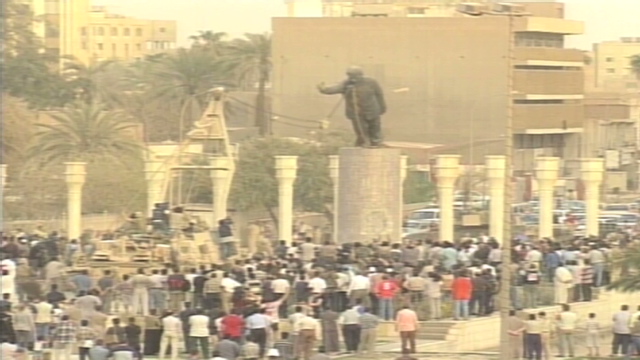
In 2003 the United States invaded Iraq and made short work of that country’s military. Many, if not most Iraqis of all creeds looked upon the US and coalition forces as liberators but within a few months the illusion was over. The US military personnel and leaders who were working with Iraqi officials, both military and civilian to get the country back on its feet were replaced by the Bush administration.

vault.von.saddam.statue.fall.itn.640x360

False Hopes in 2003, believing that US Forces were Liberators 

In their place a new entity, the Coalition Provisional Authority was created and staffed. The first administrator of the entity was retired Army Lieutenant General Jay Garner, who had much experience in Iraq but was replaced quickly for not conducting an immediate purge of members of the Ba’athist Party from key positions in the civil service or security forces.  Led by Ambassador L. Paul Bremer, a man who had no experience in the Arab world, much less in Iraq. Bremer and his staff, most of who had little experience or knowledge of the country created conditions that directly led the the Iraq insurgency, the sacrifice of thousands of American and allied lives and the friendship of the Iraqi people. They also gave a victory to Iraq’s traditional enemy and oppressor Iran to become a dominant regional power without having to worry about the Iraqi threat.

410w-1

Lawrence

rumsfeld-bremerL Paul Bremer (r) with SECDEF Donald Rumsfeld

It was as if Bremer, the leaders of the Bush administration and their neo-conservative allies knew nothing of history. T.E. Lawrence wrote of the British incursion into Turkish Mesopotamia in 1915, managed by the British Indian Office:

“By brute force it marched then into Basra. The enemy troops in Irak were nearly all Arabs in the unenviable predicament of having to fight on behalf of their secular oppressors against a people long envisaged as liberators, but who obstinately refused to play the part.”

The actions of the CPA laid waste pragmatists in the Pentagon and State Department who hoped that existing civil service, police and military forces would be retained and individuals with significant ties to the regime of Saddam removed. Instead Bremer dissolved the Iraqi military, police and civil service within days of his arrival. Since the military invasion had been accomplished with minimal forces most Iraqi weapon sites, arsenals and bases were looted once their Iraqi guardians were banished and left their posts. The embryonic insurgency was in effect given a full arsenal of weapons to use against American forces, many of who were now mobilized Reservists and National Guardsmen that were neither trained or equipped to fight an insurgency or in urban areas.

The reaction of the Iraqi Arabs to US occupation should have been anticipated. Lawrence wrote in 1920 a letter that could have easily been written in 2004:

“It is not astonishing that their patience has broken down after two years. The Government we have set up is English in fashion, and is conducted in the English language. So it has 450 British executive officers running it, and not a single responsible Mesopotamian. In Turkish days 70 per cent of the executive civil service was local. Our 80,000 troops there are occupied in police duties, not in guarding the frontiers. They are holding down the people.”

295_26912047058_2328_n

Rebuilding an Army

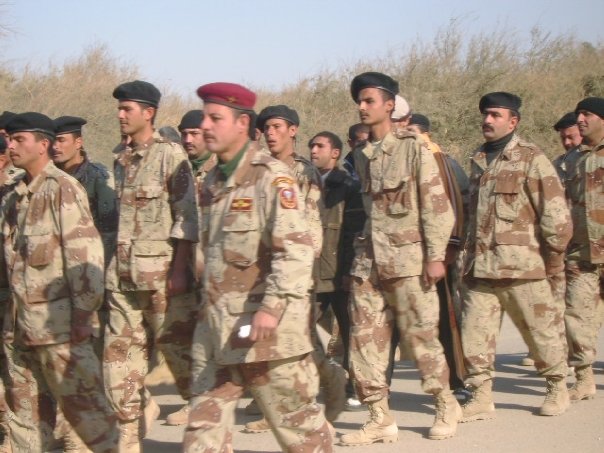
The actions of Bremer’s incompetent leadership team led to a tragic insurgency that need not have taken place. The now unnumbered US forces had to fight an insurgency while attempting to re-create an army, security forces and civil service from the wreckage created by Bremer’s mistakes and its own often heavy handed tactics in the months following the invasion. Nearly 4500 US troops would die and over 30,000 more wounded in the campaign. Hundreds of thousands of Iraqis were killed, wounded or died of disease during the war.  Lawrence wrote about the British administration of Iraq words that could well have been written about Bremer’s Coalition Provisional Authority: “Meanwhile, our unfortunate troops, Indian and British, under hard conditions of climate and supply, are policing an immense area, paying dearly every day in lives for the wilfully wrong policy of the civil administration in Bagdad.”

It took dramatic efforts in blood and treasure to rebuilt that was only beaten back after the US acted to conduct a surge in conjunction with the revolt of the Sunni of Anbar Province against foreign fighters who had become a dominant force in the insurgency. The surge under the command of General David Petreus achieved the desired result. It gave the Iraqis a chance to stabilize their government and increase their own security forces. Unfortunately many of those that remained in power of the Shi’ite sect refused to  share power in meaningful ways with Iraq’s Sunni and Kurds leading to a political crisis. The US military mission ended in December 2011 and since then Iraq security forces and civil authorities, often divided by tribal or sectarian loyalties have struggled to maintain order. The result is that in 2013 that Iraq is again heading toward the abyss of civil war. Sunni protestors in Anbar and other provinces conduct frequent protests as sectarian violence spreads. Many Iraqis of all sects have mixed feelings about the American invasion and the bloody aftermath and fear the future.

In 1920 Lawrence wrote of the continuing British intervention and occupation of Iraq: “The people of England have been led in Mesopotamia into a trap from which it will be hard to escape with dignity and honour. They have been tricked into it by a steady withholding of information. The Bagdad communiqués are belated, insincere, incomplete. Things have been far worse than we have been told, our administration more bloody and inefficient than the public knows. It is a disgrace to our imperial record, and may soon be too inflamed for any ordinary cure. We are to-day not far from a disaster.”

His words have a sadly familiar tone. The US invasion of Iraq did have a different outcome than we imagined. The Arab Spring erupted and the consequences of it will be far reaching and effect much of the Middle East and the world. However, Lawrence’s words and wisdom concerning the Arabs who rebelled against the Turkish Ottoman Empire are something that we in the West need to heed today.

baghdad1917

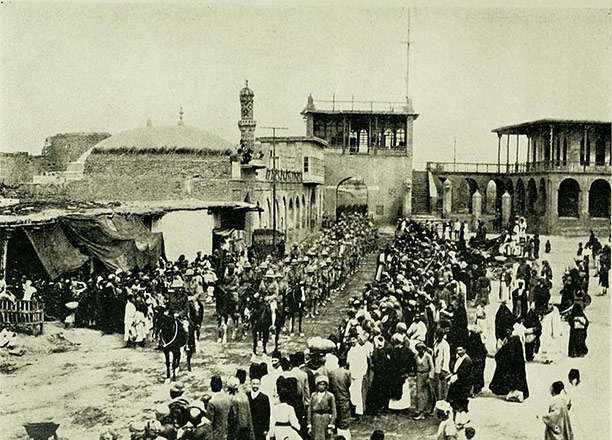
British Troops entering Baghdad

“The Arabs rebelled against the Turks during the war not because the Turk Government was notably bad, but because they wanted independence. They did not risk their lives in battle to change masters, to become British subjects or French citizens, but to win a show of their own.”

481801_10151367001287059_1003164983_n

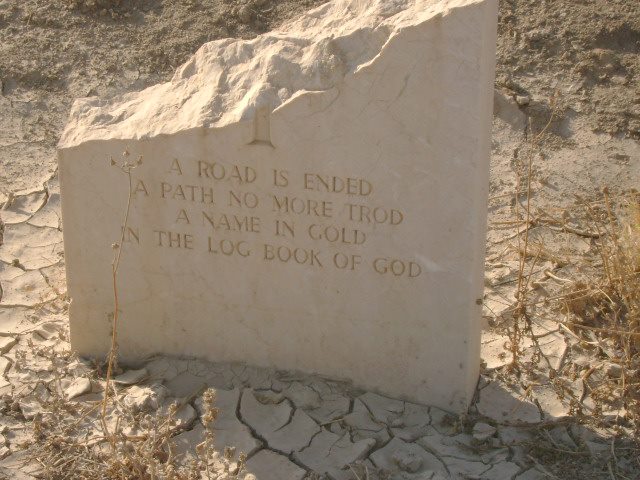
Grave of a British Soldier in Habbaniyah Iraq

That is the case in many Arab countries today. One can only hope that in those countries and in Afghanistan where our troops are embroiled in a war that cannot end well that we will do better.

Peace

Padre Steve+
2 Comments

Filed under Foreign Policy, History, iraq,afghanistan, middle east, national security

Arab Spring Fever: The Revolution Begins Anew in Egypt as Syria Begins to Melt Down

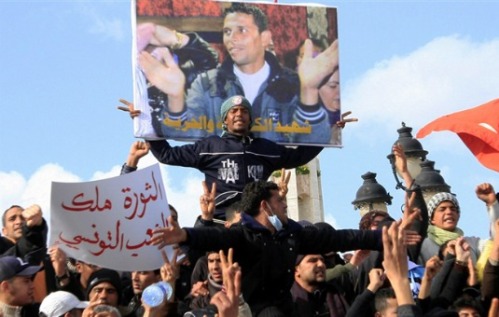
bouazizi

Tunisian Demonstrators

It began in such an innocuous manner. A Tunisian street vendor named Tarek al-Tayeb Mohamed Bouazizi set fire to himself due to what he viewed as harassment and humiliation by a local government official who confiscated his goods when he could not afford to pay bribes to the police. He died a few weeks later. That act set in motion widespread protests that led to the overthrow of long time Tunisian dictator Zine El Abidine Ben Ali ten days later.

The events in Tunisia sparked revolts throughout the Arab World, including the largest and most influential of the Arab States, Egypt and Syria. The situation in Egypt ended in the overthrow of President Hosni Mubarak and free elections where Islamists gained a majority in Parliament and the election of Moslem Brotherhood leader Mohamed Mursi as President. The situation in Syria led to minor reforms before the government of Bashir Al Asad began a series of repressive and violent crackdowns against protestors. This led to a armed revolt that has only continued to gain ground and achieve a modicum of international recognition.

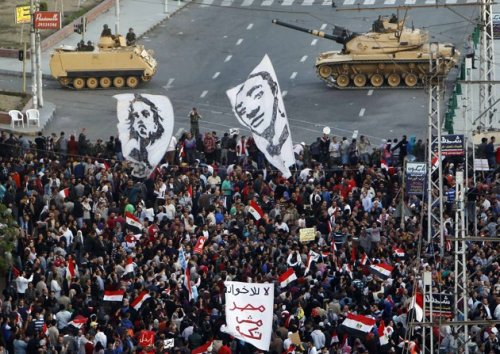
2012-12-07T183045Z_340924292_GM1E8C71U0S01_RTRMADP_3_EGYPT-POLITICS

Egyptian Demonstrators calling for the Ouster of President Mursi

It appears that Egyptian President Mursi and the Islamic Brotherhood may have bit off a bit more than they could chew when they hurriedly wrote a new draft constitution that maximized their power and limited freedoms of non-Islamists including Coptic Christians, Democrats and secularists. Mursi compounded his mistake by issuing an edict that gave him practically unlimited power. The backlash from the Egyptian judiciary, journalists and opposition parties has been dramatic. Protests on the order of the original demonstrations against the Mubarak regime have engulfed Egypt, Mursi has  annulled his decree that granted him those powers and the opposition is calling for his overthrow. The Egyptian military has again become a player in the unfolding drama.

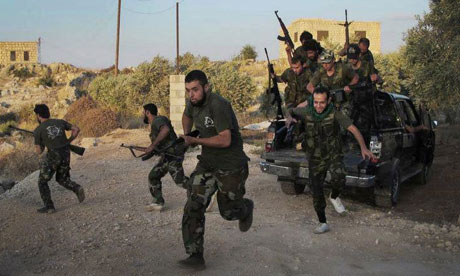
Free Syrian Army soldiers in Idlib

Free Syrian Army Soldiers in Action

In Syria the opposition is nearing complete control of many areas of the country and Bashir Al Asad’s regime is believed by many to be on its last legs, only the endgame remains to be played out. Some believe that Syria’s regime may be willing to use chemical weapons, particularly Sarin nerve gas agents against the opposition. The leaders of Western nations, especially the United States have announced that the use of such weapons would be unacceptable.

There are continued demonstrations, protests and political actions ongoing in several countries including US Allies Jordan, Kuwait and Bahrain.

Throughout the Arab World the Arab Spring has had marked repercussions. The long term dictators of Yemen and Libya were both overthrow, with Yemen’s case Ali Abdullah Saleh was able to negotiate his exit from power, while in Libya the regime of Muammar Ghadaffi was overthrown in a bloody manner following a protracted civil war. Ghadaffi himself was brutally murdered following his capture.

The Arab has also has had effects on the foreign policy of nations, particularly the United States, Russia and the European Union and others around the world who have stood to gain by maintaining the status quo in the region, playing off the interests of their Arab “friends” for their own benefit. The fact is that most countries or alliances with military, economic and political, diplomatic and intelligence interests are still trying to make sense of the new Middle East and how it will impact their interests.

The problem is that most people outside the region have little understanding of it or how different the culture, history and social considerations of each part of the Arab world is different than others. We like to take about the “Arab Street” or the “Moslem world” but the fact is that neither the Arab Street or the Moslem world is monolithic and what is the case in one country is not necessarily true in other countries.

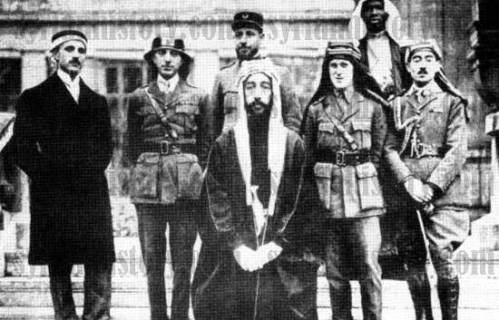
054

T.E. Lawrence with members of Arab delegation at Versailles

What we know as countries in many cases are nothing more than disparate Arab peoples of different, Tribal affiliations, cultural traditions, history as well as Islamic and Christian factions. There is no generic Arab country or people and in many Arab countries there is internal conflict based on tribal, ethnic or religious lines. This was something that T.E. Lawrence noted in his works and something that we in our desire to shape events to our liking, need to remember.

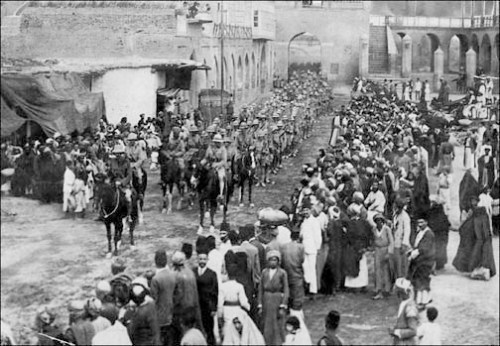
britishbaghdad1917www

British Troops Enter Baghdad in 1920

During and after the First World War, European powers, particularly the English and French, but also the Italians used their military, economic and diplomatic power to divide the Arab World, recently free of Ottoman-Turk domination through the Sykes-Picot agreement, agreements made at Versailles and San Remo. In doing so they prevented a natural development of Arab freedom and helped poison relations between the Arabs and the West for generations and in the case of Saudi Arabia led to the domination of the Wahhabi house of Saud.

The Arab world is a mosaic of different peoples, cultures, traditions and histories. As the Arab Spring continues to unfold it is very important that we, who are not Arabs understand the various tensions at play and make vague assumptions about them or what the Arab Spring portends in Egypt or elsewhere.

Yes, we have important interests in the region. However as chaotic as it may seem the Arab Spring is a natural outgrowth of a region and its peoples finding themselves after centuries of foreign domination, be it that of the Roman, the Byzantine, the Turk, the Persian, or various countries of Europe and even the United States. It is important that it play out with as little foreign interference as possible. The lesson from history is that the last century of Western domination, imperialism and interference in Arab affairs have not helped and that these events will have to play themselves out, and that may take at least a generation.

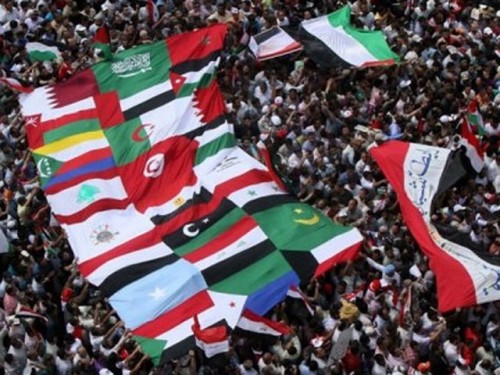
arabspring-640x480

Whether we like it or not, what is happening now, despite the violence, strife and chaos is a necessary part of their story. How can we not understand? How many centuries of ethnic, cultural, religious and political war and strife have the nations of Europe and America endured to come to some semblance of working peacefully together?

The Arab Spring will be with us for a while because Arabs, regardless of their nationality, tribe or religious sect must determine their fate.

Peace

Padre Steve+
2 Comments

Filed under Foreign Policy, History, middle east, News and current events