Category Archives: Foreign Policy

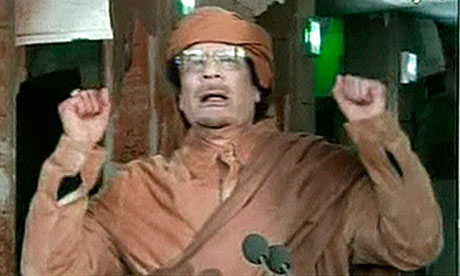
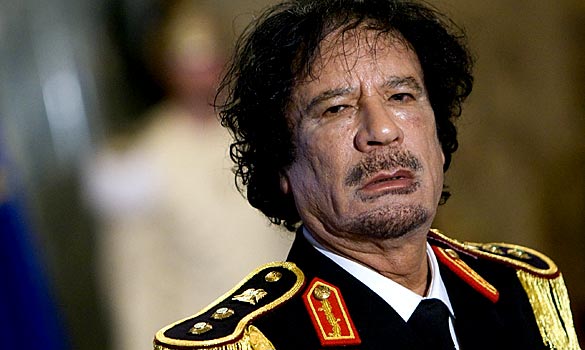
Gaddafi is Dead so what happens Now?

“We announce to the world that Qaddafi has been killed at the hands of the revolution. It is a historic moment. It is the end of tyranny and dictatorship. Qaddafi has met his fate.” Abdel Hafez Ghoga, spokesman for the National Transitional Council

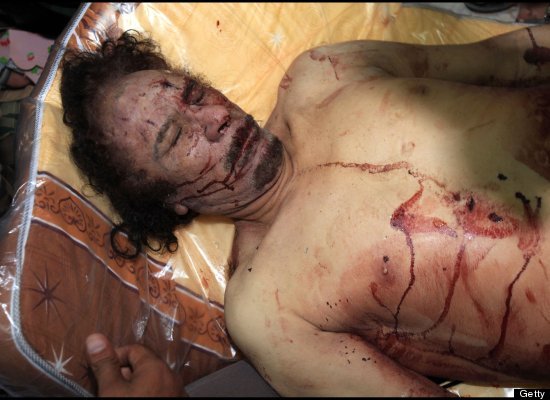
Note: This article contains graphic images of Gaddafi’s body. They may not be suitable for all readers.

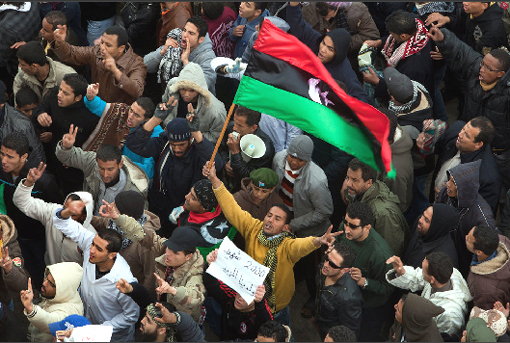
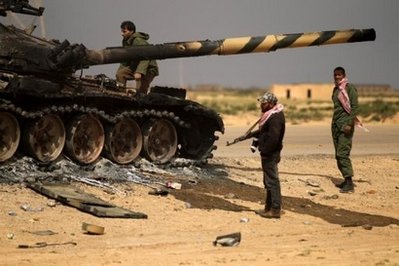
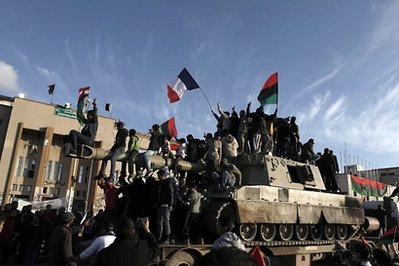
The Arab Spring gained new momentum today with the killing of Moammar Gaddafi by forces loyal to the National Transitional Council. The NTC had captured Tripoli in August and the former dictator had been on the run attempting to rally loyalists to help him regain power.  His efforts were in vain. The NTC forces which are best described as a collection of irregular forces rather than a real army continued to gain territory and liberate cities which had been terrorized by Gaddafi’s forces.

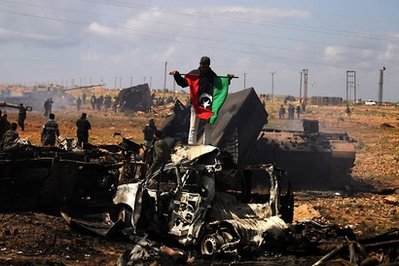
Gaddafi was killed today while he and close advisors were attempting to flee Sirte his hometown which was in the process of  falling to NTC forces.  Reports are sketchy but his convoy appeared to be hit by French Jets and American Predator drones  killing many of his loyalists.  Gaddafi reportedly was wounded but escaped to hide in a drainage ditch tunnel.  He was later captured by pursuing NTC forces, captured and reportedly died of his wounds after his capture.  The circumstances of his death are unclear some say that the vehicle that he was being transported in was caught in a crossfire and other reports indicate that he may have been summarily executed by his captors.  Pictures of his body seem to show a bullet wound in his forehead, one in his left arm and several just below his sternum.

Along those killed with Gaddafi was his Defense Minister Abu Bakr Yunis Jabr, head of Intelligence Services Abdullah al-Senussi and his son Muatassim and other loyalists who were killed during or following a firefight with NTC forces.  Another report by Al Arabya News says that one of their reporters in Sirte has confirmed that Saif-Al Islam Gaddafi is also dead.

http://english.aljazeera.net/news/africa/2011/10/20111020111520869621.html

Gaddafi wounded and still alive (above) after his capture and his corpse below


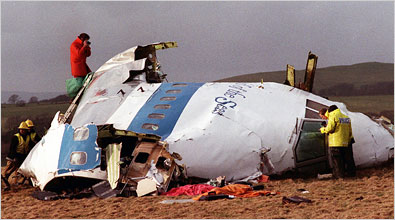
The death of Gaddafi ends a 42 year reign of terror in Libyaand of Gaddafi’s support for terrorism and terrorist organizations. Among those terrorist acts included the downing of Pan Am flight 103 over Lockerbie Scotland on December 21st 1988 killing all 270 souls aboard and the April 5th 1986 bombing of the West Berlin nightclub La Belle which killed 3 people and wounded 230. The latter was directed at US Army soldiers that frequented the club.  He trained and supported tyrants in Sierra Leone and Liberia who killed hundreds of thousands of people.  Tens of thousands of Libyans died at his hand.

Despite this Libya faces difficulties.  Tribal, ideological, economic and political rivalries long contained and suppressed are showing. The Misrata Council in the West does not recognize the NTC despite the latter group’s recognition by governments around the world.  There are tensions between those of a more secular democratic view and Islamists so it remains to be seen what Libya will evolve or devolve into over the coming weeks, months and years.

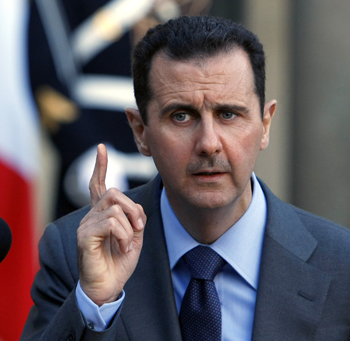
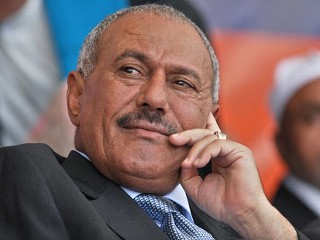
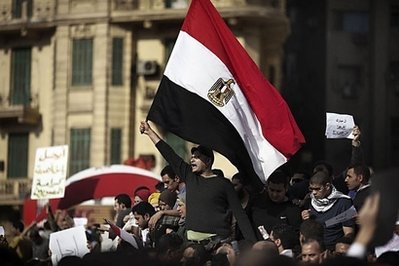
The killing of Gaddafi is likely to have broad repercussions throughout the Middle East and may further encourage the now months long revolts against Yemen’s long term dictator Ali Abdullah Saleh and Syria’s Bashar Al-Assad.  Other regimes could face uprising and there is potential for the Arab Spring to inspire those in other nations who feel oppressed or that have real or imagined grievances against their governments or those that they see as the real power brokers in their lands.

Bashar Al Assad and Ali Abdullah Saleh…are they next?

Since war, economic crisis and perceived inequities between the rich and the poor are fertile ground for such movements it is my belief that the Arab Spring is helping to usher in a new era of revolution around the world such as not been seen since 1918 and the overthrow of long established governments and the collapse of empires which lasted until the 1960s.  The world is still shaped by those events.

As Alexis de Tocqueville said “In a revolution, as in a novel, the most difficult part to invent is the end.”

As I said a few days ago this is a time of promise and peril. But for now we can rejoice for the people of Libya as they begin a new chapter in their history.

Peace

Padre Steve+

2 Comments

Filed under Foreign Policy, History, middle east

Why History Matters: The Disastrous Effects of Long Insurgency Campaigns on the Nations that Wage them and the Armies that Fight Them

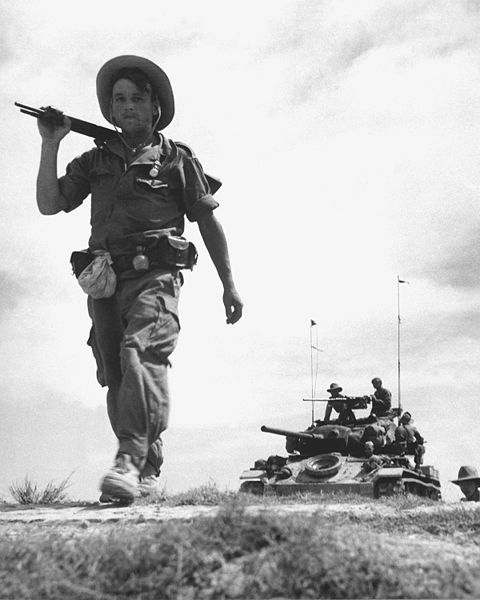
French Mobile Group in Indochina

“Any future defense secretary who advises the president to again send a big American land army into Asia or into the Middle East or Africa should ‘have his head examined,’ as General [Douglas] MacArthur so delicately put it.” Secretary of Defense Robert Gates

The effects of the wars Indo-China, Algeria and Vietnam on the French and American military organizations internally and in relationship to their nations piqued my interest in 2005. The wars in Iraq and Afghanistan forced me to start asking the question of what short and long term effect that these wars might have on the U.S. military. As such I wondered what historical precedent that there was for the question. My interest was furthered by my deployment with Marine and Army advisors to Iraqi Army and Security forces in 2007-2008. My search led to the French experiences in Indo-China and Algeria and the American experience in Vietnam. Recently with the Iraq war winding down and ongoing war in Afghanistan which has gone from apparent victory to mounting concern that we are losing the war in Afghanistan as Taliban and Al Qaida have regained momentum amid widespread corruption by the Afghan government and weakness of NATO forces.
The counterinsurgency campaigns conducted by the French and American militaries in Vietnam and Algeria had deep and long lasting effects on them as did the Soviet war in Afghanistan. The effects included developments in organization and tactics, relationship of the military to the government and people, and sociological changes. The effects were tumultuous and often corrosive. The French Army in Algeria revolted against the government. The US Army, scarred by Vietnam went through a crisis of leadership and confidence which eventually resulted in end of the draft and formation the all volunteer military. The Soviet not only lost their war but they saw their country collapse and the military with it. The effects of the Iraq and Afghanistan wars are yet unknown but could result in similar situations to the militaries and governments involved.
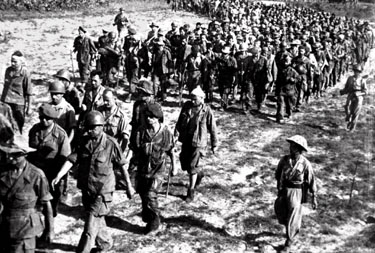
French Surrender at Dien Bien Phu

There is a wealth of data regarding these wars. There are several types of materials. The accounts of soldiers, diplomats and reporters who experienced these events contained in memoirs and diaries. The best include David Hackworth’s About Face and Steel My Soldiers Hearts; and General Harold Moore’s We Were Soldiers Once… and Young. French works include Jules Roy’s The Battle of Dien Bien Phu and General Paul Aussaresses’ The Battle of the Casbah. There are innumerable popular accounts written by NCOs and junior officers. These accounts may contain a wealth of information, but are limited by a number of factors. First, the authors, veterans of the wars, only saw part of the overall picture and first-hand experience in war can skew a writer’s objectivity. Those who have been through the trauma of war interpret war through their own experience. Physical and psychological wounds can have a major impact on the interpretation of these writers as can their experience and political ideology. Finally few of these writers are trained historians. Despite this they can be a valuable resource for the historian.

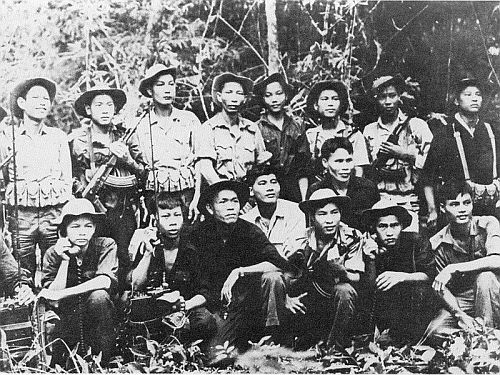
Viet Minh Main Force Soldiers

Another source is found in the official histories written by the military forces involved in the wars. Often these incorporate unit histories and individual narratives and analyze specific battles and the wider campaigns, but do little in regard to broader conditions that affected operations. While a good source, many are not as critical of their institutions as they should be.

Histories by trained historians and journalists provide another view. The most insightful of the journalist accounts include Bernard Fall’ Street Without Joy and The Siege of Dien Bien Phu: Hell in a Very Small Place. A limitation of all of these is that they are often heavily influenced by the political and societal events. This means that earlier accounts are more likely to be reactive and judgmental versus critical and balanced. Later accounts have the benefit of access to the opposing side and documents not available to earlier writers. Alistair Horn in A Savage War of Peace provides one of the most informative and balanced accounts of the war in Algeria. Martin Winslow does the same regarding Dien Bien Phu in The Last Valley.
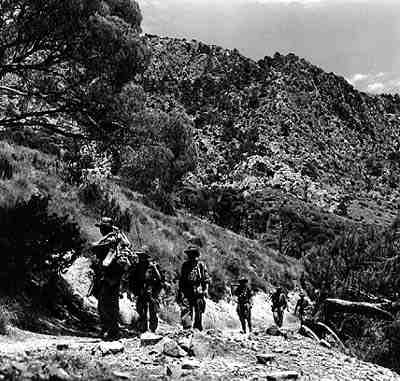
Foreign Legion in Algeria

Another source is the writings of participants who critically examine their participation in the wars. Many of these, French and American provide insights into the minds of leaders who are reflective and critically examine what happened to their military institutions in these wars. The best of these is French Colonel David Galula whose books Pacification in Algeria 1956-1958 and Counterinsurgency Warfare: Theory and Practice provide first-hand accounts of the subject combined with critical reflection. Galula’s works have been important to John Nagl, General David Petreus and others who helped write the U.S. Army and Marine Corps Counterinsurgency manual. Andrew Krepinevich in The Army and Vietnam provides a critical analysis of the U.S. Army in Vietnam. Other sources, both online and print, such as RAND, provide excellent analysis of selected topics within the scope of this essay, especially COIN.

Battles in the Streets of Algiers

The ability to dispassionately and critically examine and evaluate these sources over a period of several years was and integrate them with my own experience has been a critical to me. It has changed the way that I look at sources, and caused me to be much more aware of bias, the limitations of sources and the need to have a multiplicity of sources and points of view and to be suspicious of contemporary reports and accounts of the war in Afghanistan regardless of the source.

The conflicts in French Indo-China, Algeria and Vietnam had major effects on the French and American military institutions. These effects can be classified in a number of ways. First, the manner in which each military waged war, including tactics employed and use and development of weapons systems was changed. The use of airpower, especially helicopters and use of riverine forces provided an added dimension of battlefield mobility but did not bring victory. As John Shy and Thomas Collier noted regarding the French in Indo-China: “French mobility and firepower could take them almost anywhere in Vietnam, but they could not stay, and could show only wasted resources and time for their efforts.”[1]

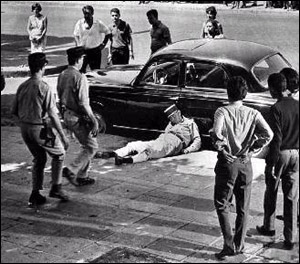
Assassination and Terrorism in Algiers

The use of intelligence and psychological warfare, including the use of torture became common practice in both the French and American armies. The wars had an effect on the institutional culture of these armed services; neither completely embraced the idea of counterinsurgency and for the most part fought conventionally. Galula notes how the “legacy of conventional thinking” slowed the implementation of proper counterinsurgency tactics even after most commanders learned that “the population was the objective.”[2] Krepinevich notes that “any changes that might have come about through the service’s experience in Vietnam were effectively short-circuited by Army goals and policies.”[3] Finally the wars had a chilling effect on the relationship between the both militaries and the state, veterans from each nation often felt betrayed or disconnected from their country and people. Unfortunately instances of all of these have occurred or can be seen in the current wars in Iraq and Afghanistan.

US Army in Vietnam

The French Army had the misfortune of fighting two major insurgencies back to back. The French military was handicapped even before it went into these wars. The Army came out of World War II defeated by the Germans, divided by loyalties to Vichy or one of the Free French factions. They were humiliated by the Japanese in Indo-China, while in Algeria France’s crushing defeat was devastating. “Muslim minds, particularly sensitive to prestige and baraka, the humiliation made a deep impression.”[4] French society was as divided as the Army; the economy in shambles, the government weak and divided. The Viet-Minh had prepared well making use of time and training to get ready for war. “Once full-scale hostilities broke out, the French, for budgetary and political reasons could not immediately make the large scale effort to contain the rebellion in the confines of small-scale warfare.”[5]

Paras of the 1st Colonial Parachute Regiment jump in Algeria

In both Indo-China and Algeria the French attempted to fight the budding insurgencies in a conventional manner. This was particularly disastrous in Indo-China when on a number of occasions battalion and regimental combat team sized elements were annihilated by Viet-Minh regulars. Between October 1st and 17th 1950 every French garrison along the Chinese border was over-run. The French lost over 6000 troops and enough equipment to outfit “a whole additional Viet-Minh division.” It was their worst colonial defeat since Montcalm at Quebec.[6] In Algeria when the fight began in earnest France’s “ponderous ponderous N.A.T.O forces found themselves at an impossible disadvantage,”[7] unable to have any influence off the main roads.

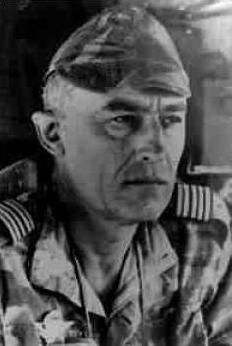
Marcel Bigard: One of the most effective French commanders in Indochina and Algeria

In Vietnam the French did not absorb the lessons of fighting a well established insurgent force. French forces hoped to draw the Viet-Minh main forces into battles of attrition where their superior firepower could be brought to bear. Such was the case at Na San in December 1952 where the French established an “Air ground base” deep in Viet-Minh territory to draw Giap’s forces into open battle. This worked, but just barely. General Giap, short of artillery and not planning on a long battle frittered away his troops in mass charges. However, the French, because of Na Son assumed they had found the key to victory. In their embrace of the “air ground base concept, French staff officers were following an intellectual tradition that had long been prone to seduction by elegant theories.”[8] The result was the disaster at Dien Bien Phu the following year. The destruction of the elite Group-mobile 100 near Pleiku in 1954 was the coup de grace. In Indo-China the French made limited use of helicopters, used paratroops widely, and developed riverine forces. One thing they were critically short of was significant tactical air support.[9]

Roger Trinquier helped develop tactics in Indochina which helped turn the tide in Algeria, until the French Government ended the war leaving their soldiers to feel betrayed

The most inventive French creation in Indochina was the GCMA/GMI forces composed of mountain tribesmen led by French NCOs and Junior Officers. They were designed to provide “permanent guerilla groups rooted in remote areas” to harass and interdict Viet-Minh forces.[10] Trinquier noted that at the time of the Dien Bien Phu defeat that these forces had reached over 20,000 trained and equipped maquis in the Upper Region of Tonkin and Laos. These forces achieved their greatest success retaking Lao Cai and Lai Chau May 1954 as Dien Bien Phu fell.[11] Trinquier stated that “the sudden cessation of hostilities prevented us from exploiting our opportunities in depth.”[12] The GMI units and their French leaders were abandoned fighting on for years after the defeat. One account noted a French NCO two years after the defeat cursing an aircraft patrolling the border “for not dropping them ammunition so they could die like men.”[13] In the end the French left Indo-China and Giap remarked to Jules Roy in 1963 “If you were defeated, you were defeated by yourselves.”[14]
Algeria was different being part of Metropolitan France; there the French had support of European settlers, the pieds-noir. Many French soldiers had come directly from Indo-China. There French made better adaptations to local conditions, and realized that they had to win the population and isolate the insurgents from it and outside support. As Galula said, victory is the destruction of the insurgent’s political and military structures, plus “the permanent isolation from the population, not forced upon the population, but by and with the population.”[15] The lessons learned by the French in both Algerian and Indo-China were lost upon the Americans.

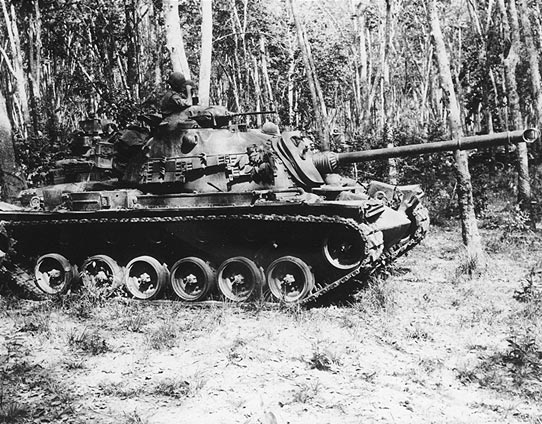
US Armored Cavalry in Vietnam

The United States military, especially the Army approached the Vietnam War with a conventional mindset, referred to as the “Army concept.” [16] It not only approached the war in this manner, but it trained and organized the South Vietnamese forces, ARVN into the American model. Americans re-organized ARVN into divisions “based upon the U.S. divisional force structure.”[17] Due to the imposition of an American template and organizational structure upon it, ARVN was not structured appropriately for the threat that it faced.”[18] The results were as to be expected. Large numbers of American troops poured in taking the lead against the North Vietnamese and Viet Cong . The American method of counterinsurgency was costly. It was “almost a purely military approach”[19] which ignored political and social realities on the ground. Instead of focusing on protecting the Vietnamese people and denying the Communists a safe haven the Army in particular believed that massive firepower was the best means to be “utilized by the Army to achieve the desired end of the attrition strategy-the body count.”[20] In the end the American defeat was a “failure of understanding and imagination.”[21] The one shining success was the Marine Corps experimentation with “Combined Action Program” platoons which lived in the villages with militia for long periods of time. This program produced great results “in eliminating local guerillas”[22] but was killed by the Army.
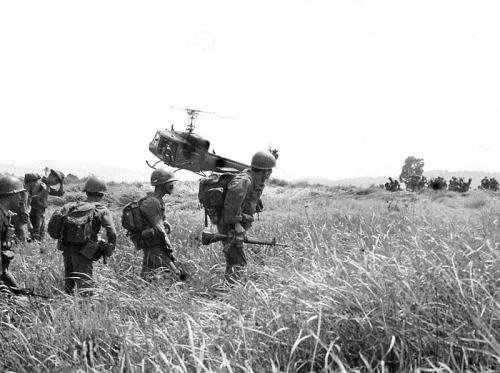
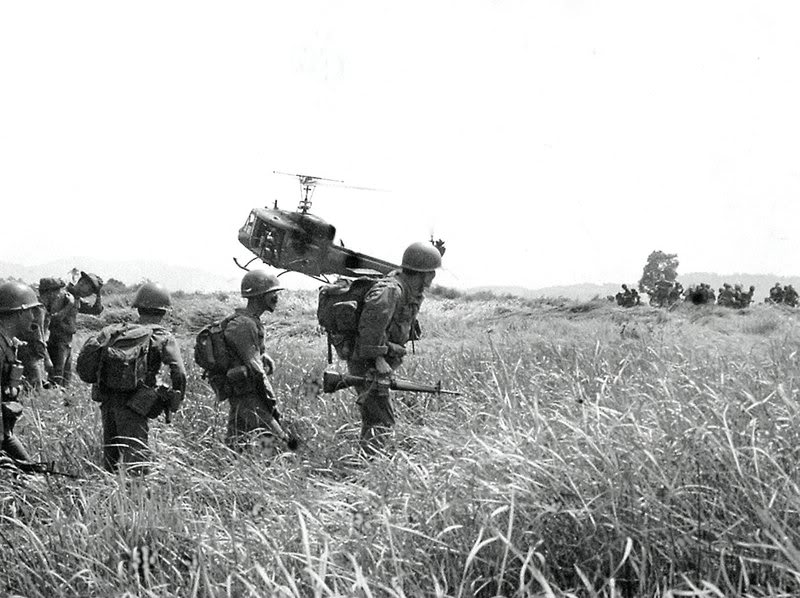
US and ARVN Soldiers in Joint Operation

These wars tore the heart out French and American armies. For the French the defeats inflicted a terrible toll. In Indo-China many French career soldiers felt that the government’s “lack of interest in the fate of both thousands of missing French prisoners and loyal North Vietnamese…as dishonorable.”[23] Divisions arose between those who served and those who remained in France or Germany and created bitter enmity between soldiers. France would endure a military coup which involved many who had fought in Vietnam and Algeria. Having militarily won that war, were turned into what Jean Lartenguy called The Centurions had been turned into liars.”[24] They were forced to abandon those who they had fought for and following the mutiny, tried, imprisoned, exiled or disgraced. Colonial troops who remained loyal to France were left without homes in their “independent” nations. They saw Dien Bien Phu as the defining moment. “They responded with that terrible cry of pain which pretends to free a man from his sworn duty, and promises such chaos to come: ‘Nous sommes trahis!’-‘We are betrayed.’”[25]
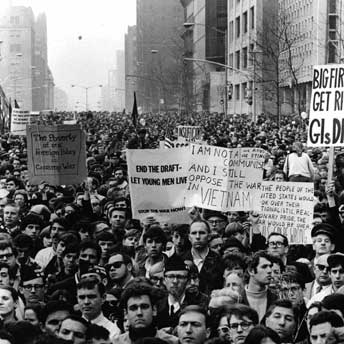
War Protests in the United States 

The U.S. Army left Vietnam and returned to a country deeply divided by the war. Vietnam veterans remained ostracized by the society until the 1980s. As Harold Moore recounts “in our time battles were forgotten, our sacrifices were discounted, and both our sanity and suitability for life in polite American society were publically questioned.” [26] The Army endured a massive reorganization that resulted in the formation of the All-Volunteer force, which would redeem itself and emerge from the ashes in the Gulf War.
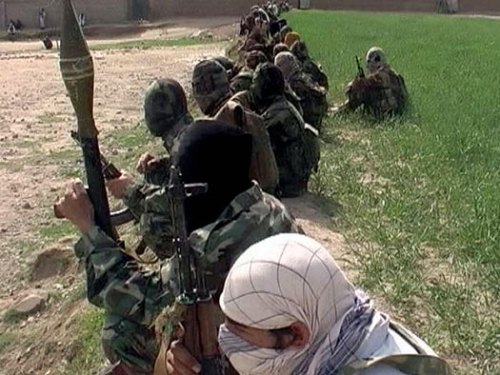
Taliban in Afghanistan

The Americans would not learn the lessons of revolutionary warfare and counterinsurgency until forced to do so in Iraq in 2004-2007. These lessons however were not applied to Afghanistan and the Taliban which seemed to have been defeated have regained the initiative, policy is being debated amid discord in the west and there are reports of American and NATO forces becoming discouraged by the course of the war and concern that their efforts will be in vain. This is a dangerous situation to be in and if we learn from anything from our own history as well as that of foreign military forces in Afghanistan we need to be very careful in implementing strategy to get whatever we do right.

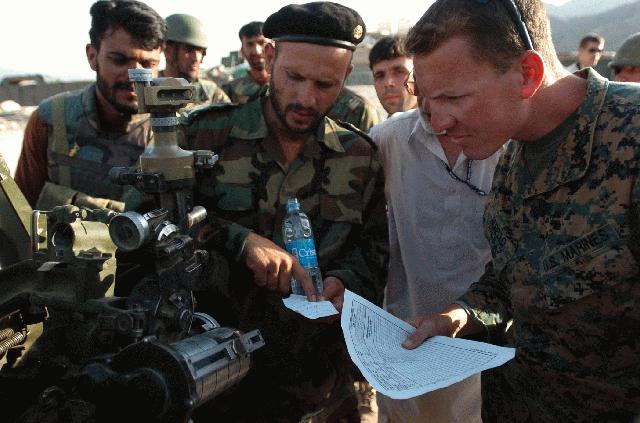
US Advisers with Afghanistan National Army Troops

The greatest success of the war was finally killing the leader of Al Qaeda, Osama Bin Laden at his Pakistani hide-out. That did not occur in Afghanistan and was the result of smart work by the CIA and other American intelligence services and the superb conduct of the mission by Navy SEAL Team Six. It was not the product of our costly counter-insurgency and nation building campaign in Afghanistan. There are many professional think tank “experts” that now urge continuing the Afghan mission indefinitely despite its massive cost and questionable strategic value. The costs of the war which are over 2 billion dollars a week are staggering with little to be shown from the hundreds of billions already spent in Afghanistan, much of which is spent on projects where corrupt Afghan government officials and tribal leaders are the only ones to benefit. Likewise the long term health of the military is imperiled. The money that should go to modernizing the force and replacing equipment worn out by war as well as the enormous costs in lives and the continuing care needed by military personnel wounding in body, mind and spirit remaining on active duty and those in the Veteran’s Administration system are imperiled.

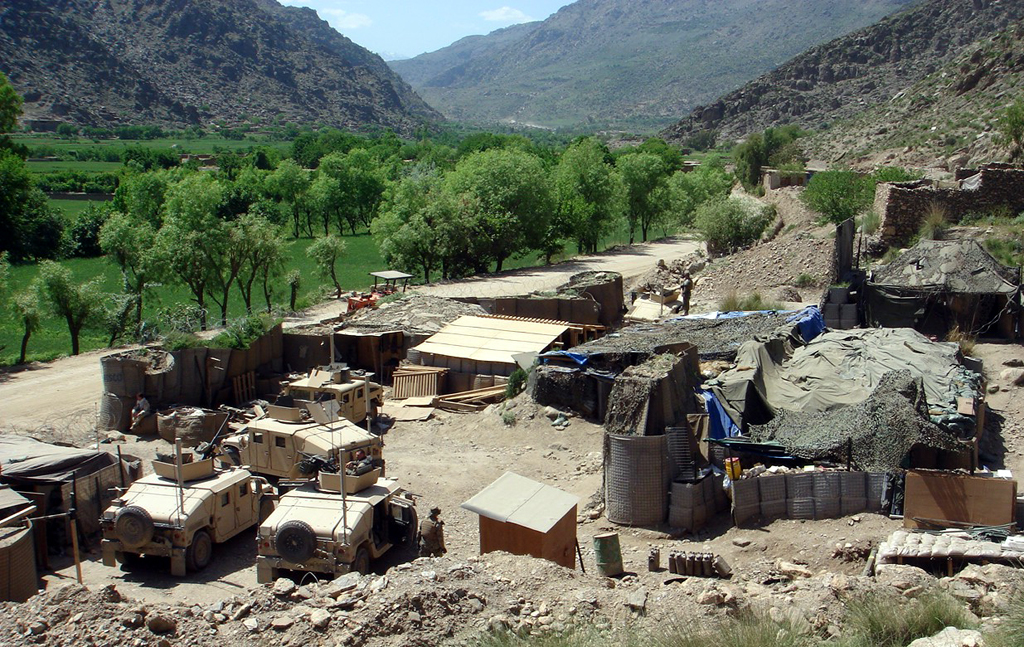
Remote Training Team Base in Afghanistan

The effects of the wars in French Indochina, Algeria and Vietnam on the French and American military establishments were long lasting and often tragic. The acceptance of torture as a means to an end sullied even the hardest French officers. Men like Galula and Marcel Bigeard refused to countenance it, while others like Paul Aussaresses never recanted. Americans would repeat the tactic at Abu Ghraib rallying the Iraqis against them and nearly losing the war because of it.
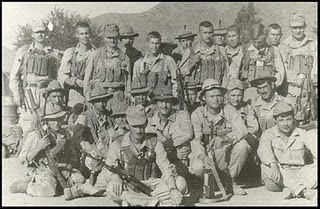
Soviet Paratroops in Afghanistan

For the Americans, the effects of Vietnam continued at home. Race riots tore at the force while drug addictions and criminal activities were rampant. Many incompetent leaders who had “ticket punched” their careers kept their jobs and highly successful leaders who became whistle blowers like Hackworth were scorned by the Army institution. The years following Vietnam were a severe test of the US Military and took years for the military to recover. Likewise it took years before either the French or American veterans again felt a part of their countries. They ended up going to war, and when it was over; feeling abandoned, their deepest bonds were to their comrades who had fought by their side.
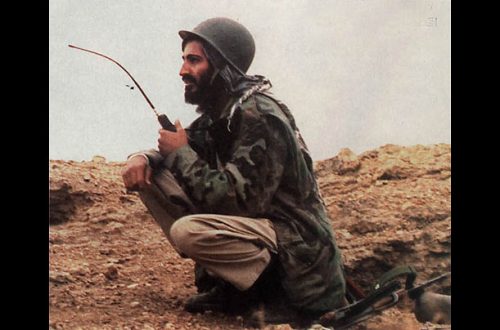
Osama Bin Laden leading Mujaheddin in 1984 

If this is not enough we have the experiences of the Soviet Union, the British Empire and others that have attempted to rule Afghanistan as plumb lines to gauge our effectiveness. Others have tried and failed miserably at this. The Soviets learned the hard way and found that Afghanistan was one of the major reasons for the collapse of the Soviet Union. Reading the history of Soviet operations in Afghanistan is frighteningly like reading the history of our campaign.
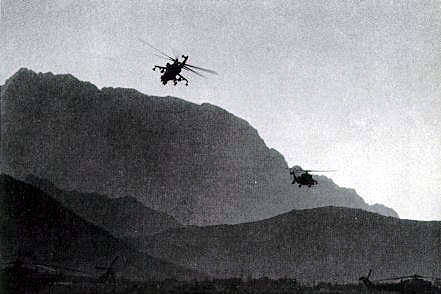
Two Soviet Mi-24 “Hind” attack helicopters flying in an Afghan Valley

The Soviets invaded Afghanistan in 1979 they used their 40th Army which initially was composed of “two motorized rifle divisions, an airborne division, an air assault brigade and separate motorized rifle regiments.”[27] These forces totaled about 52,000 troops and were “considered sufficient to guarantee the viability of Afghanistan.”[28] The 40th Army was a standard Cold War Soviet Combined Arms Army designed for high tempo conventional operations. It was not designed for nor trained in counterinsurgency operations or what the Soviets and Russians class as “anti-guerilla operations.” It was poorly suited to mountain and dessert combat and at the beginning “not only had no practical skills in the conduct of counter-guerilla warfare, they also did not have a single well-developed theoretical manual, regulation or tactical guideline for fighting such a war.”[29]

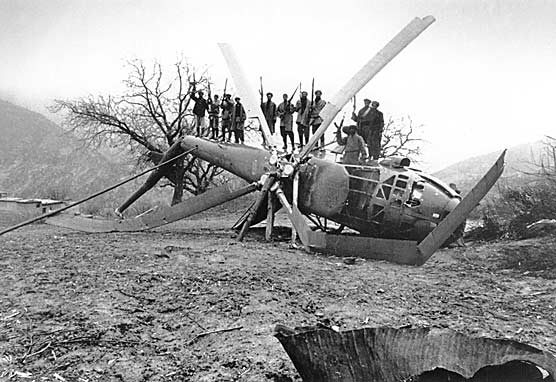
Downed Soviet Mi-4 “Hound” with Mujaheddin 

The Soviets did not expect to be involved in combat operations and the Afghan population reacted to their presence with resistance which spread across the country both against their own government which they viewed as a puppet of the Soviets but also against the Soviet Forces. As time went on the Soviets attempted to use raids and large scale operations to attempt to bring Mujahidin forces to battle, however the insurgents were very skillful and the Soviets attempted to increase the training of their forces as well as their numbers. By 1986 the numbers on the ground had increased to 108,000 personnel in four divisions, five separate brigades, four separate regiments and six separate battalions.[30] In the nearly 10 years of operations over a half million Soviet soldiers and support personnel served in Afghanistan. Tours for enlisted personnel who were primarily conscripts served 12-18 months in country and officers 2 years. Few returned for subsequent tours meaning that the 40th Army had few personnel very familiar with the country, its people and the challenges faced by Soviet forces. According to official sources the 40th Army suffered 13,833 killed in action or died of wounds, 49,985 wounded and 311 missing in action a figured of 1 in 8 Soviet Soldiers being casualties. 14.3 percent of the casualties were officers.[31] Of course the official figure is doubted many believing the number killed in action or died of wounds to be closer to 26,000.[32]
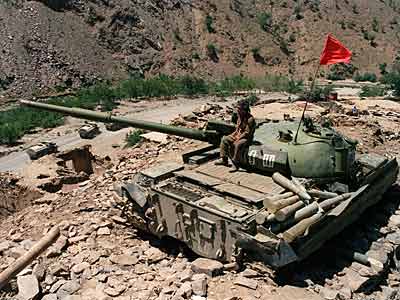
Soviet T-62 Tank guarding a convoy in a mountain pass

Like their American and French counterparts the Soviet veterans have experienced the unhealed wounds of war and a country that does not understand their experiences. The stigma of war wounds and PTSD haunt many Soviet veterans and were compounded by the collapse of the Soviet Union and Warsaw Pact in 1989. They returned home, lost their country and were by and large abandoned by their countrymen. A good number of these men and women travel to one of 5 centers across the country where according to one of the veterans come to for “social and psychological help.” He said that “The best thing about this place is that it provides us with a chance to share our Afghan memories with comrades who understand what we are talking about.” That camaraderie of being able to share their experiences with others that understand is helping some to return to something akin to “normal” life. They are joined by the soldiers that have experienced similar things in Chechnya. Russian veterans of the Afghan War are still so closely linked to it that they refer to themselves as “Afghans.”

Soviet Mi-8 “Hip” Helicopters in Afghanistan preparing for a mission

The Soviet Forces supported the Army of the Democratic Republic of Afghanistan which numbered at their peak on average between 120,000-150,000 soldiers.[33] The Afghan forces, then as now were at the mercy of tribal, familial and communist party affiliations. Over 70 percent of the DRA was conscripted, desertions averaged 1,500 to 2,000 soldiers a month and units were usually optimistically 25-40 percent under their TO&E strength.[34]Limitations on training and leadership meant that typically DRA units could not conduct large scale missions without Soviet help. As such most of the fighting was done by Soviet formations.
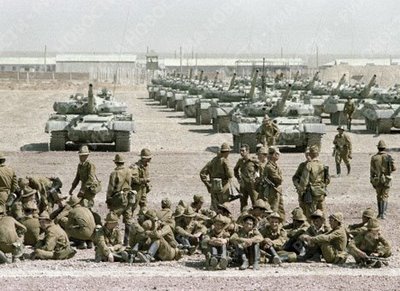
Soviet Troops preparing to leave Afghanistan

Many of these problems have plagued the United States and ISAF throughout the first 9 years of the current Afghan War. As former Afghanistan Commander General Stanley McChrystal noted in his assessment “ISAF is a conventional force that is poorly configured for COIN, inexperienced in local languages and culture, and struggling with the challenges inherent to coalition warfare. These intrinsic disadvantages are exacerbated by our current culture and how we operate.”[35]

We should have learned. A retired Red Army Colonel who served in Afghanistan from 1986-1988 who learned the Dari language in order to negotiate with the Afghan Mujahedeen warned what will happen when the Americans and NATO leave the country and the mistake that we made in entering Afghanistan. Frants Klinsevich now a member of the Russian Parliament comment to reporters at a wreath laying ceremony at a veteran’s convention that “they (NATO and the United States) are 100 percent repeating the same mistake we made by entering into a war in that country” and that “As soon as the Americans and Europeans leave, the Taliban will crack down on everything.” Klinsevich noted that he understood the American desire to tame Afghanistan but that “the problem of radical Islam will not be solved there, its violence cannot be solved. It is simply unsolvable.” He said that he wished that the United States had consulted the Russians about Afghanistan saying “they should have invited Russian specialists, involved Russia, really studied how they could use Russia. But unfortunately Americans think they know everything.” The former Russian commander understands far more that the majority of American policy makers on this subject. [36]

The fact is that we are hamstrung by the ongoing wars which limit our ability to respond to rapidly changing situations. We are in a similar situation to the Germans in 1942 and 1943 overcommitted, overstretched and lacking true strategic depth to respond to unanticipated situations as are now occurring across the Middle East. In 1942 and 1943 the Germans were always just short of the forces that would have turned the tide. Like the Germans our economy is laboring on the verge of collapse and we have to honestly answer the question “What is the strategic value in continuing to wage war in Afghanistan in the way that we are doing?”

What are the lessons to be learned from these campaigns as well as from the various accounts? Andrew Krepinevich prophetically noted that the failure to learn the lessons of Vietnam “represents a very dangerous mixture that in the end may see the Army again attempting to fight a conventional war against a very unconventional opponent.”[37] Obviously, there are lessons to be learned, especially in understanding the nature of revolutionary war as well as the culture and history of our opponents. The U.S. has made some improvement in this regard but there is still much to be learned, especially since after the war the Army was “erecting barriers to avoid fighting another Vietnam War.”[38] From these wars we learn that nations and incompetent governments who mismanage wars can alienate themselves from the soldiers that they send to fight, with serious consequences. As far as historiography we learn that certain historical fallacies are evident when one reads the accounts critically and recognize the bias and limitations of the various sources.

The fact is that we have learned little about such wars and are paying a terrible price for it. The debate now is should we continue the war as it is with minor withdraws of troops or begin a rapid exit in order to preserve and rebuild our force and to reduce the cost of these operations. But that debate and decision are well above my pay grade. But then maybe we need to remember what Field Marshall Gerd Von Rundstedt told his staff in September of 1944 when asked how to recover from the disastrous collapse of the German front following the Allied breakout from Normandy and dash across France. “Make peace you fools.” http://www.youtube.com/watch?v=ch56NAL1C-I

Peace
Padre Steve+
________________________________________
[1] Shy, John and Collier, Thomas W. “Revolutionary War” in Makers of Modern Strategy from Machiavelli to the Nuclear Age,” Peter Paret editor. Princeton University Press, Princeton N.J. 1986 p.849
[2] Galula, David. Counterinsurgency in Algeria: 1956-1958. RAND Corporation, Santa Monica, CA. 2006. First published by RAND in 1963. p.244
[3] Krepinevich, Andrew F. “The Army and Vietnam,” The Johns Hopkins University Press, Baltimore and London, 1986 p.213
[4] Horn, Alistair. “A Savage War of Peace: Algeria 1954-1962,” a New York Review Book published by the New York Review of Books, New York, 1977, 1987, 1996, and 2006 p 41
[5] Fall, Bernard B. “Street Without Joy: The French Debacle in Indochina.”Stackpole Books, Mechanicsburg PA, 2005, originally published by Stackpole Publications 1961 p.27
[6] Ibid. p.33
[7] Horn. p.100.
[8] Windrow, Martin. “The Last Valley: Dien Bien Phu and the French Defeat in Vietnam,” Da Capo Press, Novato, CA 2006, originally published by Weidenfeld and Nicholson, London 2004 p.63
[9] Fall, Bernard B. “The Siege of Dien Bien Phu: Hell in a Very Small Place.” Da Capo Press, New York an unabridged reprint of the 1st Edition reprinted in arrangement with Harper and Row Publishers, New York. 1967 pp. 456-457 Fall discusses in depth the lack of French Air support and the antecedents that led to the shortage following World War II.
[10] Pottier, Philippe(2005)’Articles: GCMA/GMI: A French Experience in Counterinsurgency during the French Indochina War’, Small Wars & Insurgencies,16:2,125 — 146http://dx.doi.org/10.1080/09592310500079874
[11] Simpson, Howard K. “Dien Bien Phu: The Epic Battle America Forgot,”Potomac Books Inc. Washington DC 2005, originally published by Brassey’s Inc. 1994 pp. 170-171
[12] Trinquier, Roger. “Modern Warfare: A French View of Counterinsurgency,” translated from the French by Daniel Lee with an Introduction by Bernard B. Fall. Praeger Security International, Westport CT and London. 1964 and 2006. Originally published under the title “La Guerre Moderne” by Editions Table Ronde. p.87
[13] Windrow. p.652.
[14] Roy, Jules. “The Battle of Dien Bien Phu” Carrol and Graf Publishers, New York 1984. Translated from the French by Robert Baldrick. English translation copyright 1965 by Harper and Row Publishers, New York. p.xxx
[15] Galula, David. “Counterinsurgency Warfare: Theory and Practice.”Praeger Security International, Westport CT 1964 and 2006 p. 54
[16] Krepinevich. p.213
[17] Ibid. p.24
[18] Nagl, John A. “Learning to East Soup with a Knife: Counterinsurgency Lessons from Malaya and Vietnam,” University of Chicago Press, Chicago and London, 2005 p.138
[19] Shy. p.856
[20] Krepinevich. p.202
[21] Spector, Ronald H. “After Tet: The Bloodiest Year in Vietnam,” Vintage Press, a division of Random House, New York, 1993 p.314
[22] Millett, Allan R. and Maslowski, Peter. “For the Common Defense: A Military History of the United States of America.” The Free Press, a division of Macmillian, Inc. New York, 1984 p.555
[23] Windrow. p.655
[24] Ibid. p.657
[25] Ibid.
[26] Moore, Harold G and Galloway, Joseph L. “We were Soldiers Once…and Young: Ia Drang: The Battle that Changed Vietnam,” Harper Collins Publishers, New York NY 1992 p. xx
[27] The Russian General Staff. The Soviet Afghan War: How a Superpower Fought and Lost” translated and edited by Lester A. Grau and Michael A. Gress, University Press of Kansas, Lawrence KS 2002 p.17.
[28] Ibid. p.18
[29] Ibid. p.43
[30] Ibid. p.28
[31] Ibid. p.309
[32] Ibid. p.xix
[33] Ibid. p.48
[34] Ibid. pp.48-51
[35] McChrystal, Stanley. “Commander’s Initial Assessment Commander International Security Assistance Force Afghanistan” dated 30 August 2009 pp. 1-2
[36] “Russian veteran warns of Afghan violence.” Reuters 16 May 2011. Edited by Paul Tait and Daniel Magnowski obtained 11 June 2011 at http://www.trust.org/alertnet/news/interview-russian-veteran-warns-of-unsolvable-afghan-violence/
[37] Krepinevich. p.275
[38] Ibid. p.274

3 Comments

Filed under Foreign Policy, History, iraq,afghanistan, middle east, Military, Political Commentary, vietnam, world war two in europe

The “Comfortable” Experts and the Real Soldiers

“Too many people learn about war with no inconvenience to themselves. They read about Verdun or Stalingrad without comprehension, sitting in a comfortable armchair, with their feet beside the fire, preparing to go about their business the next day, as usual…One should read about war standing up, late at night, when one is tired, as I am writing about it now, at dawn, while my asthma attack wears off. And even now, in my sleepless exhaustion, how gentle and easy peace seems!” 

Guy Sajer “The Forgotten Soldier”

Currently well under one percent of Americans are serving in any branch of the military and of these not all have served with boots on the ground.  There is no shame for those that have not as land war is the prevue of the Army and Marines though a significant number of Sailors and some Air Force personnel have served alongside their Soldier and Marine comrades in arms.

Of those that serve there is not one who has not enlisted, reenlisted or renewed their Officer Oath of Office at least once since September 11th 2001.  There are those of us who have been in far longer but even we have made the commitment to continue in the service of our country knowing that anyone can be sent into harm’s way at any time.

Those that serve especially those that have served at the point of the spear in the remote badlands, or dangerous cities of Iraq and Afghanistan are a true minority group. We are a minority group composed of the best our nation has to offer. We represent every state and territory; we are citizens or in the case of many immigrants’ men and women seeking citizenship by risking their lives for a country that often despises their relatives based on their race, nationality or religion.  In fact this is not new; men have come to this country since our revolution from far countries because of the ideals that this nation represents.

This is a minority group composed of all races and whose families helped colonize this nation, came here in the following centuries and those that were here before the Europeans landed on this continent. We represent almost every religion and creed known to human kind. We come from cities, small towns, rural areas and island territories.  We are Democrats, Republicans, Libertarians and Independents.  We are Americans and we know war not from books, though many of us study military history, strategy and the lives of those great Soldiers, Sailors, Marines and Airmen that have gone before us. We know war because we have seen it. We have lost friends and seen others maimed or injured in mind, body or spirit. We have seen the wounded and the destruction which war inflicts on often innocent people who have the misfortune of living in a combat zone.

We do not make policy we carry out the orders of our national leaders and obey the laws passed by Congress. We are professionals.  We are not perfect but we serve.  In a sense we embody what the character of Colonel Joshua Chamberlain of the 20th Maine said at Gettysburg in Michael Shaara’s novel The Killer Angels and its film adaptation Gettysburg.

“This is a different kind of army. If you look at history you’ll see men fight for pay, or women, or some other kind of loot. They fight for land, or because a king makes them, or just because they like killing. But we’re here for something new. This has not happened much, in the history of the world: We are an army out to set other men free. America should be free ground, all of it, from here to the Pacific Ocean. No man has to bow, no man born to royalty. Here we judge you by what you do, not by who your father was. Here you can be something. Here is the place to build a home. But it’s not the land. There’s always more land. It’s the idea that we all have value, you and me. What we’re fighting for, in the end… we’re fighting for each other. Sorry. Didn’t mean to preach.” 

We serve at a time that our nation has been engaged in two very costly wars in terms of lives and treasure. We never thought that they would last as long as they have after all we were promised that and even told that the mission was “completed.” But the wars didn’t end and now our nation is involved in one, maybe two more in Libya and possibly Yemen.

We are told in spite of what we know from experience that the wars are going well and that we have turned a corner in Afghanistan even as the situation on the ground tells us otherwise.  We have the professional military experts in the think tanks telling us that the wars have to continue. Of course these men have never served in combat and what they know is gleaned from their interpretation of history and often dictated by their ideology and sometimes even worse by their connections to the defense industry, that which President and General of the Army Dwight D. Eisenhower so charmingly called “the military industrial complex.” Of course now we can and the media and elected officials who promote war to sustain their political power and enrich the powerful in their home districts.

Then there are those, especially the young that grow up with war as a series of video games and since very few meet the standards to serve in the military for a wide variety of reasons think that war is cool.  Look at the top selling games, almost all deal with virtual close combat, without any cost to those that play them.

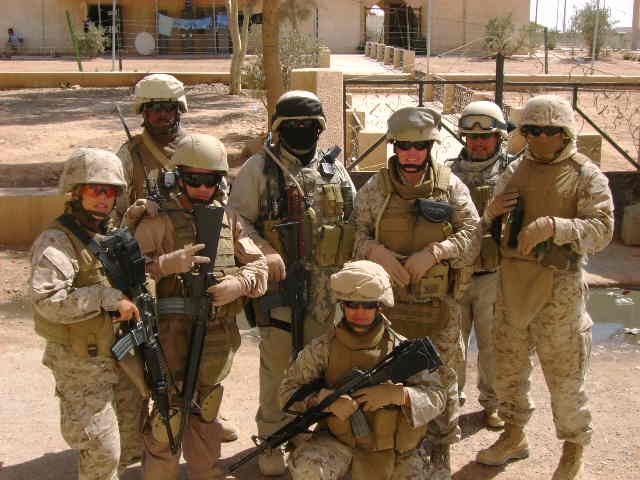
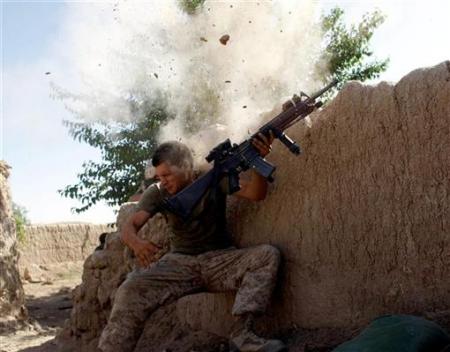
Marines in Afghanistan under attack

Such men and in some cases women need to learn about war in the uncomfortable manner described by Sajer, a Frenchman that served in the German Army on the Eastern Front because one of his parents was German.  The problem is that those that promote war as a business and those that sell war to kids via the entertainment industry really don’t care about the real human beings, the men and women who serve knowing that these wars are unlikely to end anytime soon.  Even more frightening are people of strong religious convictions who promote war in order to see their views, especially about the Middle East vindicated.

Such are the comfortable experts who debate in comfort and write with a detached certitude that they alone have the correct view of the world.  There is a good case to be made that such people be held accountable for the wars that they advocate and the lives lost because of their hubris.

Peace

Padre Steve+

4 Comments

Filed under Foreign Policy, History, iraq,afghanistan, middle east, Military, Political Commentary

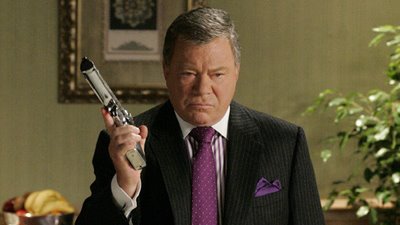
Living in the Bizzaro Post Osama Bin Laden World: Another Denny Crane Moment for Padre Steve

Note to readers: Another of my Denny Crane moments which seem to be coming more likely, must be the Mad Cow

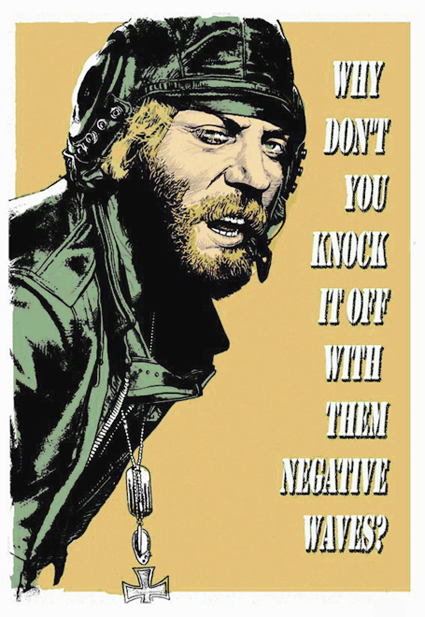
“Why don’t you knock it off with them negative waves? Why don’t you dig how beautiful it is out here? Why don’t you say something righteous and hopeful for a change?” Oddball -Kelly’s Heroes

I love that quote and everyone in this country needs to see the truth of it.

I think that I have stepped into the Bizzaro World.  For the first time in a nearly ten year old war we get a real victory. Will killed the SOB who started it by killing thousands of our people. We do it the old fashioned mano on mano, look him in the eyes way and had Navy SEALS double tap him. We minimize the collateral damage by not plastering the place with bombs killing lots of other people. The President and the National Security team kept the plan a secret for months with no leaks that could have jeopardized Bin Laden’s elimination.  Likewise the uncompromised raid secured major intelligence bonanza including laptops, hard drives, cell phones and documents that probably have more raw and up to date intelligence from the source than we ever have had which likely lead to major victories against Bin Laden’s fellow Al Qaeda leaders and their organization, finances and maybe even their contacts with other nations intelligence services.  Such information will make it a far easier task to take the Al Qaeda organization apart at the seams. This is a victory that combined with pro-democracy revolutions across the Arab World could very well make the Middle East and the world a far safer place. There are dangers out there but this is something to celebrate so why can’t we be happy? I know that some people are but as a nation we are not a happy bunch.

We have been through two terribly long was that have cost of thousands of dead and tens of thousands wounded.  The military aspects of the wars alone have cost the nation well over a trillion dollars not counting the other economic costs. The 9-11 attacks created a massive wound on the American psyche which has been aggravated by our losses in the wars and the failure to kill or capture Bin Laden. We have given up a significant number of civil liberties in the name of security.  The collective impact of these events compounded by the embarrassment of Abu Ghraib and the “Afghanistan “Kill Team” episodes the escapades of contractors like Blackwater and Kellogg Brown and Root- Halliburton have stained our conscience. Coupled with our massive economic problems and poisoned political climate these wars and losses have beaten us down.

Rather than be happy that we finally got one in the “win column” we have become so used to losing that we have forgotten that it is okay to win once in a while.  Instead of thanking God that Osama Bin Laden is bottom feeder food in the Arabian Sea and is now rehearsing for the 2011 South Park “Christmas Time in Hell” musical joining Saddam Hussein and Hitler as they use their asbestos water skis on the Lake of Fire we are all glum or pissed off. Some are wringing their hands because Bin Laden was unarmed and didn’t have a lot of security around him and that in the heat of the moment the SEALS double tapped his sorry ass.  What the hell? Did they want a firefight that would have gotten a bunch of SEALS killed? Was it fair that he was unarmed but reaching for a gun when we capped his ass? But then was it fair to the 3000 people killed in the Twin Towers when Bin Laden directed the attack on those unarmed people?

Then there are people questioning the legality of the action. Sorry Bin Laden was a man that never stopped plotting the deaths of innocent people to the end of his days. While it might have been interesting to put him on trial you can be assured that some would have provided millions if not billions of dollars for his defense and that the proceedings would have dragged on at least a decade and that his allies would have gained inspiration from his incarceration just as they will his death.  Those who question the fact that a SEAL shot him when he was unarmed does not understand the inherent danger in the action and split second decision making that went into that courageous man’s decision to kill Bin Laden.  Legally Bin Laden as a terrorist was accorded no protections under the Geneva Conventions.

Then there are the Christian objectors, those on the left that say he should have been captured and put on trial.  Some Evangelicals that really don’t care that he was killed but don’t think that Christians should be happy about it or rejoice in his death.  But I remember some of these same people smugly saying that the 9-11 attacks were “God’s judgment on the United States.”  I’m sorry but many supposedly conservative Christians are schizophrenic on being pro life. Kill the unborn it’s murder. Kill a man convicted in a state court in the United States on the basis of circumstantial evidence is okay, especially if you are from Texas where I think it’s popularity is slightly below football and NASCAR.  Have a terrorist kill 3000 of your countrymen, well God must be pissed at us but kill the man responsible for those deaths and be happy he’s dead?  Nope can’t do that we should be sad that he died without knowing the Lord. Yes it is a sad that anyone would die without knowing the Lord but this man had no desire to convert to Christianity or anything else. He was convinced of his rightness and he made no move to surrender to U.S. or Saudi authorities for nearly 20 years and still didn’t in his final moments.  He made his bed beneath the sea.  I personally think this is simply people that need to be morally superior to others spouting their opinions rather than people that are inconsistent in their application of their faith and ethics to a wide variety of issues.

Now the politicians are making political hay over this.  Some Liberals are pissed that Obama actually had the balls to order the strike.  Some Conservatives are pissed that Obama succeeded in doing something that Bush couldn’t do and that he didn’t give Bush any credit. But it serves me well that Bush never gave Clinton any credit for keeping the pressure on Saddam Hussein and keeping him from really building up his forces after the Gulf War using no-fly zones, the UN oil embargo/blockade of Iraq and selective military strikes to keep Saddam in check.  So this is all politics as usual and once again it is detrimental to the county and makes light of the sacrifices of all that have fallen in these wars and the bravery of the SEALS that killed Bin Laden.

This really is a Bizzaro world.  When Hitler died this country got happy and that happiness spanned the political, philosophical and religious divides in the country. We celebrated Hitler’s death and the destruction of his murderous regime.  Back then we actually understood the importance of such events and didn’t wring our hands and shed faux tears when evil men perished.  But now after nearly 10 years of war and thousands of causalities we get the perfidious bastard that started this and our collective jock straps and panties are in a wad. I don’t get it. The reason that we went to war is dead and we have information that probably will decimate what is left of his network and we can’t be happy.  This is bizarre and I wish that people would stop with all the negative waves.

Peace

Padre Steve+

8 Comments

Filed under faith, Foreign Policy, History, iraq,afghanistan, middle east, Military, national security, philosophy, Political Commentary

Thoughts on the Well Deserved Death of Osama Bin Laden and some Christian’s Crocodile Tears for his Soul

Note: This is one of my Denny Crane moments indulge me

Osama Bin Laden got his just deserts yesterday at the hands of the Navy SEALS of Seal Team Six known simply as DEVGRU to those that have served in the SEAL and EOD community.  A head shot and a chest shot and Osama was off to meet his 72 Virginians via Davy Jones Locker.  Rumor has it that a pack of sharks trolling behind the USS Carl Vinson for lunch noted his enshrouded body sinking into the depths and passed on it leaving it to sink to the depths to be devoured by bottom feeding creatures.  When they were asked why they didn’t chow down on the murderous yahoo from Yemen one was quoted as saying “He gave our profession a bad name.”

All kidding aside I am glad he is gone and if I could have been in Washington DC, at Ground Zero or at the Phillies Mets game http://sports.yahoo.com/mlb/blog/big_league_stew/post/Video-Phillies-fans-chant-8216-U-S-A-8217-?urn=mlb-wp5081  I would have partied all night long and I cannot imagine any American or for that matter any decent human being not celebrating this.  The good guys got a win for once and we should celebrate we deserve it. We haven’t had much to celebrate since September 11th 2001 and this is as good of occasion as any.

Now I know that I’m going to get some crap from some readers that this is not a Christian attitude and I will admit that they are probably right.  I know this to be a fact because I saw absolutely idiot comments from some of my Christian friends on a social ministry sight almost shedding crocodile tears about Bin Laden’s death saying that God doesn’t take any joy in the death of the unrighteous but if you are a good Old Testament type Calvinist, which by the way I am not by any means, you can interpret parts of the Old Testament as God having one big party as he has his people whack and shwack their enemies ethnically cleansing whole cities so they might have a place to live. Heck the Psalmist even rejoiced in bashing babies heads against big rocks.  Not a very pro-life sounding message there but it is the Old Testament and happens to be in vogue among some parts of Evangelicalism.  Thus to hear some of the same people who love to use these “imprecatory prayers” against fellow Americans on the opposite side of the political aisle cry these faux tears over the soul of Bin Laden it makes me sick.

The man was a brutal killer and thug who killed thousands of our own people and thousands of others, many which were his fellow Moslems.  Some of these folks such as Pat Robertson, the late Jerry Falwell and even the recently deceased David Wilkerson and others even told us back after 9-11 that it was “God’s judgment on this county.”  I remember the aftermath of the September 11th 2011 attacks and seeing the internet for the first time in days after being locked down aboard Camp LeJeune NC. I was aghast to see some of these men and others that this was God’s judgment on America.  Of course when many of their own congregations and donors objected most retreated from their positions with immense “mea culpa” moments.

Back in the 1960s it was the liberals that said we were the bad guys for Vietnam and punished those that served in that war.  Now days it is a bit different especially because we have a Democrat in the White House, a black one without a good American name like Bob we have conservative Christians acting like the liberals of the 1960s crying over the death Che Guevara and extolling the Chinese “Cultural Revolution.” For some reasons and I can’t imagine why there seems to be such a loathing of their own country by such people. Sure we are not perfect and we have messed up a lot. If you read this site I am not uncritical of various actions of different Presidents, Congress or any part of our government and some of our actions around the world.  We’re not a perfect nation but but we still are one of the best shows in town. But I’ll tell you what I love this country and continue to serve her and defend the rights of all Americans to hold views about the country that I personally distain. But that is why I love the Good Old USA because we don’t have to agree to be Americans; well at least that’s what I think.  But sometimes when I see comments like this crying for Bin Laden’s soul and condemning the country I wonder what the hell is going on. I see them criticize the very country that gives them the right to criticize their government with impunity, even using the “judgment of God card” as they wish.  In fact that is why the Pilgrims and other English Separatists came here so they could criticize the crown without being harassed and ensured that those that disagreed with them couldn’t do so safely without having to go establish the Rhode Island Colony like Roger Williams did.  But I digress….

When I see such comments mourning Bin Laden or assuming that God’s judgment is on America I feel my inner Colonel Nathan R. Jessup rising up especially when I see so few of them flocking to the colors and run to the recruiting stations saying “here I am send me Sir!” You see it is so easy to theologize and criticize but so much harder to put your life on the line. However if you secretly loathe the country it is easy to condemn those charged with protecting it from the Commander in Chief down, especially when you claim God as your authority.  I love this quote from the great film A Few Good Men coming from Colonel Jessup played most delightfully by Jack Nicholson and I think it suits my mood right about now:

“Son, we live in a world that has walls, and those walls have to be guarded by men with guns. Who’s gonna do it? You? You, Lt. Weinburg? I have a greater responsibility than you could possibly fathom. You weep for Santiago, and you curse the marines. You have that luxury. You have the luxury of not knowing what I know. That Santiago’s death, while tragic, probably saved lives. And my existence, while grotesque and incomprehensible to you, saves lives. You don’t want the truth because deep down in places you don’t talk about at parties, you want me on that wall, you need me on that wall. We use words like honor, code, loyalty. We use these words as the backbone of a life spent defending something. You use them as a punchline. I have neither the time nor the inclination to explain myself to a man who rises and sleeps under the blanket of the very freedom that I provide, and then questions the manner in which I provide it. I would rather you just said thank you, and went on your way, Otherwise, I suggest you pick up a weapon, and stand a post. Either way, I don’t give a damn what you think you are entitled to.” 
Now our forces from the Commander in Chief down did their jobs and did them well in providing Bin Laden an exit from his internet less misery in Pakistan.  I for one celebrate this event. If this makes me somehow less spiritual or Christian so be it. I am an American and Osama Bin Laden was our enemy personified. So go ahead and weep for Bin Laden if you wish my fellow Christians. Pray for his soul but let the rest of us enjoy a moment of victory in this painful and long war in which so many Americans and others have died because of the actions of Osama Bin Laden and his minions.  Don’t piss on their memory by feeling bad that Bin Laden didn’t get a chance to meet Jesus in this world.

Yes I’m a bit snarky today but I haven’t forgotten September 11th and I am glad that so many Americans are overjoyed by this. For once we got one in the win column.  We’re entitled to celebrate because we get to go back on the field tomorrow and hopefully whack some more of Bin Laden’s slugs.

Peace

Padre Steve+

10 Comments

Filed under christian life, Foreign Policy, History, iraq,afghanistan, middle east, Military, national security, philosophy, purely humorous, US Navy

Bin Laden Dead: Navy SEALS Kill Terrorist in Pakistan

DEAD!

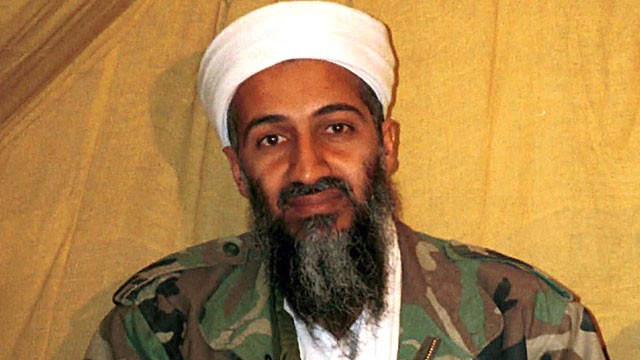
His name is associated with brutal attacks on attacks on Americans and others for over a decade the Embassy attacks in Kenya and Tanzania, the USS Cole, the Khobar Towers, Madrid Spain, Mumbai and most infamously the dastardly attack on the World Trade Center and the Pentagon on 9-11-2001.  He has eluded death and capture for years but was killed in a raid by U.S. Navy Seals in a fortified mansion in the city Abbottabad near the capital of Islamabad Pakistan today.  His death has been confirmed by DNA matches and his body is in American custody. The cold and hollow eyes staring out from beneath a white turban wearing a U.S. issue BDU jacket have haunted us for years. His hateful and defiant messages tormented us in the years following 9-11 as he released audio and video tapes from secluded hideouts in Afghanistan and Pakistan.

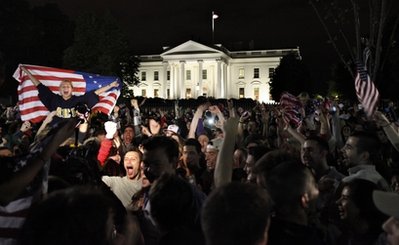
In a night that many believed would never come, Americans heard the news of the death of this evil terrorist. First a few but now thousands of Americans gathered outside the White House celebrating the demise of this singular face of evil. Spontaneous cries of “USA! USA! USA!” the singing of the Star Spangled Banner, and the song “hey hey hey goodbye” erupted as people gathered as President Obama made the announcement even as others gathered at Ground Zero singing “god Bless America.”  Over the past 10 years we have had precious little to celebrate in relation to the war on terror. Most of the time when announcing Bin Laden is the most hated enemy of the United States since Adolf Hitler. He embodied the evil that we went to war with, an evil that made the mass murder of civilians a staple of life and it did not matter who the victims were he sought to bring terror to all that he considered the enemy of Islam including many Moslems.  But he hated the United States more than anything and his attacks on the United States shattered our sense of invulnerability even more than the attack on Pearl Harbor.  He damaged our national psyche in a manner that no individual has in history.

It took a long time but he is dead but the fight is not over as U.S. Military installations have had their force protection level raised as it is expected that elements of the Al Qaeda will try to strike back.  We pray that they will be defeated if they try to make any attacks on Americans anywhere.  The effect on Al Qaeda will be chilling. Its operatives pledge themselves to Bin Laden personally in a manner similar to the SS Legions of Adolf Hitler. Presently there are no leaders of Bin Laden’s stature in that network and with any luck his forces will become demoralized and leave that organization.

President Obama announced Bin Laden’s death shortly before midnight and he called us back to the unity that we had for a moment following the 9-11 attacks. We have been bitterly divided for years and though we experienced some success but much frustration in our wars in Iraq and Afghanistan. Thousands of American and Allied military personnel have died in wars that came as a result of those attacks and we in the military have almost all suffered the loss of our friends and comrades.  Our forces are still engaged against numerous enemies and in Afghanistan the Taliban are launching their long awaited spring offensive and the war continues.  Hopefully the death of Bin Laden will lead to other successes that allow us to bring the troops home as victors in the War on Terror.

President Obama made a couple of comments in his speech that I quote here as they are both important to all of those that have experienced personal loss and sacrifice in this effort:

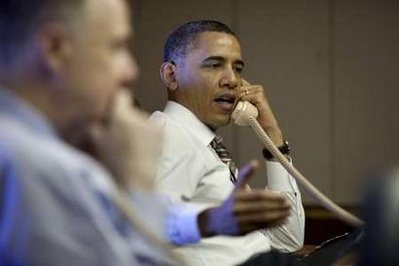
After nearly 10 years of service, struggle, and sacrifice, we know well the costs of war. These efforts weigh on me every time I, as Commander-in-Chief, have to sign a letter to a family that has lost a loved one, or look into the eyes of a service member who’s been gravely wounded.

“So Americans understand the costs of war. Yet as a country, we will never tolerate our security being threatened, nor stand idly by when our people have been killed. We will be relentless in defense of our citizens and our friends and allies. We will be true to the values that make us who we are. And on nights like this one, we can say to those families who have lost loved ones to al Qaeda’s terror: Justice has been done.”

We give thanks for the men who carried out this operation, for they exemplify the professionalism, patriotism, and unparalleled courage of those who serve our country. And they are part of a generation that has borne the heaviest share of the burden since that September day.

Finally, let me say to the families who lost loved ones on 9/11 that we have never forgotten your loss, nor wavered in our commitment to see that we do whatever it takes to prevent another attack on our shores.

And tonight, let us think back to the sense of unity that prevailed on 9/11. I know that it has, at times, frayed. Yet today’s achievement is a testament to the greatness of our country and the determination of the American people.

The cause of securing our country is not complete. But tonight, we are once again reminded that America can do whatever we set our mind to. That is the story of our history, whether it’s the pursuit of prosperity for our people, or the struggle for equality for all our citizens; our commitment to stand up for our values abroad, and our sacrifices to make the world a safer place.

Let us remember that we can do these things not just because of wealth or power, but because of who we are: one nation, under God, indivisible, with liberty and justice for all.

Thank you. May God bless you. And may God bless the United States of America.”

The rest of the announcement text can be found here:

http://www.middletownjournal.com/news/full-text-of-presidents-statement-about-bin-ladens-death-1150233.html?showComments=true&page=2&more_comments=false

President Obama and the National Security team need to be given full credit for the success of this operation which was carried out with tremendous skill and courage by the SEALS and other Special Operations troops involved. It was a risky operation and the President deserves credit for guts in the execution of the mission. Had it failed it would have been his fault and no-one would have let him off the hook.

I hope that this victory will bring us together and embolden us to take on all of the problems that beset our nation.

Peace

Padre Steve+

3 Comments

Filed under Foreign Policy, History, iraq,afghanistan, middle east, Military, national security, Political Commentary

The Disdain of American Business for Military Personnel and their Benefits

“What are you going to trade off — a rich entitlements program, or boots and bullets for the troops?” Richard Spencer Defense Business Review Board (quoted in the Navy Times 2 May 2011 print and internet edition)

The Federal Government is looking for ways to slash funding any way that it can. In light of the seriousness of the nation’s financial crisis previously sacrosanct areas are probably going to be cut.  Military pay and pension portion of the Defense Department budget continues to increase. For the active force due to inflation and medical care costs are the culprits and due to the fact that the pesky retirees just aren’t dying off fast enough.  Obviously something needs to be done otherwise we won’t be able to afford the “bullets” or rather the weapons systems that we use to fight our wars with.

But for a man who has made his money on Wall Street using other people’s money including government bailouts every time our financial, banking and real estate industries due their best to destroy the economy to call military retirement a “rich entitlements program” is simply obscene. If there is anything that has broken the back of the military budgets it is a series of wars that won’t end that somehow make contractors and defense industries rich.  Every day they find new ways to overbill the military for weapons systems that they cannot field on time, or are such money pits that the Defense Department tries to cancel them while our fiscally minded Congress makes the military buy them anyway.

Billions of dollars have been paid to defense contractors that employ a wide scope of companies many foreign owned to provide basic services at overseas bases such as food, transportation and even security supposedly because they can do it more efficiently than the military. The truth is that over the past 20 years the military personnel that would have performed these missions were cut from the force so much so that when we went into Iraq we didn’t have the forces to do all that was needed. Yes we could slap the snot out of the Iraqi or any other military that got in our way but we couldn’t sustain the force without employing and enriching companies like Halliburton, Kellogg Brown and Root (KBR) and dare I say Blackwater.  Additionally our defense contractors have ensured that nearly major weapons system produced in the past 20 years is plagued with problems and cannot be produced on time, are horribly over budget and due to their cost cannot be produced in the numbers needed by the military.  Then there are some projects that are so Rube Goldbergish that the technology needed to make them work isn’t attainable so compromises are made just to keep the programs alive.  Money is spent and weapons are produced that never meet the hype of their supporters in Congress, the defense industries and the army of lobbyists which I think number more than the actual Army. Then there are the weapons systems that are not only money pits but also never are deployed.  Congress and successive Presidential Administrations have made these countries wealthy while killing the defense budget and adding to the massive Federal Debt, which before the wars was actually shrinking, God bless you Bill Clinton.

But now we have a crisis and it is not the corporate welfare queens of the defense industry or the contracting vampires like Halliburton who will feel the pinch it is those who serve.  Yes my friends rather than these blood suckers it is the Soldier, Sailor, Marine or Airman who since 1990 have been deployed who if more that any generation of our military for a great length of time than any force in the history of our country. Count the places Panama, Desert Storm, Lebanon, Somalia, Haiti, Iraq, Afghanistan, Bosnia, Kosovo just to name a few. Then through in things like Operation Southern Watch, no-fly zones, humanitarian missions around the world that we have conducted over the same period.  By the way since these things are expensive and there is not enough money we are told to “work smarter not harder” and “leverage our synergies” so we can cut the force and still do the mission.  We look where that got us. We decided the get involved in massive ground combat operations without the manpower to do them effectively resulting in longer campaigns costing more lives and more money that the wise “smarter synergy” people ever estimated.

And now we have one of these barons of modern American-Global Capitalism which if I can remind you are the same people that have created the financial crises that enveloped the world that had to be bailed out by the taxpayer.  By the way most of these barons of business received exorbitant and obscene bonuses sometimes with the taxpayer’s bail-out money, the very people who brought the house financial house down now call military retirement a “rich entitlements program” while embracing tax cuts for themselves.

Well doesn’t that beat all? Is there anyone but me that has a problem with this? But let’s look at some facts.

Let’s see.  If someone retires at 20 years they get 50% of their high-three or basically the average of their last three years pay, not 50% of their highest pay but the last three years of pay. That was changed back in the late 1970s to save money by pretending to say that you got 50% of your base pay but really a bit less. If you serve 30 years you get 75% of you high three, of course by then you better be set for retirement because most military personnel with skills that are not directly transferrable to the civilian world will not be hired by anyone because they are too old. Mind you the retirement percentage is just from the base pay of the individual, not the housing allowance or other pays that you get for deployments or hazardous duty.  Likewise all those little perks from active duty disappear like state tax breaks for being in the military and by the way the health care costs they go up too. Military retirement is taxable and the Feds, the States and local taxing authorities are quite good at making sure they get their “fare share” of something that they never earned.

Speaking of healthcare what really interesting is that military personnel also pay into Social Security and Medicare. In fact when we are 65 our TRICARE health insurance is supposed to be secondary to Medicare or other insurance that we might have.  Since most of us currently serving are under 55 year old cut off that Congressman Paul Ryan has proposed in ending Medicare we lose that too.  So much for Medical Care unless a veteran is qualified to receive treatment in a Veteran’s Administration hospital.  But those hospitals face an increasing number of patients and a decreasing budget.  Who knows maybe they just give us the Soylent Green option.

Look out if Congressman Ryan and his band have their way as Social Security will go by the wayside too.  That is really a good deal isn’t it? Spend 20-30 years getting busted up for your country and put your family through hell as you constantly deploy to combat zones or on regular operational deployments or training exercises and then get told that the benefits that you worked hard to get are simply a “rich entitlement.” Then to top it all off find out all the money that you have paid into other people’s retirement and health care won’t be there for you.

But let’s take a look at why some of the cost of these “entitlements” is rising. It’s the wars stupid. A lot of money is now being paid to combat-wounded veterans that are medically retired from the service.  No one begrudges them this and I certainly don’t because they have paid their pound of flesh for it. They deserve it and most go through a lot of shit in the medical board and with the Veteran’s Administration to get that.  However, if you add up the tens of thousands of these pensions provided to these men and women that might have only served one or two tours it is a lot of money. This is an increase because in normal times many would have left the military without retirement benefits after they were done with their enlistments. Then there is the cost of paying the survivor pensions to the wives, husbands, children or parents of those that gave the last full measure and died while on active duty.

Some entitlement program huh? An entitlement program that often involves multiple tours in combat zones, separation from family, injuries that build-up simply because we are expected to stay physically active in physically and emotionally environments that wear people down.  Yet Mr. Spencer who served as a Marine Corps Aviator from 1976-1981 a period when we were not at war has the nerve to call this a “rich entitlement program.”  However a one term Congressman gets a retirement and benefits for life. We grind it out for 20 or more years and get told that we are leaches in so many words. Mr. Spencer didn’t use that word but that is exactly what he meant.  In the great World War Two film The Caine Mutiny LT Barney Greenwald played by Jose Ferrer chastised the members of the Caine’s Wardroom following the acquittal of the Executive Officer on the charge of mutiny.

“You know something… When I was studying law, and Mr. Keefer here was writing his stories, and you, Willie, were tearing up the playing fields of dear old Princeton, who was standing guard over this fat, dumb, happy country of ours, eh? Not us. Oh, no, we knew you couldn’t make any money in the service. So who did the dirty work for us? Queeg did! And a lot of other guys. Tough, sharp guys who didn’t crack up like Queeg.”

I don’t want to question the honor of Mr. Spencer but I will. Wait maybe I really want to question his honor so what the hell here it goes. According to his bio on the DOD website Mr. Spencer graduated from private college with a business degree in the middle of a really nasty economy. Gerald Ford was President and since the Vietnam War was over and a strong anti-war feeling lingered there was not much chance of seeing action.  So Mr. Spencer took his business degree and went in the Marines, not the grunts but as a Naval Aviator.   As soon as he finished his obligation and the Reagan boom began he left the service. After all he knew that you couldn’t make any money in the military.  I enlisted in 1981 and when I was commissioned as an Army officer in 1983 I had a base pay of $900.00 a month.  I didn’t do it for the money I did it because of what had happened in Iran and the Soviet moves all over the world.  Back then there was no GI Bill and limited tuition assistance or money for college when you got out of the service. I was not alone there were thousands maybe even hundreds of thousands that joined for similar reasons despite the low pay and benefits. We did it out of good old fashioned patriotism.

I resent the term “Entitlement program.” It is pejorative. It is a wonderful big business and fiscal conservative code word for “unearned and undeserving welfare program.”  Now there are programs that could legitimate targets of such a pejorative term especially corporate welfare but for Mr. Spencer and others of his ilk to lump the retirement pay of career military men and women is reprehensible.

How many military personnel and their families lose money every few years due to moving costs, changing the kid’s schools having spouse have to quit work to move to new locations? Let me see, almost all of us who serve a full career that’s who. But to Mr. Spencer we are the welfare queens and leaches. Again those are my words not his even though that is exactly what Mr. Spencer meant. We who serve and go into harm’s way so Mr. Spencer’s cronies on Wall Street can make the big bucks are the problem.  When a military officer fails his or her career is over and he or she suffers scorn, when the executives that Mr. Spencer rubs shoulders with destroy a company or defraud the public they get big bonuses multi-million dollar buyouts and move on to new hunting grounds.

So now we are on the chopping block. All the services are shedding personnel even as the mission demands have not gone down in order to save money.  In the Navy as we speak there are boards being held at almost every rank to send people home, including junior enlisted personnel.

It is a shame that we have come to this. A nation at war for 10 years and engaged all over the world in war and peacekeeping operations the 10 years prior to this using a smaller force percentage wise than we have had than at any time since the 1920s and 1930s.  Less than 1% closer to half a percent of Americans currently serve in the active or reserve components of the military and many have served one or more combat tours.  Meanwhile nearly 90% of people military age cannot meet entry standards to join.

This, my friends makes military personnel an easy target for bean counters. We don’t have a lot of votes and if people like Mr. Spencer and some in Congress have their way we will be thrown under the budget bus. They will throw us into wars that are unwinnable because we don’t have the resources to successfully prosecute them or the strategy and goals don’t match the forces that are there to accomplish them.  Meanwhile the defense industries and the big war contractors like Halliburton will continue to make money hand over fist. The late Marine Corps Major General Smedley Butler was absolutely correct when he said “War is a racket. It is the only one international in scope. It is the only one in which the profits are reckoned in dollars and the losses in lives.” 

In the past month another 50 or so American military personnel have died in Afghanistan nine in the latest attack on advisors to the Afghan Air Force just this week. The total losses in Iraq and Afghanistan combined are now over 6000 dead and almost 43,000 wounded not counting those suffering from mild to moderate Traumatic Brain Injury and the tens of thousands of others that suffer from PTSD.  Of course this does not count those that have died on their return to the United States due to suicide risky behaviors caused by their experience in combat.  Neither do the numbers count those that succumbed to their wounds after their return to civilian life or in the Veteran’s Administration system.  God knows how many of these uncounted casualties of war there are but remember this is just another “entitlement program” according to Mr. Spencer.

Meanwhile as Rome burns the Legions continue to serve while the world that the politicians, diplomats and business leaders put together falls apart. Wars and crises abounding into which they will gladly send us. The Middle East is threatening to explode and Mr. Spencer and those like him would call us parasites leaches and welfare queens, again my words not theirs even though that is exactly what they mean and call the benefits that we have sacrificed for over 20 or more years of service a “rich entitlement program.”

In fact as this drumbeat from the business leaders advising the Pentagon continues people will begin to believe it. Already polls are showing the American people think that the military budget needs to be slashed in order to pay for their entitlements.  We know that the defense industry, the lobbyists and the contracting Giants will suffer the least in this, as always it will be the men and women that have volunteered to do the job that no one else wants to do that will feel the brunt of the cuts.

We have been at war for 10 years with an 11 year lead up to it. In a sense we have been at war or heavily engaged in peacekeeping, humanitarian or actual war for 20 years. Your Soldiers, Sailors, Marines and Airmen are remarkable. In spite of an unending war, deployments that never seem to end and being forgotten by a population more caught up in the problems of Lindsey Lohan and Charlie Sheen, their own financial worries or trying to demonize their political opponents in our perpetual election cycle. Even so they serve selflessly and with distinction.  They don’t deserve to have their retirement called a “rich entitlement program.”

When I see the son’s of the wealthy that inhabit Wall Street and other financial centers say this I become incensed.  Many were born into wealth and all make themselves wealthy on other people’s money usually while exporting the industrial base of the United States overseas because they say that American workers are overpaid. Many simply see the military as the government arm which guards their overseas operations but really hold us in contempt and for the past 40 years have thrown the servicemen and women of the country under the bus if there is a possibility of them having to pay more taxes.

To read about such comments from businessmen and politicians I am reminded of a quote of General John Buford played by Sam Elliott from the movie Gettysburg:

“Meade will finally attack… Straight up the hillside, out in the open, in that gorgeous field of fire. We will charge valiantly, and be butchered, valiantly! And afterwards men in tall hats and gold watch fobs will thump their chest and say what a brave charge it was…I’ve never seen anything as brutally clear as this.”

Yes we will continue to serve and many will continue to die as the vampires of Wall Street consider those of us who serve as leaches and characterize military retirement programs as a “rich entitlement program.” They will thump their chests and say how much they support the troops but such words will only come from their marketing departments hoping to gain the military market share.

The attitude of Mr. Spencer and those like him needs to be confronted and challenged at every turn or they will dishonor those that serve so selflessly.  We need more men like Smedley Butler.

Peace

Padre Steve+

11 Comments

Filed under Foreign Policy, History, leadership, Military, national security, Political Commentary

Padre Steve’s Primer on the Muddle East

“When you are up to your arse in alligators it is hard to remember that your mission is to drain the swamp.” Old British Colonial Saying

During the dark days of World War Two when Field Marshal Erwin Rommel was making fools of a series of British commanders in North Africa people including senior British military and government leaders sometimes referred to the theater of operations as “the Muddle East.” Some things never seem to change. The Muddle East today is quite frankly speaking in a real muddled state if there ever was one with world leaders and regional leaders muddling about as if they were the New York Mets.

A large part of the muddle goes back to the fall of the Ottoman Empire at the close of the First World War when the victorious Allied Powers redrew the map of the Middle East and made alliances with various local tribal sheiks who many times were crowned king over other tribes who didn’t necessarily want them as king. This along with heavy handed European military actions such as the British using poison gas dropped from aircraft in Iraq and a real lack of effort to better the lives of the newly “liberated” peoples of the region was just the start. Add to the cesspool a bunch of oil presided over by major oil companies, the anti-colonial movements that flourished in the years after World War Two when the French, British and Italians had to divest themselves of their Middle Eastern holdings. The French had to fight a real war in Algeria but finally withdrew leaving Algeria’s new rulers to goof up the country and oppress their people for decades to come.  In the coming years many of these newly independent nations found that life still sucked so in a number of countries military officers overthrew the despised monarchs promising reforms but oppressing their people while blaming all their problems on the Israelis.  They got their asses kicked by the Israelis in a series of wars which did a number of things that made the Middle East Muddle even worse.

First it ensured that Palestinian Arabs ended up under Israeli rule and were used with great aplomb by the Middle Eastern despots to prop up support for their regimes while doing nothing to help the Palestinians other than to put them in camps in Lebanon.  Even when the Egyptians made a peace deal with Israel most of the Arab World ostracized them.  Then in 1979 the Shah of Iran was sent packing by a bunch of Mullahs and in 1981 Saddam Hussein’s Iraq attacked Iran in one of the bloodier wars of the late 20th Century which finally ended in 1988. Of course the United States was pissed at the Mullahs so Saddam became our favorite Arab despot for a while.  Add to the mix the Soviet Union and the United States arming their favorite Arab dictators who were given carte blanche to continue oppressing their people so long as it didn’t interfere with their support of either party or the oil supply. Finally the Soviets went Tango Uniform in 1989 not long after being forced out of Afghanistan by the U.S. supplied, Pakistani supported and Saudi Arabian fundamentalist financed Mujahedeen.

With the Soviets Tango Uniform and the Warsaw Pact nations trying to get into NATO the United States was now the uncontested Numero Uno country in the world Saddam presumed upon his late supporters and invaded Kuwait, albeit after thinking that the U.S. Ambassador to Iraq said that we wouldn’t mind. Well he was wrong we did mind and got a lot of countries from NATO and including a bunch of Arab countries like Egypt, Syria and Saudi Arabia to get on board on a mission to get Saddam’s troops out of Kuwait. It was a kick ass mission and since the United Nations didn’t authorize removing Saddam and because President George H.W. Bush was smart enough to not to drive on Baghdad to kick him out preferring the depot we knew to a quagmire despite Saddam’s crimes against his own people who thought we would help them.  So we stationed ground and air forces around the Gulf to keep Saddam and Iran in check and even put them in Saudi Arabia which a large number of radicals such as Osama Bin Laden equated to letting the Devil play in Allah’s Holy Sandbox.  So Osama went and set up a base with the Medieval bunch of Pashtun known as the Taliban in Afghanistan stirred up a bunch of shit killing Americans and blowing up stuff including the World Trade Center in 1993, the Khobar Towers barracks complex in 1996, the USS Cole in 2000 and then 2001 another attack on the World Trade Center which took down the towers with hijacked aircraft and also struck the Pentagon triggered an American response against Bin Laden and his Taliban hosts.  The United States then invaded in Iraq in 2003 and succeeded in taking out Saddam but also succeeded in alienating a good many Iraqis who greeted us with open arms because we goofed up the occupation and pissed a lot of them off by dissolving the Army, Police and Civil Service and letting thugs and opportunists take over. Unfortunately since we didn’t go in with enough troops to secure all the Iraqi bases, their weapons depots and actually take control of surrendering Iraqi units these newly unemployed and dishonored people launched an insurgency bolstered by Al Qaeda and other foreign fighters even as Sunni and Shi’a Moslems began to settle scores with each other. Insurgency and civil war, two great tastes that go great together, but what the heck right?

Of course it took years to get control of the situation on the ground and thankfully the United States forces in Iraq were helped when the Sunni Moslems in Al Anbar Province realized that these foreign fighters were a worse enemy than the United States and switched sides. This turned the tables in Iraq and the insurgency was brought under control and an elected government managed to start to get their stuff together and allow us to begin withdrawing from Iraq. Of course the focus on Iraq gave the Taliban a chance to regroup as the Afghani Government proved itself corrupt, incompetent and not to give a shit about the Afghani people. So the Taliban who had been hated made a comeback and made our lives much harder so that now almost 10 years into the fight we are having a really hard time.  Well enough about us there was plenty more going on in the Muddle East besides the Iraq and Afghanistan wars.

Let’s see….there was the law of unintended consequences in that by taking Saddam Down and weakening Iraq we took away Iran’s natural enemy and the key to the balance of power in the region. Iran was strengthened and began a nuclear program that everyone with half a brain knows in intended for military use and expanded its influence in Lebanon where the Iranian backed Hezbollah took power last year.  Now Hezbollah which actually has an experienced military force and probably owns 40,000 or so rockets and missiles a good number of which can hit deep in Israel seems to be ready for war especially because they fought the Israelis to a stalemate in 2008, the first time an Arab military ever did that.

Then was the effect that the wars in those countries made things harder for us in many other friendly Arab nations.  Of course there is the problem of a nuclear armed Pakistan which is about as stable as a Japanese nuclear reactor after getting hit by a tsunami and plays both sides of the street in the war on terror.  The Palestinians and Israelis continued their love affair and since Fatah which ran Palestinian Authority was so corrupt and gooned up a more militant group, Hamas took power in the Gaza strip. Hamas is a pretty bloodthirsty lot too but not the same level of threat as Hezbollah to the Israelis.  Of course the Israelis have done little to help the situation by their often heavy handed treatment of Palestinians and Israeli Arabs.

The witches’ cauldron of the Muddle East is getting even more muddled on a daily basis as young Arabs throughout the Muddle East are rising up against their despotic rulers and it doesn’t seem that any are safe, those allied with the United States and the West as well as those that have been a thorn in the side of the United States and the West. It just seems that despots and tyrants are no longer in vogue. The uprisings began in Iran after a disputed election where reformers were cheated of power and the revolt crushed by the Revolutionary Guard and other thugs of the Iranian regime. But then in December 2010 the people of Tunisia rose up and overthrew their President for Life Ben Ali in a peaceful uprising followed shortly after by the Egyptians who tossed out long term President and U.S. ally Hosni Mubarak.

This brought about spontaneous uprisings all over the Middle East with Libya and the long time pain in the ass Muammar Gaddafi being the current center of the action. However Yemen and Bahrain both are in trouble, Algeria, Jordan and Syria have or are experiencing demonstrations which look to be revolts in the making and even Saudi Arabia is trying to head off a potential popular uprising.

Yes my friends this is a mess and almost everybody that is anybody in the military and economic power houses of the world doesn’t have their handprints all over at least some part of this mess. All of these own some of the blame for what is going on, both the rulers of the nations in the region as well as world powers who all try to influence the nations and peoples for their own diplomatic, intelligence, military or economic gain. Almost no one is unsoiled by their involvement in the Muddle East over the past 90 years or so and so in a way all of world powers, as well as the despots who ran these countries are to blame.

The region is more volatile than at any time in recent history and events there could easily ignite a regional war with worldwide implications.  That is why the region has been called the Muddle East for decades.  We all hope and pray for the best and that somehow all of this will bring about a peaceful and democratic “Arab Spring” but there are better than even odds that things get way worse before they get better. There are just too many wild cards in this deck and the swamp is full of hungry alligators.

May God help us all and bring about peaceful change, or as my Iraqi friends simply say “Inshallah, God willing.”

Peace

Padre Steve+

4 Comments

Filed under Foreign Policy, History, middle east, national security

Damned if you do and Damned if you Don’t: The Allied Intervention in Libya

Libyan Rebels gather around a destroyed T-72 outside Benghazi

War is the unfolding of miscalculations.
Barbara Tuchman

Back on the 9th of March I wrote this closing line to an article entitled The Guns of March where I discussed the developing situation in Libya and the really terrible options that world and regional leaders had in response to Muammar Gaddafi’s criminal actions against his own people. I concluded that article with this statement.

There are many possibilities for the situation in Libya to get worse and potentially engulf the region in a war that no one wants or really is prepared for.

We can only see what develops but there are no good options only options of bad or worse. Will the region like Europe in 1914 be engulfed in war where there are no winners or will somehow the situation be resolved before it can get that far?”

It is obvious to all that the region stands a very good chance of becoming engulfed in a regional war unless the rebels drive Gaddafi from power, Gaddafi steps down on his own or he is killed or captured. Gaddafi has promised a “long war” against the “colonial and crusader” enemy.

Gaddafi Defiant

In the days since I wrote the referenced article the Arab League spoke up in support of establishing a no-fly zone and the United Nations Security Council voted for member nations to enforce a no-fly zone and take “all necessary measures” in order to stop Gaddafi’s forces attacks on other Libyans. By the time the Security Council acted Gaddafi’s forces had retaken many rebel held cities inflicting great slaughter on civilians and were on the outskirts of the rebel capital Benghazi with Gaddafi threatening to send his forces “house to house” to kill the opposition and promising to show no mercy.  Within a day French and British aircraft were flying missions and striking the spearhead of Gaddafi’s forces outside of Benghazi and United States Navy ships were launching Tomahawk Cruise Missiles at the Libyan air defense system. They were joined by aircraft from the U.S. Navy, Marine Corps and Air Force as well as Canada, Spain, Italy, Belgium, Norway, Denmark and Qatar.  Gaddafi’s forces were decimated outside of Benghazi and forced to retreat and a renewed rebel force, this time acting more like a military organization began a pursuit which has reached Ajdabiya.  In the west Gaddafi’s forces continue to attack the towns of Misrata and Zintan and according to observers and medical personnel inflicting heavy casualties on civilians.

President Obama in a briefing

Around the world there is much criticism of the operation as well as support. In the United States representatives as diverse as Ron Paul and Dennis Kucinich are raising concerns on the Constitutional issues of the intervention in that President Obama did not secure the approval of Congress prior to sending American forces into battle. Kucinich even calls it an impeachable offense.  Likewise a diverse assembly of politicians, former military and executive branch officials including those with experience at the State Department, the United Nations, NATO and the Middle East are voicing their concerns about the fact that the end state of the operation is not defined and about the possibility of mission creep. The administration has not helped matters in sending a number of messages over the past few days of a desired end state. It is obvious that President Obama did not want this fight nor did he want it to appear that we were again leading an attack on an Arab nation.  His hesitancy has led to some conservatives attacking his lack of decisiveness even as other conservatives criticize his decision to join the military operations. Secretary of Defense Robert Gates has been outspoken in his opposition to becoming involved in another war and seems to want U.S. involvement to decrease sooner rather than later.

Rebels with damaged 152mm Self Propelled Howitzer

The situation is still evolving by the hour and one thing is clear. The outcome is very unclear and the repercussions across the region are also uncertain. One problem is the apparent discontinuity in U.S. and Western policy to various despotic Arab regimes, supporting the overthrow of Hosni Mubarak in Egypt, a military operation against Gaddafi in Libya and very muted and lukewarm support to popular political movements in Bahrain and Yemen. The Bahraini demonstrations have been put down with the help of Saudi forces but in Yemen numerous influential military officers have taken their units to support the Yemeni protestors. Of course the situation in all of these nations is different with the exception of the fact that all are ruled by long term undemocratic and repressive regimes of varying degree. Likewise actors in each country are different as are the geo-political interests of the United States.

A friend of mine pointed out to me that we are not viewed as “the good guys” in much of the Arab World as much as we see ourselves as such. I think that is true to a large extent because of foreign policy choices of the past century in regard to the Arab World as well as the past decade of war in Iraq and Afghanistan where even today photos taken by a rogue Army unit of soldiers posing with the mutilated and dead bodies enemies of the enemy further degrade opinion in the region against us.  But we are also the hope of many of those in Tunisia, Egypt, Libya and other nations and in those places and others popular uprisings have called out to us for political support and in the case of the Libyans military protection.

Parallels of 1989 in the fall of the Soviet Empire in Eastern Europe are drawn by the optimistic observers of what has been called the “Arab Spring.” However as much as I would like to believe that this is the case I think the miscalculations of 1914 are more readily apparent. There is nothing simple about what is going on and it seems to me that the region is sinking into a war with very unpredictable and grave consequences. Those consequences will probably with us for a generation was were the unanticipated outcomes of the First World War. Of course one of those outcomes was the breakup of the Ottoman Empire and the arbitrary redrawing of boundaries and selection of leaders in the newly created Arab nations and emirates by the victorious Allies. That is something that we are dealing with even as I finish this article.

As I wrote in another article I believe that acting to prevent the slaughter of Libyans by Gaddafi was the right thing to do.  Unfortunately as most observers know the people of Libya will not be safe unless Gaddafi leaves power. I think by backing Gaddafi into a corner early, even before he began his offensive against what were peaceful protestors and not giving him a face saving way out that we may have brought about a war that no one wanted and has few possible good endings. We are damned if we do and damned if we don’t.

Peace

Padre Steve+

3 Comments

Filed under Foreign Policy, History, middle east, Military, national security

Strike on Libya: The Unknown outcome of Operation Odyssey Dawn

Libyan Rebels among tanks and vehicles destroyed by coalition air strikes outside Benghazi (AFP photo)

“No plan survives contact with the enemy.” Field Marshal Helmuth Von Molkte the Elder

“War is the province of chance. In no other sphere of human activity must such a margin be left for this intruder. It increases the uncertainty of every circumstance and deranges the course of events.”
– Karl von Clausewitz

Under the authority of a United Nations Security Council resolution the military forces of a number of NATO nations began air and missile strikes against Libyan air defenses command a control facilities and ground forces.  While the United States and British Royal Navies lobbed salvoes of Tomahawk cruise missiles aircraft from France, Britain, the United States launched the initial air strikes. They have been joined by or soon will be joined by aircraft from Italy, Spain, Denmark, Norway, Canada and Qatar, the first Arab nation to participate. A number of other Arab countries may join the force as operations move from air strikes to the enforcement of the no-fly zone itself. The French Navy has deployed the nuclear aircraft carrier Charles de Gaulle from Toulon and it will join the naval forces in conducting air strikes and enforce the no-fly zone.

Air strikes have significantly degraded Libya’s air defenses and blasted Libyan forces arrayed against the rebel stronghold of Benghazi. The attacks on the ground forces stopped the Libyan attack in its tracks and the rebels have returned to the advance after appearing to be on the verge of a last stand against Gaddafi’s forces. In the past few days Gaddafi and his son Saif Al Islam Gaddafi have said that they would destroy the revolt and show “no mercy” in doing so. It is my belief that Libyan military officers and forces which have been “on the fence” will join the revolt in short order as the rebel forces renew their advance to the west as their loyalty to the regime is tenuous at best.

The strikes though extensive seem to have avoided doing to the Libyan people what was done to the Iraqi people and not targeted power plants or other infrastructure needed by the Libyan people. In other words NATO is trying to make sure that the Libyan people do not suffer for Gaddafi’s crimes. Gaddafi is trying to play up the attack as an attack against Libya by the “Crusader or Colonial enemy.”

Gaddafi has said that he will wage a “long war” and that he would arm a “million civilians” as loyalists gathered in his compound to act as a human shield to protect Gaddafi.  Gaddafi is known for his propaganda and his ruthlessness so we have to believe that he will at least attempt to resist but arming a million civilians is likely beyond his logistical capabilities while under heavy bombardment. The United States and NATO have said that they have not targeted Gaddafi but of course as everyone knows no one would object if Gaddafi happened to be in the neighborhood of a military target.

As the operation is in its early stages it is unknown how it will turn out. Morally and under the United Nations charter it is the right thing to do as Gaddafi was killing civilians and on the verge of killing many more and making the humanitarian crisis even worse. Unfortunately when any military operation is undertaken the consequences are and outcomes are never pre-determined. One hopes that the strikes will keep Gaddafi from killing more of his own people and causing greater chaos in the region. One also hopes that it will encourage the pro-democracy and secular movements that began in Iran but was crushed but which has taken root in Tunisia and Egypt to continue to spread across the Middle East. One hopes that other Arab nations will help Libya recover from Gaddafi and do what is right for the Libyans and for their own people. One also hopes that the strikes will level the playing field enough for the rebels to overthrow Gaddafi and bring him to justice.  So analysts in the Middle East believe that this will be the case. Al Jazeera reports that “Faysal Itani, deputy head of Middle East and North Africa forecasting at Exclusive Analysis tells Reuters that Gaddafi’s use of heavy weaponry against civilians has narrows his options considerably. He says: The doors are really shut for negotiation …  We think Gaddafi will be killed, or commit suicide or simply run away. It’s over.”

Of course one never knows. Gaddafi has stated that he has issued a cease fire but witnesses in Misrata which has been under heavy attack for the past week state that Gaddafi’s forces are still waging a campaign against civilians in that city. Likewise as Nicholas Burns a former United States Undersecretary of State notes that “one of the gambles that Britain, France and the United States, and indeed the Arab League, have taken is not having an agreement on what the mission is. Is the coalition trying to protect civilians in harm’s way, or in essence trying to overthrow Gaddafi? The coalition has intervened in a civil war on behalf of one of the protagonists. They have got to straighten out exactly what they are trying to accomplish.”

That is a big question mark. The real danger in this kind of unscripted intervention is the unforeseen consequences of each action taken. Even an action undertaken with the noblest of reasons can run afoul of unforeseen and undesirable outcomes. Thus only time will tell and we can only hope that freedom comes to Libya and that the bloodshed will end, hopefully with the Gaddafi regime thrown upon the ash heap of history by the Libyan people.

The die has been cast….

Peace

Padre Steve+


2 Comments

Filed under Foreign Policy, History, middle east, Military