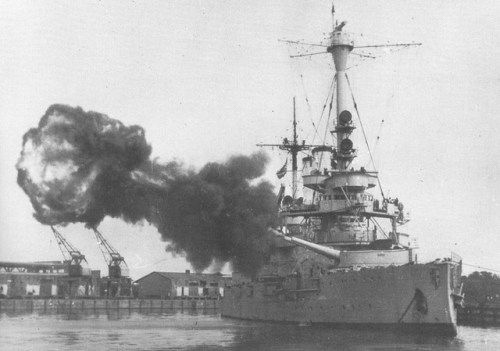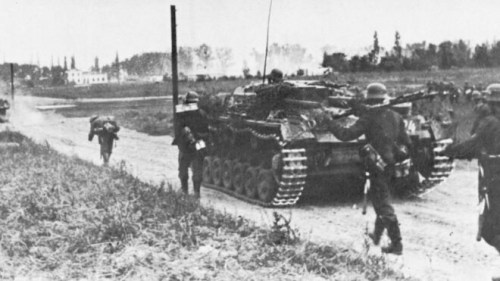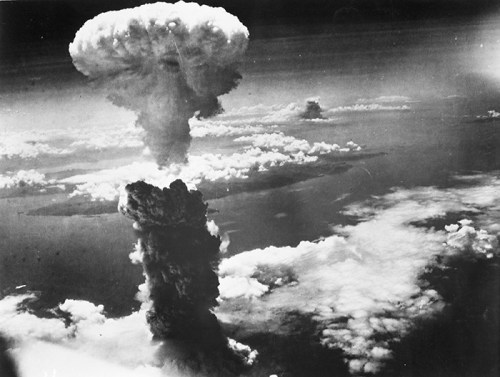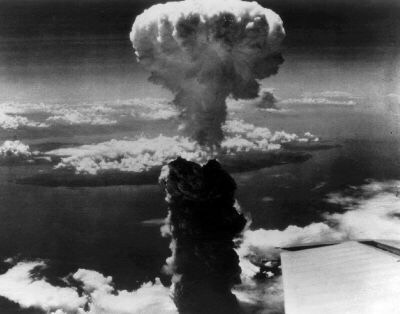
Category Archives: Foreign Policy

Americans should Always “Choose a President Wise, Well Read in History and Exceedingly Slow to Draw the Sword” Wise Words from the Late General Hal Moore in the Trump Era

29f03605f6b48a52887c2b51a20b5382

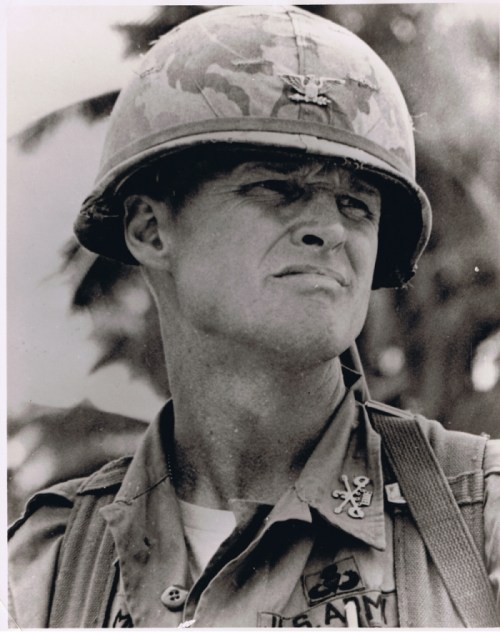
LTG Hal Moore as a Colonel in Vietnam

Friends of Padre Steve’s World,

Even since I was a child I was an avid reader of history, especially military history and biography. I idolized the military men that I read about and many of the things that they said and did, and almost always skewed them into an almost perverse form of patriotism. After the attacks of 9-11-2001 and during the run up to the invasion of Iraq I got into a internet argument with a man who later became the Presiding Bishop of my former denomination. He was and still is a very honorable man. He opposed the war on good historical, social, and moral grounds.

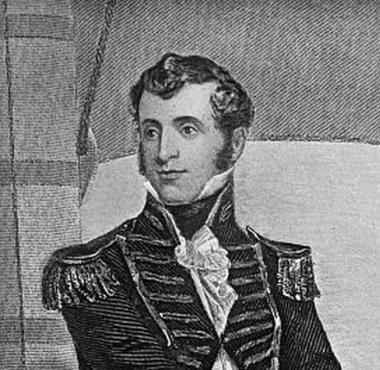
While he was very conservative theologically he had a strong sense of social justice and having come to adulthood during Vietnam war era he had a certain sense of distrust about military adventurism that I, an officer who at that time had some twenty years of military service did not fully appreciate. I responded to one of his comments with a quote from one of my favorite American Naval heroes, Captain Stephen Decatur who once remarked:

“Our Country! In her intercourse with foreign nations may she always be in the right; but right or wrong, our country!”

decatur 2 sqaure

There is some truth in what Decatur said, but his words should not be used to justify imperialistic nationalism, racism, or militarism. Sadly back then that was exactly how I used it to attempt to shut down the arguments of an honorable man. If he ever reads this I hope that Bishop Craig Bates accepts my heartfelt apology for how I treated him back then.

It took me two combat tours, one at sea where I was a member of a boarding team, and the other in Iraq’s Al Anbar Province, and a lot more military and historical education that I realized how wrong that I was in doing this. Using patriotic quotes to buttress immoral, illegal, unconstitutional, and un-Christian policies is damnable. G. K. Chesterton noted: “‘My country, right or wrong,’ is a thing that no patriot would think of saying. It is like saying, ‘My mother, drunk or sober.’”

But, I am afraid that my former understanding of patriotism is exactly what many Americans follow today, regardless of their political affiliation or ideology seem to automatically defer to the decisions of the President, no matter what his party in launching military strikes. This has been largely true since the end of Second World War until now with the exception of the latter stages of the Vietnam War when the bankruptcy of American policy became evident.

No one wants to be “against the troops” and I am still one of those troops, but opposing nationalism, imperialism, and militarism is not the same as “supporting the troops.” The late Army Lieutenant General Hal Moore, who led his battalion into the Battle of the Ia Drang in 1965 and was memorialized in the film We Were Soldiers told West Point Cadets in 2005:

“The war in Iraq, I said, is not worth the life of even one American soldier. As for Secretary Rumsfeld, I told them, I never thought I would live long enough to see someone chosen to preside over the Pentagon who made Vietnam-era Defense Secretary Robert McNamara look good by comparison. The cadets sat in stunned silence; their professors were astonished. Some of these cadets would be leading young soldiers in combat in a matter of a few months. They deserved a straight answer.

The expensive lessons learned in Vietnam have been forgotten and a new generation of young American soldiers and Marines are paying the price today, following the orders of civilian political leaders as they are sworn to do. The soldiers and those who lead them will never fail to do their duty. They never have in our history. This is their burden. But there is another duty, another burden, that rests squarely on the shoulders of the American people. They should, by their vote, always choose a commander in chief who is wise, well read in history, thoughtful, and slow-exceedingly slow-to draw the sword and send young men and women out to fight and die for their country. We should not choose for so powerful an office someone who merely looks good on a television screen, speaks and thinks in sixty-second sound bites, and is adept at raising money for a campaign.

If we can’t get that part right then there will never be an end to the insanity that is war and the unending suffering that follows in war’s wake-and we must get it right if we are to survive and prosper as free Americans in this land a million Americans gave their lives to protect and defend.”

I remember reading General Moore’s back words then and despite my respect for him I didn’t see their truth, I still believed the lies of Donald Rumsfeld, the Bush Administration, and the Right wing media. I was wrong, and within two and a half years I would discover just how right that he was.

Today, some eleven years after I returned from Iraq I find that we now have a President whose historical, ethical, and policy blindness is subjected to his narcissistic and paranoid personality. He is a man who dodged the draft, avoided military service, condemned men and women wounded. killed, or captured in combat as losers while bragging that avoiding sexually transmitted diseases in the 1980s was his Vietnam. Even now he is rushing a Carrier Strike Group and heavy bombers to challenge Iran for as of yet undisclosed threats to American interests in the Middle East, as well as suggesting military options to deal with the failing and flailing government of Venezuelan President Maduro.

War is a great way to distract from other real concerns, especially if it gives the President, any President, a chance to divert attention from his own malfeasance and criminality. Our Republic is in danger and I do not think that the danger will soon pass. I only wish that it would. Sadly, Hal Moore passed away in February of 2017. If he were alive today I am sure that he would be sounding the alarm.

So until tomorrow,

Peace

Padre Steve+

Leave a comment

Filed under Foreign Policy, History, leadership, middle east, Military, national security, News and current events

Dien Bien Phu: The Soldiers and the Lessons Forgotten and Unlearned 65 Years Later

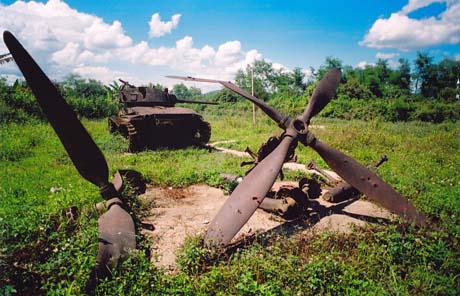
Dien Bien Phu War Remnants

Dien Bien Phu Today

It was an epic battle in a tragic war and most people neither know or care what happened in the valley where a small border post named Dien Bien Phu became synonymous with forgotten sacrifice. This year fewer remembrances are taking place. Some are in Vietnam and others in France. Last year, the French Prime Minister Edouard Philippe laid a wreath at the French Monument at Dien Bien Phu, accompanied by several elderly veterans of the battle. The French veterans were met with kindness by their former opponents.

French Prime Minister Edouard Philippe at Dien Bien Phu’s French Memorial
Diplomat_Sep10059-227x300

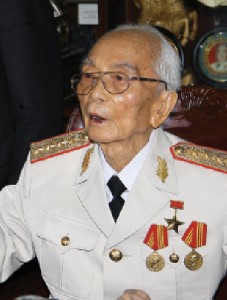
General Vo Nguyen Giap in 2011

Years before, on May 7th 2011 in Hanoi a small remembrance was held to mark the fall of Dien Bien Phu and honor the victor, 101 year old General Vo Nguyen Giap at his home. Giap was the last senior commander on either side at that time, and he died a year and a half later at the age of 102.  That 2011 ceremony was one of the few remembrances held anywhere marking that battle which was one of the watersheds of the 20th Century. A half a world away in Houston Texas a small group of French veterans, expatriates and historians laid a wreath at the Vietnam War Memorial.  In Paris an ever shrinking number of French survivors used to gather each year on May 7th at 1815 hours for a religious service at the Church of Saint Louis des Invalides to remember the dead and missing of the French Expeditionary Corps who were lost in Indochina. A small number of other small ceremonies were held as late as 2014. There appear to be no services to honor their memory this year.

155fdecaef82e8d699102f2c5390203c

Legionnaires of the Second Foreign Legion Parachute Battalion at Dien Bien Phu 

This battle is nearly forgotten by time even though it and the war that it symbolized is probably the one that we need to learn from before Afghanistan becomes our Indochina.

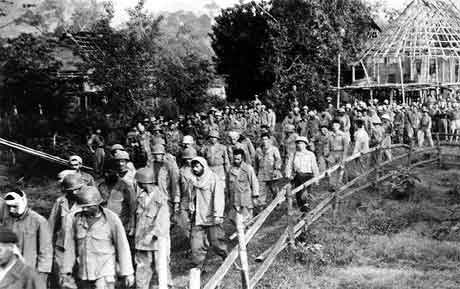
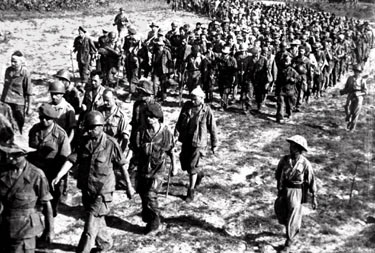
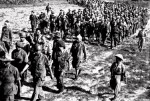
<img src="https://padresteve.com/wp-content/uploads/2013/05/french_surrender_at_dien_bien_phu1.jpg?w=500&quot; class="aligncenter size-full wp-image-11759" data-attachment-id="11759" data-permalink="https://padresteve.com/2013/05/06/remembering-hell-the-fall-of-dien-bien-phu-59-years-gone-by-and-still-forgotten/french-soldiers-surrender-3/&quot; data-orig-file="https://padresteve.com/wp-content/uploads/2013/05/french_surrender_at_dien_bien_phu1.jpg&quot; data-orig-size="375,253" data-comments-opened="1" data-image-meta="{"aperture":"0","credit":"AP","camera":"","caption":"Captured French soldiers are marched through the fields after their surrender at Dien Bien Phu in 1954. More than 10,000 French troops were captured after a 55 day siege . The French defeat ended nearly a century of French occupation of Indochina. (AP Photo\/Vietnam News Agency)","created_timestamp":"0","copyright":"","focal_length":"0","iso":"0","shutter_speed":"0","title":"FRENCH SOLDIERS SURRENDER"}" data-image-title="FRENCH SOLDIERS SURRENDER" data-image-description="

Captured French soldiers are marched through the fields after their surrender at Dien Bien Phu in 1954. More than 10,000 French troops were captured after a 55 day siege . The French defeat ended nearly a century of French occupation of Indochina. (AP Photo/Vietnam News Agency)

” data-medium-file=”https://padresteve.com/wp-content/uploads/2013/05/french_surrender_at_dien_bien_phu1.jpg?w=300&#8243; data-large-file=”https://padresteve.com/wp-content/uploads/2013/05/french_surrender_at_dien_bien_phu1.jpg?w=375&#8243; alt=”FRENCH SOLDIERS SURRENDER” srcset=”https://padresteve.com/wp-content/uploads/2013/05/french_surrender_at_dien_bien_phu1.jpg 375w, https://padresteve.com/wp-content/uploads/2013/05/french_surrender_at_dien_bien_phu1.jpg?w=150 150w, https://padresteve.com/wp-content/uploads/2013/05/french_surrender_at_dien_bien_phu1.jpg?w=300 300w” sizes=”(max-width: 375px) 100vw, 375px” style=”height: auto; max-width: 100%; margin-bottom: 2px; clear: both; display: block; margin-left: auto; margin-right: auto”>

French Prisoners

On May 8th 1954 the French garrison of Dien Bien Phu surrendered to the Viet Minh.  It was the end of the ill-fated Operation Castor in which the French had planned to lure the Viet Minh Regulars into open battle and use superior firepower to decimate them.  The strategy which had been used on a smaller scale the previous year at Na Son.

The French had thought they had come up with a template for victory based on their battle at Na Son in how to engage and destroy the Viet Minh. The plan was called the “Air-land base.”  It involved having strong forces in a defensible position deep behind enemy lines supplied by air.  At Na Son the plan worked as the French were on high ground, had superior artillery and were blessed by General Giap using human wave assaults which made the Viet Minh troops fodder for the French defenders.  Even still Na Son was a near run thing for the French and had almost no effect on Viet Minh operations elsewhere while tying down a light division equivalent and a large portion of French air power.
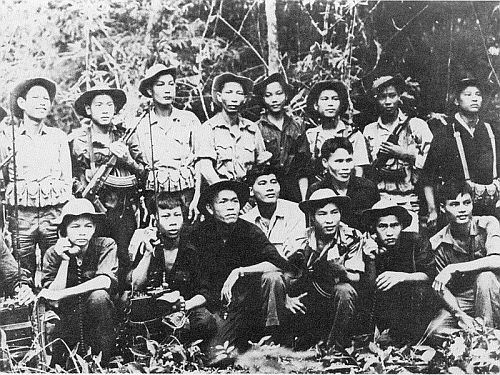
nlfmainforce

Viet Minh Regulars

The French took away the wrong lesson from Na-Son and repeated it at Dien Bien Phu.  The French desired to use Dien Bien Phu as a base of operations against the Viet Minh.  Unfortunately the French chose badly. Instead of high ground they elected to occupy a marshy valley surrounded by hills covered in dense jungle. They went light on artillery and the air head was at the far end of the range of French aircraft, especially tactical air forces which were in short supply.  To make matters worse, General Navarre, commander of French forces in Indochina was informed that the French government was going to begin peace talks and that he would receive no further reinforcements. Despite this, he elected to continue the operation.
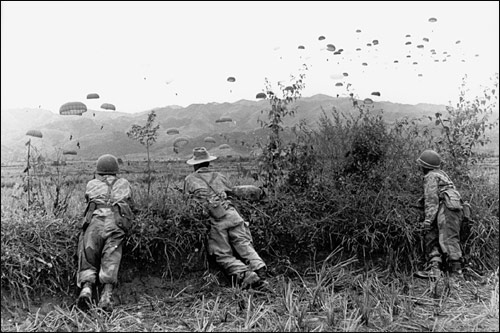
dien-bien-phu

French Paras Drop into Dien Bien Phu

Once on the ground French logistics needs were greater than the French Air Force and American contractors could supply.  French positions at Dien Bien Phu were exposed to an an enemy who held the high ground, had more powerful artillery, and placed in defensive positions that were not mutually supporting. The terrain was so poor that French units were incapable of any meaningful offensive operations against the Viet Minh. As such they could only dig in and wait for battle. Despite this many positions were not adequately fortified and the artillery was in emplaced positions that were easily targeted by Viet Minh artillery and not hardened.

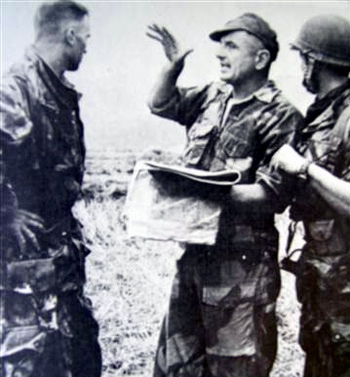
bigeard_instruction_saut

Major Marcel Bigeard 

The French garrison was a good quality military force composed of veteran units. It was comprised of Paras, Foreign Legion, Colonials (Marines), North Africans and Vietnamese troops. Ordinarily in a pitched battle it would have done well, but this was no ordinary battle and their Viet Minh opponents were equally combat hardened, well led and well supplied and fighting for their independence.

Many of the French officers including Lieutenant Colonel Langlais and Major Marcel Bigeard commander of the 6th Colonial Parachute Battalion were among the best leaders in the French Army. Others who served in Indochina including David Galula and Roger Trinquier would write books and develop counter-insurgency tactics which would help Americans in Iraq. Unfortunately the French High Command badly underestimated the capabilities and wherewithal of the Giap and his divisions.

65193421-small_269244

Viet Minh Supply Column

Giap rapidly concentrated his forces and built excellent logistics support.  He placed his artillery in well concealed and fortified positions which could use direct fire on French positions. Giap also had more and heavier artillery than the French believed him to have.  Additionally he brought in a large number of anti-aircraft batteries whose firepower from well concealed positions enabled the Viet Minh to take a heavy toll among the French aircraft that attempted to supply the base.  Unlike at Na-Son, Giap did not throw his men away in human assaults.  Instead he used his Sappers (combat engineers) to build protective trenches leading up to the very wire of French defensive positions. These trenches provided both concealment and protection from the French. In time these trenches came to resemble a spider web that enveloped the French base.

Without belaboring the point the French fought hard as did the Viet Minh. One after one French positions were overwhelmed by accurate artillery and well planned attacks.  The French hoped for U.S. air intervention, even the possibility of the United States using nuclear weapons against the Viet Minh. They were turned down by a US Government that had grown tired of a war in Korea.

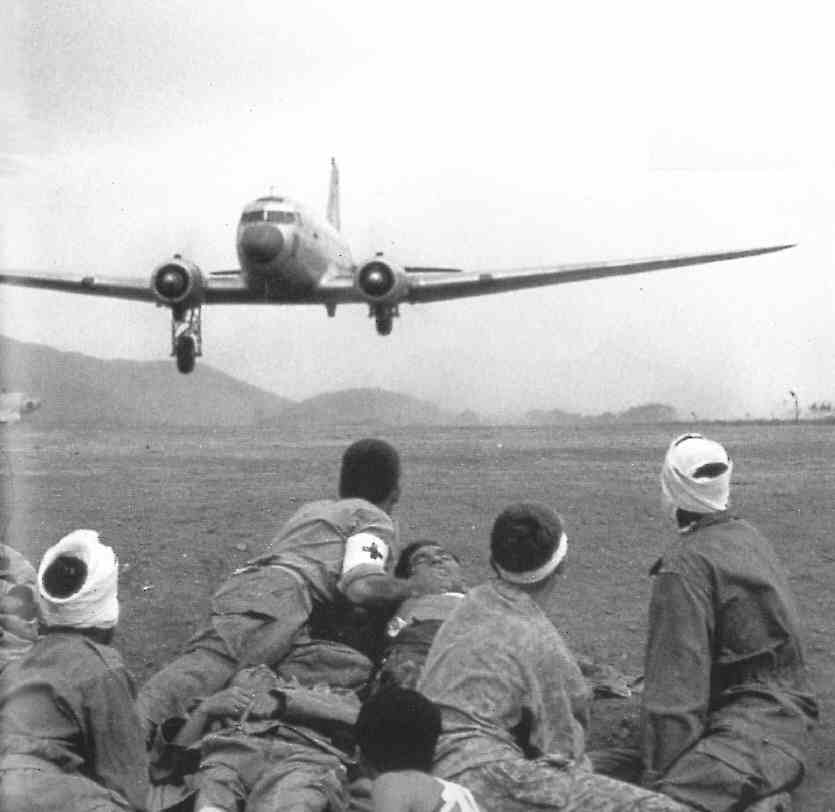
dien bien phu6

Wounded Awaiting Medivac 

Relief forces were unable to get through and the garrison died, despite the bravery of the Paratroops. Colonials and Legionaries. The French garrison was let down by their high command and their government and lost the battle due to inadequate logistics and air power. The survivors endured a brutal forced march of nearly 400 miles on foot to POW camps in which many died. Many soldiers who survived the hell of Dien Bien Phu were subjected to torture, including a practice that we call “water boarding.” General Georges Catroux who presided over the official inquiry into the debacle at Dien Bien Phu wrote in his memoirs: “It is obvious that there was, on the part of our commanding structure, an excess of confidence in the merit of our troops and in the superiority of our material means.”

Few French troops caved to the Viet Minh interrogations and torture but some would come away with the belief that one had to use such means to fight the revolutionaries.  Some French troops and their Algerian comrades would apply these lessons against each other within a year of their release. French soldiers and officers were shipped directly from Indochina to Algeria to wage another protracted counterinsurgency often against Algerians that they had served alongside in Indochina. The Algerian campaign proved to be even more brutal and it was lost politically before it even began.

dien_bien_phu

The March to Captivity

The wars in Indochina and Algeria tore the heart out of the French Army. The defeats inflicted a terrible toll. In Indochina many French career soldiers felt that the government’s “lack of interest in the fate of both thousands of missing French prisoners and loyal North Vietnamese…as dishonorable.” Divisions arose between those who served and those who remained in France or Germany and created bitter enmity between soldiers. France would endure a military coup which involved many who had fought in Vietnam and Algeria. Having militarily won that war these men called The Centurions by Jean Lartenguy had been turned into liars by their government.  They were forced to abandon those who they had fought for and following the mutiny, tried, imprisoned, exiled or disgraced. Colonial troops who remained loyal to France were left without homes in their now “independent” nations. They saw Dien Bien Phu as the defining moment. “They responded with that terrible cry of pain which pretends to free a man from his sworn duty, and promises such chaos to come: ‘Nous sommes trahis!’-‘We are betrayed.’

The effects of the wars in French Indochina, Algeria and Vietnam on the French military establishment were long lasting and often tragic. The acceptance of torture as a means to an end sullied even the hardest French officers. Men like Galula and Marcel Bigeard refused to countenance it, while others like Paul Aussaresses never recanted.

One of the most heart rending parts of the Dien Bien Phu story for me is that of Easter 1954 which fell just prior to the end for the French:

“In all Christendom, in Hanoi Cathedral as in the churches of Europe the first hallelujahs were being sung. At Dienbeinphu, where the men went to confession and communion in little groups, Chaplain Trinquant, who was celebrating Mass in a shelter near the hospital, uttered that cry of liturgical joy with a heart steeped in sadness; it was not victory that was approaching but death.” A battalion commander went to another priest and told him “we are heading toward disaster.” (The Battle of Dienbeinphu, Jules Roy, Carroll and Graf Publishers, New York, 1984 p.239)

Like many American veterans of Vietnam, many of the survivors of Dien Bien Phu made peace and reconciled with the Vietnamese soldiers who opposed them. While many still regretted losing they respected their Vietnamese opponents and questioned the leadership of their country and army. Colonel Jacques Allaire, who served as a lieutenant in a battalion under the command of MajorMarcel Bigeard reflected to a Vietnamese correspondent in 2014:

“I am now 92 years old and not a single day has gone by since the Dien Bien Phu loss that I haven’t wondered to myself about why the French army lost…Victory was impossible and too far away from us. The aircrafts were not able to give us relief. The French Government changed 19 times in nine years and that messed everything up. General Navarre did not know anything about the battlefield in Vietnam. After the Na San battle, the French commanders thought they could win and decided to attack at Dien Bien Phu, but they were wrong. It was Vietnamese soldiers who owned the hills, because it was their country… I respect my own enemies, who fought hard for national independence…Vietnam Minh soldiers were true soldiers with the will, courage and morality…” 

As a veteran of Iraq whose father served in Vietnam I feel an almost a spiritual link to our American and French brothers in arms who fought at Dien Bien Phu, the Street Without Joy, Algiers and places like Khe Sanh, Hue City, the Ia Drang and the Mekong. When it comes to this time of year I always have a sense of melancholy and dread as I think of the unlearned lessons and future sacrifices that we may be asked to make.
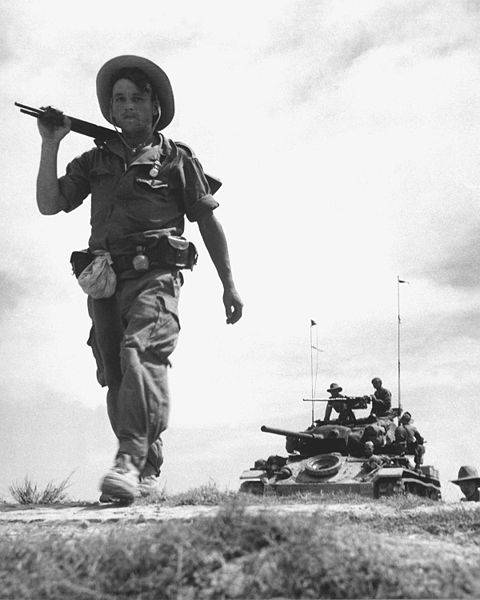
FrenchForeignLegionaireVtNamDOD

Legionairs on the Street Without Joy

The lessons of the French at Dien Bien Phu and in Indochina were not learned by the United States as it entered Vietnam, Iraq or Afghanistan. Nor were the lessons of Algeria. It was an arrogance for which we paid dearly and I do not think that many in our political, media and pundits or military have entirely learned or that we in the military have completely shaken ourselves. We lost 54,000 dead in Vietnam, nearly 4500 in Iraq and so far over 2400 in Afghanistan, and 20,000 wounded which does not count many of the PTSD or TBI cases. Add the casualties suffered by our NATO allies the number of allied dead is now over 3500. Some 36,000 Afghan National Army soldiers and Police officers have been killed. Afghan civilian deaths are estimated between 100,000 and 400,000, not counting the wounded or those killed in Pakistan. In January 2018 the Pentagon classified data on Afghan military, police, and civilian casualties.

The Afghan debacle has spanned three Presidential administrations so there accountability for it must be shared between Presidents Bush, Obama, and Trump, as well as their administrations, the military, and Congress. President Trump has shifted gears from the time he was a candidate when he pronounced the war “lost” to when addressed it as President on August 21st 2017. In his speech at fort Myer Virginia he said:

“When I became President, I was given a bad and very complex hand, but I fully knew what I was getting into:  big and intricate problems.  But, one way or another, these problems will be solved — I’m a problem solver — and, in the end, we will win.” 

But he also said:

“Someday, after an effective military effort, perhaps it will be possible to have a political settlement that includes elements of the Taliban in Afghanistan, but nobody knows if or when that will ever happen…” 

There are those even as we have been at war for almost 18 years in Afghanistan who advocate even more interventions in places that there is no good potential outcome, only variations on bad. I do not know how the President who calls himself a “problem solver” will define winning, but how many more American Soldiers, Sailors, Marines and Airmen will need die  for a “victory” that we cannot even define?
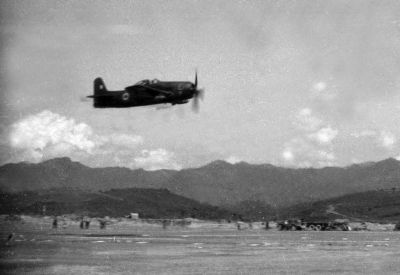
normal_03_56_F8F_decollage_a_DBP_Beriel_ph

French Navy F-8 Bearcat at Dien Bien Phu

Like the French our troops who returned from Vietnam were forgotten.The U.S. Army left Vietnam and returned to a country deeply divided by the war. Vietnam veterans remained ostracized by the society until the 1980s. As Lieutenant General Harold Moore  who commanded the battalion at the Ia Drang immortalized in the film We Were Soldiers recounted “in our time battles were forgotten, our sacrifices were discounted, and both our sanity and suitability for life in polite American society were publicly questioned.”

I think that will be the case for those of us who served in Iraq, Afghanistan, or Syria. Americans love to say they support the troops and are overwhelmingly polite and even kind when they encounter veterans. But that being said even as they do that they don’t are ignorant about our campaigns, battles, and sacrifices; and even worse fail to hold the government regardless of administration accountable for sending American troops into wars that they cannot win. That being said the Trump administration is talking up and ramping up for a possible showdown with Iran.

I guess that is why I identify so much with the men of Dien Bien Phu. The survivors of that battle are now in their nineties and dissolved their Veterans of Dien Bien Phu association in 2014 due to the difficulties most had in traveling.

For those interested in the French campaign in Indochina it has much to teach us. Good books on the subject include The Last Valley by Martin Windrow, Hell in a Very Small Place by Bernard Fall; The Battle of Dien Bien Phu by Jules Roy; and The Battle of Dien Bien Phu – The Battle America Forgot by Howard Simpson. For a history of the whole campaign, read Street Without Joy by Bernard Fall. A novel that has some really good insights into the battle and the French Paras and Legionnaires who fought in Indochina and Algeria is Jean Larteguy’s  The Centurions. 

I always find Fall’s work poignant.  The French journalist served as a member of the French Resistance in the Second World War and soldier later and then became a journalist covering the Nuremberg Trials and both the French and American wars in Vietnam. He was killed on February 21st 1967 near Hue by what was then known as a “booby-trap” and what would now be called an IED while covering a platoon of U.S. Marines.

I do pray that we will learn the lessons before we enter yet another hell somewhere else.

Peace

Padre Steve+

2 Comments

Filed under counterinsurency in afghanistan, Foreign Policy, History, leadership, Military, national security, News and current events, Political Commentary, shipmates and veterans, vietnam

Harlem Hell Fighters and Chicago Black Devils: Fighting Racism and Germans in 1918

800px-Harlem_Hell_Fighters

Friends of Padre Steve’s World,

The theme of Black History Month last year was African Americans in Times of War to coincide with the centennial of the end of the First World War. That is not the theme this year, but what the African American men did in France during the Spring and Summer of 1918 still matters.

In 1918 African Americans who in spite of the prejudice, intolerance and persecution they endured at home as a result of Jim Crow, still loved their country. They were men who labored under the most difficult circumstance to show all Americans and the world that they were worthy of being soldiers and citizens of the United States of America. Their stories cannot be allowed to be forgotten, nor can we allow Jim Crow and the intolerance of other movements which demean and persecute those who love this country because of their race, religion, ethnicity, gender, or sexuality.

The African America men who volunteered included raw recruits as well as veteran soldiers who had already served full careers on the Great Plains. They were the Buffalo Soldiers, and when the United States entered the First World War, they were not wanted. Instead, the veterans  were left on the frontier and a new generation of African American draftees and volunteers became the nucleus of two new infantry divisions, the 92nd and 93rd.

lossy-page1-795px-Negro_Troops_in_France._Picture_shows_part_of_the_15th_Regiment_Infantry_New_York_National_Guard_or_._._._-_NARA_-_533488.tif


However in the beginning they too were kept out of action. These men were initially regulated to doing labor service behind the lines and in the United States. But finally, the protests of organizations such as the NAACP and men like W.E.B.DuBois and Phillip Randolph forced the War Department to reconsider the second class status of these men and form them into combat units.

hqdefault1a

Despite this the leadership of the AEF, or the American Expeditionary Force of General John Pershing refused to allow these divisions to serve under American command. Somehow the concept of such men serving alongside White Americans in the “War to end All War” was offensive to the high command.

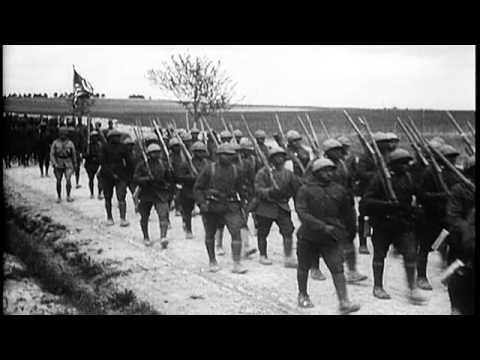
Instead these divisions were broken up and the regiments sent to serve out of American areas on the Western Front. The regiments of the 93rd Division were attached to French divisions. The 369th “Harlem Hellfighters” were first assigned to the French 16th Division and then to the 161st Division. The Hellfighters stayed in line and under fire for 191 days, longer than any other American regiment, they also suffered the highest casualties of any American regiment, nearly 1,500 during a time when only 900 replacements were received. 170 soldiers of the regiment were awarded the Croix de Guerre for the valor they displayed in combat.

750_harlem_hellfighter_portrait

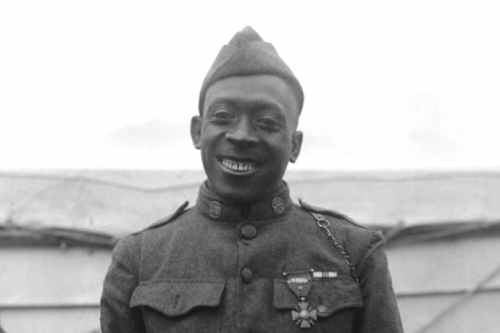
The first of the Hellfighters so honored was then Private, later Sergeant Henry Johnson who was nicknamed Black Death for his prowess as a fighter. With Private Needham Roberts, Johnson fought off a platoon sized German patrol. They both were wounded and when they ran out of ammunition Roberts fought with the butt of his rifle and Johnson a Bolo knife. When Roberts was knocked unconscious Johnson fought alone and saved his comrade from capture. Some estimate that Johnson killed 4 and wounded up to 30 Germans in the fight. He was posthumously awarded the Medal of Honor by President Barak Obama on June 2nd 2015, because he had no living relatives it was accepted by Command Sergeant Major Louis Wilson.

The 370th “Black Devils” from Chicago were detailed to the French 26th Division and the 371st and 372nd Infantry Regiments were assigned to the French 157th (Colonial) Division, which was also known as the Red Hand Division.

These units performed with distinction. The 371st was awarded the French Croix de Guerre and Légion d’honneur and Corporal Freddie Stowers of the 1st Battalion 371st was the only African American awarded the Congressional Medal of Honor in the First World War. The 372nd was also awarded the Croix de Guerre and Légion d’honneur for its service with the 157th Division.

6ASAF00Z

The 157th (Colonial) Division had suffered badly during the war and been decimated in the unrelenting assaults in the trench warfare of the Western Front. It was reconstituted in 1918 with one French Regiment and two American regiments, the Negro 371st and 372nd Infantry. On July 4th 1918 the commanding General of the French 157th Division, General Mariano Goybet issued the following statement:

“It is striking demonstration of the long standing and blood-cemented friendship which binds together our two great nations. The sons of the soldiers of Lafayette greet the sons of the soldiers of George Washington who have come over to fight as in 1776, in a new and greater way of independence. The same success which followed the glorious fights for the cause of liberty is sure to crown our common effort now and bring about the final victory of right and justice over barbarity and oppression.”

220px-Red_Hand_Division

While many white American soldiers depreciated their French hosts and attempted to sow the seeds of their own racial prejudice against the black soldiers among the French, Southerners in particular warned the French of  the “black rapist beasts.” However the French experience of American blacks was far different than the often scornful treatment that they received from white American soldiers.

“Soldiers from the four regiments that served directly with the French Army attested to the willingness of the French to let men fight and to honor them for their achievements. Social interactions with French civilians- and white southern soldiers’ reactions to them- also highlighted crucial differences between the two societies. Unlike white soldiers, African Americans did not complain about high prices in French stores. Instead they focused on the fact that “they were welcomed” by every shopkeeper that they encountered.”

Official and unofficial efforts by those in the Army command and individual soldiers to stigmatize them and to try to force the French into applying Jim Crow to laws and attitudes backfired. Villages now expressed a preference for black over white American troops. “Take back these soldiers and send us some real Americans, black Americans,” wrote one village mayor after a group of rowdy white Americans disrupted the town.”

Stowers

The citation for Corporal Stowers award of the Medal of Honor reads as follows:

Corporal Stowers, distinguished himself by exceptional heroism on September 28, 1918 while serving as a squad leader in Company C, 371st Infantry Regiment, 93d Division. His company was the lead company during the attack on Hill 188, Champagne Marne Sector, France, during World War I. A few minutes after the attack began, the enemy ceased firing and began climbing up onto the parapets of the trenches, holding up their arms as if wishing to surrender. The enemy’s actions caused the American forces to cease fire and to come out into the open. As the company started forward and when within about 100 meters of the trench line, the enemy jumped back into their trenches and greeted Corporal Stowers’ company with interlocking bands of machine gun fire and mortar fire causing well over fifty percent casualties. Faced with incredible enemy resistance, Corporal Stowers took charge, setting such a courageous example of personal bravery and leadership that he inspired his men to follow him in the attack. With extraordinary heroism and complete disregard of personal danger under devastating fire, he crawled forward leading his squad toward an enemy machine gun nest, which was causing heavy casualties to his company. After fierce fighting, the machine gun position was destroyed and the enemy soldiers were killed. Displaying great courage and intrepidity Corporal Stowers continued to press the attack against a determined enemy. While crawling forward and urging his men to continue the attack on a second trench line, he was gravely wounded by machine gun fire. Although Corporal Stowers was mortally wounded, he pressed forward, urging on the members of his squad, until he died. Inspired by the heroism and display of bravery of Corporal Stowers, his company continued the attack against incredible odds, contributing to the capture of Hill 188 and causing heavy enemy casualties. Corporal Stowers’ conspicuous gallantry, extraordinary heroism, and supreme devotion to his men were well above and beyond the call of duty, follow the finest traditions of military service, and reflect the utmost credit on him and the United States Army.

Corporal Stowers is buried at the Meuse-Argonne American Cemetery. The award of the Medal of Honor was not made until 1991 when President George H. W. Bush presented it to Stowers’ two surviving sisters.

The contrast between the American treatment of its own soldiers and that of the French in the First World War is striking. The fact that it took President Harry S. Truman to integrate the U.S. Military in 1948 is also striking. African Americans had served in the Civil War, on the Great Plains, in Cuba and in both the European and Pacific Theaters of Operation in the Second World War and were treated as less than fully human by many Americans.

770px-369th_15th_New_York

Men of the 371st and 372nd Infantry Regiments of the French 157th Division Awarded the Croix d’Guerre

Even after President Truman desegregated the armed forces in 1948, African Americans, as well as other racial minorities, women and gays have faced very real discrimination. The military continues to make great strides, and while overt racist acts and other types of discrimination are outlawed, racism still remains a part of American life.

Today things have changed, and that in large part is due to the unselfish sacrifice in the face of hatred and discrimination of the men of the USCT and the State Black Regiments like the 54th Massachusetts and the Louisiana Home Guards who blazed a way to freedom for so many. Those who followed them as Buffalo Soldiers and volunteers during the World Wars continued to be trail blazers in the struggle for equal rights. A white soldier who served with the 49thMassachusetts wrote “all honor to our negro soldiers. They deserve citizenship. They will secure it! There would be much suffering in what he termed “the transition state” but a “nation is not born without pangs.”

Unfortunately racial prejudice is still exists in the United States. In spite of all the advances that we have made racism still casts an ugly cloud over our country. Despite the sacrifices of the Buffalo Soldiers, the leaders of the Civil Rights movement and others there are some people who like the leaders of the AEF in 1917 and 1918 cannot stomach having blacks as equals or God forbid in actual leadership roles in this country.

A good friend of mine who is a retired military officer, a white man, an evangelical Christian raised in Georgia who graduated from an elite military school in the South, who is a proponent of racial equality has told me that the problem that many white people in the South have with President Obama is that “he doesn’t know his place.” Yes racism is still real and rears its ugly head all too often.

Peace

Padre Steve+

Leave a comment

Filed under civil rights, Foreign Policy, History, Military, Political Commentary, us army, world war one

Waiting for the National Emergency

Friends of Padre Steve’s World,

I am musing about President Trump’s treat to declare a National Emergency if Congress does not bend the knee and surrender it’s Constitutional powers under Article One of the Constitution by not appropriating funding for the construction of his border wall, the one that he promised that Mexico would pay for on many occasions.

Honestly, I have always believed that Trump will declare a National Emergency to consolidate dictatorial powers. However, I did not believe that he would use such a poorly concocted plan to do so. I realize that his contempt for the Constitution, our system of government, the Congress, the Courts and all of our institutions runs deep in him, but if he attempts an end run around Congress by doing this I am positive that the Court challenges will doom it, were emergency powers restricted to finding a way to build his Wall, however, a state of emergency proclamation gives the President nearly dictatorial powers should he or maybe in the future, she decide to use them. Congress needs to reign those powers in, but that won’t happen anytime soon.

Declaring a state of emergency simply to bypass Congress for a pet project will create a Constitutional crisis, and if you can imagine it, throw the country into chaos.

It is not enough that the government shutdown has been going on three weeks. It is not if that the global and the United States economy is not showing signs of weakness.

It is not as if foreign powers, real enemies such as Russia are continuing to attack our institutions at home and interests abroad.

It is not as if authoritarian regimes are taking over power in former democracies, with President Trump’s full approval.

Likewise, it’s not as if that the administration is not in chaos, that the resignation of the last remaining adults in the room, and the indictments, or coming indictments of Trump allies by the investigation of Robert Muller, and the coming hearings in the House Of Representatives will not cut the President’s feet out from under him.

He will be fully revealed for what he is and always has been, and what his most faithful supporters have excused and ignored.

The President is habitual liar, a narcissistic sociopath with delusions of Godhood, and a two bit owner of a family business who has destroyed every business he has led, bamboozled and defrauded and every investor or contractor who put their faith in him, and betrayed every one of his wives. Though he avoided military service, he has derided and mocked honorable military men, men who fought in combat, put their lives on the line, and even were wounded or taken prisoners. To Trump, men like James Mattis, John McCain, Stanley McChrystal, William McRaven, John Allen, John Kelly, H. R. McMaster, John Kerry, and so many others were failures, and he, who dodged the draft, bragged that avoiding sexually transmitted diseases was his personal Vietnam.

So I await his declaration and I hope that the Republicans in the Senate will finally grow a set of testicles and remember that their oath is to the Constitution, not the President. I hope that the courts will stop it, and I hope that military leaders will put their feet down and not obey an unconstitutional and unethical order.

Again, let me reiterate that I have always believed that Trump will try to use a state of emergency, his Reichstag Fire moment, to secure his hands or on power, but I thought he would use a war, a major terrorist attack, financial collapse, or natural disaster to do it. In those kinds of events he would probably have the support of the majority of Americans and Congress, but for this ham fisted attempt to bypass Congress and defy the Constitutional separation of powers should be his undoing if he actually tries it.

Regardless of if he does it or not, it is important for every man and woman who has sworn an oath to support and defend the Constitution of the United States against all enemies, foreign and domestic also applies to defending it against a rogue President who defies the Constitution and collides with foreign powers against his own country. Until Trump such was unthinkable, no President, even the most callous or criminal has ever sank to the moral, legal, and ethical depths of this President.

So, I wait to see what happens. As I do I remember and reflect upon the words of German General Ludwig Beck:

It is a lack of character and insight, when a soldier in high command sees his duty and mission only in the context of his military orders without realizing that the highest responsibility is to the people of his country.”

Until tomorrow,

Peace,

Padre Steve+

11 Comments

Filed under ethics, Foreign Policy, History, laws and legislation, leadership, national security, News and current events, Political Commentary

”For Hate is Strong and Mocks the Song Of Peace on Earth Goodwill to Men” Henry Wordsworth Longfellow and Christmas 2018


Friends of Padre Steve’s World,

I could be writing about the travails being inflicted on the country and the world by President Donald Trump, but I do enough of that. Christmas is coming and even when I don’t explicitly write about Teump, the message of the season stands against him and against all that he stands.

Looking at the news of the week; the resignation on principle by Secretary of Defense James Mattis, the abandonment of the Kurds in Syria to the Turks, Russia, as ISIS, the crashing stock markets, and the completely preventable partial government shutdown brought about President Trump and his most fanatical followers, it is easy to despair. Frankly, there are many times that I do, and Inhave to remember how people before us went through great trials and tribulations.

The great American poet Henry Wadsworth Longfellow penned these words of hope on Christmas Day, 1863:

“God is not dead, nor doth He sleep; The wrong shall fail, the right prevail With peace on earth, good will to men.”

Christmas is coming and I feel that Longfellow’s words are as pertinent today as when he first penned them. The thought of what is to come in the next few years, in the United States and in many other liberal democracies bodes ill for our future as authoritarian and often xenophobic leaders rise to power. The world that we grew up is is passing away, and what comes in its place, a dystopian world where hope will be a rare commodity beckons.

Longfellow’s words became the heart of the song I Heard the Bells on Christmas Day.  I have heard it a number of times in the past few days and each time it really touches me.

The song has been recorded in a number of versions by different artists over the years. However, the words of the song go back to the American Civil War. It began as a poem written by Henry Wadsworth Longfellow on Christmas Day 1863 following the serious wounding of his son Charles, a Lieutenant in the Union Army at the Battle of New Hope Church, and the death of his wife in a fire two years before. Longfellow had much to despair about, but he maintained a faith in God, as well as the founding principles of the United States.

His words are haunting. Probably because they demonstrate the profound tension that lies at the heart of the Incarnation, which is the heart of Christmas and the Christian faith. the tension, played out so well in the song is the existence of a message of peace and reconciliation in a world where war and hatred of many kinds rip human beings apart coupled with the tragic inability of Christendom, especially American Conservative Evangelicalism to even come close to the message of Christmas.

I heard the bells on Christmas day

Their old familiar carols play,

And wild and sweet the words repeat

Of peace on earth, good will to men.

I thought how, as the day had come,

The belfries of all Christendom

Had rolled along th’ unbroken song

Of peace on earth, good will to men.

gburg dead2

The reality of this is seen in the third verse. It is a verse that echoes throughout history and seems to be true even today, in fact it seems to be the most real as we deal with war, hatred, terrorism, killing in the name of God, and political fratricide.

And in despair I bowed my head

“There is no peace on earth,” I said,

“For hate is strong and mocks the song

Of peace on earth, good will to men.”

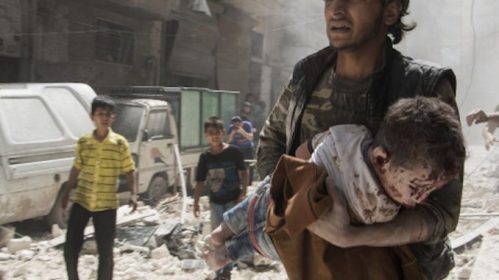
syria-war-holocaust-unicef-678x381

The interesting part about the songs as opposed to the poem is that they omit three of Longfellow’s verses that admittedly in a reunited country would not help record sales. Those verses speak to the heart of the Civil War.

Till ringing, singing on its way,
The world revolved from night to day,

A voice, a chime,

A chant sublime

Of peace on earth, good-will to men!

Then from each black, accursed mouth
The cannon thundered in the South,

And with the sound

The carols drowned

Of peace on earth, good-will to men!

It was as if an earthquake rent
The hearth-stones of a continent,

And made forlorn

The households born

Of peace on earth, good-will to men!

But Longfellow hears in the bells something more powerful. It is the message of Christmas and the incarnation. The message that justice and peace will finally embrace.

Then pealed the bells more loud and deep:

“God is not dead, nor doth He sleep;

The wrong shall fail, the right prevail

With peace on earth, good will to men.”

Till ringing, singing on its way

The world revolved from night to day,

A voice, a chime, a chant sublime

Of peace on earth, good will to men.

The song has been recorded many times by many artists. I like the version sung by Frank Sinatra, which the music was composed by Johnny Marks, composer of Rudolph the Red Nosed Reindeer. Another earlier version composed by John Baptiste Calkin has been recorded by Elvis Presley and Johnny Cash among others.


As wars rage in the Middle East, tensions rise in Asia, Africa and even Eastern Europe while the Unholy Trinity of Politicians, Pundits and Preachers, led by the American President rage as we go into another, and even more perilous year with the possibility of nuclear war more probably than not, people still look for hope.

Longfellow, who lost so much in a short time in the midst of a terrible Civil War, reminds us that in such times, “God is not dead, nor doth He sleep; The wrong shall fail, the right prevail With peace on earth, good will to men.”

In a time like this when the world led by the American President seems to be hurtling into the abyss, it is important to remember Longfellow’s words and the message of Christ and the Incarnation. The child born as an outcast in a manger would die as a criminal, crucified by an occupying power with the full support of the leaders of the occupied country. As the German theologian Jurgen Moltmann wrote:

“He humbles himself and takes upon himself the eternal death of the godless and the godforsaken, so that all the godless and the godforsaken can experience communion with him.” 

Yes, the wrong shall fail, and the right prevail, but it in the age of Trump it will certainly involve much travail. As for the travail, it is just beginning.

Until tomorrow,

Peace

Padre Steve+

3 Comments

Filed under christian life, civil war, faith, Foreign Policy, History, middle east, music, Political Commentary

A Watershed Moment, and a Time to Be Afraid: Jim Mattis Resigns in Protest

Friends of Padre Steve’s World,

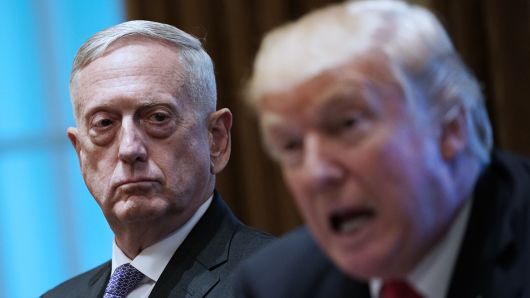
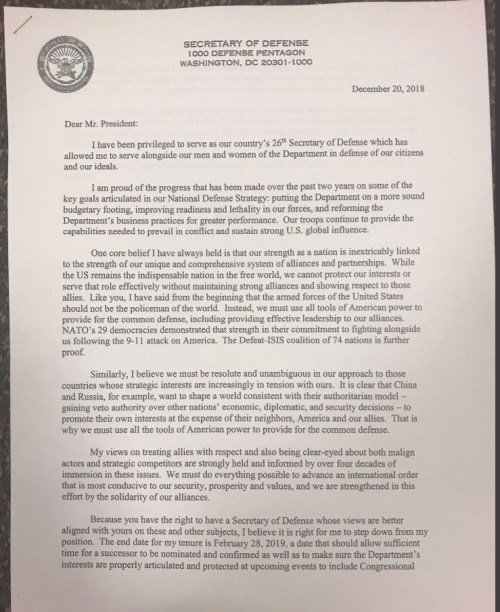
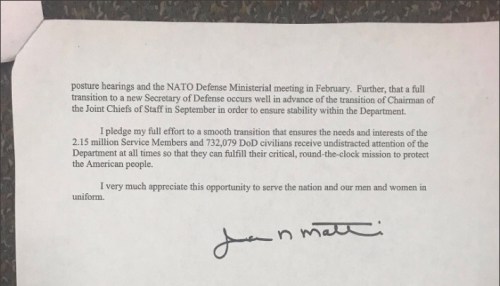
Secretary of Defense James Mattis resigned his position in protest at the manner in which President Trump is endangering the security of the United States. His resignation letter speaks for itself but it echoes many things that I have written regarding the Trump military and foreign policy since his election campaign. The final straw for Mattis was Trump’s unilateral decision against the advice of Mattis, the Department Of Defense, the State Department, and the National Security Council to withdraw all U.S. Troops from Syria falsely claiming that ISIS had been defeated.

Secretary Mattis’s letter is show below.

It was a watershed moment in American History. Honestly, I never expected Mattis to survive this long in the Trump Swamp. Everything about him stands in complete opposition to everything that Donald Trump embodies. The disgraced convicted felon Michael Flynn much more represents for which Trump stands.

Mattis was and remains a Marine who exemplified the Marine motto Semper Fidelis, and of living the creed of Duty, Honor, Country. Many times during his time in office he resisted the worst impulses and decisions made by the President. He knew that his duty and oath were to the Constitution of the United States and not the President. I think that he has become a tragic figure, he accepted the position thinking that he could serve the country better by taking it rather than not.

In the end Mattis could not abide the constant attacks on what he believed were the foundations of American national security and he resigned in protest. In a way he reminds me of Colonel General Ludwig Beck, Chief of Staff of the German Army, who resigned in protest over Hitler’s planned invasion of Czechoslovakia in 1938. Beck, who died in the attempt to kill Hitler on July 20th, 1944 said:

It is a lack of character and insight, when a soldier in high command sees his duty and mission only in the context of his military orders without realizing that the highest responsibility is to the people of his country.”

Working with former Secretary of State Rex Tillerson, and former National Security Advisor H.R. McMaster he had allies within the administration who could help check the President’s worst instincts. But Tillerson and McMaster were forced out and replaced by men who Trump believes that are more personally loyal to him, leaving Mattis isolated in the administration. Mattis was not able to get his recommendation for the next Chairman of the Joint Chiefs of Staff, Air Force Chief of Staff General David Goldfein approved by Trump. Mattis took this as a personal affront because the Secretary of Defense usually gets his recommendation for the position approved by the President. I wonder if Trump rejected Goldfein because in addition to being a decorated combat veteran who was actually shot down over Serbia in 1999, is also Jewish. Honestly, I don’t think that Trump could stomach having a Jewish war hero as his Chief military advisor. Maybe someone should ask that question, but I digress…

Mattis’s resignation, combined with Trump’s declaration of victory over ISIS and withdraw announcement sent a chill throughout Washington and around the world. Even influential Republican leaders who have carried Trump’s water are seeing the approaching danger of Trump unrestrained. The only question is if they will have the courage to choose principle over personal profit and power. Sadly, to this point they have not backed their words with action. Perhaps with the wheels coming off this presidency they will, but I think they are more afraid of his cult like followers than they are of him, so we will have to see.

Trump promises that he will nominate a replacement for Mattis soon. Make no mistake, whoever Trump chooses will be pliant and nothing more than his lackey. The replacement will be someone in the tradition of Field Marshal Wilhelm Keitel, who was absolutely committed to Adolf Hitler and who not only went along with, but signed criminal orders that obliged the German military to commit war crimes, at home and abroad. Supreme Court Justice Robert Jackson who served as the Chief American Prosecutor at Nuremberg said about Keitel:

“Keitel, the weak and willing tool, delivered the armed forces, the instrument of aggression, over to the party and directed them in executing its felonious designs.”

I am not sure who would want the job, but I am sure that he will be an modern embodiment of Keitel, and I will be glad that I will be retired within a few months of his confirmation. A year ago I thought that Senator Tom Cotton would gladly take it, but since he was one of the leading critics of the Syria withdraw, that he saw as a surrender to Russia I am not so sure. I don’t think that he’s that stupid. Instead, I think that Trump may pick a retired General or Admiral from his partisans for the job, there are plenty of them out there who would take it, I could be wrong, but we’ll have to see.

Regardless of who takes over for Mattis is the fact that with Mattis out of the way, Trump’s worst instincts will win policy debates and he may even lose John Bolton. Today the danger to our country and to to world has increased exponentially. To quote General Colin Powell’s words in his waning days as Secretary of State, “I sleep like a baby … every two hours I wake up screaming.”

I think that may be the case for many of us in the coming days, weeks, and months. Since I already do that due to my PTSD and combat based nightmares and night terrors this will be nothing new. If that hasn’t been the case for you, welcome to my world.

Peace,

Padre Steve+

6 Comments

Filed under ethics, Foreign Policy, History, leadership, Military, national security, nazi germany, News and current events, Political Commentary

Hitler Invades Poland, 79 Years Later: Race, Lebensraum, and the Rape of Europe

Friends of Padre Steve’s World,

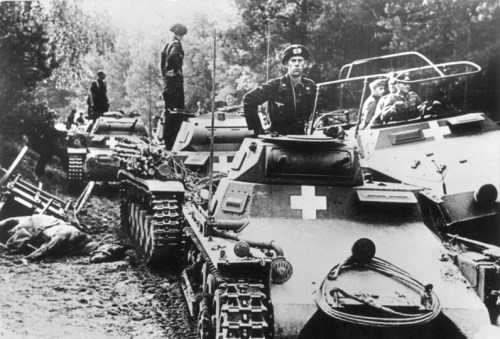
Seventy-nine years ago today the German Wehrmacht on the orders of Adolf Hitler invaded Poland. It began the European phase of the Second World War and by the time the war was over Europe would be devastated, Hitler would be dead, and the world changed.

Hitler, who had concluded a deal with Stalin’s Soviet Union did not believe that Britain or France would do any more than to conclude a peace after he finished Poland. Though France and Britain could have caused havoc and maybe even ended the war had they even attempted a serious campaign against Germany in September 1939, they did not. Hitler’s gamble which gave great concern to his Generals paid off. Poland was defeated, and with his pact with Stalin in place, Hitler was able to turn his attention to the West.

Hitler’s biographer, the late German historian Joachim Fest wrote:

In spite of all expenditures in the preceding years Germany was armed only, for the war that Hitler launched on September 1, not for the war of September 3. The army did consist of 102 divisions, but only half of these were active and battle-ready. The state of its training left much to be desired. The navy was distinctly inferior to the British and even to the French fleets; not even the strength permissible under the Anglo-German Naval Treaty of 1935 had been attained. Shortly after the Western declarations of war reached Berlin, Grand Admiral Raeder declared tersely that the German fleet, or rather “the little that is finished or will be finished in time, can only go down fighting honorably.” The air force alone was stronger than the forces of the enemy; it had 3,298 planes at its disposal. On the other hand, the ammunition supply had been half consumed by the end of the Polish campaign, so that the war could not have been actively continued for even three or four weeks. At Nuremberg, General Jodi called the existing reserves at the outbreak of the war “literally ridiculous.” Troop equipment also amounted to considerably less than the four-month stock that the High Command of the army had demanded. Even a small-scale attack from the West in the fall of 1939 would probably have brought about Germany’s defeat and the end of the war, military experts have concluded.

But Hitler’s war went far beyond a typical military invasion, occupation and revision of borders or exploitation of economic resources. Hitler’s invasion of Poland was his first movement to achieve Lebensraum “living space” in the East. It was also a racial war where the less than human inhabitants of that space, especially the Jews would be expelled from their homes, driven into ghettos, and eventually exterminated. In Poland the victims included the Polish intelligentsia, professors, priests, military officers, government officials, nobility; anyone who might be able to lead a revolt.

By invading Poland Hitler had abandoned politics which had served him so well against, party rivals, domestic opponents, and later European and World leaders. After Poland Hitler rejected political options and pressed forward with war. Fest wrote:

One of the striking aspects of his behavior is the stubborn, peculiarly blind impatience with which he pressed forward into the conflict. That impatience was curiously at odds with the hesitancy and vacillations that had preceded earlier decisions of his. When, in the last days of August, Göring pleaded with him not to push the gamble too far, he replied heatedly that throughout his life he had always played vabanque. And though this metaphor was accurate for the matter at hand, it hardly described the wary, circumspect style with which he had proceeded in the past. We must go further back, almost to the early, prepolitical phase of his career, to find the link with the abruptness of his conduct during the summer of 1939, with its reminders of old provocations and daredevil risks. There is, in fact, every indication that during these months Hitler was throwing aside more than tried and tested tactics, that he was giving up a policy in which he had excelled for fifteen years and in which for a while he had outstripped all antagonists. It was as if he were at last tired of having to adapt himself to circumstances, tired of the eternal talking, dissimulation, and diplomatic wirepulling, and were again seeking “a great, universally understandable, liberating action.”

Hitler having brought about the destruction of Europe died by his own hand in his bunker having determined that the German people were not worthy of him. The conflict which he bathed in the mythological understandings of Wagner and Paganism was also an eschatological war. Race and Lebensraum overrode all sense of ethics, morality, and even diplomacy that might lead to long term alliances with partners that shared shared mutual interests. Instead, Hitler’s most base instincts, hatred, and the racist desire to establish his mythological Aryan Race as the overlords of Poland, and the. Of every other conquered nation put him in a league of his own.

Fest wrote:

Morally, too, he now crossed the boundary that made the war irrevocable. In the same conversation he demanded the repression of any sign “that a Polish intelligentsia is coming forward as a class of leaders. The country is to continue under a low standard of living; we want to draw only labor forces from it.” Territory that went far beyond the borders of 1914 was incorporated into the Reich. The remainder was set up as a general government under the administration of Hans Frank; one part was subjected to a ruthless process of Germanization, the other to an unprecedented campaign of enslavement and annihilation. And while the commandos, the Einsatzgruppen, commenced their reign of terror, arresting, resettling, expelling, and liquidating—so that one German army officer wrote in a horrified letter of a “band of murderers, robbers and plunderers”—Hans Frank extolled the “epoch of the East” that was now beginning for Germany, a period, as he described it in his own peculiar brand of bombastic jargon, “of the most tremendous reshaping of colonizing and resettlement implementation.”

Diplomacy has no place in eschatology. Interestingly, the same day he signed an order for a euthanasia program directed against the weakest members of his own German nation. In his worldview the handicapped, the mentally ill, and others with any kind of disability were life unworthy of life. They were a drain on society.

Anyway, this is enough for the night. I shall refrain from an comparisons with the current American President or the authoritarian and racist leaders taking power in parts of Europe.

The ghosts of the past seldom remain there and often return with a vengeance when awakened by the same forces that unleashed them then.

Until tomorrow,

Peace,

Padre Steve+

8 Comments

Filed under Foreign Policy, History, nazi germany, Political Commentary, world war two in europe

Hiroshima and Nagasaki: “We Had Adopted an Ethical Standard Common to the Barbarians of the Dark Ages”

7A_Nagasaki_Bomb_Cloud

Friends of Padre Steve’s World,

Sorry for the delay in posting. I have been so busy working in the house with our repairs and renovations that I missed my deadline for publishing this article. I think that it is important, I actually started in Wednesday evening but was too tired to make it work. So after a long day of work in which I walked over nine miles moving stuff around, making trips to Lowe’s and Home Depot, working with the contractors, and preparing for tomorrow which is actually now today.  So later this morning, after I go to bed and wake up I will be working with a friend to lay down new flooring while the contractors do the final touches with their work. But it will be worth it and I do digress…  

Yesterday was the anniversary of the second and hopefully last nuclear weapon used in war, the bomb called the Fat Man which was dropped on the Japanese city of Nagasaki. Three days before the city of Hiroshima had been destroyed by the first atomic bomb used in combat. It is a decision that forever changed the consequences of waging total war. It was a decision that still haunts humanity and which policy makers and military strategists wrestle with in an age where at nine nations have deployable nuclear weapons and a number of other nations are developing or trying to obtain.

It is also the subject that is wrestled with by students of major military staff colleges and universities. I know, I taught the ethics elective at the Joint Forces Staff College. In each of our classes at least one brave officer did a presentation detailing the ethical issues involved the decision and the implications today. For those not familiar with the military the truth is that most officers are quite circumspect and much more grown up about the subject than the average citizen, politician, or even the current President or National Security Advisor. But then there are probably some some who would be like Colonel Paul Tibbets who flew the B-29 bomber Enola Gay which dropped said these words in an interview in 1989:

“I made up my mind then that the morality of dropping that bomb was not my business. I was instructed to perform a military mission to drop the bomb. That was the thing that I was going to do the best of my ability. Morality, there is no such thing in warfare. I don’t care whether you are dropping atom bombs, or 100-pound bombs, or shooting a rifle. You have got to leave the moral issue out of it.”

Tibbets, like Truman justified his position based on his view of the bestiality of the crimes committed by the Japanese during the war. It was quite a common point of view.

It was a decision made by President Truman one reason was purely pragmatic. It was a wonder weapon that promised to end the war with a minimum of American casualties. He noted in 1952:

“I gave careful thought to what my advisors had counseled. I wanted to weigh all the possibilities and implications… General Marshall said in Potsdam that if the bomb worked we would save a quarter of a million American lives and probably save millions of Japanese… I did not like the weapon… but I had no qualms if in the long run millions of lives could be saved.”

But Truman’s decision was also based on the factor of revenge and viewing the Japanese as animals.  In response to a telegram from the Reverend Samuel McCrea Cavert, the General Secretary of the Federal Council of The Churches of Christ in America, the predecessor of the National Council of Churches. Reverend Cavert was a Presbyterian minister. Cavert’s telegram stated:

“Many Christians deeply disturbed over use of atomic bombs against Japanese cities because of their necessarily indiscriminate destructive efforts and because their use sets extremely dangerous precedent for future of mankind. Bishop Oxnam, President of the Council, and John Foster Dules, Chairman of its Commission on a just and durable peace are preparing statement for probable release tomorrow urging that atomic bombs be regarded as trust for humanity and that Japanese nation be given genuine opportunity and time to verify facts about new bomb and to accept surrender terms. Respectfully urge that ample opportunity be given Japan to reconsider ultimatum before any further devastation by atomic bomb is visited upon her people.”

Truman’s response to the telegram revealed the darker side of his decision to use the bomb.

My dear Mr. Cavert:

I appreciated very much your telegram of August ninth.

Nobody is more disturbed over the use of Atomic bombs than I am but I was greatly disturbed over the unwarranted attack by the Japanese on Pearl Harbor and their murder of our prisoners of war. The only language they seem to understand is the one we have been using to bombard them.

When you have to deal with a beast you have to treat him as a beast. It is most regrettable but nevertheless true.

The President’s senior military advisors were certainly of a different point of view about the use of the weapons. Admiral William Leahy who served as Chief of Staff to the Commander in Chief and was the senior Naval Officer in service disagreed and told Stimson of his misgivings about using the atomic bomb at this particular point in the war. In his memoirs which were released in 1949 he wrote:

General Dwight D. Eisenhower disagreed with the use of the atomic bomb and recorded his interaction with Stimson:

“In 1945 Secretary of War Stimson, visiting my headquarters in Germany, informed me that our government was preparing to drop an atomic bomb on Japan. I was one of those who felt that there were a number of cogent reasons to question the wisdom of such an act. During his recitation of the relevant facts, I had been conscious of a feeling of depression and so I voiced to him my grave misgivings, first on the basis of my belief that Japan was already defeated and that dropping the bomb was completely unnecessary, and secondly because I thought that our country should avoid shocking world opinion by the use of a weapon whose employment was, I thought, no longer mandatory as a measure to save American lives.”

Stimson did not agree with the Eisenhower, he would later recall words that echoed those of Truman in 1952, not his words to Revered Cavert immediately after the event.

“My chief purpose was to end the war in victory with the least possible cost in the lives of the men in the armies which I had helped to raise. In the light of the alternatives which, on a fair estimate, were open to us I believe that no man, in our position and subject to our responsibilities, holding in his hands a weapon of such possibilities for accomplishing this purpose and saving those lives, could have failed to use it and afterwards looked his countrymen in the face.”

Admiral William Leahy who served as Chief of Staff to the Commander in Chief and was the senior Naval Officer in service disagreed and told Stimson of his misgivings about using the atomic bomb at this particular point in the war. In his memoirs which were released in 1949 he wrote:

“Once it had been tested, President Truman faced the decision as to whether to use it. He did not like the idea, but he was persuaded that it would shorten the war against Japan and save American lives. It is my opinion that the use of this barbarous weapon at Hiroshima and Nagasaki was of no material assistance in our war against Japan. The Japanese were already defeated and ready to surrender because of the effective sea blockade and the successful bombing with conventional weapons… My own feeling was that in being the first to use it, we had adopted an ethical standard common to the barbarians of the Dark Ages. I was not taught to make wars in that fashion, and that wars cannot be won by destroying women and children.”

General Hap Arnold, the Commander of the Army Air Forces noted: “It always appeared to us that, atomic bomb or no atomic bomb, the Japanese were already on the verge of collapse.” 

Those who questioned the decision would be vindicated by the U.S. Strategic Bombing Survey study published in 1946. That study laid out the facts in stark terms:

“Certainly prior to 31 December 1945, and in all probability prior to 1 November 1945, Japan would have surrendered even if the atomic bombs had not been dropped, even if Russia had not entered the war, and even if no invasion had been planned or contemplated.” 

Later, Dr. J. Samuel Walker, the Chief Historian of the Nuclear Regulatory Commission wrote:

“Careful scholarly treatment of the records and manuscripts opened over the past few years has greatly enhanced our understanding of why Truman administration used atomic weapons against Japan. Experts continue to disagree on some issues, but critical questions have been answered. The consensus among scholars is the that the bomb was not needed to avoid an invasion of Japan. It is clear that alternatives to the bomb existed and that Truman and his advisers knew it.” 

Thus the moral question remains and perhaps is best answered by the words of Dr. Leó Szilárd who first proposed building atomic weapons. In 1960 he noted to U.S. News and World Reports:

Suppose Germany had developed two bombs before we had any bombs. And suppose Germany had dropped one bomb, say, on Rochester and the other on Buffalo, and then having run out of bombs she would have lost the war. Can anyone doubt that we would then have defined the dropping of atomic bombs on cities as a war crime, and that we would have sentenced the Germans who were guilty of this crime to death at Nuremberg and hanged them? 

But, again, don’t misunderstand me. The only conclusion we can draw is that governments acting in a crisis are guided by questions of expediency, and moral considerations are given very little weight, and that America is no different from any other nation in this respect.

I think now some 73 years later we need to ponder that question before it can happen again.

Peace

Padre Steve+


Leave a comment

Filed under ethics, Foreign Policy, History, Military, national security, Political Commentary, world war two in the pacific

“Now, I am become Death, the destroyer of worlds” Hiroshima at 73 Years


Friends of Padre Steve’s World,

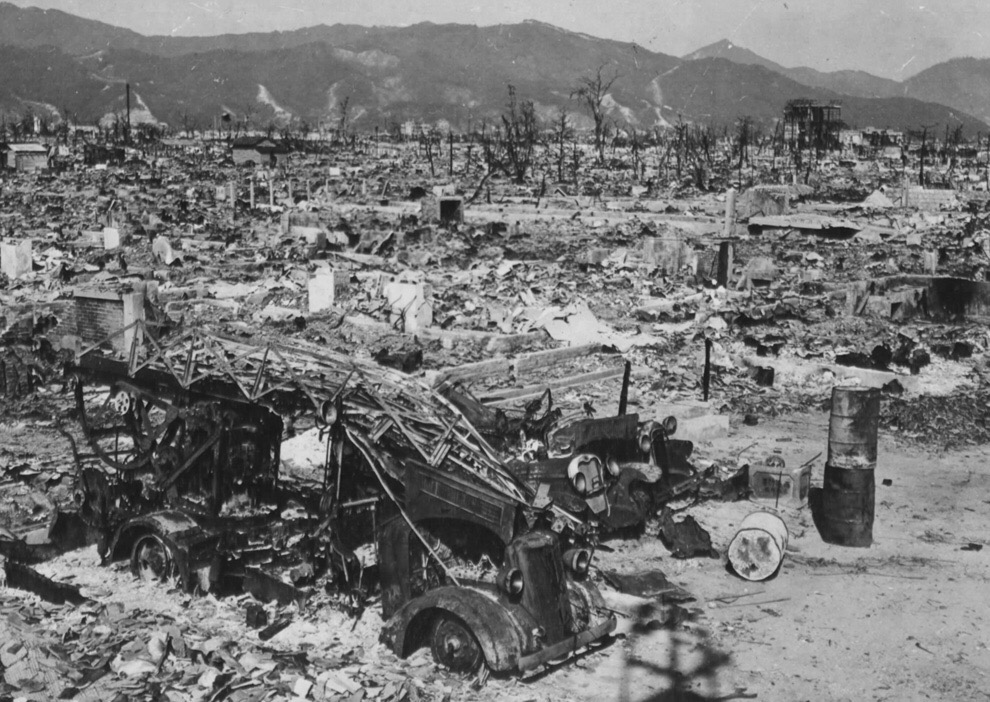
Seventy-three years ago the world changed. A remarkably destructive weapon was introduced in combat, a single bomb that annihilated the city of Hiroshima Japan. The effects were immediate, 70,000 to 80,000 people were killed, tens of thousands of others wounded, many of whom would suffer from the effects of radiation and radiation burns the rest of their lives. Within days a second bomb was dropped on Nagasaki with similar results, and Japan sued for peace. The Second World War was over and a new world was born, a world under the shadow of nuclear weapons.

The anniversary of that event today is something that all of us should ponder with great trepidation as the world seems to lurch towards a day when such a weapon will be used again. The question should not be one of mere military or tactical expediency, but must consider the moral dimension of the use of these weapons as well as the whole concept of total war.

In his book Hiroshima, John Hershey wrote:

“The crux of the matter is whether total war in its present form is justifiable, even when it serves a just purpose. Does it not have material and spiritual evil as its consequences which far exceed whatever good might result? When will our moralists give us an answer to this question?” 

His question is worth considering. It is no wonder that Robert Oppenheimer one of the members of the team that developed the bomb quoted a verse from the Bhagavad-Gita after he witnessed the test explosion “Trinity” on July 16th 1945: “Now, I am become Death, the destroyer of worlds.” 

Up until April of last year I spend the last three and a half years teaching the ethics of war to senior military officers at a major U.S. Military Staff College. One of the things that we do in the class is to have the officers do presentations on different historical, or potential ethical problems faced by national policy makers, military commanders and planners. The goal is to have these men and women dig deep and examine the issues, and think about the implications of what they will do when they go back out to serve as commanders, staff officers, advisors to civilian leaders and planners.

In each class that I taught, at least one student dealt with the use of the Atomic bombs.  Most were Air Force or Navy officers who have served with nuclear forces. Unlike the depiction in the classic movie Dr. Strangelove or other depictions that show officers in these forces as madmen, the fact is that I was always impressed with the thoughtfulness and introspective nature of these men and women. They sincerely wrestle with the implications of the use of these weapons, and many are critical of the use of them at Hiroshima and Nagasaki. It is comforting to me to know that at least in the U.S. military that there are many who can reflect and do try to look at things not just from a purely military standpoint. Of course since I know humanity I figure that there are others in our ranks who are not so reflective or sensitive to the moral implications of the use of these weapons, among whom is our current President. The fact that the President acts on impulse and seems to have no moral compass, strategic sense, or anything apart than what benefits him causes me to shudder, especially when he has to actually confront North Korea on their ICBM and nuclear programs, not to mention the use of weapons of mass destruction by a terrorist group. As Barbara Tuchman wrote: “Strong prejudices and an ill-informed mind are hazardous to government, and when combined with a position of power even more so.”

I am no stranger to what these weapons, as well as chemical and biological weapons can do. Thirty years ago when I was a young Army Medical Service Corps lieutenant I was trained as a Nuclear, Chemical and Biological Defense Officer. I learned the physical effects of exposure to these weapons, how many Rads of radiation a person could receive before they became sick and died. I learned what radiation exposure does to people at each stage. We trained with maps to chart fallout patterns, and the maps had the cities and towns that we lived in, this was Cold War Germany and yes both NATO and the Warsaw Pact expected that tactical nuclear weapons and chemical weapons would be used and we had to be able to operate in contaminated environments. We operated under the idea of Mutual Assured Destruction or MAD as a deterrent to war. It was chilling and made me realize that the use of these weapons today would be suicidal. When Chernobyl melted down we were in the fallout zone and were given instructions on what we could and could not do in order to minimize any possible exposure to radiation poisoning.

So when it comes to the first use of the Atomic bomb I am quite reflective. As a historian, military officer, chaplain and priest who has been trained on what these weapons can do I have a fairly unique perspective. Honestly, as a historian I can understand the reasons that President Truman ordered its use, and I can understand the objections of some of the bomb’s designers on why it should not be used. I’ve done the math and the estimates of casualties had there been an invasion of the Japanese home islands is in the millions, most of which would have been Japanese civilians.


My inner lawyer can argue either point well, that being said the manner in which it was used at Hiroshima and Nagasaki troubles me. Hiroshima did have military targets, but a big part of the choice was its location, surrounded by hills, which created a bowl that would focus the explosion and maximized its effect. Many of the larger military and industrial targets lay outside the kill zone. The designers and officers on the committee wanted to show the Japanese, as well as the world the destructive power of the weapon. Those who opposed its use hoped that it would convince the leaders of nations that war itself needed to be prevented. These men wrestled with the issue even as they prepared the first bombs for deployment against Japan. The recommendations of the committee can be found here:

http://www.atomicarchive.com/Docs/ManhattanProject/Interim.shtml
Of the 150 scientists who were part of the bomb’s design team only 15% recommended the military use without a demonstration to show the Japanese the destructive power of the bomb and a chance to end the war. The poll of the scientists can be found here:

http://www.atomicarchive.com/Docs/ManhattanProject/Poll.shtml
Leo Szilard wrote a letter to Edward Teller seeking his support in sending a petition to President Truman regarding his opposition to the use of the weapon based on purely moral considerations. Szilard wrote:

“However small the chance might be that our petition may influence the course of events, I personally feel that it would be a matter of importance if a large number of scientists who have worked in this field want clearly and unmistakably on record as to their opposition on moral grounds to the use of these bombs in the present phase of the war.

Many of us are inclined to say that individual Germans share the guilt for the acts which Germany committed during this war because they did not raise their voices in protest against those acts, Their defense that their protest would have been of no avail hardly seems acceptable even though these Germans could not have protested without running risks to life and liberty. We are in a position to raise our voices without incurring any such risks even though we might incur the displeasure of some of those who are at present in charge of controlling the work on “atomic power.”

The entire text of Szilard’s letter can be found here:

http://www.atomicarchive.com/Docs/ManhattanProject/SzilardTeller1.shtml
The two petitions of the scientists to the President are here, the second letter concludes with this recommendation:

“If after the war a situation is allowed to develop in the world which permits rival powers to be in uncontrolled possession of these new means of destruction, the cities of the United States as well as the cities of other nations will be continuous danger of sudden annihilation. All the resources of the United States, moral and material, may have to be mobilized to prevent the advent of such a world situation. Its prevention is at present the solemn responsibility of the United States–singled out by virtue of her lead in the field of atomic power.

The added material strength which this lead gives to the United States brings with it the obligation of restraint and if we were to violate this obligation our moral position would be weakened in the eyes of the world and in our own eyes. It would then be more difficult for us to live up to our responsibility of bringing the unloosened forces of destruction under control.

In view of the foregoing, we, the undersigned, respectfully petition: first, that you exercise your power as Commander-in-Chief to rule that the United States shall not resort to the use of atomic bombs in this war unless the terms which will be imposed upon Japan have been made public in detail and Japan knowing these terms has refused to surrender; second, that in such an event the question whether or not to use atomic bombs be decided by you in the light of the consideration presented in this petition as well as all the other moral responsibilities which are involved.”

http://www.atomicarchive.com/Docs/ManhattanProject/SzilardPetition.shtml

http://www.atomicarchive.com/Docs/ManhattanProject/Petition.shtml

Ralph Bard, Undersecretary of the Navy wrote to Secretary of War Stimson his opinion on July 17th 1945:

“Ever since I have been in touch with this program I have had a feeling that before the bomb is actually used against Japan that Japan should have some preliminary warning for say two or three days in advance of use. The position of the United States as a great humanitarian nation and the fair play attitude of our people generally is responsible in the main for this feeling.”

I think that those who debate the history of this need to look at the entire picture and read the letters, the documents and take into account everything. My hope is that leaders, policy makers, legislators and we the people continue to work to eliminate nuclear weapons. It is true that the nuclear stockpiles of the United States and Russia are significantly smaller than when the Cold War ended, but even so what remain are more than enough to extinguish human life on the planet. Add to these the Chinese, French, British, Indian, Pakistani and the hundreds of undeclared weapons of Israel the fact is that there remains the possibility that they could be used. Likewise there are nuclear programs in other nations, especially North Korea, which given enough time or believing them necessary could produce weapons. But the North Koreans are not alone, they could easily be joined by others including Iran and Saudi Arabia. Add to this the possibility of a terrorist group producing or acquiring a weapon the world is still a very dangerous place.

That is the world that we live in and the world in which policy makers, legislators and educated people who care about the world must attempt to make safe. If you asked me I would say outlaw them, but that will never happen. Edward Teller wrote Leon Szilard:

“First of all let me say that I have no hope of clearing my conscience. The things we are working on are so terrible that no amount of protesting or fiddling with politics will save our souls…. Our only hope is in getting the facts of our results before the people. This might help to convince everybody that the next war would be fatal. For this purpose actual combat use might even be the best thing…. But I feel that I should do the wrong thing if I tried to say how to tie the little toe of the ghost to the bottle from which we just helped it to escape…”

The ghost is out of the bottle, and nothing can ever get it back in. We can only hope and pray that reasonable people prevent any of these weapons from ever being used and that war itself would end.

Until tomorrow,

Peace

Padre Steve+

3 Comments

Filed under Foreign Policy, History, leadership, Military, national security, Political Commentary, war crimes, world war two in the pacific

The High Cost of Two Battleships: Churchill, Turkey and a Decision that Still Effects us Today

churchill1914

Friends of Padre Steve’s World,

One of the more interesting and overlooked factors in the days leading up to the First World War, which had significant ramifications in the Middle East involved Winston Churchill. Churchill was serving as First Lord of the Admiralty and made a decision which ensured the Ottoman Empire would be pushed into an alliance with Germany.

For many years Britain had been the chief supplier of ships for the Ottoman Navy. In fact in the years leading up to World War One the Ottomans had purchased over 40 ships from Great Britain and on August 2nd 1914 was expecting to take delivery of two, extremely modern Dreadnoughts, the Sultan Osman I and the Reshadieh. The Sultan Osman was armed with fourteen 12” guns, the Reshadieh with ten 13” guns, making them the equal or superior to most battleships afloat. The Turkish Government had paid over 4 billion Pounds for the ships and made the final payment on August 2nd shortly before the Turkish Captain and 500 crew members were to come aboard for a ceremony formally handing over the ship to the Turkish Navy.

HMS_Agincourt_1915

HMS Agincourt 

Much of the money the Turks used to pay for the ships came from the donations of ordinary Turkish citizens. Money came from taverns, from cafes, schools, Mosques and markets. Those that donated were awarded a commemorative medal, the ships were the pride of Turkey and the empire. The nation awaited the delivery of the ships which would ensure the superiority of the Turkish Navy against its traditional foe, Russia.

HMS_Erin

HMS Erin

As War approached Churchill began to prepare, keeping many of his plans and actions even from the government. Less than an hour before the ceremony Churchill ordered the ships seized and and the Royal Navy kept the Turkish Captain and crew locked aboard a nearby transport. The Turkish Captain later wrote:

“… We paid the last installment (700.000 Turkish liras). The manufacturer and we agreed on that the ships would be hand over on 2 August 1914. Nevertheless, after we made our payment and half an hour before the ceremony, the British declared that they have requisitioned the ships… Although we have protested, nobody paid attention.”

Churchill had gained two modern Dreadnoughts for the Royal Navy, and the British shipyards kept the money, the Turks were never compensated for the loss. The ships were renamed HMS Agincourt and HMS Erin. Both served throughout the war and at the Battle of Jutland, and bother were scrapped in the early 1920s due to the restrictions of the Washington Naval Treaty.

SMS_Goeben-ptbow3

SMS Goeben

But in the process whereby the British gained the ships, ensured that Turkey would ally itself with Germany. The positive effects were mitigated by the Germans providing the very modern dreadnought type  Molkte ClassBattlecruiser Goeben and Light Cruiser Breslau to the Turks, giving them the edge over the Russians. Breslau was mined and sunk in 1918 but Goeben served in the Turkish Navy as the Yavuz Sultan Selim until she was decommissioned in 1954, and scrapped in 1973.

Likewise, Churchill’s decision meant that when Turkey entered the war that the strategically important Bosporus strait which was Russia’s only year round access to foreign shipping was closed, keeping Britain and France from being able to supply their Russian ally. The ill-fated Gallipoli campaign, launched by Churchill was the attempt to break the Turkish stranglehold, and the costly failure of that operation helped ensure the defeat of Russia and the overthrow of the Czar..

In the long term it had affects that we are still feeling the today. The entry or Turkey into the war and the subsequent collapse of the Ottoman Empire was the catalyst for the arbitrary borders drawn by the allies across the Middle East. We still suffer the result today.

Had Turkey remained neutral throughout the war, or even sided with the allies the course of history might be far different. We don’t know, but the Ottoman Empire might have endured or it might have peacefully morphed into something different.

Churchill’s decision turned out to be one of the more important, and less known events before the war broke out, and certainly we still feel the ramifications today. Actions have consequences, and sometimes what seems expedient to give a tactical edge, sometimes has far reaching strategic consequences. Consequences that sometimes linger for generations. In particular, the Trump administration needs to wake up to how their present policies will effect the world for the next century or more.

Peace

Padre Steve+

2 Comments

Filed under Foreign Policy, History, Military, national security, Navy Ships, News and current events, Political Commentary, world war one