Category Archives: History

Look for the Liberal Label: My Journey to the Left

Friends of Padre Steve’s World,

A couple of days ago I received a comment on my Political Commentary tab from an old baseball player who played with the Detroit Tigers in the 1960s. He made some comments that I took to heart as he noted some of the apparent contradictions in my actions, words, and beliefs over the years. He said that I was about as “liberal” as Ricard Nixon. Sadly what he commented on had not been updated since 2009 so I was still in the initial stages of my transformation from being a lifelong Republican to a progressive (liberal) realist in Wonderland.

I am definitely a liberal or progressive now, though I think that I am pretty moderate all things considered, and no I don’t think that my views are particularly Nixonian, though when it comes to foreign policy dealing with the Soviet Union and china he was pretty sharp, his record in Vietnam was quite the opposite.

However my views are probably more like Franklin Roosevelt, Harry Truman, Dwight Eisenhower, or John F. Kennedy. Of course saying that means that I will certainly contradict myself at times and that is part of life. That being said that while I was a Republican for 32 years of my life (1976-2008) I have been on an ever more progressive trajectory since 2008 and somewhere along the path from conservatism, to moderation, to progressivism I got labeled.

I got labeled with the “L” Word. no, not the Lesbian one, the other less socially acceptable one, the Liberal label…and to tell the truth though I consider myself a moderate in terms of my progressiveness I actually fall on the Liberal side of most parts of the political and religious spectrum; both in domestic and foreign policy.

It actually surprised me when I figured out that I had become a liberal. To tell the truth I don’t know how it happened. I cheered the demise of Jimmy Carter, Walter Mondale, Mike Dukakis and even Al Gore. I listened to Rush Limbaugh and Sean Hannity as much as I could. During his first term and early in his second I was defending “W” against what I thought were unfair assaults from the left.

But a funny thing happened between 2004 and now. It was a place called Iraq, where I began to question the unquestionable questions of conservative orthodoxy in a number of forums. I became a moderate and a passionate one at that, although truthfully I am probably better described as one of those nasty liberals.

I think being a moderate or a liberal, for those who really are moderates or liberals, is really a tricky thing. Back when I was in seminary during the pre-Fundamentalist takeover of Southwestern Baptist Seminary I remember hearing a big name Fundamentalist preacher say that “middle of the road moderates were only good to be run over.”  One of my professors who would be a casualty of the takeover of the seminary said that for many in the Southern Baptist Convention of the time that “Liberal means anyone to the left of me.”

Now I do have to confess, unlike a lot of people when they get older and become more conservative I have become more “liberal” in the way I do life. I am more accepting of people different than me. The late great manager of the Baltimore Orioles, Earl Weaver noted: “It’s what you learn after you know it all that counts.” That is a fact.

Because of that I am more willing to accept things that back in the days when I knew everything that I would attack without exception. When I worked up the guts to openly state that I questioned political conservative orthodoxy almost eight years ago I got thrown out of the church that I was first ordained as a priest.  That was less about matters of actual Christian doctrine than political orthodoxy masked in religious language. But despite that experience I still believed that I was somewhere in the middle of the political spectrum but I was obviously wrong. In fact today what I considered based on my more traditional Roosevelt, Truman, Eisenhower, Kennedy beliefs was no longer moderate but radically liberal and progressive, especially on social and economic issues.

So let me without equivocation in this age of Trump state:

I think that racism is still alive and well and that Jim Crow lives, thus the job of the Civil Rights movement is not done. Martin Luther King Jr.’s “dream” has not been fulfilled and it is in danger.

I think that gays and lesbians should have the same right to marriage and civil rights that heterosexuals have and that those constitutional rights should not be abridged based on the religious beliefs of their opponents.

I think that the bankers and the Wall Street people who practically destroyed the economy back in late 2008 should be in jail and I think that neither Congress, the Obama administration, and especially the Trump administration have done or will do enough to prevent the next economic implosion.

I think that multinational corporations that enjoy the benefits of all this country offers and that the taxpayers provide should pay their fair share of taxes instead of being allowed to make their money here and shelter it offshore. Sadly, because of the Trump tax reforms they will be able to do more of this.

I think that the environment matters and that we should do all that we can to protect it. Unfortunately the Trump administration, the GOP dominated congress, and their Evangelical Christian sycophants are doing their damnedest to promote the destruction of the environment.

I believe that the poor, minorities, the elderly and others with no power need the help and protection of the government from predatory businesses, banks and others that would seek to impoverish them even more.

I think that there is a place for strong organized labor to protect the rights of people who either produce the goods or provide the services that make others rich and this nation prosperous.

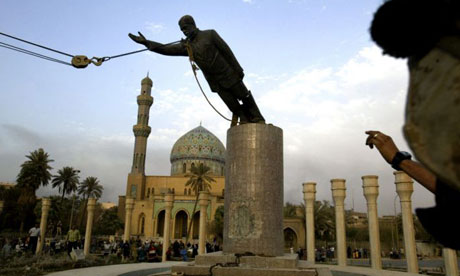
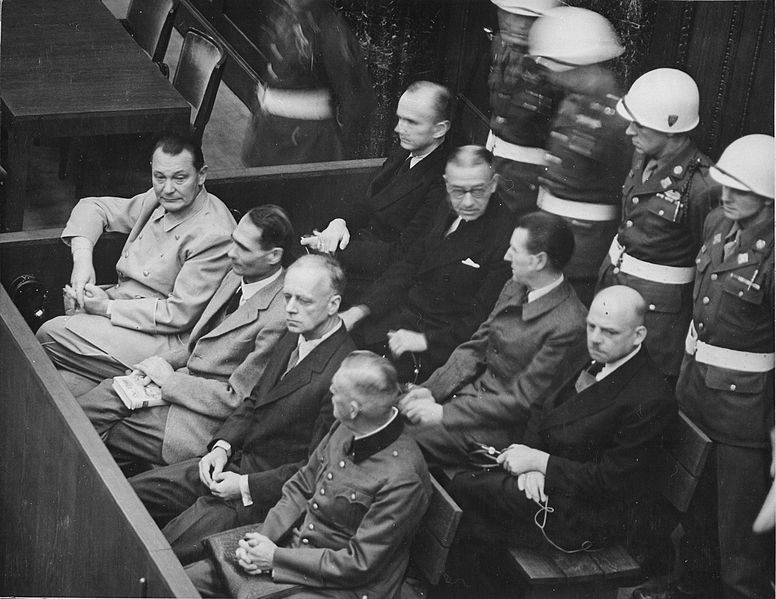
I think that the leaders of the Bush administration who took us to war in Iraq are war criminals and would have hung at Nuremberg if Justice Robert Jackson had had them in the dock. Likewise I think that the opposition of the GOP and the Trump administration to the International Criminal Court (ICC), other international organizations, and to our partners and allies around the world and cooperation with dictatorships and authoritarian regimes beginning with Putin’s Russia is damnable.


I think that Fox News lies when it calls itself “fair and balanced” and that much of what it airs is nothing more than political propaganda designed to help its political allies and keep people riled up against that black man in the White House.

I think that the crass social Darwinism of the followers of Ayn Rand is evil, needs to be called what it is  and condemned by those who call themselves Christians.

Likewise, speaking of Christians I think that many American Christians have sold their faith to political hacks that call themselves pastors or religious leaders while pocketing the money of their followers laughing all the way to the bank. This is especially true of their relationship to President Trump.

Finally as a Christian I don’t think that the United States was founded as a Christian nation, and in that I am backed by the Founders and their Christian allies like Virginia Baptist leader John Leland. I think that we as a society have a responsibility to care for the least, the lost and the lonely.

So while I am moderate in the way that I do life, I am certainly a liberal, a progressive, and a realist.  I am okay with people that disagree with me because it is a free country but that being said I won’t be bullied.

So where did I go left?

Peace

Padre Steve+

2 Comments

Filed under civil rights, culture, faith, Foreign Policy, History, LGBT issues, News and current events, Political Commentary

“We’ve Got Some Difficult Days Ahead…” The Assassination of Dr. Martin Luther King Jr. at 50 Years

20130404-203529.jpg

Friends of Padre Steve’s World,

Fifty years ago today a bullet killed Dr. Martin Luther King Jr. while he was in Memphis supporting Sanitation Workers who were being subjected to unsafe working conditions without the same rights, protections, pay, or benefits of white Sanitation workers. As always there were threats on King’s life and he knew that he was a target. The night before his assassination Dr. King spoke at Mason Temple the international headquarters of the Church of God in Christ, the largest historically Black denomination in the United States.

That speech is now known as the “I have been to the mountaintop” speech. Dr. King had flown into Memphis earlier in the day, on a flight delayed by a bomb threat. King like many Civil Rights leaders of his day lived under the constant threat of physical violence, intimidation and assassination. After the heady days of the great march in Washington and the I Have a Dream speech and the award of the Nobel Prize his positions on social and economic justice and his opposition to the Vietnam War had made him a pariah of sorts, even in the Black community. He had place himself in the gunsights of his opponents as he pressed on in spite of the opposition.

Life was precious to him, but he like many others understood that it could be cut short at any moment for simply speaking the truth about racial discrimination, prejudice and violence. King himself had been accosted at different times and spent time in jail for “breaking” laws that enforced and enabled institutions and individuals to discriminate against Blacks with no consequences whatsoever. He was called a radical, a Communist and anti-American by those that opposed any changes to the status quo. He knew that his life was always in danger.

In that speech Dr. King seemed to understand the threat but he was determined to go on and to do God’s will. Dr. King understood that the Christian faith required more than intellectual assent to a doctrine. He understood the words of the German martyr Dietrich Bonhoeffer: We are not to simply bandage the wounds of victims beneath the wheels of injustice, we are to drive a spoke into the wheel itself.”

At Mason Temple Dr King proclaimed:

“And then I got to Memphis. And some began to say the threats…or talk about the threats that were out… What would happen to me from some of our sick white brothers? Well I don’t know what will happen now. We’ve got some difficult days ahead. but it doesn’t matter with me now. Because I been to the mountaintop. And I don’t mind. Like anybody, I would like to live a long life. Longevity has its place. But I’m not concerned about that now. I just want to do God’s will. And He’s allowed me to go up to the mountain. And I’ve looked over.and I have seen the promised land. I may not get there with you. But I want you to know tonight, that we, as a people, will get to the promised land! And so I am happy, tonight. I’m not worried about anything. I am not fearing any man. Mine eyes have seen the glory of the coming of The Lord.”

It was April 4th 1968. The United States was divided by the Vietnam War and numerous social crises. President Lyndon Johnson had just done the unthinkable, he had announced that he was withdrawing from his reelection bid. In many places despite the integration of the Armed Forces, Baseball, the repeal of many Jim Crow laws and the passage of the 1964 Voter’s Rights Act African Americans still felt the sting of individual and institutional racial prejudice. In Vietnam the effects of the Tet Offensive still lingered even as American cities burned.

His speech at Mason Temple was almost prophetic in its message. The words of the thirty-nine year old Baptist Preacher from Atlanta echoed through the sanctuary of the church to the applause of those present even as a heavy spring thunderstorm rocked the city.

The following evening, King with a number of other Civil Rights leaders including Ralph Abernathy and Andrew Young were at the Lorraine Motel, where King often stayed. King was standing on the balcony outside of his room, Room 306 when at 6:01 PM he was cut down and mortally wounded by a single shot fired from a Remington 760 rifle. The bullet struck him in the right cheek, traveled down his spine and severed his jugular vein and several major arteries before it came to rest in his shoulder. He still had a heartbeat when the ambulance arrived and on his arrival at St Joseph’s Hospital. Efforts to revive him by opening his chest and attempting cardiac massage were unsuccessful and at 7:05 PM Dr King was pronounced dead.

20130404-221100.jpg

20130404-221225.jpg

Witnesses reported a man named James Earl Ray fleeing the area after the shooting. The Remington rifle and a pair of binoculars with Ray’s fingerprints were found at the scene. Ray was apprehended at London’s Heathrow Airport two months later. Ray was tried and convicted of Dr King’s murder. He was sentenced to 99 years in prison and died in 1998. During the trial Ray recanted his confession, implicated an unknown man named “Raul” who he had supposedly met in Montreal as being involved and said that “he personally did not kill” Dr King hinting at a conspiracy. Ray plead guilty to avoid the death penalty.

Other theories were postulated about the murder and Lloyd Jowers who owned a restaurant across from the Lorraine Motel claimed in a 1993 interview that the US Government and the Mafia were complicit in the killing, that Ray was a scapegoat and that Memphis Police Lieutenant Earl Clark was the shooter.

Jowers’ story is disputed but it was believed by King’s widow Coretta Scott King.  She filed a wrongful death lawsuit in which a jury found that Jowers and others including government agencies were guilty of the plot to kill Dr King on December 8th 1998. Though Jowers’ story was contradicted by much of his own testimony during the trial the results have caused a divide in who experts believe killed Dr King. As for the King family they reconciled with Ray before his death.

20130404-221809.jpg

Regardless of who killed Dr King the result was a shock to much of the nation and in many places riots broke out despite the pleadings of most Civil Rights leaders to continue in Dr King’s path of non-violence.

20130404-230118.jpg

Senator Robert F Kennedy, then running for the Democratic Party nomination for President learned of Dr King’s shooting just before flying to Indianapolis for a campaign rally. On his arrival he learned of Dr King’s death. Warned by police that he could be in danger he made an impromptu speech from the back of a flat bed truck. The speech was short, under 5 minutes but its message is applicable even today.

“Ladies and Gentlemen,

I’m only going to talk to you just for a minute or so this evening, because I have some — some very sad news for all of you — Could you lower those signs, please? — I have some very sad news for all of you, and, I think, sad news for all of our fellow citizens, and people who love peace all over the world; and that is that Martin Luther King was shot and was killed tonight in Memphis, Tennessee.

Martin Luther King dedicated his life to love and to justice between fellow human beings. He died in the cause of that effort. In this difficult day, in this difficult time for the United States, it’s perhaps well to ask what kind of a nation we are and what direction we want to move in. For those of you who are black — considering the evidence evidently is that there were white people who were responsible — you can be filled with bitterness, and with hatred, and a desire for revenge.

We can move in that direction as a country, in greater polarization — black people amongst blacks, and white amongst whites, filled with hatred toward one another. Or we can make an effort, as Martin Luther King did, to understand, and to comprehend, and replace that violence, that stain of bloodshed that has spread across our land, with an effort to understand, compassion, and love.

For those of you who are black and are tempted to fill with — be filled with hatred and mistrust of the injustice of such an act, against all white people, I would only say that I can also feel in my own heart the same kind of feeling. I had a member of my family killed, but he was killed by a white man.

But we have to make an effort in the United States. We have to make an effort to understand, to get beyond, or go beyond these rather difficult times.

My favorite poem, my — my favorite poet was Aeschylus. And he once wrote:

Even in our sleep, pain which cannot forget falls drop by drop upon the heart, until, in our own despair, against our will, comes wisdom through the awful grace of God.

What we need in the United States is not division; what we need in the United States is not hatred; what we need in the United States is not violence and lawlessness, but is love, and wisdom, and compassion toward one another, and a feeling of justice toward those who still suffer within our country, whether they be white or whether they be black.

So I ask you tonight to return home, to say a prayer for the family of Martin Luther King — yeah, it’s true — but more importantly to say a prayer for our own country, which all of us love — a prayer for understanding and that compassion of which I spoke.

We can do well in this country. We will have difficult times. We’ve had difficult times in the past, but we — and we will have difficult times in the future. It is not the end of violence; it is not the end of lawlessness; and it’s not the end of disorder.

But the vast majority of white people and the vast majority of black people in this country want to live together, want to improve the quality of our life, and want justice for all human beings that abide in our land.

And let’s dedicate ourselves to what the Greeks wrote so many years ago: to tame the savageness of man and make gentle the life of this world. Let us dedicate ourselves to that, and say a prayer for our country and for our people.

Thank you very much.”

Two months later Kennedy was shot and mortally wounded by Sirhan Sirhan after winning the California Primary.

The loss of Dr King and later Senator Kennedy was profound. So tonight take the time to remember and pray that we all will be able to go to the mountain and see the promised land where in a more perfect Union we will heal the wounds that so divide our country.

20130405-004046.jpg

Today the rights that Dr. King and so many others fought for dating back to the days of Frederick Douglass are being rolled back at the local, state and Federal level. The administration of President Trump and Republican led statehouses have been working overtime to silence dissent, discredit opposition, and through unjust laws and policies upend the civil rights not only of Blacks, but other people of color, immigrants, women, LGBTQ people, and Muslims.

Dr. King noted the night before he was slain that “we’ve got some difficult days ahead” but as he told his staff in January 1968 “Hope is the final refusal to give up.”

Peace

Padre Stave+

Leave a comment

Filed under christian life, civil rights, ethics, faith, History, leadership, ministry, News and current events, Political Commentary, Religion

Soldiers, Politics, and Empty Tombs: The Strange Experience of Longinus the Centurion

roman-soldiers-guard-james-tissot-1

Friends of Padre Steve’s World,

Those who follow my writings know that I struggle with faith. Since my return from Iraq in 2008 I have found a certain kinship with soldiers who have been assigned the unthankful and trying tasks of dealing with occupation duties or fighting insurgencies. 

In the case of the story of Easter it is all too common that writers, theologians and others focus on the story of Jesus and his disciples, or conversely, if they explore anyone else, they focus on the Jewish religious leaders of the time. 

After Iraq I had a harder time relating to Jesus and his followers, or the religious leaders of Jerusalem. That being said, coming home from Iraq, struggling to believe, I find a tremendous affinity with the officers of the Roman Legions serving in Judea and Samaria in the 1st Century A.D. 

This is the final chapter of a series that I wrote several years ago about the Roman Centurion known as Longinus, who according to tradition, was at the cross when Jesus was crucified. I have tried to weave other characters from the Gospel narratives, including the Centurion whose “beloved servant” was healed by Jesus an account mentioned in both Matthew and Luke, where the Greek word for servant “Pais” is only found in these accounts and is different from the word commonly used in the New Testament “Doulos.” The difference leads to some interesting and potentially powerful understandings about the people that Jesus interacted during his earthly ministry.

The reason I am doing this is because I believe that many Christians cannot imagine what it must have felt like to be the Roman occupiers of Judea in a time where they were hated and deep divisions, religious, cultural and political complicated the lives of Roman officers like the Centurion known as Longinus.

I do hope that you enjoyed the series and that it and the Gospel narratives challenged you whether you are a Christian or not. I know from my time in Iraq serving with our advisors to the Iraqi forces that what the Roman officers dealt with was more difficult than any of us could imagine, unless you have been a soldier or officer of an occupying power, which I have been.

By the way, at the point this article posts I will be preaching at the Easter Sunrise Service at my base proclaiming the triumph of life over death and the universal love of God for all people. As the German Lutheran theologian Jurgen Moltmann wrote:

“Believing in the resurrection does not just mean assenting to a dogma and noting a historical fact. It means participating in this creative act of God’s … Resurrection is not a consoling opium, soothing us with the promise of a better world in the hereafter. It is the energy for a rebirth of this life. The hope doesn’t point to another world. It is focused on the redemption of this one.”

Peace and Happy Easter…

Padre Steve+

The pounding on his door awakened Longinus before he expected on this day after the Jewish Passover. He was hoping perhaps beyond hope that the worst was over and that in a few days he could take his soldiers back to the confines of Caesarea and away from the troubled city of Jerusalem. He was tired of this duty and longed for service with a real Legion with real Roman soldiers.

The pounding continued and the weary centurion wiped the sleep from his eyes, rolled out of his bed and went to the door of his quarters in Fortress Antonia. He opened the door to find his Optimo, or second in command Decius standing there, his fist ready to continue pounding, with a look of near panic on his face.

Startled, Longinus asked the young officer to come into his quarters and take a seat at his table. They like the other officers had seen events that they could barely explain over the past week, and some of those events had troubled Longinus in a manner in which he was not accustomed to, or prepared for.

Longinus took a wineskin and poured the contents into two cups. He asked Decius what was so urgent and frightening that he had to be at his quarters well before the duty day began. The young man took off his helmet to reveal a crop of blondish brown hair common to the Tyrol in the northern part of Italy.

The young officer took the cup of wine and downed it in one motion. Longinus, pureed and another as the young Tyrolean told an almost unbelievable story. Wiping his brow and taking a drink from the cup he explained that there was trouble at the tomb of the itinerant preacher named Jesus.

Longinus listened to his report:

The two guards from Longinus’s unit who had relieved the previous watch at the tomb had evidently fallen asleep. While they were asleep there had been a break in. The soldiers claimed that they had been overcome when some kind of “angelic being” descended in front of them. They reported that some of the women who had been at the execution site previously had been near the tomb. They said that when they awakened the body of this Jesus was no longer in the tomb.

The story seemed preposterous, but Longinus could not believe that his soldiers had fallen asleep on duty, as such an act could be punished by a death sentence. Adding to the confusion was a report that two of the preacher’s “disciples” had reportedly entered the tomb and claimed that the body was gone as had some of the women that had been there at the crucifixion.

Longinus took a drink from his cup of wine and thought for a moment. He had to admit that the story was unbelievable, but yet in light of the strangeness of the man and the events surrounding his execution Longinus, was no longer surprised at anything. Longinus looked at his young executive officer and said:

“Optimo, there has to be a logical explanation for what happened, and we need to find the truth. I do not like to think that our soldiers were asleep on duty, and I don’t think that the High Priest would not attempt to use this against us. Please have the soldiers and the Sergeant of the Guard report to me.”

Longinus had Decius bring the two soldiers to him along with the Sergeant of the Guard to explain what had happened.

The two soldiers, one a Samaritan and the other a Greek had good reputations in the unit. Neither had given him cause for concern and the terrified expression on their faces as they explained what happened at the tomb gave Longinus reason to believe them. Yes, it was possible that they were lying but Longinus believed their story because in spite of his threats they stuck to it. He threatened them with death if they had fallen asleep and were lying. When that did not produce results he promised a light punishment if they only told the truth, but despite his efforts to get them to testify to something rational they stuck with this outrageous story.

Longinus was not much of a believer in miracles angels or any sort of magic hocus-pocus purveyed by seers, magicians or fortunetellers. He did not believe in the state “gods” of Rome and likewise had little respect for the Jewish God, not so much because he understood the theology of the Jews, or even might believe in some sort of all-powerful being, but because he was disgusted by their use of their god for their political purposes.

All that being said, Longinus was inclined to believe his solders. When his friend Flavius had told him about his servant being healed by the Jesus fellow he found it hard to accept. That being the case here he was now beginning to believe this outlandish story. It was preposterous, but he could not accept the alternative. To disbelieve his men would mean that there was a serious breakdown of discipline by two outstanding soldiers. Longinus had some soldiers that he wouldn’t believe for an Athenian minute if they told him such a tale, but he believed these men. The terror on their face as they told the story led Longinus to believe that they had to be telling the truth as improbable as it was.

Longinus again thought of his words as the darkness enfolded the city and the earth quaked preacher hung dying on the cross on that evil hill just two days before. He dismissed the soldiers and as they left he prepared himself to tell the scheming governor they latest “good news.” If only Rome had let these people stew in their own mess. Longinus shook his head as he wondered about the wisdom of attempting to police such fouled up lands.

After he washed and put on his uniform, Longinus went to Pilate’s headquarters where he and the other Centurions, including his friend Flavius participated in a meeting with Pilate and his staff, the Jewish High Priest and his representatives and two of Herod’s people.

The meeting reminded Longinus  of a meeting of criminals. The High Priest and his representatives were livid at the report he delivered and demanded that Pilate take immediate action to solve their problem. Herod’s henchmen voiced their displeasure regarding the lapse of the Roman soldiers that allowed this to happen.

Longinus spoke up for his men and said that as improbable as the story was, that he believed his men. That only made the non-Romans angrier and they began not only calling for punishing the soldiers, but Longinus as well. Longinus thought that they were engaging Pilate in yet another histrionic episode in order to force Pilate to do their bidding, if not today, in the future.

The High Priest and Herod’s men insisted that Longinus’ soldiers had to have fallen asleep and or that they had conspired with the preacher’s followers to remove the body from the tomb. This angered Longinus to the point that he interrupted their ranting to defend his men’s honor. Pilate finally ordered Longinus and the High Priest to be silent. He asked the non-Romans to step outside while he conferred with Longinus and the other Centurions. The High Priest objected, but decided not to press the point and left the room.

Pilate explained his dilemma. He was afraid that if he sent the High Priest away by supporting his soldiers that there would be a revolt in the streets. He had seen the tumult on the streets by the supporters of the High Priest when he tried to release the “King of the Jews” and felt that this would be worse for security. He advised the Centurions that while he had no reason to doubt them or their men that he had to placate the High Priest and Herod in order to avoid chaos, chaos that could lose him his job if he wasn’t careful. Likewise he did not feel that he had the military manpower in the city to handle a full-fledged revolt and that he would have to call for reinforcements from the Legions based in Syria. Pilate was loath to do as this as it would get back to the Emperor, and the Emperor did not take kindly to governors who could not manage their provinces.

Longinus thought back to the day of the execution. Pilate had agreed to place a guard at the tomb at the urging of the High Council. Longinus had argued against placing any soldiers at the tomb as he felt that since the “King of the Jews” was the problem of the Jews and since man that he had called the so called  “son of God” was dead that Rome’s obligation was over. Let the Jews handle their own problems.

The whole thing reeked of politics and Longinus did not like it, but on Friday Pilate had overruled him. Then Pilate explained that Roman soldiers needed to guard the tomb because the High Priest insisted that Jesus’ followers would attempt to steal the body and then claim that he this Jesus had been raised from the dead. That insisted the High Priest would lead a revolt against the Jewish council and eventually Rome itself.

Another actor who added to the Judean witches’ cauldron was the Herod Antipas, the corpulent and corrupt “King” of Judea. If Longinus detested Pilate and the Jewish High Priest he hated Herod and all that he stood for even more. The presence of Herod made Longinus wonder why Roman lives and treasure were spent to solve the problems of this God-forsaken land; a land that Longinus believed would still be trouble two millennia from now if the world lasted that long.

Longinus believed that as long as Rome allowed the High Council and Herod to rule the region by proxy that the troubles would never end. He believed that it was only a matter of time before these people, mobilized by the passion of the Zealots would revolt as they had against the Seleucids nearly 200 years before. He knew if that happened that Rome would mobilize more the  enough legions to crush the revolt, and when they were done would not leave as much as a house standing. Longinus hated this occupation and all that it stood for, especially when he saw a good and innocent man like this Jesus fellow killed for no good reason other than the politics of it all. It sickened him.

When Pilate was done explaining his decision to Longinus and the other Centurions Pilate called the quite irate non-Romans back into the proceedings. He told the High Priest and Herod’s men that he would discipline the soldiers involved. He also explained that he would assist them in finding just what parties removed the body from the tomb. In the mean time he would suppress any stories coming from the soldiers about this supposed “resurrection” of this Jesus character from the dead.

The High Priest and Herod’s men agreed that this would suffice and thanked Pilate for his time and effort. Longinus and the other Centurions quietly seethed as this took place. When the non-Roman parties had left Pilate, knowing how his officers hated his decision called them to him. He told the officers that no action would be taken against the men and that he would not actively assist the Jews in trying to find the perpetrators of the event. He had in fact deceived the High Priest and Herod’s men.

Pilate then let the officers know that they and their units would remain in Jerusalem for another week to allow the multitude of pilgrims to leave the city. Once the Jewish festivities were over and the people had departed, they would return to Caesarea. Longinus thought about it and for a brief moment he admired Pilate’s duplicity. Pilate the consummate politician had again found a way to defuse the situation, deceive the local leaders and protect his soldiers, and as much as Longinus and the other Centurions despised the deal it was better than trying to deal with a full fledged rebellion with so few troops available in Jerusalem.

Longinus left with the others and met Decius and Flavius when he stepped into the court of the fortress. He was very unhappy with the deal that Pilate made with the High Priest and Herod even though he understood the reality of the politics behind it. Longinus felt that he had dishonored his soldiers and the unit for the sake of political expediency. He felt ashamed of the Empire for what Pilate had done in cooperating with these people from beginning to end during this affair. He would not forget.

MLPPT_CenturionCross_1

When Longinus returned to his quarters he again looked at his blood stained lance and thought about the man who was put to such an ignominious death for such putrid reasons. Surely something had to be different about him and there had to be some purpose to this injustice. Longinus again mused quietly, “truly this was the Son of God…”

Whatever that meant…

1 Comment

Filed under christian life, ethics, faith, History, Loose thoughts and musings, middle east, Military, Religion

A Centurion’s Saturday after a Crucifixion

Friends of Padre Steve’s World

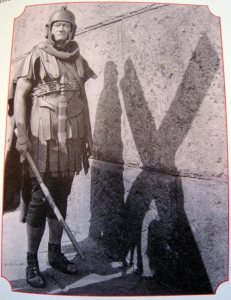
Today is what Christians call “Holy Saturday.” It is a day of reflection between the death of Jesus on Good Friday and his Resurrection. So unless something really unusual and earth shattering occurs I am going to take the Easter weekend to do some reflection, including on some spiritual topics. In light of that I am simply going to post three of my older fictional accounts of that weekend, yesterday, today, and Easter Sunday.

As a genre this series falls in the realm of historical fiction, which means that while they may be set in a historical event, that they are fiction. Likewise, I admit that they and the main character are more a reflection of me, and my journey, and my over-active imagination, than my cursory study of Roman and New Testament History.

That being said, have a nice weekend, and if you do it, have a nice Easter.

Peace,

Padre Steve+
holy-saturday

The horrible day was passed and a new morning greeted Longinus as he arose. The sun rising over the escarpment in the east that overlooked the Jordan River cast a warm red and yellow glow as its rays infiltrated the window overlooking the courtyard of Fortress Antonia. It seemed an eternity since he watched the sun rise as Pilate debated what to do with that Jesus fellow.

Longinus and his fellow officers Flavius and Decius had spent much of the previous evening in the tavern following the executions. It was not a typical night for them. There was little frivolity, few jokes and none talked much about the events of the day, which had begun for Longinus not long after midnight. Flavius, whose servant had been healed by Jesus in Capernaum had briefly discussed the meaning of Longinus’s comments as the Galilean preacher died upon the cross. Longinus pondered the words again. “Surely this man is the son of God” or something to that effect. He didn’t remember his exact words and he couldn’t even remember why he had said them, but then the day was long and the events struck a nerve. He had seen or taken part in many executions as well as difficult battles. He disliked executions in general but until now he had managed to keep his soul protected from from what he felt on Golgotha by the wall that he had built around his heart.

Longinus looked out the window and then at his desk. He would need to call his officers together soon. He was sure that even though it was the sabbath that those that plotted against Roman rule, as well as the various factions at work in Jerusalem were still plotting, scheming and at work. He wondered how in such a climate anyone could call the day “holy.”

He did not like what had happened the previous day. When Pilate gave in to the Jewish leaders in regard to killing the Galilean he very uneasy. Pilate should have damned the whole politics of the situation and let the man go. The events still bothered him. The man was innocent. Pilate knew it, Longinus knew, hell they all knew and yet all of them had aided and abetted those that wanted the man named Jesus dead. Longinus felt a shame that in all of his years of soldiering he had never before felt. Pilate was able to wash his hands of responsibility. Longinus wished he could do so for himself, but the blood of the innocent man, which still stained the tip of the lance that Longinus had plunged into him, would not let him. Longinus shook his head in disgust.

Just then Decius knocked and entered with the news that Pilate had ordered a guard set at the tomb of Jesus. Supposedly the Jesus fellow had said that he would rise from the dead and the Jews wanted to make sure that no one tried to make off with the body of Jesus.

Longinus was not surprised, somehow as strange as the week had been it made perfect sense. Set a guard over the tomb of a man who was betrayed by one his own, denied by others and abandoned by all but one? It was ridiculous; people don’t rise from the dead. Dead is dead. Longinus thought rather cynically that it was a waste of his troops time and effort. If the Jews were so concerned why didn’t they send their Temple Police to guard the tomb? But then he realized that such duties were beneath the Temple establishment. The dead were unclean, so get the infidel Romans to do the dirty work, that way if something went wrong they could take the blame. It figured.

14_2009_da_02_int

He ordered Decius to set the guard. As he did this he received a report that two of his Samaritan soldiers had been brought in by a patrol dead drunk late in the evening. He would have to discipline them later, that was the lot of a commanding officer. How he wished that he was commanding a unit of Italians in a home province or on a campaign rather than these Samaritan and Syrian cast offs in this God forsaken backwater of the Empire. At least he had a number of good officers under his command, perhaps if he remained in Palestine he could organize a transfer of he and his officers to the Italian Cohort stationed in Caesarea where his friend commanded one of the units. Though he too was based in Caesarea it was much better to be assigned to that Italian unit rather than the locally recruited units.

Flavius joined them as they set down to eat breakfast. Outside Quentin and other sergeants mustered the men, and proceeded to carry out the order of the day. Patrols were dispatched to remind any Zealots or sicarii that even if they had gotten Pilate to do their bidding regarding the Galilean that Rome was still in charge of their capital.

The officers discussed details of the planned movement that would take them back to Caesarea in the next couple of days, whenever Pilate decided that the situation in Jerusalem was calm enough to leave. That would be a day or two at least as the multitudes that had come to observe Passover from the diaspora returned to their homes about the Empire and beyond.

The sun now shown brightly through the window and Pilate looked at the still menacing hill known as Golgotha, now devoid of crosses. He thought about that final scene yesterday amid the gloom as the tree men including the Galilean hung suspended between the heavens and earth. It was a sight that he would not soon forget.

Flavius and Longinus hoped for an uneventful couple of days in order to prepare for the always-dangerous trip through Judea. The Zealots, the Sicarii and other insurgents always hoped to kill Roman soldiers. But tonight, the Gods willing Longinus and his comrades would meet over a cup of ale in the tavern and maybe things would begin to return normal, whatever that meant in this place.

To be continued…

1 Comment

Filed under christian life, faith, History, Loose thoughts and musings

The Long Good Friday of Longinus the Centurion

Friends of Padre Steve’s World

Today is Good Friday and so unless something really unusual and earth shattering occurs I am going to take the Easter weekend to do some reflection, including on some spiritual topics. In light of that I am simply going to post three of my older fictional accounts of that weekend today, tomorrow and Sunday.

There are a number of other articles in the series that cover all of Holy Week. If you want to read them those stories are on the site,

As a genre this series falls in the realm of historical fiction, which means that while they may be set in a historical event, that they are fiction. Likewise, I admit that they and the main character are more a reflection of me, and my journey, and my over-active imagination, than my cursory study of Roman and New Testament History.

That being said, have a nice weekend, and if you do it, have a nice Easter.

Peace,

Padre Steve+

 img_0643-726257

Longinus had finally decided to try to get a bit of rest. After his rather morose meeting with Flavius and Decius he and Decius went back to check on the preparations for the executions scheduled for the next day. Quentin his Tesserarius had been working with the squad chosen to to conduct the actual crucifixions of the prisoners, Bar-Abbas the insurgent as well as the common criminals and murderers Dismas and Gestas who he had met in the hell hole of a jail in the dungeon of Fortress Antonia after Pilate had assigned him the task of conducting the executions.

Longinus was certain of his unit’s ability to carry out the mission, though he would have rather had a unit from Italy than his unit of Syrian and Samaritan troops. There was one positive aspect, his Samaritans and Syrians had no love for the Jews and would have no qualms whatsoever in disposing of the criminals.

He thought for a moment about the prisoners. That Bar-Abbas fellow, he would be glad that he or any other Roman would have to deal with him again once the crucifixion was over. As for the common criminals he felt that everyone would be better off with Gestus dead although he hoped that Pilate might take pity on the repentant thief named Dismas. However, despite his feelings he also knew that the law was the law and repentant or not that Dismas was guilty of the crimes and the sentence was just. As he had realized earlier in the day while talking with Flavius it was important not to become emotionally involved with the locals, especially prisoners. Maintaining an emotional distance ensured that he would not flinch in times when ice rather than blood needed to flow through one’s veins. He was proud that he could do this but envied the humanity that his comrade and friend Flavius still maintained in spite of everything.

He was just about to prepare for bed when a messenger from Pilate knocked on his door. It was late, too late and Longinus wondered just what was going on.

“Come.” He said, the weariness in his voice obvious in the way he answered.

The messenger, a relatively young Italian soldier assigned to Pilate’s bodyguard entered, came to attention and saluted.

Longinus looked at the young man, like him far from home and asked “what am I needed for now?”

“Centurion, the Governor has requested your presence” the soldier replied.

“May I ask what for?” A now increasingly irritated Longinus asked.

“Sir, I do not have the details but it is a pressing matter regarding the Jews and that Galilean preacher.” The young man was obviously uncomfortable in having to request a career officer like Longinus, a veteran of real battles and campaigns appear before Pilate for what was not much more than a religious dispute among an occupied people.

“Pressing matter?” Asked Longinus.

“Yes Centurion. I was told that it was urgent that you come to Governor Pilate now and alert your unit as at least some of your men may be needed if things get out of hand.”

“Can you please tell me just what is going on?” Longinus asked as he pulled his armored breastplate over his shoulders.

“I’m sorry Centurion, I have no more information. You are to report to the Governor within the half hour. The Governor wants your unit ready within the hour.” When he finished he came to attention, saluted and exited the room.

Longinus hated how leaders sent young men to be their messengers and would not give them all of the relevant information.

He then sat back down in his chair where he had been sitting and discussing the situation with Flavius and Decius. He wondered to himself what could be so pressing that Pilate needed him now.

After briefing Decius and Quentin, instructing them to wake the men and be ready for action Longinus took a squad and went to Pilate’s headquarters. When he arrived Pilate greeted him.

“Centurion, I hate to have bothered you at this hour in light of how busy you and your men will be in the morning but a situation has arisen.” Longinus looked around the room and then heard some commotion on the area called “the Pavement.”

“What is happening my Lord?”

“Longinus, these Jews have brought that Jesus fellow here and are accusing him of fomenting a rebellion against the Emperor.”

“A rebellion sir?”

“That is what they say Centurion. They claim that one of his closest associates had turned him in and after a trial of their own that they found him guilty of claiming to be a king and God that will overthrow the Emperor.” Pilate could not hide his discomfort.

“Do you actually believe them sir? After all we had heard this morning that this Judas Iscariot fellow had betrayed him for 30 pieces of silver.”

“I know Centurion, I know.” Pilate looked at Longinus then back out at the crowd gathered outside in the dark. He was afraid and Longinus could sense that fear, fear that if he made the wrong move that a real rebellion could break out and that Pilate as the Governor would take the blame and bear the punishment and wrath of Caesar.

“Centurion, I tried to placate these people be questioning this Jesus fellow myself.” Pilate paused. “I must say that he is a rather unusual man and truthfully I could not find anything that under Roman law that I could find him guilty of doing. Not a thing Centurion, nothing but their leaders kept pressing me.” Pilate’s gaze seemed to be almost pleading with Longinus to help him escape this decision. Longinus knew at that moment that his day was about to get worse. Pilate continued “It seems to be a religious squabble of some kind so in order to deal with it and to try to keep us out of it I sent Jesus to Herod since Herod is the ruler of Galilee.”

“So Herod will certainly deal with the situation, will he not Governor?”

“Centurion, I thought that that corpulent bastard Herod would deal with it but I just got word that Herod too could find no crime. The Jewish leaders and of their Temple Police are supposedly bringing him back to me to render judgment. They are leaving it to me.”

“Judgment for what?”

“Sedition, treason, blasphemy, proclaiming himself a king.” Pilate paused, his face flushed. “My God I’m surprised that they haven’t accused the man of fathering the High Priest’s daughter.” The sarcasm and bitterness was evident in his voice.

“So what do you intend to do.”

“I intend to try to get us out of this with as little trouble or guilt as possible. When they return him to me I will ask a few more questions and set him free as is my prerogative, certainly they wouldn’t want to release a real murderer like Bar-Abbas back into society, I do give them more credit than to stoop that low.”

“I do hope that you are right governor, but from what I understand it seems that they are intent on ridding themselves of the fellow once and for all. I think that their leaders see the Galilean as more of a threat than a man like Bar-Abbas.”

Pilate said nothing and during the silence Longinus’s troops under the direction of Decius entered the perimeter of the court adding an additional security cordon as the crowd grew and got more boisterous. As they took up position the Temple Police and members of the High Priest’s entourage approached the court with the Galilean in custody. Quentin with four soldiers met them and took custody of the obviously tired and already abused man. They delivered Jesus to Pilate and stood back. Longinus watched as it happened. As he did so Flavius entered the room with his servant. The servant appeared unsteady and full of emotion when he saw the man who had healed him two years before. Flavius stood by his face not betraying any feelings except deep-seated rage that was boiling as he saw this travesty of justice take place.

Pilate attempted every trick in the book to garner a way to save the life of the man standing before him. He asked him questions and Jesus clothed in a purple robe that Herod had mockingly placed upon him said nothing. Finally in desperation Pilate asked Jesus if he was a king. The answer both fascinated and terrified Pilate and caused him to wish that he had never come to the city. As he deliberated earlier and debated the members of the Sanhedrin his wife again urged him to “have nothing to do with that innocent man.”

But the answer of Jesus to the question of his kingship troubled Pilate. Had he thought the man insane he would have scourged him, declared him mad and been done with the affair.

“My kingdom is not of this world, if it were my followers would be fighting to ensue that you did not hand me over to the Jewish leaders.” Jesus looked into Pilate’s eyes, the look sent a chill through Pilate’s soul and so he restated the question “so you are a king?”

Jesus replied solemnly “You say I am a king. I was born for this and it is why I came to this world, to testify to the truth. Everyone who belongs to the truth listens to me.”

Pilate appeared stunned and both Longinus and Flavius knew that he was beaten. They listened as Pilate asked “what is truth?” The question was one of a man who had long ago sold his soul to gain the world, it was the question of a deeply cynical man who had long determined that truth was only in the eye of the beholder and to be used as needed to acquire power. At the same time they could see a touch of genuineness in the question as Pilate, desperate for an answer that would enable him to please everyone and spare the life of the man before him wrestled with the question of truth for the first time in years.

They watched as Pilate attempted to bargain for the life of Jesus only to be shouted down by the increasingly riotous crowd who demanded that Bar-Abbas be released. Again attempting to assuage the mob he had Jesus scourged with a barbed whip. The soldier who did that brutal work was a Syrian, big and burley without a trace of feeling in his eyes or face. The servant of Flavius begged him to intervene but Flavius now knew that the things happening to Jesus could no longer be influenced by sentimentality and stories of the goodness of Jesus. He had seen this type of Justice before, and though he despised it, he earnestly hoped that it would be enough to deliver Jesus.

After the scourging, soldiers assigned to Longinus jammed a crown of thorns down on the blood covered Jesus and placed the purple cloak over him. Jesus’s body trembled. Pilate again approached the mob and tried to decline the odious responsibility thrust into his hands. The mob led by the Chief Priests and joined by man of their rivals, the Pharisees cried out for Jesus to be crucified.

They heard Pilate plead with Jesus, again noting that he had power over the life and death of Jesus to which Jesus replied that Pilate “had no power over him that had not been given by God.” Finally he pleaded with the Jews one more time to take Bar-Abbas for execution and to spare the Galilean. The leaders shouted him down again and cried out that Pilate would be “a traitor to Caesar” if he let a man who claimed to be a king live.

Defeated By the mob and by his own weakness of character Pilate asked for a ceremonial washing basin full of water. When it came in the hands of a court member he placed his hands in it and proclaimed “I am innocent of this man’s blood.” He then ordered the soldiers to take Jesus to be crucified even as the prisoners Dismas and Gestus were led from the dungeon for execution and a profoundly perplexed Bar-Abbas was released by the jailer.

Longinus looked at Flavius and whispered to him “wash my hands of his blood? My God, he knows that he is as guilty at them.” Flavius looked on and simply said, “I know my friend, we all are.”

The small cohort of soldiers assigned to the crucifixion detail were commanded by Quentin, a man who had fought many battles, and like Longinus and Flavius felt that these executions of helpless prisoners were unworthy of soldiers like himself. The soldiers of Flavius’s unit had responsibility for helping to clear a way down the narrow street called by the Romans Via Delarosa, or The street of suffering. It was the street that all the condemned travelled to the hill of execution so fittingly called the place of the Skull. Longinus had seen others walk this path but in the past he had been able to shield his person from their suffering, but today was different.

Longinus’s own execution squad led by Quentin led Jesus and the others along, forcing them to carry their crosses. About halfway down the street Jesus collapsed under the weight if his cross and grabbed a bystander, a man from Cyrene to carry the cross while the soldiers prodded the bloody body of Jesus down the street and out of the city to the place of execution. People jeered at the condemned as they did at very execution as for most this was no different than any other crucifixion and most of those present knew little about any of the condemned men and even those that were familiar with Jesus probably did not recognize the bloody man stumbling down the street. Of course there were others present who did know Jesus and watched in horror as their friend, teacher and for one woman her son struggled to the execution site. Longinus wondered about his own elderly mother and thought of her as he saw the mother of Jesus. He quickly tried to chase her image from his mind, he needed to be strong and hard if he was to keep his objectivity and conduct the mission as distasteful as he found it.

When the macabre parade arrived at the hill, the prisoners were stripped, placed on the crosses and nailed to them. Their screams as Quentin hammered the large iron nails home through their already abused flesh echoed for all to hear. Thankfully Quentin knew what he was doing and this part of the execution process happened quickly. Then the crosses were raised, but just before this a messenger from Pilate arrived with the placards that denoted the charges. He handed them to Longinus who noted what was written on the one for Jesus. It said “The King of the Jews.”

The placards were placed and with a thud the crosses were placed in the holes on the hill. The suffering of the prisoners was great, the crowds jeered and mocked them while those that loved them stood at a distance. Soldiers stood guard to ensure that no one interfered with them in any way. There was a bit of banter between the real criminals one of whom, the unpleasant one named Gestus joined in the mocking of Jesus only to be put in his place by the other one named Dismas.

Longinus, Flavius, Decius and a few other officers watched as their soldiers from the crucifixion detail divided the paltry worldly possession of the men between themselves. The men argued over a one piece tunic worn by Jesus, Not wanting to destroy it they cast lots for it. A trooper from Tyre won the tunic. Longinus and Flavius looked at each other and realized how little most of their men earned and neither begrudged the men the few items that they gathered from the men being executed.

The skies which had began the day with bright sunshine now became dark and foreboding. Lightening appeared in the distance and occasionally Jesus would address his mother or one man, Flavius believed him to be a disciple who stood by the cross. Jesus even promised the Dismas character that “he would be with him in paradise” and told others, Longinus thought the soldiers but he wasn’t sure “forgive them they know not what they do.” As it approached the ninth hour Jesus cried out in Aramaic “my God, my God, why have you forsaken me!”

A cold rain began to fall.

Quentin approached him with a sponge on a pole which was soaked in a sour wine. It touched Jesus’s lips and Jesus said “Father into your hands I commit my spirit” and then “it is finished.”

With that last dying remark the head of Jesus fell to his chest and his body, bloody and mangled hung limp. As the men looked on the ground began to tremble and as the ground shook and the officers looked about amid the gloom and confusion as the onlookers took flight Longinus exclaimed “surely this man was the son of God.” Flavius looked at his fellow Centurion in astonishment. Longinus, the man who had closed his heart in a fortress was echoing what he had believed since Jesus had healed his servant, the young man who was more than a servant to him.

As the crowds dispersed Longinus received the message that the executions had to be concluded before the Jews began their Passover. With that he sent Quentin to break the legs of the prisoners to hasten their deaths. When Quentin reached Jesus he called for Longinus.

“Centurion, I believe that this man is already dead. Do you still want me to break his legs?”

Longinus looked up at the bloody corpse and then at his subordinate and said “no I must do this myself.” He had a soldier bring him his lance, a ceremonial lance that denoted his seniority as the senior Centurion in the Legion. He looked at the lance and plunged it into the side of Jesus into his heart. Jesus did not move but from the wound blood mixed with what looked like water poured out of the wound and down his side.

“Quentin, he is dead, you may take him down.” Other soldiers pulled down the dead bodies of the thieves. As they did this a man approached Longinus and Flavius.

“Gentlemen. I am Joseph, I am a member of the Sanhedrin. I have come to take responsibility for the body of Jesus of Nazareth.”

Longinus replied in a businesslike manner “by whose authority?” He had a hard time believing that a member of the Sanhedrin would claim this body.

With that Joseph produced a letter from Pilate. Longinus looked the letter over and handed it back to Joseph without comment. Joseph then motioned to several men with him to take the body as Longinus, Flavius and the others looked on. Longinus thought to himself that it was good that a man of some means and influence would at least take the time to give this innocent man a decent burial.

As Quentin took charge of the cleanup Longinus instructed Decius to prepare the troops to return to Fortress Antonia. Flavius instructed his optimo to do the same. The last thing that any of them wanted to be was on the streets when the Jews began their Passover, as always they decided that it was unwise to stir up any more animosity than was needed. Today was a near run thing with e demonstration outside Pilate’s headquarters and none of them wanted any more excitement this evening.

When the clean up was completed and the bodies removed Longinus and Flavius ordered their soldiers back to Fortress Antonia. When they arrived the Centurions went to Pilate to inform him that the mission was complete. Pilate was glad the ordeal was over but was obviously still disturbed by the events of the day. Longinus, now exhausted was glad to leave Pilate’s presence. He still loathed politicians and wondered if had Pilate been a soldier if he would have had the courage to tell the leaders of the Sanhedrin to “pound sand” and keep Jesus alive. But then he knew that had Pilate done something that only a diplomat could do, he kept the peace. Had he been in charge the man named Jesus might have lived but hundreds maybe even thousands of others might have died.

After he dismissed his soldiers he went to his room, doffed his gear and went to the tavern in the fortress. Flavius joined him about 15 minutes later. They sat at the table as the barkeeper brought them each an ale. They looked at each other and Flavius asked “What did you mean by surely this man was the son of God?”

Longinus shook his head. “My friend I do not really know.” He paused and took a drink from his cup. “Until today I simply figured that he was a good man, but after today, after what I witnessed I just don’t know.”

“If you ask me my friend I think that he must be a God, if not somehow connected to the greatest of Gods, the God of the Jews.”

“Perhaps Flavius you are right. All I know is that I can no longer see the world, the Empire or my life in the same light as I did just a week ago.”

Flavius nodded his understanding as Decius entered the tavern. The younger officer reported to his seniors. They acknowledged his entrance and Longinus asked the younger officer to sit with them.

“What do you know Decius?”

The younger officer spoke. “Sir, I do not know if you heard the latest about the man that betrayed Jesus.”

Longinus asked sarcastically “did they elect him High Priest?”

The younger man caught the sarcasm and replied “if only that we’re the case. He was found dead, hanging from a tree in the Potter’s Field.”

Flavius answered: “So the traitor couldn’t handle the consequences of his own act of duplicity?”

Longinus replied, “Evidently not, it serves the bastard right.” He took a drink from his cup and motioned for the barkeep to get Decius a cup of ale too. The three men continued to drink silently and wondered what else could happen…

Peace

Padre Steve+

1 Comment

Filed under christian life, faith, History, Loose thoughts and musings

Thoughts on my 58th Birthday

Friends of Padre Steve’s World,

Today I am 58 years old. I don’t feel that old or act that old and truthfully it’s hard to believe that I am that old. At the same time I do know that I am getting older, the proof is in the pudding around my belly.

Despite remaining in pretty good physical shape for someone my age, (so far this month I have ran and walked 203 miles and will probably have ran or walked over 250 miles before the month ends)  I notice the signs of aging. Despite the amount of exercise and diet I maintain I gained a lot of weight and have a hard time losing it, so Thursday I’m going to the doctor and asking for a complete physical and blood panel.

My hair has been a lost cause for over a decade and I need glasses and hearing aids, although the latter are more for conditions not associated with aging, instead from neurological damage from PTSD, TBI, and concussive injuries. I struggle with PTSD and its demons which are especially noticeable when I try to sleep. My dreams, even those which are not nightmares or night terrors are often quite disturbing, and if not disturbing at the minimum very intense, but I digress…

All that being said after years of struggle following my tour in Iraq which included a faith crisis, severe depression, and even suicidal thoughts I am pretty much loving life again. My wife Judy is wonderful and I could not in a million years have a better wife. We have three great Papillon dogs, Minnie Scule, Izzy Bella, and our youngest, Pierre. One of my priorities in the next couple of months is getting Izzy the training that she needs to be a certified Therapy dog. She has the temperament for it and both she and Pierre are especially sweet and comforting. Minnie is sweet too, but she is quite quirky.

I love life even though I still struggle and I look forward to the future even though I cannot predict that future and the actions of President Trump scare the shit out of me. If there is one person in the world that makes me fear the future it is the current American President. As a military officer I swear my oath to the Constitution not the President and so I will continue what I believe is a principled opposition to his policies as long as I serve as well as maintain a honest Christian critique of the President based on my baptismal, confirmation, and ordination vows as a Christian and a Priest.

That could be risky, especially since there are about 35% of Americans who have proven that they will put their loyalty to the President over all principle, over their Christian faith, or any oath that they swore to the Constitution. Some of them not only speak in a violent manner but act upon their impulses. When I think about them I know that some would target me, and in fact I have been threatened  by neo-Nazis and White Supremacists on this blog and on social media but I must speak the truth.

Having grown up in a military family and subsequently serving over 36 years in the military I find much of my inspiration from military figures, especially those who opposed the totalitarian leaders of their own countries. Most of them are quite flawed men, like me.

One of those men was German Admiral Wilhelm Canaris who was executed on Hitler’s order at Flossenburg Concentration Camp on April 9th 1944 at the age of 58. He noted:

“I die for my fatherland. I have a clear conscience. I only did my duty to my country when I tried to oppose the criminal folly of Hitler.”

Another was General Ludwig Beck who stepped down from his position as commander of the German Army over Hitler’s threatened invasion of Czechoslovakia in 1938 and died in the attempt to kill Hitler on July 20th 1944. Beck noted:

“It is a lack of character and insight, when a soldier in high command sees his duty and mission only in the context of his military orders without realizing that the highest responsibility is to the people of his country.” 

We live in unusual and troubling times. What was considered normal public behavior and respect for law and the Constitution that was a part of the five previous Presidents that I served under is now gone. That is the fault of Donald Trump; the allegedly “conservative” commentators on talk radio and “conservative news sites;” from the lips of supposedly Christian leaders, the Fox Propaganda Network, and from every person who excuses Trump’s lies while condemning their political enemies for far less.

These indeed are unusual and troubling times, times that our Founders warned us about and tried to prevent by the manner in which they devised the government of this country. But their warnings have been ignored and their safeguards imperiled by the actions of the President, his followers, and the leaders of the Republican Party.

Despite that I will continue to face the future with a certain amount of hope even as I quite realistically speak out against the things I see based on my oath to the Constitution.

And I will enjoy my birthday.

So until tomorrow,

Peace,

Padre Steve+

12 Comments

Filed under christian life, ethics, faith, History, Loose thoughts and musings, Military, nazi germany, News and current events, Political Commentary

“No One is Bigger than the Game” Baseball, America and the Rules Trump Hates

Friends of Padre Steve’s World

This afternoon I will be attending an exhibition game between the Baltimore Orioles and their Triple A minor league affiliate the Norfolk Tides at Norfolk’s Harbor Park. The Tides won’t open their season until April 6th and while this is not the home opener it is for people like me a harbinger of goodness, as the late Commissioner of Baseball and President of Yale University A. Bartlett Giamatti said; “There’s nothing bad that accrues from baseball.”

Baseball is a game where the game itself is sacrosanct and is more important than any commissioner, team owner, manager, player or group of investors. In a way it is much like how our nation’s founders and many of our greatest political leaders, President’s, Justices of the Supreme Court, Senators and Congressmen, military leaders, civil rights leaders, and academics viewed the United States, its Constitution, and the very proposition upon which it was founded, the proposition that “all men are created equal.”

Fay Vincent who succeeded Giamatti after the Giamatti’s sudden death in 1989 noted:

“As all of us are aware, and no one more than I, Bart had a singular skill as a public speaker. He spoke well because he thought so well. But I point out to you that the most often quoted remark of Bart’s brief tenure as Commissioner is a very simple declarative sentence. That sentence is the cornerstone on which I will build my own administration. Bart said very simply, ‘No one is bigger than the game.’ I repeat today what Bart said in August, no one – no player, no executive, no owner, no Commissioner, no umpire is bigger than the game.” 

Today the United States has a President who truly believes that he is bigger and more important that all of our public norms and who has no respect for the Constitution or our form of government.

Alexander Hamilton wrote:

“If it were to be asked, What is the most sacred duty and the greatest source of our security in a Republic? The answer would be, An inviolable respect for the Constitution and Laws – the first growing out of the last . . . . A sacred respect for the constitutional law is the vital principle, the sustaining energy of a free government.”

The late conservative political commentator Micheal Novak once wrote about baseball connecting it with the heart and soul of the American political system. What he wrote is important for we who live in this day and age to understand, and which all too tragically President Trump does not. Novak said:

“Baseball is as close a liturgical enactment of the white Anglo-Saxon Protestant myth as the nation has. It is a cerebral game, designed as geometrically as the city of Washington itself, born out of the Enlightenment and the philosophies so beloved of Jefferson, Madison, and Hamilton. It is to games what the Federalist Papers are to books; orderly, reasoned, judiciously balanced, incorporating segments of violence and collision in a larger plan of rationality, absolutely dependent on an interiorization of public rules.”

The American political system, like baseball is, to use the words of Novak, “absolutely dependent on an interiorization of public rules.” This is something that our founders understood as have the vast majority of America Presidents and other political statesman regardless of their political party or whether or not they were a conservative or liberal. The fact is, that the interiorization of public rules, or rather, how we incorporate public rules, norms of behavior, traditions, customs, and the unwritten yet imperative rules of our social contract into our lives and behavior.

Neither President Trump or his most loyal supporters can fathom the meaning Novak’s words. The President flagrantly flaunts every norm of our American social and political contract that have existed since the days of the Continental Congress and is cheered and even given theological cover by his supporters.

That is why documents such as the Declaration of Independence, the Preamble of the Constitution of the United States, the Gettysburg Address, and the Four Freedoms are so important. None have the power of law, but all are essential to the functioning of the American political system. The American system is not a business contract, nor is it an Ayn Randish descent into a maelstrom of hyper-individualistic social Darwinism. Instead it is about the enlightenment, it is about reason, it is about freedom and responsibility. It is about obeying unwritten rules, rules that are placed upon our hearts.

Last year the President has continued his assault on that social and political contract drawn up by our founders. At the commissioning of the USS Gerald Ford he urged active duty military personnel to lobby their congressional representatives for his agenda. A few days later he turned a Boy Scout Jamboree into a political rally. He did a similar thing when he addressed the CIA at the beginning of his Presidency. But these are not new and they have continued, less than two weeks ago the President addressed Marines in San Diego and to their cheering delight he castigated the press and called them “enemies.”  It was a direct assault on the First Amendment and the Marines cheered him. I wondered what the hell was going on.

Since his campaign began the President has done everything that he can in order to subvert the American political system, and his words and actions show that he has no respect for the Constitution or laws for the land. If only there was someone who could call him out, as Bill Veeck said: “Baseball is almost the only orderly thing in a very unorderly world. If you get three strikes, even the best lawyer in the world can’t get you off.”

I do not say this with any malice, nor do I say it for any gain. I only say it because the President has stepped so far out from the norms of the American political system that it is impossible to say what he will do next. Our system of government is resilient but at the same time fragile. Unless the GOP majorities in Congress stand up to him our system will not survive in the way that our founders intended. Sadly, I have little hope that they will do so now.  For years most of them have fanned the flames of anti-government and anti-Federalist passions so vehemently that there is no room in their hearts for the very thing that holds our system together; the interiorization of public rules, norms, traditions, and behaviors; that is, the interiorization of liberty. The President show no evidence that he understands any of this.

Judge Learned Hand who has been called the greatest American jurist to have never served on the Supreme Court wrote:

“Liberty lies in the hearts of men and women; when it dies there, no constitution, no law, no court can save it; no constitution, no law, no court can even do much to help it.”

That is why I think that baseball serves to enlighten us to bigger things and why I welcome it with an open heart.

So anyway, until tomorrow,

Peace,

Padre Steve+

1 Comment

Filed under Baseball, Batlimore Orioles, History, laws and legislation, leadership, News and current events, norfolk tides, Political Commentary

The Lights Are Going Out: President Trump’s Appointment of War Criminals as Senior Foreign Policy Advisors

Trump holds a discussion about school shootings with state governors from around the country at the White House in Washington

Friends of Padre Steve’s World,

In her book The March of Folly: From Try to Vietnam historian Barbara Tuchman wrote:

“No one is so sure of his premises as the man who knows too little.”

If there is a man who ever embodied the truth of Tuchman’s words it is President Donald Trump.

Over the past two weeks President Trump has removed men from his cabinet who acted to restrain many of his worst instincts and who all were considered the “adults in the room.” The final nail in the coffin for Secretary of State Rex Tillerson, and National Security Advisor Lieutenant General H. R. McMaster was their condemnation of the actions of Vladimir Putin’s Russia, especially in the killing of Russian dissidents in the United Kingdom. Tillerson and McMaster were also proponents of maintaining the agreement engineered by the Obama Administration and European countries to curb Iran’s nuclear ambitions diplomatically and economically. The two had somewhat different approaches to North Korea with Tillerson a proponent of negotiations and deterrence and McMaster more favorable to preventive military actions to stop or delay the North’s nuclear and intercontinental ballistic missile programs.  Additionally Trump’s Chief Economic Advisor, Gary Cohn who has advocated more moderate and

Their removal has resulted in a shake up of the national security team. CIA Director Mike Pompeo was nominated by the President to take Tillerson’s place. Pompeo is considered to be a hawk on Iran and opposed to the current accord who has called for strikes on Iran’s nuclear facilities and openly mused about regime change in both Iran and North Korea. Pompeo, a graduate of West Point and a Congressman had never been in an executive position

To replace Popeo at CIA, President Trump nominated the deputy director of the CIA, Gina Haspel who according to Robert Richer who worked with her has no political agenda. That being said after 9-11 she ran an interrogation site in Thailand that engaged in the torture of detainees and recommending that tapes of those interrogations be destroyed. Her defenders state that she was operating within orders because such measures were authorized at the time. However based on precedent of the Nuremberg War Crimes Trials the defense of “just carrying out orders” or defending such actions because they were “legal” at the time is not a defense. At Nuremberg, especially in trials of those who engaged in the torture of military and political prisoners, the tribunals convicted dozens of mid-level and high level functionaries of war crimes for doing the activities and methods used by Haspel and her colleagues.

The problem with Haspel is not her devotion to her service and desire to protect the United States, but in the fact that she was willing to use the rational of present “legality” to use torture in ways that when used against Americans the United States judges to be illegal and immoral. It is no wonder that Senator John McCain who experienced such torture at the hands of the North Vietnamese has his doubts about her. My concern is that since she once engaged in such measures will she do so again if ordered. By the standards of Nuremberg she would have stood trial and probably been convicted as a war criminal, and the President has nominated her to be Director of the CIA. Richer says that he believes that she will abide by the law and speak truth to people in  power. If she is confirmed as CIA Director I hope that he is right, but history demonstrates that civil servants, especially professionals in the police and intelligence services are quite adept at adapting to the methods and dictates of whoever is in power in their service to the state. Thus I am concerned.

Finally, the President replaced General McMaster with John Bolton who has since the 1990s advocated preventive war as the primary means to the end of United States national security strategy. He despises alliances, international agreements, international organizations, and any kind of universal justice. He regularly attacks the International Criminal Court, which is the direct descendent of the Nuremberg and Japan war crimes tribunals, both of which were engineered and led by the United States. As Supreme Court Justice Robert Jackson who served as the head prosecutor at the major Nuremberg War Crimes Trials noted:

“If certain acts of violation of treaties are crimes, they are crimes whether the United States does them or whether Germany does them, and we are not prepared to lay down a rule of criminal conduct against others which we would not be willing to have invoked against us.”

Bolton rejects that proposition. In his position as President Bush’s under secretary of state for arms control and international security constantly manipulated intelligence to conform to his views and who worked to discredit colleagues and subordinates who attempted to tell the truth. He was one of the most responsible for the decision to attack Iraq which was according to conservative writer George Will was the worst foreign policy disaster “in American history.” Likewise Bolton still defends the decision to go to war against Iraq and washes his hands of the results of that decision, including the nearly 4500 American military personnel killed and over 35,000 wounded and the exponential help it gave to Iran’s desires in the region.

Bolton also would have been a candidate for prosecution at Nuremberg under counts one and two of the indictment;Conspiracy to Wage Aggressive War and Crimes Against Peace. 

The President has now nominated or appointed two people (Haslip and Bolton) who are by the definition of the Nuremberg Tribunal “War Criminals” to be senior foreign policy and intelligence advisors, and a third, Pompeo, who expresses many of the same views but until now has never been in the position to exercise those views or influence the President as to implementing them.

The next six to eight weeks leading to the middle of May will be very significant to the future of the United States and the world. The President has said that he would meet with the North Korean dictator Kim Jung Un regarding North Korea’s nuclear weapons and intercontinental ballistic missile programs, and the renewal of the multi-national agreement on Iran, which both Trump and Bolton oppose. The actions of the President, guided by Bolton will decide wether the United States goes to war, possibly on multiple fronts with enemies capable of causing great damage to the United States, our allies, and the world economy. Millions of lives could be lost, including tens of thousands of United States military personnel and quite possibly millions of American civilians, not counting the lives of so many innocent people in the Middle East and Northeast Asia.

As I watch these events unfold I am reminded of the Tuchman’s immortal account of Sir Edward Grey and the outbreak of the First World War:  “Watching with his failing eyes, the lamps being lit in St. James Park, Grey was heard to remark that “the lamps are going out all over Europe; we shall not see them again in our lifetime.”

The lamps are going out both in the United States and around the world, and if one has any ability to use reason and think ethically one has to think of how terrible the results of President Trump’s uniformed, historically ignorant, and morally bankrupt decisions will end.

Until tomorrow,

Peace

Padre Steve+
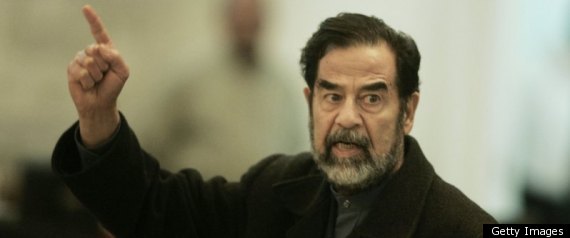
 

7 Comments

Filed under ethics, History, leadership, national security, nazi germany, News and current events, Political Commentary, war crimes

Trump’s America: Saving the Form but Not the Soul

Friends of Padre Steve’s World,

In light of how President Trump and many of his advisors and defenders treat the Constitution, the principles, and norms of the American Experiment I went back to re-read British military historian Sir Basil Liddell-Hart’s small but significant work Why Don’t We Learn from History?

In it he makes some observations that are very pertinent to today, in fact very chilling words. He noted:

“What is of value in “England” and “America” and worth defending is its tradition of freedom, the guarantee of its vitality. Our civilization, like the Greek, has, for all its blundering way, taught the value of freedom, of criticism of authority, and of harmonising this with order. Anyone who urges a different system, for efficiency’s sake, is betraying the vital tradition.”

The President is an admirer of dictators and presumes himself to be above the Constitution and the laws that he swore to uphold. He uses the language and tactics of every aspiring despot labeling his critics as “enemies of the state” and uses his position for personal gain even initiates trade wars, alienates allies, praises dictators, and threatens nuclear war.

But his defenders and supporters don’t care. This includes those who are otherwise privately decent and law abiding people with supposedly Christian values tolerate and live their public lives by the code of social Darwinism.

“One can understand the point of view of the man who goes in for unabashed “piracy” and seeks his own profit regardless of others. He may draw his profit, although unconsciously his loss far exceeds it, because he is deadening his own soul.

But one cannot see sense, even of so shortsighted a kind, in those who maintain any standards of decency in private life yet advocate, or at least countenance, the law of the jungle in public and international affairs. More illogical still are those who talk of patriotic self-sacrifice and of its spiritual sublimity while preaching pure selfishness in world affairs.

What is the use of anyone sacrificing himself to preserve the country unless in the hope, and with the idea, of providing a chance to continue its spiritual progress toward becoming a better country? Otherwise he is merely helping to preserve the husk, saving the form but not the soul. Only a perverse patriotism is capable of such hopeless folly.

What is the value of patriotism if it means no more than a cat’s devotion to its own fireside rather than to human beings? And, like the cat, such a “patriot” is apt to get burned when the house catches fire.”

When I observe Trump, his administration, the Republican Congressional leaders, Evangelical Christians, and the Fox Propaganda Network I cannot but think of Liddell-Hart’s words and how relevant they are today.

When I swore my oath as a new Army Second Lieutenant in 1983 I swore that “I will support and defend the Constitution of the United States against all enemies, foreign and domestic, that I will bear true faith and allegiance to the same…” Since then I have served under six Presidents, four Republicans and two Democrats. I have found admirable characteristics in five of them even if I did disagree with all of them on matters of policy or ethics at one point or another. That being said until now never did I believe that a President of the United States posed an imminent threat to the Republic, or that he would be aided and abetted by men that at one time I admired. They are the kind of men that Liddell-Hart described, and they are dangerous.

At the same time I am one of those believe in telling the truth and will continue to speak because my oath to the Constitution still matters.

Until tomorrow,

Peace,

Padre Steve+

3 Comments

Filed under History, leadership, News and current events, Political Commentary

“If certain acts of violation of treaties are crimes…” Reflections on the Invasion of Iraq in Light of Nuremberg

saddam0978

Friends of Padre Steve’s World,

I am continuing to write about the invasion of Iraq in 2003, an invasion that by any standard of measure fit the definition of War Crimes as defined by the American who headed the prosecution of the major Nazi War Criminals at Nuremberg. Justice Robert Jackson stated in his opening:

“If certain acts of violation of treaties are crimes, they are crimes whether the United States does them or whether Germany does them, and we are not prepared to lay down a rule of criminal conduct against others which we would not be willing to have invoked against us.” Justice Robert Jackson International Conference on Military Trials, London, 1945, Dept. of State Pub.No. 3080 (1949), p.330.

In March 2003 I like many of us on active duty at the time saw the nation embark on a crusade to overthrow an admittedly thuggish criminal head of state, Saddam Hussein. The images of the hijacked airliners crashing into the Twin Towers of the World Trade Center and the Pentagon were still relatively fresh in our minds. The “evidence” that most of us had “seen,” the same that most Americans and people around the world were shown led many of us to believe that Saddam was involved in those attacks in some manner and that he posed a threat to us.

Now it wasn’t that we didn’t have doubts about it or even the wisdom of invading Iraq. It didn’t matter that there was also credible evidence that maybe what we were being told was not correct, and it didn’t matter that some of our closest allies voted against a mandate to invade Iraq in the United Nations Security Council. We were emotionally charged by the events of 9-11 and “we knew” that Saddam was a “bad guy.” We also believed that we could not be defeated. We had defeated the Iraqis in 1991 and we were stronger and they weaker than that time.

We really didn’t know much about Iraq, its history, people, culture and certainly we paid little attention to the history of countries that had invaded and occupied Iraq in the past. T.E. Lawrence, the legendary Lawrence of Arabia wrote in August of 1920 about his own country’s misbegotten invasion and occupation of Iraq, or as it was known then Mesopotamia.

“The people of England have been led in Mesopotamia into a trap from which it will be hard to escape with dignity and honour. They have been tricked into it by a steady withholding of information. The Bagdad communiqués are belated, insincere, incomplete. Things have been far worse than we have been told, our administration more bloody and inefficient than the public knows. It is a disgrace to our imperial record, and may soon be too inflamed for any ordinary cure. We are to-day not far from a disaster.”

The sad thing is that the same could have been written of the United States occupation by 2004.

But even more troubling than the words of Lawrence are the Nuremberg War Crimes Trials. Somehow as a historian who has spent a great deal of time studying the Nazi period and its aftermath I cannot help but look back in retrospect and wonder what Supreme Court Justice Robert Jackson and the other Nuremberg prosecutors would have done had they had some of our leaders in the dock instead of the Nazis.

In his opening statement before the tribunal Jackson spoke words about the the Nazi plan for war that could apply equally to that to the United States in 2002 and 2003:

“This war did not just happen-it was planned and prepared for over a long period of time and with no small skill and cunning.”

776px-Nuremberg-1-

The indictments against the Nazis at Nuremberg are chilling if we were to be held to the same standard that we held the Nazis leaders at Nuremberg. True, we did not have massive death camps or exterminate millions of defenseless people, nor did we run slave labor factories, but we did like they launched a war of aggression under false pretense against a country that had not attacked us.

At Nuremberg we charged twenty top Nazi political officials, as well as police and high ranking military officers with war crimes. The indictments included:

Count One: Conspiracy to Wage Aggressive War: This count addressed crimes committed before the war began, showing a plan by leaders to commit crimes during the war.

Count Two: Waging Aggressive War, or “Crimes Against Peace” which included “the planning, preparation, initiation, and waging of wars of aggression, which were also wars in violation of international treaties, agreements, and assurances.”

Count Three: War Crimes. This count encompassed the more traditional violations of the law of war already codified in the Geneva and Hague Conventions including treatment of prisoners of war, slave labor, and use of outlawed weapons.

Count Four: Crimes Against Humanity, which covered the actions in concentration camps and other death rampages.

While count four, Crimes Against Humanity would be difficult if not impossible to bring to trial because there was nothing in the US and Coalition war in Iraq that remotely compares to that of what the Nazis were tried, some US and British leaders could probably have been successful prosecuted by Jackson and the other prosecutors under counts one through three.

The fact is that none of the reasons given for the war by the Bush Administration were demonstrated to be true. Senior US and British officials knowing this could be tried and very probably convicted on counts one and two. We also know that some military and intelligence personnel have been convicted of crimes that would fall under count three.

r-SADDAM-HUSSEIN-large570

Saddam Hussein was a war criminal. He was also a brutal dictator who terrorized and murdered hundreds of thousands of his own people. But we went to war over his alleged ties to Al Qaeda and WMDs and he had not attacked us. Looking back at history and using the criteria that we established at Nuremberg I have no doubt that had Dick Cheney or Donald Rumsfeld been in the dock that Justice Jackson would have destroyed them and the court would have convicted them.

So 15 years later we need to ask hard questions. The war cost nearly 5000 US military personnel dead, 32,000 wounded, over 100,000 afflicted with PTSD, and other spiritual and psychological injuries; an estimated 22 veterans committing suicide every day.  Somewhere between 1 and 2 trillion dollars were spent, helping to bankrupt the nation. Hundreds of thousands of Iraqis were killed, wounded and displaced from their homes; their country was destroyed and they have not recovered. Yet somehow those that decided to take us to war roam free. They write books defending their actions and appear on “news” programs hosted by their media allies who 15 years ago helped manipulate the American public, still traumatized by the events of 9-11-2001 to support the war.

Despite all of this and the passage of 15 years with which to reflect a new poll revealed that some 43% of Americans still believe that the war was worth it.

nuremberg-jackson-10400

http://www.youtube.com/watch?v=No06Lwk_TAg

Saddam and many of his henchmen are dead or rotting in Iraqi prisons for their crimes against the Iraqi people. However good this may be one has to ask if how it happened was legal or justified under US or International Law, if it was worth the cost in blood, treasure or international credibility. Likewise why have none of the men and women who plotted, planned and launched the war been held the standard that we as a nation helped establish and have used against Nazi leaders and others?

If we cannot ask that and wrestle with this then we as a nation become no better than the Germans who sought to minimize their responsibility for the actions of their leaders.  If we downplay, minimize, or deny our responsibility regarding Iraq we will most certainly enable future leaders to feel that they can do the same with impunity. That is a terrible precedent and one that may very well lead us into disaster.

Today we have a President who may very well act on his worst instincts and thrust the nation into even worse wars.  To ensure that war occurs Trump fired General H.R. McMaster yesterday as his National Security Advisor and replaced him with John Bolton. Bolton is one of the most responsible and unapologetic of the Iraq War planners and he has made multiple attacks on the International Criminal Court, a court established in light of Nuremberg. He should be rotting as a war criminal rather than be appointed as National Security Advisor. This is truly a lawless and reprehensible regime that will destroy the United States and bring disaster upon the world.

Peace

Padre Steve+
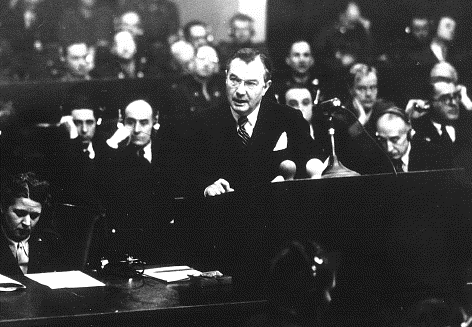
26 Comments

Filed under ethics, History, iraq, middle east, Military, nazi germany, News and current events, Political Commentary