Category Archives: iraq

Wacht am Rhein: The Battle of the Bulge at 75, Still So Much to be Learned

battle-bulge

Friend’s of Padre Steve’s World,

Today marks the 75th anniversary of the beginning of the German offensive known as Wacht am Rhein, but better known as the Ardennes Offensive or it’s popular name The Battle of the Bulge. The battle was for all intents and purposes a suicide mission for the remnants of the German Wehrmacht, Waffen SS, and Luftwaffe Paratroop divisions.

The offensive was the brainchild of Adolf Hitler, who over the objections of many military leaders, who wanted to conserve their last remaining Panzer and infantry reserves for holding back the final Soviet attack in the East, while preserving just enough strength to hold the West Wall defenses, while preserving fuel reserves to counter Allied incursions into the heart of the Reich. It was an all or nothing gamble by the German dictator, who had succeeded in many of his military gambles earlier in the war. However, now desperately trying to change the course of the war, he threw his best forces into a battle with almost no chance of success; but such is how despots in dire situations react. They become even more desperate to win.

Such could happen today with the United States. After 18 years of war our forces, though considered the strongest in the world are functionally broken. The numbers of Army combat brigades, Air Force and Navy Air Wings, and Navy ships and battle groups unable to deploy remains staggering, and forces remain stretched to meet peacetime missions and deployments, even while still engaged in parts to the Middle East and Central Asia. There is also the real possibility of war on the Korean Peninsula, the South China Sea, the Middle East, the Persian Gulf with Iran, or on the Eastern areas of NATO. None of these need necessarily happen, but could through mistakes caused by wrong intelligence, misguided policy, or unstable authoritarian leaders looking to shore up support at home by engaging in war. Any such war will not necessarily lead to the end of the United States, as Hitler’s did the Third Reich’s, but any would make the wars of the past 18 years look like child’s play. The human and material casualties will dwarf those wars and the very real threat of physical and cyber terrorism could destroy the economy and give whoever remains in charge the opportunity to create a police state and dictatorship.

Since President Trump has for the most part torn down the Constitutional and institutional guardrails against such an action, whether by him or any subsequent President, nothing can be regarded as impossible. As Trump feels the pressure of impeachment or the possible loss of office in the 2020 elections, his behavior may become more erratic, and either intentionally or unintentionally bring about an American Götterdämmerung.

So until tomorrow, and maybe some more from Sophie Scholl and the White Rose, I wish you a good night.

Peace,

Padre Steve+

Hitler’s Decision 
 

Adolf Hitler gathered with the Chiefs of Oberkommando des Wehrmachton September 16th 1944 at his “Wolf’s Lair” headquarters in East Prussia.  The situation was critical; he had recently survived an assassination attempt by Army officers led by Colonel Klaus Von Staufenberg at his Wolf’s Lair headquarters in East Prussia.  When the assassination attempt took place the German situation in Normandy was critical.

The Americans broke out of the Normandy Bocage at St. Lo and spread out across Brittany and the interior of France with Patton’s 3rd Army leading the way.  Even as his commanders in the West pleaded for permission to withdraw to the Seine Hitler forbade withdraw and ordered a counter attack at Mortain to try to close the gap in the German line and isolate American forces. When the German offensive failed the German front collapsed. 40,000 troops, hundreds of tanks and thousands of vehicles were eliminated when the Americans and Canadians closed the Falaise pocket.

Despite this cadres of decimated divisions including SS Panzer, Army Panzer and elite Paratroops made their way out of Normandy.  With the Germans in full retreat the Allies advanced to the border of the Reich itself. On the Eastern Front as well disaster threatened when the Red Army launched an Operation Bagration which annihilated the German Army Group Center, wiping out over 300,000 German troops. The Red Army advanced to the border of Poland before outrunning supply lines and stalling on the Vistula River just shy of Warsaw.

Tiger II Advancing in the Ardennes

Since Normandy Hitler had wanted to counter attack but had neither the forces nor the opportunity to strike the Allied armies. As the Allied offensive ground to a halt due to combat losses, lack of supplies and stiffening German resistance Hitler maintained a close eye on the situation in the West.  He believed that despite their success that the Americans and British alliance was weak and that a decisive blow could cause one or both to drop out of the war. During a briefing an officer noted the events of the day on the Western Front including a minor counterattack by kampfgrüppen of the 2nd SS Panzer and the 2nd Panzer Divisions which had made minor gains in the Ardennes, Hitler rose from his seat ““Stop!” He exclaimed. “I have come to a momentous decision. I shall go over to the counterattack….Out of the Ardennes, with the objective Antwerp.””[i]

 Thus began the planning for the last great German offensive of WWII.  Hitler “believed that sufficient damage could be inflicted to fracture the Anglo-American alliance, buy time to strike anew against the Soviets, and allow his swelling arsenal of V-weapons to change the course of the war.”[ii]  It was a course of born of desperation, even admitted by Hitler in his briefings to assembled commanders in the week prior to the offensive, one officer noted his remarks: “Gentlemen, if our breakthrough via Liege to Antwerp is not successful, we will be approaching an end to the war which will be extremely bloody. Time is not working for us, but against us. This is really the last opportunity to turn the war in our favor.”[iii]

US Soldiers manhandling a 57mm Anti-Tank Gun into Position

Despite shortages of men and equipment, continuous Allied assaults and over the objections of General Guderian who argued to reinforce the Eastern Front[iv], the OKW staff secretly developed detailed plans. The planning was so secretive that the “Commander in Chief West and the other senior commanders destined to carry out the attack were not informed.”[v] The plans were submitted to Hitler on October 9th [vi] and presented to Field Marshalls Von Rundstedt and Model at the End of October. General Hasso Von Manteuffel, commander of 5th Panzer Army commented that: “The plan for the Ardennes offensive…drawn up completely by O.K.W. and sent to us as a cut and dried “Führer order.”[vii]  Likewise Model and Von Rundstedt objected to the scope of the attack. Von Rundstedt stated: “I was staggered…It was obvious to me that the available forces were way too small for such an extremely ambitious plan. Model took the same view of it as I did….”[viii]  Model, who is sometime referred to as “Hitler’s Field Marshall”, reportedly said to General Hans Krebs: “This plan hasn’t got a damned leg to stand on.”[ix] And “you can tell your Führer from me, that Model won’t have any part of it.”[x] Sepp Dietrich, the old SS fighter and commander of 6th Panzer Army expressed similar sentiments.[xi]  Despite the objections by so many senior commanders Hitler scorned Model’s attempt to float a less ambitious plan to reduce the Allied salient at Aachen. Likewise Von Rundstedt’s desire to remain of the defense and wait for the Allies to attack using the armored forces to launch against any breakthrough was rejected.[xii] Hitler’s mind was set and the preparations moved forward.  The plan was complete down to the timing of the artillery bombardment and axes of advance, and “endorsed in the Führer’s own handwriting “not to be altered.””[xiii] Such a plan flew in the face of the well established doctrine of the Auftragstaktik which gave commanders at all levels the freedom of action to develop the battle as the situation allowed and opportunities arose.
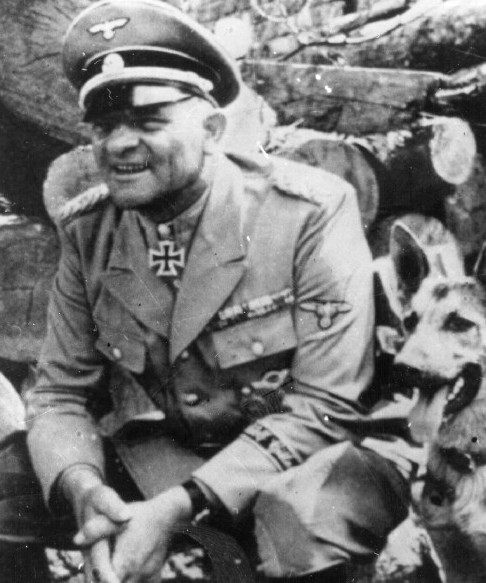
SS General Sepp Dietrich Commander of the 6th SS Panzer Army

The Allies also made mistakes in calculating German capabilities because of their success after Normandy. The Germans who the Allies presumed to be at the brink of collapse made a miraculous  recovery following their ghastly losses in Normandy. Kampfgrüppen and remnants of divisions bled the Americans at the Huertgen Forrest and blunted the British attempt to leapfrog the Northern Rhine at Arnhem decimated the British First Airborne division and causing heavy casualties among other British and American units during Operation Market Garden.

The German 15th Army avoided disaster when the British failed to close their escape route from Walchern island allowing 60,000 troops and much equipment to escape.  The Germans we’re able reform, reorganize, and stabilize the front by October. They pulled back many units of the 5th and 6th Panzer Armies for re-fitting and diverted nearly all tank, armored fighting vehicle and artillery production to the West at the expense of the Eastern Front.

The Germans called up 17 year olds and transferred young fit personnel from the Navy and Luftwaffe to the Army and Waffen SS.  Here they were trained by experienced NCOs and officers and brought into veteran units alongside hardened veterans who showed taught them the lessons of 5 years of war.[xiv]  However the rapid influx of new personnel meant that they could not be assimilated as quickly as needed and thus many were not as well trained as they might have been with more time.[xv] Many infantry and Parachute units had received inexperienced officers, taken from garrison duty, simply because so many experienced officers were dead, to fill key positions a problem that would show up frequently during the offensive.[xvi]

Panzer IV Ausf H of an SS Panzer Divsion in the Bulge

 The Germans were aided by the caution displayed by the Allies throughout the campaign in France which allowed the Germans to reconstitute formations around veteran headquarters staffs.[xvii]  The Germans built up the 5th and 6thPanzer Armies as the Schwerpunkt of the offensive giving them the lion’s share of reinforcements and pulling them out of the line during the fall battles along the Seigfried line and in the Alsace and Lorraine.  The plan was for the two Panzer armies and 7th Army to punch through the Ardennes, cross the Meuse, drive across Belgium, capture Antwerp and severe the link between the British and the Americans.

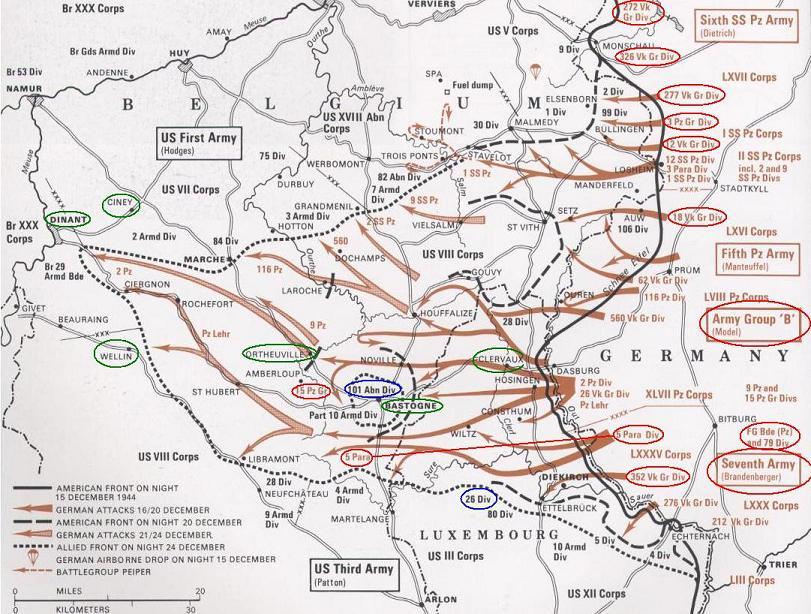
The spearhead of the assault was 6th Panzer Army Commanded by SS General Sepp Dietrich. It was composed of 1st and 2nd SS Panzer Corps and Army’s LXVII Corps.  The 6th SS Panzer Army included some of the best formations available to the German Army at this late stage of the war including the 1st  SS Panzer Division, the Leibstandarte Adolf Hitler, the 2nd  SS Panzer Division Das Reich, the 9th SS Panzer Division Hohenstaufen and the12th  SS Panzer Division Hitler Jügend. It’s ranks were filled out by the 3rd Parachute Division, the 501st SS Heavy Tank Battalion (attached to 1st SS), the 3rd Panzer Grenadier Division and the 12th, 246th, 272nd, 277th and 326th Volksgrenadier or Infantry divisions. The 6th Panzer Army would be the northern thrust of the offensive and its ultimate objective was Antwerp.  The 6th Panzer Army would be aided by a hastily organized parachute battalion under Colonel Von Der Heydte[xviii] and the 150th Panzer Brigade under SS Colonel Otto Skorzeny which included teams of American dialect speaking soldiers in American uniforms and equipment that were to spread confusion and panic in American rear areas.[xix]

Bradley, Eisenhower and Patton at Bastogne

 To the south was the 5th Panzer Army commanded by General Hasso Von Manteuffel.  The 5th Panzer Army was to advance alongside of the 6th Panzer Army with Brussels as its objective.  Composed of the XLVII and LVIII Panzer Corps and LXVI Corps the major subordinate commands included the best of the Army Panzer divisions including the 2nd Panzer, Panzer Lehr, 9th and the16thPanzer division. It also had the elite Führer Begleit Brigade composed of troops from Panzer Corps Grossdeutschland and commanded by Otto Remer who had help crush the coup against Hitler in July.  The 5th Panzer Army also included the 18th, 26th, 62nd, 560th and later the 167th Volksgrenadier divisions.

The south flank was guarded by 7th Army commanded by General Erich Brandenburger composed of LIII, LXXX and LXXXV Corps.  It included the Führer Grenadier Brigade and later the 15th Panzergrenadier division.  It was the weakest of the three armies but eventually included 6Volksgrenadierdivisions of varying quality and strength[xx] and the veteran 5th Parachute division.[xxi]  However with only 4 divisions at the start of the offensive the 7th Army was the equivalent of a reinforced corps.

While this force seemed formidable it had a number of weaknesses beginning with tank strength.  The 1st and 12th SS Panzer divisions were only at approximately half their established tank strengths and faced severe shortages in other vehicles.[xxii]  2nd SS and 9th SS of II SS Panzer Corps reported similar shortages.[xxiii]The shortage of other motorized vehicles, even in Panzer divisions was acute.  “Even the best equipped divisions had no more than 80 percent of the vehicles called for under their tables of equipment, and one Panzergrenadier division had sixty different types of motor vehicles, a logistician’s nightmare”.[xxiv] Panzer Lehr was so short in armored half tracks that only one battalion of its Panzer Grenadiers could be transported in them while others had to use “trucks or bicycles.”[xxv]

Limitations on equipment as well as fuel were not the only challenges that the Germans faced. The US V Corps launched an attack on the Roer River Dams just before the offensive making it necessary for the Germans to divert some of the  6th SS Panzer Army’s infantry divisions and Jagdpanzer units to be used by 6th SS Panzer Army away from the offensive.  One regiment of 3rd Parachute Division and over half of a second division could not take part in the initial 6th Panzer Army attack. Likewise some Jagdpanzer and Sturmgeschutzen units did not arrive until three days after the offensive began.[xxvi]

Allied Response: Before the Battle

While the German commanders sought to implement Hitler’s plan Allied commanders looked only to completing the destruction of Germany not believing the Germans capable of any major operation.  The Allied commanders with the exception of Patton did not believe the Germans capable of any more than local counter attacks.  Patton’s 3rd Army G-2 Colonel Koch was the only intelligence officer to credit the Germans with the ability to attack.[xxvii]  Most allied commanders and intelligence officers discounted the German ability to recover from disastrous losses, something that they should have learned in Holland or learned from the Soviet experiences on the Eastern front.  Bradley noted in his memoirs “I had greatly underestimated the enemy’s offensive capabilities.”[xxviii]  Carlo D’Este noted that “there was another basic reason why the Allies were about to be caught with their pants down: “Everyone at SHAEF was thinking offensively, about what they could do to the enemy, and never about what the enemy might do to them.””[xxix]   This mindset was amazing due to the amount of intelligence from Ultra and reports from frontline units that major German forces were no longer in the line.[xxx] Additionally nearly all commentators note that American units in the Ardennes did not conduct aggressive patrols to keep the enemy off balance and obtain intelligence.[xxxi]  One describes the efforts of 106th Division as “lackadaisical” and notes that enemy before the offensive was not the Germans but the cold.[xxxii] Max Hastings noted that: “the Allies’ failure to anticipate Hitler’s assault was the most notorious intelligence disaster of the war.”[xxxiii]

The Allies also were in the midst of a manpower crisis. Eisenhower did not have enough divisions to establish a clear manpower advantage as “there were not enough Anglo-American divisions, or enough replacements for casualties in the existing divisions.”[xxxiv]  No more American Infantry divisions were available as the Army had been capped at 90 divisions and infantry replacements were in short supply.  This shortage meant that Eisenhower could not pull divisions out of line to rest and refit. He could only transfer divisions such as the 4th and 28thInfantry divisions to the relative quiet of the Ardennes. He had no ability to “create a strategic reserve unless he abandoned the broad front strategy.”[xxxv]The Germans knew of the allied weakness and believed that they could achieve local superiority even if they did not believe they could reach Antwerp. Model believed that “he was sure that he would reach the Meuse in strength before the Americans could move sufficient reserves to halt his armies or even head them off.”[xxxvi]

The German Breakthrough and American Response
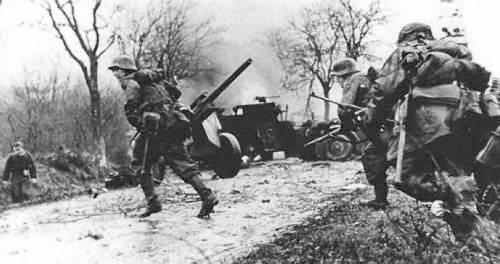
German-Troops-at-the-Battle-of-the-Bulge

The German assault began on December 16th. Some breakthroughs were made especially in the vicinity of the Losheim Gap and the Schnee Eifel by the southern elements of 6th Panzer Army and Manteuffel’s 5th Panzer Army. However the Germans could not break through around Monschau and Elsenborn Ridge held by the inexperienced but well trained 99th Infantry division and elements of the veteran 2nd “Indianhead” Division.  In the far south near Diekirch the 4th Infantry Division held stubbornly against the attacks of 7thArmy’s Volksgrenadiers. The Germans achieved their greatest success at Losheim where SS Colonel Josef Peiper and his 1st SS Panzer Regiment had driven off the US 14th Cavalry Group and penetrated 6 miles into the American front.  5th Panzer Army made several breakthroughs and isolated two regiments of newly arrived 106th Infantry Division in the Schnee Eifel. Manteufel also pressed the 28th Division hard along the Clerf River, Skyline Ridge and Clairvaux.

Yet at ‘no point on that first day did the Germans gain all of their objectives.”[xxxvii]  The credit goes to US units that stubbornly held on, but also to the poor performance of many German infantry units.  German commanders were frustrated by their infantry’s failure even as the panzers broke through the American lines.  Manteuffel noted his infantry was “incapable of carrying out the attack with the necessary violence.”[xxxviii]

US Airborne Commanders James Gavin (R) and Matthew Ridgeway (L)

 The initial Allied command response to the attack by senior commanders varied.  Bradley believed it was a spoiling attack “to try and force a shift of Patton’s troops from the Saar offensive back to the Ardennes.”[xxxix] Courtney Hodges of 1st Army agreed with Bradley and refused to allow General Gerow, commander of V Corps to call off 2nd Infantry Division’s attack against the Roer dams on the 16th in order to face the German offensive.[xl]  Gerow was one of the first American commanders to recognize the scope of the German attack but Hodges, perhaps the least competent senior American commander in Europe failed to heed Gerow’s advice. Soon after making this decision Hodges “panicked” and evacuated his headquarters at Spa fearing that it would be overrun by the advancing Germans.[xli] Eisenhower when informed of the news realized that something major was occurring and ordered the 7th Armored Division from the 9th Army and 10th Armored Division from 3rd Army into the Ardennes. On the 17th he made other dispositions and released the 82nd and 101stAirborne Divisions from SHAEF reserve at Rheims to the Ardennes under the command of XVIII Airborne Corps.[xlii]  However during this short amount of time Mantueffel’s panzers had advanced 20 miles.
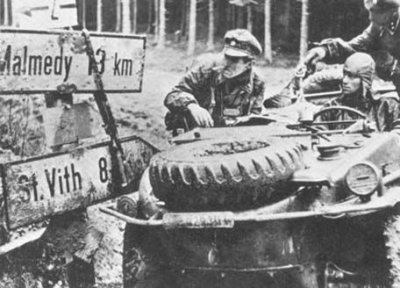
SS Panzer Troops of Kampfgruppe Knittel on the advance.  Photo has often been identified for decades in books and other publications as Waffen-SS Colonel Joachim Peiper the commanding officer of the 1st SS Panzer Regiment and Kampfgruppe Peiper. This has been refuted by recent study.  Peiper is pictured below.

At the command level Eisenhower made a controversial, but correct decsion to divide the command of the Bulge placing on a temporary basis all forces in the northern sector under Montgomery and leaving those to the south under Bradley.  Montgomery according to one commentary initially “had been astonishingly tactful in handing his American subordinates.”[xliii] However he quickly made himself obnoxious to many American commanders.[xliv]Following the battle Montgomery made the situation worse by claiming to have saved the Americans and giving credit to British units which scarcely engaged during the battle.[xlv]  Eisenhower also ordered Patton to launch a counter-attack along the southern flank of the German advance.  However Patton was already working on such an eventuality and promised to be able to launch a counterattack with three divisions by the 22nd.[xlvi]  Bradley praised Patton highly in his memoirs noting: “Patton’s brilliant shift of 3rd Army from its bridgehead in the Saar to the snow-covered Ardennes front became one of the most astonishing feats of generalship of our campaign in the West.”[xlvii]

The Americans Hold the Shoulders 

  688px-Bulge_stvithroad_1945jan24_375

The 99th Division’s position was precarious, its right flank was subject to being turned and it was suffering severely at the hands of 12 SS Panzer and several Volksgrenadier divisions.  Gerow reinforced the 99th with elements of the 2nd Infantry division even before he had the final authorization to end its attack.  The two divisions stubbornly held Elsenborn Ridge and the villages of Rockerath, Krinkelt and Büllingen. By the 20th the 9th and 1st Infantry divisions arrived to strengthen the defense and lengthen the line to prevent it from being rolled up by the Germans.  The stubborn resistance of the Americans and arrival of reinforcements meant line was proof “against anything Sepp Dietrich might hurl against it”[xlviii]  By the 23rd Dietrich and 6th SS Panzer Army conceded defeat at Elsenborn and “turned its offensive attentions to other sectors.”[xlix]  German commanders like General Priess the commander of 1st SS Panzer Corps believed that terrain and road network in this sector was unfavorable to the German offensive and had proposed moving the attack further south.[l]  The Panzers could not deploy properly and the German infantry was not up to the task of driving the Americans out of their positions before the reinforcements arrived.

In the south the 4th Infantry Division held the line though heavily pressed by Brandenburger’s 7th Army.  The division was reinforced by elements of both 9thand 10th Armored divisions on the 17th and generally held its line along the Sauer River around Echternach “largely because the left flank of the enemy assault lacked the power-and particularly the armor-of the thrust farther north.”[li]

Turning Point: The Destruction of Kampfgruppe Peiper

While V Corps fought the 6th Panzer Army to a standstill, to the south 1stSS Panzer Division led by Kampfgrüppe Peiper split the seam between V Corps and VIII Corps. The Kampfgrüppe moved west leaving a brutal path of destruction in its wake, including massacres of American POWs and Belgian civilians.[lii]  However its advance was marked with difficulty. On the night of the 17th it failed to take Stavelot. After clearing the American defenders from the town after a hard fight on the 19th it failed to capture a major American fuel dump a few miles beyond the town.  When the Germans approached the American commander ordered his troops to pour 124,000 gallons down the road leading to the dump and set it on fire, depriving the Germans of badly needed fuel.[liii]  Combat Engineers from the 291st Engineer Battalion blew a key bridge across the Ambleve at Trois Ponts and another bridge across the Lienne Creek which left the Germans bottled up in the Ambleve River valley.  This bought time for the 30th Infantry Division to set up positions barring Peiper from the Meuse.  The 30th would be joined by Combat Command B of 3rd Armored Division and elements of 82nd Airborne. These units eventually forced Peiper to abandon his equipment and extricate some 800 troops by foot by the 23rd after a hard fight with the Americans who had barred his every effort to break through to the Meuse.

Turning Point: The Crossroads: St Vith & Bastogne
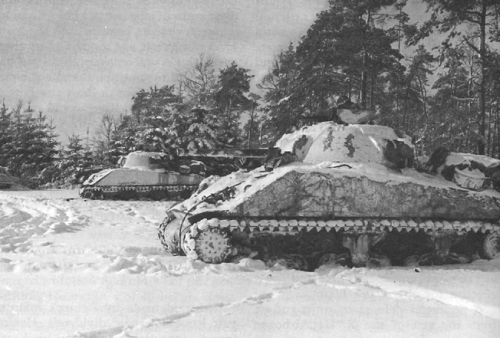
American_7th_Armored_Division_Shermans_taking_up_positions_outside_St._Vith,_1944

The battle rapidly became focused on key roads and junctions, in particular St. Vith in the north and Bastogne in the south.  At St. Vith the 7thArmored Division under General Hasbrouck, who Chester Wilmont calls one of the “great men of the Ardennes”[liv] completed a fifty mile road march from Aachen to St. Vith.  On his arrival he deployed his combat commands around the town which was the key to the road network in the north and also to the only rail line running west through the Ardennes.[lv]  Hasbrouck gathered in Colonel Hoge’s Combat Command B of 9th Armored Division and the 424th Infantry Regiment of the 106th Division into his defensive scheme as well as the survivors of the 112th Infantry Regiment of the 28th Infantry Division which had escaped the German onslaught after holding as long as possible along the Clerf River and Skyline Drive.[lvi]  With these units Hasbrouck conducted “an eight-day stand that was as critical and courageous, as the defense of Bastogne.”[lvii]  After holding the Germans at St. Vith the units were withdrawn to another defensive position along the Salm and Ourthe Rivers and the village of Viesalm.  This was done at the behest of Montgomery and General Ridgeway of XVII Airborne Corps whose 82nd Airborne had moved into that area on the 19th.  The arrival of the 82nd greatly assisted Hasbrouck’s force holding St. Vith whose defenders had lost an estimated 5000 casualties.[lviii]

The stand at St. Vith confined the “confined the Sixth Panzer Army’s penetration to a chokingly narrow corridor.”[lix]  It also posed a problem for German command and control which because it was out of the 6th Panzer Army’s area of operations Dietrich was unable to lend his weight into the fight.  “Hitler himself had strictly prohibited deviations from the zonal boundaries”[lx] which left the fight for St. Vith in the hands of 5th Panzer Army who felt the impact of the stand as the Americans “also choked off one of the Fifth Panzer Army’s best routes to Bastogne, almost nullifying the significance of the captured road junction at Houffalize.”[lxi] 
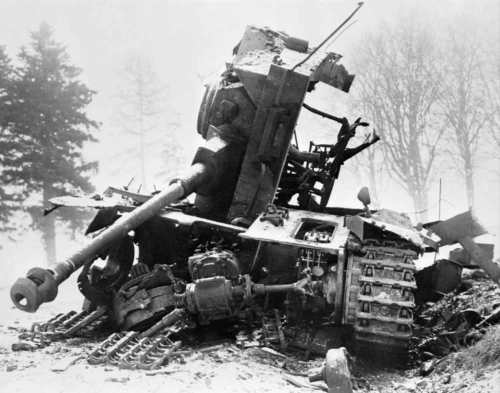
EA-48892

To the south of St. Vith lay Bastogne, another key road junction needed by 5thPanzer Army for its advance.  On the night of the18th Panzer Lehr division came within two miles of the town before being checked by resistance by units of the 10th Armored division, remnants of 28th Division and misdirection by “friendly” Belgian guides onto a muddy path that helped halt their advance.[lxii]  This gave the 101st Airborne just enough time to get to the town and prevent its capture. The siege of Bastogne and its defense by the 101st elements of 9th and 10thArmored Divisions and 28th Division became an epic stand against Manteuffel’s Panzers which had surged around the town.  Wilmont comments that “had the Germans won the race for Bastogne, Manteuffel’s armor would have had a clear run to Dinant and Namur on December 19th and 20th” [lxiii] when there were only scattered American units between them and the Meuse. Manteuffel b bypassed Bastonge after the failure to capture it and masked it with 26thVolksgrenadier Division and a regiment of Panzer Lehr.  The remainder of Panzer Lehr and the 2nd Panzer Division moved to the west. [lxiv]  The garrison endured numerous attacks and on the 22nd one of the most celebrated incidents of the war took place when Brigadier General Anthony McAuliffe responded to a demand for the surrender of the town with the reply; “Nuts.”  The town would continue to hold until relieved by 3rd Army on the afternoon of December 26th.[lxv]

The American Counterattack


The Allied counterattack began with 3rd Army in the south on 21 December.  Patton’s initially proposed to attack toward the base of the Bulge in order to cut off the largest number of Germans possible.  Eisenhower dictated an attack further west with the goal of relieving Bastogne.  Eisenhower wanted to delay the attack to concentrate combat power while Patton wanted to attack sooner in order to ensure surprise. Patton got his way but attacked on a wide front.  The attack lost its impetus and bogged down into a slugging match with 7th Army’s infantry and paratroops along the southern flank. [lxvi]  Patton’s failure to concentrate his forc forces for the advance to the north diminished his combat power.[lxvii] While Patton attacked from the south the 1st Army dealt with the advanced spearhead of 2nd Panzer Division which had reached the town of Celles and ran out of gas just four miles from Dinant and the Meuse. The 84thInfantry Division stopped the 116th Panzer division from being able to effect a relief of the 2nd Panzer the US 2nd Armored Division and allied fighter bombers chopped up the virtually immobile 2nd Panzer division completing that task by the 26th.[lxviii]  

41d233ae6d2744c2cbab2d76cf798341

To the north Montgomery launched a cautious counterattack which slowly and methodically took back lost ground but allowed many Germans to escape. While Montgomery moved south Patton faced heavy German resistance from elements of 5th Panzer Army, reinforced by 1st SS Panzer Corps and 7th Army.  The rupture in the American front was not repaired until 17 January when the American forces met at Houffalize.[lxix] Bradley took over for Montgomery and the Americans pushed the Germans slowly back across the Clerf River by the 23rd.  The advance was hampered by tough German resistance and terrible weather which forced much of the attack to be made by dismounted troops as the roads had completely frozen over.[lxx]

The Allied counter attack has been criticized for allowing too many Germans to escape what could have been a major encirclement.  Patton recognized the incompleteness of the victory in the Ardennes stating: ““We want to catch as many Germans as possible, but he is pulling out.” The “but” clause, the note of regret, the awareness of the imperfection of his victories typified Patton.””[lxxi]  Patton in his memoirs noted: “In making the attack we were wholly ignorant of what was ahead of us, but we were determined to strike through to Bastogne.”[lxxii] Max Hastings simply said: “the Allies were content with success.”[lxxiii]  Murray and Millett place blame on Bradley and Hodges for choosing “merely to drive the enemy out of the Ardennes rather than destroy him.”[lxxiv]

Analysis: Could Wacht Am Rhein Have Worked?

Could Wacht am Rhein worked?  If much was different, yes. Success of the operation depended more on ifs that the Germans could not control, than events they had the power to influence. If the German had been stronger in tanks and vehicles and had adequate stocks of fuel; if their infantry was better trained, and had the Americans not resisted so stubbornly it might have at least got to the Meuse.  Perhaps if the the bad weather held keeping Allied air forces away from the Germans, or had St. Vith and Bastogne been taken by the 18th or 19th, they might have reached the Meuse. Likewise, had the Germans executed their plan and coordinated their assault better[lxxv] in the 6thPanzer Army sector, and had the 7th Army enough strength to conduct offensive operations in depth and secure the left flank the attack might have succeeded. But only revisionists and fiction writers could construct such success.

Because the Americans held the shoulders and road junctions, Manteuffel’s 5thPanzer Army, the only force besides the regimental sized Kampfgrüppe Peiper to actually threaten the Meuse was forced to advance while attempting to take Bastogne and defeat 3rd Army’s counterattack. Whether they could have made Antwerp is another matter.  Nearly all German commanders felt the offensive could not take Antwerp but did believe that they could inflict a defeat on the Allies and destroy a significant amount of allied combat power.

The German offense was a desperate gamble.  Too few divisions, scant supplies of petrol and ammunition, formations that had recently been rebuilt and not given enough time to train to the standard needed for offensive operations coupled with Hitler’s insistence on an unalterable plan kept them from success. It was a part of Hitler’s Cloud Cukoo Land.

At the same time the Allies were so weak in troops and overstretched because of their losses during the Normandy Campaign, Market Garden, and the Huertgen Forrest, Eisenhower had no strategic reserve save the two American Airborne Divisions.  All reinforcements to the threatened sector had to come from the flanks and by the middle of the battle the 9th Army was drawn down to two divisions.

Russell Weigley noted how the constraints imposed by the 90 division Army, and of the limited stocks of artillery ammunition hurt the allies.[lxxvi] If the Germans had more forces they might have inflicted a significant defeat on the Allies had they been able to reinforce their success in depth. Despite this they still inflicted punishing losses on the Americans though suffering greatly themselves.  Hastings noted that the real beneficiaries of the Ardennes offensive were the Russians.[lxxvii]  In the end the conclusion had to be that German success was unlikely and that the offensive could have never achieved Hitler’s goals of taking Antwerp and fracturing the British-American alliance.

A Postscript About other Parts of the Campaign in France

The Riviera and Rhone

The campaign in south France was strategically wise although opposed by the British to the last minute because they felt it would take away from Overlord.[lxxviii] Though delayed the campaign was well executed by 7th Army, particularly Lt. General Lucian Truscott’s VI Corps of 3 American divisions. Truscott believed “destroying the enemy army was the goal”[lxxix] managed the battle well and skillfully maneuvered his small forces against Blaskowitz’s 19thArmy inflicting heavy losses, though some German commanders noted the caution of American infantry in the attack.[lxxx]  Only Blaskowitz’s tactical skills and the weakness of the American force prevented the Germans from disaster. The seizure of Marseilles and Toulon provided the allies with sorely needed ports that were invaluable to sustain the campaign.[lxxxi]

The Lorraine Campaign

Patton attacked in the Lorraine with the goal of crossing the Moselle river and attempting to break into Germany. He doing so he ran into some of the strongest German forces on the front and his troops became bogged down in the poor terrain and mud of the region.[lxxxii]  Patton was convinced that he was delayed in making his assault due to his place “at the far end of the logistics queue.” during Market Garden. [lxxxiii] Despite Patton’s efforts, German forces skillfully defended the ancient fortress of city Metz forcing the Americans into a protracted campaign to clear the area with the last strongpoint surrendering on 13 December.  Patton is criticized for his failure to concentrate his forces[lxxxiv] but American tactics were less to blame than the weather, German resistance and shortages of infantry.[lxxxv] In some cases American infantry units performed admirably, particularly 80th Division’s assault on the Falkenburg Stellung.[lxxxvi]Liddell Hart criticized the Allies for failing to attack through the then weakly defended Ardennes, commenting: “By taking what appeared to be the easier paths into Germany the Allies met greater difficulties.”[lxxxvii]

The Huertgen Forrest

The Huertgen Forrest was the worst managed American fight Western European campaign. [lxxxviii] General Courtney Hodges leadership was poor.[lxxxix] In the Huertgen he fed division after division into a battle that made no strategic sense.  American infantry performed poorly and took extremely heavy casualties leaving four divisions shattered.[xc]  Poor American tactics demonstrated by attacking into a forest in poor weather without concentration negated all of Hodges’ advantages in tanks, artillery and airpower. The forest contained no significant German forces capable of threatening any American advance[xci] and its gain offered little advantage.[xcii] Hastings noted that the gains the only saving grace was that it made it easier for the northern shoulder of the Bulge to hold[xciii]  General Model and his subordinates expertly handled their handful of excellent but weary divisions in this battle using terrain, weather and prepared defensive positions to contest nearly every yard of the Forrest.[xciv]

Conclusions

The lessons of the Bulge and the other campaigns on the German-French border are many and can be gleaned from Allied and German mistakes. On the Allied side the most glaring mistakes were assumptions prior to the German attack that the Germans were incapable of any serious offensive and ignoring the fact that the Germans had attacked through the Ardennes in 1940.  Likewise the self limitation of the American Army to 90 divisions for world-wide service meant that there were no more divisions in the pipeline and that worn out divisions would have to be reinforced with inexperienced troops while in the front line which ensured a lack of cohesiveness in many divisions, especially the infantry.  Allied intelligence failures as well as their reliance of forces much smaller than they should have had for such a campaign ensured that they would suffer heavy losses in the Bulge while poor planning and execution by Hodges wasted many good troops in a senseless battle.  The Germans were hamstrung by Hitler’s fantasy that the Western Allies could be forced out of the war or the Alliance split by a defeat in the Ardennes.  Likewise German forces, even those so quickly reconstituted were often short troops, tanks and vehicles.  German commanders were forced by Hitler’s rigid insistence on not altering the plan to not be as flexible as they might have been in earlier offensives to adjust according to the situation on the ground.

None of these attitudes is exclusive to the Allied and German commanders during the campaign in France and the Battle of the Bulge. They are common throughout history and have been repeated in Vietnam, Iraq, and Afghanistan by the United States military. It would be easy for Americans to believe that in future conflicts we will be victorious when despite our massive military budgets many if not most of our combat forces could not be deployed to a conflict at short notice and those in theater could be overwhelmed by enemies who exploit our weaknesses rather than directly engage our strengths.

Notes


[i] Dupay, Trevor N.  Hitler’s Last Gamble: The Battle of the Bulge December 1944-January 1945Harper Collins Publishers, New York NY 1994 p.2.

[ii] Hastings, Max. Armageddon:  The Battle for Germany 1944-1945 Alfred A Knopf, New York NY 2004 p.197.

[iii] Reynolds, Michael. Sons of the Reich: II SS Panzer Corps; Normandy, Arnhem, Ardennes, and on the Eastern Front.  Casemate Publishing, Havertown PA 2002 p.186

[iv] Ibid. p.198

[v] Warlimont, Walter. Inside Hitler’s Headquarters 1939-1945 translated by R.H. Barry. Presidio Press, San Francisco, CA 1964. p. 480

[vi] Ibid.

[vii] Liddell Hart, B.H. The German Generals Talk. Originally published 1948, Quill Publishers Edition, New York 1979 p.274.

[viii] Liddell Hart, B.H. The History of the Second World War G.P. Putnam’s Sons, New York NY 1970. p.646.

[ix] MacDonald, Charles B. A Time for Trumpets: The Untold Story of the Battle of the Bulge William Morrow and Company, New York, NY 1985 p.35.

[x] [x] Newton, Steven H. Hitler’s Commander: Field Marshal Walter Model, Hitler’s Favorite General.DeCapo Press, Cambridge MA 2005. p.329

[xi] Ibid. Hastings p.198.  Hastings quotes Dietrich: “All Hitler wants me to do is cross a river, capture Brussels, then go on and take Antwerp. And all this at the worst time of year through the Ardennes when the snow is waist-deep and there isn’t enough room to deploy four tanks abreast let alone armored divisions. When it doesn’t get light until eight and it’s dark again by four and with re-formed divisions made up chiefly of kids and sick old men-and at Christmas.”

[xii] Ibid. Liddell-Hart The German Generals Talk p.276

[xiii] Wilmont, Chester. The Struggle for Europe Harper and Brothers Publishers, New York, NY 1952 p.576

[xiv] Ibid. p.557.

[xv] Ibid. Hastings. p.199. Hastings notes that Manteuffel said: “It was not that his soldiers now lacked determination of drive; what they lacked were weapons and equipment of every sort. Von Manteuffel also considered the German infantry ill trained.”

[xvi] Ibid. Dupay.p.47  Dupay notes that in 3rd Parachute Division that most of the regimental commanders had no combat experience.

[xvii] Weigley, Russell  F. Eisenhower’s Lieutenants: The Campaign in France and Germany 1944-1945. Indiana University Press, Bloomington IN 1981 p.432.  Weigley speaks of Allied caution and predictable strategy, caution in logistical planning which did not allow the Allies to provide the fuel needs for a rapid drive into Germany and caution of operational commanders.

[xviii] Liddell Hart discusses the issue of paratroops at length in discussions with Manteuffel and General Kurt Student. At the time of the operation there were very few jump trained paratroops available for the operation as most of the 6 organized Parachute Divisions were committed to battle as infantry during the 1944 battles in the East, Italy and in the West. German Generals Talk pp.282-285.  Although Liddell Hart makes note of the employment of these troops and talked with Model and student about why they were not used to seize bridges and other critical terrain featured ahead of the Panzers instead of the use as a blocking force, I have found no one who questioned why the Germans did not use small glider detachments for the same purpose.  The Germans had demonstrated with Skorzeny when they rescued Mussolini from his mountain prison that they still retained this capability.  The use of the SS Paratroop battalion which could have been assigned to Skorzeny as a glider borne force could have been decisive in capturing the key bridges and terrain ahead of 6thPanzer Army.

[xix] Skorzeny’s operation was Operation Greif designed to sow confusion in the Allied Ranks.  His brigade numbered about 3500 men and had a good number of captured US vehicles including some tanks and tank-destroyers on hand to confuse American units that they came in contact with.

[xx] Ibid. Hastings.  p. 199.  Hastings quotes the Adjutant of 18th Volksgrenadier Division who “felt confident of his unit’s officers, but not of the men “some were very inexperienced and paid the price.”  MacDonald notes that the division had many Navy and Air Force replacements but was at full strength. p.646.

[xxi] See MacDonland pp. 644-655 for a detailed commentary on the German Order of Battle.

[xxii] Reynolds, Michael. Men of Steel: 1st SS Panzer Corps;  The Ardennes and Eastern Front 1944-1945 Sarpendon Publishers, Rockville Center NY, 1999. pp.36-37.  Reynolds notes that the 1st SS Panzer Regiment only had 36 Panthers and 34 Mark IV Panzers to begin the operation (excluding the attached 501st SS Heavy Tank Battalion).  He also notes that many of the tank crew replacements had no more than 6 weeks of military training and some of the tank crews had never been in a tank.  Similar problems were found in all the Panzer Divisions.  Severe shortages of armored half tracks, reconnaissance vehicles and other vehicles meant that Panzer Grenadier and Motorized battalions lacked the lift needed and some went on foot or on bicycles.

[xxiii] Ibid. Reynolds. Sons of the Reich. P.183

[xxiv] Ibid. MacDonald. p.44.

[xxv] Ibid.

[xxvi] Ibid. Dupay pp. 27-28.

[xxvii] Ibid. MacDonald. p.52.  MacDonald notes that Koch warned that the Germans were not finished, that “his withdraw, though continuing has not been a rout or mass collapse.” He calls Koch a “lone voice” in the Allied intelligence world.

[xxviii] Bradley, Omar  N. A Soldier’s Story Henry Holt and Company, New York NY 1951. p.459.  Weigley makes some poignant calling Bradley’s comments  “contradictory” and states that: “his apologia is hardly a model of coherence. (p.461)

[xxix]  D’Este, Carlo. Eisenhower: A Soldier’s Life Owl Books, Henry Holt and Company, New York NY 2002. p.638

[xxx] Dupay and others talk about this in detail. See Dupay pp. 35-44.

[xxxi] Ibid. p.38.

[xxxii] Ibid. Hastings. p.201

[xxxiii] Ibid. Hastings. p.199

[xxxiv] Ibid. Weigley. p.464

[xxxv] Ibid.

[xxxvi] Ibid. Wilmont. P.581.

[xxxvii] Ibid. p.583

[xxxviii] Ibid. Hastings. p.223

[xxxix] Ibid. Weigley. P.457

[xl] Ibid. p.471

[xli] Ibid. Hastings. pp.205-206

[xlii] Ibid. Wilmont. pp.583-584

[xliii] Murray, Williamson and Millett, Allan R. A War to Be Won: Fighting the Second World War The Belknap Press of Harvard University Press, Cambridge Massachusetts and London England, 2000 p.470 The authors must base their conclusion on the fact that Montgomery who mentioned to Eisenhower that Hodges might have to be relieved, did not do so and by the next day told Eisenhower that the action was not needed.  A  few other American commanders in the north were favorable to Montgomery but this appears to be a minority view.

[xliv] Ibid. Weigley. pp.504-506.  Weigley and Wilmont both note the comment of a British Staff Officer the Montgomery “strode into Hodges HQ like Christ come to cleanse the temple.” (Wilmont p.592)

[xlv] Ibid. Hastings. pp.230-232.  Hastings is especially critical of Montgomery.  Weigley, equally critical notes regarding  the January 7th press conference, Montgomery’s “inability to be self critical at any point.” p.566.

[xlvi] Ibid. Weigley. p.500.

[xlvii] Ibid. Bradley. p.472  Other commentators differ in their view of Patton’s movement.  Wilmont notes that Patton had no “equal in the on the Allied side in the rapid deployment of troops. (p.589) Weigley urges readers that “it should be kept in appropriate perspective; it was not a unique stroke of genius.” And he compares it to Guderians disengagement with Panzer Group 4 and 90 degree change of direction and assault against the Kiev pocket in the 1941 Russian campaign (p.500)  Hastings notes that “Patton had shown himself skilled in driving his forces into action and gaining credit for their successes. But he proved less effective in managing a tough, tight battle on the southern flank.” (p.230)  Regardless of the perspective and criticism Patton’s movement was unequaled by any Allied commander in the war and had he not moved so quickly the 101st Airborne might not have held Bastogne. Admittedly his attack north was dispersed along a wide front but part of the blame for this must be assigned to Eisenhower who dictated the attack toward the west vice the base of the Bulge where Patton desired to make it.  A note I would make is that being a cavalryman Patton thought like one and when faced with the tight battles in close quarters was not at his best.  Similar comparisons could be made to J.E.B. Stuart at Chancellorsville when he had to take command of Jackson’s Corps.

[xlviii] Ibid. Weigley. p.475

[xlix] Ibid. p.474

[l] Ibid. Reynolds Men of Steel pp.51-52.

[li] Ibid. Weigley. p.470

[lii] The worst of these took place at the village of Malmedy where Battery B 285th Field Artillery Observation Battalion of 7th Armored Division was captured and about 150 soldiers were rounded up and machined gunned in a field with survivors killed with pistol shots in the head.

[liii] Ibid. Weigley. pp.478-479.

[liv] Ibid. Wilmont. p.584

[lv] Ibid. Weigley. p.487

[lvi] Ibid. Weigley. pp.486-487

[lvii] Ibid. Hastings. p.215. Hastings gives most of the credit to Brigadier General Bruce Clarke of CCB 7th Armored Division for the stand.

[lviii] Ibid. MacDonald. 481-487.  MacDonald notes that following the war that the commanders of the units involved “would be grateful to Field Marshal Montgomery for getting them out of what they saw as a deathtrap for their commands. (p.487)

[lix] Ibid. Weigley. p.487

[lx] Ibid.

[lxi] Ibid.

[lxii] Ibid. Hastings. p.217 Also  MacDonald. p.289 who talks of the confused situation east of Bastogne both for the Americans and Germans.

[lxiii] Ibid. Wilmont. p.598

[lxiv] Ibid. Liddel Hart. The German Generals Talk. p.288

[lxv] The defense of Bastogne would continue until after the 1st of January as Hitler renewed the attempts to secure the town in order to push on to the Meuse. Other German formations including units of 1st SS Panzer Corps shifted south from their original attack would make determined efforts to dislodge the stubborn American defenders.

[lxvi] Ibid. Weigley. pp.500-501.  Bradley gives Patton more credit than later commentators. Wilmont notes that the Germans though “amazed at the speed with which Patton had disengaged from the Saar and wheeled them northward…they received due warning of his movement by monitoring the radio net which controlled American traffic, and they were braced to meet his assault. (p.599).

[lxvii] Ibid. Weigely. Pp.520-521

[lxviii] Ibid.  pp.535-537

[lxix] Ibid. pp. 558-561

[lxx] Ibid. pp.563-564

[lxxi] Ibid. p.566.

[lxxii] Patton, George S. War as I Knew It  Originally published by Houghton Mifflin Company NY 1947, Bantam Paperback Edition,  Bantam Books, New York, NY 1980 p.364

[lxxiii] Ibid. Hastings. p.230

[lxxiv] Ibid. Murray and Millett p.471.

[lxxv] Hastings notes that “Tactically, the Ardennes was one of the worst-conducted German battles of the war, perhaps reflecting that none of the generals giving the orders saw any prospect of success. (p.236)

[lxxvi] Ibid. Weigley. pp.567-572

[lxxvii] Ibid. Hastings. p.236-237.  Hastings believes that the employment of the 5th and 6th Panzer Armies in the East “made the task of Zhukov and his colleagues much harder.”

[lxxviii] Ibid. Weigley. p.236. I find it interesting that neither Hastings nor Liddell Hart mention the Riviera and Rhone campaign.

[lxxix] Ibid. Weigley. p.236

[lxxx] Giziowski, Richard. The Enigma of General Blaskowitz  Hippocrene Books Inc. New York NY, 1997. p.328

[lxxxi] Ibid.  Weigley comments on how much the overall supply situation was aided by the operation and capture of the ports and notes that the pace of the Cobra breakout had created a crisis in supply and “without the southern French ports the crisis would have been insurmountable.” (p.237)

[lxxxii] Ibid. p.397.  Weigley notes: “The immobilizing mud and the enemy’s recalcitrant resistance had fragmented the battle into affairs of squads, platoons, companies and battalions….and Patton’s juniors more than he controlled the course of action, to the extent that control was possible.”

[lxxxiii] Ibid. p.384

[lxxxiv] Ibid. p.390 Weigley states: “The American disinclination to concentrate power was rarely more apparent.” comparing the frontages of 1st, 9th and 3rdArmies and notes that Patton attacked along his entire front.”

[lxxxv] Ibid. Weigley. pp.400-401.  Weigley spends a fair amount of time on American infantry shortages in 3rd Army.

[lxxxvi] Ibid. Weigly. P.400.  Weigley notes a German General Wellm attributed part of that victory to the “prowess of the American infantry.”

[lxxxvii] Ibid. Liddell Hart. The History of the Second World War p.560

[lxxxviii] Hastings and Weigley both note how many American division and regimental commanders were relieved of command for their failures in the Huertgen.

[lxxxix] Ibid. Hastings. p.179.  Hastings notes that “instead of recognizing the folly of attacking on terrain that suited the Germans so well, Courtney Hodges reinforced failure.”

[xc] Ibid. Weigley. p.420.  Weigley notes the high numbers of ballet and non battle casualties in the 4th, 8th, 9th and 28th Divisions as well as CCR of 5thArmored and 2nd Ranger Battalion.

[xci] Ibid. Hastings. p.275.  Hastings notes that defending 275th Division “were poor grade troops who-like the garrison of Aachen posed no plausible threat to the flanks of an American advance to the Roer.”

[xcii] Weigley compares the battle in its effect on the American army to Grants “destruction of the Confederate army in the Wilderness-Spotsylvania-Cold Harbor campaign expended many proud old Union army formations…” (p.438)

[xciii] Ibid. Hastings. p.215

[xciv] Ibid. Newton. p.324
2 Comments

Filed under afghanistan, Foreign Policy, germany, History, iraq, iraq,afghanistan, leadership, Military, national security, nazi germany, News and current events, us army, world war two in europe

Waiting for First Light at Slaughterhouse Five: PTSD and a Coda to te end of a Military Career


Friends of Padre Steve’s World,

I am checking out of my current command to finish my career attached to Norfolk Naval Shipyard, in Portsmouth Virginia. I am struggling. Not feeling appreciated and feeling like a cast off. This isn’t new, shortly after I was promoted to Commander, the newly appointed Deputy Chief of Chaplains treated me like a potted plant while making her rounds of the Generals and Major Commands. As Kurt Vonnegut noted in Slaughterhouse Five “and so it goes.”  My Problems in the Navy Chaplain Corps began when I went public with my struggles with PTSD. Somehow it seems that Chaplains can care for the wounded and those traumatized by war but if we admit that we are wounded we are expendable.

I read General Romeo Dallaire’s latest book, Waiting for First Light: My Ongoing Struggle with PTSD a couple of years ago. General Dallaire had been the commander of the UN Peacekeepers in Rwanda, men and women who were prevented from stopping genocide, and people who have been forever haunted by what they witnessed.

General Dallaire recounts a story of horror that never ended for him, and he details how difficult and traumatic coming home that neither appreciate nor understood what he had been through, including people in the military. I found so much in his story that was analogous to my own and in light of that I am going to begin writing my PTSD memoir.

It will be hard because I will have to write about things that are deeply traumatic and upsetting, especially how I was received and continue to be received by most of my fellow chaplains. Because I came and publicly discussed my issues with PTSD, the shattering of my faith in so many things, my wilderness experience of being an agnostic for two years, and the change in my faith since then, I experienced the rejection of my former church and many of my peers.

To many of my peers and Chaplain Corps superiors I am simply a broken Chaplain; and broken chaplains or for that matter broken ministers have no place and very few people who they can talk with. I remember my old Commodore at EOD Group Two, the late Captain Tom Sitsch ask me bluntly “Where does a chaplain go for help?”My answer to him was “not to other chaplains.” Sadly, he too was going through his own personal PTSD hell and with his life falling apart he committed suicide in January 2014.

General Dallaire recounts a similar experience, as like Chaplains, Generals and other senior leaders have no place to go, they like us are not supposed to break. General Dallaire wrote: “I received little support from my colleagues and peers; I received only a few messages from my sixty or so fellow generals – a couple of phone calls, and an e-mail from one old friend. The others appeared to be in two camps: those who were too busy to get in touch, and those who didn’t know what to say.” But I would also add, that there are those that do not want to know and others who actually turn their backs on men and women whose injury lies inside their brain, as well as some chaplains and ministers who seem to take a certain perverse joy in inflicting pain.

I still struggle with nightmares, night terrors, insomnia, and hyper-vigilance. After more than a decade I cannot imagine life without them. Like General Dallaire, I still wait for first light.

So pray for me if you do that, if not send some positive thoughts my direction.

Until tomorrow,

Peace

Padre Steve+

23 Comments

Filed under iraq, mental health, Pastoral Care, PTSD, Tour in Iraq, US Navy

PTSD, Madness; to Perchance to Dream and Yet Live: Iraq Twelve Years Later

Friends of Padre Steve’s World,

Guy Sajer wrote in his book The Forgotten Soldier these words:

“Only happy people have nightmares, from overeating. For those who live a nightmare reality, sleep is a black hole, lost in time, like death.” 

I am exhausted tonight and I will be going to bed early for me. Hopefully I will get some restful sleep. I will be posting this article to post shortly after midnight by which time I hope not only to be in bed but asleep.

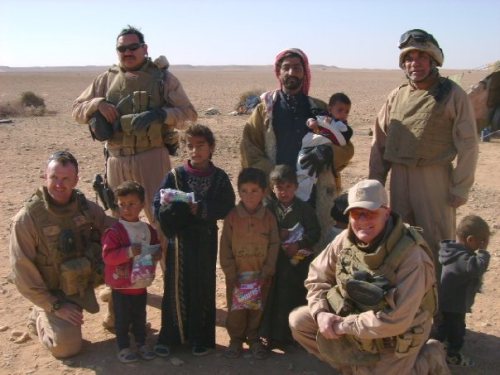
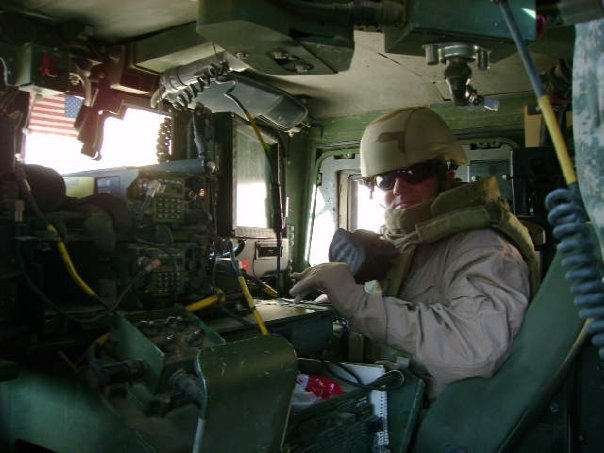
I have suffered a week of violent nightmares taking me back to my worst fears when I was serving in the badlands of Iraq’s Al Anbar Province in 2007 and 2008 supporting U.S. Advisors to Iraqi Army, Border Forces, Police, Highway Patrol, and Provincial Reconstruction teams. I rolled out of bed in a nightmare and cut my arm, and I woke up screaming and reaching for the pistol of an Iraqi insurgent who was about to shoot me, scaring the absolute shit out of our oldest Papillon dog Minnie, whose terrified Yelp woke me up.

I do not often write about it because I have been doing better, but I suffer from severe and chronic PTSD related to my experiences at war. The images are seared into my brain and sometimes the memories, and my deepest fears from my time there as an unarmed Chaplain working for the most part with very small groups of Americans and our Iraqis far away from the help of the big battalions if we got into serious trouble. I have written about those experiences and my struggles after my return many times on this blog. Likewise, I have had my story told on the front pages of the Jacksonville Daily News and the Washington Times. A video of my story is on the Department of Defense Real Warriors Campaign website, and is a large part of a chapter of Pulitzer Prize winning War Correspondent David Wood’s book  What Have We Done: The Moral Injury of America’s Longest Wars.  

Since Iraq, my nightmares are very vivid and often involve much physical acting out. The physical acting out is unusual and I have actually injured myself badly enough to require trips to the emergency room after crashing hard throwing myself out of bed combatting imaginary enemies. Likewise, other have been violent and physical enough to wake Judy up.

This is nothing new. In another nightmare a year or so ago I was being attacked by an Iraqi insurgent. Our advisor team had been attacked as we were stopped in the dark to determine if an Improvised Explosive Device had been laid in the road in front of us. This was just a few miles from the Iraq-Syrian border between Al Qaim and COP South, the base of the advisor team which was working with the 3rd Battalion of the 3rd Brigade of the Iraqi 7th Division.

The part about being stopped in the desert in the dark while examining a potential IED actually happened. The attack did not happen but at the time I fully expected something like it to happen. We were sitting ducks on a two lane highway in the middle of the desert. But the attack never happened and we continued to COP South, which would become a part of many of my future missions.

But in my nightmare it happened and as the fighting devolved into close quarters hand to hand combat I found myself grappling an insurgent who was attacking me with a large knife. I managed to roll on top of him and knock the knife from his hand when I was awakened. I was on top of Judy and she was afraid that I was going to strangle her. My hands had not gotten to her throat but she woke me and told me what had happen. I dropped back to my side of the bed in a cold sweat. I could not believe what had happened and that terrifies me. I have set up an appointment prior to my regularly scheduled one with my shrink to talk about this.

Since I my day had been quite good and I have been much more relaxed at work since putting in my retirement papers the event came as a huge surprise. In trying to figure out what triggered it I was at loss until I remembered that I had had dinner last night with a retired Navy EOD Captain who had been my Chief Staff Officer at EOD Group Two and running partner before I went to Iraq. He was sent there not long after me and we met at Camp Victory in Baghdad not long before I left Iraq on the way to Kuwait and home in 2008. We enjoyed a wonderful dinner last night and we did talk about all manner of things including our time in Iraq and those men that we had served alongside.

I saw my sleep doctor yesterday regarding my latest sleep study. Without my sleep Medical Tinos I did not enter in to REM sleep, or dream sleep. In addition to prescribing me a different CPAP machine and increasing the pressure , he referring me to a neurologist colleague of his in the sleep clinic. Honestly, I don’t know what god it will do, but I hope that he can find some kind of answer.

But trying to explain my trying to explain nightmares and night terrors is is not really helpful, they are now part of who I am. I think that Stephen King said it best:

“Nightmares exist outside of logic, and there’s little fun to be had in explanations; they’re antithetical to the poetry of fear.” 

Yes,  I can still try to logically deduce my nightmares and night terrors, but the poetry of fear as Stephen King so rightly calls it cannot be fully explained. For those of us who deal with the memories of combat, of having been shot at and have seen the human cost of war, the dead, the wounded, the destruction, and the aftermath of war, they are all too real and they never completely leave us.

Christmas on the Syrian border

Over eleven years after I returned from Iraq I still find that much of me is still there. In fact, deep down I miss Iraq and the Iraqis that I was honored to know and to serve alongside and I still pray for them and for their future. Maybe someday I will get back. I would love that.

For all that remains with me about Iraq, I left a good part of me there, with my advisors and Iraqis. It was the best of times, and the worst of times, but it is a major part of who I am now, and why I want to continue to live.

So until tomorrow, Inshallah, إن شاء الله

Peace

Padre Steve+

5 Comments

Filed under History, iraq, middle east, Military, ministry, News and current events, to iraq and back, Tour in Iraq, us army, US Marine Corps, US Navy

Inshallah, (إن شاء الله) God willing: Thoughts on Landing in Iraq 12 Years Later it is hard

Friends Of Padre Steve’s World,

it is hard to believe that about this time a dozen years ago that I was landing in Iraq, for a tour of duty with American advisers to Iraqi Army and security forces in Al Anbar Province. To quote Charles Dickens “It was the best of times, it was the worst of times.” It was a tour of duty that would change me forever, I could have stayed there indefinitely, but my tour was limited to seven months. Nonetheless, I left a lot of me in Iraq, and brought a lot back.

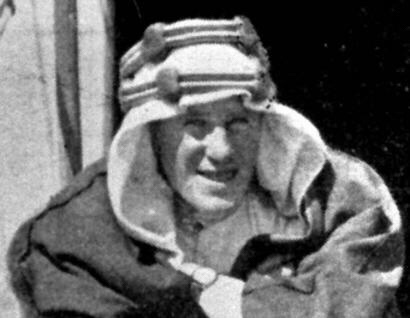
It was an amazing tour of duty, full of danger every day, full of travel from the Syrian border to Fallujah and all places in between. I met many friends there, Americans and Iraqis alike. I returned with a severe case of PTSD as well as moral and spiritual injuries that have afflicted me since. I really understand T. E. Lawrence, better known by most as Lawrence Of Arabia who wrote:

“We were fond together because of the sweep of open places, the taste of wide winds, the sunlight, and the hopes in which we worked. The morning freshness of the world-to-be intoxicated us. We were wrought up with ideas inexpressible and vaporous, but to be fought for. We lived many lives in those whirling campaigns, never sparing ourselves: yet when we achieved and the new world dawned, the old men came out again and took our victory to remake in the likeness of the former world they knew. Youth could win, but had not learned to keep, and was pitiably weak against age. We stammered that we had worked for a new heaven and a new earth, and they thanked us kindly and made their peace.”

You see I went to war as a volunteer. I was eager to go, and as I said I would have remained longer. When I left I felt like I was abandoning my Americans and Iraqis. When I left, the Navy Chaplain who followed the one I served under deferred on having my replacement and in a sense abandoning those Americans and Iraqis that I was the only Chaplain serving. My replacement was sent to an Army team in Mosul.

I left Iraq questioning everything that I had went there believing: about the justness of the war, about my country’s leadership, the political party I had been a part of for three decades, and my faith as a Christian.

I have written much about my experience in Iraq and how even today I have a deep regard for the Iraqi people and their hopes for a better future. However, I wonder if what Lawrence wrote will be true:

“We had been hopelessly labouring to plough waste lands; to make nationality grow in a place full of the certainty of God… Among the tribes our creed could be only like the desert grass – a beautiful swift seeming of spring; which, after a day’s heat, fell dusty.” 

vault-von-saddam-statue-fall-itn-640x360

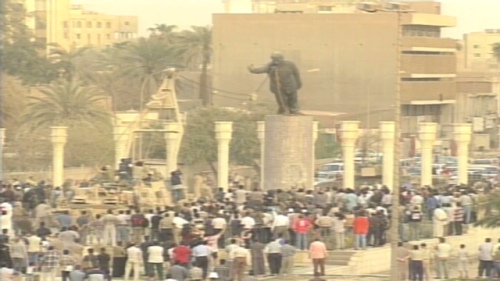
In 2003 the United States invaded Iraq and made short work of that country’s military. Many Iraqis of all creeds looked upon the US and coalition forces as liberators but within a few months the illusion was over. Within weeks of the overthrow of Saddam, the US military personnel and leaders who were working with Iraqi officials, both military and civilian to get the country back on its feet were replaced by the Bush administration.

rumsfeld-bremer-2

In their place a new entity, the Coalition Provisional Authority was created and staffed. The first administrator of the entity was retired Army Lieutenant General Jay Garner. He had much experience in Iraq but was sacked quickly by Secretary of Defense Donald Rumsfeld for not conducting an immediate purge of members of the Baathist Party from key positions in the civil service or security forces, or implementing the agenda of the administration.

After Garner’s dismissal the CPA was led by Ambassador L. Paul Bremer, a man who had no experience in the Arab world, much less in Iraq. Bremer and his staff, most of who had little experience or knowledge of the country created conditions that directly led the the Iraq insurgency, the sacrifice of thousands of American and allied lives and the loss of friendship of the Iraqi people. They also gave a a bloodless strategic victory to Iraq’s traditional enemy and oppressor Iran, which became a dominant regional power without having to worry about their traditional Arab nemesis.

It was as if Bremer, the leaders of the Bush administration and their neoconservative allies knew nothing of history. If they did they decided to ignore it. Whether it was ignorance of history, or a wanton disregard for it, and the country we invaded it was immoral, unethical and probably criminal.

baghdad1917-2

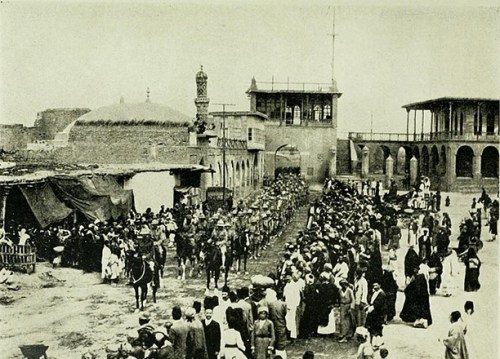
T.E. Lawrence wrote of the British incursion into Turkish Mesopotamia in 1915, managed by the British Indian Office:

“By brute force it marched then into Basra. The enemy troops in Irak were nearly all Arabs in the unenviable predicament of having to fight on behalf of their secular oppressors against a people long envisaged as liberators, but who obstinately refused to play the part.”

The actions of the CPA destroyed the plans pragmatists in the Pentagon and State Department to incorporate the existing civil service, police and military forces in the newly free Iraq.  Instead Bremer dissolved the Iraqi military, police and civil service within days of his arrival. Since the military invasion had been accomplished with minimal forces most Iraqi weapon sites, arsenals and bases were looted once their Iraqi guardians were banished and left their posts. The embryonic insurgency was thus provided by Bremer a full arsenal of weapons to use against American forces; many of whom were now mobilized Reservists and National Guardsmen that were neither trained or equipped to fight an insurgency or in urban areas.

mosul-41

The reaction of the Iraqi Arabs to US occupation should have been anticipated. Lawrence wrote in 1920 a letter that could have easily been written in 2004:

“It is not astonishing that their patience has broken down after two years. The Government we have set up is English in fashion, and is conducted in the English language. So it has 450 British executive officers running it, and not a single responsible Mesopotamian. In Turkish days 70 per cent of the executive civil service was local. Our 80,000 troops there are occupied in police duties, not in guarding the frontiers. They are holding down the people.”

The actions of Bremer’s incompetent leadership team led to a tragic insurgency that need not have taken place. The now unnumbered US forces had to fight an insurgency while attempting to re-create an army, security forces and civil service from the wreckage created by Bremer’s mistakes; as well as its own often heavy handed tactics in the months following the invasion.

OLYMPUS DIGITAL CAMERA

Nearly 4500 US troops would die and over 30,000 more wounded in the campaign. Hundreds of thousands of Iraqis were killed, wounded or died of disease during the war.  Lawrence wrote about the British administration of Iraq words that could well have been written about Bremer’s Coalition Provisional Authority:

“Meanwhile, our unfortunate troops, Indian and British, under hard conditions of climate and supply, are policing an immense area, paying dearly every day in lives for the willfully wrong policy of the civil administration in Bagdad.”

It took dramatic efforts in blood and treasure to restore the some modicum of security in Iraq, something that was only accomplished when the Sunni tribes of Anbar Province turned against the Al Qaeda backed foreign fighters. The surge under the command of General David Petreus achieved the desired result. It gave the Iraqis a chance to stabilize their government and increase their own security forces.

26iraq_image1-articleLarge

Unfortunately many of those that remained in power of the Shia sect refused to share power in meaningful ways with Iraq’s Sunni and Kurds leading to a political crisis. The US military mission ended in December 2011 and since then Iraq security forces and civil authorities, often divided by tribal or sectarian loyalties have struggled to maintain order. The result is that by 2013 that Iraq was again heading toward the abyss of civil war. Sunni protestors in Anbar and other provinces conducted frequent protests, sectarian violence spread, and an Al Qaeda affiliated group gained control of Fallujah and parts of Ramadi. It took years for the Iraqis aided by the Kurds, and a renewed U.S. military presence to restore a precarious stability in Iraq, something that it seems the Trump administration is trying to destroy in its economic and political war against Iran. To me that seems like the President is pissing on the graves of every American and Iraqi who died supporting that operation, and I hate him for that. I am still loyal to my oath and the Constitution but I loathe him and have no respect for a man who used every opportunity he could to not serve in Vietnam and consistently has disrespected Vietnam veterans and other military personnel. He loves military technology, but he shows no respect for the soldier.

Syria

To the west in Syria a brutal civil war has been going on for  years. Like Iraq it pits Sunni against Shia, as well as Kurd and foreign fighters from a score of nations, some fighting as part of a Free Syria movement, others as part of the Al Qaeda coalition and others beside Syria’s government.

In 1920 Lawrence wrote of the British intervention and occupation of Iraq:

“The people of England have been led in Mesopotamia into a trap from which it will be hard to escape with dignity and honour. They have been tricked into it by a steady withholding of information. The Bagdad communiqués are belated, insincere, incomplete. Things have been far worse than we have been told, our administration more bloody and inefficient than the public knows. It is a disgrace to our imperial record, and may soon be too inflamed for any ordinary cure. We are to-day not far from a disaster.”

lawrenceguerrillas1

His words have a sadly familiar tone. The US invasion of Iraq did have a different outcome than we imagined. The Arab Spring erupted and the consequences of it will be far reaching and effect much of the Middle East and the world. The internal conflicts in Iraq and Syria threaten every country that borders them, and the instability has the potential of bringing on an regional war.

295_26912097058_4309_n-4

That being said, many if not most Arabs in all of these lands simply desire to live in peace and enjoy some amount of freedom for themselves and future for their children. One has to remember that the freedom for which many are striving, and dying is for them, not for the United States or any other power.

Lawrence’s words and wisdom concerning the Arabs who rebelled against the Turkish Ottoman Empire are as true today as when he wrote them after the war:

“The Arabs rebelled against the Turks during the war not because the Turk Government was notably bad, but because they wanted independence. They did not risk their lives in battle to change masters, to become British subjects or French citizens, but to win a show of their own.”

That is the case in many Arab countries today. One can only hope that in those countries as well as in Afghanistan where our troops are embroiled in a war that cannot end well, that somehow peace will come. I do hope that we will do better than we have over the past dozen years of conflict, or than the British or French did almost 100 years ago, but under the present administration I doubt it.

I have recovered much since my tour, but there are days when I feel as Lawrence did not long before his death, when he wrote a friend:

“You wonder what I am doing? Well, so do I, in truth. Days seem to dawn, suns to shine, evenings to follow, and then I sleep. What I have done, what I am doing, what I am going to do, puzzle and bewilder me. Have you ever been a leaf and fallen from your tree in autumn and been really puzzled about it? That’s the feeling.”


I fully understand, and in the final year of my active service, I must speak the truth, even when it is uncomfortable for me and others.

As for my Iraqi friends who still remain in danger, I say Inshallah, (إن شاء الله) God willing.

Peace

Padre Steve+


1 Comment

Filed under ethics, faith, History, iraq, iraq,afghanistan, leadership, life, mental health, Military, News and current events, Political Commentary, PTSD, Tour in Iraq

Musing on Potential War With Iran

Friends of Padre Steve’s World,

I am a veteran of Iraq, and have participated in maritime operations in the Arabian/Persian Gulf.

I am not comfortable with the steps the administration is taking with Iran, not that I am any fan of the Ayatollahs and their aggressive theocratic-religious-military-dictatorship. While I had always dreamed of a military career it was the failure of the attempt to rescue the hostages taken by the Iranians in April 1980, Operation Eagle Claw that was the tipping point for me to explore my options about joining the military. 1980 was the year I transferred to California State University, albeit to study history, but mostly because Judy, my girlfriend was going there. Once I got there I started checking out the various ROTC programs and enlisted as a simultaneous membership program between Army ROTC and the California Army National Guard in 1981.

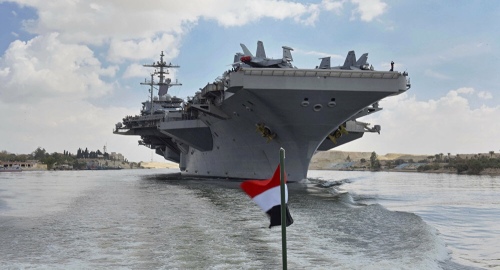
I thought back then at sometime we would go to war with Iran but as years passed I thought that maybe both sides would find a way to peacefully co-exist, at least within limits, especially after my experiences in the Gulf where the regular Iranian Navy chased Iraqi Oil Smugglers into our hands. Of course there was the time some Revolutionary Guard patrol boats harassed our squadron Flagship, an Australian Special Forces Support ship and we sped to her assistance at full speed with guns and missiles armed and ready to go to war. They withdrew and nothing came out of it, but for about an hour it appeared that we would be the first U.S. Navy ship to engage the Iranians since the Tanker Wars Of the late 1980s. The fact is that the Revolutionary Guard Naval Corps operates in a different world from the regular Iranian Navy.

If we go to war, now I know two things about the Arabian/Persian Gulf and the Iranians have built up a formidable asymmetric naval and capability. A large number small submarines, not high tech, but in large numbers hard to kill. Likewise, would deploy large numbers of fast attack boats and craft armed with a variety of missiles and guns for swarm attacks on otherwise better armed and more capable warships. We prepared for those back in 2002, but the lethality of the Iranians has increased, as has their number of anti-ship missile batteries his increased exponentially, as has their number of short and medium range ballistic missiles. While their AirPower is antiquated by American standards they have better and more advanced air defense systems, supplied by Russia. They are also supported by Shia Muslim militants in Iraq, Syria, Yemen, and even in Bahrain, headquarters of the U.S. 5th Fleet.

The Iranians have the capability of shutting down the Straits of Hormuz, and their allies in Yemen have showed the capability to attack shipping in the Bab El Mendeb, the Southern entrance to the Red Sea and a vital shipping lane in its own right.

Unfortunately, the Trump administration has severely weakened our ties with key allies that routinely contribute Naval and air forces to the security of the Gulf.

Over the past few weeks an otherwise routine deployment to the region by the Abraham Lincoln Carrier Strike Group, was sped up, B-52 bombers were deployed, and a proposal to send 120,000 troops to the Gulf was revealed. Four merchant ships were allegedly damaged by saboteurs, but no hard evidence points to Iran, and the damage to all the ships was minimal. The embassy staff in Baghdad was reduced over alleged threat increases that the American Commander in Iraq denies. The threats were reported by Israeli sources, much like the evidence that led us into war with Iraq in 2003.

I cannot put my finger finger on it, but something is not right about this situation. We are in no way ready for a major war with Iran, not with the possibility a potential war with North Korea, a trade war with China, and Russian threats to NATO allies or friendly nations in Eastern Europe.

This does not feel right to me. I’ve been around and seen and know too much. Maybe it’s my education military history, and high level Joint Operations education. Maybe it is my nearly 38 years serving in both the Army and Navy, including about 7 years with the Marines. Maybe it’s my long experience working with allies. I don’t know. All I know is that when domestic troubles embroil a national leader, the solution is often found in war. War allows leaders to do things impossible under peacetime constraints.

I can only speculate what is going on, but my hermeneutic os suspicion says to ask “why this administration, why Iran, why now?”

I wish I had the answer, but something doesn’t seem right, and I am worried for the many friends I have serving in the Gulf.

Until tomorrow,

Peace

Padre Steve+

6 Comments

Filed under Foreign Policy, History, iraq, middle east, Military, national security, US Navy, War on Terrorism

A Return to My Tipperary

Friends of Padre Steve’s World,

Today I am a bit tired and going to post so,etching that basically is a rerun. Ten years ago today I stepped off a plane with the man who had been my body guard and assistant for the past seven months in Iraq. War had changed me more than I had every imagined that it would. Even though I was physically home I wasn’t and over the next decade the war remained with me, and in some ways it still does.

I have written about my struggles with what I sometimes describe as the “Demons of PTSD” and while I am doing much better now than even two years ago I still suffer from it. But being a historian has allowed me to find connections to other men who have suffered from their experience of war, came home changed, and struggled for their existence in the world that they came home to.

The words of those men have helped me to frame my experience even in the darkest times often in ways that my faith did not. One of the things that I struggled with the most and still do is sleep. When I was conducting my research on the Battle of Gettysburg I got to know through biographies and their own writings a good number of the men who fought that battle who are now remembered as heroes. One of these was Major General Gouveneur Warren who has shattered by his experiences during the war. He wrote to his wife after the war: “I wish I did not dream that much. They make me sometimes dread to go to sleep. Scenes from the war, are so constantly recalled, with bitter feelings I wish to never experience again. Lies, vanity, treachery, and carnage.” 

About every year around this time I feel a sense of melancholy as I reflect on war and my return from it. Today I was reading a number of George Santayana’s Soliloquies in England, in particular one entitled Tipperary which he wrote in the time shortly after the war. I think that the first time that I heard the song was when I saw a Charlie Brown special where Snoopy as the World War One Flying Ace alternates between happiness and tears as Schroeder plays the song on his piano.

In Santayana’s soliloquy he comments on the wounded officers that he sees singing the song in a coffee house and he wonders if they understand how different the world is now. I love the song, the chorus is below.

It’s a long way to Tipperary
it’s a long was to go
It’s a long way to Tipperary
to the sweetest gal I know
farewell to Piccadilly
so long Leister Square
It’s a long way to Tipperary
but my heart lies there

Santayana wrote:

“It had been indeed a long, long way to Tipperary. But they had trudged on and had come round full circle; they were in Tipperary at last.

I wonder what they think Tipperary means for this is a mystical song. Probably they are willing to leave it vague, as they do their notions of honour or happiness or heaven. Their soldiering is over; they remember, with a strange proud grief, their comrades who died to make this day possible, hardly believing that it ever would come ; they are overjoyed, yet half ashamed, to be safe themselves ; they forget their wounds ; they see a green vista before them, a jolly, busy, sporting, loving life in the old familiar places. Everything will go on, they fancy, as if nothing had happened…

So long as the world goes round we shall see Tipperary only, as it were, out of the window of our troop-train. Your heart and mine may remain there, but it s a long, long way that the world has to go.” 

In the same work Santayana mused on the nature of humanity and war, making one of his most famous observation “only the dead have seen the end of war.”

In the United States we live in a world where war is an abstraction and the vast majority of people have no clue about it or its cost. When I hear the American President make wild threats of war and the cavalier attitude of his sycophants toward it I realize that Santayana was right, only the dead have seen the end of war.

When I returned to the United States in 2008 it was incredibly hard to readjust to life in a country that knew not war and I was reminded of the words of Guy Sajer in his book The Forgotten Soldier. Sajer was a French Alsacian of German descent who spent nearly four years fighting as an ordinary infantry soldier on the Eastern Front. When he returned home he struggled and he wrote:

“In the train, rolling through the sunny French countryside, my head knocked against the wooden back of the seat. Other people, who seemed to belong to a different world, were laughing. I couldn’t laugh and couldn’t forget.”

A similar reflection was made by Erich Maria Remarque in All Quite on the Western Front:

“I imagined leave would be different from this. Indeed, it was different a year ago. It is I of course that have changed in the interval. There lies a gulf between that time and today. At that time I still knew nothing about the war, we had been only in quiet sectors. But now I see that I have been crushed without knowing it. I find I do not belong here any more, it is a foreign world.”

I have to admit that for the better part of the past decade when I get out of my safe spaces I often feel the same way. I don’t like crowed places, confined area, and other places that I don’t feel safe in. When I am out I always am on alert, and while I don’t have quite the hyper-arousal and hyper-vigilance that I once lived with, I am much more aware of my surroundings and always plan an escape route from any public venue that I happen to find myself. Likewise, I still deal with terribly physical nightmares and night terrors, more than one in the past month.

As I read and re-read Santayana words I came back to his observation of the officers that he saw in the coffee house and I could see myself in them:

“I suddenly heard a once familiar strain, now long despised and out of favour, the old tune of Tipperary. In a coffee-house frequented at that hour some wounded officers from the hospital at Somerville were singing it, standing near the bar; they were breaking all rules, both of surgeons and of epicures, and were having champagne in the morning. And good reason they had for it. They were reprieved, they should never have to go back to the front, their friends such as were left could all come home alive. Instinctively the old grumbling, good-natured, sentimental song, which they used to sing when they first joined, came again into their minds.

It had been indeed a long, long way to Tipperary. But they had trudged on and had come round full circle; they were in Tipperary at last.” 

I too am now in my own Tipperary on this side of the Atlantic. I have been reprieved, at least temporarily,  but as Santayana noted  “it s a long, long way that the world has to go.” 

Until tomorrow,

Peace

Padre Steve

1 Comment

Filed under faith, History, iraq, middle east, Military, remembering friends, shipmates and veterans, to iraq and back, Tour in Iraq

Mia San Mia: Finding Myself Again after the Thrill is Gone

Friends of Padre Steve’s World,

Glenn Frey of the Eagles penned these immortal words which kind of sum up here I am with life as a Navy Chaplain:

Same dances in the same old shoes
Some habits that you just can’t lose
There’s no telling what a man might use
After the thrill is gone…

Now please be sure, I cannot stop being a Priest, nor can I refuse the chance to care for people in need of pastoral care, or the sacraments, and I will remain faithful to the Church. That being said, apart from caring for servicemen and women and their families, the thrill is gone as far as serving in the Chaplain Corps.

I think that I realized it back in 2014 while teaching at the Joint Forces Staff College. I realized that my real calling as a Priest was being a historian, teacher, and writer. It is not surprising, the most influential people in my life have included Priests and Pastors who do more as teachers and writers in fields outside of traditional theology or pastoral care. In fact I credit the late Andrew Greeley for helping to restore and reorient my faith after a terrible faith crisis following my tour in Iraq. His Bishop Blackie Ryan mysteries were they only things I read that in any sense communicated the mystery and magic of faith to me in a terribly dark time.

That being said I have always been a historian for as long as I can remember. I used to cut Geometry class in 10th grade to go to the library and read the books in the history reserved section that could not be checked out. I cut Geometry so often that the librarians thought I had a permanent pass to be there. Good thing my mother didn’t know. By the way, hi mom.

I probably should have retired when my assignment to the Staff College ended, but I thought that I could do another tour. If I had been used to my strengths it might have worked out, but I was put in charge of a large base chapel though my last base chapel experience was in the Army some twenty years before, in a far different religious, cultural, and political climate, where I had funding and command support to close down a regular army base, turn it over to the National Guard and find a way to creatively ensure that the base chapel remained open and the congregations continued after the transfer.

In the current Navy climate there is no money, funding, or support for anything on the base side of operations, far less chapel programs to make things work for servicemen and women and their families; active duty, Reserve, and retired. It’s a sad commentary, my facilities are falling apart, funding continues to be cut, and my staff is being decimated. If my base was being closed and turned over to the reserves I am sure that the chapel would go away and the 700 plus people who worship there would be cut loose.

Then there is the problem that I my opinion is that the Chaplain Corps is more invested in surviving than ministering. The institutional rot runs deep, and I think that unless there is a radical change that the Chaplain Corps has maybe 10 years left in it before the Navy decides to shitcan it. The Marines and Coast Guard will probably be the only thing that keeps the Navy Chaplain Corps going if it survives, but I digress. I know for me it is time to leave the institutional ministry of the Navy, the thrill quite frankly is gone.

But it’s not like that I didn’t know what I was getting into. I was warned about the Chaplain Corps even before I left active duty in the fall of 1988 to attend seminary. My Brigade Executive Officer told me: “Steve, you think the Army Medical Department is brutally political, and backstabbing, we can’t hold a candle to the Chaplain Corps.” Sadly, that witness has not only been born out in my career, but repeated by Chaplains and Line officers in both the Army and Navy since then. Despite the many selfless men and women who have served as military Chaplains, the institution itself has what Kierkegaard called, the sickness unto death, and most don’t realize it. I served in the Army and Navy Chaplain Corps fore 26 of my 37 plus years in the military, serving all because I believed in the First Amendment, sometimes more than God. But it is time for me to go.

Today, I interviewed for a part time history instructor position at a local college. I found out about the position by a stroke of luck. I was going through a required pre-retirement class and one of our exercises was to find a job listing and write a targeted resume for it. In a moment of inspiration I decided to follow the advice of our Department of Labor instructor to not only do an exercise, but to see if I could actually find a job doing it. A simple Google search provided an advertisement for a history instructor at a for profit local college. So I followed the instructions in the job description and made the phone call.

That was a month ago. Today, I did my interview and gave a demonstration lecture. It went well. There is still one more applicant, but he or she will have to be shit hot to take it from me. The comments about the interview and sample lecture about the causes and road to the First World War were as I had hoped: he’s an engaging and captivating speaker and great story teller.

I do hope and pray that I will get this job simply because I love history, as well as teaching it and writing about it. The fact is that I cannot do anything else. My former. Dean at the Joint Forces Staff College said that I was a “Historian masquerading as a Chaplain, not that there was anything wrong with that.” One of my subordinate Chaplains at my current base said to me: Sir, I need to start taking notes so I can try to get graduate credit for our talks.

But that is who and what I am. In the Latin words of a Bavarian motto taken up by the Bayern München soccer team. Mia San Mia, We are Who We Are, or for me, I am Who I Am.

After twenty-six plus years as an Army and Navy Chaplain, I realized that while I would always remain a Priest and a part of the church, that I couldn’t be a parish pastor or continue working in institutional ministry just because I had the education, the experience, and the need for steady employment post Navy, enough to make up the difference between my retirement, disability, and what I make on active duty. But even without that, I know that I need to stay engaged and to read, teach, and write; Mia San Mia.

I am who I am.

Peace,

Padre Steve+

7 Comments

Filed under books, christian life, ethics, faith, History, holocaust, iraq, iraq,afghanistan, leadership, Loose thoughts and musings, Military, ministry, News and current events, Political Commentary, Teaching and education

“All Stop” Pausing to Remember the End of An Age

Friends of Padre Steve’s World,

In the midst of a very busy “day off” due to the National Day of Mourning in honor of the late President George H. W. Bush, I stopped everything to watch his funeral. On a ship the command “All Stop” involves taking all engines off line by disengaging the engines from the propeller shafts, where they are neither driving the ship forward or in reverse. For landlubbers it is like one puts a car with a manual transmission in neutral or park. The engines may continue to run, but the ship is not being driven forward or reverse.

For a bit over two hours I did that today. I stopped. I didn’t look at email, didn’t answer telephone calls or texts, and didn’t check Facebook or Twitter, instead I stopped to watch, listen, and reflect during the funeral for President Bush. I had other things that I could have done, but as a historian I knew that it was the end of an age.

State funerals are something special in the United States, unlike our mother country we are a republic, and democracy. While Great Britain is a Constitutional Monarchy, it is still a monarchy. State funerals in the United States serve to remind us of our heritage even in times when many people either pay lip service to it, or actually despise it, longing for some form of autocracy. The funeral of President Bush served as a reminder of that better and more noble heritage, what Abraham Lincoln referred to as the better angels of our nature.

Earlier in the morning I had taken Judy to her first physical therapy appointment in two weeks since she tore a Quadricep muscle while doing at home physical therapy after her first knee replacement surgery. She is making great progress but the pain is still pretty bad and she has a hard time getting comfortable in bed, something that makes sleep difficult. After that we went out to breakfast before coming home.

As a Priest, Chaplain, military officer, and historian I thought that it was important. President Bush had been out of office for around 26 years and only had served one term as President, however, those four years were among the most critical in the history of the modern world. The collapse of the Soviet Union and the Warsaw Pact, the reunification of Germany as a Westen oriented member of NATO and the European Union, and the liberation of Kuwait and defeat of Iraq by a disparate coalition of 29 very different nations under the authority of the United Nations all within a period of barely two years time were remarkable, and something that we will probably never see again in our lifetimes.

Whether one agreed or disagreed with individual policies enacted by him or his administration; and I did have my share of disagreements one had to admit the basic decency, humility, and respect for political opponents that enabled him to build relationships and keep friendships.

Today’s funeral dealt with history and what it is to be an American: friendship, family, faith, a dedication to the ideals written in the Declaration of Independence, spoken of by Abraham Lincoln at Gettysburg, which referred to that ideal and pledged to build a more perfect Union, as well as a belief in an ideal of service to something greater than ourselves.

Historian John Meecham, former Canadian Prime Minister Brian Mulroney, former Senator Alan Simpson, and his son, former President George W. Bush, speaking as a son and not a President, were a portrait and a biography of a man who loved life, loved his family, loved his country and who had the courage to defy Party hardliners if it benefited the county, and who could take the time to care about children afflicted with the Leukemia that killed his daughter Robin at the tender age of three.

His was the story of a man who defied affluence and privilege to serve his country by volunteering to serve as soon as he could after the nation went to war, and who at the tender age of 18 became the youngest Naval Aviator in our history. Shot down over Chuchi Jima, he mourned the loss of his flight crew and was always aware of the human cost of war. He did not commit the lives of young Americans, allies, or coalition partners without reflecting on the loss of his flight crew. When he committed the nation to war in 1991 he did so only under the mandate of the United Nations and with a coalition that would be unimaginable today. I could never see our current President doing what George H. W. Bush did to keep the world from plunging into an abyss of disorder and irresponsibility.

This isn’t to say that he didn’t make mistakes, couldn’t go for the jugular as a politician, or who didn’t change his positions on various issues out of political expediency; but he always remained a fundamentally decent man who had great empathy for others.

His funeral was attended by more heads of state, former heads of state, or royalty since that of John F. Kennedy. As I watched the hearse which bore his body from the funeral in which the current President and four other Presidents gathered along with so many heads of state or former leaders gathered I was reminded of the words of historian Barbara Tuchman speaking about then funeral of British King Edward VII:

“So gorgeous was the spectacle on the May morning of 1910 when nine kings rode in the funeral of Edward VII of England that the crowd, waiting in hushed and black-clad awe, could not keep back gasps of admiration. In scarlet and blue and green and purple, three by three the sovereigns rode through the palace gates, with plumed helmets, gold braid, crimson sashes, and jeweled orders flashing in the sun. After them came five heirs apparent, forty more imperial or royal highnesses, seven queens – four dowager and three regnant – and a scattering of special ambassadors from uncrowned countries. Together they represented seventy nations in the greatest assemblage of royalty and rank ever gathered in one place and, of its kind, the last. The muffled tongue of Big Ben tolled nine by the clock as the cortege left the palace, but on history’s clock it was sunset, and the sun of the old world was setting in a dying blaze of splendor never to be seen again.”

Until tomorrow,

Peace,

Padre Steve+

2 Comments

Filed under faith, History, iraq, leadership, Military, News and current events, Political Commentary

“I imagined leave would be different from this” September 11th 2001 at Seventeen Years

flight_175_photo

Friends of Padre Steve’s World,

September 11th is a day that always makes me more introspective. It brings back so many memories, some that I wish I could forget; but I cannot get the images of that day out of my mind. The burning towers, the people jumping to their deaths to escape the flames, and the scenes of devastation. I knew one of the victims in the attack on the Pentagon, an Army Lieutenant Colonel, Karen Wagner who commanded a Medical training company at Fort Sam Houston where I was serving as the Brigade Adjutant in 1987 and 1988. She was a very nice person, very gracious and decent, admired by everyone who knew her; I was shocked to see her name on the casualty list after the attack.

The emotions that I feel on the anniversary of these terrorist attacks which claimed the lives of so many innocent people, and which devastated so many families, still haunts me, and my subsequent service, especially in Iraq has changed me. Years after he returned from his time in the Middle East, T.E. Lawrence; the immortal Lawrence of Arabia wrote to a friend, “You wonder what I am doing? Well, so do I, in truth. Days seem to dawn, suns to shine, evenings to follow, and then I sleep. What I have done, what I am doing, what I am going to do, puzzle and bewilder me. Have you ever been a leaf and fallen from your tree in autumn and been really puzzled about it? That’s the feeling.” I often feel that way.

Seventeen years ago I was getting ready to go to the French Creek Gym at Camp Le Jeune North Carolina where I was serving as the Chaplain of Headquarters Battalion 2nd Marine Division. I had returned from a deployment to Okinawa, Mainland Japan and Korea just two months before and was preparing to transfer to the USS Hue City, a guided missile cruiser stationed in Mayport, Florida.

At the time of the attack I had already been in the military for over 20 years and I had actually taken a reduction in rank to transfer from the Army, where I was a Major in the reserves, to the Navy to serve on active duty. In those previous 20 years I had served overseas during the Cold War along the Fulda Gap. I had been mobilized to support the Bosnia mission in 1996, and I had just missed being mobilized for Operation Desert Storm as my unit was awaiting its mobilization orders when the war ended. I had done other missions as well as the deployment to the Far East that returned from in July 2001; but nothing prepared me for that day. Like other career military officers I expected that we would be at war again and thought it might be back in the Middle East, and probably a result of some fool’s miscalculations; but like the American officers who were serving at the time of the Pearl Harbor attack, I never expected what happened that morning.

Tuesday, September 11th 2001 had started like so many days in my career. Routine office work, a couple of counseling cases and what I thought would be a good PT session. I was about to close out my computer browser when I saw a little headline on Yahoo News that a plane had crashed into the World Trade Center. I paid little attention and figured that a private plane, something like a Cessna piloted by an incompetent had inadvertently flown into the building.

9-11 jumpers

That delusion lasted about two minutes. I got in my car and the radio, tuned to an AM talk station had a host calling the play by play. He started screaming “oh my God another airliner flew into the other tower.” Seeking to see what was happening I went to the gym where there were many televisions. I got there and saw the towers burning, with stunned Marines and Sailors watching silently, some in tears. I went back out, drove to my office and got into uniform. After checking in with my colonel a made a quick trip to my house for my sea bags and some extra underwear, and personal hygiene items. When I got back the headquarters we went into a meeting, and the base went on lock down mode. The gates were closed and additional checkpoints, and roadblocks established on base. Marines in full battle-rattle patrolled the perimeter and along the waterfront. I did not leave the base until the night of the 15th when things began to settle down and we all went into contingency planning mode for any military response to the attacks.

My wife, who as waiting for a doctor’s appointment with a friend saw the attacks on live television and knew when the first plane struck she told her friend that it was terrorism. Her friend responded “that damned Saddam Hussein.” Like so many of us who initially thought this, my wife’s friend was wrong.

LutjensHonors

Those were tumultuous days, so much fear; so much paranoia; and so much bad information as to who committed the attacks and what was going to happen next.

hue city boarding party


A few months later I deployed aboard Hue City to the Middle East where we supported the air operations in Afghanistan, anti-terrorist operations off the Horn of Africa and in Operation Southern Watch and the U.N. Oil Embargo against Iraq. I then did three years with Marine Security Forces, traveling around the world to support Marine Fleet Anti-Terrorism Security Team companies. For three years I was on the road one to three weeks a month traveling to the Middle East, Europe, the Pacific and many parts of the United States. Then I was promoted and transferred to Explosive Ordnance Disposal Group Two, from which I was deployed with my assistant to Iraq, where we served as members of the Iraq Assistance Group in all Al Anbar Province supporting small teams of Marine Corps, Army and Joint Force adviser teams to the Iraqi Army, Border troops, Port of Entry police, police and highway patrol.

with-mtt-3-7-ronin


When I returned from Iraq I was a changed man and while I am proud of my service I am haunted by my experiences. One cannot go to war, see its devastation, see the wounded and dead, as well as the innocents traumatized by it. One cannot get shot at, or be in enclosed rooms, meeting with people that might be friends, or might be enemies, and while everyone else is armed, you are not.

War changed me, and my homecoming was more difficult than I could have imagined. I never felt so cut off from my country, my society, my church, or even other chaplains. My experience is not uncommon among those who have served in Iraq or Afghanistan, or for that matter those who have served in almost any modern war. Erich Maria Remarque in his classic All Quite on the Western Front wrote:

“I imagined leave would be different from this. Indeed, it was different a year ago. It is I of course that have changed in the interval. There lies a gulf between that time and today. At that time I still knew nothing about the war, we had been only in quiet sectors. But now I see that I have been crushed without knowing it. I find I do not belong here any more, it is a foreign world.”

That being said I would not trade my experience for anything. The experience of PTSD and other war related afflictions has been a blessing as well as a curse. They have changed my world view and made me much more emphatic to the suffering and afflictions of others, as well when they are abused, mistreated, terrorized and discriminated against. These experiences along with my training as a historian, theologian, and hospital chaplain clinician before and after my tour have given me a lot bigger perspective than I had before.

But I have to live with all of the memories. Guy Sajer wrote in his book The Forgotten Soldier“Only happy people have nightmares, from overeating. For those who live a nightmare reality, sleep is a black hole, lost in time, like death.” General Gouverneur Warren, a hero of many Civil War battles including Gettysburg wrote to his wife after the war “I wish I did not dream so much. They make me sometimes to dread to go to sleep. Scenes from the war, are so constantly recalled, with bitter feelings I wish never to experience again. Lies, vanity, treachery, and carnage.”

As hard as this has been these are good things, and as I go on I wonder what will happen next. I do not think that the wars and conflicts which have followed in the wake of the 9-11 attacks will be over for years, maybe even decades. I pray for peace, but too many people, some even in this country seem to live for the bloodlust of war. One can only hope and as my Iraqi friends say, Inshallah, (إن شاء الله) God willing…

I wonder too, if the words of T.E. Lawrence reflecting on his service in the Arab Revolt are not as applicable to me and others who came back from Iraq, “We had been hopelessly labouring to plough waste lands; to make nationality grow in a place full of the certainty of God… Among the tribes our creed could be only like the desert grass – a beautiful swift seeming of spring; which, after a day’s heat, fell dusty.” I have lost too many friends in these wars, including men who could not readjust to home, many like me. I have seen the men and women, broken in body, mind and spirit and I wonder if any of it was worth it, and if in some of our response, especially the invasion of Iraq has not made a bad situation even worse, and turned the war into a generational conflict.

As for me, I am now an old guy by military standards. I recently celebrated 37 years of service and will, God willing, retire next year. Sadly, I know all too well that those who I have worked with, and those who are yet to enlist will be continuing to fight a war which seems to be without end long after I retire.

Yesterday and today there were and will be many ceremonies and services to remember the victims of the attacks. I think that is fitting. As I mentioned last night I did not take place in this year’s commemoration of the event at my base because I had been asked by name to do a funeral for a retired Navy Chief at a local veterans cemetery followed by more planning and preparing for the arrival of Hurricane Florence.

So please, have a good day and whatever you do do not forget those whose lives were forever changed by those dastardly attacks and all that has transpired in the years since. Honestly I did not think that we would still be at war today. It is hard for me to believe that we still are at war and that there is no end in sight.

As Erich Maria Remarque wrote “I imagined that it would be different…”

At the same time I do hope that things will get better and that some semblance of peace will return to the world.

Inshallah, (إن شاء الله) God willing…

Peace

Padre Steve+

2 Comments

Filed under afghanistan, ethics, History, iraq, iraq,afghanistan, leadership, Military, Political Commentary, terrorism

PTSD, Medical Records, Malfeasant Malpractice, and the Minstrel Boy: Surprises You Discover by Seeing Your Actual Medical Records

Friends of Padre Steve’s World,

I was going through some of the 1000 pages of my electronic medical records and close to 500 pages of hard medical copy records. My God, they are a treasure trove of information. I am beginning to organize them for my meetings with Disabled American Veterans and Veteran’s Administration for my military disability claim. According from one of my friends, a retired Navy Physician who now works for the VA in dealing with claims I should have an 80-100% disability rating from the VA due to all that is goofed up with me. I’d settle for 80-90%, 100% sounds too extreme. But severe chronic PTSD, Traumatic Brain Injury, chronic insomnia, night terrors, injuries sustained in physically acted out nightmares, severe Sleep Apnea, hearing loss, Tinnitus, speech comprehension at the 3rd percentile, not to mention numerous injuries to my legs, knees, hips, ankles, shoulders and wrists incurred through years of physical abuse in and out of combat environments.

These do not include many of my psychiatric and psychological records which are in a different system, nor the hard copy records from my time in the Army which I still have, but they are impressive and full of surprises.

For me this included an obviously punitive diagnosis made by a Psychiatry Resident four years ago who had only met me for 15 minutes. During that time she treated with such contempt and disrespect that I issued a formal complaint about her. My complaint actually helped get me a competent therapist, but this physician attempted to harm me by diagnosing me with a disorder than cannot be made in such a short time of clinical observation. The fact is that I was dealing with PTSD and combat trauma while she was still in high school, and that was before it happened to me. As a result I am going to seek some kind of sanctions on that doctor through the military or through her accrediting body.

If it wasn’t for the restrictions of the Feres Doctrine I would immediately sue the Navy because how badly that encounter effected me then. I do actually plan on exploring ways to punish that doctor for what she did because the diagnosis was made purely to poison the relationship that any future Navy (Military or Civilian) therapist might have with me, but I digress because I went all of this to write about a Star Trek the Next Generation episode which I just watched as part of my current binge watching of Star Trek TNG seasons. The episode was called The Wounded and dealt with PTSD, combat trauma, loss, and the unwillingness of some to let wars end. It has always been one of my favorite episodes of that franchise, long before I ever went to Iraq or came back with PTSD and TBI.

One of the quotes from the episode was uttered by Captain Jean Luc Picard, played by Sir Patrick Stewart. He made a comment about people who could not get over their anger, that is especially applicable to those who went to war or lost friends or family in war:

“I think, when one has been angry for a very long time, one gets used to it. And it becomes comfortable like…like old leather. And finally… it becomes so familiar that one can’t remember feeling any other way.

I understand that. I still have a lot of anger. Not at the Iraqis, but the men and women who sent us into Iraq. Trust me, I have no lingering sympathy for Saddam Hussein and his thuggish dictatorship, but that being said the justification to go to war was so unjust that had our leaders been in the dock at Nuremberg they would have been found guilty of at least two counts on those charges. No honest person who looks at history or international law can say otherwise, especially it because it was an American, Justice Robert Jackson who organized the trials and who noted before they began:

“If certain acts of violation of treaties are crimes, they are crimes whether the United States does them or whether Germany does them, and we are not prepared to lay down a rule of criminal conduct against others which we would not be willing to have invoked against us.”

Once again I digress, because what brought all about my post tonight was that Star Trek TNG episode that I first saw some 27 years ago. When the episode comes to it’s conclusion Chief Miles O’Brien played by Colm Meaney tells his former Captain, Benjamin Maxwell played by the noted character actor Bob Gunton that the war is over. He then reminds him of the Irish song The Minstrel Boy which they begin to sing:

The Minstrel Boy (Thomas Moore)

The minstrel boy to the war is gone, In the ranks of death ye will find him; His father’s sword he hath girded on, And his wild harp slung behind him; “Land of Song!” said the warrior bard, “Tho’ all the world betray thee, One sword, at least, thy rights shall guard,One faithful harp shall praise thee!”

The Minstrel fell! But the foeman’s chain Could not bring his proud soul under; The harp he lov’d ne’er spoke again, For he tore its chords asunder; And said “No chains shall sully thee, Thou soul of love and bravery! Thy songs were made for the pure and free They shall never sound in slavery!”

The Minstrel Boy will return we pray When we hear the news we all will cheer it, The minstrel boy will return one day, Torn perhaps in body, not in spirit. Then may he play on his harp in peace, In a world such as heaven intended, For all the bitterness of man must cease, And ev’ry battle must be ended.

It is a breakthrough, a new war is averted, a former enemy warned of that future activities would be watched, and the possibility of peace and understanding between old enemies. Honestly, that is what I want to see in life. I have written about that many times.

I have meandered too much tonight, so I wish you a good night and a happy Labor Day Weekend.

Peace

Padre Steve+

2 Comments

Filed under ethics, iraq, mental health, Military, PTSD