Category Archives: iraq,afghanistan

PTSD in the Danger Zone and Blue Lights in the Rear View Mirror…Caught in the HOV damn!

Today I was able to have a pleasant chat with one of Virginia’s finest State Troopers.  The man was doing his duty and found me in violation of using the HOV-2 lane on I-264 West as I headed into work this morning. I didn’t get upset and was polite to this officer and did not make excuses to him to try to weasel out of the ticket even though I could have.  However I know that such excuse hold no weight with the officer writing the ticket, unless you are a good looking girl which I am not and I can say from past experiences that lady cops don’t take BS stories from guys they just glare at us and write the ticket, but I digress….

Any long term reader of this site knows that I am an Iraq veteran and have dealt with a pretty serious case of PTSD since my return from deployment in February of 2008, a condition that got a lot worse before it started getting better.  If you are curious my journey since that time please click the “PTSD” button on the subject list.  It has affected a considerable amount of my life, emotional, physical and spiritual and I am only really beginning to emerge from the nightmare.  However it still has an effect on me in crowded or unfamiliar places, airports and in bad traffic where I feel boxed in and vulnerable. My problems with nightmares, flashbacks and sleep problems are not as bad as they were and my life is on the uptick again, however bad traffic is a trigger.

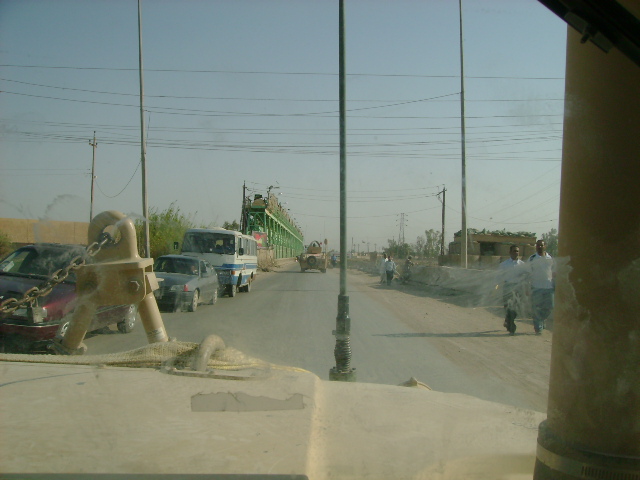
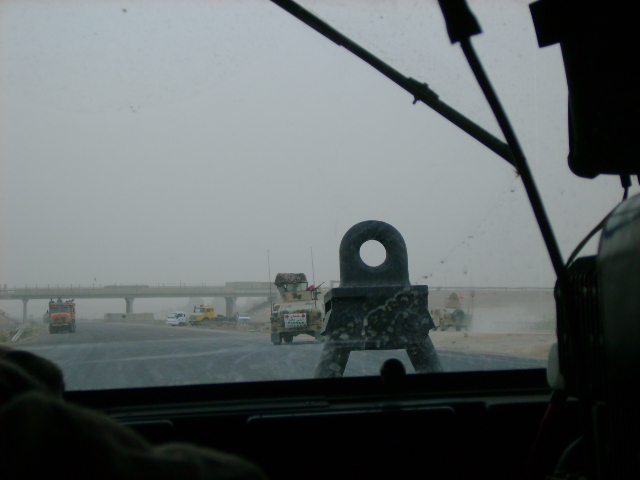
I got started a bit late to work this morning, not real late to be late for work late, but late in the sense that the traffic was heavier than I normally deal with on my commute.  As I got on the highway the first thing that happened was that I got cut off and almost runoff the road by some idiot and once I got out into traffic things did not get better as people cut me off and boxed me in.  Anyone who has been on a lot of convoys in Iraq or Afghanistan can understand, congested areas are dangerous and for me and a good number of other veterans that I know when we get in a congested area it triggers the same hyper vigilance and need to get to a safe place or defend ourselves as similar situations in the combat zone. There are times on the road here if I had a turret gunner I would have him put a couple of rounds from the .50 cal or M240 series machine through the offending vehicle’s engine.  My hyper vigilance is keen on the road, it is among the places that I never relax and I can almost sense when someone is going to do something dangerous.

This morning was one of those kings of mornings, I had barely gone a mile down the road and I was looking for safety in an open space where I can get out of danger.  I found this today in the HOV lane and just as I thought I had gotten out of the danger zone I noticed a blue unmarked police car to my right. I immediate slowed down and moved back into the regular traffic lanes and moved toward the right anticipating that he would come and get me.  Once again I was right, he slowed down and worked his way behind me and just before the I-264 and I-64 interchange the pretty blue lights mounted in the pretty blue unmarked Chevy Impala came on and I pulled over.  The trooper asked if I knew why he had pulled me over and I acknowledged that I was in the HOV lane.  He took my license, registration and insurance paperwork as well as my military ID and about 7-8 minutes later came back with a ticket which is more like a sheet of paper and gave me the pink carbon copy.  He explained that signing was not an admission of guilt and informed me of a court date as well as how I could pay the fine early.

Was I guilty of driving in the HOV-2 without another passenger in the car?  Yes.  So by the letter of the law I am guilty.  However I do believe that I had mitigating circumstances so I will go to court not to claim that I was not where I was but to explain the danger that I felt that I was in and how I needed to get out of the danger zone.  I thought that the “Danger Stay Back” convoy sign sticker, the Multi-National Corps Iraq and “IRQ-I Served” bumper stickers would adequately identify me as someone who might be vulnerable but alas this was not the case.  The trooper was professional, polite and businesslike.  I could not find fault in anything that he did. I felt stupid that I had let myself get into the situation but at the same time knew that I was basically acting on instinct from my time in Iraq.

I will go to court to explain the mitigating circumstances and if I need to either bring a letter from or drag along Elmer the Shrink to explain this.  Who knows maybe the judge will have mercy on me, if not I pay the fine and until the state legislature passes an exemption for military personnel to use the HOV, which they are debating I will have to get blow up doll to inflate if I feel like I am in a danger zone and have to jump into the HOV.  On the way home I was able to hold it together.

So there it is, guilty as charged but with mitigating circumstances.  I know that I am not alone. I have heard countless stories of Iraq and Afghanistan vets doing the same thing in traffic.  It is no fun to feel danger.  I am an excellent driver, have driven thousands of miles on the German Autobahnen and in crazy traffic in a lot of countries as well as some of the worst traffic areas in this country, but that was before Iraq and PTSD.  I’m glad that I’m getting better but days like today show me that I still show the wear and tear from my time in Iraq and PTSD.  At least I did not have an emotional crash or anger rage that well could have happened just a few months ago.  The grace of God is good.

If you know any veterans from Iraq, Afghanistan or even those from Vietnam who suffer from stuff like this feel free to share this with them.

Pray for me a sinner,

Peace,

Padre Steve+

4 Comments

Filed under iraq,afghanistan, Military, PTSD

Padre Steve’s Military History and Theory Articles

I am not normal, ask anyone who knows me.  I am a Priest who is also a military history and theory “wonk.”  I guess part of the reason for this as that I did not begin life as a clergyman. In fact way back when, when I was a young whippersnapper it was my desire to be in the military.  I was a Navy brat who grew up during the height of the Vietnam War and had friends whose fathers did not return from that war.  Likewise when my dad was serving in Vietnam surrounded by the North Vietnamese and Viet Cong in a town called An Loc I had a blessed Sunday school teacher tell me that my dad was a “baby killer.”  When you are an eleven year or twelve year-old and get told that your dad is a baby killer by some hippie wench you grow somewhat cynical about such people early in life.

Even worse than Limbaugh and Hannity is Michael Savage. Savage who despite having an earned PhD in the field of nutrition is so clueless and rude in discussing military issues that I can’t believe my ears whenever I run into his program. His absolute disdain that he shows for military leadership and actual implications of how we wage war in this era is so off base that it isn’t even funny.  For all of their lack of understanding of military strategy and policy at least Limbaugh and Hannity for the most part treat people in the military respectfully.

We no longer live in the World War Two world, warfare has changed and as the 2010 Quadrennial Defense Review notes that the United States must “prevail in today’s wars” while at the same time “prevent and deter conflict” which involves “preventing the rise of threats to U.S. interests requires the integrated use of diplomacy, development, and defense, along with intelligence, law enforcement, and economic tools of statecraft, to help build the capacity of partners to maintain and promote stability.” If deterrence fails we must Prepare to defeat adversaries and succeed in a wide range of contingencies: If deterrence fails and adversaries challenge our interests with the threat or use of force, the United States must be prepared to respond in support of U.S. national interests. Not all contingencies will require the involvement of U.S. military forces, but the Defense Department must be prepared to provide the President with options across a wide range of contingencies, which include supporting a response to an attack or natural disaster at home, defeating aggression by adversary states, supporting and stabilizing fragile states facing serious internal threats, and preventing human suffering due to mass atrocities or large-scale natural disasters abroad.” (2010 QDR Executive Summary pp. v-vi)

So tonight I am highlighting a series of articles that I have written that deal with the kind of war that we are waging in Afghanistan and have done in Iraq as well as a couple of studies from military history that discuss how the diplomatic, intelligence, economic and military resources of a nation are all important in the continuum of conflict and the importance of alliances when waging global warfare. These are the articles that I have produced so far and will as time goes on continue to add to.  They span the spectrum and hopefully will assist the reader in sorting through a lot of the mindless gibberish that is pumped out from the political right and left on TV, radio and the internet.  Some of these are drawn out of military history but have an application today while others are more targeted at what is going on today.  Since this is an ever expanding subject for me I expect to post more articles on a regular basis.

Learning to Apply the Principles of Counterinsurgency Part One: Introduction to the Soviet-Afghan War

Mission Accomplished in Al Anbar: The Marines Turn Over the Mission to the Iraqis

The Anomaly of Operation Desert Storm and Its Consequences Today

War Without Mercy: Race, Religion, Ideology and Total War

Lessons on Coalition Warfare: The Dysfunctional Coalition German and the Axis Partners on the Eastern Front

The Afghan War 2009-2012: Lessons from Algeria 1954-1960 A Review of “A Savage War of Peace

Moslem Allies and Friends

Lessons for the Afghan War: The Effects of Counterinsurgency Warfare on the French Army in Indo-China and Algeria and the United States Military in Vietnam

The most dangerous assignment: 4 More Advisers Die In Afghanistan

Brothers to the End…the Bond between those Who Serve Together in Unpopular Wars

Iran Makes Noise in Persian Gulf: Obama Dispatches Patriots and Ships to Deter

Mission Accomplished in Al Anbar: The Marines Turn Over the Mission to the Iraqis

The Dangerous and Often Thankless Duty of Military Advisers

More on our Unsung Heroes-Military Advisers, Past and Present

The Ideological War: How Hitler’s Racial Theories Influenced German Operations in Poland and Russia

D-Day- Courage, Sacrifice and Luck, the Costs of War and Reconciliation

Dien Bien Phu- Reflections 55 Years Later

God in the Empty Places

I hope that this rather diverse series of articles and my comments will be helpful to the reader in sorting through all the crap that floats about as “truth” from all sides of the media and the various political parties, special interest groups and others more intent on seeing their often divergent and uninformed agendas.

Peace

Padre Steve+

Leave a comment

Filed under counterinsurency in afghanistan, Foreign Policy, hampton roads and tidewater, History, iraq,afghanistan, Military

Mission Accomplished in Al Anbar: The Marines Turn Over the Mission to the Iraqis

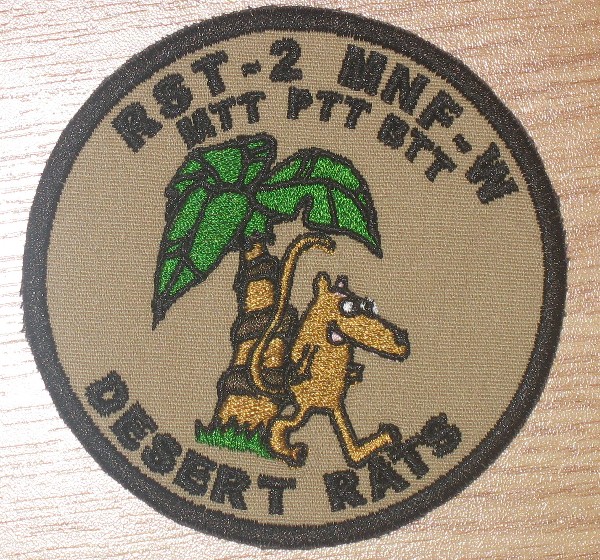
Religious Support Team 2 MNF-W the Desert Rats at Al Waleed August 2007

There was a time not very long ago that names like Al Anbar, Fallujah and Ramadi were synonymous with futility and humiliation.  But that was before a long time ago in a galaxy far far away. In late 2007 the Marines and our Iraqi Allies aided in large part by the “Anbar Awakening” where the Sunni in the province realized that Al Qaida Iraq’s motives were not in the best interest of the people gained the upper hand in a very short time.  The success was heralded as part of the “surge” but was in large part due to the effort made by the Marines to be seen as something other than occupiers but allies in a fight against foreigners that would brutally kill Iraqis to achieve their goals.

Iraqi Children Happy to see us near Baghdadi

I arrived in Al Anbar in August of 2007 and spent my tour as the Chaplain to the Marine, Army and other advisers in the province which at the time of my arrival were still very much in play.  Within days of arriving at our base of operations I took part in a number of mass casualty situations at the Shock Surgery Trauma center at Ta Qaddum where I prayed for, anointed and looked after Marines wounded when their vehicles were destroyed by improvised explosive devices during combat missions.  My tour was the highlighter of my military career.  In my tour with the advisors as well as the Iraqis of the 1st and 7th Iraqi Army divisions, Second Border Brigade and Iraqi Police, Highway Patrol and even a reconstruction team or two.

Allies: Colonel Cottrell and General Murthi of the 7th Iraqi Division at the Marine Corps Birthday 10 November 2007

During my time there I was privileged to serve with great Marines, Soldiers and even a number of Navy, Air Force, US Border Patrol and Customs personnel and contractors working with the Iraqis.  The Iraqis in many cases were valiant men who while serving against the insurgency and Al Qaida knew that their families were in danger from retaliation as were their own lives.

Friendship: Dinner with General Sabah

While Marines and Army forces took the battle to the insurgents the Iraqi Sunni Muslims in Al Anbar suddenly turned on the insurgents and Al Qaida Iraq.  Soon Iraqi civilians who had been either hostile or neutral towards the Marines and their own Iraqi Army and Police units turned on the Al Qaida and their allies.  Suddenly violence began to subside; Iraqi civilians began to report insurgents, weapons caches and IEDs.

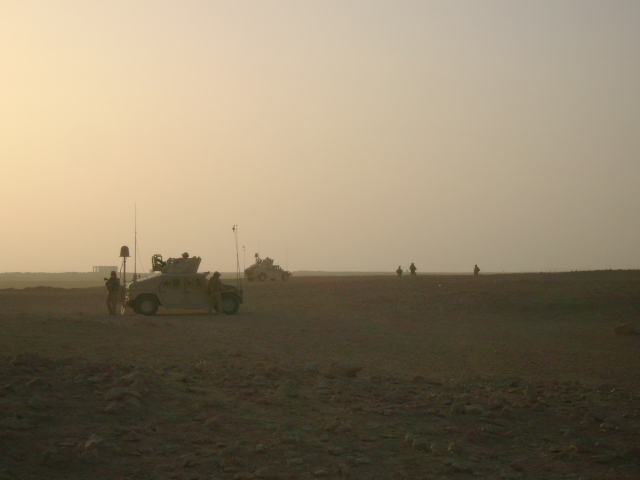
Near COP South waiting to clear suspected IED

By the time that I left Iraq in February 2008 the situation in the province was such that the 1st Iraqi Division was able to be dispatched to Basra and Diyala where they in conjunction they would take the lead in driving the insurgents from these regions. Just before I left an Iraqi General, General Ali in Habbinya told me that I should come back in 5 years as a tourist because everything would be alright. Another Iraqi officer told me that if anything ever happened between us and “the Persians” that the Iraqis would be on our side.  I knew when I left that Iraq would be okay in the long run and I still believe that to be true.

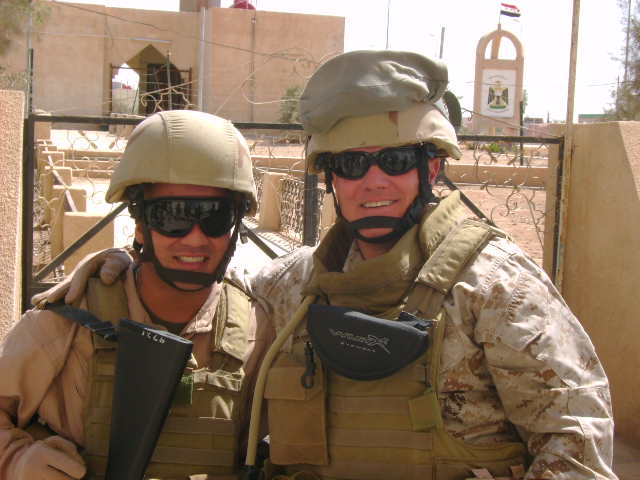
Me with General Ali January 2008

Thursday the Sergeant Major of what used to be Multinational Force West or MNF-West announced the Marines of II Marine Expeditionary Force (Forward) would be conducting a transfer of authority for the American mission to the 1st Armored Division of the US Army as part of the US drawdown in Iraq without a relief in place.   For most people in the United States this will be an event of little significance Iraq is now despite the continued presence of US forces has been forgotten by most.

With Advisers and Leaders of a Company of the Iraqi 2nd Border Brigade

Concern is now focused on US military actions in Afghanistan and the humanitarian relief operations in Haiti.  However, it was in Iraq that an insurgency was defeated, the first time since the British defeated the Malayan insurgency sponsored by Chinese Communists, and the French had militarily defeated the Algerian insurgency before the French government under DeGaulle surrendered the hard fought success of the Paras and Legionnaires betraying them even as he looked after what he viewed as the future of France.

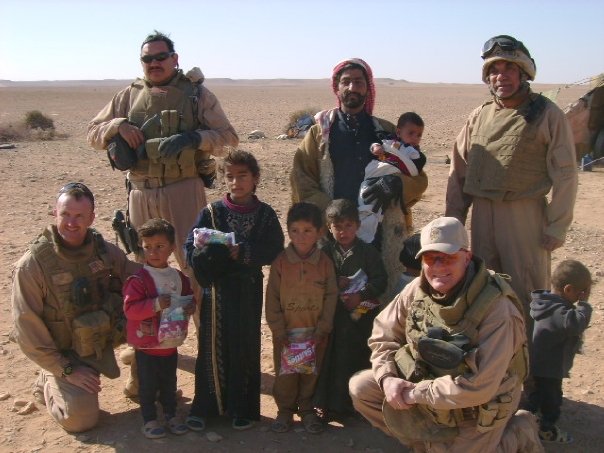
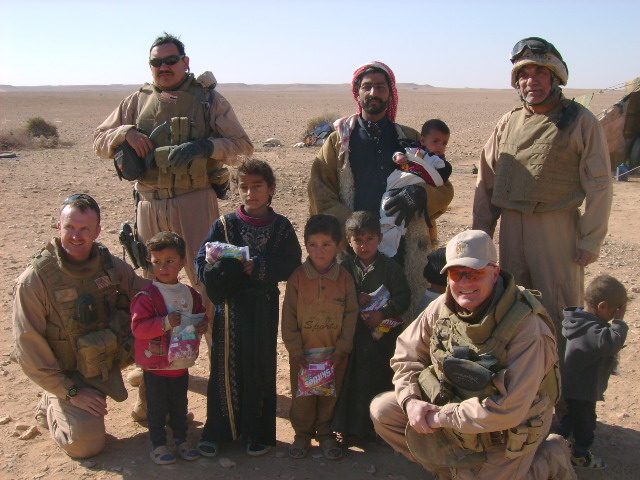
With Bedouin Family and Advsiers near Syria

In the summer of 2007 Iraq was viewed as a lost cause by much of the American body-politic, politicians of both parties and the media.  Now it is becoming a functional state, in large part due to the sacrifices of US Military personnel and the Iraqi Army and security forces.  U.S. Forces are disengaging and exiting the country. While it is likely that and advisory and support mission will remain as the Iraqis continue to rebuild and their Army and security forces continue to expand their capabilities.  The Iraqis recently showed their metal by facing down an Iranian incursion into Iraqi territory on a strategic oil field.

The text of the Sergeant Major’s message describing the transfer is posted below:

From: Carpenter SgtMaj Kiplyn (USF-W SGTMAJ)

Sent: Thursday, January 21, 2010 15:55

Subject: FAREWELL OF THE MARINES FROM IRAQ

UNCLASSIFIED

Please pass on,

SgtsMaj, MGySgts, CMDCMs, Marines and Sailors, Saturday, 23 January at 1100 will mark the end of the Marines in Iraq as an organization.  II MEF (fwd) will conduct a Transfer of Authority Ceremony with the First Armored Division without a Relief in Place from any incoming unit. USF-W (formally MNF-W) will merge with USD-C (formally MND-Baghdad) and will cease to exist.

After 6 years, over 850 Marines and Sailors killed in combat and another 8800 wounded we have completed our mission.  At our peak, we had almost 26,000 Marines and Sailors on deck, close to 200 aircraft, over 380,000 pieces of ground equipment, and were averaging close to 2000 significant events a month.  We have added a whole new generation of Heros; and names like Al Nasiriyah, Fallujah and Ramadi will be added to our History books.

Words can’t begin to explain the magnitude of effort and sacrifice our Marines and Sailors have gone through to help the Iraqi people.  Each year since the initial invasion, Marines and Sailors from all over the Corps have been a part of the revolving I MEF (fwd) and II MEF (Fwd) Commands.  Each year has been different with its own sets of unique challenges and each successive year, the incoming organization has built upon the successes of the outgoing organization.

This year was no different, we didn’t have anywhere near the level of fighting that previous MEFs have done.  However, we did conduct many operations, maintained security, continue to professionalize the Iraqi Security Forces, develop good governance and economics, assisted with the continued establishment of the Rule of Law and oversaw the peaceful transition of the provincial government.  We also had one unique mission that we can call our own. That was to finally bring the Marine Corps home. Over the past year, we have simultaneously conducted the responsible drawdown of 24,000 Personnel, over 34 COPs and FOBs, including Baharia, Rawah, and TQ and sent six years worth of equipment out of theater.

For those of you who served with me this year, thank you.  It was long and difficult at times, with our own set of challenges, but we did it.

It has been an honor to serve with you.

For those of you who have left your boot prints over here at least once during the last six years; thanks to you too. You set the stage for us to finish the job.  It has been costly, it has been challenging, it has taken a while with quite a few dark days. But, in the end, it was worth it.

All Marines and Sailors, including those who remained stateside have contributed to the overall success of the Marines and Sailors in Iraq and; all of us have known someone who didn’t make it back alive or has permanent injuries. It is up to us to ensure that those who follow never forgot their sacrifice or what we did here.

Collectively, we have added another illustrious chapter to the successful story of our Marine Corps.  One that all of us can be proud of.

Semper Fidelis,

K. Carpenter

Sergeant Major

United States Force – West, Iraq

(Previously Multi National Force – West) II Marine Expeditionary Force (Fwd)

21 January 2010

UNCLASSIFIED

Iraqi Recruits going through Basic Training

I am proud today to have been part of a mission that appears to have ended in success, at least in Al Anbar Province.  Semper Fidelis to the Marine Corps and the Sailors, Soldiers and Airmen who served alongside of us in Al Anbar as well as the Iraqi Army and security forces who despite the odds set the stage for the Iraqis and US Forces in the rest of the country to begin to re-establish order and normalcy to a country that has known little but war, dictatorship and tragedy over the past 40 years. I look forward to going back to Iraq someday and maybe visit some of those Iraqis that I was privileged to serve alongside.  May God bless all those who served honorably in Iraq and the Iraqi Army, security forces and the people of Iraq.

Peace,

Padre Steve+

Leave a comment

Filed under History, iraq,afghanistan, Military

Learning to Apply the Principles of Counterinsurgency Part One: Introduction to the Soviet-Afghan War

Soviets Enter Afghanistan

Note: This is the First Part of a Series which I will be writing on Afghanistan and Counterinsurgency strategy in that country. Part of this will be a review of various historical materials especially from Russian sources as well as analysis of the Afghan insurgency and its foreign supporters including Al Qaeda. I have written a number of other articles on the Afghan War and associated topics.  Links are provided at the end of this article.

Counterinsurgency is not just thinking man’s warfare—it is the graduate level of war. Special Forces Officer in Iraq, 2005

“Protracted conflicts favor insurgents, and no approach makes better use of that asymmetry than the protracted popular war. The Chinese Communists used this approach to conquer China after World War II. The North Vietnamese and Algerians adapted it to fit their respective situations. And some Al Qaeda leaders suggest it in their writings today. This approach is complex; few contemporary insurgent movements apply its full program, although many apply parts of it. It is, therefore, of more than just historical interest. Knowledge of it can be a powerful aid to understanding some insurgent movements.”[i]

Introduction

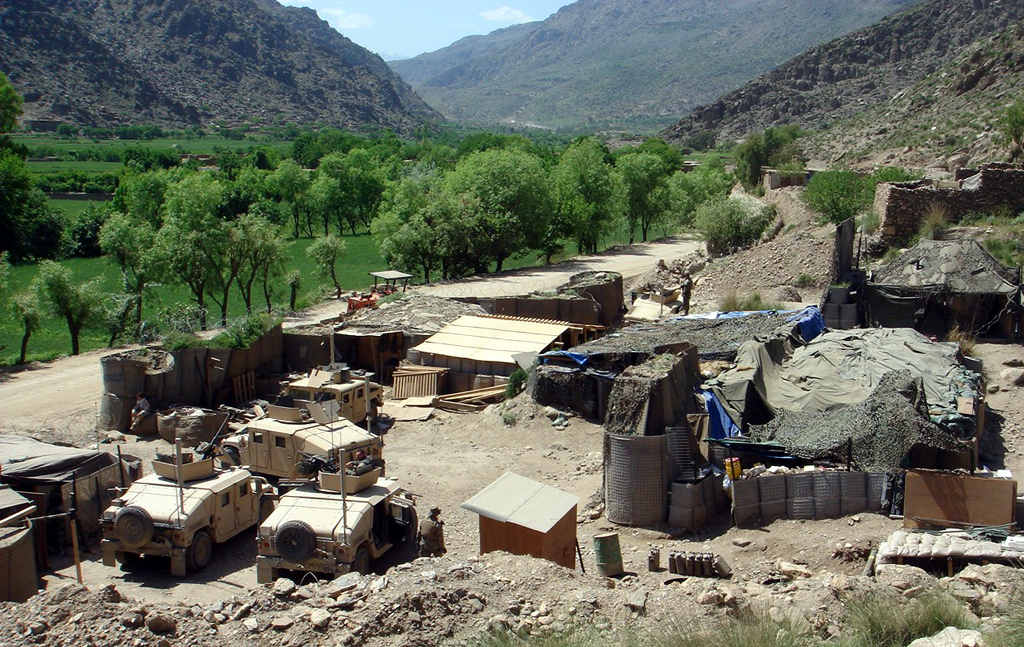
US Training Team Base

The United States has entered its 9th year of military involvement in Afghanistan following the October 2001 invasion that came as a response to the attacks on the World Trade Center and Pentagon of September 11th 2001.  In that time the United States, its NATO allies and the United Nations have endeavored to bring stability as well as a more democratic and accountable government to the country in the face of resistance from various political, religious and tribal groups with a diverse and sometimes conflicting agendas.  The foremost of these resistance groups was and is the Taliban which arose during the Soviet occupation of the country and eventually took power after winning a civil war against a number of other Mujahidin groups.   As the United States diverted force and focused its efforts on Iraq’s insurgency the Taliban using bases in remote areas along the Pakistani border and monetary and political support from Moslem groups with similar goals rehabilitated and reorganized its forces and began the process of regaining influence in Afghanistan.  By 2008 it was apparent that the situation had reached a crisis point.  The vast majority of Afghans as well as many in the international community came to view the Karzai government as corrupt, weak and unpopular.  The Taliban and other groups began to work more closely together despite differing agendas and the political and military situation deteriorated to the point that the incoming Obama administration appointed a new commander, General Stanley McChrystal to evaluate the situation and based on his recommendations and those of General David Petreus, Secretary of Defense Robert Gates and others announced a “surge” to try to regain the initiative in the country.  That troop buildup is currently underway. By the time it reaches its maximum the United States will have approximately 100, 000 troops in Afghanistan and the NATO and ISAF allies approximately another 38,000.  These are supporting and training the Afghan National Army and Police which number approximately 97,000 in the Army and another 98,000 in the National Police.  The Afghan forces have not proven to be reliable and have been infiltrated by Taliban and Al Qaeda members and the NATO and ISAF allies are often limited in the scope of their mission and have restrictive rules of engagement.  Thus the bulk of the fight rests on the United States and some allies with more robust rules of engagement such as Canada, Britain and France.  The lack of internal credibility of the Afghan Government, the weakness of its army and security forces coupled with the numerical weakness of US and ISAF forces has given the various indigenous insurgent groups, especially the Taliban to make a comeback that threatens the mission.  General McChrystal noted:

“The situation in Afghanistan is serious; neither success nor failure can be taken for granted. Although considerable effort and sacrifice have resulted in some progress, many indicators suggest the overall situation is deteriorating. We face not only a resilient and growing insurgency; there is also a crisis of confidence among Afghans—in both their government and the international community—that undermines our credibility and emboldens the insurgents. Further, a perception that our resolve is uncertain makes Afghans reluctant to align with us against the insurgents.”[ii]

Taliban Insurgents

The situation is such in Afghanistan that many Americans are struggling how the “good war” could go “bad.”  Many armchair strategists, many political and media figures and even some in the military fail to understand the nature of Counterinsurgency and its complexity as opposed to conventional warfare. In fact many of these assume that the simple application of combat force using conventional tactics is the cure for the situation, however history shows that such is not the case especially in Afghanistan.

This introduction to this study will focus on some commonalities of the Soviet and American experiences in Afghanistan.

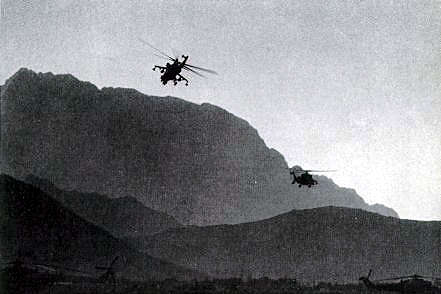
Soviet Mi-24s

The Soviets invaded Afghanistan in 1979 they used their 40th Army which initially was composed of “two motorized rifle divisions, an airborne division, an air assault brigade and separate motorized rifle regiments.”[iii] These forces totaled about 52,000 troops and were “considered sufficient to guarantee the viability of Afghanistan.”[iv] The 40th Army was a standard Cold War Soviet Combined Arms Army designed for high tempo conventional operations.  It was not designed for nor trained in counterinsurgency operations or what the Soviets and Russians class as “anti-guerilla operations.” It was poorly suited to mountain and dessert combat and at the beginning “not only had no practical skills in the conduct of counter-guerilla warfare, they also did not have a single well-developed theoretical manual, regulation or tactical guideline for fighting such a war.”[v]

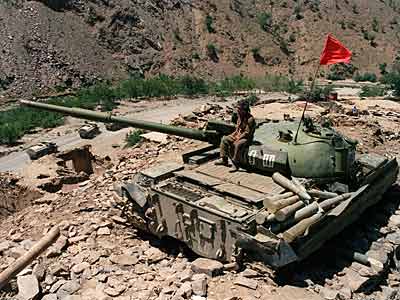
Soviet Tank Guarding Convoy

The Soviets did not expect to be involved in combat operations and the Afghan population reacted to their presence with resistance which spread across the country both against their own government which they viewed as a puppet of the Soviets but also against the Soviet Forces.  As time went on the Soviets attempted to use raids and large scale operations to attempt to bring Mujahidin forces to battle, however the insurgents were very skillful and the Soviets attempted to increase the training of their forces as well as their numbers.  By 1986 the numbers on the ground had increased to 108,000 personnel in four divisions, five separate brigades, four separate regiments and six separate battalions.[vi] In the nearly 10 years of operations over a half million Soviet soldiers and support personnel served in Afghanistan. Tours for enlisted personnel who were primarily conscripts served 12-18 months in country and officers 2 years.  Few returned for subsequent tours meaning that the 40th Army had few personnel very familiar with the country, its people and the challenges faced by Soviet forces.  According to official sources the 40th Army suffered 13,833 killed in action or died of wounds, 49,985 wounded and 311 missing in action a figured of 1 in 8 Soviet Soldiers being casualties.  14.3 percent of the casualties were officers.[vii] Of course the official figure is doubted many believing the number killed in action or died of wounds to be closer to 26,000.[viii]

Soviet Troops Preparing to Leave Afghanistan 1989

The Soviet Forces supported the Army of the Democratic Republic of Afghanistan which numbered at their peak on average between 120,000-150,000 soldiers.[ix] The Afghan forces, then as now were at the mercy of tribal, familial and communist party affiliations. Over 70 percent of the DRA was conscripted, desertions averaged 1,500 to 2,000 soldiers a month and units were usually optimistically 25-40 percent under their TO&E strength.[x] Limitations on training and leadership meant that typically DRA units could not conduct large scale missions without Soviet help. As such most of the fighting was done by Soviet formations.

Many of these problems have plagued the United States and ISAF throughout the first 8 years of the current Afghan War.  As General McChrystal has noted in his assessment “ISAF is a conventional force that is poorly configured for COIN, inexperienced in local languages and culture, and struggling with the challenges inherent to coalition warfare. These intrinsic disadvantages are exacerbated by our current culture and how we operate.”[xi]

End of part one to be continued…

Links:

Lessons on Coalition Warfare: The Dysfunctional Coalition German and the Axis Partners on the Eastern Front

The Afghan War 2009-2012: Lessons from Algeria 1954-1960 A Review of “A Savage War of Peace

Unequal Allies: Lessons from The German’s and Their Allies on the Eastern Front for Today

The Effects of Counter-Insurgency Operations on U.S. and French Forces in Vietnam and Algeria and Implications for Afghanistan

Brothers to the End…the Bond between those Who Serve Together in Unpopular Wars


[i] ______________ “The Army/Marine Corps Counterinsurgency Manual FM 3-24 MCWP 3-33.5,” HQ Department of the Army and HQ Marine Corps Combat Development Command, Washington DC 2006.  p. 1-6

[ii] MCChrystal, Stanley. “Commander’s Initial Assessment Commander International Security Assistance Force Afghanistan” dated 30 August 2009 p. 1-1

[iii] The Russian General Staff. The Soviet Afghan War: How a Superpower Fought and Lost” translated and edited by Lester A. Grau and Michael A. Gress, University Press of Kansas, Lawrence KS 2002 p.17.

[iv] Ibid. p.18

[v] Ibid. p.43

[vi] Ibid. p.28

[vii] Ibid. p.309

[viii] Ibid. p.xix

[ix] Ibid. p.48

[x] Ibid. pp.48-51

[xi] McChrystal. p.1-2

1 Comment

Filed under counterinsurency in afghanistan, History, iraq,afghanistan, Military

The Anomaly of Operation Desert Storm and Its Consequences Today

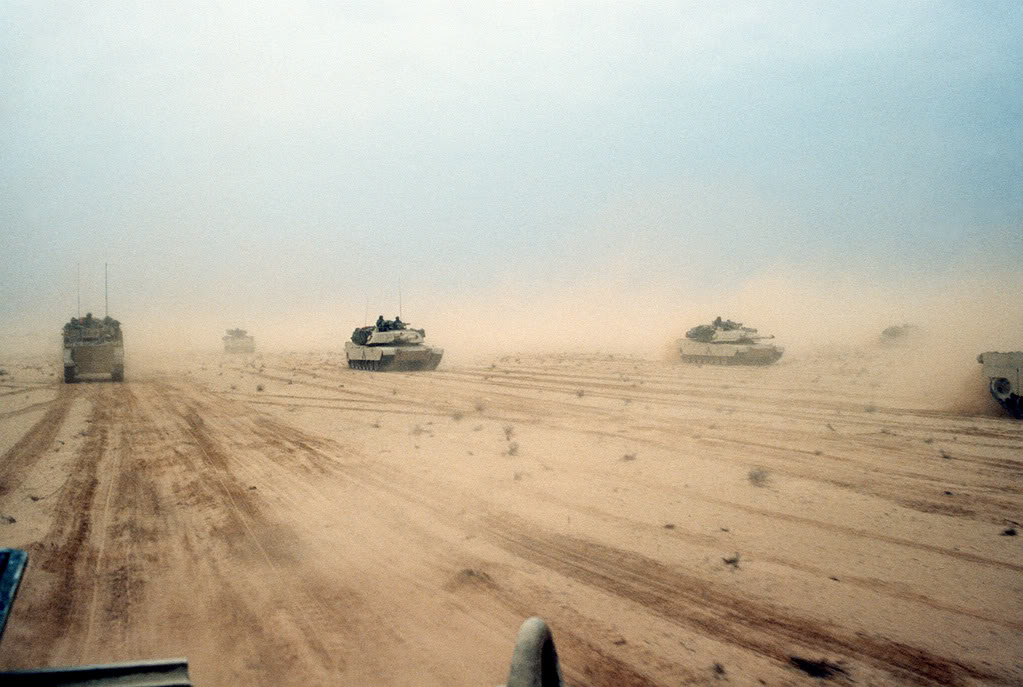
Armor Advancing During Operation Desert Storm

There are few occasions in history where an army is given exactly the scenario to which its organization, training and doctrine coalesce against an opponent that uses the template of organization and training that it has been designed to defeat.  Operation Desert Storm, the liberation of Kuwait by the United States and its coalition from Saddam Hussein’s Iraqi Army and Republican Guard was such a war. The operation was built up in the popular media to the extent that it created a false image of the cost of war and belief that wars can be won “one the cheap” because of superior technology and organization.  That belief was shattered during the Iraq insurgency which began in earnest following the occupation of Iraq following the defeat of Saddam in 2003 by a significantly smaller US force than was used to liberate Kuwait twelve years before.

Architects of Desert Storm

The superior performance of the Army in the Gulf War did not turn out to be the template of how future wars would be fought.  In the following years the US military has become embroiled in conflicts where opponents use inexpensive and often crude off the shelf technology to counter conventional US superiority in firepower and organization.

During the First Gulf War the Army was aided in that the doctrine that it developed to fight a war in Europe against the Warsaw Pact, the Airland Battle was “perhaps best suited to armored warfare in the open desert.”[i] Of course during Desert Storm this was exactly the setting that the Army would be called on to fight.  Unlike Vietnam where the Army attempted to fight an unconventional war with conventional tactics the Army had the chance to fight exactly the battle that it had trained for, against an enemy trained in the tactics and using the equipment of its former Soviet adversary.

The Army enjoyed the advantages of having “reached a high level of training and technological proficiency”[ii] against the Soviet threat. The fact that the Soviet Union and Warsaw Pact had melted down unexpectedly in 1989 and 1990 and removed any conventional threat in Europe which allowed the Army to concentrate massive amount of forces including the VII Corps from Germany to the Middle East was nothing short of incredible.  Additionally the Army had the advantages of superior weaponry and the fortuitous timing of the war before the effects of the post-Cold War drawdown were realized.

For the Army the “1980s were a golden age of military thought and debate,”[iii] and the Airland Battle concept “was greeted with enthusiasm throughout the Army.” Terms such as initiative, agility, synchronization and depth….soon became part of every officer’s vernacular.”[iv] Colonel Harry Summers who had written a critical history of the Vietnam War noted that FM 100-5, the Army’s primary manual of operations, was the “operational blueprint for Operation Desert Storm.”[v] That blueprint had a well trained and disciplined force schooled in the conduct of the Airland Battle concept enunciated in FM-100-5. David Halberstam noted that Operation Desert Storm was fought by a “professional army-a very professional army.”[vi] Seldom in the history of warfare was any army trained and equipped to fight the exact battle for which it found itself.

The Highway of Death

The foundation of doctrine, training, technology and organization laid in the 1980s was solid.  The Army was not only effective in the Gulf War, it was overwhelming.  This is not to say that the Army did not encounter problems.  It did, some which against a better trained and equipped force might have negatively impacts its operations. However the problems encountered did not keep it from dominating the battlefield.

The US rapidly deployed a blocking force of paratroops and Marines following the Iraqi invasion of Kuwait at the end of August.  While few in number they served as a deterrent that Saddam did not test. There was great concern that had Saddam pushed into Saudi Arabia when forces were small and lightly equipped that he might have succeeded in capturing the northeaster Saudi oil fields and production facilities.  The military leadership continually reinforced these forces first to a substantial defensive force and then with the addition of more forces a significant offensive force.  Thus when the decision was made to liberate Kuwait under the United Nations resolution the forces were there and ready.

When the war began advances in Joint warfare and C3 was evident in the effectiveness of the operations.[vii] Particular successes included the movement of VII and XVIII Airborne Corps into the desert to outflank the Iraqis in Kuwait[viii] and every actual engagement between Iraqi and American forces.  Of note was the performance of Major General Barry McCafferey’s 24th Mechanized Division,[ix] and the 2nd Armored Cavalry Regiment at 73 Easting against the Republican Guard’s Talwahkana Division.[x] Likewise the action of 2nd Brigade 1st Armored Division against the Guard’s Adnan Division at Madinah Ridge[xi] displayed the effectiveness and lethality of the Airland Battle and joint warfare concepts developed in the 1980s.

There were weaknesses and these included various aspects of command and control and fratricide[xii] brought about by the fast pace of operations and the fog of war. Likewise conflicts between General Schwartzkopf and some of his Army commanders, notably Generals Franks[xiii] and Yeosock hindered operations.  This occurred most notably in the failure to destroy the Republican Guard prior to the cessation of hostilities. This was partially was due to political considerations and faulty intelligence but was operational decision of Schwartzkopf to halt McCafferty’s  24th Mechanized Division before it could finish off Republican Guard units facing it or letting Franks complete his double encirclement of the Guard or encircle the key southern Iraqi city of  Basrah.[xiv]

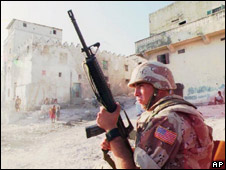
The New Face of War Somalia

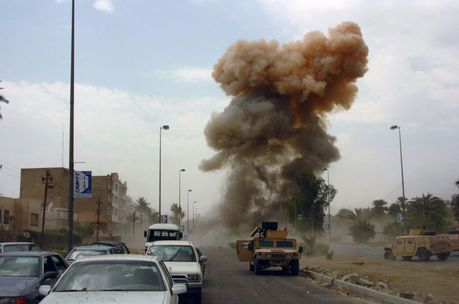
Iraq

Rwanda Genocide

Deadly Large Shaped Charge IED

Afghanistan: Brits in Action Against Taliban Fighters

Despite the successes of Operation Desert Storm the planners failed to anticipate the end state of what would happen when hostilities had ceased.  The conditions of the cessation of hostilities were the chief contention of many against the end to the ground war at the 100 hour point. Some argue that the early end of hostilities allowed the victory to be less than it could have been.  Some even today argue that the offensive should have gone forward with the goal of overthrowing Saddam, however despite its success the Army was not prepared for an occupation nor would have the coalition supporting the US have survived an invasion and occupation of Iraq.  The actual mistakes were not in the stopping of the war, but rather the faulty conditions of the cease fire which enabled Saddam to recover the internal control of Iraq and put down attempts to revolt especially around Basra in the Shia south.  Rick Atkinson in his book Crusade notes that there were “errors would be made in establishing conditions of the ceasefire…but stopping the war was no mistake.”[xv]

While the debate about Operation Desert Storm still persists nearly 20 years after the fact the more important lesson was not learned.  That lesson was that Operation Desert Storm was not the new face of war, but rather an anomaly.  It was a war that was the swan song of the Cold War where the doctrine, technology, organization and trained to and practiced were inflicted on a less well trained and equipped version of the force that they were designed to defeat, forces which were badly deployed and already isolated by airpower even prior to the ground war. Once the ground war started the Iraqi forces in Kuwait and southern Iraq had little chance against the massive US and coalition force arrayed against it short of preemptively using the chemical and biological weapons of which Iraq had an ample supply.  It did not employ these weapons for a number of reasons, but without them Iraqi forces exposed in the open desert with no air support and cut off from much of their supply by constant air attacks were easily defeated.

In the past 20 years the United States and the west have only once been able to reprise the type of war displayed during Operation Desert Storm.  That was in the initial 2003 invasion of Iraq.  While the forces deployed were successful in defeating the Iraqi military and overthrowing Saddam Hussein they were insufficient to secure the country especially after the decision to disestablish all Iraqi police and military forces which might have assisted US forces in securing the country.  Perhaps planners forgot that German military police, police and civil servants were employed by the western allies in the period immediately after the war even during the period of “de-Nazification.”

Instead of a litany of Desert Storm like scenarios US forces as well as those of NATO and UN allies have had to deal with terrorism, insurgencies, revolutionary wars, tribal wars of genocide and wars waged by religious extremists. Despite more than a decade in dealing with these types of war, many in the military and political establishment as well as the media and public opinion believed that Desert Storm was the model for future wars. As such after the brief period of euphoria which occurred after the initial phase of Operation Iraqi Freedom the grim reality of war has stared Americans and others in the west in the face.  While the military has performed well, it has had to adjust and learn lessons about war that it wanted to avoid during and after Vietnam.  Those were the lessons of counterinsurgency, unglamorous and unexciting they were the lessons buried after Vietnam which were ignored until it was nearly too late in Iraq and possibly now too late in Afghanistan.  Desert Storm was an anomaly and one does not base the future of war on the swan song of the last war.


[i] Atkinson, Rick. Crusade: The Untold Story of the Persian Gulf War, Houghton Mifflin Company, Boston and New York 1993. p.253

[ii] Gordon, Michael R. and Trainor, Bernard E. The Generals’ War, Back Bay Books, Little Brown and Company, Boston and New York 1995. p.467

[iii] Peters, Ralph. Fighting for the Future: Will America Triumph. Stackpole Books, Mechanicsburg , PA p.xi

[iv] Ibid. Atkinson.

[v] Summers Harry G. On Strategy II: A Critical Analysis of the Gulf War, Dell Publishing a Division of Bantam Doubleday Dell Publishing Group, New York NY 1992. p.159

[vi] Halberstam, David. War in a Time of Peace: Bush, Clinton and the Generals, A Touchstone Book published by Simon and Schuster, New York 2001. p.153.  Gordon and Trainor note that the “never in the history of the Republic has a more competent and more professional military been fielded.

[vii] See Summers pp. 243-245.  Summers is very complimentary of the advances in the Joint aspects of command and control that impacted the campaign.  He notes several points at the strategic and operational levels which are complimentary of individuals including comparing General Colin Powell to General George Marshall. Gordon and Trainor writing a few years later are more critical of the “jointness” of the Americans including valid criticism of the air campaign, fire support coordination, and differences in doctrine between Marines and Army and the way the VII Corps and XVIII Corps operated based on the way that they trained and organized. Pp.471-473

[viii] Atkinson pp.309-310.  Atkinson discusses the fact that American commanders involved had seldom maneuvered units of battalion or brigade size prior to this operation.

[ix] The 24th made a great advance to the Euphrates but as Atkinson notes that it had “encountered no enemy resistance at all.” p.406

[x] See Atkinson pp. 441-448

[xi] See Atkinson pp.466-467.  In a 40minute fight the M1A1s destroyed 60 T-72s and dozens of APCs at a cost of one American KIA.  Atkinson notes that this battle like the action at 73 Easting “was waged with tactical acumen and devastating firepower….”

[xii] Ibid Atkinson pp.315-316.  Atkinson notes that there were 28 incidents with 35 killed and 72 wounded.

[xiii] Ibid. pp.405-407.  Schwartzkopf felt that Franks was not aggressive enough and that VII Corps was “sluggish” and “ceding the initiative to the Republican Guard.”  Schwatzkopf even threatened Yeosock that he would fire Franks.

[xiv] Ibid. Atkinson p.476

[xv] Ibid. p.477

Bibliography

Atkinson, Rick. Crusade: The Untold Story of the Persian Gulf War, Houghton Mifflin Company, Boston and New York 1993

Gordon, Michael R. and Trainor, Bernard E. The Generals’ War, Back Bay Books, Little Brown and Company, Boston and New York 1995

Halberstam, David. War in a Time of Peace: Bush, Clinton and the Generals, A Touchstone Book published by Simon and Schuster, New York 2001

Ralph. Fighting for the Future: Will America Triumph. Stackpole Books, Mechanicsburg , PA

Summers Harry G. On Strategy II: A Critical Analysis of the Gulf War, Dell Publishing a Division of Bantam Doubleday Dell Publishing Group, New York NY 1992.

8 Comments

Filed under Foreign Policy, History, iraq,afghanistan, Military, national security

Padre Steve’s Meditation on the Nativity

“Actually, Lucy, my trouble is Christmas. I just don’t understand it. Instead of feeling happy, I feel sort of let down.” Charlie Brown in “A Charlie Brown Christmas”


When Christmas comes and you struggle with faith, see little hope and even despair of life, even the thought of Christmas coming can make the season even more difficult.  I know, I have gone through this since my return from Iraq.  Christmas 2008 was so frightful due to PTSD symptoms, insomnia, anxiety, depression and a crisis in faith that I could see little to hope in.  It was so difficult that before Mass began at the Abbess’s parish that I couldn’t stay.  I walked home in the cold and dark, not directly home but the long way looking up at the heavens and wondering if God was even there.  For the first time in my life I could really relate to Charlie Brown.  That as I have mentioned before was actually a terrifying thought.  Even in the darkest of times in seminary I never lost hope and always felt something special at Christmas.  In Iraq in 2007 I felt an incredible closeness to God as I traveled about to my advisers along the Iraqi-Syrian border having the chance to celebrate Christmas Eve and Christmas Eucharist and spend time with our guys and distributing toys, school supplies and cold weather clothing to Bedouin families who invited us in for Ch’ai tea and food.  But in 2008 faith was dry and hope, well hope was something that I prayed for as I walked home that Christmas Eve.

This year has been one of ups and downs but I have noticed that I have been feeling better the past few weeks.  Yes I still have problems sleeping but I am actually trying to get to bed earlier but I still have my struggles with faith and God but unlike last year I am looking forward to the celebration of Christ’s Incarnation.  The message of “Emmanuel, God with Us” is something that I find resonating again.  Maybe it was in that moment a couple of weeks back where I was on call and ended up having the blessing of doing an anointing, or “last rites” of a retired Navy doctor who had done his internship at my hospital and having the experience of having him breathe his last as I completed the rites.  There was something miraculous about that man, his life and faith that allowed the Deity Herself to somehow let me be on call and respond with exactly what he desired in his final moments on this earth.  Maybe it was running into a lady who had spent two months in our ICU earlier in the year.  At numerous times her condition was so critical that it appeared that she would die. However she spotted me is I was filling my cup of water and ice in the hospital food court and pulled me aside.  She was doing great and thanked me for being there for her.  Then there were other times where I was able to get outside of my problems and be part of other people’s lives, many times those who are critically ill like Sadie Harrell who on her death bed took the time to bless those around her, give directions to her family and before asking for more pain medications telling me that it was time to pray.   I could give the accounts of numerous people, staff and patients at our hospital as well as people at church, friends that I have known for years and people that I have gotten to know through this website and Facebook as well as my friends at the Church of Baseball, Harbor Park Parish and Gordon Biersch.

Some of those have been through responses of people to what I write on this website.  A few days ago I heard from the son of my ROTC training NCO Master Sergeant Harry Zilkan who passed away a few years back.  I talked about Sergeant “Z” in my post “Remembering the Veterans in my Life.”  I was honored to hear from him and hear how much he appreciated what I said about his dad.  When I started this site back in February I saw it as an outlet for me, and that it has been, at the same time I find that there are people very much like me who have walked in similar shoes who have been blessed by what I write.  This is actually quite humbling.

Like I said this year has been different. I still have a hard time with prayer though extemporaneous prayer on the behalf of others is becoming relatively normal again even if I still have not been able to resume my regular prayers of the Daily Office which died during Lent because they had become rote and were more of a duty than a part of life.  I had never expected that, but I think I will use the Nativity to begin again.

This has been a year of transition as I have struggled with a crisis of faith, the seeming absence of God, PTSD, anger, depression and anxiety the condition of my father with his Alzheimer’s disease and problems dealing with my mother.  Likewise, I find that the feeling of being vulnerable, weak and the pain of having to deal with all of those emotions for the first time that I can remember is not where I want to be, but does give me empathy for those who have lived with these feelings for years.  In a sense I have began to be part of that community.  At the same time despite all of this that faith is returning and I can sense hope again.  Even the Scriptures for the season and the songs and carols are touching me again.  The sense of tradition in the liturgy at church has been good for me since beginning to attend Saint James Episcopal Church in Portsmouth.  I am finally beginning to hope again.

For me this comes in “the fullness of time” at least my time. The scripture from Galatians comes to mind. This is part of the Sunday liturgy for the Sunday after Christmas this year:

4But when the fullness of time had come, God sent his Son, born of a woman, born under the law, 5in order to redeem those who were under the law, so that we might receive adoption as children. 6And because you are children, God has sent the Spirit of his Son into our* hearts, crying, ‘Abba!* Father!’ 7So you are no longer a slave but a child, and if a child then also an heir, through God.* Galatians 4:4-7 NRSV

I once again feel the message of deliverance spoken of by the prophet Zephaniah:

Sing aloud, O daughter Zion;
shout, O Israel!
Rejoice and exult with all your heart,
O daughter Jerusalem!
15The Lord has taken away the judgments against you,
he has turned away your enemies.
The king of Israel, the Lord, is in your midst;
you shall fear disaster no more. Zephaniah 3:14-15

Tonight I will be at Saint James even as the Abbess sings at the 5 PM Mass at her parish.  I am looking forward to the Mass tonight.

I do pray that whatever you are doing tonight and regardless of whether you are a Christian or not that you will know joy, peace and the presence of God this season.  I think of the Jewish physicians at the Medical Center who are covering today and tomorrow to allow their Christian colleagues to attend services and be with their families.  God bless you guys, you’re the best!

As I said yesterday, Merry Christmas or whatever you do.

Peace and blessings,

Padre Steve+

Leave a comment

Filed under iraq,afghanistan, PTSD, Religion

War Without Mercy: Race, Religion, Ideology and Total War

Dower, John W. War without Mercy: Race and Power in the Pacific War.” Pantheon Books, a Division of Random House, New York, NY 1986.

The study of war cannot simply be confined to the study of battles, weapons and leaders. While all of these are important one must as Clausewitz understood examine the human element of policy, ideology and the motivations of nations as they wage war. Clausewitz understood that war could not be reduced to formulas and templates but involved what he called the “remarkable trinity” which he described in on war as (1) primordial violence, hatred, and enmity; (2) the play of chance and probability; and (3) war’s element of subordination to rational policy. Clausewitz connects this with the people being connected to the primordial forces of war, the military with the non-rational elements of friction, chance and probability and the government.

The Clausewitzian understanding of war is rooted in the Enlightenment and classic German Liberalism, born out of his experience in the Napoleonic Wars, which forever changed the face of warfare.  From the defeat of Prussia and its liberation from Napoleonic rule under Scharnhorst and Gneisenau Clausewitz developed the understanding that war was more than simply tactics and weapons.  Thus when we examine war today we deprive ourselves of properly understanding the dynamic of war if we fail to appreciate the human factor which is frequently not rational.  Such is especially the case when one fights an enemy who wages war on religious, racial or ideological grounds as is the case in the current war against Al Qaida and other extremist Moslem groups. Such groups would like to turn this war into such a conflict as do certain figures in the American political milieu who repeatedly label all of Islam as the enemy.  In such a climate it is imperative to look at history to show us the results of such primal passions.

It is in such conflict as we are engaged in today it is good to look at previous wars from the human experiential component and not simply military operations.  If one wants to look at how inflamed passion driven by racial prejudice and hatred took war to a level of barbarity and totality that defy our comprehension we only need to look back to the Pacific war between Japan and the United States.  In another post I dealt with the how racial ideology influenced Nazi Germany’s conduct of the war against Poland and the Soviet Union.  https://padresteve.wordpress.com/2009/09/14/the-ideological-war-how-hitlers-racial-theories-influenced-german-operations-in-poland-and-russia/

To do this I will look at John Dower’s “War Without Mercy.” In this book Dower examines World War Two in the Pacific from the cultural and ideological viewpoints of the opposing sides.  He looks at the war as a race war, which he says “remains one of the great neglected subjects of World War Two.”[i] Dower examines race hated and its influence on both the Japanese and the Allies, particularly in the way that each side viewed one another and conducted the war.  He examines the nature of racial prejudice and hate in each society, including its religious, psychological, ideological, scientific and mythological components.  He also examines the use of media and propaganda, and how racial attitudes not only influenced national and individual attitudes, but also the military and intelligence operations of both sides.  This book is not about military campaigns, thus it is much more like “In the Name of War” by Jill Lepore[ii] than any history of the Pacific war.

Dower uses sources such as songs, movies, cartoons and various writings of the times to demonstrate the totality of the war.  Dower admits many of these are difficult to handle and “not respectable sources in some academic sources.”[iii] Despite this he puts together a work that is sometimes chilling, especially when one looks at the current war that our country is engaged in. He also endeavors to explain how after a war where “extraordinarily fierce and Manichean”[iv] race hate predominated, it could “have dissipated so easily”[v] after the war was over.

Dower divides his work into three major sections.  The first which examines how the aspect of race effected the fighting of the war, the second, the war through Western eyes and the third the war through Japanese eyes.  The first section begins with how racial attitudes in Western and Japanese societies helped fuel the war and compares similar attitudes and concepts in Western and Japanese thought, including how “prejudice and racial stereotypes frequently distorted both Japanese and Allied evaluations of the enemy’s intentions and capabilities.”[vi] He looks at the language of the conflict; at how war words and race words came together “in a manner which did not reflect the savagery of the war, but truly contributed to it….”[vii] the result being “an obsession with extermination on both sides.”[viii] He comes back to this theme throughout the book comparing the two sides and occasionally contrasting these attitudes with corresponding attitudes of the Allies to their German and Italian foes in Europe.[ix]

In the first chapter Dower examines the role played by the propaganda used by both sides.  In particular he expalins how the “Know Your Enemy: Japan” movies commissioned by the War Department and directed by Frank Capra, and the Japanese works “Read this and the War is Won” and “The Way of the Subject” helped shape the view of each side. Propaganda developed the idea of the war in terms of good versus evil and the mortal threat posed to their respective cultures by the enemy.

From this he looks at the visceral emotions that the war engendered and how those emotions spilled over into the conduct of the war especially in regard to its ferocity and the war crimes that were spawned by the unbridled hatred of both sides.  He notes the targeted terror bombings of civilians by both sides and how those actions were portrayed as “barbaric” by the other side when they were the victim.[x] He notes the viciousness of the war and how for the Americans the war brought forth “emotions forgotten since our most savage Indian wars.”[xi] He contrasts this with European war in particular how the Japanese and their actions were portrayed in Western media, and how similar actions by the Germans, such as the Holocaust, were ignored by Western media until the war was over.[xii] He traces some of this to the understanding of the psychological effects of the defeats and humiliations of the Allies at the hands of the Japanese, and the corresponding brutality toward Allied prisoners by the Japanese as compared to that of the Germans.[xiii] He uses this section to also examine the prevailing attitudes of the Japanese toward the Allies as being weak and “psychologically incapable of recovery” from blows such as the Pearl Harbor attack, and the Allied view of the Japanese as “treacherous.”[xiv]

Dower’s second major section describes the attitudes and actions of the Americans and British toward their Japanese enemy.  He looks at the view that the Japanese were less than human and often portrayed as apes or other primates such as monkeys.  To do this he examines cartoons and illustrations in popular magazines and military publications, and includes those cartoons in the book.   The sheer vulgarity of these cartoons is easily contrasted with those promoted and published by Nazis such as Julius Streicher in Der Stürmer, something often overlooked or ignored in other histories.[xv] The early Western views of Japan as sub-human continued throughout the war, while at the same time, especially after the rapid series of Allied defeats and Japanese victories they were viewed as almost “super-human.”  Paradoxically some allied leaders turned the Japanese from “the one time “little man” into a Goliath.”[xvi] They were now “tough, disciplined and well equipped.”[xvii] Ambassador Joseph Grew, reported on his return from Japan, that the Japanese were; “”sturdy,” “Spartan,” “clever and dangerous,” and that “his will to conquer was “utterly ruthless, utterly cruel and utterly blind to the values that make up our civilization….””[xviii] The juxtaposition of such conflicting attitudes is curious, although understandable, especially in light of other Western wars against Asians or Arabs.[xix]

Dower then examines how some Americans and British explained the Japanese “National Character,” their approach to war, and actions during the war from Freudian psychiatry as well as Anthropology and other social and behavioral sciences.   Beginning with the widespread Allied understanding that the Japanese were “dressed-up primitives-or “savages” in modern garb…”[xx] he notes that these interpretations of the Japanese national character stemmed from “child-rearing practices and early childhood experiences,”[xxi] including toilet training and Freudian interpretations that saw an arrested psychic development at the “infantile (anal or genital) stage of development.”[xxii] Dower deduces that it was not hard to see how “Japanese overseas aggression became explicable in terms of penis envy or a castration complex….”[xxiii] The views were widespread and emphasized  that the “Japanese were collectively unstable.”[xxiv] Dower notes that the “very notion of “national character”-was the application to whole nations and cultures of an analytical language that had been developed through personal case studies…”[xxv] which he is rightly critical in suggesting that this premise “was itself questionable.”[xxvi] In addition to this was the understanding of Margaret Mead and others of the Japanese as “adolescents” and “bullies,”[xxvii] and notes that from “the diagnosis of the Japanese as problem children and juvenile delinquents, it was but a small step to see them as emotionally maladjusted adolescents and, finally as a deranged race in general.”[xxviii] Dower cites numerous other “experts” of the time and their interpretations of the Japanese national character, but the overwhelming message is that the application of these theories, regardless of their validity had a major impact on the Allied war against Japan.

He follows this chapter with one with much importance in explaining the similarities in how Americans and Westerners in general viewed the Japanese in relationship to other races that they had dealt with including Blacks, Chinese, Filipinos, and American Indians.  Common themes include the views of each as primitives, children and madmen and the view of the Japanese as part of the “Yellow Peril.”  Of particular note is his analysis of the work of Homer Lea’s 1909 book The Valor of Ignorance and the vision of Japanese supermen which enjoyed a revival after Pearl Harbor.[xxix] Dower examines depictions of Asians in general in the Fu Manchu and Charlie Chan series of films and other racial aspects hearkening back to the “specter of Genghis Khan and the prospect that the white races “may be liquidated.”[xxx] He notes how Japanese propagandists attempted to use Allied prejudice to influence the Chinese and other Asians against the Allies[xxxi] and American blacks against whites,[xxxii] while attempting to maintain their own racial superiority which is the subject of the next section.

The chapters dealing with the Japanese view of themselves and their opponents tie together neatly.  These deal with the Japanese view of themselves as the leading race in Asia and the world.  Dower talks about symbols and the understanding of racial purity that motivated the Japanese from the 1800s to the rejection of Japan’s request for a declaration of “racial equity” at the League of Nations.[xxxiii] He notes the “propagation of an elaborate mythohistory in Japan and the time spent “wrestling with the question of what it really meant to be “Japanese” and how the “Yamato race” was unique among races….”[xxxiv] He notes the relationship of Shinto with whiteness and purity and connotations of how the Japanese indulged in “Caucasianization” of themselves vis-à-vis other Asians during World War Two,”[xxxv] and their emphasis on a Japanese racial worldview.[xxxvi] He also tackles the way in which the Japanese wrestled with evolution and its relationship to other racial theories contrasting books such as A History of Changing Theories about the Japanese Race and Evolution of Life with Cardinal Principles of the National Polity published by the Thought Bureau of the Ministry of Education in1937.  These declared that the Japanese were “intrinsically different from the so-called citizens of Occidental countries.”[xxxvii] He also deals with the Kyoto school and the Taiwa concept.[xxxviii] In Chapter Nine Dower looks at how the Japanese viewed themselves and outsiders, in particular the characterization of Westerners as nanbanjin or  barbarians and how this eventually train of thought carried through the war led to the “Anglo-American foe emerged full blown as the demonic other.”[xxxix] Dowers final chapter deals with how quickly the race hatred dissipated and genuine goodwill that developed between the Japanese and Americans after the war.[xl]

This book holds a unique place in the literature of the Pacific war.  It is not a comfortable book, it is challenging. No other deals with these matters in any systemic way.  If there is a weakness in Dower is that he does not, like Lepore in “In the Name of War” deal with the attitudes of soldiers and those who actually fought the war.  His examples are good and go a long way in explaining the savagery with which the war was conducted, but could have been enhanced with reflections and accounts of those who fought the war and survived as well as the writings of those who did not, and the way those attitudes were reflected in different services, times and theaters during the war, including adjustments that commanders made during the war.[xli] His description of how Japanese “reluctance to surrender had meshed horrifically with Allied disinterest …in contemplating anything short of Japan’s “thoroughgoing defeat.”[xlii]

The lessons of the book are also contemporary in light of the cultural and religious differences between the West and its Moslem opponents in the current war. Possibly even more so than the war between the United States and Japan which was fought by nation states that still were signatories to international conventions, not nation states against terrorists unbound by any Western code or law or indigenous forces engaged in revolutionary war against the west such as the Taliban.[xliii] The temptation is for both sides to demonize one’s opponent while exalting one’s own way of life through official propaganda and popular media, with a result of increased viciousness and inhumanity in pursuit of ultimate victory.   In today’s world with the exponential rise in the radicalization of whole people groups and the availability of weapons of mass destruction, it is possibility that the war could develop into one that is a racial as well as religious and ideological war that would make the War in the Pacific look like a schoolyard brawl.

Bibliography

Alexander, Joseph H. Utmost Savagery: The Three Days of Tarawa. Ivy Books, Published by Ballantine Books, New York, NY 1995

Dower, John W. War without Mercy: Race and Power in the Pacific War.” Pantheon Books, A Division  of Random House, New York, NY 1986.

Leckie, Robert. Okinawa. Penguin Books USA, New York NY, 1996

Lepore, Jill  The Name of War Vintage Books a Division of Random House, New York, NY 1998

Tregaskis, Richard Guadalcanal Diary Random House, New York NY 1943, Modern Library Edition, 2000.


[i] Dower, John W. War without Mercy: Race and Power in the Pacific War.” Pantheon Books, A Division  of Random House, New York, NY 1986. p.4

[ii] Lepore, Jill  The Name of War Vintage Books a Division of Random House, New York, NY 1998.  Lepore’s book deals with King Phillip’s War and how that war shaped the future of American war and how it shaped the views of Indians and the English Colonists and their later American descendants both in the language used to describe it, the histories written of it and the viciousness of the war.

[iii] Ibid. p.x

[iv] Ibid. p.ix

[v] Ibid. p.x

[vi] Ibid. p.11

[vii] Ibid.

[viii] Ibid.   Also see Alexander, Joseph H. Utmost Savagery: The Three Days of Tarawa. Ivy Books, Published by Ballantine Books, New York, NY 1995 Alexander notes an incident that shows a practical application of the Japanese views and the ruthlessness inflicted on their enemies, in this case prisoners in response to an American bombing raid. In 1942 the commander of the Japanese Garrison of Makin Island ordered 22 prisoners beheaded after one cheered following a bombing raid. (p.32)

[ix] An interesting point which Dower does not mention but is interesting for this study is how the Germans referred to the British and Americans as “Die gegener” (opponents) and the Soviets as “Die Feinde” (the enemy), the implication being that one die gegener was a common foe, much like an opposing team in a sport, and the other a mortal enemy, the implication of Feinde being evil, or demonic.

[x] In particular he makes note of the Japanese actions during the “Rape of Nanking,” and the 1945 sack of Manila, as well as the fire bombing of Japanese cities by the US Army Air Corps in 1945.

[xi] Ibid. Dower. p.33

[xii] Ibid. p.35

[xiii] Ibid.  This is important in the fact that the Allies tended not to make much of German brutality to the Jews, Russians and other Eastern Europeans.

[xiv] Ibid. p.36.

[xv] Dower does not make this implicit comparison, but having seen both and studied the Nazi propaganda directed toward the Jews, Russians and other Slavic peoples considered to be Untermenschen (sub-humans) by the Nazis the similarities are striking.

[xvi] Ibid. pp.112-113.

[xvii] Ibid. p.113

[xviii] Ibid.

[xix] In the 2006 Israeli invasion of Lebanon, Israeli soldiers who previously showed no respect to any Arab fighter described their Hezbollah opponents as “soldiers and warriors.”  Similar attitudes were voiced by American soldiers in Vietnam when they fought NVA regulars.

[xx] Ibid. p.123

[xxi] Ibid.

[xxii] Ibid.

[xxiii] Ibid.

[xxiv] Ibid. p.124

[xxv] Ibid.

[xxvi] Ibid.

[xxvii] Ibid. p.129

[xxviii] Ibid. p.143

[xxix] Ibid. P.157.  Lea is interesting because he predicts a decline in the stature of the British Empire and softness of both the Americans and British as peoples.  Also see John Costello in The Pacific War 1941-1945 Quill Books, New York, NY 1982 pp.31-32 notes Lea’s concerns and how they drove the American Pacific strategy until the outbreak of World War Two.

[xxx] Ibid. p.161

[xxxi] Ibid. p.169

[xxxii] Ibid. pp.174-180.  This is an interesting section.  One of the most interesting topics being the reaction of the NAACP’s Walter White’s book A Rising Wind published which “suggested a sense of kinship with other colored-and also oppressed-peoples of the world….he senses that the struggle of the Negro in the United States is part and parcel of the struggle against imperialism and exploitation in India, China, Burma….” (p.177-178)

[xxxiii] Ibid. p.204

[xxxiv] Ibid. p.205

[xxxv] Ibid. p.209  This is interesting when one compares the Japanese emphasis on “Pan-Asianism” and the inherent contradiction between the two.

[xxxvi] Ibid. p.211  Dower notes that the article Establishing a Japanese Racial Worldview in the monthly Bungei Shunju “clarified the Japanese character, whose basic traits were brightness, strength and uprightness.  These qualities made the Japanese “the most superior race in the world.”

[xxxvii] Ibid. p.221

[xxxviii] Ibid. p.227 This was the theory of Zen Buddhism’s Suzuki Daisetsu (D.T. Suzuki) in his teaching of the struggle for the Great Harmony “Taiwa” which attempted to identify “an intuitive sense of harmony and oneness that he declared to be characteristic of Oriental thought.”

[xxxix] Ibid. p.247.  Descriptions of the Allies as Barbarians, Gangsters and Demons permeated Japanese propaganda.

[xl] Ibid. Dower makes a number of observations relating to how the Japanese were able to use their own self concept to adapt to their defeat.  He also notes that the Japanese were able to transfer their self concept to a peaceful orientation.

[xli] See Leckie, Robert. Okinawa. Penguin Books USA, New York NY, 1996 p.35.  Leckie quotes General Ushijima “You cannot regard the enemy as on par with you,” he told his men. “You must realize that material power usually overcomes spiritual power in the present war. The enemy is clearly our superior in machines. Do not depend on your spirits overcoming this enemy. Devise combat method [sic] based on mathematical precision-then think about displaying your spiritual power.”  Leckie comments: “Ushijima’s order was perhaps the most honest issued by a Japanese commander during the war. It was Bushido revised, turned upside down and inside out-but the revision had been made too late.”

[xlii] Ibid. Dower. p.37

[xliii] See Tregaskis, Richard Guadalcanal Diary Random House, New York NY 1943, Modern Library Edition, 2000. p.95.  Tregaskis notes when commenting on Japanese POWs on Guadalcanal “We stared at them and they stared back at us. There was no doubt what we or they would have liked to do at that moment-if we had not remembered our code of civilization or if they had not been unarmed.”

2 Comments

Filed under History, iraq,afghanistan, world war two in the pacific

Lessons on Coalition Warfare: The Dysfunctional Coalition German and the Axis Partners on the Eastern Front

“The Dysfunctional Coalition: The Axis Powers and the Eastern Front in World War Two” by R. L. DiNardo. Published in The Journal of Military History October 1996, 60 Research Library pp. 711-730

A Romanian Renault 35 Light Tank Rather Than

The question of the German dominated European Axis alliance in the Second World War is one of the more neglected subjects of World War Two and has application to today’s multi-national campaign in Afghanistan. In most accounts of World War Two the relationship of the Germans to their coalition partners is minimal.  This includes the standard works on the subject of B.H. Liddell-Hart, Williamson Murray, Chester Wilmot and David M Glantz,   Of Germany’s Allies Italy usually receives some attention in the context of the campaign in North Africa and Mediterranean.  Its efforts on the Eastern Front are usually neglected except for how the Italian 8th Army was shattered during the Stalingrad campaign.  The efforts of Hungary, Rumania and Finland receive scant attention from anyone. Popular German memoirs provide little substantive help as most German commanders looked down on their military capabilities. Kesselring’s memoirs and Rommel’s papers give some views, mostly negative of the Italians and Manstein some mention on the Italians, Hungarians and Rumanians in the Stalingrad campaign.

Field Marshal Von Mannerheim of Finland Kept an Independent Course from Germany

In this badly needed essay Robert DiNardo examines the relationship of Germany to her allies on the Eastern Front where they came closest to fighting coalition warfare. This is a subject that he would expand on in his book “Germany and the Axis Powers: from Coalition to Collapse” (University of Kansas Press, 2005).  DiNardo believes that it is important to learn from the failure of Germany and its coalition just as we do from the success of the Allies.  This perhaps is his greatest contribution in an age where the United States must work with coalitions whose members have significant military weaknesses.  The situation in some ways places he United States in a similar position to Germany in the current wars on terror and campaigns in Iraq and especially Afghanistan.

Hungarian Soldiers on Obsolete CV-35 Tankettes at the Beginning of Barbarossa

DiNardo asserts “the way in which Germany conducted coalition warfare was reflective of the manner in which Hitler and the German military looked at the world, as well as the war in general” was a key factor in her defeat. German arrogance and hubris frequently kept them from gaining any advantage from their coalition partners. DiNardo believes that it was “a significant factor that contributed to the ultimate defeat of Nazi Germany.” (p.712)  He then notes the few successes of the coalition, particularly the German work with Rumanian air defense around the Ploesti oil refineries and the German-Finnish Winter Warfare School.  Apart from these he characterizes Axis coalition warfare on the eastern front as “poor” with “failures at every level.” (p.713)
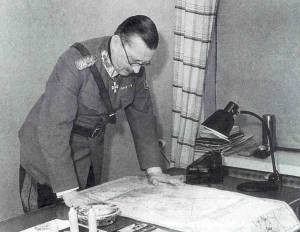
DiNardo analyzes language barriers, the wide disparity between the modernity of the armies and the levels of technology and training of her coalition partners. He also deals with Germany’s failure to become the “arsenal of Fascism” as well as the lack of understanding of all the partners of the “relationship between national objectives, strategy and the morale of soldiers of officers and soldiers alike.” (p.713)  He provides a good description of the German liaison detachments allotted to the coalition armies, dealing with language, tactical communications weaknesses and the generally haughty attitude that the Germans displayed to their partners. He provides an excellent illustration of this in analyzing with the failure of XLVIII Panzer Corps at Stalingrad when the German Liaison to the Rumanian 1st Panzer Division was wounded and the division was destroyed for lack of German support.  So bad was the German attitudes toward their Allies at higher levels that DiNardo describes the German policies and attitudes as “imperialist.” (p.718)

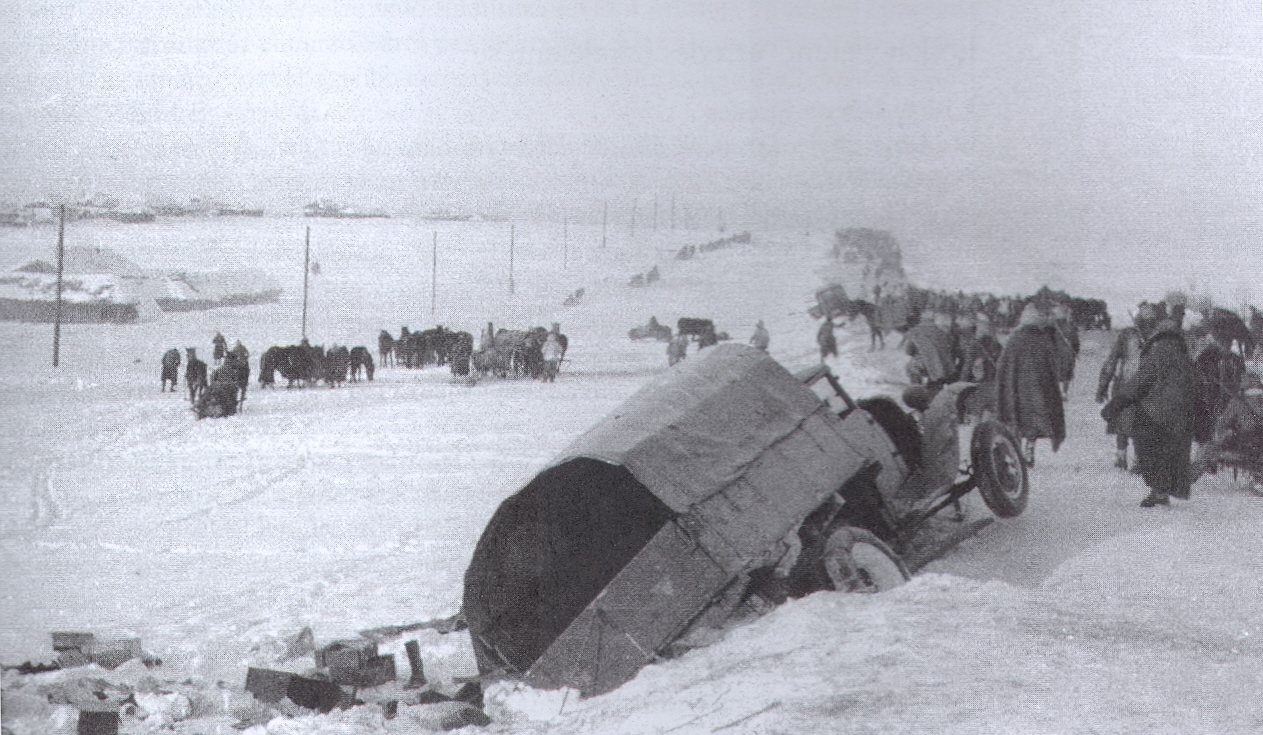
Hungarian Withdraw from the Donets Bend

DiNardo also looks at the wide gap in transportation capabilities of the various armies and the failure of the Germans to better provide for the needs of their partners in contrast to the United States assistance to her allies.  In his analysis he notes how the Germans provided obsolete captured Czech and French weapons and vehicles to the allies instead of providing them with the plans to build German designs in Rumanian and Hungarian industrial concerns capable of their manufacture. (pp.718-719) The lack of modern equipment among the German allies impacted operations against the Red Army and was a factor the eventual defeat of the Germans the hands of the Red Army.

While even elite German formations often had significant equipment shortages and sometimes substandard equipment he does not note that the principle reason for this was that German did not go to a “total war” industrial production until Albert Speer took over as Armaments Minister.  This is perhaps the one weakness in the essay. The final part of the essay deals with the strategic goals and conflicts among the Axis coalition which were never worked out.  In this discussion he again goes to the relationships of the Germans at every level to their partners and how the Germans had a general distain for their allies’ capabilities. He discusses how various partners refused to cooperate with the Germans in different ways and times.

These problems impacted German efforts in significant way. The Finns never signed a formal alliance with Germany and pursued their own war goals, the underlying tensions between Hungary and Rumania over their own territory disputes meant that the Germans could not count on these key partners to work together in the campaign in Russia.  He finishes his essay by detailing the morale problems in the Hungarian, Italian and Rumanian armies as they fought on the Eastern front.

He sources this article well using histories, archival sources, operational orders and analysis by the various armies as well as interviews. Of particular note is that he goes to sources of the coalition partners and not just German sources.  This allows him to be far more nuanced and detailed in his discussion as opposed to others who simply ignore the contributions of the Axis partners.  His footnotes provide added detail and provide and lend support to his arguments.

The importance of this essay is twofold; first it provides a look at the relationship of German to her coalition partners on the Eastern Front.  This is important from a historic standpoint simply because it is such a neglected topic in most histories of the period and gives added depth to the reasons for Germany’s defeat.  One has to ask the “what if questions” in regard to had the Germans better treated, equipped and recognized their allies’ contributions to the war effort.

The second point of interest pertains to how history can inform the leaders of the United States and NATO in the Afghanistan campaign.  The lessons provided to any nation which has to engage in coalition warfare are important, especially of one of the partners enjoys significant military advantages over its allies.  This is the case in Afghanistan and the War on Terror where United States has found itself as the senior and vastly superior partner in a war which has multiple coalition partners in several theaters of operations.  Each coalition partner has certain military weaknesses in relationship to the United States as well as their own national interests, geo-political and economic relationships with competitors to the United States and internal political realities which impact their cooperation in the war.  As such the United States cannot allow itself to be cast in the role of a haughty imperialistic senior partner as did Germany and it must cultivate an attitude of assistance, respect and trust among its partners to assure their full cooperation and assistance in relation to U.S. goals in the war.  Failure to head the German lesson will ensure failure in the current campaigns.

1 Comment

Filed under History, iraq,afghanistan, world war two in europe

The Afghan War 2009-2012: Lessons from Algeria 1954-1960 A Review of “A Savage War of Peace

“A Savage War of Peace.” By Alistair Horne. The New York Review of Books, 1977, 1987, 1996, 2006.  Maps. Photographs. Bibliography. Index. 608 pp.

Foreign Legion in Algeria

In light of the developing situation in Afghanistan and the plan to apply the counterinsurgency techniques of clear and hold, or “the oil slick” in that country it is wise to look at other instances of this type of warfare before criticizing those about to implement the strategy.  Of course when doing this the best place to look is history, especially where the strategy worked, at least until the DeGaulle government abandoned the nearly complete military success achieved by French forces in Algeria triggering a national crisis.

Alistair Horne’s “A Savage War of Peace” is a most needed addition for anyone seriously interested in studying the dynamics of insurgency and counterinsurgency warfare; especially political and military leaders of a western nation occupying a Moslem country.  Horne’s work is important and one of the few in English that cover this subject.  The two other books in English to cover the subject, albeit only on part of the campaign is Paul Aussaresses’ controversial memoir “The Battle of the Casbah” and Ted Morgan’s memoir “My Battle of Algiers” though useful suffer from the fact that they are limited in scope to the events the individuals experienced while serving as French Army officers in Algeria. In both the author’s personal biases are readily in evidence and by the fact that they were written many years after the events in question.  Since those books are heavily dependent on the author’s memories.

Paratroops of the First Colonial Paratroop Regiment in Algeria

Horne is not limited by these factors.  Horne is a historian who served as a British Army officer assigned to the MI5 in the Middle East and later as a foreign correspondent for the Daily Mail who has written a trilogy of excellent works on the Franco-German wars: The Fall of Paris: The Siege and the Commune 1870-1871, The Price of Glory: Verdun 1916 and To Lose a Battle: France 1940. As such his account is as close to being objective as any could be in the case of writing this particular history.

Horne approaches the subject from the perspective of the broader issues that France and the Fourth Republic were facing in 1954, economic, military and psychological recovery from the Second World War, the loss of colonies, defeat in Indochina culminating in the Dien Bien Phu debacle.  Such is important when examining a military campaign as the latter do not take place in isolation of other events in the life of a nation. When the history of the US campaigns in Iraq and Afghanistan are written they will have to take into account many other factors apart from the military operations.

Horne tackles the complex issues of the Algerian war in a multifaceted manner looking not only at the military issues, but the political and social issues faced by the French, the European Pied-Noir Algerians and the Algerian natives, both Berber and Arab alike.  Horne also looks at the conflict in the broader context of the Cold War, the emergence of the Non-Aligned nation movement and the rise of Arab nationalism, skillfully weaving the actions of these movements and key individuals such as Egypt’s Nasser, Khrushchev of the Soviet Union and the most influential, and President Jacques de Gaulle into the story of the Algerian conflict. Unlike other writers Horne had access to many of the individuals involved, including leaders from each rebel faction, the Pied-Noir and the French government and military.  Included in those he interviewed is Algerian President Boumedienne who had commanded rebels during the conflict and was instrumental in Algeria’s independence as well as Jacque Soustelle who had been Governor General from 1955 through 1956. These sources as well as numerous others help give his narrative a depth and subtlety lacking in the first hand English language memoirs and accounts.

Terrorism by FLN Militias and Sympathizers Caused Great Problems for the French

Horne begins his account with the story of the aborted revolt and massacre at Setif on May 8th, VE Day, 1945 and the attempt by the French government to reassert its control over Algeria. Of particular interest in this section is Horne’s analysis of the mistake of the Pied Noirs and the French government in not offering a settlement to the Algerian separatists under magnanimous terms due to the scale of the victory they had won following the Setif uprising and their security forces “decapitation” of the leadership of the various Algerian nationalist factions.  He compares the victory to that of the Israelis in the 1967 War and the political reaction of the Pied Noir to the Israelis, who instead of negotiating a settlement that could have long term effects advantageous to them from a position of strength determined to humiliate and subjugate their foe.[1] If the US military is able to reverse the situation in Afghanistan the United States and the Afghan government will need to be magnanimous to a defeated foe in order to prevent yet another repetition of another Al Qaida and Taliban resurgence.

French Paratroops Going House to House in Algiers

In examining the period before the actual outbreak of the war in 1954 Horne looks at the missed opportunities of the French to prevent it.  He also examines the development of the Algerian independence movement, especially the senior leaders of the movement; many of whom had served in the French Army during the Second World War with distinction. His portrayal of the conflicts within the independence movement, show that this was not a monolithic movement, but that each faction had its own goals which often were in conflict with other groups.  This is also the case in Afghanistan where a disparate number of ethnic, political, criminal, nationalist and terrorist groups who often are at war with each other.  Likewise, Horne’s treatment of the Pied Noir and certain parts of the French leadership examine how they too were divided at some points in regard to the ultimate plan for the relationship of Algeria to France.

Horne makes much of political mistakes and machinations of French leaders that culminated in the end of the Fourth Republic and subsequent impact on de Gaulle when he became president in June 1958.  Some mistakes that Horne explores are those committed in the immediate wake of Setif. He also examines mistakes during the revolt; such as not taking it seriously, to individuals in the National Assembly impeding the efforts of Soustelle to effect reforms and compromise between hard line factions in the Pied Noir and Moslem communities.[2] Likewise he notes how the draconian treatment of Algerian Moslems by the French Army in the early phases of the counter-insurgency effort, including the assignment of “collective responsibility” to punish communities for the actions of individuals helped alienate the populace and strengthen the insurgency.  Such was the case in the first part of the Iraq occupation and helped inspire that insurgency.  One member of Soustelle’s cabinet noted: “the cycle of repression getting ever tougher, and the rebellion ever stronger, will ruin all your efforts of pacification.”[3]

Besides political mistakes Horne examines issues in military tactics that seem to plague counterinsurgency efforts to the present time.  He describes the early application of heavy conventional forces in an attempt to defeat the insurgency.  Horne discusses unsuccessful efforts in 1954-1955 and how they not only did not destroy the insurgency but how the insurgency spread in response to the efforts.  The question: “Did ‘pacification’, for instance mean trying to regain the confidence of the inhabitants; or did it mean crushing the rebellion by whatever means available?”[4] This question is still asked today by soldiers fighting insurgencies and often the latter is counseled by those who still think along the lines of the conventional tactics of the Cold War and World War Two, which many conservative pundits are enamored with.  Horne also discusses the successful tactics of commando units used by General Challe to effectively combat the insurgency.[5]

Horne examines the attitudes of the French Army which in a sense fought the war for itself.  Armies that have fought many campaigns together often have a sense of comradeship that transcends even the loyalty that they have to their nation.  It is the understanding of a “Band of Brothers” and can be found throughout history.  When the histories of Iraq and Afghanistan are written they will certainly include the fact that many soldiers, Marines and Sailors engaged in actual combat operations fought for the men and women with whom they served more than for anything else.

The French Army felt little affinity for the Pied Noir who they often saw as only interested in their interest at the expense of the campaign.  Likewise the Army, felt little more than contempt for the French government which they felt had betrayed them. General Lorillot noted “They made fools of us in Indo-China…they screwed in Tunisia…We are being screwed in Morocco. But they will never screw us in Algeria. I swear to you. Let this be known in Paris.”[6] Instead attitudes of not losing, stopping the humiliations were animated by the feeling of anti-communism in French ranks, especially in the Elite Parachute, Foreign Legion, Commando and Colonials (Marines). The novel The Centurions and voiced the feelings of one Paratroop commander “We want to halt the decadence of the West and the march of Communism.”[7]

Horne provides a narrative analysis of the military campaigns within the Algerian War.  In particular he describes the successes of units designed to live among and better the lives of the Algerians and the SAS,[8] He describes the building of the border wall to keep weapons out of rebel hands.  He describes the “success” of units which specialized in torture,[9] which turned out to be helpful in the short run but which ultimately damaged the fabric of the Army.  Horne notes the effects of torture on soldiers who participated and how it negatively affected support of the war in France and internationally.[10] The use of torture in Algeria has parallels with Iraq. Horne notes: “one has to take into account all those factors…horror at the atrocities of the F.L.N., a determination not to lose yet another campaign, and the generally brutalizing effect of so cruel and protracted war.”[11]

The most powerful part of the narrative is the drama when French President de Gaulle was faced with the revolts of 1959. At this time the Pied Noir militias, dissatisfied with potential political settlements went to the barricades in Algiers and other major cities, assisted in some cases by Army units.  These forces again revolted against his attempts to mediate a settlement and were followed by the General’s revolt of April 1961 which nearly became a military coup in France itself.   President de Gaulle’s role in bringing these revolts to an end, without the collapse of the government or a civil war was miraculous.  Though his actions undercut the military success of the Army in Algeria which had virtually eliminated the insurgency his foresight in recognizing that France had a future not dependant on Algeria remaining French was exceptional.  The actions of de Gaulle should be studied by those who closely link their country’s future to holding a foreign country, even one that is considered an integral part of the mother country, as Algeria was to France.

Horne’s book is as timely as it was when first published, maybe more so with the current escalation in Afghanistan.  Along with works by David Galula “Pacification In Algeria 1956-1958, Bernard Fall “Street Without Joy” and “Hell in a Very Small Place,” Andrew Krepinevich’s  “The Army in Vietnam,” Brian McAllister Linn’s “The Philippine War: 1899-1902” and Ben Shepherd’s “War in the Wild East: The German Army and Soviet Partisans” Horne’s work is vital reading for military and political leaders fighting counter-insurgency operations.  Unfortunately many militaries are often enamored by high tech innovation are not often receptive to the decidedly human factors and strategies necessary to fight insurgencies until they experience frustration and failure attempting to use conventional forces and tactics to win a counter-insurgency campaign.  Effective intelligence, efforts to win the hearts and minds of the populace by protecting them, knowledge of public affairs and the effect of media on operations are all key elements of a proper counter-insurgency campaign are covered by Horne. Horne’s work reminds us that these conflicts are not won by the forces with the greatest firepower or most modern weapons. This is something that the United States and its NATO and other Allies in Afghanistan should never forget.


[1] Horne, Alistair. A Savage War f Peace: Algeria 1954-1962. The New York Review of Books, New York, NY 1977, 1987, 1996 2006. p.69

[2] Ibid. pp. 113-114

[3] Ibid. p.115  Some would later compare the attitudes of the French Army to those of the Nazis. In one point of his narrative Horne notes the attitude of an officer who saw nothing wrong with the tactics used by the Nazis in the Second World War.

[4] Ibid. p.112.  Another question noted is something that seems to be commonplace in the Iraq War ““Limited Repression” did not always make the clearest sense to a patrol of young soldiers caught in a vicious ambush.” When one reads Horne’s accounts one sometimes almost feels that he is writing about the current American experience in Iraq.

[5] Ibid. pp. 334-335

[6] Ibid. pp.175-176

[7] Ibid. p.176

[8] The SAS Section Administrative Specialise first set up by Soustelle.  These units had great success but also suffered heavy losses as their efforts were recognized as having a positive effect by the FLN and other Algerian rebel groups.

[9] Such as the 11th Shock Regiment

[10] See pp. 195-207.

[11] Ibid. p.198.

2 Comments

Filed under Foreign Policy, History, iraq,afghanistan, Military

Padre Steve Nails His Comprehensive Exams and a Few Loose Thoughts

After about 3 years and some change I have completed my Masters of Arts in Military History with a concentration in World War II at American Military University.  Today I learned the results of my comprehensive exams which I took last Tuesday.  I “Passed with Distinction.”  That was very satisfying because I did work hard all the way through the program which I began about a year after I finished the Marine Corps Command and Staff College and my Doctor of Ministry in 2005.  I finished with a 4.0 GPA and will officially graduate in Washington D.C. on February 15th

The program was pretty grueling and to refresh my brain I began to take and re-write various research papers or essays that I had written during the program and posted them on this site.  I found that in doing so I improved what I had written and was able to really refresh my knowledge even as I added more information to the posts or otherwise reworked them. Doing this has given me inspiration to begin writing on new topics in history dealing with military history and theory, church history and religious liberty, including the freedom of conscience, historical theology as well as baseball and my own story of my tour in Iraq and subsequent struggle with PTSD.  Some of these articles and essays are posted throughout this site. I hope to turn at least some of this into books at a later date.  If you happen to be a publisher, literary agent or know one please let me know.   

One thing that I have enjoyed is having others comment on my work, some even to criticize it.  I found that the criticism was sometimes not just of the work but of me for enunciating opinions that are contrary to theirs.  Terms like “traitor” “unbeliever” and “heretic” have been used to describe me by some.  I have found that if you don’t want criticism of your work don’t write.  If doesn’t matter what the subject is, whether you are liberal or conservative, Christian or something else that there will be someone who will take issue with either your work or you.  I have learned that depending on the type of criticism I can take it seriously, lightly or blow it off, but I am learning not to take it personally.  Heck, most critics don’t know me from Adam so what do they know.  People who know me on the other hand I do try to listen to and if I am wrong, misinterpreted or wrote something that I really didn’t want to come out the way that it did to be generally civil to my critics and treat them with respect.  I think only once or twice I replied to people in a snarky way.  I am not afraid to mix it up with someone, see the comments ton my post on A Christian Defense of the Rights of Moslems in a Democracy but try never to demean the person by name calling, stereotyping or vilifying their position but sticking to the facts and hoping to build a bridge of reconciliation even if we cannot come to agreement.  On the other hand there are a few individuals and groups that I have been somewhat sarcastic or hard in dealing with, but only because they open themselves up to it by, to use a baseball metaphor, throwing at the other teams’ batters.  I figure if they want to throw at people then I can throw at them.  Since fair is fair I would imagine that some of these kind folks are praying for me using “impreccatory prayers.”  Oh well. 

Anyway, a couple of other things.  Today we hosted LTC Dave Grossman a leading expert on the effects of combat and killing on the human body, mind and spirit.  Dave has written the books On Killing and On Combat. He is highly sought after works heavily with military, police and emergency services personnel as well as those in the psychiatric, psychological and chaplain/clergy fields.  The seminar was well attended by a diverse audience of physicians, nurses, psychologists, chaplains, social workers, counselors, corpsmen and others.  I met him late last night when his plane came in, picked him up this morning and took him back to the airport before coming back to the medical center for the rest of my on-call shift. 

The first time that I met Dave was a EOD Group Two where we hosted him about a year and a half ago.  At the time I was in the middle of my post deployment PTSD crack up.  Everything was setting me off, the Great Dismal Swamp was burning, visibilities were down to half a mile, the sky was “Iraqi Sandstorm Brown” and smelled like the burn pits that litter that country.  Every sound, loud noise, jet aircraft, especially F-18s, helicopters and sudden move was sending me back to Iraq.  We hosted Dave as I said and he was most gracious during his presentation then, but his subject matter send me down hard back then.  It was after that seminar that our Diving Medical Officer looked at me and asked “Chaplain are you okay?”  To which I had to say no, I was crashing and it was really difficult.  I’m doing better now and while some of Dave’s presentation did affect me, it was not to the extent of last year.  I held together and realized that I will get through this, that I will be stronger for what I have gone through and hopefully be able to help others who have suffered the same or worse.  While I was in Iraq I was “in the zone” and it was coming home to a world that didn’t seem to understand what I had experienced, what I had learned and at least initially didn’t seem to care for me or value what I did that sent me down. 

Today made me realize that I am doing better.  I’m not where I want to be.  I still have great problems with sleep and some issues with anxiety as well as some flashbacks, dreams and nightmares, but not like they were even a year to 9 months ago. 

So, not much else for the night.  I’m praying that I don’t get a 0230 or 0300 page and that I get 4-5 hours of sleep. 

Thank you for your prayers, support and encouraging and even non-encouraging words since I started this site back in February.  So many people have been so kind to me, in person and in their responses to what I write here and on the link in my Facebook page to my articles that I am blown away. What really matters is when I get a comment from someone with PTSD or a family member of someone who let me know that something that I wrote touched them. I think that matters more than anything that something that was so difficult and even devastating to me is now helping others who thought that they were alone.  It also feels really good to have completed the work for the Masters Degree and to realize that I am getting better.

I think tomorrow after work I shall take a breather at the Church of Baseball, Harbor Park Parish as well as take the Abbess over to Gordon Biersch for the Stein Club appreciation night. Take care and blessings,

Peace, Padre Steve+


Leave a comment

Filed under iraq,afghanistan, Loose thoughts and musings, philosophy