Category Archives: leadership

The Danger of Private Power of Corporate Oligarchs Backed by President Trump and Congress: Warnings from Franklin Roosevelt

roosevelt2

Friends of Padre Steve’s World,

As we enter into what I think will be a very eventful and peril filled 2018 I think that it is to take heed of the warnings of President Franklin Delano Roosevelt spoke these words in his Four Freedoms speech. I think they are worth pondering as we go into the second year of the Trump Presidency and the increase of autocratic rule worldwide. Roosevelt said:

“I suppose that every realist knows that the democratic way of life is at this moment being directly assailed in every part of the world — assailed either by arms or by secret spreading of poisonous propaganda by those who seek to destroy unity and promote discord in nations that are still at peace.”

Sadly a large portion of the American populace neither seems to understand or care about these threats to our Constitution and democratic way of life. I will return again to that speech early in 2018 but tonight I wanted to share a couple of other thoughts by him from his Message to Congress on Controlling Monopolies of April 1938 which I think are appropriate for us to ponder at this critical time.

“Unhappy events abroad have retaught us two simple truths about the liberty of a democratic people.

The first truth is that the liberty of a democracy is not safe if the people tolerate the growth of private power to a point where it becomes stronger than their democratic state itself. That, in its essence, is Fascism—ownership of Government by an individual, by a group, or by any other controlling private power.

The second truth is that the liberty of a democracy is not safe if its business system does not provide employment and produce and distribute goods in such a way as to sustain an acceptable standard of living.

Both lessons hit home.

Among us today a concentration of private power without equal in history is growing…”

His speech in its entirety can be read here: http://www.presidency.ucsb.edu/ws/?pid=15637

When I read Roosevelt’s words I am concerned.  It appears to me that what he spoke then is perhaps even more true now. In the past year we have seen the consolidation of power in the hands of the great corporate oligarchs of our time, speeded by the executive actions of the Trump administration and the legislation of the Republican controlled Congress.

His words are a warning to the wise…

Have a great day,

Peace

Padre Steve+

Leave a comment

Filed under History, laws and legislation, leadership, News and current events, Political Commentary

The Highest Responsibility: Ludwig Beck, Loyalty, and Leadership in a Time of Crisis

Friends of Padre Steve’s World,

I am dipping into the archives today because the article is exceptionally relevant, at least to me with the distressing actions of President Trump which seem to me to be based on his lack of character, his bellicose threats against civil liberties as well as the actions of his administrational against the norms of our republican form of government, his disregard for the Constitution, his exceptional narcissism and what I believe is a terrible psychological instability which may be based on an onset of some form of dementia, which could lead us into multiple wars the likes that have not been seen since the Second World War, frighten the hell out of me.

Most of my undergraduate and non-theological graduate studies focused on the conundrum faced by German military officers during the rise of Hitler. Did those not immediately cashiered or murdered after Hitler’s assumption of power resign, retire, or continue to serve, either supporting the new regime, or attempting to mitigate he evil. Sadly, most ended up giving their support to the Nazi regime as Hitler, but some did attempt to mitigate the evil of the Hitler regime. One was General Ludwig Beck, and his legacy is an uncomfortable one for anyone who has sworn an oath as an officer.  Beck said: 

“It is a lack of character and insight, when a soldier in high command sees his duty and mission only in the context of his military orders without realizing that the highest responsibility is to the people of his country.” 

It is with that in mind that I repost this article.

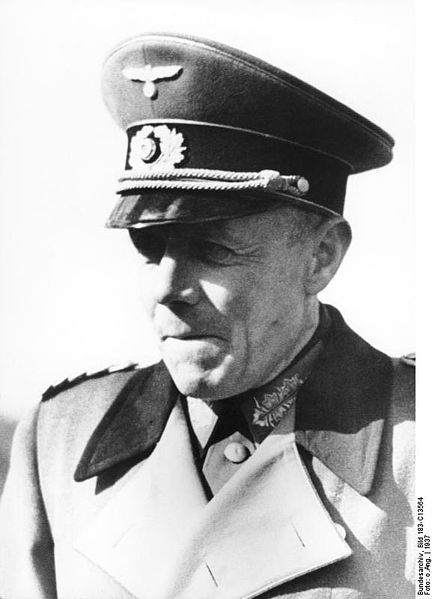
Bundesarchiv_Bild_183-C13564,_Ludwig_BeckGeneral Ludwig Beck

This is one of those uncomfortable posts to write partially because I know that some people will take it completely wrong or ascribe meaning to it that I do not intend. I by training am a military historian, probably better at that than I am theology. One thing that fascinates me in the study of military history is the actions of men in the face of evil and the meetings of such people at the intersections of where military and government policy intersect. It is a timeless theme. The bulk of my study until the past few years was the German Army, particularly that of the Weimar Republic and the Wehrmacht to include policies, leaders, political attitudes and behavior in war and peace. Thus it makes sense for me to look at Colonel General Ludwig Beck who held the post of Chief of the German General Staff during the early part of the Nazi era.

Ludwig Beck is one of those characters in military history that makes professional military officers uncomfortable. Beck is not the perfect example of righteousness nor was he always correct in things that he supported. As an artillery regiment commander he defended the rights of soldiers and officers to be Nazi Party members though he himself was not one. He, like many military officers was a conservative military officer by nature and became Chief of Staff of the Wehrmacht in 1935 two years after Hitler’s ascension to power. Taking office Beck was troubled by some Nazi policies but not by the need for Germany to expand to areas that it had once controlled, he opposed the plan to attack Czechoslovakia not because of any love for the Czech state which he desired to be eliminated, but rather it being a war that Germany could not win. He resigned from his position a Chief of Staff in 1938 when he could not persuade the rest of the General Staff to resign in protest over Hitler’s plan which he felt would be disastrous for Germany. Had the western powers led by Neville Chamberlain not caved at Munich it is likely that the Germans would have suffered badly against the Czech army and fortifications and with the entry of France into the war would have suffered a defeat that would have ended the Hitler regime. In fact German officers who saw the extent of Czech preparations on the frontier following the Munich deal were greatly relieved that they did not have to fight their way into the Czech state.

After his resignation Beck played a key role in the resistance movement. He was involved in the planning for a number of attempts on Hitler’s life. Yet it was his leadership in the July 20th 1944 attempt on the life of Hitler that ensured his place in history. With Colonel Klaus Von Stauffenberg and others in the General Staff at the Front and in Germany he acted to avert further destruction in Europe and the certain destruction of Germany. The plot, Operation Valkyrie was marred by poor execution and failed to kill Hitler of seize power but for a few hours. The planners had left too much to chance and once Hitler had restored communications the coup attempted ended swiftly. Had the attempt succeeded Beck was in line to become either the leader of Germany or the Head of the Army. Instead while being interrogated after his capture he took his own life depriving Nazi leaders of the ability to put him up for a public trial at which he would have been humiliated and then executed. The Kasserne in Sonthofen where the Bundeswehr MP School and Staff School as well as NATO and EU military schools are located is named for him. It is there, ironically a former Adolf Hitler School that his memory and sacrifice is honored by the nation which emerged from the rubble of World War Two. He is honored in a small museum and with a plaque recognizing his sacrifice.

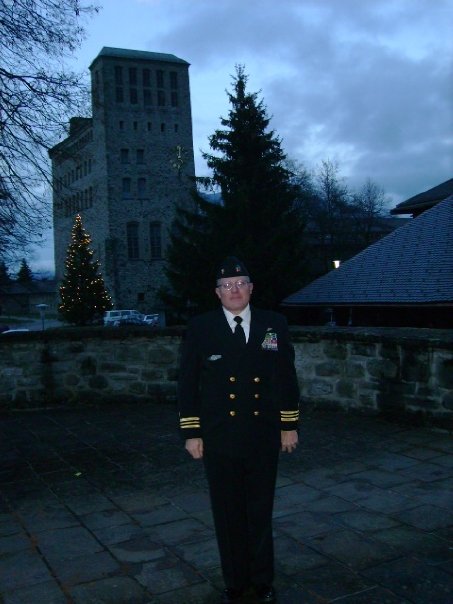
me at sonthofen

Me at Ludwig Beck Kasserne in December 2006 

The reason that General Beck makes many of us in uniform uncomfortable (and I do include myself) is that he recognized that senior officers, especially those in high command who help set and execute policy cannot isolate themselves in the purely military aspects of the operations. Instead he believed that officers have a higher duty to the constitution and people and not just the military mission that they have been assigned. When he realized that he could not stop Hitler’s invasion of Czechoslovakia he resigned and worked in the obscurity of a small and often divided resistance movement against Hitler. The bulk of the German high command, including many officers idolized in the United States did not recognize the higher duty. Many of these men were consummate professionals who did not support the evil of the Nazi regime and who conducted themselves honorably. Yet they effectively abetted its crimes by not opposing actions of their government that were against international law and morality as well as dangerous from purely a pragmatic military standpoint.

The problem is that military officers in any nation, including ours can face situations such as Beck faced. A military’s character is demonstrated in how leaders deal with such situations. Beck recognized the situation early, the bulk of his fellow officers did not recognize a problem until Germany was embroiled in a war that it could no longer win. Even then most could not mount an opposition to Hitler because they did not want to be considered to be mutineers and violate their oath. The potential to abet evil when military professionals bury their heads by planning and executing purely military aspects of a campaign is great. If they ignore questionable policy or even policies that they know that have been judged by the international community to be illegal or immoral, such as torture of prisoners or waging wars of aggression against countries that have not attacked their nation they become complicit in their nations crimes. This was the case with German Officers who may not have committed any personal crime and even tried to mitigate the evils of the Nazi regime were morally complicit in that evil.

In the United States the military shows its fidelity by remembering our oath to the Constitution and being faithful to it and the people that we serve. As officers we represent all Americans and not just those of our political party, religious faith or social or economic interests, nor any political leader, faction or interest group within the nation. The Constitution, our military regulations, traditions and the Uniform Code of Military Justice are the standard by which we operate and by which we conduct ourselves and tools that protect us when policies or actions taken by the government or people within it violate those codes or international law. The UCMJ makes it clear those officers who take part in, plan or a complicit in illegal actions in war are committing crimes.

When a nation become involved in wars which are non-traditional, revolutionary wars or insurgencies that barriers to professional conduct can be broken down. The Mai Lai massacre committed by 2LT William Calley’s platoon with the certain knowledge and maybe even approval of individuals in the chain of command is one example as were the uncontrolled chaos of prisoner abuse and torture at Abu Ghraib.

Times are difficult and we do not know what the future brings. Stress in societies caused by economic conditions, natural disasters, lawlessness on the streets and divided and ineffective governments sometimes remove the moral restraints of the society and even affect the military. One sees this in Weimar Germany as well as the 4th Republic in France which had to deal with post World War II economic difficulties, exacerbated by recriminations of political opponents for actions the others did during the war while France was occupied by Germany as well as the wars in Indo-China and Algeria which further divided the nation and the military.

Christmas on the Syrian border

It is in stressful and uncertain times that officers have to be men and women of principle who always uphold the highest traditions of their military as well as be the voice of conscience when governments, political parties, special interests or leaders begin to violate international norms in the conduct of war. Beck was not a perfect officer. He supported some of Hitler’s policies until after his resignation but like much of the resistance believed that the Nazi regime could only end up destroying Germany. It is important to remember that like Ludwig Beck that officers do not need to sacrifice their honor to be faithful to their oath. This is important now more than ever as the President makes multiple assaults on the judiciary, the Department of Justice, the FBI, the CIA, and in a less direct matter against the military, its leaders, and its members, especially when he insinuates that before he came to office the military were “losers.” I can only imagine what will happen when the President launches a depleted military into war on multiple fronts especially against North Korea. I am certain that he will blame the military and its leadership for the failures of his policies.

I just wonder if there are any leaders today with the courage of Ludwig Beck. As for me I remain in service simply to care for sailors, marines, soldiers, airmen and their families, knowing that very bad times are coming. Likewise I hope to be an example and mentor to the chaplains, religious program specialists, and the others that I serve with knowing that no matter what happens I am coming to the end of my career. I have been serving continuously in the Army and Navy since 1981. I have been to war and expect that I will see war again before my career is over. My loyalty is to the Constitution and the men and women who I have the privilege of serving alongside.

Until tomorrow,

Peace

Padre Steve+

1 Comment

Filed under ethics, faith, History, leadership, Military, nazi germany, world war two in europe

An Unexpected Encounter in a Bar: a Divine or a Chance Meeting?

Friends of Padre Steve’s World,

I’ve been in the military almost 36 1/2 Years and a chaplain for about 25 1/2 of them. I remember when I was in the Texas Army National Guard, our State Chaplain, Colonel John Price pulled me aside and gave me some of the best advice any chaplain has ever given me. He told me that in his experience that chaplains who were not afraid to sit at the bar at the officer’s club or go to other bars often had the opportunity to care for people who would never darken the door of a church or chapel. Over the years I have found that to be true all too often.

This afternoon I went with Judy to our favorite German restaurant, the Bier Garden. We had been working around the house most of the day and the weather was cold a dreary, cloudy with rain and temperatures in the high 30s. When we got there there were only two seats available at the end of the bar and I asked the young man sitting next to them if they were free. He said yes and we sat down. The Army-Navy game was on the televisions and I was settling in to watch the game when the young man struck up a conversation with me. He had obviously had too much to drink and he was struggling to stay awake.

That being said he seemed lonely and depressed, so as I watched the game I occasionally engaged him in conversation and listened to what he was saying. Then he passed out and the bartender woke him up and cut him off. That is when I really got concerned for him. I asked if he was okay, if he needed help and if he was local. He said that he was from California and stationed on board one of the many ships based in our area. He also said that he had walked to the restaurant. So we continued to talk and as we did I could see that he was crying. So I let him talk. He had been in the navy less than a year and he was on his first ship and away from his family for the first time. He was depressed and struggling and I realized that for whatever reason I needed to be there for this kid.

I introduced myself and let him know that I was a chaplain, but even more than importantly that I was a fellow sailor, a shipmate who cared for him. I’m not going to go into details of the conversation but I asked him what ship he was stationed aboard and took the time to encourage him, care for him, and even more importantly decided to find out how he was going to get back to his ship. He told me that he planned on walking back to it, which I realized that since he had had a couple too many drinks, was tired, and it was both dark, cold and beginning to snow that I couldn’t let that happened. I asked him to call his ship and have someone come and get him, but he was hesitant. However he did have a card from his ship that would help him with a cab ride, so I asked the bartender to call a cab. I stayed with the young sailor encouraging him the best that I could for the next half hour and then stood with him waiting for the cab to come outside the restaurant where we continued to talk until the cab came. I talked with the cab driver and found that his company didn’t have the agreement with the Navy to honor it, so I paid the driver more than twice the fare to get him back to his ship.

During our time together I listened a lot and I shared a lot of life experience, I also gave him my business card so he could look me up. But the one thing that I kept letting him know was that he was a sailor, that he was one of my shipmates, and that he wears the same uniform that I do, and that he matters to me. Truthfully that is not bullshit, it’s what I have been taught by every decent non-commissioned officer, Petty Officer, Chief, or commissioned officer in my career. You care for the sailors, soldiers, Marines, and airmen that come into your life no matter what their rank or situation. It’s who we are, and why after all these year I still serve.

While we were standing outside waiting for his cab we were talking about the weather and how cold it was and at that point I pointed out that I was wearing short pants, as I don’t go to long pants until the high temperature is under 40 degrees. He looked down and exclaimed: “Chaps, you,re crazy sir!” I told him that he was right.

My hope is that this young man will remember the crazy chaplain who stood with him in cold weather, wind, rain and snow in short pants who helped him get back to his ship, and that when he has attained any kind of rank that he will take care of other sailors in the same way.

Some might say that the encounter was an act of God or simply a coincidence and I could argue for either point of view. But that being, whichever it was, I know that I couldn’t have done any other. I wanted him to get back to his ship safely and I didn’t want to embarrass him in front of his chain of command.

He asked me questions about God and church and I encouraged him to seek out his chaplain or to contact me and so I hope that our encounter will help in get through his hard times and to succeed in life.

But that is why I am here. I’m going to finish my career in the next few years, this young man is just getting started. He is part of the future and no matter how young I still look, act, and behave, my time in the Navy and military is coming to an end. Whether that is in two and a half, three and a half, or four and a half years, with somewhere between 39 and 42 years of combined service between the Army and Navy, I am closer to the end of my career than this young man.

So I encourage all of my readers to look out for those young men and women who come into your lives.

So until tomorrow and whatever unexpected encounters come our way I wish you the best,

Peace,

Padre Steve+

3 Comments

Filed under christian life, faith, leadership, Military, Pastoral Care

The Unfolding of Miscalculations: Kim Jong Un and Donald Trump on the Bubble

Friends of Padre Steve’s World,

As we approach the seventy-six anniversary of the attack on Pearl Harbor and the U.S. entry into the Second World War I am becoming ever more concerned with the situation on the Korean Peninsula. This is in large part because I believe that when different officials from the President, to his UN Ambassador, his National Security Advisor, and senior Senators begin to speak openly of the increased chances of armed conflict while increasing military drills and presence that war is more likely than not.

I’m a historian and my studies of the path to war in the 20th and 21st centuries is full of bluster and full of miscalculations on both sides of any conflict. That includes the years and months leading to Pearl Harbor when the Japanese leadership decided upon war when a host of other diplomatic and economic options were still viable. In our day the North Korean leadership could chose the logical course of action to expand economic activists with China, Japan, and South Korea while engaging the United States in diplomatic efforts. Instead they seem intent on provoking an American President who is equally intent on throwing diplomatic and economic courses of actions to the wind in favor of a military option.

This is not a good situation and I really do think that the odds are far more favorable to war breaking out by this time next year if not far sooner as Kim Jong Un pushes the envelope on his ICBM and nuclear programs.

When war comes, and I really do think that it will, it will be because Lil’ Kim, President Trump and their advisors made numerous miscalculations. I really don’t think that either party wants to bring about war, but the miscalculations are too troubling to ignore. Someone is going to slip up. As Barbara Tuchman wrote: War is the unfolding of miscalculations.

As for me I hope that at least one sane member of the Trump Administration has the moral courage to find a way to stop, delay, or turn North Korea into a friend before things get too out of hand. Sadly, I don’t think that that is going to happen.

So until tomorrow,

Peace

Padre Steve+

Leave a comment

Filed under History, Korean Conflicts, leadership, Military, Political Commentary

Prepare for the Worst, Hope for the Best: Raising the Flag December 3rd 1775

Friends of Padre Steve’s World,

There is a precept that I live by: “Prepare for the worst; expect the best; and take what comes.” That was once said by Hannah Arendt, but I take it as my own. I am not a fatalist, nor do I believe that God has predetermined what is going to happen in the future, except that he promises to “make all things new.”

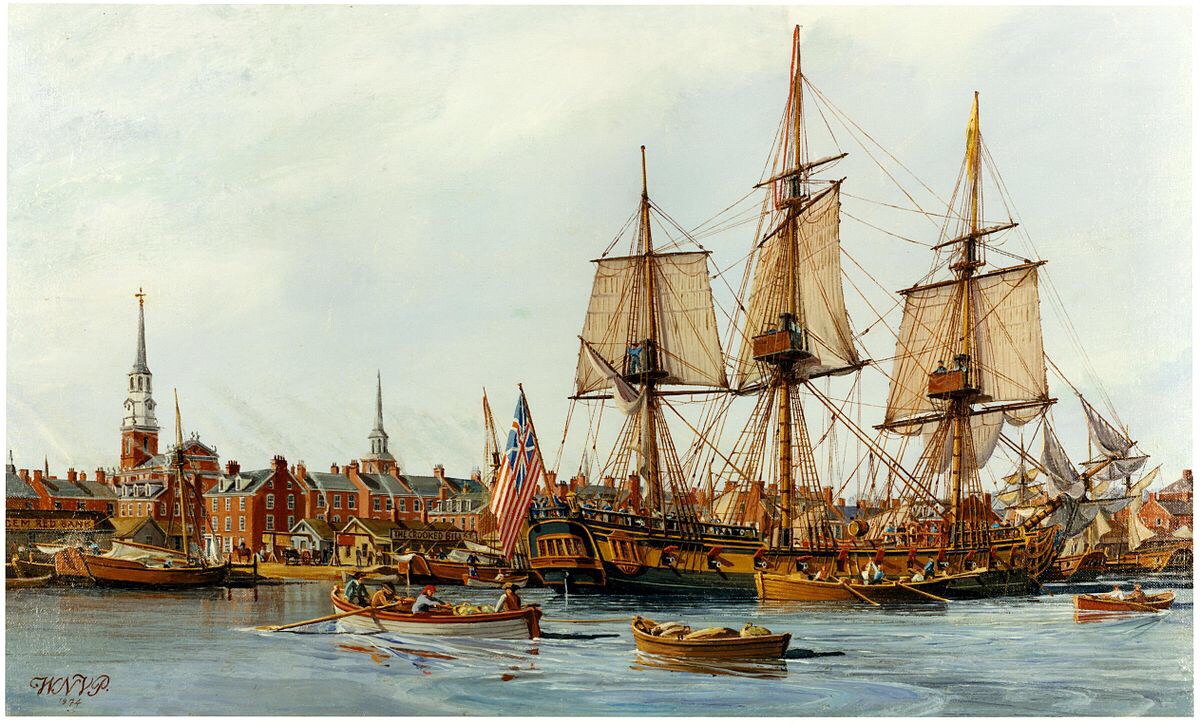
December 3rd is a date that not to many people today remember for anything significant. But one event that happened on December 3rd 1775 is important to those who who follow American and Naval History. It was the day that Lieutenant John Paul Jones hoisted the Grand Union Flag, the precursor to the Stars and Stripes aboard the USS Alfred, the flagship of the new United States Navy. Some 242 years later the Stars and Stripes is still hoisted above United States Navy Ships. What happened on this date so long ago affected the course of history since then. Following his victory at Yorktown which was made possible by the timely intervention of the French Fleet, George Washington wrote to the Marquis de Lafayette:

“It follows than as certain as that night succeeds the day, that without a decisive naval force we can do nothing definitive, and with it, everything honorable and glorious.”

On October 13th 1775 the Continental Congress passed legislation to establish a Navy for a country that did not yet exist.  It was the first was the first in a long line of legislative actions taken by it and subsequent Congresses that helped define the future of American sea power.

The legislation was the beginning of a proud service that the intrepid founders of our nation could have ever imagined.  Less than two months after it was signed on December 3rd 1775 Lieutenant John Paul Jones raised the Grand Union Flag over the new fleet flagship the Alfred. The fleet set sail and raided the British colony at Nassau in the Bahamas capturing valuable cannon and other military stores.  It was the first amphibious operation ever conducted by the Navy and Marines.

Jones received the first recognition of the American flag shortly after France recognized the new United States.  In command of the Sloop of War USS Ranger his ship received a nine-gun salute from the French flagship at Quiberon Bay.

Jones would go on to to greater glory when he in command of the Bonhomme Richard defeated the HMS Serapis at the Battle of Flamborough Head. During the battle when all seemed lost and the colors had been shot away he replied to a British question if he had surrendered replied “I have not yet begun to fight!”

When the war ended very few of these ships remained most having been destroyed or captured during the war. But these few ships and the brave Sailors and Marines who manned them blazed a trail which generations of future sailors would build on.  The Navy has served the nation and the world as a “Global Force For Good” for more than 242 years.

That being said these are troubled times for the Navy. Sixteen years of war coupled with a major reduction in number of ships, mostly due to a decision to decommission more than 30 ships before they were due for replacement and the decision to shed 30,000 sailors to support the wars in Iraq and Afghanistan, not to mention the loss of up to 30,000 sailors a month in non-Navy billets to support those wars has taken a toll on readiness and morale, not to mention ethical behavior. The results have been seen in the numerous accidents and incidents that have involved loss of life and major damage to ships over the past few years, as well as numerous scandals involving senior officer and enlisted leadership.

Please do not get me wrong, the Navy has many superb sailors, officers and leaders; I serve with some of them, but the rot has set in and it is becoming more and more obvious. I see it daily in what I read and with whom I talk. I was fortunate to serve aboard a ship with high standards and high morale after September 11th 2001. My commanding officer back then, Captain Rick Hoffman, now retired is frequently consulted when incidents involving ship handling and leadership come to the fore.

Despite the rhetoric of the President there has been no significant help regarding funding for operations, maintenance, and personnel, nor any let up in mission requirements. I hate to be the one who says it, but no organization can keep doing more with less for more than a decade without problems. The fact that the world situation requires more of a naval presence now than it did before 2001 does not seem to matter to Republican Congressmen who forced Sequester on the services in 2011 yet are willing to bust the budget by trillions of dollars to pay for tax cuts for the absolute wealthiest persons and corporations.

If worse comes to worse on the Korean Peninsula and if at the same time Iran or any other country decide to challenge the United States, things will go from bad to worse. We will lose ships and sailors for the first time since the Second World War and it will not be pretty. Sadly, I think that the President will blame the Navy (and the rest of the military) when the policies that he and his party have pursued lead to disaster.

These are dark times and I am a realist. I don’t live in the cloud cuckoo land of Trump supporters who think that things are going to turn out well. When I see the President and his top advisers and spokespeople continue to talk about the increasing chance of war on the Korean Peninsula I believe them. When I hear the President basically giving a blank check to the Saudis and the Israelis to do as they wish in the Middle East while basically appeasing the Russians and Chinese, I get worried. I lose sleep, and at the same time I prepare myself and those who I serve with to be prepared for the worst.

So with that in mind I wish you a good week.

Peace,

Padre Steve+

1 Comment

Filed under Foreign Policy, History, leadership, Military, News and current events, Political Commentary, US Navy

Is Our Honesty with Ourselves Remorseless Enough to Find Our Way Back?Christians, Trump, and Bonhoeffer

Friends of Padre Steve’s World,

Just a short thought to close out this Friday and once again I go back to, as I do so often the words of The German pastor, theologian, and martyr Dietrich Bonhoeffer. With the threat of nuclear war looming ever larger on the Korean Peninsula, the impending passage of a tax “reform” bill that will add trillions to the deficit and national debt while raising taxes and cutting medical care for tens of millions of Americans, the President’s retweeting of racist anti-Muslim tweets from a leader of the neo-fascist fringe group Britain First, and finally the announcement that Trump’s former adviser and National Security Adviser, General Michael Flynn had plead guilty to charges that he lied about his involvement in illegal contacts with the Russian government, and in doing so has implicated other senior members of the Trump campaign and administration, possibly even the President himself.

As I read the documents as will as the commentary I find it so hard to believe how complacent and silent so many people are in regard to the danger that our country is facing. As I do so I have to shake my head at the silence and complicity of so many of my fellow Christians who without hesitation back the policies of a man who some suspect might be mentally ill, others, suffering from neurological condition, or as I think, a man who is a narcissist and sociopath

“We have been silent witnesses of evil deeds; we have been drenched by many storms; we have learnt the arts of equivocation and pretence; experience has made us suspicious of others and kept us from being truthful and open; intolerable conflicts have worn us down and even made us cynical. Are we still of any use? What we shall need is not geniuses, or cynics, or misanthropes, or clever tacticians, but plain, honest, and straightforward men. Will our inward power of resistance be strong enough, and our honesty with ourselves remorseless enough, for us to find our way back to simplicity and straightforwardness?

And so tonight I wonder, and I have to admit that I doubt that it is possible that we can find our way back to simplicity and straitforwardness. I would like it to be different but I cannot see so many of the men and women who claim to be my brothers and sisters in Christ abandoning their quest for political power so much so that they will support men who through their actions and words piss on the Gospel and the people that Jesus came into the world to save and to champion.

Honestly, I do not know how this is going to end since I am neither the prophet nor the son of the prophet; but I cannot help thinking that it will end well.

So until tomorrow,

Peace,

Padre Steve+

2 Comments

Filed under christian life, ethics, faith, History, leadership, Loose thoughts and musings, News and current events, Political Commentary

Recommitting to A New Birth of Freedom: The Gettysburg Address at 154 Years

Friends of Padre Steve’s World,

In November 1863 President Abraham Lincoln travelled to Gettysburg Pennsylvania yards behind the temporary to attend and say a few words at the dedication of the Soldiers Cemetery where the remains of the Union dead who had not been recovered by their families and taken home for burial were being interred by local laborers. When Lincoln arrived the process was barely halfway complete. The ground on West Cemetery Hill was still scarred by the battle that took place barely four and a half months prior, a battle that was the deadliest in United States military history in which the Army of the Potomac under the command of George Gordon Meade defeated Confederate General Robert E. Lee’s storied Army of Northern Virginia.

Lincoln was not the primary speaker, that honor went to Edward Everett, former Secretary of State, Senator, and Representative from Massachusetts. Everett, an academic from Harvard was also a leader in the Greek Revival and the Rural Cemetery movement in the United States. Gettysburg’s Evergreen Cemetery, less than 100 yards behind the temporary structure from which Everett and Lincoln would speak was a legacy of the movement that Everett had helped to begin. Now Everett was the primary orator at the dedication of of this cemetery dedicated to the Union dead, and Lincoln, the President there as more of window dressing.

Everett spoke for nearly two hours providing an impressive narrative of the battle. When he ended his speech, which was not long by the standards of his day it was left to Lincoln to say a few words. Those few words are now part of the lexicon of American secular scripture along with the Declaration of Independence, the Preamble of the United States Constitution, Franklin Delano Roosevelt’s “Four Freedoms” speech, andDr. Martin Luther King’s “I Have a Dream” speech.

His words are the antithesis of what is so often heard in American political discourse today. The fact is that while many Americans give lip service to all of these speeches, we have to admit that there is a significant portion of our population that not only give lip service to their ideas but actually oppose them, instead valuing theocracy, racism, authoritarianism, and militarism more than the ideals that the United States was founded upon. Despite that, they remain something that we must strive to pursue until this nation actually experiences the new birth of Freedom that Lincoln ended up dying to see established.

Lincoln’s words which he penned over a number of days were not long, and while some like Everett himself thought that they eclipsed his own words, many politicians and members of the press thought little of them. However, those words probably encapsulate the ideas of the founders better than any words outside of the Declaration of Independence. I will leave you with those words. So until tomorrow,

Peace,

Padre Steve+

Four score and seven years ago our fathers brought forth on this continent, a new nation, conceived in Liberty, and dedicated to the proposition that all men are created equal.

Now we are engaged in a great civil war, testing whether that nation, or any nation so conceived and so dedicated, can long endure. We are met on a great battle-field of that war. We have come to dedicate a portion of that field, as a final resting place for those who here gave their lives that that nation might live. It is altogether fitting and proper that we should do this.

But, in a larger sense, we can not dedicate — we can not consecrate — we can not hallow — this ground. The brave men, living and dead, who struggled here, have consecrated it, far above our poor power to add or detract. The world will little note, nor long remember what we say here, but it can never forget what they did here. It is for us the living, rather, to be dedicated here to the unfinished work which they who fought here have thus far so nobly advanced. It is rather for us to be here dedicated to the great task remaining before us — that from these honored dead we take increased devotion to that cause for which they gave the last full measure of devotion — that we here highly resolve that these dead shall not have died in vain — that this nation, under God, shall have a new birth of freedom — and that government of the people, by the people, for the people, shall not perish from the earth.

Abraham Lincoln
November 19, 1863

1 Comment

Filed under civil rights, civil war, Gettysburg, History, leadership, Political Commentary

Walking the Good and Bad Ground at Gettysburg


Friends of Padre Steve’s World,

I’m in Gettysburg this weekend getting a chance to do some research and walking areas of the battlefield that I have stopped at but never fully explored on foot. Trust me, there is a difference when you actually walk the ground versus making stops and looking around.


I drove up this morning and thankfully traffic was light and there were no traffic jams at any point along the way which meant I made the trip in just a bit over four hours. When I got here I checked into my hotel, unloaded my stuff and set to work walking the route I had planned out. My hotel is right at the base of East Cemetery Hill where the Union troops rallied on the night of July 1st 1863. I decided that I would walk through the town and up to McPherson’s Ridge where John Buford’s cavalry and John Reynolds’s First Corps fought A.P. Hill’s Third Confederate Corps, before turning north past the unfinished Railroad Cut and Oak Ridge on my way to Oak Hill where Confederate General Robert Rhodes’ division of Dick Ewell’s Second Confederate Corps went into action.


Oak Hill is the site of the Eternal Peace Monument which was dedicated by President Franklin Delano Roosevelt in 1938 as a symbol of reconciliation between the North and South. It bears the words “Peace Eternal in a Nation United”. That was a mere seventy-nine years ago and my heart breaks when I see the same forces at work which tore apart the nation in the years before the Civil War, and sadly they are being stirred up by President Trump who more resembles the incompetence of James Buchanan coupled with the malevolence of Jefferson Davis than Abraham Lincoln, or the loyal opposition of Stephen Douglas.


As I looked out from that high ground I saw the beautiful Pennsylvania countryside still covered in Fall foliage with fields of Sorghum ready for harvest, and cornfields waiting to be plowed over for the next season. Directly in front of me was the ground that two of Rodes’s brigades, those of Alfred Iverson and Edward O’Neal, both incompetent pro-secession political generals sent their units into the attack leading to their slaughter. As I walked into the field where those soldiers fell I felt a certain amount of sadness for them. Yes, most of them made the choice to enlist in the Confederate cause, while others joined out of peer pressure, or others because they were drafted: but none signed up to be slaughtered at the hands of their incompetent commanders. One regiment, the 23rd North Carolina lost 89% of the men it took into battle in barely half an hour of combat. As I walked across that swale in front of Oak Ridge where the men of John Robinson’s division awaited them I was struck by the tragedy of men who went into battle for an unjust and unrighteous cause who fell in such large numbers on July 1st 1863. I wrote in the draft of my yet unpublished Gettysburg book:

When the Confederates got to about fifty yards of Baxter’s troops the commander of the 83rd New York, the Swiss born lieutenant Colonel Joseph A. Moesch shouted: “Up men, and fire.” Moesch rode behind his line cheering his men on, but they needed no urging. In the words of one of one, “The men are no longer human, they are demons; a curse from the living here, a moan from the dying there. ‘Give them — shouts one.’ See them run’ roars another.” The well concealed veterans of Baxter regiments slaughtered them as they had O’Neal’s men just minutes before. “One regiment went down in such a neat row that when its survivors waves shirt tails, or any piece of cloth remotely white, Iverson thought that the whole regiment of live men were surrendering.” As the Confederate attack collapsed some “of the regiments in Robinson’s division changed front again, charged, and captured nearly all the men who were left unhurt in three of Iverson’s regiments.” Official Confederate reports list only 308 missing but that number differs from the Union reports, Robinson reporting 1000 prisoners and three flags and Baxter’s brigade nearly 400. As Robinson’s troops smashed the brigades of O’Neal and Iverson, they were joined by the remnants of Cutler’s brigade which changed its face from west to north to deliver more devastating fire into the Confederates.


From there I went over to Oak Ridge and then made my way to Blocher’s Knoll, now know as Barlow’s Knoll. Once you leave Oak Ridge the ground to the east is flat and relatively devoid of any good defensive positions. The Union Eleventh Corps Commander, Major General Oliver O. Howard sent two of his understrength divisions under the command of Carl Schulz to link up with the right flank of Robinson’s division and extend the Federal line to prevent it from being flanked. Unfortunately, one of the division commanders, Francis Barlow decided to advance his division to Blocher’s Knoll which was a mile in front of where Schurz and Howard intended. Noticing what was going on Schurz ordered the other division under the command of Schimmelpfenning to extend its line to maintain contact with Barlow’s division. But there were not enough troops to fill the gap. The line was barely a skirmish line and with no good defensive ground it could do little to stop a determined Confederate attack. Which was exactly what occurred.


George Doles’s brigade of Rodes division, strongly supported by artillery attacked the thin blue line of Schimmelpfenning’s division just as Gordon and Hays Brigades of Jubal Early’s division enveloped Barlow’s terribly exposed division. The men of Barlow and Schimmelpfennig’s divisions made a spirited and fierce defense before they were overwhelmed and retreated to Gettysburg, some making a fighting retreat, others fleeing the Confederate advance, many were killed, wounded or captured. Barlow lay wounded and was given aid by John Gordon who later became a lifelong friend. Schimmelpfennig was rescued from certain capture by a woman in the town who allowed him to hide in a shed behind her home as the Confederates moved into the town.


The memorials to these forgotten and often slandered soldiers line the road from the Mummasburg Road to Barlow’s Knoll. They did fight hard as A private of the 61st Georgia Infantry of Gordon’s brigade noted that the XI Corps troops “stood firm until we got near them. Then they began to retreat in good order. They were harder to drive than we had known them before….Their officers were cheering their men and behaving like heroes and commanders of ‘the first water’”

The 157th New York, was order to help shore up the line. The regiment advanced and engaged in a furious twenty minute fight, continuing the battle “in Indian fashion” until Schurz ordered them to retreat. The gallant 157th sacrificed itself buying time for others to withdraw and left over 75 percent of its men on the battlefield, when the order came, “less than fifty of the 157th were able to rise out of the wheat and follow.” “So the horrible screaming, hurtling messengers of death flew over us from both sides,” recollected a New York soldier. “In such a storm it seemed a miracle that any were left alive.” Krzyzanowski described the scene as “a portrait of hell.”

When one walks that ground it is impossible how that any unit of similar size or composition could have held against the massive pincer attack of Doles’s brigade and Early’s division on Barlow’s exposed position.


As I walked back into town I could imagine the chaos of the retreating Union troops as well as the victorious Confederates as day turned into evening. The Union troops who escaped made their way to link up with Steinwehr’s division and the Eleventh Corps artillery which had been positioned on Cemetery Hill as well as the survivors of the Union First Corps which had fought the Confederate Third Corps to a standstill before being forced back due to weight of numbers. I finished my walk by going up to Cemetery Hill where with the sun beginning to go down I walked among the graves of the fallen Union soldiers and a monument to John Reynolds who fell on McPherson’s Ridge.

As I noted a couple of months ago when I described my walk at Antietam, there is something immensely valuable about walking these battlefields. First, one gets to experience the elements of weather, distance, and terrain which are helpful in understanding what it was like for the soldiers involved. Second, one can see the battle from the perspective of those soldiers, imagining what it would be like to be deal with being under fire on that ground. One understands what men like John Buford and John Reynolds meant when they said that certain terrain was “good ground.” You don’t understand that until you walk it.


I finished tonight with a friend who met me here going to a number of pubs and walking through the town. While walking I saw a number of the churches that served as field hospitals, including Christ Lutheran. The horror of those hospitals is unimaginable to most of us. I have worked in inner city trauma centers and been in field hospitals in Iraq with our wounded and nothing can really prepare you for the horror of blown up, destroyed, and burned bodies of still living men on a such a massive scale.

But what I have experienced pales in comparison to what occurred at Gettysburg and Antietam, and what will certainly happen if war breaks out on the Korean Peninsula. I have been in the military all my adult life and I dread what I see coming, but since I know that chances are that it will happen I prepare myself and the men and women who serve under me for it. Sadly, most people, even those who have experienced combat in our recent wars are capable of imagining the carnage and horror of the next war. As a historian and a chaplain who has seen combat and a lot of other violent death I can well imagine it and no I don’t sleep well with that knowledge, especially when I see our President rattling sabers so often with seemingly little concern for the men and women that he will be committing to combat. In light of how he has dealt with the deaths of U.S. military personnel since he has been in office, taking no responsibility for any of them, passing the responsibility to military leaders, I tremble at the thought of what his next tweet might bring, but I digress.

Anyway, tomorrow begins another day of exploring parts of the battlefield on foot. Today I walked just over thirteen miles. I think that tomorrow I may well exceed that. I will tell you about that walk tomorrow night.

Peace,

Padre Steve+

1 Comment

Filed under civil war, Gettysburg, History, leadership, Military

The NFL and the Problem of Patriotism versus Nationalism

Friends of Padre Steve’s World,

I thought that the controversy over the peaceful demonstrations of athletes kneeling during the National Anthem to protest racial prejudice and violence committed against African Americans and other people was beginning to die down. That was before today when Vice President Mike Pence traveled to Indianapolis allegedly to watch a football came and see former Indianapolis Colt’s quarterback Peyton Manning be honored by the team. Instead, taking his orders from President Trump, the Vice President traveled to the game and walked out when members of the San Francisco 49ers knelt during the National Anthem. Thereafter the Vice President and the President went to Twitter to castigate the players and using taxpayer money, in this case over $200,000 to make their point, condemning the protesting players as being disrespectful to the flag and to the military. As labor leader Eugene Debs noted in 1918: ““In every age it has been the tyrant, the oppressor and the exploiter who has wrapped himself in the cloak of patriotism, or religion, or both to deceive and overawe the People.”

The act was an act of craven political nationalism disguised as patriotism, and there is a difference between the two. George Orwell noted this when he wrote “Nationalism is not to be confused with patriotism.” Sadly I fear that the vast majority of Americans do not know the difference.

For those who don’t know I’m a veteran. In fact I’m a combat veteran. Not only that I am basically a dinosaur in today’s military as I’ve been serving continuously in some component of the military since I enlisted in August 1981. My oath is to the Constitution and that document enshrines the right of free speech and political protest, even of people that I may disagree with, and to see the President and Vice President flagrantly demonizing people for peacefully expressing their beliefs, and exercising those Constitutionally protected rights by kneeling during the national anthem not only offends, but angers me. Likewise the fact that the President found every way he could to avoid military service and openly mocked combat wounded veterans as losers during the Presidential campaign demonstrates the President’s hackneyed understanding of what he calls patriotism. 

My dad also served a full career in the U.S. Navy including a combat tour in Vietnam where he was assigned to an emergency airstrip in the city of An Loc, surrounded by the North Vietnamese and Viet Cong for 80 days.

I also had relatives fight in both World Wars and one of my great uncles, a brother of my dad’s mother was killed in action serving as an infantryman during World War Two. Over the last sixteen years of war I have had a good number of friends and comrades die or suffer so much from the psychological and spiritual wounds of war that they later ended their lives.

As such, I have the highest regard for the armed forces of the United States and those who have served in them whether they be volunteers or if they were drafted. At the same time I don’t think that simply being a veteran makes one any more patriotic than someone who hasn’t served in uniform and I find it disgraceful that the military and those that serve are all too often reduced to stereotyped symbols that are used for partisan political causes which are not at all related to patriotism, but instead the most base and banal forms of nationalism, often paid for at sporting events by the Department of Defense.

Please understand that patriotism and nationalism are two different things. One can be a patriot and not a nationalist. That difference was first shown by the members of Congress and other elder statesmen of the country who between 1846 and 1848 opposed President James K. Polk’s unjust and shameful war against Mexico who included John Quincy Adams, Henry Clay, and a freshman Congressman named Abraham Lincoln. All were called traitors by Polk and his supporters. Military men serving in Mexico found the war criminal and the actions of state volunteers abominable. Ulysses S. Grant, then a young Lieutenant wrote that the Mexican war was “as one of the most unjust ever waged by a stronger against a weaker nation.”

Patriots want the country and our leaders to live up to our highest ideals. Patriots actually believe the words of the Declaration of Independence which state “We hold these truths to be self-evident, that all men are created equal, that they are endowed by their Creator with certain unalienable Rights, that among these are Life, Liberty and the pursuit of Happiness.” A patriot believes and works for what the founders wrote in the First Amendment to the Constitution regarding freedom of speech, religion, association, and the right to petition the government for the redress of grievances, and yes, that includes kneeling during the National Anthem.

Likewise a patriot is committed to building upon those foundations as Abraham Lincoln said in the Gettysburg Address “It is for us the living, rather, to be dedicated here to the unfinished work which they who fought here have thus far so nobly advanced. It is rather for us to be here dedicated to the great task remaining before us — that from these honored dead we take increased devotion to that cause for which they gave the last full measure of devotion — that we here highly resolve that these dead shall not have died in vain — that this nation, under God, shall have a new birth of freedom — and that government of the people, by the people, for the people, shall not perish from the earth.”

While those who served in the military and those who have died to protect this county and honored the Constitution are worthy of respect, there have been far to many other patriots who have sacrificed themselves for the ideals of the country and have been treated as criminals for doing so. Those who fought against slavery and who defied the law to fight against it and to protect African Americans from slave owners who were backed by the government were patriots. Women who fought for the right to vote were patriots. Workers who fought for fair wages and safe working conditions. Men and women who protested and opposed unjust wars against Native Americans, the War with Mexico, the Spanish American War, the Vietnam War and the U.S invasion of Iraq were all patriots. Likewise the men and women who have stood up for the civil rights of all citizens often in the face of violent opposition from police were patriots too. 

This list could go in and on listing the patriotic endeavors of Americans of all races, all genders, and all religions to promote the liberty of all, whether they had ever served in the military. Frederick Douglass wrote: “Liberty is meaningless where the right to utter one’s thoughts and opinions has ceased to exist. That, of all rights, is the dread of tyrants. It is the right which they first of all strike down. They know its power. Thrones, dominions, principalities, and powers, founded in injustice and wrong, are sure to tremble, if men are allowed to reason… Equally clear is the right to hear. To suppress free speech is a double wrong. It violates the rights of the hearer as well as those of the speaker.”

However, nationalism is not the same as patriotism even though a fervent nationalists will without hesitation co-opt the symbols of the nation for purposes that were feared by our founders. Historian Timothy Snyder makes a good comparison of patriotism and nationalism:

“A nationalist encourages us to be our worst, and then tells us that we are the best. A nationalist, “although endlessly brooding on power, victory, defeat, revenge,” wrote Orwell, tends to be “uninterested in what happens in the real world.” Nationalism is relativist, since the only truth is the resentment we feel when we contemplate others. As the novelist Danilo Kiš put it, nationalism “has no universal values, aesthetic or ethical.” A patriot, by contrast, wants the nation to live up to its ideals, which means asking us to be our best selves. A patriot must be concerned with the real world, which is the only place where his country can be loved and sustained. A patriot has universal values, standards by which he judges his nation, always wishing it well—and wishing that it would do better.”

One can have honest disagreement as to what they think of the actions of the protesting players, but to deride them as being unpatriotic even as they use the flag as a campaign fundraising tools as the President did in an ad last week and the Vice President’s cynical move Sunday were shameful. Their nationalism reminds me of what Mark Twain called “Monarchical Patriotism” which he noted was different than republican patriotism. Twain wrote:

“There are two kinds of patriotism — monarchical patriotism and republican patriotism. In the one case the government and the king may rightfully furnish you their notions of patriotism; in the other, neither the government nor the entire nation is privileged to dictate to any individual what the form of his patriotism shall be. The gospel of the monarchical patriotism is: “The King can do no wrong.” We have adopted it with all its servility, with an unimportant change in the wording: “Our country, right or wrong!” We have thrown away the most valuable asset we had:– the individual’s right to oppose both flag and country when he (just he, by himself) believed them to be in the wrong. We have thrown it away; and with it all that was really respectable about that grotesque and laughable word, Patriotism.”

We as a people have become so hopelessly confused as to the meaning of patriotism that we as Twain noted, are throwing away the most valuable assets we have, the right of the individual to oppose both flag and country when they believe them to be wrong. We have allowed the President and those like him to turn the protests regarding injustices that bring shame to our republic to be attacks on the flag and the military, and that is grotesque. We are throwing away our birthright as Americans to protest wrong in our land and are embracing the creed of tyrants. If we continue down this path we will lose our republic. 

Until tomorrow,

Peace,

Padre Steve+

7 Comments

Filed under History, leadership, News and current events, philosophy, Political Commentary

The Authoritarian String of Tricks: Learning from History

Friends of Padre Steve’s World,

It has been a bit under ten months since President Trump took the oath of office as President of the United States. Over that time his actions have been similar to other leaders of history who have gravitated towards authoritarian rule. Today I want to share the words of British military theorist and historian B.H. Liddell-Hart on what happens when authoritarian, or would be authoritarian leaders gain control of a government. His words, from his short, but profound book Why Don’t We Learn from History are worth the considered read for anyone with an open mind who can, despite the proliferation of propaganda can still see clearly. Liddell-Hart wrote:

They soon begin to rid themselves of their chief helpers, “discovering” that those who brought about the new order have suddenly become traitors to it.

They suppress criticism on one pretext or another and punish anyone who mentions facts which, however true, are unfavourable to their policy.

They enlist religion on their side, if possible, or, if its leaders are not compliant, foster a new kind of religion subservient to their ends.

They spend public money lavishly on material works of a striking kind, in compensation for the freedom of spirit and thought of which they have robbed the public.

They manipulate the currency to make the economic position of the state appear better than it is in reality.

They ultimately make war on some other state as a means of diverting attention from internal conditions and allowing discontent to explode outward.

They use the rallying cry of patriotism as a means of riveting the chains of their personal authority more firmly on the people.

They expand the superstructure of the state while undermining its foundations by breeding sycophants at the expense of self-respecting collaborators, by appealing to the popular taste for the grandiose and sensational instead of true values, and by fostering a romantic instead of a realistic view, thus ensuring the ultimate collapse, under their successors if not themselves, of what they have created.

This political confidence trick, itself a familiar string of tricks, has been repeated all down the ages. Yet it rarely fails to take in a fresh generation.

Yes it has been nearly ten months and one can see President Trump following the script of authoritarian rulers. So many of the things that the British historian and theorist noted are present in the actions, words, and policy of the President and his administration.

The book is worth the read.

So until tomorrow,

Peace,

Padre Steve+

1 Comment

Filed under History, leadership, News and current events, Political Commentary