Category Archives: life

The Broken Fragments of Antique Legends and the Kaleidoscopic Present

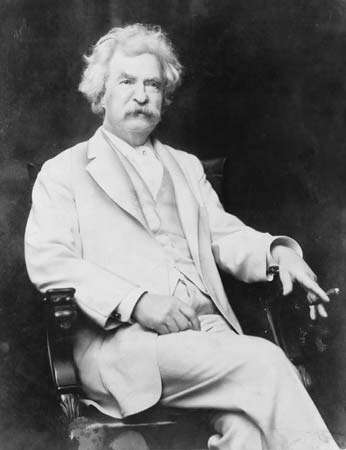
Twain
Friends of Padre Steve’s World,

Since I am still enjoying a time of reflection following the submission of my retirement request from the Navy I am re-posting an article from about a year ago which I still think is relevant to today. 

Peace

Padre Steve+

I am trying to place what is going on in the Trump White House, the country, and the world in some frame of reference for some time now. There are many historical parallels to draw from and make analogies, but like all analogies they tend to break down at some point, none are perfect, but some tend to resonate more than others. Mark Twain wrote “History never repeats itself, but the Kaleidoscopic combinations of the pictured present often seem to be constructed out of the broken fragments of antique legends.” 

In the Trump world I see fragments of the worlds of Richard Nixon, of Kaiser Wilhelm II, King Leopold of Belgium, Adolf Hitler, and Pierre Laval; of of the Robber Barons, the owners of the Titanic, and other leaders going back to antiquity. I have written about some of those parallels, even recently; however the past few days of turmoil have caused me to step back a bit as I try to find the right manner in which to write about them.

Marcus Tillius Cicero wrote something that in the midst of the self-inflicted chaos of the Trump administration that we should try to heed right now. I wish that the President would stop for a brief moment to ponder before he does something incredibly rash that leads him and the nation to disaster. Cicero wrote: “To be ignorant of what occurred before you were born is to remain always a child. For what is the worth of human life, unless it is woven into the life of our ancestors by the records of history?”

So I am reading and researching and trying to make sense of the madness that we are all witnesses to, and if we do not speak out complicit in.


4 Comments

Filed under History, life, philosophy

Raymond Reddington, Me, and the Forgiveness of Sins

7852066-12185069

Friends of Padre Steve’s World,

In spite of being very busy working in the house and going  back to work to deal with the crisis d’jour I have been very reflective about all I have been through over the past few months. Unlike past times of reflection this has been a rather uplifting experience of grace and not a de-evolution into a morbid state of moroseness.

As I wrote on Saturday I drafted and sent up my retirement letter today for my Commanding Officer’s endorsement. I also let my detailer, the officer who manages officer assignments know that I was putting in my papers so he can plan to replace me. I also let the men and . It was a strange but very freeing. I will have much to do to get ready for that day about a year from now but knowing that I can begin working on everything that I need to accomplish. There is much to do but I am at peace and really looking forward to what comes next, whatever it may be.

Due to a situation dealing with my Catholic congregation  I am having to do a town hall meeting to explain howe things work to all of my faith group leaders and contractors on Sunday afternoon. Thus I will be going in to the chapel on Sunday and I will make an appearance before my Protestant congregation to discuss my feelings about the member that tried to get me sent to court martial. I have finally been able to deal with the anger from that experience but the pain is still there. At least I am in a better place to talk about it and know now that I won’t do anything to blow the situation up.

This experience has taught me something about grace, forgiveness, and trust, but I digress…

The fact is that I have a tremendous ability to dwell upon injustices and I have a terrible time with forgiveness. I do really love the concept and as a Christian I have no idea of how Jesus managed to forgive nor the great saints of every faith who managed to live lives full of grace and forgiveness have managed to do so. It probably goes back to my Irish-Scottish DNA, the DNA that can make one a hilarious hoot one minute and a brooding bore the next regardless of whether or not alcohol is involved.

But there is something that I have learned recently: forgiveness doesn’t require me to be dishonest about how I feel about something. I learned that from Raymond Reddington, and yes I have been binge-watching The Blacklist of late and I find Reddington’s grip on philosophy, religion, and the human condition to be quite fascinating. Reddington observed:

“Sins should be buried like the dead. Not that they may be forgotten but we may them and find our way forward nonetheless.”

Truthfully I don’t believe in the forgive and forget bullshit, it’s a nice thought, but our brains don’t work that way. We can forgive someone every day, but the memories will still be there. That’s what makes it so hard. That is why the Christian understanding of the forgiveness of since is so important and so difficult. It wasn’t meant to be easy or painless, but it might make a difference, as Reddington noted:

“A friend told me recently that forgiveness won’t change the past but could very well change their future. Apparently, everything is forgivable.” 

So that’s all for tonight. Yes I know there are many things going on that I can write about but right now I need to stay in this place for a moment.

Peace,

Padre Steve+


3 Comments

Filed under christian life, ethics, faith, life, ministry, philosophy

All Good Things: My Decision to Retiree from the Military

img_4376

Friends of Padre Steve’s World,

In the Star Trek Film Generations Captain Jean Luc Picard told Commander William Riker:

“Someone once told me that time was a predator that stalked us all our lives. But I rather believe than time is a companion who goes with us on the journey, and reminds us to cherish every moment because they’ll never come again. What we leave behind is not as important how we lived. After all, Number One, we’re only mortal.” 

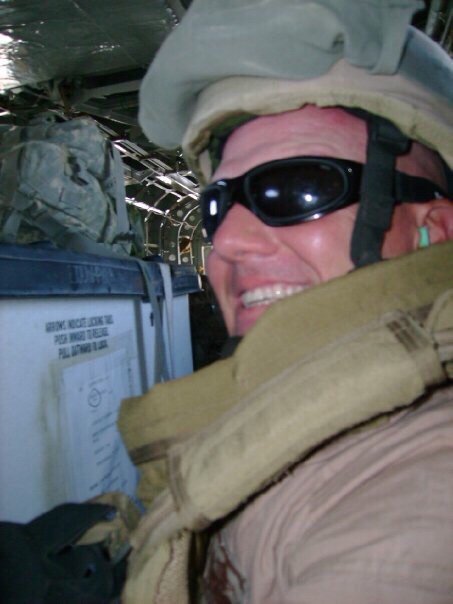
Today was like any other Saturday for me except that I made the decision to put in my retirement papers from the Navy. Lord willing about this time next year I will be “piped ashore” in a retirement ceremony.

When that day comes it will be the end of a thirty-eight year military career in which I have served as an enlisted man, then an officer. I have served in the active duty Army, the Army Reserve, and California, Texas, and Virginia Army National Guard. Then in February of 1999 after 17 1/2 years in the Army I declared free agency so to speak and joined the Navy.  On February 8th I was a Major in the Army Reserve and on the 9th I was taking the oath of office as a Navy Lieutenant. My wife and my paternal grandmother were there when I took the oath in a humble, and now abandoned Naval Reserve Center in Huntington West Virginia.

So now, some 19 years and 8 months later I have made the decision to put in my retirement papers. For me it is a time for reflecting and realizing that it is the right time to do this. The last number of months in my assignment have been difficult and brought me little joy. I have sought to serve my congregations and to mentor, help, and protect the personnel assigned to me.

I have grown weary of the frustrations of dealing with a moribund bureaucracy, decaying facilities with no money to fix them, the prospect of losing most of my experienced enlisted personnel with no experienced personnel coming in, and dealing with Protestant and Catholic congregations that try my very soul. When one of my Protestant parishioners attempted to have me tried by court martial because he disagreed with my sermon content and then wrote a lying letter to my commander forcing an investigation in which I had to spend money on a lawyer to defend myself I crossed the Rubicon. I knew that I was going to retire at the end of my current tour.

Then this week I hit the culminating point when the faith group leader of my Catholic congregation and my new contract Priest raised such a ruckus and problems for my enlisted personnel and one of my Chaplains that I had to intervene despite being on leave and in the middle of massive work on my house. I spent Friday evening texting that lay leader and it only made me more upset. I realized that no matter what I did that had done to keep them going in the absence of a priest and how I fought for them that they had no loyalty of concern for me or my personnel. Gratefulness to others is not a virtue for most American Christians today, I knew that but learned it again.

This morning I read a Navy Message announcing a Selective Early Retirement Board for Captains and Commanders. I am in the zone and if chosen to be retired I would have little lead time to plan my retirement and do all the things that I would need to do medically, administratively, and personally to retire and have a decent chance of landing on me feet. Honestly, I would have rather spent the last year in a combat zone in Iraq like I did in 2007 and 2008 than deal with the bullshit that I have been dealing with lately.

I know that did the best that I could and I can say that the team of chaplains and Religious Program Specialists whose work I help direct and support are some of the finest people I have ever served with. Their honesty and likewise their care for me has been about the only thing that got me through. Honestly, I am so grateful for them and I treasure them all, just as I have so many of my other soldiers, sailors, marines, airmen, and civilians employed by the military for the last thirty-seven years.

I am at peace, and I am going to spent the time leading up to my retirement to cherish every moment. Now I know that my situation at work is not going to change but I am going to cherish the moments with the people that I care for and do my best to serve without getting to stressed out because I know now that I my future is only beginning. “Second star to the right and straight on till morning.”

Peace

Padre Steve+


17 Comments

Filed under christian life, faith, History, iraq, leadership, life, Military, ministry

Winfield Hancock and Lewis Armistead: Friends Separated by War


Friends of Padre Steve’s World,

I have been posting a number of articles based on my yet to be published book on the Battle of Gettysburg. This one deals with the relationships of close friends in war. In this case, these men were friends who had served together for many years then ended up fighting each other at Gettysburg. Their story is tragic, because none of them hated each other, or held any animosity towards each other, but instead had followed what they believed to be their duty.  Some like Winfield Scott in the continued service of the Union, and others like Lewis Armistead to that of their home states.

Even so the bonds of friendship were never severed. Of course, unless you have served with people in war and in the military it it hard to comprehend such a fate. Even now, I know men that I consider friends, men who now hold very different political and social beliefs than me, and if God forbid there was ever another civil war, we would most likely be on opposite sides, but they would still be friends, and I would grieve the fact that we would be fighting. 

Have a great day,

Peace

Padre Steve+

The bonds of friendship forged by soldiers are some of deepest and long lasting that are formed anywhere.  For American military professionals those bonds are formed in the small rather closed society that is the regular United States military. They are formed in war and peace, and are marked by years of deployments, isolated duty and combat. They are part of a culture that is often quite different than that of civilian society. That is the case now as it was in 1860.

When the Southern States seceded from the Union men who had spent much of their adult lives serving together discovered had to say goodbye and prepare to fight each other. Most did so with a heavy heart even though many had strong convictions about the rightness of their region’s cause. Those who left the army to serve the Confederate states were often torn by doubt and questions of where their loyalty lay.

Robert E. Lee was a good example of the conflict that many Southern officers faced. “The Southern professional officer in 1861 was confronted with a cruel choice symbolized by Lee’s anguished pacing at Arlington. On one hand, the Southern officer’s political allegiances drew him to the Confederacy; on the other his professional responsibility drew him to the Union.” [1] They wrestled with their oath of office and the costs of perhaps having to face their dearest friends on future battlefields. Lee’s letter to his sister Ann Marshall, who remained a supporter of the Union, after he resigned from the army he had served for 32 years reflects that anguish, torn between his loyalties Lee wrote “With all my devotion to the Union, and the dear feeling of loyalty and duty of an American citizen, I have not been able to make up my mind to raise my hand against my relatives, my children, my home.” [2] He added: “I know you will blame me…but you must think as kindly of me as you can, and believe that I have endeavored to do what I think right.” [3] 

These career officers were different from the mass levies of civilian volunteers who rallied to the flags of the Union and Confederacy in 1861. The volunteers, most of whom did not have the deep and abiding friendships of the professionals were often motivated by ideological, sectional or religious hatred of the other and went to war with great aplomb. However, the professionals for the most part went to war against former comrades with heavy heart, “old army colleagues found themselves wrenched from the normal course of their lives when their states joined the Confederacy.” [4]

The American Civil War has many such tales. Porter Alexander wrote of his final words with his superior James B. McPherson, who later went on to be a highly successful corps commander under Grant and Sherman before being killed outside Atlanta in 1864. McPherson desired that Alexander remain in California as an Engineering officer. He warned Alexander about the nature of the coming war and gave him his counsel, not as a superior, but as a friend:

“Now this is not going to be any 90 day or six months affair as some of the politicians are predicting. Both sides are in deadly earnest & it is long & desperate & fought to the bitter end. ..God only knows what may happen to you individually, but for your cause there can be but one possible result. It must be lost….” [5]

Alexander  realized the implications of his friends words but his loyalty to his state and people was more than his loyalty to the Union, and he feared what friends and family at home would think of him more than the illogic of what he was about to do. He wrote of their parting visit and how it shook him:

“Nothing could exceed the kindness & real affection with which McPherson urged these views on me…. His earnest talk impressed me deeply & made me realize that a crisis in my life was at hand. But I felt helpless to avert it or even to debate the question what I should do. I could not controvert one of McPhersons’ statements or arguments; I could only answer this: “Mac, My people are going to war, & and for their liberty. If I don’t come & bear my part they will believe me a coward…” [6]

However perhaps the most remembered of these interrupted friendships is that of Union General Winfield Scott Hancock and Confederate General Lewis Armistead. For many people their friendship is best recalled in Michael Shaara’s Pulitzer Prize winning novel The Killer Angels which was immortalized in the movie Gettysburg. 
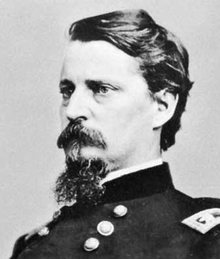

                                         Major General Winfield Scott Hancock USA

Hancock is an interesting character. He was a West Point Graduate from Pennsylvania and like many Army officers of his day he was a Democrat as they were then the conservative party. Hancock was not a political ideologue but was since he was a Democrat he was suspect by leaders in the party establishments of both parties; Republicans for being a Democrat, and Democrats for serving under Lincoln. As such, despite his immense talent and accomplishments he never was given independent command of an Army but remained the beloved commander of the Union Second Corps.

As the nation split and friends went their separate ways Hancock gave some advice to his best friend, Lewis Armistead and their commander, Brigadier General Albert Sidney Johnston who were preparing to leave the Union in early 1861. In response to the states rights arguments of his friends he made himself clear. He fully believed in the principal of states rights, but he could not compromise his faithfulness to the Union. He told his friends as they departed company on their way to their destinies during the Civil War:

“I shall not fight upon the principle of state-rights, but for the Union, whole and undivided.” 

During the war Hancock served with distinction. At Gettysburg he was influential in determining the choice of the Union defense, in helping to repel the Rebel attacks on July 2nd 1863 and the final repulse of Pickett’s Charge where he was severely wounded and his friend Armistead died. After he recovered from his wounds he continued to lead Second Corps until the end of the war. Ulysses Grant wrote of him:

“Hancock stands the most conspicuous figure of all the general officers who did not exercise a separate command. He commanded a corps longer than any other one, and his name was never mentioned as having committed in battle a blunder for which he was responsible. He was a man of very conspicuous personal appearance…. His genial disposition made him friends, and his personal courage and his presence with his command in the thickest of the fight won for him the confidence of troops serving under him. No matter how hard the fight, the 2d corps always felt that their commander was looking after them.”

After the war Hancock supervised the execution of those convicted of the assassination of Abraham Lincoln. Following that duty he served in various postings in the occupied South and attempted to mitigate some of the actions of those bent on vengeance against African Americans as well as others who tried to exploit the defeated Confederates for political or economic gain. His balanced attempt at justice was not appreciated by many people in the North or the South.

The Interrupted Friendship 

In 1861 Hancock was stationed in California as a Quartermaster under the command of Colonel (Brevet Brigadier General) Albert Sidney Johnston with the Sixth Infantry Regiment. One of his fellow officers was Captain Lewis Armistead, a twice widowed Virginian who also served as a commander of the New San Diego Garrison under Johnston’s command, and Richard Garnett commanding a company at Fort Yuma. Hancock and his wife Almira became fast friends with the widowed Virginian.

Armistead was a nephew of the officer who defended Fort McHenry from the British in the War of 1812. Armistead had academic and personal difficulties at West Point and “was bounced out, not once but twice.” [7] His troubles included an altercation with Jubal Early in which he broke a plate over Early’s head.  Between his academic difficulties and the fight with Early he resigned from the Academy. However, his father helped him obtain a commission as an Infantry officer in 1839. Armistead’s career from that point on was similar to many other officers of his day. He served with distinction in Mexico, the Great Plains, Kansas, Utah and California.

As the war clouds built and various southern states seceded from the Union numerous officers from the South were torn between their oath, their friendships and their deep loyalty to their home states and families. In the end most Southern officers resigned their commissions, many with mixed feelings and quite often sadness. A large minority, some “40 to 50 per cent of Southern West Point graduates on active duty in 1860 held on to their posts and remained faithful to the Union.” [8] The most prominent of these men were General Winfield Scott and Major General George Thomas, the “Rock of Chickamauga.” Likewise Union Brigadier General John Buford’s family in Kentucky supported the Confederacy.

For those southern officers who remained loyal to the Union to was often at a great personal cost. Thomas’s action cost him his relationship with his immediate family who deemed him to be a traitor. He and others were pilloried and demonized in the basest ways by many in the South. Some Southerners who served the Union were executed when they were captured. George Pickett, who called for his fellow Virginian Thomas’ death ordered 22 North Carolinians who he captured fighting for the Union in Kinston North Carolina to be executed. Pickett was not alone in such sentiments.
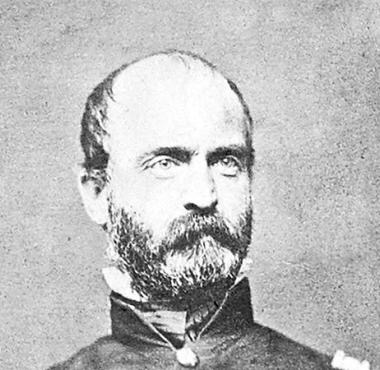

                                          Brigadier General Lewis Armistead CSA

A Parting of Ways

However, for most it was different. As talk of secession and war heated up officers stationed on the frontier debated the issues and asked each other what they would do if war came. In California Armistead and other officers asked Hancock, who was a Democrat and not openly hostile to the South, advice on what he would do if war came. Hancock’s reply was simple. I shall not fight upon the principle of state-rights, but for the Union, whole and undivided” [9]

The parting came in 1861. When it was apparent that many officers would be resigning and heading home to join their state’s forces the Hancock’s hosted a going away party for their friends. Almira Hancock wrote of the party that “Hearts were filled with sadness over the surrendering of life-long ties.” [10]

Colonel Albert Sidney Johnston’s wife Eliza went to a piano and sang sentimental songs such as Mary of Argyle and the popular Irish song Kathleen Mavourneen[11] Almira Hancock wrote “Those songs…will ever be remembered by survivors of that mournful gathering.” [12]

“Mavourneen, Mavourneen, my sad tears are falling, 

to think that from Erin and thee I must part!

It may be for years, and it may be forever, 

Then why art thou silent, thou voice of my heart?

The parting was especially emotional for Armistead who had been a friend of the Hancocks for seventeen years. They had helped in following the death of both of his wives and children, in a way they had become family. Armistead was tearful. He put his arm on his friend’s shoulder as he said: “Hancock, good-by; you can never know what this has cost me, and I hope God will strike me dead if I am ever induced to leave my native soil, should worse come to worse.” [13] As he departed Armistead gave a wrapped Bible and Prayer book to Almira Hancock, in case of his death, inscribed were the words “Trust in God and fear nothing.” [14]

Armistead took a commission in the Confederate Army and quickly was appointed to command a brigade. He led his brigade during the Peninsula campaign and battles around Richmond. During that campaign his brigade was decimated in Lee’s failed assault on prepared Federal positions at Malvern Hill. Armistead was a proud professional soldier and did suffer fools or incompetents. As such he not endear himself to many of the volunteer officers who served in the Confederate ranks. One of his Colonels resigned over Armistead’s supposedly harsh treatment to which Armistead replied: “I have felt obliged to speak to him as one military man would to another and as I have passed nearly all my life in camps my manner may not be understood or appreciated by one who has been all his life a civilian.” [15] Armistead’s words can easily be understood by military professionals whose lives have been shaped in a different manner than their civilian counterparts.

“I Hope God Will Strike Me Dead…”

At Gettysburg Armistead spoke his fears about the charge to his comrades. One was Brigadier General Dick Garnett, another of Armistead and Hancock’s comrades from the California days on the night of July 2nd. Garnett’s career had paralleled that Armistead, the same age Garnett struggled at West Point in his third year “he failed and withdrew. Taking the same courses again during the next term, he finished fourteenth among his new classmates, then graduated in 1841 standing 29th of fifty-two graduates.” [16]

Armistead and Garnett served together in the Sixth Infantry for most of their careers. They were promoted at similar times, a pattern of promotion that continued into their Confederate service. The next afternoon, the two friends who had served together so long and whose careers were so similar led their brigades of Pickett’s Division across the valley between Seminary Ridge and Cemetery Ridge against their friend and comrade Winfield Scott Hancock’s II Corps which was defending Cemetery Ridge.

Garnett had to lead his brigade on horseback, having been injured during the army’s march to Gettysburg. During the engagement Garnett was killed just before reaching the Union lines and Hancock gravely wounded. Armistead, lead the remnants of his decimated brigade to the Stone Wall, near the Copse of Trees. He rallied his troops fearing that some were faltering calling out: “Come on boys, give them the cold steel! Who will follow me?” [17]

His troops breached the Union line and his black hat atop his sword led his troops forward. He reached the now unmanned artillery of Cushing’s battery and called to his remaining men “The day is ours men, come and turn this artillery on them.” [18] It was then that he met more Federal troops who unleashed a volley of musket fire that cut down many of the survivors. Armistead was wounded in the right arm and shoulder and fell near one of the Union artillery pieces, a point now known as “The High Water Mark” of the Confederacy.


As Armistead lay wounded he was approached by Major Bingham of Hancock’s staff. Bingham, a Mason noticed that Armistead was making a Masonic sign of distress. When Bingham told Armistead of Hancock’s injury Armistead was grieved and told Bingham to “Say to General Hancock for me that I have done him, and you all, an injury, which I shall always regret.” [19]

The meaning of those words is debated, especially by Southerners who cherish the myth of the Lost Cause. However, based on Armistead’s conduct and behavior in the time before he left California, it is not unreasonable to assume that as he lay dying he truly regretted what he had done. Armistead died from infections caused by his wounds which were initially not thought to be life threatening. A Union surgeon described him as: “seriously wounded, completely exhausted, and seemingly broken-spirited.” [20]

Garnett’s body was never found and was probably buried in a mass grave with other Confederate soldiers and was likely taken after the war to his native Virginia “together with thousands of unidentified bodies from Gettysburg, for burial in Richmond’s Hollywood Cemetery.” [21]Armistead was buried by a member of the 107th Ohio near the XI Corps field hospital. About a month later a physician from Philadelphia tracked down the soldier and “dug up the “Rough box” containing the body and embalmed poor Armistead’s remains for sale to grieving family members.” [22] Armistead’s family buried the remains in Old Saint Paul’s Cemetery in Baltimore.

Robert Krick wrote: “Death on adjacent bits of blood soaked ground in Adams County, Pennsylvania, yielded a final common thread, that of indignity: Lewis Armistead’s corpse wound up a hostage to petty human greed, while Dick Garnett’s entirely disappeared.” [23]

Hancock’s injuries were severe, but he recovered. He would go on to continued fame and be one of the most admired and respected leaders of the Army during and after the war. He was gracious as a victor and spoke out against reprisals committed against Southerners after the war.

In 1880 Hancock was the Democratic nominee for President. He lost a close election to James Garfield, losing the popular vote by fewer than 40,000 votes. It was an era of great political corruption and Hancock was one of the few major public figures viewed favorably for his integrity. Even his political opponents respected him for his integrity and honesty. Former President Rutherford B Hayes said:

“if when we make up our estimate of a public man, conspicuous both as a soldier and in civil life, we are to think first and chiefly of his manhood, his integrity, his purity, his singleness of purpose, and his unselfish devotion to duty, we can truthfully say of Hancock that he was through and through pure gold.” [24]

A few years after his death Republican General Francis A Walker, lamenting the great corruption of the time said:

“Although I did not vote for General Hancock, I am strongly disposed to believe that one of the best things the nation has lost in recent years has been the example and the influence of that chivalric, stately, and splendid gentleman in the White House. Perhaps much which both parties now recognize as having been unfortunate and mischievous during the past thirteen years would have been avoided had General Hancock been elected.” [25]

The story of Hancock, Armistead and Garnett is one that reminds us of the depth of friendships that many military professionals develop and cherish. It is also a story that reminds us of how hardened ideologues can divide a nation to the point of civil war. It is a story that should give pause to any political or spiritual leader that incites people to war against their neighbor and uses their ideology to slander, demean or even enslave and brutalize their political opponents.

The blood of the approximately 50,000 soldiers that were killed or wounded during the three days of the Battle of Gettysburg is ample reminder of the tragedy of war, especially war that forces the dearest of friends to fight and even kill one another.

Notes 

[1] Huntington, Samuel P. The Soldier and the State: The Theory and Politics of Civil-Military Relations, The Belknap Press of Harvard University Press, Cambridge MA and London 1957 p.212

[2] Thomas, Emory Robert E. Lee W.W. Norton and Company, New York and London 1995 p.188

[3] Korda, Michael. Clouds of Glory: The Life and Legend of Robert E. Lee Harper Collins Publishers, New York 2014 pp.230-231

[4] Jordan, David M. Winfield Scott Hancock: A Soldier’s Life Indiana University Press, Bloomington and Indianapolis 1988 p.33

[5] Alexander, Edward Porter. Fighting for the Confederacy: The Personal Recollections of General Edward Porter Alexander edited by Gary Gallagher University of North Carolina Press, Chapel Hill 1989 p.24

[6] Ibid. Alexander. Fighting for the Confederacy p.25

[7] Guelzo, Allen C. Gettysburg: The Last Invasion Vintage Books a Division of Random House, New York 2013 p.379

[8] Ibid. Huntington The Soldier and the State p.213

[9] Ibid. Jordan Winfield Scott Hancock p.33

[10] Ibid. Jordan Winfield Scott Hancock p.34

[11] Ibid. Jordan Winfield Scott Hancock p.34

[12] Ibid. Jordan Winfield Scott Hancock p.34

[13] Ibid. Jordan Winfield Scott Hancock p.34

[14] Krick, Robert K. The Parallel Lives of Two Virginia Soldiers Armistead and Garnett in The Third Day at Gettysburg and Beyond edited by Gary Gallagher, University of North Carolina Press, Chapel Hill and London 1994 p.112

[15] Tagg, Larry The Generals of Gettysburg: The Leaders of America’s Greatest Battle Da Capo Press Cambridge MA 1998 Amazon Kindle Edition p.244


[16] Ibid. Krick Armistead and Garnett p.101

[17] Stewart, George R. Pickett’s Charge: A Micro-History of the Final Attack at Gettysburg, July 3rd 1863 Houghton Mifflin Company Boston 1959 pp.216-217

[18] Hess, Earl JPickett’s Charge: The Last Attack at Gettysburg University of North Carolina Press, Chapel Hill and London 2001 p.262

[19] Ibid. Stewart Pickett’s Charge pp.254-255

[20] Ibid. Stewart Pickett’s Charge pp.254

[21] Ibid. Krick Armistead and Garnett p.123

[22] Ibid. Krick Armistead and Garnett p.123

[23] Ibid. Krick Armistead and Garnett p.123

[24] Ibid. Jordan Winfield Scott Hancock p.319

[25] Stone, Irving They Also Ran Doubleday, New York 1943 and 1981 pg. 188

Leave a comment

Filed under civil war, Gettysburg, History, leadership, life, Military

A Mystery, a Medal and a Ring: John Reynolds, Kate Hewitt and the Story of Undying Love at Gettysburg

katehewitt

Kate Hewitt: The Girl John Reynolds Left behind

Friends of Padre Steve’s World

In doing my research on the life of Major General John Fulton Reynolds for my Gettysburg text I began to read about his relationship with Kate Hewitt. It adds a dimension to this man’s life that we miss if we only look at his actions on the battlefield or his military career. I added this to the end of the chapter on Reynolds and I hope that you are touched by it. As I read the story of this couple I found myself in tears on a number of occasions, and as I wrote this part of the chapter I kept crying.

Tragedy is implicit in war, and the tragedy of people who lose those that they love cannot be casually tossed aside in our quest to examine yet another battle.

Peace

Padre Steve+

220px-GenJFRenyolds

Major General John Fulton Reynolds

Those who die in war often leave behind those that they love, and sometimes those stories are shrouded in mystery themselves. When Reynolds’s body was removed from the battlefield he was found to be wearing a Catholic religious medal around his neck on a chain on which also hung a “gold ring joined in the shape of clasped hands. On the inner band were inscribed the words “Dear Kate.” [1] Additionally his West Point ring was missing. His family was stunned as Reynolds’s had never breathed a word to them about any woman in his life.

It turned out that Kate, was a young woman named Katherine Mary Hewitt who Reynolds had met when travelling by steamship from San Francisco to Philadelphia on his way to West Point in 1860. The couple kept the relationship secret, possibly because Reynolds and his family were Protestant and she was a recent convert to the Catholic faith and at the time there was still a tremendous prejudice against Catholics in the country. Despite the fact that the anti-immigrant and virulently anti-Catholic Know Nothing Party had disappeared many of their anti-immigrant and anti-Catholic prejudices remained strong.

On September 15th 1861 Reynolds visited his family in Philadelphia at which time he visited Kate and proposed. They exchanged rings, she getting his West Point Ring, which she used to imprint the wax seals on the letters she would send to him. In the winter of 1863 he again visited his family in Philadelphia and made a clandestine visit to Kate. At that time “they set July 8th as the date to announce the engagement to his family.” [2]

Reynolds’s family wondered who this mystery woman was and his sister Jennie wrote a letter to his brother Will “we all thought a lady was the donor and must be prized and wished we could only know who and where she was.” [3] With Reynolds’s body lying in repose at his sister Catherine Landis’s home on July 3rd prior to it being taken by train to his home town of Lancaster the family discovered the identity of the mystery woman. On that morning there was a knock at the door and a young woman presented herself, asking if she could view Reynolds’s body. Reynold’s sisters and brother in law immediately fell in love with her. Their only regret was not having known her prior to Reynolds’s death. She announced that “in the event of his death, she would enter a Catholic convent.” [4] As Kate viewed the body she wept, sometimes uncontrollably. Eventually she placed his West Point Ring in his coffin and took back her religious medal. She left that day and on July 12th entered the convent of the Sisters of Charity at Emmitsburg where she took the name Sister Hildegarde. His sister Ellie wrote:

“Poor girl she has been a heroic mourner and most worthy of our dear one. I cannot tell you all she said of him but she was in his heart and from her I learned much of him, of his feelings and inner life that I never knew before….She made no parade of her religion, nor in any way that was the least disagreeable….” [5]

The Reynolds’s family treated Kate as family and they remained in touch with her as they did his faithful orderly Sergeant Veil who had been with him when he fell at Gettysburg. However, in 1868 in poor health Kate left the Sisters of Charity while serving as a teacher in Albany New York without having taken her final vows. Evidently the “sisters at Emmitsburg, according to Kate’s biographer and author of “Is She Kate?” Marian Latimer, found Kate “unsuitable for community life.” [6] After leaving the order she “remained in Albany working as a teacher for several years and in fact, living for some time with another sister who left the order.” [7]

About that time the correspondence between her and Reynolds’s family stopped. All subsequent attempts of the Reynolds family to regain contact with their brother’s true love failed. Still mourning her one true love, a man who was neither her husband nor a blood relative, Kate gave up her Catholic faith and alone in the world returned to her hometown of Stillwater New York where she continued to teach. She never remarried and died in Stillwater of pneumonia there in 1895. She was buried there and her stone is an octagon and symbolic of rebirth and resurrection. The word Mizpah is carved on the stone and is a Hebrew benediction meaning, ‘May God watch over you until we are together again.’ [8]

[1] Ibid. Nichols Toward Gettysburg p.212

[2] Wilson Robert and Clair, Carl They Also Served: Wives of Civil War Generals Xlibris Corporation 2006 p.79

[3] Ibid. Nichols Toward Gettysburg p.212

[4] Ibid. Wilson and Clair They Also Served p.79

[5] Ibid. Nichols Toward Gettysburg p.212

[6] Carey, John E. On War and Love: From the 1860s — General John Reynolds and “Kate” 10/25/2006 retrieved from https://johnib.wordpress.com/category/kate-hewitt/ 29 May 2015

[7] Loeffel, Bernadette Catharine (Kate) Mary Hewitt 9/20/2005 retrieved from http://www.findagrave.com/cgi-bin/fg.cgi?page=gr&GRid=11784763 29 May 2015

[8] McLean, Maggie Kate Hewitt: Fiancée of General John Reynolds 12/20/2008 retrieved from http://civilwarwomenblog.com/kate-hewitt/ 29 May 2015

5 Comments

Filed under civil war, Gettysburg, History, life, marriage and relationships, Military, us army

The Day I Came to Love Iran: Reflections on the World Cup, Sports, and our Common Humanity

Friends of Padre Steve’s World,

I have a confession to make. After I watched Iran play its first match in the World Cup against Morocco I was hooked, and I hoped that they would advance at least into the round of 16. The plucky Iranian team defeated Morocco, lost to Spain by a score of just 1-0 and tied Portugal today with a score of 1-1. Their fans cheered their team with the enthusiasm that any American would do for our teams in any sport, and many of their fans took the time to protest policies of the Iranian government and Revolutionary Guard. Honestly, eight or twelve years ago I wouldn’t have gotten past the blood sport of international politics and hatred of what I considered to be an enemy. But sports can help build bridges between people that might otherwise be unbridgeable.

I remember my first meeting with an Iranian, it was back when Iran was an ally of the United States and I was a Navy Junior ROTC cadet undergoing training at NTC San Diego. He was an Iranian Navy Lieutenant, since I recognized him as an officer I saluted and he replied. When the Iranian Revolution came I was stunned because I figured that the Shah must have been a good guy, but that was before I learned of how he had come to power and the CIA had overthrown a democratically elected government to put him in power and how he and his secret police did horrific things to the Iranian people.

Let me say as well that I never was a fan of the Ayatollahs or their stormtrooper like Republican Guard and their abuse of human rights or sponsorship or terrorism. That being said there was a moment in time that occurred after the attacks of September 11th 2001 when the Iranians offered their sympathy to us and support for us against Al Qaida. Instead the Bush Administration turned them down and then labeled them as part of the Iraqi and North Korean “Axis of Evil.” Of course that was an incredibly stupid act of hubris since none of the three actually had any connection to Bin Laden and Al Qaida and even more stupidly many Americans including me believed the lies.

But it wasn’t long after that when deployed to the Arabian Gulf about the cruiser USS HUE CITY that I saw Iranian regular Navy ships as well as Coast Guard vessels steer Iraqi smugglers out of their territorial waters and into our hands. The Revolutionary Guard Naval Forces were a different matter, some of their boats harassed our task force flagship, the HMAS Manora and we almost went to war before they withdrew. Of course we ended up invading Iraq which likewise was an enemy of Al Qaida throwing it into chaos and basically handing Iran’s hard liners a victory. But all of that is history.

I have known other Iranians and people of Iranian dissent. Every single one of them has been a wonderful human being. I may oppose the Ayatollahs and the Revolutionary Guards including their actions in Iraq, Syria, and supporting Hezbollah, but I do really believe that if the United States behaved with any kind of moderation towards Iran that the majority of people born after the Revolution and yearning for freedom would overthrow them. I think that the Iranian fans at the World Cup demonstrated more of what Iran is much more than the Ayatollahs or Revolutionary Guard. In fact even during this game there were large demonstrations against the regime in Iran.

I watched Iran’s games against Morocco, Spain, and Portugal and they earned my respect. They didn’t advance to the knockout round but they showed such poise and determination that I could not hope but to hope that they would make it to the next stage. I guess that partly because I have seen the United States do in the World Cup when we have made it into the Cup. I like underdogs unless they are playing against Germany, which I think I have mentioned that I have a rather strong attachment to, but again I digress.

I guess that what I mean to say is that I really do care for the people of Iran. Likewise I hope that the Trump administration will not blunder us into a war with them or push the Iranian people to support a government that most of them despise simply because they feel that they need to defend their country.

Maybe that doesn’t make sense to people who simply hate the Iranians and Muslims based on their nationality, religion, and race. But then I have really stopped caring what such people think about me because in spite of everything I look forward to the day that we can live in peace because having been to war I am tired of it.

Until tomorrow,

Peace

Padre Steve+

Leave a comment

Filed under life, Loose thoughts and musings, middle east, News and current events, sports and life

Celebrating 35 Years of Marriage to the Kindest, Sweetest, Prettiest Person I’ve Ever Met In My Life…

Friends of Padre Steve’s World,

Thirty-five years ago today I married the love of my life and despite many stupid and thoughtless actions we are still married and probably happier than we have ever been. We have been spending the weekend with dear friends and the combined 12 Papillon dogs we have. It has been very nice, relaxing and fun.

It has also been a time for me to recharge my batteries because when we return home tomorrow I will have much to do at work as well as at home as we start to repair and renovate our home after the flooding event we experienced. By then we should hopefully have the insurance settlement to allow us to do what we need after the initial contractor provided by the insurance company wanted thousands of dollars more than the estimate they provided to do what we asked. Today we will go to dinner and celebrate at a restaurant that I like in D.C., but I digress…

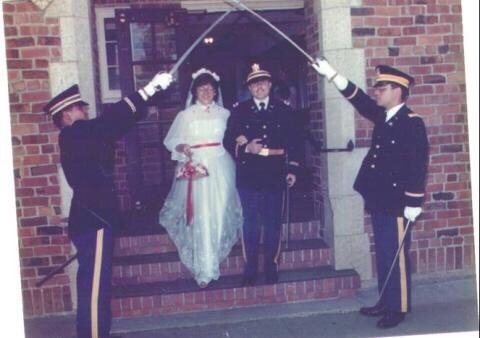
We got married just six days after I was commissioned as a Second Lieutenant in the U.S. Army. Three of the men I was commissioned with were in the wedding and I am still in contact with a number of others. We had met almost five years before at San Joaquin Delta College in Stockton, California. I fell in love with her that night.

Our marriage has been a long strange trip, not that there is anything wrong with that. Military life, separations due to deployments and war have been part of our life. Judy has had to endure more than I can imagine to stay with me all these years. She is simply the best. She is creative, talented, kind, resourceful, considerate, and amazingly patient. I have seen her go out of her way to be kind and giving to people just because that’s who she is.

Honestly I fell in love with her the day that we met. When I first asked her on a date a few months later I was so nervous that she thought I was going to ask her to marry me. I loved her and wanted to marry her but I could barely stammer out “would you like to go to a movie?” Thankfully she said yes, otherwise I would have never gotten to the whole marriage thing.

When I think of her I think of what Bill Murray’s character in Groundhog Day, said to Andie McDowell in that movie:

I think you’re the kindest, sweetest, prettiest person I’ve ever met in my life. I’ve never seen anyone that’s nicer to people than you are. The first time I saw you… something happened to me. I never told you but… I knew that I wanted to hold you as hard as I could. I don’t deserve someone like you. But if I ever could, I swear I would love you for the rest of my life.

I still do. So to the most amazing and talented woman in the world, I love you, even more than I did that night we first met.

So to all,of our friends, and to all thank you for being a part of our lives.

Peace,

Padre Steve+

5 Comments

Filed under life, Loose thoughts and musings, marriage and relationships

Friends, Papillons, World Cup, and the Padre’s Pizza

Friends of Padre Steve’s World,

It has been a nice day with our friends in the DC area and our Papillon dogs. It was very relaxing, I got to sleep late, enjoy a nice home cooked breakfast with our friends. After that I retreated to the basement where I watched two World Cup games, Mexico vs. South Korea, and Germany vs. Sweden with Pierre and Izzy beside me on the couch.

Since I have been a fan of the German Mannschaft since mid-1980s when I first took an interest in the soccer with Bayern Munich and the National Team I have become a more and more serious follower of international soccer. I have to say that I really get into well played games especially when my teams are playing and when games are close and my team is on the verge of either advancing to another round or being eliminated things can become very tense, not that the world will end or anything like that, but sometimes it feels like it.

It was like that today when Germany, the reigning champions had to come back to avoid being eliminated in the group stage for the first time since before WWII. In fact they have reached the semifinals the past four World Cups. Tony Kroos the German National who plays for Real Madrid scores the winning goal in the 95th minute, which not only kept Germany alive but set them up well to advance if they defeat South Korea and Mexico with wins or ties against Sweden. Needless to say I will be cheering for Mexico as hard as will be Germany on Wednesday morning.

After the game I went back upstairs, relaxed and socialized and then made The Padre’s Pizza.

What most people don’t know about me is that I worked some of my way through college and seminary working in pizza parlors. While I was on my first active duty tour in the Army I began to experiment with my own pizza dough and sauce recipes and over the years I have become quite well known to my close friends for it. It’s a lot of work because I take the time to craft each pizza, and despite the work I find it very relaxing and good for stress relief. I should do it more often at home.

I love doing it. I love making the dough to perfection, seeing it rise, and turning it into a pizza dough. I love cutting the vegetables so that they not only look good but cook perfectly. I love crafting the sauce with my own blend of spices. Then I love building the pizza so that when it cooks that it looks as spectacular as it tastes. There really is an art to it you don’t see every day.

Tonight I made large two 16″ New York style pizzas topped with mozzarella, provolone, Romano, and Parmesan cheeses, pepperoni, Italian sausage, fresh mushrooms, Roma tomatoes, and garlic, peperocini peppers, and Kalamata olives. I also whipped up a pizza crust which became garlic bread.

Sometimes people ask me why I don’t try to start a pizza parlor, but truthfully I do is truly artisan and trying to mass produce it would take away the fun and turn a stress relief activity into a chore. Likewise I will not answer the question of “when does a pizza become a pizza?” (An obscure Seinfeld reference.)

Now like last night everyone has gone to bed but me and Piere. I’m finishing this up so it will Post after midnight and I will go back to reading the book Seduced By Hitler: the Choices of a Nation and the Ethics of Survival. It was published in 2000 and while I have had it in my library for at least 10 years I never read it until this week. I’m about 40% through it and I will give a synopsis when done.

So anyway, until tomorrow.

Peace,

Padre Steve+

Leave a comment

Filed under life, Loose thoughts and musings, sports and life

I Don’t Have the Answers but You Might as Well Live: Thoughts on Suicide

Suicide-Hotline

Friends of Padre Steve’s World,

This is a hard article to write because it takes me back to points in my life after my return from Iraq that all I wanted to do was die and even had plans of how I would kill myself. The worst period was between 2010 and 2013 when I was stationed away from my wife Judy on an unaccompanied assignment at Camp LeJeune North Carolina. But I couldn’t do it. I didn’t want to subject my dog Molly to me not coming home, she helped save my life, as did thoughts of Judy and the friends I had at a local bar who cared for me during that time.

It wasn’t my faith or for that matter most of the people I knew in the Chaplain Corps or my former Church that kept me from it, it was a dog, my wife, and regular guys that I ate and drank with regularly: Mike and New York Mike, Walt, Eddie, Felicia, Bill, “Judge Ito”, Billy, and other regulars at Rucker Johns in Emerald Isle made sure that I lived. So did friends at Granger Stadium in Kinston North Carolina where I would drive an hour to and back to watch minor league baseball games two or three times a week: Toni and Jerry, Anne, Cara, and Negro League Hall of Fame player Carl Long. Sadly, New York Mike, Judge Ito, Walt, Cara, and Carl have all passed away since I came back to Virginia.

During those dark times I had friends including men and women that I had served with in the military or their family members kill themselves. I can visualize their faces as I write this. They ranged in age from barely twenty years old to nearly sixty, all at different stages of life and their career. Quite a few were combat vets of multiple deployments and in one case both the Vietnam and the Iraq wars. They were real heroes but they defeat the figurative demons within them. I also have had a great grandfather and great uncle who afflicted with terminal cancer killed themselves.

I still struggle with the effects of PTSD, Traumatic Brain Injury, and Moral Injury. I still suffer from depression and anxiety, thankfully not nearly as bad as it used to be. I still avoid most crowded places unless they are very familiar to me. I am still hyper-vigilant and on guard. I plot escape routes or have memorized what I as an unarmed person would do to neutralize a threat in a public place because I don’t plan on going down without a fight or let innocent people get killed.  I also suffer from frequent flashbacks and terrible nightmares and night terrors. I threw myself off the bed in the middle of one again Thursday night. Thankfully I didn’t get a concussion or break my nose leading to emergency room visits like happened in 2014 and 2016.

Suicide is something I try not even to think about because it takes me back to very bad times that I don’t want to experience again. At the same time when I have to deal with suicides at work or read about high profile suicides, such as those of Anthony Bourdain and Kate Spade I feel all of the anguish that I went through during the worst times, but without any desire to kill myself, I think that is a good thing.

At the same time when I deal with or hear about a suicide my mind starts playing the them song from M*A*S*H; Suicide is Painless, which was written for the movie by the fourteen year old son of director Robert Altman. Altman wanted the song for a specific scene in the film and he wanted it to be named Suicide is Painless, he also wanted it to be the stupidest song ever written. He couldn’t wrap himself around that and his son wrote it in about 15 minutes. It’s a strange song for me. I grew up with the movie and the TV show and I started my career as a commissioned office as a Medical Service Corps Officer in the Army. The song was the official song of the Army Medical Department and the instrumental version was played at every graduation or function that we had. Two decades later in the trauma hall of a Navy Trauma platoon in Iraq I felt like Father Mulcahy

I have a deep sense of empathy for those who suffer from deep depression and feel that sense of hopelessness, abandonment, and god-forsakenness that often lead to suicide. When I see people who complete a suicide condemned as weak, selfish, or even worse as deserving of God’s wrath and judgment I do get angry, especially when the accusers are Christians. I believe than nobody is outside the mercy and love of God, even those who commit suicide. At the same time it is hard for me to know what to say anymore without sounding trite because I know how deeply someone has to be hurting to consider suicide, and words cannot go there, there is a profound hollowness to them. The last verse of Suicide is Painless note something that I feel when dealing with a suicide situation because I just don’t have the answers:

A brave man once requested me
To answer questions that are key
Is it to be or not to be
And I replied oh why ask me…

That being said I do believe that help can be found and that even in the midst of struggle people can get help and find meaning in life, and I want them to find whatever they need to help them live, thrive, and survive. I don’t believe that life is without struggle, many of my personal heroes dealt with terrible depression at various times of their lives. Abraham Lincoln, Ulysses Grant, Gouverneur Warren, and T.E. Lawrence among them.

As opposed to the thought that suicide is painless, I think that the great American poet and satirist Dorothy Parker said it well, suicide is not painless, she wrote:

“Razors pain you,
Rivers are damp,
Acids stain you,
And drugs cause cramp.
Guns aren’t lawful,
Nooses give,
Gas smells awful.
You might as well live.”

So please, if you or someone that you know are struggling with issues in life that are so bad that suicide has become an option, please reach out and get help. Getting help is worth it, I know, I wouldn’t still be here without it. As Seneca said: “Sometimes even to live is an act of courage.”

The National Suicide Prevention Lifeline number is 1-800-273-TALK (8255).

Peace

Padre Steve+


Leave a comment

Filed under faith, film, life, mental health, Military, ministry, News and current events, PTSD, suicide

A First Communion Mass, Two Parties, a Royal Wedding, and a Death amid the Noise of Fans and Dehumidifiers

Friends of Padre Steve’s World,

The late Father Andrew Greeley wrote these words in his mystery novel The Archbishop Goes to Andalusia:

“Every sacramental encounter is an evangelical occasion. A smile warm and happy is sufficient. If people return to the pews with a smile, it’s been a good day for them. If the priest smiles after the exchanges of grace, it may be the only good experience of the week.”

Those are words that I hope that I reflect in my life and yesterday was one that I thought of those words a lot.

Saturday was one of the busiest Saturdays that I have ever experienced. It was a good day but after the week that I have had dealing with the damage inside our hows and the noise of fans and dehumidifiers, it was almost too much for me. Yesterday morning I celebrated Mass for the first communion of two of the children of our German NATO contingent with a German priest at one of my chapels at Fort Story.

The service was in German and while the German priest preached I was the celebrant for the Mass. It was the first Mass that I have done in German in over a decade but it was like riding a bicycle, I was able to go right back into it, so much is committed to memory that with a couple moments when I experienced some angst it went very well. It was very special for me because I was asked to do the preparation for the boys by the parents over the past two months. During that time I have really come to love and appreciate them. It was a very special time and a blessing with over a hundred people, Germans and Americans in attendance.

When I was done with that Judy and I had to run home to change and prepare for the afternoon, two parties for good friends that conflicted. I took Judy to one while I went to the other. The party Judy attended was for a close friend of her who is retiring from the Department of Veterans Affairs in Virginia Beach, while I went to the college graduation party for a friend and Navy Veteran in Portsmouth.

Eventually I went back to pick up Judy and spend a bit of time at that party, after which we went home and pretty much collapsed. That being said while there I found out that my cousin Jeanette’s husband Ron had died. She lives in the Pacific Northwest so I called and left a message on her voice mail. She called me back and we had a good talk but still it was a sad time as she tries to sort through her memories.

After that I went through various emails and messages and the took the time to watch Bishop Michael Curry’s sermon at the Royal Wedding of Prince Harry and Meghan Markel. It was an amazing sermon and very inspirational. I recommend it.

Anyway. It was a long but good day. Being an introvert I was on people overload but that does not detract from all the blessings of the day. The fact is that ministry and life take many forms and I would be amiss not to recognize the grace and love of God in all the people I was with today, but also the joy in being called to love.

Those who have followed this blog as well as my close friends know the struggle I have had with faith over the past decade, including the years I spent as a practical agnostic who hope almost beyond hope that God was still around. His words of the real meaning of the Gospel, that of God’s love were remarkable when compared to the words of men like Franklin Graham and Robert Jeffress. As I thought about today and watched Bishop Curry’s sermon I was filled with hope and I thought of Greeley’s words of a fictional candidate for the papacy in his novel White Smoke

“So many of our lay people believe that ours is a Church of rules, that being Catholic consists of keeping rules. They do not find an institution which is like that very appealing. Nor should they.

In fact, we are a Church of love. Our message from the Lord himself even today is the message that God is Love and that we are those who are trying, however badly, to reflect that love in the world. I find that in my own city that notion astonishes many people. How we came to misrepresent that which we should be preaching above all else is perhaps the subject for many doctoral dissertations.

More important for us today, however, is the reaffirmation that we exist to preach a God of love, we try to be people of love, and we want our church to be, insofar as we poor humans can make it, a Church of radiant love.”

In a way that sums up my Saturday. I may struggle, I may doubt, but I am learning to once again live by faith and love, girded by hope. I believe, help me in my unbelief.

I wish you all a good night or day and hope and pray that the Fire of love for others and God may ignite our hearts and minds to become more like Jesus, especially in the way we treat others. As Saint Francis of Assisi once noted: “Preach the Gospel at all times, use words if necessary.

This morning both Judy and I are exhausted. Servpro came out and took readings and it appears that by tomorrow the fans and dehumidifiers will be removed which will allow the next steps In restoring the house to begin.

So until the next time,

Peace

Padre Steve+

Leave a comment

Filed under christian life, faith, life, Political Commentary