Category Archives: Loose thoughts and musings

A Happy Yet Sad Birthday

Friends of Padre Steve’s World,

I wrote late Monday night and early Tuesday morning about some of my thoughts on turning 58 years old. When I went to bed the article was about halfway completed. I was tired but I was troubled. I had a hard time getting to sleep, so I got up and finished the article a bit after 2:30 AM amid a sense of foreboding. about the coming day. I posted it about 3:00 AM and tried to get to sleep but I couldn’t. So I read. Finally about 4:30 was startled when my iPad fell to the floor by out bed. It woke me up and I put on my C-Pap and really tried to get to sleep.

Even so my sleep was troubled with strange and disturbing dreams and I was awakened by our oldest dog Minnie before my alarm rang complaining about something; she is quite vocal and talks much like Scooby-Doo. So I just laid awake in bed until my phone rang. It was then that I found out that our Army Deputy Base Commander, a friend who I had just worked with on Saturday had died of a massive heart-attack. He was just six months away from retirement.

I spent most of the day at his quarters with his daughters, neighbors, and my Commanding Officer trying to help care for his family and coordinate care for them between the Army, Navy, and our support agencies as NCIS and Army CID did their investigations. One thing they asked was for an Orthodox Priest to come and do the prayers that are an important part of their faith when someone had died and before their body is removed from their home.

My friend and colleague was a Greek Orthodox Christian but there were no military chaplains of that faith closer than Washington D.C. or Fort Bragg North Carolina; too far to be of assistance. So I reached out to a local Greek Orthodox Church and although their priest was out of town they scoured the area to see if they could find one who could support us. They did find one and had him call me but his schedule was such that he could not come to the quarters until long after my colleague’s body was transported to a local military medical center for autopsy. Knowing that it was important to the family to ensure that the prayers were done before his body was removed I asked the priest if it was permissible for me to conduct the prayers. Knowing that I was I priest he told me that it was permissible and so when it the mortuary personnel arrived I went with his oldest daughter to pray the Trisagion liturgy at his body.

It was hard to see my friend laying in his bed as if asleep. The cardiac event had obviously been so sudden and severe that he never awoke. I wished him goodbye and told him that I would miss him and then did the prayers. I am fortunate to have a number of Greek Orthodox, Russian Orthodox, and Byzantine Catholic priest friends. As such I have been with them as they have celebrated various liturgies. For those of Evangelical, other Protestant, or Roman Catholic traditions the Orthodox prayers and liturgies are long and repetitive, but there is a difference in the way Eastern and Western Christians understand faith.

We in the West regardless of whether we are Catholic or Protestant tend to be more concerned about time than our Eastern brothers and sisters. Likewise we tend towards a certain amount of expediency and concreteness in what we believe. we just want “the facts” and by doing this deprive ourselves of the sacred mystery that is at the heart of the Christian faith. In the eastern liturgies the repetition in threes of phrases like “Holy God, Holy Mighty, Holy Immortal, have mercy on us,” coupled with the “Our Father,” and “Glory to the Father and the Son and the Holy Spirit, now and forever and to the ages of ages. Amen” are actually much closer to the way the ancient Hebrews worshipped in the Temple than most Western liturgies, and certainly more so than the reductionistic faith of most Protestants, especially Evangelicals, but I digress. What is more important was that my friend and colleague lived his faith in an authentic manner and tonight I am sure that he is part of that timeless heavenly liturgy depicted in the book of Revelation that is reflected so well in the Eastern Rites of Christianity.

When I finally returned to my office I spent time with my staff who had taken the time to get and sign a birthday card for me as well as get me a nice box of Lindt chocolates. Then I busied myself to take care of the other pressing matters of the day before finally leaving the office to meet Judy and quite a few of my friends at Gordon Biersch. Our executive chef, Mamadou Diallo prepared a wonderful cake which I meant more as a gift to friends and the staff more than for us. I had a light dinner and a small piece of cake and did not have to pay for any of my beers. When we got home I had some day and puppy time with Izzy and Pierre which was also helpful.

Today was spent preparing for Good Friday and making final preparations for the funeral of a retired Navy Chief which I conducted this afternoon. Hopefully tomorrow will be uneventful and I will be able to finish preparing for Good Friday and for the Easter Sunrise service, and begin to plan the memorial service for our Deputy Commander, maybe get in a seven to eight mile run and catch up on some administrative tasks.

So until tomorrow, pray for me a sinner.

Peace,

Padre Steve+

3 Comments

Filed under christian life, faith, Loose thoughts and musings, Military

Thoughts on my 58th Birthday

Friends of Padre Steve’s World,

Today I am 58 years old. I don’t feel that old or act that old and truthfully it’s hard to believe that I am that old. At the same time I do know that I am getting older, the proof is in the pudding around my belly.

Despite remaining in pretty good physical shape for someone my age, (so far this month I have ran and walked 203 miles and will probably have ran or walked over 250 miles before the month ends)  I notice the signs of aging. Despite the amount of exercise and diet I maintain I gained a lot of weight and have a hard time losing it, so Thursday I’m going to the doctor and asking for a complete physical and blood panel.

My hair has been a lost cause for over a decade and I need glasses and hearing aids, although the latter are more for conditions not associated with aging, instead from neurological damage from PTSD, TBI, and concussive injuries. I struggle with PTSD and its demons which are especially noticeable when I try to sleep. My dreams, even those which are not nightmares or night terrors are often quite disturbing, and if not disturbing at the minimum very intense, but I digress…

All that being said after years of struggle following my tour in Iraq which included a faith crisis, severe depression, and even suicidal thoughts I am pretty much loving life again. My wife Judy is wonderful and I could not in a million years have a better wife. We have three great Papillon dogs, Minnie Scule, Izzy Bella, and our youngest, Pierre. One of my priorities in the next couple of months is getting Izzy the training that she needs to be a certified Therapy dog. She has the temperament for it and both she and Pierre are especially sweet and comforting. Minnie is sweet too, but she is quite quirky.

I love life even though I still struggle and I look forward to the future even though I cannot predict that future and the actions of President Trump scare the shit out of me. If there is one person in the world that makes me fear the future it is the current American President. As a military officer I swear my oath to the Constitution not the President and so I will continue what I believe is a principled opposition to his policies as long as I serve as well as maintain a honest Christian critique of the President based on my baptismal, confirmation, and ordination vows as a Christian and a Priest.

That could be risky, especially since there are about 35% of Americans who have proven that they will put their loyalty to the President over all principle, over their Christian faith, or any oath that they swore to the Constitution. Some of them not only speak in a violent manner but act upon their impulses. When I think about them I know that some would target me, and in fact I have been threatened  by neo-Nazis and White Supremacists on this blog and on social media but I must speak the truth.

Having grown up in a military family and subsequently serving over 36 years in the military I find much of my inspiration from military figures, especially those who opposed the totalitarian leaders of their own countries. Most of them are quite flawed men, like me.

One of those men was German Admiral Wilhelm Canaris who was executed on Hitler’s order at Flossenburg Concentration Camp on April 9th 1944 at the age of 58. He noted:

“I die for my fatherland. I have a clear conscience. I only did my duty to my country when I tried to oppose the criminal folly of Hitler.”

Another was General Ludwig Beck who stepped down from his position as commander of the German Army over Hitler’s threatened invasion of Czechoslovakia in 1938 and died in the attempt to kill Hitler on July 20th 1944. Beck noted:

“It is a lack of character and insight, when a soldier in high command sees his duty and mission only in the context of his military orders without realizing that the highest responsibility is to the people of his country.” 

We live in unusual and troubling times. What was considered normal public behavior and respect for law and the Constitution that was a part of the five previous Presidents that I served under is now gone. That is the fault of Donald Trump; the allegedly “conservative” commentators on talk radio and “conservative news sites;” from the lips of supposedly Christian leaders, the Fox Propaganda Network, and from every person who excuses Trump’s lies while condemning their political enemies for far less.

These indeed are unusual and troubling times, times that our Founders warned us about and tried to prevent by the manner in which they devised the government of this country. But their warnings have been ignored and their safeguards imperiled by the actions of the President, his followers, and the leaders of the Republican Party.

Despite that I will continue to face the future with a certain amount of hope even as I quite realistically speak out against the things I see based on my oath to the Constitution.

And I will enjoy my birthday.

So until tomorrow,

Peace,

Padre Steve+

12 Comments

Filed under christian life, ethics, faith, History, Loose thoughts and musings, Military, nazi germany, News and current events, Political Commentary

“I’ve heard a whisper of a country That lies beyond the sea…” A Son of Erin on St. Patrick’s Day

Friends of Padre Steve’s World,

Like any American whose family on both the paternal and maternal sides has been in this country since well before the American Revolution, I am kind of a genetic mutt. However, it seems that most of my DNA is Irish, the rest being from Scotland, England, Wales, and the Iberian Peninsula, so basically, I’m Celtic. Most of my Irish seems to come from my mom’s side of the family with Travis’s who came from the Old Country and eventually settled in Illinois. My favorite uncle when I was a kid was my uncle Ted. He was as Irish as they come, and according to my mom uncle Ted help begin my great love of beer when I was just a babe.

I have come rather belatedly to the conclusion that I am a son of Erin. In addition to my love of a good beer, when I look at my temperament I see the Irish come through in my readiness to fight, my love of laughter, and my occasional melancholy. I love Irish songs like The Minstrel Boy and Garryowen as well as songs that were made famous by Irish soldiers like It’s a Long Way to Tipperary.


On my dad’s side I descend from Scottish nobility, not that it matters in this country. But when I was younger I found it a source of pride, especially the military tradition that came with it, and for that matter I still am, but I have become more cognizant of my Irish heritage. This is a heritage that I plan on doing research on in the near future.

As much as the Irish are a part of the rich tapestry that make up America, and the celebration of Saint Patrick’s Day has become a fest that most Americans revel in, the Irish were not welcomed with open arms. They were poor, Roman Catholic immigrants, fleeing persecution and famine in the Old Country. The traditional Irish song, The Wearing of the Green includes this verse:

I’ve heard a whisper of a country
That lies beyond the sea,
Where rich and poor stand equal
In the light of freedom’s day.

When they arrived in the United States the found themselves at the bottom of the white man’s world, despised and often violently persecuted by Americans of the anti-immigrant, anti-Catholic “Know Nothing” movement. They were accused of being agents of the Pope, and wanting to overthrow Protestant America. As such they had to work hard, and they also stayed together in predominant Irish neighborhoods, and in time they became a political constituency that even non-Irish politicians could not ignore. In a time when other groups of immigrants are discriminated against and demonized, often for their religious beliefs I think that we cannot forget the Irish immigrants, and those who are of Irish descent, those whose ancestors were persecuted in the Old Country as well in this country need to think twice before doing the same to people who are fleeing political and religious persecution as well as war and famine. My Irish heritage has made me feel a closer bond with immigrants than almost anything.

As a historian I want to do that because I wonder if any of my Irish-American ancestors fought with any of the Civil War Irish regiments. I have always been particularly fond of the Irish Brigade of the Army of the Potomac and many times I fly the flag of the 69th New York Volunteer Infantry, also known as the 1stRegiment of the Irish Brigade alongside my 34 Star Circle Union Flag outside my house, especially this time of year. The motto of the regiment,  Faugh A Ballagh  (pronounced “Fah-g Ahn BAY-Lick”) means “Clear the way!”

Approximately 150,000 Irish immigrants fought in the Union Army during the Civil War, many hoping that their display of loyalty would put a stop to anti-Irish discrimination, but despite their gallantry and sacrifice on the battlefield it did not. With casualties mounting and the institution of the draft which hit poor people and immigrants the hardest, many Irish staged draft riots in 1863. Eventually the Irish would be accepted, but what happened to them has happened to almost every other group ethnic and religious immigrants who have come to America to be free.

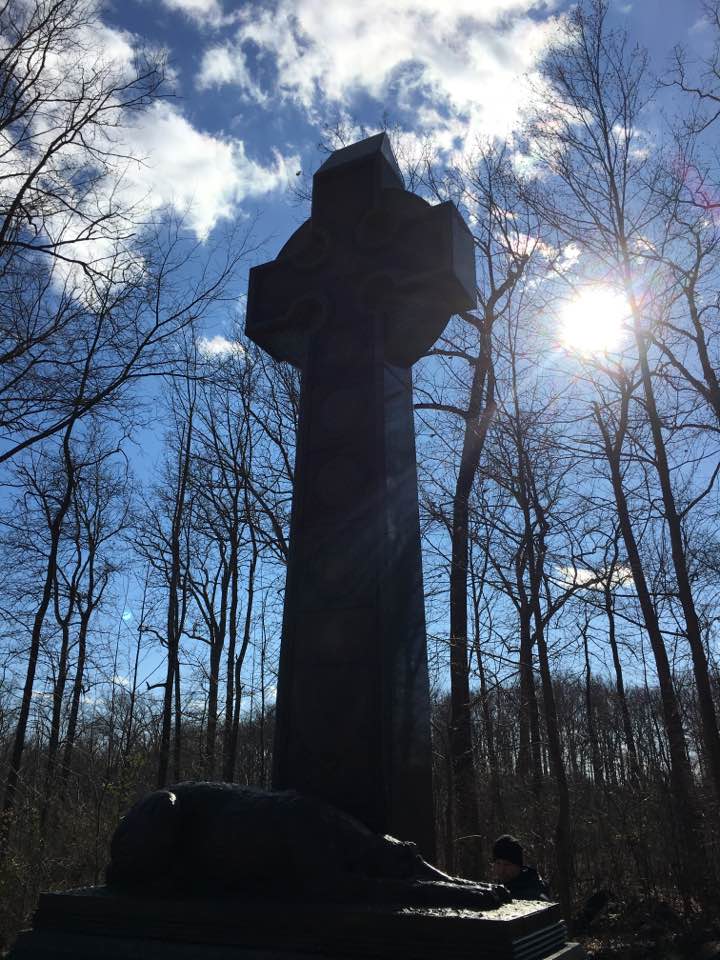
Whenever I go to Gettysburg I stop at the Irish Brigade memorial near the edge of the bloody Wheat Field and speak of its service during the war and the absolution granted to it by its chaplain, Father Corby before it went into battle that hot summer afternoon of July 2nd 1863. Likewise I tell the story of the young Colonel Paddy O’Rorke, the first Irish Catholic to graduate from West Point who died leading his regiment at Little Round Top, not far from where his kinsmen were fighting at the Wheat Field.

As the son of persecuted immigrants I feel a certain compassion and solidarity for the immigrants of today who are demonized by the descendants of the Know Nothings and others who persecuted immigrants in years past. Thus, if you have taken note I regularly either here, or on my social media do what I can to expose the evil of those who seek to

So I wish you a Happy Saint Patrick’s Day even as I reflect more on my Irish heritage and raise a pint or two; after all a bird never flew on one wing. Sláinte.

Peace

Padre Steve+

2 Comments

Filed under History, Loose thoughts and musings

Dan Sickles Part Three: “The Whole Country Turned Jury”

Friends of Padre Steve’s World,

I am taking a break for a while to read and reflect and as such I and am re-posting some articles from my Gettysburg text dealing with a man that I consider one of the most fascinating , salacious, scandalous, heroic, and incredible figures ever to grace and disgrace American history, Congressman, and Civil War General Daniel E. Sickles.

I hope that you enjoy,

Peace

Padre Steve+
HD_TrialofDanielSickles1859.preview

The Sickles Trial

The stage was now set for the one of the most unbelievable and storied trials in American history, a trial that would have been much more suited to the era of 24/7 cable news coverage and the Internet than the era of the telegraph and newspaper, but even so it was sensational by any standard and it riveted the attention of the public in every part of the nation, from the largest cities to the smallest towns.

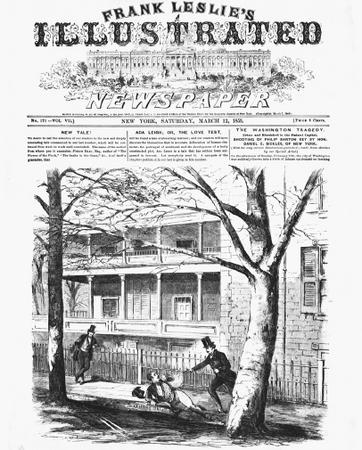
Almost immediately swarms of journalists were camped outside the prison and Sickles’ house where distraught Teresa sought a way to gain Dan’s forgiveness having received his broken wedding band which he sent to her from the jail. Witnesses to her dalliances with Key at the 15th Street house and other venues were brought to the Stockton Mansion to identify her. “She was the meat in the market, the ogre at the carnival. A little way across the square, souvenir hunters were cutting fragments of wood out of the tree by which Key had fallen, and artists from the illustrated papers set up their easels and began sketching every aspect of the area – the railings, the Stockton Mansion, the Clubhouse.” [1] A Presbyterian pastor who knew the couple found her obsessed by the shame that she had brought upon herself and her daughter, and he “found her in such mental agony that he feared for her sanity and even felt that she might try to take her life.” [2]

It was a credit to her own emotional strength that Teresa survived the ordeal that she had helped to bring about, and which she found herself blamed for, even by her father, who felt that she had dishonored the Bagioli family name. Antonio Bagioli wrote to Dan in prison, “You have heaped on my child affection, kindness, devotion, generosity. You have been a good son, a true friend, and a devoted, kind, loving husband and father.” [3] Of all the commentators, it was the eminent historian and diplomat George Bancroft who seemed to have any “sense of Teresa’s pain: “Poor child, what a cruel thing to deprive her of her sole stay and support. Key was the only man she could look to for sympathy and protection.” [4]

After Barton Key’s lifeless body was borne off in a mahogany casket to the Presbyterian cemetery in Baltimore and buried in the grave of his dead wife, and his children placed in the care of his family, his effects, what they amounted to, including his resplendent Montgomery Guards uniform were “sold off to a morbid, bargain-hunting, souvenir-hounding crowd.” [5] It was an ignoble end to the scandalous story of the son of Francis Scott Key, a story that soon with all of its salacious detail would be revealed to the public.

Meanwhile, inside the jail her husband, alternating between fits of rage and calm was visited by Washington’s Mayor James Barret, Sam Butterworth, Attorney General Black, Vice President John C. Breckinridge, and Speaker of the House, James Orr. He was comforted by the many expressions of support and sympathy found in scores of letters from people around the country, one of the first “a kindly note from the President,” [6] and others from total strangers. He was also joined by friends and allies from New York and Washington. “James Topham Brady, John Graham, and Thomas Francis Meagher, able lawyers all, arrived post haste to defend their rash ally” [7] as well as his father who before offering encouragement to his son offered a sharp chastisement, “You hot-headed fool! That’s no way to settle things! No woman’s worth it! No matter how you come out of this, you’ve killed your career – White House and everything else.” [8]Undeterred and calm Dan told his father that he understood and that if he had to he would do it again, after which, his father began to discuss the organization of his son’s defense with this legal team.

rerl_02_img0122

The case was front page news in all the major newspapers, which provided “extensive coverage of the “Sickles Tragedy.” Sickles’ murder of his friend Key in broad daylight in view of the White House had all of the scandalous elements that have thrilled Americans then and even today: “adultery, politics, celebrity, and a handsome corpse,” [9] not to mention a beautiful young woman who even more than her husband who had killed a man, stood accused in the eye of the public.

Despite the notoriety of the case, many people found sympathy with Sickles and believed that no jury would convict him of murder or manslaughter, after all, Teresa was the one who committed adultery with Key. The New York Herald “doubted that a grand jury would indict him. Even if he were indicted, Harper’s Weekly presumed that no jury would convict him of manslaughter if the adultery charge were proven, which it considered a foregone conclusion.” [10] The New York Times noted well before the trial opened, “there appears to be no second opinion as to the certainty of Mr. Sickles acquittal” but “national interest” arose from “the general desire to see the whole case fairly put, and the million scandals of mystery laid to rest by the plain facts.”[11]Newspapers like the New York Evening Post, his political arch-enemy found the murder an excellent opportunity to attack Sickles, “That wretched man, Daniel E. Sickles, has in his career reached the stage of assassination, and dipped his hands in human blood… It is certain that a man… who in his own practice, regards adultery as a joke and the matrimonial bond as no barrier against the utmost caprice of licentiousness – has little right to complain when the mischief which he carriers without scruple into other families enters his own.” [12] But such commentary was the exception, and it came from the organ of a political enemy. It is an interesting comment on the era, that a woman’s adultery, even when committed by the wife of an adulterous male who had killed her lover, was consider more of a social stigma and crime than murder.

Within days Sickles had assembled one of the most formidable defense teams ever to dominate an American court. Brady, who was considered to be the ablest criminal defense lawyer of his day became the lead attorney for the defense team, and was joined by Sickles’ New York friends, Graham and Meagher. Brady was an excellent choice, he “was admired and even loved by society in general, but on top of that, though his legal repertoire was wide, he had been involved successfully in more than fifty murder cases.” And he “had also made a special study of pleas of insanity,” [13] something that would figure greatly in the trial.

Additionally, President Buchanan helped recruit one of the finest attorneys in the country, the future Secretary of War, Edwin Stanton to the team. They were joined by four lesser known, yet high-powered attorneys; Samuel Chilton a Virginian who later represented John Brown, and his partner Allen Magruder, Daniel Ratcliffe, and Philip Phillips, a former Alabama Congressman and member of Washington’s Jewish community. Additionally, Reverdy Johnson, one of the most respected attorneys of the day served as an occasional advisor. “The Washington Evening Star observed that Sickles was collecting a lot of lawyers for a man whose defenders did not expect to leave their box before acquitting him.” [14]

Sickles’ defense team was a nineteenth century legal Dream Team against which the government deployed but one attorney, Key’s former assistant District Attorney Robert Ould. Ould, described by one of Sickles’ biographers as “a dull bull of a man, at one time a Baptist parson,” [15] had been named acting District Attorney by President Buchanan when Key was killed. It was an odd place for Ould, as he was serving to prosecute his former boss’s killer, at the behest of the President, who happened to be one of the defendant’s best friends. Ould, the former parson “was placed by inference in the unhappy position of defending adultery – something that he indignantly denied, insisting that he was merely prosecuting a killer….” [16] but to many people, the murderer of an adulterer by an aggrieved husband was complete justified. Ould was totally outclassed by the defense team, and Key’s family paid to have John Carlisle a respected Washington attorney to aid Ould in the case, but the trial would prove them appear incompetent and not up to the task of convicting Sickles.
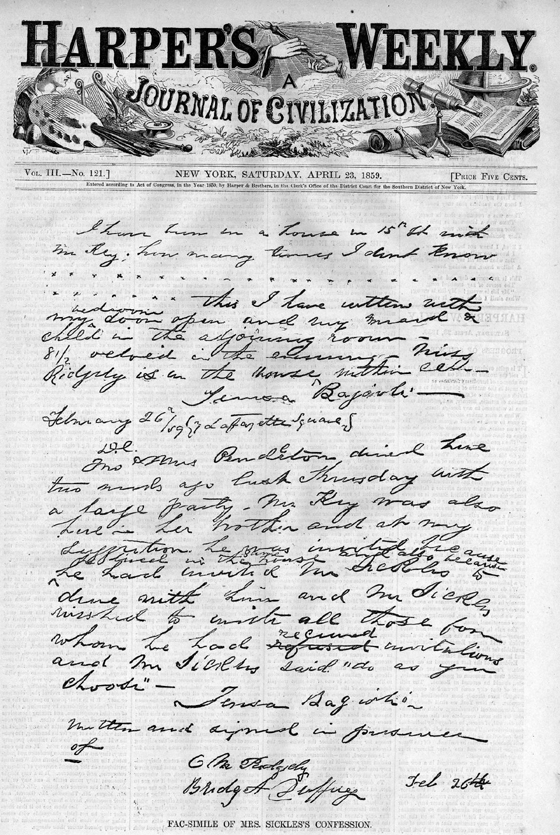
HarpersMagazineTeresaConfession

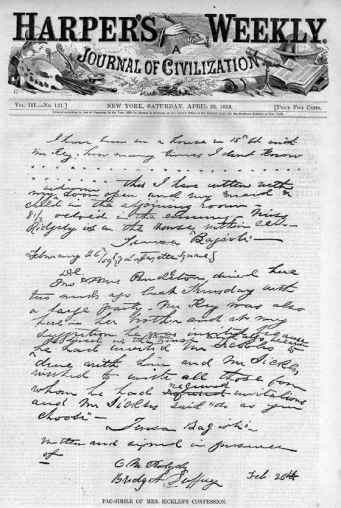
Teresa Sickles Confession on the Front Page of Harper’s Weekly

The defense pushed for a speedy trial and decided, as many lawyers do today, to try the case in the newspapers, which in light of the lurid nature of the story hung on every word coming out of Washington. The defense team pursued the strategy of “entirely reversing the roles of Sickles and Key by putting the dead man on trial for having made a victim of the defendant, and the New York Press prepared the public for just such an emotional appeal.” [17] The news stories printed by papers that supported Sickles as well as those of his detractors helped inflame the public as the newspapers across the country “wherever wires ran, were front-paging the story under screaming headlines and, in larger cities, rushing out extras every hour or two, as fresh details came to hand.” [18] The private affairs of Dan and Teresa Sickles became known around the nation, and even though the judge in the case refused to admit the confessions Sickles had forced from Teresa into evidence they found their way into the papers, some like Harper’s not only ran the text but reproduced the confession in enlarged facsimile form. The question in many people’s mind “was Dan Sickles justified in slaying the man who had betrayed his confidence and seduced his wife?… As a consequence the whole country turned jury.” [19]

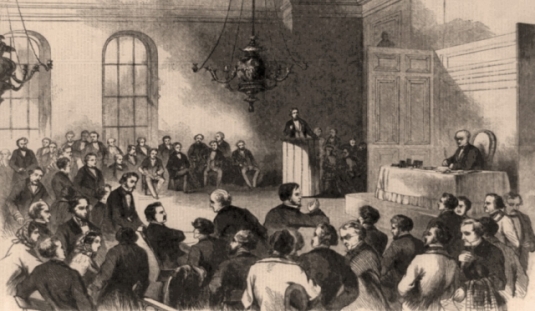
The trial began on April 4th, just over a month after the killing and barely a week after the indictment was handed down. The first three days involved jury selection, a task that the defense turned over to Philip Phillips, who sparred with the prosecutor Ould over the twelve men who would eventually sit in judgment of Dan Sickles. Ould attempted to gain a favorable jury by introducing the property qualifications of jurors, he “ruled out jurors who did not meet the requirement of owning property valued at $800. Since this $800 property limit had not been imposed in similar cases, Ould’s insistence on it would attract much scorn from Dan’s lawyers…”[20]Sickles’ team fought back embarrassing Ould in the process, but not getting the judge to change his narrow application of the law to help the defense. Over two hundred potential jurors were examined before twelve unbiased jurors could be found, and a “great majority of those dismissed confess strong prejudice in favor of the prisoner.” [21] When the jury was seated it was composed of twelve men, two farmers, four grocers, a merchant, a tinner, a coach maker, a men’s clothing salesman, a shoemaker, and a cabinetmaker, “but not a single “gentleman” in the occupational sense.” [22]

Ould opened his case, “ponderously, powerfully, in the blackest of terms,” [23] he drew a picture of the killing. He delivered an “emotionally charged argument that Sickles, “a walking magazine,” had taken deliberate care in arming himself against Key, who only had “a poor and feeble opera-glass.” [24] Ould argued “that homicide with a deadly weapon, perpetrated by a party who has all the advantage on his side and with all the deliberate cruelty and vindictiveness, is murder, no matter what the antecedent provocation in the case.”[25]He then called twenty-eight witnesses, the majority of whom had actually witnessed the shooting, but he did not call upon Butterworth, Teresa, or the young White House page boy who had told President Buchanan and been sent away. Likewise he had not established intent, a key factor in any murder trial, nor had he introduced evidence that he had obtained regarding Sickles’ own affairs with women in Philadelphia, Baltimore, and elsewhere. The presentation of the physical evidence of Barton Key’s clothing and the bullet that supposedly killed Key was botched, the bullet that the prosecution claimed to have killed key did not fit either the Derringer, or the Colt revolver. Thus Ould left open for the defense the chance to explore all the salacious details of the case to put Key on trial, and to establish exculpatory reasons why Sickles had killed Key. Ould’s presentation of his case was brief, and so futile “that it seemed that Key was on trial for seduction, not that Sickles was on trial for murder.” [26]
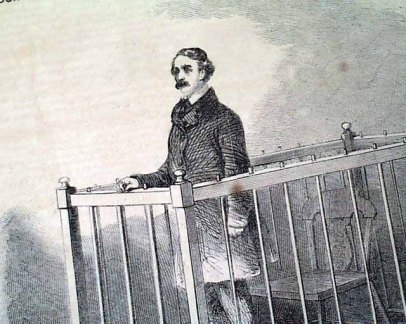
sickles in the box

Sickles in the Prisoner’s Dock

The defense team made mincemeat of the prosecution. John Graham’s opening statement was a work of oratory genius that “would massively outshine Robert Ould’s more cumbersome opening.” [27]Weaving allusions from Shakespeare and other literary greats into his statement, he painted Sickles as the victim of a adulterous rogue who had on a Sunday, a day when he should have “sent his aspirations heavenward,” had instead besieged “that castle where for security and repose the law had placed the wife and children of his neighbor.” [28] Casting Sickles as the aggrieved and temporarily insane victim he also asked if it was a “crime for a husband to defend his family altar.” From there he proceeded to use quotes from Shakespeare’s Othello he inveighs against the adulterer as the supreme criminal, piling up quotation upon quotation from the Old Testament and Roman law to show that in wiser days the punishment invariably was death’” [29] to paint the picture of Sickles’ agony as he saw the man who had defiled his wife prowling outside of his home. Graham then went to provocation and argued that due the circumstance of the crime, a friend and confidant attempting to defile Sickles’ wife on a Sunday that the prosecution “needed to prove Dan’s sanity at the time of the act. And they could not do that, because there was not enough in the case “to melt the heart that is not cut from the unwedgeable gnarled oak.” [30] It was a masterful performance.

Over the next two weeks, Brady, Stanton, and Graham would continue to hammer the prosecution case. The defense proved that Key’s family had tampered with evidence, including testimony from a locksmith who had changed the locks at the 15th Street house at the direction of Key’s family. Witness after witness was introduced to undermine the prosecution and support the defense’s claim that Sickles’ was indeed in a state of uncontrollable madness, and the defense deftly parried the prosecutor’s rebuttal witnesses. When Ould attempted to keep African American witnesses from testifying Stanton, thundered and“accused the prosecution of a “monstrous” attempt to suppress evidence in its zeal of the defendant’s blood,” [31] and argued from North Carolina precedent that the prosecution was not willing to grant Sickles the same right as a slave. As his lawyers argued his case and witnesses gave testimony Sickles maintained his composure except for a number of times when he broke down and had to be excused from the proceedings. “Whether the courtroom histrionics were real or an award-winning performance, the jury witnessed firsthand a husband who was mentally unable to bear his wife with another man.” [32] On the Friday the 22nd of April Judge Crawford declared the testimony closed and the next day began the closing arguments.

Saturday April 23rd dawned with a violent gale, but that did not prevent crowds of people from trying to gain admittance to the courtroom. Edwin Stanton began the defense closing arguments in a manner that was calm and precise. He brought up that justifiable homicide included that which was “committed in defense of family chastity, the sanctity of the marriage bed, the matron’s honor, the virgin’s purity.” [33] Since the prosecution had never brought into evidence Sickles’ own violation of these covenants his attacks on Key and the prosecution case hit home. As he continued his voice rose to a roar, sounding like a prophet of ancient Israel “Who seeing this thin, would not exclaim to the unhappy husband, “Hasten, hasten, to save the mother of your child! And may the Lord who watches over the home and family guide the bullets and direct the stroke!” [34] When Stanton finished the court erupted in a frenzy as spectators as well as supporters of Sickles applauded his closing.

Next up was Brady who went on for three hours, captivating the audience which hung on every word. “When Daniel Sickles realized how he had been betrayed, all the emotions of his nature changed into a single impulse; every throb of his heart brought before him the sense of his great injuries; every drop of his blood was burdened with a sense of shame; he was crushed by inexorable agony in the loss of his wife, in the dishonor that he had come upon his child, in the knowledge that the future – which had opened to him so full of brilliancy – had now been enshrouded in eternal gloom by one who, contrawise, should have invoked form the eternal God his greatest effulgence on the path of his friend….” [35]

The closing had been masterful, emotional, and dramatic. In response Ould attempted to recover, but his arguments were weak, he agreed with the defense about the crime of adultery, and attempted to redirect the jury’s attention that it was Sickles who was on trial for murder and not Key for adultery, but he had already lost that argument. He called the defense of temporary insanity a ploy and “mentioned how easily, and readily a man on trial for his life might pretend to be deranged if he were on trial for his life.” But it was too little, too late. Since there was no psychiatric profession to weigh in on the matter, the argument of temporary insanity fell back on the “tradition of male marital dominance” and “that argument played well among men who rarely wore collars on their shirts…” [36] the very kind of men seated in the jury booth.

When the jury recessed to deliberate Sickles’ fate on the 26th it took them less than an hour to return their verdict, and few were surprised when it came back “not guilty.” Stanton “was so excited that he did a jig in the courtroom, the hoarsely called for three cheers.” [37]As he did “Pandemonium and cheers broke out in the courtroom.” [38]People crowded around to congratulate Sickles and the crush was so great that Sickles had to be escorted for the courtroom. President Buchanan on hearing the verdict was delighted, later in the evening, though he sought rest, Sickles was taken by Brady to a gala in his honor attended by nearly 1500 supporters and well-wishers. The trial was over but the trials of Dan Sickles were not.

Notes

[1] Ibid. Keneally American Scoundrel p.142

[2] Ibid. Swanberg Sickles the Incredible p.63

[3] Ibid. Keneally American Scoundrel p.146

[4] Ibid. Keneally American Scoundrel p.147

[5] Ibid. Pinchon Dan Sickles p.117

[6] Ibid. Pinchon Dan Sickles p.117

[7] Ibid. Swanberg Sickles the Incredible pp.62-63

[8] Ibid. Pinchon Dan Sickles p.116

[9] Ibid. Hessler Sickles at Gettysburg p.12

[10] Marvel, William Lincoln’s Autocrat: The Life of Edwin Stanton University of North Carolina Press, Chapel Hill 2015 p.103

[11] Ibid. Hessler Sickles at Gettysburg pp.12-13

[12] Ibid. Swanberg Sickles the Incredible p.63

[13] Ibid. Keneally American Scoundrel p.151

[14] Ibid. Marvel Lincoln’s Autocrat p.103

[15] Ibid. Pinchon Dan Sickles p.121

[16] Ibid. Swanberg Sickles the Incredible p.64

[17] Ibid. Marvel Lincoln’s Autocrat p.104

[18] Ibid. Pinchon Dan Sickles p.118

[19] Ibid. Pinchon Dan Sickles pp.118-119

[20] Ibid. Keneally American Scoundrel p.162

[21] Ibid. Pinchon Dan Sickles p.120

[22] Ibid. Marvel Lincoln’s Autocrat p.105

[23] Ibid. Pinchon Dan Sickles p.122

[24] Ibid. Hessler Sickles at Gettysburg p.14

[25] Ibid. Pinchon Dan Sickles p.122

[26] Ibid. Swanberg Sickles the Incredible p.65

[27] Ibid. Keneally American Scoundrel p.173

[28] Ibid. Keneally American Scoundrel p.173

[29] Ibid. Pinchon Dan Sickles p.124

[30] Ibid. Keneally American Scoundrel p.175

[31] Ibid. Marvel Lincoln’s Autocrat p.107

[32] Ibid. Hessler Sickles at Gettysburg p.15

[33] Ibid. Pinchon Dan Sickles p.127

[34] Ibid. Pinchon Dan Sickles p.128

[35] Ibid. Pinchon Dan Sickles p.129

[36] Ibid. Marvel Lincoln’s Autocrat p.110

[37] Ibid. Swanberg Sickles the Incredible p.66

[38] Ibid. Hessler Sickles at Gettysburg p.17

Leave a comment

Filed under crime, History, Loose thoughts and musings

Read, Observe, or Pee on the Electric Fence

Friends of Padre Steve’s World,

The great American humorist Will Rogers once said, “There are three kinds of men. The one that learns by reading. The few who learn by observation. The rest of them have to pee on the electric fence for themselves.”

I wish that more people would take time to read and reflect than to allow themselves to be force fed by their televisions. Timothy Snyder in his book On Tyranny:

“More than half a century ago, the classic novels of totalitarianism warned of the domination of screens, the suppression of books, the narrowing of vocabularies, and the associated difficulties of thought. In Ray Bradbury’s Fahrenheit 451, published in 1953, firemen find and burn books while most citizens watch interactive television. In George Orwell’s 1984, published in 1949, books are banned and television is two-way, allowing the government to observe citizens at all times. In 1984, the language of visual media is highly constrained, to starve the public of the concepts needed to think about the present, remember the past, and consider the future. One of the regime’s projects is to limit the language further by eliminating ever more words with each edition of the official dictionary.”

I am slowing down my writing for the next few days to spend more time thinking, reflecting, reading and observing. I have been writing a lot on the Civil War, Civil Rights and Reconstruction, as well as the Nazi era, totalitarianism and their importance today. I will continue to do that but I am going to slow down a bit, and for the next week or so the articles here will be slightly edited posts from the archives so I can catch up on some reading and do some reflecting. Of course if something really notable happens I will probably at least comment on it, but for now I want to pull back a bit and read.

I do this because as a historian I known that for all of our great advances, especially in the form of technology that the character of people, the nature of humanity remains fairly constant. Technology may change the way we look the world, how we gather information, how and what we produce, how we fight wars, and even how we relate to each other, but humanity remains the same. Our forms of government and even religious faith may evolve, but the character of humanity is the one constant.

There has been a lot going on in this country and around the world and the one thing that I notice is that few seem to be taking the time to observe and seem to be more interested in immediately framing the events of the day into their particular ideology. This tendency is not limited to any one segment the population and goes across ideological divides.  We live in a time of great political and social upheaval and drastic change and if we are to ride out the storm we must continue to learn and not be satisfied with the banal and insipid sound bites that the Unholy Trinity of pundits, politicians and preachers spew out as wisdom.  The pundits, politicians and preachers who cite history usually do so completely out of context and do so in the form of bad analogies rather than by using any semblance of deductive or inductive reasoning.

Our culture has for the most part abandoned any serious attempt at learning. Schools teach to standardized tests, state school boards ensure that textbooks include nothing too controversial; universities sacrifice faculty and academic programs to prop up bloated administration and non-academic programs. We are consumers of corporate owned news networks that consider their programing entertainment and value market share more than truth. American philosopher Eric Hoffer quite rightly said, “In a time of drastic change it is the learners who inherit the future. The learned usually find themselves equipped to live in a world that no longer exists.” But sadly many people, including learned people who should know better and who have great responsibility in political, economic and even education, are content to live in a world that no longer exists.  

Over the past few months I have plowed through a number of books including David Halberstam’s The Best and the Brightest, H.R. McMaster’s Dereliction of Duty, Deborah Lipstadt’s Denying the Holocaust,  Mark Bowden’s Hue 1968, and Volker Ullrich’s Hitler: Ascent 1889-1939.  All are very substantial volumes. Additionally I am almost finished reading German historian Paul Carrel’s Unternehem Barbarossa im Bild (Operation Barbarossa in Pictures) in which the text is in German. I am also about sixty percent of the way through Max Boot’s The Toad Not Taken: Edward Lansdale an the American Tragedy in Vietnam.  My goal over the next week or so is to finish reading the last two books and to take on Ron Chernow’s massive biography of Ulysses S. Grant, and David Frum’s Trumpocracy: The Corruption of the American Republic. 

Learning comes from reading, observation and experience. Otto Von Bismarck, one of the most remarkable statesmen that ever lived said, “only a fool learns from his own mistakes, a wise man from the mistakes of others,” while Arthur Wellesley, the First Duke of Wellington and victor of Waterloo wrote, “Wise people learn when they can; fools learn when they must.”

I for one would rather not be one of those that learn by the last named method.  Learning from my mistakes has never been enjoyable and has usually been quite painful, but then as the late Baltimore Orioles Manager Earl Weaver said, “It’s what you learn after you know it all that counts.”

While I know I will make mistakes and hope to learn from them when I do I would much rather learn from the mistakes of others. Let’s hope that our leaders decide to actually pay attention and learn instead of making us pay for their mistakes. Sadly, I think that most people, especially those who claim to be leaders would rather pee on the electric fence themselves.

Anyway, it is time to do some reading and reflecting.

Peace

Padre Steve+

1 Comment

Filed under History, Loose thoughts and musings, philosophy

Guest Post: The Growing Emptiness of Service

Friends of Padre Steve’s World,
I don’t re-blog a lot of articles but this needs to be shared. I fully understand what this officer is saying.
Peace,
Padre Steve+

Angry Staff Officer's avatarThe Angry Staff Officer

By David Dixon

I began my commitment to the service of the United States in 1999, when I showed up at West Point as a fresh-faced new cadet, deeply conservative, religious, and full of a desire to be a patriot and to serve my country.  In the almost twenty years between then and now, much has changed.

I left my religion alongside the Tigris in the blood and sweat and shell casings of my first tour in Iraq.   My conservatism died more slowly and gradually in the face of life experience and widening my sources of information, but die it did.  What did not die was my desire to serve the country, even as I came to believe we’d made serious mistakes both overseas and at home.  That, perhaps alone among the defining values I came into service with, remained up to the present day and sustained my service…

View original post 721 more words

1 Comment

Filed under Loose thoughts and musings

I’ll Have to Say I Love You In a Song: Love Songs for Valentine’s Day

295_27076777058_8226_n

Friends of Padre Steve’s World,

Since today is an odd confluence of Valentine’s Day, Ash Wednesday, and the opening of Spring Training I am going to hopefully avoid any controversy by sharing some of my favorite love songs for Valentine’s Day.

I have spent many Valentine’s Days away from my wife Judy over the course of my military career. Tonight we’ll be together she has a class that I don’t want to take her away from and on her way there she’ll drop me off at Gordon Biersch and then when she is done comes back and meet me for dinner there.

We have spent a lot of time away from each other during the course of my military career. I added up the time between when I was mobilized from the Army Reserve in 1996 to support the Bosnia Operation until when I returned from Camp LeJeune in August of 2013 and I figured at we had been apart 10 of 17 years between 1996 and 2013 due to military assignments. I am glad I am hopefully won’t have to spend months or years away from her again as I enter the twilight years of my career.
In all of these times I have loved music. I remember dating Judy and every week bring in new LP albums or pop 45 singles on vinyl back in the late 1970s and early 1980s. Most of the songs were popular on the radio and I would hear them on American Top 40.

I find that music expresses love in ways that I find difficult to do on my own. Perhaps this is because of the fact that I am a historian and not a poet or artist. Here are 25 of my favorites of all time. They are songs that express the emotions of love, love embraced and love requited the joy of love and the agony of losing it.

These are songs that men and women express the feelings of those who have loved, lost and longed for love. They are songs of men and women who sometimes are geographically far away but still close and others that can be sitting next to each other but be as far from each other emotionally and even spiritually as Earth is from the furthest star system in the galaxy.

I think that in my life that many speak to the relationship that I have with the woman that I have loved since the day that I met her back in the late summer of 1978 at San Joaquin Delta College in Stockton California.

It is interested because a number of years later Barry Manilow wrote a song called The Summer of 78 which expresses much of what I felt and still feel about her.

It was one of those summer’s
lasting forever
making the winter wait
a summer of music and passion
the summer of ’78
you appeared like the summer
sudden and perfect
and not a day too late
I swear there was music when I found you
that summer of ’78
it seem we floated through the days

and nights were always filled with stars
and it seemed every song they played on the radio
was ours
it was one of those summer’s
only for lovers
touched by the hand of faith
and now when the winter’s are long
I remember the summer of ’78

I think any compilation of love songs has to begin with Barry Manilow’s “Weekend in New England”  I think for me, as a career military man who has spent many years away from my wife, sometimes in harm’s way the questions asked in the song resonate. “When will our eyes meet?” “When can I touch you?” “When will this long journey end and when will I hold you again?” have particular meaning and they are part of the longing that I have.

http://www.dailymotion.com/video/xed43x


The Carpenter’s breakthrough hit “Close to You” written by Burt Bacharach is a song that is fitting for the love that many young lovers feel when they first meet. I remember when we first started dating I could hardly stand to be away from Judy. The song is more one of infatuation than actual love, but I think unless we first have that infatuation that love often remains dormant.


Bread’s classic mellow ballad “If” is a song that expresses an almost eternal nature to love. Jim Croce’s hit “I’ll Just Have to Say I Love You in a Song” is one that expresses how badly the words often come out when we try to communicate with the one that we love. There are so many times the words that I have said have not come across how I meant them. So much of a relationship that is based on how we communicate that care and love for each other, the lament that “every time I’d try to tell you, the words just came out wrong” can be true for many of us.

England Dan (Dan Seals and John Ford Coley) “I’d Really Love to See You Tonight” Sometimes when we love someone we somehow lose contact, or maybe have grown apart emotionally. The song begins with small talk on a phone call and is the words of someone who wants very badly to be together again with the one that he misses.

In a similar vein to “I’d really love to See You Tonight” but perhaps even more heart wrenching is Paul Davis’ “I Go Crazy” because the woman that he loves is now with someone else and he sings “when I look in your eyes I still go crazy. That old flame comes alive, it starts burning inside…”


All couples sometimes have arguments and sometimes those arguments lead to complete silence and even the break up of a relationship. Sir Cliff Richard’s “We Don’t Talk Anymore” is one of those songs where one partner blames the other for the breakup and boldly states that he isn’t losing sleep over the end of the relationship. Not a very good way to go, but a very real feeling for many people in the Lonely Heart’s Club.

Olivia Newton John and Cliff Richard’s duet “Suddenly”  is a song that is a 180 out from We Don’t Talk Anymore. This song is one that speaks of a deep love and admiration for each of the two people in the relationship that they are willing to do anything and go anywhere to be with one another.

But we really do, at least most of us hope that we will find that person who will take a chance on us like in the Abba song, or in some cases if we have been hurt someone who will take a chance again as Barry Manilow sang about.


But “It’s so Easy to Fall in Love” as Linda Ronstadt lets us know, but holding on to that love can be a different matter.


When we do fall in love we hope that they will be our First, my Last, My Everything.

But holding on to love can be difficult and can end up on the rocks when our love stops bringing flowers or singing love songs.


The Dr. Hook hit “Years from Now” is one that always manages to bring a tear to my eye. It came out about a year after Judy and I started dating and even though it is now well over 30 years since I first heard it I imagined the future, now we are deep into it and I feel the same way. One verse says “I know this world that we live in can be hard, Now and then and it will be again, Many times we’ve been down, Still love has kept us together the flame never dies, When I look in your eyes the future I see.” Since we have gone through many difficult times it is a song that is intensely personal and one that I almost feel that I could have written the lyrics.

David Soul riding high on his success in Starsky and Hutch released “Don’t Give up on Us Baby”  in 1977. It hit number one in both the US and UK and was his one big hit. It is a song of a man trying to convince a woman that they have a relationship that is more than just one night. “Don’t give up on us, baby, We’re still worth one more try, I know we put a last one by, Just for a rainy evening, When maybe stars are few, Don’t give up on us, I know, We can still come through.” I find the Chicago ballad If You Leave Me Now evokes similar feelings.

Dan Hill’s “Sometimes When We Touch” is a song that means a great deal to both Judy and I. The words are somehow haunting and healing. One verse and the chorus really get to me. “Romance and all its strategy leaves me battlin’ with my pride, But through the insecurity some tenderness survives, I’m just another writer, still trapped within my truth, A hesitant prize fighter, still trapped within my youth. And sometimes when we touch, the honesty’s too much, And I have to close my eyes and hide, I wanna hold you till I die, till we both break down and cry, I wanna hold you till the fear in me subsides.”


Van Morrison wrote “Have I Told You Lately That I Love You”  in 1989. Recorded and released by Rod Stewart in 1993 it is a song that originally was written as a prayer by Morrison. It is sung at many weddings and it a song that I will stop and listen to whenever I hear it.

The Australian duo Air Supply is known for their mellow love songs and one of them“Two Less Lonely People in the World”  is one that I like. Sometimes I think that had I not met Judy that I never would have married. I am quite the introvert and often a loner that prefers the adventure of being independent and adventurous and does not like to be tied down. When my father retired from the Navy in 1974 I thought that my life was over, because we were going to remain in one place. Judy had spent most of her life in one city but I took her away from that because throughout my life I have been afflicted with this wanderlust and spirit of adventure. That being said the fact that we are together means that even though we are often apart that there are still “two less lonely people in the world tonight.”

Meat Loaf’s “I Would do Anything for Love” from his 1993 Bat Out of Hell Album is one of the big world wide rock power ballads of the past two decades. The focus is probably more on the physical relationship that some of the other songs in this list but it has a resonance because the physical is also a big part of why we fall in love with each other. “As long as the planets are turning, As long as the stars are burning, As long dreams are coming true, You’d better believe it, that I would do, Anything for love, And I’l be there until the final act, I would do anything for love, and I’ll take a vow and seal a pact…”

Elton John’s “Your Song” is a tender ballad of a musician who has little to give his love except a song.


One of the tenderest duets for Valentine’s Day comes from Lionel Richie and Diana Ross, the hit Endless Love  was written for the movie of the same name. The Bee Gee’s Disco era smash How Deep is Your Love  is another tender song of devotion to a love as is Al Green’s classic Let’s Stay Together.

Chicago’s “Hard to Say I’m Sorry” is a song that hits hard at a situation that many couples that love each other find themselves. That is when for whatever reason they find that they need to be away from each other, but the key is that they find their way back.

REO Speedwagon’s “I Can’t Fight this Feeling” is actually quite good because it is a song that sees a relationship go from a friendship to something more, something that sometimes scares the people involved because somehow we often think that we don’t want to “ruin the friendship.” I really think that any relationship that is meant to be has to begin with friendship and the words in the song “What started out as friendship, Has grown stronger. I only wish I had the strength to let it show” is a reality for so many people.


Anne Murray released a song called Daydream Believer   that had been recorded years before by the Monkees, but in 1980 it became one of my favorites as my relationship with Judy began to really develop

Bonnie Tyler’s “It’s a Heartache” has been recorded and been a hit for Juice Newton and Rod Stewart as well as Tyler. It is a song that speaks of the pain of a broken relationship when one of the people involved is more dependent on the other person than that person is committed to them, and sometimes when we fall for someone we are in over our heads, as Fleetwood Mac’s Over My Head so bluntly states.

Juice Newton’s “Angel of the Morning” is a song that describes the breakup of what may be an illicit love affair. Since a lot of people become involved in such relationships it is a powerful reminder of the pain associated with the end of those relationships. A similar theme is part of Laura Branigan’s “How am I Supposed to Live Without You”  though it seems that this song is not about an illicit relationship but the betrayal felt by a person who finds that the one that they love is leaving them. Her song Will You Still Love Me Tomorrow?  tells the story of a woman wondering if her love will still love her, but there is always the Power of Love.  However when all else fails it is helpful to know that Storms Never Last. 


I find a lot of commonality with Journey’s power ballad “Faithfully.”  Written about the love of a couple, one of whom spends his life on the road as a musician and rediscovers his love for his bride. I think that it is a song that any man or woman in the military, or for that matter any other profession that spends much time away from home can relate as is Elton John’s I Guess that’s Why they Call it the Blues.

The tender ballad by Kiss “Beth” is a song that I think expresses how many people deal with the tension between what they love and who they love. The song is about a man who promises to come home as soon as he is done playing music with his band and keeps calling back until finally he admits that he will not be coming home that night.

Blondie’s Heart of Glass  is another song that talks about misplaced love and how many relationships appear to be real but then end with at least one partner hurting and wondering what happened. The Tide is High  is Judy’s ringtone on my iPhone, it is about a girl who won’t give up on her love and Dreaming  is another song of dreams of love as is Fleetwood Mac’s Say You Love Me.


The Swedish super group Abba had numerous songs dealing love, hope, love lost and love found.  “One of Us”  is song about a relationship where one partner thinks that they can do better only to find out that they were wrong. The chorus “One of us is crying, One of us is lying, In her lonely bed, Staring at the ceiling, Wishing she was somewhere else instead, One of us is lonely, One of us is only, Waiting for a call, Sorry for herself, feeling stupid feeling small, Wishing she had never left at all….” finds an echo in many of the people that I meet. Their lesser known song, Our Last Summer  tells the story of a woman remembering her last summer in Paris with a former lover. Knowing Me Knowing You  tells the story of a breakup as does The Winner Takes it All. 

In the late 1970s and early 1980s Kenny Rogers released a number of songs suitable for the Valentine’s Day. She Believes in Me  is wonderful because it talks of an experience that many young lovers know that of having someone who believes in them and their dreams, even when they wonder. You Decorated My Life  talks about the difference a love makes in life, while Don’t Fall in Love with a Dreamer a duet he sang with singer songwriter Kim Carnes talks about the hazards of falling in love with a dreamer, or a person like me, and love can be difficult even when we give the best that we have, as the Eagles noted in The Best of My Love.


10292508_10152480986727059_3917999618258979632_n

Finally there is a song that from the first time I heard it has been a song that speaks to me about my love for Judy. It is a song that like Dr Hook’s Years from Now, is a reminder of how far we have come and how much we have been through; that song is Kenny Rogers’ “Through the Years”  which was released in 1982, a year before we were married.

Of course there is one that is Judy’s ringtone for me, The Partridge Family and I Think I Love You.  I do think I love you too Judy, “So what am I so afraid of? I’m afraid that I’m not sure of, A love there is no cure for…” 

But then I am in love with a beautiful woman…

And I Will Always Love You.

So to all of my readers, enjoy the music and have a happy Valentine’s Day.

Peace

Padre Steve+

1 Comment

Filed under Loose thoughts and musings, marriage and relationships, music

“We’ll Lick this One Day…” Branch Rickey, Charles Thomas, Jackie Robinson and the Desegregation of Baseball

robinson-dodgers

John Jorgensen, Pee Wee Reese, Ed Stanky and Jackie Robinson on opening day 1947

Friends of Padre Steve’s World.

Tomorrow Spring Training begins. It is also Ash Wednesday and Valentine’s Day. For the Baseball purist, the Priest and the inept romantic the combination is quite juxtaposing. For the fact of the matter I don’t do either Lent which Ash Wednesday begins or Valentine’s Day very well. I routinely screw both of the up and as hard as I try I struggle to reach the Mendoza Line in either one. Of course that leaves baseball which for me is a religion, as well as a social commentary on America, our values, and virtues.

I’m not the first to say this an editor in Baseball Magazine wrote in 1921:

“Thomas Jefferson, when he wrote the Declaration, made proper provision for baseball when he declared that ‘all men are, and of right out to be, free and equal.’ That’s why they are at the ball game, banker and bricklayer, lawyer and common laborer.” 

But for African Americans in the first half of the Twentieth Century the game was as segregated as as any town that adhered to Jim Crow in the South or the Sundown Towns in the North and West which excluded them from the political, social privileges enjoyed by Whites. In spite of their relegation to the Negro Leagues a lot of people in baseball knew their talent and ability, one of them was Branch Rickey. Rickey was the first to successfully integrate a team. Baseball Commissioner Kennesaw Mountain Landis opposed early attempts at integration from 1920 until his death in 1944, as a result early attempts to integrate teams failed.

robinson2-popup

Charles Thomas 

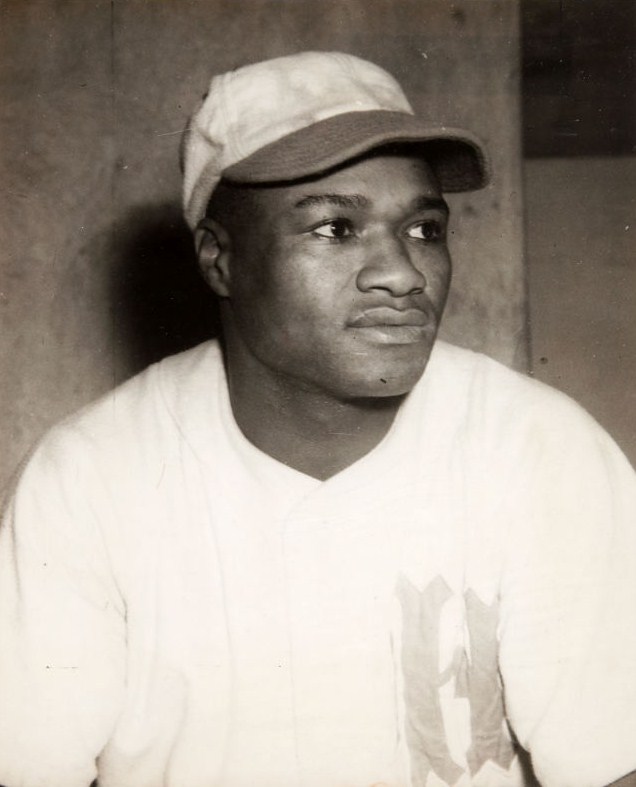
It was in 1903 when Rickey, then a coach for the Ohio Wesleyan University baseball team had to console his star player, Charles Thomas when a hotel in South Bend Indiana refused him a room because he was black. Rickey found Thomas sobbing  rubbing his hands and repeating “Black skin. Black skin. If only I could make them white.” Rickey attempted to console his friend saying “Come on, Tommy, snap out of it, buck up! We’ll lick this one day, but we can’t if you feel sorry for yourself.”

Branch-Rickey

Branch Rickey

Thomas, encouraged by Rickey was remembered by one alumnus who saw a game that Thomas played in noted that “the only unpleasant feature of the game was the coarse slurs cast at Mr. Thomas, the catcher.” However, the writer noted something else about Thomas that caught his eye: “But through it all, he showed himself far more the gentleman than his insolent tormentors though their skin is white.” Thomas would go on to be a dentist and remain a friend of Rickey until Rickey’s death in 1965. He moved to New Mexico where he became on of the first African American dentists in that state. Mark Moore, the Executive Director of the New Mexico Dental Association noted:

“This was a time when being a professional was difficult for an African-American. As one of the first black dentists in New Mexico, Dr. Thomas helped desegregate dentistry. He had a significant impact on our national history and the dental profession.”

Baseball like most of America was not a place for the Black man. Rickey, a devout Christian later remarked “I vowed that I would always do whatever I could to see that other Americans did not have to face the bitter humiliation that was heaped upon Charles Thomas.”

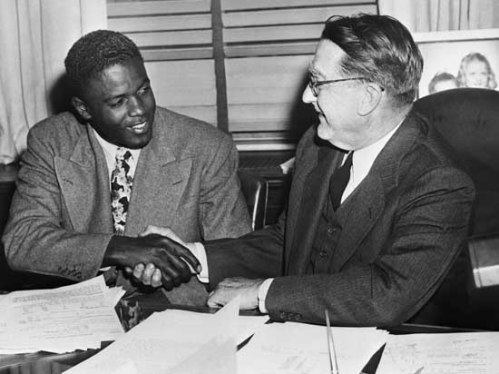
In April 1947 Branch Rickey who was now the owner of the Brooklyn Dodgers invited one African-American ballplayer to the Dodgers’ Spring Training site in Daytona Beach Florida. The South was still a hotbed of racial prejudice, Jim Crow was the law of the land and Blacks had no place in White Man’s baseball, but Rickey decided to challenge that rule and the player was Jackie Robinson.

Jackie Robinson Shaking Branch Rickey's Hand

The Dodgers had been coming to Florida for years. Rickey moved the Dodgers from Jacksonville to Daytona Beach in 1947 after Jacksonville had refused to alter its segregation laws to allow an exhibition game between the Dodgers International League affiliate the Montreal Royals, for whom Robinson starred.

That was the year that Rickey signed Robinson to a minor league contract with the Royals.  When Rickey called up Robinson 6 days prior to the 1947 season Robinson broke the color barrier for both the Dodgers and Major League Baseball. However it would take another 12 years before all Major League teams had a black player on their roster.

It is hard to imagine now that even after Jackie Robinson had broken the color barrier that other teams did not immediately sign black players. However Rickey and Robinson broke the color barrier a year before Harry Truman had integrated the Armed Forces and seven years before the Supreme Court ruled the segregation of public schools illegal. But how could that be a surprise? The country was still rampant with unbridled racism. Outside of a few Blacks in the military and baseball most African Americans had few rights. In the North racism regulated most blacks to ghettos, while in the South, Jim Crow laws and public lynchings of progressive or outspoken Blacks.

Actor, director and civil rights activist Ossie Davis wrote in the book Baseball Nineteen – Oh – Seven” that:

“Baseball should be taken seriously by the colored player — and in this effort of his great ability will open the avenue in the near future wherein he may walk hand in hand with the opposite race in the greatest of all American games — baseball.”


images-24

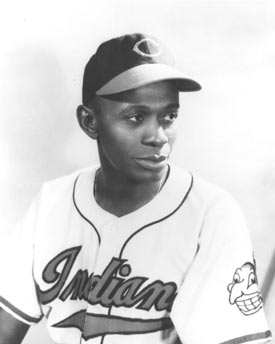
Larry Doby (above) and Satchel Paige signed by the Indians

pic1

The Cleveland Indians under their legendary owner Bill Veeck were not far behind the Dodgers in integrating their team. Veeck claimed that his effort to purchase the Philadelphia Phillies was rejected by Kennesaw Mountain Landis when he announced that he would desegregate the team. Under Veeck’s direction the Tribe signed Larry Doby on July 5th 1947. Doby would go on to the Hall of Fame and was a key player on the 1948 Indian team which won the 1948 World Series, the last that the storied franchise has won to this date.

Hank THOMPSON - LENNOX PEARSON BOHEMIA ARCHIVE

Hank Thompson and Roy Campanella

roy-campanella-ap2

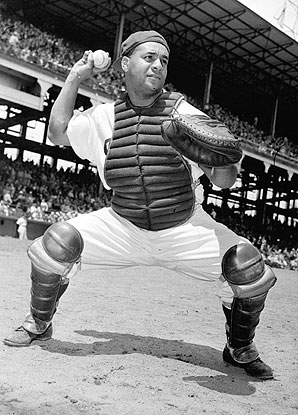
The St. Louis Browns signed Third Baseman Hank Thompson 12 days after the Indians signed Doby. But Thompson, Robinson and Doby would be the only Blacks to play in that inaugural season of integration. They would be joined by others in 1948 including the immortal catcher Roy Campanella who signed with the Dodgers and the venerable Negro League pitcher, Satchel Paige who was signed by the Indians.

monte_irvin

Monte Irvin (Above) and Willie Mays

WillieMays

Willie Mays

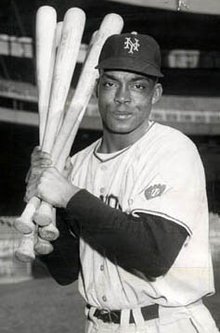
It was not until 1949 when the New York Giants became the next team to integrate. They brought up Monte Irvin and Hank Thompson who they had acquired from the Browns. In 1951 they would be joined by rookie Willie Mays to become the first all African-American outfield in the Major Leagues. Both Mays and Irvin would enter the Hall of Fame and both remained key part of the Giants’ story. Despite their age have continued to be active in with the Giants and Major League Baseball, Mays still is but Irvin died in 2016.

images-25

Samuel Jethroe

The Boston Braves were the next to desegregate calling up Samuel “the Jet” Jethroe to play Center Field. Jethroe was named the National League Rookie of the Year in 1950.

mlb_a_MinnieMinoso_cmg_600

Minnie Minoso

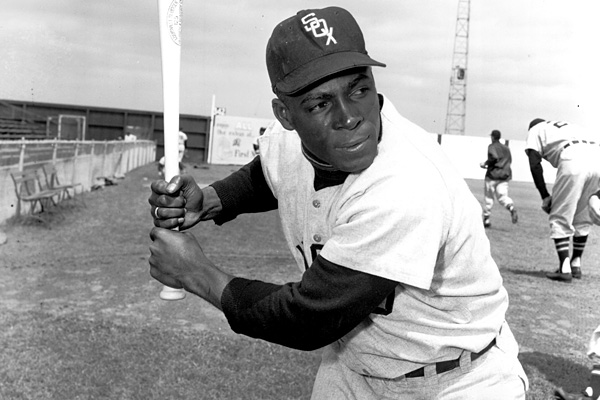
In 1951 the Chicago White Sox signed Cuban born Minnie Minoso who had played for Cleveland in 1949 and 1951 before signing with the White Sox. Minoso would be elected to 9 All-Star teams and win 3 Golden Gloves.

BANKS-ERNIE

Ernie Banks (above) and Bob Trice

Bob_Trice1953

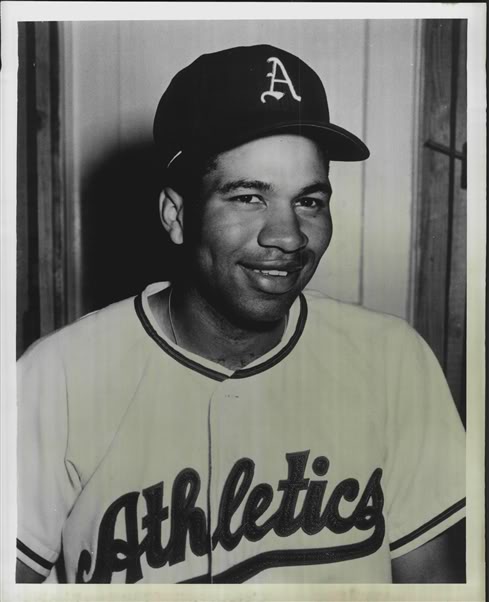
The Chicago Cubs and Philadelphia Athletics integrated at the end of the 1953 season. The Cubs signed Shortstop Ernie Banks who would go on to be a 14 time All-Star, 2 time National League MVP and be elected to the Hall of Fame in 1977 on the first ballot. The Athletics called up pitcher Bob Trice from their Ottawa Farm team where he had won 21 games. Trice only pitched in 27 Major League games over the course of three seasons with the Athletics.

6RI1

Curt Roberts

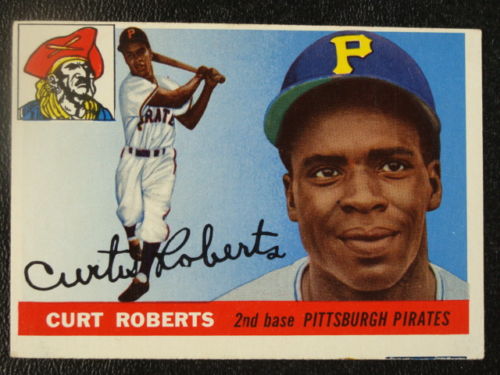
Four teams integrated in 1954. The Pittsburgh Pirates acquired Second Baseman Curt Roberts from Denver of the Western League as part of a minor league deal. He would play 171 games in the Majors.  He was sent to the Columbus Jets of the International League in 1956 and though he played in both the Athletics and Yankees farm systems but never again reached the Majors.

1954_alston_tom

Tom Alston

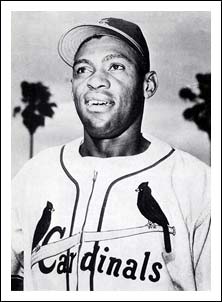
The St. Louis Cardinals, the team that had threatened to not play against the Dodgers and Jackie Robinson in 1947 traded for First Baseman Tom Alston of the Pacific Coast League San Diego Padres. Alston would only play in 91 Major League games with his career hindered by bouts with depression and anxiety.

100005

Nino Escalara (above) and Chuck Harmon

Chuck_Harmon

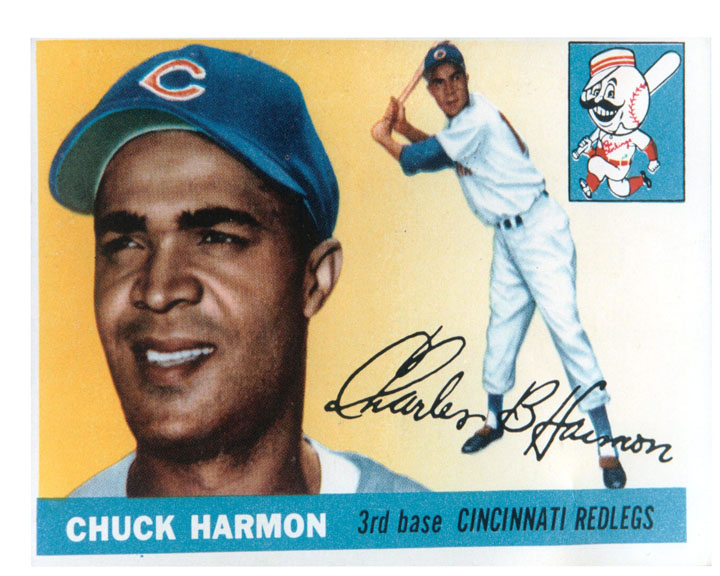
The Cincinnati Reds brought up Puerto Rican born First Baseman Nino Escalera and Third Baseman Chuck Harmon. Harmon had played in the Negro Leagues and had been a Professional Basketball player in the American Basketball League. Harmon who was almost 30 when called up played just 4 years in the Majors. Both he and Escalera would go on to be Major League scouts. Escalera is considered one of the best First Baseman from Puerto Rico and was elected to the Puerto Rican Baseball Hall of Fame. Harmon’s first game was recognized by the Reds in 2004 and a plaque hangs in his honor.

Carlos-Paula

The Washington Senators called up Cuban born Center Fielder Carlos Paula from their Charlotte Hornets’ farm team in September 1954. Paula played through the 1956 season with the Senators and his contract was sold to the Sacramento Salons of the Pacific Coast League. He hit .271 in 157 plate appearances with 9 home runs and 60 RBIs. He died at the age of 55 in Miami.

elston-howard

Elston Howard

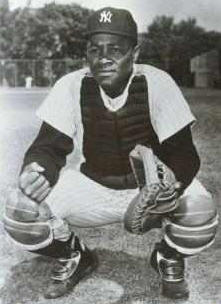
In April 1955 the New York Yankees finally integrated 8 years after the Dodgers and 6 years after the Giants. They signed Catcher/Left Fielder Elston Howard from their International League affiliate where he had been the League MVP in 1954. Howard would play 13 years in the Majors with the Yankees and later the Red Sox retiring in 1968. He would be a 12-time All Star and 6-time World Series Champion as a player and later as a coach for the Yankees. He died of heart disease in 1980.  His number #32 was retired by the Yankees in 1984.

58 kennedy, john f

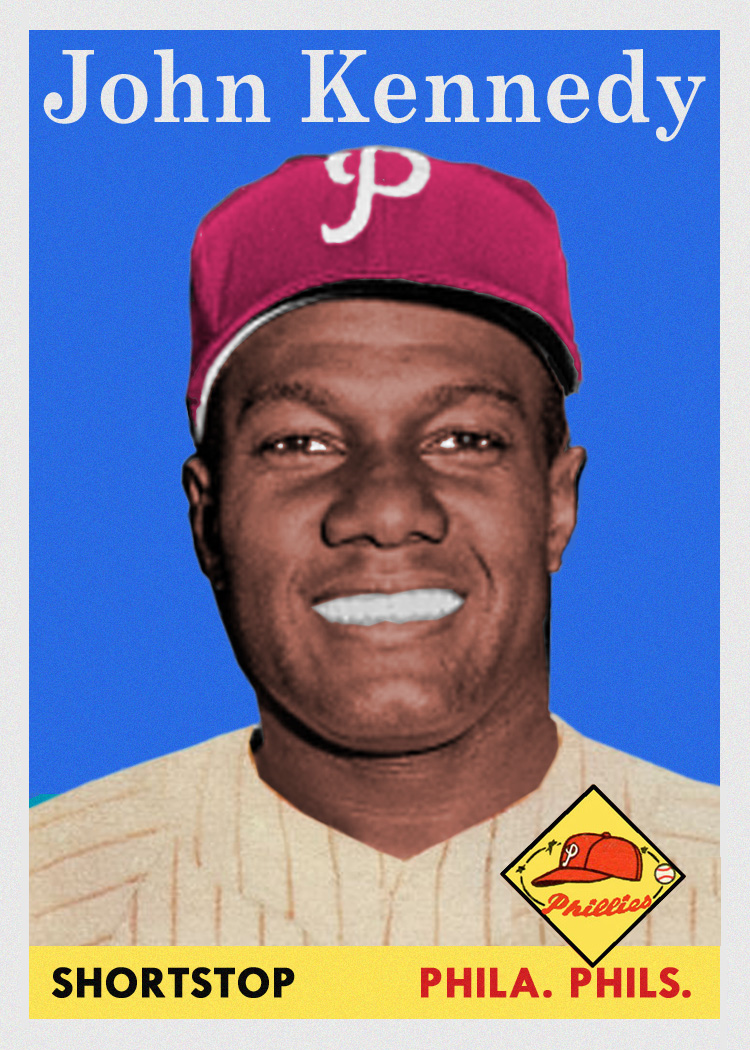
The Philadelphia Phillies purchased the contract of Shortstop John Kennedy from the Kansas City Monarchs of the Negro League at the end of the 1956 season. Kennedy played in just 5 games in April and May of 1957.

osvaldo4_195

Ozzie Virgil Sr.

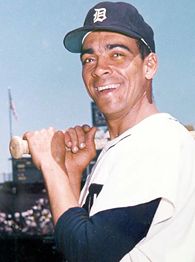
In 1958 the Detroit Tigers obtained Dominican born Utility Player Ozzie Virgil Sr. who had played with the Giants in 1955 and 1956. Virgil would play 9 seasons in the Majors with the Giants, Tigers, Athletics and Pirates and retire from the Giants in 1969. He later coached for 19 years in the Majors with the Giants, Expos, Padres and Mariners.

Pumpsie_Green_1962_Topps

Pumpsie Green

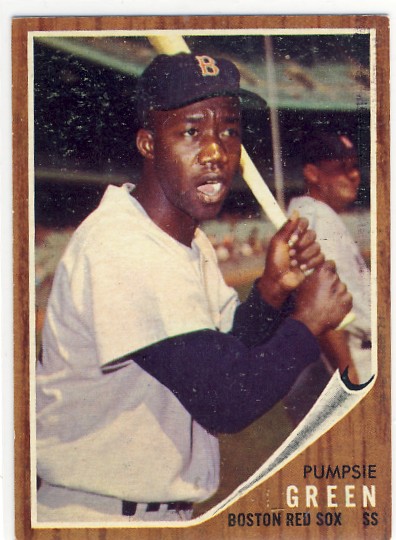
The last team to integrate was the Boston Red Sox who signed Infielder Pumpsie Green. Green made his debut on 21 July 1959 during his three years with the Red Sox was primarily used as a pinch runner. He played his final season with the New York Mets in 1963. He was honored by the Red Sox in 2009 on the 50th anniversary of breaking the Red Sox color barrier.

little-rock-stop-the-race-mixing

voter-registration-mississippi-1960-L-umRewg

luther-king

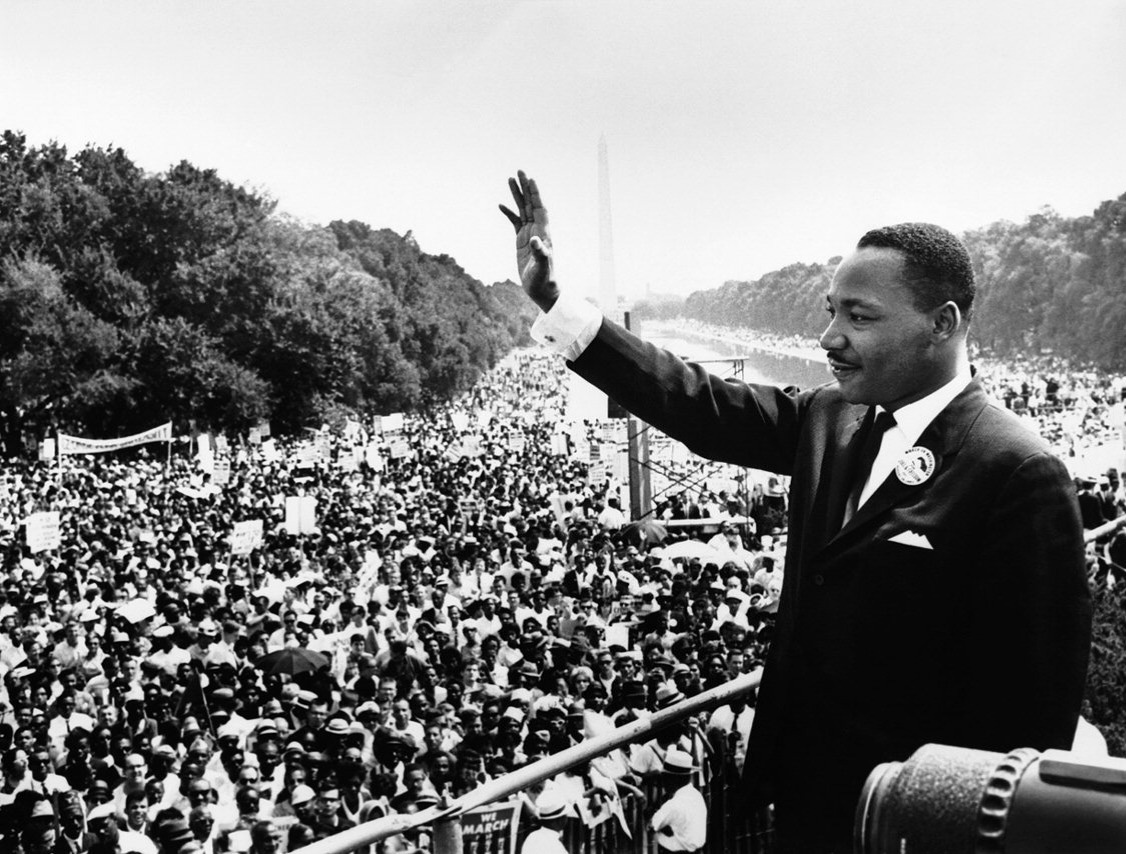
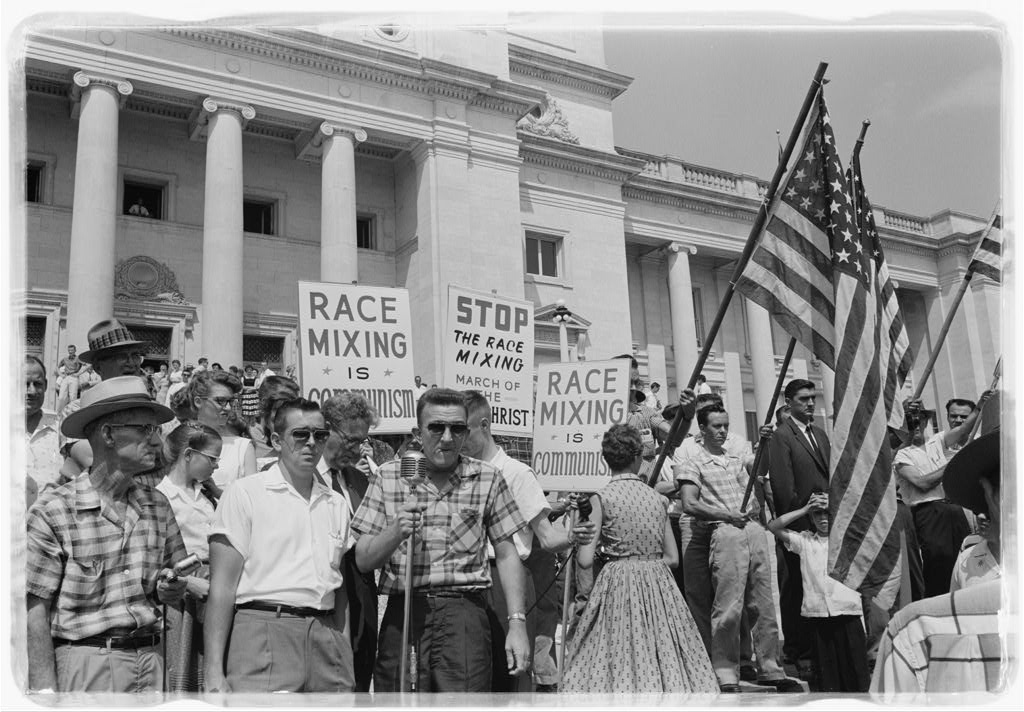
It took 12 years for all the teams of the Major Leagues to integrate, part of the long struggle of African Americans to achieve equality not just in baseball but in all areas of public life.  These men, few in number paved the way for African Americans in baseball and were part of the inspiration of the Civil Rights Movement itself.  They should be remembered by baseball fans, and all Americans everywhere for their sacrifices and sheer determination to overcome the obstacles and hatreds that they faced. It would not be until August of 1963 that Martin Luther King Jr. would give his I Have a Dream speech and 1964 that African Americans received equal voting rights.

Robinson would become a vocal supporter of civil rights, especially after his experience at the 1964 Republican National Convention. Robinson, a Republican and friend of Nelson Rockefeller where he was threatened by a White delegate. He wrote:

“It was a terrible hour for the relatively few black delegates who were present. Distinguished in their communities, identified with the cause of Republicanism, an extremely unpopular cause among blacks, they had been served notice that the party they had fought for considered them just another bunch of “niggers”. They had no real standing in the convention, no clout. They were unimportant and ignored. One bigot from one of the Deep South states actually threw acid on a black delegate’s suit jacket and burned it. Another one, from the Alabama delegation where I was standing at the time of the Rockefeller speech, turned on me menacingly while I was shouting “C’mon Rocky” as the governor stood his ground. He started up in his seat as if to come after me. His wife grabbed his arm and pulled him back.

“Turn him loose, lady, turn him loose,” I shouted.

I was ready for him. I wanted him badly, but luckily for him he obeyed his wife…” (From Jackie Robinson “I Never Had it Made” Chapter XV On Being Black Among the Republicans)

Spring training for the 2018 season begins tomorrow in Florida and Arizona, in what are called the Grapefruit and Cactus Leagues. It is hard to believe that only 70 years ago that there was only one team and one owner dared to break the color barrier that was and still is so much a part of American life.

However despite opposition and lingering prejudice African Americans in baseball led the way in the Civil Rights Movement and are in large part responsible for many of the breakthroughs in race relations and the advancement of not only African Americans, but so many others. We can thank men like  Charles Thomas, Jackie Robinson and Branch Rickey for this and pray that we who remain, Black and White, Asian, Latin American, Middle Eastern; Christian, Jew, Muslim, Hindu; Gay and Straight, as well as all others who make up our great nation will never relinquish the gains that have been won at such a great cost.

In an age were racism has crawled out from under the rock of social distain and has risen to such political prominence that civil rights and voting rights, as well as education, and employment, and healthcare for Blacks, other minorities, and the poor of all races are under attack it is important to remember the words of Branch Rickey to Charles Thomas in 1903: “We’ll lick this one day…” It will certainly be a hard fight, but we have to fight

Peace

Padre Steve+

1 Comment

Filed under Baseball, civil rights, History, Loose thoughts and musings

F-Bombs and Feet of Clay: My Less than Saintly Life on Display

Friends of Padre Steve’s World,

I am frustrated and angry tonight at people who I served with and considered to be friends because I dared to criticize the draft dodging, combat veteran mocking President when it was reported that he is forcing the Pentagon to give him a big military parade like Bastille Day in France. I made my comments on Facebook which I use to keep up with friends. I do post articles and occasionally comments on those articles but I make it a point never to go to my friends pages and attack them for their political, social, or religious beliefs, even when what they post attacks on things that I deeply believe in. For me it is not worth it, I would rather remember the good times with people than to attack them and their beliefs.

But tonight I lost it after repeated attacks and posted something that was not very Jesus like, something about fornicating the President and his minions. When I did that, one former shipmate who had been one of the instigators of my anger threw up my clergy status and noted that Jesus never said such things. I readily agreed with him and admitted that I am a bad seed. As far as what is written in the Bible goes I am sure that he is absolutely correct that Jesus never said such things. But that being said Jesus did kind of mess up the money changers in the Temple day when he when all sorts of crazy on them. Likewise, St Nicholas, tired of hearing heresy proclaimed at the Council of Nicaea punched the heretic Arius, an act that the Emperor Constantine had him stripped of his office as a Bishop and imprisoned. One has to admire punching saints. Likewise, the great German Reformer Martin Luther was probably at least as foul mouthed as me, especially after a good amount of beer.

Since I still struggle with belief and since I know that I am a very poor representative of Jesus in many ways it was offensive. On a good day I believe about 60% of the time which is a lot better than just a few years ago and that is not because how well I have been treated by supposedly Christian friends, rather it is because of the grace, love, and mercy I have been shown by others who don’t claim to be Christian, as well as Christians not afraid to rock the boat or embrace those who do, even if they disagree with them.

I guess that makes me a traitor to the President and his minions. If so I’ll live with it and I’m sure that when the President gets his Reichstag Fire moment that I will be terminated in one way or another. Since I have have had my life threatened by Neo-Nazis and White Supremacists going back to 2010 I wouldn’t be surprised at anything. I know too much about History and human nature to believe the best about anyone in times like this.

Tonight I am angry, I am disgusted, and I am discouraged; but I won’t stop speaking out. If I stop speaking out I will be no better than the Wehrmacht Officers who turned away from the Weimar Constitution, who turned the other way when Hitler gave them what they wanted and eliminated the opposition, and who planned and executed his wars of aggressive conquest and genocide, and when the war was over blamed it all of the SS.

General Ludwig Beck who first supported Hitler’s military build up but resigned his post rather than to execute orders to invade Czechoslovakia noted:

“It is a lack of character and insight, when a soldier in high command sees his duty and mission only in the context of his military orders without realizing that the highest responsibility is to the people of his country.”

Thankfully one of my former now retired subordinates sent me a personal message asking me to take my most incendiary comment down promising to copy and paste it on his timeline without attribution. The comment was admittedly over the top and posted out of anger, not that I didn’t mean it; but he was right to tell me to take it down in order to protect me. It was a scathingly brilliant idea. I removed the post and the comments and he posted my comment without attribution. You have to appreciate people who “look out for your six.” Thank you my friend for doing so.

The last two glasses of wine and the support of other friends have taken the edge off my anger. The Apostle Paul wrote “be angry and do not sin” while the Martin Luther, a man as foul and melancholy as I will ever be wrote his faithful friend and lieutenant Philip Melanchthon:

“If you are a preacher of mercy, do not preach an imaginary but the true mercy. If the mercy is true, you must therefore bear the true, not an imaginary sin. God does not save those who are only imaginary sinners. Be a sinner, and let your sins be strong (sin boldly), but let your trust in Christ be stronger, and rejoice in Christ who is the victor over sin, death, and the world. We will commit sins while we are here, for this life is not a place where justice resides.”

I don’t hide behind my clerical collar, or the cross on my uniform. I know that I am deeply flawed and certainly not an imaginary sinner. I sin and when I do it tends to get noticed, and I’m sure that God is watching and that She knows it too. I don’t know if I can be angry and not sin because my mostly Irish and Scottish DNA combined with my life experience and PTSD mitigates against it. My ugly and beat up feet are definitely made of clay.

That being said I’m not going to be some namsy-pamsy that lets people walk over him. Feet of clay or not I do fight back and when I turn the other cheek I frequently emit foul odors.

So until tomorrow when I write about the substance of what set me off, not the attacks or the people,

Peace,

Padre Steve

7 Comments

Filed under christian life, ethics, faith, Loose thoughts and musings, Political Commentary

President Trump Who Bragged about Avoiding the Clap to Howard Stern Now Accuses Democrats of Treason for Not Clapping

Friends of Padre Steve’s World,

Today President Trump went on his usual manic Monday torrent of attacks on his political opponents real and imagined but today was fascinating because he accused Democrats who attended the State of the Union Address who did not applaud his during that speech of “treason.”

Now treason is an exceptionally strong charge with a very high bar of proof required to convict for it is a capital offense for which the death penalty can be applied. The charge is so severe and capable of misuse by capricious and partisan politicians that the Congress placed a definition of it in the Constitution as a wall against such accusations.

By Section 110 of Article III. of the Constitution of the United States, it is declared that:

“Treason against the United States shall consist only in levying war against them, or in adhering to their enemies, giving them aid and comfort. No person shall be convicted of treason unless on the testimony of two witnesses to the same overt act, or on confession in open Court. The Congress shall have power to declare the punishment of treason.”

If the President was capable of serious philosophical, ethical, political or legal thought; or had maybe read the Constitution, the Federalist Papers or simply studied the history of the United States rather than imbibing himself on television and movie myths he might not have made this accusation. He could have done other things to malign their behavior.

He could have accused them of being petty or unbecoming, even partisan and mean.  After all quite a few people in the GOP, the mainstream media, and even a couple of Democratic Senators accused them of acting petty. I even criticized them over the issue on social media because I thought they were acting too much like the Republicans did while Barak Obama was President. Thank God none of them yelled “YOU LIE!” like South Carolina Republican Congressman Joe Wilson did to President Obama in 2009 when he was addressing a joint session of Congress on Healthcare.

I mean the tradition of the members of the opposition party sitting on their hands and looking morose during the State of the Union or other joint session of Congress goes back decades with only occasional excursions into bi-partisan love-fests.  Now these political love-fests usually only occur in times of national emergency and last until the crisis is over or the next election cycle, whichever comes first, which most of the time is usually the latter case.

But the President chose to accuse them of Treason, a capital crime because they didn’t at least feign adulation for him. President Trump’s actions remind me of James Madison’s words in Federalist 43 where he wrote:

“As treason may be committed against the United States the authority of the United States ought to be enabled to punish it: but as new tangled and artificial treasons have been the great engines by which violent factions, the natural offspring of free governments, have usually wreaked their alternate malignity on each other, the Convention has with great judgment opposed a barrier to this peculiar danger by inserting a Constitutional definition of the crime.”

Not clapping during a Presidential address is not a crime, neither is calling the President a liar as Joe Wilson did to President Obama in 2009. One may argue the politeness, the appropriateness, or even the classiness of such behavior, but only a man consumed with his own importance that has a very thin skin would actually speak the word Treason because he didn’t get the clap from the opposing party. After all the President was the one who dodged the draft with five deferments and later told Howard Stern that sex in the 1980’s was like Vietnam. The President told Stern: “It is a dangerous world out there. It’s scary, like Vietnam. Sort of like the Vietnam-era.  personal Vietnam. I feel like a great and very brave soldier!” How proud he was to avoid the clap back then and now he wants it from his opponents. It’s preposterous, maybe someone in his retinue should give him the clap so he’ll stop accusing opponents of the kinds of treason that Madison wrote so eloquently.

So until tomorrow,

Peace

Padre Steve+

3 Comments

Filed under Loose thoughts and musings, News and current events, Political Commentary