Category Archives: Military

The Vittorio Veneto Class Battleships: The Pride of Italy and Victims of Changing Technology


Vittorio Veneto and Littorio

Friends of Padre Steve’s World,

Once again I have decided to destress and not write about COVID 19, politics, or the Holocaust and instead write about an interesting, and even fascinating class of warships which have been often forgotten.

This is the first in a series of six articles on the battleships built under the provision of the Washington and London Naval Treaty limitations in the 1930s. I am not including the ships which were completed in the immediate aftermath of the Washington Treaty limitations. This series looks at the modern battleships that the World War II combatants would produce in the 1930s which saw service in the war.

Part one covers the Italian Vittorio Veneto class, Part Two the French Dunkerque and Richelieu Classes, Part Three the British King George V Class and Part Four the American North Carolina and South Dakota Classes. The thing that I find interesting about all of these ships is who inventive each Navy building them was considering treaty restraints and their own adherence to, disregarding of, or the technical issues that they faced as none had designed or built a new battleship since the end of the First World War. In the case of Italy they did not even complete their most modern design after the war, thus the building of large and fast battleships was something new to each party. Had the economic effects of the First World War been so difficult, and the following Great Influenza of 1918-1919 so devastating, all of the navies involved might have completed ships that would have influenced the next generation.

I have already published the final part which covers the German Scharnhorst Class entitled Power and Beauty the Battle Cruisers Scharnhorst and Gneisenau The German Bismarck, Japanese Yamato, British Vanguard and American Iowa Classes will be covered in a subsequent series.

Most of these ships were constructed after the expiration of the treaties, but since most of the navies at least attempted to maintain a façade of compliance with the treaty limitations, most were officially listed as complying with the treaty restrictions. The fact that nations frequently lie about their adherence to treaty limitations, is nothing new, or surprising.

The Washington Naval Treaty placed a limit on the displacement and armament of battleships. It also stipulated the tonnage of capital ships allowed for each Navy, as well as limits on the displacement of cruisers, and destroyers. The only country not effected by the treaty was Germany, which until 1935 was required to observe much stricter limitations than Great Britain, the United States, France, Italy, or Japan.

The Washington Naval Treaty led to the scrapping or cancellation of nearly all the super Dreadnoughts, and fast battleships, sometimes known as Battlecruisers of the United States, Great Britain, Japan, France, and Italy. However, its restrictions opened up the development of large aircraft carriers by the United States and Japan which each were allowed to complete two of their new battleships or Battlecruisers into aircraft carriers, specifically the IJN Akagi and Kaga, and the American USS Lexington and Saratoga.

The London Treaty continued the restrictions of the Washington Treaty which limited the displacement of new ships to 35,000 tons with the main battery being limited to 16” guns. Each of the treaty signatories as well as the Germans, who were bound by the much more stringent Treaty of Versailles restriction, endeavored to build to the limit of the treaty and if possible skirt the limitations in terms of displacement which allowed them to increase protection as well as more powerful engineering plants. The Germans, now Hitler’s Third Reich, were aided in this by a bi-lateral Naval Agreement with Britain in 1935. The treaty not only allowed them a legal way to avoid the Versailles restrictions and gain international respect.

The Royal Italian Navy, or the Regia Marina had not completed a battleship design since the Andria Doria Class which were constructed between 1912 and 1915. These ships were provided  an extensive modernization between 1937 and 1940.  The modernization allowed them to serve as first line ships throughout the war. A subsequent class the Francesco Caracciolo class was started during the First World War but no ships of the class were completed. Italy’s war debts, overall financial condition, as well as the similar situation of the French, Italy’s main rival in the Mediterranean Sea, ensured that the Regina Marina had little money for new ships or modernizing old ships during the 1920s and 1930s. Even the accession of Mussolini did little to help the Navy until the 1930s. Even then competing ideas of how to build a new Navy were present in the Italian Naval High Command. Some placed their emphasis on large numbers of battleships, others a mix of aircraft carriers, fast battleships, cruisers and destroyers, while other sought a middle ground.

However, the Italians were forced to act as in the 1930s a new naval arms race was underway in the Mediterranean. The French Navy had begun a new class of Fast Battleships, the Dunkerque class which were designed to defeat the German Deutschland class “pocket battleships” and the follow on Richelieu Class of fast battleships. Mussolini saw the new French ships as a threat to the his control of the Mediterranean, or as the Italians and their Roman ancestors called it Mare Nostrum (our Sea), and ordered the construction of a new class of battleships to help Italy achieve naval dominance in the Mediterranean.

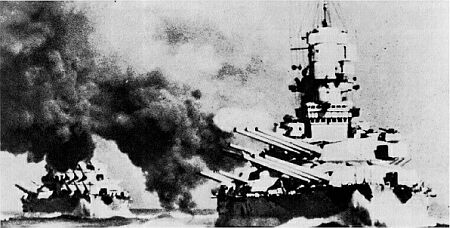
The new ships were of a breathtaking design. They were  large, fast and heavily armed. While they were officially listed as meeting the prescribed treaty limit of 35,000 tons they actually would displace 41,177 tons standard displacement, and 45,963 tons full load. They were armed with a main battery of 9 15” L/50 guns in triple turrets. They had a secondary armament of 12 6” and 12 3.5” dual purpose guns, and a powerful light anti-aircraft battery of 20 37mm and 30 20mm anti-aircraft guns. They were capable of a top speed of 30 knots. Although they had a relatively short range of 3900 miles at 20 knots, they were formidable ships for operations in the constrained waters of the Mediterranean where they would not be required to operate at long ranges from Italian bases in Italy, Sicily, or Libya. They were well protected from shellfire, although their Pugliese torpedo defense system proved inferior to traditional designs, because it did not hold up well to direct hits, or close aboard explosions which resulted in massive flooding when hit by a torpedo or by a near miss from a heavy bomb or shell.

Their main armament though formidable was not without its flaws. The 15” guns had a very long range of 42 km or 26.6 miles and high muzzle velocity of 2900 fps. This meant that they had a long reach, however, their high muzzle velocity led to a barrel life of only about half that of their counterparts, and led to inconsistent shell fall patterns, which lessened to probability of hitting targets at long range. The guns also suffered from a slow rate of fire of only 1.3 rounds per gun a minute.

The Ships

Vittorio Veneto in 1943

The Vittorio Veneto was laid down 1934 along with her sister the Littorio, and was launched on 25 July 1937. She was commissioned on 28 April 1940, barely a month before Italy declared war on France and Britain. She would see action numerous times and give a good account of herself against the British taking part in 56 war missions. She fought at the Battle of Cape Spartivento (Teulada) where she fired 19 salvos to drive off a 7 ship British cruiser squadron in a pitched battle that also included the battleship HMS Ramillies and battle cruiser HMS Renown. In 1941 she took part in the Battle of Cape Matapan where she was damaged by an aerial torpedo after driving off a British cruiser squadron. After repairs she was back in action and on 15 June 1942 participated in the Battle of Mid-June, where she and her sister ship Littorio successfully fenced off a large British convoy from Alexandria by their mere presence at sea.  She was also the first Italian battleship equipped with radar. She surrendered with the Italian fleet to the Allies on 8 September 1943 surviving furious German air attacks. She was interred at the Great Bitter Lakes in the Suez Canal. After the war she taken as war compensation and was returned to Italy and scrapped beginning in 1948.
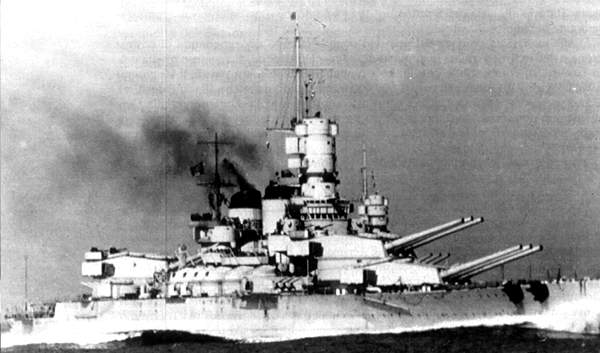

Littorio

Littorio (later Italia): Littorio was laid down in 1934 and launched on 22 August 1937 and commissioned on 6 May 1940.  She participated in 43 operations including the Battle of Sirte and several actions against British convoys.  Following the Battle of Mid-June she was struck by an aerial torpedo dropped by a Wellington bomber. She was repaired and upon the removal of Mussolini from power was renamed Italia and surrendered with the Italian Fleet on 8 September 1943 being damaged by a Fritz-X radio controlled bomb. With her sister the ex Vittorio Veneto, now Italia, she was interred in the Great Bitter Lake and was returned to Italy where she was decommissioned and scrapped beginning in 1948.


Roma

 Roma was laid down 18 September 1938, launched on 9 June 1940 and commissioned 14 June 1942.  Despite her addition to the fleet she was not deployed due to a fuel shortage. She sailed with the Italian Fleet to surrender on 8 June under the guise of the fleet sailing to attack the Allied invasion fleet off Salerno. The Germans discovered the ruse and the Luftwaffe launched air attacks against the Italian Fleet. Luftwaffe Dornier Do-217s armed with Fritz-X radio controlled bombs attacked the fleet as it transited the Strait of Bonafacio.


Roma exploding after being hit by Fritz-X radio guided bomb 

Roma was hit by two of the missiles the first which flooded two boiler rooms and the aft engine room.  She was hit again by a second Fritz-X which hit in the forward engine room causing catastrophicdamage. The explosions ignited the number two turret magazine blowing the turret off the ship and causing the ship to capsize and break in two. She sank, carrying 1255 of her crew including Admiral Carlo Bergamini to their death. Roma was the first ship sunk by a radio controlled bomb, the forerunner of our current air launched anti-ship missiles. In the years since, lightly constructed surface ships have not faired well against air or sea fired anti-ship missiles.
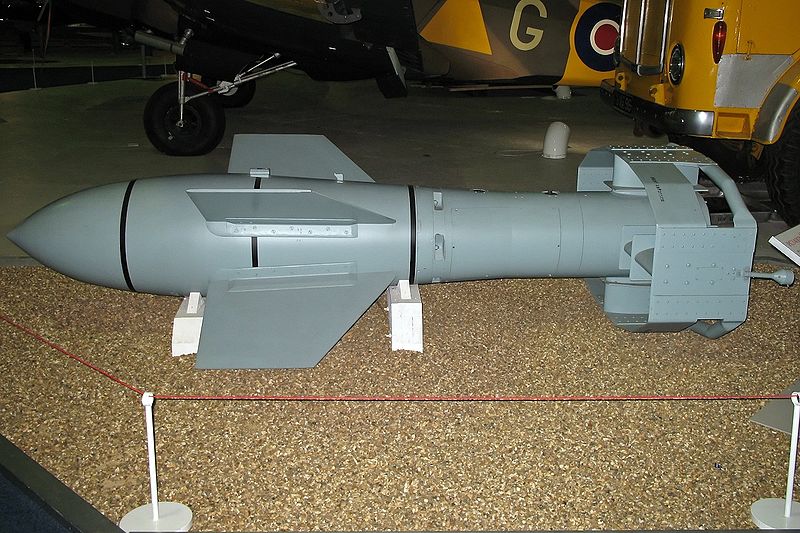

The Fritz-X Radio Guided Bomb

The fourth and final ship of the Class, Impero, was was laid down and launched, but never completed. When Italy surrendered the Germans used her incomplete hull as a target sinkinrn her. She was raised and scrapped after the war.
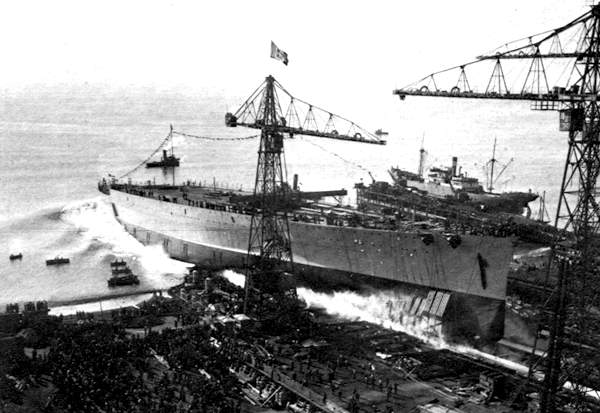
Impero Being Launched in 1939

The Vittorio Veneto class was a sound design and operationally successful against the Royal Navy. Her design was explored by the Soviet, Dutch, and Spanish navies in their attempts to build moderner battleships or battlecruisers, although none came to fruition. The fact that the two surviving ships, as well as the newest most modern were scrapped was a travesty as the Cold War began. Their loss left Italy with the remaining two Andrea Doria class battleships, completed in 1915 and 1916 as the battle force of the Italian Navy, until they were scrapped in the late 1950s and early 1960s.

The brave sailors of the Regina Marina who manned these fine ships should not be forgotten.

Until tomorrow,

Peace,

Padre Steve+
1 Comment

Filed under History, Military, national security, Navy Ships, nazi germany, World War II at Sea, world war two in europe

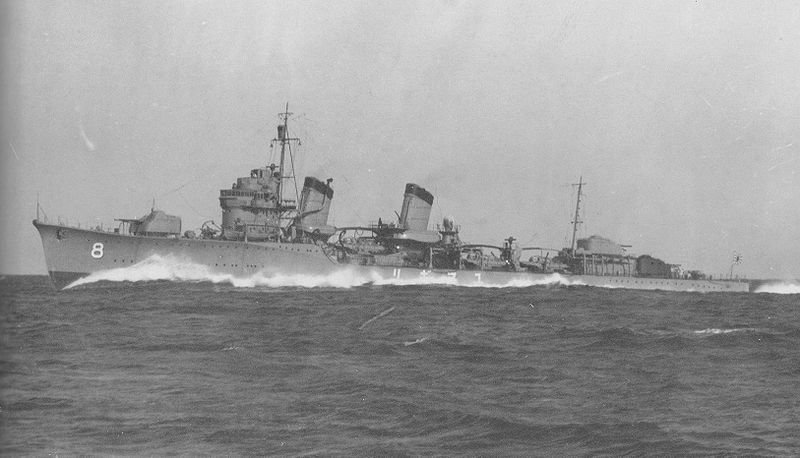
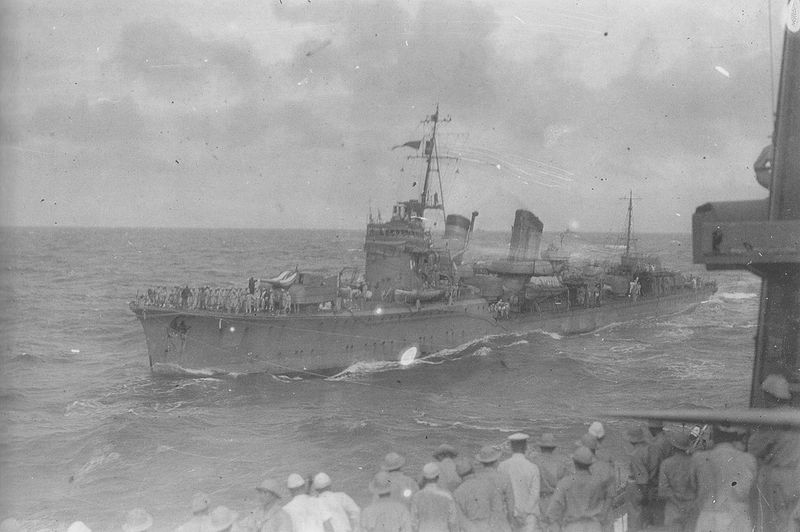
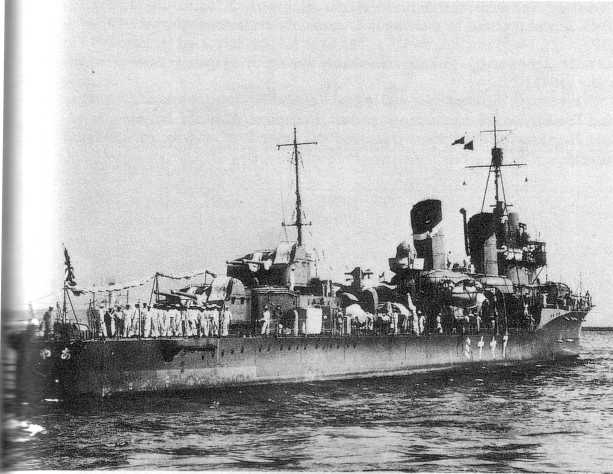
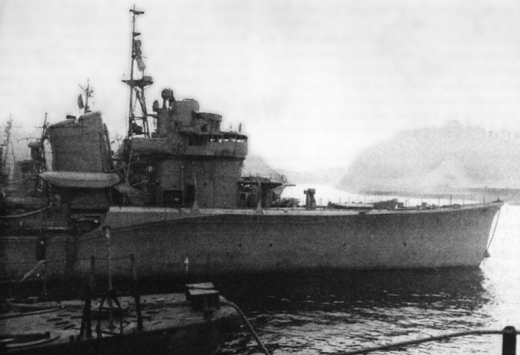
Swift and Deadly, the Japanese Fubuki Class “Special Type” Destroyers


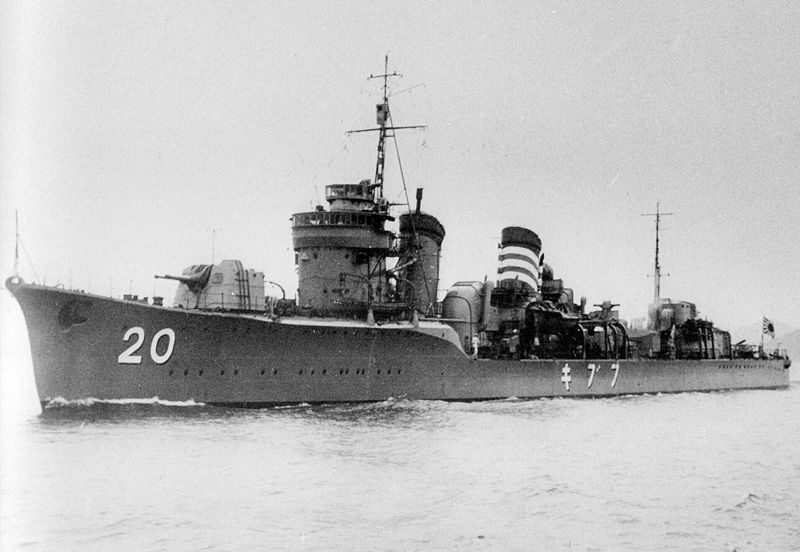
IJNS Fubuki

Friends of Padre Steve’s World,

Tonight something different, once again going back to write about important classes of Navy ships. I will continue doing this whenever I need a break from mass deaths, politics, and trying to inject reason into the vacuous minds of so many Americans about COVID 19.

The Imperial Japanese Navy set the standard for new destroyer construction in the 1920. While the United States Navy and British Royal Navy were fully stocked with their First World War design destroyers the Imperial Navy’s General Staff issued a requirement for a class of large destroyers which would complement the new classes of modern cruisers being built for the navy. There was nothing wrong with their existing destroyers of the Minekaze, Wakatake, Kamikaze, and Mutsuki classes, many of which continued to serve in secondary roles in the Second World War as escorts for convoys and invasion groups.  They were the equals of contemporary British and American destroyers, but the Imperial Navy’s long range plan required larger, faster, more powerful and longer range destroyers.

The Navy requirement called for a 2000 ton ship capable of 39 knots with a 4000 mile range at 14 knots, that could carry a large number of torpedoes and a heavy gun armament. The program was designed to give the numerically inferior Imperial Navy a qualitative superiority against any opponent. The ships displaced 1750 tons, but even then their displacement limited  their top speed to 35 knots, not the specified 39 knots.


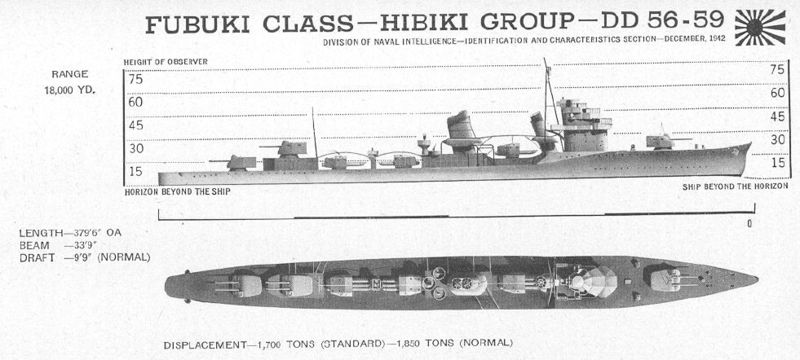
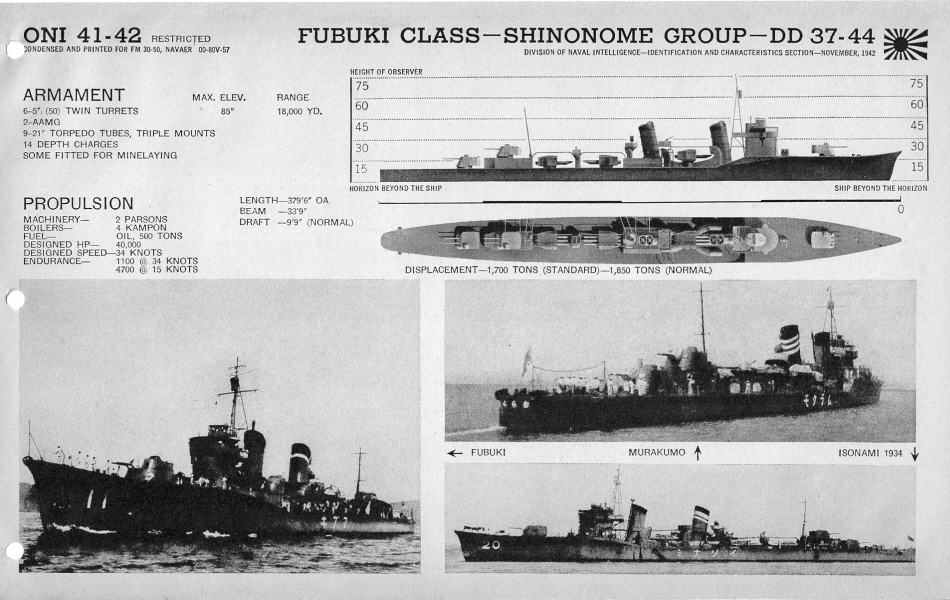
WWII Office of Naval Intelligence images for Fubuki Class variants

The 24 ship Fubuki Class was such a quantum leap over other contemporary destroyers that the Imperial Navy referred to them as the Special Type. Their large size, heavy armament and high speed made them equal to many light cruisers of the era.

The basic design was modified to carry more guns and torpedoes on an increased displacement and the result was a 388 foot long 1750 ton ship armed with six 5” 50 caliber guns in weather proof and splinter proof mounts.  On the initial 10 ships of the class the guns could only be elevated 40 degrees which made them less than effective in an anti-aircraft role. However, in the succeeding two groups of the class, the 5” mounts were an improved type which allowed them to elevate each gun separately up to 75 degrees.  The ammunition magazines were below the gun mounts and ammunition was passed to the guns by hoists.  This gave them a decided edge in rate of fire over other destroyers which had open or partially shield mounts dependant on ammunition passers carrying ammunition to them from central magazines.


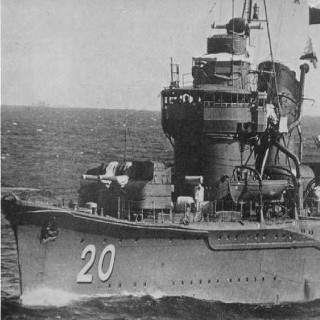
Close up of IJNS Sagiri

As built the light anti-aircraft armament composed of two Type 93 13mm machine guns. In the years before the war, and during the war their anti-aircraft was increased in some cases up to twenty-two 25mm anti-aircraft guns and 10 of the Type 93 machine guns. In 1944 surviving ships of the class had their X- 5” gun mount removed to facilitate more 25mm guns, radar and an additional depth charge capacity.


IJNS Ikazuchi

The nine 24” torpedo tubes in triple mounts were able to be reloaded while in battle a capability not shared by other destroyers.  The ships carried a total of 18 torpedoes which initially were of the Type 8 torpedos carried on earlier destroyers. However, these were replaced by the oxygen powered Type 93 “Long Lance” torpedoes before the war. These torpedoes had a higher speed, longer range and heavier warhead than torpedoes produced by other navies.  The deadly Long Lance torpedoes would become the scourge of Allied navies during the war, especially during the brutal surface engagements of 1942.


IJNS Yugiri

Due to the added weight their increased armament made to the design unstable in heavy seas, and a longitudinal hull weakness that necessitated in the class being rebuilt between 1935 and 1937. The rebuild increased their displacement to 2050 tons standard and to over 2400 tons full load. The increase in displacement resulted in a slight reduction of speed.


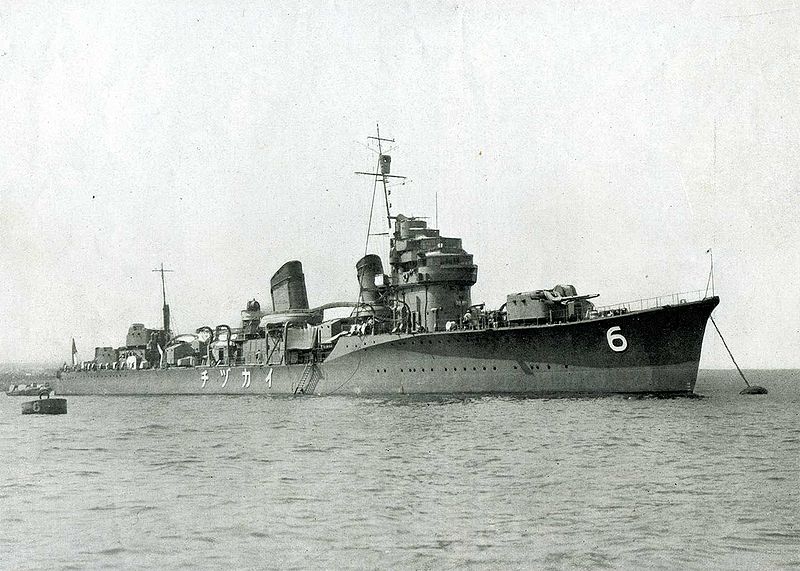
IJNS Hibiki

The class was built in three groups, and each is sometimes referred to as a separate class as each incorporated improvements over the preceding group. The first 10 ships of the class which are sometimes referred to as the Fubuki Class were of less complex design than subsequent ships. Their overall length was 388 feet, with a beam of 34 feet, and draft 10.5 feet. They had a smaller bridge and exposed gunfire control room than the next two groups.

The second group of 10 ships are commonly referred to as the Ayanami Class. The group had an enlarged bridge structure which enclosed previous exposed positions to include the gunfire control room, and  range finders. They were also provided a range finder tower.  They were the first ships to receive the improved Type B gun mounts.  The final subtype of the class, the Akatsuki Class comprised just 4 ships and was distinguished by a smaller forward funnel, larger boilers and a unique splinter proof torpedo tube mount housing.


IJNS Ayanami

The ships of the class participated in every major campaign of Japan’s war in the Pacific as well as operations against China in the 1930s.One ship the Miyuki was lost in a collision with another destroyer in August 1934.

All remaining ships of the class  served with distinction throughout the war, especially during the Battle of the Java Sea and operations around Guadalcanal and the Solomon Islands and the Aleutians  from 1941-1943. The participated in the sinking of the heavy cruisers, USS Houston, HMS Exeter, and the light Cruiser HMAS Perth, a number of destroyers, submarines, patrol ships and auxiliaries, while providing escort to carrier task forces, surface groups, and convoys. The Ikazuchi and Inazuma were noted for their rescue and humanitarian treatment of allied sailors, including those of the USS Pope during the Battle of the Java Sea. No ship or crew of the class was ever accused of committing war crimes or mistreating prisoners of war or other survivors of Allied ships.

All of the ships of the class except the Hibiki and Ushio were lost in action during the war. Four the Fubuki, Ayanami, Yuguri and Ataksuki were sunk in surface actions. Eight ships the Usogumo, Shirakumo, Isonami, Shikinami, Sagiri, Sazanami, Inazuma, and Ikazuchi were lost to Allied submarines.  Seven ships the Shirayuki, Hatsuyuki, Murakumo, Uranami, Asagiri, Oboro and Akebono were sunk by aircraft and two the Shinonome and Amagiri fell victim to mines.

The demilitarized IJNS Ushio after the war

Hibiki was given to the Soviet Union following the war and served in that Navy until either 1953 or 1963 depending on the source. She was used as a target and sunk in the 1970s near Vladivostok and her wreck is now a tourist site for divers. Ushio surrendered to the Allies was demilitarized, assisted in the evacuation of Japanese forces from conquered areas, and then scrapped in 1948.

As a sidebar, the  Amagiri played a role in the life of future President John F Kennedy when she rammed and sank his PT-109 in the Blackett Strait on August 2nd 1943. Her commanding officer at the time Lieutenant Commander Kohei Hanami attended Kennedy’s inauguration in 1961. Even before Kennedy ran for the Senate Hanami wrote to Kennedy expressing his admiration. Kennedy’s daughter Caroline met Hanami’s widow in 2015 and invited her to the christening of the USS John F. Kennedy CVN 79. 

The Fubuki Class destroyers set a standard in destroyer construction that other navies around the world sought to emulate. Fast and powerful they and their crews fought gallantly in the Second World War and though in a losing cause deserve to be remembered.

Peace,

Padre Steve+

Leave a comment

Filed under History, imperial japan, Loose thoughts and musings, Military, Navy Ships, US Navy, US Presidents, World War II at Sea, world war two in the pacific

And So It Goes… COVID 19 Continues It’s Deadly Swath, With the Help of the Uncaring


Friends of Padre Steve’s World,

in his book Slaughterhouse Five, the late Kurt Vonnegut repeated the words “and so it goes” many times to emphasize his experience of war, being a prisoner of war, and being targeted by bombing campaigns against a defenseless and military insignificant city by the air forces of the country he served and its allies.

By official count the Novel Coronavirus 19 has now killed more Americans than during the Vietnam War, the First Gulf War, Beirut 1983, Somalia, Kosovo, Bosnia, Operation Provide Comfort, Invasion of Panama, Persian Gulf tanker escorts, the Bombing of Libya 1985, Invasion of Grenada, El Salvador Civil War, Iran 1980, USS Liberty Incident, Dominican Republic Intervention, Cuban Missile Crisis, Bay of Pigs Invasion, 1958 Lebanon Crisis, and official Cold War killed combined. Those wars, incidents, actions, operations, invasions and interventions the official count of US Military dead was 65,752. And so it goes….

The official number of 65,766 COVID 19 dead is most certainly an undercount as in February, March, and April the number of deaths not ascribed to COVID 19 spiked far higher than seasonal averages with no other explanations. despite the fact that New York, which leads the nation in the number of COVID 19 infections and deaths has seen its daily infections fall from an average of 7,000 to 10,000 to under 3,000 a day in the past week. At the same time even as the rates of infection and death are falling in New York and New Jersey, the epicenter of the virus, they are now increasing in much of the rest of the country, especially in the states that loosened their stay at home and social distancing rules last week, specifically Georgia and Texas. But they are not alone. Other states with poorer and older populations with pre-existing conditions such as obesity, lung diseases, and diabetes, as well as younger populations at risk because of underlying conditions from the use of drugs, alcohol, and smoking. To make matters worse, in many of these states rural hospitals and clinics are woefully equipped to handle the disease.

President Trump is pushing the governors of every state to reopen business, schools, and everything they can to somehow revitalize the economy. Of course it was the economy was what he was hanging his hopes for re-election. But the fragility of his economic achievements were demonstrated in the last few months. The United States has added over 30 million newly unemployed, with the unemployment rate jumping from just over 3% to well over 10% within a few weeks. Then there are the massive hits to the economy, the loss of taxable income, and the ever growing  budget deficit and national debt. The latter are unavoidable if one wants to preserve the nation, its workers and economic base, but are horrifying to the limited government conservatives and libertarians who cut the social, medical, and unemployment benefits to most of their constituents over a nearly 40 year period. If the President and his allies succeed they will doomed countless Americans to poverty and death, including those who helped elect him to office in 1916.

Of course neither they or President Trump never counted on a pandemic that had already been predicted and warned about by experts as well as Presidents George W. Bush and Barack Obama. But the Trump Administration cut vital preventive health, biological and viral investigative units throughout the government. The actions of the Trump Administration and the Congress which had been controlled by GOP majorities until the 2018 elections gutted many of the best and most proven infectious disease units to defend the country from the assault of biological or viral pandemics. It was also ignored  as the warnings of multiple U.S. Intelligence agencies from December 2019 until early March 2020 of the pandemic brewing in China. The President said that the virus “posed no threat,” only had “infected 15 people and that the number would go to zero,” or that it would miraculously “go away” as it infected 15 people and that the number would go to zero,” ” or disappear with warm weather. None happened.

Despite this the Administration, including Attorney General Bob Barr have prodded, pushend, and threatened state governors who did not comply with Trumps wishes to reopen their states with economic reprisal. Additionally the President has encouraged so called “militias” to take action against their state governments, and for governors to negotiate with them.” 

On Thursday a group of these fat, heavily armed, and equipped men and women armed with combat weapons and protective  gear assaulted the Michigan State Capitol, nearly taking control of it had it not been for actions of police and the governor to defuse the situation without bloodshed. Today thousands of people in the GOP stronghold of Huntington Beach California rioted against the closure of beaches, of course none were social distancing, and most wore no PPE, endangering themselves and others. Frankly, I believe that these people are narcissistic sociopaths who could not care if others live or die, even if they are family members or friends. All that matters is their loyalty to their cult leader. In this case, President Donald Trump.

It is a cult like relationship. To quote the current Trump cheerleader and cultist Pat Robertson:

“Cults teach that salvation comes through Christ, plus their little unique way. Some cults do not acknowledge Christ at all. They may make Him coequal with their religious teachers or with certain great men of history. The quickest way to recognize a cult is by its treatment of Jesus.

Second, cults frequently attempt to instill fear into their followers. The followers are taught constantly that salvation comes only through the cult. “If you leave us, you will lose your salvation,” they say.

“The third area has to do with the exaltation of the leader of the cult. Cults often center around a man or woman who is trying to gain power, money, or influence from manipulating people.” https://www1.cbn.com/questions/church-or-cult 

Likewise, a man who would have been 180 degrees opposite of Robertson, Eric Hoffer noted: “The quality of ideas seems to play a minor role in mass movement leadership. What counts is the arrogant gesture, the complete disregard of the opinion of others, the singlehanded defiance of the world.”

Both are on display today in the actions of the President and his so-called militia movement fowllowers who are both subverting the efforts of Federal Government Scientists and State governors and legislators to mitigate the effects of the COVID 19 in their states, even if it means the deaths of thousands or millions more. For the Cult Leader and his followers these deaths are nothing. The President said on Friday that if the death toll was under 100,000 that it would be a victory. That number is less than 34,000 from today’s tally, which if the number of dead grows by 2,000 or more a day will be eclipsed by the middle of the month. Now with the rates of infection slowing in New York and New Jersey, the infection rates are moving rapidly up in the “Red States” of the American South and Midwest. Some of which have quickly abandoned any social distancing, as well as those on the fence or stay at home directives their state governors might have attempted in order to regain the trust and support of a sociopath President, who does not care how many people die, so long as their deaths do not interfere with his re-election and path to unlimited dictatorial power.

For me that is too much. I have to echo and paraphrase the words of General Henning Von Tresckow, a practicing Christian, who killed himself on the Russian Front after the plot he helped to attempt to kill Hitler several times failed, said:

“We have to show the world that not all of us are like him. Otherwise, this will always be Trump’s America.”

I cannot say any less. The President and his cult-like followers are bent on the death of millions of our fellow citizens, and only care if the number remains below a bar that they set which ensures they retain owner. I cannot do that, even if that skylines me to his supporters. Hell a decade ago I had death threats from Neo-Nazis for articles I posted back then. Now, I don’t give a damn. I will speak the truth. I have to. My sacred oath that I have taken many times to the Constitution demands that I can do nothing else, regardless of who is President, or the political party, ideology, or personal gain they have to keep by remaining in power.

Sinclair Lewis, the author of It Can Happen Here, wrote:

“A country that tolerates evil means—evil manners, standards of ethics—for a generation, will be so poisoned that it never will have any good end.”

The truly sad fact of the matter is that our country is nearly at that generational point I’d one measures it from the rise of the Religious Right in the mid 1970s and the seizure of power during the Reagan Administration, and the rise to power of Newt Gingrich’s campaign to take back America, and the Tea Party movement that began in 2009. All of these were underwritten by the money and airtime of supposedly Christian pundits, television and radio hosts, as well as elected officials and political action groups, many funded by the corporate wealth of the Koch Brothers and their allies.

So until tomorrow, be careful and stay safe by protecting you, your family, and all of us by maintaining stay at home policies and social distancing until a vaccine, effective testing, tracing and treatments are developed and available to all, otherwise we will endure this scourge for the next 18 to 30 months. That is what happened during the Great Influenza of 1918-1920, and COVID 19 had proven to be much more infectious and deadly than any influence outbreak since 1918-1920.

Peace,

Padre Steve+

12 Comments

Filed under afghanistan, anti-semitism, authoritarian government, civil rights, Coronavirus, ethics, healthcare, History, holocaust, Immigration and immigrants, iraq,afghanistan, leadership, Military, national security, nazi germany, News and current events, Political Commentary, racism, Religion

The Liberation of Dachau “Model Camp” at 75 Years

Friends of Padre Steve’s World,

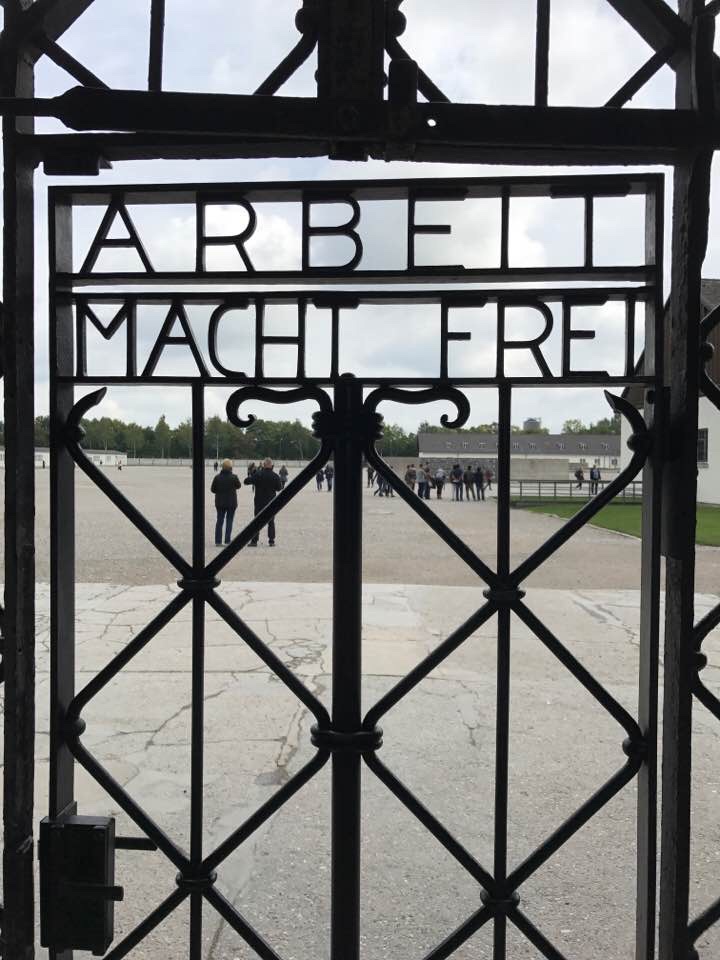
Today marked the 75th anniversary of the liberation of Dachau, the model concentration camp of the the Nazi SS State.


On March 20th 1933, barely a month and a half after the Nazi takeover of the German government and three days before the passage of the Enabling Act the Police President Of Munich, SS Reichsführer Heinrich Himmler ordered the establishment of the Dachau Concentration Camp. He appointed SS Standartenführer Hilmar Wäckerle as Commandant and the first 200 political prisoners from Munich’s Stadelheim prison arrived at Dachau on March 22nd.

The first SS guards assigned to Dachau were given the following instruction:

“Comrades of the SS!
You all know what the Fuehrer has called us to do. We have not come here for human encounters with those pigs in there. We do not consider them human beings, as we are, but as second-class people. For years they have been able to continue their criminal existence. But now we are in power. If those pigs had come to power, they would have cut off all our heads. Therefore we have no room for sentimentalism. If anyone here cannot bear to see the blood of comrades, he does not belong and had better leave. The more of these pig dogs we strike down, the fewer we need to feed.”

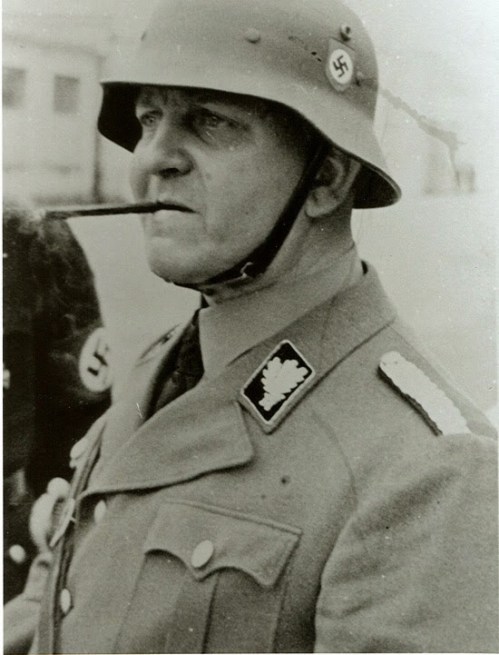
Wäckerle’s brief tenure as Commandant was marked by extraordinary brutality on the part of his staff, so much so that charges were brought against him by the Munich courts which resulted in his relief by SS Gruppenführer Theodore Eicke in July 1933. Eicke would establish the regulations which governed all the later Concentration Camps, and make Dachau the model camp for all others.

Theodore Eiche

Theodore Eicke

Among the later SS killers of the Holocaust who served at Dachau were Adolf Eichmann, and the Commandant of Auschwitz, Rüdolf Höss. It became a training ground for other Concentration Camp commanders and staff. Others would become leaders in the Waffen SS and the Einsatzgruppen death squads.

The announcement of Dachau’s Opening was reported by the German press in this release:

On Wednesday the first concentration camp is to be opened in Dachau with an accommodation for 5000 people. ‘All Communists and—where necessary—Reichsbanner and Social Democratic functionaries who endanger state security are to be concentrated here, as in the long run it is not possible to keep individual functionaries in the state prisons without overburdening these prisons, and on the other hand these people cannot be released because attempts have shown that they persist in their efforts to agitate and organize as soon as they are released.

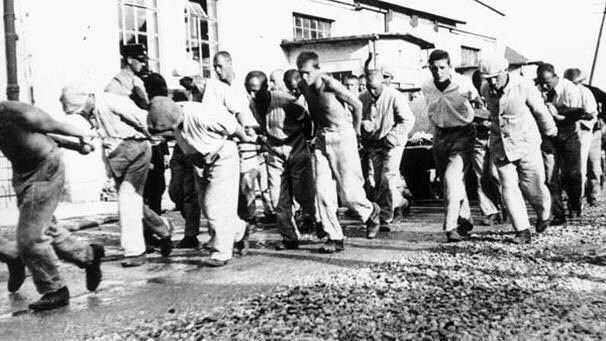
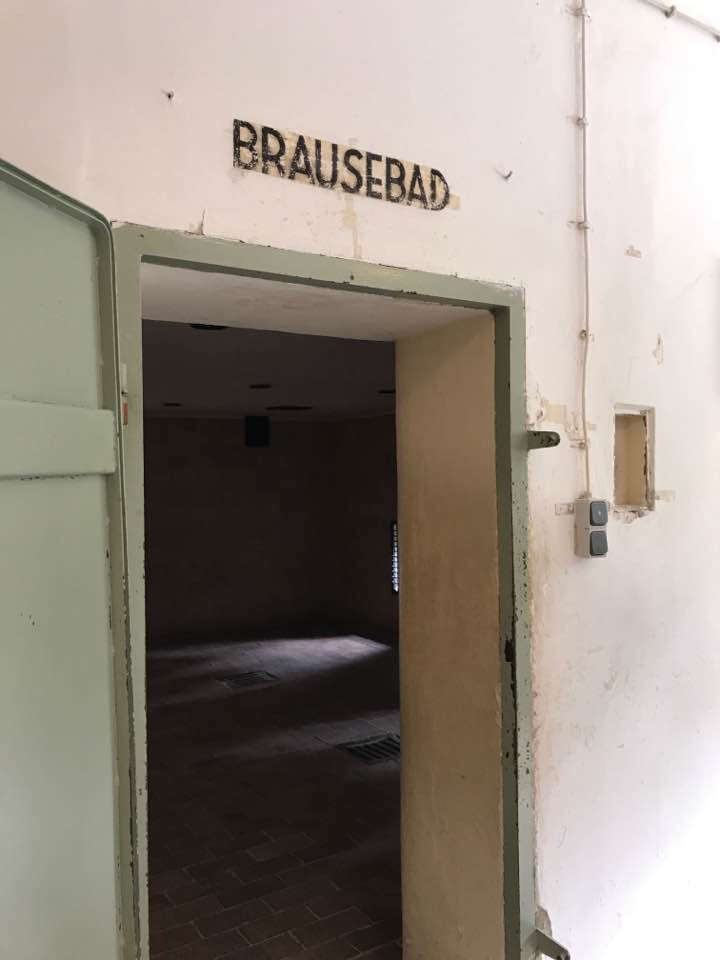
Dachau began as a political prisoner camp for the Nazis to imprison Socialists, Communists, Jehovah’s Witnesses, some Jews, and other dissidents. It wasn’t a “death camp” designed to exterminate people even though tens of thousands of people died or were executed there. It was designed to terrorize, dehumanize, and destroy the souls of its inmates.

It was a place of inhuman medical experiments, a place of terror, and the administrative center of a network of over 30 large and 100 small sub-Camps which were used as sources of slave labor for the German armaments industry. But one has to remember that the SS was not simply an instrument of terror, but an institution also devoted to profit. Prisoners were valued in what their lives equated in profits. A prisoner was valued in what he or her could produce versus the expenses of keeping them alive for a period of 6 to 12 months. Under Himmler and his assistant for production and profits, ObergrüppenfuhrerOswold Pöhl the Concentration Camps, as well as the death camps became centers of profit for the SS in collaboration with German industrial concerns and industries owned by the SS itself.

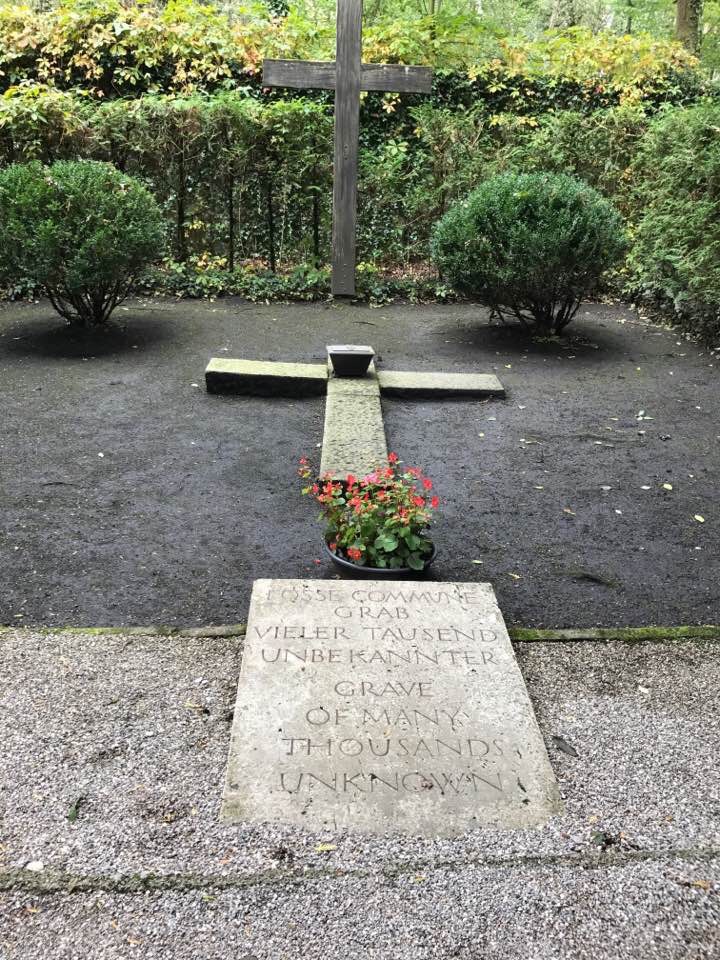
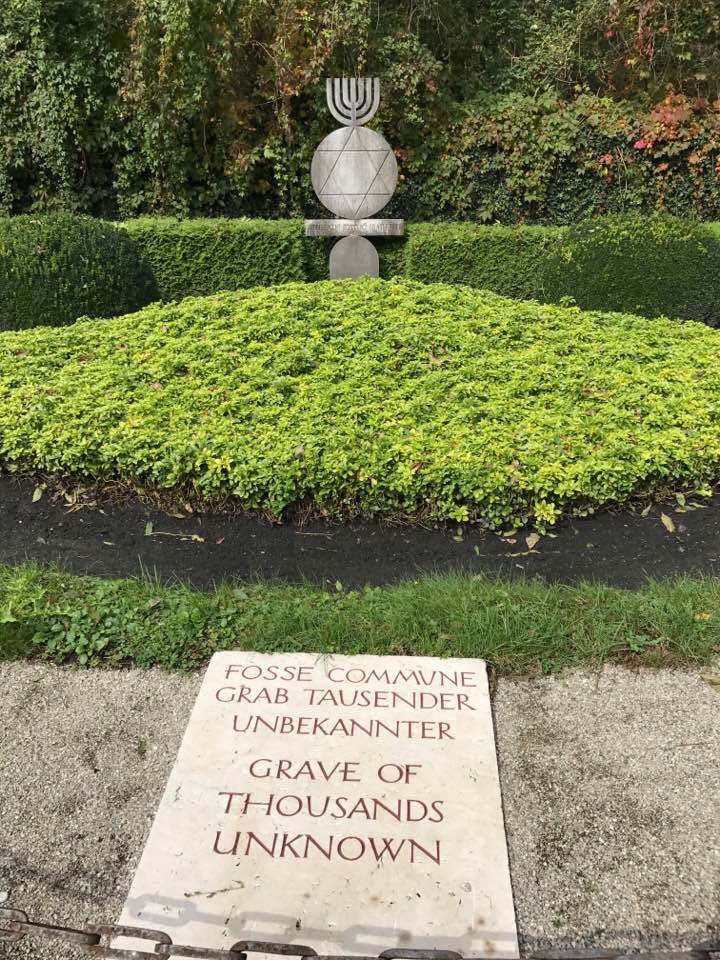
Dachau was not one of the Death Camps, although it was a place of incredible cruelty, extraordinary suffering, brutality, and death. While not a “death camp” per say, an estimated 40,000 or more  prisoners were murdered there. For tens of thousands of others it served as a transit camp from which they were sent to the death factories in Poland, including Auschwitz, or other work camps, where many died of being worked to death, malnutrition, disease, or the simple cruelty and maltreatment inflicted on them by the guards.

Holocaust survivor Yehuda Bauer wrote: “The horror of the Holocaust is not that it deviated from human norms; the horror is that it didn’t. What happened may happen again, to others not necessarily Jews, perpetrated by others, not necessarily Germans. We are all possible victims, possible perpetrators, possible bystanders.”

The picture that you see above is the memorial to the Unknown Prisoner at Dachau. The words: “Den Toten zur Ehr, den Lebenden zur Mahnung” [To Honor the Dead, to Warn the Living] are engraved at its base.

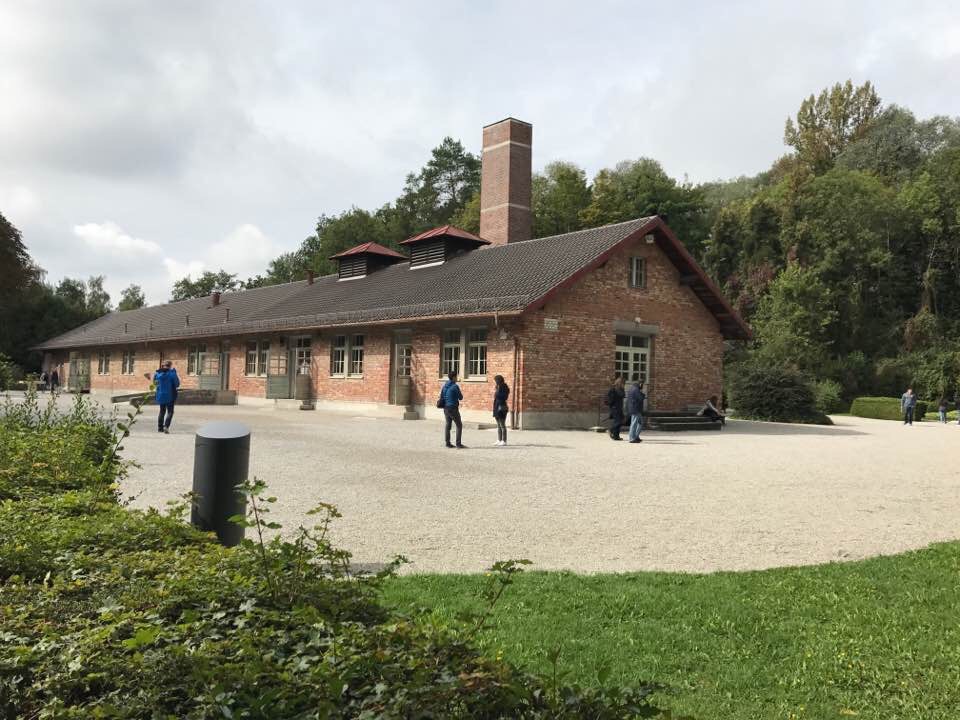
I have been to Dachau at least a half dozen times beginning back in 1996. For me as a historian of the period the trip is both for learning and for meditation, for beyond its historical significance this is a holy place, a place made holy by the blood of tens of thousands of victims of one of the most evil regimes in history. The crimes committed by the staff of Totenkopfverbande SS guards from it’s inception were intended to terrorize and dehumanize the inmates who included political prisoners, religious objectors, Jews, and homosexuals. The inmates were not there because they were convicted of any crimes, in fact many had actually been exonerated by courts. In the case of those who had been convicted by courts, all had served what ever sentence they had been convicted of, but upon their release from prison were picked up by the SS and taken to Dachau where they were imprisoned without being charged with a crime, and an indefinite period and no date of release. Sometimes prisoners would suddenly and without warning be released, but they remained under observation by the local police and Gestapo. If they talked about their experience they were quite often sent back.

Prisoners were told on arrival:

Here you are, and you’re not in a sanatorium! You’ll have got that already. Anyone who hasn’t grasped that will soon be made to. You can rely on that . . . You’re not prison inmates here, serving a sentence imposed by the courts, you’re just ‘prisoners’ pure and simple, and if you don’t know what that means, you’ll soon find out. You’re dishonourable and defenceless! You’re without rights! Your fate is a slave’s fate! Amen.

In the Camp the prisoners were subject to punishment for even the most minor or perceived infractions, beatings, and whippings. Other punishments were meted out by guards who themselves were punished if they showed any mercy or human kindness to a prisoner. “While an offender sentenced to a term in prison knew when he was going to get out, release for the concentration camp inmate was determined by the whim of a quarterly review board, and could be delayed by the malice of any of the SS guards.”

Theodore Eicke, the commandant who systematized the Concentration Camp system created a world that his subordinate, and the later Commandant of Auschwitz, Rudolf Hoess described:

“It was Eicke’s intention that his SS-men, by means of continuous instruction and suitable orders concerning the dangerous criminality of the inmates, should be made basically ill-disposed towards the prisoners. They were to ‘treat them rough’, and to root out once and for all any sympathy they might feel for them. By such means, he succeeded in engendering in simple-natured men a hatred and antipathy for the prisoners which an outsider will find hard to imagine.”

Even a brutal man like Hoess found the brutality hard to watch, he recalled the:

“malicious evil-minded, basically bad, brutal, inferior, common creatures’ amongst the guards, who compensated for their sense of inferiority by venting their anger on the prisoners. The atmosphere of hatred was total.”

In the twelve years of its existence the staff of Dachau, through mistreatment, execution by bullet, gallows, through being used as subjects in grotesque medical experiments, by “execution by work,” or untreated illness and disease, murdered 41,566 prisoners. The point to be remembered is that despite this incredible number of murders that Dachau was not an extermination camp.

As the Third Reich crumbled the Nazis attempted to hide their crimes. Many inmates from Dachau were sent to other camps, by train or forced marched hundreds of miles. During these transits many, already shells of humanity due to maltreatment, disease and malnourishment. Even as this was happening trains from other camps were arriving at Dachau.


On 29 April 1945 units of the U.S. Army 45th and 42nd Infantry Divisions liberated Dachau, which was surrendered by its senior remaining officer, a mere SS 1st Lieutenant, as the commandant and   o ther senior officer had already fled. Most to be captured within days or weeks. The liberators were shocked by what they saw, the piles of dead, the bones in the crematoria, the emaciated prisoners,  and a train car full of dead, and some soldiers took their revenge on some of the guards, and massacred an estimated 20-50 of the surrendered SS men. Although charges were preferred, they were dropped.

The Execution of SS Guards at Dachau 

Regardless of the actions of the American liberators, even those who took justice into their own hands, the fact is that the Dachau guards all knew what was going on and had each to some degree participated in the atrocities at Dachau and in some cases other camps, or on the Eastern Front.

You may wonder why I took the time to go into such detail about my visits to Dachau and its terrible legacy. The answer is the same why I choose to walk American Civil War battlefields, it is to being to try to understand what the people there were seeing and experiencing.

Of course there were the prisoners who were so savagely treated by their jailers. Then there were the bystanders, the citizens of Dachau and other German cities who watched as Jews, political enemies, and others were marched to the camp, which was not a secret installation. Finally, there were the perpetrators, very few of whom were punished for their actions.

But another reason is that the survivors, be they victims, perpetrators, or bystanders are rapidly passing away

Soon none will be left. When that happens it is up to us the living to ensure that this is not forgotten and that those murdered at Dachau, the other Concentration Camps, the extermination camps, and those killed by the murder squads that went from one end of Europe to the other in a systematic attempt to wipe every Jew that they could find off of the face of the earth. Yes, there were other victims, but the Nazi crusade against the Jews knew no boundaries, physical or time included. Unlike every other genocide it extended beyond national borders, or time; it was an eschatological crusade that by the will of Hitler was limited by only one factor, the complete military defeat that was inflicted on Nazi Germany by those who she attacked.


Finally, the story must be told because there are those who either claim it didn’t happen, or are tired of talking about it. In Germany those include leaders of the new-Nazi AfD (Alternative for Germany) Party. In the United States, Britain, and other nations there are members of many new-Nazi and Alt-Right groups who desire very much the same thing. But if decent people decide not to speak out, if we remain silent, there is nothing anywhere that will keep these ideological descendants of Hitler from beginning it again, if not to the Jews, to other despised racial, religious, ethnic, or ideological groups. We live in a world where demagogues take advantage of people’s legitimate anxieties and deeply ingrained prejudices to stir up ungodly anger and hatred in order to both gain new followers and to incite those followers to a campaign of violence.

Doctor Timothy Snyder wrote:

“The European history of the twentieth century shows us that societies can break, democracies can fall, ethics can collapse, and ordinary men can find themselves standing over death pits with guns in their hands. It would serve us well today to understand why.”

But I know why, there are some people who are sociopaths, who though they seem ordinary have no empathy for others, and they are more numerous than we might ever suspect. Captain Gustave Gilbert, a psychologist assigned to the major war crime defendants at the Nuremberg war crimes trials noted:

“In my work with the defendants (at the Nuremberg Trails 1945-1949) I was searching for the nature of evil and I now think I have come close to defining it. A lack of empathy. It’s the one characteristic that connects all the defendants, a genuine incapacity to feel with their fellow men. Evil, I think, is the absence of empathy.”

That absence of empathy runs strong among Trump supporters and others of the religious and political right today. For the rest of my life I will fight them and expose them.

So until tomorrow I wish you all the best and ask that no matter what the leaders of your state say, to obey common sense and facts and be as careful as you can, as the COVID 19 pandemic is far from over.

Peace,

Padre Steve+

5 Comments

Filed under authoritarian government, Coronavirus, Diseases Epidemics and Pandemics, ethics, germany, History, holocaust, Military, nazi germany, News and current events, Political Commentary, racism, Religion, us army, world war two in europe

Power, Beauty and Tragedy at Sea: The Battlecruisers Scharnhorst & Gneisenau

Scharnhorst

Friends of Padre Steve’s World,

I was too tired last two nights to write anything. Thursday I had a long but good day at work and had to clean out much of my private email last night before I could do anything else because I was at over 90% of my email storage capacity. And it took forever to sort through it and get it down to almost 50%. Likewise, I did very little on social media. I finally caught up on my comics from the last couple of days and replied to some correspondence that I needed to do and began to work on this last night, but again found that I was too tired to complete it. So when it appeared that I wouldn’t complete it until after midnight I simply said “what the hell” and put it off until now.

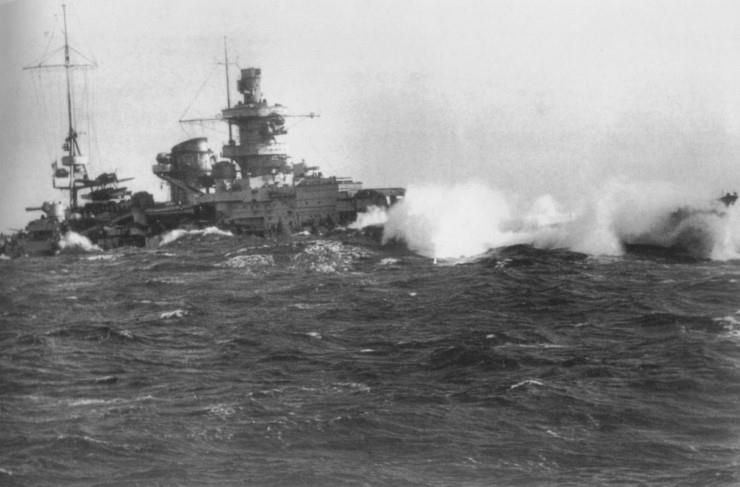
This is another one of those posts to switch things up and write about a class of warships that I find fascinating, the World War II German Battlecruisers, Scharnhorst and Gneisenau. First and foremost I think that they were among the most beautiful capital ships ever built. That doesn’t mean that they didn’t have design flaws, or were superior to many other capital ships. Gneisenau’s career was cut short by Germany’s inability to protect her while in port, while Scharnhorst was the victim of an ill planned sortie under the command of an admiral who had no experience commanding large ships and who had only assumed command of her task force the day before. So if you are a Naval history or warship  buff, enjoy.

Have a great day, stay inside and if you have to go out wear a mask and keep a safe distance from others to protect you and them.

Peace,

Padre Steve+


The naval architects of Germany in the early 1930s designed some of the most beautiful as well as deadly warships of the Second World War.  Following Nazi Germany’s rejection of the provisions of the Treaty of Versailles the Kreigsmarine enacted building program to enlarge and modernize the German Navy.

Gneisenau refueling  from Tanker Westerwald in July 1939 

The first major units constructed were actually begun by the predecessor to the Kreigsmarine, the Reichsmarine of the Weimar Republic.  These were the Deutschland class Armored Ships, Panzerschiffe, sometimes called “Pocket Battleships” and later during the war were reclassified as Heavy Cruisers. These ships were designed to replace the old pre-Dreadnaught battleships which Germany was allowed to retain following the Treaty of  Versailles. The ships incorporated electric welds to reduce displacement, diesel engines for extended cruising range to enable them to serve as commerce raiders and a battery of six 11” guns. It was believed that as surface raiders their speed would allow them to avoid battle with all existing battleships except the three British Battlecruisers Hood, Renown, and Repulse, while being able to outgun any heavy or light cruiser they might encounter on such a mission. While they were an advance over anything in the German inventory they were outclassed by Hood, Renown and Repulse, as well as later French Dunkerque and Strasbourg. 

Gneisenau

The next and first truly capital ships built by the Kriegsmarine were the Scharnhorst and Gneisenau battleships which in reality were battle cruisers because of their light main battery of 11” guns as opposed to the 14”, 15” or 16” batteries of other nations battleships. The Hermans did. plan to rearm them with 15” guns but the war kept that from happening.

Scharnhorst before the War 

Despite the disparity in their main armament, their displacement and armor protection was comparable to other battleships of the era and their designed speed of 31.5 knots was superior to almost all other battleships of the era including the British King George V Class and the US North Carolina class.  Only the British Hood was superior to them in speed. However, their speed came at a cost, they did not have the long cruising range to make them truly effective commerce raiders because they were propelled by steam turbines which consumed large amounts of fuel. Since the Germans did not have a fleet replenishment system like the U.S. Navy, nor the secure network of worldwide bases of the Royal Navy, they could only operate in the Northern Atlantic or Arctic for limited amounts of time. If damaged there were few safe harbors for them which had the capability of repairing them without them being exposed to allied bombers.

Gneisenau Main Battery

As built they displaced 31,000 toms, however at full combat load they both weighed in at nearly 38,000 tons and were 772 feet long.  They had an armor belt that was nearly 14 inches thick.  Armed with a main battery of nine 11” guns and a secondary armament of twelve 5.9 inch guns they also mounted a powerful for the time anti- aircraft battery of fourteen 4.1 inch guns, 16 37mm and 16 20mm anti-aircraft cannons.  Additionally they mounted six 21” torpedo tubes and carried three Arado 196 A3 scout planes.  The main battery was eventually to be replaced by six 15” guns but this never occurred although Gneisenau was taken in hand after being damaged in Operation Cerberus to mount the new weapons but the conversion was never completed.

Scharnhorst in Action Against HMS Glorious

Scharnhorst was laid down on 15 June 1935 and launched 3 October 1936. She was commissioned 7 January 1939.  Her sister Gneisenau was laid down 6 May 1935, launched 8 December 1936 and commissioned 21 May 1938.  Upon the commencement of the Second World War the two sisters began a reign of destruction on British shipping in the North Atlantic. On 23 November 1939 they sank the Armed Merchant Cruiser HMS Rawalpindi while on patrol near the Faroe Islands.

During Operation Weserübung the pair surprised sank the aircraft carrier HMS Glorious and her two escorting destroyers HMS Ardent and Acasta on 7 June 1940. It was the only time a Fleet carrier was caught and sunk by battleships during the war. However, Scharnhorst was hit by a torpedo from Acasta which led to her being withdrawn to Trondheim, for temporary repairs before retiring to Kiel for permanent repairs.

Scharnhorst during Operation Berlin and being Refueled during the Operation

From January to March 1941 they conducted Operation Berlin under the command of Admiral Gunther Lütjens against British merchant shipping in the North Atlantic sinking 22 ships before returning to base. During the action the task force encountered the British Battleships HMS Ramillies and HMS Malaya escorting different convoys which Lütjens refused to engage. After sinking ships from another convoy they encountered HMS King George V and HMS Rodney which they escaped using their superior speed, but by now, Lütjens realize that the danger of continuing the outweighed the potential success and headed for repairs in the port Brest, in occupied France.

While in Brest Scharnhorst needed repairs to a superheater for her boilers, while Gneisenau was damaged during a British air raid and were unable to deploy with Bismarck and Prinz Eugen for Operation Rheinübung, during which Bismarck sank HMS Hood, but was damaged by a 14” shell from HMS Prince of Wales which cut the fuel line from the ship’s forward fuel tanks. Lütjens decided to cut the mission short and escape to Brest, but was damaged by an aerial torpedo from a Swordfish torpedo bomber flying from HMS Ark Royal which wrecked her steering gear and allowed HMS King George V, HMS Rodney, as well as cruisers and destroyers to catch and sink her on May 27th. Prinz Eugen returned safely to Brest to join the Battlecruisers.

The Channel Dash Seen from Prinz Eugen above and below


                          Admiral Cilliax Addressing the Crew of Scharnhorst at Kiel

While at Brest Gneisenau was again bombed and torpedoed requiring extensive repairs.  Due to the exposed location of the port, the German high command decided to return the ships to Germany along with the Heavy Cruiser Prinz Eugen.  Commanded by Vice Admiral Otto Ciliax,  Operation Cerberus took place from 11-13 February 1942. It involved the Battlecruisers and Prinz Eugen, accompanied by destroyers, E-Boats, and R-Boats. The force was protected heavy Luftwaffe fighter cover, Code named Operation Donnerkeil the air operation was commanded by the legendary Luftwaffe fighter ace, General Adolf  Galland. 

The dash up the English Channel, was unsuccessfully contested by the Royal Air Force and Royal Navy. The German ships successfully broke through the Channel in broad daylight and protected itself from being damaged by aircraft, motor torpedo boats, destroyers, and shore batteries. Once clear of the channel and headed for home both Scharnhorst and Gneisenau struck mines which caused various amounts of damage, but both got through to Kiel.

The success of the daylight passage through the English Channel shocked and infuriated the British public. The Times of London published an editorial on 14 February which fumed:

Vice Admiral Ciliax has succeeded where the Duke of Medina Sidonia failed. Nothing more mortifying to the pride of our sea-power has happened since the seventeenth century. […] It spelled the end of the Royal Navy legend that in wartime no enemy battle fleet could pass through what we proudly call the English Channel.

Despite the fact that then Operation was successful, the high command of the German Navy Their breakthrough was an embarrassment to the Royal Navy and Royal Air Force. The high Command of the German Navy considered it a tactical victory but a strategic defeat, for it had traded a base, albeit exposed from which it could conduct offensive operations, to the defense of Norway, a mission of dubious value at best.

                                    Gneisenau after being Bombed in Floating Dry Dock

While undergoing repairs in a floating dry dock at Kiel Gneisenau was heavily damaged by the Royal Air Force on the night of 26-27 February. The damage was such that the Kriegsmarine High Command decided to elongate her damaged bow section and rearmament to replace her main battery with 15” guns. Once seaworthy she steamed to the port of Gotenhafen for full repairs and rearmament. Although some work was completed the conversion was halted by Hitler who was infuriated by the failure of a German Task Force at the Battle of the Barents Sea, 30-31 December 1942. Hitler fired Grand Admiral Erich Raeder, and and gave an order to scrap what remained of the German surface fleet and concentrate on the U-Boat war. Admiral Karl Donitz prevented the scrapping of the fleet, but most ships were laid up and their crews reassigned to provide crews for U-Boats. Gneisenau was disarmed with her 11” and twin 5.9” removed and installed along the Atlantic Wall. One triple 11” turret, either Bruno or Dora was installed as part of a coastal defense battery in Norway. The battery was taken over by the Norwegians after liberation and remained in commission as Austrått Fort until 1968. Since then it has become a well preserved museum.

When the Red Army approached Gotenhafen her remaining crew moved her to the harbor entrance and sank her as a block ship on 27 March 1945.  Following the war she was raised by the Poles and scrapped in 1951.

Gneisenau Sunk as Blockship 

Turret of Gneisenau at Austrått Fort Norway


Scharnhorst was repaired following Operation Cerberes and in March 1943 was transferred to Norway where along with Tirpitz, Admiral Scheer, Lutzow (the former Deutschland), Admiral Hipper and Prinz Eugen she became part of a “fleet in being” poised to strike the Allied convoys bound for Russia. On Christmas Day 1943 under the command of Rear Admiral Erich Bey the Scharnhorst set sail with several destroyers undertook Operation Ostfront and the ensuing battle became known as the Battle of North Cape. The mission was an attack on two Russia bound convoys. But the orders were intercepted and decoded by the British. Admiral Bruce Fraser planned a trap to intercept and neutralize Scharnhorst. 

Once Scharnhorst sailed the battleship HMS Duke of York, four cruisers and a number of destroyers as she closed on the convoy. However, due to the sea conditions Bey detached his escorting destroyers and ordered them to return to port.  Duke of York and her supporting cruisers and destroyers engaged Scharnhorst. Bey now realized he had no chance of destroying the convoy and attempted to escape.  However, Scharnhorst was damaged and her speed and maneuvering capabilities impaired.  Now virtually defenseless and surrounded the great ship was sunk with the loss of all but 36 of her 1968 man crew. Her wreck was discovered 3 October 2000 some 70 miles north of North Cape Norway.

Sinking of Scharnhorst by Charles Turner ( c) National Maritime Museum; Supplied by The Public Catalogue Foundation

Survivors of Scharnhorst debark in England 

Thus ended the careers of two of the most beautiful battleships ships to grace the seas. Though their  careers were short they both survived frequent heavy battle damage to return and fight again.  Perhaps  their greatest weakness was the inability of the German Navy to provide them adequate escorts at sea, and the inability of the Luftwaffe to protect them against air strikes while in port. But ultimately their great weakness was the poor naval strategy employed by Hitler and Raeder at the beginning of the war which ensured their destruction. Of the major German surface units only the Pocket Battleships we’re capable of long range commerce raiding operations. The short range of the other heavy German ships, their reliance on steam turbines rather than Diesel engines, lack of air and surface support at sea, and secure overseas bases that that could operate doomed all of them to failure, and resulted in the deaths of far too many brave sailors, fighting for their country in an unrighteousness and evil cause.

Leave a comment

Filed under germany, History, Military, national security, Navy Ships, nazi germany, World War II at Sea, world war two in europe

The Ships that Held the Line: The Yorktown Class Carriers, Part One, the Yorktown

USS Yorktown CV-5

Friends of Padre Steve’s World,

I have been continuing to read and pay attention to the current developments in the COVID-19 pandemic.  Though I have already written a fair amount about it, I still have much to lean. I am still studying models on the spread of it, current numbers of total infections, new infections, and deaths in this country and around the world, as well as reading about the 1918-1919 Great Influenza. Finally I am trying to take in the current political and social disruption, the virus is causing, as well as the ever increasing threats of revolt and harm being mounted against the politicians and scientists who are actually following sound policies to slow the spread of the virus so it does not overwhelm our hospital system until successful treatments and a vaccine can be found. Sadly, much of this is coming in response to words and Tweets of President Trump, and appears to be a coordinated, and not spontaneous protest against the social distancing, isolation, and other restrictive measures to slow the spread of the disease. This perplexes me as a civil rights advocate, historian, defender of the First Amendment, as well as a veteran who has worked as a Medical Service Corps Officer and Critical Care Chaplain in two previous pandemics. 

As you can imagine that takes time to do, and I won’t shoot from the hip when I start writing new articles on the virus and its spread, the response, the casualties, and the political and social battle being waged by extremists using it as an excuse to promote their ideology. But I digress, I can write about that later. So tonight I go back to a less controversial subject, about which I know much, and have written about before. 

This article is part one of a three part series about the USS Yorktown Class Aircraft Carriers. Part one serves as an introduction as well as the story of the lead ship of the Class, the USS Yorktown CV-5. I wish you the best tonight, as well as tomorrow. Please be safe.

Peace,

Padre Steve+

Seldom in the annals of war is it recorded that three ships changed the course of a war and altered history as we know it. After December 7th 1941, the three ships of the Yorktown Class Aircraft Carriers, the USS Yorktown, USS Enterprise , and USS Hornet served as the shield against the seemingly unstoppable Japanese string of victories, and then served as the spearhead of the American counteroffensive that began far earlier that the Japanese imagined in the spring and summer of 1942.

Winston Churchill once said about Fighter Command of the Royal Air Force during the Battle of Britain: “Never in the field of human conflict was so much owed by so many to so few”.  However, in addition to that remarkable event, I would place the epic war waged by the three carriers of the Yorktown class against the Japanese Combined Fleet and First Carrier Strike Group, the Kido Butai of the Imperial Japanese Navy between December 1941 and November 1942 alongside the epic fight of the Royal Air Force against Hitler’s Luftwaffe.

USS Yorktown and Enterprise under Construction, Newport News Virginia, at the dock above either the USS Boise or St.Louis 

The Carriers of the Yorktown Class hold a spot in United States Naval History nearly unequaled by any other class of ships, especially since they were a class that numbered only three ships.  Designed and built in the mid 1930s they were the final class of pre-war carriers commissioned by the U.S. Navy

Unlike their predecessors they were no longer experimental ships. They were built incorporating the lessons learned through operational experience with the USS Langley, USS Lexington, USS Saratoga and USS Ranger. The Class had features that would become standard in the design of all future US Aircraft Carriers. As such they were the template for future classes of ships beginning with the Essex Class until the advent of the super carriers of the Forrestal Class. 

Yorktown Refueling Underway

The ships displaced 19.800 tons with a 25,000 full load displacement. They were capable of steaming at 32.5 knots, and they were the Navy’s first truly successful class of carriers built from the keel up.  The ships could embark over 80 aircraft and could steam long distances without refueling.  Protection was good for their era and the ships proved to be extraordinarily tough when tested in actual combat. In speed and air group capacity the only carriers of their era to equal them were the Japanese Hiryu and Soryu and the larger Shokaku and Zuikaku. British carriers of the period were about the same size but were slower, had a shorter range of operations, and carried a smaller and far less capable air group. However, their protection which included armored flight decks and hull armor that was superior to both the American and Japanese ships. That would prove particularly valuable in their survival, particularly in the Mediterranean Sea against massed attack by the German Luftwaffe.

Yorktown Operating Near the Coral Sea

The lead ship, the Yorktown CV-5 was laid down in 1934 and commissioned on 30 September 1937 at Newport News Shipbuilding.   She served in the Atlantic conducting carrier qualifications and operating with her sister ship USS Enterprise CV-6  to develop the tactics and operational procedures that would be used by US carrier forces until she joined the Pacific Fleet in late 1939.

Upon joining the Pacific Fleet, Yorktown took part in various major fleet exercises and due to the deteriorating situation in the Atlantic was transferred back to the Atlantic Fleet along with other significant Pacific Fleet units to screen convoys bound for Britain against U-Boat attacks. Yorktown was at Norfolk when the Japanese attacked Pearl Harbor and 9 days later she departed for the Pacific where she would join Rear Admiral Frank “Jack” Fletcher’s Task Force 17 (TF-17) at San Diego on December 30th 1941.

Her first duty to escort a convoy ship transporting Marine reinforcements to Samoa.  This was followed by the first American offensive action of the war, a raid on the Gilbert Islands including Makin Island in late January, and against eastern New Guinea in March. On May 4th the Yorktown’s air group attacked Japanese installations on Tulagi and Gavutu sinking the Japanese destroyer Kikuzuki.


The actions of Yorktown and TF-17 in the Solomons were connected to the Japanese attempt to capture Port Moresby, in preparation for attacking Australia. The Japanese forces were led by a task force centered on the carriers  Shokau and Zuikaku and the light carrier Shoho. The Americans parried the Japanese thrust with Task Group 11 centered on the USS Lexington and Fletcher’s Task Force 17 built around Yorktown.

Yorktown’s Nemesis The IJN Hiryu

The clash of the Japanese and American forces on the 7th and 8th of May 1942  is known as the Battle of the Coral Sea.  This was the first Naval Battle fought by forces that did not come within visual distance of each other, and which was fought exclusively by carrier based aircraft against the ships and aircraft of the opposing forces.

On the 7th Japanese aircraft busied themselves attacking the oiler USS Neosho and destroyer USS Sims, sinking Sims and damaging Neosho so badly that her shattered hulk would be sunk by US destroyers on the 11th. As the Japanese aircraft worked over the unfortunate Sims which went down with all hands, Neosho, while aircraft from the Yorktown and Lexington attacked and sank the Shoho.

On the May 8th the main event began.  Aircraft from Yorktown scored two bomb hits on Shokaku holing her flight deck, starting fires and knocking her out of the fight.  The Japanese countered and their aircraft discovered the US ships scoring two torpedo and three bomb hits on Lexington which would result in her loss when fumes were ignited by a generator causing catastrophic explosions which forced her abandonment. Lexington was lost more to poor damage control and failure to cut off fuel from damaged lines, than it was to battle damage.

TBD Devastators from Yorktown Operating in the Solomon Islands

Meanwhile, as the Japanese attacked Lexington, Yorktown was under attack by Japanese aircraft.  Expertly maneuvered by her Captain Elliott Buckmaster, she was able to avoid the deadly torpedoes launched by Nakajima Kate torpedo bombers, but suffered a bomb hit that penetrated her flight deck and exploded below decks killing 66 sailors and causing heavy damage.

                                            Sinking of the Shoho 

The battle was a tactical victory for the Japanese who sank Lexington, however it was a strategic victory for the Americans as the Japanese move on Port Moresby was blunted and the lifeline to Australia preserved.  Additionally neither the damaged Shokaku nor the Zuikaku, whose air group suffered heavy losses of aircraft and experienced aircrews would be available for the attack on Midway scheduled for June.

The damage suffered by Yorktown at Coral Sea was severe, and it was estimated by naval engineers that repairs to make her ready for combat would take three months. But the due to the success of US Navy code breakers the Navy had deciphered the Japanese intention to attack Midway, and forced the Navy to ensure that repairs to Yorktown could not take three months.

Critically short of ships the Navy determined that Yorktown would have to be available for the fight, meaning that her repairs had to be accomplished in three days, not the months.

Yorktown and her escorts arrived at Pearl Harbor on May 27th and in less than 72 hours she received the essential repairs that enabled her to speed to Midway.  It was an amazing performance by the shipyard workers at Pearl Harbor who worked around the clock to put Yorktown back in fighting shape.  Yorktown departed Pearl Harbor on May  30th with her escorts and her air group, which was augmented by squadrons from USS Saratoga which was unavailable for action after being torpedoed by a Japanese submarine in January, and which was still enoute to Hawaii following repairs and modernization on the West Coast.

With her necessary repairs completed, even lacking a fresh coat of paint. she and her cobbled together air group led Task Force 17 to the waters east of Midway where they linked up with Rear Admiral Raymond Spruance’s Task Force 16 built around Yorktown’s sisters the Enterprise and Hornet. Yorktown and her escorts took station ten miles to the north of Task Force 16 as they waited for the appearance of the Japanese Fleet.  They would not have long to wait as on June 3rd the Japanese invasion force was spotted by search planes operating out of Midway.

On June 4th the Japanese Kido Butai, the crack Carrier strike group commanded by Admiral Nagumo composed of the Akagi, Kaga, Hiryu and Soryu, 2 battleships, 2 heavy cruisers, the light cruiser Niagara, and numerous escorting destroyers led Admiral Yamamoto’s Combined Fleet into battle.

Not expecting any intervention by US Navy forces, Nagumo’s aircraft hit Midway.  Before the attack land based aircraft from Midway manned by inexperienced flight crews made uncoordinated, and piecemeal attacks against the veteran Japanese combat air patrol A6M Zeros, who decimated the attackers.

The American ships were given a grace period and avoided detection as a scout plane from the cruiser Tone was late in departing for its assigned search sector.  Later, when the scout first spotted the Yorktown group, it did not report the presence of a carrier. The report provided Nagumo with a false sense of security, and he began to prepare for a second attack on Midway, and began removing torpedos and armor piercing bombs from his second wave, and replacing them with high explosive bombs. This created mayhem on the flight decks and hangar decks of his carriers.

Then the American carrier aircraft attacked as the Tone’s scout belatedly reported the presence of one aircraft carrier. The first to attack were slow, underpowered, under-armed, and obsolete TBD-1 Devastator torpedo planes attacked first.  Their attacks were suicidal, lacking fighter cover and uncoordinated with the attacks of the Dive Bombers, they were slaughtered. Of the 41 attacking aircraft only 6 returned to Enterprise and Yorktown, while all 15 aircraft from Hornet’s Torpedo 8 were lost.

The attack of the Devastators increased the chaos aboard the the Japanese carriers. Their crews scrambled to recover their returning aircraft, and to once again rearm the second wave with torpedoes and armor piercing bombs as they prepared to launch their aircraft to attack the American Task Force.

Likewise, while the Zeroes of the Japanese Combat Air Patrol were drawn down to the deck pursuing the remaining Devastators, the SBD Dauntless Dive Bombers from Enterprise and Yorktown surprised the Japanese carriers. With their now fully fueled and armed aircraft preparing for launch, the bombs unloaded from the Kate Torpedo planes were still laying about the deck waiting to be stowed when the American dive bombers attacked.

Bombing 6 and Scouting 6 from Enterprise blasted Akagi and Kaga while Yorktown’s Bombing 3 hit Soryu causing massive damage and fires that would sink all three, leaving on Hiryu to continue the fight.

Hiryu’s first wave of dive bombers found Yorktown and suffered heavy losses to the F4F Wildcats of Yorktown’s CAP,  yet three Val’s from Hiryu scored hits which started fires and disabled Yorktown, causing her to lose power and go dead in the water.  Yorktown’s damage control teams miraculously got the fires under control, and patched the her damaged flight deck, while her engineers restored power. Soon Yorktown was back in action steaming at a reduced speed of 20 knots, but able to conduct air operations again.

Hiryu’s second strike composed of Kate Torpedo Bombers discovered Yorktown, and thinking she was another carrier since she appeared undamaged attacked. Yorktown’s reduced CAP was unable to stop the Kates and the Japanese scored 2 torpedo hits causing another loss of power and a severe list.  Thinking that she might capsize Captain Buckmaster ordered that she be abandoned.  As this was occurring a mixed attack group of dive bombers from Enterprise and now “homeless” Yorktown aircraft attacked Hiryu causing mortal damage to that brave ship.

Damage Survey Report of Torpedo Hits from I-158 on Yorktown and Hammann

With water lapping at her hangar deck it appeared that Yorktown would soon sink the ship was abandoned and left adrift.  However, she floated through the night and the next morning a repair crew went aboard to try and save her. The destroyer USS Hammann came alongside to provide pumps and power for the salvage operations while 5 other destroyers provided an anti-submarine screen.

It looked like the repair crews were gaining the upper hand when the Japanese submarine I-158 reached a firing position undetected and fired 4 torpedoes one of which stuck Hammann causing her to break in half, jack-knife and sink rapidly. Two more torpedoes hit Yorktown causing mortal damage. Once again her crew evacuated the proud ship. While Captain Buckmaster planned another attempt to save her on June 7th,  but on the morning of the 7th the gallant Yorktown rolled over and sank ringed by her escorts.

Yorktown Abandoned and Sinking

Yorktown was stricken from the Navy list on October 2nd 1942 and her name given to the second ship of the Essex class.  The second Yorktown would provide gallant service in war and peace. She is now is a museum ship in Charleston South Carolina.

On May 19th 1998, a search team led by Dr. Robert Ballard who had discover the wreck of RMS Titanic, found the wreck of Yorktown some 16,000 feet below the surface sitting upright on the ocean floor. Apart from the battle damage little deterioration was noted. The Ballard team photographed the wreck and left it alone. Since then no other explorations of Yorktown have been made. The great ship now lies over three miles below the Pacific, a memorial to her crew and the victory at Midway.

4 Comments

Filed under aircraft, History, leadership, Military, Navy Ships, US Navy, World War II at Sea, world war two in the pacific

The Wickes and Clemson Class Destroyers: Flush Decks and Four Pipes

USS Ward DD-139

Friends of Padre Steve’s World,

I have so  much I could write about right now but instead I am going to go back to the well and dredge up an older post about some iconic warships. I guess that you can say that I am kind of taking a bit of a break from the present to remember the past, but be assured, a lot of stuff is percolating in my mind, so be expecting some new material about the COVID-19 pandemic, and some new Navy ship articles soon. However, until Monday, unless something really dramatic happens I will be continuing to re-pubish some older articles about historic Naval warships, or Warship classes that I find fascinating. 

Have a great day,

Peace

Padre Steve+

USS_Pope_(DD-225)

USS Pope DD-225

The destroyers of the Wickes and Clemson classes defined the destroyer force of the U.S. Navy. In 1916 with the advent of the submarine as an effective weapon of war the Navy realized that its pervious classes of destroyers were insufficient to meet the new threat. Likewise the lack of endurance of earlier destroyers kept them from vital scouting missions since the U.S. Navy unlike the Royal Navy or Imperial German Navy maintained very few cruisers for such missions.

uss paul jones late war

USS Paul Jones DD-230 late war note 3 stacks and radar

The Naval Appropriation Act of 1916 included the authorization of 50 Wickes Class destroyers to compliment 10 new battleships, 6 battlecruisers and 10 light cruisers with the goal of building a Navy second to none. The new destroyers were designed for high speed operations and intentionally designed for mass production setting a precedent for the following Clemson class as well as the destroyer classes built during the Second World War.

uss boggs dms 3

USS Boggs DMS-3

The Wickes Class had a designed speed of 35 knots in order to be able to operate with the new Omaha Class light cruisers and Lexington Class Battlecruisers in the role of scouting for the fleet. They were flush-decked which provided additional hull strength and their speed was due to the additional horsepower provided by their Parsons turbines which produced 24,610 hp. They were 314’ long and had a 30 foot beam. Displacing 1247 tons full load they were 100 tons larger than the previous Caldwell class ships. They were armed with four 4 inch 50 caliber guns, one 3” 23 caliber gun and twelve 21” torpedo tubes.

uss crosby apd 17

USS Crosby APD 17

Although they were very fast they proved to be very “wet” ships forward and despite carrying an additional 100 tons of fuel they still lacked range. Due to the realization the U-Boat war required more escorts the order for Wickes Class ships was increased and 111 were completed by 1919.

  USS Gillis with PT Boats and PBY Catalina

The Wickes Class was followed by the Clemson Class which was an expansion of the Wickes class being more tailored to anti-submarine warfare. They had a greater displacement due to additional fuel tanks and mounted, the same armament, identical dimensions and were capable of 35 knots. However, these ships were built with a larger rudder in to give them a tighter turning radius. 156 ships of the class were completed.

h84822

Honda Point Disaster 

In the inter-war years a number of each class were scrapped and 7 of the Clemson Class from DESRON 11 were lost in the Honda Point Disaster of September 8th 1923 when the lead ship of their formation turned too soon with the majority of the squadron following it at high speed into the rocks. Other ships served with the US Atlantic, Pacific, and Asiatic Fleets, remaining the mainstay of the Navy’s destroyer and scouting forces until new classes of destroyers were introduced in the 1930s. Likewise many of the ships were laid up in an inactive status and with World War II approaching many were recommissioned, with 50 being provided to the British Royal Navy as part of the Lend Lease program, where they became known as the Town Class. Most of these ships had 2-3 of their 4” guns and some of their torpedo tubes removed in order to increase their depth charge capacity and to mount the Hedgehog ASW mortar system.

HMS Leamington ex- USS Twiggs 

Britain in turn loaned 9 of them to the Soviet Union in lieu of Italian destroyers  claimed as reparations by the Soviets in 1944. The surviving ships were returned to Britain in 1949-51 and all were scrapped by 1952.

uss gamble dm 15

Many of the ships never saw combat in either war as numerous ships were scrapped due to the limitations of the London Naval Treaty. Of the 267 ships of the two classes only 165 were still in service in 1936. As new destroyers were added to the navy in the 1930s a number of ships from each class were converted to other uses. Some became High Speed Transports (APD) and carried 4 LCVP landing craft and a small number of troops, usually about a company sized element. Others were converted to High Speed Minelayers (DM) or High Speed Minesweepers (DMS). The USS Caine in Herman Wouk’s classic novel The Caine Mutiny was a DMS. A few were converted to Light Seaplane Tenders (AVD). These conversations also included the removal of boilers which reduced their speed by 10 knots in order to accommodate the equipment added during their conversions. Since they were no longer Destroyers in the true sense of the word the loss of speed and armament was not considered detrimental.

The ships converted to other uses had their armament reduced with dual purpose 3” 50 caliber guns replacing their  4” main battery, and the removal of their torpedoes. Those which remained received 6 of the 3” guns to replace their original gun armament and lost half of their torpedo tubes. During the war all the ships would have greatly increased their light anti-aircraft armament, radar, sonar, and ASW capabilities.

USS_Stewart_(DD-224)

USS Stewart DD-224 after return from Japanese service

In 1940 19 of the Clemson Class, 27 of the Wickes Class, and 3 of the preceding Caldwell class were transferred to the British Royal Navy under the Lend Lease program. Some of these would see later service in the Soviet Navy being transferred by the Royal Navy serving after the war with those ships being scrapped between 1950 and 1952.

USS Edsall being Sunk in the Battle of the Java Sea 

The ships of these classes performed admirably during the Second World War despite their age. The first U.S. Navy ship sunk by enemy forces happened before the war began. The USS Ruben James DD-245, a Clemson Class ship was escorting convoy HX-156 when she was sunk by a torpedo fired by U-552 on the night of October 31st 1941 when she inadvertently found herself between the U-Boat and her intended target. 100 of her 144 man crew died in the attack.

The USS Ward DD-139 fired the first shots of the war when it engaged and sank a Japanese midget sub outside of Pearl Harbor on December 7th 1941. After her conversion to an APD she was sunk after a Kamikaze attack which damaged her so badly that she had to be scuttled by gunfire from USS O’Brien which by coincidence was commanded by her skipper on December 7th 1941, Commander William Outerbridge.

The 13 ships of the Asiatic Fleet’s DESRON 29 took part in six engagements against far superior Japanese Navy units while operating in the Philippines and then in the Dutch East Indies as part of the ABDA Command including the Battle of Balikpapan where the USS John D Ford DD-228, USS Pope DD-225, USS Paul Jones DD-230 and USS Parrot DD-218 sank 4 Japanese transports. USS Edsall was sunk by two battleships and two heavy cruisers which fired over 1400 shells, as well as 26 Val Dive Bombers from Admiral Nagumo’s Kido Butai on March 1st 1942. The few survivors were executed later in the war. USS Pillsbury was overtaken and sunk with all hands on the night of March 2nd 1942 by the Japanese heavy cruisers Atago and Takeo. 

USS Pope February 1942

Pope and HMS Encounter escorted the crippled heavy cruiser HMS Exeter from Surabaya to Australia, and safety. Unfortunately they were tracked down by a surface group of four Japanese Heavy Cruisers and four destroyers and Carrier aircraft. During the action Pope fired 140 salvos from her main guns and all of her torpedoes in a three hour running battle. During it Pope avoided destruction under the cover of a rain squall. However, that was a temporary reprieve.  Once out of the squall she was rediscovered by Japanese aircraft, and was quite literally blown out of the water by the heavy cruisers Myoko and Ashigara. Though all her crew successfully abandoned ship, they waited 60 hours in the open sea for rescue, yet even so, 124 of her 151 man crew survived the war and were repatriated to the United States.

During that campaign 4 of these gallant ships were sunk in battle and a 5th the USS Stewart DD-224 was salvaged by the Japanese after being damaged and placed in a floating drydock at Surabaya following the Battle of Badung Strait. She was placed in service as a patrol ship by the Imperial Navy. A ship of her description was reported numerous times to the Navy during the war, but it wasn’t until after the war that she was discovered by U.S. Forces after the surrender and returned to the U.S. Navy. Since there was by now another USS Stewart the ex-Stewart was simply called DD-224. She was sunk as a target on May 23rd 1946 off San Francisco.

USS Gregory and USS Little off Guadalcanal 

Other ships of these classes were sunk during the Guadalcanal Campaign. The Wickes Class USS Colhoun APD-2 was sunk by Japanese aircraft off Guadalcanal on August 30th 1942, followed by her sisters USS Gregory APD-3, and USS Little APD-4 which were sunk by Japanese Destroyers on September 5th 1942. USS McKean APD-5 was sunk by a torpedo launched a Mitsubishi GM4 Betty  near Bougainville in November 1943 while on a troop reinforcement mission.

In the Atlantic USS Jacob Jones was sunk by the U-Boat U-578 with the loss of all but 11 of her crew.

In February 1942 the USS Gamble DM-15 was heavily damaged in a bombing attack off Iwo Jima in February 1945. She survived the attack but was determined to be a total loss and was sunk off Arpa Harbor Guam on July 16th 1945. USS Barry was sunk by a Kamikaze off Okinawa on June 21st 1945, while  USS Perry DMS-17 was sunk by a Japanese mine off Palau on 13 September 1944.

campbeltown

HMS Cambeltown (ex USS Buchanan DD-131) at St Nazaire

Whether in the Atlantic or the Pacific the ships contributed to the Allied victory. The former USS Buchanan DD-131 which had been transferred to the Royal Navy where she was re-named the HMS Campbeltown and used in the Saint-Nazaire Raid. For the raid she was altered in appearance to look like a German Möwe class destroyer was rammed into the only drydock on the Atlantic capable of holding the Battleship Tirpitz. The mission was successful and the drydock was unusable by the Germans for the rest of the war. Following her return from service in the Soviet Navy, Leamington played the role of Campbeltown in the 1950 Trevor Howard film Gift Horse. She was scrapped in 1951.

The Clemson Class HMS Borie engaged in one of the most notable destroyer versus U-Boat battles of the war when she engaged the U-405 in the early morning hours of November 1st 1943. After being forced to the surface by Borie’s depth charges the battle was conducted at point blank range as Borie first rammed U-405 and then fought a close range small arms battle where her 4” guns were unable to be depressed far enough to hit the sub and Borie’s crew used a 20mm anti-aircraft gun, and small arms to keep the submarine’s crew from manning their significant surface armament. Finally U-405 sank with all hands. However, Borie was heavily damaged, suffered significant flooding, and lost power. With up to five Wolf Packs in the area it was determined to scuttle Borie. Her crew was removed and aircraft for the Escort Carrier USS Card sank her.

During the war these ships served in every major campaign and when no longer fit for front line service were used in escort roles in rear areas as well as in a variety of training and support roles. By the end of the war the surviving ships of both classes were worn out and a number were decommissioned and some scrapped even before the end of hostilities. Of the American ships that survived the war were all decommissioned by 1946 and most scrapped between 1945 and 1948.

During Second World War 9 of the Wickes Class were sunk in battle, and 7 were sunk or destroyed in other ways. 5 were later sunk as targets and the remaining ships were all scrapped. A total of 20 of the Clemson Class were lost either in battle or to other causes, including those lost at Honda Point.

800px-USS_Peary_Memorial_Darwin

USS Peary Memorial, Darwin, Australia 

The brave Sailors that manned these ships in peace and war become fewer in number every day as the Greatest Generation passes.

USS Peary Sinking at Darwin

It is a sad testimony that none of these ships were preserved as a memorial; however the Australians have a memorial at Darwin dedicated to the USS Peary DD-226 which was sunk with 80 of her crew during the Japanese raid on that city’s port on 19 February 1942. The memorial has one of her 4” guns pointed in the direction of the wreck of the Peary. A memorial to the USS Ward which showcases her #3 4” gun which sank the Japanese midget sub is located on the Capitol Grounds in St. Paul Minnesota.

The ships of the Wickes and Clemson classes were iconic, and their crews were heroic. Though none are left we should never forget the valiant service of these ships during both World Wars.

When I think of ships like these, designed over 100 years ago which are far more heavily armed and nearly as fast as the Navy’s current Littoral Combat Ships and build in massive numbers at an adjusted cost far lower than the modern ships, one has to wonder what we are getting for our tax dollars. Personally I would rather have Wickes, Clemson, or Fletcher Class destroyers with upgraded electronics and weapons suites rather than the overpriced, under armed and terribly vulnerable LCS ships.

2 Comments

Filed under film, History, Military, Navy Ships, US Navy, World War II at Sea

The Beautiful, Iconic, Heroic, and Long Serving Fletcher Class Destroyers

The USS Fletcher DD-445

Friends. Of Padre Steve’s World,

After a full day at work and reading and reflecting on events related to the COVID-19 pandemic, and the abysmal response by President Trump and his cabinet to respond to it I needed a bit of a break. So like the warshipphile that I need to be when I think I need a break from writing about the current news , I am posting a significantly edited and illustrated post that I wrote almost a decade ago about one of the most amazing, storied, and beautiful ships ever produced, the Fletcher Class Destroyers. 


If ever a class of warships can define a ship type, the destroyers of the Fletcher Class were that. They were  the most numerous of all United States Navy destroyer classes the Navy commissioned. 175 of these ships were commissioned between June 1942 and February 1945.  There were two groupings of ships the 58 round or “high bridge” ships and the 117 square or “low bridged” ships.

The Fletcher Class was a sound design that would be modified for use in the later Allen M. Sumner and Gearing Class destroyers.  Eleven shipyards produced the ships. They were fast, heavily armed and tough. The ships of the class would serve in every theater of the war at sea during World War II, but they would find their greatest fame in the Pacific, where many of them and their gallant crews became synonymous with the courage and devotion of the United States Navy.

USS Stevens one of the 6 Fletchers equipped with an aircraft catapult

The ships were a major improvement on previous classes of destroyers and were equal or superior to the destroyers of our allies and our enemies in the war.  At 2050 tons displacement and 2900 tons full load the ships were significantly larger than preceding classes and were designed to mount a superior anti-surface and aircraft armament to compliment their main battery of five 5” 38 caliber dual purpose guns and ten 21” torpedo tubes. They were 376 feet long and flush decked, their flush decks gave them a visual grace and beauty lacked by United States Navy since the four pipers of the Wickes and Clemson classes of the First World War.

They were an exceptionally tough class of ships which was demonstrated often in the brutal surface battles in the South Pacific, Leyte Gulf and in the battles with Kamikazes off the Philippines, Iwo Jima, Okinawa and the Japanese mainland.  They were the first destroyers of the US Navy which were built with radar as part of their initial design.

But even more importantly, their design was adaptable to the needs of the Navy during the war and following it.

USS O’Bannon DD-450 in 196

Due to the increased threat of air attacks, their anti aircraft armament was increased throughout the war. Initially the ships as designed were equipped with  4 x 40mm Bofors in two twin-mounts and 6 to 13 x 20mm Oerlikon in single-mounts. By June of 1943 new ships of the class mounted 10 x 40mm Bofors in five twin-mounts 7 x 20mm Oerlikon in single-mounts. As the Kamikaze threat became dire ships returning to the United States for refit lost one of their torpedo tube mounts and had their AA armament increased to 14 x 40mm Bofors in three twin and two quad mounts and 12 x 20mm Oerlikon in six twin mounts.

USS Pringle DD-477 with Catapult and OSU2 Kingfisher embarked 

One of the more unusual experiments was to equip six ships with a catapult for a float plane. This eliminated some of their AA guns and one torpedo tube mounting. It was not successful and the mounts were removed before the end of the war.

USS Nicholas in action at Kula Gulf

The first ships of the class saw action in the Solomons during the Guadalcanal campaignFletcher and O’Bannon took part in the Naval Battle of Guadalcanal where O’Bannon was one of several destroyers that ganged up on the Japanese Battleship Hiei at ranges as low as 500 yards causing heavy damage to the Battleship which was sunk by naval aircraft the following day.  The O’Bannon would be awarded the Presidential Unit Citation for her actions around Guadalcanal which read:

O’Bannon

“For outstanding performance in combat against enemy Japanese forces in the South Pacific from October 7, 1942, to October 7, 1943. An aggressive veteran after a year of continuous and intensive operations in this area, the U.S.S. O’BANNON has taken a tremendous toll of vital Japanese warships, surface vessels and aircraft. Launching a close range attack on hostile combatant ships off Guadalcanal on the night of November 13, 1942, the O’BANNON scored three torpedo hits on a Japanese battleship, boldly engaged two other men o’ war with gunfire and retired safely in spite of damage sustained. During three days of incessant hostilities in July 1943, she gallantly stood down Kula Gulf to bombard enemy shore positions in coverage of our assault groups, later taking a valiant part in the rescue of survivors from the torpedoed U.S.S STRONG while under fierce coastal battery fire and aerial bombing attack and adding her fire power toward the destruction of a large Japanese naval force. In company with two destroyers, the O’BANNON boldly intercepted and repulsed nine hostile warships off Vella Lavella on October 7, 1943, destroying two enemy ships and damaging others. Although severely damaged, she stood by to take aboard and care for survivors of a friendly torpedoed destroyer and retired to base under her own power. The O’BANNON’s splendid acheivements and the gallant fighting spirit of her officers and men reflect great credit upon the United States Naval Service.

DESRON 23

Fletcher’s composed DESON 23 the Little Beavers commanded by Commodore Arleigh “31 knot” Burke. The squadron covered the initial landings at Bougainville in November 1943 and fought in 22 separate engagements during the next four months. During this time the squadron was credited with destroying one Japanese cruiser, nine destroyers, one submarine, several smaller ships, and approximately 30 aircraft.

              Commodore Arleigh Burke and his Commanders of DESRON 23

Under Burke the squadron was composed of USS Foot (DD-511), USS Charles Ausburne (DD-570), USS Spence (DD-512), USS Claxton (DD-571), USS Dyson (DD-572), USS Converse (DD-509) and USS Thatcher (DD-514).  At the Battle of Cape St. George the squadron intercepted a Japanese force of 5 destroyers sinking 3.  At the Battle of Empress Augusta Bay the ships were in action as part of Task Force 39 based around Cruiser Division 12 comprised of the Cleveland Class Light Cruisers Montpelier, Cleveland, Columbia and Denver the took part in the sinking of the Japanese Light Cruiser Sendai and a destroyer.  For their efforts DESRON 23 would be awarded the Presidential Unit Citation which stated:

“For extrordinary heroism in action against enemy Japanese forces during the Solomon Islands Campaign, from November 1, 1943, to February 23, 1944. Boldly penetrating submarine-infested waters during a period when Japanese naval and air power was at its height, Destroyer Squadron TWENTY THREE operated in daring defiance of repeated attacks by hostile air groups, closing the enemy’s strongly fortified shores to carry out sustained bombardments against Japanese coastal defenses and render effective cover and fire support for the major invasion operations in this area. Commanded by forceful leaders and manned by aggressive, fearless crews the ships of Squadron TWENTY THREE coordinated as a superb fighting team; they countered the enemy’s fierce aerial bombing attacks and destroyed or routed his planes; they intercepted his surface task forces, sank or damaged his warships by torpedo fire and prevented interference with our transports. The brilliant and heroic record achieved by Destroyer Squadron TWENTY THREE is a distinctive tribute to the valiant fighting spirit of the individual units in this indomitable combat group and of each skilled and courageous ship’s company.”

USS Johnston DD-557

Fletcher Class destroyers served heroically with “Taffy-3” in the Battle of Samar at the Battle of Leyte Gulf.  Taffy-3 which was composed of 6 escort carriers, the Fletcher Class destroyers Hoel, Johnston and Heermann and 4 destroyer escorts was assigned the task of providing close air support for troops ashore and anti-submarine protection for transports.  On the morning of October 25th Admiral Halsey took Third Fleet north to engage a Japanese carrier force believing a Japanese surface force of battleships and cruisers to have withdrawn after being heavily hurt by submarine and air attacks.  The carrier force had few aircraft and was considered a decoy by the Japanese. This left the San Bernardino Strait unguarded and the Japanese surface force which by now was comprised of 4 battleships including the Yamato as well as 6 heavy and 2 light cruisers and 11 destroyers doubled back going through the strait during the early morning hours of the 25th.  Just before dawn a patrol aircraft spotted the Japanese force and at 0659 Yamato opened fire on the task group.

USS Hoel DD-533

The three Fletcher’s and the Destroyer escort Samuel B Roberts were launched into a suicidal counter-attack against the Japanese force. Led by Johnston under the command of Ernest E. Evans the little ships engaged their vastly superior foe as the escort carriers edged away as they launched and recovered their aircraft to keep a continuous air assault on the Japanese force.  Johnston scored numerous hits with her 5” guns on the Heavy Cruiser Kumano and when she reached torpedo range launched her 10 “fish” one of which blew off Kumano’s bow and another of which crippled Kumano’s sister Suzuya before she was hit in quick succession by a 14” shell from the Battleship Kongo which hit her engine room and three 6” shells from Yamato which struck her bridge.  Evans kept the crippled ship in the fight drawing fire away from other attacking destroyers and fending off a Japanese destroyer squadron that was trying to flank the carriers. Johnston continued to be hit and was abandon at 0945 sinking 25 minutes later with 186 of her crew.  Evans did not survive and was awarded the Medal of Honor.

USS Heermann DD-532 in action at Samar

Hoel under the command of Commander Leon S. Kintberger took on the Battleship Kongo and a column of cruisers lead by the Heavy Cruiser HaguroHoel’s torpedo attack on Kongo forced that ship to turn away and torpedo hits were claimed on the Haguro, although that ship remained in action and the Japanese denied any torpedo damage from the attack. The Japanese concentrated on Hoel, sinking her at 0855 taking all but 86 of her crew to a watery grave.

Heermann under Commander Amos Hathaway threw herself into the fight engaging Japanese battleships and cruisers. Heermann engaged Heavy Cruiser  Chikuma  with her guns while mounting a torpedo attack on Haguro. She then attacked the Japanese battleships directly engaging Haruna and forcing Yamato to head away from the action for 10 minutes as she was bracketed by two of Heermann’s torpedoes running on a parallel course.  She engaged the other battleships at such close range that they could not hit her and broke off to intercept a column of cruisers.  Once again she engaged Chikuma in a bloody duel with both ships taking heavy damage. Crippled by a series of 8” shell hits from the heavy cruisers Heermann was down heavily at the bow, so much so that her anchors dragged the water. Carrier aircraft joined the battle and Chikuma withdrew from the fight and sank during her withdraw. Heermann then engaged Heavy Cruiser Tone before that ship, also damaged by air attack withdrew from the fight.  Though she was heavily damaged the Heermann was the only destroyer to survive the action.  Despite their terrible losses the ships and aircraft of Taffy-3 sank 3 heavy cruisers and a destroyer and heavily damaged 3 battleships and 3 heavy cruisers.

Just a bit wet, USS Halsey Powell unrep with USS Wisconsin

For their heroic actions which kept the Japanese from getting to the vulnerable transports Taffy-3 including the valiant Fletcher class destroyers Johnston, Hoel, Heerman and Destroyer Escort Samuel B Roberts was awarded the Presidential Unit Citation which read:

“For extraordinary heroism in action against powerful units of the Japanese Fleet during the Battle off Samar, Philippines, October 25, 1944. Silhouetted against the dawn as the Central Japanese Force steamed through San Bernardino Strait towards Leyte Gulf, Task Unit 77.4.3 was suddenly taken under attack by hostile cruisers on its port hand, destroyers on the starboard and battleships from the rear. Quickly laying down a heavy smoke screen, the gallant ships of the Task Unit waged battle fiercely against the superior speed and fire power of the advancing enemy, swiftly launching and rearming aircraft and violently zigzagging in protection of vessels stricken by hostile armor-piercing shells, anti-personnel projectiles and suicide bombers. With one carrier of the group sunk, others badly damaged and squadron aircraft courageously coordinating in the attacks by making dry runs over the enemy Fleet as the Japanese relentlessly closed in for the kill, two of the Unit’s valiant destroyers and one destroyer escort charged the battleships point-blank and, expending their last torpedoes in desperate defense of the entire group, went down under the enemy’s heavy shells as a climax to two and one half hours of sustained and furious combat. The courageous determination and the superb teamwork of the officers and men who fought the embarked planes and who manned the ships of Task Unit 77.4.3 were instrumental in effecting the retirement of a hostile force threatening our Leyte invasion operations and were in keeping with the highest traditions of the United States Naval Service.”

USS Isherwood (DD-520) underway in heavy weather as she comes alongside the heavy cruiser USS Tuscaloosa (CA-37) in August 1943. National Archives and Records Administration. Photo # 80-G-79429. [Navsource]

During the war 19 of the class were lost and 6 damaged so badly that they were not repaired. 44 of the ships were awarded 10 battle stars or more while 19 were awarded Naval Unit Commendations and 16 Presidential Unit Citations.  Following the war all were decommissioned and placed in reserve. Many were re-commissioned during the Korean War and served through Vietnam.

USS Nicholas after her FRAM I Modernization

                USS Radford in her final Configuration and Cruise in 1969

Some of these ships were modernized with newer ASW weapons and re-designated Escort Destroyers (DDE) while others had their air search radar modernized and were re-classified as Radar Picket Destroyers or (DDR). The last Fletcher in US Service decommissioned in 1971.  52 were sold or transferred under military assistance programs to other navies in the 1950s.  The ships served well and the last one in active service, the Mexican Navy Destroyer Cuitlahuac the former USS John C Rodgers DD-874 was decommissioned in 2001.

Ex USS Twinning in Republic of China Navy Service, note weapon modifcations

Zerstörer Z-1 Rommel

USS Kidd as Museum and Memorial

 The Mexican Navy Destroyer Cuitlahuac, the former John Rodgers at Fleet Week San Francisco, CA 1994

  The Greek Destroyer Velos, now a museum ship, the former USS Charette at Athens 

The Republic of China Destroyer Chaing Yang ex USS Mullany 

Four are currently open as memorial ships the USS Cassin Young DD-793 at Chalrestown Naval Yard in Boston, the USS The Sullivans DD-537 at Buffalo NY, and USS Kidd DD-661 at Baton Rouge LA can be seen in the United States. The Cassin Young is berthed at the old Charlestown Naval Yard in Boston across the pier from the Frigate USS Constitution.  I had the opportunity to tour her in late 2002. The former the Greek destroyer Velos the ex-USS Charette DD-581 is located in Athens.  The  Former John Rodgers was been purchased from Mexico by a group in the United States. However, they were unable to obtain the money to needed to return the ship the the United States for repair and restoration, and she was sold for scrap in 2010-2011.

The Fletcher Class really symbolizes more than any class of destroyer the classic look of what a destroyer should be. Their clean lines and classic design are iconic not just in this country but in the 15 other countries that they would serve in during the following years.  Their amazing record and service in World War Two and in the following years in both the US Navy and the navies of our Allies is one that will probably never be surpassed.

I have visited the Cassin Young in Boston; it is well worth the time to see. I hope that I might see The Sullivans and Kidd in the coming years.

The Zerstörer Z-4 ex USS Dyson in heavy seas

I salute the ships of the class and the officers and sailors that served on them in peace and war.

Peace

Padre Steve+

2 Comments

Filed under historic preservation, History, Military, national security, Navy Ships, US Navy, World War II at Sea

The Hubris of Empire: The Japanese Battleships Yamato and Musashi

Emperor Hirohito on Musashi in 1943

Friends of Padre Steve’s World

This is an old post of my series on Battleships. Previous post on different battleship classes were about the Battleships constructed under conditions of the London Naval Conference.  These have dealt with the British King George V Class, French Dunkerque and Richelieu Classes, ItalianVittorio Vento Class and the American North Carolina and South Dakota ClassesI then wrote an introduction to the Post Treaty Super-Battleships. This article is the first in that series which will include articles on the German Bismarck and Tirpitz, British Vanguard and American Iowa Class. I do hope to take my mind off present events by writing about other battleship types and classes as well as other types of ships. That being said I expect to be doing a new installment of by COVID 19 articles, which I have pretty much avoided for sanity’s sake the past week.

Until tomorrow,

Peace,

Padre Steve+
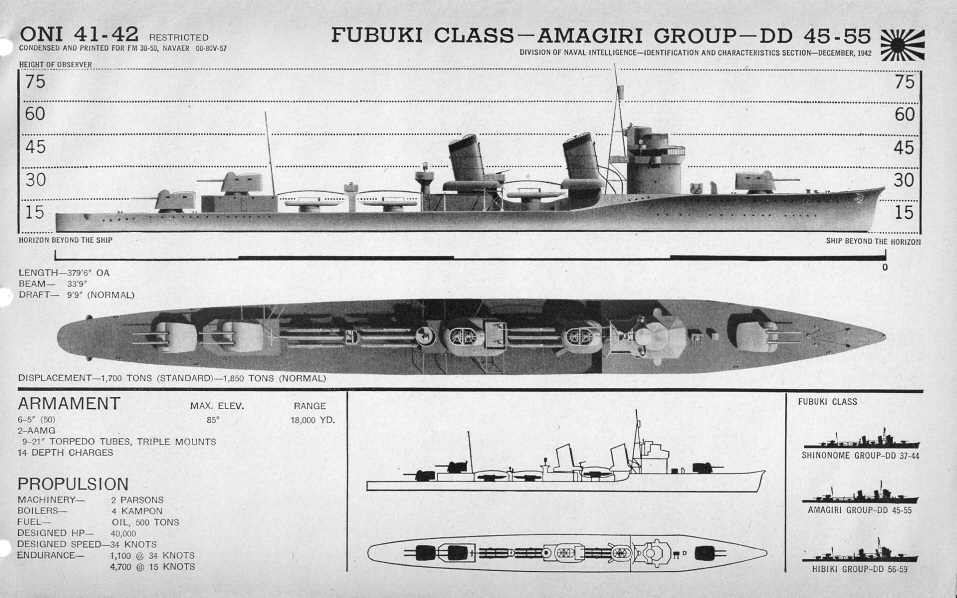
They were the largest and most heavily armed battleships ever built. Shrouded in secrecy by the Imperial Japanese Navy and Government the ships were designed to offset projected American numerical superiority. Their names were symbolic of Japan’s history. Yamato was named after Yamato Province, the ancestral home of the Yamato People, the dominant native ethnic group in Japan. Musashi was named after Musashi Province in which lays Tokyo Prefecture.  A third ship of the class, Shinano, was named after Shinano Province in central Japan which was the home of the prestigious Taketa Shingen family during the Senguku period.

The Conning Tower and Bridge of Musashi

The secrecy surrounding their design and construction was unprecedented. Those charged with their deign and construction were thoroughly checked out by Japan’s secret police and sworn to an oath of secrecy. The oath sworn by builders of Musashi at the Mitsubishi Heavy Industries  Nagasaki Shipyard were sworn to the oath shown below:

I am aware that all work work involving the construction of the No. 2 Battleship is vital to national security. I will make utmost effort to maintain the  secrecy of the project, and swear that I will leak no information relating to the said battleship, even to relatives and close friends. In the event I violate this oath,  I will submit to the punishment determined by the company and the Navy.  

Yamato during Consrtuction

Security measures around the shipyards where Yamato and Musashi were constructed  were immense. At Nagasaki where there was a large foreign business and missionary population where the shipyard was visible from most of the city at hemp screen of 75,000 square meters was constructed to shield the ship from prying eyes and spies.

Musashi under Construction

When actual preparations for construction were taken in 1937 secret police swept the areas of foreign, especially Chinese workers. Security was increased inside and outside the shipyard, all blueprints accounted for and placed under strict guard while all shipyard workers were photographed with any having knowledge of the plans or supervising the construction sworn to the secrecy oath.

When a top secret blueprint went missing in 1938 at Nagasaki an intense investigation that included the torture of numerous suspects and the jailing of a blueprinter who accidentally swept the document into the trash was sentenced to 3 years in prison.

Armor and Protection of Yamato Class

Few pictures exist of the ships and Japanese Naval Officers destroyed many of the records of the ships design and construction just prior to the end of the Second World War. Throughout their existence they were a mystery to the American Navy. During the war the U.S. Navy estimated them to carry nine 16” guns and displace between 40,000-57,000 tons. Even the highly regarded Jane’s Fighting ships listed them at just 45,000 tons.

Yamato and Musashi together in 1943

Preliminary design work began in 1934 and progressed rapidly following Japan’s withdraw from the League of Nations and renunciation of the Washington and London Naval Treaties and withdraw from the 1936 naval talks in London. The early designs varied in the caliber of guns, size and armor, propulsion systems and endurance. Gun calibers ranged from 16” to 18.1” and a combined diesel-turbine system was considered but rejected in favor of traditional steam turbines.

The final design was for a class of five ships. Each would displace 64,000 tons standard displacement and 72,000 tons at full load. They were 862 feet long with a beam of 127 feet.  They were so large that the docks they were built needed to be expanded and special extra large launch platforms had to be built.  At Nagasaki the dock at to be expanded by cutting into the hill adjacent to it.

They were armed with nine 18.1 inch guns in triple turrets which could fire a projectile weighing over a ton. The secondary armament consisted of 12 6.1 inch guns mounted in triple turrets formerly mounted on the Mogami Class cruisers when those ships were equipped with 8” guns. Anti-aircraft defense included twelve 5” guns and twenty-four 25mm anti-aircraft guns. During the war two of the 6.1 inch turrets were removed and replaced with twelve more 5” guns and the 25mm battery was raised to 162 guns. Fire control systems were designed in such a way that the ships could engage multiple surface targets at the same time.

The ships were protected by a massive armored belt ranging from 16 inches to 8 inches with 26 inch armor on the face plates of the main gun turrets. The armor was advanced with excellent sloping but had a flaw where the upper and lower belts connected just below the waterline which exposed them to damage from torpedoes.

Yamato and Musashi viewed beside Battleship Nagato (foreground) just before the Battle of Leyte Gulf

They were powered by 12 Kampon boilers which powered 4 steam turbines and four three bladed propellers. These developed 150,000 shp and could drive the ship at a top speed of 27 knots.

Yamato

Construction of Yamato began on November 4th 1937 at Kure Naval Shipyard. Musashi on March 28th 1938. Traditionally such events were large public ceremonies but these were limited to just a few Naval Staff and Shipyard executives.  Yamato was Launched on August 8th 1940 and commissioned on December 16th 1941, just 9 days after Pearl Harbor. Musashi was launched on November 8th 1940 and commissioned on August 5th 1942 just two days before the U.S. Marines invaded Guadalcanal and two months after the disaster at the Battle of Midway.

Yamato served as Admiral Yamamoto’s flagship at Midway where she saw no action. The next two years she was and Musashi alternated as fleet flagship and conducted operations with Battleship Division One in operations between Mainland Japan and the major Japanese base at Truk. On December 25th 1943 while escorting a convoy she was torpedoed by the submarine USS Skate and suffered heavy damage which flooded a magazine.  On March 29th while underway Musashi was struck near the bow by a torpedo from the USS Tunny.

Musashi Under Attack at the Battle of Sibuyan Sea

Both ships participated in the Battle of the Philippine Sea and were part of Vice Admiral Takeo Kurita’s Central Force in the Battle of Leyte Gulf. Musashi was sunk by U.S. Navy Carrier aircraft from the Third Fleet on October 24th 1944 during the Battle of the Sibuyan Sea. Hit by 17 bombs and 19 torpedoes she sank with the loss of nearly 1100 of her crew of almost 2400 men. The survivors were rescued by destroyers and disembarked at Corregidor. Some were sent by troop transport to Japan but one of the ships was torpedoed and sunk leaving her survivors adrift for 19 hours before rescue. Those who reached Japan were isolated from the population while about half of the survivors remained in the Philippines where 117 of 146 of those assigned to the defense of Manila were killed in action.

Yamato or Musashi under air Attack

Yamato saw action in the surface engagement on October 25th against the Escort Carriers and Destroyers of Taffy-3 during the Battle off Samar. Her guns helped sink the Escort Carrier USS Gambier Bay but was forced away from the action by torpedo attacks from the valiant destroyers of Taffy-3.

Yamato under Attack April 7th 1945

By April 1945 Japan’s Navy was decimated and holed up in Japanese controlled ports without fuel to conduct all but minor operations. U.S. Naval Forces were raiding Mainland Japan, inflicting heavy casualties among remaining naval, merchant marine, and air units, as well as bases and industrial facilities.

When the United States landed on Okinawa the Japanese Navy and air force launched wave after wave of Kamikaze attacks on the ships in the waters around the island. Yamato, along with Light Cruiser Yahagi and eight destroyers were designated the Surface Special Attack Force and loaded with a full load of ammunition but only enough fuel for a one way trip. They got underway on April 6th. The mission was for Yamato to reach Okinawa, beach herself and serve as an “unsinkable” gun battery until she was destroyed. The force was spotted by U.S. Navy flying boats hours after their departure and on April 7th over 400 aircraft launched from Task Groups 58.1 and 58.3 found the Yamato strike group. Devoid of fighter cover the force was doomed. The first wave of attacking aircraft began its attack at 1230. More followed, and by 1400 Yamato was mortally wounded. She had been hit by at least 8 torpedoes and 11 bombs in an hour and a half. Now she was dead in the water and began to capsize at 1405. At 1420 she turned turtle, and at 1423 she exploded when her forward blew up sending up a mushroom cloud nearly 20,000 feet.  Under 300 of her crew of nearly 2400 were rescued.

The End: Yamato Explodes

The Yamato and Musashi  were the largest battleships ever built. But they were  designed when naval experts who planned for a war where the battleship would rule and aircraft carriers played a supporting role. But the Japanese attack on Pearl Harbor made the Aircraft Carrier the new Queen of the seas. Neither ship ever  faced enemy battleships in combat and both were destroyed by the weapon that the battleship admirals had discounted, carrier based aircraft.

Thus, is somewhat fitting that each ship was commissioned shortly after the triumphs of Japanese and American Naval air power at Pearl Harbor and Midway. However, they have attained an almost mythic status in naval lore. Likewise they are both are symbols to many Japanese of the sacrifice and futility of the war. Their legend lives on in Japanese science fiction. However, both of the cities where the ships were constructed were destroyed by Atomic bombs. They are tragic reminders of the cost of war in human lives, suffering, economic cost and destruction.

In a sense their poetic names and the myths ascribed to them are a tragic requiem to the Japanese Empire and the cost of war. They and their brave sailors were sacrificed when the war was already for all intents and purposes lost. They, especially the Yamato were sacrificed for no military purpose save a convoluted sense of honor, and a nation that waged unjust and criminal wars in China before before it ever dreamed of attacking Pearl Harbor. Many Japanese Navy units, including surface ships, submarines, and Special Naval Units (Marines) engaged in war crimes at sea and ashore.

Of course the vast majority of the crew members of these ships never took part in these crimes because they seldom engaged in combat action until each was destroyed. Both spent most of the war flagships as part of a fleet in readiness. Unlike the German High Seas Fleet of the First World War, or the German Battleship Bismarck, the battleships of the Italian Regina Marina, or the battleships of Vichy France, none ever faced an enemy battleship in combat.

The only Japanese battleships to engage American battleships were the elderly fast battleship Kirishima which was destroyed by the gunfire of USS Washington during the Naval Battle of Guadalcanal, and the even more elderly and obsolete Fuso and Yamishiro which were destroyed by the combined firepower of the survivors of Pearl Harbor, the USS West Virginia, USS California, USS Tennessee, USS Maryland, USS Pennsylvania, and the USS Mississippi which was not at Pearl Harbor, as well as many cruisers, destroyers, and PT Boats at the Battle of Surigao Strait during the Battle of Leyte Gulf. Kirishima was lost on the verge of victory to USS Washington and Rear Admiral Willis Lee who used their advantage in radar to singlehandedly destroy Kirishima and her supporting ships even as her destroyer screen was decimated, and the battleship USS South Dakota lost electric power and was heavily damaged.

Yamato  and Musashi were a waste of industrial capacity, manpower, and resources for Japan. Their sister, Shinano, which had been converted to an aircraft carrier, was lost on her maiden voyage to a spread of torpedoes fired from the submarine USS Archerfish, with a huge life of life simply because she was rushed into commission without vital watertight compartments being ready. They were expensive failures in every sense of the word, showing that bigger isn’t always better, and that investment in such expensive ships must take into account the technology that could defeat them. For the moment most nations including the United States, China, Great Britain, France, Russia, and India seem to be placing their bets on the aircraft carrier retaining its dominance, but that could easily be the same mistake of the powers of the Second World War who built battleships, even when it was clear that their dominance was at an end.

Let us pray that it never happens again. I can only imagine the shock if an American Nuclear Carrier was sunk by a submarine, a saturation cruise missile attack, or one of the maneuverable Chinese nuclear ballistic missiles. Such a loss would shock the nation and send the Navy into a panic as it scrambled to find a way to recover from such a sinking without losing more carriers. Such an event would be as transformational to naval warfare as were the introduction of the Dreadnaught, and the perfection of the submarine as a tactical and strategic weapon.

Until tomorrow,

Peace

Padre Steve+

12 Comments

Filed under History, imperial japan, Military, Navy Ships, Political Commentary, US Navy, war crimes, World War II at Sea, world war two in the pacific

A New Thread in the Tapestry of My Life: Serving People in the Age of COVID-19


Friends of Padre Steve’s World

It is interesting to think about life, what has transpired, and what might have been if only…

Like anyone I wonder about all of the “what ifs” and “might have been” parts of my life. Of course there are many, going back to things that I could not control, such as the choices that my parents made regarding their lives, career, family, and home. Then there are my own choices, choices that I made, some for better, and some maybe for worse. Then there were the choices of men and women in my life and career that impacted my life and the decisions that I made, again for better or worse.

Some of my dreams, and nightmares too, involve those decisions, particularly the ones that I could not control; but then there were those decisions, particularly regarding my military career choices, that come back to haunt my dreams. Those can be troubling; the things that I volunteered to do and the costs of those to Judy as a result of those decisions. Many of those decisions, particularly my decisions to volunteer for certain deployments and operations have come at a great cost to both of us, the struggle with the effects of PTSD even ten years after my return from Iraq is still very real.

But then I am reminded that none of us have a crystal ball that allows us to see what the result of our decisions will be; none of us are God, or some other omniscient being. We make our decisions based on what we know, and what we think might be the outcome of our decisions.

If only my knees hadn’t been too badly injured and slow to recover I would have been out of the Navy, probably teaching history (now online) at the college level while relegating my calling as a priest to the background. But after that I  couldn’t retire, but due to a administrative error in calculating my statutory retirement date as I expected in April. I am now scheduled to retire in August, but with Coronavirus there is even uncertainty about that, and frankly I couldn’t care less, because I would rather serve and be in the thick of the fight than sitting on my ass or doing something that provides for me and Judy, but does not help in the time of crisis.

Between last spring when I first put in my voluntary retirement  paperwork working in the most miserable tour of all my time in the military, and doubting my call as a Priest, something miraculous happened. The screwed up knees and administrative mistakes ended up renewing my call and ministry among people I would never have expected to be serving. But even with that I never expected that I would still be serving on active duty at the age of 60, providing needed and valued ministry to people of all faiths, including atheists, in the midst of the novel Coronavirus 19 pandemic that is infecting some of them, or infecting and killing their family members, friends, or others that they know. Of course I take all of the guidance seriously to protect those I serve as well as Judy and me, but a new thread has been woven into the tapestry of my life. I felt the renewed call not long after I arrived, but this has solidified it.

I love the television series Star Trek the Next Generation. One of my favorite episodes is called Tapestry. In the episode Captain Picard is killed. He is then met by the being known as Q, played by John De Lancie for a do-over, a second chance to reverse a choice that he made as a young officer.

On Q’s promise that his choice will not alter history Picard takes the chance and he ends up regretting it. In his second chance to avoid the incident that allowed him to be killed he alienates himself from his friends, and turns him in to a different person, unwilling to take chances and doomed to insignificance. When he returns to his new present he finds himself alive but a different person. Instead of a starship captain is a nondescript lieutenant junior grade doing a job that he hates as an assistant astrophysics officer.

tapestry2

Distraught Picard complains to Q:

Picard: You having a good laugh now, Q? Does it amuse you to think of me living out the rest of my life as a dreary man in a tedious job?

Q: I gave you something most mortals never experience: a second chance at life. And now all you can do is complain?

Picard: I can’t live out my days as that person. That man is bereft of passion… and imagination! That is not who I am!

Q: Au contraire. He’s the person you wanted to be: one who was less arrogant and undisciplined in his youth, one who was less like me… The Jean-Luc Picard you wanted to be, the one who did not fight the Nausicaan, had quite a different career from the one you remember. That Picard never had a brush with death, never came face to face with his own mortality, never realized how fragile life is or how important each moment must be. So his life never came into focus. He drifted through much of his career, with no plan or agenda, going from one assignment to the next, never seizing the opportunities that presented themselves. He never led the away team on Milika III to save the Ambassador; or take charge of the Stargazer’s bridge when its captain was killed. And no one ever offered him a command. He learned to play it safe – and he never, ever, got noticed by anyone.

It is a fascinating exchange and one that when I wonder about the choices that I have made that I think about; because when all is said and done, my life, like all of ours is a tapestry. On reflection Picard tells Counselor Troi, “There are many parts of my youth that I’m not proud of. There were… loose threads – untidy parts of me that I would like to remove. But when I… pulled on one of those threads – it’d unravel the tapestry of my life.”

I think that I can agree with that. All the things in my life, the good things and the bad, as well as the paths not taken have all been a part of the tapestry of my life. I would not be who I am without them; and that I cannot comprehend. I would rather be the flawed me that is me, than the perfect me that never existed. Thus, all of those threads of my tapestry are in a sense, precious and even holy.

I’ll keep all of them, but of all I will remember this thread, as well as my combat tours, and life and death in ICUs and ERs the most. Suddenly at the age of 60 life has begun again. As the late great Sid Caesar once said:

“A great NOW will be a great WAS! A bad NOW will always be a bad WAS, and all you can hope for is a Great GONNA BE!”

As old as I am and as long as I have served, my future is yet to be written, and the tapestry of my life continues, even as new threads are woven into it. Every experience in my life has helped make me the person that I am. A friend of mine from my high school years sent me an email after I explained the experiences behind my writings, and noted “maybe all of that prepared you for such a time as this.” It was an affirmation by someone who doesn’t always share my political, social, or interpretation of the Christian faith that I am doing what I need to be, in such a time as this.

Value the tapestry of your life, and always find something good to life for and work towards.

Peace,

Padre Steve+

1 Comment

Filed under christian life, Coronavirus, faith, life, Military, ministry, philosophy, star trek, Tour in Iraq, US Navy