Category Archives: Military

Preparing for D-Day

The planning for the Normandy invasion began in earnest after the QUADRANT conference in Quebec in August 1943 and its timetable was established at the Tehran conference where Stalin sided with the Americans on the need for an invasion of France in the spring of 1944.[i] Prior to this there had been some planning by both the British and Americans for the eventual invasion initially named ROUNDUP including a large scale raid at Dieppe in 1942 which ended in disaster but which provided needed experience in what not to do in an amphibious assault on a heavily defended beach.   Dieppe also darkened the mood of the Allies, the British in particular to the success of such operations, bringing to mind the failed Gallipoli campaign of 1915 as well as the opposed landings at Salerno and the USMC experience at Tarawa.[ii] Despite this the Americans led by General Marshall pushed for an early invasion of northwest Europe while the Churchill and the British due to their weakness in land power pushed for land operations in the Mediterranean, and even in Norway as an option to the assault in France. The mindset of the Allies left them in the position of planning almost exclusively for the success of the initial landings and build up to the near exclusion of planning for the subsequent campaign, especially “the maze of troubles awaiting behind the French shore.”[iii]

Operation FORTITUDE: Dummy Sherman Tank

Despite this the Normandy landings planned for in NEPTUNE and OVERLORD moved ahead and with the appointment of Eisenhower as the commander of SHAEF and his major subordinates for Land, Air and Sea which caused consternation on both sides of the Atlantic,[iv] [v]and expanding the operation from the initial 3 division assault on a narrow front to a minimum 5 division assault on a broad front across Normandy[vi] supplemented by a strong airborne force.[vii] Overall the plan as it developed reflected a distinctly “American willingness to confront the enemy head-on in a collision which Britain’s leaders had sought for so long to defer.”[viii] It is ironic in a sense that the British avoidance of the head on attack was based on their known lack of manpower, especially infantry reserves to sustain the war effort and the Americans only late recognized their own deficiency in both quantity and quality of infantry forces on which their strategy depended.  That the western allies, so rich in material and natural resources would be so deficient in infantry manpower was a key constraint on the subsequent campaign in France and Germany.  The Germans too faced manpower shortages resulting in smaller divisions and the creation of many “static” divisions manned by elderly or invalid Germans, as well as “volksdeutsch” and foreign “volunteers.”

Germans building anti-landing craft obstacles. Many would be armed with artillery shells or land mines


Prior to the final decision to mount an invasion the Allied planners had first contended with the location of the assault in northwestern France.  The Pas de Calais while providing a direct route was rejected because it was where the Germans would expect the strike to occur and because it was where the German defenses were strongest, and the fiasco at Dieppe had provided ample proof of making the assault into a heavily fortified port.  Likewise the mouth of the Seine near Le Harve was rejected because of the number and quantity of landing beaches and because the forces would be split on both sides of the river.  Brittany was excluded due to its distance from the campaigns objectives in Germany.[ix] This left Normandy which offered access to a sufficient number of ports and offered some protection from the weather and which offered options to advance the campaign toward the “Breton ports or Le Harve as might be convenient.”[x] Omaha beach, situated on the center right of the strike would be crucial to the success of the assault situated to the left of UTAH and the right of the British beaches.

Rommel on Inspection Tour

Once Normandy was selected as the location for the strike Planning was at times contentious especially over the amount and type of amphibious lift that could be provided in particular the larger types of landing ships and craft to support the Normandy invasion and the planned invasion of southern France, Operation ANVIL.  The increase in OVERLORD requirements for landing craft did have an impact in the Mediterranean and resulted in ANVIL being postponed until later in the summer.

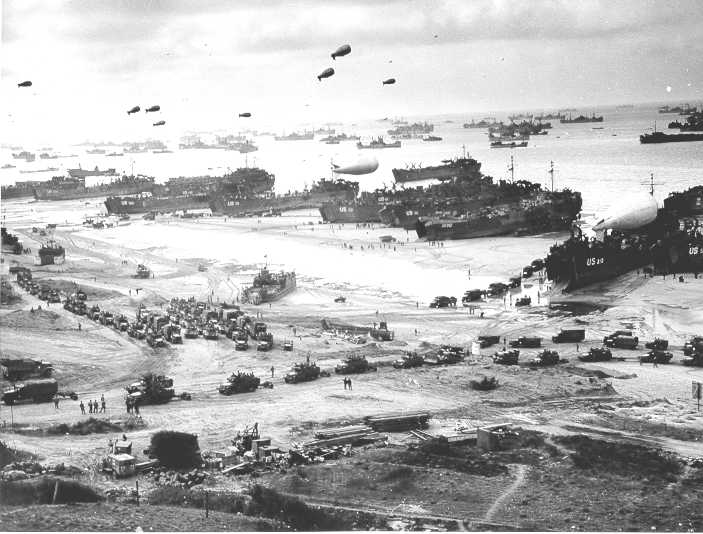
Loading LST’s for D-Day

As part of their preparations the Allies launched a massive deception campaign, Operation FORTITUDE utilizing the fictitious First Army Group under LTG George Patton. Patton still smarting from his relief of command of 7th Army following slapping commanded an “Army Group” incorporating the use of dummy camp sites, dummy tanks, aircraft and vehicles, falsified orders of battle and communications to deceive German intelligence.[xi] The success of this effort which was heightened by the fact that all German Abwehr agents in the U.K. had been neutralized or turned, and the Luftwaffe limited air reconnaissance could only confirmed the pre-invasion build ups throughout England without determining the target of the invasion.[xii] The German intelligence chief in the west, Colonel Baron von Roenne “was deceived by FORTITUDE’s fantasy invasion force for the Pas de Calais.”[xiii] Despite this 7th Army commander recognized by 1943 that Normandy was a likely Allied target and efforts were made to shift 7th Army’s center of gravity from Brittany to Normandy.  The one potential German success in getting wind of when the Allied landings would occur was lost when German intelligence discovered two lines of Verlaine’s “Chason d’ Automme” in January 1944 which were to alert the French Resistance of the invasion.  The security section of 15th Army heard them transmitted on the afternoon of 5 June and notified General Jodl at OKW, but no action was taken to alert forces on the coast.[xiv]Allied intelligence was aided by ULTRA intercepts of coded German wireless transmissions though less so than they were during the African and Italian campaigns as more German communications were sent via secure telephone and telegraph lines vice wireless.[xv] Allied deception efforts were for the most part successful in identifying German forces deployed in Normandy, but were uncertain about the 352nd Infantry Division which had been deployed along OMAHA as it had taken units of the 709th Infantry Division under its command when it moved to the coast.[xvi]

Officers of 2nd Battalion 916th Infatry Regiment 352nd Infantry Division before the invasion

The Allied air campaign leading up to the invasion was based on attempting to isolate the invasion site from German reinforcements. Leigh-Mallory the Air Chief developed the “TRANSPORTATION PLAN” which focused efforts on destroying the French railroad infrastructure.[xvii] A more effective effort was led by General Brereton and his Ninth Air Force which was composed of medium bombers and fighters.  His aircraft attacked bridges and rapidly achieved success in crippling German efforts to reinforce Normandy.[xviii] Hastings gives more credit to the American bombing campaign in Germany led by General Spaatz and the 8th Air Force in destroying both German production capacity in oil and petroleum as well as the degradation of the German fighter force achieved in the American daylight raids, which so seriously degraded the German fighter force that it could not mount effective resistance to the invasion.[xix] Weigley too notes that Albert Speer the Reich Armaments Minister said that “it was the oil raids of 1944 that decided the war.”[xx]

Getting Tanks ashore was vital and the Dual Drive Sherman Tanks were integral to the American Plan at Omaha Beach

Planning and preparations for OMAHA were based around getting the 1st and 29th Infantry Divisions ashore and them securing a beachhead “twenty-five kilometers wide and eight or nine kilometers deep.”[xxi] American preparations were thorough and ambitious, but the American assault would go through the most heavily defended sector of German defenses in Normandy with wide beaches bordered by dunes which were nearly impassable to vehicles and “scrub covered bluffs thirty to fifty meters high…rough and impassable to vehicles even to tracked vehicles except at a few places.  The exits were unimproved roads running through four or five draws that cut the bluffs.”[xxii] Dug in along those bluffs would be the better part of the 352nd Division. Compounding the selection of a difficult and heavily defended landing zone the Americans failed to take advantage of many of the “gadgets” that were offered by the British which in hindsight could have aided the Americans greatly.  The Americans made use of two battalions of DD (Dual Drive) tanks but turned down the offer of flail tanks, flamethrower tanks, and engineer tanks, the “funnies” developed by General Hobart and the British 79th Armored Division.[xxiii] Weigley believes that the American view of “tanks as instruments of mobility rather than of breakthrough power.” And the fact that American victories in the First World War were won by infantry.[xxiv] In this aspect the Americans were less receptive to utilizing all available technology than the British whose use of the Armor on the beaches to provide direct fire into German strong points lessened their infantry casualties on D-Day. Due to this lack of armor support on the beach American forces on OMAHA had little opportunity to exercise true combined arms operations.[xxv]

“Czech Hedgehogs” on the Pas De Calais

German preparations for an Allied landing in Normandy were less advanced than the Pas de Calais, although Field Marshal Rommel had increased defensive preparations along the front, including the Normandy beaches.  One of Rommel’s initiatives was to deploy Panzer Divisions near the coast where they could rapidly respond to an invasion however he did not get everything that he wanted rather than two Panzer Divisions deployed near the Normandy beaches, only one, the 21st Panzer Division was deployed near Caen in the British sector.  One wonders the result had the 12th SS Panzer Division been deployed behind OMAHA. [xxvi]

Rommel with gunners of the 21st Panzer Division’s Self-Propelled Artillery Regiment. The SP Guns were locally built by the Division using captured French Tanks and German artillery

Tomorrow: D-Day


[i] Weigley, Russell F. Eisenhower’s Lieutenants: The Campaign of France and Germany, 1944-1945, Indiana University Press, Bloomington IN, 1981 p.33

[ii] Ibid pp. 34-35

[iii] Ibid p.35

[iv] General Montgomery 21st Army group and Land Forces, Admiral Sir Bertram Ramsey as Allied Naval Expeditionary Force and Air Marshall Sir Trafford Leigh-Mallory as Commander in Chief Allied Expeditionary Air Force. Weigley p.43

[v] Max Hastings in Overlord: D-Day and the Battle for Normandy Vintage Books, New York, 1984, comments that many in Britain wondered if Eisenhower with the lack of actual battle experience could be a effective commander and that Eisenhower was disappointed in the appointment of Leigh-Mallory and Ramsey, and had preferred Alexander over Montgomery, pp. 28-29.

[vi] Ibid. Weigley p.40.  Montgomery was the first to object to the 3 division narrow front invasion rightly recognizing that seizing Caen with its road junctions could provide a springboard for the campaign into open country.

[vii] Ibid. p.37

[viii] Hastings, Max. Overlord: D-Day and the Battle for Normandy Vintage Books, New York, 1984 p.29  Hastings finds the irony in the selection of the British officers to execute the plan that reflected the American way of thinking.

[ix] The Germans agreed with this in their planning leaving Brittany very lightly defended.  See  Isby, David C. Ed. “The German Army at D-Day: Fighting the Invasion.” p.27 The report of General Blumentritt, Chief of Staff OB West noted that only 3 divisions were assigned to Brittany.

[x] Ibid. Weigley, pp. 39-40

[xi] Ibid. p.73

[xii] See Isby p. 69.  General Max Pemsel of 7th Army noted that “During  the spring of 1944, Seventh Army received only tow good photographs of British southern ports, which showed large concentrations of landing craft.”

[xiii] Ibid. Hastings p.63.  Hastings comments also about the success of using the turned Abwehr agents.

[xiv] Warlimont, Walter. “Inside Hitler’s Headquarters: 1939-1945.” Translated from theGerman by R.H. Barry. Presidio Press, Novao CA, English Edition Copyright 1964 Wiedenfeld and Nicholson Ltd. Pp.422-423

[xv] Ibid. Weigley pp. 53-54

[xvi] Ibid. p. 67

[xvii] Ibid. pp.57-64  Weigley spends a great deal of time on the wrangling between Eisenhower, Leigh Mallory and Spaatz on the nature of the plan, the allocation of forces both strategic and tactical assigned to carry it out and its success, or in the light of postwar analysis the lack of effect that it had on German operations.

[xviii] Ibid. p.67-68.

[xix] Ibid. Hastings pp. 43-44 In large part due to the long range P-51 Mustang which accompanied the American bombing raids beginning in 1943.  Another comment is that the campaign drew the German fighters home to defend Germany proper and prevented their use in any appreciable numbers over the invasion beaches.

[xx] Ibid. Weigley p.69

[xxi] Ibid. p.89

[xxii] Ibid. pp. 88-89

[xxiii] Ibid. p.87

[xxiv] Ibid. Weigley also talks about the rejection of General Corlett’s ideas to use Amtracks used by the Marines in the Pacific to land on less desirable, but less defended beaches to lessen casualties on the beaches and the need for additional support equipment even on smooth beaches.  One of Corlett’s criticisms was that too little ammunition was allotted to supporting the landings and not enough supporting equipment was provided. pp. 46-47

[xxv] Hastings notes that with the strength and firepower of the German forces on OMAHA that many of these vehicles had they been employed would like have ended up destroyed further cluttering the beachhead. “Overlord” p.102

[xxvi] The battle over the deployment of the Panzer Divisions is covered by numerous historians.  The source of the conflict was between Rommel who desired to place the Panzer Divisions on the Coast under his command due to the fear that Allied air superiority would prevent the traditional Panzer counterthrust, General Gyer von Schweppenburg commander of Panzer Group West (Later the 5th Panzer Army) and Field Marshal Von Rundstedt who desired to deploy the divisions order the command of Rundstedt for a counter attack once the invasion had been launched, a strategy which was standard on the Eastern Front, and Hitler who held most of the Panzer reserve including the SS Panzer Divisions under his control at OKW.  Hitler would negotiate a compromise that gave Rommel the satisfaction of having three Panzer Divisions deployed behind coast areas in the Army Group B area of responsibility.  21st Panzer had those duties in Normandy.

1 Comment

Filed under History, Military, world war two in europe

Five Minutes that Changed History: The Battle of Midway 1022-1027 hours June 4th 1942

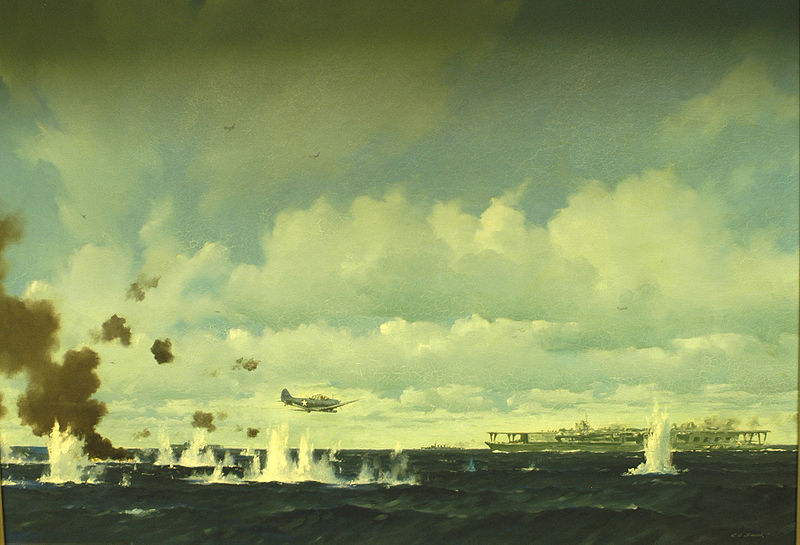
Instruments of Death SBD Dauntless Dive Bombers at Midway

Six months after Pearl Harbor the United States Navy met the Imperial Japanese Navy in battle on the seas and in the airspace around Midway Island. It was a battle between a fleet that had known nothing but victory in the months after Pearl Harbor, sweeping across the Pacific and the Indian Oceans and decimating Allied Naval forces that stood in their way, the HMS Prince of Wales and HMS Repulse off of Singapore, a force of Royal Navy cruisers and the Aircraft Carrier HMS Hermes in the Indian Ocean, the bulk of the US Asiatic Fleet in the waters around the Philippines and the Dutch East Indies culminating in the Battle of the Java Sea where the bulk of the American, British, Dutch and Australian naval forces engaged were annihilated.  In only one place had a Japanese Naval task force been prevented from its goal and that was at the Battle of the Coral Sea where Task Force 11 and Task Force 17 centered on the Carriers USS Lexington and USS Yorktown prevented a Japanese invasion force from taking Port Moresby sinking the light carrier Shoho, damaging the modern carrier Shokaku and decimating the air groups of the Japanese task force.

In May US Navy code breakers discovered the next move of the Imperial Navy an attack on Midway Island and the Aleutian islands.   Since the occupation of Midway by Japanese forces would give them an operational base less than 1000 miles from Pearl Harbor Admiral Chester Nimitz committed the bulk of his naval power, the carriers USS Enterprise CV-6, USS Yorktown CV-5 and USS Hornet CV-8 and their 8 escorting cruisers and 15 destroyers, a total of 26 ships with 233 aircraft embarked to defend Midway along with a force of 5 cruisers and 4 destroyers to cover the Aleutians.  Midway had a mixed Marine, Navy and Army air group of 115 aircraft which included many obsolete aircraft, 32 PBY Catalina Flying Boats, of which the 83 fighters, dive bombers, torpedo planes and Army Air Force bombers piloted by a host of inexperienced pilots.

The Japanese Flagship Akagi

The Japanese sent a force of 7 battleships, 7 carriers including the elite First Carrier Striking Group composed of the Pearl Harbor attackers Akagi, Kaga, Soryu and Hiryu and their highly trained and combat experienced air groups composed of 273 aircraft along with 14 cruisers and 39 destroyers assigned to take Midway and destroy the US Navy when it came out to fight as well as a force of 4 battleships, 12 destroyers assigned screen to the Aleutian invasion force which was accompanied by 2 carriers 6 cruisers and 10 destroyers.   The other carriers embarked a further 114 aircraft.  A factor which aided the Americans was the distance between the Japanese Task forces which were scattered over thousands of square miles of the Northern Pacific Ocean from which they could not rapidly come to the assistance of any other group.

With the foreknowledge provided by the code breakers the US forces hurried to an intercept position northeast of Midway eluding the Japanese submarine scout line which the Japanese Commander Admiral Yamamoto presumed would find them when they sailed to respond to the Japanese attack on Midway.  Task Force 16 with the Enterprise and Hornet sailed first under the command of Rear Admiral Raymond A Spruance and Task Force 17 under Rear Admiral Frank “Jack” Fletcher with the Yorktown which had been miraculously brought into fighting condition after suffering heavy damage at Coral Sea. Fletcher assumed overall command by virtue of seniority and Admiral Nimitz instructed his commanders to apply the principle of calculated risk when engaging the Japanese as the loss of the US carriers would place the entire Pacific at the mercy of the Japanese Navy.

On June 3rd a PBY Catalina discovered the Japanese invasion force and US long range bombers launched attacks against it causing no damage.  The morning of the 4th the Americans adjusted their search patterns in and the Japanese came into range of Midway and commenced their first strike against the island.  In response land based aircraft from Midway attacked the Japanese carrier force taking heavy casualties and failing to damage the Japanese task force.  The American Carrier task forces launched their strike groups at the Japanese fleet leaving enough aircraft behind of the Combat Air Patrol and Anti-submarine patrol.  As the Americans winged toward the Japanese fleet the Japanese were in confused.  A scouting report by an aircraft that had been delayed at launch discovered US ships but did not identify a carrier until later into the patrol.  This was the Yorktown and TF 17. The Japanese attempted to recover their strike aircraft and prepare for a second strike on the island and then on discovery of the carrier embarked on the task of unloading ground attack ordnance in favor of aerial torpedoes and armor piercing bombs.  The hard working Japanese aircrew did not have time to stow the ordnance removed from the aircraft but by 1020 they had the Japanese strike group ready to launch against the US carriers.

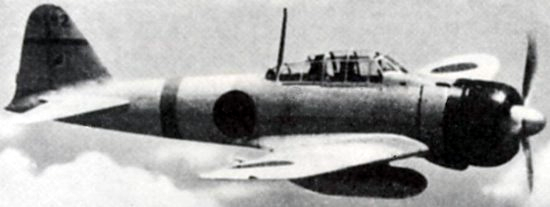
AM6-2 Zeros Mauled the US Torpedo Bombers

As the Japanese crews worked the Japanese carriers were engaged in fending off attacks by the US torpedo bomber squadrons, VT-6 from Enterprise, VT-8 from Hornet and VT-3 from Yorktown.  The Japanese Combat Air Patrol ripped into the slow, cumbersome and under armed TBD Devastators as they came in low to launch their torpedoes.  Torpedo Eight from Hornet under the command of LCDR John C Waldron pressed the attack hard but all 15 of the Devastators were shot down.  Only Ensign George Gay’s aircraft was able to launch its torpedo before being shot down and Gay would be the sole survivor of the squadron.

Hopelessly obsolete 40 of 44  TBD Devastators were lost in action

Torpedo 6 under the command of LCDR Eugene Lindsey suffered heavy casualties losing 10 of 14 aircraft with Lindsey being one of the casualties.  The last group of Devastators to attack was Torpedo 3 under the command of LCDR Lem Massey from the Yorktown.  These aircraft were also decimated and Massey killed but they had drawn the Japanese Combat Air Patrol down to the deck leaving the task force exposed to the Dive Bombers of the Enterprise and Yorktown.

TBD Devastator attacking Akagi

There had been confusion among the Americans as to the exact location of the Japanese Carriers, the Bombing 8 and Scouting 8 of Hornet did not find the carriers and had to return for lack of fuel with a number of bombers and their fighter escort having to ditch inn the ocean and wait for rescue.  The Enterprise group under LCDR Wade McClusky was perilously low on fuel when the wake of a Japanese destroyer was spotted.  McClusky followed it to the Japanese Task Force.  The Yorktown’s group under LCDR Max Leslie arrived about the same time.  The found the skies empty of Japanese aircraft. Aboard the Japanese ships there was a sense of exhilaration as each succeeding group of attackers was brought down and with their own aircraft ready to launch and deal a fatal blow to the American carrier wondered how big their victory would be.

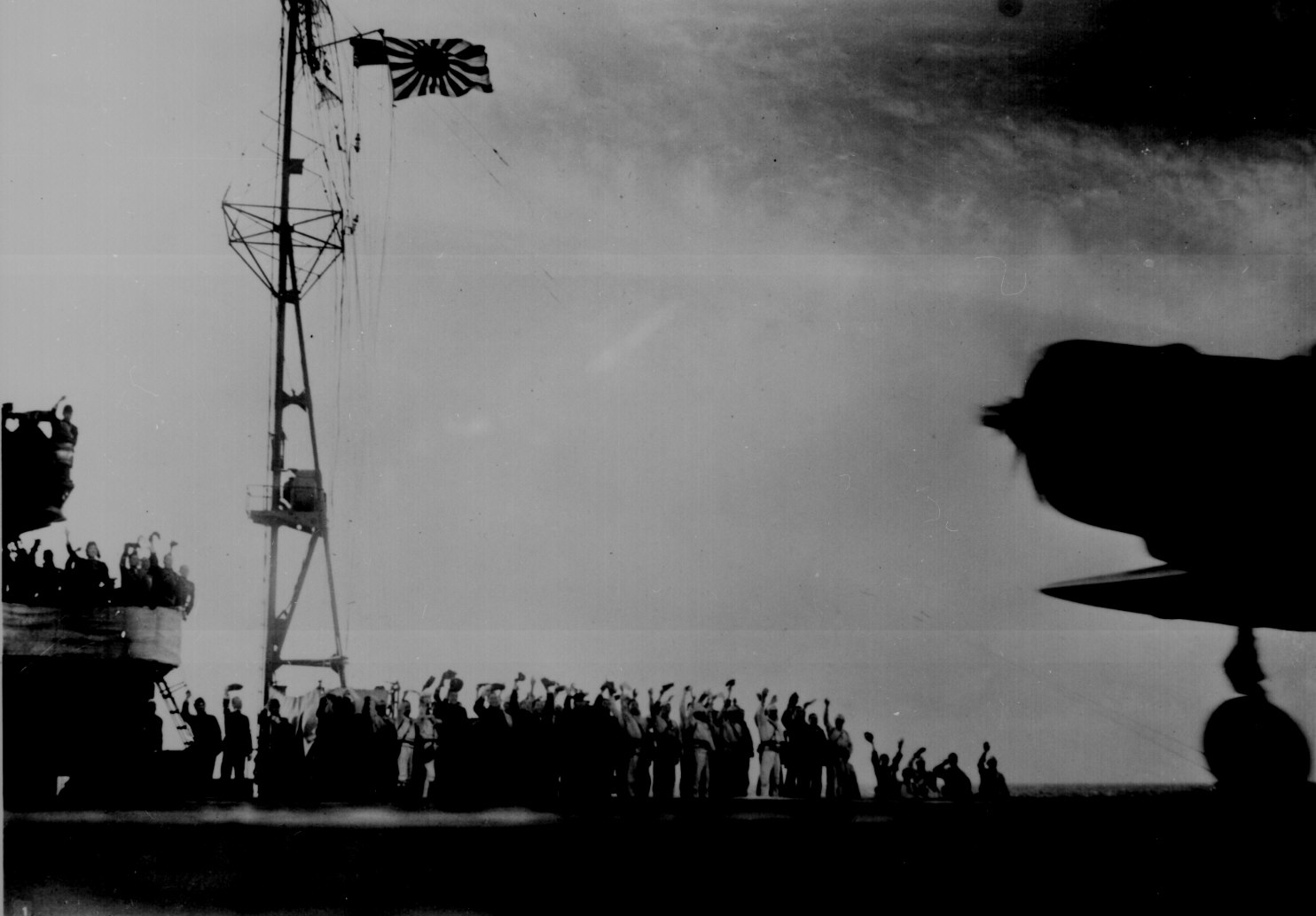
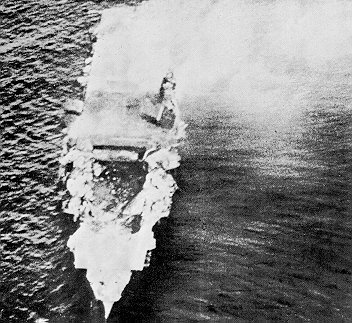
At 1020 the first Zero of the Japanese attack group began rolling down the flight deck of the flagship Akagi, aboard Kaga aircraft were warming up as they were on the Soryu.  The unsuspecting Japanese were finally alerted when lookouts screamed “helldivers.” Wade McClusky’s aircraft lined up over the Akagi and Kaga pushing into their dives at 1022. There was a bit of confusion when the bulk of Scouting 6 joined the attack of Bombing 6 on the Kaga.  The unprepared carrier was struck by four 1000 pound bombs which exploded on her flight deck and hangar deck igniting the fully fueled and armed aircraft of her strike group and the ordnance littered about the hangar deck.  Massive fires and explosions wracked the ship and in minutes the proud ship was reduced to an infernal hell with fires burning uncontrollably. She was abandoned and would sink at 1925 taking 800 of her crew with her.     LT Dick Best of Scouting 6 peeled off from the attack on Kaga and shifted to the Japanese flagship Akagi. On board Akagi were two of Japans legendary pilots CDR Mitsuo Fuchida leader of and CDR Minoru Genda the architect of the Pearl Harbor attack and subsequent string of Japanese victories.  Both officers were on the sick list and had come up from sick bay to watch as the fleet was attacked.  Seeing Kaga burst into flames they stood mesmerized until Akagi’s lookouts screamed out the warning “helldivers” at 1026.  Best’s aircraft hit with deadly precision landing tow of their bombs on Akagi’s flight deck creating havoc among the loaded aircraft and starting fires and igniting secondary explosions which turned the ship into a witch’s cauldron.  By 1046 Admiral Nagumo and his staff were forced to transfer the flag to the cruiser Nagara as Akagi’s crew tried to bring the flames under control. They would do so into the night until nothing more could be done and abandoned ship at 2000.  Admiral Yamamoto ordered her scuttled and at 0500 on June 5th the pride of the Japanese carrier force was scuttled.

Scouting 6 gets the Akagi

VB-3 under LCDR Max Leslie from the Yorktown stuck the Soryu with 17 aircraft, only 13 of which had bombs due to an electronic arming device malfunction on 4 of the aircraft including the squadron leader Leslie.  Despite this they dove on the Soryu at 1025 hitting that ship with 3 and maybe as many as 5 bombs. Soryu like her companions burst into flames as the ready aircraft and ordnance exploded about her deck. She was ordered abandoned at 1055 and would sink at 1915 taking 718 of her crew with her.

The remaining Japanese flattop the Hiryu attained the same fate later in the day after engaging in an epic duel with the Yorktown which her aircraft heavily damaged.

It was quite miraculous what happened at Midway in those five pivotal minutes.  Authors have entitled books about Midway Incredible Victory and Miracle at Midway and the titles reflect the essence of the battle.  A distinctly smaller force defeated a vastly superior fleet in terms of experience, training and equipment and when it appeared that the Japanese Fleet would advance to victory in a span of less than 5 minutes turn what looked like certain defeat into one of the most incredible and even miraculous victories in the history of Naval warfare.  In those 5 minutes history was changed in a breathtaking way.  While the war would drag on and the Japanese still inflict painful losses and defeats on the US Navy in the waters around Guadalcanal the tide had turned and the Japanese lost the initiative in the Pacific never to regain it.   The Japanese government hid the defeat from the Japanese people instead proclaiming a great victory while the American government could not fully publicize the information that led to the ability of the US Navy to be at the right place at the right time and defeat the Imperial Navy.

When one looks at implications of the victory it did a number of things. First it changed the course of the war in the Pacific probably shortening it by a great deal.  Secondly it established the aircraft carrier and the fast carrier task force as the dominant force in naval warfare which some would argue it still remains.  Finally those five minutes ushered in an era of US Navy dominance of the high seas which at least as of yet has not ended as the successors to the Enterprise, Hornet and Yorktown ply the oceans of the world and the descendants of those valiant carrier air groups ensure air superiority over battlefields around the world.

Peace

Padre Steve+

7 Comments

Filed under History, Military, US Navy, world war two in the pacific

June 1944 and June 2010: Fog Friction and the Unexpected Events that Influence History

The Normandy Invasion

There are few months in history when the courses of events change in a global sense, however the month of June 1944 was one of them. In June 1944 the Allies were on the offensive. The initiative had shifted to their favor in every theater of the war. On June first 1st 1944 the United States and Britain were preparing to cross the English Channel and invade France at Normandy.  In Italy Allied Forces were moving forward after a long series of battles at Salerno, Monte Casino, the Rapido River and Anzio the US 5th Army was closing in on Rome.  In Russia the Red Army was preparing for its summer offensive aimed at the destruction of the German Army Group Center.  In Central Pacific US Navy and Marine Forces with some attached Army units were sailing to invade the Marinas islands and into a confrontation with the bulk of the Imperial Japanese Navy which was planning to attempt the destruction of the US Fleet and invasion forces.  In offices and headquarters around Germany and occupied Europe senior military officers, politicians, police officials and members of the intelligentsia and clergy were plotting a coup to kill Hitler and drive the Nazis from power.  In the United States President Roosevelt was running for re-election for the 3rd time, it was a time when the world hung in the balance and while each adversary had a desired outcome none was sure.

In fact D-Day was a very near run thing and Rome was surrendered by the Germans without a fight that might have bled the Allies in Italy dry, the Germans were quite adept at defense in built up areas and the Soviets benefited greatly from the withholding of vital reinforcements from the front by the Command of the German Replacement Army which was deeply involved in the plot to overthrow Hitler and keeping large numbers of divisions in Germany to assist them to take over when Hitler was killed.  In the Pacific the Admiral Nimitz and his subordinates commanded a fleet like none before yet still faced many unknowns that could derail the campaign if they were not careful.  The lives of millions of Soldiers, Sailors, Marines and Airmen from a host of nations as well as noncombatants in almost every theater of the war depended on decisions made in carious capitals, military and naval headquarters and such annoying things as weather, logistics and the “fog of war” as Clausewitz so aptly put it.  In fact once the die was cast and the battle joined on all of these fields of battle decisions of junior commanders and even small units would play major roles in the outcomes and the plans of the various nations would have to be adjusted as no plan survives contact with the enemy.

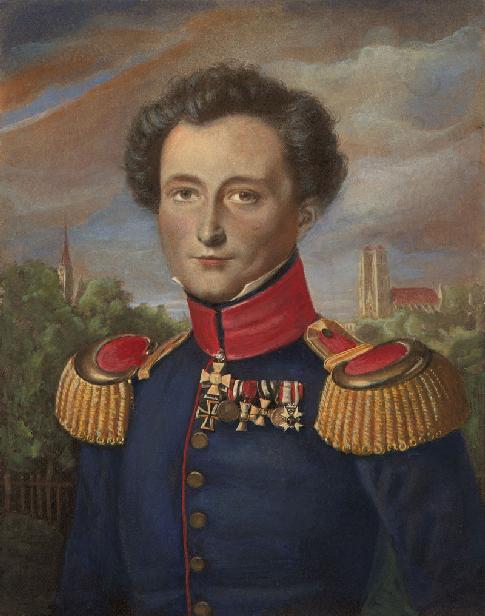
Carl Von Clausewitz in his book “On War” developed the understanding of “the fog of war”

That is the way that history tends to develop.  The participants see the events around them, make plans and make assumptions. They do this in the hopes of achieving an outcome that favors them and their cause yet at the end of the day no matter how well they plan, whatever advantages or disadvantages they or their opponents have are subject to chance once the die is cast, unexpected circumstances events and seemingly innocuous choices lay waste to the most carefully crafted plans.  Add to this the mistakes and actions of even the most modest and unassuming people, failures of equipment, the introduction of new or unexpected weaponry, tactics or operational concepts and the fog becomes thicker and friction greater.   Finally there is the success or failure of the boring aspects of war such as logistics, economics, industrial production and the respective national will of each nation all affect the outcome of conflict as the failure of a simple part of a system can have catastrophic results.

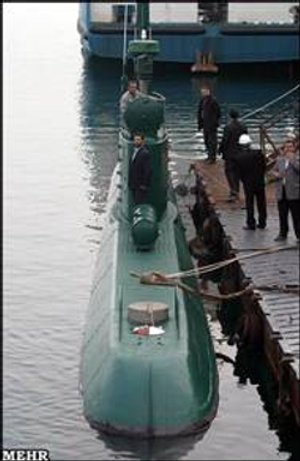
Iranian Missile Boat and UH-1 Helicopter…What will happen in June 2010?

One has to ask what ifs when dealing with events in times of war, conflict and economic chaos and this is exactly the world that we live in today.  I do not need to recite the numerous areas of war and conflict around the globe but in each case the participants all have desired outcomes which whether grounded in reality or not influence their actions and their responses to competitors in given situations. The United States is trying to withdraw US combat forces from Iraq and at the same time launch a major offensive at the spiritual heart of the Taliban movement in Afghanistan. Additionally the US is working with Allies to prevent Iran from developing or obtaining a nuclear weapon and attempt to garner a settlement in the continuing Israeli-Palestinian conflict and conflict with Hezbollah.  Any of this missions would be difficult enough on its own but the United States like all major powers has other concerns and when North Korea sinks a South Korean ship, a clash erupts between Israel and groups attempting to breach the Israeli blockade of the Palestinian Authority all the while natural and commercial disasters impact the US, our economy and the environment.  At home the country faces continued terrorist threats from radical Moslem extremist groups as well as a crisis at its southern border. To cap everything off the political division in the country adds yet another complication to an already muddled mess.

All of this as well as things that I have not mentioned or that we don’t expect to happen impact military plans and operations around the world just as unexpected and unplanned for events impacted what happened in that fateful month of June 1944.  What will happen in June of 2010?  God only knows, the best laid plans of mice and men are often rudely disrupted by the uncertainty of the fog of war as well as the unexpected events that seem to occur when they are the least convenient for us.  It will be interesting to see what the world likes like by the end of the summer.  God have mercy on us.

Peace

Padre Steve+

Leave a comment

Filed under History, Military, national security, world war two in europe, world war two in the pacific

Memorial Day Weekend 2010: We Happy Few, We Band of Brothers

On May 27th 2010 the US Military experienced the loss of its 1000th KIA in Afghanistan. The young man killed was Corporal Jacob C Leicht of Kerrville Texas.  Corporal Leicht was assigned to 1st Light Armor Reconnaissance Battalion, 1st Marine Division Camp Pendleton California. Corporal Leicht had previously served in Iraq where he had been badly wounded by an Improvised Explosive Device (IED) that hit the HUMMV that he was traveling in.  Pulled to safety by his Iraqi interpreter Leicht spent the two years recovering from those injuries engaged in a letter and phone call campaign to get back into the fight with his fellow Marines.  He was killed when he stepped on a land mine during that desperately sought after second tour. His younger brother Jesse Leicht who just 10 days ago enlisted in the Marines said “He said he always wanted to die for his country and be remembered, he didn’t want to die having a heart attack or just being an old man. He wanted to die for something.”  Please keep his family and his fellow Marines in your prayers this Memorial Day.

Last year I was very melancholy during Memorial Day and stories of young Marines, Soldiers and Sailors killed in the line of duty usually cause me to reflect on the sacrifice that the young men and women who volunteer to serve our country make on a daily basis while most of the country goes about its business often oblivious to the wars being waged by our sons, daughters, brothers and sisters and mothers and fathers in Afghanistan, Iraq and other lesser known fronts in this war.  Last year I was still very much in the midst of my PTSD crash and struggling with depression and faith.  At the same time I was still remembering all of the veterans who made a difference in my life.  That was covered in the posts Memorial Day 2009- Thoughts and Musings and Remembering the Veterans in My Life…Memorial Day 2009.

As we approach Memorial Day 2010 we must remember that while the war in Iraq is drawing down that the war in Afghanistan is heating up even as U.S. and NATO forces prepare to engage the Taliban in their spiritual home of Khandehar.  Likewise there is are rising tensions on the Korean peninsula where the Heavy Combat Brigade and Air Combat Brigade of the 2nd Infantry Division are based in support of Republic of Korea and UN forces in Korea backed up by Marines of the 3rd Marine Division and 3rd Marine Expeditionary Force in Okinawa and Hawaii that are not currently in Afghanistan. At sea U.S. Navy forces patrol strategic choke points including the Straits of Hormuz where an ascendant Iran continues to build up for forces that could threaten the Freedom of the seas.

How am I different this year? To answer the question I can only say that I have regained some measure of faith and community that had been absent in my life after I returned from Iraq.  This has made a lot of difference however it in no way takes the place of remembering those men and women that I have served with in harm’s way as well as the veterans who made an impact in my life and still do today.

Memorial Day, initially known as Decoration Day is a somber holiday in its truest sense however it is as Paul Reikoff of the Iraq Afghanistan Veterans Association notes is “One Country, Two Holidays.” http://www.huffingtonpost.com/paul-rieckhoff/memorial-day-one-holiday_b_592398.html For those that have served in war going back to our WWII veterans but also those of the not so popular wars, Korea, Vietnam and the current conflicts in Iraq and Afghanistan who have lost friends and sacrificed spending months and even years in combat zones and the work-ups and exercises that part and parcel to deployment.  There are the wounded in body, mind and spirit and those whose physical injuries who have killed them in previous wars but now live in tortured bodies somewhere in between life and death.  Likewise there are those whose injuries are invisible, the injuries of PTSD, TBI and other psychiatric or psychological disorders related to their time in combat.  I spent almost two years in PTSD hell and though I am making a good recovery now still am reminded of the fear, anxiety, depression, hopelessness, loneliness and an existential crisis of faith that came with my return.  I know too many Marines, Soldiers and Sailors that suffer much more than I have whose struggles pass unnoticed by most of society.  I am now working with our Substance Abuse Rehabilitation Program and it is hard to see the young men and women that are in the program whose problems either came in part from their combat experience or their experience upon returning home.  Likewise we are now receiving more of our combat wounded at the medical center and thus I am reminded of the sacrifices made by veterans every day.  For those who work to help these young men and women and in many cases have served alongside them in the combat zones it is a continual reminder of the cost of war.

For those of us that have served, not just in the current conflict but our brothers and sisters that served in previous wars, especially Vietnam and Korea there is one Memorial Day.  While we do attempt to do some things with families and friends the holiday is one of sober reflection as we count the cost of war in human terms, both in our lives as well as our families, the soldiers of our Allies that serve alongside of us and the populations of lands devastated by war.

But then there is another country.  A country consumed with materialism and for whom “heroes” are reality television “stars,” actors and actresses and sports figures.  There are those who while they profess to “support the troops” are the first to want to replace military personnel with contractors such as Halliburton and the company formerly known as “Blackwater” with often disastrous results. Political operatives and lobbyists support paying astronomical sums to corporations that often embarrass the country and make the  job in the military harder in Iraq and Afghanistan having done things that alienate those populations.  Then there is the cost for services delivered and the often terrible way that these corporations treat their employees, especially the third country nationals with working hours and living conditions that would be punishable he in the United States, but also Americans who gain employment but serve driving trucks or other hazardous duties that they have little combat training to do and receive little if the are wounded in action nor for their families if they are killed or disabled. That is part of the “other country.” About 1.8 million Americans have served in Iraq or Afghanistan less than 6/10ths of 1 percent. Unlike World War II where the war was truly a national effort this war is waged by a small minority of the population.

I do not have any problems with people enjoying a holiday but hope and pray that Americans will take at least a few minutes to pay their respects to the Veterans of wars past and present the honored dead as well as the living.  Say a prayer, visit a military or veteran cemetery, and pay a visit on a living vet or the family of one of those killed. Donate to reputable veteran organizations or charities and maybe take a vet out for a bite to eat or buy them a cup of coffee, Coke or a beer.  Don’t let the day pass by simply looking at the faded yellow ribbon “I support the troops” on your car but take a few minutes to thank and remember those that have served our country regardless of race, creed or color and pray that the fallen will rest in peace and the living will recover from all wounds.

Unfortunately for the country the President will not be at the wreath laying ceremony at Arlington Cemetery this year. Unlike some who are vehemently criticizing him I can only say that I am disappointed that the Commander-in-Chief will not be present because of what I feel is the tremendous symbolic importance of his presence at the event when we are at war. At the same time the President’s absence in emblematic of how much of the country “celebrates” Memorial Day.  Unfortunately as the number of men and women who have served our nation in time of war goes down in proportion to the population at large the day will become less significant to many, a curiosity that is quaint and nice but does not impact their lives.  I do not mean this in a bad way or with any malice; it is simply a statement of fact as for most the military and the war is not an everyday part of their lives. I think that the Previous President while understanding the significance of this day did not help the nation when after the September 11th attacks did not marshal the energy of the nation for a war which his administration readily acknowledged would be a “long war” but instead told people to “go shopping” to pump up the economy.  I think that was an act that has limited the personal effect of the human cost of these wars to a very limited segment of the population.

At the same time I as well as most veterans do appreciate the fact that we in the military are treated well by our countrymen even if they do not truly understand what we go through.  I for one am thankful to people who go out of their way to thank us in public places, those that take on hateful groups like the crowd at West Baptist Church that protests outside of military funerals and bases invoking God’s wrath on us.  Likewise there are the volunteers who meet returning servicemen and women at airports as the come home from war, the sports that honor the military before games or as in the case of most of Major and Minor League Baseball in the 7th inning stretch.  At the Church of Baseball, Harbor Park Parish in Norfolk they display the photos of servicemen and women currently serving overseas.  The Raley’s grocery store near my parents’ home in Stockton California has a display of hundreds of 8 x 10 photos of military personnel in the front of their store and a wide range of people and groups try to find ways to help.  This in is stark contrast to the treatment of our brothers and sisters who served in Vietnam and the attitudes and treatment of military personnel on college campuses that lingered far into the 1980s.  Thankfully the vast majority of Americans are appreciative of what we do.  At the same time most are not personally effected and as such will simply see Memorial Day as a three day weekend that kicks off the summer vacation season hardly pausing to think of the cost that has been born to ensure that Americans and people around the world have the opportunity to live in freedom.

Band of Brothers, Above Me and RP2 Nelson Lebron, below Foot Patrol Al Waleed Iraq

This weekend I pause to remember the veterans in my life, my father who remains in a nursing facility with dementia brought about by Alzheimer’s disease, men like my NJROTC instructors Senior Chief John Yarro and Buff Rambo who taught me in our FIST or Fire Support Team, SFC Harry Zilkan and CSM John Butler from my UCLA Army ROTC program and SFC Harry Ball my Drill Instructor in ROTC Advanced Camp. All were Vietnam Vets.  Then there were 1SG Jim Koenig of 557th Medical Company who was my 1st Sergeant when I was a new Lieutenant in Germany and Colonel Donald A Johnson the Commander of the 68th Medical Group and his successor Colonel Jim Truscott a high decorated Medevac or “Dustoff” helicopter pilot.  I cannot forget Chaplain (LTC) Rich Whaley a company commander in Vietnam who saved my ass as an aspiring Chaplain at the Chaplain School in 1990 and 1992.

Then there were the WWII and Vietnam Vets in my Chapel at Fort Indiantown Gap PA. USAF Major General Frank Smoker a B-17 pilot, Colonel Walt Swank who served at Normandy and SSG Henry Boyd one of the 101st Airborne Troopers epitomized by “Band of Brothers.” There were the Vietnam Vets in the congregation, Colonel Ray Hawthorne an artillery officer who served several tours in country including an advisor tour.  Charlie Kosko a helicopter pilot and Major Scotty Jenkes who served as a USAF pilot flying close air support in Vietnam.  Then there was Colonel Tom Allmon the Garrison Commander who served in the Gulf War as well as Iraq.

My life more recently has been impacted by others.  My friends of the veterans of the Battle of Hue City including General Peter Pace, Barney Barnes, Tony “Limey Cartilage” Sergeant Major Thomas and so many others have become close over the years, especially after I did my time in Iraq. They and all the Vietnam vets, including the guys from the Vietnam Veterans of America like Ray and Charlie who used man the beer stand behind the plate at Harbor Park until health issues kept them from continuing all mean a lot to me.  Likewise my friends at Marine Security Forces Colonel Mike Paulovich and Sergeant Major Kim Davis both Iraq Vets mean more than almost any people in the world.  We traveled the globe together visiting our Marines.  Both of these men are heroes to me as well as friends.

There are those that I served with at Navy EOD Group II that performed amazing feats in Iraq and Afghanistan and retired Command Master Chief Bill “Two Feathers” Tyrell an EOD tech that I came to know well working family issues and PTSD issues for our EOD sailors.  Bill was a tremendous help as I struggled with PTSD.  Likewise there are my shipmates and friends from the USS HUE CITY that I served with deployed to the Northern Arabian Gulf and Horn of Africa in 2002 including the men of the boarding team that I served as an advisor to on 75 boarding missions aboard impounded Iraqi Oil Smugglers.  Then there are the men that I served with in Iraq especially my assistant and body guard RP2 Nelson Lebron who is getting ready for his 10th deployment this time another trip to Afghanistan.  There are my friends that served in various locations with the Iraqi security forces that I was able to travel to, serve alongside and serve as a chaplain in remote areas of Iraq with the Iraqis. In my current assignment I have had many friends and colleagues deploy to Iraq and Afghanistan in some very “hot” zones caring for our wounded as well as local nationals and allied soldiers.  This is not stopping anytime soon.

These are my brothers and sisters and I remember all of them with fondness.  My thoughts are much the same as Henry V at Agincourt as depicted in Shakespeare’s Henry V:

What’s he that wishes so?
My cousin Westmoreland? No, my fair cousin;
If we are mark’d to die, we are enow
To do our country loss; and if to live,
The fewer men, the greater share of honour.
God’s will! I pray thee, wish not one man more.
By Jove, I am not covetous for gold,
Nor care I who doth feed upon my cost;
It yearns me not if men my garments wear;
Such outward things dwell not in my desires.
But if it be a sin to covet honour,
I am the most offending soul alive.
No, faith, my coz, wish not a man from England.
God’s peace! I would not lose so great an honour
As one man more methinks would share from me
For the best hope I have. O, do not wish one more!
Rather proclaim it, Westmoreland, through my host,
That he which hath no stomach to this fight,
Let him depart; his passport shall be made,
And crowns for convoy put into his purse;
We would not die in that man’s company
That fears his fellowship to die with us.
This day is call’d the feast of Crispian.
He that outlives this day, and comes safe home,
Will stand a tip-toe when this day is nam’d,
And rouse him at the name of Crispian.
He that shall live this day, and see old age,
Will yearly on the vigil feast his neighbours,
And say ‘To-morrow is Saint Crispian.’
Then will he strip his sleeve and show his scars,
And say ‘These wounds I had on Crispian’s day.’
Old men forget; yet all shall be forgot,
But he’ll remember, with advantages,
What feats he did that day. Then shall our names,
Familiar in his mouth as household words-
Harry the King, Bedford and Exeter,
Warwick and Talbot, Salisbury and Gloucester-
Be in their flowing cups freshly rememb’red.
This story shall the good man teach his son;
And Crispin Crispian shall ne’er go by,
From this day to the ending of the world,
But we in it shall be remembered-
We few, we happy few, we band of brothers;
For he to-day that sheds his blood with me
Shall be my brother; be he ne’er so vile,
This day shall gentle his condition;
And gentlemen in England now-a-bed
Shall think themselves accurs’d they were not here,
And hold their manhoods cheap whiles any speaks
That fought with us upon Saint Crispin’s day.

See the Kenneth Branagh’s rendition here: http://www.youtube.com/watch?v=NA3gOST4Pc8&feature=player_embedded

With crucial battles ahead in Afghanistan against the Taliban, the storm clouds of war gathering over Korea and the threat of terrorism and attacks around the world and at home it is indeed a dangerous world that our Soldiers, Sailors, Marines, Airmen and Coastguardsmen serve in.  Never before in our country have so many owed so much to so few.   Unfortunately there are those of us, men and women that have served our country from before Pearl Harbor to the present who who struggle and will spend this day alone and uncared for in isolation, anonymous to nearly everyone. Please, if you see such a man or woman do not let the opportunity pass to thank them and if need be do something to encourage or thank them for their service. Please remember and thank a Veteran this weekend and if somehow the spirit moves you to do more and you are capable of serving and join this new “Band of Brothers” please see a recruiter.  It is a noble profession that we, we happy few are proud to serve despite the cost.

Peace

Padre Steve+

3 Comments

Filed under iraq,afghanistan, Military, PTSD, shipmates and veterans

The North Korean Order of Battle

This article is a follow up to my article about the sinking of the South Korean Navy Corvette Cheonan and the subsequent developments on the peninsula. With North Korea continually raising the rhetoric following its sinking of the Cheonan on March 26th it is important that people in the United States know what this tiny, poor, aggressive, paranoid and mysterious, yet militarily savvy nation has in its arsenal and what its goals in a renewal of hostilities against the South and US Forces in Korea might look like. I will publish articles on basic North Korean plans and war aims, Special Weapons, and ROK/US Forces and plans in the next few days. All are from unclassified sources. Since this was originally posted the situation has continued to deteriorate and I have published an article entitled The South Korean Order of Battle

https://padresteve.wordpress.com/2010/11/24/the-south-korean-order-of-battle/


DPRK Forces are large, well trained in military tactics and political ideology

The according to the Library of Congress and unclassified Central Intelligence Agency estimates the make-up of the military forces of the Democratic People’s Republic of Korea (DPRK) is listed below:

PERSONNEL
Total Population: 23,479,088 [2008]
Population Available: 12,414,017 [2008]
Fit for Military Service: 10,280,687 [2008]
Reaching Military Age Annually: 392,016 [2008]
Active Military Personnel: 1,170,000 [2008]
Active Military Reserve: 4,700,000 [2008]
Active Paramilitary Units: 189,000 [2008]

ARMY
Total Land-Based Weapons: 16,400
Tanks: 3,500 [2006]
Armored Personnel Carriers: 2,500 [2006]
Towed Artillery: 3,500 [2006]
Self-Propelled Guns: 4,400 [2006]
Multiple Rocket Launch Systems: 2,500 [2006]
Mortars: 7,500 [2006]
Anti-Aircraft Weapons: 11,000 [2006]

NAVY
Total Navy Ships: 708
Merchant Marine Strength: 167 [2008]
Major Ports and Harbors: 12
Aircraft Carriers: 0 [2008]
Destroyers: 0 [2008]
Submarines: 97 [2008]
Frigates: 3 [2006]
Patrol & Coastal Craft: 492 [2006]
Mine Warfare Craft: 23 [2006]
Amphibious Craft: 140 [2006]

AIR FORCE
Total Aircraft: 1,778 [2006]
Helicopters: 612 [2006]
Serviceable Airports: 77 [2007]

FINANCES (USD)
Defense Budget: $5,500,000,000 [2005]
Purchasing Power: $40,000,000,000 [2007]

OIL
Oil Production: 141 bbl/day [2005]
Oil Consumption: 10,520 bbl/day [2006]

LOGISTICAL
Labor Force: 20,000,000 [2004]
Roadways: 25,554 km
Railways: 5,235 km

GEOGRAPHIC
Waterways: 2,250 km
Coastline: 2,495 km
Square Land Area: 120,540 km

The Same sources provide this data for South Korea

PERSONNEL
Total Population: 48,379,392 [2008]
Population Available: 26,721,668 [2008]
Fit for Military Service: 21,966,367 [2008]
Reaching Military Age Annually: 696,516 [2008]
Active Military Personnel: 687,000 [2008]
Active Military Reserve: 4,500,000 [2008]
Active Paramilitary Units: 22,000 [2008]

ARMY
Total Land-Based Weapons: 8,325
Tanks: 1,060 [2004]
Armored Personnel Carriers: 2,480 [2004]
Towed Artillery: 4,000 [2004]
Self-Propelled Guns: 500 [2004]
Multiple Rocket Launch Systems: 185 [2004]
Mortars: 6,000 [2004]
Anti-Tank Guided Weapons: 58 [2004]
Anti-Aircraft Weapons: 1,692 [2004]

NAVY
Total Navy Ships: 85
Merchant Marine Strength: 812 [2008]
Major Ports and Harbors: 4
Aircraft Carriers: 0 [2008]
Destroyers: 6 [2004]
Submarines: 20 [2004]
Frigates: 9 [2004]
Patrol & Coastal Craft: 75 [2004]
Mine Warfare Craft: 15 [2004]
Amphibious Craft: 28 [2004]

AIR FORCE
Total Aircraft: 538 [2004]
Helicopters: 502 [2004]
Serviceable Airports: 150 [2007]

FINANCES (USD)
Defense Budget: $25,500,000,000 [2007]
Foreign Exch. & Gold: $262,200,000,000 [2007]
Purchasing Power: $1,206,000,000,000 [2007]

OIL
Oil Production: 17,050 bbl/day [2005]
Oil Consumption: 2,130,000 bbl/day [2006]
Proven Oil Reserves: 0 bbl [2006]

LOGISTICAL
Labor Force: 24,220,000 [2007]
Roadways: 102,062 km
Railways: 3,472 km

GEOGRAPHIC
Waterways: 1,608 km
Coastline: 2,413 km
Square Land Area: 98,480 km

According to the National Intelligence Service (NIS) of the Republic of Korea (ROK) the balance of forces between the South and the North is listed below.

Ground Forces

North Korea possesses a total of 996,000 ground forces in twenty corps units (12 infantry, 4 mechanized, 2 artillery) plus a light Special Forces command, which oversees special warfare units.

Its heavy equipment consists of 3800 tanks (T-55, T-62, T-72, light tanks), 2270 armored personnel carriers, and 11200 pieces of field artillery, with a major percentage self-propelled for purposes of speedy artillery support. The units are geared for mechanized warfare reminiscent of the Nazi blitzkrieg.

Last but not least, 100,000 Special Forces troopers stand ready to engage in sabotage behind the lines, sowing confusion and turning the whole ROK into a battlefield.

Navy

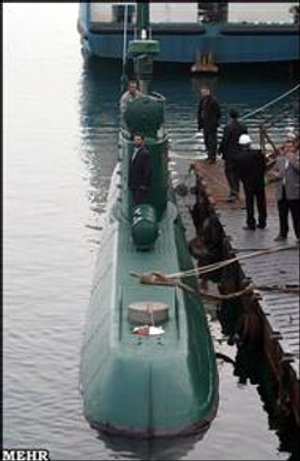
Yono Class Midget Sub

The DPRK Navy is divided into East Sea (10 squadrons) and West Sea fleets (6 squadrons) with a total manpower of 48,000.

North Korea’s fleet consist of approximately 430 combat vessels (Patrol craft, guided missile boats, torpedo boats, fire support craft), 40 submarines (15 midgets), and 340 support craft (landing craft, hovercraft). Like the ground forces 60% of the vessels are stationed near the demarcation line.

North Korea has constructed and is operating up to 130 hovercraft, each one capable of transporting a special forces platoon and operating freely in difficult terrain such as tidal flats, and able to be used for multiple landings by special forces troops at the onset of the war.

Air Force

The air force has a total of six divisions (103,000); 3 for combat (fighter/bomber regiments), 2 for transport and helicopter, and one devoted exclusively for training.

Most of the 1670 aircraft are obsolete, with only sixty modern aircraft (MiG-23, 29). The mainstays consist of 470 old Soviet aircraft (MiG-19, MiG-21, IL-28, SU-7, SU-25) and 320 of ancient type (MiG-15, MiG-17). But it does possess a whopping 820 support aircraft and helicopters.

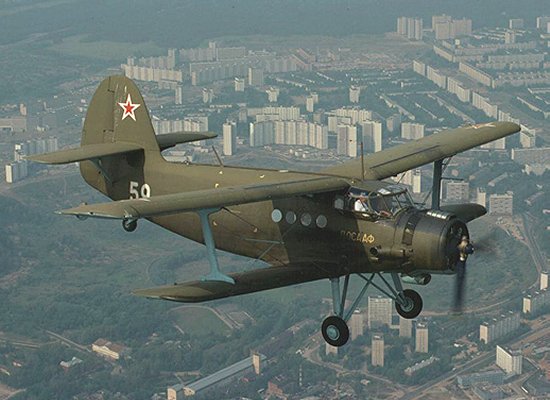
The aircraft that causes the most concern is the 300 AN-2, flying at 100 mph at low altitudes, that makes detection by radar very difficult, and its transport of Special Forces troopers deep behind the lines is a very definite threat.

The NIS provides the following comparison between the forces of the two Koreas.

ROK (South Korea)       DPRK (North Korea)

Total
Ground forces
Navy
Air Force
690,000
560,000
67,000
63,000
1,147,000
996,000
48,000
103,000
Corps
Div./Brigades
11
71
20
153
Tanks
APC
Artillery
2,150
2,250
4,800
3,800
2,270
11,200
Combat vessels
Submarines
Support vessels
Total
180
5
40
225
430
40
340
810
Combat aircraft
Support aircraft
Helicopters
Total
550
180
630
1,360
850
510
310
1,670

North Korea’s regular army consists of 4 corps in the front area, 8 corps in the rear area, one tank corps, 5 armored corps, 2 artillery corps, and 1 corps for the defense of Pyongyang, a total of over 80 divisions and Brigades. Almost all of these forces are based near the DMZ and require little time to be ready for an offensive. In fact because the North Koreans maintains these forces on a continuous state of alert there will likely be little appreciable warning before a commencement of hostilities.

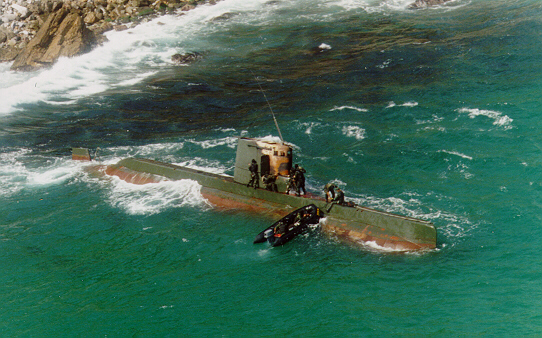
DPRK Special Operations equipment, the SILC Submersible Landing Craft, a Mini-Sub captured in 1996 while attmptign to land commandos in the South and the AN-2 Colt transport aircraft

North Korea has approximately 120,000 troops assigned its Special Forces, the largest Special Forces organization in the world. The Special Forces of the DPRK are grouped into 25 brigades of various types to include light infantry, attack, airborne, and sea-born commando units. They have the support of the Navy and Air Force and use high speed hovercraft and other fast maritime craft, miniature submarines and the AN-2 “Colt” which can transport a squad of soldiers and is virtually undetectable to radar.  These troops will be tasked to open a “2nd Front” by attacking US military installations in Korea, Japan, Okinawa and Guam as well as by disrupting South Korean headquarters, logistics centers, communications facilities, media outlets and government agencies in particular targeting members of the National Command Authority.

The Korean Peninsula is rugged and crisscrossed with numerous streams and rivers.  The climate is difficult hot summers and very cold winters.  The one time that the North has invaded the South it did so in the summer, June 25th 1950.

To be continued….

14 Comments

Filed under Foreign Policy, Military, national security

The Sinking of the Cheonan and the Escalation of Tensions on the Korean Peninsula

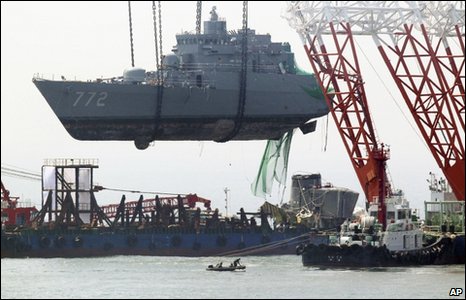
The forward half of teh hulk of the Corvette Cheoson being raised from the Yellow Sea

On March 26th at 2110 hrs local the 1200 ton South Korean Corvette Cheonan (PCC-722) was torpedoed by a North Korean Submarine about 1 nautical mile from Baengnyeong Island. The assailant appears to have been a North Korean Yeono Class miniature submarine using a North Korean CHT-02D 21” torpedo using acoustic homing mechanism set for a detonation under the hull of Cheonan at 6-9 meters depth.  There is the possibility that a Song class coastal submarine could have been involved but the likelihood is a Yeono class boat based on the proximity to land and the observation of a number of “small submarines” departing base a few days before and returning a few days after to their tender. The blast created an underwater shockwave and bubble effect which broke the back of the ship causing it to sink in less than 5 minutes with the loss of 46 crew members.

The probable assailant a Yeono or Yono class Miniature Sub and an Iranian variant below


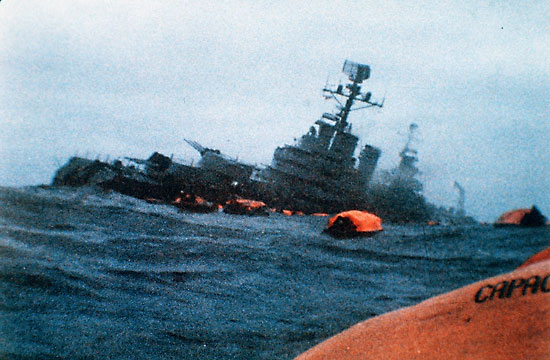
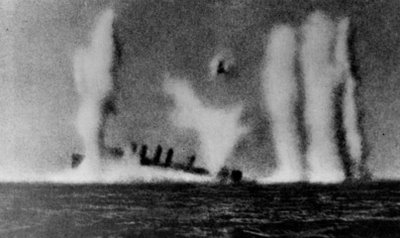
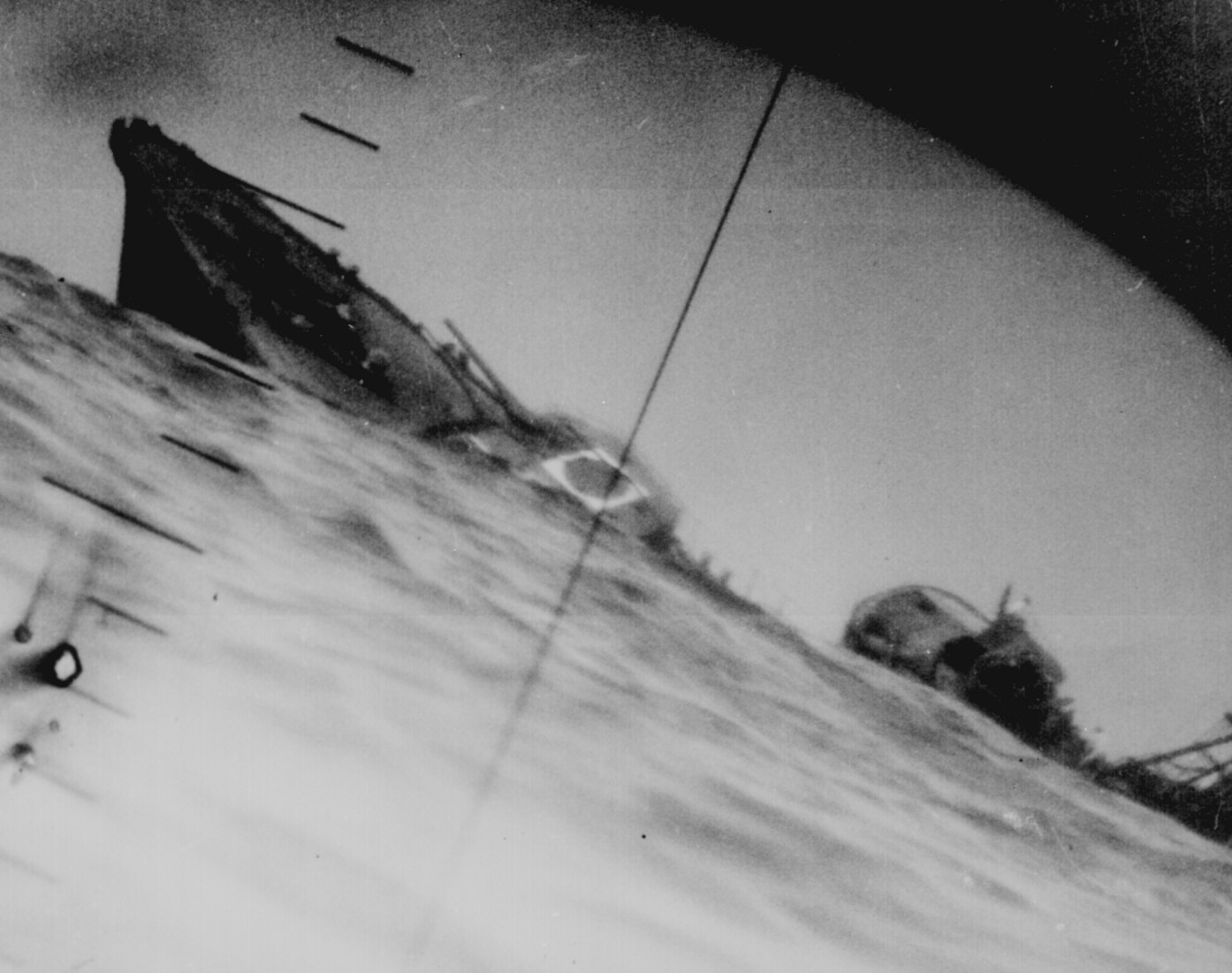
The sinking of Cheonan was the first sinking of a warship by a hostile submarine since the Argentine light cruiser the General Belgrano was sunk by the Royal Navy nuclear hunter-killer attack submarine Conqueror on May 2nd 1982 during the Falkland war.  The sinking of the Belgrano was controversial but occurred in the context of active hostilities and which posed no real threat to regional destabilization or a war that could easily escalate into a nuclear, chemical and biological conflict. The Cheonan was sunk by the North Koreans in a clear violation of the Korean Armistice and represents such a brazen move by the North Koreans that one has to wonder what purpose that it served.  There are reports that Kim Jong Il ordered the attack in retaliation for a confrontation in the same area in November 2009 in which a North Korean ship was heavily damaged.

The last warship sunk by a hostile submarine

The effects are now being felt following the May 20th release of the international investigation of the sinking which confirmed with hard evidence that the torpedo was North Korean and that there were no other possibilities for the sinking. (http://www.mnd.go.kr/mndEng_2009/WhatsNew/RecentNews/index.jsp#wrap ) The North Koreans reacted with anger toward the report while South Korea, the United States, Japan, Australia, Canada and the UN made statements condemning the sinking.  In the following days the US and South Korea announced naval exercises (http://news.bbc.co.uk/2/hi/world/asia_pacific/10150379.stm ) (http://www.csmonitor.com/USA/Military/2010/0524/Pentagon-dials-up-pressure-on-North-Korea-for-Cheonan-sinking ) and on the 24th the South Koreans suspended economic relations and assistance to the North and announced the renewal of psychological warfare against the North. The North Koreans have responded in kind severing all relations with the South, threatening to attack sites broadcasting into the North and announced that it gave its military the order to prepare for war.  http://news.yahoo.com/s/ap/20100525/ap_on_re_as/as_skorea_ship_sinks;_ylt=Alwl3biZwLFab7TyXX4HwRz9xg8F;_ylu=X3oDMTM5NTExM2R2BGFzc2V0A2FwLzIwMTAwNTI1L2FzX3Nrb3JlYV9zaGlwX3NpbmtzBGNjb2RlA21vc3Rwb3B1bGFyBGNwb3MDMgRwb3MDMgRzZWMDeW5fdG9wX3N0b3JpZXMEc2xrA25rb3JlYXNldmVycw

North Korean Torpedo components from the sinking of the Cheonan

The North on the 21st announced that “From this time on, we will regard the situation as a phase of war and will be responding resolutely to all problems in North-South relations,” and that “If the South puppet group comes out with ‘response’ and ‘retaliation’, we will respond strongly with ruthless punishment including the total shutdown of North-South ties, abrogation of the North-South agreement on non-aggression and abolition of all North-South cooperation projects.” (http://www.stuff.co.nz/world/asia/3725039/North-Korea-declares-phase-of-war-with-south )

Secretary General of the United Nations Ban Ki Moon said that the Security Council should take action against North Korea stating “I’m confident that the council, in fulfilling its responsibility for the maintenance of international peace and security, will take measures appropriate to the gravity of the situation.” (http://www.undispatch.com/node/9910 )

The situation seems to escalate by the hour as additional nations condemn the North Koreans and movement in the UN to do sop as well.  With the problem of succession in the North Korean leadership and potential struggles for internal power between the North Korean military and others within Communist Party and government it is hard to say who might gain in this situation. There are reports that part of the reason for the attack was the need for Kim Jong Il to secure the place of his son to leader the regime if he is incapacitated or dies.  The succession of Kim to the leadership was unusual as it was the first time in a Communist nation that the son of the national leader succeeded his father.  It is possibility that senior military or party leadership could oppose such a move.

There are a number of scenarios for this to play out.  Of course one would be for the North to stand down however that would be an act of weakness and loss of face for the regime after sinking a South Korean warship.  The other alternatives include the full fledged resumption of the Cold War on the peninsula or even the outbreak of a regional war which could draw in other nations and involve the use of nuclear, biological or chemical weapons on a large scale.   Any such situation would devastate the economies of much of Asia which in tour could cripple the world economy at a time when the European Union is in crisis, the United States is struggling its way out of a recession and many other nations are experiencing economic crisis or downturn.

This is a very dangerous situation and as one who has spent time on the Korean DMZ I can imagine almost nothing worse for the world than a war in Northeast Asia, perhaps a major showdown in the Arabian Gulf with Iran or a major conflict involving Israel and Iran or other Middle Eastern states, but not much other than those scenarios.  The situation has also demonstrated the threat to warships in the littorals from comparatively simple, cheap and deadly platforms firing weapons based on World War Two technology.  The reality for naval surface forces be they in the Korean littorals, the Arabian Gulf or Gulf of Oman is that low tech weaponry on low tech platforms in congested waters can deal deadly blows to unsuspecting warships.

This situation will need to be watched as it has the potential to get worse with dire consequences.

2 Comments

Filed under Foreign Policy, Military

Background to “The Pacific” Part V: Okinawa

This is the next to last installment of my series “Background to “The Pacific” which deals with certain subjects themes and battles dealt with in the HBO series by that name. This article deals with the Okinawa campaign which is covered in part nine of the series. Like all battles in the Pacific which pitted Americans against Japanese Army and Naval Infantry forces this battle was fought often to the death and unlike other battles fought with a large civilian population in the battle area.

Plans and Preparations


The United States decided to invade Okinawa in the fall of 1944 following the seizure of Peleliu and the Philippine landings.  The planned invasion of Formosa was cancelled after General Simon Bolivar Buckner objected.[i] Buckner argued that the Japanese army on it was “much too strong to be attacked by the forces by American Forces then available in the Pacific.”[ii] The strategic rationale behind the decision to invade Okinawa included Okinawa’s proximity to Japan as a staging base for a future invasion of the Japanese mainland.  Likewise taking the island would severe Japan’s lines of communication and commerce with Southeast Asia and to serve as base for strategic bombers.[iii] Planning began in October 1944 and the detailed plan for OPERATION ICEBERG was issued 9 February 1945.[iv] The campaign was not planned in isolation but “was bound up strategically with the operations against Luzon and Iwo Jima; they were all calculated to maintain unremitting pressure against Japan and to effect the attrition of its military forces.”[v]
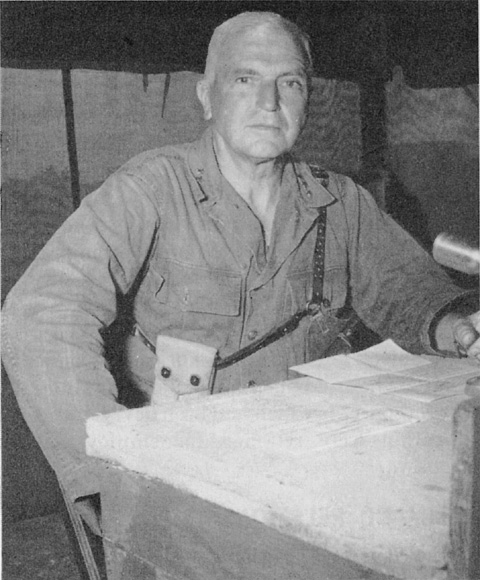
The Unfit American Commander Lt Gen Simon Bolivar Buckner chosen over veteran Marine Commander Lt Gen H M “Howling Mad” Smith

The War Department insisted that Lieutenant General Simon Bolivar Buckner command the newly formed 10th US Army.[vi] .  Buckner was chosen to command based on his taking of the Aleutians, displacing the veteran Marine Holland M. Smith. One critical history noted that “compared to his subordinates, Buckner was hardly fit to command a corps, let alone a field army.”[vii]

The 10th Army consisted of the 3rd Amphibious Corps (1st, 2nd and 6th Marine Divisions) under Major General Roy Geiger and the XXIV Army Corps (7th, 27th, 77th and 96th Divisions) under Major General John Hodge.[viii] 2nd Marine Division was designated as a diversionary force, and the 77th Division was assigned to take the nearby island of Kerama Retto prior to the landings to provide the Navy a safe anchorage and as an artillery platform to shell Okinawa. The 27th Division was in corps reserve.  All were veteran units and had it was believed they would be “more than enough to overwhelm the estimated 70,000 Japanese on Okinawa.”[ix] However, much of XXIV Corps had only been engaged in hard combat on Leyte and was not relieved of their duties on Leyte on 1 March 1945.  This provided these units with no time to rest and refit.[x] More importantly badly needed troop replacements had been diverted to Europe due to the crisis in infantry strength there during the battle of the Bulge.[xi] The operation was very large and “mounted on a scale that matched the previous year’s Allied landing in Normandy.”[xii]

The Japanese Preparations
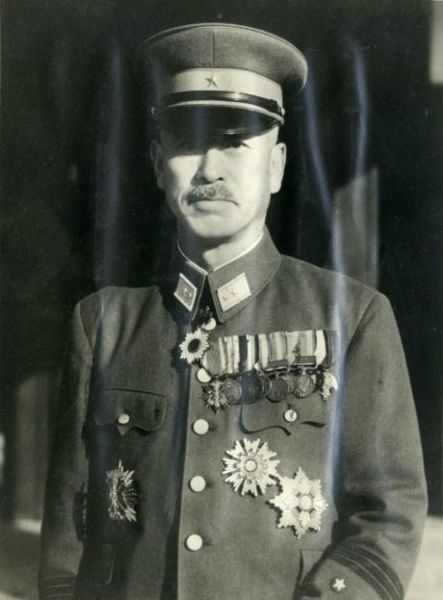

Japanese Commander Lt General Ushijima

American intelligence underestimated the number of Japanese on the island, with an estimate of 55,000 with the expectation of 66,000 by 1 April.[xiii] However by the time of the invasion the Japanese defenders numbered over 100,000.[xiv] The defense of Okinawa was entrusted to the 32nd Army was activated in 1 April 1944 commanded by Lieutenant General Ushijima.  In addition to Okinawa the 32nd Army was responsible for the entire Ryukyu chain.[xv] General Ushijima had commanded an infantry group in Burma and was commander of the military academy when appointed to command 32nd Army and ordered to Okinawa.  His Chief of Staff, General Cho was a firebrand.  Cho had served in China and had participated in a number of attempted military coups in the 1930s as a member of the “Cherry Group.”[xvi] Another key officer though relatively junior was Colonel Yahara the Operations Officer. He had served as an exchange officer in the United States and was intellectual and a modern soldier. He viewed war as a science, won by “superior tactics adjusted to terrain, weapons and troops…not Banzai charges.”[xvii] He was “widely recognized as an expert in his field,”[xviii] and devised the Japanese defensive plan for Okinawa.
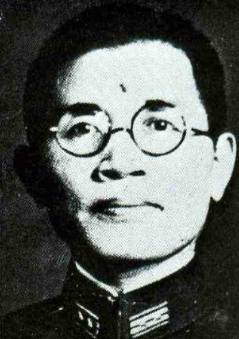
Colonel Yahara Architect of the Japanese Defensive Plan

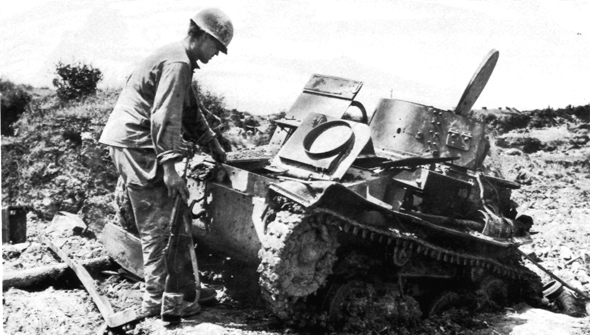
Until 32nd Army was activated Okinawa was garrisoned by a mere 600 troops,[xix] and until major units arrived these soldiers concentrated on airfield construction.[xx] Eventually the 9th, 24th and 62nd Infantry Divisions, the 44th Mixed Brigade along with a light tank regiment and significant artillery came to Okinawa. Additional forces were alloted to outlying islands.  The 24th Division was a triangular division of 3 infantry regiments of 3 battalions each and supporting arms. The 62nd Division was a “brigaded” division activated in 1943 was formed from the veteran 63rd and 64th brigades each with 4 infantry battalions and supporting arms. It had no organic artillery.  Both of the brigades of this division received an additional infantry battalion in January 1945 giving the division ten maneuver battalions.[xxi] Okinawa’s defenses were significantly weakened when 9th Division was transferred to Formosa by the 10th Area Army in late 1944. To compensate General Ushijima converted Naval and service troops on the island into front line troops. Additionally he called the Okinawan Boeitai volunteers and conscripts into service.[xxii] The Boeitai numbered 20,000 and burned “with ardor to serve their emperor.”[xxiii] Seven sea raiding units were converted into infantry battalions.[xxiv] The major units, with the exception of 24th Division which had been transferred from Manchuria had combat experience.[xxv]
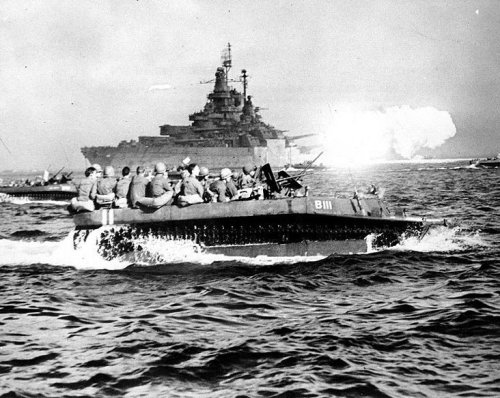
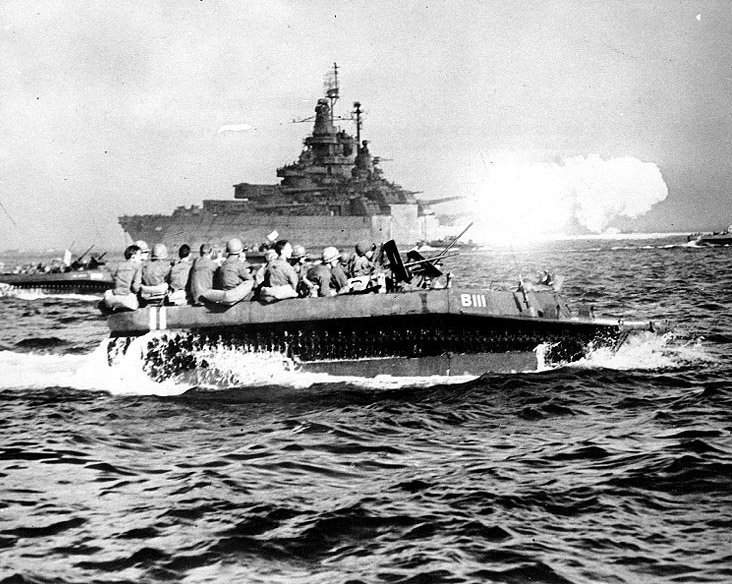
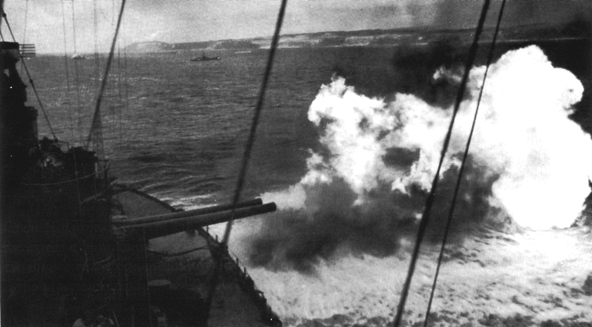
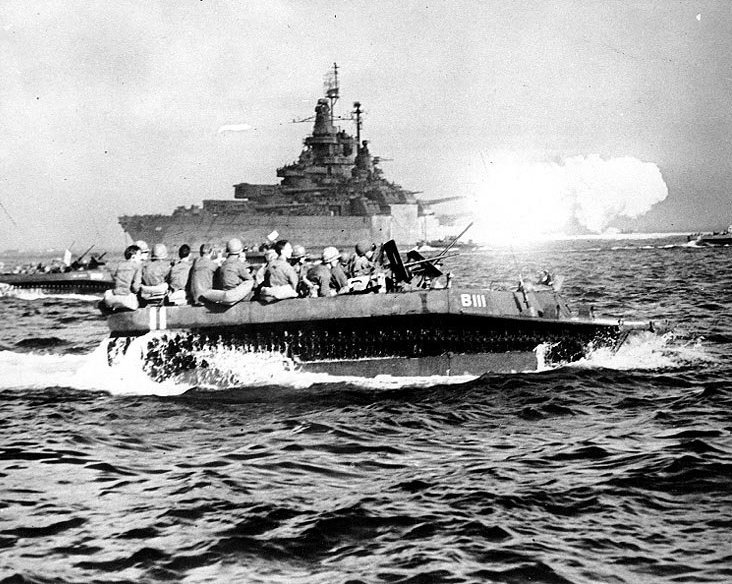
USS Tennessee Provides Naval Gunfire Support while LVTs Advance toward the Beaches

Ushijima’s plans to concentrate his forces in the south were delayed by Tokyo.[xxvi] Likewise the number and disposition of troops in the Ryukyu’s were decided by Imperial Headquarters.[xxvii] Colonel Yahara wrote that had Imperial Headquarters “been able to give us an overall plan with specific unit names and arrival dates, we would have been able to follow a consistent policy, disposing units in an efficient manner rather than moving them left and right.”[xxviii] He noted how the 44th Mixed Brigade had to change location and thus its defensive preparations “seven times during the ten months before the actual battle….”[xxix]
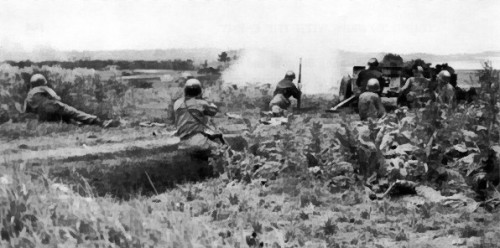
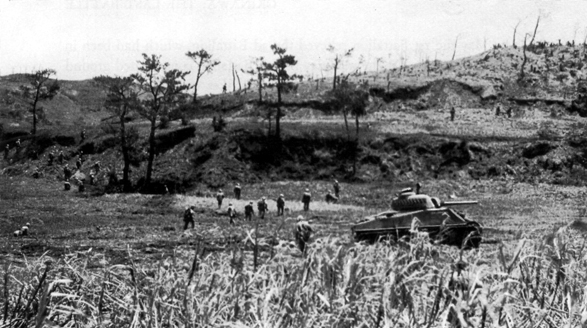
XXIV Corps Advancing South

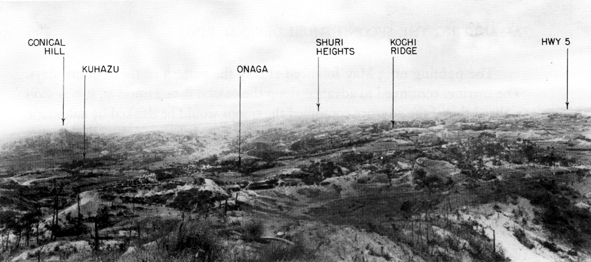
The loss of the 9th Division and its 25,000 soldiers forced Ushijima to change his initial plan to defend the beaches and then launch a major counterattack to drive the Americans into the sea.[xxx] Ushijima decided to defend the south end of the island. This was the most defensible area, with a network of fortifications and underground caves centered on the ancient citadel of Shuri Castle. “Troop disposition would conform to local terrain; troop strength would be concentrated; and an extensive system of subterranean fortifications constructed.”[xxxi] The defenses were “anchored in natural and artificial caves which dotted the mountainous regions around Shuri.”[xxxii] “Terrain features were incorporated into the defense and weapons were well sited with excellent fields of fire.”[xxxiii] General Ushijima left Colonel Udo’s 2nd Infantry Unit to fight a delaying action in the north,[xxxiv] having decided that the area was of “little military value.”[xxxv] Likewise Ushijima decided not to contest the landings or to defend the airfields at Kadena and Yontan.[xxxvi] He planned to use Boeitai units to demolish the airfields when the Americans approached.[xxxvii]
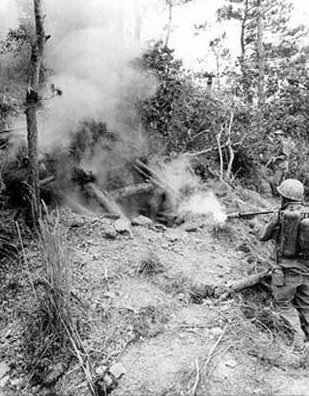
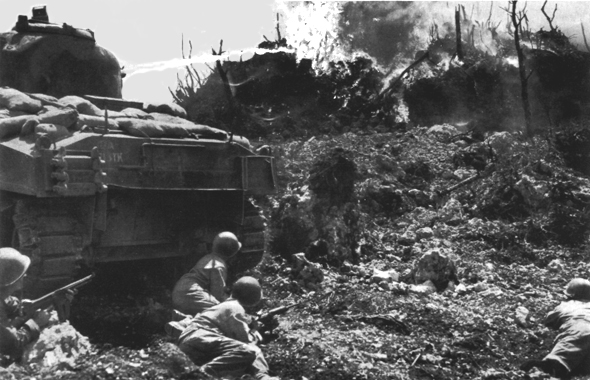
Flamethrowers were Widely Employed their Operators were Targeted by the Japanese

Ushijima’s defensive scheme laid out by Yahara involved concentric defensive lines, tunnels and bunker systems and even the Chinese tombs which dotted the island were converted to pillboxes over the objections of Okinawan elders.[xxxviii] Yahara and Ushijima planned a battle of attrition with all artillery in the army concentrated on the southern end of Okinawa.  Yahara believed the battle would be a “bitter yard-by-yard” defense of the island,[xxxix] with a focus on defense in depth with preparations for anti-tank warfare.
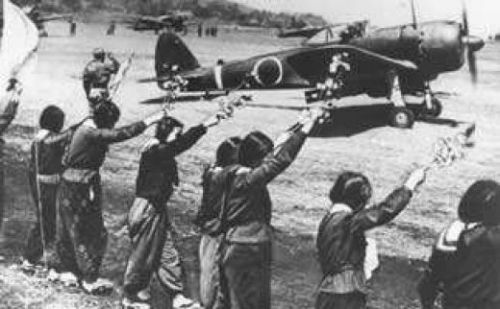
Kamikaze taking off

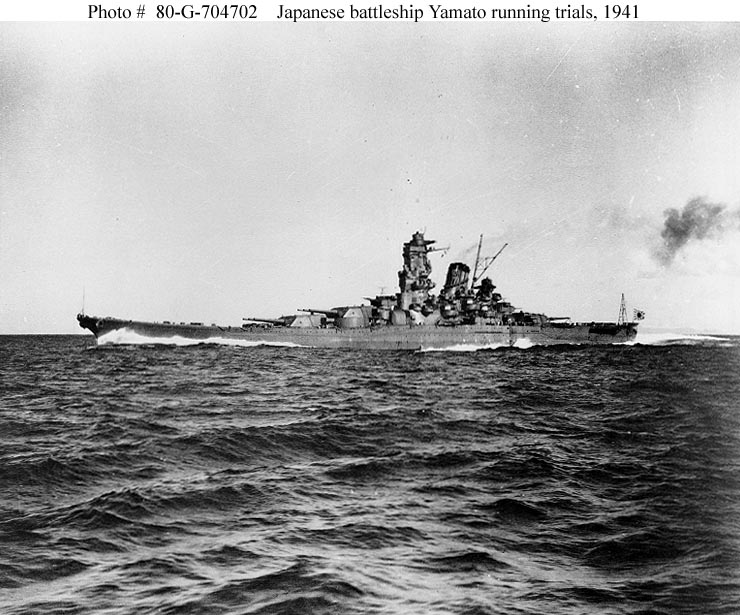
There were to be no Banzai charges.[xl] Ushijima turned Bushido “inside out” and urged his soldiers to “Devise combat method [sic] based on mathematical precision, then think about displaying your spiritual power.”[xli] The defenders would be assisted by suicide boat squadrons based on Okinawa and Kerama Retto and over 4000 aircraft, conventional and Kamikaze and a naval force built around the super battleship Yamato.[xlii]

The Landings
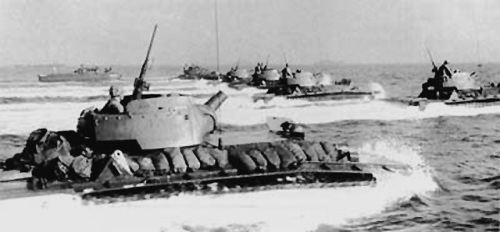
LVT’s going ashore at Okinawa

The assault on Okinawa began with landings by 77th Division on Kerama Retto on 26 March.   The landings were met with little opposition as most of the combat troops on the islands had been moved to Okinawa leaving only base and service troops and members of a Sea Raiding Unit and Korean laborers to defend the small island.[xliii] By the 29th of March the islands were taken, along with numerous prisoners.  Over 350 of the fast “Suicide Boats” that were to attack US transports and landing craft were destroyed at Kerama Retto and long range artillery was emplaced were it could support the Okinawa landings.[xliv] More importantly Kerama Retto provided the Navy a safe anchorage, and Service Squadron 10 arrived on 27 March to support naval forces around the island.[xlv] The naval bombardment was led by Admiral Deyo’s battleships and Admiral Blandy’s escort carriers[xlvi] and culminated on 1 April when 10th Army went ashore. By the time of the landing 10 battleships and 11 cruisers would join the attack.[xlvii] Over 13,000 large caliber shells were fired and a total of 5,162 tons of ammunition were expended on ground targets and 3,095 air sorties were flown by L Day.[xlviii] Fortunately for the Japanese Ushijima had listened to Colonel Yahara and elected not to defend the beach, and thus most of the shells fell on empty positions and terrain.[xlix]
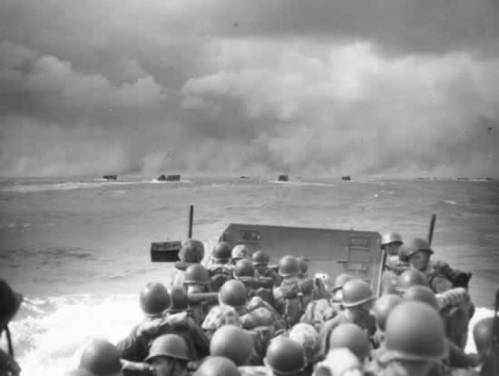
Marines in LCVP going ashore

The Americans landed on the Hagushi beaches adjacent to Kadena and Yontan air bases.  No organized resistance was encountered and in the first hour 16,000 troops landed.[l] There was little disorganization and all units landed on time on the planned beaches.[li] The beaches were bisected by the Bishi River which served as the Corps boundary.  The 1st and 6th Marine Divisions landed north of it and the 7th and 96th to the south.
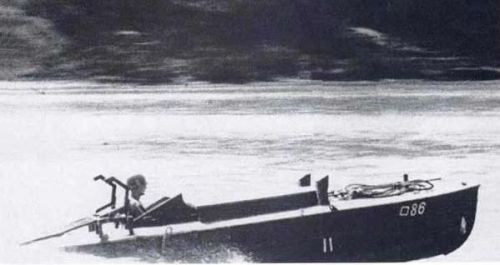
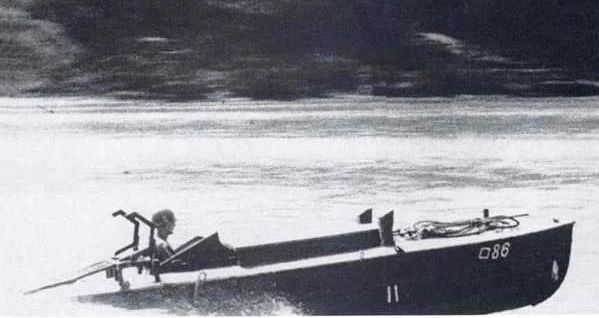
Japanese Suicide Boat of which many were stationed on Okinawa and the surrounding islands

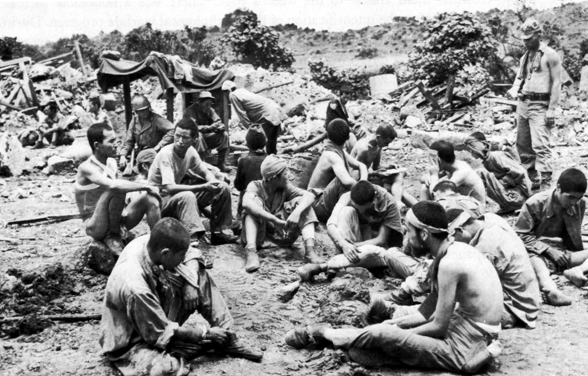
The Marines chopped up the “Bimbo Butai” in their area many of whom melted back into the civilian population.[lii] The Americans moved rapidly inland and by nightfall over 60,000 Marines and Soldiers were ashore.[liii] As the landings were made the 2nd Marine Division conducted a demonstration off Minatoga on the east side of the Okinawa actually launching several waves of landing craft.[liv] On 2 April the operation was repeated which helped divert some Japanese attention off of the actual landings. Ushijima reported that the attempt “was complete foiled, with heavy losses to the enemy.”[lv] Some Marine veterans of Peleliu were jubilant at not having to land and some wondered what the Japanese were up to.[lvi]
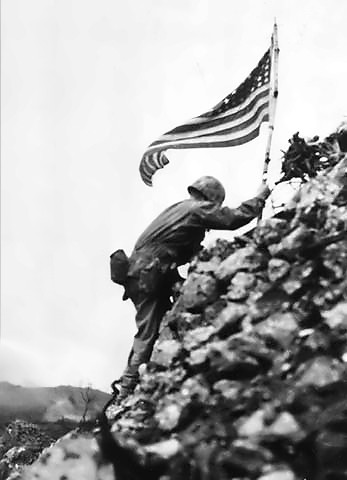
Marine Battalion Commander Raising Flag over Shuri Castle

In the following days the two Marine divisions would race north and east while Army troops advanced cautiously to the south first encountering light opposition.[lvii] The 1st Marine Division cut the island in two on April 3rd and was allowed to clear the Katchin Peninsula which it took without opposition.[lviii] The 6th Marine Division moved north and by the 7th it had had taken Nago.  Colonel Udo’s troops of the 2nd infantry Unit defended the Motubu with great skill[lix] but the Marines took the center of resistance on April 18th.[lx] They then cleared the remainder of the peninsula and the rest of the northern end of the island by the 20th.[lxi] The Marines had advanced 84 miles and killed 2,500 Japanese at the cost of 261 killed and 1,061 wounded. The Japanese survivors according to the plan of Colonel Udo afterward retreated into the hills and engaged in guerilla warfare.[lxii]

The Ordeal Begins
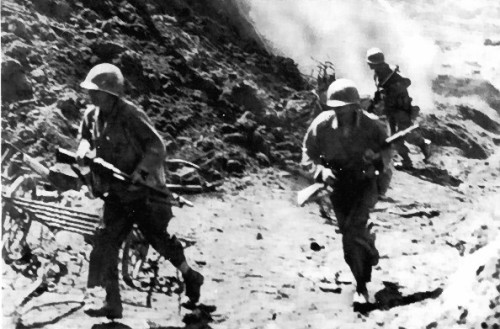

Demolition Team Advancing

As the Soldiers of the 7th and 96th Infantry Divisions felt their way south, they began to encounter resistance from Japanese outposts.  On 4 April 96th Division’s advanced elements including the 96th Recon Troop and 763rd Tank Battalion encountered the first Japanese anti-tank defenses, losing 3 tanks to well concealed 47mm anti-tank guns.[lxiii] The following day both the 7th and 96th divisions encountered more resistance and were held to minimal gains as they drove the Japanese out of their outpost positions.
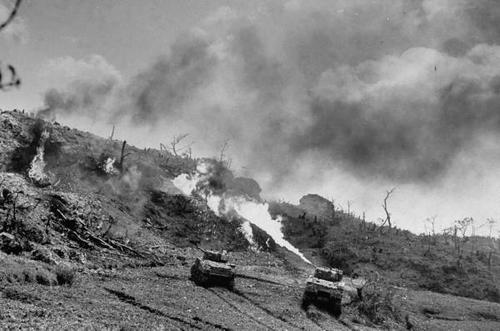
Flamethrower tanks engaging Japanese positions

On the 6th and 7th they captured “the Pinnacle” and “Cactus ridge” from elements of 3 independent infantry battalions which put up stiff resistance.[lxiv] By the end of 8 April against strong opposition XXIV Corps had suffered 1,510 battle casualties and was virtually halted.[lxv] Savage hand to hand fighting took place as the defenders worked to separate the American tanks from their infantry. They held the Americans outside the Shuri zone for 8 days.[lxvi]
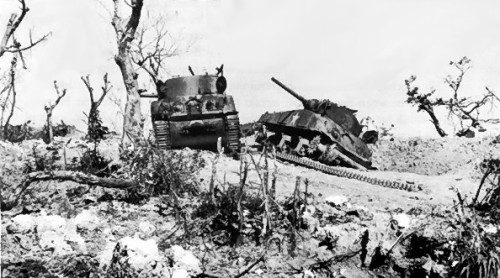
Wrecked Tanks on Skyline Ridge

The 96th Division attacked the heavily defended Kakazu Ridge and Tombstone Ridge and was repulsed.  The 7th Division was halted at Hill 178.  The Japanese fought at close quarters and desperate hand to hand fighting “would characterize the Okinawa land battle.” While the Japanese infantry contested every yard “carefully concealed anti-tank guns seemed anchored into the terrain.”[lxvii] The deployment and concealment of the anti-tank guns helped nullify the American advantages in armor. The Japanese also employed 320mm spigot mortars[lxviii] and well sited machine guns and artillery sited on reverse slopes took a heavy toll of the attacking Americans. Of one company of 89 men which attacked Kakazu on 9 April “only three returned unwounded.”[lxix] Assisted by monsoon rains, “the Japanese turned every hill, every ridge into a bloody deathtrap.[lxx]
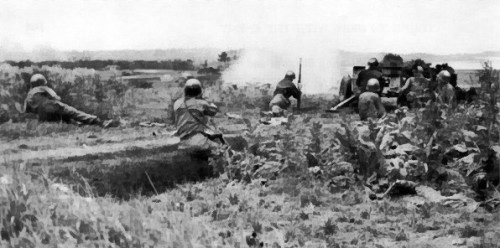
XXIV Corps Advancing South

On the 10th two regiments of 96th Division attempted a power drive with battalions advancing on line and were thrown back.[lxxi] The two divisions suffered 2.890 casualties in their abortive attacks while the Japanese lost close to 4,000, mainly to artillery fire.[lxxii] Ushijima’s defense planned by Yahara was “chillingly professional and efficient. Within a week the Japanese had stopped two very good Army divisions in their tracks.”[lxxiii] General Buckner paused sent for the 1st and 6th Marine Divisions and brought the 27th and 77th Divisions ashore to strengthen XXIV Corps.[lxxiv]

Counterattack
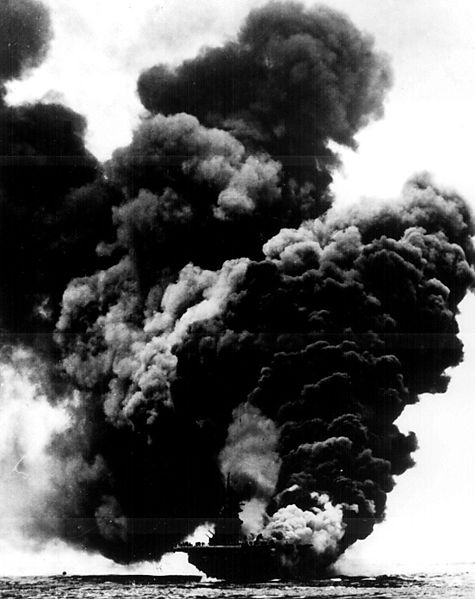

The War at Sea: Kamikaze Attack on USS Bunker Hill

It was at this point when “Yahara’s war of attrition was working well” that a division arose in the 32nd Army Staff, when General Cho; Ushijima’s Chief of Staff had “his first outburst of samurai offensive fever.”[lxxv] Cho noted the failure of the American attacks and believed reports that the American Navy had been heavily damaged by Japanese air power and by the reported success of Operation Ten-Go, the sortie of the Yamato and her escorts on their suicide mission.  He based his optimism on a telegraph from Imperial Navy headquarters “claiming that Ten-go had been “very successful”[lxxvi] when in fact the Yamato and her escorts had been dispatched in hours by carrier aircraft with few American losses.
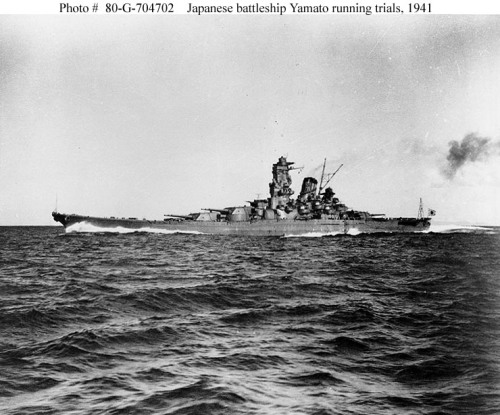
The Battleship Yamato Lead a 10 ship Suicide Task Force to Okinawa and was Sunk with Most of Her Crew

Below

USS Aaron Ward Damaged heavily damaged by Kamikaze Attack over 10,000 sailors were casualties including nearly 5000 dead due to Kamikaze attacks
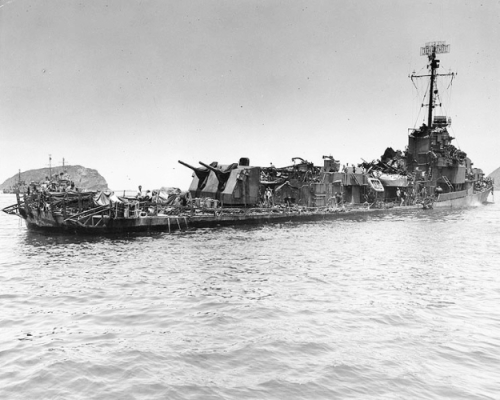

Cho also assumed a reduction in the number of ships in the Hagushi anchorage and in the number of air sorties as signs of American weakness.[lxxvii] Cho persuaded Ushijima to launch a counterattack over the protestations of Yahara who argued that “it would waste men.”[lxxviii] The attack by four battalions of the 62nd and 24th Divisions began the night of 12-13 April. Based on infiltration tactics and supported by artillery the attack was badly planned and coordinated. One attack almost overran American positions on the draw on Kakazu Ridge, but the Japanese return to “bamboo spear tactics” exposing them to the “overwhelmingly superior America artillery fire….”[lxxix] The attack was a “total failure.”[lxxx]The Japanese lost nearly 1,600 men, half their force in an “operation ill conceived, understrength, misdirected, haphazard and uncoordinated.”[lxxxi]

Cracking the Outer Line

Reinforced by the 27th Division XXIV Corps prepared for another attack against the outlying Shuri defenses. In the interval between the Japanese attack and the new offensive the 77th Division landed on Ie Shima on 16 April and secured it on the 24th amid very heavy fighting killing over 4,700 Japanese, many armed civilians against the loss of 172 killed and 902 wounded Americans.[lxxxii] Among the American dead was legendary reporter Ernie Pyle.
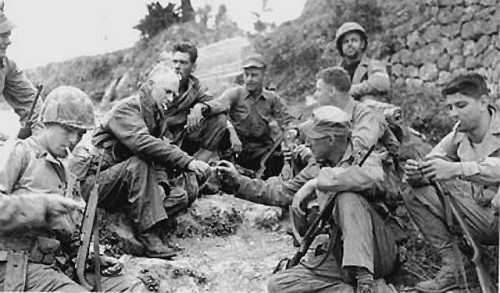
Legendary Reporter Ernie Pyle with Marines. He would be killed on neighboring Ie Shima with the Army 77th Divison

The Americans aimed to penetrate the defenses and “seize the low valley linking Yonabaru on the east coast with the capital of Naha on the west.”[lxxxiii] The attack was supported by 27 battalions of artillery[lxxxiv] including 9 Marine artillery battalions.[lxxxv] Additional Naval gunfire support in the form of 6 battleships, 6 cruisers and 9 destroyers added to the rain of steel unleashed on the Japanese.[lxxxvi] Morison notes that Army historians stated that “Naval gunfire…was employed in greater quantities in the battle for Okinawa than in any other in history.”[lxxxvii]
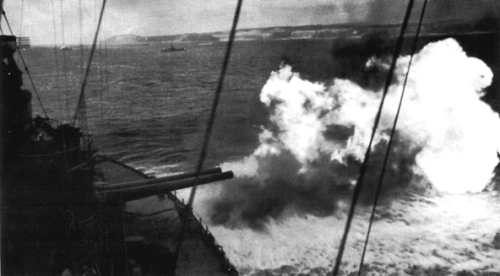
USS Maryland contributes her firepower to support ground forces

The 7th Division was to take Hill 178 and drive south to the Naha Yonabaru road. 96th Division minus the 383rd Infantry was to “drive straight through the heart of the Shuri defenses seizing the town of Shuri and the highway beyond.”  27th Division attacking 50 minutes later to take advantage of artillery was to take Kakazu ridge and the coast plain north of Naha.[lxxxviii]
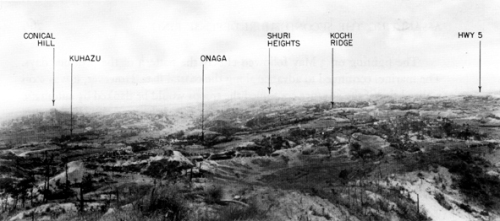
The attack began on April 19th and was preceded by a 19,000 shell bombardment.[lxxxix] Ushijima wisely ordered his men to remain in their caves.  The Corps Artillery commander “doubted as many as 190 Japanese…had been killed in the bombardment.”[xc] The attack was immediately halted all along the line, gains, where there were any were measured in yards. Over 750 casualties were inflicted by the Japanese on the corps and 27th Division’s tank battalion lost 22 of 30 tanks to well positioned 47mm anti-tank guns.[xci] Buckner rejected the requests of the Corps commander Hodge and the Marine divisional commanders,[xcii] to launch a flanking amphibious operation at Minatoga with the 2nd Marine Division, and continued the frontal attacks.  John Toland writing of the rejection of the amphibious operation noted that Ushijima “feared such a maneuver (“It would bring a prompt end to the fighting”) and had already been forced to move his “rear guard division north to beef up the Shuri line.”[xciii] Thus the three divisions continued to press their attacks, suffering heavy casualties.  Eventually the Americans forced the Japanese off Skyline ridge[xciv] though the Japanese still held Kakazu.[xcv] When the 27th Division attacked again it found Kakazu abandoned by the Japanese.[xcvi] By the 24th Ushijima’s line was “pierced in so many places that it was in danger of collapsing….So General Ushijima withdrew to his next chain of defenses.”[xcvii] On April 30th the 1st Marine Division relieved the battered 27th Division which had suffered 2,661 casualties in less than two weeks.”[xcviii] The 1st Marine Regiment launched an attack on 1 May and was driven back with heavy causalities.[xcix]

General Cho’s Final Offensive
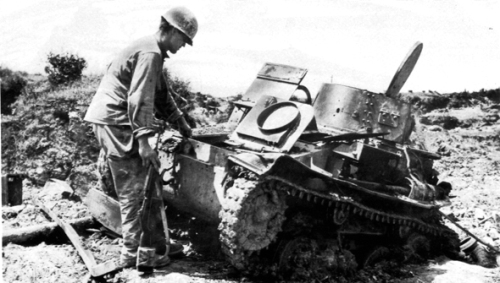
Knocked out Japanese tank from General Cho’s failed counter attack

General Cho supported by 62nd Division’s commander, General Fujioka persuaded Ushijima over the strenuous objections of Yahara to launch a counter-offensive with the intention of isolating and annihilating the 1st Marine Division and “rolling up” XXIV Corps.[c] The attack was to occur along the entire line and include an amphibious landing behind American lines.[ci] The 62nd Division would take the lead as it had been less heavily engaged than 24th Division.[cii] Yahara argued his case strongly and warned the Ushijima that to attack “is reckless and will lead to an early defeat.”[ciii] The attack began on the night of 3 May and the forces making the amphibious landing were annihilated by the Marines.[civ] The Japanese made little headway during the main attack; one battalion achieved a small penetration of American lines at Tanabaru but was eliminated the next day.[cv] The Japanese 27th Tank Regiment lost most of its tanks and those remaining were used as “stationary artillery and pillboxes.”[cvi] The Japanese lost about 5,000 troops in the offensive.[cvii] Ushijima halted it and told Yahara “as you predicted this offensive has been a total failure.  Your judgment was correct….”  He ordered Yahara “to do whatever you feel is necessary.”[cviii] Cho saw “no hope at all”[cix] and asked Yahara jokingly “when will it be okay for me to commit hari-kari?” [cx]

Göttdammerung
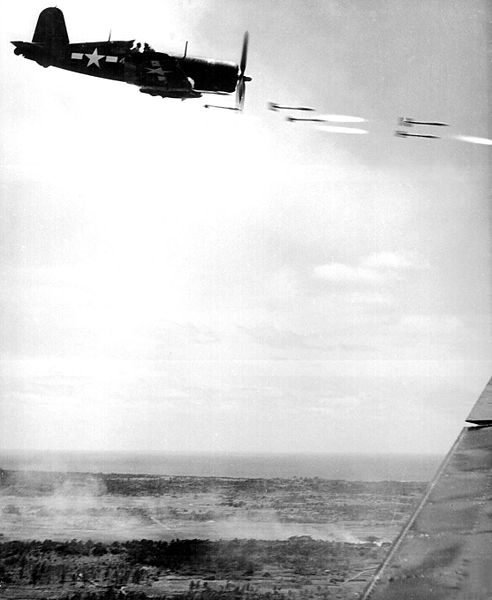
Marine F4FU Corsair providing close air support on Okinawa

The American offensive resumed on 11 May and amid stubborn Japanese defense and heavy rains which hindered movement. The 1st and 6th Marine Divisions[cxi] and the 77th and the 96th infantry divisions attacked along the line but the primary objective was Shuri.[cxii] The Americans continued to apply pressure and make small gains against strong Japanese resistance put up by the 44th Mixed Brigade.  The defense was particularly strong on Sugar Loaf Hill[cxiii] which cost 6th Marine Division nearly 4,000 total casualties before it was cleared out on 21 May.[cxiv] The 96th Division turned the Japanese east flank at Conical Hill on the 13th  [cxv] while the First Marine Division cracked through the Japanese lines at Dakeshi Ridge.
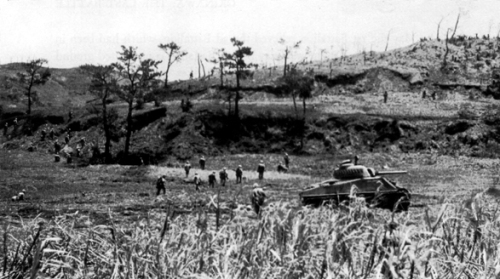
Marines attacking Dakeshi Ridge

It fought through Wana Ridge[cxvi] and engaged the Japanese in a costly battle in the Wana Draw. The 2nd Battalion 5th Marines supported by 30 tanks blasted their way through the draw, again against brutal Japanese resistance.[cxvii] On the 22nd Yahara persuaded Ushijima to withdraw from Shuri to the Kiyan Peninsula.[cxviii] The 1st Battalion 5th Marines crossed the divisional boundary of 77th Division to capture Shuri Castle on 24 May.[cxix] The Company commander, from South Carolina who took it did not have an American flag so he “substituted the flag of the Confederacy, a banner that he…carried in his helmet.” [cxx] Two days later the American flag was raised along with the standard of the 1st Marine Division in full view of the Japanese.[cxxi]
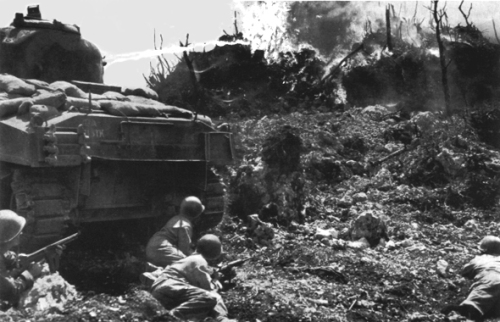
Tank infantry attack

Following the Japanese withdraw from Shuri the battle continued with heavy rains hampering both sides, especially the more vehicle dependant Americans.[cxxii] The 6th Marine Division cleared the Oruku Peninsula south of Naha the first two weeks of June[cxxiii] killing 5,000 of the Japanese Navy defenders at a cost of 1,608 Marines. The Japanese resistance crumbled when Admiral Ota committed suicide and many defenders fled while others surrendered.[cxxiv] 7th Division pushed onto the Chinen Peninsula and 1st Marine and both 77th and 96th Infantry Divisions pushed steadily south against Japanese rear-guards.[cxxv] The 8th Marines from 2nd Marine Division were brought to the island to reinforce the depleted 3rd Amphibious Corps[cxxvi] A hard fight was fought along the Kunishi-Yuza-Yaeju escarpment where the Japanese conducted their last organized defense.[cxxvii] By the 17th the “32nd Army was dazed and shattered. Discipline had evaporated.”[cxxviii] The 32nd Army’s discipline and morale collapsed, and it “degenerated into a mob.”[cxxix] Yahara noted that “naturally, morale is low at the end of a battle, but we had never experienced anything like this.”[cxxx]
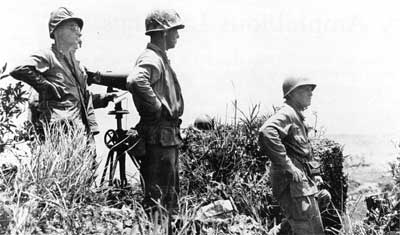
Lt General Buckner (Right) Observing 8th Marines Assault minutes before Being Killed

General Buckner was killed while observing 8th Marines attack Kunishi on the 18th and was succeeded by General Geiger of the Marine amphibious corps.[cxxxi] A final message from Tokyo congratulated 32nd Army on its achievements on the 20th.[cxxxii] General Ushijima and General Cho committed Hari-Kari early on the 23rd after ordering Yahara not to do so. Cho told Yahara “to bear witness as to how I died.”[cxxxiii]
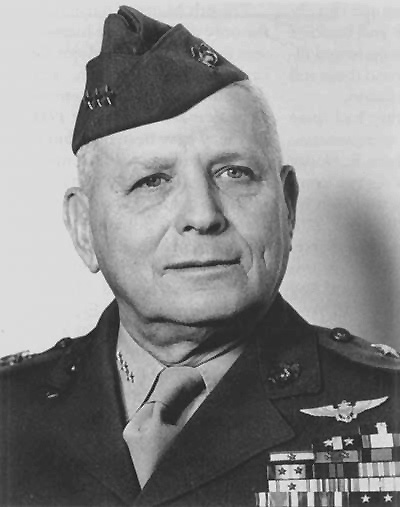
Lt Gen Roy Geiger would take command of 10th Army becoming the first Marine ever to command a US Army field Army

American battle casualties totaled 49,151 including 12,520 dead.[cxxxiv] The Japanese lost over 110,000 killed and 7,400 taken prisoner by the Americans.[cxxxv] About 75,000 Okinawan civilians were killed.[cxxxvi] Small numbers of Japanese renegades and Okinawan rebels conducted low-level guerilla operations until 1947.[cxxxvii]

Analysis
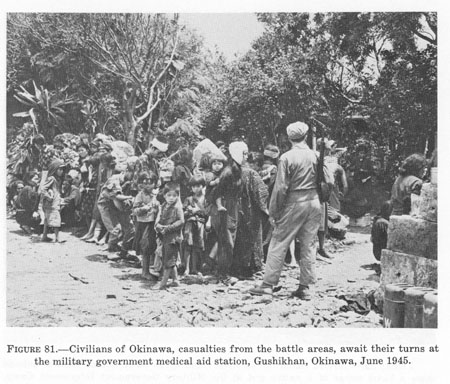
Civilian casualties (above) and prisoners (below) the prisoners chose capture over throwing themselves down “Suicide Cliff”
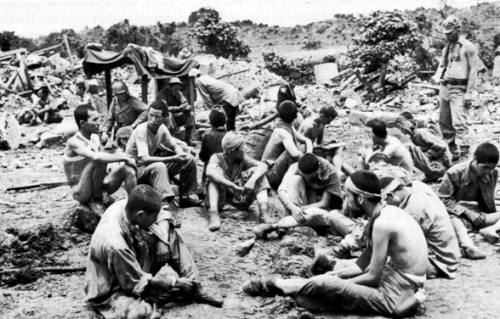

The key Japanese mistake occurred at the strategic level when 9th Division was transferred off the island[cxxxviii] and no further reinforcements were sent.  With these forces Ushijima might have been able to hold out until the end of hostilities. Yahara criticized Imperial Headquarters which panicked when the landings occurred and ordered a counterattack which “left our army in utter confusion.”[cxxxix] General Ushijima’s major mistakes during the battle were the two costly offensives urged by General Cho against the protest of Colonel Yahara. These attacks sacrificed of some of his best troops for no effect and significantly weakened the 32nd Army’s defensive posture.  Yahara objected to both of these offensives. According to the American intelligence debriefing Yahara considered the May 4th offensive “as the decisive action of the campaign.”[cxl] Gordon Rottman simply called that attack a “blunder.”[cxli]

On the American side Buckner fought an unimaginative and uninspired battle, much like Mark Clark’s Italian campaign or Courtney Hodges at the Huertgen Forrest.  Murray and Millett, note that Buckner’s “flawed generalship contributed to the slaughter.”[cxlii] Buckner’s decision not to land the 2nd Marine Division or the 77th Division at Minatoga surrendered his one opportunity to maneuver against the Japanese to force them out of their prepared positions.[cxliii] Ronald Spector notes that “in retrospect Buckner ought to have given more consideration to an amphibious attack[cxliv] while Murray and Millett state that Buckner “did not have the experience to make such a critical decision.”[cxlv] Nimitz wondered if “the Army was using slow, methodical tactics to save the lives of soldiers at the expense of the Navy”[cxlvi] which was exposed to Kamikaze attacks as they had to continue to provide the close in support to 10th Army. Buckner’s rejection of this opportunity left him with the straight ahead attack.   Another option which was available to Buckner was to seal off the Japanese and let them wither on the vine. Such an action in effect would have bypasses the Japanese defenders and force them to make Banzai attacks against dug in Americans.[cxlvii] The Americans had the airfields on day one and most of the key facilities needed for future operations and there was little to gain by continuing offensive operations in the south.  Sealing off the Japanese would have certainly caused the Americans fewer casualties than the strategy which Buckner employed.[cxlviii]
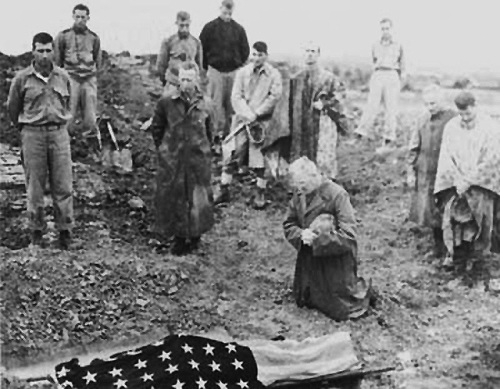
The Human Cost of War: Marine Colonel Fenton prays for his Fallen Son

Buckner’s leadership was poor his strategy and tactics both unimaginative and foolish bordering on incompetent.  In a time when American infantry replacements were tapped out and no new Infantry divisions were available for action he decimated good formations by throwing them into frontal attacks against well prepared fortified positions manned by experienced troops.  Had Ushijima not followed General Cho’s advice squandering is own troops the battle would have cost even more American lives with the invasion of Japan looming.  The War Department in its attempt to wrest control of an operation that should have remained under the control of the Navy and Marine Corps put the wrong man in the job when other more competent corps commanders such as General “Lighting Joe” Collins who had finished off the Japanese at Guadalcanal were available with European hostilities winding down.  Why Buckner was chosen despite his incredibly limited command experience serving in the relatively inactive Aleutians and not even commanding a company in World War One had to be due to Army politics and in the end it cost nearly 50,000 American casualties on the land alone, not counting Navy casualties which totaled almost 10,000 including over 4,900 dead. The capture of Okinawa provided the Americans with valuable anchorages and airfields close to Japan had there been an invasion of the home islands, but they were obtained at great cost.

Notes

[i] Appleman, Roy, E., Burns, James M., Gugeler, Russell A., and Stevens, John. The United States Army in World War II, The War In the Pacific. Okinawa: The Last Battle, Center of Military History, United States Army. Washington DC. 1948.  p.4

[ii] Leckie, Robert. Okinawa: the Last Battle in the Pacific Penguin Books, New York NY 1996. p.2.  Although not mentioned by Leckie this shortage of forces was due to the American decision to limit the Army to 90 Divisions with dire consequences in Europe and Asia especially in the number of infantry available.  For a good account of the impact of this see Russell Weigley’s Eisenhower’s Lieutenants.

[iii] Willmont, H.P. The Second World War in the Far East. John Keegan General Editor. Cassell Books, London, 1999. p.186.

[iv] Morison, Samuel Eliot. The Two Ocean War: A Short History of the United States Navy in the Second World War. An Atlantic Monthly Press Book, Boston MA 1963. p.525

[v] Ibid. Appleman. p.4

[vi] Costello, John. The Pacific War: 1941-1945 Quill Publishers, New York, NY 1981. p.554.

[vii] Murray, Williamson and Millett, Allan R. A War to Be Won: Fighting the Second World War.  The Belknap Press of Harvard University, Cambridge, MA. 2000. p.515

[viii] Ibid. Leckie. pp. 53-54.  Note Costello misidentifies both of these corps calling them 3rd Marine Corps and XIV Army Corps.   He also does not count the 77th Division in his figures.

[ix] Ibid. Costello. pp. 554-555.  Costello’s figures are slightly above the official estimates listed below.

[x] Ibid. Leckie. p.56

[xi] Ibid. Leckie. p.57 An important point to note is that the Army had reached a critical point in its ability to conduct the war.  The steady drain on infantry strength that began in Normandy was heightened in the Huertgen Forrest and the Bulge.

[xii] Ibid. Costello. p.556

[xiii] Ibid. Appleman. p.15

[xiv] Ibid. Costello. p.555

[xv] Yahara, Hiromichi. The Battle for Okinawa. Introduction and Forward by Frank Gibney. Translated by Frank Pineau and Masatoshi Uehara. John Wiley and Sons, New York, NY. 1995. p.3

[xvi] Rottman, Gordon R. Okinawa 1945: The Last Battle. Osprey Publishing, Oxford, United Kingdom, 2002. p.35

[xvii] Ibid. Leckie. pp.31-32

[xviii] Ibid. Rottman. p.37

[xix] Toland, John. The Rising Sun: The Decline and Fall of the Japanese Empire 1936-1945. Random House, New York, NY 1970. p.683.

[xx] Ibid. Yahara. p.7

[xxi] Ibid. Rottman. Pp.47-48

[xxii] Ibid. Toland. pp.683-684.  Yahara also notes the arrival of the 15th Mixed Brigade and the fact that the Japanese considered the 44th Mixed Brigade “one of our Army’s prized units.” (p.12)

[xxiii] Ibid. Toland. p.683.  Leckie comments on the low opinion of many Japanese soldiers about the Boeitai calling them Bimbo Butai (Poor Detachment), as the most of the Japanese had come to loathe Okinawa and all things Okinawan. A comment from my own service in Okinawa in 2000-2001 is that this loathing of Okinawa by Japanese is still common, Japanese tend to look down on Okinawans and the Okinawans now tend to resent the Japanese.

[xxiv] Ibid. Appleman. p.87

[xxv] Ibid. Yahara. p.31 All sources note that the 24th was a “well trained” division.

[xxvi] Ibid. Costello. p.555

[xxvii] Ibid. Yahara. p.15

[xxviii] Ibid. Yahara. pp. 14-15

[xxix] Ibid. Yahara. p.15

[xxx] Ibid. Yahara. pp. 20-22 and 32.  Yahara details the initial plan and the changes necessitated by the departure of 9th Division.  Rottman gives 9th Division a strength of 17,000. (Rottman p.46)

[xxxi] Ibid. Yahara. p.20

[xxxii] Spector, Ronald H. Eagle Against the Sun: The American War With Japan. The Free Press and Division of MacMillan, Inc. New York, NY 1985. p.533

[xxxiii] Ibid. Rottman. p.25

[xxxiv] Ibid. Leckie p.32 and Costello. p.555. The unit was between 3000 and 3500 strong. Leckie simply identifies the force as the 2nd Infantry Unit while Costello identifies them as a Special Naval Landing Force. Appleman identifies Colonel Udo and the approximate number of troops but does not identify the unit. There appears to be confusion about the Japanese units, Appleman says that the 2nd Infantry Unit was constituted from survivors of 44th Mixed Brigade (which had lost most of its troops when their ship was sunk by an American submarine) and 15th Independent Mixed Regiment which was brought in to bolster it, but Yahara consistently places the reconstituted 44th in the south as part of the main defense. (see Appleman p.87) I will relay on Yahara as he was the 32nd Army Operations Officer and in a position to have first hand knowledge.

[xxxv] Ibid. Yahara. pp.22-23

[xxxvi] Ibid. Leckie. p.32

[xxxvii] Ibid. Leckie. pp.32-33

[xxxviii] Ibid. Toland. p.684

[xxxix] Ibid. Yahara. p.32

[xl] Ibid. Yahara. p.25

[xli] Ibid. Leckie. p.35

[xlii] Ibid. Leckie. p.19

[xliii] Ibid. Appleman. pp.52-58

[xliv] Ibid. Appleman. p.60

[xlv] Potter, E.B. Nimitz. Naval Institute Press. Annapolis, MD. 1976. p.369

[xlvi] Ibid. Costello. p. 556 and Morison p.530.

[xlvii] Ibid. Appleman. p.64. Leckie (pp. 67-68) names only 9 battleships: Arkansas, New York, Texas, Nevada, Idaho, New Mexico, Colorado, Tennessee and West Virginia. Of these ships all were built before the war and four were in commission before the US entered the First World War.  Three had been at Pearl Harbor and with the exception of their engines the Tennessee and West Virginia had been completely rebuilt and modernized to the standards of the fast new battleships of the South Dakota class.

[xlviii] Ibid. Appleman. p.64

[xlix] Ibid. Leckie. p.69.

[l] Ibid. Leckie. p.72

[li] Ibid. Appleman. p.74

[lii] Ibid. Leckie. p.73

[liii] Ibid. Appleman. p.75

[liv] Ibid. Appleman. p.74

[lv] Ibid. Leckie. p.72  A point to note is that the “Demonstration” is still one of the Amphibious Operations in the USMC Amphibious doctrine.

[lvi] Sledge, E.B. With the Old Breed at Peleliu and Okinawa. Presidio Press. Novato, CA. 1981. Oxford University Press Paperback, New York, NY 1990. pp. 187-188  William Manchester in Goodbye Darkness talks about the first few days as his 6th Marine Division moved up North.  He talks of the minimal resistance and the beauty of the island. Manchester, William, Goodbye Darkness: A Memoir of the Pacific War Little Brown and Company, New York NY, 1979.pp.356-357

[lvii] Ibid. Potter. pp.370-371

[lviii] Ibid. Leckie. p.78

[lix] Ibid. Manchester. p.357.  Manchester notes that the fight in the north was like “French and Indian Warfare.”

[lx] Ibid. Appleman. p.148

[lxi] Ibid. Leckie. p.83

[lxii] Ibid. Appleman. p.148

[lxiii] Ibid. Appleman. p.104

[lxiv] Ibid. Appleman. pp.107-110

[lxv] Ibid. Appleman. pp.112-113.

[lxvi] Ibid. Appleman. p.112.

[lxvii] Ibid Yahara. p.35

[lxviii] Ibid. Leckie. p.104

[lxix] Ibid. Spector. p.534

[lxx] Ibid. Murray and Millet. p.514

[lxxi] Ibid. Appleman. pp. 126-127

[lxxii] Ibid. Leckie. pp.104-105

[lxxiii] Ibid. Murray and Millett. p.514

[lxxiv] Ibid. Murray and Millett. p.514

[lxxv] Ibid. Yahara. p.36

[lxxvi] Ibid. Leckie. p.108

[lxxvii] Ibid. Leckie. p.108

[lxxviii] Ibid. Yahara. p.36  The battle for a counter-offensive began on 6 April but was rejected. (Appleman. p.130)  Yahara actually went to the commanders of the 24th and 62nd divisions and persuaded them not to use 3 battalions each but only two. (Leckie. pp.107-108)

[lxxix] Ibid. Leckie. p.113

[lxxx] Ibid. Appleman. p.137

[lxxxi] Ibid. Leckie. p.113.

[lxxxii] Ibid. Appleman. p.182. Leckie gives the total of 258 killed and 879 wounded. (Leckie. p.125) and estimates that most might have been uniformed civilians.  Appleman citing Army figures estimates about 1,500 civilians.  Even adding the American MIA totals the differences between Appleman and Leckie’s count of US casualties is puzzling.

[lxxxiii] Ibid. Leckie. p.126

[lxxxiv] Ibid. Leckie. p.127

[lxxxv] Ibid. Appleman. p.185

[lxxxvi] Ibid. Leckie. p.127

[lxxxvii] Ibid. Morison. p.553

[lxxxviii] Ibid. Appleman. pp.184-185

[lxxxix] Ibid. Leckie. p.128

[xc] Ibid. Leckie. p.128

[xci] Ibid. Leckie. p.131 It is interesting to note the vulnerability of the Sherman tanks to the obsolescent 47mm anti-tank guns used by the Japanese.  By this stage of the war comparable German and Russian tanks would not be stopped by such weapons, baring a luck shot.

[xcii] Ibid. Murray and Millett. p.515

[xciii] Ibid. Toland. p.706

[xciv] Ibid. Toland. pp.708-709

[xcv] Ibid. Leckie. p.138

[xcvi] Ibid. Appleman. pp. 243 and 247

[xcvii] Ibid. Leckie. p.139

[xcviii] Ibid. Toland. p.709

[xcix] McMillan, George. The Old Breed: A History of the First Marine Division in World War Two. The Infantry Journal Inc., Washington DC. 1949. p.375

[c] Ibid. Leckie. pp.148-149

[ci] Ibid. McMillan. p.377

[cii] Ibid. Yahara. p.37

[ciii] Ibid. Toland. p.710

[civ] Ibid. Toland. p.710

[cv] Ibid. Appleman. p.299

[cvi] Ibid. Appleman. p.302

[cvii] Ibid. Appleman. p.302.  Rottman states 7,000 and Leckie 6,000.

[cviii] Ibid. Yahara. p.41

[cix] Ibid. Toland. p.712

[cx] Ibid. Yahara. p.42

[cxi] Ibid. Manchester. pp. 358-359. Manchester notes the distain that the Marines felt toward 27th Division which both they and 1st Marine Division had relieved in the south.  Manchester comments that they felt that “the dogfaces lacked our spirit.”

[cxii] Ibid. Rottman. p.80

[cxiii] See Manchester pp.363-378 for a chilling description of the battle for Sugar Loaf.

[cxiv] Ibid. Leckie. pp.172-173

[cxv] Ibid. Appleman. pp.355-356

[cxvi] Ibid. McMillan. pp.385-395. 7th Marine Regiment suffered 1,249 casualties in this fight.

[cxvii] Ibid. Sledge. p.243

[cxviii] Ibid. Yahara. pp.67-73.  Yahara has an interesting account both listing the military options available and the interaction between him and the other officers leading tom the withdraw.  Among those he had to persuade were the divisional commanders of 24th and 62nd Divisions.

[cxix] Ibid. McMillan. p.401

[cxx] Ibid. McMillan. p.401

[cxxi] Ibid. Leckie. p.186

[cxxii] Ibid. Rottman. p.81

[cxxiii] Ibid. Rottman. p. 82  This included an amphibious landing by two regiments to flank the position which was the last opposed amphibious landing in the war.

[cxxiv] Ibid. Leckie. pp.199-200

[cxxv] Ibid. Rottman. p.83

[cxxvi] Ibid. Leckie. p.197  Leckie notes that the 2nd Marine Division had been transported back to Saipan rather than remain at sea as a target for Kamikazes.  As a result the Marines had no reserve on the island.

[cxxvii] Ibid. Sledge. p.301

[cxxviii] Ibid. Toland p.721

[cxxix] Ibid. Appleman. p.456

[cxxx] Ibid. Yahara. p.133

[cxxxi] Ibid. Rottman. p.83

[cxxxii] Ibid. Yahara. p.144

[cxxxiii] Ibid. Yahara. pp.154-156.  Yahara would hide among refugees hoping that he might escape to Japan but was discovered by an interrogation panel and identified on 26 July. (Yahara pp.189-191)

[cxxxiv] Ibid. Appleman. p. 473 This includes Navy losses of 4,907 killed and 4,824 wounded, mostly to Kamikaze strikes on ships supporting the operation. 10th Army lost 7,613 killed and 31,800 wounded. (Morison. p.556)

[cxxxv] Ibid. Appleman. pp473-474.  Other sources report Japanese losses at 65,000 to 70,000.  This may be from listing military civilians like those in the Naval Force and Okinawan militia as civilian casualties and only counting actually Japanese Army and Navy troops in this tally.  Costello gives a count of 10,755 prisoners; this could again be a tally including these civilians and auxiliaries. (Costello. p.578)  Rottman spends some time analyzing the discrepancies in the Japanese casualty numbers and comes to the same conclusion. (Rottman pp.84-85)

[cxxxvi] Ibid. Toland. p.726

[cxxxvii] Ibid. Rottman. p.85

[cxxxviii] Ibid. Yahara. p.31

[cxxxix] Ibid. Yahara. p.196.

[cxl] Ibid. Yahara. p.214

[cxli] Ibid. Rottman. p.73

[cxlii] Ibid. Murray and Millett. p.514

[cxliii] Ibid. Leckie. p.162

[cxliv] Ibid. Spector. p.535

[cxlv] Ibid. Murray and Millett. p.515

[cxlvi] Ibid. Potter. p.373

[cxlvii] Ibid. Leckie. p.162  Leckie does not know if this was considered by Buckner though the tactic was used throughout the “island hopping” campaign where Japanese strong points were bypassed and isolated to whither on the vine.

[cxlviii] Ibid. Leckie. p.162

Bibliography

Appleman, Roy, E., Burns, James M., Gugeler, Russell A., and Stevens, John. The United States Army in World War II, The War In the Pacific. Okinawa: The Last Battle, Center of Military History, United States Army. Washington DC. 1948

Costello, John. The Pacific War: 1941-1945 Quill Publishers, New York, NY 1981

Leckie, Robert. Okinawa: the Last Battle in the Pacific Penguin Books, New York NY 1996.

McMillan, George. The Old Breed: A History of the First Marine Division in World War Two. The Infantry Journal Inc., Washington DC. 1949.

Manchester, William, Goodbye Darkness: A Memoir of the Pacific War Little Brown and Company, New York NY, 1979

Morison, Samuel Eliot. The Two Ocean War: A Short History of the United States Navy in the Second World War. An Atlantic Monthly Press Book, Boston MA 1963

Murray, Williamson and Millett, Allan R. A War to Be Won: Fighting the Second World War.  The Belknap Press of Harvard University, Cambridge, MA. 2000.

Potter, E.B. Nimitz. Naval Institute Press. Annapolis, MD. 1976.

Rottman, Gordon R. Okinawa 1945: The Last Battle. Osprey Publishing, Oxford, United Kingdom, 2002.

Sledge, E.B. With the Old Breed at Peleliu and Okinawa. Presidio Press. Novato, CA. 1981. Oxford University Press Paperback, New York, NY 1990.

Spector, Ronald H. Eagle Against the Sun: The American War With Japan. The Free Press and Division of MacMillan, Inc. New York, NY 1985.

Toland, John. The Rising Sun: The Decline and Fall of the Japanese Empire 1936-1945. Random House, New York, NY 1970.

Willmont, H.P. The Second World War in the Far East. John Keegan General Editor. Cassell Books, London, 1999.

Yahara, Hiromichi. The Battle for Okinawa. Introduction and Forward by Frank Gibney. Translated by Frank Pineau and Masatoshi Uehara. John Wiley and Sons, New York, NY. 1995.

3 Comments

Filed under History, Military, world war two in the pacific

The Pacific Part Three: Tarawa Paving the Way to Peleliu, Iwo Jima and Okinawa

Introduction to Part Three

While the First Marine Division slogged its way through the hell of the New Britain campaign the battle for the Pacific’s primary focus became the Central Pacific which was a far different sort of war than had been fought in  the South Pacific including the Guadalcanal and New Britain campaigns.  Instead of the steaming nearly impenetrable jungles and muck of the Solomons battles shifted to small heavily fortified and defended atolls and islands garrisoned by elite Imperial Naval infantry or veteran Imperial Army units.  The battle of Tarawa in the Gilbert islands was the first step in pushing across the Central Pacific and eventually on to the Japanese home islands.

Tarawa was the combat test bed of many of the weapons and tactics that would be featured in the key battles of the drive across the Central Pacific.  Weapons and tactics that would be applied by the First Marine Division at Peleliu and Okinawa.  Tarawa was a battle that shocked the American public. On this island which was  barely one square mile of coral and sand the Marines of the Second Marine Division suffered over 1000 dead and 2300 wounded while annihilating the Japanese garrison of over 4000 troops.  The carnage of Tarawa would be seen again at Peleliu where the First Marine Division as depicted in the series “The Pacific” fought a no-quarter battle against a determined and well prepared enemy.

This is the story of that battle.

The Decision: Operation Galvanic

The Target: Betio Island at Tarawa Atoll

Following Guadalcanal and the shift of significant naval forces from the Solomons the focus of the US shifted to the thrust across the Central Pacific.  Unlike the Solomons which were initially a Navy and Marine Corps Operation and shifted to the Army under MacArthur as the campaign shifted to Borneo, despite the participation of the 1st Marine Division in the New Britain campaign the operations here would be an almost total Navy and Marine Corps operation.Operation Galvanic, the first offensive operation in the Central Pacific, came about as a result of the Joint U.S. Strategic Committee decision in April 1943 to favor an advance in the Central Pacific while maintaining the offensive in the South Pacific.[i] The driving force behind this strategy was Admiral King who fought for the plan and “insisted that any campaign should focus on the destruction of Japan’s overseas resources, which meant an offensive directed only toward the Western Pacific sea lanes.”[ii] The Joint Chiefs believed that a simultaneous attack by Nimitz in the Central Pacific and MacArthur in the South Pacific would “keep the Japanese guessing.”[iii] The decision was presented to the British at the TRIDENT meetings in May 1943 and though the British resisted the American plans a compromise was reached allowing the Americans to “simultaneously…maintain and extend unremitting pressure against Japan….”[iv]

The decision to begin operations in the Central Pacific meant that MacArthur’s priority in logistics and personnel would be reduced in order to launch the Central Pacific operation.  MacArthur protested, to no avail and the Joint Chief’s stood firm in their decision that the Central Pacific operation “would make it easier to isolate Japan from her domain in the south.”[v] MacArthur was allowed to continue OPERATION CARTWHEEL while Nimitz seized the Marshall and Caroline islands.[vi] Nimitz’s staff began preparations and decided on a conservative course to capture the Gilberts first before taking the more heavily defended Marshalls.[vii] This was in part due to the “need to minimize the risks to his untried amphibious forces against such heavily fortified enemy bases out of reach of air cover.”[viii]

Several factors were considered by Nimitz and his planners considerations in this choice.  Nimitz did not have enough troops to capture all of the vital heavily defended locations in the Marshalls without dividing his forces.[ix] Additionally the Gilbert operation could be supported by land based bombers.[x] A final consideration was the Joint Chief’s decision to allow MacArthur to retain control of 1st Marine Division which Nimitz had hoped would be available for operations in the Central Pacific.[xi] CINCPAC did a thorough photo reconnaissance of the Gilbert’s convinced the Joint Chiefs that Tarawa and Makin needed to be taken to provide air bases for the assault on the Marshalls.  Finally the order forGalvanic was issued on 20 July 1943 with its execution planned for November 1943.[xii]

Japanese Preparations

Japanese emplacing 8″ Naval Gun on Tarawa

The Japanese did little to prepare against potential American offensive operations against the Gilbert’s until Makin Island was raided by elements of 2ndRaider Battalion in August 1942.  The Makin raid shook the Japanese and at which time they reinforced Makin and occupied Betio.[xiii] The Japanese occupied Betio with the Yokosuka 6th Special Landing Force, essentially Naval Infantry or Marines[xiv] and the 111th Construction Battalion on 15 September 1942, over nine months after they attacked Pearl Harbor.[xv] These forces were commanded by Admiral Tomanari, who at once began to fortify Betio. Recognizing his need for more troops  Tomanari asked Tokyo for reinforcements.  The reinforcements came in the form of Commander Sugai’s 7th Sasebo Special Naval Landing Force, which landed on 14 March.[xvi]Commander Sugai’s troops were the Rikusentai, the best of the Japanese Navy’s land forces.

Japanese Naval Infantry conducting live fire exercise on Tarawa

The fortification of Betio proceeded slowly until the arrival of Rear Admiral Shibasaki, who relieved Tomanari who returned to Japan.[xvii] Shibasaki, a tough veteran of service at sea and ashore including 19 months as aRikusentai[xviii] officer in China was chosen by Admiral Koga to instill a better fighting spirit on the island.  The Imperial General Headquarters “New Operations Plan” ordered the outer defensive islands, such as Tarawa, to “hold up any American advance while an inner line of fortresses was constructed….”[xix]

Fortified 8″ gun position on Tarawa

Shibasaki drove the garrison hard, inspiring them to “extraordinary heights of labor that resulted in Betio’s superb defenses.”[xx]Betio mounted four 8” Naval guns[xxi], four 14 cm guns, four dual mount 5.5” dual purpose guns[xxii] six 80 mm anti-boat guns, eight 75 mm dual purpose guns, ten 75 mm mountain guns, six 70 mm guns and nine 37 mm anti-tank guns, numerous machine guns and light AA guns and 14 light tanks.[xxiii] These weapons were mounted in well camouflaged armored or reinforced pillboxes.[xxiv] In accordance with the directives of the high command Shibasaki ordered his troops “to defend to the last man all vital areas and destroy the enemy at the waters’ edge.”[xxv]

Admiral Shibasaki boasted that it would take a million men a thousand years to take Betio

The Japanese records note that Shibasaki “immediately began to strengthen morale and carried out advanced training, and as a result…the garrison remarkably enhanced its fighting capability and they were full of confidence.”[xxvi] Even the service troops were thoroughly trained to fight from their superb defensive positions.[xxvii]Shibasaki reportedly told his men that it would take a million men a thousand years to take Betio.

Japanese conducting gunnery exercise prior to the invasion

American Preparations

The LVT- Landing Vehicle Tracked or the Amtrack

Nimitz organized his forces into three major commands, the 5th Fleet, commanded by Admiral Raymond Spruance, the 5th Amphibious Force under Admiral Richmond “Kelly” Turner and the V Amphibious Corps under Major General Holland “Howlin’ Mad” Smith, USMC.[xxviii] The 2nd Marine Division which would make the assault at Tarawa was commanded by Major General Julian Smith. The force that sustained in this operation and subsequent amphibious operations was the Service Force Pacific Fleet.[xxix] This was a collection of ships whose mission it was to sustain the fleet in mobile operations,[xxx] which greatly “increased the range and power of the Navy in amphibious operations.”[xxxi] The planned assault called for the Army’s 27thDivision take Makin and the veteran 2nd Marine Division which had been blooded at Guadalcanal to take Tarawa supported by the carriers and battleships of 5th Fleet.

Tarawa marked the first use of dedicated amphibious ships such as theUSS Ashland LSD-1

This was the first application of new amphibious tactics developed for the Pacific war.[xxxii] Air and sea bombardment would precede the actual assault. The Marines would be transported ashore in a new vehicle called an LVT (Landing Vehicle Tracked) and other amphibious ships and craft including the LSD (Landing Ship Dock), LCM (Landing Craft Mechanized) and LCVP (Landing Craft Vehicle Personnel).  The LVTs were absolutely vital, nicknamed “Amtracks” or “Amphtracks” they were essentially a tracked amphibious personnel carrier. They were developed from a commercial vehicle used by U.S. Forrest Service Rangers in the Florida Everglades and were capable of crossing coral reefs that would cause other craft to go aground.  The early LVTs had retrofitted armor and mounted a .50 cal. machine gun.  At Tarawa the Marines deployed 75 LVT-1s[xxxiii] and 50 LVT-2s. 93 LVTs would be part of the first wave of the Marine assault.[xxxiv] The LVTs were transported to Tarawa aboard LSTs (Landing Ship Tanks.)  Other innovations included the assignment of Naval Gunfire Support teams to the Marine Regiments and some battalions,[xxxv] and the first use of the M4 Sherman tank by the Marines.[xxxvi] Tarawa was a proving ground for the tactics and equipment which would be improved on and used in every subsequent amphibious operation in the Pacific.  Tarawa would also mark the last major use of rubber landing craft by the Marine Corps in an opposed landing.[xxxvii]

Shipboard Briefing

There were limitations to American preparations. First the size of the force meant that it could not be assembled in one place for rehearsals or to train as a team.[xxxviii] A second problem for the Americans was the assumption that high and low tides would be sufficient to get their landing craft across the reef in spite of warnings to the contrary.[xxxix] Likewise the Americans failed to completely anticipate the scope to which the Japanese had fortified the island. This was despite good intelligence that they had done so. In particular aerial photos taken by the air force and ULTRA intercepts provided good information on the Japanese units on the island and the layout of the defenses.[xl]Additionally some equipment shortages were not remedied. The Marine Bazooka’s did not arrive, and neither the 6th or 8th Marines had made an actual amphibious assault.  At Guadalcanal they made an administrative landing and few field-grade officers remained from the 2nd Marine Regiment who had landed at Tulagi.[xli] They were far from “amphibious experts” that they would become.[xlii] However, they made up for their lack of experience by their cohesiveness, high morale and esprit, being well armed and equipped, in top physical condition and knowing the basic tools of their trade: “weapons proficiency and field firing, close combat techniques, fire and maneuver, tactical leadership, fire discipline.”[xliii]

The most critical aspect of the operation was to get across the reef onto the island.  There were few good landing sites and it was decided to make the landings from inside the atoll’s lagoon onto the Betio’s north shore.  This decision meant that transports embarking the Marines would unload outside of the lagoon and that the landing craft would have to make a 10 mile trip.[xliv]There was only one entrance into the lagoon and it was not deep enough for heavy ships to enter.[xlv]This meant that heavy ships such as battleships and cruisers would not be able to have direct fire on the Japanese positions best situated to disrupt the Marines.

The execution of the plan involved land based bomber strikes beginning on D minus 7. Carrier aircraft would begin their operations on D minus 2.  Cruisers and destroyers joined the cacophony of destruction on D minus 1 and the battleships on D Day itself.[xlvi] On D-Day itself Navy planned to bombard the island with 3,000 tons of shells in 2 ½ hours.[xlvii] The Navy was confident in the bombardment plans. Rear Admiral Kingman commanding the fire support group declared “We will not neutralize; we will not destroy; we will obliterate the defenses on Betio!”[xlviii] Four battalions of Marines would land in the first wave, the three battalions of the 2nd Marines and 2nd Battalion 8th Marines all commanded by Colonel David Shoup. Colonel Shoup who would win the Medal of Honor on Betio and later became the Commandant of the Marine Corps assumed command of 2nd Marines when its Regimental commander fell ill on the journey to Efate.[xlix] The division reserve was the remaining 8th Marine Regiment battalions. The 6th Marine Regiment served as the corps reserve.[l]The assault units would be reinforced by tanks and the 1st and 2nd Battalions 18th Marine Regiment, the division’s combat engineers.

Invasion: Day One

Landing craft going ashore at Tarawa

The naval gunfire bombardment commenced at 0542 on 20 November, and the assault waves began their trek to the beaches.  The transports were out of range of Japanese guns but ththat ensured boats would have to make a 10 mile trip.[li]At this point things began to go wrong.

USS Colorado at Tarawa

The Navy had “badly miscalculated the amount of softening-up that could be done in two and a half daylight hours bombardment.” Although major coast defense guns were silenced not enough damage was done to the Japanese defenses.[lii] The Japanese helped the Marines by firing their larger guns at warships, identifying their positions to Navy gunners.[liii] The bombardment lifted to allow an attack by carrier based aircraft. However the aircraft were late to arrive and the ships did not resume fire, allowing the Japanese to emerge and re-train their weapons.[liv] Likewise the destroyers Ringgold and Dashiell inside the lagoon had to cease fire, knowing the Japanese gunners along the shore were still active.[lv] Some believe that an extra half hour of direct fire from the destroyers would have saved many lives.[lvi] The LVTs in the first three waves were delayed by heavy chop and did not make landfall until 0913 throwing off the landing schedule.[lvii] The expect and planned for rise in tides did not materialize and they remained unpredictably low for the first 48 hours. No landing boats could cross the reef and the Marines were forced to wade ashore from 600 to 1000 yards.[lviii]

LCM sinking at Tarawa

Shoup’s Marines landed on three beaches.  Red one and two lay to the west of a 500 yard long pier and Red three lay to the east.  3/2 landed on Red-1, 2/2 on Red-2, 2/8 on Red-3, elements of 1/18 and the scout snipers on the pier, with 1/2 in reserve to land behind the battalion making the best progress.[lix] As soon as the Amtracks hit the reef the Japanese began firing.  Every “working weapon along the north and west shorelines….blazed forth in fierce, interlocking fields of fire.”[lx] As they watched the Amtracks craw over the reef that Japanese knew they were in for a tough fight, one of Warrant Officer Ota’s men exclaimed “Heavens! The God of Death has come!”[lxi] The Marines of 3/2 on Red-1 received enfilade fire from Japanese guns emplaced in a U around the beach.  Before the Marines landed they began to take causalities, Amtracks were hit in the lagoon and most that were not sunk or destroyed were unfit for further use.[lxii] The 2000 Marines who landed in the first hour were badly disorganized, the commanding officer’s of 2/2 and the Amtracks were killed, 3/2’s commander was isolated on the reef and only 2/8’s commander was with his troops. 2/8 was the only battalion being to reach the shore relatively intact.[lxiii] 3/2 was down to 65% of its strength and K/3/2 had taken over 50% casualties.[lxiv] The Marines in the fourth to sixth waves were struggling to wade ashore from the reef. Landing craft “ran aground or milled about helplessly outside the reef, which was swept by crossfire from behind the beaches and from a grounded hulk northwest of the pier.”[lxv] Most of the tanks were put out of action either through accurate fire by Japanese guns or by sinking in deep areas of the lagoon, the Tank battalion commander was blown out of his Amtrack, wounded and survived 24 hours by clinging to a pile of dead bodies to keep from drowning.[lxvi]

Marines wading ashore at Tarawa, since many landing craft could not cross the reef many waded hundreds of yards under constant Japanese fire

Shoup himself landed at Red-2 and began directing operations on the beach.  He knew that he had to get more troops ashore to exploit the minimal gains his Marines had made.  The news from Red-1 and Two was bad; he decided to bring 1/2 in at Red-2 thought that 3/8 should go in at Red-3.[lxvii]

Marines attempting to advance from behind sea wall

At 1018 General Julian Smith ordered the 8th Marines to dispatch 3/8 to Red-3.[lxviii] 3/8 had to make their way across 700 yards through the water to get to the beach.  It was a slaughter, only 30 percent of the first wave got ashore, in the second less and the third “were practically wiped out.”[lxix]

Aerial view of Tarawa on D-Day

As his Marines struggled ashore those who had gotten ashore engaged the Japanese at point blank range.  Lt. Hawkins of the 2nd Marine Scout and Sniper platoon and 5 of his men engaged the Japanese on the pier in vicious hand to hand fighting,[lxx] Sergeant Bordelon of the Engineers on Red-2 though grievously wounded knocked out four gun positions, some by lobbing dynamite charges into them and galvanizing survivors into action, finally being killed while taking on a Japanese position alone.  He would be awarded the Medal of Honor.[lxxi]

SSGT William Bordelon a Combat Engineer won the Medal of honor posthumously at Tarawa

By afternoon Julian Smith realized that he needed more troops, his last battalion, 1/8 waited to go ashore.[lxxii] Smith asked for the 6th Marines and had Admiral Hill send a message to Admiral Turner stating “Issue in doubt. I concur.” This sent a chill through the listening Naval Staff.[lxxiii] Ashore Shoup brought howitzers from 1st Battalion 10th Marines on surviving Amtracks to the eastern edge of Red-2 near the pier,[lxxiv] which landed in the early evening.[lxxv] He sent Lieutenant Colonel Carlson to make a personal report to General Smith that he would hold his beachhead no matter what happened. Shoup ordered his Catholic Chaplain to lay out a cemetery and begin burying the dead who were already decomposing in the tropical heat.[lxxvi] As this transpired 2/8 got two 37mm anti-tank guns into position to drive off Japanese tanks approaching the beachhead.[lxxvii] The Division Band assisted corpsmen in bringing back wounded Marines.[lxxviii]

Close Combat on Tarawa

The rest of the day the Marines continued to eke out a beachhead; Shoup’s Marines on Red-2 and Red-3 managed to advance about halfway across the island, 3/2 and elements 1/2 and 2/2 was isolated and Major Ryan of Lima Company pulled them back to meet an expected Japanese counter-attack.[lxxix] The Marines had taken over 1500 casualties of 5000 men landed the first day.[lxxx] There is no evidence that Shoup considered withdraw that night.[lxxxi] No counterattack occurred due to Japanese command and control problems, Admiral Shibasaki and his staff were killed while shifting headquarters during the afternoon,[lxxxii] and their communications were in shambles.

Admiral Shibasaki’s HQ and a knocked out light tank

A counterattack would have been disastrous in their condition,[lxxxiii] yet they assembled over 1000 men to oppose the Marines on day two.[lxxxiv] Had Shibasaki lived and communications survived a counterattack might have had ramifications far beyond Tarawa.[lxxxv]

Day Two: D+1

Wounded Marines at Tarawa being moved on rubber raft

The second day began with 1/8 landing on Red-2 and the 6th Marines began to land on Green Beach at the far western tip of Betio.  1/8’s landing turned into a bloodbath, the tide fell even lower than the previous day and as they hit the reef and waded ashore drifted into some of the heaviest Japanese defenses. Japanese guns, including the dual 5.5” guns took direct aim at the boats, and Marines ashore watched helplessly, and correspondent Robert Sherrod noted: “This is worse, far worse than it was yesterday.”[lxxxvi] Only half of 1/8 reached the beach with none of their heavy weapons or equipment.  Shoup ordered the remnants of the battalion into line on his western flank in preparation for an advance inland.[lxxxvii] During five hours of landings on day two, the “Marine casualties reached a higher rate than that sustained on the first morning.”[lxxxviii]

Marines advancing

Meanwhile, Shoup ordered Ryan’s “orphans” to make an attack down the right flank of the Japanese positions on Green beach and the “ultimate American victory at Betio evolved from the attack during one intense hour the second morning.”[lxxxix] Taking every available Marine, two surviving Shermans and some mortars, Ryan gathered his force and coordinated Naval Gunfire support.  The area contained a number of heavy guns including two of the 8” mounts.  A destroyer blanked the Japanese positions with 5” shells and fire from her light AA guns.[xc] Attacking behind the beach, Ryan’s Marines isolated and destroyed everyone and everything that looked hostile.[xci] Against minimal opposition Ryan’s Marines quickly seized the gun positions and the western end of the airfield.  Within an hour his Marines occupied the entire western side of Betio up to a 200 yard depth by 1200 and he radioed to let Shoup know the good news and that he intended to advance east against the airfield.[xcii] The attack allowed the Marines to be able to land intact battalions with supporting arms for the first time battle.[xciii]

Marines in action at Tarawa

To the east behind Red-2 and Red-3 The 8th Marines and survivors of 1/2 and 2/2 attacked against fierce Japanese opposition near Shibasaki’s former command bunker and two other large bunkers which were mutually supporting.  The attack by the 2nd Marine survivors eventually succeeded in getting completely across the south side of the island.[xciv] During the attack Lt. Hawkins of the Scout Snipers was mortally wounded.  He too would win the Medal of Honor.  The attack cut the island in two but the Japanese launched a counterattack on the Marine positions which was beaten back.[xcv]

Marines moving inland against tough resistance

The 8thMarines faced a more difficult task going against what was now the heart of the Japanese defense, as its defenders had been reinforced by Lt. Minami and his third company of the 7th Special Naval Landing Force.  Vicious fighting ensued and by nightfall “the Marines had little to show for their heavy losses,[xcvi] but they did make significant inroads against the Japanese to warrant optimism for D+2.[xcvii] By evening the Marines on Red-1 and Red-2 had consolidated their beachhead so that reinforcements were landing, including jeeps, artillery and heavy equipment, and other Marines noted that Japanese defenders were beginning to commit suicide and they began to feel that Japanese morale had broken.  By late afternoon Shoup transmitted the message: “Casualties many. Percentage of dead unknown. Combat efficiency-We are winning.”[xcviii] By late afternoon Major Jones’ 1/6 landed on Green beach in their rubber boats, reinforcing Ryan’s orphans, it was the first of the 7 battalions landed to get ashore intact and the two officers coordinated their units for a night defense and an early attack the next morning.[xcix] 2/6 cleared the nearby island of Bairiki allowing 2/10 to land its howitzers on the island.  This in effect cut off any line of retreat for the defenders of Betio.[c] Colonel Edson came ashore during the evening to relieve Shoup[ci], who remained ashore to help coordinate the next day’s attack.  Again there were no coordinated Japanese counterattacks, the only senior officer, Sugai was isolated in the pocket between the Red and Green beaches and no senior officer could coordinate any attacks.[cii]

Day Three and Four: D+2 and D+3

Wrecked LVTs and dead bodies

Day three began with attacks against Japanese strong points and the arrival of more reinforcements including 3/6 which landed on Green beach and three light tank platoons which landed on Red-2.[ciii] The Marines attacked off of Green beach sweeping east to join the 2nd Marines who had cut the island in two the day before.  The 8th Marines continued to attack the heavily fortified bunker complex eventually taking these heavily fortified and defended positions.  During the assault Lt Sandy Bonnyman of 1/18 won the Medal of Honor for leading the assault on these positions.[civ] Fighting remained fierce throughout the day and General Smith arrived to take command on shore.  The Marines attacked supported by tanks, artillery and naval gunfire.

Tarawa beach after the fight

By the evening they were established at the east end of the airfield.  The Japanese launched a series of Banzai charges which beginning about 1930 hours and ending about 0400 when the Marines annihilated the last attack with the assistance of artillery.[cv]The attack, which could have succeeded the first or early the second day, now aided the Marines by sacrificing strength that might have been used to exact a higher price for the tail of the island.[cvi] The next morning the Marines pushed forward and eliminated the last Japanese defenders and by 1200 Betio was secured.  Of about 5000 defenders only 17 Japanese and some Korean laborers were taken prisoner.[cvii] The Marines lost over 1000 killed and 2300 wounded.[cviii]

One of the few Japanese prisoners being interrogated

Epilogue

The Marines paid a heavy price for Betio, but it was not to be a useless sacrifice, though it was a source of great controversy especially among politicians.[cix]Spector wonders if waiting for better tides or a full moon would have saved lives.[cx] Holland Smith later argued that Tarawa should have been bypassed, but Nimitz’s biographer Potter notes “if the lessons of the amphibious assault had not been learned at Tarawa, they would have to be learned elsewhere, probably at greater cost.”[cxi]The lessons learned alone aided all future amphibious operations in the Central Pacific and elsewhere.  Timing and coordination of naval gunfire support, air strikes and combat loading of transports were all refined in future operations. Large numbers of armored and up-gunned Amtracks would be part of every future operation.[cxii] Intelligence was emphasized and replicas of the Japanese fortifications were built and tested to determine the best way of destroying them.[cxiii] The Marines shocked the public by releasing photos and films of the carnage on Tarawa to awaken them to the challenges ahead.[cxiv]
Today the battle is remembered annually by the 2nd Marine Division at Camp LeJeune, an ever shrinking number of veterans of the battle attend the ceremonies.  Samuel Eliot Morison put it best: “All honor, then, to the fighting heart of the United States Marine. Let the battle for that small stretch of coral sand called Betio of Tarawa be remembered as terrible indeed, but glorious, and the seedbed for victory in 1945.”[cxv]
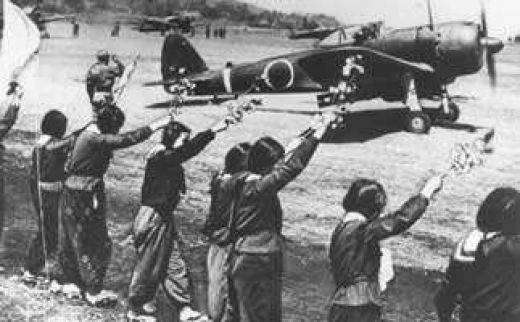
Appendix: Leaders on Tarawa

General H.M. Smith and General Julian Smith at Tarawa

General Holland M. “Howling Mad” Smith USMC: (1882-1967) Lieutenant General Holland M. Smith command V Amphibious Corps during the Gilberts operation.  Prior to the war he had worked extensively on amphibious warfare doctrine for both the Marine Corps and Navy. Unlike many senior officers Smith was not a Academy graduate having matriculated from the Alabama Polytechnic Institute (now Auburn University) in 1903 and law school in 1903.  Smith served as Adjutant of the 4th Marine Brigade in the First World War and served in Panama and the Dominican Republic in addition to other Marine tours afloat and ashore.  He served well and had many key assignments between the wars culminating in as the Assistant Commandant of the Marine Corps.  Subsequent to the Gilbert campaign he served as Commanding General of the Fleet Marine Force, Pacific and later commanded the Marines at Iwo Jima.  He retired in 1946.
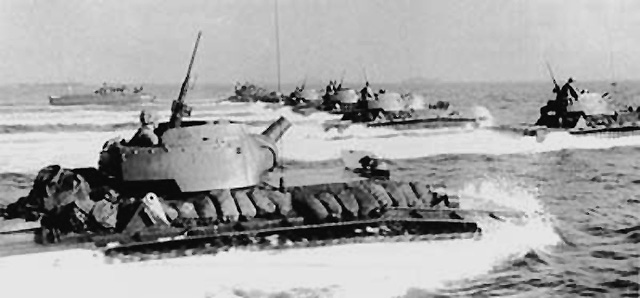
Major General Julian Smith USMC: (1885-1975) Major General Julian Smith served as Commanding General 2nd Marine Division at Tarawa.  He graduated from the University of Delaware and was commissioned as a Second Lieutenant in 1909.  He served in Haiti, Santo Domingo and the Vera Cruz expedition. During the First World War he served as an instructor in the Marine Officer training camps at Quantico. After the war he served in Cuba, Nicaragua and various command and staff posts including the Army Command and General Staff College.  He commanded 5th Marines in 1938 and in 1942 was promoted the Major General serving as director of Fleet Marine Force Schools, New River, NC.  He took command of 2nd Marine Division in May 1943 and served there until April 1944 when he became Commanding General, Expeditionary Troops, Third Fleet and in December 1944 took command of the Military Department of the Pacific.  He retired in 1946.

Colonel David Shoup of the 6th Marines won the Medal of Honor at Tarawa and would rise to become the Commandant of the Marine Corps

Colonel David Shoup USMC: (1904-1983) Colonel David Shoup commanded the 2nd Marines at Tarawa, being appointed as commander when its commander fell ill.  Shoup won the Congressional Medal of Honor for his actions on Tarawa.  A 1926 graduate of DePauw University, Shoup was commissioned a Second Lieutenant through the ROTC program that year.  He served in various assignments to include service in China, at sea on the battleship Maryland and Marine Barracks Puget Sound Navy Yard. He joined the staff of 6th Marines in October 1940 and assumed command of 2/6 in February 1942.  He was assigned as the Assistant Operations Officer for 2nd Marine Division in July 1942 and promoted the Lieutenant Colonel.   He went with the Division to New Zealand where he became the G-3 and from which he was fleeted up to command 2ndMarines at Tarawa.  After Tarawa he served as the Division Chief of Staff at Saipan and Tinian.  After the war Shoup continued to be assigned in key billets at the Pentagon and as commanding General, 1st Marine Division and then the Third Marine Division.  He became Chief of Staff, HQMC in 1958 and was appointed as the 22nd Commandant of the Marine Corps by President Eisenhower, a post that he retained until his retirement in 1963.

Admiral Tomanari Sachiro IJN: (1887-?) Commander of Tarawa garrison until relieved by Rear Admiral Shibasaki.   Graduate Naval Academy 1910, initially a communications officer he held various commands including Heavy Cruiser Haguro and Battleship Kirishima and two smaller ships.  Assigned to Tarawa in February 1943 he helped design and supervised the initial construction of Tarawa Defenses until relieved by Admiral Shibasaki on 20 July1943.  He returned to Japan and served the remainder of the war on Navy Division of Imperial General Headquarters.  Tomonari survived the war though nothing is mentioned as to his postwar fate.

Rear Admiral Shibasaki Keiji IJN: (1894-1943) Commanded Tarawa Garrison until his death during the battle.  He graduated from the Naval Academy in 1915 and he was a skilled navigator and instructor.  Prior to the war he had served afloat and ashore and ashore and had commanded a ship and naval station and served as a naval attaché to a member of the Imperial Family.  Among his assignments was 19 month combat tour with the special Naval Landing Forces in China, where he served as Chief of Staff of Shanghai Special Naval Landing Force.  Shibasaki’s leadership helped the garrison improve their defensive capabilities and combat skills as he inspired them to great heights and executed an intense training program. He was killed in the battle.

A Personal Note

I have not been to Tarawa but feel that I know it well.  I served in Second Marine Division from April 1999 through December 2001.  Due to my prior service experience I was used to fill gaps where chaplains were needed and ended up serving in four different battalions.  I served in 2nd Combat Engineer Battalion, the descendant of 1/18, the combat engineers.  We had a WWII Bulldozer outside our command post named after Sergeant Bordelon, the Medal of Honor Citations for Bordelon and Boonyman were prominently displayed.  I also served in 1/8 and 3/8.  I knew the accounts of the slaughter of these Marines as they attempted to land but as I re-read the accounts I was moved by their courage under fire.  The CPs of these battalions are also adorned with citations of their heroes lost at Tarawa.  Veterans would visit our units during Tarawa Days at Camp LeJeune, worn by the battle and the years they always made an impression. There is almost a mystical connection between the Second Marine Division and the Marines of Tarawa; it was a crucible that defined the division, whose motto is the same as the Army Infantry School. “Follow Me!”

Semper Fidelis,

Padre Steve

[i] Spector, Ronald H. Eagle Against the Sun: The American War with Japan.  The Free Press, New York, NY 1985. p.253

[ii] Murray, Williamson and Millett, Allan R. A War to Be Won: Fighting the Second World War, The Belknap Press of Harvard University Press, Cambridge, MA 2000. p.338

[iii] Ibid. Spector. p.253

[iv] Ibid. p.255 The conference also set a date for the invasion of France.

[v] Toland, John. The Rising Sun: The Decline and Fall of the Japanese Empire, 1936-1945. Random House, Inc. New York, NY 1970. p.468

[vi] Ibid. Spector. p.255

[vii] Costello, John. The Pacific War 1941-1945. Quill Publishing, New York, NY 1982. p.430

[viii] Ibid.

[ix] Potter, E.B. Nimitz. Naval Institute Press, Annapolis, MD, 1976, Third Printing with Revisions 1979. p.243. Nimitz’s forces would have had to seize 5 major Japanese bases and his staff was not sure that the Pacific carrier force would be strong or experienced enough to provide the necessary air cover for the operation.

[x] Ibid.

[xi] Ibid. pp.243-245

[xii] Morison, Samuel Elliott. The Two Ocean War: A Short History of the United States Navy in the Second World War. Little Brown and Company, Boston and Toronto, 1963. p.296.

[xiii] Hammell, Eric and Lane, John E. Bloody Tarawa: The 2nd Marine Division, November 20-23, 1943. The Zenith Press, St. Paul MN 2006.  Text copyright 1998 Eric Hammell and John E. Lane. p.4

[xiv] See Alexander, Joseph H. Utmost Savagery: The Three Days of Tarawa.Ivy Books, published by Ballantine Books, New York, NY. 1995. pp. 39-40.  This unit became the Third Special Base Unit on its deployment and was joined by the 111th Construction Battalion.

[xv] Ibid. Hammell. p.4

[xvi] See Alexander pp.39-40. This unit was basically a reinforced infantry battalion with 3 rifle companies, a weapons battery, anti-aircraft battery, a light tank company and support units numbering about1600 men.

[xvii] Ibid. Alexander. p.43

[xviii] Alexander p.27 The Rikusentai was the Japanese equivalent of Marines, who numbered about 50,000 men.  The officers attended Army schools and qualified enlisted men attended additional Army specialist training.

[xix] Ibid. Costello. p.431

[xx] Ibid. Hammell. p.22

[xxi] See Alexander p.77. While most writers say that these guns were brought from Singapore, Alexander notes that British writer William H Bartsch submitted proof (serial numbers) that the guns were sold by Vickers to Japan in 1905 as a legitimate business transaction.

[xxii] These are the same guns (127mm) mounted as the secondary armament of Nachi and Takao Class Heavy Cruisers and later mounted on light cruisers to replace the main battery with a more effective anti-aircraft armament.
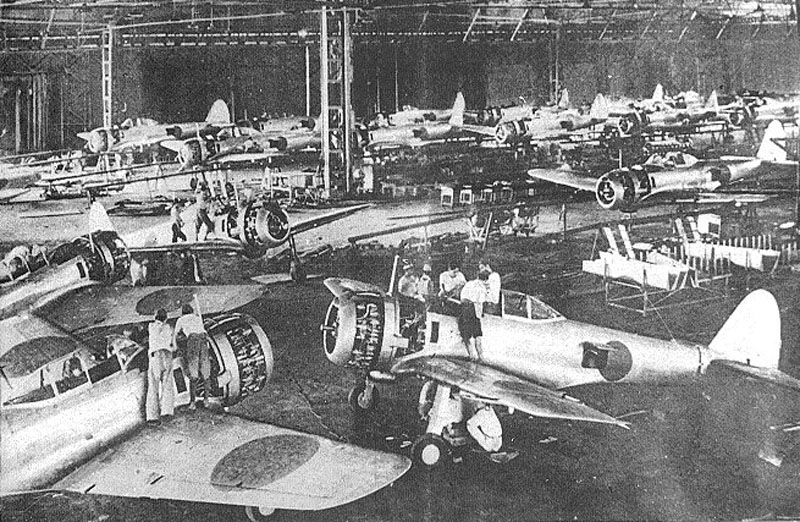
[xxiii] Ibid. Hammell. p.22

[xxiv] Hammell notes that many of these bunkers and pillboxes were so well concealed that they could not be seen.

[xxv] Ibid. Toland. p.469.

[xxvi] Ibid. Alexander. p.43.

[xxvii] Ibid. Hammell. p.28

[xxviii] Ibid. Morison. p.297

[xxix] Ibid. Costello. p.429

[xxx] At this point the force could provide everything except major permanent repairs to warships.

[xxxi] Liddell-Hart, B.H.  History of the Second World War. G.P. Putnam’s Sons, New York, NY 1970. p.511
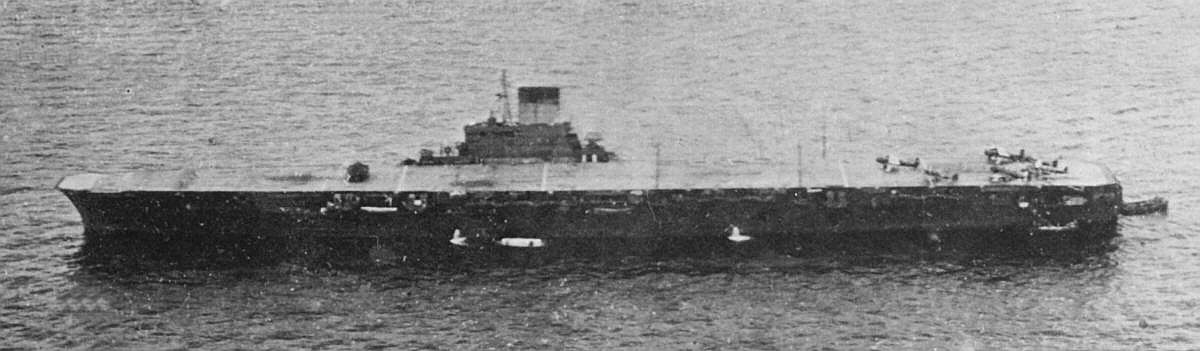
[xxxii] Ibid. Costello. p.431

[xxxiii] The older LVT-1s had boiler plate armor added as a field modification and were given a heavy machine gun. Prior to this they were unarmored and had two light machine guns.
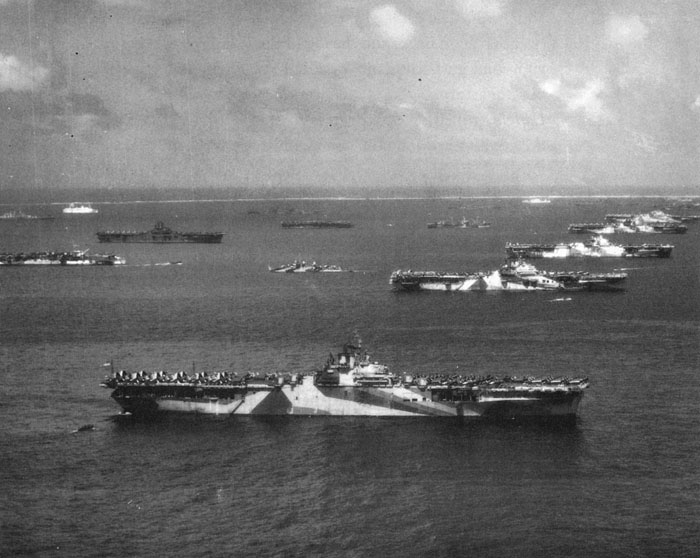
[xxxiv] Ibid. Morison. p.303

[xxxv] Hammell includes a by name list of these officers in Appendix B.  Of note for today, each MEUSOC (Marine Expeditionary Unit, Special Operations Capable) has an assigned Naval Gunfire Support Team.

[xxxvi] Ibid. Alexander. pp. 61-62.  The Shermans had to be transported aboard pre-loaded LCM-3s carried in the well decks of the LSDs.

[xxxvii] Ibid. Alexander. pp.58-59

[xxxviii] Ibid. Morison. p.297.  As a sidebar discussion it should be noted that Galvanic helped provide the model for the organization of all further Marine Corps amphibious doctrine now known by the acronym PERMA; Planning, Embarkation, Rehearsal, Movement and Assault, which describes the 5 phases of a amphibious assault.

[xxxix] Ibid. Hammell details the intricacies of the particular tides seen at Tarawa and the knowledge that the Marines had from the former Resident Commissioner of the Island, Major Frank Holland who warned the division staff that he knew that there would not be enough water over the reef to get landing craft across it. (pp.18-20)

[xl] Ibid. Alexander. pp.75-77

[xli] Ibid. Alexander. pp.67-68.

[xlii] Ibid. p.70

[xliii] Ibid. p.71

[xliv] Ibid. Morison. p.302

[xlv] Ibid. Hammell. p.16

[xlvi] Johnston, Richard W. Follow Me! The Story of the Second Marine Division in world War II.  Copyright 1948 by the Second Marine Division History Board and published by Random House Publishers, New York, NY 1948. p.106

[xlvii] Ibid. Liddell-Hart. p.511  Johnson says 2,700 tons. (p.106)

[xlviii] Ibid. Johnston. p.106

[xlix] Ibid. Hammell. p.17

[l] Ibid.

[li] Ibid.. Hammell. 46-47

[lii] Ibid. Morison. p.303

[liii] Ibid. Alexander. p.113.  Alexander notes that the Japanese would have been better served by using these guns on the stalled out landing craft.

[liv] Ibid. Hammell. p.47.

[lv] Ibid. Hammell. p.58

[lvi] Ibid.

[lvii] Ibid. Morison. p.303

[lviii] Ibid. Alexander. p.79

[lix] Ibid. Hammell. p.17

[lx] Ibid. Alexander. p.121

[lxi] Wukovits, John. One Square Mile of Hell: The Battle for Tarawa. NAL Caliber, published by New American Library, a division of Penguin Group USA, New York NY, 2006. p.112

[lxii] Ibid. Johnston. p.116

[lxiii] Ibid.

[lxiv] Ibid. Wukovits. P.119  Other companies suffered as grievously, K/3/2 was not alone in its suffering.

[lxv] Ibid. Spector. pp.263-264

[lxvi] Ibid. Alexander. pp.136-138

[lxvii] Ibid. Hammell. p.90

[lxviii] Ibid. p.95

[lxix] Ibid. Spector. p.264

[lxx] Ibid. Wukovits. p.114

[lxxi] Ibid. Alexander. pp.139-140

[lxxii] 1/8 did not arrive on the beach due to botched communications until D plus 1.

[lxxiii] Ibid. p.150  The last time this signal had been sent it was by Major Devereaux at Wake Isalnd

[lxxiv] Ibid. p.151

[lxxv] Ibid. Johnston. p.132

[lxxvi] Ibid. Hammell. p.112

[lxxvii] Ibid. p.130

[lxxviii] Ibid. Johnston. p.122

[lxxix] Ibid. Johnston. p.122

[lxxx] Ibid. Costello. p.436

[lxxxi] Ibid. Alexander. p.163

[lxxxii] Ibid. Alexander. pp.157-158  Hammell notes that Shibasaski was most likely killed by fire from Ringgold or Dashiell.

[lxxxiii] Ibid. Hammell.pp.139-140

[lxxxiv] Ibid. Alexander. p.162

[lxxxv] Ibid.  Wukovits. p.176. Wukovits notes how this could have affected the planning for the Normandy invasion.

[lxxxvi] Ibid. Alexander. p.173

[lxxxvii] Ibid. Hammell. p.160

[lxxxviii] Ibid. Costello. p.437

[lxxxix] Ibid. Alexander. p.170

[xc] Ibid. Hammell. p.163

[xci] Ibid. Hammell. p.166

[xcii] Ibid. Wukovits. p.178

[xciii] Ibid. Alexander. p.170 Ryan would be awarded the Navy Cross for his efforts.

[xciv] Ibid. Hammell. p.172

[xcv] Ibid. Alexander. p.179

[xcvi] Ibid. Alexander. p.181

[xcvii] Ibid. Hammell. p.178

[xcviii] Ibid.. Wukovits. p.194

[xcix] Ibid. Hammell. p.202

[c] Ibid. Hammell. p.212

[ci] Shoup would be awarded the Medal of Honor and eventually go on to be the Commandant of the Marine Corps.

[cii] Ibid. Alexander. pp.191-192

[ciii] Ibid. Johnston. p.134  2 platoons landed on Red-2 and one on Green Beach.

[civ] Ibid. Alexander. pp.202-205

[cv] Ibid. Johnston. pp.145-146

[cvi] Ibid. Johnston. p.147

[cvii] Ibid. Toland. p.470

[cviii] Ibid. Murray and Millett. p.345

[cix] Ibid. Liddell-Hart. p.511

[cx] Ibid. Spector. p.266

[cxi] Ibid. Potter. P.264

[cxii] Ibid. Murray and Millett. p.347  The Amtrack in improved forms has been part of the Marines ever since. The current model serves in a traditional amphibious role as well as a Armored Personnel Carrier for Marines involved in ground combat operations ashore.

[cxiii] Ibid. Costello. p.439. The method found to work best was long range plunging fire by heavy guns found on battleships and heavy cruisers.

[cxiv] Ibid. Murray and Millett. p.346

[cxv] Ibid. Morison. p.306

Bibilography

Alexander, Joseph H. Utmost Savagery: The Three Days of Tarawa. Ivy Books, published by Ballantine Books, New York, NY. 1995.

Costello, John. The Pacific War 1941-1945. Quill Publishing, New York, NY 1982

Morison, Samuel Elliott. The Two Ocean War: A Short History of the United States Navy in the Second World War. Little Brown and Company, Boston and Toronto, 1963

Hammell, Eric and Lane, John E. Bloody Tarawa: The 2nd Marine Division, November 20-23, 1943. The Zenith Press, St. Paul MN 2006.

Johnston, Richard W. Follow Me! The Story of the Second Marine Division in world War II.  Copyright 1948 by the Second Marine Division History Board and published by Random House Publishers, New York, NY 1948

Murray, Williamson and Millett, Allan R. A War to Be Won: Fighting the Second World War, The Belknap Press of Harvard University Press, Cambridge, MA 2000

Potter, E.B. Nimitz. Naval Institute Press, Annapolis, MD, 1976, Third Printing with Revisions 1979

Spector, Ronald H. Eagle Against the Sun: The American War with Japan.  The Free Press, New York, NY 1985 Toland, John. The Rising Sun: The Decline and Fall of the Japanese Empire, 1936-1945. Random House, Inc. New York, NY 1970

4 Comments

Filed under History, Military, world war two in the pacific

Adjusting Strategy to Reality: The Pacific War- Why the Japanese Lost

Lead aircraft ready to take off of IJN Carrier Akagi to attack Pearl Harbor beginning a 6 month chain of Japanese victories in the Pacific

The outcome of the Pacific war was directly related to the ability of the Americans to adjust strategy to the realities of the Pacific war, a unity of effort directed by the National Command Authority and superior industrial, technological and logistical capabilities. The Japanese after initial success did little to adapt and were hamstrung by inter-service rivalries and inadequate industrial capacity and limited natural resources.

US Destroyer USS Pope being blasted out of the water by Japanese Cruisers at the Battle of Java Sea

The Japanese and the Americans each had war plans in place for the Pacific campaign.  The American plans, Plan Orange had been developed since the early part of the 20th Century after the Spanish-American War and Russo-Japanese War.  Predicated on holding the Philippines until relief could arrive Orange assumed that the US Pacific Fleet would sail across the Pacific and fight the Japanese Navy in a manner written about by Alfred Thayer Mahan; see Weigley in The American Way of War and Ronald Spector in “Eagle Against the Sun: The American War Against Japan.”

IJN Carrier Hiryu heavily damaged and abandoned at Midway. Hiryu, Akagi, Kaga and Soryu the creme of the Japanese carrier fleet were lost at Midway, the Japanese found it hard to replace them or their decimated air crews

The Japanese were conflicted.  The Navy desired a campaign that would destroy the American Navy and expand the Empire to the East and to Southeast Asia and the Indian Ocean. The Army was fixated on the China strategy having been embroiled on the Asian continent since the early 1930s. John Toland discusses this in good detail in his book “Rising Sun: The Decline and Fall of the Japanese Empire 1936-1945” In addition other Japanese Army leaders had designs on Siberia and fought a brief campaign against the Soviets which ended in a defeat.

Japanese destroyer shown sinking after being torpedoed by a US submarine

When the Japanese attacked Pearl Harbor as well as the Philippines and Southeast Asia defeating American and Allied forces in detail, crippling the American Navy and dooming the Philippines the Americans were able to adjust strategy to first a defensive one supplemented by raids against the Japanese perimeter by carrier forces and the beginnings of a nascent submarine campaign against Japanese merchant shipping.  The Americans were able to parry the Japanese thrust at the Coral Sea and inflict a major defeat on the Japanese Carrier Forces at Midway prior to launching the first limited offensive by the Navy and the Marines at Guadalcanal.

Aircraft like the F6F Hellcat drove Japanese aircraft such as the A6M2 Zero from the skies in the Pacific


The Japanese remained mired in their conflicting strategies with the Navy primarily fighting the Pacific campaign aided by limited Army and Army Air Forces on the islands Japan had occupied or fortified while the bulk of the Army was engaged in China, Southeast Asia or sitting on the Manchurian-Soviet border.

Heavily fortified Japanese islands were either bypassed or taken in bloody assaults, here a 8″ gun on Tarawa

Once the Americans shifted to the offensive a campaign of island hopping coordinated between the Southwest Pacific Area under General MacArthur and the Central Pacific Area under Admiral Nimitz focused on gaining control of islands which contained airbases and anchorages capable of sustaining the American advance while bypassing islands not necessary for this along with their Army garrisons. Both American advances in the South Pacific and Central Pacific focused on retaking the Philippines and cutting the Japanese lines of communication and supply with Southeast Asia. From late 1942 on the Japanese strategy was focused on individual areas of danger versus a overall coordinated defensive effort.

Japanese war industries were woefully ill equipped to match US war production. Here a factory producing Oscar fighter planes

The Japanese were hamstrung from the beginning of the war by limited natural resources, especially oil and oil refining capacities, limited industrial capacity, especially in the realm of the manufacture of steel and machining tools.  All of these were supplied in large part by their opponents and were cut off once the war began.

The Carrier Taiho was the equivalent of the Essex Class but the Japanese could only produce one unit

Michael Barnhart in his book Japan Prepares for Total War” has an excellent account of the limitations of Japanese economic, industrial and natural resource capacities, as well as the continual struggle by the Army and the Navy for priority in access to them and the inability of Japanese planners, both civilian and military to resolve this conflict. The Americans had a different situation; although American industrial capacity was enormous it had to be split between to Theaters of Operations and support the needs of American Allies, Britain, the Soviet Union, Canada and China.

An Armada of US Essex Class Carriers in 1944 the Japanese could not keep pace with US Naval production

Despite this the Americans in a relatively short time were able to amass forces equal to or great than the Japanese who were unable to replace losses in ships, aircraft or the highly trained personnel needed to man them.  At the beginning of the war Japanese Air and Naval forces in the Pacific outmatched everything the Allies could offer, however once they began to experience significant losses at Midway and during the Guadalcanal Campaign their air and naval capabilities diminished to the point that they had to conserve ships and aircraft hoping to be able to gain local advantage in critical defensive areas.

The US Amphibious warfare capacity was a key factor in the ability of the United States to take the war to Japan

New American ships and aircraft introduced during the war were superior to Japanese designs, many of which had reached their apex by 1942.  American advantages in radar, communications equipment added to American advantages throughout the war.  Japanese ground forces in the Pacific were dependant on the Navy and merchant marine for supply and reinforcements. As the American submarine campaign became better organized this became more difficult as the American submarines copying German Wolf pack tactics decimated the Japanese merchant Marine. I particularly like Samuel Elliott Morrison’s account of this in “The Two Ocean War” and “The History of US Navy Operations in World War II” which has a volume devoted to this subject.

US Navy Submarines cut off Japan from its vital natural resources in Southeast Asia. A Sub Squadron above and USS Barb below

Japanese forces would always fight determined battles but they often expended great amounts of manpower in senseless Banzai charges rather than make the Americans force them out of well prepared positions.  Where the Japanese maintained excellent defense such as at Tarawa and Iwo Jima they made the Americans pay greatly for their gains.  American Marines were apart from the 82nd and 101st Airborne Divisions were the best infantry in the US Military and their skill at amphibious operations and integrated air-ground and naval warfare increased as the war went on.  The Americans were well equipped with modern weapons while the Japanese operated antiquated tanks and often substandard artillery.

Japanese leadership at the strategic and political level was inept throughout the war. They failed to coordinate any strategy with the Germans and failed to enunciate any sort of Grand Strategy.  On the operational and tactical levels the Japanese forces, especially the surface navy performed well, however as the American numeric and technologic advantage increased the Navy became less effective.  After the death of Admiral Yamamoto in 1943 Japanese Naval Leadership became far less effective. The Americans as mentioned before were able to devise a Grand Strategy which not only dealt with Japan but also Germany and coordinated the efforts of forces, war production, planning and logistics to advance their war aims.  At the operational and tactical level American forces, especially the Navy and Marines and later the Army Air Forces and Army became more skilled and than their Japanese counterparts with the possible exception of General Simon Bolívar Buckner at Okinawa. See Spector and Thomas Costello “The Pacific War.” In the air the Americans continued to increase their combat capabilities at the tactical and strategic level and used massed fire bombing raids to devastate the Japanese homeland.  The Japanese in contrast due to inexperienced pilots and fewer competitive aircraft were forced into suicide or Kamikaze missions as the war neared Japan.

B-29 Super-fortresses leveled Japanese cities and even excellent fighters like the Mitsubishi J2M Raiden could not stop them


The outcome of the Pacific war was directly related to the ability of the Americans to adjust strategy to the realities of the Pacific war as well as the unity of effort which enabled the American superiority in industrial, technological and logistical capabilities to overwhelm the Japanese. The Japanese after initial success did little to adapt and were hamstrung by inter-service rivalries and inadequate industrial capacity and limited natural resources, fell behind in technology and were unable to replace losses among the ships, men and aircraft that they needed to fight an effective war.  Japanese leaders at many levels failed to adapt strategy, tactics or methods to match the reality of the war and the places that they did do so were done by local commanders and never instituted throughout the Japanese military.

2 Comments

Filed under History, Military, world war two in the pacific

Back in Commission: Padre Steve’s Long Journey Back

Padre Steve is Back in Commission

Today I know that I am back fully in commission.  I have been feeling this for a while and have seen some extraordinary progress since my “Christmas Miracle” and even since Lent began.  Like an old battleship worn out by service and damaged in battle was for the better part of two years doing my best to stay afloat and survive after my return from Iraq.  During that time if something could go wrong with me it seemed like it did, physical, psychological and spiritual…such is PTSD and all the other stuff that one can return home from war with.  For those that are new to this website or just happened to stumble by I have a lot of stuff on that ordeal posted here.

I have felt good since Christmas and with the exception of being knocked down by a kidney stone for almost a month have been doing pretty good for the most part.  I have been very careful to make sure that I am not just entering a manic period but have been really to be careful so I don’t build myself up to crash later.  Since I have crashed hard a number of times at points during the aforementioned ordeal when I thought that I was doing better I am really conservative about such comments.

USS West Virginia in the 1930s

Personally I am lucky and blessed that I have good people at work who have kind of protected me from myself over the past year as it when apparent to them that I was going down.  In a sense I was like a damaged ship pulled out of action in order not only to be patched up but fully overhauled.  I was damaged and not a lot of my systems were working right.

Now of course even a ship that has been fully overhauled and even modernized to make it equal to new ships is immune from problems, after all there is only so much you can do with an older platform.  I am living proof of that fact; there are things that while better than they were are not up to the original design specs.  At the same time despite everything I am in remarkable health and my physical, emotional and spiritual life is coming back together faster than I thought it would even after the Kidney stone ordeal.

Damage to the West Virginia

I had a yearly physical health assessment last week and all of my numbers were those of a 30 year old so I guess fifty is the new thirty. Yesterday I weighed in and was found to be within the DOD body fat maximum which combined with a high score on my Physical Readiness Test (PRT) or what common is called a PT test.  It is funny, the numbers that I have to make on this at age 50 in the Navy are not much less than then what I was required to do as 21 year old in Army ROTC or 23 year old Army Second Lieutenant then was 68 push-ups, now 65, then 69 sit ups, now 85.  Then I needed a run time of about 12 minutes and 30 seconds for a two mile run to get the maximum points.  Now at age 50 I need slightly less than 10 minutes to get the maximum score on a mile and a half run.  Today I did 90 sit-ups, 61 push-ups and my run time was about 12:15 (converted from a Life Fitness bike.)  I did the bike because of the low number of people running the “early bird” session and because I still have occasional ankle and knee problems.  I need completion to do really well on the run as it motivates me better than running alone or with a small number of people. I came one push-up short of an overall outstanding on the test so I have something to shoot for next time.

USS California 1945 after her rebuild

This will be enough to take me off of the “fat boy program” which I so ignobly entered last fall after my summer crash. Back then I was put on the “Fitness Enhancement Program” where I had weekly weigh ins and taping for body fat and a program called “Shipshape” which is about healthy living.  That was humbling and for me even humiliating because that has not happened to me in 28 years in the military and I pride myself in being in great shape, in fact the EOD techs that I was assigned with asked my assistant “what kind of steroids I was using” because of how I ran and how well that I did on the PRT.   Now I am not where I want to be on any of this yet, I think I have farther to go.  So I am working to keep my life in balance and take a lot better care of myself; especially in diet and exercise although I still have problems sleeping.  Part of what I learned over the past 5 months is that I have to be consistently consistent if I am to get the weigh off, lose body fat and both get back in shape and then keep it off.  I am not where I want to be yet but know that I am not going back to the way that I exercised self care prior to this as I never want to be in that situation ever again. My plan is to continue to lose about 2 to 3 pounds a month and take off about 4 inches from around my waist by late September or early October. I think this is totally doable doing what I am doing now and I plan on continuing to do it.

USS West Virginia 1944 after the rebuild

So anyway going back to the old battleship metaphor I have been thinking about that a lot. I wrote an article a while back titled “The Battleships of Pearl Harbor.”  Of course as almost anyone who has seen the movie “Tora! Tora! Tora!” knows that the attack on Pearl Harbor was pretty bad.  If you had the misfortune of watching “Pearl Harbor” sorry it does not do the story justice.  Anyway, I digress. The point is that there were two battleships in particular that were heavily damaged and sunk, The USS California and USS West Virginia. Both were salvaged, refloated and sailed to the West coast where they were not only repaired but modernized with the latest in air and surface search radar, fire control systems, formidable anti-aircraft batteries and large anti-torpedo bulges that increased their survivability.  When rebuilt they resembled the fast modern battleships of the South Dakota class. The two ships spent a long time in the yards but the price was worth it. At the Battle of Surigo Strait the West Virginia and California led the battleships of the US 7th Fleet in annihilating the Japanese Southern Force led by Admiral Nishimura and a follow up force of heavy cruisers. In the battle the two ships sank the Japanese Battleships Fuso and Yamashiro and most of their escorts with the exception of one destroyer the Shigure.  Later they participated in every major operation leading to the defeat of Imperial Japan.

Today I feel like the West Virginia or California. I am older than most of the people that I work with by a large margin, I came back damaged from Iraq and was not able to do half the things that I was capable of doing before Iraq.  Now I am out of the yards and have passed my builders trials and in action again and this my friends really makes me happy.

Peace,

Padre Steve+

2 Comments

Filed under faith, Military, philosophy, PTSD, US Navy