Category Archives: Military

Transfer into the Twilight

Friends of Padre Steve’s World,

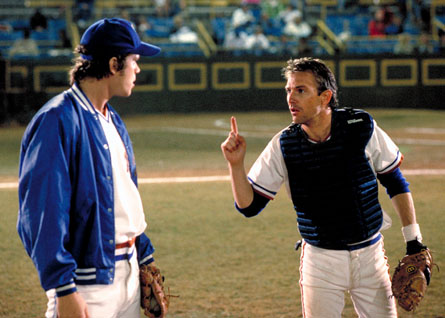
The past couple of days have been pretty hectic as I transfer from the Staff College to be the base chaplain at another base in the local area. I’ll still remain as an adjunct at the Staff College to do the Gettysburg Staff Ride which is a good thing. Now truthfully, I did everything I could think of to get a different assignment. I wanted to do something in the Joint world or at least semi-operationally. My qualifications are many, so being assigned to a base chapel makes me feel like I’m being bumped back to the minor leagues, not because caring for people is not important, but because for promotion it’s not highly valued. Of course since I was passed over for promotion last year it is what I get. In today’s military once you are passed over you’re pretty much done, so I’m still lucky to get to do what I have loved doing for decades. Not many people get that chance, so I am lucky, Like Kevin Costner’s character in Bull Durham, I still get to keep going to the ballpark and getting paid for it.

I spent the last couple of days signing out of all the places that I need to, getting my medical records transferred, taking and passing my latest body composition assessment and physical readiness test, and taking care of last minute things needed to transfer. Then yesterday morning I donned my Service Dress Blues to officially sign in at the new command.

It is interesting because unless something unusual and unexpected happens this will be my last ride and the three or four years I spend in the job will take me to retirement with somewhere between 39 and 40 years of cumulative service in the Army and the Navy. I’ll have a good staff and my goal at this point in my career is to take care of them, and help them to succeed while caring for those committed to our care. I’m an old guy now, there aren’t that many people in the military who have served as long as I have, and most of them are admirals or generals.

I’m kind of reminded of the scene in Bull Durham where Kevin Costner’s character, Crash Davis gets sent from AAA down to single A Durham to help mentor a young pitcher. In frustration he tells the manager:  I’m too old for this shit. Why the hell am I back in A ball?

Joe Reardon: ‘Cause of Ebby Calvin LaLoosh. Big club’s got a hundred grand in him.

Larry: He’s got a million dollar arm, and a five cent head.

Joe Reardon: Had a gun on him tonight. The last five pitched he threw were faster that the first five, He has the best young arm I’ve seen in 30 years. You’ve been around. You’re smart, professional. We want you to mature the kid. We want you to room with him on the road, stay on his case all year. He could go all the way.

Crash Davis: Where can I go?

Joe Reardon: You can keep going to the ballpark, and keep getting paid to do it. Beats the hell out of working at Sears.

Larry: Sears sucks, Crash. Boy, I worked there once. Sold Lady Kenmores. Nasty, whoa, nasty.

So anyway, there are a lot worse alternatives. Until tomorrow,

Peace

Padre Steve+

5 Comments

Filed under Baseball, faith, leadership, Loose thoughts and musings, Military

Missiles and Messages: What is Trump trying to Convey?

Friends of Padre Steve’s World,

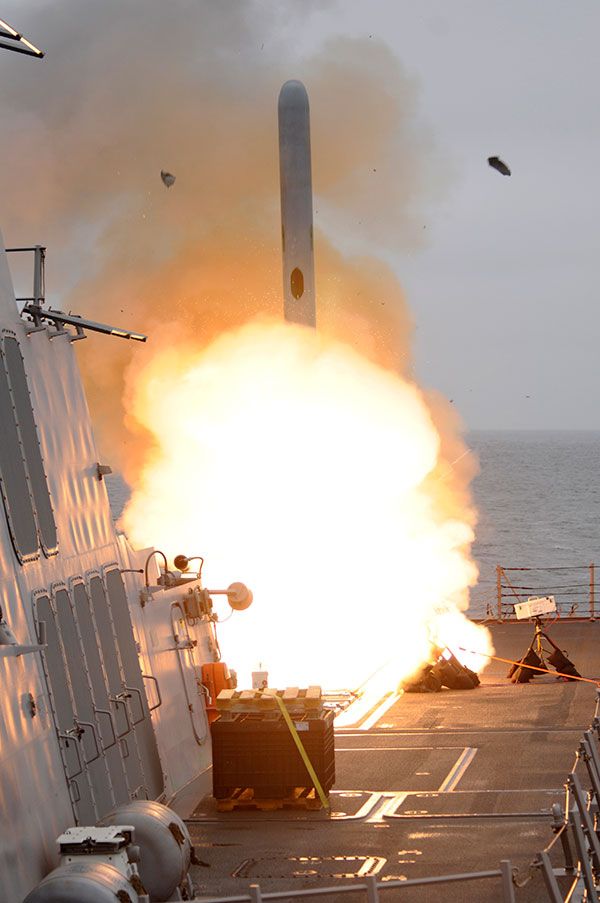
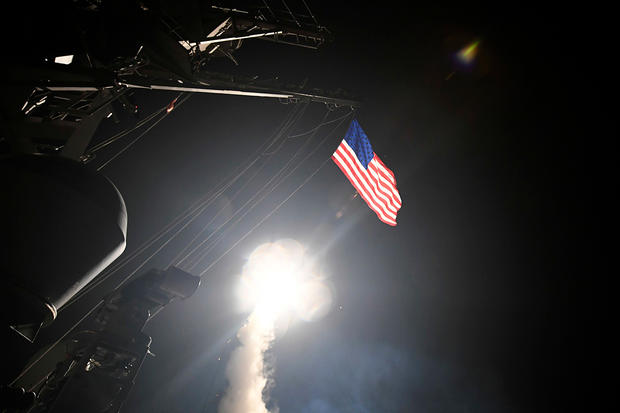
If nothing else the events of last week, in particular President Trump’s decision to launch missiles at a Syrian airbase in response to Syria’s renewed use of poison gas on its own population sent a message to different leaders around the world. What that message is and how effective that it is depends on who heard it and how they interpreted it.

The actual type of strike was nothing new and it certainly was justified in relation to war crimes of the Assad regime. President Clinton used similar strikes as punitive measures against Iraq in the 1990s, President Bush used them against various targets outside of Iraq, and opting for a full invasion of that country. While President Obama tended to be more hesitant about the missile strikes he often used Special Forces and drones in many countries pursuant to the 2001 Authorization for the Use of Force pertaining to the War on Terror, he did use missile and air strikes in conjunction with NATO to help Libyan rebels overthrow the Ghaddafi regime.

That being said what is the message that the President was attempting to send, and how does it fit into a larger foreign policy and national security strategy? That is where my concerns lie in regard to this strike. As for me I would have loved to see a Tomahawk fly up Bashir Assad’s ass and blow him to the Hell of his choice, if Ghaddafi and Saddam deserved death, then Assad deserves it many times more. It’s probably a good thing that I’m not President because I think that those 60 Tomahawks would have been much more wisely employed by taking out Assad’s Presidential Palace and maybe taking out him in the process, but there would have been a much bigger blowback to that than striking the airfield, but I digress…

Going back to what I was saying, how does this fit into a broader foreign policy and national security strategy?

The timing of the strike, minutes after the final dinner between President Trump and Chinese President Xi Jinping certainly sent a message to China and North Korea who it might have been the real audience. If the strike forces China to take stronger action to assist the United States in reducing the building North Korean nuclear threat, then it will have served a worthwhile purpose. A Chinese newspaper reported that this was the intent of the strike just yesterday.

But the effect depends on the rationality of the targeted audience. The Chinese are a rational actor, but the North Koreans may not be, so we have to wait and see. In the meantime the Administration dispatched the USS Carl Vinson carrier strike group to Korea waters to coincide with a time of the year when the North Koreans typically become more active.

There is also the possibility that the message was also intended for Putin’s Russia, the Assad regime, and even Iran, but right now other than a few statements by U.N. Ambassador Nikki Haley there has not been any real follow up to the strike. Secretary of State Tillerson is going to Moscow this week so we may glean more from that meeting.

Of course there is the domestic political audience and based on how the Trump campaign and administration has dealt with truth there is the possibility that this is much more to do about Trump’s plunging poll ratings and as a distraction from the ballooning Russia-Trump election scandals.

Regardless of what message the missile strike was intended to convey, we still don’t know how it will play out and it could play out in any number of ways, good or bad, and it might even turn out to be an act of genius, I doubt the latter but it is a possibility.

That is why the Trump and his administration must determine what its policy will be, especially its diplomatic policy. The President must keep all options on the table, diplomatic, informational, military, and economic, but he must be very judicious in how he uses them. Believe me, I can disagree with and distrust the President all day long, but I don’t want him to screw this up. Too much is at stake.

Peace

Padre Steve+

1 Comment

Filed under Foreign Policy, middle east, Military, national security, News and current events, Political Commentary

The Futile Sacrifice of a Naval Leviathan: The Sinking of the Yamato

Friends of Padre Steve’s World,

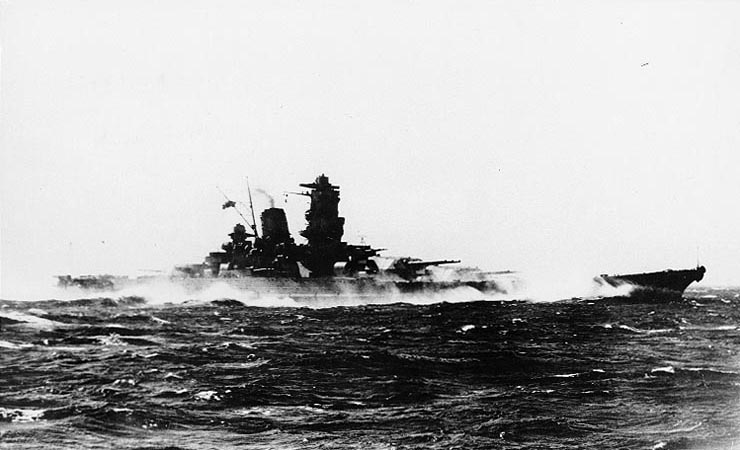
Those who have read my site since the beginning know that I have written much in terms of Naval History. One of the things that I am drawn to are the great ships that were sacrificed with the crews in futile attempts of salvage victory from defeat, or which were sacrificed in order to save others. Regardless of the circumstance I have a soft spot in my heart for sailors of any nation who pay with their lives when their ships are sunk. This is the story of the IJN Yamato, who along with her sister ship, the Musashi were the largest battleship ever constructed.

As dawn broke on April 7th 1945 the great Super-Battleship Yamato, the pride of the Japanese Imperial Navy and nine escorts steamed toward Okinawa on a suicide mission. It was literally the end of empire and the end of a navy. What had begun on December 7th 1941 was now winding down as the Imperial Navy launched its last offensive operation against the United States Navy.

The Imperial Navy was already at the end of its tether. Following the disasters at the Battle of the Philippine Sea which decimated the carrier air arm of the Imperial Navy; the subsequent losses in the defense of Formosa which used up the majority of any remaining carrier aircraft and crews; and the Battle of Leyte Gulf which decimated the surface forces of the navy what remained was a pitiful remnant of a once dominant fleet.

The great battleship Yamato and her sister ship Musashi were the largest warships ever built until the advent of the USS Enterprise CVN-65. Displacing over 72,000 tons 863 feet long and 127 feet in beam these ships mounted the largest artillery battery ever placed on a warship. Their nine 18.1” guns mounted in three triple turrets each weighing over 2500 tons weighed as much or more than the largest destroyers of the time. They could fire their massive shells 26 miles and had the capability of firing a special anti-aircraft shell known as the Sanshiki or beehive round.

Musashi was sunk during the Battle of the Sibuyan Sea at Leyte Gulf on October 24th 1944 after being hit by 19 aerial torpedoes and 17 bombs. Yamato engaged the American Escort Carriers and destroyers of Taffy-3 at the Battle off Samar the following day but was prevented by the audacity of the inferior American destroyers and timidity of the Japanese commander Vice Admiral Takeo Kurita from achieving any notable success.

The remains of the Imperial Navy were hampered by a lack of fuel, air power and training time. When the United States attacked Iwo Jima in February 1945, barely 700 miles from the home islands of Japan not a single Japanese surface ship sortied to challenge the American Navy.

However when the American attacked Okinawa on April 1st the Navy launched Operation Ten-Go. In spite of overwhelming American superiority in both naval air and surface forces the tiny task force was to fight its way to Okinawa, beach their ships and once the ships were destroyed the crews were to join Japanese Army forces on the island.

The doomed sortie was in part due to the insistence of the Imperial Army which derided the Imperial Navy for its failures at Philippine Sea and Leyte Gulf and pressure from Emperor Hirohito who asked “But what about the Navy? What are they doing to assist in defending Okinawa? Have we no more ships?” In response the Naval High command devised what amounted to a suicide mission for Yamato and her escorts. The plan was opposed by many in the Navy and leaders of the task force who saw it as a futile mission. Only the insistence of Admiral Kusaka who told the reticent commanders that the Emperor expected the Navy to make its best effort to defend Okinawa persuaded the Captains of the doomed force to accept the mission.

At about 1600 on April 6th the ships of the task force weighed anchor and departed their anchorage at Tokuyama hoping to take advantage of approaching darkness to mask their departure. They were detected and shadowed by American submarines which provided real time information on the course and speed of the Japanese ships to the American leadership.

The next morning the task force was spotted by patrol planes and its position relayed to the American fleet commander, Admiral Raymond Spruance, the victor of Midway. Spruance ordered the six fast battleships, accompanied by two battlecruisers, seven cruisers and 21 destroyers engaged in shore bombardment to intercept the Japanese force. However, Admiral Marc Mitscher of Task Force 58, the fast carriers launched a massive air strike of over 400 aircraft against the Japanese.

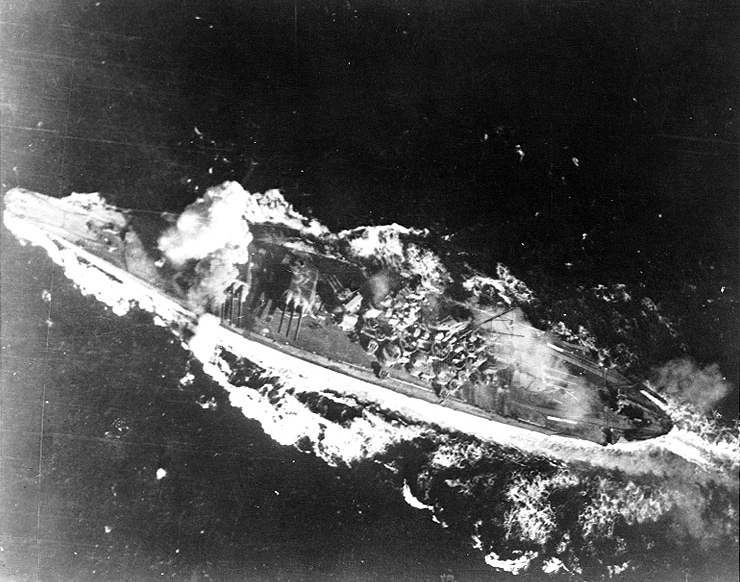
At 1232 the first wave of American aircraft began their attacks on the doomed Japanese force. As the succeeding waves of American aircraft attacked Yamato was hit by 15 bombs and at least 8 torpedoes, almost all of which struck her port side created an imminent risk of capsizing. The damage control teams’ counter flooded the starboard engine and boiler rooms which kept the ship from turning turtle, but which also further reduced her speed.

By 1405 the great ship was dead in the water and just minutes before her commander had ordered the crew to abandon ship. At 1420 she capsized and began to sink and at 1423 she blew apart in a massive explosion that was reportedly heard and seen 120 miles away and created a mushroom cloud that reached 20,000 feet.

Captain Tameichi Hara of the light cruiser Yahagi which had already sank described the demise of the great ship in his book Japanese Destroyer Captain:

“We looked and saw Yamato, still moving. What a beautiful sight. Suddenly smoke belched from her waterline. We both groaned as white smoke billowed out until it covered the great battleship, giving her the appearance of a snow-capped Mount Fuji. Next came black smoke mingled with the white, forming to a huge cloud which climbed to 2000 meters. As it drifted away we looked to the surface of the sea again and there was nothing. Yamato had vanished. Tremendous detonations at 1423 of that seventh day of April signaled the end of this “unsinkable” symbol of the Imperial Navy.”

Only 280 men of the estimated 3000 crew members were rescued by the surviving escorts. Of her escorts, the Yahagi and four destroyers were also sunk. The Americans lost a total of ten aircraft and 12 men. Never again would the surface forces of the Imperial Navy threaten U.S. forces or take any meaningful part in the war.

The sacrifice of Yamato and her escorts was a futile was of lives and though many in Japan revere their sacrifice as noble it served no purpose. The loss of Yamato, named after the ancient Yamato province in a sense was symbolic of the demise of the Japanese Empire.

I cannot help but think of gallantry of the doomed crews of these ships, sacrificed for the “honor” of leaders that did not really value their sacrifice.

It is a commentary that is timeless.

Peace

Padre Steve+

1 Comment

Filed under History, Military, Navy Ships, World War II at Sea

The Importance of not Letting Political Problems become Military Problems: The Example of George Marshall and Omar Bradley

George Marshall 

Friends of Padre Steve’s World,

A short thought for this Sunday. General Omar Bradley said, “Wars can be prevented just as surely as they can be provoked, and we who fail to prevent them, must share the guilt for the dead.”

I wrote yesterday about my concerns with the leaders of the major world powers in relation to the crises in Syria and North Korea, in which the military option seems to be spoken of more often than any other. But ultimately these are political problems that will require much more than a military solution, for an ill-thought out through military action almost always results in worse problems. If these political problems in Syria and North Korea are not addressed as that, they will end by opening a Pandora’s Box of unintended consequences that will most likely be worse than we could imagine. If military action is necessary, it must be thought through and done in conjunction with a plan to not only win the war, but to win the peace as well. General George Marshall, whose guiding hand helped the Allies win the Second World War, and whose leadership as Secretary of State helped Europe recover from that war, paving the way to decades of peace and prosperity so correctly noted: “A political problem thought of in military terms eventually becomes a military problem.” It is kind of like Abraham Maslow’s “law of the instrument” in which he noted “I suppose it is tempting, if the only tool you have is a hammer, to treat everything as if it were a nail.”

So far the words coming out of the mouth of President Trump and his Secretary of State are all about the military option, and the President’s proposed cuts to the State Department and other agencies of “soft power” will ensure that when push comes to shove that the only tool he will have will be that of the military.

Until Tomorrow

Peace

Padre Steve+


1 Comment

Filed under Foreign Policy, History, Military, national security, Political Commentary

War is the Unfolding of Miscalculations… Assad, Trump, Putin, and Syria 2017

Friends of Padre Steve’s World,

The die has been cast. Last week the Trump administration signaled that the regime of Bashir Al Assad was not a priority for American policy in the Middle East. The comment was perplexing as the Assad regime has worked with the Iranians, and Hezbollah, both enemies of the United States to crush a revolt against his regime that began during the Arab Spring. Assad’s methods included the use of Sarin nerve agent and relentless attacks on civilians and were condemned by much of the world. In 2013 President Obama attempted to gain political support for military action against the Assad regime but was rebuffed by congressional Republicans as well as anti-war Democrats. The Syrian rebels were joined by radical Sunni Muslims of various Al Qaeda affiliates and later joined by the so called Islamic State. The Syrian army was on the point of collapse when the Russians intervened in 2015.

From 2013 on President Trump constantly said that military action in Syria was against U.S. national interests, something that continued until last week. Then Assad, apparently emboldened by the Trump Administration’s statement that changing his regime was not a priority for the U.S. launched a aerial attack using chemical weapons against civilians. The images which were shown throughout the 24 hour cable news cycle evidently made an impression on the President. Within hours of suggesting that military action was possible it began.

From Mar-a-Largo where the President is hosting Chinese President Xi Jinping, the President said:

“Tonight, I ordered a targeted military strike on the air base in Syria from where the chemical attack was launched… It is in this vital national security interest of the United States to prevent and deter the spread and use of deadly chemical weapons.”

I agree that it is the vital interests of the United States to prevent and deter the use of chemical weapons, but why this and why now especially since it did not seem to be a priority less than a week ago?

Right now we know precious little about the action, except that it was sudden and done without any congressional consultation, and little consultation with allies. Will Congress do its duty and demand details before allowing the administration to commit us to another war that in no way is covered by the 2001 authorization for use of force that has been used for all the actions involving the war on terrorism conducted by the Bush and the Obama Administrations, or will Congress roll over and do nothing, thus allowing the executive branch to take the nation to war with no oversight?

The genie of war is now out of the bottle. We do not know what will happen next, the potential branches and sequels to this action are many, and few of them promise anything in the way of peace in Syria. There is now danger that the U.S. will become entangled in a complex war that has no good outcome.

The question, what will happen next is unknown. Can President Trump work with Russia’s President Putin, Turkey’s President Erdrogan, as well as well as other regional leaders to bring something resembling peace to the region? I hope that can happen but I wouldn’t bet on it as history shows that all too often that these things take on a life of their own.  As Barbara Tuchman noted: “War is the unfolding of miscalculations.”

I have a couple of articles that I will post soon about the dangerous nature of what we are witnessing. But for tonight I will pause and try to get some sleep.

Peace

Padre Steve+

5 Comments

Filed under Foreign Policy, middle east, Military, national security, News and current events, Political Commentary, US Navy

Tragic Heroes of Little Round Top: The Hidden Side of the Hero

fannychamberlain1

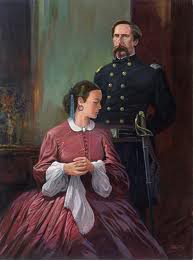
Fannie and Joshua Chamberlain (Dale Gallon) 

Friends of Padre Steve’s World,

I’m back after an amazing but very cold weekend in Gettysburg. I had a great group of students as well as guests. The past few days I have posted articles from my still untitled text on the Battle of Gettysburg dealing with the lives of three of the men who were immortalized during the battle of Little Round Top. Today is A follow up to those articles dealing with an American icon with feet of clay. The impact of war on those who go to war and the loved ones that they return to is often incredibly difficult, I know from experience. I am lucky, first I survived war, then I at least until now have survived its aftermath, finally, I have a wife who survived it with me and in spite of all the trauma our marriage not only survived but has become better. I hope that you appreciate this account of the post-war life of Joshua and Fannie Chamberlain.

Peace

Padre Steve+

Chamberlain’s accolades were certainly earned but others on that hill have been all too often overlooked by most people. This list includes Gouverneur Warren who was humiliated by Phillip Sheridan at Five Forks, Strong Vincent who died on of wounds suffered on Little Round Top and Paddy O’Rorke, the commander of the 140th New York of Weed’s Brigade on Vincent’s right who was mortally wounded that day.

After the war like most citizen soldiers, Chamberlain returned to civilian life, and a marriage that was in crisis in which neither Joshua nor Fannie seemed able to communicate well enough to mend.  The troubled couple “celebrated their tenth wedding anniversary on December 7, 1865. He gave her a double banded gold-and-diamond bracelet from Tiffany’s, an extravagant gift that only temporarily relieved the stresses at work just below the surface of their bland marriage. Wartime separation had perhaps damaged it more than Chamberlain knew.”  [1]

When he came home Chamberlain was unsettled. Fannie quite obviously hoped that his return would reunite them and bring about “peaceful hours and the sweet communion of uninterrupted days with the husband that had miraculously survived the slaughter” [2] and who had returned home, but it was not to be. Army life had given him a sense of purpose and meaning that he struggled to find in the civilian world. He was haunted by a prediction made by one of his professors. A prediction that “he would return from war “shattered” & “good for nothing,” [3] Chamberlain began to search for something to give his life meaning. He began to write a history of V Corps and give speeches around the northeast, and “these engagements buoyed his spirit, helping him submerge his tribulations and uncertainties in a warm sea of shared experience. [4] In his travels he remained apart from Fannie, who remained with the children, seldom including her in those efforts. She expressed her heart in a letter in early 1866:

“I have no idea when you will go back to Philadelphia, why dont you let me know about things dear?….I think I will be going towards home soon, but I want to hear from you. What are you doing dear? are you writing for your book? and how was it with your lecture in Brunswick- was it the one at Gettysburg? I look at your picture when ever I am in my room, and I am lonely for you. After all, every thing that is beautiful must be enjoyed with one you love, or it is nothing to you. Dear, dear Lawrence write me one of the old letters…hoping to hear from you soon…I am as in the old times gone bye Your Fannie.” [5]

In those events he poured out his heart in ways that seemed impossible for him to do with Fannie. He accounted those wives, parents, sons and daughters at home who had lost those that they loved, not only to death:

“…the worn and wasted and wounded may recover a measure of their strength, or blessed by your cherishing care live neither useless nor unhappy….A lost limb is not like a brother, an empty sleeve is not like an empty home, a scarred breast is not like a broken heart. No, the world may smile again and repair its losses, but who shall give you back again a father? What husband can replace the chosen of your youth? Who shall restore a son? Where will you find a lover like the high hearted boy you shall see no more?” [6]

Chamberlain set his sights on politics, goal that he saw as important in championing the rights of soldiers and their well treatment by a society, but a life that again interrupted his marriage to Fannie and brought frequent separation. Instead of the one term that Fannie expected, Chamberlain ended up serving four consecutive one year terms as Governor of Maine, and was considered for other political offices. However, the marriage continued to suffer and Fannie’s “protracted absence from the capital bespoke her attitude toward his political ambitions.” [7]  Eventually Chamberlain returned home and. “For twelve years following his last term as governor, he served as president of Bowdoin College, his alma mater. [8]

He became a champion of national reconciliation admired by friend and former foe alike, but he returned with bitterness towards some in the Union who he did not believe cared for his comrades or their families, especially those who had lost loved ones in the war. While saluting those who had served in the Christian and Sanitary Commissions during the war, praising veterans, soldiers and their families he noted that they were different than:

Those who can see no good in the soldier of the Union who took upon his breast the blow struck at the Nation’s and only look to our antagonists for examples of heroism- those over magnanimous Christians, who are so anxious to love their enemies that they are willing to hate their friends….I have no patience with the prejudice or the perversity that will not accord justice to the men who have fought and fallen on behalf of us all, but must go round by the way of Fort Pillow, Andersonville and Belle Isle to find a chivalry worthy of praise.” [9]

Chamberlain’s post-war life, save for the times that he was able to revisit the scenes of glory and be with his former comrades was marred by deep personal and professional struggles and much suffering. He struggled with the adjustment to civilian life, which for him was profoundly difficult. He “returned to Bowdoin and the college life which he had sworn he would not again endure. Three years of hard campaigning however, had made a career of college teaching seem less undesirable, while his physical condition made a permanent army career impossible.” [10] The adjustment was more than even he could anticipate, and the return to the sleepy college town and monotony of teaching left much to be desired.

These are not uncommon situations for combat veterans to experience, and Joshua Chamberlain, the hero of Little Round Top who was well acquainted with the carnage of war, suffered immensely. His wounds never fully healed and he was forced to wear what would be considered an early form of a catheter and bag. In 1868 he was awarded a pension of thirty dollars a month for his Petersburg wound which was described as “Bladder very painful and irritable; whole lower part of abdomen tender and sensitive; large urinal fistula at base of penis; suffers constant pain in both hips.” [11] Chamberlain struggled to climb out of “an emotional abyss” in the years after the war. Part was caused by his wounds which included wounds to his sexual organs, shattering his sexuality and caused his marriage to deteriorate.

He wrote to Fannie in 1867 about the “widening gulf between them, one created at least in part by his physical limitations: “There is not much left in me to love. I feel that all too well.” [12] Chamberlain’s inability to readjust to civilian life following the war, and Fanny’s inability to understand what he had gone through during it caused great troubles in their marriage. Chamberlain “felt like hell a lot of the time, morose in mood and racked with pain.” [13] His wounds would require more surgeries, and in “April 1883 he was forced to have extensive surgery on his war wounds, and through the rest of the decade and well into the next he was severely ill on several occasions and close to death once.” [14]

By 1868 the issues were so deep that Fannie threatened him with divorce and was accusing Joshua of domestic abuse, not in court, but among her friends and in town; a charge which he contested. It is unknown if the abuse actually occurred and given Chamberlain’s poor physical condition it is unlikely that he could have done what she claimed, it is actually much more likely, based on her correspondence as well as Fannie’s:

“chronic depression, her sense of being neglected of not abandoned, and her status as an unappreciated appendage to her husband’s celebrated public career caused her to retaliate in a manner calculated to get her husband’s attention while visiting on him some of the misery she had long endured.” [15]

The bitterness in their relationship at the time was shown in his offer to her of a divorce; a condition very similar to what many combat veterans and their families experience today. After he received news of the allegations that Fannie was spreading among their friends around town, Chamberlain wrote to her:

“If it is true (as Mr. Johnson seems to think there is a chance of its being) that you are preparing for an action against me, you need not give yourself all this trouble. I should think we had skill enough to adjust the terms of a separation without the wretchedness to all our family which these low people to whom it would seem that you confide your grievances & plans will certainly bring about.

You never take my advice, I am aware.

But if you do not stop this at once it will end in hell.” [16]

His words certainly seem harsh, especially in our time where divorce, be it contested or uncontested does not have the same social stigma it did then. Willard Wallace writes that the letter “reflects bewilderment, anger, even reproof, but not recrimination; and implicit throughout is an acute concern for Fanny, who did not seem to realize the implications of legal action. The lot of a divorcee in that era in a conservative part of the country was not likely to be a happy one.” [17]This could well be the case, but we do not know for sure his intent. We can say that it speaks to the mutual distress, anger and pain that both Joshua and Fannie were suffering at the time.

The marriage endured a separation which lasted until 1871 when his final term of office expired they reconciled, and the marriage did survive, for nearly forty more years. “Whatever differences may have once occasionally existed between Chamberlain and Fanny, the two had been very close for many years.” [18] The reconciliation could have been for any number of reasons, from simple political expedience, in that he had been rejected by his party to be appointed as Senator, and the realization that “that politics, unlike war, could never stir his soul.” [19] Perhaps he finally recognized just how badly he had hurt her over all the years of his neglect of her needs. But it is just as likely that deep in his heart he really did love her despite his chronic inability for so many years to demonstrate it in a way she could feel. Fannie died in 1905 and Chamberlain, who despite all of their conflicts loved her and grieved her, a grief “tinged with remorse and perhaps also with guilt.” [20] The anguished widower wrote after her death:

“You in my soul I see, faithful watcher, by my cot-side long days and nights together, through the delirium of mortal anguish – steadfast, calm, and sweet as eternal love. We pass now quickly from each other’s sight, but I know full well that where beyond these passing scenes you shall be, there will be heaven!”

Chamberlain made a final trip to Gettysburg in May of 1913. He felt well enough to give a tour to a delegation of federal judges. “One evening, an hour or so before sunset, he trudged, alone, up the overgrown slope of Little Round Top and sat down among the crags. Now in his Gothic imagination, the ghosts of the Little Round Top dead rose up around him….he lingered up the hillside, an old man lost in the sepia world of memory.” [21] He was alone.

Chamberlain died on a bitterly cold day, February 24th 1914 of complications from complications of the ghastly wound that he received at Petersburg in 1864. The Confederate minié ball that had struck him at the Rives’ Salient finally claimed his life just four months shy of 50 years since the Confederate marksman found his target.

Sadly, the story of the marriage of Joshua and Fannie Chamberlain is all too typical of many military marriages and relationships where a spouse returns home changed by their experience of war and struggles to readjust to civilian life. This is something that we need to remember when we encounter those changed by war and the struggles of soldiers as well as their families; for if we have learned nothing from our recent wars it is that the wounds of war extend far beyond the battlefield, often scarring veterans and their families for decades after the last shot of the war has been fired.

The Battle for Little Round Top which is so legendary in our collective history and myth was in the end something more than a decisive engagement in a decisive battle. It was something greater and larger than that, it is the terribly heart wrenching story of ordinary, yet heroic men like Vincent, Chamberlain and O’Rorke and their families who on that day were changed forever. As Chamberlain, ever the romantic, spoke about that day when dedicating the Maine Monument in 1888; about the men who fought that day and what they accomplished:

“In great deeds, something abides. On great fields, something stays. Forms change and pass; bodies disappear; but spirits linger, to consecrate ground for the vision-place of souls… generations that know us not and that we know not of, heart-drawn to see where and by whom great things were suffered and done for them, shall come to this deathless field, to ponder and dream; and lo! the shadow of a mighty presence shall wrap them in its bosom, and the power of the vision pass into their souls.” [22]

Notes 

[1] Ibid. Golay, To Gettysburg and Beyond p.282

[2] Ibid. Smith Fanny and Joshua p.182

[3] Ibid. Smith, Fanny and Joshua p.180

[4] Ibid. Longacre Joshua Chamberlain p.260

[5] Ibid. Smith, Fanny and Joshua pp.178-179

[6] Ibid. Smith, Fanny and Joshua p.181

[7] Ibid. Longacre Joshua Chamberlain p.

[8] Ibid. LaFantasie Twilight at Little Round Top p.245

[9] Ibid. Smith, Fanny and Joshua p.180 It is interesting to note that Chamberlain’s commentary is directed at Northerners who were even just a few years after the war were glorifying Confederate leader’s exploits. Chamberlain instead directs the attention of his audience, and those covering the speech to the atrocities committed at the Fort Pillow massacre of 1864 and to the hellish conditions at the Andersonville and Belle Isle prisoner of war camps run by the Confederacy.

[10] Ibid. Wallace The Soul of the Lion p.203

[11] Ibid. Golay, To Gettysburg and Beyond p.289

[12] Ibid. Longacre  Joshua Chamberlain: The Soldier and the Man p.259

[13] Ibid. Golay, To Gettysburg and Beyond p.288

[14] Ibid. Longacre Joshua Chamberlain: The Soldier and the Man p.285

[15] Ibid. Longacre Joshua Chamberlain: The Soldier and the Man p.268

[16] Chamberlain, Joshua L. Letter Joshua L. Chamberlain to “Dear Fanny” [Fanny Chamberlain], Augusta, November 20, 1868 retrieved from Bowdoin College, Joshua Lawrence Chamberlain Documents http://learn.bowdoin.edu/joshua-lawrence-chamberlain/documents/1868-11-20.html 8 November 2014

[17] Ibid. Wallace The Soul of the Lion p.227

[18] Ibid. Wallace The Soul of the Lion p.297

[19] Ibid. Golay To Gettysburg and Beyond p.290

[20] Ibid. Longacre  Joshua Chamberlain: The Soldier and the Man p.290

[21] Ibid. Golay To Gettysburg and Beyond PPP.342-343

[22] Chamberlain, Joshua Lawrence. Chamberlain’s Address at the dedication of the Maine Monuments at Gettysburg, October 3rd 1888 retrieved from http://www.joshualawrencechamberlain.com/maineatgettysburg.php 4 June 2014

4 Comments

Filed under civil war, Gettysburg, History, marriage and relationships, mental health, Military, PTSD

Tragic Heroes of Little Round Top: Part Three

o'rorke

The Irish Regular: Paddy O’Rorke

To Vincent’s right another hero emerged, Colonel Patrick “Paddy” O’Rorke; the young 27 year old Colonel of the 140th New York. O’Rorke was born in County Cavan, Ireland in 1836. His family immigrated to the United States, settling in Rochester, New York during the great wave of Irish immigration between 1838 and 1844. There the young O’Rorke worked hard to overcome the societal prejudices against Irish Catholics. After he completed his secondary education, he worked as a marble cutter before obtaining an appointment to West Point in 1857.  He was the only foreign born member of his class at the academy from which he graduated first in his class in 1861. “Aggressive and bold, there was also something that implied gentility and tenderness…Beneath the mettle of a young professional soldier was a romantic heart that could croon a ballad before wielding the sword.” [1] O’Rorke married his childhood, schoolmate, fellow parishioner and childhood sweetheart, Clarissa Wadsworth Bishop, in the summer of 1862 and shortly thereafter accepted a commission as colonel of the 140th New York Infantry.

At Gettysburg, O’Rorke was with Weed’s brigade when Gouverneur Warren found him as he attempted to get any available troops to the summit of Little Round Top. When Warren found O’Rorke, who had been one of his students at West Point, he ordered him to follow him up the hill, saying “Paddy…give me a regiment.” [2] When O’Rorke said that Weed expected him to be following him, Warren took the responsibility telling O’Rorke “Bring them up on the double quick, and don’t stop for aligning. I’ll take responsibility.” [3] O’Rorke followed with his gallant regiment with the rest of the brigade under Weed following behind them.

The 140th New York’s entrance onto the summit of Little Round Top must have been dramatic. Dressed in new Zouave uniforms that they had been issued in early June “the men were “jaunty but tattered” in baggy blue trousers, red jackets, and fezzes.” [4] O’Rorke’s New Yorkers entered the battle to the right of the Vincent’s 16th Michigan, which was being swarmed by the 4th and 5th Texas and 4th Alabama, who thought that victory was at hand. O’Rorke did not even take time to form his men for battle but drew his sword and yelled, “Down this way boys!” [5] His troops responded magnificently slamming into the surprised Texans and Alabamians and “at once the Confederate assault began to dissolve” [6]

O’Rorke’s troops smashed into the surging Rebel ranks, stopping the Confederate assault in its tracks and taking over two-hundred prisoners. As O’Rorke “valiantly led his men into battle, surging down the hill toward the shelf of rock so recently vacated by the right wing of the 16th Michigan, he paused for a moment to cheer his men on and wave them forward. When he did, he was struck in the neck by an enemy bullet….O’Rorke, killed instantly slumped to the ground.” [7] But his regiment “had the initiative now. More and more men piled into a sloppy line, firing as fast as they could reload. Their dramatic appearance breathed renewed life into the other Union regiments on the hill, which now picked up their firing rates.” [8] The gallant young Irish colonel was dead, but he and his regiment had saved Vincent’s right flank. The regiment had suffered fearfully, “with 183 men killed or wounded, but they had managed to throw back the Texans. The adjutant of the 140th estimated that they came within sixty seconds of losing the top of the hill.” [9] O’Rorke’s soldiers were enraged by the death of their beloved colonel and picked out the Confederate who had killed him. One of the soldiers wrote “that was Johnny’s last shot, for a number of Companies A and G fired instantly.” It was said that this particular Johnny was hit, by actual count, seventeen times.” [10] Now led by company commanders the 140th stayed in the fight and solidified and extended the Federal line in conjunction with the rest of Weed’s brigade to their right.

The actions of Chamberlain’s, Vincent’s, and O’Rorke’s soldiers shattered Hood’s division. “Casualties among the Alabamians, Texans, and Georgians approached or exceeded 2,000. In the Texas Brigade commander Robertson had been wounded, three regimental commanders had fallen killed or wounded, and nearly all of the field officers lay on the ground.” [11]

The badly wounded Strong Vincent was taken to a field hospital at the Weikert farm where he lingered for five days before succumbing to his wounds. In the yard lay the body of Paddy O’Rorke whose regiment had saved his brigade’s right flank. Vincent knew that he was dying and he requested that a message be sent to Elizabeth for her to come to Gettysburg. It did not reach her in time. Though he suffered severe pain he bravely tried not to show it. Eventually he became so weak that he could no longer speak. “On July 7, a telegram from President Lincoln, commissioning Vincent a brigadier general, was read to him, but he could not acknowledge whether he understood that the president had promoted him for bravery in the line of duty.” [12] He died later that day and his body was transported home to Erie for burial. Ten weeks after his death his wife gave birth to a baby girl. The baby would not live a year and was buried next to him.

Colonel Rice, who led the 44th New York up the hill and took command of the brigade on Vincent’s death, memorialized his fallen commander in his general order to the brigade on July 12th:

“The colonel commanding hereby announces to the brigade the death of Brig. Gen. Strong Vincent. He died near Gettysburg, Pa., July 7, 1863, from the effects of a wound received on the 2d instant, and within sight of that field which his bravery had so greatly assisted to win. A day hallowed with all the glory of success is thus sombered by the sorrow of our loss. Wreaths of victory give way to chaplets of mourning, hearts exultant to feelings of grief. A soldier, a scholar, a friend, has fallen. For his country, struggling for its life, he willingly gave his own. Grateful for his services, the State which proudly claims him as her own will give him an honored grave and a costly monument, but he ever will remain buried in our hearts, and our love for his memory will outlast the stone which shall bear the inscription of his bravery, his virtues, and his patriotism.

While we deplore his death, and remember with sorrow our loss, let us emulate the example of his fidelity and patriotism, feeling that he lives but in vain who lives not for his God and his country. “[13]

Rice would be killed during the Battle of the Wilderness just ten months later. Vincent’s wife Elizabeth never married again and was taken in by the Vincent family. Vincent’s younger brother became an Episcopal Priest and Bishop and later provided a home for her. She became a tireless worker in the church working with charitable work for young women and children. This led to an interest in sacred art and she wrote two books: Mary, the Mother of Jesus and The Madonna in Legend and in Art. She also translated Delitzch’s Behold the Man and A Day in Capernaum from the German. [14] Elizabeth Vincent passed away in April 1914 and was buried beside her husband and daughter.

After the battle, as the army looked to replace the casualties in the ranks of senior leadership and “when Colonel Rice, in charge of 3rd Brigade after Vincent fell, was promoted to brigadier general and given another command” the new division commander Major General Charles Griffin, “insisted on having Chamberlain, for the 3rd Brigade.” [15]

Chamberlain survived the war to great acclaim being wounded three times, once during the siege of Petersburg the wound was so severe that his survival was in doubt and General Ulysses S. Grant promoted him on the spot. It was the only promotion that Grant gave on the field of battle. Grant wrote:

“He had been several times recommended for a brigadier-generalcy for gallant and meritorious conduct. On this occasion, however, I promoted him on the spot, and forwarded a copy of my order to the War Department, asking that my act might be confirmed without any delay. This was done, and at last a gallant and meritorious officer received partial justice at the hands of his government, which he had served so faithfully and so well.” [16]

He recovered from the wound, and was promoted to Major General commanding a division and awarded the Medal of Honor. He received the surrender of John Gordon’s division of the Army of Northern Virginia at Appomattox on April 9th 1865. When he did he ordered his men to present arms in honor of their defeated foe as those haggard soldiers passed his division. It was an act that helped spur a spirit of reconciliation in many of his former Confederate opponents.

To be continued…

Notes 

[1] LaFantasie, Glenn W. Twilight at Little Round Top: July 2, 1863 The Tide Turns at Gettysburg Vintage Books, a Division of Random House, New York 2005 pp.61-62

[2] Ibid. Jordan Happiness is Not My Companion: The Life of G.K. Warren p.93

[3] Ibid. Foote The Civil War, A Narrative. Volume Two Fredericksburg to Meridian p.504

[4] Ibid. Pfanz Gettysburg: The Second Day p.228

[5] Ibid. Pfanz Gettysburg: The Second Day p.228

[6] Ibid. LaFantasie Twilight at Little Round Top p.153

[7] Ibid. LaFantasie Twilight at Little Round Top p.154

[8] Ibid. Trudeau, Gettysburg: A Testing of Courage p.327

[9] Ibid. Jordan Happiness is Not My Companion: The Life of G.K. Warren p.93

[10] Ibid. Sears Gettysburg p.294

[11] Wert, Jeffry D. A Glorious Army: Robert E. Lee’s Triumph 1862-1863 Simon and Schuster, New York and London 2011 p.260

[12] Ibid. LaFantasie Twilight at Little Round Top p.207

[13] Ibid. Nevins What Death More Glorious p.86

[14] Ibid. Nevins What Death More Glorious pp.87-88

[15] Ibid. Wallace The Soul of the Lion p.115

[16] Ibid. Wallace The Soul of the Lion pp.134-135

3 Comments

Filed under civil war, Gettysburg, History, leadership, Military

Howling at the Moon and Ministry at the End of a Long Military Career

Crash-Davis

Friends of Padre Steve’s World

The past few days I have been quietly reflecting on ministry as I get ready to transition out of my current assignment at the Staff College to be the senior base chaplain at one of the bases nearby. Fortunately I will be able to continue conducting the Gettysburg Staff Ride for the college but the transition to being a base chaplain for the second time in my career, the first some twenty years ago when I was in the Army, has caused me to ponder the form ministry again and why I am here. It also has made me think of my long career and my transition from being a rising star, to a old and bit sore veteran who still has something to give, I’ve been in the military now for almost 36 years, not much left to prove but some left to give.  A younger friend and chaplain once said I reminded him of Kevin Costner’s character in the movie Bull Durham, Crash Davis. I like the analogy, as Crash said: “I have been known on occasion to howl at the moon.”

I like hard questions and hard cases. My life has been quite interesting and that includes my faith journey as a Christian and human being. It is funny that in my life I have as I have grown older begun to appreciate those that do not believe and to rather distrust those who proclaim their religious faith with absolute certitude, especially when hard questions are asked.

Paul Tillich once said “Sometimes I think it is my mission to bring faith to the faithless, and doubt to the faithful.” 

I get “trolled” a lot and I find it amusing when trolls come by to condemn my “heresy.” When they do I realize that most of them must have some kind of psychological need to be right. I say this because for all of their certitude I sense a deep fear that they might be wrong. I think that is why they must do this.

I think that the quote by the late theologian is quite appropriate to me and the ministry that I find myself. I think it is a ministry pattern quite similar to Jesus in his dealings with the people during his earthly incarnate ministry.

Jesus was always hanging out with the outcasts, whether they be Jewish tax collectors collaborating with the Romans, lepers and other “unclean” types, Gentiles including the hated Roman occupiers, Samaritans and most dangerously, scandalous women. He seemed to reach out to these outcasts while often going out of his way to upset the religious establishment and the “true believers” of his day.

There is even one instance where a Centurion whose servant he healed was most likely involved in a homosexual relationship, based on the writer of the Gospel of Matthew’s use of the Greek word “Pais” which connotes a homosexual servant, instead of the more common “Doulos.” That account is the only time in the New Testament where that distinction is made, and Pais is used throughout Greek literature of the time to denote a homosexual slave or “house boy” relationship. Jesus was so successful at offending the profoundly orthodox of his day that his enemies made sure that they had him killed.

I think that what has brought me to this point is a combination of things but most importantly what happened to me in and after my tour in Iraq. Before I went to Iraq I was certain of about everything that I believed and was quite good at what we theologians and pastors call “apologetics.” My old Chaplain Assistant in the Army, who now recently serves as a Lieutenant Colonel in the Army Chaplain Corps called me a “Catholic Rush Limbaugh” back in 1997, and he meant it quite affectionately.

I was so good at it that I was silenced by a former Archbishop in my former church and banned from publishing for about 7 years after writing two articles for a very conservative Roman Catholic journal, the New Oxford Review.

The funny thing is that he, and a number of my closest friends from that denomination are either Roman Catholic priests or priests in the Anglican Ordinariate which came into communion with Rome a couple of years back. Ironically while being “too Catholic” was the reason I was forbidden to write it was because I questioned certain traditions and beliefs of the Church including that I believed that there was a role for women in the ordained ministry, that gays and lesbians could be “saved” and that not all Moslems were bad that got me thrown out in 2010.

However when I returned from Iraq in the midst of a full blown emotional, spiritual and physical collapse from PTSD that certitude disappeared. It took a while before I was able to rediscover faith and life and when I did it wasn’t the same. There was much more mystery to faith as well as reason. I came out of that period with much more empathy for those that either struggle with or reject faith. Thus I tend to hang out at bars and ball games more than church activities or socials, which I find absolutely tedious. I also have little use for clergy than in dysfunctional and broken systems that are rapidly being left behind. I am not speaking about belief here, but rather structure and methodology.

I think that if there is anything that God will judge the American versions of the Christian church is our absolute need for temporal power in the political, economic and social realms and the propagation of religious empires that only enrich the clergy which doing nothing for the least, the lost and the lonely. The fact that the fastest growing religious identification in the United States is “none” or “no preference” is proof of that and that the vast amounts of money needed to sustain these narcissistic religious empires, the mega-churches and “Christian” television industry will be their undoing.  That along with their lack of care for anyone but themselves. Jesus said that his disciples would be known by their love for one another, not the size of their religious empire or temporal power.

The interesting thing is that today I have friends and colleagues that span the theological spectrum. Many of these men even if they do not agree with what I believe trust me to love and care for them, even when those most like them in terms of belief or doctrine, both religious and political treat them like crap. Likewise I attract a lot of people who at one time were either in ministry or preparing for it who were wounded in the process and gave up, even to the point of doubting God’s love and even existence. It is kind of a nice feeling to be there for people because they do not have to agree with me for me to be there for them.

In my darkest times my only spiritual readings were Father Andrew Greeley’s Bishop Blackie Ryan mysteries which I began reading in Iraq to help me get through the nights in between missions in Iraq and through the nights when I returned from them.  In one of those books, the last of the series entitled “The Archbishop goes to Andalusia” the miscreant Auxiliary Bishop to the Cardinal Archbishop of Chicago goes to Seville Spain.  In the novel Bishop Blackie makes a comment after celebrating Mass in the cathedral at Seville. He said “Every sacramental encounter is an evangelical occasion. A smile warm and happy is sufficient. If people return to the pews with a smile, it’s been a good day for them. If the priest smiles after the exchanges of grace, it may be the only good experience of the week.”  (The Archbishop in Andalusia p.77)

In my ministry as a military chaplain working in combat units, critical care hospital settings, and teaching, I have found that there are many hurting people, people who like me question their faith and even long held beliefs.

img_0207-1

So, I guess that is why I stay in the game, I still love it, and why when I go to my new assignment I will do my best to care for all who come to me for any kind of guidance, respecting who they are and what they believe, while mentoring the junior chaplains who I will supervise so that they blossom as minsters of their faith groups, and chaplains to our diverse community. More than likely this will be my last assignment before I retire, and for me the job is not about me or any promotion, it is helping the next generation, because they are the future.  They must increase, and in the military sense I must decrease, I mean for God’s sake, 39 or 40 years of military service should be enough for me.

Peace

Padre Steve+

5 Comments

Filed under christian life, faith, leadership, LGBT issues, Military, ministry

The Fight for Citizenship and Suffrage: The XIV and XV Amendments and Ulyesses Grant’s Fight Against the KKK

14-amendment

Friends of Padre Steve’s World,

This is another of my continued series of articles pulled from my various Civil War texts dealing with Emancipation and the early attempts to gain civil rights for African Americans. This section that I will cover for the next few days deals with the post-war period, a period marked by conflicting political and social desires for equality, justice, revenge, and the re-victimization of Blacks who had so recently been emancipated.

I hope that you find these helpful.

Peace

Padre Steve+

The Passage of the Fourteenth Amendment

The situation for newly emancipated blacks in the South continued to deteriorate as the governors appointed by President Johnson supervised elections, which elected new governors, and all-white legislatures composed chiefly of former Confederate leaders. Freedom may have been achieved, but the question as to what it meant was still to be decided, “What is freedom?” James A. Garfield later asked. “Is it the bare privilege of not being chained?… If this is all, then freedom is a bitter mockery, a cruel delusion.” [1] The attitude of the newly elected legislatures and the new governors toward emancipated blacks was shown by Mississippi’s new governor, Benjamin G. Humphreys, a former Confederate general who was pardoned by Andrew Johnson in order to take office. In his message to the legislature Humphreys declared:

“Under the pressure of federal bayonets, urged on by the misdirected sympathies of the world, the people of Mississippi have abolished the institution of slavery. The Negro is free, whether we like it or not; we must realize that fact now and forever. To be free does not make him a citizen, or entitle him to social or political equality with the white man.”  [2]

Johnson’s continued defiance of Congress alienated him from the Republican majority who passed legislation over Johnson’s veto to give black men the right to vote and hold office, and to overturn the white only elections which had propelled so many ex-Confederates into political power. Over Johnson’s opposition Congress took power over Reconstruction and “Constitutional amendments were passed, the laws for racial equality were passed, and the black man began to vote and to hold office.” [3] Congress passed measures in 1867 that mandated that the new constitutions written in the South provide for “universal suffrage and for the temporary political disqualification of many ex-Confederates.” [4]  As such many of the men elected to office in 1865 were removed from power, including Governor Humphreys who was deposed in 1868.

These measures helped elect bi-racial legislatures in the South, which for the first time enacted a series of progressive reforms including the creation of public schools. “The creation of tax-supported public school systems in every state of the South stood as one of Reconstruction’s most enduring accomplishments.” [5] By 1875 approximately half of all children in the South, white and black were in school. While the public schools were usually segregated and higher education in tradition White colleges was restricted, the thirst for education became a hallmark of free African Americans across the county. In response to discrimination black colleges and universities opened the doors of higher education to many blacks.  Sadly, the White Democrat majorities that came to power in Southern states after Reconstruction rapidly defunded the public primary school systems that were created during Reconstruction.  Within a few years spending for on public education for white as well black children dropped to abysmal levels, especially for African American children, an imbalance made even worse by the Supreme Court’s ruling in Plessy v. Ferguson which codified the separate but equal systems.

They also ratified the Thirteenth and the Fourteenth Amendments, but these governments, composed of Southern Unionists, Northern Republicans and newly freed blacks were “elicited scorn from the former Confederates and from the South’s political class in general.” [6] Seen as an alien presence by most Southerners the Republican governments in the South faced political as well as violent opposition from defiant Southerners.

The Fourteenth Amendment was of particular importance for it overturned the Dred Scott decision, which had denied citizenship to blacks. Johnson opposed the amendment and worked against its passage by campaigning for men who would oppose it in the 1866 elections. His efforts earned him the opposition of former supporters including the influential New York Herald declared that Johnson “forgets that we have passed through a fiery ordeal of a mighty revolution, and the pre-existing order of things is gone and can return no more.” [7]

Johnson signed the Amendment but never recanted his views on the inferiority of non-white races. In his final message to Congress he wrote that even “if a state constitution gave Negroes the right to vote, “it is well-known that a large portion of the electorate in all the States, if not a majority of them, do not believe in or accept the political equality of Indians, Mongolians, or Negroes with the race to which they belong.” [8]

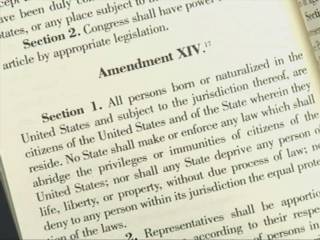
When passed by Congress the amendment was a watershed that would set Constitutional precedent for future laws. These would include giving both women and Native Americans women the right to vote. It would also be used by the Supreme Court in the 1954 Brown v. Board of Education decision that ended the use of “separate but equal” and overturned many other Jim Crow laws. It helped lead to the passage of the Voting Rights Act of 1964 and the Civil Rights Act of 1965, and most recently was the basis of the Supreme Court decision in Obergfell v. Hodges, which give homosexuals the right to marry. Section one of the amendment read:

“All persons born or naturalized in the United States, and subject to the jurisdiction thereof, are citizens of the United States and of the state wherein they reside. No state shall make or enforce any law which shall abridge the privileges or immunities of citizens of the United States; nor shall any state deprive any person of life, liberty, or property, without due process of law; nor deny to any person within its jurisdiction the equal protection of the laws.” [9]

Even so, for most white Southerners “freedom for African Americans was not the same as freedom for whites, as while whites might grant the black man freedom, they had no intention of allowing him the same legal rights as white men.” [10] As soon as planters returned to their lands they “sought to impose on blacks their definition of freedom. In contrast to African Americans’ understanding of freedom as a open ended ideal based on equality and autonomy, white southerners clung to the antebellum view that freedom meant mastery and hierarchy; it was a privilege, not a universal right, a judicial status, not a promise of equality.”  [11] In their systematic efforts to deny true freedom for African Americans these Southerners ensured that blacks would remain a lesser order of citizen, enduring poverty, discrimination, segregation and disenfranchisement for the next century.

ulysses-s-grant-book

Ulysses S. Grant and the Fight against the Insurrection, Terrorism and Insurgency of the Ku Klux Klan, White Leagues, White Liners and Red Shirts

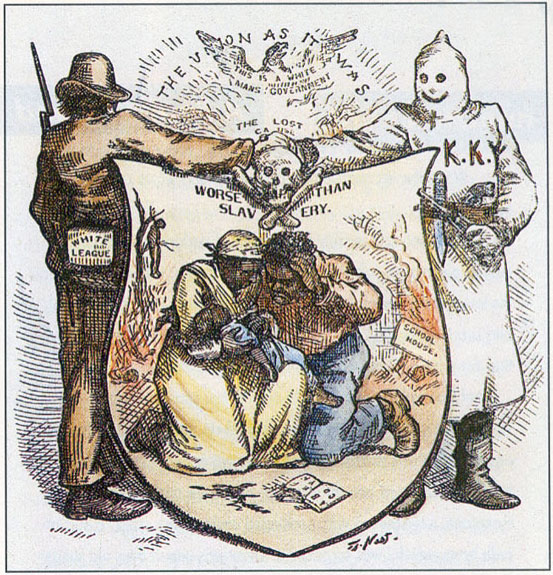
But these measures provoked even more violence from enraged Southerners who formed a variety of violent racist organizations which turned the violence from sporadic attacks to what amounted to a full-fledged insurgency against the new state governments and African Americans. Organizations like the Ku Klux Klan engaged in terroristic violence to heavily armed “social clubs” which operated under the aegis of the state Democratic Party leadership in most Southern states. Under the leadership of former Confederate general Nathan Bedford Forrest whose troops had conducted the Fort Pillow massacre, the Klan’s membership throughout the South “was estimated at five hundred thousand.” [12] The majority of these men were former Confederate soldiers, although they were also joined by those who had not fought in the war, or later those who had been too young to fight in the war but even belatedly wanted to get in on the fight against the hated Yankee and his African American allies. As the shadowy organization grew it became bolder and more violent in its attacks on African Americans, Republican members of the Reconstruction governments, and even Southern Jews. The Klan spread to every State in the South and when Congress investigated in 1870 and 1871 they submitted a thirteen volume report on Klan activities, volumes that “revealed to the country an almost incredible campaign of criminal violence by whites determined to punish black leaders, disrupt the Republican Party, reestablish control over the black labor force, and restore white supremacy in every phase of southern life.” [13]

KKK-Nast

Allegedly organized for self-defense against state militia units composed of freed blacks they named themselves “White Leagues (Louisiana), White Liners or Rifle Clubs (Mississippi), or Red Shirts (South Carolina). They were, in fact, paramilitary organizations that functioned as armed auxiliaries of the Democratic Party in southern states in their drive to “redeem” the South from “black and tan Negro-Carpetbag rule.” [14] These men, mostly Confederate veterans “rode roughshod over the South, terrorizing newly freed slaves, their carpetbagger allies, and anyone who dared to imagine a biracial democracy as the war’s change.” [15] The unrequited violence and hatred by these men set the stage for the continued persecution, murder and violence against blacks and those who supported their efforts to achieve equality in the South for the next century. In truth the activities of the Klan and other violent White Supremacist groups offer “the most extensive example of homegrown terrorism in American history.” [16]

Throughout his term in office Johnson appealed to arguments used throughout later American history by “critics of civil rights legislation and affirmative action. He appealed to fiscal conservatism, raised the specter of an immense federal bureaucracy trampling on citizens’ rights, and insisted that self-help, not government handouts, was the path to individual advancement.” [17]

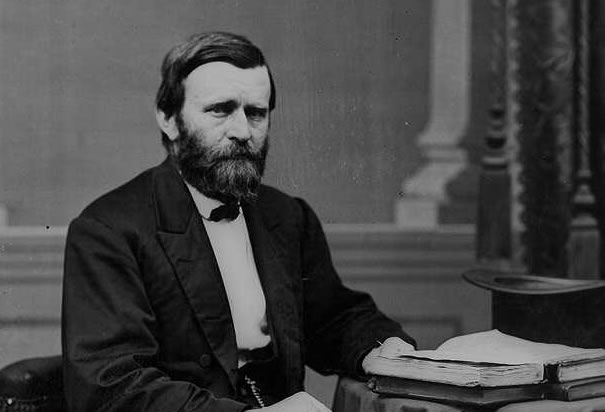
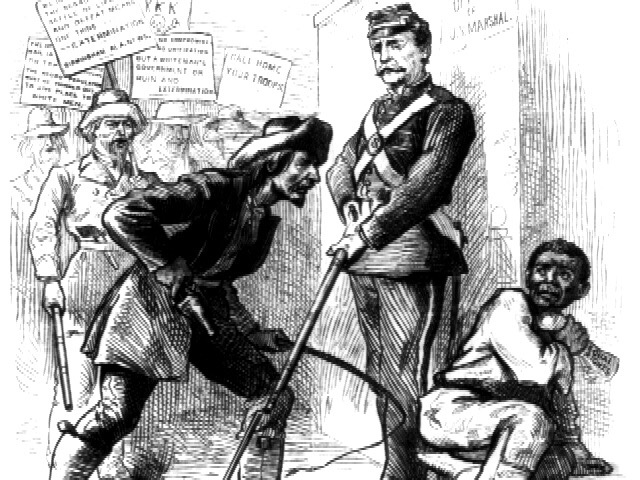
Ulysses S. Grant succeeded Johnson as President in 1869, and unlike his predecessor, he was a man who believed in freedom and equal rights, “For Grant, freedom and equal rights were matters of principle, not symbolism.” [18]Grant ordered his generals in the South to enforce the Reconstruction Act and when the Ku Klux Klan attempted to stop blacks from voting Grant got Congress to pass the “enforcement Act, which made racist terrorism a federal offense.” [19] He created the Justice Department to deal with crimes against Federal law and in 1871 pushed Congress to pass a law known as the Ku Klux Klan Act and sent in the army and federal agents from the Justice Department and the Secret Service to enforce the law.

Grant’s efforts using the military as well as agents of the Justice Department and the Secret Service against the Klan were hugely successful, thousands were arrested, hundreds of Klansmen were convicted and others were either driven underground or disbanded their groups. The 1872 election was the first and last in which blacks were nearly unencumbered as they voted until the passage of the 1964 Civil Rights Act and 1965 Voting Rights Act.

However, Grant’s actions triggered a political backlash that doomed Reconstruction. The seminal moment in this came 1873 when General Philip Sheridan working in Louisiana, asked Grant for “permission to arrest leaders of the White League and try them by courts-martial” [20] for their violent acts against blacks and their seizure of the New Orleans City Hall in a brazen coup attempt. The leak of Sheridan’s request sparked outrage and even northern papers condemned the president’s actions in the harshest of terms.

Apart from the effort to support voting rights for African Americans Grant’s efforts at Reconstruction were met mostly by failure. Part of this was due to weariness on the part of many Northerners to continue to invest any more effort into the effort. Slowly even proponents of Reconstruction began to retreat from it, some like Carl Schurz, were afraid that the use of the military against the Klan in the South could set precedent to use it elsewhere. Others, embraced an understanding of Social Darwinism which stood against all types of government interference what they called the “natural” workings of society, especially misguided efforts to uplift those at the bottom of the social order…and African Americans were consigned by nature to occupy the lowest rungs of the social ladder.” [21]

Southerners knew that they were winning the political battle and continued their pressure in Congress and in the media to demonize supporters of Reconstruction as well as African Americans. Southerners worked to rig the political and judicial process through the use of terror to demoralize and drive from power anyone, black or white, who supported Reconstruction. By 1870 every former Confederate state had been readmitted to the Union, in a sense fulfilling a part Lincoln’s war policy, but at the same time denying what the war was waged for a White led governments aided by the Supreme Court increasingly set about reestablishing the previous social and political order placing blacks in the position of living life under slavery by another name.

The Passage of the Fifteenth Amendment

Slavery had been abolished, and African Americans had become citizens, but in most places they did not have the right to vote. Grant used his political capital to fight for the passage of the Fifteenth Amendment, which gave black men the right to vote. It was one of the things that he remained most proud of in his life, he noted that the amendment was, “A measure which makes at once four million people voter who were heretofore declared by the highest tribunal in the land to be not citizens of the United States, nor eligible to become so…is indeed a measure of grander importance than any other act of the kind from the foundation of our free government to the present day.” [22]

To be continued…

Notes

[1] Ibid. Foner A Short History of Reconstruction p.30

[2] Ibid. Lord The Past that Would Not Die pp.11-12

[3] Ibid. Zinn The Other Civil War p.54

[4] Ibid. McPherson The War that Forged a Nation p. 178

[5] Ibid. Foner Forever Free p.162

[6] Perman, Michael Illegitimacy and Insurgency in the Reconstructed South in The Civil War and Reconstruction Documents and Essays Third Edition edited by Michael Perman and Amy Murrell Taylor Wadsworth Cengage Learning Boston MA 2011 p.451

[7] Ibid. Foner Forever Free p.121

[8] Ibid. Langguth After Lincoln p.232

[9] _____________ The 14th Amendment to the U.S. Constitution retrieved from https://www.law.cornell.edu/constitution/amendmentxiv 29 June 2015

[10] Ibid. Carpenter Sword and Olive Branch p.93

[11] Ibid. Foner Forever Free p.92

[12] Lane, Charles The Day Freedom Died: The Colfax Massacre, the Supreme Court, and the Betrayal of Reconstruction Henry Holt and Company, New York 2008  p.230

[13] Ibid. Foner Forever Free p.171

[14] Ibid. McPherson The War that Forged a Nation p. 178

[15] Ibid. Jordan Marching Home p.118

[16] Ibid. Foner Forever Free p.171

[17] Ibid. Foner Forever Free p.116

[18] Ibid. Lane The Day Freedom Died:  p.2

[19] Ibid. Lane The Day Freedom Died p.4

[20] Ibid. Langguth, A.J. After Lincoln p.314

[21] Ibid. Foner Forever Free pp.192-193

[22] Flood, Charles Bracelen, Grant’s Final Victory: Ulysses S. Grant’s Heroic Last Year DaCapo Press, Boston 2011 pp.78-79

Leave a comment

Filed under civil rights, civil war, ethics, laws and legislation, Military, Political Commentary

Racism and the Failure of Reconstruction

IMG_1877

Friends of Padre Steve’s World,

This is another of my continued series of articles pulled from my various Civil War texts dealing with Emancipation and the early attempts to gain civil rights for African Americans. This section that I will cover for the next few days deals with the post-war period, a period marked by conflicting political and social desires for equality, justice, revenge, and the re-victimization of Blacks who had so recently been emancipated.

I hope that you find these helpful.

Peace

Padre Steve+

Failing to Win the Peace: Racism and the Failure of Reconstruction

Colin Gray wrote, “A successful exercise in peacemaking should persuade the defeated party to accept its defeat.” [1] This is a fact seen throughout history as the peoples of nations that have been defeated militarily rise up against their occupiers to regain some form of independence, often coupled by a desire for revenge. As Liddell-Hart wrote, “History should have taught the statesman that there is no practical halfway house between a peace of complete subjection and a peace of moderation.” [2]

When the Civil War ended the Confederacy was beaten and most people in the South would have agreed to anything that the North presented regarding peace and return to the Union. The primary political policy goal of Lincoln regarding the war was the reestablishment of the Union and one of the military measures adopted by Lincoln was the emancipation of the South’s slaves who were an important part of the Southern war economy. “During the last two years of the war the abolition of slavery evolved from a means of winning the war to a war aim – from national strategy to national policy.” [3] By Lincoln’s reelection in 1864 that policy included the unconditional surrender of the Confederacy as well as the passage of the Thirteenth Amendment, while Lincoln himself advocated moderation in achieving the political and social goals of his war policy, as well as in the restoration of the Southern States to the Union, his assassination served to destroy that goal as his successor, Andrew Johnson, and the Radical Republican majority in Congress warred against each other in implementing the policy of Reconstruction.

10467FS_DA_090409_worst-johnson

The Unreconstructed President Andrew Johnson

That change in policy, the complete abolition of slavery necessitated a remaking of the old South, a culture where economics, social standing and even religion was linked to the “peculiar institution.” In a sense Reconstruction was “what the war was about.” [4] Had Lincoln’s successor, President Andrew Johnson desired he could have gotten the South to accept almost any demands that he decided to place upon them. A Northern correspondent who traveled throughout the South in May of 1865 and surveyed the mood of the leaders and people “concluded that any conditions for reunion specified by the President, even black suffrage, would be “promptly accepted.” [5] But that was not the way of Andrew Johnson.

Johnson set about to work with Southerners to affect a rapid reunion and to reestablish white rule in the South. He adopted a “minimalist process that would establish a mechanism by which former Confederate states could return to the Union with little or no change except for the abolition of slavery.” [6] The procedures Johnson established for the re-admission of states only allowed people who were eligible to vote in 1861 to vote. In effect this ensured a white only electorate, and excluded any free blacks. Johnson then began working to pardon former Confederates as quickly as possible to allow them to return to their political offices. Johnson would often issue hundreds of pardons a day, between June and August 1865, “the president awarded more than five thousand pardons in three states alone – Virginia, North Carolina, and Alabama.” [7] These pardons ensured that the former Confederates would never again have to worry about being brought up on charges of treason or war crimes, and no “federal law permitted them from voting once their states had been readmitted to the Union” [8] which under Johnson’s plan ensured that they would have the voted before any newly freed black in the South.

Johnson countermanded the orders of Union Generals in the occupied Confederate States to protect the rights of freed blacks further strengthening and emboldening those committed to restoring white rule in the South and regulating freed blacks to a state all but in name like slavery. Relieved at Johnson’s mild terms for reunion Southerners language included “defiant talk of states’ rights and resistance to black suffrage. My midsummer, prominent whites realized that Johnson’s Reconstruction empowered them to shape the transition from slavery to freedom and to define black’s civil status.” [9] Johnson’s policy set the stage for racial strife that in some places still has fully not ended.

Just two months after Lee’s surrender of the Army of Northern Virginia at Appomattox, Richard Henry Dana, a Federal District Attorney in Boston, declared that “a war is over when its purpose is secured. It is a fatal mistake to hold that this war is over because the fighting has ceased. This war is not over…” [10] As Dana so succinctly noted, and Clausewitz so well understood, was that that war is a continuation of policy and politics by other means. The failure of President Johnson and so many others in the North to fully grasp this fact led to over a century of subjugation of emancipated African Americans by whites. The confusion and lack of determined purpose has fueled a continual racial divide in the United States that is still felt today. Defeated on the battlefield Southerners and emboldened by Johnson’s leniency, Southerners soon turned to political, psychological and even violent means to reverse their losses.

Frederick Douglass understood that simple emancipation was not enough, and that the “war and its outcome demanded racial equality.” [11] Despite the that efforts of many in the North this would not happen during Reconstruction and Douglass knew that the failure to accomplish this would be disastrous, “Whether the tremendous war so heroically fought…shall pass into history a miserable failure…or whether on the other hand, we shall, as the rightful reward of victory over treason have a solid nation, entirely delivered from all contradictions and social antagonisms, must be determined one way or another.” [12]

Other Northern leaders, political and military harbored deep seated illusions about the willingness of Southerners to change their way of life simply because they had lost the war, but with Johnson’s blessing seemed to be winning the peace. Major General Oliver O. Howard, a convinced and longtime abolitionist who believed that it was God’s will for the North to liberate African Americans who was appointed by Lincoln to head the new Freedman’s Bureau “believed that the Southern whites, or at least a sufficient number of them, through their humanitarian instincts and sense of fair play, or if not that, through enlightened self-interest, would deal fairly and justly with the freedmen, would aid in his education, and would give him the same civil and legal rights as the white man.” [13] Likewise, Major General Henry Slocum, who served with Howard at Gettysburg and in the West was appointed military commander of the District of Mississippi. Slocum, like many others entered his duties and “did not fathom the depth of anger and loathing many white Southerners harbored toward blacks, and to the new system in general.” [14]

There was a problem with implementing Reconstruction; when John Wilkes Booth assassinated Abraham Lincoln, the political leaders of the North could not agree on how to do this. The new President, Andrew Johnson was probably the worst possible leader to lead the country in the aftermath of war for all practical purposes Johnson was a Democrat who believed in white supremacy, he had been brought onto the ticket for his efforts to keep Kentucky in the Union and to support Unionist elements in Tennessee. While his selection helped Lincoln in parts of the North and the Border States it was a disaster for the post-war era.

Johnson’s approach to reconstruction was very simply to “impose minimal demands on the South. He required only minor concessions from the former Confederates before allowing them to resume their political rights and retain their land. As for freedmen, he seemed to think that the needed no further protection beyond the fact of their emancipation.”  [15] Johnson’s attitude regarding freedmen was quite common, even men like William Lloyd Garrison who had spent his life in the cause of abolitionism believed that emancipation and abolition and the passage of the Thirteenth Amendment was the end of his work. He urged the dissolution of the American Anti-Slavery Society in May of 1865 declaring, “My vocation, as an Abolitionist, thank God, is ended.” [16] His suggestion was rejected by the membership, but it was a harbinger of things to come.

Johnson was “a lonely stubborn man with few confidants, who seemed to develop his policies without consulting anyone, then stuck to them inflexibly in the face of any and all criticism. He lacked Lincoln’s ability to conciliate his foes and his capacity for growth, which was best illustrated by Lincoln’s evolving attitude to black suffrage during the Civil War.” [17] In the months after his unexpected accession to the presidency Johnson demonstrated that he had no understanding of Lincoln’s political goals for the South and the desires of the Republican dominated Congress.

By the summer of 1865 Johnson was already demonstrating “that his sympathies were with the Southern white population and that he believed that their interests should be cared for even at the expense of freedmen.” [18] Johnson’s approach to reconstruction was very simply to “impose minimal demands on the South. He required only minor concessions from the former Confederates before allowing them to resume their political rights and retain their land. As for freedmen, he seemed to think that the needed no further protection beyond the fact of their emancipation.”  [19] Johnson gave individual pardons to more than thirteen thousand “high-ranking Confederate civil and military officers and wealthy Southerners.” [20] While doing this he minimized political influence the Southern Unionists who had not supported the Confederacy and ensured that freed slaves were excluded from the political process.  He issued a number of orders “appointing interim provisional governors and urging the writing of new state constitutions based upon the voter qualifications in force at the time of secession in 1861 – which meant, in large but invisible letters, no blacks.” [21]

When Frederick Douglass led a delegation of blacks to meet with Johnson in February 1865 Johnson preached that it was impossible to give political freedom to blacks. When Douglass attempted to object Johnson became angry and told Douglass “I do not like to be arraigned by some who can get up handsomely-rounded periods and rhetoric, and talk about abstract ideas of liberty, who never periled life, liberty, or property.” [22] When Douglass took his objections to Johnson’s harangue to a Washington newspaper, Johnson railed against Douglass “I know that d—–d Douglass…he’s just like any other nigger & would sooner cut a white man’s throat than not.” [23]

Notes 

[1] Ibid. Gray Fighting Talk p.14

[2] Ibid. Liddell- Hart Why Don’t We Learn From History? p.86

[3] Ibid. McPherson The War that Forged a Nation p. 132

[4] Perman, Michael and Murrell Taylor, Amy editors The Civil War and Reconstruction Documents and Essays Third Edition Wadsworth Cengage Learning Boston MA 2011 p.323

[5] Foner, Eric A Short History of Reconstruction Harper and Row, New York 1990 p.89

[6] Ibid. McPherson The War that Forged a Nation p. 177

[7] Langguth, A.J. After Lincoln: How the North Won the Civil War and Lost the Peace Simon and Schuster, New York 2014 p.119

[8] Ibid. Langguth After Lincoln p.319

[9] Ibid. Foner A Short History of Reconstruction p.89

[10] Ibid. McPherson The War that Forged a Nation p. 175

[11] Ibid. Goldfield America Aflame p.407

[12] Ibid. Goldfield America Aflame p.407

[13] Carpenter, John A. Sword and Olive Branch: Oliver Otis Howard Fordham University Press, New York 1999 p.93

[14] Melton, Brian C. Sherman’s Forgotten General: Henry W. Slocum University of Missouri Press, Columbia and London 2007

[15] Ibid. Perman and Taylor The Civil War and Reconstruction Documents and Essays Third Edition p.323

[16] Ibid. Foner A Short History of Reconstruction p.30

[17] Ibid. Foner Forever Free p.108

[18] Ibid. Carpenter Sword and Olive Branch: Oliver Otis Howard  New York 1999 p.109

[19] Ibid. Perman and Taylor The Civil War and Reconstruction Documents and Essays Third Edition p.323

[20] Ibid. McPherson The War that Forged a Nation p. 177

[21] Ibid. Guelzo Fateful Lightening p.490

[22] Ibid. Guelzo Fateful Lightning p.494

[23] Ibid. Guelzo Fateful Lightning p.494

Leave a comment

Filed under civil rights, civil war, History, Military, Political Commentary