Category Archives: Military

The Province of Chance: The Battle of Midway, 5 Minutes that Changed the Course of a War

Battle%20of%20Midway%20flat_080817160843

“War is the province of chance. In no other sphere of human activity must such a margin be left for this intruder. It increases the uncertainty of every circumstance and deranges the course of events.” Carl Von Clausewitz 

“Even against the greatest of odds, there is something in the human spirit – a magic blend of skill, faith, and valor – that can lift men from certain defeat to incredible victory.”  Walter Lord

Six months after Pearl Harbor the United States Navy met the Imperial Japanese Navy in battle on the seas and in the airspace around Midway Island. It was a battle between a fleet that had known nothing but victory in the months after Pearl Harbor and one with the exception of a few minor tactical successes was reeling.
images-41

The Japanese had swept across the Pacific and the Indian Oceans and decimated every Allied Naval forces that stood in their way. After Pearl Harbor they had sunk the HMS Prince of Wales and HMS Repulse off of Singapore.  Next in a series of engagements destroyed the bulk of the US Asiatic Fleet in the waters around the Philippines and the Dutch East Indies culminating in the Battle of the Java Sea where the bulk of the American, British, Dutch and Australian (ABDA) naval forces engaged were annihilated attempting to fight superior Japanese forces.

Hermes_sinking

HMS Hermes sinking after Japanese Carrier air attack

In the Indian Ocean Admiral Nagumo’s carriers dispatched a force of Royal Navy cruisers and the Aircraft Carrier HMS Hermes. In only one place had a Japanese Naval task force been prevented from achieving its goal. At the Battle of the Coral Sea where Task Force 11 and Task Force 17 centered on the Carriers USS Lexington and USS Yorktown prevented a Japanese invasion force from taking Port Moresby sinking the light carrier Shoho, damaging the modern carrier Shokaku and decimating the air groups of the Japanese task force.
Hornet_launches

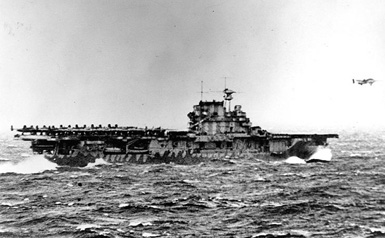
In May US Navy code breakers under the direction of Commander Joe Rochefort at Pearl Harbor discovered the next move of the Imperial Navy an attack on Midway Island and the Aleutian islands. Since the occupation of Midway by Japanese forces would give them an operational base less than 1000 miles from Pearl Harbor Admiral Chester Nimitz committed the bulk of his naval power, the carriers USS Enterprise CV-6, USS Yorktown CV-5 and USS Hornet CV-8 and their 8 escorting cruisers and 15 destroyers, a total of 26 ships with 233 aircraft embarked to defend Midway. Nimitz also sent a force of 5 cruisers and 4 destroyers to cover the Aleutians.
images-42

images-43

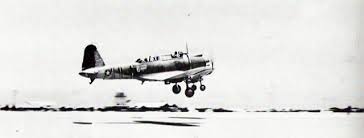
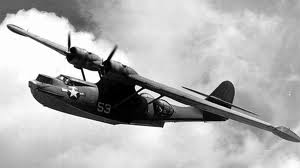
Land based air assets on Midway were composed of a mixed Marine, Navy and Army air group of 115 aircraft, many of which were obsolete. Aboard Midway there were 32 US Navy PBY Catalina Flying Boats, 83 fighters, dive bombers, torpedo planes and Army Air Force bombers piloted by a host of inexperienced pilots.

Nimitz’s instructions to his Task Force Commanders was simple “You will be governed by the principle of calculated risk, which you shall interpret to mean the avoidance of exposure of your force to attack by superior enemy forces without good prospect of inflicting … greater damage on the enemy.”
893594c746

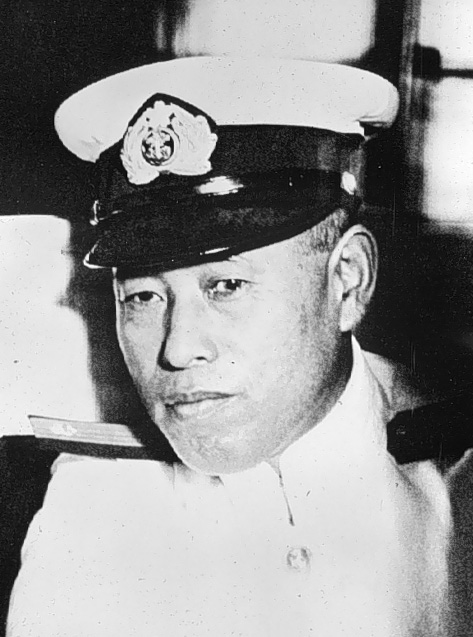
Admiral Isoroku Yamamoto commanded the Combined Fleet. The victor of Pearl Harbor and the triumph’s in the first six months of the Pacific War was determined to end the war with a decisive battle at Midway. His plans were opposed by many in the Imperial General Staff, especially those in the Army but when the US raid on Tokyo, the Doolittle Raid, all opposition to the attack was dropped.
10-japanese-carriers-coral-sea-midway

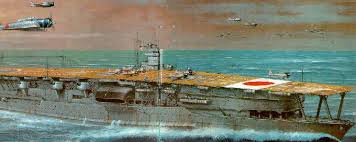
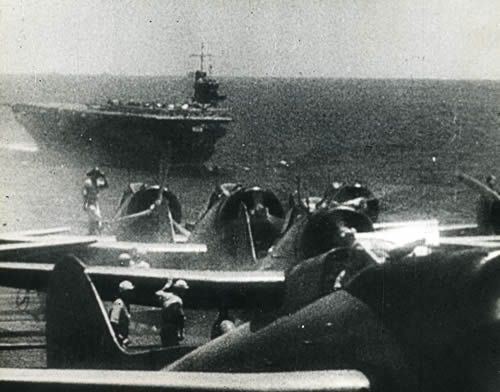
The Japanese sent a force of 7 battleships and 7 carriers against Midway. These included the elite First Carrier Striking Group composed of the Pearl Harbor attackers Akagi, Kaga, Soryu and Hiryu and their highly trained and combat experienced air groups. Among the surface ships was Yamamoto’s flagship, the mighty Battleship Yamato, at 72,000 tons and armed with 9 18” guns, the most powerful and largest battleship ever to see combat.

The strike force included 273 aircraft and was escorted by 14 cruisers and 39 destroyers. They were to take Midway and then destroy the US Navy when it came out to fight. Yamamoto sent a force force of 4 battleships, 12 destroyers assigned screen to the Aleutian invasion force which was accompanied by 2 carriers 6 cruisers and 10 destroyers. The other carriers embarked a further 114 aircraft.

Despite this great preponderance in numbers Yamamoto’s plan was complex and his forces too far apart from each other to offer support should and get into trouble. The powerful Japanese Task forces were scattered over thousands of square miles of the Northern Pacific Ocean where they could not rapidly come to the assistance of any other group.

images-44

With the foreknowledge provided by the code breakers the US forces hurried to an intercept position northeast of Midway eluding the Japanese submarine scout line which the Japanese Commander Admiral Yamamoto presumed would find them when they sailed to respond to the Japanese attack on Midway.  Task Force 16 with the Enterprise and Hornet sailed first under the command of Rear Admiral Raymond A Spruance and Task Force 17 under Rear Admiral Frank “Jack” Fletcher with the Yorktown which had been miraculously brought into fighting condition after suffering heavy damage at Coral Sea. Fletcher assumed overall command by virtue of seniority and Admiral Nimitz instructed his commanders to apply the principle of calculated risk when engaging the Japanese as the loss of the US carriers would place the entire Pacific at the mercy of the Japanese Navy.

On June 3rd a PBY Catalina discovered the Japanese invasion force and US long range bombers launched attacks against it causing no damage. The morning of the 4th the Americans adjusted their search patterns in and the Japanese came into range of Midway and commenced their first strike against the island.

g17056

In response land based aircraft from Midway attacked the Japanese carrier force taking heavy casualties and failing to damage the Japanese task force. The American Carrier task forces launched their strike groups at the Japanese fleet leaving enough aircraft behind of the Combat Air Patrol and Anti-submarine patrol.  As the Americans winged toward the Japanese fleet the Japanese were in a state of confusion. The confusion was caused when a scout plane from the Heavy Cruiser Tone that had been delayed at launch discovered US ships but did not identify a carrier among them until later into the patrol. The carrier  was the Yorktown and TF 17, but for Nagumo who first expected no American naval forces, then received a report of surface ships without a carrier followed by the report of a carrier the reports were unsettling.
a5f7ab19-17c6-4928-90a4-5bb913d156eb

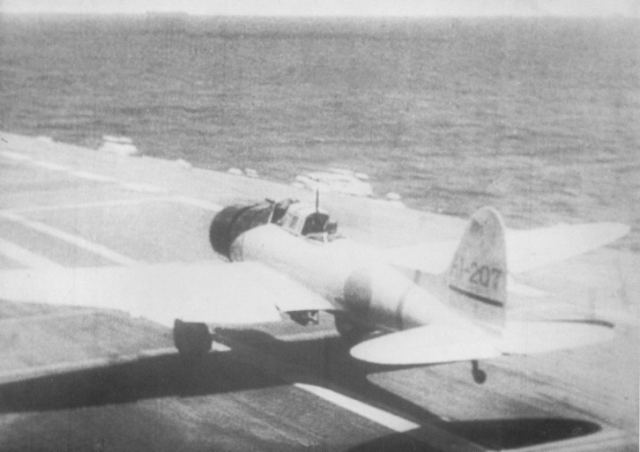
Orders and counter-orders were issued as the Japanese attempted to recover their strike aircraft and prepare for a second strike on the island and then on discovery of the Yorktown task force, orders changed and air crews unloaded ground attack ordnance in favor of aerial torpedoes and armor piercing bombs. The hard working Japanese aircrew did not have time to stow the ordnance removed from the aircraft but by 1020 they had the Japanese strike group ready to launch against the US carriers.
g701850

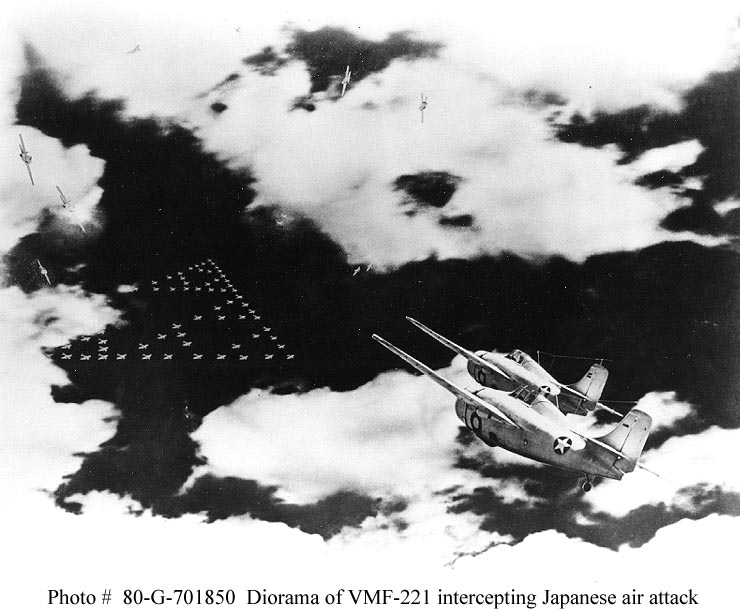
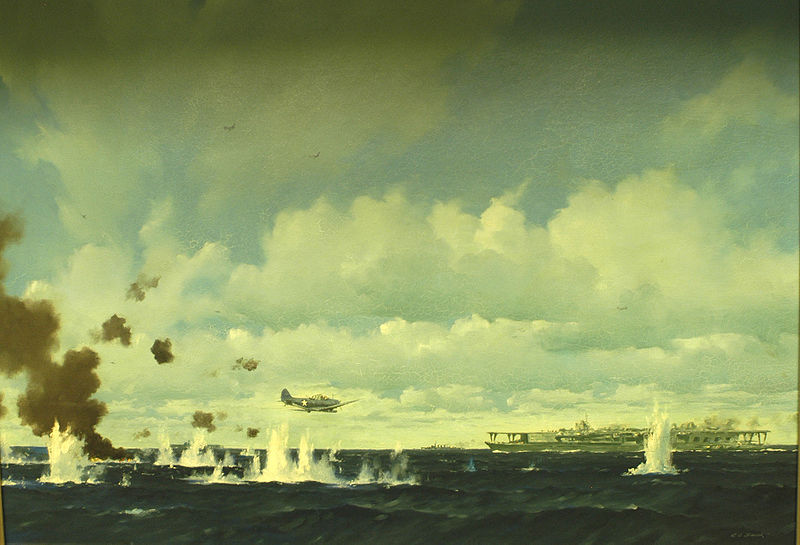
As the Japanese crews worked the Japanese carriers were engaged in fending off attacks by the US torpedo bomber squadrons, VT-6 from Enterprise, VT-8 from Hornet and VT-3 from Yorktown. The Japanese Combat Air Patrol ripped into the slow, cumbersome and under armed TBD Devastators as they came in low to launch their torpedoes.  Torpedo Eight from Hornet under the command of LCDR John C Waldron pressed the attack hard but all 15 of the Devastators were shot down. Only Ensign George Gay’s aircraft was able to launch its torpedo before being shot down and Gay would be the sole survivor of the squadron.
g66074


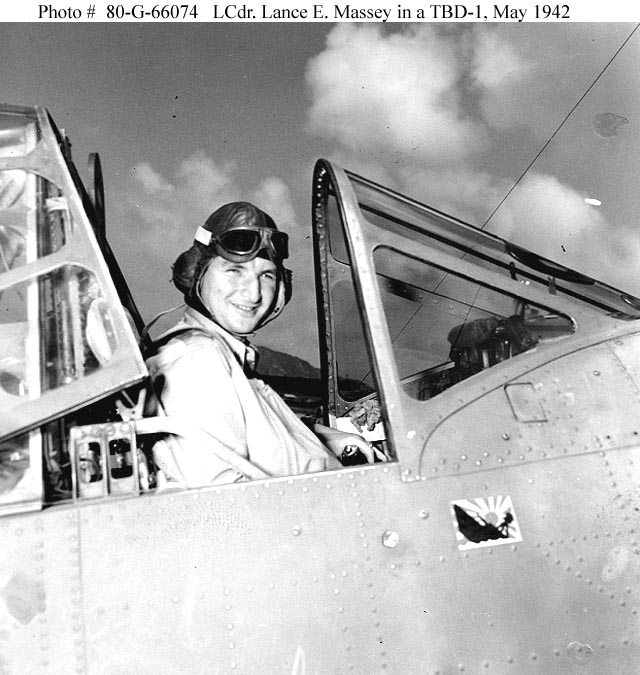
LCDR Lance Massey CO of VT-3

Page500_163_6

LCDR John Waldron CO of VT-8

220px-Eugene_Lindsey;h84903

LCDR Eugene Lindsey CO of VT-6

Torpedo 6 from Enterprise under the command of LCDR Eugene Lindsey suffered heavy casualties losing 10 of 14 aircraft with Lindsey being one of the casualties.  The last group of Devastators to attack was Torpedo 3 from Yorktown under the command of LCDR Lem Massey from the Yorktown. These aircraft were also decimated and Massey killed but they had drawn the Japanese Combat Air Patrol down to the deck leaving the task force exposed to the Dive Bombers of the Enterprise and Yorktown.
800px-tbd_attacking_at_midway_painting-1

There had been confusion among the Americans as to the exact location of the Japanese Carriers. Bombing 8 and Scouting 8 from Hornet did not find the carriers and had to return for lack of fuel while losing a number of bombers and their fighter escort having to ditch inn the ocean and wait for rescue. The Enterprise group composed of Bombing-6 and Scouting 6 under CDR Wade McClusky was perilously low on fuel when the wake of a Japanese destroyer was spotted.  McClusky followed it to the Japanese Task Force. The Yorktown’s group under LCDR Max Leslie arrived about the same time.
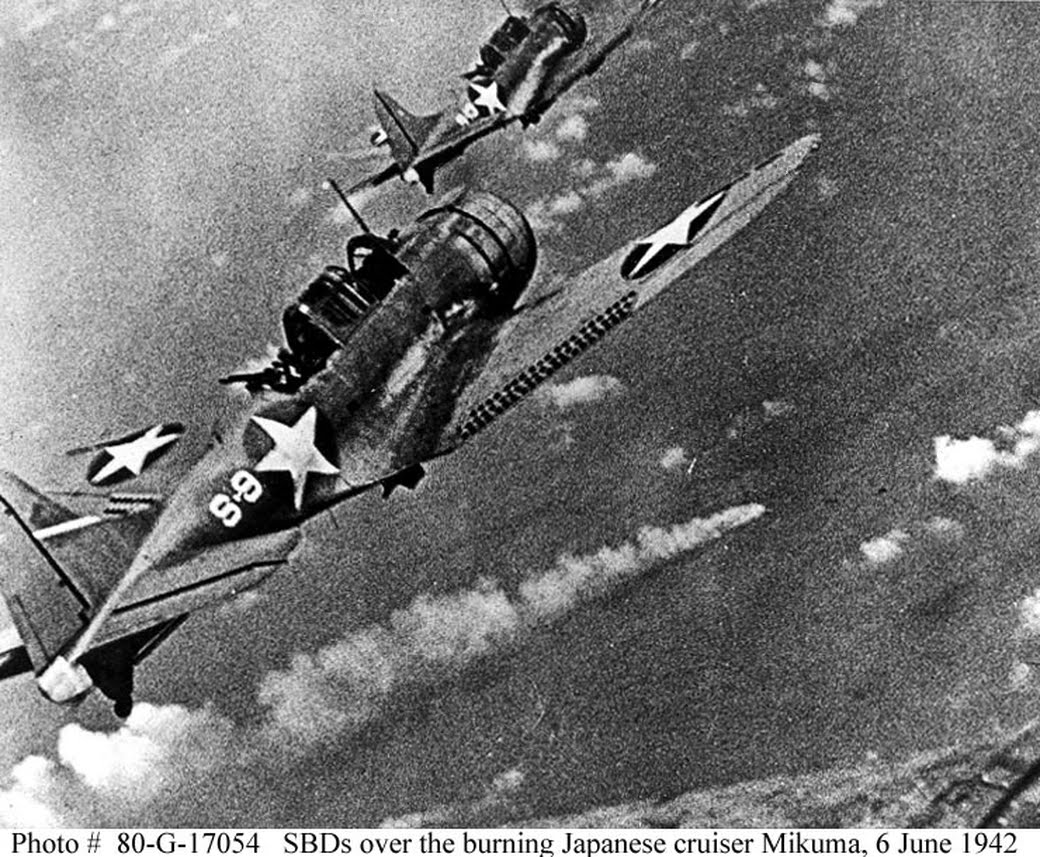
Dauntless_dive_bombers

When the American dive bombers arrived over the Japanese Carrier Strike Force they found the skies empty of Japanese aircraft. Below, aboard the Japanese ships there was a sense of exhilaration as each succeeding group of attackers was brought down and with their own aircraft ready to launch and deal a fatal blow to the American carrier wondered how big their victory would be. The war would soon be decided.

midway4

At 1020 the first Zero of the Japanese attack group began rolling down the flight deck of the flagship Akagi, aboard Kaga aircraft were warming up as they were on the Soryu.  The unsuspecting Japanese were finally alerted when lookouts screamed “helldivers.” Wade McClusky’s aircraft lined up over the Akagi and Kaga pushing into their dives at 1022. There was a bit of confusion when the bulk of Scouting 6 joined the attack of Bombing 6 on the Kaga. That unprepared ship was struck by four 1000 pound bombs which exploded on her flight deck and hangar deck igniting the fully fueled and armed aircraft of her strike group and the ordnance littered about the hangar deck.  Massive fires and explosions wracked the ship and in minutes the proud ship was reduced to an infernal hell with fires burning uncontrollably. She was abandoned and would sink at 1925 taking 800 of her crew with her.
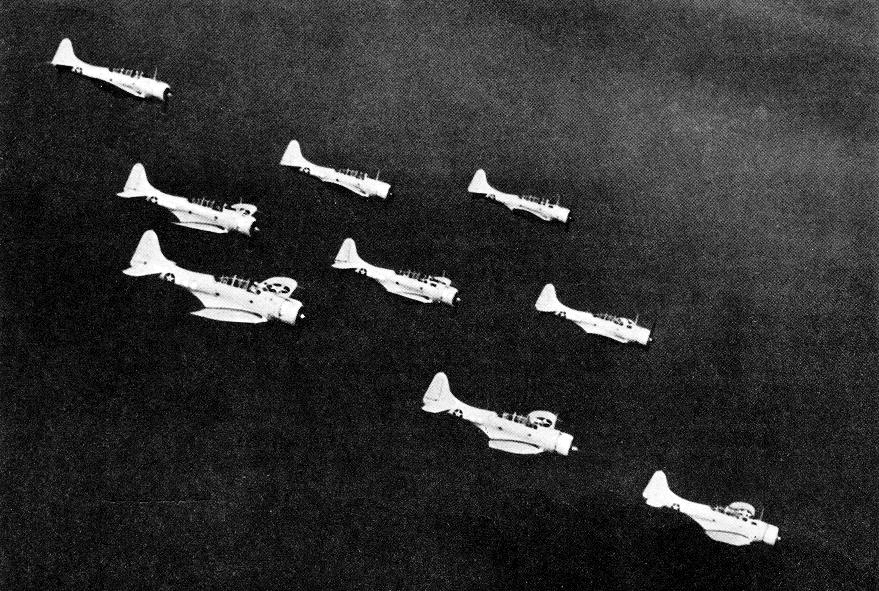
douglas-sbd5-dauntless-dive-bomber-battle-of-midway-01

LT Dick Best of Scouting 6 peeled off from the attack on Kaga and shifted to the Japanese flagship Akagi. On board Akagi were two of Japan’s legendary pilots CDR Mitsuo Fuchida leader of and CDR Minoru Genda the architect of the Pearl Harbor attack and subsequent string of Japanese victories. Both officers were on the sick list and had come up from sick bay to watch as the fleet was attacked. Seeing Kaga burst into flames they stood mesmerized until Akagi’s lookouts screamed out the warning “helldivers” at 1026.  Best’s few aircraft hit with deadly precision landing two of their bombs on Akagi’s flight deck creating havoc among the loaded aircraft and starting fires and igniting secondary explosions which turned the ship into a witch’s cauldron.  By 1046 Admiral Nagumo and his staff were forced to transfer the flag to the cruiser Nagara as Akagi’s crew tried to bring the flames under control. They would do so into the night until nothing more could be done and abandoned ship at 2000.  Admiral Yamamoto ordered her scuttled and at 0500 on June 5th the pride of the Japanese carrier force was scuttled.
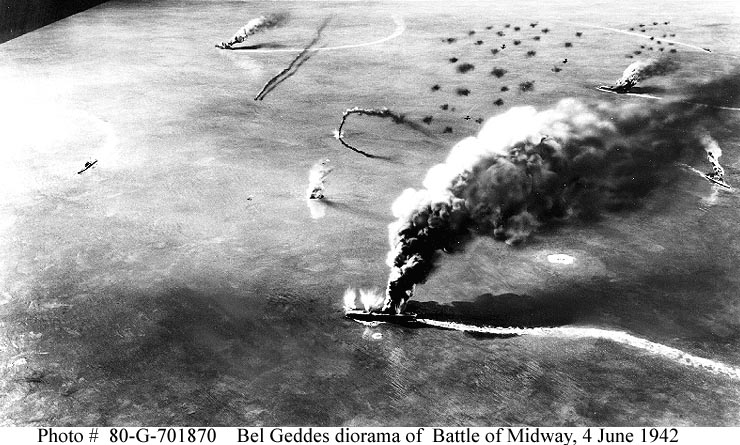
g701870

VB-3 under LCDR Max Leslie from the Yorktown stuck the Soryu with 17 aircraft, however only 13 of the aircraft had bombs due to an electronic arming device malfunction on 4 of the aircraft, including that of Commander Leslie.  Despite this Leslie led the squadron as it dove on the Soryu at 1025 hitting that ship with 3 and maybe as many as 5 bombs. Soryu like her companions burst into flames as the ready aircraft and ordnance exploded about her deck. She was ordered abandoned at 1055 and would sink at 1915 taking 718 of her crew with her.
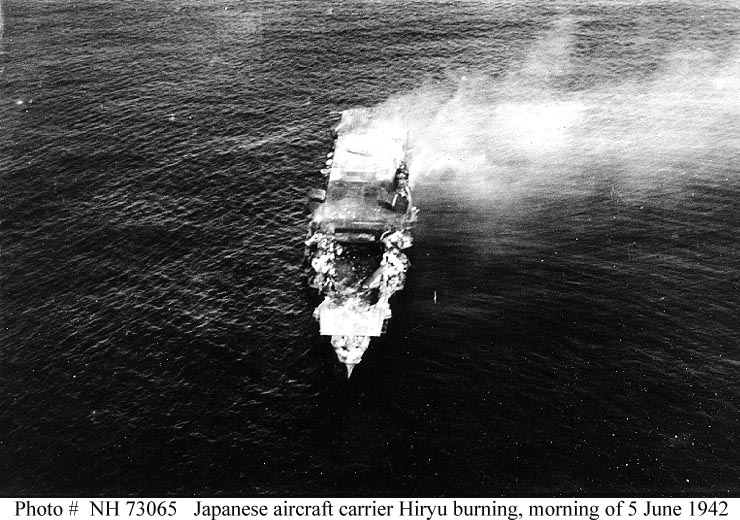
h73065

The remaining Japanese flattop the Hiryu attained the same fate later in the day after engaging in an epic duel with the Yorktown which her aircraft heavily damaged. Yorktown would be sunk by the Japanese submarine I-168 while being towed to safety.

71380-004-B4724C34

USS Yorktown under attack from Kate Torpedo Bombers from Hiryu on June 4th 1942

In five pivotal minutes the course of the war in the Pacific was changed. Authors have entitled books about Midway Incredible Victory by Walter Lord and Miracle at Midway by Gordon Prange and those titles reflect the essence of the battle.

At Midway a distinctly smaller force defeated a vastly superior fleet in terms of experience, training and equipment. At the very moment that it appeared to the Japanese that they would advance to victory their vision disappeared. In a span of less than 5 minutes what looked like the certain defeat of the US Navy became one of the most incredible and even miraculous victories in the history of Naval warfare. In those 5 minutes history was changed in a breathtaking way. While the war would drag on and the Japanese still inflict painful losses and defeats on the US Navy in the waters around Guadalcanal the tide had turned and the Japanese lost the initiative in the Pacific never to regain it.

The Japanese government hid the defeat from the Japanese people instead proclaiming a great victory. The American government could not fully publicize the victory for fear of revealing the intelligence that led to the ability of the US Navy to be at the right place at the right time and defeat the Imperial Navy.
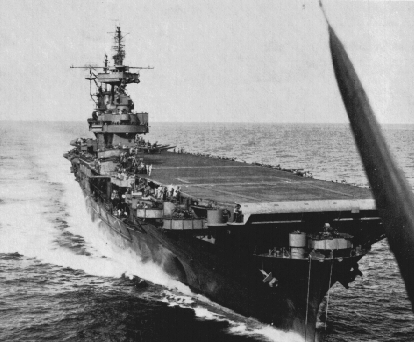
uss-enterprise-cv-6-1

The American victory at Midway changed the course of the war in the Pacific. The Battle of Midway established the aircraft carrier and the fast carrier task force as the dominant force in naval warfare which some would argue it still remains. Finally those five minutes ushered in an era of US Navy dominance of the high seas which at least as of yet has not ended as the successors to the Enterprise, Hornet and Yorktown ply the oceans of the world and the descendants of those valiant carrier air groups ensure air superiority over battlefields around the world.

Peace

Padre Steve+
1 Comment

Filed under History, Military, Navy Ships, US Navy, world war two in the pacific

“All Glory is Fleeting” Prelude to Midway June 3rd 1942: The False Belief in the Surety of Victory

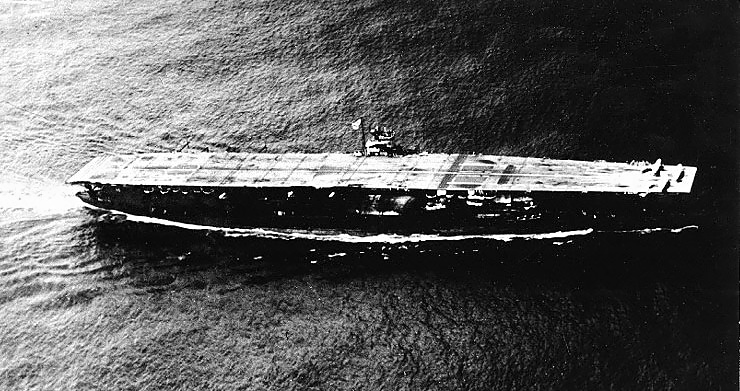
Japanese_aircraft_carrier_Akagi_01

The Flagship IJN Akagi

On the night of June 3rd 1942 the Japanese First Carrier Strike Force under the command of Vice Admiral Chuichi Nagumo sailed east toward the tiny Midway Atoll. Midway was the target of an operation designed by Admiral Isoroku Yamamoto to draw out the remnants of the United States Pacific Fleet, destroy them and set the conditions for Japanese victory and the subsequent dominance of the Pacific by the Empire of Japan. Nagumo had seen many of the risks involved in the plan and considered it an “impossible and pointless operation” before the Doolittle Raid on Tokyo, but even Nagumo fell in line as Yamamoto relentlessly lobbied for the operation, in spite of political opposition and opposition from the Imperial Army.

Chuichi_Nagumo

Vice Admiral Chuichi Nagumo

As the First Carrier strike force closed within 300 miles of Midway on the night of June 3rd 1942 Nagumo and his staff prepared for the battle that they and many others believed would be the decisive battle. Aircraft received their final preparations, bombs were loaded and as night faded into early morning air crew arose, ate their breakfast and went to their aircraft.

The ships had been observing radio silence since they departed their bases and anchorages in Japan the previous week. Honed to a fine edge the crews of the ships and the veteran aircrews anticipated victory.

The crews of the ships of the task force and the air groups embarked on the great aircraft carriers Akagi, Kaga, Soryu and Hiryu as well as their escorts were confident. They had since the war began known nothing but victory. They had devastated the Pacific Fleet at Pearl Harbor and roamed far and wide raiding allied targets and sinking allied shipping across the Pacific and deep into the Indian Ocean. Commander Magotaro Koga of the destroyer Nowaki wrote in his diary “Our hearts burn with the conviction of sure victory.”

However, Nagumo and his sailors had no idea that most of what they knew about their American opponents was wrong, just as Yamamoto had no idea that American code breakers had broken the Japanese Naval codes and determined that the Japanese were going to attack Midway.

893594c746

Admiral Isoroku Yamamoto 

Though confident that the Americans could field no more than two operational carriers, the Yorktown, which they believed had been sunk at Coral Sea was operational and joined by the air group from the damaged Saratoga had joined Enterprise and Hornet northeast of Midway.  An operation designed to get aerial surveillance of US Fleet dispositions at Pearl Harbor had been cancelled because the atoll at French Frigate Shoals that the Japanese flying boats would operate from was occupied by a small US force. Likewise the line of Japanese submarines arrived on station a day late, after the US carrier task forces had passed by. Those aboard the First Carrier Strike Force, including Nagumo or his senior commanders and staff had no idea that the Americans not only knew of their approach but were already deployed in anticipation of their strike.

Within a day all of the Japanese carriers would be sunk or sinking. Thousands of Japanese sailors would be dead and the vaunted air groups which had wreaked havoc on the Allies would be decimated, every aircraft lost and the majority of pilots and aircrew dead. It would be a most unexpected and devastating defeat stolen out of the hands of what appeared to be certain victory.

In the next couple of days I will write some articles on Midway and republish older articles on this site. The fact of the matter is that like Yamamoto and the Japanese that many military leaders, including those of the United States make assumptions about campaigns and battles that turn out to be wrong. Wars are often expected to be short, decisive and glorious but many times end up long, indecisive and agonizing. History has shown that to be the case for the United States in every fight it has been engaged since the Second World War, even when we win every pitched battle.

I think that there is a lesson to be learned from the Japanese who sailed into the night on June 3rd 1942 and saw the sunrise of June 4th. There is no battle, campaign or war that goes according to plan. Thousands of Japanese sailors and airmen went to bed on the night of the 3rd expecting that the following night, or within the next few days they would be celebrating a decisive victory. Thousands of them would be dead by the night of the 4th of June and the ambitions of the Empire of Japan to defeat the United States Navy and end the war would be dealt a decisive defeat from which they would never recover.

IJN_Akagi_World_War_II_Aircraft_Carrier_hit_by_Douglas_SBD_Dauntless_Dive_Bomber_at_Midway-1

The Japanese had known nothing but victory and on the night of June 3rd 1942 they expected nothing more than victory. However the wisdom of the Romans was proved right yet again. Quoted in the movie Patton the legendary US General said:

“For over a thousand years Roman conquerors returning from the wars enjoyed the honor of triumph, a tumultuous parade. In the procession came trumpeteers, musicians and strange animals from conquered territories, together with carts laden with treasure and captured armaments. The conquerors rode in a triumphal chariot, the dazed prisoners walking in chains before him. Sometimes his children robed in white stood with him in the chariot or rode the trace horses. A slave stood behind the conqueror holding a golden crown and whispering in his ear a warning: that all glory is fleeting.”

Peace

Padre Steve+

2 Comments

Filed under Military, Navy Ships, world war two in the pacific

The Last Battle of the Bismarck

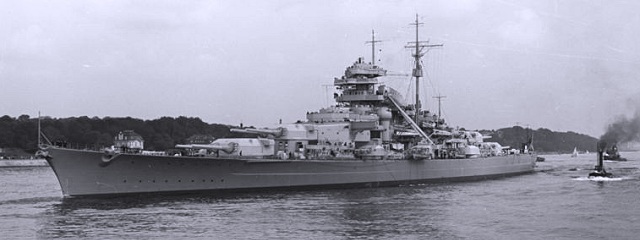
battleship-bismarck

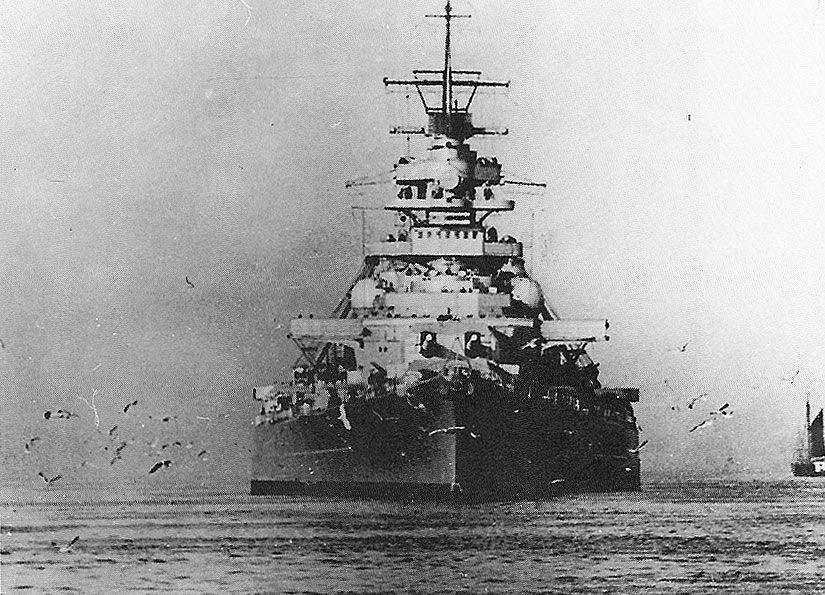
Battleship Bismarck

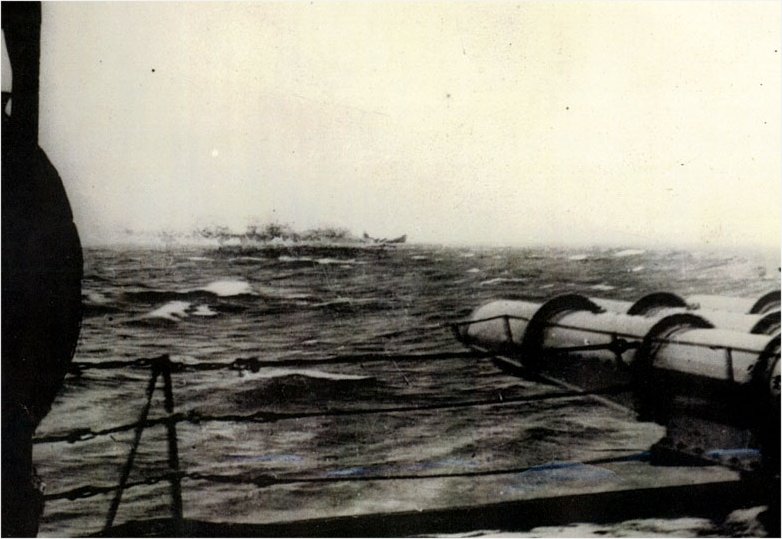
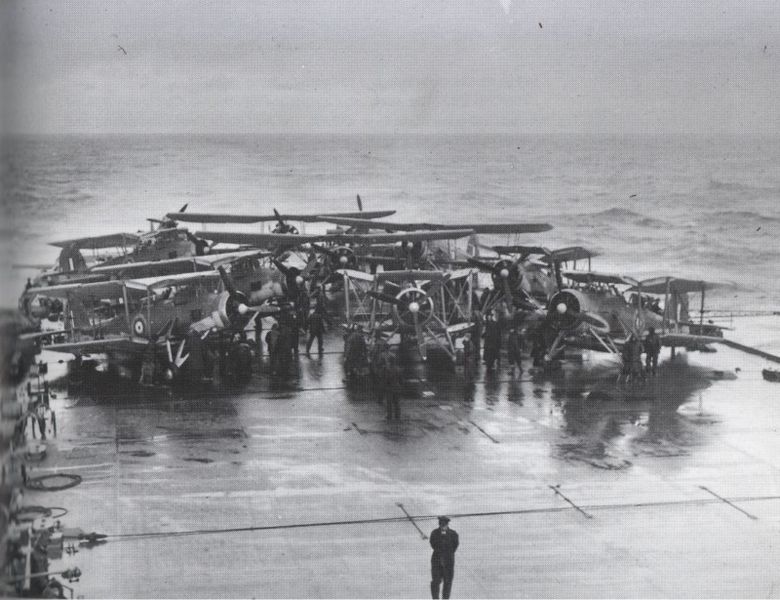
The torpedo from the Swordfish from the HMS Ark Royal that struck the mighty Bismarck in her stern and jammed her rudders doomed that ship and her crew. It was an astounding turn of events. The Bismarck had sunk the legendary British Battle Cruiser HMS Hood in minutes and had she persisted could have sunk the new Battleship HMS Prince of Wales. Instead, Vice Admiral Gunther Lutjens in command of the Bismarck and her consort the Heavy Cruiser Prinz Eugen decided to break off contact and make for safety in the French port of Brest.

images-39 Sinking of the Hood

Bismarck slipped her pursuers and allowed Prinz Eugen to escape. It seemed that nothing that the British could do would stop her from gaining the safety of the French port and with it the knowledge that she had sunk the most powerful ship in the Royal Navy and gotten away. Then out of nowhere Bismarck was spotted by a Royal Air Force Coastal Command PBY Catalina seaplane piloted by an American Naval Officer. Then a relatively small and slow torpedo dropped from an obsolescent Swordfish torpedo bomber, a “stringbag” hit the Bismarck in perhaps the only place that could have changed the developing narrative of a great German naval victory.

As darkness fell on May 26th, Bismarck, unable to steer towards Brest due to her damage and the following seas steered toward the oncoming British armada at a reduced speed. Her crew, now exhausted from countless hours on watch and at their battle stations knew that they were doomed.

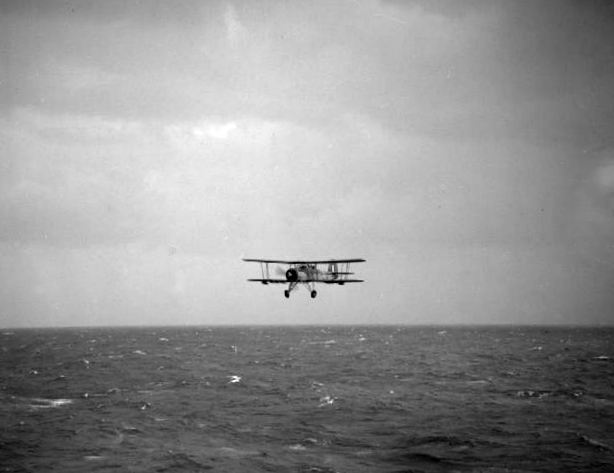
HMS_Ark_Royal_swordfish

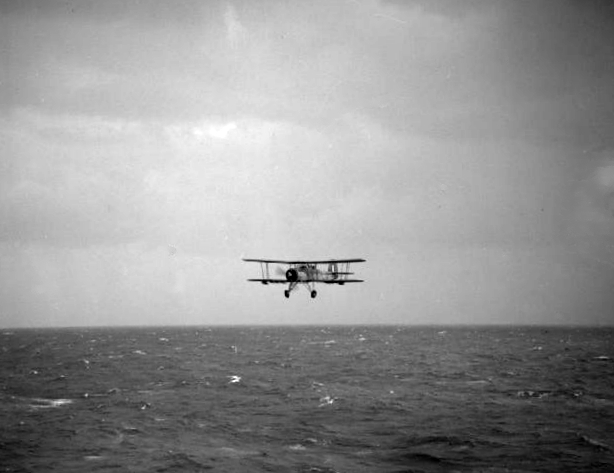
Swordfish returning from attacking Bismarck

Despite this they still labored trying in vain for a way to repair their ship. As Bismarck’s engineers and damage control personnel sought at way to repair the damage on that dark night Royal Navy destroyers under the command of Captain Phillip Vian harassed her, closing to fire torpedoes and keep the exhausted crew of the mighty German ship engaged at their battle stations throughout the long night.

photo045

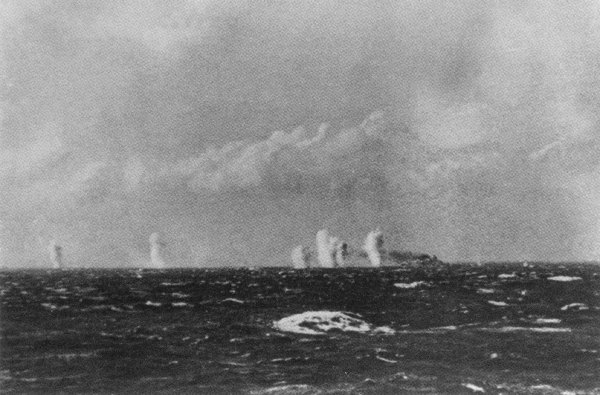
Bismarck under Fire from King George V and Rodney

As light broke on the morning of the 27th the remaining heavy units from the Home Fleet, the Battleships HMS King George V and HMS Rodney along with the Heavy Cruisers HMS  Norfolk which had been part of the pursuit since the first day and HMS Dorsetshire which had broke from its convoy escort duties on the 26th closed in for the kill.

WTBR_Bismarck_Sinking_pic

Bismarck from Dorsetshire

At 0847 the British Battleships opened fire on Bismarck, which replied with accurate salvos straddled Rodney. However British shells hammered the Bismarck, 16” shells from Rodney destroying the command center of Bismarck and her main fire control stations. Within 30 minutes the mighty guns which had sunk the Hood were silent and the British ships pounded Bismarck from point blank range with 16”, 14”, 8” and 6” shells as well as torpedoes.

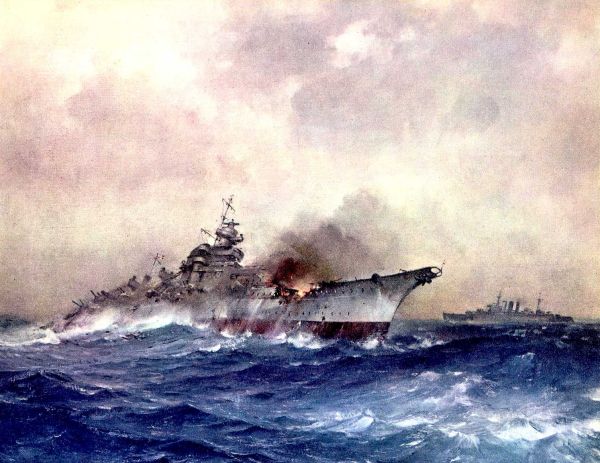
painting28 The end of the Bismarck

The British ships scored at least 400 hits but though they had silenced Bismarck the ship was still afloat, burning and certainly doomed but undaunted. Finally, with their adversary obviously doomed and their own fuel supplies dangerously low Admiral Tovey ordered the battleships to break off the action even as the cruisers continued to fire their guns and torpedoes.

bismar1

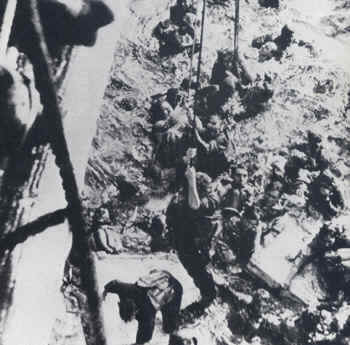
Bismarck Survivors being hauled aboard Dorsetshire

Even so the Bismarck’s senior surviving officer, her First Officer Fregattenkapitan (Commander) Hans Oels ordered her Chief Engineer Korvettenkapitan (Lieutenant Commander) Gerhard Junack to prepare the ship for scuttling and ordered the crew to abandon ship. The watertight doors were opened and scuttling charges fired. At 1039 the Bismarck slipped beneath the waves.

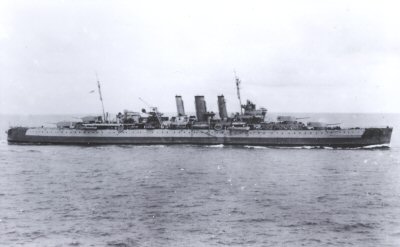
hmsdorsetshirempl1284

HMS Dorsetshire 1941

Hundreds of survivors bobbed about in the cold waters of the North Atlantic. 110 were rescued by British ships, mostly by Dorchester. Then lookouts spotted the periscope of a U-Boat and the British ships broke off their rescue operations leaving hundreds more survivors to die of exposure or their wounds in the Atlantic. A few more were rescued later by German ships or U-boats but about 2200 German sailors went down with their ship or died awaiting rescue that never came. 2 officers and 113 men survived the sinking of the Bismarck.

images-40

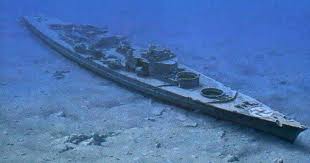
Artist’s image of the Wreck of the Bismarck

Subsequent investigations would show that all the British shells and torpedoes could not have sunk the Bismarck and that it was indeed the scuttling charges that sent her to the bottom of the Atlantic. Even so, she was doomed and the damage would have sent her to the bottom within 12 to 24 hours had Oels not order Junack to scuttle the ship. Within a year the Ark Royal, Prince of Wales, and Dorsetshire would also lie at the bottom of the seas. Prince of Wales sunk by Japanese land based bombers off Malaya in 1941, Dorsetshire by Japanese Carrier aircraft in April 1942 and Ark Royal by the U-Boat U-81 in November 1941. Of the destroyers that harassed Bismarck the night before her sinking only one, the Polish Destroyer ORP Piorun would survive the war.

The tragedy of mission of the Bismarck is that nearly 3700 sailors died aboard the two mightiest ships in the world, the Hood and the Bismarck died in battles that though now legendary did not alter the course of the war. Hood’s loss though tragic did not alter the strategic equation as more new battleships of the King George V class entered service and German capital ships, harassed and damaged by RAF bomber sorties and attacks by the Royal Navy’s Fleet Air Arm confined to ports in France, Germany or Norway slipped into irrelevance as the war progressed and the German U-Boat force took the lead in the Battle of the Atlantic.

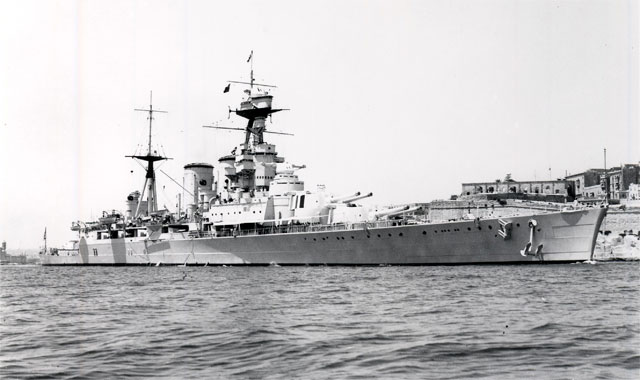
HMS_Hood

The Mighty Hood

As one who has served at sea on a cruiser at war which came within minutes of a surface engagement with Iranian Revolutionary Guard patrol boats in the Northern Arabian Gulf in 2002 I have wondered what would happen in the event of an engagement that seriously damaged or sank our ship. Thus I have a profound sense of empathy for the sailors that perished aboard both the Hood and the Bismarck in the fateful days of May 22-27 1941.

In hopes that no more brave sailors will have to die this way.

Peace

Padre Steve+

1 Comment

Filed under History, Military, Navy Ships, nazi germany, world war two in europe

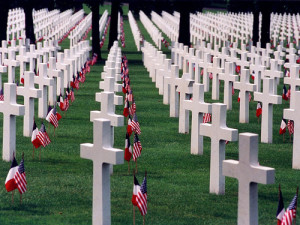
My Melancholy Memorial Day Thoughts

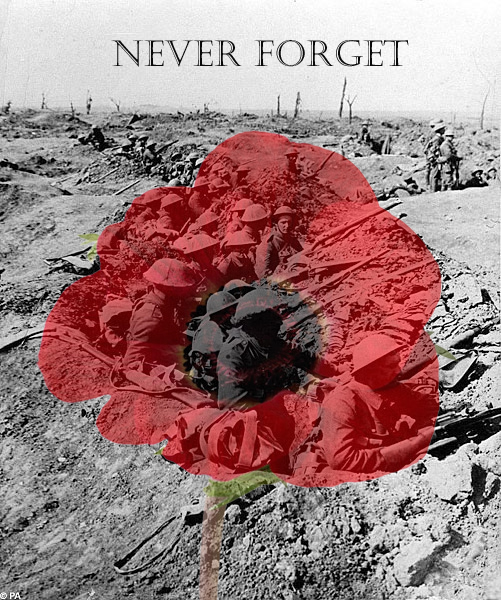
Remembrance_Day___Poppy_Day_by_daliscar

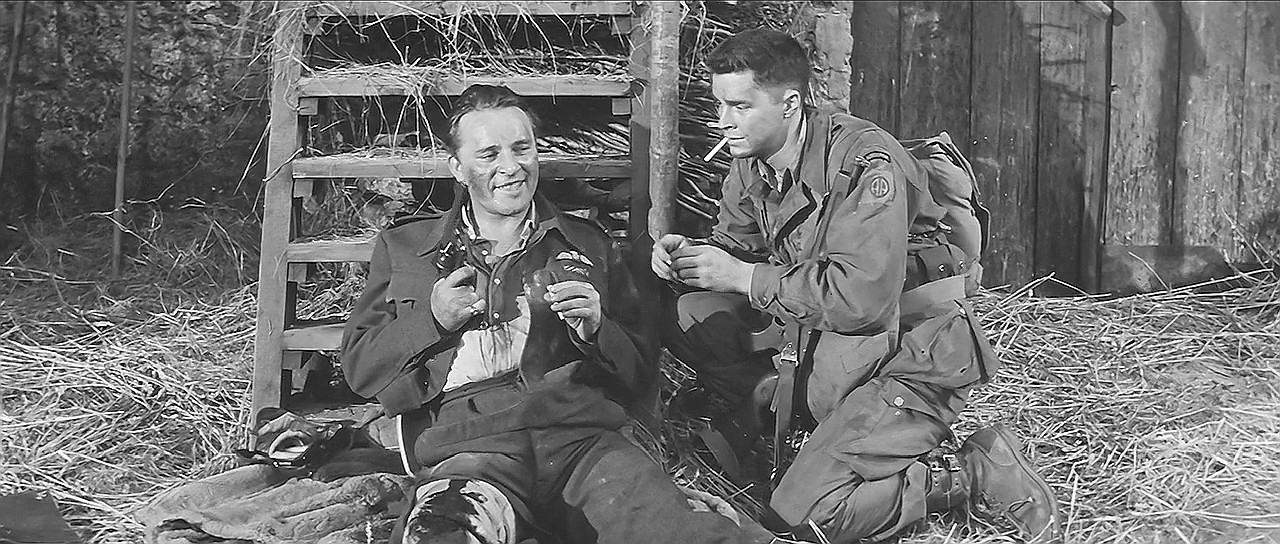
“It’s funny isn’t it. He’s dead, I’m crippled, you’re lost. Suppose it’s always like that. I mean war.” Flying Officer David Campbell played by Richard Burton in “The Longest Day” 

LD20

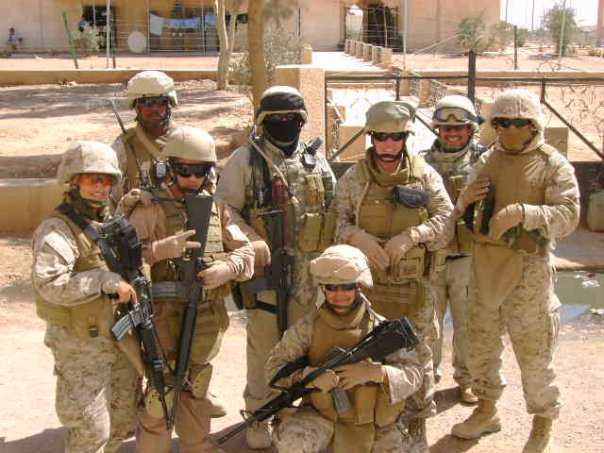
I came back a different man from Iraq. It seems that for me with every passing year Memorial Day becomes more of a melancholy observance. It is a weekend and observance that I feel deeply having lost friends in war and served in Iraq as well as Operation Enduring Freedom. It is also a day in which I feel more and more disconnected from the vast majority of my fellow Americans. I don’t know, but just from my observation it seems that for most Americans the weekend serves as not much more than the end of the school year and the beginning of the summer holiday and vacation season.

I could be wrong, but it seems to me that for most Americans, the vast majority who have themselves never served a day in uniform and who have no more than a passing relationship with anyone who is either serving in our current wars or has served in any war that war is at best a spectator sport. It is an attitude that has been nurtured by our politicians of all parties, political pundits and preachers for decades. As a result there is a grave disconnect between the society at large and the men and women who serve in the military and in our wars.

To be fair I don’t think it is a matter of ordinary people not caring, not that at all, just that no one has really called the nation to war, as such we have been at war but only a small amount of the population is called on to serve. The real fact of the matter is that the wars that we have fought since World War II have not been national affairs. If they were we would not be continually fighting wars that most people neither understand and which in many if not most cases we would be better off staying out of completely.  That being said I am appreciative of those who do things to care for and honor our veterans, honor our fallen and do practical things for the survivors. There are some really wonderful people, many who have never served who do what they can for those who fight and die in or come back forever changed from these misbegotten and unpopular wars.

What I do find offensive are the war mongers and profiteers who have never served. I feel this way about those who did all that they could to avoid serving in the military and those who did the very minimum to satisfy outward appearances of service while avoiding anything difficult, especially deployment to combat zones. Of the latter I can think of five to six currently serving and very outspoken conservative members of the House of Representatives and the Senate that fit the description. I shan’t mention the members of the previous Presidential administration who through their willing lies caused the deaths of nearly 4500 American military personnel in Iraq. I speak about men who in their writings, their appearances on news networks and their think tanks and corporations that do nothing but profit off of war. Some are current or former politicians, others supposedly “academics” and others men who smell a profit in war.

memorial-day1-300x225

I find such people to be loathsome and wonder how on Memorial Day weekend they can show their faces. But then they are rather shameless. Sometimes their actions make me wonder if the sacrifices made by those who serve are in vain. However, I strive to resist that and pray that our sacrifices will not be in vain. While they profit from war others pay the bill and it has always been this way. Marine Corps Major General Smedley Butler, a two time winner of the Congressional Medal of Honor wrote after World War One in his book War is a Racket:

“This bill renders a horrible accounting. Newly placed gravestones. Mangled bodies. Shattered minds. Broken hearts and homes. Economic instability. Depression and all of its attendant miseries. Back -breaking taxation for generations and generations. For a great many years as a soldier I had a suspicion that war was a racket; not only until I retired to civilian life did I fully realize it….”

Maybe I feel this way because I grew up in a military family where my dad was frequently deployed and served in Vietnam, a place where some of my friends fathers died, and because I have been in the military 32 years between the Army and the Navy. Maybe it is partly because I am a military historian, theologian, priest and chaplain who has seen the horrors of war and the wounds that remain for life in the bodies, minds and spirits of those that fight in them.  I cannot speak of how my heart feels when I see young men and women, wounded in war, their lives forever changed bravely struggling to go on even as the war mongers, war profiteers and chicken-hawks profit off of their suffering.

481801_10151367001287059_1003164983_n-1.jpg

So for me this is a rather melancholy time. A time where I struggle. I honor the fallen, my brothers and sisters who have given the last full measure of devotion in serving this country, those that I know personally or have served with and those who did so before I was every born.

Until tomorrow.

Peace

Padre Steve+

3 Comments

Filed under History, iraq,afghanistan, Military, News and current events, shipmates and veterans

Remembering Why We Keep Memorial Day

memorial-day1-300x225

“even if those who come after us are to forget all that we hold dear, and the future is to teach and kindle its children in ways as yet unrevealed, it is enough for us that this day is dear and sacred…”

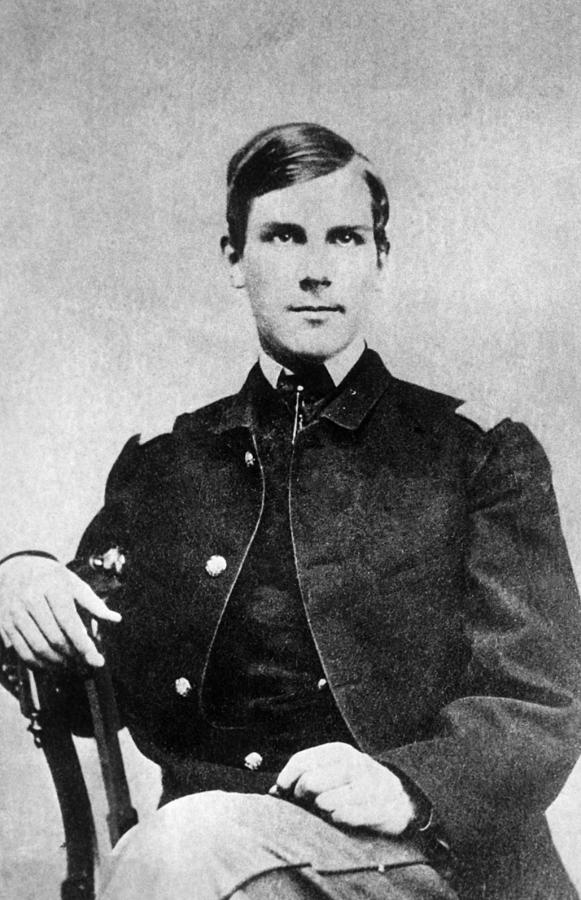
Nearly 20 years after the Civil War, Oliver Wendell Holmes Jr. then serving as Chief Justice of the Massachusetts Supreme Court spoke on Memorial Day 1884 in Keene New Hampshire at a gathering of veterans. He recalled an incident not long before where he had heard a young man ask “why people still kept up Memorial Day. The question was one that he pondered before his speech and that he attempted to find an answer, not to his fellow veterans who certainly understood their shared memories of war “but an answer which should command the assent of those who do not share our memories.”

I think that having an answer for the question is as timely now as when Holmes first pondered it. Though his war was twenty years past and had torn the nation apart, there were still many men on both sides who had served in that terrible time and but even so many people were not only forgetting the war and the sacrifices made by so many but intent on becoming rich. Something that he would directly state in a Memorial Day address to the graduating class of Harvard University in 1895:

1-oliver-wendell-holmes-jr-1841-1935-everett

Oliver Wendell Holmes Jr in the Civil War

“The society for which many philanthropists, labor reformers, and men of fashion unite in longing is one in which they may be comfortable and may shine without much trouble or any danger. The unfortunately growing hatred of the poor for the rich seems to me to rest on the belief that money is the main thing (a belief in which the poor have been encouraged by the rich), more than on any other grievance. Most of my hearers would rather that their daughters or their sisters should marry a son of one of the great rich families than a regular army officer, were he as beautiful, brave, and gifted as Sir William Napier. I have heard the question asked whether our war was worth fighting, after all. There are many, poor and rich, who think that love of country is an old wife’s tale, to be replaced by interest in a labor union, or, under the name of cosmopolitanism, by a rootless self-seeking search for a place where the most enjoyment may be had at the least cost.”

However his message to his fellow veterans, mostly men from his own former regiment, the 20th Massachusetts was quite personal and something that they could find meaning in. Holmes understood war, he had seen much action and had been wounded at Ball’s Bluff, Antietam and Chancellorsville. He talked of the shared experience of war, something that those who have fought in our nation’s wars, as well as combat veteran soldiers in other countries can understand far more than people that have only known peace, even while their countrymen are at war.

dscn0044

Holmes remembrances of the war and the comrades that he and those present had served with, those living and those dead is powerful. Many of us who have served in the wars that began on September 11th 2001 have lost friends in either Iraq or Afghanistan, and many more who are wounded or maimed in body, mind and spirit. Many survivors of wounds today would have died in previous wars.

Likewise his descriptions of the memories of war, triggered by “accidents” are real to those that have experienced war and combat.

“Accidents may call up the events of the war. You see a battery of guns go by at a trot, and for a moment you are back at White Oak Swamp, or Antietam, or on the Jerusalem Road. You hear a few shots fired in the distance, and for an instant your heart stops as you say to yourself, The skirmishers are at it, and listen for the long roll of fire from the main line. You meet an old comrade after many years of absence; he recalls the moment that you were nearly surrounded by the enemy, and again there comes up to you that swift and cunning thinking on which once hung life and freedom–Shall I stand the best chance if I try the pistol or the sabre on that man who means to stop me? Will he get his carbine free before I reach him, or can I kill him first?These and the thousand other events we have known are called up, I say, by accident, and, apart from accident, they lie forgotten.”

dscn0064

We all have our memories of our wars, those of us who remain, be we veterans of Iraq or Afghanistan, Somalia, Desert Storm, Lebanon, Vietnam, Korea or World War II. It is hard to believe that so few remain from World War II and Korea, and that even the Vietnam veterans are aging rapidly, most now in their 60s or 70s. In as much as the wars of the past decade have been fought by a tiny minority of American citizens fewer and fewer will understand the bond that we share through our memories of the living and the dead. We have been set apart by our experiences, even though the wars that we have fought differ in many ways.

As such we should whenever possible take the time to meet and remember. That might be as groups of friends, unit associations or perhaps local chapters of Veterans organizations. We do this to remember but also to remind ourselves that we cannot live in the past alone, for the present likewise calls us to action, even after our service is complete.

Army+Marine+Casualties+Afghanistan+War+Return+dSZmlJbciN5l

Holmes put it well: “When we meet thus, when we do honor to the dead in terms that must sometimes embrace the living, we do not deceive ourselves. We attribute no special merit to a man for having served when all were serving. We know that, if the armies of our war did anything worth remembering, the credit belongs not mainly to the individuals who did it, but to average human nature. We also know very well that we cannot live in associations with the past alone, and we admit that, if we would be worthy of the past, we must find new fields for action or thought, and make for ourselves new careers.”

We remember the past, we remember our fallen and we remember the families who have lost loved ones in these wars as well as those whose lives have been changed and maybe even torn apart by the changes that war has wrought in their loved ones who returned different from war. In our service we have been set apart and as such as Holmes so well states we have the duty to “bear the report to those who will come after us.” His words carry forth to us today, we few we happy few as Shakespeare so eloquently wrote.

“nevertheless, the generation that carried on the war has been set apart by its experience. Through our great good fortune, in our youth our hearts were touched with fire. It was given to us to learn at the outset that life is a profound and passionate thing. While we are permitted to scorn nothing but indifference, and do not pretend to undervalue the worldly rewards of ambition, we have seen with our own eyes, beyond and above the gold fields, the snowy heights of honor, and it is for us to bear the report to those who come after us.” 

n671902058_1896194_6303

I will remember my time in Iraq and those that I served alongside. I will also remember friends who served in other units who did not return as well as those Marines, Sailors and Soldiers that I see every day in our Naval Hospital suffering from the physical, psychological and spiritual wounds of war.

This weekend I will remember and on Monday, that sacred day that we set aside to remember the fallen I take some time at noon to join in that time of remembrance and pray that maybe someday war will be no more.

That is why I think that we should remember Memorial Day even if others forget.

Peace

Padre Steve+

5 Comments

Filed under civil war, History, iraq,afghanistan, Military, shipmates and veterans, vietnam

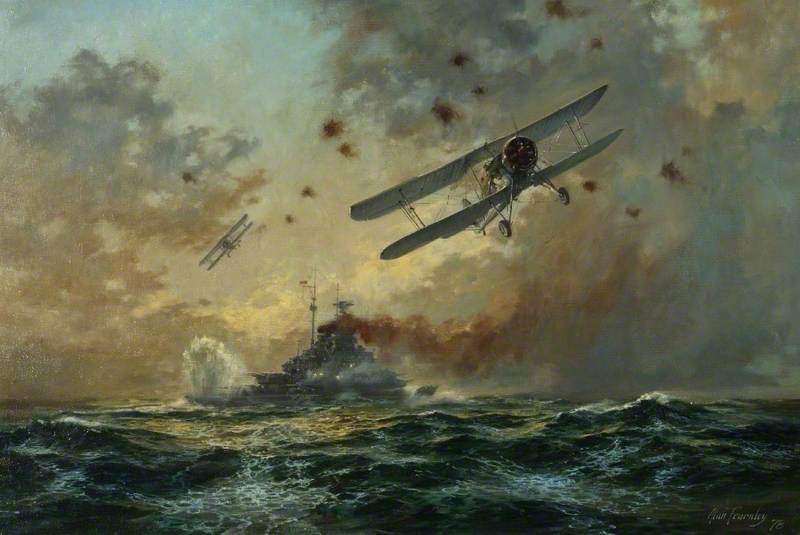
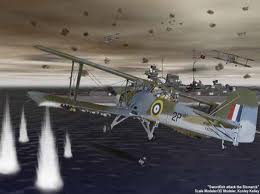
Stringbags Versus Leviathan: Royal Navy Fairy Swordfish Attack the Mighty Bismarck

Alan Fearnley; (c) Alan Fearnley; Supplied by The Public Catalogue Foundation

This is the second article in a series that I am writing on Operation Rheinubung and the sinking of the German Battleship Bismarck. The first article in the series was written about two years ago and focused on the Bismarck sinking the HMS Hood. This article looks at the attempts by the Fleet Air Arm Squadrons of Fairy Swordfish Torpedo Bombers flying from the HMS Victorious and HMS Ark Royal to slow down the Bismarck and allow heavy fleet units to catch the the mighty German battleship. 

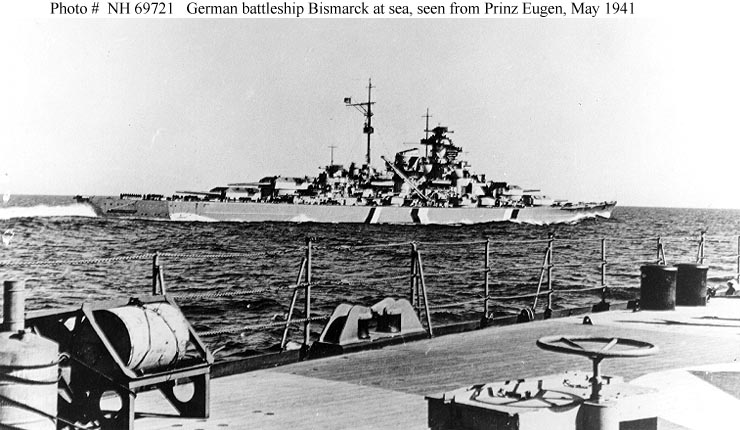
h69721Bismarck photographed from Prinz Eugen at the beginning of Rheinubung

On May 24th 1941 the German Battleship Bismarck had sunk the celebrated Battlecruiser HMS Hood in the Denmark Strait and had seriously damaged the new Battleship HMS Prince of Wales. The news of the disaster stunned the Royal Navy and every warship available began to concentrate on the Bismarck which was being shadowed by the heavy cruisers HMS Norfolk and HMS Suffolk. To the east the ships from the Home Fleet under Admiral John Tovey was moving at the fastest possible speed to intercept the Bismarck while to the far southeast “Force H” comprised of the carrier HMS Ark Royal, Battle Cruiser HMS Renown and light cruiser HMS Sheffield were ordered to leave their convoy escort duties and proceed to the Northwest to join the hunt.

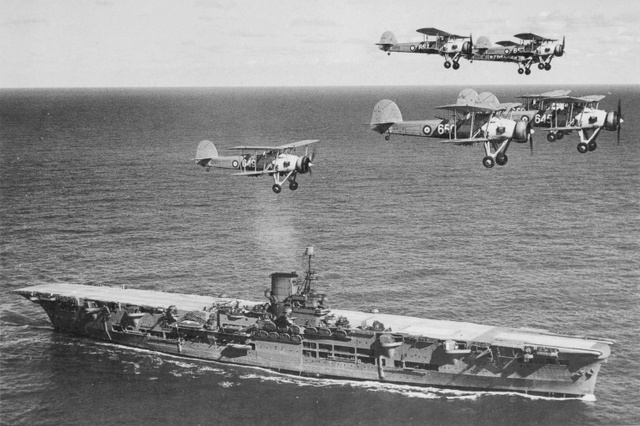
HMS_Ark_Royal_h85716

HMS Ark Royal with Swordfish in 1939

With the Bismarck loose the North Atlantic Convoys on which Britain depended for her survival were vulnerable. The previous year the commander of the Bismarck task force Admiral Günther Lütjens with the Battlecruisers Scharnhorst and Gneisenau had wreaked havoc on the convoys. All of Britain was on edge and when the Mighty Hood, the largest and most powerful ship in the Royal Navy destroyed with the loss of all but three crew members every effort was directed to find and sink the Bismarck.

gallbismlastdays01 Bismarck photographed from a Swordfish from 825 Squadron

Accompanying the Home Fleet was the brand new Aircraft Carrier HMS Victorious with 825 Naval Air Squadron embarked under the command of LCDR Eugene Esmond. The squadron, like many in the Fleet Air Arm was equipped with Fairy Swordfish Torpedo Bombers. The squadron had seen action aboard other carriers in the North Atlantic, the Norway Campaign and in the Mediterranean before being assigned to the Victorious. On the night of 24 May 1941, in foul North Atlantic weather the Victorious launched nine Swordfish from a range of 120 miles in a desperate attempt to slow the Bismarck down. Esmond’s squadron scored one hit amidships on the Bismarck which did no serious damage.

780px-Swordfish_on_HMS_Victorious_before_strike_on_Bismarck

825 Squadron Swordfish on HMS Victorious

About 6 hours after the attack Bismarck shook her pursuers and disappeared into the mists of the North Atlantic as her consort, the Heavy Cruiser Prinz Eugen escaped to the northwest. Not knowing the location or course of the Bismarck the Royal Navy frantically searched for the German Leviathan. Most of the ships nearest to Bismarck’s last reported position were low on fuel and others seemed too far away to be of any importance in the search.

zz_bismarck_escorted

Bismarck, bow on view

However the British were able to intercept and decode some German communications indicating that Lütjens had orders to steam to Brest, in German occupied France for repairs. Although the British had an understanding that the Bismarck could be headed toward Brest it could not be sure and as each hour passed the chances of finding and bringing the might German ship to battle diminished. For nearly 36 hours the British searched in vain for the Bismarck, then at 1030 on the 26th of May a Royal Air Force Coastal Command PBY Catalina piloted by US Navy Ensign Leonard Smith found the Bismarck. Once Smith transmitted Bismarck’s location every available ship converged on her location even though chances bringing her to battle diminished by the hour. The only heavy forces close enough to successfully engage Bismarck, the battleships HMS King George V and HMS Rodney were too far away unless Bismarck changed course or could be slowed down. Force H to the south did not have the combat power to survive a surface engagement with the Bismarck should they encounter the Bismarck without other heavy fleet units.

HMS_Ark_Royal_swordfish

820 Squadron Swordfish returning to Ark Royal after the attack on Bismarck

The situation was desperate, if Bismarck could not be slowed down she would be in range of heavy Luftwaffe Air support as well as support from U-Boats and destroyers based in France. Unless something akin to a miracle occurred Bismarck would join the Scharnhorst and Gneisenau in Brest and form a surface squadron strong enough to devastate British shipping in the Atlantic.

The aircraft from Ark Royal were the last hope of slowing down Bismarck before she could effect her escape and emerge from the Atlantic after having dealt the Royal Navy a devastating blow. The strike aircraft available on Ark Royal were not what many people would consider capable of completing such a mission. Ark Royal’s 820 Squadron, like Victorious’ 824 Squadron was equipped with Fairy Swordfish Mk 1 Torpedo Bombers. These were biplanes with a crew compartment open to the weather. Introduced to the Navy in 1936 the aircraft was an antique compared with most other aircraft of its day. The Mark XII 18” torpedo carried by the aircraft was smaller or slower and equipped with a less powerful warhead than comparable torpedoes used by other navies. Despite their limitations the venerable Swordfish had performed admirably during the early part of the war sinking or damaging three Italian battleships at Taranto in November 1941 and providing inspiration to the Japanese for their attack on Pearl Harbor.

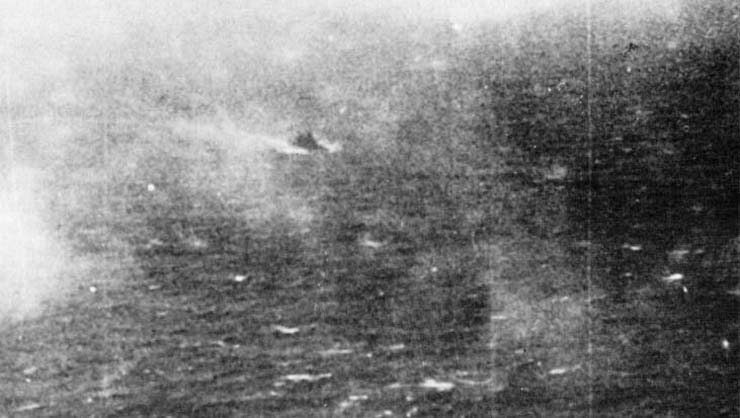
gallbismlastdays03

Bismarck steering erratically after the torpedo hit to her stern

With that in mind Vice Admiral James Sommerville in command of Force H sent HMS Sheffield ahead to shadow Bismarck as his carrier, HMS Ark Royal closed to launch her Swordfish against Bismarck. A first strike, unaware Sheffield had advanced to a location near Bismarck mistakenly attacked the British Cruiser. Thankfully, the new design magnetic detonators failed to detonate causing the torpedoes to miss Sheffield. The aircraft returned to Ark Royal where rearmed with torpedoes equipped with contact fuzes and refueled 15 Swordfish took off for a final attack on Bismarck before night fell and Bismarck would steam into the protection of German air and naval units.

As darkness began to fall 15 Swordfish from 820 Squadron descended through the clouds attacking from all points of the compass. Bismarck twisted and turned and fired at the attacking aircraft with every weapon available, even firing her main battery into the ocean ahead of the Swordfish. Bismarck successfully avoided all but two torpedoes, one which struck her amidships causing minimal damage. However a second torpedo, launched by a Swordfish piloted by Lieutenant John Moffat hit Bismarck in her stern jamming her port rudder enabling Tovey with King George V, Rodney, the Heavy Cruiser Norfolk and Dorchester as well as a number of destroyers to catch up with and eventually sink the Bismarck.

images-38

The attacks of the antiquated Swordfish on the Bismarck achieved results that no one in  the Royal Navy expected. When reports indicated that Bismarck had reversed course following the torpedo attack Tovey could not believe them. It was only when Sheffield confirmed the reports from the Swordfish that Tovey realized that Bismarck must have been damaged and unable to maneuver. Now with the chance he would take the opportunity presented to sink the Bismarck and avenge the Hood.

Peace

Padre Steve+
4 Comments

Filed under History, Military, Navy Ships, world war two in europe

Armed Forces Day 2013: A Sober Reflection on a Nearly Invisible Holiday

2013ArmedForcesDayHiRes

Today is Armed Forces Day and unfortunately most of the country will not notice unless they are attending a Baseball game where it is being observed or some special event on a base, national cemetery, monument or VFW hall. There are also protests, sometimes involving veterans. Last year at the NATO Summit in Chicago which coincided with Armed Forces Day a number of veterans protested by throwing away their Global War on Terror Medal. I actually have little problem with people protesting wars, even the current one so long as they direct their protest at the appropriate target, the politicians, pundits, think tank wonks and lobbyists that profit from war and not the soldiers that fight them.

Now there are a fair number of local celebrations to honor members of the Armed Forces across the country. As a career officer and son of a Vietnam veteran Navy Chief I appreciate those events and the people that put them together. Being a veteran of Operation Iraqi Freedom and Operation Enduring Freedom, especially those that have taken the time to honor Iraq and Afghanistan veterans.

DSC_0028

Likewise there are wonderful people that honor the Armed Forces every day. I think especially about the Maine Troop Greeters of Bangor Maine and the Pease Troop Greeters of New Hampshire. These men and women, many veterans themselves or related to veterans are amazing. They have been welcoming veterans back since early in the war and provide many services to the men and women of the Armed Forces that pass through Bangor Maine International Airport and the Portsmouth International Airport, the former Pease Air Force Base in Pease New Hampshire.  I have had the honor of passing through both locations, Bangor on more than one occasion. While I know that there are many others that do this they are in the minority in this country.

At any given time less than 1% of Americans are serving in all components of the military. For over 10 years we have been at war in Afghanistan and Iraq as well as other locations that we don’t like to talk about too much like Pakistan. However this has not been the effort of a nation at war. For the most part the war effort is that of a tiny percentage of the population.

As a nation we are disconnected from the military and the wars that have been going on for so long. The fact is that most Americans do not feel that they have a personal or vested interest in these wars because they have been insulated by political leaders of both parties from them. There is no draft, and no taxes were raised to fund the wars and the military is worn out while taking 50% of the cuts of the Congressional Sequester.

295_26911892058_4301_n

We have now been at war continuously for nearly 12 years and truthfully there is no end in sight. In that time every single Soldier, Sailor, Marine and Airman volunteered for duty or reenlisted during this time period. Motives may have varied from individual to individual, but unlike the World Wars, Korea and Vietnam every single one volunteered to serve in time of war. I think that this makes the current generation of veterans quite unique.

Many of these volunteers served in Iraq and Afghanistan. Neither war was popular, except in the very beginning when casualties were low and victory appeared to be easy and quick. We like short wars. We left Iraq in December 2011 and Afghanistan is still going to be with us for God knows how long, even though we are drawing down or forces there.

In Afghanistan we followed the same path trod by the British and Soviets in trying to topple regimes and plant our respective versions of civilization in that land of brutal Pashtun, Tajik, Hazara and Uzbek warlords who war on each other as much as any foreign infidel.  It is a path that leads to heartbreak which ties down vast amounts of manpower without any significant strategic gain for the United States or NATO.  This even as war drums beat across the Middle East and nuclear armed Pakistan slips into political and social chaos and keeps a major supply route for the US and NATO to Afghanistan shut down.

The fact is that American and for that matter other NATO and coalition military personnel who have served in Iraq, Afghanistan, the Horn of Africa or at sea are in the minority in all of our countries. Thus when a few of the few of these veterans choose to make a public spectacle of themselves by tossing a medal away they get cheered and lots of media attention. Some liberals applaud the medal throwers and conservatives vilify them without getting what is really going on. Both miss the tragic disconnection between the military and civilian society that is the result of public policy since the end of the Vietnam War. A relatively small professional military in comparison to the population is sent to fight wars while the bulk of the population is uninvolved and corporations, lobbyists and think tanks get rich.

Rachel Maddow the MSNBC host of the Rachel Maddow Show wrote in her outstanding book Drift: The Unmooring of American Military Power:

“The reason the founders chafed at the idea of an American standing army and vested the power of war making in the cumbersome legislature was not to disadvantage us against future enemies, but to disincline us toward war as a general matter… With citizen-soldiers, with the certainty of a vigorous political debate over the use of a military subject to politicians’ control, the idea was for us to feel it- uncomfortably- every second we were at war. But after a generation or two of shedding the deliberate political encumbrances to war that they left us… war making has become almost an autonomous function of the American state. It never stops.” 

Now, going back to the protestors for a minute. The right to protest and disagree with policy and the politics of war is important and for Americans is protected under the First Amendment. That being said I think it is important that when one protests a war that they direct their protest at the appropriate target, the army of lobbyists and think tank wonks that promote the politics of war regardless of who is President and not the soldiers. The fact is that the lobbyists, pundits that promote war don’t care about the protesters or the troops. This is because no matter who is in office or who controls Congress they will promote policies that keep them employed and their businesses enriched. Marine Major General and Medal of Honor winner Smedley Butler was quite right when he said:

“War is a racket. It always has been. It is possibly the oldest, easily the most, surely the most vicious. It is the only one international in scope. It is the only one in which the profits are reckoned in dollars and the losses in lives. A racket is best described, I believe, as something that is not what it seems to the majority of the people. Only a small ‘inside’ group knows what it is about. It is conducted for the benefit of the very few, at the expense of the very many. Out of war a few people make huge fortunes.”

I may disagree with the manner of how and when veterans protest wars that they have served like those that threw their medals away in Chicago last year. However, I am not going to question their motives, integrity or honor even if I disagree with their manner of protest because I came back different from war.

bannerfans_4309565 (3)

When a society sends off its sons and daughters to fight in wars that no one understands, and the vast majority of people no longer support it is no wonder that some veterans make such displays. Likewise it is understandable why other veterans have major issues with such protestors, just as many Vietnam veterans still feel the hurt of how a nation turned its back on them. For example I still have a terrible time even thinking about Jane Fonda, the images of her manning a North Vietnamese anti-aircraft gun when my dad was serving in Vietnam.

295_26912097058_4309_n

Protests may make some feel good, but they often miss the bigger point of why wars like these go on for so long.  That they do is because misguided policies have brought about a chronic disconnection in our society between those that serve in the military and those that do not. But how can there not be when in the weeks after 9-11 people like President Bush and others either directly or in a manner of speaking told people to “go shopping”* as we went to war in Afghanistan? When I returned from Iraq I returned to a nation that was not at war whose leaders used the war to buttress their respective political bases.

295_26912012058_78_n

I think that Armed Forces Day should be better celebrated but I am grateful to those people that do things every day to thank and support military personnel in thought, word and deed like the Maine Greeters and Pease Greeters. The interesting thing about these groups is that they are made up of citizens from across the political spectrum, veterans and non-veterans who simply care for and appreciate the men and women that serve in and fight the wars that no-one else can be bothered to fight.

dscn0064

I just hope and pray that the end in Afghanistan does not turn into an even worse historic debacle than suffered by the British or the Soviets during their ill fated campaigns. Of course the politicians, pundits, preachers and the defense contractors, banks and lobbyists will find a way to profit from this no matter how many more troops are killed, wounded or injured and how badly it affects military personnel or their families. After all, to quote Smedley Butler, “war is a racket.”

481801_10151367001287059_1003164983_n

Peace

Padre Steve+

President Bush’s actually words were “Now, the American people have got to go about their business. We cannot let the terrorists achieve the objective of frightening our nation to the point where we don’t — where we don’t conduct business, where people don’t shop…” http://georgewbush-whitehouse.archives.gov/news/releases/2001/10/20011011-7.html

2 Comments

Filed under History, iraq,afghanistan, Military, national security, philosophy

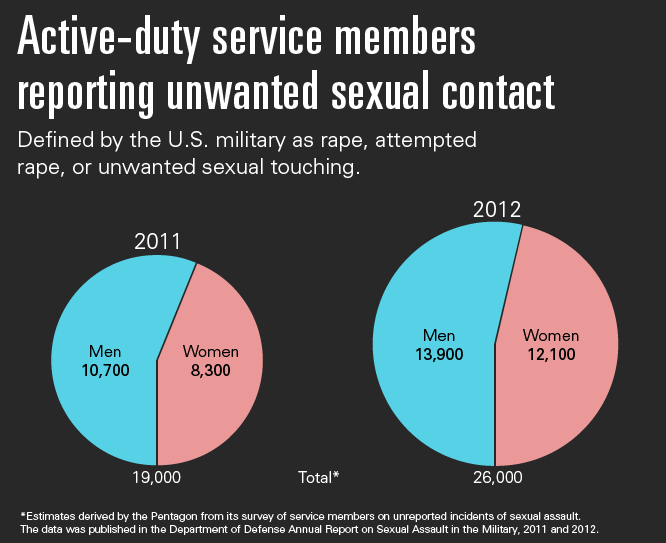
“A Clear and Present Danger” The Problem of Sexual Assault and Harassment in the Military

111912cover

Over the past number of weeks the incessant number of stories regarding incidents of sexual assault and harassment by military members against other military members has reached levels that I have not seen in years. Since I have served in the military continuously in one capacity or another for almost 32 years I have seen this phenomena develop and reach a point that I did not think was possible, which endangers the morale and mission of the military and the trust of our society in our military institutions.

dod-assaults-timeline

When I first entered the military in 1981, enlisting in the California Army National Guard and in the Army ROTC program at UCLA had no idea what would transpire over my career and how I as a man would see the problem of sexual assault. I entered the military not a few years after the changeover from a military built on conscription to an all volunteer force and the integration of women into units, which while not “combat arms” units would certainly be in the fight should we ever go to war.

I guess that the first places that I saw what would now certainly be prohibited behaviors were in my National Guard unit, a Field Artillery Battalion in Southern California which though not authorized any females, had an administrative support section of females who worked for the personnel officer and Command Sergeant Major. When we went to the field they would accompany us and the stories of what went on with them and members of the leadership were infamous. When I attended my ROTC Advanced Pre-Commissioning Camp at Fort Lewis Washington we had three female cadets in my platoon. They lived in a separate barracks with other women but trained with us. They were subjected to some of the most despicable treatment that I had seen in my life. Their looks, motivations and morals were scrutinized in ways that the editors of the National Enquirer would be proud. They had senior instructors appear to give them unwanted favor and for that they ended up being derided by their fellow male cadets.

603858_10151664883067059_2000407407_n

Me early in my career as a Platoon Leader in Germany

After I was commissioned as a Medical Service Corps Officer in 1983 and assigned to a Medical Ambulance Company in Germany I saw the problem grow as more women were assigned to such field units because of the indiscriminate nature of the Army assignment system. My unit eventually had 63% of its assigned strength as females, about 85% of our medics were female. Our sister company was just that, they peaked at 73% female strength. While I was in the unit I served as a Platoon Leader, Company Executive Officer and eventually the Company Commander when our Company Commander, who actively spoke in racist and sexist terms referring to blacks as “the seed of Cain” and women as “unequal to men” using his religion as justification was relieved of command.

I was privileged to serve with some of the finest women soldiers that I have every served alongside while in that unit. My XO retired as a Lieutenant Colonel and my Platoon Sergeant retired as a First Sergeant. Both were hard chargers and as competent or more than most of the men that I served with but were often, usually behind their backs treated with distain for their competence and ability to serve in what until that point had been pretty much a “men’s club.”

While I was serving as a company commander I worked hard, I had only been an officer a little over two years, a very junior First Lieutenant when I took command following the relief of the previous commander. I found though that some things were not simply a matter of individuals but problems in the very institution that since I was a child had idolized.

One of those situations came out when I attempted to prosecute a Sergeant for forcing a very junior female soldier into a sex act in her barrack room after duty hours. His wife was 8 months pregnant and also a Sergeant but at the base medical clinic. He was caught by her and soon the barracks had every member of the chain of command as well as a copious amount of Military Police and CID agents swarming in it. The poor girl was found half undressed under her bed and had to be taken by my former platoon sergeant out of harm’s way after all was said and done while the Sergeant was being read his rights.  As the Company commander I had the primary responsibility to file charges. Since the man was a Sergeant and under I could not reduce him in rank using the Article 15 Non-Judicial Proceedings process and he was to leave the Army in a couple of months so a court martial would have only kept him in the unit longer. So I referred the case to the Group Commander, a full Colonel and decorated Vietnam veteran and aviator.

050913-military-assault

The Colonel had been our senior instructor when I was at the Academy of Health Sciences and he was a man that I admired. However, when the case got to him he did less that I would have been authorized to do and in addition did not revoke the award of the Army Commendation Medal which the Sergeant was being given for the end of his service as he got ready to leave the Army. When I found out I stormed to the Colonel’s office and told him that he, the Colonel had embarrassed the entire Medical Group and my Company in particular because the case was the talk of the entire base. It could not easily be covered up. I was told by him “I have done what I have done.” He then turned his back on me and from that moment on I was treated with contempt by him and his closest staff members. I learned the hard way that honesty can get you in trouble.

My next assignment was as the Adjutant of the Academy of Health Sciences. I was a newly promoted Captain and worked closely with the Brigade Legal Officer who served as the prosecutor. While I was assigned there three major incidents come to mind all of which involved significant sexual assault, harassment or treatment of students or junior enlisted staff members.

One of those was an aggravated rape of a 18 year old female trainee who was raped by a male trainee over concertina wire in a dark area near her barracks when she was walking back from the trainee PX and Snack Bar on a Saturday Night. It was a brutal case and we sent the young soldier to a General Court Martial when he was convicted of assault, battery, rape and a number of other charges and sentenced to 40 years in Leavenworth prison.

military-sexual-abuse-1

The second was the first trial of a soldier that was having unprotected sex with other soldiers while knowingly being HIV positive. He was a player, a good looking man who easily picked up young women. He worked as a personnel sergeant in one of the training battalions and used his looks, his rank and influence to have unprotected sex with a number of the young female clerks that worked in that personnel center without letting them know of his HIV status. He was found out when the Battalion Commander who was walking through the office overheard one of the females talking with another about her date with him and the sex. Since the commander had personally counseled the sergeant of his legal responsibilities being HIV positive, which included informing sexual partners and ensuring that any sex he had was “safe sex” the commander brought him up on charges. Eventually he was tried and convicted at General Court Martial and since he was beginning to show the outward symptoms of the opportunistic infections of fell blown AIDS was sentenced to 6 months confinement and a Dishonorable Discharge. One of the women that he had sex with, a junior soldier as well eventually tested HIV positive.

The last of the major events at the Academy was a Christmas break, sex for grades scandal that eventually encompassed 17 instructors who had a rather large orgy and party at one of the instructor’s off base home. The San Antonio Express News picked up the story and ran with of course and it made front page news. Unfortunately, most of what they reported, with the exception of the use of “whipped creme” at the orgy was contained in police and CID reports. The whipped creme was certainly an interesting twist and needless to say a good number of instructors were disciplined or their actions.

I left active duty in the fall of 1988 to return to the National Guard while attending seminary. While in the Guard I served in all male units that unlike my unit in California did not have its own assigned female administrative detachment and harem. However that doesn’t mean that I still didn’t see cases of sexual indiscretion, but most of what I saw happened happened outside of my command.

Since I go back a long time I do remember the effects of the Navy’s 1991 Tailhook scandal that eventually ended the careers of some 300 officers, including a number of admirals. I was promoted to the rank of Major in December 1995 and transferred to the Army Reserve and was mobilized in July 1996 to support the Bosnia intervention. About that time a major sexual assault and harassment scandal took place at the Army Training Center at the Aberdeen Proving Grounds. It like Tailhook was all over the news and the Army tried to respond by getting tough on offenders and by sending teams around to emphasize what was right and what was wrong. One of these teams showed up at our base in Germany and about 60 chaplains were gathered together to get the training.

Now I was a mobilized reservist who had not only been a chaplain but had seen and or help prosecute these kinds of issues before as a Company Commander and Brigade Adjutant. I was somewhat jaded by what I had seen and during the lecture I raised my hand into the air and uttered something that many of my colleagues were thinking. One of our instructors, acknowledged my upraised hand so I asked the question. I said “Ms so and so, my name is Chaplain Dundas and unlike most of these gentlemen and women I am a mobilized reservist.” She she asked me what my comment was and I said “Ma’am, it seems to me if people would simply treat people as they would want to be treated or have their wives or daughters treated by others none of this training would be necessary.” You could hear the air being sucked out of the room as my active duty colleagues looked in shock to see who uttered such heresy. Even the instructor seemed stunned. I continued “It seems to me that if we took a hard line and punished the offenders severely and stopped treating this like it was a joke as an institution then we wouldn’t need to have this kind of collective training.” My comment was rapidly passed over and after the training a number of more senior chaplains came to me and thanked me for being honest. Not a few months later the Command Sergeant Major of the Army was relieved of his duties for alleged sexual harassment, yet another scandal.

In 2003 there was a major scandal at the Air Force Academy which very few people were ever punished for, despite a massive number of substantiated complaints of unwanted sexual harassment by female cadets. I have lost count of the number of commanders and other senior officers relieved of duties for inappropriate behaviors with junior subordinates many times of the sexual harassment or assault variety. Any casual reader of the Navy, Army, Air Force or Marine Corps Times can testify to how many of these instances happen and unfortunately they are but the tip of the iceberg I am afraid.

ct-sc-nw-military-rape-krusins-jpg-20130507

Lt. Col Jeffrey Krusinski, the chief of the Air ForceSexual Assault Prevention and Response program

Just in the past month the program director of the Air Force Sexual Assault and Prevention program, a Lieutenant Colonel was arrested for drunkenly accosting a women in a parking lot, the director of the Army program at Fort Campbell Kentucky, also a Lieutenant Colonel was charged with violating a protective order put in place by his estranged wife and a Sergeant First Class, the director of a unit Sexual Assault and Prevention program at Fort Hood Texas was charged with running a prostitution ring using of course, junior female soldiers. Brigadier General Jeffery Sinclair, the former Deputy Division Commander of the 82nd Airborne Division is being prosecuted for is accused of having an illicit affair and engaging in wrongful sexual conduct with several women who were under his command.

petraeus-and-broadwell-e13525065677432

General David Petreus and his “biographer mistress” Paula Broadwell

These instances of course do not take into account of the scandal involving former Iraq and Afghanistan Commander and former CIA Director General David Petreus and his relationship with his biographer an Army Reserve Lieutenant Colonel. To make matters worse some General Officers who are the convening authorities for Courts Martial offenses have given clemency or set aside punishments of senior officers convicted by General Court Martial proceedings of sexual assault or harassment crimes.

I could go on and on and on but will not because frankly it is nauseating and is bringing so much discredit to the services that it cannot be joked about. Almost all of these cases involved some form of undo command influence or other criminal behavior. Although the crimes sometimes are committed by male homosexuals or lesbians, the vast majority are heterosexual and often involve high ranking career service men and women who are married heterosexuals both male and female.

460x

When I look at this situation and ask myself what is going on I have to agree that it is a massive problem. You don’t get so many instances involving so many individuals of high rank without it being something systemic in the military culture. While we can point to the fact that the military is composed of people of the broader society we are a very small segment of that society and percentage wise very few people even qualify to enlist in the military. We are very selective as to who we take in and who we keep. Yet we still have these problems at every level of the chain of command in every branch of the Armed Forces. These are magnified in the eyes of the broader society because of our oath to support and defend the Constitution of the United States and because we are entrusted by the larger society of representing the best of what the country stands for and which we are supposed to defend. Our mission, especially in a military where men and women serve together in combat, often enduring the same hardships and separations that previous generations of military personnel did not have to face becomes compromised when men or women abuse their rank, privilege and office to take advantage of other men or women, heterosexual or homosexual in the conduct of those duties. It compromises the chain of command, it compromises the mission and it destroys the trust needed to be mission ready. We cannot use the excuse that it happens in the civilian world so we shouldn’t be surprised by it in the military.

All the services have implemented training designed to get this problem under control. However, it will not change until people in the military decide that such acts are not just senseless, tasteless or offensive but often an violent assault on another person. I was reading an article in the Military Law Review today written about the Tailhook scandal. The author wrote something very profound with which I completely agree:

“The heart of the problem in redressing sexual harassment in the armed forces has not been Congress’s failure to expand the traditional coverage of the UCMJ so that it directly criminalizes specific forms of hostile environment conduct such as sexist remarks, tasteless jokes, and other offensive gestures. Instead, the problem has been the military leadership’s failure to recognize that in many cases, like those arising in Tailhook, sexual mistreatment actually constitutes a serious assaultive crime that must be prosecuted accordingly. Arresting “Tailhook: The Prosecution ofSexual Harassment in the Military. Lieutenant Commander J. Richard Chema MILITARY LAW REVIEW Volume 140 Spring 1993 p.63

The fact is that the law is established, training is conducted at all levels and this still happens far to often. What it demonstrates to me is that like my first attempt to deal with a sexual assault as a Company Commander in 1986 that the military culture itself is to blame. Despite our best attempts there are many who figure that boys will be boys and girls will be girls and it is not a big deal. Well maybe not, until rape, murder occurs, or a baby is born out of wedlock, or a young man or woman commits suicide because of the trauma and shame that they endure from a senior NCO or officer that has great influence over their career and life.

I know that we can do better because I know a lot of good men and women, officers and senior enlisted that are committed to changing the culture. That being said it takes the commitment of everyone to do this right. Since it doesn’t look like we in the military are capable of handling this ourselves it is that members of Congress will change the UCMJ and maybe take these cases out of the hands of military commanders. That could well be the case. You can only give excuses so many times over so many decades as to why you don’t do better as an institution before those that have the civilian oversight decide that you are incapable of change. We just may have reached that point in our military justice system.

Folks, this might be interesting as a lawyer or ethicist, but it is not going to be something that we in the military will enjoy.

Someone did a You Tube video using footage from the German language film Downfall where Hitler takes his commanders to task in the last days of the war. The subtitles have been changed to deal with the recent sexual assault scandals. It is very pointed satire and maybe, just maybe we in the military should take it seriously.

Peace

Padre Steve+
3 Comments

Filed under Military, national security, News and current events

Happy 105th Birthday to the United States Navy Nurse Corps

navy_nurse-1


Last week was National Nurses Week. Today was the 105th Anniversary of the Navy Nurse Corps. Nurses are the lynchpin of medicine. Physicians are incredibly important and as a society we usually ascribe more value to them. However in many case, if not most it is a nurse who is the person that does the heavy lifting in the care of the sick. Before the modern era of nursing was often done by Nuns or by women that volunteered to assist military physicians.

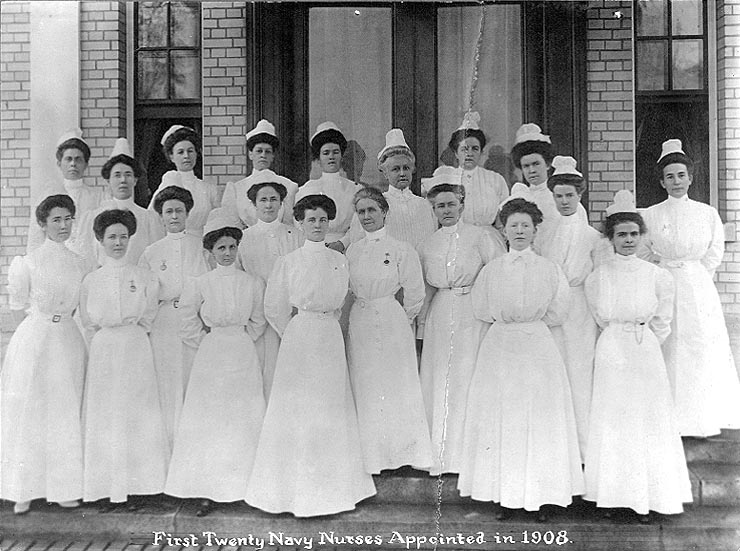
Navy_nurse_corps_1908

The First 20 Navy Nurses “the Sacred 20” 1908

It was in the quagmire of the Crimean War that Florence Nightingale brought about the modern era of nursing, even though physicians and hospitals often saw the women who served as nurses as inexpensive help to care for the sick. Despite this nursing became more and more professional and technical over the years without ever losing that particular calling of ministering to the afflicted that is the essence of their history. In the later 1800s the first nursing schools were established and in 1901 New Zealand was the first country to have Registered Nurses. In 1903 North Carolina became the first US State to require the licensure of nurses.

485px-Lenah_Higbee

Chief Nurse Lena Higbee, Second Superintendent of the Nurse Corps, and first woman awarded the Navy Cross (above) and the ship named after her the USS Higbee DD 806 (below)

USS_Higbee_(DDR-806)_being_refueled_in_1960

The US Navy Nurse Corps was established n 1908 with nurses being commissioned as officers and assigned to Naval Hospitals. However it was the needs of war that brought nursing into the modern age where it is formally recognized as a key component of Health Care. In the World Wars nursing came into its own as a profession. Nurses were among the US personnel that endured the initial onslaught of the war in the Pacific. The Army and Navy Nurses that served and cared for the wounded, starving and emaciated Soldiers, Marines and Sailors on Bataan and Corregidor were heroes in their own right.

Chief_Nurse_Laura_Cobb_and_Dorothy_Still_Danner_among_other_Navy_Nurse_POWs_after_their_release

Navy Nurses released from Japanese Captivity (above) and a Nurse aboard USS Benevolence with a POW released from Japanese Captivity in 1945

733px-Navy_nurse_and_released_POW_on_USS_benevolence,_August_1945_highres

The profession of nursing continues to grow and the women and men who serve as nurses at various levels, from the most highly trained Clinical Nurse Specialists and Nurse Practitioners, or other highly specialized Registered Nurses many of whom have advanced degrees including doctorates down to the most humble Licensed Vocational (or Practical) Nurse and even Certified Nursing Aides. These women and men are the backbone of medicine and despite the long hours, the years of training and certification required of them, many people don’t fully appreciate them until they become sick and are cared for by these wonderful people.

737px-Jane_Kendeigh_USN_Flight_Nurse_1945_a

Ensign Jane “Candy” Kendeigh, the First flight nurse to serve in Iwo Jima and Okinawa Campaigns

Today US Navy Nurses serve in every place one can find a Sailor or Marine. They serve in Hospitals, Medical Centers and other Medical Facilities in the United States and overseas. They serve aboard surface ships, combatants as well as Hospital Ships, with the Fleet Marine Force, in Joint and Multi-National Medical activities deployed in combat zones and in humanitarian operations.

DSCN0066

I have been blessed to have known and worked with many amazing nurses in the course of my career as a Medical Service Corps Officer in the Army and as a Chaplain in the military and civilian settings. Today I was present and offered a prayer at the cutting of the Navy Nurse Corps Birthday Cake at Naval Hospital Camp LeJeune. It was my 5th year serving in Navy Medicine and offering this prayer and blessing was an honor that I will always remember. Since I will be transferring out of Navy Medicine in the August-September time frame to assume new duties at the Joint Forces Staff College this will be the last one of these events that I get to officiate at for a few years.

media_db2f5cf3581e4c93b84fbe221904111a_t607


LCDR Eric Gryn in Afghanistan tending a wounded Afghan Soldier on a Medivac flight in 2011, he serves at Naval Hospital Camp LeJeune

5989_10151677233582059_485026871_nCaptain Nancy Pearson cuts the Birthday Cake at Naval Hospital Camp LeJeune

As such I just want to thank all of my friends that serve as Navy Nurses with whom I have shared joys and sorrows the past several years. Blessings on all of you!

God Bless all Nurses tonight, especially those tending the sick, ill and injured and those in harm’s way.

Peace,

Padre Steve+

3 Comments

Filed under healthcare, History, iraq,afghanistan, Military, shipmates and veterans, US Navy

Remembering Hell: The Fall of Dien Bien Phu 59 Years Gone by and Still Forgotten

Dien Bien Phu War Remnants

Dien Bien Phu Today

It was an epic battle in a tragic war and most people neither know or care what happened in the valley where a small border post named Dien Bien Phu became synonymous with forgotten sacrifice. This year fewer remembrances are taking place. Some are in Vietnam and others in France.

Diplomat_Sep10059-227x300

General Vo Nguyen Giap

On May 7th 2011 in Hanoi a small remembrance was held to mark the fall of Dien Bien Phu and honor the victor, 101 year old General Vo Nguyen Giap at his home. Giap is the last senior commander of the war alive at 103 he remains active. That 2011 ceremony was one of the few remembrances held anywhere marking that battle which was one of the watersheds of the 20th Century. A half a world away in Houston Texas a small group of French veterans, expatriates and historians laid a wreath at the Vietnam War Memorial.  In Paris an ever shrinking number of French survivors gather each year on May 7th at 1815 hours for a religious service at the Church of Saint Louis des Invalides to remember the dead and missing of the French Expeditionary Corps lost in Indochina. A small number of other small ceremonies have been held this year.

This battle is nearly forgotten by time even though it and the war that it symbolized is probably the one that we need to learn from before Afghanistan becomes our Indochina.

FRENCH SOLDIERS SURRENDER

French Prisoners

On May 8th 1954 the French garrison of Dien Bien Phu surrendered to the Viet Minh.  It was the end of the ill-fated Operation Castor in which the French had planned to lure the Viet Minh Regulars into open battle and use superior firepower to decimate them.  The strategy which had been used on a smaller scale the previous year at Na Son.

The French had thought they had come up with a template for victory based on their battle at Na Son in how to engage and destroy the Viet Minh. The plan was called the “Air-land base.”  It involved having strong forces in a defensible position deep behind enemy lines supplied by air.  At Na Son the plan worked as the French were on high ground, had superior artillery and were blessed by General Giap using human wave assaults which made the Viet Minh troops fodder for the French defenders.  Even still Na Son was a near run thing for the French and had almost no effect on Viet Minh operations elsewhere while tying down a light division equivalent and a large portion of French air power.

nlfmainforce

Viet Minh Regulars

The French took away the wrong lesson from Na-Son and repeated it at Dien Bien Phu.  The French desired to use Dien Bien Phu as a base of operations against the Viet Minh.  Unfortunately the French chose badly. The elected to occupy a marshy valley surrounded by hills covered in dense jungle. They elected to go light on artillery and the air head was at the far end of the range of French aircraft, especially tactical air forces which were in short supply.  To make matters worse the General Navarre, commander of French forces in Indochina informed that the French government was going to begin peace talks and that he would receive no further reinforcements elected to continue the operation.

dien-bien-phu

French Paras Drop into Dien Bien Phu

Likewise French logistics needs were greater than the French Air Force and American contractors could supply.  French positions at Dien Bien Phu were exposed to an an enemy who held the high ground and were not mutually supporting. The terrain was so poor that French units were incapable of any meaningful offensive operations against the Viet Minh. As such they could only dig in and wait for battle. Despite this many positions were not adequately fortified and the artillery was in exposed positions.

bigeard_instruction_saut

Major Marcel Bigeard 

The French garrison was a good quality military force composed of veteran units. It was comprised of Paras, Foreign Legion, Colonials (Marines), North Africans and Vietnamese troops. Ordinarily in a pitched battle it would have done well, but this was no ordinary battle and their Viet Minh opponents were equally combat hardened, well led and well supplied and fighting for their independence.

Many of the French officers including Lieutenant Colonel Langlais and Major Marcel Bigeard commander of the 6th Colonial Parachute Battalion were among the best leaders in the French Army. Others who served in Indochina including David Galula and Roger Trinquier would write books and develop counter-insurgency tactics which would help Americans in Iraq. Unfortunately the French High Command badly underestimated the capabilities and wherewithal of the Giap and his divisions.

65193421-small_269244

Viet Minh Supply Column

Giap rapidly concentrated his forces and built excellent logistics support.  He placed his artillery in well concealed and fortified positions which could use direct fire on French positions. Giap also had more and heavier artillery than the French believed him to have.  Additionally he brought in a large number of anti-aircraft batteries whose positions enabled the Viet Minh to take a heavy toll among French Aircraft.  Giap also did not throw his men away in human assaults.  Instead he used his Sappers (combat engineers) to build protective trenches leading up to the very wire of French defensive positions.  In time these trenches came to resemble a spider web.

Without belaboring this post the French fought hard as did the Viet Minh. One after one French positions were overwhelmed by accurate artillery and well planned attacks.  The French hoped for U.S. air intervention, even the possibility of using nuclear weapons against the Viet Minh. They were turned down by a US Government that had grown tired of a war in Korea.

dien bien phu6

Wounded Awaiting Medivac 

Relief forces were unable to get through and the garrison died, despite the bravery of the Paratroops. Colonials and Legionaries. The French garrison was let down by their high command and their government and lost the battle due to inadequate logistics and air power. The survivors endured a brutal forced march of nearly 400 miles on foot to POW camps in which many died. Many soldiers who survived the hell of Dien Bien Phu were subjected to torture, including a practice that we call “water boarding.” General Georges Catroux who presided over the official inquiry into the debacle at Dien Bien Phu wrote in his memoirs: “It is obvious that there was, on the part of our commanding structure, an excess of confidence in the merit of our troops and in the superiority of our material means.”

Few French troops caved to the Viet Minh interrogations and torture but some would come away with the belief that one had to use such means to fight the revolutionaries.  Some French troops and their Algerian comrades would apply these lessons against each other within a year of their release. French soldiers and officers were shipped directly from Indochina to Algeria to wage another protracted counterinsurgency often against Algerians that they had served alongside in Indochina. The Algerian campaign proved to be even more brutal and it was lost politically before it even began.

dien_bien_phu

The March to Captivity

The wars in Indochina and Algeria tore the heart out of the French Army. The defeats inflicted a terrible toll. In Indochina many French career soldiers felt that the government’s “lack of interest in the fate of both thousands of missing French prisoners and loyal North Vietnamese…as dishonorable.” Divisions arose between those who served and those who remained in France or Germany and created bitter enmity between soldiers. France would endure a military coup which involved many who had fought in Vietnam and Algeria. Having militarily won that war these men called The Centurions by Jean Lartenguy had been turned into liars by their government.  They were forced to abandon those who they had fought for and following the mutiny, tried, imprisoned, exiled or disgraced. Colonial troops who remained loyal to France were left without homes in their now “independent” nations. They saw Dien Bien Phu as the defining moment. “They responded with that terrible cry of pain which pretends to free a man from his sworn duty, and promises such chaos to come: ‘Nous sommes trahis!’-‘We are betrayed.’

The effects of the wars in French Indochina, Algeria and Vietnam on the French military establishment were long lasting and often tragic. The acceptance of torture as a means to an end sullied even the hardest French officers. Men like Galula and Marcel Bigeard refused to countenance it, while others like Paul Aussaresses never recanted.

One of the most heart rending parts of the Dien Bien Phu story for me is that of Easter 1954 which fell just prior to the end for the French:

“In all Christendom, in Hanoi Cathedral as in the churches of Europe the first hallelujahs were being sung. At Dienbeinphu, where the men went to confession and communion in little groups, Chaplain Trinquant, who was celebrating Mass in a shelter near the hospital, uttered that cry of liturgical joy with a heart steeped in sadness; it was not victory that was approaching but death.” A battalion commander went to another priest and told him “we are heading toward disaster.” (The Battle of Dienbeinphu, Jules Roy, Carroll and Graf Publishers, New York, 1984 p.239)

As a veteran of Iraq whose father served in Vietnam I feel an almost a spiritual link to our American and French brothers in arms who fought at Dien Bien Phu, the Street Without Joy, Algiers and places like Khe Sanh, Hue City, the Ia Drang and the Mekong. When it comes to this time of year I always have a sense of melancholy and dread as I think of the unlearned lessons and future sacrifices that we may be asked to make.

FrenchForeignLegionaireVtNamDOD

Legionairs on the Street Without Joy

The lessons of the French at Dien Bien Phu and in Indochina were not learned by the United States as it entered Vietnam, Iraq or Afghanistan. Nor were the lessons of Algeria. It was an arrogance for which we paid dearly and I do not think that many in our political, media and pundits or military have entirely learned or that we in the military have completely shaken ourselves. We lost 54,000 dead in Vietnam, nearly 4500 in Iraq and close to 2600 in Afghanistan, not counting vast numbers of wounded. There are those even as we have been at war for 12 years who advocate even more interventions in places that there is no good potential outcome, only variations on bad. How many more American Soldiers, Sailors, Marines and Airmen will need die without “victory” whoever we might want too define it?

normal_03_56_F8F_decollage_a_DBP_Beriel_ph

French Navy F-8 Bearcat at Dien Bien Phu

Like the French our troops who returned from Vietnam were forgotten.The U.S. Army left Vietnam and returned to a country deeply divided by the war. Vietnam veterans remained ostracized by the society until the 1980s. As Lieutenant General Harold Moore  who commanded the battalion at the Ia Drang immortalized in the film We Were Soldiers recounted “in our time battles were forgotten, our sacrifices were discounted, and both our sanity and suitability for life in polite American society were publicly questioned.”

For those interested in the French campaign in Indochina it has much to teach us. Good books on the subject include The Last Valley by Martin Windrow, Hell in a Very Small Place by Bernard Fall; The Battle of Dienbeinphu by Jules Roy; and The Battle of Dien Bien Phu- The Battle America Forgot by Howard Simpson. For a history of the whole campaign, read Street Without Joy by Bernard Fall. I always find Fall’s work poignant, he served as a member of the French Resistance in the Second World War and soldier later and then became a journalist covering the Nuremberg Trials and both the French and American wars in Vietnam and was killed by what was then known as a “booby-trap” while covering a platoon of U.S. Marines.

I do pray that we will learn the lessons before we enter yet another hell.

Peace

Padre Steve+
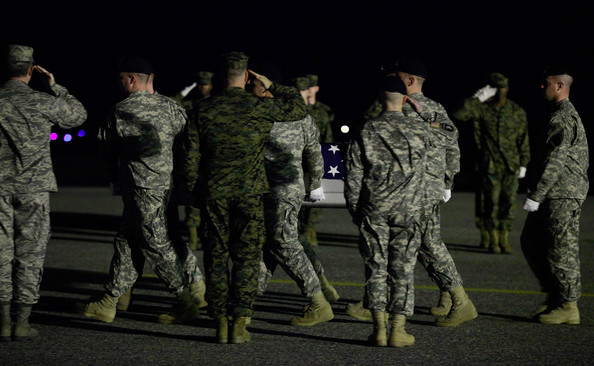
6 Comments

Filed under History, iraq,afghanistan, Military, vietnam