Category Archives: national security

Travels and Tribulations: Padre Steve’s Thoughts on Airport Security and Shared Sacrifice

Your Papers Please…

“They that can give up essential liberty to obtain a little temporary safety deserve neither liberty nor safety.” Benjamin Franklin

it is going to be a busy couple of weeks. I will be on the road a lot and doing a lot more time going through airports than I like doing.  I will be heading off for my denominational clergy and chaplain conference tomorrow morning flying from Norfolk to Houston Texas. Then I will return to Norfolk next Monday and then go to Germany for a Military meeting the following Tuesday and return on the 28th. It will be the most I have flown in a two week period since I was with Marine Security Forces back in 2006.  I hate flying or at least going through crowded airports.

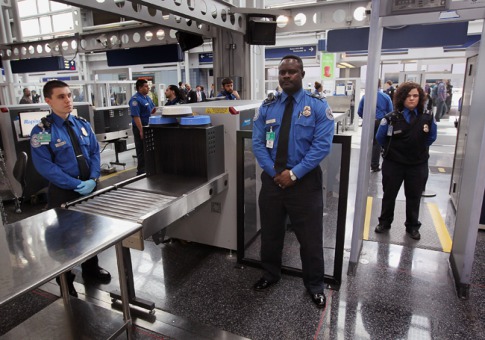
Now I am an old hand at air travel especially in the post-911 everybody is a potential hijacker world. I have been accosted in full uniform by TSA agent and nearly made to strip despite having orders and ID for my travel in uniform back during the Bush administration while people that were obvious foreign nationals passed right by me and through the screening process. I have been groped, scanned and nearly stripped and personally I think that we have gone overboard and that in the end that it is bad for the country and for civil liberties.

When I returned from Iraq I had to take off my boots and nearly miss my connecting flight because of the tight connection. You would think that the bureaucracy would have the sense to figure out that guys coming back from a combat zone should be treated with a little more care. Thankfully despite the hassle I made my flight and the people were nice. However the ridiculousness of hundreds of returning combat vets just back from the combat zone being told to remove their boots and belts on their return to the United States is not just ridiculous but humiliating.

I hate going through airports now. I don’t feel safe. Yes it is part of my PTSD as with the exception of the ballpark crowded places scare me to death and the “security screening” process does nothing to help. I know that I have bitched about this before and I have been criticized by pond scum “national security” fascists that have never even served a day in uniform who have told me that I need to realize that we are “at war and that terrorist want to kill us” and that we all have to “make sacrifices.” My personal feeling is that those that spout this stuff and advocate more “pre-emptive wars” need to blow it out their ass. Otto Von Bismarck who by the way was not pacifist said “Anyone who has ever looked into the glazed eyes of a soldier dying on the battlefield will think hard before starting a war.” 

I tell you what, those that spout that kind of crap piss me off to no end. When we actually resume the draft and something more than 0.5% of the country’s population actually bother to serve in the military and go to war then I will agree about all of us making sacrifices. Until then I think that all the talk about shared sacrifice is so much bullshit. The only people that have made the sacrifice are the military, those employed by the military and our families.

The real truth of the matter is that very little of this country is at war. It is not enough just to put a bumper sticker that you “support the troops” on your car or be able to quote some patriot bullshit out of a war movie. It actually means being connected and part of the war effort. It means paying taxes and volunteering to help the troops… wait even better join the military.

Back in the Vietnam Era the American film icon John Wayne went on Rowan’s and Martin’s “Laugh In.” In line that I will never forget Wayne walked on stage with a red white an blue flower in his hands. He began: “A Poem: The Sky: The sky is blue, the grass is green. Get off your butts and join the Marines.”

http://www.youtube.com/watch?v=Wp6_–RqzdM

We are not a nation that even acts like it is at war. We ignore the fact that Americans and our allies are fighting and dying in Afghanistan because we are more interested in our political party’s agenda or our personal economic bottom line.  Really, how many people even realized that a bunch of Americans were killed in Afghanistan during the past week or that the Taliban attacked supposedly secure areas in Kabul including the US,  Russian and German embassies as well as the Afghan Parliament building? Actually to read the news unless you follow MSNBC, CNN, NPR or perhaps BBC or Al Jazira you probably didn’t see it in the Drudge Report or other “conservative”media outlets. In fact it was’t mention by Drudge. I guess that it is not important then.

So tomorrow I will begin my travels and since I don’t do well in airport crowds after my time in Iraq and fond those places terrifying I will remember that any humiliations that I endure at the hands of the TSA are all for the war effort and to make everyone else feel better. At least I can have a beer at the sports bar in the airport for breakfast before I go through security. That will make me feel a bit better.

I hope that doesn’t sound too cynical but I have seen too much of war to listen to those that think that strip searches, genital fondling and scanners that show one in all of their naked glory do little for the actual security of the country.  It does make the average person feel better but it does little in the way of national security.  I mean really…

Think about it.

Peace

Padre Steve+
Leave a comment

Filed under national security, PTSD, travel

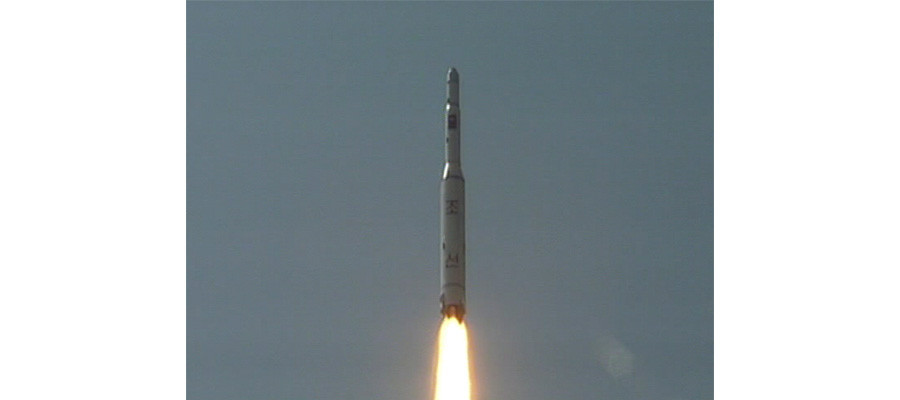
Missile Impotence: Kim Jong Un’s Rocket Launch goes Splat

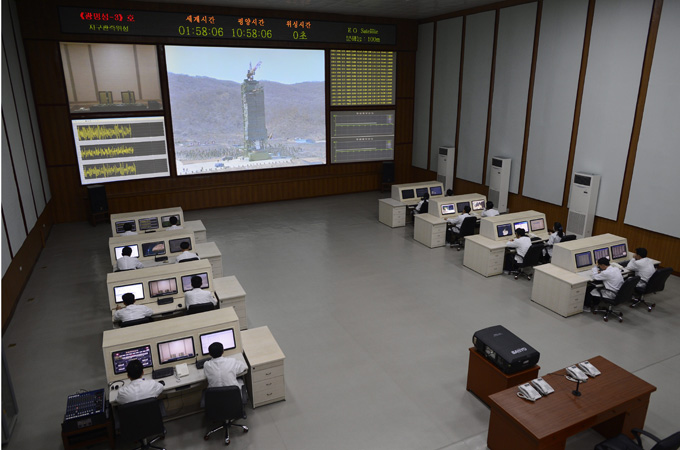
Don’t call it a failure to launch but a failure to fly. Tonight the rocket shot to commemorate the 100th anniversary of the birth of the Most Beloved High Great Celestial Leader Kim Il Sung broke apart and crashed about 90 seconds into its flight. Debris crashed into the Yellow Sea about 165 km west of South Korea. Reports from South Korea say that South Korean Naval vessels are searching for debris which would help it to further understand how well developed North Korean missile technology really is.  Be assured that North Korean ships will likely speed to the scene which could trigger naval clashes between the two states.

The rocket called the Unha-3 was launched at 0739 local time from the missile facility at Tongchang-Ri.  Based on the Taepodong ballistic missile the three stage Unha-3 was to launch the Kwangmyongsong-3 weather satellite into a Polar orbit. Or that was the story  told by the North Koreans who had allowed numerous western reporters to visit the site and see the satellite. Most Western, South Korean and Japanese analysts believed that the launch was more of a cover to test a longer range ballistic missile which could provide North Korea with the capability to strike the United States.

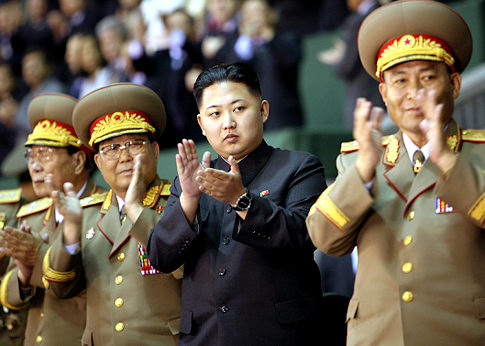
Kim Jong Un and his Generals give each other the Clap

North Korea defied warnings from the United States, Japan, South Korea and the United Nations in launching the rocket.  Speculation runs rife as to the motives of the North Koreans for launching. With the recent ascent of the young and inexperienced Kim Jong Un the grandson of Kim Il Sung and son of Kim Jong Il to the leadership of the nation it is possible that Kim Jong Un went ahead with the launch in order to show his strength in defying international sanctions and condemnation. South Korea described the launch as a “grave provocation” while Secretary of State Hillary Clinton said “This launch will give credence to the view that North Korean leaders see improved relations with the outside world as a threat to the existence of their system” and warned “And recent history strongly suggests that additional provocations may follow.”

The North Koreans had invited in over 100 journalists from around the world to report on the launch, a clear departure from previous very secretive launches.  Reports indicate that instead of getting briefings about the launch that North Korean minders when asked about the failure shrugged and ran away and that a scheduled press conference was cancelled.

Pyongyang we have a problem…

Since the North publicized the launch the regime will have to determine how it will advertise the failure to the world and its people.  It would have a hard time admitting any technical mistakes so look for the regime to either blame the South Koreans or Americans for shooting it down.  Another option is to declare this an act of sabotage carried out by traitors or western agents.

The implications of this failure could be dangerous. There could be internal political ramifications in North Korea which could destabilize the regime or trigger conflict with South Korea and its allies. It could speed up a suspected nuclear weapons test and bring about even great tensions. Consequences for the designers, builders and managers of the Unha-3 program will probably be severe. If I were a North Korean rocket scientist involved with the project I would make sure that I paid my life insurance premium in full and make a run to the Chinese border.

Since little is known about the internal political struggles except that the North Korean Military is the most powerful institution in the impoverished country it is hard to determine what will happen next. One thing that can be said is that the launch and its failure will serve to ratchet up tensions and add to the uncertainty on the Korean Peninsula and in the region.

Maybe it is fitting that the anniversary of Kim Jong Il’s birth happens to be the same as the sinking of the Titanic. Obviously there will be much more to come…

Peace

Padre Steve+

2 Comments

Filed under Foreign Policy, Korean Conflicts, Military, national security, News and current events

Failing to Learn from History: The Lesson of the First Anglo-Afghan War and Questions about the US-NATO Campaign

“The Americans in Afghanistan are Demons. They claim they burned Korans by mistake, but really those were “Satanic acts that will never be forgiven by apologies.” Afghanistan President Hamid Karzai

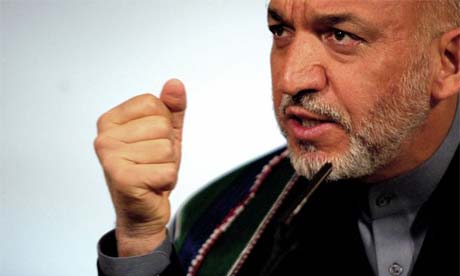
It seems that we in the West seldom learn from history nor do certain Afghan leaders like Hamid Karzai. The situation in Afghanistan has taken on a more ominous tone as the situation continues to spiral downward with Afghan President Hamid Karzai’s demand for the US and NATO to redeploy their troops to large bases and leave the countryside to Afghan control. Even more ominously he said that the Afghan-NATO relationship was “at the end of the rope.”  Karzai alluded that he did not believe that US and NATO account of the killing of 16 Afghan villagers near Kandahar.

This should come as no surprise to any observer of Afghanistan or anyone familiar with the relationship of Afghan leaders with western occupiers.  Karzai knows that the US-NATO era is coming to an end and even though he rules only because he is buttressed by western military power he is now trying to ensure his political and literal survival when we leave be it in 2013 or 2014.  The one thing that Karzai needs to keep in mind is that like his predecessors who turned on their western supporters be they British or Soviet he will be dangling from the end of the rope when we leave. He and his corrupt band of thieves who have alienated and plundered their own people will not survive their wrath once the protective cordon of American and NATO troops is withdrawn.

Karzai’s anti-American stance is further reinforced by the growing number of killings of US and NATO troops by Afghan police, soldiers and other personnel. Even this week an attack was made by an interpreter who drove a stolen pickup truck at a Marine Corps General and his British Brigadier assistant commander at Kandahar while awaiting the arrival of Secretary of Defense Panetta. Likewise the death of a Marine in February was officially announced as being at the hand of an Afghan soldier. The death occurred before the Afghan reaction to the burning of the Koran and was the 7th NATO service member who died at the hands of Afghan forces in February.

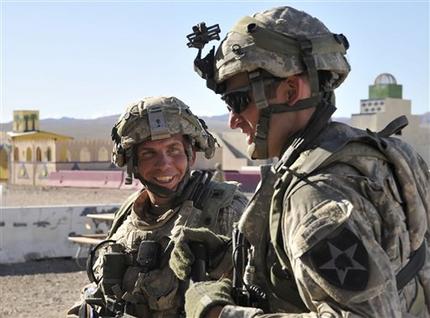
Staff Sergeant Robert Bales at the National Training Center in 2011 (US Army/DoD Photo)

The final nail in the coffin for the campaign occurred last week when Staff Sergeant Robert Bales for unknown reasons went on a shooting rampage killing 16 Afghan civilians including 9 children when they were asleep in their homes.  Bales actions whether attributable to a psychological breakdown, being drunk or if he was simply a cold blooded killer have effectively destroyed any chance of the United States and NATO recovering the situation in Afghanistan. It is already said that Bales attorney plans to use the case to also put the US war effort on trial. Since Bales reportedly has a Traumatic Brain Injury or TBI and possibly PTSD who allegedly was told that he would not be deployed again expect that the Army Medical Department and Madigan Army Medical Center will be raked over the coals. Those institutions and the Commanders of Joint-Base Lewis McChord are already being investigated for downgrading PTSD diagnosis to other mental illnesses that do not qualify for medical disability payments.

Staff Sergeant Bales appears to be a man who appeared until this incident to be an honorable and professional soldier with a distinguished combat record. However he had a number of potentially troubling legal and personal situations occur over the past number of years and had not been selected for promotion. How those events play into this and what may have happened to push him over the edge or to unleash an evil in him that no one knew was there will be the subject of much debate in the coming weeks.  None of it will be good for the United States.

At the same time the question will have to be asked how and why a soldier with injuries of PTSD and TBI was deployed as part of a small team supporting Special Forces troops instead of with his own unit even after allegedly being told that he would not redeploy.  That is a question that must be answered.  Why would the Army deploy a soldier with known PTSD and TBI as an Individual Augment with different unit than which he was assigned? In this environment he would not be in a place to have the same camaraderie of being part of his own unit probably suffer much more isolation with the inherent dangers of such a situation. Having served on small bases in Iraq with the small teams of advisors and having worked with Sailors, Soldiers, Marines and Airmen assigned to commands as Individual Augments (IAs) and having been one myself I can say that these assignments are often much more dangerous for those with preexisting trauma.

The result of this latest incident coming on the heels of the burning of the Koran and other religious texts at Bagram Air Base, the release of a You Tube video of a US Marine Scout Sniper team urinating on the corpses of Taliban fighters and the revelation of the “Kill team” in 2010 has for all practical purposes ended any chance of making a successful transition in Afghanistan.

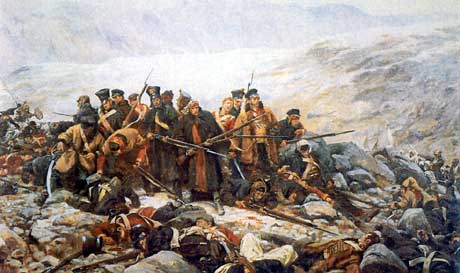
Last Stand of the 44th Regiment of Foot 1842

Afghanistan was supposed to be the “good war” and for a couple of years that is what it was. US forces had taken down the Taliban regime with minimal effort in 2001 and appeared to be well on their way to finishing off Al Qaeda and banishing the Taliban from Afghanistan. However in 2003 the US took its focus off of Afghanistan by invading Iraq. We also had placed our trust in Hamid Karzai to guide Afghanistan into a new and democratic era. Karzai has proven to be much like Sujah Shah Durrani who the British imposed on Afghanistan in 1838 when they could not get Emir Dost Mohammed Khan to do their bidding in trying to keep Russia and Persia from dominating Afghanistan. That was a mistake of epic proportions that led to one of the greatest British military, diplomatic and political disasters of the Empire.

A survivor to the First Anglo-Afghan War Chaplain G.R. Gleig wrote about that war something that may be said about our campaign there in years to come:

“a war begun for no wise purpose, carried on with a strange mixture of rashness and timidity, brought to a close after suffering and disaster, without much glory attached either to the government which directed, or the great body of troops which waged it. Not one benefit, political or military, was acquired with this war. Our eventual evacuation of the country resembled the retreat of an army defeated.” 

We can pray that it doesn’t happen that way. What started as an attempt to find and kill Osama Bin Laden and his Al Qaeda leadership in Afghanistan in October of 2001 has turned into a long term occupation that serves no strategic interest of the United States.  Nearly 100,000 US troops are tied down in a country where they can do little conduct local operations against an intractable enemy to support a corrupt government that the people of Afghanistan loathe.  It is so similar to the British experience that it makes one wonder if anyone has ever read a book about the country before invading it.

Bin Laden is dead and Al Qaeda is still reeling from continued strikes on its leadership. The goal of the war was achieved. Afghanistan is Afghanistan. It will not change and any threats brought by terrorists that may try to use it as a base can be defended so long as we are able and willing to whack a mole whenever they raise their head up, just as we are in the Horn of Africa, Yemen and even Pakistan. That does not require 100,000 tied down in Afghanistan where they are exposed to local threats as well as the possibility of being cut off from supplies should Pakistan or the Russian Federation cut supply lines or should hostilities break out with Iran.

Peace

Padre Steve+

4 Comments

Filed under counterinsurency in afghanistan, Foreign Policy, iraq,afghanistan, Military, national security, News and current events

Unforced Errors: The Bane of the American-NATO Campaign in Afghanistan

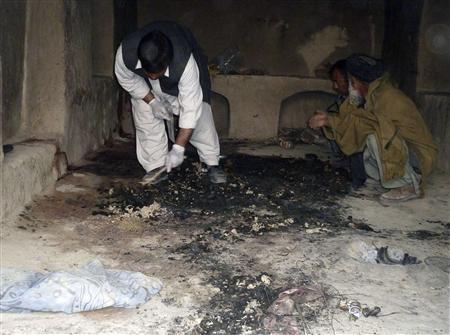
The Scene at one of the Houses (Reuters: Ahmad Nadeem) 

The efforts of the United States in Afghanistan and chances of coming out with anything resembling a successful conclusion to the longest war in its history are being destroyed by unforced errors. Of course anyone who watches any kind of sporting event knows that there are many times that the team that should win self destructs by committing unforced errors that result in them losing a game. In football they might be penalties, fumbles or badly thrown balls that result in interceptions. In basketball the errant pass, the bad foul, the unforced turnover in baseball the error that costs a game. However in war unforced errors cost precious lives, harm the strategic goals of a nation and lead to greater suffering of the populations affected.

Today we learned that a US Army Staff Sergeant went on a rampage in the Afghan villages near his base in Kandahar killing 15 or 16 Afghan civilians including 9 children and 3 women. The killings were particularly brutal. We don’t know details except that some reports indicate that the sergeant had recently had a breakdown and had deployed at least one other time to Iraq or Afghanistan. I would guess that he had multiple deployments.  The initial reports say that he was assigned to troops supporting a Special Forces team that was working with the local villagers.  Some Afghans say that more than one soldier was involved although NATO says that the soldier acted alone.

The murders come after the accidental burning of a Koran sparked riots and attacks on US and NATO forces killing 6 NATO soldiers including 2 US officers working inside a secure area of the Afghan interior ministry. They also follow the video display of Marines urinating on the bodies of dead Taliban and the trial and conviction of soldiers who had their own killing team. All the incidents were unrelated and none had the imprimatur of the American or NATO command.  However like the My Lai massacre committed by the platoon led by Lieutenant William Calley during the Vietnam War the crimes have tarnished the honor of the US military and are undermining all efforts to bring about a successful conclusion to the war in Afghanistan.

Unforced errors do not help when the strategic goals are totally dependent on the cooperation and goodwill of the populace of the country that you are operating in and trying to secure. The whole tenant of Counterinsurgency Warfare is securing the population and by doing that bringing them to cooperate with you. If you do not have the massive numbers of troops to actually secure the country yourself it is doubly important. In fact by doctrine there should be 4 times more troops to conduct a successful counterinsurgency campaign. In places where the indigenous forces are larger and more capable some or even much of the burden can be born by them, however the Afghan National Army and National Police are able to shoulder the burden. Riddled with corruption, plagued by incompetent leaders, poor discipline, high desertion rates and awash in Taliban sympathizers. A growing number of American and NATO soldiers have lost their lives in attacks from the Afghan soldiers and police working alongside of them.

Of course there are other factors such as that the government of the country must inspire the confidence of its own people in order to turn back an insurgency.  Afghanistan is “governed” if one can call it that by the regime of Mohammed Karzai. The government can most charitably be described as corrupt and incompetent.  However the Karzai government has little power or authority outside of Kabul.  It has little control over its own security forces or for that matter even regional governors who function in a near autonomous fashion as best benefits them personally or the tribe that they belong.  A shadow government of the Taliban factions often hold as much real power over the people as the “legitimate” government.  The biggest money maker is the Opium trade as Afghanistan is one of the top Opium producers in the world. The real truth is that for all practical matters Afghanistan is for all practical purposes a narco-State run by criminals and thugs of different factions.

Afghanistan also is a nation whose people believe that it is an offense against Islam foreigners to occupy the country. The Afghanis have shown their resolve against every invader and though successfully invaded they have never been long occupied nor cooperated well with their occupiers, even those that considered themselves liberators. As such the campaign to rid Afghanistan of the Taliban and bring about some form of democracy has had little chance of success after forces were diverted to the invasion of Iraq.

The latest incident will cause more American and NATO soldiers to die and will likely erase any possibility that we can succeed in our goal of an orderly train up of Afghan security forces and transfer of the conduct of the war to them.  It is very likely that the situation on the ground will get worse, perhaps markedly worse.  The American military will do the right thing regarding the investigation and prosecution of this case but that investigation may prove to show how bad things have become.

Unforced errors.  I don’t know how to overcome them.

Peace

Padre Steve+

Leave a comment

Filed under Foreign Policy, History, iraq,afghanistan, Military, national security

The War that Cannot Be Won: Afghanistan 2012

“There is no single piece of land in Afghanistan that has not been occupied by a Soviet soldier . . . no single military problem that has arisen and not been solved, and yet there is still no result.”  Sergei Akhromeyev, Soviet General Staff Chief 1986

Sometimes one wonders if anyone actually reads history and if they do whether they actually want to learn from it. Back in 1979 the Soviet Union had advisors in Afghanistan. A lot of them. A local and indigenous Communist Party had some measure of political power and this was before the Soviets invaded.

However in March 1979 a major unit of the Afghan National Army in the city of Herat mutinied against the Soviets and the Afghan government. Before the mutiny was put down 50 Soviet advisors as well as 300 of their dependents were brutally murdered by Afghan Army personnel. A further 5000 Afghans died in the revolt.

Since 2009 the trend of Blue on Green killings, that is Afghan Soldiers or Security Force members killing US or NATO personnel has been increasing at a troubling rate. We should not be surprised, the one thing that the Afghan loathes above all is the foreign soldier on Afghan soil.  While some Afghans may desire a more modern society and something more akin to the Western democratic political model to include women’s suffrage they are in a distinct minority.  The fact is that as General Barry McCafferty recently noted regarding the murder of two US military advisors in the supposedly secure Afghan Interior Ministry “we may be seeing a watershed event after billions of dollars and 16,000 u.s. casualties. we see how shallow the impact we have on this primitive society is.” 

Approximately 130,000 US and NATO troops including a number of my friends are deployed in penny-packets across Afghanistan and are increasingly isolated and in danger.  The “inadvertent” burning of copies of the Koran in a garbage dump by US personnel has resulted in the deaths of at least 4 US military personnel and the wounding of 8 more and put our bases on lockdown as thousands of Afghans protest and attack them.  More than two dozen Afghans have died in the recent violence.

As deployed they are able to achieve local success but unable to secure the country. Dependent on supplies delivered by air or along tenuous supply lines hundreds of miles long these forces though numerous are dispersed and deployed in areas where their inherent technological and operational superiority is negated by weather, terrain and restrictive rules of engagement as well as a counterinsurgency strategy in which these advantages matter little and that they do not have enough troops to accomplish.

US and NATO forces are embedded with the Afghan Army, Police and Border forces, many of whom are either incompetent, corrupt or allied with Taliban or Al Qaeda. Most Afghans feel that any foreign occupier is a mortal enemy and mistakes such as the recent Koran burning only add fuel to the fire of hatred no matter how many times our leaders apologize. Formerly unclassified but now classified reports easily available on the internet including at US Government websites paint a picture of mutual distrust and animosity that can only be described as toxic between the Afghans and NATO personnel, especially Americans.

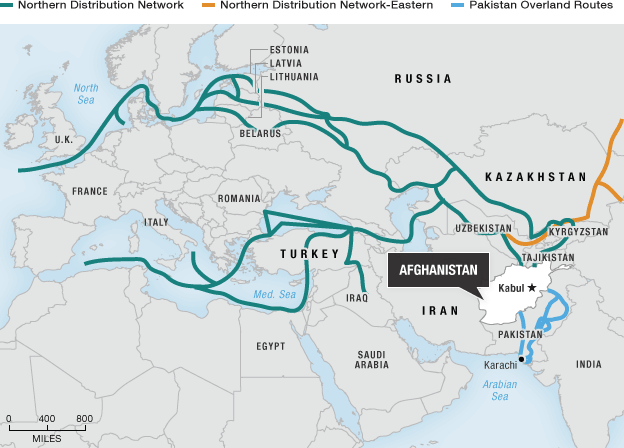
To make matters worse the US and NATO forces in Afghanistan are surrounded to the west by an ever more bellicose Iran, to the south and east by an unstable and often adversarial “ally” Pakistan through which 30-40 percent of their supplies transit.  To the north the United States and NATO are dependent on agreements with the former Soviet Central Asian Republics Uzbekistan, Kazakhstan, Kyrgyzstan and Tajikistan with most having had to transit Russia.  In the 1980s the Soviets only had make a withdraw across the border into their own country.

Another potentially disastrous situation would be for a war to break out between Iran and Israel or with the United States and our allies. The way our troops are deployed means that they cannot be easily concentrated to parry any threats and their isolation prevents them from being used as an offensive asset should a war break out against Iran.

The fact is that US and NATO forces are now in a very similar position to the Soviets in the mid to late 1980s.  We are engaged in a war where military success is not going to win the war. No matter what any politician says there is nothing that can change that unless they would be willing to commit to greatly increasing the number of ground forces in Afghanistan with the costs and logistical problems that would entail.

President Obama is in a “damned if he does and damned if he doesn’t” position.  If he keeps the status quo the danger persists and maybe increases. If he were to begin a more precipitous withdraw there would be the same dangers and possibly more during the withdraw. But mitigating against a faster withdraw is the 2012 election in which his Republican challengers would accuse him of “losing the war and betraying our troops.” However the chance to end the Afghan War from a position of strength was lost in 2003 when we diverted our efforts to the invasion of Iraq. That action gave Al Qaeda and the Taliban the breathing space that they needed to make a comeback and that was not on President Obama’s watch.

Geopolitically the presence of 130,000 US and NATO forces does nothing for regional or US national security and prevents those forces and the attendant resources needed to support them unavailable for any other dangers in the region. The goal of “creating a stabile and secure Afghanistan” is a myth. Afghanistan is not Iraq and will for generations remain a backward, tribal and religiously intolerant society that will never embrace western ideals that conflict with their culture.

The question now is how do we get out of this place, seal it off to keep terrorist threats from emanating from it and endangering US, NATO and Allied interests in the region.  The reality is also that no matter what we do that any defeat or withdraw will be grist for Al Qaeda, Iran and other Islamist propaganda.  The inability of the Soviets to “win” in Afghanistan was of the factors that brought down the Soviet Empire and ended the myth that Soviet Communism was invincible. The same could happen to the United States.

When presented with a cataclysmic strategic situation on the Western Front in 1944 Field Marshall Gerd Von Rundstedt was asked what should be done. His simple response was “End the war you fools.” http://www.youtube.com/watch?v=ch56NAL1C-I

We are not yet in a cataclysmic situation but the time to make decisions is now not later because there is nothing that can change the strategic or operational conditions in or outside of Afghanistan. Facts are facts and politicians from both the Republican and Democrat parties should stop trying to turn this into short term political advantage and look at the actual strategic interests of our country as well as our broader security and economic interests in the region.

Peace

Padre Steve+

3 Comments

Filed under iraq,afghanistan, middle east, Military, national security, Political Commentary

The Question is When, Where and How?…not If…. The Inevitability of War with Iran

“War is the unfolding of miscalculations.”  Barbara W. Tuchman

I do not think that there is a sane person in the world that sees any benefit of a war between the United States, Israel and the West and Iran.  But then sane people seem to be in the minority of all those involved in the current escalation of tension regarding Iran,  Israel, the United States, the West and the Arab World.

That being said I don’t think that anyone really wants to go to war even as all of countries involved move military units around the region, stockpile more weapons and issue ever more strident threats against one another.

When the war between Iran and those that oppose it occurs it will be because one of parties involved makes a fatal miscalculation that leads to a regional war with unimaginable consequences.

The immediate parties involved, the Iranians, the Israelis and the Americans have all hardened their military, political and economic stances in the past few months. The Iranians in particular have escalated military tensions by threatening to close the Straits of Hormuz, moving naval units to Syria even as that country devolves into civil war and making attempts or threats on the lives of Israeli diplomats in various countries including the United States.

Israel is reacting in kind to what many Israelis view as an existential threat from Iran in regard to the possibility of Iran producing nuclear weapons and delivery systems that could threaten Israel.  Reports seem to indicate that the Israelis could conduct a pre-emptive strike against Iran any time between the spring and the November elections in the United States.

The United States and much of Europe have imposed an increasing number of economic sanctions on Iran that are taking a toll on Iran’s economy.  Iran is increasing pressure on its own citizens who want more freedom. The Iranian military and the Revolutionary Guards are conducting exercises which are becoming increasingly bellicose including sending warships into the Mediterranean Sea to Syria.  Whether they want war or do not their actions could accidentally trigger a war with terrible consequences to the region as well as the global economy.

At this point I do not see any easy way out of a war which everyone knows is coming but cannot or will not avert.  The question is no longer if? It is when, how and where? Will it be a naval action at the Straits of Hormuz? Will it be the assassination of an Israeli, Iranian or perhaps a Saudi diplomat or leader? Will it be a terrorist attack against Israel by an Iranian ally such as Hezbollah which triggers an Israeli response?  Who really knows? There are so many possibilities that could trigger a regional war that it it boggles the mind.

The media with its 24 hour news cycle which demands fresh news raises the tenor of emotions and passions of the people and nations involved with each passing day.  The fear of war is driving people to the brink of it.  Back in the late 1890s it was called “Yellow Journalism.”

Adlai Stevenson said that “In matters of national security emotion is no substitute for intelligence, nor rigidity for prudence. To act coolly, intelligently and prudently in perilous circumstances is the test of a man, and also a nation.”  But this is not always the case. It is very possible that Israel, Iran or the United States may conduct a “preventative” strike against its opponents.  Otto von Bismarck commented that “Preventive war is like committing suicide out of fear of death.”

One can only hope that leaders and nations will see the truth of Stevenson and Bismarck’s words before the someone makes that one fatal miscalculation.

Peace

Padre Steve+

1 Comment

Filed under Foreign Policy, History, middle east, national security, News and current events

Padre Steve Reviews “The Wounded Giant: America’s Armed Forces in an Age of Austerity” by Michael O’Hanlon

The Wounded Giant: America’s Armed Forces in an Age of Austerity (An eSpecial from The Penguin Press)

• Format: Kindle Edition
• File Size: 1685 KB
• Publisher: The Penguin Press (November 15, 2011)

I was recently asked to do a review of Michael O’Hanlon’s new book The Wounded Giant: America’s Armed Forces in an Age of Austerity by the folks at TLC Book Tours http://tlcbooktours.com/ I am a historian and have served 30 years in the United States Army and United States Navy. As such I try to look at the nuances of Defense policy from a historical as well as current point of view.

O’Hanlon’s book deals with a topic that is receiving much attention and debate in the wake of the 2011 Congressional Budget impasse and deal and the recently release of the 2012 Defense Strategic Guidance and the FY 2013 Department of Defense Budget request. O’Halon’s book was published in the midst of the budget impasse in which could bind Congress into cuts well in the excess of the proposed $500 Billion in cuts proposed by the Pentagon and the Obama Administration. Cuts that could total over a trillion dollars over the next decade.

O’Hanlon deals with the economic necessity of Defense budget cuts laying out his thesis in the first two chapters dealing with the history of US military budgets since the Second World War with particular attention to the post-Cold War cuts under the Bush and Clinton administrations. In the following chapters O’Hanlon argues for what I would call a strategy of calculated risk in which Defense budgets and the necessary force cuts are balanced with the economic realities of our present time. He does not argue for massive cuts and disengagement from the world that some argue for, at the same time he realizes that defense cuts are necessary but cannot be too great.

He then goes on to discuss the potential reductions for ground forces as well as air and naval forces within the context of potential threats, especially those posed by Iran as well as the potential threat from China.  He argues for a leaner military but also acknowledges the danger of cutting too much.

His conclusions regarding force size and composition will be attacked by some and defended by others.  I think that his arguments regarding ground forces which support going back to the approximate numbers in the Army and Marine Corps in 2001 are reasonable presuming that there is a substantial reduction of US forces in Afghanistan and no other major ground campaigns arise.  The current personnel authorizations were only made reluctantly after years of war by the Bush administration whose first Defense Secretary Donald Rumsfeld was no advocate of large ground forces.

O’Hanlon also discusses the possibility of savings through some base closure as well as reductions in some Air Force and Naval capabilities while attempting to minimize the effects of the reductions by crew rotations of forward based warships and more use of drone aircraft. He also discusses the US capabilities in intelligence and Homeland Security in the context of the overall defense structure.

One thing that I find lacking in O’Hanlon’s treatment of the defense strategy and budget is the lack of attention paid to the overall industrial base required to support the replacement or modernization of our current forces. He argues in favor of keeping production lines open but neglects the fact that most of the US defense industrial base is now the property of about five major corporations. At one time we had more shipyards  and other facilities that made the rapid production of war materials in times of national emergency which at the end of hostilities could revert to civilian industrial production. Much of that capability is now gone, outsourced to China and South Korea.

O’Hanlon has some good proposals and his numbers are not much different than those proposed by the Pentagon. His analysis does included what is called the DIME, the diplomatic, intelligence, military and economic aspects of national security strategy. He describes his vision for a military that despite cuts can still be mission capable. One may argue with his overall strategic thinking and his detailed proposals and many will. I have issues with some of the proposals.  Likewise anyone attempting to project a vision of a national security strategy and military force structure is always fraught with the ever present reality that no one can predict the future. However history tells us time and time again that we seldom are right and that threats yet unimagined can shred the most well thought out and detailed plans.  Making such decisions in an election year makes them all the more prone to being wrong because the political establishments of both parties

It is a good read for anyone seriously interested in national security strategy.It is not perfect by any means but worth the read.  It it is published in paperback as well as the Amazon Kindle edition.

The Author: Dr. Michael O’Hanlon is is director of research and a senior fellow in Foreign Policy at the Brookings Institution, where he specializes in U.S. defense strategy, the use of military force, homeland security and American foreign policy. He is a visiting lecturer at Princeton University and adjunct professor at John Hopkins University. O’Hanlon is the author of several books, most recently A Skeptic’s Case for Nuclear Disarmament. His writing has been published in The Washington Post, The New York Times, The Financial Times, The Wall Street Journal, among other publications, and he has appeared on TV or radio almost 2,000 times since 9/11. Before joining Brookings, O’Hanlon worked as a national security analyst at the Congressional Budget Office and served as a Peace Corps volunteer in Congo/Kinshasa (the former Zaire). He received his bachelor, masters, and doctoral degrees from Princeton, where he studied public and international affairs.

3 Comments

Filed under books and literature, Foreign Policy, Loose thoughts and musings, Military, national security

Atrocity in War: The Afghanistan Video

“Our men can’t make this change from normal civilians into warriors and remain the same people … the abnormal world they have been plunged into, the new philosophies they have had to assume or perish inwardly, the horrors and delights … they are bound to be different people from those you sent away. They are rougher than when you knew them. Killing is a rough business.”  Ernie Pyle

Ernie Pyle was one of the most prolific wartime journalists that ever lived, in fact he was killed by Japanese machine gun fire on the island of Ie Jima while with the Army during the Okinawa campaign. Ernie Pyle understood war and the men that fight it. If he was alive today I imagine that his comments about what happens to men in combat would be no different now than it was then.

In the past two days we have heard much and seen a distressing video of four U.S. Marines from a Scout-Sniper Team of 3rd Battalion 2nd Marine Regiment urinating on dead Taliban fighters. The images are disturbing and because they are raw and offensive they have created a furor that could define the NATO campaign in Afghanistan as much as the Abu Ghraib torture photos harmed U.S. efforts in Iraq and the broader Middle East.  When I was in Iraq I heard Marine leaders talking about the Abu Ghraib incident with distain and saying that those few soldiers that recorded their torture of prisoners were costing us the war.

3/2 was deployed in the northern area of Helmand Province and lost 6 Marines and a Navy Corpsman during their deployment. According to the Marine Corps Times Battle Rattle Blog author Dan Lamothe, Major General John Toolan said that the Scout Snipers of 3/2 may have killed up to 100 insurgents each during their tour, which would mean that they were engaged in many dangerous combat engagements.  This in no way condones or excuses their actions but it does provide some context to view what happened.

However wrong the actions may be and how stupid it was for the Marines in this unit to record them and allow them onto the internet the truth is that war changes people. Ordinary men do things that they would not have contemplated before it including breaking the codes of honor that they pledge to uphold when volunteering to serve. Ernie Pyle understood this far better than most journalists before or since. In fact he understood it far better than the minuscule percentage of Americans who have ever served in the military much less in combat.  Pyle wrote:

“Their life consisted wholly and solely of war, for they were and always had been front-line infantrymen. They survived because the fates were kind to them, certainly — but also because they had become hard and immensely wise in animal-like ways of self-preservation.”

E.B Sledge who served throughout the Pacific War as a Marine infantryman and whose writings are dramatized in the HBO Series The Pacific wrote about fellow Marines that harvested gold teeth from dead Japanese soldiers, urinated in the mouths of the corpses of the Japanese and shot civilians.  He was patriotic, religious and after the war wrote in his book With the Old Breed: At Peleliu and Okinawa:

“The fierce struggle for survival in the abyss of Peleliu had eroded the veneer of civilization and made savages of us all. We existed in an environment totally incomprehensible to men behind the lines-service troops and civilians.” 

Mind you this is not an excuse for what these Marines did but it does offer an explanation for the act that they committed to video that we view without any context as to what led up to the incident or what they had been through.  It seems that people are rushing to judgement and that this will be compared to Abu Ghraib as a defining image of the Afghanistan as much as Abu Ghraib became symbolic of Iraq.  This is despite the fact that apart from being committed to video they are different. The Marines were infantrymen in one of the most desolate and dangerous combat zones of Afghanistan and the Abu Ghraib soldiers were jailers that had complete control of the prisoners.  There is a major difference between the actions as deplorable as both are.

I see the American wounded every day, Marines and Sailors whose lives have been radically changed by service in Iraq and Afghanistan.  They have seen horrors committed by Taliban, Al Qaida and other insurgents against their comrades as well as against Iraqi and Afghan civilians.  The war is every bit as brutal as was waged in the Pacific and they fight a brutal and unforgiving enemy that is intent on driving the infidels out of Afghanistan.

The uncomfortable fact is that an incredibly small number of Americans are fighting a war that at best will be a draw and quite probably a strategic and political defeat despite our troops not losing any battles.  The fact is that the action of these Marines will be used to not only prosecute them but to demonize them just as the actions of Lieutenant William Calley and his platoon at My Lai were used to demonize the Americans that fought in Vietnam.  The sad truth is that most of those that will engage in such demonization have never served in harm’s way or even known military service. Sledge wrote of critics of the Marines following the Second World War:

“In the post-war years, the U.S. Marine Corps came in for a great deal of undeserved criticism in my opinion, from well-meaning persons who did not comprehend the magnitude of stress and horror that combat can be. The technology that developed the rifle barrel, the machine gun and high explosive shells has turned war into prolonged, subhuman slaughter.”

I know that a thorough investigation will be conducted and that we will find out what happened in this unit that caused this obvious breakdown in discipline. Right now we don’t know who even posted the video on the internet and why they did so. Hopefully this is an isolated incident otherwise the incident will only grow in significance. During the investigation as well as news reports and interviews we will learn about the individual Marines involved in this action as well as their leaders. It will likely be uncomfortable and sad to watch.  It could well damage the reputation of the Marine Corps in the eyes of many even if it is an isolated incident.  What happened has already and will continue to reverberate here and in Afghanistan for a long time to come.  I just wish that we our media and politicians were as wise as Ernie Pyle and Eugene Sledge in judging these men as individuals before we know the whole story.

As someone that has served with Marines in harm’s way and know something of the stress that small teams of Marines can experience I have mixed feelings on this. I cannot approve of desecrating the remains of any human being at the same time I wonder what happened before this that might have contributed to the incident.  Of course we will hear more details than we want.

Peace

Padre Steve+

P.S. I have written a number of articles about the political, ideological strategic and moral aspects of war which I have listed here:

War Without Mercy: Race, Religion, Ideology and Total War

Why History Matters: The Disastrous Effects of Long Insurgency Campaigns on the Nations that Wage them and the Armies that Fight Them 

The Ideological War: How Hitler’s Racial Theories Influenced German Operations in Poland and Russia

1 Comment

Filed under iraq,afghanistan, Military, national security, News and current events

Tension in the Gulf: Don’t Miscalculate; Speak Softly and Carry a Big Stick

“War is the unfolding of miscalculations.” Barbara Tuchman

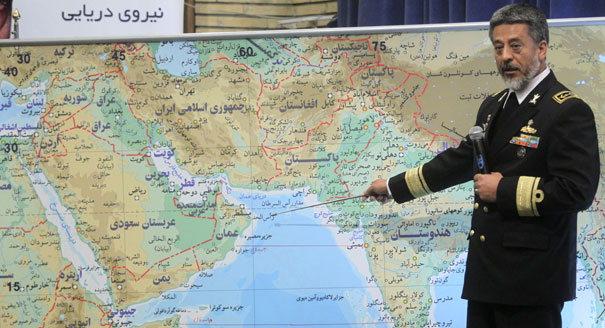
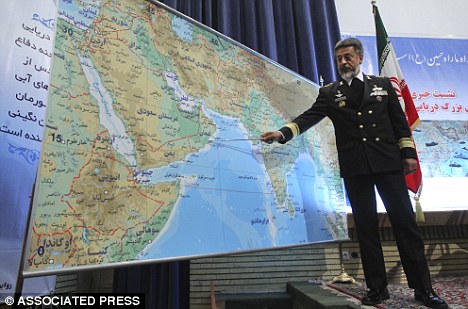
Iran’s navy chief Habibollah Sayyari briefs media on the naval exercise 

The greatest danger in the current war of words between Iran and the United States is the danger that the Iranians one side or the other will miscalculate the will, resolve and strength of the other.  Teddy Roosevelt made the comment “speak softly and carry a big stick.” The Iranians have been shouting loudly and brandishing a small stick and if they are not careful they will bluster their way into a naval war that they cannot win and that will cause significant economic and physical disruption in the region.

The Iranian Navy and Revolutionary Guards Naval Forces are about halfway into a 10 day series of exercises in the Gulf of Oman, the Strait of Hormuz and the Northern Arabian Gulf, or what they call the Persian Gulf. Iranian leaders have increased their rhetoric in regard to closing the Strait of Hormuz if more sanctions are leveled against them for their nuclear program.

The bellicosity of the Iranians comes at a time when they are feeling internal political pressure from Iranian young people, as well as external diplomatic and most likely espionage campaigns.  The latter are designed to slow down or halt their nuclear program which most analysts now believe to be designed to produce nuclear weapons.

For what it is the Iranian Navy can threaten the strait and maybe even close it for a limited time. It is possible if they ever launched a surprise attack on an isolated US or Western warship using their “swarm” tactics close inshore to Iran in the constricted waters of the strait or in a narrow part of the NAG that they could sink or cause severe damage to it.  They would probably mine the straits if they could do so before hostilities began or before sufficient forces could be deployed to stop them. Likewise their missile forces and special operations forces could cause some damage and chaos in the Gulf but the repercussions would isolate and devastate Iran.  However closing the strait or attacking a US or Western warship would be the end of Iran’s naval forces and cause more damage to the country than its leaders are willing to accept at least right now. The Iranians would find that they were fighting far more than the United States Navy should this happen and their Russian and Chinese supporters would more than likely do everything possible to dissuade them from trying this.  Since China imports the bulk of its oil from the Gulf it is unlikely that they would support the Iranians.

While such a direct attack is unlikely the possibility of an accidental war caused by miscalculation on the part of one side or the other is always real and should the Israelis strike Iran’s nuclear facilities Iran would certainly retaliate against Israel but also US Forces and installations in the Gulf and probably against the Gulf States and even Iraq.

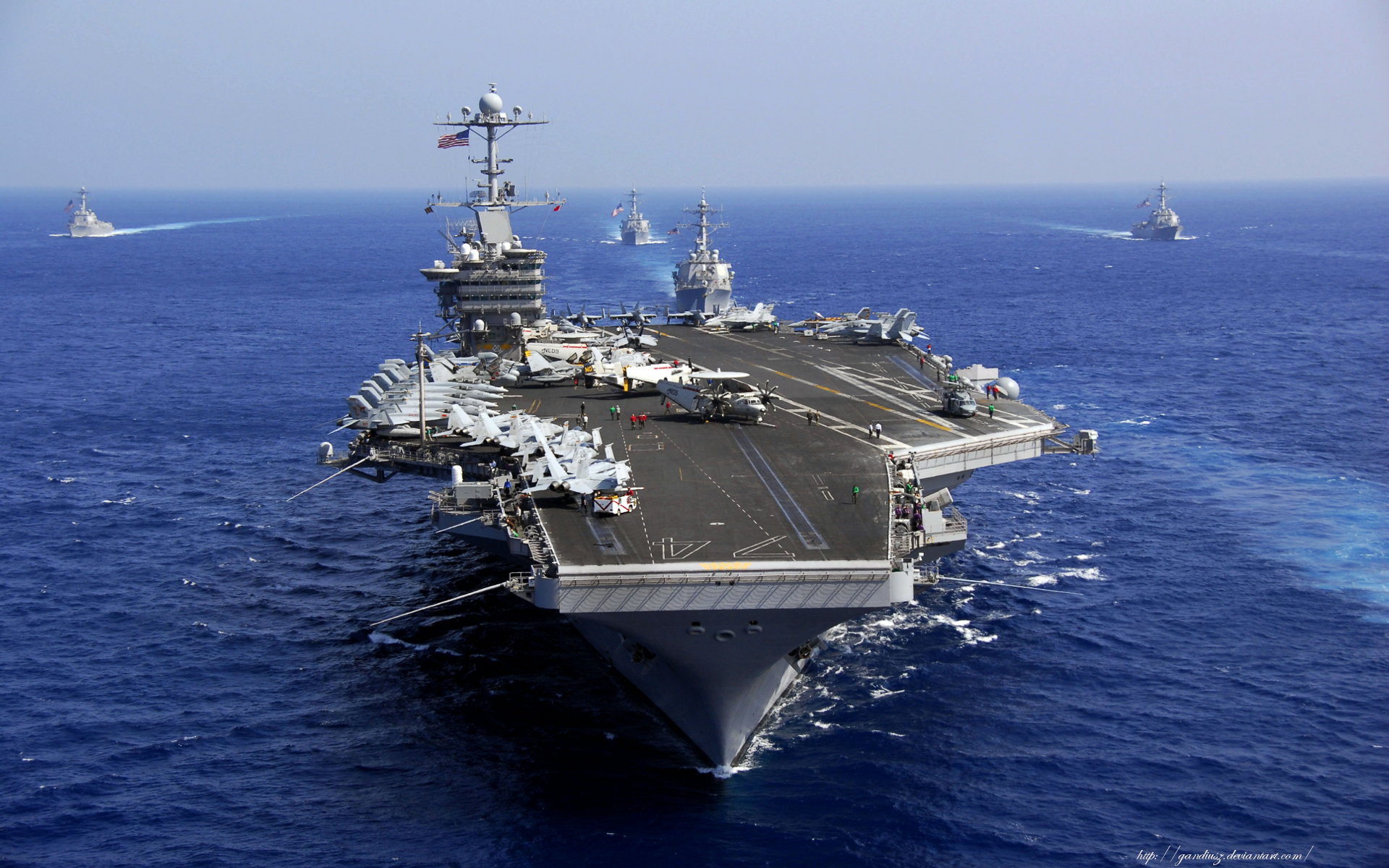
USS John C Stennis (US Navy Photo)

Regarding how such a campaign would be fought the United States would stand off a safe distance and pound Iranian naval, air and coastal defenses and not allow Iranian surface ships to get close enough to make a swarm attack.  This is a big reason that the USS John C. Stennis transited the straits and entered the Gulf of Oman (GOO).  Operating in the open seas gives the blue water US Navy the edge. The Iranian navy’s ships lack the range and endurance for sustained operations at sea and could not sustain a blockade. US attack submarines would hunt down the Iranian Kilo class subs before they could become a threat and US Naval Aviation assets would sweep the surface assets of the Iranian Navy and Revolutionary Guard Naval Forces from the sea while destroying Iranian coastal defenses on the islands in and the Iranian side of the strait.  Once the strait was cleared tanker traffic would resume and Iran would be the biggest loser.  History shows time and time again that light coastal naval forces are no match for a professional seagoing navy even if they score an occasional victory.

Much has been made about Iranian claims to have tracked the USS John C Stennis as she transited the straits.  That is nothing new, the Iranians have air, sea and land surveillance of the narrow straits. The fact is that US ships transit the strait and its approaches on high alert and have done so since the Tanker Wars of the 1980s.  Every Iranian move is watched by the US Navy.  Likewise while transiting the strait the ships of both sides communicate with each other regarding navigation.  It is standard practice.

Since I believe that the Iranians despite their rhetoric are far more prudent than some believe and that they will not launch an unprovoked attack. Even if they succeeded in temporarily closing the straits and even scoring some kind of naval victory by sinking a US ship the victory would be extremely short lived. US and other forces would stream to the region and devastate all that is Iran. The costs for the Iranians and their long term goal of regional hegemony would be too great for them to intentionally start a naval confrontation in the Gulf.  However the chances of either side miscalculating and stumbling into war should not be underestimated.

The biggest danger now is the potential for miscalculation but Iran’s long term goal of dominating the Gulf and acquiring nuclear weapons will probably keep them from attempting anything of this sort. That said there are factions in Iran that could try to use the threat of new sanctions to force a confrontation in the straits and for that we must be ready to meet the threat.  Iranian threats should not be disparaged nor their political and military will underestimated. To underestimate an Iran’s capabilities and will are extremely dangerous. At the same time we should not overestimate their capabilities and yield to their threats when they threaten to cut off the flow of oil from the Gulf.

The United States needs to follow Theodore Roosevelt’s advice and remember history as we follow the situation and ensure that whatever Iran does that we will not be surprised or unprepared.

Peace

Padre Steve+

Leave a comment

Filed under Foreign Policy, History, middle east, national security, US Navy

Marking the Illusion of Peace: December 6th 1941

A great war was already going on in Europe, Asia and the Middle East but most Americans lived as if war would never happen.  It didn’t seem to matter that that Nazi Germany had conquered all of Western Europe and that the Soviet Union was on the Ropes even as the United States Navy was already in action escorting convoys in the Atlantic. Of course the Japanese had been busy and were entering their second decade of war in China and had occupied French Indochina earlier in 1941. No war was something that happened to other people and nations.  The United States of course was immune to what was going on overseas and isolationism dictated much of the political debate often hamstringing the Roosevelt administration.

While the Government and the military anticipated that war was immanent the bulk of the country acted as if war would never happen. Various parties in Congress and special interest groups actively lobbied for the United States to remain clear of war and resisted the Roosevelt administration as it sought to strengthen the military. Thus as December 6th passed the nation focused on  everyday life.  People went to football games did Christmas shopping and spent time with family.

Now the country had been preparing for war, the Army, the Army Air Corps and the Navy  were expanding at a rapid rate. Exercises were held by large Army formations across the South in 1941 and bases were being built around the country.  In the years before the war the Japanese had attacked and sunk the gunboat USS Panay in China and German U-Boats had torpedoed and sunk the Destroyers USS Ruben James and damaged the USS Kearny as well as numerous merchant ships. Despite this many people failed to comprehend that war was immanent.  In fact there were groups that actively supported the political cause of Nazi Germany right here in the United States. Thus when people found out in the morning or in the afternoon of December 7th 1941 there was a collective sense of shock that had was new to the nation.

December 6th 1941 was the last night of an old world, a world of fantasy. It was the temporary end of the belief that the United States could be isolated from the carnage of war in Europe, the Middle East and Asia.  For 70 years since we have fought to return to that fantasy world where if we close our eyes and mind our own business that nothing bad will happen.  After the fall of the Soviet Union and the Cold War we seemed to believe that the world was different and that somehow we were unique, it was told to us by Republicans and Democrats so it had to be true.

Then we were attacked on September 11th 2001 and we went to war, except this time we decided were the wars would be fought but unlike World War II we abdicated the responsibility for conducting the war to a small sliver of the population, never more than half of one percent of the nation to go do the fighting and dying for the rest of us. Instead of a call to service we were told to go shopping. We entered wars with no certainty of what the end state would be.  Ten years later we are still fighting and despite the many successes and the valiant efforts and sacrifices of our military we are nowhere close to where our nation was to winning the war as we were within two years of the attack on Pearl Harbor and unlike that war we now face bigger threats than we were facing then.  War beckons in other lands and the post Cold War world is in shambles.

I certainly don’t have the answers to this but I do know that we must not let ourselves be lulled into even more complacency thinking that what happens overseas stays overseas.

The memories of December 7th 1941 have faded away. Few survivors of that day remain and those of the Greatest Generation are passing away faster than we think possible.  The collective memory is being left to family members, friends and historians. For that matter our collective memory of the Korean War, Vietnam, the Cold War, the First Gulf War and even our current wars seems to be waning.  As a nation we seem to have forgotten everything and have returned to the illusions of December 6th 1941.

These are dangerous times and while there may not be a Japanese Carrier Striking Force making its final approach to Hawaii there are real threats that can make our present “crisis” look like a picnic on a summer day.

Peace

Padre Steve+

1 Comment

Filed under History, Military, national security, world war two in the pacific