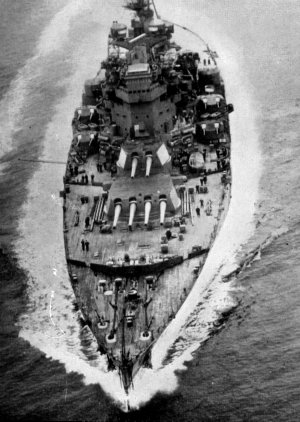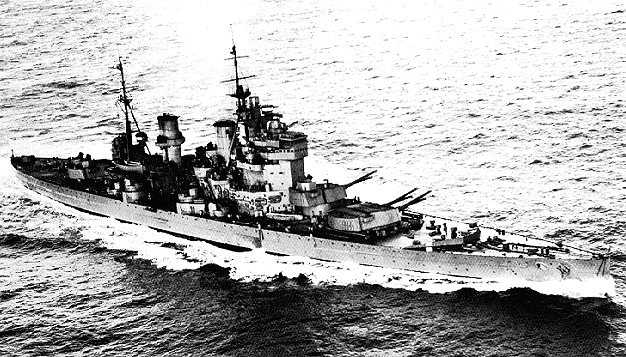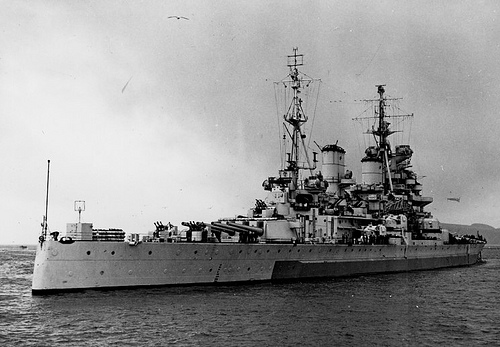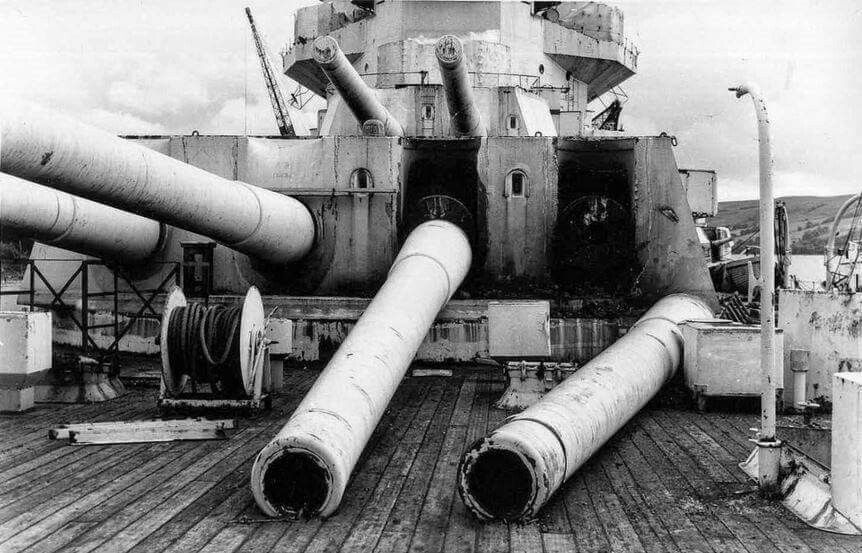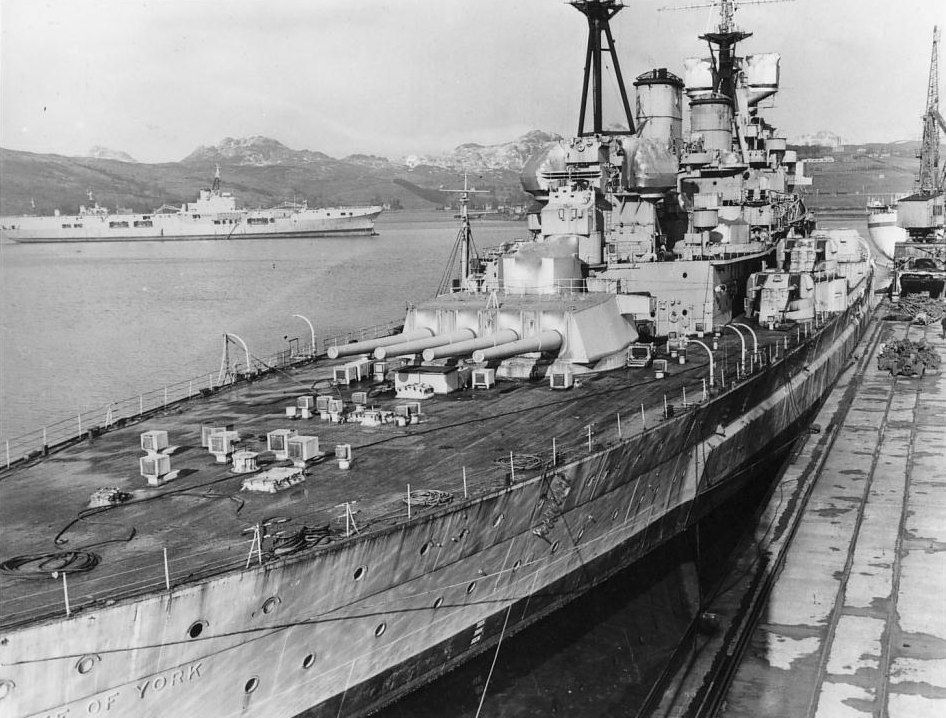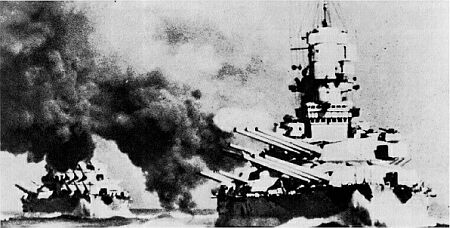
Category Archives: nazi germany

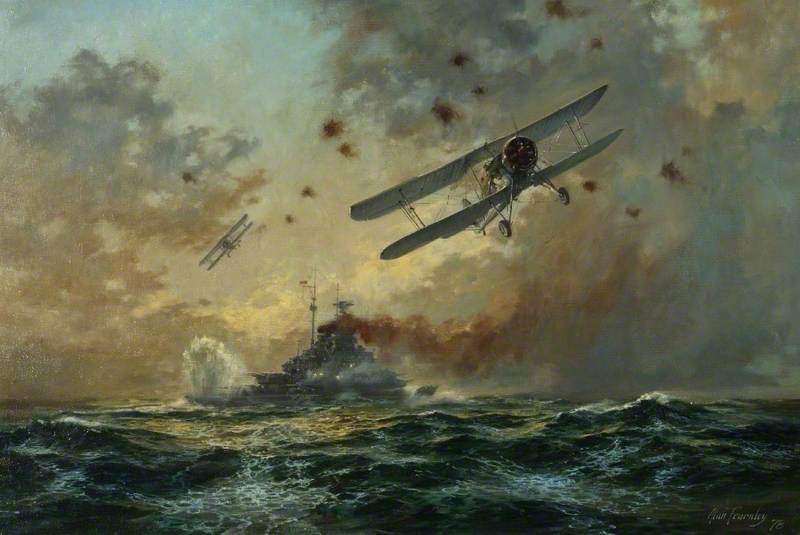
The Last Chance: 820 Squadron’s Stringbags vs. Bismarck

Alan Fearnley; (c) Alan Fearnley; Supplied by The Public Catalogue Foundation

Friends of Padre Steve’s World

A couple of days ago I reposted an article about the sinking of the HMS Hood by the German Battleship Bismarck. The story of the Bismarck is an epic saga of naval warfare and history. It is tragedy played out as if scripted by a playwright in three parts. The first was the sinking of the illustrious “Mighty” Hood by the Bismarck on May 24th 1941. 

The second, which I deal with today, was the pursuit and search for Bismarck by the British Home Fleet and the desperate attempt of the British to find a way, any way, to slow Bismarck down and bring her to battle, before she could return to the safety of Nazi occupied France.  The final chance to stop the mighty German Leviathan came as night fell on May 26th. 

I hope you appreciate the heroism of the men who flew the hopelessly obsolete aircraft who dealt the blow which crippled Bismarck. This is a re-write of past articles and I will post the final article about the sinking of the Bismarck tomorrow. 

There is one other thing to mention. I cannot imagine what it would have been to be a crewman on the Bismarck, knowing that nightfall would bring them safely unter the protection of the Luftwaffe, and then discover that there was no escape from death and destruction. 

Peace

Padre Steve
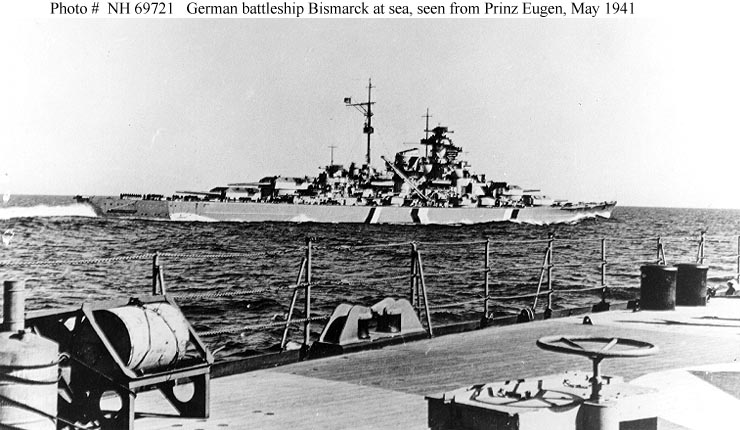
h69721

On May 24th 1941 the German Battleship Bismarck had sunk the celebrated Battlecruiser HMS Hood in the Denmark Strait and had seriously damaged the new Battleship HMS Prince of Wales. The news of the disaster stunned the Royal Navy. Fighting a war on multiple fronts and now standing alone against Hitler’s Germany the British deployed every warship available to find and sink Bismarck.

On the evening of the 24th of May Bismarck was being shadowed by the heavy cruisers HMS Norfolk and HMS Suffolk. To the east the ships of the Home Fleet, Britain’s last line of defense under the command Admiral John Tovey was making the fastest speed to intercept the Bismarck.  Far to the southeast, Vice Admiral James Sommerville’s  “Force H” comprised of the carrier HMS Ark Royal, the fast but elderly battlecruiser HMS Renown, and the light cruiser HMS Sheffield were ordered to leave the vital convoy which there were escorting and proceed to the northwest to join the hunt for the German battleship.

The Admiralty knew that the disaster could not be covered up, and within three hours of the battle sent out a press release detailing the situation: “British naval forces intercepted early this morning, off the coast of Greenland, German naval forces, including the battleship Bismarck. 

The enemy were attacked, and during the ensuing action H.M.S. Hood (Captain R. Kerr, C.B.E., R.N.) wearing the flag of Vice-Admiral L. F. Holland, C.B., received an unlucky hit in the magazine and blew up. The Bismarckhas received damage, and the pursuit of the enemy continues. It is feared there will be few survivors from H.M.S. Hood. 
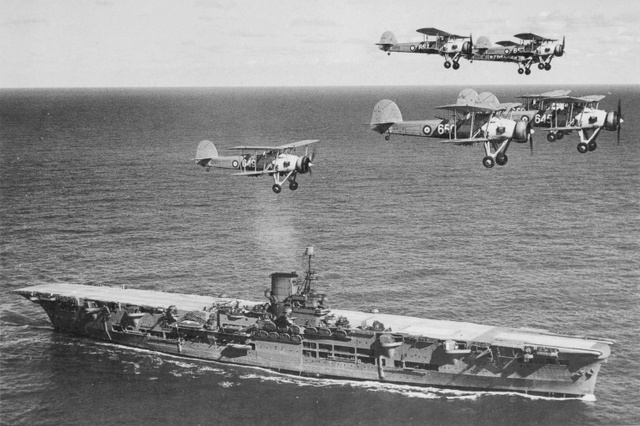
 

HMS_Ark_Royal_h85716

HMS Ark Royal with Swordfish in 1939

With Bismarck loose the North Atlantic Convoys on which Britain depended for her survival were vulnerable. The previous year the commander of the Bismarck task force Admiral Günther Lütjens with the Battlecruisers Scharnhorst and Gneisenau had wreaked havoc on the convoys. Now of Britain was on edge with the news of Bismarck’s break out into the Atlantic. Churchill was furious with the Navy when the Mighty Hood, the largest and most powerful ship in the Royal Navy destroyed with the loss of all but three crew members. Now every effort was directed to find and sink the Bismarck.

Swiftly ships were redeployed to find, sink, and prevent Bismarck intercepting and destroying any of the eleven convoys then at sea. HMS Rodney and the Sixth Destroyer Flotilla made up the Tribal Class Destroyers Somali, Tartar, Mashona, and Eskimo, was west of Ireland escorting the passenger liner RMS Britannic which was serving as a troopship even as Rodney made her way to Boston for a major refit, including her notoriously unreliable engineering plant. Leaving the Eskimo behind to escort, Rodney and the other three destroyers steamed to join Tovey and King George V. Likewise, HMS Ramillies was detached from Convoy HX-127 South of Cape Farewell, to intercept Bismarck from the west, and her sister ship HMS Revenge was dispatched from Halifax, Nova Scotia with the same mission. The elderly Ramillies and Revenge would have have stood little chance in an engagement with Bismarck, but they were better than nothing.
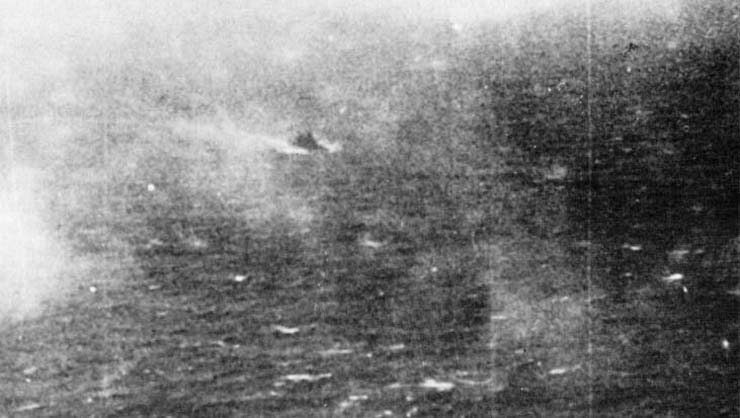
gallbismlastdays01

Bismarck photographed from a Swordfish from 824  Squadron

Accompanying the Home Fleet was the brand new Aircraft Carrier HMS Victorious with 824 Naval Air Squadron embarked under the command of LCDR Eugene Esmond. The squadron, like many in the Fleet Air Arm was equipped with Fairey Swordfish Torpedo Bombers. The squadron had seen action aboard other carriers in the North Atlantic, the Norway Campaign and in the Mediterranean before being assigned to the Victorious. On the night of 24 May 1941, in foul North Atlantic weather the Victorious launched nine Swordfish from a range of 120 miles in a desperate attempt to slow the Bismarck down. Esmond’s squadron scored one hit amidships on the Bismarck which did no damage except to scratch and dent the armor plate of Bismarck’s main belt.
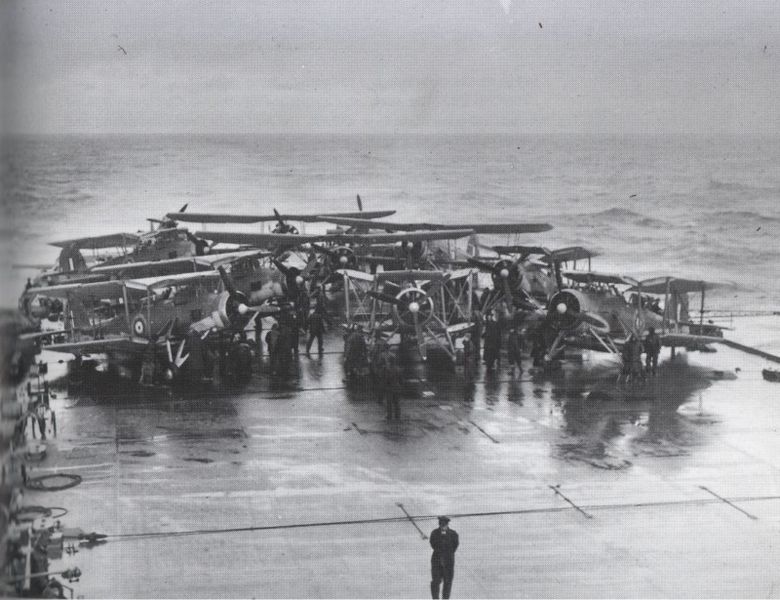
780px-Swordfish_on_HMS_Victorious_before_strike_on_Bismarck

824 Squadron Swordfish on HMS Victorious

About 6 hours after the attack by Victorious’s Swordfish, Bismarck shook her pursuers and disappeared into the mists of the North Atlantic, while her consort, the Heavy Cruiser Prinz Eugen escaped to the northwest in order to conduct independent raiding operations. Not knowing the location or course of the Bismarck the Royal Navy frantically searched for the German Leviathan. Most of the ships nearest to Bismarck’s last reported position, like Victorious and Repulse were low on fuel, others like Prince of Wales damaged, and others, like Force H seemed too far away to be of any importance in the search.

However the British were able to intercept and decode some German communications which indicated that Lütjens had orders to steam to Brest, in German occupied France for repairs. Brest had good repair facilities and both Scharnhorst and Gneisenau were undergoing repairs there. However, as far as the British knew, Lütjens might have doubled back through the Denmark Strait to Norway.

Though the British believed that the Bismarck could be headed toward Brest they could not be sure, as each hour passed the chances of finding and bringing Bismarck to battle diminished. For nearly 36 hours the British searched in vain for the Bismarck, and for much of the 25th Tovey’s squadron was searching in the wrong direction.

For over 30 hours the British had no idea where Bismarck was or might be heading. Winston Churchill was livid. He was angry at the loss of Hood and Bismarck’s evasion of ships shadowing her. Then at 1030 on the 26th of May the luck of the British changed.

After breaking clear of Prince of Wales, Norfolk, and Suffolk, the crew of the Bismarck believed with every hour that they would soon Be safe. They expected that by the morning of the 27th they would under the protection of Herman Goering’s Luftwaffe and safely in France. But, the good fortune of the British was the worst thing that could happen to the 2200 men aboard Bismarck.

On that morning a Royal Air Force Coastal Command PBY Catalina co-piloted by US Navy Ensign Leonard Smith found the Bismarck. The aircraft was holed by anti-aircraft fire, but sent out the following message:

One battleship, bearing 240º, distance 5 miles, course 150º. My position 49º 33′ North, 21º 47′ West. Time of transmission 1030/26.”

Once Smith transmitted Bismarck’s location every available ship converged on her location,  but unless something could be done to slow the Bismarck down, the chances bringing her to battle diminished by the hour.

The only heavy forces close enough to successfully engage Bismarck, Tovey’s battleships HMS King George V and HMS Rodney were over 120 miles behind Bismarck, too far away to intervene unless Bismarck changed course or could be slowed down. Ramillies and Revenge were far to the west and too slow to intercept.

This left Somerville’s Force H to the south, but it did not have the combat power to survive a surface engagement with the Bismarck should they encounter her without the support of other heavy fleet units. Even so Sommerville was willing to risk the Renown in a suicidal action to bring Bismarck to battle if it would allow Tovey to catch her before she could escape. Desperation was the order of the day for both sides.
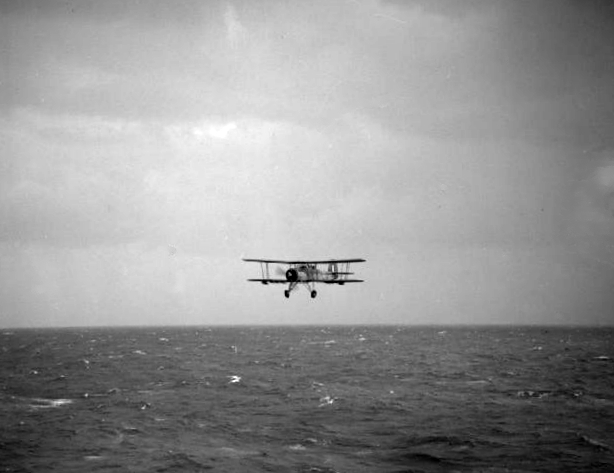
HMS_Ark_Royal_swordfish

820 Squadron Swordfish returning to Ark Royal after the attack on Bismarck

The situation was desperate. If Bismarck could not be slowed down before dark she would be in range of heavy Luftwaffe Air support as well as support from U-Boats and destroyers based in France. Unless something akin to a miracle occurred Bismarck, would join the Scharnhorst and Gneisenau in Brest and with the addition of Bismarck’s sister-ship Tirpitz form a surface squadron strong enough to devastate British shipping in the Atlantic.

Ark Royal’s aircraft were the last hope of slowing down Bismarck before she could effect her escape and emerge from the Atlantic after having dealt the Royal Navy a devastating blow.

The strike aircraft available on Ark Royal were the most unlikely aircraft imaginable to successfully carry out such a mission. Ark Royal’s 820 Squadron, like Victorious’ 825 Squadron it was equipped with Fairey Swordfish Mk 1 Torpedo Bombers. These were biplanes with their crew compartment exposed to the weather.

The Swordfish entered service to the Navy in 1936. By all standards these aircraft were antique compared with most aircraft of its day. Likewise, the Mark XII 18” torpedo carried by the aircraft was smaller or slower and equipped with a less powerful warhead than comparable torpedoes used by other navies. Despite their limitations the venerable Swordfish had performed admirably during the early part of the war sinking or damaging three Italian battleships at Taranto in November 1940. Their success against the Italians at Taranto gave inspiration to the Japanese for their attack against the U.S. Pacific Fleet at Pearl Harbor the following year. But now, in the face of foul weather and a powerful opponent 820 Squadron’s Swordfish were all the Royal Navy had left to stop Bismarck before she could make her escape.
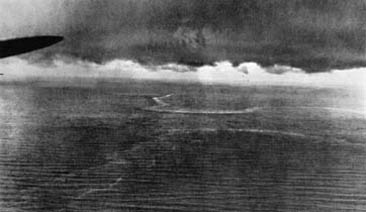
gallbismlastdays03

Bismarck steering erratically after the torpedo hit to her stern

With that in mind  Sommerville in sent his light cruiser, the  HMS Sheffield ahead to shadow Bismarck while Ark Royal closed in to launch her Swordfish against the German ship.  The first wave of aircraft strike were unaware Sheffield was near Bismarck mistakenly attacked the British cruiser. Thankfully, the new design magnetic detonators On the torpedoes failed to detonate,  saving Sheffield from destruction. With little daylight left the aircraft returned to Ark Royal where they rearmed with torpedoes equipped with contact fuzes and refueled by the flight deck crew, that labored in rain and 50 knot winds blowing across the carrier’s flight deck. Just before 8 p.m. 15 Swordfish of 820 Squadron took off for what they knew was the very last chance to attack Bismarck before night fell. If they failed Bismarck would most certainly escape.

As darkness began to fall the 15 Swordfish from 820 Squadron descended through the clouds to attack the German ship. Just fifteen obsolete aircraft and thirty men were attacking the most powerful warship afloat. They dispersed and attacked from all points of the compass. Bismarck twisted and turned and fired all of her guns at the attacking aircraft. The Germans fired with every weapon available, even the 15″ guns of her main battery, which she fired her into the ocean ahead of the Swordfish. It appeared for a moment that Bismarck had successfully avoided serious damage. All but two torpedoes missed.  One torpedo struck the German midships and barely dented her massive armor. However a second torpedo, launched by a Swordfish piloted by Lieutenant John Moffat hit Bismarck in her weakly protected stern. The target angle from the aircraft to Bismarck was poor and those aboard the battleship who saw the torpedo approach believed that it was certain to miss, but it hit.

The hit jammed Bismarck’s port rudder at a 12 degree angle, and destroyed her steering gear. Repair crews and divers were dispatched but the weather was such that German damage control teams could not repair her steering gear. This was mainly due to the most critical design flaw in the class and most other German Capital Ships, and Heavy Cruisers. The structure of the stern was inherently weak. Likewise, the design of the ship’s propulsion system used a three screw system with dual rudders. This was designed to save weight when most other capital ships used a four screw arrangement. The steering gear were hopelessly jammed and the three screw arrangement did not give Bismarck the ability to steer herself and main control just using her screws. The game was now over, except for the final engagement. Escape was now impossible.

After the hit Bismarck steamed in circles, unable to maneuver. This enabled Tovey with King George VRodney, the heavy cruisers Norfolk and Dorchester, as well as a number of destroyers to catch up with the hitherto elusive German battleship.

Bismarck’s senior surviving Engineering Officer, Korvettenkapitänen Gerhard Junack recalled the damage and attempts to restore maneuverability to the stricken ship:

    One torpedo which hit amidships caused no damage, but the second affected the rudders disastrously, jamming the port-side rudder at a 15º angle. Immediately, the Bismarck became no longer manoeuvrable.

  • The torpedo-hit on the rudder shook the ship so badly that even in my zone of action in the turbine-room, the deck-plates were thrown into the air, and the hull vibrated violently. Shortly after the blow, water flooded through the port-side gangways into the turbine-room, and clouds of gas and smoke filled the room until the forced ventilation cleared it.
  • The stern compartments of the ship were now flooding, but the men who had been stationed there could still be saved, and soon the carpenters and repair-crew came through, making their way aft. But the ship pitched so violently in the strong sea swell that it was impossible to keep a foothold in the turbulent water surging through the companion-way.
  • All possibilities were now being considered to restore the ship’s manoeuvrability – even if only temporarily. The Commander, Kapitän zur See Lindemann, considered reports from Chief Engineer Lehmann, who was in continual contact with the repair and rescue teams. There was much gesticulation, and at one point the Chief Engineer stepped out of the circle, walked away, turned about, and made a sign of complete refusal. What this was about I am not certain, but eventually it was found possible to connect the hand rudder. But the old rudder would not budge, and to attempt to cut it away with underwater saws was quite impossible because of the heavy swell. A proposal to force the rudder out from below with the help of explosives was rejected, because of the proximity to the propellers. Thus all experiments with the auxiliary rudder were given up as completely hopeless, with the old one immovable.”

The attacks of the antiquated Swordfish on the Bismarck achieved results that no one in the Royal Navy expected. When reports indicated that Bismarck had reversed course following the torpedo attack Tovey could not believe them. It was only when lookouts aboard Sheffield confirmed the reports from the Swordfish about Bismarck’s erratic movements that Tovey realized that Bismarck must have been damaged and was unable to maneuver.

It was a dramatic and unexpected turn of events. The German crew sank into gloom as the night went on and they dealt with torpedo attacks from the British Destroyers as Tovey’s battleships moved in for the kill. As darkness descended the destroyers of Captain Phillip Vians’s 4th Flotilla, the Tribal Class destroyers Cossack, Maori, Zulu, Sikh and the Free Polish Navy destroyer Piorun, closed with Bismarck subjecting her to a Lilliputian torture. The ships harassed and attacked the German ship with guns and torpedoes. Though their attacks did not succeed they kept the bulk of the Bismarck’s crew up and awake all night. They launched 16 torpedoes without a hit, but a star shell landed on Bismarck’s bow forcing damage control teams to race to the forecastle to extinguish the flames in order to prevent heavier ships nearby from shooting at her. As daylight arrived, Admiral Lütjens, his staff, and Bismarck’s Captain and watch standers prepared the ship for the inevitable confrontation with the British battleships and heavy cruisers.

Until tomorrow,

Peace,

Padre Steve+
1 Comment

Filed under History, Military, Navy Ships, nazi germany, World War II at Sea, world war two in europe

The Late Treaty and Post Treaty Battleships, an Introduction

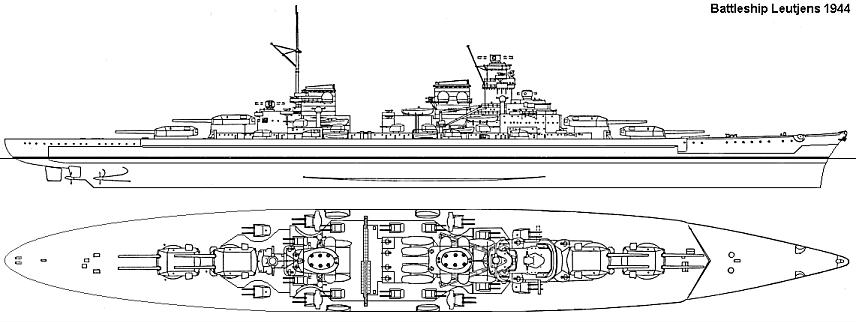
Line Drawing of the German H-39 Class Battleship

Friends of Padre Steve’s World,

I am still on Trump and COVID19 overload so I am going back to the introductory article of a series I planned years ago.

This is the introductory article for a series of ten articles on the classes of battleships built or planned by the major powers following the expiration of the Second London Naval Treaty. A previous series of articles dealt with the battleships constructed in compliance or close compliance with the treaty. This series will cover the Japanese Yamato Class, and Super Yamato Classthe British Lion Class, the Vanguard, the German Bismarck and H39 Classes, the French Alsace Class, the Soviet Sovyetskiy Soyuz Classand finally the American Iowa and Montana classes.

Model of the Montana Class

When I first wrote this article over a decade ago I classed all of these ships as post-Treaty designs while overlooking the fact that most were designed during the Treaty period, and that most were designed and built in violation of it, or by invoking the  escalator clause. In truth only the Vanguard, the Montana’s and the never laid down German ships of the H-41 Class and beyond, as well as the Japanese Super Yamatos.

All of these ships were designed and built or designed in the late 1930s and early 1940s and with the exception of the Sovietetskiy Soyuz Class built on each navy’s past experience in battleship design and construction. The Japanese had constructed no treaty battleships in the 1930s, so the Yamato’s were the first battleships constructed by Japan since the Nagato Class which had been completed in the 1920s and the incomplete Tosa Class.

The Bismarck

The Second London Naval Treaty of 25 March 1936 was signed by France, Britain and the United States. Japan walked out on the conference and the Italians did not sign because of the outcry that their invasion of Abyssinia had evoked.  The treaty called for ships to have a standard displacement of not more than 35,000 tons and main armament not to exceed 14” guns. This was a reduction in the size of armament from the previous London and Washington treaties. When the Japanese delayed and then refused to sign the agreement, as did the Italians, refused the United States invoked the escalator clause which permitted them to disregard the treaty limitations.

USS Iowa lead ship of the Iowa class

The Americans who invoked only the armament part of the clause on the North Carolina and South Dakota classes. However they took full advantage of it to construct the 45,000 ton Iowa class. The plans called for six of this class, but only four were completed. The Montana Class of 65,000 tons mounting twelve 16” guns and Provided protection against that type of shell. The Montana Class ships were never laid down but because of their features will be covered in this series of articles.

Line Drawing of the Lion Class

Following the King George V Class the Royal Navy planned the Lion Class which was in essence an enlargement of the King George V Class armed with nine 16” guns.  Four of the Lion ships we’re planned, but none were to built. They cancelled early in the war and only one further battleship the 44.500 ton HMS Vanguard would be completed by the Royal Navy but not until 1946.

HMS Vanguard

The Germans, who were not a signatory to the treaty but had an agreement with Britain to limit their total naval tonnage to 35% of Britain’s had build the Scharnhorst Class Battlecruisers in the mid 1930s and began the Bismarck Classthe largest capital ships completed in Europe. These were to be followed by the H39, H41, H42, H43 and H44 classes ranging in displacement from 56,444 tons to 131,000 tons with armament ranging from eight 16” to eight 20” guns. Since just two of the H39’s were laid down and then cancelled while in the early stages of construction, and the others never laid down, so I will only discuss the H39 class in this series. The others only existed in the world of a mad dictator’s fantasies.

Sovyetskiy Soyuz Class

The Soviet Union which was never a signatory to any of the naval treaties and had not built a battleship since the First World War planned the massive Sovyetskiy Soyuz Class. This would have been a Class of 15 ships would have displaced 58,220 tons and mounted nine 16” guns. Several designs were evaluated, including those of American and Italian shipbuilders and designers. The foreign designs were rejected in favor of a Soviet design. However, the timing coincided with Stalin’s purge of the Armed forces leadership, as well as men who ran military and naval production plants. This added a further delay in their design and construction. The four initial ships of the class were laid down but never completed due to the Nazi invasion in 1941. Construction was halted and all were scrapped after the war.

Yamato

The Japanese Yamato Class, the largest battleships ever constructed of 69,998 tons standard displacement armed with nine 18” guns, the largest main battery ever installed on battleships were the largest capital ships built before the second generation of U.S. Navy super carriers.

The French Alsace Class was intended to counter the German H-39s. They would have been an enlarged and more heavily armed modification of the Richelieu Class. However, the German attack and and conquest of France led to their cancellation before they were ever laid down.

The first article I write will be about the Bismarck Class and that will appear later this week. This will be cutting it close because I plan on dealing with Operation Rheinübung, the deployment of Bismarck and Prinz Eugen which would turn out to be one of the most intense times of the war, especially for the British and the Royal Navy. So tomorrow on to the Bismarck and Tirpitz.

Peace,

Padre Steve+

1 Comment

Filed under germany, History, imperial japan, Military, Navy Ships, nazi germany, World War II at Sea, world war two in europe, world war two in the pacific

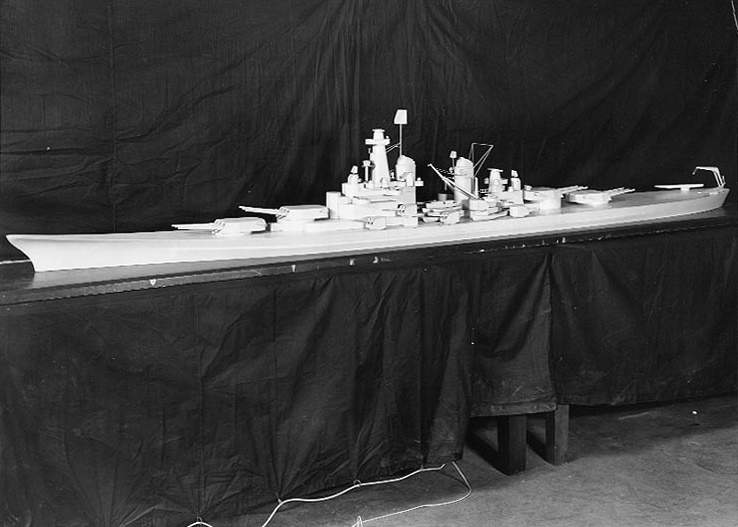
An Experiment in Failure: The Beautiful, Flawed, Expensive, and Expendable Alaska Class Large Cruisers

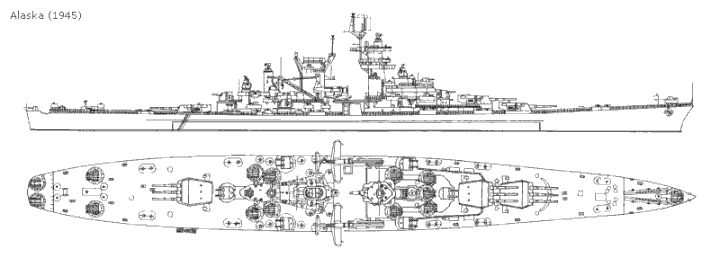
Line drawing of Alaska in 1945

Friends of Padre Steve’s World,

The three ships of the Alaska Class were among the most confusing and curious designs of warships ever built for the US Navy. They had their genus in the early 1930s when the Germans deployed the Deutschland Class Pocket Battleships, which in reality were heavy cruisers with 11” guns designed for long range commerce raiders. Both the Americans and French began to design something larger and faster. The French produced the excellent Dunkerque Class which could be classed as as either a Battlecruiser, or Fast Battleship. The American designs languished on the drawing board due to bureaucratic conflicts between those who believed a specialized ship to track down commerce raiders was necessary, and those who thought such designs were a waste of money and resources.

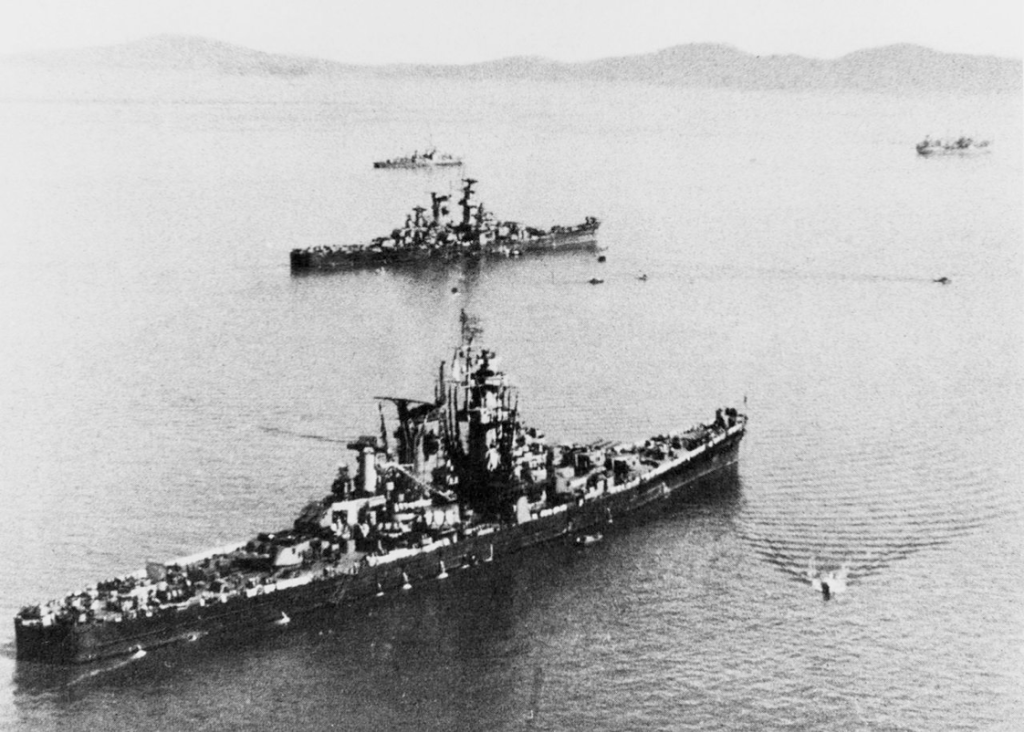
Alaska and Guam Together 

However in the late 1930s a rumor of Japanese “super cruiser” put them back into the planning stage  with President Franklin Roosevelt being a supporter of the concept. In truth the Japanese had no such ship on the drawing board, but still the process of trying to figure out what the ship and its mission would be perplexed designers. Add this to political pressure and  the resulting confusion had nine different designs underway at the same time, everything from a 6,000 ton modification of the Atlanta Class anti-Aircraft cruiser, an enlarged heavy cruiser, to a 38,000 ton fast battleship. Eventually the Naval General Board Chose in essence what was a greatly enlarged, up-armored and up-gunned modification of the Baltimore Class heavy cruisers.

The confusion even manifested in what the Navy decided to call the class. Based on their size, speed and armament they looked like Battlecruisers, but if you compared them to other battlecruisers they had severe deficiencies in armor and anti-torpedo defenses when compared the the old but still effective British Hood, Repulse, and Renown, the French Dunkerque Class, the German Scharnhorst Class, and the Japanese Kongo Class, which were all battlecruisers or fast battleships.

The Navy classed them as Large Cruisers and deigned them as CB. The Navy designated Heavy Cruisers as CA, Light Cruisers as CL, and the US Navy’s one attempt to build large Battlecruisers, the Lexington Class were designated as CC before they were cancelled with two of the four ships , Lexington and Saratoga completed as Aircraft Carriers. Likewise the naming of the class straddled the line between States and Cities. Battleships were named after States, cruisers were named after cities, but the Alaska Class were named after territories. While Alaska and Hawaii became states later, they were not states at the time. The ambiguity of their names reflected the confusion of their design and mission.

They were designed to hunt and kill the German Pocket Battleships, the imagined large Japanese Cruisers, and as a counter the battlecruisers Scharnhorst and Gneisenau which in 1939 and 1940 had created havoc in the Atlantic raiding convoys and sinking the Royal Navy Aircraft Carrier HMS Courageous.


USS Missouri (Top) with USS Alaska (below) at Norfolk Naval Station 1944

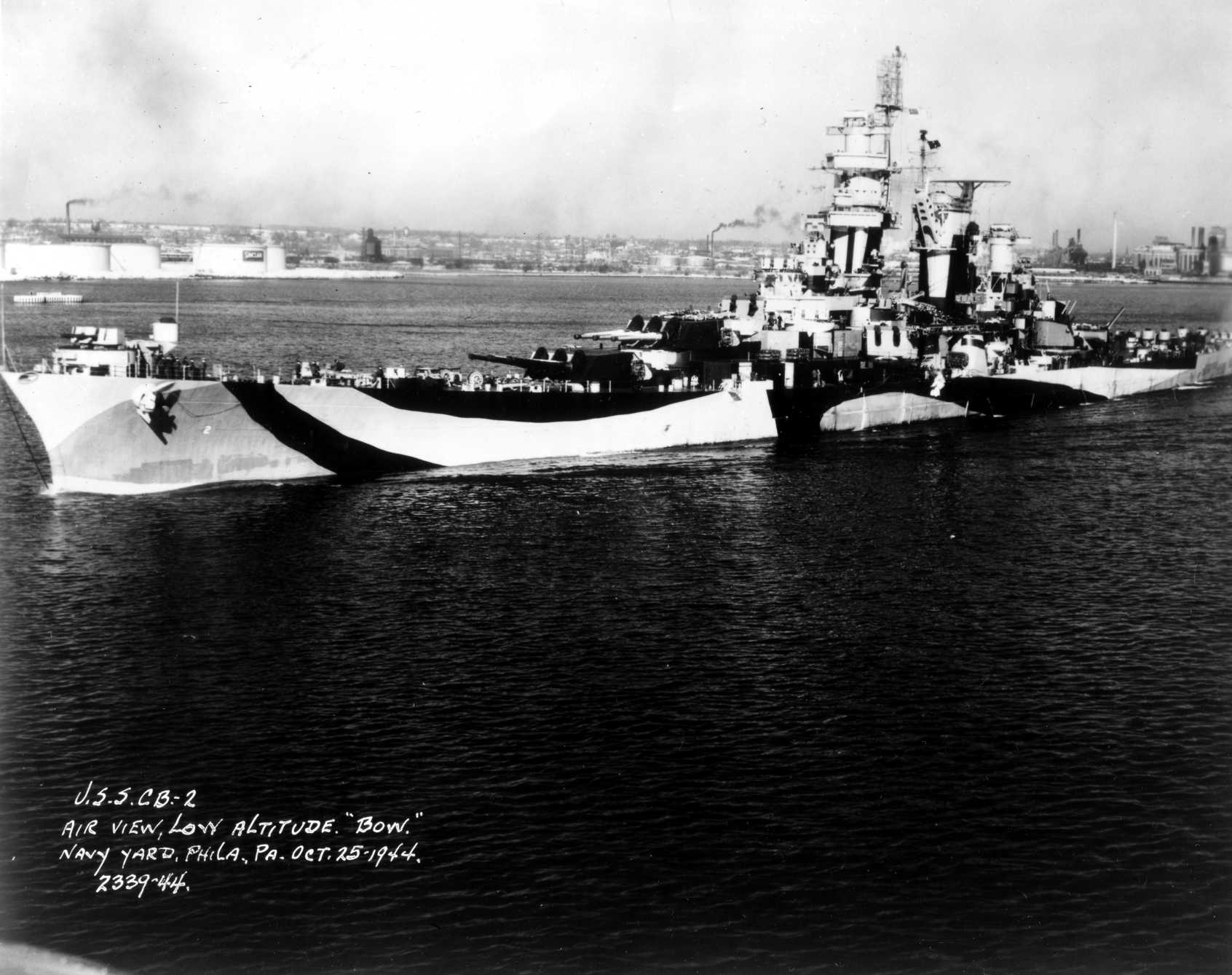
As designed the ships were 809 feet long and 91 feet wide, displaced 27,000 tons, and mounted 9 12” guns in three turrets, and and were capable of 33 knots.  They used the expanded hull design of the Baltimore Class, and used the same propulsion system as the Essex Class Aircraft Carriers. The ships mounted a large anti-aircraft battery of twelve 5” 38 caliber Dual Purpose guns, fifty-six 40mm cannons in quad and twin mounts, and thirty four 20mm light anti-aircraft guns. But even this was less than they could have mounted. That was because instead of placing the ship’s aviation facilities on the fantail as was done on the Brooklyn Class Light Cruisers, the Heavy Cruiser Wichita, the Cleveland Class Light Cruisers, the Baltimore Class, and all the modern battleships, to the earlier midships aviation facilities including port and starboard catapults. The Navy’s experience in combat during the Guadalcanal Campaign showed this arrangement to be a vulnerability in surface actions. Despite this the design was not changed.

Their armor protection was proof against 8” and 11” shells but could not withstand the heavier shells of battleships. In addition, to keep the ships at their designed displacement, no below the waterline torpedo protection was provided. The lack of that would have made them vulnerable That being said they had a good anti-aircraft battery, could keep pace with the fast carriers, and conduct shore bombardment operations against the Japanese mainland. None engaged any type of ship that they were designed to fight. The Alaska and Guam were the only two ships of the class completed and which saw service in the war. They were both decommissioned having served barely two and a half years active service each. Hawaii was launched but construction was suspended when she was 84% complete, and she was never commissioned.

The Scharnhorst: She and the Gneisenau were the threat that the Alaska’s were designed to counter

Alaska was laid down in December 1941 shortly after Pearl Harbor, launched 15 August 1943 and commissioned on 17 June 1944. Her sister ship, Guam was launched on 12 November 1943 and commissioned 17 September 1944.  The final ship of the class to be built the Hawaii was launched after the war in November 1945 with her construction halted when she was 84% complete in 1947. Three planned ships, the Philippines, Puerto Rico and Samoa were never laid down.

Aerial View of USS Alaska

While fast and large with more than adequate firepower the purpose that they created for no longer existed by the time that they were commissioned.  Of the German Pocket Battleships, Graf Spee had been scuttled in 1939, while Lützow the former Deutschland, and Admiral Scheer were bottled up in the Baltic. The Scharnhorst had been sunk by a 12 ship British task force led by the HMS Duke of York on December 26th 1943 after mounting an attack on a Murmansk convoy at the Battle of North Cape.  Her sister Gneisenau had been heavily damaged in the “channel dash” and bombing in Kiel. While being refitted to replace her nine 11” guns with six 15” guns the work was discontinued after the sinking of the Scharnhorst. Her main battery and secondary armament were removed and used to reinforce the Atlantic Wall, mostly in Norway.

The USS Guam in 1945

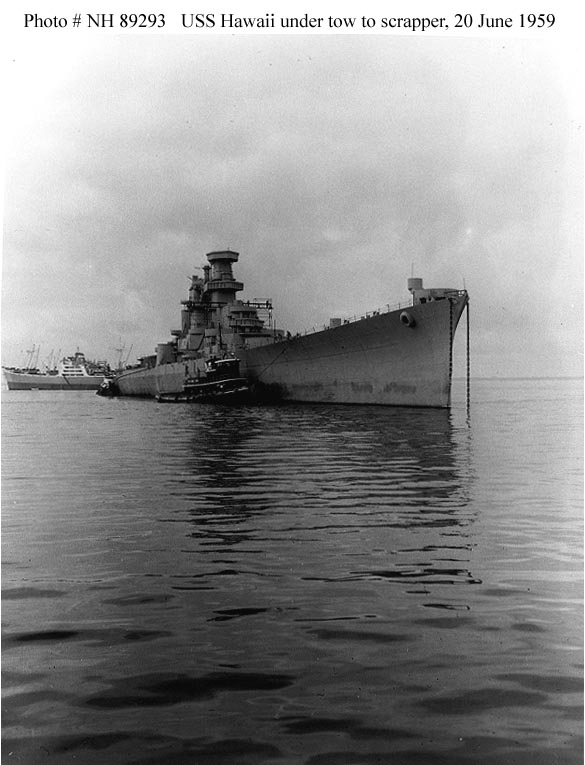
With their natural opponents no longer a factor in the war the Alaska and Guam were sent to the Pacific where they spent their time escorting fast carrier task forces, conducting naval gunfire support missions off Okinawa and conducting sweeps in Japanese waters as part of the initial blockade of Japan.  Following the war Alaska and Guam were active in Operation Magic Carpet the return of US servicemen from the Far East to the United States. Alaska and Guam were decommissioned in February 1947 remaining in reserve until stricken from the Naval List. Alaska was scrapped in 1960 and Guam being in 1961. The fate of Hawaii was be debated for years. Suggestions included to complete here her as the first guided missile cruiser (CG) and later a Command Cruiser (CC) were rejected as too expensive and she was sold for scrap in 1959.

Incomplete and undervalued the Hawaii being towed to the breakers in 1959

The era of the Battle Cruiser which began with the launching of the HMS Invincible in 1907 culminated in with launching of the HMS Hood, or arguably the  Dunkerque or Scharnhorst Classes, but not with the Alaska Class. They looked a lot like battlecruisers, but that is where the similarity ended.  It was an ignominious ending for expensive and practically unused ships being broken up. But it had to be. Their lack of underwater protection, barely average armor protection, ill designed aviation facilities, and main battery which was unique, expensive, and had a tendency to break down ensured that they could not have another mission. Instead, for a much more affordable cost, Baltimore Class cruisers were converted into guided missile cruisers or retained as naval gunfire support ships. Likewise, Cleveland Class light cruisers were converted to guided missile cruisers. One of the Baltimore Class, the Norfolk was converted into a Command Cruiser, and two others converted into the light fleet carriers, and later command ships, Wright and Saipan. 

In light of the need for a combination of substantial naval gunfire support, on a platform large enough to support the latest Aegis air defense radars and missiles to protect an Expeditionary Strike Group, capable of ballistic missile defense, and equipped with combat proven 6”, 8”, or 16” guns for naval gunfire support missions, Tomahawk Cruise missiles, and the latest anti-ship missiles and close in protective missiles and guns is needed. The existing Zumwalt Class, Arleigh Burke Class, and Ticonderoga Class, are incapable of fulfilling such a role. The ships would have to be cable of independent operations, and have the capacity to incorporate new technologies including laser weapons, newly developed combat drones capable of ship to shore, ship to ship, and ASW operations, are needed. The ships would have to be capable of extended independent operations, and have substantial protection against current anti-ship weapons, and torpedoes. It seems  to me that a new class of Battle Cruisers, in effect a new, enlarged and much improved Alaska Class would be in order.

The Alaska Class was a failure in design and practice. By the time they were completed their primary mission no longer existed, and the compromises in their design ensured that they would be incapable of any real modernization that would make them effective components of a modern Navy. It was not the first or last time the US Navy, the Royal Navy, or any other Navy has design and built a lemon.

Until tomorrow,

Peace

Padre Steve+

2 Comments

Filed under Foreign Policy, germany, History, imperial japan, Military, national security, Navy Ships, nazi germany, US Navy, World War II at Sea, world war two in the pacific

Short, Squat, Powerful and Well Protected: The South Dakota Class Battleships

Friends of Padre Steve’s World,

I am still on my holiday from writing about the novel Coronavirus 19 and President Trump and his Administration’s incompetent response to it. It is a response that has already claimed 87,000  American lives, and every day more damning evidence shows the results for the President’s use of it for political purposes, almost all of which are backfiring as much as his malfeasance and willingness to see Americans die by the tens of thousands to maintain his cloud-cuckoo-land fantasy that this will go back to normal as if by magic. But, I won’t go any farther tonight on that tonight.

I was so inflamed about what was happening earlier today I decided that it was best to continue my series on the battleships designed and built by the British, French, Germans, Italians, and Americans from after the Battleship Holiday mandated by the Washington Naval Treaty, and the restrictions of the London Naval Treaty. The Germans were not signatories to these treaties as they were already under the much more severe provisions of the Treaty of Versailles, until the Hitler regime began to clandestinely violate it in 1934, and publicly in 1935. The British signed at bilateral naval accord with Germany in June of 1935, which the Germans renounced in 1938 in order to build a fleet of battleships that Hitler believed would allow him to achieve naval parity or superiority over the British, which he renounced in 1938 during the Czechoslovakia crisis.

This is the fifth and last in a series of articles about the battleships built under the provision of the Washington and London Naval Treaty limitations in the 1930s. I am not including the ships which were already in service or completed in the immediate aftermath of the Washington Treaty. That treaty required the British to scrap 23, the Americans 30, and Japanese 17 Battleships or Battlecruisers to comply with the treaty. Some were allowed to be converted to Aircraft Carriers, and some demilitarized to serve as training or target ships.

This series looks at the modern battleships built by the future World War II combatants between 1932 and 1939. This article covers the American South Dakota Class. Previous articles dealt with the British Royal Navy’s King George V Class, The German Kriegsmarine Scharnhorst Class, the Italian Reginia Marina’s Vittorio Veneto Class, the United States Navy’s North Carolina Class, and the French Dunkerque and Richelieu Classes.The German Bismarck, Japanese Yamato, British Vanguard and American Iowa classes will be covered in a subsequent series.

I think that I will also go back and deal with various classes of ships that were allowed to be kept after the Washington Naval Treaty. These included  two of the three partially built American Colorado Class, the two ship British Nelson Class, and the second of the Japanese Nagato Class, the Mutsu; and the battleships and battlecruisers that were completed as Aircraft Carriers by the United States, Britain, Japan, and France. From there I could move on and write about and the new battleships and battlecruisers planned or under construction at the time the treaty came into effect, the ships that had they been built would have launched a major naval arms race in the 1920s, something that few nations could have afforded, especially Great Britain.  I think I will even go back to the Dreadnoughts and Battlecruisers of the First World War. Of course there are a lot of them, so I will probably focus on the ships that continued serving through the Second World War. I might even delve into the German H type battleships which were more fanciful than realistic, only satisfying the need of Hitler for nothing but the biggest, the American Montana Class, the British HMS Vanguard, the French Alsace Class, and the Japanese A-150 or Super Yamato’s. 

Since there is much disagreement about which of the ships that I have written about in this series,  I may try to do a comparison to determine which was the best of these classes in the categories, of armament, speed and range, armor protection, reliably, and performance in combat. One has to remember that these were the first battleships built by their respective navies since the First World War, each was built under the constraints imposed by the naval treaties, and their influenced by the developments of potential opponents and the changing world situation. In some cases sacrifices were made on each design due to expediency and the need to get them to the fleet.

As the world edged closer to war in the late 1930s the U.S. Navy followed up its decision to build the two ship North Carolina class battleships with additional fast battleships. Initially the General Board wanted two additional North Carolina’s the Chief of Naval Operations, Admiral William H. Standley wanted a different design, which may have created the toughest and best of the battleships in this series. Compared to the other battleships built in this era, the South Dakota Class was short, fat, a bit slower, but was superbly protected with a well designed armored citadel, excellent main, secondary, and anti-aircraft batteries, and superior radars, fire direction systems and combat operation centers. They demonstrated a knack for survival as well as an ability to inflict damage, as was shown by the South Dakota and Massachusetts.

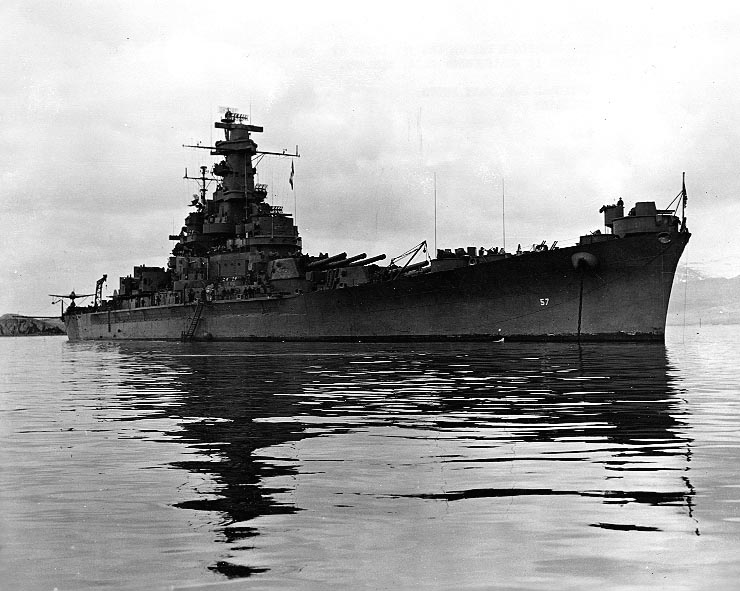
USS South Dakota BB-57 in 1943

Design work started in 1937 and several designs were proposed in order to correct known deficiencies in the preceding North Carolina class to include protection and the latest type of steam turbines.  As in the North Carolina’s the Navy struggled to find the optimal balance between armament, protection and speed. In the end the Navy decided on a shorter hull form with greater beam which necessitated greater power to maintain a high speed. The armor protection was maximized by using an interior sloped belt of 12.2 inch armor with 7/8” STS plates behind the main belt which made the protection the equivalent to 17.3 inches of vertical armor. The Belt continued to the bottom of the ship though it was tapered with the belt narrowing to 1 inch to provide addition protection against plunging fire which struck deeper than the main belt. As an added feature to protect against torpedo hits a multi-layered four anti-torpedo bulkhead system was included, designed to absorb the impact of a hit from a 700 pounds of TNT.

In order to accommodate the machinery necessary to provide the desired speed of 27 knots on the shorter hull the machinery spaces were rearranged.  The new design placed the boilers directly alongside the turbines with the ship’s auxiliaries and evaporators also placed in the machinery rooms. Additional design changes made to save space included making the crew berthing areas smaller. This included that of officers as well as the senior officers and shrinking the size of the galley’s and the wardroom from those on the North Carolina’s. The resultant changes allowed the ships to achieve the 27 knot speed, improved protection and carry the same armament of the North Carolina’s within the 35,000 treaty limit.

Two ships of the design were approved and with the escalator clause invoked by the Navy two more ships were ordered all with the nine 16” gun armament of the North Carolina’s.  The leading ship of the class the South Dakota was designed as a fleet flagship and in order to accommodate this role two of the 5” 38 twin mounts were not installed leaving the ship with 16 of these guns as opposed to the 20 carried by the rest of the ships of the class. The final design was a class of ships capable of 27.5 knots with a range of 17,000 miles at 15 knots mounting nine 16” guns with excellent protection on the 35,000 tons and full load displacement of 44,519 tons.

The lead ship of the class the USS South Dakota BB-57 was laid down 5 July 1939 at New York Shipbuilding in Camden New Jersey, launched on 7 June 1941 and commissioned on 20 March 1942.  Following her commissioning and her shakedown cruise South Dakota was dispatched to the South Pacific. Soon after her arrival she struck a coral reef at Tonga which necessitated a return to Pearl Harbor for repairs.

When repairs were complete she was attached to TF 16 escorting the USS Enterprise CV-6 during the Battle of the Santa Cruz Islands on 26 October 1942.  During the battle she was credited with shooting down 26 Japanese aircraft but was struck by a 500 lb bomb on her number one turret which caused no damage.


The Dent in South Dakota’s Number Three Turret from a hit from a 14” Shell from Kirishima

She joined TF-64 paired with the battleship USS Washington during the Second Naval Battle of Guadalcanal on14-15 November 1942. During the action South Dakota suffered a power outage and was hit by over by a minimum of 26 enemy shells, and possibly up to 40. At least one of a 14” shell from Kirishima, 18 8” shells from the Heavy Cruisers, 6 6” shells from from Japanese light cruisers, and at least one 5” shell from a destroyer. The damage was superficial, once her power was restored much of the damage was repaired ship’s crew. The shellfire knocked out three of her fire control radars, her radio and main radar set which were also repaired.

Three of the escorting destroyers, USS Preston, USS Walke, and USS Benham were sunk or mortally wounded, and USS Gwin was damaged.destroyers were also lost but the Washington mortally wounded the fast battleship Kirishima and destroyer Ayanami which were scuttled the next day and damaged the heavy cruisers Atago and Takao.

South Dakota returned to New York for repairs which completed in February 1943. She joined the carrier USS Ranger CV-4 for operations in the Atlantic until April when she was attached to the British Home Fleet. She sailed for the Pacific in August 1943 and rejoined the Pacific Fleet in September. The battleship joined Battleship Divisions 8 and 9 and supported the invasion of Tarawa providing naval gunfire support to the Marines.

South Dakota spent the rest of the war was spent escorting carriers as well as conducting bombardment against Japanese shore installations. She participated in almost every action of the U.S. drive across the Central Pacific. She was struck by a 500 pound bomb during the Battle of the Philippine Sea that destroyed several anti-aircraft mounts and killed 26 of her crew.

A Photo taken from South Dakota while anchored in Tokyo Bay with Mount Fuji in the Background 

South Dakota was present at the Japanese surrender in Tokyo Bay and returned to the United States in 1945. She was decommissioned and placed in reserve on 31 January 1947. She was stricken from the Naval Register on 1 June 1962 and sold for scrap in October of that year. Various artifacts of this gallant ship to include a propeller, a 16” gun and the mainmast are part of the USS South Dakota Memorial Park in Sioux Falls South Dakota. 6,000 tons of armored plate were returned to the U.S. Atomic Energy Commission for use in civilian nuclear programs and a second screw is displaced outside the U.S. Naval Museum in Washington D.C.  She received 13 battle stars for World War II service.

South Dakota also had the dubious distinction of having the youngest sailor of the war 12 year old Calvin Graham who confessed lying about his age to the Gunnery Officer, LT Sergeant Schriver. Graham was court-martialed and given a dishonorable discharge spending 3 months in the ship’s brig before he was able to be returned to the United States where just after his 13th birthday he entered 7th grade. Shriver was wounded at Guadalcanal and was awarded the Purple Heart. He left the Navy in in 1945 as a Lieutenant Commander. He later became the Brother in law of John F. Kennedy, and the first Director of the Peace Corps, and became the the running mate of Senator George McGovern in the 1972 Presidential Election, to Richard Nixon and Spiro Agnew. 

USS Indiana BB-58 Bombarding Japan in 1945

The second ship of the class the USS Indiana BB-58 was laid down at Newport News Naval Shipyard on 20 November 1939 launched on 21 November 1941 and commissioned on 30 April 1942.  She served throughout the Pacific War by serving with the fast battleships of Vice Admiral Willis Lee’s TF-34, escorting carriers during major battles such that the Battle of the Philippine Sea or as it is better known the Marianas Turkey Shoot. She returned to the United States for overhaul and missed the Battle of Leyte Gulf but served at Iwo Jima, Okinawa and operations against the Japanese home islands. During the beginning of the Marshall Islands campaign Indiana received her heaviest damage. During night operations with a carrier task group she turned in front of USS Washington. A collision ensued which caused heavy damage to Indiana, including the loss of nearly 200 feet of her armored belt. The collision took off about 20 feet of Washington’s bow which remained imbedded in the Indiana until she was repaired. Washington also required a return to the United States for repairs.

Following the war she was decommissioned in 1947 and sold for scrap in September 1963.   A number of her relics are preserved at various locations in Indiana and her prow and mainmast are centerpieces of a display at the University of Indiana’s football stadium. Much of her armor was provided to the U.S. Atomic Energy Commission for use in civilian programs.

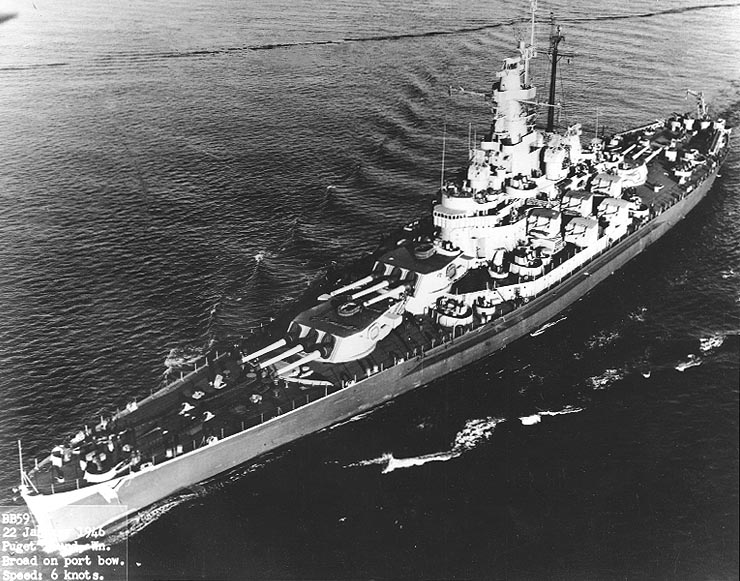
USS Massachusetts BB-59 in January 1946 in the Puget Sound

The third ship of the class the USS Massachusetts BB-59 was laid down on 20 July 1939 at Bethlehem Steel Corporation Fore River Yard in Salem Massachusetts and launched on 23 September 1941 and commissioned on 12 May 1942. After her shakedown cruise she was assigned to the Atlantic Fleet where she took part in Operation Torch, the Allied invasion of French North Africa. During the operation she engaged French shore batteries, damaged the battleship Jean Bart and sank 2 cargo ships and along with the heavy cruiser Tuscaloosa sank the destroyers Fougueux and Boulonnais and the light cruiser Primauguet.

Following her assignment in the Atlantic she sailed for the Pacific where she began operations in January 1944. She took part in almost every major operation conducted by the Pacific Fleet escorting the Fast Carrier Task Forces and operating as a unit of TF-34 the Fast Battleship Task force including the Battle of Leyte Gulf.  She ended the war conducting operations against the Japanese home islands.  She was decommissioned in 1947 and stricken from the Naval Register on 1 June 1962.

USS Massachusetts BB-59 at Battleship Cove, Fall River Massachusetts

She was saved from the fate of Indiana and South Dakota as the people of Massachusetts with the assistance of schoolchildren who donated $50,000 for her renovation and preservation as a memorial. She became that in 1965 at Battleship Cove in Fall River Massachusetts and she remains there designated as a National Historic Landmark.  During the naval build up of the 1980s much equipment common to all modern battleships was removed for use in the recommissioned battleships of the Iowa class.


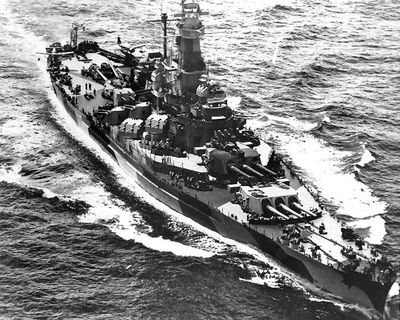
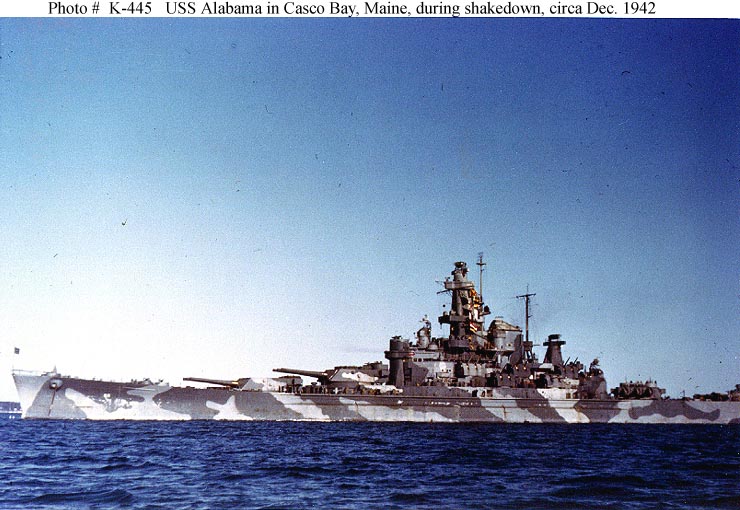
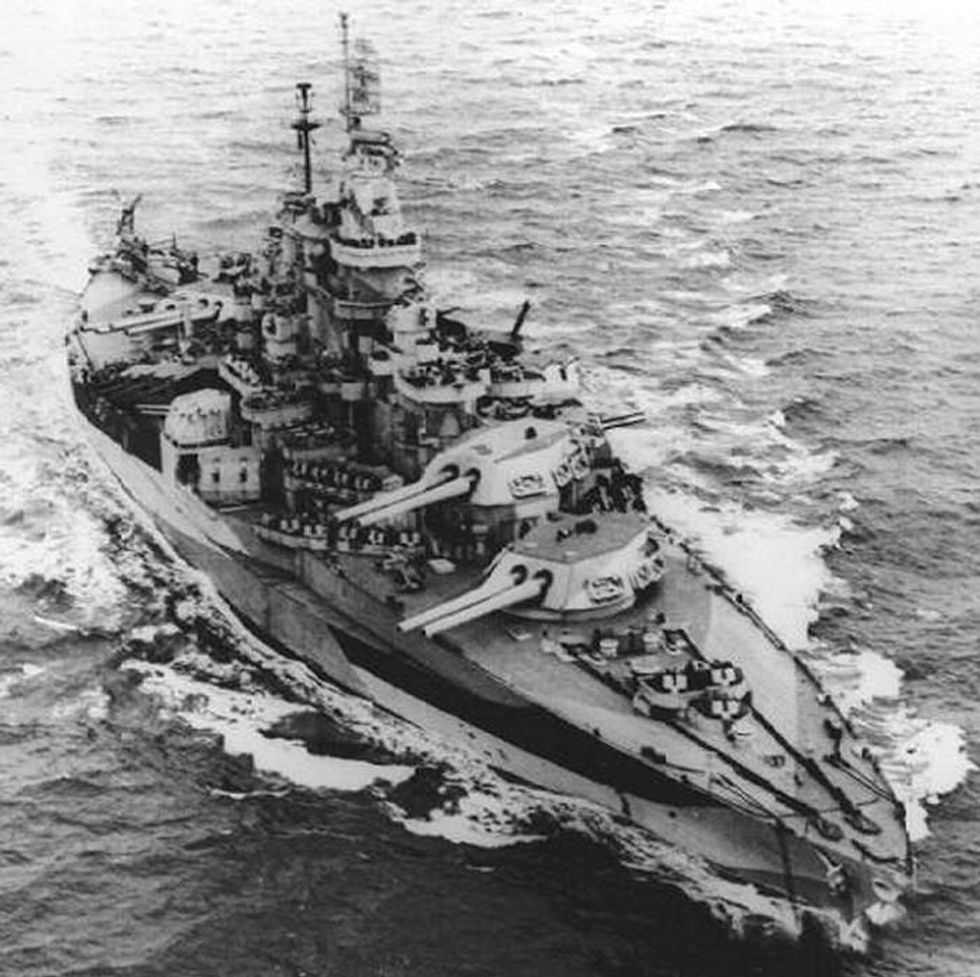
The final ship of the class the USS Alabama BB-60 was laid down on 1 February 1940 at Norfolk Naval Shipyard. She was launched on 21 February 1942 and commissioned 16 August 1942. Following her shakedown cruise and initial training off the Atlantic coast she joined the repaired South Dakota and operated as part of TF 22 attached to the British Home Fleet.

She conducted convoy escort operations, participated in the reinforcement of Spitsbergen and in an operation which attempted to coax the German battleship Tirpitz out of her haven in Norway. Tirpitz did not take the bait and Alabama and South Dakota returned to the United States in August 1943.

Following a brief refit she and South Dakota transited to the Pacific were the trained with the fast carriers.  She took part in the invasion of the Gilberts taking part in Operation Galvanic against Tarawa and the Army landings on Makin Island.

As 1944 began Alabama continued her operations with the fast carriers of TF-38 and the fast battleships of TF-34.  She took part in operations against the Marshalls and took part in the invasion of the Marianas Islands and the Battle of the Philippine Sea, the Great Marianas Turkey Shoot. From there she supported the invasion of Palau and other islands in the Caroline Islands followed by operations against New Guinea and the invasion of the Philippine and the Battle of Leyte Gulf before returning to the United States for overhaul.

Chief Petty Officer Bob Feller
Alabama 
returned to action during the invasion of Okinawa and in shore bombardment operations against the Japanese Mainland. When the war ended the Alabama had suffered no combat deaths and only 5 wounded following the misfire of one of her own 5” guns earning her the nickname of “Lucky A.”  Hall of Fame pitcher Bob Feller served as a Chief Petty Officer and gun mount captain on Alabama during the war.

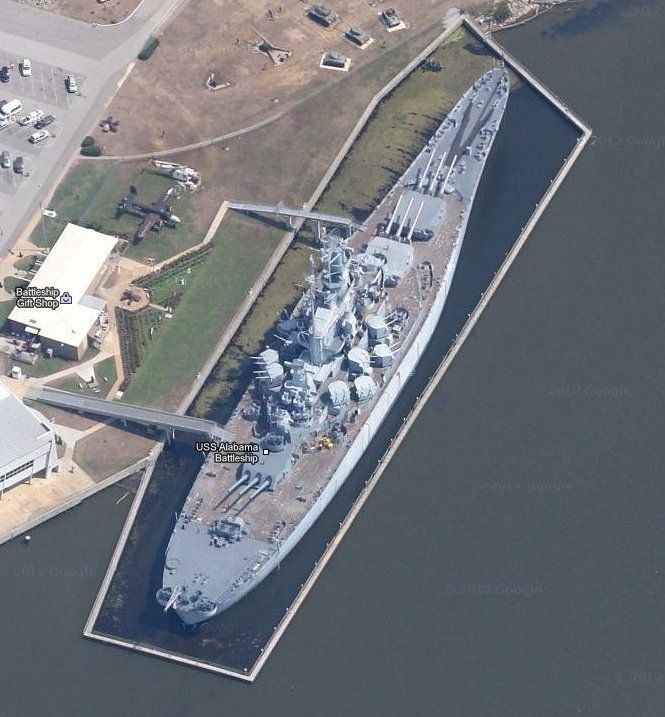
She was decommissioned on 9 January 1947 and stricken from the Naval Register on 1 June 1962. The people of the State of Alabama formed the “Alabama Battleship Commission” and raised $1,000,000 including over $100,000 collected by schoolchildren to bring her to Alabama as a memorial.  She was turned over to the state in 1964 and opened as a museum on 9 January 1965. She was declared a National Historic Landmark in 1986.  She has been used as a set in several movies and continues to serve as a museum preserving the legacy of the men that served aboard her and all of the battleship sailors of World War II.

another thing about the South Donata Class was that their design was evident in the rebuilding of the USS California, USS Tennessee, and USS West Virginia when they were completely modernized after Pear Harbor.

USS West Virginia after her complete modernization after being sunk at Pearl Harbor

In the 1950s a number of proposals were considered to modernize the ships of the class to increase their speed to 31 knots using improved steam turbines or gas turbines. The Navy determined that to do this would require changes to the hull form of the ships making the cost too prohibitive.  The ships were certainly the best of the treaty type battleships produced by any nation in the Second World War. The damage sustained by South Dakota at the Second Naval Battle of Guadalcanal would have not only put most battleships of her era out of action but might have caused enough damage to sink them. Their armament was equal or superior to all that except the Japanese Yamato Class and their protection was superior to most ships of their era, and it was was exceptional, as was evident by the damage sustained by South Dakota. 

Alabama as a Museum Ship 

It is good that both the Massachusetts and the Alabama have been preserved as memorials to the   ships of the class, their sailors and the United States Navy in the Second World War. Because of the efforts of the people of Massachusetts and Alabama millions of people have been able to see these magnificent ships and remember their fine crews. Both have hosted reunions of their ships companies since becoming museum ships and with the World War Two generation passing away in greater numbers every day soon these ships as well as the USS Texas, USS North Carolina, USS Missouri, USS New Jersey, USS Wisconsin aUSS Iowa which stricken from the Naval Register awaits an uncertain fate as a resident of the “Ghost Fleet” in Suisun Bay California.  No other nation preserved any other dreadnought or treaty battleship thus only these ships remain from the era of the Dreadnought. I so much wish that the British had preserved one of the King George V  ships, or maybe the mostend celebrated Royal Navy Battleships of both World Wars, the HMS Warspite had been preserved. I also regret that none of the survivors of the attack on Pearl Harbor were preserved, nor any of the standard battleships of the Nevada, Pennsylvania, New Mexico, California, or Colorado Classes.

I am fortunate. I have been able to go aboard the North Carolina, Alabama, Texas, and Wisconsin, as well as a number of the surviving aircraft carriers, destroyers, and submarines preserved in the United States. However, too few, especially the ships which bore the brunt of the war like the carrier USS Enterprise were never saved, despite the pleas of men like Admiral William “Bull” Halsey.

I habe also been able to visit ships like the USS Constitution, USS Constellation, Clipper ship Star of India, the Japanese Battleship Mikasa, the USS Nautilus, the German Tall Ship Gorch Fock II, and so many more, but I still have a bucket list of ships I want to visit in the United States, Canada, Great Britain, Germany, Greece, Sweden, Russia, France, Australia, Italy, Turkey, Japan, and Finland.

With those pipe dreams in mind, I wish you all the best. Until tomorrow when I decide to weigh in again on novel Coronavirus 19 and the crisis being fostered by the Trump Administration in this country; please be safe. Don’t do dumb things like going into crowded places with few people wearing masks and the vast majorly of people not adhering to social distancing. Even if other people decide to be stupid and put others and well as their own lives at risk, don’t be like them. I speak this from the heart and I don’t care if someone disagrees with my politics, faith, or social commentary, I would prefer that they not die or through their stupidity and arrogance get other people sick or die. Darwin is not Kind when it comes to the stupidity and arrogance of people regardless of the race, ethnicity, faith, ideology, political leanings, social standing, economic position, or nationality.

I don’t care if people agree with me or not, but don’t do dumb things. This may sound harsh but I tend to speak from my heart when lives and civilization itself are at stake. But please remember the words of Robert Henlein:

“Stupidity cannot be cured. Stupidity is the only universal capital crime; the sentence is death. There is no appeal, and execution is carried out automatically and without pity.” 

Peace,

Padre Steve+

6 Comments

Filed under Foreign Policy, historic preservation, History, imperial japan, Military, Navy Ships, nazi germany, Political Commentary, US Navy, World War II at Sea, world war one, world war two in europe, world war two in the pacific

The King George V Class Battleships: The Imperfect yet Important British Bulwarks of WII

HMS King George V

Friends of Padre Steve’s World,

I am still on my holiday from writing about the novel Coronavirus 19 and President Trump and his Administration’s incompetent response to it. It is a response that has already claimed 85,000 American lives. But, I won’t go any farther tonight on that. Instead I am going back to my series on the battleships designed and built by the British, French, Germans, Italians, and Americans from after the Battleship Holiday mandated by the Washington Naval Treaty, and the restrictions of the London Naval Treaty. The Germans were not signatories to these treaties as they were already under the much more severe provisions of the Treaty of Versailles, until the Hitler regime began to clandestinely violate it in 1934, and publicly in 1935. The British signed at bilateral naval accord with Germany in June of 1935, which the Germans renounced in 1938 in order to build a fleet of battleships that Hitler believed would allow him to achieve naval parity or superiority over the British.

This is the fourth in a series of five articles on the battleships built under the provision of the Washington and London Naval Treaty limitations in the 1930s. I am not including the ships which were already in service or completed in the immediate aftermath of the Washington Treaty which required the British to scrap 23, the Americans 30, and Japanese 17 Battleships or Battlecruisers to comply with the treaty. Some were allowed to be converted to Aircraft Carriers, and some demilitarized to serve as training or target ships.

This series looks at the modern battleships built by the future World War II combatants between 1932 and 1939. This article covers the British Royal Navy King George V Class. The previous articles dealt with the German Scharnhorst Class, the Italian Vittorio Veneto Class, the American North Carolina Class, and the Frech Dunkerque and Richelieu Classes. The final article will be about the American South Dakota Class. The German Bismarck, Japanese Yamato, British Vanguard and American Iowa classes will be covered in a subsequent series.

Since there is much disagreement about which of the ships that I have written about I may try to do a comparison to determine which was the best of these classes in the categories, of armament, speed and range, armor protection, reliably, and performance in combat. One has to remember that these were the first battleships built by their respective navies since the First World War, each was built under the constraints imposed by the naval treaties, and their influenced by the developments of potential opponents and the changing world situation. In some cases sacrifices were made on each design due to expediency and the need to get them to the fleet.

HMS King George V in 1941

The last class of Royal Navy Battleships was the Nelson Class of two ships, HMS Nelson and HMS Rodney. They were a compromise design based on N3 Class of battleships which had to be cancelled due to the Washington Treaty. The Nelson’s have been described as a “chopped off” N3 which used the 16” guns of the also cancelled G3 Battlecruisers. The design sacrificed speed for protection and firepower. Their protection was good, as was their armament, but their propulsion plants were a constant source of trouble. By the late 1920s the Royal Navy’s battle force was comprised of the two Nelson’s, the fast Battlecruisers Hood, Renown and Repulse and the 10 ships of the Queen Elizabeth and Revenge Classes all designed before the First World War.

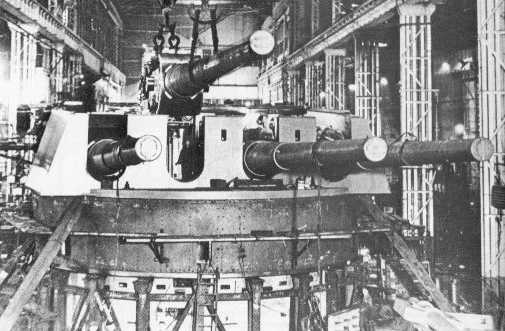
King George V Class Quad Turret being built

The Royal Navy began planning for a new class of battleships in 1928. But these plans were shelved with the signing of the London Naval Treaty which continued the “building holiday” on capital ship construction as well as the size and armament of capital ships until 1937.  Because of the pacifist movement of the 1920, the Great Depression, and the desire of the British government to abide by international treaties in spite of the violations of those treaties, nothing was done until 1937.

With the realization that its battle force was dated, and the knowledge that other nations had laid down new classes of battleships the Royal Navy recommenced planning in 1935.  The Navy planned to build to the maximum of the 35,000 displacement limitation and placed a great measure of emphasis on armor and protection. Early designs emphasized ships with heavy firepower and protection at the expense of speed, like the American Colorado Class, the cancelled South Dakota Class, and early designs for new battleships of similar design by the U.S. Navy in the early 1930s.

Numerous Designs were proposed. Eventually the new class of battleships were designed to achieve a 28 knot speed which made them faster than all existing British battleships, although slower than the Battlecruisers. The planners had alternative designs to use 14”, 15” or 16” guns with the Navy favoring the 15” models which had equipped all of their other ships with the exception of the Nelson’s. However the Admiralty to use 14” as the government was endeavoring to negotiate with other powers to impose a 14” limitation on armament for new battleships, and the Admiralty estimated that a move to arm the ships with 15” or 16” guns could delay the completion of the ships by a year or more.

during the second London Treaty of 1935, the Americans and French agreed to the limit their size and armament of their ships, however neither the Japanese nor Italians followed suite, and as a result all new battleships of other powers had larger guns than the King George V Class. The Italians opting for 15” Guns on the Vittorio Veneto Class, the French and Americans invoking the escalator clause of the treaty. The French opted to arm the Richelieu Class with 15” guns, while the Americans chose to arm the North Carolina, South Dakota and the Iowa Classes with 16” guns. The Japanese Opted for 18” guns for their Yamato Class, which also displaced nearly twice as much as the treaty allowed. The Germans who were not a signatory built their Scharnhorst Class with 11” Guns although, those were an expedient as they were planned to be armed with 15” guns. The Germans also equipped the Bismarck Class with 15” guns.

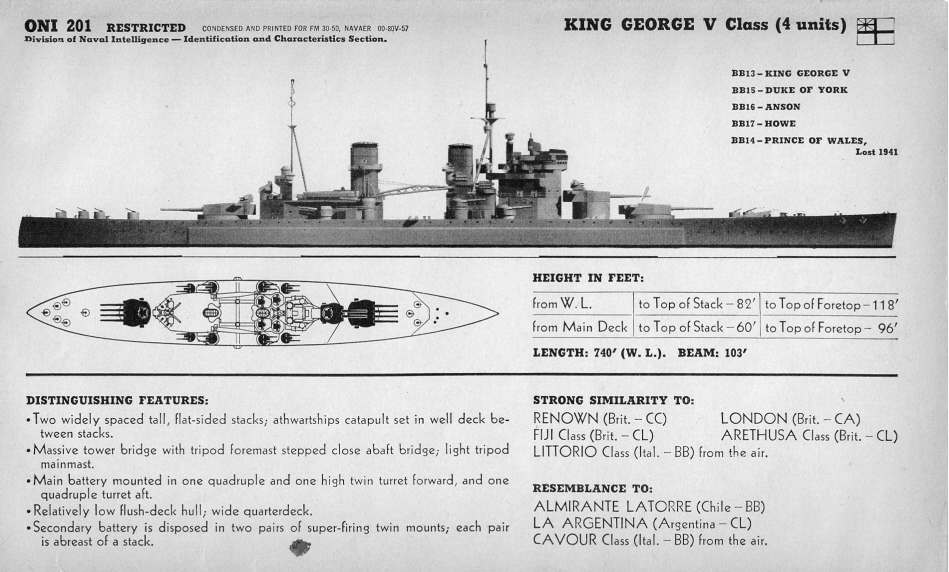
The Royal Navy attempted to rectify this by placing more guns on the ships than those of other navies. They wanted to mount twelve 14” guns mounted in Three quadruple turrets, but this was impossible on the 35,000 platform without compromising protection, speed, or stability.  Thus the Admiralty compromised on 10 guns mounted in 2 quadruple and 1 twin turret.

ONI Drawing of King George Class

The ships displaced a full load displacement of 42,237 tons in 1942. This increased to 44,460 tons by  1944. The were 745 feet long had a beam of 103 feet, a top speed of 28 knots with a cruising range of 5,400 nautical miles at 18 knots. Their relatively poor endurance limited their operations in the Pacific and even nearly caused King George V to have to abandon the chase of the Bismarck in May 1941. The compromise in displacement also limited the amount of fuel they could carry.

The main batteries of the ships proved problematic in combat. The quadruple turret design caused most of the ships problems. This was demonstrated in the engagement of the Prince of Wales against the Bismarck as well as the King George V in its duel with the same German behemoth when A turret became disabled and completely out of action for 30 minutes and half of the main battery being out of action for most of the engagement for mechanical reasons.  The Duke of York achieved excellent results against the Scharnhorst at the Battle of North Cape, but even in that engagement the main battery of Duke of York was only able to be in action 70% of the time due to the guns  jamming, or being inoperablere for various periods of time.  One of the other drawbacks of the design was that in order to replace a gun due to wear and tear, that the turret itself had to be dismantled in order to remove and replace the guns. Most other navies had planned for the replacement of guns without such such massive work.

The main secondary armament of 5.25” dual purpose guns in twin mounts suffered from poor rate of fire and slow traverse, both of which were well below their designed standards, and definitely inferior to the American 5” 38 dual purpose twin mounts and their Mark 38 fire direction radar.

The mounting of the armament was designed to provide protection against turret explosions which could potentially detonate the ship’s magazines.  The main side and underwater protection scheme was sound and protected the ships well in combat, and might have been the best of the ships built in there era. The vertical protection was also sound as was the protection afforded to the turret barbets and placement of the magazines to shield them from plunging fire.

Only the Prince of Wales was lost due to enemy action. Initially it was thought that she was hit by 6 aerial torpedoes and two 500 pound bombs. Her main armor and underwater anti-Torpedo defenses around her fully armored casemate would have protected her from major damage, but only one of the torpedoes hit that belt. However three torpedoes hit her in areas without such protection, forward and aft of the casemate. Later examination of her wreck revealed that the culprit was a torpedo which detonated in a propeller shaft outside of the armored belt which caused uncontrolled flooding when she was attacked by Japanese aircraft on 8 December 1941. No matter how well protected, no ship is completely proof against the damage of bombs, torpedoes, or now missiles.

HMS Anson conducting gunnery exercises

The propulsion systems of the class developed problems after 1942 when fuel oil quality was decreased because of the need for aviation gas.  The new mixtures which were of  higher viscosity and contained more water than the boilers could effectively bur. This increased maintenance costs and decreased efficiency. To compensate the Admiralty designed new higher pressure fuel sprayers and burners which returned the boilers to full efficiency, and which should be used on the later HMS Vanguard. 

The lead ship of the class the King George V was laid down on 1 January 1937, and  launched on 21 February 1939. She was commissioned on 11 December 1940.  As the flagship of the Home Fleet she took part in the unsuccessful search for the Scharnhorst and Gneisenau during their early 1941 convoy raiding operation. Later during the hunt for the Battleship  Bismarck in May 1941 during which she earned lasting fame in helping to sink that ship, despite failures in her main battery which silenced half or her main guns.

She took part in the Murmansk convoy protection as well as Operation Husky, the invasion of Sicily before sailing to the Far East for operations against the Japanese. She finished the war with the British Pacific Fleet and was present at the Japanese surrender in Tokyo Bay.  She returned as flagship of Home Fleet until she was decommissioned in 1949. She was subsequently sold for scrap in 1957.

Prince of Wales pulling into Singapore

The second ship of the class the Prince of Wales laid down on 1 January 1937, launched on 3 May 1939 and commissioned 19 January 1941 although she was not officially completed until March 1941. Her initial operation came in May 1941 when she sailed with the HMS Hood to intercept the Bismarck. When she sailed she still had shipyard technicians aboard.  Damaged in the action she did score an important hit on Bismarck which cut a fuel line making her forward tanks inaccessible and causing her to make her run for Brest which she did not complete. Another hit damaged Bismarck’ aircraft catapult and a third disabled an electric dynamo. During the engagement she took heavy damage, and suffered malfunctions to her main battery, and withdrew from the action. The question still remains to this day why Admiral Lütjens aboard Bismarck did not decided to finish Prince of Wales off and sailed back the way she came after destroying two of the Royal Navy’s most powerful ships. Repaired and returned to service she could have sailed with her sister ship Tirpitz, maybe in a coordinated operation with Scharnhorst and Gneisenau that could have cost the Royal Navy much more in power and prestige.

Church Service on Prince of Wales at Argentia Bay with Churchill and Roosevelt in attendance

Following her badly needed repairs. Prince of Wales carried Winston Churchill to the Argentia Bay, Newfoundland, where in secret he met with Franklin D. Roosevelt and together drafted the Atlantic Charter. In late 1941 she accompanied the HMS Repulse to Singapore to bolster the British presence in the Far East. Under the command of Admiral Tom Phillips the ships sailed to attack Japanese invasion convoys, but without air cover was sunk by Japanese aircraft which struck her with 4 torpedoes and a bomb, the key hit being a lucky hit on her propeller shaft which caused flooding that caused a loss of power to pumps and anti-aircraft defenses. Repulse was also sunk in the engagement. Their sortie was doomed by an admiral who did not understand the importance of air power, and who had left the carrier sent to assist them, HMS Hermès behind. Poor communication between the land based fighters, Royal Austrian Air Force Brewster Buffaloes which would have been outnumbered and outclassed by Japanese aircraft and the task force destroyed nonetheless.

Prince of Wales sinking and being abandoned

The third ship the Duke of York was laid down 5 May 1937, and launched on 28 February 1940. She was commissioned 4 November 1941. She provided convoy escort for the Lend Lease convoys to the Soviet Union. On December 25th 1943 she and her accompanying cruisers and destroyers sank the  Scharnhorst on 26 December 1943 during the Battle of North Cape. Like King George V and Prince of Wales she also suffered from mechanical failures oof the guns of her main battery. She was transferred to the Pacific in 1944 and served at Okinawa.  She was present  at the Japanese surrender at Singapore. She was decommissioned in 1949 and scrapped in 1957.

Duke of York

The fourth ship of the class the HMS Howe was laid down on 1 June 1937, and launched on 9 April 1940. She was commissioned on 29 August 1942.  She served with the Home Fleet and in the Mediterranean until she was transferred to the Pacific in August 1944. She was stuck and damaged by a Kamikaze in May 1945. Howe was sent for refit at Durban South Africa. She was still in refit when the war ended. She returned home and was placed in reserve in 1950 and scrapped in 1958.

HMS Howe

The last of the class the Anson was laid down 20 July 1937, and launched 24 February 1940. She was commissioned on 22 June 1942. She operated in the Mediterranean and the North Atlantic and was sent to the Pacific in 1945 where she  accepted the surrender of the Japanese Forces at Hong Kong. She returned to Britain and was decommissioned in 1951 and scrapped in 1957.

HMS Anson

For the most part the ships of the King George V Class had rather unremarkable careers for The most part with the exception of the Prince of Wales and King George V in the hunt for the Bismarck and the Duke of York sinking the Scharnhorst. They had a number of technical problems which limited their operations in the war, However, they and their brave crews deserve to be remembered as helping to hold the line against the Axis in the early years of the war and sank two of the four German Battleships lost during the war.  This alone was as remarkable achievement as of their contemporaries, for only the USS Washington, and the heavily modernized battleships sunk or damaged at Pearl Harbor, the USS West Virginia, USS California, and USS Tennessee sank enemy battleships in combat.

The King George V Class suffered serious design flaws, but in the case of their armored casemate and protection from enemy shellfire the were superior to most. Unfortunately, the true measure of their their success and design were never proven. Duke of York sank an overmatched and outnumbered Scharnhorst after her Admiral took too long to remove his ship from danger. Likewise, Prince of Wales was lucky to survive her encounter with Bismarck, and King George V, greatly assisted by HMS Rodney, and a host of cruisers and destroyers backed up by Force H sank Bismarck, which due to a torpedo hit from a Swordfish torpedo bomber from HMS Ark Royal was limited in speed and out of control.

It would have been interesting to see how they would have performed against the Vittorio Veneto Class, the Japanese Nagato, Kongo, or Yamato Class ships, or even the Scharnhorst or Bismarck in an undamaged state. I think they could have easily defeated the Kongo class, but Nagato, and Yamato would have been a different matter.

HMS Duke of York Being Scrapped 

Regardless, I think the King George V Class was a solid design, sadly limited by treaty limitations and the hopes of their government that potential enemies would do the same. Sadly, the Royal Navy even attempted to combine their heavy main battery armament and protection with guided missile and radar developments being made at the same time could have served as command ships of NATO task forces until the 1970s or 1980s. None were over 20 years old when they were sent to the breakers.

Their limitations notwithstanding, they performed excellently in the Second World War. It is sad that none survive today.

Until tomorrow,

Peace

Padre Steve+

4 Comments

Filed under History, Military, Navy Ships, nazi germany, World War II at Sea, world war two in europe, world war two in the pacific

What Kind of People Are We in the COVID19 Pandemic: Perpetrators, Victims, Bystanders, or People of Courage

trump-flames-iran-protests

Friends of Padre Steve’s World,

One of my favorite World War II movies is Downfall, which is the account of the last months of Adolf Hitler’s Third Reich. Tonight I imagine the coming Götterdämmerung that awaits the United States under President Trump. I do not know when it is coming or exactly how it will happen. But I believe that unless something happens to curb his power, which at the present time is unrestrained by his political party, I expect that the rule of law and the rights enumerated in the Constitution will end, unless something interrupts that process before it can reach its fulfillment.

If the worst happens the President and his allies in his propaganda services, which include the right wing media, and church pastors, the country will plunge into wars without allies that it cannot win, unless winning is defined by obliterating enemies in a nuclear holocaust. If that happens there are no winners, and the only thing named after him will be a pile of rubble.

Somehow when the final cataclysm occurs I expect that the President and his most devoted followers will in the midst of the flames consuming them, will blame the very people who helped them to power for the downfall. And they do so without any feeling or remorse because they are sociopaths who really do not care about the lives of others, so long as they either gain and hold absolute power, or destroy everything they pretend to want to make or keep great.

When the Red Army was entering Berlin, SS General Wilhelm Mohnke who was in charge of the defense of the area around the Reich Chancellory begged Josef Goebbels to convince Hitler to surrender Berlin in order to allow the people of the city to live, Goebbels responded:

“I feel no sympathy. I repeat, I feel no sympathy! The German people chose their fate. That may surprise some people. Don’t fool yourself. We didn’t force the German people. They gave us a mandate, and now their little throats are being cut!”

Neither the President, the Vice President, nor their propagandists have any sense of compassion or empathy. In the days before he killed himself Hitler ranted to those who supposedly betrayed him in his bunker to an audience that including Albert Speer, who wrote of it:

“Everyone has lied to me, everyone has deceived me, non[sic] one has told me the truth. The armed forces have lied to me and now the SS have left me in the lurch. The German people has not fought heroically, it deserves to perish. It is not I who have lost the war, but the German people.”

Believe me, however the Trump administration meets its end, it will not be good as Trump trusts no one, even his family, or closest associates. I don’t know how the end of the Trump era will happen. I don’t know if it will be it a war that he stumbles into during the midst of the COVID19 Pandemic, maybe one that he wants to use to distract from the pandemic and his incompetence in dealing with it. It could a direct result of the massive number of lives lost to it and his incompetence in dealing with it, as well as the economic depression that will very likely near his name and his subsequent rejection at the ballot box in November. Either of those options could bring about chaos and draw Trump’s heavily armed supporters into the street.

Or of course through their staggering arrogance and lack of taking any social distancing precautions Trump and Vice President Pence could themselves fall victim to the virus, leaving Speaker of the House Nancy Pelosi as President. Admittedly the last is unlikely, but at least remotely possible, especially since during the past three White House Staff members, one President Trump’s Navy valet’s, Katie Miller, wife of senior Trump Aide Stephen Miller, who is Vice President Pence’s Press Secretary, and Ivanka Trump’s Personal Assistant have tested positive for the virus. Although Trump and Pence were test for the virus and announced that they were negative, it is possible that they still might be infected, if not through contact with the people diagnosed, but through others who had contact with them who have not been tested and may be asymptotic.

JACKSONVILLE BEACH, FL – APRIL 17: People crowded the beaches in its first open hour on April 17, 2020 in Jacksonville Beach, Fl. Jacksonville Mayor Lenny Curry opened the beaches to residents for limited activities for the first time in weeks since closing them to the public due to the Coronavirus (COVID-19) outbreak. Jacksonville Beach became the first beach in the country to reopen. (Photo by David Rosenblum/Icon Sportswire via Getty Images)

Because of possible exposure the head of the CDC, Dr. Robert Redfield, FDA Commissioner Stephen Hahn, and Dr. Anthony Fauci, all members of the Coronavirus Task Force are under self-quarantine and teleworking for the next 14 days. Even though the White House sent others home and is attempting to contract trace the sources of the infections, while claiming that social distancing was being observed, it is clear that there it is not. On Saturday the President hosted over 20 GOP Senators and Representatives, at the White House in which no one was wearing masks, and no social distancing was evident while the event was taking place. Earlier today Vice President Pence said that he was going to self-quarantine due to possible expulsion from Katie Miller, and later in the evening said that he would be back at work Monday. The virus has the potential of decapitating the Executive Branch and at least part of the Legislative Branch.

Katie Miller answering Reporters Questions Outside Nursing Home on 7 May

When Trump was informed of the infection of his valet he reportedly became “Lava Level mad” and blamed his staff for not protecting him.”  I find that ironic because so many who have been infected, suffered, and died from COVID 19 or has lost their employment, perhaps for months or years he is finally having to deal with actual reality, and not the conjured fantasies of his dark and uncaring soul. With Coronavirus now inside his White House fortress, he has discovered that he is not immune, and his fear shows in his actions and tweets. This crisis within the crisis has exposed his innate cowardice and lack of responsibility during a pandemic he could have done much to mitigate.

It’s the same thought that the graduate of a high school military academy realized just as he understood that military service in Vietnam could get him killed or wounded. Thus he used his family, business, and political connections to get multiple deferments from the draft, including one that he used a conjured medical excuse of having bone spurs even as he played college level baseball and was being scouted by major league teams. A coward will writhe in fear about the same danger they allow others to face, without the lack of protections afforded to them. By the way those are my words, not lifted or attributed to someone else. Everyone fears something, but only cowards force others to die for conditions that they help foment. As Stephen King said: “A coward judges all he sees by what he is.” 

In every previous crisis, the President, his political, media, and religious sycophants were be quite similar to Goebbels and Hitler in the Final days. The crisis is everyone else’s fault, including those who believed in them, and faithfully supported their policies, and followed them into the abyss.

But, even then some of the closest and longest loyal supporters of Hitler including Hermann Goering and Heinrich Himmler abandoned their Fuhrer in order to save themselves, not because they are brave or heroes. but because they decided to face the reality of Germany’s defeat, in order to save themselves, because they were cowards who were so morally blind that did not understand their complicity in Hitler’s rule, the war, or their own personal responsibility in it. Hitler found out about their disloyalty, excommunicated them from the Nazi Party and condemned them to death. Himmler only lived until he was discovered by the British while masquerading as an ordinary soldier, and then committed suicided. Goering surrendered before Hitler’s loyalists could catch him. He was convicted on all four counts at the Major War Criminal Trials at Nuremberg, sentenced to death, but killed himself prior to his execution.

President Trump and his inner circle are not Nazis. Trump is not another Hitler, but he and his loyalists demonstrate the same lack of concern and empathy for the people who followed them into the abyss that they created, as did the the Nazis. Right now, we are not technically at war, though Trump could easily lead us into one simply because he needs a diversion that will somehow aid in keeping him in power. However, the crisis he and his cultists have brought upon us, is a crisis greater danger than any war or crisis the nation has faced since the World Wars, the Great Influenza, and the Great Depression. Sadly, they are incapable of mastering it, and I sincerely doubt that anything but a massive electoral loss in November will change anything.

I do pray that I am wrong but I cannot see how this will end in anything less than a disaster, even with a loss in the November election. These people are apocalyptic in their ideology and would rather destroy everything than to allow any opponent to take power, even if it means them bringing on the Boogaloo, their code name for civil war and the extermination of their opponents.

Again I pray that I am wrong, but my study of history and human nature shows that I tend to be more right than I want to be in my analysis to be. That being said Hannah Arendt wrote:

“The sad truth is that most evil is done by people who never make up their minds to be good or evil.” 

Yes there are people who will commit evil even against their followers, they are perpetrators. Likewise, there will be others that never say a word or lift a hand against what their heart, soul, faith, ethics, morality say is wrong. To preserve themselves they remain silent, they are bystanders, then there are the victims. Human nature is the one constant in human history, and to understand the reactions of world leaders, and especially our own, as well as ordinary people in times of crisis. Yehuda Bauer wrote:

“The horror of the Holocaust is not that it deviated from human norms; the horror is that it didn’t. What happened may happen again, to others not necessarily Jews, perpetrated by others, not necessarily Germans. We are all possible victims, possible perpetrators, possible bystanders.”

Bauer also wrote: “Thou shalt not be a victim, thou shalt not be a perpetrator, but, above all, thou shalt not be a bystander.”

Those words are more important now than they have been since the crimes and genocide of the Nazis against the Jews. This time it is all of humanity that is at risk, and even then the penchant for people to insist on their own freedom, prosperity, and social irresponsibility, even if it means the needless sacrifice of others is incomprehensible.

So I have to ask what role each of us will play in a global pandemic that has infected over four million people, killed close to 300,000, including more than 80,000 Americans. Will we be perpetrators who through our actions and words are responsible for the deaths of others? Will we be victims, devoured by the disease and the actions of government leaders and fellow citizens that do little to stop it, or actually encourage it’s spread? Or will we be bystanders who turn our backs and look away as the perpetrators commit their crimes and more victims die?

That is the question that all of us have to ask ourselves. But there is one more choice. We can decide to rise above the fear for our own lives, sacrifice certain liberties, and give our lives to help alleviate the suffering and death of others. Likewise we can protest the inhuman and fetid policies that allow people to suffer and die when there were earlier options that could have mitigated this, or which even now, late in the game could help stop the rampage of the Coronavirus 19 Pandemic. Of course we could also confront those who are using displays of force to try to coerce officials to abandon policies that save lives so they don’t have to be inconvenienced.

The German Pastor and theologian Dietrich Bonhoeffer, who was killed at Flossenbürg Concentration Camp in April 1945 on the direct order of Adolf Hitler wrote:

If I sit next to a madman as he drives a car into a group of innocent bystanders, I can’t, as a Christian, simply wait for the catastrophe, then comfort the wounded and bury the dead. I must try to wrestle the steering wheel out of the hands of the driver.”

He also wrote: “Not to speak is to speak. Not to act is to act.”

Those are our choices. We can be perpetrators, victims, or bystanders, but we can also speak out, protest, and resist in order to save lives. That is the harder and more dangerous choice, especially when heavily armed and lawless men under no authority threaten those who do so, be they government officials, medical personnel, or citizens actual practicing social distancing and masking. Online and personal intimidation and threats are growing, and being encouraged by the President, and members of the Right Wing Media.

This requires courage which General William Tecumseh Sherman defined: “Courage – a perfect sensibility of the measure of danger, and a mental willingness to endure it.”  We also have to be able to face down our fears. As Nelson Mandela wrote: “I learned that courage was not the absence of fear, but the triumph over it. The brave man is not he who does not feel afraid, but he who conquers that fear.” 

If we are to stand a chance against the dual threats of the novel Coronavirus 19 and the incredibly stupid people who care nothing but their own convenience and nothing for the lives of others, we must overcome our fears and display moral, spiritual, and physical courage in the face of a deadly virus and violent people who live by apocalyptic ideologies, are motivated by conspiracy theories, despise experts of any kind, and will do what the man they idolize like a god will tell them to do. When that man is the President, who has a long history of inciting his followers to violence there is no telling how far they will go.

Until tomorrow, please be safe,

Peace

Padre Steve+

7 Comments

Filed under Coronavirus, Diseases Epidemics and Pandemics, ethics, healthcare, History, leadership, national security, nazi germany, News and current events, Political Commentary

The Vittorio Veneto Class Battleships: The Pride of Italy and Victims of Changing Technology


Vittorio Veneto and Littorio

Friends of Padre Steve’s World,

Once again I have decided to destress and not write about COVID 19, politics, or the Holocaust and instead write about an interesting, and even fascinating class of warships which have been often forgotten.

This is the first in a series of six articles on the battleships built under the provision of the Washington and London Naval Treaty limitations in the 1930s. I am not including the ships which were completed in the immediate aftermath of the Washington Treaty limitations. This series looks at the modern battleships that the World War II combatants would produce in the 1930s which saw service in the war.

Part one covers the Italian Vittorio Veneto class, Part Two the French Dunkerque and Richelieu Classes, Part Three the British King George V Class and Part Four the American North Carolina and South Dakota Classes. The thing that I find interesting about all of these ships is who inventive each Navy building them was considering treaty restraints and their own adherence to, disregarding of, or the technical issues that they faced as none had designed or built a new battleship since the end of the First World War. In the case of Italy they did not even complete their most modern design after the war, thus the building of large and fast battleships was something new to each party. Had the economic effects of the First World War been so difficult, and the following Great Influenza of 1918-1919 so devastating, all of the navies involved might have completed ships that would have influenced the next generation.

I have already published the final part which covers the German Scharnhorst Class entitled Power and Beauty the Battle Cruisers Scharnhorst and Gneisenau The German Bismarck, Japanese Yamato, British Vanguard and American Iowa Classes will be covered in a subsequent series.

Most of these ships were constructed after the expiration of the treaties, but since most of the navies at least attempted to maintain a façade of compliance with the treaty limitations, most were officially listed as complying with the treaty restrictions. The fact that nations frequently lie about their adherence to treaty limitations, is nothing new, or surprising.

The Washington Naval Treaty placed a limit on the displacement and armament of battleships. It also stipulated the tonnage of capital ships allowed for each Navy, as well as limits on the displacement of cruisers, and destroyers. The only country not effected by the treaty was Germany, which until 1935 was required to observe much stricter limitations than Great Britain, the United States, France, Italy, or Japan.

The Washington Naval Treaty led to the scrapping or cancellation of nearly all the super Dreadnoughts, and fast battleships, sometimes known as Battlecruisers of the United States, Great Britain, Japan, France, and Italy. However, its restrictions opened up the development of large aircraft carriers by the United States and Japan which each were allowed to complete two of their new battleships or Battlecruisers into aircraft carriers, specifically the IJN Akagi and Kaga, and the American USS Lexington and Saratoga.

The London Treaty continued the restrictions of the Washington Treaty which limited the displacement of new ships to 35,000 tons with the main battery being limited to 16” guns. Each of the treaty signatories as well as the Germans, who were bound by the much more stringent Treaty of Versailles restriction, endeavored to build to the limit of the treaty and if possible skirt the limitations in terms of displacement which allowed them to increase protection as well as more powerful engineering plants. The Germans, now Hitler’s Third Reich, were aided in this by a bi-lateral Naval Agreement with Britain in 1935. The treaty not only allowed them a legal way to avoid the Versailles restrictions and gain international respect.

The Royal Italian Navy, or the Regia Marina had not completed a battleship design since the Andria Doria Class which were constructed between 1912 and 1915. These ships were provided  an extensive modernization between 1937 and 1940.  The modernization allowed them to serve as first line ships throughout the war. A subsequent class the Francesco Caracciolo class was started during the First World War but no ships of the class were completed. Italy’s war debts, overall financial condition, as well as the similar situation of the French, Italy’s main rival in the Mediterranean Sea, ensured that the Regina Marina had little money for new ships or modernizing old ships during the 1920s and 1930s. Even the accession of Mussolini did little to help the Navy until the 1930s. Even then competing ideas of how to build a new Navy were present in the Italian Naval High Command. Some placed their emphasis on large numbers of battleships, others a mix of aircraft carriers, fast battleships, cruisers and destroyers, while other sought a middle ground.

However, the Italians were forced to act as in the 1930s a new naval arms race was underway in the Mediterranean. The French Navy had begun a new class of Fast Battleships, the Dunkerque class which were designed to defeat the German Deutschland class “pocket battleships” and the follow on Richelieu Class of fast battleships. Mussolini saw the new French ships as a threat to the his control of the Mediterranean, or as the Italians and their Roman ancestors called it Mare Nostrum (our Sea), and ordered the construction of a new class of battleships to help Italy achieve naval dominance in the Mediterranean.

The new ships were of a breathtaking design. They were  large, fast and heavily armed. While they were officially listed as meeting the prescribed treaty limit of 35,000 tons they actually would displace 41,177 tons standard displacement, and 45,963 tons full load. They were armed with a main battery of 9 15” L/50 guns in triple turrets. They had a secondary armament of 12 6” and 12 3.5” dual purpose guns, and a powerful light anti-aircraft battery of 20 37mm and 30 20mm anti-aircraft guns. They were capable of a top speed of 30 knots. Although they had a relatively short range of 3900 miles at 20 knots, they were formidable ships for operations in the constrained waters of the Mediterranean where they would not be required to operate at long ranges from Italian bases in Italy, Sicily, or Libya. They were well protected from shellfire, although their Pugliese torpedo defense system proved inferior to traditional designs, because it did not hold up well to direct hits, or close aboard explosions which resulted in massive flooding when hit by a torpedo or by a near miss from a heavy bomb or shell.

Their main armament though formidable was not without its flaws. The 15” guns had a very long range of 42 km or 26.6 miles and high muzzle velocity of 2900 fps. This meant that they had a long reach, however, their high muzzle velocity led to a barrel life of only about half that of their counterparts, and led to inconsistent shell fall patterns, which lessened to probability of hitting targets at long range. The guns also suffered from a slow rate of fire of only 1.3 rounds per gun a minute.

The Ships

Vittorio Veneto in 1943

The Vittorio Veneto was laid down 1934 along with her sister the Littorio, and was launched on 25 July 1937. She was commissioned on 28 April 1940, barely a month before Italy declared war on France and Britain. She would see action numerous times and give a good account of herself against the British taking part in 56 war missions. She fought at the Battle of Cape Spartivento (Teulada) where she fired 19 salvos to drive off a 7 ship British cruiser squadron in a pitched battle that also included the battleship HMS Ramillies and battle cruiser HMS Renown. In 1941 she took part in the Battle of Cape Matapan where she was damaged by an aerial torpedo after driving off a British cruiser squadron. After repairs she was back in action and on 15 June 1942 participated in the Battle of Mid-June, where she and her sister ship Littorio successfully fenced off a large British convoy from Alexandria by their mere presence at sea.  She was also the first Italian battleship equipped with radar. She surrendered with the Italian fleet to the Allies on 8 September 1943 surviving furious German air attacks. She was interred at the Great Bitter Lakes in the Suez Canal. After the war she taken as war compensation and was returned to Italy and scrapped beginning in 1948.


Littorio

Littorio (later Italia): Littorio was laid down in 1934 and launched on 22 August 1937 and commissioned on 6 May 1940.  She participated in 43 operations including the Battle of Sirte and several actions against British convoys.  Following the Battle of Mid-June she was struck by an aerial torpedo dropped by a Wellington bomber. She was repaired and upon the removal of Mussolini from power was renamed Italia and surrendered with the Italian Fleet on 8 September 1943 being damaged by a Fritz-X radio controlled bomb. With her sister the ex Vittorio Veneto, now Italia, she was interred in the Great Bitter Lake and was returned to Italy where she was decommissioned and scrapped beginning in 1948.


Roma

 Roma was laid down 18 September 1938, launched on 9 June 1940 and commissioned 14 June 1942.  Despite her addition to the fleet she was not deployed due to a fuel shortage. She sailed with the Italian Fleet to surrender on 8 June under the guise of the fleet sailing to attack the Allied invasion fleet off Salerno. The Germans discovered the ruse and the Luftwaffe launched air attacks against the Italian Fleet. Luftwaffe Dornier Do-217s armed with Fritz-X radio controlled bombs attacked the fleet as it transited the Strait of Bonafacio.


Roma exploding after being hit by Fritz-X radio guided bomb 

Roma was hit by two of the missiles the first which flooded two boiler rooms and the aft engine room.  She was hit again by a second Fritz-X which hit in the forward engine room causing catastrophicdamage. The explosions ignited the number two turret magazine blowing the turret off the ship and causing the ship to capsize and break in two. She sank, carrying 1255 of her crew including Admiral Carlo Bergamini to their death. Roma was the first ship sunk by a radio controlled bomb, the forerunner of our current air launched anti-ship missiles. In the years since, lightly constructed surface ships have not faired well against air or sea fired anti-ship missiles.


The Fritz-X Radio Guided Bomb

The fourth and final ship of the Class, Impero, was was laid down and launched, but never completed. When Italy surrendered the Germans used her incomplete hull as a target sinkinrn her. She was raised and scrapped after the war.

Impero Being Launched in 1939

The Vittorio Veneto class was a sound design and operationally successful against the Royal Navy. Her design was explored by the Soviet, Dutch, and Spanish navies in their attempts to build moderner battleships or battlecruisers, although none came to fruition. The fact that the two surviving ships, as well as the newest most modern were scrapped was a travesty as the Cold War began. Their loss left Italy with the remaining two Andrea Doria class battleships, completed in 1915 and 1916 as the battle force of the Italian Navy, until they were scrapped in the late 1950s and early 1960s.

The brave sailors of the Regina Marina who manned these fine ships should not be forgotten.

Until tomorrow,

Peace,

Padre Steve+

1 Comment

Filed under History, Military, national security, Navy Ships, nazi germany, World War II at Sea, world war two in europe

And So It Goes… COVID 19 Continues It’s Deadly Swath, With the Help of the Uncaring


Friends of Padre Steve’s World,

in his book Slaughterhouse Five, the late Kurt Vonnegut repeated the words “and so it goes” many times to emphasize his experience of war, being a prisoner of war, and being targeted by bombing campaigns against a defenseless and military insignificant city by the air forces of the country he served and its allies.

By official count the Novel Coronavirus 19 has now killed more Americans than during the Vietnam War, the First Gulf War, Beirut 1983, Somalia, Kosovo, Bosnia, Operation Provide Comfort, Invasion of Panama, Persian Gulf tanker escorts, the Bombing of Libya 1985, Invasion of Grenada, El Salvador Civil War, Iran 1980, USS Liberty Incident, Dominican Republic Intervention, Cuban Missile Crisis, Bay of Pigs Invasion, 1958 Lebanon Crisis, and official Cold War killed combined. Those wars, incidents, actions, operations, invasions and interventions the official count of US Military dead was 65,752. And so it goes….

The official number of 65,766 COVID 19 dead is most certainly an undercount as in February, March, and April the number of deaths not ascribed to COVID 19 spiked far higher than seasonal averages with no other explanations. despite the fact that New York, which leads the nation in the number of COVID 19 infections and deaths has seen its daily infections fall from an average of 7,000 to 10,000 to under 3,000 a day in the past week. At the same time even as the rates of infection and death are falling in New York and New Jersey, the epicenter of the virus, they are now increasing in much of the rest of the country, especially in the states that loosened their stay at home and social distancing rules last week, specifically Georgia and Texas. But they are not alone. Other states with poorer and older populations with pre-existing conditions such as obesity, lung diseases, and diabetes, as well as younger populations at risk because of underlying conditions from the use of drugs, alcohol, and smoking. To make matters worse, in many of these states rural hospitals and clinics are woefully equipped to handle the disease.

President Trump is pushing the governors of every state to reopen business, schools, and everything they can to somehow revitalize the economy. Of course it was the economy was what he was hanging his hopes for re-election. But the fragility of his economic achievements were demonstrated in the last few months. The United States has added over 30 million newly unemployed, with the unemployment rate jumping from just over 3% to well over 10% within a few weeks. Then there are the massive hits to the economy, the loss of taxable income, and the ever growing  budget deficit and national debt. The latter are unavoidable if one wants to preserve the nation, its workers and economic base, but are horrifying to the limited government conservatives and libertarians who cut the social, medical, and unemployment benefits to most of their constituents over a nearly 40 year period. If the President and his allies succeed they will doomed countless Americans to poverty and death, including those who helped elect him to office in 1916.

Of course neither they or President Trump never counted on a pandemic that had already been predicted and warned about by experts as well as Presidents George W. Bush and Barack Obama. But the Trump Administration cut vital preventive health, biological and viral investigative units throughout the government. The actions of the Trump Administration and the Congress which had been controlled by GOP majorities until the 2018 elections gutted many of the best and most proven infectious disease units to defend the country from the assault of biological or viral pandemics. It was also ignored  as the warnings of multiple U.S. Intelligence agencies from December 2019 until early March 2020 of the pandemic brewing in China. The President said that the virus “posed no threat,” only had “infected 15 people and that the number would go to zero,” or that it would miraculously “go away” as it infected 15 people and that the number would go to zero,” ” or disappear with warm weather. None happened.

Despite this the Administration, including Attorney General Bob Barr have prodded, pushend, and threatened state governors who did not comply with Trumps wishes to reopen their states with economic reprisal. Additionally the President has encouraged so called “militias” to take action against their state governments, and for governors to negotiate with them.” 

On Thursday a group of these fat, heavily armed, and equipped men and women armed with combat weapons and protective  gear assaulted the Michigan State Capitol, nearly taking control of it had it not been for actions of police and the governor to defuse the situation without bloodshed. Today thousands of people in the GOP stronghold of Huntington Beach California rioted against the closure of beaches, of course none were social distancing, and most wore no PPE, endangering themselves and others. Frankly, I believe that these people are narcissistic sociopaths who could not care if others live or die, even if they are family members or friends. All that matters is their loyalty to their cult leader. In this case, President Donald Trump.

It is a cult like relationship. To quote the current Trump cheerleader and cultist Pat Robertson:

“Cults teach that salvation comes through Christ, plus their little unique way. Some cults do not acknowledge Christ at all. They may make Him coequal with their religious teachers or with certain great men of history. The quickest way to recognize a cult is by its treatment of Jesus.

Second, cults frequently attempt to instill fear into their followers. The followers are taught constantly that salvation comes only through the cult. “If you leave us, you will lose your salvation,” they say.

“The third area has to do with the exaltation of the leader of the cult. Cults often center around a man or woman who is trying to gain power, money, or influence from manipulating people.” https://www1.cbn.com/questions/church-or-cult 

Likewise, a man who would have been 180 degrees opposite of Robertson, Eric Hoffer noted: “The quality of ideas seems to play a minor role in mass movement leadership. What counts is the arrogant gesture, the complete disregard of the opinion of others, the singlehanded defiance of the world.”

Both are on display today in the actions of the President and his so-called militia movement fowllowers who are both subverting the efforts of Federal Government Scientists and State governors and legislators to mitigate the effects of the COVID 19 in their states, even if it means the deaths of thousands or millions more. For the Cult Leader and his followers these deaths are nothing. The President said on Friday that if the death toll was under 100,000 that it would be a victory. That number is less than 34,000 from today’s tally, which if the number of dead grows by 2,000 or more a day will be eclipsed by the middle of the month. Now with the rates of infection slowing in New York and New Jersey, the infection rates are moving rapidly up in the “Red States” of the American South and Midwest. Some of which have quickly abandoned any social distancing, as well as those on the fence or stay at home directives their state governors might have attempted in order to regain the trust and support of a sociopath President, who does not care how many people die, so long as their deaths do not interfere with his re-election and path to unlimited dictatorial power.

For me that is too much. I have to echo and paraphrase the words of General Henning Von Tresckow, a practicing Christian, who killed himself on the Russian Front after the plot he helped to attempt to kill Hitler several times failed, said:

“We have to show the world that not all of us are like him. Otherwise, this will always be Trump’s America.”

I cannot say any less. The President and his cult-like followers are bent on the death of millions of our fellow citizens, and only care if the number remains below a bar that they set which ensures they retain owner. I cannot do that, even if that skylines me to his supporters. Hell a decade ago I had death threats from Neo-Nazis for articles I posted back then. Now, I don’t give a damn. I will speak the truth. I have to. My sacred oath that I have taken many times to the Constitution demands that I can do nothing else, regardless of who is President, or the political party, ideology, or personal gain they have to keep by remaining in power.

Sinclair Lewis, the author of It Can Happen Here, wrote:

“A country that tolerates evil means—evil manners, standards of ethics—for a generation, will be so poisoned that it never will have any good end.”

The truly sad fact of the matter is that our country is nearly at that generational point I’d one measures it from the rise of the Religious Right in the mid 1970s and the seizure of power during the Reagan Administration, and the rise to power of Newt Gingrich’s campaign to take back America, and the Tea Party movement that began in 2009. All of these were underwritten by the money and airtime of supposedly Christian pundits, television and radio hosts, as well as elected officials and political action groups, many funded by the corporate wealth of the Koch Brothers and their allies.

So until tomorrow, be careful and stay safe by protecting you, your family, and all of us by maintaining stay at home policies and social distancing until a vaccine, effective testing, tracing and treatments are developed and available to all, otherwise we will endure this scourge for the next 18 to 30 months. That is what happened during the Great Influenza of 1918-1920, and COVID 19 had proven to be much more infectious and deadly than any influence outbreak since 1918-1920.

Peace,

Padre Steve+
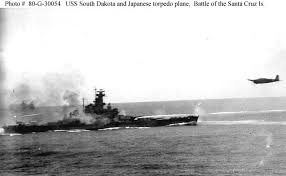
12 Comments

Filed under afghanistan, anti-semitism, authoritarian government, civil rights, Coronavirus, ethics, healthcare, History, holocaust, Immigration and immigrants, iraq,afghanistan, leadership, Military, national security, nazi germany, News and current events, Political Commentary, racism, Religion

Babi Yar’s Relevance Today

babi yar

Massacre at Babi Yar

Friends of Padre Steve’s World,

Anyone who follows my writing know I write a lot about the Holocaust and the war crimes perpetuated by the Nazi State. I began studying this as an undergraduate and graduate level history student at California State University at Northridge under Dr. Helmut Heussler, who served as a wartime interrogator for the 82nd Airborne Division during the Second World War and then as an interpreter at the Major War Crime trials at Nuremberg.  I studied under him for three years dealing with the end of Imperial Germany, the German Civil War, the Weimar Republic and the Nazi era. He gave me a lot of freedom to explore and research the subject and allowed me to do that research in undergraduate and graduate level independent study projects. I continued that study personally as well as during seminary and my second Master’s Degree in Military History.

Since I read, speak and write German well and can often pass myself off as German in Germany because of my lack of an American accent when speaking the language. I speak German with a blend of a Bavarian and Hessen dialect and that helps when I visit various Holocaust sites, museums, and research centers in Germany. I will be doing some of that again this fall when I make another trip to Munich, Hessen, and Baden-Wurttemberg. A few years ago I spent five hours at the U.S. Holocaust Museum in Washington D.C. contemplating things that I mostly already knew while exploring details of the Holocaust that made it more real and personal.

As part of my academic work at the Joint Forces Staff College I taught military ethics as related to the Just War Theory. In the class on jus post bellum or justice after war I dealt with the implication of participating in war crimes. It is a serious subject and in the class I attempted to make my students, all relatively senior officers from the United States and allied nations as uncomfortable as possible. I used a number of examples from the major war crimes trials at Nuremberg as well as the Generals Trial and I used the film Conspiracy, which is about the Wannsee Conference where mostly mid-level officers and bureaucrats hashed out the coordination of the Endlosung or Final Solution to what Nazis euphemistically called “the Jewish Question.” 


In the 1930s and 1940s the Nazis created the euphemism the Jewish Question in order to remove the aspect of humanity from their policy. It wasn’t about human beings, it was about people that they considered sub-human minority that they were able to demonize to expedite their elimination. the late Christopher Hitchens wrote:

“Die Judenfrage,’ it used to be called, even by Jews. ‘The Jewish Question.’ I find I quite like this interrogative formulation, since the question—as Gertrude Stein once famously if terminally put it—may be more absorbing than the answer. Of course one is flirting with calamity in phrasing things this way, as I learned in school when the Irish question was discussed by some masters as the Irish ‘problem.’ Again, the word ‘solution’ can be as neutral as the words ‘question’ or ‘problem,’ but once one has defined a people or a nation as such, the search for a resolution can become a yearning for the conclusive. Endlösung: the final solution.”

In Europe and the United States there are people in different governments, political parties, and fringe groups that are beginning to go mainstream, in some cases actually controlling governments after first having been elected into office destroy the institutions that safeguard democracy, oppress political opponents, shut down the free press, and determine that some racial, religious, or ethnic group is a question or problem. Questions need resolution, and problems need solutions.

Yehuda Bauer wrote:

“The horror of the Holocaust is not that it deviated from human norms; the horror is that it didn’t. What happened may happen again, to others not necessarily Jews, perpetrated by others, not necessarily Germans. We are all possible victims, possible perpetrators, possible bystanders.”

Bauer’s words are truth.

When I was teaching at the Staff College I would go through previous notes and research to teach my students. Whenever I did this I felt a tenseness and revulsion for the actions of those that ordered, committed or condoned these crimes; many of whom were like me, professional military officers, historians, and theologians. So I realize how easily it is for normal, rational, and even basically decent people to succumb to either participating in or turning a blind eye to crimes against others, even on a massive scale.  In fact the bigger those crimes are they seem easier for some people to dismiss, because the victims cease be human, and simply a statistic. Sadly, Josef Stalin probably got human nature right when he said “The death of one man is a tragedy. The death of millions is a statistic.”

That comment causes great revulsion in my soul. But I have to admit it seems to be the way that many people deal with such great crimes, or today when a pandemic that has killed over 60,000 Americans. Now people are demanding that the elderly, crippled, or people with chronic illnesses be sacrificed so they can go back to normal life. The terrifying fact is that many are White Nationalists, Neo-Nazis, and anti-government extremists being encouraged and funded by powerful families and organizations connected to the political right.

Today a heavily armed group of these people attempted to take over the capital building of Michigan and threaten legislatures, and the governor. Some of their fellow protestors blamed the Jews for the shutdown of businesses and stay at home orders. Some of the vigilantes stood screaming at police officers that stood blocking their way into the floor of the legislative chamber or into the governor’s office. On a stage outside two young girls danced, one wearing an ape like version of a mask representing African Americans. Police ended the attempt without violence, but what happens when such people start shooting. how far will they go? Who are the problems that they demand a solution?

September 29th 2019 was the 78th anniversary of the Babi Yar massacre. It was committed by members of the SS Einsatzgruppen C near Kiev shortly after the German Army captured that city. 33,771 Jews were exterminated by the members of Sonderkommando 4b of Einsatzgruppen C as well as members of a number of Ordungspolizei, police battalions supported by the logistics and protection of the German Army. About 10,000 others, mainly Communist Officials and Gypsies were rounded up and killed in the same operation. The victims were stripped of all of their belongings taken to a ravine and shot. It was the largest killing action by the various Einsatzgruppen in the war. The killings were done up close and personal. The men who conducted the operation either believed that the people that they were killing were sub-human, or did not have the courage to stand up and say no.

These issues are still with us and as I watch the rise of Right Wing and other Fascist movements in Russia, Europe, and the United States I get very concerned. But even more concerning are the large number of people who are content to dismiss their threats and violence, often because while too respectable to utter their words themselves they secretly condone their race hatred. Hannah Arendt made the comment that “The sad truth is that most evil is done by people who never make up their minds to be good or evil.”

Of course these are uncomfortable subjects. When I tell friends of the places that I have visited and studies I have done quite a few openly tell me that they find the subject so uncomfortable hat they could not visit those places. These friends span the political spectrum, just as did the people who said nothing or willingly followed orders to commit genocide in Nazi Germany.

We like to say that the Nazis were different than us or others. To some extent this is true, but the real truth is that most of the Christian Western European countries, and I include the United States have also committed gross crimes against humanity against peoples that we believed were less than human and not afforded human rights or protections.

In the movie Judgement at Nuremberg Spencer Tracy makes a comment that should send chills through any of us. He spoke concerning one of the judges on trial, “Janning, to be sure, is a tragic figure. We believe he loathed the evil he did. But compassion for the present torture of his soul must not beget forgetfulness of the torture and the death of millions by the Government of which he was a part. Janning’s record and his fate illuminate the most shattering truth that has emerged from this trial: If he and all of the other defendants had been degraded perverts, if all of the leaders of the Third Reich had been sadistic monsters and maniacs, then these events would have no more moral significance than an earthquake, or any other natural catastrophe.But this trial has shown that under a national crisis, ordinary – even able and extraordinary – men can delude themselves into the commission of crimes so vast and heinous that they beggar the imagination….”

What happened at Babi Yar is just one example of how civilized people can get can commit great atrocities in the name of ideology and race, and it does not stand alone. The tragic fact is that it really doesn’t take much to condition people to go commit such crimes; just teach people from childhood that people of certain races or religions are less than human. Then subjugate them to incessant propaganda and then turn them loose using the pretext that they are killing terrorists, insurgents, or other enemies of the state. The same is true with adults who have gone through some kind of massive disruption in their lives, such are easy prey for propagandists who need people to support their call that nefarious others, are to blame for their problems, not the men or women they elected to govern. Dr Timothy Snyder wrote:

“The European history of the twentieth century shows us that societies can break, democracies can fall, ethics can collapse, and ordinary men can find themselves standing over death pits with guns in their hands. It would serve us well today to understand why.”


Today, in the midst of pandemics, racism, and anti-Semitism rising again we must understand why otherwise ordinary people do commit such crimes against their fellow human beings. Tomorrow begins Holocaust Remembrance Month in the United States. If there ever was a time to not just mouth the words Never Again but take action to prevent such atrocities from happening again.

So until tomorrow,

Peace

Padre Steve+

2 Comments

Filed under anti-semitism, authoritarian government, Diseases Epidemics and Pandemics, History, holocaust, Immigration and immigrants, nazi germany, News and current events, Political Commentary, racism, White nationalism

The Liberation of Dachau “Model Camp” at 75 Years

Friends of Padre Steve’s World,

Today marked the 75th anniversary of the liberation of Dachau, the model concentration camp of the the Nazi SS State.


On March 20th 1933, barely a month and a half after the Nazi takeover of the German government and three days before the passage of the Enabling Act the Police President Of Munich, SS Reichsführer Heinrich Himmler ordered the establishment of the Dachau Concentration Camp. He appointed SS Standartenführer Hilmar Wäckerle as Commandant and the first 200 political prisoners from Munich’s Stadelheim prison arrived at Dachau on March 22nd.

The first SS guards assigned to Dachau were given the following instruction:

“Comrades of the SS!
You all know what the Fuehrer has called us to do. We have not come here for human encounters with those pigs in there. We do not consider them human beings, as we are, but as second-class people. For years they have been able to continue their criminal existence. But now we are in power. If those pigs had come to power, they would have cut off all our heads. Therefore we have no room for sentimentalism. If anyone here cannot bear to see the blood of comrades, he does not belong and had better leave. The more of these pig dogs we strike down, the fewer we need to feed.”

Wäckerle’s brief tenure as Commandant was marked by extraordinary brutality on the part of his staff, so much so that charges were brought against him by the Munich courts which resulted in his relief by SS Gruppenführer Theodore Eicke in July 1933. Eicke would establish the regulations which governed all the later Concentration Camps, and make Dachau the model camp for all others.

Theodore Eiche

Theodore Eicke

Among the later SS killers of the Holocaust who served at Dachau were Adolf Eichmann, and the Commandant of Auschwitz, Rüdolf Höss. It became a training ground for other Concentration Camp commanders and staff. Others would become leaders in the Waffen SS and the Einsatzgruppen death squads.

The announcement of Dachau’s Opening was reported by the German press in this release:

On Wednesday the first concentration camp is to be opened in Dachau with an accommodation for 5000 people. ‘All Communists and—where necessary—Reichsbanner and Social Democratic functionaries who endanger state security are to be concentrated here, as in the long run it is not possible to keep individual functionaries in the state prisons without overburdening these prisons, and on the other hand these people cannot be released because attempts have shown that they persist in their efforts to agitate and organize as soon as they are released.

Dachau began as a political prisoner camp for the Nazis to imprison Socialists, Communists, Jehovah’s Witnesses, some Jews, and other dissidents. It wasn’t a “death camp” designed to exterminate people even though tens of thousands of people died or were executed there. It was designed to terrorize, dehumanize, and destroy the souls of its inmates.

It was a place of inhuman medical experiments, a place of terror, and the administrative center of a network of over 30 large and 100 small sub-Camps which were used as sources of slave labor for the German armaments industry. But one has to remember that the SS was not simply an instrument of terror, but an institution also devoted to profit. Prisoners were valued in what their lives equated in profits. A prisoner was valued in what he or her could produce versus the expenses of keeping them alive for a period of 6 to 12 months. Under Himmler and his assistant for production and profits, ObergrüppenfuhrerOswold Pöhl the Concentration Camps, as well as the death camps became centers of profit for the SS in collaboration with German industrial concerns and industries owned by the SS itself.

Dachau was not one of the Death Camps, although it was a place of incredible cruelty, extraordinary suffering, brutality, and death. While not a “death camp” per say, an estimated 40,000 or more  prisoners were murdered there. For tens of thousands of others it served as a transit camp from which they were sent to the death factories in Poland, including Auschwitz, or other work camps, where many died of being worked to death, malnutrition, disease, or the simple cruelty and maltreatment inflicted on them by the guards.

Holocaust survivor Yehuda Bauer wrote: “The horror of the Holocaust is not that it deviated from human norms; the horror is that it didn’t. What happened may happen again, to others not necessarily Jews, perpetrated by others, not necessarily Germans. We are all possible victims, possible perpetrators, possible bystanders.”

The picture that you see above is the memorial to the Unknown Prisoner at Dachau. The words: “Den Toten zur Ehr, den Lebenden zur Mahnung” [To Honor the Dead, to Warn the Living] are engraved at its base.

I have been to Dachau at least a half dozen times beginning back in 1996. For me as a historian of the period the trip is both for learning and for meditation, for beyond its historical significance this is a holy place, a place made holy by the blood of tens of thousands of victims of one of the most evil regimes in history. The crimes committed by the staff of Totenkopfverbande SS guards from it’s inception were intended to terrorize and dehumanize the inmates who included political prisoners, religious objectors, Jews, and homosexuals. The inmates were not there because they were convicted of any crimes, in fact many had actually been exonerated by courts. In the case of those who had been convicted by courts, all had served what ever sentence they had been convicted of, but upon their release from prison were picked up by the SS and taken to Dachau where they were imprisoned without being charged with a crime, and an indefinite period and no date of release. Sometimes prisoners would suddenly and without warning be released, but they remained under observation by the local police and Gestapo. If they talked about their experience they were quite often sent back.

Prisoners were told on arrival:

Here you are, and you’re not in a sanatorium! You’ll have got that already. Anyone who hasn’t grasped that will soon be made to. You can rely on that . . . You’re not prison inmates here, serving a sentence imposed by the courts, you’re just ‘prisoners’ pure and simple, and if you don’t know what that means, you’ll soon find out. You’re dishonourable and defenceless! You’re without rights! Your fate is a slave’s fate! Amen.

In the Camp the prisoners were subject to punishment for even the most minor or perceived infractions, beatings, and whippings. Other punishments were meted out by guards who themselves were punished if they showed any mercy or human kindness to a prisoner. “While an offender sentenced to a term in prison knew when he was going to get out, release for the concentration camp inmate was determined by the whim of a quarterly review board, and could be delayed by the malice of any of the SS guards.”

Theodore Eicke, the commandant who systematized the Concentration Camp system created a world that his subordinate, and the later Commandant of Auschwitz, Rudolf Hoess described:

“It was Eicke’s intention that his SS-men, by means of continuous instruction and suitable orders concerning the dangerous criminality of the inmates, should be made basically ill-disposed towards the prisoners. They were to ‘treat them rough’, and to root out once and for all any sympathy they might feel for them. By such means, he succeeded in engendering in simple-natured men a hatred and antipathy for the prisoners which an outsider will find hard to imagine.”

Even a brutal man like Hoess found the brutality hard to watch, he recalled the:

“malicious evil-minded, basically bad, brutal, inferior, common creatures’ amongst the guards, who compensated for their sense of inferiority by venting their anger on the prisoners. The atmosphere of hatred was total.”

In the twelve years of its existence the staff of Dachau, through mistreatment, execution by bullet, gallows, through being used as subjects in grotesque medical experiments, by “execution by work,” or untreated illness and disease, murdered 41,566 prisoners. The point to be remembered is that despite this incredible number of murders that Dachau was not an extermination camp.

As the Third Reich crumbled the Nazis attempted to hide their crimes. Many inmates from Dachau were sent to other camps, by train or forced marched hundreds of miles. During these transits many, already shells of humanity due to maltreatment, disease and malnourishment. Even as this was happening trains from other camps were arriving at Dachau.


On 29 April 1945 units of the U.S. Army 45th and 42nd Infantry Divisions liberated Dachau, which was surrendered by its senior remaining officer, a mere SS 1st Lieutenant, as the commandant and   o ther senior officer had already fled. Most to be captured within days or weeks. The liberators were shocked by what they saw, the piles of dead, the bones in the crematoria, the emaciated prisoners,  and a train car full of dead, and some soldiers took their revenge on some of the guards, and massacred an estimated 20-50 of the surrendered SS men. Although charges were preferred, they were dropped.

The Execution of SS Guards at Dachau 

Regardless of the actions of the American liberators, even those who took justice into their own hands, the fact is that the Dachau guards all knew what was going on and had each to some degree participated in the atrocities at Dachau and in some cases other camps, or on the Eastern Front.

You may wonder why I took the time to go into such detail about my visits to Dachau and its terrible legacy. The answer is the same why I choose to walk American Civil War battlefields, it is to being to try to understand what the people there were seeing and experiencing.

Of course there were the prisoners who were so savagely treated by their jailers. Then there were the bystanders, the citizens of Dachau and other German cities who watched as Jews, political enemies, and others were marched to the camp, which was not a secret installation. Finally, there were the perpetrators, very few of whom were punished for their actions.

But another reason is that the survivors, be they victims, perpetrators, or bystanders are rapidly passing away

Soon none will be left. When that happens it is up to us the living to ensure that this is not forgotten and that those murdered at Dachau, the other Concentration Camps, the extermination camps, and those killed by the murder squads that went from one end of Europe to the other in a systematic attempt to wipe every Jew that they could find off of the face of the earth. Yes, there were other victims, but the Nazi crusade against the Jews knew no boundaries, physical or time included. Unlike every other genocide it extended beyond national borders, or time; it was an eschatological crusade that by the will of Hitler was limited by only one factor, the complete military defeat that was inflicted on Nazi Germany by those who she attacked.


Finally, the story must be told because there are those who either claim it didn’t happen, or are tired of talking about it. In Germany those include leaders of the new-Nazi AfD (Alternative for Germany) Party. In the United States, Britain, and other nations there are members of many new-Nazi and Alt-Right groups who desire very much the same thing. But if decent people decide not to speak out, if we remain silent, there is nothing anywhere that will keep these ideological descendants of Hitler from beginning it again, if not to the Jews, to other despised racial, religious, ethnic, or ideological groups. We live in a world where demagogues take advantage of people’s legitimate anxieties and deeply ingrained prejudices to stir up ungodly anger and hatred in order to both gain new followers and to incite those followers to a campaign of violence.

Doctor Timothy Snyder wrote:

“The European history of the twentieth century shows us that societies can break, democracies can fall, ethics can collapse, and ordinary men can find themselves standing over death pits with guns in their hands. It would serve us well today to understand why.”

But I know why, there are some people who are sociopaths, who though they seem ordinary have no empathy for others, and they are more numerous than we might ever suspect. Captain Gustave Gilbert, a psychologist assigned to the major war crime defendants at the Nuremberg war crimes trials noted:

“In my work with the defendants (at the Nuremberg Trails 1945-1949) I was searching for the nature of evil and I now think I have come close to defining it. A lack of empathy. It’s the one characteristic that connects all the defendants, a genuine incapacity to feel with their fellow men. Evil, I think, is the absence of empathy.”

That absence of empathy runs strong among Trump supporters and others of the religious and political right today. For the rest of my life I will fight them and expose them.

So until tomorrow I wish you all the best and ask that no matter what the leaders of your state say, to obey common sense and facts and be as careful as you can, as the COVID 19 pandemic is far from over.

Peace,

Padre Steve+
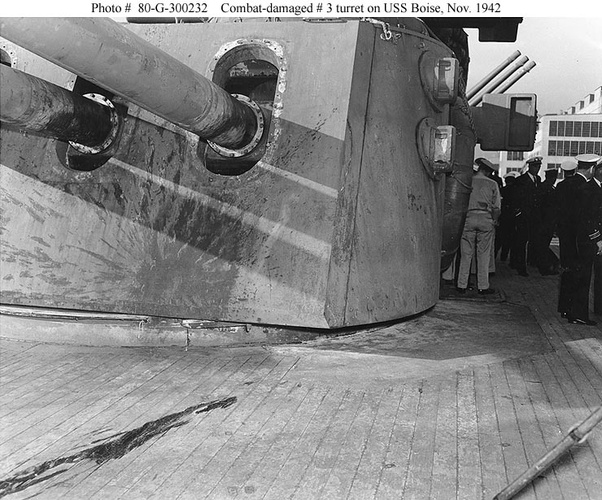
5 Comments

Filed under authoritarian government, Coronavirus, Diseases Epidemics and Pandemics, ethics, germany, History, holocaust, Military, nazi germany, News and current events, Political Commentary, racism, Religion, us army, world war two in europe