Category Archives: News and current events

“It Can’t Happen Here” but it is Happening Before Our Eyes

img_0327

Friends of Padre Steve’s World,

In 1935 the American writer Sinclair Lewis wrote a novel called It Can’t Happen Here. It was a semi-satirical novel about a Fascist state coming to power in the United States. In it Lewis wrote these words:

“A country that tolerates evil means- evil manners, standards of ethics-for a generation, will be so poisoned that it never will have any good end.”

I believe that we are seeing that happen before our eyes. That being said I realized from the beginning of the Trump campaign that it would to this at home and abroad. I was looking back at my archives going even back to 2012 after President Obama’s re-election and found that I had written about Trump’s maniacal desire to upend defy political and social norms and demonstrate his contempt for the Constitution and our laws. When he announced his campaign he began by appealing to nationalism and racism and he never stopped.

On December 15th 2015 I wrote these words in an article entitled The Mob Determined the Theme. Some people thought that I was writing about the Mafia or gangs, but I was talking about mob rule. Those words are here:

“When Albert Speer discussed the ability of Adolf Hitler to captivate the German people he noted something important. He discussed how Hitler and his minions played to them set by the disgruntled and angry German population. Speer wrote, “The mob determined the theme. To compensate for misery, insecurity, unemployment, and hopelessness, this anonymous assemblage wallowed for hours at a time in obsessions, savagery and license. The personal unhappiness caused by the breakdown of the economy was replaced by a frenzy that demanded victims. By lashing out at their opponents and vilifying the Jews, they gave expression and direction to fierce primal passions.”

Hitler played to that misery, insecurity and the obsessions of the politically and economically disaffected “conservative base” that no longer trusted the party establishments of the old-line conservative parties. He also played to the deep-rooted racism and anti-Semitism of those people. Hitler was an outsider, he was not indebted to any traditional party hierarchy and as such was able to throw away convention and play to the fear and anger of many Germans.

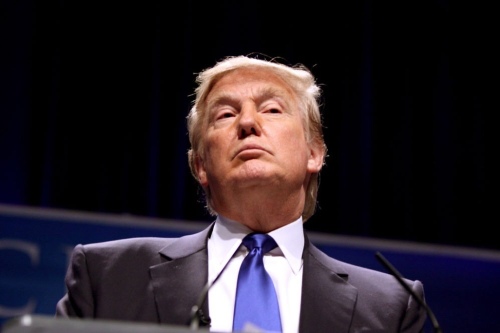
heres-what-donald-trump-supporters-really-believe

Donald Trump is doing today and he is running circles around the traditional politicians of the Republican Party. Every time trump says something that would have gotten himself blown out of the race twenty years ago had he said such things, today his poll numbers keep going up. He is now trending around 35% in most polls of GOP voters and my guess is that those numbers are low, as some supporters may not be willing to tell a pollster that they are for Trump, at least yet. My guess is that Trump’s support in the GOP is probably higher than 40% and won’t go down much. The party hierarchy and most of Trump’s primary rivals consistently criticize Trump, but most say that they will back him if he is the nominee. I cannot imagine that being the case twenty years ago when both the party establishment and the voters would have dumped him in a New York minute.

Aug. 21. 2015 Mobile, AL, Trump supporters at his campaign pep rally in Ladd Peebles Stadium. These women are all party of the Republican Party and plan to vote for Trump.  Over 20 thousand came to the Ladd-Peebles Stadium to attend Trumps campaign pep rally. 40,000 were expected to come.

Trump understands the mood of much of the traditionally conservative public better than his Republican establishment competitors. Trump is not stupid, unlike Hitler who actually believed in his message, Trump is not a radical, he cannot be, he has too much invested in the system. Instead, he is a street smart and pragmatic businessman who is exploiting the situation on the ground to his advantage. His opponents and the GOP establishment are frightened, but like the hidebound conservatives of the Weimar Republic who either dismissed or Hitler or thought that they could contain him are not willing to make a stand. As a result, Trump is able to play to the mood of the base and to coin a phrase, to “trump the establishment” by channeling the deepest anger, fear, hatred, xenophobia, and racism that the GOP establishment refuses to acknowledge. When there is a push back by the establishment it further angers the base, and Trump, quite adroitly threatens to leave the party; something which would doom the GOP in the 2016 general election, and possibly shatter the party.

Trump’s GOP opponents should not underestimate him and neither should establishment Democrats. Trump is using his celebrity bombast and the democratic process to take control of a major political party, and he is a lot smarter than most political analysts give him credit. As such, as a non-establishment outsider, Trump has a chance at taking over a major political party, something that has never before happened in the United States.

If he succeeds in his takeover bid, it will forever change American politics, especially if he is able to ride the fear, hatred, and fear to the White House. I don’t think the latter will happen, but I would not exclude it from the realm of the possible. To paraphrase Speer’s words about Hitler and Goebbels: By lashing out at their opponents and vilifying the Muslims and immigrants, Trump gave expression and direction to fierce primal passions of a disaffected GOP base.”

That was in 2015.

On July 22nd 2017 I wrote I Alone Can Fix It: Trump’s Dictatorial Message as I observed the new GOP nominee at the GOP National Convention. Five months later I wrote on December 27th 2016 I wrote Freedom is Never More than a Generation from Extinction. On March 22nd of this year I wrote Trump’s America: Saving the Form But not the Soul. I could go on and link many other articles but I will not, I have incriminated myself enough tonight.

Now that Donald Trump is in power he has used the Department of Homeland Security through a militarized ICE using mass incarcerations, expulsions, separating children from their families, and operating prison facilities from which people who are not with any crime charged are held indefinitely without legal representation. He has opening given support to White Supremacists including Neo-Nazis. He continues to threaten the Press, the political opposition, and long time allies using his Twitter account and his sycophants at Fox News and a multitude of Right Wing propaganda outlets to peddle lies as truth label those who tell the truth as liars and peddlers of Fake News.

He shows no interest in Civil Rights except support measures at the Federal, State, and local levels to roll back civil rights for ethnic, racial, and religious minorities, women, and LGBTQ people. His economic and social policies are designed to benefit his allies, especially the top 1% and politically reliable Evangelical Christians while impoverishing and disenfranchising all others. He labels all who oppose or criticize him and his policies as enemies of the state and traitors.

In terms of foreign policy he has during the course of his presidency personally undermined and now destroyed alliances and treaties that Presidents from Franklin Roosevelt to Barak Obama worked to sustain. Those Presidents who included Dwight Eisenhower and Ronald Reagan helped build those alliances and forge those treaties for our good and the good of our allies and those who we welcomed into the fold of democratic ideals. Instead he makes diplomatic war on our allies while openly praising dictators abroad and carrying out the dictates of Vladimir Putin.

This brings me back to his attacks on the American Justice system of which almost all are tied to his, his family’s, and his advisor’s connection with Russia attempts to undermine American elections and the military attack and occupation of parts of the Ukraine, which during his campaign he supported by saying that the conquered Ukrainian regions “probably preferred Russian rule.” Neither before or after his election did he, his aides ever condemn the shoot-down of a commercial airliner by Russian forces near the Russian-Ukrainian border. The actions in the Ukraine led the G-7 to expel Russia. This weekend the President proposed reinstating the Russians despite the fact that they are still actively working against the United States and our Allies.

He is launching a trade war with our allies and leading trading partners which will be disastrous to most Americans.

Later today he will attempt to “negotiate a deal” with the North Korean dictator Kim Jung Un while admitting that he has done no preparation for it. I would hope for a lasting peace on the Korean Peninsula but I believe that the President will either come back with a deal that works to the advantage of the North Koreans or which will fail and bring about war in Northeast Asia. If he does come up with a deal it is very possible that he will use it as a means to go to war against Iran which will result in an apocalyptic conflagration in the Middle-East.

As he does all of this he surrounds himself with terrified yes men who are too afraid of him to tell the truth while increasing his attacks on the law, the Constitution, and people that he sees as his personal enemies at home and abroad. As I watch him and read what he writes I am reminded of Winston Churchill’s who wrote:

“You see these dictators on their pedestals, surrounded by the bayonets of their soldiers and the truncheons of their police … yet in their hearts there is unspoken fear. They are afraid of words and thoughts: words spoken abroad, thoughts stirring at home — all the more powerful because forbidden — terrify them. A little mouse of thought appears in the room, and even the mightiest potentates are thrown into panic.” 

The President’s aggressiveness is not brought about by confidence, it is brought about by his fear, he cannot abide criticism of any kind, thus he must crush it.

I fear for what is coming and I am not sure if our institutions, laws, or Constitution will survive in any recognizable form. I want them to, but right now I do not see light at the end of this tunnel, and I would much rather be wrong than right.

Until tomorrow,

Peace

Padre Steve+


2 Comments

Filed under civil rights, ethics, Foreign Policy, History, laws and legislation, leadership, News and current events, Political Commentary

I Don’t Have the Answers but You Might as Well Live: Thoughts on Suicide

Suicide-Hotline

Friends of Padre Steve’s World,

This is a hard article to write because it takes me back to points in my life after my return from Iraq that all I wanted to do was die and even had plans of how I would kill myself. The worst period was between 2010 and 2013 when I was stationed away from my wife Judy on an unaccompanied assignment at Camp LeJeune North Carolina. But I couldn’t do it. I didn’t want to subject my dog Molly to me not coming home, she helped save my life, as did thoughts of Judy and the friends I had at a local bar who cared for me during that time.

It wasn’t my faith or for that matter most of the people I knew in the Chaplain Corps or my former Church that kept me from it, it was a dog, my wife, and regular guys that I ate and drank with regularly: Mike and New York Mike, Walt, Eddie, Felicia, Bill, “Judge Ito”, Billy, and other regulars at Rucker Johns in Emerald Isle made sure that I lived. So did friends at Granger Stadium in Kinston North Carolina where I would drive an hour to and back to watch minor league baseball games two or three times a week: Toni and Jerry, Anne, Cara, and Negro League Hall of Fame player Carl Long. Sadly, New York Mike, Judge Ito, Walt, Cara, and Carl have all passed away since I came back to Virginia.

During those dark times I had friends including men and women that I had served with in the military or their family members kill themselves. I can visualize their faces as I write this. They ranged in age from barely twenty years old to nearly sixty, all at different stages of life and their career. Quite a few were combat vets of multiple deployments and in one case both the Vietnam and the Iraq wars. They were real heroes but they defeat the figurative demons within them. I also have had a great grandfather and great uncle who afflicted with terminal cancer killed themselves.

I still struggle with the effects of PTSD, Traumatic Brain Injury, and Moral Injury. I still suffer from depression and anxiety, thankfully not nearly as bad as it used to be. I still avoid most crowded places unless they are very familiar to me. I am still hyper-vigilant and on guard. I plot escape routes or have memorized what I as an unarmed person would do to neutralize a threat in a public place because I don’t plan on going down without a fight or let innocent people get killed.  I also suffer from frequent flashbacks and terrible nightmares and night terrors. I threw myself off the bed in the middle of one again Thursday night. Thankfully I didn’t get a concussion or break my nose leading to emergency room visits like happened in 2014 and 2016.

Suicide is something I try not even to think about because it takes me back to very bad times that I don’t want to experience again. At the same time when I have to deal with suicides at work or read about high profile suicides, such as those of Anthony Bourdain and Kate Spade I feel all of the anguish that I went through during the worst times, but without any desire to kill myself, I think that is a good thing.

At the same time when I deal with or hear about a suicide my mind starts playing the them song from M*A*S*H; Suicide is Painless, which was written for the movie by the fourteen year old son of director Robert Altman. Altman wanted the song for a specific scene in the film and he wanted it to be named Suicide is Painless, he also wanted it to be the stupidest song ever written. He couldn’t wrap himself around that and his son wrote it in about 15 minutes. It’s a strange song for me. I grew up with the movie and the TV show and I started my career as a commissioned office as a Medical Service Corps Officer in the Army. The song was the official song of the Army Medical Department and the instrumental version was played at every graduation or function that we had. Two decades later in the trauma hall of a Navy Trauma platoon in Iraq I felt like Father Mulcahy

I have a deep sense of empathy for those who suffer from deep depression and feel that sense of hopelessness, abandonment, and god-forsakenness that often lead to suicide. When I see people who complete a suicide condemned as weak, selfish, or even worse as deserving of God’s wrath and judgment I do get angry, especially when the accusers are Christians. I believe than nobody is outside the mercy and love of God, even those who commit suicide. At the same time it is hard for me to know what to say anymore without sounding trite because I know how deeply someone has to be hurting to consider suicide, and words cannot go there, there is a profound hollowness to them. The last verse of Suicide is Painless note something that I feel when dealing with a suicide situation because I just don’t have the answers:

A brave man once requested me
To answer questions that are key
Is it to be or not to be
And I replied oh why ask me…

That being said I do believe that help can be found and that even in the midst of struggle people can get help and find meaning in life, and I want them to find whatever they need to help them live, thrive, and survive. I don’t believe that life is without struggle, many of my personal heroes dealt with terrible depression at various times of their lives. Abraham Lincoln, Ulysses Grant, Gouverneur Warren, and T.E. Lawrence among them.

As opposed to the thought that suicide is painless, I think that the great American poet and satirist Dorothy Parker said it well, suicide is not painless, she wrote:

“Razors pain you,
Rivers are damp,
Acids stain you,
And drugs cause cramp.
Guns aren’t lawful,
Nooses give,
Gas smells awful.
You might as well live.”

So please, if you or someone that you know are struggling with issues in life that are so bad that suicide has become an option, please reach out and get help. Getting help is worth it, I know, I wouldn’t still be here without it. As Seneca said: “Sometimes even to live is an act of courage.”

The National Suicide Prevention Lifeline number is 1-800-273-TALK (8255).

Peace

Padre Steve+


Leave a comment

Filed under faith, film, life, mental health, Military, ministry, News and current events, PTSD, suicide

Requiem for an Alliance: D-Day at 74 Years

imagesCA580JS0

Friends of Padre Steve’s World,

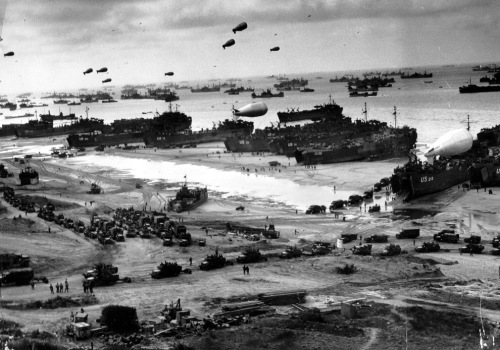
It is hard to believe now as we look at the serene beaches of Normandy that seventy years ago they were places of desperate combat in which hundreds of thousands of Allied and German soldiers, sailors, airmen and marine-commandos battled in a contest that helped free Europe of Nazi tyranny and changed the course of history. What they did helped change the world and brought about a measure of peace and security unparalleled in modern history as the free nations of the Atlantic Alliance charter a course for democracy and freedom. Unfortunately it seems that now the United States led by a President who cares nothing for the alliances so carefully built over the past seven decades has set a course to abandon that work, and our long time allies have come to realize that under this President that the United States is an unreliable partner. They have forgotten the words of Ronald Reagan who said: “From a terrible war we learned that unity made us invincible; now, in peace, that same unity makes us secure.”

The men who fought there were young, most in their twenties, but some in their teens or thirties as well as a smattering of senior leaders or old career soldiers in their 40s and 50s. When I first began to read about and study the battle a good number were still alive, most about the same age as I am now. Today, their ranks thinning they are passing into history. When the 80th anniversary is celebrated, the few that remain will all be about 100 years old, and even now, the youngest of these men are over 90 years old.

On June 6th 1944 the Allies invaded German controlled France on the beaches of Normandy. By that evening the Allied Expeditionary Force had landed six infantry divisions on five invasion beaches and the bulk of three airborne divisions on the approaches to those beaches. Near 175,000 Allied Soldiers, Sailors, Airmen and Marine Commandos were involved in the attack and nearly 10,000 would listed be as killed, wounded or missing by the end of the day, over half on Omaha Beach.

General Dwight D. Eisenhower sent them forward with this message:

You are about to embark upon the Great Crusade, toward which we have striven these many months. The eyes of the world are upon you. The hopes and prayers of liberty-loving people everywhere march with you.  In company with our brave Allies and brothers-in-arms on other Fronts, you will bring about the destruction of the German war machine, the elimination of Nazi tyranny over the oppressed peoples of Europe, and security for ourselves in a free world….

The names of the invasion beaches and the units involved have been immortalized in history, in film and literature. The American 101st Airborne “Screaming Eagles,” the “All American” 82nd Airborne Division and British 6thAirborne Division “Red Devils” made the largest night airborne drop and battled Germans, the elements as the struggled to reorganize on the heels of widely scattered drops.  The Americans battled the German 91st Airlanding Division and the crack 6th Parachute Regiment, while the British faced men of the 716th“Static” Infantry Division and battle groups of the nearby 21st Panzer Division.

On Sword Beach men of the 3rd British Division and 27th Armored Brigade teamed with the 1st Special Services Brigade composed of Army and Royal Marine Commandos made the assault, to their right on Juno Beach the Canadians of the 3rd Canadian Division, 2nd Canadian Armored Brigade and two Royal Marine Commandos (battalions) while to their right on the middle invasion beach, Gold Beach the British 50th (Northumbrian) Infantry Division and 8th Armored Brigade went ashore with elements of the British 79th Armored Division and the 47th Royal Marine Commando.

To the right of the British landed the American V Corps on Omaha Beach, the 1stInfantry Division, the famous “Big Red One” and the 29th “Blue and Gray” Infantry Division of the Virginia and Maryland National Guard. They would fight the most seasoned Germans on the beaches that day, the hardened combat veterans of the 352nd Infantry Division.  The battle of Omaha was nearly a disaster and a one point General Omar Bradley contemplated withdraw from the beach.  The American troops, including the men of the 2nd Ranger Battalion who scaled the cliffs of Point du Hoc to protect the beach from enfilade fire from German artillery mounted on the point, yet the German guns had not yet been emplaced and the Rangers fought a bitter battle against strong German resistance on that rugged mount.  On the far right the American VII Corps led by the 4th Infantry Division assaulted Utah Beach; fortunately the Americans landed away from their planned point of assault and faced little resistance. Had they landed in the correct location they might fared as their neighbors on Omaha Beach.

Offshore the venerable battleships HMS Warspite and HMS Ramillies and the USS TexasUSS Nevada and USS Arkansas provided fire support to the beaches aided by the Free Naval Forces of France, the Netherlands, Poland and Norway.  The French forces included the cruisers Montcalm and Georges Leygues.

Names such has St Mere-Eglise and Pegasus Bridge, the Merville Battery, Point du Hoc and Bloody Omaha remain etched in the minds of the dwindling number of surviving veterans as well as historians, military personnel and others that take the time to remember the sacrifices of these men.

The Men came from all parts of the United States and the British Commonwealth. Additionally personnel from France and other countries occupied by Nazi Germany were represented in the land, air and naval forces involved.  For the French, humiliated by their defeat in 1940 and divided by the Vichy and Free French divide were determined, despite their small numbers to liberate their homeland.

They were opposed by four German Divisions, a Luftwaffe Fallschirmjaeger regiment and elements of the 21st Panzer Division.  The Germans with nothing in the way of air support and no significant naval forces were on their own. Hitler had refused Rommel’s request to deploy Panzer divisions near the beaches and was not awakened when word came of the invasion.  German soldiers fought with considerable valor and would do so throughout the Normandy campaign, even if they fought for a regime that was evil at its core.

As the battle continued President Franklin Delano Roosevelt addressed the nation and asked all Americans to join him in this prayer:

My Fellow Americans:

Last night, when I spoke with you about the fall of Rome, I knew at that moment that troops of the United States and our Allies were crossing the Channel in another and greater operation. It has come to pass with success thus far.

And so, in this poignant hour, I ask you to join with me in prayer:

Almighty God: Our sons, pride of our nation, this day have set upon a mighty endeavor, a struggle to preserve our Republic, our religion, and our civilization, and to set free a suffering humanity.

Lead them straight and true; give strength to their arms, stoutness to their hearts, steadfastness in their faith.

They will need Thy blessings. Their road will be long and hard. For the enemy is strong. He may hurl back our forces. Success may not come with rushing speed, but we shall return again and again; and we know that by Thy grace, and by the righteousness of our cause, our sons will triumph.

They will be sore tried, by night and by day, without rest — until the victory is won. The darkness will be rent by noise and flame. Men’s souls will be shaken with the violences of war.

For these men are lately drawn from the ways of peace. They fight not for the lust of conquest. They fight to end conquest. They fight to liberate. They fight to let justice arise, and tolerance and goodwill among all Thy people. They yearn but for the end of battle, for their return to the haven of home.

Some will never return. Embrace these, Father, and receive them, Thy heroic servants, into Thy kingdom.

And for us at home — fathers, mothers, children, wives, sisters, and brothers of brave men overseas, whose thoughts and prayers are ever with them — help us, Almighty God, to rededicate ourselves in renewed faith in Thee in this hour of great sacrifice.

Many people have urged that I call the nation into a single day of special prayer. But because the road is long and the desire is great, I ask that our people devote themselves in a continuance of prayer. As we rise to each new day, and again when each day is spent, let words of prayer be on our lips, invoking Thy help to our efforts.

Give us strength, too — strength in our daily tasks, to redouble the contributions we make in the physical and the material support of our armed forces.

And let our hearts be stout, to wait out the long travail, to bear sorrows that may come, to impart our courage unto our sons wheresoever they may be.

And, O Lord, give us faith. Give us faith in Thee; faith in our sons; faith in each other; faith in our united crusade. Let not the keenness of our spirit ever be dulled. Let not the impacts of temporary events, of temporal matters of but fleeting moment — let not these deter us in our unconquerable purpose.

With Thy blessing, we shall prevail over the unholy forces of our enemy. Help us to conquer the apostles of greed and racial arrogances. Lead us to the saving of our country, and with our sister nations into a world unity that will spell a sure peace — a peace invulnerable to the schemings of unworthy men. And a peace that will let all of men live in freedom, reaping the just rewards of their honest toil.

Thy will be done, Almighty God.

Today we remember those men who were a part of the Great Crusade to liberate Europe from the Nazi oppressors. On the 40th anniversary of the invasion President Ronald Reagan eulogized those who fought and died for the freedom of the world:

Today, in their memory, and for all who fought here, we celebrate the triumph of democracy.  We reaffirm the unity of democratic people who fought a war and then joined with the vanquished in a firm resolve to keep the peace.

From a terrible war we learned that unity made us invincible; now, in peace, that same unity makes us secure. We sought to bring all freedom-loving nations together in a community dedicated to the defense and preservation of our sacred values.  Our alliance, forged in the crucible of war, tempered and shaped by the realities of the post-war world, has succeeded.  In Europe, the threat has been contained, the peace has been kept.

Today, the living here assembled:  officials, veterans, area citizens, pay tribute to what was achieved here 40 years ago.  This land is secure.  We are free.  These things are worth fighting and dying for.

President Obama continued in the tradition of President Reagan when he noted on the 70th anniversary of the landings:

“We are on this Earth for only a moment in time.  And fewer of us have parents and grandparents to tell us about what the veterans of D-Day did here 70 years ago.  As I was landing on Marine One, I told my staff, I don’t think there’s a time where I miss my grandfather more, where I’d be more happy to have him here, than this day.  So we have to tell their stories for them.  We have to do our best to uphold in our own lives the values that they were prepared to die for.  We have to honor those who carry forward that legacy, recognizing that people cannot live in freedom unless free people are prepared to die for it.”

The words of Roosevelt, Reagan, and Obama are powerful reminders of what was accomplished on that fateful day, June 6th 1944. I hope and pray that as we remember that day and those brave men that we will never forget. Sadly, it appears that President Trump, his advisors, and many of his followers have forgotten just how important this is and I’m sure that if he were still alive that Ronald Reagan himself would agree with me.

Peace

Padre Steve+

Leave a comment

Filed under History, leadership, Military, nazi germany, News and current events, Political Commentary, world war two in europe

Remembering the Men of D-Day: In the Era of Trump who Will We Channel?

img_0061

Friends of Padre Steve’s World,

I find the days around Memorial Day and the anniversaries of the Battle of Midway and the D-Day landings to be a time when I become quite reflective about what it means to be a career American military officer, combat veteran, and the son of a Navy Chief who was also a combat veteran.

When he spoke on Omaha Beach during the ceremony marking the 70thAnniversary of the D-Day landings President Barak Obama said:

“We are on this Earth for only a moment in time.  And fewer of us have parents and grandparents to tell us about what the veterans of D-Day did here 70 years ago.  As I was landing on Marine One, I told my staff, I don’t think there’s a time where I miss my grandfather more, where I’d be more happy to have him here, than this day.  So we have to tell their stories for them.  We have to do our best to uphold in our own lives the values that they were prepared to die for.  We have to honor those who carry forward that legacy, recognizing that people cannot live in freedom unless free people are prepared to die for it.”

All of my adult life I have striven to uphold those values that those men were prepared to die for, and for almost 37 years of Army and Navy service that I have been prepared to do so at a moment’s notice. I still am, against all threats, foreign and domestic. I just hope that I will never have to repeat the words of Colonel Claus von Stauffenberg: “I’m a soldier, but in serving my country, I have betrayed my conscience.”

Seventy-four years ago the liberation of France began on the beaches of Normandy.  Soldiers from 6 Allied Infantry and 3 Airborne Divisions supported by an Armada of over 5000 ships and landing craft and several thousand aircraft braved weather, heavy seas and in places fierce German resistance to gain the foothold on beaches named Omaha, Utah, Gold, Sword and Juno.  Over the next seven weeks the Allied soldiers advanced yard by yard through the hedgerows and villages of Normandy against ferocious German resistance before they were able to break out of the lodgment area and begin the drive across France. In his D-Day message to his troops General Dwight Eisenhower reminded them that their mission was the elimination of Nazi tyranny over oppressed peoples of Europe, and security for ourselves in a free world.” There are still those in the world who subject their people to tyranny and attempt to destabilize and overthrow the governments of liberty loving peoples, likewise Eisenhower knew that security for ourselves meant close alliances with those who have our values and not isolating ourselves from the world.

The fighting was bloody, most American, British and Canadian infantry battalions and regiments suffered nearly 100% casualty rates in Normandy.  Replacements were fed in at a cyclic rate to make up the losses even as fresh divisions flowed ashore, but the losses were terrible.  By the time the landings took place, the British having been at war for nearly five years were bled out.  They had little left to replace their losses.  From Normandy on the British were losing combat power at a rate that they could not make up.

For the Americans there was another problem.  The US High command decided to limit the Army to 90 Divisions.  Many of these were committed to the Pacific and Mediterranean theaters.   Likewise, American Infantry units were generally made up of the lowest caliber of recruits, led often by the poorest officers; the best went to either the Air Corps or technical branches of the Army.

Now this is not to criticize these veterans, but it was a factor in the campaign.  Most US Infantry Divisions with the exceptions of those previously blooded in North Africa and Sicily often performed badly in action.  Some, after being manhandled by the Germans had their leadership replaced and became excellent combat units.  However, every new division that arrived in France after D-Day always got the worst of their initial engagement against German forces.

While performance suffered there was another problem for the Americans.  With the limitation in number of divisions, they stopped building infantry divisions, upon whom the bulk of the campaign depended. Thus they had little in the way of trained infantry replacements to make up heavy losses in Normandy.  By late 1944 during the Battle of the Bulge the American infantry crisis was so bad that 30,000 Air Corps candidates were trained as infantry and soldiers support units such as Ant-Aircraft battalions were used to bolster infantry units.

Had the Germans been able to hold out. Had they not been bled white by the Red Army on the Easter Front. Had they not lost the nearly their entire Army Group Center in the Red Army offensive of 1944 it is conceivable that the British and American offensive in the West would have ground to a halt for lank of infantry in 1945.  In spite of this there was no lack of individual courage among the troops engaged; the courage and sacrifice of all who fought there should not be forgotten.

The human toll among the combatants both Allied and German, as well as the local populace was especially traumatic.  While the American, Canadian and British people are keen to remember the sacrifices made by our soldiers we often forget the toll among the French civilian population of Normandy as well as the German soldiers, mostly conscripts, sacrificed by the Nazi regime.  Normandy suffered more than any part of France during the liberation.  In the months leading up to D-Day Allied Air Forces unleashed hell on Normandy to attempt to lessen potential German resistance.  The Allied Naval bombardment added to the carnage ashore and once the campaign began the combined fires of both Allied and German forces devastated the region.  Whole cites such as Caen were destroyed by Allied Air forces and an estimated 30,000 French civilians were killed during the Normandy campaign, 3000 on D-Day alone.  I think it can be said that the blood of the civilians of Normandy was shed for the freedom of all of France.

The campaign in Normandy was one of the most viciously contested in western military history.  German forces, especially the elite paratroops of the 2nd, 3rd, 5th and 6th Fallschirmjager Divisions, the German Army Panzer Divisions such as the 2nd, 21st, 116th and Panzer Lehr, and those of the Waffen-SS, especially the 1st, 2nd and 12th SS Panzer Divisions held the line against ever increasing Allied forces.  As they sacrificed themselves Hitler refused to commit more forces to Normandy and insisted that his Army contest every meter of ground. In doing so they were ground to dust, their casualties massive, but Hitler forbade his commanders to withdraw his troop to more defensible positions along the Seine.

Hitler’s decisions actually shortened the campaign.  Whatever the crimes of the Hitler Regime and Nazism, which were among the most heinous in history, one can never question the valor, courage and sacrifice of ordinary German soldiers, but many of them too shared in the crimes of the Nazi regime. Their courage and sacrifices were forever tarnished by the cause that they fought for and the way their country and many of them waged war, on the Eastern Front, and in some case on the Western Front.

For those Americans who lump all Germans who fought in World War II with the evil of the Nazi regime, please do not forget this fact:  There are those today, even in this country that make the same charge against Americans who have fought in Iraq and those at home and abroad who have labeled the US as an aggressor nation. As President Trump continues to go his own way to make the United States a pariah nation we have to be very aware of the costs of it and also remember that the Americans who went ashore on D-Day did so to help defeat a pariah nation that had flaunted every standard of justice in attempting to make Germany Great Again. When you judge others, know that the same standard will be applied to you someday and it is possible that our day may come sooner than we think. It is as Justice Robert Jackson who served as the Chief Prosecutor at the Nuremberg War Crimes Tribunal wrote:

“If certain acts of violation of treaties are crimes, they are crimes whether the United States does them or whether Germany does them, and we are not prepared to lay down a rule of criminal conduct against others which we would not be willing to have invoked against us.”

Normandy was a near run thing for the Allies.  First the weather almost delayed it by 2 to 4 weeks.  Had that happened the Germans might have been even better prepared to meet the invasion.  Likewise, the Red Army’s devastating offensive which annihilated Army Group Center in June kept the Germans from transferring additional forces from the Russian Front to Normandy.  On D-Day itself there were a number of times where Lady Luck, or maybe the Deity Herself, saved the Allies from disaster.

Any person who has seen Saving Private RyanThe Longest Day or Band of Brothers knows a little bit about how close Overlord came to failure.  Allied Airborne units were dispersed throughout the region after they drooped.  Many units were not fully operational for more than a day as they sought to organize themselves and gather their troops.  At Omaha Beach the Americans had not counted on the presence of the first rate German 352nd Infantry Division.  This division, despite being pounded by naval and air forces almost cause General Bradley to withdraw from Omaha.  At Utah the soldiers of the 4th Infantry division escaped a similar mauling by landing on the wrong beach.  Had they landed at the planned beaches they would have ran into the same kind of resistance from well dug in German forces.  At Gold Juno and Sword British forces benefited from confusion in the German command which kept the 21st Panzer Division from descending on the British forces and quite possibly splitting the British zones.

The Allies benefited from the absence of Field Marshall Erwin Rommel, Commander of Army Group B who because of the ad weather assumed no invasion was possible and traveled to German to celebrate his wife’s birthday.  Finally, and perhaps most important they benefited by Hitler’s refusal to immediately commit forces, including his Panzer reserve to defeat the invasion at the beachhead.

For those who fought in Normandy and those civilians who lived through it the memories are still vivid. Many suffer the effects of PTSD, grief and other wounds, physical, emotional and spiritual.  When one is exposed to the danger and destruction of war, the smell of death, the sight of burned out cities, vehicles and the suffering of the wounded and dying, it makes for a lifetime of often painful memories.

For some of the German, British and American veterans, the struggle in Normandy has given way to long lasting friendships.  Many of those who fought against the Allied onslaught became fast friends after the war. Those who fought against each other were soon allies as part of NATO and soldiers of nations which were once bitter enemies serve together in harm’s way in Afghanistan.  The generation that fought at Normandy is rapidly passing away, their numbers ever dwindling they remain a witness to courage, sacrifice and reconciliation.

In the end it is reconciliation and healing that matters. Some scars of war never pass away; some memories are far too painful to release.  Yet we who serve often strive to reconcile.  In 2002 while deployed at sea for Operation Enduring Freedom I was an advisor to a boarding team from my ship.  It was our job to make sure that impounded ships which were breaking the UN embargo on Iraq were not in danger of sinking, and that their crews had food, water and medical care.  Since many of these ships remained at anchor for 2-4 weeks in the heat of the Arabian Gulf, this was important.

The delays imposed by UN rules sometimes meant that the sailors of these ships grew resentful.  It was my job to spend time with the Masters of these ships to keep things calm and work out any issues that arose.  On one of these ships I met an Iraqi merchant skipper.  The man was well traveled, educated in the U.K. in the 1960s and in his career a frequent visitor to the US. In 1990 he was the senior captain of the Kuwaiti shipping line.  Then Saddam Hussein invaded Kuwait.  As a result of this when Kuwait was liberated he lost his job.  His nation was an international pariah.  Since his life was the sea he took up the only job possible to support his family, what he knew best, captaining ships.  He was most apologetic for the trouble that he and others like him caused us.  We shared much during those visits.   One of his daughters was in medical school and other children in university.  He longed for the day when Iraq would be free.  On our last talk before his ship was released he remarked to me “I hope one day we will meet again.  Maybe someday like the American, British and German soldiers after the war, we can meet in a pub, share a drink and be friends.” 

I too pray for that, especially after my tour in Al Anbar five years after I encountered that Iraqi Merchant Captain.  Maybe someday we will meet. I hope that he is still alive and maybe he will see this.  I thought of him almost every day that I was in Iraq. I only hope that he and his family have survived the war, the continuing violence in Iraq and are doing well. There is hardly a day that goes by that I do not think of this man or the Iraqis that I had the honor of serving alongside in Al Anbar in 2007 and 2008.

President Obama remarked in Normandy last week about the veterans of the 9-11 Generation of service members, of which I and so many others like me are part:

“And this generation — this 9/11 Generation of service members — they, too, felt something.  They answered some call; they said “I will go.”  They, too, chose to serve a cause that’s greater than self — many even after they knew they’d be sent into harm’s way.  And for more than a decade, they have endured tour after tour.”

The survivors of the D-Day landings and those on the other side of the hill are continuing to pass from the bonds of this earth and into eternity. We owe it to them and to the world to make what they sacrificed themselves to do into reality, battling tyranny and striving for peace and security.

But that being said, what good will that be if we allow freedom to die at home? I wonder if like Claus von Stauffenberg who came to understand that serving Germany was not the same as serving Hitler, if we who serve today will have to make that same choice in regard to President Trump. In light of his actions and his words which indicate that he believes that he is above the law, can that point not be far away? Likewise will we who serve more embody the Americans, British, Canadians, and French at D-Day or the Germans?

Both are good questions to ask as we remember the men of D-Day.

Peace,

Padre Steve+

Leave a comment

Filed under History, iraq, Military, nazi germany, News and current events, Political Commentary, us army, War on Terrorism, world war two in europe

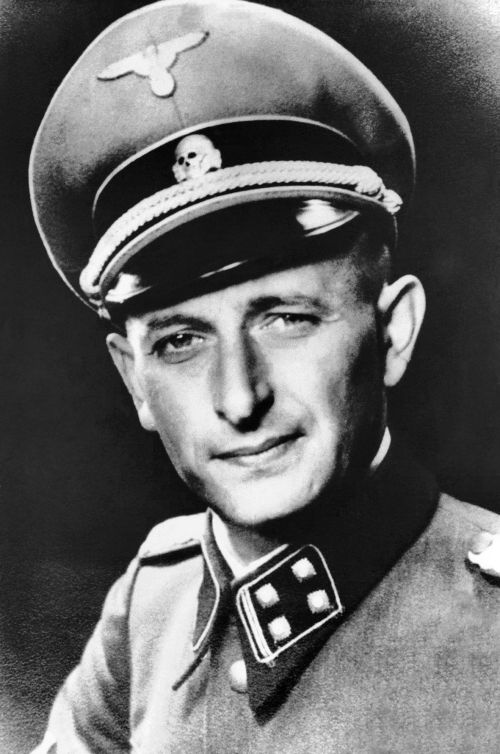
Eichmann, and the Ever Present Reality of Endlösung

Eichmann1

Friends of Padre Steve’s World,

On June 1st 1962 Adolf Eichmann was hanged in Israel for his crimes of mass murder and genocide. His appearance in the court where he portrayed himself as a functionary and bureaucrat who was repulsed by bloodshed and only following orders. So convincing was his act that Hannah Arendt wrote of him:

“The trouble with Eichmann was precisely that so many were like him, and that the many were neither perverted nor sadistic, that they were, and still are, terribly and terrifyingly normal. From the viewpoint of our legal institutions and of our moral standards of judgment, this normality was much more terrifying than all the atrocities put together, for it implied — as had been said at Nuremberg over and over again by the defendants and their counsels — that this new type of criminal, who is in actual fact hostis generis humani, commits his crimes under circumstances that make it well-nigh impossible for him to know or to feel that he is doing wrong.”

Unfortunately there are people such as Arendt described, but Eichmann was not one of them. She wrote her commentary having only attended parts of the trial, but what she saw convinced her that Eichmann was ordinary and normal. She was convinced by his appearance and presentation at the trial that he was not the man who ran roughshod over Jews as well as German officials in order to execute the Final Solution. That phrase, “the banality of evil” has often been used to provide an alibi for men and women who wholeheartedly participated in the extermination of the Jews and others deemed to be less than human regardless of whether they were desk bound bureaucrats in Berlin, managers of the extermination camps, or the members of the Einsatzgruppen, the Ordungspolizei, or the Wehrmacht who systematically exterminated millions of people up close and personal.

Eichamnn was a true believer in the Nazi system and its desire to exterminate the Jews from the earth and he enjoyed what he did. He not only acted on orders but he anticipated them, as he told William Sassen in an interview while living undercover in Argentina in the 1950s:

“If we would have killed 10.3 million Jews, then I would be satisfied and would say, good, we annihilated an enemy. … I wasn’t only issued orders, in this case I’d have been a moron, but I rather anticipated, I was an idealist.”

Eichmann began his career by persecuting the Jews of Vienna but following the Wansee Conference he was entrusted by Reinhard Heydrich with overseeing the mechanics of implementing the Final Solution. He was only an SS Lieutenant Colonel but he wielded his power with such effect that he could ensure that Nazi functionaries senior to him did his bidding in regard to the Jews, He told Sassen:

“They knew me wherever I went. Through the press, the name Eichmann had emerged as a symbol…. In any case, the word Jew … was irreversibly linked with the word Eichmann. Much more power … was attributed to me than I actually had.”

Eichmann summed up the attitude of many when he said regarding his work to deport hundreds of thousands of Hungarian Jews to Auschwitz in in just a few weeks during the fall of 1944, “Whether they were bank directors or mental cases, the people who were loaded on those trains meant nothing to me.” Speaking to Willem Sassen in 1957 Eichmann reveled in that accomplishment, “It was an achievement that was never matched before or since.” Eichmann also enjoyed leading his victims on, pretending that he might listen, and they might change his mind. Eichmann was proud of what he did. He told his staff, “I will leap into my grave laughing because the feeling that I have five million human beings on my conscience is for me a source of extraordinary satisfaction.”

His greatest accomplishment of genocide was in Hungary between March and May of 1944 when he orchestrated the “evacuation” of 437,000 Jews to Auschwitz, of which nearly 400,000 were exterminated in that camps massive gas chambers. His greatest regret was that Himmler and others, realizing that the war was lost were now trying to find ways to deal with the Allies using the Jews as bargaining chips. They put an end to his campaign leaving half of Hungary’s Jews alive, something that he detested to the end of his life for his superiors had taken away his reason for being.

Eichmann twisted language in a perverse manner to both glorify and justify his inhumanity. Bettina Stangneth, wrote in her book Eichmann Before Jerusalem:

“The language becomes entirely perverted where Eichmann turns metaphors on their heads, talking about expulsion and murder using gentle images of life. An institution for forced emigration was his “first child,” where he was able to “be creative in my work.” All the individual acts of robbery and expulsion that took place in Austria were committed to “provide [the country] with injections of Jewish solutions.” Even exterminations and deportations were “born”. This was why he felt so superfluous in Budapest, when he was forced to stop deporting people to Auschwitz: “As far as I know, I couldn’t have done anything fruitful anymore” … In Eichmann’s language, he didn’t send people to the death camps; the camps were “fed with material”.

Adolf Eichmann went to his death unrepentant and there is nothing to be mourned on this anniversary of his death, other than the fact that there are people who are much like him today. That is the terrifying reality. Some may be those faceless bureaucrats, but too many others would easily become killers. As Timothy Snyder noted:

“The European history of the twentieth century shows us that societies can break, democracies can fall, ethics can collapse, and ordinary men can find themselves standing over death pits with guns in their hands. It would serve us well today to understand why.”

Christopher Browning wrote in his book Ordinary Men: Reserve Police Battalion 101 and the Holocaust in Poland:

“I fear that we live in a world in which war and racism are ubiquitous, in which the powers of government mobilization and legitimization are powerful and increasing, in which a sense of personal responsibility is increasingly attenuated by specialization and bureaucratization, and in which the peer group exerts tremendous pressures on behavior and sets moral norms. In such a world, I fear, modern governments that wish to commit mass murder will seldom fail in their efforts for being unable to induce “ordinary men” to become their “willing executioners.”

In such a world it is all too important that we never forget, especially now when we could be watching it begin all over again. Eichmann may be dead but he lives on and we must always remain vigilant, or the specter of the Holocaust will rise again, quite possibly in countries that are considered civilized and freedom loving, like the United States.

Never forget,

Peace

Padre Steve+

1 Comment

Filed under ethics, History, holocaust, News and current events, Political Commentary, war crimes, world war two in europe

Hasta La Vista Racist Roseanne, Don’t Let the Door Hit You on the Way Out

Friends of Padre Steve’s World,

I never liked Roseanne Barr. Even before she grabbed her crotch and made all sorts of other disrespectful movements as she sang the National Anthem at a a San Diego Padre’s game in 1990 I felt that she was crude and not very funny. Mind you I am not a prude when it comes to jocular or edgy humor. I get it, I am a fan of most Norman Lear, Mel Brooks, and Zucker, Abrahms, and Zucker; but it’s just that I always considered her brand of it to be crude and without merit.

At the time of the National Anthem incident I had been in the Army nine years and was my class leader at the Army Chaplain Officer Basic Course. Barely a week later Saddam Hussein would invade Kuwait. I have since read many articles dealing with the incident and Roseanne’s excuses for it as well as the accounts of some of the players who were there who also gave her the benefit of the doubt.

Likewise, having stood in front of microphones and been in front of big audiences and dealt with audio delays I can to some extent give her the benefit of the doubt. I can believe that she panicked after screwing up the start of the anthem and being confused by the audio delay of singing into a microphone and hearing it from the outfield speakers a third of a second later. But when I hear her blame and demonize the fans for that I don’t buy her excuses. In  retrospect all I see is someone who has to blame others for her own lack of judgment. She told the Washington Post in 2015:

“I started too high. I knew about six notes in that I couldn’t hit the big note. So I just tried to get through it, but I couldn’t hear anything with 50,000 drunk a—— booing, screaming ‘you fat [expletive],’ giving me the finger and throwing bottles at me during the song they ‘respect’ so much.”

The attendance that evening was only about 27,000 and as anyone who has ever attended a game in San Diego knows that the crowd there is pretty laid back and certainly not “50,000 drunk assholes,” at the beginning of the game as she told the Post. Having attended a number of games in San Diego I can say that whether there are 1,000 or 50,000 people fans in attendance that they don’t become drunk assholes until at least the 6th inning.

Yes she got booed, and deservedly so, but those fans were not a bunch of drunk assholes, but many if not most were active duty, retired, veteran Navy and Marine Corps personnel or their family members. She also blamed the Padres Catcher Mark Parent for telling her to act like a ballplayer, scratch her crotch and spit on the ground. Parent denied that and said that he explicitly told her not to do that. I believe him. If I was the catcher that day I would have said, lady, just get off the field and apologize to anyone who thought that you were being disrespectful and not do something that would make the incident even worse.

She was given the chance by ABC to restart her old show this year. Before that she had been on the cutting edge of promoting conspiracy theories and making racist comments during the 2016 election and after the election of President Trump. Going back to my already established distain for her I never watched it and it had nothing to do with her support for President Trump, I have despised her for almost 28 years, long before Trump ever voiced his desire to run for President.

Last week Roseanne had her mid-season finale, her ratings were solid, all she had to do was to not be an asshole and make racist comments, but she couldn’t resist. Maybe it’s because President Trump seems to get away with saying worse things about all sorts of people on a daily basis on Twitter, if so she badly miscalculated, and she ruined the lives of a lot of people working on her show. John Goodman and Sarah Gilbert have nothing to be concerned about, but the younger, less established cast members and crew members do need to be concerned because they are no longer employed. Actions do have consequences.

She and her supporters are now making her out to be a martyr to political correctness, but I would say that if you condemned her in 1990 and support her now you have a very inconsistent understanding of political correctness and for that matter basic morality and civil decency. She is no victim, she is, and always has been a perpetrator of gross disrespect for others and then when criticized play the victim.

As I said in 1990, the hell with her. She is just another sociopath who deserves all the condemnation that she gets, and if she doesn’t like it maybe she needs to go to Russia or Hungary where racism and anti-Semitism is celebrated.

So until tomorrow,

Peace,

Padre Steve+


2 Comments

Filed under Baseball, News and current events, Political Commentary

The Offering We Bring: the Observance of Memorial Day


decoration-day1

Friends of Padre Steve’s World,

This is Memorial Day weekend and for the vast majority of Americans, even those who loudly claim to “support the troops” the weekend is little more than an opportunity to start the summer. There will be ball games and picnics, parties and concerts, as well as road trips, and some will even honor the military personnel that are currently serving; however, that is not why we observe Memorial Day.

Memorial Day is observed to honor the lives and sacrifice of those men and women who died in the service of the country. Its roots go back to May 1865 when newly freed Blacks in Charleston South Carolina took the time to honor the fallen Union soldiers by dedicating a cemetery to them. I’ll go back to that in a bit.

Frederick Douglass discussed the meaning of Memorial Day in 1884:

“Dark and sad will be the hour to this nation when it forgets to pay grateful homage to its greatest benefactors. The offering we bring to-day is due alike to the patriot soldiers dead and their noble comrades who still live; for, whether living or dead, whether in time or eternity, the loyal soldiers who imperiled all for country and freedom are one and inseparable.”

Memorial Day, at one time known as Decoration Day is one of our most sacred civil holidays that we observe in the United States, or at least it should be. It was a holiday born out of the shedding of the blood of about 750,000 American soldiers, from the North and the South in the Civil War, a singular event that still echoes in our history and in some sense defines who we are and it is important that we come to understand its meaning and history.

racecourse_t600

The Racecourse Cemetery

The first observance of what we now know as Memorial Day is fascinating and it needs to be remembered. Frederick Douglass was absolutely right when he spoke the words that I began this article, and we need to remember the humble beginnings of this day which was first marked by recently freed slaves in Charleston South Carolina on May 1st 1865. They did so barely two weeks after Abraham Lincoln was assassinated and three weeks after Robert E. Lee surrendered the Army of Northern Virginia at Appomattox Court House.

The acrid smell of smoke of the last battles of the American Civil War was still lingering over many towns and cities in the South on May 1st 1865. Charleston, the hotbed of secession was particularly hard hit during the war. In 1861 Cadets of the Citadel and South Carolina militia forces began the war with the bombardment of Fort Sumter. Union Forces laid siege to the city in late 1863, a siege which ended with the city’s surrender to Union forces under the command of William Tecumseh Sherman on 18 February 1865. The day of the surrender was somewhat ironic. Charleston, the city most associated with the opening of the conflict surrendered to Union forces on the fourth anniversary of the inauguration of Jefferson Davis as President of the Confederacy. By the time of its surrender much of the city had been destroyed by Union siege artillery and naval forces.

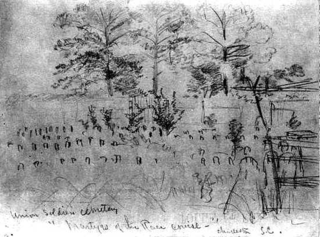
As a Confederate stronghold Charleston had also been the home of three of the Prisoner of War Camps. One was located in the Charleston City Jail and the other at Castle Pinckney which had been one of the ante-bellum U.S. Army installations in the city. A third camp was erected on the site of the Washington Race Course and Jockey Club in 1864. This was an open air camp and Yale Historian David Blight wrote that “Union soldiers were kept in horrible conditions in the interior of the track; at least 257 died of exposure and disease and were hastily buried in a mass grave behind the grandstand.”

By the end of the war most of the white population of the city had left and most of those remaining were recently freed slaves. After their liberation and the city’s occupation by Federal forces, which included the famous 54th Massachusetts as well as the 20th, 35th and 104th US Colored Troops Regiments; about 28 recently liberated Black men went to work and properly reinterred the 257 Union dead on the raceway and built a high fence around it. They inscribed “Martyrs of the Race Course” on an arch above the cemetery entrance.

6a01b8d0781960970c01b7c7901048970b-320wi

On May 1st over 10,000 Black Charlestonians gathered at the site to honor the fallen. Psalms, Scriptures and prayers were said, hymns were sung and many brought flowers. A parade of 2800 children covered the burial ground with flowers. They were followed by members of the Patriotic Association of Colored Men and the Mutual Aid Society. This society’s members provided relief supplies to Freedmen and provided aid to bury those Blacks who were too poor to afford burial. More citizens followed many laying flower bouquets on the graves. Children then led the singing of The Star Spangled Banner, America and Rally around the Flag. The Brigade composed of the 54th Massachusetts and the 35th and 104th Colored Regiments marched in honor of their fallen comrades. Following the formalities many remained behind for a picnic.

Other communities established their own Memorial Day observances in the years following the war, but the event in Charleston was the first. The first “Official” commemoration was on 30 May 1868 when Union General John Logan who headed the veteran’s organization called The Grand Army of the Republic appealed to communities to honor the dead by holding ceremonies and decorating the graves of the fallen.

In the South three different days served a similar purpose. In Virginia people commemorated the day on June 3rd, the birthday of Confederate President Jefferson Davis, the Carolinas marked the day on 10 May, the birthday of General Thomas “Stonewall” Jackson. In much of the Deep South the event was conducted April 26th, the anniversary of the surrender of General Joseph Johnson’s Army to General William Tecumseh Sherman. For many in the South, still attempting to come to grips with their defeat the day would become about “The Lost Cause” or “the defense of Liberty” or “States Rights” and the war was often referred to as the “War of Northern Aggression.”

The “Martyrs of the Racecourse” cemetery is no longer there. The site is now a park honoring the fascinatingly complex Confederate General and post-Reconstruction Governor of South Carolina Wade Hampton. An oval track remains in the park and is used to run or walk by the local population and cadets from the Citadel. Thankfully, at long last in 2010, one hundred and forty-five years after the dedication of that cemetery a marker was placed in that park commemorating the cemetery and the event that we now recognize as the first Memorial Day.

First-Memorial-Day-honoring-257-Union-soldier-martyrs-10000-freedmen-march-led-by-3000-children-05011865

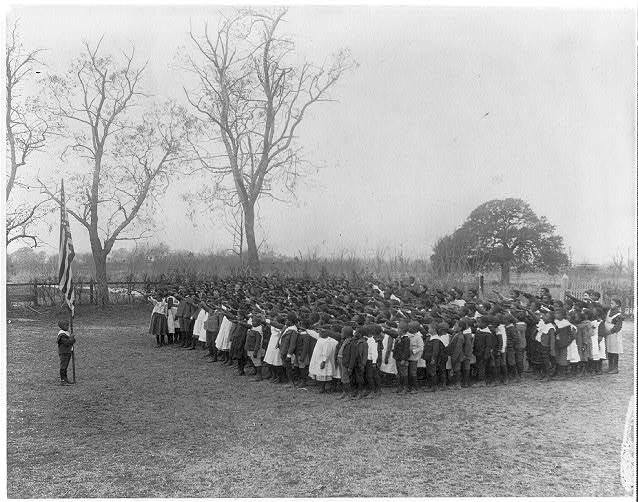
African American Children saluting the Union Dead years later

The Union dead who had been so beautifully honored by the Black population were moved to the National Cemetery at Beaufort South Carolina by the 1880s. Some state that the reason for this was that the cemetery had fallen into neglect, and this may be the case, but the event and their memory conveniently erased from memory of Charlestonians.

I do not think that this would have happened had the people who had the bodies moved simply restored and maintained the cemetery. Had not historian David Blight found the documentation we probably still would not know of this touching act by former slaves who honored those that fought the battles, and gave their lives to win their freedom. Blight wrote in 2011 in the 1870s Charleston “had no place for the former slaves’ march on their masters’ racecourse.”

The African American population of Charleston understood the bonds of slavery and oppression. They understood the tyranny of prejudice in which they only counted as 3/5ths of a person. They understood and saw the suffering of those that were taken prisoner while attempting to liberate them from the tyranny of slavery. They stand as an example for us today.

But their suffering was not over. Within little more than a decade Blacks in the South would be subject to Jim Crow and again treated by many whites as something less than human. The struggle of they and their descendants against the tyranny of racial prejudice, discrimination and violence over the next 100 years would finally bear fruit in the Civil Rights movement, some of whose leaders, like the Reverend Doctor Martin Luther King Jr. would also become martyrs. Unfortunately that struggle is not over.

Frederick Douglass spoke to Union Veterans on Memorial Day 1878. His words, particularly in light of the war and the struggles of African Americans since and the understanding of what those who were enslaved understood liberation to be are most significant to our time. It was not merely a war based on sectionalism or even “States rights,” it was a war of ideas, a war of diametrically opposed ideologies. He said:

“But the sectional character of this war was merely accidental and its least significant feature. It was a war of ideas, a battle of principles and ideas which united one section and divided the other; a war between the old and new, slavery and freedom, barbarism and civilization; between a government based upon the broadest and grandest declaration of human rights the world ever heard or read, and another pretended government, based upon an open, bold and shocking denial of all rights, except the right of the strongest.”

Douglass’s words were powerful then and they resonate today as many of the same ideas that were the cause of the Civil War and were continued during Jim Crow are still alive. Unfortunately there are those in our society who labor daily to establish the “rights” of the strongest over the weak, the poor, the powerless and minorities of all kinds. Of course such actions, often wrapped in the flag, patriotism and buttressed with cherry picked quotes (many of which are fake, changed or taken out of context) from some of our founders are designed to re-establish the oligarchy of the power of the few, much like the men who owned the lives of the slaves and poor whites in the ante-bellum American South. Such actions do nothing but demean and trample the sacrifice of those who fought for freedom and the only remedy is to fight them with the full knowledge of truth.

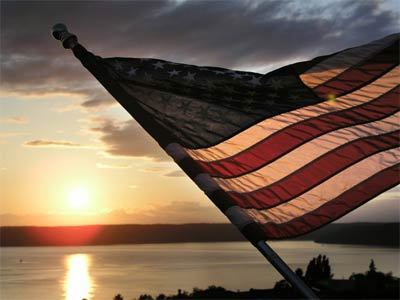
american-flag

I do hope that today we will observe Memorial Day in a fitting manner. Let us honor those Americans who died that others might be free. Let us look back at what freedom actually means and not forget the sacrifices of those that gave, and still give their lives in the “last full measure of devotion to duty” that others might live. This is especially true in an era where the racial and religious hatred and prejudice of Southern Slave Power, and Northern Know Nothings, that enslaved African Americans, exterminated Native American, invaded and Mexico, and treated Irish, German, Asian, and other immigrants, Roman Catholics, and Jews as enemies is raising its head as White Supremacists take their cue from the President that such behavior is acceptable.

Take a moment on Monday at noon to pause what you are doing and go silent for at least one minute, and remember.

Peace

Padre Steve+

Leave a comment

Filed under civil rights, civil war, History, Military, News and current events, Political Commentary

Though Poppies Grow: Buddy Poppies & Memorial Day 2018

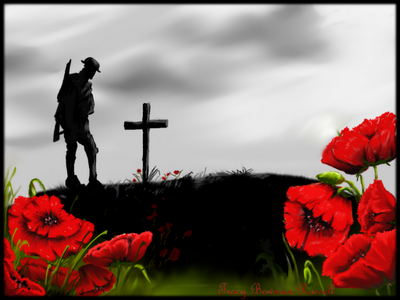
flanders_field

Friends of Padre Steve’s World

This is Memorial Day Weekend, a weekend where we remember those who died in the service of our country. It is not a day to thank the living veterans, that day is Veteran’s Day. Nor is it the day to thank those men and women who currently wear the uniform and fight the wars of our country. This weekend I am reposting a number of articles from past years to remind my regular readers and those new to my writings about how important this remembrance is, not just to me, but to all of us. I do not say that lightly. Memorial Day is the offspring of the families of the American Civil War dead, when people who lost loved ones in the cause of liberty and the defense of the Union honored their loved ones.

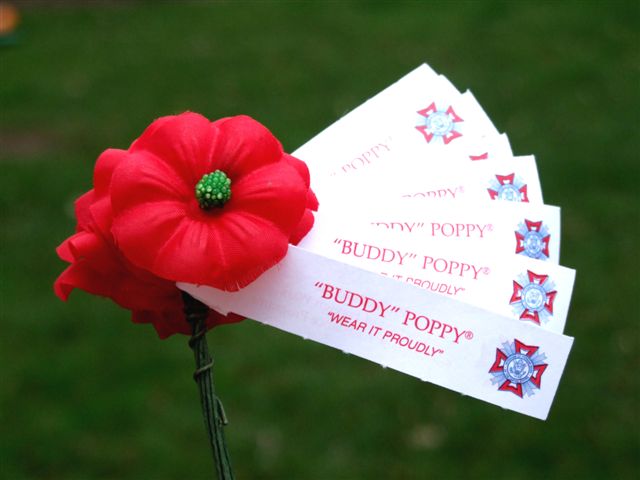
While the Buddy Poppy was something that came out of the First World War, and Armistice Day, which after the Second World War became Veteran’s Day. In time it has also become connected with the original Memorial Day. So today’s post is my first reflection of this weekend on the Buddy Poppy and Memorial Day.

I write this in the disastrous aftermath of President Trump’s high stakes game of chicken with North Korean Leader Kim Jung Un in which he bailed after aggressively praising Kim and pushing for direct talks. When I read the President’s letter to the North Korean I realized that the chances of a catastrophic war have gone up.

I also have been watching Ken Burns’ series The Vietnam War while reading Robert K. Massie’s Castles of Steel: Britain, Germany, and the Winning of the Great War at Sea. Both are filled with stories of hubris and tragedy.

No matter what your political views, ideology, or religious beliefs, please take time to remember the high human cost of war this weekend, especially on Monday when we observe Memorial Day.

Until tomorrow,

Peace,

Padre Steve+

1144221_orig

In Flanders Fields

John McCrae, 1915.

In Flanders fields the poppies blow

Between the crosses, row on row

That mark our place; and in the sky

The larks, still bravely singing, fly

Scarce heard amid the guns below.

We are the Dead. Short days ago

We lived, felt dawn, saw sunset glow,

Loved and were loved, and now we lie

In Flanders fields.

Take up our quarrel with the foe:

To you from failing hands we throw

The torch; be yours to hold it high.

If ye break faith with us who die

We shall not sleep, though poppies grow

In Flanders fields.

Besides the American Flag the Buddy Poppy is perhaps the most ubiquitous symbol of Memorial Day. This poppy as we know it came about when Mrs. Moina Michael read McRea’s poem and inspired wrote this verse:

We cherish too, the Poppy red

That grows on fields where valor led,

It seems to signal to the skies

That blood of heroes never dies.

She then had the inspiration to begin wearing Red Poppies on Memorial Day and sold the poppies to friends and others with the money going to those in need. A French woman visiting the United States, a Madame Guerin discovered the new custom and took it back to France where she began to make artificial red poppies to sell with the proceeds going to the widows and orphans of the First World War. The custom spread to other countries and in 1921 the Franco-American Children’s League sold the poppies but disbanded in 1921. Madame Guerin approached the newly formed Veteran’s of Foreign Wars, the VFW in 1922 for assistance and in 1922 the VFW became the first American organization to sell poppies. Two years later the Buddy Poppy program began. The artificial poppies were made by disabled veterans who were paid for their work in order to provide them some form of income and distributed by other veterans across the country. Today the VFW continues to distribute the Buddy Poppies which are still produced by disabled Veterans at the nation’s Veteran’s Administration Hospitals.

I remember the first Buddy Poppy that I every received. It was just before Memorial Day 1970, before it became a 3 day weekend falling on the last Monday of May. We were living with my Grandparents in Huntington West Virginia as my dad sought suitable housing for us in Long Beach California while he was in the Navy.

Our initial move from the small town of Oak Harbor Washington, where my dad had been stationed at Naval Air Station Whidbey Island to Long Beach had not gone well. The first place we lived was in a dangerous neighborhood and with my dad traveling frequently to Naval Shipyards around the country to help commission new ships the stress on the family, especially my mother in dealing with that and two young boys was too much. Dad sent us back to Huntington where my Grandparents and numerous other relatives still lived for the duration of the school year as he sought better housing.

veterans-day-05-26-10-1

Memorial Day then was filled with visits to cemeteries to place flowers on the graves of departed relatives as well as flags on the graves of relatives who had served in the military. We made a number of stops that day at the Bowen and Dundas cemeteries as well as others where relatives were interred. Afterward we had a home cooked meal prepared by my maternal grandmother Christine and then made a trip on a city bus to to the other side of town to see my paternal grandmother Verdie.

Holidays, were much like that for us during that time that we lived in Huntington, until my dad came back and brought us back to Long Beach in June. Just before my dad arrived to take us back to Long Beach my mom, her cousin Valerie and I were shopping downtown, which at the time before I-64 took traffic around the town and led to a new mall and shopping complex being built just out of town, was a bustling place of commerce and activity. Major retailers all had their stores downtown, while the best movie theaters and restaurants were there as well.

We were coming out of the old SS Kresge store on Fourth Avenue and an elderly man wearing a VFW cap approached us and handed me a poppy. He had to be in his 70s so I presume that he was a Veteran of the First World War. He chatted briefly with my mom and Valerie and I am sure my mom gave him a bit of money for the poppy. I kept it for many years and it was eventually lost in one of our moves. But I will not forget it and any time I see a Veteran distributing them I make sure that I get one.

But I haven’t seen anyone passing them out for years, maybe I will need to start getting them and giving them out myself. Maybe I’ll start that as Veteran’s Day approaches.

Babe-Ruth_MAIN

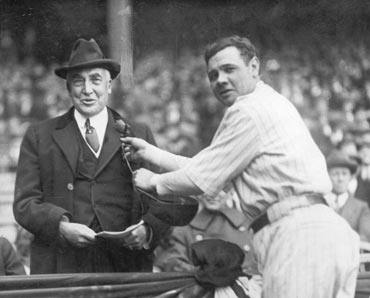
Babe Ruth and President Warren G Harding with the first official Buddy Poppy of 1923

For me the Buddy Poppy is a symbol of thanks for the sacrifices made by so many, those who did not come home from wars being killed or missing in action, as well as the wounded and the families of the dead and those that came home forever changed by their time in war. This year marks the 90th anniversary of it being the official flower of remembrance for those who died in our nation’s wars.

The poppy has even more significance for me now having served in Iraq. Seeing war’s devastation and knowing so many who have either been killed or wounded in the wars that we have engaged since September 11th 2001 has impacted me in ways that I could not have imagined before the war. Likewise having come back changed by my experience and having to deal with the affliction of severe PTSD I sense a camaraderie with those men who came home changed from war and in many cases returned to a country that did not understand them.

I will be observing the “Go Silent” moment at 12:01 Monday with the Iraq Afghanistan Veterans Association to honor those who have given the last full measure.

Peace

Padre Steve+

1 Comment

Filed under books, film, iraq, News and current events, PTSD, vietnam, world war one

Leak: Why Mark Felt Became Deep Throat

Friends of Padre Steve’s World,

Back in 2012 I was asked to do a review of Max Holland’s book about Watergate Leak: Why Mark Felt Became Deep Throat. It think that the book is very pertinent today and well worth the read for anyone immersed in the daily revelations of numerous members of the Trump campaign and administration. The sheer number of these allegations, not to mention the number of convictions and plea deals already racked up by the Muller investigation demonstrates the seriousness of the allegations while the web of connections to the fact of Russian meddling in the 2016 demands answers. That being said we need to look back at the history of the Nixon administration to help us understand what is going on today.

So I am posting my review that I published for TLC Book Reviews on June 12th 2012. The review is exactly how I wrote it with no editing for today. I recommend the book to my readers. 

Until tomorrow,

Peace

Padre Steve+
Motives do matter and actions often have unintended consequences. That is the lesson of Max Holland’s book about Mark Felt. Felt was the man whose leaks helped end the Presidency of Richard Nixon and skyrocket the young and obscure Bob Woodward and Carl Bernstein to fame. For more than three decades Mark Felt’s identity remained hidden a mystery man to the public, a man popularized by the dark moniker “Deep Throat.” His role as the leaker was suspected by some, including President Nixon and some of his staff but known only for sure by Woodward, Bernstein and Washington Post Editor Ben Bradlee.

In this truly scholarly book Max Holland pieces together the dark underside of the Watergate tapestry that Woodward and Bernstein helped to break in 1972 and would go on to write about in All the President’s Men and The Final Days. It is a book that is important because it is the first account to seriously explore the motivation of Mark Felt when he began to leak and the background story of the monumental post J. Edgar Hoover FBI power struggle.  That story which in normal times would have been a major story was missed in an era where the country was in turmoil and there were so many other “big” stories to cover.

Taking advantage of more recent revelations, disclosures and evidence Holland paints a picture that not only broadens one’s understanding of Watergate but helps the reader understand how important it is to understand the motivations of those that were involved, Nixon and his staff, Felt and other FBI officials and the media.

The picture painted by Holland of Felt makes his role in the story more understandable. Felt was not the altruistic leaker of myth who sought to destroy the Nixon Presidency, something that was the picture painted by Woodward and Bernstein. His motivations were much more down to earth. He wanted to use his knowledge to ensure that he became Hoover’s successor as the Director of the FBI. He used it to destroy L. Patrick Gray who served as the interim Director and his chief rival in the Bureau William C. “Bill” Sullivan in the eyes of the White House, Congress, the Bureau and the media. Felt’s leaks helped blow the lid off of the White House cover up of the Watergate break-in and which led to the resignation of President Nixon and the conviction of a number of his closest advisors. Felt’s duplicity which included deceiving the Administration, Congress, his superiors and the media with falsehoods even as he revealed key truths is amazing to behold.

The picture that Holland paints of the White House is not pretty. The moral depravity and ruthlessness of Nixon and his advisors is shown without dehumanizing them.  In fact they become more human in Holland’s account.  Likewise Holland’s portrayal of other key figures in Felt’s story at the FBI, L. Patrick Gray, William Ruckelshaus and William Sullivan is compelling. The naive and compliant Gray, Felt’s bitter rival Sullivan and the “sweeper” (to use the term given to Harvey Keitel’s character Winston “the Wolf” Wolfe in Pulp Fiction) Ruckelshaus who helps to “sweep” Felt out of the FBI.

But the most interesting part of the book for me is Holland’s portrayal of Woodward and Bernstein. They are young and idealistic and Woodward believes whatever Felt tells him, including deliberate misinformation. What jumped out at me was their willingness to take at face value what Felt told them and not to explore his motivations which could have led to even more revelations that could have shaken the FBI to its core.  Likewise was Woodward’s willingness to press the limits with information provided by Felt going beyond what Felt demanded for secrecy but which Felt, even though upset by the reporter continued to provide information cumulating in his long and rambling confession to Woodward following his retirement under pressure on May 16th 1973.

They, particularly Woodward did not ask themselves the three key questions that anyone should ask when someone comes to them with this kind of information: Why this? Why this information. Why Me?  Why am I being chosen to receive the information. Why Now? Why is the source telling me this information now. Those three questions could have blown the case open even more had they explored them. Of course they were caught up in the chase for “scoops” with rivals at the New York Times, The Washington Sun and Time Magazine and chose to believe what Felt told them, something that occasionally left them hanging when the information was wrong.

Conversely Felt’s distain and lack of respect for the media and the belief that he could use Woodward, Bernstein and others in the media to further his goals with impunity proved false. He became careless and caused the Nixon Administration to suspect him and work to force him out of the FBI without drawing more attention to themselves.

Holland also covers the “cover-up” of “Deep Throat’s identity which was maintained by Felt, Woodward and Bernstein until Felt was in the beginning stages of dementia and his family was ready to reveal his role.  The dual myths of Deep Throat’s motives and the role of the press as the “men in the  white hats” against the evil bad guys in the White House are exposed by Holland who points out how much of the investigation broken by Woodward and Bernstein was being accomplished by FBI agents and appointed to investigate the break-in and staff members at the Committee to Re-Elect the President who were appalled by the illegality of what they saw being done by their superiors.

The book is excellently sourced and researched. It is a compelling narrative that sheds light on a dark period of our nation’s history which also serves as a reminder to those who investigate “leaks” from well placed sources that there is always another layer of motivation and intent that cannot be discounted and must be factored into the investigation.

This is relevant today as the media, Congress and the the Justice Department investigate leaks from inside the Obama White House regarding national security information. Why This? Why Me? Why Now? Those are the questions. Thanks to Max Holland we now know much of what transpired behind the scenes as Woodward and Bernstein investigated and published their accounts of the Watergate break-in and cover up with the information provided by Mark Felt.

The book Leak: How Mark Felt Became Deep Throat is published by the University of Kansas Press and is available at http://www.amazon.com/Leak-Mark-Felt-Became-Throat/dp/0700618295/ref=sr_1_1?ie=UTF8&qid=1339544616&sr=8-1&keywords=leak

Leave a comment

Filed under books, crime, ethics, History, News and current events, Political Commentary

How Republics Die: Vichy and Trump

img_0327

Friends  of Padre Steve’s World,

President Trump has long established his love and admiration for despots. First it was Vladimir Putin of Russia, then Recip Erdogan the soon to be dictator of Turkey, then Rodrigo Duterte, the murderous President of the Philippines, and even praise for Kim Jong Un of North Korea. Let us not go into the list of draconian despots, dictators from history that the President has expressed his fondness. His favorite President is Andrew Jackson who defied a Supreme Court ruling and executed the Trail of Tears.

Honestly, if the President’s admiration, praise, and fondness for authoritarian and anti-democratic rulers remained just his opinion with no consequences it wouldn’t be such a big deal. However, it is much bigger than his personal opinions, but the nature his office of President, his words, his tweets, his opinions, become the policy of the United States, and end up staining the honor of the nation.

These actions have consequences. The first is the loss of moral authority of the nations who encourage and help dictators. Second, the loss of that moral authority makes it difficult when the chips are down to gain domestic or international support once a nation’s leaders determine that aggressive dictatorships must be stopped, finally it is the death of the Republic, its Constitution, and its founding principles. Just in the past few days the President has bowed to the wishes of the Chinese Communists on trade and the North Koreans on our alliance with South Korea. As he did these things he made more and ever more threatening attacks on the Department of Justice and the FBI in order to discredit them and end the investigation of his family and presidential campaign ties to Russia and other foreign enemies.

What the President and his administration since they took power is amoral and it is dragging the reputation of the United States into the sewer. Sadly, it will have real world consequences, as well as dangerous ramifications for our own system of Constitutional government and representative democracy.

This is not new, during the 1930s many leaders of struggling democracies caught up in the Great Depression, including the United States offered up praise for the accomplishments of Mussolini, Stalin, and Hitler. By their encouragement, accommodation, and appeasement these leaders were complicit in some of the greatest crimes against humanity ever seen in the world. Some of these leaders, especially in France actively worked against their own democratic form of government in the hopes of overthrowing it and setting up a Fascist state. Once France was defeated by Germany the anti-democratic leaders of that country voted out the Republic and established a dictatorship at Vichy headed by Marshal Petain, the hero of the First World War.

Petain with Hitler

The Premier of France under Vichy, Pierre Laval, led the successful move to abolish the constitution of the Third Republic. He said: “Parliament must be dissolved. The Constitution must be reformed. It must align itself with the totalitarian states…” He told the Assembly: “We are going to destroy the totality of what was. We’re going to create something entirely different…. Henceforth there will be only one party, that of all the French.” He concluded “We are paying today for the fetish which chained us to democracy and led us to the worst excesses of capitalism, which all around us Europe was forging, without us, a new world.”

Another, Charles Spinasse, a Socialist who had come to believe in Fascism told the Assembly: “We must break from the past. It was full of illusions…. We believed in individual freedom, in the independence of man. It was but anticipation of the future which was beyond our grasp. We must have a new faith based on new values…. France abandoned itself. It must begin anew.”

One opponent rushed to Vichy to oppose the measures, Pierre-Etienne Flandin, told his colleagues: “Change the Constitution? But why? What need is there to change our institutions? The reproach is that we did not respect them.” However, Flandin too had no problem with giving the reigns of power to an authoritarian, Fascist regime that would cooperate with the Nazis, turn on its allies, and murder its own citizens. His words were absolutely correct, but he betrayed himself at the end.

Pierre Laval

In the end Laval won the day. He told the assembly: “Parliamentary democracy lost the war. It must give way to a new regime: audacious, authoritarian, social, and national.” In the end the vast majority of the delegates from across the political spectrum voted to end the Republic. Opponents who wished to continue to fight against Germany were condemned, jailed, and even killed. Leon Blum, a former Socialist leader who Laval despised wrote of Laval’s manner as the Republic was dissolved: “An unbelievable arrogance puffed up his small person. In a dry voice and with an irritated glance he flung out verdicts and orders… “I do… I say… I refuse… that’s the way it is…” President Trump has much the same attitude as he issues executive orders with abandon, even as others are struck down by the Courts.

Likewise when questioned about allowing opposition newspapers to publish, Laval told Blum in words that one can almost hear President Trump say if he were granted the right to restrict the freedom of the press:

“When I decide, no newspaper will appear if it shows the slightest reticence about my policies. The press must follow me absolutely, without reserve—and I will not let myself be duped.”

But just as troubling on the domestic front is the President’s stated desire to crush the parts of our Constitutional system that inconvenience him, and with his malleable GOP majorities in the House and Senate he may eventually succeed in doing if not opposed by courageous Senators and Representatives, and the Courts. He has on a number of occasions threatened the independence of the judiciary, he has expressed a desire to amend the Constitution to limit freedom of the press, freedom of association, and freedom of speech. He has also urged Congress to end the Filibuster which is the last resort by which a minority party can prevent bare majority of Senators or Representatives of one party to impose its will on the entire nation, even if the majority of people in the nation voted against their party. As of now GOP Senate leaders have announced their opposition to such legislation realizing that they could once again be in the minority. However, for Trump that does not matter as he has no loyalty to the Republican Party; sadly, most Republicans do not seem to understand that fact, and I wonder how firm they will stand when push comes to shove. History shows us that all too often, even the opponents of authoritarianism can easily turn from defending their Constitutional liberties to supporting nationalist, racist, and authoritarian leaders.

That my friends should frighten any American who has not lost their belief in our system of government which for all of its inefficiencies guarantees more liberty than any other system in the world.  History shows that once those liberties are gone you do not get them back without the despot who has taken them away being defeated, often by military conquest.

The fact is that as Timothy Snyder wrote: “The European history of the twentieth century shows us that societies can break, democracies can fall, ethics can collapse, and ordinary men can find themselves standing over death pits with guns in their hands. It would serve us well today to understand why.”

Will our epitaph be like the words of French Senator Bovin-Champeaux who said: “Is it not without sadness that we shall bid adieu to the Constitution of 1875. It made France a free country…. It died less from its imperfections than from the fault of men charged with guarding it and making it work.”

Unlike Laval’s Vichy Government the United States has not been overrun and invaded by an enemy Army. We don’t have Russian Tanks rolling down Pennsylvania Avenue, or Vladimir Putin doing a jig at the Washington Monument, but the President’s surrender to Putin, and other despots and his attacks on our Constitution and legal systems will destroy us and all of our rights; and that means even the rights of those people who for whatever reason support him. If this continues, they too will become victims of an American version of the Night of the Long Knives. 

Take my warning for what it is. Trump’s opponents are already damned and doomed if he succeeds, but his supporters will have signed their own death sentences and they are too stupid to know it. But then, such is bliss of ignorance.

Until tomorrow,

Peace

Padre Steve+
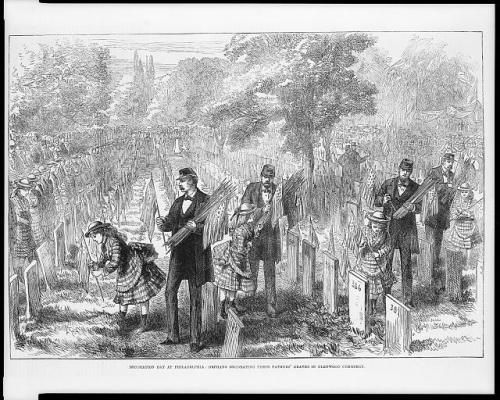
1 Comment

Filed under ethics, History, News and current events, Political Commentary, world war two in europe