Category Archives: philosophy

“Read a Lot and Write a Lot” How I Avoid Misery 


Friends of Padre Steve’s World,

British historian Sir Max Hastings, whose book Catastrophe 1914, Europe Goes to War I am re-reading since I just completed another trip through Barbara Tuchman’s The Guns of August, once made the comment: “I would be miserable if I went to bed without having written 1,000 words about something.” I am much the same way and hopefully one day I might be one tenth as good, and as successful writer as him or Tuchman. 

I do most of my writing before I go to bed at night and usually set my articles to post at 6:30 in the morning. I have a hard time going to sleep without writing be it for this website or for one of the books that I am working on. I read voraciously whenever I get the chance sometimes going to a bar just to read a book while enjoying a good craft beer or Germanor Irish import. Likewise once I am done with whatever I am writing I go right back to reading, sometimes keeping whatever Papillon is sleeping with me from getting the sleep that they want. That’s what I will be doing tonight when I finish this article which you will be reading tomorrow when it posts. In a sense my writings are kind of like Schroedinger’s cat, they are written yet unwritten at the same time, but I digress…

Today while on vacation in Huntington, West Virginia, I have been doing a lot of my own reading, as well as keeping up with the latest news about the building crisis regarding North Korea’s nuclear weapons and missiles and President Trump’s unrelenting bellicose tweets and statements. Likewise today I’ve walked about seven and a half miles, much of it around the campus of Marshall University and walking my dogs around the neighborhood that we are staying. As I walk I tend to take in everything I see and because of my PTSD I am still somewhat hyper vigilant which causes me to be a bit more observant about my surroundings than a lot of other people. But I also muse about things going on in the world as well as things that I am writing or plan on writing about. I did a lot of today and over the past few days. The next couple of days won’t be as free because Judy has scheduled us for some social activities, but I will still find a way to in get my reading, writing, and walking. 

But going back to writing and reading I have to say that I don’t know what I would do if I couldn’t do either, I think I would be in some sort of hell if I couldn’t write every night or read. Doing these things helps me keep my perspective and to more fully appreciate the events of the day. Honestly, if I had not consciously immersed myself in history from the time that I was a child, including the many days that I cut 10th grade Geometry class to read the history reference books that I couldn’t check out of the school library I wouldn’t be who I am today. 

I like writing history because I become immersed in the people, the places, and the intricacies and complexity of the events. I like to incorporate the little known back stories of people help understand their actions at a given point. Likewise think that the lives of the individuals involved in the events I write about, both before, and after the event should they have lived through it, give my readers a more human connection to the events, as well as understanding of the people involved. I find that the stories of people allow readers to make those connections, maybe even inspiring in them a bit of sympathy for scoundrels or suspicion of supposed saints. 

I think that the character of people, good, bad, or wherever it falls on the spectrum, and their basic humanity; their strengths, weaknesses, contradictions, and their feet of clay, matter immensely and need to be part a of the story. I hate it when I read a history where a given character’s actions during a given event are examined in detail, but who they are as a person never comes through because the authors didn’t give their readers the courtesy of introducing them as people because they included little or no biographical details to make them interesting. Instead they become one dimensional caricatures of who they were in life, which in my view does them, the story, and the reader a grave injustice. So when I write I try to find interesting parts of a person’s life that is not directly related to the event to paint the picture. Walter Lord, who wrote prolific books on some of the key events of the Twentieth Century including books about the Titanic, Pearl Harbor, Midway, Dunkirk, the desegregation of the University of Mississippi, and many more noted something that I have taken to heart, I look for something that is highly unusual, involving ordinary people caught in extraordinary situations.”

That’s one reason I like the writings of both Tuchman and Hastings, they bring life to to the events they write about, they allow your imagination to run and to want discover more about the people and the events. The late Walter Lord, who I also mentioned was also excellent at doing that, and I think that is how I would like my writings be remembered. But in order to do that I have to read and write, as Stephen King said “If you want to be a writer, you must do two things above all others: read a lot and write a lot.” So back to Hastings’ Catastrophe 1914.

Until tomorrow,

Peace

Padre Steve+

1 Comment

Filed under History, Loose thoughts and musings, philosophy

Books: The Window to My Soul


Friends of Padre Steve’s World,

George R.R. Martin wrote in his book A Dance With Dragons:  “A reader lives a thousand lives before he dies, said Jojen. The man who never reads lives only one.”

I constantly read and because I try to imagine what I am reading so that in a way I live it. I have been to places that have never traveled to before and on entering them I know exactly where everything is and what happened there. I remember leading a group from my Army chapel in Wurzburg Germany to Wittenberg, where Martin Luther began the Protestant Reformation. As I lef d the group through the town a couple of people asked me how many times I had been there. I told them, “physically, never until today, but I have been here a thousand times before because of books. I saw Wittenberg in my minds eye before I ever saw the city.” They were surprised and both said that it seemed like I had been there many times. 

I have had the same thing happen other places that I have visited, and again, it is because I read, and as I read, I imagine and occasionally dream. 

I have a huge number of my books in my office most dealing with the history, especially the American Civil War and Reconstruction, the World Wars, and the insurgencies and counter-insurgency wars of the past seventy or so years. I have a lot of biographies, books on American history, military theory, sociology, philosophy, psychology related to war and PTSD, and a few theological works, though most of my theology books are at home because I don’t have room for them in the office. 

Coupled with mementos of my military career, other militaria, artwork, and baseball memorabilia the sight and smell can be both overwhelming and comforting at the same time. I hear that a lot from my visitors, including those who come in for counseling, consolation, or just to know someone cares. They tell my visitors volumes about me without them ever asking a question or me telling them, and occasionally someone will ask to borrow a book, and most of the time I will lend them the book, or if I have multiple copies even give it to them. 

In a sense my books are kind of a window to my soul, the topics, and even how I have them organized, and they are not for decoration. Many times while I am reflecting on a topic, a conversation, or something that I read in the news I peruse my books and pull one or more out to help me better understand it, or relate it to history. 

Likewise my memorabilia is there to remind me of all the people in my past who I have served with. I don’t have all my medals, honors, and diplomas up for everyone to see, instead I have pictures and collages, many signed by people who made a difference in my life. When I see the signatures and often all too kind words on them I am humbled, and in some cases a tear will come to my eye, but I digress…

I always try to read a decent amount everyday. I in the past couple of weeks I have finished reading a number of very good books dealing with different historical dramas. I read Stephen Sears’s Lincoln’s Lieutenants which deals with the high command of the Army of the Potomac during the American Civil War. Sears is a great historian and I really enjoyed the book even when I had a different evaluation of several of the men that he wrote about, but that is one of the fascinating things about history. Historians can evaluate the same literature and come to different conclusions about people or events. In my case with Sears it was with his evaluation of people, not his conclusions about different battles. 

I love complex characters, people who may be heroes and at the same time scoundrels. I like the contradictions and the feet of clay of people, because I am filled with my own, and truthfully saints are pretty boring. 

I also finished Mark Bowden’s new book about the Battle of Hue, Hue 1968: A Turning Point in America’s War in Vietnam. This was a fascinating read for me because I have read other book about the subject and know a decent number of men who fought in that battle. It too is well worth the read.  Before that I read James Robertson’s After the Civil War: The Heroes, Villans, Soldiers and Civilians Who Changed America. This is a good wavetop biographical history of many of the people whose lives were impacted by the war, and who through their heroism or cowardice on the battlefield or off, moral courage or failure, and contributions they made to science, literature, politics, social justice, industry, technology, military art and science were important in making the country that we know. As with Sears’s work I didn’t always agree with his conclusions about certain people, but it is worth the read for anyone desiring to know a bit about a wide range of characters. 

With this being the anniversary of the beginning of the First World War I have decided to re-read Barbara Tuchman’s The Guns of August and Max Hastings’ Catastrophe 1914: Europe Goes to War. I figure that both are good reads with which to reflect on what is happening in our world today, and wondering if world leaders will allow hubris, arrogance, greed, and pride to drag the world into another catastrophic war. Sadly the American President doesn’t read and doesn’t learn from history and for that matter his ignorance is very much a reflection of our culture. 

But books are important, far more important than anything that is shouted at you from the television. Barbara Tuchman wrote:

“Books are the carriers of civilization. Without books, history is silent, literature dumb, science crippled, thought and speculation at a standstill. Without books, the development of civilization would have been impossible. They are engines of change (as the poet said), windows on the world and lighthouses erected in the sea of time. They are companions, teachers, magicians, bankers of the treasures of the mind. Books are humanity in print.”

But anyway, I was late getting this out. So have a great day and a better tomorrow.
Peace

Padre Steve+

1 Comment

Filed under History, Loose thoughts and musings, philosophy

Baseball, the Federalists, and Freedom: The Interiorization of Public Rules


Friends of Padre Steve’s World

Alexander Hamilton wrote:

“If it were to be asked, What is the most sacred duty and the greatest source of our security in a Republic? The answer would be, An inviolable respect for the Constitution and Laws – the first growing out of the last . . . . A sacred respect for the constitutional law is the vital principle, the sustaining energy of a free government.”

The late conservative political commentator Micheal Novak once wrote about baseball connecting it with the heart and soul of the American political system. What he wrote is important for we who live in this day and age to understand, and which all too tragically our President does not. Novak said:

“Baseball is as close a liturgical enactment of the white Anglo-Saxon Protestant myth as the nation has. It is a cerebral game, designed as geometrically as the city of Washington itself, born out of the Enlightenment and the philosophies so beloved of Jefferson, Madison, and Hamilton. It is to games what the Federalist Papers are to books; orderly, reasoned, judiciously balanced, incorporating segments of violence and collision in a larger plan of rationality, absolutely dependent on an interiorization of public rules.”

The American political system, like baseball is, to use the words of Novak, “absolutely dependent on an interiorization of public rules.” This is something that our founders understood as have the vast majority of America Presidents and other political statesman regardless of their political party or whether or not they were a conservative or liberal. The fact is, that the interiorization of public rules, or rather, how we incorporate public rules, norms of behavior, traditions, customs, and the unwritten yet imperative rules of our social contract into our lives and behavior. 

Our current President cannot fathom Novak’s meaning. The man flagrantly flaunts every norm of our American social and political contract that have existed since the days of the Continental Congress. That is why documents such as the Declaration of Independence, the Preamble of the Constitution of the United States, the Gettysburg Address, and the Four Freedoms are so important. None have the power of law, but all are essential to the functioning of the American political system. The American system is not a business contract, nor is it an Ayn Randish descent into a malstrom of hyper-individualistic social Darwinism. Instead it is about the enlightenment, it is about reason, it is about freedom and responsibility. 

In the past two weeks the President has continued his assault on that social and political contract drawn up by our founders. At the commissioning of the USS Geral Ford he urged active duty military personnel to lobby their congressional representatives for his agenda, and then on Sunday turned a Boy Scout Jamboree into a political rally. He did a similar thing when he addressed the CIA at the beginning of his Presidency. But these are not new. Since his campaign began the President has done everything that he can in order to subvert the American political system, and his words and actions show that he has no respect for the Constitution or laws for the land. 

I do not say this with any malice, nor do I say it for any gain. I only say it because the President has stepped so far out from the norms of the American political system that it is impossible to say what he will do next. Our system of government is resilient but at the same time fragile. Unless the GOP majorities in Congress stand up to him our system will not survive in the way that our founders intended. Sadly, I have little hope that they will do so now because for years most of them have fanned the flames of anti-government and anti-Federalist passions that there is no room in their hearts for the very thing that holds our system together, that is the interiorization of public rules, norms, traditions, and behaviors; that is, the interiorization of liberty. As Judge Learned Hand wrote:

“Liberty lies in the hearts of men and women; when it dies there, no constitution, no law, no court can save it; no constitution, no law, no court can even do much to help it.”

So anyway, until tomorrow,

Peace,

Padre Steve+

3 Comments

Filed under Baseball, laws and legislation, leadership, News and current events, philosophy, political commentary

Your Actions Speak so Loud… A Meditation on Faith and Life


Friends of Padre Steve’s World,

Back when I was in high school sophomore I made a dumb decision to try to play football. I should have stayed with baseball, but football was cool, and despite the fact that I was too small the be competitive as a lineman and too slow and unskilled to be a good running back, receiver, or defensive back, and not strong enough to be a solid linebacker I went out for our sophomore team. I showed up for ever practice but I really didn’t have the instincts needed to play the game, and no-matter how much I showed up for practice I didn’t get to play until our line coach, Duke Pasquini, nailed me. 

When I complained that he wasn’t playing me after we lost a big game by an embarrassing score he told me “Steve, your actions speak so loud I can’t hear a word you are saying.” That infuriated me so I yelled and him and he said “I can’t hear you.” Eventually after a minute or so of this back and forth his words sunk in. I went out to practice that day mad as hell, and in a pass rush drill I got around a player who I had never beat before and tackled the coach. As we got up he said “now I can hear you.” Now I still wasn’t very good, but I did get a few plays in during each of our last three games and even got in on a couple of tackles. After the season we had our team banquet where to my surprise our coaches and players named me the most inspirational player. That is usually an honor reserved to people who are dying or injured who inspire others by overcoming or enduring their hardships. Honestly, in my case I think it was because I was so bad and untalented that nobody thought I would even make the team, and that they were surprised I didn’t give up and that I learned to do more than show up expecting that showing up would be enough to get me into the game. That year I learned that my heart, soul, mind, and body had to be into the game. That was something that Coach Pasquini taught me, and it is something that I have done my best to apply to the rest of my life, including my spiritual life.

When I was attending Southwestern Baptist Theological Seminary in the late 1980s and early 1990s I began a journey to the catholic faith. One of my favorite theologians and authors was Hans Kung, one of the great theologians to come out of the Vatican II era. Kung once wrote something that really was at the heart of what Coach Pasquini t me. Kung wrote: “In the last resort, a love of God without love of humanity is no love at all.” 

I have found that there are many people who profess a love of God but who hate humanity. They despise their neighbors, crush the poor, and strive to ensure that they are as powerful politically, socially, and economically as they can be. They show up at church, they say all the right prayers, and hold the doctrines of their denominations as tight as a boa constrictor would hold its prey and as perfectly as an elite Soviet era figure skate could do a triple axel double toe loop combination, but they hate their neighbors. 

Of course they would never admit to that, but their actions speak louder than their words. Sadly, the Jesus they profess to believe in would not be welcome in their circles. He hung out with the wrong crowds, including women, gentiles, sinners, and tax collectors, he preached about them in the synagogue, and he even got angry once in a while to the point of flipping the tables of the money changers at the entrance of the Temple. When a rich young man asked him what he needed to do to get to heaven, Jesus asked him what about the commandments. The man said that he had followed them his whole life. Jesus then told him that he needed to give all his stuff away to the poor and follow him. The man was sad, because he, like the majority of American Christians liked his stuff better than the risk of following Jesus. 

Every day I learn more of what it is to be an incarnational Christian, I that I try to let God’s love for others influence how I treat them. Honestly, I don’t do it as well as I should. I’m basically a Mendoza Line Christian trying to stay in the game, but that makes me work harder. 

So until tomorrow, may we all try to let our actions speak louder than our preaching. 

Peace

Padre Steve+

1 Comment

Filed under faith, Pastoral Care, philosophy, Religion

The Sound of Silence and a Prayer: An Evening at an Art Garfunkel Concert


Friends of Padre Steve’s World,

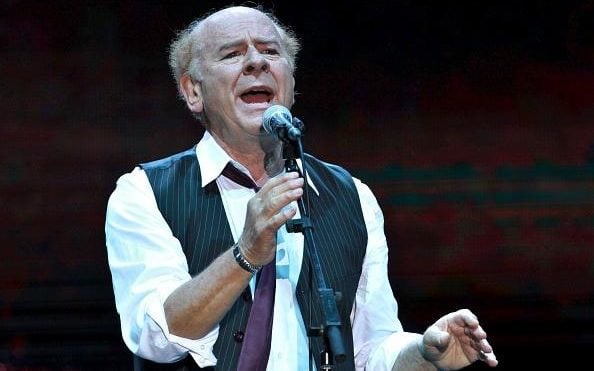
Yesterday was an eventful day. I’ll tell you details over the next few days but last night we had the privilege of being able to see Art Garfunkel in concert. 

I admit it. I am a child of the 1960s and 1970s and I am not ashamed. When I look at my life which includes 36 years of military service, multiple deployments, two of which were combat deployments I am still basically a anti-war 1960s and 1970s person. Likewise, I believe that in terms of speaking out for the poor, the disenfranchised, the weak, the sick, the elderly, those wounded in war, that all of us have a responsibility as citizens to do our best to alleviate the conditions that do harm to the least, the lost, and the lonely. 

One of the songs that was a part of my life back then was The Sound of Silence. It is as hauntingly relevant, maybe more today, than when it was first written and performed by Paul Simon and Art Garfunkel. As he sang it last night I closed my eyes and listened with tears flowing down my cheeks. I imagined the young Simon and Garfunkel singing it and me listening to it on the LP and on my 8 track cassette tape. 

In the age of Trump and Imperial Evangicslism those words are prophetic and etched in my mind especially after my tour in Iraq which changed my life in so many ways. 

Hello darkness, my old friend, I’ve come to talk with you again

Because a vision softly creeping, Left its seeds while I was sleeping

And the vision that was planted in my brain, Still remains, Within the sound of silence

After Iraq I came to know the darkness, and in my most desperate times, the darkness became an old friend, one that I continue to converse with, especially at night and in my dreams and nightmares. I had a particularly violent one of those Saturday night and early yesterday morning. I’ll write about it later in the week. 

In restless dreams I walked alone, Narrow streets of cobblestone 

‘Neath the halo of a street lamp, I turned my collar to the cold and damp

When my eyes were stabbed by the flash of a neon light, That split the night

And touched the sound of silence

My dreams, even the good ones are restless and in them I am alone and I have visions that are often not for the faint of heart. 

And in the naked light I saw, Ten thousand people, maybe more

People talking without speaking, People hearing without listening

People writing songs that voices never share, And no one dared

Disturb the sound of silence

Before Iraq I did little to disturb the sound of silence, but after Iraq, in the despair, depression, and discombobulating of PTSD, I found that I must speak, or perhaps perish. 

Fools, said I, you do not know, Silence like a cancer grows

Hear my words that I might teach you, Take my arms that I might reach you

But my words, like silent raindrops fell, 

And echoed in the wells of silence

I have found that many people are content to talk without speaking, hear without listening, write songs that voices never share, because they are all too willing not to disturb the sound of silence.

And the people bowed and prayed, To the neon god they made

And the sign flashed out its warning, In the words that it was forming

And the sign said, the words of the prophets are written on the subway walls, And tenement halls

And whispered in the sounds of silence

And the people in the churches bow and pray, to the inauthentic god they made, a god that they fashioned in their image, one that on occasion might resemble that of the Bible, the Torah, or the Koran, but which is far removed from an conception of truth. 

Garfunkel sang a couple of songs and after that concluding with a variation the nighttime prayer that I learned as a child, one that I actually find more comforting than the one I learned, and one that I pray will take me through each night. 

Now I lay me down to sleep,

I pray the Lord my soul to keep.

Guide me safely through the night,

Wake me with the morning light.

I am glad that we got the chance to see this amazing American troubadour; to hear his songs, and listen to his stories and poems. He is a treasure. So until tomorrow. 

Peace,

Padre Steve+ 

1 Comment

Filed under faith, music, philosophy

Stand by Those Principles, Against All Foes, At Any Cost: Independence Day 2017


Friends of Padre Steve’s World,

It is July 4th and the 241st anniversary of the declaration by the leaders of 13 colonies of their independence from Britain and the founding on a new nation. It was a nation founded on a principle of the Enlightenment, the principle that all men are created equal, and as their Declaration of Independence noted that as such are “endowed by their creator with certain unalienable rights, among which are life, liberty, and the pursuit of happiness.” 

That founding principle was revolutionary and regardless of how badly it was many times lived out in the history of our nation, it was and still is the first time that a nation was not founded on the basis of ethnicity or religion, but rather a principle, a proposition that no matter how noble was, and still is often despised by Americans. 

One of the most notable was George Fitzhugh, a major Southern slaveholder and apologist for not only slavery but the inequality of poor whites and women wrote: 

“We must combat the doctrines of natural liberty and human equality, and the social contract as taught by Locke and the American sages of 1776. Under the spell of Locke and the Enlightenment, Jefferson and other misguided patriots ruined the splendid political edifice they erected by espousing dangerous abstractions – the crazy notions of liberty and equality that they wrote into the Declaration of Independence and the Virginia Bill of Rights. No wonder the abolitionists loved to quote the Declaration of Independence! Its precepts are wholly at war with slavery and equally at war with all government, all subordination, all order. It is full if mendacity and error. Consider its verbose, newborn, false and unmeaning preamble…. There is, finally, no such thing as inalienable rights. Life and liberty are not inalienable…. Jefferson in sum, was the architect of ruin, the inaugurator of anarchy. As his Declaration of Independence Stands, it deserves the appropriate epithets which Major Lee somewhere applies to the thought of Mr. Jefferson, it is “exuberantly false, and absurdly fallacious.

Fitzhugh also wrote: 

“We conclude that about nineteen out of twenty individuals have “a natural and inalienable right” to be taken care of and protected, to have guardians, trustees, husbands or masters; in other words they have a natural and inalienable right to be slaves. The one in twenty are clearly born or educated in some way fitted for command and liberty.”

But he was not alone. In 1860 South Carolina led a procession of 11 states out of the Union based on the proposition that only certain men were created equal. Every declaration of secession had at its heart the statement that the institution of slavery was to be protected and expanded with the implication that African American slaves could never be equal, free, or enjoy the slightest legal protections of citizenship. These states were willing to fight a war for this and even at the end of that war many of their leaders resisted any call for granting emancipation to blacks, and then when that was over use terrorism and law to again strip away the rights from newly freed blacks through lynching, the Black Codes, and Jim Crow. 

In 1852 not long after the passage of the Compromise of 1850 which included an enhanced Fugitive Slave Act which dictated that Northerners had to cooperate in the recapture and reenslavement of blacks residing in their free states, Frederick Douglass preached one of the most damning sermons about what July 4th meant to slaves. He said:

“I answer; a day that reveals to him, more than all other days in the year, the gross injustice and cruelty to which he is the constant victim. To him, your celebration is a sham; your boasted liberty, an unholy license; your national greatness, swelling vanity; your sounds of rejoicing are empty and heartless; your denunciations of tyrants, brass fronted impudence; your shouts of liberty and equality, hollow mockery; your prayers and hymns, your sermons and thanksgivings, with all your religious parade, and solemnity, are, to him, mere bombast, fraud, deception, impiety, and hypocrisy—a thin veil to cover up crimes which would disgrace a nation of savages. There is not a nation on the earth guilty of practices, more shocking and bloody, than are the people of these United States, at this very hour.” 

Even so men like Fitzhugh would proclaim: “Liberty for the few – slavery in every form, for the mass.”

Of course such is not liberty, it is tyranny and it is the seedbed of dictatorship. The word liberty is often abused by those who seek total power and control over the lives of others. Abraham Lincoln said as much when he noted: 

“We all declare for liberty” but “in using the same word we do not all mean the same thing. With some the word liberty may mean for each man to do as he pleases with himself and the product of his labor; while with others the same word may mean for some men to do as they please with other men and the product of other men’s labor.” 

The proposition in the Declaration that all men are created equal is essential to understanding or appreciating liberty. If we view others as below us, as even less than human then we cannot say that we believe in liberty. If we decide to limit the right of citizens to speak out because of their color, their national origin, their race, their religion, their gender, or sexual identity then we are not for liberty, we are no better than George Fitzhugh or others, even the Nazis, who enslaved, imprisoned, and exterminated others in the name of their power, and their right. 

If our concept of liberty is so limited by our ideology that we cannot accept others having it or being equal to us then we stand against the very proposition that the United States was founded and we should bury the American experiment and stop lying about a proposition that we no longer believe in. The eminent American jurist wrote these words, which for me are like the Declaration, the Preamble of the Constitution, the Gettysburg Address, Lincoln’s Second Inaugural Address, and Dr. Martin Luther King Jr.’s I Have a Dream speech are secular scripture that are sacred to my understanding of being an American, and something that I will never yield. Judge Hand said: 

“Liberty lies in the hearts of men and women; when it dies there, no constitution, no law, no court can even do much to help it. The spirit of Liberty is the spirit which is not too sure that it is right; the spirit of Liberty is the spirit which seeks to understand the minds of other men and women; the spirit of Liberty is that which weighs their interests alongside its own without bias.”

So today, on this 241st anniversary of our independence when the rights of citizenship, the rights of suffrage, the rights of the freedom of the press and freedom of speech are under assault for the man occupying the highest office in the land I do not despair. I do not despair because the spirit of liberty still lives in my heart as it does many others who still believe in that sacred and revolutionary proposition that all men are created equal and endowed by their creator with certain unalienable rights, among them life, liberty, and the pursuit of happiness. 

In the darkness of 1852 Frederick Douglass said these words to people who at the time were refused citizenship and who were enslaved:  

“I have said that the Declaration of Independence is the ring-bolt to the chain of your nation’s destiny; so, indeed, I regard it. The principles contained in that instrument are saving principles. Stand by those principles, be true to them on all occasions, in all places, against all foes, and at whatever cost.”

May we not forget those words on this day when the founding proposition of our country is under attack. 

Cherish our independence and never stop believing in or fighting for liberty. 

Peace

Padre Steve+ 

1 Comment

Filed under History, News and current events, philosophy, political commentary

The “Saving Principles” of the Declaration of Independence

img_2708

Friends of Padre Steve’s World,

Abraham Lincoln spoke these words in Springfield, Illinois on June 26th 1857, nearly 160 years ago. They are part of a continuum in the development of his philosophy of liberty and how he understood the words of the Declaration of Independence, and how he believed that the authors 0f that document understood the words that set the United States apart from all other nations. The words “We hold these truths to be self evident, that all men are created equal” were revolutionary for their time and the Jefferson understood them in that manner.

“They [the signers of the Declaration of Independence] did not mean to assert the obvious untruth that all were then actually enjoying that equality, nor yet that they were about to confer it immediately upon them. In fact, they had no power to confer such a boon. They meant simply to declare the right; so that the enforcement of it might follow as fast as circumstances should permit.”

Though at the time they words of the Declaration only applied to white men, the words and writings of many of the founders were uncomfortable with the actual condition of black slaves as well as Native Americans. The had enough integrity to understand that what they wrote was a proposition that had universal implications which were not yet realized and would take time to happen. Those who mocked the document, the proposition, the founders, and the new nation understood that as well. It was a watershed moment for all of Europe was still under the control of Kings and despots. Thomas Jefferson understood how these words threatened despotic rule around the world and in 1821 he wrote to John Adams:

“The flames kindled on the 4th of July 1776, have spread over too much of the globe to be extinguished by the feeble engines of despotism; on the contrary, they will consume these engines and all who work them.”

But this was something that the people of the United States would have to wrestle with for decades before the most glaring aspect of inequality, that of slavery was overthrown. Frederick Douglass understood the importance of the Declaration even as white Americans on both sides of the Mason-Dixon line crafted compromises that left blacks in slavery and gave unfettered access for slave owners to go to Free States to recover their human property. In 1852 he wrote:

“I have said that the Declaration of Independence is the ring-bolt to the chain of your nation’s destiny; so, indeed, I regard it. The principles contained in that instrument are saving principles. Stand by those principles, be true to them on all occasions, in all places, against all foes, and at whatever cost.”

It is that ring bolt and it must be understood in its universal application and people in the United States and in countries which have embraces some portions of the concept and fight for it, otherwise it could be lost. Harry Truman noted this danger in 1952 when he said:

“We find it hard to believe that liberty could ever be lost in this country. But it can be lost, and it will be, if the time ever comes when these documents are regarded not as the supreme expression of our profound belief, but merely as curiosities in glass cases.”

Today the rights, protections, civil liberties, and opportunity to advance themselves of Americans are being rolled back in a manner that a few decades ago most of us would have found unimaginable. They are under threat many ways, too many to mention today and they must be continually fought for or we will lose them.

As Independence Day draws near I will continue to write about this subject even as I write about the Battle of Gettysburg. It matters too much.

Peace

Padre Steve+


2 Comments

Filed under civil rights, History, laws and legislation, News and current events, philosophy, Political Commentary

“Everything happens fast, but nothing actually happens…” The Trap of the News Cycle

breakingnewsalert

Friends of Padre Steve’s World,

I came back from my trip to the Congressional Baseball game with my friend Vince Miller yesterday and as we came back we pondered and discussed a number of subjects. On of those was how we as Americans allow ourselves to be sucked into the media vortex surrounding any given crisis and how for the media every story is a “breaking news story.”

As we discussed the subject the words of historian Timothy Snyder came to mind. Snyder wrote:

“Everything happens fast, but nothing actually happens. Each story on televised news is “breaking” until it is displaced by the next one. So we are hit by wave upon wave but never see the ocean.”

I used to be a cable news junkie. I had CNN, Fox. or MSNBC on constantly, especially whenever a crisis occurred. In addition  to those I would also be checking every news source that I could. My motives we good. I wanted information, but instead I got sucked into stories that has no resolution and were quickly replaced with other stories. When I read Snyder’s words in his book On Tyranny they struck me to the core, because they rang true. The adrenaline rush and hyper-vigilence that I experienced from the continuous onslaught of each breaking news crisis wore me out and left me exhausted without any resolution.

This devotion to breaking news can become as much of an addiction as drugs or alcohol and the result is not good. We become slaves of the news cycle. While I always to to remain informed I now try to do it on my terms and instead of allowing myself to be bombarded by what I see on television. Instead I try to take some time, check the veracity of stories and examine them from different printed viewpoints and wait for more information to come out. By doing this I have found that I don’t get sucked into the news cycle and still live my life, appreciating friends, family, and even my Papillon dogs.

Likewise, by taking in information in this manner I can spend some time thinking about it and examining it in the context of history, philosophy, ethics, and theology without the hype and unrelenting drumbeat of “information” put out by television news. I find this is more helpful and healthy for me than siting in front of the tube as vapid hosts ask arrogant and often as badly informed analysts or talking heads questions of which can only be answered by speculation as the speed of the news cycle does not allow for well thought out answers or for that matter the truth to come out.

Anyway, I am going to be working around the house this weekend and taking some time to reflect on the events of this week as I continue to read through my current stacks of books.

So have a great day,

Peace

Padre Steve+

2 Comments

Filed under News and current events, philosophy

A Sense of Foreboding and a Determination to Fight

img_3414

Friends of Padre Steve’s World,

Hannah Arendt wrote: “When evil is allowed to compete with good, evil has an emotional populist appeal that wins out unless good men and women stand as a vanguard against abuse.

She was right. We are seeing a populist appeal that is embracing evil and it is happening before our very eyes.

I cannot shake the deep sense of foreboding I have regarding the country and the world after President Trump’s repeated attacks on NATO, his shredding of the Paris Climate accord, and the threat of war on the Korean Peninsula are enough to concern any right thinking person. Likewise, the swirl of allegations concerning what appears to be treasonous activities by his closest advisers and his apparent attempts to have them covered up by the FBI and various intelligence agencies. There is something very wrong going on and it almost feels that I can see the disaster unfolding before it happens.

I am not the only one to notice, leading conservative writers, foreign policy experts, and constitutional scholars have pointed out the same things that I have been saying for over a year. I do try to be positive and to believe that things will work out for the best, but the more I observe the more my confidence in our leaders and for that purpose many of our people to do the right thing is diminished.

That being said I do not give in to the feelings of foreboding or intend give up without a fight. I want my country to live up to its ideals, I am concerned about the real world, our alliances, our environment, and the real threat to freedom.  I believe in a particular universal ideal enunciated in the Preamble of the Declaration of Independence that All men are created equal, and as such that I must continually stand for what is right, what is true, and what is enduring.

I am worried about our democracy and I agree with Timothy Snyder who wrote:

“Democracy failed in Europe in the 1920s, ’30s, and ’40s, and it is failing not only in much of Europe but in many parts of the world today. It is that history and experience that reveals to us the dark range of our possible futures. A nationalist will say that “it can’t happen here,” which is the first step toward disaster. A patriot says that it could happen here, but that we will stop it.”  

It can happen here, and if we are patriots and not simply nationalists we must stand for principle and work for a new birth of freedom even as it seems that freedom itself is in danger. So as I write about some of the notable events of our history that we commemorate over the coming days please know that I take inspiration from them as I hope you will.  We must stand.

Peace

Padre Steve+


Leave a comment

Filed under News and current events, philosophy, Political Commentary

Remembering Those Who Helped Make Us Who We Are

Friends of Padre Steve’s World,

Historian David McCullough wrote something that I think is all too easy to forget in a world where many people, including our current President seem to think that everything is about them. McCullough wrote:

“We are all what we are, in large degree, because of others who have helped, coached, taught, counseled, who set a standard by example, who’ve taken an interest in our interests, opened doors, opened our minds, helped us see, who gave encouragement when we needed it, who reprimanded or prodded when we needed it, and at critical moments, inspired.”

When I look back at my own life I see the tremendous impact of how others, family, teachers, coaches, pastors, people who I have served alongside or under the command of in the military, as well as just simple people who knew me and cared enough to put an arm around my shoulder, offer an encouraging word, piece of wisdom, of maybe even a observation that wasn’t comfortable to hear, have helped make me what I am today. In fact there are so many of them that it would be almost impossible to list them all, and as we come up on Memorial Day next week I tend to become a bit melancholy thinking about those military personnel who impacted my life and mourning those who have passed on. I have written about many of them and probably will do so again over the coming months, not only the military people but the others, if for no other reason to ensure that they are not forgotten and to remember that everything in life doesn’t have to be about what is going on in the news cycle.

Even so it is humbling to know that if all of these people had not been part of my life that I would not be who I am today.

So anyway, if I can say anything to anyone today, try to remember the people who have helped you become what you are.

Peace

Padre Steve+

Leave a comment

Filed under Loose thoughts and musings, philosophy, remembering friends