Category Archives: US Navy

The Battle of Leyte Gulf: Introduction and the Battle of Palawan Passage

This is the first of a four article series on the Battle of Letye Gulf. The battle was the largest in history both in terms of the number of ships involved and the amount of area covered. The action was triggered by the American invasion of the Philippines causing the Japanese to initiate their Shō-Gō 1 (Victory Plan 1) to attempt to defeat the Americans.  The plan relied heavily on land based air power which most of unfortunately for the Japanese was destroyed during the American carrier air strikes on Formosa earlier in the month. 

The battle was necessitated by the absolute need for the Japanese to hold the Philippines and defeat the Americans at all costs. As Admiral Soemu Toyoda the Chief of the Combined Fleet explained under interrogation after the war

Should we lose in the Philippines operations, even though the fleet should be left, the shipping lane to the south would be completely cut off so that the fleet, if it should come back to Japanese waters, could not obtain its fuel supply. If it should remain in southern waters, it could not receive supplies of ammunition and arms. There would be no sense in saving the fleet at the expense of the loss of the Philippines.

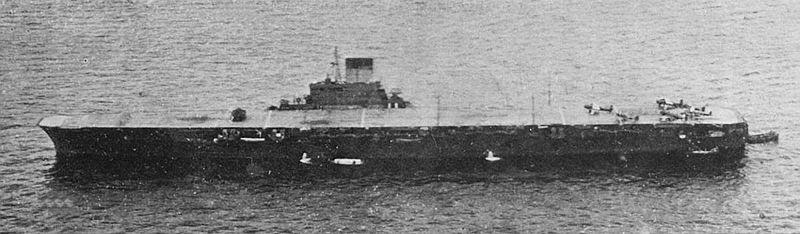
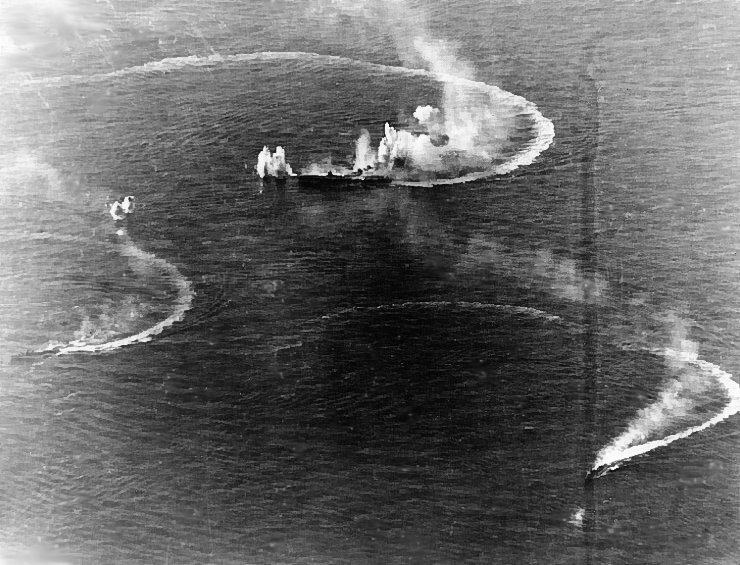
The battle was comprised of 5 battles, the Battle of Palawan Passage, the Battle of the Sibuyan Sea, the Battle of Surigao Strait, the Battle of Cape Engaño and the Battle off Samar. All told about 70 Japanese warships and 210 American and Australian ships were engaged.  A further 300 Japanese aircraft, mostly land based and 1500 American carrier aircraft took part in the battle.  The Japanese order of battle included 1 Fleet and 3 Light Fleet Carriers with a minimal air group, 9 Battleships including the two largest ever built the Yamato and Musashi, 14 Heavy and 6 Light Cruisers and about 3 destroyers.  They were divided into four task forces, the Northern Force under the command of Vice-Admiral Jisaburō Ozawa which had all of the Carriers including the last surviving carrier of the Pearl Harbor attack the Fleet Carrier Zuikaku plus the converted hybrid Battleships Ise and Hyuga; the Southern Force which was two distinct and independent task forces under the command of Vice Admirals Shoji Nishimura and Kiyohide Shima and was built around the ancient battleships Fuso and Yamashiro and 3 Heavy Cruisers; and the Center Force under the command of Vice Admiral Takeo Kurita which had the Battleships Yamato, Musashi, Nagato, Kongo and Haruna, 10 Heavy and 2 Light Cruisers and 1 destroyers.  The Center force was to pass through the San Bernardino Strait and converge on the American landing forces off Samar with the Southern Force which as to come through the Surigo Strait.  The Japanese also planned for the first use of Kamikazes as part of the action. 

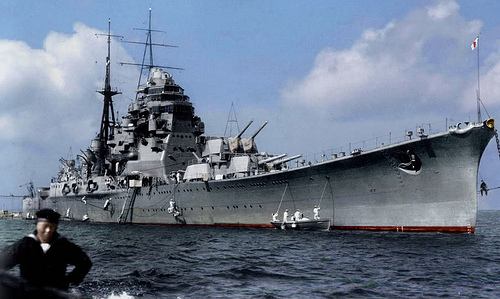
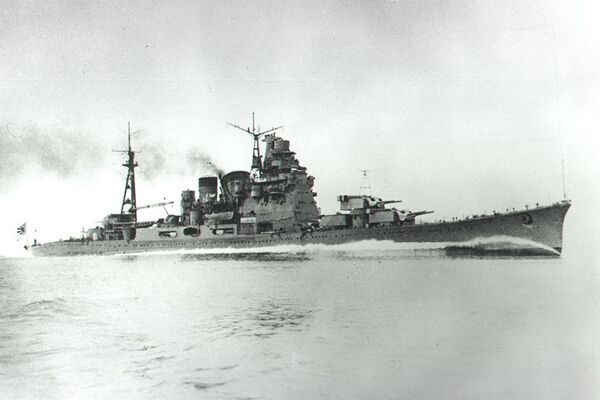
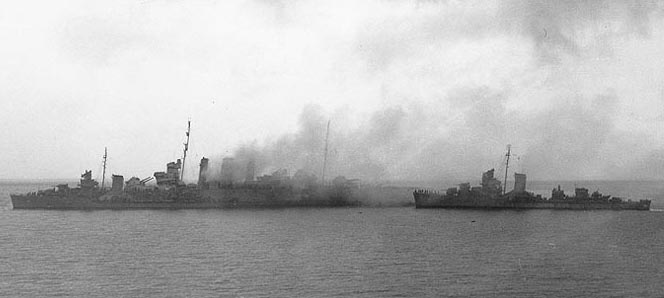
Takao Class Cruiser 1943

Atago

The American fleet was comprised of the 3rd Fleet under Admiral William Halsey which was built around the Fast Carrier Task Forces and Fast Battleships of Task Force 38 under the Command of Vice Admiral Marc Mitscher and the Battle Line Task Force 34 under the Command of Vice Admiral Willis Lee; and the 7th Fleet under Vice Admiral William Kinkaid which was the naval support for the landings.  It had under its control the old Battleships West Virginia, California, Tennessee, Maryland, Colorado and Pennsylvania and 18 Escort Carriers which provided the close air support for the Invasion.  All told the Americans had 8 Fleet and 8 Light Fleet Carriers, 18 Escort Carriers, 12 Battleships, 24 Cruisers and 141 Destroyers as well as submarines, PT Boats, Transports, Landing Ships and Auxiliaries.

Takao

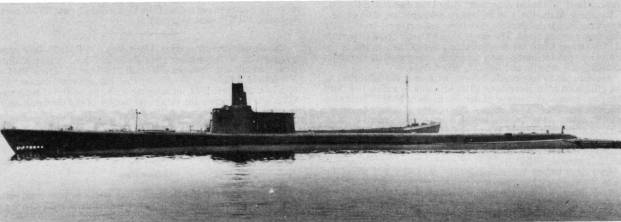
This series will focus on a number of individual battles and decisions in the battle. Part one will focus on the action of the Submarines Darter and Dace against the Center force in the Palawan Passage. The next will be the sinking of the Musashi during the Battle of the Sibuyan Sea, it will be followed by the revenge of the Old Battleships at Surigo Strait. The next will be the great decision of Admiral Halsey to pursue the Northern Force and leave the San Bernardino Strait unguarded, followed by the Battle off Samar and last the death of the Japanese Naval Aviation at Cape Engaño.

Maya

The Battle of Palawan Passage

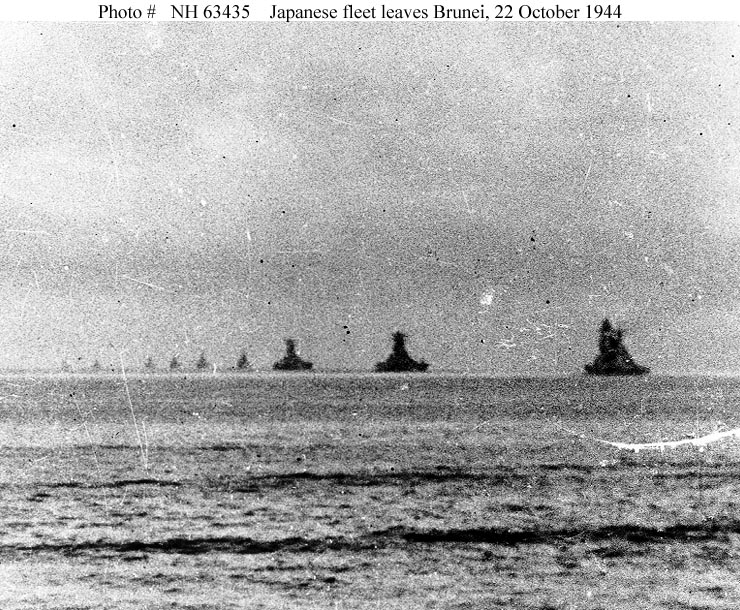
Admiral Takeo Kurita and the powerful Center Force departed their anchorage at Bruneion 20 October 1944.  The task force entered the Palawan Passage on the night of 22-23 October where they were sighted by the American Submarines Darter and Dace which had been posted at the strait for such a possibility.  Darter made radar contact at 30,000 yards at 0018 hours on the 23rd and sent out contact reports.   The two submarines shadowed the Center Force on the surface to gain an intercept position and submerged just before dawn.

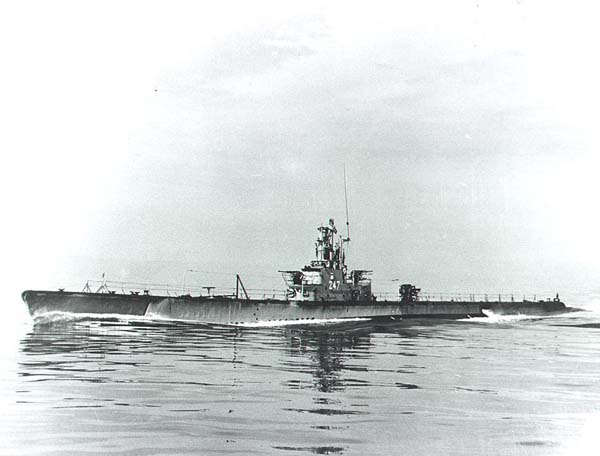
USS Darter

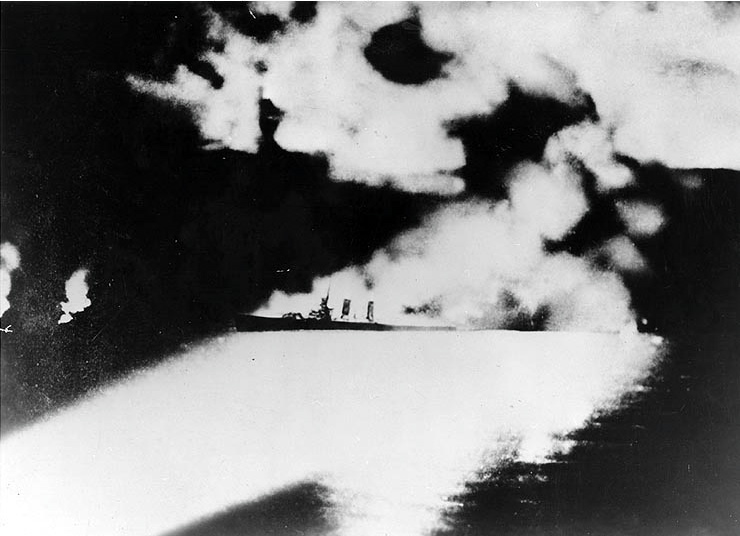
Darter struck first at 0524 firing a spread of 6 torpedoes scoring 4 hits on Admiral Kurita’s flagship the Heavy Cruiser Atago. She reloaded and stuck the Heavy Cruiser Takao with 2 torpedoes at 0634.  At 0554 Dace hit the Heavy Cruiser Maya with 4 torpedoes.

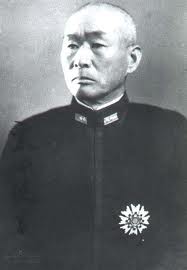
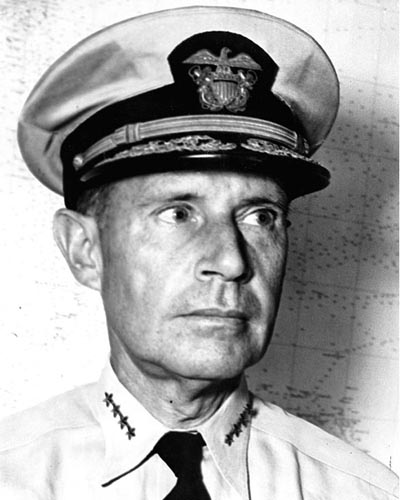
Vice Admiral Takeo Kurita

The blow was severe.  Atago was mortally wounded she capsized and sank at 0553 with the loss of 360 crew members. She sank so rapidly that Kurita had to swim and was rescued with his Chief of Staff by a destroyer, but many of his staff members were lost with the ship.  Though Kurita transferred his flag to Yamato he was now without the advice and counsel of officers that might have prevented later mistakes during the Battle off Samar.  Takao suffered heavy damage and though she did not sink she had to proceed crippled to Singapore under the guard of two destroyers. Though she survived the war she never saw action again.   Maya, struck at 0554 by 4 torpedoes suffered much damage and was wracked by powerful secondary explosions.  By 0600 she was dead in the water and sank five minutes later with the loss of 337 crew members.

USS Dace

The attack of the two submarines was significant; the Japanese lost 3 powerful Heavy Cruisers and had to send two of their destroyers away to guard Takao. Likewise the loss of Kurita’s experienced staff hindered his conduct of the battle on the 24th.  The cruisers were a big loss, at 13,000 tons and armed with ten 8”guns they could steam at 35 knots.

Darter and Dace conducted a pursuit of the crippled Takao which had to be broken off when Darter ran aground on Bombay Shoal. Despite the best efforts of her crew and that of the Dace to free her she was hopelessly stuck.  Her crew was unable to scuttle her and the Japanese were able to board her after she was abandoned and for the first time get a look at the details of a Gato class submarine.

Kurita’s force would continue on into theSibuyan Seawhere they would be attacked again.  But that is the subject of the next article.

5 Comments

Filed under Navy Ships, US Navy, world war two in the pacific

The Navy is the Future of National Security

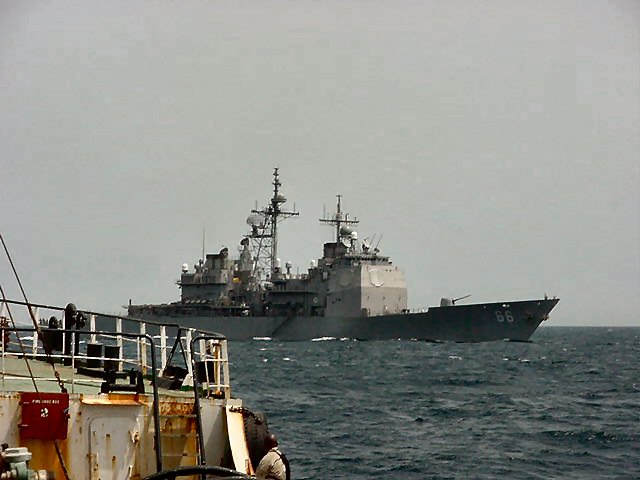
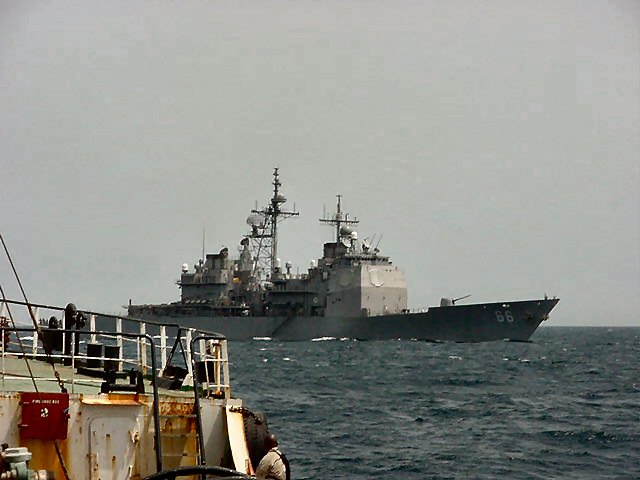
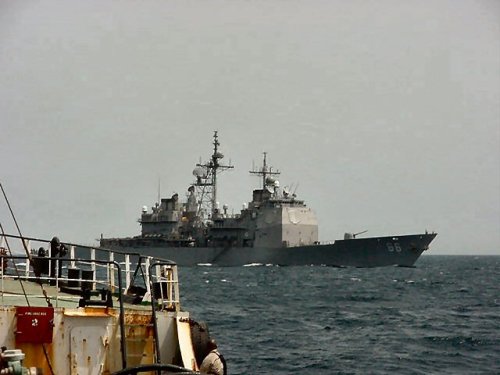
USS HUE CITY CG 66 in the Arabian Gulf 2002.  “I wish to have no Connection with any Ship that does not Sail fast for I intend to go in harm’s way.” John Paul Jones 

“Without a decisive naval force we can do nothing definitive, and with it, everything honorable and glorious.”  President George Washington

“A good Navy is not a provocation to war. It is the surest guaranty of peace.” President Theodore Roosevelt

“A powerful Navy we have always regarded as our proper and natural means of defense; and it has always been of defense that we have thought, never of aggression or of conquest. But who shall tell us now what sort of Navy to build? We shall take leave to be strong upon the seas, in the future as in the past; and there will be no thought of offense or provocation in that. Our ships are our natural bulwarks.” President Woodrow Wilson

“Events of October 1962 indicated, as they had all through history, that control of the sea means security. Control of the seas can mean peace. Control of the seas can mean victory. The United States must control the seas if it is to protect your security….” President John F. Kennedy
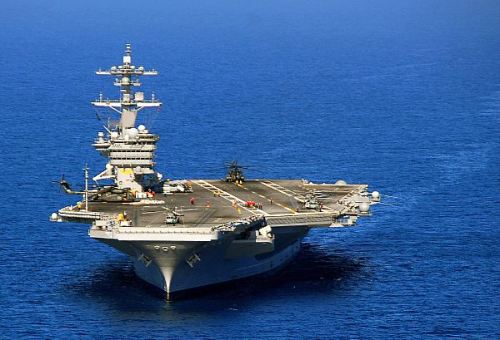
There are a great many debates in Congress and the Pentagon regarding the current and future military budgets in light of the massive budget deficits and economic crisis facing the nation.  Complicating the issue is our massive commitment to land campaigns that contribute little to the long term national security of the United States and its friends. These wars constrain our diplomatic military and economic ability to respond to other crises at home and around the world be they military threats, terrorism or natural or man made disasters.

Until the mid 20th Century theUnited States viewed the land forces when used abroad as expeditionary forces which were employed overseas for relatively short periods of times of combat.  The mission and strategy was to fight the war, bring all or most of the forces home, assist with security as needed and depend on a naval presence to show the flag without a continued large “boots on the ground” presence.   The two times that we have elected to fight protracted ground wars with no definable condition of victory we have come out weaker than we went in.  This was the case inVietnam a war which badly divided the nation and nearly destroyed the military as a viable force.  The present campaign in Afghanistan and the war in Iraq which is close to ending have the potential to do the same.

In the prosecuting the Global War on Terror which was launched in response to the attacks of September 11th 2001 we have for the most costly and historically flawed ways to use an American Army.  In doing so we have had to invest a huge amount of our expenditures simply to maintain a force to keep the status quo in a country that will turn on us as soon as it convenient to do so.

In the process of focusing on these aspects of this war we have forgotten the more crucial long term aspects of national security which can only be addressed by maritime power.  This power includes the military might of the Navy and Marine Corps team but also includes our Merchant Marine and Coast Guard.
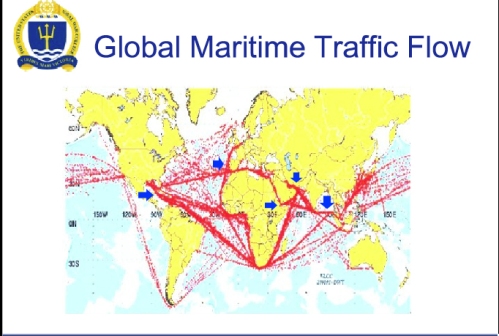
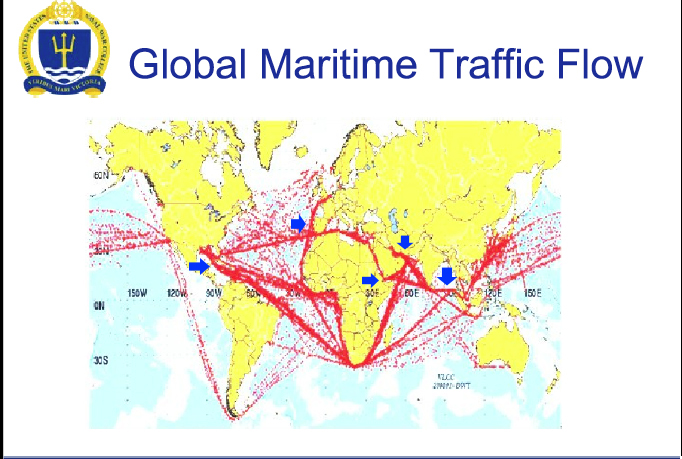
Ninety percent of world trade is transported by ship via sea lanes that have choke points such as the Strait of Hormuz,Strait of Malacca, the Bab El Mendeb and the Horn of Africa, and the Strait of Gibraltar.  Likewise other traffic must pass through the South China Sea, the Taiwan Straits or around Cape Horn.  Then there are the two major maritime canals the Panama and Suez Canals.  Terrorists, pirates, rogue nations and ascending Naval powers such asChinapose real threats in all of these critical maritime commerce choke points.
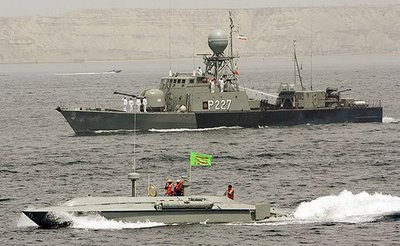
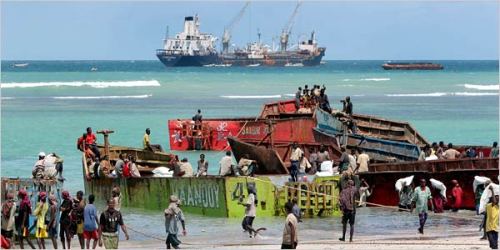
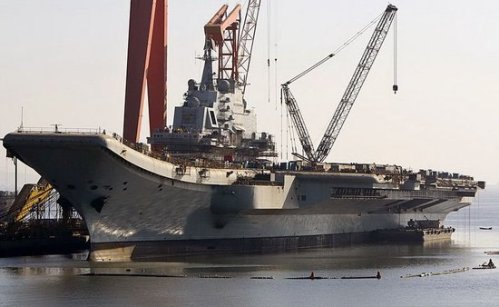
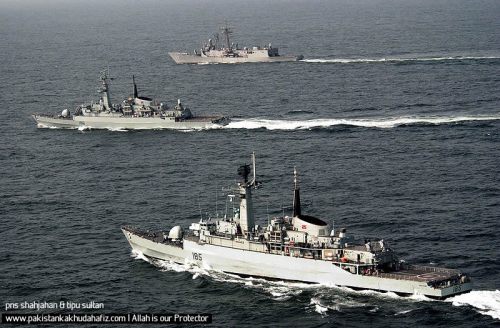
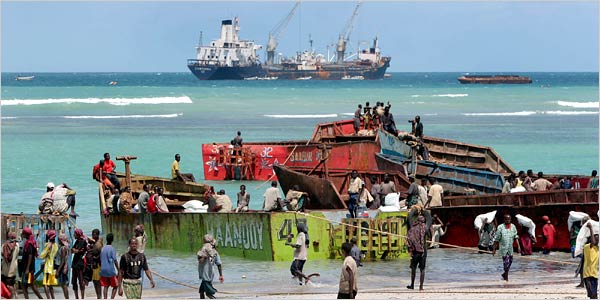
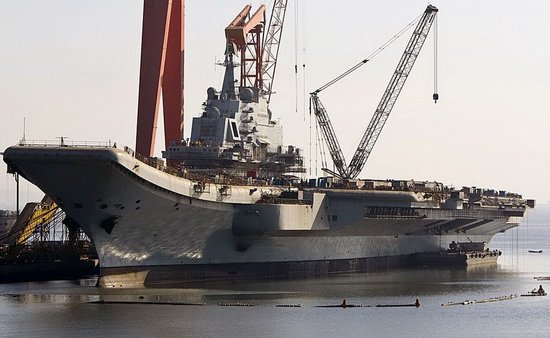
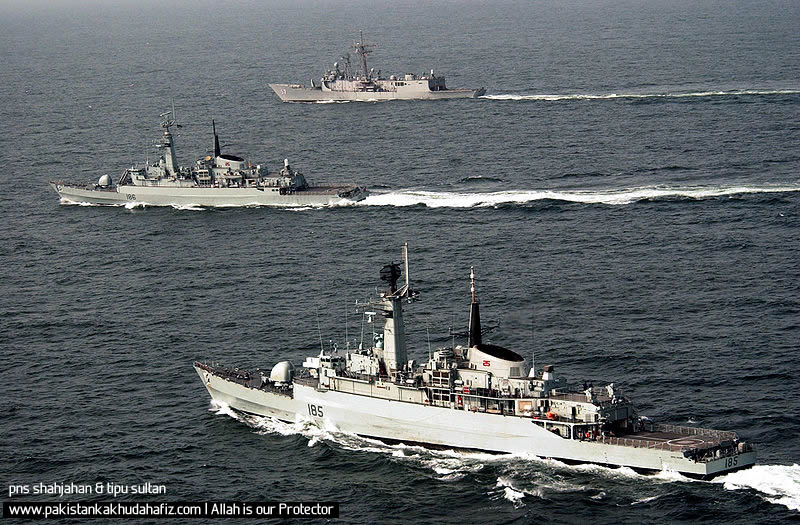
Real and potential threats to the choke points: Iranian Naval and Revolutionary Guard Naval forces, Somali pirates, the new Chinese aircraft carrier and a Pakistani Navy that may become an enemy overnight 

Most of the world’s population lives in what are called the littorals, the areas of land adjacent to oceans and major waterways.  Likewise most industry is located in these areas. Most of these populations and industries are also in areas under the same type of threats as the sea lanes and choke points.  Simply put the sea and the littorals are much more important to this country and the world than landlocked Afghanistan.  They also are much more easily influenced by naval power that is not bound to land bases in nations where governments and their policy to the United Statesand our friends can change overnight and which large land armies would have minimal impact.

The United States Navy has been and still is the world’s preeminent naval power. It will likely remain so for the foreseeable future but the navy is strained.  Since 2001 it has shrunk in size, shed some 52,000 sailors and seen its scope of responsibility and operational tempo increase putting greater strain on the ships, aircraft and personnel remaining.  Ships are aging, maintenance was deferred and the planned new construction has not materialized.  The Ticonderoga Class Guided Missile Cruisers are nearing an average age of 20 years, our carriers average 23 years old, many of our submarines are nearing the end of their projected service lives and some other ships are far older.

Ship classes like the Freedom and Independence class Littoral Combat Ships (LCS), San Antonio Class Landing Ships (LPD) and the DD-1000 Zumwalt Class are badly over budget, plagued with technical and workmanship issue and are behind in production.
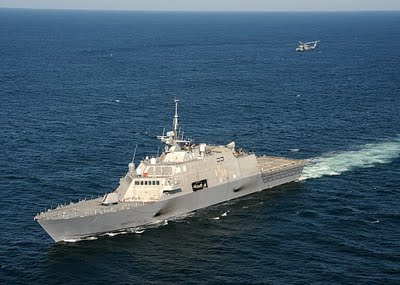
USS Freedom (above) and USS Independence Littoral Combat Ships
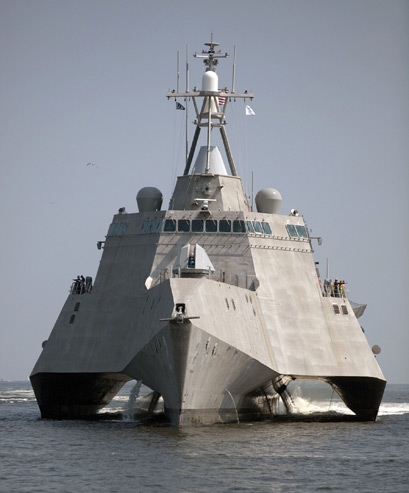
The LCS in particular seems like a bad investment, the ships are undermanned and under armed, planned weapons modules are not in production and they are not designed for survivability.  In effect they are large fast ships with almost no offensive or defensive capabilities that would be hard pressed to survive in a fight with any current or future Corvette or Frigate fielded by an opposing naval force. In order to be effective they need heavier armament and larger crews and need a redesign to improve their survivability. It makes no sense to spend more than half a billion dollars each on ships that are not survivable and cannot fulfill their intended missions.  A better choice would be something similar to the Dutch De Zeven Provincien  German Sachsen or the French Lafayette Class frigates which have a heavy armament and good endurance or the smaller and cheaper German Braunschweig class Corvettes.
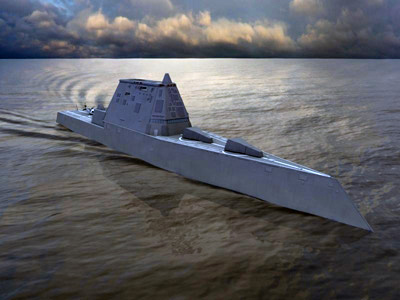
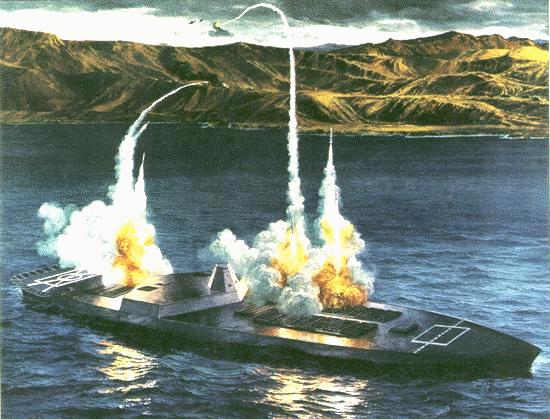
DD-1000 the Zumwalt Class

The Zumwalts are 14,000 ton “Destroyers” that were designed as a replacement for the battleship.  Originally 32 were planned but the high cost and multiple problems associated with the design. These issues have included such things as seaworthiness due to their hull form and other hull issues, its integrated advanced electro-magnetic propulsion system and its surface and air warfare capabilities.  Their armament has been an issue since the beginning as they cannot meet the standards of the Aegis equipped Cruisers and DDGs and cannot support the Ballistic Missile Defense capabilities of those ships.  Their naval gunfire support capability which was advertised as one of their main selling points is woeful. They are to be equipped with two 155mm long range naval guns designed to use a “smart” munitions. The ships will carry a limited supply of shells for these guns and because of the need for extended range and guidance capabilities the shells will have a smaller charge than their land based counterparts.   They will have only two-thirds of the VLS cells than Ticonderoga class ships meaning that they can carry few missiles of all types.  It is likely that the Tomahawk cruise missile will comprise the bulk of their missile armament but if one wants a ship that’s only significant capability is launching Tomahawks then there are many other ideas which are more economical and can carry far more missiles than the Zumwalts. One of these was the Arsenal ship which was designed to carry 500 Tomahawks on a stealthy platform that requires a small crew and had an estimated cost of 500-800 million dollars.  It was cancelled in favor of the project that eventually turned into the Zumwalt class. The DD-1000 program began with the DD-21 program in 1994 and the first ship may not enter service until 2015. The cost of just two of these ships has grown exponentially to 6.6 billion as of 2011.  The two ships under construction have little place in the current or future Navy and would likely serve as technology test beds.
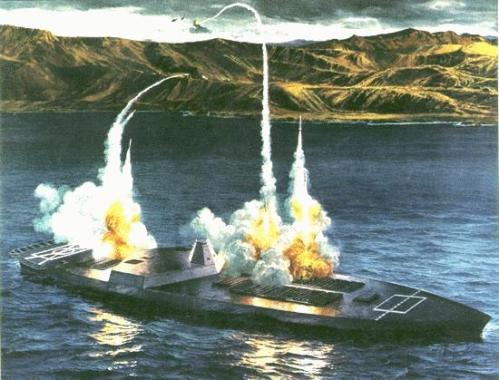
The Arsenal Ship

While we have increased the numbers and continued the production of the highly successful Arleigh Burke class guided missile destroyers (DDG) and Wasp class Amphibious Assault ships (LHD) it is not enough to compensate for the continued attrition.  If worst case budget projections occur the Navy could experience massive cuts without any decrease in maritime threats or operational commitments.  The Coast Guard is in even worse shape.
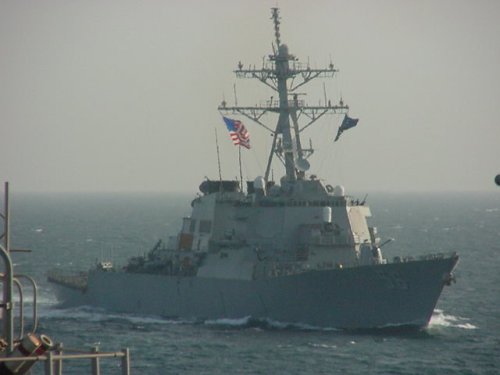
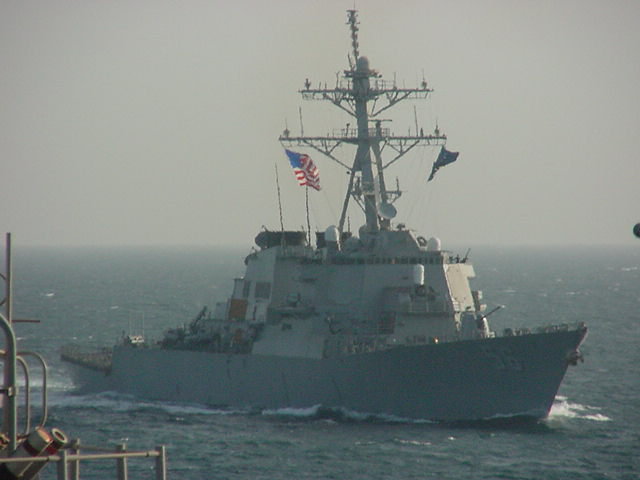
The USS John S McCain DDG 56

The most important aspect of national defense, free trade and humanitarian assistance in the coming years are America’s Navy, Marine Corps, Coast Guard and Merchant Marine.  Without a strong Navy and the other components of maritime power we are at the mercy of tin-horned dictators, pirates and terrorists who live and operate in the most vital areas of the world’s maritime transportation network.
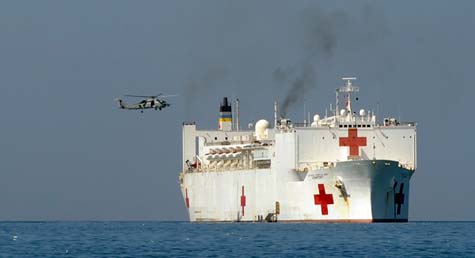
Humanitarian assistance: USNS Comfort off Haiti 

As our political leaders meet in the coming weeks and months decisions will be reached in matters of national security.  They will be based budget considerations alone as we have not operated on a clearly defined national security strategy since the end of the Cold War.  Force structure has to be decided based on the over arching national strategy and broad brushed and un-thought out cuts are a recipe for disaster.

History tells us this. Following our Revolution the nation was deep in debt and eliminated the Navy.  Since our merchant shipping was no longer protected by the Royal Navy and the treaty withFrancewas allowed to lapse American ships became easy prey for the Barbary Pirates.  Rather than build a navy to protect American citizens and shipping the nation paid “tribute” to dictators which amounted to tens of millions of dollars until Thomas Jefferson sent the new re-established Navy to counter the threat.   Our history and that of other maritime powers such asGreat Britainand theNetherlandsprovide many precedents for this use of power.

What needs to happen now is for the LCS ships and Zumwalt class production to end with the current ships building.  No carriers except the 50 year old USS Enterprise should be decommissioned until a full up national strategy review is completed and agreed to by both political parties.  That strategy needs to actually prioritize the most important areas of engagement that the military should focus its efforts.  The Middle East will remain important but will fade as Asia continues to gain importance.

Regarding other ship classes much needs to happen.  DDG production should be stepped up and an affordable yet fully capable replacement to the Ticonderoga class designed, to include the ability to conduct ballistic missile defense.  A diesel electric attack submarine needs to be fielded to complement the Virginia Class attack boats.  A Light Fleet Aircraft Carrier design should be designed and produced to compliment the Nimitz and Ford Class Carriers now in commission or building. The Navy should design or take an off the shelf Corvette or small Frigate type ship to fill the role envisioned by the LCS.  Such ships should be designed for specific tasks to avoid the massive cost overruns and simplify production.  When one remembers that it as the United States Navy that first developed the Destroyer Escort type ship to fill a specific role such an undertaking should be well within ship designer and capabilities so long as they do not try to “gold plate” the type and make it a jack of all trades and master of none ship.  Other types of ship should be studied to include smaller but still capable aircraft carriers and new amphibious ships to support the Marine Expeditionary forces.

Ships need to be designed with combat power, survivability as the first priorities and they need to be affordable and easy to mass produce.  Designs do not need to be over thought.  George Patton’s adage “a good plan violently executed now is better than a perfect plan next week” applies today for this nation and the Navy.  To adapt Patton’s adage I say that “a combat effective and survivable ship class that we can afford and mass produce now is better than a perfect ship that bankrupts us and cannot be produced in the numbers needed to secure the seas.” 

The Navy is the American Armed Force of the Future. Of all the Armed Services the Navy offers the United States the ability to protect its interests abroad and homeland security without the need to base large numbers of ground forces overseas.  Naval forces are flexible, are easily sustainable and conduct security, combat and humanitarian operations better and more affordably than any armed service in the world. When coupled with the expeditionary capability of the Marines offer a force that affordably provides national security.  George Washington, John Adams, Theodore Roosevelt and Franklin Delano Roosevelt all knew this.  I do hope that the current Administration, Congress and their successors will not allow the current superiority that we enjoy on the high seas to decay just as our greatest economic and military competitors build up their naval capabilities and the threat of terrorists, pirates and the small but dangerous navies of rogue states threaten the sea lanes that are absolutely vital to our economy and national security.

The Navy is also the least provocative armed service and history has repeatedly shown that naval forces are a deterrent to war and guarantee of peace.

On that last note…

Peace

Padre Steve+

3 Comments

Filed under History, Military, national security, Navy Ships, US Navy

“The most bold and daring act of the age” Stephen Decatur and the Burning of the USS Philadelphia at Tripoli


“Our Country! In her intercourse with foreign nations may she always be in the right; but right or wrong, our country!” Stephen Decatur

This is the latest of a series of articles that I am writing this month in celebration of the brave men and proud ships of the United States Navy on its 236th Anniversary. Thursday October 13th is that day and I ask my readers to wish any United States Navy Sailor that you know a “Happy Birthday” and thank them for their service in this time of war.

Peace
Padre Steve+

In 1803 the United States Navy was two years into its campaign against the Barbary Pirates who sailed from Algiers, Tunis, Tripoli and Morocco.  For years the United States like other nations had paid tribute to the rulers of these states for free passage of its ships and hefty ransoms to free the sailors that were enslaved following the capture of their ships.  By 1800 tens of millions of dollars had been paid and in that year the amount of tribute paid was 20% of the government’s total revenue.

In 1801 the Pasha of Tripoli Yusuf Karamanli demanded the payment of $225,000 tribute from the new President of the United States President Thomas Jefferson. In years past Jefferson had advised against payment of tribute believing that such payment only encouraged the Barbary States to continue their actions.  The anti-naval partisans and even his Republican allies had blocked his recommendations even though Secretary of State John Jay and President John Adams agreed with him. These partisans insisted that tribute be paid irregardless of the effect on European trade or the fate of American seamen because they believed that the Atlantic trade and involvement in the “Old World” detracted from the westward expansion by diverting money and energy away from the west.  When Jefferson refused the demand and put his beliefs into practice Karmanli declared war on the United States by cutting down the flag at the US Consulate in Tripoli.
Jefferson sent a small force to defend protect American ships and sailors and asked Congress to authorize him to do more as he did not believe that he had the Constitutional power to do more. Congress did not issue a declaration of war but authorized Jefferson to “employ such of the armed vessels of the United States as may be judged requisite… for protecting effectually the commerce and seamen thereof on the Atlantic Ocean, the Mediterranean and adjoining seas.”

Jefferson sent the best of the United States Navy to deal with the situation and US Navy ships soon began to take a toll on the pirate vessels.  The squadron was composed of ships that would become legend in the history of the Navy. Commanded by Commodore Edward Preble and included the USS Argus, Chesapeake, Constellation, Constitution, Enterprise, Intrepid, Philadelphia and Syren.  Numerous young officers who would distinguish themselves in the following years served aboard the ships of the squadron.

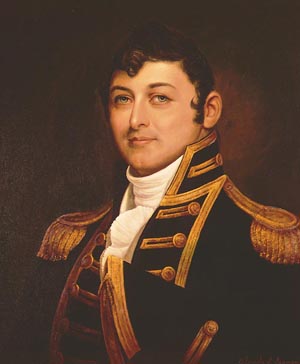
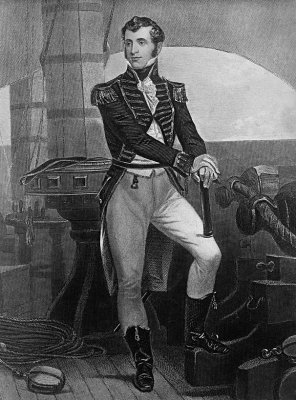
One of the young officers was the 24 year old Captain of the 12 Gun Schooner USS Enterprise Stephen Decatur the son of a Navy Captain who had entered the Naval service as a Midshipman in 1798 and who had risen rapidly through the ranks due to his abilities and leadership. He was among the few officers selected to remain in service following the end of the Quasi-War with France.  By the time that he took command of Enterprise Decatur had already served as the First Lieutenant of the Frigates USS Essex and USS New York.  After an altercation with British officer while wintering in Malta he was sent home to command the new Brig of War USS Argus. He was ordered to bring her to Europe where he handed over command to Lieutenant Isaac Hull who would achieve fame in the War of 1812 as Commanding Officer of the USS Constitution.  Decatur was given command of Enterprise on when he detached from the Argus.

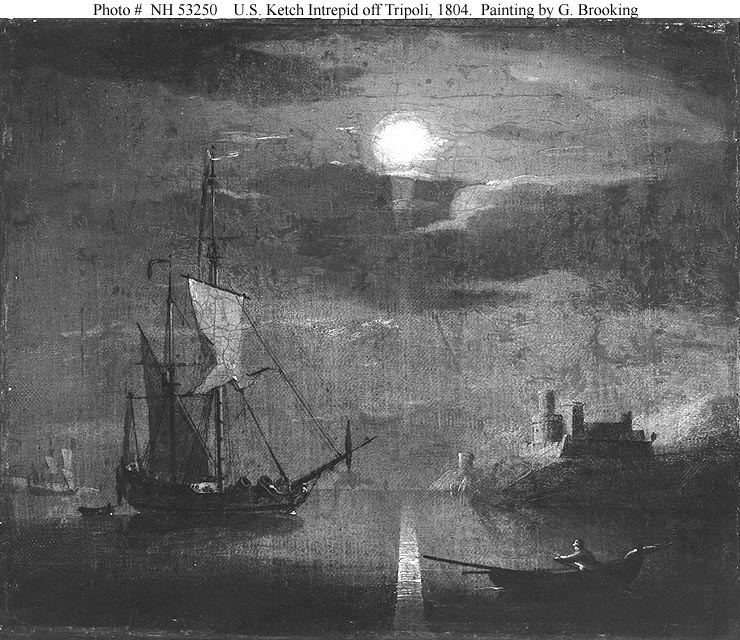
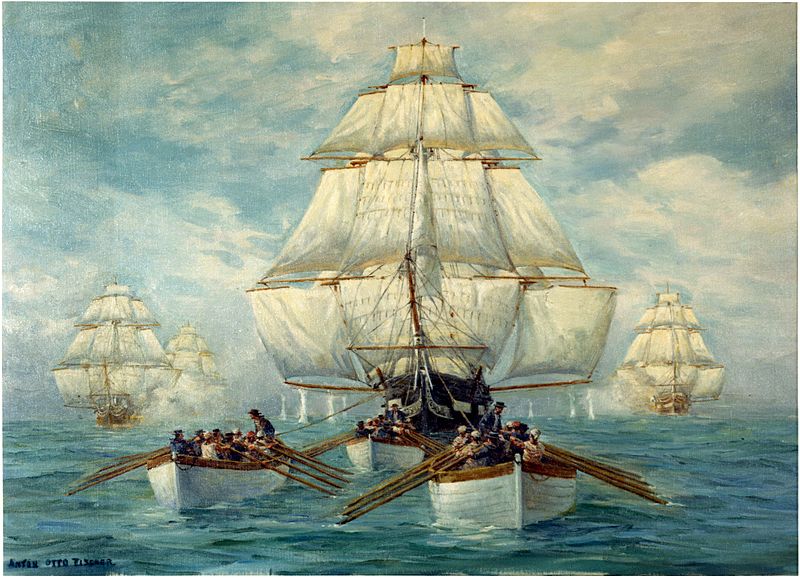
On December 23rd 1803 while operating with the Constitution Decatur and the Enterprise captured the small Tripolian ketch Mastico which was sailing under Turkish colors.  The small ship was taken to Syracuse where Commodore Edward Preble condemned her as a prize of war, renamed her Intrepid and placed Decatur in command.

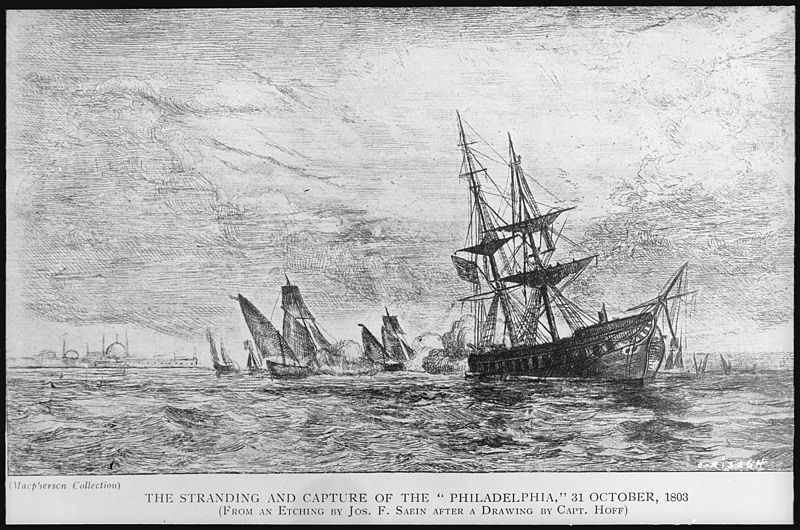
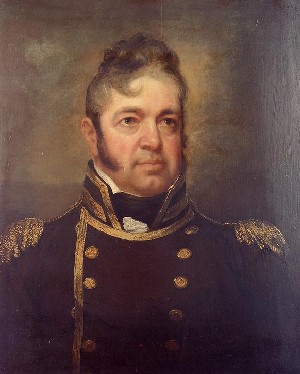
Normally such an event would be considered a demotion for an officer of Decatur’s caliber but events at Tripoli had forced Preble to make a bold strike at the heart of the enemy.  On October 31st 1803 the Frigate USS Philadelphia one of the most powerful ships in the squadron under the command of Captain William Bainbridge ran aground on an uncharted shoal and was captured.  Her crew was taken prisoner and the ship floated off by the Tripolians partially repaired and moored as a battery in the harbor until her foremast could be remounted having be cut away by Bainbridge in his  unsuccessful  attempt to float the ship off the shoal.

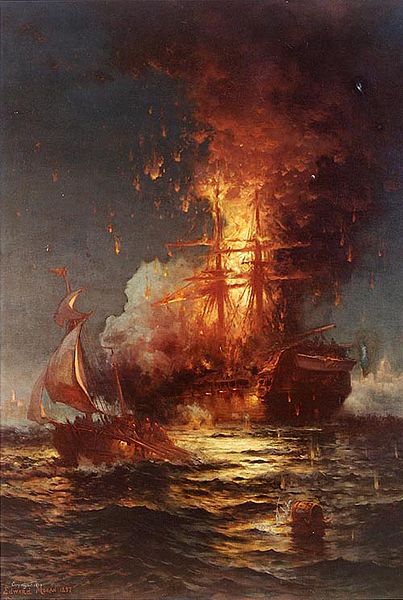
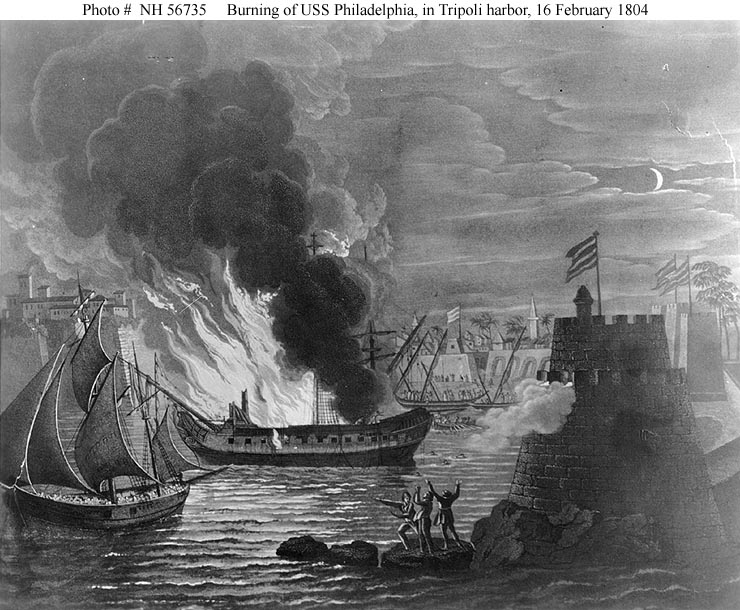
Burning the Philadelphia

The threat posed by such a powerful ship in the hands of the enemy was too great to ignore. Preble order Decatur to man the Intrepid with volunteers to destroy the Philadelphia at anchor.  Decatur took 80 men from the Enterprise and was joined by eight more volunteers  from USS Syren including Lieutenant Thomas McDonough who had recently served aboard Philadelphia and knew the ship well.

Under the cover of night of February 16th 1804 Decatur took the former Tripolian ship into the harbor beneath the dim light of the new moon.  Posing as a Tripolian ship he was able to slip past the guns of the forts overlooking the harbor using a Sicilian sailor who spoke Arabic to request permission. This was granted and Intrepid approached Philadelphia and when close enough ordered his crew to board the Frigate. After a brief skirmish with the small contingent of sailors aboard he took control of the vessel and set it ablaze. When he was sure that the fire could not be extinguished he ordered his men back aboard Intrepid and sailed out of the harbor under the fire of the shore batteries and gunboats.

Decatur sailed Intrepid back to Syracuse where he was greeted as a hero and became one of the Navy’s legends.  Pope Pius VII publicly proclaimed that “the United States, though in their infancy, had done more to humble the anti-Christian barbarians on the African coast, than all the European states had done for a long period of time.” Admiral Lord Horatio Nelson, one of the most heroic sailors that ever lived and no stranger to daring said that Decatur’s accomplishment was “the most bold and daring act of the Age.

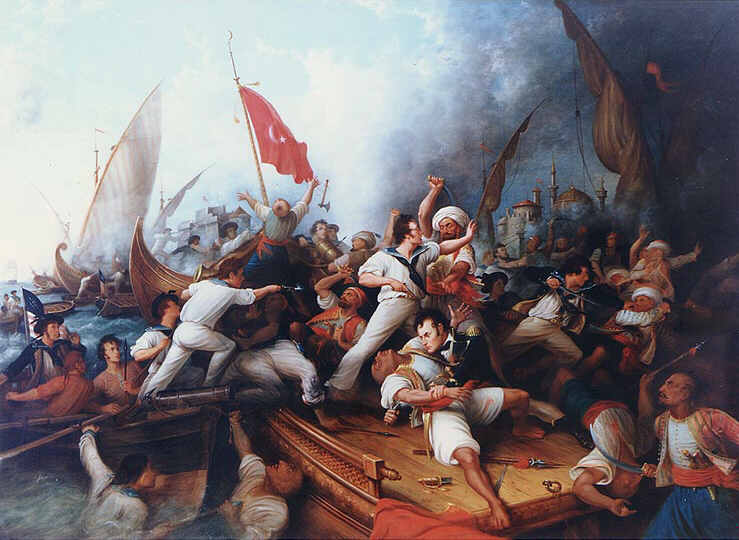
Decatur leading American Sailors in hand to hand combat against Barbary Pirates at Tripoli 1804 his younger brother Lieutenant James Decatur was killed aboard another gunboat in the action

Decatur would return to command the Enterprise in 1804 and would prove himself again against the forces of Tripoli. He distinguished himself  in the years to come against the Royal Navy in the War of 1812 and later in the Second Barbary War. Decatur’s squadron decisively defeated the Algerian fleet capturing the Frigate Mashouda and killing the highly successful and chivalrous commander of the Algerian raiding squadron Rais Hamidu.  The Pashas of Algiers, Tunis and Tripoli all made peace and reimbursed the Americans for the financial damage that they had done.  His victory ended the terror that the Barbary States had inflicted on Europeans for centuries and helped bring peace to the Mediterranean.  Stephen Decatur more than any one man ended their reign of terror against Christian Europe.

3 Comments

Filed under History, leadership, Military, national security, Navy Ships, US Navy

1812: The Year of the Frigates

USS Constitution

This is the second of a series of articles I will write commemorating the 236th anniversary of the founding of the United States Navy. This article discusses the actions of the USS Constitution and USS United States at the outbreak of hostilities in which they defeated three British Frigates in battles that are legend in the annals of Naval History. I grew up reading the stories of naval actions during the War of 1812 with rapt fascination.  I could describe the battles, the ships and the brave Captains in detail even at a young age.  I can close my eyes and see the paintings, drawings and the diagrams of the ships, their sailors and the battles that they fought. I guess that I was destined to end up in the Navy. But then how could I not? My birthday falls on March 27th, the anniversary of the founding of the current United States Navy.  

On March 27th 1794 the Congress of the United States appropriated funds to establish a Navy built around six powerful Frigates, the 44 Gun USS Constitution, USS President and USS United States and the 38 Gun USS Congress, USS Constellation and USS Chesapeake.  The 44 gun ships were larger and had a heavier armament than the majority of their British, French or Spanish counterparts.  Although rated as 44 Guns they mounted 56 guns, 30 of which were the heavy 24 pound cannons and 22 were the short range but powerful 32 pound carronades. They were built of oaken timbers that were of the size used to build Ships of the Line in other navies.  In comparison the standard Royal Navy Frigate of the day was the 38 gun ship mounting 18 pound cannons.  The ships would serve during the Quasi-War withFrance from 1798-1800 and the First Barbary War from 1801-1805.

Chase of the Constitution

When the United Stateswent to war with Britainin 1812 neither side was well prepared. The British were deeply engaged in the Napoleonic Wars and the bulk of the Royal Navy was engaged in blockade operations against Franceand its allies on Europe’s Atlanticand Mediterranean coasts.  Deployed the Western Atlantic was a 64 Gun Ship of the Line HMS Africa 9 Frigates and assorted and about 75 smaller vessels.  The United States Navy was minuscule even compared with the forces deployed by the Royal Navy to the Western Atlantic.

Captain Isaac Hull

When the Federalist administration of John Adams left office the Navy was on the ascendant.  Built around a nucleus of 13 Frigates with six 74 gun Ships of the Line under construction the Navy was reduced to just 8 Frigates, most of which were laid up in dry dock at any given time.  There was an anti-Navy sentiment in the Republican administrations of  Thomas Jefferson and James Madison.  The building program was ended and replaced with a program of gunboat construction.  About 174 of these were built between 1805 and 1812 but only 62 were in service at the time of the war.   They were particularly unsuited to engaging any substantial British ship as they were too lightly built and were poor sea boats with a light armament and it would take 40 gunboats to match the firepower of a single British Frigate.  Likewise instead of being cheap to build and maintain the cost per gunboat came out to $10,000 each instead of the budgeted cost of $5000 and their cost to maintain one gunboat per year was more than that of a Frigate.

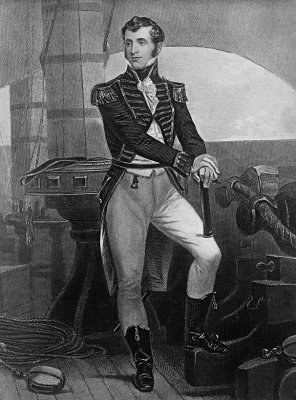
Captain Stephen Decatur

The reduction of the “blue water” Navy was a move of political ideology. Despite the obvious need to protect commerce as was displayed during the Quasi-War and the First Barbary War the Jefferson administrations was intent on a coastal defense strategy to which the gunboats were key.  However it was poor naval policy because there was no way to determine where any actual British strike would take place and the dispersion of the gunboats meant that there would never be enough at any port to repel the Royal Navy.

Captain William Bainbridge

When war was declared the United States Navy comprised of just 8 Frigates and 14 smaller Sloops and Brigs and the worthless gunboats.  Since the build program was stopped the Navy had no Ships of the Line.   The Secretary of the Navy was an incompetent named Paul Hamilton and the Jeffersonian strategy of coastal defense was embraced by Albert Gallatin who recommended that all the Navy’s large ships be turned into floating batteries for harbor defense.

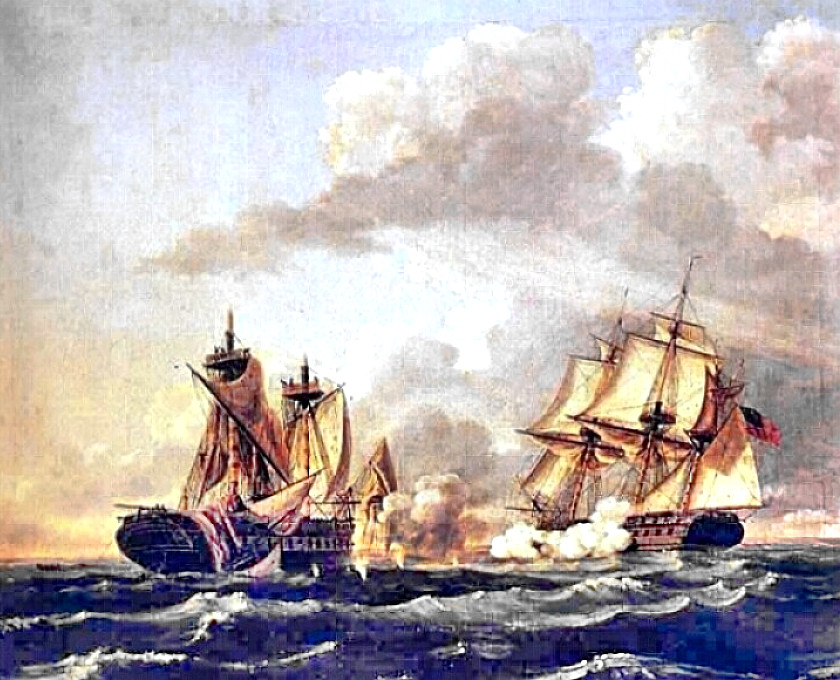
USS Constitution vs. HMS Guerrière

The Navy was fortunate to have bold officers with the combat experience of the Quasi-War and the Barbary War under their belt.  The ships had fine crews of well trained professional sailors who excelled at seamanship and gunnery.  Taking advantage of the thinly stretched Royal Navy a squadron under Commodore John Rodgers was already at sea when the administration decided on the coastal defense strategy and forced the Royal Navy to divert many ships that could have decimated the merchant marine of the time allowing many American flagged ships to safely reach port with their cargo.

The USS Constitution under the command of Captain Isaac Hull sailed from Boston at the outbreak of hostilities and nearly met disaster when it ran into a Royal Navy squadron comprised of the HMS Africa and 5 Frigates.  Becalmed Hull and his crew used every device known to escape in an epic 57 hour close quarter chase.  He returned to Boston, replenished his stores and set sail again.  On August 19th some 600 miles out of Boston Constitution came across the 38 Gun Frigate HMS Guerrière. The Captain of Guerrière was James Dacres who had a low opinion of the United States Navy. Hull directed the fire of his powerful 24 pounders into Guerrière shredding her rigging and smashing her hull. Two hours after the fight began Dacres struck Guerrière’s colors.  Guerrière was so badly damaged that she was burned and sunk with her crew taken back to Boston as prisoners.  During the action a sailor aboard Constitution noted that Guerrière’s shot was bouncing harmlessly off of the thick oaken sides of the ship. He is quoted as shouting “Huzza, her sides are made of iron,” which provided the ship her nickname Old Ironsides. Constitution lost 7 men killed and 7 wounded in the battle while Guerrière lost 15 killed and 78 wounded of her 272 member crew.

USS United States vs. HMS Macedonian

The USS United States under the command of Captain Stephen Decatur found the 38 Gun HMS Macedonian under the command of Captain John S. Carden 600 miles west of the Canary Islands.  The battle commenced at 0920 and firing from long range Decatur’s gunners partially dismasted Macedonian leaving her hard to maneuver. Decatur then positioned United States on the quarter of Macedonian and pounded the helpless British ship into submission.  Macedonian surrendered about 1200.  Damage to the United States was light and 7 sailors were killed and 5 wounded.  Macedonian lost over one-third of her 301 man crew killed or wounded.  The Americans took over the British vessel and after temporary repairs at sea the United States and the newly christened USS Macedonian sailed for New York arriving on December 4th 1812.  The ship would serve in the U.S. Navy until 1828 when she was broken up at Norfolk.

USS Constitution vs HMS Java

In late October 1812 the Constitution now under the command of Captain William Bainbridge sailed from Boston.  This time she encountered the 38 Gun Frigate HMS Java under the command of Captain Richard Lambert off the coast of Brazil on December 29th 1812.  Java was a fine ship with a well drilled crew and brave Captain and she was faster than Constitution.  Though she was rated as 38 Guns she had 49 mounted making her a far tougher opponent than Guerrière or Macedonian. In addition to her own crew she had on board 100 additional sailors to reinforce ships inIndia. She was carrying Lieutenant General Thomas Hislop who was to command British forces inIndia, officers from his staff and several other high ranking Royal Navy officers enroot to commands inIndia.

The action commenced about 1410 and Lambert was able to maneuver across Constitution’s stern 3 times shooting away her helm at 1430 and wounding Bainbridge. Constitution was able to close with Java and the ships became fouled which took away the advantage Java had temporarily acquired.  Java had her bowsprit and jib boom shot away at 1500 and in the next 55 minutes Constitution dismasted Java with the exception of part of her mainmast which went over the side at 1620.  The gallant Captain Lambert was mortally wounded at 1530 and command was assumed by Lieutenant Henry D. Chads.  At 1725 Constitution took up a raking position and Lieutenant Chads after consulting with his surviving officers struck the colors.  The battered Java was not salvageable and was burned and sunk the next day but not before Java’s helm was salvaged and installed on Constitution.  In an ironic twist Commodore Henry Chads in command of a British squadron at Singapore in 1845 provided medical assistance to Constitution when her crew suffered an outbreak of Dysentery and fevers during her around the world cruise.

Within the space of four months the Royal Navy lost three Frigates and forbade their Frigate Captains not to engage the American “Super-Frigates” one on one.  Only Ships of the Line or squadrons would be allowed to engage the American ships.

Over the next two years the British tightened their blockade of American ports bottling up most of the Navy.  The Navy lost two of the Super-Frigates to the British during the war, the 36 gun USS Chesapeake which was captured by HMS Shannon on June 1st 1813 and the USS President on January 15th 1815.

Neither was a fair fight, Chesapeake’s Captain James Lawrence was new to the ship which had a new and poorly trained crew and Shannon was one of the most combat effective ships in the Royal Navy whose Captain was Philip Broke had been her skipper for 7 years and trained the crew into a well drilled machine.  Lawrencewas mortally wounded but uttered the cry which immortalized him “Don’t give up the ship, fight her until she sinks.” Lawrence’s friend Commodore Oliver Hazard Perry would name his flagship on Lake Erie the USS Lawrence and fly a flag that read “Don’t give up the Ship.”  The USS President under the command of Stephen Decatur was lost after she was badly damaged in a winter gale and snowstorm when pilots navigated her onto a sand bar.  Although Decatur was able to move the ship off the bar she was badly damaged and caught by a superior British squadron and captured.

The exploits of the small force of Frigates and smaller ships on the high seas and Perry’s squadron onLake Erie proved to be the only real military successes of the war.  But even more it was the three engagements in the closing months of 1812 that defined the spirit of the United States Navy for generations.

Peace

Padre Steve+

8 Comments

Filed under History, Military, Navy Ships, US Navy

The United States Navy: 236 Years of a Global Force for Good

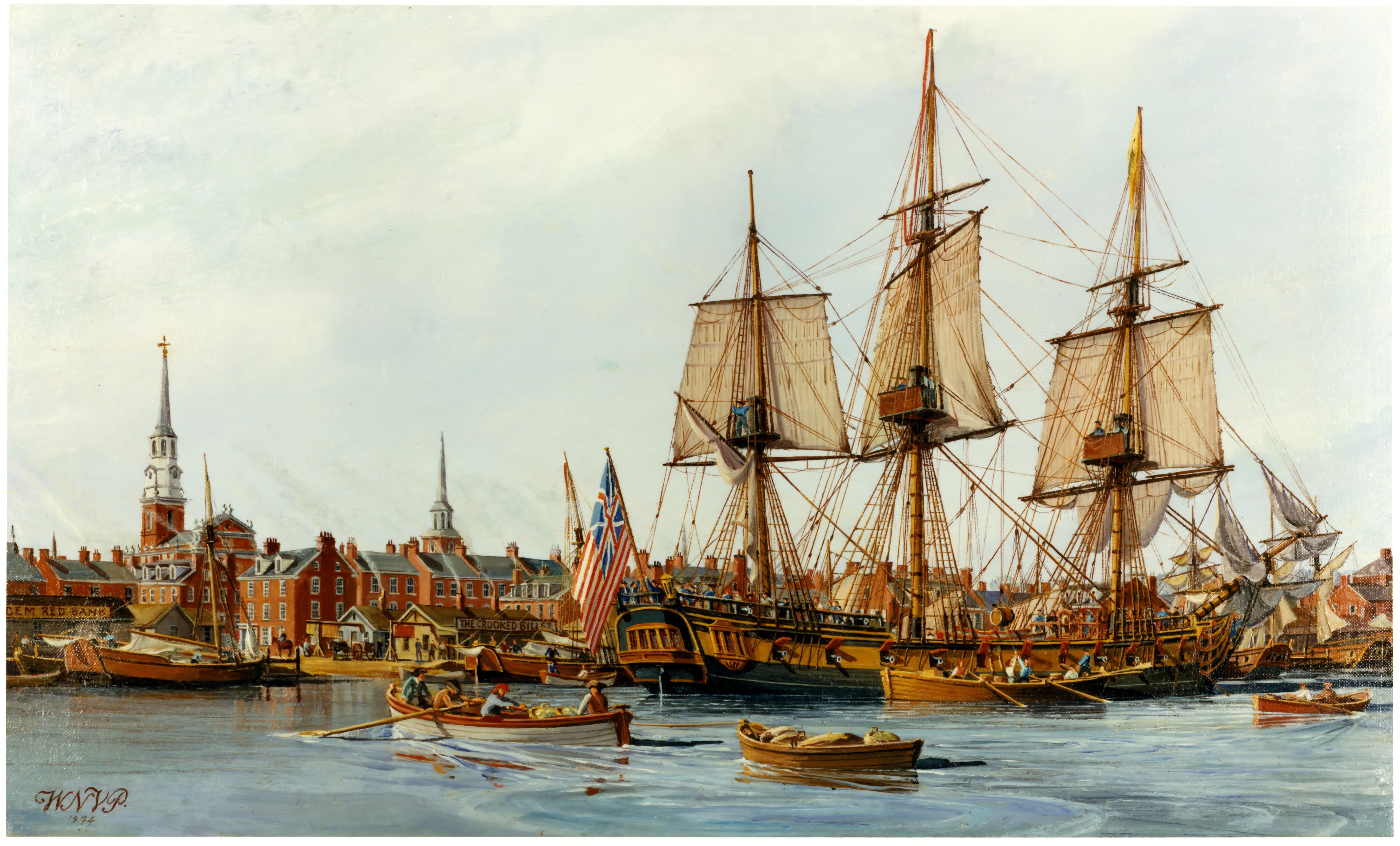
The Grand Union Flag being raised on the Frigate Alfred  

This is the first in a series of articles that I will post this month on significant events and personalities that make up the history of the Unite States Navy which celebrates its 236th anniversary on October 13th 2011. I have had the distinct honor of having grown up in a Navy family and after almost a full career in the U.S. Army to be able to serve in the Navy to the present day.  

First Blood: The Battle of Nassau

“It follows than as certain as that night succeeds the day, that without a decisive naval force we can do nothing definitive, and with it, everything honorable and glorious.” George Washington 15 November 1781 to the Marquis de Lafayette

On October 13th 1775 the Continental Congress passed legislation to establish a Navy for a country that did not yet exist.  It was the first was the first in a long line of legislative actions taken by it and subsequent Congresses that helped define the future of American sea power.

The legislation was the beginning of a proud service that the intrepid founders of our nation could have ever imagined.  Less than two months after it was signed on December 3rd1775 Lieutenant John Paul Jones raised the Grand Union Flag over the new fleet flagship the Alfred. The fleet set sail and raided the British colony at Nassau in the Bahamas capturing valuable cannon and other military stores.  It was the first amphibious operation ever conducted by the Navy and Marines.

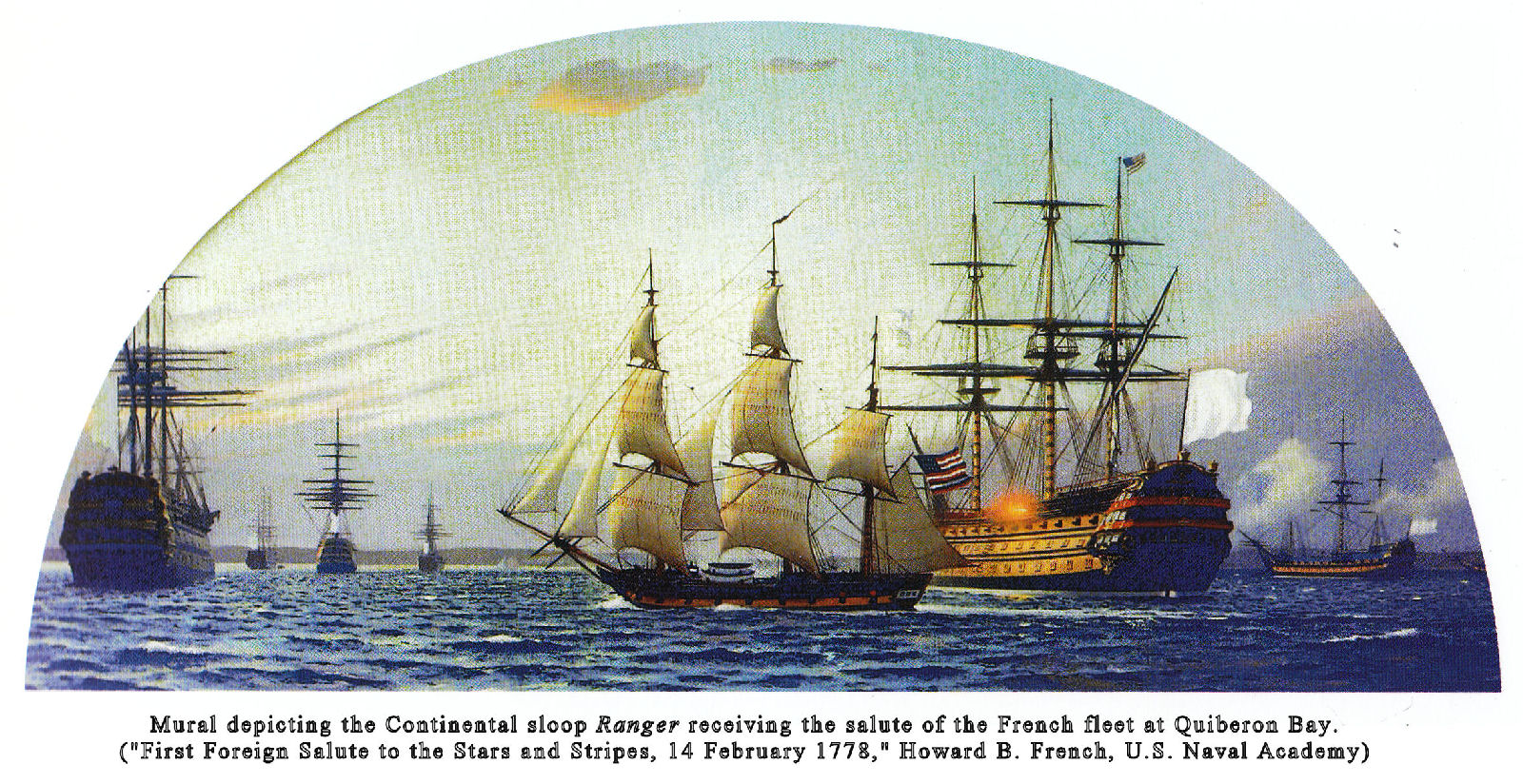
Jones received the first recognition of the American flag shortly afterFrancerecognized the newUnited States.  In command of the Sloop of War Ranger his ship received a nine-gun salute from the French flagship at Quiberon Bay.

“I have not ye begun to fight!” The Battle of Flamborough Head 

When the war ended very few of these ships remained most having been destroyed or captured during the war. But these few ships and the brave Sailors and Marines who manned them blazed a trail which generations of future sailors would build on.  The Navy has served the nation and the world as a “Global Force for Good” for 236 years.

Tonight as you go to bed and sleep soundly after eating well and spending time with family, friends or enjoying some form of entertainment remember those of our Navy who serve at sea, in the mountains and deserts of Afghanistan, the cities of Iraq, the desolation of the Horn of Africa and around the world defending our interests, caring for our military personnel and their families and deploying to serve in harm’s way and in areas of devastation.  They are America’s “Global Force for Good.”  They are my shipmates.  They are the United States Navy.

Peace

Padre Steve+

2 Comments

Filed under History, Military, US Navy

Wings of Gold: U.S. Navy Carrier Fighter Aircraft 1941-1945

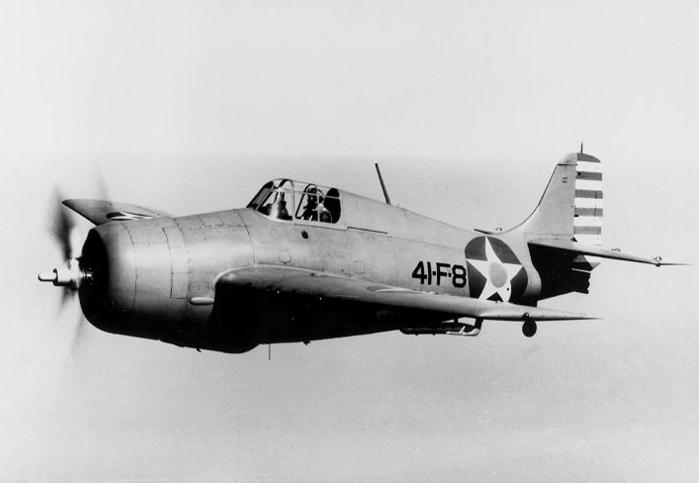
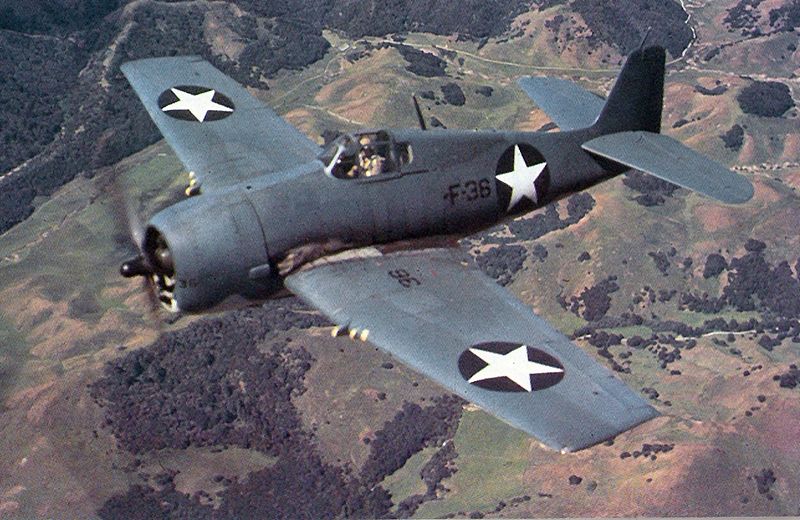
F4F-4 Wildcat of VF-41 in 1942

In 1941 with war raging inEuropeand the Japanese continuing their war in China  and occupied French Indo-China theUnited States rushed to build up its Naval Air Arm and the Arm Air Corps.  New models of aircraft of all types were being rushed into production to replace aircraft already known to be obsolescent.  The Navy brought aircraft already accepted into full production even as it planned more advanced models.  The events in Europe and Asia demonstrated that new fighter designs were needed quickly.

As 1940 dawned the standard fighter aircraft found on U.S. Navy carriers were the F2-A Brewster Buffalo, the Grumman F-3F biplane.  In February 1940 the Navy accepted its first F4F-3 Wildcat which in an earlier for had been rejected in favor of the Brewster Buffalo.  The new Grumman fighter was powered by a 1200 hp Pratt & Whitney R-1830-76 double row radial engine, mounted 4 .50 cal. Machine guns and was heavily armored.  It had a maximum speed of 331 mph range of 845 miles and ceiling of 39500 feet. This would serve it and its pilots well as they aircraft was incredibly tough, often amazing experienced Japanese pilots in their A6M2 Zeros in their ability to suffer heavy damage and remain in the air.  The plucky Wildcat would become the main line of defense in the Pacific against the advancing Japanese Imperial Navy in the months following Pearl Harbor.

The early F4F-3s were superseded by the F4F-4 model which incorporated folding wings, additional armor and an extra two machine guns.  This decreased its maximum speed to 320 mph, rate of climb and ceiling but nonetheless the aircraft gave a good account of itself in Navy and Marine Corps service.  F4F-3’s and F4F-4s served in the British Royal Navy where it was called the Martlet until the end of the war.  When Grumman closed out F4F production in 1943 to concentrate on its replacement the F6F Hellcat production was continued by General Motors and Eastern Aircraft as the FM1 and FM2 Wildcat. The FM1 was identical to the F4F-4 but armament was reduced to 4 machine guns and bomb racks for two 250 lb bombs or depth charges were added.  The FM2 was based on an updated version of the F4F and had a more powerful engine as well as a higher tail assembly to account for the increased torque of the engine.  These aircraft served aboard the tiny Escort Carriers and performed valiantly, especially in the Battle off Samar during the Battle of Leyte Gulf.  A total of 7860 Wildcats of all varieties were built.  They accounted for 1327 enemy aircraft shot down with the loss of only 191 Wildcats.

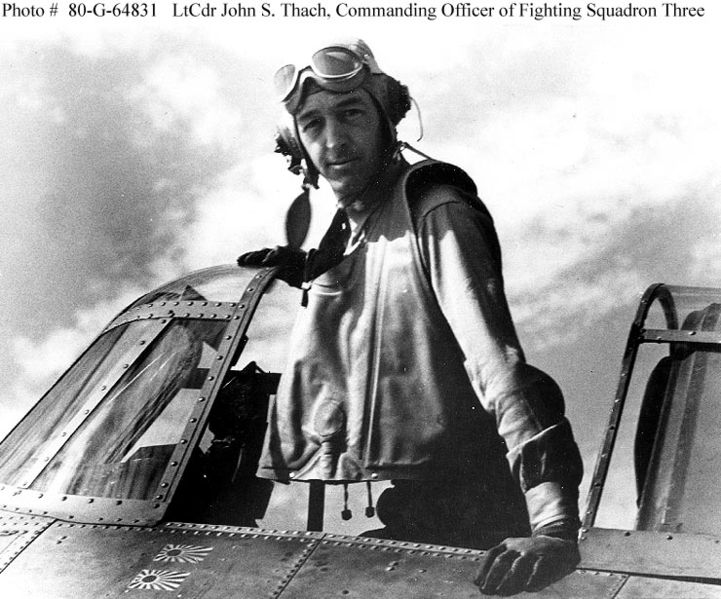
Aces Capt Joe Foss USMC and CAPT David McConnell USN both Medal of Honor Winners and CDR Jimmy Thatch (below)

The top aces who flew the Wildcat were all Marines, CAPT Joe Foss (26 victories) MAJ John Lucian Smith (19 victories) and MAJ Marion Carl (16 victories in the F4F and 2 in the F4U Corsair). Foss and Smith both won the Medal of Honor.  Foss would go on to become Governor of South Dakota and the first Commissioner of the American Football League in 1959. Smith retired as a Colonel in 1960 and Carl as a Major General.  Other distinguished F4F aces included LT Butch O’Hare, the first U.S. Navy ace and Medal of Honor winner and LCDR Jimmy Thatch who developed the highly successful “Thatch Weave” which enabled the U.S.pilots whose machines were slower and less maneuverable than the speedy and nimble Zeros to achieve good success against their Japanese foe.  Thatch retired as an Admiral in 1967.  O’Hare rose to become commander of the Enterprise Air Group and was killed in action in November 1943. Chicago’s O’Hare International Airport is named for this brave aviator.

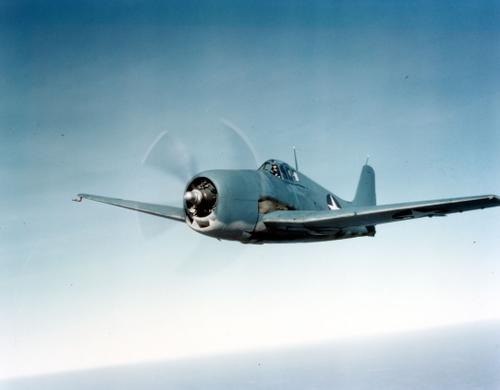
F6F Hellcat

The Grumman F6F Hellcat took over front line fighter duties on the Fleet Carriers from the Wildcat in early 1943 and established itself as the dominant fighter in the Pacific Theater of Operations.  Although it had a resemblance to the F4F the F6F was a totally new design built on combat experience against the Japanese.  The aircraft was built around the powerful Pratt & Whitney R-2800 engine which produced 2000 hp.  The Hellcat mounted six .50 caliber machine guns and had a rate of climb of 3500 feet per minute and a 37300 ft operational ceiling.

Faster than the Zero and other Japanese fighters and piloted by more experienced pilots the Hellcats took a brutal toll of Japanese aircraft.  They accounted for more Japanese aircraft kills than any other with 5163 confirmed kills with a loss of 270 aircraft an overall 19:1 kill ratio. They were piloted by 305 Navy and Marine Corps aces including Meal of Honor winner Captain David McConnell the Navy’s Ace of Aces, and highest surviving United States ace of the war that scored all 34 of his victories in the Hellcat.  The greatest achievement of the Hellcats were when they swept the rebuilt Japanese Naval Air Arm from the skies in the Great Marianas Turkey Shoot. By November 1945 12275 Hellcats had been built with 1263 going to the British Royal Navy. After the war the Hellcat was replaced by the F8F Bearcat as the primary fighter and served in a night fighter and trainer role until the 1950s.  The French Navy used the Hellcat in to provide heroic close air support to beleaguered French Soldiers in Indochina.

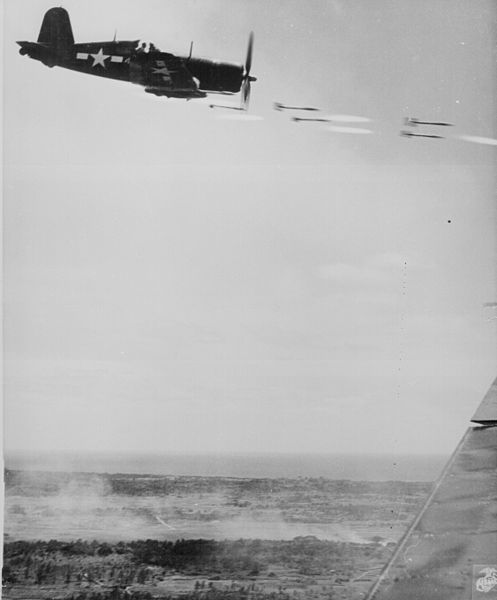
USMC F4U-4 Corsair providing close air support

Flying alongside the F6F was the Vaught F4U Corsair. The Corsair first flew in 1940 and the Navy was slow to adopt it due to difficulties in carrier operations and negative reviews of Navy pilots.  However Marine Corps aviators flying the Corsair had great success and legendary aviators like MAJ Gregory “Pappy” Boyington and VMF-214 the Black Sheep.  The Navy would adopt the aircraft later in the war as the Corsair’s carrier operation deficiencies were remedied, but its real success was a land based aircraft operated by the Marines.  Likewise the first squadrons to operate the aircraft successfully from carriers were the Marine Corps VMF-124 and VMF-213.

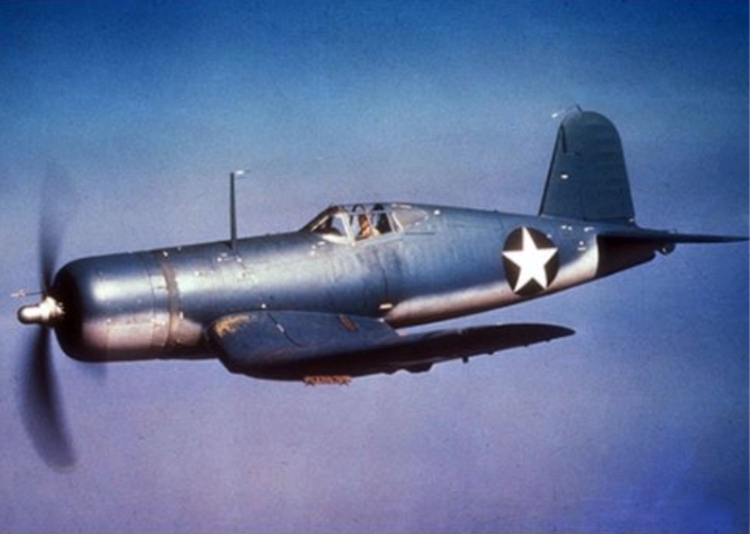
Early F4U-1

The Corsair mounted the same Pratt & Whitney R-2800 engine as the F6F but had a highly streamlined gull wing design as well as a turbo-charger which allowed it a top speed of 425 mph.  Later models such as the F4U-4 had a top speed of 445 mph. The F4F was armed with six .50 cal machine guns as well as rockets and a bomb load of 2000 pounds and the F4U-4 could carry 4000 pounds of ordnance.

Less than 10000 of the over 64000 combat sorties flown by F4Us were flown from carriers, the vast bulk of the sorties coming from land based Marine Corps squadrons.  The Corsair was often used as a fighter bomber where its capabilities to drop sizable amounts of ordinance including rockets, bombs and the nearly developed Napalm in a close air support role cemented the importance of Marine Air for future generations.  They were beloved by the Marine Corps and U.S. Army infantrymen in their brutal battles with the Japanese on many hellish island battlefields.  Corsairs accounted for 2140 confirmed kills during the war against a combat loss of 189 aircraft. The aircraft remained in production until 1952 with 12571 aircraft of all variants being built.  Many Japanese pilots considered the Corsair to be the best fighter of the war.

During the war many served in the British Royal Navy and Royal New Zealand Air Force with good success and after the war the French Navy had success with them in a close air support role in Indochina and Algeria.  Following the war the Corsair remained in service for many years in the U.S. Navy and Marine Corps as well as the French Navy and other smaller navies and air forces until the 1960s.

These amazing aircraft and the men that flew them established a tradition of excellence that the Naval Aviators of the U.S. Navy and Marine Corps continue today.

Peace

Padre Steve+

Leave a comment

Filed under aircraft, US Navy, world war two in the pacific

Bloody Savo: Disaster at Guadalcanal

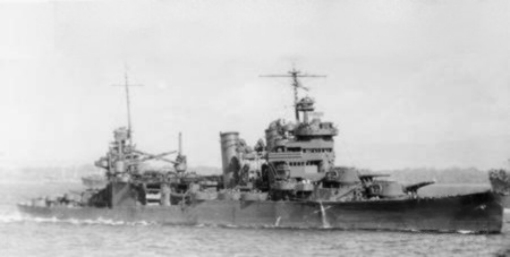
USS Quincy under attack off Savo Island

On August 8th 1942 the U.S. Task Force supporting the invasion of Guadalcanal was tired. The crews of the ships had been in continuous combat operations conducting naval gunfire support missions, fending off numerous Japanese air attacks and guarding against submarine attacks for two days.  The force commanded by Admiral Richmond K. Turner was still unloading materials, equipment and supplies needed by the men of the 1st Marine Division who they had put ashore on the morning of the seventh.

On the afternoon of the eighth Turner was informed by Admiral Frank “Jack” Fletcher that he was pulling his carrier task force out of action. Fletcher alleged that he did not have enough fighter aircraft (79 remaining of an original 98) and as low on fuel.  The carriers had only been in action 36 hours and Fletcher’s reasons for withdraw were flimsy.  Fletcher pulled out and left Turner and his subordinate commanders the responsibility of remaining in the area without air support with the transports still full of badly needed supplies and equipment.

Admiral Gunichi Mikawa

As the American drama played out, the Japanese moved forces into position to strike the Americans.  Admiral Gunichi Mikawa commander of the 8th Fleet and Outer South Seas Force based at Rabaul New Britain quickly assembled a force of 6 heavy cruisers, the 14,000 ton Atago Class Chokai, and the four smaller ships of the Kako Class, the Aoba, Kako, Kinugasa and Furutaka, the light cruisers Yubari and Tenryu and the destroyer Yunagi.   Mikawa raised his flag aboard Chokai and the force sped down “the slot” which ran the length of the of the Solomon’s chain mid day on the seventh.

The Americans had warning of their coming. The first sighting was by B-17s before the Japanese forces had reached Rabaul.  The second was the elderly U.S. Navy submarine S-38 at 2000 on the 7th when they were 550 miles away not far from Rabaul.  This report was discounted because it would not be unusual to find a number of fleet units steaming near a major naval base and fleet headquarters.  The last which should have alerted the allies was a sighting by a Royal Australian Air Force patrol aircraft on the morning of the 8th.  However the pilot did not report the sighting until he returned from his mission returned to his base and had his tea.  The eight hour delay in reporting the information as well as errors in it which reported 2 submarine tenders as part of the force lulled the Allied forces into believing that the Japanese were setting up a seaplane base and posed no threat to the invasion forces. It was a fatal error of reporting and judgment by the pilot.

USS Astoria on August 8th off Guadalcanal 

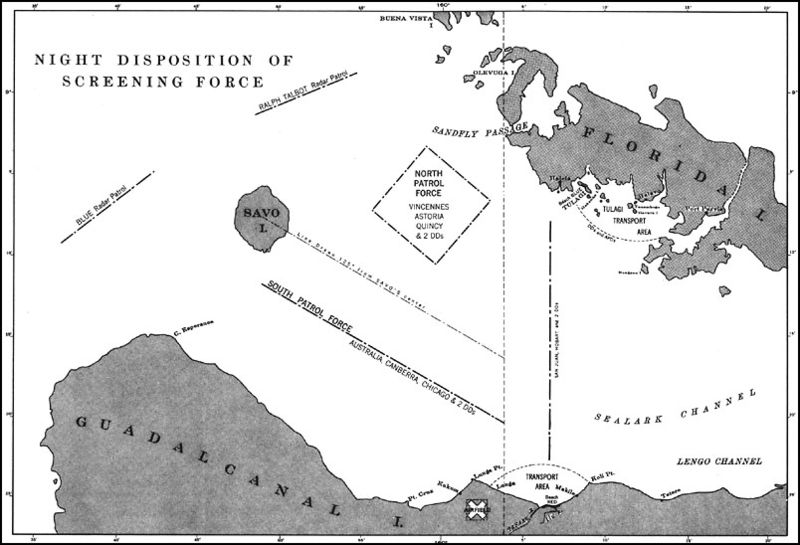
In the absence of good information Turner deployed his support ships to cover the three entrances into what soon would be known as Iron Bottom Sound.  He placed the Anti Aircraft Cruiser USS San Juan and Australian Light Cruiser HMAS Hobart to the east with two destroyers under the command of Rear Admiral Norman Scott. To protect the south west entrance into the sound south of Savo Island Turner placed the Heavy Cruisers USS Chicago, HMAS Australia and HMAS Canberra and two destroyers under the command of Rear Admiral R.A.C. Crutchley RN who in theory commanded the screening force.  To the north of Savo he deployed the Heavy Cruisers USS Vincennes, USS Astoria and USS Quincy and two destroyers under the tactical direction of Captain Frederick Riefkohl aboard Vincennes. To the west of Savo he placed two destroyers to act as picket ships.  Unfortunately these ships radar sets were insufficient and would fail to pick up the approaching enemy.

Allied Dispositions 

During the early evening Turner recalled Crutchley to his flagship for consultations of what to do regarding Fletcher’s retreat.  Crutchley came over in his flagship the Australia denuding the southern force of its commander as well as one of its three heavy cruisers.  He left the commanding officer of Chicago Captain Howard D. Bode in tactical command but Bode did not have his ship take the lead position in the patrol assuming Crutchley would return bymidnight.

Mikawa launched float planes to scout the locations of the American ships and to provide illumination once the battle began.  Some of these aircraft were spotted but no alert measures were taken as many assumed the Japanese to be friendly aircraft.  Many commanding officers were asleep or resting away from the bridge of their ships, lookouts were tired and not expecting the Japanese and Condition Two was set in order to provide some of the tired crews a chance to rest.

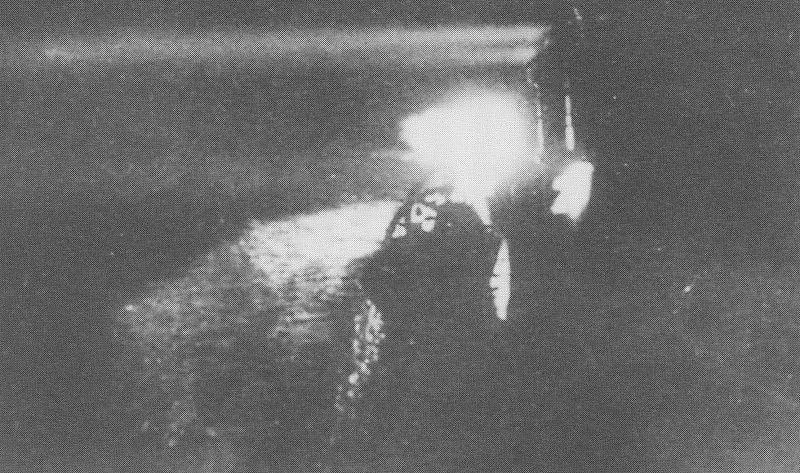
Light Cruiser Yubari illuminating American cruisers at Savo Island 

Admiral Mikawa now new the Allied disposition and ordered his ships to battle stations at 0045.  At 004 he sighted and passed astern of USS Blue the southern picket which also failed to detect the Japanese force.  Mikawa assumed that the destroyer might have reported his presence, briefly turned north but turned back to his original course when a lookout allegedly spotted a destroyer to his northeast.  He gave the order to attack at 0132 and promptly spotted the American destroyer USS Jarvis which had been heavily damaged and without radio communications was making her way toAustralia for repair and passed her after some ships fired torpedoes and raced toward the southern force at 26 knots.  With the southern force just a few miles away Mikawa ordered his ships to commence firing at 0136 and at 0138 torpedoes had been launched.

Mikawa’s flagship heavy Cruiser Chokai

Even now the southern force was unaware of Mikawa until at 0143 the destroyer USS Patterson on the far side of the action saw Mikawa’s ships bearing down a mere 5000 yards from the force. Her commander radioed “STRANGE SHIPS ENTERING HARBOR” but the alert came too late.  As Patterson signaled her warning Japanese float planes dropped their illumination flares silhouetting the Chicago and Canberra as the Japanese cruisers opened fire at ranges from 4500 to 9000 yards.  At 0143 Canberra was struck by to torpedoes and 24 shells, mostly 8” from the cruisers. Her Captain was killed and she was mortally wounded.  The Japanese brushed off the attempts of Patterson and the other southern force destroyer the USS Bagley to intervene bypassing them quickly and shifting their fire to Chicago. Chicago was stuck by a torpedo at 0147 and a single hit from a cruiser which caused little damage. Chicago briefly engaged the Yunagi at 0151 which had been sent back to cover the Japanese as they moved north.  With his ship crippled Captain Bode failed to warn the northern force of the Japanese attack.

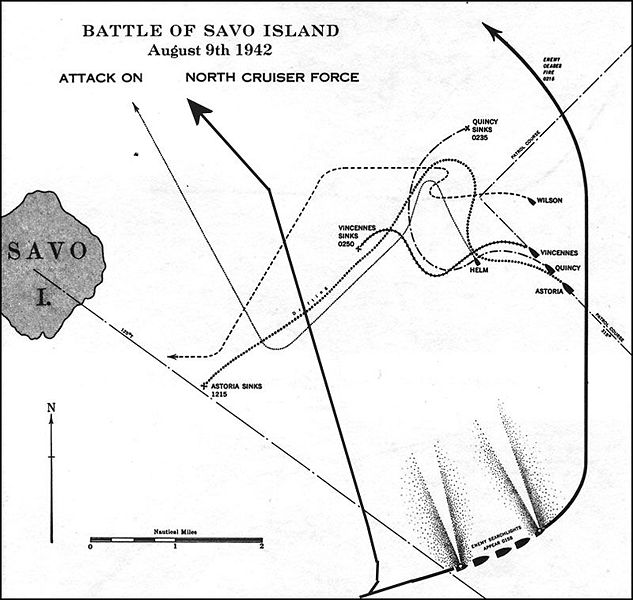
Mikawa’s lookouts spotted the northern group at 0144 and changed course. The maneuver was badly executed and left the Japanese in two columns as they swiftly closed on the Americans.  Mikawa’s flagship Chokai launched torpedoes at 0148 and Astoria the cruiser closest to the Japanese set general quarters at 0145 and at 0150 the Japanese illuminated her with searchlights and opened fire. Astoria under the direction of her gunnery officer returned fire at 0152 ½ just before her Captain came to the bridge unaware of the situation. He ordered a cease fire until he could ascertain who he was firing at assuming the Japanese to be friendly ships.  He delayed 2 minutes and ordered fires commenced at 0154 but the delay was fatal. Astoria had opened fire on the Chokai which then had time to get the range on the American cruiser and hit her with an 8” salvo which caused fires which provided the other Japanese ships an aiming point.

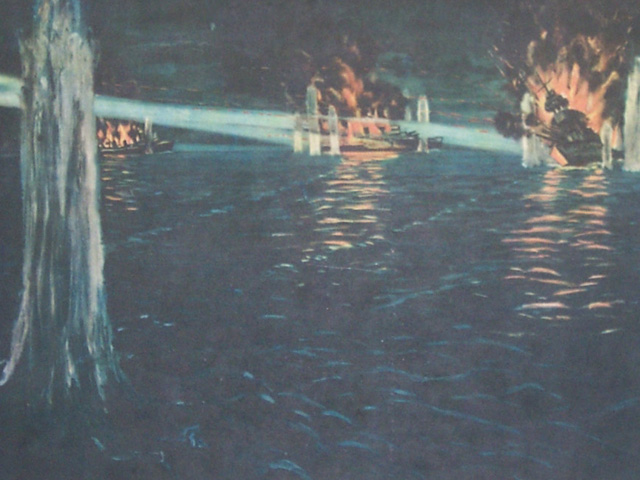
Japanese artist depiction of attack on US Navy Cruisers at Savo Island

Astoria was left burning and heavily damaged barely maintaining headway but attempted to fight on scoring a hit on Chokai’s forward turret even as the Japanese opened up on the next cruiser in line the USS Quincy.  Quincy caught between the two Japanese columns.  Aoba illuminated her with her searchlight and Japanese forces opened fire. The gunnery officer order Quincy to return fire getting two salvos off before her skipper Captain Samuel Moore came to the bridge, briefly ordered a cease fire assuming that he was firing on Americans and turned on his running lights.  Quincy was ripped by salvo after salvo which killed Captain Moore and nearly everyone in the pilothouse just as a torpedo ripped into her engineering spaces turning them into a sealed death trap forcing the engineer to shut down the engines.  Burning like a Roman candle Quincy was doomed she was ordered abandoned and capsized and sank at 0235. However Quincy did not die in vain, at 0205 two of her 8” shells hit Chokai causing enough damage the Admiral’s chart room that Mikawa would order a withdraw at 0220 which spared the now defenseless American transports.

Vincennes the lead ship and flagship was next in the line of death.  Captain Reifkohl order General Quarters sounded not long after the Japanese illuminated the southern group.  At 0150 Vincennes was lit up by the searchlights of three Japanese ships which opened fire on her. Vincennes returned fire at 0153 hitting Kinugasa before she was hit starting fires on her scout planes mounted on their catapults. The Japanese mauled Vincennes, three possibly four torpedoes ripped into her as shells put ever gun out of action. At 0215 she was left burning and sinking by the Japanese who soon withdrew from the action.  Ordered abandoned she sank at 0250.

Canberra being evacuated by the Patterson and Blue

Canberra struggled against the odds but was abandoned and was sent to the bottom by an American torpedo at 0800.  Astoria also struggled for life but the damage was too great and she was abandoned sinking at 1215.  Mikawa withdrew up the sound but on his return the Heavy Cruiser Kako 70 miles from home was sunk by torpedoes from the American submarine S-44 sinking in 5 minutes.

The Americans and Australians lost 4 Heavy Cruisers sunk and one heavily damaged as well as two destroyers damaged.  Killed on the various ships Quincy-389, Vincennes-342, Astoria235, Canberra-85, Ralph Talbot-14, Patterson-10, and Chicago-2.

It was an unmitigated disaster, an allied force destroyed in less than 30 minutes time.  Boards of inquiry were held and Captain Bode hearing that he shouldered much blame killed himself in 1943.

It was a rude awakening to a Navy which had believed that technical advances would give it victory and which was not yet in the words of Admiral King “sufficiently battle minded.”  It was the first of many equally bloody battles in the waters aroundGuadalcanal.

2 Comments

Filed under History, Military, Navy Ships, US Navy, world war two in the pacific

From the Sea: The Absolute Need of a Strong Navy, Merchant Marine, Coast Guard and Viable National Maritime Strategy

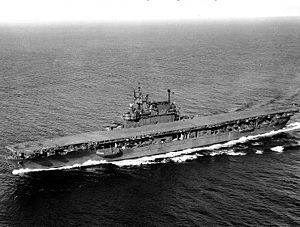
The USS Enterprise CV-6. Ordered in 1933 she was one of the most decorated and battle proven ships ever to fly the flag of the United States

“A good Navy is not a provocation to war. It is the surest guaranty of peace.” Theodore Roosevelt

“A powerful Navy we have always regarded as our proper and natural means of defense; and it has always been of defense that we have thought, never of aggression or of conquest. But who shall tell us now what sort of Navy to build? We shall take leave to be strong upon the seas, in the future as in the past; and there will be no thought of offense or provocation in that. Our ships are our natural bulwarks.” Woodrow Wilson

As the economic crisis continues to envelop the nation there is much talk about the certain reduction in the size and capabilities of the U.S. Military components.  At the present time it seems that politicians of both parties are more interested in the immediate savings that can be derived from cuts.  Regardless of how they are done each service will see force reductions but coming at a time when we are at war those responsible for the cuts must be conscious of the effects on the capabilities that the United States has to defend itself and its interests overseas and to influence world affairs.

The wars in Iraq and Afghanistanhave been ground intensive requiring the strengthening of the Army and Marine Corps to conduct counter insurgency operations. After 9-11 the Navy voluntarily reduced its fleet and personal strength in relatively dramatic fashion intending the savings be used to rebuilt the fleet.  Personnel strength was reduced by nearly 40,000 sailors and many ships were retired well before their anticipated retirement dates.  Unfortunately the Defense Department under then Secretary of Defense Donald Rumsfeld shifted the savings to fund the ground campaigns in Iraq and Afghanistan.  Navy shipbuilding was cut and the Navy failed to help itself by investing much of the service’s budget to the development of three classes of ships and that are over budget, under performing and full of controversy, the Zumwalt Class Destroyers, the Freedom and Independence Class Littoral Combat Ships and the San Antonio Class Landing Ships.

Further cuts are already occurring or envisioned based on the planned cuts in Federal Government programs.  These cuts would reduce the Navy which is now smaller than at any time since the early 1930s following the 1922 Washington Naval Conference which limited the size of the Navies of the signatory countries.  From 1922-1932 the Republican Harding, Coolidge and Hoover administrations not only reduced the force but failed to lay down a single new ship to replace outdated ships and reduced maintenance funds to keep up the ships in service.  Budget cutting gutted the Navy during those years and it was only theRooseveltadministration which realized that a strong Navy was essential to national security began to rebuild the fleet in the 1930s and funded the development of the ships that would win World War Two.  The shipbuilding program had economic benefits as shipyards which had been inactive were able to employ skilled American workers which helped military preparedness, American business and American workers.  The ships that came out of that building program sustained us at the beginning of the war and those designed in the years just before the war served us for decades to come.  Even so the build up byRoosevelt, constrained by the dire economic crisis of the Great Depression could not add ships fast enough to have us fully ready for the Second World War and left us dangerously stretched by the demands of the Japanese advance in the Pacific and the German U-Boat campaign in theAtlantic.  Many good Americans died and the war was decidedly more difficult because of what was done to the Navy in the 1920s by successive short sighted Republican administrations.

The current ship production is at a level not seen in decades and bad surface ship designs and poor workmanship have hurt the Navy.  If the Navy is cut back significantly without a change in mission or corresponding shift in National Security Policy it will degrade the Navy’s ability to respond to emerging threats. Likewise if a coherent shipbuilding program is not undertaken that meets the projected threats American interests can and will be harmed as other nations gain local superiority in critical areas and sea lanes.   While the U.S. Navy currently enjoys a vast superiority over any current or potential adversary there are places that a cunning adversary could hurt American and allied interests simply because we are already spread very thin in regard to the number of ships available and the increasing number of missions and threat areas.

The challenge now is not to give in to the temptation to make indiscriminant cuts until we actually decide on a National Maritime Strategy that is not simply about the Navy but also the Coast Guard and Merchant Marine.  The strategy must include the interrelationship that we have with our allies and other nations and their navies.

The necessity for this goes beyond military preparedness it goes to our economic security since the vast majority of our commerce exports and imports are by sea.  If we take the time to think through a comprehensive maritime strategy it can go a long way to strengthen American industry, labor, commerce as well as national and economic security for us and the world.  A strong Navy, Merchant Marine and Coast Guard are far more important to the United Statesthan large ground forces.

An effective and judicious use of national power: USS Hue City CG-66 passing an impounded Iraqi smuggler in 2002

This is demonstrated in our history as well as that of Great Britain.  When we are strong at sea we are strong, when we commit to long wars of attrition overseas we cause ourselves untold problems. As our first President George Washington said:

“It follows than as certain as that night succeeds the day, that without a decisive naval force we can do nothing definitive, and with it, everything honorable and glorious.”

This is something that our politicians inWashingtonand those that populate the think tanks need to learn.

Peace

Padre Steve+

1 Comment

Filed under national security, Navy Ships, US Navy

A Grievous Loss: CH-47 with 31 Americans believed Shot Down during Combat Operation in Afghanistan

CH-47 Making a Rooftop Pickup in Afghanistan

Yesterday a U.S. Army CH-47F helicopter from the elite 160th Aviation Regiment was shot down during a combat operation in Afghanistan’s Tangi Valley in the troubled Wardak Province killing 31 American Sailors, Soldiers and Airmen and 8 Afghan soldiers.U.S. officials have not confirmed the circumstances of how the aircraft was lost but a senior official speaking on condition of anonymity said it was apparently shot down said that 22 SEALS from SEAL Team 6 based inVirginia BeachVirginia, 3 Air Force Air Controllers, a dog handler and his dog and the air crew.

The Taliban have claimed the shoot down occurred when NATO forces were engaged in a heavy raid against their forces which were gathering in the Sayd Abad district and the head of the Afghan Police in the Province claimed that there was a two hour battle in the town of Jaw-e-mekh Zareen.  The Taliban official claimed that the aircraft was downed by a rocket propelled grenade as it was taking off from the roof of a building.  The Taliban official Zabihullah Mujahid said that 8 Taliban fighters were killed in the fight.

This morning I received a call from the chaplain that is my assistant at our hospital. She has the duty this weekend because I have had such a difficult time getting around when called in late on Wednesday night for the death of a newborn baby.  Since she was the duty she received the page that she was needed to accompany a Casualty Assistance Call Officer (CACO) to notify the family of one of these SEALS who lived in the local area.  We will be providing more assistance over the course of the coming weeks.  When she told me about the call I knew that it was in response to the SEALS lost in the crash because Sailors assigned to Marine units who become casualties are taken care of by their Marine Corps commands and the Navy Chaplains assigned to them. I thank God that I have been blessed having such an outstanding young Chaplain assigned to me.

This is a terrible loss of brave men and tragedy for their loved ones and shipmates.  That kind of loss tears a gaping hole in a small community.  Just on the practical side one does not produce the kind of skilled Special Operators assigned to SEAL Team Six, or DEVGRU overnight, these are the best of the best. They do not grow on trees.

The SEAL community will recover as they have done before but this loss hurts.  It hurts because even more because as a nation we don’t understand the war or how such sacrifices actually contribute to our national security.  We don’t even seem to know how we define “winning” or even if we can define what a “win” would look like if we can achieve it now.  I know combat hardened Marines who now fight for their fellow Marines and their brotherhood of war.   The same is true of Soldiers and Sailors that I know.  I would go to Afghanistan tomorrow if called in order to serve my fellow Sailors, Marines and Soldiers because for me after 10 years the war is personal.

I find it troubling that there are those that continue to act like cheerleaders and act as if the limited numbers of troops available can do a counterinsurgency mission that by doctrine requires far more troops, resources and time to do right and a national will to win.  The reality is we do not have the forces, the resources or the national will to “win” and we know from history that even winning militarily cannot be sustained unless Afghanistan itself changes and that history shows at best unlikely.

I am reminded of the words of General John Buford in opening part of the movie Gettysburg when I hear those that do the cheerleading from their comfortable political offices and think tank chairs when tragedies like this occur.

“They’ll be on his back in Washington. Wire hot with messages ‘Attack! Attack!” So he will set up a ring around these hills. And when Lee’s army is nicely entrenched behind fat rocks on the high ground, Meade will finally attack, if he can coordinate the army. Straight up the hillside, out in the open, in that gorgeous field of fire. We will charge valiantly… and be butchered valiantly! And afterwards men in tall hats and gold watch fobs will thump their chest and say what a brave charge it was…”

The cheerleaders may not wear tall hats anymore or have gold watch fobs. Instead they wear Armani suits and Rolexes. They always praise the bravery of the military from their luxurious perches as they gaze into the cameras of the parasitic media which only sees the story.  We will see hundreds of members of the Unholy Trinity of politicians, pundits and preachers thump their chest and praise the bravery of the SEALS and the Soldiers and Airmen that died alongside them in that ill fated Chinook on that tragic night over the next week, but this will fade quickly as these people go about the business of maintaining their power and position no matter what happens on the battlefields of Afghanistan and Iraq.

I have spent the day pondering the sacrifice of these men and praying for their loved ones and shipmates.  Since I have flown many night missions in Chinooks in Iraq including one that took fire I can readily imagine the last moments of these men.

I pray for the souls of these men and that somehow in tragedy that their loved ones and shipmates will find some measure of peace as they mourn the sacrifice of these heroes. I pray that we as their neighbors will do all that we can to help them.

Peace

Padre Steve+

1 Comment

Filed under iraq,afghanistan, Military, national security, US Navy

The Great Marianas Turkey Shoot

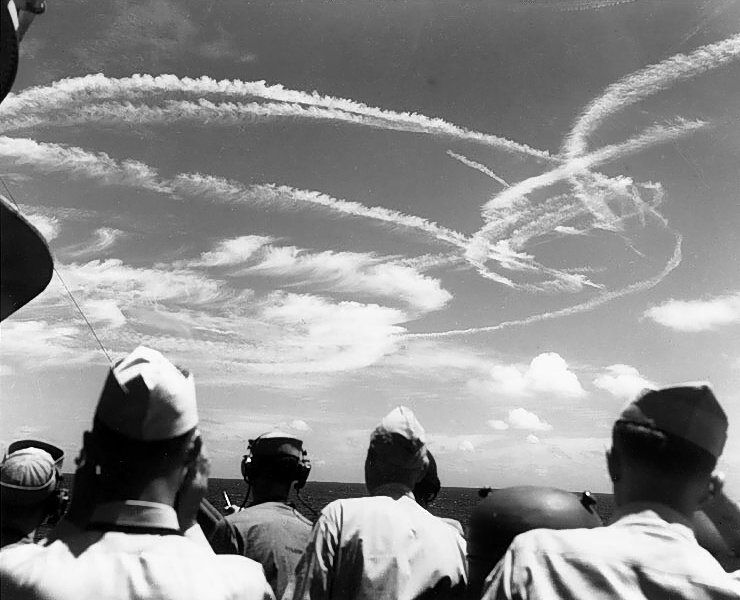
U.S. Navy personnel observe the Air Battle from a Carrier

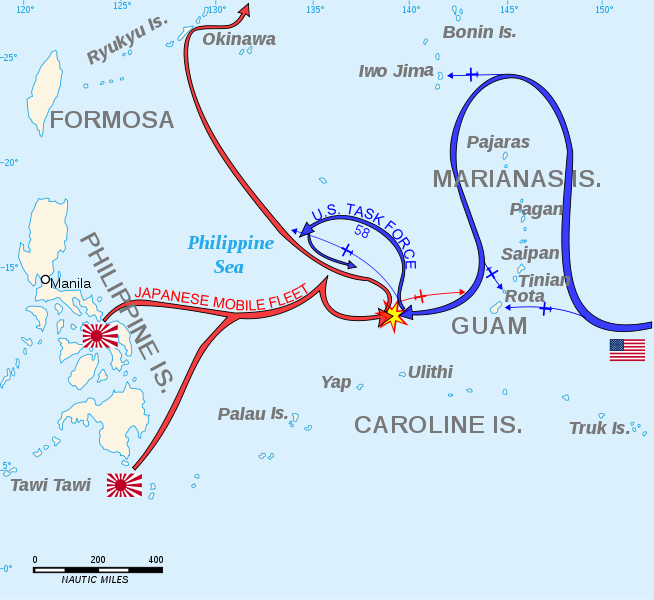
The Battle of the Philippine Sea of 19-20 June 1944 was the largest carrier battle in history.  Twenty four aircraft carriers, 15 American and 9 Japanese embarking over 1400 aircraft dueled in the Central Pacific in a battle that so decimated Japanese Naval Aviation that it never recovered. The battle and the subsequent fall of Saipan brought down the government of General Tojo and was the beginning of the collapse of the Japanese Empire and the “Greater Asia Co-Prosperity Sphere.”  

http://dsc.discovery.com/videos/destroyed-in-seconds-marianas-turkey-shoot.html

In late 1943 the Japanese realized that they needed to recover the initiative in the Pacific.  Between the Battle of the Coral Sea and the Battle of Santa Cruz Japanese Naval aviation suffered crippling losses especially among the elite pilots and aircrews with who they had begun the war.  These losses were compounded when the Navy attempted to support the operations of the Army to defend the Solomons and New Guinea.  Squadrons sent to battle the United States Navy, Marine Corps and Army Air Corps suffered at the hands of the every more skilled and well equipped American fighter squadrons the victims of which included Admiral Isoruku Yamamoto the Commander of the Combined Fleet when the Betty bomber that he was traveling on was ambushed by U.S. Army Air Corps P-38 Lightening fighters.

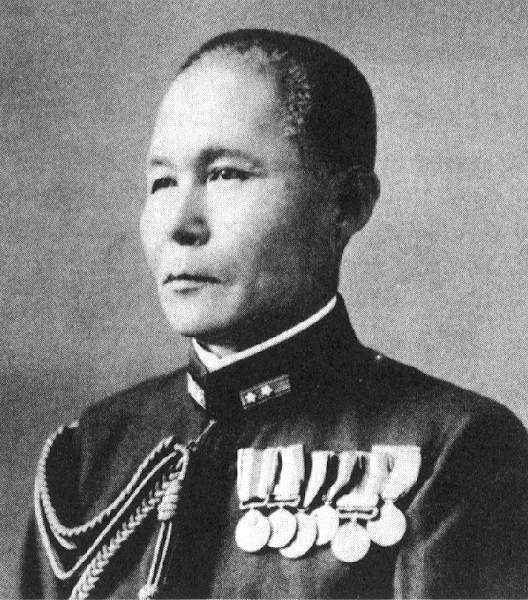
Vice Admiral Jisaburō Ozawa

By late 1943 the Japanese were attempting to train new pilots and aircrews to man the carriers of the Combined Fleet’s Carrier Striking Forces.  Admiral Soemu Toyoda, the new commander of the Combined Fleet and its third commander in less than a year developed “Plan A-Go” as a means to mass carrier and land based aviation assets to defeat the Fast Carrier Task Forces of the United States Navy.  The rebuilt Carrier Striking Groups built around 9 carriers embarking 473 aircraft was commanded by Vice Admiral Jisaburō Ozawa who had taken over from Vice Admiral Chuichi Nagumo.

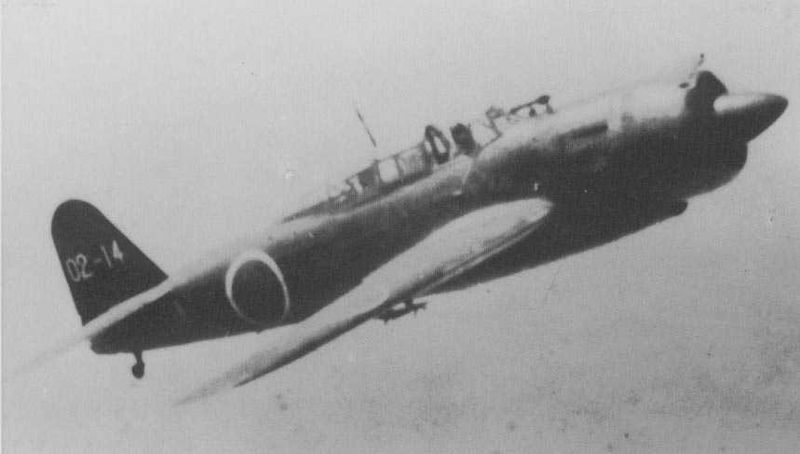
D4Y3 “Judy” Dive Bomber

The Japanese discerned the intentions of the Americans when American Carrier aircraft struck Saipan and Guam. The Japanese had expected the Americans to strike further south and the Marianas had few land-based aircraft in the area. Toyoda made the decision to engage the Americans and ordered the fleet to attack. American submarines discovered the gathering Japanese forces. The Japanese forces were assembled by the 17th and by the 18th the 5th Fleet under the command of Admiral Raymond Spruance spearheaded by Task Force 58 Commanded by Vice Admiral Marc Mitscher had assembled west of Saipan to meet the Japanese.  The Americans fielded 15 carriers including 9 Fleet Carriers of which 6 were the new Essex Class Fleet Carriers which embarked 956 aircraft.

The F6F Hellcat cemented its place as the premier fighter plane of the Pacific war during the “Turkey Shoot”

The Americans held both a quantitative and qualitative advantage against the Japanese. The American fighter squadrons were equipped with the F6F Hellcat which was far superior to the now obsolescent Japanese Zero fighters and their pilots and aircrews were now more experienced and proficient than the newly minted Japanese aviators who by and large had little combat experience and were flying inferior aircraft.  The Japanese had not planned for a long war and had done little to systemically address the heavy losses that their force experienced during 1942 and 1943 at Coral Sea, Midway, Eastern Solomons, Santa Cruz and in the Solomons campaign.

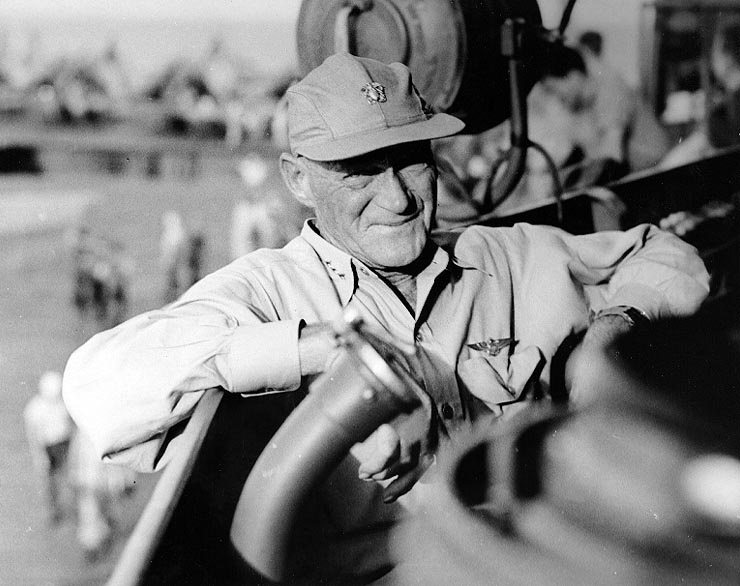
Vice Admiral Marc Mitscher aboard the USS Lexington

Mitscher desired to move aggressively against the Japanese. However he was overruled by Spruance who acting on the advice of his Battle Line Commander Vice Admiral Willis Lee decided that a possible night surface action with the Japanese was not desirable. Spruance instead directed Mitscher to be ready to defend against Japanese air strikes knowing that his carriers and carrier based air groups was more than a match for the Japanese air groups.   Spruance has been criticized for his decision but the words of Willis Lee, a veteran of the Naval Battle of Guadalcanal where he defeated a Japanese force sinking the Battleship Kirishima.  He prevailed in his flagship the USS Washington but losing three of four escorting destroyers and seeing his second battle wagon the USS South Dakota heavily damaged. A night surface engagement was not worth the risk as in Lee’s eyes it evened the playing field for the Japanese and took away the American air power advantages.

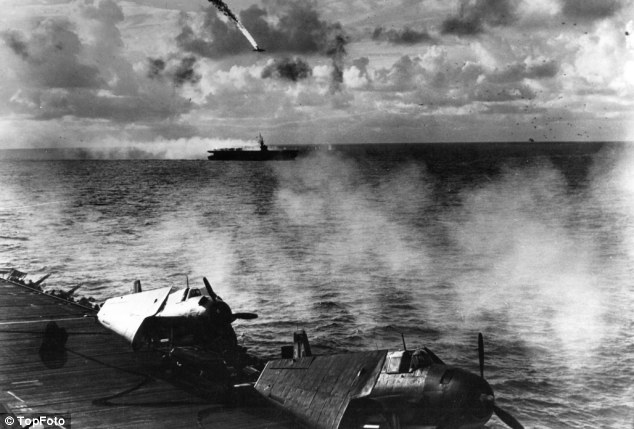
A Japanese aircraft goes down in flames

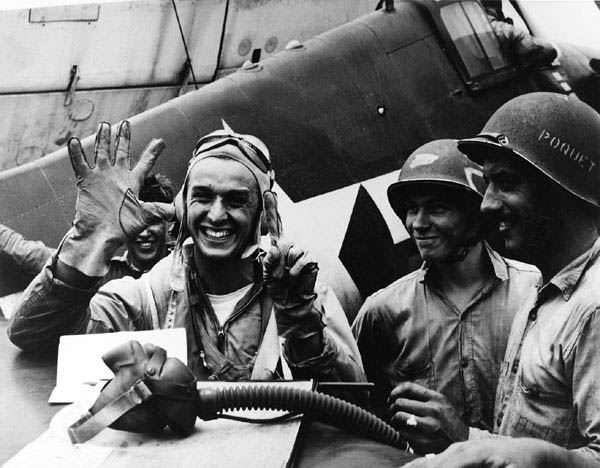
The Japanese began the action on the 19th sending successive attack waves against Task Force 58. They were met by massed formations of Hellcats vectored in by air controllers in the Combat Information Centers of the American carriers using their superior air search radar systems.  In less than two hours well over 200 Japanese aircraft were downed by the Hellcats.  Lieutenant Alexander Vraicu shot down 6 “Judy” dive bombers in minutes before low on fuel he returned to the USS Lexington.

Lieutenant Alexander Vraicu holds up six fingers on board the USS Lexington

While the Hellcats were chewing up the Japanese squadrons the American submarines USS Albacore and USS Cavalla each sank a Japanese Fleet Aircraft Carrier.  The Albacore hit the Ozawa’s flagship, the new Tiaho with a torpedo which caused minimal damage, but ruptured fuel lines. The Japanese damage control officer opened vents in the ship which allowed the fumes to spread throughout the carrier. They were ignited by a generator causing massive explosions and forcing Ozawa to abandon his flagship. Tiaho would sink by late afternoon after being ripped apart by a series of massive explosions taking with her 1650 of 1750 officers and crew. Cavalla hit the Pearl Harbor veteran Shokaku with a spread of three torpedoes causing that ship to burst into flames with aircraft and ordnance adding to the conflagration. A massive explosion ripped through the ship causing her to sink with a loss of over 1200 officers and crew.

The Japanese flagship Tiaho and her killer the USS Albacore

Toyoda desired that Ozawa retire from the battle before he suffered more losses but Ozawa wanted to stay around and hit the Americans with everything that he had left. The Americans sailed west during the night to seek out the Japanese Fleet. It took the majority of the day to find the Japanese. With only 75 minutes of daylight remaining Mitscher launched a strike despite the risk to his aircrew the majority whom were not trained in night landings.  The American strike sank the carrier Hiyo and two tankers and damaged the carriers Zuikaku, Chitoyda and Junyo as well as the battleship Haruna.  By the end of the day Ozawa had 35 aircraft in flyable condition.

The Japanese Fleet under attack, carrier Zuikaku and two destroyers on June 20th

The final part of the drama was the return of the American strike group to the carriers. Knowing that if he maintained darken ship he would lose many aircraft and the men that flew them Mitscher ordered that the fleet turn on its lights. This act though incredibly risky helped bring the majority of the aircraft to land or ditch near the task force.  The Americans lost less than 100 aircraft many due to the night landings and many of the aircrew were rescued. The Japanese also lost nearly 200 land based aircraft.

Admiral Raymond Spruance

The battle was the death-kneel of Japanese Naval Aviation. Later in the year the carriers again under Ozawa sailed against the Americans only this time they were a decoy force at the Battle of Leyte Gulf, a role that they succeeded in admirably. The American carriers now had free run of the Pacific only opposed by land based aircraft many used in a Kamikaze role until the end of the war. These would cause fearful losses among the American ships heavily damaging a number of carriers.

The battle is often forgotten by due to its proximity to the Normandy landings but was a significant step in the fight against Japan. The islands captured by the Americans, Saipan, Tinian and Guam would provide major sea and air staging areas for the final assault against Japan. Tinian would become the base of many Army Air Corps B-29 “Superfortress” bombers including those that dropped the Atomic bombs less than 14 months later. It was a turning point both militarily and politically. With the fall of the Tojo government the Japanese leaders began to slowly tell the truth about wartime setbacks and losses to a people that it had lied to since their invasion of China and occupation of Mongolia.  It was a setback that even Tojo and the highest leadership of Japan knew that they could not recover.

5 Comments

Filed under History, Military, US Navy, world war two in the pacific