Category Archives: US Navy

An Invincible Fleet and a Flawed Plan: The Japanese at Midway

Note: This is the first of a series of articles coming over the next few days about the Battle of Midway, a major turning point of the Second World War.
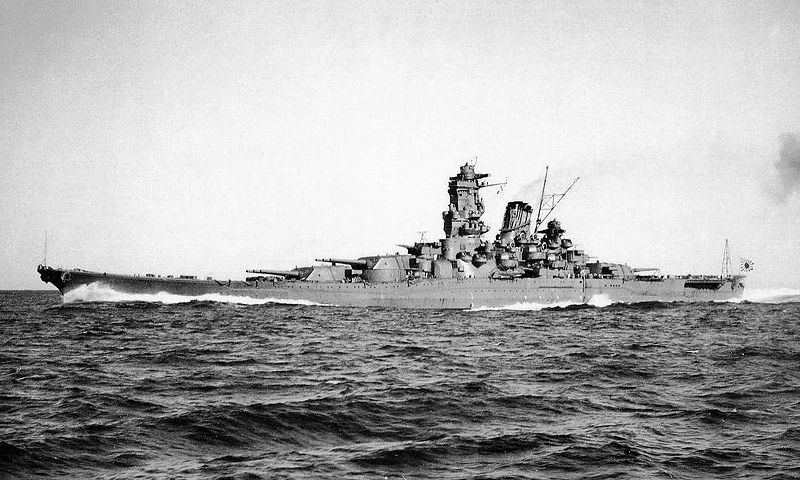
The Battleship Yamato, Flagship of the Combined Fleet and symbol of Japanese Naval Power

The Imperial Japanese Navy under the command of Admiral Isoruku Yamamoto had been humiliated. On April 18th 1942 16 B-25 bombers under the command of Colonel Jimmy Doolittle were launched from the deck of the USS Hornet and bombed Tokyo.  Though the physical damage was insignificant the psychological impact was massive on the Japanese military establishment. Yamamoto and his deputy Rear Admiral Matome Ugaki had explored the possibility of attacking Midway in the early months of 1942 as the Japanese armed forces competed with each other to determine an overall strategy for the war effort. The Army was insistent on a China strategy while the Navy preferred expansion in the Western, South and Central Pacific.  Yamamoto’s idea envisioned seizing Midway and using it as a forward base from which an invasion of Hawaii could be mounted as well as the bait to draw the carrier task forces of the U.S. Navy into battle and destroy them.
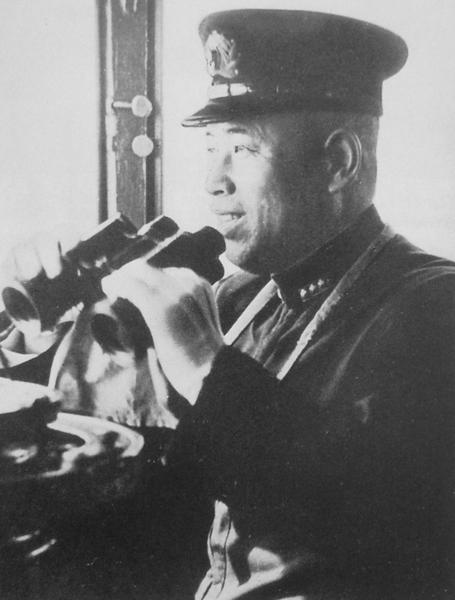
Admiral Isoruku Yamamoto, CinC Combined Fleet

The Japanese certainly had the forces to accomplish the mission outnumbering the U.S. Navy which had taken heavy losses at Pearl Harbor and in the Far East.  Following the Doolittle raid Yamamoto went ahead with the plan to invade Midway. The operation, named MI was coupled with an invasion of the islands of Attu and Kiska in the Aleutians which would form a picket line to prevent future attacks on the Japanese mainland. Fuchida
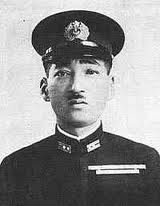
Yamamoto’s plan was not without its critics, the majority of the Staf of the First Air Fleet embarked on the First Carrier Striking Force was not in favor including the leader of the Pearl Harbor attack Commander Mitsuo Fuchida who considered it “grammar school strategy.”   Despite objections from them as well as his Fleet Operations Officer Yamamoto directed that the plan be implemented.  The plan was to have the First Carrier Striking Force attack Midway and reduce its defenses so that the Invasion Force could undertake the task of invading and occupying Midway.  Supporting these forces was the Main Body built around Battleship Division One included Yamamoto’s flagship the 72,000 ton behemoth Yamato.  Another strong force was assigned to the Aleutian operation. The task forces were spread out across the North Pacific and would not able to provide mutual support to each other in a timely manner.

Japanese Forces were organized in the following manner.

Main Body, Admiral Yamamoto

BatDiv 1, Admiral Yamamoto

BB Yamato (flagship, Yamato), Captain

BB Nagato (Nagato), Captain Hideo Yano

BB Mutsu (Nagato), Captain Teijiro Yamazumi

Carrier Group, Captain Kaoru Umetani

CVL Hosho (Hosho), Captain Umetani

Air Unit (8 bombers), Lieutenant Yoshiaki Irikiin

DD Yukaze (Minekaze), Lieutenant Commander Shizuka Kajimoto

Special Force, Captain Kaku Harada

Chiyoda (seaplane carrier, Chitose), Captain Harada

Nisshin (seaplane carrier, Nisshin), Captain Katsumi Komazawa

Screen (DesRon 3), RADM Shintaro Hashimoto

CL Sendai (flagship, Jintsu), Captain Nobue Morishita

DesDiv 11, Captain Kiichiro Shoji

DD Fubuki (Fubuki), Captain Shizuo Yamashita

DD Shirayuki (Fubuki), Captain Taro Sugahara

DD Hatsuyuki (Fubuki), Captain Lieutenant Commander Junnari Kamiura

DD Murakumo (Fubuki), Captain Commander Hideo Higashi

DesDiv 19, Captain Ranji Oe

DD Isonami (Fubuki), Commander Ryokichi Sugama

DD Uranami (Fubuki), Commander Tsutomu Hagio

DD Shikinami (Fubuki), Commander Akifumi Kawahashi

DD Ayanami (Fubuki), Commander Eiji Sakuma

1st Supply Unit, Captain Shigeyasu Nishioka

Naruto (Oiler), Captain Nishioka

Toei Maru (Oiler)

It was Yamamoto’s plan to use this force to polish off U.S. Forces that would only enter the fight after he had taken Midway. Despite the success of his carrier task forces at his heart Yamamoto was still a Battleship Sailor and believed that his battleships would be the deciding factor in the final destruction of the U.S. Navy forces in the Pacific.  This force could be augmented by the Aleutian Guard Force, detached from the Main Body under the command of Vice Admiral Shiru Takasu and was composed of the following fleet units:

GUARD (Aleutians Screening) FORCE, VADM Shiro Takasu in Hyuga

Chief of Staff, Rear Admiral Kengo Kobayashi

BatDiv 2

BB Hyuga (flagship, Hyuga), Captain Chiaki Matsuda

BB Ise (Hyuga), Captain Isamu Takeda

BB Fuso (Fuso), Captain Mitsuo Kinoshita

BB Yamashiro (Fuso), Captain Gunji Kogure

Screen, RADM Fukuji Kishi

CruDiv 9, Rear Admiral Kishi

CL Kitakami ( flagship, Kuma), Captain Saiji Norimitsu

CL Oi (Kuma), Captain Shigeru Narita

DesDiv 20, Captain Yuji Yamada

DD Asagiri (Fubuki), Commander Nisaburo Maekawa

DD Yugiri (Fubuki), Captain Masayoshi Motokura

DD Shirakumo (Fubuki), Commander Toyoji Hitomi

DD Amagiri (Fubuki), Captain Buichi Ashida

DesDiv 24, Captain Yasuji Hirai

DD Umikaze (Shiratsuyu), Commander Nagahide Sugitani

DD Yamakaze (Shiratsuyu), Commander Shuichi Hamanaka

DD Kawakaze (Shiratsuyu), Commander Kazuo Wakabayashi

DD Suzukaze (Shiratsuyu), Commander Kazuo Shibayama

DesDiv 27, Captain Matake Yoshimura

DD Ariake (Hatsuharu), Commander Shoichi Yoshida

DD Yugure (Hatsuharu), Commander Kiyoshi Kamo

DD Shigure (Shiratsuyu), Commander Noboru Seo

DD Shiratsuyu (Shiratsuyu), Lieutenant Commander Kimmatsu Hashimoto

2nd Supply Unit, Captain Matsuo Eguchi

San Clemente Maru (oiler), Captain Eguchi

Toa Maru (oiler)
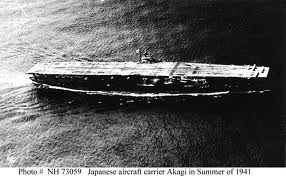
The force that was the true heart of the Japanese Navy in early 1942 was the First Carrier Striking Force which at Pearl Harbor and in the months following had run roughshod over all Allied opposition.  Initially composed of 6 flattops the force was reduced to four when the Shokaku was heavily damaged and Zuikaku’s air group decimated at the Battle of the Coral Sea on 8 May 1942.  Nevertheless it was still a formidable and experienced force in its own right.  Commanded by Vice Admiral Chuichi Nagumo it was composed of the following units:

FIRST CARRIER STRIKING FORCE (1st Air Fleet), VADM Chuichi Nagumo

Carrier Group, VADM Nagumo

CarDiv 1

CV Akagi  (flagship, Akagi) 21 Zero fighters, 21 dive bombers, 21 torpedo bombers

CV Kaga (Kaga) 21 Zero fighters, 21 dive bombers, 30 torpedo bombers

CarDiv 2 — RADM Tamon Yamaguchi

CV Hiryu (flagship, Hiryu) 21 Zero fighters, 21 dive bombers, 21 torpedo bombers

CV Soryu (Hiryu) 21 Zero fighters, 21 dive bombers, 21 torpedo bombers

Support Group — RADM Hiroaki Abe CruDiv 8

CA Tone (flagship, Tone)

CA Chikuma (Tone)

2nd Section, BatDiv 3 —

BB Haruna (Kongo)

BB Kirishima (Kongo)

Screen (DesRon 10) — RADM Susumu Kimura

CL Nagara (flagship, Nagara)

DesDiv 4 — 4 DDs

DesDiv 10 — 3 DDs

DesDiv 17 — 4 DDs

Supply Group — 5 oilers, 1 DD

The Invasion Force under the command of Vice Admiral Nobutake Kondo was a formidable surface strike group in its own right and was built around 2 Fast Battleships, 9 Heavy Cruisers and a light carrier.

MIDWAY INVASION FORCE, (2nd Fleet), VADM Nobutake Kondo

Invasion Force Main Body

CruDiv 4 (less 2nd section)

CA Atago (flagship, Takao),

CA Chokai (Takao)

CruDiv 5 (less 2nd section)

CA Myoko (Myoko)

CA Haguro (Myoko)

BatDiv 3 (less 2nd section) —

BB Kongo (Kongo)

BB Hiei (Kongo)

Screen (DesRon 4) — RADM Shoji Nishimura

CL Yura (flagship, Nagara)

DesDiv 2 — 4 DDs

DesDiv 9 — 3 DDs

Carrier Group Zuiho (CVL) — 12 Zero fighters, 12 torpedo bombers; 1 DD

Supply Group — 4 oilers, 1 repair ship

Close Support Group — VADM Takeo Kurita

CruDiv 7

CA Kumano (flagship, Mogami)

CA Suzuya (Mogami)

CA Mikuma (Mogami)

CA Mogami (Mogami)

DesDiv 8 — 2 DDs 1 oiler

Transport Group — RADM Raizo Tanaka

12 transports carrying troops

3 patrol boats carrying troops

1 oiler

Escort (DesRon 2) — RADM Tanaka

CL Jintsu (flagship, Jintsu)

DesDiv 15 — 2 DDs

DesDiv 16 — 4 DDs

DesDiv 18 — 4 DDs

Seaplane Tender Group — RADM Riutaro Fujita

Seaplane Tender Div 11

Chitose (CVS) — 16 fighter seaplanes, 4 scout planes

Kamikawa Maru (AV) — 8 fighter seaplanes, 4 scout planes

1 DD;

1 patrol boat carrying troops

Minesweeper Group

4 minesweepers

3 submarine chasers

1 supply ship

2 cargo ships

The Northern Force which was assigned to the invasion and occupation of Attu and Kiska was commanded by Vice Admiral Moshiru Hosogaya included the carriers Ryujo and Junyo which had they accompanied the First Carrier Striking Force might have given the Japanese the edge that they would have needed to recover when that force was destroyed on June 4th.  This force was composed of the following units:

NORTHERN (Aleutians) FORCE (5th Fleet) — VADM Moshiro Hosogaya

Northern Force Main Body

CA Nachi (flagship, Myoko)

Screen —

2 DDs

Supply Group —

2 oilers, 3 cargo ships

Second Carrier Striking Force — RADM Kakuji Kakuta

Carrier Group (CarDiv 4)

CVL Ryujo (flagship, Ryujo) — 16 Zero fighters, 21 torpedo bombers

CV Junyo (Junyo) — 24 Zero fighters, 21 torpedo bombers

Support Group (2nd section, CruDiv 4) —

CA Maya (Takao)

CA Takao (Takao)

Screen (DesDiv 7) —

3 DDs

1 oiler

Attu Invasion Force — RADM Sentaro Omori

CL Abukuma (flagship, Nagara)

DesDiv 21 —

4 DDs

1 minelayer

1 transport carrying troops

Kiska Invasion Force — Capt. Takeji Ono

CruDiv 21 —

CL Kiso

CL Tama 

AMC Asaka Maru (auxiliary cruiser)

Screen (DesDiv 6) —

3 DDs

2 transports carrying troops

Minesweeper Div. 13 —

3 minesweepers

Submarine Detachment — RADM Shigeaki Yamazaki

SubRon 1 — I-9 (flagship)

SubDiv 2 — 3 submarines

SubDiv 4 — 2 submarines

Note all Japanese Fleet information obtained online at http://www.microworks.net/pacific/orders_of_battle/midway_japan.htm

These forces were augmented by a submarine screening force and land based naval air forces stationed at Wake and Kwajalein.
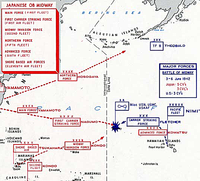
The plan was complicated and depended on the Americans reacting exactly as the plan anticipated them doing.  Yamamoto never expected that the Americans would be waiting for his forces and had knowledge of his plans due to the efforts of U.S. Navy code breakers under the direction of Commander Joseph Rochefort and the Fleet Intelligence Officer Captain Edwin Layton had broken the top secret Japanese Navy JN-25 Code.  Thus despite the massive amount of forces involved the plan was seriously flawed and left the advanced forces vulnerable to unexpected American moves.

Next: Calculated Risk: The American Forces and Strategy at Midway
6 Comments

Filed under History, Navy Ships, US Navy, world war two in the pacific

The Naming of a New Aircraft Carrier and the Centrality of the Navy in Future National Security Strategy

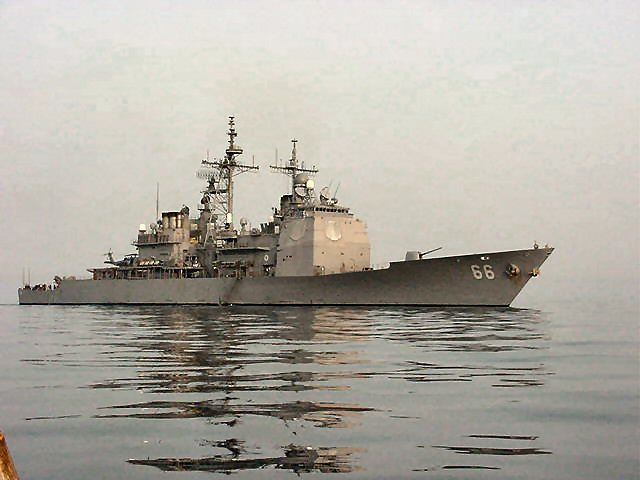
USS HUE CITY CG-66 Enforcing the UN Oil Embargo against Iraq in April 2002

“Control of the seas means security. Control of the seas means peace. Control of the seas can mean victory. The United States must control the sea if it is to protect our security.” —John F. Kennedy

“For in this modern world, the instruments of warfare are not solely for waging war. Far more importantly, they are the means for controlling peace. Naval officers must therefore understand not only how to fight a war, but how to use the tremendous power which they operate to sustain a world of liberty and justice, without unleashing the powerful instruments of destruction and chaos that they have at their command.” Admiral Arleigh Burke

Over the Memorial Day weekend Secretary of the Navy Ray Mabus announced the naming of the second ship in the Gerald R. Ford class aircraft carrier.  The name selected was significant as the ship will be named the USS John F. Kennedy CVN-79, her namesake being President John F. Kennedy who served as a junior officer in the Second World War commanding a Patrol Torpedo Boat, PT-109 in the Solomon Islands. Kennedy’s boat was rammed and split in two by the Japanese Fubuki class destroyer Amagiri in the early hours of August 2nd 1943.  Over a period of six days he made herculean efforts to save his crew and was awarded the Navy Marine Corps Medal and the Purple Heart.

The United States has always been a seafaring nation and today the vast majority of our commerce is borne by ships from the world over. The United States learned during the Revolution and the War of 1812 the importance of sea power when the Royal Navy for all intents and purposes rules the waves. Even the land victory of Washington at Yorktown was sealed by the intervention of the French Fleet which prevented the British from evacuating the garrison.  During the Civil War the Union Navy was the deciding factor as it blockaded Southern ports and forced the Mississippi River cutting the Confederacy in two and sealing its fate even as Confederate armies battled Union forces in the bloodiest battles ever seen on this continent. The Navy was the deciding factor in the Spanish American War sweeping the Spanish Navy from the seas and dooming its garrisons around the world.  The U.S. Navy began the First World War late but by the end was the ascendant naval power in the world and was one of the major reasons that the British in spite of the superiority that they had at the time agreed to the Washington and later London Naval accords.  When the Second World War erupted the United States was in the beginning stages of a Naval build up to reinforce and replace the fleet that was still dominated by the ships built prior to the Naval treaties.   In the Pacific the Japanese Navy steamrolled its scattered and ill equipped opposition while in the Atlantic German U-Boats decimated convoys very nearly breaking the back of Great Britain and the Soviet Union. However it was the Navy initially stretched to its limits by the Two Ocean War which regained the initiative which in an unprecedented build up of Naval Power defeated its adversaries and safeguarded the vast convoys of merchant ships carrying American troops and equipment into battle and bringing American Lend Lease aid to reach Britain and the Soviet Union. During the Cold War, Korea and Vietnam the Navy was a flexible and mobile response force to crises around the globe military, diplomatic and humanitarian, often diffusing situations without a shot having to be fired in anger and eliminating the need for large numbers of ground forces. In the 1980s the Navy secured the Gulf of Sirte against the threats of Libya’s Colonel Gaddafi and kept the Persian Gulf open during the Tanker Wars initiated by Iran on merchant ships transiting the Gulf. American naval power was again on display during the Gulf War and subsequent United Nations sanctions on Iraq.  After 9-11 the Navy has been a response force around the globe in the War on Terrorism as well as numerous natural disasters and humanitarian crises. When a crisis develops which might require a military response the first questions on the mind of every Presidential administration has been where is the nearest Carrier Strike Group and Marine Expeditionary unit.  Today the Navy supports military operations in Afghanistan, Iraq, and the Horn of Africa and against piracy.

The vast majority of the world’s populations now live on the littorals, or the land areas adjacent to the ocean.  The bulk of world commerce is maritime commerce; the United States depends on secure sea lanes to support our economy.

While sea power is essential to American national power, diplomatic, economic and military large standing armies are not. Yes our land forces must be strong and in quality the best in the world. At the same time whenever we have committed large numbers of land forces to ill defined campaigns we have squandered national power and prestige in wars that have been at best stalemates and at worst strategic defeats. This of course excemts the two World Wars where those large land forces were engaged they had a specific mission that was directly tied to national strategy.

We have come to a place in our national life where our strategic thinking still largely influenced by the World Wars and the Cold War has to be modified.  The major land wars launched by the Bush administration in Iraq and Afghanistan have proven incredibly costly in terms of manpower and economics and it is clear that the Obama administration and bipartisan Congress will seek to disengage sooner rather than later from those wars.  One knows that once those wars are over that land forces will shrink as plans are already on the table with cuts already beginning in some services.

Of course one has to ask what the military should be composed of in light of a coherent national security strategy that takes into account the full spectrum of threats to our nation many of which are not military in a traditional sense. To sustain large numbers of land forces on foreign territory is expensive and often fraught with peril when there are changes in the leadership of allied nations on which we depend for the basing of such forces. Even forward deployed Air Force assets are subject to these constraints.  Such basing was necessitated by the Soviet threat during the Cold War.  All previous overseas conflicts were viewed by American leaders as expeditionary in nature, land forces would go in with a specific goal for a limited time. If forces were left in place they were generally small and of a constabulary nature.

Only the Navy-Marine Corps team provides the flexibility to provide a rapid military or humanitarian response to overseas contingencies.  Critics call it “gunboat diplomacy” but then we have found what we are doing is not sustainable and we need an alternative.  That alternative is the Sea Services, which also include the Coast Guard and Merchant Marine.  The Bush administration reduced the Navy in terms of ships and personnel in order to support land wars of questionable strategic value, even turning thousands of Sailors into soldiers to support Army missions in Iraq and Afghanistan without reducing and even expanding the requirements of Naval forces.  This was a mistake of unmitigated proportions, no strategic goal that we have accomplished in either Iraq or Afghanistan could not have been accomplished by the Navy and Marine Corps and contingents of Special Forces, military and civilian advisors and the CIA.

Theodore Roosevelt had a saying, “speak softly and carry a big stick.” He was not an isolationist by any means; he advocated engagement with the world but also protections, military, economic and ecological for Americans.   A strong Navy was central to his thinking as were good relations with other nations.  He understood the importance of the Navy in supporting American interests. In his annual address to Congress on December 6th 1904 he stated:

“In treating of our foreign policy and of the attitude that this great Nation should assume in the world at large, it is absolutely necessary to consider the Army and the Navy, and the Congress, through which the thought of the Nation finds its expression, should keep ever vividly in mind the fundamental fact that it is impossible to treat our foreign policy, whether this policy takes shape in the effort to secure justice for others or justice for ourselves, save as conditioned upon the attitude we are willing to take toward our Army, and especially toward our Navy. It is not merely unwise, it is contemptible, for a nation, as for an individual, to use high-sounding language to proclaim its purposes, or to take positions which are ridiculous if unsupported by potential force, and then to refuse to provide this force. If there is no intention of providing and keeping the force necessary to back up a strong attitude, then it is far better not to assume such an attitude.”

Roosevelt understood better than most of his peers around the world of the necessity of worldwide engagement and the protection of American interests.  As interdependent as the United States and our allies are on international cooperation in anti-terrorism, humanitarian response and the free flow of commerce the Sea Services have to be the primary means of response.  Land forces are important but it is clear that they will need to be reorganized and rebuilt after the long and arduous conflicts that they have shouldered and ultimately they are dependent on the Navy for the bulk of their support when deployed overseas.

Any new national security strategy must prioritize our nation’s goals with diplomatic, intelligence, military and economic assets. We must leverage power and not squander it.  Naval forces are among the most flexible and economic means of exercising the military aspects of such strategy and are not hostage to unstable governments as are forward deployed land forces.   Naval power leverages national power in ways that forward deployed land forces cannot and are far more connected to goodwill than are ground forces which are seen by many around the world as occupying forces.

British Maritime strategist Julian Corbett in his book Some Principles of Maritime Strategyprovides a clear understanding of how sea power is best suited to the principle of a true national strategy for a maritime nation which emphasized limited and asymmetrical warfare.  Such strategy sustained the British Empire until it allowed itself to become mired in the trenches of Flanders and the shores of Gallipoli during the First World War killing off the flower of the nation’s youth and nearly bankrupting the nation and alienating much of the empire.

Corbett maintained that naval forces were best suited to controlling lines of communications, focus on the enemy, and maneuver for tactical advantage.  He also believed that naval forces best suited the political, economic and financial dimensions of waging war as well as war’s technological and material aspects.  One key aspect of this was the Corbett believed that continental war where large land armies are deployed inherently act against opponents limiting their political aims and increase the chance of total war with all of its destructive effects.  Corbett understood, as Clausewitz did before him the primacy of politics in war and necessity to devise appropriate strategies to protect the national interests while emphasizing efficiency in battle while preserving costly assets.

Ultimately the United States is a maritime power. When we try to become a continental power by engaging in protected land wars overseas we lose our strategic and economic advantage.  One can argue that we would not be in Iraq or Afghanistan today had it not been for the deployment of land and air forces on the Arabian Peninsula following the Gulf War.

The new USS John F. Kennedy when completed will be one of the key platforms of American power projection in the middle part of this century and it is important that we strengthen and modernize the Navy so that it might meet the tasks required of it by our nation and our friends around the world.  It is imperative that we as a nation remember our heritage and return to it as we develop a strategy that is at last freed from the World War and Cold War model.  The time for that is now.

Peace

Padre Steve+

2 Comments

Filed under History, Military, national security, Navy Ships, US Navy

Joy in Mudville: The Comeback

“Age is a case of mind over matter. If you don’t mind, it don’t matter.” Satchel Paige

“One of the beautiful things about baseball is that every once in a while you come into a situation where you want to, and where you have to, reach down and prove something” Nolan Ryan

Baseball is more like life than any sport it is a game that requires stamina and gives players who continue to produce a chance to keep playing longer than most other sports, even players that are not super stars.  But sometimes life like baseball presents every person situations where it takes everything that you have to keep yourself in the game.

The military is something like sports because in order to remain viable in the military you have to remain physically fit and in an age where the military is shrinking there is little grace given to the old veterans.  I am not going to recount most of my post-Iraq experience battling PTSD as well as a number of nagging physical injuries to my shoulders, left elbow, right knee and right ankle.  Neither my brain nor my body was responding the way I thought that they should and for the first time I discovered the connection between the two.  Jeff Passan wrote concerning ball players, particularly in light of the recent plight of Yankees great Jorge Posada and his battle with age and deteriorating performance “It’s a battle with the brain, with knowing and feeling you belong despite your body’s revolt. The two work symbiotically, and once one turns, it’s difficult to keep the other from following.”

That was true for me for the first time in over 25 years in the military.  I have shared my struggle with my weight recently but another hurdle that I faced was trying to get my head back in the game regarding my physical fitness.  I felt my injuries; they were nagging and took forever to heal. Gone were the days of taking a day or two off and then going back into my usual fitness regime.  I was old and I felt like it. Mickey Mantle said “I always loved the game, but when my legs weren’t hurting it was a lot easier to love.” It wasn’t until the spring of 2010 that my mind began to get back into the game and I began to test my body in ways that I hadn’t since Iraq.  I began to get back in physical shape and though my weight kept me from getting off the fat boy program my score of 265 for the physical fitness test portion was rated as “high excellent” not quiet the top level but not bad for someone on the comeback trail. I was just one pushup shy of the outstanding score and I stopped because I thought I had the number that I needed, I had more in me but quit.  As a result the spring of 2010 went down as my second failure.  In the Navy if you fail three times in 4 years you can be processed for administrative separation. For me this would have meant being forced to retire despite having been selected for promotion to Commander.  It would have been humiliating.

When I reported to my new command it became my goal to not only be in weight standards but to continue to improve my physical performance.  I had to. A failure on either portion would have probably meant the end of my career.  I had to dig deep and as the weight came off my physical performance became better and I began to feel like a whole person again. Even so as the time neared for the Physical Fitness Assessment I was concerned I could not take any chances on my weight and likewise could not do badly on the physical readiness test.  Nolan Ryan was right. I had to prove something and I wanted to prove something and I was willing to dig deep to do it.

As I mentioned before I came in 6 pounds below my maximum weight.  This afternoon I took the physical readiness test with about a dozen officers and sailors from the hospital.  As at many commands people wait until the last day to take the test so attendance today was light.  Another 700 or so will take their PRT in the coming days.

The weather this afternoon was wonderful. I have taken the PRT and the Marine PFT at Camp LeJeune in May before. Usually the weather is already uncomfortably warm and humid even in the morning. I had planned on doing the 0630 time because of this but I had been up late counseling a former shipmate so I elected to go in to work at my normal time and take my chances that the weather would cooperate in the afternoon.  When the time came the temperature was about 75 degrees with a nice breeze and bearable humidity.  I felt good and knew that I was going to do very well; the question would be cracking the “outstanding” barrier, something I had not done since shortly after my return from Iraq when despite injuries I pushed myself to make the grade. After than the injuries owned me and I went through several tests where I simply did okay, not failing but nothing to write home about.

We lined up and the first exercise was sit ups or crunches.  I have always done well in this event but over the past few years have really gotten my technique down.  In 2 minutes I did 101, well above the 85 that I needed for the highest score of 100 points.  I could have done more as I stopped about 15 seconds before the end of the time but you don’t get extra credit.  The next even was the pushup.  When I was young I struggled with pushups.  It really was a mental thing. Back then when I was 23 the Army required 65 pushups for the maximum score. Now at the age of 51 I still need 64 for the maximum score. I did 65 and again it came down to technique. I have worked to perfect my pushups to keep the best form using the most compact movements and breathing on every rep to get the most I can in 2 minutes.  Bad form ensures fewer pushups can be performed and if you don’t breathe you tend to wear out sooner and often not be able to go much more than a minute.  Despite exceeding the maximum score I don’t think that I am really in my best shape and I will continue to work.  Knowing that I had blown out the first two events all that was left was the 1.5 mile run.  For me the 1.5 mile run is too short. I tend not even to get into a good stride and have my breathing right until the 1 mile point, so I have always liked the Army 2 mile and Marine 3 mile runs better than the Navy variant and before Iraq would run 5-8 miles every time I went out.  If I really want to blow the Navy run out I have to turn on the afterburners. If I do this when I am in stellar shape I can nail the run in 9.45 to 10.45 minutes.  With the injuries I had not did the run since the spring of 2009 instead doing the elliptical machine or stationary bike.  That was not so much because I couldn’t do the run but it was a mental thing, I no longer believed that I could.   I finally realized that I could and today I ran the run in 12.31.  I decided that I didn’t need to push too hard. I knew the number of points and run time that I needed to get them. I was well under that time but well below what I know that I can do. Next time I will do better.

This was a victory for me but I cannot rest. I avoided the failure that would have ended my career but I cannot fail again.  There is nothing like living on the brink to provide a little extra motivation.  But as Satchel Paige said “Age is a case of mind over matter. If you don’t mind, it don’t matter.”

Peace

Padre Steve+

2 Comments

Filed under Baseball, Military, philosophy, US Navy

A New Start…Life off the Fat Boy Program

Back in Standards 

“Every day is a new opportunity. You can build on yesterday’s success or put its failures behind and start over again. That’s the way life is, with a new game every day, and that’s the way baseball is.” Bob Feller

One of the biggest effects of my post-Iraq PTSD crash was how I tried to cope with this multi-faceted beast. Of course psychologically and spiritually I was in the toilet so much so that I was in the midst of a spiritual crisis so great that I was for all practical purposes an agnostic.  I struggled to hold myself together during 2008 and early 2009 trying to believe again and keep in shape. To compensate for my lack of belief, depression and the other nasty effects of PTSD such as night terrors, insomnia, hyper-vigilance, flashbacks I threw myself totally into work on the critical care units of the hospital I was serving. I finished my Masters Degree program and worked hard to better our hospital’s Clinical Pastoral Education Program and served on various committees including the Ethics Committee.  It was too much and the collapse deepened so I sought other coping mechanisms. I turned to comfort food and drink as a way to cope, especially food that was bad for me and way too much very good beer.

After my physical fitness test and weigh in during April of 2009 I lost all control of the latter two. While I had been drinking more since my return from Iraq than before the deployment in the spring of 2009 it became a problem.  I would leave work and on days when the Norfolk Tides were in town I would take to my season ticket seat in Section 102 Row B Seat 2 and seek refuge from my problems.  The ballpark and baseball helped bring some peace to my soul, but it would only last for 3 hours.  At the ballpark I would drink two to three beers with a chili dog and fries and maybe a pretzel, peanuts or ice cream.  After the game I would swing by the Krispy Crème Donut shop on the way home and pick up a dozen hot and fresh glazed donuts. I would then get on my computer and write on this site. While writing I would down three to six of the donuts with another two to four beers and repeat the cycle the next day for the rest of the home stand. On other nights I would go over to get donuts and drink more beer with them often after eating a heavy meal with very good beer at the Gordon Biersch Brewery Restaurant in Town Center.  By November I weighed 194 pounds and though I passed the PT test with a very good score for someone my age I was way over my weight and body fat limits. Thereafter it was a struggle to get below 180 pounds. I failed my next body composition assessment by a percentage point and though scoring well enough to qualify for the DOD waiver which would have taken me off of the program it was not approved.  I weighed in weekly and continued to improve my physical condition to the point that I was within the body fat standard by the time I left that duty assignment I transferred before the next official physical fitness assessment and got to my new assignment after the period was over.  Thus I remained on the program.

To those that have never experienced life in any military branch Fat Boy or Girl program it is humiliating, at least if you are a military professional.  There is a stigma to being fat because the military is run by tall skinny people.  Those of us of the under tall variety understand this stigma very well even when we are within standards.  I know a good number of good Soldiers, Sailors and Marines put out of the military because they did not meet their service body fat and weight standards.  Many like me are those suffering the effects of war and just trying to cope with life.  Others are men and women who are suffering the effects of time with shrinking bodies due to spinal disc compression and other injuries, illnesses and the slowing of metabolism which conspire against them. The military is a young person’s game and 51 year old 30 year veteran relics like me are in the minority.  For me the physical requirements are little different than when I first went on active duty in 1983. Back then I thought that when you got older you would catch a few breaks. Well in the age of budget cutting and a shrinking military force those standards continue to tighten and few breaks are to be found.

Bursting at the seams in my Summer Whites in 2009, this was not a comfortable uniform at the time, now it is very loose

While I had lost weight and body fat I was still over my weight limit.  The body fat measurement in the Navy is the measuring tape around the neck and the fattest part of the belly.  It is a terribly subjective and according to many scientific studies inaccurate test.  Nonetheless if you are over the weight limit you must be taped.  I didn’t want to go through that again so I decided that I was going to start really eating healthy and diversifying my exercise regimen.  When I arrived at my new assignment I weighed 184 pounds and during the winter added a few more pounds. At the beginning of January I bought a digital scale and began to weigh myself several times a week. I stopped the comfort foods except for an occasional hamburger or piece of pizza.  Even if I ate a hamburger I omitted the fries and held the cheese and mayo. I began to look at the nutritional information on everything that I ate even looking up restaurant data to ensure that I had the healthiest food that I also liked, it does no good to eat healthy if you hate what you are eating because you don’t stick with it.  I cut back on my drinking a lot, even going to Yuengling Light Beer at home.  I counted every calorie and measured calories burned. If I went over on one thing I compensated rather than continuing as if I had not.

As winter became spring I noticed a difference, I was weighing less and all of my clothes continued to get loose to the point that things that I could not get into during the fall were baggy and some nearly falling off.  As the date approached my scales had me near the limit for a half inch below my real height just in case I got a bad measurement on my height, five pounds is five pounds.  I felt a lot of stress over the week and could feel every muscle in my back completely tense to the point that I was in pain. I weighed in Friday at 169 pounds and was six pounds below my weight limit and one pound below the lower height limit.  I have lost all 25 pounds that I gained during that horrible period of my life. On Monday I will take the physical fitness test something that I never have a problem doing well on.  When I do that I will be officially off the program.

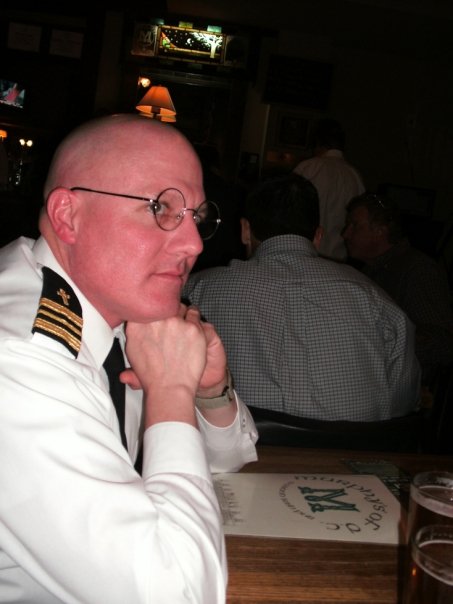
Last night I was invited to do the invocation at the Navy Nurse Corps Birthday Ball at Camp LeJeune. I eased into my Mess Dress Blue uniform which last May I could barely squeeze my body into and in which I looked terrible.  The uniform was loose and fit very well. I went to the ball and had a wonderful time with my colleagues from the Naval Hospital and their guests.  I made sure that I had a friend take the picture which accompanies this post.

For me this is a comeback. I still have my struggles with PTSD but on the whole on the physical, psychological and spiritual aspects of life I am doing much better. Yes I still struggle at times and experience some of the manifestations of PTSD and of my spiritual crisis but I am not collapsing when something shakes me like I was between 2008 and even into 2010.

Had I failed the body composition assessment I could have been separated from the Navy and while I probably would have been able to retire it would have been a most humiliating way to leave the service.  Instead as long as I am alive and haven’t done anything incredibly stupid I will be promoted to Commander on September 1st and continue to be able to serve God’s people in the Navy for years to come. Of course I cannot fail a physical fitness assessment for the next two years but now that I have my diet stabilized and composed of things that I like and live in a place at the Island Hermitage where I love to run, walk and bike I do not expect to ever fail that again. My goal is to get back to the weight that I was when I was commissioned as an Army Officer in 1983, 158 pounds and keep it there. Thus my task is still incomplete.  I have succeeded in my first goal and now it is time to complete the deal and live healthy from here on out.

Today is a new opportunity and I am putting past failures behind.

Peace

Padre Steve+

3 Comments

Filed under faith, healthcare, Military, PTSD, US Navy

The Importance of the Navy Family

There are families and there are families. One family apart from my biological family that I think I treasure the most is my Navy family going back to when I was a Navy Brat and the friends of my parents who were in fact another family.  These were people that my dad served with at various times, mostly though from our tour in the Philippines that remained lifelong friends through thick and thin now for close to 50 years.  In my own life I have serve in the Army and the Navy.  We have a couple that we have known since my first month on active duty that we stay in contact with and hope in the near future to see again. Marty and Sue are part of my Army family we served together in Germany and I expect that we will remain friends the rest of our lives.  Then there is my Chapel family from Fort Indiantown Gap Pennsylvania many special people, some now with the Lord some of whom wrote letters of recommendation for me to transfer from the Army to the Navy.

I entered the Navy in February 1999 and there have been people that have been part of our lives since early in my Navy career. We will be seeing one of our best friend’s son’s graduate from high school next month, hard to believe how young that he was when we first met.  Judy loves both of their boys and we have been fortunate to share many special occasions with them. I also have friends that I have known since coming in the Navy.  Some are fellow Chaplains and though our careers have often taken divergent paths when we get together it is like yesterday. In an institution where denominational barriers and distrust sometimes disrupt relationships these are special relationships. Today during a training session aboard Camp LeJeune I was able to meet up with some old friends, many like me who have or are going through periods of great trial and pain.  I was able to share a couple of beers with one dear from my old denomination who was here from out of town for the training.  He was still shaking his head about how I had been tossed from the denomination and the subsequent events and scandal associated with the Bishop who had tossed me and the stories from others in the denomination who believed what the man had said about me.  He told them that it couldn’t be true but many did not know me as well as he did and evidently believed the lie. Even so it was good to see Dean again and I hope that we are able to meet again sometime soon.  Another friend that I saw is going walking with his wife through her terribly painful cancer treatments.  These are friends that I know if I need that I can go to and be honest.

Some are former shipmates from the USS HUE CITY CG-66 and Marines from any of the number of Marine Corps units that I have served and my friends EOD Group Two and from the Navy Medicine Community at Naval Medical Center Portsmouth and Naval Hospital Camp LeJeune.  I have baptized their babies, married them and been their when death took a spouse, counseled regarding personal, marital or spiritual issues many times long after we served together. I have been able to stay connected and I am happy to be their “Padre” or simply “Chaps.”

Yesterday I conducted the funeral of a retired Navy Master Chief and I talked about the Navy family and how important it was. There were many heads that nodded in agreement when I talked about this. I got an e-mail from the son of a man who was one of my parent’s closest friends in the Navy.  I mentioned Frank yesterday during the funeral how he had been my dad’s Chief and sponsored us in the Philippines nearly 50 years ago. He sent my mom an e-mail about a chance to the ID card system yesterday, a Yeoman he never missed administrative messages.  His son contacted me this evening on his e-mail account to tell me that he had passed away early this morning and asking me to contact my mother.

After I responded to the e-mail I called her and of course she was shocked and she wondered what would happen to Frank’s wife who has been chronically ill for many years.  Frank took care of her. He had a heart attack about 10 days ago and when he got out of the hospital he was told to take it easy and even stay off the internet.  He didn’t listen and he had to stay involved in the lives of his family as well as his Navy family.  He has been an encouraging person to me in my ministry as a Priest though he was a conservative Roman Catholic. He prayed for me and cared and I am sure that he will keep praying for me now that he is with the Lord.

While this was going on a sailor from a previous command popped in on me on Facebook regarding a pressing family matter. Another friend from Marine Corps Command and Staff College and Iraq responded to a friend request and sent me a couple of messages and another friend from the past chimed in on a humorous post that I had placed on Facebook regarding Osama Bin Laden’s Facebook account.  Another sailor who referred to me as the “Anti-Chaps” when I bought beer from him and some other sailors on a liberty call and stays in regular contact. What can I say? I do like the nickname.

What I find wonderful about my Navy family is that they have been there for me and my family over my entire life more so than most of my non-immediate biological family.  Those that don’t know this because they have not served in the Navy or another military branch of service are missing so much. For most it isn’t politics, religion or even if they are Dodgers’ fans we share a common bond serving in war and peace that transcends everything else.  They are my friends and I am their Chaplain or friend.  It is a most wonderful fellowship far better than most churches will ever known.

It has been a long day there were other things that happened in caring for Sailors and Marines over the past couple of days, some things that I can assist and others that I can only pray for and offer some guidance.

I am also exhausted by some of the commentators on the David Wilkerson article in which I postulated that his death could be a suicide. It is amazing how nasty some people can be when you even suggest that their idol was a human being.  Likewise I made the mistake of getting involved in a discussion with some pro-life activists who had to throw abortion into the death of Osama Bin Laden and been frustrated with how fellow Christians are wringing their hands about the killing of that perfidious bastard who killed so many of our people. The lack of moral clarity in these people who see the world in black and white dualistic terms and ignorant of philosophy, ethics and history as well as the nasty gray areas of life really pisses me off. Tomorrow I should get a good PT session in after physical therapy and play ball in the evening. Thanks be to God.

I’m now finish a big glass of Riesling and getting ready to prepare for tomorrow. Thankfully I have an appointment with my shrink in the afternoon.

Pray for me a sinner.

Peace

Padre Steve+

1 Comment

Filed under faith, Military, shipmates and veterans, US Navy

Full Military Honors: Getting a Chance to Repay a Service done for My Family by the Navy

Last summer my dad Aviation Storekeeper Chief Carl Dundas died after a long battle with Alzheimer’s disease.  Since I wasn’t much good for anything then my boss at my last duty station Chaplain Jesse Tate contacted the Chief of Chaplains Office and our mutual friend Chaplain Jerry Seeley in California.  These men and the Navy came through to provide my family with a funeral with full military honors for my dad.  It was something that we all treasured and something that really helped my mom get through that dark time. It allowed her to reconnect with the Navy something that was a big part of our lives for years. I won’t forget Chaplain Seeley and his comforting words and the Senior Chief Petty Officer who presented our Nation’s Flag to my mother.  One thing that I did do was construct two collages of pictures from his life which were available for friends and family to view. When I put them together it was really for my mom but the task of sorting through a couple of thousand photos to find the ones that best epitomized my dad, his life and personality was healing to me.

Since I am a Chief’s kid I have a soft heart for Navy Chiefs and in the past two and a half years working in Navy Medicine I have been able to be with quite a few of these men and women in their final days as well as their families. Last week I had the duty pager and received a call to come to our multi-service ward as a family had requested a baptism for one of our former Master Chief Petty Officers named Carl.  He and his family had arranged with one of my staff to be baptized last Friday as he knew his life was coming to an end.  Well late Wednesday night it became apparent that he would not last that long and I was asked to come in.  I got to the hospital and put on my Khakis and went to the nurse’s station where I listened to them tell me the situation and read his chart. I noted the request for baptism and the plan for it to be done Friday.  When I had done that I went to the room where Carl lay in bed dozing. I met his wife Judy and son’s Randy and Jeff and we visited for nearly an hour as he lay there and I listened to them tell me about him as a husband and father, his Navy service, his faith and his love for baseball.

Carl had entered the Navy a couple of years after my dad and remained in it a good deal longer retiring in 1988.  He served in combat as a Corpsman with the Marines in Vietnam and saw service around the world. He retired as the Command Master Chief of Naval Hospital Camp LeJeune.  He was active and played for and managed various Navy Baseball and Softball teams including the hospital’s team which I now play on.  There were a lot of emotional connections for me with this man. He served during the era that my dad did and both served on the ground in Vietnam.  His name was Carl like my dad, his wife Judy like my wife and one son Jeff like my brother.  He loved baseball.  I felt like I was family and in a sense I was because we are part of the Navy family and that is something that is special. I still receive e-mails from one of my dad’s former Chief Petty Officers almost like he is trying to watch out for his friend and fellow Chief’s son.

I prepared to conduct the baptism and Carl woke up. His wife introduced me to him and he greeted me. I explained that I was there to baptize him and asked if he still desired to be baptized and he replied yes and gave me a “thumbs up.” As I baptized him he was praying with a smile on his face as the water flowed over his forehead. I then asked for Carl and his family to join me in the Lord’s Prayer and as we prayed he prayed along with us.  It was a special moment and I elected to stay with the family for a while longer and simply be with them as they shared and ministered to Carl.  I gave Judy my card and went home getting to bed about three AM Thursday.

Yesterday afternoon I received word that I had been asked to conduct his funeral and I was honored. It was like having a chance to repay the generosity given to my family by the Navy.  This morning it seemed that nothing went right in trying to get my stuff together. We are in temporary office spaces as our offices and Chapel are being renovated. As a result I have no earthly idea where half of my things are. I prepared my Service Dress Blue uniform last night and placed it where I wouldn’t forget it. I discovered that I didn’t have it about 5 miles into my trip and had to go back and get it. Then on my second trip in about the same place I had the feeling that I had forgotten something else.  I looked around the car and couldn’t find my Bible and Book of Common Prayer.  I thought I had packed it and taken it home with me last night so I turned around again. I got home to the Island Hermitage and try as I might I couldn’t find them.  So I grabbed the Kindle that my Judy had got me for my birthday knowing that I had the Book of Common Prayer and the liturgy for burial on it.  I got back on the road for the third time and arrived at the office where I found my Bible and Book of Common Prayer.  I then started to get ready to go after a bit of business and discovered that I had everything but a tie, which I only have about five of but none were to be found. Our small Marine Corps Exchange in the hospital had none so I had to go to main side where I got one of the two on the rack; this is a Marine Corps Uniform store so the Navy items are not well stocked.  Getting back to the office I donned my uniform looking perfectly resplendent I might add and went to the funeral home where I met up with other perfectly resplendent Chiefs and Sailors.  One thing about the Navy Service Dress Blues they are a classic uniform and are always a classy look.

We had a significant number of sailors there with members of our Chief’s Mess acting as pallbearers, other Petty Officers and Sailors serving as the Flag detail and one of our Master Chiefs presenting the American Flag to Judy.   We also had about 30 other Sailors present joining Carl’s family, his extended family and friends which included a number of men who had served with Carl during his career.  A Marine Honor Guard commanded by a Gunnery Sergeant fired the 21 gun salute and then Taps was played.  It was an honor and privilege to participate.

The brief homily that I gave came out of the Gospel according to John where Jesus tells Martha at the tomb of Lazarus “I am the resurrection and the life.”  In it I focused on that message even as I mentioned his service, life and care of his family and his sailors and his service during and after Vietnam.  After the committal I lingered with various friends of Carl’s and as the crowd dissipated I got into my car and left.  I was blessed by God to be able to return a favor done to my family.  For me this is a large part of why I continue to serve, to care for God’s people in the Sea Services those currently serving and those that blazed the trail for us.  Sometimes one gets lucky.

Peace

Padre Steve+

1 Comment

Filed under faith, Military, Pastoral Care, shipmates and veterans, US Navy, vietnam

Thoughts on the Well Deserved Death of Osama Bin Laden and some Christian’s Crocodile Tears for his Soul

Note: This is one of my Denny Crane moments indulge me

Osama Bin Laden got his just deserts yesterday at the hands of the Navy SEALS of Seal Team Six known simply as DEVGRU to those that have served in the SEAL and EOD community.  A head shot and a chest shot and Osama was off to meet his 72 Virginians via Davy Jones Locker.  Rumor has it that a pack of sharks trolling behind the USS Carl Vinson for lunch noted his enshrouded body sinking into the depths and passed on it leaving it to sink to the depths to be devoured by bottom feeding creatures.  When they were asked why they didn’t chow down on the murderous yahoo from Yemen one was quoted as saying “He gave our profession a bad name.”

All kidding aside I am glad he is gone and if I could have been in Washington DC, at Ground Zero or at the Phillies Mets game http://sports.yahoo.com/mlb/blog/big_league_stew/post/Video-Phillies-fans-chant-8216-U-S-A-8217-?urn=mlb-wp5081  I would have partied all night long and I cannot imagine any American or for that matter any decent human being not celebrating this.  The good guys got a win for once and we should celebrate we deserve it. We haven’t had much to celebrate since September 11th 2001 and this is as good of occasion as any.

Now I know that I’m going to get some crap from some readers that this is not a Christian attitude and I will admit that they are probably right.  I know this to be a fact because I saw absolutely idiot comments from some of my Christian friends on a social ministry sight almost shedding crocodile tears about Bin Laden’s death saying that God doesn’t take any joy in the death of the unrighteous but if you are a good Old Testament type Calvinist, which by the way I am not by any means, you can interpret parts of the Old Testament as God having one big party as he has his people whack and shwack their enemies ethnically cleansing whole cities so they might have a place to live. Heck the Psalmist even rejoiced in bashing babies heads against big rocks.  Not a very pro-life sounding message there but it is the Old Testament and happens to be in vogue among some parts of Evangelicalism.  Thus to hear some of the same people who love to use these “imprecatory prayers” against fellow Americans on the opposite side of the political aisle cry these faux tears over the soul of Bin Laden it makes me sick.

The man was a brutal killer and thug who killed thousands of our own people and thousands of others, many which were his fellow Moslems.  Some of these folks such as Pat Robertson, the late Jerry Falwell and even the recently deceased David Wilkerson and others even told us back after 9-11 that it was “God’s judgment on this county.”  I remember the aftermath of the September 11th 2011 attacks and seeing the internet for the first time in days after being locked down aboard Camp LeJeune NC. I was aghast to see some of these men and others that this was God’s judgment on America.  Of course when many of their own congregations and donors objected most retreated from their positions with immense “mea culpa” moments.

Back in the 1960s it was the liberals that said we were the bad guys for Vietnam and punished those that served in that war.  Now days it is a bit different especially because we have a Democrat in the White House, a black one without a good American name like Bob we have conservative Christians acting like the liberals of the 1960s crying over the death Che Guevara and extolling the Chinese “Cultural Revolution.” For some reasons and I can’t imagine why there seems to be such a loathing of their own country by such people. Sure we are not perfect and we have messed up a lot. If you read this site I am not uncritical of various actions of different Presidents, Congress or any part of our government and some of our actions around the world.  We’re not a perfect nation but but we still are one of the best shows in town. But I’ll tell you what I love this country and continue to serve her and defend the rights of all Americans to hold views about the country that I personally distain. But that is why I love the Good Old USA because we don’t have to agree to be Americans; well at least that’s what I think.  But sometimes when I see comments like this crying for Bin Laden’s soul and condemning the country I wonder what the hell is going on. I see them criticize the very country that gives them the right to criticize their government with impunity, even using the “judgment of God card” as they wish.  In fact that is why the Pilgrims and other English Separatists came here so they could criticize the crown without being harassed and ensured that those that disagreed with them couldn’t do so safely without having to go establish the Rhode Island Colony like Roger Williams did.  But I digress….

When I see such comments mourning Bin Laden or assuming that God’s judgment is on America I feel my inner Colonel Nathan R. Jessup rising up especially when I see so few of them flocking to the colors and run to the recruiting stations saying “here I am send me Sir!” You see it is so easy to theologize and criticize but so much harder to put your life on the line. However if you secretly loathe the country it is easy to condemn those charged with protecting it from the Commander in Chief down, especially when you claim God as your authority.  I love this quote from the great film A Few Good Men coming from Colonel Jessup played most delightfully by Jack Nicholson and I think it suits my mood right about now:

“Son, we live in a world that has walls, and those walls have to be guarded by men with guns. Who’s gonna do it? You? You, Lt. Weinburg? I have a greater responsibility than you could possibly fathom. You weep for Santiago, and you curse the marines. You have that luxury. You have the luxury of not knowing what I know. That Santiago’s death, while tragic, probably saved lives. And my existence, while grotesque and incomprehensible to you, saves lives. You don’t want the truth because deep down in places you don’t talk about at parties, you want me on that wall, you need me on that wall. We use words like honor, code, loyalty. We use these words as the backbone of a life spent defending something. You use them as a punchline. I have neither the time nor the inclination to explain myself to a man who rises and sleeps under the blanket of the very freedom that I provide, and then questions the manner in which I provide it. I would rather you just said thank you, and went on your way, Otherwise, I suggest you pick up a weapon, and stand a post. Either way, I don’t give a damn what you think you are entitled to.” 

Now our forces from the Commander in Chief down did their jobs and did them well in providing Bin Laden an exit from his internet less misery in Pakistan.  I for one celebrate this event. If this makes me somehow less spiritual or Christian so be it. I am an American and Osama Bin Laden was our enemy personified. So go ahead and weep for Bin Laden if you wish my fellow Christians. Pray for his soul but let the rest of us enjoy a moment of victory in this painful and long war in which so many Americans and others have died because of the actions of Osama Bin Laden and his minions.  Don’t piss on their memory by feeling bad that Bin Laden didn’t get a chance to meet Jesus in this world.

Yes I’m a bit snarky today but I haven’t forgotten September 11th and I am glad that so many Americans are overjoyed by this. For once we got one in the win column.  We’re entitled to celebrate because we get to go back on the field tomorrow and hopefully whack some more of Bin Laden’s slugs.

Peace

Padre Steve+

10 Comments

Filed under christian life, Foreign Policy, History, iraq,afghanistan, middle east, Military, national security, philosophy, purely humorous, US Navy

Flush Decks and Four Pipes: The Wickes and Clemson Class Destroyers

USS Pope DD-225

The destroyers of the Wickes and Clemson classes defined the destroyer force of the U.S. Navy. In 1916 with the advent of the submarine as an effective weapon of war the Navy realized that its pervious classes of destroyers were insufficient to meet the new threat. Likewise the lack of endurance of earlier destroyers kept them from vital scouting missions since the U.S. Navy unlike the Royal Navy or Imperial German Navy maintained few cruisers for such missions.

USS Paul Jones DD-230 late war note 3 stacks and radar

The Naval Appropriation Act of 1916 included the authorization of 50 Wickes Class destroyers to compliment 10 new battleships, 6 battlecruisers and 10 light cruisers with the goal of building a Navy second to none.  The new destroyers were designed for high speed operations and intentionally designed for mass production setting a precedent for the following Clemson class as well as the destroyer classes built during the Second World War.

USS Boggs DMS-3

The Wickes Class had a designed speed of 35 knots in order to be able to operate with the new Omaha Class light cruisers and Lexington Class Battlecruisers in the role of scouting for the fleet. They were flush-decked which provided additional hull strength and their speed was due to the additional horsepower provided by their Parsons turbines which produced 24,610 hp.  They were 314’ long and had a 30 foot beam. Displacing 1247 tons full load they were 100 tons larger than the previous Caldwell class ships.  They were armed with four 4 inch 50 caliber guns, one 3” 23 caliber gun and twelve 21” torpedo tubes.

USS Crosby APD 17

Although they were very fast they proved to be very “wet” ships forward and despite carrying an additional 100 tons of fuel they still lacked range.  Due to the realization the U-Boat war required more escorts the order for Wickes Class ships was increased and 111 wear completed by 1919.

The Wickes Class was followed by the Clemson Class which was an expansion of the Wickes class being more tailored to anti-submarine warfare.  They had a greater displacement due to additional fuel tanks and mounted the same armament had identical dimensions and were capable of 35 knots but had a larger rudder to give them a tighter turning radius. 156 ships of the class were completed.

In the inter-war years a number of each class were scrapped and 7 of the Clemson Class from DESRON 11 were lost in the Honda Point Disaster of September 8th 1943.

Many of the ships never saw combat in either war as numerous ships were scrapped due to the limitations of the London Naval Treaty. Of the 267 ships of the two classes only 165 were still in service in 1936. As new destroyers were added to the navy in the 1930s a number of ships from each class were converted to other uses. Some became High Speed Transports (APD) and carried 4 LCVP landing craft and a small number of troops, usually about a company sized element. Others were converted to High Speed Minelayers (DM) or High Speed Minesweepers (DMS). A few were converted to Light Seaplane Tenders (AVD).  Those converted to other uses had their armament reduced with dual purpose 3” 50 caliber guns replacing the 4” guns and the removal of their torpedoes. Those which remained received 6 of the 3” guns to replace their original gun armament and lost half of their torpedo tubes.  During the war all would have light additional anti-aircraft armament and radar installed.

USS Stewart DD-22after return from Japanese service

In 1940 19 of the Clemson Class and 27 of the Wickes Class were transferred to the British Royal Navy under the Lend Lease program.  Some of these would see later service in the Soviet Navy being transferred by the Royal Navy serving after the war with those ships being scrapped between 1950 and 1952.

The ships of these classes performed admirably during the Second World War despite their age.  The USS Ward DD-139 fired the first shots of the war when it engaged and sank a Japanese midget sub outside of Pearl Harbor.  The 13 ships of the Asiatic Fleet’s DESRON 29 took part in six engagements against far superior Japanese Navy units while operating in the Philippines and then in the Dutch East Indies as part of the ABDA Command including the Battle of Balikpapan where the John D Ford DD-228, Pope DD-225, Paul Jones DD-230 and Parrot DD-218 sank 4 Japanese transports.   During that campaign 4 of these gallant ships were sunk in battle and a 5th the USS Stewart DD-224 was salvaged by the Japanese after being damaged and placed in a floating drydock at Surabaya following the Battle of Badung Strait. She was placed in service as a patrol ship by the Imperial Navy. She was discovered by U.S. Forces after the surrender and returned to the U.S. Navy.

HMS Cambeltown (ex USS Buchanan DD-131) at St Nazaire

Whether in the Atlantic or the Pacific the ships contributed to the Allied victory. The former USS Buchanan DD-131 which had been transferred to the Royal Navy where she was re-named the HMS Campbeltown and used in the Saint-Nazaire Raid. For the raid she was altered in appearance to look like a German Möwe class destroyer was rammed into the only drydock on the Atlantic capable of holding the Battleship Tirpitz. The mission was successful and the drydock was unusable by the Germans for the rest of the war.

During the war they served in every major campaign and when no longer fit for front line service were used in escort roles in rear areas as well as in a variety of training and support roles.  By the end of the war the surviving ships of both classes were worn out and a number were decommissioned and some scrapped even before the end of hostilities. Those that survived the war were all decommissioned by 1946 and most scrapped between 1945 and 1948.

During Second World War 9 of the Wickes Class were sunk in battle, and 7 were sunk or destroyed in other ways. 5 were later sunk as targets and the remaining ships were all scrapped. A total of 20 of the Clemson Class were lost either in battle or to other causes including those lost and Honda Point.

USS Peary Memorial

The brave Sailors that manned these ships in peace and war become fewer in number every day as the Greatest Generation passes. It is a sad testimony that none of these ships were preserved as a memorial; however the Australians have a memorial at Darwin dedicated to the USS Peary DD-226 which was sunk with 80 of her crew during the Japanese raid on that city’s port on 19 February 1942. The memorial has one of her 4” guns pointed in the direction of the wreck of the Peary. A memorial to the USS Ward, her #3 4” gun which sank the Japanese midget sub is located on the Capitol Grounds in St. Paul Minnesota.

10 Comments

Filed under History, Military, Navy Ships, US Navy, world war two in europe, world war two in the pacific

The Minstrel Boy: The Song of Souls Changed by War

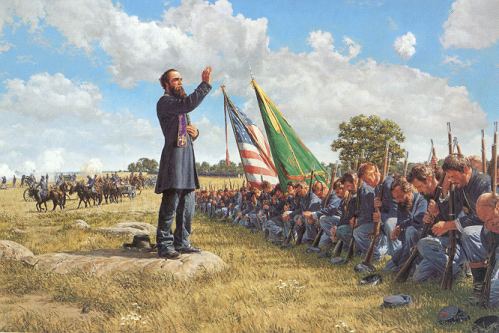
Fr Corby gives absolution to the Irish Brigade at Gettysburg

The Minstrel Boy (Thomas Moore)

The minstrel boy to the war is gone,
In the ranks of death ye will find him;
His father’s sword he hath girded on,
And his wild harp slung behind him;
“Land of Song!” said the warrior bard,
“Tho’ all the world betray thee,
One sword, at least, thy rights shall guard,
One faithful harp shall praise thee!”

The Minstrel fell! But the foeman’s chain
Could not bring his proud soul under;
The harp he lov’d ne’er spoke again,
For he tore its chords asunder;
And said “No chains shall sully thee,
Thou soul of love and bravery!
Thy songs were made for the pure and free
They shall never sound in slavery!”

The Minstrel Boy will return we pray
When we hear the news we all will cheer it,
The minstrel boy will return one day,
Torn perhaps in body, not in spirit.
Then may he play on his harp in peace,
In a world such as heaven intended,
For all the bitterness of man must cease,
And ev’ry battle must be ended.

(Last verse anonymous Civil War)

Three years ago I was in the process of returning home from Iraq spending my last couple of days in country before flying out to Kuwait and then the United States. I was already in a rather melancholy state knowing that the Chaplain incoming higher headquarters had turned off my relief for Al Anbar Province after I had paved the way for him with all of the teams of advisors that I had worked with during my time serving them. My relief a personal friend was diverted to the Army advisors with a different Iraqi Division in the north of the country. I felt that the incoming senior chaplain had betrayed and abandoned the men that I worked so hard to care for. Later I heard that he had disregarded my heavily detailed after action reports and told at least one senior chaplain that he “had heard that I was out there but didn’t know if I had done anything.”

On the Syrian Border with members of a Border Team and Bedouin family

It was at that point that I realized that you could do your job and sacrifice yourself to complete a mission only to have someone with their own agenda do what they could to discredit you.  Where the senior Chaplain that I worked for did all that he could to support my team’s mission and see that we were properly recognized at Multi-National Corps Iraq in Baghdad his successor dismissed our work. It was the first time in my Navy career that I had experienced that.  I think it was the fact that I worked for a non-traditional billet working for an Army led joint command outside the normal Navy-Marine Corps chain was a big part of this. Inter-service rivalries and the distain of those bound by conventional thinking are not new and those that have done such non-conventional work have frequently been treated in a similar manner.

Looking back there are some songs which are particularly meaningful to me after my time in Iraq that send a chill up my spine when I hear them. One of these is the patriotic Irish song The Minstrel Boy written by Thomas Moore while a student in honor of friends killed in the Irish Rebellion of 1798.  The song was very popular among soldiers of Irish descent in the American Civil War as well as soldiers fighting in Irish Regiments in World War One and World War Two.

The song is powerful when you hear it for it speaks of the reality of war, war that changes those, even those that return home are not unchanged by it.  It speaks of the sacrifices required by those that go to war and even the effects on the community, the loss of young people.  The final verse added by an anonymous author during the American Civil War in a sense is a prayer, a prayer of return as well as reconciliation. It has been recorded a number of times including an instrumental during the film Blackhawk Down. Another rendition is in the telvision mini-series Rough Riders about the 1st U.S. Volunteer Cavalry at the Battle of San Juan Hill.

http://www.youtube.com/watch?v=un_AVYB-GI8&feature=player_embedded

My life has been changed and faith challenged. When I went to Iraq I still maintained a sense of idealism.   After Iraq and having to deal with PTSD and a psychological, spiritual and physical breakdown as well as a profound sense of abandonment by some senior chaplains, my former church and even God I am a different person. My faith which had been shattered to the point of being a practical agnostic for nearly two years has returned. I don’t regret that and do believe that it is a good thing. If we are not changed by what God allows or by what life brings I don’t think that we grow. As a Priest I wonder if I could work in the environment that I work without having gone through what I did.

I see many of the “minstrel boys” and girls of our era and having also been to war and come back changed the last lines of the final verse is a prayer that I echo. One of the versions that I particularly like is the one sung in the Star Trek the Next Generation episode “The Wounded.” While it is only the first verse it deals with the lives of two officers whose lives are forever changed by war. http://www.youtube.com/watch?v=RJudJ9S579A

This is dedicated to all those who have served who have gone through the pain of war and return until war shall be no more.

Peace

Padre Steve+

5 Comments

Filed under faith, film, History, iraq,afghanistan, Tour in Iraq, US Navy

Save the USS Olympia! News Update Number One

This is a follow up to my article Save the USS Olympia! Which was published in September 2010.

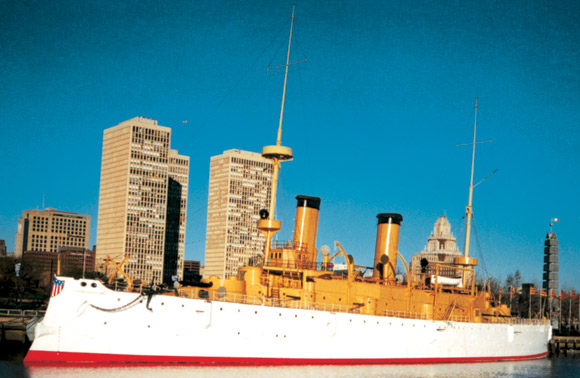
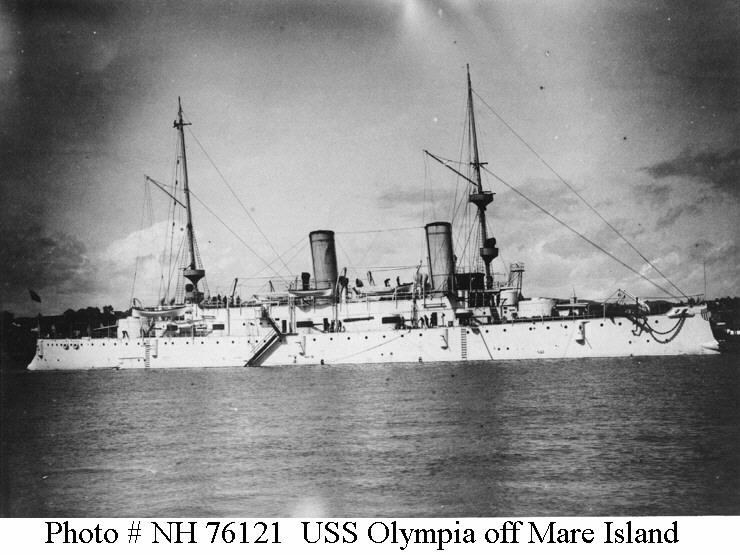
There is news concerning the Flagship of Admiral Dewey during the Battle of Manila Bay in 1898. The one a kind ship and the only surviving steel warship of her era has been moored in Philadelphia since 1957 when she was taken over by the Cruiser Olympia Association in 1957 and restored to her 1898 configuration. Since 1957 she has been a museum ship in Philadelphia and in 1996 the Cruiser Olympia Association merged with the Independence Seaport Museum due to the major costs of upkeep. Since then she has been moored at Penn’s Landing where she has been open for tours. During the Fall of 2010 the museum announced plans to close the ship due to the poor material condition of the ship which has not been in drydock or had a major overhaul since 1957 as well as the high operating costs.  However the Olympia has been kept open for tours and the museum plans on keeping her open through March 2011.

The museum and a new group dedicated to saving the ship, the Friends of the Cruiser Olympia has announced that they cannot raise the funding for the repairs needed to maintain the ship in Philadelphia.  The Independence Seaport Museum Chief Executive Officer John Gazzola said the museum cannot raise the at minimum amount of $10 million needed to dredge the marina where she is moored, dry dock the ship and repair Olympia’s hull and deck. A bid request has been issued for organizations that might want to obtain and preserve the ship. A group from Vallejo California the Navy Yard Association which is made up of former workers from Mare Island Naval Shipyard has announced their intention to bid on the ship when the auction takes place in February. In order to raise money the group plans on trying to align itself with non-profit groups since they are not.

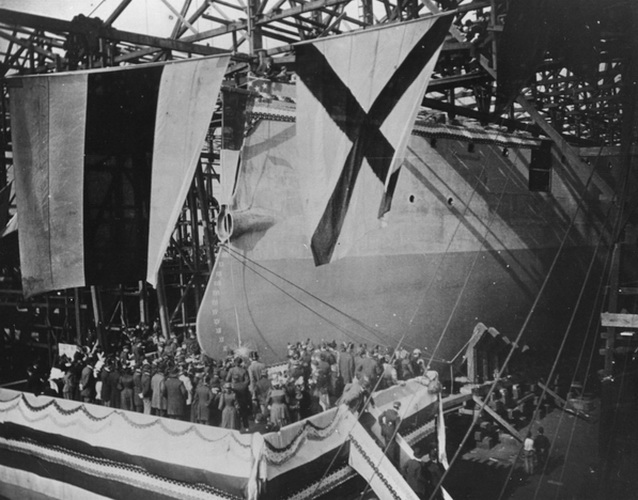
The Christening of the USS Olympia at San Francisco’s Union Iron Works

The Olympia was built at San Francisco’s Union Iron Works in 1892 and if the group is successful this could return the ship to the place that she left for her assignment in the Far East in 1895. This is a unique ship and she needs to be preserved. Despite her status as a National Historic Landmark she has been allowed to deteriorate to the point that major repairs are necessary.  If a bidder cannot be found and the ship is unable to be restored it is possible that she could be scrapped or sunk as a reef.

As the situation develops I will provide updates on this site.

Peace

Padre Steve+


2 Comments

Filed under History, Military, Navy Ships, US Navy