Category Archives: world war two in the pacific

70 Years: Celebrating the Miracle at Midway

It is hard to imagine now but in June of 1942 it seemed a good possibility that the Americans and British could be on the losing side of the Second World War.

In June 1942 the Japanese onslaught in the Pacific appeared nearly unstoppable. The Imperial Navy stormed across the Pacific and Indian Oceans in the months after Pearl Harbor decimating Allied Naval forces that stood in their way.  The British Battleships HMS Prince of Wales and HMS Repulse were sunk by land based aircraft off of Singapore. A force of Royal Navy cruisers and the Aircraft Carrier HMS Hermes were sunk by the same carriers that struck Pearl Harbor in the Indian Ocean.  Darwin Australia was struck with a devastating blow on February 19th and on February 27th the Japanese annihilated the bulk of the American, British, Dutch and Australian naval forces opposing them at the Battle of the Java Sea. American forces in the Philippines surrendered on May 8th while the British in Singapore surrendered on February 15th.

In only one place had a Japanese Naval task force been prevented from its goal and that was at the Battle of the Coral Sea.  Between 4-8 May the US Navy’s Task Force 11 and Task Force 17 centered on the Carriers USS Lexington and USS Yorktown prevented a Japanese invasion force from taking Port Moresby. Their aircraft sank the light carrier Shoho, damaged the modern carrier Shokaku and decimated the air groups of the Japanese task force. But it was the unexpected raid by US Army Air Corps B-25 Bombers launched from the USS Hornet under command of Colonel Jimmy Doolittle on April 18th 1942 which embarrassed Yamamoto so badly that he ordered the attack to take Midway and destroy the remaining US Naval power in the Pacific.

In May US Navy code breakers discovered the next move of the Imperial Navy an attack on Midway Island and the Aleutian islands.   Since the occupation of Midway by Japanese forces would give them an operational base less than 1000 miles from Pearl Harbor Admiral Chester Nimitz committed the bulk of his naval power, the carriers USS Enterprise CV-6, USS Yorktown CV-5 and USS Hornet CV-8 and their 8 escorting cruisers and 15 destroyers.  His force of 26 ships with 233 aircraft embarked to defend Midway while a force of 5 cruisers and 4 destroyers was dispatched to cover the Aleutians.  Midway itself had a mixed Marine, Navy and Army air group of 115 aircraft which included many obsolete aircraft, 32 PBY Catalina Flying Boats and 83 fighters, dive bombers, torpedo planes and Army Air Force bombers piloted by a host of inexperienced but resolute airmen.

The Japanese Fleet was led by Admiral Isoroku Yamamato and was built around the elite First Carrier Striking Group composed of the Pearl Harbor attackers Akagi, Kaga, Soryu and Hiryu. Led by Vice Admiral Chuichi Nagumo its highly trained and combat experienced air groups composed of 273 aircraft. This force was escorted by 2 Battleships, 3 Cruisers 12 Destroyers. Yamamoto commanded a force of  2 light carriers, 5 Battleships, 11 cruisers and 27 destroyers.  Meanwhile a  force of 4 battleships, 12 destroyers assigned screen to the Aleutian invasion force which was accompanied by 2 carriers 6 cruisers and 10 destroyers. The other carriers embarked a further 114 aircraft.  The Japanese plan was ambitious but it was so ambitious that the Japanese Task forces were scattered over thousands of square miles of the Northern Pacific Ocean from which they could not rapidly come to the support of each other.

With the foreknowledge provided by the code breakers the US forces hurried to an intercept position northeast of Midway. They eluded the Japanese submarine scout line which the Japanese Commander Admiral Yamamoto presumed would find them when they sailed to respond to the Japanese attack on Midway.  Task Force 16 with the Enterprise and Hornet sailed first under the command of Rear Admiral Raymond A Spruance in place of the ailing William “Bull” Halsey. Task Force 17 under Rear Admiral Frank “Jack” Fletcher was built around the Yorktown which had been miraculously brought into fighting condition after suffering heavy damage at Coral Sea. Fletcher assumed overall command by virtue of seniority and Admiral Nimitz instructed his commanders to apply the principle of “calculated risk” when engaging the Japanese as the loss of the US carriers would place the entire Pacific at the mercy of the Japanese Navy.

On June 3rd a PBY Catalina from Midway discovered the Japanese invasion force and US long range bombers launched attacks against but inflicted no damage. On the morning of the 4th the Americans adjusted their search patterns in and the Japanese came into range of Midway and commenced their first strike against the island.  In response land based aircraft from Midway attacked the Japanese carrier force taking heavy casualties and failing to damage the Japanese task force.
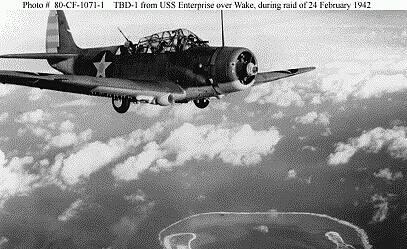
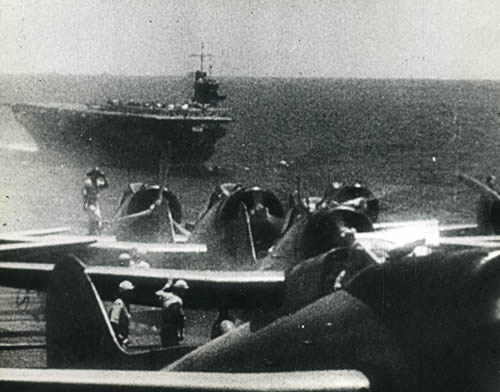
The American Carrier task forces launched their strike groups at the Japanese fleet leaving enough aircraft behind of the Combat Air Patrol and Anti-submarine patrol.  As the Americans winged toward the Japanese fleet the Japanese were in confused.  A scouting report by an aircraft that had been delayed at launch discovered US ships but did not identify a carrier until later into the patrol.  This was the Yorktown and TF 17. The Japanese attempted to recover their strike aircraft and prepare for a second strike on the island and then on discovery of the carrier embarked on the task of unloading ground attack ordnance in favor of aerial torpedoes and armor piercing bombs.  The hard working Japanese aircrew did not have time to stow the ordnance removed from the aircraft but by 1020 they had the Japanese strike group ready to launch against the US carriers.
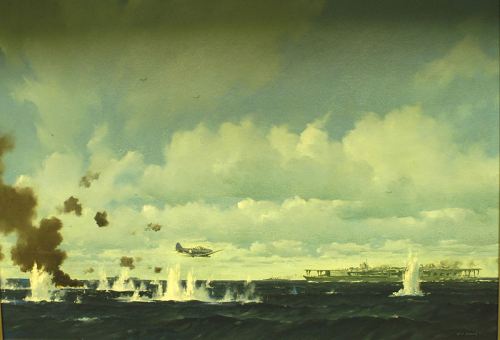
As the Japanese crews worked the Japanese carriers were engaged in fending off attacks by the US torpedo bomber squadrons, VT-6 from Enterprise, VT-8 from Hornet and VT-3 from Yorktown.  The Japanese Combat Air Patrol ripped into the slow, cumbersome and under armed TBD Devastators as they came in low to launch their torpedoes.  Torpedo Eight from Hornet under the command of LCDR John C Waldron pressed the attack hard but all 15 of the Devastators were shot down.  Only Ensign George Gay’s aircraft was able to launch its torpedo before being shot down and Gay would be the sole survivor of the squadron.
Torpedo 6 under the command of LCDR Eugene Lindsey suffered heavy casualties losing 10 of 14 aircraft with Lindsey being one of the casualties.  The last group of Devastators to attack was Torpedo 3 under the command of LCDR Lem Massey from the Yorktown.  These aircraft were also decimated and Massey killed but they had drawn the Japanese Combat Air Patrol down to the deck leaving the task force exposed to the Dive Bombers of the Enterprise and Yorktown.

There had been confusion among the Americans as to the exact location of the Japanese Carriers, the Bombing 8 and Scouting 8 of Hornet did not find the carriers and had to return for lack of fuel with a number of bombers and their fighter escort having to ditch inn the ocean and wait for rescue.  The Enterprise group under LCDR Wade McClusky was perilously low on fuel when the wake of a Japanese destroyer was spotted.  McClusky followed it to the Japanese Task Force.  The Yorktown’s group under LCDR Max Leslie arrived about the same time.  The found the skies empty of Japanese aircraft. Aboard the Japanese ships there was a sense of exhilaration as each succeeding group of attackers was brought down and with their own aircraft ready to launch and deal a fatal blow to the American carrier wondered how big their victory would be.

At 1020 the first Zero of the Japanese attack group began rolling down the flight deck of the flagship Akagi, aboard Kaga aircraft were warming up as they were on the Soryu.  The unsuspecting Japanese were finally alerted when lookouts screamed “helldivers.” Wade McClusky’s aircraft lined up over the Akagi and Kaga pushing into their dives at 1022. There was a bit of confusion when the bulk of Scouting 6 joined the attack of Bombing 6 on the Kaga.  The unprepared carrier was struck by four 1000 pound bombs which exploded on her flight deck and hangar deck igniting the fully fueled and armed aircraft of her strike group and the ordnance littered about the hangar deck.  Massive fires and explosions wracked the ship and in minutes the proud ship was reduced to an infernal hell with fires burning uncontrollably. She was abandoned and would sink at 1925 taking 800 of her crew with her.

LT Dick Best of Scouting 6 peeled off from the attack on Kaga and shifted to the Japanese flagship Akagi. On board Akagi were two of Japans legendary pilots CDR Mitsuo Fuchida leader of and CDR Minoru Genda the architect of the Pearl Harbor attack and subsequent string of Japanese victories.  Both officers were on the sick list and had come up from sick bay to watch as the fleet was attacked.  Seeing Kaga burst into flames they stood mesmerized until Akagi’s lookouts screamed out the warning “helldivers” at 1026.  Best’s aircraft hit with deadly precision landing tow of their bombs on Akagi’s flight deck creating havoc among the loaded aircraft and starting fires and igniting secondary explosions which turned the ship into a witch’s cauldron.  By 1046 Admiral Nagumo and his staff were forced to transfer the flag to the cruiser Nagara as Akagi’s crew tried to bring the flames under control. They would do so into the night until nothing more could be done and abandoned ship at 2000.  Admiral Yamamoto ordered her scuttled and at 0500 on June 5th the pride of the Japanese carrier force was scuttled.

VB-3 under LCDR Max Leslie from the Yorktown stuck the Soryu with 17 aircraft, only 13 of which had bombs due to an electronic arming device malfunction on 4 of the aircraft including the squadron leader Leslie.  Despite this they dove on the Soryu at 1025 hitting that ship with 3 and maybe as many as 5 bombs. Soryu like her companions burst into flames as the ready aircraft and ordnance exploded about her deck. She was ordered abandoned at 1055 and would sink at 1915 taking 718 of her crew with her.

The remaining Japanese flattop the Hiryu attained the same fate later in the day after engaging in an epic duel with the Yorktown which her aircraft heavily damaged. Yorktown was abandoned after a second strike but when she did not sink her her returned to attempt to save her. However despite their efforts she and the destroyer USS Hamman DD-412 were torpedoed by the Japanese Submarine I-168. Hamman sank almost immediately with heavy loss of life while Yorktown sank on the morning of the 7th.

It was quite miraculous what happened at Midway in those five pivotal minutes.  Authors have entitled books about Midway Incredible Victory and Miracle at Midway and the titles reflect the essence of the battle.  A distinctly smaller force defeated a vastly superior fleet in terms of experience, training and equipment and when it appeared that the Japanese Fleet would advance to victory in a span of less than 5 minutes turn what looked like certain defeat into one of the most incredible and even miraculous victories in the history of Naval warfare.  In those 5 minutes history was changed in a breathtaking way.  While the war would drag on and the Japanese still inflict painful losses and defeats on the US Navy in the waters around Guadalcanal the tide had turned and the Japanese lost the initiative in the Pacific never to regain it.   The Japanese government hid the defeat from the Japanese people instead proclaiming a great victory while the American government could not fully publicize the information that led to the ability of the US Navy to be at the right place at the right time and defeat the Imperial Navy.

When one looks at implications of the victory it did a number of things. First it changed the course of the war in the Pacific probably shortening it by a great deal.  Secondly it established the aircraft carrier and the fast carrier task force as the dominant force in naval warfare which some would argue it still remains.  Finally those five minutes ushered in an era of US Navy dominance of the high seas which at least as of yet has not ended as the successors to the Enterprise, Hornet and Yorktown ply the oceans of the world and the descendants of those valiant carrier air groups ensure air superiority over battlefields around the world.

Peace

Padre Steve+

4 Comments

Filed under History, Military, Navy Ships, US Navy, world war two in the pacific

A Weekend of Old Navy Movies: Mister Roberts, The Caine Mutiny and In Harm’s Way

Well I have the duty pager for the hospital this weekend so I have been hanging out at the Island Hermitage with my dog Molly watching classic Navy movies.

Friday night I watched the classic film Mister Roberts. Yesterday I watched In Harm’s Way and The Caine Mutiny.

All three films are fictional and because of that I find them great for understanding the complexity of Navy life and leadership.  Mister Roberts and the Caine Mutiny the films deal with the complexities of life and leadership on small and rather insignificant ships while In Harm’s Way deals with more senior officers and their lives. All three deal with subjects that are uncomfortable because they still exist not just in the Navy but throughout the military. Thus all three offer insights into toxic leaders, poor morale, discipline, mental illness, alcoholism and subjects such as sexual assault and suicide.

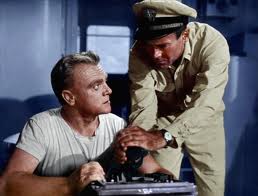
Mister Roberts stared Henry Fonda, James Cagney, Jack Lemmon and William Powell. It is set on the USS Reluctant a Light Cargo Ship in the backwaters of the Pacific in the closing months of the Second World War. Released in 1955 the film was based on the 1946 novel of the same name by Thomas Heggen.

http://www.tcm.com/mediaroom/video/323485/Mister-Roberts-Movie-Clip-Up-All-Night.html

Cagney plays a despotic former Merchant Marine Captain, LCDR Morton an officer of the type that the Navy did not want portrayed on film then, and still doesn’t today.  He is petty, self serving and rules as a tyrant in order to secure his promotion to Commander. His prize possession is a palm tree which was awarded to the ship for handling the most cargo which he believes will be his ticket to promotion. Lemon plays the ship’s Laundry and Morale Officer Ensign Frank Pulver who creatively finds ways of avoiding work. He is so successful that Captain Morton doesn’t know who he is despite having been on the ship 14 months. Pulver provides amusement and aggravation to Henry Fonda plays the ship’s Cargo Officer LTJG Doug Roberts. Roberts is liked by the crew and always in conflict with hs captain.  He is desperate to be transferred off the Reluctant and serve on a ship on the front lines. He fears that the war will pass him by and sends in letter after letter to get transferred to a fighting ship only to have Morton send them on without recommending approval.

Roberts is caught in the position of many young leaders where they are torn between their duty and their loyalty to their crew.  Eventually he  William Powell in his last film plays ship’s Medical Officer, the wise sage whose advice and counsel is invaluable to Roberts.  Eventually Roberts gets off the ship because the crew forges a request for transfer along with a forged recommendation from the Captain. When he leaves the ship the crew presents him with their “Medal” the “Order of the Palm.” He is transferred to a destroyer and is killed in action. His final letter to Ensign Pulver tells of his appreciation for the crew and comes along with a letter from a friend of Pulver’s on board the destroyer Roberts was transferred telling of Roberts being killed when the ship was hit by a kamikaze.

In the letter Roberts expresses that he finally understood the enemy faced by those in rear areas and all of those that cannot see why they matter or know their place in a war.  The challenge of leaders to understand “that the unseen enemy of this war is the boredom that eventually becomes a faith and, therefore, a terrible sort of suicide.”  He finally after having seen combat that those that he served with on the Reluctant “Right now I’m looking at something that’s hanging over my desk. A preposterous hunk of brass attached to the most bilious piece of ribbon I’ve ever seen. I’d rather have it than the Congressional Medal of Honor. It tells me what I’ll always be proudest of: That at a time in the world when courage counted most I lived among 62 brave men.” 

The Caine Mutiny adapted from the novel written by Herman Wouk deals with a another ship where leadership challenges abound. The Captain of the ship, LCDR Queeg played by Humphrey Bogart is plagued by doubt, fear and paranoia.  A Regular Navy Officer on with a wardroom of reservists he comes to the ship battered from two years in the Atlantic. He is also plagued by his Communications Officer, LT Tom Keefer played by Fred MacMurray who spends the time not writing a novel in spreading poison about his ship, the Navy and his commanding officers. Queeg begs for their support and understanding.

http://www.tcm.com/mediaroom/video/413561/Caine-Mutiny-The-Movie-Clip-Like-A-Family.html

However Keefer is so successful at undermining Queeg that in the midst of a typhoon the Executive Officer, LT Steve Maryk played by Van Johnson takes command and relieves Queeg on the bridge supported by the Officer of the deck Ensign Willie Keith.

http://www.youtube.com/watch?v=vtqf0CCVUek

Maryk is tried and acquitted at court marital but his defense attorney, LT Barney Greenwald played by Jose Ferrer has to destroy Queeg on the witness stand to do it.  During the trial Keefer is called as a witness for the prosecution lies on the stand to avoid incriminating himself while damaging the case of his friend Maryk. At the end Greenwald confronts Kiefer at a party and provides the leadership lesson for a wardroom which abandoned their sick captain long before the mutiny occurred.

http://www.youtube.com/watch?v=EKeISsYKROI

[Greenwald staggers into the Caine crew’s party, inebriated] 

Lt. Barney Greenwald: Well, well, well! The officers of the Caine in happy celebration! 

Lt. Steve Maryk: What are you, Barney, kind of tight? 

Lt. Barney Greenwald: Sure. I got a guilty conscience. I defended you, Steve, because I found the wrong man was on trial. 

[pours himself a glass of wine] 

Lt. Barney Greenwald: So, I torpedoed Queeg for you. I had to torpedo him. And I feel sick about it. 

[drinks wine] 

Lt. Steve Maryk: Okay, Barney, take it easy. 

Lt. Barney Greenwald: You know something… When I was studying law, and Mr. Keefer here was writing his stories, and you, Willie, were tearing up the playing fields of dear old Princeton, who was standing guard over this fat, dumb, happy country of ours, eh? Not us. Oh, no, we knew you couldn’t make any money in the service. So who did the dirty work for us? Queeg did! And a lot of other guys. Tough, sharp guys who didn’t crack up like Queeg. 

Ensign Willie Keith: But no matter what, Captain Queeg endangered the ship and the lives of the men. 

Lt. Barney Greenwald: He didn’t endanger anybody’s life, you did, all of you! You’re a fine bunch of officers. 

Lt. JG H. Paynter Jr.: You said yourself he cracked. 

Lt. Barney Greenwald: I’m glad you brought that up, Mr. Paynter, because that’s a very pretty point. You know, I left out one detail in the court martial. It wouldn’t have helped our case any. 

[to Maryk] 

Lt. Barney Greenwald: Tell me, Steve, after the Yellowstain business, Queeg came to you guys for help and you turned him down, didn’t you? 

Lt. Steve Maryk: [hesitant] Yes, we did. 

Lt. Barney Greenwald: [to Paynter] You didn’t approve of his conduct as an officer. He wasn’t worthy of your loyalty. So you turned on him. You ragged him. You made up songs about him. If you’d given Queeg the loyalty he needed, do you suppose the whole issue would have come up in the typhoon? 

[to Maryk] 

Lt. Barney Greenwald: You’re an honest man, Steve, I’m asking you. You think it would’ve been necessary for you to take over? 

Lt. Steve Maryk: [hesitant] It probably wouldn’t have been necessary. 

Lt. Barney Greenwald: [muttering slightly] Yeah. 

Ensign Willie Keith: If that’s true, then we were guilty. 

Lt. Barney Greenwald: Ah, you’re learning, Willie! You’re learning that you don’t work with a captain because you like the way he parts his hair. You work with him because he’s got the job or you’re no good! Well, the case is over. You’re all safe. It was like shooting fish in a barrel. 

[long pause; strides toward Keefer] 

Lt. Barney Greenwald: And now we come to the man who should’ve stood trial. The Caine’s favorite author. The Shakespeare whose testimony nearly sunk us all. Tell ’em, Keefer! 

Lieutenant Tom Keefer: [stiff and overcome with guilt] No, you go ahead. You’re telling it better. 

Lt. Barney Greenwald: You ought to read his testimony. He never even heard of Captain Queeg! 

Lt. Steve Maryk: Let’s forget it, Barney! 

Lt. Barney Greenwald: Queeg was sick, he couldn’t help himself. But you, you’re *real* healthy. Only you didn’t have one tenth the guts that he had. 

Lieutenant Tom Keefer: Except I never fooled myself, Mr. Greenwald. 

Lt. Barney Greenwald: I’m gonna drink a toast to you, Mr. Keefer. 

[pours wine in a glass] 

Lt. Barney Greenwald: From the beginning you hated the Navy. And then you thought up this whole idea. And you managed to keep your skirts nice, and starched, and clean, even in the court martial. Steve Maryk will always be remembered as a mutineer. But you, you’ll publish your novel, you’ll make a million bucks, you’ll marry a big movie star, and for the rest of your life you’ll live with your conscience, if you have any. Now here’s to the *real* author of “The Caine Mutiny.” Here’s to you, Mr. Keefer. 

[splashes wine in Keefer’s face] 

Lt. Barney Greenwald: If you wanna do anything about it, I’ll be outside. I’m a lot drunker than you are, so it’ll be a fair fight. 

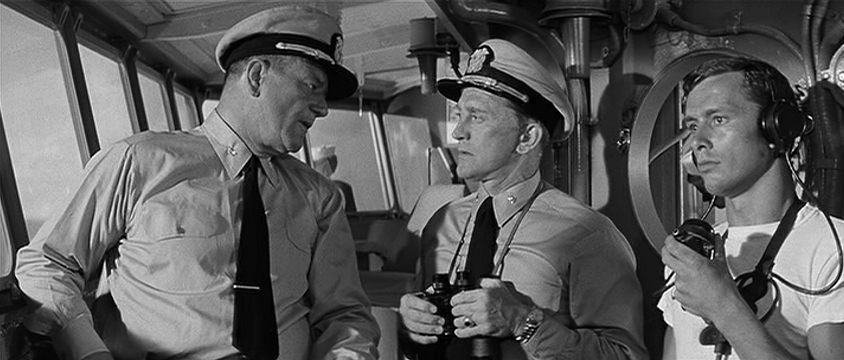
In Harm’s Way was filmed a decade after the Caine Mutiny and Mister Roberts. Starring John Wayne, Kirk Douglas, Henry Fonda, Patricia Neal, Burgess Meredith and Tom Tryon it was a epic that was panned by critics as having a shallow plot. It involved the intersecting lives of a number of officers during the war with John Wayne playing Rear Admiral “Rock” Torrey. Although the plot is relatively shallow the film brings up several very serious subjects that are faced by leaders even today.  The topics of alcoholism, sexual assault and suicide are touched upon through the character played by Kirk Douglas, Captain Paul Eddington.  Eddington is plagued by alcoholism and a failed marriage that ended when his wife was killed while with an Army Air Corps Officer on the morning of the Peal Harbor attack.  Sentenced to a backwater assignment he is called to be Torrey’s Chief of Staff.  In that position he ends up raping a nurse played by Jill Howarth that happens to be the fiancee of Torrey’s son. She then commits suicide. When Eddington discovers that she is dead he sets off on a suicide mission to find the Japanese fleet.

http://www.tcm.com/mediaroom/video/348030/In-Harm-s-Way-Movie-Clip-The-Navy-s-Never-Wrong.html

The questions raised in the film are not answered, there is no Barney Greenwald to point out the moral of the story.  John Wayne plays a flawed hero surrounded by characters of that are all in some way dealing with their own personal demons. However the questions are those that have been faced by military leaders for generations.  How does a leader deal with men and women in failing marriages? How does one deal with those that simply are advancing their own careers? How does a leader deal with key staff that are dealing with alcoholism? How does one prevent sexual assault in a combat area and prevent suicide?  The truth is that we still deal with all of these questions and none of us or any military in the world has solved any of them.  Perhaps Henry Fonda as Admiral Nimitz sums up the situation that we still face “Well, we all know the Navy’s never wrong. But in this case, it was a little weak on bein’ right.”

Taken as a whole the three films all are valuable for today’s naval leader as well as military leaders in general. The I do learn something new every time that I watch them and all challenge me to be a better leader.

Peace

Padre Steve+

3 Comments

Filed under film, leadership, Military, movies, US Navy, world war two in the pacific

The First Shot: USS Ward at Pearl Harbor

LT William Outerbridge was new to command. The Lieutenant and veteran of 14 years of service had taken command of the elderly destroyer USS Ward (DD 139) less than 24 hours before she began her weekend Anti-Submarine patrol of the entrance to Pearl Harbor. In the inter-war years promotion was slow and opportunities for advancement slim. Outerbridge had been commissioned following graduation from the Naval Academy in 1927. He was the only Regular Navy Officer on the ship.

The Ward was old but had very few miles on her. A Wickes class destroyer of 1250 tons and armed with four 4” 50 caliber and two 3” guns she was launched and commissioned in 1918 and was decommissioned and placed in reserve in 1921. Recommissioned in January 1941 she was assigned to Destroyer Division 80 at Pearl Harbor. This squadron of elderly ships  consisting of Ward along with USS Schley, USS Chew and the even older USS Allen was assigned to the Inshore Patrol Command.

As tensions between the United States and Japan increased the War Department and Department of the Navy issued a “War Warning” and Admiral Husband Kimmel, Commander in Chief Pacific Fleet ordered a “shoot on sight” against any ship or submarine operating in the security zone outside Pearl Harbor which effectively put the ships of DesDiv 80 on a war footing.

Outerbridge had taken command on Friday December 5th and taken the ship to sea 6th at 0628. He had no idea that in just over 24 hours the guns of his ship would be the first American warship to fire at an enemy combatant in the Pacific during the war.

As the Ward patrolled the area just a couple of miles off of the entrance to Pearl Harbor the minesweeper USS Condor (AMc-14) spotted a white wake near her at 0342.  The Officer of the Deck and Captain determined that it was the periscope of a submarine.  They signaled the Ward which was patrolling nearby: “Sighted submerged submarine on westerly course, speed nine knots” at 0348.

Outerbridge ordered the Ward to general quarters. After a futile search Outerbridge secured from General Quarters at 0443.  At 0458 Pearl Harbor’s anti-torpedo net gate was opened to allow passage of Condor and a number of other small ships including the Stores Ship USS Antares (AKS 14). Antares was towing a target back to base when at about 0635 a lookout on Ward noticed a wake following the auxiliary between her and her the raft.

Outerbridge returned to the bridge and sounded general quarters at 0640.  Outerbridge increased Ward’s speed to 25 knots and commended firing on the sub at 0645.  Ward’s number three gun scored a hit at the base of the sub’s conning tower and Ward charged the sub.  Coming close alongside the Ward dropped depth charges which sank the sub.

Outerbridge notified harbor control at 0651 sending the message “Depth bombed sub operating in defensive sea area.” Some of his own officers thought that it was possible that Ward had attacked an American submarine but Outerbridge was confident that the sub was hostile. To emphasize that this was different from false alarms that headquarters was accustomed sent another message at 0653 “Attacked, fired upon, depth bombed, and sunk submarine operating in defensive sea area.”  It was just over an hour before the first Japanese planes would begin their bombing runs.

Delays in seeking more conformation and reluctance to believe the report resulted in the message not being rapidly transmitted up the chain of command. It was a symptom of a parochial and divided command structure which did not respond quickly to the needs of war.

The rest is history. Within two hours the Battle line of the Pacific Fleet was sunk or crippled, all told 18 ships were sunk or damaged.  2402 Sailors, Marines and Soldiers were killed and another 1247 wounded.

USS Ward APD-16 burning after being hit by Kamikaze

Ward war was not over. She was converted to a Fast Transport and redesigned APD-16 in 1943. She participated in actions in the Solomons, New Guinea and the Philippines.

On December 7th 1944 while conducting operations at Ormoc Bay the veteran ship was hit by a Japanese “Betty” Twin engined bomber. The large aircraft acting as a Kamikaze crashed into Ward  and started fires and flooding that could not be controlled. One of the ships that came toWard’s assistance was the USS O’Brien (DD 725) commanded by LCDR William Outerbridge. The same officer who had commanded Ward at Pearl Harbor. Three years to the day after sinking the Japanese submarine LCDR Outerbridge was ordered to sink his former ship after rescuing her crew.

Outerbridge retired as a Rear Admiral in 1957 and died in 1986.  Like others of his generation he served in war and peace.  As we remember the attack on Pearl Harbor let us not forget him as well as the fine crew of the USS Ward.  These men were alert that quiet Sunday morning 70 years ago and took action. They sunk a Japanese midget submarine intent on entering Pearl Harbor and reported their actions.  One wonders what might have happened if Outerbridge’s reports had been acted on, interceptors scrambled and anti-aircraft defenses on ships and ashore been ready when the Japanese attackers swept in to attack Pearl Harbor.  Of course we will never know.

Peace

Padre Steve+

25 Comments

Filed under History, Military, Navy Ships, world war two in the pacific

Marking the Illusion of Peace: December 6th 1941

A great war was already going on in Europe, Asia and the Middle East but most Americans lived as if war would never happen.  It didn’t seem to matter that that Nazi Germany had conquered all of Western Europe and that the Soviet Union was on the Ropes even as the United States Navy was already in action escorting convoys in the Atlantic. Of course the Japanese had been busy and were entering their second decade of war in China and had occupied French Indochina earlier in 1941. No war was something that happened to other people and nations.  The United States of course was immune to what was going on overseas and isolationism dictated much of the political debate often hamstringing the Roosevelt administration.

While the Government and the military anticipated that war was immanent the bulk of the country acted as if war would never happen. Various parties in Congress and special interest groups actively lobbied for the United States to remain clear of war and resisted the Roosevelt administration as it sought to strengthen the military. Thus as December 6th passed the nation focused on  everyday life.  People went to football games did Christmas shopping and spent time with family.

Now the country had been preparing for war, the Army, the Army Air Corps and the Navy  were expanding at a rapid rate. Exercises were held by large Army formations across the South in 1941 and bases were being built around the country.  In the years before the war the Japanese had attacked and sunk the gunboat USS Panay in China and German U-Boats had torpedoed and sunk the Destroyers USS Ruben James and damaged the USS Kearny as well as numerous merchant ships. Despite this many people failed to comprehend that war was immanent.  In fact there were groups that actively supported the political cause of Nazi Germany right here in the United States. Thus when people found out in the morning or in the afternoon of December 7th 1941 there was a collective sense of shock that had was new to the nation.

December 6th 1941 was the last night of an old world, a world of fantasy. It was the temporary end of the belief that the United States could be isolated from the carnage of war in Europe, the Middle East and Asia.  For 70 years since we have fought to return to that fantasy world where if we close our eyes and mind our own business that nothing bad will happen.  After the fall of the Soviet Union and the Cold War we seemed to believe that the world was different and that somehow we were unique, it was told to us by Republicans and Democrats so it had to be true.

Then we were attacked on September 11th 2001 and we went to war, except this time we decided were the wars would be fought but unlike World War II we abdicated the responsibility for conducting the war to a small sliver of the population, never more than half of one percent of the nation to go do the fighting and dying for the rest of us. Instead of a call to service we were told to go shopping. We entered wars with no certainty of what the end state would be.  Ten years later we are still fighting and despite the many successes and the valiant efforts and sacrifices of our military we are nowhere close to where our nation was to winning the war as we were within two years of the attack on Pearl Harbor and unlike that war we now face bigger threats than we were facing then.  War beckons in other lands and the post Cold War world is in shambles.

I certainly don’t have the answers to this but I do know that we must not let ourselves be lulled into even more complacency thinking that what happens overseas stays overseas.

The memories of December 7th 1941 have faded away. Few survivors of that day remain and those of the Greatest Generation are passing away faster than we think possible.  The collective memory is being left to family members, friends and historians. For that matter our collective memory of the Korean War, Vietnam, the Cold War, the First Gulf War and even our current wars seems to be waning.  As a nation we seem to have forgotten everything and have returned to the illusions of December 6th 1941.

These are dangerous times and while there may not be a Japanese Carrier Striking Force making its final approach to Hawaii there are real threats that can make our present “crisis” look like a picnic on a summer day.

Peace

Padre Steve+

1 Comment

Filed under History, Military, national security, world war two in the pacific

The Battle of Leyte Gulf: Sinking the Musashi

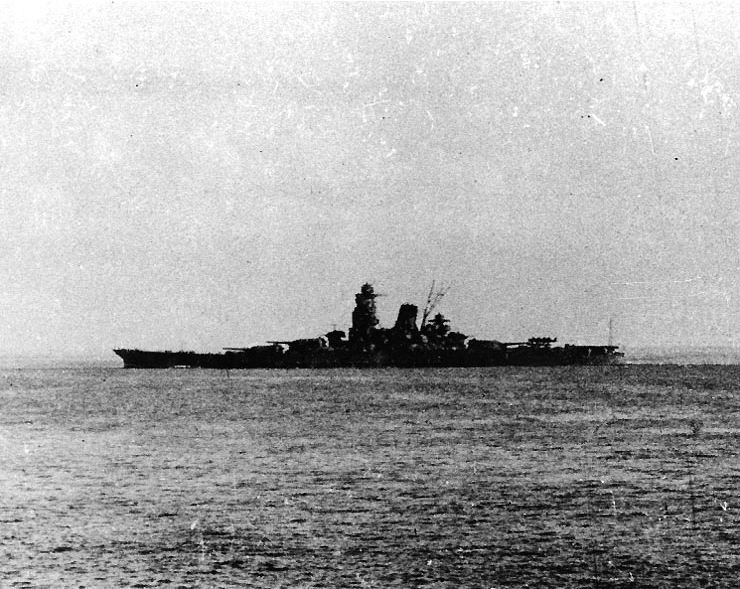
IJNS Musashi

This is the second in a series of articles about the Battle of Leyte Gulf.  The first article in the series is liked here and is entitled

The Battle of Leyte Gulf: Introduction and the Battle of Palawan Passage

Following the loss of Atago, Maya and Takao Vice Admiral Takeo Kurita’s Center Force had an uneventful rest of the day on the 23rd as his ships kept a watchful eye and ear for more US Navy submarines.  At about 0800 on 24 October the Center Force was spotted by 3 B-24 Liberator bombers which promptly reported them.

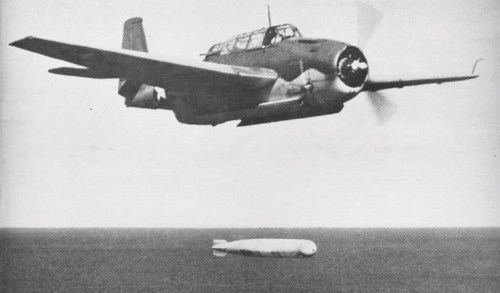
TBF Avenger dropping its “fish” 19 would hit Musashi
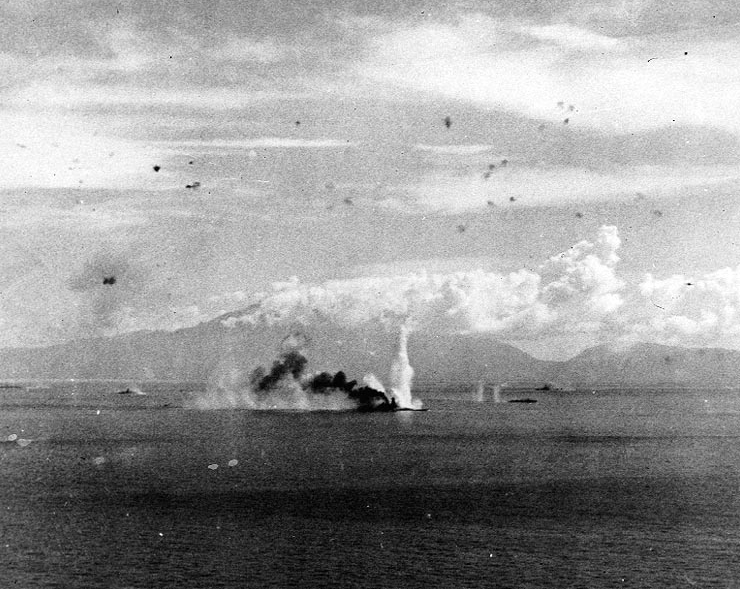
One of the ships in the Center Force was the IJNS Musashi, sister ship of the mighty Yamato which was also in the force. The two battlewagons were the largest battleships ever built.  With a full load displacement of 72,800 tons and an armament of nine 18.1 inch guns, the largest battery ever mounted on a warship the two behemoths also had massive anti-aircraft batteries and the Japanese were counting on them leading the Center Force to a miraculous victory during the battle.  Admiral Kurita addressed his commanders prior to the battle:

“I know that many of you are strongly opposed to this assignment.  But the war situation is far more critical than any of you can possibly know.  Would it not be shameful to have the fleet remain intact while our nation perishes?  I believe that the Imperial General Headquarters is giving us a glorious opportunity.  Because I realize how very serious the war situation actually is, I am willing to accept even this ultimate assignment to storm into Leyte Gulf.  You must all remember that there are such things as miracles.”

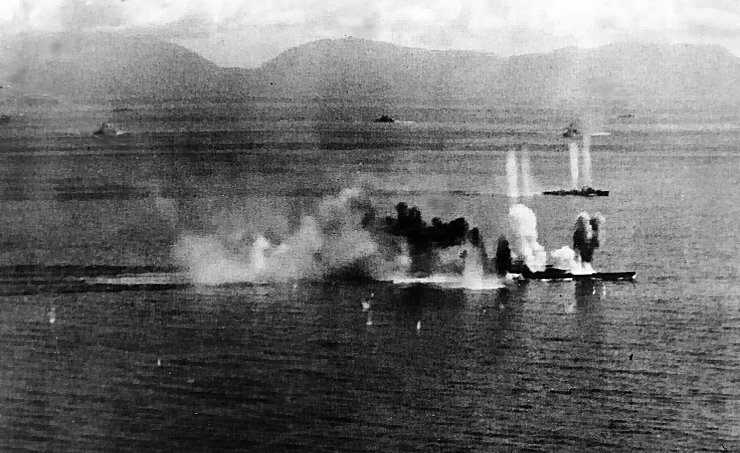
Musashi or Yamato under attack October 24th 1944

At 1000 the Musashi’s radar picked up approaching aircraft.  These were from the USS Intrepid and the USS Cabot which were assigned to Rear Admiral Gerard Bogan’s Task Group 38.4. The anti-aircraft crews and damage control teams prepared as the ship’s bugle sounded the alarm.  As the aircraft came closer the main guns of the Musashi fired but ceased fire as the aircraft drew closer.  Helldiver dive bombers plunged downward at the ships of the Center Force and F6F Hellcat fighters unopposed by enemy fighters conducted strafing runs as TBF Avenger torpedo bombers dropped their deadly loads at the Musashi.  The big ship avoided two of the “fish” but a third struck causing little damage and the first wave few away.  Musashi reported that she had sustained a hit and continued on.  The Japanese sailors knew that this would not be the last attack.  Though Musashi had weathered the first strike the American fliers hit the battleships Nagato, Yamato and severely damaged the heavy cruiser Myōkō.

Musashi hit

At 1140 the Musashi’s radar picked up the next wave of attackers and at 1203.  These were from the Intrepid, Essex and Lexington.  Hitting the Center Force in two waves a half hour apart these aircraft delivered punishing blows on Musashi. She was hit by 3 torpedoes and 2 bombs. The torpedoes caused damage that caused a 5 degree list and was down six feet by the bow. The torpedo damage was concentrated midships and one torpedo flooded her number 4 engine room. One of the bombs hit an engine room and disabled her port inline propeller shaft.  With her speed reduced she proceeded on.

Musashi

Thirty minutes following this attack at about 1330 Musashi was attacked again by Helldivers and Avengers. She is hit by 4 1000 pound bombs and 4 torpedoes.  She was now so badly damage that she could no longer keep up with the fleet and dropped behind to fend for herself.  At 1350 this attack ends with her speed reduced to 20 knots and with her down 13 feet by the bow and nearly all of her trim and void tanks full. There is now little room for any more damage forward.

Separated from the fleet Musashi was now attacked by aircraft from the Enterprise, Cabot, Franklin and Intrepid that score hits with 11 bombs including the deadly 1000 pounders and 8 torpedoes.  During the course of these attacks which ended after 1530 Musashi sustained 19 torpedo and 17 bomb hits and taken 18 near hits close aboard. At 1620 her skipper Rear Admiral Toshihira Inoguchi began desperate damage control measures to control the increasing list which had reached 10 degrees to port.  Dead in the water she continued to list further and when the list reached 12 degrees at 1915 Inoguchi ordered preparations to abandon ship.  The surviving crew assembled on the deck, the battle flag and the Emperor’s portrait were removed.  Admiral Inoguchi gave his personal notebook to his Executive officer Captain Kenkichi Kato and directed then him to abandon ship. Admiral Inoguchi retired to his cabin and was not seen again.  At 1930 with the list now 30 degrees Captain Kato gave the order to abandon ship and soon with the list increasing further men began to slide across the decks being crushed in the process.  Panic broke out among the crew which had been assembled by divisions and Captain Kato ordered “every man for himself.”  At 1936 the ship capsized and port and went down by the bow sinking in 4,430 feet of water in the Visayan Sea at 13-07N, 122-32E.
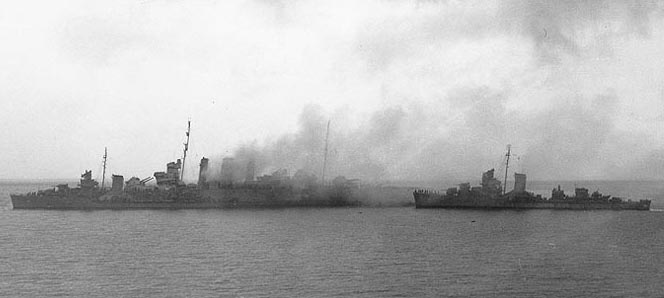
The destroyers Kiyoshimo, Isokaze and Hamakaze rescued 1,376 survivors including Captain Kato, but 1,023 of Musashi’s 2,399 man crew were lost including her skipper, Rear Admiral Inoguchi who was promoted Vice Admiral, posthumously.

The rest of the Center Force under Kurita turned around to get out of range of the aircraft, passing the crippled Musashi as his force retreated. Kurita’s retreat was temporary and Kurita waited until 17:15 before turning around again to head for the San Bernardino Strait hoping to find it empty of American ships.  His force was still battle worthy because the majority of the 259 sorties were directed on Musashi and the Heavy Cruiser Myōkō which retired heavily damaged. The Southern Force which had also been hit by American carrier air strikes also continued its push toward Surigao Strait.  The Battle of Surigao Strait, the revenge of the Pearl Harbor Battleships will be the next article in this series.
Peace

Padre Steve+

3 Comments

Filed under History, Military, Navy Ships, US Navy, world war two in the pacific

The Battle of Leyte Gulf: Introduction and the Battle of Palawan Passage

This is the first of a four article series on the Battle of Letye Gulf. The battle was the largest in history both in terms of the number of ships involved and the amount of area covered. The action was triggered by the American invasion of the Philippines causing the Japanese to initiate their Shō-Gō 1 (Victory Plan 1) to attempt to defeat the Americans.  The plan relied heavily on land based air power which most of unfortunately for the Japanese was destroyed during the American carrier air strikes on Formosa earlier in the month. 

The battle was necessitated by the absolute need for the Japanese to hold the Philippines and defeat the Americans at all costs. As Admiral Soemu Toyoda the Chief of the Combined Fleet explained under interrogation after the war

Should we lose in the Philippines operations, even though the fleet should be left, the shipping lane to the south would be completely cut off so that the fleet, if it should come back to Japanese waters, could not obtain its fuel supply. If it should remain in southern waters, it could not receive supplies of ammunition and arms. There would be no sense in saving the fleet at the expense of the loss of the Philippines.

The battle was comprised of 5 battles, the Battle of Palawan Passage, the Battle of the Sibuyan Sea, the Battle of Surigao Strait, the Battle of Cape Engaño and the Battle off Samar. All told about 70 Japanese warships and 210 American and Australian ships were engaged.  A further 300 Japanese aircraft, mostly land based and 1500 American carrier aircraft took part in the battle.  The Japanese order of battle included 1 Fleet and 3 Light Fleet Carriers with a minimal air group, 9 Battleships including the two largest ever built the Yamato and Musashi, 14 Heavy and 6 Light Cruisers and about 3 destroyers.  They were divided into four task forces, the Northern Force under the command of Vice-Admiral Jisaburō Ozawa which had all of the Carriers including the last surviving carrier of the Pearl Harbor attack the Fleet Carrier Zuikaku plus the converted hybrid Battleships Ise and Hyuga; the Southern Force which was two distinct and independent task forces under the command of Vice Admirals Shoji Nishimura and Kiyohide Shima and was built around the ancient battleships Fuso and Yamashiro and 3 Heavy Cruisers; and the Center Force under the command of Vice Admiral Takeo Kurita which had the Battleships Yamato, Musashi, Nagato, Kongo and Haruna, 10 Heavy and 2 Light Cruisers and 1 destroyers.  The Center force was to pass through the San Bernardino Strait and converge on the American landing forces off Samar with the Southern Force which as to come through the Surigo Strait.  The Japanese also planned for the first use of Kamikazes as part of the action. 

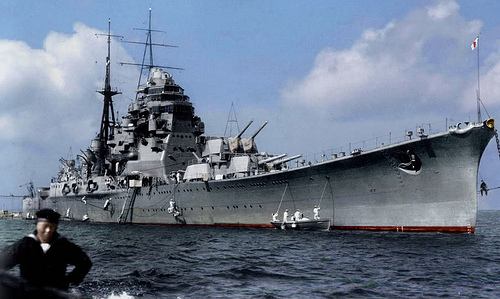
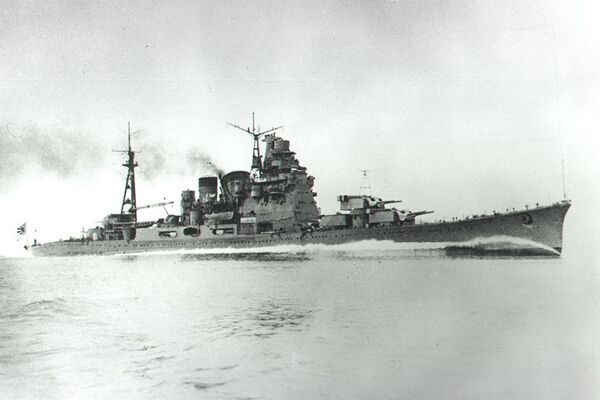
Takao Class Cruiser 1943

Atago

The American fleet was comprised of the 3rd Fleet under Admiral William Halsey which was built around the Fast Carrier Task Forces and Fast Battleships of Task Force 38 under the Command of Vice Admiral Marc Mitscher and the Battle Line Task Force 34 under the Command of Vice Admiral Willis Lee; and the 7th Fleet under Vice Admiral William Kinkaid which was the naval support for the landings.  It had under its control the old Battleships West Virginia, California, Tennessee, Maryland, Colorado and Pennsylvania and 18 Escort Carriers which provided the close air support for the Invasion.  All told the Americans had 8 Fleet and 8 Light Fleet Carriers, 18 Escort Carriers, 12 Battleships, 24 Cruisers and 141 Destroyers as well as submarines, PT Boats, Transports, Landing Ships and Auxiliaries.

Takao

This series will focus on a number of individual battles and decisions in the battle. Part one will focus on the action of the Submarines Darter and Dace against the Center force in the Palawan Passage. The next will be the sinking of the Musashi during the Battle of the Sibuyan Sea, it will be followed by the revenge of the Old Battleships at Surigo Strait. The next will be the great decision of Admiral Halsey to pursue the Northern Force and leave the San Bernardino Strait unguarded, followed by the Battle off Samar and last the death of the Japanese Naval Aviation at Cape Engaño.
Maya

The Battle of Palawan Passage

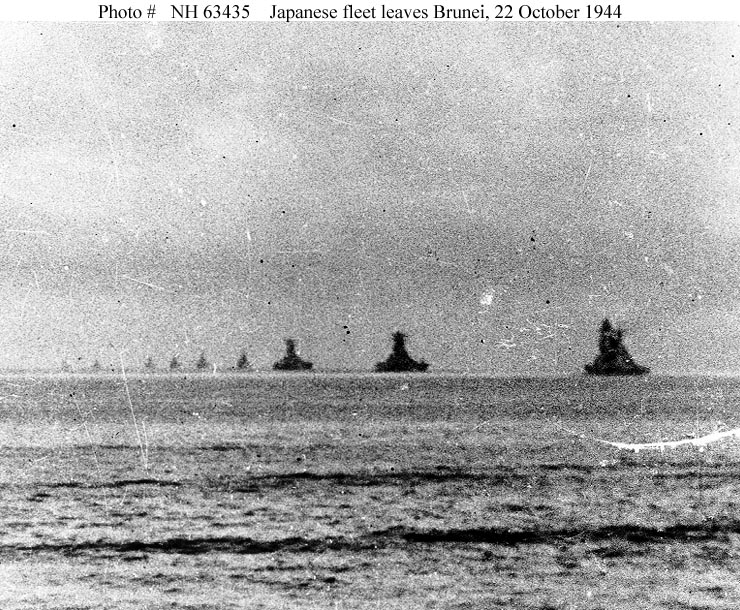
Admiral Takeo Kurita and the powerful Center Force departed their anchorage at Bruneion 20 October 1944.  The task force entered the Palawan Passage on the night of 22-23 October where they were sighted by the American Submarines Darter and Dace which had been posted at the strait for such a possibility.  Darter made radar contact at 30,000 yards at 0018 hours on the 23rd and sent out contact reports.   The two submarines shadowed the Center Force on the surface to gain an intercept position and submerged just before dawn.

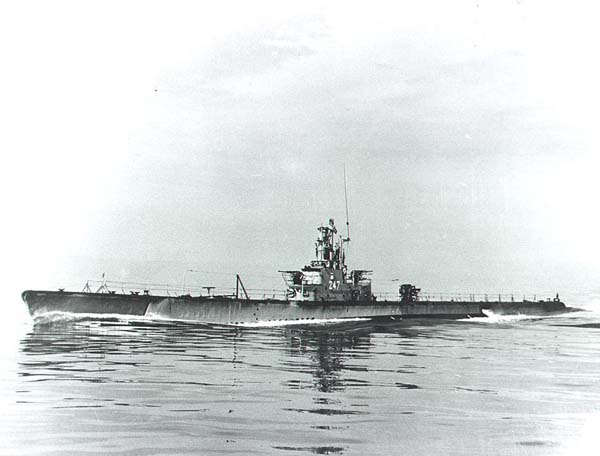
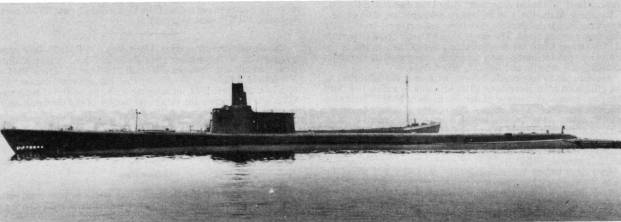
USS Darter

Darter struck first at 0524 firing a spread of 6 torpedoes scoring 4 hits on Admiral Kurita’s flagship the Heavy Cruiser Atago. She reloaded and stuck the Heavy Cruiser Takao with 2 torpedoes at 0634.  At 0554 Dace hit the Heavy Cruiser Maya with 4 torpedoes.

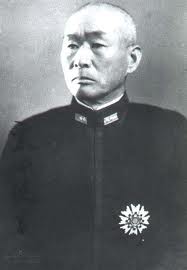
Vice Admiral Takeo Kurita

The blow was severe.  Atago was mortally wounded she capsized and sank at 0553 with the loss of 360 crew members. She sank so rapidly that Kurita had to swim and was rescued with his Chief of Staff by a destroyer, but many of his staff members were lost with the ship.  Though Kurita transferred his flag to Yamato he was now without the advice and counsel of officers that might have prevented later mistakes during the Battle off Samar.  Takao suffered heavy damage and though she did not sink she had to proceed crippled to Singapore under the guard of two destroyers. Though she survived the war she never saw action again.   Maya, struck at 0554 by 4 torpedoes suffered much damage and was wracked by powerful secondary explosions.  By 0600 she was dead in the water and sank five minutes later with the loss of 337 crew members.

USS Dace

The attack of the two submarines was significant; the Japanese lost 3 powerful Heavy Cruisers and had to send two of their destroyers away to guard Takao. Likewise the loss of Kurita’s experienced staff hindered his conduct of the battle on the 24th.  The cruisers were a big loss, at 13,000 tons and armed with ten 8”guns they could steam at 35 knots.

Darter and Dace conducted a pursuit of the crippled Takao which had to be broken off when Darter ran aground on Bombay Shoal. Despite the best efforts of her crew and that of the Dace to free her she was hopelessly stuck.  Her crew was unable to scuttle her and the Japanese were able to board her after she was abandoned and for the first time get a look at the details of a Gato class submarine.

Kurita’s force would continue on into theSibuyan Seawhere they would be attacked again.  But that is the subject of the next article.

5 Comments

Filed under Navy Ships, US Navy, world war two in the pacific

Wings of Gold: U.S. Navy Carrier Fighter Aircraft 1941-1945

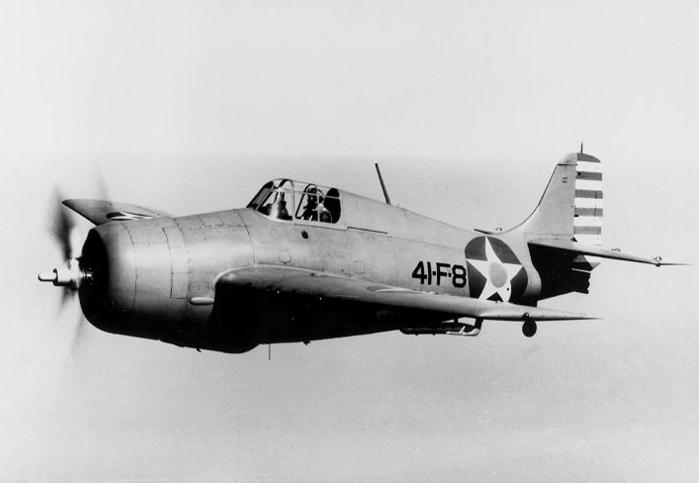
F4F-4 Wildcat of VF-41 in 1942

In 1941 with war raging inEuropeand the Japanese continuing their war in China  and occupied French Indo-China theUnited States rushed to build up its Naval Air Arm and the Arm Air Corps.  New models of aircraft of all types were being rushed into production to replace aircraft already known to be obsolescent.  The Navy brought aircraft already accepted into full production even as it planned more advanced models.  The events in Europe and Asia demonstrated that new fighter designs were needed quickly.

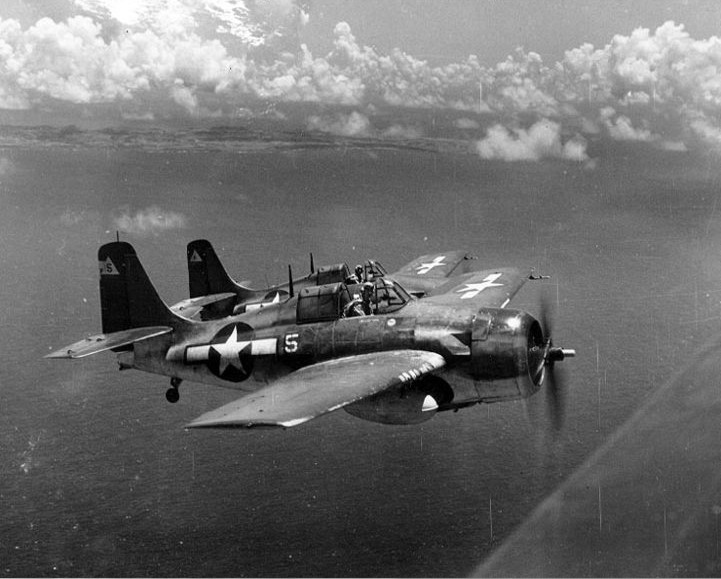
As 1940 dawned the standard fighter aircraft found on U.S. Navy carriers were the F2-A Brewster Buffalo, the Grumman F-3F biplane.  In February 1940 the Navy accepted its first F4F-3 Wildcat which in an earlier for had been rejected in favor of the Brewster Buffalo.  The new Grumman fighter was powered by a 1200 hp Pratt & Whitney R-1830-76 double row radial engine, mounted 4 .50 cal. Machine guns and was heavily armored.  It had a maximum speed of 331 mph range of 845 miles and ceiling of 39500 feet. This would serve it and its pilots well as they aircraft was incredibly tough, often amazing experienced Japanese pilots in their A6M2 Zeros in their ability to suffer heavy damage and remain in the air.  The plucky Wildcat would become the main line of defense in the Pacific against the advancing Japanese Imperial Navy in the months following Pearl Harbor.

The early F4F-3s were superseded by the F4F-4 model which incorporated folding wings, additional armor and an extra two machine guns.  This decreased its maximum speed to 320 mph, rate of climb and ceiling but nonetheless the aircraft gave a good account of itself in Navy and Marine Corps service.  F4F-3’s and F4F-4s served in the British Royal Navy where it was called the Martlet until the end of the war.  When Grumman closed out F4F production in 1943 to concentrate on its replacement the F6F Hellcat production was continued by General Motors and Eastern Aircraft as the FM1 and FM2 Wildcat. The FM1 was identical to the F4F-4 but armament was reduced to 4 machine guns and bomb racks for two 250 lb bombs or depth charges were added.  The FM2 was based on an updated version of the F4F and had a more powerful engine as well as a higher tail assembly to account for the increased torque of the engine.  These aircraft served aboard the tiny Escort Carriers and performed valiantly, especially in the Battle off Samar during the Battle of Leyte Gulf.  A total of 7860 Wildcats of all varieties were built.  They accounted for 1327 enemy aircraft shot down with the loss of only 191 Wildcats.

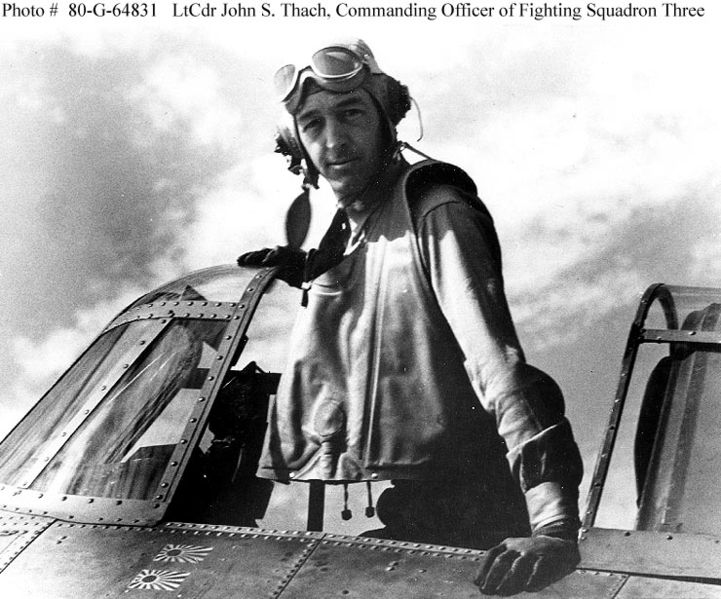
Aces Capt Joe Foss USMC and CAPT David McConnell USN both Medal of Honor Winners and CDR Jimmy Thatch (below)

The top aces who flew the Wildcat were all Marines, CAPT Joe Foss (26 victories) MAJ John Lucian Smith (19 victories) and MAJ Marion Carl (16 victories in the F4F and 2 in the F4U Corsair). Foss and Smith both won the Medal of Honor.  Foss would go on to become Governor of South Dakota and the first Commissioner of the American Football League in 1959. Smith retired as a Colonel in 1960 and Carl as a Major General.  Other distinguished F4F aces included LT Butch O’Hare, the first U.S. Navy ace and Medal of Honor winner and LCDR Jimmy Thatch who developed the highly successful “Thatch Weave” which enabled the U.S.pilots whose machines were slower and less maneuverable than the speedy and nimble Zeros to achieve good success against their Japanese foe.  Thatch retired as an Admiral in 1967.  O’Hare rose to become commander of the Enterprise Air Group and was killed in action in November 1943. Chicago’s O’Hare International Airport is named for this brave aviator.

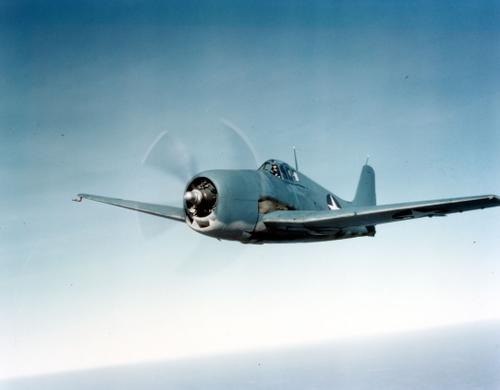
F6F Hellcat

The Grumman F6F Hellcat took over front line fighter duties on the Fleet Carriers from the Wildcat in early 1943 and established itself as the dominant fighter in the Pacific Theater of Operations.  Although it had a resemblance to the F4F the F6F was a totally new design built on combat experience against the Japanese.  The aircraft was built around the powerful Pratt & Whitney R-2800 engine which produced 2000 hp.  The Hellcat mounted six .50 caliber machine guns and had a rate of climb of 3500 feet per minute and a 37300 ft operational ceiling.

Faster than the Zero and other Japanese fighters and piloted by more experienced pilots the Hellcats took a brutal toll of Japanese aircraft.  They accounted for more Japanese aircraft kills than any other with 5163 confirmed kills with a loss of 270 aircraft an overall 19:1 kill ratio. They were piloted by 305 Navy and Marine Corps aces including Meal of Honor winner Captain David McConnell the Navy’s Ace of Aces, and highest surviving United States ace of the war that scored all 34 of his victories in the Hellcat.  The greatest achievement of the Hellcats were when they swept the rebuilt Japanese Naval Air Arm from the skies in the Great Marianas Turkey Shoot. By November 1945 12275 Hellcats had been built with 1263 going to the British Royal Navy. After the war the Hellcat was replaced by the F8F Bearcat as the primary fighter and served in a night fighter and trainer role until the 1950s.  The French Navy used the Hellcat in to provide heroic close air support to beleaguered French Soldiers in Indochina.

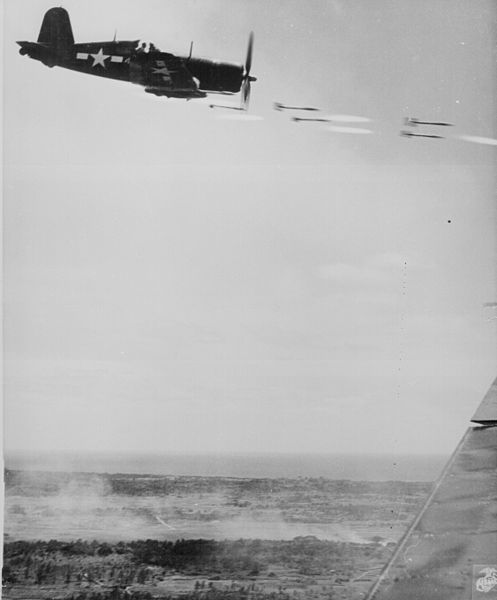
USMC F4U-4 Corsair providing close air support

Flying alongside the F6F was the Vaught F4U Corsair. The Corsair first flew in 1940 and the Navy was slow to adopt it due to difficulties in carrier operations and negative reviews of Navy pilots.  However Marine Corps aviators flying the Corsair had great success and legendary aviators like MAJ Gregory “Pappy” Boyington and VMF-214 the Black Sheep.  The Navy would adopt the aircraft later in the war as the Corsair’s carrier operation deficiencies were remedied, but its real success was a land based aircraft operated by the Marines.  Likewise the first squadrons to operate the aircraft successfully from carriers were the Marine Corps VMF-124 and VMF-213.

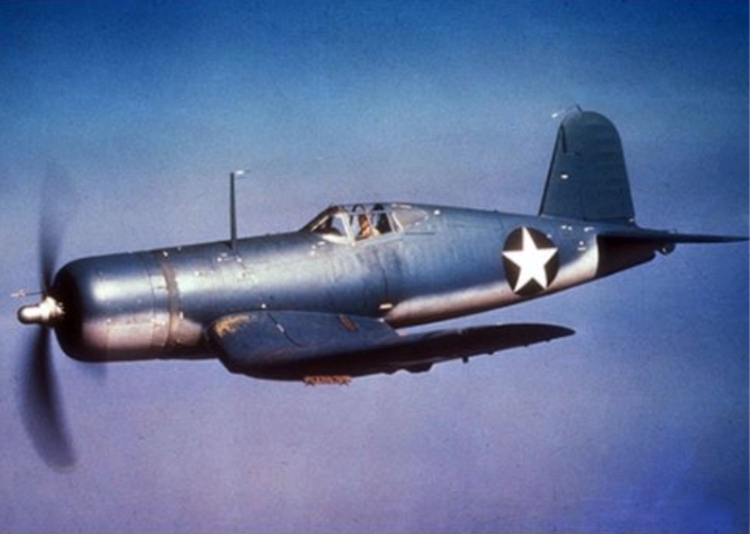
Early F4U-1

The Corsair mounted the same Pratt & Whitney R-2800 engine as the F6F but had a highly streamlined gull wing design as well as a turbo-charger which allowed it a top speed of 425 mph.  Later models such as the F4U-4 had a top speed of 445 mph. The F4F was armed with six .50 cal machine guns as well as rockets and a bomb load of 2000 pounds and the F4U-4 could carry 4000 pounds of ordnance.

Less than 10000 of the over 64000 combat sorties flown by F4Us were flown from carriers, the vast bulk of the sorties coming from land based Marine Corps squadrons.  The Corsair was often used as a fighter bomber where its capabilities to drop sizable amounts of ordinance including rockets, bombs and the nearly developed Napalm in a close air support role cemented the importance of Marine Air for future generations.  They were beloved by the Marine Corps and U.S. Army infantrymen in their brutal battles with the Japanese on many hellish island battlefields.  Corsairs accounted for 2140 confirmed kills during the war against a combat loss of 189 aircraft. The aircraft remained in production until 1952 with 12571 aircraft of all variants being built.  Many Japanese pilots considered the Corsair to be the best fighter of the war.

During the war many served in the British Royal Navy and Royal New Zealand Air Force with good success and after the war the French Navy had success with them in a close air support role in Indochina and Algeria.  Following the war the Corsair remained in service for many years in the U.S. Navy and Marine Corps as well as the French Navy and other smaller navies and air forces until the 1960s.

These amazing aircraft and the men that flew them established a tradition of excellence that the Naval Aviators of the U.S. Navy and Marine Corps continue today.

Peace

Padre Steve+

Leave a comment

Filed under aircraft, US Navy, world war two in the pacific

Bloody Savo: Disaster at Guadalcanal

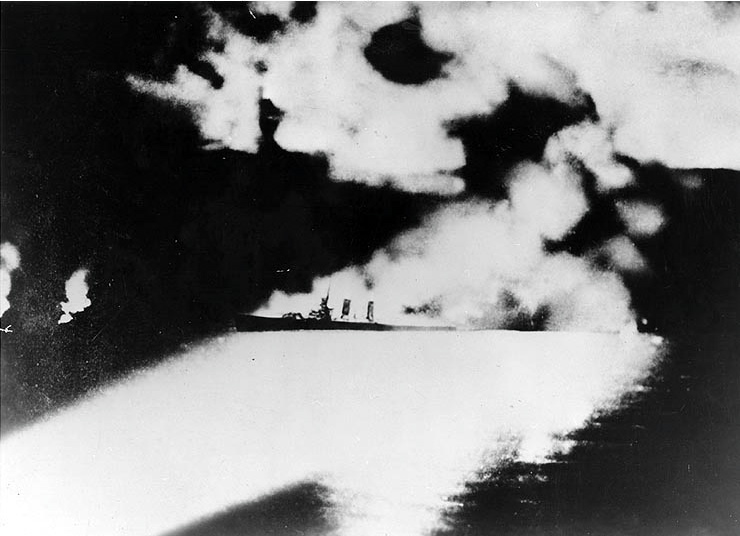
USS Quincy under attack off Savo Island

On August 8th 1942 the U.S. Task Force supporting the invasion of Guadalcanal was tired. The crews of the ships had been in continuous combat operations conducting naval gunfire support missions, fending off numerous Japanese air attacks and guarding against submarine attacks for two days.  The force commanded by Admiral Richmond K. Turner was still unloading materials, equipment and supplies needed by the men of the 1st Marine Division who they had put ashore on the morning of the seventh.

On the afternoon of the eighth Turner was informed by Admiral Frank “Jack” Fletcher that he was pulling his carrier task force out of action. Fletcher alleged that he did not have enough fighter aircraft (79 remaining of an original 98) and as low on fuel.  The carriers had only been in action 36 hours and Fletcher’s reasons for withdraw were flimsy.  Fletcher pulled out and left Turner and his subordinate commanders the responsibility of remaining in the area without air support with the transports still full of badly needed supplies and equipment.

Admiral Gunichi Mikawa

As the American drama played out, the Japanese moved forces into position to strike the Americans.  Admiral Gunichi Mikawa commander of the 8th Fleet and Outer South Seas Force based at Rabaul New Britain quickly assembled a force of 6 heavy cruisers, the 14,000 ton Atago Class Chokai, and the four smaller ships of the Kako Class, the Aoba, Kako, Kinugasa and Furutaka, the light cruisers Yubari and Tenryu and the destroyer Yunagi.   Mikawa raised his flag aboard Chokai and the force sped down “the slot” which ran the length of the of the Solomon’s chain mid day on the seventh.

The Americans had warning of their coming. The first sighting was by B-17s before the Japanese forces had reached Rabaul.  The second was the elderly U.S. Navy submarine S-38 at 2000 on the 7th when they were 550 miles away not far from Rabaul.  This report was discounted because it would not be unusual to find a number of fleet units steaming near a major naval base and fleet headquarters.  The last which should have alerted the allies was a sighting by a Royal Australian Air Force patrol aircraft on the morning of the 8th.  However the pilot did not report the sighting until he returned from his mission returned to his base and had his tea.  The eight hour delay in reporting the information as well as errors in it which reported 2 submarine tenders as part of the force lulled the Allied forces into believing that the Japanese were setting up a seaplane base and posed no threat to the invasion forces. It was a fatal error of reporting and judgment by the pilot.

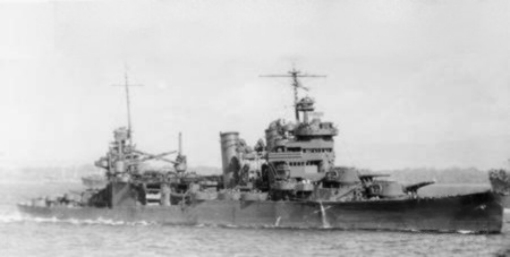
USS Astoria on August 8th off Guadalcanal 

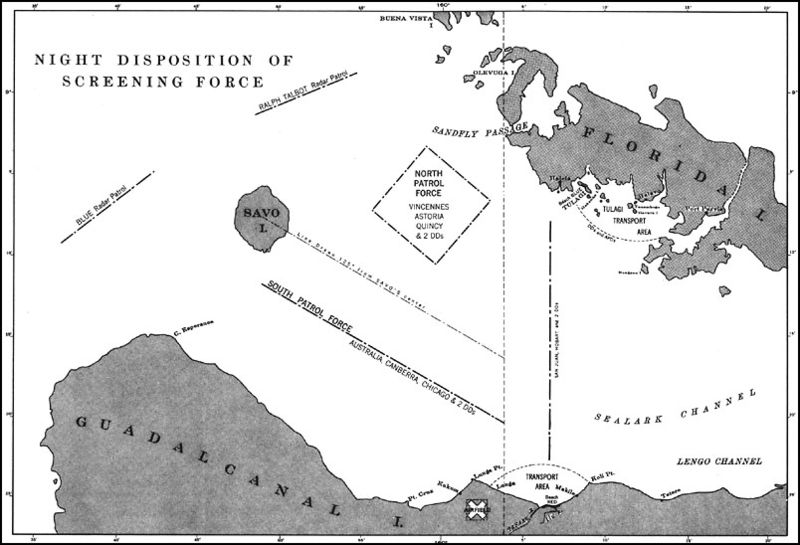
In the absence of good information Turner deployed his support ships to cover the three entrances into what soon would be known as Iron Bottom Sound.  He placed the Anti Aircraft Cruiser USS San Juan and Australian Light Cruiser HMAS Hobart to the east with two destroyers under the command of Rear Admiral Norman Scott. To protect the south west entrance into the sound south of Savo Island Turner placed the Heavy Cruisers USS Chicago, HMAS Australia and HMAS Canberra and two destroyers under the command of Rear Admiral R.A.C. Crutchley RN who in theory commanded the screening force.  To the north of Savo he deployed the Heavy Cruisers USS Vincennes, USS Astoria and USS Quincy and two destroyers under the tactical direction of Captain Frederick Riefkohl aboard Vincennes. To the west of Savo he placed two destroyers to act as picket ships.  Unfortunately these ships radar sets were insufficient and would fail to pick up the approaching enemy.

Allied Dispositions 

During the early evening Turner recalled Crutchley to his flagship for consultations of what to do regarding Fletcher’s retreat.  Crutchley came over in his flagship the Australia denuding the southern force of its commander as well as one of its three heavy cruisers.  He left the commanding officer of Chicago Captain Howard D. Bode in tactical command but Bode did not have his ship take the lead position in the patrol assuming Crutchley would return bymidnight.

Mikawa launched float planes to scout the locations of the American ships and to provide illumination once the battle began.  Some of these aircraft were spotted but no alert measures were taken as many assumed the Japanese to be friendly aircraft.  Many commanding officers were asleep or resting away from the bridge of their ships, lookouts were tired and not expecting the Japanese and Condition Two was set in order to provide some of the tired crews a chance to rest.

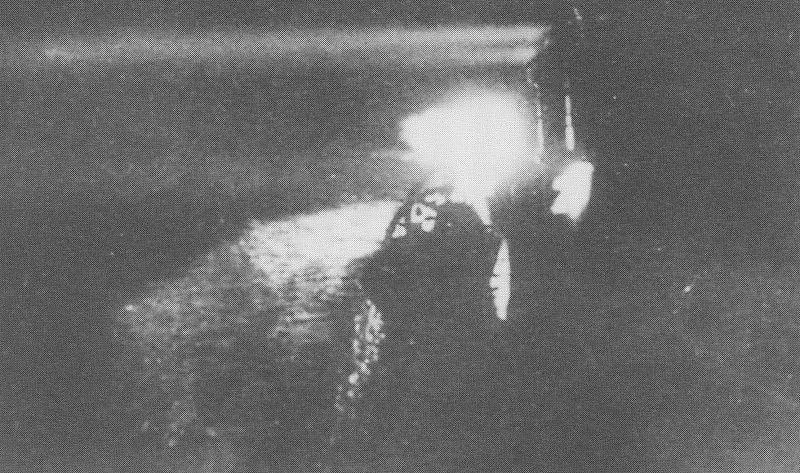
Light Cruiser Yubari illuminating American cruisers at Savo Island 

Admiral Mikawa now new the Allied disposition and ordered his ships to battle stations at 0045.  At 004 he sighted and passed astern of USS Blue the southern picket which also failed to detect the Japanese force.  Mikawa assumed that the destroyer might have reported his presence, briefly turned north but turned back to his original course when a lookout allegedly spotted a destroyer to his northeast.  He gave the order to attack at 0132 and promptly spotted the American destroyer USS Jarvis which had been heavily damaged and without radio communications was making her way toAustralia for repair and passed her after some ships fired torpedoes and raced toward the southern force at 26 knots.  With the southern force just a few miles away Mikawa ordered his ships to commence firing at 0136 and at 0138 torpedoes had been launched.

Mikawa’s flagship heavy Cruiser Chokai

Even now the southern force was unaware of Mikawa until at 0143 the destroyer USS Patterson on the far side of the action saw Mikawa’s ships bearing down a mere 5000 yards from the force. Her commander radioed “STRANGE SHIPS ENTERING HARBOR” but the alert came too late.  As Patterson signaled her warning Japanese float planes dropped their illumination flares silhouetting the Chicago and Canberra as the Japanese cruisers opened fire at ranges from 4500 to 9000 yards.  At 0143 Canberra was struck by to torpedoes and 24 shells, mostly 8” from the cruisers. Her Captain was killed and she was mortally wounded.  The Japanese brushed off the attempts of Patterson and the other southern force destroyer the USS Bagley to intervene bypassing them quickly and shifting their fire to Chicago. Chicago was stuck by a torpedo at 0147 and a single hit from a cruiser which caused little damage. Chicago briefly engaged the Yunagi at 0151 which had been sent back to cover the Japanese as they moved north.  With his ship crippled Captain Bode failed to warn the northern force of the Japanese attack.

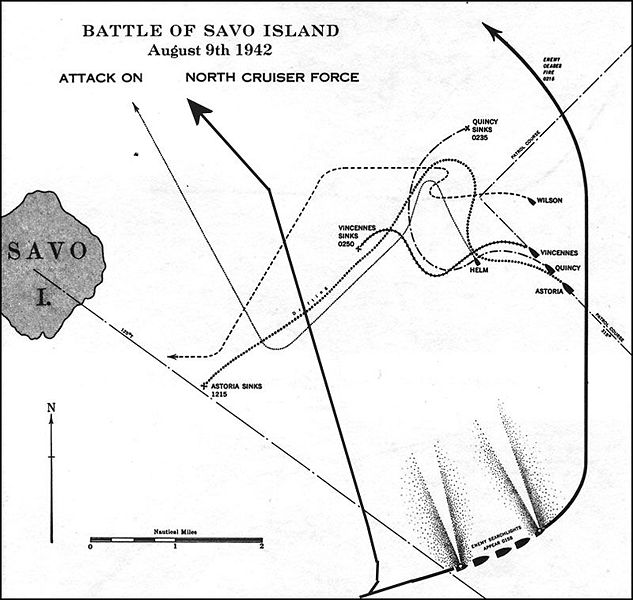
Mikawa’s lookouts spotted the northern group at 0144 and changed course. The maneuver was badly executed and left the Japanese in two columns as they swiftly closed on the Americans.  Mikawa’s flagship Chokai launched torpedoes at 0148 and Astoria the cruiser closest to the Japanese set general quarters at 0145 and at 0150 the Japanese illuminated her with searchlights and opened fire. Astoria under the direction of her gunnery officer returned fire at 0152 ½ just before her Captain came to the bridge unaware of the situation. He ordered a cease fire until he could ascertain who he was firing at assuming the Japanese to be friendly ships.  He delayed 2 minutes and ordered fires commenced at 0154 but the delay was fatal. Astoria had opened fire on the Chokai which then had time to get the range on the American cruiser and hit her with an 8” salvo which caused fires which provided the other Japanese ships an aiming point.

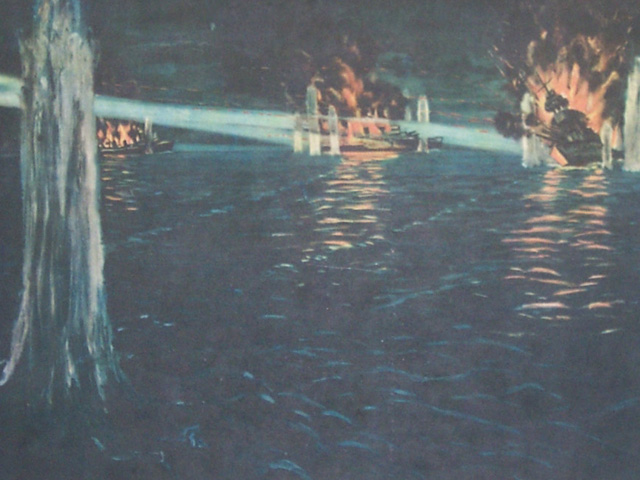
Japanese artist depiction of attack on US Navy Cruisers at Savo Island

Astoria was left burning and heavily damaged barely maintaining headway but attempted to fight on scoring a hit on Chokai’s forward turret even as the Japanese opened up on the next cruiser in line the USS Quincy.  Quincy caught between the two Japanese columns.  Aoba illuminated her with her searchlight and Japanese forces opened fire. The gunnery officer order Quincy to return fire getting two salvos off before her skipper Captain Samuel Moore came to the bridge, briefly ordered a cease fire assuming that he was firing on Americans and turned on his running lights.  Quincy was ripped by salvo after salvo which killed Captain Moore and nearly everyone in the pilothouse just as a torpedo ripped into her engineering spaces turning them into a sealed death trap forcing the engineer to shut down the engines.  Burning like a Roman candle Quincy was doomed she was ordered abandoned and capsized and sank at 0235. However Quincy did not die in vain, at 0205 two of her 8” shells hit Chokai causing enough damage the Admiral’s chart room that Mikawa would order a withdraw at 0220 which spared the now defenseless American transports.

Vincennes the lead ship and flagship was next in the line of death.  Captain Reifkohl order General Quarters sounded not long after the Japanese illuminated the southern group.  At 0150 Vincennes was lit up by the searchlights of three Japanese ships which opened fire on her. Vincennes returned fire at 0153 hitting Kinugasa before she was hit starting fires on her scout planes mounted on their catapults. The Japanese mauled Vincennes, three possibly four torpedoes ripped into her as shells put ever gun out of action. At 0215 she was left burning and sinking by the Japanese who soon withdrew from the action.  Ordered abandoned she sank at 0250.

Canberra being evacuated by the Patterson and Blue

Canberra struggled against the odds but was abandoned and was sent to the bottom by an American torpedo at 0800.  Astoria also struggled for life but the damage was too great and she was abandoned sinking at 1215.  Mikawa withdrew up the sound but on his return the Heavy Cruiser Kako 70 miles from home was sunk by torpedoes from the American submarine S-44 sinking in 5 minutes.

The Americans and Australians lost 4 Heavy Cruisers sunk and one heavily damaged as well as two destroyers damaged.  Killed on the various ships Quincy-389, Vincennes-342, Astoria235, Canberra-85, Ralph Talbot-14, Patterson-10, and Chicago-2.

It was an unmitigated disaster, an allied force destroyed in less than 30 minutes time.  Boards of inquiry were held and Captain Bode hearing that he shouldered much blame killed himself in 1943.

It was a rude awakening to a Navy which had believed that technical advances would give it victory and which was not yet in the words of Admiral King “sufficiently battle minded.”  It was the first of many equally bloody battles in the waters aroundGuadalcanal.

2 Comments

Filed under History, Military, Navy Ships, US Navy, world war two in the pacific

The Great Marianas Turkey Shoot

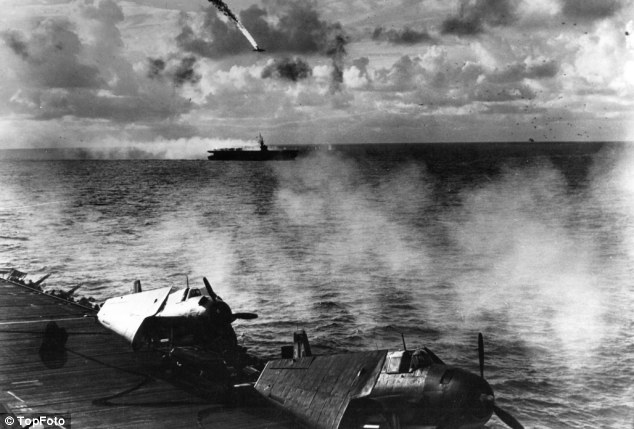
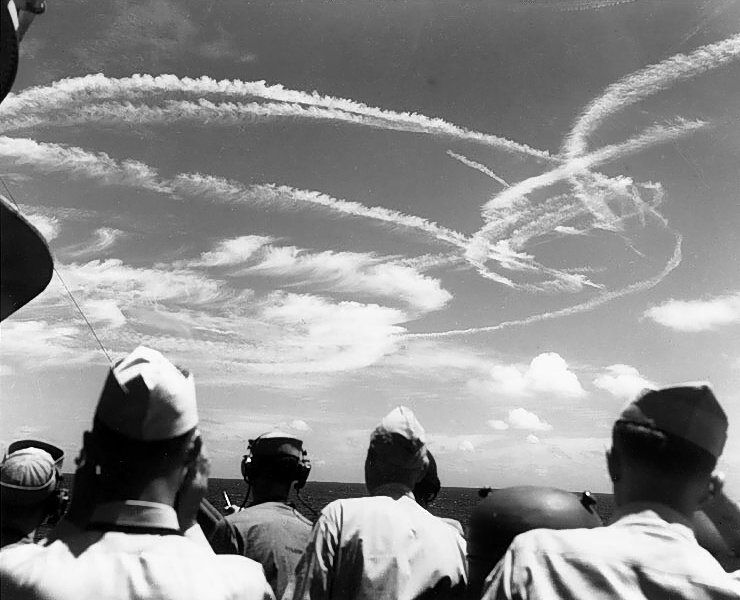
U.S. Navy personnel observe the Air Battle from a Carrier

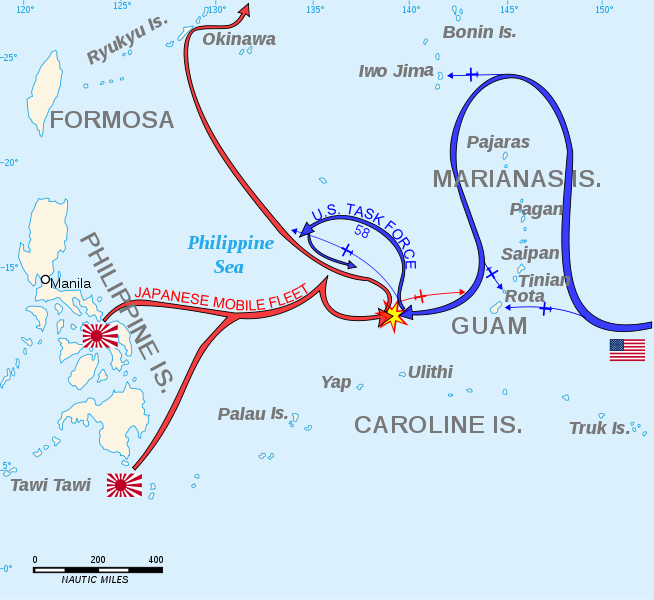
The Battle of the Philippine Sea of 19-20 June 1944 was the largest carrier battle in history.  Twenty four aircraft carriers, 15 American and 9 Japanese embarking over 1400 aircraft dueled in the Central Pacific in a battle that so decimated Japanese Naval Aviation that it never recovered. The battle and the subsequent fall of Saipan brought down the government of General Tojo and was the beginning of the collapse of the Japanese Empire and the “Greater Asia Co-Prosperity Sphere.”  

http://dsc.discovery.com/videos/destroyed-in-seconds-marianas-turkey-shoot.html

In late 1943 the Japanese realized that they needed to recover the initiative in the Pacific.  Between the Battle of the Coral Sea and the Battle of Santa Cruz Japanese Naval aviation suffered crippling losses especially among the elite pilots and aircrews with who they had begun the war.  These losses were compounded when the Navy attempted to support the operations of the Army to defend the Solomons and New Guinea.  Squadrons sent to battle the United States Navy, Marine Corps and Army Air Corps suffered at the hands of the every more skilled and well equipped American fighter squadrons the victims of which included Admiral Isoruku Yamamoto the Commander of the Combined Fleet when the Betty bomber that he was traveling on was ambushed by U.S. Army Air Corps P-38 Lightening fighters.

Vice Admiral Jisaburō Ozawa

By late 1943 the Japanese were attempting to train new pilots and aircrews to man the carriers of the Combined Fleet’s Carrier Striking Forces.  Admiral Soemu Toyoda, the new commander of the Combined Fleet and its third commander in less than a year developed “Plan A-Go” as a means to mass carrier and land based aviation assets to defeat the Fast Carrier Task Forces of the United States Navy.  The rebuilt Carrier Striking Groups built around 9 carriers embarking 473 aircraft was commanded by Vice Admiral Jisaburō Ozawa who had taken over from Vice Admiral Chuichi Nagumo.

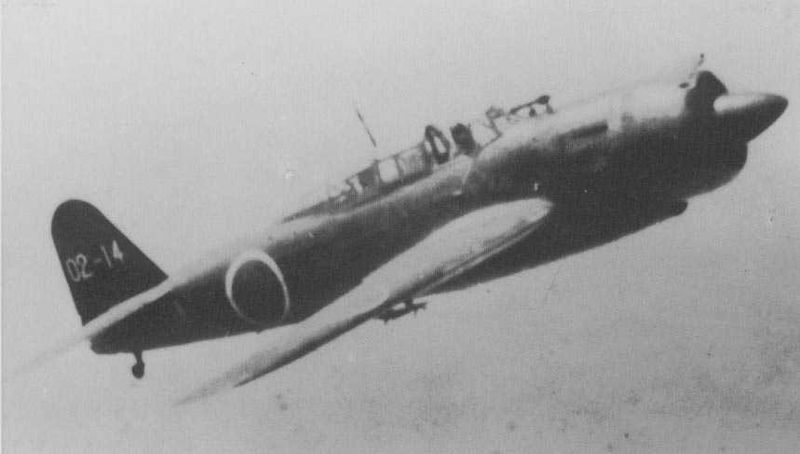
D4Y3 “Judy” Dive Bomber

The Japanese discerned the intentions of the Americans when American Carrier aircraft struck Saipan and Guam. The Japanese had expected the Americans to strike further south and the Marianas had few land-based aircraft in the area. Toyoda made the decision to engage the Americans and ordered the fleet to attack. American submarines discovered the gathering Japanese forces. The Japanese forces were assembled by the 17th and by the 18th the 5th Fleet under the command of Admiral Raymond Spruance spearheaded by Task Force 58 Commanded by Vice Admiral Marc Mitscher had assembled west of Saipan to meet the Japanese.  The Americans fielded 15 carriers including 9 Fleet Carriers of which 6 were the new Essex Class Fleet Carriers which embarked 956 aircraft.

The F6F Hellcat cemented its place as the premier fighter plane of the Pacific war during the “Turkey Shoot”

The Americans held both a quantitative and qualitative advantage against the Japanese. The American fighter squadrons were equipped with the F6F Hellcat which was far superior to the now obsolescent Japanese Zero fighters and their pilots and aircrews were now more experienced and proficient than the newly minted Japanese aviators who by and large had little combat experience and were flying inferior aircraft.  The Japanese had not planned for a long war and had done little to systemically address the heavy losses that their force experienced during 1942 and 1943 at Coral Sea, Midway, Eastern Solomons, Santa Cruz and in the Solomons campaign.

Vice Admiral Marc Mitscher aboard the USS Lexington

Mitscher desired to move aggressively against the Japanese. However he was overruled by Spruance who acting on the advice of his Battle Line Commander Vice Admiral Willis Lee decided that a possible night surface action with the Japanese was not desirable. Spruance instead directed Mitscher to be ready to defend against Japanese air strikes knowing that his carriers and carrier based air groups was more than a match for the Japanese air groups.   Spruance has been criticized for his decision but the words of Willis Lee, a veteran of the Naval Battle of Guadalcanal where he defeated a Japanese force sinking the Battleship Kirishima.  He prevailed in his flagship the USS Washington but losing three of four escorting destroyers and seeing his second battle wagon the USS South Dakota heavily damaged. A night surface engagement was not worth the risk as in Lee’s eyes it evened the playing field for the Japanese and took away the American air power advantages.

A Japanese aircraft goes down in flames

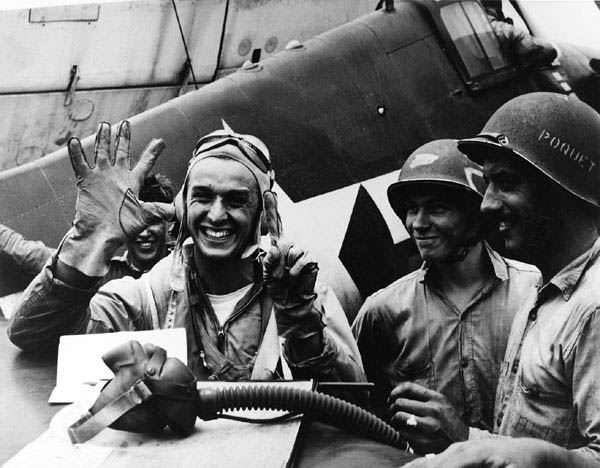
The Japanese began the action on the 19th sending successive attack waves against Task Force 58. They were met by massed formations of Hellcats vectored in by air controllers in the Combat Information Centers of the American carriers using their superior air search radar systems.  In less than two hours well over 200 Japanese aircraft were downed by the Hellcats.  Lieutenant Alexander Vraicu shot down 6 “Judy” dive bombers in minutes before low on fuel he returned to the USS Lexington.

Lieutenant Alexander Vraicu holds up six fingers on board the USS Lexington

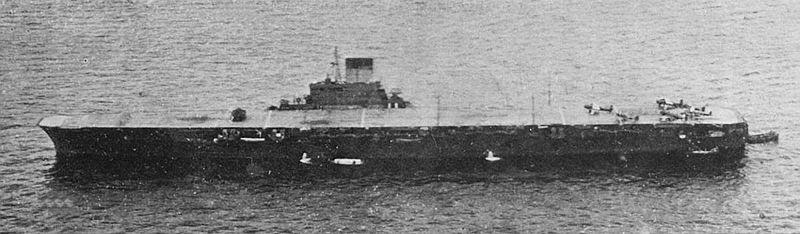
While the Hellcats were chewing up the Japanese squadrons the American submarines USS Albacore and USS Cavalla each sank a Japanese Fleet Aircraft Carrier.  The Albacore hit the Ozawa’s flagship, the new Tiaho with a torpedo which caused minimal damage, but ruptured fuel lines. The Japanese damage control officer opened vents in the ship which allowed the fumes to spread throughout the carrier. They were ignited by a generator causing massive explosions and forcing Ozawa to abandon his flagship. Tiaho would sink by late afternoon after being ripped apart by a series of massive explosions taking with her 1650 of 1750 officers and crew. Cavalla hit the Pearl Harbor veteran Shokaku with a spread of three torpedoes causing that ship to burst into flames with aircraft and ordnance adding to the conflagration. A massive explosion ripped through the ship causing her to sink with a loss of over 1200 officers and crew.

The Japanese flagship Tiaho and her killer the USS Albacore

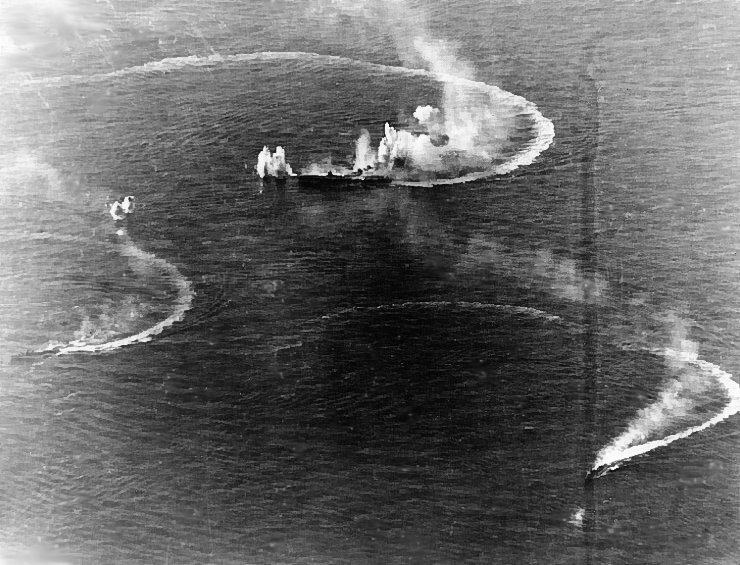
Toyoda desired that Ozawa retire from the battle before he suffered more losses but Ozawa wanted to stay around and hit the Americans with everything that he had left. The Americans sailed west during the night to seek out the Japanese Fleet. It took the majority of the day to find the Japanese. With only 75 minutes of daylight remaining Mitscher launched a strike despite the risk to his aircrew the majority whom were not trained in night landings.  The American strike sank the carrier Hiyo and two tankers and damaged the carriers Zuikaku, Chitoyda and Junyo as well as the battleship Haruna.  By the end of the day Ozawa had 35 aircraft in flyable condition.

The Japanese Fleet under attack, carrier Zuikaku and two destroyers on June 20th

The final part of the drama was the return of the American strike group to the carriers. Knowing that if he maintained darken ship he would lose many aircraft and the men that flew them Mitscher ordered that the fleet turn on its lights. This act though incredibly risky helped bring the majority of the aircraft to land or ditch near the task force.  The Americans lost less than 100 aircraft many due to the night landings and many of the aircrew were rescued. The Japanese also lost nearly 200 land based aircraft.

Admiral Raymond Spruance

The battle was the death-kneel of Japanese Naval Aviation. Later in the year the carriers again under Ozawa sailed against the Americans only this time they were a decoy force at the Battle of Leyte Gulf, a role that they succeeded in admirably. The American carriers now had free run of the Pacific only opposed by land based aircraft many used in a Kamikaze role until the end of the war. These would cause fearful losses among the American ships heavily damaging a number of carriers.

The battle is often forgotten by due to its proximity to the Normandy landings but was a significant step in the fight against Japan. The islands captured by the Americans, Saipan, Tinian and Guam would provide major sea and air staging areas for the final assault against Japan. Tinian would become the base of many Army Air Corps B-29 “Superfortress” bombers including those that dropped the Atomic bombs less than 14 months later. It was a turning point both militarily and politically. With the fall of the Tojo government the Japanese leaders began to slowly tell the truth about wartime setbacks and losses to a people that it had lied to since their invasion of China and occupation of Mongolia.  It was a setback that even Tojo and the highest leadership of Japan knew that they could not recover.

5 Comments

Filed under History, Military, US Navy, world war two in the pacific

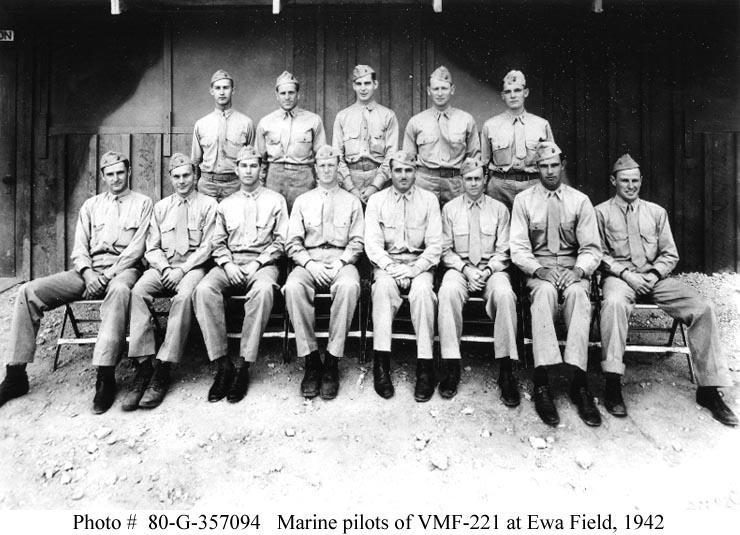
Hawks at Angels 12: The Sacrifice of VMF 221 and VSMB 241 at Midway

One of the more overlooked aspects of the Battle of Midway is the sacrifice of Marine Fighter Squadron 221 on the morning of June 4th 1942.   The Marine aviators flying a mix of 21 obsolescent Brewster F2A-3 Buffalos and 7 Grumman F4F-3 Wildcats engaged a vastly superior force of Japanese Navy aircraft as they vectored toward the atoll to begin softening it up for the planned invasion.

Led by Major Floyd Parks the squadron had arrived at Midway on Christmas day 1941 being delivered by the USS Saratoga after the aborted attempt to relieve Wake Island.  The squadron along with Marine Scout Bombing Squadron 241 (VMSB 241) formed Marine Air Group 22.  They fighter pilots of VMF-221 scored their first victory shooting down a Japanese Kawanishi H8K2 “Emily” flying boat. The squadron which initially was composed of just 14 aircraft, all F2A-3’s was augmented by 7 more F2A-3s and 7 of the more advanced F4F-3s before the battle.
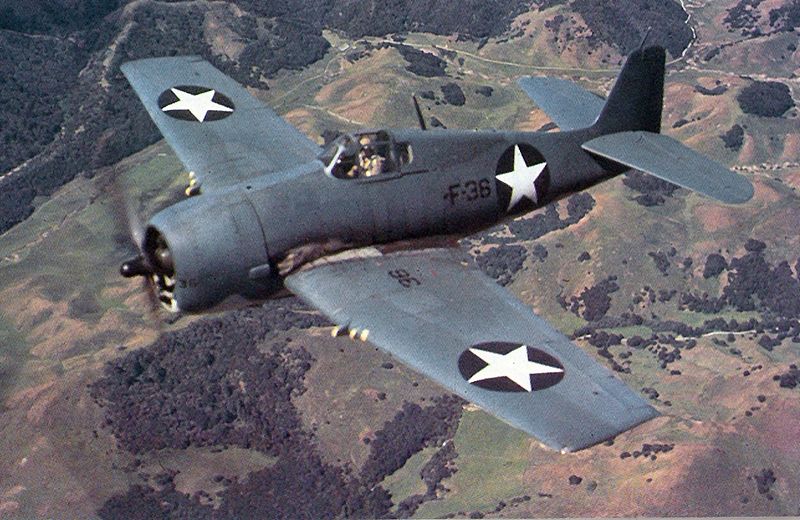
When the Japanese First Carrier Striking Group was spotted in the wee hours of June 4th the Marines and other aircrew aboard Midway scrambled to meet them.  The 18 SBD-2 Dauntless’ and 12 Vought SB2-U3 Vindicator dive bombers of VMSB-241, the 6 TBF Avengers of the Navy Torpedo Eight detachment, 4 Army Air Corps B-26 Marauders and 15 B-17 Flying Fortresses flew out to attack the Japanese carriers while the fighters rose to intercept the 108 aircraft heading toward Midway. The 72 strike aircraft, 36 Aichi 99 Val Dive Bombers and 36 Nakajima B5N Torpedo/ High Level Bombers were protected by 36 AM6-2 Zeros which thoroughly outclassed the Marine opponents in speed, maneuverability and in the combat experience of their pilots.
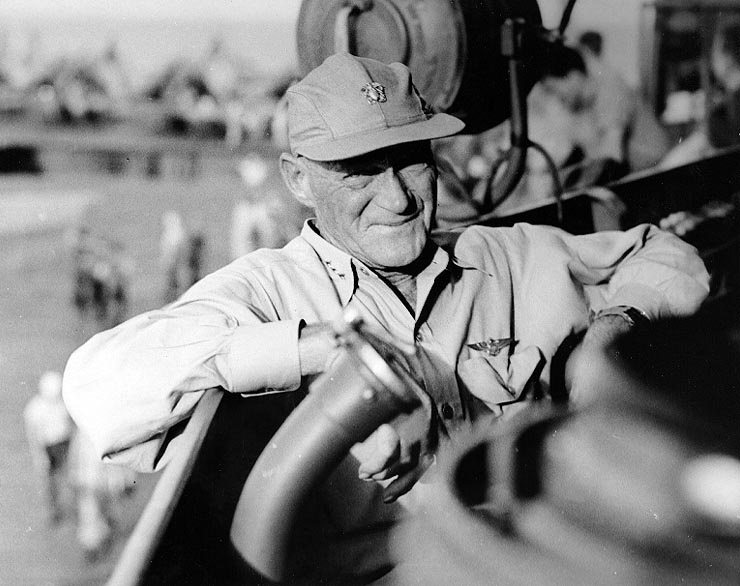
The Marines audaciously attacked the far superior Japanese force, throwing themselves against the Japanese phalanx with unmatched courage.  Despite their courage the Marine fighters were decimated by the Japanese Zeros.  The Marines shot down 4 Val dive bombers and at least three Zeros but lost 13 Buffalos and 3 Wildcats during the battle.  Of the surviving aircraft only three Buffalos and three Wildcats were in commission at the end of the day. Among the casualties killed was Major Parks.  Of the surviving pilots of VMF-221, two became “Aces” during the war. Lieutenant Charles M. Kunz would later fly in VMF-224, adding six victories to end the war with 8 victories. Capt. Marion E. Carl would later fly in VMF-223 raising his score to 18.5 Japanese aircraft shot down.  Other pilots like 2nd Lieutenant Clayton M. Canfield shot down two additional aircraft while flying with VMF-223. 2nd Lieutenant Walter W. Swansberger won the Medal of Honor at Guadalcanal.

The last remaining Marine fighter pilot of VMF-221 from the battle of Midway, Williams Brooks died in January 2010 and was buried with full military honors, in Bellview , Nebraska.  Brooks in his after action report described his part in the battle:

I was pilot of F2A-3, Bureau number 01523, Our division under Capt. Armistead was on standby duty at he end of the runway on the morning of June 4, 1942, from 0415 until 0615. At about 0600, the alarm sounded and we took off. My division climbed rapidly, and I was having a hard time keeping up. I discovered afterwards that although my wheels indicator and hydraulic pressure indicator both registered “wheels up”, they were in reality about 1/3 of the way down. We sighted the enemy at about 14,000 feet, I would say that there were 40 to 50 planes. At this time Lt. Sandoval was also dropping back. My radio was at this time putting out no volume, so I could not get the message from Zed. At 17,000 feet, Capt. Armistead led the attack followed closely by Capt. Humberd. They went down the left of the Vee , leaving two planes burning. Lt. Sandoval went down the right side of the formation and I followed. One of us got a plane from the right side of the Vee. At this time, I had completely lost sight of my division. As I started to pull up for another run on the bombers, I was attacked by two fighters. Because my wheels being jammed 1/3 way down, I could not out dive these planes, but managed to dodge them and fire a burst or so into them as they went past me and as I headed for the water. As I circled the island, the anti-aircraft fire drove them away. My tabs, instruments and cockpit were shot up to quite an extent at this time and I was intending to come in for a landing. 

It was at this time that I noticed that a important feature in their fighting. I saw two planes dog-fighting over in the east, and decided to go help my friend if at all possible. My plane was working very poorly, and my climb was slow. As I neared the fight both planes turned on me. It was then that I realized I had been tricked in a sham battle put on by two Japs and I failed to recognize this because of the sun in my eyes. Then I say I was out-numbered, I turned and made a fast retreat for the island, collecting a goodly number of bullets on the way. After one of these planes had been shaken, I managed to get a good burst into another as we passed head-on when I turned into him. I don’t believe this ship could have gotten back to his carrier, because he immediately turned away and started north and down. I again decided to land, but as I circled the island I saw two Japs on a Brewster. Three of my guns were jammed, but I cut across the island, firing as I went with one gun. But I could not get there in time to help the American flier and as soon as the Brewster had gone into the water I came in for a landing at approximately 0715 (estimated). 

VMF-221 was composed of the following aircraft and pilots.

FIRST DIVISION (F2A-3)

Plane # Bu.No.  Pilot                                                               Status

MF-1     01518    Maj. Floyd B. Parks USMC                          MIA

MF-2     01548    2nd Lt. Eugene P. Madole USMCR            MIA

MF-3     01525    Capt. John R. Alvord USMC                        MIA

MF-4     01537    2nd Lt. John M. Butler USMCR                   MIA

MF-5     01569    2nd Lt. David W. Pinkerton Jr. USMCR      MIA

MF-6     01552    2nd Lt. Charles S. Hughes USMCR, Did not engage, turned back due to Engine problems


SECOND DIVISION (F2A-3)

Plane # Bu.No.  Pilot                                                                 Status

MF-7     01552    Capt. Daniel J. Hennessey USMC              MIA

MF-8     01541    2nd Lt. Ellwood Q. Lindsay USMCR                 MIA

MF-9     01524    Capt. Herbert T. Merrill USMC                   Bailed out WIA

MF-10   01528    Capt. Herbert T. Merrill USMC            MIA

MF-11   01568    Capt. Phillip R. White USMC                       Survived

MF-12   01542    2nd Lt. John D. Lucas USMCR                      MIA


THIRD DIVISION (F2A-3)

Plane#  Bu.No.  Pilot                                                               Status

MF-13   01562    Capt. Kirk Armistead USMC                      Survived

MF-14   01563    2nd Lt. William B. Sandoval USMCR         MIA

MF-15   01553    Capt. William C. Humberd USMC            Survived

MF-16   01523    2nd Lt. Williams V. Brooks USMCR           WIA

MF-17   01521    2nd Lt. Charles M .Kunz USMCR               WIA

MF-18   01559    2nd Lt. Martin E. Mahannah USMC           KIA (his body washed up later)

23 (F4F-3) 3989  2nd Lt. Walter W. Swansberger USMCR   Survived


FOURTH DIVISION (F2A-3)

Plane # Bu.No.  Pilot                                                                Status

MF-19   01520    Capt. Robert E. Curtin USMC                     MIA

MF-20   01550    2nd Lt. Darrell D. Irwin USMCR                       Survived


FIFTH DIVISION (F4F-3)


Plane # Bu.No.  Pilot                                                                Status

22           4008       Capt. John F. Carey USMC                          WIA

24           4000       Capt. Marion E. Carl USMC                         Survived

25           3997       2Lt. Clayton M. Canfield USMCR                Survived

26           4006       Capt. Francis P. McCarthy USMC               MIA

27           2532       2nd Lt. Roy A. Corry USMC                              Survived

28           1864       2nd Lt.Hyde Phillips USMCR                            Did not engage, mechanical problems

As for VMF-221 it was re-equipped with the F4F-4 and later with the F4U Corsair during the course of two more deployments overseas.  VMF-221 finished the war with a score of 155 victories, 21 damaged and 16 probable kills, the second highest total of any Marine Corps Squadron during the war.

SB2-U2 Vindicator of VMSB 241 at Midway

Their bomber counterparts of VMSB 241 attacked the Japanese task force on the morning of June 4th and scored no hits while losing 8 aircraft. The survivors were again in action later in the day as well as the following day where they helped sink the Japanese Heavy Cruiser Mikuma with their squadron leader Major Henderson diving his mortally wounded aircraft into the cruiser’s number 4 8” gun turret.While the Marines’ actions are not as well known or as successful as those of their Navy counterparts they were brave.  Fighter pilots had to engage some of the most experienced pilots flying superior machines while the bomber crews had little to no experience before being thrown into combat. As we remember the sacrifices made by the men of Midway let us not forget the gallant men of VMF-221 and VSMB-241.

Peace

Padre Steve+

27 Comments

Filed under History, Military, Navy Ships, world war two in the pacific