Category Archives: world war two in the pacific

The Ships that Held the Line: The Yorktown Class Carriers, Part One, the Yorktown

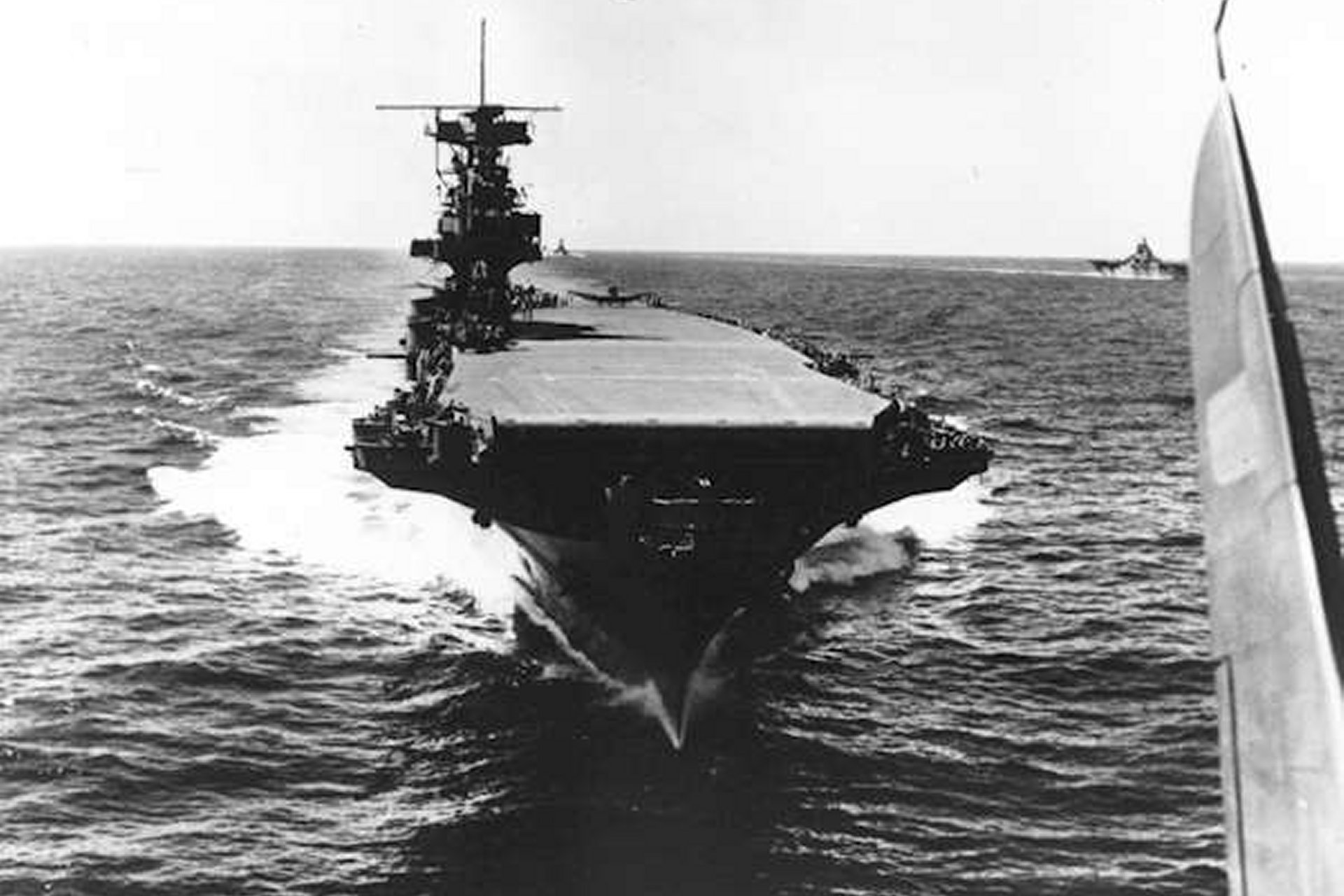
USS Yorktown CV-5

Friends of Padre Steve’s World,

I have been continuing to read and pay attention to the current developments in the COVID-19 pandemic.  Though I have already written a fair amount about it, I still have much to lean. I am still studying models on the spread of it, current numbers of total infections, new infections, and deaths in this country and around the world, as well as reading about the 1918-1919 Great Influenza. Finally I am trying to take in the current political and social disruption, the virus is causing, as well as the ever increasing threats of revolt and harm being mounted against the politicians and scientists who are actually following sound policies to slow the spread of the virus so it does not overwhelm our hospital system until successful treatments and a vaccine can be found. Sadly, much of this is coming in response to words and Tweets of President Trump, and appears to be a coordinated, and not spontaneous protest against the social distancing, isolation, and other restrictive measures to slow the spread of the disease. This perplexes me as a civil rights advocate, historian, defender of the First Amendment, as well as a veteran who has worked as a Medical Service Corps Officer and Critical Care Chaplain in two previous pandemics. 

As you can imagine that takes time to do, and I won’t shoot from the hip when I start writing new articles on the virus and its spread, the response, the casualties, and the political and social battle being waged by extremists using it as an excuse to promote their ideology. But I digress, I can write about that later. So tonight I go back to a less controversial subject, about which I know much, and have written about before. 

This article is part one of a three part series about the USS Yorktown Class Aircraft Carriers. Part one serves as an introduction as well as the story of the lead ship of the Class, the USS Yorktown CV-5. I wish you the best tonight, as well as tomorrow. Please be safe.

Peace,

Padre Steve+

Seldom in the annals of war is it recorded that three ships changed the course of a war and altered history as we know it. After December 7th 1941, the three ships of the Yorktown Class Aircraft Carriers, the USS Yorktown, USS Enterprise , and USS Hornet served as the shield against the seemingly unstoppable Japanese string of victories, and then served as the spearhead of the American counteroffensive that began far earlier that the Japanese imagined in the spring and summer of 1942.

Winston Churchill once said about Fighter Command of the Royal Air Force during the Battle of Britain: “Never in the field of human conflict was so much owed by so many to so few”.  However, in addition to that remarkable event, I would place the epic war waged by the three carriers of the Yorktown class against the Japanese Combined Fleet and First Carrier Strike Group, the Kido Butai of the Imperial Japanese Navy between December 1941 and November 1942 alongside the epic fight of the Royal Air Force against Hitler’s Luftwaffe.

USS Yorktown and Enterprise under Construction, Newport News Virginia, at the dock above either the USS Boise or St.Louis 

The Carriers of the Yorktown Class hold a spot in United States Naval History nearly unequaled by any other class of ships, especially since they were a class that numbered only three ships.  Designed and built in the mid 1930s they were the final class of pre-war carriers commissioned by the U.S. Navy

Unlike their predecessors they were no longer experimental ships. They were built incorporating the lessons learned through operational experience with the USS Langley, USS Lexington, USS Saratoga and USS Ranger. The Class had features that would become standard in the design of all future US Aircraft Carriers. As such they were the template for future classes of ships beginning with the Essex Class until the advent of the super carriers of the Forrestal Class. 

Yorktown Refueling Underway

The ships displaced 19.800 tons with a 25,000 full load displacement. They were capable of steaming at 32.5 knots, and they were the Navy’s first truly successful class of carriers built from the keel up.  The ships could embark over 80 aircraft and could steam long distances without refueling.  Protection was good for their era and the ships proved to be extraordinarily tough when tested in actual combat. In speed and air group capacity the only carriers of their era to equal them were the Japanese Hiryu and Soryu and the larger Shokaku and Zuikaku. British carriers of the period were about the same size but were slower, had a shorter range of operations, and carried a smaller and far less capable air group. However, their protection which included armored flight decks and hull armor that was superior to both the American and Japanese ships. That would prove particularly valuable in their survival, particularly in the Mediterranean Sea against massed attack by the German Luftwaffe.

Yorktown Operating Near the Coral Sea

The lead ship, the Yorktown CV-5 was laid down in 1934 and commissioned on 30 September 1937 at Newport News Shipbuilding.   She served in the Atlantic conducting carrier qualifications and operating with her sister ship USS Enterprise CV-6  to develop the tactics and operational procedures that would be used by US carrier forces until she joined the Pacific Fleet in late 1939.

Upon joining the Pacific Fleet, Yorktown took part in various major fleet exercises and due to the deteriorating situation in the Atlantic was transferred back to the Atlantic Fleet along with other significant Pacific Fleet units to screen convoys bound for Britain against U-Boat attacks. Yorktown was at Norfolk when the Japanese attacked Pearl Harbor and 9 days later she departed for the Pacific where she would join Rear Admiral Frank “Jack” Fletcher’s Task Force 17 (TF-17) at San Diego on December 30th 1941.

Her first duty to escort a convoy ship transporting Marine reinforcements to Samoa.  This was followed by the first American offensive action of the war, a raid on the Gilbert Islands including Makin Island in late January, and against eastern New Guinea in March. On May 4th the Yorktown’s air group attacked Japanese installations on Tulagi and Gavutu sinking the Japanese destroyer Kikuzuki.


The actions of Yorktown and TF-17 in the Solomons were connected to the Japanese attempt to capture Port Moresby, in preparation for attacking Australia. The Japanese forces were led by a task force centered on the carriers  Shokau and Zuikaku and the light carrier Shoho. The Americans parried the Japanese thrust with Task Group 11 centered on the USS Lexington and Fletcher’s Task Force 17 built around Yorktown.

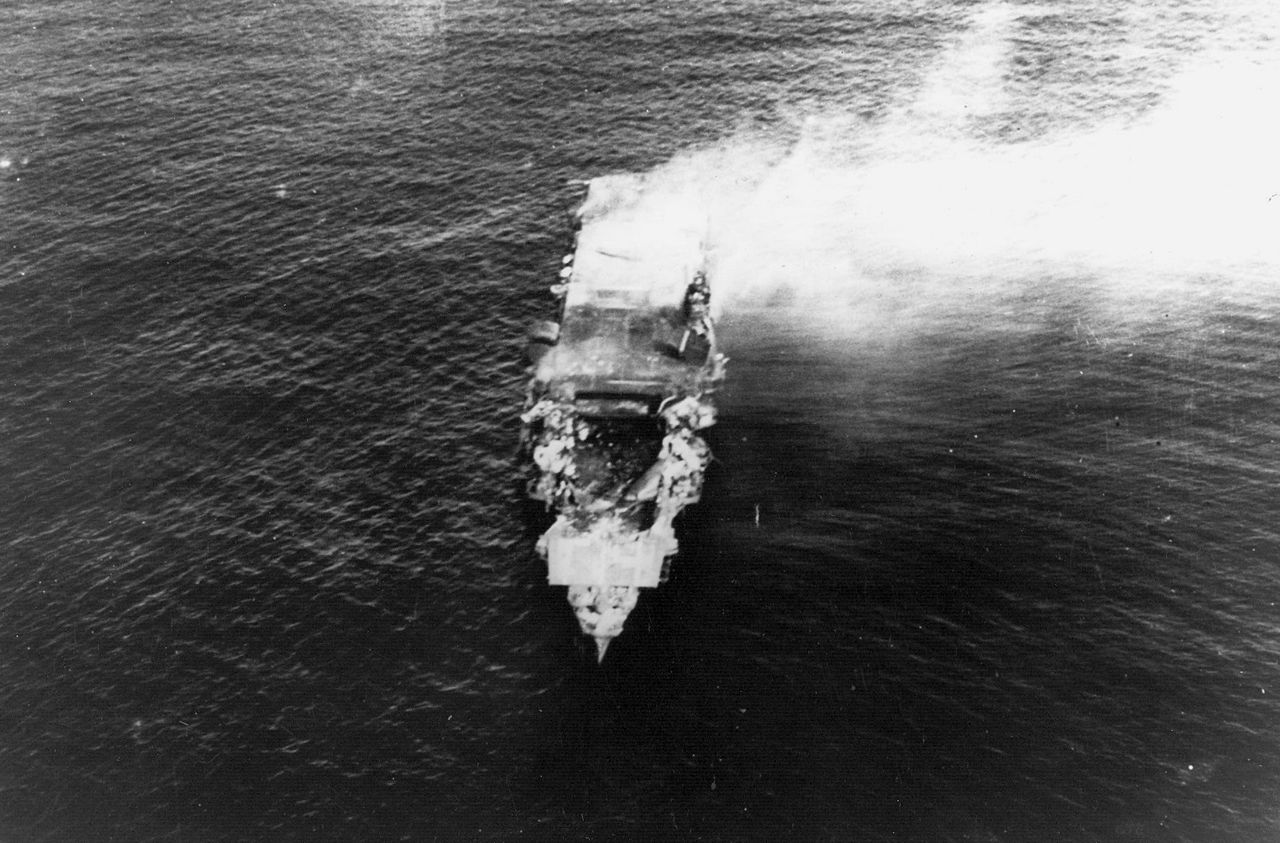
Yorktown’s Nemesis The IJN Hiryu

The clash of the Japanese and American forces on the 7th and 8th of May 1942  is known as the Battle of the Coral Sea.  This was the first Naval Battle fought by forces that did not come within visual distance of each other, and which was fought exclusively by carrier based aircraft against the ships and aircraft of the opposing forces.

On the 7th Japanese aircraft busied themselves attacking the oiler USS Neosho and destroyer USS Sims, sinking Sims and damaging Neosho so badly that her shattered hulk would be sunk by US destroyers on the 11th. As the Japanese aircraft worked over the unfortunate Sims which went down with all hands, Neosho, while aircraft from the Yorktown and Lexington attacked and sank the Shoho.

On the May 8th the main event began.  Aircraft from Yorktown scored two bomb hits on Shokaku holing her flight deck, starting fires and knocking her out of the fight.  The Japanese countered and their aircraft discovered the US ships scoring two torpedo and three bomb hits on Lexington which would result in her loss when fumes were ignited by a generator causing catastrophic explosions which forced her abandonment. Lexington was lost more to poor damage control and failure to cut off fuel from damaged lines, than it was to battle damage.

TBD Devastators from Yorktown Operating in the Solomon Islands

Meanwhile, as the Japanese attacked Lexington, Yorktown was under attack by Japanese aircraft.  Expertly maneuvered by her Captain Elliott Buckmaster, she was able to avoid the deadly torpedoes launched by Nakajima Kate torpedo bombers, but suffered a bomb hit that penetrated her flight deck and exploded below decks killing 66 sailors and causing heavy damage.

                                            Sinking of the Shoho 

The battle was a tactical victory for the Japanese who sank Lexington, however it was a strategic victory for the Americans as the Japanese move on Port Moresby was blunted and the lifeline to Australia preserved.  Additionally neither the damaged Shokaku nor the Zuikaku, whose air group suffered heavy losses of aircraft and experienced aircrews would be available for the attack on Midway scheduled for June.

The damage suffered by Yorktown at Coral Sea was severe, and it was estimated by naval engineers that repairs to make her ready for combat would take three months. But the due to the success of US Navy code breakers the Navy had deciphered the Japanese intention to attack Midway, and forced the Navy to ensure that repairs to Yorktown could not take three months.

Critically short of ships the Navy determined that Yorktown would have to be available for the fight, meaning that her repairs had to be accomplished in three days, not the months.

Yorktown and her escorts arrived at Pearl Harbor on May 27th and in less than 72 hours she received the essential repairs that enabled her to speed to Midway.  It was an amazing performance by the shipyard workers at Pearl Harbor who worked around the clock to put Yorktown back in fighting shape.  Yorktown departed Pearl Harbor on May  30th with her escorts and her air group, which was augmented by squadrons from USS Saratoga which was unavailable for action after being torpedoed by a Japanese submarine in January, and which was still enoute to Hawaii following repairs and modernization on the West Coast.

With her necessary repairs completed, even lacking a fresh coat of paint. she and her cobbled together air group led Task Force 17 to the waters east of Midway where they linked up with Rear Admiral Raymond Spruance’s Task Force 16 built around Yorktown’s sisters the Enterprise and Hornet. Yorktown and her escorts took station ten miles to the north of Task Force 16 as they waited for the appearance of the Japanese Fleet.  They would not have long to wait as on June 3rd the Japanese invasion force was spotted by search planes operating out of Midway.

On June 4th the Japanese Kido Butai, the crack Carrier strike group commanded by Admiral Nagumo composed of the Akagi, Kaga, Hiryu and Soryu, 2 battleships, 2 heavy cruisers, the light cruiser Niagara, and numerous escorting destroyers led Admiral Yamamoto’s Combined Fleet into battle.

Not expecting any intervention by US Navy forces, Nagumo’s aircraft hit Midway.  Before the attack land based aircraft from Midway manned by inexperienced flight crews made uncoordinated, and piecemeal attacks against the veteran Japanese combat air patrol A6M Zeros, who decimated the attackers.

The American ships were given a grace period and avoided detection as a scout plane from the cruiser Tone was late in departing for its assigned search sector.  Later, when the scout first spotted the Yorktown group, it did not report the presence of a carrier. The report provided Nagumo with a false sense of security, and he began to prepare for a second attack on Midway, and began removing torpedos and armor piercing bombs from his second wave, and replacing them with high explosive bombs. This created mayhem on the flight decks and hangar decks of his carriers.

Then the American carrier aircraft attacked as the Tone’s scout belatedly reported the presence of one aircraft carrier. The first to attack were slow, underpowered, under-armed, and obsolete TBD-1 Devastator torpedo planes attacked first.  Their attacks were suicidal, lacking fighter cover and uncoordinated with the attacks of the Dive Bombers, they were slaughtered. Of the 41 attacking aircraft only 6 returned to Enterprise and Yorktown, while all 15 aircraft from Hornet’s Torpedo 8 were lost.

The attack of the Devastators increased the chaos aboard the the Japanese carriers. Their crews scrambled to recover their returning aircraft, and to once again rearm the second wave with torpedoes and armor piercing bombs as they prepared to launch their aircraft to attack the American Task Force.

Likewise, while the Zeroes of the Japanese Combat Air Patrol were drawn down to the deck pursuing the remaining Devastators, the SBD Dauntless Dive Bombers from Enterprise and Yorktown surprised the Japanese carriers. With their now fully fueled and armed aircraft preparing for launch, the bombs unloaded from the Kate Torpedo planes were still laying about the deck waiting to be stowed when the American dive bombers attacked.

Bombing 6 and Scouting 6 from Enterprise blasted Akagi and Kaga while Yorktown’s Bombing 3 hit Soryu causing massive damage and fires that would sink all three, leaving on Hiryu to continue the fight.

Hiryu’s first wave of dive bombers found Yorktown and suffered heavy losses to the F4F Wildcats of Yorktown’s CAP,  yet three Val’s from Hiryu scored hits which started fires and disabled Yorktown, causing her to lose power and go dead in the water.  Yorktown’s damage control teams miraculously got the fires under control, and patched the her damaged flight deck, while her engineers restored power. Soon Yorktown was back in action steaming at a reduced speed of 20 knots, but able to conduct air operations again.

Hiryu’s second strike composed of Kate Torpedo Bombers discovered Yorktown, and thinking she was another carrier since she appeared undamaged attacked. Yorktown’s reduced CAP was unable to stop the Kates and the Japanese scored 2 torpedo hits causing another loss of power and a severe list.  Thinking that she might capsize Captain Buckmaster ordered that she be abandoned.  As this was occurring a mixed attack group of dive bombers from Enterprise and now “homeless” Yorktown aircraft attacked Hiryu causing mortal damage to that brave ship.

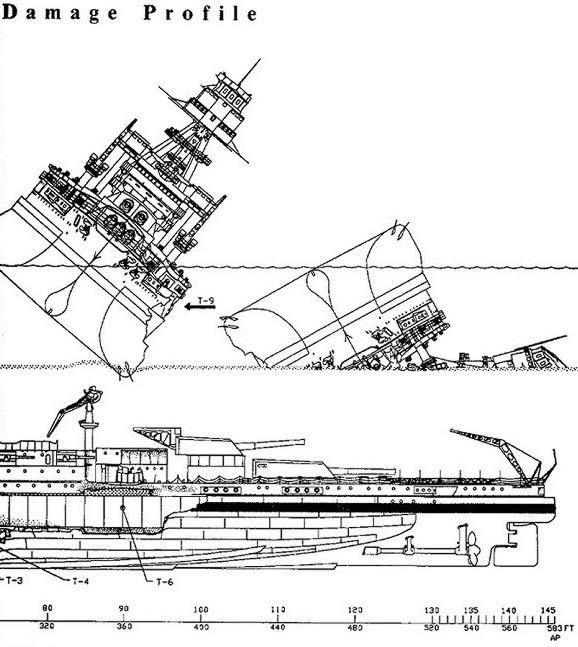
Damage Survey Report of Torpedo Hits from I-158 on Yorktown and Hammann

With water lapping at her hangar deck it appeared that Yorktown would soon sink the ship was abandoned and left adrift.  However, she floated through the night and the next morning a repair crew went aboard to try and save her. The destroyer USS Hammann came alongside to provide pumps and power for the salvage operations while 5 other destroyers provided an anti-submarine screen.

It looked like the repair crews were gaining the upper hand when the Japanese submarine I-158 reached a firing position undetected and fired 4 torpedoes one of which stuck Hammann causing her to break in half, jack-knife and sink rapidly. Two more torpedoes hit Yorktown causing mortal damage. Once again her crew evacuated the proud ship. While Captain Buckmaster planned another attempt to save her on June 7th,  but on the morning of the 7th the gallant Yorktown rolled over and sank ringed by her escorts.

Yorktown Abandoned and Sinking

Yorktown was stricken from the Navy list on October 2nd 1942 and her name given to the second ship of the Essex class.  The second Yorktown would provide gallant service in war and peace. She is now is a museum ship in Charleston South Carolina.

On May 19th 1998, a search team led by Dr. Robert Ballard who had discover the wreck of RMS Titanic, found the wreck of Yorktown some 16,000 feet below the surface sitting upright on the ocean floor. Apart from the battle damage little deterioration was noted. The Ballard team photographed the wreck and left it alone. Since then no other explorations of Yorktown have been made. The great ship now lies over three miles below the Pacific, a memorial to her crew and the victory at Midway.

4 Comments

Filed under aircraft, History, leadership, Military, Navy Ships, US Navy, World War II at Sea, world war two in the pacific

The Hubris of Empire: The Japanese Battleships Yamato and Musashi

Emperor Hirohito on Musashi in 1943

Friends of Padre Steve’s World

This is an old post of my series on Battleships. Previous post on different battleship classes were about the Battleships constructed under conditions of the London Naval Conference.  These have dealt with the British King George V Class, French Dunkerque and Richelieu Classes, ItalianVittorio Vento Class and the American North Carolina and South Dakota ClassesI then wrote an introduction to the Post Treaty Super-Battleships. This article is the first in that series which will include articles on the German Bismarck and Tirpitz, British Vanguard and American Iowa Class. I do hope to take my mind off present events by writing about other battleship types and classes as well as other types of ships. That being said I expect to be doing a new installment of by COVID 19 articles, which I have pretty much avoided for sanity’s sake the past week.

Until tomorrow,

Peace,

Padre Steve+

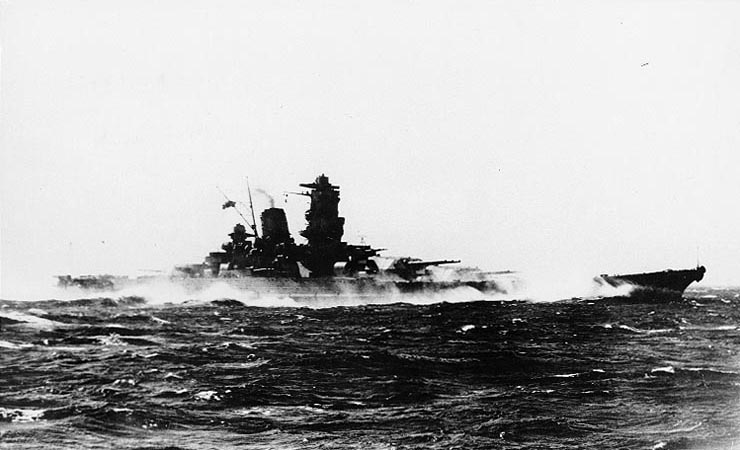
They were the largest and most heavily armed battleships ever built. Shrouded in secrecy by the Imperial Japanese Navy and Government the ships were designed to offset projected American numerical superiority. Their names were symbolic of Japan’s history. Yamato was named after Yamato Province, the ancestral home of the Yamato People, the dominant native ethnic group in Japan. Musashi was named after Musashi Province in which lays Tokyo Prefecture.  A third ship of the class, Shinano, was named after Shinano Province in central Japan which was the home of the prestigious Taketa Shingen family during the Senguku period.

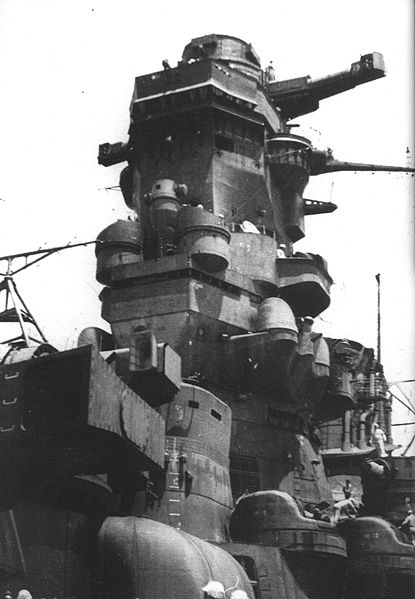
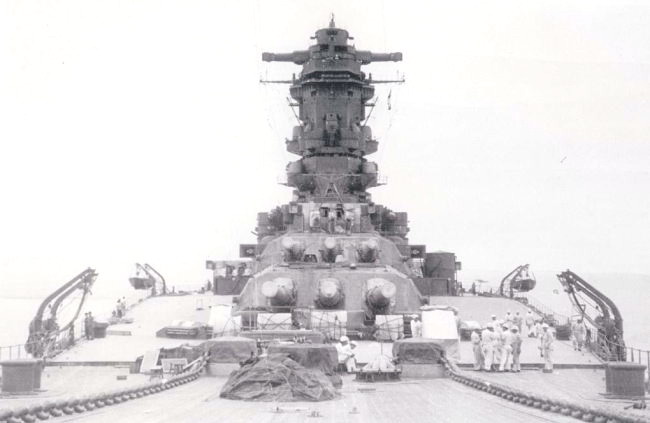
The Conning Tower and Bridge of Musashi

The secrecy surrounding their design and construction was unprecedented. Those charged with their deign and construction were thoroughly checked out by Japan’s secret police and sworn to an oath of secrecy. The oath sworn by builders of Musashi at the Mitsubishi Heavy Industries  Nagasaki Shipyard were sworn to the oath shown below:

I am aware that all work work involving the construction of the No. 2 Battleship is vital to national security. I will make utmost effort to maintain the  secrecy of the project, and swear that I will leak no information relating to the said battleship, even to relatives and close friends. In the event I violate this oath,  I will submit to the punishment determined by the company and the Navy.  

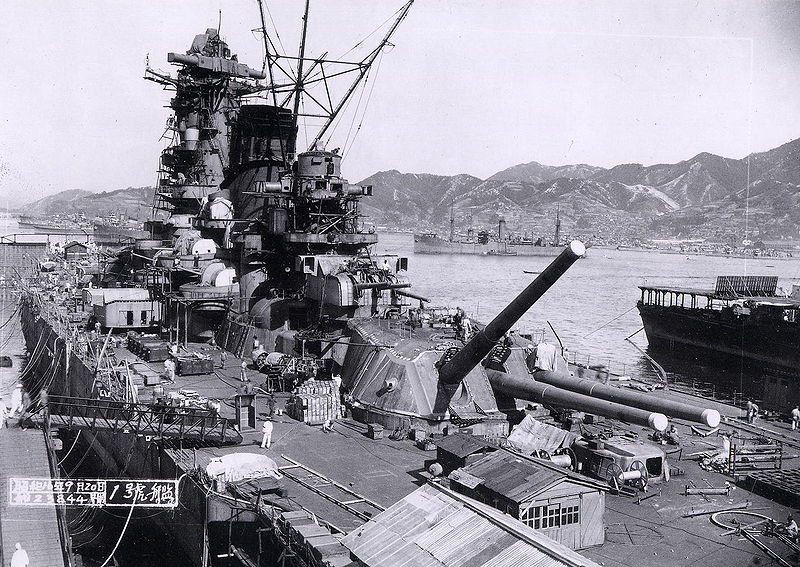
Yamato during Consrtuction

Security measures around the shipyards where Yamato and Musashi were constructed  were immense. At Nagasaki where there was a large foreign business and missionary population where the shipyard was visible from most of the city at hemp screen of 75,000 square meters was constructed to shield the ship from prying eyes and spies.

Musashi under Construction

When actual preparations for construction were taken in 1937 secret police swept the areas of foreign, especially Chinese workers. Security was increased inside and outside the shipyard, all blueprints accounted for and placed under strict guard while all shipyard workers were photographed with any having knowledge of the plans or supervising the construction sworn to the secrecy oath.

When a top secret blueprint went missing in 1938 at Nagasaki an intense investigation that included the torture of numerous suspects and the jailing of a blueprinter who accidentally swept the document into the trash was sentenced to 3 years in prison.

Armor and Protection of Yamato Class

Few pictures exist of the ships and Japanese Naval Officers destroyed many of the records of the ships design and construction just prior to the end of the Second World War. Throughout their existence they were a mystery to the American Navy. During the war the U.S. Navy estimated them to carry nine 16” guns and displace between 40,000-57,000 tons. Even the highly regarded Jane’s Fighting ships listed them at just 45,000 tons.

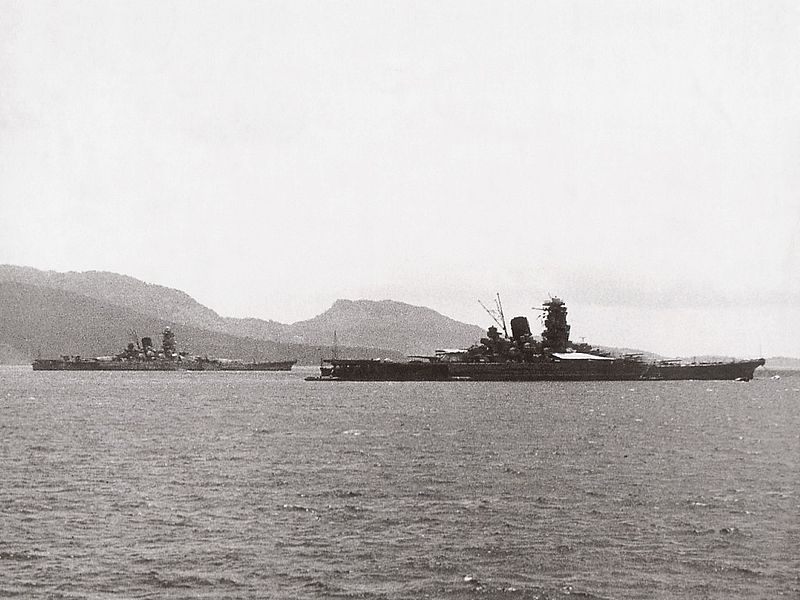
Yamato and Musashi together in 1943

Preliminary design work began in 1934 and progressed rapidly following Japan’s withdraw from the League of Nations and renunciation of the Washington and London Naval Treaties and withdraw from the 1936 naval talks in London. The early designs varied in the caliber of guns, size and armor, propulsion systems and endurance. Gun calibers ranged from 16” to 18.1” and a combined diesel-turbine system was considered but rejected in favor of traditional steam turbines.

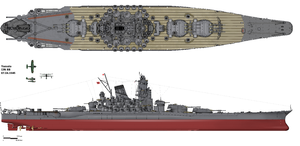
The final design was for a class of five ships. Each would displace 64,000 tons standard displacement and 72,000 tons at full load. They were 862 feet long with a beam of 127 feet.  They were so large that the docks they were built needed to be expanded and special extra large launch platforms had to be built.  At Nagasaki the dock at to be expanded by cutting into the hill adjacent to it.

They were armed with nine 18.1 inch guns in triple turrets which could fire a projectile weighing over a ton. The secondary armament consisted of 12 6.1 inch guns mounted in triple turrets formerly mounted on the Mogami Class cruisers when those ships were equipped with 8” guns. Anti-aircraft defense included twelve 5” guns and twenty-four 25mm anti-aircraft guns. During the war two of the 6.1 inch turrets were removed and replaced with twelve more 5” guns and the 25mm battery was raised to 162 guns. Fire control systems were designed in such a way that the ships could engage multiple surface targets at the same time.

The ships were protected by a massive armored belt ranging from 16 inches to 8 inches with 26 inch armor on the face plates of the main gun turrets. The armor was advanced with excellent sloping but had a flaw where the upper and lower belts connected just below the waterline which exposed them to damage from torpedoes.

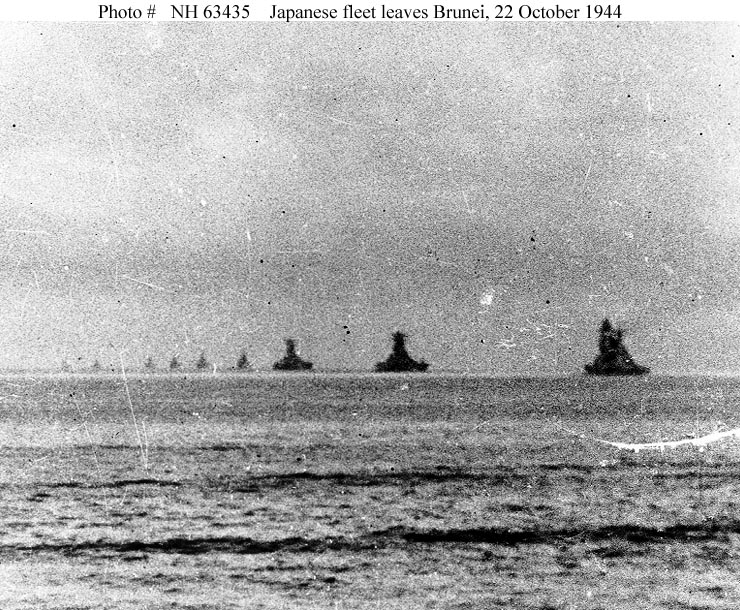
Yamato and Musashi viewed beside Battleship Nagato (foreground) just before the Battle of Leyte Gulf

They were powered by 12 Kampon boilers which powered 4 steam turbines and four three bladed propellers. These developed 150,000 shp and could drive the ship at a top speed of 27 knots.

Yamato

Construction of Yamato began on November 4th 1937 at Kure Naval Shipyard. Musashi on March 28th 1938. Traditionally such events were large public ceremonies but these were limited to just a few Naval Staff and Shipyard executives.  Yamato was Launched on August 8th 1940 and commissioned on December 16th 1941, just 9 days after Pearl Harbor. Musashi was launched on November 8th 1940 and commissioned on August 5th 1942 just two days before the U.S. Marines invaded Guadalcanal and two months after the disaster at the Battle of Midway.

Yamato served as Admiral Yamamoto’s flagship at Midway where she saw no action. The next two years she was and Musashi alternated as fleet flagship and conducted operations with Battleship Division One in operations between Mainland Japan and the major Japanese base at Truk. On December 25th 1943 while escorting a convoy she was torpedoed by the submarine USS Skate and suffered heavy damage which flooded a magazine.  On March 29th while underway Musashi was struck near the bow by a torpedo from the USS Tunny.

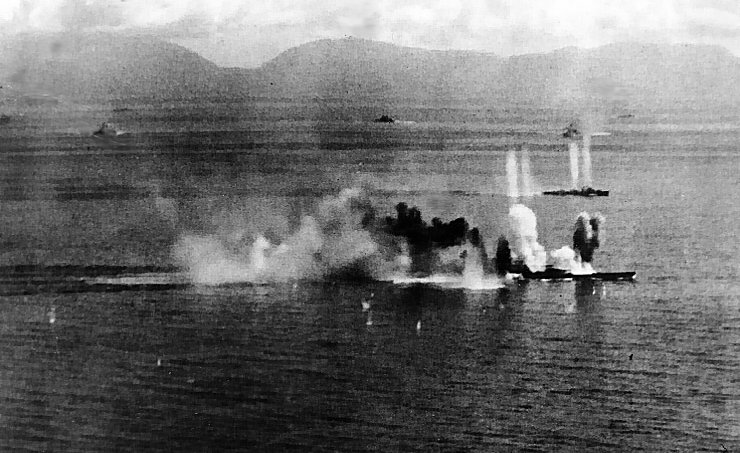
Musashi Under Attack at the Battle of Sibuyan Sea

Both ships participated in the Battle of the Philippine Sea and were part of Vice Admiral Takeo Kurita’s Central Force in the Battle of Leyte Gulf. Musashi was sunk by U.S. Navy Carrier aircraft from the Third Fleet on October 24th 1944 during the Battle of the Sibuyan Sea. Hit by 17 bombs and 19 torpedoes she sank with the loss of nearly 1100 of her crew of almost 2400 men. The survivors were rescued by destroyers and disembarked at Corregidor. Some were sent by troop transport to Japan but one of the ships was torpedoed and sunk leaving her survivors adrift for 19 hours before rescue. Those who reached Japan were isolated from the population while about half of the survivors remained in the Philippines where 117 of 146 of those assigned to the defense of Manila were killed in action.

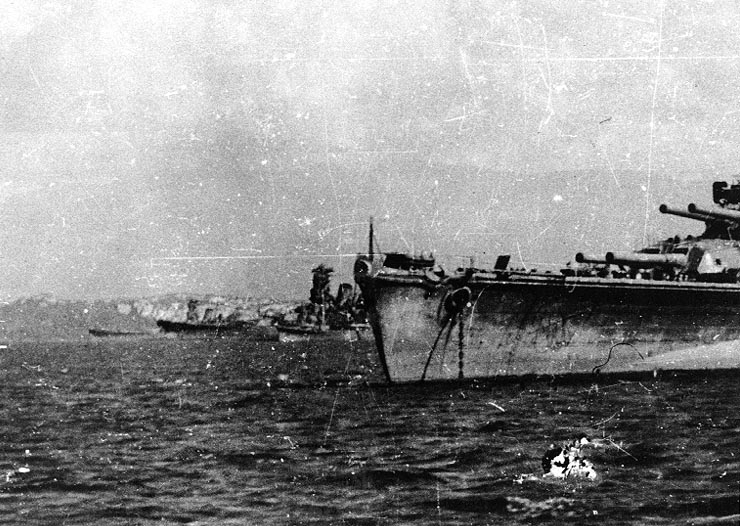
Yamato or Musashi under air Attack

Yamato saw action in the surface engagement on October 25th against the Escort Carriers and Destroyers of Taffy-3 during the Battle off Samar. Her guns helped sink the Escort Carrier USS Gambier Bay but was forced away from the action by torpedo attacks from the valiant destroyers of Taffy-3.

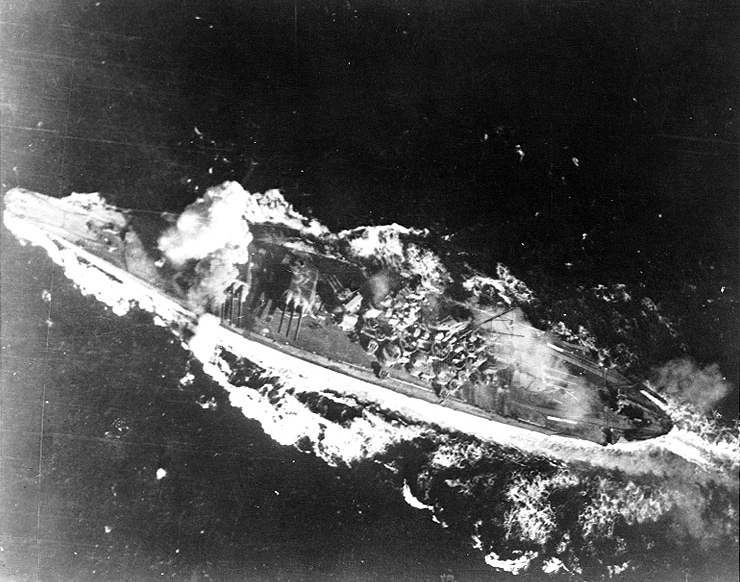
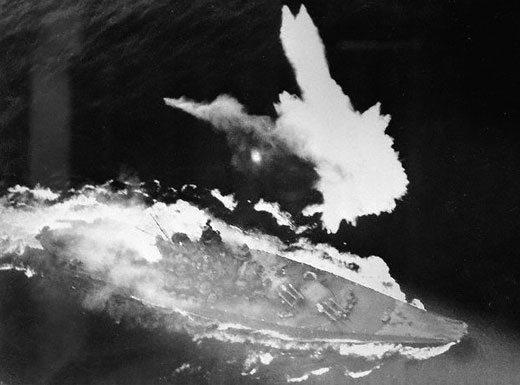
Yamato under Attack April 7th 1945

By April 1945 Japan’s Navy was decimated and holed up in Japanese controlled ports without fuel to conduct all but minor operations. U.S. Naval Forces were raiding Mainland Japan, inflicting heavy casualties among remaining naval, merchant marine, and air units, as well as bases and industrial facilities.

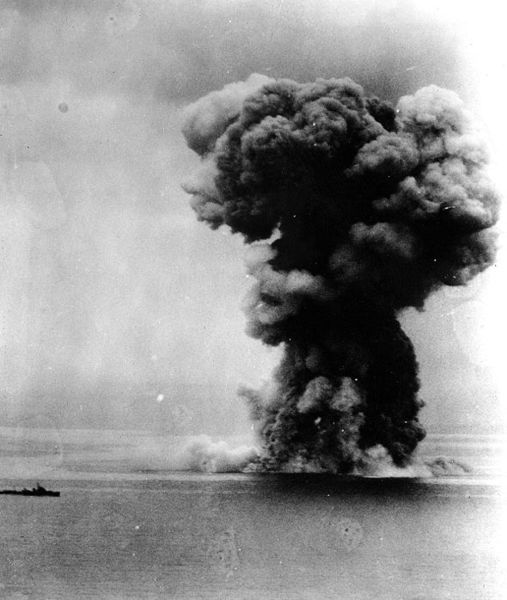
When the United States landed on Okinawa the Japanese Navy and air force launched wave after wave of Kamikaze attacks on the ships in the waters around the island. Yamato, along with Light Cruiser Yahagi and eight destroyers were designated the Surface Special Attack Force and loaded with a full load of ammunition but only enough fuel for a one way trip. They got underway on April 6th. The mission was for Yamato to reach Okinawa, beach herself and serve as an “unsinkable” gun battery until she was destroyed. The force was spotted by U.S. Navy flying boats hours after their departure and on April 7th over 400 aircraft launched from Task Groups 58.1 and 58.3 found the Yamato strike group. Devoid of fighter cover the force was doomed. The first wave of attacking aircraft began its attack at 1230. More followed, and by 1400 Yamato was mortally wounded. She had been hit by at least 8 torpedoes and 11 bombs in an hour and a half. Now she was dead in the water and began to capsize at 1405. At 1420 she turned turtle, and at 1423 she exploded when her forward blew up sending up a mushroom cloud nearly 20,000 feet.  Under 300 of her crew of nearly 2400 were rescued.

The End: Yamato Explodes

The Yamato and Musashi  were the largest battleships ever built. But they were  designed when naval experts who planned for a war where the battleship would rule and aircraft carriers played a supporting role. But the Japanese attack on Pearl Harbor made the Aircraft Carrier the new Queen of the seas. Neither ship ever  faced enemy battleships in combat and both were destroyed by the weapon that the battleship admirals had discounted, carrier based aircraft.

Thus, is somewhat fitting that each ship was commissioned shortly after the triumphs of Japanese and American Naval air power at Pearl Harbor and Midway. However, they have attained an almost mythic status in naval lore. Likewise they are both are symbols to many Japanese of the sacrifice and futility of the war. Their legend lives on in Japanese science fiction. However, both of the cities where the ships were constructed were destroyed by Atomic bombs. They are tragic reminders of the cost of war in human lives, suffering, economic cost and destruction.

In a sense their poetic names and the myths ascribed to them are a tragic requiem to the Japanese Empire and the cost of war. They and their brave sailors were sacrificed when the war was already for all intents and purposes lost. They, especially the Yamato were sacrificed for no military purpose save a convoluted sense of honor, and a nation that waged unjust and criminal wars in China before before it ever dreamed of attacking Pearl Harbor. Many Japanese Navy units, including surface ships, submarines, and Special Naval Units (Marines) engaged in war crimes at sea and ashore.

Of course the vast majority of the crew members of these ships never took part in these crimes because they seldom engaged in combat action until each was destroyed. Both spent most of the war flagships as part of a fleet in readiness. Unlike the German High Seas Fleet of the First World War, or the German Battleship Bismarck, the battleships of the Italian Regina Marina, or the battleships of Vichy France, none ever faced an enemy battleship in combat.

The only Japanese battleships to engage American battleships were the elderly fast battleship Kirishima which was destroyed by the gunfire of USS Washington during the Naval Battle of Guadalcanal, and the even more elderly and obsolete Fuso and Yamishiro which were destroyed by the combined firepower of the survivors of Pearl Harbor, the USS West Virginia, USS California, USS Tennessee, USS Maryland, USS Pennsylvania, and the USS Mississippi which was not at Pearl Harbor, as well as many cruisers, destroyers, and PT Boats at the Battle of Surigao Strait during the Battle of Leyte Gulf. Kirishima was lost on the verge of victory to USS Washington and Rear Admiral Willis Lee who used their advantage in radar to singlehandedly destroy Kirishima and her supporting ships even as her destroyer screen was decimated, and the battleship USS South Dakota lost electric power and was heavily damaged.

Yamato  and Musashi were a waste of industrial capacity, manpower, and resources for Japan. Their sister, Shinano, which had been converted to an aircraft carrier, was lost on her maiden voyage to a spread of torpedoes fired from the submarine USS Archerfish, with a huge life of life simply because she was rushed into commission without vital watertight compartments being ready. They were expensive failures in every sense of the word, showing that bigger isn’t always better, and that investment in such expensive ships must take into account the technology that could defeat them. For the moment most nations including the United States, China, Great Britain, France, Russia, and India seem to be placing their bets on the aircraft carrier retaining its dominance, but that could easily be the same mistake of the powers of the Second World War who built battleships, even when it was clear that their dominance was at an end.

Let us pray that it never happens again. I can only imagine the shock if an American Nuclear Carrier was sunk by a submarine, a saturation cruise missile attack, or one of the maneuverable Chinese nuclear ballistic missiles. Such a loss would shock the nation and send the Navy into a panic as it scrambled to find a way to recover from such a sinking without losing more carriers. Such an event would be as transformational to naval warfare as were the introduction of the Dreadnaught, and the perfection of the submarine as a tactical and strategic weapon.

Until tomorrow,

Peace

Padre Steve+

12 Comments

Filed under History, imperial japan, Military, Navy Ships, Political Commentary, US Navy, war crimes, World War II at Sea, world war two in the pacific

2020: Time For Reading, Reflecting, Writing, and Action to Help our Neighbors

Friends of Padre Steve’s World,

Welcome to 2019. I know, we’re all still a bit hung over from last night, but welcome to the New Year. Admittedly it doesn’t yet feel a lot different than 2018, but I really expect that 2019 will mark an epochal change in our history. Since I wrote about that yesterday I won’t go back for more.

That being said there is one resolution that I think that all people, the great and the small, should do, and that is not to cry boo who, but read like our lives depended on it, which in a sense they do. By reading, I don’t mean just the news, commentary, or opinion sections of print or online news services, but get real books, especially works of history, biography, philosophy, and the classics.

Barbara Tuchman wrote:

“Books are the carriers of civilization. Without books, history is silent, literature dumb, science crippled, thought and speculation at a standstill. Without books, the development of civilization would have been impossible. They are engines of change (as the poet said), windows on the world and lighthouses erected in the sea of time. They are companions, teachers, magicians, bankers of the treasures of the mind. Books are humanity in print.”

Likewise, the French philosopher Voltaire hit the nail on the head when he said:

“Despite the enormous quantity of books, how few people read! And if one reads profitably, one would realize how much stupid stuff the vulgar herd is content to swallow every day.”

That my friends is fact. If you want to be able to better distinguish fact from fake, read.

Last year I committed to read more, even as I stayed current on the news, analysis of it, and commentary, even as I continued to write. My office at work is crammed with books, as is much of our home. I think that we follow well the advice of Dr. Seuss who wrote:

“Fill your house with stacks of books, in all the crannies and all the nooks.”

So I read, and I read, until my eyes they turned red. I read with those eyes that had turned red, in bed and even in the head.

I read as I eat, and eat as I read, because somewhere in my soul I have this great need, which I ever did cede I would be a great deal poorer indeed.

The pages they turned and as my eyes burned I knew I could never be through so long as my fingers don’t turn blue. I read and read with voices sounding through my head I, but I will not stress even though I digress…

I continually read and I try to update my readers on the latest series of books that I have read and every few months try to let my readers know what I have been up to in my Reading Rainbow.

Since I have tried to keep my readers up with throughout the year I will concentrate on my most recent reads of the past few months. As usual many deal with human behavior in war, particularly in regard to to war crimes; perpetrators, victims, and bystanders. Most of my study of this field have focused on the Nazi Regime, its crimes, and the justice handed out to it, as well as American Slavery and racism. I have also read about crimes that Europeans enacted in their colonies, the Americans in the American West, Mexico, has Vietnam, Iraq, and Afghanistan, the Balkan wars of the 1990s, the Armenian genocide, and the Rwandan genocide.

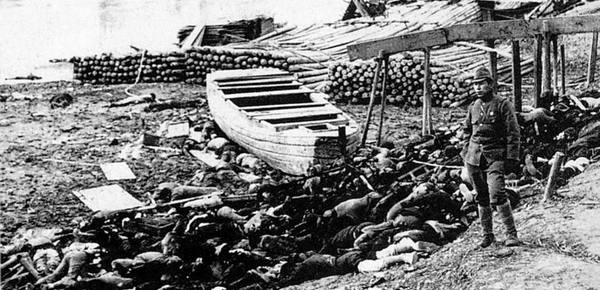
But one of my readers challenged me to look at the war crimes of the Japanese War Crimes in Asia. I have written about the Rape of Nanking, writing about it specifically and also in more generic articles about human nature, conduct, and genocide. But, other than that at some cursory reads about how the Japanese treated POWs, conquered people’s, and units such as Unit 731; but those were all wave top looks, I never took the deep dive until after we got back from Germany in October.

Since then I have made the deep dive. It has opened my eyes to myths that I believed about Emperor Hirohito and the actions of of his government, and those of the supposedly honorable Imperial Japanese Navy, whose war crimes at sea and ashore rate their own article. In fact one of the books I read was Slaughter at Sea: The Story of Japan’s Naval War Crimes by Mark Felton.

Likewise, I learned of the American complicity at the highest levels in rigging the Tokyo trials to ensure that the Emperor, the bankers, business leaders, most politicians, civil servants, police officials and organizations, the members of Unit 731, which was involved in biological warfare and human experimentation similar to that of the Nazis. This is well documented in Robert P. Bix’s Pulitzer Prize winning biography Hirohito and the Making of Modern Japan and The Other Nuremberg: the Untold Story of the Tokyo War Crimes Trials by Arnold Brackman.

Both books, in excoriating detail not only deal with the Japanese War Crimes and criminals, but deal with the inclusion of the actions of President Truman and General MacArthur to protect certain war criminals, including the Emperor, and deflect responsibility to others such as General and Prime Minister Tojo. The Tokyo Trials took more than twice the time of the Nuremberg Trials, and allowed most of the highest order of war criminals to go free, while unlike Nuremberg exempting lower order war criminals and functionaries off the hook, because of the Cold War. That too, is another article.

I also read Lord Russell of Liverpool’s classic The Knights of Bushido: a Short (Over 300 pages) History of Japanese War Crimes and Showa: Chronicles of a Fallen God by Paul-Yanic Lequerre, another biography of Hirohito. I also re-read War Without Mercy: Race and Power in the Pacific War by John Dower, as well as John Toland’s Rising Sun: the Decline and Fall of the Japanese Empire 1936-1945; Infamy: Pearl Harbor and its Aftermath; and But Not In Shame: The Six Months After Pearl Harbor, as well as Max Hastings Retribution: The Battle for Japan 1944-1945. Then I re-read Iris Chang’s The Rape of Nanking and The Nanking Massacre: History Of China, Japan, and the Events Surrounding the Nanking Massacre by Mukuro Mori. Finally, For the first time I read Japan’s Infamous Unit 731: Firsthand Accounts of Japan’s Wartime Human Experimentation Program by Hal Gold.

All of these first or second time reads added a dimension to the Japanese atrocities that I had managed to cover with Cold War ideology and the myth that Emperor Hirohito was simply a figurehead leader with no responsibility for the war. He knew of the plans of his Army, he studied them, and criticized his military, but he always, even when military and civilian advisers urged him to seek peace, and that went on even after the atomic bombs were dropped. I’ll deal with that in another article.

I also re-read some of my Nazi War Crime books, but I won’t list them here and now. Likewise I have a good number of books to read in the coming weeks and months. As far as my writing I plan on blogging about the aspects of the Japanese War crimes and American complicity to cover them up after the war, as well as the book I started working on last year Lest We Forget: Walk, Remember, Bear Witness; Bearing Witness as the Last Witnesses to the Holocaust Pass Away.

So, I think that is enough for the day. However, our New Year’s Eve was nice. We went to our favorite German Restaurant for dinner, then went home, spent time with our dogs and binged watched episodes of Star Trek Deep Space Nine until about a half an hour before the new year, then we switched to CNN and Anderson Cooper counting down to 2020 in New York. We toasted with a German Rose Sekt (Champagne), stayed up a while longer then went to bed. We got up late, Judy and the dogs watched the Rose Parade, while between doing laundry and taking naps I spent the day until we went out to dinner at our favorite Mexican restaurant came home, and then help our next door neighbor who had collapsed on her porch from low blood sugar. Thanks to the prompt work of the EMS and our neighbor Larry she was able to treated in the ambulance. Judy and I helped with her dogs, and Judy helped her when the EMS released her and didn’t take her to the hospital once they got her blood sugar to a normal range. She stayed with her until she got her insulin and we will make sure she will be okay today. We care about our neighbors.

So, until tomorrow.

Peace

Padre Steve+


2 Comments

Filed under civil rights, crime, Foreign Policy, History, imperial japan, laws and legislation, leadership, Military, Political Commentary, star trek, war crimes, War on Terrorism, world war two in the pacific

The Remarkable Salvage Divers of Pearl Harbor

Friends of Padre Steve’s World,

For today a final article about Pearl Harbor before moving on to different subjects. In light of our declining shipyard and salvage capabilities I doubt if such miraculous work could occur today should the Navy every experience a calamity such as Pearl Harbor again.

One of the more interesting aspects of the Pearl Harbor attack were the efforts of the US Navy to salvage and return to duty the ships sunk or so heavily damaged that they were thought to be irreparable after the attack. 19 ships were sunk or damaged during the attack, or roughly 20% of the fleet present on December 7th 1941. Unlike other great feats of maritime salvage like that of the German Fleet at Scapa Flow after the First World War, this massive effort led to the majority of the ships being returned to an operational status for further service in the war.

I first learned about the dangers of the salvage operations when I visited Pearl Harbor on an NJROTC cadet training cruise in the spring of 1978. During the week we spent in Pearl between the outbound leg on the USS Frederick LST-1184 and our return to California aboard the USS Gray FF-1054, we had a visit with the Navy dive team stationed at Pearl Harbor. They explained how they did their jobs as well as the dangers still encountered diving on the wreck of the USS Arizona.

Captain Homer Wallin directing Salvage Operations

Many people know something about the attack, but one of the most remarkable aspects of it was the effort to salvage the fleet in the months following the attack. Under the leadership of Captain Homer N. Wallin teams of Navy and civilian divers from the Pacific Bridge Company worked day and night to salvage the sunken ships. The divers spent over 20,000 man hours under water in the highly hazardous waters; which were filled with unexploded ordinance, and contaminated by fuel and sadly decomposing human bodies. Wallin wrote: 

The scene to the newcomer was foreboding indeed. There was a general feeling of depression throughout the Pearl Harbor area when it was seen and firmly believed that none of the ships sunk would ever fight again.” 

The divers wore were rubberized coveralls with gloves. The divers were equipped with a lead-weighted belt which weighed 84 pounds and lead-weighted shoes, each of which weighed 36 pounds. Each diver wore a copper helmet attached to a breastplate. Air was supplied through a hose which was attached to the helmet and ran up to a compressor monitored by men on the surface.

The work was extremely hazardous, the wrecked ships contained numerous hazards, any of which could cut his air hose and cause his death, and they also contained highly toxic gasses. They often worked in total darkness and had to communicate with the men on the surface via a telephone cable. The divers had to be exceptionally talented to and needed a great amount of coordination senses and balance to work with welding torches, suction hoses, and heavy equipment in the confines of the shattered ships. During the salvage operations a number of divers lost their lives.

Before the ships could be raised ammunition, including the massive 14 and 16 inch shells weighing anywhere from 1300 to 2000 pounds each, Japanese bombs and torpedoes, fuel oil, gasoline, electrical equipment and batteries, weapons, and whenever possible the bodies of the entombed crews had to be removed, and then every hole had to be patched to make them buoyant. After the ships were raised cleanup crews had to go aboard and clear the ships of other hazardous waste as repair crews began their work to repair the basic systems needed to get the ships to West Coast shipyards for the major overhauls, The herculean effort was one of the greatest engineering feats in maritime history.

Of these were battleships, the USS Arizona sunk by a cataclysmic explosion, her broken hulk with her collapsed foremast the iconic symbol of the attack. USS Oklahoma was capsized on Battleship Row.  USS Nevada was grounded and sunk off Hospital Point after an abortive attempt to sortie during the attack. USS Californiaand USS West Virginia lay upright on the bottom of Pearl Harbor, their superstructure, distinctive cage masts and gun turrets visible above the oily water.

The former battleship USS Utah lay capsized on the far side of Ford Island while the light cruiser USS Raleigh was fighting for her life barely afloat near Utah.  The ancient Minelayer USS Oglala was laying on her side next to the light cruiser USS Helena at the 1010 Dock. She was not hit by a bomb or torpedo but was said to have “died of fright” when Helena was hit by a torpedo, the blast which opened the seams of her hull. The destroyers USS Cassin and USS Downes were wrecks in the main dry dock. USS Shaw was minus her bow in the floating dry dock after exploding in what was one of the more iconic images of the attack. Other ships received varying amounts of damage.

As the engineers, damage control and salvage experts looked at the damage they realized that every ship would be needed for the long term fight. The building program of the US Navy was just beginning to pick up steam and it would be some time before new construction could not only make up for the losses but also be ready to fight a Two Ocean War. The decision was made to salvage and return to duty any ship deemed salvageable.

Even the seemingly less important ships needed to be rapidly salvaged. Some which initially appeared to be unsalvageable needed at the minimum to be cleared from dry docks and docks needed by operational or less damaged ships. Likewise equipment, machinery and armaments from these ships needed to be salvaged for use in other ships.

Even by modern standards the efforts of the Navy divers and salvage experts and the civilians who worked alongside them were amazing. In the end only three of the 19 ships never returned to service. The work began quickly and on December 14th Commander James Steele began to direct the salvage operations on the sunken hulks. Captain Wallin relieved Steele on January 9th 1942. Wallin formed a salvage organization of Navy officers and civilian contractors. The civilian contractors were instrumental in the operation. Many of the civilians had experience in salvage operations, or underwater construction efforts, such as working on the Golden Gate Bridge which often exceeded the experience of the Navy divers.

The divers recovered bodies whenever possible, salvaged equipment, removed weapons and ammunition, made temporary repairs and help rig the ships for righting or re-floating. In each case the salvage experts, divers and engineers faced different challenges.

Arizona was never raised. Her superstructure was cut down, main battery and some anti-aircraft guns removed. The main batter guns were delivered to the Army Coastal Artillery for use as shore batteries but none reached an operational status before the end of the war. The dives aboard were so dangerous that eventually the attempts to recover bodies ceased as several divers lost their lives in the wreck.  Over the years the National Parks Service has continued to dive on the wreck to assess it as a war grave and memorial.

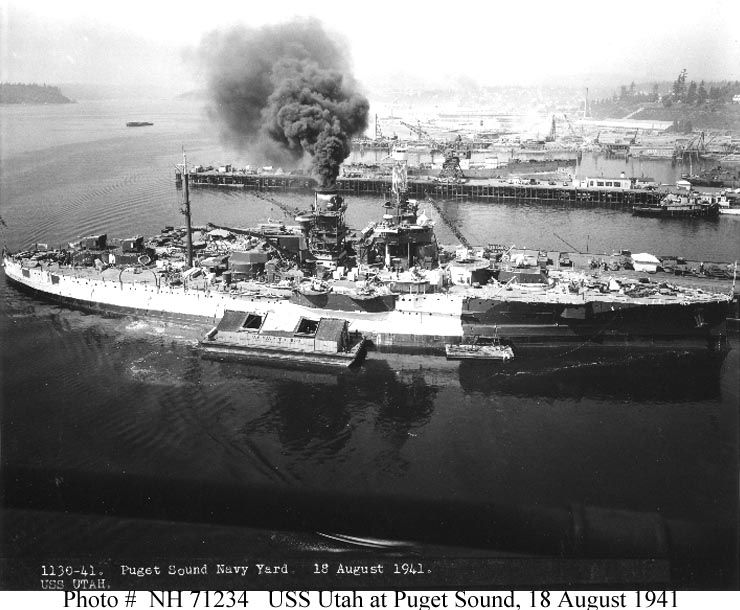
Utah too was not raised. She was righted in 1942 but efforts to do more were halted because the elderly wreck had no remaining military value. Her wreck along with that of Arizona are war graves, many of their crew members, including over 1000 of Arizona’s men forever remain entombed in their ships. When I visited Pearl Harbor in 1978 as a Navy Junior ROTC Cadet and visited both memorials I was humbled at what I saw. They are haunting reminders of the cost paid by sailors during wartime.

Nevada was the first major ship salvaged. She was re-floated in February 1942 and after temporary repairs sailed to the West Coast on her own power. After repairs and a significant modernization of her anti-aircraft systems was complete she returned to action in 1943 in the invasion of Attu Alaska. She participated in many amphibious operations including Normandy, Southern France, Iwo Jim and Okinawa. She survived the Atomic Bomb tests in 1946 but wrecked and radioactive she was sunk as a target off Hawaii in 1948.

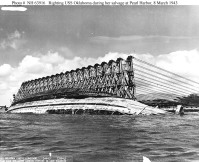
The salvage of the Oklahoma was one of the more challenging endeavors faced by Wallin’s men. Hit by at least five torpedoes during the attack the great ship capsized, her tripod masts digging deep into the mud of the harbor as she settled. Over 400 over her crew lay dead inside the ship. Since it was apparent that the ship was a total loss the salvage operations did not commence until the middle of 1942. The primary goal of the operation was to clear needed space for berthing large ships along Battleship Row. The operation involved making the ship as watertight as possible, solidifying the bottom of the harbor around her to enable her to roll and emplacing a massive system of righting frames, anchor chains and shore mounted winches and cables. The process involved cutting away wrecked superstructure, removing ammunition, weapons and the bodies of those entombed in their former home. She was completely righted in July 1943, and floated again in November. Moved to a dry dock in December she was made watertight and moored in another part of the harbor. Following the war she was being towed to a scrap yard but sank in a storm in May 1947.

California was raised in March and after temporary repairs sailed under her own power to the West Coast. Her repairs and modernization were a major undertaking. Fully reconditioned and modernized to standards of most modern battleships she returned to service in January 1944. She served in retaking Saipan, Guam, Tinian, as well as Leyte Gulf were she had a significant part in the Battle of Surigao Strait. Hit by a Kamikaze she was repaired and returned to action at Okinawa and support the occupation operations of the Japanese Home Islands. She was decommissioned in 1947 and sold for scrapping in 1959.

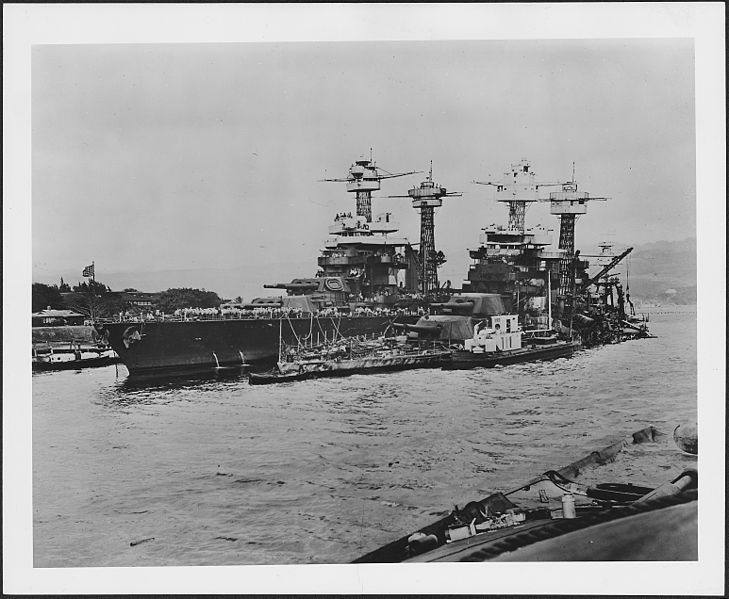
West Virginia suffered the most severe damage of the battleships returned to duty. She was raised in July 1942 and after repairs sailed to Puget Sound Naval Shipyard. Like California she was completely rebuilt and returned to action in October 1944 in time to take the lead role in destroying the Japanese Battleship Yamashiro. She served throughout the remainder of the war in the Pacific at Iwo Jima, Okinawa and the occupation of Japan.

                                      Cassin following Rebuilding 

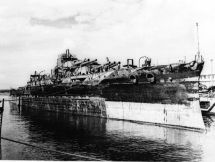
The Mahan Class destroyers Cassin and Downes were so badly damaged sitting in the Dry Dock Number One with Pennsylvania so that initially they were believed beyond salvage. However after closer inspection it was determined that the hull fittings, main weapons systems and propulsion machinery on both ships were worth salvaging. These items were removed, shipped to Mare Island Naval Shipyard and installed on new hulls being constructed. The hulks of the old ships were scrapped at Pearl Harbor. Those ships were commissioned as the Cassin and Downes and served throughout the war.

Both were decommissioned in 1945 and scrapped in 1947. Their sister ship Shaw which had blown up in the floating dry dock was wrecked from her bridge forward. However the rest of the ship including her engineering spaces were intact. A temporary bow was fashioned and the ship sailed to Mare Island under her own power. Completely overhauled she was back in service by July 1942. She was decommissioned in 1945 and scrapped in 1946.

The ancient minelayer Oglala was raised in July and sent back to the West Coast where she was repaired and recommissioned as an internal combustion engine repair ship. She survived the war was decommissioned and transferred to Maritime Commission custody. She was a depot ship at the Suisun Bay Reserve Fleet until 1965 when she was sold for scrap.

If you are interested, Captain Wallin’s complete report can be read here:

https://www.history.navy.mil/content/dam/nhhc/research/library/online-reading-room/war-and-conflict/wwii/pearl-harbor/pearlharborwallin/d767_92_w3.pdf

Wallin later served in the Pacific as Force Maintenance Officer South Pacific, and commanded a variety of Naval Yards, including Philadelphia and Norfolk Naval Shipyard where I currently serve. He retired in 1953 as a Vice Admiral and lived to the age of 89 years, when he died in 1984.

The salvage feat to return these ships to duty was one of the most remarkable operations of its type ever conducted. Not only were most of the ships salvaged but most returned to duty. While none survive today many played key roles during the war. Artifacts of some of the ships are on display at various Naval Bases, Museums and State Capitals. They, their brave crews, and the Navy Divers and civilian diving and salvage experts who conducted this task exhibited the finest traditions of the US Navy. The successors of the Navy divers at Mobile Diving Salvage Units One and Two still carry on that tradition today, and sadly, most Americans don’t know anything about Homer Wallin and his remarkable Navy and civilian divers.

Peace

Padre Steve+

2 Comments

Filed under History, Military, national security, Navy Ships, US Navy, World War II at Sea, world war two in the pacific

Taking Increased Devotion on the Anniversary of the Day of Infamy: A Personal Reflection

uss-arizona-memorial-pearl-harbor

Friends of Padre Steve’s World,

I never will forget the day that I took a Navy launch from Naval Station Pearl Harbor to the USS Arizona Memorial. It was Easter Sunday, March 26th 1978, the day before my 18th birthday and I was in Pearl Harbor as part of a Naval Junior ROTC Cadet Cruise. Cadets from my school sailed aboard the USS Frederick LST-1184 from San Diego to Pearl, and remained there for a week until returning to San Diego aboard the USS Gray FF-1054.

I honestly don’t know how many young people ever have had that kind of adventure, but for me I know that those three weeks were profoundly important in who I am today, but the one that constantly reverberates in me is the visit to the Arizona Memorial. Back then there was no visitor center on Ford Island, nor was the USS Missouri moored where the USS Oklahoma was that fateful Sunday. The day was sunny with partly cloudy skies, the sunlight reflected on the placid waters of Pearl Harbor. As the launch, manned by Sailor’s in Dress Whites neared Ford Island the bridge like white memorial loomed ahead, the rusty barbette of the battleship’s “C” turret rose slightly out of the water aft of the memorial, and the mooring quay with the USS Arizona inscribed upon it glinted in the bright morning sunlight. To our rear cruisers and destroyers lined the piers of the Naval Station.

uss-airzona-shrine-wall

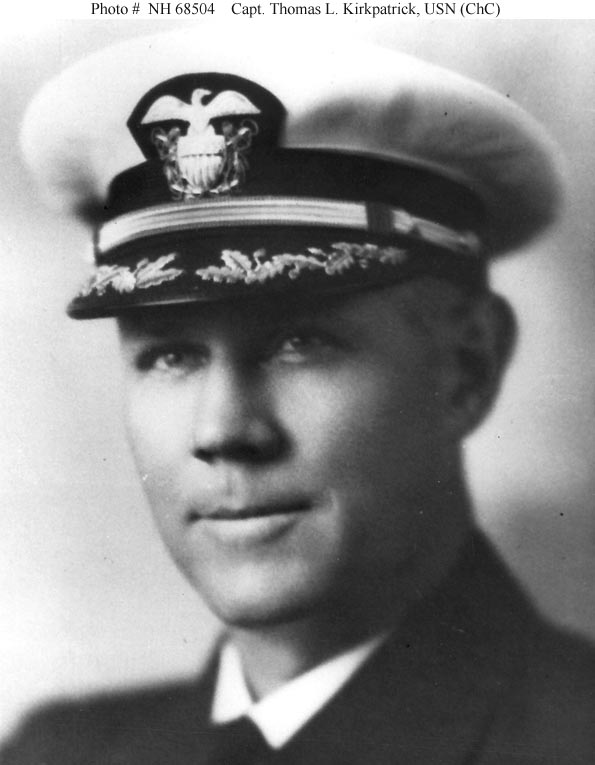
Alighting from the launch I went aboard the memorial at the entry room and walked across the bridge and the assembly room before entering the shrine. As I walked slowly across the bridge I peered into the water below thinking about all the men still entombed in the wreck. Pausing in the shrine I read the names of the 1,177 men killed aboard Arizona that Sunday morning, one of those was the ship’s chaplain, Captain Thomas Kirkpatrick. It was a pivotal moment for me. I had begun to feel a call to the ministry but in that moment I was sure that I wanted to serve as a Navy Chaplain. I remember finding a post card that I had sent my grandparents from the USS Gray when we returned to San Diego, my words were “Dear Ma Maw and Pa Paw, I think I am supposed to be a Navy Chaplain.” I laughed when I saw it because I was then serving as a Chaplain in the Army Reserve. Sadly, when my grandmother died in November 1996 I was deployed, and that simple postcard, my link with that part of my past was discarded by family members who did not think enough to read it, or if they did didn’t give enough of a damn about me to save it. I should have taken it when I had the chance, but sometimes I am too sentimental.

chaplain-thomas-kirkpatrick

It took me a while to get there, my long strange trip included a 17 ½ year detour in the U.S. Army before I became a Navy Chaplain in February 1999.

Abraham Lincoln spoke of the ground that was hallowed at Gettysburg in his Gettysburg Address. The wreck of the Arizona is also hallowed. Despite our best efforts we cannot consecrate it more than the men who served aboard her that day seventy-five years ago, but we can as Lincoln said so well be dedicated here to the unfinished work which they who fought here have thus far so nobly advanced. It is rather for us to be here dedicated to the great task remaining before us — that from these honored dead we take increased devotion to that cause for which they gave the last full measure of devotion — that we here highly resolve that these dead shall not have died in vain — that this nation, under God, shall have a new birth of freedom — and that government of the people, by the people, for the people, shall not perish from the earth.”

For me that means to continue to serve as a Chaplain in the Navy, never forgetting that the duty of a Chaplain is with his or her Sailors, Marines, Soldiers, and Airmen, especially when they go in harm’s way.

Of course my service will come to an end on the 1st of August 2020. I will retire on my statutory retirement date. However, I will continue to write and serve people in whatever way I can. I will retire with no personal regrets, but regret the condition of the country today under President Trump, that is why I will continue “take increased devotion… that this nation, under God shall have a new birth of freedom – and that government of the people, by the people, for the people, shall not perish from the earth.”  Though I will be retired my service will not end.

Peace

Padre Steve+

Leave a comment

Filed under History, Loose thoughts and musings, Military, national security, Navy Ships, News and current events, Political Commentary, US Navy, world war two in the pacific

“Defenseless under the night Our world in stupor lies…” The Day Before Pearl Harbor and Today

h97398

Friends of Padre Steve’s World,

The late historian Walter Lord wrote in his book Day of Infamy: “A nation brought up on peace was going to war and didn’t know how.”

For most Americans and Western Europeans this is time of peace. Well, at least the illusion of peace. It doesn’t matter that the Soviets by another name have been conducting acts of war against the institutions of western democratic states, and waged a war against Ukraine to capture Crimea. It doesn’t that Tens thousands of American, NATO and European Union troops operating in a number of mandates are in harm’s way. In some places like Afghanistan they are at war, in others attempting to keep the peace. Around the world regional conflicts, civil wars, insurgencies  and revolutions threaten not only regional peace but the world peace and economy. Traditional national rivalries and ethnic and religious tensions especially in Asia and the broader Middle East have great potential to escalate into wars that should they actually break will involve the US, NATO and the EU, if not militarily economically and diplomatically. Add to all of this, tat the American President seems intent on helping authoritarian regimes around the world and working to establish one in the United States. But for most Americans, so long as their economic needs appear to be safe, or the President backs their revanchist social and religions policies and inflicts them on other Americans, all is well. To those who believe that everything is okay I say Bullshit, as a historian and a theologian.

But, since we live in a dream world an illusory world of peace, the words of  W.H. Auden come to mind. In his  poem September 1st 1939 he wrote:

Defenseless under the night
Our world in stupor lies…

On December 6th 1941 the world was already at war and the United States was edging into the war. The blood of Americans has already been shed but for the vast majority of Americans the events in Europe and Asia were far away and not our problem.  Even in 1941 isolationists and American Fascists, such as the German Bund, the KKK, and the Silvershirts tried to tip the American Public into supporting the totalitarian regimes of Germany, Japan, and Italy.

Though President Roosevelt had began the expansion of the military there were those in Congress seeking to demobilize troops and fought all attempts at to intervene against the Nazis, the Italian Fascists, and the Japanese warmongers.

maltese-falcon-by-content-artofmanlinessdotcomw499h371

Most people went about their business on December 6th, that last furtive day of peace without a second thought. People went about doing their Christmas shopping, going to movies like The Maltese Falcon staring Humphrey Bogart or the new short Tom and Jerry cartoon, The Night Before Christmas.

Tom And Jerry

Others went to football games. UCLA and USC had played their annual rivalry game to a 7-7 tie, Texas crushed Oregon in Austin by a score of 71-7 while Texas A&M defeated Washington State in the Evergreen Bowl in Tacoma by a score of 7-0.

0-3

In Europe a Soviet counter-offensive was hammering a freezing and exhausted German Wehrmacht at the gates of Moscow. U-Boats were taking a distressing toll of ships bound for Britain including neutral US merchant ships and warships, including the USS Reuben James, and USS Kearney. American Airmen were flying as the volunteer Flying Tigers for the Nationalist Chinese against the Japanese invaders. Other Americans volunteers to fight alongside the British Royal Air Force as volunteers in the 71st, 131st, and 133rd Eagle Squadrons against the German Luftwaffe. After war was declared these squadrons became part of the U.S. Army Air Corps. 

decwarp1

War was everywhere but Most Americans lived under the illusion of peace. When the messages came out of Pearl Harbor the next morning it was already early afternoon on the East Coast. The Japanese Ambassador was intentionally delayed by his government in delivering the Japanese declaration of war. When the attack occurred many people across the country going about their Sunday business, going to church, relaxing or listening to the radio. Thus when war came, despite all the precursors and warnings, most Americans were taken by surprise. A sailor at Pearl Harbor was heard to remark I didn’t even know they were mad at us.” 

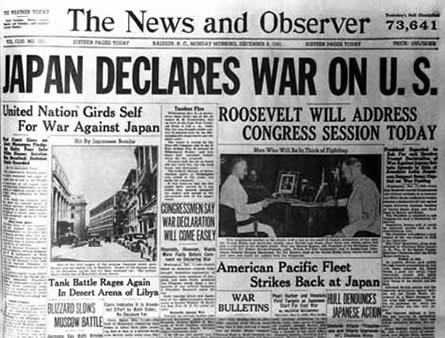
When the attack happened it took the nation by surprise. Walter Lord wrote in his classic account of the Pearl Harbor attack Day of Infamy: “A nation brought up on peace was going to war and didn’t know how.”

By the end of the day over 2400 Americans were dead and over 1200 more wounded. The battleships of the Pacific Fleet were shattered. 4 sunk, one grounded and 3 more damaged. 10 other ships were sunk or damaged in the attack. 188 aircraft were destroyed and 159 damaged.

cn3992

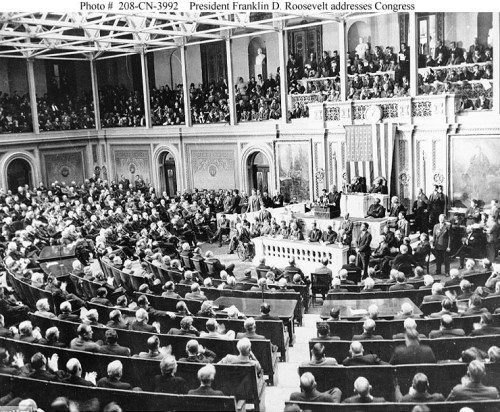
The next day President Franklin D. Roosevelt called the nation to action requesting that Congress declare war on Japan. It was a speech that galvanized the American public. http://www.youtube.com/watch?v=ufoUtoQLGQY

Mr. Vice President, and Mr. Speaker, and Members of the Senate and House of Representatives:

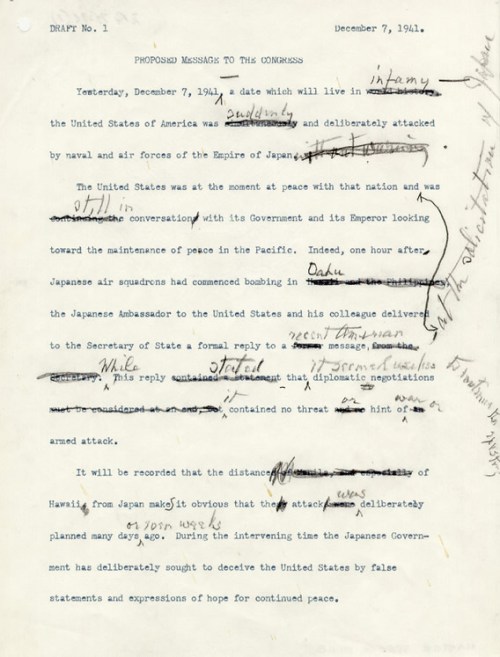
Yesterday, December 7, 1941 — a date which will live in infamy — the United States of America was suddenly and deliberately attacked by naval and air forces of the Empire of Japan.

The United States was at peace with that Nation and, at the solicitation of Japan, was still in conversation with its Government and its Emperor looking toward the maintenance of peace in the Pacific. Indeed, one hour after Japanese air squadrons had commenced bombing in the American Island of Oahu, the Japanese Ambassador to the United States and his colleague delivered to our Secretary of State a formal reply to a recent American message. And while this reply stated that it seemed useless to continue the existing diplomatic negotiations, it contained no threat or hint of war or of armed attack.

It will be recorded that the distance of Hawaii from Japan makes it obvious that the attack was deliberately planned many days or even weeks ago. During the intervening time the Japanese Government has deliberately sought to deceive the United States by false statements and expressions of hope for continued peace.

The attack yesterday on the Hawaiian Islands has caused severe damage to American naval and military forces. I regret to tell you that very many American lives have been lost. In addition American ships have been reported torpedoed on the high seas between San Francisco and Honolulu.

Yesterday the Japanese Government also launched an attack against Malaya.
Last night Japanese forces attacked Hong Kong.
Last night Japanese forces attacked Guam.
Last night Japanese forces attacked the Philippine Islands.
Last night the Japanese attacked Wake Island. And this morning the Japanese attacked Midway Island.

Japan has, therefore, undertaken a surprise offensive extending throughout the Pacific area. The facts of yesterday and today speak for themselves. The people of the United States have already formed their opinions and well understand the implications to the very life and safety of our Nation.

As Commander in Chief of the Army and Navy I have directed that all measures be taken for our defense.

But always will our whole Nation remember the character of the onslaught against us.

No matter how long it may take us to overcome this premeditated invasion, the American people in their righteous might will win through to absolute victory. I believe that I interpret the will of the Congress and of the people when I assert that we will not only defend ourselves to the uttermost but will make it very certain that this form of treachery shall never again endanger us.

Hostilities exist. There is no blinking at the fact that our people, our territory, and our interests are in grave danger.

With confidence in our armed forces- with the unbounding determination of our people- we will gain the inevitable triumph- so help us God.

I ask that the Congress declare that since the unprovoked and dastardly attack by Japan on Sunday, December 7, 1941, a state of war has existed between the United States and the Japanese Empire.

171-0417042317-pearlharbor_paper

The day after the attack, Japanese Ambassador Oshima visited German Foreign Minister Von Ribbentrop to pressure Germany into joining the war. But Von Ribbentrop attempted to keep Germany out of the war fearing that adding the United States to The List of Germany’s opponents would doom them to defeat. He was overruled by Hitler, whose personal loathing of Roosevelt, disrespect for the American military, overestimation of Japan’s military and industrial power, and belief that Japan would quickly defeat Britain and the United States in the Pacific.

On December 11th, Germany and Italy declared war against the United States, while Germany’s erstwhile ally Japan, refused to declare war on the Soviet Union to relieve the pressure on Germany. Japan and the Soviets maintained their non-aggression pact until after the Americans dropped the Atomic Bomb on Hiroshima. Then and only then did the Soviets join the war against Japan.

Today tens of thousands of US and NATO troops are deployed in Afghanistan. Some of them are dying that people that most of us do not care about in the least might have a chance at peace and a better life. Eleanor Roosevelt reflected:

“Lest I keep my complacent way I must remember somewhere out there a person died for me today. As long as there must be war, I ask and I must answer was I worth dying for?”

Wars, revolutions and other tensions in other parts of the world threaten on every side, but most Americans and Europeans live in the illusion of peace.  A very few professi0onals are given the task of preparing for and fighting wars that our politicians, business leaders, Armageddon seeking preachers and the talking heads of the media sow the seeds. As such many have no idea of the human, material and spiritual cost of war and when it comes again in all of its awful splendor few will be prepared.

We do not know what tomorrow will bring and unfortunately for the vast bulk of Americans and Western Europeans the comments of W. H. Auden are as applicable today as they were on December 7th 1941: Defenseless under the night, Our world in stupor lies…

Personally, I cannot imagine Donald Trump, the current American President tak the stand that Franklin Delano Roosevelt did. against Germany, Japan, and Italy, nor could I imagine his supporters abandon him even if it meant the loss of every American ideal, law, and institution. that is difficult for a member of the Trump cult to stomach, but not so difficult if one believes the ideals of the Declaration of Independence, the Constitution, or the Gettysburg Address.

So until tomorrow,

Peace,

Padre Steve+

3 Comments

Filed under Foreign Policy, History, imperial japan, leadership, Military, national security, Navy Ships, News and current events, Political Commentary, US Army Air Corps, US Navy, World War II at Sea, world war two in europe, world war two in the pacific

Pearl Harbor and the Advent of the Aircraft Carrier, But Can the Carrier Remain Supreme?

h50931

Friends of Padre Steve’s World,

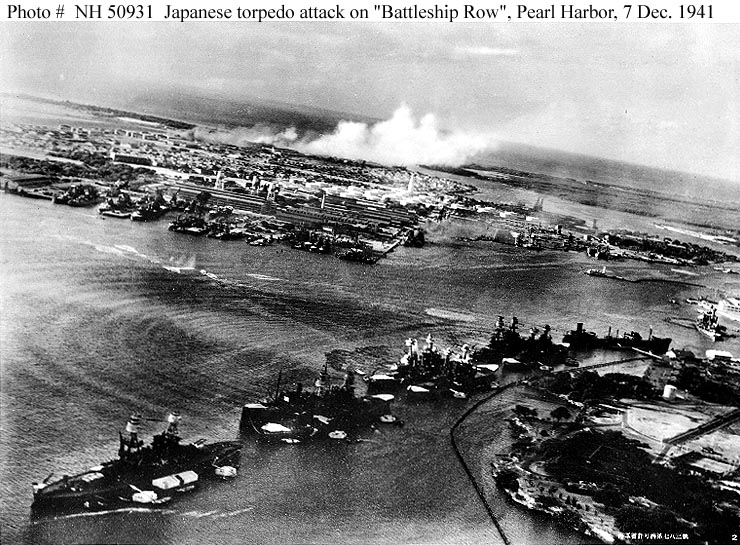
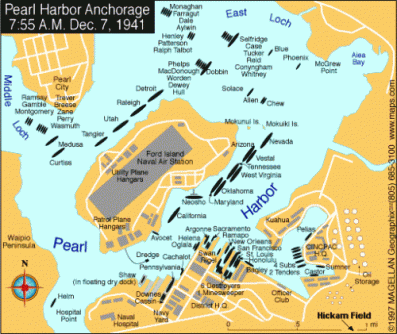
On the morning of December 7th 1941 8 of the 9 Battleships assigned to the US Pacific Fleet were in Pearl Harbor. Seven, the USS California, USS Maryland, USS Oklahoma, USS Tennessee, USS West Virginia, USS Arizona and USS Nevada were moored on Battleship Row. The USS Pennsylvania was in the massive dry dock which she shared with the destroyers USS Cassin and USS Downes. The USS Colorado, a sister ship of Maryland and West Virginia was at the Puget Sound Naval Yard being overhauled.

pearlharbor_wide-6febcbc3473e02a65f9b7b9e151905b7300c328f-s6-c30

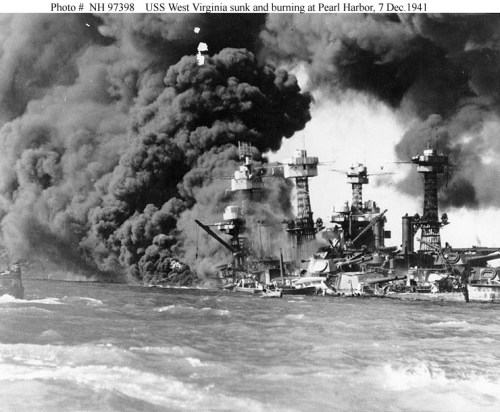
USS West Virginia sinking at left and USS Tennessee burning at Pearl Harbor

At the time both the United States Navy and the Japanese Imperial Navy still viewed the Battleships as the heart of the fleet and the essence of naval power. Aircraft Carriers were still viewed as an adjunct and support to the traditional battle line.

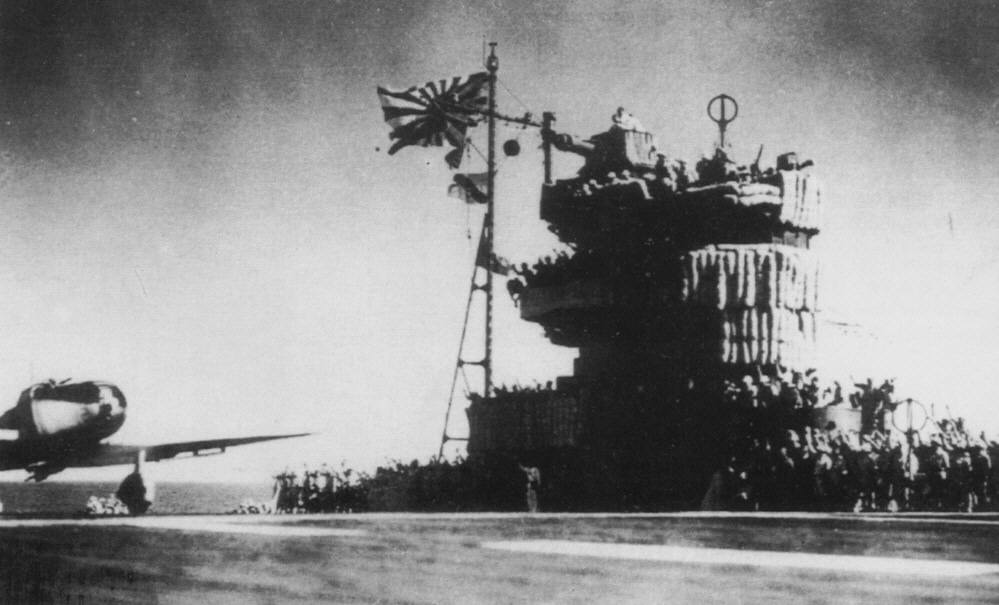
Japanese-carriersJapanese Aircraft preparing to launch at Pearl Harbor

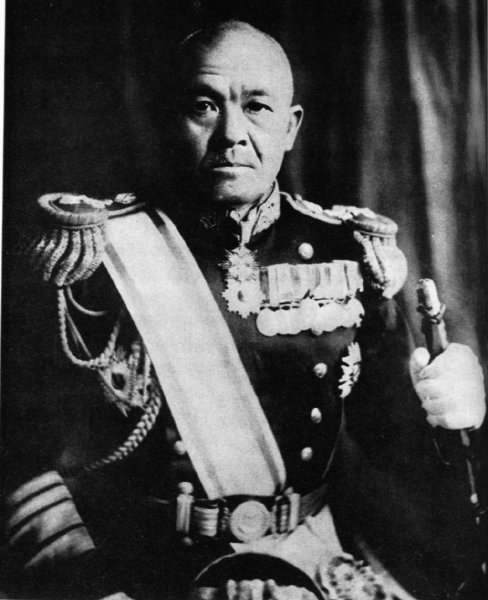
Thus as the Japanese Carrier Strike Group, the Kido Butai under the command of Vice Admiral Chūichi Nagumo approached Pearl Harbor and intelligence reports came in indicating that the carriers were not present the Japanese were not overly concerned. The lack of concern was in a sense ironic because the force they assigned to destroy the Battleships of the Pacific Fleet was the carrier strike group, not their battle line. The Kido Butai was the largest carrier strike group assembled until late 1943 when the U.S. Pacific Fleet fielded a larger carrier strike group, something no other country has done since.

Kido-Butai-in-the-North-Pacific

The Kido Butai enroute to Pearl Harbor

Comprised of six carriers, the Akagi, Kaga, Hiryu, Soryu, Shokaku and Zuikaku the force embarked over 300 first line aircraft. The aviators of the air groups aboard the carriers had been training for months to attack Pearl Harbor. Their aircraft had been specially outfitted with Type 91 Model 2 aerial torpedoes designed to run in the shallow waters of Pearl Harbor and Type 99 Model 5 armor piecing bombs modified from battleship shells. These weapons would be employed with a devastating effect on the morning of December 7th 1941.

The three carriers assigned to the Pacific Fleet, the USS Saratoga, USS Lexington and USS Enterprise had been dispatched on missions that took them away from Pearl Harbor that fateful Sunday.

USS_Lexington

USS Lexington

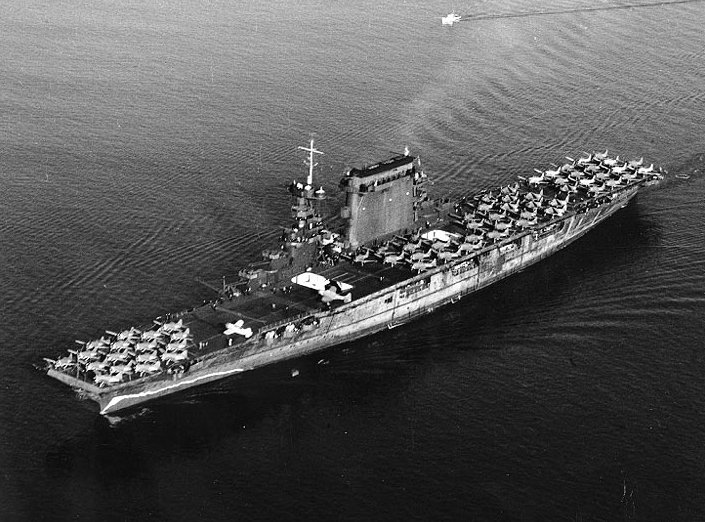
The Lexington and Task Force 12 had departed Pearl Harbor on December 5th to ferry 18 SB2U Vindicator Dive Bombers of VSMB-231 to Midway Island. These aircraft would ultimately take part in the Battle of Midway and the sinking of the Japanese Cruiser Mikuma. Saratoga was entering San Diego to embark her air group, and Enterprise which had left Pearl Harbor on November 28th to deliver VMF-211 to Wake Island was due to return to Pearl Harbor on the 7th of December. As such none of these ships were in Pearl Harbor at the time of the attack. Their absence helped save the United States and Allied cause in the Pacific.

USS_Saratoga_CV-3_underway_1942

USS Saratoga

The United States had other carriers but all were assigned to the Atlantic Fleet due to the belief that Nazi Germany was a greater threat than Japan. The USS Yorktown was at Norfolk in between deployments in support of the Neutrality Patrol. USS Ranger was returning to Norfolk from a Neutrality patrol, USS Wasp was at Grassy Bay Bermuda and the newly commissioned USS Hornet was training out of Norfolk. The USS Long Island, the first Escort carrier was undergoing operational tests and training out of Norfolk.

cv-6-01USS Enterprise at Midway

Had any of the three carriers assigned to the Pacific Fleet been in Pearl Harbor on the morning of the Japanese attack the results would have been even more disastrous for the United States. Instead these carriers began operations against the Japanese almost immediately. Carriers based on the East Coast including Hornet, Yorktown and Wasp were transferred to the Pacific. In the perilous months following the Pearl Harbor attack the US carriers took the fight to the Japanese conducting raids against Japanese held islands. In April 1942 the Enterprise and Hornet, the latter with 16 B-25 Mitchell bombers under the command of Colonel Jimmy Doolittle struck Tokyo.

gallery_30225_28868_12824874244ae0d6734af3b

USS Hornet launching the Doolittle Raiders

The result of that attack resulted in a severe embarrassment and loss of face to the Imperial Navy. the strategic and psychological implications were such that Admiral Isoruku Yamamoto decided to attack Midway Island to force the US fleet and its carriers into a decisive battle. Although the Japanese had lost a good number of aircrew from Shokaku and Zuikaku at the Battle of Coral Sea, while sinking Lexington Yamamoto remained committed to the decisive battle.

That battle was decisive, but not in the way Yamamoto had planned. Akagi, Kaga, Hiryu and Soryu were sunk by aircraft operating from Enterprise, Yorktown and Hornet. Yorktown was lost in the battle bat it was a decisive defeat for the Japanese. From that point, though they still were superior to the U.S. Navy in numbers of Carriers and surface warships, and still maintained a massive number of islands which they had fortified and built airbases on in defiance of treaties they agreed to at the end of the First World War,

Attack_of_the_Akagi

Sinking the Akagi at Midway

In the succeeding months in the vicious battles around the Solomon Islands the remaining US carriers proved decisive. Although Wasp and Hornet were sunk in those battles and both Saratoga and Enterprise were often heavily damaged, they held the line. The carriers that the Japanese missed proved decisive in turning the tide and winning the war.

22_bb48

Raised from the mud of Pearl Harbor the USS West Virginia in Tokyo Bay

Though Yamamoto did not realize it, the attack on Pearl Harbor signaled the end of the supremacy of the Battleship and the ascendency of the Aircraft Carrier. By 1943 Battleships were regulated to escorting the fast carrier task forces or conducting shore bombardments. The ultimate irony was that the last battleship engagement in history was won by the survivors of the attack on Pearl Harbor. Raised from the mud the West Virginia, Tennessee, California, Maryland and Pennsylvania joined by the USS Mississippi rained destruction on two Japanese task forces attempting to penetrate Leyte Gulf and destroy the US invasion force transports at the Battle of Surigao Strait.

It was a fascinating turn of events. The Japanese dispatched the cream of their carrier air forces to destroy the U.S. Pacific Fleet at Pearl. Harbor, and though they crippled the battleships they failed to destroy the American aircraft carriers, at Pearl Harbor, Coral Sea, Midway, or the Guadalcanal campaign. In the following years the Enterprise and Saratoga, bolstered by the carriers of the Essex Class, and the Light Fleet Carriers of the Independence Class, and helped by the addition of dozens of Escort Carriers, which relieved them of the mundane tasks of convoy escort and amphibious landing support, wreaked havoc on the Imperial Japanese Navy from late 1943 on. The Battles of the Philippine Sea, Leyte Gulf, the raid on Formosa, and the strikes on the Japanese homeland proved the superiority of the carrier force the Japanese missed at Pearl Harbor and failed to destroy in subsequent engagements.

Today, nearly eight decades later there is a question of the relevance of aircraft carriers, even though the United States, Great Britain, China, Russia, India, and other nations continue their development. I have to admit, that with the development of other weapons platforms and technologies, that I do not know the ultimate fate of the aircraft carrier. However, like the Ships of the Line that dominated late 17th, 18th, and early 19th centuries., the Ironclads that dominated the late 19th Century, and the Dreadnaughts that dominated until Pearl Harbor.

Pearl Harbor was 78 years ago. Since then carrier and submarine eclipsed the power of the the battleship. We cannot assume that the era of the aircraft carrier will continue without end. The Japanese discounted the power of the aircraft carrier and submarine, assuming that battleships supported by carriers and submarines would maintain control of the Oceans. They were wrong. Regardless of what weapons system we presume will dominate the future, we also must admit the very real possibility that we could be wrong. Technologies that we have not ever began to imagine, except possibly in the realm of science fiction may change everything we believed possible.

i am neither the prophet nor the son of the prophet, thus my opinion is only that: I believe that the carrier will remain the centerpiece of Naval power and strategy for the next decade, and possibly another, but as a military and Naval historian I cannot predict that they remain so longer than that. Thus the United States Navy, and for that matter all navies begin looking toward and planning for technologies that are either in their infancy or not yet imagined. To ignore that fact would be to ignore history. We do that to our detriment.

Until tomorrow,

Peace,

Padre Steve+

5 Comments

Filed under History, imperial japan, Military, national security, Navy Ships, News and current events, US Navy, World War II at Sea, world war two in the pacific

Will We Remember the Day of Infamy? Remembering the Ships Present at Pearl Harbor, a Brief History of Each Ship

harbrmap1

Friends of Padre Steve’s World,

The attack on Pearl Harbor is one of the seminal moments in the history of the United States where at one time the nation rose up as one to the challenge of an attack against it and against its armed forces. Sadly, for most Americans today no matter what their political ideology the concept of coming together in a crisis is a foreign and possibly even a hateful idea. Likewise, I would dare say that most Americans today find the attack on Pearl Harbor of little importance today, nor think that there is nothing to learn from it.

However, in December 1941 the Pacific Fleet of the United States Navy was attacked at Pearl Harbor of the nation came together as it never had before. On the morning of December 7th 1941 there were over ninety ships of the Pacific Fleet at Pearl Harbor. While over twenty percent of these ships were sunk or damaged in the attack, almost all returned to service in the war. Likewise, many of the surviving shipswere lost in action during the war. Only two ships or craft remain of the ships present on December 7th 1941, the tug USS Hoga and the Coast Guard Cutter USCG Taney which is now a museum ship in Baltimore Maryland. The rest, lost in action, sunk as targets or scrapped. Of the gallant men who served as their crews during the war and at Pearl Harbor very few remain. They are part of what we now refer as the “Greatest Generation.” 

In 1978 I had the opportunity to visit Pearl Harbor and visit the USS Arizona and USS Utah Memorials during what was a nearly three week long cruise and visit to Pearl Harbor while a Navy Junior ROTC Cadet.  I cannot forget forget that experience, as the visits to both memorials, sited above the wrecks of the two sunken ships in which more than 1000 Americans remain entombed to this day left a mark on me.

Today I remember all of the ships present, from the greatest to the most humble, as well as their gallant crews, many of whom were volunteers who had gone into service not long before the attack, because they believed that the nation was in danger who were present at Pearl Harbor on December 7th 1941. I also remember a government which though torn by by ideological differences decided to unite to meet the threat of advancing enemies even before they targeted the United States.

The fact is that only two of the ships present at the Pearl Harbor attack are still afloat, and the vast majority of their crews have passed away. Very few survivors of that day of infamy remain and it is our sad task to keep reminding the nation and the world of the price of arrogant toxic nationalism, and historic ignorance.

This is the story of the ships that were at Pearl Harbor that fateful morning of December 7th 1941. Please read it and share it, because the youngest survivors are in their nineties, and few will be alive to bear witness in the next few years, and then there will be none left. These the task of remembering is left to us, like it or not.

Peace

Padre Steve+

A few years ago I wrote a piece called The Battleships of Pearl Harbor. I have added to it, and recently republished it. I followed that with an article entitled “Forgotten on the Far Side of Ford Island: The USS Utah, USS Raleigh, USS Detroit and USS Tangier.

Of course most anyone that has see either Tora! Tora! Tora! or Pearl Harbor is acquainted with the attack on “Battleship Row” and the airfields on Oahu.  What are often overlooked in many accounts are the stories of some of the lesser known ships that played key roles or were damaged in the attack.  Since none of the articles that I have seen have discussed all of the U.S. Navy ships at Pearl Harbor on that fateful morning I have taken the time to list all the ships with the exception of yard and patrol craft present at Pearl Harbor on December 7th, 1941.I have also excluded Coast Guard cutters in Honolulu. A brief account of each ship’s war service and final disposition is included.  I believe that this is the only site that has this information in a single article.

During the attack 18 ships were sunk or damaged but only three, Arizona, Oklahoma and Utah never returned to service.  During the war a further 18 ships were sunk or written off as losses during the war. All ships lost in the war are marked with an asterisk. One ship, the USS Castor remained in active service until 1968 serving in the Korean and Vietnam Wars. One ship, the Light Cruiser Phoenix was sunk in the Falklands War while serving as the Argentine ship General Belgrano. No U.S. Navy ships apart from the Yard Tug Hoga (not included in this article) remain today.  It is unfortunate that the Navy or any organization had the foresight to save one of these ships. It would have been fitting for one of the battleships that survived the war to be preserved as a memorial ship near the Arizona Memorial. While the USS Missouri serves this purpose symbolic of the end of the war it is a pity that no ship at Pearl Harbor was preserved so that people could see for themselves what these gallant ships was like.

Battleships
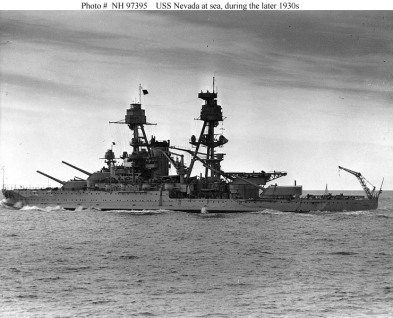
uss Nevadab36

Nevada (BB-36) Nevada was the only Battleship to get underway during the attack.  As she attempted to escape the harbor she was heavily damaged and to prevent her sinking in the main channel she was beached off Hospital Point.  She would be raised and returned to service by the May 1943 assault on Attu.  She would then return to the Atlantic where she would take part in the Normandy landings off Utah Beach and the invasion of southern France in July 1944.  She then returned to the Pacific and took part in the operations against Iwo Jima and Okinawa where she again provided naval gunfire support.  Following the war she would be assigned as a target at the Bikini atoll atomic bomb tests, surviving these she would be sunk as a target on 31 July 1948. She received 7 battle stars for her WWII service.
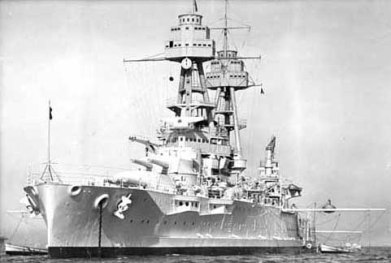
uss_oklahoma1

USS Oklahoma

*Oklahoma (BB-37) During the Pearl Harbor attack Oklahomawas struck by 5 aerial torpedoes capsized and sank at her mooring with the loss of 415 officers and crew. Her hulk would be raised but she would never again see service and sank on the way to the breakers in 1946.  She was awarded one battle star for her service during the attack.
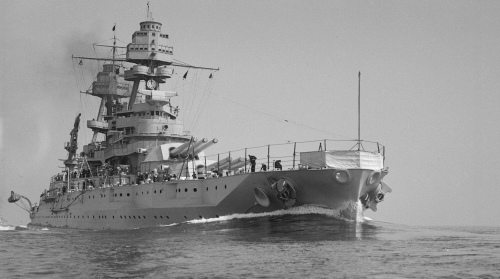
USS Pennsylvania

Pennsylvania (BB-38) Pennsylvania was the Pacific Fleet Flagship on December 7th 1941 and was in dry dock undergoing maintenance at the time of the attack. Struck by two bombs she received minor damage and would be in action in early 1942. She underwent minor refits and took part in many amphibious landings in the Pacific and was present at the Battle of Surigo Strait.  Heavily damaged by an aerial torpedo at Okinawa Pennsylvania would be repaired and following the war used as a target for the atomic bomb tests. She was sunk as a gunnery target in 1948.  She received 8 battle stars for her WWII service.
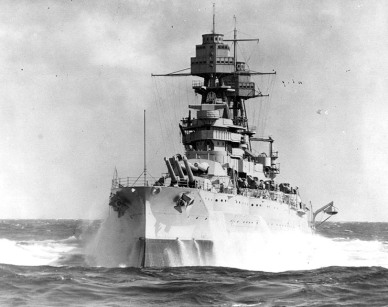
USS_Arizona_(BB-39)_-_1930s

The USS Arizona before the attack

*Arizona (BB-39) Arizona was destroyed during the attack.  Hit by 8 armor piercing bombs one of which penetrated her forward black powder magazine she was consumed in a cataclysmic explosion which killed 1103 of her 1400 member crew.  She was decommissioned as a war loss but her colors are raised and lowered every day over the Memorial which sits astride her broken hull.  She received one battle star for her service at Pearl Harbor.
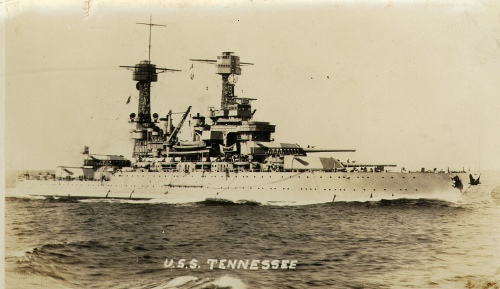
Tennessee (BB-43) Tennessee was damaged by two bombs and was shield from torpedo hits by West Virginia. After repairs she conducted operations in the Pacific until she reported to Puget Sound Naval Shipyard in August 1942 for a complete rebuild and modernized with the latest in radar, fire control equipment and anti-aircraft armaments. She returned to active service in May 1943. She provided Naval Gunfire support in numerous amphibious operations and was a key ship during the Battle of Surigo Strait firing in six-gun salvos to make careful use of her limited supply of armor-piercing projectiles, Tennessee got off 69 of her big 14-inch bullets before checking fire.  Her gunfire helped sink the Japanese Battleships Fuso and Yamishiro and other ships of Admiral Nishimura’s Southern Force.  She was damaged by a Kamikaze off Okinawa on 18 April 1945 which killed 22 and wounded 107 of her crew but did not put her out of action.  Her final assignment of the war was to cover the landing of occupation troops at Wakayama, Japan.  She was decommissioned in 1947 and remained in reserve until 1959 when she was sold for scrap. Tennessee earned a Navy Unit Commendation and 10 battles stars for World War II service.
USSCalifornia

USS California transiting the Panama Canal

California (BB-44) California was hit by two torpedoes but had the bad luck to have all of her major watertight hatches unhinged in preparation for an inspection. Hit by two torpedoes and two bombs she sank at her moorings suffering the loss of 98 killed and 61 wounded. She was refloated and received temporary repairs at Pearl Harbor before sailing to Puget Sound Naval Shipyard to be completely rebuilt and modernized with the latest in radar, fire control equipment and anti-aircraft armaments. She returned to service in January 1944. She saw her first action in the Marianas and was in continuous action to the end of the war. She played an important part in the Battle of Surigo Strait and in the amphibious landings at Guam and Tinian, Leyte, Iwo Jima and Okinawa.  She was decommissioned in 1947 and placed in reserve finally being sold for scrap in 1959. She received 7 battle stars for her WWII service.
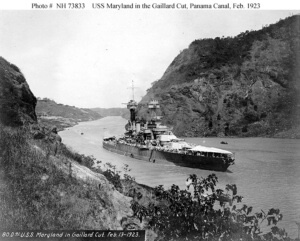
Maryland (BB-45) At Pearl Harbor Maryland was moored inboard of Oklahoma and was hit by 2 bombs.  She would be quickly repaired and returned to action and receive minimal modernization during the war. She would participate in operations throughout the entirety of the Pacific Campaign providing naval gunfire support to the landings at Tarawa, Kwajalein, Saipan, where she was damaged by an aerial torpedo, Palau, Leyte where she was damaged by a Kamikaze, Okinawa and the battleship action at Surigo Strait.  Decommissioned in 1947 she was placed in reserve and sold for scrap in 1959. On 2 June 1961 the Honorable J. Millard Tawes, Governor of Maryland, dedicated a lasting monument to the memory of the venerable battleship and her fighting men. Built of granite and bronze and incorporating the bell of “Fighting Mary,” this monument honors a ship and her 258 men who gave their lives while serving aboard her in WWII.  This monument is located on the grounds of the State House, Annapolis, Md. Maryland received seven battle stars for World War II service.
The USS West Virginia before the war and after her salvage and reconstruction
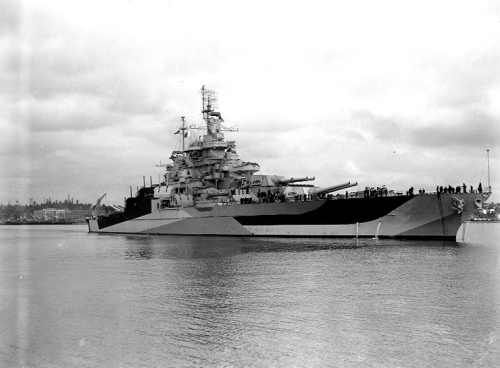
West Virginia (BB-48) West Virginia suffered some of the worst damage in the attack. Hit by at least 5 torpedoes and two bombs she was saved from Oklahoma’s fate by the quick action of her damage control officer to counter flood so she would sink on an even keel.  She would be raised, refloated and taken back to the West Coast for an extensive modernization on the order of the Tennessee and California. The last Pearl Harbor battleship to re-enter service she made up for lost time as she lead the battle line at Surigo Strait firing 16 full salvos at the Japanese squadron helping sink the Japanese Battleship Yamashiro in the last battleship versus battleship action in history West Virginia was decommissioned in 1947, placed in reserve and sold for scrap in 1959.

Heavy Cruisers

New Orleans (CA-32) Minor shrapnel damage from near miss. Fought throughout the war in the Pacific; bow blown off by Japanese torpedo at Battle of Trassafaronga in November 1942, repaired. 17 battle stars for WWII service, decommissioned 1947 and sold for scrap in 1957.
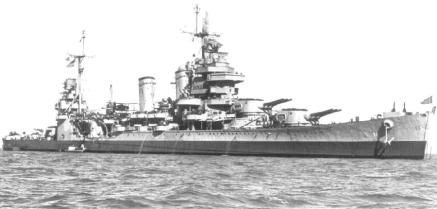
san fran

USS San Francisco CA-38

San Francisco (CA-38 Undamaged at Pearl Harbor, fought through Pacific war, most noted for actions at the Naval Battle of Guadalcanal fighting Japanese Battleship Hiei. Decommissioned 1946 and sold for scrap in 1959. San Francisco earned 17 battle stars during World War II. For her participation in the Naval Battle of Guadalcanal, she was awarded the Presidential Unit Citation. For the same action, three members of her crew were awarded the Medal of Honor: Lieutenant Commander Herbert E. Schonland, Lieutenant Commander Bruce McCandless , and Boatswain’s Mate 1st Class Reinhardt J. Keppler (posthumous). Admiral Daniel Callaghan was also awarded the Medal of Honor (posthumous).  During the November 1942 repair at Mare Island, it was necessary to extensively rebuild the bridge. The bridge wings were removed as part of that repair, and are now mounted on a promontory in Lands End, San Francisco at Golden Gate National Recreation Area overlooking the Pacific Ocean. They are set on the great circle course from San Francisco  to Guadalcanal.  The old ship’s bell is housed at the Marines Memorial Club in San Francisco.

Light Cruisers
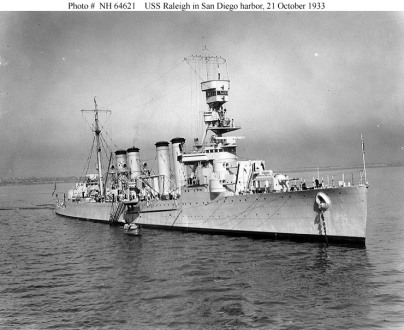
uss Raliegh

Raleigh (CL-7) Heavily damaged by torpedo, repaired served throughout war mainly in North Pacific . Decommissioned 1945 and scrapped 1946

Detroit (CL-8) Undamaged and got underway during attack. Mainly served in North Pacific and on convoy duty earning 6 battle stars for WWII service, decommissioned and sold for scrap 1946
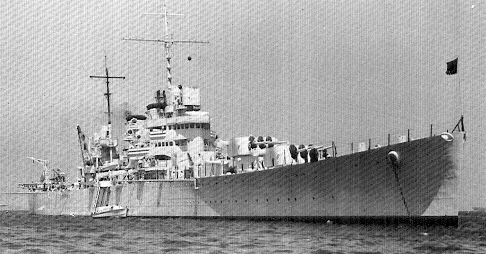
USS Phoenix
Belgrano-Sunk-copy2

The Argentine Navy Cruiser General Belgrano, the former USS Phoenix sinking during the Battle of the Falklands 1982

Phoenix (CL-46) Undamaged at Pearl Harbor and served throughout war and at the Battle of Surigo Strait she helped sink the Japanese Battleship Fuso.  She earned 9 battle stars for WWII service. Decommissioned 1946 and transferred to Argentina 1951. Served as General Belgrano and sunk by submarine HMS Conqueror on 2 May 1982 during the Falklands War.

Honolulu (CL-48) Suffered minor hull damage from near miss. Served in Pacific and fought several engagements against Japanese surface forces in the Solomons. At the Battle of Kolombangara on the night of 12-13 July 1943 she was damaged by a torpedo but sank the Japanese Light Cruiser Jintsu. Earned 9 battle stars for WWII service, decommissioned 1947 and sold for scrap 1949
USS St. Louis

St. Louis (CL-49) St. Louis got underway at 0930 nearly torpedoed by Japanese midget sub. She served throughout war in numerous operations and was damaged at the Battle of Kolombangara. She earned 11 battle stars for WWII service. She decommissioned 1946 and transferred to Brazil where she was renamed Tamandare stricken in 1976 sold for scrap in 1980 but sank while under tow to Taiwan.

*Helena (CL-50) Damaged and repaired. Engaged in many battles around Solomon Islands where at the Battle of Cape Esperance at Guadalcanal she sank the Japanese Heavy Cruiser Furutaka and destroyer Fubiki. She was engaged during the Naval Battle of Guadalcanal and was sunk at Battle of Kula Gulf 6 July 1943.  She was the first ship to be awarded the Naval Unit Commendation and was awarded 7 battle stars for her WWII service.

Destroyers
Allen (DD-66) Undamaged during attack spent war in local operations in Oahu area. Decommissioned 1945 and scrapped 1946

Schley (DD-103) Being overhauled on December 7th was undamaged in attack. Converted into High Speed Transport (APD) in 1942, earned 11 battle stars for WWII service and decommissioned in 1945 and scrapped in 1946

Chew (DD-106) Undamaged during attack and conducted local operations in Oahu operations for remainder or war, decommissioned 1945 and scrapped 1946.
h95201

USS Ward

*Ward (DD-139) Ward was underway patrolling Channel entrance to Pearl Harbor on December 7th, sank Japanese midget submarine. Converted to APD in 1943 and served in numerous operations prior to being heavily damaged by Japanese bombers at Ormoc Bay off Leyte in December 1944 starting fires that could not be controlled. She was sunk by USS O’Brien (DD-725) after survivors were rescued. By a strange twist of fate the C.O. of O’Brien LCDR Outerbridge who had commanded Ward when she sank the Japanese submarine at Pearl Harbor. Ward earned 10 battle stars for WWII service.
Dewey (DD-349) Being overhauled on December 7th Dewey served throughout the war earning 13 battle stars escorting carriers, convoys and supporting amphibious operations. Decommissioned October 1945 and sold for scrap 1946

Farragut (DD-348) Got underway during attack suffered minor damage from strafing. During the war she operated from the Aleutians to the South Pacific and Central Pacific escorting carriers and supporting amphibious operations. She earned 14 battle stars for WWII service. Decommissioned 1945 and sold for scrap 1947

*Hull (DD-350) Undamaged at Pearl Harbor she operated from the Aleutians to the South Pacific and Central Pacific escorting carriers and supporting amphibious operations. She earned 10 battle stars before sinking in “Halsey’s Typhoon” on 18 December 1944.

MacDonough (DD-351) MacDonough got underway during attack and was undamaged, during war served in North and Central Pacific escorting carriers and supporting amphibious operations. She earned 13 battle stars for her WWII service. Decommissioned October 1945 and sold for scrap 1946

*Worden (DD-352) Worden got underway during attack and went to sea with ships searching for Japanese strike force. Served at Midway and the South Pacific before being transferred to the Aleutians where she grounded on a pinnacle due to winds and currents at Constantine Harbor Amchitka Island on 12 January 193, she broke up in the surf and was written off as a total loss. Wordenwas awarded 4 battle stars for her WWII service.

Dale (DD-353) Dale got underway immediately under the command of her Command Duty Officer, an Ensign and joined ships searching for Japanese strike force. During war served in North and Central Pacific and took part in the Battle of the Komandorski Islands on 26 March 1943.  Earned 12 battle stars for WWII service, decommissioned October 1945 sold for scrap December 1946.

*Monaghan (DD-354)  Monaghan was the Ready destroyer on December 7th and ordered underway when Ward sank the midget submarine. On way out of harbor rammed, depth charged and sank a Japanese midget submarine that had gotten into Pearl Harbor. She participated in Coral Sea, Midway, Aleutians, the Battle of the Komandorski Islands and Central Pacific operations before sinking with the loss of all but 6 crewmen during the great Typhoon of November 1944 sinking on 17 November. She received 12 battle stars for her WWII service.
dd_uss_aylwin_dd355

USS Aylwin

Aylwin (DD-355) Got underway within an hour of the beginning of the attack with 50% of her crew and four officers, all Ensigns manning her leaving her Commanding Officer and others behind in a launch as she was under direction not to stop for anything. This incident was captured in the movie In Harm’s Way. During the war Aylwin saw action at Coral Sea, Midway, Guadalcanal, the Aleutians, and the Central Pacific up to the Okinawa and due to the action of her crew survived the great typhoon of November 1944. She earned 13 battle stars for her WWII service and was decommissioned in October 1945. She was sold for scrap in December 1946.
357selfridge_01

USS Selfridge

Selfridge (DD-357) Manned by a crew from 7 different ships Selfridge got underway at 1300 and was undamaged in the attack. Throughout war she served primarily as an escort to carriers and transports. Torpedoed by Japanese destroyer and lost her bow at Battle of Vella Lavella on 6 October 1942. Repaired and finished war. Earned 4 battle stars for WWII service and was decommissioned in October 1945 and sold for scrap in December 1946.

Phelps (DD-360) Undamaged at Pearl Harbor Phelps was credited with shooting down one enemy aircraft. She was in action at Coral Sea, Midway, Guadalcanal, the Aleutians and the Central Pacific picking up 12 battle stars for her WWII service. Decommissioned in October 1945 and scrapped 1947.

Cummings (DD-365) Sustained minor damage from bomb fragments but got underway quickly. During war served on convoy escort, with fast carrier task forces and provided Naval Gunfire Support from the Aleutians to the Indian Ocean where she operated with the Royal Navy. On 12 August 1944, President Roosevelt broadcast a nationwide address from the forecastle of Cummings after a trip the Alaska. Cummings was decommissioned in December 1945 and sold for scrap in 1947.

*Reid (DD-369) Undamaged at Pearl Harbor Reid escorted convoys and amphibious operations throughout the Pacific until she was sunk by Kamikazes at Ormoc Bay in the Philippines on 11 December 1944. On 31 August 1942 she sank by gunfire the Japanese submarine RO-1 off Adak Alaska. She received 7 battle stars for her WWII service.

Case (DD-370) Undamaged at Pearl Harbor Case escorted the fast carrier task forces throughout much of the war as well as conducted Anti-Submarine Warfare operations and Naval Gunfire Support. She sank a Midget submarine outside the fleet anchorage at Ulithi on 20 November 1944 and a Japanese transport off of Iwo Jima on 24 December 1944. She earned 7 battle stars for her WWII service and was decommissioned in December 1945 and sold for scrap in December 1947.

Conyngham (DD-371) Undamaged during attack she was underway that afternoon. Spent most of war on convoy escort, escorting carrier task forces and conducting Naval Gunfire Support missions she was damaged twice by strafing Japanese aircraft she earned 14 battle stars for her WWII service. Used in 1946 Atomic Bomb tests and destroyed by sinking in 1948.

Cassin (DD-372) Destroyed in drydock but salvaged returned to service 1944 escorting convoys and TG 38.1 the Battle Force of the fleet at Leyte Gulf as well as supporting amphibious operations. She earned 6 battle stars for her WWII service.  Decommissioned December 1945 and sold for scrap 1947
shaw09h3

USS Shaw

Shaw (DD-373) Sustained massive damage due to magazine explosion, salvaged and repaired served throughout war and awarded 11 battle stars. Damaged by Japanese dive bombers off Cape Gloucester on 25 December 1943 with loss of 3 killed and 33 wounded. Decommissioned October 1945 and scrapped 1947

*Tucker (DD-374) Undamaged at Pearl Harbor Tucker conducted convoy escort operations and was sunk when she struck a mine escorting a transport to Espiritu Santo on 1 August 1942 sinking on 4 August. She received one battle star for her WWII service.

Downes (DD-375) Destroyed in drydock and salvaged. Decommissioned June 1942, rebuilt and recommissioned 1943. After she was recommissioned and used to escort convoys and conduct Naval Gunfire Support to amphibious operations. She earned 4 battle stars for her WWII service. Decommissioned 1947 and sold for scrap.
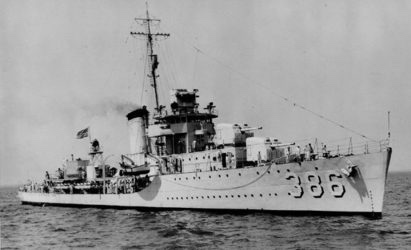
USS Bagley

Bagley (DD-386) Undamaged at Pearl Harbor Bagley conducted convoy escort operations and supported amphibious landings throughout the Pacific earning 1 battle stars ended the war on occupation duty at the Sasebo-Nagasaki area until returning to the United States. She earned 12 battle stars for her WWII service and was decommissioned in June 1946 and sold for scrap in October 1947.

*Blue (DD-387) Blue was undamaged and got underway during the attack under the direction of 4 Ensigns.  Served on convoy escort duties, present at Battle of Savo Island on 9 August 192 and was torpedoed off Guadalcanal by Japanese destroyer Kawakaze on 21 August and was scuttled 22 August. She earned five battle stars for her WWII service.

Helm (DD-388) Helm was underway, nearing West Loch at the time of the attack. Helm served in the Solomons and the South Pacific until February 19. She joined the fast carrier task forces of 5thFleet in May 1944. On 28 October at Leyte Gulf 28 October 1944 Helm and companion destroyer Gridley made sank the Japanese submarine I-46. She was used for a target during Operation Crossroads and scrapped in 1946. She received 11 battle stars for her WWII service.

Mugford (DD-389) Mugford was on standby status and had steam up which allowed her to get to sea during the attack in which she shot down Japanese aircraft. She spent much of 1942 on convoy duty between the U.S. and Australia. She took part in the Guadalcanal invasion and was struck by a bomb which killed 8 men, wounded 17 and left 10 missing in action. She would go on to serve in the Central and South Pacific being damaged by a near miss from a bomb on 25 December off Cape Gloucester and was stuck by a Kamikaze on 5 December 1944 in Surigo Strait. She escorted the fast carriers of TF 8 and 58 and later served on anti-submarine and radar picket duty. She decommissioned 1946 and was used in the Atomic Bomb tests and after use as a test ship for radioactive decontamination was sunk on 22 March 1948 at Kwajalein. She received 7 battle stars for her WWII service.

Ralph Talbot (DD-390) Ralph Talbot got underway by 0900 on the morning of the attack and joined other ships at sea attempting to find the Japanese strike force. She spent much of 1942 engaged in escort duties and took part in the Battle of Savo Island where she engaged the Japanese as part of the Northern Group and was damaged by Japanese shellfire. She spent the war in the South and Central Pacific escorting convoys and supporting amphibious operations and was damaged by a Kamikaze off Okinawa. She remained in service until 1946 when she was assigned to JTF-1 and the Operations Crossroads Atomic Bomb test. She survived the blast and was sunk in 198. She earned 12 battle stars for her WWII service.

*Henley (DD-391) Undamaged at Pearl Harbor Henley was already at General Quarters when the attack began because a new sailor sounded the General Quarters alarm instead of Quarters for Muster. As a result her weapons were manned. She got underway during the attack under the command of a junior Lieutenant and joined other ships patrolling outside of Pearl Harbor. Henley carried out convoy and anti-submarine patrols mainly around Australian continuing those duties through the Guadalcanal campaign. She was torpedoed and sunk by Japanese bombers on 3 October 1943 while conducting a sweep in support of troops ashore near Finshafen New Guinea. Henley earned 4 battle stars for her WWII service.

Patterson (DD-392) Patterson was undamaged during the attack and proceeded to sea conducting anti-submarine warfare patrols. She would spend the bulk of the war as an escort for fast carrier task forces. She was with the Southern Group during the Battle of Savo Island and suffered a hit on her #4 gun mount that killed 10 sailors.  She was awarded 13 battle stars for her WWII service. Decommissioned in November 1945 she was stricken from the Naval Vessel Register in 1947 and sold for scrap.

*Jarvis (DD-393) Jarvis survived Pearl Harbor undamaged and got underway to join other ships in patrols around Oahu.  She served as an escort for carriers and convoys and the invasion of Guadalcanal. She was heavily damaged by an aircraft launched torpedo during the landings but her crew made temporary repairs and restored power. She was ordered to Efate New Hebrides but evidently unaware of the order her Commanding Officer set sail for Sidney Australian and repairs from the Destroyer Tender USS Dobbin. She passed south of Savo Island as the Japanese cruiser force approached and refused assistance for the USS Blue.  She was last seen on the morning of 9 August 1942 by a scout plane from Saratoga. Already heavily damaged and having little speed, no radio communications and few operable guns was attacked by a force of 31 Japanese bombers sinking with all hands at 1300 on 9 August. Jarvis was awarded 3 battle stars for her WWII service.
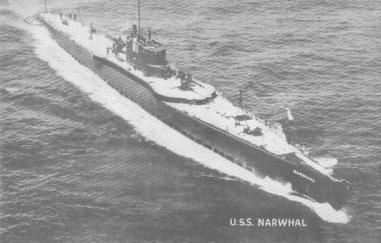
v-5a

USS Narwhal

Narwhal (SS-167) Narwhal was one of a class of three large cruiser submarines that was built in the mid 1920s. Narwhal was 14 years old at the time of the attack. She was undamaged at Pearl Harbor and was used primarily to support special missions and special operations forces in raids against Japanese shore installations. Narwhal earned 15 battle stars for her service in the Pacific and was decommissioned in February 1945 and sold for scrap in May. Her 6” guns are enshrined at the Naval Submarine Base Groton.

Dolphin (SS-169) Undamaged in the Pearl Harbor attack Dolphin made 3 war patrols in late 1941 and early 1942 before being withdrawn from combat service and used for training due to her age. She was decommissioned in October 1945 and sold for scrap in 1946. She received 2 battle stars for her service in WWII.

Cachalot (SS-170) Undamaged at Pearl Harbor Cachalot conducted three war patrols damaging an enemy tanker before being withdrawn from combat service in the fall of 1942 being judged too old for arduous combat service. She served as a training ship until June 1945 and was decommissioned in October 1945 and sold for scrap in January 1947. She was awarded 3 battle stars for her WWII service.
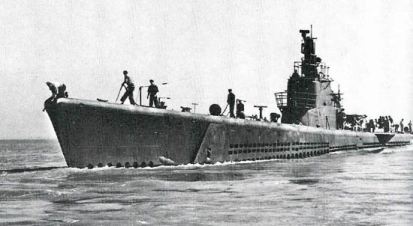
ss_uss_tautog_ss199

USS Tautog

Tautog (SS-199) Tautog was undamaged at Pearl Harbor and made the Japanese pay for not sinking her. She helped avenge the Pearl Harbor attack sinking 26 enemy ships of 71,900 tons including the submarines RO-30 and I-28 and destroyers Isoname and Shirakumo in 13 war patrols. She was withdrawn from combat service in April 1945 and served and operated in conjunction with the University of California’s Department of War Research in experimenting with new equipment which it had developed to improve submarine safety. She was decommissioned in December 1945. Spared from the Atomic Bomb tests she served as an immobile reserve training ship in the Great Lakes until 1957 and was scrapped in 1960.  Tautog was awarded 14 battle stars and a Naval Unit Commendation for her service in WWII.

Minelayer
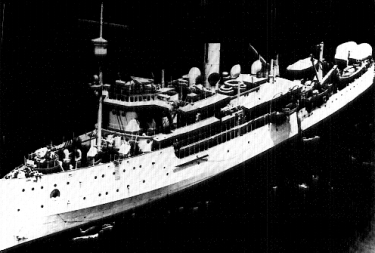
OGLALA

USS Oglala

Oglala (CM-4) Sank due to concussion from torpedo hit on Helena. Raised and repaired, converted to internal combustion repair ship. Decommissioned 1946 transferred to Maritime Commission custody and scrapped 1965

Minesweepers

Turkey (AM-13) Undamaged at Pearl Harbor she was redesignated as a Fleet Tug in 1942. She was decommissioned in November 1945 and sold for scrap in 1946. She received one battle star for her service at Pearl Harbor.

Bobolink (AM-20) Undamaged at Pearl Harbor and redesignated as an Ocean Going Tug in 1942. She decommissioned in 1946 and sold through the Maritime Administration. She received one battle star for her service at Pearl Harbor.

Rail (AM-26) Undamaged at Pearl Harbor Rail was redesignated as a Ocean Going Tug in June 1942. She supported operations throughout the Pacific earning 6 battle stars for her WWII service. She was decommissioned in 1946 and transferred to the Maritime Administration for disposal in 1947.

Tern (AM-31) Undamaged in the attack Tern was redesignated as an Ocean Going Tug in June 1942 and supported the fleet for the remainder of the war. She was decommissioned and struck from the Navy List in December 1945. She earned one battle star for her service at Pearl Harbor.

*Grebe (AM-43) Undamaged at Pearl Harbor Grebe was redesignated as an Ocean Going Tug in June 1942.  On 6 December 1942 Grebe grounded while attempting to float SS Thomas A. Edison at Vuanta Vatoa, Fiji Islands. Salvage operations were broken up by a hurricane that destroyed both ships 1-2 January 1943.
Vireo (AM-52) Undamaged at Pearl Harbor Vireo was designated an Ocean Going Tug in May 1942. At the Battle of Midway she was assisting USS Yorktown CV-5 when that ship was torpedoed by a Japanese submarine and sunk.  She was damaged in a Japanese air strike off Guadalcanal on October 15th 1942 abandoned but recovered by U.S. Forces and repaired supporting damaged fleet units. She was decommissioned in 1946 and disposed of by the Maritime Administration in 1947. Her final disposition is unknown. She was awarded 7 battle stars for her WWII service.

Coastal Minesweepers

Cockatoo (AMC-8) Undamaged at Pearl Harbor Cockatoooperated in the 14th Naval District from Pearl Harbor throughout the war. She was transferred to the Maritime Commission 23 September 1946.

Crossbill (AMC-9) Undamaged in the attack she operated in an in-service status attached to the 14th Naval District from 1941 to 1947.
AMc-14_Condor

USS Condor

Condor (AMC-14) Undamaged in the attack she operated in the Hawaiian Islands throughout World War II. Placed out of service 17 January 1946, she was transferred to the Maritime Commission for disposal 24 July 1946.

Reedbird (AMC-30) Undamaged during the attack she operated in Hawaiian waters throughout World War II. Then ordered inactivated, Reedbird returned to San Diego where she was stripped and placed out of service 14 January 1946. Her name was struck from the Navy list 7 February 1946 and on 8 November 1946 she was delivered to the Maritime Commission for disposal.

Light Minelayers (Note: All of these ships were WWI era “four piper” destroyers converted to Mine Warfare ships in the 1920s and 1930s)
gable

USS Gamble

*Gamble (DM-15) Gamble was undamaged at Pearl Harbor and served throughout the Pacific. On 29 August 1942 she sank Japanese submarine I-123 near Guadalcanal. On 6 May 1943 she mined the Blackett Strait with her sisters USS Preble and USS Breese. On the night of 7-8 May a Japanese destroyer force entered the minefield one of which Kurashio, went down and two others Oyashio and Kagero were sunk by Allied aircraft the next day. The sinking of Kagero provided a measure of revenge as that ship was part of the Japanese Carrier Strike Group that attacked Pearl Harbor. On 18 February 1945 Gamble was damaged by two bombs while operating off of Iwo Jima. Badly damaged she was towed to Saipan but salvage was impossible and she was decommissioned sunk off of Apra Harbor Guam on 16 July 1945. She was awarded 7 battle stars for her WWII service.

Ramsay (DM-16) Ramsey got underway during the attack and dropped depth charges in the vicinity of what was believed to be a midget submarine. She served in the Solomons and Aleutians and was redesignated as a Miscellaneous Auxiliary (AG-98) in 1944 operating around Pearl Harbor. She was decommissioned in October 1945 and scrapped in 1946. She received 3 battle stars for her WWII service.

*Montgomery (DM-17) Undamaged in the attack Montgomeryconducted ASW operations in the wake of the attack. She operated throughout the Pacific until she was damaged by a mine while anchored off Ngulu on 17 October 1944. She was decommissioned on 23 April 1945 and sold for scrap in 1946. She was awarded 4 battle stars for her WWII service.

Breese (DM-18) Breese got underway during the attack and assisted in sinking a midget submarine. She was engaged throughout the war in the Pacific and operated with Gamble and Preble to mine the Blackett Strait in May 1943, an operation that resulted in the sinking of 3 Japanese destroyers. She was decommissioned and sold for scrap in 1946. She was awarded 10 battle stars for her WWII service

Tracy (DM-19) Tracy was being overhauled during the attack and all machinery and armament was dismounted.  After the overhaul she operated around the Pacific and in February 1943 she Tracy, as task group leader, led Montgomery (DM-17) and Preble (DM-20) in laying a field of 300 mines between Doma Reef and Cape Esperance. That night, Japanese destroyer Makigumo struck one of these mines and was damaged so badly that she was scuttled. Tracy was decommissioned and scrapped in 1946. She received 7 battle stars for her WWII service

Preble (DM-20) Preble was being overhauled on December 7thand took no part in the action. During the war she operated throughout the Pacific and in company with Gamble and Breeselaid a minefield on 6 May 1943 which resulted in sinking 3 Japanese destroyers. She was redesignated as a Miscellaneous Auxiliary (AG-99) and she was regulated to convoy escort duties until the end of the war. She was decommissioned in December 1945 and sold for scrap in 1946. She was awarded 8 battle stars for WWII service.

Sicard (DM-21) Sicard was under overhaul at the Naval Shipyard during the attack. During the war she primarily served on convoy escort duty with and in some mine laying operations. She was reclassified a miscellaneous auxiliary, AG-100, effective 5 June 1945, decommissioned in December 1945 and sold for scrap in 1946. She was awarded 2 battle stars for her WWII service.

Pruitt (DM-22) Pruitt was being overhauled during the attack and served throughout the Pacific during the war. She was reclassified a miscellaneous auxiliary, AG-101, effective 5 June 1945, decommissioned November and stricken from the Navy List in December 1945 being scrapped at Philadelphia Naval Shipyard. She was awarded 3 battle stars for her WWII service.

High Speed Minesweepers (Note: All of these ships were WWI era “four piper” destroyers converted to Mine Warfare ships in the 1920s and 1930s)
Zane (DMS-14) Undamaged at Pearl Harbor Zane saw much service in the South and Central Pacific in WWII. She conducted minesweeping, convoy escort and ASW operations from Pearl Harbor to the Marianas campaign. She was damaged in a firefight with Japanese destroyers at Guadalcanal in 1942.  After the invasion of Guam she was reassigned to target towing duties. Reclassified from high-speed minesweeper to a miscellaneous auxiliary, AG-109, on 5 June 1945 she decommissioned in December 1945 and sold for scrap in 1946. She was awarded 6 battle stars and a Naval Unit Commendation for her service in WWII.

*Wasmuth  (DMS-15) Wasmuth was undamaged during the attack and spent 1942  conducting patrol and convoy escort duties in the Aleutians and the West Coast. On 27 December 1942 while escorting a convoy in heavy seas two of her depth charges were ripped off their racks and exploded under her fantail blowing off her stern.  Despite repair attempts her crew was evacuated and she sank on 29 December 1942. She was awarded one battle star for her service at Pearl Harbor.
Trever (DMS-16) Trever got underway during the attack without her Commanding Officer. During the war she saw extensive service. In 1945 she was regulated to training and local operations around Pearl Harbor. On 4 June 1945, she was reclassified as a miscellaneous auxiliary and designated as AG-110 and decommissioned in December 1945 and sold for scrapping in 1946. She received 5 battle stars for her WWII service.

*Perry (DMS-17) Perry got underway during the attack and was undamaged. During the war she engaged in numerous minesweeping and escort duties. She struck a mine during the Peleliu invasion off Florida Island and sank on 6 September 1944. She was awarded 6 battle stars for her WWII service.

Gunboat
pg_uss_sacramento

USS Sacramento

Sacramento (PG-19) The elderly Sacramento was undamaged during the attack and participated in rescue and salvage operations after the attack. During the war she served as a tender for PT Boats and an air sea rescue vessel.  Sacramento was decommissioned on 6 February 1946 at Suisun Bay, Calif., and simultaneously transferred to the War Shipping Administration for disposal. She was sold on 23 August 1947 for mercantile service, initially operating under Italian registry as Fermina. She received one battle star for her service at Pearl Harbor.

Destroyer Tenders
USS Dobbin with USS Lawrence and three other destroyers

Dobbin (AD-3) Dobbin received minor damage from a bomb burst alongside which killed 2 crewmembers.  During the war she would serve in the South Pacific supporting Pacific Fleet Destroyer Squadrons. She was decommissioned and transferred to the Maritime Administration in 1946. She was awarded one battle star for her service at Pearl Harbor.

Whitney (AD-4) Whitney was moored with a nest of destroyers during the attack and helped them prepare for sea during the attack issuing supplies and ammunition to help them get underway. Her sailors helped in repair and salvage operations on several ships during and after the attack.  She would provide vital support to destroyer squadrons during the war and serve until 1946 when she was decommissioned and transferred to the Maritime Administration and scrapped in 1948. She received one battle star for her service at Pearl Harbor.

Seaplane Tenders
Curtiss (AV-4) Damaged by bomb and repaired. She served throughout the war and was damaged by a  Kamikaze in 1945 while operating off Okinawa. Repaired she finished the war and served on active duty until 1956 when she was decommissioned and placed in reserve. She was scrapped 1972. Curtiss received 7 battle stars for her WWII service.

Tangier (AV-8) Moored just past the USS Utah Tangier was undamaged in the attack and contributed her guns to the air defense as well as shooting at a Japanese midget submarine that had penetrated the harbor. She maintained a very active operational carrier in the Pacific. Decommissioned in 1946 Tangier was sold for scrap in 1961. She earned 3 battle stars for her WWII service.

Seaplane Tenders (Small)
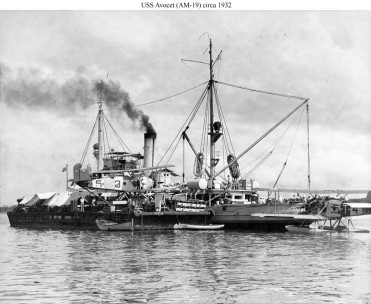
avocet3-08

Avocet (AVP-4) Undamaged at Pearl Harbor Avocet Avocetserved in the Alaskan and Aleutian theatres of operations as a unit of Patrol Wing 4. During the years, she tended patrol squadrons, transported personnel and cargo, and participated in patrol, survey, and salvage duties. She was decommissioned in December 1945 and sold in 1946. She received one battle star for her service at Pearl Harbor.

Swan (AVP-7) Swan was on the Marine Railway drydock during the attack and was undamaged. During the war she was primarily used on target towing duties. She was decommissioned in December 1945 and disposed of by the Maritime Commission in 1946. She received one battle star for her service at Pearl Harbor.

Seaplane Tenders (Destroyer) (Note: All of these ships were WWI era “four piper” destroyers converted to Seaplane Tenders in the 1920s and 1930s)

Hulbert (AVD-6) Hulbert was undamaged during the attack and spent 1942-1943 conducting support missions for flying boats. Reclassified DD-342 she was used as an escort and plane guard for new Escort Carriers at San Diego until the end of the war. She was decommissioned in November 1945 and sold for scrap in 1946. She received 2 battle stars for her WWII service.
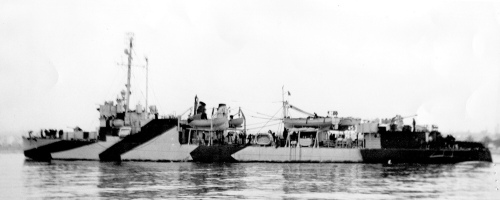
USS Thornton

*Thornton (AVD-11) Thornton contributed her guns to the defense of Pearl Harbor and served in varying locales in the Pacific supporting the operations of flying boats. She was lost during the Okinawa invasion when collided with Ashtabula (AO-51) and Escalante (AO-70). Her starboard side was severely damaged. She was towed to Kerama Retto. On 29 May 1945 a board of inspection and survey recommended that Thornton be decommissioned, beached stripped of all useful materiel as needed, and then abandoned. She was beached and decommissioned on 2 May 1945. Her name was struck from the Navy list on 13 August 1945. In July 1957, Thornton’s abandoned hulk was donated to the government of the Ryukyu Islands. She received 3 battle stars for her WWII service.

Ammunition Ship
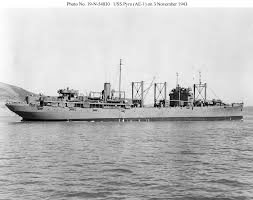
Pyro (AE-1) Pyro was undamaged in the attack and served the war transporting ammunition to naval bases around the Pacific. She was decommissioned in 1946 and scrapped in 1950. She was awarded one battle star for her service at Pearl Harbor.

Oilers

Ramapo (AO-12) Ramapo was not damaged at Pearl Harbor and due to her slow speed was regulated to fuel transport operations between the Aleutians and the Puget Sound. She was decommissioned in 1946 and transferred to the Maritime Administration.
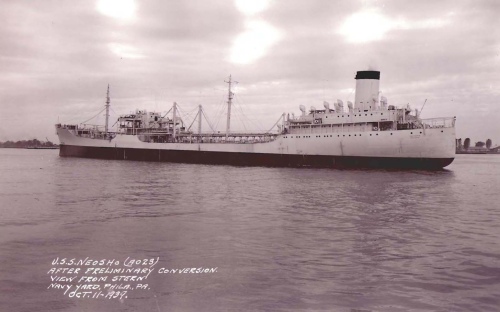
*Neosho (AO-23) Undamaged during the attack her Captain alertly moved her from her berth near Battleship Row to a less exposed part of the harbor.  She operated with the carrier task forces and was heavily damaged at the Battle of Coral Sea by Japanese aircraft. Her crew kept her afloat for 4 days until she was discovered and her crew rescued before she was sunk by gunfire from USS Henley on 11 May 1942. Neosho was awarded 2 battle stars for her WWII service.

Repair Ships

Medusa (AR-1) Medusa was undamaged at Pearl Harbor and spent the war throughout the South Pacific repairing numerous vessels damaged in combat. After the war she served to prepare ships for inactivation before being decommissioned in 1947 and turned over to the Maritime Administration. She was scrapped in 1950. She received one battle star for her service at Pearl Harbor.
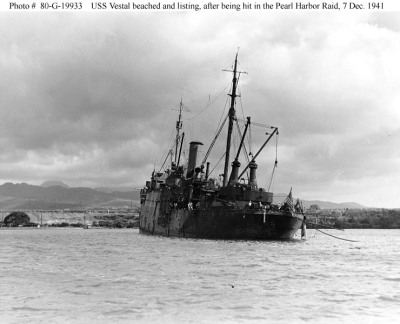
g19933

USS Vestal after the attack

Vestal (AR-4) Vestal was damaged while moored adjacent to USS Arizona. Repaired following the attack Vestal served throughout war in the Pacific and was vital during the critical days of 1942 when she and her crew performed valiant service on major fleet units damaged during the Guadalcanal campaign and actions around the Solomon Islands. Carriers Enterprise and Saratoga, battleships South Dakota and North Carolina, cruisers San Francisco, New Orleans, Pensacola and St. Louis were among the 5,603 jobs on 279 ships and 24 shore activities that she completed in a 12 month tour at Espiratu Santo. She would continue to perform this level of service the remainder of the war. During a stint at Ulithi she completed 2,195 jobs for 149 ships including 14 battleships, 9 carriers, 5 cruisers and 5 destroyers.  She continued her vital work even after the war into 1946 when she was finally decommissioned.  She was sold for scrap in 1950. She received 1 battle star for her service at Pearl Harbor.

Rigel (AR-11) Rigel was at Pearl Harbor completing her transformation from Destroyer Tender to Repari Ship. She incurred minor damage and she served throughout the war conducting vital repairs to numerous ships. She was decommissioned and transferred to the Maritime Administration in 1946.  Her ultimate fate is unknown. She was awarded 4 battle stars for her WWII service.

Submarine Tender
USS Pelias with 5 Submarines

Pelias (AS-14) Undamaged during the attack Pelias supported submarine squadrons based in the Pacific throughout the war. She was placed in commission in reserve 6 September 1946, and in service in reserve 1 February 1947. On 21 March 1950 she was placed out of service in reserve but later performed berthing ship duty at Mare Island until she decommissioned 14 June 1970. She was scrapped in 1973.

Submarine Rescue Ships
Widgeon (ASR-1) Widgeon conducted salvage, rescue and fire fighting operations on the sunk and damaged battleships on battleship row. During the war she served as the duty submarine rescue ship at Pearl Harbor and San Diego.  After the war she supported the Operation Crossroads. She was decommissioned and sold for scrap in 1947. She received on battle star for her service at Pearl Harbor.

Hospital Ship
Solace (AH-5) Solace was undamaged in the attack and provided medical care to many of the wounded after the attack. She served throughout the war caring for the wounded and dying in the Gilberts, the Marshalls, Guam, Saipan, Palau, Peleliu, Iwo Jima and Okinawa.  Solace was decommissioned at Norfolk on 27 March, struck from the Navy list on 21 May, and returned to the War Shipping Administration on 18 July 1946. She was sold to the Turkish Maritime Lines on 16 April 1948 and renamed SS Ankara, rebuilt as a passenger liner. SS Ankara was laid up in 1977 and scrapped at Aliaga, Turkey, in 1981. Solace received seven battle stars for World War II service.

Cargo Ship
Vega (AK-17) Vega was at Honolulu offloading ammunition when the attack occurred. She served in the Aleutians and in the Central Pacific during the war. Decommissioned and scrapped in 1946. She received 4 battle stars for her WWII service.

General-Stores-Issue Ships

Castor (AKS-1) Castor was strafed by Japanese aircraft during the attack but suffered little damage. She would go on to an illustrious career in WWII, Korea and Vietnam before being decommissioned 1968 and scrapped in Japan in 1969. She was awarded three battle stars for World War II service, two for Korean War service and six campaign stars for Vietnam War service.
antares_aks2b-08

USS Antares 

Antares (AKS-3) Antares was at the Pearl Harbor entrance and spotted a midget submarine. She reported the contact to the USS Ward which sank the sub.  During the war Antares made many supply runs in the Pacific and was at Okinawa. Sailing from Saipan to Pearl Harbor she was attacked by the Japanese submarines I-36, whose torpedoes missed their target and the kaiten-carrying I-165. She opened fire on one of the subs forcing it to dive. She was decommissioned in 1946 and sold for scrap in 1947. She was awarded 2 battle stars for her WWII service.

Ocean-going Tugs
Ontario (AT-13) Undamaged at Pearl Harbor Ontario would support operations in the Pacific throughout the war. She was decommissioned in 1946 and sold in 1947. She received one battle star for her service at Pearl Harbor.

Sunnadin (AT-28) Undamaged in the attack she operated at Pearl Harbor for the duration of the war. She was decommissioned in 1946 and transferred to the Maritime Administration. Her final disposition is unknown. She was awarded one battle star for her service during the Pearl Harbor attack.

Keosanqua (AT-38) Keosanqua was at the Pearl Harbor entrance preparing to transfer a tow from the USS Antares. She took the tow to Honolulu during the attack. She operated at Pearl Harbor and in the Central Pacific conducting towing operations. She was decommissioned in 1946   ransferred to the Maritime Commission 11 July for disposal, she was sold the same day to Puget Sound Tug & Barge Co., Seattle, Wash. Resold to a Canadian shipping firm in 1948, she was renamed Edward J. Coyle. In 1960 she was renamed Commodore Straits.
*Navajo (AT-64) Navaho was 12 miles outside Pearl Harbor entrance when the attack occurred. She operated in the South Pacific until 12 December 1942 when she was torpedoed and sunk by the Japanese submarine I-39 while towing gasoline barge YOG-42 150 miles east of Espiritu Santo, 12 December 1943 with the loss of all but 17 of her crew of 80.  She earned 2 battle stars for her WWII service.

Miscellaneous Auxiliaries
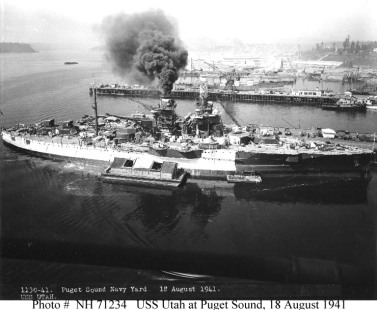
ussUtah

USS Utah AG-16

*Utah (AG-16 ex-BB-31) Sunk at her moorings and righted 1944 but not raised, wreck is now a memorial at Ford Island.
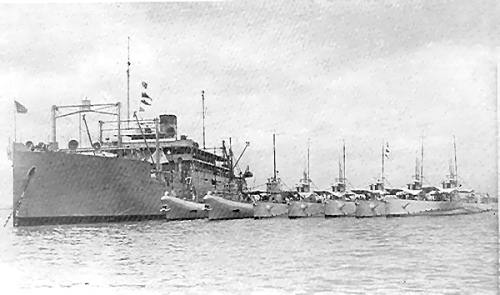
USS Argonne as a Submarine Tender

Argonne (AG-31) A former Submarine Tender, Argonne was undamaged during the attack and served in a variety of capacities during the war supporting operations in the Pacific. For a time she was Admiral Halsey’s flagship as Commander Southwest Pacific in 1942 during the Guadalcanal Campaign.  On 10 November 1944, Argonne lay moored to a buoy in berth 14, Seeadler Harbor, when the ammunition ship Mount Hood (AE-11) blew up, 1,100 yards away causing damage to her and other ships which she assisted after the explosion. She was decommissioned in 1946 and transferred to the Maritime Administration. She was scrapped in 1950. Argonne was awarded one battle star for her service at Pearl Harbor.
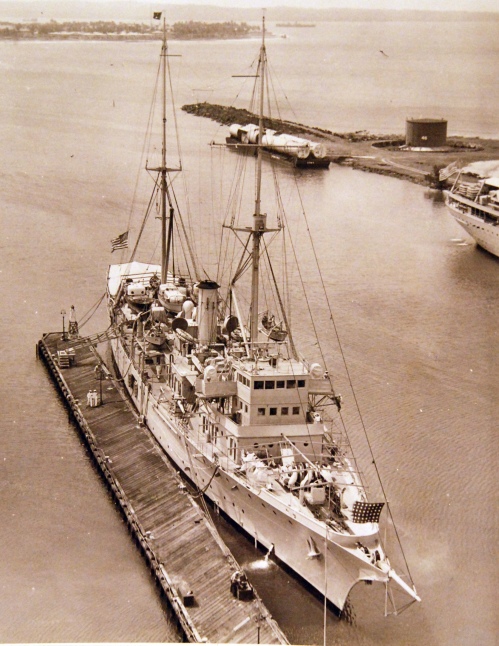
.

USS Sumner (ex-Bushnell)

Sumner (AG-32) Sumner was undamaged during the attack and was redesignated as a Survey Ship AGS-5. She was damaged by a Japanese shell off Iwo Jima on 8 March 1945. She was decommissioned in 1946 and transferred to the Maritime Administration. She was awarded 3 battle stars for her WWII servicE.

Leave a comment

Filed under Foreign Policy, History, Military, national security, Navy Ships, Political Commentary, US Navy, World War II at Sea, world war two in the pacific

The Doomed Fleet: The Ships and Men of the Japanese Kido Butai Which Attacked Pearl Harbor

Akagi_29

Friends of Padre Steve’s World

Early December is such an interesting time of year for a historian. There are a lot of events that occurred which still linger in our memories. One of those is the Japanese attack on Pearl Harbor on December 7th 1941. I find it interesting and compelling because of its significance in world history, not just American. Japan’s surprise attack on the U.S. Pacific Fleet at Pearl Harbor, followed by its belated declaration of war and those of Germany and Italy ushered in a new world with ramifications that extend to our day. Tonight, I will not be addressing the issue of Japanese War crimes, and those committed by the Imperial Navy, although the crew of Heavy Cruiser Tone massacred many of the survivors of the S.S. Behar  in the Indian Ocean in early 1944.

Early in the morning on November 26th 1941 the ships of the Japanese Carrier Strike Force, the Kido Butai under the command of Vice Admiral Chuichi Nagumo weighed anchor from Tankan Bay in the northern Kurile Islands of Japan. The plan was top secret and very few Japanese officers knew of the target. Many officers presumed that war was immanent but most assumed the target would be the Philippines or other targets in Southeast Asia.

PERSON JAP Nagumo1

Nagumo

The next day Nagumo expressed his personal misgivings about the attack to his Chief of Staff Rear Admiral Ryunosuke Kusaka as the task force plunged through heavy seas. He blurted out, “Mr. Chief of Staff, what do you think? I feel that I’ve undertaken a heavy responsibility. If I had only been more firm and refused. Now we’ve left home waters and I’m beginning to wonder if this operation will work.” 

Admiral Kusaka came up with the right answer:  “Sir, there’s no need to worry. We’ll make out all right.” 

Nagumo smiled. “I envy you, Mr. Kusaka. You’re such an optimist.” 

The attack on Pearl Harbor was designed to be pre-emptive in nature. It was supposed to deliver such a crushing blow to the United States Navy that the Japanese could complete their Asian conquests before it could recover. It was a plan of great risk that doomed Japan to horror never before imagined when the United States dropped Atomic bombs on Hiroshima and Nagasaki less than four years later. By then the bulk of the Imperial Navy would be at the bottom of the Pacific and millions of people killed.

yamamoto-isoroku1

Yamamoto 

The Japanese, even Admiral Yamamoto, the man behind the plan understood that it entailed great risks. Yamamoto had opposed the Japanese war against China, the alliance with Germany and Italy, and war with the United States, which he believed could not be won. Radicals in the Japanese Army wanted him dead before the war, and his appointment as commander of the Combined Fleet was in large part based on the Navy’s desire to prevent his assassination. Retired Japanese Admiral Yoji Koda says “Yamamoto faced a commander’s worst nightmare: Lead his men into a war he knew they could not win and should not fight; or step aside and let them face defeat alone.” (Legacy Still Not Settled for Reluctant Architect of Attack on Pearl Harbor http://nation.time.com/2013/04/22/legacy-still-unsettled-for-reluctant-architect-of-pearl-harbor/

A simulation of the plan conducted in early September by the senior officers of the Combined Fleet and the Kido Butai calculated that two of Japan’s precious aircraft carriers could be lost in the operation. But despite the opposition and reservations of key officers, including the Kido Butai commander, Admiral Nagumo Yamamoto pressed forward.

kagaph

The Kido Butai was the most powerful carrier strike group assembled up to that time. In fact the United States Navy would not equal the power of the force until late 1943. Comprised of six aircraft carriers, the massive flagship Akagi, and the Kaga, the fast 18,000-ton Soryu and Hiryu and the most modern Shokaku and Zuikaku. The carrier embarked over 400 aircraft, of which over 350 were to be used in the two aerial assault waves. Most of the pilots and aircrew were experienced, many with combat experience in China. The carriers were escorted by the old but fast and modernized battleships Kirishima and Hiei, the new heavy cruisers Tone and Chikuma, the light cruiser Abukuma, the new Kagero Class destroyers, Urakaze, Isokaze, Tanikaze, Hamakaze, Kagero and Shiranuhi, the Asashio class destroyers Arare and Kasumi. Two additional destroyers the Fubuki class Sazanami and Ushio were assigned to neutralize the American base on Midway Island. The submarines I-19, I-21 and I-23 and 8 oilers were assigned to the force. Five additional submarines the I-16, I-18, I-20, I-22 and I-24 each embarked a Type-A midget submarine.

1280px-Hiryu_burning

Hiryu prior to sinking at Midway
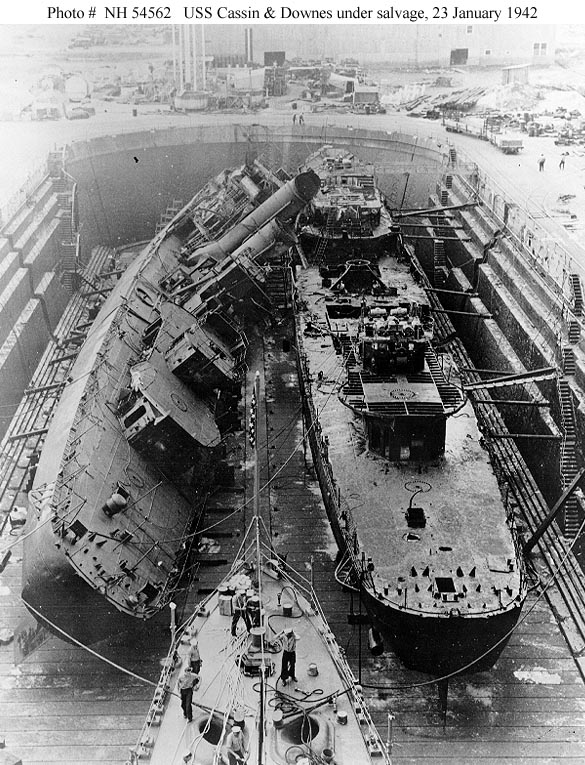
On December 7th the force delivered a devastating blow to the American Pacific Fleet at Pearl Harbor, however no American aircraft carriers were present. It would go on for the next several months on a rampage across the Pacific and Indian Oceans. However their success would be short lived. Within a year, the carriers that were not present at Pearl Harbor sank the Akagi, Kaga, Soryu and Hiryu at Midway. Hiei and Kirishima were lost at the Naval Battle of Guadalcanal in November 1942. Over the course of the war every ship of the attack force but one was lost.

zuikaku12_usn_h73070

The Last Banzai aboard Zuikaku as she sinks at the Battle of Cape Engano (Leyte Gulf) October 25th 1944

Shokaku was torpedoed and sunk at the Battle of the Philippine Sea and Zuikaku, Chikuma and Abukuma were lost at Leyte Gulf, most of the destroyers and submarines were lost in various engagements. However three destroyers, Isokaze, Hamakaze and Kasumi accompanied the great Battleship Yamato on her suicide mission at Okinawa and were sunk on April 7th 1945. The heavy cruiser Tone was sunk at her moorings at Kure during air strikes by the US 3rd Fleet on July 24th 1945.

Heavy Cruiser Tone sunk in Kure Japan 1945

All of the submarines were lost during the war, however I-19 sank the USS Wasp and the destroyer USS O’Brien while damaging the USS North Carolina on September 15th 1942 off Guadalcanal. Only the destroyer Ushio survived the war and was broken up for scrap in 1948.

MitsuoFuchida

Fuchida (above) and Genda 

f624277ee1

Among the leaders of the Japanese strike force, Admiral Yamamoto was killed on April 18th 1943 when his aircraft was shot down at Buin. His body was recovered and cremated with the ashes interred at two different locations, however, no military or government leaders attended his funeral, no honor guard was furnished, and no wreathes were laid. He is little mentioned in Japanese history books, resurgent Japanese Nationalists have little regard for him, and unlike the main Japanese War Memorial, the Yushukan museum at the controversial Yasukuni Shrine in Tokyo, the small museum in Nagaoka to Yamamoto does not offer revisionist history of Japan’s innocence and victim status. Likewise, no Japanese military bases or ships bear his name.

Most of the sailors who took part in the attack would be dead by the end of the war. Nagumo who resisted the strike and was ordered to lead it realized his worst fears at Midway and during the battles around Guadalcanal and the Solomon Islands, died in the American invasion of Saipan in 1944. The two aviators who planned and executed the tactical details of the raid, Mitsuo Fuchida, and Minoru Genda, both survived the war. Genda became a general in the Japanese Air Self Defense Force and died at the age of 84 in 1989. Fuchida converted to Christianity after reading the story of Doolittle Raid survivor Jacob DeShazor. Fuchida became a Methodist pastor and evangelist and died in 1976 at the age of 73.

Few present at Tankan Bay on that fateful November morning could have expected the triumph and tragedy ahead. However Yamamoto was probably more of a realist than almost anyone in the Japanese government and military leadership when he told Prime Minister Fumimaro Konoe “In the first six to twelve months of a war with the United States and Great Britain I will run wild and win victory upon victory. But then, if the war continues after that, I have no expectation of success.” Yamamoto was eerily prophetic and those that counsel pre-emptive war need to never forget his words or the results of his decisions.

Peace

Padre Steve+

Leave a comment

Filed under Foreign Policy, History, imperial japan, leadership, Military, national security, US Navy, World War II at Sea, world war two in the pacific

Civilization Is Tissue Thin Because of the Evil Directed and Committed by Sociopaths, People Without Empathy: Genocide, Crimes Against Humanity, and War Crimes, then and Now, How Do You Choose to Burn?


nanking_massacre_1

The Rape of Nanking
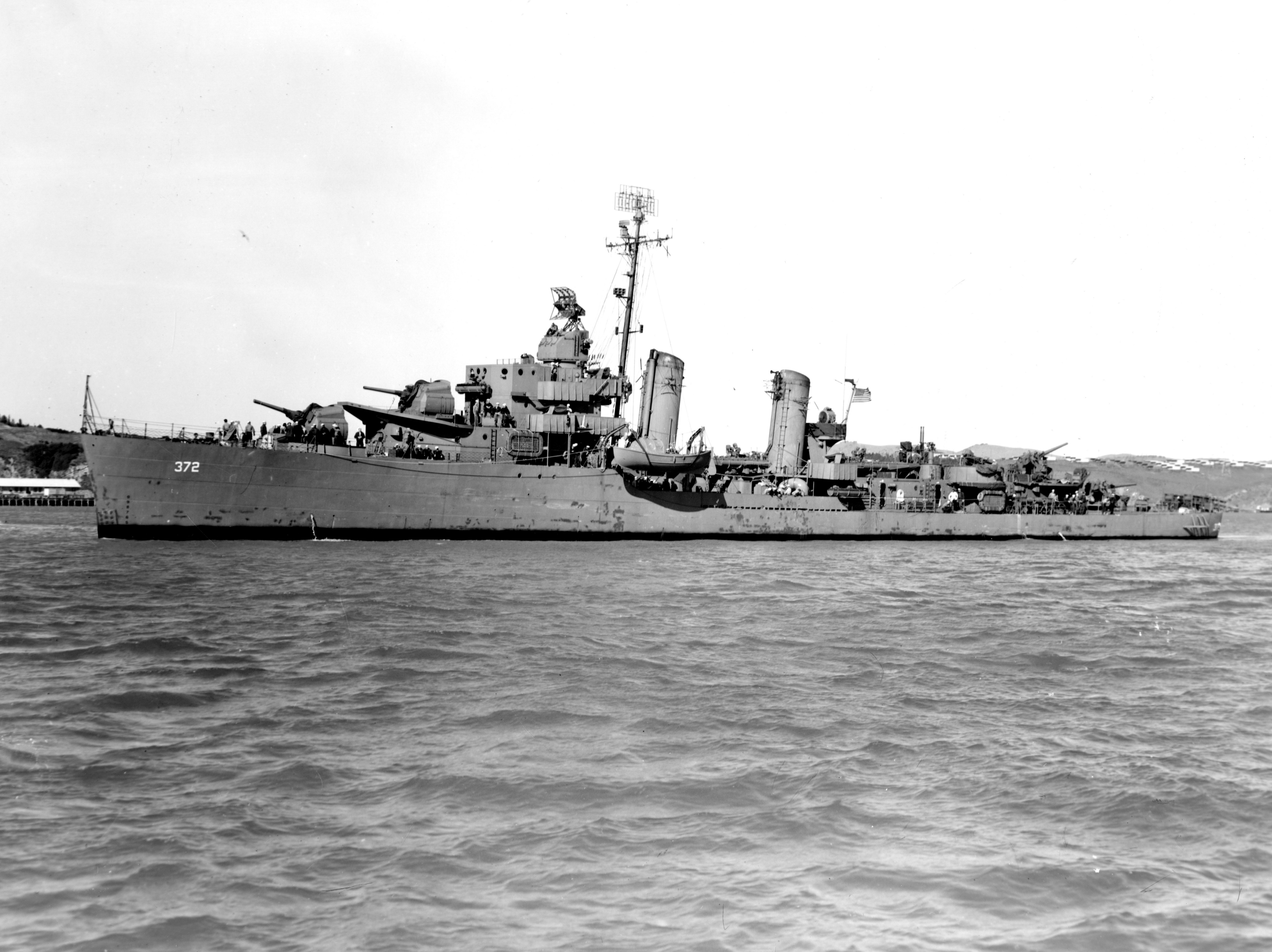
Friends of Padre Steve’s World,

Fyodor Dostoyevsky wrote, “Nothing is easier than to denounce the evildoer; nothing is more difficult than to understand him.”

This week I finished a series of articles on American Associate Supreme Court Justice Robert Jackson’s opening and closing arguments at Nuremberg, followed by one last night asking the question “Who Were the Victims? Does Anyone Care? The Holocaust and War Crimes Today.” For me the article was difficult to write because I have served in wars that under the rules of the International War Crimes Tribunal at Nuremberg and the subsequent U.S. trials in the same courtroom could be rule as wars of aggression, and in which American servicemen and women committed crimes that can easily be classified as war crimes, and even crimes against humanity. Likewise I have taught military ethics at Major American military Staff College.

I think one of our problems is that we want to believe that evil is simply done be evil people. That is why when we see a Hitler, Stalin, Pol Pot, or the monsters of the so-called Islamic State, we are often strangely comforted. This is often  because we can point to a single person with a wicked ideology and say “they are evil,” all the while forgetting that they are, or were, like us, also human. Aleksandr Solzhenitsyn reminds us of the folly of that type of thinking, “If only it were all so simple! If only there were evil people somewhere insidiously committing evil deeds, and it were necessary only to separate them from the rest of us and destroy them. But the line dividing good and evil cuts through the heart of every human being. And who is willing to destroy a piece of his own heart?”
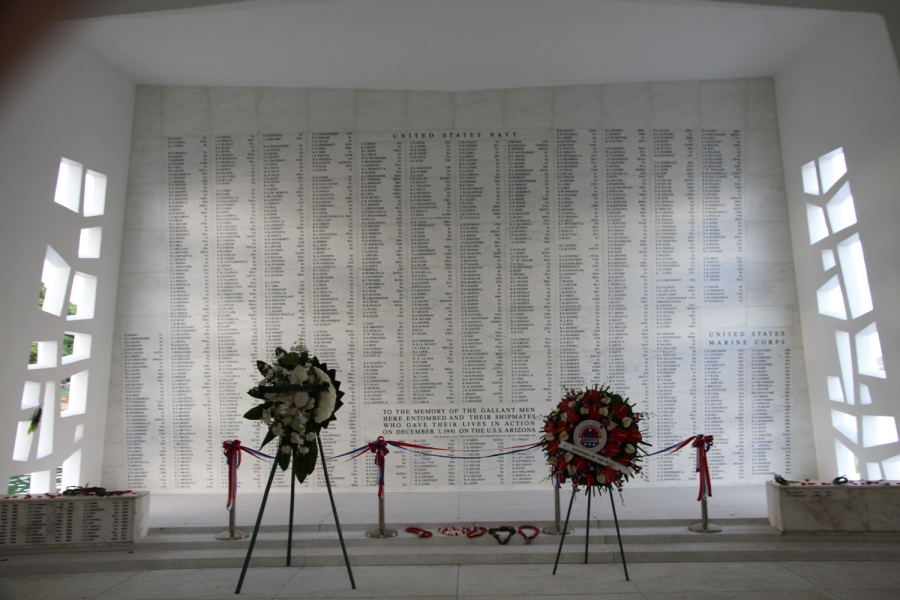
A few years ago I took a break from my Gettysburg text and dusted off an old academic paper dealing with the one of the more uncomfortable aspects of the Nazi Holocaust against the Jews. I did that because I felt that I needed to reexamine the nature of evil in the modern world. Doing that brought me to do much more study of war crimes and the Holocaust. Since then I have visited Nazi Concentration Camps, Euthanasia Centers, the Wannsee House, where the coordination of the Final Solution was conducted, as well as memorials to the German resistance at the Bendlerstraße headquarters from which the attempt to kill Hitler on July 20th 1944 was launched; the Sophie Scholl and White Rose Resistance Memorial and Museum in Munich, and the National Socialist Documentation Center, also in Munich.

As I wrote my articles I have been binge reading books about the Japanese War Crimes from the “China Incident” to the end of the Second World War. I started those at the behest of a reader of this blog. While I knew the wave tops of those crimes and was vaguely familiar with the Tokyo Trial I was not as well informed about the complexity of those crimes and the participation of Japanese officials at every level of government in them.

That leads me to today, not long after the American President pardoned convicted war criminals and the fired his own Secretary of the Navy to keep one of those men from losing his SEAL Trident at a peer review conducted by other SEALS.

When I ponder the evil committed by supposedly civilized men and women of Germany and Japan in the Second World War, as well as other war crimes, crimes against humanity, and acts of genocide committed by other nations and people’s, I realize that they are little different than others who share the culture of the West. These people were the products of a culture of learning, and of science. They were part of a culture formed by the Christian tradition, the Renaissance, the Reformation, and the Enlightenment, the age of Reason. As I pondered this I came to remember something said by the late Iris Chang, “civilization is tissue thin.”

Omaha_courthouse_lynching

Lynching in the American South

My original series of articles several years ago which dealt with the Nazi Eunsatzgruppen dealt with the ordinary men, and the bureaucratic systems that implemented an ideology so twisted and evil that it is unimaginable to most people. While most people in the United States know a little about the Holocaust, most do not fully comprehend how devilish and insidious the crimes of the Nazis were. More frightening is the fact that 46% of people worldwide have never heard of the Holocaust, and of the 54% who are aware some 32% think it is a myth or has been greatly exaggerated. That was about five years ago. I will have to take a look at the current numbers, but I believe that the numbers wills only get worse as younger people are far more likely to believe that the Holocaust is a myth or or exaggerated.

We typically know about the extermination camps like Auschwitz, but the lesser known dark side of the Holocaust, perhaps the scariest part, is the story of the men of the Einsatzgruppen. The Einsatzgruppen and affiliated units, including those of the Wehrmacht, the Waffen SS, the mobilized battalions of the Order Police, and locally recruited units, rounded up massive numbers of people and killed them up close and personal. In all these units murdered over two million people, about 1.3 million of whom were Jews.

My study of the Holocaust began in college as an undergraduate. My primary professor at California State University at Northridge, Dr. Helmut Haeussler had been an interpreter and interrogator at the Nuremberg trials. I was able to take a number of lecture classes from him a large amount of research and independent study courses in a year of graduate work while finishing my Army ROTC program at UCLA. It was an immersion in the history, sociology, and the psychology of evil, during which I was able to meet and talk with Jewish survivors of the Holocaust.

mass killing einsatzgruppen

Einsatzgruppen

Since then I have continued to read and study. I lived in Germany for over four years, and made many other visits, during which I went to a number of Concentration Camp sites. I visited the rebuilt synagogue in Worms which had been destroyed during the infamous Kristallnacht, and other museums and Holocaust memorial sites in Germany. I visited the Zeppelin field, the site of Hitler’s massive Nazi Party rallies in Nuremburg, as well as the graveyards which contain the victims of other Nazi crimes, including the Nacht und Nebel or night and fog actions, where people simply disappeared and were murdered by the Gestapo. When I think about the men and women who were the perpetrators of those crimes as well as those who were bystanders, who knew about those crimes and did nothing to stop them I am reminded of Captain Gustave Gilbert, an American Psychologist who interviewed and got to know the major German War Criminals at Nuremberg. Gilbert wrote:

“In my work with the defendants (at the Nuremberg Trails 1945-1949) I was searching for the nature of evil and I now think I have come close to defining it. A lack of empathy. It’s the one characteristic that connects all the defendants, a genuine incapacity to feel with their fellow men. Evil, I think, is the absence of empathy.”

For me, those visits were sobering, maybe even more so because I understood exactly what happened in those sites. These are uncomfortable places to visit, and I can understand why many people would not want to visit them, or even study them.

The darkness that they remind us of  is a part of our human condition. Traces of the evil on display in those places is present in every human being. Frankly, most people cannot bear looking into that abyss, for fear that they might be swallowed by it.

nankino-masakra-1

Nanking
I can understand that and I have to admit that it is hard to do so. I am a historian as well as a clinician with much experience dealing with death and trauma. With my training I do a pretty good job of keeping my emotional distance to maintain objectivity when confronted with evil. However, it is hard for me not to have some emotional reaction when visiting these places, or reading about the events and people, and in writing about them.

Likewise, I am very troubled by the growing lack or awareness or denial of the Holocaust. It is very hard for me not to have a virulent reaction when I see books and websites dedicated to Holocaust denial, or that minimize other well documented genocides, and crimes against humanity.

tzd8ftsn-1390907543

Soviet Genocide in Ukraine

My sensitivity to human suffering and the terrible indifference of people in this country to it was greatly increased by my experience of war, and my post-war struggles with PTSD, depression, anxiety, which at points left me very close to committing suicide. A non-chaplain friend, a now retired Navy Command Master Chief Petty Officer that I served with at EOD Group Two remarked that I am a tremendously empathic person, and that I have a large capacity to feel the pain and suffering of others. This capacity for empathy and the ability to feel the suffering of others is part of who I am. It is a good thing, but it makes my work studying and writing about the Holocaust, other genocides, crimes against humanity, and subjects like American slavery, racism, and Jim Crow a sometimes difficult and often very emotionally consuming task. This sometimes leaves me even more sleepless and anxious than normal; especially when I see the indifference of so many people to the suffering of others today.

CambodiaExhibitMassgrave-x1

The Killing Fields

It is that indifference which motivates me to write; because if these events are not recalled and retold, they, like any part of history will be ignored and then forgotten. The statistics bear this out. There are people today, who say that we should stop talking about these events, that they are old news, and they cannot happen again; but history tells us different, and not just the Holocaust, but indeed every genocide. Then there are those who shamelessly use the Holocaust imagery to spread fear among their followers even as they openly demonize minority groups and religions as the Nazis did to the Jews.

I have to agree with Elie Wiesel who said, “Indifference to me, is the epitome of all evil.”

The late Iris Chang, who wrote The Rape of Nanking: The Forgotten Holocaust of World War II wrote something that is pertinent to almost every modern episode of genocide, or other crime against humanity. It is the ability of leaders, be they political, military, or religious to convince people to rationalize actions that they normally would find repulsive.

“After reading several file cabinets’ worth of documents on Japanese war crimes as well as accounts of ancient atrocities from the pantheon of world history, I would have to conclude that Japan’s behavior during World War II was less a product of dangerous people than of a dangerous government, in a vulnerable culture, in dangerous times, able to sell dangerous rationalizations to those whose human instincts told them otherwise.”

isis3-840x550

The Islamic State

What we call civilization, to use the words of Iris Chang, is tissue thin. That is why we must never forget these terrible events of history, and that part of human nature, and in a sense part of every one of us, that makes them so easy to repeat. That is why we must periodically take the time to remember and reflect on the Holocaust, other genocides and crimes against humanity. Historian Timothy Snyder in his book On Tyranny wrote:

“The European history of the twentieth century shows us that societies can break, democracies can fall, ethics can collapse, and ordinary men can find themselves standing over death pits with guns in their hands. It would serve us well today to understand why.”


Sophie Scholl, the 22 year old leader of the White Rose resistance movement in Nazi Germany I think gives those who still retain a sense of empathy, ethics, and self-decency a plumb-line of what the real issues are.

Sophie wrote:

“The real damage is done by those millions who want to ‘survive.’ The honest men who just want to be left in peace. Those who don’t want their little lives disturbed by anything bigger than themselves. Those with no sides and no causes. Those who won’t take measure of their own strength, for fear of antagonizing their own weakness. Those who don’t like to make waves—or enemies. Those for whom freedom, honour, truth, and principles are only literature. Those who live small, mate small, die small. It’s the reductionist approach to life: if you keep it small, you’ll keep it under control. If you don’t make any noise, the bogeyman won’t find you. But it’s all an illusion, because they die too, those people who roll up their spirits into tiny little balls so as to be safe. Safe?! From what? Life is always on the edge of death; narrow streets lead to the same place as wide avenues, and a little candle burns itself out just like a flaming torch does. I choose my own way to burn.”

Yes, these are terribly uncomfortable subjects, but we cannot allow this generation to allow them to be forgotten, lest they be repeated. That is why that I must continue to write about them.

Peace

Padre Steve+

Leave a comment

Filed under ethics, germany, History, holocaust, imperial japan, middle east, Military, national security, nazi germany, News and current events, Political Commentary, terrorism, Tour in Iraq, us army, war crimes, world war two in europe, world war two in the pacific