Tag Archives: 9-11 attacks

The Inconvenient Truth About Iraq and Benghazi

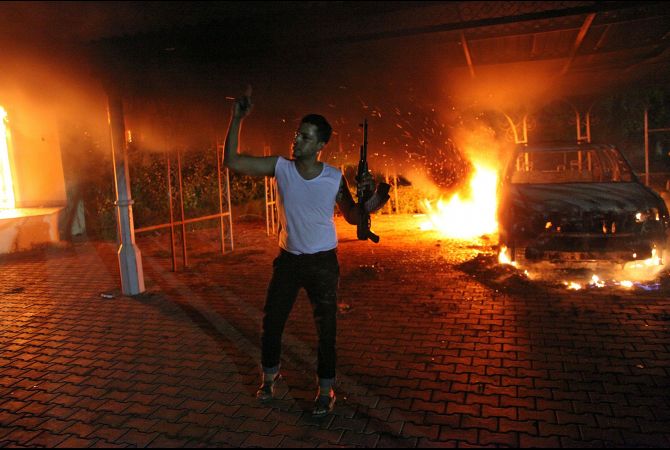
benghazi_attack_us_politics_2012_09_12

“The first duty of every Starfleet officer is to the truth, whether it’s scientific truth or historical truth or personal truth! It is the guiding principle on which Starfleet is based. And if you can’t find it within yourself to stand up and tell the truth about what happened, you don’t deserve to wear that uniform!” Captain Jean Luc Picard to Wesley Crusher Star Trek the Next Generation “The First Duty” 

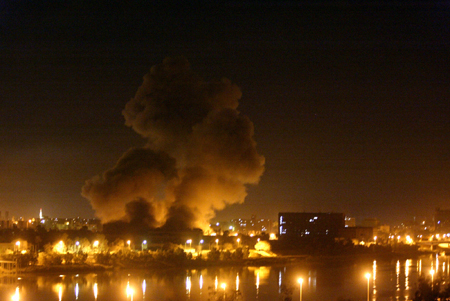
I was talking with a conservative friend the other day and he ended up bring up the subject of Benghazi and the tragic loss of Ambassador Chris Stevens and 3 other State Department personnel at the consulate last September 11th. He was talking about the scandal of this and the political impact that he hoped it would have on Hillary Clinton in 2016.
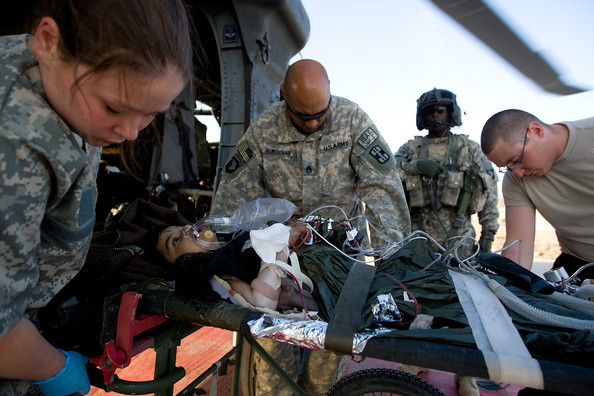
450_shock_and_awe

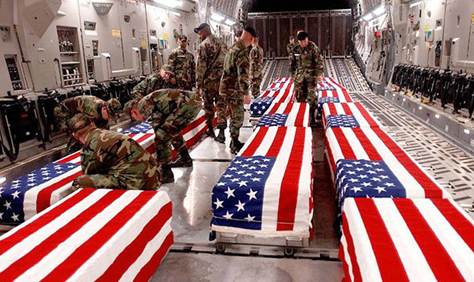
I was actually shocked that he said this so for once I decided to actually say something and mention the 4486 official US military deaths in Iraq. My friend who I really do like and respect commented that they were “the result of what happened in war.”

It stunned me when he said that because he is a military brat, but then I realized that he had bought the lie about Iraq and was so solidly partisan that he could not see the moral, ethical and even legal discrepancy in what he was saying. For me the question was far less about whatever impact it might have on Hillary’s campaign should she decide to run but about the truth.
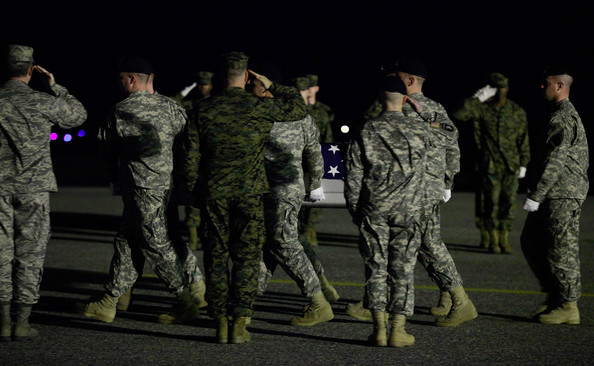
g-cvr-090217-dover-coffins-3a.grid-6x2

When I confronted him about it I was stunned by how easily he dismissed all of the dead and wounded and other casualties of Iraq but was so insistent on some kind of conspiracy to cover up Benghazi. But this is how so many people think today thanks to the constant bombardment of ignorance on Fox News and other partisan outlets. It is not about the truth, it is about the nastiest kind of politics.
Barracks_bombing_2

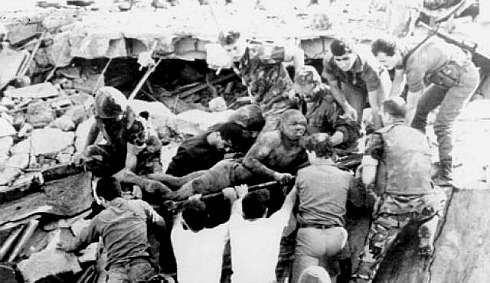
I too am upset about Benghazi, but likewise I am upset about the 241 Marines, Sailors and Soldiers killed at Beirut in October 1983 when the Reagan Administration ignored warnings about putting US troops into Lebanon while taking sizes in that county’s civil war. I am upset about the nearly 3000 killed on 9-11-2001. I am upset about dozens of other terrorist attacks that occurred under both Republican and Democratic administrations in which DOD, the State Department and other agencies made mistakes that cost lives.

Some attacks could have been prevented and others probably not. However they were terrorist attacks committed by our enemies, not an illegal undeclared war of preemptive choice conducted by a United States administration against the will and recommendations of many of our closest allies. That is the inconvenient truth.

What has happened over the past decade is that many on the political right cannot admit that they were wrong about Iraq. This despite the fact that President Bush, Karl Rove and almost every senior member of the the Bush administration have admitted that the reasons that they took us into war with Iraq were wrong. There were no weapons of mass destruction, the nuclear program was a shambles and Iraq was not working with Al Qaida, which like most secular military dictatorships in the Middle East loathed. That is the inconvenient truth.

The fact that so many people on the political right go into a nearly toxic lather about four people lost in Benghazi while shucking off the deaths of nearly 5000 Americans who died in a war that was not only a mistake but violated the very laws that we helped establish at Nuremberg infuriates me. This is no longer about national security to them, it is about politics. This is not about ethics for those that led us into Iraq have none. It is not about justice for if there was justice those who made the decision to attack Iraq would be tried for war crimes.

295_26912097058_4309_n

I served in Iraq and was fortunate that I served with our advisors and the Iraqis in Al Anbar during the time of the Anbar Awakening. I saw a different war than many people observed and for that I am glad because it busted my illusions about what we did in Iraq forever. I needed that. I may have come back thoroughly goofed up with PTSD and at times I am sure certifiably crazy, but I needed it to see the truth.

The fact is that unlike Benghazi the war in Iraq has crippled this country. Nearly 5000 dead, 30,000 wounded and trillions of dollars of national treasure dumped into the abyss. Hundreds of thousands of Iraqis were killed, wounded or driven into exile, many who greeted us as liberators.  Of course that was before the Bush Administration put the kleptocrats of the Chalabi group rape and pillage the country.

Likewise it was after the Coalition Provisional Authority under Paul Bremer, a man who had never in his career served in the Middle East threw out ever carefully orchestrated plan of DOD and CENTCOM for a peaceful transition in the country thus bringing misery to Iraq and triggering the anti US-Coalition insurgency and Iraqi Civil War. The great military theorist Carl Von Clausewitz said: “No one starts a war–or rather, no one in his senses ought to do so–without first being clear in his mind what he intends to achieve by that war and how he intends to conduct it.” The fact is that the Bush Administration was not only not clear, but they were inept and lawless in invading Iraq.

Additionally the invasion cost the United States the goodwill and trust of many allies and friends. No one will ever see us in the same light again. Instead of being a liberating power and “light to the nations” we are seen in much of the world as a rogue, lawless and imperialist state. Otto Von Bismarck put it so well when he said “preventive war is like committing suicide out of fear of death.”

I don’t know about you but I am sure that is not the vision of our founders. I was told on my first day in the Army back in 1981 that “there are attaboys and aww shits and it takes 2000 attaboys to make up for one aww shit.” The Bush Administration’s lawless invasion of Iraq and incredibly inept occupation was a disaster for the United States, Iraq and most of the region, except maybe for Al Qaida and Iran. By the way let us not forget the crippling effects of the Iraq invasion on the campaign in Afghanistan which allowed both the Taliban and Al Qaida time to regroup, consolidate and regain the advantage in that God forsaken land.To the 4486 we can add a couple of thousand more deaths in Afghanistan thanks to the decision to invade Iraq. That is the inconvenient truth.

For people to ignore a war that defies American and International Law as well as common sense which cost us and the world so much while making cheap political points by exploiting the deaths of four men is a disgrace. Had the men who started the invasion of Iraq been tried for by Justice Robert Jackson at Nuremberg they would have been convicted as war criminals and sent to the gallows. That is the inconvenient truth.

Justice Jackson said at those trials:

“If certain acts of violation of treaties are crimes, they are crimes whether the United States does them or whether Germany does them, and we are not prepared to lay down a rule of criminal conduct against others which we would not be willing to have invoked against us.” Justice Robert Jackson International Conference on Military Trials, London, 1945, Dept. of State Pub.No. 3080 (1949), p.330.

My closing thought is that those that want to make political hay out of Benghazi need to take a serious look at Iraq. What’s fair is fair. 4486 dead and over 30,000 wounded not counting another 100,000 or so with PTSD or TBI versus 4 dead and no wounded. I don’t make light of any of the deaths of Americans serving this country at any time or in any place.  I would not dishonor their memory by playing politics with their deaths. But the truth is indeed terribly inconvenient and those who do this must be called out regardless of their political orientation.

If there were mistakes or cover ups by Obama administration officials regarding Benghazi, so be it let them be investigated fairly an impartially not with an eye to political advantage and those that partake of this cup must be willing to drink of the cup of crimes committed by the Bush Administration in Iraq. The same is true when Democrats do the same to Republicans.

Truth matters too much to be sacrificed on the altar of politics even while those doing it ignore far greater crimes of far more epic dimensions committed by members of their political party.

Truth is terribly inconvenient and even when painful should never be sacrificed on the altar of political advantage by partisans of any party.

Peace

Padre Steve+

3 Comments

Filed under ethics, History, iraq,afghanistan, middle east, Military, national security

When Will We Ever Learn? Looking at 12 Years of Unending War

peloponnesian-war

War is the province of chance. in no other sphere of human activity must such a margin be left for this intruder. it increases the uncertainty of every circumstance and deranges the course of events.- Karl von Clausewitz

We are coming up on the beginning of the 13th year of our current wars. Wars that when they began were believed to be easy and uncomplicated and since they were being waged against enemies that were “backward” and not hi-tech. Thus we were promised that they would be short in duration, low in cost and casualties. We elected the war option as the quick and easy way to win, neglecting the words of the venerable Chinese strategist Sun Tzu who said “To fight and conquer in all your battles is not supreme excellence; supreme excellence consists in breaking the enemy’s resistance without fighting.”

images-54

In 2001 and early 2002 the Bush Administration pursued the Al Qaeda terrorists to Afghanistan, toppling the unpopular Taliban regime but failing to kill or capture Bin Laden. But by 2002 those in that Administration sought to widen the scope of the war. An “Axis of Evil” comprised of Iraq, Iran and North Korea was identified, even though none of those nations had links to Al Qaeda, and two of which, Iran and Iraq were hostile to Al Qaeda, each for their own reasons, Saddam Hussein because he only embraced Islam when it suited his strategic purposes and Iran because the Shia there were and are mortal enemies with the ultra-Fundamentalist Sunni Wahhabi Islam of Al Qaeda.

al-qaeda

The undeclared war against Al Qaeda became the Global War on Terrorism. It was an amorphous term that allowed the government to play fast and loose with facts even as it by fully “legal” means restricted the rights and invaded the privacy of American citizens through the Patriot Act and expansion of the FISA laws and a massive expansion of electronic surveillance against our enemies, against our allies, even long tern NATO allies and our own citizens.

All of these ideas seemed like good ideas at the time. The United States had been hit by the most well planned, executed and devastating terrorist attack ever conducted and it had been done by those who many believed incapable of doing it. We forgot however the words of Clausewitz that war is the provence of chance.

But then our leaders, regardless of political party over the past 50 years since our entry into Vietnam have been pretty inept at understanding history and understanding the consequences of their actions. The Greek historian Thucydides understood this, he saw what happened to Athens when it allowed itself to become enmeshed in the Peloponnesian War, a war that it entered as the premier economic and military power of its time and ended in disaster. He wrote:

“Think, too, of the great part that is played by the unpredictable in war: think of it now, before you are actually committed to war. The longer a war lasts, the more things tend to depend on accidents. Neither you nor we can see into them: we have to abide their outcome in the dark. And when people are entering upon a war they do things the wrong way round. Action comes first, and it is only when they have already suffered that they begin to think.” 

It seems strange now after so long of war that our openness, freedoms and liberties were not destroyed by the actions of Al Qaeda but by our own government in the Patriot Act a title so Orwellian that it defies logic. The sad fact is that the Patriot Act was only the beginning and the actions and legislative accomplishments those that seek to broaden the war and broaden the powers of the government to restrict freedom, speech and privacy of otherwise law abiding citizens has only increased.

As I listen to the words of some legislators, or both parties I might add I am frightened because for many it seems that the only answer they have to national security issues is the hammer of military force, force that over the years of this war has been eroded and which due to their legislative negligence in the Sequester will only further erode. They seem to forget, or maybe they never learned what is taught to military officers at Command and Staff College that national power is based on the DIME, the diplomatic, intelligence, military and economic power of a nation and not on military power alone.

Our legislators, the talking heads of the media and their political allies of various “think tanks” act as though their decisions have no consequences. Thucydides noted the same in his time:

“Some legislators only wish to vengeance against a particular enemy. Others only look out for themselves. They devote very little time on the consideration of any public issue. They think that no harm will come from their neglect. They act as if it is always the business of somebody else to look after this or that. When this selfish notion is entertained by all, the commonwealth slowly begins to decay.”

Those who think this way frequently praise those that they send to fight their wars. They pound their chests in praise of “the brave soldiers” but as far as the soldier is concerned they care not, thus when through their own political negligence hard budgetary choices need to be made neither the troops or the actual security of the nation matters, only the profits of their financial contributors, those who profit from war and suffering matter.

Two time Medal of Honor winner and Marine Corps Major General Smedley Butler wrote in 1932: “What is the cost of war? what is the bill? This bill renders a horrible accounting. Newly placed gravestones. Mangled bodies. Shattered minds. Broken hearts and homes. Economic instability. Depression and all of its attendant miseries. Back -breaking taxation for generations and generations. For a great many years as a soldier I had a suspicion that war was a racket; not only until I retired to civilian life did I fully realize it….”

Unfortunately despite the hopes of some in the Obama administration and in the country this undeclared “war on terrorism” will not end. It has taken on a life of its own and neither political party will end it. It like Athen’s misadventure in the Peloponnesian War, and so many other nations that ventured into “unending” wars that span generations will be our undoing if we are not take action now to figure out a way to extricate ourselves from it while still keeping our people safe. Somehow I think that our former freedoms, our liberties, transparency and openness are not weaknesses but strengths which at one time were embraced by us and many around the world who loved them and hoped to bring them to fruition in their own countries.

afghanistan_war

I think bout it now. Many of the 18 year old men and women enlisting in the Army, Marine Corps, Air Force and Navy today knowing that they could end up at war were only 5-7 years old on September 11th 2001. That a war should last this long is not only unwise and destructive to liberty but criminal in the fact that we should have known better. Thomas Jefferson wrote to President James Monroe advising him to stay clear of European conflicts saying: “They are nations of eternal war. All their energies are expended in the destruction of the labor, property, and lives of their people.” James Madison wrote to Jefferson in 1798 “The loss of liberty at home is to be charged to the provisions against danger, real or imagined, from abroad.” 

These are dangerous times, the fact is that more war is beckoning and there are those anxious for their own reasons, power, profit or even religion seek to continue and expand the. They care not a whit about those that fight them, those that die in them nor the ultimate costs in blood, treasure and freedom and home. The ends justify their means. Hannah Arendt said: “Although tyranny…may successfully rule over foreign peoples, it can stay in power only if it destroys first of all the national institutions of its own people.”

Peace

Padre Steve+

Leave a comment

Filed under History, iraq,afghanistan, national security, News and current events

To Iraq and Back: A Last Night Together and a Kiss Goodbye

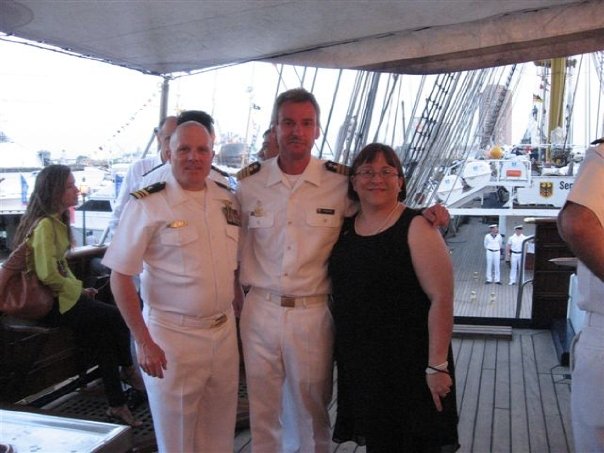
295_27076787058_8676_nJudy and I on the German Sail Training Ship Gorch Fock at the Norfolk Harbor Fest a couple of weeks before deployment

This is another of my “To Iraq and Back” articles about my deployment to Iraq in 2007 and 2008 with RP1 Nelson Lebron. 

Now the time has come to leave you
One more time Let me kiss you
And close your eyes and I’ll be on my way
Dream about the days to come, When I won’t have to leave alone
About the times, That I won’t have to say

Oh, kiss me and smile for me
Tell me that you’ll wait for me
Hold me like you’ll never let me go
Cause Im leavin’ on a jet plane
Don’t know when I’ll be back again
Oh babe, I hate to go

From “I’m Leaving on a Jet Plane” by John Denver

http://www.youtube.com/watch?v=vLBKOcUbHR0

The night before leaving on deployment and the actual day of departure are some of the hardest that any military couples or families experience. In time of war it is even more difficult. Judy and I have done this too many times in peace and war.

As I went through all of my preparations to go to Iraq in some was it was a replay of past pre-deployment situations. However, this time I was not merely deploying on a peacetime assignment or supporting a peace making operation, or even deploying on a ship and being part of a boarding team after the 9-11-2001 attacks. In that last instance  Judy did not know that I was part of the boarding team until about halfway through the deployment.

But this time going boots on ground into the most bitterly of Iraq’s contested provinces, Al Anbar. That lent at certain dark pallor to the occasion.

Our last night together was rather somber to put it mildly. Judy and I went out to dinner on Friday night. Since I knew that I would not be having a good beer for quite some time we went to the Gordon Biersch Brewery Restaurant in Virginia Beach. For us Gordon Biersch is generally a good time kind of place, it has become over the years our version of Cheers a place where everyone knows our name.

That last Friday before the deployment to Iraq it was not a festive occasion, it was almost a wake. Judy and I were both quite subdued. In between the silence Judy talked about her fears about the deployment while I tried to reassure her that everything would be fine. I am a man who is somewhat Vulcan in my use of logic. I figured that even though things were bad in Iraq that my chances of returning were quite high, even of something happened to me. I tried to be calm and reassuring and no matter what I tried it didn’t work, human emotions are quite intense at times.

I also reasoned that since I had taken out the extra life insurance that I would be okay.  For me such logic makes sense. I kind of believe that if I don’t get it I will need it and if I do get it I won’t. It’s kind of like Yogi Berra’s logic when he said “You should always go to other people’s funerals; otherwise, they won’t come to yours.”

After dinner and several half liter glasses of Gordon Biersch Märzen amber lager we went back home. Judy watched quietly while I finalized my packing. I ensured that all my field gear, uniforms and clothing were packed and rechecked my EOD issue protective gear.

I then packed my Mass kit, Bible, Prayer Book and my Marine Pattern camouflage reversible desert/woodland stole. The stole was special as Judy had made me a few years back from woodland and desert pattern shirts which were way too big for me. They are one of a kind items. I have seen similar, but what Judy made were far better than any others that I have seen. I still use that stole even when I am not deployed. It is simple but quite exquisite, adorned with an embroidered Maltese Cross in tan on the desert side and black on the woodland side it is unique and I treasure it.

The last items I packed were my books on counterinsurgency, a few DVD movies, music CDs and my hygiene items. It is funny to think that now all of this would be stored on my iPad which if I ever make such a deployment again will significantly simplify my life.

I wrestled the big bags down the stairs and put them in the back of my Honda CR-V so I wouldn’t have to fight them in the morning. That accomplished Judy and I just sat together, she was feeling pretty low, the look one of despair.

On the other hand I was a mix of conflicting emotions. I was excited by knowing that I was going to get to do what I had trained all of my life to do. However I was very cognizant of the reality that it would be tough on Judy and that it was a dangerous deployment.

My last couple of deployments had been very tough on her. When I deployed to support the Bosnia mission as a mobilized Army Reservist and newly ordained Priest three of my relatives in Huntington West Virginia where we were living died. One was my maternal grandmother “Ma Maw” who Judy had become very close to over the past couple of years. They had become buddies and Ma Maw had taken Judy in not as my wife, but as “her” granddaughter.

Ma Maw’s death hit Judy very hard and my mom and uncle in the midst of their grief over the loss of their mom they did not understood the depth of the relationship between Judy and Ma Maw. As a result, I was absent and there was much tension, misunderstanding and hurt feelings between them. In the week before Ma Maw’s death Judy tried repeatedly to get her to go to the doctor only to be ignored. The morning Ma Maw died Judy called me in Germany. She was frantic that I call Ma Maw and insist that she go to the doctor. I made the call and insisted that she go to the Emergency Room but she refused and said she would call her doctor. That night she died. I had lost my grandmother and could not go back to help and Judy had lost a woman who had become closer to her than her own grandmothers ever had been.

In 2001 during my deployment with 3rd Battalion 8th Marines to Okinawa, Japan and Korea we lost our 16 ½ year old Wire Haired Dachshund Frieda. Judy did her nest to keep Frieda alive for me, but there was nothing that could be done and finally with Judy being worn down to nothing herself, she was persuaded to have Frieda put down. The interesting thing is that after Frieda died she visited me in Okinawa and Judy about the same time in dreams. Frieda was always a weird animal and even in death has continued to find ways to remind us of her presence.

My 2002 deployment on USS HUE CITY to the Middle East and Horn of Africa came less than six months after my return from my deployment with 3/8. That deployment, coming on the heels of the 9-11-2001 attacks was also very difficult on her. In the space of 6 years we had been apart almost 4 1/2 years. Much of the time following that last deployment was spent on the road as I travelled to visit Marine Security Force and Navy EOD Mobile Units in the Middle East, Europe, the Far East and the Continental United States. In a four year period I averaged 1-3 weeks a month away from home.

With all of this in the background we spent our last night together. That night neither of us slept very well. When we got up I had a light breakfast and then accompanied by a friend from Judy’s Church choir we drove to the base.

Saturday morning traffic is generally not too bad so our trip was uneventful, but tense.  You could cut the tension between us by now with a knife.  It was about the time that we were nearing the base Judy said something about our relationship that I took really wrong. I sarcastically snapped back “Well I’ll just get blown up by an IED then.”

That sarcastic comment really hit her hard and I knew immediately that I had blown myself up with it. The words were harsh and devastating. I should have known better and should have kept my moth shut. After all I’d deployed a lot and taught pre-deployment classes talking about the emotional cycle of deployments. I was supposed to be an expert at this sort of thing, but instead my comment was very cruel.

To be sure the stress on both of us the preceding weeks had taken its toll and both of us were on edge.  For two months we had each in our own way imagined the deployment, me as a great adventure and her as a threat to our mutual existence. I wondered just what I would face when I got to Iraq and those were unanswerable questions. Judy’s great fear that something might happen to me and that she would be alone, not just for the time of the deployment but for the rest of her life.

That is one of the tensions in a military marriage that many people who have not lived it fail to understand. It is not just the wartime deployments it is the cumulative effects of multiple short and long term separations on the health of a relationship.

We got to the base pretty quick, maybe 15-20 minutes but the tension made me feel that the trip was three times as long. As we pulled up in a parking spot near the baggage drop off area we sat there for a few minutes. I got out of the car as did Judy.  I asked if she wanted to wait a while with me and with tears in her eyes said that she couldn’t handle the wait.

I unloaded my gear with the help of Nelson. He looked at Judy and said, “Don’t you worry ma’am we’ll do good and I’ll keep him safe.” Judy gave a soft “thanks” and gave him a hug.

With my gear unloaded I went back to Judy.  We looked at each other, embraced and kissed each other, each of us wondering if it was possibly the last time. We parted our embrace, and she the turned and walked back to the car, handed her friend the keys and they drove off.  It was a moment that I will not forget as long as I live. As she left I said a prayer under my breath and asked God to keep her safe while I was gone.  Then I turned to Nelson and said, “Okay partner, let’s get this done.”

Peace

Padre Steve+

2 Comments

Filed under iraq,afghanistan, marriage and relationships, Military, to iraq and back, Tour in Iraq

To Iraq and Back: Prelude: I was Born for This

295_27076757058_7361_n-1

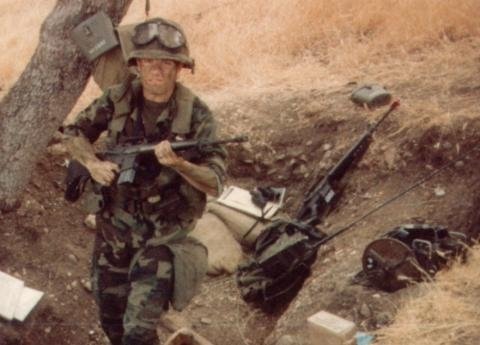
Me in 1982 

This is the first actual chapter in my series “To Iraq and Back: Padre Steve’s War and Return.” I wrote last night that I was going to be doing this and I figure that there is no time like the present to start. Just about 6 years ago I was preparing to deploy to Iraq as an individual augment supporting the US Marine and Army advisors to Iraqi Army and Security Forces in Al Anbar Province. After 6 years I think I can finally complete my literary account of my experiences in Iraq, my return and subsequent struggle with Post Traumatic Stress Syndrome (PTSD). 

Though I am not certain, I do think that many of us were born for what we feel called to do. As bit of a theologian I can honestly say that I am not a Calvinist or strict Augustinian who believes that we are simply playing out some predetermined role or fate on earth. Neither am I a fatalist but I really do feel, that whether it was something God ordained, something genetic or a product of my environment growing up, that I was born to do what I do.

As one who has some training as well in psychology and pastoral care I also understand that the human mind is a very complicated lump of gray matter. I know that we as human being as products of our genetic make up, our upbringing and environment, education, spiritual formation, relationships ad infinitum, ad nauseum.

So I know what I believe about my calling to serve in the military and the priestly vocation cannot be scientifically proven. That being said, I believe and that belief in my calling survived even in my times of unbelief.  A paradox for sure, belief and unbelief coexisting at the same time in the same person, but Father Andrew Greeley said it well in his novel The Bishop and the Beggar Girl of St Germain: “Most priests, if they have any sense or any imagination, wonder if they truly believe all the things they preach. Like Jean-Claude they both believe and not believe at the same time.”

My tour in Iraq in a sense was the culmination of my calling, a call that I felt at a very early age, to serve in the military and later to be called to serve as a Priest in the military. I have long figured that to have served a full career in the military in time of war and not to have gone forward into danger to do what I have trained all my life to do.

I have a hard time not remembering when I wanted to serve in the military and serve in combat. That may sound strange but for some reason, even though I was not encouraged to follow this path it was something that growing up as the son of a Navy Chief Petty Officer who served at the Battle of An Loc in the Vietnam War that I felt was my destiny. Maybe it is faith, maybe it is some sort of mysticism or even fatalism, but I do believe that for good or for bad that I am doing what I was born to do.

George Patton commented: “A man must know his destiny. if he does not recognize it, then he is lost. By this I mean, once, twice, or at the very most, three times, fate will reach out and tap a man on the shoulder. if he has the imagination, he will turn around and fate will point out to him what fork in the road he should take, if he has the guts, he will take it.”

I am sure that my family and my earliest friends can testify to my love of all things military and the nearly romantic calling that soldiering had on my life. At nearly every turn in life I have responded to the military calling by volunteering for assignments that would place me closest to the action. There were times that my wishes were thwarted and my desires placed on hold, but they never died.

I served on the Fulda Gap in the Cold War and missed serving in ht First Iraq War because I had left active duty to attend seminary and my National Guard unit just missed being mobilized. I did support the Bosnia operation as a mobilized Army Reserve Major and during that mobilized period of service was told that I was not a place for me in the Regular Army. However, a few months after my last active reserve posting I was given the chance to apply for active duty as a Navy Chaplain. Less than 7 weeks after the first talk with the Navy I resigned my Army Reserve commission as a Major and accepted a lower rank, that of a Navy Lieutenant to enter active duty in February 1999.

The Marine unit that I was serving with in 1999 came very close to being sent to the Kosovo crisis and had Slobodan Milosevic not made a last minute peace deal after a 70 day air campaign I am sure I would have ended up there.

555306_316970661755579_1118848704_n

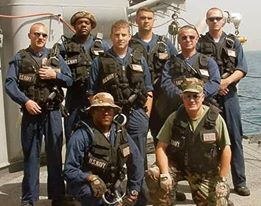
With my Boarding Team, April 2002 aboard USS Hue City

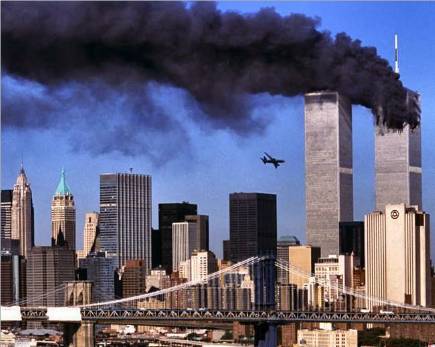
However it was 9-11-2001 that changed everything. I was in Camp LeJeune North Carolina with the 2nd Marine Division when the hijacked aircraft hit the Twin Towers and the Pentagon. Shortly after those attacks I was transferred to the USS Hue City, a Aegis Guided Missile Cruiser. My first wartime deployment was in 2002 aboard Hue City supporting Operation Enduring Freedom and Southern Watch. On that deployment I served as an advisor to one of our boarding teams and took part in over 70 boarding party operations against Iraqi and other oil smugglers who were breaking the United Nations oil sanctions against Iraq.

We were in the yards when Operation Iraqi Freedom began and in the fall of 2003 I was assigned to the Marine Security Force Battalion. In my time at Security Forces I travelled around the world and often to the Middle East and Europe, but not to Iraq or Afghanistan. Because the elements that we sent to Iraq were too small to rate an organic chaplain I did not deploy with them, though I heard about the experiences of many of those Marines and Navy Corpsmen as they came to me for counsel when they came home.

Despite having spent time of the boarding teams and having deployed numerous other places in my career there were times that I felt like William Tecumseh Sherman, who missed the war with Mexico having been sent to California who wrote: “I have felt tempted to send my resignation to Washington and I really feel ashamed to wear epaulettes after having passed through a war without smelling gun-powder.”

In October 2006 I was assigned to Navy EOD Group Two and shortly thereafter my life which had been very active with more time spent away from home than with my wife since my call up in 1996 to support the Bosnia operation became much more complicated. While at EOD I was supporting very skilled sailors most of whom had deployed multiple times in the always dangerous work of defusing and defending against Improvised Explosive Devices, or IEDs, the signature weapon of the wars in Iraq and Afghanistan. I also was called to support sailors either preparing to go to Iraq or Afghanistan as Individual Augments or those that were returning home.  As I heard their stories, especially those serving as advisors with Iraqis or Afghani soldiers I knew that was what I needed to be doing.

In early 2007 a call went out seeking chaplains to serve in Iraq and Afghanistan in various roles that were not supported by unit chaplains. With the permission of my supervisory Chaplain, Captain Deborah McGuire who was at the Navy Expeditionary Combat Command I put my name in the hat and was notified that I would be sent overseas. I explained to Judy that despite her misgivings that I felt that Nelson and I were the most ready, qualified and prepared team to take on the mission. Needless to say that did not assuage her fears and concerns and an emotional distance began to grow between us.

Initially we thought it would be sent to Iraq, then it was Afghanistan, and finally the first week of June 2007 the orders came down for Iraq. My faithful assistant, Religious Program Specialist Nelson Lebron would go with me. It was the first time that an existing Religious Ministry Team had been tagged to take on an independent mission of this nature.

Our orders were to support Marine Corps and Army advisors in Al Anbar Province, a mission that was new because when the advisory teams were first formed no one thought about organic religious or spiritual support. It was assumed that chaplains from nearby units would suffice but the Army and Marines learned that the assumption was wrong and that the advisors needed their own chaplain support.

The next few weeks would be a whirlwind as we prepared to go. They would be weeks that were trying both individually and for our families and neither of us would realize how much we would be impacted by our time in Iraq, but in June of 2007 that was still a part of our yet uncharted future.

Peace

Padre Steve+
Next: The Preparations


Leave a comment

Filed under PTSD, to iraq and back, Tour in Iraq

When Disaster is Not an Option: The NSA Leaks, Security and Freedom the Perspective of those in Command

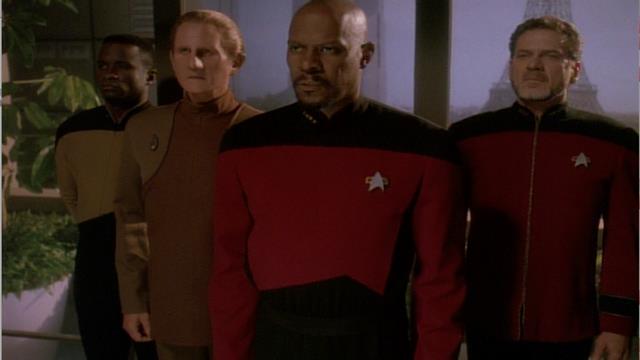
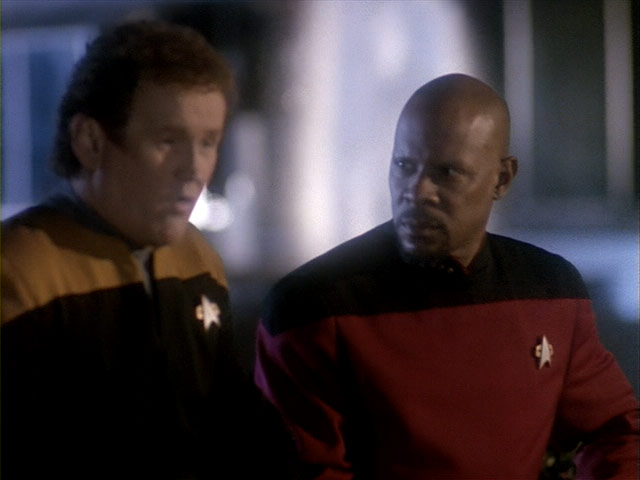
CBS_STAR_TREK_DS9_483_IMAGE_thumb_640x360

JARESH-INYO: I never sought this job. I was content to simply represent my people on the Federation Council. When they asked me to submit my name for election, I almost said no. Today I wish I had.
LEYTON: We appreciate your feelings, Mister President, but we don’t have time for regrets. You accepted the job and now it’s yours.
ODO: Mister President, there are people all over this planet right now huddled in the dark, terrified about what might happen next. They’re waiting for a sign, something to reassure them that everything will be all right. But they won’t wait long. Fear is a powerful and dangerous thing. And if you don’t act, if you don’t show them that they’re not alone, then fear will surely take over.
SISKO: Give us the authority we need, Mister President, and we will take care of the rest.
(There’s a long pause, then Jaresh-Inyo taps his PADD – 4567 security codes.)
JARESH-INYO: Earth is in your hands, gentlemen. Do what needs to be done.
LEYTON: Thank you, sir. You’ve made the right decision.
JARESH-INYO: I hope you’re right, for all our sakes. (From Star Trek Deep Space Nine, Season 4 Episode 10 “Homefront”) 

After the attacks of 9-11-2001 things changed in the United States. The question of security became paramount in the minds of many Americans who, quite a few with great misgivings approved of the passage of the Patriot Act and other laws to strengthen law enforcement, intelligence and other defensive measures, especially electronic surveillance and data collection done at the Top Secret level.

The fact is that President George W Bush, regardless of what one thinks of his subsequent actions regarding the invasion of Iraq did what any President of any party affiliation would have done in the wake of those attacks. He initiated legislation that would allow security agencies much wider latitude in collecting data and investigating any possible threats to national security. Now 10 years later, without a comparable attack many people question those decisions. President Obama, like him or loathe him has elected to for the most part continue, extend and even expand the Bush policies. If he wasn’t a Democrat he would be lauded by most of Bush’s supporters.

The real truth of the matter is that the President of the United States holds a unique position and amount of responsibility that no one who has not held that office can truly fathom. If the President, no matter who he or she is, or what party they represent has not done everything the laws allow to prevent major terrorist attacks in the post 9-11-2001 era and just one major attack is successful, he or she will be blamed forever. No one wants that, even men like President Obama who before their election were staunch civil libertarians. I can only imagine the look on his face, or that of George W Bush when they received their first National Security Briefing after taking office and realized that from now on whatever happened, for good or for bad would be blamed on them or credited to them despite the fact that almost everything that they had to decide would be formed and shaped by intelligence and national security experts as well as political advisors with more National Security and Foreign Affairs experience.

Since both of them, and President Clinton before them had minimal exposure or experience in such matters I can only imagine that it was overwhelming. I can only compare what it was like to become an Army Company Commander in Cold War Germany in 1985 and realizing that every one of the 110 men and women assigned to that unit and everything it accomplished or failed to accomplished would fall on my shoulders. I have provided counsel and support as a Chaplain to men and women in positions of greater authority than I held and I honestly cannot comprehend what the responsibility for a nation at war is like.

Jaresh-Inyo

In the Star Trek Next Deep Space Nine episode Homefront, the Federation President President Jaresh-Inyo tells his Starfleet advisors when giving them practically unlimited powers to defend Earth: “It took centuries for Earth to evolve into the peaceful haven it is today. I would hate to be remembered as the Federation president who destroyed Paradise.”

As I mentioned in my other articles about the NSA leaks there are many gray areas in the practical measures and laws instituted after 9-11-2001 and in the manner that both the Bush and Obama administrations have conducted the War on Terror. The NSA leaks and the actions of Edward Snowden point us to policy conversations and debates that we need to have regarding how we as a society balance our security with freedom. But as we do that we have to remember that in our system of government and our current laws drafted after 9-11-2001 that we have given the President powers that previous Presidents seldom had, or desired. Whether the President was Bush or is Obama or someone else in the future the fact is that they have the job and we don’t.

In the episode Admiral Leyton the Starfleet Commander voices his doubts about the Federation President, sentiments that some have pretty much applied to President Obama.

BENTEEN: The bottom line is a changeling infiltrated the grounds of Starfleet Headquarters, imitated the Admiral, and got away scot-free. Our security measures aren’t working.
SISKO: We’re doing everything the President will let us do.
BENTEEN: Maybe that’s not enough.
ODO: We could talk to the President again.
LEYTON: I’m afraid that would be a waste of time. Jaresh-Inyo would be a fine president in peacetime, but we have a war on our hands. He doesn’t seem to understand that. All he cares about is not upsetting people. But humans are tougher than he thinks. We’ve created a paradise here and we’re willing to fight to protect it.
SISKO: And you think the President isn’t willing to fight?
LEYTON: I think the President is a long way from home. This isn’t his world. We can’t expect him to care about it the way we do.

These are perilous times and serious issues. Facebook Memes, snarky tweets and bellicose blog posts that paint everything in easy black and white terms are seldom right and the fact is that the questions we fact now is complex and multifaceted. If we are to face them we have to do so in a serious manner acknowledging that the world that we live is not the same as it was even 20 years ago.

Until tomorrow or Friday,

Peace

Padre Steve+
1 Comment

Filed under laws and legislation, national security, News and current events, star trek

Security and Freedom the Precarious Balance: Looking at the NSA Leaks and Terrorist Threats in Light of Star Trek Deep Space Nine

ds9-homefront

Odo: Am I the only one who’s worried that there are still Changelings here on Earth?

Joseph Sisko: Worried? I’m scared to death. But I’ll be damned if I’m gonna let them change the way I live my life.

Captain Sisko: If the Changelings want to destroy what we’ve built here, they’re going to have to do it themselves. We will not do it for them.

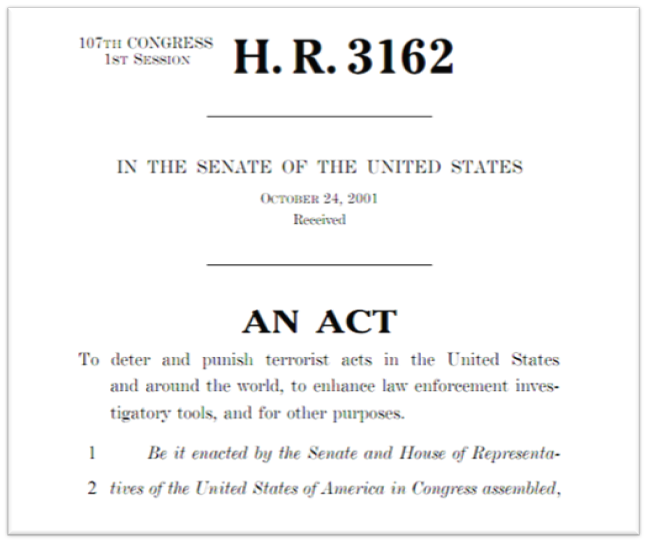
The current leaks of FISA documents regarding NSA data phone and internet collection programs including the PRISM program by ex Booz Allen Hamilton employee Edward Snowden have provoked a long needed debate. That debate is less about Snowden then it is about the broader issues that have been shunted to the side in the wake of the 9-11-2001 attacks and the passage of the Patriot Act.

Of course much of the debate right now is about Snowden himself, his actions, his loyalties, his motives and institutional questions regarding how he was given such broad access to Top Secret documents not directly related to his job. As important as the later is, the more critical issue is how we as a republic governed in a democratic manner balance legitimate security needs and individual liberty.

Patriot-Act-HR-3162

I wrestle with these issues all the time as a Priest, historian, theologian, ethicist and Naval Officer. I am a civil libertarian who also happens to know a thing or two about National Security policy. The fact is that as much some pundits and politicians are ready to jump off the edge entirely on one side of the divide or the other, their previous political differences notwithstanding we see men and women lining up to praise or condemn Edward Snowden with little regard to the deeper issues involved.

20130415-231127.jpg

The real question is how we balance the legitimate need for security with freedom and regard for Constitutional liberties. The fact is there are terrorists in our midst. The Tsaraev brothers who carried out the Boston Marathon bombing are a case in point. There are others who I am sure are interested in or capable of much more devastating attacks. Somehow we have to attempt to protect our people and way of life without destroying the Constitution and our liberties in the process.

In the Star Trek Deep Space Nine Episodes Homefront and Paradise Lost four Changelings from the Dominion reach Earth and in a series of relatively minor terrorist attacks create a chaotic situation. In response Starfleet officers take drastic action to convince the Federation President and Council to declare what amounts to Martial Law and the suspension of civil liberties on Earth.

Sisko_changeling_obrien_paradise_lost

One of the Changelings takes the form of Chief O’Brien and contacts Captain Sisko, who due to his experience in the Dominion War and with Shape Shifters was recalled to Earth to assist Starfleet Command. The Changeling engages Sisko in a conversation near Starfleet Headquarters.

Changeling: Let me ask you a question. How many Changelings do you think are here on Earth right at this moment?

Captain Sisko: I’m not going to play any guessing games with you.

Changeling: Ah. What if I were to tell you that there are only four on this entire planet? Huh? Not counting Constable Odo, of course. Think of it – just four of us. And look at the havoc we’ve wrought.

The thing it it doesn’t take many terrorists to disrupt a society but at the same time the society’s response can dictate how deep the impact of the terrorists are on it. Terrorists create suspicion and tend to make people distrust others, in fact anyone that might be different than them. The response to terrorist attacks or threats is frequently disproportionately felt by regular citizens, anyone who has flown on a commercial airline in the United States since 9-11, the passage of the Patriot Act and formation of the TSA can testify.

While security at airports may be an inconvenience the fact is that the Patriot Act also gives Law Enforcement, Intelligence and Military agencies tremendous powers to collect human and electronic data on almost any citizen. Likewise the act increased the powers of these agencies under existing counter-intelligence laws. Some say that they have actually gutted the protections 4th Amendment and that may actually be a valid point.

The conversation between Sisko and the Changeling ends when the O’Brien Changeling comments “We do not fear you the way you fear us. In the end, it’s your fear that will destroy you.”

I think that really is what we have to watch out for in this War on Terrorism. It is far too easy to in our quest for security to destroy the very foundations of our governmental system. The sad thing is that history shows us how this can happen, wars without end and suspicions of enemies within and without have destroyed civilizations and transformed republics like Athens and Rome into tyrannies.

72029

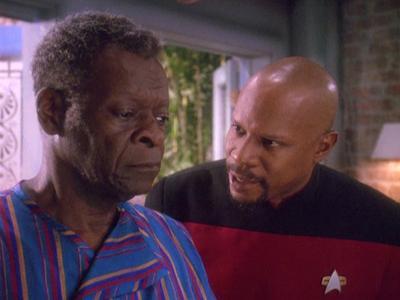
Fear is an amazing thing. It triggers responses that are almost predictable. In the Homefront episode were civilian family members of Starfleet personnel are forced to give blood samples to prove that they are not Changelings masquerading as them Captain Sisko’s elderly father Joseph objects and eventually is able to avoid being tested, over the objections of his son who in in charge of the program.

Joseph Sisko: Benjamin Lafayette Sisko, what the hell has gotten into your head? You actually thought I was one of them, didn’t you?

Captain Sisko: I don’t know. I wasn’t sure.

Joseph Sisko: This business has got you so twisted around, you… you can’t think straight. You’re seeing shapeshifters everywhere! Maybe you ought to think about something for a minute. If I was a smart shapeshifter, a really good one, the first thing I would do would be to grab some poor soul off the street, absorb every ounce of his blood and let it out on cue whenever someone like you tried to test me. Don’t you see? There isn’t a test that’s been created a smart man can’t find his way around.

The truth of the matter is that regardless of what happens with Edward Snowden that we really need to look at and have a real discussion of what in the name of security we are willing to give up and what we are not. Technology has increased in ways that most people never imagined that it would be able to do, and that we could not imagine non-state terrorist enemies using against us.

Those are hard questions and they require a serious discussion. If we don’t have that discussion we will be the ones that destroy our way of life and republic and not any terrorist.

320x240-1

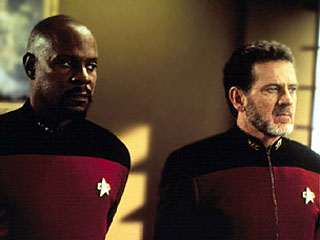
As the Paradise Lost episode comes to its climax Captain Sisko confronts the Starfleet Admiral who has implemented the martial law degree on earth.

Admiral Leyton: You’ve always had a strong sense of duty.

Captain Sisko: My duty is to protect the Federation.

Admiral Leyton: That’s what we’re trying to do.

Captain Sisko: What you’re trying to do is to seize control of Earth and place it under military rule.

Admiral Leyton: If that’s what it takes to stop the Dominion.

Captain Sisko: So you’re willing to destroy Paradise in order to save it?

I think that Sisko’s final question is something that we need to ask those that would use the law, even bad laws to gain security but which ultimately could destroy us.

Until tomorrow.

Peace

Padre Steve+
3 Comments

Filed under national security, News and current events, Political Commentary, star trek

The Terrible Costs of Not Learning the Lessons of War: Vietnam, Iraq Afghanistan

481801_10151367001287059_1003164983_nIn 1986 a Army Major working at the Office of the Secretary of Defense wrote a book that was a history of the US Army in the Vietnam War, and as it turns out to be a work of military prophecy. The young officer, Andrew Krepinevich wrote his book, The Army in Vietnam: 

“In the absence of a national security structural framework that address the interdepartmental obligations associated with FID operations, and considering the lack of incentives for organizational change within the Army, it is presumptuous for the political leadership to believe that the Army (or the military) alone will develop the capability to successfully execute U.S. security policy in Third World countries threatened by insurgency. This being the case, America’s Vietnam experience takes on a new and tragic light. For in spite of its anguish in Vietnam, the Army has learned little of value. Yet the nation’s policy makers have endorsed the service’s misconceptions derived from the war while contemplating an increased role in Third World low-intensity conflicts. This represents a very dangerous mixture that in the end may see the Army again attempting to fight a conventional war against a very unconventional enemy.” (The Army in Vietnam, Andrew F Krepinevich Jr., The Johns Hopkins University Press, Baltimore and London, 1986. p.275)

Krepinevich retired from the Army in the 1990s as a Lieutenant Colonel and has been busy in the world of think tanks and national security policy. Unlike his book, which is probably one of the best accounts of the Vietnam War and as I said before a book that is somewhat prophetic his later work has not been as well received. He has his critics. But despite that criticism once cannot deny the accuracy of his predictions concerning the Army’s subsequent operations in low intensity, or counter-insurgency campaigns beginning in Somalia and encompassing the wars in Iraq and Afghanistan.

If Krepinevich had been alone in his criticism, or his book not been widely read one might excuse policy makers of the 1990s and 2000s who sent the Army and the military into counterinsurgency campaigns involving massive numbers of troops and the commitment of blood and treasure that had practically no value to the national security of the United States. Instead thousands of American and Allied lives were sacrificed, tens of thousands wounded and one nation, Iraq that had nothing to do with the attacks of 9-11-2001 left devastated and crippled empowering Iran the sworn enemy of the United States no regional rival.

n671902058_1153793_4043

One cannot say that the Iraq war was worth the lives and treasure spent to cover the lies and hubris of the Bush Administration. Nor can one say that the effort to change the tribal structure of the fiercely independent Afghan peoples after driving Al Qaeda from that “Graveyard of Empires” been worth the expenditure of so many American lives and treasure. In fact the wars in Iraq and Afghanistan damaged the United States in more ways than their proponents could every admit. The military, now drained by years of war is hamstrung and will be hard pressed to meet legitimate threats to our national security around the world because of the vast amounts of blood and treasure expended in these wars.

In 1920 T.E. Lawrence wrote about the follies of the British government in Mesopotamia, what is now Iraq. His words could have been written about the Bush Administrations 2003 war in Iraq. Lawrence wrote in a letter to the Sunday Times:

The people of England have been led in Mesopotamia into a trap from which it will be hard to escape with dignity and honour. They have been tricked into it by a steady withholding of information. The Bagdad communiqués are belated, insincere, incomplete. Things have been far worse than we have been told, our administration more bloody and inefficient than the public knows. It is a disgrace to our imperial record, and may soon be too inflamed for any ordinary cure. We are to-day not far from a disaster.”

Krepinevech, like Lawrence before him was right, but he was not the only one. in 1993 Ronald H Spector in his book wrote:

“Americans dislike problems without solutions. Almost from the beginning of the U.S. involvement in Vietnam they have attempted to find “lessons” in the war. The controversy about the appropriate lessons to be learned continues with the same vigor and lack of coherence as the debates about the war itself.

Lessons are controversial and fleeting but lessons long. The memories of 1968 have remained and served to influence attitudes and expectations well into the 1990s. The ghosts of Vietnam haunted all sides of the recent deliberations about the Gulf War. In the wake of that war, President Bush hastened to announce that “we have kicked the Vietnam syndrome.” 

Doubtless many Americans would like to agree. It is easier to think of the Vietnam War as a strange aberration, a departure from the “normal” kind of war, like World War II and the recent war in the Gulf, where the course of military operations were purposeful and understandable and the results relatively clear cut. Yet the Vietnam War may be less of an aberration than an example of a more common and older type of warfare, reaching back before the Thirty Years’ War and including World War I. A type of warfare in which a decision is long delayed, the purposes of the fighting become unclear, the casualties mount, and the conflict acquires a momentum of its own. In a world which had recently been made safe for conventional, regional and ethnic wars, Vietnam rather than World War II may be the pattern of the future.” (After Tet: The Bloodiest Year in Vietnam, Ronald H Spector Vintage Books, a division of Random House, New York 1993 pp. 315-316

After serving in Iraq with the advisors to the Iraqi 7th and 1st Divisions and 2nd Border Brigade in 2007-2008 and seeing the results of the great misadventure brought upon our nation and Iraq by the Bush administration I cannot help but recognize how disastrous the wars unleashed after 9-11-2001 have been. I have lost friends and comrades in them, I see the human costs in our Navy hospitals every day. I have told too many If they had actually accomplished something it would be another matter. But the human, economic, strategic and even more importantly the moral costs have been so disastrous to our nation to make the loss of the Twin Towers and the victims of 9-11-2001 pale in significance.

sch0-017

The sad thing is that these wars have gone on so long that many of the young Marines and Soldiers fighting them have no understanding of why they deploy and deploy to Iraq and then Afghanistan, and they are far more knowledgeable than the population at large, many of whom are untouched by the personal costs of the war. We as Americans love to say “we support the troops” but most don’t even know one. For the most part big bases from where our troops train and deploy are far from where most Americans live and might as well be on a different planet. We are invisible to most of the country, except when they see a color guard at a sporting event or bump into one of us in uniform at an airport.

3rd Infantry Places American Flags At The Graves Of U.S. Soldiers

As a result the sacrifices that the under 1% of the population that serve in the military and fight these wars are really not understood, or fully appreciated. I don’t think that this is so much the fault of the people. but rather the product of the post Vietnam era and the “Peace Dividend” of the post Cold War era when the military was reduced, the draft ended and bases in major populations centers closed.

I have written about the effects of these kinds of wars before, not just Iraq or Afghanistan. You can see some of that writing the following articles on this site. They are not comprehensive but they do tell some of the tale of where we have been since 9-11-2001. 

The Anomaly of Operation Desert Storm and Its Consequences Today

Why History Matters: The Disastrous Effects of Long Insurgency Campaigns on the Nations that Wage them and the Armies that Fight Them 

Irrelevant Incidents and Un-winnable Wars: Thoughts on Returning from War 5 Years Later

 349: Active Duty Military Suicides Hit New High in 2012

The Fallacy of “Complete” Victory and the Seeds of Perpetual War and the Way to Peace

Thoughts on Choosing a President and the Results of Not Getting it Right: Lieutenant General Harold Moore at West Point

War is a Racket: Remembering Major General Smedley Butler USMC and Why He Matters

Armed Forces Day 2012: The Disconnection of the Military and Society and the Terrible Result

Failing to Learn from History: The Lesson of the First Anglo-Afghan War and Questions about the US-NATO Campaign

The War that Cannot Be Won: Afghanistan 2012

The 9-11 Generation: The Few

The “Comfortable” Experts and the Real Soldiers

Adjusting Strategy to Reality

No Illusions: The Cost of the Long War and its Potential impact on the United States

The sad thing is that we don’t learn from history. Krepinevech, Spector and Lawrence could have written what they wrote yesterday. Instead they all wrote many years before the 9-11 attacks and our military response to them. As a historian, a career officer and a chaplain I cannot help but think of the terrible costs of such wars and how they do not do anything to make us more secure. The fact is that we do not learn from history much to our detriment despite the great human, spiritual, moral and economic effects of such wars.

300px-Battle_of_Ia_Drang_Valley-1

What is the cost of war? what is the bill? Major General Smedley Butler wrote: “This bill renders a horrible accounting. Newly placed gravestones. Mangled bodies. Shattered minds. Broken hearts and homes. Economic instability. Depression and all of its attendant miseries. Back -breaking taxation for generations and generations. For a great many years as a soldier I had a suspicion that war was a racket; not only until I retired to civilian life did I fully realize it….”

Peace

Padre Steve+
Leave a comment

Filed under Foreign Policy, History, iraq,afghanistan, Military, national security, News and current events

Where Were You on 9-11-2001? Share Your Memories

I was reminded today about how the terrible events of September 11th 2001 are part of our national fabric and how those that remember that day have in some way been affected by it. Most of us I am sure remember where they were when they found out and what they were doing. I have written about my experience at Camp LeJeune but I know that others have just as vivid memories.

I was asking one of my sailors where he was on 9-11. He is young, just a year in the Navy and he replied that he was in 3rd grade. He explained that he remembers his teachers and other adults in states of shock and disbelief. He said that as a kid the significance was not understandable, that the pictures looked like a movie.

One of my friends who I served with in Germany early in my Army career was a hospital administrator at a large medical center on the New Jersey side of the Hudson across from Manhattan when the towers were hit and how he watched from his office as the towers burned and fell.

I have many friends from the USS Hue City which I reported aboard in December 2001 who were at sea and after the attack patrolled the East Coast. Another one of my friends who works with me on our pastoral care staff was in the gym at 29 Palms following a combined arms exercise with the 2nd Marine Regiment when the news showed the second aircraft hitting the South Tower of the WTC. He informed his disbelieving commanding officer of the attack.

My wife Judy was in a doctor’s office waiting room when the news came on the television. She said to a friend who was with her that “it was terrorism” and the friend said “that damned Saddam Hussein.”

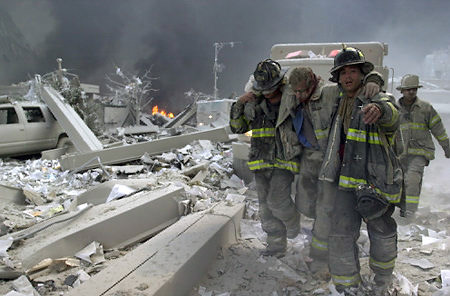
I had friends that served as first responders or provided support to first responders at the site. Many were clergy, both Navy Chaplains serving with the US Coast Guard and civilian clergy.

Quite a few of the young Sailors, Marines, Soldiers and Airmen that I have served alongside joined following in the days, months and years after 9-11-2001 because of that terrible event. Others who had done their time on active duty volunteered as Reservists or National Guardsmen to return to active duty .  They are part of the 9-11 Generation, a new Greatest Generation, who have served in the longest and most far flung war in our nation’s history.

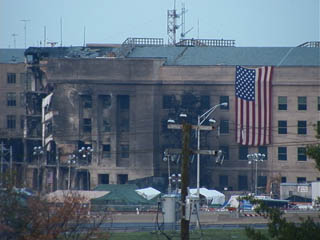
I believe that we should never forget that day and the lives of those that were killed or injured during the attack, the families who lost husbands, wives, children or parents and those that laid down their lives going up to save lives even as the buildings came down. Some of us knew people killed in the attacks. One of my Army Officer Basic Course Classmates, Lieutenant Colonel Karen Wagner died in the Pentagon. Other friends and comrades have died in the wars in Afghanistan and Iraq. For their sake we should remember and never forget 9-11-2001.

Many of us have gone to war, deploying more than once to Iraq, Afghanistan or the Arabian Gulf, the Horn of Africa and other less known theaters of the Global War on Terrorism. Over 6,000 of us, twice the number killed on 9-11-2001 have died in those wars, tens of thousands of others wounded and forever changed. The name Operation Enduring Freedom is no misnomer, it has gone on far longer than anyone of us imagined that it would.

However on 9-11-2001and in the days following that day Americans stood as one. Liberals and conservatives, Republicans and Democrats, straight and gay, religious people and non-religious people, secularists and humanists, Christians of all denominations, Jews, Hindus, Sikhs, Buddhists, followers of Wicca and earth based religions and American Moslems who often took the brunt of others anger for the actions of the terrorists all stood together. We were Americans again.

We have lost unity that over the past eleven years and all of us, especially those  probably share some of the blame for the division. I do hope that as we remember the events of 9-11-2001 that we somehow recover a sense that we are all in this together and come together as Americans no matter which political party is in power.

Tomorrow at the Naval Hospital that I serve we will mark the events of 9-11-2001 with a small ceremony at morning Colors and have moment of silence at the time of the first attack. Others around the country, especially at the World Trade Center where the Freedom Tower is rising, the Pentagon and in Somerset County Pennsylvania will have more elaborate ceremonies. Regardless of where we are we will be one in spirit.

I invite anyone reading this to share in the comments your memories of the day, perhaps your experiences of it.

Peace

Padre Steve+


1 Comment

Filed under History, News and current events

Padre Steve Remembers 9-11 and the Forgotten War

It has been nearly eleven years since that fateful Tuesday when the world changed.

I can still remember it like it was yesterday despite the intervening years.

I was in my office at Camp LeJeune where I was serving as Chaplain for Headquarters Battalion 2nd Marine Division. I had just finished an early morning counseling case and had delayed my early morning PT in order to handle the case and after I checked e-mail I was about to close my internet browser when I saw a small headline on the Yahoo News headline section.

The headline simply read “Plane crashes into World Trade Center Building.” My immediate thought was “some dumb ass flew his Cessna into the building.” I simply thought that some inexperienced pilot had gotten lost and crashed his plane into a tower. Thinking nothing more I closed out the page and left the office. It was 0900.

I got in my car and the radio was tuned in to a local right-wing talk radio station, yes I used to listen to it all the time. The talk show host was former Congressman Bob Dornan. He was talking with someone about what kind of aircraft had struck the building when he shouted “oh my God another plane has crashed into the other tower!”

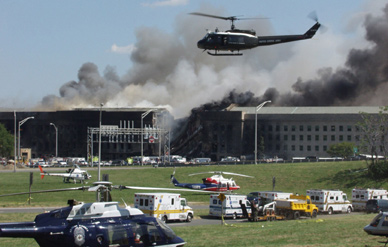
I was stunned. I knew that it had to be terrorism. I drove to the gym since they had multiple televisions and I figured that I could find out more there. I walked in and saw Marines, Sailors and civilians gathered around the sets. Every TV was tuned in to different news programs, CNN, Fox News, MSNBC as well as shows such as the Today Show and Good Morning America. Some whispered to each other but the silence of most was deafening. I remained a few minutes, transfixed by the images on the set. I then left the gym, got in my car and went back to the office where I showered, got into uniform, made a check of the news which was now reporting a strike on the Pentagon and the collapse of the South Tower of the WTC.

I drove to our battalion command post where I met with our Commanding Officer, Colonel Lake and Executive Officer Major Foster. We all knew that this was the beginning of a war and all of us had been through countless instances where we had been notified to get ready to deploy, most recently during the Kosovo action where Marines were to take a lead roll had the Serbians not backed down. While we talked the North Tower of the WTC collapsed. The emotions on everyone’s face showed, it was hard to believe that so much had happened and the great towers were smoldering heaps of rubble with possibly tens of thousands of victims crushed or incinerated in the ruins. I was instructed to get my gear and be back for a staff meeting as Colonel Lake was heading to division to meet with the Staff of 2nd Marine Division.

I made a quick run to my town home, hugged the dogs since Judy was out and grabbed my gear and some extra uniforms and underwear and headed back into the base through the back gate. I deposited my gear in my office and went around the building so see our Marines and Sailors assigned to our Truck Company, MP Company, Medical Company and Headquarters Company and all were waiting for more word, most gathered around televisions and watching breaking news. Some came to me and asked what it meant and expressed concern for families and friends in the affected locations. Then I went back to our headquarters where we heard from Colonel Lake what was known and what our actions would be. We were placed on high alert, patrols by full combat ready Marines were to patrol vulnerable areas of the base while roadblocks and checkpoints were established near every major headquarters aboard the base. The base was also locked down and only Marines, Sailors or Civilian workers returning to work were allowed aboard.

Later in the day I met with the chaplains who served our independent battalions, 2nd Combat Engineer Battalion, 2nd Light Armored Reconnaissance Battalion, 2nd Recon Battalion and 2nd Tank Battalion. I explained what I knew from my meetings with the Division Chaplain and Battalion Commander. We concluded our meeting with prayer for the victims of the attacks, the responders and for our Marines and Sailors.

It was both grim and surreal as the day passed and night fell. We remained in that condition four days. Meals were served at the Chow Hall, MRE’s issued and we went everywhere in full combat gear. I visited Marines at their guard posts during the night and worked counseling those who were concerned about family members or friends. They did so for good reason as nearly 3000 people were killed in the WTC, Pentagon and aboard the four hijacked aircraft.

Within a month U.S. Forces were engaged in combat in Afghanistan, driving the Taliban from power and sending Osama Bin Laden and Al Qaeda into hiding. Various units of the division were deployed to Afghanistan and the Horn of Africa over the coming weeks and months and even as we did so rumors circulated about Iraq.

I knew that the war would not be the short war that everyone hoped for and within 6 months I would be deployed with the USS Hue City and the USS John F Kennedy Carrier Strike Group to the Arabian Gulf, Horn of Africa and Gulf of Oman.  We would take part in maritime interception operations off the Horn of Africa and in the Arabian Gulf where we took part in the UN Oil Embargo on Iraqi smugglers.

I would travel to the Middle East frequently over the coming years supporting Marines from the Marine Security Force Battalion and later deploy to Iraq from EOD Group Two. I have lost friends and see the effects of the war every day at Camp LeJeune.

Osama Bin Laden is now dead, and it has been 11 long years of war. However it has been a war that for the most part has not been a national effort. After 9-11 the nation was not called to sacrifice, it was told by political leaders to “go shopping.” The brave men and women of our military and their families have made incredible sacrifices over the past 11 years. 2024 have died in Afghanistan while 4486 died in Iraq before the withdraw of US forces in December 2011. Another 32,223 were wounded in Iraq while 15,332 have been wounded in Afghanistan. These numbers do not count American contractors, State Department, CIA, FBI or other law enforcement agencies.

They also do not count the thousands afflicted by PTSD or other illnesses contracted in the combat zone, nor does it count the large number of Iraq and Afghanistan veterans who have taken their lives on active duty or following their discharge or retirement. Then there are the lives of over 1500 coalition soldiers, mostly British, Canadians and Australians who have given their lives in these wars. Finally there are the hundreds of thousands of Iraqis and Afghan civilians who have died or suffered injury or have been dislocated or exiled as a result of the wars.

Then there is the economic cost which amounts to trillions of dollars for both wars which have been funded by borrowing against our economic future.

Despite this for most Americans the war in Afghanistan is unpopular, little understood and distant, far from daily life. This is backed by polling data and by words of some politicians of both major political parties, in every major poll over 60% of Americans say that the war in Afghanistan is not worth the cost and needs to end.

One of the most glaring examples of how political leaders think about Afghanistan, but certainly not the only one is Republican Presidential nominee Mitt Romney. Romney did not mention either Iraq or Afghanistan in his acceptance speech at the Republican National Convention, although he did mention “strengthening the military.” He explained it later in an interview by saying to Fox News anchor Brett Baier “When you give a speech you don’t go through a laundry list, you talk about the things that you think are important….”

The sad fact is that no matter why Romney left out any mention of an ongoing war out of his speech that his words “you talk about the things that you think are important” are indicative not only of him but the majority of Americans. The reality is that Romney and most Americans have no personal connection with the war or the military. The war has been fought by a relatively small professional military that represents less than one percent of the population. Marine Lieutenant General John Kelly who lost his son, a Marine Lieutenant in Afghanistan noted at the 2012 American Legion national convention:

“America as a whole today is certainly not at war, not as a country, not as a people… Only a tiny fraction of American families fear all day and every day a knock at the door that will shatter their lives….” 

This Tuesday we will reflect on something called Patriot’s Day and pause to remember the events of that bloody Tuesday of September 11th 2001. I hope, probably in vain that the American people and their leaders will do more than mouth a few words, talk about how terrible the day was and go back to business as usual. I hope, probably again in vain that Americans will wake up to the fact that tens of thousands of Americans are in harm’s way and that even more and probably more terrible wars loom just over the horizon.

I have no idea what it will take to actually engage the vast bulk of the American population that what happens in Afghanistan is still important. Nor do I think that most people have any idea that a war with Iran could be disastrous for US and coalition forces fighting in Afghanistan.

It is odd to think that we can think about 9-11 and then ignore the subsequent wars the way that we have done. I really don’t.

Peace

Padre Steve+
 

4 Comments

Filed under Foreign Policy, History, iraq,afghanistan, News and current events

Remembering the Killing of Osama Bin Laden While Realistically Looking at Afghanistan and Pakistan

A year ago US Navy SEALs from SEAL Team Six and other Special Operations Forces made a daring night raid into Pakistan to kill Osama Bin Laden.  Bin Laden had orchestrated the Al Qaeda attacks on September 11th 2001 which killed over 3000 Americans, the near sinking of the US Navy Destroyer USS Cole, the Luxor Massacre of 1997 and the bombings of the US Embassies in Dar es Salaam Tanzania and Nairobi Kenya in 1998 and numerous other terror attacks throughout the Middle East. Bin Laden was the sworn enemy of the United States. The killing of Bin Laden was a victory, perhaps the biggest victory that we have achieved in over 10 years of war. In fact Bin Laden was the reason we went to war, the reason that we became embroiled in Afghanistan.

Bin Laden had been the “guest” of the Afghan Taliban government and used Afghanistan as his base of operations to train his fighters and plan his operations. After September 11th the United States attacked Afghanistan, toppled the Taliban and put Bin Laden on the run. Pakistan which had supported the Taliban government following the fall of the former Soviet supported Republic of Afghanistan and subsequent civil war which brought the Taliban to power. Pakistan’s President Musharraf quickly allied his country with the United States.  However over the course of the 10 year war in Afghanistan the government and certain elements of its security and intelligence services gave tacit support to the Taliban as well as Al Qaeda. The most damning was the fact that Bin Laden had resided in the Pakistani military town of Abbottabad with a significant amount of his family for five years.

President Obama gave the order for the SEAL team to kill Bin Laden over the objections of his Vice President and Secretary of Defense. It was a ballsy move. If it had gone wrong which it easily could have many US troops could have been killed, captured and placed on display by the Pakistani government.  The credit to the planning and execution of the operation has to go to the SEALs and Special Operations Command, but credit for the order to do it needs to be given to the President.  If President Bush had succeeded in killing Bin Laden I would feel the same way.

The fact is that President Obama has been successfully waging war against Al Qaeda, not only killing Bin Laden but other top leaders. Even Bin Laden before his death was concerned about the toll being taken on his organization by the reinvigorated US campaign.  The Pakistanis enraged by the United States taking the war against Al Qaeda and its Taliban allies inside Afghanistan, something that it should have been doing but had not despite Jihadist terrorist attacks on it cut the supply lines to US and NATO forces running through it months ago and have not reopened them. Some ally.

But that is not surprising. As far back as November 1979, before the Soviets intervened in Afghanistan the US Embassy was ransacked and burned by Pakistani mobs, an attack which killed a US Marine. The Pakistanis only began to reluctantly cooperate with the United States in supporting some of the Afghan Pashtun Mujahideen fighters.  After the Soviets left Afghanistan it continued to support its Pashtuns against Uzbek and Tajik Afghans, support which eventually allowed the Taliban to take over the country. Despite US protests in the 1990s the Pakistanis did little to nothing to hinder Bin Laden, Al Qaeda or the Taliban regime. While it quickly and officially “supported” the US under former President Musharraf factions within its ISI intelligence service are believed to have continued to support Taliban and Al Qaeda fighters and encouraged attacks on US, Afghan and  NATO troops.

Pakistan itself teeters on the edge of collapse. Its economy is in shambles, it cannot control its borders, its intelligence service is often at odds with the government while extremist groups gain more power every day. It is a rapidly failing state with nuclear weapons. Every day it grows more antagonistic towards the United States which under the Obama Administration had been persistent in using arial drones to attack suspected terrorists in Pakistan. The relationship between the United States and Pakistan is as bad or worse as it was in 1979.

In the mean time our former nemesis the Russian Federation, the former Soviet Union has been stalwart in allowing our troops and supplies to flow through their country and the neighboring Central Asian Republics into Afghanistan. The Russians having experienced the agony of Afghanistan and the reality of Jihadist terrorism emanating from it as well as Chechnya do not want the US and NATO mission to stabilize Afghanistan to fail.  Currently without the support of the Russians we would be unable to supply our troops in Afghanistan.

Today President Obama travelled to Afghanistan and announced the signing of a long term security and cooperation agreement with the Afghan government. The agreement will take effect after the current plan to withdraw most US and NATO troops by 2014. We have no idea how well this will turn out and despite all the good intentions on our part I doubt that the agreement stands the test of time because of the nature of Afghanistan and its competing ethnic, religious, political and tribal divisions. It is my belief that we will be lucky to get out as well as the Soviets did in 1989 because I do not see a truly united Afghanistan coming out of this and it is more than likely that Pakistan will descend into chaos making our presence in Afghanistan even more problematic.

The mission started to get Bin Laden after 9-11. In the process it became something different as we attempted to transform Afghanistan. A year ago we finally succeeded in killing Bin Laden and have significantly degraded Al Qaeda.  That is why we went to war.  That is probably the best it will get.

At some point President Obama or his successor will likely have to decide to withdraw completely from Afghanistan and like former Soviet Premier Gorbachev admit that “We are not going to save the regime. We’ve already transformed it.”

Peace

Padre Steve+
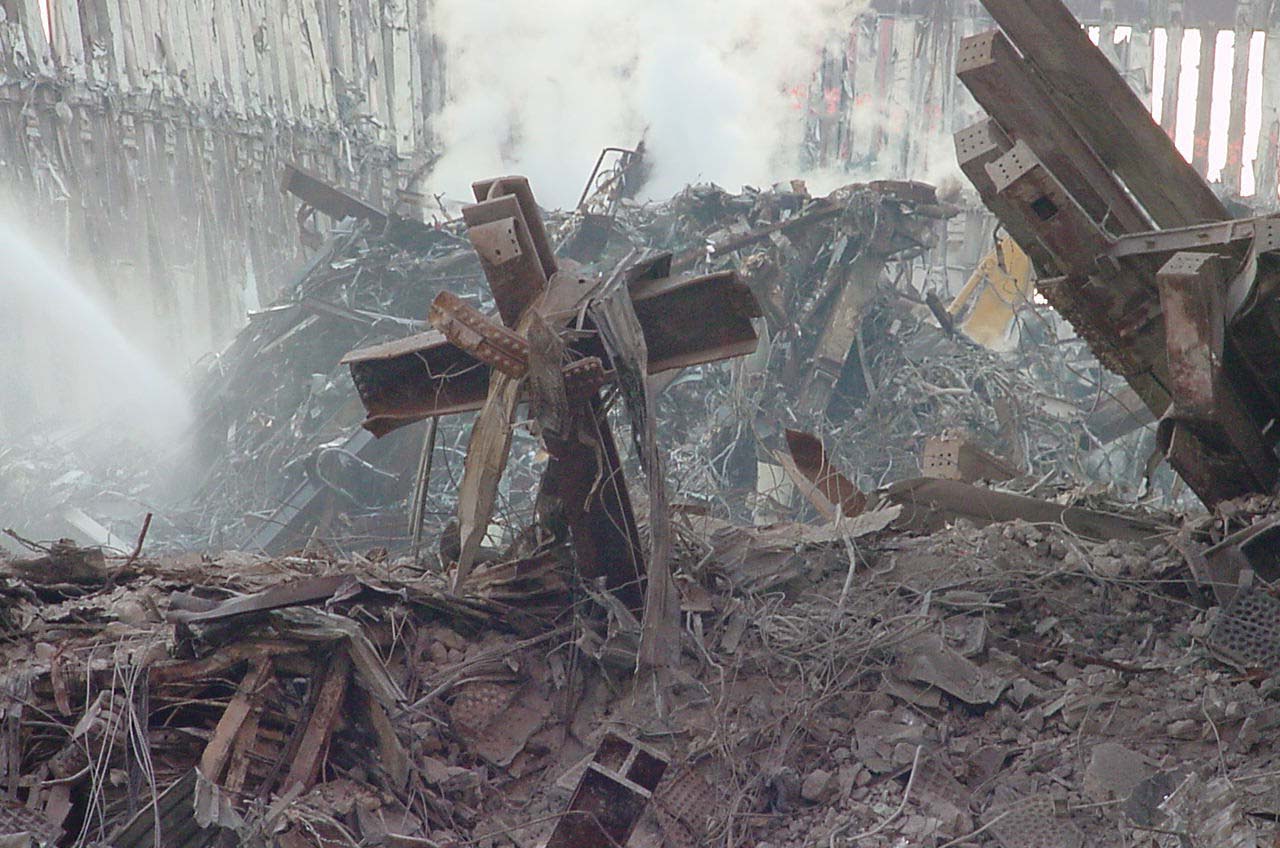
1 Comment

Filed under History, iraq,afghanistan, national security, News and current events